USB-C hubs are not exactly exciting products. You plug one in, and it gives you more ports. But Anker is trying something a little different with its upcoming Nano USB-C Hub (10-in-1, 240Hz, Display).
This new hub has a built-in display so you can actually see what’s happening with your connected devices. It is set to launch in Japan sometime in fall 2026 at ¥16,990 (roughly $110 USD). And it’s available in two colors: Dark Gray and Silver.
The Nano USB-C connects to your laptop via a single USB-C cable and delivers 10 ports total. On the front, you get a USB-C port with data speeds up to 10Gbps, plus a full-size SD card slot and a microSD card slot.
Flip it around, and the back is where the power users will spend their time. There’s a USB-C charging port that takes up to 100W of power delivery, a USB-A port at 10Gbps, two more USB-A ports at 5Gbps, an HDMI 2.1 port, a DisplayPort 1.4 output, and a Gigabit Ethernet port. Both the HDMI and DisplayPort can push 4K at 144Hz.
Probably the most interesting part of this USB-C hub is its 240Hz display. It’s a small screen built into the hub itself that shows you real-time usage data. Anker says it also pairs with a dedicated app for even more detail.
And while a 240Hz refresh rate on that tiny screen would make it look extremely smooth, it’s also kind of overkill for a screen that just shows numbers.
The hub measures about 130 × 56 × 50mm and weighs around 300g. It’s more of a desk accessory than something you throw in a bag. The compact “Nano” name in the title might be a bit generous.
For more daily updates, please visit our News Section.
Casio is marking the 30th anniversary of its premium MR-G line with a new flagship diver, the G-Shock Frogman MRG-BF1000EB-1A. Scheduled for release in June 2026, it is one of the most expensive G-Shock models the company has produced, carrying a retail price of ¥1,210,000 ($7,590) in Japan. Production is capped at 800 numbered units worldwide.
Design Details
The MRG-BF1000EB-1AJR relies heavily on specialized materials and manufacturing processes rather than standard mass production. The bezel is constructed from Cobarion, a cobalt-chrome alloy that is roughly four times harder than pure titanium. Instead of standard machine milling, the bezel’s facets are cut by hand by Japanese gemstone artisan Kazuhito Komatsu.
The metal is then treated with a blue arc ion plating (AIP) to give it a reflective finish. According to Casio, this aesthetic is meant to mimic a brinicle, an underwater ice formation found in polar regions. Additionally, the two front screws on the asymmetrical case are set with lab-grown, 57-facet brilliant-cut blue sapphires.
Underneath the exterior treatments, the watch maintains the hardware specifications expected from the Frogman line. The core case, case back, crown, and buttons are machined from Ti64 titanium alloy and treated with a titanium carbide (TiC) coating for abrasion resistance.
It features an ISO 200-meter water resistance rating, supported by Casio’s Clad Guard Structure, which integrates fluoro rubber buffers into the crown and pushers to protect the internal module from impacts. The screw-lock case back incorporates a blue vapor-deposited sapphire crystal and an engraving of the standard Frogman character.
On the technology side, the MRG-BF1000EB-1AJR is fully analog but uses three independent dual-coil motors to drive the hands. In dive mode, the hour and minute hands overlap to function as a single indicator for elapsed dive time.
The watch is powered by Casio’s Tough Solar charging system and keeps time via Multi-Band 6 radio control and Bluetooth. When paired with the Casio Watches smartphone app, users can automatically adjust the time, log dive data, and set tide graphs for approximately 3,300 global locations.
The package includes two interchangeable bands: a white Dura Soft fluoro rubber strap for diving use, and a deep-hardened pure titanium bracelet. The lugs feature a quick-release button mechanism for swapping between the two. The entire 800-piece run ships in a custom box co-developed with Japanese luggage manufacturer Proteca.
While the absolute top-tier processors like the Snapdragon 8 Elite Gen 5 capture all the headlines, not everyone needs to go that far to get an incredible smartphone experience. The Snapdragon 8 Gen 5 sits perfectly in that sweet spot, offering flagship-level performance and modern capabilities at a more accessible price.
We’ve picked the 5 best smartphones featuring the Snapdragon 8 Gen 5 processor that you can consider for your next upgrade.
The Vivo X300 FE delivers a solid value overall. It’s got a high-end triple camera setup, comprising a 50MP primary sensor, a 50MP periscope telephoto shooter, and an 8MP ultrawide unit. The front side features a 50MP selfie shooter.
The phone offers a 6.31-inch LTPO AMOLED panel with a 120Hz refresh rate and a peak brightness of 5000 nits. It’s backed by a 6500mAh battery with support for 90W wired charging and 40W wireless charging. It also supports reverse wired and reverse wireless charging to power your accessories. Software-wise, it ships with Android 16 and promises OS updates up to Android 21.
The OnePlus 15R (review) is a solid high-end smartphone, featuring a 6.83-inch bright AMOLED screen with a 165Hz high refresh rate and advanced HDR formats. The chipset is paired with up to 12GB of RAM and 512GB of storage.
The smartphone has a dual-camera setup on the back, including a 50MP primary sensor and an 8MP ultrawide shooter. There’s also a 32MP camera for selfies and video calls. On the software side, it ships with Android 16 out of the box and promises up to four major Android OS upgrades.
Among the biggest strengths of the OnePlus 15R is its large 7400mAh battery, which should easily last more than a day on regular use. The 80W fast charging support ensures a quick refill. Furthermore, the device offers an ultrasonic fingerprint scanner and modern connectivity features like Wi-Fi 7, Bluetooth 6.0, and NFC.
iQOO phones are optimized to unlock maximum performance, so you can expect better performance on the iQOO 15R than on other phones on the list, even though the difference is small. The device is built around a 6.59-inch AMOLED panel with a high refresh rate of 144Hz and peak brightness of 5000 nits for excellent visibility outdoors.
The smartphone has the same camera specs as the OnePlus 15R, so you get a 50MP primary shooter and an 8MP ultrawide unit on the rear, plus a 32MP selfie snapper. It has a maximum battery capacity of 7600mAh and supports 100W wired charging. The phone ships with Android 16 out of the box and promises up to four major upgrades, up to Android 20.
Motorola Signature is another compelling option on the list, featuring a 6.8-inch LTPO AMOLED screen with a 165Hz high refresh rate and 6200 nits of peak brightness. The screen has Gorilla Glass Victus 2 protection, while the device is MIL-STD-810H certified, ensuring it withstands challenging conditions.
Not only does it feature a high-quality screen, but the Motorola Signature also brings a high-end triple camera setup, featuring a 50MP primary camera, a 50MP periscope telephoto lens, and a 50MP ultrawide camera. There’s another 50MP sensor on the front for selfies and video calls.
The Motorola phone is packed with a 5200mAh battery and supports 90W wired and 50W wireless charging. Additionally, it supports reverse wired and reverse wireless charging. And the best part: this phone promises a whopping seven major OS upgrades, up to Android 23.
Realme Neo 8, launched earlier this year, will likely remain limited to the Chinese market, but it’s expected to launch globally as Realme GT 8. The phone comes with a 6.78-inch AMOLED screen with a high refresh rate of 165Hz and peak brightness of 6500 nits.
The Realme phone ships with Android 16 out of the box and will likely receive at least four major OS upgrades before it reaches the end of life. Around the back, it’s equipped with a triple camera setup, including a 50MP primary shooter, a 50MP periscope telephoto lens with 3.5x optical zoom, and an 8MP ultrawide camera. For selfies, there’s a 16MP snapper.
Realme Neo 8 houses a massive 8000mAh battery, the biggest on the list, and supports 80W fast wired charging. And just like any other device on the list, it features an under-display ultrasonic fingerprint reader.
Xreal has introduced a new sub-brand called X By Xreal (xbx), starting with two new pairs of augmented reality glasses: the xbx a01 and xbx a01+. The new models focus on reducing weight and lowering the entry price for wearable displays.
Xreal xbx a01 Specifications
The glasses use a semi-transparent nylon frame that shows some of the internal components, but Xreal’s main focus with this design is physical comfort and customization. The standard xbx a01 weighs 62 grams, and you can remove the front frame entirely to bring that down to 56 grams. That front frame is also interchangeable, with Xreal offering optional styles like classic, sports, and black mirror.
If you want a more personalized look, the company is even providing the 3D printing parameters so you can design and print your own custom frames. Xreal says this lighter build cuts pressure on the nose by about 30%. The temples are also 10% thinner and more flexible, which is meant to make them more comfortable if you wear them while leaning back or lying down to watch a movie.
For the displays, the glasses use dual Micro OLED screens with a 50-degree field of view. According to Xreal, this looks like a 147-inch screen viewed from four meters away. The screens reach up to 1,600 nits of peak brightness and support a 120Hz refresh rate, 10-bit color, and HDR10.
It features a built-in chip that handles real-time SDR-to-HDR conversion to adjust contrast and color for standard video. To help with eye strain during longer sessions, the displays use 3840Hz PWM dimming and have hardware-level blue light reduction.
The built-in stereo speakers include a few basic audio profiles, like a cinema mode and a whisper mode designed to reduce sound leakage if you are in a quiet room. For travel, the glasses use a stabilization algorithm that tracks posture 1,000 times per second to keep the virtual screen steady when you’re in a moving car, train, or plane.
The xbx a01 connects via USB-C to devices that support DisplayPort output, such as phones, laptops, and handheld gaming consoles. If you pair them with Xreal’s Beam Pro accessory, you get access to 3DoF tracking and floating screens through the company’s nebulaOS 2 interface.
Pricing and Availability
The standard model costs 1,699 yuan ($250). The xbx a01+ costs 1,799 yuan ($265), and the extra cost adds a physical light-blocking cover and an exclusive surround sound audio mode. Xreal is also expected to bring the lineup to the US in July, with prices starting at $299.
For more daily updates, please visit our News Section.
For years, the RAM conversation went like this: 4GB is fine, 6GB is comfortable, 8GB means you were set for a while. Anything beyond that was bragging rights. However, that’s changing quietly.
Thanks (or not) to a new wave of on-device AI features and Google’s surprisingly aggressive hardware requirements to run them, the number that actually matters in 2026 is 12GB.
Here’s the full breakdown of what you need, what’s changed, and whether your current phone makes the cut.
RAM, short for Random Access Memory, is your phone’s short-term workspace. It’s where your apps, tabs, and processes live while they’re running. More RAM means more things can stay active at once without your phone having to reload them from scratch. It’s why switching back to a tab you opened 20 minutes ago sometimes feels instant, and sometimes feels like the internet just forgot it existed.
For everyday use, 8GB is still completely fine for most people in 2026. You can run your apps, multitask reasonably well, take good photos, and not feel like your phone is struggling. Google’s minimum RAM requirement to run full Android services is now 6GB, which tells you something about where the industry has settled for the low end.
But “fine for everyday use” and “ready for the next wave of AI features” are two different conversations now.
2. Why 12GB Is the New Line in the Sand
At Google I/O 2026, the company announced Gemini Intelligence. And no, it’s not the Gemini app you have on your phone.
Gemini Intelligence is a new layer of AI from Google that brings features like Rambler (a voice-to-text tool that cleans up your dictation automatically), Create My Widget (which builds custom home screen widgets from a voice command), and multi-step cross-app automation. And all of this is processed locally on your device rather than sending data to the cloud.
That’s actually a good thing for privacy and speed. But running a capable AI model on-device takes real resources. And for that, Google has quietly unveiled a hardware requirement.
To run Gemini Intelligence, your phone needs:
12GB of RAM or more — that’s 50% higher than Apple Intelligence’s 8GB minimum, and higher than almost every mid-range Android on the market
A flagship chipset — Snapdragon 8 Elite, Tensor G5, or a comparable 2025–2026 chip
Gemini Nano v3 — the specific, latest version of Google’s on-device AI model
Android AICore support — required to store and run the Nano model locally
A commitment to five or more major Android OS updates from the manufacturer
The 12GB RAM floor is a big deal on its own. But the requirement that’s actually doing the most damage? Gemini Nano v3. That’s the part that’s locking out phones you’d expect to qualify easily.
3. Your Expensive 2025 Phone Probably Doesn’t Make the Cut
The Pixel 9 Pro has 16GB of RAM. It has a flagship Tensor G4 chip. It cost over $1,000 when it launched last year. And it doesn’t qualify for Gemini Intelligence, because it runs Gemini Nano v2, not v3.
The entire Pixel 9 family is in the same boat. So is the Samsung Galaxy S25 lineup, the Galaxy Z Fold 7, and the Galaxy Z Flip 7. The OnePlus 13 doesn’t qualify either. Google published these requirements quietly, and it’s not hard to understand why. Telling people their $1,000-plus phone is already on the wrong side of a software requirement is not a great look.
Whether Google pushes Nano v3 to some of these devices via a software update is still an open question. The company hasn’t confirmed either way, and for now, the answer is simple: not yet.
4. Which Phones Actually Qualify Right Now?
The list of phones confirmed to support Gemini Nano v3 — and therefore eligible for Gemini Intelligence — skews heavily toward 2026 releases. Here’s where things stand:
Currently confirmed:
Google Pixel 10, Pixel 10 Pro, Pixel 10 Pro XL, Pixel 10 Pro Fold (not the Pixel 10a, which ships with 8GB)
Samsung Galaxy S26, S26+, S26 Ultra
Samsung Galaxy Z Fold 8 and Z Flip 8 (expected to be the first to publicly debut Gemini Intelligence, in July 2026)
OnePlus 15 and 15R
Motorola Signature
Honor Magic 8 Pro
iQOO 15
Realme GT 7T
OPPO Find X9, Find X9 Pro, Find X8, Find X8 Pro, and several Reno 14 and 15 series models
Pixel 9, Pixel 9 Pro, Pixel 9 Pro XL, Pixel 9 Pro Fold, Pixel 9a
Samsung Galaxy S25, S25+, S25 Ultra
Samsung Galaxy Z Fold 7, Galaxy Z Flip 7
OnePlus 13
5. What about iPhone?
Apple’s situation is a bit more straightforward and a bit more generous. Apple Intelligence requires 8GB of RAM, which means every iPhone 15 Pro, iPhone 15 Pro Max, and everything launched since then qualifies. The standard iPhone 16 and iPhone 17 lines both meet the bar. Apple quietly raised its own floor when it launched its AI suite, but it did so in a way that included a much broader slice of its lineup.
So if you’re comparing the two ecosystems on this specific question, Apple is asking for 8GB, and Google is asking for 12GB.
6. So, How Much RAM Do You Actually Need?
6GB is enough to run Android with Google services. Fine for basic use, but increasingly tight as apps get heavier.
8GB is the sweet spot for most people. You won’t feel the pinch in daily use, and both Apple Intelligence and a lot of Android AI features work at this level.
12GB is the new requirement if you want access to Google’s Gemini Intelligence features. If on-device AI is a priority, this is the floor you’re buying to.
16GB and above means future-proofing. Some flagships ship with 16GB now, which gives you headroom for whatever the next round of requirements brings.
For more daily updates, please visit our News Section.

Budget smartphones are becoming far more competitive in 2026, and the HMD Vibe 2 vs Samsung Galaxy M07 comparison proves just how much buyers can now expect under ₹12,000. One phone focuses on delivering a smoother entertainment experience with a massive battery and 120Hz display, while the other leans toward long-term reliability, software support, and overall value. Both devices target users who want solid everyday performance without stretching their budget too far, but their priorities feel completely different once the real-world experience is considered.
Major Features:
Feature
HMD Vibe 2
Samsung Galaxy M07
Winner
Display
6.75-inch IPS LCD, 120Hz
6.7-inch PLS LCD, 90Hz
HMD Vibe 2 – Smoother scrolling and gaming experience
Resolution
720 × 1600 pixels
720 × 1600 pixels
Tie – Similar sharpness and clarity
Processor
Unisoc T8200
MediaTek Helio G99
Galaxy M07 – More stable and proven real-world performance
RAM & Storage
Up to 6GB RAM, 128GB storage
4GB RAM, 64GB storage
HMD Vibe 2 – More memory and storage flexibility
Software
Android 16
Android 15 with 6 major updates
Galaxy M07 – Excellent long-term software support
Main Camera
50MP dual camera
50MP dual camera with PDAF
Galaxy M07 – Better image processing and focus performance
Selfie Camera
8MP
8MP
Galaxy M07 – More balanced selfie tuning
Battery
6000mAh
5000mAh
HMD Vibe 2 – Longer battery endurance
Charging
18W wired
25W wired
Galaxy M07 – Faster charging speeds
Build Features
Plastic body
IP54 splash resistance
Galaxy M07 – Better durability for daily use
Audio Jack
Yes
Yes
Tie – Both retain the 3.5mm headphone jack
Expandable Storage
microSD support
Dedicated microSD slot
Galaxy M07 – Dedicated slot is more convenient
Connectivity
Bluetooth 5.0
Bluetooth 5.3
Galaxy M07 – Newer wireless connectivity
Price
Priced around ₹11,000
Priced around ₹7,500
Galaxy M07 – Much stronger value for money
Overall Experience
Entertainment-focused
Balanced and practical
Galaxy M07 – Better overall package for most buyers
Disclaimer: Specs are based on available data. Actual performance may vary. Verify details from official sources before buying.
The HMD Vibe 2 and Samsung Galaxy M07 both target budget buyers, but they approach design differently. The HMD Vibe 2 feels more rugged with its thicker frame and larger battery-focused build. It has a simple plastic construction with a side-mounted fingerprint sensor and a practical layout that suits users who prefer durability over slim styling. The Samsung Galaxy M07, meanwhile, looks cleaner and slightly more modern thanks to its slimmer body and IP54 splash resistance. That added protection gives it a more reliable everyday feel, especially for users who travel frequently or use their phone outdoors often.
Display Quality
HMD offers a 120Hz IPS LCD panel, which immediately feels smoother while scrolling social media or gaming. Animations appear more fluid, and the higher refresh rate adds extra polish despite the HD+ resolution. Samsung counters with a 90Hz PLS LCD panel that delivers decent brightness and balanced colors, though it does not feel as responsive as the Vibe 2. Samsung’s display tuning still feels slightly more refined for casual streaming and general use.
Verdict
The HMD Vibe 2 wins for smoother visuals and a more entertainment-focused display experience, while the Galaxy M07 feels more polished and practical for daily handling.
2. Specifications Including Battery
Performance
The HMD Vibe 2 is powered by the newer Unisoc T8200 chipset, paired with up to 6GB RAM. Day-to-day performance feels surprisingly solid for the price, especially during multitasking and casual gaming. Apps open quickly, and the 120Hz display helps the phone feel faster than its hardware might suggest. Samsung uses the MediaTek Helio G99, which remains one of the strongest chipsets in the budget segment. It delivers stable gaming performance and dependable thermal management, making it more consistent during longer gaming sessions. Samsung also has a major advantage with six Android upgrades, which adds long-term value rarely seen at this price.
Battery and Charging
The HMD Vibe 2 packs a huge 6000mAh battery that comfortably lasts beyond a full day. Heavy users will appreciate the extra endurance, especially for streaming or gaming. However, its 18W charging feels slow by current standards. The Galaxy M07 uses a smaller 5000mAh battery but supports faster 25W charging, making quick top-ups more convenient during busy days.
Verdict
The HMD Vibe 2 feels stronger for battery-focused users, while the Galaxy M07 delivers a better balance of stable performance, software longevity, and faster charging.
3. Camera
Main and Secondary Lenses
Both phones feature a 50MP primary camera, but Samsung appears slightly more refined in image processing. The Galaxy M07 captures more balanced colors and better dynamic range in daylight shots. Details remain sharp enough for social media uploads, and Samsung’s tuning helps photos look more natural without appearing overly processed. The HMD Vibe 2 performs reasonably well in bright lighting and can capture decent detail, but color consistency occasionally feels less polished. Its secondary camera setup also feels more basic overall.
Low-light photography is limited on both devices, which is expected at this price range. Still, Samsung manages shadows and highlights slightly better, making nighttime images look cleaner in comparison.
Selfie Camera
Both smartphones include an 8MP selfie camera capable of handling video calls and casual selfies. Samsung again delivers more balanced skin tones and slightly sharper edge detection. The HMD Vibe 2 keeps selfies softer, though some users may prefer that smoother look for social sharing.
Verdict
The Galaxy M07 takes the lead in overall camera consistency and image tuning, while the HMD Vibe 2 remains good enough for casual photography and everyday content creation.
4. Pricing
The HMD Vibe 2 is priced around ₹11,000 ($130), placing it in the upper budget category. For that price, buyers get a large 6000mAh battery, a 120Hz display, and more RAM options. It clearly focuses on users who want a feature-packed experience without spending too much. The Samsung Galaxy M07 is priced around ₹7,500 ($80), making it significantly cheaper while still offering a capable Helio G99 chipset, IP54 protection, and Samsung’s excellent software support policy.
Is the Price Justified?
The HMD Vibe 2 feels justified for buyers who prioritize battery life and smoother display performance. It offers a more premium experience in a few noticeable areas despite the higher cost. The Galaxy M07, however, stands out as one of the stronger value-for-money options in the entry-level market. Samsung’s long-term software support alone adds surprising value at this price point.
Verdict
The Galaxy M07 delivers stronger overall value for budget-conscious buyers, while the HMD Vibe 2 feels worth paying extra for users who care more about display smoothness and battery endurance.
Disclaimer: Prices are approximate and may vary based on country, region, launch timing, and applicable taxes. Always check whether the listed price is for a China unit or a global/international variant when purchasing
5. Conclusion
The HMD Vibe 2 focuses on delivering a big-battery entertainment experience with its 120Hz display and larger power capacity. It feels designed for users who spend long hours gaming, streaming, or scrolling through social apps. The Galaxy M07 takes a more balanced approach by combining stable performance, cleaner software support, IP54 protection, and faster charging at a much lower price. Samsung’s long update commitment also makes the device feel more future-ready than most phones in this segment.
Both phones succeed in different areas, which makes the comparison more interesting than expected. The HMD Vibe 2 feels more exciting on paper, especially for multimedia users, while the Galaxy M07 quietly delivers a smarter long-term package for everyday buyers.
Verdict
Choose the HMD Vibe 2 for battery life, smoother visuals, and a more entertainment-focused experience. Choose the Samsung Galaxy M07 for better overall value, software longevity, balanced cameras, and dependable everyday usability.
Disclaimer: This comparison is based on the specifications provided and is intended for general informational purposes. Actual performance, camera results, battery life, and overall experience may vary depending on real-world usage, software updates, and individual preferences.
Huawei appears to be preparing a major leap in smartphone chip technology with the upcoming Huawei Mate 90 series. During a recent finance-focused 20th Shenzhen International Financial Expo in China, Huawei executive Zheng Jun reportedly shared new details about the company’s latest chip development efforts, hinting at a flagship processor that could deliver performance levels close to current 3nm mobile chips. The announcement has now sparked fresh discussions around Huawei’s in-house semiconductor progress.
Huawei Mate 90 chipset details emerge
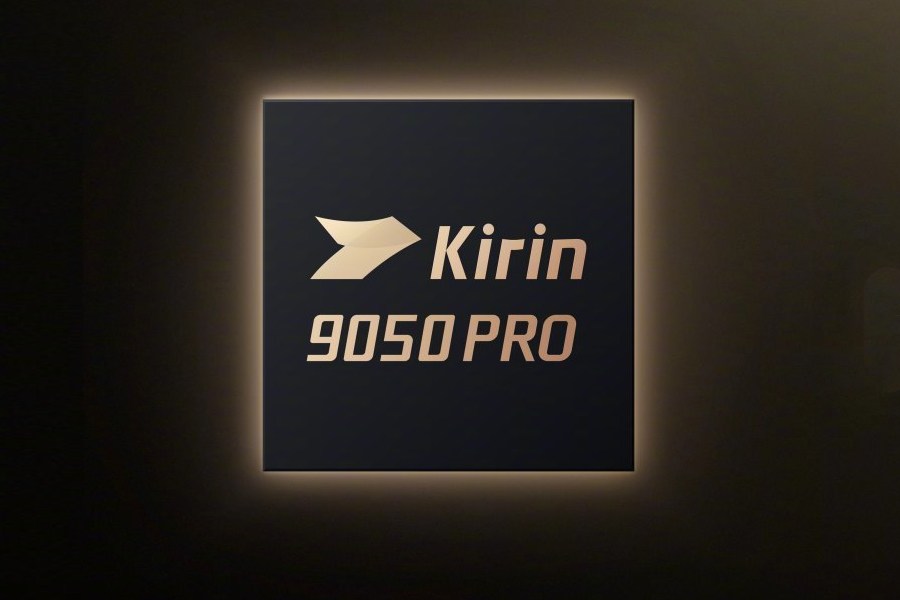
Kirin 9050 Pro’s AI-generated image
According to details shared during the event, Huawei’s new chip platform is based on what the company calls the Tau, or τ, design principle. Zheng Jun, who serves as CTO of Huawei’s financial systems division, explained that the concept is more than a manufacturing theory and instead represents a broader redesign of chip engineering and supply chain coordination.
Huawei reportedly claims that the new chipset has already been integrated into the Mate 90 lineup and can achieve near-3nm-class performance levels. Recent reports suggest the processor may launch commercially as the Kirin 9050 Pro, although Huawei has not officially confirmed the final branding yet. The chip is also said to feature a logic stacking architecture that vertically layers key logic circuits instead of depending purely on smaller geometric scaling.
The approach reportedly allows Huawei to improve transistor density by 53.5 percent, reaching around 238 million transistors per square millimetre. Reports further suggest the architecture delivers performance levels close to Intel’s 18A process and early-generation TSMC 3nm technology. Huawei is also said to have improved power efficiency on performance cores by 41 percent while increasing peak clock speeds by 12.7 percent.
Apart from the chipset upgrades, the Mate 90 series is expected to focus heavily on flagship-grade performance and AI capabilities. Leaks suggest the smartphone lineup could debut officially in September this year. If these claims turn out to be accurate, the Mate 90 may become one of Huawei’s most ambitious flagship launches in recent years.
For more daily updates, please visit our News Section.

The rumor mill has been consistently spilling details about the OnePlus 16. Last year, the brand increased the screen refresh rate to 165Hz on the OnePlus 15, and there have been reports suggesting that the OnePlus 16’s display may support up to a 240Hz refresh rate. A new leak, courtesy of tipster Smart Pikachu, appears to reveal a more accurate refresh rate. Here’s a look at the details that have emerged in the latest leak.
OnePlus 16 key specifications tipped
According to the tipster, the upcoming OnePlus 16 is currently being evaluated with a 185Hz display featuring ultra-narrow bezels on all four sides. The device is also said to include a 3x periscope telephoto camera with a 200-megapixel sensor, along with a dedicated AI button.
While the specifications are still part of the engineering validation stage, the leak suggests that OnePlus is focusing heavily on display smoothness, imaging upgrades, and AI-driven features for its next-generation flagship.
Previous reports have revealed that the OnePlus 16 may feature a BOE-supplied 6.78-inch LTPO OLED panel equipped with a custom touch control IC and support for the BT.2020 color gamut.
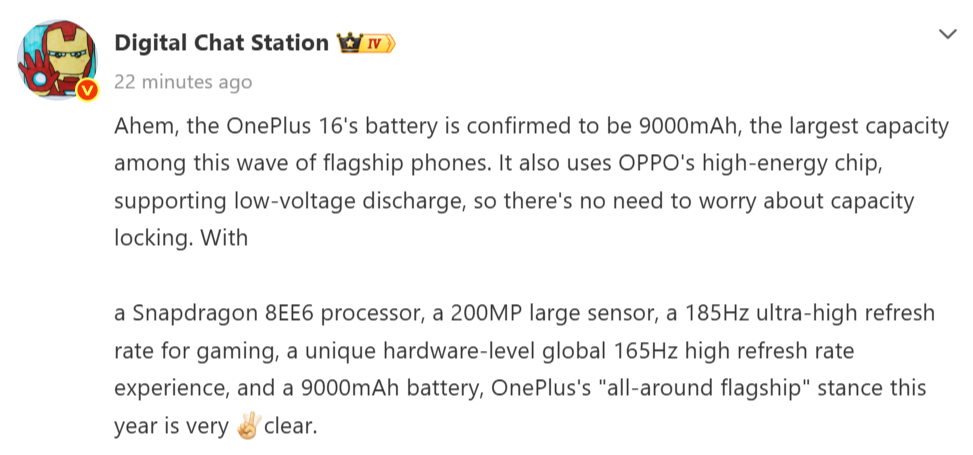
Under the hood, the OnePlus 16 may feature the Snapdragon 8 Elite Gen 6 Pro chip, which could bring support for LPDDR6 RAM. It is also said to pack a massive battery of around 9,000mAh, although charging details have not appeared in any leaks yet. However, it would not be surprising if the device continues to offer 100W wired and 50W wireless charging, similar to the previous generation.
As for optics, apart from the 200-megapixel Samsung HP5 periscope telephoto camera, the rear setup is expected to include a 50-megapixel primary camera and a 50-megapixel ultrawide sensor. Other rumored features include an X-axis bionic vibration motor, symmetrical dual speakers, an ultrasonic in-screen fingerprint sensor, and IP68/69-rated dust and water resistance.
For more daily updates, please visit our News Section.
The case of the EarFun Clip 2 is made of basic black plastic which feels durable and has already withstood a couple drops with no damage. The ear-clips themselves are IPX 55 dust and water resistant. A standout feature is the flexible Ni-Ti connecting frame coated in ultra soft silicone. They have less clamping pressure compared to the other ear-clip designs making comfort notably better than the competition while maintaining a secure fit. A single mechanical button is easier and more reliable to use compared to haptic controls on more expensive models and is a standout feature.
Connectivity
The Clip 2 uses Bluetooth 6.0 which in theory allows for a lower latency and a stable connection over longer distances. I was able to maintain a strong connection after going downstairs into my garage where other ear-clips using Bluetooth 5 start to break up. Advertised range is 15 meters without obstacles and I was consistently able to get an impressive range of 10 meters through floor and walls. Dual device connectivity is a plus and was seamless between my iPhone and iPad. If you have an Android device, Google Fast Pair allows for one touch connectivity. Just place the Clip 2 in proximity to an Android device and a pop-up will appear making pairing a breeze. Latency was very low in normal mode and was just fine for watching videos. There is a low latency mode however only the pickiest of gamers will need to use this.
Sound
The Clip 2 uses 3D Surround Sound and BassSurge™ technology combined with a 12mm dual-magnetic titanium composite driver and redesigned elliptical sound port. The Clip 2 also supports Hi-res audio and SBC, AAC and LDAC codex. The overall default sound signature is vocal forward with subdued bass. The bass boost preset, which can be accessed in the Earfun app, makes the sound signature neutral. This preset provides just enough clear and precise bass to make the listening experience satisfying. The soundstage of the Clip 2 is standout and gives you a good sense of depth. Like other ear-clips, the bass drops off around 80hz due to the open design. Overall, the clarity, soundstage and technical performance are very good at this price point however a little more bass would be welcome. The app is easy and intuitive to use and most importantly stable. A variety of different sounds modes are accessible in the Earfun app. Automatic detection and pairing occur when you open the app. A10-band equalizer in the app was my preferred method of adjusting the sound and allows you to save multiple tunings. During my testing the app prompted me to do two firmware updates. Both were easy to do.
Calls
Sounds quality for both the listener and caller was very good in quieter environments. The Quad microphone ENC system reduced background noise in more challenging environments and provided good quality for the listener. Because of the open design, I had to increase the volume of the Clip 2 quite a bit in windy and loud environments. This is a common issue with ear-clip designs. The range you could maintain call was standout and I was able to maintain conversations with no breakup despite being a few rooms away from my phone.
AI translation
I was surprised to see real-time AI translation feature. There are over 100 languages and dialects. I used the AI translation feature for both Japanese and Spanish. It did a decent job and would be a great tool for adventurous people who travel.
Battery life
Earfun claims a single charge will last for 10 hours and a total of 40h with the case. In addition to standard USB-C charging, the Clip 2 can be charged wirelessly. This feature is usually only found on flagship ear-clips.
Conclusion
Overall, the EarFun Clip 2 is an easy product to recommend. It has excellent comfort due to its flexible Ni-Ti connecting frame and a mechanical button which is easier to use than the competition. Bluetooth 6.0 maintains solid connection at longer distances and through walls. The sound quality is resolving with good soundstage, different preset sound modes and 10-band equalizer. The Earfun app is easy to use and stable. Call quality is good for both the listener and caller. When combined with the AI translation feature and solid battery life, there is very little not to like.
Moondrop has officially announced its latest flagship in-ear monitor (IEM), the Armature Art 24, a high-density 24-driver balanced armature earphone built around an unusually complex single-sided acoustic design. The IEM is priced at 6,999 yuan (~ $1030) and is available starting today.
Moondrop Armature Art 24 Specifications
At the center of the Armature Art 24 is its driver layout. Each side packs 24 balanced armature units, split into 16 bass drivers, 4 mid-high drivers, and 4 ultra-high drivers. Such a packed setup ensures tighter control over density, dynamics, and phase alignment across the frequency range.
The low end is handled by what Moondrop calls its SUPERWOOFER patented module, built around 16 balanced armatures working together as a unified bass system. Mid and high frequencies are managed through multiple aluminum-magnesium diaphragm balanced armatures, while ultra-high frequencies are handled by four dedicated tweeter units designed for extended detail and faster response.
To support this dense internal architecture, the earphones rely on precision 3D-printed acoustic channels. These are designed to reduce phase interference and maintain timing accuracy across multiple driver groups.
Moondrop is also using its patented progressive time-difference simulation to reproduce a more natural spatial decay and reverberation pattern.
As for the design, the Armature Art 24 uses a 0.78mm 2-pin detachable cable system and ships with interchangeable plugs for both 3.5mm single-ended and 4.4mm balanced outputs. The cable itself is a hybrid build combining 19 cores of single-crystal copper and 19 cores of pure silver, wrapped in a braided outer layer for durability.
Inside the box, users also get three sets of ear tips, including traditional silicone, UC tips, and a new ATF foam-silicone option designed for better isolation without excessive pressure or heat buildup.
On the technical side, the IEM has a frequency response range of 7Hz to 35kHz, with an effective IEC-standard range of 20Hz to 20kHz. Sensitivity is rated at 119dB/Vrms, and total harmonic distortion is kept at or below 0.7% at 1kHz. Moondrop tuned the product using its PopAvg-DF target with a slight bass lift, measured in its free-field lab using a B&K5128C head simulator.
For more daily updates, please visit our News Section.

Amazon has expanded its smart speaker portfolio in India with the launch of the Amazon Echo Dot Max and Amazon Echo Studio. The new Alexa-powered devices focus on delivering a more premium audio experience while also improving smart home connectivity and automation features. Alongside upgraded sound systems, Amazon has introduced a refreshed design and faster performance with its custom silicon chips.
Amazon Echo Dot Max and Echo Studio key features
Amazon Echo Dot Max and Echo Studio
The Echo Dot Max arrives as the most advanced Echo Dot speaker from Amazon so far. It features a redesigned two-way speaker setup with a dedicated woofer and tweeter combination aimed at producing deeper bass and clearer vocals.
According to Amazon, the speaker delivers nearly three times more bass compared to the previous Echo Dot (5th Gen). The device also adapts audio output based on room conditions to improve the listening experience.
The Echo Studio is designed for users looking for a more immersive entertainment setup. It supports spatial audio with Dolby Atmos and includes a high-excursion woofer paired with three full-range drivers for room-filling sound.
Amazon Echo Studio Max
Amazon has also shifted to a more compact spherical design with a fabric finish while maintaining acoustic transparency. Both smart speakers support music streaming through services such as Amazon Music, Spotify, Apple Music, JioSaavn and Audible.
Apart from audio upgrades, the new Echo devices include Amazon’s Omnisense technology, which combines audio, motion, ultrasound and temperature sensing for smarter home automation. Users can connect compatible smart lights, fans, air conditioners and other devices through built-in support for Wi-Fi, Zigbee, Thread, Matter and Bluetooth.
Amazon Echo Studio
The Echo Dot Max is also the first device in the Echo Dot lineup to feature a built-in smart home hub. Amazon says the custom AZ3 chips inside the speakers improve Alexa wake-word detection and conversation responsiveness.
Amazon Echo Dot Max and Echo Studio: Price and availability
The Echo Dot Max has been launched in Graphite, Amethyst and Glacier White color options at Rs 10,999. The Echo Studio comes in Graphite and Glacier White shades and is priced at Rs 23,999.
Both smart speakers are now available through Amazon India and Flipkart. Amazon has also confirmed that the devices will support Alexa+, its upcoming generative AI-powered assistant, once it becomes available in India.
For more daily updates, please visit our News Section.
Compact flagship phones are becoming more powerful than ever, and the Vivo X300 FE and Xiaomi 17 prove just how competitive this category has become. Both devices pack premium designs, flagship Snapdragon chipsets, advanced camera systems, and massive batteries into relatively compact bodies, but they target slightly different users. The Vivo X300 FE focuses on balance, portrait photography, and battery efficiency, while the Xiaomi 17 pushes harder toward raw performance and premium multimedia features. Here’s a detailed comparison to see which compact flagship delivers the better overall experience.
Major Features:
Feature
Vivo X300 FE
Xiaomi 17
Winner
Design & Build
Glass back, aluminum frame, IP68/IP69
Glass back, aluminum frame, IP68
Vivo – Better water resistance and more rugged durability.
Display
6.31-inch LTPO AMOLED, 5000 nits
6.3-inch LTPO AMOLED, 3500 nits, Dolby Vision
Xiaomi – Richer multimedia experience with Dolby Vision support.
Brightness
5000 nits peak
3500 nits peak
Vivo – Better outdoor visibility and HDR brightness.
Protection
Mohs level 4
Dragon Crystal Glass, Mohs level 6
Xiaomi – Stronger display protection.
Processor
Snapdragon 8 Gen 5
Snapdragon 8 Elite Gen 5
Xiaomi – Faster CPU and GPU performance.
GPU
Adreno 829
Adreno 840
Xiaomi – Better gaming and graphics performance.
RAM & Storage
Up to 12GB + 512GB
Up to 16GB + 1TB
Xiaomi – More premium memory options.
Cooling & Gaming
Bypass charging support
Standard flagship cooling
Vivo – Better for long gaming sessions with reduced heat.
Main Camera
50MP + 50MP periscope + 8MP ultrawide
50MP + 50MP telephoto + 50MP ultrawide
Xiaomi – More balanced flagship camera setup overall.
Zoom Camera
3x periscope with Zeiss optics
2.6x telephoto
Vivo – Stronger zoom and portrait photography.
Ultrawide Camera
8MP ultrawide
50MP ultrawide
Xiaomi – Sharper and more detailed ultrawide shots.
Selfie Camera
50MP AF selfie
50MP AF selfie with HDR10+
Xiaomi – Better selfie video capabilities.
Video Recording
8K, 4K 120fps
8K HDR, Dolby Vision, LOG recording
Xiaomi – More advanced video features for creators.
Audio
Stereo speakers
Stereo speakers with Dolby Atmos & Hi-Res audio
Xiaomi – Better multimedia audio experience.
Battery
6500mAh
6330mAh Global / 7000mAh China
Xiaomi – Bigger battery potential in China variant.
Wired Charging
90W wired
100W wired
Xiaomi – Slightly faster charging speeds.
Wireless Charging
40W wireless
50W wireless
Xiaomi – Faster wireless charging support.
USB
USB Type-C 2.0
USB Type-C 3.2 with DisplayPort
Xiaomi – Faster data transfer and external display support.
Software Support
Android 16, 5 major updates
Android 16, HyperOS 3
Vivo – Clear long-term update commitment.
Price
Priced around ₹80,000
Priced around ₹90,000
Vivo – Better value for flagship-level features.
Overall Value
Balanced flagship experience
Maximum flagship hardware
Vivo – More practical pricing and better value for most buyers.
Disclaimer: Specs are based on available data. Actual performance may vary. Verify details from official sources before buying.
The Vivo X300 FE and Xiaomi 17 both focus heavily on premium compact flagship styling, but they approach it differently. Vivo keeps things slightly cleaner with a minimalist glass-and-metal finish and adds IP68/IP69 protection, giving it an edge for durability and outdoor confidence. The curved frame and balanced grip make it feel more practical for long gaming or photography sessions. Xiaomi, meanwhile, leans toward a more refined luxury appearance with Dragon Crystal Glass protection and a sharper flagship-like finish that feels extremely polished in hand.
Display Quality
Both devices feature LTPO AMOLED panels with 120Hz refresh rates and excellent PWM dimming for eye comfort. The Vivo X300 FE stands out with its extremely high 5000-nit peak brightness, making HDR content and outdoor visibility impressive. Xiaomi 17 counters with Dolby Vision, HDR Vivid, and richer color processing, giving movies and streaming content a slightly more cinematic appearance. Xiaomi’s panel feels more vibrant overall, while Vivo’s display appears slightly more natural and easier on the eyes during longer usage.
Verdict
The Vivo X300 FE feels more rugged and practical, especially for users who prioritize durability and outdoor usability. Xiaomi 17 delivers a more premium flagship presentation with a stronger multimedia appeal. Vivo wins slightly for brightness and comfort, while Xiaomi feels more refined for entertainment-focused buyers.
2. Specifications Including Battery
Performance
The Vivo X300 FE runs on the Snapdragon 8 Gen 5 chipset, which already delivers flagship-grade gaming, multitasking, and thermal efficiency. Every day performance feels extremely fluid, and the optimized software tuning helps sustained gaming remain stable. Xiaomi 17 pushes things further with the Snapdragon 8 Elite Gen 5, offering noticeably higher CPU and GPU clocks. Heavy gaming, AI processing, and demanding editing workloads feel faster on the Xiaomi, especially with its stronger graphics hardware and faster USB 3.2 support.
Battery and Charging
Battery life is excellent on both phones. Vivo packs a large 6500mAh battery with 90W wired and 40W wireless charging, making it one of the more balanced charging setups in this segment. Xiaomi 17 offers a slightly more aggressive setup with 100W wired and 50W wireless charging. The Chinese version’s 7000mAh battery is especially impressive for power users. Vivo, however, includes bypass charging, which helps reduce heat during gaming and feels genuinely useful in daily use.
Verdict
Xiaomi 17 delivers stronger raw performance and slightly faster charging technology, making it the better pick for heavy flagship users. Vivo X300 FE still feels more balanced overall thanks to cooler sustained performance, bypass charging, and excellent battery optimization.
3. Camera
Main and Secondary Lenses
The Vivo X300 FE focuses heavily on portrait and zoom photography. Its Zeiss-backed camera system produces cleaner skin tones and more natural depth effects, while the 3x periscope lens gives it stronger long-range versatility. The optional Zeiss zoom lens attachment also adds a unique photography-focused advantage rarely seen in compact flagships. Xiaomi 17 takes a more balanced flagship-camera approach with three high-quality 50MP sensors and Leica tuning. Photos from the Xiaomi tend to look richer and more dramatic, especially in HDR scenes and low light.
Selfie Camera
Both phones feature high-resolution 50MP selfie cameras with autofocus support, making them excellent for content creators and video calls. Vivo delivers softer and more flattering skin processing, while Xiaomi produces sharper selfies with slightly better dynamic range. Xiaomi also supports HDR10+ selfie recording, giving it a more premium video-focused edge for creators.
Verdict
The Vivo X300 FE feels more photography-focused, especially for portraits and zoom shots. Xiaomi 17 offers a more complete flagship camera experience with stronger ultrawide performance, richer HDR processing, and superior video versatility. Vivo suits portrait lovers, while Xiaomi feels better for all-around camera usage.
4. Pricing
The Vivo X300 FE is priced around ₹80,000, while the Xiaomi 17 is priced around ₹90,000. That ₹10,000 gap places both devices firmly in the premium flagship category, but the value proposition differs quite a bit. Vivo positions itself as a compact flagship with strong cameras, excellent battery life, and practical features that feel tailored for daily usability. Xiaomi aims more directly at ultra-premium flagship buyers by offering higher-end chipset performance, better display technologies, stronger multimedia support, and more advanced charging hardware.
Is the Price Justified?
The Vivo X300 FE feels aggressively priced considering the Zeiss optics, periscope camera, wireless charging, and large battery setup. Xiaomi 17 justifies its higher pricing through its more powerful chipset, Leica imaging system, Dolby Vision support, and stronger flagship-grade hardware package overall. Xiaomi clearly targets users wanting maximum specifications, while Vivo focuses more on balance and usability.
Verdict
Vivo X300 FE offers stronger value for money and feels easier to recommend for most buyers. Xiaomi 17 is worth the premium mainly for enthusiasts who want top-tier performance and a more complete flagship multimedia experience.
Disclaimer: Prices are approximate and may vary based on country, region, launch timing, and applicable taxes. Always check whether the listed price is for a China unit or a global/international variant when purchasing.
5. Conclusion
The Vivo X300 FE stands out through its Zeiss partnership, periscope-focused photography setup, bypass charging support, and brighter display tuning. It feels designed for users who want a dependable compact flagship that excels in battery life and portrait photography without becoming overly aggressive in software tuning. Xiaomi 17, meanwhile, feels like a true performance flagship with a stronger chipset, Leica-enhanced imaging, Dolby Vision support, USB 3.2 connectivity, and more advanced wireless charging capabilities.
Both phones succeed in slightly different ways. Vivo feels calmer, more practical, and easier to live with daily, especially for photography-focused users. Xiaomi feels more ambitious and premium, particularly for gamers, creators, and multimedia-heavy users who want the latest flagship technologies packed into a compact design.
Verdict
Vivo X300 FE is the smarter value-focused flagship with excellent battery life and strong portrait photography. Xiaomi 17 feels more premium and technically superior overall, making it the better choice for buyers seeking maximum flagship performance and multimedia capabilities.
Disclaimer: This comparison is based on the specifications provided and is intended for general informational purposes. Actual performance, camera results, battery life, and overall experience may vary depending on real-world usage, software updates, and individual preferences.
Luna has unveiled its first wearable device called the Luna Band, alongside the opening of its official waitlist. The new wearable focuses on personalized health guidance instead of traditional fitness tracking, combining voice-based interactions with an AI-powered health intelligence platform called LifeOS.
The company says the device is designed to help users manage their daily routines through real-time health insights and contextual recommendations.
Luna Band focuses on real-time health guidance
Luna Band
The Luna Band is built around a voice-first approach and continuously tracks body signals to create a simplified day plan for the user. Instead of opening to graphs and dashboards, the companion app reportedly starts with a “Today” view that highlights tasks, recovery guidance, nutrition suggestions and productivity recommendations. The wearable also supports haptic alerts that notify users about actions throughout the day, such as ideal focus periods or reminders related to caffeine and recovery.
Luna Band
Luna says LifeOS can combine wearable data with additional health inputs such as food habits, blood markers and broader medical context to generate more personalized recommendations. The platform is also designed to offer cause-and-effect observations. For example, it may explain how a late coffee affected deep sleep duration instead of only displaying sleep statistics.
The company has also integrated voice-based logging into the app experience. Users can reportedly speak naturally to log meals, activities or habits instead of manually entering details. Luna claims this helps reduce the friction often associated with health-tracking apps. The platform further includes different built-in micro-apps covering stress, nutrition, training, supplements and productivity features.
Waitlist and availability details
Luna Band
Luna has confirmed that the first release, called Drop 1, will be invite-only. Shipping is expected to begin by the end of July 2026. The company has already opened the official waitlist through its website, although pricing details have not yet been revealed.
The Luna Band appears aimed at users looking for more proactive health guidance rather than basic activity tracking.
For more daily updates, please visit our News Section.

Xiaomi has introduced a new handheld fan under its Mijia lineup in China. The new Xiaomi Mijia Handheld Fan is now available for crowdfunding on Xiaomi Mall for 169 yuan, which is roughly $24.
The new fan is designed for outdoor use during summer while being portable. It can deliver an airflow volume of 250m³/h and push air as far as 5 meters. The company claims this allows the fan to cool users even in open outdoor spaces.
The highlight of the Mijia Handheld Fan is its 100-level stepless speed adjustment system. Users can adjust airflow from a very gentle breeze to a stronger cooling mode depending on the situation. Xiaomi says this makes the fan suitable for different activities such as commuting, camping, concerts, hiking, and waiting outdoors in hot weather.
High-speed DC motor delivers up to 8.5 m/s wind speed
The fan is powered by a high-performance DC motor that spins at up to 10,000 RPM. According to Xiaomi, the airflow speed can reach 8.5 meters per second. The company also mentions that the fan includes a diagonal flow impeller and an intelligent wind control algorithm to make airflow smoother while reducing sudden speed changes and noise.
The device packs a 5000mAh battery, which Xiaomi says can provide up to 40 hours of use on a full charge. It uses a Type-C charging port and also supports charging through a power bank. Xiaomi claims that charging the fan for 10 minutes can provide up to four hours of usage.
In terms of design, the fan weighs around 260 grams and is compact enough to fit inside a backpack. Xiaomi also includes a detachable crossbody strap.
The device also features an LED display that shows battery level and wind speed settings. Xiaomi says the built-in sliding switch helps prevent accidental activation during travel or storage.
For more daily updates, please visit our News Section.
The stable One UI 8.5 rollout is gaining momentum, as the update has gone live for a bunch of Galaxy devices. Samsung began its global rollout on May 11, starting with premium models like the Galaxy S25 series, Galaxy Z Fold 7, and Galaxy Z TriFold. But it didn’t take long to expand it to cheaper models like the Galaxy A16.
Samsung spent 5 months in beta testing, which was quite longer than usual, and made us wonder whether this delay would also impact the One UI 9 release. But fortunately, things are looking back on track as the stable update has already been released for over a dozen Galaxy devices.
The Galaxy S25 phones were the first recipients of the rollout, but it was surprising to see phones like the Galaxy S25 Edge receiving the update at the same time, despite not being a part of the beta program. Just a few days later, the update began rolling out to mid-range phones, starting with the Galaxy A56 and Galaxy A36.
Some premium phones are still waiting for the One UI 8.5 update as I write this post, but that isn’t delaying the rollout for mid-range and cheaper models. In fact, the rollout pace has gotten quicker. Just this week, the One UI 8.5 update has reached many A and M series phones, including Galaxy M56, Galaxy A35, Galaxy A55, and Galaxy A16 5G.
Here’s a list of Galaxy devices that have received the One UI 8.5 update:
Unlike previous mid-cycle updates, One UI 8.5 is confirmed to be released for a wider range of Galaxy phones and tablets. So, you can expect the list to grow bigger in the coming days. Unfortunately, Samsung hasn’t published a list of eligible devices, but we’ve prepared one based on our understanding. You can take a look at it here.
We’ll continue to update you with the latest details in our Samsung section. You can visit the page regularly, or follow our Telegram channel to get instant notifications.
Xiaomi has launched a new smart home tool called the Xiaomi Mijia Electric Straight Handle Screwdriver in China. The product will go on crowdfunding next Wednesday for 99 yuan, which is $15 in conversion.
Xiaomi Mijia Electric Straight Handle Screwdriver features
The new electric screwdriver is designed for home repairs, furniture assembly, and other everyday tasks. It comes with three adjustable torque levels. In electric mode, the screwdriver can deliver up to 4 N·m of torque, while manual mode increases the maximum torque to 8 N·m for tougher screws.
The screwdriver has a built-in 2000mAh battery. According to Xiaomi, a full charge is enough to tighten around 600 screws, making it suitable for long repair or installation sessions without frequent charging. The screwdriver also supports universal Type-C charging.
The product uses an all-metal planetary gearbox, which improves stability and durability during heavy use. The company claims the gearbox can maintain stable output even under high-intensity operation while reducing the chances of slipping or jamming.
The screwdriver includes a magnetic bit holder that helps keep screws in place during installation. Xiaomi says this feature can make alignment easier, especially in tight spaces. However, the magnetic function mainly works with ferrous and iron-based alloy screws.
The package includes 18 screwdriver bits in total, including nine long bits and nine short bits. Xiaomi has also added integrated storage inside the carrying case to keep the main unit and accessories organized.
Other features include a built-in ring-shaped LED light for working in dark areas and a one-button system for switching between forward and reverse rotation. The company says the compact EVA storage case is impact-resistant and easy to carry and store.
For more daily updates, please visit our News Section.

Honor is reportedly working on the Magic 9 series, which is said to include multiple models. A leak from tipster Digital Chat Station in January this year suggested that the Honor Magic 9 could feature a 6.36-inch display, while the Magic 9 Pro/Pro Max could be equipped with a 6.85-inch display. Today, the tipster shared a new Weibo post revealing additional details about the Magic 9.
Honor Magic 9’s key details tipped
According to the leak, the Honour Magic 9 features a 6.36-inch OLED LTPS display and is currently being tested with Qualcomm’s existing 3nm Snapdragon 8 Elite Gen 5 chipset, not the Snapdragon 8 Elite Gen 6 series as previously expected.
The Magic 9 is also said to pack a large battery that could start with an 8,000mAh capacity, which would be unusually high for a compact flagship. While it is said to support wireless charging, there is no information about the supported charging speeds. Other reports have also revealed that the Magic 9 will also offer full-level water resistance and an ultrasonic fingerprint sensor.
The leaked prototype is further tipped to feature a 64MP periscope telephoto camera, reportedly using the OmniVision OV64D sensor. Other expected features include an ultrasonic 3D fingerprint scanner along with IP68 and IP69 ratings for dust and water resistance.
A previous leak by the same source revealed that, apart from the 64-megapixel periscope camera, its rear setup will include a 200-megapixel camera featuring a 1/2.8-inch large sensor and a 50-megapixel ultra-wide sensor. Reports have also revealed that Honor will team up with German professional cinema industry brand ARRI to offer an enhanced videography experience on the Magic 9 lineup.
As far as the launch is concerned, the Honor Magic 9 series is expected to break cover in October this year in China.
For more daily updates, please visit our News Section.

In Malaysia, the recently unveiled Oppo Find X9s is positioned lower than the existing Find X9. The reason behind it is that the X9s packs slightly inferior specs. However, when it debuted in India, it was positioned higher than the X9, which was a bit surprising. Finally, the brand restructured the X9’s price in India, and it now costs more than the X9s.
Oppo Find X9 price revised in India
Oppo Find X9s
Oppo has reportedly increased the pricing of the Find X9 in India by Rs 10,000 across both storage variants. According to details shared by tipster Abhishek Yadav on X, retailers have already started receiving updated pricing information, while some retail platforms have also begun reflecting the revised rates online.
The 12GB+256GB variant is now said to cost Rs 84,999 instead of Rs 74,999. Similarly, the 16GB+512GB edition has reportedly moved from Rs 84,999 to Rs 94,999. In comparison, the 12GB+256GB and 12GB+512GB versions of the Find X9s are priced at Rs 79,999 and Rs 89,999, respectively.
It should be noted that the Find X9 is currently available for Oppo’s online store, Flipkart, Amazon, and other retailer sites. So, the price hike could be in the offline market, and it may take some time to reflect online. If the X9 is still available at a store with its original pricing, it would be the best time to purchase it.
The move changes the positioning of the Find X9 in Oppo’s flagship lineup. When the Find X9s launched in India recently, it arrived with a higher starting price than the Find X9 despite carrying slightly toned-down hardware in certain areas. With the revised pricing now in place, the hierarchy between the two devices appears more aligned.
Industry observers believe rising memory and component costs could be one of the major reasons behind the price increase. Smartphone brands across segments have started adjusting pricing in recent months as manufacturing, logistics, and supply chain expenses continue to rise globally. Similar price revisions have also been seen from other brands, including OnePlus.
Why the Find X9 still stands out
Even with the higher pricing, the Oppo Find X9 remains one of the more balanced premium smartphones currently available. The device features Hasselblad-tuned cameras, a 7,000mAh battery, flagship-grade performance, and a relatively compact 6.59-inch display compared to many large-screen rivals in the segment. However, availability has also become limited lately, especially for the 16GB RAM version, which has gone out of stock on several platforms.
For more daily updates, please visit our News Section.
Some of the most exciting phones in the world right now are ones you simply cannot walk into a store and buy, not if you live in the United States, anyway. While Americans are busy debating iPhone versus Pixel, a whole other tier of smartphones is being sold in China, Europe, and parts of Asia that would make your current device feel embarrassingly ordinary.
These phones push cameras, screens, and designs further than anything available at your local carrier store. You just can’t have them. Well, not easily.
To be clear, this isn’t a list of what’s coming soon or what might launch in the US someday. These are phones you can buy right now, just not in the US. Some are blocked due to trade restrictions. Others never made the trip because the manufacturers decided the market wasn’t worth the trouble. A few exist in a legal grey area that makes importing them genuinely complicated. Whatever the reason, they’re out there, and they’re good. Really good.
So if you’re curious what the rest of the world is using. Or if you’re the kind of person who’s already Googling import guides, here’s what you’re missing.
Xiaomi has been building its partnership with Leica for a few years, and the 17 Ultra is where that work really pays off. The main camera sits on a one-inch sensor, and we called it one of the most ambitious smartphones of the year after getting hands-on time with it at launch.
What sets it apart from the usual flagship camera race is the Leica Essential mode, which gives photos their emotions back. Rather than chasing sharpness and perfect accuracy, it pulls back highlights, lets shadows breathe, and adds a subtle grain that makes images feel like they were taken with a real camera rather than optimised by a computer. It’s a genuinely different philosophy, and it works.
The battery is the biggest in any Xiaomi Ultra device yet, and the phone is rated for dust and water resistance at three separate ingress protection levels. It starts at around €1,249 in Europe.
The Find X9 Ultra is Oppo’s most powerful phone yet, and it comes with a camera setup that looks borderline excessive on paper. Two 200-megapixel sensors, a third 50-megapixel periscope, and a 50-megapixel ultrawide.
So as you might guess, the Find X9 Ultra targets the ultra-premium segment, competing directly with the Xiaomi 17 Ultra and Vivo X300 Ultra as one of the most camera-forward phones on the market.
The Hasselblad tuning on the camera gives the results a more natural, less processed quality that’s different from what Samsung or Google serve up. The Find X9 Ultra leans into a more expressive design with eco-leather options that give a tactile, character-driven feel.
It starts at Rs 169,999 in India, or about $1,776 at current exchange rates. Not cheap, but then again, you’re getting four cameras, with two of them shooting at 200 megapixels.
Vivo has been making some of the most interesting camera phones in the world for a couple of years now, and the X300 Ultra continues that streak. Though the upgrades this year are just too incremental.
Our first impression of the phone was that it might as well be called the X200s Ultra. Not to say the improvements aren’t noticeable, but modest compared to the generational leap of its predecessor.
That said, what it does well, it does exceptionally. For instance, the “Raw Lighting” mode dials back the computational processing to produce images that look more like they came from a professional camera than a phone. Saturation is reduced, sharpening is toned down, and the fine details come out more naturally. It’s the kind of feature that’s far more useful day-to-day than any flashy filter.
The main camera uses a Sony LYTIA 901 sensor, and Zeiss handles the colour calibration. The telephoto is a genuine upgrade over last year’s, though we found a noticeable difference only in low light. In good lighting, the gap between the X300 Ultra and X200 Ultra is minimal.
The 6,600mAh cell and 100W wired charging run everything. Available from around €1,999.
Huawei is the most complicated name on this list. US trade restrictions have essentially cut the company off from American markets, and using one here comes with real trade-offs — no Google services, limited app support, and software that takes some patience to work around.
With all of that said, the Pura 90 Pro Max’s camera system is genuinely worth knowing about. The Pro Max is the top of the lineup this time, and it leads with a 200-megapixel periscope telephoto camera, a first for any Huawei flagship. The phone also supports up to 20x telephoto video recording using that same lens, putting it in rarefied company on the zoom front.
The main camera uses a variable aperture that physically adjusts like a real camera — ranging from f/1.4 to f/4.0 — which gives you more control over depth of field than any fixed-lens phone can match. Huawei calls this its second-generation Red Maple Image technology, designed to maintain natural colours in complex lighting situations like sunsets or firelight, where other phones tend to go strange.
We compared the phone against the Vivo X300 Ultra, and while it delivers a more elegant and refined experience, it sits a step behind on raw display quality and outright performance. At around $1,199, it’s the most affordable phone on this list. Imported that is.
5. Huawei Pura X Max
Display 7.7-inch inner OLED (4:3 ratio) + 5.4-inch outer display, 120Hz Chip Kirin 9030 Pro Cameras 50MP main with variable aperture + 50MP periscope telephoto +12.5MP ultrawide Battery 5300mAh— 66W wired Build 5.2mm thin unfolded, 11.2mm folded, 229g Durability IP58/IP59
Most foldable phones fold to be taller and narrower, or they flip to be compact. The Pura X Max does something different. It folds horizontally to create a screen that’s wider rather than taller, closer in shape to a compact iPad than a regular phone. It is the industry’s first horizontally wide foldable with a 7.7-inch inner display and a near 4:3 aspect ratio.
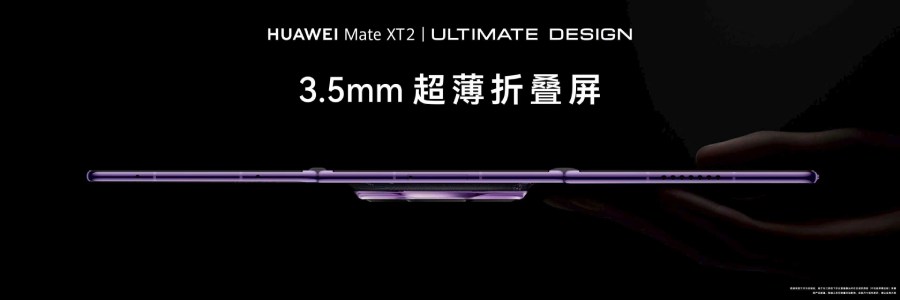
Such a design has a real upside. Watching video, reading, multitasking, editing photos, or anything you’d normally do on a small tablet is much more comfortable on a display shaped like this. The 5.4-inch outer screen is wide enough to handle messages and calls without unfolding. And despite the large displays, Huawei kept the weight to a reasonable 229 grams and the unfolded thickness to just 5.2mm.
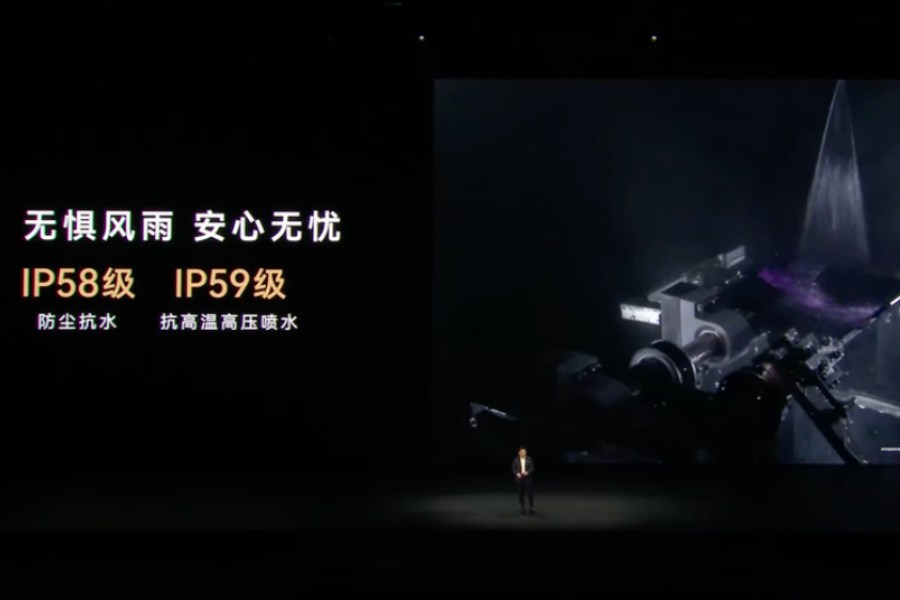
The same Google services caveats that apply to the Pura 90 Pro Max apply here, too. And the water resistance rating of IP58/IP59 is a step below what Honor manages on the Magic V6. But as a piece of hardware, thinking differently about the foldable form factor, there’s nothing quite like it.
6. Honor Magic V6
Display 7.95-inch inner LTPO 2.0 AMOLED, 2172×2352, 120Hz + 6.52-inch outer AMOLED Chip Snapdragon 8 Elite Gen 5 Cameras 50MP main + 64MP periscope telephoto + 50MP ultrawide Battery 6,660mAh (global) or 7,150mAh (China) — 80W wired, 66W wireless Durability IP68/IP69 — first foldable to achieve both ratings
Folding phones have always come with compromises you had to accept in exchange for the novelty. The Magic V6, which debuted at MWC 2026, is the clearest sign yet that Honor has figured out how to close that gap.
Our impression of the foldable was that the crease on the inner display is remarkably shallow, even after a week of heavy use. Honor’s new Super Steel design, rated for 500,000 folds, also feels solid and smooth throughout. It measures 8.75mm folded and just 4mm when open.
Where Honor brings real improvement is ingress protection. The Magic V6 is the first foldable phone in the world to earn both IP68 and IP69 ratings. Getting caught in the rain with a foldable has always been a mild source of anxiety. Not anymore, at least with this one.
The Magic V6 also offers an exceptional camera experience for a foldable. The main is a 50MP sensor that captures an incredible amount of detail, even after significant cropping during post-processing. The periscope telephoto lens supports 3x and 6x optical zoom, though, at 6x, AI processing is quite prominent.
7. What you should know before importing
Importing any of these phones is possible, but not always simple. You’ll want to research band compatibility carefully; not all models support the same 5G and LTE frequencies used in the US, which means you might end up with slower data speeds or limited coverage.
The Huawei devices in particular require workarounds for apps that rely on Google services. And warranty support? You’re largely on your own. But if you’ve ever looked at what’s available at your carrier and thought this is it? Now you know there’s a lot more out there. Just not here.
For more daily updates, please visit our News Section.
Baseus has released a new 30W, 20,000mAh power bank in China, and its main selling point is straightforward: you don’t have to remember to pack your charging cables. It is priced at 99 yuan ($14) and is now listed on JD.com.
Baseus 30W Power Bank Specifications
The power bank is built around a 2C+1A+1 Lightning configuration. Tucked neatly into the side of the chassis are two built-in cables. The USB-C cable handles up to 30W bidirectional fast charging, meaning you can use it to charge your phone or plug it into a wall adapter to recharge the power bank itself. The second built-in cable is a Lightning connector that outputs up to 20W, which is a useful inclusion for anyone still using older Apple hardware.

If you need to plug in additional devices, the top edge of the power bank houses two standard ports: a 30W USB-C port and a 22.5W USB-A port. When fully utilized, the device can charge up to four gadgets simultaneously, though charging speeds will naturally split across the active ports.
From a design perspective, the power bank measures 152.2 by 69.6 by 30.7mm and weighs 435 grams. It is a dense piece of hardware, but Baseus gave it rounded edges to make it easier to grip with one hand. The exterior has a textured finish to resist fingerprints and surface wear, and the front panel features a large, easy-to-read LED display that shows the exact battery percentage remaining. It is currently available in Light Brown and Light Blue.
Inside, the device packs a 20,000mAh lithium-ion battery with a rated energy of 74Wh, keeping it safely under the standard airline carry-on limit. Baseus estimates this capacity is enough to charge an iPhone 17 about 3.8 times, a Huawei Mate 80 around 2.5 times, and a Xiaomi 17 Pro twice.
Device compatibility covers the standard bases, with support for fast-charging protocols like PD 3.0, PPS, and QC 3.0. It also carries China’s 3C certification and includes an internal smart chip to manage standard safety protections against overcharging, short circuits, and temperature spikes.
We use cookies on our website to give you the most relevant experience by remembering your preferences and repeat visits. By clicking “Accept”, you consent to the use of ALL the cookies.
This website uses cookies to improve your experience while you navigate through the website. Out of these, the cookies that are categorized as necessary are stored on your browser as they are essential for the working of basic functionalities of the website. We also use third-party cookies that help us analyze and understand how you use this website. These cookies will be stored in your browser only with your consent. You also have the option to opt-out of these cookies. But opting out of some of these cookies may affect your browsing experience.
Necessary cookies are absolutely essential for the website to function properly. This category only includes cookies that ensures basic functionalities and security features of the website. These cookies do not store any personal information.

Any cookies that may not be particularly necessary for the website to function and is used specifically to collect user personal data via analytics, ads, other embedded contents are termed as non-necessary cookies. It is mandatory to procure user consent prior to running these cookies on your website.