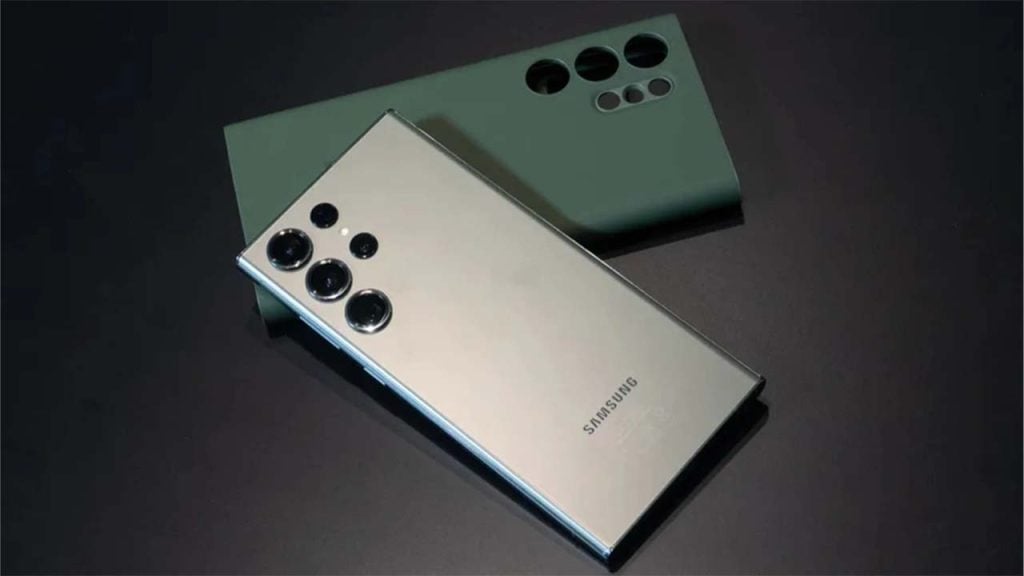
Samsung‘s Galaxy S24 Ultra offers all the latest features you’d expect from a 2024 smartphone. However, it’s gaining attention for an unusual issue: the S Pen stylus has an unpleasant burnt plastic smell.
The discussion around this unexpected quirk began on Reddit, where user LatifYil noted in a post that the S Pen on their Samsung Galaxy S24 Ultra “absolutely reeks.” Comments quickly poured in, with many confirming the issue.
Some comments added a touch of humor to the discussion, with one user amusingly stating, “Can confirm it’s a stinky boi.” Others described the smell as akin to “burnt plastic,” with a few even likening it to the distinct odor of a “cybertruck.”
Some users suggested that the smell on the S-Pen could be due to potential chemical coatings. However, Samsung’s EU community forum moderator provided a more mundane explanation.
Apparently, the S Pen’s close proximity to internal components causes it to heat up while stored. This, in turn, results in a “hot plastic” smell, similar to a car that’s been in the sun, says the moderator.
Interestingly, this odor isn’t limited to the S24 Ultra model. Previous generations like the Galaxy S23 Ultra and S22 Ultra also exhibit this trait, as reported by 9to5Google.
Curious about the issue, I checked my own Galaxy S22 Ultra and yes there was a faint odor in the S Pen. However, it wasn’t as strong as described.
Surprisingly, 9to5Google’s report highlighted that the older Note S20 Ultra stylus was odorless. It could be due to its glossy finish compared to the rubberized coating of newer models.
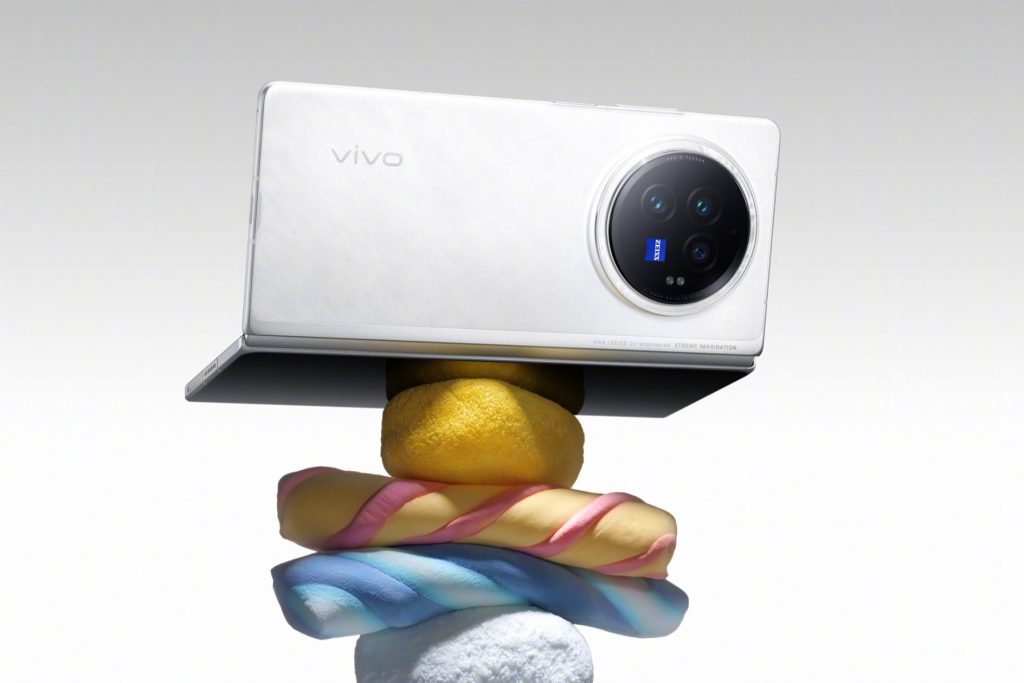
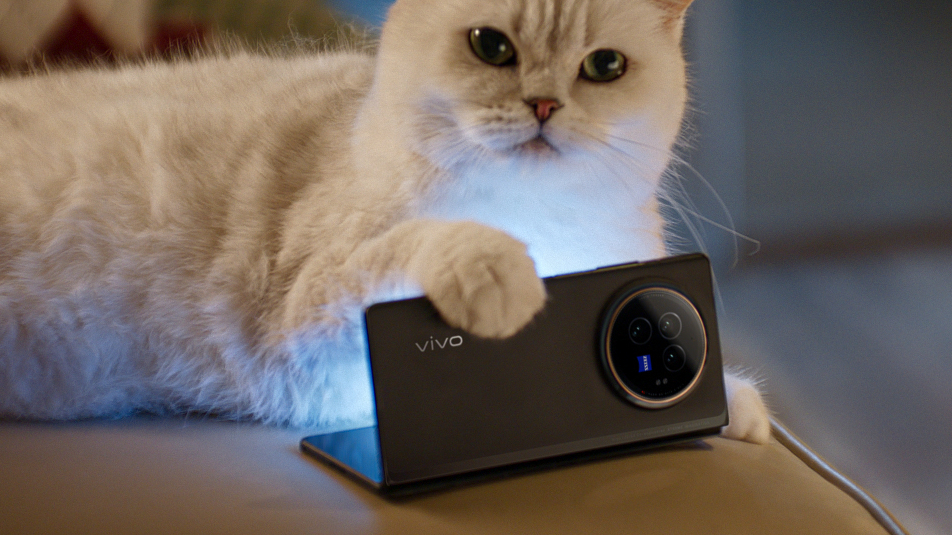
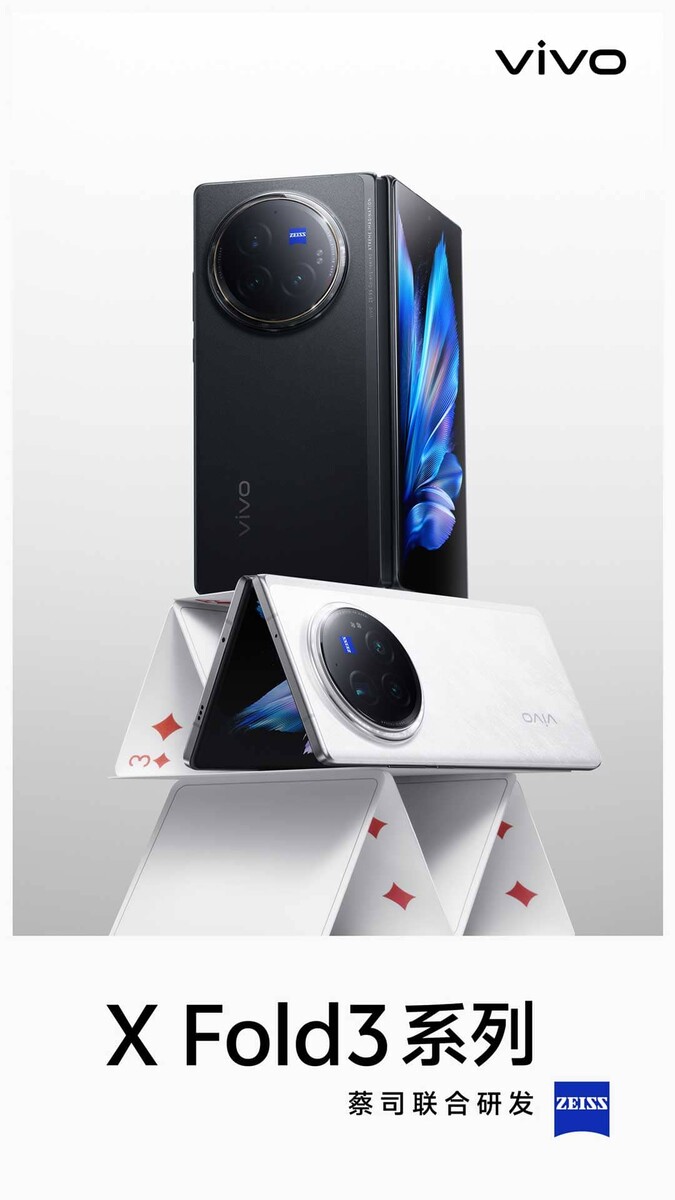
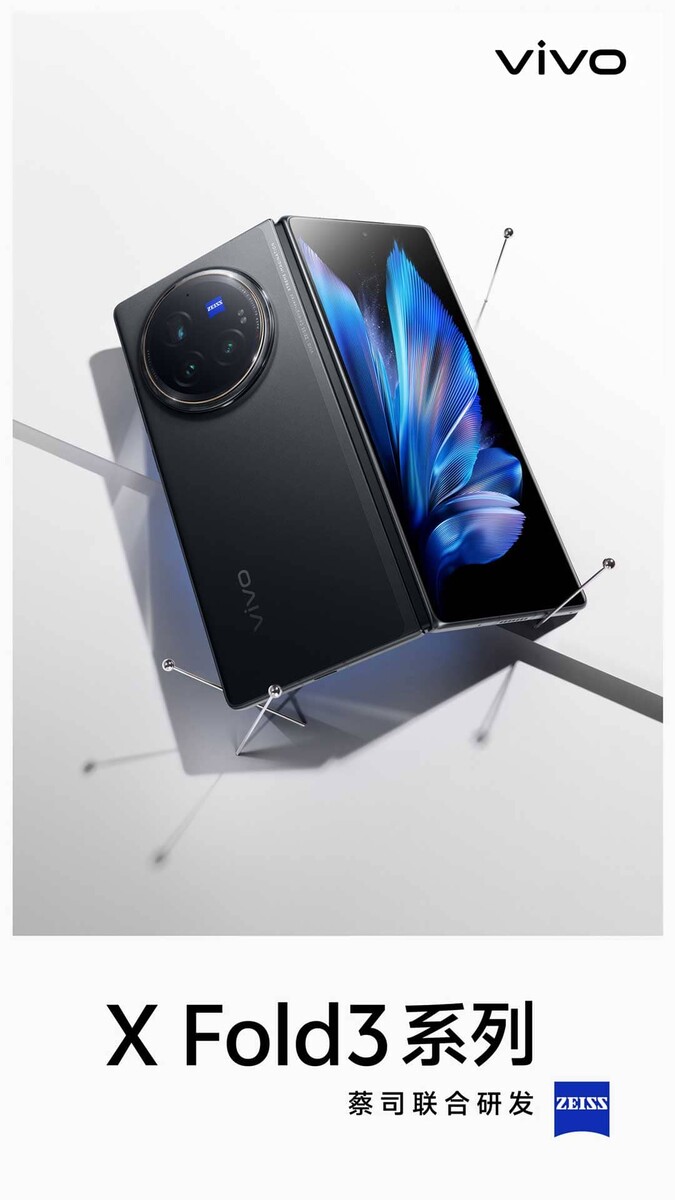
On March 26, Vivo will hold a launch event in China. At this launch event, the brand plans to debut a bunch of new products like the Vivo TWS 4 and the Pad 3 Pro. However, the star of the show will be Vivo’s latest foldable smartphone called the Vivo X Fold 3 series. The series will consist of a standard and a Pro model. Many details of both these smartphones are already available, so here’s everything that we can expect from the Vivo X Fold 3 series.
Design and display
While the overall visual design of the Vivo X Fold 3 series will remain quite similar to its predecessors, the brand has used “Armor Feather” body structure in the upcoming foldables that will make them quite tough, making them the world’s first foldable SGS five-star anti-drop certification. The hinge has also been improved to provide a longer life while causing less creasing of the foldable display.
The X Fold 3 Pro will measure 11.2mm when folded and 5.2mm when unfolded while weighing 236 grams. On the flip side, the standard model will weigh just 219 grams, making it lighter than the iPhone 15 Pro Max (221 grams), while measuring around 4.65mm when unfolded.
Leaks have revealed that both the X Fold 3 and the X Fold 3 Pro models will come with an 8.03-inch foldable OLED panel and a 6.53-inch OLED cover display. Both screens will support resolutions of 2748 x 1172 pixels and 2480 x 2200 pixels, respectively, and feature ultrasonic in-display fingerprint scanners. Both the inner and outer displays of these devices will offer 120Hz refresh rate and a peak brightness of 3000nits.
Performance
While Vivo has confirmed that the Pro model will feature a Snapdragon 8 Gen 3 SoC, there is no official word on the standard model. That being said, leaks indicate that it will debut with last year’s Snapdragon 8 Gen 2 chip. The phones feature LPDDR5x RAM and UFS 4.0 storage. Both of these foldables will come with up to 16GB RAM, while the Pro model has been leaked to offer two storage options: 512GB and 1TB. They will operate on Android 14-based OriginOS 4. As for the battery, the vanilla model is said to house a 5,600mAh or 5,700mAh battery with 80W fast charging, while the Pro model will have a 5,800mAh battery that supports 120W wired fast charging and 50W wireless charging.
If we talk about the performance, the Vivo X Fold 3 was recently spotted on Geekbench with an octa-core processor with a peak clock speed of 3.19GHz. It scored 2,008 points on the single-core test and 5,490 points on the multi-core test of Geekbench 6, which is quite impressive. On the other hand, the Vivo X Fold 3 Pro was spotted on the AnTuTu benchmark with a score of over 2.1 million points, which will make it the most powerful foldable on the market when it debuts.
Camera
The X Fold 3 Pro is said to feature an OV50H OmniVision 50-megapixel primary camera, boasting an f/1.68 aperture. It will be accompanied by an OV64B 64-megapixel periscope telephoto camera, offering 3x optical zoom, a 70mm focal length, and support for telephoto macro photography. A 50-megapixel ultra-wide camera is also expected to be onboard, along with a 32-megapixel front-facing camera and a 32-megapixel camera on the internal screen. The brand has already shared a bunch of camera samples of the X Fold Pro.
Vivo X Fold 3 Pro image samplesVivo X Fold 3 Pro image samples
The standard model is said to have a 32-megapixel on both the external and internal displays. While its rear camera setup could include a 50-megapixel OV50H main camera with Optical Image Stabilization (OIS), alongside a 50-megapixel ultra-wide lens and a 50-megapixel telephoto camera supporting up to 40X digital zoom.
Pricing
While no details about the standard model have surfaced regarding the pricing, a leaked promo poster has revealed that the Pro model will come in two variants: 16GB + 512GB and 16GB + 1TB, priced at 13,999 Yuan ($1,945) and 14,999 Yuan ($2,085) respectively.
Just 2 days ago Xiaomi officially announced the CIVI 4 Pro and there were some rumors that this model would be sold in the global market. But GSMChina has confirmed that these rumors are not true. The CIVI 4 Pro will be available in China and India. When a smartphone manufacturer launches its devices, it changes the name depending on the markets.
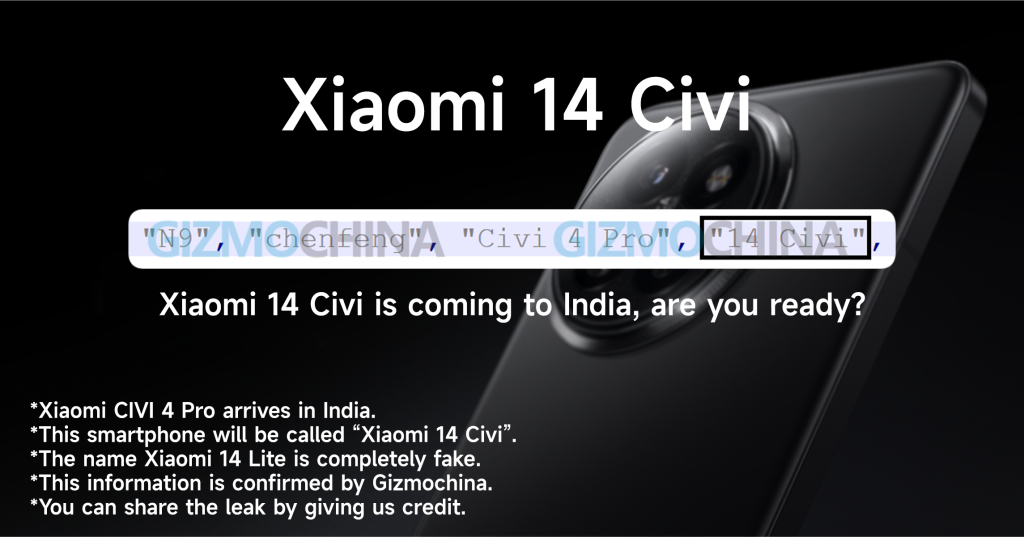
The new CIVI 4 Pro will be introduced with a different name in India. Here is the new Xiaomi 14 Civi! In fact, this is a rebranded CIVI 4 Pro and many features are almost identical. We don’t know the exact differences between the Xiaomi 14 Civi and the CIVI 4 Pro, but most features should be the same. We at Gizmochina team can now confirm that the new model will come as the Xiaomi 14 Civi.
Xiaomi 14 Civi
The Xiaomi CIVI series stands out with its stylish design. They also feature quality camera sensors. The Chinese manufacturer surprises everyone with the recently announced CIVI 4 Pro. Because this smartphone offers some world-first features. The first of these is the Qualcomm Snapdragon 8S Gen 3 SOC.
This high-performance SOC is a Snapdragon 8 Gen 3 with low clock speeds. The new 8S Gen 3 chip offers similar performance to last year’s flagship processor 8 Gen 2. In addition, the CIVI 4 Pro comes with a new Leica-powered camera system and is set to usher in a new era of mobile photography. For those waiting for the CIVI 4 Pro to come to India, we have a surprise for you! Xiaomi will launch this model with a name change.
Xiaomi 14 Civi
Gizmochina spotted the Xiaomi 14 Civi in Mi Code. This information is therefore reliable. Xiaomi CIVI 4 Pro is being rebranded under the name Xiaomi 14 Civi. The device has the codename “chenfeng” and the internal model number “N9“. Xiaomi had mentioned the similarities of this model with the Xiaomi 14 Pro at the launch. That’s why the CIVI 4 Pro, which is called Pro in China, will now come to India. Unfortunately, we do not know the sales price in India.
It is expected to be cheaper compared to the Xiaomi 14. Meanwhile, it has been fully confirmed that the name Xiaomi 14 Lite mentioned by DCS (Digital Chat Station) is fake. A model under the name Xiaomi 14 Lite will not be introduced. In addition, the Xiaomi 14 Civi will remain exclusive to the Indian market. It will not be introduced in the global market. What do you think about the new Xiaomi 14 Civi? Let us know what you think in the comments section!
Baseus has launched a new pair of clip-on earphones, the AirGo 1 Ring, featuring an open-ear design and a total battery life of 25 hours. The earphones are priced at 138 yuan (around $20) and are available on JD.com.
Baseus AirGo 1 Ring Specifications:
The AirGo 1 Ring boasts a unique selling proposition: “360-degree surround sound effects” achieved through 12mm dynamic drivers and spatial audio technology. This technology aims to create a more realistic and immersive listening experience for open-ear headphones.
Despite being open-ear, Baseus claims the AirGo 1 Ring utilizes directional audio transmission and a precise 20-degree ear angle to minimize sound leakage and maintain high-definition audio quality.
For battery life, the AirGo 1 Ring offers up to 6 hours of playback on a single charge, with the charging case extending that total to 25 hours. The case also supports fast charging, providing 2 hours of listening time with just a 10-minute charge.
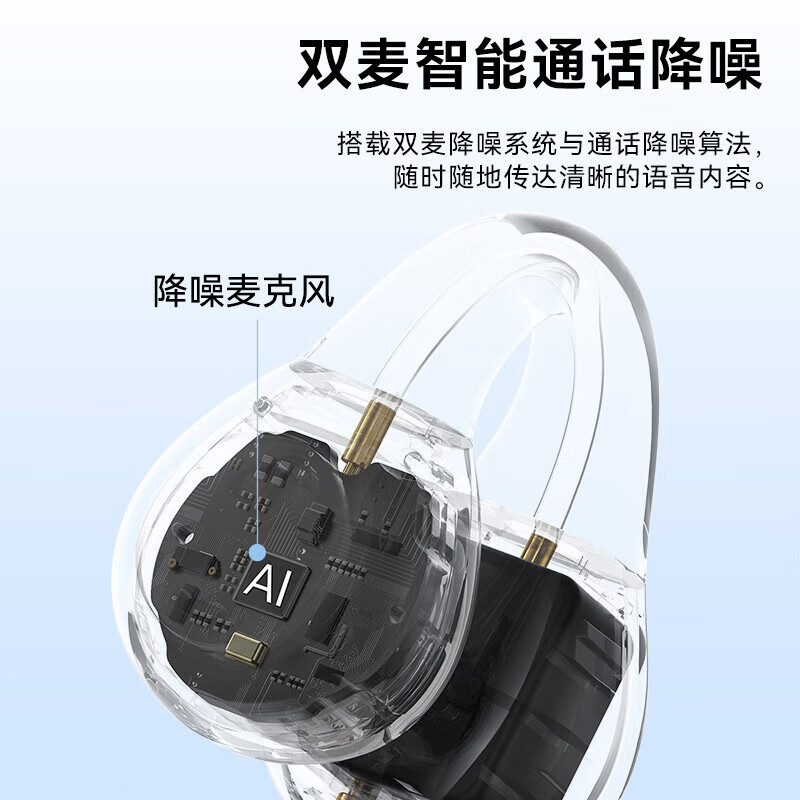
The earbuds are lightweight at only 4.5 grams each and feature a transparent, double-layer ear hook design for a secure and comfortable fit throughout the day.
Beyond comfort, the earbuds pack a punch in terms of features. The earphones come equipped with Bluetooth 5.3 for a stable connection and low power consumption. They also support Baseus Smart Dual Connect technology, allowing users to connect to two devices simultaneously, perfect for juggling work calls and personal music listening.
For gaming, the earbuds come with ultra-low latency of 0.06 seconds, ensuring audio and visuals stay in sync during gameplay. The Baseus app further enhances the experience, offering customizable buttons, headphone positioning adjustments, and a selection of 12 EQ sound effects.
Touch controls on the earphones allow users to play/pause music, answer/end calls, switch between sound modes, and even activate their voice assistant. All gesture controls can be customized through the Baseus app.
The Baseus AirGo 1 Ring comes in two colors: Starlight White and Star Yao Black. The earphones weigh 42.8 grams (excluding packaging) and offer a communication distance of approximately 10 meters. They utilize a Type-C charging interface for the case, which takes about 1.5 hours to fully charge.
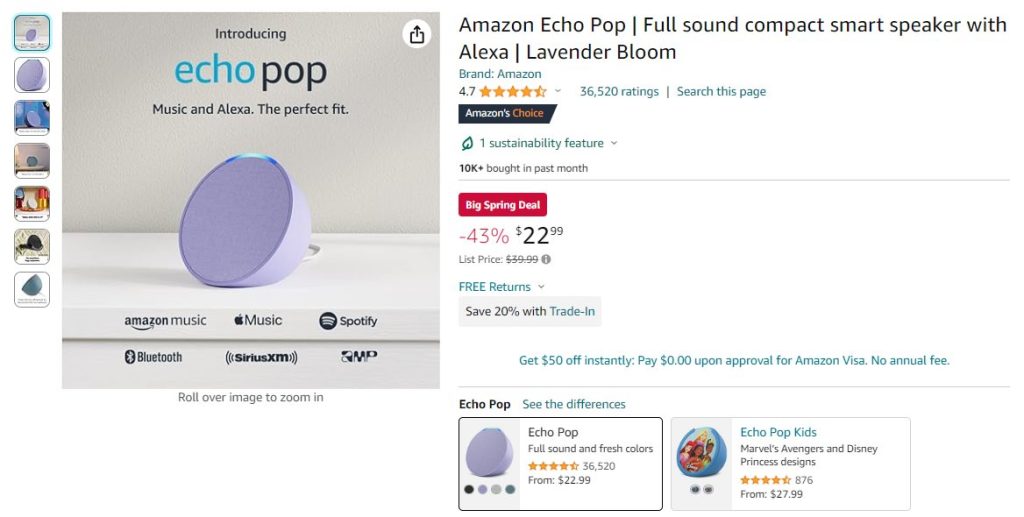
At the Amazon Spring Sale, there are good discounts on Amazon’s home-made products. Meanwhile, the small Amazon electronic devices are well known for their interconnectivity, affordability, accessibility, and the presence of Alexa voice assistants. The Amazon Echo Pop is the smallest iteration of Amazon’s vast electronic product brochure. The tiny speaker is on sale with a massive discount of $23.
Without worrying about the connectivity, the Amazon Echo Pop can be your perfect bedside or cabinet top speaker. The speaker consisting of an LED car, microphones, and support for a 3.5mm audio jack are some prominent physical points visible on the speaker. Further, there’s no USB connectivity, and the support to act as an extender for Eero’s mesh WiFi network.
It can be used as an intercom for other speakers connected and could help you do work at a single command.
It could be the perfect purchase at the price of $23, as there’s nothing to regret after buying.
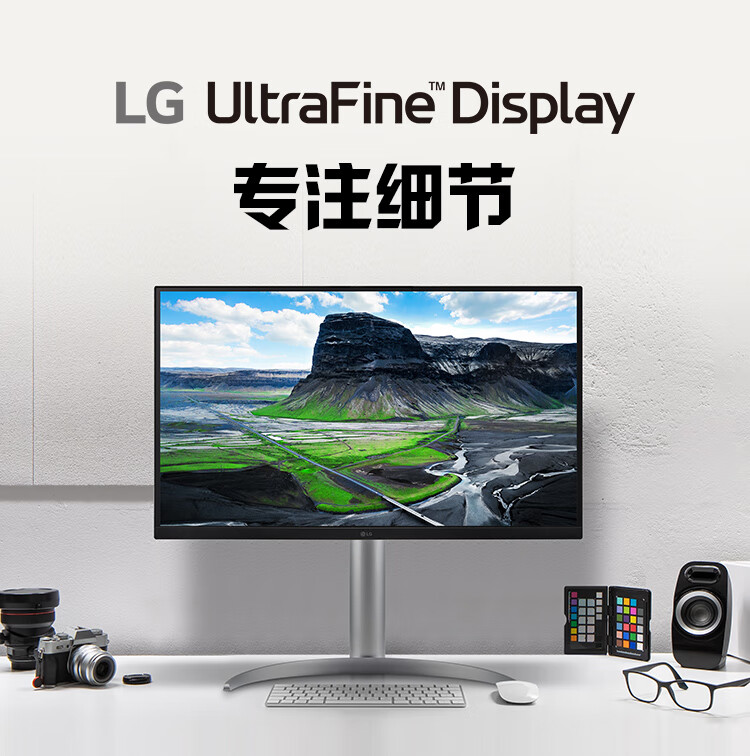
LG announced its UltraFine 27UQ850V monitor in the Chinese market last year in December. The monitor is now available on JD.com at an initial price of 2799 yuan (around $392). Let’s check out the key specs of this monitor.
LG UltraFine 27UQ850V Specifications:
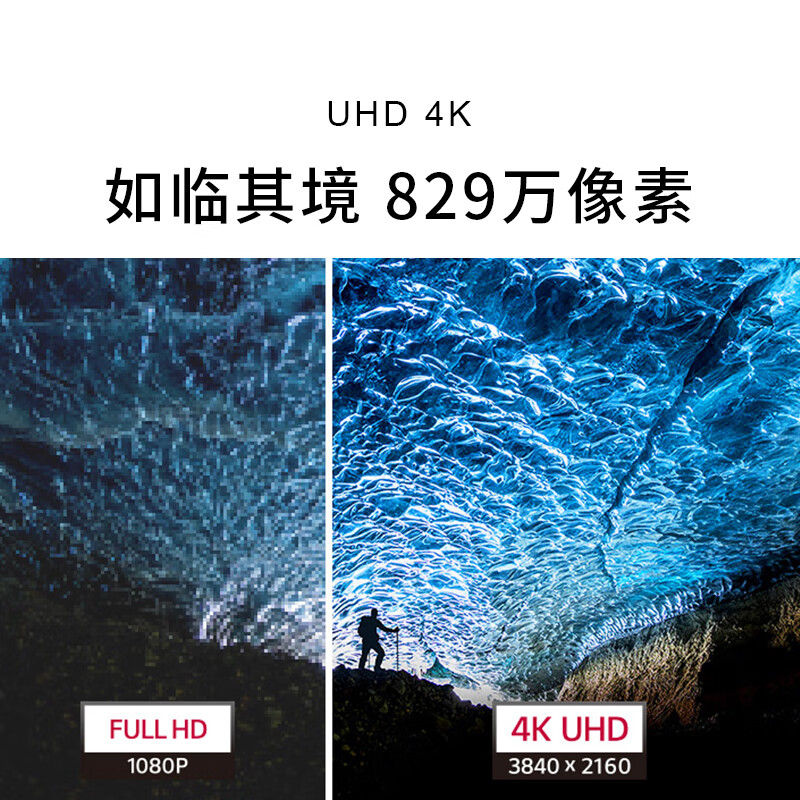
The monitor features a 27-inch IPS Black 10-bit panel with 4K resolution (3840 x 2160), a 60Hz refresh rate, and a high contrast ratio of 2000:1, promising deep blacks and vivid colors.
The monitor also comes with VESA DisplayHDR 400 support and 98% DCI-P3 color gamut coverage. This ensures images are displayed with realistic colors and deep contrast, ideal for creative professionals who do video editing and graphic design.
The UltraFine 27UQ850V offers a 178-degree viewing angle, 400 nits brightness for vibrant visuals, and a 5ms GtG response time for smooth performance, making it suitable for various tasks including gaming and video editing.
The monitor also comes with LG Screen Control software, which allows you to easily select custom workspaces by splitting displays or adjusting monitor options.
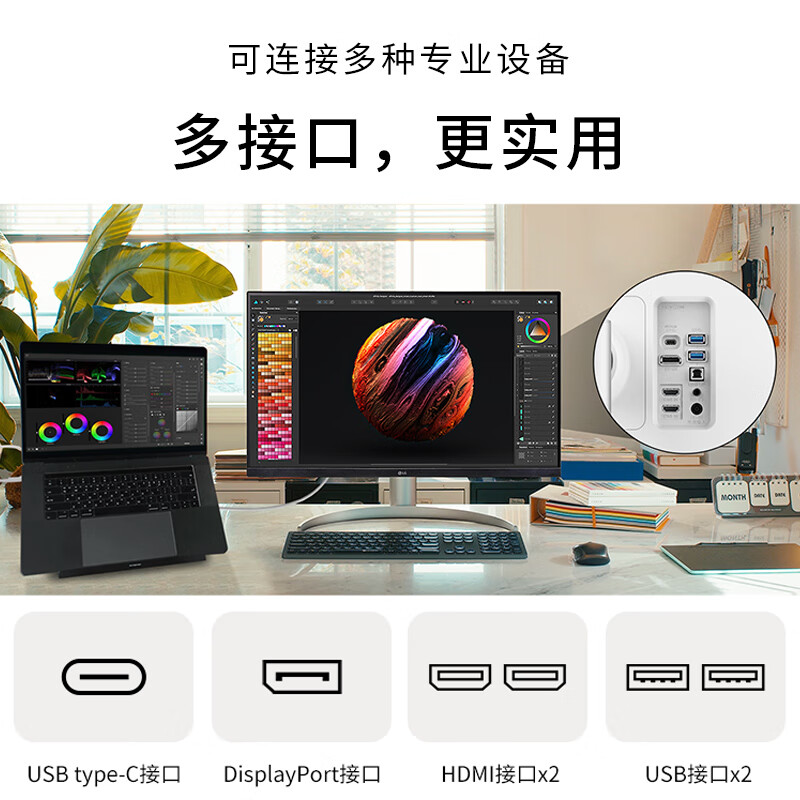
In terms of connectivity, the monitor includes 1 USB-C PD 90W port, 1 DP 1.4 port, 2 HDMI 2.0 ports, and 2 USB-A 3.0 ports. The USB-C PD 90W port allows you to connect and power your laptop simultaneously.
For audio, it features built-in speakers with 5W x 2 output and Maxx Audio. It also includes AMD FreeSync technology for smoother gaming experiences. With dimensions of 613.9 x 569.6 x 239.3 mm (with stand) and weighing 5.85kg, it offers a substantial yet manageable size and weight.
The LG UltraFineTM Display 27UQ850V incorporates several ergonomic features for enhanced user comfort. Its stand allows for height adjustment up to 110mm, tilt adjustment from -5 to 20 degrees, and rotation of 90 degrees clockwise for versatile viewing angles.
For over a decade and a half, Qualcomm has been chasing the dream of an Arm-based Windows laptop that offers compelling performance and battery life.
Although there have been some small victories along the way, Qualcomm-powered Windows devices have often failed to meet mainstream expectations, leaving Intel and AMD as the dominant players.
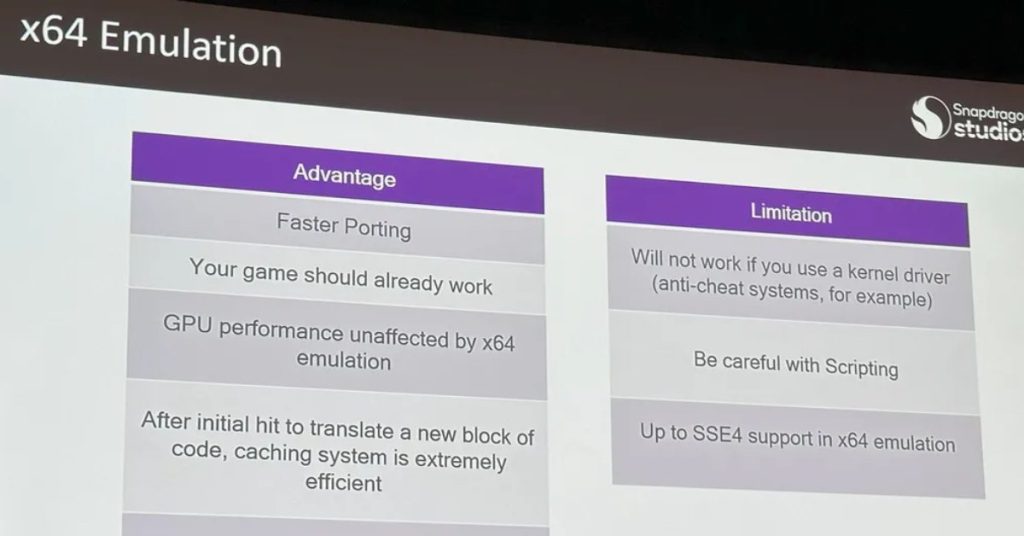
However, Qualcomm’s latest entry, the Snapdragon X Elite chip, offers an interesting new promise: the ability to run existing x86/64 games without the need for developers to port them to Arm. If successful, this could be a game-changer for Windows on Arm.
Apple‘s change to M-series silicons has set the bar high in the industry. Their chips have delivered remarkable performance and efficiency gains, even when running legacy x86 software through the Rosetta 2 emulation layer.
Windows on Arm has tried to play catch up, but it hasn’t yet delivered the same seamless experience for everyday consumers. Qualcomm’s Snapdragon X Elite looks to change that narrative.
The company says it’s working closely with game developers to ensure their titles “just work” on upcoming Snapdragon-powered laptops.
The key is advanced emulation, allowing x86/64 games to run at near full speed. Qualcomm claims that most games are GPU-bound and that its Adreno GPU drivers fully support modern graphics standards, negating any major performance hits due to emulation.
If Qualcomm’s claims so far are true, Snapdragon X Elite can bring a new era of Arm-based laptops. Of course, there’s some skepticism with unreleased hardware, but Qualcomm’s confidence is certainly reassuring.
But there are some caveats too. There could be issues with games that use kernel-level anti-cheat software or rely heavily on AVX instruction sets. However, if Qualcomm delivers on its promises, Snapdragon X Elite could be a significant milestone for Windows on Arm.
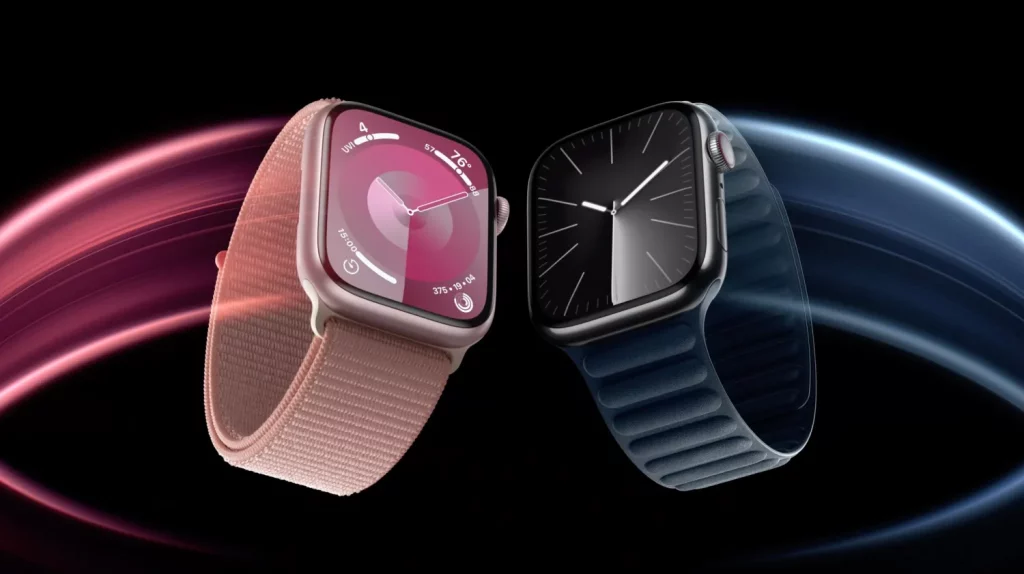
The US Department of Justice (DOJ) recently sued Apple, accusing it of monopolistic practices. One issue highlighted in the lawsuit is the limited compatibility of third-party smartwatches with iOS.
While iPhones and other Apple devices seamlessly integrate with Apple’s own smartwatch, third-party smartwatches have significantly restricted features on iOS. The DOJ’s lawsuit against Apple points to this exclusivity as evidence of anti-competitive behavior.
In response, Apple publicly disclosed that it had considered making the Apple Watch compatible with Android smartphones. However, this idea was ultimately abandoned due to technical challenges.
Apple revealed that it spent three years exploring the feasibility of an Android-compatible Apple Watch. Nevertheless, the company decided to scrap the project because of technical limitations.
The disclosure aligns with earlier reports by Bloomberg’s Mark Gurman, who discussed both technical hurdles and business considerations influencing Apple’s decision.
Although the chance of Apple making its watches compatible with Android seems slim, the US lawsuit might make the company reevaluate its decision. Apple might need to explore new ways to enable the compatibility.
No doubt, there’s an advantage for consumers if all devices, regardless of brand, could seamlessly work together. However, Apple’s strength lies in its tightly integrated ecosystem. Users greatly appreciate the seamless connection between iPhone, iPad, Apple Watch, and other Apple products.
Thus, maintaining this cohesive ecosystem is advantageous for Apple. But on the other hand, it does limit users with Apple products from considering alternatives. While it ensures a smooth user experience, it also restricts choice for consumers.
Apart from this, the DOJ’s lawsuit has noted several other issues with Apple, including concerns about “green bubbles” and the alleged App Store monopoly within iOS.
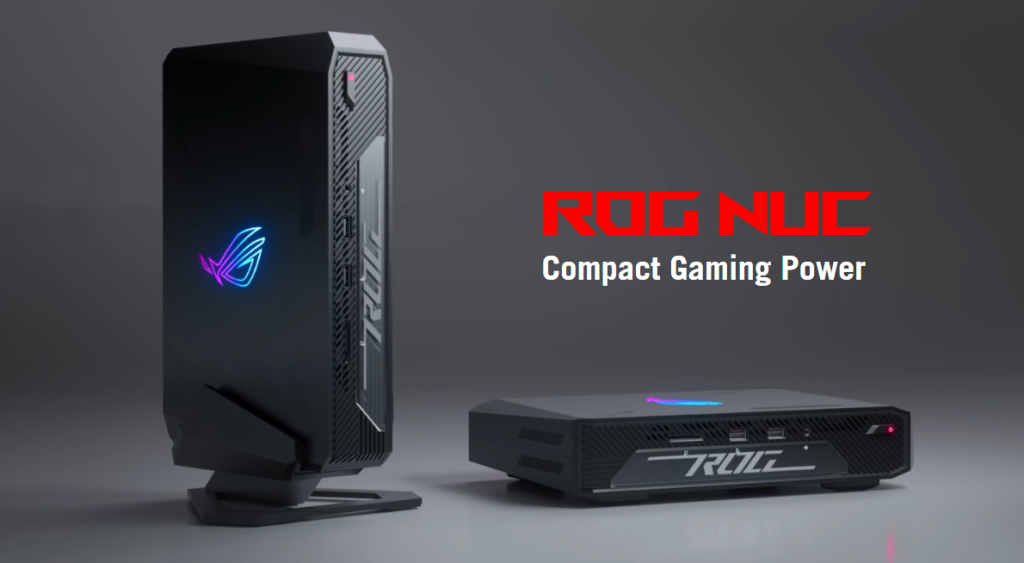
After its unveiling at CES 2024, the ASUS ROG NUC gaming mini PC was recently made available in the EU. Now, the brand has revealed how much it will cost in the US as well.
As per the official Asus US website, the ROG NUC mini PC with Intel’s Core Ultra 7 155H processor and NVIDIA RTX 4060 GPU has a price tag of US$1629, while the variant with an Intel Core Ultra 9 185H CPU and an NVIDIA RTX 4070 GPU has a price tag of $2,199. The exact availability date is yet to be revealed, but interested buyers can set up a notification alert whenever the mini PC becomes available for purchase.
ASUS ROG NUC specs:
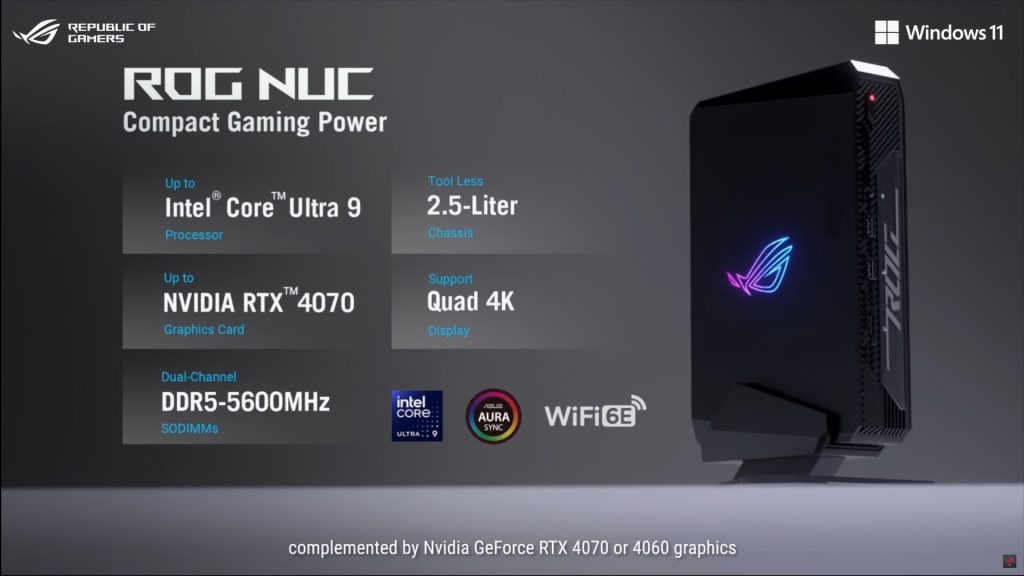
As mentioned above, the ROG NUC runs on either Intel Core Ultra 7 or Core Ultra 9 185H processors, which is suitable for demanding workloads as well as gaming. It features a choice between the NVIDIA RTX 4060 or RTX 4070 graphics cards, which are capable of supporting up to four 4K displays.
This mini PC features a simple, tool-free design for easy setup in a compact size of 270 x 180 x 50 mm. It works well with the ROG Raikiri PRO controller and allows for customizable lighting effects through the ROG Armory Crate app. In terms of connections, it includes HDMI 2.1a, DisplayPort 1.4, Thunderbolt 4 / USB4 Type-C, USB 3.2 Gen 2, USB 2.0, and Intel Killer WiFi 6E AX1690i.
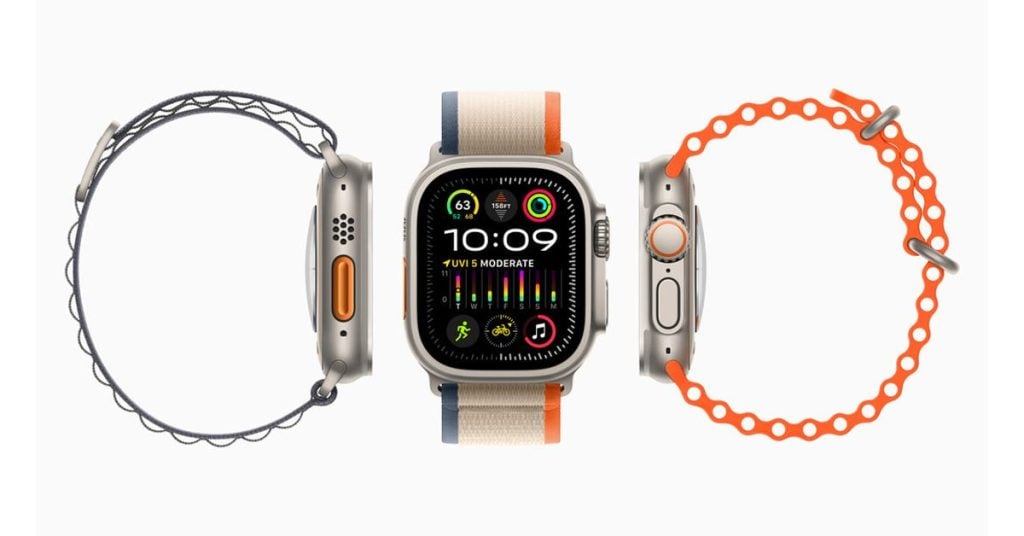
Apple has reportedly halted its internal development efforts focused on microLED displays for smartwatches, according to a report by Bloomberg’s Mark Gurman.
Apple is said to have invested billions in developing the technology, with plans to use it first on the Apple Watch Ultra models. However, Gurman’s recent report suggests that microLED was too costly and complex for Apple to pursue.
The decision to cancel the project has resulted in a reorganization of Apple’s display engineering teams and layoffs in the U.S. and Asia. While some employees may find alternate roles within the company, others will be provided with severance packages.
News of the cancellation first emerged in earlier this month when supplier ams OSRAM indicated that a major microLED project had been discontinued. Subsequent industry rumblings further suggested a downturn in Apple’s microLED development efforts.
MicroLED is an advanced display technology that uses microscopic LEDs for individual pixels. As a result, it has several advantages over traditional LED and OLEDs including improved energy efficiency, contrast, color rendering, and response times.
Importantly, it also eliminates the risk of burn-in associated with OLED displays. All these benefits might have lured Apple to use MicroLED display but the project’s cancelation is believed to be driven primarily by cost concerns.
Despite the setback, Apple is likely to remain interested in microLED. Gurman notes that the company will continue to evaluate potential external suppliers and new manufacturing processes, but it’s unclear when or if microLED will appear in future Apple products. For now, you can expect Apple Watch devices to continue using OLED displays for at least a year or two.
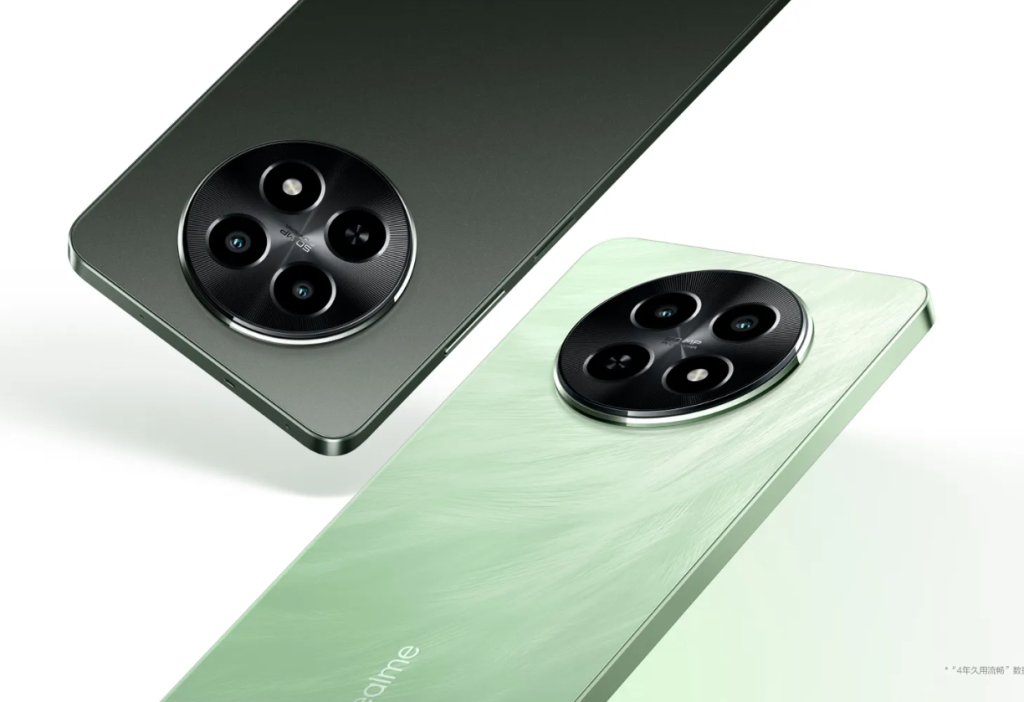
Last week, Realme unveiled the Realme 12x 5G in China. The Realme 12x 5G sits below existing models like the Realme 12 5G and the Realme 12+ 5G. Speculations are rife that the device will also be released in other markets in the coming days. A new report by 91mobiles states that the 12x will be coming to the Indian market soon. The publication has also tipped a few key details about the device.
Realme 12x 5G Indian variant: What to expect?
Realme 12x 5G (Chinese variant)
According to the report, the Indian variant of the Realme 12x 5G will be slightly different from its Chinese edition. To recall, the 12x available in China supports only 15W charging. However, the report claims that the Indian model offers 45W fast charging, achieving 0 to 50 percent charge in just 30 minutes. Hence, it appears that the 12x will be touted as the fastest charging phone in its segment. The device will also offer reverse charging support.
In addition, the Realme 12x 5G for India will also have the Dynamic Button function, which can be configured to access features like DND mode, aeroplane mode, camera modes, and so on. The starting price of the Realme 12 5G is Rs 16,999 (~$203), indicating that the 12x could potentially cost less than Rs 15,000 (~$179). At present, there is no information about the launch date of the device. It remains to be seen whether it breaks cover before the end of this month.
Realme 12x 5G specifications
The Realme 12x 5G available in China offers a 6.67-inch IPS LCD FHD+ 120Hz screen, a Dimensity 6100 Plus chipset, up to 12 GB of RAM, up to 512 GB of storage, and a 5,000mAh battery with 15W charging. It has an 8-megapixel front camera, a 50-megapixel + 2-megapixel dual-camera system, and a 1,399 Yuan (~$195) starting price.
iQOO recently unveiled the iQOO Pad Air in China. There have been reports that the brand is also working on a more powerful tablet called the iQOO Pad 2. It appears that the Pad 2 could be coming soon, as it has received approval from the 3C authority in China.
iQOO Pad 2 3C certified
iQOO Pad 2 tablet 3C certified
A new Vivo tablet with model number iPA2475 has emerged in 3C’s database. While there is no concrete information that confirms its final moniker, it is speculated to be named the iQOO Pad 2 when it arrives in the Chinese market.
The screengrab above shows that the iPA2475 tablet may come with a charger that supports up to 66W fast charging. The alleged iQOO Pad 2 will succeed the original iQOO Pad, which debuted in March 2023 in China.
iQOO Pad 2 specifications (rumored)
As per a recent report, the iQOO Pad 2 will feature the Dimensity 9-series chipset. To recall, the first-generation iQOO Pad was a tweaked version of the Vivo Pad 2. Therefore, the iQOO Pad 2 might be a rebranded or modified version of the Dimensity 9300-powered Vivo Pad 3 Pro, scheduled for launch in China on March 26.
Reports indicate that the Vivo Pad 3 Pro will have a 13-inch LCD panel with 3.1K resolution and a refresh rate of 144Hz. The device may ship with up to 16 GB of RAM and 512 GB of internal storage. The tablet may pack an 11,500mAh battery and run on OriginOS for Pad-based Android 14. It is expected to have support for Vivo Pencil 2.
The Chinese market is about to welcome a couple of new Vivo devices. On March 26, the brand will announce the Vivo X Fold 3 series of foldable phones, the Vivo Pad 3 Pro tablet, and the Vivo TWS 4 earbuds. The brand is said to be working on the Vivo X100s series of smartphones as well as the Vivo X100 Ultra, a premium flagship phone. It appears that the X100s may launch in April in India, as the X100s Pro model has received approval from the 3C certification platform in China.
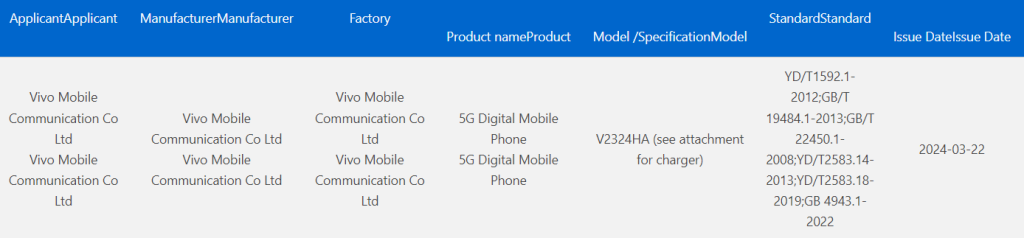
Vivo X100s Pro receives 3C certification
Vivo unveiled the Vivo X100 and X100 Pro in November 2023 in China as the world’s first Dimensity 9300 powered smartphones. The Chinese variants of both phones have V2309A and V2324A model numbers. It is speculated that the upcoming Vivo X100s and X100s Pro will have an additional “H” letter in their model numbers. Hence, the X100s and X100s Pro are said to have V2309HA and V2324HA model numbers, respectively.
Vivo X100s Pro
The above screenshot shows that the 3C authority in China has approved the alleged Vivo X100s Pro with the V2324HA model number. The 3C certification of the device has revealed that the device may come equipped with a 120W fast charger.
Previously, the same device was spotted in Geekbench’s database with an overclocked version of the Dimensity 9300 chip. Hence, it appears that the Vivo X100s Pro could be the first phone to feature the Dimensity 9300 Plus chipset. Speculation suggests that the X100s, potentially launching alongside the Pro model, will boast the same chip.
Apart from featuring the new chip, the X100s and X100s Pro are expected to pack the same specifications that are available on the X100 and X100 Pro. The release of the X100s series outside of China remains uncertain.
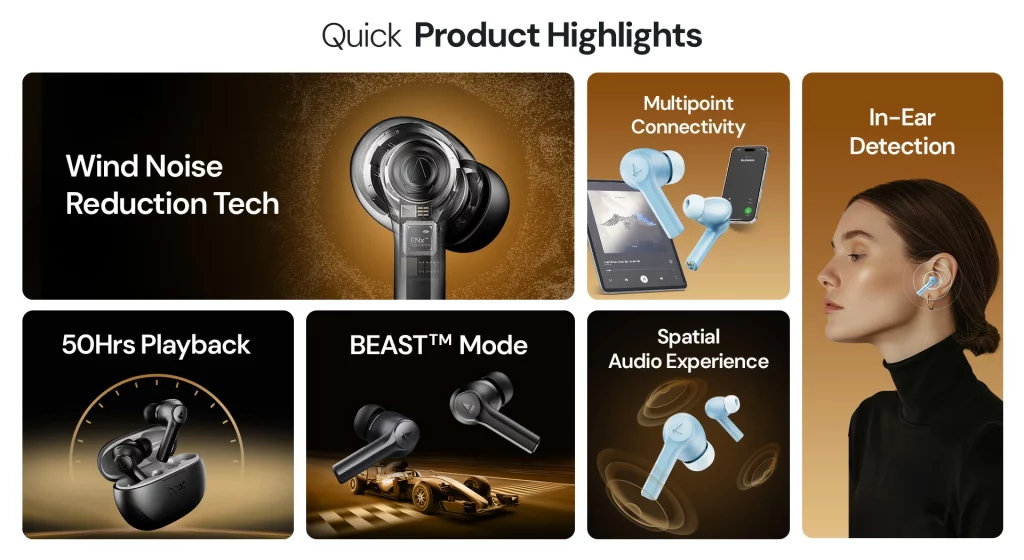
Boat has introduced the Airdopes Supreme, the newest earbuds in their True Wireless Stereo (TWS) range, in India. This launch comes a week after the brand debuted the Airdopes 120 earbuds in the market.
These Airdopes Supreme earbuds come with a sleek design and are meant to fit comfortably. They’re equipped with Ultra-Hearing dual drivers and HWA technology, aimed at providing high-quality sound for both music and calls.
The earbuds also feature spatial audio with 24-bit Audio Processing technology. For clearer calls, they have 4-Mic AI-ENx technology, improving noise cancellation by up to 40%.
They support Seamless Multipoint Connectivity, allowing for quick switching between devices, and include Fast Pair technology and Instant Wake N’ Pair technology for straightforward use. They also have In-Ear Detection for automatic music play/pause and call handling, and a BEAST Mode for gamers, offering up to 65 ms low latency for better sync during games.
These earbuds can play music for up to 50 hours and come with ASAP Charge for quick charging. They are designed to be durable, with IPX4 resistance against water and sweat.
Pricing & availability
Available in Sporty Blue, Classic Black, and Swedish White, the Boat Airdopes Supreme earbuds are priced at Rs. 1,299 ($16). They are available for purchase on the company’s official website, Flipkart.com, and through select retailers.
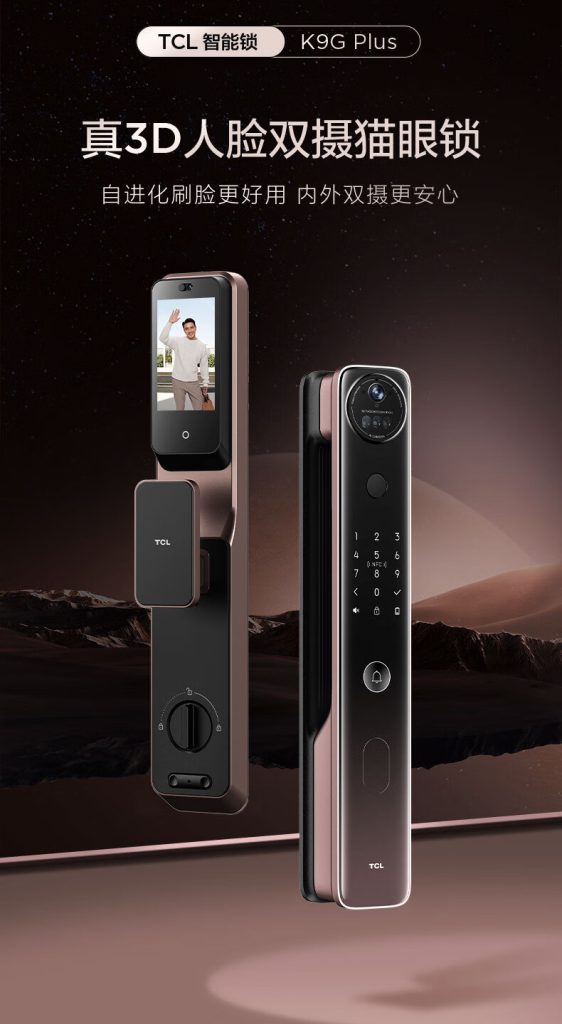
TCL has launched a new smart door lock in China called the K9G Plus. The lock boasts “dual cameras + 3D structured light” for facial recognition, a 4.5-inch inner touchscreen, and a long-lasting battery. It is currently available for purchase on JD.com for an introductory price of 2399 yuan, which is roughly equivalent to $336.
TCL K9G Plus Specifications:
The K9G Plus features a diamond-shaped design and utilizes a Grade C lock cylinder. It supports various unlocking methods, including facial recognition, fingerprint recognition, password, card, key, and NFC.
For facial recognition, the lock uses 3D structured light technology along with 850nm infrared fill light and 560nm photosensitive detection for accurate recognition even in low-light conditions. TCL claims the facial recognition system can achieve a recognition rate of 0.4 seconds.
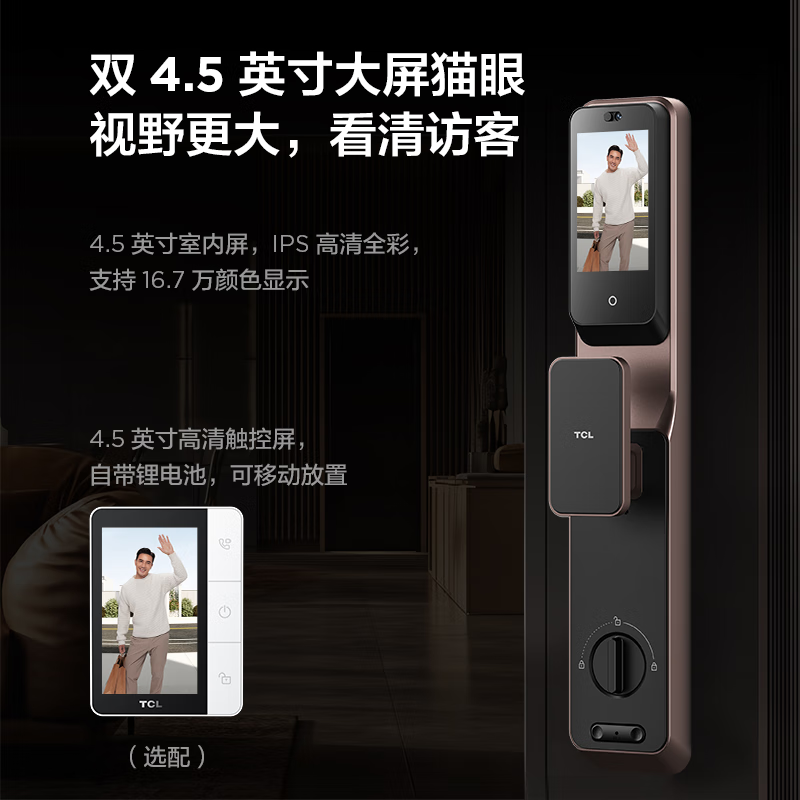
The K9G Plus is equipped with a 4.5-inch IPS touchscreen on the inside for viewing visitors and managing lock settings. The lock also boasts a 6735mAh battery, which TCL claims can last up to 7 months on a single charge. In case the battery depletes, the lock can be powered by a power bank or opened using a physical key, ensuring you’re never locked out.
The TCL K9G Plus integrates seamlessly with smart homes. It features dual built-in cameras that allow users to remotely view their home’s exterior through a dedicated mobile app, providing an extra layer of security and peace of mind.
The lock also boasts AI-powered features such as sentinel video monitoring, which can intelligently detect people lingering around the door and send real-time alerts to the user’s phone. Additionally, the lock has built-in night vision for clear viewing even in low-light conditions. It offers free 7-day loop cloud storage for captured videos.
The smart lock’s rapid unlocking mechanism ensures swift access with minimal disturbance, featuring a softer sound and lighter collision prevention. The fork tongue design and telescopic lock cylinder prevent jamming and enhance durability.
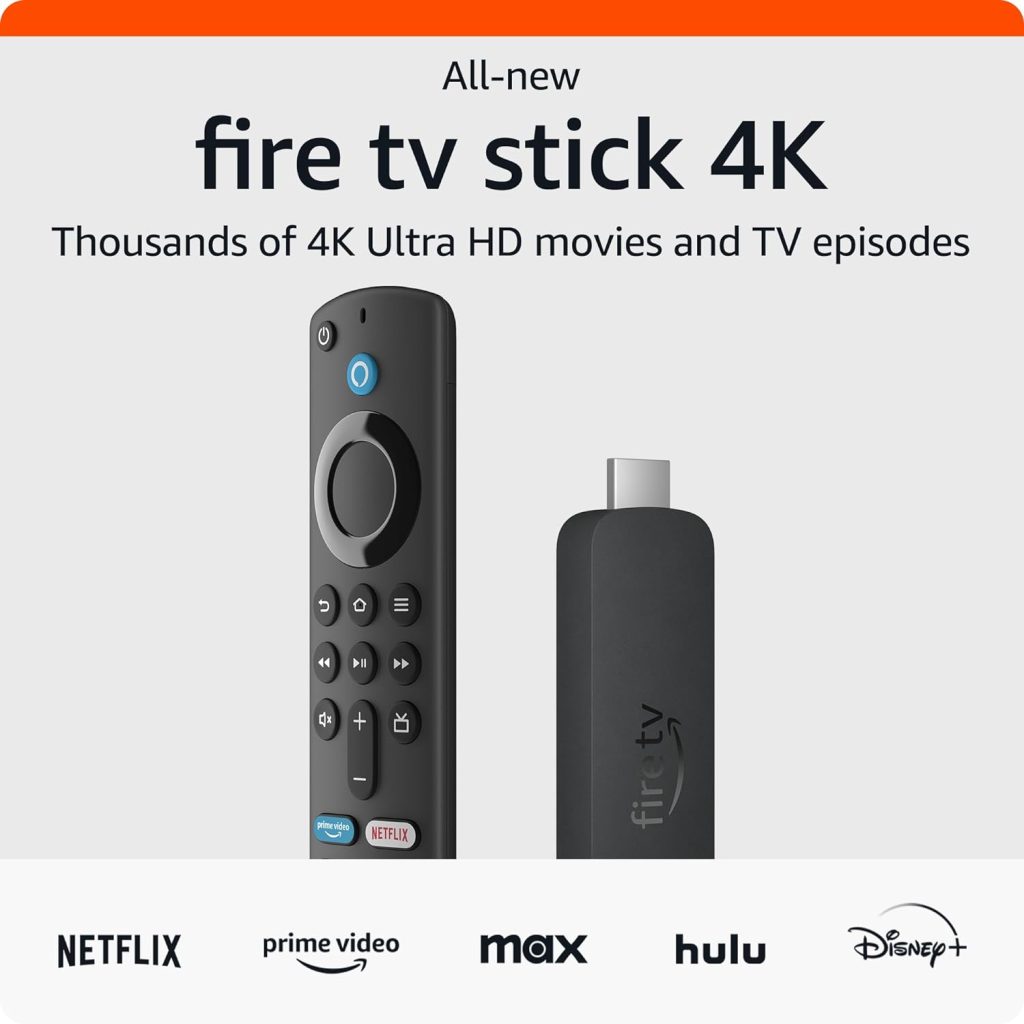
If you’ve been eyeing an upgrade to your home entertainment system, then Amazon’s Spring Sale is the perfect time to jump in. They’re offering hot deals on their entire Fire TV Stick lineup, making it an ideal window to transform your TV into a streaming powerhouse. But with so many Fire TV Stick options, how do you pick the right one? Don’t worry, we’ve got you covered. Here’s a breakdown of the hottest deals to help you find the perfect fit for your budget and entertainment needs.
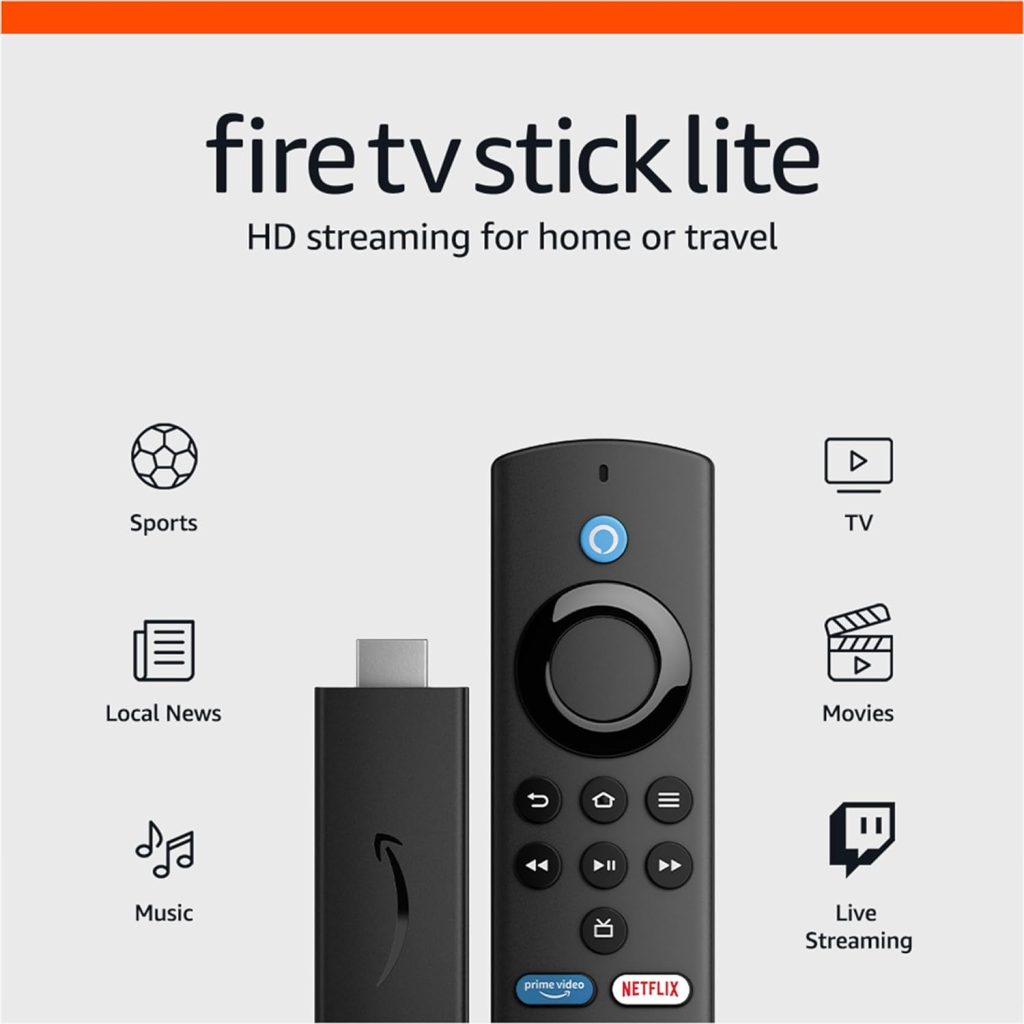
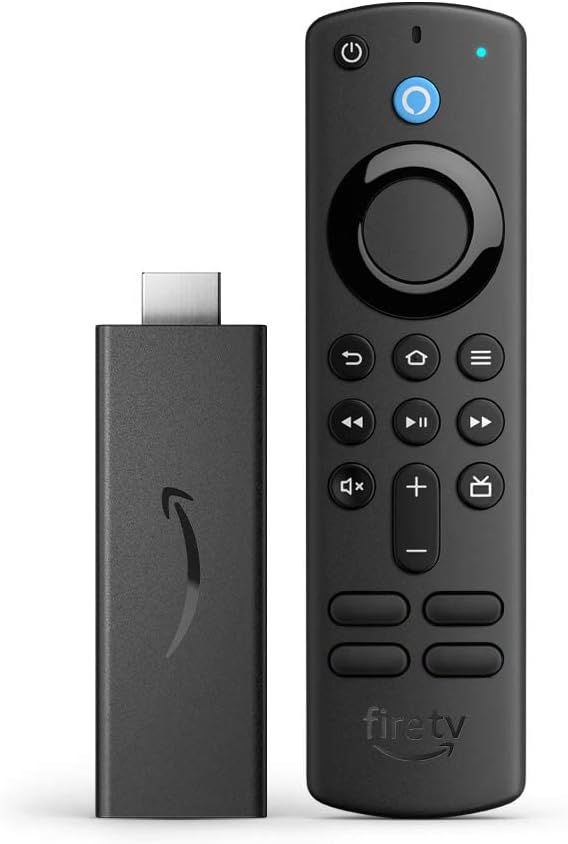
Amazon Fire TV Stick Lite
Let’s start with the most affordable one. The Fire TV Stick Lite is currently discounted to $19 on Amazon, reduced from its usual price of $29.99. This represents a discount of approximately 33% on the stick.
Talking about specs, the Fire TV Stick Lite offers a simple solution for adding streaming services to non-smart TVs. It’s the most budget-friendly option in the Fire TV Stick lineup.
While it may not have the most powerful processing capabilities, it provides all the essential features for casual streamers. With access to popular streaming services like Netflix, Prime Video, Disney+, Peacock, Hulu, Apple TV, and HBO Max in 1080p resolution, it delivers an enjoyable viewing experience. Additionally, the included Alexa Voice Remote allows for easy navigation and content search using voice commands.
Amazon Fire TV Stick HD
If you are looking for more than the basic streaming stick but on a tight budget? The Fire TV Stick HD is a great choice. It offers everything the Lite version does but with a faster processor for smoother performance and quicker app loading. The biggest difference is the remote: the Fire Stick controls your TV’s volume, mute, and power, while the Lite remote doesn’t. Plus, it streams in Full HD with HDR for vivid colors and sharp details.
The Amazon Fire TV Stick HD is presently on sale for $24 on Amazon, marked down from its original price of $39.99. This is a discount of approximately 40% from its regular price of $29.99.
This high-end model unlocks the potential of 4K Ultra HD streaming with its exceptional clarity and detail. Furthermore, support for Dolby Vision and HDR10 technologies further enhances visual fidelity for a more realistic viewing experience.
Additionally, the Fire TV Stick 4K boasts a powerful processor that ensures smooth navigation and eliminates lag, even when switching between resource-intensive applications.
Acer has just launched its new Shadow Knight ED270U monitor on JD.com, boasting a curved display and high refresh rate at an attractive price point. The ED270U features a 27-inch curved VA panel with a 2560 x 1440 resolution, offering sharp visuals for gaming sessions. The real star of the show, however, is the 180Hz refresh rate, promising smooth and tear-free gameplay – a significant upgrade over traditional 60Hz monitors.
The monitor has support for HDR10 technology and is slightly curved
For a more immersive experience, the display curves at a 1500R radius, gently wrapping around your field of view. Additionally, the monitor supports HDR10 technology, enhancing contrast and color vibrancy for a more realistic visual experience. While Acer hasn’t disclosed the specific color gamut coverage, you can still expect rich and vivid colors.
The ED270U comes equipped with a versatile stand that allows for tilting and rotation, so you can find the perfect viewing angle during intense gaming marathons. Built-in 2W speakers provide basic audio output, although serious gamers will likely prefer a dedicated headset or speaker setup.
Connectivity options include two HDMI 2.0 ports, a single DP1.4 port, and a 3.5mm headphone jack, allowing you to connect your PC, gaming consoles, and other devices.
The Acer Shadow Knight ED270U monitor is now available for purchase on JD.com for an initial price of 1,099 yuan (roughly $165 USD). With its combination of features and affordability, this curved monitor appears to be a solid option for budget-minded gamers.
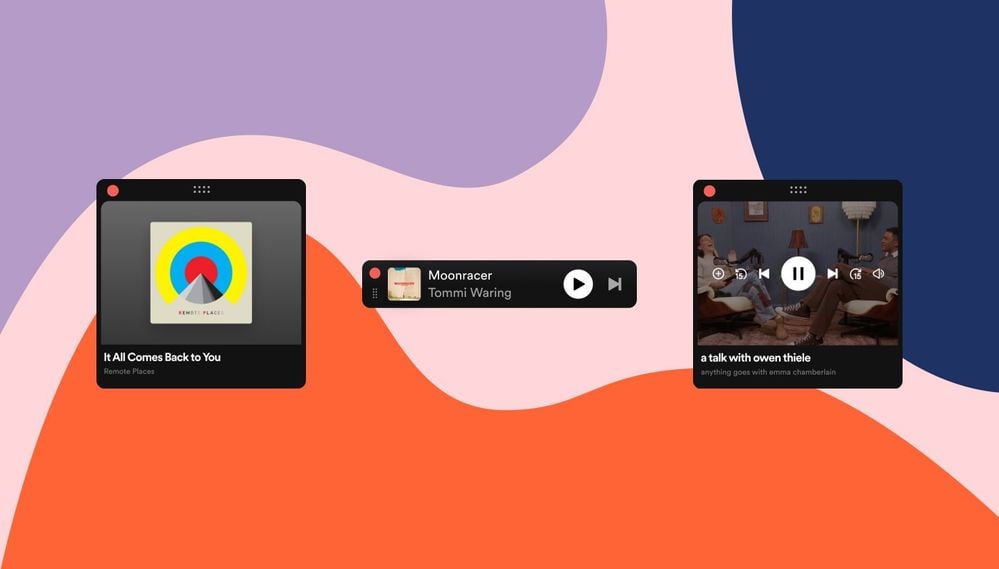
Spotify is introducing a new feature for desktop users called the Miniplayer, designed to provide streamlined music and podcast control without disrupting workflow. The Miniplayer caters to both music listeners and podcast enthusiasts, offering playback controls for all audio content. Notably, video podcasts can be viewed in picture-in-picture mode with adjustable sizing for a more customizable experience.
Users won’t be distracted by Spotify’s UI elements when they want to change a song
A key feature of the Miniplayer is its unintrusive nature. It floats above other applications, allowing users to access essential controls like volume adjustment, track skipping, and shuffle functionality without needing to switch to the full Spotify window. This can be particularly beneficial for users who listen to music or podcasts while working on other tasks, minimizing distractions.
The Miniplayer coexists seamlessly with the main Spotify app. Users can switch between the two interfaces at will without affecting playback. This eliminates the potential pitfall of getting sidetracked by browsing recommendations while attempting to perform a simple action within the Spotify app.
For users who prefer a more customized experience, the Miniplayer offers adjustable size and shape options. It can be transformed into a square, rectangle, or a sleek bar to fit the available screen space and individual preferences. Additionally, a minimal “pill” size is available, offering basic controls while maintaining a low visual profile, ideal for discreet music management on a busy desktop.
Currently, the Miniplayer is exclusive to Spotify Premium subscribers. It can be accessed through a dedicated icon located in the bottom right corner of the desktop app, positioned between the volume and full-screen buttons.
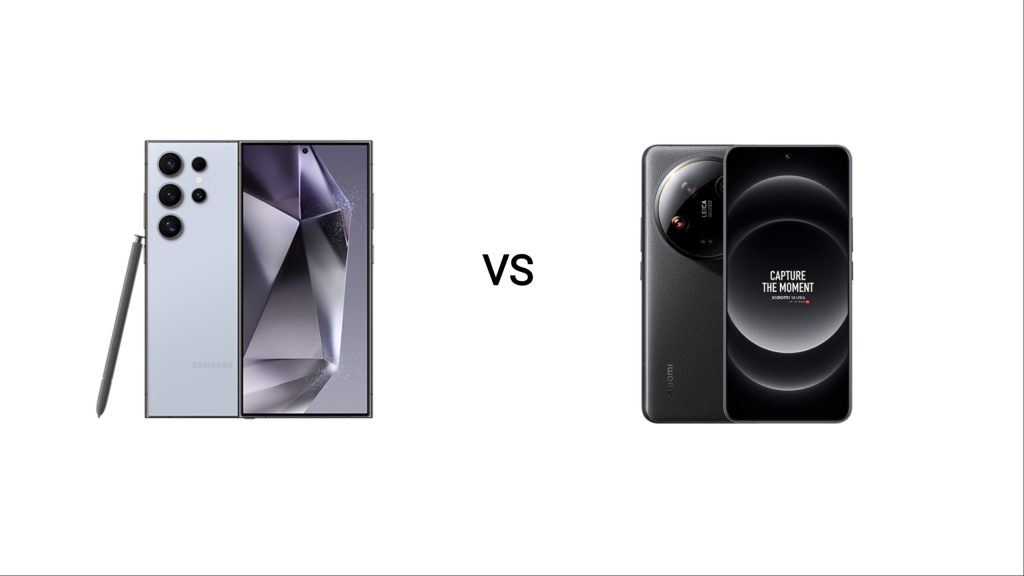
Xiaomi 14 Ultra vs Galaxy S24 Ultra comparison table
This article brings the two Ultra devices in the Android smartphone industry against each other to see which comes out tops. Both devices in this article are some of the best you can get when shopping for a new Android smartphone. Despite being top of the class, both of these devices differ from one another, hence the need for an in-depth comparison.
As these two Ultra devices go head-to-head we will compare their design, performance, screen, battery, cameras, and so much more. If you are looking out to get a new Android device and money isn’t a deterrent factor, you’ll want to go through this article. To kick things off, let’s first look at the pricing of these devices before moving on to other details.
Please Note: When you buy something using the links in our articles, we may earn a small commission at no cost to you.
Xiaomi 14 Ultra vs Galaxy S24 Ultra: Design and colours
Xiaomi 14 Ultra:
In terms of its design, this is a good-looking device that boasts some impressive design elements. Some of these elements include the circular camera bump, the leather textured finish, and smooth edges. The rear camera cutout houses four cameras, which we’ll come to in a bit, but up front you’ll find a centre-mounted selfie cutout.
The power and volume rocker keys sit on the right-hand side of this device’s frame. At its base sits the USB-C charging port and speakers, there is not much change in terms of design between this device and its predecessor. The available colour options this device offers are Black, Blue, White, Titanium Gray.
Galaxy S24 Ultra:
Looking at this device and its predecessor, you’ll notice a ton of differences. The new Galaxy S24 Ultra drops off the curved screen, keeping the camera layout of its predecessor. On the sides a matte texture finish and on the right-hand side sits the power and volume rocker keys.
At its base site the USB-C charging port, speakers, and the S-Pen slot for those productive users. The Galaxy S24 Ultra features a simpler design in comparison with the Xiaomi 14 Ultra, as we see in this article. As for its colour options, this device comes with Titanium Black, Titanium Gray, Titanium Violet, Titanium Yellow, Titanium Blue, Titanium Green, Titanium Orange.
Major differences:
Leather finish on the Xiaomi 14 Ultra.
Titanium is standard on the Galaxy S24 Ultra and exclusive on the Xiaomi 14 Ultra.
Simpler design on the Galaxy S24 Ultra.
Xiaomi 14 Ultra vs Galaxy S24 Ultra: Display
Xiaomi 14 Ultra:
Users of this device get a 6.73-inch LTPO AMOLED screen panel that supports 120Hz refresh rates. This screen boasts 3000 nits peak brightness and is protected by the Xiaomi Shield Glass protection technology. The display on this device supports Dolby Vision and HDR10+ for a more immersive viewing experience. Lastly, the bezels on this device are slim, giving the user an 89.6% screen to body ratio.
Galaxy S24 Ultra:
Boasting some of the best displays in the smartphone industry, the display on the Galaxy S24 Ultra lives up to the hype. This device features a 6.8-inch Dynamic LTPO AMOLED screen display supporting 120Hz refresh rate. Peak brightness on this device is 2600 nits and the screen is protected by the Corning Gorilla Armour technology. Additionally, this device supports HDR10+ technology with sleek bezels all round.
Major differences:
Overall better display on the Galaxy S24 Ultra.
Xiaomi 14 Ultra vs Galaxy S24 Ultra: Cameras
Xiaomi 14 Ultra:
The Xiaomi 14 Ultra was built for a specific reason in mind, to help users to “capture the moment.” This reveals that this device is a camera centric entry with a quad 50MP rear camera sensor. Up front is a 32MP selfie camera sensor which takes impressive photos. Thanks to the Leica photography partnership, this device is one of the best you can get for taking pictures. In fact, Xiaomi retails a ton of photography accessories with this device.
Galaxy S24 Ultra:
Over the years, Samsung has been the standard used to judge Android smartphone camera abilities. With the Samsung Galaxy S24 Ultra, the brand packed a 200MP main camera sensor that’s being joined by three other rear camera sensors. Up front is a 12MP selfie camera that is as impressive as the 32MP option on the Xiaomi 14 Ultra. Users of this device can benefit from the AI integrations into its camera system for taking great pictures.
Major differences:
32MP selfie camera on the Xiaomi 14 Ultra.
200MP main camera sensor on the Galaxy S24 Ultra.
AI features on the Galaxy S24 Ultra.
Xiaomi 14 Ultra vs Galaxy S24 Ultra: Performance
Xiaomi 14 Ultra and Galaxy S24 Ultra:
Both devices launched with the Snapdragon 8 Gen 3 processor. However, the Xiaomi 14 Ultra features a massive 16GB worth of RAM as the highest option. On the Galaxy S24 Ultra, users can only get a 12GB RAM device, which retails as standard. Both devices offer up to 1TB worth of storage.
Major upgrades & differences:
16GB RAM on the Xiaomi 14 Ultra.
Xiaomi 14 Ultra vs Galaxy S24 Ultra: Software
Xiaomi 14 Ultra:
This device runs on Android 14 and Xiaomi’s HyperOS out of the box. Users are getting 4 years of Android OS upgrades and 5 years of security updates. This is impressive but falls short with what Samsung has to offer.
Galaxy S24 Ultra:
The Samsung Galaxy S24 Ultra comes with Android 14 and One UI 6.2 out of the box. It will get a whooping 7 years of OS upgrades. So if you’re out shopping for a device you can use for years and still stay up to date, the Galaxy S24 Ultra is a better pick.
Major differences:
7 years OS upgrade on the Galaxy S24 Ultra.
Xiaomi 14 Ultra vs Galaxy S24 Ultra: Battery life and charging
Xiaomi 14 Ultra:
Those buying this device outside China will get a 5000mAh battery capacity. This is followed by 90W fats wired charging, which can charge the device from 0-100% in 33 minutes. For wireless charging, users get 80W fast wireless charging on this device. Last on the list is the 10W reversed wireless charging that this device comes with.
Galaxy S24 Ultra:
Just like the Xiaomi 14 Ultra, the Galaxy S24 Ultra comes with, 5000mAh battery capacity. Fast charging on this device is 45W and wireless fast charging is 15W, which is slow in comparison with what Xiaomi offers in these comparisons. For reverse wireless charging, this device offers its users just 4.5W.
Major differences:
Fast charging overall on the Xiaomi 14 Ultra.
Xiaomi 14 Ultra vs Galaxy S24 Ultra: Final Verdict
For most people, the Galaxy S24 Ultra will be their pick at the end of this article. This is as a result of Samsung being a more popular brand than Xiaomi globally. However, there are a bunch of areas where the Xiaomi 14 Ultra outshines the Galaxy S24 Ultra.
The Xiaomi 14 Ultra offers faster charging, more RAM capacity, and a leather finish. As for the Galaxy S24 Ultra, it offers longer OS upgrades, a 200MP main camera, titanium frame as standard, and a better screen display. While the Galaxy S24 Ultra is more popular, the Xiaomi 14 Ultra will be a better choice for most people.
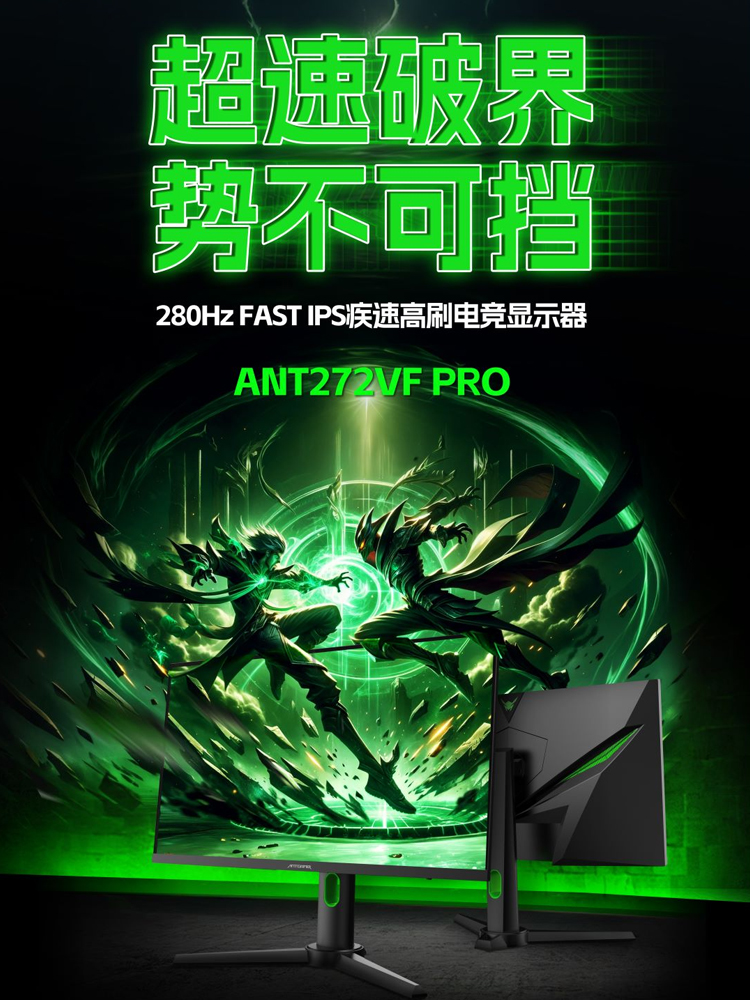
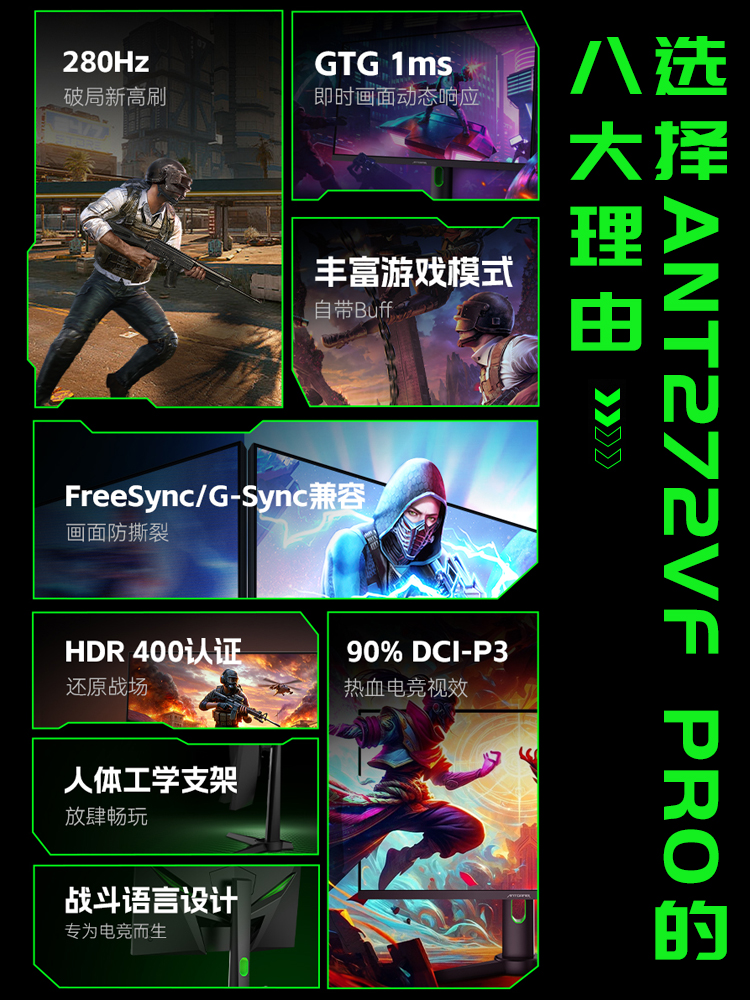
HKC has recently unveiled a new gaming monitor, the Antgamer ANT272VF PRO in the Chinese market. The monitor is priced at 1699 yuan (around $238) and is currently available for purchase on Tmall. Let’s check out the quick specs of this monitor.
HKC ANT272VF PRO Specifications:
The gaming monitor boasts a 27-inch Fast IPS panel with a 1920×1080 resolution, 400 nits brightness, and 280Hz refresh rate (overclocked). This high refresh rate promises to minimize screen tearing and latency, offering gamers a smoother and more responsive gaming experience.
The ANT272VF PRO also features a 1ms GTG response time, which should further reduce blur and ghosting during fast-paced games. The monitor is also compatible with AMD FreeSync and Nvidia G-Sync technologies which eliminates screen tearing and stuttering. Additionally, it comes with built-in game assistance features, including a timer, game crosshair, and AI-driven dark field brightness enhancement.
For colors, the ANT272VF PRO offers 90% DCI-P3 color gamut coverage, HDR 400 certification, and 16.7 million colors, ensuring a vivid and immersive viewing experience.
The monitor has an ergonomic design with an adjustable stand that allows for height adjustment, swivel, tilt, and pivot functionality. This allows gamers to find the perfect viewing position for extended gaming sessions. The monitor also features three-sided narrow bezels for a near-borderless viewing experience and a five-way joystick for easy control of the on-screen display settings.
Antgamer ANT272VF PRO boasts wide viewing angles of 178° both horizontally and vertically, ensuring consistent color and clarity from almost any perspective. It is compatible with VESA mounting standards, featuring a 75mm x 75mm pattern, allowing for easy attachment to wall mounts or monitor arms for a more flexible setup.
In terms of connectivity, the monitor comes equipped with 2 HDMI 2.0 ports, 1 DP1.4 port, and a 3.5mm audio jack. The DP1.4 cable can support up to FHD 280Hz, while the HDMI 2.0 cable can support up to FHD 240Hz.
We use cookies on our website to give you the most relevant experience by remembering your preferences and repeat visits. By clicking “Accept”, you consent to the use of ALL the cookies.
This website uses cookies to improve your experience while you navigate through the website. Out of these, the cookies that are categorized as necessary are stored on your browser as they are essential for the working of basic functionalities of the website. We also use third-party cookies that help us analyze and understand how you use this website. These cookies will be stored in your browser only with your consent. You also have the option to opt-out of these cookies. But opting out of some of these cookies may affect your browsing experience.
Necessary cookies are absolutely essential for the website to function properly. This category only includes cookies that ensures basic functionalities and security features of the website. These cookies do not store any personal information.
Any cookies that may not be particularly necessary for the website to function and is used specifically to collect user personal data via analytics, ads, other embedded contents are termed as non-necessary cookies. It is mandatory to procure user consent prior to running these cookies on your website.