Advertisement

Xiaomi unveils new Mijia adjustable fan: powerful airflow, dual-use design, and smart features

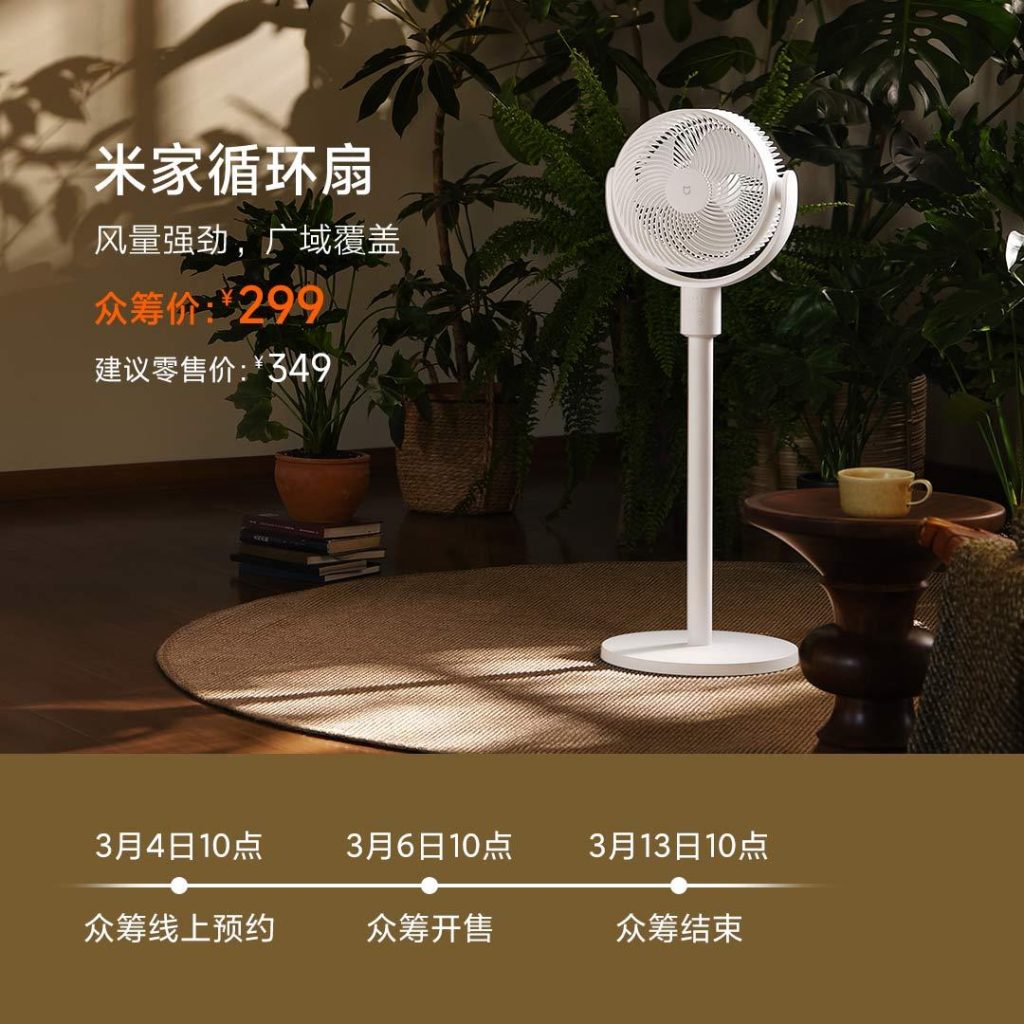
Xiaomi has introduced a new addition to its home appliance lineup with the launch of the Mijia circulating fan. This versatile fan is designed for both desktop and floor use, offering a seamless blend of functionality and technology to enhance home comfort.
Xiaomi Mijia Adjustable Fan

The product will be available for crowdfunding starting March 6th at 10:00 on the Xiaomi Youpin platform, with a special crowdfunding price of 299 yuan ($42), down from the suggested retail price of 349 yuan ($49).

Xiaomi Mijia Fan Specifications:

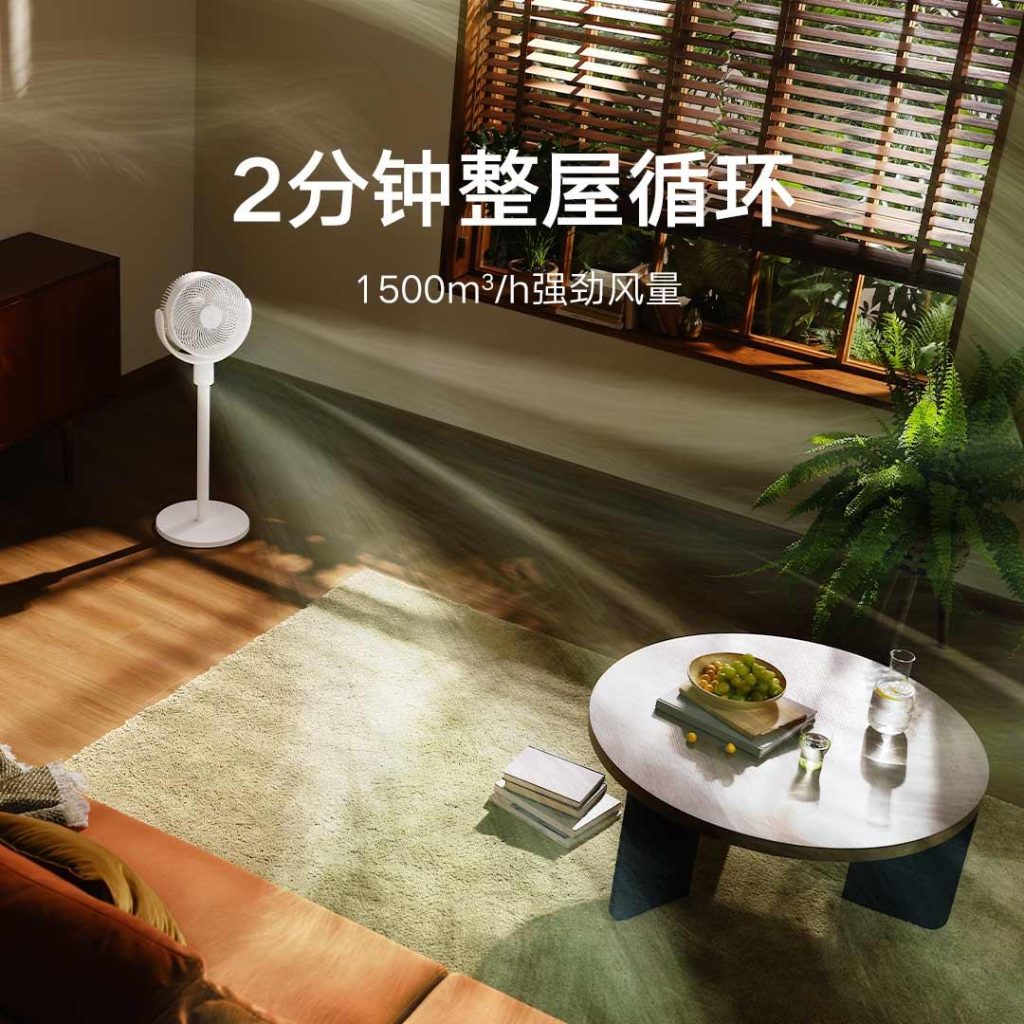
This smart fan offers 1500m³/h airflow and a wind delivery distance of up to 13 meters. Xiaomi claims it can achieve whole-house circulation in just 2 minutes, effectively tackling stagnant air.

The circulating fan features automatic horizontal oscillation of 120° and manual vertical adjustment of 105°, ensuring a wider coverage area and optimal cooling throughout the room. Additionally, users can personalize their comfort with 100 adjustable wind speeds via the DC frequency conversion motor.

This energy-efficient appliance boasts a power consumption as low as 1.92W in non-oscillation direct blowing mode. Xiaomi estimates the electricity cost for the entire summer to be around 0.83 yuan, making it a budget-friendly option.

For a quieter operation, the fan utilizes step-less frequency conversion technology, achieving a noise level as low as 27.2dB in direct blowing mode at the lowest speed. This ensures undisturbed sleep and a peaceful environment.

The Mijia Circulating Fan is designed for all-season use. When paired with other home appliances like dehumidifiers, air conditioners, humidifiers, and electric heaters, it can effectively balance indoor temperature and humidity, creating a comfortable living space throughout the year.


Smart home enthusiasts will appreciate the Xiaomi Home App integration and Xiao Ai voice control functionality. Users can remotely control and schedule the fan or simply command Xiao Ai for a refreshing breeze.

Furthermore, the fan supports Xiaomi HyperOS Connect, enabling smart linkage with compatible devices like temperature and humidity sensors or air conditioners with Bluetooth gateway function. This allows for automated operation based on pre-set conditions, such as turning on the fan when the temperature rises above a certain level. It also includes a user-friendly removable mesh cover for easy cleaning, a low-voltage power supply for safety, and a child lock function for added peace of mind.

Xiaomi Mijia Adjustable Fan

Xiaomi’s crowdfunding campaign for the Mijia circulating fan also includes opportunities for supporters to win additional products, such as the Xiaomi Mijia No-fog Humidifier, through participation in the 1 yuan support or full payment support initiatives.

RELATED:

MediaTek-powered Oppo Find X7 tops AnTuTu rankings in February 2024

Qualcomm’s Snapdragon SoCs have long dominated the Android smartphone performance rankings, but MediaTek’s rapid advancements, especially with its Dimensity 9000 series, have leveled the playing field. The latest high-end chipsets from each — Snapdragon 8 Gen 3 and Dimensity 9300 — are virtually tied in performance.

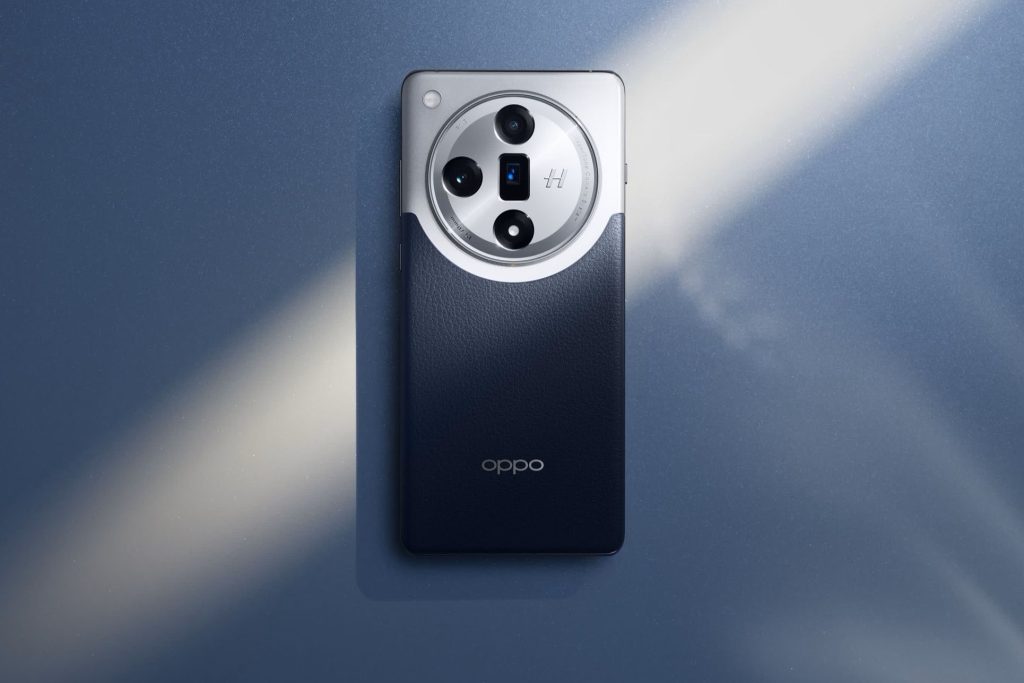
Oppo Find X7

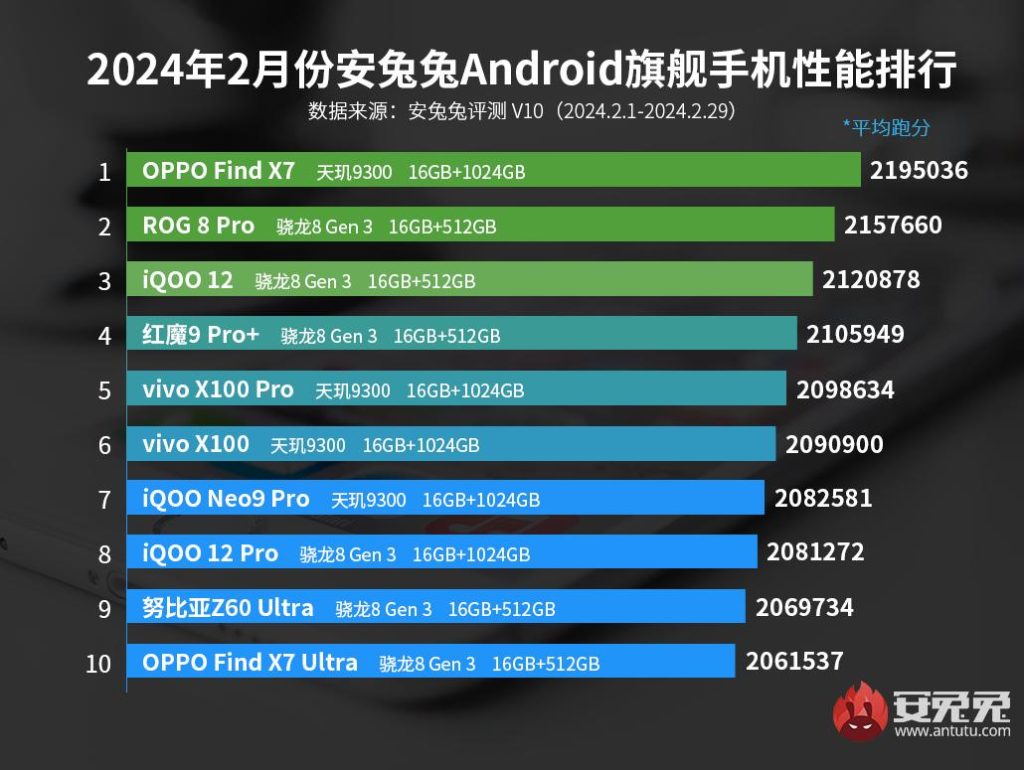
For the second consecutive month, the Dimensity 9300 chip powers the top-performing smartphone, the Oppo Find X7, according to AnTuTu benchmarks. With a score of 2,195,036, it edges out its rivals. The Dimensity 9300’s edge could be its use of ARM’s powerful cores, specifically 4 x Cortex-X4 and 4 x Cortex-A720 cores.

AnTuTu Top 10 (by performance) in February 2024:

  1. OPPO Find X7
    • Score: 2,195,036
    • Configuration: 16GB RAM + 1TB Storage
  2. ROG 8 Pro
    • Score: 2,157,660
    • Configuration: 16GB RAM + 512GB Storage
  3. iQOO 12
    • Score: 2,120,878
    • Configuration: 16GB RAM + 512GB Storage
  4. RedMagic 9 Pro+
    • Score: 2,105,949
    • Configuration: 16GB RAM + 512GB Storage
  5. vivo X100 Pro
    • Score: 2,098,634
    • Configuration: 16GB RAM + 1TB Storage
  6. vivo X100
    • Score: 2,090,900
    • Configuration: 16GB RAM + 1TB Storage
  7. iQOO Neo9 Pro
    • Score: 2,082,581
    • Configuration: 16GB RAM + 1TB Storage
  8. iQOO 12 Pro
    • Score: 2,081,272
    • Configuration: 16GB RAM + 1TB Storage
  9. Nubia Z60 Ultra
    • Score: 2,069,734
    • Configuration: 16GB RAM + 512GB Storage
  10. OPPO Find X7 Ultra
    • Score: 2,061,537
    • Configuration: 16GB RAM + 512GB Storage

The Asus ROG Phone 8 Pro, equipped with the Snapdragon 8 Gen 3, comes in as a close second. The performance difference between the top two phones is just 37,000 points, which is a small margin in the flagship category. Asus typically releases ‘D’ variants of its ROG Phones with MediaTek chips a few months after the initial launch. The possible pairing of the gaming-focused hardware in the ROG Phone and the Dimensity 9300 in the upcoming release might add some interesting changes to the leaderboard.

Get the OPPO Find X7 Ultra at Giztop.

RELATED:

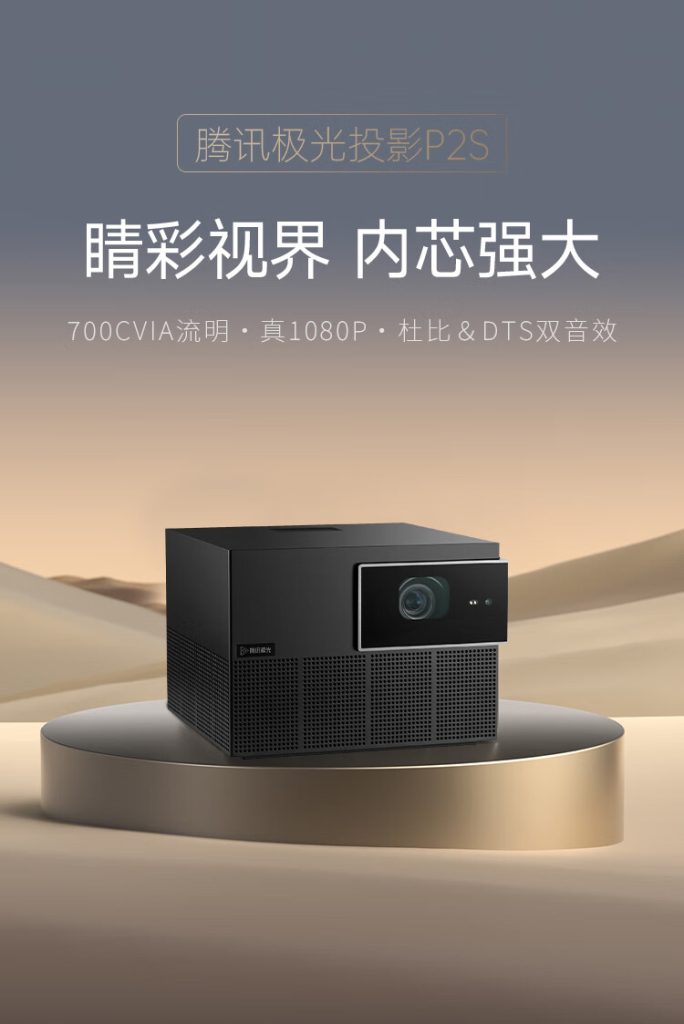
Tencent unveils Aurora P2S smart projector with 700 lumens, 1080p HDR10+ quality for 3599 yuan ($506)

Tencent has officially unveiled its latest projector, the Aurora P2S Projector, now up for pre-sale at a price of 3599 yuan ($506) in the Chinese market.

Set for a market release on March 7th, this new addition to Tencent’s lineup boasts significant improvements and high-end features aimed at enhancing the viewing experience for users.

Tencent Aurora P2S Projector

Tencent Aurora P2S Projector Specifications:

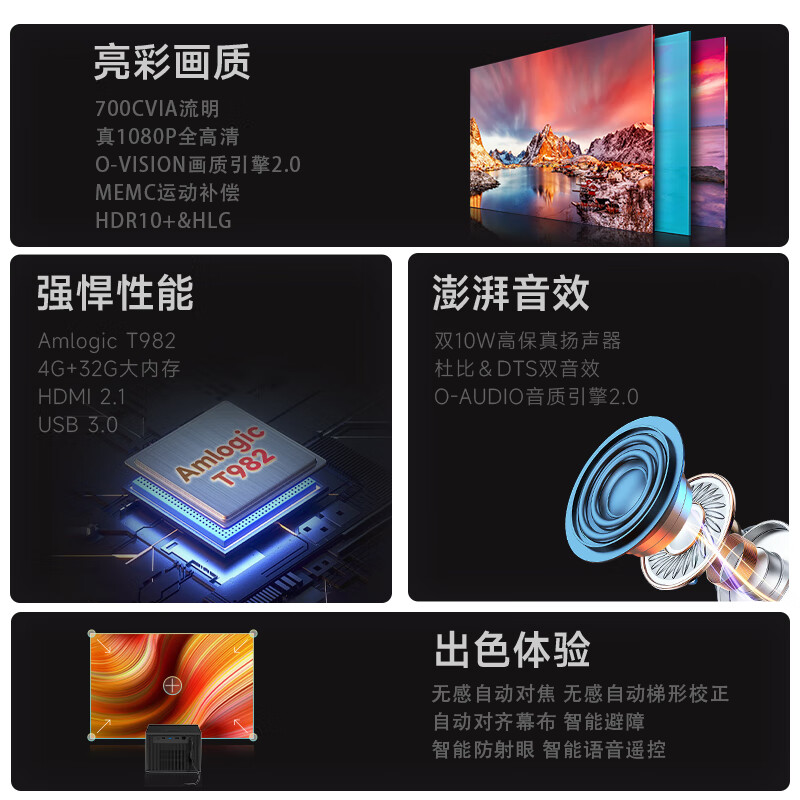
The Aurora P2S steps up its game with a brightness level of 700 CVIA lumens, ensuring clear and vibrant images even under various lighting conditions. It supports true 1080P full HD resolution, powered by the advanced O-VISION 2.0 picture quality engine. This technology, along with HDR10+ and HLG dual decoding, and MEMC motion interpolation, promises a cinematic visual experience.

Equipped with TOF laser sensors and CMOS HD cameras, the smart projector features intelligent recognition algorithms for quick and precise calibration, enhancing usability and setup convenience. The projector also comes with a suite of smart features, including automatic focus, trapezoid correction, screen alignment, obstacle avoidance, and eye protection, making it a versatile choice for both home and professional use.

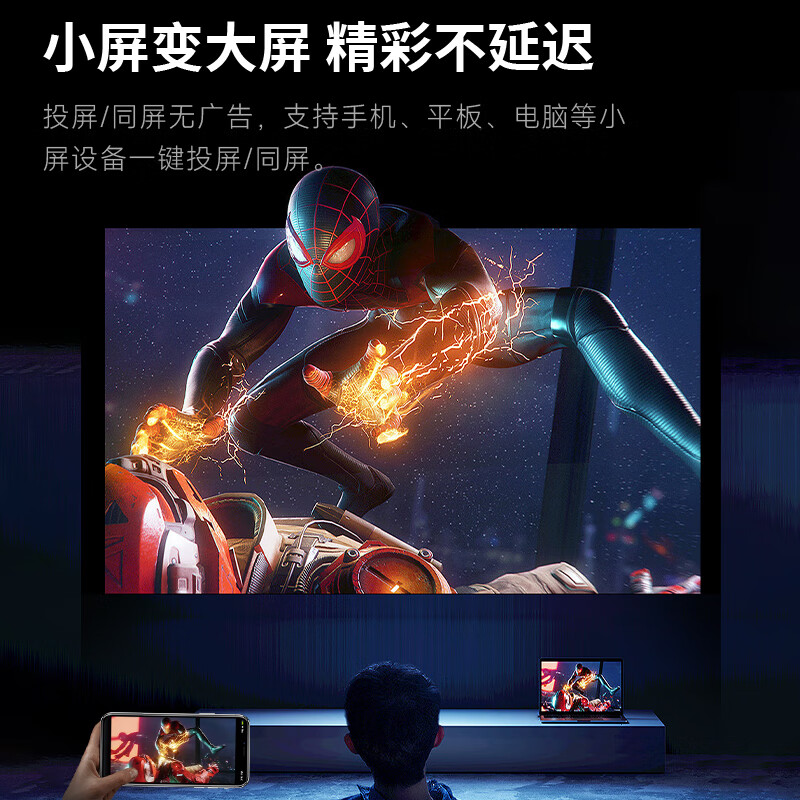
Running on Android 9.0, it supports various wireless casting protocols, and its optical specs include DLP technology, a high-transmission coated glass lens, and compatibility with 2K/4K resolutions. The projector is recommended for screen sizes between 60-120 inches.

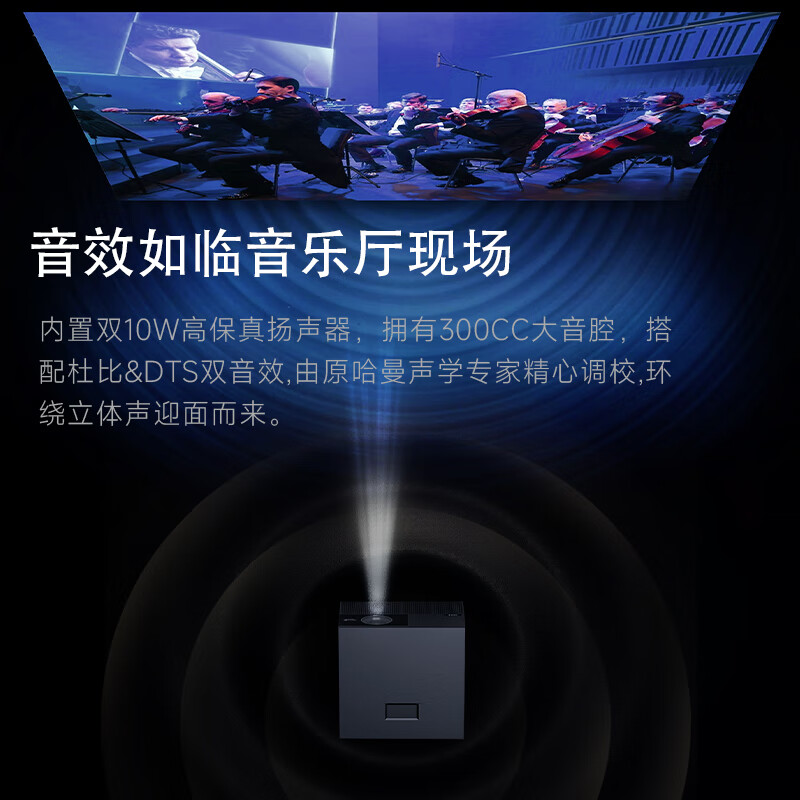
At its core, the Aurora P2S is powered by the Amlogic T982 chip, featuring 4GB DDR4 RAM and 32GB eMMC storage. Audio quality is not left behind, with the device housing dual 10W high-fidelity speakers within a 300CC sound chamber. The sound system supports Dolby & DTS dual audio effects, tuned by Harman’s acoustic experts, ensuring an immersive auditory experience.

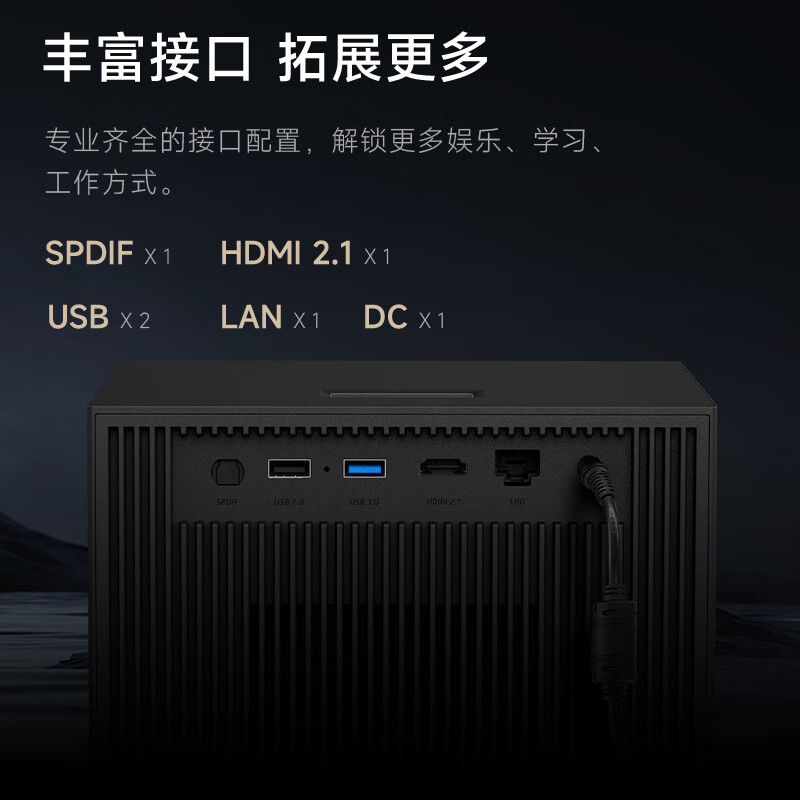
It’s well-equipped for gaming and streaming, featuring SPDIF, HDMI 2.1, USB, LAN, and DC, with a notable 48Gbps transmission bandwidth for high-speed connectivity, low latency of 20ms gaming mode, and access to Tencent Cloud Gaming and Aurora TV for a variety of entertainment options. The device is designed for quiet operation with a noise level of ≤24dB and supports a wide range of interfaces for connectivity and expansion.

RELATED:

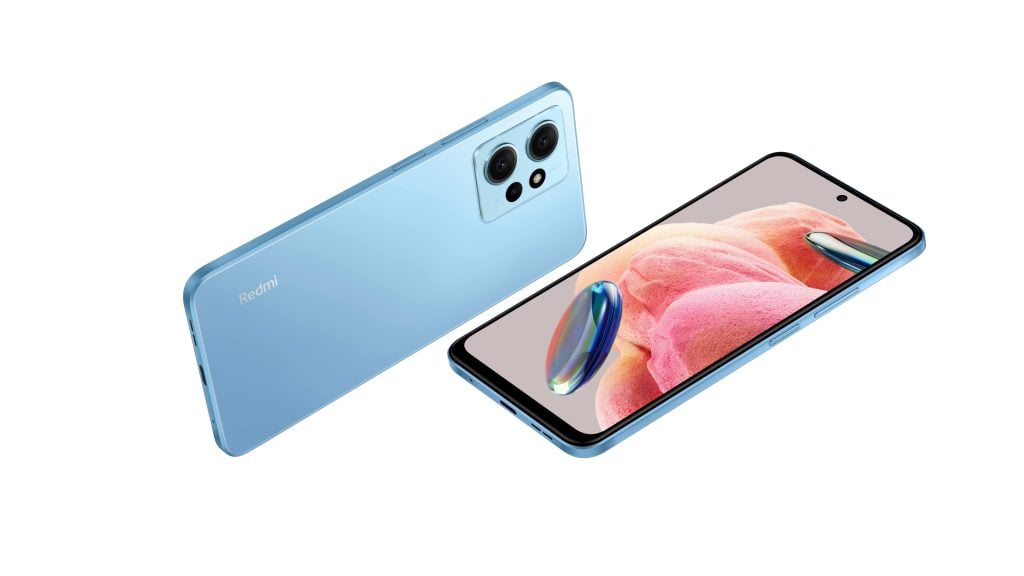
Redmi Note 12 4G & Redmi 12 4G get price cuts in India; Check details

Xiaomi’s Redmi brand has reduced prices for the 6GB/128GB models of its mid-range smartphones, the Redmi Note 12 4G and Redmi 12 4G, effective from March 1. The Redmi Note 12 4G is now priced at Rs. 12,999, down from Rs. 13,999, while the Redmi 12 4G is available at Rs. 10,499, previously Rs. 10,999.

Redmi Note 12 4G specs:

Redmi Note 12 4G

The Redmi Note 12 4G offers a Qualcomm Snapdragon 685 processor and a large 6.67-inch AMOLED display that has a fast 120Hz refresh rate. It has a triple camera setup on the back, including a 50MP main camera, an 8MP ultrawide unit, and a 2MP macro snapper. On the front, it has a 13MP selfie camera. It also offers support for 33W fast charging for its 5,000mAh battery. While it lacks dual stereo speakers, it still includes a handy 3.5mm headphone jack and a MicroSD card slot for extra storage.

Redmi 12 4G:

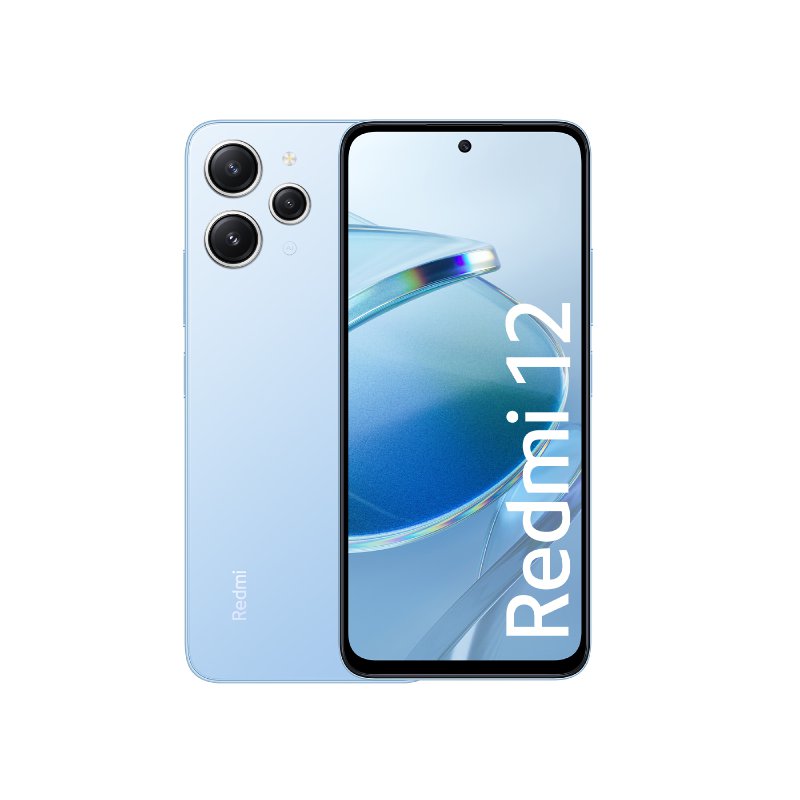
Redmi 12

The Redmi 12 4G, on the other hand, is great for those who want a big screen and long battery life. It features a 6.79-inch FHD+ display with a 90Hz refresh rate and a durable layer of Corning Gorilla Glass. It runs on a MediaTek Helio G88 processor and also comes with a similar camera setup and a 5,000mAh battery but with 18W fast charging. This phone is built to last with its IP53 splash resistance rating and includes a side-mounted fingerprint sensor for quick access.

RELATED:

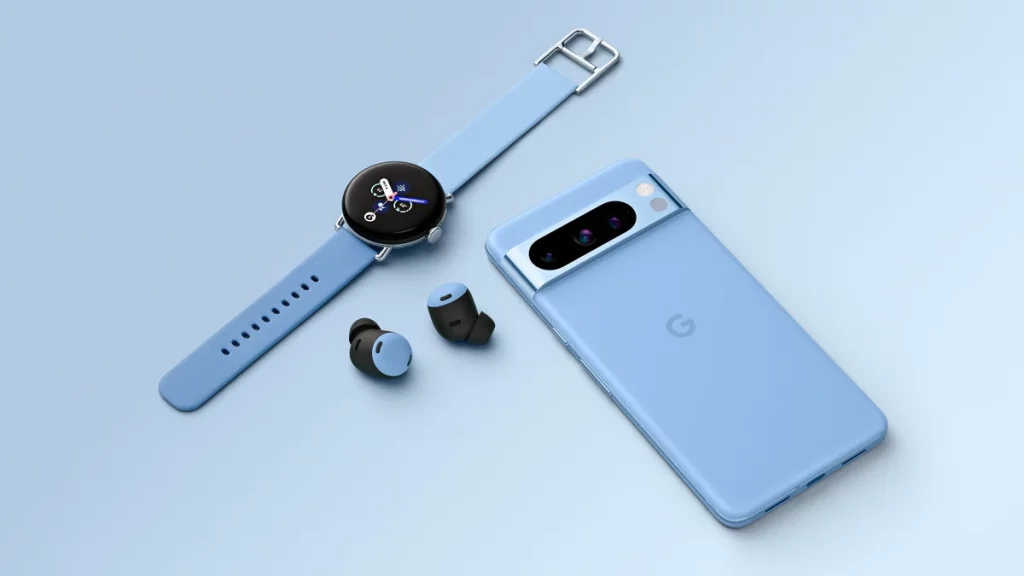
Google Pixel Watch 3 Rumoured To Come In Larger Size, Pixel Buds Pro 2 Also In Development

Apple and Samsung offer their smartwatches in different sizes. However, Google’s Pixel Watch only comes in a single size which is a bummer for potential buyers. In January this year, it was reported that the search giant could address this issue with the next-generation offering. Now, the folks at 9to5Google citing sources familiar with the matter reveal the size variants of the Pixel Watch 3 along with information on the Pixel Buds Pro 2.

Pixel Watch 3 to come in more sizes, Buds Pro 2 in development

Samsung Galaxy Watch 6 and 6 Classic are available in 40, 44mm, and 43, 47mm sizes respectively. Meanwhile, the Apple Watch Series 9 comes in 41mm and 45mm. This gives buyers the option to choose what size fits best on their wrist. The Pixel Watch (both generations) features a 41mm diameter making it too small for those with bigger wrists. 

The report says that the Pixel Watch 3 will come in a bigger variant probably a 45mm dial size. This would offer a significant difference on the user’s wrist. The search giant could continue to offer the next-generation smartwatch in the current 41mm size. With the larger size, the 45mm variant could also pack a bigger battery, more sensors, and of course a larger display. 

Aside from the Pixel Watch 3, the publication reveals that the Pixel Buds Pro 2 are in development for some time. The exact name of the TWS earphones is not clear. It could arrive as the successor to the Pixel Buds Pro that debuted in 2022. The search giant usually follows a two-year release schedule for the TWS earphones. Hence, it’s a possibility that the Buds Pro 2 could arrive this year. 

Related:

Source

Lava Blaze Curve 5G price tipped ahead of March 5 launch

Indian smartphone maker Lava is set to unveil its latest product, the Lava Blaze Curve 5G, on March 5, 2024, with a launch event streaming live from Lakshadweep. Ahead of the launch, pricing details of the device have surfaced online.

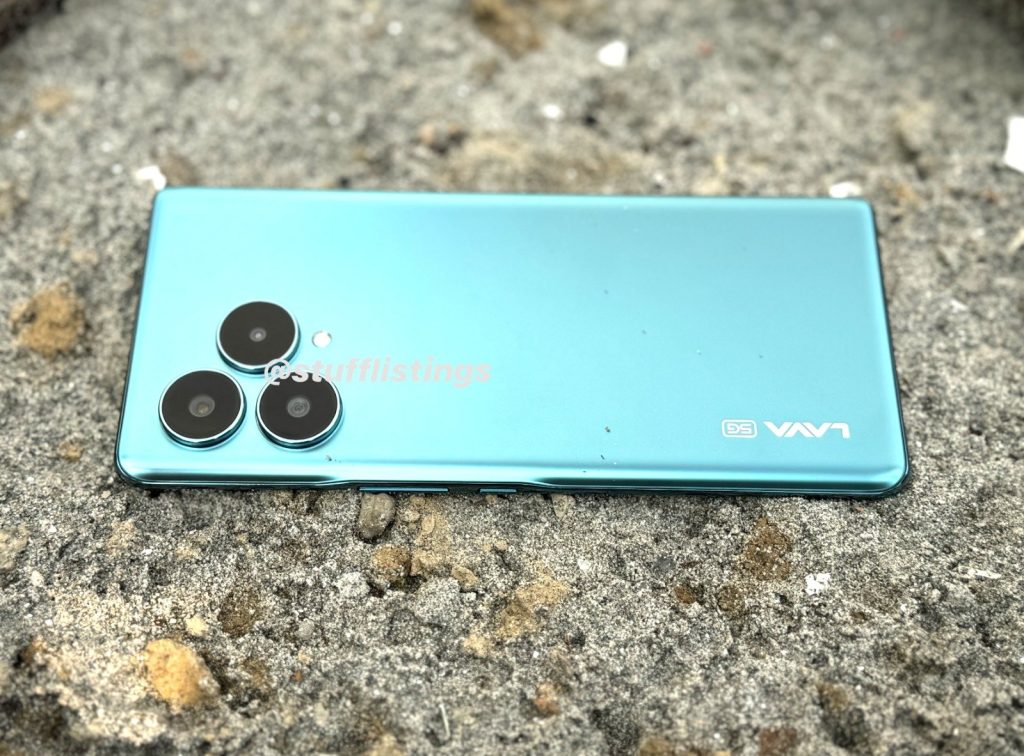
Lava Blaze Curve 5G

Pricing for the Lava Blaze Curve 5G has not been officially disclosed, but according to tech tipster Paras Guglani, it is expected to start at Rs 16,999. This price point is the same at which the brand is currently selling the Lava Agni 2 5G.

The Lava Blaze Curve 5G is equipped with a MediaTek Dimensity 7050 processor, 8GB LPDDR5 RAM, and 256GB UFS 3.1 storage. A recent Geekbench listing reveals that the device has an Android 13-based operating system. Its display is a 6.67-inch curved AMOLED screen with a 120Hz refresh rate, promising a crisp and smooth user experience.

For audio, the phone features dual stereo speakers. The camera setup includes a 64MP main camera that will house a Sony sensor. Reports also reveal that the device will have a 5,000mAh battery.

Further details about the phone are limited, but with the launch date near, more information is expected to be revealed soon. It is anticipated to come in two color options, with its price potentially ranging between Rs 16,000 and Rs 19,000.

RELATED:

(Source)

Researchers from China will Drill 3,600 Meters Deep Into Antarctica’s Subglacial Lake

A Chinese scientific expedition is gearing up to drill into a massive subglacial lake hidden beneath the icy depths of Antarctica. This ambitious project holds immense potential for unlocking secrets about the continent’s unique ecosystem and the possibility of life forms thriving in its extreme environment.

Scientists believe that the lake has been isolated for at least 3 million years

The target of this expedition is the Qilin Subglacial Lake, named by China in 2022. Located a staggering 3,600 meters beneath the Princess Elizabeth Land ice sheet, the lake boasts an estimated surface area of 370 square kilometers and depths reaching up to 200 meters. Notably, scientists believe this lake has been isolated from the outside world for at least 3 million years, making it a prime target for studying potential life forms that may have adapted to these extreme conditions.

China
Image Credits: James Eades

Beyond the potential for biological discoveries, the project holds significance for understanding the broader picture of our planet’s history and future. Studying the lake’s history could offer valuable insights into past climate variations, while exploring its formation and interaction with the ice sheet can provide crucial information about the evolution of Antarctica’s icy landscape.

However, venturing into such a fragile environment comes with its own set of challenges. The Chinese Polar Research Institute is currently working on developing crucial technologies to ensure clean and retrievable drilling, as well as safe and effective sample collection and contamination control. By drawing from the experiences of previous successful expeditions undertaken by other nations, China aims to contribute new knowledge and scientific understanding to the ongoing exploration of subglacial lakes.

RELATED:

(Via)

Popular Indian Apps Face Potential Removal as Google Play Store Tightens Policy Grip

Google is enforcing its Play Store payment policy against several Indian app developers, potentially raising tensions with local tech companies. This could mean non-compliant apps, including popular ones like Shaadi.com and Quack Quack, being removed from the platform.

Some developers have started complying, while others haven’t yet

These companies previously challenged Google’s policy in court but weren’t granted temporary protection. Some have since begun complying, while others haven’t. For instance, Info Edge’s founder confirmed compliance, but Matrimony.com expressed concerns about the impact on their industry.

Google-Play-Store

Google emphasizes the need for fair treatment, highlighting that most Indian developers already comply. They remain committed to supporting those who do.

If delisted, developers have options:

  • Integrate with Google Play‘s billing system (standard approach).
  • Use an alternate billing system alongside Google Play’s (pay a reduced fee but less control).
  • Operate as consumption-only (no fees but limited features).

This action highlighted the importance of adhering to Play Store policies. Developers should assess their compliance and choose an option to keep their apps available to users. The consequences for some of these are quite serious, considering app developers may have to restructure their policies around revised regulations. Let’s see how devs respond to the policy enforcement.

RELATED:

(VIA)

Apple reportedly cancels highly-anticipated microLED order for Watch Ultra

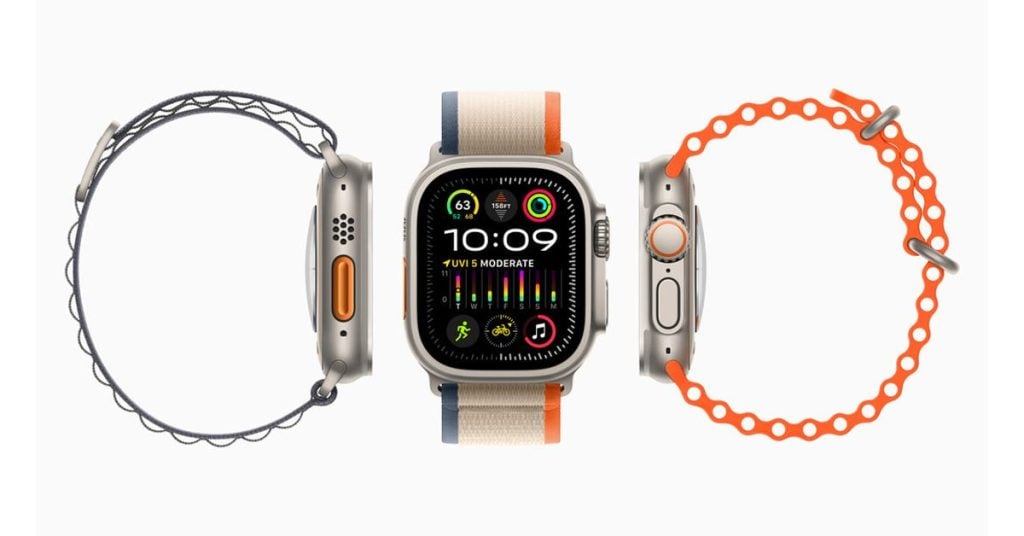
Apple‘s eagerly awaited switch to custom microLED displays, initially planned for the Apple Watch Ultra, seems to have hit a snag. Recent issues with suppliers like ams-Osram, along with economic concerns, have reportedly caused Apple to cancel its plans for the microLED Apple Watch Ultra.

Apple cancels microLED Watch Ultra project

According to industry analyst Ming-Chi Kuo, Apple has scrapped a significant microLED order with the Austrian firm ams-Osram, speculated to be for the upcoming Apple Watch Ultra 3.

While it’s been rumored that the Austrian firm ams-Osram would supply microLED displays for the Watch Ultra, the company recently announced  “a cornerstone project underpinning its microLED strategy got unexpectedly canceled, triggering the company to re-assess its microLED strategy” in a dedicated press release.

Osram hasn’t confirmed that Apple was the client that withdrew from its major microLED deal. But analyst Ming-Chi Kuo has confirmed that Apple has indeed scrapped its microLED Apple Watch project with its exclusive LED chip supplier for microLED display, Osram.

Kuo highlights that Apple may have concluded that microLED technology while promising, does not offer a substantial enough improvement to justify its high production costs.

However, other sources, such as Bloomberg’s Mark Gurman, suggest there may be more to the story. Gurman posits that ams-Osram might be only one of Apple’s microLED suppliers, implying that the Apple Watch Ultra’s display upgrade may still be happening.

Apple’s interest in microLED displays is well-documented. The technology has the potential to deliver brighter, more power-efficient screens. Previous rumors hinted at a gradual rollout of microLED technology across Apple’s product lines, starting with the Apple Watch and eventually expanding to iPads, iPhones, and MacBooks.

For now, the future of the microLED Apple Watch Ultra remains uncertain. Whether this is a temporary setback or a significant shift in strategy will likely become clearer with time.

Related:

Samsung Galaxy S24 receives another update, March security patch now available

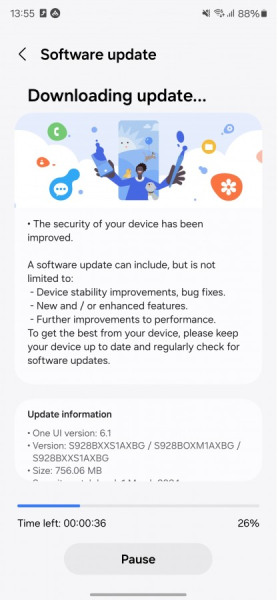
Samsung has released its latest software update for the Galaxy S24 series, delivering the March 2024 security patch. The update began rolling out in late February, following an initial firmware release that focused on camera improvements and display color adjustments.

Users in Canada, Germany, Italy, and other European regions have reported receiving the update with the build number AXBG. Below are the software build numbers for all the three devices in the series:

Although Samsung’s changelog doesn’t delve into specific changes, the highlight undoubtedly remains the inclusion of the March security patch. For the Galaxy S24 Ultra, the update weighs around 756MB, while other models in the series come in at approximately 428MB.

Samsung Galaxy S24 March Update

Samsung remains consistently among the leading smartphone manufacturers in releasing monthly security updates. While the February 2024 update arrived slightly later than usual for flagship Galaxy devices, Samsung is back on schedule with the March update, releasing it even ahead of Google.

Other Galaxy phones, such as the Galaxy S23 and Z Fold 5,  are expected to receive the March patch later in the month. This aligns with Samsung’s confirmation that the One UI 6.1 update, featuring Galaxy AI capabilities, will reach these devices in late March. 

The update will introduce features such as Circle to Search, AI-powered wallpapers, Generative Edits for images, Note Assistant, and more.
To check for the AXBG firmware update on your Galaxy S24, navigate to Settings > Software update > Download and install. Carrier-locked devices may have a slightly longer wait, but unlocked models worldwide should receive the update within the next few days.

Related:

(Via)

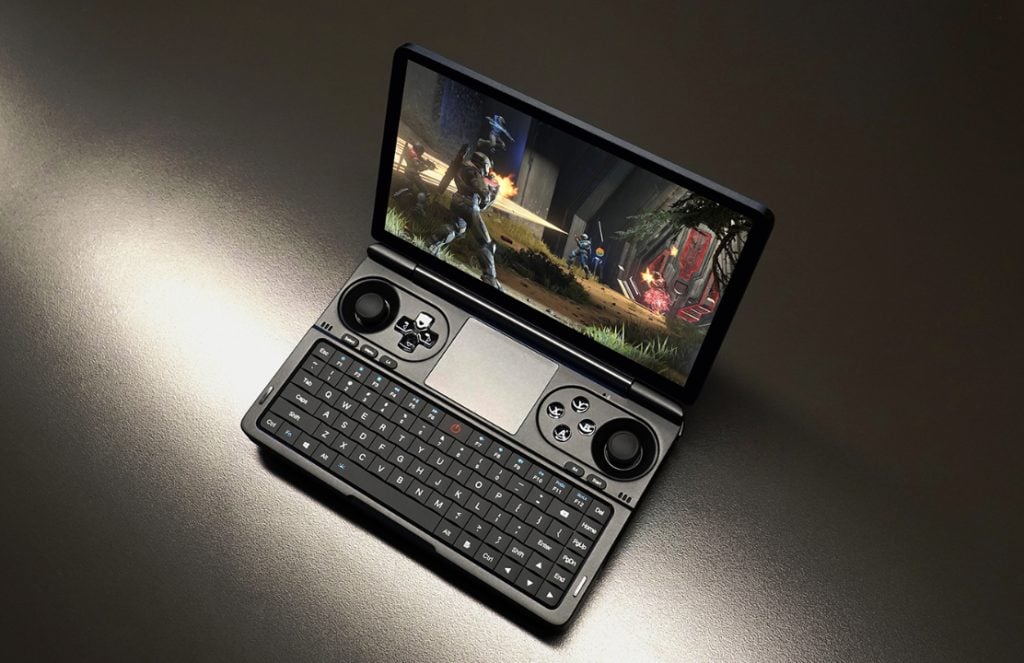
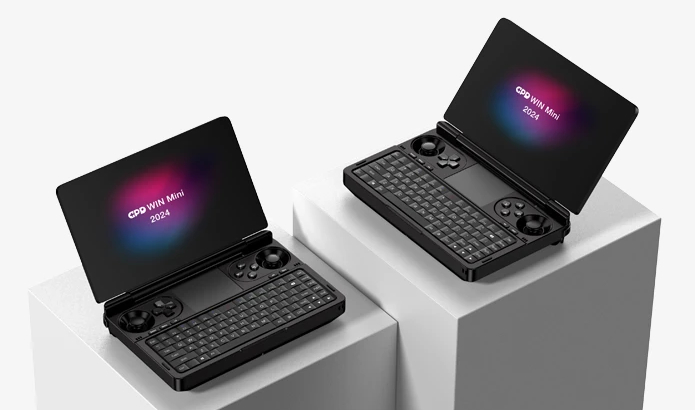
GPD Win Mini 2024 gaming handheld launched with Ryzen 7 8840U APU & 7″ FHD 120Hz IPS display

GPD is rolling out an update to its Win Mini handheld gaming device for 2024, featuring AMD’s Ryzen 8000 series APUs.

GPD Win Mini 2024

The latest Win Mini comes with either a Ryzen 7 8840U or a Ryzen 5 8640U processor, stepping up to 8 Zen4 cores. This means faster speeds and more power for playing games and doing other tasks. The inclusion of AMD’s XDNA AI-core technology is expected to improve performance, especially in computing tasks.

GPD Win Mini 2024

One of the big improvements in the new model is the display. It now has a 7-inch, 1080p LTPS screen that can refresh at 120 Hz and supports FreeSync Premium and Variable Refresh Rate (VRR), all behind Gorilla Glass 6.

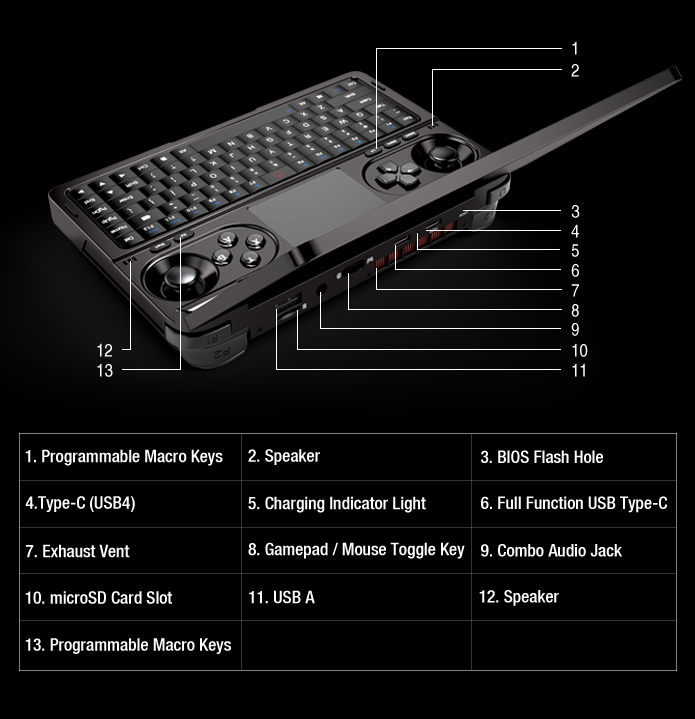
GPD Win Mini 2024

However, the 2024 model has dropped the OCuLink port, which was present in the previous version, for connecting external GPUs. Now, it relies on USB4 connections.

The device also boasts better performance in emulating PlayStation 3 games, aiming for 60 FPS. It supports AVX-512 instructions, which is said to help with this.

The Win Mini 2024 will be launched through a crowdfunding campaign, with prices beginning at $879 for the base configuration with the Ryzen 7 8840U processor, 32 GB of RAM, and options for either 512 GB or 2 TB of SSD storage.

RELATED:

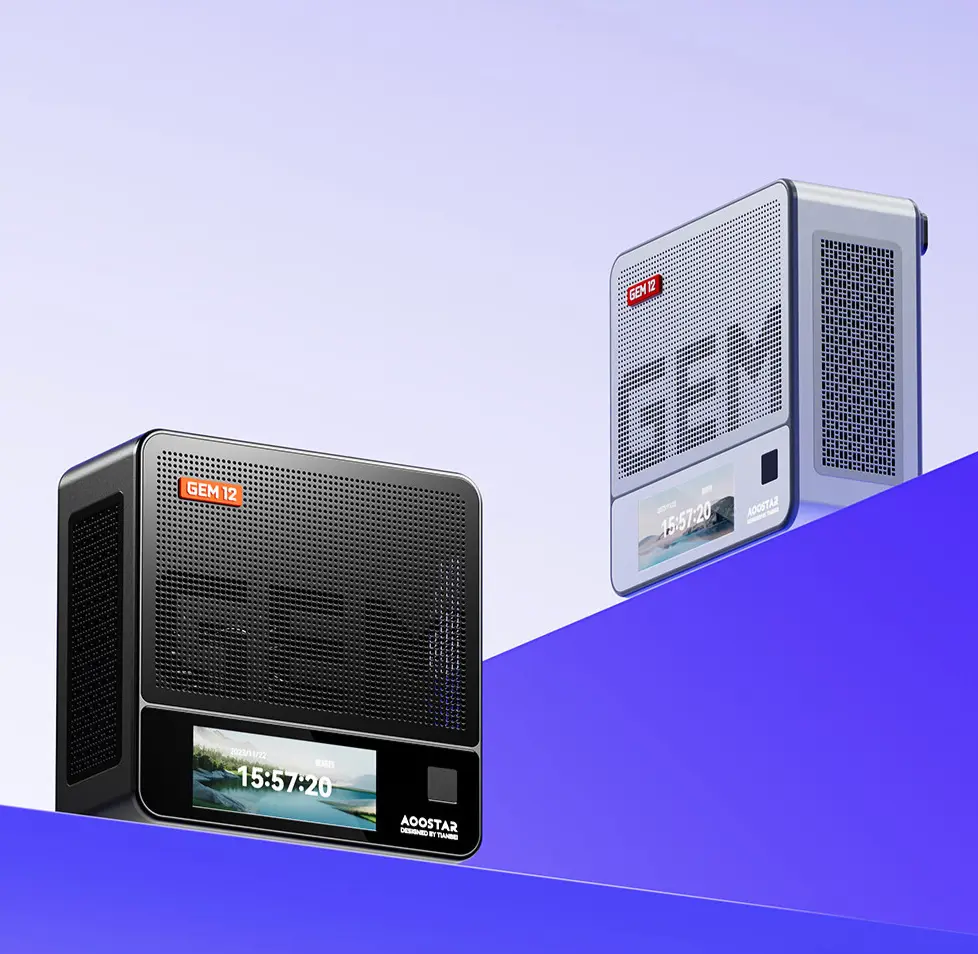
AOOSTAR GEM12 Pro mini gaming PC with Ryzen 7 8845HS, a fingerprint scanner & a built-in screen

AOOSTAR has launched a new mini PC in China, named the GEM12 Pro. This compact computer is designed for gamers who want to save space without losing out on performance. It stands out because of its built-in screen and fingerprint scanner.

AOOSTAR GEM12 Pro

The GEM12 Pro comes with powerful AMD Ryzen processors, including options like the Ryzen 7 8845HS. It can have up to 32GB of RAM and 1TB of storage, making it fast and spacious enough for most games and programs. The built-in Radeon 780M graphics help it run games smoothly.

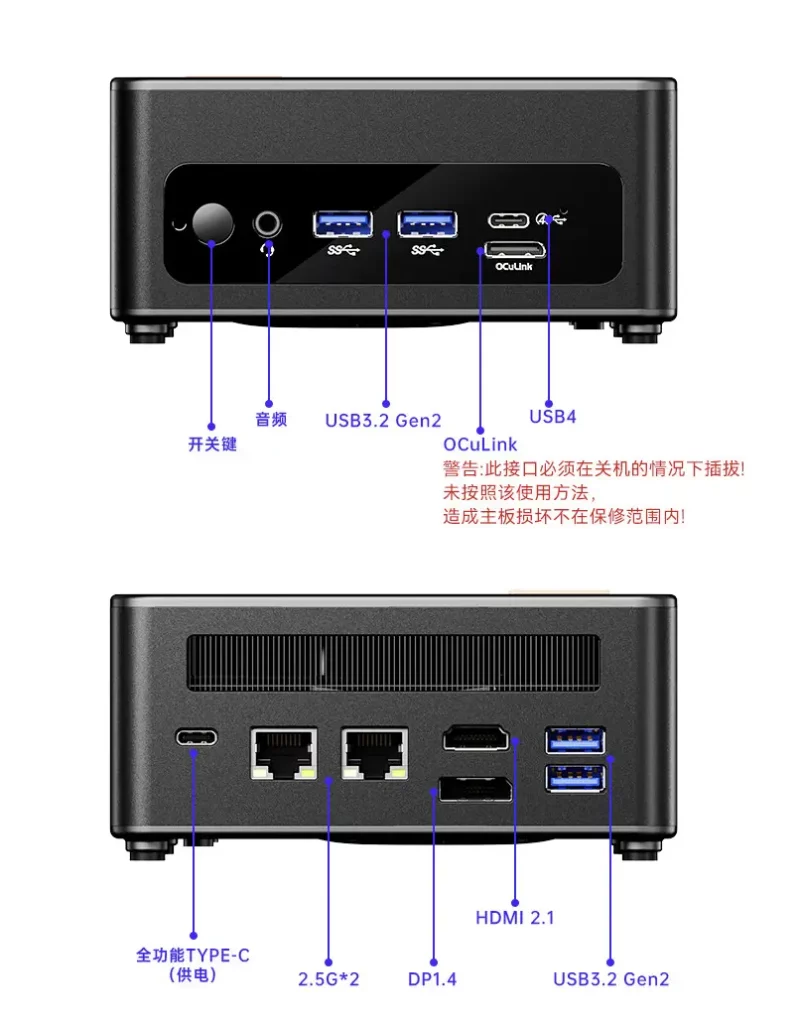
One of the unique features of this mini PC is its screen, which can show system info or personal photos, and a fingerprint scanner for easy and secure login. It’s also equipped with an OCuLink port, so you can connect it to an external graphics dock for even better game performance. The GEM12 Pro includes several other ports for connecting devices and displays.

AOOSTAR GEM12 Pro

AOOSTAR has equipped the GEM12 Pro with a cooling system they call “Glacier 3.0,” which helps keep the mini PC running cool even when it’s working hard.

The starting price for the GEM12 Pro is 2699 yuan (about $347) for the basic model in China. While it’s currently only available in China, AOOSTAR usually releases its products internationally, so it might be available in other countries soon.

In related news, AOOSTAR has already unveiled the GEM10 gaming mini-PC for the global market. It is currently available for pre-order starting around $549 and shipping is expected to start from March 8.

RELATED:

(via)

Despite the success of the Xiaomi 14 Ultra in the global markets, Xiaomi official says that internationalization still has a long way to go

Xiaomi launched its latest ultra flagship, the Xiaomi 14 Ultra in China on February 22. On February 25th, the company released the flagship to the global market for €1,499. This is no doubt a bold decision from Xiaomi, because, at this price point, the phone is directly competing with Samsung and Apple, who dominate these markets.

The Xiaomi 14 Ultra achieves promising results in the global markets

In Barcelona, Spain

Lu Weibing, partner and president at Xiaomi Corporation stated on a Weibo post yesterday stating that the success of the Xiaomi 14 Ultra in the international market is very important for the company regarding its establishment in such markets. He noted that the internationalization of Chinese brands still has a long way to go due to Apple and Samsung‘s strong grip on the markets. He also noted that alongside the domestic market, the Xiaomi 14 Ultra has received a positive user response in the global markets so far.

On the first day of sale on February 27, Lu Weibing said that the first sales volume of Xiaomi 14 Ultra in Europe tripled compared to the previous generation. At the same time, the Xiaomi 14 achieved six times higher sales compared to its predecessor.

Notably, the €1,499 Xiaomi 14 Ultra, which is equivalent to 11,600 Yuan in China, comes with a 16GB + 512GB configuration. This is significantly higher as compared to the Chinese market. For context, the 12GB+256GB, 16GB+512GB, and 16GB+1TB variants are available in China for 6,499 Yuan, 6,999 Yuan, and 7,799 Yuan respectively.

This ultra flagship from Xiaomi mainly focuses on imaging capabilities with the 50MP 1″ Sony LYT-900 main sensor resting inside a variable aperture system. Both the 3.2x and 5x telephoto camera houses the Sony IMX858 sensor and the camera modules are capable of focusing on closer subjects enabling room for some exciting closeup shots. If you are willing to know more about the camera system of this device, check out our full review of the Xiaomi 14 Ultra.

Related:

(Source)

MWC 2024: Tecno Announces New AI Assistant, “Ella”, Will Arrive on Tecno Smartphones this Summer

We’re all familiar with Siri, Alexa, and Google Assistant, but Tecno? Tecno is jumping into the AI assistant game with “Ella,” but it’s not just about setting alarms or playing music. This “all-round personal assistant” aims to be a one-stop shop for convenience and content creation. Although some of its features resemble other popular AIs out there, it’s an all-in-one solution to problems that a lot of smartphone users go through. That might be the USP of this AI assistant.

The AI brings Image Generation, Magic eraser-like features and more to the table

Here’s what to expect:

  • Image Generation: If you’re struggling to visualize the ideas in your head, Ella can turn your words into pictures, adding a creative spark to your projects. It’s a generative AI feature, similar to OpenAI‘s Dall-E.
  • Translation Powerhouse: Struggling with foreign languages is a thing of the past now. Tecno states that its AI can tackle language barriers with features like call translation, social media translation, and even generating subtitles for videos.
Tecno
  • Inclusive Enhancements: Tecno understands the importance of diversity. Their AI adapts image generation and photo enhancements to cater to different regions, ensuring everyone gets the best results.
  • Smarter Photo Editing: Say goodbye to unwanted photobombers! Tecno’s AI lets you remove strangers from your pictures and even create personalized stickers and cutouts. This is very reminiscent of Google’s Magic Eraser feature, that was the highlight of the Pixel smartphones.
  • Effortless Photo Searching: Finding that perfect picture just got easier. Tecno’s AI lets you search your gallery using simple descriptions, saving you the time and trouble of scrolling through endless photos – just like Google Photos.

While specific release dates haven’t been announced, these features are expected to arrive on Tecno phones as early as this summer. With this AI upgrade, HiOS is aiming to make phone experiences smoother, more creative, and more accessible than ever before.

RELATED:

(Via)

Elon Musk is Now Suing OpenAI, Asks Court to Force OpenAI to Make its Technology Public

Elon Musk, the man known for electric cars and SpaceX amongst other things, has sued OpenAI, an artificial intelligence (AI) research lab he helped create. He accuses the company of abandoning its original goal of creating beneficial, non-profit AI for everyone. OpenAI, famous for its ChatGPT language model, is now backed by Microsoft, raising concerns in Musk’s eyes. He claims the company, initially meant to be open and non-profit, is now focused on making money for its investors.

OpenAI and Microsoft have yet to release a statement to the public

The lawsuit, filed in San Francisco, asks the court to force OpenAI to:

  • Make its research and technology public. This would allow anyone to learn and build upon OpenAI’s work, fostering broader AI development.
  • Prevent using its most advanced AI model, GPT-4, for financial gain. This includes both Microsoft and individuals associated with OpenAI.
Elon-Musk

OpenAI and Microsoft have yet to comment on the lawsuit.

Musk has long expressed concerns about the potential dangers of AI, calling for regulations. He left OpenAI’s board in 2018 and has been critical of Microsoft’s involvement. He believes the tech giant has undue influence, if not outright control, over OpenAI. This legal battle adds another layer to the complex world of AI development. While the outcome is uncertain, it raises important questions about the ethics, purpose, and control of this powerful technology.

Meanwhile, Musk is pursuing his own AI venture, xAI. This startup aims to create “maximum truth-seeking AI” and recently launched its ChatGPT competitor, Grok, which also leaked the actual recipe for a drug when prompted to do so.

RELATED:

(Via)

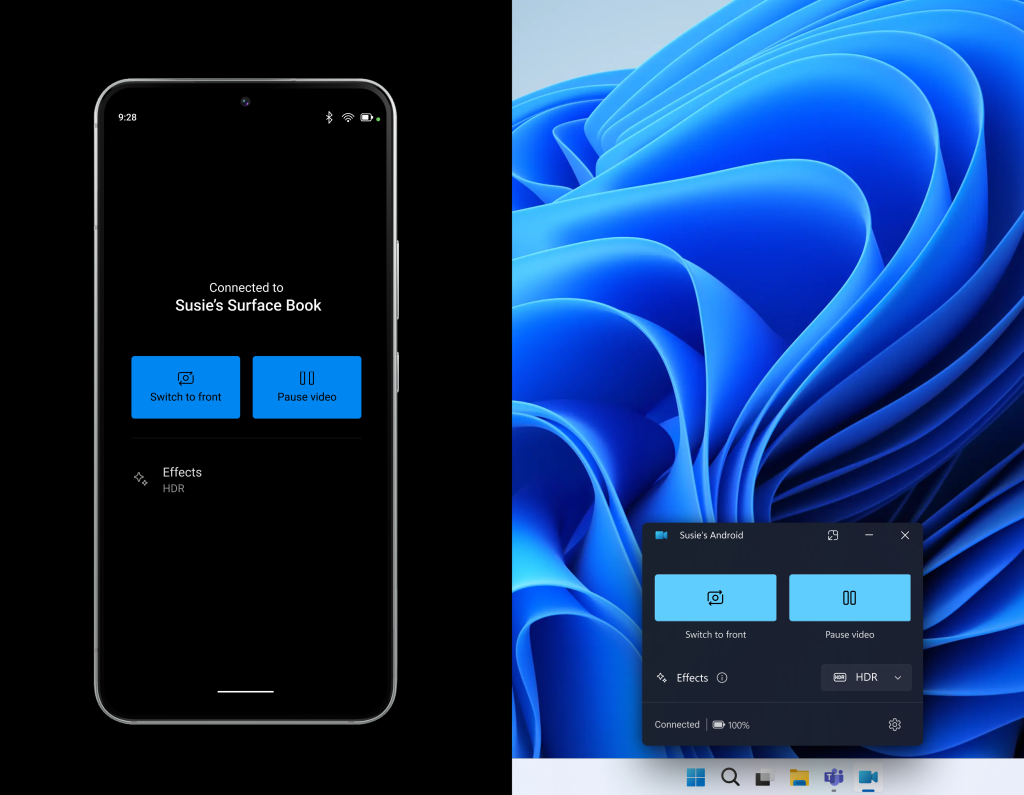
Windows Insiders can Now Use High-Quality Smartphone Cameras as Webcams on Windows 11

Windows Insiders have even more reason to rejoice now! Microsoft is rolling out a feature that lets users transform their Android phone or tablet into a webcam for any video application on a Windows 11 PC. We previously talked about the speculation that this feature might be on its way. This means users can now ditch bulky webcams and enjoy the high quality of a phone’s camera on their computer, all wirelessly and with added flexibility.

Using smartphones also lets users switch between front and back cameras as needed

Imagine using your phone’s camera for video calls, conferences, or even streaming, with the freedom to switch between the front and back cameras for the perfect shot. Need a quick break during a call? Simply pause the video stream from your PC and resume when you’re ready. Plus, you can even leverage the special effects offered by your phone’s camera, adding a touch of fun to your video interactions.

Windows 11

To get started, ensure your Android phone or tablet runs Android 9.0 or later and has the Link to Windows app version 1.24012 or higher installed. Connecting your phone as a webcam is easy: head to Settings > Bluetooth & devices > Mobile devices, choose “Manage devices” and grant your PC access to your phone. Your PC will then receive a necessary update from the Microsoft Store.

Microsoft is also encouraging users to share their feedback! Head over to the Feedback Hub (WIN + F) and share them under Devices and Drivers > Linked devices. Although there are third-party apps such as DroidCam that achieve the same end result (and have been around for years now), getting this feature integrated into Windows is a game-changer when it comes to convenience and speed. Get ready to experience the quality of using your phone’s camera for all your video needs on Windows 11!

RELATED:

(Via)

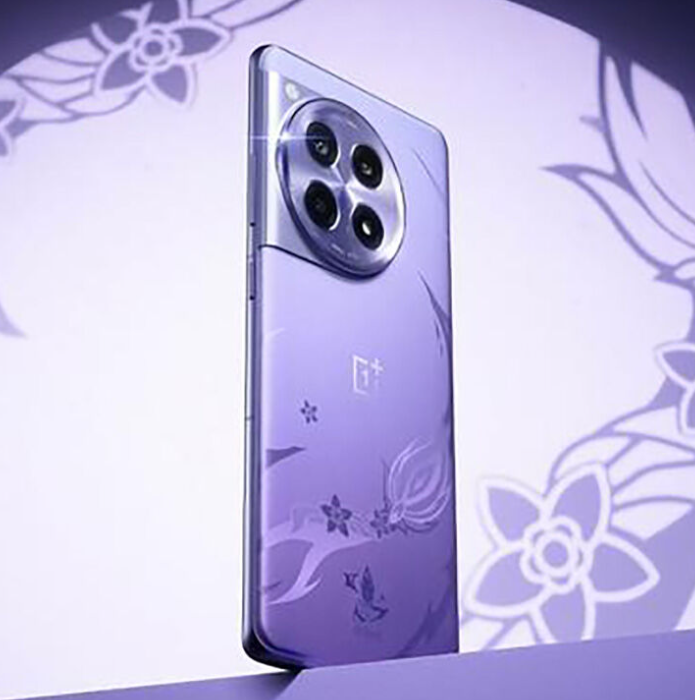
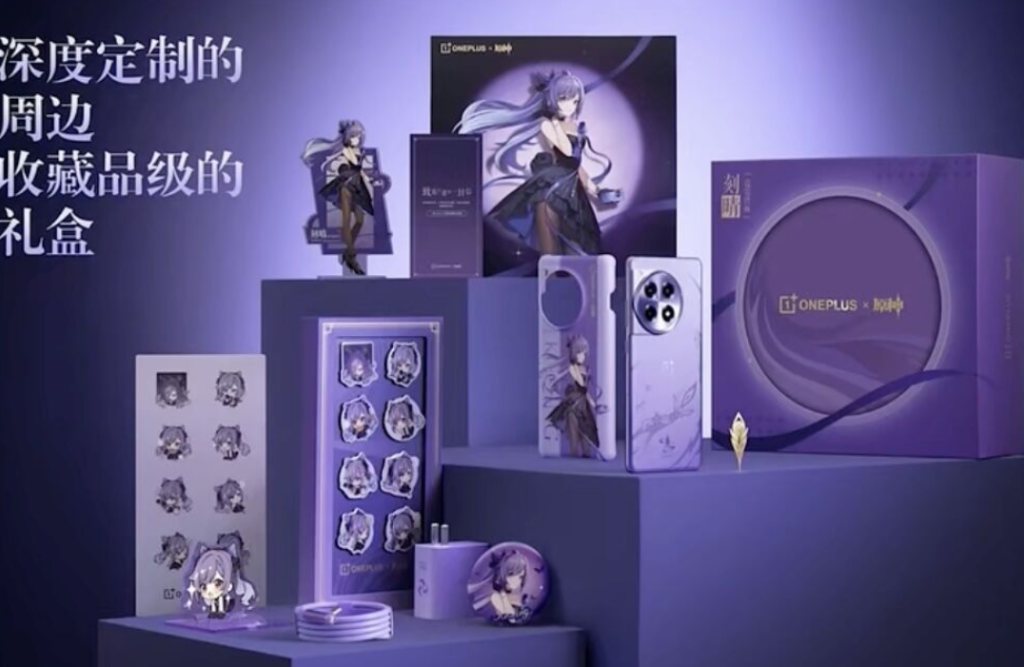
OnePlus Ace 3 Genshin Impact KEQING Edition: The ultimate gaming powerhouse is now available for pre-order at Giztop

OnePlus Ace 3 Genshin Impact KEQING Edition, is a device meticulously crafted to redefine the boundaries of mobile gaming excellence. The smartphone is now available for pre-order at  $699 at Giztop. Please note that this is a pre-order and the actual shipping will start after March 6.

WHERE TO BUY
OnePlus Ace 3 Genshin Impact KEQING at $699 @Giztop

Powered by the formidable Snapdragon 8 Gen 2 SoC and boasting 12GB/16GB of DDR5X RAM, the OnePlus Ace 3 ensures lightning-fast performance for all your gaming needs. Seamlessly open and run applications, effortlessly flip through menus, and experience buttery-smooth home screen transitions like never before.

With up to 1TB of UFS 4.0 internal storage, the OnePlus Ace 3 provides ample space to store your contacts, music, photos, and apps. Say goodbye to storage woes and hello to endless possibilities.

Immerse yourself in stunning visuals on the 6.74-inch OLED display with a 1.5K resolution of 2780×1264 pixels and a 120Hz refresh rate. Whether you’re exploring vast virtual worlds or engaging in intense battles, the display’s HDR10+ support and 4500 nits of maximum brightness ensure every detail pops with clarity.

Capture every gaming moment with precision using the OnePlus Ace 3’s triple rear camera setup, featuring a 50-megapixel Sony IMX890 primary sensor with OIS, an 8-megapixel ultra-wide-angle lens, and a 2-megapixel macro camera. Plus, elevate your selfies and video calls with the 16-megapixel front camera.

Game to your heart’s content with the OnePlus Ace 3’s massive 5500mAh battery, complemented by jaw-dropping 100W SuperVOOC fast charging. Bid farewell to low battery anxiety as you enjoy uninterrupted gaming sessions, backed by TÜV Rheinland-certified safe fast charging technology.

Experience unparalleled gaming performance with the HyperBoost game frame stabilization engine 2.0, which minimizes frame drops and jittering during extended gaming sessions. Stay in the zone and dominate the competition with fluid gameplay.

Stay connected with dual SIM support, 5G capabilities, Wi-Fi 7, Bluetooth 5.4, GPS, NFC, and dual stereo speakers. Plus, enjoy tactile feedback with the x-axis linear motor and effortlessly switch between sound profiles with the alert slider.

OnePlus Ace 3 Genshin Impact KEQING Edition sets a new standard for mobile gaming excellence, combining cutting-edge technology with unparalleled performance.

HDMI Forum rejects AMD’s Linux driver support for HDMI 2.1

AMD‘s recent attempt to enhance its open-source Linux graphics driver (AMDGPU) with HDMI 2.1 features has hit a roadblock. After months of internal development to support key capabilities like 4K@120Hz and 5K@240Hz, the HDMI Forum rejected AMD’s proposal.

The rejection prevents Linux users of newer AMD Radeon graphics cards from taking full advantage of HDMI 2.1-equipped displays.

AMD expressed disappointment with the Forum’s decision, stating that an open-source HDMI 2.1 implementation would not be possible without contravening HDMI Forum requirements. 

The Forum cited legal and compliance concerns surrounding the open-source distribution of the HDMI 2.1 specification.

AMD HDMI 2.1 Linux

This setback highlights the complexities faced by open-source HDMI developers following the HDMI Forum’s decision to restrict its specifications in 2021. 

As a result, the latest HDMI features are likely to remain unavailable within open-source drivers. AMD recommends Linux users who want features like high-refresh-rate 4K gaming to switch to DisplayPort connections instead.

The situation remains unchanged for Windows users with AMD graphics, as they retain full HDMI 2.1 functionality. This highlights a discrepancy in the open-source development environment. 

The rebuff also underscores potential tensions within the AMD – HDMI Forum relationship.  AMD had likely hoped that pioneering open-source HDMI 2.1 drivers would enhance their standing within the open-source community.

Whether Linux users with AMD graphics will ever be able to fully leverage next-gen HDMI 2.1 displays remains uncertain. Currently, both AMD and the HDMI Forum appear deeply invested in their respective positions, leaving consumers with limited options.

Related:

(Via)

Realme Narzo 70 Pro 5G Will Support Over Ten Air Gestures

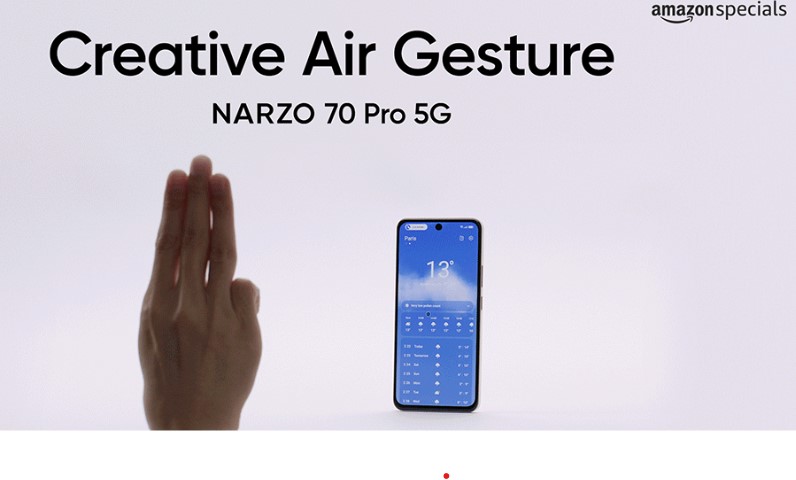
Realme is gearing up to launch the Realme 12 and 12+ 5G smartphones in India on March 6. The brand is also set to launch the Narzo 70 Pro 5G smartphone in the country later this month. Realme has started teasing the key details of the upcoming offering. Now, the company has confirmed that the Narzo 70 Pro 5G will have a unique feature that is mostly found in a few premium flagships. It will come with creative air gesture support that will let users to control certain functions without touching the screen.  

Narzo 70 Pro 5G will feature creative air gestures

Realme confirmed that the Narzo 70 Pro 5G will support air gestures. What this means is that users will be able to navigate certain features without having to interact with the screen. The upcoming offering will support over ten gesture options. The smartphone’s microsite on Amazon does give us a glimpse at how this feature works. Users will be able to swipe between multiple apps, open an app, and also take screenshots. 

Air Gestures feature on a smartphone is helpful in situations when interacting with the smartphone’s display is not possible. Realme confirmed that the Air Gestures will work with third-party apps. It will eliminate the need for physical contact and improve comfort and usability. 

Additionally, the Realme Narzo 70 Pro 5G will come with a triple-rear camera setup. It will consist of a 1/1.56-inch Sony IMX890 sensor with OIS support. A previous teaser confirmed that the upcoming offering will feature a flat frame design and a center-aligned punch-hole cutout on the 120Hz flat display. The Narzo 70 Pro 5G will ship with less bloatware. It is said to have 65 percent fewer pre-installed applications. 

Related:

Huawei Pocket 2 clamshell smartphone goes on sale in China

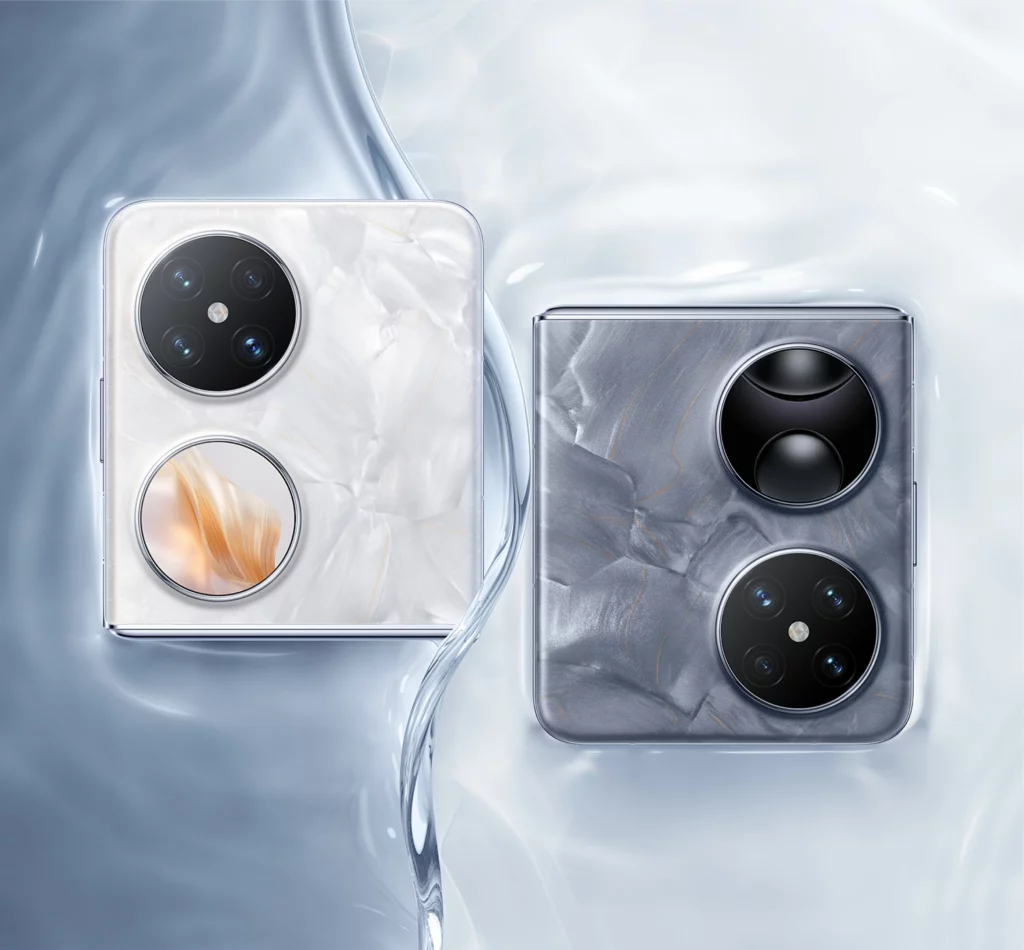
Starting today, the Huawei Pocket 2 clamshell smartphone is available to buy in the Chinese market after its debut last week. The foldable smartphone features a horizontal hinge made out of aerospace-grade “rocket steel” materials and offers 2nd gen Kulun glass protection.

Huawei Pocket 2

The Huawei Pocket 2 has a large 6.94-inch LTPO OLED main display, offering a crisp resolution of 2690 x 1136. The display has 2200 nits peak brightness amd 120Hz refresh rate. It also has a secondary 1.15-inch OLED screen on the back, providing quick access to notifications and time without the need to unfold the phone.

Huawei Pocket 2

Inside, it runs on a Kirin 9000S processor and comes with options for 256GB, 512GB, or 1TB of storage, all with 12GB of RAM. The smartphone packs a robust 4,520mAh battery along with 66W wired fast charging, 40W wireless fast charging, and 7.5W wireless reverse charging capabilities.

For optics, it comes with a XMAGE quad-camera array on the rear, featuring a 50-megapixel primary sensor with Optical Image Stabilization (OIS), a 12-megapixel ultra-wide-angle lens, an 8-megapixel telephoto lens with OIS and 3x optical zoom, and a 2-megapixel AI-powered hyperspectral camera. The front-facing camera sports a 10.7-megapixel sensor.

It has HarmonyOS 4.0 as its operating system and features dual-band WiFi, Bluetooth 5.2, USB Type C, and NFC.

Pricing & availability

The Huawei Pocket 2 is available in various configurations mentioned below:

  • 12GB + 256GB: 7,499 yuan ($1042)
  • 12GB + 512GB: 7,999 yuan ($1111)
  • 12GB + 1TB: 8,999 yuan ($1250)

In addition, Huawei presents an artistic customized version of the Pocket 2, priced at 10,999 yuan ($1528), featuring 16GB of RAM and 1TB of storage.

RELATED: