Advertisement

Robotic Dog, New AR Glasses, and More, Tecno Leaps Into the Future at MWC Barcelona 2024

Like every February, Barcelona becomes the center of mobile technology with the MWC event. This year, hundreds of international companies will showcase their latest products and advancements in the field. Many companies have already announced their participation in MWC 2024. Most recently, Tecno has also joined this list and is set to showcase future innovations at MWC Barcelona 2024. Here are the details…

Tecno to Attend MWC Barcelona 2024 with Showcase of Future Innovation

Last year, Tecno caught attention with its Phantom V Fold smartphone at MWC 2023. But for MWC 2024, they’re aiming to make an even bigger splash. The company will showcase a futuristic robotic dog, industry-first AR/Windows gaming glasses, innovative concept materials, top-of-the-line smartphones, an extensive range of AIoT devices, and lot more. These:

Dynamic 1:

An intelligent dog that is a remarkable innovation of robotics with AI and realistic features inspired by the German Shepherd. With advanced algorithms and powerful sensors, Dynamic 1 is capable of intuitively understanding commands and performing life-like actions, infusing the joy of pet ownership with a remarkable technological element.

Pocket Go:

Pocket Go is the industry’s first Windows AR gaming set that combines AR glasses and a Windows handheld. The lightweight and portable set brings users a new immersive AR gaming experience.

Phantom Ultimate:

Tecno’s first rollable screen concept smartphone, features an innovative double- sided screen that extends from 6.55” to 7.11”, leading a revolution in the large-screen user experience.

Industry-leading imaging technology:

Powered by the industry’s pioneering floating-point computing brings the new pinnacle of mobile video imaging to users around the world.

Universal Tone:

The industry’s most advanced AI-powered multi-skin tone imaging technology uses newly collected, unbiased data, and three advanced AI-powered engines to more accurately capture the true beauty of diverse skin tones.
The participants at MWC 2024 will have the opportunity to observe and experience the technologies mentioned above, as well as Tecno’s innovative products like smart phones. The company’s statement regarding the matter is as follows:

“We’re thrilled to be returning to MWC Barcelona with an incredible lineup of innovations and technologies,” said Jack Guo, General Manager of TECNO. “This international event is an excellent platform for us to demonstrate how our ‘Stop at Nothing’ brand essence empowers us to reach for the future and deliver the technologies of the future to our global users.”

RELATED

Honor MagicBook Pro 16 runs Geekbench, alleged box image leaked

Honor has officially announced the launch of the MagicBook Pro 16 at MWC 2024, set for February 25th. Ahead of its release, the laptop made an appearance on the Geekbench benchmarking platform.

Listed under the model number DRA-XX, the Geekbench listing shows that the MagicBook Pro 16 will boast an Intel Core Ultra 7 155H processor paired with an NVIDIA RTX 4060 graphics card.

In the Geekbench 6.2.2 CPU test, it scored 2427 points in single-core operations and 12994 points in multi-core scenarios. The RTX 4060 graphics card achieved a score of 42263 points in the OpenCL Compute test.

Additionally, an image of the retail box for the purported Honor MagicBook Pro 16 laptop has surfaced on Weibo, a Chinese social media platform. The box prominently features design elements from Honor’s gaming-focused sub-brand, “Hunter.”

This detail, coupled with the dedicated RTX 4060 GPU, suggests that the laptop will offer a degree of gaming prowess in addition to general productivity tasks.

Further information comes from the China Quality Certification Center (CQC) website, where Honor laptops with model numbers DRA-72 and DRA-54 have secured certification. These listings indicate that the laptops will come with either 100W or 200W power adapters.

The upcoming MagicBook Pro 16 is a due update to the lineup. For context, the last major update to Honor’s MagicBook Pro line was in 2021. 

The 2021 version of the MagicBook Pro 16 offered configurations with up to an NVIDIA RTX 3050 graphics card and had a starting price of 6199 yuan.

Honor is touting the new laptop as an “epoch-making AI PC,”  and its promotional material revealed so far suggests advantages in multi-device connectivity compared to offerings from competitors like Samsung and Apple. We will know more about the device in the next week. 

Related:

Lenovo Tab M10a 5G appears on Google Play Console listing

Lenovo seems to be getting ready to launch a new budget-friendly Android tablet called the Tab M10a 5G. The tablet recently appeared on the Google Play Console listing with the model number LET02.

The listing confirms the device’s name, Lenovo Tab M10a 5G, and suggests it will likely run on a Qualcomm Snapdragon 690 processor, as hinted by the processor’s model name, Qualcomm SM6350 in the listing.

According to the listing, the processor includes two Qualcomm Kryo 560 cores running at 2 GHz and six Qualcomm Kryo 560 cores running at 1.7 GHz. Additionally, it integrates an Adreno 619 GPU. 

Furthermore, the tablet is expected to feature a display with a resolution of 1200×2000 (exact size unspecified) and a pixel density of 240ppi. It will also have 4GB of RAM and will run on the latest Android 13 operating system.

Based on the Google Play Listing, it appears that the Tab M10a 5G will share similar features with last year’s Lenovo Tab M10 5G, albeit possibly with some minor differences.

The Tab M10 5G sports a 10.61-inch LCD panel promising an immersive cinematic viewing experience, with a resolution of 2000 x 1200 pixels and support for up to 400 nits of peak brightness.

Under the hood, the Tab M10 runs on the Qualcomm Snapdragon 695 SoC, which isn’t drastically different from the Snapdragon 690 likely to power the M10a.

On the front, there’s an 8-megapixel selfie camera, while the rear features a 13-megapixel sensor. Other notable features include dual speakers optimized with Dolby Atmos, a nano-SIM slot, and an SD card slot for memory expansion.

Now that the Lenovo Tab M10a has appeared on the Play Console listing, we can expect its launch in the coming days. 

Related:

(Via)

Apple’s iPad Pro may get thinner with OLED upgrade

Apple is reportedly getting ready to give its iPad Pro line a big upgrade. The most notable change could be the introduction of OLED displays. This switch could make the tablets a bit thinner than before, suggests a new report.

According to details from 9to5Mac, the redesigned OLED iPad Pro will be over 1mm thinner than the current models. For reference, the existing 12.9-inch iPad Pro measures 6.4mm thick, while the redesigned version could be as thin as 5mm. 

Apple iPad Pro OLED

The 11-inch OLED iPad Pro is also projected to have a thinner profile at 5.1mm compared to 5.9mm of its predecessor. Additionally, both models could be slightly taller and wider than their current counterparts.

Additionally, there’s word that Apple will introduce two sizes of iPad Air for the first time. One will be similar to the current model, while the other might be as big as the current 12.9-inch iPad Pro with the same dimensions and screen size.

Here are the estimated dimensions for Apple’s upcoming tablets:

  • 11-inch iPad Pro (current): 247.6 mm x 178.5 mm x 5.9 mm
  • 11-inch iPad Pro (new): 249.7 mm x 177.5 mm x 5.1 mm
  • 12.9-inch iPad Pro (current): 280.6 mm x 214.9 mm x 6.4 mm
  • 12.9-inch iPad Pro (new): 281.5 mm x 215.5 mm x 5.0 mm
  • 12.9-inch iPad Air (new): 280.6 mm x 214.9 mm x 6.0 mm

Beyond the OLED display upgrade, Apple might incorporate MagSafe technology into the iPad Pro lineup for the first time. 

The updated tablets are also likely to be powered by Apple’s new M3 chip, built on a 3nm architecture, potentially leading to improved performance and battery efficiency.

While it’s unclear when exactly these new models will launch, some reports suggest the OLED iPad Pro could debut as early as next month.

Related:

Huawei Pocket 2 flip phone launched with a 50MP quad camera, satellite communication, & more

Huawei has finally announced the new highly anticipated Pocket 2 foldable smartphone in China. The device is the brand’s latest flip phone model and it features some top notch specs and an improved folding design. So here’s everything you need to know about the Huawei Pocket 2 including its design, specs, pricing, and more.

Huawei Pocket 2 Design

At a glance, the Pocket 2 looks quite similar to its predecessor the Pocket S. It has a clamshell folding design that is supported by a horizontal hinge. The back retains the dual circular modules for the rear cameras and the round cover display. For durability, the brand is featuring a new hinge built with aerospace grade “rocket steel” materials and 2nd gen Kulun glass technology. The device measures just 7.25mm (7.35mm for the Leater variant) in its unfolded state and weighs around 200 grams. Huawei Pocket 2 also comes with an IPX8 water resistance rating.

Huawei Pocket 2

Huawei Pocket 2 Specs

The primary display is a tall 6.94-inch LTPO OLED panel that offers a 2690 x 1136 resolution, 2200 nits of peak brightness, 420 PPI pixel density, 1 to 120Hz variable refresh rate, 1440Hz PWM dimming, 300Hz touch sampling rate, and a 21:9 aspect ratio. Meanwhile, the back has a 1.15-inch OLED screen that has a 296 PPI pixel density and 360 x 360 resolution. Under the hood, it is equipped with the Kirin 9000S processor.

Huawei Pocket 2

This chip is paired with multiple storage configurations that include 256GB, 512GB, and 1TB variants. All three models come with 12GB of RAM and support up to 512GB of storage expansion via an NM memory card. A 4,520mAh battery pack powers this device which supports 66W wired fast charging, 40W wireless fast charging, and 7.5W wireless reverse charging as well. The Huawei Pocket 2 runs on HarmonyOS 4.0 out of the box.

Huawei Pocket 2

For photography, the rear packs an XMAGE quad camera setup that consists of a 50-megapixel primary sensor with OIS (Optical Image Stabilization), a 12-megapixel ultra wide angle lens, an 8-megapixel telephoto shooter with OIS and 3x optical zoom, and an AI powered 2-megapixel hyperspectral camera. On the other hand, the front offers a 10.7-megapixel sensor for selfies and video calls.

Huawei Pocket 2

Other notable features include dual band WiFi, Bluetooth 5.2, USB Type C, and NFC support. A major new addition is the support for two way satellite communication on the Pocket 2. There is even a UV Sunscreen test mode that lets users check the sunscreen application. This uses the camera and the cover display to help you properly apply sunscreen accurately to avoid any damage to your face’s skin by the Sun’s UV rays.

Huawei Pocket 2 Pricing and Availability

Huawei Pocket 2 arrives in multiple color options, namely Tahitian Gray, Rococo White, Taro Purple, and Elegant Black. The last two options are the versions with a leather back instead of glass. The latest flip phone starts from 7,499 Yuan (roughly 1,044 US Dollars) for the base 256GB model, while the 512GB and 1TB configurations cost 7,999 Yuan (roughly 1,113 US Dollars) and 8,999 Yuan (roughly 1,252 US Dollars) respectively.

Huawei Pocket 2

Lastly, there is also the Huawei Pocket 2 Art Custom Edition that costs 10,999 Yuan (roughly 1,530 US Dollars) and comes with a unique design that makes the flat texture seem three-dimensional and a 16GB RAM + 1TB storage option. Pre-orders for the Pocket 2 are set to kick off on 22nd February 2024, while the first sale starts on 1st March 2024.

RELATED:

Galaxy AI and One UI 6.1 update is coming to older Samsung devices in March

Samsung has revealed a more detailed timeline for bringing its One UI 6.1 software update to older Galaxy devices. 

According to the company, the update will begin rolling out in late March 2024, initially focusing on flagship devices such as the Galaxy S23 series, Galaxy Z Flip 5, Galaxy Z Fold 5, and Galaxy Tab S9 series. 

Galaxy AI One UI 6.1 Update Samsung

One UI 6.1, which debuted with the Galaxy S24 lineup, brings along several new AI features grouped under “Galaxy AI.” These features will be making their way to older devices with the announced One UI 6.1 update. 

The company is aiming to bring these “Galaxy AI” features to over 100 million Galaxy devices by the end of 2024. Here’s a breakdown of some key AI-powered tools:

  • Browsing Assist: Users will be able to create quick summaries of articles or web pages viewed within the Samsung Internet browser app.
  • Chat Assist: This feature offers suggestions for improving grammar and phrasing while composing messages. It supports 13 different languages.
  • Circle to Search with Google: With this feature, you can circle an object or area on-screen to find more information.
  • Generative Edit: Users can remove unwanted elements from photos, reposition objects within images, and adjust perspectives for a more refined composition.
  • Instant Slow-Mo: This feature applies AI processing to convert standard videos into slow-motion footage.
  • Interpreter: Split-screen conversation mode assists in real-time communication between people who speak different languages.
  • Live Translate: Provides real-time translation for both voice calls and within supported messaging apps.
  • Note Assist: Summarizes text within the Samsung Notes app and can even apply certain formatting styles to the summary.
  • Transcript Assist: Works alongside the Samsung Voice Recorder app to transcribe audio and tag multiple speakers. It can also create summaries of these recordings.

While the above-mentioned Galaxy devices are now confirmed to receive the One UI 6.1 update, it appears that these advanced AI features will likely be exclusive to Samsung’s flagship devices released in 2023 and later.

Related:

(Via)

iQOO Neo 9 Pro launched in India with SD8 Gen 2 chip, 144Hz OLED display, 120W charging, and more

The iQOO Neo 9 Pro is finally officially in India today as scheduled. The latest flagship killer smartphone from the brand succeeds the iQOO Neo 7 Pro from last year.

It competes with the OnePlus 12R, just like how its predecessor took on the OnePlus 11R. Despite offering an almost similar set of features as the OnePlus product, the iQOO phone is cheaper.

Some of its key highlights include the last-gen Qualcomm flagship SoC, 1.5K LTPO display, and 120W wired charging.

iQOO Neo 9 Pro Fiery Red

iQOO Neo 9 Pro Specifications

The device sports a flat frame made of plastic. It comes in two colors, namely Fiery Red and Conqueror Black. The former has a leather back as opposed to a plastic panel on the latter.

The phone is equipped with a 6.78-inch centered punch-hole flat OLED display on the front. This 10-bit LTPO panel offers a resolution of 2800 x 1260 pixels (1.5K), 452 PPI, and a 144Hz refresh rate. It supports up to 1400 nits peak brightness level and 2160Hz PWM dimming.

Under the hood, the handset houses a Qualcomm Snapdragon 8 Gen 2 mobile platform. This chipset is paired with LPDDR5x RAM and UFS 4.0 storage. It is supported by a self-developed Q1 chip and a liquid cooling system.

The smartphone houses a dual camera system on the rear. The setup consists of an OIS-assisted 50MP Sony IMX920 primary sensor and an 8MP ultrawide unit. On the front, it has a 16MP shooter for selfies and video calls.

The connectivity options on the device include dual SIM, 5G, WiFi 7, Bluetooth 5.3, GNSS, and NFC. It comes with a USB Type-C port, dual stereo speakers, an IR blaster, and an in-screen fingerprint sensor.

As for software, the product ships with Funtouch OS 14 based on Android 14 and is guaranteed to receive 3 Android updates as well as 4 years of security updates. Lastly, it is backed by a 5,160mAh battery and supports 120W wired charging.

iQOO Neo 9 Pro Price in India

The iQOO Neo 9 Pro arrives in the following memory configurations in India.

  • 8GB + 128GB – ₹35,999 (~$435)
  • 8GB + 256GB – ₹37,999 (~$460)
  • 12GB + 256GB – ₹39,999 (~$480)

It can be availed in either Fiery Red or Conqueror Black color options. Pre-booked customers can purchase the 256GB versions starting today (February 22), while others can order it tomorrow (February 23) from 12 PM. The 128GB model will be available from March 21.

The device is being sold via Amazon and iQOO.com with an additional 6-month warranty on top of the standard 1-year warranty. Launch offers include a limited time ₹1,000 discount on 256GB variants till February 26.

Buyers can get a flat ₹2,000 discount on credit cards issued by ICICI Bank and HDFC Bank. There’s also an exchange bonus offer for those who are interested.

RELATED:

Nubia to launch its first foldable, the Flip 5G at MWC 2024

Nubia has announced its entry into the foldable smartphone market with the Nubia Flip 5G. The device will officially debut at the MWC 2024 event in Barcelona on February 26th.

The company teased the device launch via its Weibo account today. The official poster reveals the phone features a compact, vertically folding design with a circular display on the back.

Nubia Flip 5G Launch

This design closely mirrors the recently launched ZTE Libero Flip – likely hinting that the  Nubia Flip 5G could simply be a rebranded version for the global market.

To recap Libero Flip’s specs, it comes with a 6.9-inch foldable OLED display with FHD+ resolution and a secondary 1.43-inch cover display with 466 x 466px resolution. 

The device is powered by a Snapdragon 7 Gen 1 chipset, paired with 6GB RAM and 128GB storage. Unfortunately, the company is still shipping it with the Android 13 OS with ZTE UI on top. But we hope Nubia Flip 5G will come with Android 14 pre-installed. 

ZTE Libero Flip 5G.

Nevertheless, ZTE has included a few foldable-specific features on the Libreo Flip. Like, you can separate menu items across both sides of the folding screen. The external display also supports a range of functionalities, including camera usage for selfies, step tracking, weather updates, and music playback control.

As for the camera, the phone has a 50MP primary sensor, a 2MP depth sensor, and a 16MP front-facing camera. Keeping the lights on is a 4,310mAh battery with 33W fast charging support. 

Despite the similarities to the ZTE Libero Flip, the Nubia Flip 5G has obtained its own certifications, including listing on the IMEI database and 3C certification with 33W charging. 

Further details regarding specifications and global availability of the Nubia Flip 5G will likely be revealed at the MWC launch event.

Related:

Oppo F25 Pro hands-on images & Indian pricing leaked

Oppo is gearing up to unveil Oppo F25 Pro in India soon. The smartphone is set to debut at the end of this month. We already have confirmation regarding some of its key specs, but now, a fresh leak has revealed the Indian pricing and hands-on images of this model. So let’s have a look.

Oppo F25 Pro Price in India

The news arrives from tipster Sudhanshu Ambhore who shared the information on X (formerly Twitter). The Chinese tech giant is apparently planning to launch the F25 Pro with a starting price tag of 22,999 INR. This is for its 8GB +128GB variant, while the 8GB + 256GB model could cost 24,999. The tipster adds that the brand will even offer up to 10 percent cashback as a launch offer.

Oppo F25 Pro

Oppo F25 Pro Hands-On

Looking at the image shared in the tweet, we can see the smartphone from the front and rear. Official image posters have already revealed the design and the leaked images give us a better look at the device in real life. The Oppo F25 Pro can be seen in a Lava Red color option, which features a Glow finish as well. A 64-megapixel triple camera setup can be spotted in a large camera island.

Meanwhile, the front has a 6.7-inch AMOLED display that offers FHD+ resolution and 120Hz refresh rate. This panel is surrounded by a uniform bezel on all four sides and a center aligned punch hole cutout can be seen at the top for the 32-megapixel selfie shooter. Other notable features include Dimensity 7050 under the hood, a 5000mAh battery with 67W fast charging support, Android 14 OS out of the box, an in-display fingerprint scanner, and an IP65 water and dust resistance rating.

RELATED:

OnePlus Watch 2 battery & charging specs revealed via FCC

OnePlus is set to unveil its next gen smartwatch model soon. But ahead of its announcement at MWC 2024, the OnePlus Watch 2 was spotted on a certification platform, which revealed its battery and charging specifications. So let’s have a look.

OnePlus Watch 2

OnePlus Watch 2 visits the FCC

The OnePlus Watch 2 was spotted on the FCC database carrying the model number OPWWE231. This certification listing confirmed that the upcoming smartwatch will be powered by a 500mAh battery pack, which has the BLW013 model number. It also adds that the device will support a rated voltage of 3.89V and a limited voltage of 4.48V. Furthermore, the OnePlus Watch 2 offers Bluetooth and Wi-Fi 2.4Ghz and 5GHz support.

OnePlus Watch 2

The charger for the watch was also revealed, which has the AK903HK model number. This is capable of a charging output of 10W. Unfortunately, the FCC listing does not reveal any other finer details regarding the OnePlus Watch 2, although, it lists the smartwatch’s design sketches as well. The circular design and the bottom half of the device can be seen clearly.

OnePlus Watch 2

For those unaware, the OnePlus Watch 2 will be unveiled globally on 26th February 2024. The Indian availability was confirmed as well, with pre-reservation benefits revealed. You can get a pre-reserve pass at 99 INR and get a guaranteed discount of 1,000 INR along with a free OnePlus Bullets Wireless Z2 ANC on the Watch 2.

RELATED:

(Via)

Huawei Enjoy 70z goes official in China with 6.75” display. 13MP dual cameras

As scheduled, Huawei has officially released the Enjoy 70z smartphone in China today. The company opted not to host a separate launch event but instead listed its specifications directly on the website. Of note, Huawei is holding an event for the Huawei Pocket 2 launch in China today.

Nevertheless, the Huawei Enjoy 70z is a reasonably priced smartphone that covers all the essentials. Let’s delve into its specifics here.

Huawei Enjoy 70z specifications

The Enjoy 70z is a reasonably sized device, measuring 168.3mm x 77.7mm x 8.98mm and weighing 199 grams. It boasts a large 6.75-inch LCD screen with HD+ resolution (1600 x 720 pixels) and a screen-to-body ratio of 90.26%. 

Huawei Enjoy 70z

On the camera front, the Enjoy 70z features a dual rear camera setup consisting of a 13MP main lens and a 2MP depth sensor. There is an 8MP lens on the punch-hole cutout in the front for selfies. 

As for the performance, the smartphone is powered by Kirin 710A, an octa-core processor. Memory options include sole 8GB of RAM and 128GB or 256GB of storage. Likewise, the phone runs on Huawei’s HarmonyOS 4.0 operating system.  

A highlight of the Enjoy 70z is its large 6000mAh battery, which supports 22.5W charging. The phone also has intelligent power-saving features for extended battery life, as per Huawei.

Huawei Enjoy 70z Design

Other notable features of the device include a side-mounted fingerprint sensor for security, and standard connectivity options like WiFi, Bluetooth 5.1, USB-C, and a headphone jack.

Price and Availability

The Huawei Enjoy 70z is currently available for pre-order in China, with official sales commencing on February 24th, 2024, at 10:08 AM. 

It comes in two storage options, 128GB priced at 1099 yuan and 256GB priced at 1299 yuan. Color options include Galaxy Blue, Snowy White, and Magical Night Black. The smartphone is currently available for pre-order via VMall in China.

Related:

Motorola Edge 50 Pro bags multiple certifications, including FCC, BIS and TRDA

Motorola seems to be busy working on its new Edge 50 smartphone lineup. Recent certifications from various international regulatory bodies have shed light on the possible Edge 50 Pro smartphone, hinting at what’s to come. So let’s get into the details here.

Motorola Edge 50 receives multiple certifications globally

One important update comes from the TDRA certification, which confirmed that the Motorola smartphone with the model number XT2402-2 is the Edge 50 Pro. Although the listing doesn’t provide details on other specifications of the device, it does confirm the official name of the forthcoming phone.

TRDA certification.

Additionally, the FCC certification website has given the green light to several Motorola smartphones with model numbers XT2403-1, XT2403-2, XT2403-4, and XT2403-5.

Though their marketing names are yet to be revealed, their similarity to the Edge 50 Pro’s TRDA model number suggests these could be different variants of the same device. The FCC certification also reveals that the device with XT2403-2 model number has E-SIM support.

Moreover, in India, the BIS certification has listed Motorola smartphones with model numbers XT2403-1 and XT2431-1. However, it’s unclear whether the latter device is the Edge 50 Pro, part of the Edge 50 series, or an entirely new device.

Of note, the XT2403-2 model also appears in the IMEI database bearing the codename “Macan24”. This codename was previously linked by reliable source Evan Blass to the Motorola Edge 50 Pro, likely confirming that these FCC and BIS certifications relate to the same device.

Additionally, Motorola has also registered the possible Edge 50 series accessories on the TUV Rheinland website. These include a 50W wireless charger, wired chargers capable of up to 125W, and a 4,500mAh battery. 

Although not explicitly confirmed, these accessories are likely intended for the upcoming Motorola Edge 50 series smartphone.

Related:

Microsoft teams with Intel on 18A process chip development

At the IFS Direct Connect 2024 conference hosted by Intel, Microsoft CEO Nadella announced plans to utilize Intel’s 18A process for creating its own chips. Nadella emphasized the importance of having reliable access to cutting-edge semiconductor technology to drive platform changes benefiting various industries. Microsoft’s collaboration with Intel’s foundry marks a significant step in this direction, as highlighted in a press release quoting Nadella’s speech. This strategic partnership aims to harness high-performance semiconductors to transform productivity across organizations.

Intel Foundry Systems is preparing itself beyond Core Ultra’s 4nm node for the ‘angstrom era’

In line with its efforts to enhance chip capabilities and reduce reliance on external manufacturers, Microsoft is reportedly developing a new network card. This initiative is part of Microsoft‘s broader strategy to optimize performance for its self-developed Maia AI server chip while potentially mitigating dependency on chip design giant Nvidia. The network card bears resemblance to Nvidia‘s ConnectX-7, which is bundled with its GPU offerings. The development of this network card, however, is anticipated to be a meticulous process, likely spanning over a year. If successful, the new network card could expedite model training for OpenAI on Microsoft servers and drive cost efficiencies.

The announcement at the IFS Direct Connect 2024 conference underscores Microsoft’s commitment to innovation and self-reliance in semiconductor technology. By partnering with Intel’s foundry and adopting its 18A process, Microsoft aims to ensure access to state-of-the-art semiconductor solutions tailored to its specific requirements. This move not only enhances Microsoft’s chip capabilities but also signifies a strategic shift in the company’s approach towards semiconductor procurement and technology development.

Furthermore, Microsoft’s foray into developing a new network card aligns with its broader vision of enhancing AI infrastructure and optimizing performance for specialized workloads. By investing in proprietary solutions like the Maia AI server chip and accompanying network infrastructure, Microsoft seeks to bolster its competitiveness in the AI and cloud computing domains. This strategic initiative reflects Microsoft’s long-term commitment to innovation and underscores its ambition to shape the future of technology through cutting-edge semiconductor advancements.

Related:

(Source)

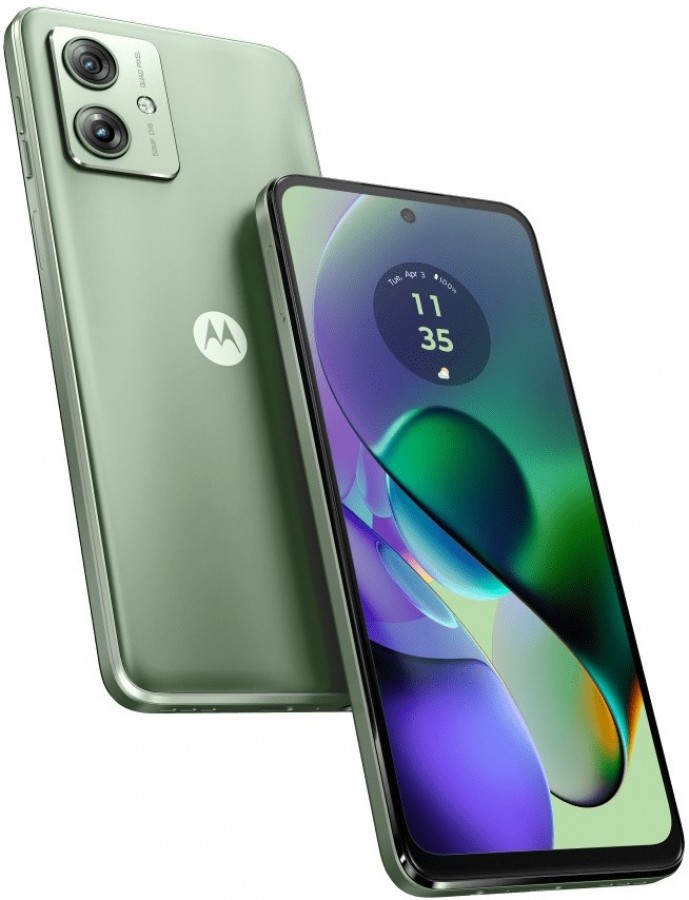
Moto G04 first sale in India starts today, Check specs, price, & offers

Motorola is gearing up to kick off the first sale of its Moto G04 in India. The smartphone was just recently unveiled in the region and is finally going on sale in the region today (22nd February 2024), so here’s everything you need regarding its specs, pricing, offers, and more.

Moto G04 Pricing, Offers, & Availability

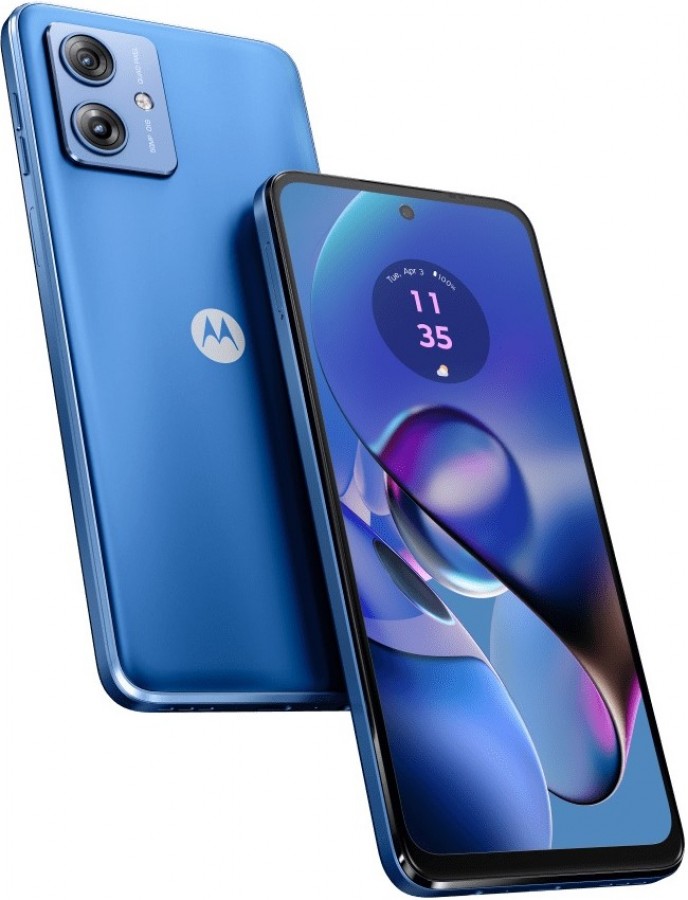
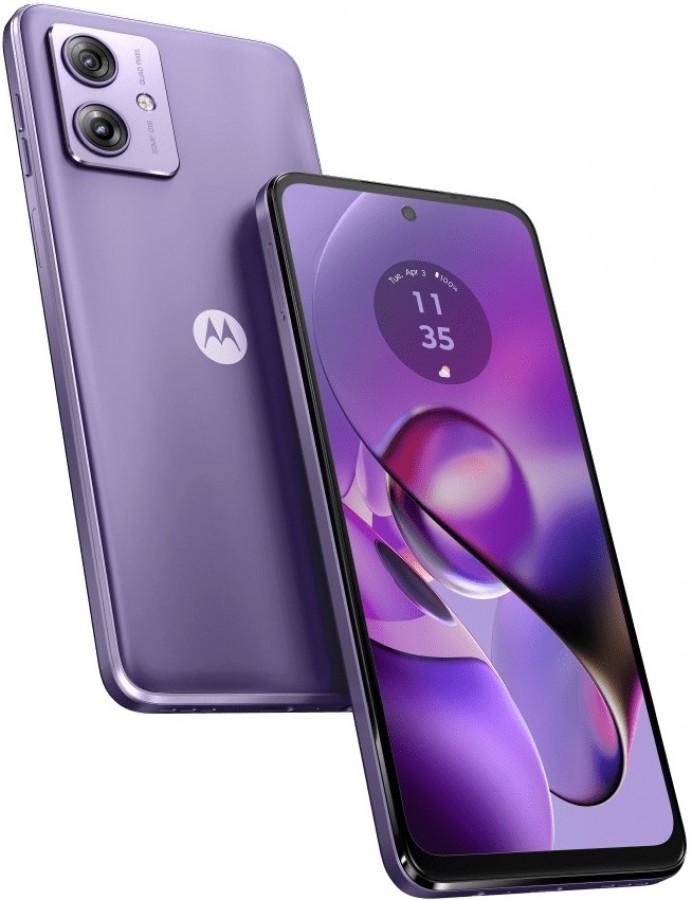
To recall, the Moto G04 was unveiled in the Indian market for a starting price tag of 6,999 INR for its 4GB + 64GB model. Meanwhile, the 8GB + 128GB option is listed for 7,999 INR. The first sale goes live at 12 PM IST and the model is exclusively available via Flipkart. The company is offering a 750 INR exchange bonus as a part of its introductory launch offer. It is offered in multiple color options, namely Satin Blue, Sea Green, Concord Black, and Sunrise Orange.

Motorola Moto G04

Moto G04 Specs

The budget handset sports a 6.56-inch IPS LCD panel that offers an HD+ resolution and 90Hz refresh rate. Under the hood, it is equipped with the UNISOC T606 processor and runs on the Android 14 OS based MyUX custom skin out of the box. A large 5,000mAh battery pack powers this device, which offers 15W fast charging.

The rear pack a 16-megapixel camera, while the front offers a 5-megapixel selfie shooter. Other notable features include a side mounted fingerprint scanner and face unlock for security, a microSD card slot for storage expansion, a USB Type C port, a 3.5mm headphone jack, Dolby Atmos support, IP52 water and dust resistance, and Bluetooth 5.1.

RELATED:

Samsung Galaxy Fit 3 launched with 1.57-inch OLED display, 13-day battery life

Samsung has launched the Galaxy Fit 3 today as the successor to the Galaxy Fit 2, which went official in 2020. The new fitness tracker from Samsung boasts a larger display and a bigger battery that can last for up to 13 days. Here is a look at the specifications and features of the device.

Samsung Galaxy Fit 3 specifications and features

Samsung Galaxy Fit 3 featured
Samsung Galaxy Fit 3

The Galaxy Fit 3 has a 1.57-inch AMOLED display, which can be customized via 100+ watch faces available through the Galaxy Wearable app. While Samsung has not revealed the battery size of the device, it has confirmed that once it is fully charged, it can last for up to 13 days with typical use. As per previous reports, the Fit 3 appears to be equipped with a 208mAh battery. To recall, the Galaxy Fit 2 featured a 1.1-inch AMOLED display and a 159mAh battery.

The Galaxy Fit 3 can track heart rate, sleep, stress levels, and exercises. The tracked data can be viewed on a paired phone through the Samsung Health app. While the device lacks GPS connectivity, it is equipped with sensors like an accelerometer and a gyroscope.

The Galaxy Fit 3 supports features like a remote camera, find my phone, emergency SOS, fall detection, Do Not Disturb mode, and Sleep mode. It does not support voice calling as it lacks a microphone and a speaker. It comes with an aluminum chassis equipped with a silicone strap. Lastly, it offers IP68, and 5ATM-rated dust and water resistance.

According to previous reports, the Galaxy Fit 3’s has a 256 x 402 pixels and 302 ppi pixel density support display, 16 MB of RAM, and 256 MB of storage. It does not allow users to install third-party apps.

Samsung Galaxy Fit 3 price and availability

The Galaxy Fit 3 is aimed at markets, such as Asia, Central America, South America, and Europe. It is scheduled to go on sale on Feb. 23, but the pricing is not yet revealed. The fitness tracker can be purchased in shades, such as Gray, Silver, and Pink Gold.

RELATED:

Samsung Galaxy A55 live images & key specs leak ahead of launch

With Samsung done with the launch of its Galaxy S24 series, the brand is now focused on its mid-range A-series devices. With the Galaxy A7x series discontinued, the Galaxy A55 will be the one headlining the A series this time around. As we get closer to the expected launch window, tipster Mukul Sharma has shared live images of the Galaxy A55 smartphones, along with some key specifications.

Samsung Galaxy A55

As per Mukul, the device will feature Samsung’s signature design, including a triple rear camera setup comprising a 50MP main sensor, 12MP, and 5MP secondary sensors, complemented by a 32MP front-facing camera for superior selfie capabilities.

According to earlier rumors, the smartphone’s design is expected to feature flat sides enclosed in a metallic frame.

In terms of specs, the Galaxy A55 5G is anticipated to have 128GB and 256GB of storage, along with up to 12GB of RAM. The gadget has surfaced on several certification sites, suggesting a late debut.

Along with housing a 5000 mAh battery and supporting 25W wired charging, the Galaxy A55 5G is reported to be powered by the Exynos 1480 SOC and the Xclipse 530 GPU. It is most likely going to have a 6.5-inch flat panel display with a refresh rate of 120Hz, which will guarantee a fluid visual experience. The Galaxy A55 5G will be available from Samsung in a variety of color options such as Awesome Ice Blue, Awesome Lilac, and Awesome Navy Blue.

Samsung launched the Galaxy A54 in the first half of March last year. With that in mind, we can expect the teasers of the Galaxy A55 to start to drop soon.

RELATED:

(Source)

Using Apple Vision Pro While Driving? One in Five Americans Think it’s a Good Idea

With virtual and augmented reality (AR) technologies gearing up to transform passenger experiences, things should seem more exciting. Yet, as these advancements edge closer to everyday reality, concerns about safety, particularly with devices like the Apple Vision Pro, are steering the conversation.

This survey was conducted on 1000 Americans and 105 truck drivers.

A comprehensive survey sheds light on American attitudes toward AR technology in vehicles, focusing on the implications for self-driving cars. Here’s what emerged from the views of 1,000 Americans and 105 truck drivers.

Apple Vision Pro

A significant majority, three in five Americans, express deep concerns about the safety risks posed by drivers—or more aptly, riders—of self-driving cars who might use the Apple Vision Pro. Despite these safety apprehensions, a surprising one in five are intrigued by the prospect of using the device themselves in an autonomous vehicle.

The demand for legislative action is loud and clear, with 80% of respondents emphasizing the necessity for explicit laws and guidelines governing the use of AR devices like the Apple Vision Pro in self-driving cars. This sentiment spans generations, though baby boomers show the most concern for regulation.

The trucking community, often the first to encounter the realities of road innovation, mirrors the general public’s sentiments. While nearly 60% were unaware of the use of AR devices by drivers of autonomous vehicles, the same ratio—three in five—signals a serious apprehension towards the safety implications. Still, a notable fraction, one in four truckers, remains open to the idea, highlighting a blend of caution and curiosity that characterizes the industry’s approach to technological advancements.

The survey reveals a generational divide in attitudes towards AR in autos. Baby boomers show the greatest concern for safety and the need for regulation, while Gen Z’s worries are less pronounced. Conversely, Gen Xers display a relatively higher willingness to embrace the technology, with Gen Zers showing the least interest in wearing the Apple Vision Pro while at the wheel of a self-driving car.

RELATED:

(Via)

WeChat and Douyin were the Most Popular Apps in China over the Holidays

During the recent Lunar New Year celebration, China saw a familiar set of apps dominating the digital landscape. Giants like Tencent and ByteDance led the charge, capturing the attention and data usage of millions. As families gathered and friends reconnected, platforms such as Douyin (TikTok‘s Chinese counterpart), WeChat, Kuaishou, Tencent Video, and Jinri Toutiao became essential tools for communication and entertainment.

The apps accounted for over three-quarters of the mobile data traffic

These apps weren’t just popular; they were pivotal, accounting for over three-quarters of the mobile data traffic during the nine-day holiday. The Ministry of Industry and Information Technology (MIIT) highlighted this trend, marking the first time it has released such rankings for the Lunar New Year period.

WeChat

Tencent and ByteDance, with two entries each in the top five, showed their continued dominance in the market. Most of these platforms have been around for a decade or more, proving that established names still hold sway in China’s tech-savvy society. Douyin, the youngest among them, has quickly risen to prominence since its launch nearly eight years ago.

Interestingly, this year’s report contrasted with previous years’ trends, such as the surge in digital red packet transactions via Alipay in 2021 and JD.com’s significant sales growth in 2019. These shifts underscore the evolving digital habits of Chinese consumers.

Experts note the challenge of introducing breakthrough apps in a market crowded with seasoned players. Yet, the potential for innovation remains, particularly in areas like artificial intelligence (AI), the Internet of Things (IoT), and extended reality technologies.

Amid these trends, apps are evolving. WeChat expands into short videos, while Douyin ambitiously eyes e-commerce growth, targeting a significant increase in its online shopping channel’s gross merchandise volume (GMV). This strategy includes competing on price, directly challenging platforms like Pinduoduo, known for their budget-friendly offerings.

RELATED:

(Via)

University Students in China Develop a Calcium Battery to Replace Lithium-Ion Batteries

A team of bright minds at Fudan University in Shanghai, China has made a leap forward that could change how we power our world. They’ve developed a new type of battery that’s not only rechargeable but relies on calcium—a metal far more common than lithium, which currently dominates the battery market. The technology promises to make batteries cheaper and more environmentally friendly, a significant step towards sustainable energy solutions.

The battery is capable of enduring 700 charge-discharge cycles as of now

Calcium, abundant in the Earth’s crust, makes these batteries a viable option for widespread use. Unlike the lithium-ion cells that power much of our modern gadgets, calcium-based batteries don’t rely on rare or expensive materials like nickel, cobalt, and manganese. Instead, they use carbon for their cathode materials, drastically reducing costs and environmental impact.

China Battery

Published in the prestigious journal Nature, this research showcases batteries capable of enduring 700 charge-discharge cycles at room temperature without losing efficiency. It’s a breakthrough for calcium-based batteries, known for their safety and stable performance.

These developments come at a crucial time. With the demand for lithium soaring due to the boom in new energy vehicles and renewable energy storage solutions, experts have been warning about potential shortages. The new calcium-based batteries, with their high theoretical energy density, present an exciting alternative. They draw oxygen from the air, eliminating the need for material storage within the battery itself, which has been a limiting factor in their development.

The Fudan team’s success lies in their creation of a new liquid electrolyte that meets the strict requirements for a battery’s electrodes while preventing the calcium reactions that could reduce capacity. This electrolyte not only conducts ions effectively at room temperature but also ensures the battery’s safety.

While there’s still a way to go before these batteries can match the lifespan of current lithium-ion cells, their potential applications in portable electronics, wearable devices, and beyond are undeniable. Plus, the possibility of integrating these batteries into flexible textiles opens new avenues for innovation.

RELATED:

(Via)

Vivo X Fold 3 Pro receives 3C certification; charging, camera specifications leaked

Back in October 2023, the Vivo X Fold 3 Pro was spotted in the IMEI database with the model number V2337A. The said device was approved by China’s MIIT certification platform earlier this month. Now, it has bagged approval from China’s 3C regulatory body, indicating that it may go official in March.

Vivo X Fold 3 Pro 3C certified

Vivo X Fold 3 Pro (V2337A) 3C certified
Vivo X Fold 3 Pro 3C certified

The Vivo X Fold 3 Pro’s 3C listing reveals that it may ship with a 120W fast charger. Apart from revealing that it will offer 5G connectivity, the 3C certification has no other information about the device’s specifications.

According to a new Weibo post by tipster Digital Chat Station, the Vivo X Fold 3 Pro will also offer 50W wireless charging besides 120W wired charging. As far as the battery is concerned, the device may include a 5,700mAh battery.

Vivo X Fold 3 Pro specs leak by DCS

As can be seen in the screenshot above, the leaker has also revealed the details of the X Fold 3 Pro’s rear camera module. He claimed that it would include a 50-megapixel OV50H main camera, a 50-megapixel ultra-wide lens, and a 64-megapixel OV64B periscope telephoto camera.

The Vivo X Fold 3 Pro is said to be thinner and lighter than the X Fold 2, which has a thickness of 12.9mm (folded state) and weighs 279 grams. It appears that it may debut as the world’s first foldable phone equipped with the Snapdragon 8 Gen 3 chipset.

The Vivo X Fold 3 that is expected to launch with the Pro variant is said to feature the Snapdragon 8 Gen 2 SoC. Being a standard model, it is expected to lack features such as an ultra-sonic fingerprint scanner, wireless charging, and a periscope telephoto camera.

The Pro and non-Pro models are expected to feature the same-sized outer and inner displays. The Pro variant is also said to be equipped with ultrasonic in-screen fingerprint scanners for both displays. A recent leak revealed that the X Fold 3 series may support Mac integration.

RELATED:

(via 1, 2)