Advertisement

LineageOS 21 custom ROM based on Android 14 launched with new features

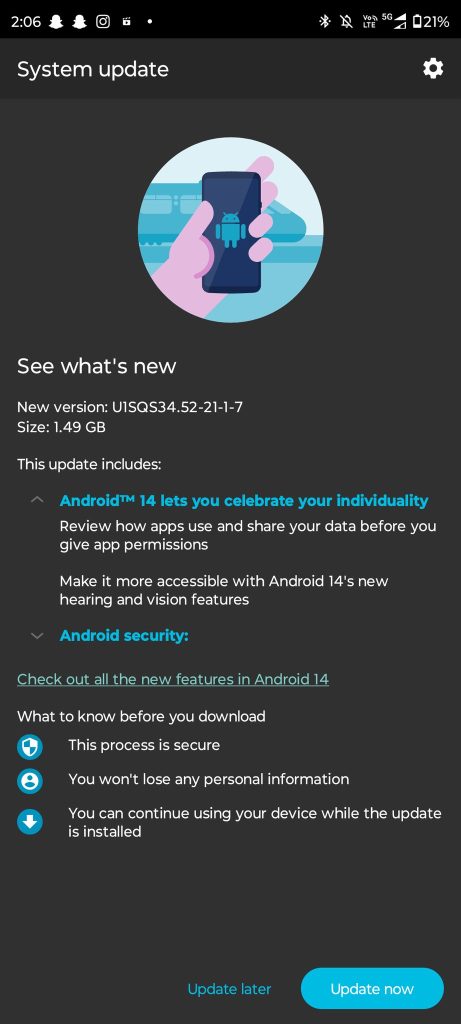
LineageOS, a popular alternative to standard Android operating systems, has just released its latest version, LineageOS 21, based on Android 14. Coming into the game five months after Android 14’s debut, this update might seem late, but it stands out for its focus on quality and stability. LineageOS has built a reputation for delivering a bloatware-free, extensively tested OS, making it a go-to for Android enthusiasts seeking stability.

LineageOS 21

With LineageOS 21, users get all the core features of Android 14, plus some exclusive additions that improve the user experience. A highlight is the introduction of Glimpse, a new gallery app replacing the default Gallery2, offering improved features for managing photos and videos. Additionally, the update revamps the Aperture camera app with Material You design principles, ensuring a more intuitive and aesthetically pleasing user interface.

The update doesn’t stop there; the Jelly browser has been redesigned with improved privacy controls, and staple apps like LatinIME, Calculator, and Messaging have also received Material You updates, aligning with the modern design language of Android.

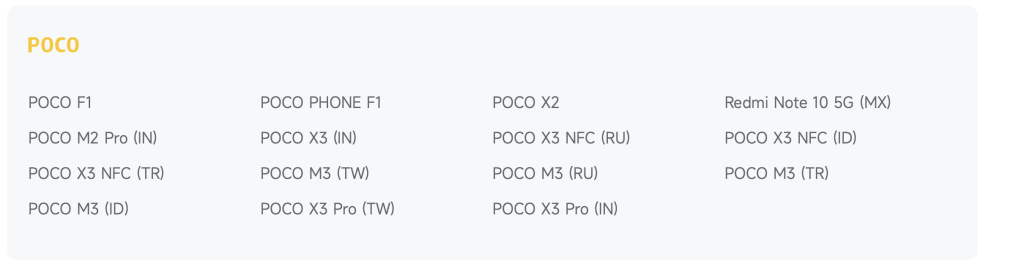
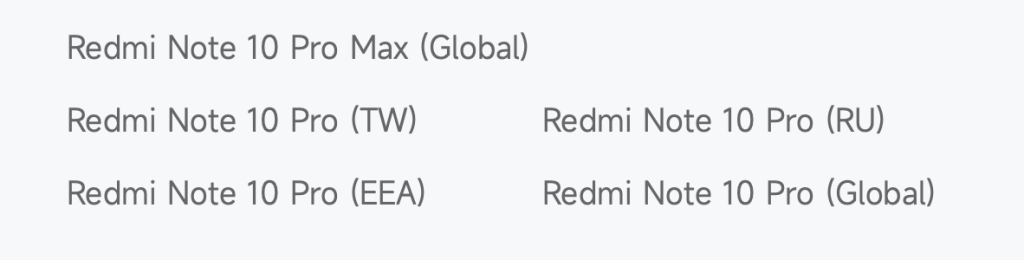
LineageOS 21 is currently available for a limited selection of devices. Users interested in upgrading can check device compatibility on the official LineageOS downloads page.

RELATED:

(source)

Luxury airline Beond to offer Apple Vision Pro on its flights

Beond Airlines, a newly established luxury airline, has made headlines by becoming the first airline to offer Apple Vision Pro headsets to select passengers, enhancing the inflight entertainment experience with cutting-edge technology.

Apple Vision Pro

Elevating Luxury Journeys

This move is announced by Tero Taskila, the Chairman and CEO of Beond Airlines, highlighting the airline’s commitment to providing a premium travel experience from start to finish.

The Apple Vision Pro, priced starting at $3499, is equipped with advanced technology including two chips – the M2 for computing and the R1 for processing information from an array of lenses, sensors, and microphones, ensuring a seamless and immersive mixed reality content viewing experience.

Apple has tailored the Vision Pro with a travel mode specifically for air travel, enabling passengers to enjoy movies on a large virtual screen, making long-haul flights more enjoyable and private. This feature has been recognized for its potential to significantly enhance passenger comfort and entertainment onboard.

Luxury airline Beond

Beond Airlines plans to utilize Vision Pro to showcase regular content as well as stunning visuals of resort destinations and activities in the Maldives, building anticipation and excitement among passengers before they arrive.

This service will begin in July 2024, aligning with the airline’s expansion of flight services from major cities around the world to Malé, Maldives, all featuring fully flat seating configurations for an unparalleled travel experience.

However, Beond hasn’t clarified which passengers will be “select” for the Vision Pro experience, leaving room for speculation. Additionally, there will be hygiene concerns with shared headsets, particularly in a post-pandemic era.

The response from users, critics, and the public to the Apple Vision Pro has been mixed until now. Some buyers are returning their Apple Vision Pro headsets due to comfort issues and doubts about its usefulness in everyday life. Complaints include discomfort from wearing the headset, causing headaches and motion sickness, as well as concerns about its practicality.

Despite these uncertainties, the introduction of Apple Vision Pro on Beond flights represents a significant step forward in the evolution of inflight entertainment, offering passengers an unprecedented level of immersion and personalization in their travel experience.

RELATED:

Android 15’s “Notification Cooldown” tackles notification overload

While the first Android 15 developer preview focused less on visual overhauls, it introduces a practical feature called “Notification Cooldown.” This feature addresses the annoyance of constantly buzzing or beeping phones due to a stream of repetitive notifications.

The concept is straightforward — if your phone receives multiple notifications from the same app within a short timeframe, Notification Cooldown progressively lowers the volume and vibration intensity of these subsequent notifications.  

This offers relief from the distraction of endless buzzing caused by chatty contacts or active group threads. If you have apps where every notification is crucial, Google allows the option to apply Notification Cooldown exclusively to conversations.

Also to note, this ‘cooldown’  isn’t permanent. After a brief pause in the conversation, notifications will go back to full volume. If you need all alerts at maximum volume (for work, or on-call situations), the feature can be easily disabled.

Enabling/Disabling “Notification Cooldown”

Google’s enabled this feature automatically in the developer preview, but if you’re using it, here’s how to customize it:

  • Open your device’s “Settings” app.
  • Tap on “Notifications”.
  • Scroll down and choose “Notification Cooldown”.
  • Your options:
  • “Apply cooldown to all notifications” for comprehensive quiet.
  • “Apply cooldown to conversations” to target chattiness.
  • “Don’t use notification cooldown” to turn the feature off entirely.

The Future of Notification Cooldown

As Android 15 progresses, Google could further improve Notification Cooldown. An ideal addition would be customization on a per-app basis, allowing users to fine-tune which apps have this calming feature applied. 

Even in its initial form, “Notification Cooldown” has the potential to simplify how we manage notifications on our devices.

Related:

Xiaomi unveils its most advanced factory yet, boasting 10 million flagship smartphone production capacity

Xiaomi‘s founder Lei Jun unveiled a significant milestone for the company today: the official opening of its smart factory in Changping, Beijing. This isn’t just any factory; it boasts a self-developed production line capable of churning out over 10 million flagship smartphones per year, marking Xiaomi’s first large-scale, self-owned manufacturing facility and a giant leap in its smart manufacturing ambitions.

Xiaomi Beijing smart factory

Xiaomi’s Smart Manufacturing Leap: Changping Factory Begins Operations

This news comes just days before the highly anticipated launch of the Xiaomi 14 Ultra, scheduled for February 22nd. Interestingly, Lei Jun confirmed that both the Xiaomi 14 Bay Blue and the 14 Ultra’s innovative technologies were validated in this very factory.

But what exactly makes this factory so smart? It boasts a staggering 96.8% self-developed rate for component testing and packaging equipment and a perfect 100% for its factory software. This degree of in-house development translates to a highly automated and digitized production process, capable of self-analysis and decision-making based on real-time data. In essence, this factory can learn and evolve on its own, ensuring consistent quality and efficiency.

This isn’t Xiaomi’s first foray into smart manufacturing. The company’s first intelligent factory, located in Beijing Yizhuang, started operations in late 2019. However, the Changping factory dwarfs its predecessor in scale, boasting a footprint ten times larger and encompassing a second-generation intelligent production line for smartphones. This line covers everything from circuit board mounting and testing to final assembly, packaging, and shipping, with an estimated output value of a whopping 60 billion yuan annually.

The 14 Ultra, set to be unveiled on February 22nd, is expected to feature a powerful Sony LYT900 main camera with OIS and a variable aperture of up to f1.6. Additionally, it will boast three secondary cameras, including a 50MP ultrawide, a 50MP telephoto, and a 50MP periscope telephoto lens.

Moreover, it is expected to sport a flat back and display, a 6.73-inch AMOLED screen with a 120Hz refresh rate and HDR10+ support, and a titanium frame option. It will weigh under 220 grams and include a Snapdragon 8 Gen 3 processor, 16GB RAM, 512GB storage, and a 5300mAh battery with fast charging.

RELATED:

Acer launches Predator XB273K V3 gaming monitor with 27″ 4K IPS 160Hz panel in Europe

Acer has expanded its Predator gaming monitor lineup with the introduction of the Predator XB273K V3 in Europe, boasting an impressive set of features tailored for gamers and tech enthusiasts. This new model is priced at €500. Let’s delve into its key specs.

Acer Predator XB273K V3

Acer Predator XB273K V3 Specifications:

The Predator XB273K V3 features a 27-inch 4K (3840 x 2160 pixels) IPS display with a pixel density of 163 PPI, ensuring sharp, vibrant visuals with a wide color gamut. The monitor supports a refresh rate of up to 160Hz, providing smooth gameplay and reducing motion blur. With a typical brightness of 400 nits and achieving VESA DisplayHDR 600 certification, it promises excellent contrast and brightness levels, enhancing the gaming visuals with more depth and realism.

The monitor boasts a standout 0.5ms VRB (Visual Response Boost) response time, minimizing ghosting and blur in fast-paced scenes, ideal for competitive gaming. It is compatible with both AMD FreeSync and NVIDIA G-Sync technologies, ensuring a tear-free gaming experience by synchronizing the display’s refresh rate with the GPU output.

For connectivity, it is equipped with two HDMI 2.1 ports, a DisplayPort 1.4 input, and a headphone jack. Additionally, the monitor includes two 2W speakers for basic audio needs.

The design of the Predator XB273K V3 emphasizes both aesthetics and functionality, with a sleek, modern look that includes a slim bezel for a more immersive visual experience. Its anti-glare matte finish helps reduce reflections, ensuring clear visibility in various lighting conditions.

The monitor comes with flicker-free technology and a low blue light filter helps minimize eye strain during long gaming sessions, making it a comprehensive solution for gamers seeking comfort.

Predator XB273K V3 also offers extensive ergonomic features, including a removable stand, height adjustment with a range of 150mm, and the ability to swivel left and right up to 25 degrees. It supports VESA mounting with a 100 x 100 mm interface, allowing for wall installation. Additionally, it allows for forward tilt up to 5 degrees and backward tilt up to 25 degrees.

Earlier this month, Acer also launched the SA272U E monitor with a 100Hz refresh rate in India.

RELATED:

Samsung Galaxy Tab Active 5 finally available for purchase in the US

Samsung‘s latest rugged tablet, the Galaxy Tab Active 5, is finally available for US customers following its initial January 2024 announcement. Designed with business needs in mind, this device surpasses its predecessor, the Galaxy Tab Active 4 Pro, in important areas.

The Galaxy Tab Active 5 is being offered in a special Enterprise Edition for US business customers. Pricing starts at $548.99 for the standard model, while a 5G version will retail for $659. These are pretty steep prices for a tablet, but you have to consider that it’s not for everyday use, it’s built to work in rough conditions. 

Specifications

As aforementioned, the Galaxy Tab Active 5 is a tough tablet built for harsh environments. It’s MIL-STD-810H certified and comes with a protective case that can survive drops from 12 meters. It’s also dustproof, waterproof with an IP68 rating and scratch-resistant with the Gorilla Glass 5.

There is an 8-inch FHD display on the front with a 120Hz refresh rate. For photos, you get a 13MP rear camera and a 5MP selfie camera.

The performance side of things is handled by the Exynos 1380 chipset with 6GB/8GB RAM and 128GB/256GB storage. That latter is expandable via a microSD card. While Samsung has made a name for itself with timely software upgrades, the Tab Active 5 comes with older Android 12, though an upgrade is expected.

Keeping the lights on is a 5,050mAh battery, and there is a side fingerprint scanner for security. There is also a dedicated Active key on the side and connectivity features include dual SIM, 5G, pogo pin, USB-C, and Wi-Fi 6.

Related:

Three companies have reportedly suspended foldable phone projects: Tipster

Rumors are swirling that the foldable phone market, once hailed as the next major innovation in smartphones, may be facing some unexpected challenges. According to tipster Digital Chat Station (DCS), at least three major brands have halted or significantly delayed their foldable phone projects.

DCS reports that one of the top five smartphone manufacturers worldwide has completely suspended its foldable device efforts. Additionally, two more companies have put flip-style foldable phone projects on hold. 

foldable phone project suspended

The reasons for these project suspensions are not clear yet, and the specific brands involved have not been disclosed by the tipster.

Currently, the foldable smartphone market is dominated by Android manufacturers. Samsung, for example, holds the largest market share and is reportedly working on its next iteration of Z-series foldable phones, including a triple-folding model. 

Huawei is also said to be developing a triple-folding style phone. Oppo and Vivo are other major players, having released at least a couple of iterations of their foldable devices.

However, a recent report suggested that both Oppo and Vivo have decided to withdraw from the foldable market. The decision for this is said to be due to a significant decline in their market share in this segment last year. 

However, there’s been no official statement from either brand, so it’s best to wait for further reports to understand the situation better. 

If these rumors are true, it could also impact OnePlus’ foldable efforts, as they have been heavily relying on Oppo and have only launched one foldable device under their brand name.

In other news, Apple’s foldable iPhone project is also reportedly facing challenges due to fragile screen issues. While foldable phones offer unique form factors and possibilities, they remain expensive and some would argue, quite fragile.

Related:

Samsung Galaxy F15 5G officially teased in India, leak claims four years of OS upgrade

Samsung has started teasing the upcoming launch of the Galaxy F15 5G smartphone in India. The teaser is now live on Flipkart app with a “coming soon” message. 

Samsung Galaxy F15 5G officially teased in India, leaks claims four years of OS upgrade

The device has been the subject of multiple leaks and has appeared on benchmark and certification sites, hunting for its imminent release. And Samsung India has now officially confirmed that the device will be launching soon in the country. 

In the teaser, we can see the phone’s triple camera setup, which is a consistent design element across most Samsung devices. However, aside from this, the teaser doesn’t provide any further details.

Tipster Mukul Sharma has, however, shared real-life images of the smartphone showcasing all three color options of the Galaxy F15 5G — Black, Pink, and a Gradient finish. 

Additionally, it’s been revealed that the smartphone will have a 6000mAh battery and will receive up to 4 generations of OS updates, a first in this price segment. The expected price of the Galaxy F15 5G is under Rs 15,000 in India.

Recently, the Galaxy F15 5G appeared on Geekbench listings, sporting the MediaTek Dimensity 6100+ chipset, 4 GB of RAM, and running on Android 14, likely with Samsung’s One UI on top.

Leaks also suggest that the Galaxy F15 5G will share similar specs with the Galaxy A15 5G

To recap, the Galaxy A15 boasts a 6.5-inch AMOLED FHD+ 90Hz display, a 13-megapixel front camera, and a 50-megapixel triple camera setup. 

Powered by the Dimensity 6100+ chipset, it offers up to 8 GB of RAM, up to 256 GB of storage, and a 5,000mAh battery with 25W fast charging. Additionally, it features a side-facing fingerprint scanner for security.

Related:

iQOO Z9 Spotted On Geekbench With Key Specs

iQOO is reportedly working a Z-series smartphone. The iQOO Z9 has already bagged BIS and Bluetooth SIG certifications. Now, the device has appeared on the Geekbench benchmarking platform revealing its key details. Some specifications of the upcoming offering were also tipped not long ago.  

iQOO Z9 Geekbench listing

The iQOO Z9 is listed on the Geekbench database with model number Vivo I2302. It mentions a motherboard codenamed k6886v1_64 and the setup comprises of six cores clocked at 2GHz and other 6 cores ticking at 2.80GHz. This corresponds to the Dimensity 7200 chipset. The device packs 8GB RAM onboard and we can expect more options at launch. It ships with pre-installed Android 14 OS out of the box. 

In the Geekbench’s single-core and multi-core test results, the iQOO Z9 scores 1,186 and 2,683 points respectively. Additionally, the processor mentioned in the benchmarking database does not correlate with the previously rumored Snapdragon 7 Gen 3 and Dimensity 8300 powering the device. We will have to wait to get clarity on the iQOO Z9 processor. 

A previous leak revealed that the iQOO Z9 will feature an OLED display bearing a 1.5K resolution. This will be an upgrade to the IPS LCD panel on the iQOO Z8. It will reportedly be backed by a massive 6,000mAh battery unit. The upcoming offering is rumored to have a dual rear camera setup. 

The iQOO Z9 is tentatively tipped to launch in March i.e. next month. It is expected to arrive as the successor to the iQOO Z8 that debuted last August. We should learn more details in the coming weeks. 

Related:

Via

Oppo F25 lndia launch date tipped, here’s what to expect

Oppo is reportedly working on the successor to the Oppo F23, which debuted in India last year. A recent report claimed that the F25 may launch this month (February) in the country. A new leak by tipster Abhishek Yadav reveals a definite launch date along with the key specifications.

Oppo F25 launch date (rumored)

Oppo Reno 11F 5G
Oppo Reno 11F 5G

The Oppo F25 is expected to launch on March 5 in India. Oppo recently announced the Oppo Reno 11F smartphone in Thailand. The said device is also expected to be released in some other Southeast Asian markets in the coming days. The F25 heading to India is said to be a rebadged version of the Reno 11F.

Oppo F25 specifications (expected)

The Oppo F25 is expected to feature a 6.7-inch AMOLED display that offers an FHD+ resolution, a 120Hz refresh rate, and an under-display fingerprint scanner. The device is likely to run on the ColorOS 14-based Android 14.

The F25 may feature a 32-megapixel camera on the front. The rear panel of the device may feature a 64-megapixel main camera and a pair of 2-megapixel cameras for depth and macro shots.

The Dimensity 7050 chipset-powered device may ship with 8 GB of RAM, 8 GB of virtual RAM, 128 GB or 256 GB of UFS 3.1 storage, and a 5,000mAh battery with 67W fast charging. The device is likely to feature an IP65-rated chassis measuring 7.54mm in thickness and weighing 177 grams.

At present, there is no information about the price of the Oppo F25. The F23 was priced at Rs 24,999 (`$300) at launch. Hence, it is likely that the F25 may debut with similar pricing in India.

RELATED:

(source)

Vivo Pad 3, and Pad 3 Pro leak reveals LCD display and top-tier chipsets

Vivo is reportedly gearing up for a big product launch in China soon, expected to reveal several new devices. Among the expected devices are the Vivo X Fold 3 series smartphones, the Vivo X100s smartphone, and the Vivo Pad 3 and Pad 3 Pro tablets.

Rumors about these upcoming releases have been circulating for a while. In a recent update, Digitial Chat Station shared some new information about the Vivo Pad 3 series tablets.

According to the tipster, the standard Vivo Pad 3 will feature an LCD screen and will run on the new Qualcomm SM8635 processor.

While the exact details of the processor remain somewhat elusive, judging by the codename, it’s likely to belong to Qualcomm’s 8-series chipset. 

The tipster also previously leaked the core configuration of the SOC, revealing a 2.9GHz ARM Cortex X4 core paired with an Adreno 735 GPU. Impressively, the process was reportedly able to achieve an impressive AnTuTu score of 1.7 million which is what we’re used to seeing on Snapdragon 8-series SoCs. So earlier leaks have hinted it could be a lite version of Snapdragon 8 Gen 3. 

On the other hand, the Vivo Pad 3 Pro is expected to sport a 3K resolution LCD display and will be powered by the Dimensity 9300 chipset. 

Additionally, it’s been hinted that the Pad 3 Pro will support rapid 80W charging, while the Pad 3 may come with a slightly lower 66W charging capability (although there’s slightly less certainty on this detail).

A Vivo tablet with model number PA2473 recently grabbed China’s 3C certification with 66W charging. So the Vivo Pad 3 might indeed come with the 66W charging. 

We’ll keep you posted with any further updates on the Vivo Pad 3 series tablets.

Related:

Vivo Y100t 5G launched with 120Hz display, Dimensity 8200, 120W charging

Vivo has announced a new Y100-series phone for the Chinese market. The device, dubbed the Vivo Y100t, joins existing models, such as the Vivo Y100 and Y100i, that were announced last year. While the Y100 and Y100i feature the Snapdragon 695 and Dimensity 6020 chipsets, respectively, the Y100t is a more powerful device equipped with the Dimensity 8200.

Vivo Y100t 5G specifications

Vivo Y100t
Vivo Y100t

The Vivo Y100t 5G has a 6.64-inch IPS LCD panel that offers an FHD+ resolution and a 120Hz refresh rate. Under the hood, the device is equipped with the MediaTek Dimensity 8200 chipset.

The device has 8 GB / 12 GB of RAM, 8 GB of virtual RAM, and 256 GB / 512 GB of built-in storage. The exact version of the Android OS and OriginOS that the device has is not known yet.

The Y100t packs a 5,000mAh battery with 120W fast charging. On the front, it has a 16-megapixel selfie camera, and its back panel has a 64-megapixel primary camera with OIS support and a 2-megapixel depth sensor. It comes with other features, such as NFC, a side-facing fingerprint scanner, and a 3.5mm audio jack. It measures 164.58 x 75.8 x 8.79mm and weighs 200 grams. It can be bought in shades like white and blue.

The price of the Vivo Y100t has not been confirmed yet. Its price is expected to be confirmed on Feb. 23, the day on which its pre-sale will begin in China via platforms like Vivo China’s website, JD.com, and Tmall.

To sum up, the Y100t is a tweaked version of the iQOO Z8x, which debuted with the Snapdragon 782G chip last year in China. It appears that, apart from having different chipsets, both devices are said to have the same specs. It is speculated that the same device may launch as the Vivo Y100 GT in some other markets.

RELATED:

Xiaomi 14 Ultra official images arrive before February 22 launch

Xiaomi has finally confirmed that it will hold a dedicated launch event on Feb. 22 to announce the Xiaomi 14 Ultra for the Chinese market. Now that the launch date has been confirmed, the company is now busy teasing its most premium flagship phone. Shown below are the first official images of the device.

Xiaomi 14 Ultra design revealed

Xiaomi 14 Ultra
Xiaomi 14 Ultra

As can be seen in the official images, the Xiaomi 14 Ultra sports a design that can be said to be an improved version of the Xiaomi 13 Ultra. The design is not entirely different, as it features a large round camera module with four cameras, a dual-LED flash unit, and Lecia branding in the middle.

Xiaomi 14 Ultra
Xiaomi 14 Ultra

The image of the Xiaomi 14 Ultra’s display shows that it is neither entirely flat nor does it have the same kind of curvature that was seen on the predecessor models. The micro-curvature on all four sides gives it a premium appeal.

Xiaomi 14 Ultra
Xiaomi 14 Ultra

Both the white/silver and black variants of the Xiaomi 14 Ultra have a leather finish on the back. It is said that there is a blue edition of the device equipped with a glass back. This model may remain exclusive to the Chinese market. In addition, there seems to be a special titanium edition of the phone, which could also be confined to China.

Xiaomi 14 Ultra
Xiaomi 14 Ultra

The Xiaomi 14 Ultra is scheduled to debut with the Xiaomi 14 for the global market on Feb. 25. It is likely that the phone may be released only in black and white/silver variants in markets outside of China. As far as the Feb. 22 China launch event is concerned, the company is also expected to announce the Xiaomi Pad 6S Pro tablet.

Xiaomi 14 Ultra
Xiaomi 14 Ultra

The complete specifications of the Xiaomi 14 Ultra have already been leaked. Readers can visit this link to learn everything about it.

RELATED:

BenQ LW650 laser projector with 4,000 ANSI lumens brightness launched

After recently unveiling the LH650 projector in the global market, BenQ is back with another projector model called the BenQ LW650. Both of these projects are quite similar other than the differences in their output resolution and aspect ratios.

BenQ LW650

BenQ LW650 laser projector specs:

Weighing approximately 2.9 kg, the LW650 is portable without sacrificing quality. It features a laser light source capable of delivering up to 4,000 ANSI lumens, ensuring clear visibility in various lighting conditions.

Key to its appeal, the LW650 employs strategies to cut power use by up to 70% compared to conventional projectors. It automatically adjusts light output based on the brightness of the content, and includes a standby mode and an automatic shutdown feature to conserve energy.

The projector supports a wide color spectrum with a 3,000,000:1 contrast ratio and displays up to 1.07 billion colors. Its input resolution compatibility extends up to 3840 x 2160 pixels, with a native resolution of 1280 x 800 pixels (WXGA), suitable for a range of multimedia content. For connectivity, it offers HDMI and USB Type-C ports.

Pricing

The BenQ LW650 WXGA Laser Projector’s price hasn’t been revealed yet. However, it’s expected to be less expensive than the BenQ LH650 Projector, which is currently priced at $1,199.

RELATED:

AOOSTAR GEM10 gaming mini-PC has a Ryzen 7 7840HS processor & a tiny body

AOOSTAR has announced the release of the GEM10, a compact gaming mini PC designed to deliver high performance in a small package. Measuring just 107 x 107 x 60mm, the GEM10 features an AMD Ryzen 7 7840HS processor capable of handling demanding applications and games. It also offers the flexibility to expand storage with three M.2 2280 slots for PCIe 4.0 x4 SSDs.

AOOSTAR GEM10 mini-PC

The GEM10 features a bunch of connectivity options including dual HDMI outputs, two 2.5 Gb Ethernet ports, a USB-C port with 40 Gbps speed, and an OCuLink port for 63 Gbps connections. This allows users to easily connect multiple displays, support 4K video playback, engage in light gaming, or upgrade to more intensive gaming and workstation tasks with an external GPU via the OCuLink port.

The GEM10 is competitively priced at $549 for the base model, which includes 32GB of LPDDR5-6400 RAM but lacks storage and an operating system. A higher-tier version with 32GB of RAM and a 1TB SSD is available for $590. Its integrated Radeon 780M graphics support multiple displays and 4K video, offering versatility for various multimedia tasks.

AOOSTAR has equipped the GEM10 with the Glacier 2.5 cooling system, ensuring sustained performance at 75W while keeping temperature and noise levels in check. The mini PC can support up to three 4K displays at 120 Hz or a single 8K display. Available for pre-order, the GEM10 is set to start shipping to customers by March 8th.

RELATED:

Xiaomi 14 Ultra pre-booking kicks off in China

Xiaomi is set to release the Xiaomi 14 Ultra smartphone in China later this month. Ahead of its launch, the company has started accepting pre-bookings, offering customers six exclusive gifts and a chance to win the phone for free. Details about the phone’s features remain scarce, but leaks have provided a glimpse into what to expect.

The Xiaomi 14 Ultra is rumored to feature a 6.73-inch AMOLED screen with a 120Hz refresh rate and HDR10+ support, promising a top-notch viewing experience. It’s expected to be powered by a Snapdragon 8 Gen 3 processor, equipped with 16GB of RAM and up to 1TB of storage, aiming to cater to power users and gamers.

Similar to other Ultra smartphones in the Xiaomi lineup, the spotlight of the Xiaomi 14 Ultra will be on its camera system. It is reported to include four 50-megapixel sensors catering to wide-angle, ultra-wide, and 3.2x and 5x zoom functionalities. The primary 50MP lens is reportedly equipped with a 1-inch sensor, ensuring excellent light capture with a maximum aperture size of F/1.6 and sizable sensor pixels.

The device is also set to come with a 5300mAh battery supporting fast charging, along with the latest in connectivity technologies, including WiFi 6, Bluetooth 5.2, NFC, and IP68 water and dust resistance.

RELATED:

(via)

MSI MPG 321URX QD-OLED monitor with 4K 240Hz panel up for pre-order in the US & Europe

MSI has officially launched the MPG 321URX QD-OLED, shortly after making the MAG 341CQP QD-OLED monitor available in regions like the US, UK, and Europe. These monitors were initially revealed at CES 2023, which was held last month.

MSI MPG 321URX QD-OLED monitor

The MSI MPG 321URX QD-OLED boasts a 31.5-inch display, delivering a 4K resolution at an impressive 240 Hz refresh rate and ultra-fast 0.03 ms GtG response times, making it suitable for both competitive as well as AAA titles. Additionally, it features a built-in USB hub that supports 90 W Power Delivery over USB Type-C, making it appealing for customers who also wish to use the monitor for a work/gaming hybrid setup.

Priced competitively, the MPG 321URX QD-OLED is listed at €1,399 in Europe, £1,299 in the UK, and $949 in the US, making it a more affordable option compared to its rivals like the ROG Swift OLED PG32UCDM, which was also recently made available for pre-order in the US and UK. Similar to that, the MPG 321URX QD-OLED is also up for pre-order in the US and UK, however, US customers might have to wait till April for their pre-orders to arrive.

On a related note, Alienware has also recently launched the AW2725DF gaming monitor in China, which features a 2560×1440p 360Hz QD-OLED panel. Other than features like a snappy refresh rate of 0.03ms GTG, color accuracy is also a strong suit here as it guarantees 99.3% DCI-P3 color gamut coverage. Currently, it is exclusive to China, however, the monitor could make its way to the Western market soon.

RELATED:

OpenAI hits $80 billion valuation, CEO Altman eyes AI chip manufacturing

OpenAI, the company behind the popular AI chatbot ChatGPT, has witnessed a meteoric rise in valuation, jumping to a staggering $80 billion according to a recent deal with venture capital firm Thrive Capital. This represents a nearly threefold increase from just nine months ago, highlighting the surging interest in artificial intelligence and its potential applications.

OpenAI

Skyrocketing Valuation: OpenAI’s Leap to $80 Billion Amid AI Innovations

Unlike a traditional funding round, this deal allows employees to sell their existing shares, offering them a significant windfall as OpenAI’s value skyrockets. This approach differs from last year’s tender offer, which raised new capital for the company while valuing it at around $29 billion.

OpenAI continues to push the boundaries of AI technology. Following the success of ChatGPT, they’ve recently unveiled Sora, a video generation platform that utilizes text prompts to create original content. However, public access to Sora remains limited as OpenAI prioritizes implementing safety measures to mitigate potential risks of bias and misinformation.

Sam Altman‘s aspirations extend beyond software, as he seeks to establish a new venture focused on AI chip manufacturing. This initiative aims to bolster global chip production capacity and potentially accelerate the development of AI-powered tools. However, securing U.S. government approval for such a venture could prove challenging due to potential antitrust concerns and national security implications.

While OpenAI’s current trajectory is impressive, several uncertainties cloud its future. The company’s CEO faces an uphill battle in gaining approval for his chip venture, and the long-term viability of its AI products like Sora remains to be seen. Additionally, questions surrounding OpenAI’s ultimate goals and potential impact on society continue to spark debate.

The company’s achievements highlight the immense potential of AI and its ability to disrupt various industries. However, the ethical and regulatory challenges associated with AI development require careful consideration as the technology continues to evolve.

RELATED:

(Via)

The Future is Made in China: Over 1.6 Million Patents and Counting!

China is stepping up its game in the world of inventions. The latest figures from the China National Intellectual Property Administration show a significant increase in high-value invention patents. By the end of 2023, China had amassed more than 1.66 million of these patents, marking a 25.7% jump from the year before. A figure like this is a clear sign that China is putting more effort into becoming a leader in innovation, especially in tech and key future-focused industries.

There are now 11.8 patents for every 10,000 people in China

Looking at the patents per person, there are now 11.8 patents for every 10,000 individuals. This number might seem small at first glance, but it’s a big deal because it shows that creative and practical inventions are becoming more common across the country. The spotlight shines brightest on emerging strategic industries, which now boast around 1.17 million patents, making up 70% of the total.

China Patents

What’s also interesting is how businesses are making the most of their patents. There’s been a 37.4% increase in patents being used as security for loans, allowing companies to invest more in their growth – proving the value of these patents but also pointing to a growing ecosystem where new ideas are leading to further investment and development.

Innovation is crucial for a country like China as it fuels economic growth, enhances global competitiveness, and addresses complex challenges. By investing in innovation, China transforms its vast tech resources and workforce into cutting-edge technologies and services, moving beyond traditional manufacturing to lead in sectors like technology, green energy, and biotech. It is key in reinforcing China’s position as a key player on the world stage.

RELATED:

(VIA)

Sharge launches Macintosh-style Retro 35W fast charger with a display in China

Sharge, previously known as Shargeek, is a prominent player in the power supply sector, renowned for its top-notch, stylish, and innovative offerings. Established in 2020, the company has swiftly built a reputation for delivering high-quality products.

Earlier today, the company launched the Macintosh Ultra “Retro 35W” charger, now on sale at an introductory price of 129 yuan ($18) on JD.com. This charger combines a nostalgic design inspired by the classic Apple Macintosh with advanced technology to meet modern charging requirements. This isn’t the first time they have released a Macintosh-inspired charger. In 2022, the company also launched a Macintosh-inspired charger with 67W fast charging capability.

Sharge Flash Retro 35W Charger

Sharge Retro 35W Charger Specifications:

The Retro 35W charger is crafted using an integrated injection molding process, enhancing its durability and overall aesthetic appeal. It features foldable prongs for enhanced portability and comes equipped with replaceable stickers, allowing users to customize its appearance according to their preferences.

The 35W fast charging capability is good enough for charging laptops, tablets, and smartphones including those from Apple and Huawei. Its compact design ensures portability and convenience, making it easy to carry and use.

The charger stands out for its support of various fast charging protocols such as PD3.0, PD2.0, QC4, FCP, and SCP allowing it to charge laptops and other compatible devices efficiently.

The fast charger also prioritizes safety by integrating multiple protections to safeguard devices during charging. It also comes with two bonus stickers that you can use to customize the look of the charger.

The charger features a real-time LED display indicating various power levels: white for no load or low current, yellow for 0.3W to 12W, blue for 13W to 20W, and green for 21W to 35W. The screen turns off automatically after charging completion or when there’s no load for 5 minutes. Additionally, it comes with a 12-month warranty.

The charger weighs 55g and has dimensions of 31.7 x 34.9 x 43.4mm. It features one USB-C port. The new charger is sure to be a hit with Apple fans, as it is designed to look like a classic Macintosh computer.

RELATED: