Advertisement

YouTube, Netflix, Spotify Snub Native Apps For Apple Vision Pro

The Apple Vision Pro is now up for pre-orders in the US starting today. The shipments and in-store availability is from February 2. The mixed-reality headset will offer an immersive audio-visual entertainment. However, there’s a disappointing news (well at least for now) before the Vision Pro makes its way to the consumers. Google’s YouTube, Netflix, and Spotify are snubbing support for their native apps on Apple’s headset. 

YouTube, Spotify, and Netflix steer clear of the Apple Vision Pro
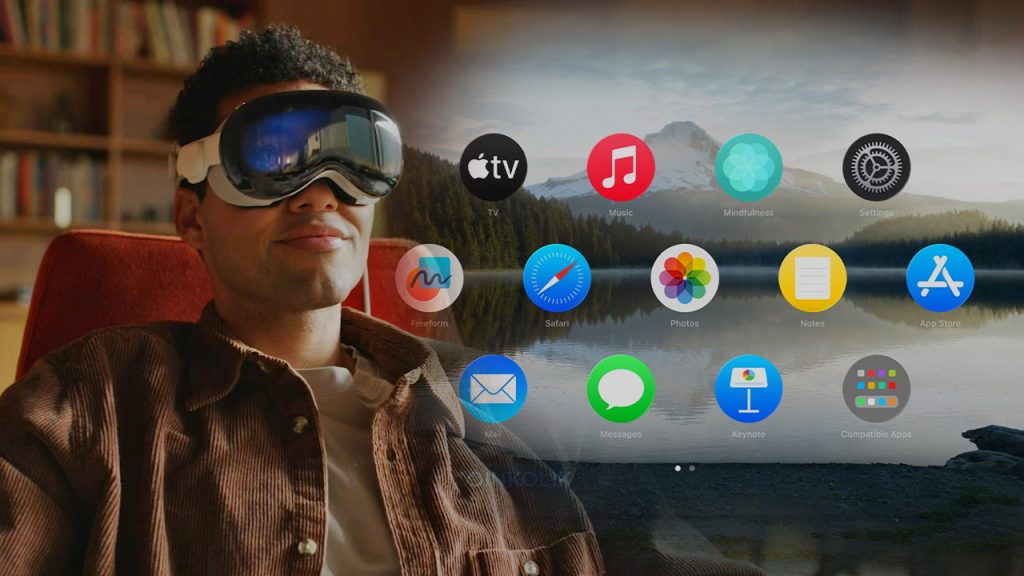
Apple Vision Pro

Netflix, YouTube, and Spotify are the world’s most popular video and music streaming platforms. All three companies announced that they have no plans of launching a new native application for the Vision Pro. YouTube and Netflix said that they won’t allow their iPad application to work on the mixed-reality headset. However, users can stream content on their platforms in the Vision Pro using a browser, although the experience will be entirely different. A person familiar with the matter revealed that Spotify is also following the same path. 

YouTube did not rule out its chances of supporting the Vision Pro but stated that it has no further plans to share at this time. The popular video sharing platform along with Spotify did not explicitly reveal the reason for not supporting the mixed-reality headset. The later also does not offer app support on Meta’s Quest headset. 

Developers with iPad software in the regular App Store will see apps appear in the Vision Pro store by default. If they don’t want to participate they will have to opt out. As per searches conducted by MacStories several iPad and iPhone apps including the ones owned by Meta, Roku, Tidal, and more aren’t set to work with the headset. However, that could change by the time the Vision Pro is released on February 2. 

Although YouTube, Netflix, and Spotify’s snub of the VIsion Pro is a setback, there are several entertainment apps that will be available. These include Disney+, Amazon Prime Video, Max, ESPN etc. 

Related:

Via

Infinix Note 40, Note 40 Pro visits Google Play Console with Helio G99 & 8GB RAM

Infinix is reportedly working on new Note series smartphones. The Infinix Note 40 and Note 40 Pro models were spotted recently on a certification sighting, which revealed some of its key specifications. So here are all the details.

Infinix Note 40 & Note 40 Pro surfaces on Google Play Console

Infinix Note 40

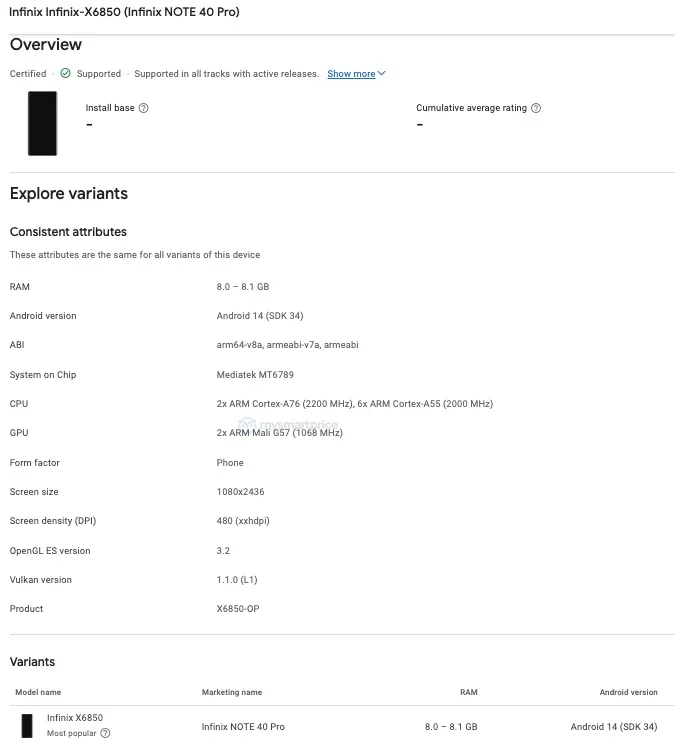
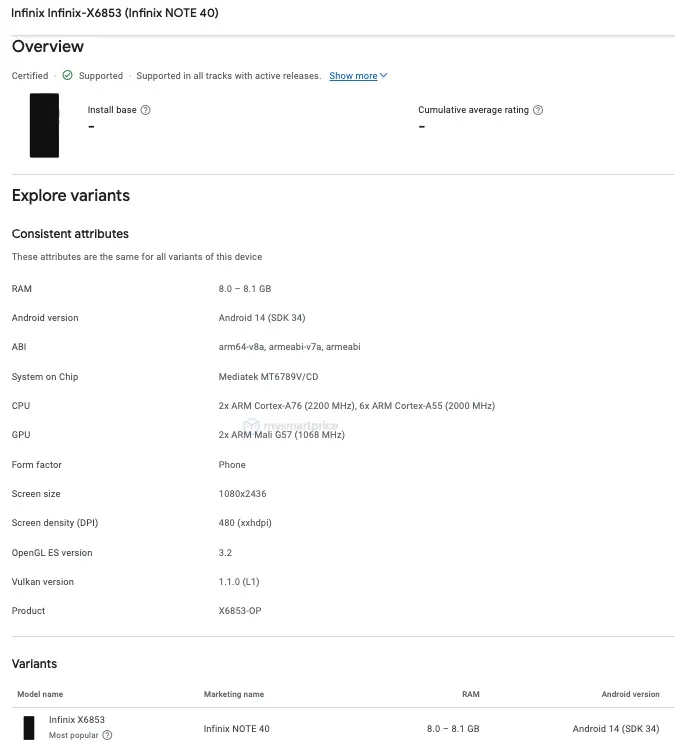
The company’s latest Note series devices visited the Google Play Console. Previously, the Note 40 Pro model had cleared the NBTC and Bluetooth SIG certification. These sightings confirmed the X6850 model number of the Pro model and also confirmed Bluetooth 5.3 support. Now, the base Note 40 was certified with the X6853 model number as well. Looking at the latest listing, the Infinix Note 40 series is confirmed to launch with Android 14 operating system out of the box.

Infinix Note 40

Both models will be equipped with the MediaTek Helio G99 SoC that is paired with at least one 8GB RAM variant. To recall, this chipset is fabricated on the 6nm process and supports 4G connectivity. Inifnix Note 40 series is confirmed to offer a display with 2436 x 1080 pixel resolution and 480 PPI pixel density. Looking at the renders shared on Google Play Console, we can also see a center aligned punch hole cutout for the selfie camera.

Infinix Note 40

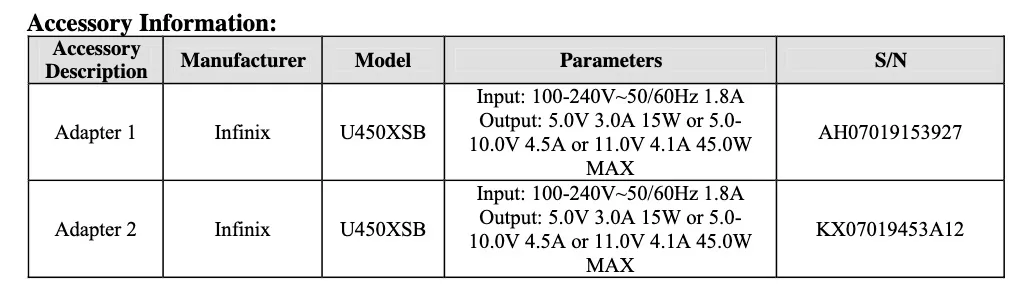
The volume rockers and power button can be seen on the right side, while the back features a triple camera setup. MySmartPrice also spotted the vanilla variant on FCC, which confirmed the support for 5W wireless charging. The FCC documents shared the U450XSB model number of the Note 40, which confirms 45W wired fast charging as well. The Note 40 dimensions were revealed, with a thin 8mm body.

RELATED:

Huawei reveals HarmonyOS NEXT will be based on Harmony Kernel

Huawei is developing a new operating system called Harmony OS NEXT. Unlike their previous systems, this one won’t support Android apps, marking a big shift.

Now they’re making an even more notable change by adopting their own Harmony kernel as a base for HarmonyOS NEXT. This is a departure from the common Linux kernel, which forms the foundation of many operating systems, including Android.

This change is a big risk for Huawei, but it’s certainly motivated by the challenges they’ve faced due to global politics. HarmonyOS NEXT is their way of dealing with these problems and trying to make their own mark in the world of operating systems.

Huawei claims that HarmonyOS NEXT is three times more efficient than Linux. This means smoother operation and better use of resources in various devices like smartphones, wearables, and smart home devices. A key feature of this efficiency is said to be the “heterogeneous native” mechanism, which optimizes performance across different hardware.

Yu Chengdong, the CEO of Huawei’s Consumer Business Group, mentioned that their system, called Hongmeng in Chinese, is built on fully developed technology by Huawei itself. This makes it more adaptable to a wide range of devices.

Reportedly, HarmonyOS NEXT has also received 3-highest security certifications in the industry, ensuring kernel-level security.

The move to create HarmonyOS NEXT is part of a larger strategy for Huawei. They are clearly focusing on building their own independent infrastructure. Also, they’re keeping up with modern trends by including built-in AI features in the OS, which should provide smarter and more efficient services.

Whether HarmonyOS NEXT will be successful is still uncertain. Its success will depend on things like support from app developers, how well it works with different apps, and whether people like using it.

Related:

(Via)

Honor Pad 9 global launch near, tablet certified in Singapore

The global release of the Honor Pad 9 appears to be near. The tablet was first unveiled in the Chinese market back in December 2023, and now, a certification sighting implies that an overseas launch is just around the corner. So here are all the details.

Honor Pad 9 visits Singapore’s IMDA

Honor Pad 9

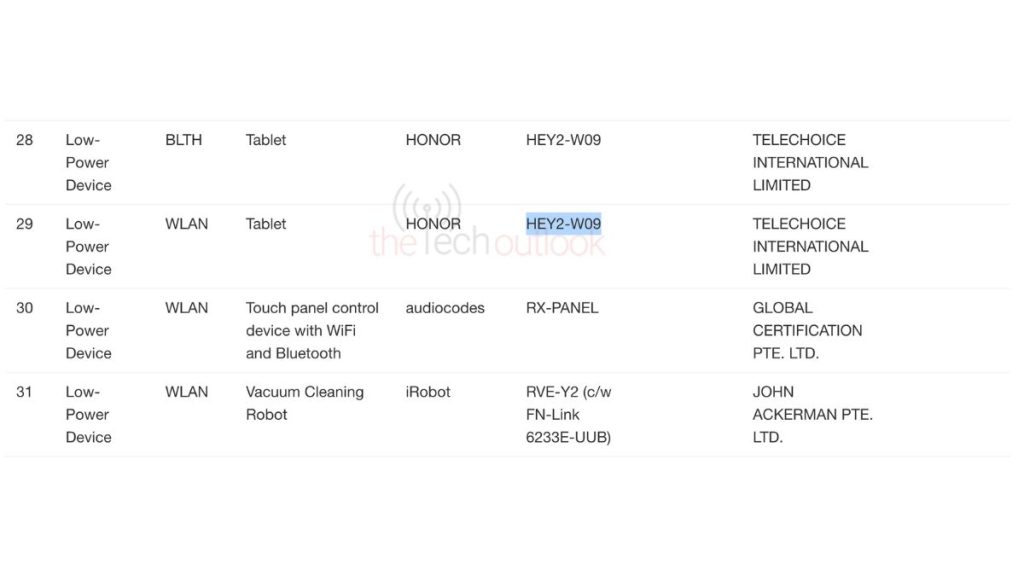
The Chinese smartphone maker’s latest tablet model was spotted on the IMDA certification. It was certified in Singapore carrying the HEY2-W09 model number. The platform lists the Honor Pad 9 as a low power tablet device that supports Wi-Fi connectivity. Back in November 2023, the upcoming tablet also surfaced on UAE’s TDRA database with the same model number as well.

Unfortunately, no finer details regarding the Honor Pad 9 were revealed on the certification platform. But based on the Chinese release, we can expect similar (if not identical) specifications in the global model. The Honor Pad 9 is equipped with the Qualcomm Snapdragon 6 Gen 1 SoC that is paired with up to 12GB of RAM and 512GB of internal storage. A large 8,300mAh battery pack powers this tablet, which supports 35W fast charging. It runs on the Android 13 OS based MagicOS 7.3 custom skin out of the box as well.

Honor Pad 9

The front sports a 12.1-inch LCD panel that offers a 2,560 x 1,600 resolution along with 550 nits of peak brightness and 120Hz refresh rate. A circular camera module houses the rear 13-megapixel primary sensor, while the an 8-megapixel camera is present in the front for selfies. The Honor Pad 9 is available in three color options, namely Azure, White, and Gray. So stick around for more as we will be providing updates when additional details are available regarding this device.

RELATED:

(Via)

Huawei P70 may launch by the end of March 2024: Tipster

Huawei is apparently planning on launching the new P70 series of flagship smartphones soon. A tipster has revealed the release timeline of the upcoming premium devices, which is reportedly set for the first half of 2024. So here are all the details.

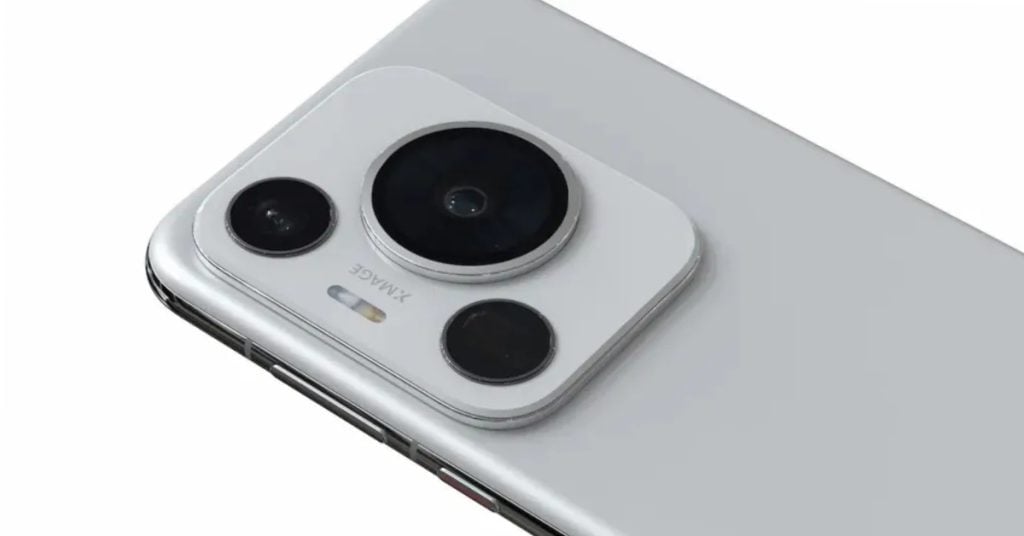
Huawei P70 renders

Huawei P70 Launch Timeline

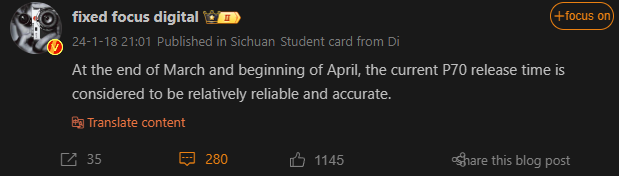
According to a tipster on Weibo, the Chinese tech giant is planning on launching the P70 series around the end of March 2024 or the beginning of April 2024. The person claimed that the source of the release timeline is reliable and accurate. But since it is just an unconfirmed report, take this report with a pinch of salt for now. Based on what we know so far, the Huawei P70 series is expected to feature Chinese OLED panels from BOE, COST, Visionax, and Tianma.

Although, the display won’t offer 2K resolution which is common for top end devices and would instead feature 1.5K resolution. For those unaware, Huawei’s P series is the brand’s flagship phones that focus on photography. Under the hood, the P70 is rumored to be equipped with the Kirin 9000S chipset. This is the same processor that powers the Mate 60 lineup.

Huawei P70

Earlier this month, the design of the P70 was also revealed via another leak. The rear is rumored to pack a 1-inch Sony IMX989 primary camera along with a new OmniVision OV50H sensor. Interestingly, the IMX989 is the same sensor that is seen in devices like the Oppo Find X6 Pro. This is all the information we have at the moment, so stick around for more updates.

RELATED:

OnePlus Watch 2 Tipped To Launch At MWC Next Month

OnePlus is reportedly working on the second generation of its smartwatch. The brand debuted its first smartwatch way back in 2021. The OnePlus Watch 2 surfaced in leaked renders in November last year. Now, the device’s launch timeline has been shared by reliable tipster Max Jambor. OnePlus is already gearing up to launch the OnePlus 12 and 12R smartphones along with the Buds 3 TWS in the global markets next week. 

OnePlus Watch 2 tipped to launch soon

As per Max Jambor, the OnePlus Watch 2 is set to launch at Mobile World Congress in Barcelona Spain. This year, MWC is set to commence from February 26 and end on February 29. OnePlus is yet to officially confirm the existence of its upcoming smartwatch. We can expect the brand to start teasing the wearable device as we get closer to the MWC event. 

The OnePlus Watch 2 will arrive as the successor to the original OnePlus Watch. The renders reveal an updated design language on the upcoming offering. It looks thick with a metal chassis and a slight protrusion on the right side that houses physical buttons. The smartwatch will be available in White and Black colors. 

As for the core specifications, the OnePlus Watch 2 is said to come with a 1.43-inch AMOLED display. It will be powered by a Snapdragon W5 Gen 1 processor under the hood for a smooth and responsive performance. The wearable device will be equipped with all necessary health sensors. Jambor also states that the OnePlus Watch 2 will run on Google’s WearOS

Related:

U&i Dynamic Series Wireless Neckband earphones & Turbo Series Power Bank launched

U&i has just announced two new products in the Indian market. The company’s latest launches include the new Dynamic Series Wireless Neckband earphones along with the Turbo Series Power Bank. So let’s have a look at their specs and pricing.

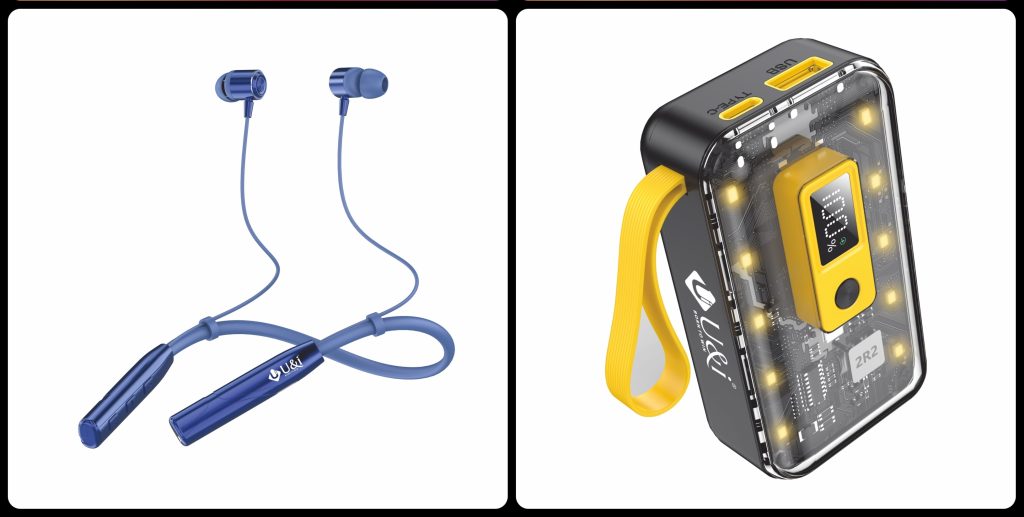
U&i Dynamic Series Wireless Neckband

As the name suggests, the Dynamic Series Wireless Neckband is a pair of Bluetooth earphones that has aband that goes around the user’s neck. It promises a hassle free experience along with well balanced audio quality. The hearables offer Noise reduction (ENC) for improved calling even in busy environments. The device pairs with Bluetooth 5.3 with support for instant pairing and a range of up to 10 meters. U&i is promising up to 60 hours of playtime and 500 hours of standby time. The eartips also offer a magnetic control feature that also serves as the on/off functionality.

U&i Dynamic series Wireless Neckband

U&i Turbo Series Power Bank

U&i also unveiled the Turbo Series Power Bank in the region. It features a semi transparent design that is paired with LED lighting. This adds to its unique aesthetic. The Power Bank has a large 10,000mAh battery capacity that outputs 22.5W PD charging that can power up smartphones, smartwatches, TWS, and more. Both ports (USB-A and USB-C) can offer fast charging. The Turbo Power Bank can automatically sense the connected device and its voltage and wattage support as well.

Pricing and Availability

U&i Dynamic Series Wireless Neckband earphones is listed for a price tag of 2,699 INR, while the Turbo Seres Power Bank costs 2,999 INR. Both devices are available for purchase across leading retail stores and the brand’s official outlets in India. Back in December 2023, the company announced four new budget wireless speakers, which you can check out by clicking here.

RELATED:

Samsung Galaxy A13 4G finally gets Android 14-based One UI 6 update

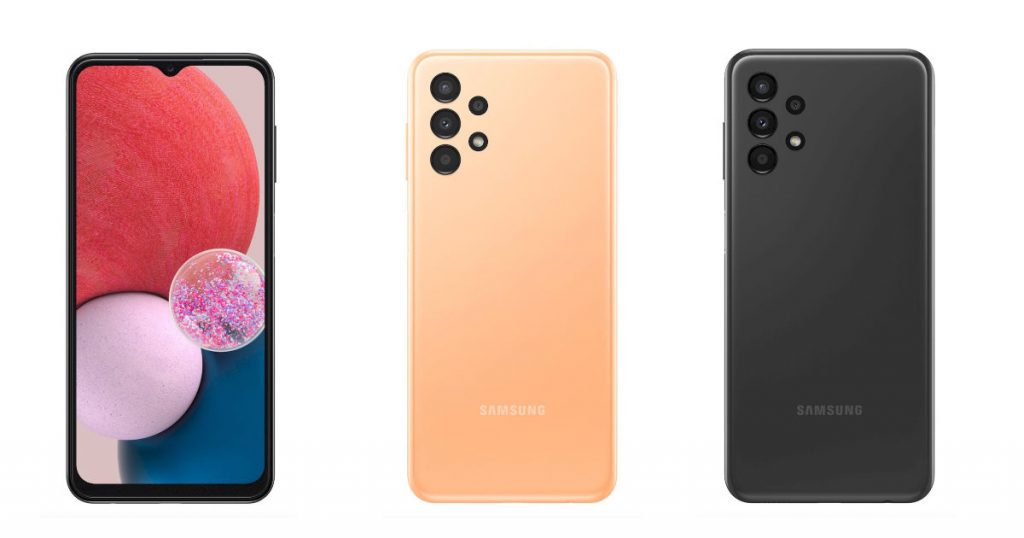
The budget-friendly Galaxy A13 4G is finally joining the Android 14 party, three weeks after its 5G sibling. The rollout appears to have begun in Korea, with wider availability expected in the coming weeks.

While Samsung‘s current flagship line like the Galaxy S24 enjoys up to seven years of updates, the A13 is only eligible for two major OS upgrades, making Android 14 it’s last. However, it may still receive the One UI 6.1 update before feature updates cease.

Korean users can find the update as firmware version A135NKSU5DWL5 through their phone’s Settings > Software update menu. Users in other regions should keep an eye out for the update notification soon. 

The update brings several improvements. The Quick Panel is now easier to use, giving quick access to your most-used settings. The emoji library has been updated, making your messages more fun and expressive. 

Plus, there’s a new, clearer default font. The media player widget has a cool new look with dynamic waveforms, and you can now customize the lock screen clock widget’s size, style, and placement.

Samsung’s apps like Gallery, Internet, Messages, Phone, and Reminders have a new, cleaner look. Some apps have even dropped the “Samsung” name for a simpler style. The photo editor is more user-friendly, making it easier to edit your pictures. There’s also a new video editor called “Studio” for all your video editing needs.

As a reminder, the Galaxy A13 4G features a 6.6-inch Full HD+ display, an 8MP front camera, a quad-camera rear setup with a 50MP main sensor, an Exynos 850 processor, 4GB or 6GB of RAM, 64GB or 128GB of storage, and a 5,000mAh battery with 25W fast charging support (though the included charger is only 15W).

Related:

Samsung’s One UI 6.1 introduces standalone “Samsung Find” app

One UI 6.1, the latest Android skin for Samsung Galaxy devices, brings several changes, the most interesting being the new AI features. 

Currently only available in new Galaxy S24 series devices, Samsung has introduced a bunch of interesting AI features like Circle to search, Live translation, and more. Along with this, the company has also improved upon existing features.

A notable upgrade is the new “Samsung Find” app, which has replaced the “SmartThings Find” feature in the SmartThings app.

First spotted by Mishaal Rahman, Samsung Find is now a stand-alone app for your Galaxy device.  It’s more than just a rebranding of SmartThings Find; it includes a new function that allows users to track their family members’ devices.

The Samsung Find app comes with three tabs: Devices, Items, and People. The Device tabs help you locate the Galaxy devices of you and your family on a map. The items tab lets you find misplaced Galaxy SmartTags attached to items like keys, wallets, or luggage, eliminating frantic searches. And finally, with the People tab, you can share your live location with family members and vice versa for real-time awareness and added security.

While offering these new features, Samsung Find currently lacks the “Notify When Left Behind” function. This previously available feature alerted users when they left a tagged item behind, such as keys or headphones. It’s unclear whether this feature will be reintroduced in future updates.

Samsung Find comes pre-installed on the new Galaxy S24 series and can be downloaded from the Galaxy Store for other devices receiving the One UI 6.1 update. 

Related:

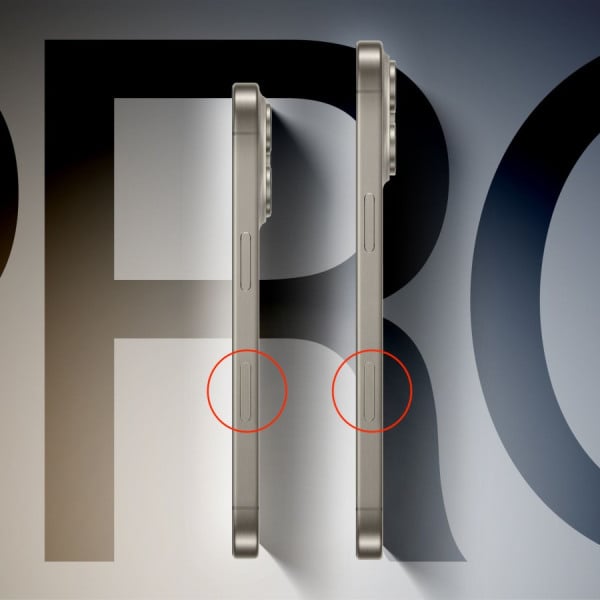
Apple iPhone 16’s new Capture button may offer Zoom & Focus Adjustment Gestures

The new Action button on the iPhone 15 Pro models was the biggest physical change that Apple brought to its next gen smartphones. It offers multi purpose functionality in exchange for the mute switch. Now, a new report hints that the iPhone 16 series adds another new Capture Button and even reveals some of its functions.

Apple iPhone 16 Capture Button

The news arrives from a report from The Information. Apple’s 2024 iPhones are expected to feature a capture button that will fulfill multiple purposes related to photography. With that single button, users can basically gain quick access to certain features. The report states that the Capture Button may offer a zoom function as well as focus adjustments. So it may let you zoom in and out by clicking left and right on the iPhone 16 Capture button.

We can also expect this button to support other functions as well. Applied pressure could also be sensed by this button. In other words, a light press and a heavier press perform different actions. For example, a light press gets focus adjustment and a heavier press may serve as the shutter button. The report claims that the Capture Button will be situated on the right side of the upcoming iPhones, right below the power button.

Since the Cupertino based giant reserves the newest changes and features to the higher end Pro models, the iPhone 16 Pro and iPhone 16 Pro Max would likely feature this button. We also reported on the build and camera details regarding the iPhone 16 Pros earlier this week. A separate report also revealed that the base iPhone 16 and iPhone 16 Plus features 8GB of RAM and WiFi 6E. You can also click here to check out the recent iPhone 16 Pro series renders that were leaked previously.

RELATED:

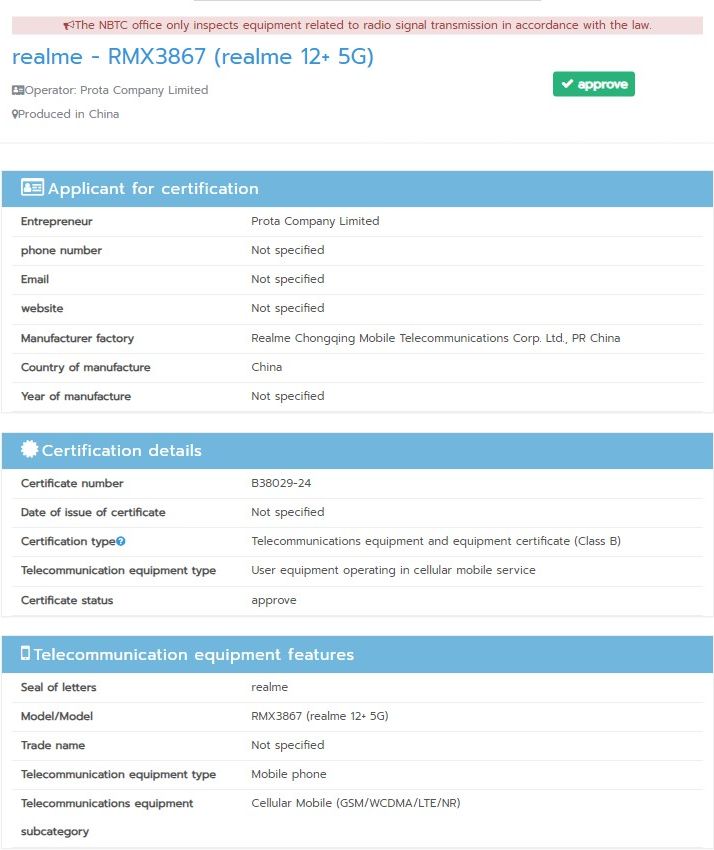
Realme 12+ 5G NBTC certified, global launch imminent

The Realme 12+ 5G is gradually receiving approval from different certification platforms. A fresh development reveals that it has been approved by Thailand’s NBTC regulatory body. While the Realme 12 Pro series is set to launch globally on Jan. 29, it appears that the Realme 12+ 5G’s launch could also be around the corner.

Realme 12+ 5G NBTC certification

Realme 12+ 5G NBTC
Realme 12+ 5G NBTC listing

The Realme 12+ 5G’s NBTC certification shows that its model number is RMX3867. Earlier this week, the same device was certified by Malaysia’s SIRIM regulatory platform. In the recent past, the device has also been approved by the Indonesian TKDN and SDPPI bodies, the FCC, and TUV Rheinland. In addition, it is speculated that the RMX3867 phone, which was spotted in China’s 3C database recently, could be the Chinese variant of the Realme 12+ 5G.

Realme 12+ 5G specifications (rumored)

Reports have so far revealed that the Realme 12+ 5G will have a 16-megapixel camera on the front. The back panel of the device may feature a 64-megapixel primary camera and an 8-megapixel auxiliary lens. It may pack a 5,000mAh battery with 67W fast charging.

The Realme 12+ 5G may run on Realme UI 5-based Android 14. In addition, it is expected to have support for NFC connectivity. The other details of the device are yet to be revealed. 

In related news, the Realme 12 Pro+ was recently spotted with the Snapdragon 7s Gen 2 chipset and 12 GB of RAM on Geekbench. It is speculated that Realme has opted for the Snapdragon 6 Gen 1 to power the Pro model. Both devices are expected to feature a 6.7-inch FHD+ 120Hz AMOLED display and a 5,000mAh battery with 67W fast charging. The 12 Pro will have a 16-megapixel front camera and a 50-megapixel (IMX890, with OIS) + 8-megapixel (ultra-wide) + 32-megapixel (telephoto) triple camera unit on the back. On the other hand, the 12 Pro+ will have a 32-megapixel selfie camera and a 50-megapixel (IMX890, with OIS) + 8-megapixel (ultra-wide) + 64-megapixel (OV64B periscope) triple camera unit.

RELATED:

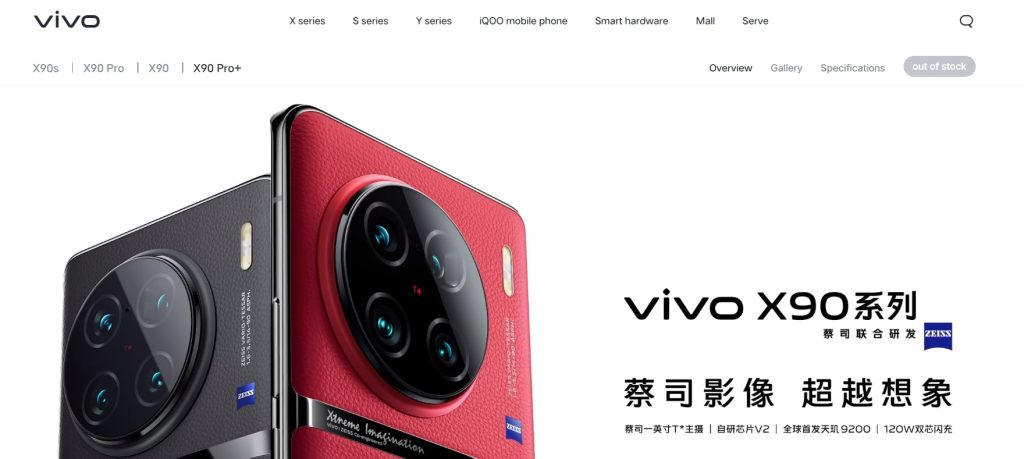
Vivo X90 Pro+ no longer available for purchase in China, Vivo X100 Ultra could be coming soon

In December 2022, Vivo launched the Vivo X90 Pro+ as the world’s first smartphone powered by the Snapdragon 8 Gen 2 chipset. While the device packed top-notch cameras, it never made it to markets outside of China. The X90 Pro+, which is the most powerful phone in the X90 series, is now no longer available for purchase through Vivo China’s website. This could be a hint that its successor, the Vivo X100 Ultra, could be coming soon to the Chinese market.

Vivo X90 Pro+ no longer avialble for purchase
Vivo X90 Pro+ is no longer available for purchase in China via official website

In November 2023, Vivo unveiled the Vivo X100 and X100 Pro smartphones in the Chinese market. However, the brand did not unveil the X100 Pro+. Rumors have said that the X100 Pro+ will be announced in Q2 of this year. Other reports have claimed that the company may drop the Pro+ branding and call it the Vivo X100 Ultra. 

Vivo X90 Pro+ specifications

To recall, the Vivo X90 Pro+ came with specs such as a 6.78-inch AMOLED curved-edge 2K 120Hz display, a Snapdragon 8 Gen 2 chip, a Vivo V2 chip, up to 12 GB of LPDDR5x RAM, up to 512 GB of UFS 4.0 storage, and a 4,700mAh battery with 80W wired and 50W wireless charging. It offered a 32-megapixel front camera and a 50.3-megapixel (main, OIS) + 48-megapixel (ultra-wide) + 50-megapixel (2x telephoto, OIS) + 64-megapixel (periscope, 3.5x) quad-camera system.

Vivo X100 Ultra specifications (rumored)

According to reports, the Vivo X100 Pro+ is speculated to feature a 6.78-inch curved-edge Samsung E7 AMOLED display that offers a 2K resolution and a 120Hz refresh rate. Under the hood, it will have the Snapdragon 8 Gen 3 chipset, up to 16 GB of LPDDR5x RAM, up to 1 TB of UFS 4.0 storage, and a 5,000mAh+ battery with 100W wired and 50W wireless charging.

The device is expected to feature a 50-megapixel LYT-900 primary camera and a 200-megapixel periscope telephoto camera in its rear camera setup. The device will also offer other features, such as an IP68-rated chassis, a USB-C (USB 3.2) port, and two-satellite connectivity.

RELATED:

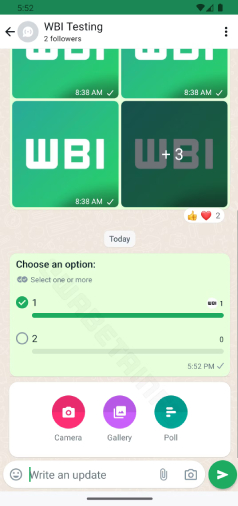
WhatsApp introduces four new features for Channels

WhatsApp has recently upgraded its Channels feature, making it even better for brands, celebrities, and public figures to connect with their audience. Launched in late 2023, Channels lets these users send messages directly to their followers.

Mark Zuckerberg, the CEO of Meta, announced that WhatsApp Channels has added four exciting new features for Channels. So let’s talk about them here.

WhatsApp ending support for older devices

WhatsApp Channels features

First, channel admins can now send voice messages. This is great for quick updates, sharing behind-the-scenes snippets, or just chatting with followers.

Next up, Channels has introduced polls. If you’ve used polls in WhatsApp groups, you’ll know how handy they are. Admins can now ask followers for their opinions on various topics, like new product ideas or what content they prefer.

WhatsApp polls.

Another big change is that Channels can now have multiple admins. This is especially useful for big organizations or brands that need to keep their channel active and respond quickly to messages.

Lastly, followers can share interesting updates from Channels on their own WhatsApp Status. This means more people might see these updates, helping the Channels grow their audience.

These updates are no longer just in the testing phase, so they should be available to everyone soon. Although there’s no exact date for when they’ll be out, it’s clear that these new features will make WhatsApp Channels even more engaging and interactive for both admins and followers. 

With the ability to send voice messages, create polls, have multiple admins, and let followers share updates, WhatsApp is taking big steps to improve how people connect and share content on their platform.

Related:

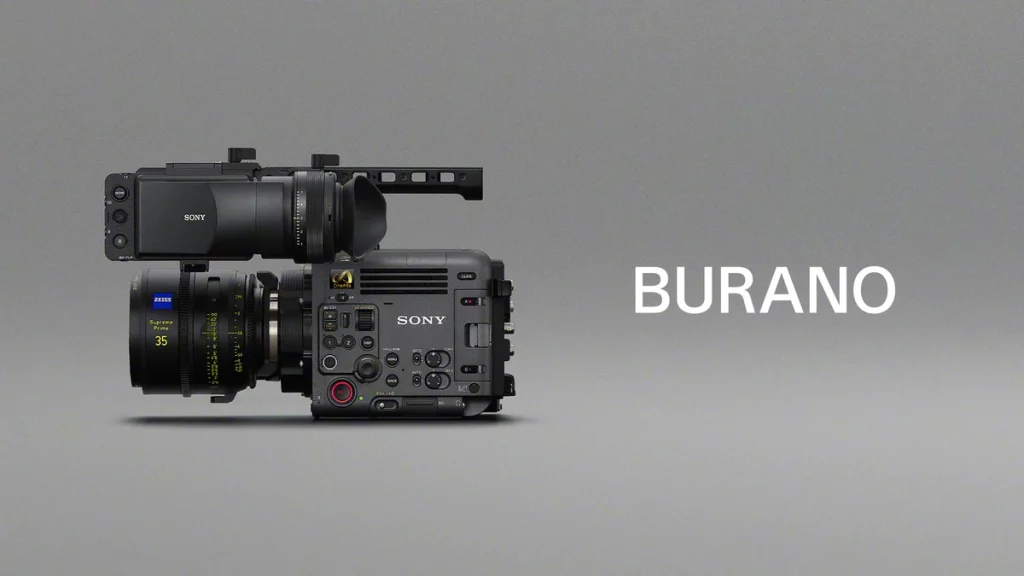
Sony BURANO: 8K full-frame cinema camera with intelligent features launched for 200,000 Yuan ($28,000)

Sony (China) Co., Ltd. has unveiled its latest addition to the CineAlta series, the CineAltaB, also known as BURANO in international markets. This intelligent full-frame 8K cinema camera caters to a diverse range of cinematic needs, from big-screen film production to documentaries, variety show recordings, and small-team commercials.

Key Specifications

The CineAltaB boasts an impressive set of features, making it a powerful tool for cinematographers:

  • 8.6K Full-Frame Sensor: Equipped with an 8.6K full-frame sensor, the camera delivers high-resolution imaging for exceptional visual quality.
  • Dual Native ISO and 16-Stop Latitude: With dual native ISO (800/3200) and a broad 16-stop latitude, the camera excels in capturing details in varying lighting conditions.
  • Flexible Shooting Modes: The camera supports full-frame and Super 35mm formats, enabling shooting in up to 8K at 30p, 6K at 60p, or 4K at 120p. It accommodates a wide range of anamorphic widescreen movie lenses.
  • AI-Powered Autofocus: Featuring an AI smart chip with independent subject recognition, the CineAltaB ensures fast hybrid autofocus. This is particularly beneficial when capturing high-speed moving subjects.
  • Electronic Variable ND Filter: The electronic variable ND filter ranges from 0.3 to 2.4, providing exposure control in different lighting conditions without the need for cumbersome filtering. It supports exposure control during lens replacement without altering the depth of field.
  • Lens Compatibility: Supporting both PL lens mount and E-mount lens groups, the camera offers versatility in lens choices. Its design, incorporating a thinner electronic variable ND filter and optical anti-shake structure, results in a more compact and ergonomic body.

Availability and Pricing:

The Sony CineAltaB is available for purchase on the official website. The stand-alone price is set at 200,000 yuan (~$28,000), while the package, including Sony CEB-G1920T & CEB-G960T memory cards and the GP-VR100 multi-function control handle, is priced at 220,000 yuan (~$30,894).

Sony’s CineAltaB introduces cutting-edge technology to cinematography, combining high-resolution imaging, intelligent autofocus, and ergonomic design, making it a standout choice for professionals across various cinematic applications.

Related:

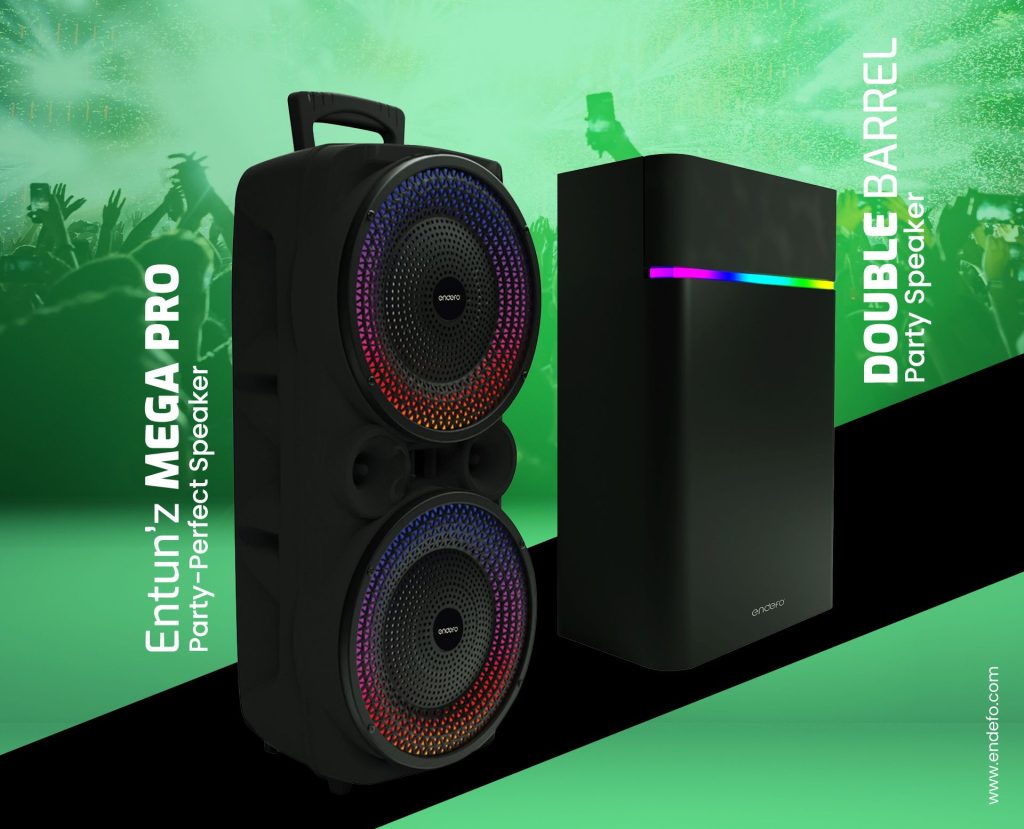
Entun’z Mega Pro, Double Barrel party speakers launched with Rs 5,999 (~$72) starting price

Dubai-based Endefo, has announced two new audio products at the Mobile India Expo in Delhi. These include the Entun’z Mega Pro and Double Barrel party speakers. The company said that starting Jan. 21, both devices will be accessible on their website across 19,000 Indian pin codes and will soon be available at 2000+ retail stores, including Sangeetha Mobiles, Supreme Paradise, Lot Mobile, Nandilath Digital, Ideal Home Appliances, Easy Store, Gulf Own Digital, Image Mobiles and Computers.

The Entun’z Mega Pro and Double Barrel party speakers are priced at Rs 9,999 each. However, the company will be offering both products at reduced prices of Rs 6,999 (~$84) and Rs 5,999 (~$72), respectively, to make them available to a wider audience.

Entun’z Mega Pro

Endefo Entun’z Mega Pro, Double Barrel

The Endefo Entun’z Mega Pro party speaker features a 70W bass output, delivering clear voice and an immersive audio experience. It also offers other features, such as a karaoke mic, surround sound, LED Display, remote control, mobile holder, AUX, USB port, microSD card slot, FM radio, and a long battery life.

Double Barrel

The Endefo Double Barrel party speaker produces an even more powerful 100W output thanks to its dual speaker system. It is equipped with features, such as an equalizer control board, LED Display, tone control, remote control, AUX, USB Drive, microSD card slot, FM radio, and a long-life battery.

Both the Entun’z Mega Pro and Double Barrel will be showcased at Endefo’s Experience booth at the Mobile India Expo, allowing visitors to explore the brand’s diverse product range, including earphones, neckbands, portable speakers, party speakers, soundbars, smartwatches, and TWS earbuds.

RELATED:

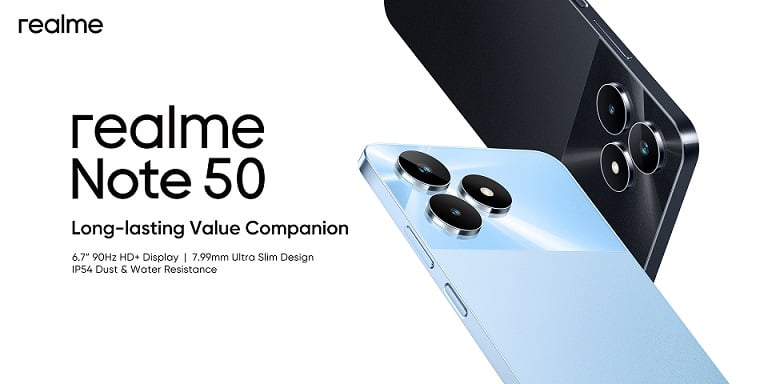
Realme Note 50 launches as Realme’s first Note-branded phone, read specifications, price

Realme has discreetly unveiled the Realme Note 50, a new entry-level smartphone, in the Philippines. It is the company’s first-ever Note-branded smartphone. The key highlights of the device include a 90Hz display, a Unisoc chip, a big battery, and a slim design. Here is a look at what’s in store for the buyers of the Note 50.

Realme Note 50 specifications and features 

Realme Note 50
Realme Note 50

Starting from the front, the Realme Note 50 has a 6.74-inch IPS LCD panel that offers an HD+ resolution of 1600 x 720 pixels. The screen also offers up to 90Hz refresh rate, a 180Hz touch sampling rate, and a 260ppi pixel density. It comes in an IP54-rated dustproof and water-resistant chassis that measures 7.99mm in thickness and weighs 186 grams.

The Realme Note 50 has security features, such as a side-facing fingerprint scanner and face unlock. The device runs on Realme UI T-based Android 13 Go.

The Note 50 has the Unisoc T612 chip onboard. In addition, it offers 4 GB of RAM, 64 GB of internal storage, and a 5,000mAh battery with 10W charging support via USB-C port. For additional storage, it has a microSD card slot.

For photography, the Realme Note 50 has a 5-megapixel camera on the front, and its back panel has a 13-megapixel camera, a monochrome sensor, and an LED flash. The device offers other features, such as dual SIM, Wi-Fi 802.11ac, Bluetooth 5.0, GPS, a USB-C port, and a 3.5mm audio jack.

To sum up, it is a tweaked version of the Realme C51, which packs better cameras. The rest of the specs appear to be identical on both devices.

Realme Note 50 price in the Philippines 

The Realme Note 50 is priced at PHP 3,599 (~$65) in the Philippines. It comes in two shades, such as Midnight Black and Sky Blue.

RELATED:

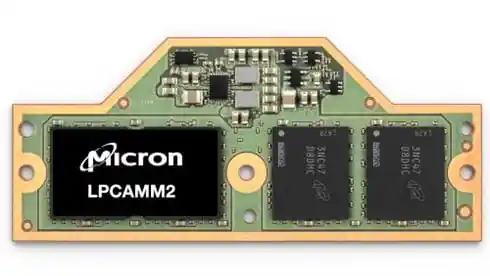
Micron unveils LPDDR5X-based LPCAMM2 memory: will launch within the first half of 2024

Micron Technology, Inc. has introduced the industry’s first standard low-power compression attached memory module (LPCAMM2). Available in capacities ranging from 16GB to 64GB, the LPCAMM2 promises enhanced performance, energy efficiency, space savings, and modularity.

The LPCAMM2 memory achieves speeds up to 9600Mbps as compared to 5600Mbps of current DDR5 SODIMMs

Expected to be in production by the first half of 2024, it is positioned as the first disruptive form factor for client PCs since the introduction of small outline dual inline memory modules (SODIMMs) in 1997.

Micron’s LPCAMM2 integrates LPDDR5X DRAM, offering up to 61% lower power consumption and up to 71% better performance for essential workloads, such as web browsing and video conferencing. Additionally, it provides a remarkable 64% space savings compared to SODIMM offerings. As generative artificial intelligence (GAI) becomes more prevalent on client PCs, the LPCAMM2 is designed to deliver the necessary performance for processing Artificial Intelligence workloads while maintaining low power consumption.

Praveen Vaidyanathan, Vice President and General Manager of Micron’s Compute Products Group, emphasizes the transformative nature of the LPCAMM2, stating that it will deliver best-in-class performance per watt in a flexible, modular form factor. The new product is expected to enhance the capabilities of AI-enabled laptops and allows for memory capacity upgrades as technology and user needs evolve.

LPCAMM2’s development involved collaboration with key client PC OEMs and ecosystem enablers, and it represents a significant departure from current memory module form factors. The new memory solution offers higher performance with LPDDR5X, achieving speeds of up to 9600Mbps, an 80% reduction in system standby power for improved battery life, and benefits in digital content creation and productivity workloads.

Moreover, the LPCAMM2 boasts modularity, enabling critical serviceability functionality for enterprise IT users and administrators. It features a single PCB for all module capacities, providing supply chain flexibility for OEM and ODM customers. Compared to SODIMMs, LPCAMM2 simplifies motherboard routing complexity.

Crucial LPCAMM2 retail products will be made available, allowing laptop users, including gamers and content creators, to upgrade their system memory configuration, marking an industry first for low-power memory. The Crucial LPCAMM2 products are set to be available in the first half of 2024.

Related:

Vivo G2 debut as first G-series Vivo phone, packs 90Hz display, Dimensity 6020, 5,000mAh battery

Vivo has silently announced its first G-series phone in the Chinese market. Last week, the Vivo G2 was spotted in the database of the Google Play Console, and now it is officially listed on Vivo China’s website. Here is a look at the specifications, features, and price of the device.

Vivo G2 specifications and features

Vivo G2
Vivo G2

The Vivo G2 has a 6.56-inch LCD panel with a teardrop notch. The screen offers an HD+ resolution of 1612 x 720 pixels and a 90Hz refresh rate. The device comes preinstalled with the Origin OS 3-based Android 13. On the front, it has a 5-megapixel selfie camera, and its back panel has a 13-megapixel single camera with LED flash.

Under the hood, the Vivo G2 has the Dimensity 6020 chipset and up to 8 GB of LPDDR4x RAM. On the storage front, the device offers up to 256 GB of UFS 2.2 storage and a microSD card slot for additional storage.

The Vivo G2 has a 5,000mAh battery with 15W charging via USB-C port. The device offers other features, such as dual SIM, 5G, 5GHz Wi-Fi, Bluetooth 5.1, GPS, a 3.5mm audio jack, and a side-facing fingerprint scanner.

The specs and design of the Vivo G2 show that it is a rebranded version of the Vivo Y36i, which was announced in China in December 2023. It appears that the G2 is aimed at the offline market in China.

Vivo G2 price

The Vivo G2 comes in four variants, such as 4GB + 128GB, 6GB + 128GB, 8GB + 128GB, and 8GB + 256GB. These variants are priced at 1,199 Yuan (~$167), 1,499 Yuan (~$210), 1,599 Yuan (~$225), and 1,899 Yuan (~$265), respectively. It comes in Deep Sea Black color only.

RELATED:

An Updated HarmonyOS is Here, and Huawei Seems Extra Confident

Huawei is making big moves to prepare for a comeback. This time, it’s the introduction of HarmonyOS Next, their very own mobile operating system. In a bold pivot away from Android, Huawei aims to make a significant impact on the mobile tech landscape, challenging the dominance of Google’s Android and Apple’s iOS in China.

The developer version of HarmonyOS Next is the one that was actually released

The developer’s version of HarmonyOS Next was recently unveiled, signaling Huawei’s dedication to nurturing its platform. With a commercial launch slated for the fourth quarter of this year, this move marks a new chapter in Huawei’s story. What’s interesting here is the deliberate decision to stop supporting Android-based apps, a clear sign that Huawei is ready to forge its own path.

Huawei

Huawei is not just focusing on the software; they’re building an entire ecosystem. They’re rallying support from over 200 industry partners, with ambitions to bring on 5,000 by the end of 2024. Big names like Meituan have already joined the fray, creating apps specifically for HarmonyOS. This initiative isn’t just about a new operating system; it’s about creating a whole new tech community.

The company is also investing heavily in this venture, dedicating 7 billion yuan to fuel innovation in everything from native apps to development tools. This investment isn’t just monetary; it’s a commitment to the future of tech, aiming to cultivate a new generation of developers through collaborations with over 300 educational institutions.

The journey hasn’t been easy for Huawei. Their inclusion on the US government’s Entity List, limiting access to US-origin technologies, has been a significant hurdle. However, this has only spurred them on to innovate and push boundaries.

Huawei’s ambitions are high, with projections suggesting HarmonyOS could overtake Apple’s iOS in China by 2024. This isn’t just a tech update; it’s a tech revolution. HarmonyOS Next isn’t just a new player in the smartphone OS game; it’s a statement of intent from Huawei, showing that they’re not just adapting to challenges – they’re setting out to redefine the rules of the game.

RELATED:

(Via)

Himiway Unveils Exciting New E-Bike Models at CES 2024

The electric bike industry is buzzing with excitement following Himiway’s recent showcase at CES 2024. This California-based company, known for blending affordability with functionality, has taken a bold step into the high-performance e-bike arena. Their latest offerings at CES have set new benchmarks in design and capability, indicating a significant shift in Himiway’s market strategy.

The pricing of the bikes is still under wraps for now

Leading the charge are the X5 Pro and X5 Ultra, two mountain bikes that redefine what it means to ride electrically off-road. With their 27.5-inch wheels, these bikes are designed to conquer challenging terrains. What makes them stand out is the combination of Schwalbe tires, RockShox suspension, and Sram Code Ultimate brakes, all built around lightweight yet sturdy carbon frames. The Bafang M500 motor in these bikes is not just about power; it’s about delivering a seamless, high-torque experience that mountain biking enthusiasts will appreciate.

E-Bike CES 2024

Himiway didn’t stop there. They also introduced the Zebra and Cobra Pro, tailor-made for adventurers who refuse to be limited by terrain. The Cobra Pro, with its full-suspension frame and massive tires, is an all-terrain beast, while the Zebra, with its accessible design, ensures that no adventure is out of reach. Both are equipped with a 1,000W motor, striking a balance between power and accessibility.

For city riders, the A7 Pro is a game changer. This bike combines urban convenience with performance, featuring a step-through frame and full suspension for a comfortable ride. The adjustable stem and integrated wheel lock show Himiway’s attention to the diverse needs of urban cyclists.

Although pricing details are still under wraps, Himiway’s track record suggests these models will offer great value. What’s clear is that Himiway is no longer just about practicality; they’re now a serious contender in the performance e-bike market. This shift not only spices up the competition but also promises exciting times for e-bike enthusiasts and casual riders alike. Stay tuned to Gizmochina as more details unfold about these groundbreaking models.

RELATED:

(Via)