Advertisement

Xiaomi leverages BAIC’s qualifications to produce EVs in self-built factory

Xiaomi’s electric car, which was recently listed on the website of the Ministry of Industry and Information Technology, is likely to be manufactured in the company’s factory in Beijing. The car was previously thought to be manufactured by BAIC Group, but new information has revealed that Xiaomi will be producing the vehicle itself.

Xiaomi’s electric sedan will be manufactured in its own factory

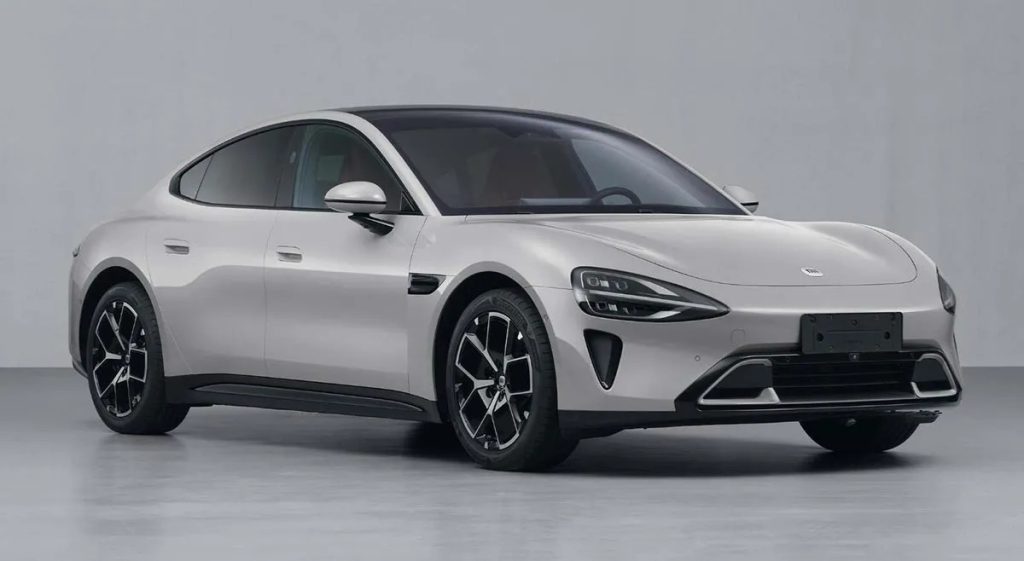
Dubbed the SU7 (Speed Ultra 7), the car is a pure electric sedan that bears the Xiaomi trademark. While the manufacturing company is listed as BAIC Group Off-road Vehicle Co., Ltd., production will take place at Xiaomi’s self-built factory in Beijing. 

This is evident from the address listed in the declaration information in CMIIT certification, which matches the location of Xiaomi Motor’s factory.
Industry insiders believe that Xiaomi may be temporarily using BAIC’s production qualifications to expedite the vehicle’s launch, while simultaneously pursuing its independent qualifications.

This strategy is not uncommon in the automotive industry, as it allows new entrants to bring their products to market more quickly.

Talking about the EV itself, it boasts a sleek and modern design, measuring 4997mm in length, 1963mm in width, and 1455mm in height. Its wheelbase spans 3000mm, providing ample interior space and a comfortable ride. 

Powered by a lithium iron phosphate battery supplied by BYD’s FinDreams Battery, the sedan is equipped with an engine from United Automotive Electronics Co., Ltd., delivering a peak power of 220kW. You can learn more about Xiaomi’s upcoming sedan in a detailed article here.

Related:

(Via | Via)

Xiaomi Auto set for official launch in the first half of 2024

Xiaomi is gearing up for the electric vehicle (EV) landscape with its highly anticipated model, the SU7. Recently, the first images of the SU7 emerged through a Chinese government regulatory agency, generating excitement ahead of its scheduled public debut in the first half of 2024.

In a strategic move, Xiaomi has chosen not to oversee the direct production of the EV. Instead, this responsibility has been entrusted to Beijing Automotive Industry Holding Co. (BAIC), a prominent government-owned Chinese car manufacturer. This collaboration, confirming earlier speculations, positions BAIC as the key manufacturing partner for Xiaomi’s foray into the competitive field of electric vehicles.

Lu Weibing, partner and president of Xiaomi Group, provided insights into the progress of Xiaomi Auto, revealing that it has surpassed expectations. The official release, slated for the first half of the coming year, is eagerly anticipated by both tech enthusiasts and observers within the automotive industry.

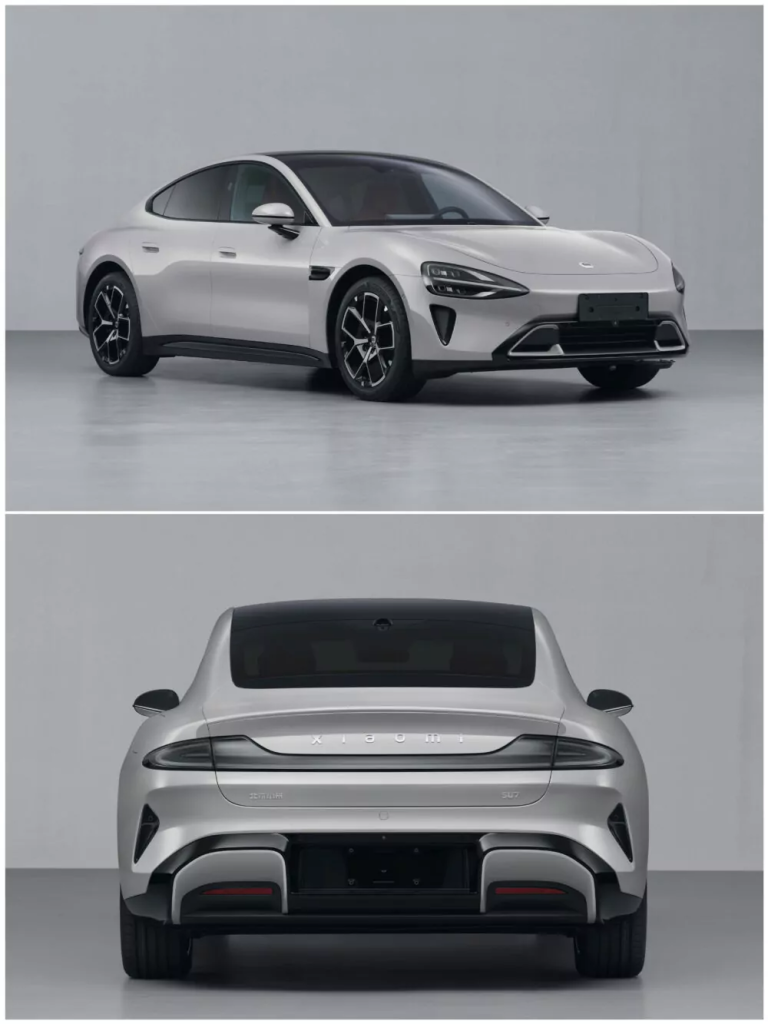
The Ministry of Industry and Information Technology unveiled the images of Xiaomi’s upcoming vehicle, the SU7. This sedan, speculated to feature coupe-like characteristics, showcases a distinctive design with a closed grille and sharp headlight modules at the front. The rear of the car is adorned with the iconic “Xiaomi” logo at the bottom left of the tail, accompanied by eye-catching continuous taillights. The declaration information specifies that the vehicle was submitted by Beijing Automotive Group Off-road Vehicle Co., Ltd.

Xiaomi’s venture into the automotive market aligns with the company’s broader strategy to establish itself as a key player across various technological domains. This strategic move underscores Xiaomi’s commitment to pushing the boundaries of innovation and diversifying its product offerings.

As Xiaomi Auto prepares for its official launch, the tech world eagerly anticipates the introduction of a new player in the electric vehicle landscape. The SU7, with its unique design and strategic manufacturing partnership, is set to contribute to the rapidly evolving EV market.

Related:

(via)

Honor Magic 6 series tipped to feature one-inch OV50K OmniVision primary camera

On Nov. 23, Honor is set to unveil the Honor 100 and 100 Pro in China. Following the announcement of the 100 series, the company will shift its focus toward the Magic 6 series of flagship phones, which is expected to debut in the first quarter of 2024. A new leak reveals that the Magic 6 lineup will feature a one-inch camera sensor, though it won’t be from Sony; instead, it will be sourced from another brand.

Honor Magic 6 series to flaunt OV50K OmniVision camera

Honro Magic 6 series’ leaked live shot

According to tech blogger and leaker Digital Chat Station, Honor is set to introduce the OmniVision OV50K one-inch main camera. There is strong speculation that this new camera will be featured in the upcoming Honor Magic 6, possibly starting with the Honor Magic 6.

In the world of smartphone camera sensors, the most formidable contender currently is Sony’s one-inch flagship sensor IMX989, utilized in some flagship camera models by Xiaomi and other manufacturers. It will be soon replaced by the Sony Lytia LYT-900, another one-inch camera sensor, which is likely to make its way on upcoming flagship phones, such as the Oppo Find X7 Pro, the Xiaomi 14 Ultra, and the Vivo X100 Pro+.

Honor’s Magic series has gained recognition for delivering exceptional performance, with models like the Magic 5 Pro and Magic 4 Ultimate consistently achieving top rankings in DxOMark photography benchmarks. The Magic 6 series, which is now tipped to feature the OV50K one-inch camera sensor, is also expected to offer a stellar photography and videography experience.

Recent flagship models like Xiaomi 14 and iQOO 12 have opted for OmniVision sensors in their primary cameras. This trend suggests a potential shift in the industry, with an increasing number of brands leaning towards adopting OmniVision camera sensors over the traditionally favored Sony sensors.

Returning to the Magic 6 series, a recent report revealed that it will come with support for satellite communication connectivity. The entire lineup may feature the Snapdragon 8 Gen 3 chip. It is speculated that the Magic 6 series may debut by the first week of February in China.

RELATED:

(source)

Red Magic 9 Pro Series Teaser Confirms Bigger Battery, Slim Design

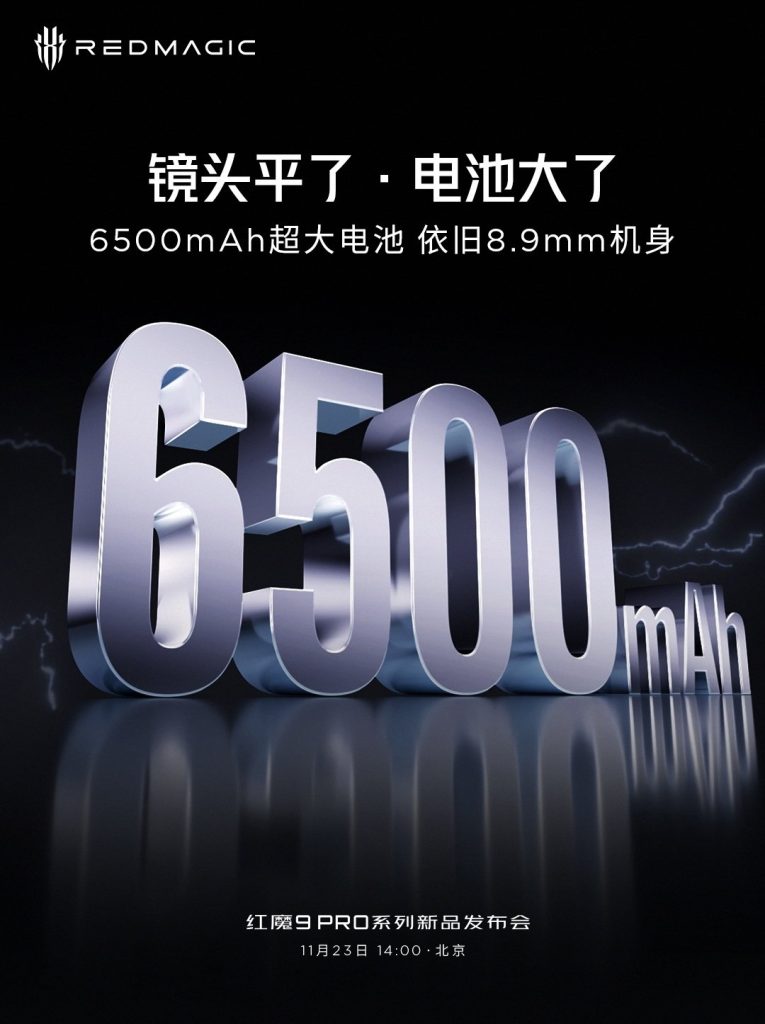
Red Magic is gearing up to launch the next-gen flagship series. Recently, the brand confirmed the news about the Red Magic 9 Pro Series on Weibo. As a result, the company will host the launch of the Red Magic 9 Pro gaming phone on the 23rd of November in China.

The company is now working to disclose some of the device’s most important features, as usual. It revealed its battery capacity and connection features with the unveiling of the poster today. An overview of the Red Magic 9 Pro’s current state of knowledge is provided below.

The Red Magic 9 Pro will be packed with a 6500 mAh battery with 80W fast charging technology. Moreover, the Red Magic 9 Pro will have 8.9mm thickness and it weighs around 229 grams.

Red Magic 9 Pro Series Lists at Geekbench, Key Specs revealed

Red Magic 9 Pro Series Specifications (Rumored)

Red Magic 9 Pro Series is confirmed to be powered by the Snapdragon 8 Gen 3 chipset. The device is anticipated to have a 6.8-inch display with FHD+ (2480*1116) resolution and a 120Hz screen refresh rate. It will feature a 6500 mAh big battery which will be providing more than two days and two nights of use with 80-watt fast charging.

Talking about its camera, the phone is expected to feature a 50MP GN5 OIS + 50MP JN1 rear camera. On the front, it will have an under-display selfie camera. Moreover, it will have an infrared remote control and NFC support. Additionally, it weighs around 229 grams which is 1g heavier than the previous generation and the thickness remains at 8.9mm.

The upcoming 9 Pro Series will be equipped with an RGB light with the industry’s first custom RGB fan lighting effect and new RGB gaming shoulder keys for all the operations. Subsequently, the flagship Series will have three color variants: Deuterium Front Transparent Silver Wings, Deuterium Front Transparent Dark Night, and Dark Knight Knight.

Related:

[Update] Snapdragon 7 Gen 3, Dimensity 8300 expected to launch in next two weeks

Update: The Dimensity 8300 is confirmed to launch on November 21

Original story continues…

Qualcomm and MediaTek have recently unveiled their latest flagship processors, namely the Snapdragon 8 Gen 3 and Dimensity 9300. Both companies are reportedly gearing up to announce sub-flagship chipsets like the Snapdragon 7 Gen 3 and Dimensity 8300 shortly, according to a recent leak. 

Snapdragon 7 Gen 3, Dimensity 8300 launch timeframe

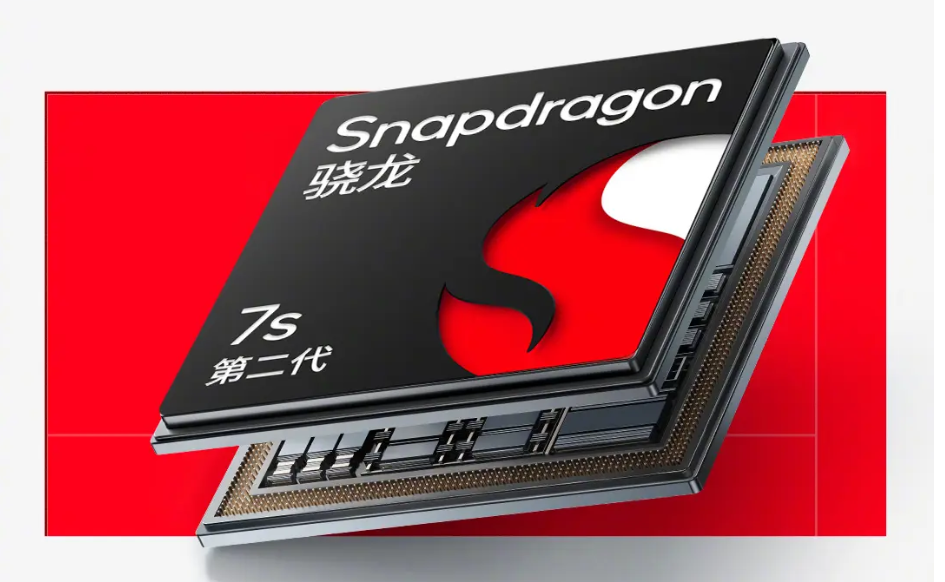
Snapdragon 7s gen 2
Snapdragon 7s gen 2

According to tipster WHY LAB, both chipsets will debut in the next two weeks. The Snapdragon 7 Gen 3 chip is expected to debut first, followed by the Dimensity 8300 chip.

It is speculated that the Honor 100 debuting on Nov. 23 in China will be the first phone to feature the Snapdragon 7 Gen 3 chip. The same chip is expected to power other smartphones, such as the Vivo S18, Vivo V30, and OnePlus Ace 3 (global name: OnePlus Nord 4). On the other hand, the Redmi K70e appears to be an ideal candidate to feature the Dimensity 8300 chipset. The K70 series, which also includes the K70 and K70 Pro, is expected to debut by the end of this month in China.

As per reports, the Snapdragon 7 Gen 3 is equipped with a high-performance core running at 2.63GHz, three performance cores operating at 2.40GHz, and four efficiency cores clocked at 1.80GHz. Additionally, it is equipped with an Adreno 720 GPU.

As far as the Dimensity 8300 chipset is concerned, it is speculated to include one Cortex-X3 super-large core clocked at 2.8GHz, accompanied by three Cortex-A715 performance cores running at 2.4GHz, and four Cortex-A510 efficiency cores operating at 1.6GHz. In terms of graphics, the Dimensity 8300 integrates a G520 MC6 GPU with a frequency of 850MHz.

The SD7G3 and D8300 are said to be manufactured on TSMC’s 4nm process, which means these chips will offer top-notch performance and better power efficiency on sub-flagship phones. 

RELATED:

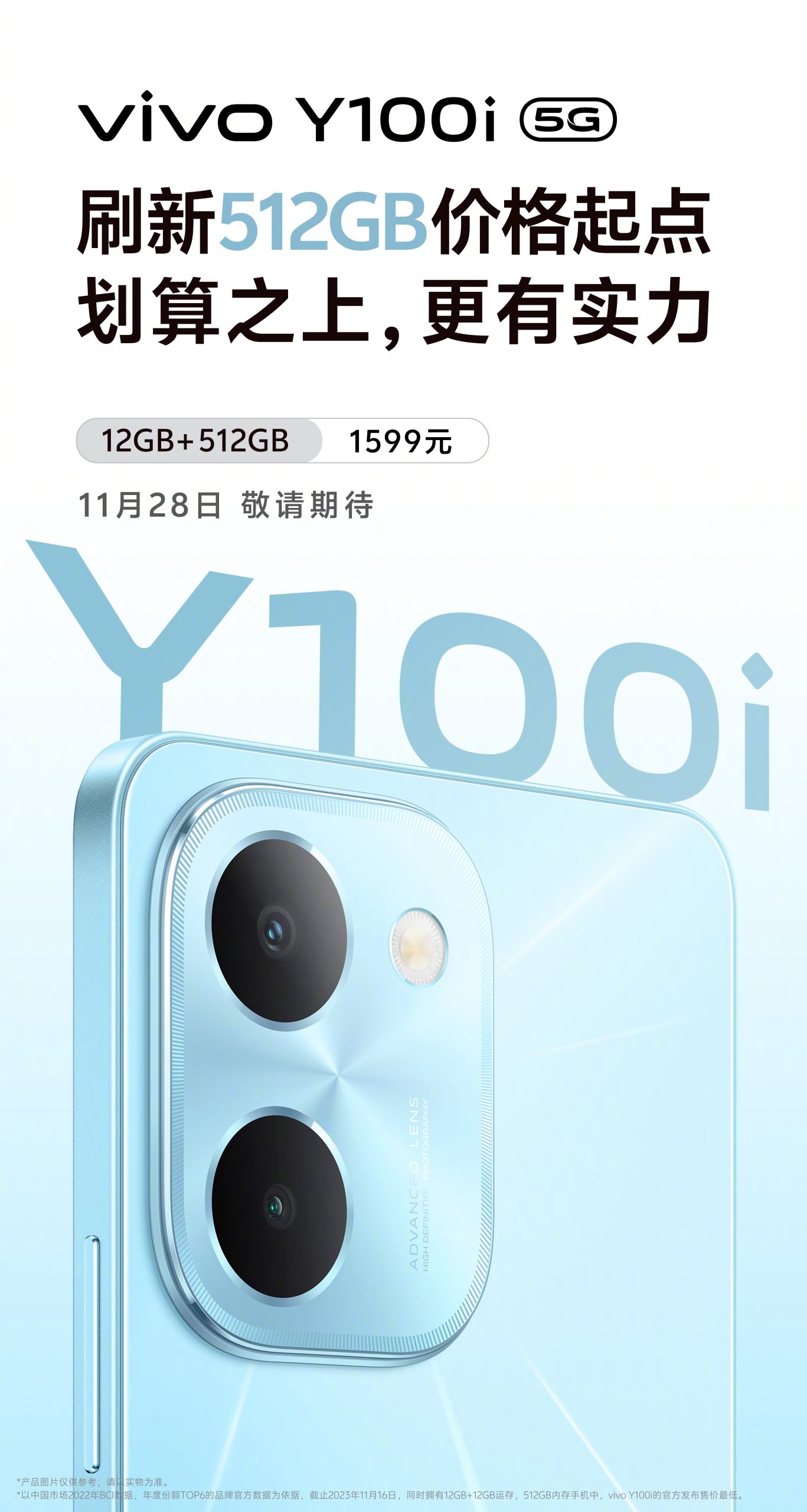
Vivo Y100i 5G with 12GB RAM, 512GB ROM teased to Launch in China

Vivo is teasing the launch of Vivo Y100i 5G in China, a new member of its Y Series, which is meant for the youth. Certainly, the all-new Y100i 5G has a large RAM and ROM.

It is quite a surprise that a mid-range smartphone is loaded with 12GB of RAM and 512 GB of storage, allowing users to keep large files and documents.

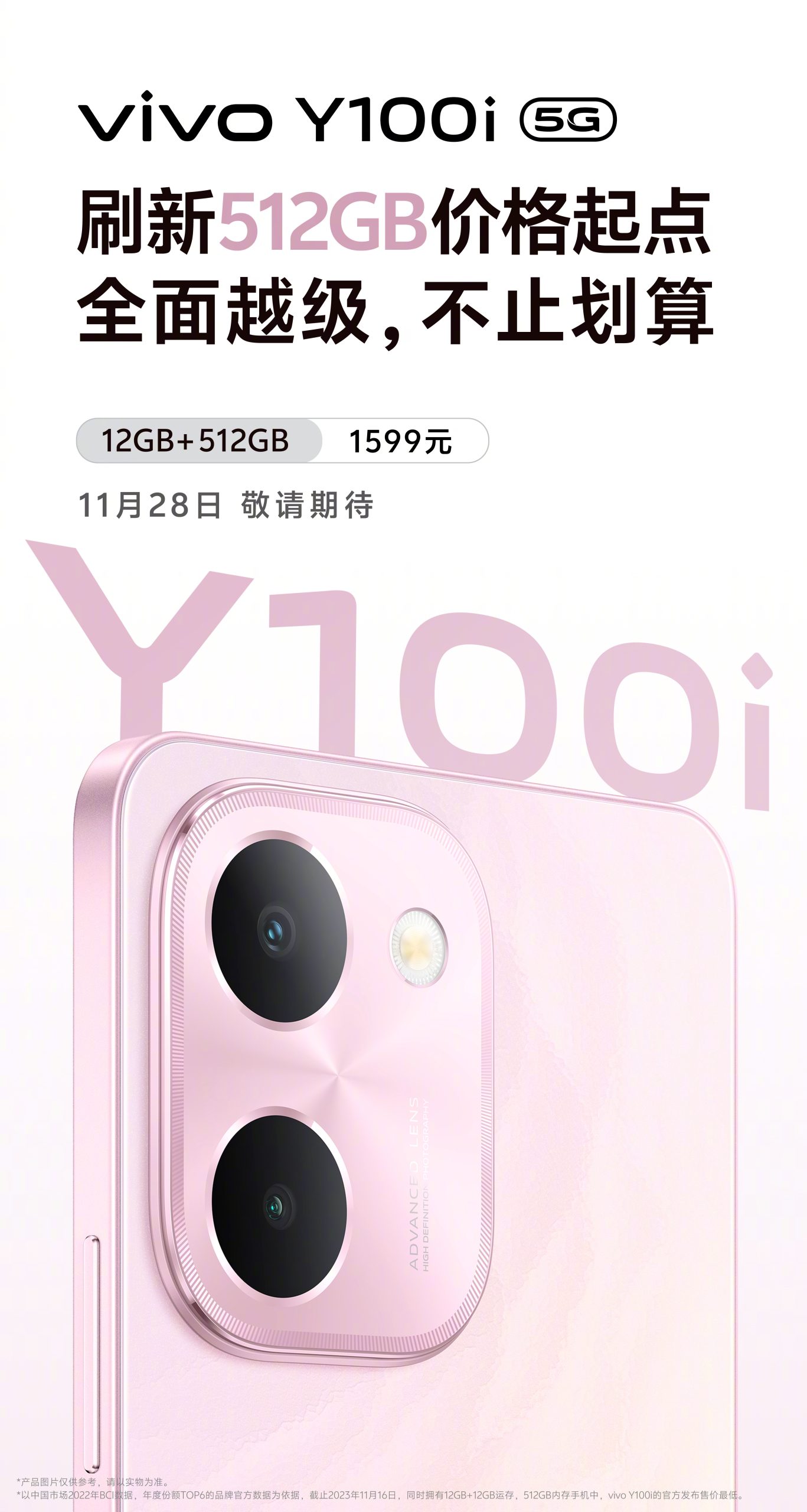
In addition to the storage and RAM configuration, the poster also reveals the price, camera set-up, design and color of the device. The Vivo Y100i 5G features a matrix camera module with dual rear cameras equipped with advanced lenses.

Unfortunately, no further details have been exposed by the brand today. We might have to wait till the 28th of November to know the full specifications of the device.

Vivo Y100i 5G Expected Specifications

Several reports claim that the Vivo Y100i 5G is basically a rebranded version of Vivo Y78 T1. Consequently, the Vivo Y100i 5G will be powered by MediaTek Dimensity 6020 chipset. It should feature a 6.64-inch LCD display with FHD+ (2388 x 1080 pixels) resolutions and a touch sampling rate of 240Hz.

The Vivo Y100i 5G will be equipped with a 50MP + 2MP AI dual rear camera. On the front, it will have an 8MP selfie camera. Moreover, the device is anticipated to be packed with a 5000 mAh battery with 44W fast charging. Additionally, the phone will also feature a 3.5mm headphone jack. The Y100i 5G phone is 7.98mm thick and it weighs around 190 grams.

Vivo Y100i 5G Color Variant & Availability

The Vivo Y100i 5G is available in two color variants: Blue and Pink. The smartphone is priced at 1599 yuan ($220) and it will be available for sale on 28th of November 2023.

Related:

Check out small gadgets and find deals on Geekwills.com.

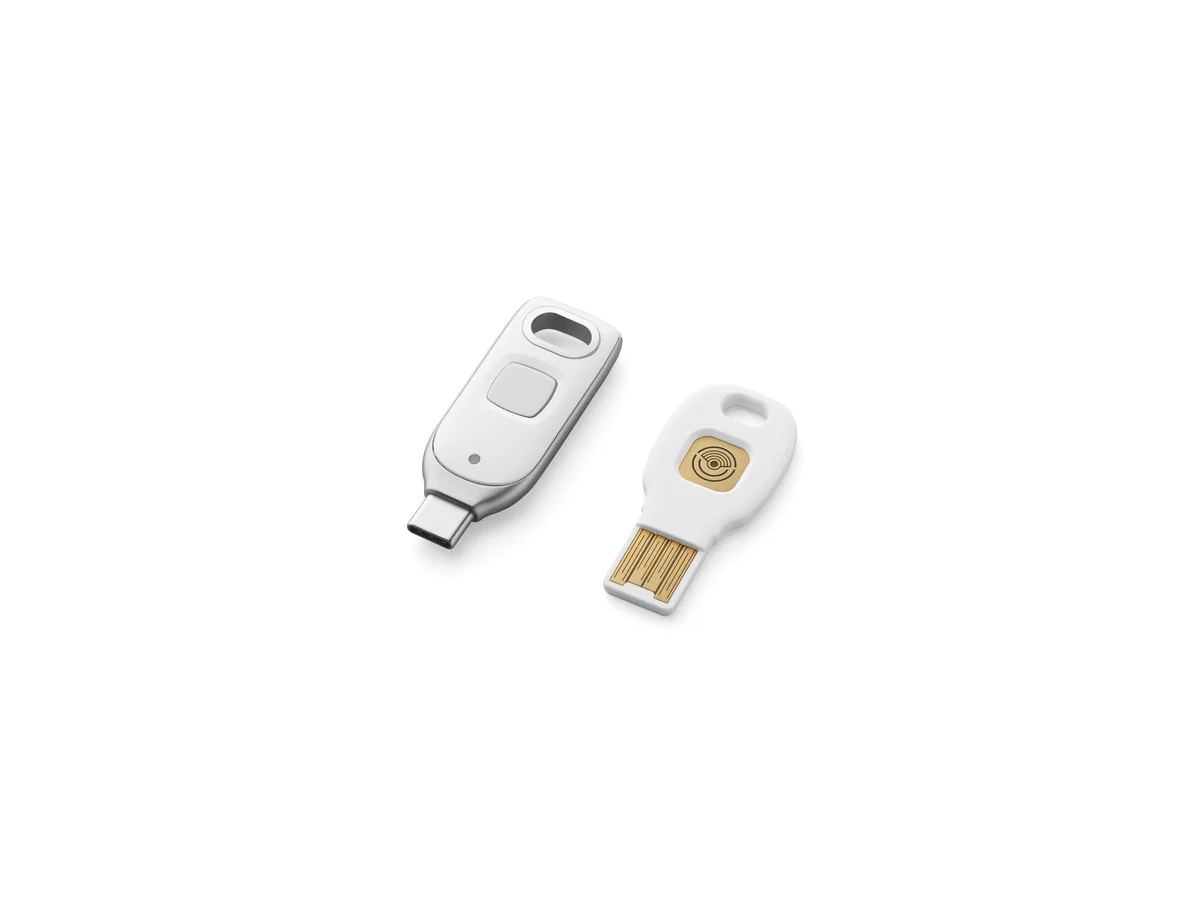
Google’s new passkey-friendly Titan Security Key is now available in the Google Store
Google introduced the Titan Security Key in 2018 to protect against phishing attacks. However, they now support passkeys across all Google Accounts, a simpler, safer way to sign into accounts without a password. Passkeys use FIDO2 credentials and cryptography for secure identity verification.

Certainly, Google unveiled the most recent iteration of the Titan Security Key at today’s Aspen Cyber Summit in New York City. You can get it via the Google Store. The company’s new Titan security keys, which can store more than 250 distinct passkeys, are now available. The new keys will be used in place of Google’s existing USB-A and USB-C Titan keys.

Google launches the passkey-friendly Titan Security Key

Google Titan Security Key

You may set up a basic PIN code on the new Titan Security Key while generating a passkey for your Google Account. This code can be used in place of a password to safely log into your Google Account in the future.

The hardware chip used in the construction of the Titan Security Keys contains firmware designed by Google to ensure the integrity of the key. This makes it easier to verify that there hasn’t been any physical tampering with the keys.

The keys are perfect for long-term usage since they are impervious to water, dust, and damage, and they don’t require batteries or moving components.

The new Titan Security Keys cost $35 or $30 in the Google Store and come with a USB-C or USB-A connector. Moreover, NFC is also included in both versions for wireless phones and other mobile device connections. In addition, Google and its industry partners will start giving away 100,000 of these new security keys to high-risk individuals worldwide in 2024.

Related:

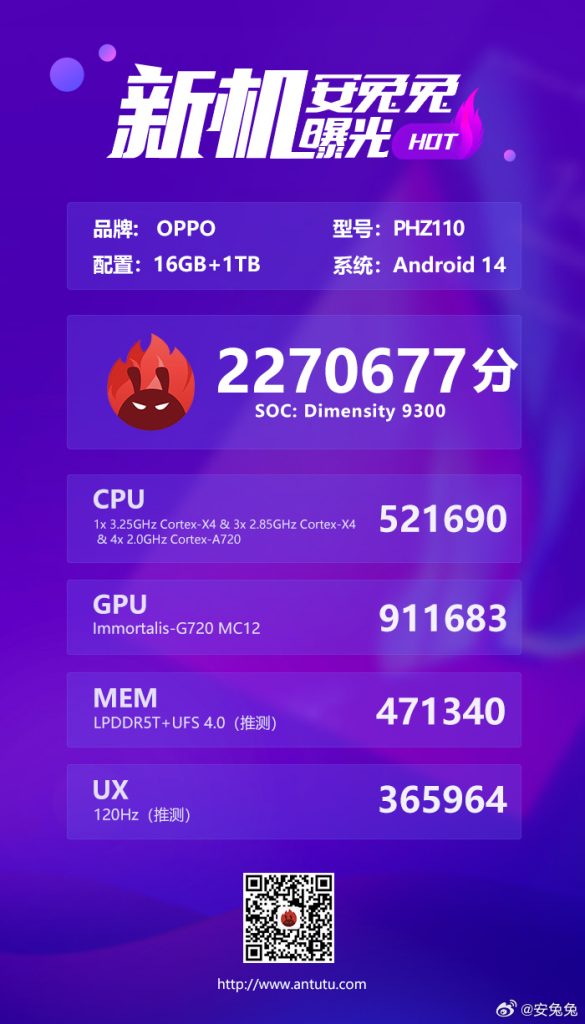
Upcoming Oppo Find X7 achieves 2,270,677 AnTuTu score, key specifications revealed

Vivo recently announced the Vivo X100 and X100 Pro as the world’s first smartphones equipped with the Dimensity 9300 chip. The Oppo Find X7, which is expected to launch in Q1 2024, could be the next flagship phone to feature the D9300 chip. Months before its official announcement, the X7, which bears the PHZ110 model number, has been benchmarked on AnTuTu. Here is a look at the details that have emerged through it.

OPPO Find X7 AnTuTu listing

OPPO Find X7 AnTuTu listing

On AnTuTu, the Find X7 scored 521,690 points on the CPU test, 911,683 points on the GPU test, 471,340 points on the memory test, and 365,964 points on the UX test. In total, the device achieved a marvellous score of 2,270,677.

The AnTuTu listing further reveals that it has a 120Hz refresh rate supporting display, Dimensity 9300 chipset, 16 GB of LPDDR5T RAM, and 1 TB of UFS 4.0 storage. The device will run on Android 14, which will have a layer of ColorOS 14 on top.

For those who don’t remember, the PHZ110 Find X7 has previously been spotted with D9300, 16 GB RAM, and Android 14 on Geekbench. The device secured 2139 points in the single-core test and 7110 points in the multi-core test.

Oppo has officially confirmed that the Find X7 series will support the all-new HyperTone camera optimizations and satellite connectivity. The Find X7 Pro, which is expected to debut alongside the Find X7, will have the Snapdragon 8 Gen 3 chipset. The Pro model is said to be equipped with Sony’s new 1-inch LYT-900 camera sensor.

In related news, Oppo is gearing up to announce the Reno 11, Reno 11 Pro, and Pad Air 2 tablet on Nov. 23. The Reno 11 will have the Dimensity 8200 chip, whereas the Pro model will be equipped with the Snapdragon 8+ Gen 1 chip. On the other hand, the Pad Air 2 will be a rebranded version of the OnePlus Pad Go tablet available in the global market.

RELATED:

(source)

Xiaomi SU7, SU7 Pro, SU7 Max EV: images, specifications emerge via CMIIT certification, launch timeframe tipped

Xiaomi’s first electric vehicle dubbed the SU7 (Speed Ultra 7) is likely to debut soon. The reason behind this is that the Xiaomi EV has received approval from CMIIT (China’s Ministry of Industry and Information Technology). The certification has revealed the images and specifications of the SU7 series, which will have three variants, such as SU7, SU7 Pro, and SU7 Max. Here is a look at everything that’s known about Xiaomi’s first EV.

Xiaomi SU7

Xiaomi SU7 images from CMIIT

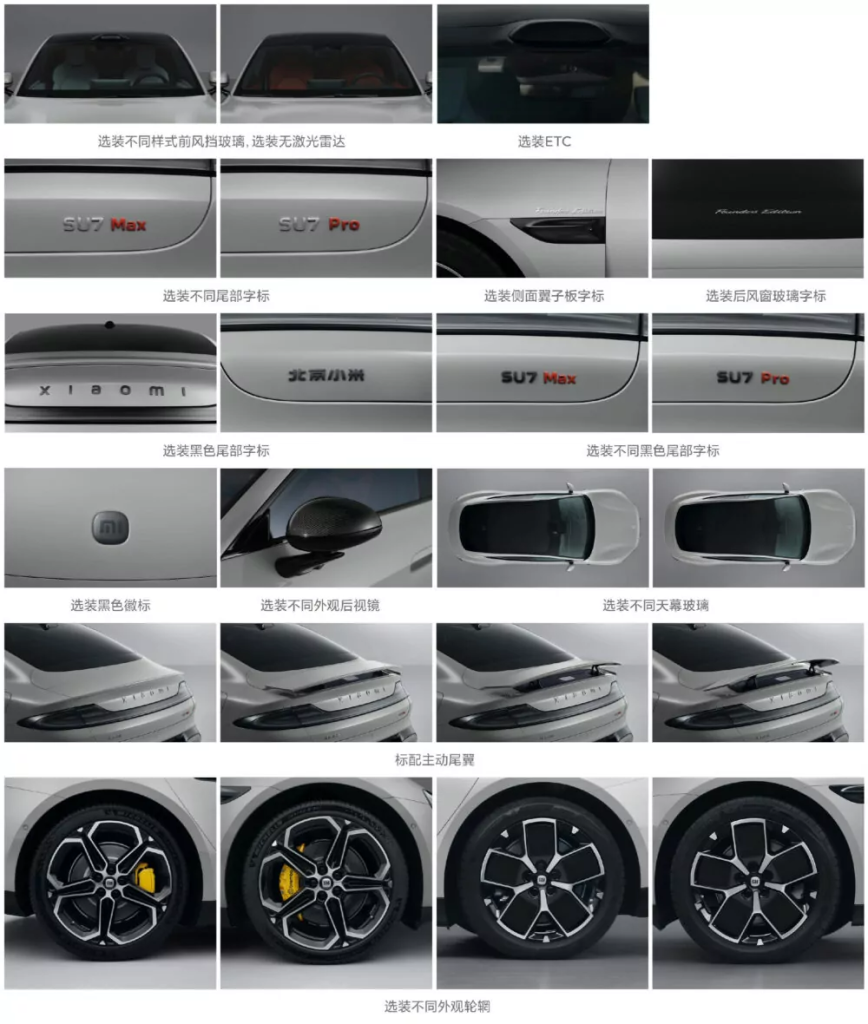
BJ7000MBEVR2 and BJ7000MBEVA1 are the two model numbers that are associated with the Xiaomi SU7, which appears to be a C-class sedan. The former, which seemingly bears the SU7 name, has a single motor supplied by UAES (United Automotive Electronic Systems) with a peak power of 220kW (295hp). It is equipped with LPT (lithium iron phosphate) batteries supplied by FinDreams, a battery manufacturing arm of BYD. In addition, the Xiaomi SU7 offers optional LiDAR, a rooftop-mounted component, probably for driver assistance and autonomous features.

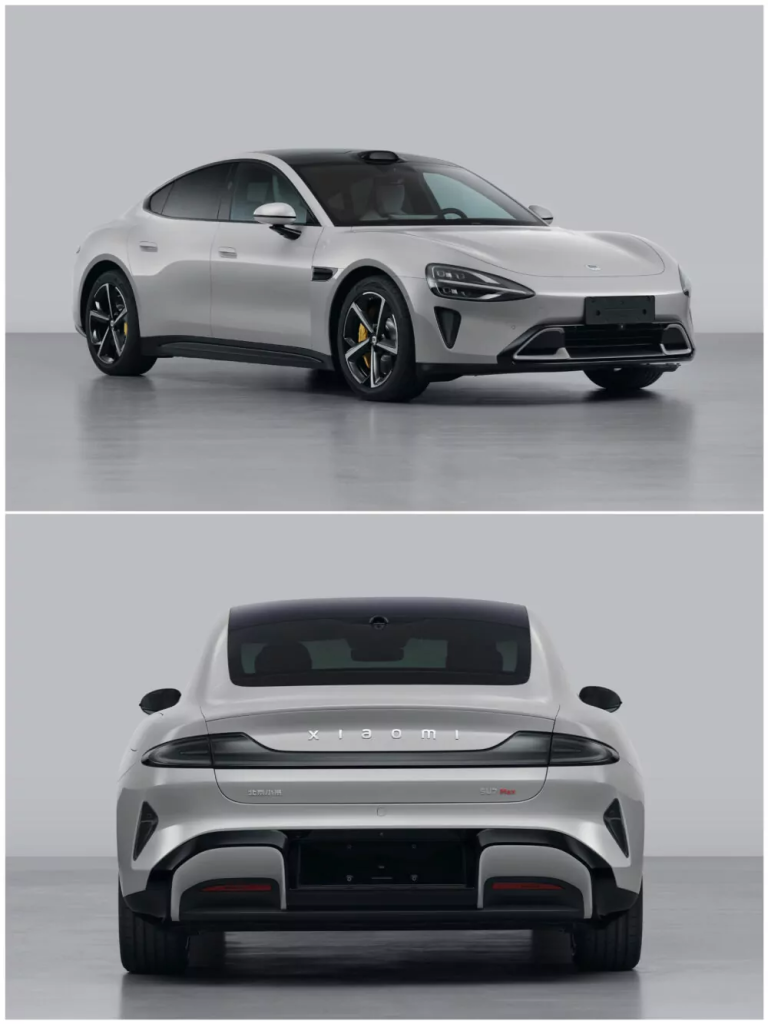
Xiaomi SU7 Pro, SU7 Max

Xiaomi SU7 Max images from CMIIT
Xiaomi SU7 Max images from CMIIT, images of the Pro model are unavailable

The other model number is associated with Xiaomi SU7 Pro and SU7 Max, which are powered by 220kW (295hp) and 275kW (386hp) dual motors, from Suzhou Innovance Automotive, which is based in China. Both models pack Li-ion ternary batteries supplied by CATL.

The Xiaomi SU7 series is available in models with and without Lidar technology options. The Lidar component is positioned behind the front windshield. Notably, images reveal a camera on the B-pillar, suggesting the potential inclusion of a face recognition unlocking feature in the Xiaomi SU7. 

The Xiaomi SU7 measures 4,997mm in length, 1.963mm in width, and 1,455mm in height. It has a wheelbase of 3,000nm. To put it in context, it will be longer and wider than popular EVs like Tesla Model 3 and Nio ET5. The SU7 weighs 1,980kg, whereas the Pro and Max variants weigh 2,205 kg.

Xiaomi SU7 series customizations

The Xiaomi SU7 series is anticipated to integrate HyperOS into its in-car system, offering seamless connectivity with the brand’s devices. As far as design is concerned, it sports an entirely original design, crafted by the main designer of BMW iX, with contributions from designers associated with Mercedes-Benz EQXX. The vehicle exudes a sporty ambience, highlighted by yellow Brembo callipers, Michelin PSEV tires, and a three-section electric rear wing, ensuring impressive wind resistance and handling performance.

Xiaomi SU7 series launch timeframe, price (rumored)

The mass production of the Xiaomi SU7 series is expected to begin in December 2023. The company has reportedly started the trial production in BAIC’s Beijing factory, and its deliveries are likely to begin in February 2024. As far as the price is confirmed, it will likely have a starting price of 149,000 Yuan (~$20,500). It appears that the SU7 series will be available in at least gray and blue shades.

RELATED:

Xiaomi’s self-developed IoT platform Vela goes open source

Xiaomi has officially unveiled its update to the IoT software platform, Xiaomi Vela, at the 2023 Xiaomi IoT Ecological Partner Conference to strengthen its position in the Internet of Things (IoT) space. Notably, the Xiaomi Vela software platform was announced way back in 2020, but now the company has made it open source. The announcement was made during speeches by Lu Weibing, partner and president of Xiaomi Group, and Zeng Xuezhong, senior vice president and president of the mobile phone department of Xiaomi Group.

Xiaomi Vela requires less system resource than Linux

Zeng Xuezhong, in his presentation on “How to Build a Thriving IoT Ecosystem,” revealed that Xiaomi’s self-developed system, Vela, is now open source for global software and hardware developers. The open-sourcing of Xiaomi Vela follows the Apache 2.0 open source license, allowing developers worldwide to leverage and contribute to this innovative IoT embedded software platform.

Built on the open-source real-time operating system NuttX, Xiaomi Vela provides unified software services across various IoT hardware platforms. This platform stands out by offering rich components and user-friendly frameworks to address fragmented IoT application scenarios. Notably, Xiaomi Vela boasts lower system resource requirements compared to Linux while delivering similar functionalities and performance, making it a cost-effective alternative, particularly for low-end IoT devices

Customization and compatibility

Developers choosing Xiaomi Vela can enjoy the benefits of reduced hardware costs and improved overall product cost performance. With its compatibility through the POSIX interface, existing open-source libraries and components on the Linux platform can be seamlessly ported to Xiaomi Vela.

Xiaomi Vela, under the leadership of Fan Dian, aims to promote collaboration among developers across different platforms within the Internet of Things (IoT) ecosystem. The platform, already extending to smartwatches, fitness trackers, and smart speakers, is set to welcome other smart home appliances, camera ISPs, and sensors in the future. As part of the IoT ecosystem, Xiaomi Vela is set to play a crucial role in shaping the future of IoT technologies.

Related:

Baidu’s CEO Warns Against Solely Prioritizing the Launch of New LLMs in China

Baidu CEO Robin Li Yanhong has raised a significant point about the current trend in China‘s tech industry. According to Li, the excessive focus on creating large language models (LLMs) is not just a drain on resources but also a missed opportunity to advance practical AI applications. Why would a company that’s actively involved with AI be connected with something like this?

Li Yanhong believes that AI’s value lies in its Application

The crux of Li’s argument, as presented at the X-Lake Forum in Shenzhen, is that while China has seen a surge in AI model development, with 238 such models launched as of October 2023, there is a stark lack of AI-native applications. These are applications specifically designed to harness the unique capabilities of AI, much like how mobile-native apps revolutionized smartphone usage.

baidu

Li’s perspective is grounded in the belief that the real value of AI lies in its application, not just in the development of foundational models. He suggests a shift in focus towards creating a plethora of AI-native applications, akin to the era that saw the rise of apps like WeChat, Douyin, and Uber, which were tailored for mobile usage.

Interestingly, Li’s remarks also touch upon a broader industry issue: the balance between foundational research and application development. While foundational models are essential for advancing AI technology, their true potential is unlocked only when applied in practical, everyday scenarios.

Moreover, Li criticizes the trend of hoarding advanced semiconductors and building intelligent computing centers, which he views as an inefficient approach to AI development. He emphasizes that without the right scale and training datasets, these efforts are unlikely to yield models with emergent abilities – the ability to perform complex tasks with minimal input.

As mentioned before, Baidu itself is engaged in developing AI applications, as seen with its code-writing assistant Comate. However, Li believes that the best AI-native applications, both in China and globally, are yet to come.

RELATED:

(Via)

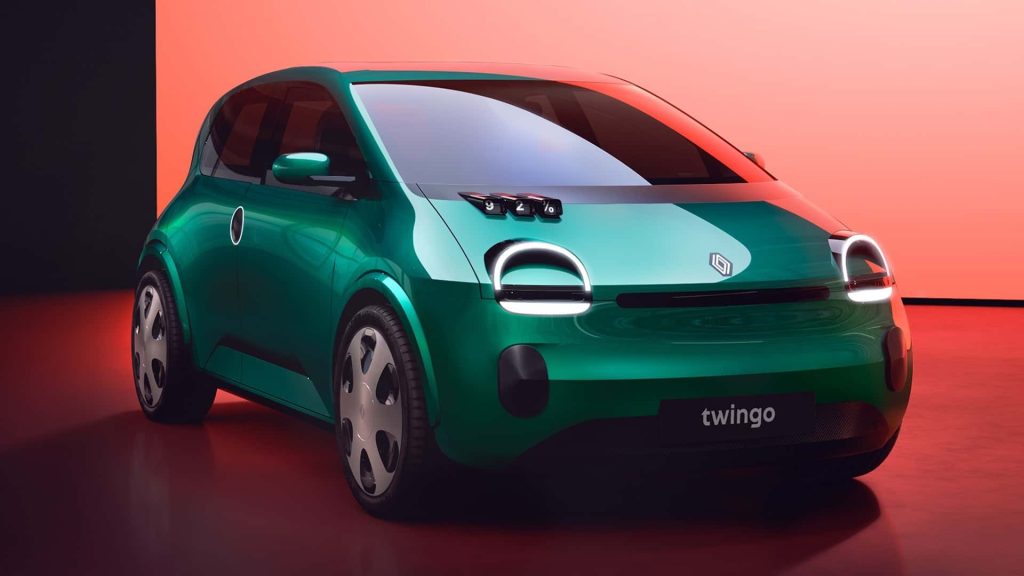
Renault’s Latest Concept EV is the Twingo, May be Priced Below $22,000 at Launch

Renault Group is making a bold move in the electric vehicle (EV) market with the conceptual unveiling of its next-generation Twingo, a compact city car. Scheduled for a 2026 launch, the Renault Twingo represents the brand’s venture into more budget-friendly EVs, aiming for a price tag below 20,000 euros. Not only is it affordable, but it’s also set to be the brand’s most energy-efficient EV to date, boasting an impressive 10 kilowatt-hours per 100 kilometers energy consumption.

The Twingo draws inspiration from the original 1992 model

This efficiency marks a significant leap forward, making the Twingo EV 50% more efficient than similar small EVs currently available. While detailed specs are yet to be released, it’s expected that the Twingo will be built on the newly named AmpR Small platform, shared with the upcoming Renault 5 and Renault 4 electric models.

Renault

Renault’s strategy with the Twingo is intriguing, as it positions itself as a direct competitor to Chinese EV manufacturers, known for their rapid development cycles. CEO Luca de Meo has emphasized Twingo’s role as a European version of Japan’s compact kei cars, highlighting its suitability for urban environments where larger vehicles are impractical.

Styling-wise, the 2026 Twingo draws inspiration from the original 1992 model, blending retro elements with modern design. It retains the classic single-box shape but adds modern touches like five doors and revamped headlights and taillights. The hood vents, a nostalgic nod to the original, now serve as battery charge level indicators.

While the Twingo’s launch is primarily focused on the European market, where it will compete with vehicles like the Volkswagen ID.1 and Citroën e-C3, its impact goes beyond just another EV release. It represents a strategic shift for Renault, as they embrace both the challenges and opportunities in the evolving EV landscape, aiming to offer practical, efficient, and affordable mobility solutions. The Twingo stands as a testament to Renault’s commitment to innovation and competition in the global EV market.

RELATED:

(Via)

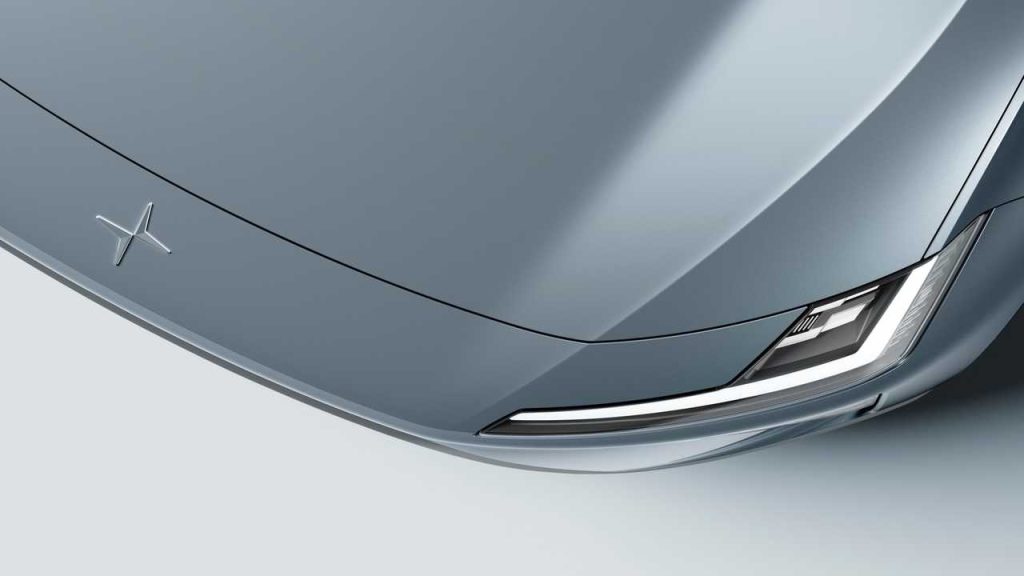
Polestar 4 Production Finally Kicks Off in China

The highly anticipated Polestar 4 has started its production route in China. Produced in the Hangzhou Bay factory in China, this electric crossover is not just an electric vehicle; it’s Polestar’s bid for a global mainstream success story.

The car is supposed to be the company’s best work yet

The Polestar 4 is a unique blend of size and price, fitting snugly between the smaller Polestar 2 and the larger Polestar 3. Unveiled at the Shanghai Auto Show in April 2023, it boasts impressive features like a 102-kilowatt-hour battery, promising a range of about 373 miles. This makes it not just stylish, but also practical for longer journeys. The first production model, finished in a crisp ‘Snow’ color with striking ‘Swedish Gold’ details, is more than just a car for the company.

Polestar

Polestar is smartly navigating global trade dynamics. Currently, the Polestar 4 faces high tariffs if imported into America. But come the second half of 2025, production will expand to the Renault Korea Motors plant, which will serve the North American market, thus bypassing these tariffs. This strategic move underscores Polestar’s commitment to making its vehicles accessible globally.

The year 2024 will be significant for Polestar, with the launch of the Polestar 4 and the anticipation of the Polestar 5. This rapid expansion shows the company’s ambition to make a mark in the electric vehicle sector. Polestar’s CEO, Thomas Ingenlath, emphasizes the unique design and performance of the car, highlighting its digital features like the virtual rear window.

This launch is not just about a new model; it’s about Polestar’s vision for the future. With a goal to break even by 2025 and target annual sales of up to 165,000 cars, Polestar is not just making vehicles; it’s crafting a path to a sustainable, electrified future.

RELATED:

(Via)

Samsung Galaxy A15 4G clears FCC certification, will support 25W fast charging

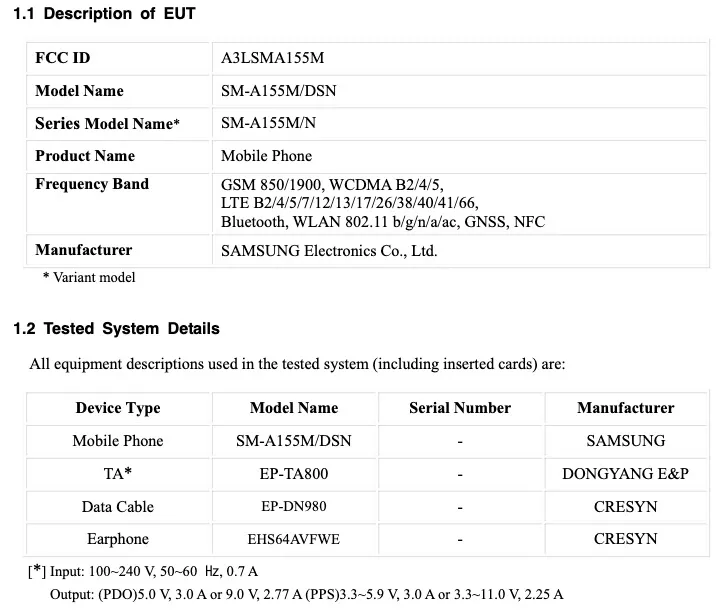
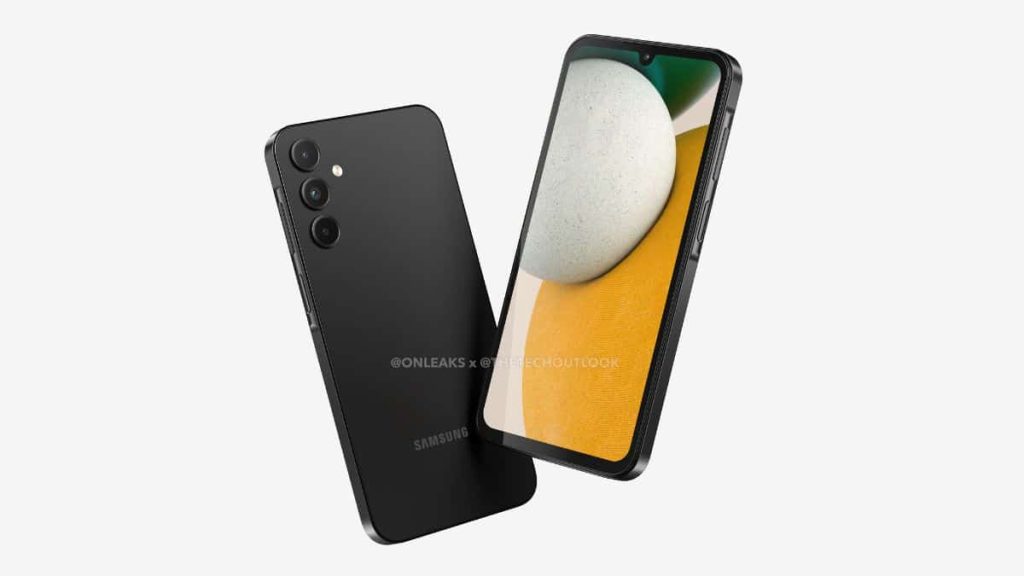
Like last year, Samsung’s budget-friendly Galaxy A15 smartphone will be launching in 4G and 5G variants. Ahead of the launch, the 4G model has been spotted on the FCC certification website.

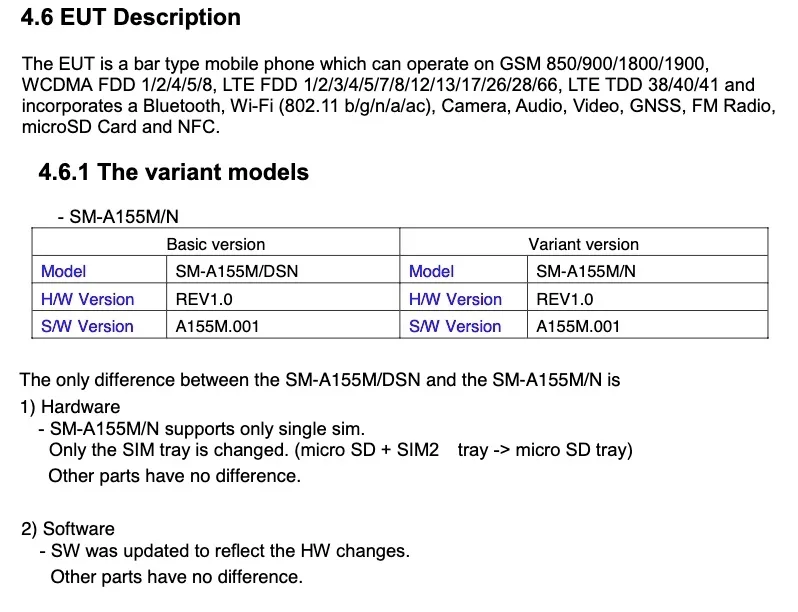
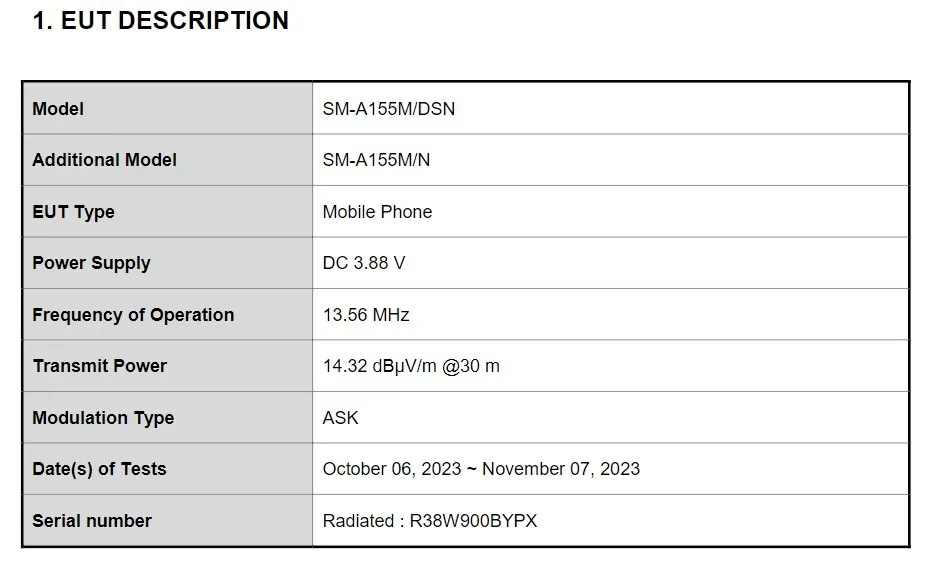
The Galaxy A15 4G has emerged on the FCC with model number SM-A155M. The listing reveals a few key details about the device. It confirms that the device will indeed feature 25W fast charging support, as well as Dual SIM support, a MicroSD card slot, and NFC. Unfortunately, no other details about the device have been revealed by the certification.

From a previous report, we know that the device will feature a MediaTek Helio G99 processor. It will have 4GB RAM and Android 14. We can take a look at the specs of its predecessor, the Galaxy A14 4G to get an idea of what we can expect from the A15 4G.

Samsung Galaxy A14 specs:

The Galaxy A14 4G features a 6.6-inch IPS LCD display with Full HD+ resolution with 60Hz refresh rate. It is powered by a Helio G85 chipset. It has a 50MP triple-camera setup on the back and a 13MP front camera. The battery has a 5,000mAh capacity, along with 15W fast charging.

Last month, it was also revealed that both the 4G and 5G models of the Galaxy A15 will debut in Europe. Chipset details of the Galaxy A15 5G were also revealed in a recent report, which you can check out bhy clicking the link.

RELATED:

(via)

Redmi Note 13R Pro specifications, images leaked, launch imminent

In October, Redmi unveiled the Redmi Note 13 series of smartphones, such as Note 13, Note 13 Pro, and Note 13 Pro+. Now, the company is gearing up to unveil a new phone named the Redmi Note 13R Pro. While there is no official confirmation of its existence, its China Telecom listing has revealed that it will be released in the Chinese market on Nov. 20. The listing has also revealed the key specifications and images of the device.

Redmi Note 13R Pro specifications (rumored)

Redmi Note 13R Pro
Redmi Note 13R Pro

As per the China Telecom listing, the Redmi Note 13R Pro (model number:  2311FRAFDC) will have a 6.67-inch OLED display that offers a Full HD+ resolution of 1080 x 2400 pixels. It may also support a 120Hz refresh rate. On the front, it features a 16-megapixel selfie camera, and its rear shell has a 108-megapixel primary camera and a 2-megapixel auxiliary lens.

Under the hood, the Redmi Note 13R Pro will feature the MediaTek MT6833P, which appears to be the Dimensity 6080 chipset. The device will come equipped with 12 GB of RAM and 256 GB of storage. For additional storage, the Note 13R Pro will have a microSD card slot.

The Redmi Note 13R Pro will house a 5,000mAh battery, and its 3C certification has already revealed that it will offer 33W fast charging. The device will offer other features, such as MIUI 14-based Android 13 and a side-facing fingerprint sensor. It will measure 161.11 x 74.95 x 7.73mm and weigh 174.3 grams.

Redmi Note 13R Pro price (rumored)

The Redmi Note 13R Pro, which is expected to come in 12GB+256GB configuration only, will be priced at 1,999 Yuan (~$275), as per the China Telecom listing. The device will be available in shades, such as Midnight Black, Time Blue, and Morning Light Gold.

RELATED:

(source)

Xiaomi sells 3 million Redmi 12 units in less than 100 days in India

Xiaomi is having a great year so far in the Chinese market as their latest flagship model Xiaomi 14 series is selling like hotcakes and even helped to boost the company’s valuation overall. Well, the success is not only limited to the Chinese market as Xiaomi’s Redmi 12 series, comprising the Redmi 12 5G and Redmi 12 4G models, has achieved a remarkable sales milestone in India, selling 3 million units in less than 100 days since its launch.

Milestone for Redmi: Redmi 12 Series Hits 3 Million Mark in India

Xiaomi India celebrated this achievement on their official X (Ex-Twitter) account, expressing gratitude to their customers for their trust and loyalty. This achievement shows Xiaomi’s growing influence in the Indian smartphone market after relatively two difficult years and also highlights the increasing demand for 5G connectivity at affordable prices.

If we talk about the specs of these phones, the Redmi 12 5G model boasts a 6.79-inch FHD+ LCD display with a 2460×1080 pixel resolution and a 90Hz refresh rate.

The device operates on MIUI 14, which is based on Android 13. For photography enthusiasts, the Redmi 12 5G is equipped with a 50MP main rear camera, complemented by a 2MP depth sensor and an 8MP front-facing camera.

It is powered by an octa-core Snapdragon 4 Gen 2 processor, offering configurations of up to 8GB of LPDDR4X RAM and 256GB of UFS 2.2 storage. The phone also features a robust 5000mAh battery and supports 18W wired charging, ensuring prolonged usage.

Redmi 12

In contrast, the Redmi 12 4G model is powered by the MediaTek Helio G88 processor and offers 6GB+128GB of internal storage. This variant differentiates itself with a triple rear camera setup, consisting of a 50MP main camera, an 8MP ultra-wide-angle lens, and a 2MP macro lens. While the processor and camera configurations differ, other specifications align with the 5G variant.

Priced competitively, the Redmi 12 starts at ₹9,299 for the 4GB variant, while the 4GB variant of the Redmi 12 5G starts at ₹11,999. This strategic pricing has played a crucial role in the series’ widespread success.

RELATED:

Tencent’s Q3 2023 report: Revenue hits $21.6 billion with a 39% surge in net profit

Tencent is a Chinese technology company known for its wide range of digital products and services. Founded in 1998, Tencent has become one of the world’s largest tech companies. It is best known for its instant messaging platform WeChat, which boasts a large user base and offers various features beyond messaging, such as social networking, mobile payments, and more. Tencent is also a major player in the gaming industry, with popular titles like Honor of Kings and PUBG Mobile under its portfolio. In addition to these core areas, Tencent has investments in areas like e-commerce, cloud computing, and digital entertainment, contributing to its significant presence in the global tech landscape.

Tencent
Credit: GettyImages

Tencent’s Q3 Financial Report Highlights

Earlier today, Tencent Holdings released its third-quarter financial results, showcasing strong growth and resilience in the ever-changing tech industry. The company reported a total revenue of 154.6 billion yuan ($21.6 billion), slightly below the forecasted 154.8 billion yuan but still a solid 10% increase from the previous year.

Tencent’s standout performance in its financial report is its impressive net profit, which exceeded expectations. The net profit reached 36.18 billion yuan ($5.05 billion), marking an impressive 39% year-on-year increase. Additionally, the non-IFRS net profit of 44.92 billion yuan ($6.29 billion) solidifies Tencent’s position as a formidable financial powerhouse.

Tencent’s success is significantly driven by its international gaming revenue, which grew by 14% to reach 13.3 billion yuan ($1.86 billion). Even when factoring in exchange rate fluctuations, this growth highlights Tencent’s global expansion and its ability to connect with diverse gaming communities worldwide. In its domestic market, Tencent’s gaming revenue also saw a 5% growth, reaching 32.7 billion yuan ($4.57 billion), demonstrating its strong presence in China.

Tencent’s social software division remains strong, with 1.336 billion monthly active user accounts on its flagship platforms, WeChat and Weixin, showing steady growth. This growth is attributed to Tencent’s efforts to boost user engagement, notably with a 50% increase in total playtime on the Weixin Video Account, driven by a growing creator community. However, there are challenges, including a decline in monthly active users for QQ.

Tencent achieved a record high in advertising revenue as well, experiencing a remarkable 20% year-on-year increase, reaching 25.7 billion yuan ($3.60 billion). Given this strong financial report, it’s highly probable that the company’s stock price will go up.

RELATED:

(Via)

Nothing Phone (2) receives official Apple iMessage support – the first Android phone to do so

The Nothing Phone (2) has become the first Android smartphone to receive official Apple iMessage support. The official iMessage support is now available with the Nothing Phone (2) based on the Nothing Chatts app.

Nothing

Nothing Chats are designed to allow the smartphone to switch seamlessly to iPhones. It is an alternative to the Sunbird app and Google continues to encourage Apple to make iMessage compatible with Android. The Nothing Chats seeks to overcome the iMessage challenge for Android smartphones. Nothing says it has developed the app in partnership with Sunbird but it excludes Sunbird’s waitlist exclusivity.

The Nothing Chats app will go live on Google Play Store on November 17. Compatibility of the Nothing Chats is currently limited to the Nothing Phone (2). Users must link their Apple iCloud account to Nothing Chats for its integration with iMessage. The Nothing Phone (2) is available via Amazon starting at $699.

There are privacy issues related to the Nothing Chats. Although Nothing has stated that it does not cache messages on servers, a malicious third-party entity could theoretically assess personal data.

The new app lacks emoji reactions, message editing, and read receipts, as present in iMessage. Apart from limiting usage of Nothing Chats to the Phone (2), the app will only be available in the US, UK, Canada, and the EU. The availability of the Nothing Chats app is expected to spread to other markets subsequently. Additionally, the Nothing Phone (1) could also be integrated with Nothing Chats.

RELATED:

Garmin Descent G1 Solar- Ocean Edition made with ocean-bound plastics unveiled

The Garmin Descent G1 Solar – Ocean Edition smartwatch has been unveiled. The Descent G1 Solar – Ocean Edition is a refreshed Descent G1. The Descent G1 and Descent G1 Solar were launched earlier this year. The Garmin Descent MK3 is also being launched together with Descent G1 Solar – Ocean Edition.

Garmin

Features

The new Garmin Descent G1 Solar – Ocean Edition comes with a significant difference from its earlier siblings. It is available in a single Azure colorway and is made from recycled ocean-bound plastics.

The Garmin Descent G1 Solar – Ocean Edition is the brand’s most sustainable multi-use smartwatch yet. The watch still however retains a silicone strap and some other basic materials. The full optics of the sustainable materials used in the manufacture of the Descent G1 Solar – Ocean Edition have not been released. It is available exclusively with solar charging which is another sustainability accomplishment.

The new Garmin smartwatch is focused on divers and is seen as a modest dive computer. It is well-primed for underwater activities and retains the basic hardware of the regular model. Garmin has started accepting orders for the Descent G1 Solar – Ocean Edition. The gadget is priced at $649.99 and the earliest units will likely be shipped at the end of this month.

Pricing

The Garmin Descent G1 Series is an expanding collection of smartwatches with underwater capabilities. The new model snugly fits into the series with added sustainability credentials. Full availability optics for the Garmin Descent G1 Solar – Ocean Edition will be released subsequently.

Related:

Amazon is replacing Android with its in-house Vega OS in some of its products

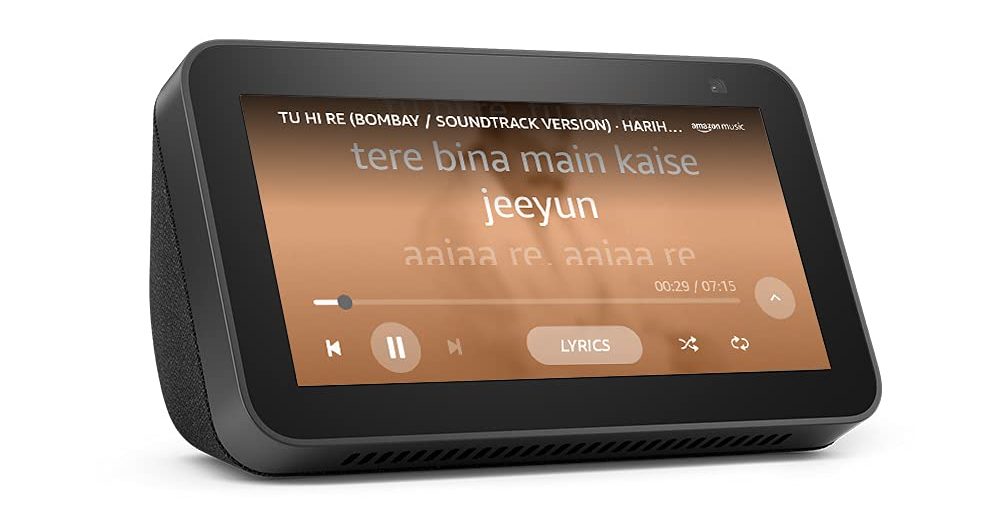
Amazon has silently introduced its in-house Vega OS on the third-generation Echo Show 5 smart speaker, marking a strategic move in the competitive tech market. While Huawei and Vivo have launched HarmonyOS and BlueOS systems in China, Amazon has kept Vega OS under wraps, not officially unveiling its specific features and benefits.

Amazon Echo Show 5

Vega OS: Amazon’s New Direction with Echo Show 5, Distancing from Android

Vega OS version 1.1 has quietly made its debut on the latest Echo Show 5 model, and it bears a striking resemblance to Amazon’s familiar Fire OS interface, commonly found on its screen-equipped devices. However, one notable difference is that Vega OS does not support Android apps, unlike its Fire OS counterpart.

The third-generation Echo Show 5, released in May 2023, boasts enhancements in key areas such as speakers, microphones, and the display compared to its predecessor. But it’s in recent shipments that Amazon has chosen to pre-install Vega OS on this smart speaker.

Amazon’s transition to Vega OS marks a significant shift from its reliance on Android-based Fire OS, which was built on Android 9. This strategic move allows Amazon to better integrate its hardware and software, potentially leading to higher profits. The development of Vega OS, a Linux-based system, indicates Amazon’s ambition to gain more control over its devices, ranging from smart displays to Fire TV.

The switch to Vega OS could also have implications for advertising revenue and software updates, as Amazon will have more control over these aspects. However, there is some concern among users about the potential loss of power user features like sideloading. Additionally, the introduction of a new OS means developers must create new app versions specifically for Vega OS. The popularity of Amazon’s devices, having sold over 200 million globally, is likely to motivate developers to adapt to this new platform.

RELATED:

(Via)