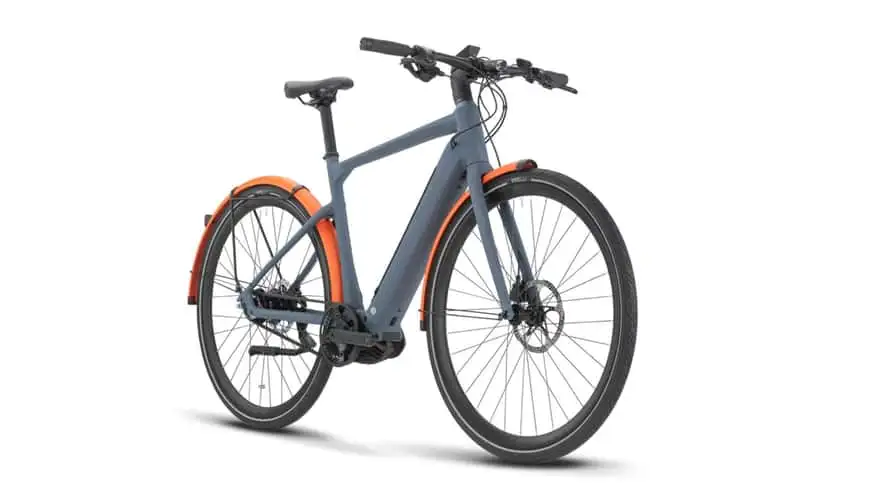
Honda‘s latest foray into the electric mountain bike (e-MTB) segment has sparked interest among eco-conscious adventurers and tech aficionados alike. The company, renowned for its electric and hybrid vehicles, has unveiled a concept e-MTB that marries its automotive prowess with the growing demand for sustainable outdoor activities.
The concept bike borrows hints from motorcycles in its design
This concept bike, a head-turner at the Japan Mobility Show, isn’t just a token gesture towards greener technology. It’s a bold statement of Honda’s potential to blend in with leading brands like Ducati and Yamaha, who have already made their mark with high-performance electric mountain bikes.
Design-wise, the Honda e-MTB Concept doesn’t stray far from the company’s motorcycle heritage. It sports a full-suspension frame that’s both eye-catching and practical for the rugged trails it’s designed to conquer. There’s a whisper of motorcycle DNA in its aggressive downhill geometry and the sleek monocoque design of the frame. While Honda keeps the powertrain details under wraps, the rumor mill suggests a collaboration with Brose, a German tech giant known for its robust e-bike systems.
But it’s not just about looks or lineage. The bike’s features read like a wish list for outdoor enthusiasts: a Sram Eagle AXS drivetrain for seamless shifting, Shimano hydraulic disc brakes for reliable stopping power, and even a portable fast charger for the long haul.
Despite the bike’s impressive specs and features, it remains a concept. Honda’s vision is clear, though—they see this e-MTB fitting into a lifestyle that values sustainability and family time. The company’s use of industry buzzwords like “sustainable” and “family-oriented” isn’t just marketing fluff. It’s hopefully a nod to a future where leisure activities don’t just entertain but also care for the planet.
Polestar has made a significant leap by partnering with SK On for its upcoming Polestar 5 model. The tie-up promises to bring a powerhouse of a battery that could redefine long-range travel in electric cars.
The all-drive powertrain generates up to 650 kilowatts of power
The Polestar 5, a sleek 4-door GT born from the Precept concept, is gearing up to house a unique set of ultra-long lithium-ion cells. These aren’t just your average batteries; they’re designed to pack a punch with a high energy density, ensuring that drivers can go further on a single charge. While the exact figures are under wraps, there’s chatter about the potential for a range that rivals, if not surpasses, some of the best in the market—possibly reaching up to 373 miles.
The anticipated dual-motor setup is equally impressive, with the all-wheel drive powertrain boasting up to 650 kilowatts of power and 900 Newton-meters of torque. Such specs hint at not just a drive that’s about endurance, but one that can deliver a thrilling experience.
What’s interesting is the backstory of this collaboration. SK On, an arm of SK Innovation, isn’t new to the Polestar narrative. The wider SK Group has previously invested in Polestar and seems to be deepening its ties within the EV domain through this partnership.
The production schedule points to a 2025 launch, slightly later than initially expected, but if the promises hold true, it could well be worth the wait. As we see Polestar rise as a contender in the EV space with almost 14,000 all-electric cars sold in the third quarter of 2023 alone, the future looks electrifying. This partnership could not only propel Polestar further but also send ripples across the industry as we cruise into an era where the synergy between car manufacturers and tech innovators drives us toward a more sustainable future.
Yuga Labs, the creator of Bored Ape Yacht Club (BAYC) NFTs, chose Hong Kong for their first ApeFest outside of New York. The event, a convergence of over 2,500 NFT aficionados, not only marks a significant push into Asia’s burgeoning Web3 landscape but also highlights Hong Kong’s rising profile as a virtual asset hub.
There were participants from over 60 countries present
The three-day extravaganza drew participants from 60 countries, signifying the widespread appeal of the Bored Apes. Yuga Labs’ CEO, Daniel Alegre, underscored the importance of their Asian community, hinting at the strategic shift towards markets with strong NFT engagement.
In collaboration with BMW, the fest offered a unique experience where attendees could capture moments with a car donning their own NFTs. This not only points towards the mainstreaming of NFTs but also showcases the innovative ways in which they can be leveraged for real-world interactions.
This event comes at a crucial time for Hong Kong, which has recently witnessed a drain of cryptocurrency talent due to more favorable regulations elsewhere. Yuga Labs’ decision, supported by local government initiatives and partnerships with firms like Animoca Brands, signals a potential reversal of this trend.
Despite the challenges facing the NFT market, such as falling sales and regulatory scrutiny in the U.S., Yuga Labs’ commitment remains steadfast. Their confidence is mirrored by the enthusiasm of Bored Ape enthusiasts, some of whom traveled internationally for the first time to be part of the community gathering.
American electronics manufacturer RCA has recently unveiled a new gaming monitor in its domestic market called the RCA Evolution Premium (M27PG135F). As the name suggests, the monitor comes with a bunch of premium features including a high refresh rate panel, a KVM switch, and a slot for cable management.
RCA Evolution Premium (M27PG135F) monitor specs:
The RCA Evolution Premium gaming monitor is a 27-inch display offering a resolution of 2,560 x 1,440 (QHD) along with a maximum refresh rate of 240 Hz. It employs a flat IPS panel that has a brightness of 300 nits, 95% of the DCI-P3 color gamut coverage, and HDR-10 compatibility. In addition to all this, it also has a 1ms response time, which is impressive for an IPS panel.
The stand offers flexibility with tilt, height, and rotation adjustments. It also has a cable management slot that helps in keeping your setup looking clean. In terms of connectivity, you’ll find 1 DisplayPort 1.4, 1 USB type-C with DP Alt mode and 90W power delivery, along with 2 HDMI 2.0 ports and 2 USB data ports. Additionally, there’s a headphone jack, and the monitor includes integrated stereo speakers for audio. Last, but not least, it has a KVM switch, which allows you to hook up multiple systems to a display and switch between devices conveniently.
Pricing & availability
The RCA Evolution Premium (M27PG135F) monitor is currently available in the US for $429.
In India, beatXP, the fitness technology brand owned by Pristyn Care proudly announces the launch of its newest line of cutting-edge smartwatches, namely the beatXP Unbound Pro, beatXP Nuke, and beatXP Unbound Era. While they offer diverse styles, all of these smartwatches include the Bluetooth Calling feature.
beatXP Unbound Pro, Nuke, and Unbound Era specs:
Beginning with the beatXP Unbound Pro, it features a 1.96″ Super AMOLED display with a brightness of 800 Nits, ensuring excellent visibility even in well-lit conditions. This smartwatch offers Bluetooth connectivity and is equipped with a Rotary Crown for user-friendly navigation. Users have the option of choosing between silicone and silver straps, and there are more than 200 watch face options available. Alongside its Bluetooth calling capabilities, it provides comprehensive health monitoring, including continuous tracking of heart rate, sleep patterns, step count, and SpO2 levels. With an IP67 water resistance rating, it’s suitable for various activities, and it supports over 100 sports modes. The Unbound Pro also offers a noteworthy battery life of up to 7 days.
Moving on to the beatXP Nuke, it features a slightly smaller 1.32″ Super AMOLED display with a brightness of 500 Nits and a 60Hz refresh rate. Similar to the Unbound Pro, it supports Bluetooth connectivity and includes a Rotary Crown for easy operation. Its elegant metal body adds a touch of sophistication to its design, and it also offers a wide range of 200+ watch faces and Bluetooth calling capabilities. Health-conscious users will find its 24/7 heart rate, sleep, steps, and SpO2 monitoring features valuable. With an IP67 water resistance rating and support for over 100 sports modes, it’s well-suited for a variety of activities. The Nuke, too, provides a commendable 7 days of battery life.
Lastly, the beatXP Unbound Era stands out with its impressive 2.01″ Super AMOLED display, boasting a brightness of 1000 Nits for crystal-clear visuals. It supports Bluetooth connectivity and includes a convenient Rotary Crown. With both silicone and silver straps, it provides access to an extensive collection of 200+ watch faces. Like its counterparts, it supports Bluetooth calling, advanced health monitoring, and features an IP68 water resistance rating. Whether you’re into sports or daily activities, it offers over 100 sports modes. The Unbound Era, like the other models, boasts a battery life of up to 7 days.
Price & availability
The beatXP Nuke is offered at a cost of Rs 1,499, the Unbound Pro at Rs 2,499, and the Unbound Era at Rs 2,499. You can purchase them starting from November 10th, 2023, on Amazon, Flipkart, and beatxp.com.
Nubia recently unveiled the Starlight Imaging Kit for Nubia Z50S Pro, priced at 599 yuan ($82), which is currently available for purchase on the ZTE official online store.
Nubia Z50S Pro Starlight Imaging Kit Key Features:
This kit is specifically designed for mobile photography, with a focus on capturing celestial scenes. It includes a specially designed starlight phone case and two high-quality filters: the Starburst Filter and the Starry Night Filter, both compatible with the popular 67mm filter system.
This release coincides with Nubia’s 11th anniversary, underscoring their ongoing commitment to improving mobile device photography. The Starlight Imaging Kit exemplifies this dedication.
The Starry Night Filter effectively mitigates light pollution, ensuring clear and vibrant night skies or cityscapes by selectively filtering specific wavelengths. Meanwhile, the Twinkle Star Filter adds a playful Starburst effect to light sources in photos, enhancing their visual appeal.
The filters in the Starlight Imaging Kit are made with high-quality German SCHOTT optical glass and feature a dual-sided 22-layer ultra-low reflection coating, reducing reflectance to just 0.35%. They also come with aerospace-grade magnesium-aluminum alloy frames for durability and easy handling. This design not only protects the lens but also allows for quick and convenient filter changes.
The phone case in the kit is both functional and visually appealing, with a timeless sandstone finish that replicates the feel of a naked phone. It includes a precision rotary lens structure for easy filter attachment and uses neodymium iron boron magnets for a strong and secure fit without damaging the phone.
Here are some of the official sample images:
Nubia announced the Z50S Pro back in July and it features a 50MP primary camera with a 1/1.49″ IMX800 sensor and optical image stabilization (OIS). Additionally, it has a 50MP ultra-wide lens and an 8MP telephoto camera with OIS that provides 6x optical zoom capabilities. For selfies, the phone boasts a 16MP front-facing camera.
Qualcomm unveiled its flagship Snapdragon 8 Gen 3 processor last month. Now, the American chipmaker’s rival MediaTek has announced its flagship chipset. The Dimensity 9300 is the successor to the Dimensity 9200 / 9200+. It arrives with a host of improvements and changes. The processor is expected to power premium smartphones from various brands. Let’s delve into the technicalities of the Dimensity 9300.
MediaTek Dimensity 9300 SoC details
The Dimensity 9300 is based on TSMC’s third-generation 4nm process. The configuration comprises of a prime Cortex-X4 core clocked at 3.25GHz, three Cortex-X4 cores at 2.85GHz, and four Cortex-A720 cores ticking at 2.0GHz. The single-core and multi-core performances are said to be improved by 15 and 40 percent respectively. The chipset has an Immortalis-G720 GPU onboard that is claimed to offer 46 percent increased performance in hardware ray tracing compared to the previous generation.

The Dimensity 9300 supports a hardware-based ray tracing engine and variable rate rendering technology. MediaTek also said that it has worked with game developers to optimize ray tracing in games to offer an immersive visual experience. The processor also has an APU 790 for AI processing power
The Dimensity 9300 is capable of supporting WQHD display resolution at 180Hz and 4K up to 120Hz. In terms of photography, the processor will support up to 320MP camera sensors. It will also support always-on HDR video recording up to 4K resolution at 60fps and 4K at 30fps with cinematic mode. There is an Imagiq 900 ISP. The Dimensity 9300 is also said to support Ultra HDR format in Android 14. On the hardware front, the processor supports LPDDR5T RAM and UFS 4 storage technology.
The MediaTek Dimensity 9300 comes with WiFi-7 with an integrated Xtra Range Technology for better long-range connectivity. It also supports sub-6GHz, mmWave, 5G, 4×4 MIMO, and Bluetooth 5.4.
Vivo’s upcoming X100 series is confirmed to be powered by the MediaTek Dimensity 9300 processor. It is expected to be on the standard X100 variant.
Sony introduced a new PS5 model last month which is referred to as PS5 Slim. It is essentially a slimmer and shorter version of the PS5. The most notable difference is that the Slim variant comes with a detachable Ultra HD Blu-ray Disc drive. Many YouTube creators including Linus Tech Tips and Dave2D have shared a teardown of the PS5 Slim revealing the internals of the latest variant of the gaming console. This also gives better detail on whether there are any differences between the slim and non-slim versions of the PS5.
Sony PS5 Slim teardown reveals internals
The Sony PS5 Slim is powered by a 6nm processor which is the same as the updated model in September last year. To recall, the original PS5 variant shipped with a processor based on 7nm architecture. A system power consumption test also revealed that the current and new models operate on similar levels of power within a margin of error.
Sony’s modular design with the detachable disc drive helped them to achieve the PS5 Slim’s smaller size. Dave2D’s video also shows that the disc drive is removable easily with no tools required. Internally, in the teardown videos, the console is also seen with an extra heat pipe that is attached to a smaller baseplate compared to the original PS5. Additionally, the fan is also said to feature a 19-blade design There are one 5GB and three 10GB ports on the rear and dual USB-C ports on the front.
The Sony PS5 Slim is expected to roll out later this month. As per a leak last month, the console may hit the shelves on November 10 in the US.
Vivo is gearing up to launch a brand-new smartwatch. The company has already confirmed the Chinese release date for the Vivo Watch 3. But ahead of the official announcement, the upcoming wearable has surfaced in the latest teaser video. So let’s have a look.
Vivo Watch 3 Teaser
The company shared the video teaser of the Vivo Watch 3 on its official Weibo account (a Chinese microblogging website). In the teaser, the video highlights the design of the new smartwatch. The Vivo Watch 3 features a large 3D curved glass on top of the display, which is also paired with a stainless steel digital crown. This teaser also offers us a look at the new removable strap design as well.
Furthermore, the bottom of the wearable houses the health monitoring sensors, while the device is expected to run on the company’s proprietary BlueOS. This software will enable features like NFC car keys, camera control, and various other basic functionalities. Notably, the Vivo Watch 3 would likely offer various sports modes and could offer waterproofing for protection.
The teaser video trailer promises that the new Vivo Watch 3 will offer up to 16 days of total battery life. If this is true, then the new smartwatch will offer quite an impressive battery life when compared to other wearable offerings. The Watch 3 will also come with eSIM support.
Electric vehicles are becoming increasingly popular because they are more cost-effective and have lower maintenance costs than gasoline-powered vehicles. However, they are also more expensive to purchase upfront. Elon Musk’s upcoming “Affordable Tesla” project aims to solve this problem by making electric vehicles more affordable. Here are the details…
Affordable Tesla Could Revolutionize the Electric Vehicle Market
Tesla manufactures its vehicles globally with factories known as Gigafactories, located in Nevada, Shanghai, Texas, and Berlin, to serve customers worldwide. Recently, the Berlin factory has gained attention for an intriguing claim. According to reports, the company, aiming to produce affordable electric cars, will soon begin production in Germany.
The cost of the budget-friendly Tesla model will be 25,000 Euros. To put this price into perspective, in 2023, the average electric car price in Europe is around 65,000 Euros. Even in the world’s largest electric car market, the price hovers around 31,000 Euros, despite competition from manufacturers like BYD and Xpeng.
Unfortunately, the individual who leaked the news of the affordable Tesla didn’t provide further details regarding the matter. Therefore, we do not know when production will start and where the vehicles will be initially sold. Nevertheless, speculations point towards the highly competitive Chinese market as a likely starting point.
China’s EV market continued its strong growth in October 2023, with sales hitting a new record. The China Passenger Car Association reported that EV retail sales in October reached 640,000 units, up 95.3% year-over-year. This is the highest monthly sales figure for EVs in China to date. BYD remained the top-selling EV brand in China in October, with sales of 301,095 units. This was up 5% from September and 38.4% from a year earlier. Tesla was in second place with sales of 72,115 units, down 2.6% from September but up 0.6% from a year earlier.
The iQOO 12 series of flagship smartphones are set to launch in China tomorrow (7th November 2023). The base model of the high end lineup will be launching in India next month as well. But prior to this global release, the iQOO 12 global variant has apparently visited a popular benchmarking platform.
iQOO 12 global variant visits GeekBench
Just recently, the iQOO 12 Pro model was spotted on AnTuTu as well as GeekBench. The base and Pro variant also visited the 3C certification platform. But now, the supposed iQOO 12 global variant has been sighted on GeekBench as well. This smartphone model was spotted on the benchmarking platform with the Qualcomm Snapdragon 8 Gen 3 SoC.
It was spotted carrying the model number I2220 and running on the Android 14 OS based FuntouchOS 14 custom skin out of the box. The Snapdragon 8 Gen 3 SoC is also paired with up to 12GB of RAM. The device scored 2188 points in the single core test and 6383 points in the multi core test. As of right now, the base iQOO 12 is set to launch in India on December 12. Although, global availability for the Pro variant is still unclear.
For those unaware, the iQOO 12 sports a tall 6.78-inch OLED display that has a Full HD+ resolution and 144Hz refresh rate. The series is rumored to feature a 50-megapixel OmniVision OV50H primary sensor paired with a 50-megapixel Samsung JN1 ultra wide angle lens, and a 64-megapixel OV64B telephoto shooter on the rear. Meanwhile, the front houses a 16-megapixel camera for selfies and video calls.
In this week’s tech highlights, DJI, the renowned drone manufacturer, swiftly dispels rumors of a staggering $6 billion fine for alleged patent infringement in the US. Xiaomi’s latest release, the Xiaomi 14 series, has stormed the market, achieving a sixfold surge in first-sale numbers compared to its predecessor in just five minutes. Meanwhile, OnePlus teases the photography capabilities of its upcoming OnePlus 12, stirring anticipation for its impending launch.
Huawei introduces the Nova 11 SE, featuring a vibrant 90Hz OLED display, a Snapdragon 680 chipset, and a robust 108MP triple camera setup. Xiaomi’s 14 and 14 Pro, powered by the Snapdragon 8 Gen 3 chipset, make a blazing entry into the market, setting new sales benchmarks.
Huawei users report an unusual labeling of Google apps as dangerous, sparking discussion in the tech community. Vivo unveils OriginOS 4, promising enhanced features and a refined user experience. The AnTuTu performance chart for October showcases Xiaomi’s 14 series leading the pack, underlining the intense competition in the Android flagship arena. Finally, Sony treats PlayStation Plus subscribers with three exciting games for November, available at no additional cost.
In response to swirling rumors on social media platforms claiming that DJI, the renowned drone manufacturer, has been fined a staggering $6 billion for alleged patent infringement in the United States, the company swiftly issued a statement on October 31 vehemently denying the speculation.
Xiaomi recently released the Xiaomi 14 series in China, and we are expecting a global launch soon. The devices have already set sales records, with first-sale sales increasing sixfold compared to the previous generation in just five minutes.
Xiaomi has now revealed the out-of-warranty repair prices for spare parts for the Xiaomi 14 series.
OnePlus hasn’t yet confirmed the launch date of the OnePlus 12 for the Chinese market. However, rumours claim that the OP12 will be unveiled this month. Ahead of the expected launch, OnePlus China President Li Jie Louis rolled out some camera samples of the OP12 to reveal its photography capabilities.
Reportedly, Huawei is planning to introduce the Nova 12 series of smartphones in China either in November or December this year. Meanwhile, the company has launched the Nova 11 SE in China, marking it as the final addition to the Nova 11 series. The device features a 90Hz OLED screen, a Snapdragon 6-series chipset, and triple rear cameras with a 108-megapixel primary sensor.
Xiaomi introduced the Xiaomi 14 and 14 Pro in China last week, marking them as the world’s first smartphones powered by the Snapdragon 8 Gen 3 chipset. These devices became available for purchase at 8 pm (local time) on Oct. 31. Shortly after the Xiaomi 14 series was made accessible to buyers, the company reported remarkable sales figures from the first sale.
While Huawei has shifted away from Google’s Android platform, older smartphone models from the company still feature the operating system. But now, some users are reporting that their Huawei phones are branding the Google app as dangerous.
Vivo has officially unveiled its latest iteration of its Android OS based OriginOS custom skin. The new version is dubbed OriginOS 4, which was announced during the 2023 Vivo Developer Conference.
In the ever-evolving world of Android flagship smartphones, performance remains a key selling. The latest AnTuTu benchmark results for October 2023 reveal intriguing insights into the top-performing devices. The average running scores during October shed light on which smartphones are leading the pack. Here’s a glimpse into the standings:
Sony has just dropped the exciting news for PlayStation Plus subscribers, revealing a trio of captivating games available for free in the upcoming month.
From November 7 to December 4, PlayStation Plus subscribers can grab the three November month Essential Games without any additional cost.
Starting from November 1, 2023, YouTube Premium prices are going up in certain countries. Actually, this isn’t much of a surprise, as a few months ago, YouTube already raised the price of the YouTube Premium subscription. However, this change didn’t affect some countries at that time. Now, the circumstances have “equalized” for everyone once again.
The global tablet market has declined in the third quarter of this year compared to the same period last year. This is during the period between July to September. As per International Data Corporation (IDC), manufacturers shipped 33.2 million units which is a 14.2 percent decline year-on-year basis. However, the tablet market recovered from a 29.9 percent fall in shipments from the previous quarter i.e. Q2. Chromebooks also continued their negative growth in Q3, 2023.
Tablet market declines in Q3, 2023
Apple continues to lead the tablet market globally. The company shipped 12.5 million units and captured 37.5 percent market share in Q3. South Korean major Samsung was second with 6 million shipments and 18 percent share. Lenovo and Huawei bagged the third and fourth spots with a 7.9 and 6.8 percent share of the tablet market respectively. Amazon came fifth with 2.2 million units sold and a 6.5 percent market share. All brands registered a negative year-on-year growth.
The report adds that brands have realized that tablets work best with PCs and smartphones and hence may offer more integrated software and services in future devices. A significant growth in the tablet market is not expected in the short term but the market may stay afloat in the long run due to the education sector and growth in use cases across various verticals.
As for Chromebooks, the segment declined 20.8 percent in the third quarter of this year. However, the education sector is expected to lift up the market in the future. Acer led the Chromebook market with a 28 percent share whereas HP and Dell were tied at the second spot with a 19 percent market share. Lenovo was fourth with a 18 percent share and ASUS came fifth with a 6.4 percent share.
Xiaomi is gearing up to launch its highly anticipated HyperOS 1.0, a cutting-edge integrated system based on Google’s Android 14. This new operating system is designed to cater to the expanding Internet of Things (IoT) ecosystem, seamlessly connecting various devices for enhanced performance and interconnectivity.
HyperOS is built on Linux and utilizes Xiaomi’s Vela system for enhanced efficiency and resource management. It offers features like HyperConnect for smooth device connectivity and HyperMind AI for intelligent device adaptation, aiming to elevate user experiences across Xiaomi’s products. Xiaomi is also promoting open-source development by using Xiaomi Vela to create a human-centric ecosystem connecting personal devices, vehicles, and smart home technology.
As reported by GSMChina, the first wave of updates to HyperOS 1.0 will encompass a total of nine devices, including various models from the Xiaomi 13 and 12 series, as well as the Xiaomi Pad 6.
Here’s the complete list of nine global devices that are set to receive the HyperOS 1.0
Xiaomi 13 Ultra
Xiaomi 13 Pro
Xiaomi 13
Xiaomi 13T Pro
Xiaomi 13T
Xiaomi 12T Pro
Xiaomi 12T
Xiaomi 11T
Xiaomi Pad 6
According to GSMChina, these updates have been confirmed via the official Xiaomi server. Devices not listed in the initial release are expected to receive updates in subsequent HyperOS 1.0 releases. Xiaomi is currently in the final testing phase, working with its team of engineers to ensure that HyperOS 1.0 is fully prepared for everyday use when it is launched.
The initial domestic release of HyperOS is scheduled for December 2023 in China, accompanied by an extensive range of devices. This includes smartphones like Xiaomi 14 (comes with pre-installed) and Redmi K60 Ultra, Xiaomi Pad 6 Max 14-inch tablet, Xiaomi TV S Pro series, Xiaomi Watch S3, Xiaomi Sound speaker, and Xiaomi Smart Camera 3 Pro.
WHERE TO BUY
Check out the Xiaomi 14 Pro at Geekwills | Coupon code: GIZMO, $20 Off | Buy Now >
Xiaomi, the Chinese tech giant, is reportedly nearing mass production of its first electric car, the Modena. The car was codenamed MS11 and was repeatedly spotted in certifications and patents filed by Xiaomi. Recently, images of the Modena have been circulating on Chinese social media.
The leaked images show a sedan with frameless doors, hidden door handles, and a charging port located at the rear of the body. The car bears the Xiaomi logo on the speaker located on the doors, confirming that this is indeed Xiaomi’s first electric car.
The design of the Modena reveals a fairly standard sedan form factor, similar to the Tesla Model 3. However, the car does feature some up-to-date EV amenities, such as frameless doors with pop-out handles and a rear-mounted charging port.
The interior of the Modena’s trunk appears to be fairly standard, but the car does feature at least one unique element: a Xiaomi logo set into the in-door speaker. This suggests that Xiaomi is planning to use its own first-party audio system in the car, rather than co-branding with a partner such as Harman.
Xiaomi’s first electric car is on track to launch in 2024. We’ll keep you updated on the progress.

HMD Global is gearing up to launch new smartphones in India early next year. However, it appears that these new models won’t fall under the Nokia branding, but will rather feature HMD Global’s name. So here are all the details.
HMD Global-Branded Phones to Launch in India in 2024
For those unaware, HMD Global is the license holder for Nokia-branded smartphones in the global market. This means that it is behind all the recent Nokia smartphone launches. However, the brand has seen a rather unsteady footing in the market due to inconsistent releases in an oversaturated market. But now, a new report from 91Mobiles hints that the company is working on new models, but these will feature the HMD Global branding.
According to industry sources close to the matter, the brand is planning on launching new smartphones in India by April 2024. These models will reportedly arrive with competitive pricing and availability will be focused on online channels like Amazon, Flipkart, and others. The report adds that HMD Global will focus on selling Nokia phones through offline channels. The company will also sell both HMD Global and Nokia branded devices till 2026.
The sources added that the brand will launch these devices in both the budget and mid range category, but there are plans for flagship models as well. These models will offer more OS updates compared to market rivals and will reportedly run on stock Android OS. Interestingly, this report is also in line with one of our recent reports. Just yesterday, we covered a report regarding the two new HMD Global smartphones being spotted on the IMEI database.
Apple is reportedly planning to refresh its entire iPad lineup in 2024, according toBloomberg’s Mark Gurman. This includes new models of the iPad Pro, iPad Air, iPad mini, and entry-level iPad.
According to the informant, the low-end and mid-range iPads could see updates as early as March 2024, while both the 11-inch and 13-inch iPad Pro models are expected to be unveiled in the first half of the year.
The new iPad Pro models are rumored to feature OLED displays and the M3 chipset, while the next-generation iPad Air is expected to receive a performance boost from the M2 chip. On the other hand, the iPad mini might feature an A16 Bionic chip.
Apple has not yet confirmed any of these rumors, but Gurman is a reliable source of Apple news. If his reporting is accurate, this would be the first time that Apple will update its entire iPad lineup in the same year.
In addition to the new iPads, Gurman says that Apple is also expected to launch new AirPods next year. However, an updated AirPods Pro model may take a bit longer, with its launch expected in 2025.
Samsung is working on its next generation of flagship smartphones, which is the Galaxy S24 series. The upcoming high end smartphones are expected to launch sometime in early 2024. But now, new renders offer us a look at what might the premium grade Samsung devices may look like in brand-new colors.
Samsung Galaxy S24 Series Renders
In an earlier report, we had covered a leak from Ice Universe, which claimed that the Galaxy S24 series will launch in six color options, namely Black, Gray, Violet, Yellow, Green, Blue, and Orange variants. Furthermore, the Galaxy S24 Ultra is rumored to arrive in an exclusive golden variant with a golden middle frame. Now, PhoneArena has shared renders which are based on these fresh color options.
Looking at the renders, we can see the Galaxy S24 Ultra in the new Black, Gray, Golden, and Violet variants. On the other hand, the Galaxy S24 and Galaxy S24+ can be seen in the Yellow and Violet options, respectively. It is worth noting that these aren’t official or leaked renders and are just depictions based on existing information and recent color leaks.
Samsung is expected the announce the Galaxy S24 lineup on January 17. The launch of these devices isn’t too far away, so we can expect more rumors and leaks to surface soon. So stick around for more, as we will be providing updates when additional information is available regarding the new flagship phones.
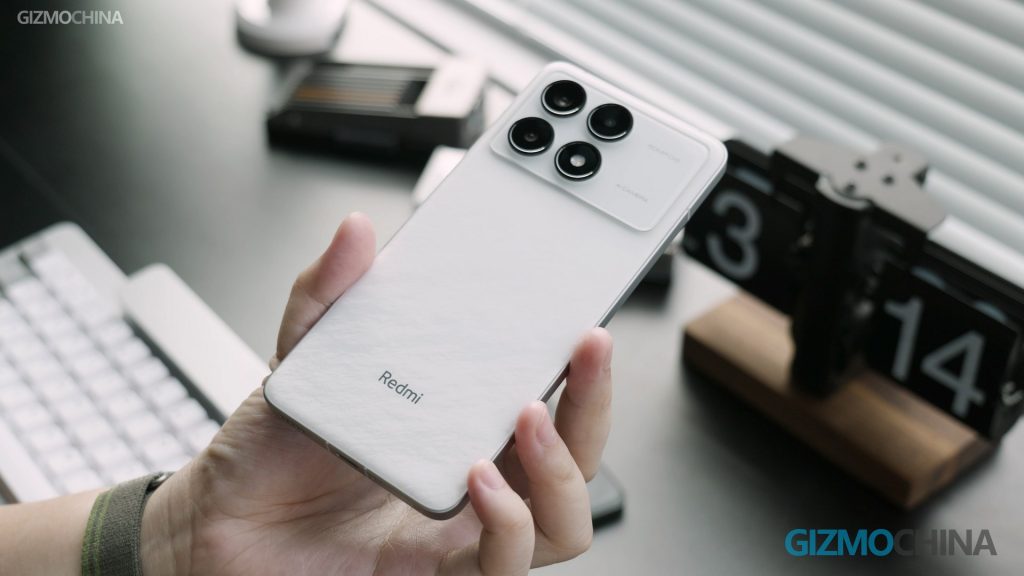
The Redmi K70 series is shaping up to be one of the most exciting smartphone launches of the year. Redmi’s general manager, Lu Weibing, has already confirmed that the K70 Pro will surpass similar products in its category in terms of performance, design, and price-to-performance ratio.
Now, a leak by reliable tipster Digital Chat Station reveals that the Redmi K70 series will be equipped with a flagship camera sensor.
Xiaomi is reportedly equipping the Redmi K70 series with the IMX9/LYT8 sensor, a new flagship sensor that is also slated for use in other flagship devices such as the OnePlus 12 and the Realme GT 5 Pro. This sensor is said to offer significant improvements in low-light performance and image quality.
Likewise, we might also see a periscope module on the smartphone, as hinted by the tipster.
Redmi’s Marketing General Manager, Wang Teng Thomas, has also revealed some insights about the Redmi K70 series on Weibo. He said that the Redmi K70 will have a 1.5K resolution display, while the Redmi K70 Pro will have a display with a resolution of 2K. Both models will be powered by the latest Snapdragon 8 Gen 3 chip.
Redmi has not yet confirmed the launch date of the K70 series in China, but we will keep you updated.
After unveiling the ROG Flow X13 (GV302XV-MU016WS) earlier this year, ASUS has now brought over the 2-in-1 gaming laptop to Indian shores. This laptop comes with an AMD Ryzen 7000 series processor and an RTX 4060 GPU.
ASUS ROG Flow X13 (GV302XV-MU016WS) specs
The laptop features a stunning 13.4-inch Touch Screen QHD+ (2560 x 1600) ROG Nebula Display with a 16:10 aspect ratio, 165Hz refresh rate, 3ms response time, and a remarkable 500 nits of brightness.
Powered by an AMD Ryzen 9 7940HS Mobile Processor with 8 cores and 16 threads, this laptop boasts a staggering 16MB L3 cache and can reach up to 5.2 GHz Max Boost for exceptional performance. It features NVIDIA’s GeForce RTX 4060 Laptop GPU with 8GB GDDR6 Graphic Memory, MUX Switch, and NVIDIA Advanced Optimus Mode. The AMD Radeon 780M serves as the integrated GPU.
It is equipped with 16GB LPDDR5 RAM and a 1TB PCIe 4.0 NVMe M.2 SSD, which can be expanded using a PCIe slot. The laptop offers connectivity through a USB 3.2 Gen 2 Type-C port that supports DisplayPort and power delivery. It also includes an HDMI 2.1, a variety of USB ports, and Wi-Fi 6E (802.11ax).
The ROG Flow X13 comes with a 75WHrs, 4-cell Li-ion battery. It features a backlit chiclet keyboard with a single light and advanced audio technology, including Dolby Atmos and AI noise-canceling.
Pricing & availability
The ASUS ROG Flow X13 GV302XV-MU016WS is priced at Rs. 1,84,990 ($2,223) and is available on the Asus India website as well as Amazon India.


We use cookies on our website to give you the most relevant experience by remembering your preferences and repeat visits. By clicking “Accept”, you consent to the use of ALL the cookies.
This website uses cookies to improve your experience while you navigate through the website. Out of these, the cookies that are categorized as necessary are stored on your browser as they are essential for the working of basic functionalities of the website. We also use third-party cookies that help us analyze and understand how you use this website. These cookies will be stored in your browser only with your consent. You also have the option to opt-out of these cookies. But opting out of some of these cookies may affect your browsing experience.
Necessary cookies are absolutely essential for the website to function properly. This category only includes cookies that ensures basic functionalities and security features of the website. These cookies do not store any personal information.
Any cookies that may not be particularly necessary for the website to function and is used specifically to collect user personal data via analytics, ads, other embedded contents are termed as non-necessary cookies. It is mandatory to procure user consent prior to running these cookies on your website.