Advertisement

Vivo launches budget-friendly Y33t smartphone in China

Vivo has launched a new budget-friendly smartphone in China, the Y33t, shortly after announcing the Y78t. Let’s take a look at its specifications and features.

Specifications

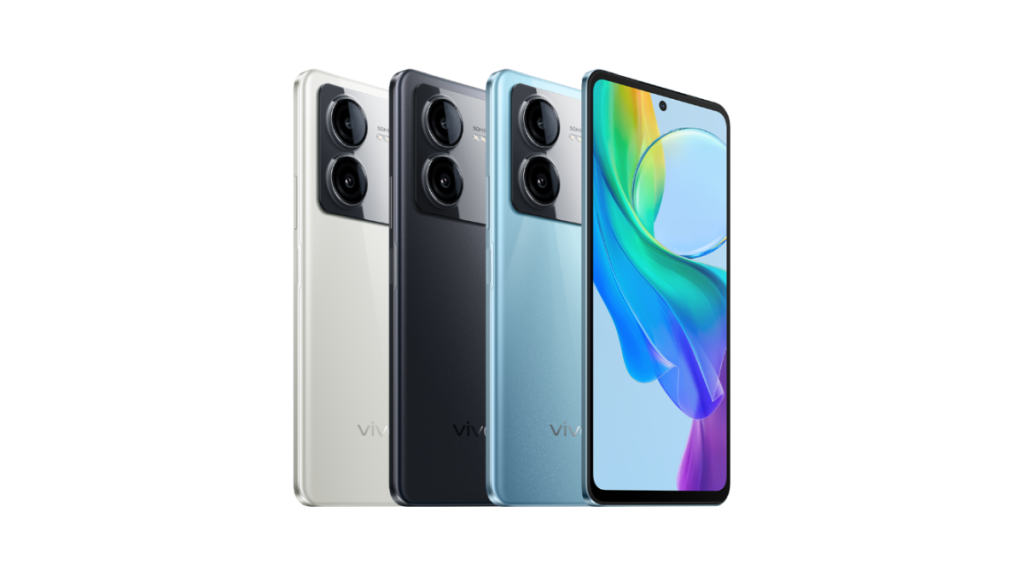
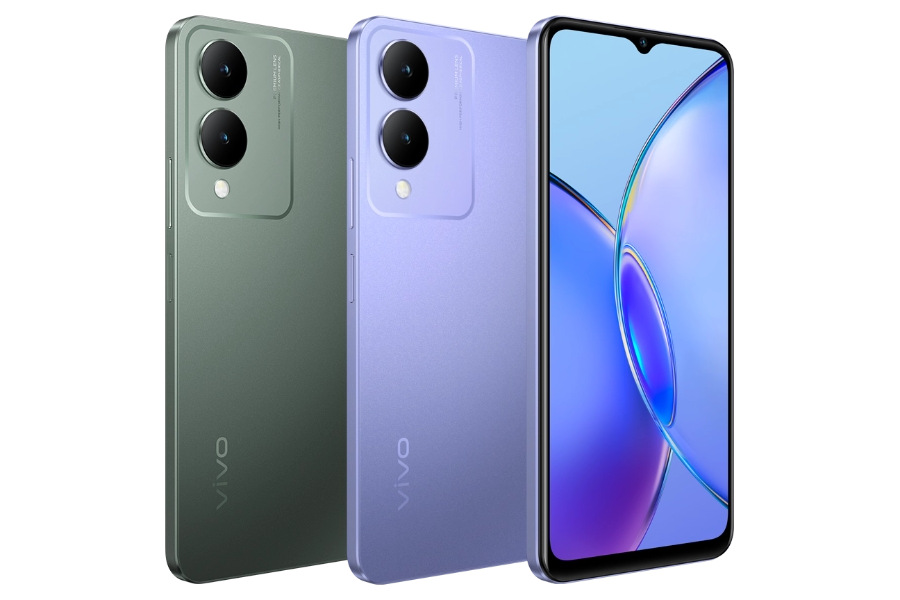
The Vivo Y33t has a straight-edge mid-frame design and weighs 186 grams. It features a 6.56-inch LCD display with a 60Hz refresh rate and a dewdrop notch on the front. The display is good enough for casual use, but the lack of a higher refresh rate is a bit disappointing.
Powering the device is a MediaTek G85 processor, which is a mid-range chipset that is capable of handling most day-to-day tasks. It is coupled with 6GB of RAM and 128GB of storage, which is a good amount for a budget-friendly smartphone. The device also supports 6GB of virtual memory expansion and boots on Android 13-based OriginOS 3. 

Regarding optics, the Y33t sports a dual-rear camera system with a 13MP main sensor and a 2MP depth sensor. For selfies and video calls, you get an 8MP front-facing camera. 

Likewise, fueling the device is a 5000mAh battery that supports 15W fast charging. The device also features a side-mounted fingerprint sensor for biometrics. 

Vivo Y33t Price and Availability 

The device is priced at 749 yuan (approximately $110) and is available in two colors: Wild Green and Crystal Purple. It is available for purchase in China via JD.com.

Related:

iQOO 12’s design revealed via live shot, tipped to feature a dedicated gaming chip

A live shot of the image of the iQOO 12 is now being circulated on Weibo. The image has revealed the design of the phone for the first time. Another leak reveals that the device will be equipped with the company’s self-developed chip for an enhanced gaming experience.

iQOO 12’s live shot

iQOO 12 leaked image
iQOO 12’s leaked image

The leaked image appears to reveal the white variant of the iQOO 12. This phone showcases a distinctive squircle-shaped camera module on its back. According to a Weibo post by tipster DCS, the arrangement of cameras within this module is expected to be similar to what was seen in the iQOO 11.

Another key piece of information highlights iQOO’s emphasis on gaming performance with the iQOO 12. While the iQOO 11 integrated the Vivo V2 chip, which was designed to enhance both gaming and imaging experiences, recent leaks originating from China suggest a different approach for the iQOO 12. It is expected to feature a dedicated gaming chip that will concentrate primarily on enhancing the gaming experience, with no direct involvement in photography or imaging features. Here is a look at the leaked specifications of the iQOO 12.

iQOO 12 specifications (rumored)

As per the leaks, the iQOO 12 will have a 6.78-inch E7 AMOLED display with a flat design. It will offer a 1.5K resolution, a 144Hz refresh rate, and an optical in-screen fingerprint sensor. The device will run on OriginOS 4-based Android 14. For durability, the device will feature a metallic frame and an IP64-rated chassis.

For photography, it will have a 16-megapixel front camera, and its rear camera setup will have a 50-megapixel OV50H main camera with OIS support, a 50-megapixel Samsung JN1 telephoto camera, and a 64-megapixel OmniVision OV64B telephoto camera with 3x optical zoom.

The Snapdragon 8 Gen 3 chip will power the device with LPDDR5x RAM and UFS 4.0 storage. It is expected to come with 16 GB of RAM, 512 GB / 1 TB of storage, and a 5,000mAh battery with 120W charging. It is expected to arrive in black and white colors and feature a glass back. Its red variant is likely to have a leather back.

As far as the launch date is concerned, the iQOO 12 and 12 Pro are expected to launch on Nov. 7 in China. The standard model is also expected to break cover in India in the same month.

RELATED:

(source)

Huawei’s entry-level foldable phone in works, Samsung’s rumored Galaxy Z FE may rival it

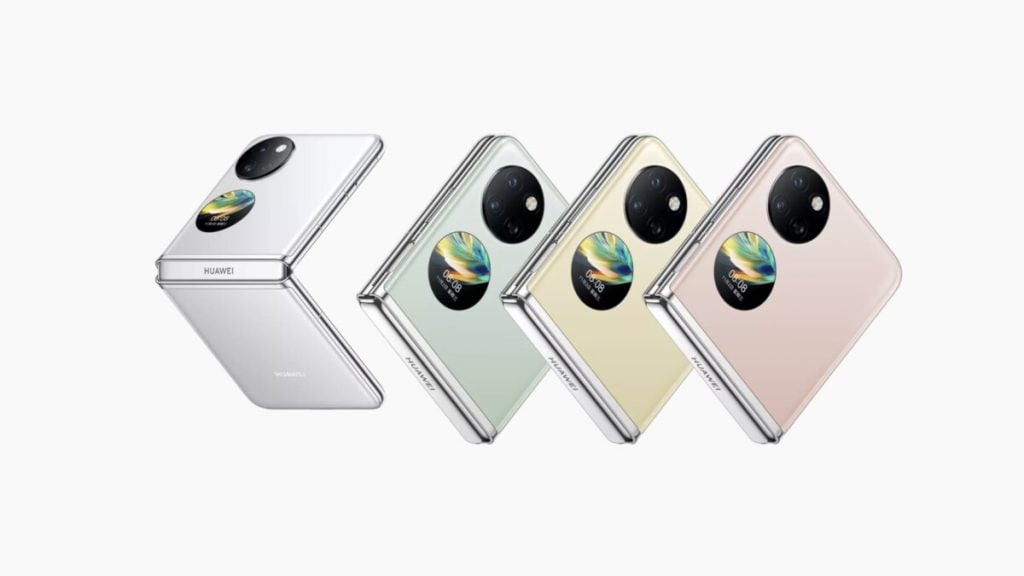
Almost all the leading smartphone brands from China have launched their foldable smartphones. It appears that the brands will try to make foldable phones at different price points in the coming years. The Huawei Pocket S flip phone, which debuted in November 2022, has been one of the most affordable foldable phones. A new leak, courtesy of tipster Revegnus, reveals that the brand is now working on an entry-level foldable phone. The leaker has shared the expected price and launch timeframe of the said device.

Huawei’s new flip phone with entry-level specs in works

Huawei Pocket S
Huawei Pocket S

According to the tipster, Huawei is working on a flip phone with entry-level specifications. The device is most likely to arrive on the market as a P Pocket-branded phone.

He mentioned that the device is expected to be officially unveiled in the first half of 2024. In terms of pricing, it is likely to be priced at $735 or lower, according to the leaker. It’s not clear whether the source is referring to the Chinese market release or a global launch of the device. It is likely that the device may come in multiple shades, like the Huawei Pocket S.

The tipster also mentioned that Samsung appears to be developing a similar device, although no further details were provided. This same source previously stated in August that the South Korean tech company is conducting tests on a new device named the “Galaxy Z FE.”

This device is expected to be introduced alongside the Galaxy Z Fold 6 and Galaxy Z Flip 6, which are anticipated to be launched in August 2024. As the name suggests, the Galaxy Z FE is expected to be a more affordable foldable phone option from Samsung.

RELATED:

(source)

Vivo Y78t launched with 120Hz display, Snapdragon 6 Gen 1, 12GB RAM, 50MP dual cameras

Recently, a Vivo device with model number V2312BA was spotted in the databases of Chinese certification platforms, such as 3C and TENAA. The said device has now been silently launched as a new Y78-series smartphone called the Vivo Y78t in China. Here is a look at all the specifications that are packed inside the Y78t.

Vivo Y78t specifications and features

Vivo Y78t
Vivo Y78t

The Vivo Y78t features a 6.64-inch LCD panel that offers a Full HD+ resolution of 1080 x 2388 pixels, up to 120Hz refresh rate, and up to 240Hz touch sampling rate. A fingerprint sensor is available on the right edge of the device, and it runs on OriginOS 3.0-based Android 13.

Under the hood, the Vivo Y78t has the Snapdragon 6 Gen 1 chipset, LPDDR4x RAM, UFS 2.2 storage, and a massive 6,000mAh battery that supports 44W fast charging. The device comes in three configurations, such as 8 GB RAM + 128 GB storage, 8 GB RAM + 256 GB storage, and 12 GB RAM + 256 GB storage.

On the front, the Vivo Y78t has an 8-megapixel selfie camera. Its rear shell has a 50-megapixel main camera, a 2-megapixel bokeh lens, and an LED flash. The device offers other features, such as dual SIM, 4G VoLTE, Wi-Fi 802.11ac, Bluetooth 5.1, GPS, a USB-C port, and a 3.5mm audio jack. The Y78t is nothing but a rebranded version of the iQOO Z8x, which debuted in August in China.

Vivo Y78t price, availability

The 12 GB RAM + 256 GB variant of the Vivo Y78t is priced at 1,499 Yuan. It is set to go on sale on Oct. 22 in color options such as black, white, and green. There’s no word on whether it will release in other markets.

RELATED:

Lucid Gravity SUV’s Fast Charging and Estimated 500-mile Range could be a Game Changer in the US

Lucid Motors has just dropped a date for its much-anticipated Lucid Gravity SUV, set to make its debut on November 16, 2023, at the LA Auto Show. With the Lucid Air sedan already out since 2021, the company seems to be embracing a nature-themed naming strategy; first “Air” and now “Gravity.”

The SUV will make its debut at the LA Auto Show on November 16, 2023.

While the design cues of the Gravity appear to mirror its sedan sibling, the Lucid Air, what really caught our eye was the timing of the Gravity’s production—late 2024. Here’s why it’s a big deal: Lucid has been churning out approximately 1,400-1,500 units of the Air per quarter this year, which isn’t exactly setting the sales charts on fire. The Gravity, being an SUV, is inherently more attractive to consumers, making it a possible savior for Lucid’s moderate sales performance.

Electric

Lucid is clearly feeling the heat, though, as evidenced by their special 18-month lease offers on certain trims of the Lucid Air. They’re looking to maintain sales momentum until the Gravity comes along to potentially steal the limelight.

In terms of competition, Lucid Gravity is locking horns with some big players like the Mercedes-Benz EQS, BMW iX, and Rivian R1S. But there’s a twist. Lucid’s trump card might just be the range and fast charging capabilities. The Lucid Air already boasts an impressive EPA range of over 500 miles. If the Gravity even remotely approaches this, it could be a game-changer.

Performance specs are yet to be unveiled, but indications are that it will offer a dual or triple-motor, all-wheel-drive system. Add to that Lucid’s top-notch DC fast charging, and the Gravity could turn heads and open wallets.

However, an important question is, will the charging port be CCS1 or NACS? Given it’s a late 2024 model, it’s speculated to be NACS. That choice could be another distinguishing factor for the Gravity.

RELATED:

(Via)

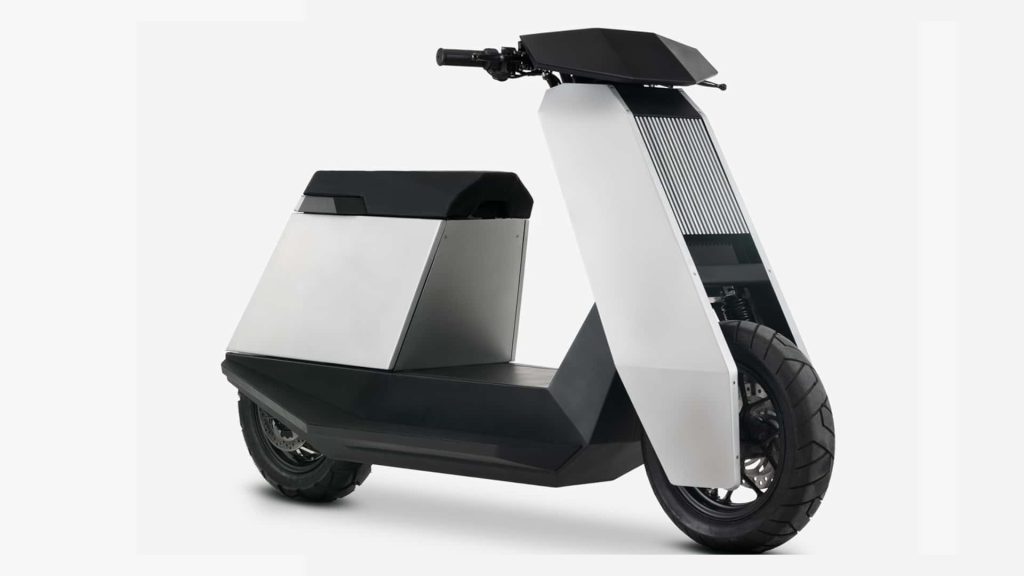
Infinite Machine’s New P1 Electric Scooter has Customizable Attachments, like Loudspeakers

We often hear about speed, range, and design when it comes to electric scooters. But Brooklyn-based Infinite Machine is rewriting the rulebook with its new P1 electric scooter, focusing not just on performance but also on utility and versatility.

The scooter promises 60 miles of range on a single charge.

The P1 is designed to be more than just an urban runabout; it aims to be a part of your daily life. Its minimalist yet futuristic design, featuring an aluminum and steel mono-chassis, certainly catches the eye. But its real innovation lies in its user-centric approach. The scooter’s modular storage system integrated at the back replaces the standard top box usually seen on regular scooters. This means the P1 offers a level of customization usually reserved for larger vehicles. Attach racks, bags, or even loudspeakers—this scooter adapts to your lifestyle.

Electric

Now, let’s talk power. The P1 boasts a 12-kilowatt motor, delivering 16 horsepower—enough to match the performance of conventional 150cc scooters. It even crosses the boundary set for A1-compliant scooters in Europe, showcasing its intention to be a leader in its category. With a removable 72-volt battery, the scooter promises up to 60 miles of range, and the flexibility of charging the battery on or off the scooter makes it even more appealing for city dwellers.

The P1 also understands the unpredictable nature of city traffic. With four driving modes—Eco, Performance, Turbo Boost, and even a Reverse Mode—it allows riders to adapt to various road conditions. The addition of Apple CarPlay and Android Auto, alongside a handy app for tracking and anti-theft features, adds a tech-savvy touch.

The brainchild of co-founders Eddie and Joseph Cohen, the P1 is designed for those who found traditional scooters lacking. With a starting price of $10,000 and a production plan already in place, the P1 isn’t just an electric scooter; it’s a glimpse into the future of urban mobility.

With the P1, Infinite Machine is sending a clear message: mobility in the city can be about much more than just getting from point A to point B. It can be smart, customizable, and above all, user-focused.

RELATED:

(Via)

Chinese Consumers Desperately Scramble for Nvidia RTX 4090 Amid U.S. Sanctions & Rising Prices

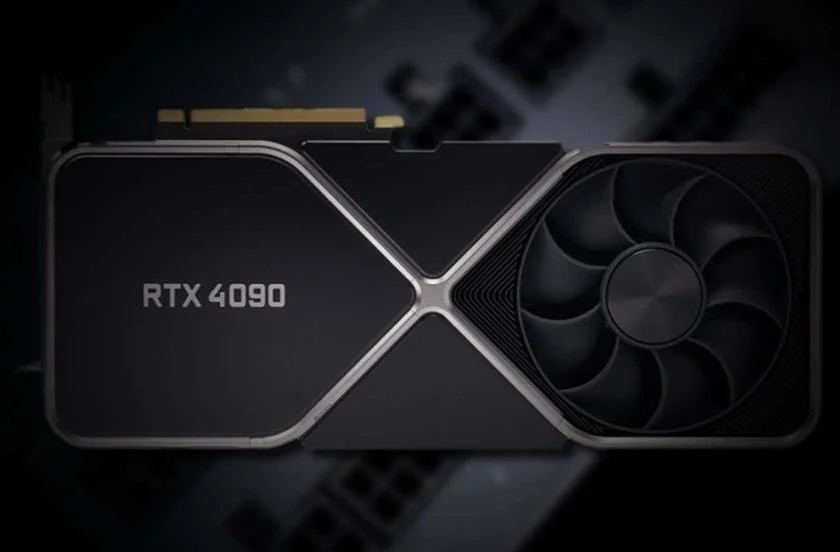
In China, the buzzword of the week should be “FOMO” (Fear of Missing Out), especially among gamers and graphic designers who are racing to buy Nvidia’s high-end GeForce RTX 4090 graphics card. The buying frenzy was triggered by recent U.S. export restrictions on semiconductors and Nvidia’s subsequent decision to halt the sales of RTX 4090 cards on local online platforms like JD.com.

Prices of the card have tripled in some online marketplaces

The price of these coveted graphics cards has soared, touching a staggering 15,000 yuan (about $2,050) just a day after the U.S. sanctions came out to the public. Retailers such as Zhou Da, a Shanghai-based Asus component seller, have been flooded with queries on the card’s availability and pricing. “I’ve told my customers to buy it as soon as they can. The future’s uncertain,” Zhou stated.

RTX 4090

Not just individual consumers, but even local companies partnering with Nvidia have pulled the plug on stocking RTX 4090 cards. Colorful Technology, a Shenzhen-based firm, sold out their entire RTX 4090 inventory, leaving many to wonder when or if the products would be restocked.

In a digital world where even a nanosecond can make a difference, the RTX 4090, launched in September 2022, promises superlative performance for applications like 8K video editing and 3D rendering. The demand is high, despite Zhou admitting that the card is “a bit over-the-top” for most current gaming needs.

However, the bigger issue is not just the panic buying, but what it signals for China’s technology landscape. While Nvidia is looking into possible licensing options, nothing is guaranteed. The U.S. restrictions don’t just impact the RTX 4090 but also affect Nvidia‘s less powerful AI chips designed for the Chinese market, further narrowing the country’s tech options.

As for now, some opportunistic sellers on third-party platforms are cashing in, pricing the RTX 4090 nearly triple its recommended retail value. For Chinese consumers, it’s not just about acquiring a high-performance graphics card; it’s about securing a piece of technology that might soon be out of reach.

RELATED:

(Via)

Apple’s iPhone 16 and 16 Plus Projected to Top iPhone 15 Pro Max Performance

Apple’s iPhones are often talked about not only for their technical specifications but also for their price. Even though the high price provides substantial profit to the company, it negatively impacts sales volumes. Therefore, the US tech giant is doing its best to offer a more affordable iPhone for those in need. Especially with the SE series, Apple is catching attention and is also selling its base models at relatively lower prices. However, there’s a trade off.

To reduce costs, starting from the iPhone 14 series, Apple has been using the previous year’s processor in its smartphones, excluding the Pro models. This has led to a noticeable decrease in performance and has drawn criticism since it hasn’t significantly reduced the price. Apparently, Apple isn’t satisfied with the outcome either, as they are reportedly going back on this decision. The iPhone 16 and 16 Plus are rumored to jump from the A16 to the A18 chip. Here are the details…

iPhone 16 and 16 Plus Again Rumored to Jump From A16 to A18 Chip

The iPhone 15 series was introduced recently, but the anticipation for the next models has already started. Naturally, leaks follow this anticipation closely. Moreover, the initial leaks suggest that Apple might be making a decision that will please its users this time. According to analyst Jeff Pu’s report, the iPhone 16 and 16 Plus are rumored to jump from the A16 to the A18 chip. These claims are not new, as there have been previous reports suggesting similar developments.

Apple iPhone 16 A18 Chip

However, hearing the same thing multiple times could be a strong indicator that it might actually happen. In his latest note, Pu said “we expect all iPhone 16 models to feature A18,” and he expects the chips to be manufactured with chipmaker TSMC’s second-generation 3nm process “N3E.” Pu referred to the A17 Pro chip in the iPhone 15 Pro models, based on TSMC’s first-generation 3nm process “N3B,” as a “transition design.” The processors to be used in the iPhone 16 family are as follows, respectively:

  • iPhone 16: A18 chip (N3E)
  • iPhone 16 Plus: A18 chip (N3E)
  • iPhone 16 Pro: A18 Pro chip (N3E)
  • iPhone 16 Pro Max: A18 Pro chip (N3E)

As you may know, the current series has the iPhone 15 and iPhone 15 Plus models equipped with the A16 Bionic chip, while the iPhone 15 Pro and iPhone 15 Pro Max use the A17 Pro. This suggests that if the claims are true and there’s no unexpected price increase, there could be a significant performance difference between the standard 15 and 16 models. However, this doesn’t mean that Apple won’t differentiate the Pro models. Another recent claim is that the new phones’ processors will be distinguished by A18 and A18 Pro branding. Only time will tell which claim is accurate.

RELATED:

(via)

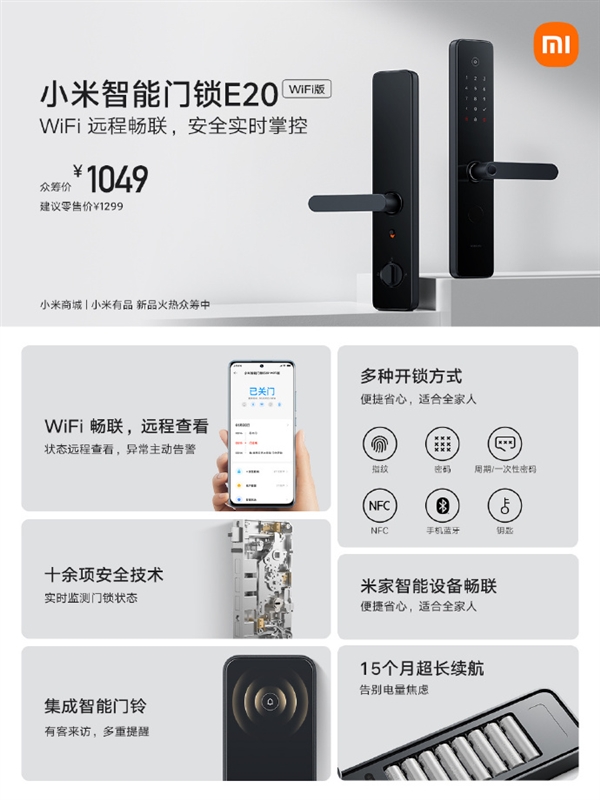
Xiaomi Smart Door Lock E20 WiFi version launched in China for 1,049 yuan ($143)

Chinese tech giant Xiaomi has launched an enhanced version of its smart door lock. The Xiaomi Smart Door Lock E20 WiFi version gets WiFi connectivity as its name implies. The device is presently up for backing on the Youpin platform. The new feature allows the door lock to support remote real-time viewing.

Xiaomi Smart Door Lock E20 WiFi version

The Xiaomi Smart Door Lock E20 WiFi version adopts a direct plug-in C-level lock cylinder and an integrated structure design. It sports a semi-matte texture handle, a solid alloy middle frame, and an IML front panel.

The smart door lock comes with wear-resistant materials. The security gadget supports WiFi connectivity and offers remote viewing of the log and alarm reminders. The accompanying Mijia app provides the needed support to achieve remote functionality. The app supports multiple linkage options and up to 25 scene trigger conditions.

The Xiaomi smart door lock E20 WiFi version can be unlocked in several ways including fingerprint, OTP/ periodic, NFC, password, Bluetooth, mobile phone, and a physical key. It has a fingerprint recognition rate of 99.24% at a response time of 0.5 seconds. The smart door lock can be interfaced with a smart doorbell to notify you of visitors in real-time. You can also receive notifications via the MIJIA app. The Smart Door Lock E20 WiFi version is compatible with XiaoAI speakers for voice notifications.

Xiaomi Smart Door Lock E20 WiFi version

The smart lock has a fully detecting electronic lock body design and four built-in intelligent sensors for accurate detection of 8 states. The door status can be viewed locally or remotely in real-time. It can monitor different scenarios like the door being ajar, not closing, not being locked after a timeout, and so on. It has a built-in MIJIA security chip that ensures the utmost security and safety of data on the device. The smart door look provides up to 15 months of battery life and there is a battery level reminder. A mobile power supply can also serve as emergency support for the smart door lock when the battery is exhausted.

Pricing

The Xiaomi Smart Door Lock E20 WiFi version has a launch price of 1,049 yuan (~$143). There are no details yet on the delivery date of the model after the crowdfunding period.

RELATED:

(via)

North Korea’s AI-Powered Cyberwarfare Program: A New Threat to the World

Artificial intelligence technologies continue to evolve and expand their areas of application. Today, we can see the presence of this technology in many sectors. However, it’s not only private companies that are using AI. Many governments around the world are also working to benefit from AI’s capabilities. The only concern here is that AI isn’t always used by well-intentioned individuals for the right purposes. According to recent information, North Korea has acquired AI and is testing its capability for cyberwarfare. Here are the details…

North Korea Tests AI for Cyberwarfare, Raising Fears of New Attacks

North Korea is arguably one of the most mysterious countries on Earth. Although its citizens are isolated from the outside world and often lack access to many modern technologies, it doesn’t mean the government lacks them too. In fact, the country, led by Kim Jong-Un, frequently harnesses modern technologies for its own purposes.

North Korea AI Cyberattacks

North Korea is well known for its cyber attacks, which have targeted a broad spectrum of organizations, including governments, businesses, and individuals. Now, North Korea has acquired AI and wants to use it for cyberwarfare. According to a report prepared by the US, North Korea has become the first nation to adopt AI technologies for cyberattacks.

AI could enable the country to carry out more sophisticated and effective cyberattacks. Additionally, it could make defending against these attacks more challenging. The Asian nation often uses the gains from these attacks to make money, harm their “enemies,” and create propaganda.

The main point of curiosity is how North Korea acquired this technology. As you may know, advanced hardware components like the Nvidia H100 chip are needed for AI, and it’s certain that the mentioned country cannot produce this on its own. The consensus among experts is that the necessary components were purchased through a front company. However, the software aspect remains a mystery for now.

RELATED:

(via)

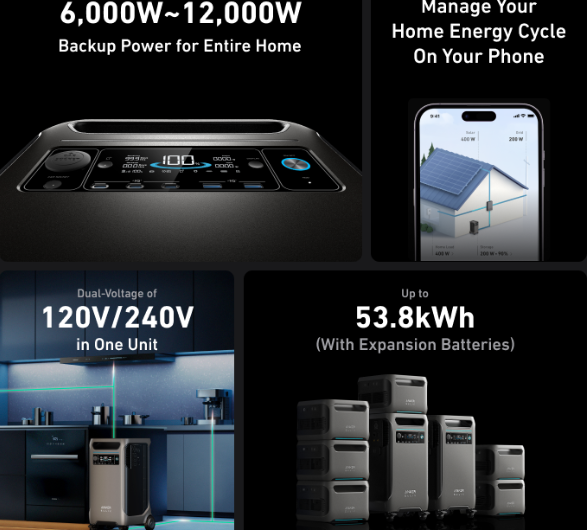
Anker SOLIX F3800 Power Station launched for the global market under crowdfunding

The Anker SOLIX F3800 power station has now been mounted on Kickstarter. This comes after a successful unveiling of the new Anker SOLIX lineup of Power Stations during IFA 2023 in Berlin. The lineup includes the Anker SOLIX C1000 Portable Power Station and the F3800 Portable Power Station. The Kickstarter crowdfunding campaign will end next month and has already exceeded its $100,000 target. More than 1,150 backers have already raised $4,138,827 in pledges for the SOLIX F3800 as of October 19, 2023.

Anker SOLIX F3800 Power Station

The models were projected as redefining a new standard of power energy independence. With the new lineup, consumers can access reliable power storage in any situation, according to Anker. Anker also says that it is not just about powering outdoor adventures but also ensuring they have a dependable home power backup solution with incredible savings.

The Anker SOLIX F3800 is designed to provide users with a backup and accessible home power solution. It is the first power station to feature AC coupling and support solar power cycling. It offers homeowners the opportunity to enjoy a complete home power system with easy professional installation. It offers an expandable power supply to the home at a significantly reduced cost compared to traditional power systems. It offers 6,000W AC power output and 120V/240V voltage options.

Anker SOLIX F3800 Power Station

The SOLIX F3800 can simultaneously power high-energy devices, as well as basic home appliances. It has a 3.844kWh internal battery which can be further expanded to 53.8kWh with additional batteries. The F3800 can thus deliver more than a week of backup power supply to the home.

Anker SOLIX F3800 Power Station

Pricing & Availability

You can easily manage your home energy cycle using the F3800 via your smartphone. It can directly charge electric vehicles and offers more fast charging options. Anker is offering a 5-year warranty for the SOLIX F3800 power station. The minimum pledge amount for the SOLIX F3800 is $2,599 and deliveries will start by January 2024. The deliveries are tied to selected countries in Europe, the US, Canada, and Australia.

RELATED:

(source)

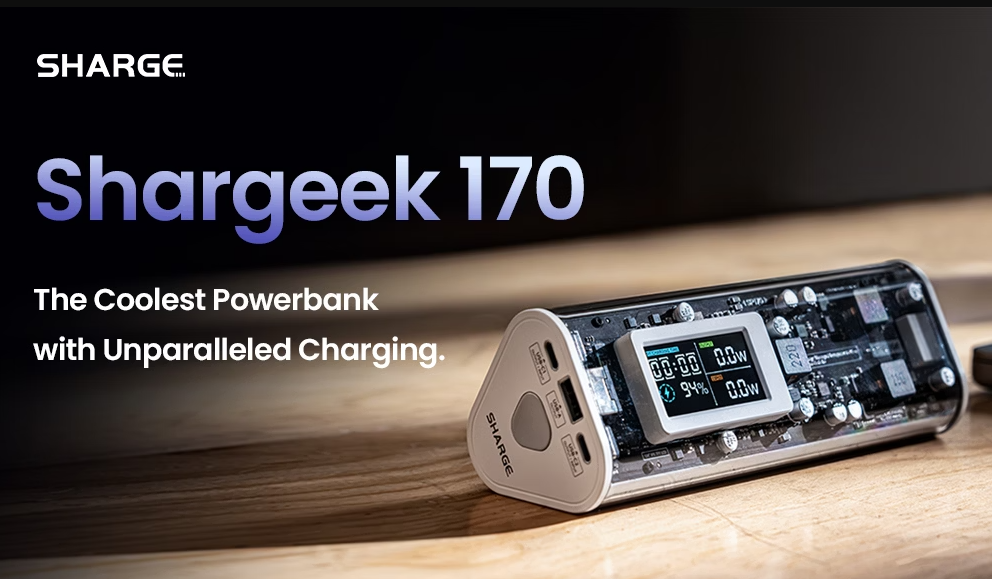
Sharge launches the Shargeek 170 Power Bank with a transparent design on Kickstarter

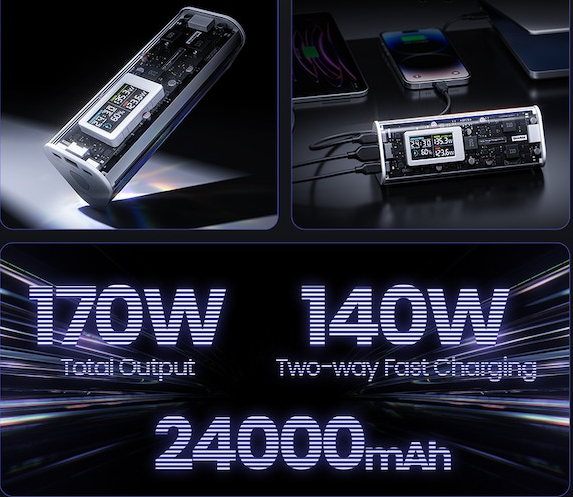
Chinese power products manufacturer Sharge (formerly Shargeek) has launched the Shargeek 170 power bank has been launched on the crowdfunding platform Kickstarter. The Shargeek 170 is designed to deliver unparalleled charging and comes in a transparent prism silhouette. It offers three-device fast charging and a maximum output of 170W. The crowdfunding campaign’s target of $5,000 has already been exceeded, with 2,033 backers pledging a cumulative sum of $365,322.

Shargeek 170 Power Bank

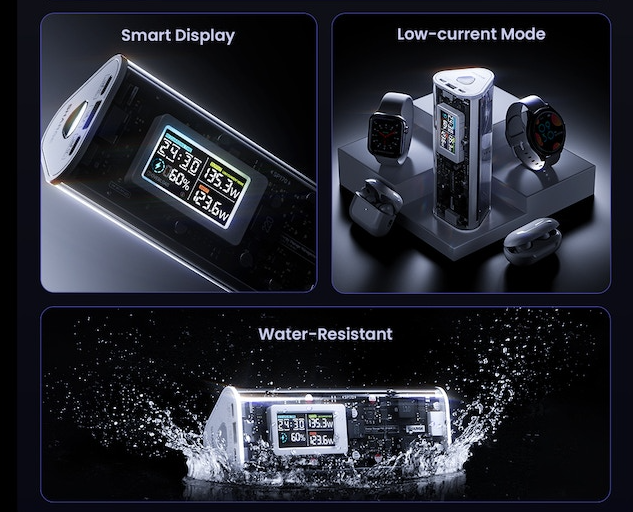
The Shargeek 170 is a power bank that comes in a sleek design. It has a smart display and is water resistant. It has a 24,000mAh capacity and 140W maximum input power. The Shargeek 170 is the 10th Sharge project mounted on Kickstarter. In July 2023, the brand raised $598,763 from 5,447 backers of the Sharge Disk. Overall, it has raised an excess of $2.5 million from 23,000+ backers so far.

The Shargeek 170 is one of the coolest power banks with its iconic transparent design. The futuristic prism silhouette of the gadget gives it an exciting look atop its excellent charging capabilities. It can charge three devices simultaneously and features a low current mode. The Shargeek 170 is inspired by Pink Floyd’s timeless masterpiece called Dark Side of the Moon. The unique transparent prism silhouette houses exquisite engineering and delivers charging in style.

Shargeek 170 Power Bank

The new Shargeek 170 power bank’s smart display offers full visibility and an intuitive outlook. You can conveniently check the power status and charging performance, as well as be alerted about abnormal temperatures. The device is also capable of automatic adjustment of the charging power. The low current mode allows for seamless charging of low-energy devices like earbuds, smartwatches, and neckbands. The Shargeek 170 thus provides safe and optimized charging for such devices.

The Shargeek 170 has a PD 3.1 140W single-port input. It has two USB-C and one USB-A output ports. When the three USB ports are in use, the maximum output via USB-C is 65W. The device itself can be recharged via 140W input that delivers 50% charge in just 20 minutes. It offers pass-through charging to help recharge your gadgets while the power bank is being recharged.

Sharge

The Shargeek 170 houses 6 EV-grade batteries that deliver a total capacity of 24,000mAh. The power bank maintains over 80% capacity after 800+ charging cycles, thus it can operate optimally for several years.

Pricing & Availability

The super early-bird offer on Kickstarter for the Shargeek 170 is $119 with a 40% discount. There are other separate offers for the Phantom cable, 140W PD 3.1 charger, solar panel, and Travel case. The Kickstarter campaign for the Shargeek 170 will be concluded at the end of November 2023.

RELATED:

Nokia to cut 14,000 jobs by 2026 due to a 20% sales drop and slowing 5G demand

Finnish telecommunications giant Nokia has announced plans to cut between 9,000 and 14,000 jobs globally by the end of 2026 in an effort to reduce costs. This decision came after the company reported a 20% decline in sales during the third quarter, attributing the slump to decreased demand for 5G equipment, particularly in North America. Nokia aims to save between €800m and €1.2bn by 2026, citing the challenges posed by high inflation, rising interest rates, and reduced spending by its customers.

Nokia
Credit: Reuters

Nokia’s Strategic Shift: Cost-Cutting Amid 5G Market Uncertainties

CEO Pekka Lundmark highlighted the need for investments in networks improved by cloud computing and AI. However, due to uncertainties in market recovery, Nokia is opting for decisive cost-cutting measures. Initial reductions will save the company €400m in 2024 and €300m in 2025.

CEO Pekka expressed that decisions affecting employees are the toughest. He acknowledged Nokia’s talented workforce and ensured support for those impacted by the upcoming changes. Despite challenges, he remains optimistic about future opportunities for Nokia.

Nokia was once the world’s leading mobile phone manufacturer but struggled with the rise of smartphones like the iPhone and Samsung’s Galaxy. Post selling its handset division to Microsoft, which was later sold to HMD Global, Nokia pivoted to focus on telecoms equipment. In 2020, after the UK restricted Huawei from its 5G networks, Nokia became BT’s primary equipment provider.

Despite this, 5G equipment manufacturers have been facing challenges as operators in the US and EU reduce spending. This has affected not only Nokia but also its Swedish competitor, Ericsson, which also reported sales declines.

Kester Mann, an analyst at CCS Insight, commented on the surprising struggles of telecoms, stating that while the demand for services remains high, questions about the long-term future and relevance of operators continue to emerge. Furthermore, many tech companies, including Meta and Amazon, have been making redundancies due to economic challenges, although 80% of affected big tech workers found employment within three months.

RELATED:

(Via)

Philips launches Evnia 27M2N5510J 27-inch 2K 180Hz FastIPS Monitor in China for 1299 yuan ($177)

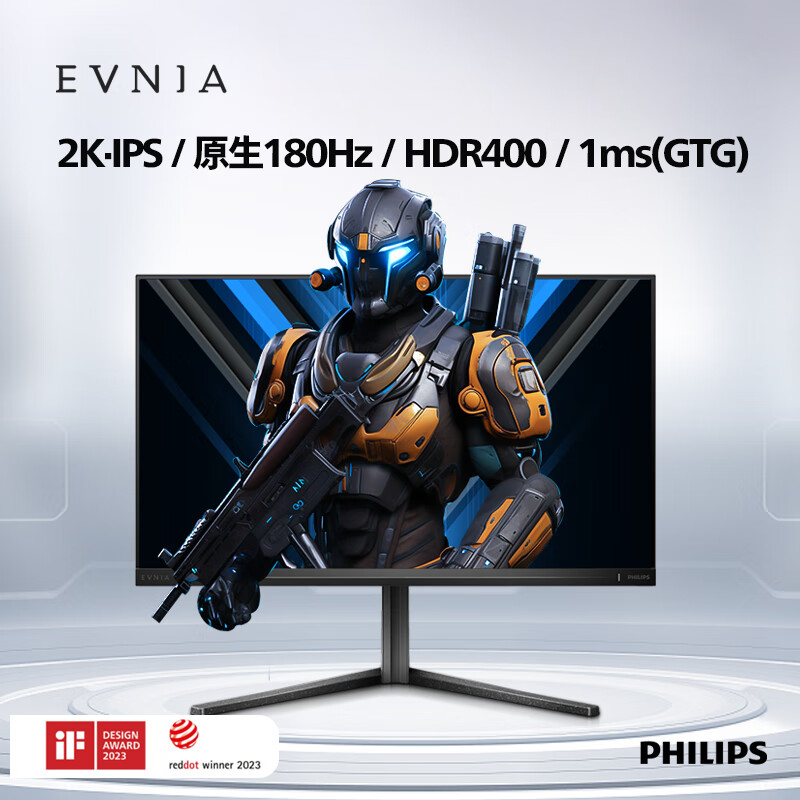
Philips has announced a new 27-inch 2K monitor, the Evnia 27M2N5510J, featuring an impressive 180Hz refresh rate. It is being offered at a special introductory price of 1299 yuan ($177). Pre-orders for this monitor will begin on October 23rd. Let’s check out the key specs of this monitor.

Philips Evnia 27M2N5510J Monitor Key Features:

Philips Evnia 27M2N5510J is equipped with a FastIPS panel, delivering a 2K resolution of 2560×1440. It caters to both gamers and professionals, offering a 180Hz refresh rate via DP and 144Hz via HDMI. With a rapid 1ms GTG response time, it ensures clear motion. The monitor is VESA DisplayHDR 400 certified, providing vivid contrast. Additionally, it boasts excellent color accuracy, covering 99.1% of sRGB and 90% of DCI-P3 color spectrums.

The monitor offers versatile connectivity with two HDMI 2.0 ports, a DP 1.4 interface, and a headphone jack. Its design combines functionality and style, featuring a stand that allows for height adjustment up to 130mm, tilting from -5 to 20 degrees, vertical rotation of ±90°, and horizontal rotation of ±30°.

The monitor comes with low input latency technology, catering to gamers with features like Motion Blur Reduction (MBR), an intelligent crosshair, and Dark Boost for improved visibility in low-light scenes. It also features an ambient light atmosphere lamp for immersion. For readers, there’s an EasyRead mode to reduce strain during extended use.

Philips has also expanded its product lineup with the introduction of smart cameras and sensors for home security under the Philips Hue brand. Additionally, they have launched the Philips Evnia 49M2C8900, a 49-inch 5K QD OLED gaming monitor in Europe.

RELATED:

(Via)

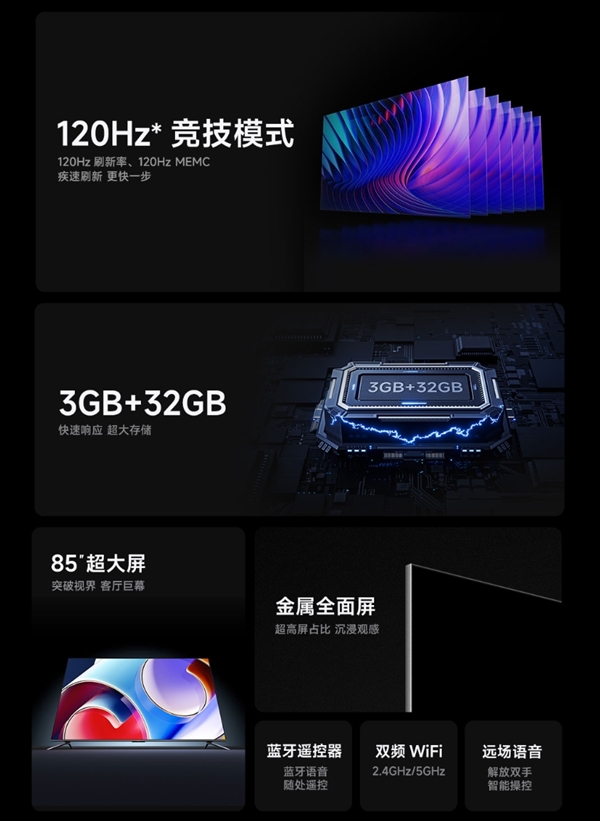
Xiaomi TV A Pro 85” with a 120Hz refresh rate launched in China for 5,999 yuan ($820)

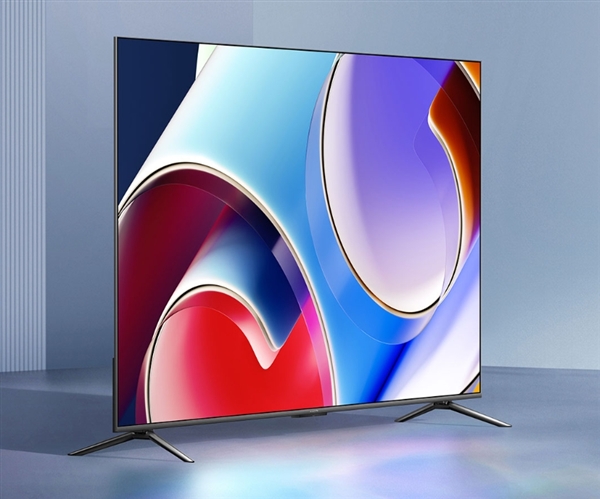
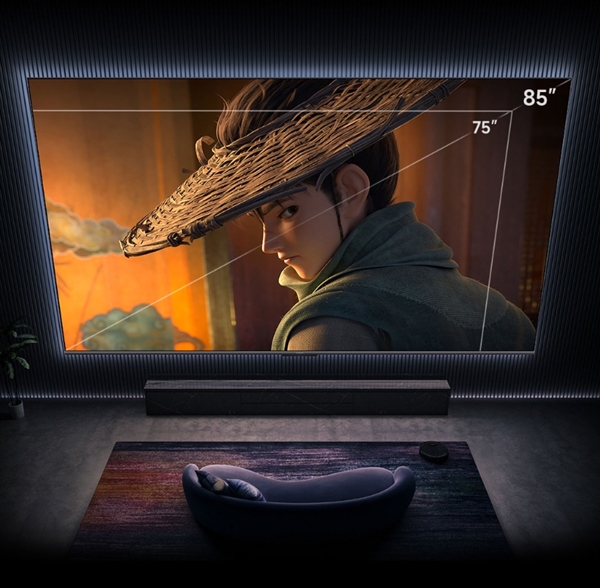
The Xiaomi TV A Pro 85 inches has been unveiled in China. The new Xiaomi TV A Pro sports an 85-inch high-brush screen with 120Hz refresh rate. The model comes with a competitive price and excellent features comparable to TVs in the same range.

Xiaomi TV A Pro 85 inches

Features

The Xiaomi TV A Pro 85 delivers EMMC motion compensation, offering smoother video output for football and other games. The Xiaomi TV A Pro has an 85-inch 4K panel which is 10 inches larger than its predecessor. It has a resolution of 3840 x 2160 pixels and delivers its maximum 120Hz refresh rate when the competitive mode is activated. Xiaomi says the TV A Pro’s screen has undergone a strict and fine color calibration test. It supports 1.07 billion colors and adopts a full-screen design with narrow bezels.

Xiaomi TV A Pro 85 inches

The TV A Pro 85 comes with two 10W high-powered stereo speakers with support for DTS sound encoding. There are two HDMI ports in the gadget, two USB interfaces, a network port, and one S/PDIF interface. The TV also has a single AV interface.

Xiaomi TV A Pro 85 inches

The new Xiaomi TV A Pro has a screen-to-body ratio of 96.5% with an improved lower frame texture. The TV is equipped with a quad-core Cortex-A55 CPU and a 3GB/ 32GB memory/ storage configuration. The TV supports dual-band WiFi and Bluetooth 5.0 connectivity.

Pricing & Availability

The Xiaomi TV A Pro 85 is priced at 5,999 yuan (~$820) and is available from Xiaomi Mall. There is no global availability information for the TV at this time.

RELATED:

Get Aqara E1 Smart Home Security Camera at GeekWills for $79

Aqara Smart Camera E1 is a cutting-edge device designed to elevate your home security and monitoring experience. With its sleek design and advanced features, this camera ensures you stay connected and protected, day and night. You can now buy Aqara Smart camera for $79 at GeekWills. 

WHERE TO BUY
Aqara Smart Camera E1 at $79 @GeekWills

At its core, the Aqara Smart Camera E1 delivers exceptional image quality, boasting 2K 3 million UHD resolution for crystal-clear visuals. Its 101° diagonal lens captures a wide perspective, while the dual motor gimbal enables a 360° viewing angle, allowing you to monitor every corner of your space effortlessly.

Equipped with AI humanoid tracking, this camera intelligently follows movements, ensuring you never miss a moment. Whether it’s for home security or keeping an eye on your loved ones, the Aqara Smart Camera E1 has you covered. Additionally, its time-lapse photography feature lets you capture the passage of time in stunning detail.

In low-light conditions, the camera’s 940nm infrared fill-in lights provide clear night vision, offering peace of mind around the clock. The two-way voice chat feature enables seamless communication, allowing you to interact remotely with family members or pets.

What sets the Aqara Smart Camera E1 apart is its connectivity options. It supports Wi-Fi IEEE 802.11b/g/n/ax 2.4GHz and Bluetooth 5.2, ensuring a stable and reliable connection. The camera also supports MagicPair and WiFi 6, enhancing its compatibility and ease of use. For Apple enthusiasts, it is fully compatible with Apple HomeKit, integrating seamlessly into your smart home ecosystem.

When it comes to data storage, the Aqara Smart Camera E1 offers flexibility. You can store your footage on a NAS system, Aqara cloud, or a MicroSD card, giving you control over your data and privacy.

Aqara Smart Camera E1 delivers top-notch performance without unnecessary frills. Its impressive 2K 3 million UHD image quality, AI tracking, and seamless connectivity make it a reliable choice for anyone seeking a dependable home security solution.

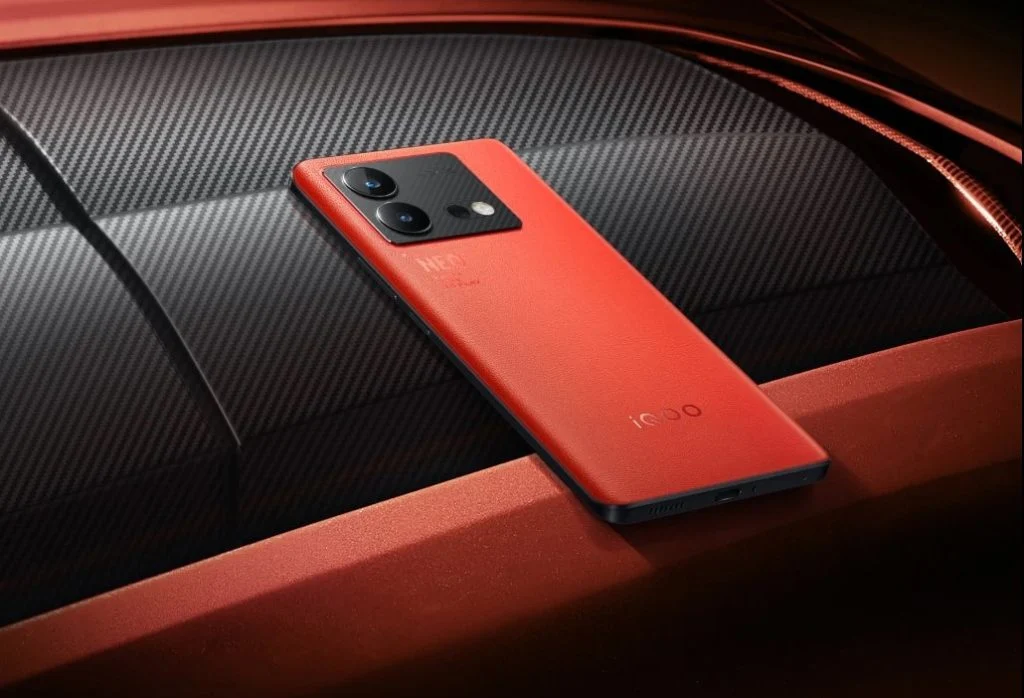
iQOO Neo 8 launched in new 16GB RAM+ 1TB storage version

iQOO launched the Neo 8 in China earlier this year in May. The handset was initially launched with up to 16GB of RAM and 512GB of onboard storage. This is a decent amount of storage for most but power users may feel the need for more. Keeping that in mind iQOO has today launched the new 16GB RAM and 1TB storage version of the handset in China. Here are the details.

Price, availability, and Specifications

iQOO has launched the Neo 8 in China with 16GB of RAM and 1TB of storage. The new version is priced at 3,699 Yuan ($505). For reference, the 12GB RAM + 256GB storage variant of the handset costs 2,499 Yuan ($354), while the 12GB RAM + 516GB storage version is priced at 2,599 Yuan ($396). There’s also a 16GB RAM + 516GB version, which costs 3,099 Yuan (~$439).

iQOO-Neo-8-series

The iQOO Neo 8 comes with a slim form factor, a rectangular rear camera module, and a center-aligned punch-hole cutout display. The handset has a 6.78-inch AMOLED screen bearing a 1.5K resolution and a 144Hz refresh rate. It also gets an in-screen fingerprint scanner, 1,300 nits peak brightness, HDR10 support, and Vivo’s V1+ image chip.

For photography, the iQOO Neo 8 comes with a 50MP OIS-enabled main lens coupled with a 2MP depth sensor. There’s a 16MP front-facing selfie shooter. Under the hood, the iQOO Neo 8 is powered by a Snapdragon 8+ Gen 1 processor, paired with a VC liquid cooling heat dissipation system. The iQOO Neo 8 is fueled by a 5,000mAh battery unit with support for 120W fast charging. It runs Android 13 with OriginOS 3 on the software front.

THIS IS GEEKWILLS SPONSOR PROMOTION >>>>>>>>>>

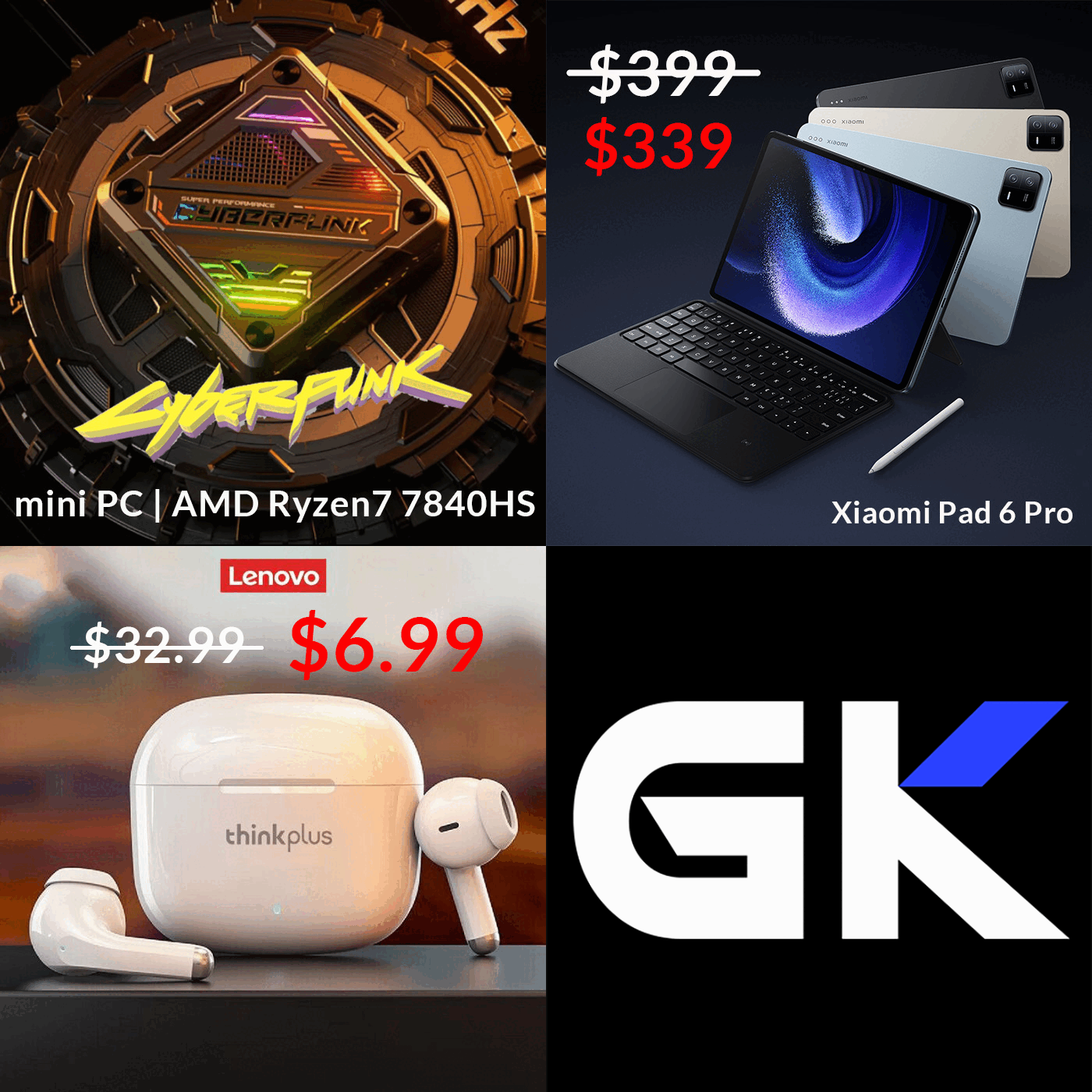
Geekwills is an online shop that caters to the latest mobiles, laptops, smart home gadgets, and all electronics in this genre. They deliver to customers in 190 countries. The Lenovo TWS earbuds have the best price for Gizmochina’s readers. Here is an exclusive coupon code: GCGK, 5% off for all products.

Lenovo Thinkplus TWS earbuds: on sale: $5.99 (original price: $32.99)

Xiaomi Pad 6 Pro Tablet: on sale: $339 (original price: $399)

RELATED:

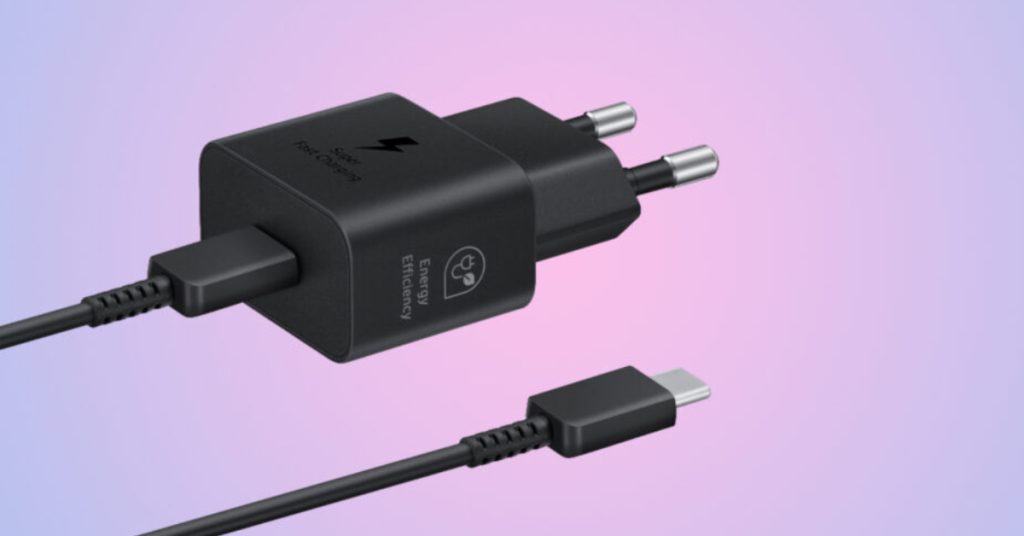
Samsung Launches New, Slimmer 25W Super Fast Charger with GaN

Samsung has announced a new 25W charger with a slimmer and more compact design. The charger uses GaN (Gallium Nitride) material, which is smaller and more efficient than traditional silicon-based chargers. This makes the new charger lighter and more portable, while still offering the same fast charging speeds.

Samsung 25W Super Fast Charger with GaN

The charger also supports USB PD 3.0 fast charging protocol, complete with PPS. This means that it can be used to fast charge a wide range of devices, including smartphones, tablets, and laptops.

In addition to its slimmer design and faster charging speeds, the charger is also more power-efficient than Samsung’s previous 25W charger. According to Samsung, the new charger consumes just 5mW in an idle state, compared to 20mW of the older model. This means that the new charger will waste less power when it is not in use.

The new charger is also made using recycled plastic, making it a more sustainable option than traditional chargers.

The new 25W Fast Charger is currently only available in South Korea, but Samsung is expected to launch it in other markets soon. It is priced at KRW 25,300 ($19) for the charger alone, or KRW 33,000 ($24) for the charger with a bundled USB Type-C to USB Type-C charging cable.

Related:

(Via)

Samsung Exynos 1480 chip runs Geekbench, might debut with Galaxy A55

Samsung is not giving up on Exynos chips; in fact, it is coming back stronger next year with new Exynos processors. Recently, the company made the Exynos 2400 SoC official, featuring an RDNA 3 GPU. This chip is intended to power the Galaxy S24 series and is expected to compete with the Snapdragon 8 Gen 3. Samsung might also be planning to refresh its mid-range lineup, as a new Exynos 1480 chip has appeared on Geekbench. Here are the details.

Exynos 1480 performs better than Exynos 1380, of course

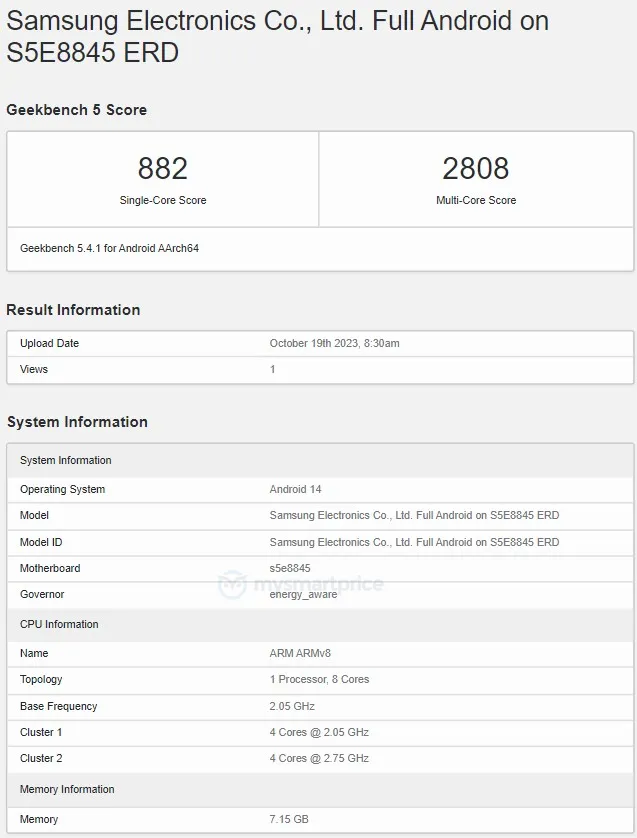
Exynos 1480 has appeared on Geekbench with model number S5E8845. The listing reveals the chipset will get an octa-core architecture with four efficiency cores clocked at 2.05GHz and the rest four performance cores at 2.75GHz. Exynos 1480 will have a base frequency of 2.05GHz and will be paired with Samsung’s Xclipse 530 GPU, possibly designed on AMD’s RDNA 2 graphics architecture similar.

Exynos-1480-Geekbench

Geekbench reveals the Exynos 1480 has achieved 882 points in the single-core test and 2808 points in the multi-core test. These scores may not be very impressive, especially considering that the chipset will power the Galaxy A55, a premium mid-range smartphone. However, when compared to the Exynos 1380, the performance is not too bad. For reference, the Galaxy A54 with the Exynos 1380 scored 776 points in Geekbench 5’s single-core test and 2599 points in the multi-core test.

The Geekbench listing confirms a recent Galaxy Club report that the Galaxy A55 with Exynos 1480 is already being tested. The phone is expected to debut in the first quarter of next year, just like the Galaxy A54. Apart from the chipset, you may not see many upgrades to the phone.

RELATED:

(Via)

OnePlus Open Finally Debuts With Dual LTPO Displays, Hasselblad Cameras

The OnePlus Open is finally here. The company took the wraps off of its first-ever foldable phone at a global event held in Mumbai, India today. Leaks and rumors leading up to today’s launch event left nothing about the device to the imagination. Notably, the OnePlus Open is for the global markets what the OPPO’s Find N3 (that was also announced earlier today) is for the China market. In short, both are same devices. 

OnePlus Open specifications and features

Right off the bat, the OnePlus Open is a compact foldable phone, almost the size of a wallet. It has a boxy form factor with a three-level alert slider on the left side. There is a large circular protruding camera module on the rear. OnePlus has equipped the hinge on its foldable phone with aerospace-grade materials. It is touted to last ten years with a 1,000,000-fold rating. Additionally, the crease on the device is fold rating barely noticeable. 

In terms of display, the OnePlus Open has a 6.3-inch external screen and a 7.82-inch internal screen. Both displays feature an LTPO AMOLED panel with 2K resolution, 120Hz refresh rate, and 2,800 nits peak brightness. The external screen is layered with Ceramic Guard protection that is said to offer 20 percent more impact resistance compared to the Gorilla Glass Victus. Meanwhile, the internal display has ultra-thin glass. The OnePlus Open is equipped with three speakers tuned by Dolby Atmos.

In the photography department, the OnePlus Open sports Hasselblad-branded triple rear cameras. The setup comprises a 1/1.43-inch 48MP main Sony LYTIA-T808 pixel stacked sensor, a 48MP ultra-wide-angle lens, and a third 64MP periscope telephoto unit with 6x optical zoom. The external and internal screens have a 20MP and 32MP camera sensor respectively housed in the punch-hole cutout for selfies and video calling.

Under the hood, the OnePlus Open is equipped with a Snapdragon 8 Gen 2 processor. It packs 16GB LPDDR5x RAM and up to 512TB UFS 4.0 storage. The foldable phone draws its power from a 4,800mAh battery unit with support for 67W fast charging. Software-wise, it runs on OxygenOS 14 based on Android 14 out of the box. It is guaranteed to receive four years of OS updates and five years of security patches.

The OnePlus Open comes with WiFi-7, dual 5G, X-Axis linear motor, Bluetooth 5.3, USB-C port, NFC, etc.

OnePlus Open pricing and availability

The OnePlus Open is offered in Voyager Black and Emerald Green colors. It starts at Rs 1,39,999 in India with pre-orders starting tomorrow and the first sale commencing from October 27. ICICI and OneCard customers can avail Rs 5,000 instant discount on the purchase and there are Jio benefits worth Rs 15,000. There is also Rs 8,000 trade-in bonus on selected devices. The OnePlus Open can be purchased from the brand’s online and offline stores, Amazon, Reliance Digital, and select partner stores across the country.

In the US, the OnePlus Open is priced at $1,699 whereas it costs EUR 1,799 in Europe. North American and European markets get free Buds 2 Pro Limited edition

Related: