Advertisement

AOC 27G15 27″ FHD gaming monitor with 180Hz 1ms, HDR10 launched for $149.99

AOC has introduced the 27G15 gaming monitor in the international market, appealing to both new and experienced gamers with its affordable price of $149.99 (Amazon). This monitor provides excellent value for those seeking quality gaming without a hefty price tag. Let’s check out the key specs of this monitor.

AOC 27G15 Gaming Monitor

AOC 27G15 Gaming Monitor Specifications:

The AOC 27G15 features a 27-inch display with a high 180Hz refresh rate, ensuring smooth gameplay. It boasts a rapid 1ms response time and low input lag mode for an immersive and seamless gaming experience.

Despite its affordable price, the AOC 27G15 gaming monitor maintains high-quality features. It provides Full HD resolution (1920×1080), features DC dimming, and a low blue light design to reduce eye fatigue during long gaming sessions. Additionally, it supports HDR10 for enhanced visuals, displaying vivid colors with a wide 121% sRGB color gamut for a lifelike gaming experience.

The monitor offers excellent ergonomics with customizable height, tilt, swivel, and pivot adjustments, allowing users to tailor their viewing experience. Its 3-sided frameless design is ideal for multi-monitor setups, providing an immersive gaming experience with minimal bezel interference, making it versatile for various user needs, from gaming to coding.

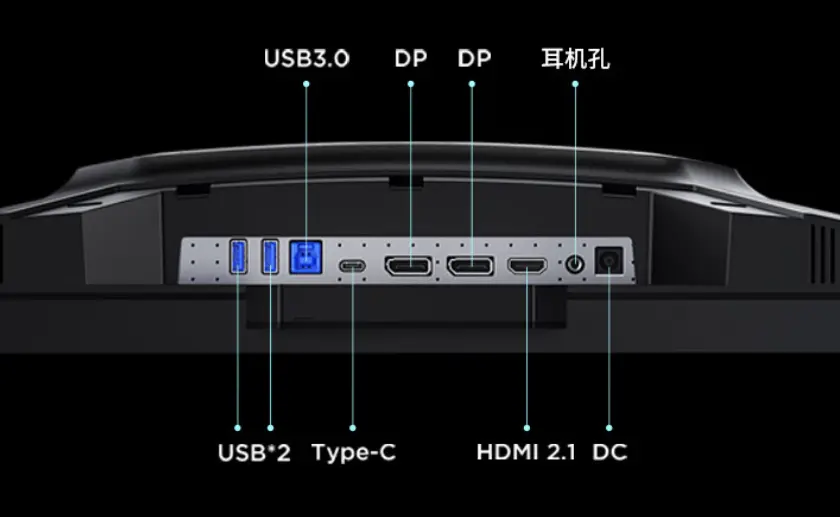
AOC ensures this monitor is versatile, making it compatible with popular consoles, allowing up to 120Hz frame rates (based on the specific console), and boasts a low latency mode to give gamers the edge. It’s also packed with essential ports including HDMI 2.0 and DisplayPort 1.4, ensuring broad connectivity.

A standout feature is the VA panel that delivers high contrast, allowing gamers to spot adversaries even in shadowy game environments. The wide 178/178-degree viewing angles guarantee consistent colors, regardless of the viewer’s position.

The 27G15 is also part of AOC’s G-Series, which comes with a best-in-class warranty program, including a three-year zero-bright-dot guarantee, 3-year advance replacement, and 1-year accidental damage coverage. For those concerned about security in public spaces, AOC has incorporated a Kensington lock.

Paul Chen, AOC’s Director of Product Management, expressed excitement about introducing the 27G15 gaming monitor to the gaming community. He emphasized its outstanding performance, immersive visuals, and ergonomic design, making it an ideal choice for entry-level gamers seeking an exceptional gaming experience.

The monitor is now available to purchase from Amazon. AOC has also unveiled the Gaming 16G3 portable gaming monitor recently featuring a 144Hz refresh rate. In the competitive gaming monitor market, AOC is currently leading, although Xiaomi is gaining ground as a strong competitor.

RELATED:

*Please Note: When you buy something using the links in our articles, we may earn a small commission at no cost to you.

Leica’s latest Sofort 2 hybrid instant film camera supports printing from smartphones & other Leica cameras

German camera manufacturing giant Leica has launched the Leica Soft 2 hybrid instant film camera. The Sofort 2 is the direct successor of the Leica Sofort and it is coming seven years after the company first announced the Sofort. The Sofort 2 instant film camera carries a decent price tag of $389 and will be available to buy from November 8.

Leica Sofort 2

The Leica Sofort 2 is quite different from its predecessor in that it has been transformed into a hybrid instant camera. It features a 1/5-inch digital sensor which allows users to choose which photos they want to print, offering greater control over their instant photography experience.

What stands out for me is that me is that the camera allows users to print images captured on their smartphones. This makes it a versatile tool for capturing and preserving memories. In addition, the Sofort 2 allows users to transfer photos taken on other Leica cameras to the Sofort 2 for printing. This is done via Leica’s companion app, FOTOS.

Leica Sofort 2

For those who appreciate design and aesthetics, Leica has introduced two new color options: striking red and classic black, in addition to the timeless white version. The camera also features multiple lenses, a printing lever for added convenience, and ten film effects to enhance creative expression. The inclusion of a macro mode enables users to capture intricate close-up shots with ease.

The Leica Sofort 2 is a direct rival to the likes of Fujifilm Instax Mini Evo and it offers unique advantages, including USB-C support and an expanded range of lenses.

As stated earlier, the Leica Sofort 2 is priced at $389. This is approximately $90 more than its predecessor but given the added features, it appears to be a fair price.


RELATED:

AnTuTu’s Top-performing Android flagship list for September released: OnePlus Ace 2 Pro retains top spot

Chinese benchmarking outfit AnTuTu has announced its top-performing flagship Android smartphones for the month of September. The list presents no major surprises as the OnePlus Ace 2 Pro retains its top position as the best Android flagship in August as well.

OnePlus-Ace-2-Pro

With a score of 1.66 million points, the OnePlus Ace 2 Pro aces the benchmark thanks to a powerful Snapdragon 8 Gen 2 processor, which is doing most of the hard work. The device also comes with a top-end model with a massive 24GB of RAM and equally massive 1 TB storage.

Li Jie, OnePlus China President, boasts that the OnePlus Ace 2 Pro has no rival at this level in terms of its price/ performance ratio. He touts the device as the most powerful product you can buy at its price. For reference, the OnePlus Ace 2 Pro starts at ¥2,999 (~$410), while the 24GB + 1TB model tested by AnTuTu costs just ¥3,999 (~$550).

Antutu september flagship ranking

As is often common with the ranking of the flagship segment over the years, Qualcomm’s latest chipset, in this case, the Snapdragon 8 Gen 2 continues to dominate. Almost all the phones on the top 10 list are powered by the Snapdragon 8 Gen 2 chip. The only exception to this is the smartphone occupying the 10th spot – the iQOO Neo8 Pro which is powered by a MediaTek Dimensity 9200+ chipset.

The rest of the list includes the iQOO 11S in second place with a score of 1,645,443 points. Others are the RedMagic 8S Pro,iQOO 11 Pro, Vivo X90 Pro+, Oppo Find X6 Pro, OnePlus 11, Xiaomi 13 Ultra, and iQOO Neo8 Pro.


RELATED:

Taiwanese authorities investigate Local Firms’ Huawei links amidst US Sanction

In a move that could exacerbate tensions between the US, China, and Taiwan, Taiwanese authorities have initiated an investigation into four local companies accused of aiding Huawei Technologies in establishing chipmaking facilities in southern China.

The probe, launched by Taiwan’s Ministry of Economic Affairs, follows a recent Bloomberg report that identified the firms involved. While the collaboration’s potential violation of US trade sanctions against Huawei remains uncertain, Economic Affairs Minister Wang Mei-hua assured lawmakers that no confirmed breach had been established.

Wang stated that the companies in question primarily offered services related to wastewater and environmental protection processes and did not deal with critical technology. Notably, Topco Scientific, one of the firms under scrutiny, confirmed its involvement in environmental protection efforts but denied any transactions involving semiconductor materials or equipment with Huawei.

Another company, United Integrated Services, acknowledged its Chinese subsidiary’s involvement in renovating the interior of a semiconductor manufacturer reportedly linked to Huawei. The company emphasized its compliance with all relevant laws and regulations in various jurisdictions.

These Taiwanese firms are allegedly assisting Huawei in building a network of chip factories in southern China, a collaboration that could further strain relations between Taiwan and the Chinese Communist Party. The situation is especially sensitive due to Taiwan’s presidential election in January and the island’s ongoing tensions with mainland China.

The Taiwanese Ministry of Economic Affairs plans to investigate whether these firms’ activities in China align with the scope of their original applications approved by Taipei. The case raises concerns about potential breaches of US sanctions against Huawei, highlighting the complex web of international technology collaborations in the midst of geopolitical tensions. 

Further updates on the investigation are anticipated within the coming weeks, as Taiwan navigates the delicate balance between economic interests and international relations.

Related:

(via)

Android 14 based stable MIUI update rolling out to Xiaomi 13 series and Xiaomi 12T

Google tested Android 14 for many months and yesterday it finally released the public build to the Pixel users. Following the Big G, Xiaomi has now started rolling out a stable MIUI update based on the latest version of Android. The update is being seeded to the Xiaomi 13, Xiaomi 13 Pro, and Xiaomi 12T for now.

Xiaomi becomes one of the first OEMs to release stable Android 14 updata

This new update brings these devices up to date, superseding their previous internal MIUI builds. Xiaomi 13 users will receive MIUI-V14.0.5.0.UMCMIXM and MIUI-V14.0.5.0.UMCEUXM, while Xiaomi 13 Pro users can expect MIUI-V14.0.5.0.UMBMIXM and MIUI-V14.0.5.0.UMBEUXM. Xiaomi 12T users, on the other hand, will receive MIUI-V14.0.6.0.ULQMIXM and MIUI-V14.0.5.0.ULQEUXM.

Users of the above-mentioned Xiaomi phones should be able to enjoy all the new features Google introduced with Android 14. The new software should bring a lot of personalization options, allowing you to set custom lock screen shortcuts for quick access to your favorite apps. It is also bringing support for HDR images with Ultra HDR which helps your photos look more vibrant.

With Android 14, Google also introduced native spatial audio support, cross-device copy and paste, and a new media player. Privacy and security have been given significant attention as well. Android 14 features Health Connect, a privacy-centric solution that securely stores and encrypts all personal health data directly on your device. In addition, users will receive notifications when apps seek to access their location data for third-party sharing, granting them the ability to deny access to such data.

Android 14 has also improved passkey support, now offering fingerprint authentication capabilities for third-party applications and an updated 6-digit PIN lockscreen option. You also get new accessibility features like improved magnification with pinch-to-zoom and variable magnification sizes.

Related:

(Source)

Tecno Camon 20 Premier 5G is the first non-Pixel device to get Android 14 update

Yesterday, Google made Android 14 official. It even started pushing the update to all the eligible Pixels. Within a few hours from that, Tecno, a comparatively smaller brand than Samsung and others became the first OEM to roll out Android 14.

In the last few years, Android brands have become much faster in delivering the latest version of Android. Each year, a different brand becomes the first (apart from Google) to seed the fresh version of Android.

In 2022, it was Oppo who was the first to roll out Android 13 for its flagships Find X5 and Find X5 Pro. Whereas in 2023, Tecno leads the pack by pushing Android 14 first for its Camon 20 Premier 5G in India.

Tecno Camon 20 Premier 5G
Tecno Camon 20 Premier 5G (Review)

For the unaware, the Tecno Camon 20 Premier 5G is a mid-range smartphone. The device’s main highlights are its 108MP ultrawide camera with autofocus and 50MP RGBW main camera. It is the only phone on the market with such a high-megapixel ultrawide camera.

The handset was introduced at ₹29,999 (~$360) in India in July. It is still being sold at the same price.

As for the Android 14 update, it is being rolled out in phases. So it will take some time to reach all the units.

Tecno says that the update arrives with HiOS 13.6. The latest software for the product brings improvements to Game Assistant Panel, Clock and Weather widget, multi-tasking mode, and Gallery.

At present, we have no info on the update’s availability in other markets. Anyway, it should arrive sooner than later.

RELATED:

Exynos 2400’s GPU performance supposedly better than Snapdragon 8 Gen 2, key specs leak

Exynos chipsets are reportedly returning in 2024 with the Galaxy S24 series. Although not all regions will have to deal with the new chip, it will still reach a sizeable number of users. Past leaks have revealed the S24 models will be powered by the Exynos 2400, a 10-core chipset with a new Xclipse 940 GPU. Now the processor has emerged on a benchmarking platform, boasting GPU score better than Snapdragon 8 Gen 2. Here are the details.

Exynos 2400 might not catch up with Snapdragon 8 Gen 3

Tipster @Tech_Reve recently shared two screenshots comparing the performance of the Exynos 2400 chip with Qualcomm’s flagship Snapdragon 8 Gen 2 using Powerboard 4.0 benchmarks. In a head-to-head GPU showdown, the Xclipse 940 GPU (developed in collaboration with AMD) delivered a slightly lower score compared to the Adreno 740 found in the Snapdragon 8 Gen 2. Specifically, the Xclipse 940 achieved a score of 1,656 points at 1080p resolution, while the Snapdragon 8 Gen 2’s Adreno 740 averaged 1,561 points at the same resolution.

This is not exactly good news since the Exynos 2400 barely beat the Snapdragon 8 Gen 2, which is now a year older SoC. You will likely not find this gap if the comparison was with the upcoming Snapdragon 8 Gen 3. But since neither the Galaxy S24 nor the Exynos 2400 are official yet, we’ll give Samsung the benefit of the doubt.

Earlier rumors suggest that the new Exynos SoC will have a 10-core CPU with a 1+2+3+4 core architecture. The single Cortex-X4 core will be clocked at 3.10GHz, while the two Cortex-A720 cores will run at 2.9GHz, and the three Cortex-A720 cores at 2.6GHz. The remaining four Cortex-A520 cores will be clocked at 1.8GHz. All of the cores will be based on the ARMv9 architecture.

Related:

(via)

Nothing Beer (5.1%) launched in the UK, coming soon to other regions

On April 1, 2022, Nothing, the tech startup led by Carl Pei, teased a new product on its Twitter and Instagram accounts. The teaser image showed a can of beer with the Nothing logo and the text “Beer (5.1%)”. Many people assumed that the teaser was an April Fools’ joke, but Nothing insisted that the product was real.

Nothing Beer (5.1%)

On the following day, Nothing released more information about the Nothing Beer which said that the beer is a dry, unfiltered rice lager with a hint of pear. It is brewed by Freetime Beer Company, a microbrewery based in Swansea, Wales and it has an ABV of 5.1%. While this all might have looked like an elaborate joke at that time, Nothing surprised the tech community by actually launching the Beer earlier today in the UK.

Nothing Beer (5.1%)

The Nothing Beer is now available for purchase on Nothing’s website and in its Soho, London store. The beer is sold in six-packs for £20 (~$24).

Nothing describes the Beer (5.1%) as a crisp, unfiltered rice lager. It features a subtle malt profile perfectly balanced with Kazbek hops, making for a technically refreshing drink.

Nothing Beer (5.1%)

Currently, the beer is only available for customers in the UK, however, Nothing is working on making the Beer (5.1%) available in more regions in the coming days. You can visit the brand’s website and sign up to get notified to keep yourself updated on the availability of Beer (5.1%) in your region.

RELATED:

Meta launches innovative Generative AI Tools for advertisers

Meta Platforms has unveiled its pioneering generative artificial intelligence (AI) tools tailored for advertisers. These cutting-edge features rolled out through Meta’s Ads Manager, enable advertisers to revolutionize their creative content effortlessly.

The first tool allows advertisers to customize their visuals by generating diverse backgrounds for their product images. Building on the technology behind Meta’s consumer tool, Backdrop, these backgrounds are tailored for advertisers, transforming their product images with simple yet eye-catching colors and patterns.

Another feature, image expansion, simplifies the process of adapting assets to fit various aspect ratios required across different platforms like Feed or Reels. Advertisers utilizing Meta’s Advantage+ catalog can now save valuable time by repurposing images and videos seamlessly.

The text variations feature in Meta Ads Manager empowers advertisers to create up to six different versions of text based on their original copy. These variations highlight specific keywords and phrases, offering advertisers the flexibility to choose or edit the generated output. Meta’s AI technology also allows for dynamic testing during campaigns, displaying different text combinations to different audiences to identify the most effective messaging strategies.

Meta’s extensive testing with a diverse group of advertisers earlier this year revealed significant time savings. Generative AI proved to save advertisers five or more hours per week, equivalent to a month per year. Although Meta acknowledges the need for further customization to match each advertiser’s unique style, these early results indicate a promising future for generative AI in advertising.

Furthermore, Meta plans to introduce more AI features, including generating ad copy to emphasize selling points and crafting generative backgrounds with tailored themes. In addition to these advertising innovations, Meta’s recent announcement includes the integration of AI for business messaging on Messenger and WhatsApp, enhancing customer engagement and support for e-commerce.

Meta’s venture into generative AI marks a significant stride in the tech giant’s commitment to advancing creative expression and connection through innovative technologies. Advertisers can now leverage these powerful tools to enhance their campaigns and captivate audiences with visually stunning and compelling content.

Related:

(via)

Amazon Great Indian Festival: iQOO Neo 7 Pro, iQOO Z7s, iQOO 11, and more available with irresistible discounts

Amazon Great Indian Festival, the e-commerce giant’s annual mega sale, starts from 8th October onwards and prime members will get early access to the sale on 7th October. Brands have started to announce tempting offers ahead of the sale. And the latest deals are from iQOO. The Vivo sub-brand has revealed the iQOO Neo 7 Pro, iQOO Z7s, iQOO 11, and iQOO 9, among other phones will be generously discounted during the sale.

iQOO smartphones just got more affordable

Although a bunch of iQOO smartphones are discounted, the iQOO Z7 Pro is the sweetest deal. The handset is powered by the Dimensity 7200 5G processor. It also gets a 64 MP OIS Camera and a 3D Curved 120Hz AMOLED Display. The iQOO Neo 7 Pro was launched in India for Rs. 34,999 ($429) but you will be able to grab the phone for just Rs. 30,999 ($379) during the sale.

iQOO-Neo-7-Pro

The vanilla iQOO Neo 7 with MediaTek Dimensity 8200 chipset, 120W FlashCharging, and impressive 120Hz AMOLED display, is also available at a discounted rate. It was unveiled with a price tag of Rs. 27,999 ($341) but will be reduced to Rs. 25,999 ($318) during the Amazon Great India festival.

Phones like the iQOO 11 and iQOO 9 will also be seeing a price cut. And the affordable options like the iQOO Z6 Lite and iQOO Z7s will also be discounted. The table below shows you all the discounted iQOO phones with their launch prices for comparison.

These prices may be inclusive of bank discounts and other available offers on Flipkart. Do confirm once when the sale starts. While you’re here, check out these impressive deals from Poco during the Flipkart Big Billion Days Sale.

RELATED:

*Please Note: When you buy something using the links in our articles, we may earn a small commission at no cost to you.

Google Assistant Gets a Boost from Generative AI with Bard

Google Assistant is currently the best virtual assistant on the market. But Google is aiming to make it even smarter by integrating the generative AI capabilities of Bard, a large language model that can generate and reason with text, voice, and images.

Google Assistant with Bard

The new assistant, called simply “Assistant with Bard,” will be able to help users with a variety of tasks, including planning trips, finding emails, creating lists, and writing social posts. Users will be able to interact with Assistant with Bard through text, voice, or images.

Assistant with Bard will also be contextually aware, meaning that it will be able to use the input from the sensors in an Android device, such as the camera, voice input, or presence detection, to understand the user’s intent and provide relevant responses. 

For example, on Pixel devices, users can pop up Assistant with Bard on top of a photo to get contextual assistance with personal tasks, such as asking it to write a social caption.

Google says that Assistant with Bard will be integrated with some of the Google services that users already use, such as Gmail and Docs, making it easier to stay on top of the most important things in their lives. 

For example, users can ask Assistant with Bard to “Catch me up on any important emails I missed this week” to get a rundown on the key emails they need to know about.

The company also announced that the Pixel 8 Pro is the first phone to run the company’s foundation AI models directly on the device. This means that the device will be able to run generative AI with up to 150 times more computations than the largest machine learning (ML) model on Pixel 7. This will lead to improved AI experiences on Pixel 8 Pro, such as an improved magic eraser feature that can help users remove large objects and people without smudging their photos.

Assistant with Bard is still in early development, so the company is rolling it out to a limited group of testers to get feedback before releasing it to the public in the next few months. This means that most of us will need to wait a while to use these features.

Related:

(Via)

Qubo showcases new Dashcams & GPS trackers in India

Qubo, the Indian smart electronics brand affiliated with the Hero Group, has introduced a range of innovative products aimed at bolstering road safety and security. These new offerings were showcased at the Qubo Connected World 2023 event.

Qubo dashcams

Qubo Dashcam

Qubo introduced two new dashcam models, expanding their range of smart auto accessories. The Dashcam ProX, featuring a 2MP camera capable of recording in 1080p full HD, boasts a unique rotatable design that can serve as a cabin camera, providing an extra layer of security. This dashcam excels in low-light conditions, captures time-lapse videos, and supports storage of up to 1TB on an SD card, available in three stylish colors.

Qubo Dashcam Pro

For those seeking even higher resolution and comprehensive coverage, the Dashcam Pro 3K offers a 5MP front camera and a 2MP rear camera. It includes a 3.2-inch LCD screen for added convenience. Equipped with a high-quality Sony IMX 335 sensor, it ensures clear video recording. Like the Dashcam ProX, it records time-lapse videos and supports storage of up to 1TB on an SD card.

Qubo advanced GPS tracker

Qubo GPS tracker

The highlight of this release is Qubo’s GPS trackers designed for both cars and bikes. These devices go beyond traditional tracking, incorporating advanced features to enhance the safety and convenience of driving. They provide real-time location tracking, notify users of ignition status changes, and send alerts when vehicles enter or exit defined geographic areas. Additionally, the inclusion of AI-based accident detection ensures that users are promptly informed of potential safety concerns. These trackers also offer insights into driving behavior and route playback.

Pricing & availability

Qubo’s GPS trackers are affordable, starting at Rs 1,799 for bikes and Rs 2,099 for cars. The Dashcam ProX costs Rs. 3,490 and is available now, while the Dashcam Pro 3K, priced at Rs. 7,990, will be available later this month. You can purchase these products on the company’s website, major online stores, or in over 2000 physical stores in 30+ Indian cities.

RELATED:

Sram Eagle Powertrain for e-bikes with an innovative design launched

Sram has announced the Eagle Powertrain system that controls both the motor and drivetrain of an e-bike. The latest addition to the Sram bicycle system portfolio is an innovative and tech-loaded powertrain. The Sram brand continues to catch the fancy of a wide array of cyclists across the world. Sram partnered with German e-bike system brand Brose to deliver the Eagle Powertrain.

Sram Eagle Powertrain

Sram has always put performance as the major fulcrum of its product development and the Eagle Powertrain exemplifies this fact. The brand is however not the leading provider in the e-bike segment where Shimano and Bosch are at the top. The Sram Eagle Powertrain is Sram’s debut into the e-bike powertrain turf. It now allows Sram customers to fully equip their bikes with Sram equipment including the motor, drivetrain, and suspension. The Sram Eagle Powertrain is claimed to be one of the smartest e-bike systems currently available.

Sram Eagle Powertrain

Sram leveraged the extensive capacity of Brose in producing utility-focused motors while it developed the intuitive software for the integration. The Eagle Powertrain has a peak torque of 90Nm and a peak power output of 680W. Its torque is higher than that of the leading e-bike systems in the market, mostly rated at 85Nm. The powertrain works with Brose batteries (630Wh or 720Wh), as well as a 250Wh range extender. The Eagle Powertrain can be streamlined to integrate fully into the bike’s electronic setup with wireless connectivity. The Sram Eagle Powertrain will be unveiled in new e-bikes soon, according to the company. There are however no specifics on that detail yet.

Sram Eagle Powertrain

The control system of the Sram Eagle Powertrain allows its unique software to control both the motor and drivetrain. This enables the system to shift gears for the rider by using sensors to adjust gearing. This Auto Shift feature allows the rider to pedal at optimal cadence always. In addition, the Coast Shift feature shifts gears as the rider is coasting which also allows for seamless pedaling under coasting conditions.

Related:

(source)

12 Years Later, Steve Jobs’ Legacy keeps on Growing with every iPhone Launch

Today marks the 12th death anniversary of Steve Jobs, a visionary who not only co-founded Apple Inc. but also revolutionized the smartphone industry. Before the advent of the iPhone in 2007, smartphones were largely clunky devices with physical keyboards and limited functionality. They were primarily targeted at business users for functions like email and basic internet browsing.

Steve Jobs saw the vision of the perfect iPhone before it ever existed

Jobs saw the potential for something much grander. His vision was a device that combined an iPod, a phone, and an internet communicator. The iPhone was born out of this vision and it changed the way we think about smartphones. Gone were the physical keyboards, to be replaced by a sleek, all-glass device with a single ‘home’ button. The user interface was intuitive, making it accessible not just to tech-savvy individuals but to the general public as well.

Steve Jobs
Image Credits: AB

The introduction of the App Store was another game-changer. Before this, installing new applications on a phone was cumbersome and often required going through a carrier. The App Store democratized the process, allowing developers to create applications and publish them on a platform that was accessible to millions of users. This gave birth to an entirely new ecosystem and economy, enabling things like mobile gaming, social media apps, and countless other utilities that we take for granted today.

Moreover, Jobs emphasized the importance of design, not just in terms of aesthetics but also in user experience. This approach influenced other smartphone manufacturers to up their game, making design a key aspect in the development process. This focus on user-centric design and ease of use became the industry standard.

Steve Jobs did more than just introduce a new gadget to the world; he altered our very relationship with technology. By pushing the boundaries of what a phone could do, he moved us from a paradigm where mobile devices were mere utilities to one where they act as extensions of ourselves. They’re not just for calls and texts; they’re our photographers, our libraries, our banks, and our social circles all rolled into one palm-sized device. Jobs understood that technology could be both functional and aspirational, and he gave us a device that fulfills needs we didn’t even know we had. As we commemorate his 12th death anniversary today, it’s clear that his legacy isn’t just in the devices we hold, but in how we engage with the digital world every single day.

RELATED:

iPhone 16 trial production to start in Chengdu, China this December

iPhone 15 series has just launched and leaks of iPhone 16 have already started to surface. A leak from tipster Fixed Focus Digital, reported by CNMO, suggests that Apple has started working on its next flagship series iPhone 16.

iPhone 16 Engineering Prototype Production Set to Begin by Year’s End

iPhone 16 leak

According to the tipster, Apple has established a sample production line in Chengdu, China. The leaked timeline suggests that domestic contract manufacturers could begin producing engineering prototypes as early as December. Subsequently, supplier integration and debugging activities are anticipated to take place in March or April of the following year.

The iPhone 15 series, which is already available to consumers, has received mixed reviews, with some critics noting its lack of significant innovation, reports of overheating issues, and concerns about limited changes compared to previous models. Apple appears to be facing increasing competition, especially in the software department, as some basic features available on Android devices are not yet on iOS. Consumers are seeking more from Apple.

iPhone 16 render

However, the upcoming iPhone 16 series, expected to launch next year, holds promise for reinvigorating Apple’s reputation for innovation. This new lineup is expected to feature four models: iPhone 16, iPhone 16 Plus, iPhone 16 Pro, and iPhone 16 Pro Max. These forthcoming models are anticipated to bring significant changes and improvements to the table.

According to past reports, the iPhone 16 is set to introduce a significant design innovation with its borderless design, which aims to reduce borders and enhance the screen-to-body ratio for a wider and more immersive viewing experience. Additionally, the iPhone 16 is expected to utilize new materials to make the phone lighter and thinner while improving durability and grip. While they used Titanium this year on Pro models, it may have resulted in some overheating issues, prompting the need for further refinement.

On the technical side, tipster Mobile Chip Expert has provided insights into the upcoming iPhone 16’s specifications. The base model is expected to feature the A17 chip using the N3E process, mirroring Apple’s recent introduction of the A17 Pro chip for its Pro models. This differentiation between Pro and standard chips might be a cornerstone of Apple’s future strategies.

Additionally, the iPhone 16 is anticipated to incorporate thinner printed circuit boards (PCBs) made from RCC adhesive-backed copper foil, replacing the former flexible copper substrate.

This modification could make the device slimmer and pave the way for hardware enhancements such as a larger screen for the Pro models.

RELATED:

Hyundai Joins Tesla Supercharger Network to use NACS

Hyundai is finally shaking hands with Tesla to use its North America Charging Standard (NACS). Scheduled to kick off in the US in late 2024, with Canada following suit in 2025, this move could change the electric vehicle (EV) charging game.

The company is also collaborating with Ford, GM and Honda for the future

What’s the big deal? Hyundai’s EVs, including the much-anticipated Ioniq series, will now gain access to Tesla’s extensive Supercharger network. With over 12,000 Superchargers across North America, Hyundai is effectively doubling its DC fast-charging options for its customers. José Muñoz, CEO of Hyundai Motor North America, believes this collaboration will make life easier for Hyundai EV owners, promising access to a whopping 30,000 stations across the continent.

Hyundai

But Hyundai isn’t putting all its eggs in Tesla’s basket. Alongside this partnership, the Korean automaker is also collaborating with big players like BMW, GM, Honda, and Mercedes to cook up a separate North American network of at least 30,000 chargers. The first US installations of these chargers are expected to be up and running by summer 2024.

Why does this matter? Fast charging has been a sticking point for people considering switching to electric cars. Until now, Tesla led the charge (pun intended) in offering a robust fast-charging network. Hyundai, despite recently leaping over GM in U.S. EV sales, has always been in Tesla’s rearview mirror. This strategic alliance levels the playing field somewhat and could encourage more consumers to opt for a Hyundai EV.

While Hyundai’s collaboration with Tesla is a huge win for accessibility, it also marks a subtle shift in the auto industry. Tesla’s Supercharger network is no longer an exclusive club; it’s becoming an industry standard. The list of automakers signing up for Tesla’s network is growing, and it’s not just Hyundai. Ford, GM, Honda, and several others have also jumped on the bandwagon.

RELATED:

(Via)

Elon Musk’s ‘X’ is Now Redacting Headlines from Links Shared on the Platform

The platform formerly known as Twitter, now referred to as X, has started removing headlines and snippets from links shared on its site. Elon Musk, the website owner, said this would “greatly improve the platform’s aesthetics.” However, the change has not been uniformly embraced, with advertisers voicing their disapproval when previewed with the new look.

This might be a good way to improve the platform’s look, or there might be something bigger

The aim behind the format switch, according to X, is to make posts look more streamlined by allowing more of them to fit on your screen at one time. Another stated aim is to counter clickbait—a problem that has plagued the site for years. Headlines that sensationalize content could soon be a thing of the past.

X Twitter

While these reasons might seem straightforward, there’s a deeper narrative. Musk has long been advocating for long-form content to be posted directly on X. Under his tenure, Blue subscribers now enjoy a character limit of 25,000, and Musk has often tweeted urging journalists to “publish directly” on the platform. Recently, he even pushed for “more citizen journalism” on X, adding that live videos could be easily done from phones.

So is this just an aesthetic revamp, or is Musk subtly steering the ship towards a more controlled narrative, where news is not just skimmed but deeply engaged with? The change could certainly benefit those who prefer in-depth reading over headline grazing, but it also raises questions about how this might affect public discourse and the diversity of voices on the platform.

Only time will tell if this format change will become a win-win for all or if it’s an attempt to centralize the flow of information on X. Either way, the platform is changing, and how we engage with it might never be the same again.

RELATED:

(Via)

Google releases Gmail app for Wear OS

Google has been improving Wear OS with a variety of new features, and apps. In line with these improvements, the company has just announced the Gmail app specifically designed for Wear OS smartwatches. The app allows users to manage their Gmail inboxes directly on their wrists. 

As reported by Android Police, Gmail for Wear OS is now available for download from the Google Play Store and works on all smartwatches running Wear OS 3 or 4. With this app, users can now view their inbox, read and reply to emails, and switch between multiple accounts right from their wrists.

Prior to this release, Wear OS users could only receive Gmail notifications—just like they could receive notifications from any other app—and take basic actions such as archiving, replying, or deleting emails. 

Moreover, as per 9to5Google, the app also supports a watch face complication that shows new emails. This doesn’t show all of your unread emails, but only the ones that have arrived recently.

In addition to the Gmail app, Google has also been working to bring other apps to WearOS, such as Google Calendar. However, it isn’t live yet, and the company hasn’t revealed when it plans to release it. We hope Google releases more native apps for Wear OS smartwatches.

Related:

Poco announces tempting Flipkart BBD deals on Poco F5, M6 Pro, X5 series, and more

Flipkart Big Billion Days sale is starting on October 7 for the plus members and on October 8 for everyone else. As every year, we’ll be seeing loads of tempting discounts on consumer electronics. The e-commerce platform has already revealed tempting offers on iPhone 12, Nothing Phone (2), and Pixel 7 series phones. Now, we have some irresistible deals from Poco on a range of smartphones, including the Poco F5, Poco M6 Pro, Poco X5 series, and more. Here are the details.

Poco Flipkart Big Billion Day deals

The best Poco phone to grab during the BBD sale is the Poco F5 (review). The handset is a true flagship killer with a Snapdragon 7+ Gen 2 under the hood and a 6.67-inch AMOLED display. The phone supports 120Hz refresh rate, Dolby Vision, HDR10+, Adaptive HDR, and more. It is fueled by a 5,000mAh battery with 67W charging support. During the sale, the handset will be available at Rs. 20,999 ($252) for the base 8GB+128GB variant. It was launched at Rs. 29,999 ($360).

Poco X5 Pro 5G is yet another impressive deal if you want a powerful smartphone at a budget price. The device is powered by the mid-range Snapdragon 778G processor and gets a large AMOLED display, paired with a 5,000mAh battery. All this will cost you just Rs. 9,999 ($120) during the Flipkart BBD sale.

Below table shows you all the discounted Poco smartphones with their storage variants and launch price.

Poco BBD offer

These prices may be inclusive of bank discounts or other offers available on Flipkart. It’s best you check for yourself when you are making a purchase. That said, Infinix has also announced some impressive offers on a range of its smartphones. You might check them out.


RELATED:

DuckDuckGo Loses Out on Chance to Become Apple’s Default Private Search Engine

Google is in trouble with the US government. The US Justice Department is conducting an antitrust suit against the company. Accused of using its power and resources to overshadow competitors and create unfair competition, the company is backed into a corner by rivals like Microsoft. Of course, Google has denied the allegations and says that it will vigorously defend itself in court.

The outcome of the case is uncertain, but it seems the damage will be significant as the case continues to face new challenges. The latest information showed that Apple considered switching private default search engine to DuckDuckGo from Google. However, they rejected it due to the money coming from Google.

Apple Considered Switching Private Default Search Engine to DuckDuckGo, but Ultimately Rejected the Idea

The lawsuit filed by the US Justice Department against Google has revealed many new details about the technologies we use every day. Court documents showed that in 2018, Apple had discussions with DuckDuckGo to replace Google as the default search engine for private browsing mode in its Safari browser.

Duck duck Go

The transcripts show that Apple executives were concerned about Google’s dominance in the search engine market and the potential privacy implications of its data collection practices. They also believed that DuckDuckGo’s privacy-focused approach could be a valuable addition to Safari’s private browsing mode.

However, Apple ultimately decided against switching to DuckDuckGo. The transcripts show that Apple executives were concerned about the quality of DuckDuckGo’s search results and its ability to handle the high volume of traffic that Safari generates. DuckDuckGo has long marketed itself as a more privacy-friendly alternative to Google.

It does not track its users’ search history or target them with personalized ads. However, DuckDuckGo’s search results are not as comprehensive or accurate as Google’s. The company has not publicly commented on the matter. However, it is possible that Apple was concerned about the potential impact on its revenue. Google pays Apple billions of dollars each year to be the default search engine on Safari. This was also the reason the case started in the first place.

RELATED:

(via)