South Korean electronics giant Samsung Electronics has severed ties with BOE, China’s largest display manufacturer.
Samsung’s decision to exclude BOE from its supplier list stems from a series of patent infringement and trade secret theft allegations.
In recent months, Samsung Display, a subsidiary of Samsung Electronics, has filed complaints with the U.S. International Trade Commission (ITC) accusing BOE of misappropriating its OLED panel and module technology.
BOE has been a major supplier of Liquid Crystal Display (LCD) panels to Samsung Electronics, accounting for around 10% of the company’s TV panel purchases in the first half of 2023.
However, in the third quarter of the year, BOE was excluded from the list of key panel suppliers for Samsung Electronics’ Device Experience (DX) division, marking the first time in nearly seven and a half years that the Chinese company has not been included as a primary supplier.
The severing of ties with BOE is likely to have a significant impact on the Chinese company’s business. BOE had been counting on Samsung as a major customer, and the loss of this contract will likely hurt its bottom line.
With BOE out of the picture, Samsung Electronics is expected to increase its cooperation with other suppliers, including LG Display, Sharp, and AUO.
LG Display, in particular, is anticipated to ramp up production at its Guangzhou, China LCD factory, potentially increasing shipments from 9 million units in 2023 to 16 million units in 2024.
Google has launched a new “Notes” feature in its Search app, allowing users to add their annotations to search results they find on the web. Alongside this, Google has unveiled a bunch of other announcements, which we’ll delve into further.
Google now lets you add annotations to search results via “Notes”
The Notes feature provides a personal space for users to capture their thoughts and insights related to specific search topics. These notes are not private; they are publicly visible to anyone who searches for the same topic. Google believes this approach can add a “helpful layer of human insights to search results.”
Collection of Notes in search results. Image: Google
Since Notes will be indexable on the open web, users will be able to share them directly through email links rather than solely through search results.
To use it, the user must first opt into the feature through Search Labs. Once enabled, buttons for adding and viewing notes will appear underneath search results and articles.
You can customize your Notes with colorful fonts and images for a more visually appealing look. And, you can also go to any Google search page and check notes that are added by others.
The initial rollout of Notes will be limited to users in the United States and India. Google is also exploring ways to provide publishers with insights gleaned from Notes placed on their content.
Keeping Track of Search Topics with Follow
In addition to Notes, Google unveiled a new “Follow” feature that permits users to track specific search queries. Following a query, users will receive batched updates and notifications about relevant developments related to their chosen topics.
Following (a topic). Image: Google
The Follow feature will be initially available in US English across the Google app, mobile Chrome, and Safari browsers.
Additional Enhancements to Search
Google also announced enhancements to its “Perspectives” feature, which incorporates content from social media and forums into search results to broaden the range of perspectives presented.
Perspectives will be accessible on desktop search in the US and will include more information about individual creators, such as profile pictures and follower counts.
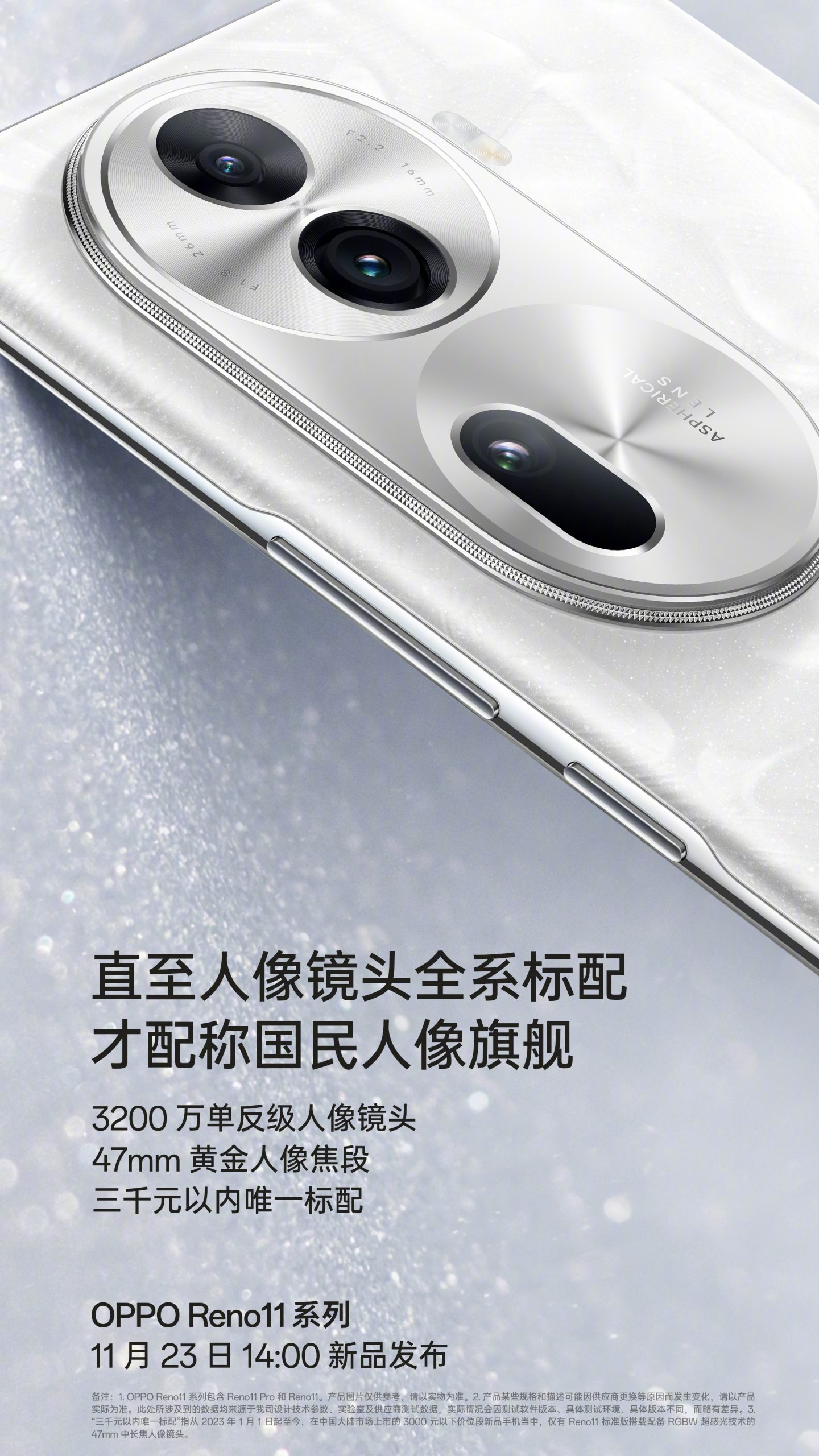
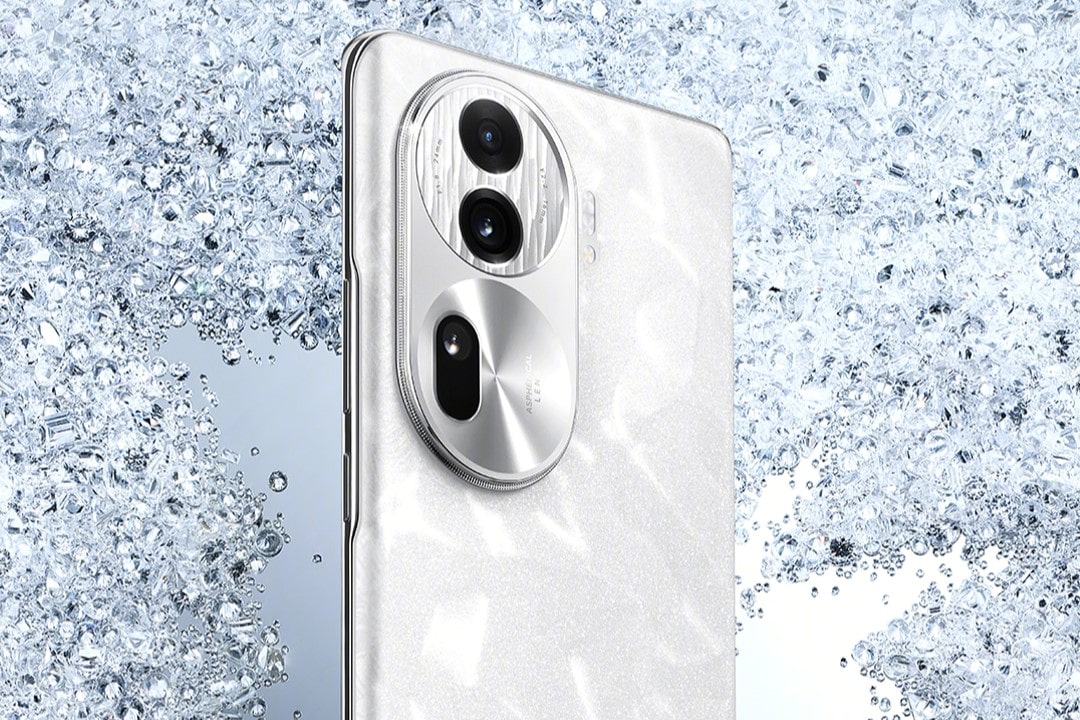
Oppo has officially confirmed on Weibo that the upcoming Reno 11 Series will feature the flagship imaging algorithms from the Oppo Find Series. The imaging algorithms use the new golden portrait triangle to create an outstanding portrait shooting experience compared to the flagship smartphones.
Consumers of the Reno 11 Series will be able to capture a flagship level of portrait. Furthermore, it creatively and correctly uses AI technology to compute the light, shadow, and colour of people and objects in the picture with the aid of cutting-edge imaging technologies like the ultra-light and shadow image engine and the ultra-clear image quality engine.
The Reno 11 Series achieves flagship-level portrait performance by combining natural light and shadow, vibrant appeal, and SLR texture in portraiture.
Oppo Reno 11 Series to use Flagship Camera Algorithms from Find Series
According to OPPO, the product with the greatest user base and the greatest demand for more functionality is the basic version. With image capabilities much beyond the normal version of the same level, the new Reno 11 will be outfitted with a flagship imaging algorithm, an SLR-level portrait camera, and a million-imaging computing power processor.
The Reno 11 may produce a very standard version while at the same time offering the same impeccable fluid experience and outstanding texture as the Pro version.
Oppo Reno 11 Series Specifications (Rumored)
The Reno 11 will feature a curved-edge OLED display with FHD+ resolutions and a 120Hz screen refresh rate. Under the hood, the MediaTek Dimensity 8200 powers the device. The Reno 11 will have a 4800 mAh battery with 67W SUPERVOOC charging. It will be equipped with a 50MP IMX890 primary + 8MP ultra-wide + 32MP 2X telephoto rear camera.
On the other hand, the Reno 11 Pro will also feature a curved-edge OLED display but with a 1.5K resolution with a 120Hz screen refresh rate. The phone is confirmed to be powered by Snapdragon 8+ Gen 1 chipset. The flagship will be equipped with a LYT600 primary + 8MP ultra-wide + 32MP with a 47mm portrait lens rear camera. The Reno 11 Pro features a 4700 mAh battery with 80W SUPERVOOC charging.
Moreover, both devices from the Reno 11 Series will officially come with ColorOS 14 based on Android 14 out of the box. Additionally, both devices will have an X-axis linear motor, dual stereo speakers, and NFC support.
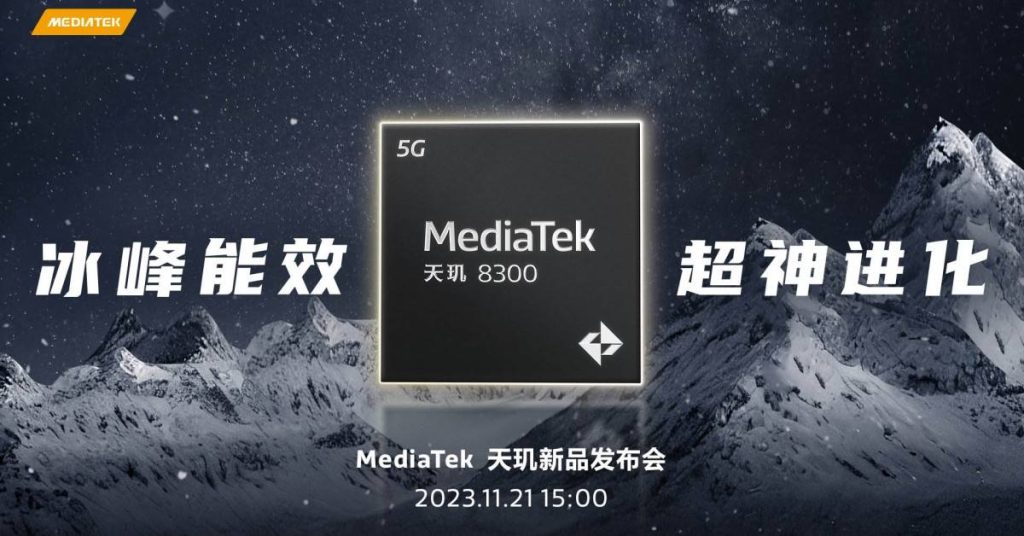
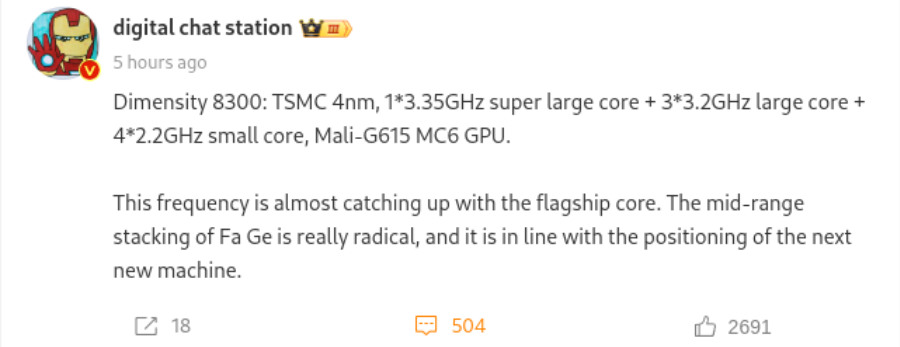
After Dimensity 9300, MediaTek is gearing up to unveil its latest smartphone chipset, the Dimensity 8300, on November 21. Details about the chipset have been trickling out in recent weeks, and now renowned tipster Digital Chat Station has provided a comprehensive overview of the key specifications.
MediaTek Dimensity 8300 Specs (Rumored)
According to the tipster, the Dimensity 8300 is built on TSMC’s 4nm manufacturing process. And, the core CPU configuration comprises a single high-performance Cortex-A715 core clocked at 3.35GHz, three additional Cortex-A715 performance cores running at 3.32GHz, and four power-efficient Cortex-A510 cores operating at 2.2GHz. The graphics are handled by a Mali-G615 MC6 GPU.
The 4+4 core architecture is similar to that of the Dimensity 8200 chipset. Here, the four Cortex-A715 cores will handle most of the performance-intensive tasks and four Cortex-A510 cores will focus on efficiency-related things.
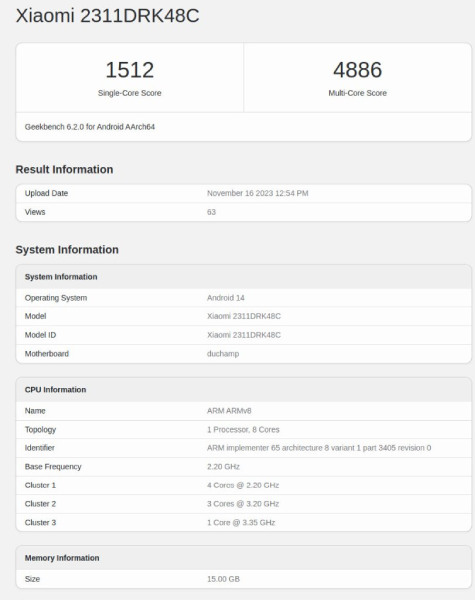
The Dimensity 8300 has also been spotted in a Geekbench 6 listing on a Redmi phone, believed to be part of the upcoming K70 series.
The phone, identified with the model number Xiaomi 2311DRK48C, achieved a single-core score of 1512 and a multi-core score of 4886. This performance puts it slightly ahead of the Dimensity 8200 and 8200-Ultra chipsets.
According to leaker Digital Chat Station, the Dimensity 8300’s performance is expected to surpass that of the Qualcomm Snapdragon 7+ Gen 2 SoC.
Further details regarding the Dimensity 8300’s capabilities and performance will be available upon its official launch on November 21st.
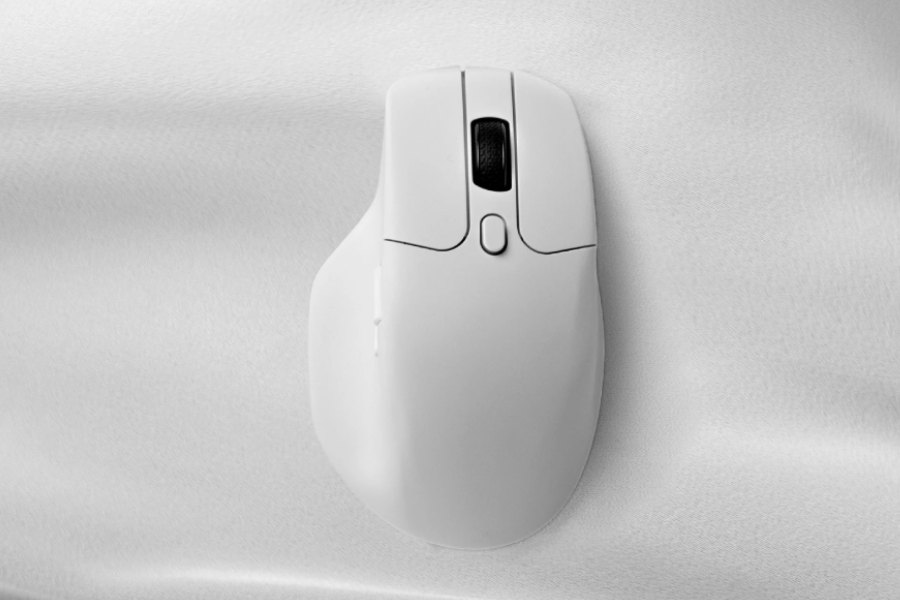
Keychron has announced the launch of the M6 three-mode mouse in China. It’s a relatively affordable mouse with an ergonomic design that can be used for work, play, or both. Let’s talk about the specifications, features, and price of the Keychron M6 mouse here.
Keychron M6 Specifications
The M6 has a right-handed ergonomic design that fits the curvature of the palm. It has a thumb tray design and a thumb wheel on the side. The mouse is also very lightweight, weighing only 78 grams.
It is equipped with a high-performance PAW3395 sensor, which provides up to 26,000 DPI and 650 IPS tracking speed. This makes the M6 ideal for gaming and other tasks that require precision and speed.
As for connectivity, the M6 offers three connection modes: 2.4GHz wireless, Bluetooth, and wired. The 2.4GHz wireless connection provides a low-latency connection that is ideal for gaming.
The Bluetooth connection is perfect for everyday use, and the wired connection is a good option for when you need to charge the mouse.
Speaking of which, the M6 has a long battery life of up to 80 hours on a single charge. This means that you can use the mouse all day without having to worry about running out of power.
Pricing and Availability
The Keychron M6 is available now for 228 yuan in China and $49 in the US. You can purchase the mouse from the Keychron website in the Black and White color option.
In a surprising move, Apple has announced that it will adopt the Rich Communication Services (RCS) standard for messaging, bringing an end to the frustrating green bubble experience for iPhone users when communicating with Android devices.
The company plans to incorporate RCS support into its Messages app next year, significantly improving cross-platform messaging capabilities.
In a statement to 9to5Mac, an Apple spokesperson said:
“Later next year, we will be adding support for RCS Universal Profile, the standard as currently published by the GSM Association. We believe RCS Universal Profile will offer a better interoperability experience when compared to SMS or MMS. This will work alongside iMessage, which will continue to be the best and most secure messaging experience for Apple users.”
RCS, a communication protocol developed by the GSM Association, offers a host of enhancements over the outdated SMS and MMS standards currently used for text messages in iPhones. It enables users to share high-resolution photos and videos, send audio messages, and transfer larger files.
Additionally, RCS enhances security for cross-platform messaging, adds cross-platform emoji reactions, and improves the reliability of group chats across different devices.
Apple’s decision to embrace RCS comes after years of persuasion from Google, smartphone manufacturers, and even regulatory bodies. The company had previously resisted adopting RCS, citing concerns about its potential impact on iMessage, its proprietary messaging platform.
RCS support will be introduced to iPhones via a software update next year. Carriers will also play a crucial role in implementing RCS support to ensure full functionality. In the United States, major carriers like Verizon, T-Mobile, and AT&T already support RCS.
Just over a month had passed since its last significant outage when users began reporting problems synchronising their devices. Certainly, it appears that another server failure that hampered Fitbit’s ability to sync data from devices occurred.
You will not be able to check on data from a Pixel Watch 2, Fitbit Charge 6, or any other device using the Fitbit app this morning. Starting at around 11 a.m. ET on November 16, 2023, a widespread outage brought the app offline.
Several individuals also shared their problems on social media including Reddit. They said, that when they attempted to sync the Fitbit Charge 6, the data would not appear in the app itself, even though they could open the app and start a manual sync.
Fitbit Reports Server Outage Issue Again, Consumer Raises Concern
If you haven’t manually synced your device in a few hours, the app could not display any data at all due to the outage. It also prevents the app from displaying any current data. The outage is affecting a number of accounts on the US East and West coasts, and DownDetector users are reporting it extensively.
Shortly after confirming that they were aware that users were “experiencing issues,” Google said that the issue had been resolved. “We’ve fixed the problem that was causing certain Fitbit app problems for our users. Customers who are still having issues should get in touch with customer care, said Google representative.
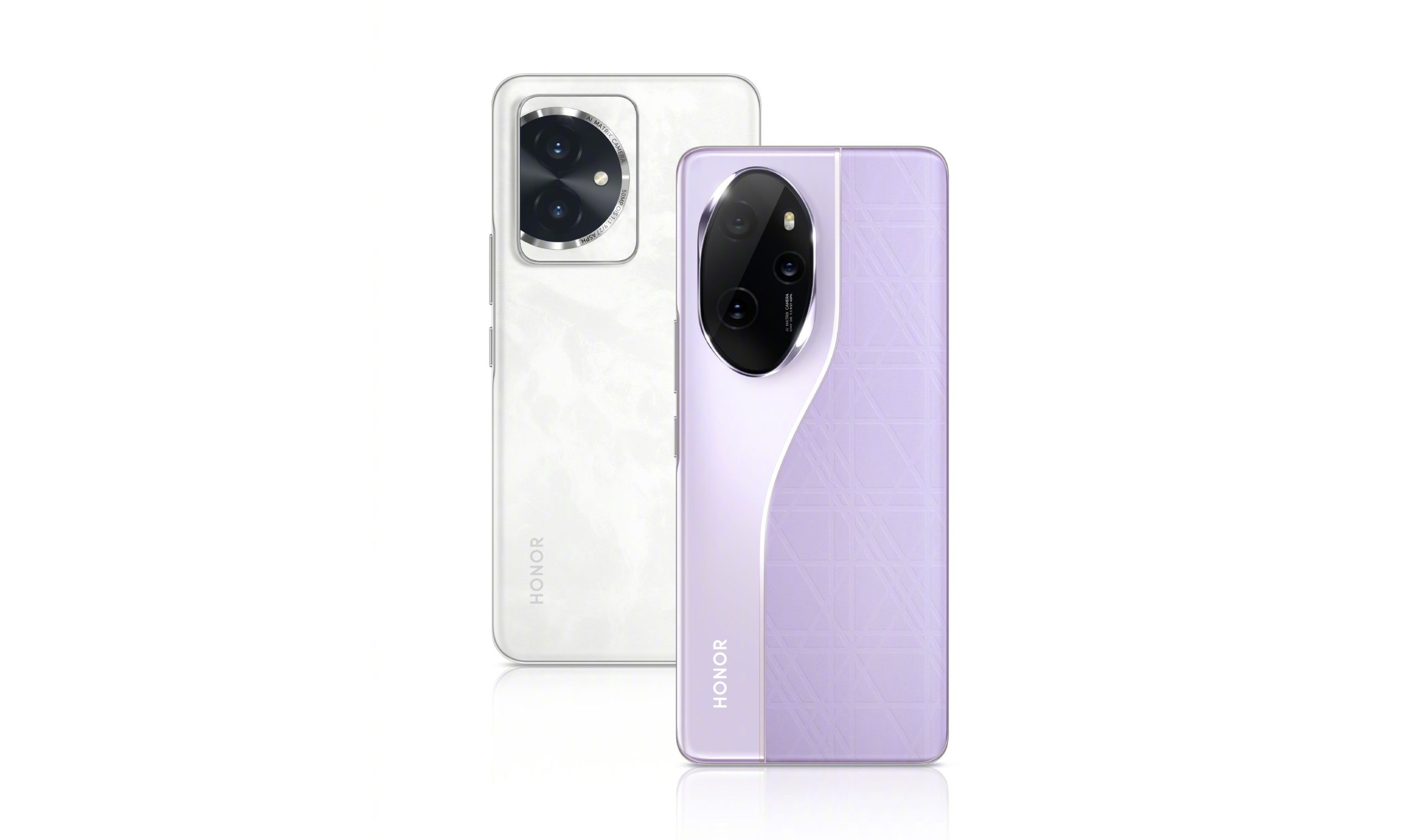
Honor has officially unveiled its highly anticipated Honor 100 series, scheduled for an official release on November 23. The series will include the Honor 100 and the Honor 100 Pro, with notable distinctions in their design aesthetics. The revelations, including real-life images, shed light on the visual differences between the two models, especially highlighting the unique design elements of the Pro model.
Honor 100 and Honor 100 Pro design elements
Honor 100 Pro
The Honor 100 and Honor 100 Pro will showcase distinct design elements. The Honor 100 boasts three color options: black, white, and a gradient finish. Its camera setup adopts a classic rectangular shape, with a stylish semi-circular decorative band. Positioned in the middle are two cameras.
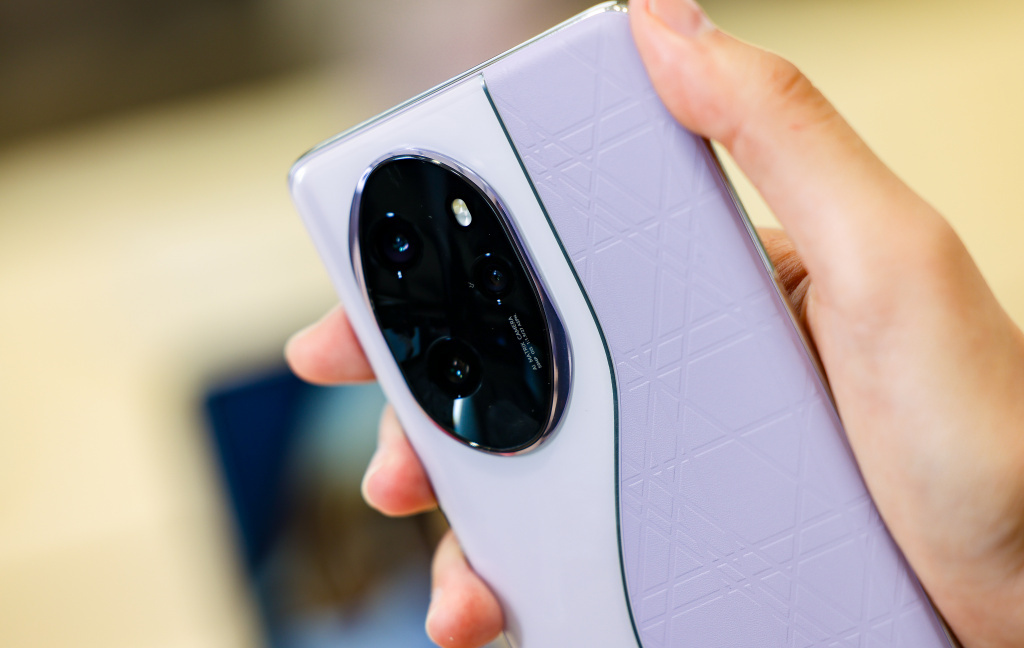
In contrast, the Honor 100 Pro introduces four color variants, including classic black and white, along with two dual-tone options in cyan and purple. What sets the Pro model apart is its innovative use of materials on the back panel. It involves a patchwork of glass and plain leather as you can see in the images. This unconventional approach presents a manufacturing challenge but adds a touch of sophistication to the device.
The camera module on the Honor 100 Pro takes a departure from traditional designs, featuring a shape inspired by the Möbius ring concept. Despite its seemingly disorderly appearance, the Möbius ring represents an infinite loop, adding a layer of symbolism to the phone’s aesthetics. Upon closer inspection, the Honor 100 Pro showcases three cameras on the rear, with a notable 50-megapixel main camera, complemented by OIS (Optical Image Stabilization) for enhanced photography capabilities.
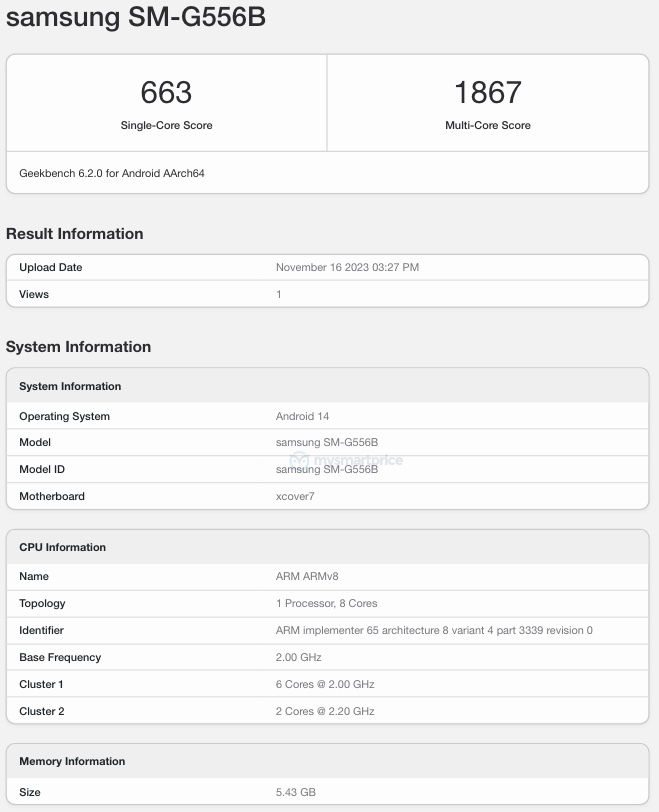
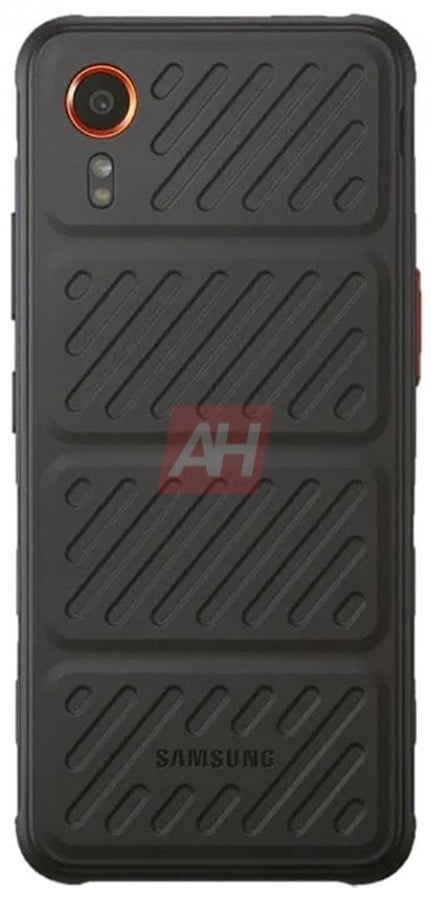
Samsung is expected to announce the Galaxy XCover 7, a new rugged smartphone in the coming months. The rugged design of the smartphone was just made public via the internet leak of the official renderings. Now, the SM-G556B model number of the purported Galaxy XCover 7 smartphone is listed in the Geekbench database.
As per the Geekbench listing, the smartphone received a single-core score of 663 and a multicore score of 1867. It also indicates that the device—likely the MediaTek Helio G99—will include a Mali-G57 MC2 GPU and CPU with a maximum clock speed of 2.20GHz. Additionally, the smartphone attests to the Android 14 and 6GB of RAM.
Samsung Galaxy XCover 7 Surfaces on Geekbench
Samsung Galaxy XCover 7 Surfaces on Geekbench
Samsung Galaxy XCover 7: Key Details
The next Galaxy XCover 7 is anticipated to have a robust and long-lasting design, akin to previous XCover series phones, based on the leaked pictures. It is probably drop-resistant enough to fulfil MIL-STD-810H standards because of its robust construction and raised corners for shock absorption. It should also offer IP68 protection against water and dust.
image source: Android Headlines
Naturally, the Galaxy XCover 7’s display panel has substantial bezels for a tough smartphone. The selfie camera will probably be housed inside a notch that resembles a water drop.
The Galaxy XCover 7 seems to have a single back camera surrounded by a red accent ring. A dual-rear camera configuration is available on the XCover 6 Pro, the previous edition of the XCover series smartphone.
Recent sources claim that the Galaxy XCover 7’s back plate is detachable and features a grooved pattern. This suggests that a detachable battery will be a part of the Galaxy XCover 7. The study, however, omits information on the phone’s battery life and charging speed.
As a result, a ruggedized variant of the Galaxy A55 5G will be called as the Galaxy XCover 7. The phone is anticipated to cost less than the $599 Galaxy XCover 6 Pro.
Black Friday 2023 is just around the corner and the savings are already starting to pour in! If you’re looking for the best deals on Amazon US with the biggest discounts, there are a few standout options to consider. First up is the Apple iPad (9th gen, 64GB) which is available for just $249, giving you a substantial discount on this popular tablet. This deal is perfect for those who want a reliable and powerful device for both work and entertainment.
Another great deal to take advantage of is the Amazon Fire TV Stick Lite, available for just $16. With nearly 50% off, this streaming device is an excellent option for those who want to enjoy their favorite movies and TV shows without breaking the bank. It’s an affordable and easy way to upgrade your TV viewing experience.
Lastly, the Sony WH-1000XM5 headphones are currently priced at $328, which is a record low price for these premium noise-canceling headphones. With their excellent sound quality and comfort, this deal is not to be missed for audiophiles looking to elevate their listening experience.
These deals offer significant discounts on popular products, making them some of the best options to consider if you’re looking for a great deal.
Gearberry’s Early Black Fridaypromotion, running from November 14th to November 30th, brings a plethora of enticing offers for savvy shoppers.
GearBerry is the ultimate destination for do-it-yourself enthusiasts seeking high-quality industrial equipment, power tools, safety supplies, and more at competitive prices. With a strong emphasis on electric tools, 3D printers, and laser engravers, GearBerry is driven by a genuine passion for DIY projects and top-notch power tools.
Wheel of Fortune Drawing: Unlock Free Gifts and Savings Up to $1,099!
Embark on a winning spree with Gearberry’s Wheel of Fortune Drawing, offering a 100% winning chance. Participants not only secure free gifts but also stand to save an impressive sum, with potential savings reaching up to $1,099.
50% OFF Flash Sale: Unleash Savings on Your Favorites
Indulge in the thrill of the moment with Gearberry’s 50% OFF Flash Sale. This limited-time offer provides an exclusive opportunity to acquire coveted items at half their regular price, making it an ideal occasion for cost-effective shopping.
11.11 Super Sale: Maximum 70% Off + Extra $50 Savings with Coupons!
Gearberry’s 11.11 Super Sale is a bonanza of discounts, featuring a maximum of 70% off on selected items. To amplify savings, customers can apply special coupons: GBDBL1 ($10 off $100), GBDBL2 ($30 off $300), and GBDBL3 ($50 off $500), securing additional discounts and making the Super Sale even more irresistible.
Buy More, Save More: Up to 20% Off on Accessories!
Revamp your style without breaking the bank through Gearberry’s Buy More, Save More offer. Purchase a single accessory and enjoy a 10% discount; add a second accessory to your cart, and watch the discount soar to 20%. This flexible arrangement empowers customers to curate their style while keeping budgets in check.
Fafrees E-bike Special: Receive a Free Chain Lock and E-bike Bag
Invest in sustainable transportation with Gearberry’s Fafrees E-bike and enjoy added perks. Every Fafrees E-bike purchase comes with a complimentary chain lock and e-bike bag, enhancing the convenience and security of your eco-friendly commuting solution.
For a limited time, GearBerry offers substantial discounts on DIY gadgets with free shipping from local warehouses and a 7-day refund and 30-day exchange policy. Maximize your savings and efficiency with GearBerry, your go-to source for all your DIY needs. So let’s explore some intriguing offers from GearBerry.
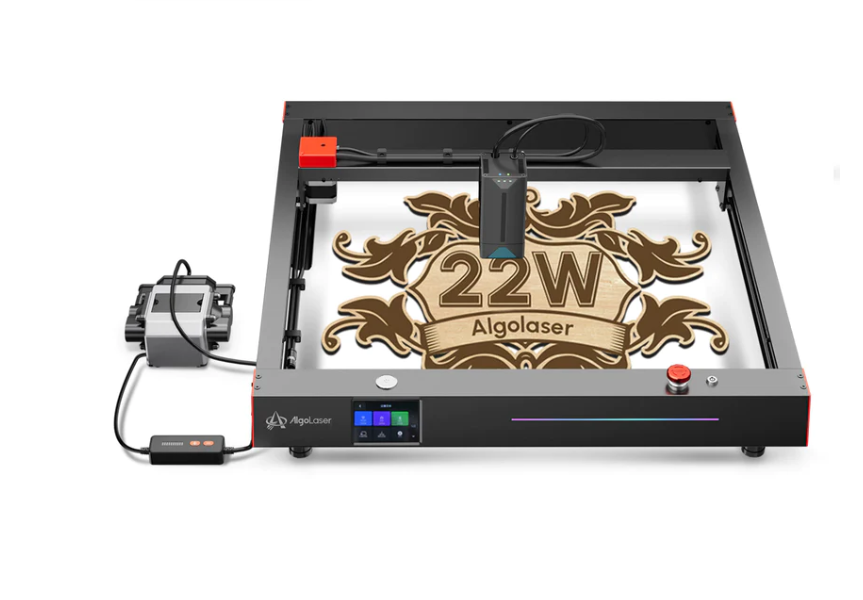
AlgoLaser Delta 22W Laser Engraver
The AlgoLaser Delta 22W Laser Engraver redefines laser engraving with cutting-edge features for both professionals and hobbyists. Its Smart Screen Control system offers instant image engraving and air pump control through an interactive LCD screen with RGB lighting for status updates, eliminating the need for constant connectivity.
Offline Batch Cutting is supported, allowing efficient batch cutting without continuous online connections. The AlgoLaser Smart APP enables smartphone control for easy design uploads and machine control.
Powered by a robust 22W laser module with COS technology, the machine enhances laser beam performance by 40%, producing a square laser spot with incredible precision. It offers 500+ shades of color through the oxidation of stainless steel material while engraving.
The AlgoLaser Delta excels in cutting ability, effortlessly handling various materials like 30mm Pinewood in one pass and 45mm Black Acrylic, 20mm Basswood Plywood, 12mm MDF, and 20mm White Oak.
Equipped with a Smart Laser Module, the machine features lens cleaning reminders, flame detection, protection, and air pressure monitoring. It boasts engraving speeds of up to 500mm/s, 12 times faster than industry standards, and a more powerful motherboard with self-developed firmware, elevating file uploading speed.
Safety is a priority with 10 features, including lens cleaning reminders, flame detection, air pressure monitoring, machine offset and tilt detection, USB connection detection, beam detection, and an emergency stop switch with a key lock.
Design enhancements include a magnetic and detachable laser metal cover, a laser protective lens integrated within the air assist nozzle, semi-automatic focus, new nylon rollers, a dual-side fixture structure, an emergency switch with lighting, and an enclosed frame design.
AlgoLaser Delta 22W Laser Engraver revolutionizes laser engraving with advanced features, impressive precision, and a commitment to user safety, empowering creators with unprecedented ease and efficiency in bringing visions to life.
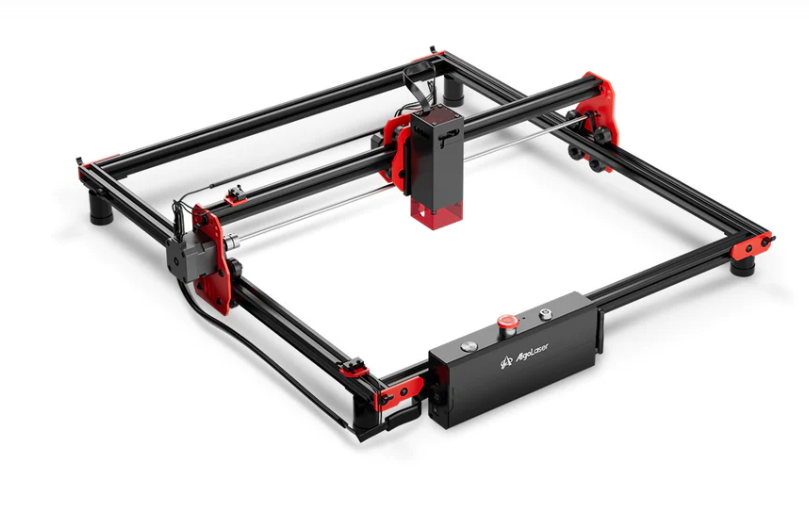
The AlgoLaser DIY KIT 5W offers an impressive engraving speed of 12,000 mm per minute, ensuring flawless execution of intricate designs on various surfaces. Ideal for artists and craftsmen, it guarantees unparalleled precision for engraving delicate jewelry or intricate wooden sculptures.
Equipped with a dual-core CPU, the engraver boasts a 32% increase in processing speed and a 50% boost in energy efficiency. The upgraded motherboard with 8MB RAM and 8MB storage memory ensures rapid data processing, allowing users to focus on creativity without technical hindrances.
Supporting up to 20W of power, the AlgoLaser DIY KIT 5W provides vast creative opportunities. Smart Center and AUC compatibility enables the exploration of various accessories from different brands, allowing users to experiment with diverse materials and engraving techniques.
With seven layers of advanced safety features, including a safety lock, gyroscope detection, active light detection, USB disconnect switch, voltage and current safety control system, emergency stop switch, and temperature monitoring, the engraver ensures a worry-free creative process.
Tailored for both beginners and seasoned craftsmen, the DIY kit integrates user-friendly features with affordability. Supporting WiFi, USB-C, and a built-in TF card for offline operations, it enhances flexibility. The upgradability and expandability offer the freedom to customize the frame and connect additional accessories, empowering users to bring their visions to life.
AlgoLaser DIY KIT 5W Diode Laser Engraver transcends conventional craftsmanship with its unparalleled precision, powerhouse performance, limitless compatibility, advanced safety features, and thoughtful design. It is not just a device but a creative companion that empowers users to explore and enhance their artistic projects.
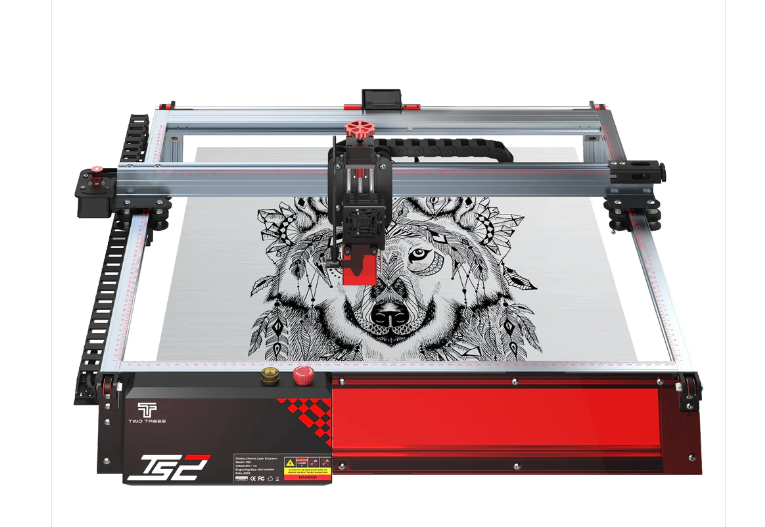
With an engraving speed of 10,000mm/min powered by the embedded ESP32-DOWD-V3 chip and a 32-bit LX6 microprocessor, this laser engraver achieves unparalleled precision. The 96W machine, equipped with a 10W laser head, effortlessly cuts 8mm pine board at a time. Compressed light spot technology ensures a spot size of 0.08mm, and a new Y-axis motion structure design minimizes vibration, providing exceptionally smooth engraving lines.
Safety is a top priority with features like a flame prompt alarm for timely hazard detection, active shutdown preventing accidental light emission through gyroscope technology, an emergency stop switch for quick power cutoff, and wire harness safety management ensuring organized and secure cable storage.
The large engraving area of 450*450mm, the largest for a 10W engraving machine, facilitates the creation of large-sized home decoration works. Air-assisted accessories reduce smoke particle adhesion, and external rotation modules enable engraving on curved surfaces. It supports a variety of working materials, including wood, acrylic, leather, stainless steel, and more.
Compatible with powerful software like Lightburn and GRBL, this laser engraver supports three computer systems and various file formats. Mobile phone operation via the MKSlaser app on both Android and IOS allows for remote control and data transfer via WiFi. The machine also supports English and Chinese languages for user convenience.
The auto-focus function ensures precise laser focus adjustments without manual measurements, enhancing engraving effects. The 60% pre-assembled parts and silk-screened scale markings facilitate easy installation and measurement, respectively.
Rigorously tested for quality assurance, the Twotrees TS2-10W Laser Engraver holds certifications including US FDA, EMC, FCC, LVD, MD, and ROHS. Positive feedback from loyal users underscores its durability and stability, making it a reliable choice for creative endeavors.
Twotrees TS2-10W Laser Engraver is not just a tool; it’s a versatile and secure companion for artists and creators seeking a seamless blend of precision and functionality in their projects.
Smartphone launches are catching up once again with the announcement of the latest chips from Qualcomm and MediaTek. Three brands have scheduled to unveil new phones in the coming days.
Interestingly, all of these events will take place on the same day (November 23) in the same country (China). Also, two of the companies will introduce handsets in the same segment (affordable premium).
The brands that will be releasing new phones very soon are Red Magic, Honor, and Oppo. Let’s take a look at the handsets they are expected to debut one by one.
The Honor 100 series is set to launch in China on November 23. The conference will begin at 1:30 PM GMT+8 and will be live-streamed across Weibo and other leading Chinese video streaming platforms.
As per leaks and teasers, there will be two devices, namely Honor 100 and Honor 100 Pro. The vanilla model will be powered by a Snapdragon 7 Gen 3 chip, while the pro version will be run by a Snapdragon 8 Gen 2 SoC.
Both the handsets will sport a 1.5K display with up to a 3840Hz PWM dimming and a 50MP main camera with OIS. Finally, they will also carry support for 100W wired charging.
2. Oppo Reno 11 Series
The Oppo Reno 11 series is also planned to launch in China on November 23. Its conference will begin at 2 PM GMT+8 and will be livestreamed on leading Chinese video streaming platforms, including Weibo.
Going by teasers and leaks, the lineup will include two products, such as Reno 11 and Reno 11 Pro. The former will be powered by a MediaTek Dimensity 8200 chip, whereas the latter will house a Qualcomm Snapdragon 8 Plus Gen 1 chipset.
Both phones are said to come with a 32MP selfie camera, an 8MP Sony IMX355 ultrawide unit, and a 32MP Sony IMX709 2x telephoto shooter. There will be a 50MP Sony IMX890 primary sensor on the pro version and a Sony LYT-600 main sensor on the standard variant.
The duo will boot ColorOS 14 and their charging speeds will be different. The Reno 11 will only support 67W charging as opposed to 80W charging on the Reno 11 Pro.
3. Red Magic 9 Pro
The Red Magic 9 Pro will also launch in China on November 23. The event for it will start at 2 PM GMT+8 and will be livestreamed on Weibo and other leading Chinese video streaming platforms.
According to teasers and leaks, it will go official as the first gaming smartphone powered by Qualcomm Snapdragon 8 Gen 3 chip. The device will sport a fully flat design on all sides without any camera bumps whatsoever anywhere on the body.
Further, its cooling fan and shoulder buttons will be equipped with customizable RGB lights. The handset will arrive with a 50MP Samsung GN5 primary camera, a 50MP Samsung JN1 ultrawide camera, and an unspecified under-display selfie camera.
Last but not least, it will draw energy from a 6,500mAh battery and support 80W wired charging.
China‘s BeiDou navigation system has achieved a significant milestone by being internationally recognized as a global standard for commercial aviation. This recognition marks a major leap in satellite navigation technology, positioning BeiDou as a viable alternative to the long-established US Global Positioning System (GPS).
The network has a total of 56 positioning satellites
BeiDou, completed in 2020, features a network of 56 positioning satellites. Its adoption by the International Civil Aviation Organization signifies its capability to provide reliable global navigation services, a critical factor for civil aviation. This development not only showcases China’s technological advancements but also introduces a new player in the global satellite navigation market.
The system’s integration into various domestic industries is noteworthy. BeiDou has been extensively used in China’s transportation, communication, and agricultural sectors, reflecting its versatility and reliability. In 2022, the satellite navigation industry in China, bolstered by BeiDou, reached a remarkable output value of 500.7 billion yuan, demonstrating the economic impact of this technology.
BeiDou’s recognition is more than just a technological achievement; it’s a strategic move by China to assert its presence in global technology markets. It reflects China’s efforts towards self-sufficiency in technology and its ability to provide alternatives to Western technologies.
The expansion of BeiDou has significant implications for international cooperation, particularly with countries involved in China’s Belt and Road Initiative. It opens up new avenues for China to extend its technological influence globally, particularly in regions seeking alternatives to Western satellite navigation systems.
The Lucid Gravity, unveiled at the Los Angeles Auto Show, is not just another electric SUV—it’s more like a sanctuary on wheels. With the debut of its Lucid Sanctuary feature, the Gravity aims to transform the driving experience into a holistic journey of relaxation and mindfulness.
Your car can literally turn into a spa setting with a button’s touch
Lucid’s Sanctuary isn’t just about luxury; it’s a thoughtful response to our hectic, screen-dominated lives. In a world where digital overload is a real concern, this feature stands out by offering a respite. Imagine being able to escape to the tranquility of the Pacific Ocean or the serenity of Lake Tahoe, all from the comfort of your car’s seat, complete with calming visuals, soothing audio, and gentle seat massages.
This innovation extends beyond mere comfort. It touches on our growing need for mental well-being and a balance between connectivity and relaxation. At a time when we’re constantly bombarded by information and screens, the Gravity’s ability to dial down to only essential driving information is a much-needed breath of fresh air.
While other luxury electric vehicles, like the BMW iX, offer customizable settings to enhance the driving experience, Lucid Gravity takes it a step further. It’s not just changing the driving mode; it’s altering the entire environment within the vehicle to promote mental health and well-being.
The real question is whether this feature will resonate with consumers. It’s a bold move by Lucid, testing the waters of what drivers value in their vehicles. It’s not just about getting from point A to point B anymore; it’s about how you feel during that journey.
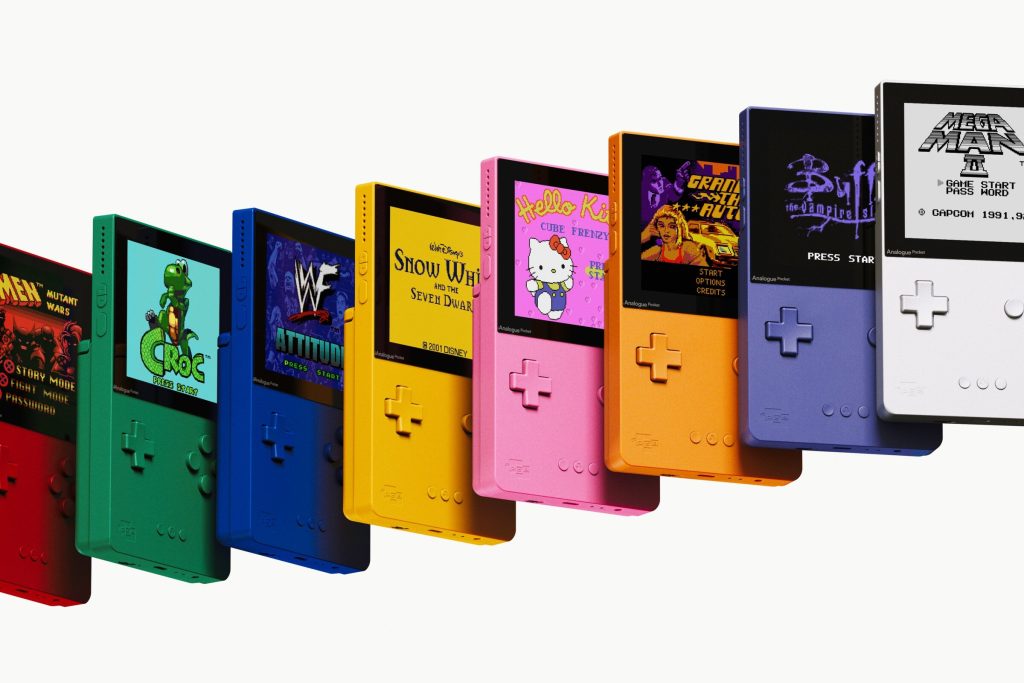
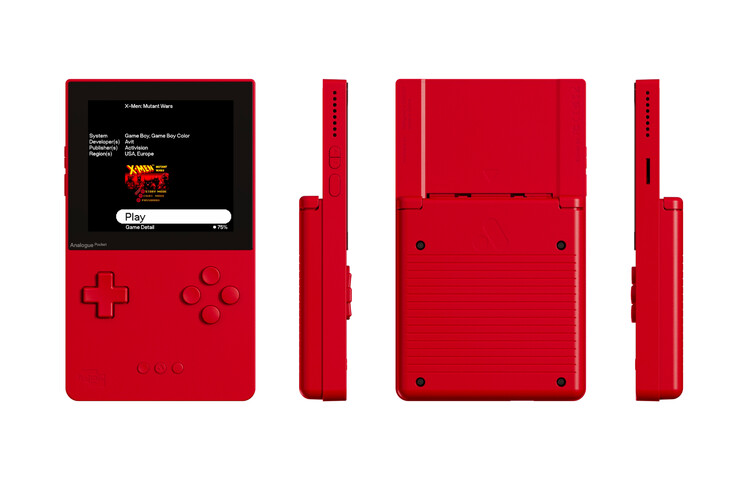
The Analogue Pocket Classic Limited Edition gaming handheld is set to be released. The new Analogue gaming handheld comes with a retro color design reminiscent of the Game Boy handheld. It comes in eight color options and features classic game consoles. The Pocket Classic Limited Edition is the latest entrant into the Analogue Pocket series of gaming handhelds.
The Analogue Pocket is the brand’s most successful gaming device thus far. The Analogue Pocket Classic Limited Edition uses an FPGA chip, as with the Pocket 3D recently announced. The Pocket Classic Limited Edition follows the same philosophy and tech as the Glow in the Dark and Transparent models of the brand. As for the Analogue 3D, it will be available in 2024 and Analogue has not provided full design and functionality optics for the model.
The Analogue Pocket Classic Limited Edition will come in blue, green, yellow, silver, orange, pink, indigo, and red colors. The Game Boy retro game is a clear inspiration for these color options.
Pricing & Availability
The Analogue Pocket Classic Limited Edition is priced at $249.99 and matches the price of the standard model. It will be available from November 17 while the first units will ship by November 20. Analogue has however not provided the number of units of the Pocket Classic Limited Edition to be manufactured. Global availability details for the gaming handheld are also lacking at this time.
The 2023 Xiaomi IoT Ecological Partner Conference kicked off on November 16, 2023. Xiaomi has, during a discussion at the conference, indicated that Apple phones were a major player in its IoT smart ecosystem.
The new data showed that 45% of Apple users in the ecosystem owned more than five Xiaomi smart appliances. The data are telling as the Xiaomi IoT smart ecosystem has been rated as the world’s largest consumer-grade IoT platform. The number of connected devices on the Xiaomi IoT platform stands at over 655 million. There are more than 13 million users in the Xiaomi IoT smart ecosystem that have five or more connected devices. This means that users with five or more devices account for about 10% of the population of connected devices.
During the conference, Xiaomi officially announced the 2023 Xiaomi IoT Ecological Partner Open Plan. There are currently more than 9,000 IoT partners that connect products in more than 200 categories on the IoT smart ecosystem. The Chinese tech powerhouse expects the partners to continue to expand rapidly. Xiaomi’s flagship Mijia App has an average of 82.9 million active users monthly. On the other hand, the monthly average number of users of Xiaoai is estimated at over 110 million.
The optics remain bright for Xiaomi in the IoT smart ecosystem. It is expected that more Apple iPhones will enter the ecosystem as it continues to grow rapidly.
Tesla, a pioneer in the electric vehicle industry, is reportedly considering a new approach to its vehicle features, which could potentially see the implementation of a pay-to-use model for certain amenities. A recent delve into Tesla’s latest software update by a renowned Tesla hacker, GreenTheOnly, hints at the possibility of heated front seats and heated windshield wipers becoming premium features in new Tesla Model 3 vehicles.
Tesla has previously restricted access to different features of their cars
The idea of software-locking is not new to Tesla. Previously, the company has restricted access to features like footwell lights in the Model 3 or additional battery capacity in older Model S and X variants, unlocking them for a fee. Notably, Tesla had charged for heated rear seats in some Model 3 versions but ceased this practice in 2022.
Tesla’s consideration to monetize these features, though not confirmed, follows its history of balancing cost and convenience. By potentially offering these features as optional extras, Tesla might aim to reduce the base price of its Model 3, making it more accessible while also opening a revenue stream post-sale.
This business model raises a critical question: Is Tesla setting a precedent for future vehicle customization, or is it creating a paywall that could detract from the user experience? While offering a lower base price with optional upgrades could attract a broader customer base, it also introduces a scenario where owners could feel nickel-and-dimed for features that were once standard.
An intriguing aspect of the software update was the discovery of a software-locked battery capacity in the Model Y’s Standard Range trim, a tactic Tesla has employed in the past. This strategy might be a strategic move to streamline production processes, yet it adds another layer to the debate on software-locking features.
As of now, the specifics of how and when these features might be implemented, and their potential costs, remain undisclosed. Tesla’s history shows that the company isn’t shy about reversing course on such decisions, as seen with the heated rear seats.
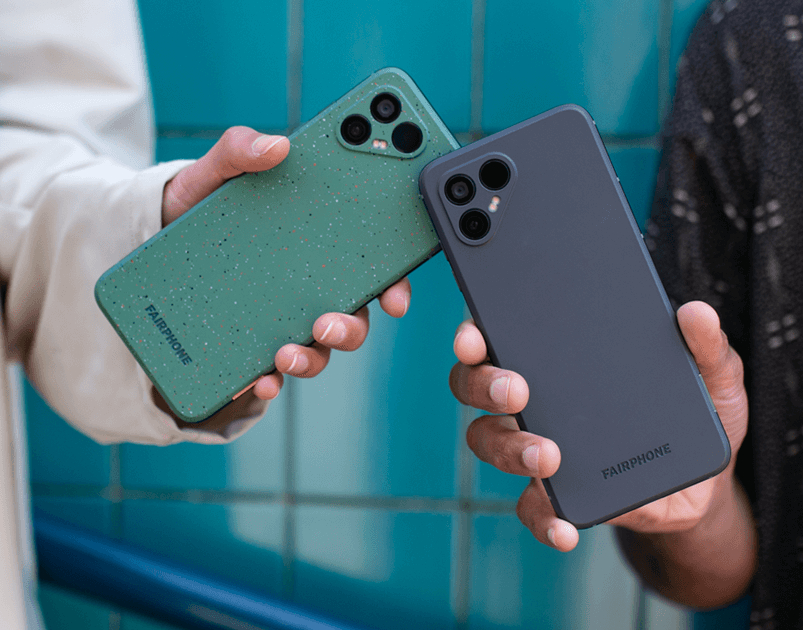
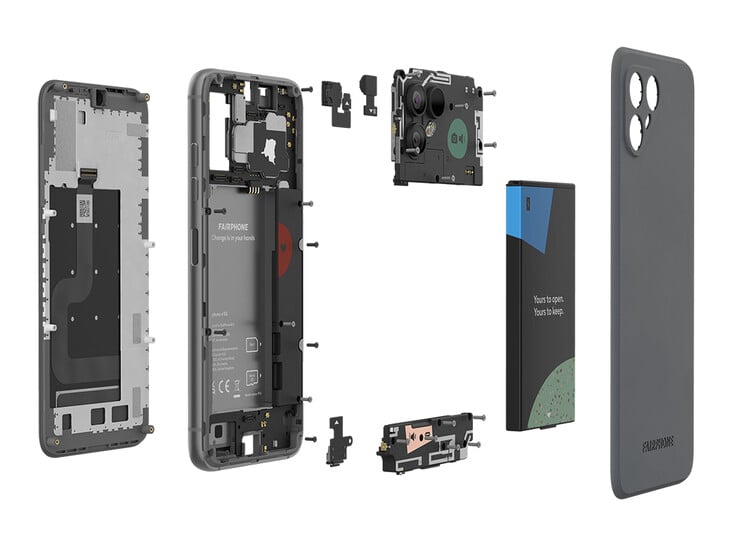
Fairphone has unveiled a “New Life Edition” for the FairPhone 4 smartphone. The new model is a refurbished version of the Fairphone 4 and it is being offered with a couple of freebies. It comes with a free screen protector and a protective case.
The Fairphone 4 New Life Edition is more sustainable than its predecessor, the Fairphone 4. The Fairphone 5 was unveiled earlier this year and it is still on the shelves (Amazon). Fairphone has already carved a sustainability-driven identity for itself. It has continued to use recycled materials in the production of its smartphones. The New Life Edition model is a refurbished Fairphone 4. This translates to a lower price for the smartphone .
The free accessories are given under the Longevity Bundle and is open until November 30. The protect case is available in three colors and is made from pre-consumer recycled TPU (thermoplastic polyurethane). The other free accessory is a 9H tempered glass screen protector. The screen protector is made from a Corning material called Accessory Glass and is available in two filter versions.
Pricing
Fairphone is offering a five-year guarantee on the Fairphone 4 New Life Edition. It says the smartphone should have at least 80% guaranteed battery capacity and will ship in otherwise original condition. Software updates are also guaranteed until at least 2026, The Fairphone 4 New Life Edition with 6GB/128GB is originally priced at €469 in the EU and £429 in the UK. The 8GB/ 256GB version of the smartphone is priced at €529 and £479 in the EU and UK, respectively. The prices of the new model are quite cheaper than the new Fairphone 4 model.
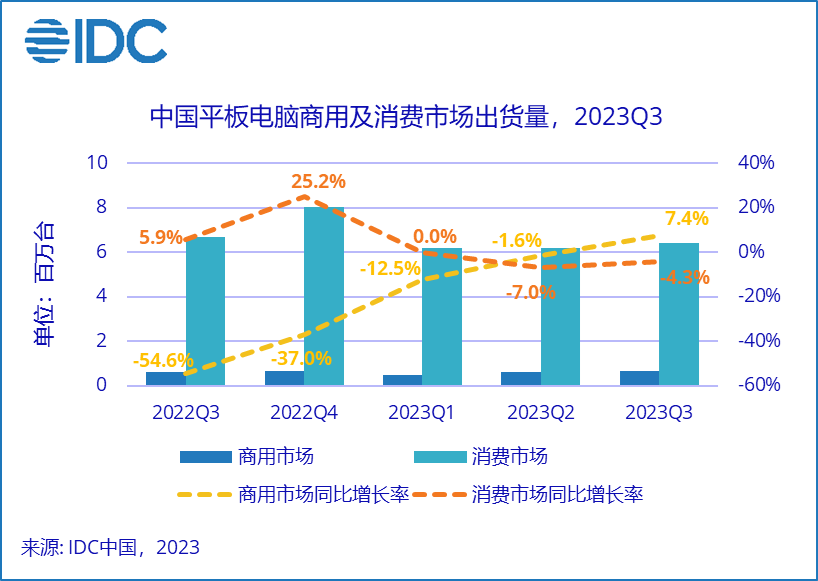
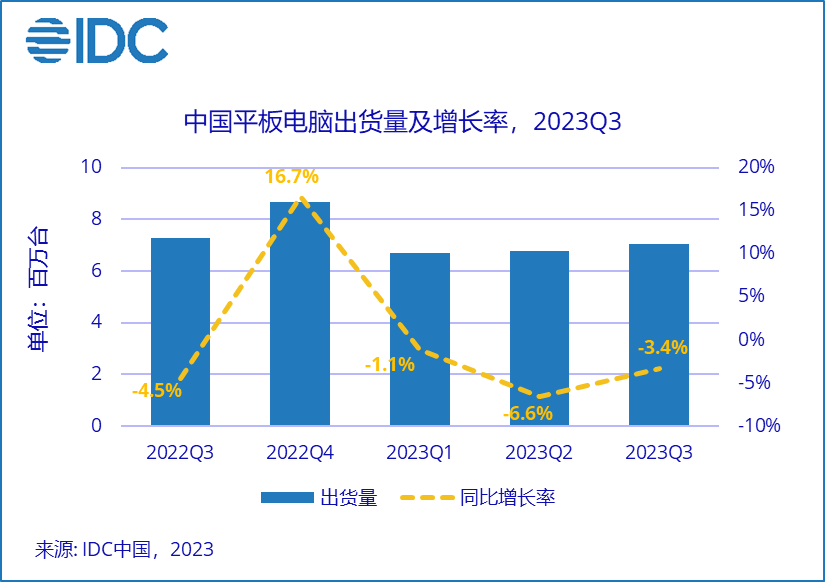
According to a report by IDC, the tablet market in China during the third quarter of 2023 has shown surprising resilience, exceeding expectations. The total number of tablets shipped was approximately 7.05 million units, with a slight year-on-year decrease of 3.4%. Notably, this decline was more pronounced in the consumer market, which experienced a 4.3% reduction, but it was offset by a robust 7.4% growth in the commercial sector, indicating a continued recovery trend.
Market Dynamics: Fluctuations and Growth in China’s Tablet Industry
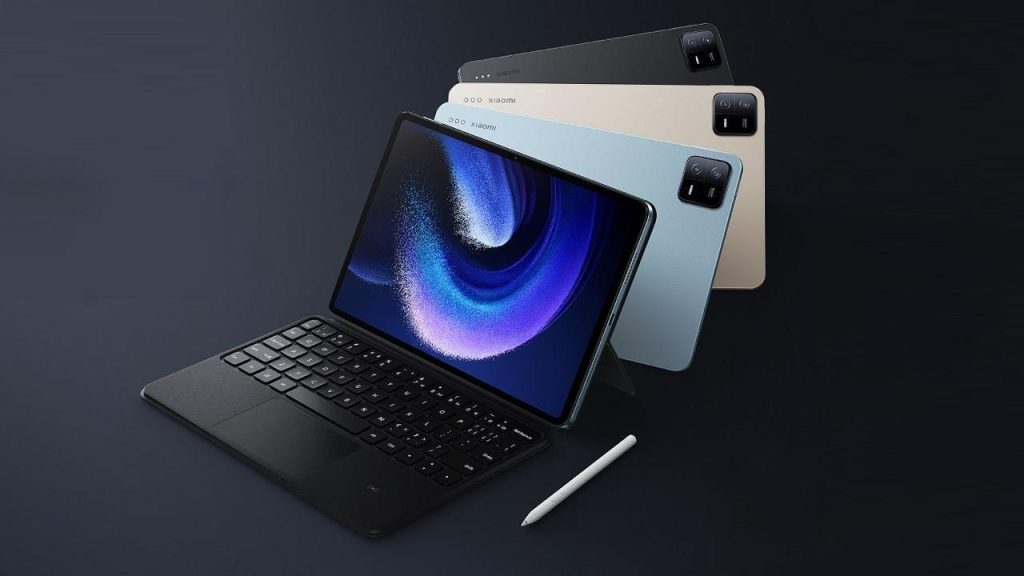
Leading domestic brands such as Huawei, Xiaomi, and Vivo exhibited remarkable resilience, each reporting significant growth in shipments. This highlights the competitive landscape of the Chinese tablet market, where local manufacturers are increasingly asserting their presence.
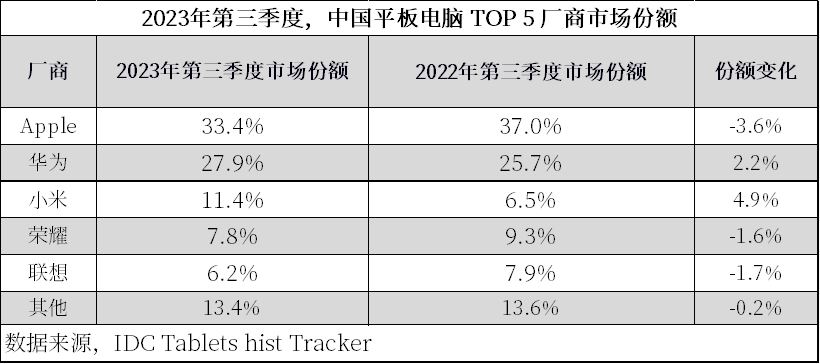
Apple, however, maintained its lead with a 33.4% market share, followed by Huawei at 27.9%, and Xiaomi securing third place with an 11.4% share. Other notable players included Honor and Lenovo, with respective market shares of 7.8% and 6.2%.
The IDC report attributes this better-than-expected performance to two main factors. In the consumer market, major brands have been aggressively expanding their businesses through technological innovations and diversifying their product lines. This strategy has been instrumental in stabilizing and growing their market presence despite challenging conditions. In the commercial segment, the growth can be attributed to increased shipments in sectors such as government and education procurement, reflecting a broader recovery trend.
Another significant observation is the fluctuation in price distribution within the market. The share of tablets priced between 2,000 Yuan and 4,000 Yuan ($276-$552) has decreased, while those priced below 2,000 Yuan (<$276) have seen an increase in market share. This shift suggests a trend toward more budget-friendly options in the market, likely driven by the introduction of competitive products from mainstream manufacturers. The average unit price in the market has also declined by 3.0% compared to the previous quarter, settling at 2,793 Yuan (approximately $385).
Redragon is a reputable company known for its affordable and reliable gaming peripherals and accessories. Their product range includes gaming keyboards, mice, headsets, and other gaming-related equipment. Redragon’s focus is on delivering quality gaming gear without the premium price tag, making them a popular choice among gamers looking for cost-effective solutions without compromising performance and functionality.
Earlier today, Redragon launched its latest mechanical keyboard, the M61 in China. The keyboard will be available to purchase from November 20th for 299 yuan ($41). Let’s check out the key specs of this keyboard.
Redragon M61 Keyboard Key Features:
The Redragon M61 keyboard is a compact 61-key keyboard that uses magnetic axis switches. These linear adjustable switches incorporate Hall effect trigger technology, offering a rapid and accurate typing response with an impressive 8K rate. This technology not only improves typing speed but also ensures precision, making it suitable for both gaming and regular typing tasks.
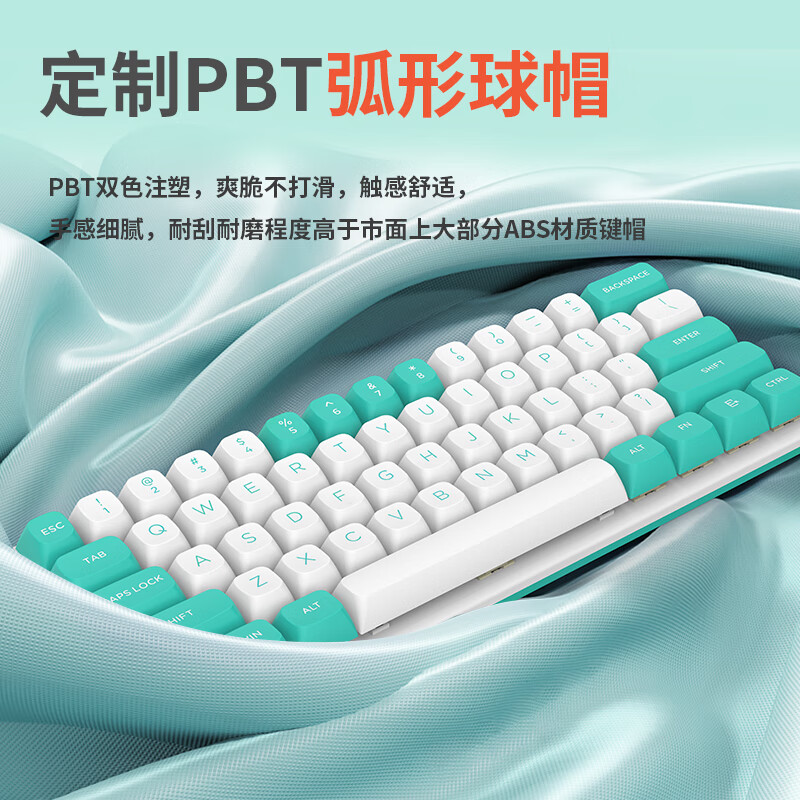
The M61 is equipped with custom PBT spherical keycaps, which are double-shot injection molded. These keycaps are not only durable, resisting scratches and wear better than the common ABS keycaps, but they also provide a comfortable and slip-resistant typing surface. The keyboard is designed to withstand up to 100 million keystrokes, ensuring a long lifespan for users.
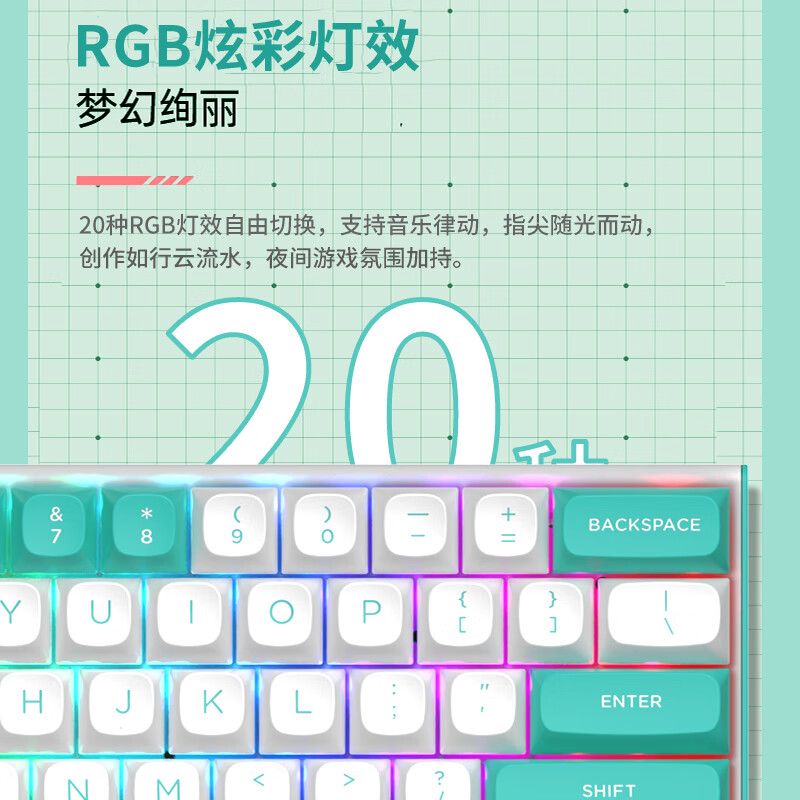
Additionally, the keyboard features an eye-catching contrasting color scheme and offers 20 different RGB lighting effects. These effects are not just visually pleasing but can also sync with music.
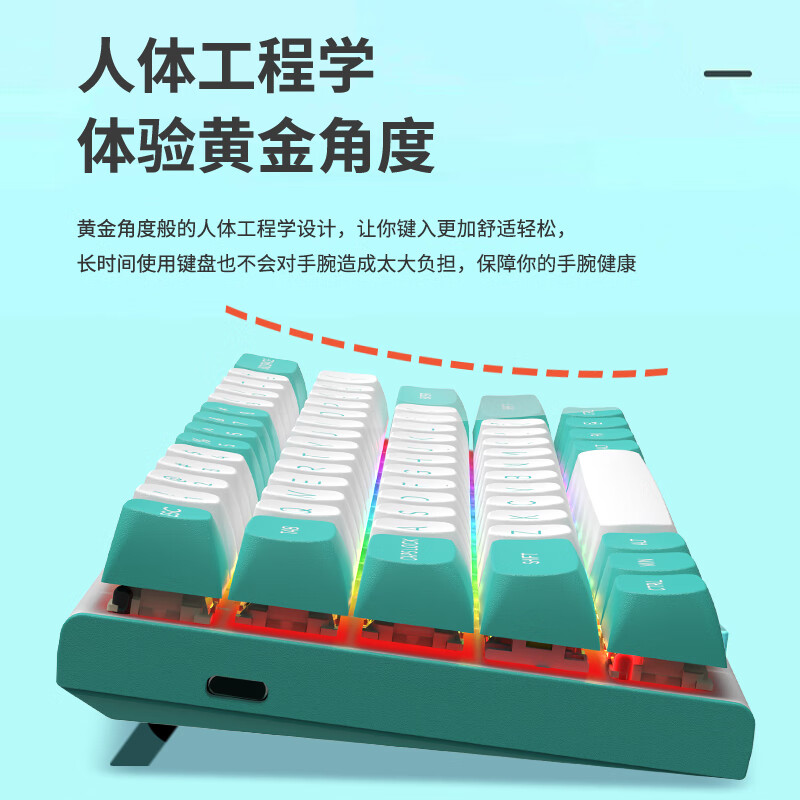
The keyboard’s ergonomic design is another notable feature. It is crafted with a golden angle to reduce wrist strain, ensuring comfort during long typing sessions. Furthermore, the trigger settings on the keyboard are adjustable, with a drive range from 0.1 to 4.0 millimeters.
The Redragon M61 keyboard comes with a durable metal top cover, anti-ghosting feature for accurate keypress recognition, and compatibility with various Windows operating systems. We are not sure of the MacOS support though.
We use cookies on our website to give you the most relevant experience by remembering your preferences and repeat visits. By clicking “Accept”, you consent to the use of ALL the cookies.
This website uses cookies to improve your experience while you navigate through the website. Out of these, the cookies that are categorized as necessary are stored on your browser as they are essential for the working of basic functionalities of the website. We also use third-party cookies that help us analyze and understand how you use this website. These cookies will be stored in your browser only with your consent. You also have the option to opt-out of these cookies. But opting out of some of these cookies may affect your browsing experience.
Necessary cookies are absolutely essential for the website to function properly. This category only includes cookies that ensures basic functionalities and security features of the website. These cookies do not store any personal information.
Any cookies that may not be particularly necessary for the website to function and is used specifically to collect user personal data via analytics, ads, other embedded contents are termed as non-necessary cookies. It is mandatory to procure user consent prior to running these cookies on your website.