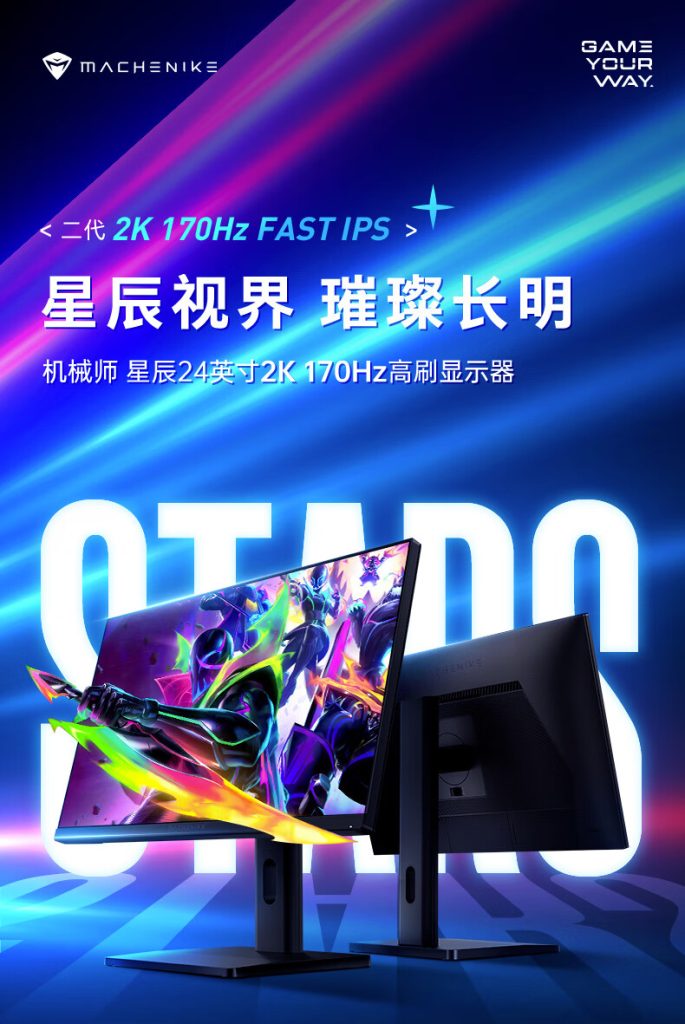
Machenike has recently unveiled its latest offering, the Starlight MK24QG170S2, a 24-inch 2K monitor with an impressive 170Hz refresh rate, available at an attractive price of 999 yuan ($138). Let’s check out the key specs of this monitor.
Machenike Starlight Monitor Key Specs
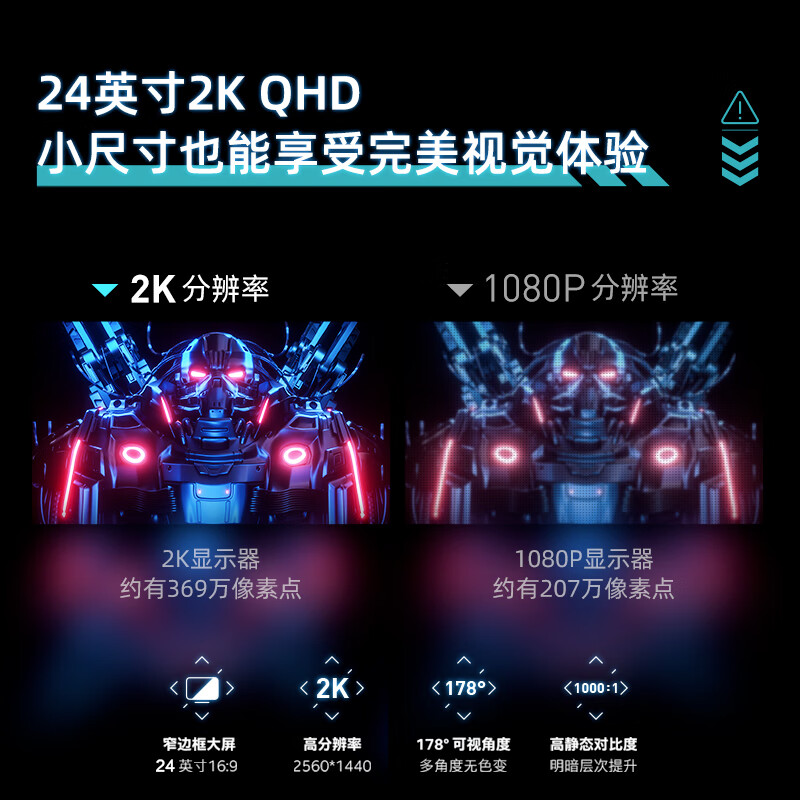
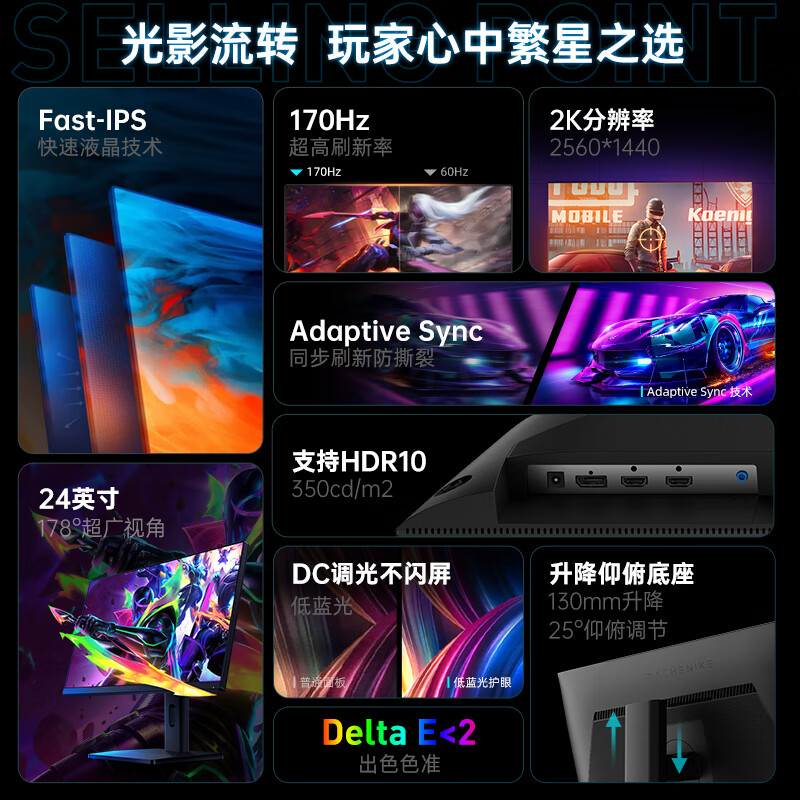
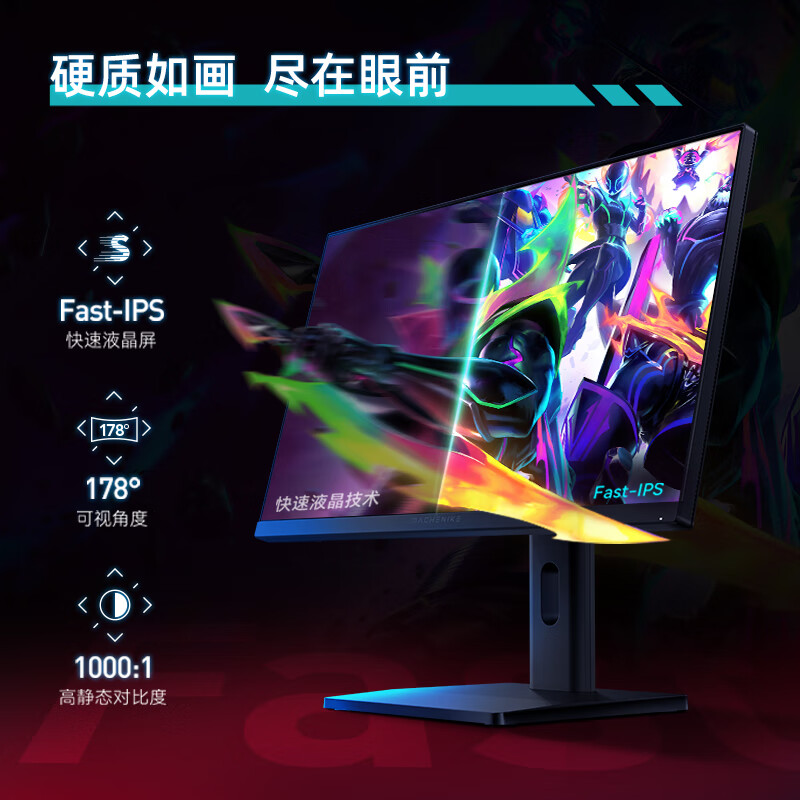
The Starlight MK24QG170S2 boasts a 24-inch FAST IPS panel that delivers vibrant and accurate colors. Its 2560 x 1440 (2K) resolution ensures sharp and detailed visuals. What sets this monitor apart is its exceptional 170Hz refresh rate, which provides incredibly smooth motion in fast-paced scenes. Additionally, its 1ms MPRT response time minimizes motion blur and stutter, enhancing the overall gaming experience.
With a 91.9% DCI-P3 color gamut, this gaming monitor accurately reproduces a wide range of colors. It also features a high static contrast ratio of 1000:1, resulting in improved brightness and depth in visual content. The 178° wide viewing angle ensures consistent color and clarity from various viewing positions.
The Starlight monitor comes with a built-in adjustable stand that allows for a 130mm elevation and 25° tilt adjustments, offering ergonomic comfort and flexibility in viewing angles.
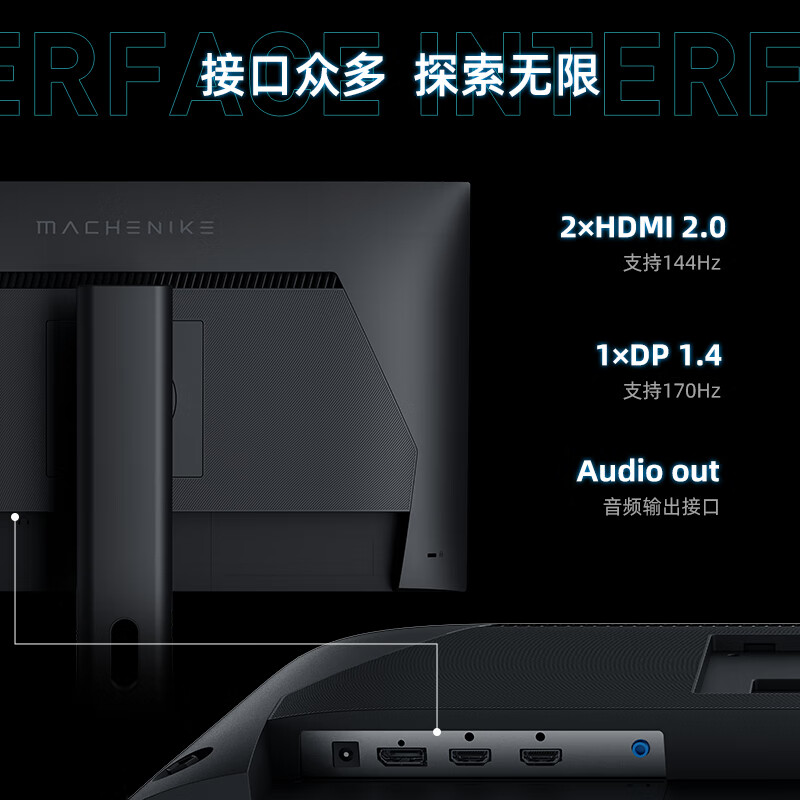
Machenike has equipped this model with a variety of interfaces, including two HDMI 2.0 ports supporting up to 144Hz, one DP 1.4 port supporting up to 170Hz, and an audio output interface.
Notably, the monitor supports HDR10, enhancing visual depth and texture by brightening scenes and illuminating dark areas. It also includes AdaptiveSync to ensure tear-free gaming, OverDrive to prevent ghosting, and color gamut switching. Additionally, Machenike backs this product with a 2-year quality assurance warranty, reaffirming its reliability and quality.
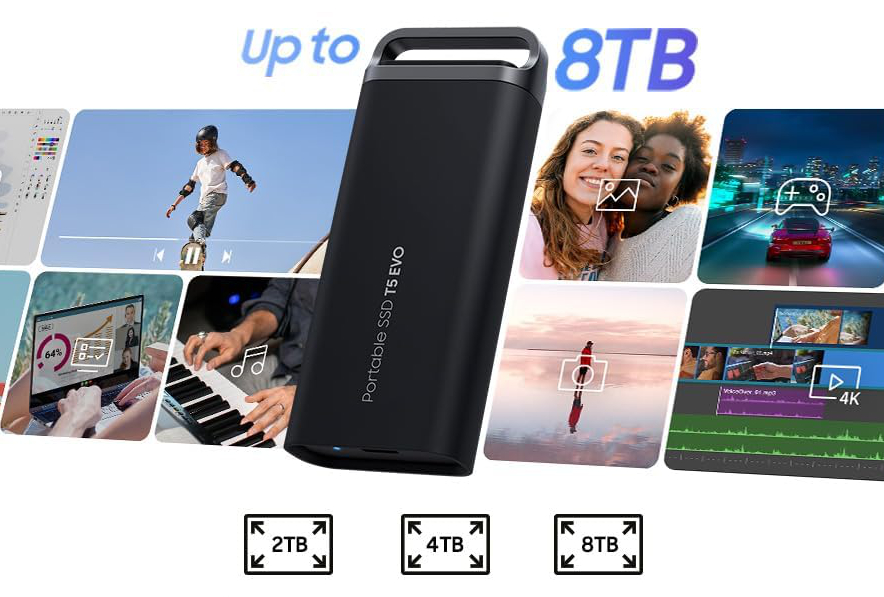
The Samsung T5 Evo SSD with a compact and robust design has been introduced. The new Samsung T5 Evo comes in three storage configurations, with the highest being 8TB. It is portable and could be one of Samsung’s more robust SSDs so far. It is available in 2TB, 4TB, and 8TB storage options.
Features
The Samsung T5 Evo is a cheaper and more rugged alternative to the Samsung T9. The dimensions of the T5 Evo are 95 x 40 x 17 mm and it weighs 102g. The Samsung T5 Evo has a metal housing with rubberized parts that provide protection for the V-NAND flash. The SSD can withstand drops from up to 2 meters and it has a built-in handle for attachment to other items.
The Samsung T5 Evo SSD comes in a simple design and discrete branding. It has a small LED near its USB-C port. The USB-C port is rated 5Gbps and is of the USB 3.2 Gen 1 standard. The SSD features a Dynamic Thermal Guard architecture which simultaneously prevents the SSD from overheating and thermal throttling. This is achieved even under continuous load input.
The Samsung T5 Evo SSD has a 460MB/s read and write speed that is pretty sub-par. It is much slower than standard M.2 PCIe SSDs and this makes the device to be very slow when transferring data.
Pricing & Availability
The 2TB version of the Samsung T5 Evo SSD is priced at $189.99. The 4TB and 8TB versions have $349.99 and $649.99 price tags respectively. Even with the pretty low read/write speeds of the T5 Evo, it is still an affordable and durable choice of SSD.
The new UGREEN Revodok Pro 13-in-1 docking station has been launched. The docking station comes with much functionality including support for up to three 4K displays, 85W pass-through charging, and 10Gbps file transfer speed.
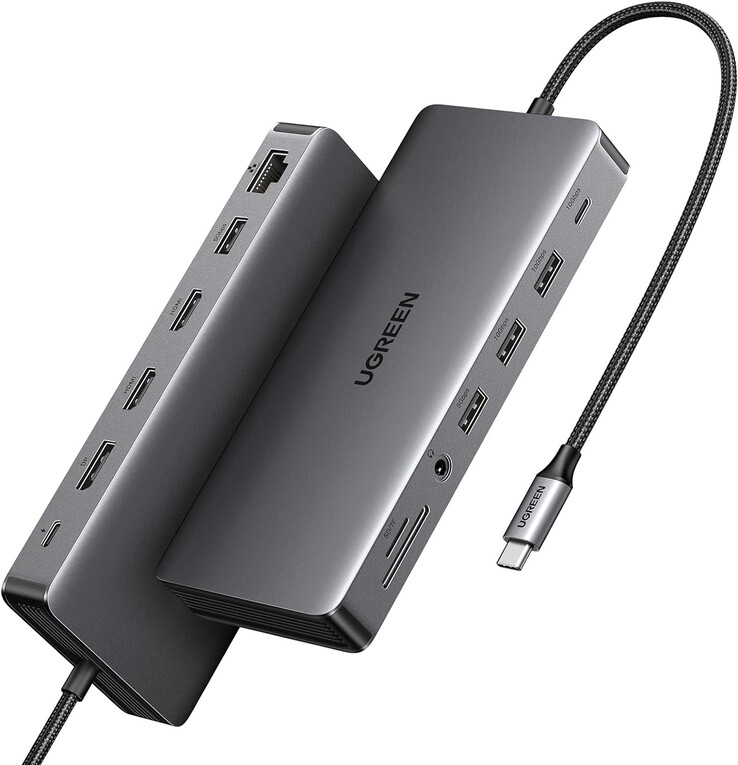
The UGREEN Revodok Pro docking station is powered by a 100W PD input. The maximum pass-through power output is 85W via USB-C and the device also features two HDMI ports and DisplayPort. The Revodok Pro Docking Station 13-in-1 offers 60Hz refresh rates for macOS. However, for Windows devices, a 60Hz refresh rate is delivered for two screens, while the third is at 30Hz. The Extend mode of the docking station is however only available with Windows devices.
There are three 10Gbps ports in the Revodok Pro 13-in-1 consisting of one USB-C 3.2 Gen 2 and two USB-A 3.2 Gen 2. The gadget also features two 5Gbps USB-A 3.0, a Gigabit Ethernet port, an audio jack, and SD/ MicroSD card readers.
Pricing & Availability
The UGREEN Revodok Pro Docking Station is available in multiple markets including the US and Europe. It can be purchased from Amazon at an equivalent price of $129.99. It is noted that the current price of the docking station is discounted when purchasing via Amazon. Amazon Prime account holders could purchase the gadget for just $99.99, with a similar offer in the UK. Buyers in Germany can get a €30 coupon to reduce the price to €99.99. The US discount offer duration was not specified but the discounted prices in Germany and the UK are valid until November 16.
How far would you go for love? Would you compromise your principles or make sacrifices? In the case of a courier working in Turkey, he went above and beyond. Instead of delivering 33 iPhones worth $30,000 to a technology store, he stole them and used the money to buy a car for his girlfriend. Here are the details…
A Man Steals 33 iPhones to Gift Girlfriend a Car
If you’ve ever entered the workforce, you’ve probably realized that not everyone shares your work ethics. In some cases, it seems that this value is nonexistent. Azim G., who worked in the city of Adana, Turkey, was employed by a courier company. His latest assignment involved delivering a package containing 33 iPhones to a technology store within a shopping mall. However, he chose to steal the box containing the phones instead.
Turkey is known for selling the world’s most expensive iPhones due to taxes. Consequently, stolen phones are more valuable there. A thief who quickly sold most of the stolen phones managed to buy a car for his girlfriend with the money he earned. Fortunately, the happiness of the two lovers didn’t last long. The truth came to light after the store noticed the missing delivery and examined the security cameras. The thief had never delivered the package he brought and was supposed to deliver.
After the incident, the police took action and raided the criminal’s house. During the investigation, the thief admitted to the theft of five iPhones found in his home during questioning. His girlfriend claimed she didn’t know that the car was a stolen gift and was purchased with stolen money. Certainly, the final decision on this matter will be made by the judiciary. Although the car and unsold iPhones have been seized, it is currently unclear who will be responsible for covering the damages.
Update: Redmi 2311DRK48C device is the Redmi K70e. The K70 and K70 Pro bears 23113RKC6C and 23117RK66C model numbers, respectively.
Original story continues…
Redmi is expected to launch the K70 series smartphones by the end of this month. Recently, the standard K70 model was spotted in leaked render giving a clear look at the device. Details about the K70 series have leaked numerous times. Now, ahead of the launch, the Redmi K70 has appeared on the Geekbench benchmarking platform reveals its hardware.
Redmi K70 spotted on Geekbench
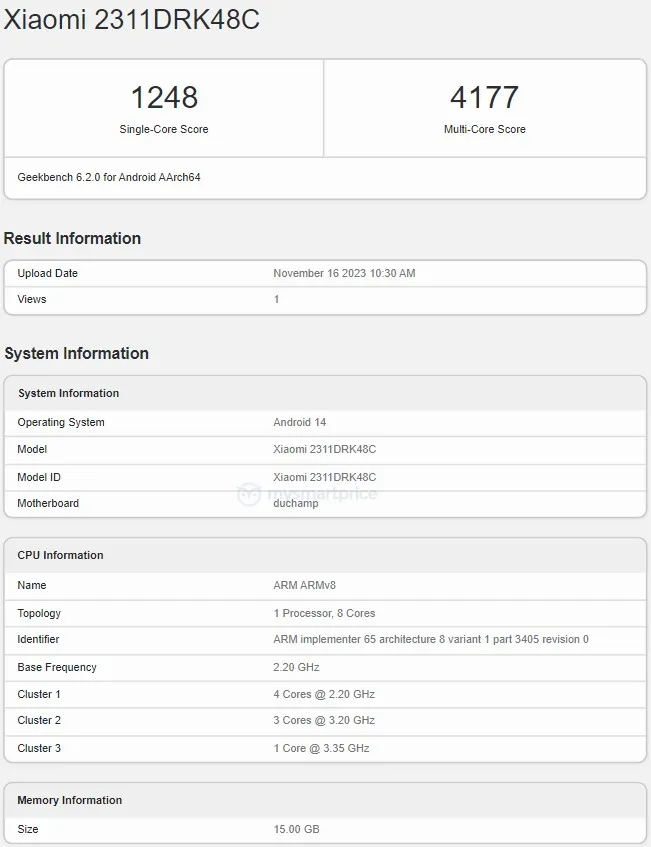
On Geekbench, the Redmi K70 has a model number 2311DRK48C. The database listing mentions a motherboard codenamed ‘duchamp’ comprising four cores clocked at 2.20GHz, three cores at 3.20GHz, and a prime core at 3.35GHz. It’s likely that the processor configuration and motherboard codename correspond to the MediaTek’s Dimensity 8300 chipset which is set to be announced later this month. As per the benchmarking platform, the upcoming smartphone will pack 16GB RAM onboard. It will ship with pre-loaded Android 14 OS out of the box.
The Redmi K70 scores 1,248 and 4,177 points in Geekbench’s single-core and multi-core test results.
Previously, the Redmi K70 with the same model number surfaced on the 3C certification website in China. It revealed support for 90W fast charging and 5G connectivity. The smartphone is expected to be backed by a 5,000mAh battery unit. As per the leaked render of the Redmi K70, it will feature a POCO-like rectangular camera island housing three cameras and an LED flash unit that protrudes more. The device has a flat display with a center-aligned punch-hole cutout and thin bezels around the screen.
In response to the recent broadened U.S. restrictions on high-end chip sales to China, Tencent Holdings is strategically navigating the challenges posed by the semiconductor export bans to safeguard its cloud services. The company, acknowledging its substantial stockpile of AI chips from U.S. manufacturer Nvidia, is proactively planning to optimize their usage amidst the evolving regulatory landscape.
Tencent’s President, Martin Lau, emphasized the impact of the U.S. ban on exporting additional AI chips to China, revealing that the company is committed to efficiently utilizing its existing Nvidia chip stock for the continued development of its “Hunyuan” AI model. Despite the ban, Tencent assures continuity for at least a couple more generations, minimizing the near-term impact on its AI capabilities.
However, the export restrictions are expected to affect Tencent’s cloud services, particularly in the resale of AI chips to clients. Tencent currently relies on Nvidia, which dominates approximately 90% of the Chinese AI chip market. The company is exploring alternatives, including domestically produced chips, to mitigate the risks posed by the U.S. restrictions.
Tencent’s rival, Baidu, has reportedly taken steps to secure alternatives by ordering 1,600 Huawei Ascend 910B chips. In a bid to address the challenges posed by the ban on its H800 AI chips developed by Nvidia specifically for China, Tencent plans to reserve them for the crucial training phase of AI model development. The company is actively seeking ways to offload inference capability to lower-performance chips, preserving high-performance AI chips for training purposes.
Recognizing the need to reduce reliance on U.S.-made chips, Tencent is looking to increase its usage of domestically-produced chips. The company is not alone in this endeavor, as Chinese firms, including Baidu, are seeking alternatives and turning to domestic chipmakers like Huawei.
In response to the changing landscape, Nvidia is expected to announce new China-bound AI chips designed to comply with the export rules by featuring reduced computing power while retaining essential AI features.
Tencent’s move to explore domestic sources for training chips aligns with China’s broader efforts to invest billions in its semiconductor industry, countering the impact of U.S. high-end chip bans. Initiatives like the $41 billion fund launched in September and support for domestic chipmakers, such as YMTC, demonstrate China’s commitment to achieving self-sufficiency in the semiconductor sector despite external challenges.
Apple has released the iOS 17.1 update for all eligible iPhones. While it doesn’t introduce any major new features, it focuses on resolving existing issues. One such fix addresses a problem specifically affecting BMW users. As you may recall, BMW users encountered a peculiar error when wirelessly charging their iPhones in BMW models. Despite claims that the iOS 17.1 update would address this issue, a similar problem has now surfaced in General Motors models under the GM brand. Here are the details…
iOS 17.1 Update Causes Charging Issues for iPhone Users in GM Vehicles
iPhone users who updated to iOS 17.1 are experiencing an issue with wireless charging in General Motors vehicles. The phones stop charging and freeze after a few seconds. Users have tried various troubleshooting methods, including restarting their phones, but the issue persists.
Although this issue seems to be affecting BMW users, there is a small difference. In BMW models, the NFC feature is also disrupted along with the phone, unlike in General Motors where this technology remains unaffected. Users expressing these claims state that they have tried everything, but nothing seems to work.
As one post from “caduceus26” says, “Happy to know that it isn’t just me. My iPhone 12 Pro Max worked perfectly (every time) in my ’23 Chevy Traverse. I went to the iPhone 15 Pro Max about 6 weeks ago and the feature broke just as described in other comments: Charge for a few seconds and then stops – case on or off yields same results. I am currently on iOS 17.1.1 and have taken every update since the phone was purchased on 10/8/23.”
Some users have even taken their cars to the service center, suspecting a problem with their vehicles. However, no issues were found. Complaints have also been conveyed to Apple, but the company has not yet made any statements on the matter. Nevertheless, a resolution to the problem is expected shortly with the iOS 17.2 update.
Stable OxygenOS 14 is already here for the OnePlus 11, and now the eyes are set for it to arrive on other OnePlus smartphones. Meanwhile, the OnePlus 9/9Pro and OnePlus 9RT are now receiving the OxygenOS 14 Open Beta 1. Interested users can now participate in the Open Beta program and enjoy the latest features before others.
However, the program is available for the first 5000 participants and is recommended for users who are aware of the bugs and the issues that come along with the Beta program.
Moreover, the device should have at least 4GB of free internal storage and up to at least 30% battery. Before installing, it is highly recommended to back up your data, as the build is not fully stable and may not be appropriate for users who have the same device as their single driver. Below is the official changelog:
Smart and efficient

 • Improves cloud photo service by Google Photos.


Security and privacy

 • Improves photo and video-related permission management for safer access by apps.


Performance optimization

 • Improves system stability, the launch speed of apps and the smoothness of animations.


Aquamorphic Design

 • Upgrades Aquamorphic Design with a natural, gentle and clearer colour style for a more comfortable colour experience.

 • Adds Aquamorphic-themed ringtones and revamps the system notification sounds.  • Improves system animations by making them even smoother.


User Care

 • Adds a carbon tracking AOD that visualises the carbon emissions you avoid by walking instead of driving.
Steps to Install OxygenOS 14 Open Beta 1:
The user must be running the following firmware:
For OnePlus 9RT
The smartphone must be running firmware MT2111_13.1.0.592(EX01) and MT2111_13.1.0.591(EX01) before installing the OxygenOS 14 Open Beta 1.
For OnePlus 9/9 Pro
The OnePlus 9 must be running LE2111_13.1.0.591(EX01) and LE2111_13.1.0.590(EX01) firmware, while the OnePlus 9 Pro should be on LE2121_13.1.0.591(EX01) and LE2121_13.1.0.590(EX01).
Then, head over to Settings > About device > Tap up to date > Tap icon on the top right > Beta program > Follow the steps to apply.
Wait for 3-5 days and then check for updates by heading to Settings > About device > Download Now.
One of China‘s biggest companies, Alibaba Group Holding, has halted its plans to fully spin off its cloud computing division. This move came alongside the announcement of a 9% revenue increase for the September quarter, marking a big moment for the Chinese e-commerce titan under its fresh leadership.
Alibaba seems to be considering strict US export restrictions on Advanced computing chips
Alibaba’s decision to keep its Cloud Intelligence Group intact highlights the challenges posed by the global tech landscape, particularly the heightened US export restrictions on advanced computing chips. This development highlights the complex interplay between business strategies and geopolitical dynamics.
Interestingly, Alibaba also decided to pause the listing of its supermarket chain Freshippo. This move suggests a cautious approach, prioritizing the assessment of market conditions and aiming to maximize shareholder value.
In a positive turn for shareholders, Alibaba will issue its first-ever annual dividends, amounting to approximately US$2.5 billion. This gesture could be seen as a confidence-building measure amidst the broader changes and challenges.
The company’s revenue, totaling 224.79 billion yuan (US$30.8 billion), aligns with market expectations but reflects a slower growth rate compared to previous quarters. This slowdown could be indicative of the broader economic challenges faced by China, as well as the global economy.
Under the leadership of CEO Eddie Wu Yongming, Alibaba is emphasizing a strategic reorganization. This includes a focus on artificial intelligence (AI), signaling the company’s intent to stay at the forefront of technological innovation. The application and development of their large language model, Tongyi Qianwen, is a testament to their commitment to AI. The broader retail landscape in China shows signs of recovery, with recent data indicating a rise in retail sales. This context is important for understanding Alibaba’s performance and strategy, as the company continues to navigate the complexities of a changing global market.
With premium tiers available for almost every service these days, there is pressure on companies to provide a compelling set of features in newer updates. YouTube, the go-to platform for video content, is doing the same for its Premium users, with a bundle of new features. This move not only aims to improve the viewing experience but also adds a touch of exclusivity and personalization.
The experimental AI tool will make it easier for users to ask questions
The highlight of these updates is the introduction of an experimental conversational AI tool. This feature, currently available in English for a select group of U.S.-based Android users, allows for a more interactive engagement with content. Imagine watching a tutorial or a documentary and being able to ask direct questions about it right then and there. This could revolutionize how we consume and interact with video content, making it a more dynamic and informative experience.
Further appealing to content creators, YouTube is integrating AI to help organize comments. This feature promises to streamline the way creators engage with their audience, making it easier to spot trends, respond to queries, and foster a community around their content.
For those who enjoy gaming and online communities, YouTube Premium now offers promotional perks. These include trials for Discord Nitro, PC Game Pass, and even in-game bonuses for popular titles like Genshin Impact. The inclusion of a Walmart+ membership trial and Calm Premium indicates YouTube’s understanding of its diverse user base and their varied interests.
YouTube is also boosting its video quality for Premium users across platforms, including Android, web, and smart TVs. This enhanced bitrate version of 1080p HD, previously available to iOS users, will be automatically enabled depending on your connection. This ensures that the best possible video quality is delivered without the need for manual adjustments.
Finally, YouTube is introducing badges for Premium users, depicting their achievements on the platform. This small addition serves as a badge of recognizing the loyalty and engagement of its users.
Honor is gearing up to launch their upcoming Honor 100 series in China on November 23. The series will have a standard and a Pro variant. There’s also speculation that an Honor 100 GT variant may be introduced alongside these models. Ahead of the launch, popular leakster Digital Chat Station has leaked some key specs of this series.
Honor 100 Key Specifications (leaked)
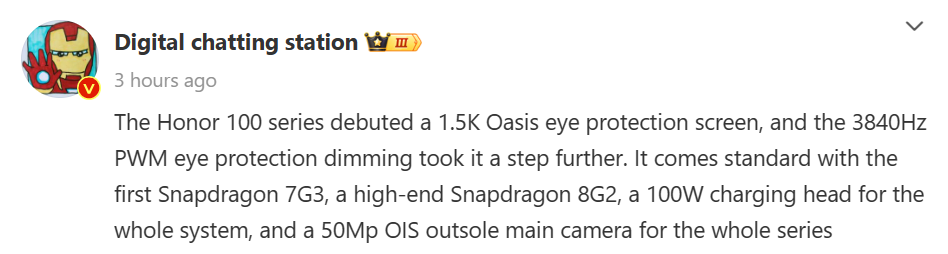
According to DCS, the Honor 100 series will feature a 1.5K Oasis eye-protecting screen, which features an advanced 3840Hz PWM eye-protecting dimming technology, aimed at reducing eye strain. The series also standardizes 100W charging capability across all models.
The standard version of the Honor 100 series is reported to be the first to globally debut Qualcomm’s Snapdragon 7 Gen 3 mobile platform. The chipset will feature a high-performance core at 2.63GHz, three performance cores at 2.40GHz, and four power-efficient cores at 1.80GHz.
Complemented by an Adreno 720 GPU, the Snapdragon 7 Gen 3 is expected to deliver significant performance improvements, building on the success of its predecessor, the Snapdragon 7 Gen 2.
Meanwhile, the high-end variant, likely named the Honor 100 Pro, is said to be equipped with the Snapdragon 8 Gen 2 mobile platform. Launched at the end of 2022, this chipset has been a popular choice among flagship smartphones this year, acclaimed for its robust performance.
For photography, each model includes a 50MP main camera sensor with optical image stabilization (OIS). This camera setup, especially in the Honor 100 Pro, is expected to offer an SLR-level photography experience, as hinted by an Honor executive.
Meanwhile, the design of both devices was leaked a few days back which shows the standard model will have a small cutout for the front camera, while the Pro model might feature a pill-shaped cutout, possibly housing dual front-facing cameras. The rear camera modules will come with unique designs for each variant.
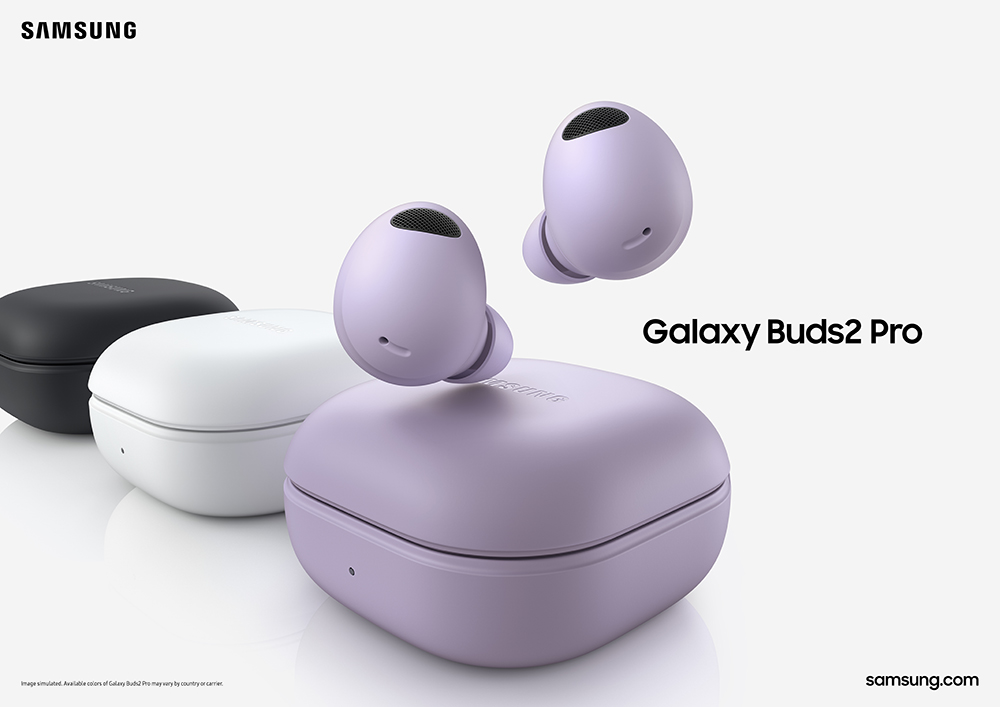
Samsung has different lineups of wireless earbuds. However, unlike other Android OEMs, the company doesn’t release new models very often. But it still launches more TWS products than Apple.
Recently, the firm debuted Galaxy Buds FE as its latest offering. It is the brand’s most affordable earbuds at launch and the only one released this year.
According to a report, the company’s next TWS will launch in 2024. Let’s go through the details.
SamMobile says that Samsung will launch the Galaxy Buds 3 Pro in 2024. As the name suggests, these upcoming earbuds will be the successor of Galaxy Buds 2 Pro from 2022.
The third-gen pro-grade wireless earbuds from Samsung are expected to debut alongside the Galaxy Z Fold 6 and Galaxy Z Flip 6. So they should go official by July or August next year.
Unfortunately, nothing else is known about this product, except that it exists and will be released in less than a year from now. We are looking forward to learning more about it via leaks in the coming months.
The current-gen Galaxy Buds 2 Pro are one of the best wireless earbuds on the market despite being older than a year. If you want the best Samsung ecosystem experience, these are the ones to get, followed by Galaxy Buds 2 from 2021.
On the other hand, the latest Galaxy Buds FE also offer several features from the aforementioned more premium models. But they are still not as good as their bigger siblings, which can be purchased at around the same price as these.
In a groundbreaking move, Microsoft has unveiled its latest arsenal in the tech race, introducing two custom-designed chips, Azure Maia AI Accelerator and Azure Cobalt CPU. These chips, the result of years of covert refinement in a Silicon lab on Microsoft’s Redmond campus, are set to revolutionize the landscape of AI services and cloud computing.
source: Microsoft
Maia AI Accelerator
The Maia chip is tailored to accelerate AI computing tasks, a direct response to the burgeoning costs associated with delivering AI services. Specifically designed to power Microsoft’s $30-a-month “Copilot” service, the Maia chip is optimized for running large language models, including those integral to Microsoft’s Azure OpenAI service. By routing most AI efforts through common foundational AI models, Microsoft aims to drastically improve efficiency and tackle the challenge of high AI service costs.
source: Microsoft
Azure Cobalt CPU
Complementing Maia is the Cobalt chip, a central processing unit (CPU) strategically designed to compete with Amazon Web Services’ Graviton series of in-house chips. Utilizing technology from Arm Holdings, Cobalt has undergone rigorous testing, proving its mettle by powering Teams, Microsoft’s business messaging tool. Unlike its counterparts, Cobalt will not be restricted for internal use; Microsoft plans to sell direct access to Cobalt, presenting a competitive alternative to AWS’s chips.
Acknowledging the stiff competition with Amazon Web Services, Microsoft is keen on emphasizing the competitive performance and price-to-performance ratio of its Cobalt chip. This strategic move aligns with Microsoft’s overarching strategy, which revolves around designing chips to enhance efficiency, reduce costs, and ultimately offer superior solutions to customers.
Source: Microsoft – System level tester at Microsoft lab, Redmond
Technical details reveal that both Maia and Cobalt chips are manufactured using cutting-edge 5-nanometer technology from TSMC. The Maia chip, in a cost-effective twist, employs standard Ethernet network cabling, eschewing the more expensive custom Nvidia networking technology used in OpenAI’s supercomputers.
Analysts view Microsoft’s approach with the Maia chip as a clever maneuver, allowing the company to capitalize on selling AI services in the cloud until personal devices become powerful enough. AWS’s Graviton chip, reportedly boasting 50,000 customers, underscores the fierce competition in the AI chip market, with AWS emphasizing ongoing innovation in delivering future chip generations.
The unveiling of Maia and Cobalt chips marks a significant step in Microsoft’s quest for efficient, scalable, and sustainable computing power. These chips not only address the demands of AI workloads but also play a crucial role in optimizing infrastructure systems from silicon to servers for both internal and customer workloads.
As the tech giant sets its sights on designing second-generation versions of Maia and Cobalt, the future promises continued optimization across every layer of the technological stack for enhanced performance, power efficiency, and cost-effectiveness. Microsoft’s venture into custom-designed chips is poised to reshape the AI landscape and propel the industry toward new horizons.
Smart Rings are still in their nascent stage and they are expected to be potential alternatives to smartwatches and fitness bands due to various reasons. There are only a few brands like Oura, Circular, Go2sleep, Ultrahuman, and more in this untapped segment. Now, French-based brand Circular has announced a new smart ring that is touted to be the slimmest and lightest in the world whilst packing all the necessary health tracking features. Read on to know more about the Circular Ring Slim below.
Circular Ring Slim specifications
As the name suggests, the Circular Ring Slim weighs only 2 grams and is said to be lighter than a standard ring. It boasts a matte titanium exterior build whereas the internal surface features a medical-grade non-allergic and non-metallic material for comfortable use. The ring is suitable for light water exposure like showering or washing hands.
The Circular Ring Slim is equipped with three-axis a accelerometer, a surface temperature sensor, and PPG sensors. These can measure various health metrics like 24×7 heart rate, SpO2 levels, heart rate variability, sleep patterns, and stress levels. The temperature variance readings help in detecting fever and menstrual cycles. The smart ring can track the user’s physical activities along with personalized recommendations for improvement. It is also loaded with Kira+, an AI-powered health and wellness assistant. The Ring Slim will notify the user when their vitals are off.
Apart from the lightweight profile, the Circular Ring Slim features a haptic navigation interface. Users can tap anywhere on the ring for various functions including medication reminders and guided breathing exercises. The device also has a smart alarm clock that will wake up the user with vibrations
The Circular Ring Slim can be integrated with Google Fit and Apple Health. It is claimed to offer a battery life of 6 days. There is also an Airplane mode to disable all the ring’s communications.
The Circular Ring Slim carries a price tag of $275 / EUR 225. But it can be pre-ordered for $245 / EUR 199 till December 15 when the shipments commence.
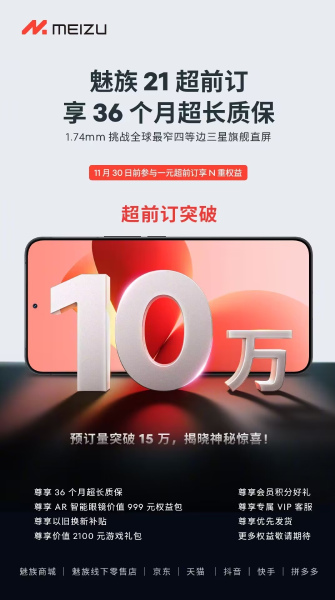
Meizu is gearing up to launch its latest smartphone series, the Meizu 21. The company has been actively promoting the upcoming devices through various teasers, and it has now revealed that over 100,000 users have already pre-booked the smartphone.
Meizu kicked off pre-bookings on November 15th for a nominal deposit of just 1 yuan.
This early bird offer comes with a host of benefits, including a 36-month extended warranty, trade-in subsidies, an exclusive Meizu AR smart glasses package worth 999 yuan, a gaming gift pack worth 2,100 yuan, and priority delivery of the Meizu 21.
The 36-month warranty is particularly noteworthy, as it means that the device is secured for three years. During the warranty period — according to Meizu — if the smartphone doesn’t suffer from human-caused damage, users can submit it for evaluation at Meizu’s official after-sales centers.
Upon confirmation, users will be eligible for Meizu’s official after-sales free maintenance service.
The pre-booking for the Meizu 21 series ends at 16:59 (GMT +8) on November 30.
Meizu 21 series specifications
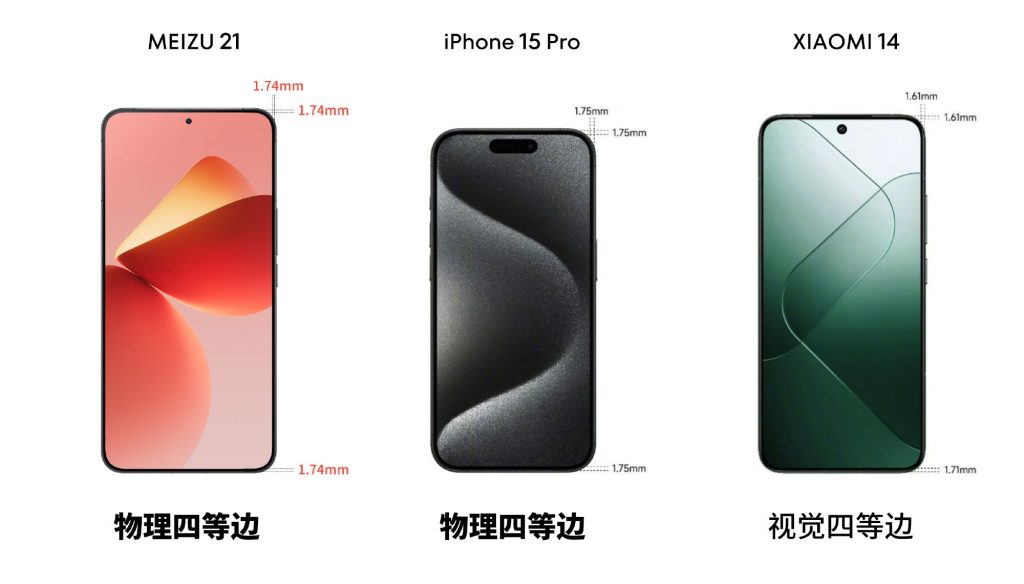
Meizu has officially revealed some key specifications of the Meizu 21, including a custom-made 6.55-inch Samsung AMOLED display with symmetrical bezels measuring 1.74mm on all four sides.
Both the Meizu 21 and 21 Pro will be powered by the Snapdragon 8 Gen 3 chipset and are expected to feature an OIS-enabled 50-megapixel primary camera.
The standard model is expected to feature an ultra-wide camera and a telephoto camera, whereas the Pro edition may have an ultra-wide camera and a periscope telephoto camera.
Both models will have 80W fast charging, but the Pro model is likely to get a larger battery (5,020mAh) than the standard model (4,800mAh).
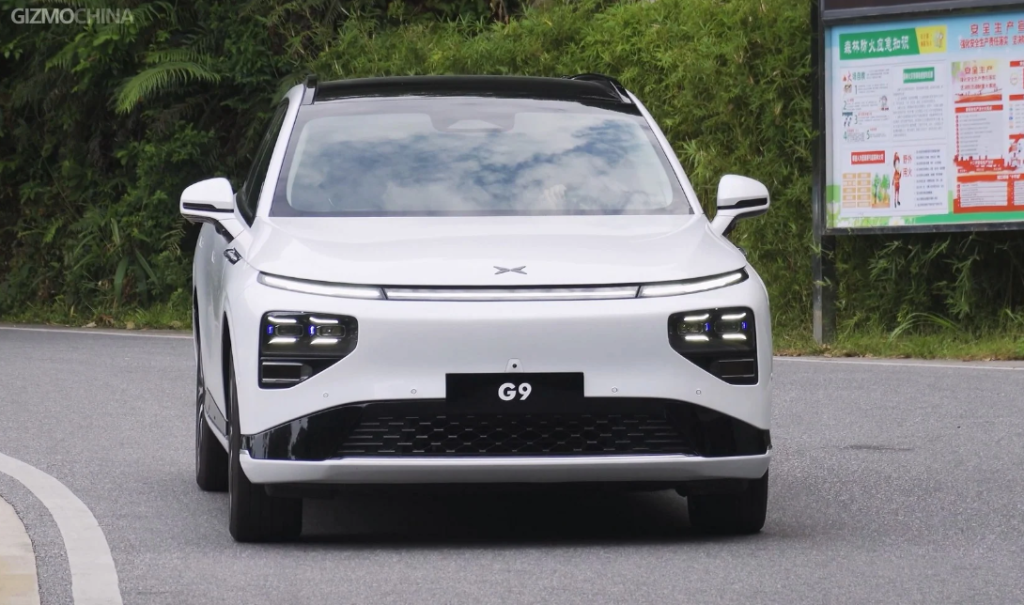
Xpeng is gearing up for a robust fourth quarter with a projected surge in deliveries. Anticipating between 59,500 and 63,500 vehicle deliveries from October to December, the company expects a substantial 59% increase from the third quarter. This optimistic outlook is attributed to the popularity of Xpeng’s new models, strategically offered at discounted prices to attract mainland Chinese drivers.
Despite reporting a net loss of US$537 million in the quarter ended September 30, Xpeng remains confident in the positive results of transformative adjustments made earlier in the year. The company’s CEO, He Xiaopeng, is optimistic about accelerated growth in the fourth quarter of 2024.
Xpeng’s third-quarter revenue saw a notable 68.5% quarterly increase to 8.53 billion yuan, aligning with analysts’ estimates. The vehicle margin, indicating the difference between the selling price and tangible costs, showed improvement, standing at minus 6.1%, up from the minus 8.6% in the April to June period. However, Xpeng attributed the negative vehicle margin to aggressive sales promotions and the cancellation of EV purchase cash subsidies by Beijing.
The company did not specify when promotional activities would end, leaving room for further speculation about the impact on future financial performance. Xpeng’s new model, the G6 SUV, played a pivotal role in the company’s success, particularly during discount periods, with its perceived quality and performance resonating well with consumers.
Xpeng, often considered a key player in the Chinese EV market alongside Li Auto and Nio, is positioning itself as China’s response to Tesla. The G6 SUV, highlighted as a competitor to Tesla’s Model Y, boasts semi-autonomous driving capabilities powered by X NGP (Navigation Guided Pilot) software.
In October, Xpeng achieved a milestone with a record 20,002 deliveries, marking a 31% increase from the previous month and surpassing its previous record set in December 2021. Competitor Li Auto also broke its delivery record in October, handing over 40,422 vehicles to mainland Chinese customers, marking a seventh consecutive monthly increase.
As Xpeng continues to navigate the competitive landscape of the Chinese EV market, the company’s leadership remains optimistic about future prospects. With an eye on enhanced free cash flow in the current quarter, Xpeng aims to set the stage for long-term scalable profitability, reinforcing its commitment to sustained success in the evolving electric vehicle industry.
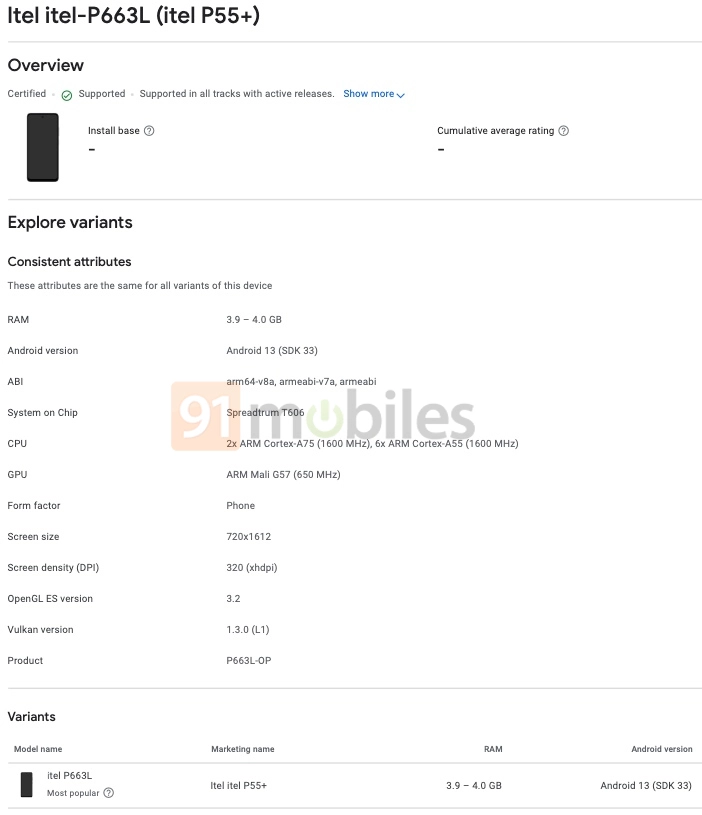
iTel launched the P55 smartphone in India in September this year. It is the cheapest 5G phone in the country priced at Rs 9,999. Now, it seems that the brand is working on a new variant of the device. The iTel P55+ has been spotted on the Google Play Console certification website. The listing reveals the key specifications of the device as well as hints at its imminent launch.
iTel P55+ appears on the Google Play Console
The iTel P55+ carries a model number P663L on the Google Play Console listing. It mentions a Unisoc T606 processor comprising of two Cortex-A75 cores at 1.6GHz and six Cortex-A55 cores clocked at 1.6GHz. The chipset is paired with Mali-G57 GPU onboard. The smartphone is listed with 4GB RAM onboard and it will ship with Android 13 OS out of the box.
The render of the smartphone on the Google Play Console certification appears blurry. But we can notice a waterdrop notch and a thicker chin at the bottom of the display. The listing also reveals a resolution of 720 x 1,612 pixels and a screen density of 320 dpi.
The rest of the specifications of the iTel P55+ remain a mystery. We can expect it to be slightly different from the P55. The latter features a 6.6-inch HD+ display with a 90Hz refresh rate. It has a side-mounted fingerprint scanner and a 50MP main camera on the back. The smartphone is powered by a Dimensity 6080 SoC paired with 8GB RAM and 128GB storage. The device is backed by a 5,000mAh battery cell with support for 18W fast charging.
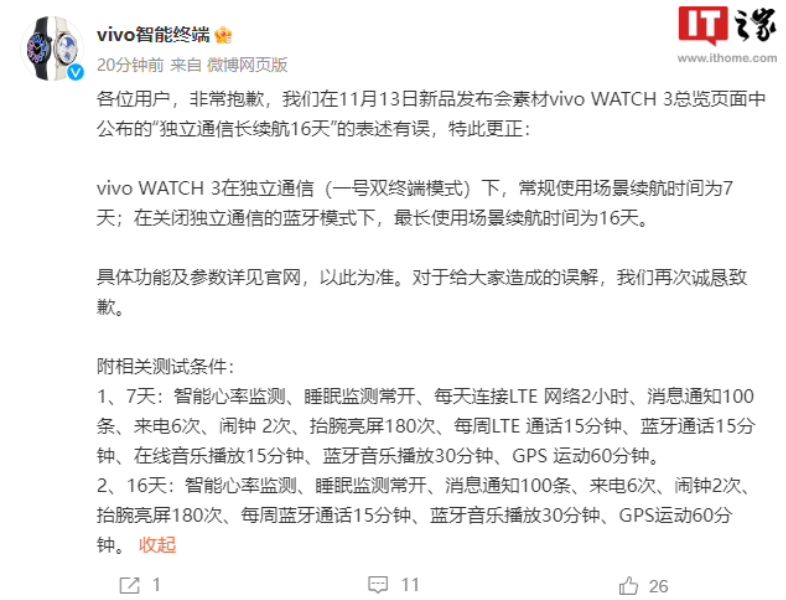
Vivo has acknowledged an error in its promotional materials for the new Vivo Watch 3 smartwatch. The company initially claimed that the watch could last up to 16 days on a single charge with eSIM in its promo materials. But it turns out that this figure is only achievable under specific usage conditions.
In a statement posted on its official Weibo account, Vivo said that the Vivo Watch 3 has a battery life of 7 days in normal usage scenarios. And, to achieve the 16-day battery life, users must use the watch in a more limited capacity.
Vivo provided detailed testing conditions for both battery life claims:
7-Day Battery Life:
Continuous intelligent heart rate monitoring
Always-on sleep monitoring
2 hours of daily connection to the LTE network
100 message notifications
6 incoming calls
2 alarms
180 wrist raises to activate the screen
15 minutes of LTE calls per week
15 minutes of Bluetooth calls
15 minutes of online music playback
30 minutes of Bluetooth music playback
60 minutes of GPS exercise
16-Day Battery Life:
Continuous intelligent heart rate monitoring
Always-on sleep monitoring
100 message notifications
6 incoming calls
2 alarms
180 wrist raises to activate the screen
15 minutes of Bluetooth calls per week
30 minutes of Bluetooth music playback
60 minutes of GPS exercise
Vivo has apologized for the error and has updated its promotional materials to reflect the correct battery life expectations.
The Vivo Watch 3 is available in two versions — a Bluetooth-only model for 1,099 yuan (approximately $152) and an eSIM version for 1,299 yuan (approximately $182). Both versions are available for pre-order now and will be officially launched on November 21.
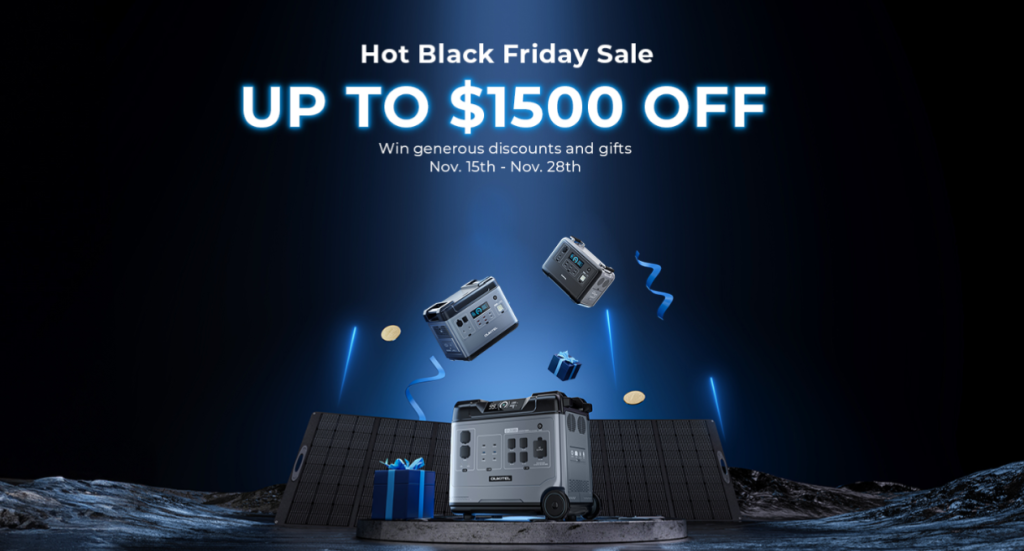
As Black Friday approaches, adventure seekers and those needing reliable backup power are in for a treat with OUKITEL’s exciting Black Friday sale. Whether you’re gearing up for a weekend camping expedition or preparing for unexpected blackouts, OUKITEL has unveiled massive discounts and exclusive giveaways to make this Black Friday unforgettable.
Special Bonus:
For those looking to make a substantial purchase, OUKITEL is offering a generous incentive. Every order exceeding $3000 will include a complimentary OUKITEL CN505, a power station that typically retails for $269. This exclusive bonus ensures that customers not only secure powerful equipment but also enjoy substantial savings.
Flash Sale:
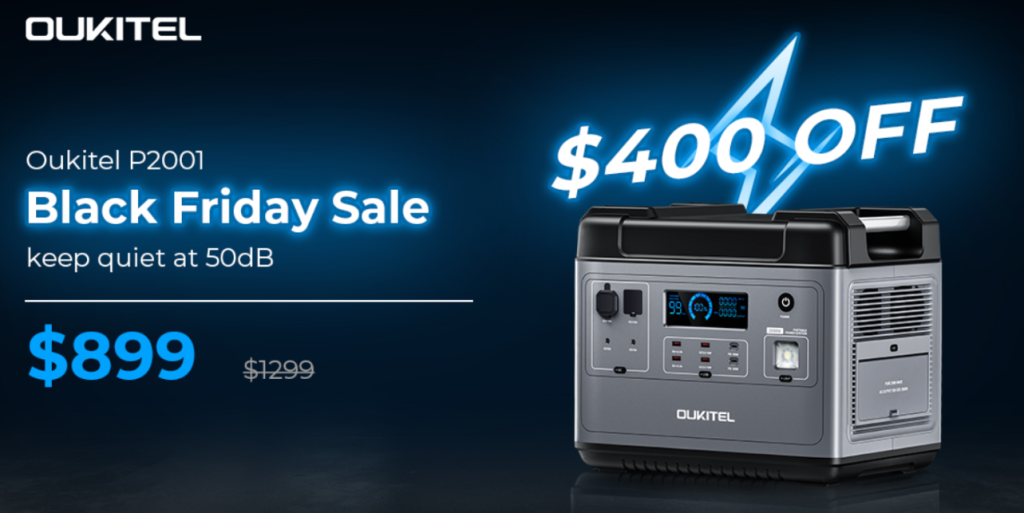
Subscribe now to take advantage of the limited-time flash sale on the P2001 power station. Priced at a remarkable $899 during this Black Friday event, subscribers will also receive free gifts with their purchase. This flash sale provides an excellent opportunity for customers to acquire top-tier power solutions at a discounted rate while enjoying additional complimentary items.
Store Discount:
Customers can further enhance their savings by placing an order during OUKITEL’s Black Friday sale and enjoying an additional 5% discount on the total amount at checkout. This store discount adds an extra layer of value, making it an opportune time to invest in OUKITEL’s reliable and cutting-edge power solutions.
Explore OUKITEL’s Black Friday deals before they expire. With massive discounts, exclusive giveaways, and limited-time offers, OUKITEL’s Black Friday sale in 2023 is a power-packed event that you won’t want to miss.
OUKITEL P5000 – Mobile Home Backup Power Station
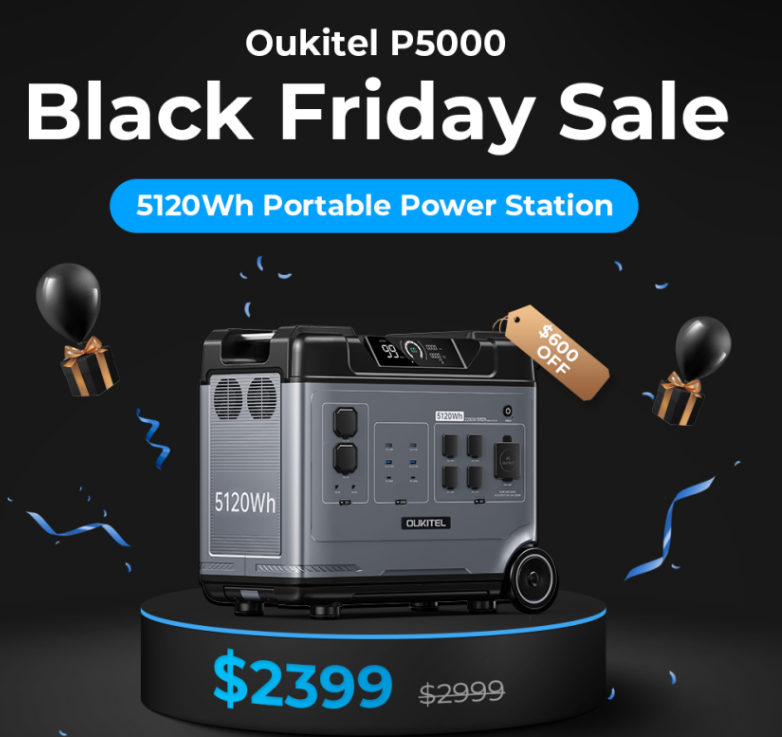
For a limited time, the OUKITEL P5000 is available at a discounted price of $2,399, down from $2,999, allowing you to save $600. Additionally, the P5000 + PV400 bundle is on sale for $3,299, down from $3,999, offering a savings of $700. Don’t miss the opportunity to secure reliable and portable power at an unbeatable price.
The OUKITEL P5000 is a robust solution designed to meet the power demands of an average family for an entire day. Boasting an impressive 5,120Wh capacity, this portable power station ensures you can run most household appliances, making it indispensable for emergencies, RV trips, outdoor parties, and adventures.
Featuring durable wheels and a retractable handle, transportation is made hassle-free. The P5000’s versatility is not just limited to its mobility; it’s a reliable companion for various scenarios. In times of crisis, it provides essential backup power, while on outdoor excursions, it becomes the lifeblood of camping appliances and outdoor equipment.
OUKITEL P2001 – Power Solution for Vanlifers, RVers, and Campers
OUKITEL P2001 is available at a discounted price of $899, down from $1,299, allowing you to save $400. Additionally, the P2001 + PV400 bundle is on sale for $1,599, down from $1,899, offering a savings of $300. Secure your power independence with the OUKITEL P2001, a reliable and portable solution for various lifestyles and situations.
The OUKITEL P2001 emerges as an ideal companion for outdoor enthusiasts and those preparing for home emergencies. This portable power unit, designed for van lifers, RVers, and campers, offers a myriad of applications. With an impressive 2000Wh capacity, the P2001 stands ready to power essential home appliances such as laptops, routers, lights, and even aquariums.
Beyond its camping prowess, the P2001 proves invaluable during power outages, functioning as a reliable power bank. This versatile unit ensures you stay connected and powered up when it matters most.
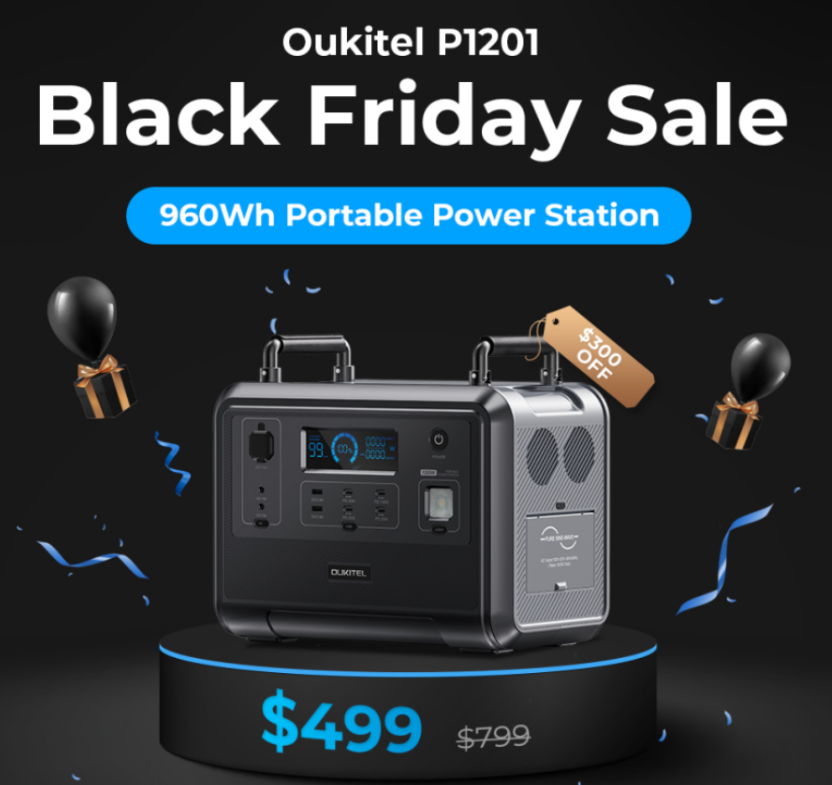
For a limited time, the OUKITEL P1201 is available at a discounted price of $499, down from $799, enabling you to save $300. Additionally, the P1201 + PV400 bundle is on sale for $1,099, down from $1,299, offering a savings of $200. Don’t miss the chance to grab and go with the OUKITEL P1201, your reliable source of portable power for every adventure.
The OUKITEL P1201 is the epitome of convenience, offering a swift 80% charge in just 1.5 hours, making it the perfect companion for impromptu getaways and last-minute adventures. This portable power station is a must-have for camping, hiking, or any on-the-go activity.
Powered by LFP battery cells, the P1201 guarantees durability, allowing for over 3,500 usage cycles before reaching 80%. That’s nearly a decade of regular use, providing long-lasting reliability. With an impressive 1200W output, it effortlessly powers a variety of consumer electronics and accommodates up to nine devices simultaneously.
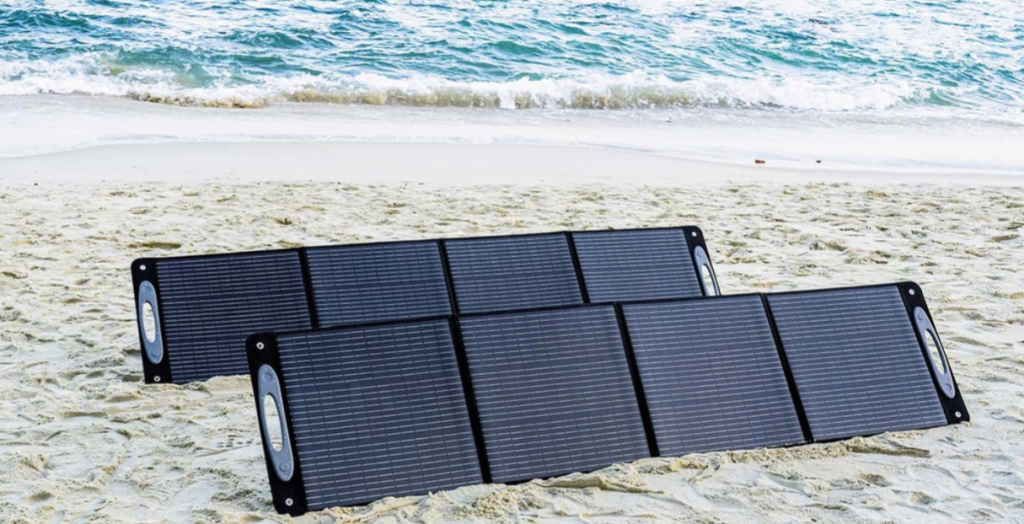
Harness the power of the sun with OUKITEL’s solar panels, available in two efficient models: PV200 and PV400. Crafted from monocrystalline cells, these panels boast up to 23% efficiency, ensuring optimal energy conversion. The ETFE coating and waterproof design guarantee durability, making them suitable for prolonged outdoor use.
Portable and foldable, OUKITEL’s solar panels provide a convenient source of free, clean power, whether at home or in the wild. Their compact design allows for easy transportation, ensuring you have a sustainable energy solution wherever you go.
The key difference lies in size, weight, and power output. Opt for the PV400 if you seek higher power production, keeping in mind that larger power capacity correlates with increased weight. Make a conscious choice to create a greener footprint with OUKITEL’s solar panels, the reliable and portable solution for clean energy in any environment.
OUKITEL, a visionary brand in the field of sustainable energy storage, endeavors to redefine lifestyles through innovative products. Dedicated to empowering users with cutting-edge solutions, OUKITEL’s mission is to integrate eco-friendly energy into both indoor and outdoor environments seamlessly. The brand extends its influence across more than 100 countries, earning the unwavering trust of millions worldwide.
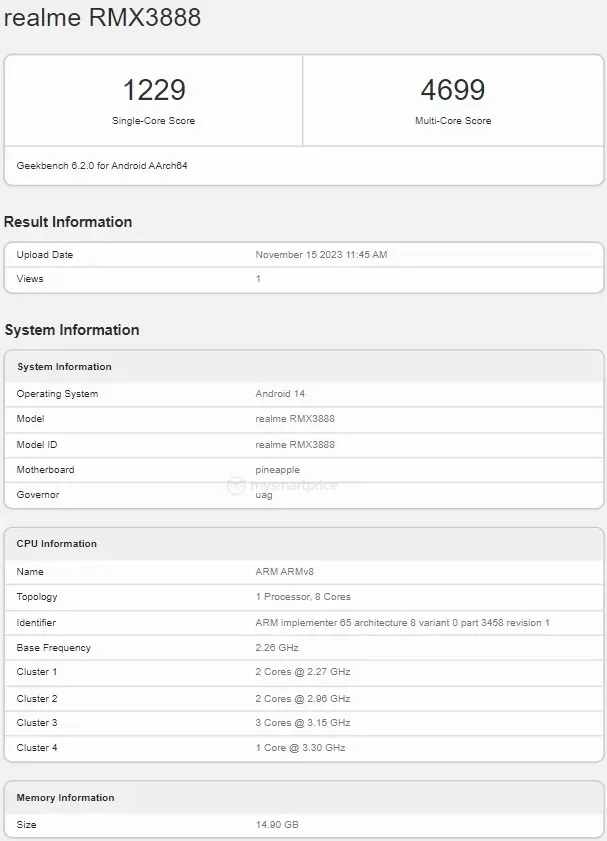
Realme has been teasing some key features about the upcoming GT 5 Pro on its Weibo handle. The brand is yet to announce the launch date of the flagship offering but it is slated to debut by the end of this month. The smartphone has also bagged various certifications. It is expected to arrive as the successor to the GT 2 Pro that was announced in January last year. Now, ahead of the launch, the device has been spotted on the Geekbench benchmarking platform.
Realme GT 5 Pro surfaces on Geekbench
The Realme GT 5 Pro has been listed on the Geekbench database with model number RMX3888 which is the same as other certification listings. It has a motherboard codenamed ‘pineapple’ with four cluster configurations comprising of two cores at 2.27GHz, two cores at 2.96GHz, three cores at 3.15GHz, and a primary core ticking at 3.30GHz. This corresponds to the Snapdragon 8 Gen 3 chipset that is already confirmed to power the GT 5 Pro. The smartphone is listed with 16GB RAM onboard and we can expect more options at launch. The device will ship with Android 14 OS out of the box.
In the Geekbench’s single-core and multi-core tests results, the Realme GT 5 Pro scores 1,229 and 4,699 points.
As per teasers, the Realme GT 5 Pro will feature 3,000 nits peak brightness. It is touted to offer a new era for low-light telephoto images and is confirmed to have a Sony Lytia primary camera sensor. The upcoming offering is also confirmed to come with one of the largest heat dissipation system onboard. An alleged leaked live image of the Realme GT 5 Pro revealed a circular camera module on the rear that does not look too big. It houses four cutouts.
We use cookies on our website to give you the most relevant experience by remembering your preferences and repeat visits. By clicking “Accept”, you consent to the use of ALL the cookies.
This website uses cookies to improve your experience while you navigate through the website. Out of these, the cookies that are categorized as necessary are stored on your browser as they are essential for the working of basic functionalities of the website. We also use third-party cookies that help us analyze and understand how you use this website. These cookies will be stored in your browser only with your consent. You also have the option to opt-out of these cookies. But opting out of some of these cookies may affect your browsing experience.
Necessary cookies are absolutely essential for the website to function properly. This category only includes cookies that ensures basic functionalities and security features of the website. These cookies do not store any personal information.
Any cookies that may not be particularly necessary for the website to function and is used specifically to collect user personal data via analytics, ads, other embedded contents are termed as non-necessary cookies. It is mandatory to procure user consent prior to running these cookies on your website.