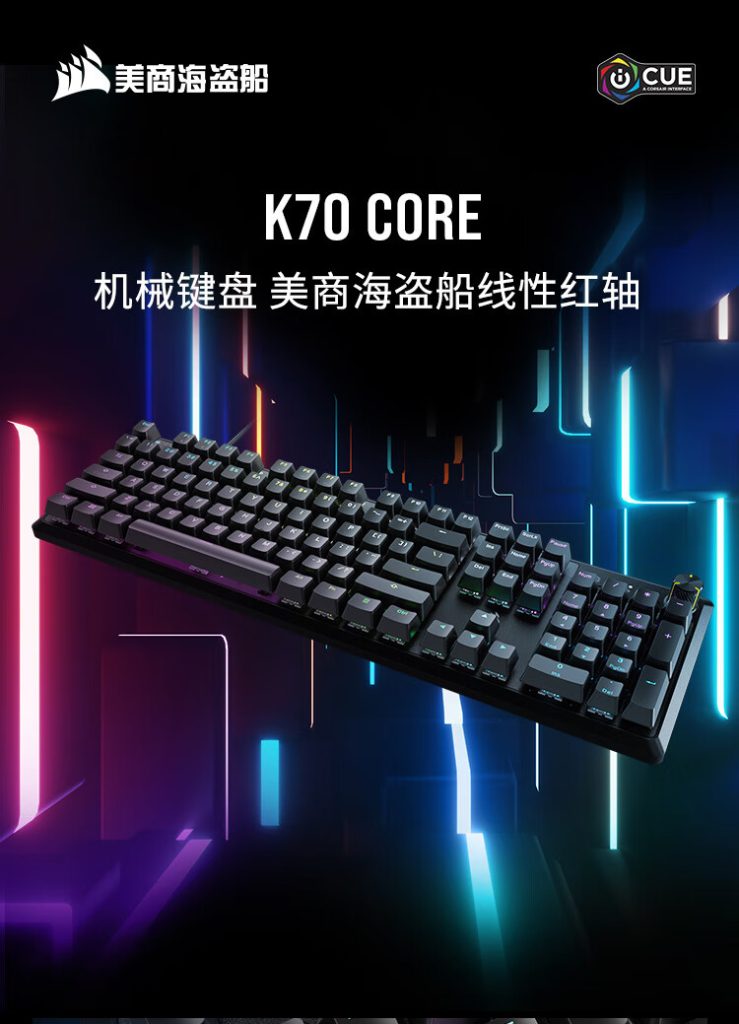
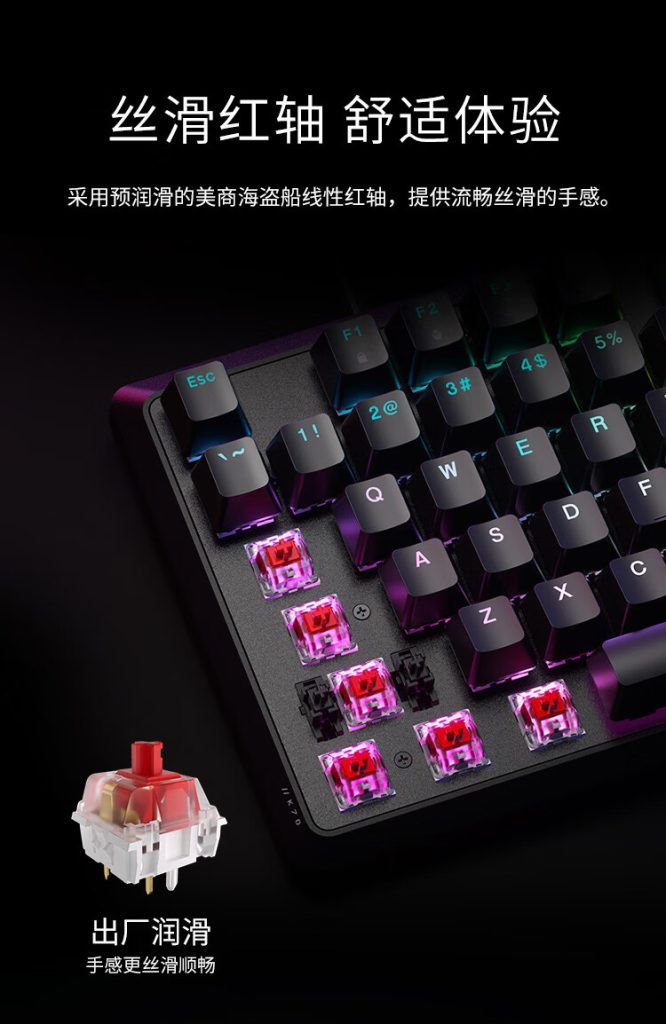
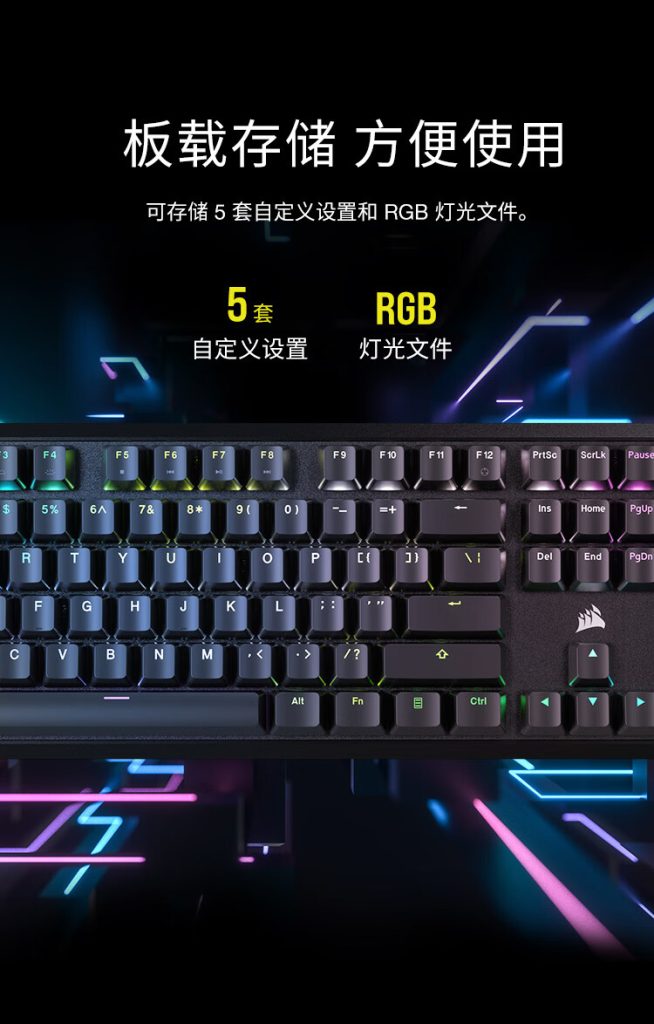
The K70 CORE keyboard features pre-lubricated linear red switches known for precision and durability, with a 45g actuation force and 1.9mm distance for smooth keystrokes traveling 4mm.
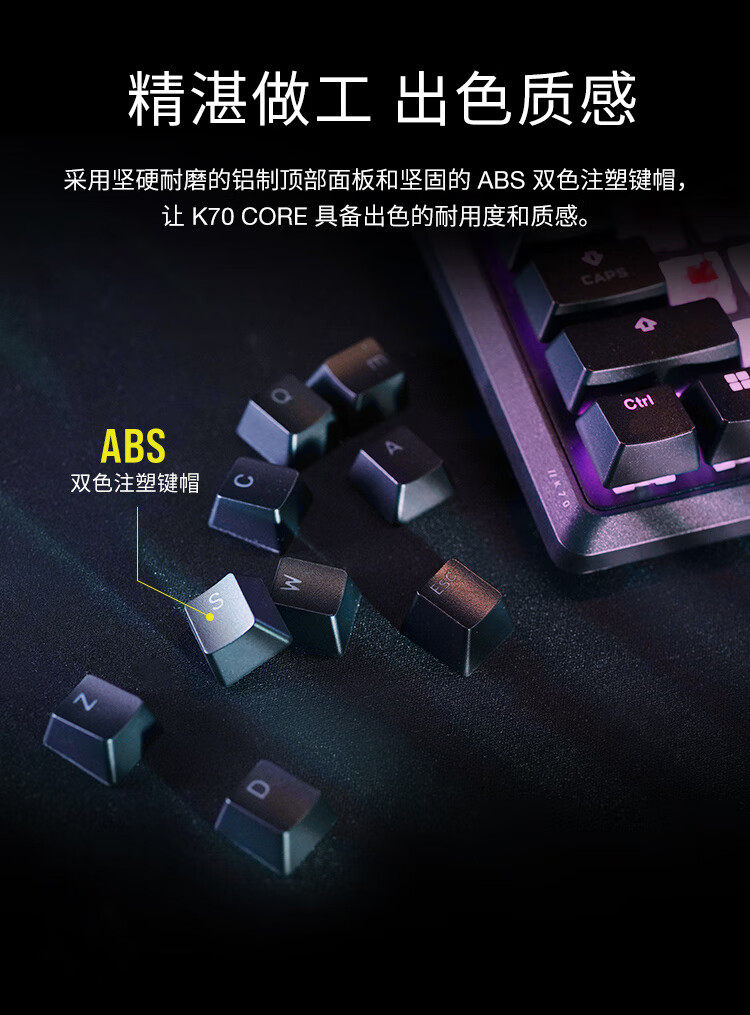
It boasts a durable lifespan of 70 million key presses. The design includes a sleek aluminum top panel and dual-color ABS keycaps. Corsair has also integrated double-layer noise-dampening material to minimize disturbance during gaming.
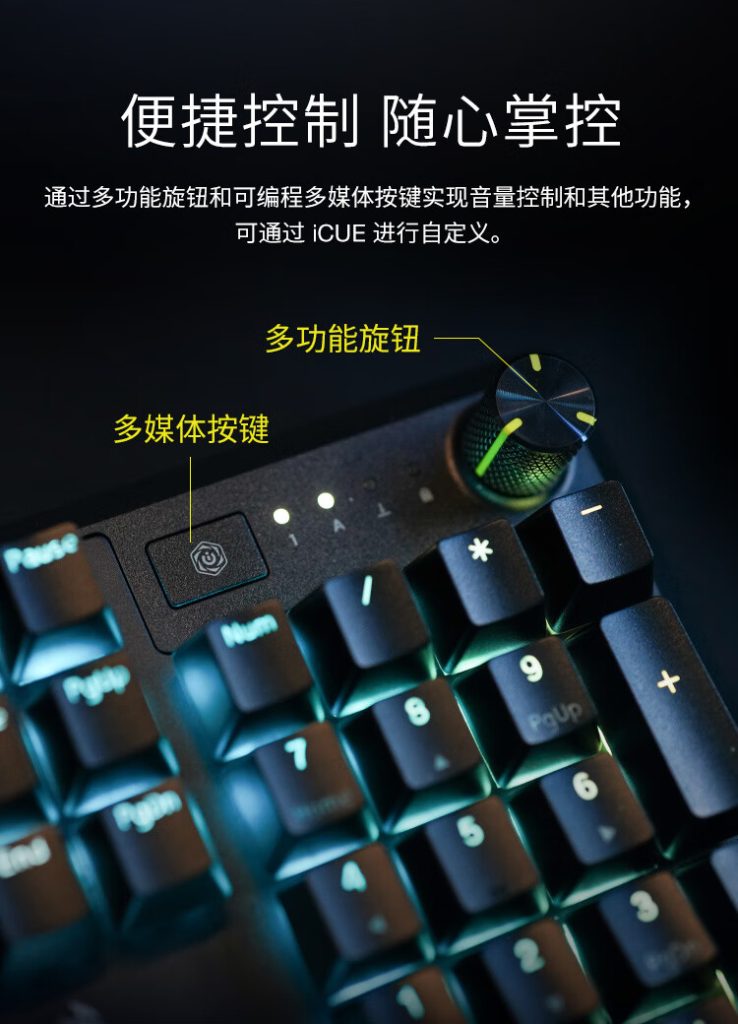
The keyboard includes a multifunctional knob located at the top right, alongside programmable multimedia keys, offering convenient access to volume controls and other essential functions. The keyboard settings can be personalized through the iCUE software.
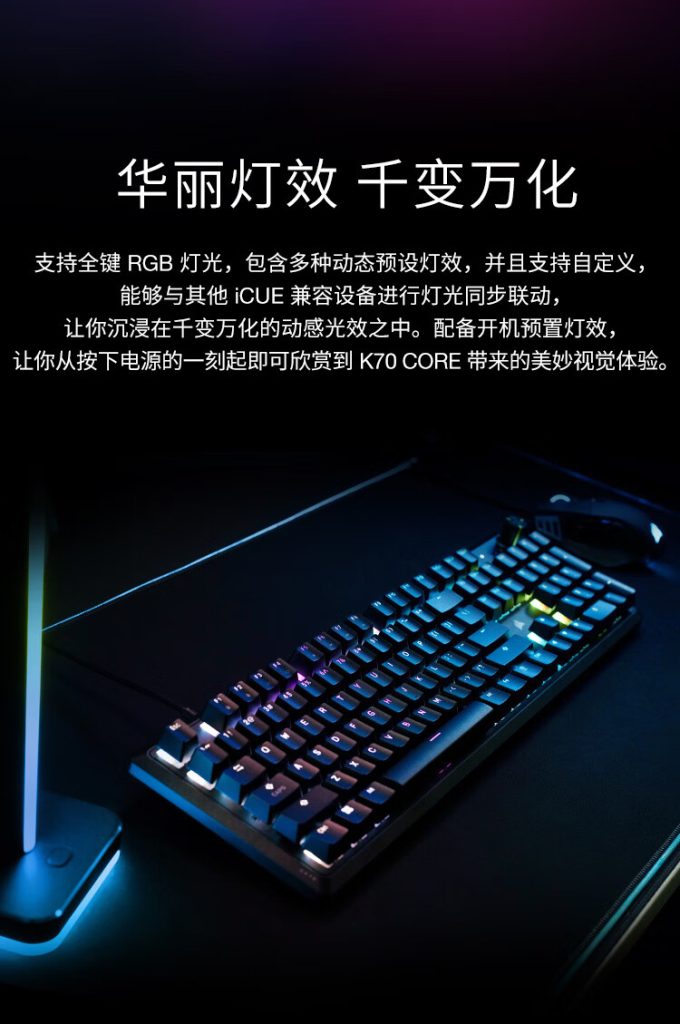
It features full-key RGB lighting and enables users to save up to 5 unique lighting configurations and provides dynamic RGB settings, key remapping, and multimedia key programming through the iCUE software.
The keyboard offers a wired connection and includes a numeric keypad, making it suitable for both gaming and professional use.
It is now exclusively available for pre-orders on Corsair’s JD.com flagship store, and it comes at a price of 699 yuan ($95).
The competition in the electric vehicle market is heating up. In the market led by Tesla and BYD, manufacturers are competing fiercely to offer better technologies at more affordable prices. However, it appears that this competition is not going so smoothly. Tesla China has sued a Chinese company, Bingling Intelligent Technology, for allegedly infringing its technology secrets. Moreover, it turned out that the company that stole Tesla‘s secrets was owned by Xiaomi. Here are the details…
Tesla sues Chinese firm over tech secret infringement
Tesla China has sued Bingling Intelligent Technology for allegedly infringing its technology secrets. The lawsuit was filed in the Shanghai Intellectual Property Court and is scheduled to go to trial on October 10. While corporate espionage is not new, so there is no big news, right? Wrong… Bingling Intelligent Technology is a chip designer and auto parts manufacturer based in Changzhou and it is majority-owned by Xiaomi, the Chinese smartphone maker.
Tesla has accused Bingling Intelligent Technology of stealing its trade secrets related to the development and production of automotive sensors and components. The company is seeking damages and an injunction to prevent Bingling Intelligent Technology from using its technology. It is worth noting that Xiaomi has been developing its own electric vehicle for some time, which could provide a motive for the alleged theft.
However, this is not enough evidence to accuse anyone. Therefore, it is best to view Xiaomi as innocent until the court case is over. Tesla has been a vocal critic of intellectual property theft in China. In 2019, the company sued Chinese electric vehicle startup Xpeng Motors for alleged theft of trade secrets. The case was settled in 2020, with Xpeng agreeing to pay Tesla an undisclosed sum. It remains to be seen if the case against Bingling Intelligent Technology will be settled in a similar way.
Huawei has instituted a lawsuit in Portugal challenging the country’s Cybersecurity Council (CSSC) resolution on 5G equipment. The lawsuit was filed by the Chinese tech powerhouse in Lisbon. The CSSC resolution effectively bars operators from using Huawei’s equipment for 5G mobile networks, according to the company.
The CSSC resolution itself did not directly name Huawei, but it will prevent Huawei from entering 5G standalone networks in Portugal. It also affects the company’s plans to extend existing contracts on 4G platforms to the higher 5G network.
This is yet another fallout of the extended US sanction regime that the Donald Trump administration slammed on Huawei. The Joe Biden presidency has also sustained the restrictions which had a debilitating effect on Huawei. It also reflects current concerns in Europe about Huawei’s alleged involvement in espionage for the Chinese government. It is believed that Huawei’s involvement in critical infrastructure could compromise national security. Huawei continues to reject such categorization.
Huawei Portugal is seeking the protection of its legitimate interests and legal rights under the law since it is a company duly established in Portugal. The lawsuit was filed at the Lisbon Administrative Court on August 31. Huawei says it expects the court to remedy the multiple violations of its rights and the significant detrimental impact on it and its partners because of the CSSC resolution.
The Cybersecurity watchdog insists that the new resolution was based on an independent, strict security assessment in sync with EU guidelines. It says neither Huawei nor Chinese suppliers in general, were specifically targeted by the resolution.
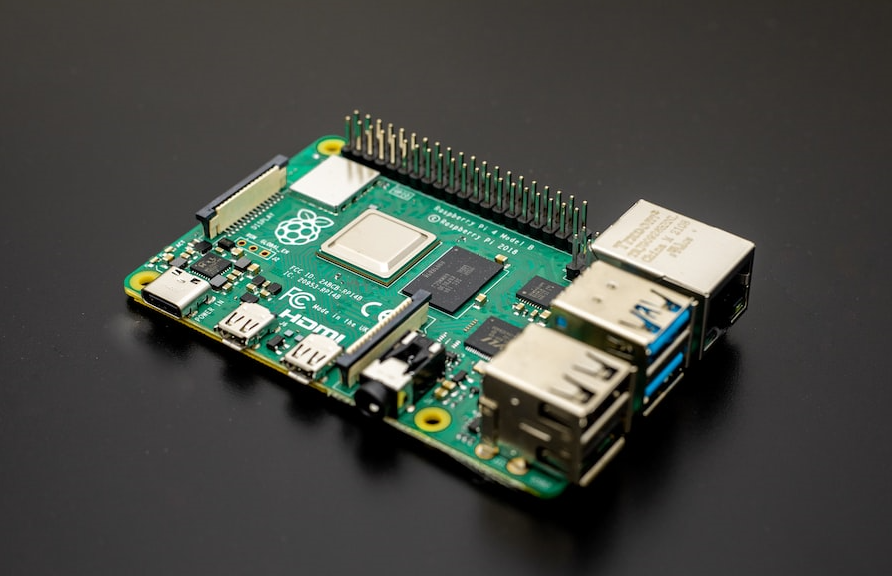
Three men have been arrested in Lubock, Texas in connection with the theft of a cumulative sum above $5,700 from automated teller machines (ATMs). The men allegedly used the Raspberry Pi to bypass security on the ATMS and burgle them. The incidents happened in the West Texas area on multiple ATMs.
Although there are no official details about the incident, the trio of suspects were arrested on August 3 after authorities were notified of the burglaries. The official court documents are shielded by a paywall. The three men – Abel Vades, Yordanesz Sanchez, and Carlos Herera-Ruiz were taken into custody after being picked up at a hotel. Among evidence recovered from the suspects were two Raspberry Pis, according to a local news outlet. The Raspberry Pis were used to deactivate security and allow the thieves to access the cash drawer. The Raspberry Pis were used obviously to bypass the ATM’s security.
The three men have been charged in court but it is unclear whether they were part of a larger syndicate. They received a charge of Unlawful Interception, Use, or Disclosure of Wire, Oral, or Electronic Communications and Engaging in Criminal Activity. One of the suspects received an additional charge of Forgery. The criminals used the Raspberry Pi to bypass security. The version of Raspberry Pi used by the thieves was not specified. The fine details of the robbery incident are lacking at this time. It is unclear exactly how the robbers interfered with the ATMs and how the security was breached.
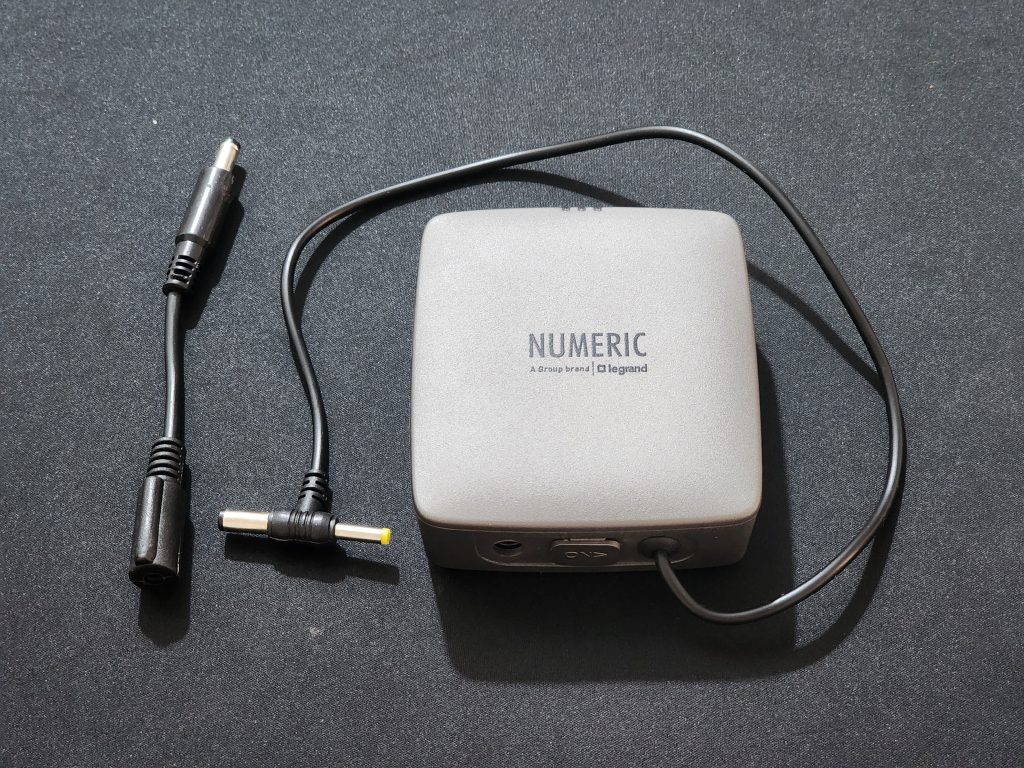
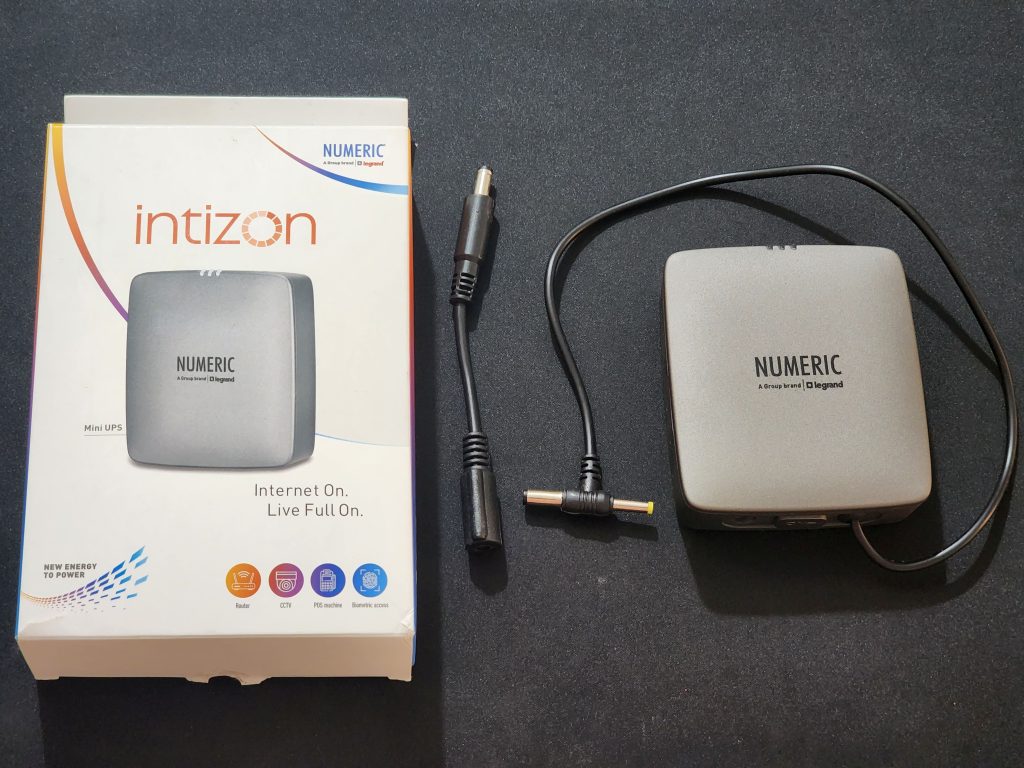
I’ve been using the Numeric Intizon Mini UPS for my Wi-Fi router for a week now, and it’s specifically designed to ensure uninterrupted internet access when there is a power outage. This portable power backup solution might be a wise choice if you’ve ever experienced annoying Wi-Fi signal disruptions during power outages. Here’s my firsthand experience with it:
Battery Backup
Numeric claims that the Intizon Mini UPS offers up to 4 hours of backup power. In my personal experience, I consistently received a reliable 3 hours of battery backup for my Wi-Fi router. This duration was more than sufficient to maintain my online activities during brief power interruptions. During my usage, I encountered a single power outage that lasted approximately 15-20 minutes, and this device proved to be a lifesaver as my laptop’s battery was also running low at that moment.
During the monsoon, I sometimes experience power cuts that last for just a fraction of a second. This can be frustrating because it’s enough to cause my Wi-Fi router to restart. In such situations, the Intizon Mini UPS can be very handy.
How to Setup
Intizon Mini UPS setup
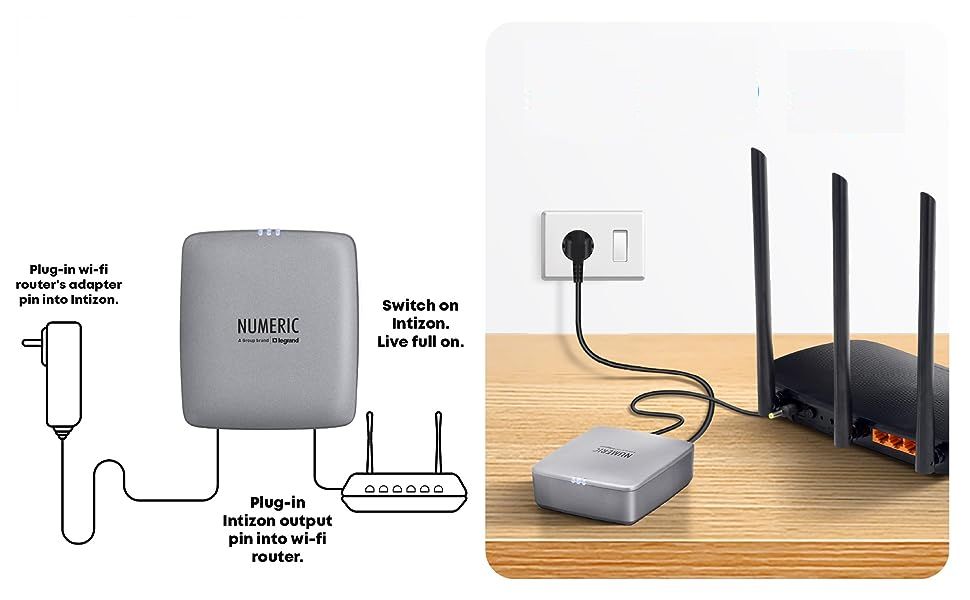
Setting up the Intizon Mini UPS is straightforward and user-friendly, as claimed. No technical expertise is required for installation. The following steps show how to set up the device to power a Wi-Fi router:
Connect the Wi-Fi router’s power adapter to the Intizon Mini UPS.
Connect the Intizon output pin to the Wi-Fi router.
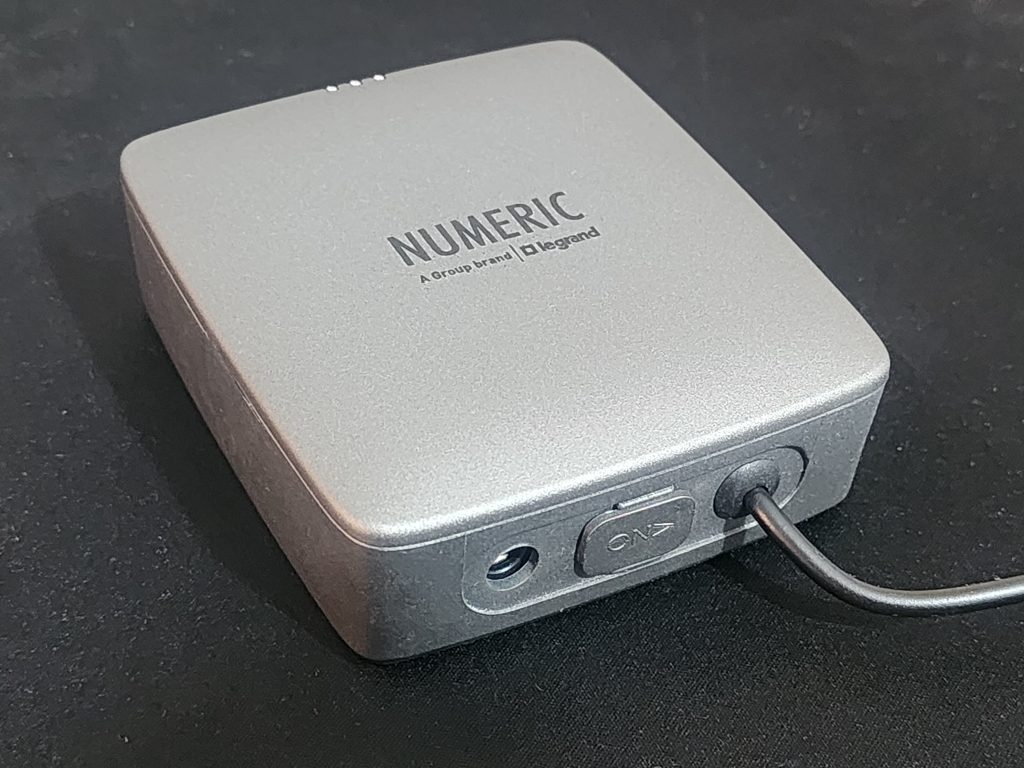
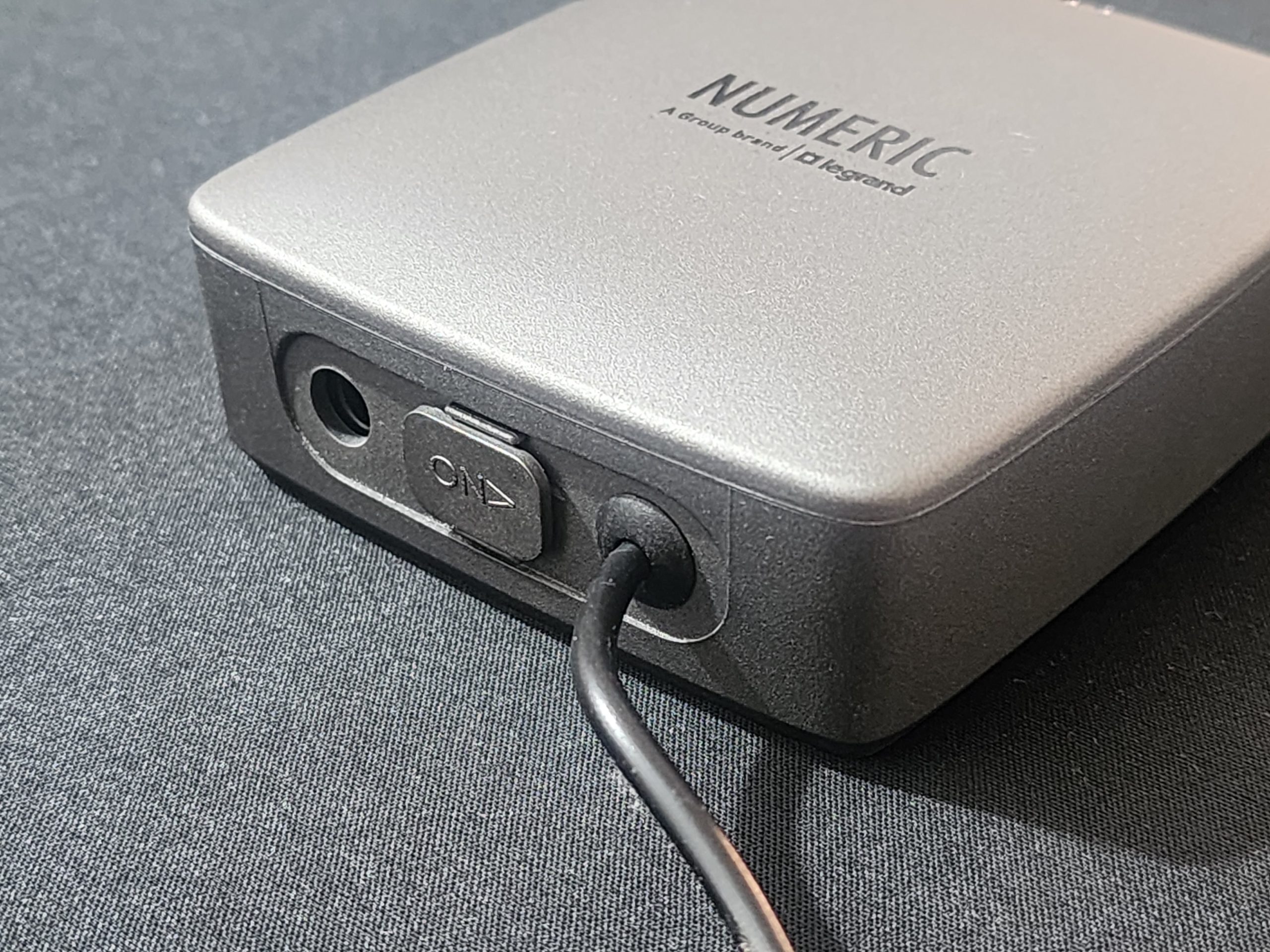
Turn on the Intizon Mini UPS using its rear-facing power button.
Intizon Mini UPS for Wi-Fi Router
The Intizon output cable has a two-way pin, which means it can power up two devices at the same time. The retail package of the device also includes a DC connector, which is required when connecting two devices to the Intizon Mini UPS. The device can be placed on a tabletop or mounted on the wall.
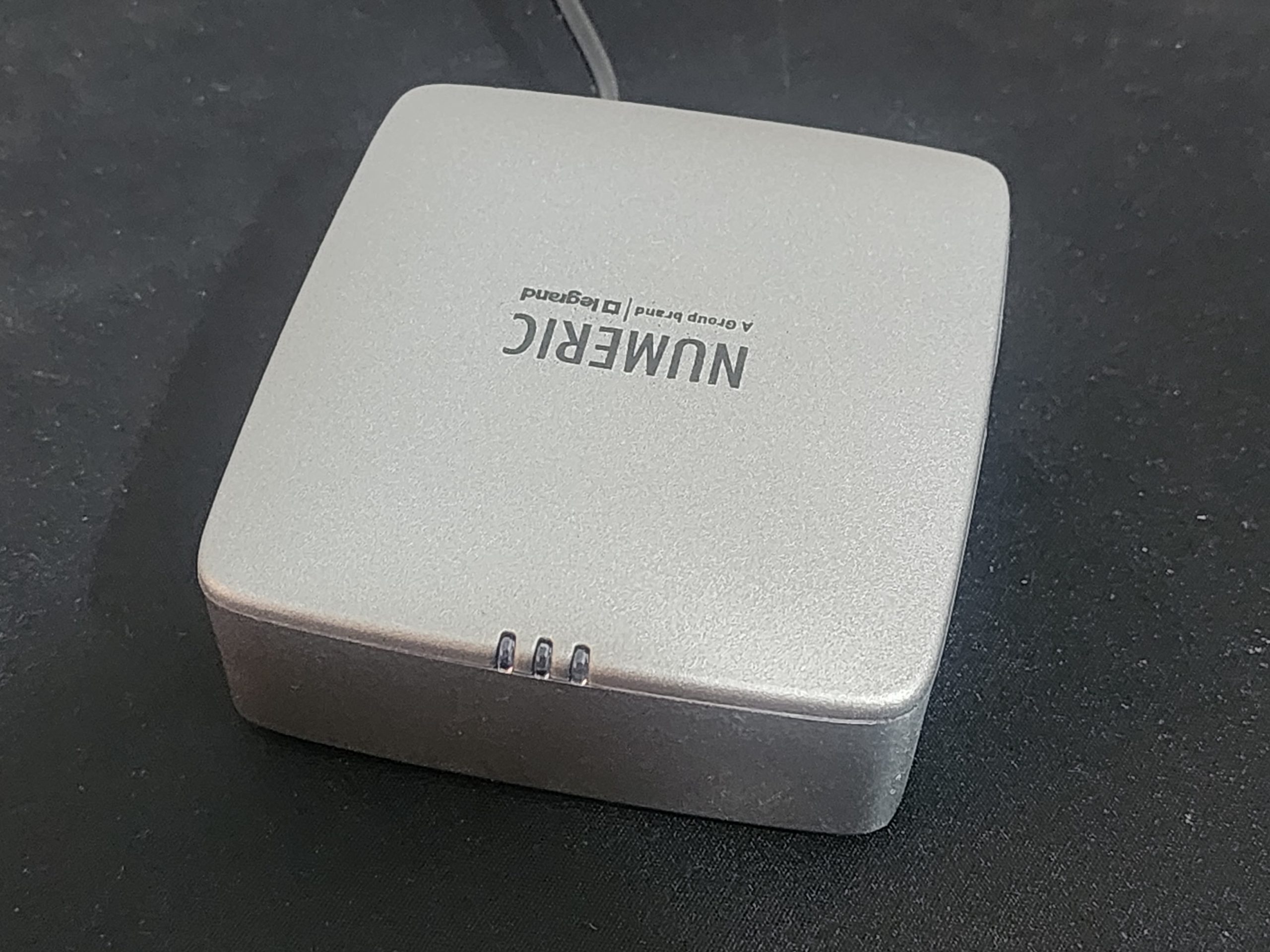
The presence of an LED indicator is quite useful, as it provides clear feedback on the UPS’s status. You can easily determine whether it’s running on battery power or in charging mode, ensuring you’re always aware of your power backup situation.
Works with Other Devices
The Intizon Mini UPS is compatible with 12V-rated Wi-Fi routers. However, I primarily used it for my Wi-Fi router. It’s worth noting that the Intizon Mini UPS is not limited to routers alone. It can be used to provide battery backup to a range of devices, including set-top boxes, baby monitors, smart speakers, Wi-Fi range extenders, CCTV cameras, POS machines, intercom systems, and more. This adaptability makes it a valuable addition to your home or office. It’s important to note that the device may provide varying backup times for different types of products.
Technical Details
The Intizon Mini UPS for Wi-Fi Router operates within a 12V range for both input and output voltage. It has a nominal power output of 24W, making it a reliable choice for ensuring uninterrupted power to your devices. With an ingress protection rating of IP20, it provides limited protection against the entry of solid objects and does not provide any protection against liquids. Lastly, the Mini UPS comes equipped with one 12V battery, specifically a Li-ion type.
Conclusion
To conclude, the Intizon Mini UPS for Wi-Fi Router is a reliable and easy-to-install power backup solution that helps maintain uninterrupted internet connectivity. With its 3-4 hours of backup time, it offers a practical choice for individuals who rely on a stable internet connection, particularly during power disruptions. It addresses the issue of internet interruptions effectively, making it a suitable option for those seeking a straightforward way to ensure their Wi-Fi remains operational during power outages.
Price and Availability
The Intizon Mini UPS by Numeric is listed for Rs 1,612 on Amazo India at the time of writing this post. It comes with a one-year warranty.
In a recent speech published by Huawei Technologies, the company’s founder and CEO, Ren Zhengfei, emphasized the importance of nurturing talent and maintaining technological leadership amidst ongoing US sanctions. Ren’s speech, delivered on July 28th, urged the tech giant to prioritize talent development over financial gains.
Ren stated, “Huawei will save talent, not US dollars.” This statement underscores the company’s commitment to fostering internal expertise and innovation. He encouraged Huawei to focus on leading in specific business areas globally while expanding the boundaries of research and development.
Despite relinquishing day-to-day management to the board of directors, Ren Zhengfei continues to play a pivotal role as a spiritual leader within the company. His daughter, Sabrina Meng Wanzhou, serves as the rotating chairman from April to September.
Huawei’s journey has been marked by US sanctions, beginning in 2019. Nevertheless, the company remains a symbol of China’s technological prowess and its pursuit of self-sufficiency. Premier Li Qiang’s recent visit to the company, during which Ren stood beside him, underscores Huawei’s significance in China’s tech landscape.
Ren emphasized that the primary motivation for talented workers should be passion rather than material rewards. He also stressed that individuals do not excel in all aspects of business from the outset, highlighting the importance of time and experience in honing one’s talents. “In time, you will see who becomes a leader. It’s a natural process,” Ren remarked.
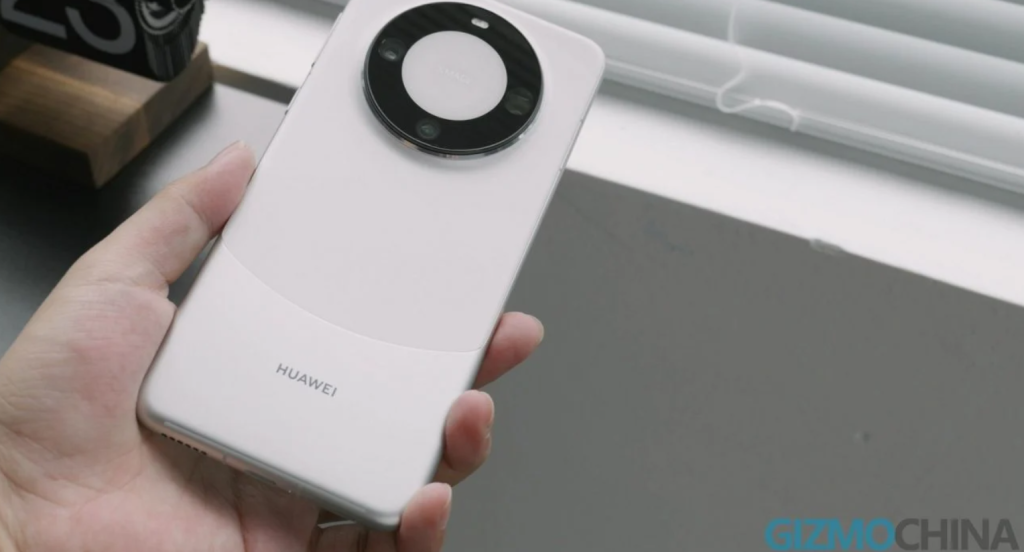
This speech comes in the wake of Huawei’s recent release of the premium Mate 60 series smartphones. This release is noteworthy as it follows a three-year gap since the company’s last 5G-equipped handset launch. The difficulty in achieving this milestone is amplified by the escalated trade restrictions imposed by the United States.
Ren Zhengfei’s message underscores Huawei’s commitment to talent development and technological leadership despite facing ongoing US sanctions. The company remains resilient in its pursuit of excellence, as evidenced by the recent launch of its Mate 60 series smartphones.
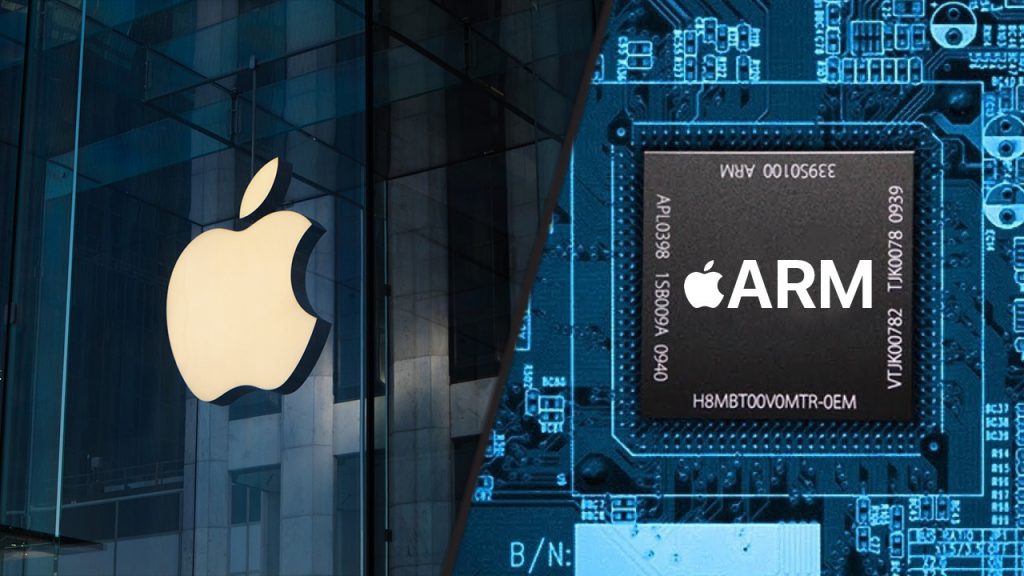
The collaboration between ARM and Apple is going strong. Apple has long used ARM technologies in its A-series Bionic processors, which it has used in iPhones. However, the launch of the M-series processors took this collaboration to a new level. Now, a new agreement has been signed between the two companies. Apple has signed a new deal with ARM that is “expected to extend beyond 2040”. Here are the details…
Apple Signs New Agreement with ARM That Extends Beyond 2040
Apple has signed a new agreement with ARM that extends beyond 2040. The deal, which was disclosed in ARM’s IPO filing, is expected to be worth billions of dollars. The companies’ chips are used in a wide range of devices, from smartphones and tablets to laptops and servers. Apple is one of ARM’s largest customers, using its chips in all of its iPhone, iPad, and Apple Watch devices.
The new agreement ensures that Apple will continue to have access to ARM’s latest chip designs, which will be critical for the company’s future products. The deal is also a major victory for SoftBank, ARM’s parent company. SoftBank had been hoping to sell ARM to Nvidia, but the deal was blocked by regulators in the United States and the European Union.
The new agreement with Apple gives SoftBank a major source of revenue as it prepares to take ARM public. The terms of the deal were not disclosed, but it is likely that Apple will pay ARM a significant royalty for each chip that it uses. The deal is also likely to include provisions that give Apple some say in ARM’s future development.
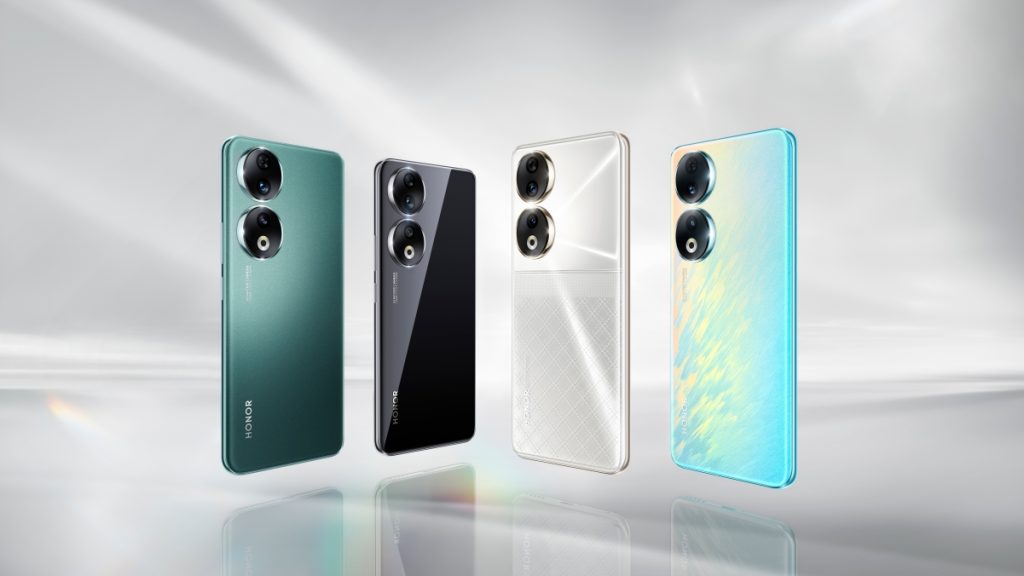
Honor‘s return to the Indian market will be heralded by the introduction of the Honor 90 5G smartphone. While the precise launch date remains undisclosed, the brand has begun hinting at its features on Amazon India. Ahead of the official launch, the brand has now confirmed that just like the global model, the Indian Honor 90 smartphone will also feature a 200MP primary camera.
Honor shared the news through a tweet from their HTech account, confirming the 200MP camera. This camera is likely to be Samsung’s 200MP ISOCELL HP3 sensor, found in phones like the Realme 11 Pro+. Interestingly, despite the powerful camera, the global version of the phone can’t record video in 4K at 60fps or 8K. It’s expected that this limitation will also apply to the Indian version.
Honor 90 specs
The Honor 90 boasts a 6.7-inch FHD+ OLED screen with a speedy 120Hz refresh rate for smooth visuals. Running under the hood is the Snapdragon 7 Gen 1 processor, and you can choose configurations with a hefty 12GB of RAM and a spacious 512GB of storage.
For power, it packs a robust 5,000mAh battery, complemented by rapid 66W fast charging support. In the photography department, the 200MP main camera is accompanied by a 12MP ultra-wide-angle lens and a 2MP macro lens. On the front, there’s a high-resolution 50MP camera for great selfies and video calls.
Leaks suggest that the device will have a starting price of around Rs 35,000 and we can expect it to launch on September 21.
XREAL has introduced its XREAL Air 2 series AR glasses in China, featuring two models: the XREAL Air 2 and XREAL Air 2 Pro.
XREAL Air 2 Key Features:
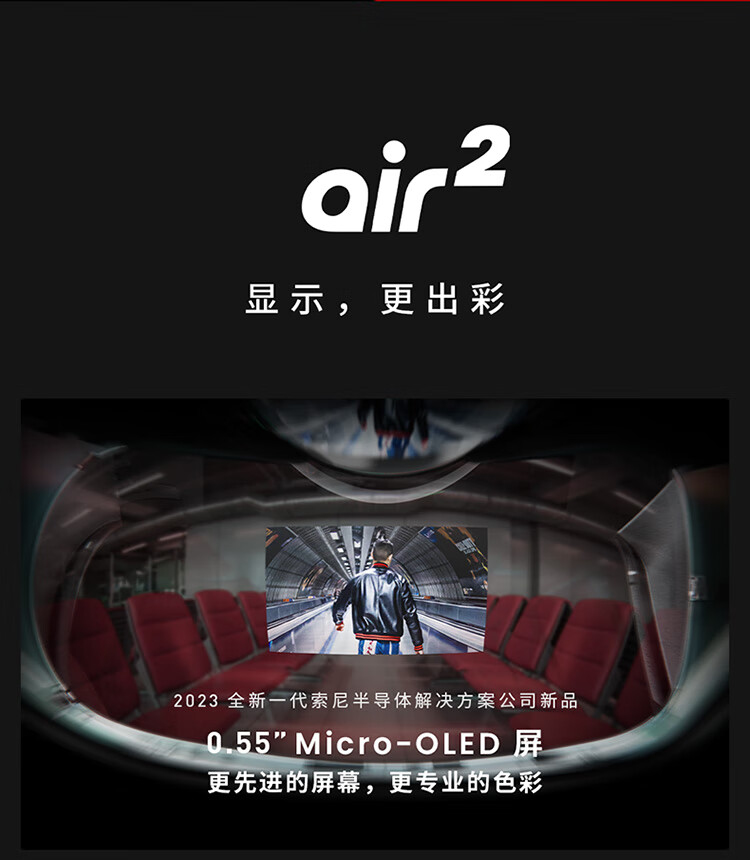
The XREAL Air 2 comes with an improved display, ergonomics, and audio, although preserving its original design. The device uses Sony’s 0.55-inch Micro-OLED microdisplay with 4032ppi pixel density, a 21% rise from the earlier version. The optical engine, Jinghong Ruiying 3.0, ensures improved color accuracy across different brightness levels. The glasses have received TÜV Rheinland certifications for color accuracy, eye comfort, low blue light, and no flicker.
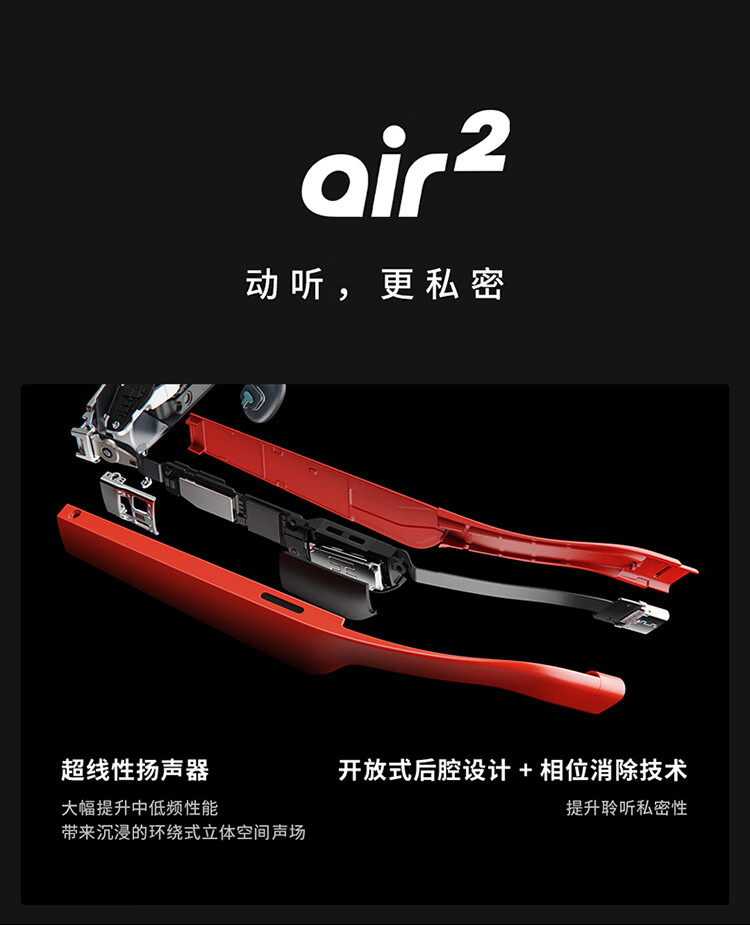
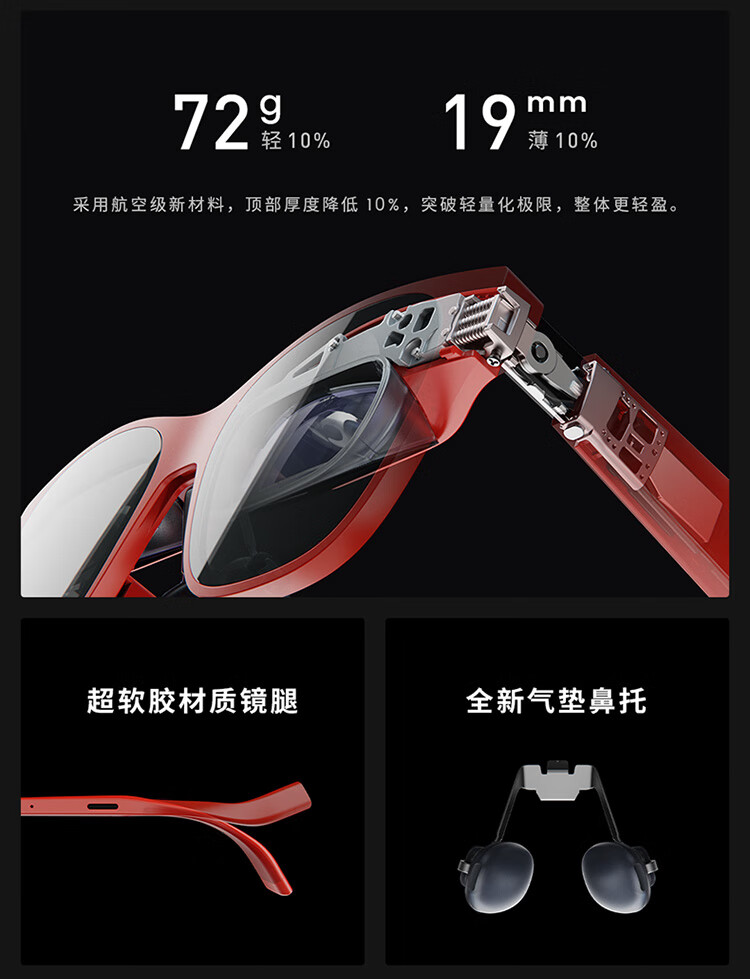
Visually, the Air 2 now offers a red variant and seven different stickers for personalization. It has also been ergonomically optimized, using materials like magnesium alloy to make it lighter by 10% at 72g. More weight has been moved to the temple for balanced pressure distribution, and it now features a “zero-pressure air cushion nose pad”. In audio, it showcases the X-Spatial Sound 2.0, which provides better mid-low-frequency sounds. It also incorporates features to prevent sound leakage, ensuring privacy.
XREAL Air 2 Pro Key Features:
The XREAL Air 2 Pro’s unique feature is its electrochromic lenses. These lenses can be adjusted for various light levels, making them suitable for home, travel, and outdoor scenarios. This model, according to XREAL, is the first augmented reality glasses to be mass-produced using electrochromic technology.
On the software side, the XREAL Beam, introduced in June, is now in its testing phase. This will come pre-loaded with apps from Bilibili and iQiyi, eliminating the need for separate TV subscriptions. The Beam acts as an “air mouse” for interaction, letting users point and control apps.
Pricing and Availability
In terms of pricing, the XREAL Air 2 is set at 2499 RMB ($342), while the Pro version is 2999 RMB ($410). A combo of XREAL Air 2 and XREAL Beam is priced at 3298 RMB ($451). The models are now up for pre-order and sale on Tmall and JD.com.
Samsung did not announce a TWS earphone this year at its Galaxy Unpacked events in February and August. The South Korean brand has typically launched new Galaxy Buds annually since the last few years. As per a past report, Samsung is rumored to be working on a new Galaxy Buds which is tipped to be an FE model. Now the next-generation audio device has surfaced on a certification website.
Upcoming Samsung Galaxy Buds spotted on a certification website
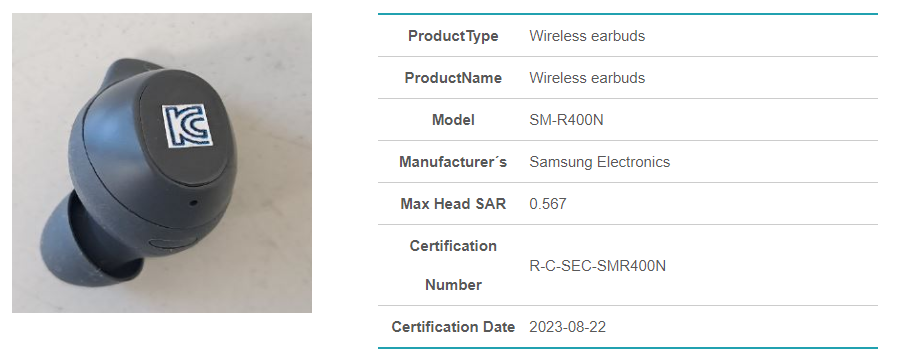
The next-generation Samsung Galaxy Buds have been listed on Radio Research Agency (RRA) certification site in Korea. It has model number SM-R400N which was also stated in previous report. The device was certified on August 22, 2023. The certification listing also reveals a live image of the Galaxy Buds giving us a first look at the upcoming offering. It’s worth noting that the listing does not mention the name of upcoming TWS earphones from Samsung.
As per the live image, Samsung seems to be going back in time for the upcoming Galaxy Buds in the design aspect. They don’t have the same design language as the models unveiled in recent years. In fact, the TWS earphones have an in-ear design similar to the Galaxy Buds and Buds+. They also seem to be larger in size than the recent Galaxy Buds 2 and Buds 2 Pro which have a round design. The next-generation Galaxy Buds are seen with a matte finish instead of gloss and a rubber coating on the lower half. The earphones also seem to have a wing (kind off like a shark fin) for a comfortable fit.
It remains to be seen when Samsung announces new Galaxy Buds. Most likely, they will debut alongside the Galaxy S23 FE. The past report says that the upcoming offering may be called the Galaxy Buds 3 or an FE version. The South Korean brand has not announced a non-pro Galaxy Buds since the Buds 2 in 2021.
The countdown to Google’s long-awaited Android 14 has officially begun. The new version was initially expected to be released in August, as was Android 13. However, the company surprised everyone by delaying the release. In the meantime, new beta builds were released, and the latest, Beta 5.2, was released last week. So, when will Android 14 be release? This question was recently answered. Here ae the details…
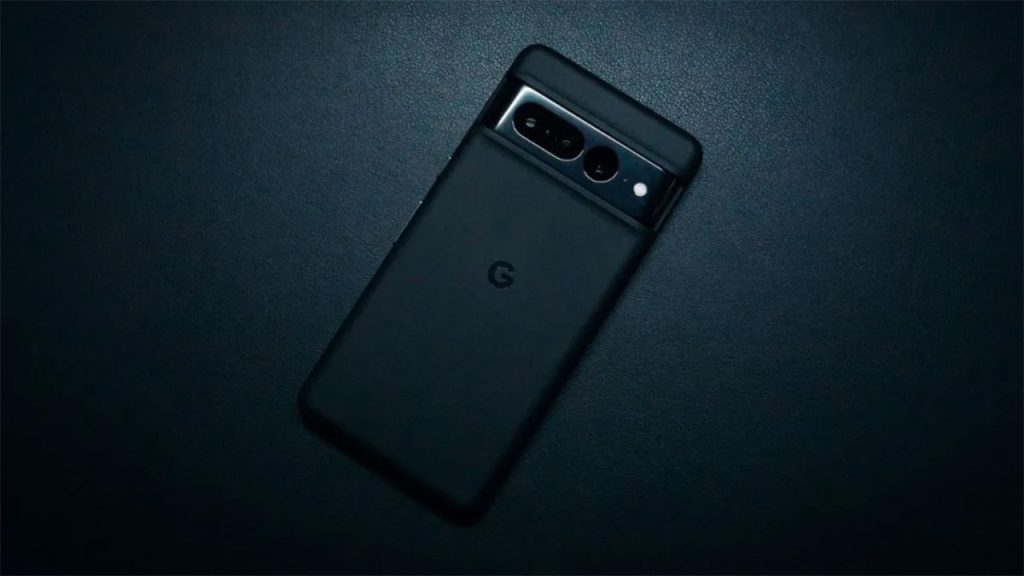
Android 14 will be released on the same day as the Google Pixel 8 series
According to the leakster Mishaal Rahman, Google has not yet finished working on Android 14, so it has delayed the release of the stable version to the Google event on October 4. Google’s newest products, including the Pixel 8 series, are expected to be introduced at the event. If the claim is true, Android 14 will be released to users at this launch.
Hearing now that the source code release of Android 14 has been delayed to next month.
This decision seems to have been made very late, as even OEMs were anticipating that the release would be today.
However, it is worth noting that even world-renowned smartphone manufacturers were expecting the new version in September, or even yesterday. OnePlus, one of these companies, recently announced that its OxygenOS 14 interface, based on the new build, will be generally available by the end of this month.
The delay in the release of Android 14 has somewhat disrupted the plans of smartphone manufacturers. This is due to Google’s decision to deviate from its previous stable Android beta processes and general release dates.
Yesterday, Xiaomi announced that it will unveil the Xiaomi 13T and Xiaomi 13T Pro smartphones in Berlin on September 26. These will arrive as the successors to the Xiaomi 12T and 12T Pro respectively. The specifications of the upcoming offerings have already surfaced on the internet in recent times. Now ahead of the launch, a Xiaomi executive has revealed an important detail about the Xiaomi 13T duo that should probably excite customers interested in the upcoming devices.
Xiaomi 13T to get longer software support
We are proud to announce a significant enhancement to our commitment to providing exceptional software support. Xiaomi 13T and Xiaomi 13T Pro will include 4 generations of Android OS upgrades, as well as 5 years of security patches.
Xiaomi’s Communications Director Daniel Desjarlais took to Twitter to share the announcement. He revealed that the upcoming Xiaomi 13T and Xiaomi 13T Pro will receive four versions of Android software updates and five years of security patches. The executive adds that it is a significant enhancement to the company’s commitment to providing exceptional software support. If the Xiaomi 13T duo ship with pre-installed Android 13 OS out of the box, they will be eligible for Android 14, 15, 16, and 17 OS versions.
This is indeed good news for Xiaomi fans and those interested in the upcoming Xiaomi 13T series. Extended software update makes users stick to their devices for a long period. The Chinese brand is not typically known for its longer software support, however, it upped its game with the Redmi K60 Ultra confirmed to get four OS and five years of security updates. While this is a step in the right direction, it’s also worth noting that Xiaomi isn’t the fastest when it comes to delivering newer software updates.
It remains to be seen whether Xiaomi will offer a longer software support policy for other devices in its portfolio. Android OEMs have been steadily increasing the duration of software support, thanks to Samsung, OPPO, OnePlus, Vivo etc. A recent report also revealed that search giant Google aims to deliver five years of OS updates for its Pixel devices powered by Tensor chipset.
It looks like Xiaomi has a few watches in the works expected to launch in the coming months. A recent leak revealed some specs of the upcoming Xiaomi Watch S3. Now, another report has surfaced (via MySmartPrice) with specs and renders of the Xiaomi Watch 2 Pro.
Xiaomi Watch 2 Pro leaks
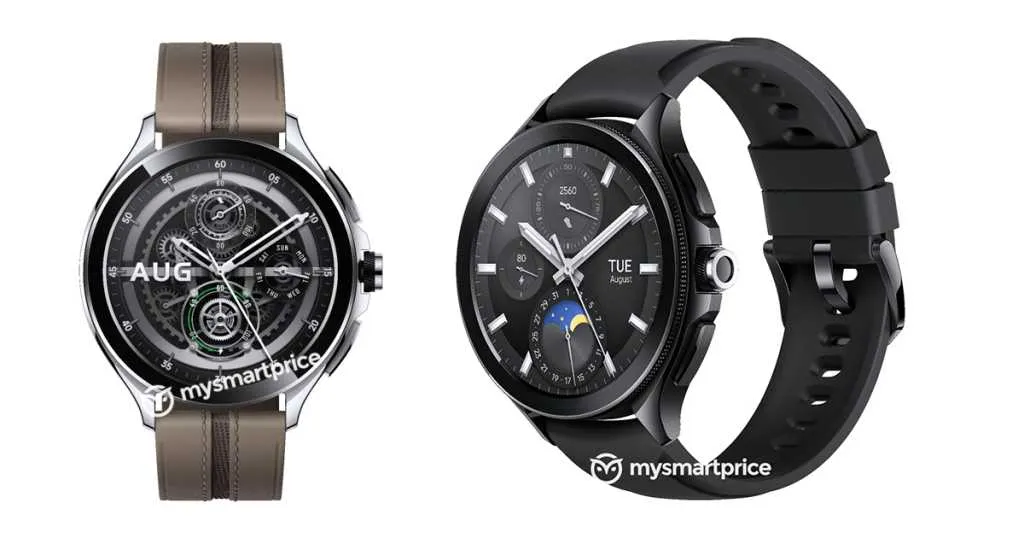
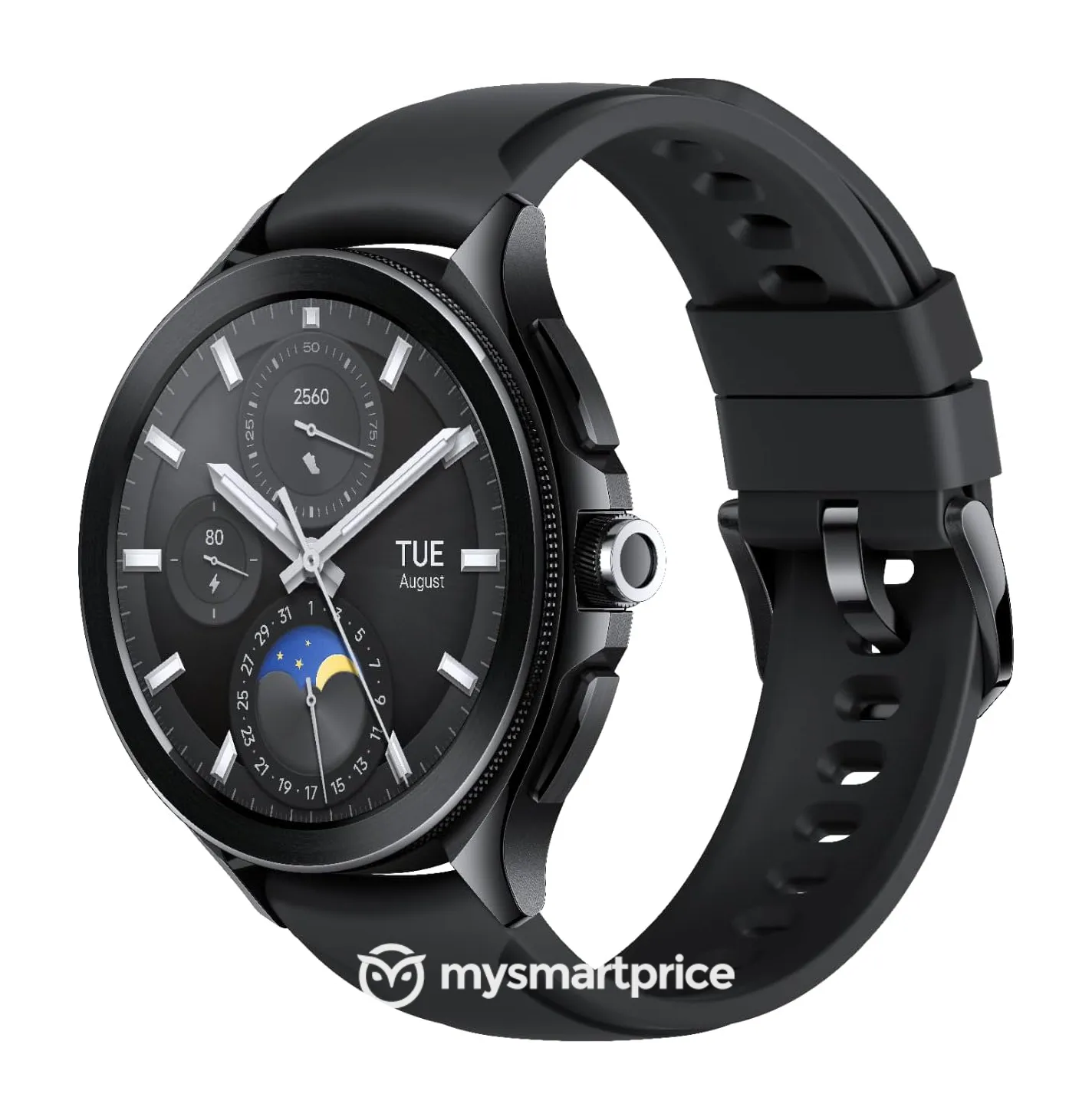
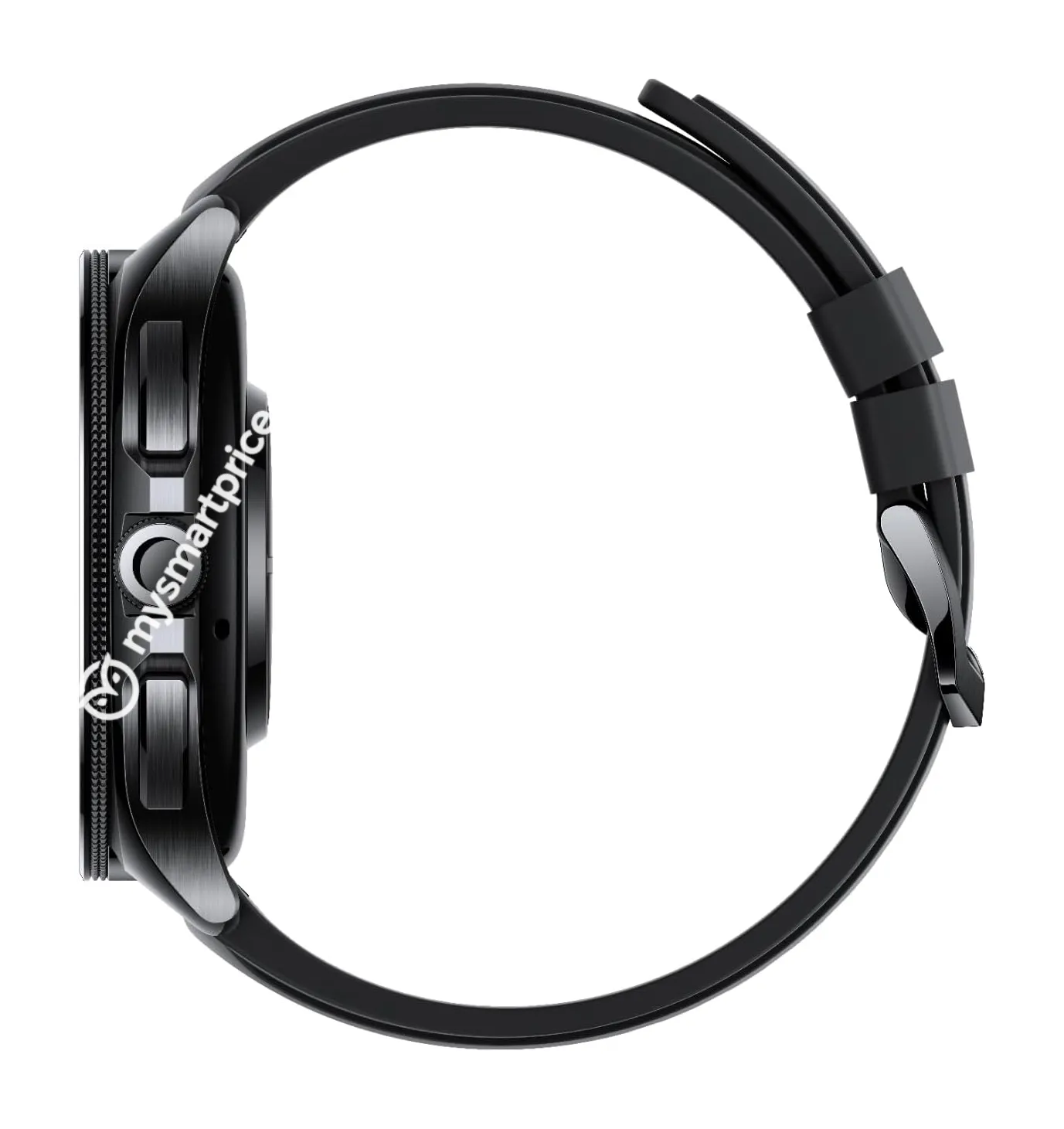
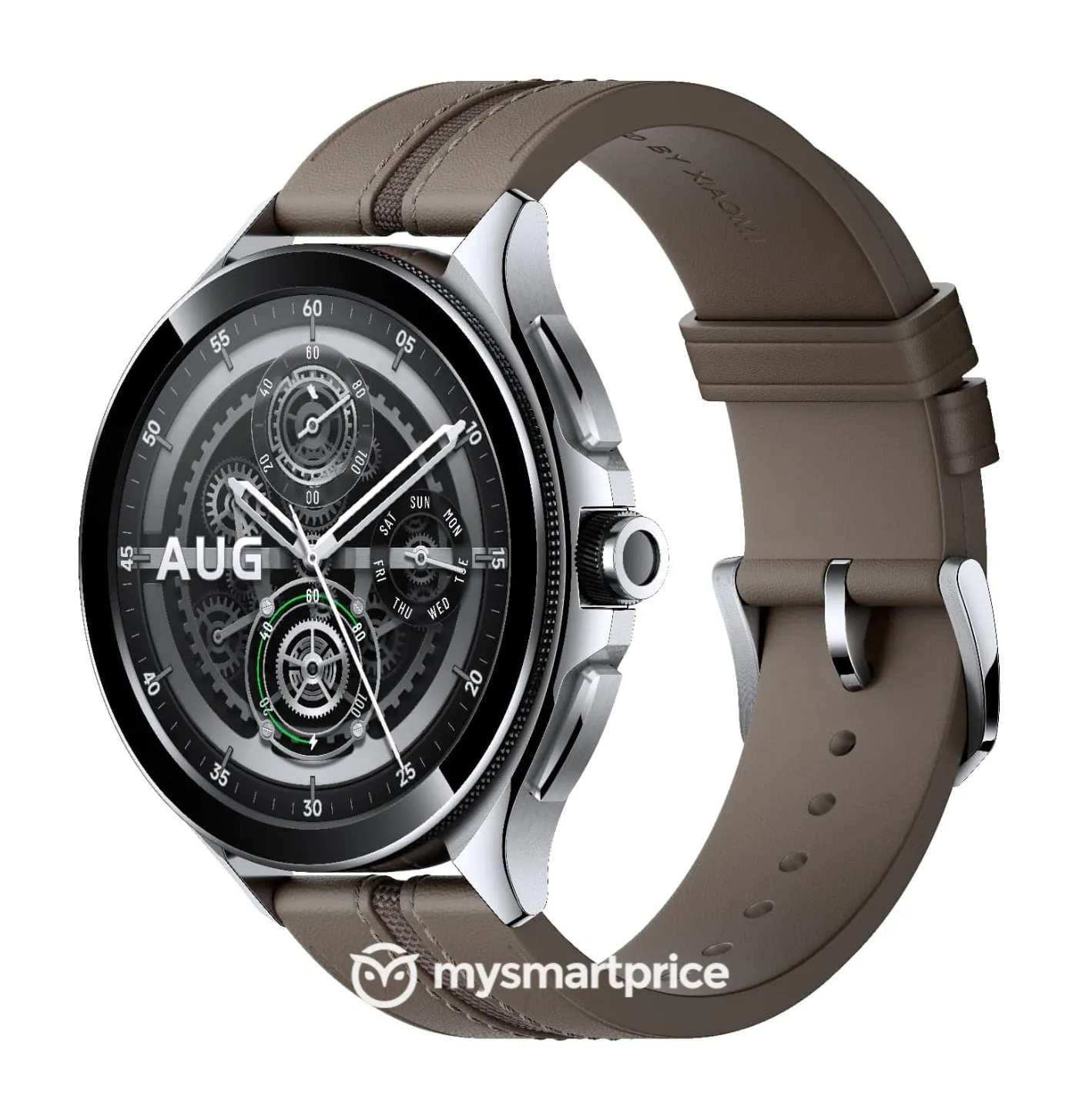
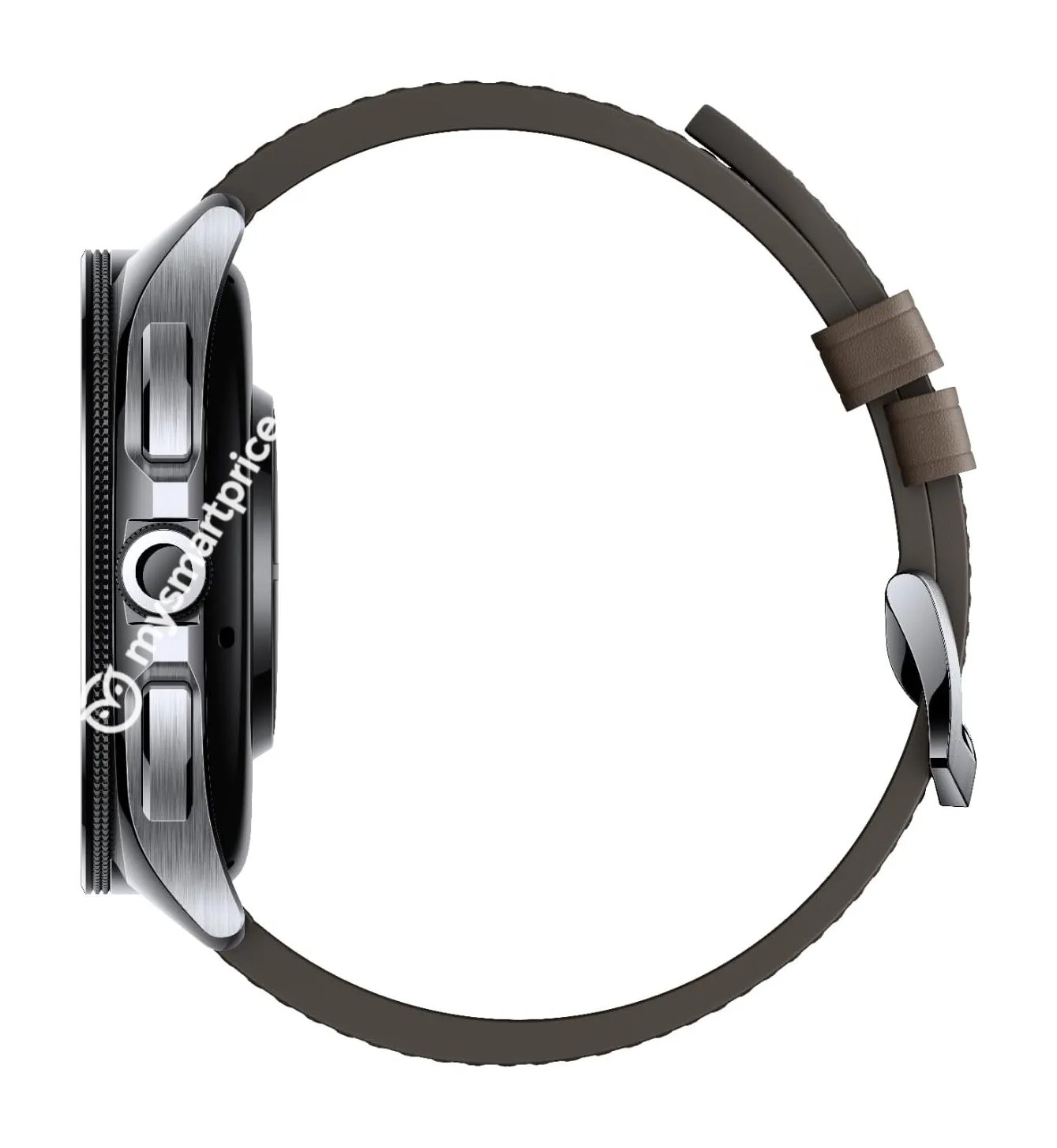
Based on leaked renders, Xiaomi is opting for a circular design for their upcoming smartwatch, a departure from the square design seen in the Xiaomi Watch 2. This new smartwatch will offer at least two stylish color options.
The first option combines a silver body with a brown leather strap, while the second choice features an all-black aesthetic with a matching black strap. On the watch’s side, you’ll find two buttons alongside a rotating crown for navigation. The smartwatch’s body will be constructed from stainless steel, offering a polished finish for the leather strap version and a brushed gun-metal finish for the black variant.
According to the report, the Xiaomi Watch 2 Pro is expected to come with a 1.43-inch high-resolution round AMOLED display. This display will have an always-on feature and will offer exclusive watch face options.
Furthermore, there will be Bluetooth and 4G LTE versions of the smartwatch available. In terms of health-related features, it will include body composition analysis, sleep tracking, SpO2 tracking, and the usual sports modes commonly found on Xiaomi watches.
Earlier, the smartwatch was noticed in the IMEI database under the model number M2233W1. It’s anticipated to offer eSIM connectivity and might run on the Wear OS 3 operating system. This choice of operating system is consistent with its predecessor, the Mi Watch, which was introduced in November 2019 and also used Google’s Wear OS.
XPeng Motors, the prominent Chinese electric vehicle (EV) manufacturer, is gearing up to make a significant splash in the European automotive market. Despite recent financial fluctuations, the company remains undeterred in its mission to expand its global presence. During the recent IAA Mobility event in Munich, XPeng Motors unveiled its ambitious plans to enter several European markets in the coming year.
This news came directly from Brian Gu, the Vice Chairman and President of XPeng Motors, who announced the company’s plans to enter the German market in the upcoming year. Additionally, Eric Xu, Vice President of International Markets at XPeng Motors, disclosed that France is also on their radar for expansion in the same timeframe.
Furthermore, there are discussions about the possibility of entering the lucrative UK market. Markus Schrick, Head of XPeng Germany, revealed that in Germany, XPeng intends to employ traditional dealership channels and is currently in talks with several prominent chain stores.
XPeng Motors’ decision to enter these European markets underscores their commitment to making electric vehicles more accessible to a global audience. By expanding its presence in key European countries, XPeng aims to offer a diverse range of electric vehicles tailored to local preferences, ultimately contributing to the widespread adoption of sustainable transportation solutions.
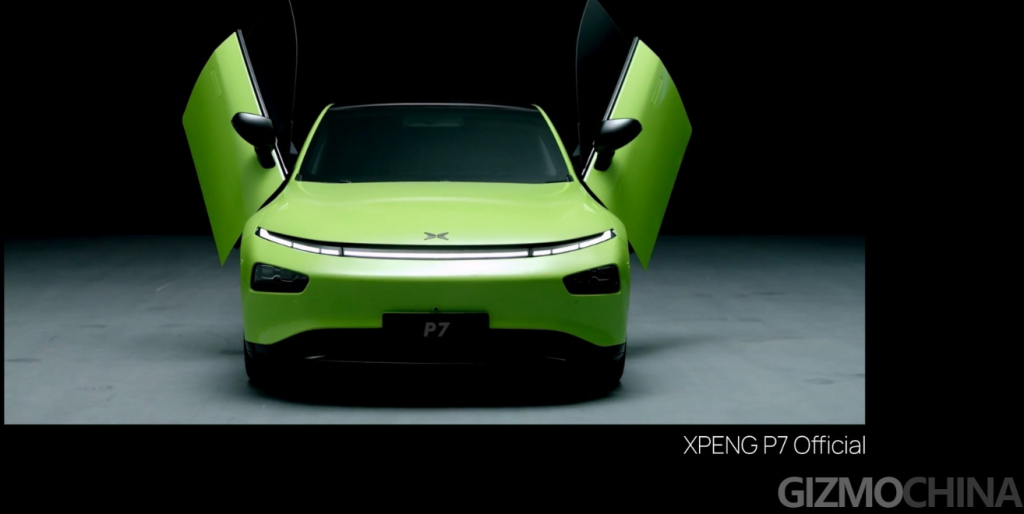
XPeng’s European journey commenced in Norway in the summer of 2021 when they introduced the P7 sedan to the market. Subsequently, they announced their intentions to export the G9 SUV as well, demonstrating their commitment to European expansion. By February 2022, XPeng had already established retail agreements in the Netherlands, Sweden, and Denmark, with the primary goal of building brand recognition and comprehending the unique needs of each market.
The year 2023 witnessed the debut of the refreshed P7, joining the G9 in European markets, and sales commenced earlier this year. To ensure a seamless customer experience, XPeng also began implementing a network of service centers in these territories.
As XPeng Motors continues to innovate and expand its footprint, the EV industry will undoubtedly witness a new wave of competition and innovation, benefiting consumers and advancing the transition to sustainable mobility in Europe and beyond.
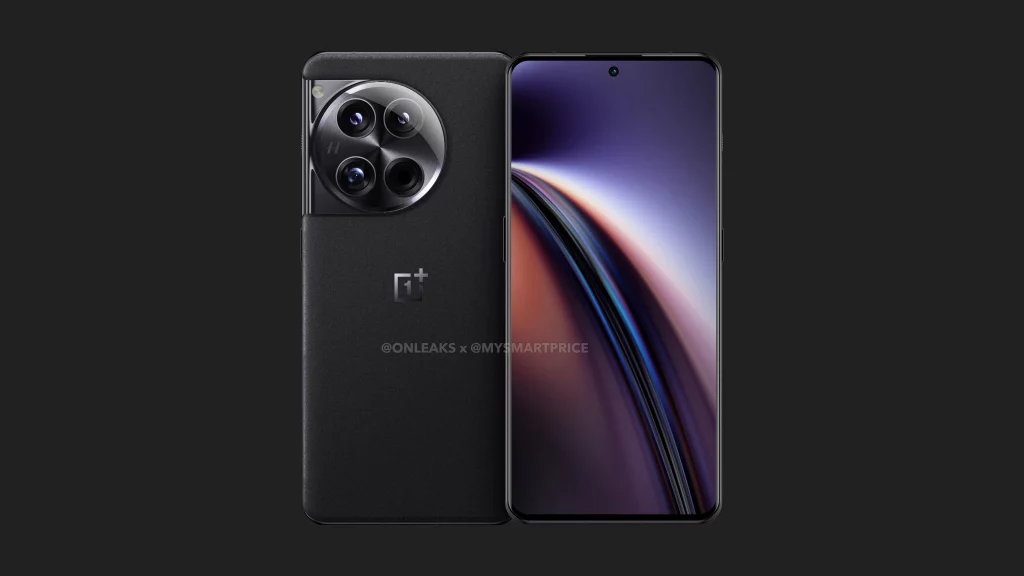
OnePlus is gearing up for its first-ever foldable phone which is expected to debut by the end of the month. The company is also working on its next-generation number series flagship which is mostly unveiled at the end of the year. The OnePlus 12 had initially surfaced in leaked renders shared by Steve Hemmerstoffer (aka onleaks) in July this year. Now, the tipster has posted updated renders of the smartphone that reveals a minor change. He adds that the updated renders are based on the pictures of pre-production units giving the most comprehensive look of the upcoming flagship.
OnePlus 12 updated leaked renders
Let’s start with the changes found in the updated leaked renders first. The OnePlus 12 will have repositioned camera sensors compared to what we saw in the early renders. The sensor alignment in the latest images is similar to the previous generation flagships. The upper row has two sensors whereas the bottom row has a periscope lens and another mysterious cutout beside it. The previous render had revealed a distinct glossy Black strip underneath the periscope lens and there was no fourth cutout either.
Additionally, the Hasselblad branding on the latest renders has also been replaced with the initial ‘H’. The LED flash unit retains its position at the top left corner of the same half-pill-shaped island in a glossy finish that stretches from the side frame.
The rest of the design is pretty much the same as the previous render. There is an alert slider and power button on the right edge whereas the volume rocker keys are on the left side. On the front, the OnePlus 12 has a curved display with a centre-aligned punch-hole cutout and minimal bezels.
Leaked core specifications of the upcoming OnePlus 12 reveal that it will feature a 6.7-inch 2K AMOLED 120Hz display, a 50MP OIS enabled main camera paired with a 50MP ultra-wide-angle unit, and a 64MP telephoto lens, a Snapdragon 8 Gen 3 SoC under the hood, and a 5,400mAh battery unit with support for 100W wired and 50W wireless charging.
Vivo is confirmed to unveil its next-generation flagship X100 series smartphones at the end of this year. The lineup is expected to comprise standard, pro, and pro plus models. These will arrive as the successors to the current X90 lineup. The upcoming X100 series has been doing the rounds of the rumor mill for the last few months. Now, reliable Chinese tipster Digital Chat Station has revealed new details of the Vivo X100 series phones on the microblogging platform Weibo.
Vivo X100 series more details surface
Digital Chat Station states that the Vivo X100 series will come with IP68 certification for water and dust resistance. However, it will only be limited to the Pro and Pro+ variants. The IP rating of the standard model is not confirmed. To recall, the X90 has an IP64-rated chassis whereas the X90 Pro and X90 Pro+ are IP68-certified.
Additionally, DCS also mentions that the Vivo X100 Pro and Pro+ models will come with support for 50W wireless charging whereas the X100 will miss out on the feature. The trio will be equipped with dual stereo speaker, an X-Axis linear motor, as well as an IR Blaster. The Vivo X100 and X100 Pro are tipped to launch first in China in November. The Pro+ model will reportedly debut in the first quarter of 2024.
As per past rumors, the Vivo X100 and X100 Pro are expected to be powered by the unannounced Dimensity 9300 SoC whereas the Pro+ model will be equipped with a Snapdragon 8 Gen 3. All three phones will reportedly feature significantly upgraded cameras along with Vivo’s V3 imaging chip onboard. The leaked render of the X100 Pro+ revealed that it will feature a rectangular island housing a circular camera module.
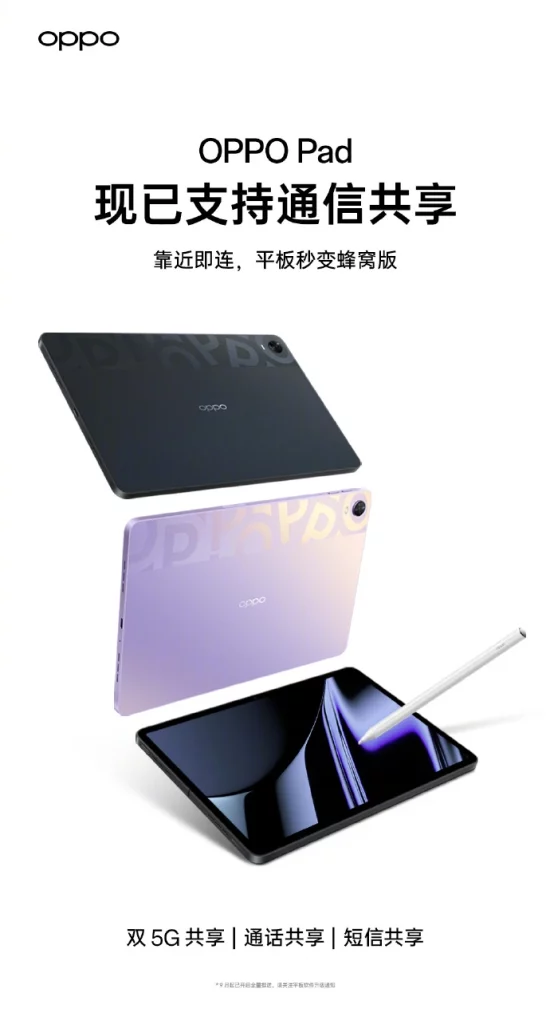
Oppo Pad, the company’s first tablet, was released in February last year. The slate had decent features, including a large 11-inch display and a Snapdragon 870 processor. However, Oppo did not add cellular connectivity to it, nor did they release a separate cellular variant. Now after more than a year, the company announced a communication feature for the tablet that transforms it into a cellular version in seconds.
Oppo Pad 2, Oppo’s latest tablet, already has this feature. Communication sharing will let Oppo Pad users use their phone’s cellular data to browse the web, make calls, and check messages. To use this feature, you need to make sure that both devices are logged in to the same Oppo account and that they are within Bluetooth range of each other. Once communication sharing is enabled, the tablet will automatically use the phone’s cellular data for internet access.
Oppo says that communication sharing provides a more stable signal and reduces power consumption by about 30% compared to using a hotspot. This feature could help you better utilize the tablet for your daily needs.
As a reminder, the Oppo Pad comes equipped with an 11-inch LCD screen offering a resolution of 2560 x 1600. It has a 120Hz refresh rate, PPI 275, a screen contrast is 1500:1, and a peak brightness of 480 nits.
This slate packs a Qualcomm Snapdragon 870 processor under the hood, paired with a built-in 8080 mAh battery, which supports 33W wired fast charging. For photography, the tablet gets a rear 13MP camera shooter and an 8MP sensor on the front. Oppo Pad supports Wi-Fi 6, Bluetooth 5.1, Face unlocking, and more. It comes with a starting price of 2299 Yuan ($314).
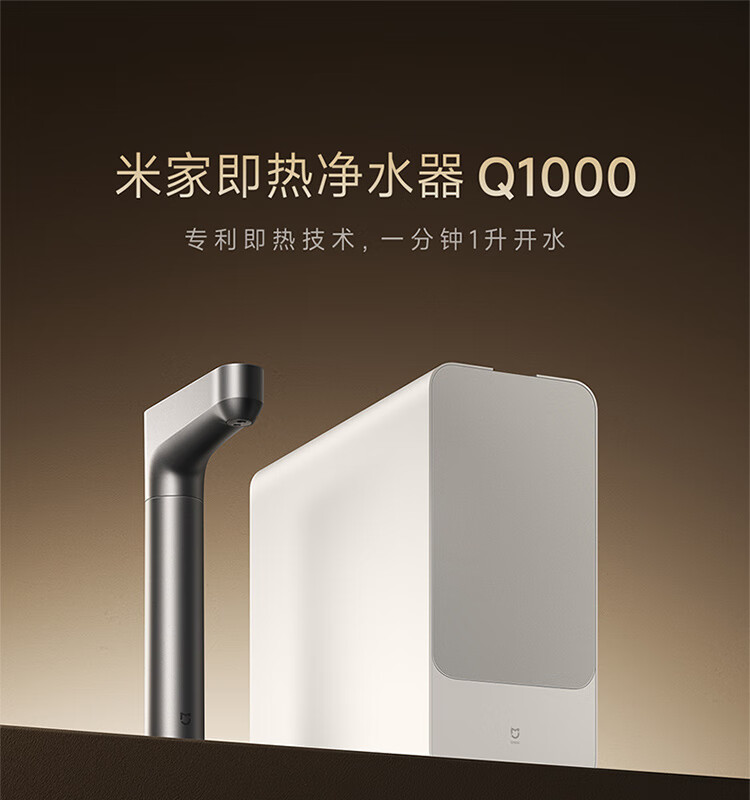
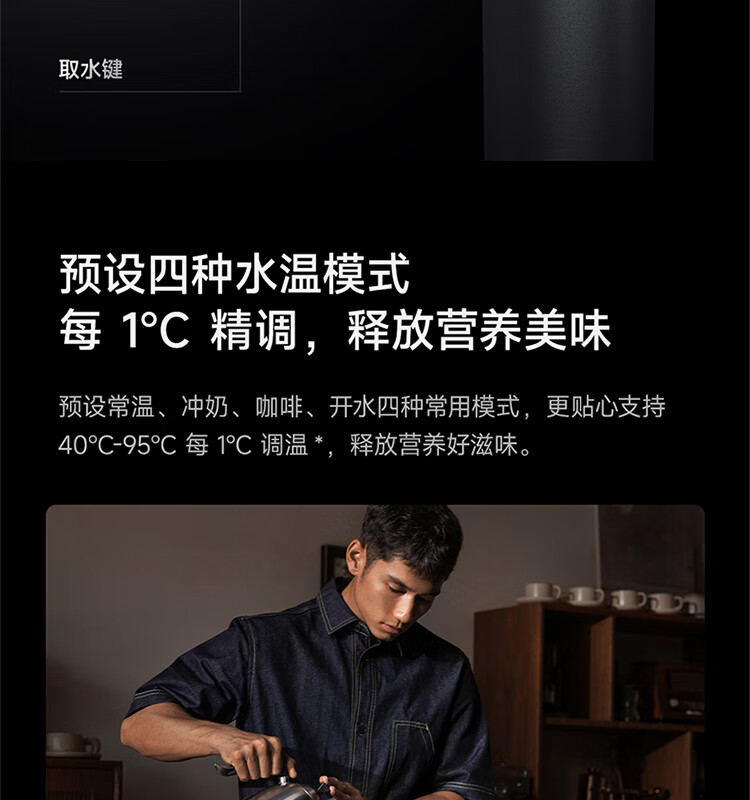
Xiaomi has introduced its latest flagship water purifier, the Mijia Q1000G Heating Direct Drinking Water Purifier. This purifier combines modern design with innovative water purification technology, making it a standout choice for household water purification needs. Let’s check out the key features of this device.
Xiaomi Mijia Q1000G Direct Drinking Water Purifier key features:
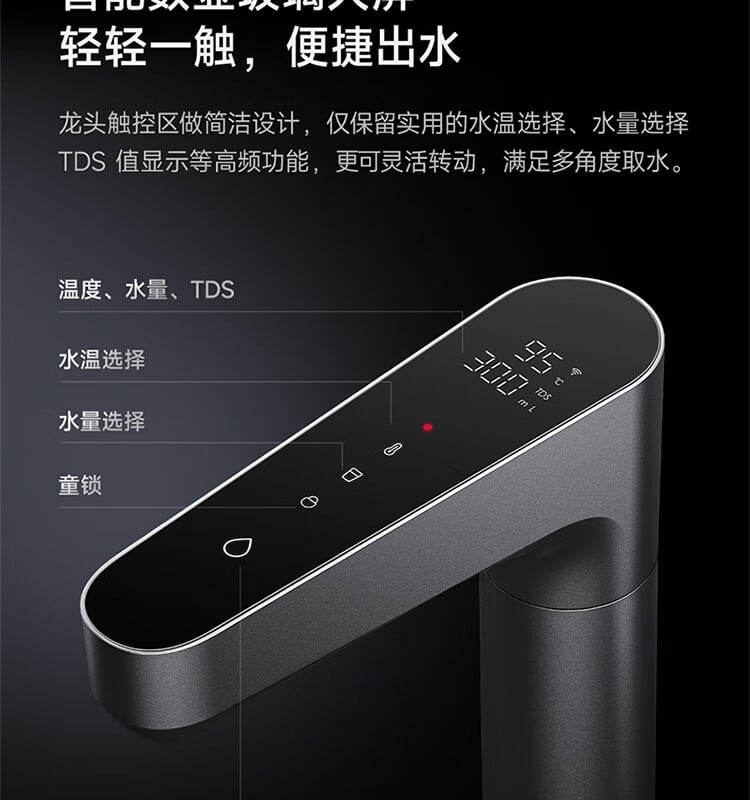
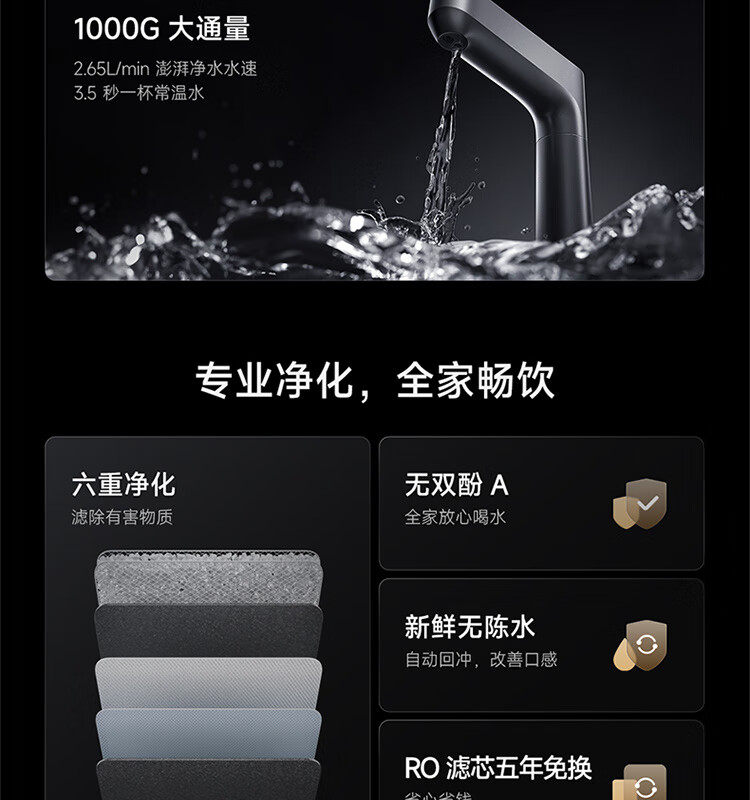
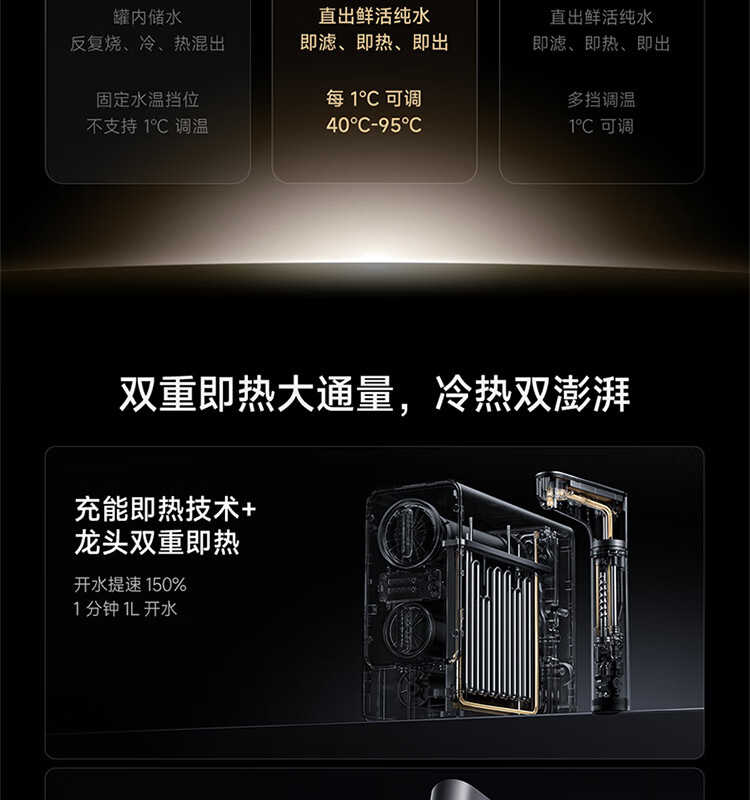
The standout feature of the Mijia Q1000G is its rapid instant heating and faucet instant heating, providing room temperature water in just 3.5 seconds and boiling a liter of water within 60 seconds, offering remarkable time-saving convenience to users.
The purifier sports a purification speed of 2.65L/min, utilizing a six-stage purification system for consistently clean and safe water. Users can also customize the water temperature from 40°C to 95°C in precise 1°C increments.
The Mijia Q1000G features smart connectivity, with remote control and monitoring capabilities through its integrated app. Its dual waterway design enhances efficiency, delivering a consistent and clean water flow.
It prioritizes safety and durability by being BPA-free, preventing water stagnation concerns. It also features an automatic backflush function to enhance the overall taste of the water, ensuring long-lasting quality.
The Mijia Q1000G offers exceptional durability and cost-effectiveness with a five-year lifespan for the RO filter, priced at 999 yuan ($136). Xiaomi further demonstrates confidence in the product’s longevity by providing a 3-year warranty, making it a valuable long-term investment.
The Mijia Q1000G is available for a limited-time special introductory price of 3,399 yuan ($465), which includes a 100 yuan ($14) discount coupon. Consumers can purchase this product starting on September 15th.
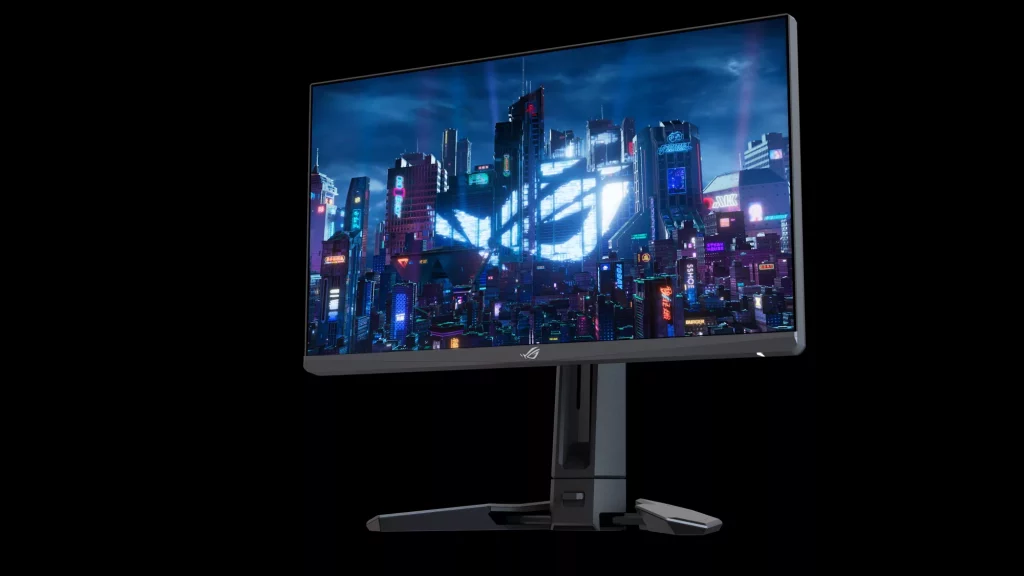
During the CES 2023, Asus unveiled ROG Swift Pro PG248QP as the world’s first 540Hz gaming monitor. But the company failed to make the monitor available for sale and the Alienware AW2524H became the actual first 500Hz gaming monitor you can buy. In any case, a report now claims Asus will finally launch the ROG PG248QP later this month.
China’s ITHome reports the Asus ROG PG248QP will be launched in the third week of September. The publication cites Video Hall as the news source. However, there’s no official confirmation from Asus. It was hinted during CES that the monitor would start shipping in Q2 of this year, so the report might not be incorrect.
The 24.1-inch Asus ROG Swift Pro PG248QP is a 1080p monitor that’s designed for serious gamers. The PG248QP has an overclocked E-TN panel with a refresh rate of up to 540Hz. The ROG Swift Pro is apparently for those who prefer the speed of the panel and its low latency over high resolution.
It comes with support for Nvidia G-SYNC, built-in ESS DAC for surround sound, and gunshot and footstep enhancement. It’s also got a built-in ESS Quad DAC with near-zero audio latency and comes with a 3.5mm headphone jack, a DisplayPort 1.4, and a HDMI 2.0 port.
Asus says it is using a TN panel on the monitor, which offers 90% coverage of the DCI-P3 color gamut. The pricing details of the Asus ROG PG247QP are anyone’s guess. However, The Verge reported in January the monitor will cost $899 USD.
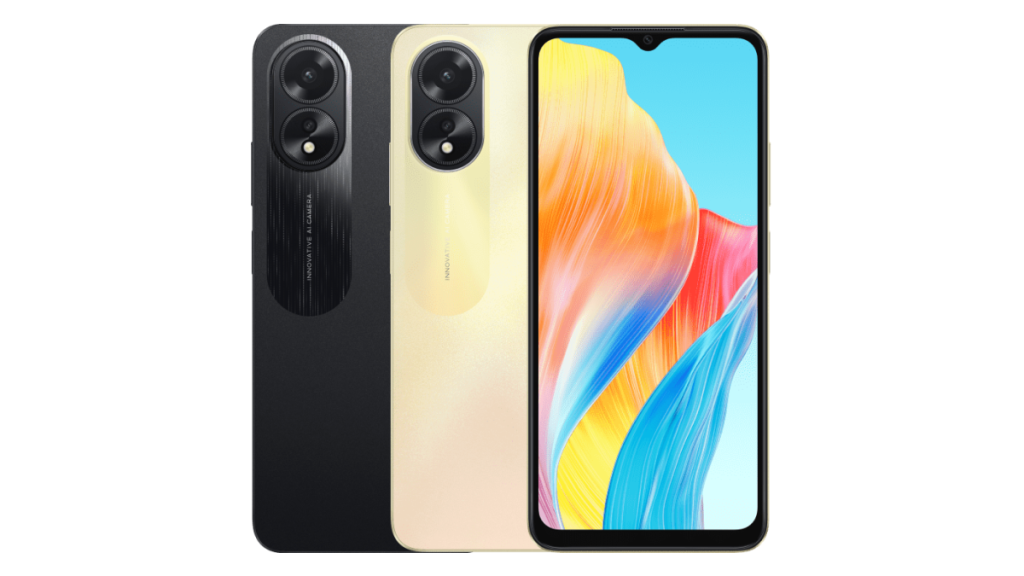
Oppo recently unveiled the Oppo A38 smartphone on its UAE website. The device has now been launched in the Malaysian market. It comes in a single storage configuration which is priced quite modestly. Check the details below.
Oppo A38 specs
The Oppo A38 features a 6.56-inch IPS LCD display with HD+ resolution, offering vibrant visuals with a 90Hz refresh rate. This display also covers 100% of the DCI-P3 and sRGB color gamuts, ensuring rich and accurate colors.
Under the hood, the Oppo A38 is powered by the MediaTek Helio G85 processor and comes with 4GB of RAM. It offers 64GB of internal storage, expandable up to 256GB using a microSD card.
In the camera department, it sports a 50MP main camera with an f/1.8 aperture, supported by a 2MP portrait lens for those artistic shots. On the front, there’s a 5MP camera for selfies and video calls.
It has a large 5,000mAh battery and it supports fast charging with a 33W SuperVOOC charger for quick top-ups. In terms of connectivity, it has dual SIM support, 4G VoLTE, Wi-Fi, Bluetooth 5.0, GPS, a USB-C port, and a 3.5mm audio jack for headphones. Additionally, it features a side-facing fingerprint sensor for secure unlocking.
Pricing & availability
The device is now accessible in Malaysia, featuring 4GB of RAM and 128GB internal storage capacity. It’s been introduced at an attractive price point of RMB 599, which translates to approximately $128.
We use cookies on our website to give you the most relevant experience by remembering your preferences and repeat visits. By clicking “Accept”, you consent to the use of ALL the cookies.
This website uses cookies to improve your experience while you navigate through the website. Out of these, the cookies that are categorized as necessary are stored on your browser as they are essential for the working of basic functionalities of the website. We also use third-party cookies that help us analyze and understand how you use this website. These cookies will be stored in your browser only with your consent. You also have the option to opt-out of these cookies. But opting out of some of these cookies may affect your browsing experience.
Necessary cookies are absolutely essential for the website to function properly. This category only includes cookies that ensures basic functionalities and security features of the website. These cookies do not store any personal information.
Any cookies that may not be particularly necessary for the website to function and is used specifically to collect user personal data via analytics, ads, other embedded contents are termed as non-necessary cookies. It is mandatory to procure user consent prior to running these cookies on your website.