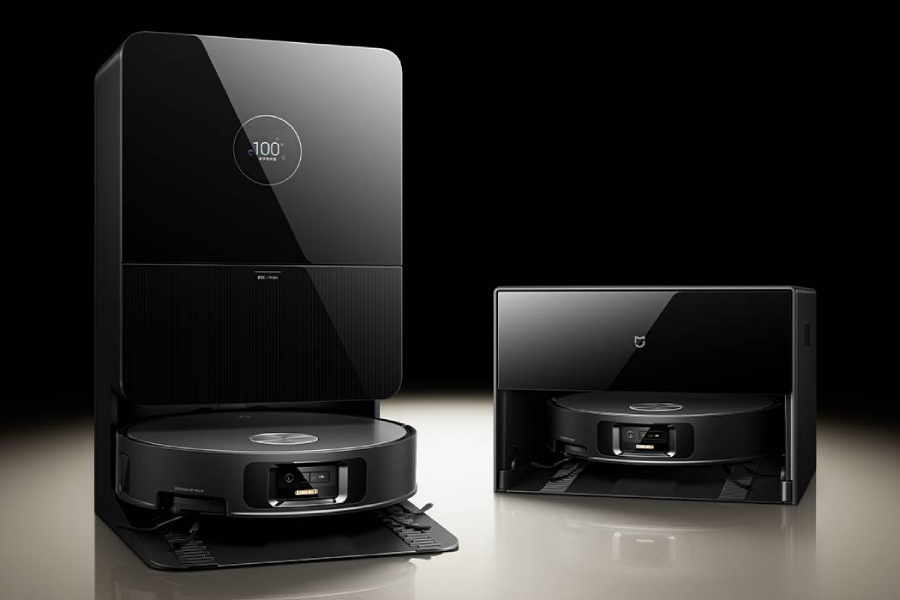
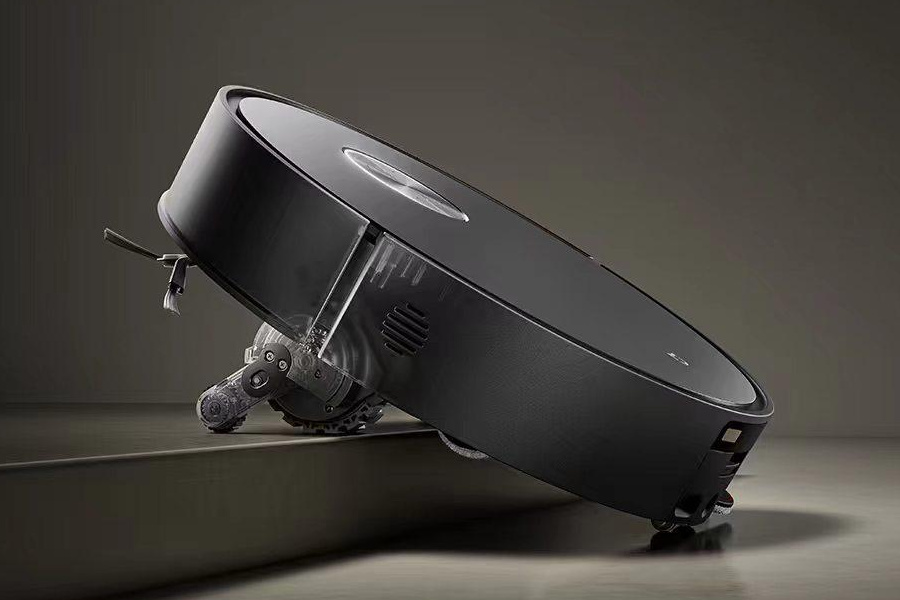
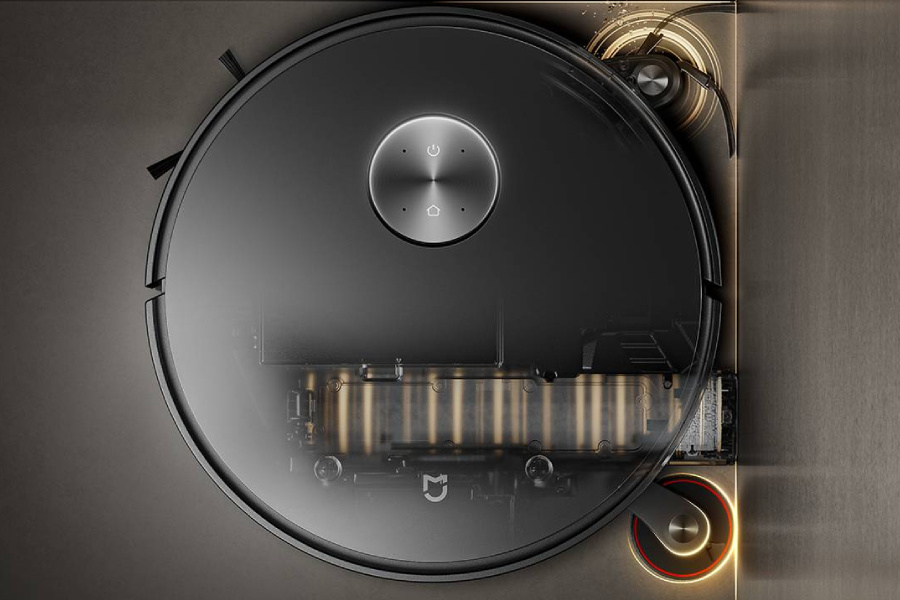
Xiaomi has announced a new robot vacuum plus mop in China, called the Mijia Robot Vacuum and Mop 7 Max. The model succeeds the Robot Vacuum 6 Max Xiaomi announced last year and comes in two versions: a water tank model, and a slim model with top and bottom water supply.
From what we know, the Mijia Robot Vacuum and Mop 7 Max is one of the expensive robot vacuums in Xiaomi’s Mijia lineup. The 6 Max was the most expensive model, but somehow its successor costs less at launch.
The water tank version costs 4,999 yuan (~$747.00 USD), and the slim version costs 5,299 yuan (~$791.82 USD). Meanwhile, the 6 Max launched at 6,599 yuan (~$986.08 USD) for the water tank version and 6,999 yuan (~$1,045.85 USD) for the water supply and drainage version. This puts the 7 Max about 1,600 to 1,700 yuan (~$239.09 to ~$254.03 USD) below the official prices of the model it replaces.
Even if it costs less at launch, you get more suction this time. It can reach 45,000Pa negative pressure, up from 35,000Pa on the 6 Max. It also sprays water heated to 50℃ and turns that on by itself when it recognizes a kitchen or bathroom. Xiaomi also claims a floor sterilization rate of 99.99%.
The 7 Max recognizes more than 320 objects and types of dirt. The 6 Max recognized 280 object types and 47 dirt types by comparison, and Xiaomi counts the two models differently, so the numbers don’t line up exactly. Xiaomi says the 7 Max is less likely to tangle with cables and can match its cleaning method to the type of mess.
Some things remain the same. The 7 Max keeps the triple robotic arms for edge sweeping and mopping along walls, corners and furniture, and one arm reaches the edges of tables and chairs that the main roller misses. It also crosses obstacles up to 6 cm high, the same figure as the 6 Max, so you can expect it to handle stairs and thresholds the same way.
The 7 Max has a slimmer body and a built-in 3D area array radar, which lets it clean under beds and cabinets. Xiaomi hasn’t shared a clearance height, while the 6 Max could enter spaces as low as 9.3 cm. Like the 6 Max, it mops and scrapes at the same time, and it collects the dirty water as it goes so the mop cloth stays clean.
Xiaomi has only announced pricing and pre-sales for China so far, with no word on a global release.
For more daily updates, please visit our News Section.
Honor has set a date for its next gaming lineup. The company announced today that the Honor Win 2 series phones and the Honor Win Tablet will launch on October 21 at the Honor Win Gaming Universe Carnival.
The Honor Win 2 series will go on sale on the same day as its launch. Honor touts it as the “top-tier gaming device of the year.” The Honor Win Tablet will also debut on October 21, with pre-orders set to begin during the event itself.
This is the second round for the Win brand. Honor launched the original Honor Win and Win RT in China in December 2025, featuring a 185Hz display, a 10,000mAh battery, and a built-in cooling fan. The Win 2 series builds on that lineup, and Honor has already revealed what the new phones look like.
The official image for Win 2 show a horizontal camera module on the back with two sensors. Next to it is a cooling fan and LED module surrounded by RGB lighting. Honor has also added a cloud-like pattern to the back cover.
Honor hasn’t shared the specifications of the Honor Win 2 series yet. You can follow the latest updates on the Win lineup as more details emerge ahead of the event.
The Honor Win Tablet also has a built-in cooling fan, bringing active cooling to a tablet in the Win lineup for the first time. According to leaks, the tablet will run on the Snapdragon 8 Elite Gen 5 and features an 8.4-inch OLED screen with a 240Hz refresh rate. Honor hasn’t confirmed these specifications, so treat them as unofficial until the October 21 event.
What to watch on October 21
Honor still needs to confirm the chipsets, battery capacities, prices, and configurations for the Honor Win 2 series and the Honor Win Tablet. The Win products have so far been limited to China, and Honor hasn’t said whether either new product will reach other markets. More details should emerge at the Honor Win Gaming Universe Carnival.
For more daily updates, please visit our News Section.
Casio is bringing a new version of its Pro Trek watch to the US market. The PRJB001EX-1, which originally launched in Japan earlier this year, is a digital-analog hybrid watch designed specifically for camping and hiking. It is available to purchase now for $220.
Instead of focusing on advanced smartwatch features or health tracking, this model offers practical features designed for outdoor use. The watch comes with a fabric strap that includes a small built-in pocket for storing items such as a house key or folded cash.
The strap also features a reversible design, allowing users to fold it over the watch face to protect the glass from scratches when not in use. It can also be attached to a carabiner, making it easy to hang the watch from a backpack or inside a tent instead of wearing it on the wrist.
To deal with accidental button presses, a common issue when wearing heavy jackets or carrying gear, the watch has a rotating bezel. You can turn the bezel to physically block the side buttons, and then rotate it back when you actually need to press them.
The watch case measures 50.3 x 46 x 13.6 mm and weighs 51 grams. Both the case and the bezel are made from a bio-based resin. For durability, it includes 100-meter water resistance and can operate in temperatures down to -10 degrees Celsius.
It runs on Casio’s Tough Solar charging system, offering up to seven months of battery life on a full charge without additional light exposure. Battery life can extend to 18 months with power-saving mode enabled.
It also has Bluetooth to connect to the Casio Watches phone app. This link provides automatic time syncing across 38 time zones, a phone finder tool, and a Time & Place button that logs your current location and time into the app.
Additionally, the watch comes with a 1/100-second stopwatch, a 60-minute countdown timer, five daily alarms, and a double LED light for improved visibility in the dark. It also features a hand-shift function that temporarily moves the analog hands out of the way for a clearer view of the digital display.
Huawei’s unusually wide-screen Pura X View has turned into a bit of a surprise hit in China, but good luck actually getting one. According to digital blogger @RDObservation, who tracks domestic smartphone market share, the phone had sold around 449,800 units by week 39 of 2026 (September 21–27).
Those numbers look solid, yet the device is still hard to find. People online keep reporting stock shortages, and some third-party sellers are marking it up by 500 to 1,000 yuan over the official price. A few commenters reckon sales would be even higher if Huawei could just keep more units in stock. Right now, the company’s official site estimates delivery before November 19 for new orders, and the Midnight Black color is already listed as out of stock.
What makes the Pura X View stand out is its “wide candybar” design. It has a 6.39″ flat OLED screen with a 2232×1320 resolution and a unique 16:9.5 aspect ratio that gives it a wider feel than typical tall phones. The display features 1.05 mm equal bezels on all four sides (96.1% screen-to-body ratio), a 120 Hz refresh rate, 2160 Hz high-frequency PWM dimming, and a local peak brightness of 6,500 nits, all protected by Kunlun glass.
Under the hood is the Kirin 9030S chip, paired with a 6,400 mm² VC vapor chamber for cooling. Pricing starts at 5,999 yuan (~$896) for the 12 GB + 256 GB model, then jumps to 6,999 yuan (~$1045) for 12 GB + 512 GB and 8,499 yuan (~$1270) for 12 GB + 1 TB.
On the back you’ll find a 200 MP RYYB main camera (1/1.28-inch, f/1.8, OIS), a 50 MP periscope telephoto (f/2.6, OIS, 88 mm equivalent), an 8 MP ultra-wide, and a second-generation red maple primary color camera. Up front is a 40 MP selfie camera. Inside sits a 7,000 mAh silicon-anode battery that supports 66 W wired and 50 W wireless charging.
The phone is about 6.68 mm thick, weighs roughly 201 g, and comes with IP68/IP69 dust and water resistance, two-way BeiDou satellite messaging, and eSIM support. Color options are Shadow Red, Linen Gray, Zero White, and Midnight Black.
Xiaomi just added another practical desk accessory under the REDMI brand. The new REDMI Monitor Arm is listed for sale on Xiaomi Youpin. It’s a budget-friendly way to free up desk space and get a better viewing angle without spending much.
It is priced at 299 yuan (around $44) and comes with a 5-year replacement warranty. The main body is made from 3mm-thick aluminum alloy (with die-cast and CNC machining) and uses a patented dual-spring design. Xiaomi says this helps distribute force evenly when you adjust the height, and it’s been through more than 30,000 fatigue tests for durability. The arm can handle monitors between 1.9 kg and 9 kg, so it should work fine with most screens up to around 34 inches.
You get full five-way adjustment: height, tilt, rotation, left-right swing, and forward-backward extension. The arm can stretch out up to 43.5 cm and lift the monitor by up to 30 cm. It also supports 180° horizontal rotation and full 360° screen rotation. It works with the two common VESA standards, 75×75 mm and 100×100 mm, and can be mounted on a desk or the wall.
There are a couple of nice practical touches too. Cables can be routed through a hidden channel inside the arm to keep things looking clean. Setup is simple: it comes with hand-tightening screws, so you don’t need extra tools and one person can install it without much hassle.
Overall, the REDMI monitor arm is aimed at people who want a cleaner, more flexible desk setup without dropping a lot of money. Solid materials, smooth multi-axis movement, and built-in cable management at this price make ergonomic monitor mounting a lot more accessible for everyday home or office use.
Casio has launched three new Baby-G watches in the US under its BA110MC series. The lineup includes the BA-110MC-2A in blue, BA-110MC-6A in purple, and BA-110MC-7A in white. All three models are priced at $145 each and are now available through Casio’s official US website.
The new watches feature glossy finishes and metallic dial accents inspired by early 2000s fashion, while retaining the durability and rugged construction associated with the Baby-G lineup.
Design Details
The design of the BA110MC series centers around a multi-layered analog-digital hybrid dial. Instead of matte finishes, Casio opted for a glossy resin exterior for the case and band.
The dial features metallic indexes that contrast with the subdued, cool-toned colorways of the watch bodies. It is a familiar layout for anyone who has used the BA-110 series before, providing both traditional watch hands and digital readouts on a single face.
In terms of physical specifications, the watches measure 46.3 x 43.4 millimeters and are 15.8 millimeters thick. Because the case and band are made entirely of resin, the watches remain relatively light at 45 grams. The display is covered by mineral glass.
Like most Baby-G models, the BA110MC series is built with shock-resistant construction to handle drops and impacts. They also feature a 100-meter water resistance rating, making them suitable for swimming and general water exposure, though they are not intended for deep diving.
The feature set is standard for Casio’s digital watch lineup. The watches include a world time function that covers 29 time zones across 48 cities, complete with a daylight saving time toggle.
For timing, there is a 1/100-second stopwatch with elapsed and split time modes, as well as a 24-hour countdown timer. You can set up to five daily alarms, one of which includes a snooze function, alongside an optional hourly time signal.
The digital displays show the time, month, date, and day of the week, while the analog hands move at 20-second intervals. For better visibility in the dark, the watch comes with an amber LED backlight with an afterglow function.
The analog hands also feature a Neobrite coating for improved readability in low-light conditions. The watch runs on two SR726W batteries, which Casio claims can last approximately two years before requiring replacement.
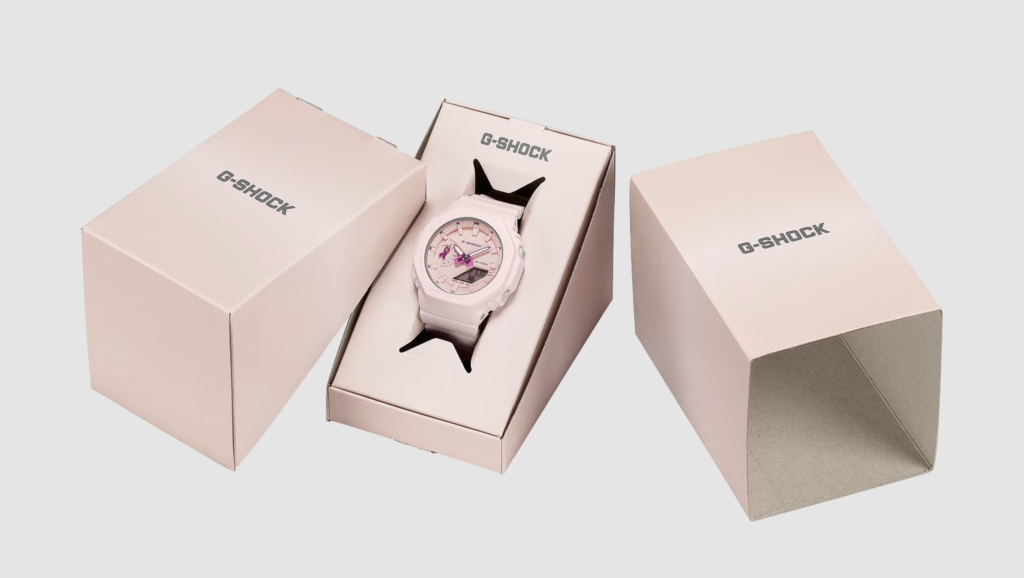
Casio has released the GMA-S2100PR-4A in India, bringing its latest breast cancer awareness G-Shock to the region after its initial launch in Japan, the US, and Europe. The watch is priced at ₹7,995 and is available now, coinciding with October’s breast cancer awareness month.
Design Details
This model is a variant of the GMA-S2100, which is the smaller, more compact version of Casio’s octagonal 2100 series. It measures 46.2 x 42.9 x 11.2 mm and weighs 41 grams. These dimensions make it a better fit for smaller wrists compared to standard, bulkier G-Shock models.
The design is entirely pastel pink. The only specific branding for the awareness campaign is a small pink ribbon indicator located on the sub-dial at the 9 o’clock position.
For the casing and the strap, Casio is using bio-based resin. The internal structure uses Casio’s standard Carbon Core Guard to protect the timekeeping module.
As a standard G-Shock, it comes with the usual durability specifications. It is shock-resistant and water-resistant up to 200 meters. The display is a hybrid analog-digital setup covered by mineral glass.
The analog hands have a Neobrite coating for visibility in the dark, and there is a double white LED system that illuminates both the watch face and the digital screen. You can set the backlight to stay on for either 1.5 or 3 seconds.
The watch runs on two SR726W batteries, which Casio estimates will last about three years. The digital features are standard for this module: world time for 31 time zones across 48 cities, a 1/100-second stopwatch, a 24-hour countdown timer, a full auto-calendar, and five daily alarms.
It also includes a hand-shift feature, which temporarily moves the analog hands out of the way if they are blocking the digital LCD.
In related news, Casio has recently launched the Baby-G BGD-10KPM-7 in collaboration with Pop Mart, which doubles as a bag charm, alongside a special-edition GM-5600 G-Shock inspired by Japanese rock legend Tomoyasu Hotei.
For more daily updates, please visit our News Section.
It’s been almost a month since the iPhone 18 Pro hit the market, and the new burgundy finish is already showing up everywhere. I spotted quite a few of them while traveling last week. But if you’re still holding off on buying one, whether for the new looks or because you think the specs are worth upgrading, you might want to read what’s new one last time.
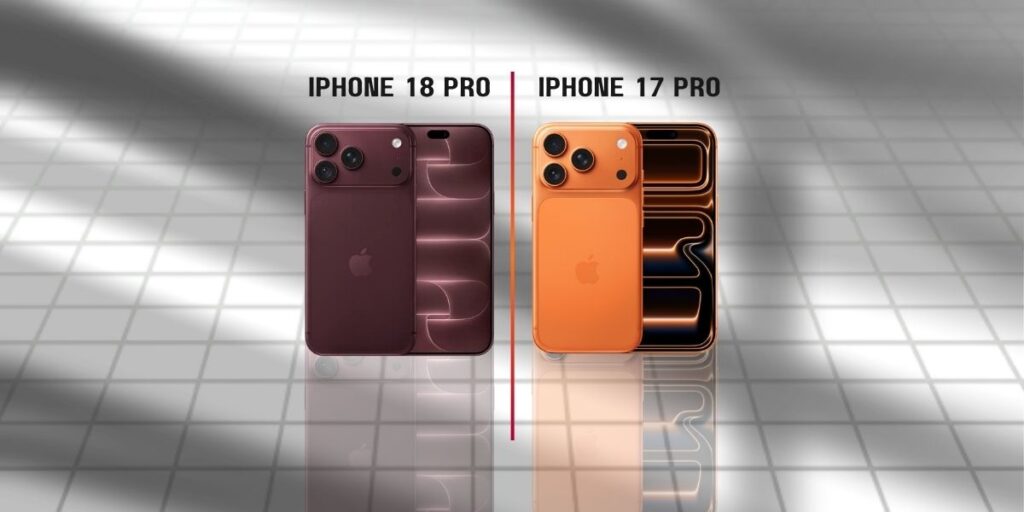
At first glance, the iPhone 18 Pro looks almost identical to its predecessor, with the new colors and a smaller Dynamic Island being the most noticeable differences. There are more changes under the hood, though, including the A20 Pro chip and a larger cooling system. The catch here is that these upgrades come with a $100 price increase. iPhone 18 Pro now starts at $1,199 in the US versus $1,099 for its predecessor.
So is paying more worth it? Here’s how the iPhone 18 Pro compares with the iPhone 17 Pro and whether the upgrades justify the higher price.
Let’s start with the hype for the iPhone 18 Pro. Every model from the iPhone 14 Pro through the iPhone 17 Pro used a fixed f/1.78 aperture, meaning the lens opening could not physically change. The iPhone 18 Pro introduces a 48MP Fusion Main camera with a mechanical aperture that adjusts between f/1.48 and f/4 using six laser-cut blades. It is the first iPhone with a physically adjustable aperture.
You can let the Camera app choose the aperture automatically or select from four settings yourself. Apple has also added manual controls for aperture and shutter speed, along with white balance and a histogram.
The wider f/1.48 aperture lets in about 45% more light than the previous f/1.78 lens, based on the difference in aperture area. This can help in dim environments and produce a shallower depth of field for portraits. At f/4, the smaller opening keeps more of the scene in focus, which can be useful for landscapes, group photos, and shooting in bright daylight. The iPhone 17 Pro relied on software to approximate some of these effects.
Apple has made a few other camera changes on the newer phone:
Smart Focus tracks your subject while you shoot.
Night mode works faster.
Cinematic effects now support up to 60 fps.
4K Dolby Vision HDR time-lapse recording is available.
Apple Reference Image saves an untouched original with verification data, allowing a photo to be verified as a real capture rather than an AI-generated image.
Apple didn’t bother to meddle with the ultrawide and front cameras, while the telephoto camera retains the 4x and 8x optical-quality zoom options introduced with the iPhone 17 Pro. Which is to say, the main camera is the sole major camera upgrade on the iPhone 18 Pro.
2. Performance
The iPhone 18 Pro runs on Apple’s A20 Pro, built on a 2nm process, compared with the 3nm A19 Pro in the iPhone 17 Pro. Both phones have 12GB of RAM, but the newer chip pairs a six-core CPU with a seven-core GPU. Apple says the GPU is up to 40% faster than the previous generation, while memory bandwidth has increased by 50%.
The A20 Pro also has two 16-core Neural Engines, which doubles the AI processing capacity of the previous chip. This extra hardware supports Apple’s next generation of on-device AI features, including the new Siri AI.
Cooling is another important part of the upgrade. The iPhone 17 Pro introduced a vapor chamber, but the iPhone 18 Pro uses a newer version attached directly to the chip, with three times the surface area of the earlier design. Apple says this improves sustained performance by up to 40%.
Benchmark scores back Apple’s claim, and this means better performance on demanding tasks, such as extended gaming sessions, 4K video exports, and intensive AI processing. These workloads can heat a phone and cause its performance to drop over time, so better cooling can help the iPhone 18 Pro maintain its speed for longer.
For everyday use, however, the difference is likely to be smaller. The A19 Pro is already powerful enough to handle current apps and games, so the A20 Pro’s biggest advantage is the extra performance headroom it provides for future software and more demanding tasks. This will be useful if you plan to keep the phone for four or five years.
Apple says the iPhone 17 Pro can last for up to 33 hours of video playback, while the eSIM-only iPhone 18 Pro can go up to 36 hours. The newer model also charges faster, reaching 50% in about 15 minutes compared with around 20 minutes for the iPhone 17 Pro using a 40W adapter.
There are two things to keep in mind, though. First, the 36-hour rating applies to the eSIM-only version sold in the US, Canada, Japan, Mexico and eight other markets. Buyers elsewhere should check the specifications of the version available in their region. Second, Apple’s battery figures are estimates rather than independent test results.
The iPhone 18 Pro also includes Apple’s C2 modem, which the company says consumes 15% less energy than the C1X and supports mmWave 5G in the US. Its N1 wireless chip adds Wi-Fi 7, Bluetooth 6, and Thread support.
4. Design and display
There is little difference between the two phones’ displays. Both have a 6.3-inch OLED panel with 120Hz ProMotion and up to 3,000 nits of peak brightness, along with an aluminum unibody. The iPhone 18 Pro weighs 211 grams versus 206 grams on its predecessor, while the overall dimensions are mostly the same—you can use your iPhone 17 Pro’s case, if you wish to.
A noticeable hardware change is that the Dynamic Island is smaller on the newer model and can show up to three Live Activities at once, up from two. Also, Apple hid the Face ID camera under the screen and relocated it to the top left, and the rear glass panel now matches the color of the surrounding camera area.
The available colors show a more noticeable visual difference. The iPhone 18 Pro comes in Black, Silver, Glacier, and Burgundy. Black returns after being absent from last year’s lineup, while iPhone 17 Pro’s signature Cosmic Orange is no longer available.
Apple has also added a 2TB storage option, the first for an iPhone.
5. iOS 27 and Siri AI
The iPhone 18 Pro ships with iOS 27 and the latest generation of Apple Intelligence, including the new Siri AI. But the software alone is not a strong reason to upgrade, since iOS 27 became available as a free update on September 14, four days before the phone went on sale.
The hardware difference is in how much AI processing the phone can handle locally. The A20 Pro’s Neural Engines and higher memory bandwidth give it more capacity for on-device tasks. Apple’s May roundup of expected iPhone 18 Pro upgrades had already pointed to the camera, performance, battery, and AI as the main areas of change.
6. Price: what the extra $100 gets you
The iPhone 17 Pro launched at $1,099 for the 256GB model, while the iPhone 18 Pro starts at $1,199 for the same storage capacity. Apple’s installment plan puts the newer model at $49.95 per month over 24 months. The price increase is smaller than some buyers expected after an IDC forecast in June suggested the price could rise by $200.
For the extra $100, you get the variable-aperture main camera, the A20 Pro chip, improved cooling, a higher battery rating, and faster charging. The display, overall design, and zoom range remain largely the same.
The iPhone 17 Pro is now a generation old, which could make it a better deal as retailers and carriers reduce its price. Check current offers before deciding, since a discount could make the price difference between the two models considerably larger than Apple’s original $100 gap.
7. Who should upgrade?
iPhone 17 Pro owners: Most can stick with their current phone. The display, size, zoom range, and everyday performance remain similar, so the camera is the main reason to upgrade. It may be worth the cost if you regularly shoot in low light or want the new aperture and manual controls. People who play demanding games or edit 4K video on their phones may also benefit from the improved cooling.
iPhone 16 Pro owners: The upgrade makes more sense because you get two generations of changes. The iPhone 17 Pro introduced an aluminum design, a vapor chamber, 48MP resolution across all three rear cameras, and 4x and 8x telephoto zoom. The iPhone 18 Pro adds the new chip, larger cooling system, adjustable main camera, and longer battery rating on top of those changes.
iPhone 15 Pro owners or anyone with an older model: The iPhone 18 Pro brings more substantial improvements in camera capabilities, performance, battery life, and storage. If your current phone is starting to feel dated, moving to the newer model could be more worthwhile than upgrading every year to get one set of changes at a time.
Vivo recently unveiled the Vivo V80 and Vivo X Fold 6 in India, confirming that both smartphones will ship with OriginOS 7 based on Android 17. More Vivo devices are expected to receive the new software in the coming weeks. Its sub-brand iQOO has now revealed when its eligible smartphones will get the latest operating system.
iQOO India CEO Nipun Marya has shared the company’s rollout schedule on X, detailing when different smartphone lineups will receive the Android 17-based update. The iQOO 15 is scheduled to receive OriginOS 7 by the end of October 2026. The iQOO 15R and iQOO 13 will follow in mid-November, while the iQOO 12, iQOO Neo 10, and iQOO Neo 10R are scheduled to receive the update in mid-December 2026.
The rollout will continue into 2027, bringing the new software to several devices across the Neo and Z series. The iQOO Neo9 Pro, iQOO Z11 5G, iQOO Z11x 5G, iQOO Z11xa 5G, iQOO Z10 5G, and iQOO Z10R 5G are scheduled for an update by the end of January 2027. The iQOO Z10x 5G is expected to receive OriginOS 7 by the end of February 2027.
The announced dates reflect iQOO’s planned rollout schedule, and users can check their phones’ system update settings for availability. However, carrier-exclusive models are excluded, with their update timelines to be determined by the respective carriers.
Meanwhile, iQOO has already confirmed that the iQOO 16 will launch in India soon. The upcoming flagship is expected to be the brand’s first smartphone in the Indian market to ship with OriginOS 7 based on Android 17 preinstalled, rather than requiring a subsequent software update. This will give buyers access to the new software straight out of the box.
Xiaomi unveiled its Xiaomi 18 Pro and Xiaomi 18 Pro Max flagship smartphones in China last month. Soon after their debut, the company confirmed plans to bring the series to global markets. Now, benchmark listings suggest that international testing could already be underway, potentially pointing to an earlier overseas launch.
Xiaomi 18 Pro series Geekbench listing
The global Xiaomi 18 Pro, carrying the model number 2609BPN61G, has appeared on Geekbench AI alongside the Xiaomi 18 Pro Max, identified by model number 2611FPNFAG. Both listings reveal Android 17 and approximately 12GB of memory, indicating that the devices are being evaluated with Google’s upcoming Android version. The listings also identify Qualcomm’s ARMv8 platform, although they do not independently confirm the commercial chipset names.
According to the reported hardware configurations, the Xiaomi 18 Pro is expected to feature the Snapdragon 8 Elite Gen 6, while the Pro Max could arrive with the more powerful Snapdragon 8 Elite Extreme Gen 6. Both chips reportedly share the same CPU configuration, comprising three cores clocked at 3.74GHz, three at 4.03GHz, and two at 5.01GHz. The key difference is expected to lie in graphics performance, with the Extreme variant featuring an Adreno 850 GPU compared with the Adreno 845 in the standard version.
The Geekbench AI results offer an early look at their AI processing capabilities. The Xiaomi 18 Pro recorded scores of 2,565 in single precision, 3,236 in half precision, and 4,667 in quantized testing. Meanwhile, the Pro Max achieved 2,256, 3,556, and 5,092 in the respective tests. These results reflect AI benchmark performance rather than conventional CPU or GPU performance.
The potential international debut would mark a notable change from the Xiaomi 17 series. Although the Xiaomi 17, 17 Pro, and 17 Pro Max launched in China in September 2025, only the standard model reached global markets in early 2026, leaving the Pro models exclusive to China. An earlier international launch could help Xiaomi compete more directly with upcoming flagships from Vivo and Oppo. However, Xiaomi has yet to announce a global release date or confirm the final hardware specifications.
Infinix unveiled the GT 30 Pro in June last year, followed by the standard GT 50 in August. This year, the company took a different approach, launching the GT 50 Pro globally in April while keeping Indian buyers waiting. After teasing its arrival last week, Infinix has finally confirmed when the gaming smartphone will reach India.
Infinix GT 50 Pro India launch date confirmed
Infinix GT 50 Pro
The Infinix GT 50 Pro will launch in India on October 27, bringing a supercar-inspired design and dedicated gaming features. Its Cyber Mecha styling features aerodynamic lines, a tapered profile, and a Kevlar-style textured rear panel built on a 2D composite structure. The phone will be available in Black Abyss with green cooling accents and Red Blaze with matching red accents.
One of the major highlights of the GT 50 Pro is its HydroFlow Liquid Cooling system, which Infinix describes as India’s first implementation featuring an Explicit Viewport Design. A dedicated window on the back reveals the liquid-cooling channels, while a specialised printing technique creates a three-dimensional appearance inspired by mechanical pipes. The system combines a proprietary flow-channel design with dual pumps to help dissipate heat during demanding gaming sessions.
The GT 50 Pro also features Mechanical Lighting Waves, comprising four RGB light strips arranged in the brand’s signature GT crosshair pattern. The lighting responds to incoming calls, gaming sessions, and music playback, with 14 effects and eight customisable colour options. These additions give users greater control over the phone’s appearance.
For gaming, GT Trigger 2.0 introduces dual pressure-sensitive shoulder buttons integrated into the phone’s upper edges. Users can assign functions such as aiming, firing, camera zoom, and app launching to these controls, reducing reliance on touchscreen inputs. Together with its visible cooling hardware and distinctive lighting, the GT 50 Pro offers a gaming-focused design that goes beyond conventional smartphone aesthetics.
Infinix has yet to announce Indian pricing and full market-specific details. With its October 27 launch approaching, the company is expected to reveal more information soon.
We capture hundreds of photographs with our smartphones, but most of them eventually get buried in our galleries or cloud storage. Digital photo frames offer a convenient way to revisit those memories without constantly scrolling through our phones.
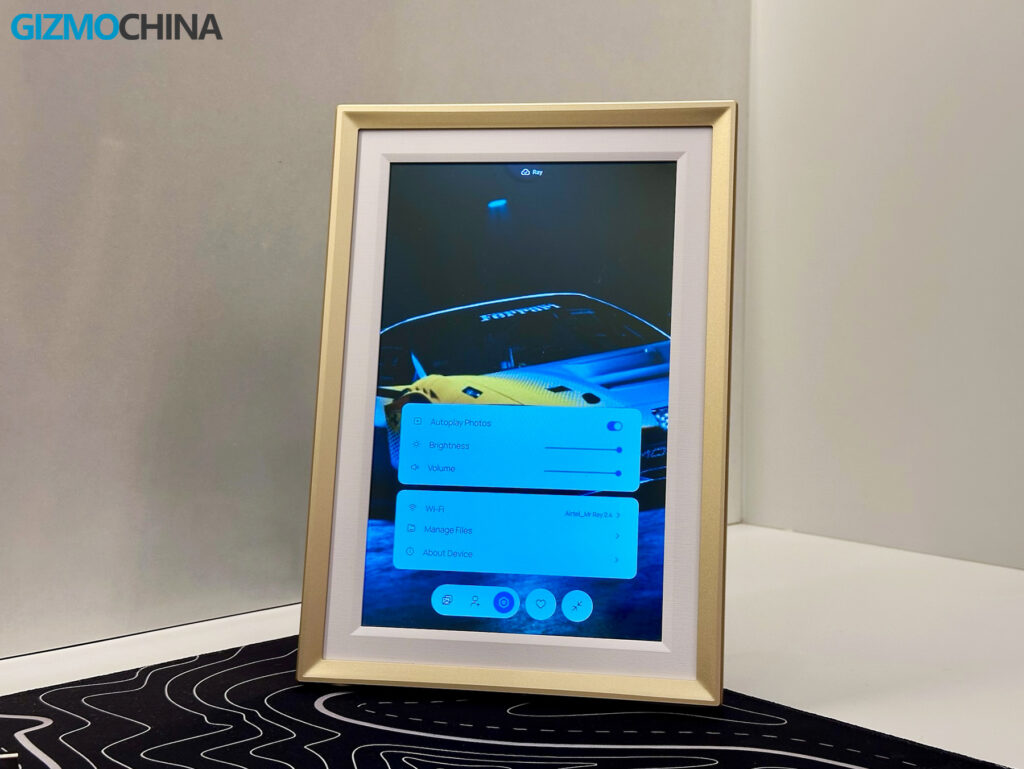
Arzopa, a brand primarily known for its portable monitors, has brought its D10 WiFi Smart Digital Picture Frame to India through XElectron. Priced at Rs. 8,990, the frame features a 10.1-inch touchscreen, Wi-Fi connectivity, 32GB of internal storage, and support for remote photo sharing.
I received the Arzopa D10 as a review unit a few weeks ago and have been using it in my office since then. During this period, I explored its display quality, design, companion app, and various customization features. So, is this digital photo frame worth buying at its asking price? Let’s find out.
Design and Build Quality
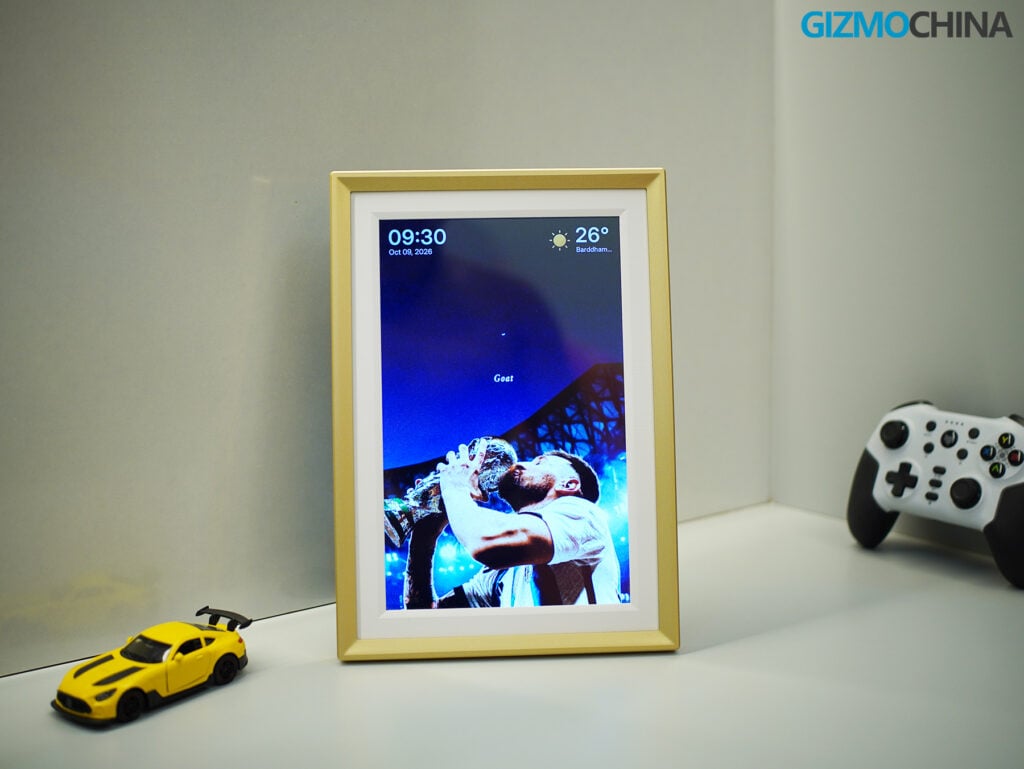
The first thing that caught my attention about the Arzopa D10 was its design. Unlike typical electronic displays, the D10 looks remarkably similar to a traditional photo frame.
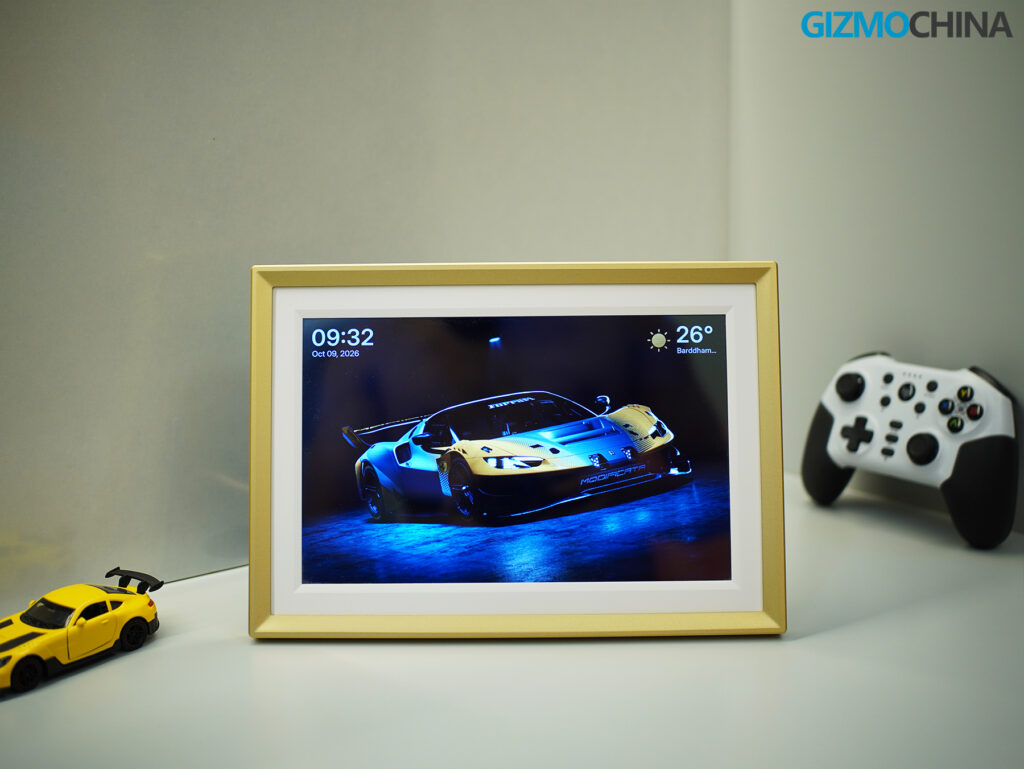
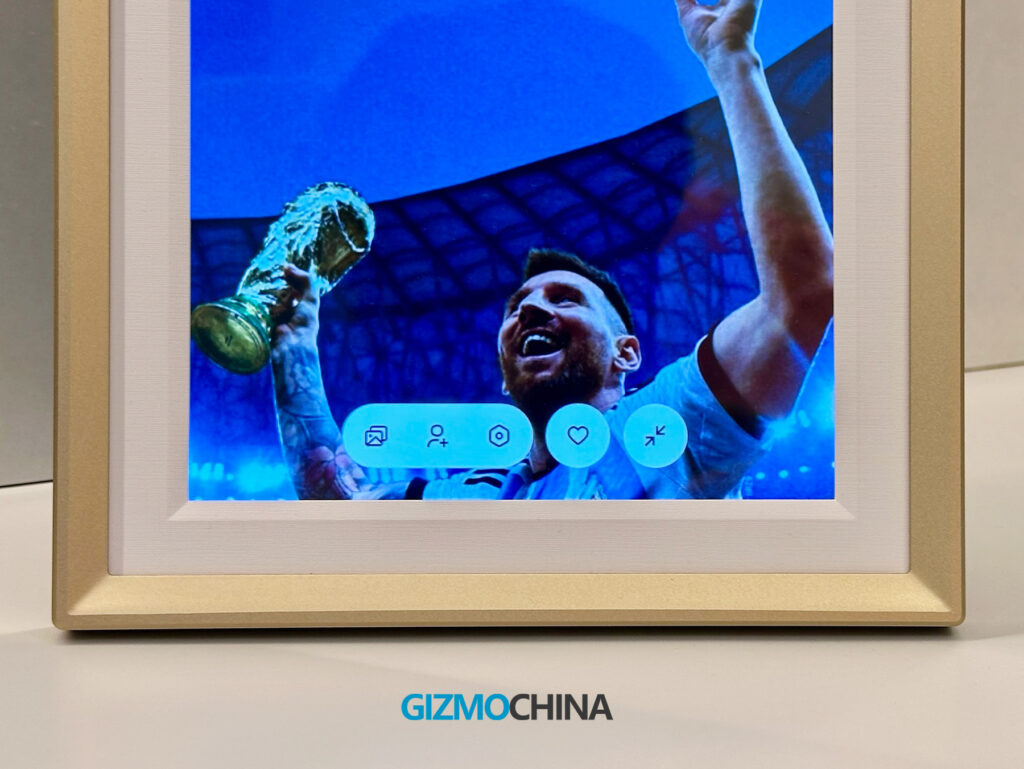
The champagne-gold metal frame gives it a premium appearance, while the white border surrounding the display creates the impression of a printed photograph inside a conventional frame. I particularly like how Arzopa has kept the design elegant without making it excessively flashy.
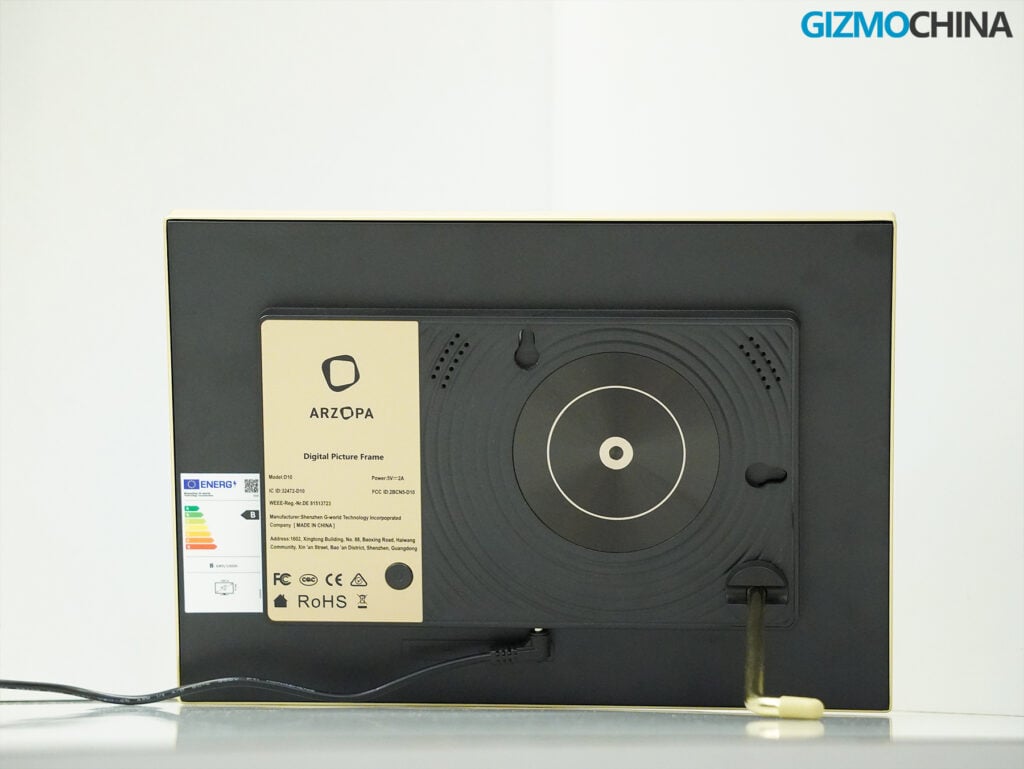
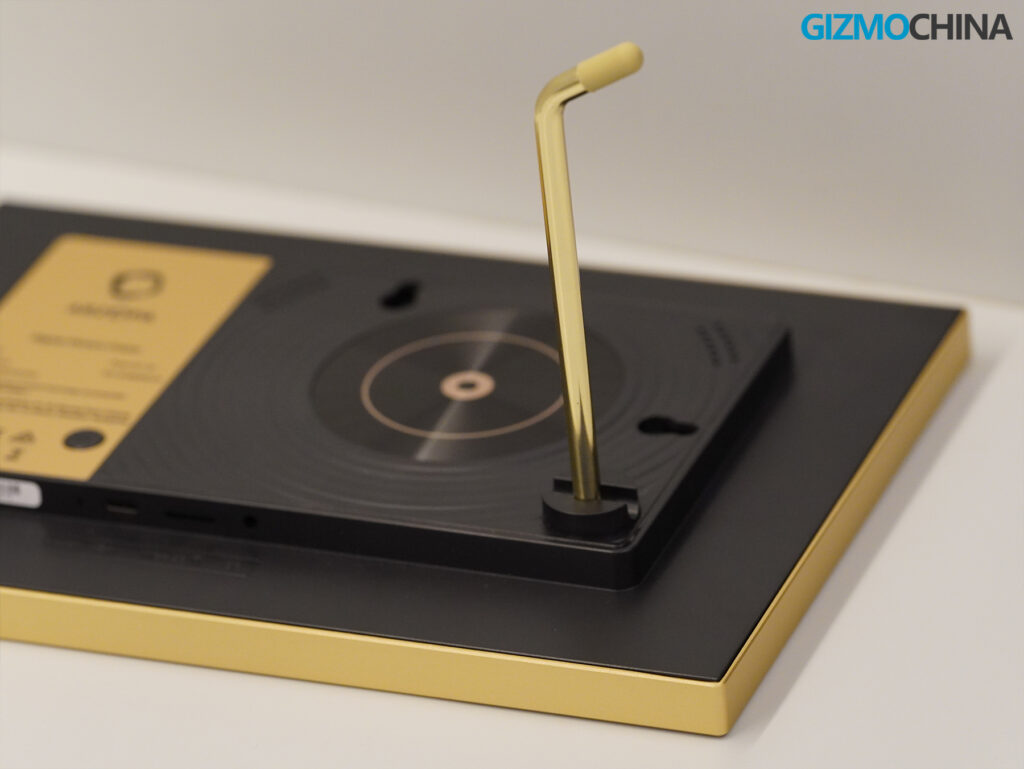
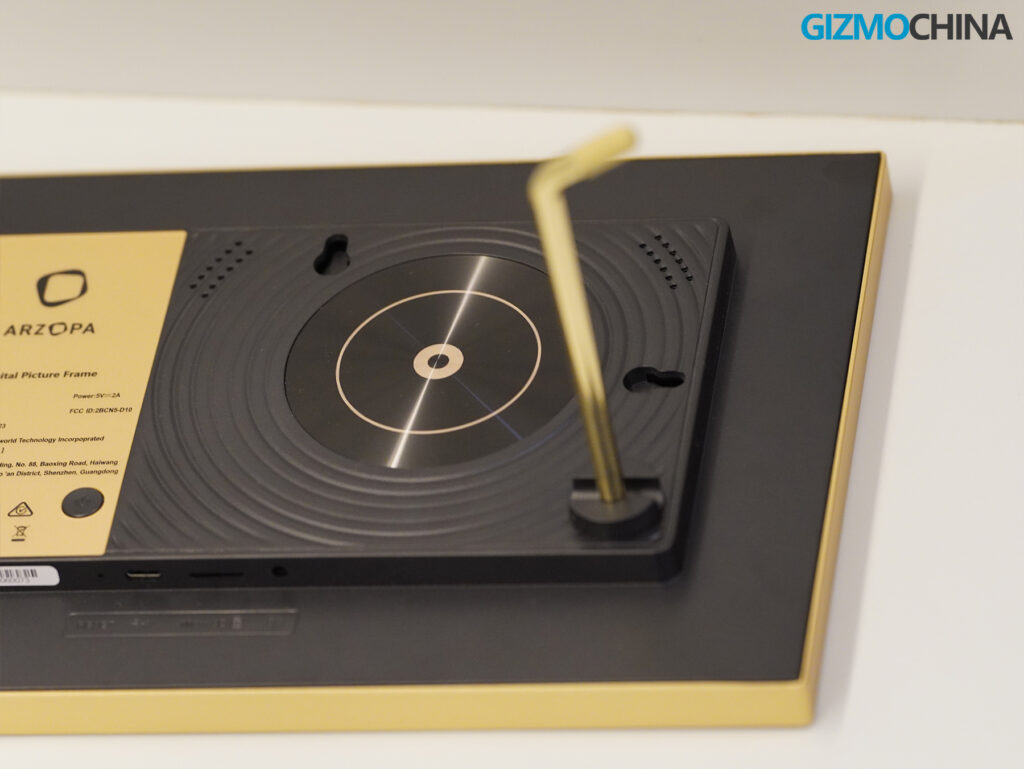
The back features a circular pattern that reminds me of vintage vinyl records. Although you won’t see it once the frame is positioned, it’s a thoughtful design element.
Arzopa includes a detachable metal stand that attaches to the rear. The stand feels sturdy and has a rubberized grip at the bottom to prevent slipping. I found it stable enough for everyday desk use.
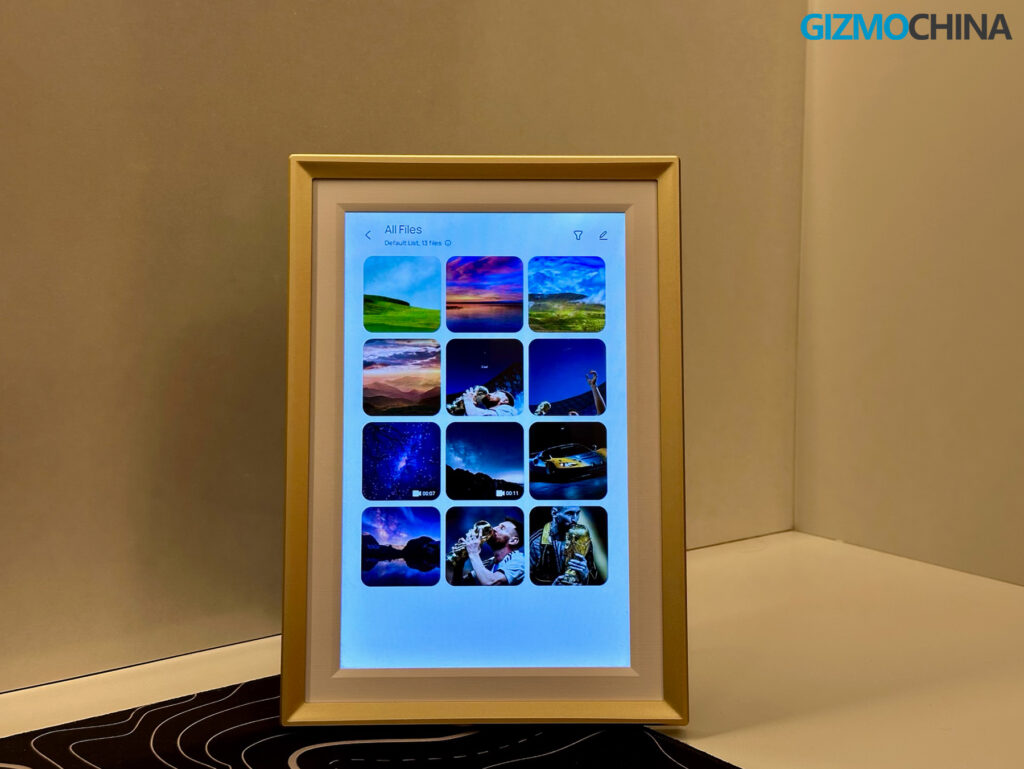
The frame supports both portrait and landscape orientations, with an automatic rotation feature that adjusts the display accordingly. Wall mounting is also supported, giving users more flexibility in placement.
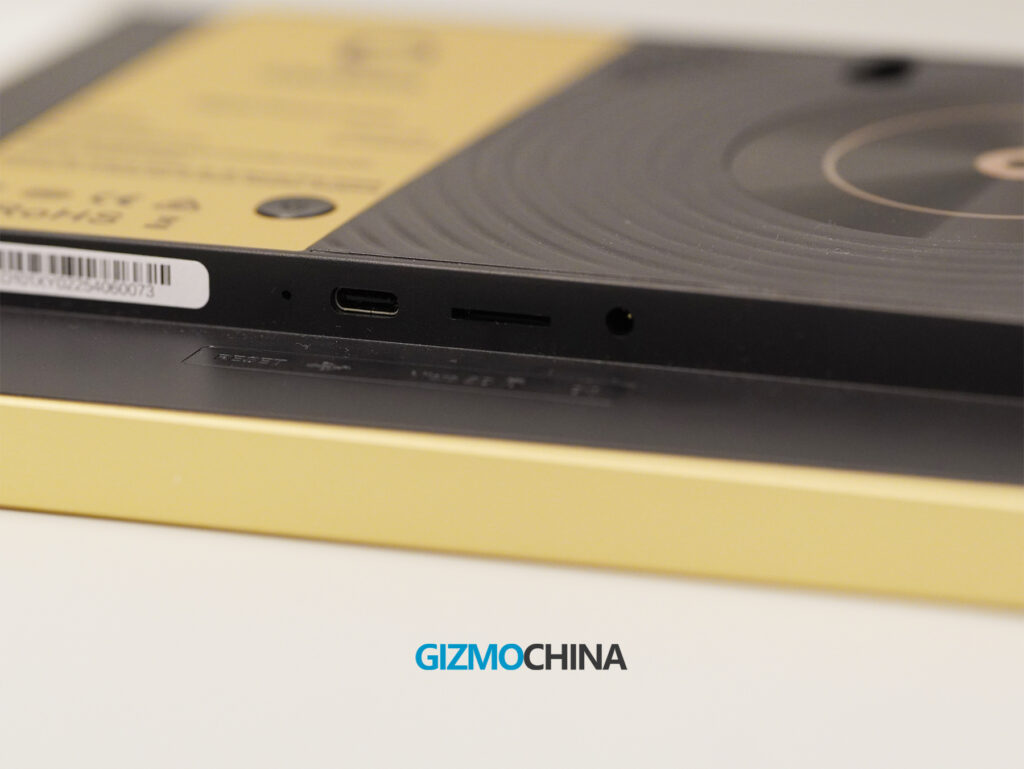
For connectivity, the D10 includes USB-C and memory card support, along with a physical power button.
One thing worth mentioning is that the frame needs to remain connected to a power outlet. There’s no built-in battery, so you’ll need to consider cable management when deciding where to place it.
Overall, I think Arzopa has done an excellent job with the design. The D10 looks more like a decorative home accessory than another electronic gadget.
Display Quality
The Arzopa D10 features a 10.1-inch IPS touchscreen with a resolution of 1280 × 800 pixels and a 16:10 aspect ratio.
While the resolution might seem modest by today’s standards, I was pleasantly surprised by the actual viewing experience.
The display produces natural-looking photographs with pleasing colors and well-balanced brightness. Pictures don’t appear unnecessarily saturated or artificially enhanced, which is something I appreciate.
However, the most interesting aspect of the display is its matte anti-glare coating.
Unlike the glossy screens found on most smartphones and tablets, the D10 has a softer finish that makes photographs resemble physical prints. Combined with the white inner border, this creates a surprisingly convincing traditional photo-frame appearance.
I have been using the frame in my office, where it is exposed to different lighting conditions. The anti-glare coating does a good job of reducing unwanted reflections, although it doesn’t eliminate them completely. Strong light sources can still produce visible reflections, particularly when directed toward the screen.
Brightness has also been satisfactory for indoor use. I didn’t feel the need to keep the display at maximum brightness, and photographs remained clearly visible under normal room lighting.
The IPS panel also offers good viewing angles, which is particularly important for a digital photo frame. You don’t necessarily look at it directly from the front, especially when it’s placed on a desk or shelf.
As for sharpness, the 1280 × 800 resolution is adequate when viewing photographs from a normal distance. However, finer details aren’t as crisp as they would be on a higher-resolution panel. Considering the Rs. 8,990 price, I would have appreciated a sharper display.
Another missing feature is automatic brightness adjustment. The D10 doesn’t have an ambient light sensor, meaning you’ll need to adjust brightness manually depending on your surroundings.
Nevertheless, I think Arzopa has prioritized the right things here. The natural color reproduction, matte finish, and traditional frame-like presentation make the D10 enjoyable to look at, despite its relatively modest resolution.
Arzopa App and Software Experience
The Arzopa D10 connects to the company’s companion app, available for Android and iOS. Once connected to Wi-Fi, you can upload photographs and videos directly from your smartphone, even when you’re away from home.
The app provides several customization options, and I found it surprisingly feature-rich.
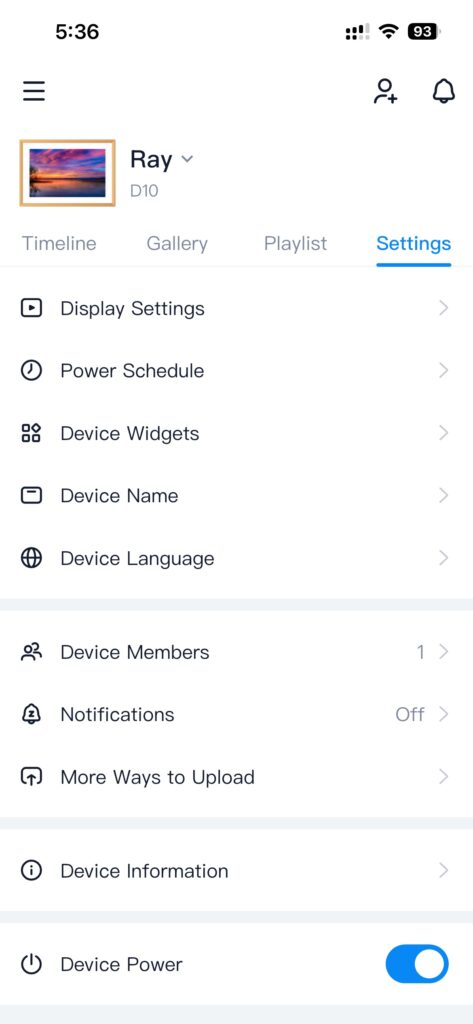
The interface includes sections such as Timeline, Gallery, Playlist, and Settings. You can organize photographs into playlists, change their playback order, and customize slideshow intervals.
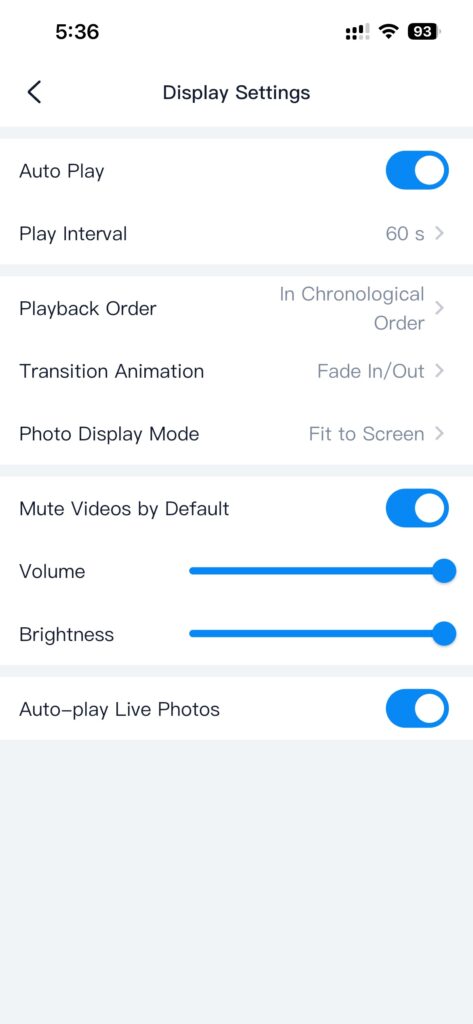
Personally, I’ve been using a 60-second interval, which feels like a good balance. Photographs change regularly without making the display distracting.
There are also several transition effects, including fades, 3D flips, and card-style animations. I prefer subtle transitions because they complement the frame’s traditional appearance.
Another useful option is choosing between fitting photographs within the screen or filling the entire display. The latter looks more immersive but can crop portions of images, especially portraits and group photographs.
The D10 also supports multi-user sharing. Family members and friends can contribute photographs remotely through the app, making it particularly useful for households where everyone wants to share memories.
Storage is another strong point. The frame includes 32GB of built-in storage, which Arzopa claims can accommodate more than 80,000 photographs, depending on file sizes. More importantly, the company offers unlimited cloud storage without requiring a subscription.
The software also includes clock, calendar, and weather widgets, along with customizable sleep scheduling. You can configure the display to turn off automatically at night and resume operation at a specified time.
However, I encountered an issue while configuring the clock. I couldn’t find the appropriate Indian time zone option, which made setting the correct local time difficult. The time settings are also buried deep within multiple submenus, making them unnecessarily difficult to access. I think these controls should be available directly in the main settings menu for easier access. Considering that the product is officially available in India, Arzopa should address these issues through a software update.
Apart from that, I appreciate the amount of control the app provides. Once everything is configured, the frame requires very little attention.
Additional Features
Apart from displaying photographs, the Arzopa D10 also supports video playback through its built-in speaker.
The frame supports video clips up to two minutes long. This makes it suitable for short birthday greetings, family celebrations, and other memorable moments.
The software also provides volume controls and an option to mute videos by default. I think this is particularly useful if you’re planning to keep the frame running in an office or living room.
For users who prefer transferring content without relying on Wi-Fi, the D10 supports external storage through its USB and memory card interfaces.
Another interesting feature is the ability to prepare photographs and greetings before gifting the frame. This makes it possible to personalize the experience for someone receiving it as a present.
Should You Buy the Arzopa D10?
After spending a few weeks with the Arzopa D10, I think it’s one of those products you don’t necessarily realize you need until you start using it. I’ve genuinely enjoyed having it on my office desk, occasionally looking over and seeing photographs that I probably wouldn’t have revisited otherwise.
At Rs. 8,990, it’s certainly not an impulse purchase, especially when you already have a smartphone or tablet capable of displaying photographs. However, I think the D10 serves a different purpose. It’s not about adding another screen to your setup, but about giving your memories a dedicated space.
Would I recommend buying it? Yes, particularly if you enjoy displaying family photographs or want something personal to brighten up your living space. It’s also a thoughtful gifting option for parents or grandparents. However, if you’re simply looking for another display, the investment might be harder to justify.
For me, the Arzopa D10 is less about the technology inside and more about the small moments it brings back throughout the day.
Anker has recently announced the SOLIX S5000, a portable power station with a 5,024Wh battery that will go on sale in the US on October 27. It has a list price of $3,599.99, but Anker is offering it for $2,499.99 at launch through its own store and Amazon. Buyers can also sign up for early access to get a discount pack worth $1,799, according to the company.
Anker claims the SOLIX S5000 is the longest-lasting 5kWh power station in its class, based on its internal tests against selected competitors. The company says it can power a fridge, Wi-Fi router, coffee maker, lights and phone for up to 48 hours on a single charge. A fridge alone can run for up to 86 hours, while a window AC unit can run for up to 25 hours. These are Anker’s estimates, so actual runtime will depend on the devices connected and how much power they use.
Anker SOLIX S5000 offers 4,500W output and multiple charging options
The SOLIX S5000 has a rated output of 4,500W, with peak output reaching 8,000W. It supports both 120V and 240V appliances, with an L14-30R outlet, a TT-30R outlet for RV equipment, NEMA 5-20R outlets, USB-A, and a 100W USB-C port. It can also work as a UPS, switching to battery power within 10ms of a grid outage. Anker rates its operating noise at 30dB, while idle power consumption on the 120V output is 8.8W.
Despite its large battery, the SOLIX S5000 weighs 97 lb (about 44kg) and measures 10.6 x 22 x 15.2 inches. It has built-in wheels and a pull rod to make it easier to move around. Anker says it is lighter than the Anker SOLIX F3800, which has a smaller 3,840Wh battery and was introduced through Kickstarter in 2023.
Inside, the power station uses 314Ah lithium iron phosphate (LFP) cells. Anker rates the battery for 6,000 charge cycles before it reaches 80% of its original capacity, or 10,000 cycles before dropping to 60%. The company estimates a lifespan of around 15 years with one or two cycles per day, although its product coverage lasts five years. The SOLIX S5000 also carries UL 9540 and UL 9540A certifications.
Charging tops out at 4,300W for a single unit, and Anker says a full charge takes 99 minutes. AC input is 1,800W from a 120V outlet and 4,500W from a 240V one. There are also two solar inputs rated for up to 1,000W and 2,000W, respectively, along with a generator input that supports up to 4,500W.
For users who need more capacity, the SOLIX S5000 supports expansion batteries. Anker lists configurations ranging from 5kWh to 30kWh with up to five additional batteries, although it has not provided prices for the expansion options on its product page.
The SOLIX S5000 is considerably larger than the 1,056Wh Anker SOLIX C1000, which launched in the UK and EU in 2023. For now, Anker has only announced US availability for the new model, with no word on a launch in other markets.
For more daily updates, please visit our News Section.
Citizen has released a new Marvel-themed watch in the US, this time focusing on Doctor Doom. The watch is available now on Citizen’s website for $495. It combines the character’s signature green and gray color palette with the company’s standard Eco-Drive solar charging technology.
The watch, officially model AW5027-44W, is built around a 42.5mm gray ion-plated stainless steel case with a 20mm lug width. The dial features a multi-layered gray design that incorporates the shape of Doctor Doom’s metal mask.
To break up the monochromatic gray base, Citizen added applied gold dot markers and luminous gold-tone hands for contrast, along with a minute track that shifts from green to gray. The hardware is paired with a textured green leather strap with side stitching, matching the character’s traditional comic book appearance. The case back also includes an etched Doctor Doom logo.
Inside the case, the watch uses Citizen’s J810 Eco-Drive movement. This is a familiar system across Citizen’s modern lineup that draws power from any natural or artificial light source, meaning it doesn’t require standard battery replacements. Functionally, it is a straightforward timepiece featuring a standard three-hand movement and a basic date window.
Where to buyCitizen AW5027-44WLatest price on AmazonCheck price →
For durability, Citizen opted for a mineral crystal over the dial. While mineral crystal offers standard impact resistance, it is more prone to scratching than the sapphire crystal you might typically look for on a watch approaching the $500 mark.
However, the watch does have a solid water resistance rating of WR100 (10 Bar or 333 feet), which is sufficient for swimming, showering, and snorkeling. The watch is packaged in a custom display box and includes a collectible double-sided coin.
Xiaomi has launched the new 10000mAh 45W Ultra-Thin Magnetic Power Bank (WPB1026S). It is now available on Xiaomi Youpin for 399 yuan ($60). The launch follows the release of the similarly specced WPB1025S model earlier this year.
The power bank features an aluminum alloy body that measures 102 x 70.5 x 13.2mm and weighs 195 grams. It is available in silver-white and dark gray matte finishes. Inside the casing, Xiaomi has placed two 5,000mAh battery cells.
These cells use a silicon-carbon anode with a 16% silicon content and an energy density of 840Wh/L. By using this battery chemistry, Xiaomi says the new model is 35% smaller, 43 grams lighter, and 6.6mm thinner than its previous 10,000mAh 33W magnetic power bank.
For charging, the power bank provides both wired and wireless options. The single USB-C port supports up to 45W of wired output and up to 30W of input for recharging the power bank itself. It supports common charging standards, including USB PD 3.0 with PPS, Quick Charge 3.0, and Apple 2.4A.
Where to buyXiaomi 45W power bankBrowse the range on AmazonShop now →
The magnetic wireless charging pad can output up to 20W, but this maximum speed is restricted to compatible hardware, such as the Xiaomi 15 and Xiaomi 17 series smartphones. For Apple devices like the iPhone 17, iPhone 17 Pro, and iPhone Air, the wireless charging operates at the standard 7.5W rate. The power bank can charge two devices simultaneously using the wired and wireless methods, though the combined output is limited to 15W.
The power bank also features a battery information management system that allows users to monitor its health and performance. By connecting it to a computer via USB-C, you can access detailed information, including battery temperature, voltage, manufacturing details, current operating status, and logs of any abnormal activity.
Thermal management is handled by an NTC temperature control chip, a graphene heat dissipation layer, and thermal silicone. The power bank complies with China’s GB 47372-2026 safety standards for portable batteries and falls under the 100Wh limit, making it cleared for standard airline travel.
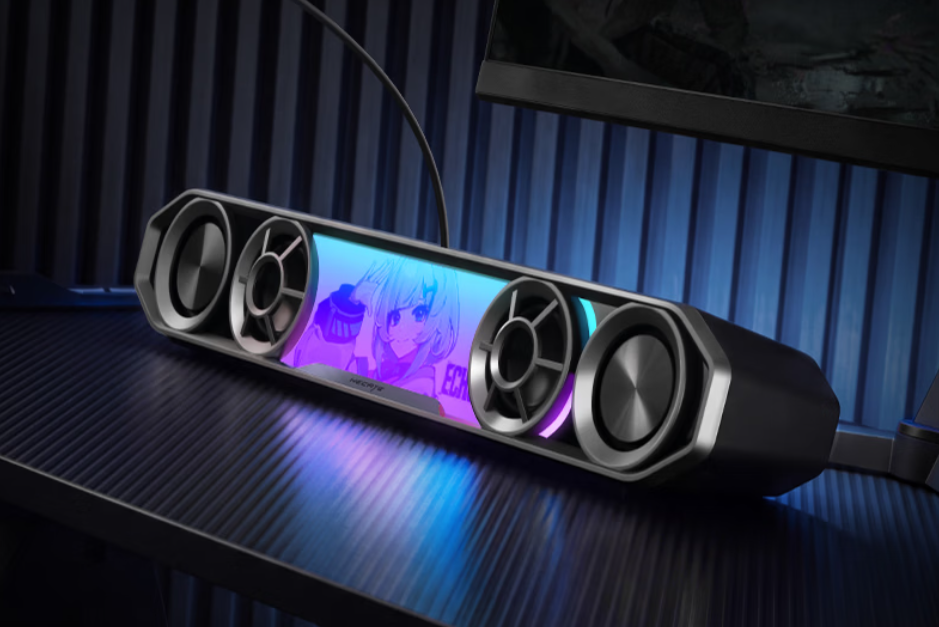
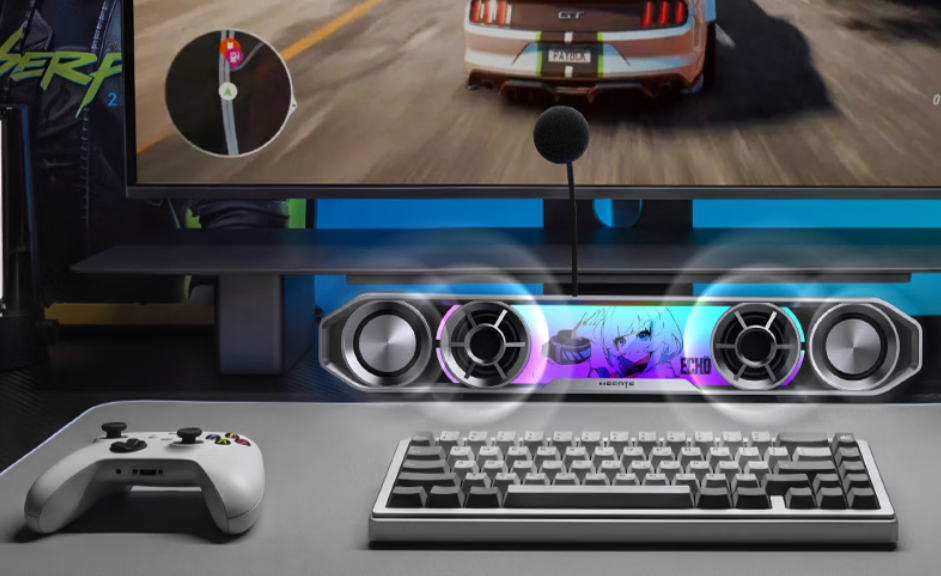
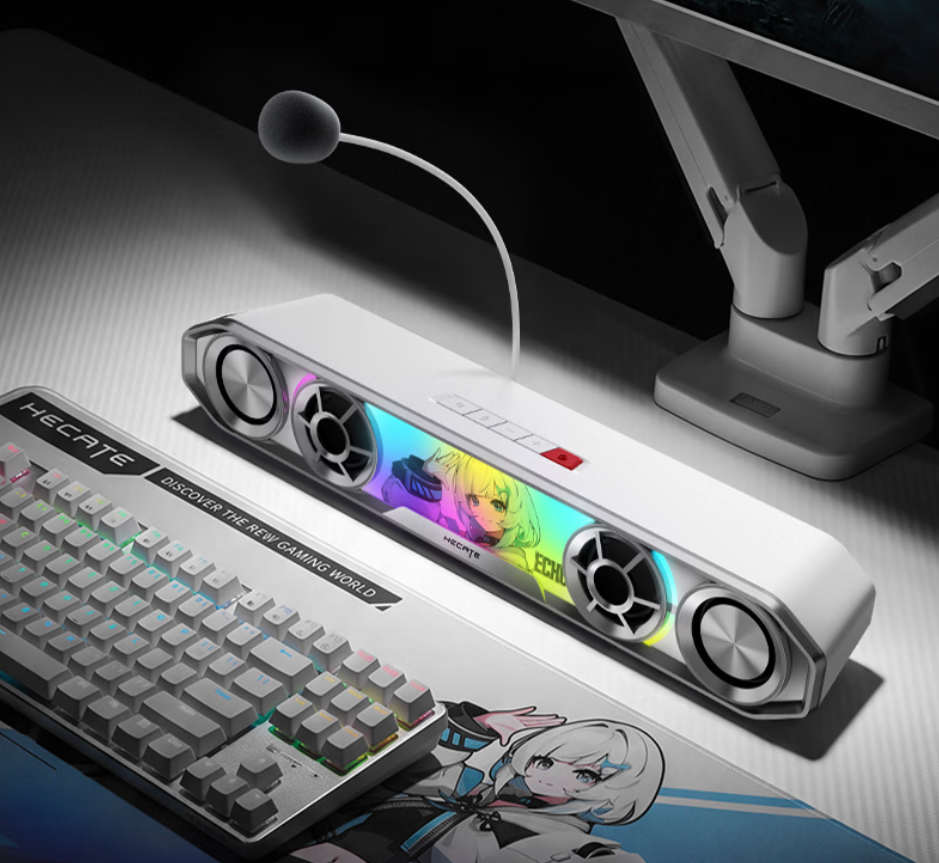
Edifier has expanded its gaming audio lineup with the new Hecate G2000 Bar desktop soundbar. The company has listed the soundbar on JD.com in China, with sales set to begin on October 16. It carries a regular price of 387 yuan ($58), while the introductory price is set at 349 yuan ($52).
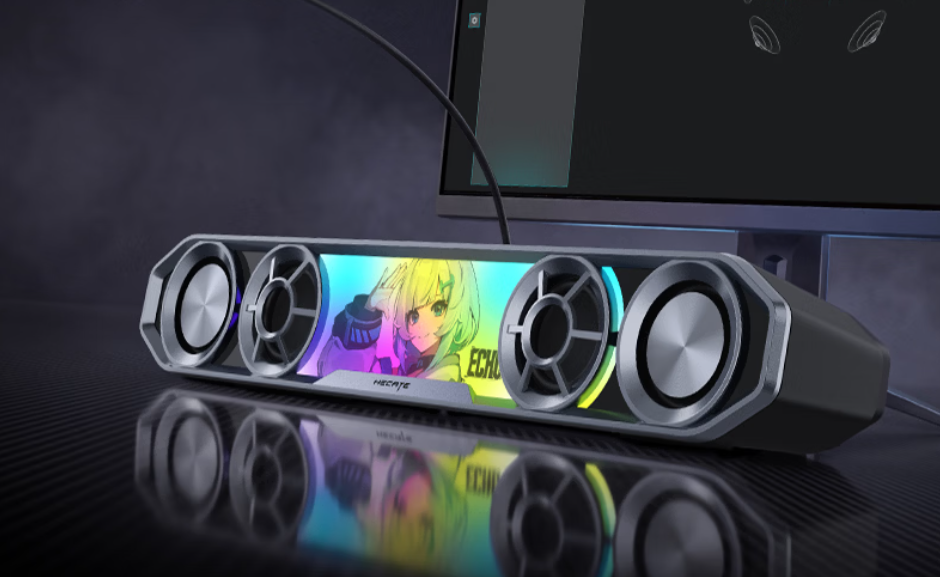
The G2000 Bar features a compact soundbar design that fits neatly beneath a monitor. It comes with a built-in 5-degree upward tilt to direct sound toward the listener while reducing reflections from the desk surface. The soundbar is available in black and white color options and sports an angular, mecha-inspired design.
It also includes five interchangeable themed stickers for customizing the front panel. Additionally, the soundbar features 12 RGB lighting effects, which can be customized through the Edifier Connect mobile app or Hecate PC software.
Internally, the soundbar uses a four-driver acoustic configuration. This consists of two 56mm full-range drivers equipped with lightweight copper-clad aluminum wire (CCAW) voice coils, paired with two 60mm passive radiators to handle lower frequencies. The system has a rated output of 3W per channel (6W total) and a peak output of 12W. Its frequency response ranges from 67Hz to 20kHz.
Where to buyEdifier gaming soundbarsBrowse the range on AmazonShop now →
On the software side, the G2000 Bar supports THX 7.1.4 spatial audio, which processes the output to simulate a surround sound environment. Edifier includes six specific gaming audio presets tailored for genres like first-person shooters, RPGs, and racing games.
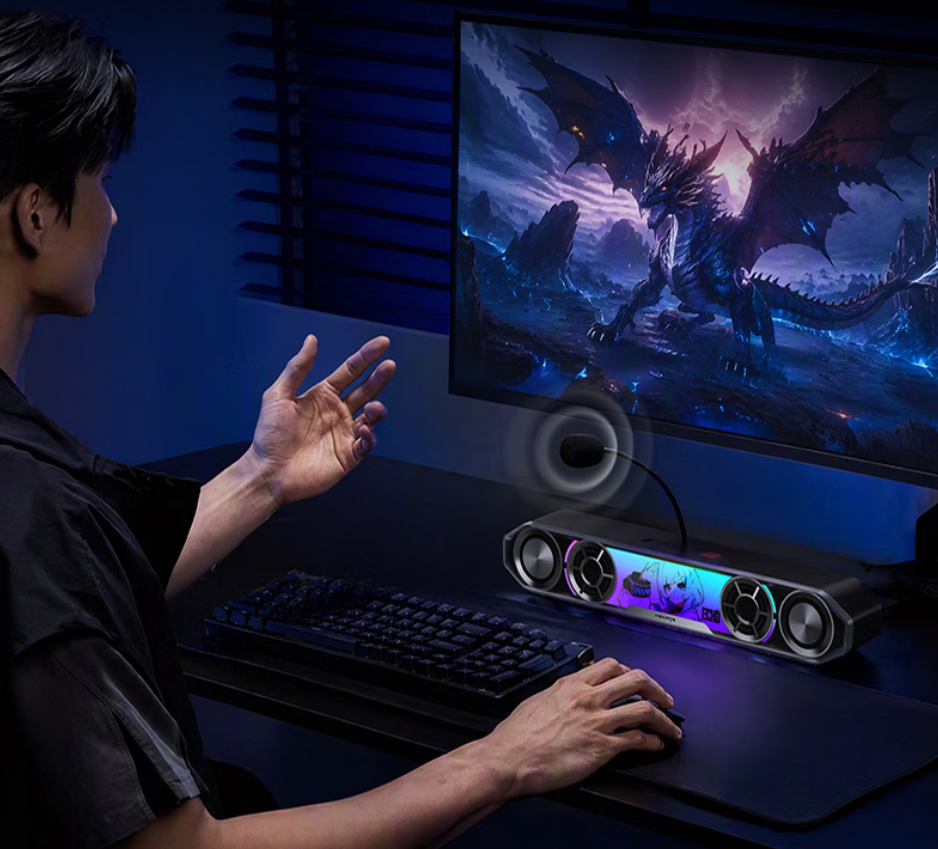
The speaker also comes with a detachable microphone that features AEC 2.0 acoustic echo cancellation technology and a dedicated DSP chip. It also supports AI-powered noise reduction to minimize background noise and prevent audio feedback from the soundbar. This allows users to communicate with teammates during gaming sessions without wearing a headset.
For connectivity, the device supports USB sound card input and Bluetooth 6.0, allowing it to connect to PCs, laptops, mobile devices, and consoles. It is powered by an independent 9V DC power adapter to maintain consistent audio output, and the top metallic panel features physical controls for volume adjustment, microphone muting, and mode switching.
In related news, Portronics has recently launched AuraTrio modular Bluetooth speaker with two detachable satellites and Auracast support, while Edifier has launched M230 II retro speaker with 26W RMS output, Bluetooth 6.0, and 30-hour battery life.
For more daily updates, please visit our News Section.
Lenovo has launched a new affordable portable Wi-Fi hotspot in China. The device, called the Lenovo Portable Wi-Fi 6+ (model L016), is now listed on JD.com for just 59 yuan ($9).
The hardware is designed for basic portability. It measures 105.1 x 70.1 x 14.1mm and weighs 90 grams. Lenovo offers the device in standard black and white finishes. The plastic casing includes a lanyard hole for attaching it to a bag or wrist, alongside a USB-C port on the side for power.
Internally, the hotspot uses an ASR communication chipset and supports Wi-Fi 6 connectivity. Lenovo lists the theoretical maximum transmission speed at 287Mbps.
As with all cellular hotspots, actual speeds will depend entirely on local network conditions, environmental factors, and the hardware you are connecting to it. The L016 can support up to 10 simultaneous connections, making it capable of handling a standard mix of phones, tablets, and laptops without requiring a fixed broadband line.
In terms of battery life, the device packs a 3,000mAh battery that Lenovo claims can deliver up to 12 hours of standby time. It also features an intelligent power management chip that monitors temperature and usage conditions to optimize power consumption and improve battery efficiency.
Where to buyLenovo Wi-Fi hotspotsBrowse the range on AmazonShop now →
The hotspot features a USB-C charging port and supports charging while in use, allowing users to stay connected even when the device is plugged into a wall charger or power bank. Lenovo also claims the battery meets safety requirements for carrying on airplanes and high-speed trains.
The device also comes with 1,500GB of complimentary trial data. However, its connectivity is limited to supported regions within mainland China, and it cannot be used overseas.
In related news, Lenovo has recently launched the ThinkBook 14x with a 990g aluminum body and Intel Lunar Lake processors, alongside the Lecoo N27 Pro AIO featuring a 2.5K 100Hz display, Intel Core i5-13420H processor, and 16GB RAM.
For more daily updates, please visit our News Section.
September ended with several flagship launches across Android and iOS, while the first week of October has been relatively quiet. The break may not last long, as the rest of the month looks just as busy as September.
Tipster Panda Is Bald has shared a list of phones and tablets expected to launch in October, including devices from iQOO, OnePlus, Honor, Xiaomi, and RedMagic. Some already have confirmed launch dates or official teasers, while others remain rumors.
Confirmed launch dates
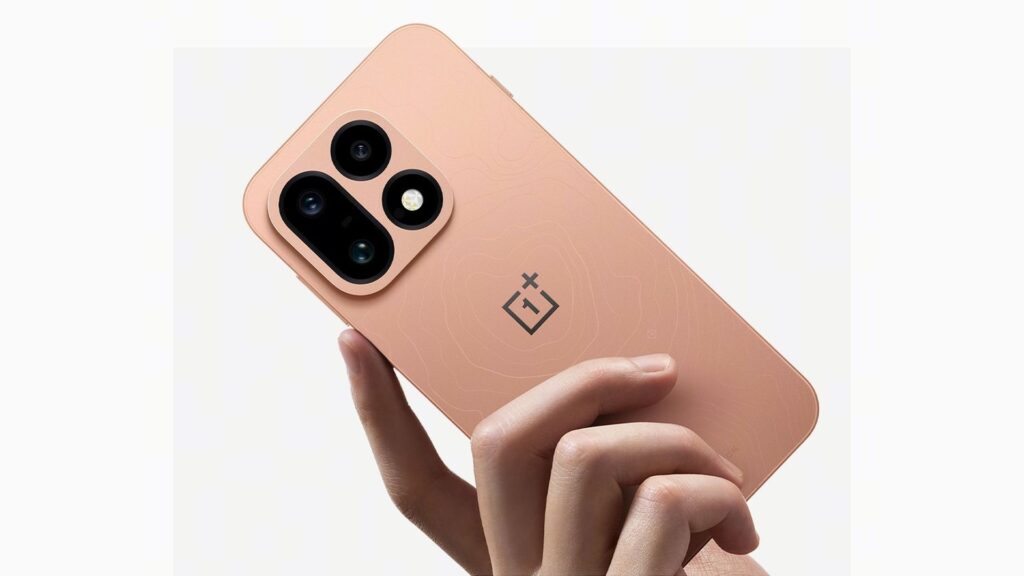
The OnePlus 16 is set to launch in China on October 12, just two days from now. OnePlus has been teasing the phone ahead of the launch, with a recent post revealing several key specifications. These include a Snapdragon 8 Elite Gen 6-series chip, a 200MP main camera, a display with a refresh rate of up to 185Hz, and a 9,000mAh battery.
OnePlus hasn’t confirmed the phone’s availability outside China. The company has reportedly pulled back from new phone launches in the US and Europe, while an India launch remains unconfirmed.
OnePlus 16
The RedMagic 12 Pro+ will follow on October 15. RedMagic has confirmed a Snapdragon 8 Elite Extreme Gen 6 chip, a thinner and lighter body, bezels measuring under 1mm, and an under-display front camera. The company hasn’t announced its global launch plans yet.
Honor has teased the Honor Win Tablet, confirming a Snapdragon 8 Elite Gen 5 chip and an OLED display. Its latest teaser hints at a refresh rate above 200Hz, while tipster Digital Chat Station claims the tablet has an 8.4-inch panel with a 240Hz refresh rate. Honor hasn’t announced a launch date, but the tablet is expected to arrive alongside the Honor Win 2 series.
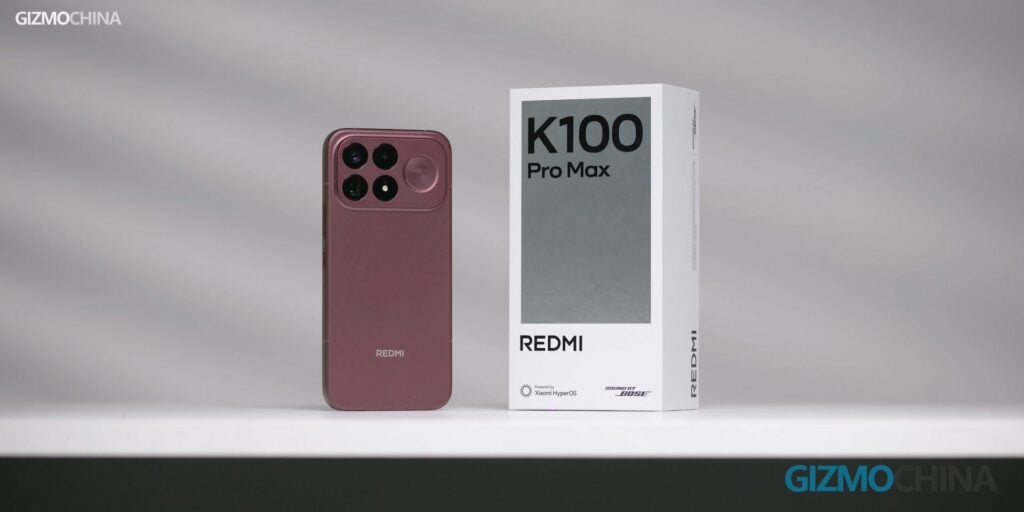
Xiaomi could also introduce the standard Redmi K100 this month. The company already launched the Redmi K100 Pro and K100 Pro Max on August 11. Xiaomi President Lu Weibing has confirmed that the standard K100 is coming later and hasn’t been cancelled. However, the October launch window comes from tipsters, and there’s no official date yet.
Redmi K100 Pro Max
iQOO has started teasing the iQOO Neo 12, confirming several of its key specifications. The phone has a 2K display with a 185Hz refresh rate, using Visionox’s fourth-generation pTSF material. It also packs a Snapdragon 8 Elite Gen 5 chip, an iQOO Q3 gaming chip, and a 9,000mAh battery. A built-in fan and the new Ice Dome cooling system handle heat during demanding tasks.
The iQOO Pad Pro has also been officially teased. The compact gaming tablet features an 8.8-inch display and weighs 298 grams. Like the Neo 12, it uses the Snapdragon 8 Elite Gen 5 and Q3 gaming chip combination. It also has an active cooling fan, while its 3C certification listing points to 66W charging.
Other rumored launches
The Honor Win 2 and Win 2 RT have cleared 3C certification in China, with listings indicating 100W and 90W wired charging, respectively. An October launch is rumored, but Honor hasn’t confirmed the timing. Earlier reports have pointed to a Snapdragon 8 Elite Gen 6 chip, a battery with a capacity exceeding 10,000mAh, and a possible third model in the lineup.
The OnePlus Ace 7 series is another possible October launch. According to leaks, the lineup could include a standard Ace 7 and a higher-end model, both expected to use a Snapdragon 8 Elite Gen 5-class chip and a battery of around 9,000mAh. The phones are rumored to arrive around the same time as the OnePlus 16, with the Ace 7 potentially launching in India as the OnePlus 16R.
Finally, the Honor X10 Mini appears on the list, but there’s little to support its inclusion so far. No official teaser, certification, or detailed leak has surfaced under that name, making it the least substantiated entry among the rumored October launches.
Xiaomi has published a post on the community website confirming that the stable rollout begins next week in China. It says the internal testing recruitment will end on October 14th, and the very next day, stable builds will start rolling out in batches.
Starting October 15, the first phase of HyperOS 4 rollout will hit devices in China, targeting flagship lineups like the Xiaomi 17, Redmi K90, and Xiaomi Pad 8 series.
First phase of HyperOS 4 rollout includes these devices:
According to the official timeline published recently, these devices should receive the HyperOS 4 update before month’s end, as the second batch rollout is scheduled to begin later this month.
Xiaomi has already published the complete rollout schedule for China. For global users, the company is running the beta program for several devices. However, there’s no official announcement on when the stable rollout will take place.
Given Xiaomi’s typical launch cadence, a global schedule should drop soon. The actual rollout is likely to begin in late October.
Xiaomi has listed a new 10,000mAh power bank on its Youpin platform in China. It is priced at 299 yuan (about $45) and features a built-in retractable USB-C cable, eliminating the need to carry a separate charging cable.
Xiaomi NPB1055R Power Bank Specifications
The power bank carries the model number NPB1055R and features a rounded design. It measures 90 x 50 x 41mm and weighs 260 grams. It comes with a built-in 70cm retractable USB-C cable at the top. The cable can be pulled out to the desired length and retracted with another pull, making it easy to store when not in use.
Inside, it houses a 10,000mAh lithium-ion battery with a 38.32Wh capacity. You get three charging outputs in total: the built-in USB-C cable, a second USB-C port on the bottom, and a standard USB-A port. Both USB-C options support up to 55W fast charging and work with common protocols like PPS and AVS.
The USB-A port tops out at 22.5W. You can plug in three devices at once, but as is typical with power banks in this class, the total combined output drops to 15W when multiple ports are in use. When it’s time to recharge the battery pack itself, either USB-C connection can take up to a 45W input.
According to Xiaomi, the power bank can charge the Xiaomi 17 Pro to 67% and the iPhone 17 Pro to 64% in just 30 minutes using its 55W output. Its 10,000mAh battery can deliver approximately one full charge to the Xiaomi 17 Pro or 1.3 charges to the iPhone 17 Pro. For tablets, it can charge the 11-inch iPad Air M3 to 33% in 30 minutes.
There is also a color digital display hidden under the front panel. It shows the exact remaining battery percentage, current charging wattage, operating temperature, and overall battery health, including cycle counts.
On the safety side, the device complies with China’s GB 47372-2026 standards. Xiaomi says the battery cells have passed physical tests for nail penetration, 14kN of compression force, and exposure to 135°C heat for an hour. It also includes standard protections against overvoltage, short circuits, and overheating.
The power bank is available in Deep Titanium, Titanium Gold, and Iris Purple colorways. Xiaomi hasn’t announced any plans for an international release yet.
In related news, Xiaomi launches Smart Door Lock 5C (Cat Eye Edition) with a 160° ultra-wide camera, 3.5-inch screen, and 11 unlocking methods, alongside a new desktop lamp with backlight and 1,650lx illumination.
For more daily updates, please visit our News Section.
We use cookies on our website to give you the most relevant experience by remembering your preferences and repeat visits. By clicking “Accept”, you consent to the use of ALL the cookies.
This website uses cookies to improve your experience while you navigate through the website. Out of these, the cookies that are categorized as necessary are stored on your browser as they are essential for the working of basic functionalities of the website. We also use third-party cookies that help us analyze and understand how you use this website. These cookies will be stored in your browser only with your consent. You also have the option to opt-out of these cookies. But opting out of some of these cookies may affect your browsing experience.
Necessary cookies are absolutely essential for the website to function properly. This category only includes cookies that ensures basic functionalities and security features of the website. These cookies do not store any personal information.
Any cookies that may not be particularly necessary for the website to function and is used specifically to collect user personal data via analytics, ads, other embedded contents are termed as non-necessary cookies. It is mandatory to procure user consent prior to running these cookies on your website.