Asus has introduced its 2026 editions of the Zenbook and Vivobook laptops in India, focusing on design, portability, and next-generation performance. The announcement includes multiple models across premium and mainstream segments, with pre-orders now open for select devices.
2026 Zenbook and Vivobook lineup’s key features
Asus ZenBook S16 (2026)
The new 2026 Zenbook range includes the Zenbook S14, Zenbook Duo, and Zenbook A series, all built using a new Ceraluminum material aimed at improving durability while keeping the devices lightweight. The Zenbook S14 stands out with its slim profile of around 1.1 cm and a weight close to 1.2 kg, making it suitable for users who prefer portability. It also features a 14-inch 3K OLED display and is powered by Intel Core Ultra series processors, offering up to 50 TOPS of AI performance for demanding tasks.
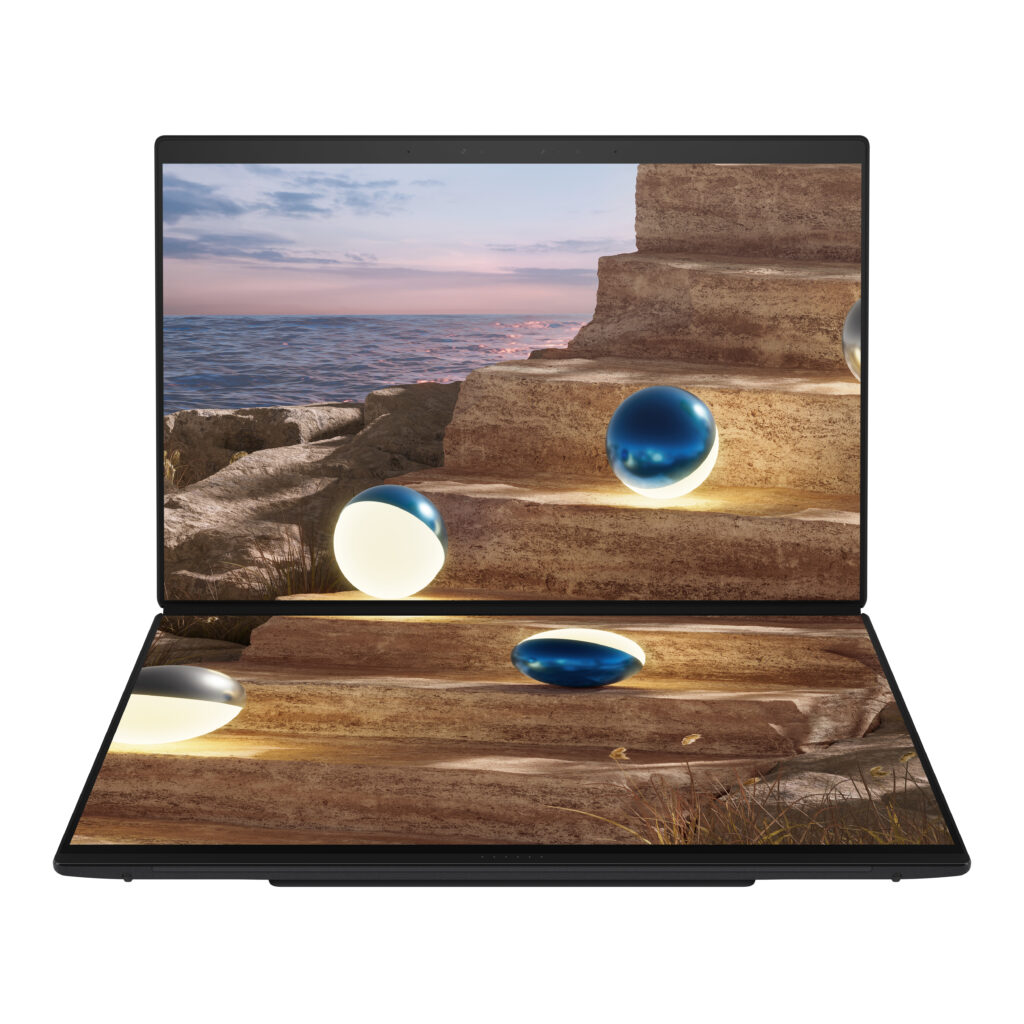
The Zenbook Duo takes a different approach by offering dual 14-inch OLED touch displays with a 144Hz refresh rate. This setup allows better multitasking, especially for users working across multiple apps. It runs on Intel Core Ultra processors and is designed to handle heavier workflows while still maintaining a relatively compact design.
Asus ZenBook Duo (2026)
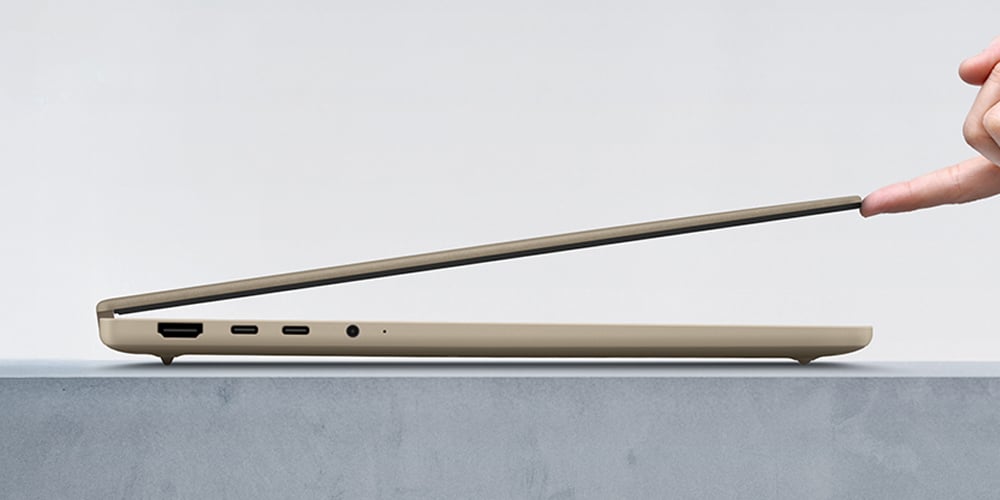
The Zenbook A14 and A16 models focus on lightweight usage, with the A14 weighing under 1 kg. These devices are powered by Snapdragon X2 series processors, enabling AI-driven features and efficient performance for everyday tasks.
Asus Zenbook A16 (2026)
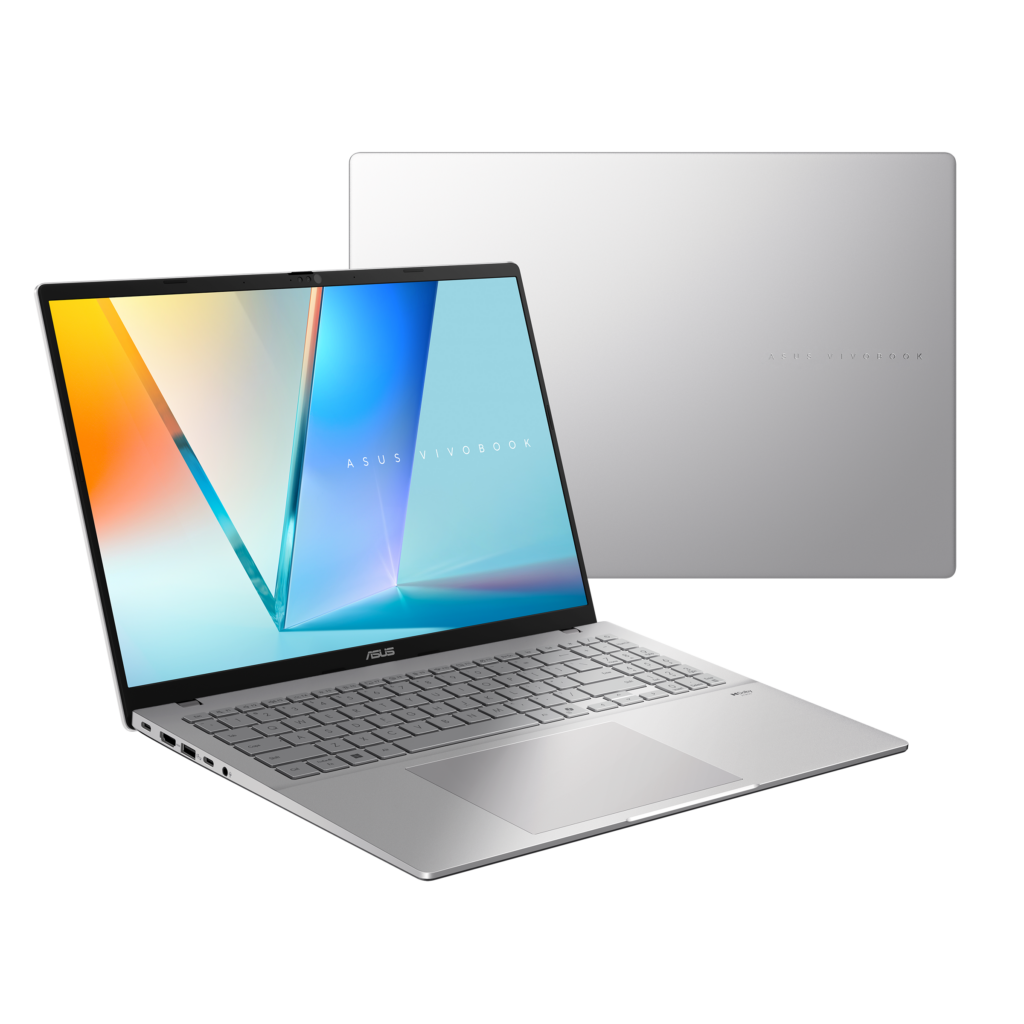
On the Vivobook side, Asus has annoced both the Classic and S series models. The Vivobook 14 and 16 come with Intel Core Ultra 5 processors and include AI-based features such as smart search and task assistance. They also feature an AI camera with face unlock support for added security. Meanwhile, the Vivobook S14 and S16 target users looking for a balance between performance and design, offering metallic builds, long battery life, and Intel Core Ultra 7 processors for smoother multitasking.
Price and availability
2026 Zenbook and Vivobook lineup
The 2026 Zenbook series starts at Rs 179,990 (~$1,930), while the Vivobook range begins at Rs 98,990 (~$1,060). Pre-orders for select Zenbook models are open from April 14 to April 20, with general availability starting April 21 across ASUS stores, online platforms, and retail partners.
The Zenbook Duo is priced at Rs 299,990 (~Rs 3,215), while the Zenbook A14 and A16 start at Rs 185,990 (~$1,990) and Rs 199,990 (~$2,145), respectively. Vivobook models are positioned more affordably, with prices ranging between Rs 98,990 and Rs 131,990 depending on the configuration.
For more daily updates, please visit our News Section.
Word on the street says OnePlus is working on a handheld console, and turns out it’s real. OnePlus official Li Jie confirmed in a livestream yesterday that the company is at least experimenting with a handheld gaming device.
During the stream, Li briefly showed a hand-drawn sketch of what looked like a portable console. The illustration wasn’t detailed, but the outline was clear enough to suggest it’s a gaming device.
Previously, tipster Digital Chat Station shared renders of a similar device. Those images pointed to a slightly boxy design with shoulder buttons, a rear camera, and colored grips.
So far, OnePlus hasn’t confirmed any specifications. But based on leaks, the device could feature an 8-inch display and run on a flagship chipset from MediaTek.
OnePlus’s gaming console will be touchscreen first
What could set this console apart is its approach to controls. Instead of relying entirely on joysticks and physical buttons, OnePlus may focus on a touchscreen-first interaction system. It’s expected to improve multi-finger input, reduce latency, and support high refresh rates.
Previous reports also mention system-level optimizations for games like Delta Force and PUBG Mobile.
The console is also expected to pack a larger battery, with hints of active cooling as well.
OnePlus gaming console leaked image by DCS
Alongside the console tease, Li also showed the OnePlus Ace 6 Ultra, a more immediate product powered by a Dimensity 9500 chip and a 165Hz display. It is closer to launch, while the handheld console is more of an experiment for now.
A report from March had already suggested that OnePlus was exploring an “Android handheld console” concept, possibly as part of a broader push by smartphone makers into new categories.
Nothing is official yet, and there’s still no timeline. But now that the concept has been teased by the company itself, a OnePlus console may not be too far off.
For more daily updates, please visit our News Section.
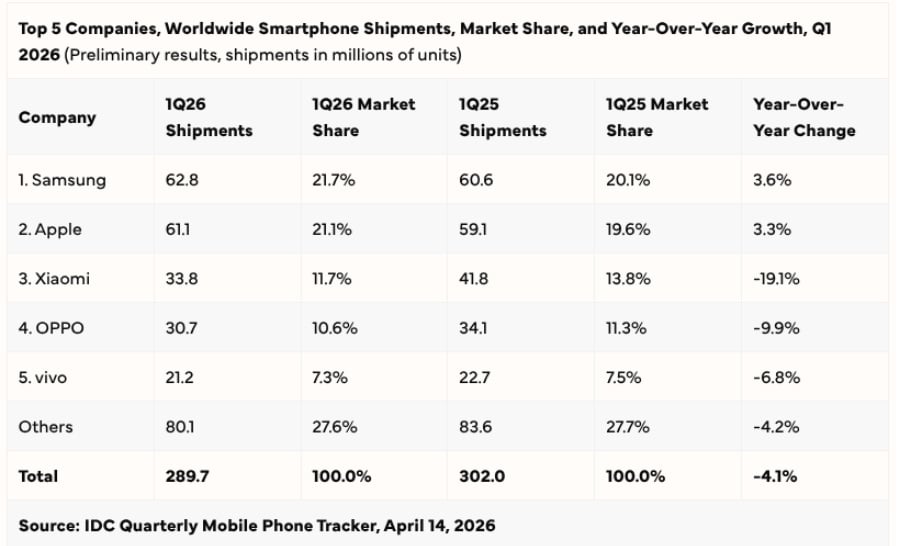
Global smartphone shipments are off to a slower start in 2026. According to IDC’s latest Worldwide Quarterly Mobile Phone Tracker, shipments fell 4.1% year over year in the first quarter to 289.7 million units.
The drop effectively ends a ten-quarter streak of growth that began around mid-2023. And we are all probably aware of the reasons. Supply constraints tied to storage components and rising costs. Both of these are expected to continue putting pressure on the market.
The top two companies still posted growth. Samsung and Apple were the only vendors among the global top five to record year-over-year gains.
The market outlook in Q1, 2026
Samsung returned to the number one spot for the quarter, thanks in part to the demand for the Samsung Galaxy S26 Ultra. Even with a later-than-usual launch, shipments still rose 3.6% compared to last year.
The company also filled the gap with earlier releases in its midrange A series, which helped stabilize volumes.
Apple followed in second place, with the iPhone 17 series seeing particularly strong demand in China. The company recorded more than 30% growth in the mainland, contributing to a 3.3% increase globally. That said, IDC notes that supply disruptions and weaker channel support in some regions kept that growth in check.
For the rest of the top five, things were a bit more muted. Xiaomi held onto third place despite posting the largest decline among the group.
Oppo came in fourth, with stronger performance in China offsetting weaker international results. Notably, Oppo’s data now also includes Realme. Vivo rounds out the top five, contributing 7.3% of global smartphone shipments.
Outside the top tier, there were a few bright spots. Honor, along with Lenovo (through Motorola) and Huawei, all managed to grow. Honor stood out with a 24% year-over-year increase, which IDC says is due to its overseas expansion.
In China, total shipments reached about 69 million units, down 3.3% from a year ago. Even there, growth from Huawei and Apple wasn’t enough to offset the broader slowdown.
For more daily updates, please visit our News Section.
Several reports have revealed that there will be two versions of the next-generation Qualcomm Snapdragon Elite-branded 8-series chip. These include the Snapdragon 8 Elite Gen 6 and 8 Elite Gen 6 Pro. Tipster Digital Chat Station has now shared fresh details about the standard variant and how it differs from the Pro model.
Snapdragon 8 Elite Gen 6 key details revealed
Snapdragon 8 Elite Gen 6 specs leak
According to the tipster, the Snapdragon 8 Elite Gen 6, identified as SM8950, is expected to be built on TSMC’s advanced 2nm process. It is said to feature a new 2+3+3 Oryon CPU layout, along with a shared 16MB L2 cache. This architecture indicates a strong focus on balancing performance and efficiency for flagship devices.
On the graphics side, the chipset may include an Adreno 845 GPU with a six-slice design, paired with 12MB GMEM and 6MB system-level cache. It is also expected to support LPDDR5X memory and UFS 5.0 storage, making it suitable for high-performance smartphones without pushing costs too high. The chip is likely to power upper mid-range and mainstream flagship models in the next cycle.
How does the Snapdragon 8 Elite Gen 6 differ from the Pro variant
The same source suggests that the standard version comes with slightly reduced cache and peripheral capabilities compared to the Pro model. Earlier reports indicate that the Snapdragon 8 Elite Gen 6 Pro, carrying model number SM8975, could bring support for LPDDR6 memory along with a more powerful Adreno 850 GPU and expanded cache configuration.
In addition, the Pro variant is expected to target premium Ultra-tier smartphones, while the standard chip may focus on offering stable performance and better efficiency for a wider range of devices. However, there are reports that the OnePlus 16 and iQOO 16 will come equipped with the Pro chip.
For more daily updates, please visit our News Section.
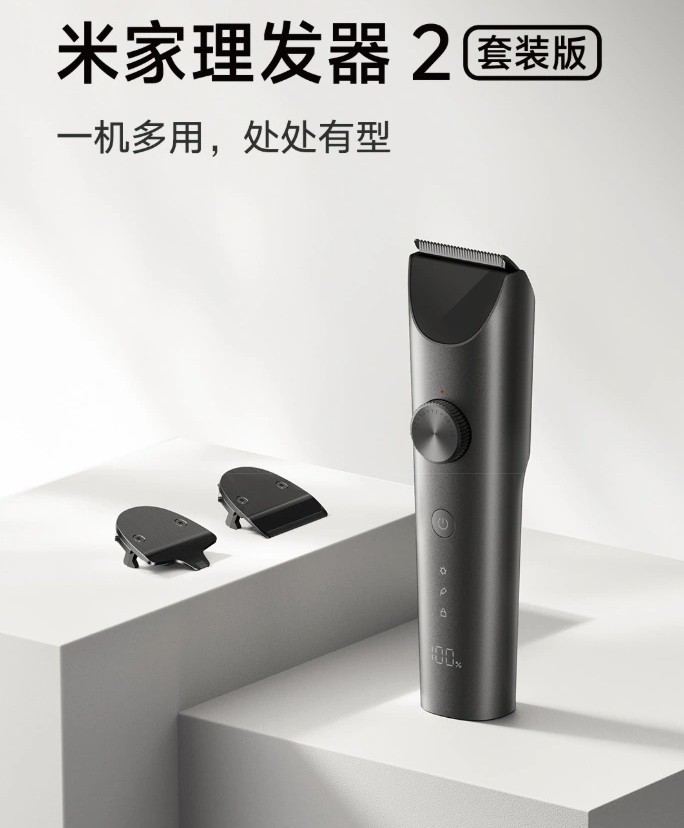
Xiaomi has added another product to its Mijia lineup, this time in the personal care category. The new Hair Clipper 2 Set builds on the regular version, but adds a couple of extras that make it a bit more versatile.
At its core, it’s still a standard hair clipper, but the set version includes precision trimming and engraving attachments, which is where things get more interesting. The precision trimmer is meant for smaller areas, around the hairline, ears, or sideburns, basically the kind of detailing you don’t always get right with a regular clipper.
Then there’s the engraving blade, which feels a bit more niche. It’s designed for sharper lines or patterns, so more for styling than basic trimming. Probably not something everyone will use, but it adds an extra layer for those who like experimenting.
Both attachments use a titanium carbide coating, and Xiaomi says the main blade is built to reduce friction and heat during use. That should help with comfort, especially if you’re using it for longer sessions.
In terms of adjustments, the clipper offers 19 length settings along with two speed modes, so there’s a decent amount of flexibility. It’s also IPX7 rated, meaning you can rinse it under water without worrying too much.
There’s a small display on the body as well, which shows battery status and other basic info. Not essential, but useful.
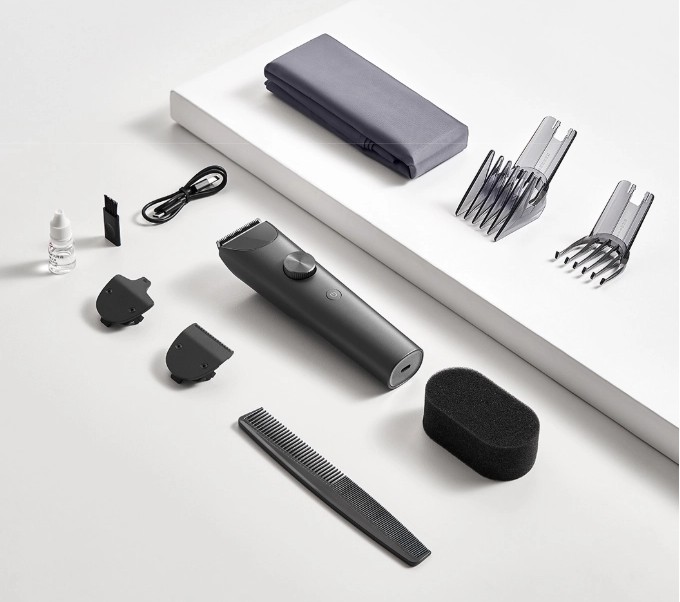
The box includes quite a few accessories, adjustable combs, cleaning tools, even a cape, so it’s clearly meant to be a complete kit rather than just the device.
The Mijia Hair Clipper 2 Set is priced at 189 yuan and is already available through Xiaomi’s Youpin platform in China.
Overall, it feels like Xiaomi is trying to push this a bit beyond just a basic grooming tool. It’s still simple at its core, but with enough extras to make it more flexible for people who want to do a bit more than a quick trim.
The Edge 70 Pro by Motorola is set to be announced in India soon. Ahead of the big reveal, the device has appeared on Geekbench, revealing its chipset and performance metrics.
According to details shared by tipster Abhishek Yadav, the phone appears on benchmark tests with 12GB of RAM and Android 16 out of the box. The listing also reveals an octa-core chipset, believed to be part of MediaTek’s Dimensity 8000 series—likely the Dimensity 8500.
The chip uses a mix of cores, including four efficiency cores clocked at 2.2GHz, three performance cores at 3.2GHz, and a prime core reaching up to 3.4GHz. Graphics duties are handled by a Mali-G720 MC8 GPU.
In terms of raw numbers, the device scores 1,727 in single-core and 6,563 in multi-core tests.
What to expect?
The benchmark leak comes shortly after a teaser microsite quietly went live on Flipkart. While the page doesn’t explicitly name the device, the design and finishes shown match previously leaked renders of the Edge 70 Pro. It is expected to come in three finishes: a fabric-like blue, a satin-style green, and a marble-inspired white.
Design-wise, the phone is expected to stick with familiar Motorola aesthetics, a curved display with a centered hole-punch camera, and a square-shaped module on the back housing a triple camera system. There is also mention of HDR10+ certification.
Moreover, certification listings suggest a 6,500 mAh battery with support for 90 W fast charging via USB-C. Other specifications have not been confirmed yet.
None of this is official just yet, but the pieces are starting to line up. Between the benchmark listing, leaked visuals, and the Flipkart teaser, it looks like Motorola is getting ready to formally introduce the Edge 70 Pro soon.
For more daily updates, please visit our News Section.
OnePlus has started teasing its upcoming Ace 6 Ultra, offering an early look at its design and gaming-focused upgrades. The device is expected to launch later this month in China, with more details gradually emerging. It is expected to rival the Redmi K90 Max, which is set to debut on April 21 in the country.
OnePlus Ace 6 Ultra design and gaming focus
The OnePlus Ace 6 Ultra‘s black colour has been unveiled, featuring a layered texture created using a 3D light engraving process. The finish reflects light dynamically, giving the rear panel a shifting visual effect. A large “Ace” text is prominently engraved across the back panel, adding to its bold visual identity. The design also includes a simplified rectangular camera module and a striking vertical branding element.
The camera module has been flattened to avoid interference with finger placement, while a redesigned internal structure helps manage heat more effectively. The company has also refined the edges to improve long-duration grip, which is often a concern during extended gaming sessions.
On the front, the phone is expected to feature a 165Hz high refresh rate display developed in partnership with BOE. This panel is positioned to deliver smoother visuals, aligning more closely with gaming monitors. The device is also said to include software-level optimizations aimed at maintaining stable frame rates while keeping power consumption under control.
OnePlus Ace 6 Ultra specifications (rumored)
According to recent reports, the OnePlus Ace 6 Ultra will have a 6.78-inch OLED display with 1.5K resolution and a 165Hz refresh rate. It is expected to run on the Dimensity 9500 chipset and pack a large 8,500mAh battery with support for 100W charging. The device may be offered in multiple RAM and storage configurations, going up to 16GB RAM and 1TB storage.
For photography, the phone could include a 50-megapixel main sensor along with an 8-megapixel secondary camera, while the front may feature a 16-megapixel selfie camera. It is also expected to run on Android 16 with ColorOS 16 layered on top, and will be available in Titanium and Black shades. At present, there’s no clarity whether there will be a global version of this device.
For more daily updates, please visit our News Section.
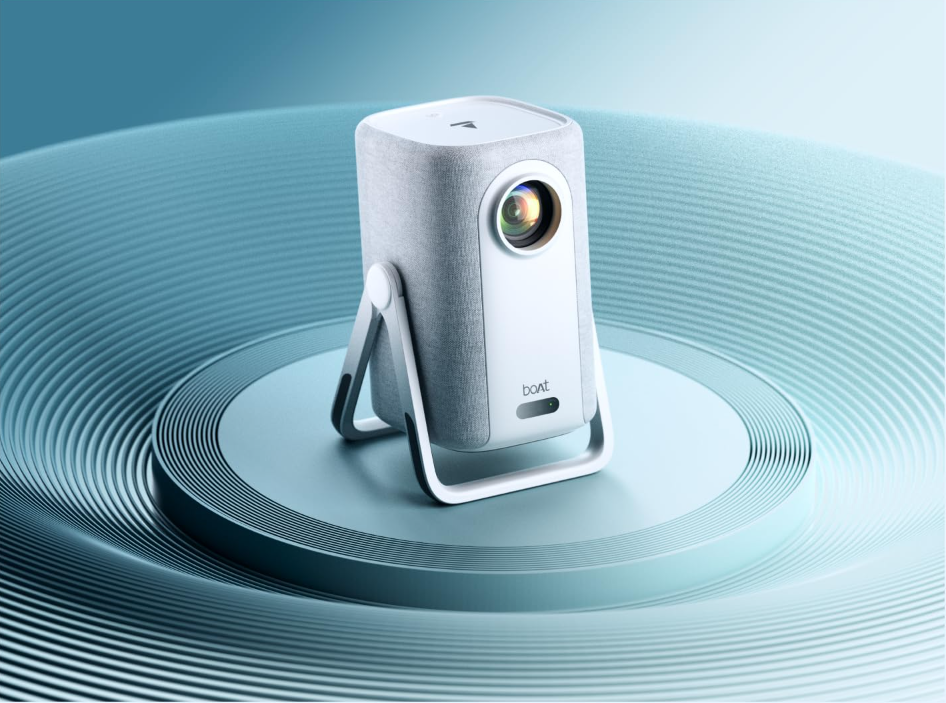
boAt has launched the CineHead M1 Smart Projector in India, expanding its presence in the home entertainment segment. The device adopts a compact form factor that resembles a portable speaker design seen in similar products in the market.
The CineHead M1 offers native Full HD 1080p resolution and 200 ANSI lumens brightness. It supports projection sizes ranging from 30 inches to 150 inches, making it suitable for both small rooms and larger viewing setups. The projector is positioned for everyday content consumption, including movies, shows, and streaming.
It runs on Android 12 and includes access to a built-in app store. Users can download apps such as Prime Video, JioHotstar, SonyLiv, Zee5, and YouTube. Wireless screen mirroring is also supported, allowing users to cast content from smartphones, tablets, and laptops onto a larger screen.
The device features auto focus, which adjusts image sharpness within seconds without manual input. It also includes auto keystone correction to fix image distortion and maintain a properly aligned rectangular screen, even when placed at an angle. The rotatable design allows flexible adjustment of the projection angle based on the setup.
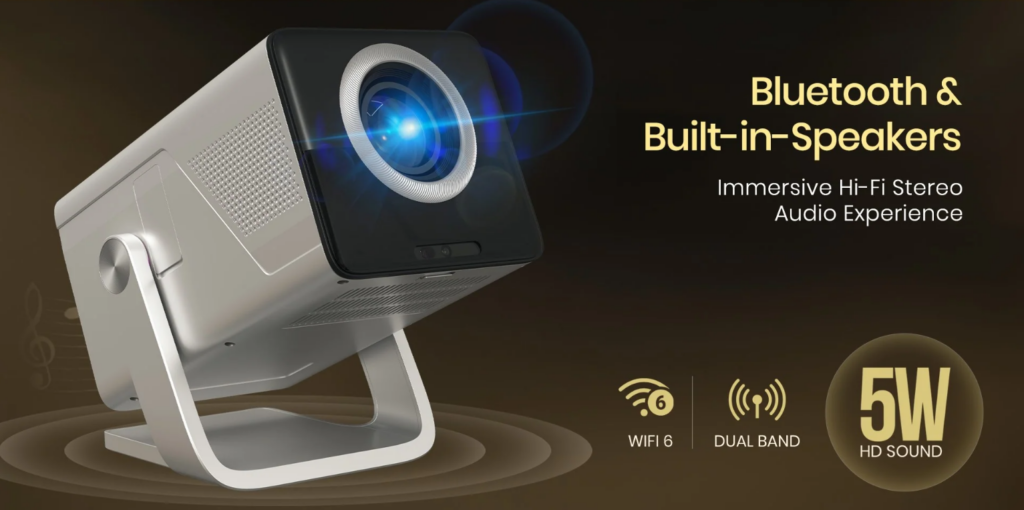
For audio, the projector comes with dual 3W speakers. The sound output is designed for regular viewing, reducing the need for external speakers in most cases. Connectivity options include HDMI, USB, AV, and AUX ports, allowing users to connect laptops, gaming consoles, and storage devices. It also supports dual-band WiFi for stable wireless streaming and faster performance. The built-in carry handle improves portability, making it easier to move and set up. The projector offers a lamp life of up to 30,000 hours.
Pricing & availability
The boAt CineHead M1 Smart Projector is available in Ivory White and is priced at Rs 10,999. It can be purchased via Amazon.
For more daily updates, please visit our News Section.
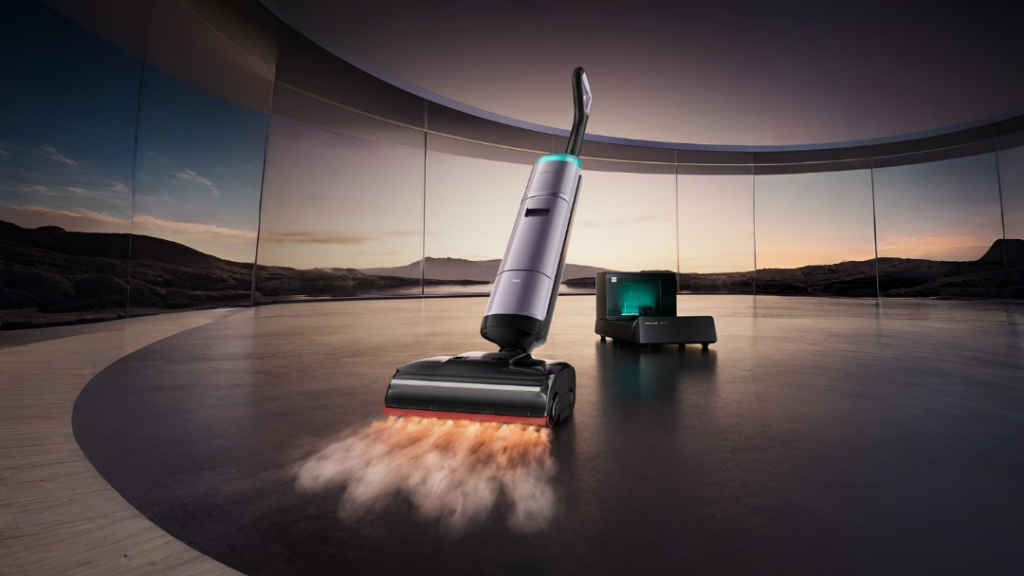
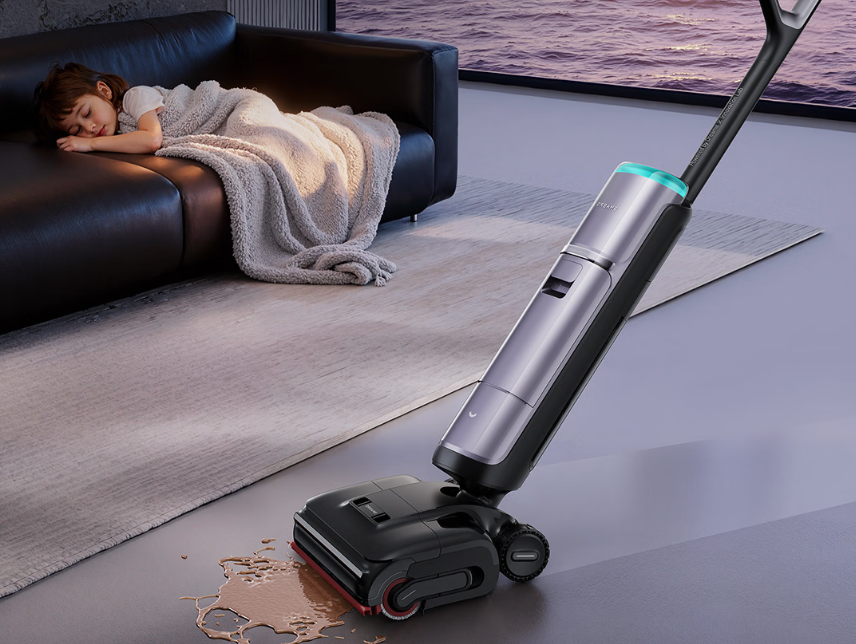
Dreame has launched the H70 Ultra Station, its flagship wet-and-dry floor cleaning device in the Chinese market. The device is priced at 4,999 yuan ($733) and is now listed on JD.com.
Dreame H70 Ultra Station Specifications
The H70 Ultra Station features a dual heating system powered by a 330W aerospace-grade boiler, delivering steam at up to 200°C and 4000 mg/min for effective removal of stains, grease, and bacteria. It also supports 90°C hot water cleaning for deep floor cleaning and allergen removal.
The device boasts 28,000Pa suction, driven by a 150,000 RPM motor for powerful debris removal. Its noise reduction system ensures low noise levels without affecting performance.
The H70 Ultra Station includes a self-cleaning feature with two options: a 95°C hot water mode and a 200°C steam mode. These features ensure the roller brush and internal components remain clean and hygienic without requiring manual effort.
For power, the device features a 7,500mAh battery, providing up to 90 minutes of runtime. It includes a 5.5L automatic water refill station that supports up to 7 days of cleaning in a plug-and-play setup.
Dreame added smart features to improve usability. The device includes AI-assisted controls such as self-propelled movement, real-time dirt detection, and omnidirectional assistance. It supports app connectivity for remote control and real-time monitoring through a high-definition display.
The H70 Ultra Station features a 360-degree hot water penetration system for enhanced cleaning efficiency. Its roller brush includes a Swiss PPA anti-tangle blade to cut hair during cleaning, while a dual-layer suction and brushing system prevents tangles from long hair or pet fur.
In related news, Xiaomi has recently introduced Mijia Robot Vacuum and Mop 4 featuring 10,000Pa suction and up to 180 minutes of runtime, all at a competitive price.
For more daily updates, please visit our News Section.
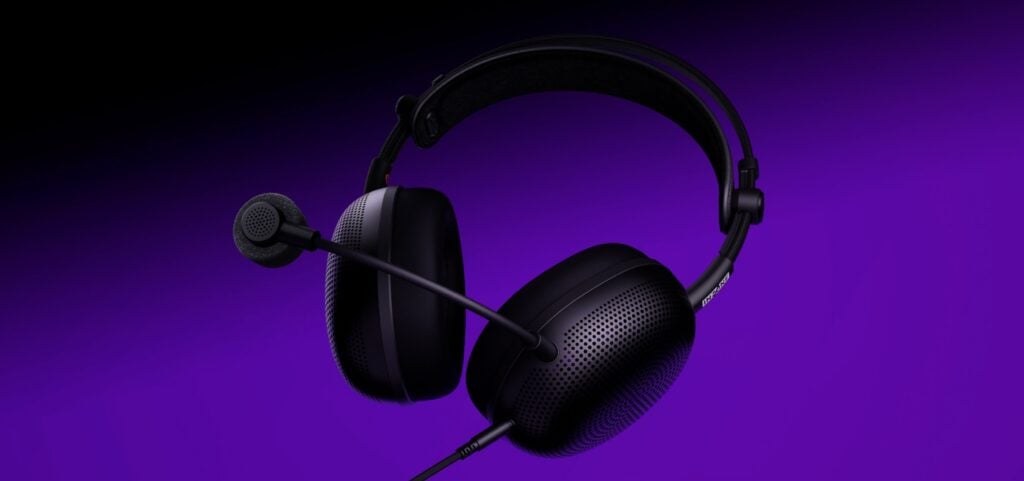
Sony has added a new headset to its INZONE gaming lineup with the launch of the INZONE H6 Wired Air. It is positioned as a lightweight, open-back option for players who rely on sound accuracy during gameplay.
The biggest change here is the open-back design. Unlike closed gaming headsets, the earcups are not sealed, which reduces internal echo and makes the sound feel more natural. In practice, this creates a wider soundstage, making it easier to pick up direction and distance of in-game audio.
Sony is using custom-tuned drivers based on its MDR-MV1 studio headphones. These have been adjusted for gaming use. The headset also includes back ducts built into the driver unit to manage airflow. This helps deliver deeper bass without muddying mid-range sounds, so footsteps, dialogue, and background details remain clear.
The audio profile has been tuned with input from sound teams at PlayStation Studios. There is a dedicated RPG and Adventure equalizer setting that boosts environmental detail and depth. When used with the USB-C Audio Box and INZONE Hub software, the headset supports virtual 7.1 channel surround sound along with 360 Spatial Sound for Gaming.
Comfort is another focus. The headset weighs about 199 grams without the detachable mic and cable, making it one of Sony’s lightest gaming headsets. It uses a spring hinge headband design, similar to the INZONE H9 II, to keep the fit stable without adding pressure.
For voice chat, the INZONE H6 Air includes a cardioid boom microphone. It is angled toward the mouth to focus on voice pickup while cutting out side noise. The arm is flexible and stays in place once adjusted. Sony worked with Fnatic during development as part of its broader push into competitive gaming gear.
The INZONE H6 Air is priced at $199.99 in the US and $249.99 in Canada, and is available through Sony’s website, Amazon, and Best Buy.
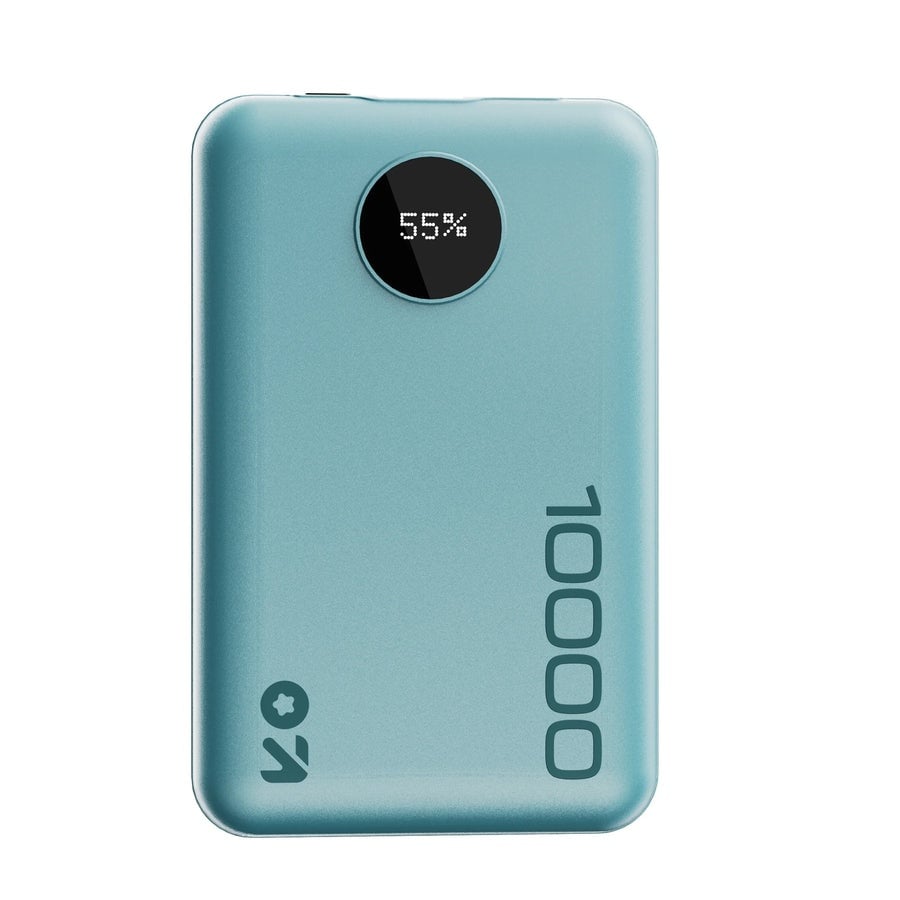
GOBOULT has launched two new power banks in India, the Mustang AmpVault V10 MagSafe and the Mustang V20. With these, the company is taking its Mustang-themed design beyond wearables and audio products and into everyday charging accessories.
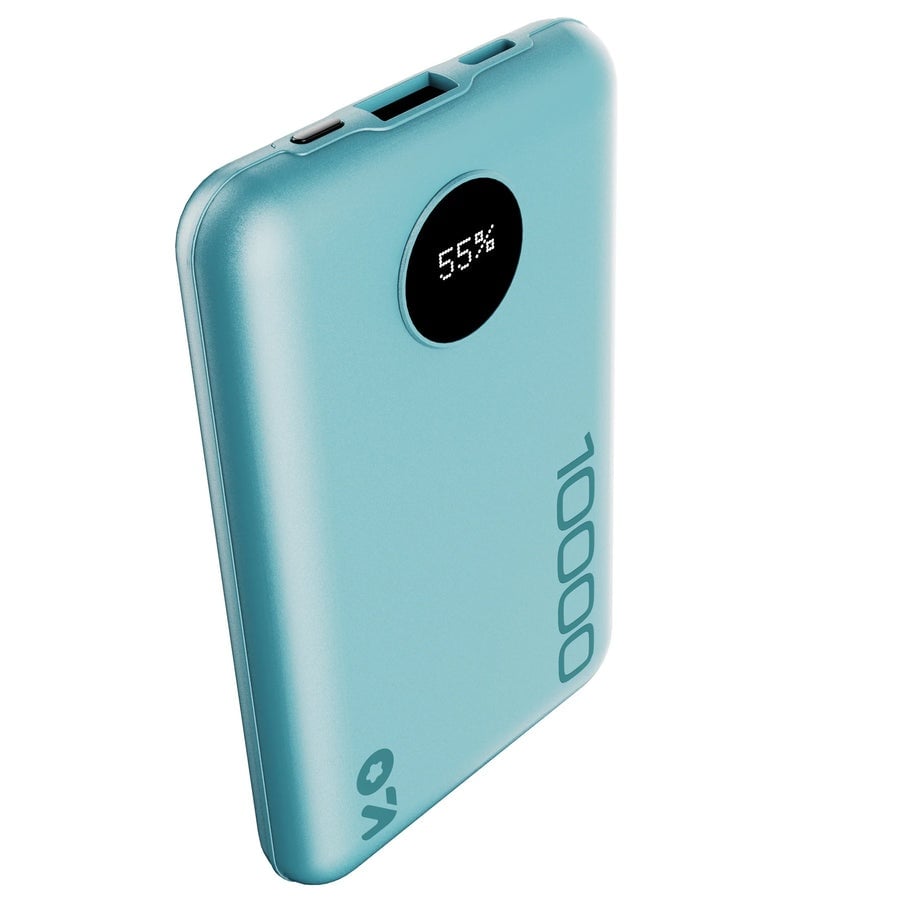
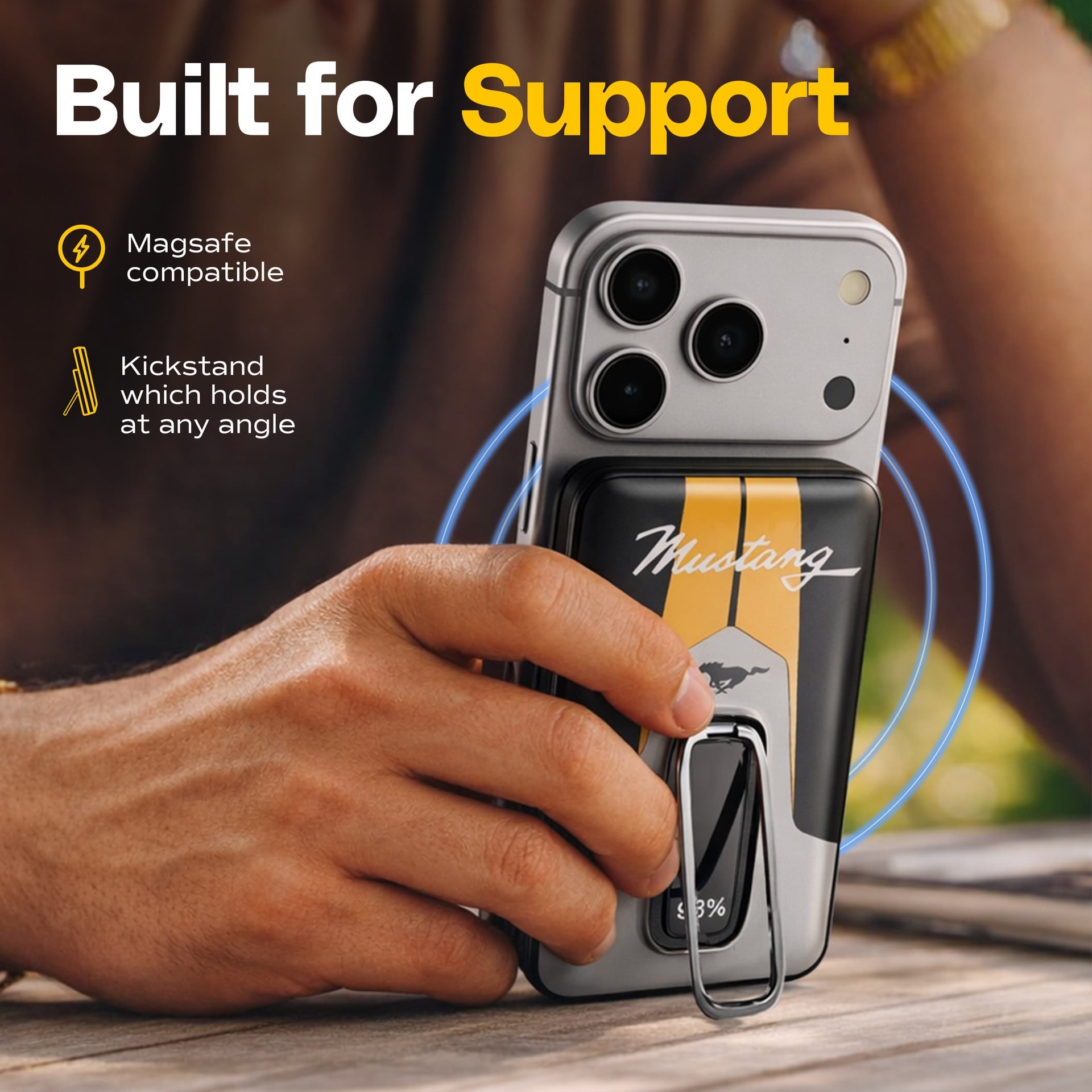
The AmpVault V10 MagSafe is the smaller of the two and is built for portability. It packs a 10000mAh battery and supports 15W wireless charging, along with up to 22.5W wired output. It works with PD, QC, and Adaptive PPS charging standards, which helps it adjust power based on the device being charged. It includes a built-in Type-C cable, a Type-C input and output port, and a Type-A Quick Charge port.
In terms of design, the V10 comes with a metallic finish, racing stripes, and Mustang branding. It also has a magnetic hold for MagSafe-compatible devices and a foldable kickstand that lets you use your phone while it charges. A dashboard-style LED indicator shows battery levels. The device weighs 300g and includes overcharge and overvoltage protection. It is available in Nitro Black.
The Mustang V20 is aimed at users who need more capacity. It comes with a 20000mAh lithium polymer battery, which is generally more durable than standard battery types. It supports 22.5W fast charging and includes PD 3.0, QC, and Adaptive PPS. The V20 has three output ports, one Type-C and two Type-A, so you can charge multiple devices at the same time. It also includes a built-in Type-C cable.
The V20 has a curved metallic design with Mustang Pony and 302 badging. It features a Fuel Gauge LED dial to show battery status and weighs around 300g. Safety features include protection against overcharge, overvoltage, and overcurrent.
Pricing & availability
Both models are priced at Rs. 1,499 under a launch offer, compared to an MRP of Rs. 4,999, and are available on Myntra, Flipkart, Amazon.in, and the GOBOULT website.
Realme has launched the NARZO 100 Lite 5G in India, adding a new entry-level 5G option to its NARZO lineup. The device focuses on battery life, durability, and a high refresh rate display at a competitive price.
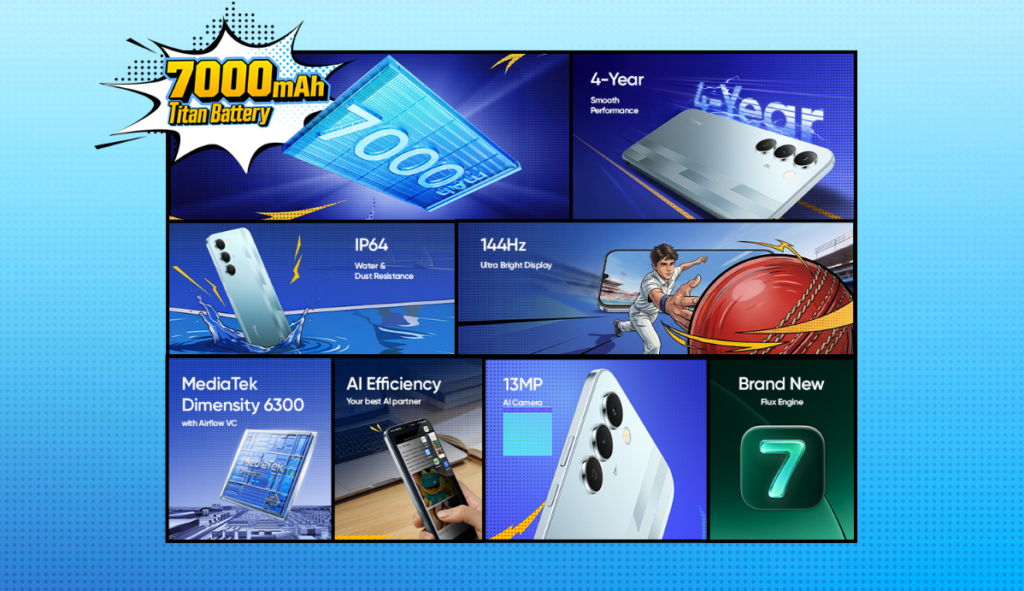
The smartphone features a 6.8-inch HD+ IPS LCD display with a resolution of 1570×720 pixels. It supports a 144Hz refresh rate, up to 180Hz touch sampling rate, and peaks at 900 nits brightness. Powering the device is the MediaTek Dimensity 6300 6nm processor with an octa-core setup consisting of two Cortex-A76 cores clocked at 2.4GHz and six Cortex-A55 cores at 2GHz, paired with a Mali-G57 MC2 GPU. It also includes a 5300+ mm² vapor chamber cooling system.
The phone comes in 4GB and 6GB LPDDR4X RAM options, with support for up to 8GB dynamic RAM expansion. Storage options include 64GB and 128GB eMMC 5.1, expandable up to 2TB via microSD. It runs realme UI 7.0 based on Android 16.
For cameras, the NARZO 100 Lite 5G offers a 13MP rear sensor with f/2.2 aperture and LED flash, capable of 1080p video recording at 30fps. The front camera is a 5MP unit with f/2.0 aperture and similar video support.
The device is rated IP64 for dust and splash resistance and meets MIL-STD 810H durability standards with ArmorShell Protection. It also includes a side-mounted fingerprint sensor, a 3.5mm headphone jack, and a single bottom-ported speaker with 300% ultra volume.
Connectivity features include 5G SA and NSA bands, dual 4G VoLTE, Wi-Fi 802.11 ac, Bluetooth 5.3, GPS, GLONASS, Galileo, QZSS, and USB Type-C. The phone measures 166.3×78.1×8.4mm and weighs 212g. A 7000mAh battery powers the device, with support for 15W fast charging and bypass charging. Realme claims up to two days of usage on a single charge.
Pricing & availability
The phone starts at ₹13,499 for the 4GB + 64GB variant, ₹14,499 for 4GB + 128GB, and ₹16,499 for 6GB + 128GB. With coupons, prices drop to ₹12,499, ₹13,499, and ₹14,999, respectively. The first sale is scheduled for April 21, 2026, on Amazon India and realme.com, with a 12-hour special sale window starting at 12 noon.
For more daily updates, please visit our News Section.
The JBL Go 5, which was first announced in China earlier this March, now appears to be heading to the US. While JBL has not made a formal global announcement yet, the speaker has been listed on Amazon US with a release date of April 26. Pre-orders are open at $54.95.
The Amazon listing shows the Go 5 in seven colors: Black, Blue, Purple, Red, Teal, White, and Squad. Earlier listings in China mentioned slightly different shades, including Sky Blue, Pink, Orange, and Deep Blue. The speaker also includes WINK ambient lighting, adding a subtle visual element.
In terms of design, not much has changed. The Go 5 keeps its small, block-style build, measuring 101 x 77.4 x 43 mm and weighing about 230 grams. It is compact enough to fit into a small bag or even a jacket pocket. It also carries an IP68 rating, which means it is protected against dust and can handle water exposure.
Inside, the speaker uses a 45 mm driver with an output of 4.8 W RMS. JBL says the tuning has been done by its Harman Acoustics team. It offers a frequency response range from 100 Hz to 19 kHz and a signal-to-noise ratio above 85 dB. The setup is clearly aimed at personal listening and small spaces.
The Go 5 upgrades to Bluetooth 6.0 and supports SBC, AAC, and LC3 codecs. It also adds Bluetooth AURACAST, which allows audio to be shared across multiple compatible devices. There is also an AirTouch one-tap pairing feature for quicker setup.
Users can pair two units for stereo sound or connect multiple speakers for a wider setup. The speaker also supports USB-C audio playback with a built-in DAC when connected to a computer. It runs on a 1000 mAh battery rated at 3.85 Wh, with up to 8 hours of playback without lighting. Charging takes around three hours using a 5V/1A USB-C input.
For more daily updates, please visit our News Section.
Xiaomi has launched the Mijia Instant Hot Water Purifier 2 Pro in two variants: 1200G and 1600G. The device is now available for pre-sale at 3,699 yuan ($542) and 4,299 yuan ($630), respectively.
Xiaomi Mijia Water Purifier 2 Pro Specifications
The purifier features Xiaomi’s Dual Instant Heating 3.0 technology, providing real-time water heating. It delivers hot water at a flow rate of up to 1.5 liters per minute, making it ideal for tea brewing, baby formula preparation, and cooking. Additionally, it can dispense up to 10 liters of 95°C water uninterrupted in heat exchange mode.
Xiaomi included zero cold water technology for precise temperature control with ±3°C accuracy, offering four preset temperatures and adjustable settings between 40°C and 90°C in 1°C increments.
The device features a dual-faucet, dual-pathway system with separate channels to prevent cross-contamination. The upper faucet provides drinking water with infant-grade purification, while the lower faucet supplies filtered water for cooking and other uses.
Xiaomi equipped the purifier with an advanced multi-layer filtration system. It uses an imported RO membrane with a filtration precision of 0.0001 microns. The system removes up to 145 contaminants, including heavy metals, bacteria, viruses, and organic pollutants.
Xiaomi also included a Sri Lankan coconut shell activated carbon filter to improve the water taste by removing odors and chlorine. The filters last for up to eight years and can process approximately 29.2 tons of water.
The 1200G model delivers an initial water output of 3.65 liters per minute, while the 1600G model offers up to 4.46 liters per minute. Xiaomi included a color LCD display on the purifier, allowing users to monitor water temperature and quality in real time.
The device also features Xiaomi HyperOS Connect for managing settings, filter status, and usage through the Mijia app, along with voice prompts and a temperature-sensitive light ring for added convenience.
The purifier features IPX7 waterproofing, anti-corrosion electroplating, a low-noise multi-chamber pump for quiet operation, and a user-friendly twist-and-pull filter replacement mechanism.
In related news, Xiaomi has recently introduced a new split air conditioner capable of cooling in 15 seconds and heating in 30 seconds, alongside a smart floor-standing air conditioner that features HyperOS integration and delivers powerful airflow.
For more daily updates, please visit our News Section.
Portronics has introduced the Beem 570 smart projector in India, expanding its Beem lineup shortly after the Beem 560 launch earlier this year. The new model focuses on improved visuals, built-in smart features, and a compact, adjustable design aimed at everyday home and office use.
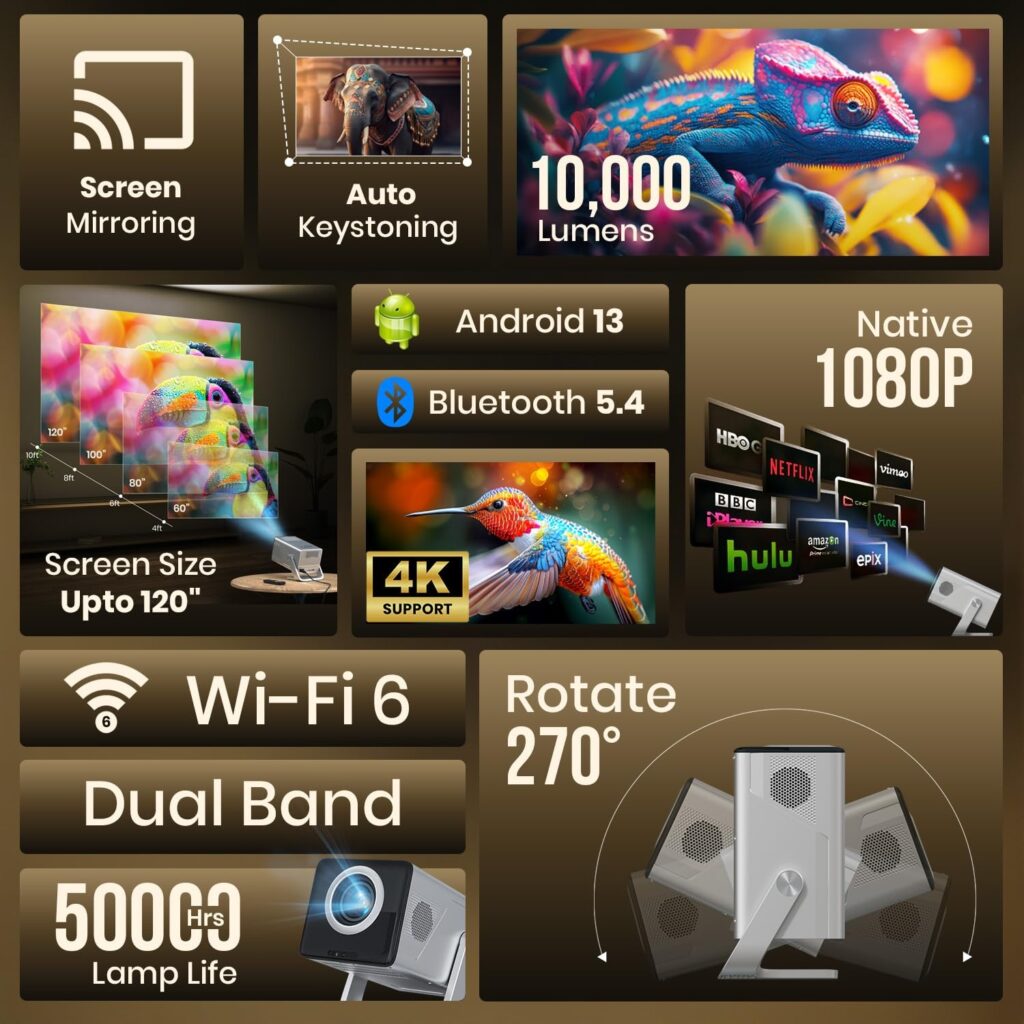
The Beem 570 comes in a silver finish and features a 270-degree adjustable design, allowing flexible placement across different indoor setups such as living rooms and bedrooms. It supports a native 1080p Full HD resolution and delivers brightness of up to 10,000 lumens. The projector can display content on screens up to 120 inches and has a rated lamp life of up to 50,000 hours. These specifications make it suitable for media streaming, gaming, sports viewing, and presentations.
On the software side, the device runs Whale TV OS based on Android 13, enabling it to function without external streaming devices. It comes pre-installed with apps such as Netflix, YouTube, Prime Video, and JioHotstar. The interface is designed to offer direct access to content while reducing dependency on additional hardware.
The projector also includes a set of automated features to simplify setup. Autofocus adjusts image sharpness automatically, while auto keystone correction ensures a properly aligned rectangular image even when projected at an angle. Additional features like auto alignment and obstacle avoidance help the projector adjust the display area to fit available wall space and avoid obstructions such as switches or frames.
For audio, the Beem 570 is equipped with a built-in 5W speaker intended for standard viewing needs. Connectivity options include dual-band Wi-Fi, Bluetooth 5.4, HDMI, and USB ports. It also supports wireless screen mirroring from smartphones and other compatible devices.
Pricing & availability
The Portronics Beem 570 is priced at Rs. 19,999 and is available via Portronics’ official website, Amazon, Flipkart, and offline retail stores across India. It comes with a 12-month warranty.
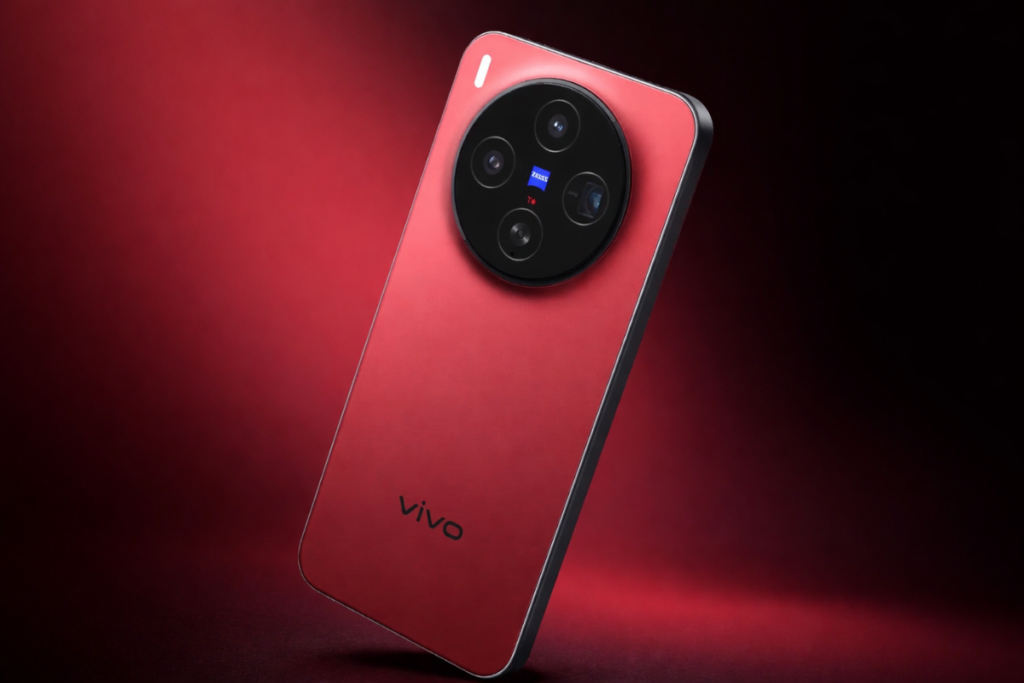
The Vivo X300 (review) is a highly rated flagship smartphone that promises excellent performance and top-tier camera capabilities. It quickly became one of the most demanding flagship smartphones after its release in December 2025. However, it’s not the only showstopper in the price segment the device falls in. There exist some great alternatives that give the Vivo X300 a serious run for its money.
The Oppo Find X9 (review) is the closest competitor to the Vivo X300, offering a similar flagship experience but scaling up in important aspects. It offers a 6.59-inch AMOLED screen, which is larger than Vivo X300’s for media consumption but not unwieldy as “Ultra” phones.
Both smartphones feature competitive camera performance, but the Hasselblad colour tuning on the Find X9 should yield more natural skin tones. Plus, the Oppo phone offers a 16% higher battery capacity and faster wireless charging.
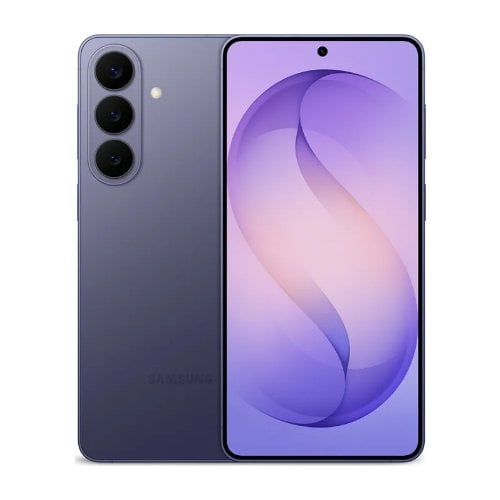
The Galaxy S26 doesn’t outshine the Vivo X300 on the spec sheet, but it’s a reliable choice for people looking for a compact flagship phone with longer software support. Also, it’s the only non-Chinese alternative on this list.
While the screen sizes are almost identical, the Galaxy S26 features tougher Gorilla Glass Victus 2 protection on both sides. The Galaxy device also offers a tougher Armour aluminium 2 frame than the standard aluminium frame on the Vivo X300.
The Galaxy S26 ships with Snapdragon 8 Elite Gen 5 in the US, Canada, China, and Japan, which offers better performance than the Dimensity 9500 inside the Vivo X300. But the rest of the world gets the Exynos 2600, which is slightly weaker compared to the Dimensity 9500.
Samsung phones win big when it comes to software support, and the Galaxy S26 is no different. It promises Android updates up to seven generations, while the Vivo X300 only promises four major Android updates.
The OnePlus 15 is a solid choice here, with several key upgrades, including a more powerful Snapdragon 8 Elite Gen 5 chipset and a larger 6.78-inch screen with tougher Gorilla Glass Victus 2 protection.
OnePlus 15 also outperforms the Vivo X300 in battery capacity and charging speeds. The former has a 7,300mAh battery with 120W wired charging support, while the latter has a smaller 6,040mAh battery with 90W wired charging support. The OnePlus phone also offers faster wireless charging.
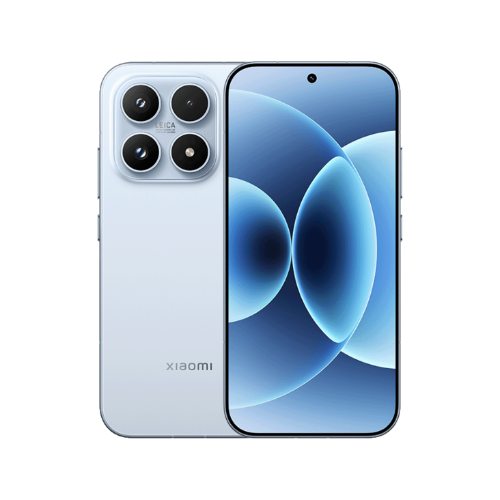
Xiaomi’s high-end phones offer robust hardware, and Xiaomi 17 is no different. The smartphone ships with the Snapdragon 8 Elite Gen 5 chipset, which is faster and more efficient than the Dimensity 9500 inside the Vivo X300.
The Xiaomi 17 (review) packs a bigger 6,330mAh battery (versus 6,040mAh on Vivo X300) and offers faster wired and wireless charging.
The Realme GT 8 Pro features a larger 6.79-inch AMOLED screen with a higher resolution and a 144Hz refresh rate. The peak brightness of 7,000 nits is also much higher than the 4,500 nits on the Vivo X300. The Realme smartphone also delivers better performance and efficiency, thanks to the Snapdragon 8 Elite Gen 5 processor.
The GT 8 Pro’s camera specs are competitive with the Vivo X300, but it outperforms the Vivo phone in battery capacity and charging speeds.
Edifier has launched the Hecate CP2, a new pair of clip-on Bluetooth gaming earbuds in the Chinese market. The earbuds are priced at 279 yuan ($40) and are now available for pre-order on JD.com.
Edifier Hecate CP2 Specifications
The Hecate CP2 features a clip-on, open-ear design with a pivot spherical fit system. This system adapts to different ear shapes to provide a secure and pressure-free fit.
Edifier uses skin-friendly materials and incorporates a curved structure to ensure long-term comfort. Each earbud weighs only 4.8 grams, making them lightweight for gaming sessions, workouts, or daily wear.
Edifier equipped the earbuds with an 11mm PEN titanium-plated diaphragm driver for detailed sound. The earbuds enhance high-frequency audio clarity and extend low-frequency depth with a low-frequency enhancement algorithm. These also feature a coaxial circular acoustic structure for more precise sound delivery, reduced sound leakage, and improved focus.
For communication, the earbuds feature a high-sensitivity microphone with AI noise reduction technology to enhance voice clarity during phone calls and gaming.
The earbuds offer gaming mode with low-latency Bluetooth 6.0 for reduced audio delay and music mode for balanced sound quality across all frequencies. These also feature RGB lighting effects, customizable via Edifier’s companion app.
The Hecate CP2 delivers up to 6.5 hours of playback on a single charge. The charging case extends total battery life to 26 hours.
The earbuds include touch controls for managing playback, calls, lighting, and mode switching. These come with IPX4 water resistance, allowing users to wear them during workouts or light outdoor activities.
In related news, QCY has recently introduced the C50S clip-on earbuds with LDAC support and real-time translation, while Philips has unveiled its 80s-inspired Moving Sound range featuring speakers, on-ear headphones, and TWS earbuds.
For more daily updates, please visit our News Section.
Samsung Display is facing a significant supply disruption in China this April, according to recent industry reports. All display orders scheduled for the month have reportedly been cancelled, with no fresh stock available for shipment. Distributors are currently relying only on existing inventory, indicating a sudden halt in supply flow.
Sources suggest that there has been internal confirmation of zero stock availability for the April dispatch. While early signs of disruption appeared as shipment delays at the beginning of the month, the situation quickly escalated into complete order cancellations. This specifically affects Distributor Purchase (DP) orders across the region.
AI-generated image for representation only
The impact is being felt widely among offline distributors, many of whom have been formally notified about the lack of stock. Major distribution partners, including Hanlinhui and Samsung Pengtai, are among those affected. As a result, distributors have entered an inventory depletion phase, with no new stock being added to the supply chain.
Pricing has also started to shift due to tightening supply. Hanlinhui reportedly resumed limited shipping on April 13, but without subsidies. This has led to an approximate price increase of ¥100 (~$15), signaling rising costs and constrained availability.
Samsung Pengtai continues to supply products to JD.com, but it is operating solely on remaining inventory and is unable to secure new stock at this time.
The disruption points to a short-term supply crunch in China’s display market. It may lead to broader price increases and could reflect underlying production or logistics challenges within Samsung Display’s operations.
Xiaomi has officially launched the Redmi G Pro 32U 2026, a 32-inch Mini LED monitor designed for gamers and content creators. The monitor is now available for pre-order in China at a price of 3,199 yuan ($468).
Redmi G Pro 32U 2026 Specifications
The Redmi G Pro 32U 2026 features a 31.5-inch QD-Mini LED display. It supports two refresh rate modes, allowing it to handle 4K resolution at 160Hz and 1080p resolution at 320Hz. It achieves a 1ms GTG response time and includes support for AMD FreeSync Premium Pro, variable refresh rate (VRR), and auto low latency mode (ALLM).
Xiaomi uses 1,152 local dimming zones with a QD-Mini LED backlight system to improve brightness and contrast control. The display reaches a peak brightness of 1,600 nits and maintains a minimum brightness of 0.001 nits, providing deeper blacks and greater detail in shadows. These features make it suitable for HDR content, and the monitor is certified for DisplayHDR 1000 and supports Dolby Vision, including Dolby Vision gaming.
The QD-Mini LED technology enables the monitor to achieve wide color gamut coverage. It supports 98% DCI-P3, 100% Adobe RGB, and 100% sRGB color spaces. The panel comes factory-calibrated, ensuring a color accuracy rating of ΔE < 1.
The monitor also includes gaming features like dark scene enhancement, crosshair overlays, and zoom assist, along with TÜV Rheinland-certified low blue light technology to reduce eye strain while preserving color accuracy.
For connectivity, the monitor comes with dual HDMI 2.1 ports (4K at 160Hz), DisplayPort 1.4, USB-C with 90W charging, two USB 3.0 ports, and a 3.5mm audio jack. It includes dual 5W speakers with DTS:X audio and supports Dolby Atmos for external sound systems.
The monitor runs on HyperOS 3, offering smart capabilities such as switching between monitor and TV modes, accessing streaming services, utilizing XiaoAI voice commands, and integration with Xiaomi’s smart home ecosystem. It is powered by a quad-core Cortex-A73 processor and comes with 3GB RAM and 32GB internal storage.
The design includes an aluminum alloy frame, slim bezels, and RGB ambient lighting for a customizable look. The stand delivers flexibility with options for height adjustment, tilt, swivel, and pivot, as well as VESA mount support.
A growing number of Samsung Galaxy Watch users are reporting unusual battery drain across several models. The issue appears to have started after recent software updates. Many users say their smartwatch battery is draining much faster than usual, even though their daily usage habits have not changed.
The problem has been reported on multiple devices, including the Samsung Galaxy Watch6, Samsung Galaxy Watch7, Samsung Galaxy Watch8, and the Samsung Galaxy Watch Ultra. Some users claim their battery life has dropped from around four days to just two days after the update.
Suspected Cause
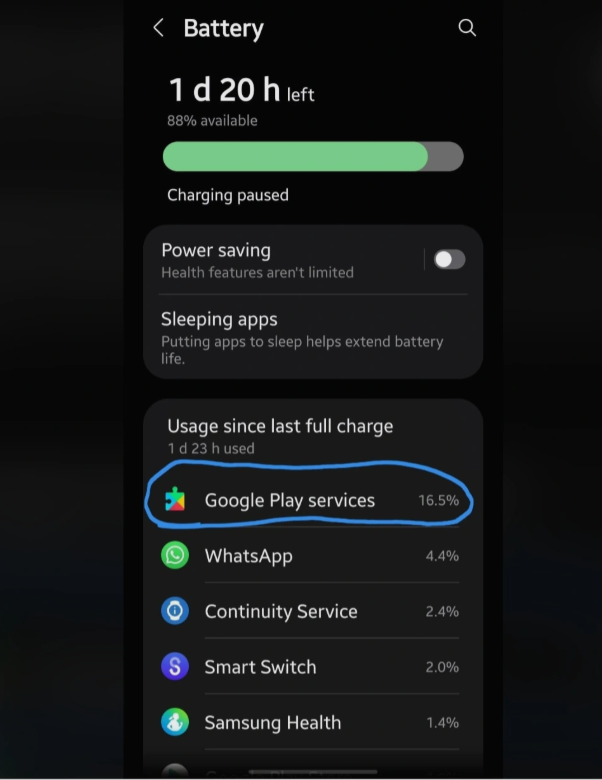
The issue is widely believed to be linked to Google Play Services. This system service handles important tasks such as app syncing, location tracking, and background processes. Reports suggest it may be running abnormally in the background, causing frequent CPU wake-ups and increased power consumption.
User Reports and Behavior
Users on forums like Reddit have described the battery drain as sudden and severe. In some cases, Google Play Services alone is said to consume more than 10% of the battery. Restarting the watch may temporarily reduce this usage, but the problem often returns. Some users have also noticed missing or inaccurate battery usage stats.
Temporary Fixes and Current Status
Basic troubleshooting steps like restarting the watch, clearing the cache, or performing a full reset have been tried by many users. However, these fixes only provide temporary relief and are not reliable.
As of now, there has been no official response from Samsung or Google. The exact cause remains unclear, and users may need to wait for a future software update to fully resolve the issue.
We use cookies on our website to give you the most relevant experience by remembering your preferences and repeat visits. By clicking “Accept”, you consent to the use of ALL the cookies.
This website uses cookies to improve your experience while you navigate through the website. Out of these, the cookies that are categorized as necessary are stored on your browser as they are essential for the working of basic functionalities of the website. We also use third-party cookies that help us analyze and understand how you use this website. These cookies will be stored in your browser only with your consent. You also have the option to opt-out of these cookies. But opting out of some of these cookies may affect your browsing experience.
Necessary cookies are absolutely essential for the website to function properly. This category only includes cookies that ensures basic functionalities and security features of the website. These cookies do not store any personal information.
Any cookies that may not be particularly necessary for the website to function and is used specifically to collect user personal data via analytics, ads, other embedded contents are termed as non-necessary cookies. It is mandatory to procure user consent prior to running these cookies on your website.