Advertisement

Fire-Boltt Artillery smartwatch with rugged design, Bluetooth calling launched

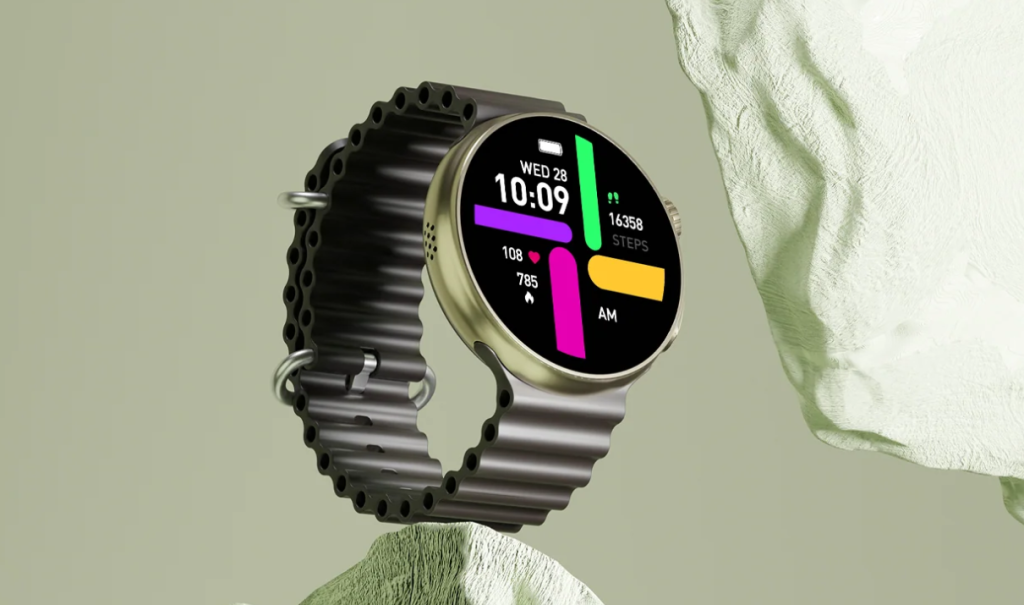
Fire-Boltt has unveiled its latest offering, the Fire-Boltt Artillery smartwatch. The Fire-Boltt Artillery smartwatch boasts a rugged design, making it an ideal companion for outdoor enthusiasts and combining durability with style with its circular dial and shockproof body.

Fire-Boltt Artillery

Fire-Boltt Artillery features:

The Artillery smartwatch sports a 1.5-inch TFT LCD display, offering users a clear and vibrant display with a resolution of 400 x 400 pixels. The smartwatch comes with a variety of watch faces that can be personalized according to preferences.

One of the standout features of the Fire-Boltt Artillery is its Bluetooth calling functionality, which allows users to conveniently make and receive calls directly from their wrists. The smartwatch is equipped with an in-built microphone and speaker, ensuring clear and seamless communication.

Fire-Boltt Artillery

In addition to Bluetooth calling, the Fire-Boltt Artillery supports voice assistants, enabling users to easily access a range of voice-controlled features and services. Users can set reminders, check the weather, and control music playback, all through a convenient hands-free experience.

The Fire-Boltt Artillery prioritizes users’ health and well-being through its comprehensive Fire-Boltt Health Suite. This suite includes features such as heart rate monitoring, SpO2 tracking, sleep monitoring, and Women’s health tracking, empowering users to stay informed about their physical well-being.

Notably, the Fire-Boltt Artillery incorporates a motion sensor. This sensor allows users to immerse themselves in virtual reality games and workouts when connected to compatible smartphones and tablets.

Fire-Boltt Artillery

The Artillery smartwatch offers a range of additional features, including multiple sports modes, smart notifications, weather updates, 7 inbuilt games, music and camera control, and a passcode lock for added security. The inclusion of NFC enables convenient payments for users on the go.

Powered by a 320mAh battery, the Fire-Boltt Artillery provides impressive battery life. In Classic Mode, users can enjoy up to 8 days of usage, while the standby mode can extend the battery life to up to 25 days. The smartwatch delivers up to 5 days of battery life when utilizing Bluetooth calling.

The Fire-Boltt Artillery comes in three colors White, Green, and Black. The watch is priced at Rs. 2,499 and it will be up for sale on Amazon.in and Fireboltt.com starting from June 21st.

RELATED:

(Via)

*Please Note: When you buy something using the links in our articles, we may earn a small commission at no cost to you.

ZTE Nubia Neovision Glass up for open sale globally

Nubia Neovision Glass, the highly anticipated smart AR glass from ZTE, is now available for open sale worldwide. The company recently revealed the pricing and global availability of the Neovision Glass, which was initially unveiled at the Mobile World Congress 2023 in Barcelona, Spain. Starting from June 19, 2023, interested consumers can directly purchase the Neovision Glass on the official website.

Nubia-Neovision-Glass

Nubia Neovision Glass Features:

The Nubia Neovision Glass offers an exceptional visual and audio experience, making it the world’s first smart glass to receive Hi-Res Audio Quality certification and TÜV Rheinlan certification. With a Micro-OLED 120-inch screen boasting a PPI of 3500, the glass delivers a crisp and immersive view with vivid colors. The binocular HD resolution of 1080P ensures detailed visuals, while the wide field of view spanning 43 degrees provides an expansive perspective. Additionally, the glass boasts a brightness of up to 1800 nits, further enhancing the viewing experience.

Audio quality is equally impressive, thanks to the dual omnidirectional speakers and cyclonic sound tank integrated into the Neovision Glass. With a sampling rate exceeding 44.1kHz and a bit depth surpassing 16 bits, users can enjoy lossless sound quality, further enhancing their overall audio experience.

Nubia-Neovision-Glass

One of the standout features of Neovision Glass is its versatility. The glass offers a virtual large screen that can be utilized in various scenarios, including as a personal mobile theater, mobile gaming center, or efficient office assistant. The glass seamlessly projects images from connected devices onto a virtual screen in real-time, allowing users to connect with a wide range of devices such as mobile phones, drones, game consoles, laptops, and more.

The design of the glass is both fashionable and trendy, featuring a minimalist and streamlined style reminiscent of light luxury sunglasses. With a weight of only 79g, the frameless and stylish magnetic lenses successfully combine fashion with technology, creating a visually appealing product.

Nubia Neovision Glass Pricing and Availability:

Neovision Glass is now available for purchase through the official website, with prices set at $529/€549/£479. It is accessible in various countries and regions, including several European countries, Middle Eastern countries, Asia Pacific countries, and South Africa.

RELATED:

Ulefone Launches Power Armor X11: Massive Power and Rugged Durability in Compact Size

Ulefone has announced the launch of the Power Armor X11, an exciting addition to the Power Armor X series. Building on the immense success of the Power Armor X11 Pro, which made its debut in September 2022, this new smartphone offers a cost-effective solution that seamlessly combines rugged durability, a compact design, and exceptional battery performance. With its impressive 8150mAh battery, the Power Armor X11 ensures extended usage and provides users with peace of mind in even the most demanding environments.

The Power Armor X11 stands out with its sleek and modern aesthetic. Designed to fit comfortably in the palm of your hand, this smartphone features a compact form factor that effortlessly slides into your pocket. Its ergonomic design guarantees a secure grip and allows for easy one-handed operation, enhancing convenience and usability. 

This sleek and compact smartphone offers durability without sacrificing portability. With its smooth appearance, it stands out from traditional rugged phones that are often bulky and heavy. Boasting MIL-STD-810H certification and an IP68/IP69K rating, the Armor X11 is water, dust, and drop resistant, making it suitable for harsh environments.

With its massive 8150mAh battery, the Armor X11 delivers exceptional endurance with up to 444 hours of standby time, 44 hours of call, 12 hours of video watching, and 10 hours of navigation on a single charge. It supports four days of regular use, making it perfect for extended periods without access to a power source. Additionally, the Armor X11’s 5W reverse charging feature enables users to charge other devices such as mobile phones or electronic watches, making it a reliable companion for outdoor adventures.

The smartphone features a 5.45-inch HD+ (720*1440)  display that offers users a high-quality viewing experience. The display provides smooth performance and brings your content to life with immersive clarity. Equipped with a MediaTek Helio A22 chipset, the Power Armor X11 ensures reliable performance. It operates on the latest Android 13 OS, providing enhanced security controls for user data. With 4GB of RAM and the option for an additional 4GB of virtual RAM, multitasking is smooth and efficient.

The Armor X11 offers 32GB of internal storage, expandable up to 256GB with a microSD card. NFC technology enables convenient mobile payments, and the 3-card slot allows for dual SIM cards and additional storage. A dedicated side key provides quick access to the Push-to-Talk feature or frequently used tools and apps, adding convenience and efficiency to the user experience.

The Ulefone Power Armor X11 is currently being offered at a discounted price of $119.99 on AliExpress, providing customers with significant savings compared to its original price of $299.98. This is a limited-time offer. For more information, visit the official Ulefone website.

For more information on such exciting deals and offers, check out our deals hub.

Redmi Note 12 Turbo gets a cheaper 8GB RAM + 128GB storage option

Xiaomi‘s independent Redmi brand earlier in March this year added the Redmi Note 12 Turbo to the Redmi Note 12 series lineup. The premium midrange model arrived in 256GB, 512GB, and 1TB storage options. The Chinese tech giant has now announced a much more affordable option – a 128GB storage version of the Note 12 Turbo.

Redmi Note 12 Turbo

The new Redmi Note 12 Turbo version comes with 8GB RAM and 128GB storage and is priced at 1799 yuan ($251) making it the cheapest model available to interested buyers. Unfortunately, the new storage option is only available to Xiaomi fans in China and there is no word yet as to when it will ship to the global market.

As a reminder, the Redmi Note 12 Turbo boasts a 6.67-inch OLED screen with an FHD+ resolution. The display outputs a peak brightness of 1,000 nits, a wide 100 percent DCI-P3 color gamut, a smooth 120Hz refresh rate, and brings support for Dolby Vision and HDR10+. With its center-aligned punch-hole cutout, slimmer bezels, and an impressive 93.45 percent screen-to-body ratio, the device offers an immersive viewing experience.

The Note 12 Turbo is powered by a Snapdragon 7+ Gen 2 processor. It comes equipped with up to 16GB of LPDDR5x RAM and 1TB of UFS 3.1 storage, ensuring smooth multitasking and ample storage capacity. To manage heat dissipation, the smartphone incorporates a 3725mm vapor cooling chamber. It is fueled by a 5,000mAh battery that supports 67W fast charging.

At the back of the Note 12 Turbo, you’ll find three camera sensors seamlessly placed without any module. This camera setup consists of a 64MP main lens with optical image stabilization (OIS) support, an 8MP ultra-wide-angle lens, and a 2MP macro unit. For selfies, there is a 16MP front-facing camera. The device runs on MIUI 14, based on Android 13, providing a feature-rich and user-friendly interface.

Redmi Note 12 Turbo

In terms of connectivity, the device offers dual 5G support, WiFi-6, NFC, Bluetooth, an IR Blaster, and a 3.5mm headphone jack, catering to various connectivity needs.

Redmi Note 12 Turbo introduces an affordable option: 8GB RAM + 128GB Storage variant

With the addition of the 128GB variant, the Redmi Note 12 Turbo is now available in 8GB + 128GB, 8GB + 256GB, 12GB + 256 GB, 12GB + 512 GB, and 16 GB + 1TB option.

Related:

Xpeng X9 Takes Aim Tengshi D9 with Luxurious Interior and Powerful Performance

The competition in the electric vehicle market is fierce. While Tesla is still the most popular electric vehicle brand, Chinese manufacturers have been making significant inroads in recent years. Xpeng is one of the Chinese electric vehicle brands that is expanding its product line. The company recently unveiled the G6 SUV, and now spy photos of its new X9 electric vehicle have been released. Here are the details…

What to Expect from the Xpeng X9

The Xpeng X9 is a large vehicle, measuring 5.45 meters in length. It is longer than the Tengshi D9, which is currently the longest EV on the market. The X9 can seat up to seven passengers and has a spacious interior with plenty of legroom and headroom. It also comes standard with a panoramic sunroof, a 15.6-inch touchscreen infotainment system, and a 12.3-inch digital instrument cluster.

The X9 is powered by a dual-motor powertrain that produces 355 horsepower and 530 pound-feet of torque. It can go from 0 to 60 mph in 5.5 seconds and has a top speed of 155 mph. It is expected to go on sale in China in the fourth quarter of 2023 for around 500,000 Yuan ($70,000). The X9 is a significant new player in the electric vehicle market. It is large and luxurious, and it is sure to appeal to a wide range of buyers.

Why is the Xpeng X9 so large?

There are a few reasons why the Xpeng X9 is so large. First, Chinese consumers have different preferences than American consumers when it comes to vehicles. Chinese consumers tend to prefer larger vehicles with more space, while American consumers are more focused on fuel efficiency. Second, the Xpeng X9 is an electric vehicle.

Electric vehicles don’t require engines or transmissions, which allows for a reduction in the length of the vehicle’s front. As a result, the cabin size can be increased, allowing electric vehicles to make better use of interior space. Finally, the Xpeng X9 is a luxury vehicle. Luxury vehicles are typically larger than non-luxury vehicles, and the Xpeng X9 is no exception. The Xpeng X9’s large size is a sign of its luxury status.

RELATED:

(source)

Panasonic SR-AX1: The Rice Cooker That’s So Easy to Use, Even a Child Can Do It

In today’s fast-paced world, many of us are juggling a lot of responsibilities. We may have busy schedules with work, school, family, and social obligations. As a result, we often find ourselves short on time, especially when it comes to cooking. Thankfully, as with many other challenging situations, technology steps in to help. Panasonic has introduced a new rice cooker, the SR-AX1, that aims to make mealtime easier for busy people. Here are the details…

Panasonic Unveils the Fully Automatic Rice Cooker SR-AX1: From Weighing Water and Rice to Cooking

Panasonic has unveiled its first fully automatic rice cooker, the SR-AX1. The rice cooker is set to go on sale in early July for 46,000 Yen. The SR-AX1 is equipped with a 600ml water tank and a 2kg rice container. Once the user specifies the quantity of rice they wish to cook, the machine automatically weighs the rice and water, then pours them into the inner pot for cooking.

In addition to this, the device supports remote operation via an application. Not only can users set the quantity of rice and the time to finish cooking, but they can also adjust the softness of the rice through the application. In other words, this rice cooker truly enables full automation of the cooking process, from weighing the water and rice to the cooking itself, with no need for manual handling after the initial settings.

If you’re someone who doesn’t have much time to cook and are looking for an easy way to cook rice, the Panasonic SR-AX1 could be just the option you’re looking for. Especially if you manage to pair it with an Airfryer, you can prepare meals in your kitchen very quickly and healthily. If you’re interested, you check out our content on “Best Air Fryers in 2023

RELATED:

(source)

BMW unveils “The Electric AI Canvas” at Art Basel with the BMW i5 as a dynamic canvas

BMW has showcased The Electric Art Canvas exhibit at the Art Basel 2023. The exhibit is an extension of The Ultimate AI Masterpiece and features contemporary artists. The unveiling marks the first time the virtual work is being exhibited physically.

BMW

The Electric AI Canvas features the BMW i5 dynamic canvas for generative art and was on display up to June 18. The exhibition of the Electric AI was in collaboration with Nathan Shipley (from Goldby, Silverstein & Partners) and Gary Yeh (from ArtDrunk). The AI models were developed by BMW upon a foundational model trained 50,000+ images spanning more than 900 years of art history. The AI generates abstract animations using contemporary and classical art styles, then projected them onto the canvas.

BMW

The BMW art canvas uses Nvidia’s NI architecture StyleGAN, to bring out artistic styles and evolving abstract animations. The AI adapts to specific artists’ work by modifying different algorithms and parameters. Such animations essentially capture the essence of the artists’ artworks. The animations are presented through projection mapping onto the i5 and incorporate distinctive artistic styles. In addition, mirrors enhance and reflect the animations for an immersive viewing experience for art enthusiasts.

BMW

The experts driving the project in collaboration with BMW, Shipley, and Yeh focused on AI’s ability to support and amplify artists’ visions. This responsible and thoughtful experimentation with AI, according to BMW, helps to reinforce its commitment to human-centered tech and sustainability.

BMW

The BMW i5 was launched as part of the 2024 S series models. It has an 84.3kWh battery and a range of up to 295 miles. The BMW i5 eDrive40 offers 335hp and a torque of 295Nm. It can reach 60mph in just 5.7 seconds and has a top speed of 120mph. The M60 has a rating of 590hp and achieves 60mph in 3.7 seconds. That model has a top speed of 143mph.

RELATED:

TCL Q Class and S Class soundbar series new models unveiled in the US

TCL has unveiled a new range of its Q Class and S Class soundbars in the US. The theme of the new TCL soundbar series is Home theater made better. They come with several features and impressive output. Two soundbars were released from the Q series and three soundbars from the S series.

TCL Q6310 soundbar

The new soundbars feature DTS Virtual X-enhanced surround sound and wireless connectivity. The five new models are the premium 5.1 channel Q6510, Q6310, S4210, S4310, and S4510. The Q Class models support Bluetooth connectivity for wireless audio streaming and the wired connections include HDMI. The models come with dual rear speakers for a decent sound experience.

The Q6310 has a 340W output and a 3.1 channel setup while the Q6510 outputs 430W. The model has a wireless subwoofer in place of separate speakers in the premium model. It however retains support for Dolby Audio and DTS Virtual: X 3D effects. The S4210 is a 2.1-channel soundbar and outputs 200W audio power. On the other hand, the 3.1-channel S4310 outputs 240W while the flagship S4510 soundbar maxes at 300W. The S4310 has a central speaker while the S4510 features dual rear speakers.

Prices & Availability

The three new TCL S Class soundbars are available at a starting price ranging from $149.99 to $229.99. The two Q Class soundbars are priced at $229.99 and $279.99 respectively. vTCL has not provided the global availability details of the new lineup of soundbars. It is however that they may be released in selected markets subsequently.

RELATED:

(source)

*Please Note: When you buy something using the links in our articles, we may earn a small commission at no cost to you.

Sanctions on Russia Fail to Stop Flow of Japanese Semiconductors

The war between Russia and Ukraine has been going on for over a year and a half, and unfortunately, it shows no signs of slowing down. Thousands of people have been killed and billions of dollars worth of damage has been done. Despite this, the two sides have yet to sit down for peace negotiations. Russia has continued to make advances in Ukraine, seemingly unaffected by the embargo that has been imposed on it. However, it appears that Russia may not be as troubled as we thought. Semiconductors made by Japanese manufacturers are still making their way into the country. Here are the details…

China a major transit point for Japanese semiconductors to Russia

Russia has been facing a global backlash for its invasion of Ukraine. Many countries have condemned the invasion and imposed sanctions on Russia, which have caused economic difficulties for the country. Some companies, such as Apple and Samsung, have also withdrawn from Russia. This was intended to put pressure on the Russian government to withdraw from Ukraine, but it has not yet had the desired effect.

Russia semiconductors

Japan has imposed sanctions on Russia, but Japanese-made semiconductors are still finding their way into the country. This is because the semiconductors are being sent through intermediary countries, such as China. Japan’s Foreign Exchange Law only applies to direct exports from Japan, so it is difficult for the Japanese government to stop the flow of semiconductors through third-party countries.

In 2022, Japan exported $11 million worth of semiconductors to Russia. China was the top destination for these exports, accounting for over 70% of the shipments, followed by South Korea and Turkey. The Japanese government has tightened its export controls on semiconductors, but it is still difficult to stop the flow of these products to Russia. Unfortunately, it is unknown whether this extra measures will work or not.

RELATED:

(via)

Redmi Offers 3-Month Free Spotify Subscription with Redmi Buds 4 Active

Redmi India, often surprising its users with special proRedmi India, often surprising its users with special promotions and surprises, has made another announcement that will surely delight you. If you enjoy listening to music and are considering buying a new pair of headphones, this campaign is just for you. The company is offering a 3-month free Spotify subscription to everyone who purchases the Redmi Buds 4 Active. Here are the details…

How to get 3-Month Free Spotify Subscription with Redmi Buds 4 Active?

The Redmi Buds 4 Active are an excellent choice for wireless earbuds, boasting numerous features that music enthusiasts will appreciate. They offer long-lasting battery life, active noise cancellation, and are designed for comfort. Moreover, these earbuds are water-resistant, providing worry-free usage even in wet weather. And now, thanks to these fantastic earbuds, you can also become the owner of a 3-month free Spotify subscription.

To get the free Spotify subscription, simply purchase the Redmi Buds 4 Active from Amazon India, the sale starts on June 20th. Once you have purchased the earbuds, you will receive a code that you can redeem for a 3-month free subscription to Spotify.

Redmi Buds 4 Active:

FeatureSpecification
BluetoothBluetooth 5.3
Driver size12mm dynamic driver
Noise cancellationEnvironmental noise cancellation
Battery lifeUp to 5 hours per earbud, up to 30 hours with charging case
Charging timeApprox. 42 minutes (earbuds) / 1.5 hours (charging case)
WeightApprox. 3.6g per earbud, 41.2g with charging case
DimensionsEarbuds: 31.1 x 20.9 x 22.5mm, Charging case: 63.2 x 53.4 x 24mm
Other featuresGoogle Fast Pair, touch controls, IPX4 water resistance, 60ms low latency mode
PriceRs 1,399

RELATED:

Elon Musk Expects Neuralink’s First Human Trial to Kick Off This Year

Elon Musk, the co-founder of Neuralink, has revealed that the highly anticipated human trial will begin at some point this year. This development comes after Neuralink received approval from the US government. Musk revealed that the initial trial will involve the implantation of the company’s technology in a patient who is tetraplegic or paraplegic.

Despite ongoing investigations regarding its animal experiments, Neuralink has received clearance from the US Food and Drug Administration (FDA) to proceed with its first-in-human clinical trial. This milestone approval marks a significant step for Neuralink, as it strives to revolutionize the field of brain-computer interfaces. The trial is aimed at evaluating the safety and efficacy of Neuralink’s technology in humans and holds potential promise for individuals suffering from paralysis-related conditions.

During his appearance at the VivaTech event in Paris, Elon Musk, who is also the CEO of Tesla, Twitter, and SpaceX, revealed the company’s plan to implant neural implants in a human recipient sometime this year. The announcement highlights Neuralink’s ambition to advance the field of brain-computer interfaces.

Musk shared this development with attendees at the event, stating that the procedure would be broadcasted via a webcast. The implantation, expected to be a significant milestone for Neuralink, signifies their progress towards achieving their goal of enhancing human capabilities through brain-chip technology. With Musk’s multi-faceted leadership across various groundbreaking ventures, the announcement has generated considerable anticipation regarding the potential implications of Neuralink’s advancements in neural implants.

Musk refrained from disclosing specific details about the forthcoming human trial and did not provide information regarding the number of patients involved or the trial’s duration.

Neuralink achieved a significant milestone in May when it received clearance from the US Food and Drug Administration (FDA) for its initial human clinical trial. The FDA’s approval marks an important step for the company, as it paves the way for Neuralink to explore the safety and efficacy of its groundbreaking technology in human subjects. The trial holds great potential for the future of brain-computer interfaces and has generated considerable interest among researchers, medical professionals, and the general public alike.

Nueralink’s Animal Trial Controversy:

Neuralink is currently facing an investigation in the United States concerning its handling of animal experiments. Former employees of Neuralink have come forward with allegations that the company conducted surgeries on monkeys, pigs, and sheep in a rushed and mishandled manner, leading to avoidable animal fatalities. 

These experiments were reportedly conducted as part of Neuralink’s efforts to gather data in support of their application for human trials and were done under immense pressure from Musk. 

The investigation into Neuralink’s practices sheds light on concerns regarding the company’s approach to animal experiments. Allegations of inadequate surgical procedures and unnecessary animal deaths have raised questions about the company’s adherence to proper protocols and ethical standards. As Neuralink strives to pioneer advancements in brain-computer interfaces, the investigation serves as a reminder of the importance of thorough and responsible research practices, particularly in the field of experimental medical technologies.

Experts say that Neuralink’s path to commercial use clearance may extend beyond a decade, despite demonstrating device safety in humans.  The company also faces competition from other neurotech firms that have already implemented their devices. 

Related:

(via)

Intel to Build New Chip Plant in Germany with €10 Billion Government Subsidy

The COVID-19 pandemic has had a major impact on the technology industry. Many companies have realized the risks of relying on a single region for production, and are now looking to diversify their supply chains. For example, Apple has started manufacturing some of its iPhones in India. In a similar move, Germany and Intel have agreed on a deal that will see the US chipmaker receive €10 billion in subsidies to build a semiconductor manufacturing facility in Germany. Here are the details…

Germany, Intel Agree Chip Plant Subsidies Worth €10 Billion

As we mentioned before, technology companies are investing in production in different countries. This is good news for the regions where these companies invest, as it means economic development and job creation. Governments are signing agreements with tech giants to provide them with incentives and infrastructure facilities. The latest of these agreements was signed between Germany and Intel.

The agreement, which was signed by Chancellor Olaf Scholz and Intel CEO Pat Gelsinger on Monday, will see Intel build a new chip plant in the city of Magdeburg. The plant is expected to create thousands of jobs and cost around €30 billion to build. A significant part of this will be paid by Germany.

The subsidies will come in the form of both financial aid and price caps on energy. The financial aid will be used to help Intel cover the cost of building the plant, while the price caps on energy will help to keep costs down for Intel once the plant is operational. The agreement is a major boost for Intel, which has been looking to expand its manufacturing capacity in Europe.

The agreement is also a major win for Germany, which is looking to become a leading producer of semiconductors. The country has a strong manufacturing base, and the new chip plant will help to create jobs and boost economic growth. The new chip plant in Magdeburg is expected to be operational by 2027.

RELATED:

(via)

Ford Acknowledges China’s Significant Lead in Electric Vehicles over the United States

In a recent interview with CNN, Ford Motor Executive Chairman Bill Ford expressed his belief that the United States is not yet adequately prepared to compete with China in the field of electric vehicle (EV) production. 

Ford highlighted China’s rapid development and large-scale production of EVs, noting that they have swiftly become major players in the global market and are even exporting their products. He emphasized the need for the United States to be prepared for the arrival of Chinese EV manufacturers in the country.

While Chinese EV companies have yet to establish a significant presence in the American market, Ford acknowledged that it is only a matter of time before they expand their operations to the US. In response to this anticipated competition, Ford underlined the importance of readiness and stated that steps are being taken by the American automotive industry to prepare for future challenges in the EV sector.

Ford’s remarks reflect the recognition within the automotive industry that China has made substantial strides in EV production and is currently ahead in terms of scale and market presence. The comments also underscore the urgency felt by American automakers to enhance their capabilities and stay competitive in the rapidly growing global EV market, where China has emerged as a dominant force.

The recent revelation of Ford Motor’s plan to invest $3.5 billion in building an electric vehicle (EV) battery facility in Michigan has sparked interest, primarily due to its partnership with Chinese battery company CATL. This collaboration has prompted U.S. Senator Marco Rubio to call on the Biden administration to carefully examine the details of the agreement.

Bill Ford clarified that the Michigan battery plant would be owned entirely by Ford and staffed by their employees. The collaboration with CATL would involve licensing their technology for use by Ford engineers. Ford emphasized that the purpose of the partnership was to enable their engineers to learn from the technology and subsequently utilize it independently.

Ford’s clarification aimed to assuage any apprehensions regarding the partnership and underline the company’s commitment to leveraging the opportunity to enhance its EV capabilities. By establishing the battery plant and collaborating with CATL, Ford aims to acquire valuable knowledge and insights that will contribute to their own EV technology advancements and help them stay competitive in the rapidly evolving electric vehicle market.

Related:

(via)

Tecno Pova 5 4G live image revealed along with key specs

Last week, we got the first glimpse of the Tecno Pova 5 4G smartphone via a leaked dummy model courtesy of tipster Paras Guglani. The tipster has now leaked the live images of the actual device in collaboration with Tecnobugg.

Tecno

The device pretty much looks exactly like the dummy shared earlier but with a few added details on the back. Instead of a boring frat back, the brand appears to be going for a metallic look with a titled oval as the centerpiece. The camera island is all glass with two large cutouts and a smaller one beside the LED flash. Other than the image, the tipster has also shared some key specifications of the device.

Tecno Pova 5 4G specs

According to the report, the upcoming Tecno Pova 5 4G smartphone will feature a 6.82-inch punch-hole IPS LCD display with an HD+ resolution, a 20.5:9 aspect ratio, and a smooth 90Hz refresh rate. The device will sport a 50MP primary camera, a 2MP secondary camera, and an 8MP front camera, offering versatile photography capabilities.

An earlier leak revealed that the device will feature a MediaTek Helio G99 chipset. It will run on the HiOS 12.0 overlay based on Android 13, providing an enhanced user experience and Widevine L1 support for HD content streaming on OTT platforms. With a 6,000mAh battery, the Pova 5 4G is expected to support 45W fast charging. The smartphone will be available in two color options, namely Amber Gold and Mecha Black, and offer up to 8GB of RAM and 256GB of storage.

RELATED:

(Source)

Following USB-C standardization, EU now wants smartphones to feature replaceable batteries

The EU (European Union) is apparently planning on bring back an old staple feature that has almost completely disappeared from the smartphone industry. A new rule is being pushed for the return of batteries that can be replaced by users.

EU to wants to bring back replaceable batteries within the next five years

The European Parliament recently approved a new rule that is based around the production, design, and recycling of all rechargeable batteries that are being sold in the region. This new rule will not only electric vehicles but even portable batteries for mobile devices like smartphones, tablets, and more. It will require manufacturers to make design changes that will allow users to remove the batteries and replace them on their own. This is also in line with one of our previous reports regarding removable batteries returning.

EU

As of right now, the removable battery design has been nearly replaced for sealed battery packs that require special tools and knowledge to remove. Notably, this news also arrives after the EU also pushed for a USB Type C standardization, which is forcing Apple to comply for its future iPhones and other products. The move seeks to help in easier recovery and recycling of old batteries and reducing the overall waste.

This new rule will go into effect by early 2027, but the EU might postpone this based on the manufactures ability to make such a major redesign. Keep in mind that the sealed smartphones also help in bringing better protection against the elements and were also seen as a cost cutting measure for the companies. It remains to be seen how different OEMs respond to this decision so stick around for more updates.

RELATED:

(Via)

Google Designers Reveal The Design Details Behind The Pixel Fold

Last month,  Google unveiled its first-ever foldable phone called the Pixel Fold. The search giant previously revealed that it was indeed working on a second foldable phone that didn’t make it to the market. Now, in an interview with Engadget, two Google Product Managers have revealed more information on the Pixel Fold’s various aspects. Read on to know more below. 

More details on the Pixel Fold revealed

Google-Pixel-Fold (1)

The interview highlights how Google’s Pixel Fold differs from Samsung’s Galaxy Z Fold. The former has a compact form factor with a wider aspect ratio that resembles a passport. One of the product managers on the Pixel Fold team, Hwang says that Google wanted to make the foldable phone’s exterior display usable so that users can use it like a regular phone for quick interactions without having to open the device. The search giant focussed on exterior display first unlike other brands that focus on interior screen. 

Hwang also reveals the Pixel Fold’s hinge, bezels, crease, and camera system. The Pixel Fold team designed a unique hinge mechanism that relocates the hinges to the very edge of the device. It reduced the thickness of the device, increased the difference between interior and exterior screen sizes, and Google was also able to make a phone that folds completely flat. The Pixel Fold’s bezels on the interior display were widely criticized, however, Hwang explained that Google opted for bezels to avoid using an under-display camera, improved durability and water resistance, and to provide a resting area for hands. The search giant also decided on a hybrid approach that produces a water drop-like fold instead of a full crease for minimizing the visibility of the crease. 

Hardware and software are important parameters to enhance the foldable phone’s capabilities. Andrea Zvinakis, Product Manager from the Android Platforms team highlighted the importance of continuity and posture for the Pixel Fold. The former refers to the position of the phone’s screen from open to closed and every angle in between. She added that posture detection can enable dual-screen interpreter mode that allows two people to see different languages translated in real-time on each side of the screen. Zvinakis also mentioned other features such as a taskbar, dual shade, and split-screen. 

Related:  

 via

Samsung Galaxy Note 20 Ultra screen replaced for free after green line display problem

Samsung has taken a customer-centric approach by offering a free screen replacement for Galaxy Note 20 Ultra users who encountered a display issue after installing a recent software update. The problem manifested as green and pink lines appearing vertically across the screen following the installation of the June 2023 security update.

Samsung Resolves Green Line Issue for Free

While this issue has been reported in India, it is not isolated to this region, as other Samsung smartphone models and even devices from other brands utilizing Samsung Display’s OLED screens have also encountered similar problems. Recently a user reported a similar pink line issue on Samsung Galaxy S21 following May 2023 update.

Samsung Galaxy Note 20 Ultra green line issue

Although Samsung has not officially acknowledged the issue at this time, the company promptly responded to one Galaxy Note 20 Ultra user (@CoconutShawarma) and replaced both the OLED screen and the battery free of charge. Despite the affected device being out of warranty, Samsung took responsibility for the issue, potentially indicating a fault with either the software or the OLED screen itself.

Samsung’s proactive approach in resolving this matter is commendable. However, if the issue is indeed caused by faulty software or display panels, it is crucial for the company to address the problem globally and extend the same free replacement offer to all Galaxy users worldwide who have encountered similar issues.

Overall, Samsung’s gesture of replacing the affected Galaxy Note 20 Ultra screens and batteries free of charge demonstrates their commitment to customer satisfaction, and it highlights the importance of promptly addressing potential hardware or software concerns for a seamless user experience.

RELATED:

(Source, Via)

Sony announces new 50MP LYTIA image sensors for mobile devices

Back in November 2022, Sony had officially unveiled the new LYTIA branding for its new range of image sensors that were built specifically for mobile devices. Now, the company has finally revealed a couple of new image sensors from this new lineup. So here are all the details.

Sony LYTIA series brings new 50MP image sensors

Previously, the company offered its IMX series for its latest and most advanced image sensors. And now, it appears to be expanding its image sensor lineup that will be offered to different mobile platforms. Although, it is still unclear if the LYTIA brand will eventually replace the IMX series or simply co-exist alongside it. Sony’s Semiconductor Solutions unit will launch new sensors that effectively have a 50 megapixel across the lineup.

Sony

The base model is the new LYT500, which has a small 1/2.93 inch sensor with 0.6 micron pixels. On the other hand, the higher end LYT700 is HDR enabled and features a 1/1.56 inch sensor size. The higher end LYT800 is for premium devices and is the first imaging CMOS to support a “2 layer transistor pixel structure, enabling excellent saturation signal level”. However, the lineup doesn’t end there with a flagship sensor dubbed the LYT900 built for top end devices.

This model offers a 1 inch (1/0.98 inches) sensor and will likely make its way to flagship grade smartphones. It is unclear which models will feature these new image sensors, but it will likely be found in models like the next gen Oppo Find X series phone or Xiaomi’s numbered series’ Ultra grade models. So stick around for more updates.

RELATED:

(Via)

Baseus D03 Wireless Headphone With 40mm Driver, 30 Hours Battery Life Launched

Baseus has expanded its range of audio devices. The brand has announced a new wireless headphone dubbed Baseus D03. Last month, the company had launched the Bowie M2s and Baseus H1i TWS ANC headphones. Read on to know more about the latest offering. 

Baseus D03 specifications and features

The Baseus D03 is an over-ear wireless headphone with an adjustable metal headband. The ear cushions are soft and large for a comfortable experience during long listening hours. The earcups can also be rotated to 95 degrees for different usage scenarios. The headphones feature multi-functional buttons on one side. 

In terms of audio, the Baseus D03 over-ear wireless headphone is equipped with a 40mm dynamic driver for a rich and balanced sound output. It supports low-latency mode and a binaural delay of 0.08 seconds. The audio device supports Bluetooth 5.3 connectivity and a range of 10 meters. The headset also comes with a 3.5mm jack for connecting to other devices via a wired cable when the battery runs out. The Baseus D03 is powered by a 300mAh battery unit that is claimed to last 30 hours on a single usage and can be topped up via a USB-C port. 

The Baseus D03 over-ear wireless headphone is priced at Yuan 109. It is offered in White, Grey, and Black color, and can be purchased from JD.com.

Related:  

Wiko Hi Enjoy 60 Pro 5G to launch soon with pill cutout, SD695 chip, triple cameras, and more

It has been more than 3 years since Huawei released a first-party 5G smartphone. However, in the last couple of years, the company managed to launch certain handsets with 5G support under different names with partnerships.

One of these partners is Wiko, a brand that releases select Huawei budget smartphones with 5G support. The last device from the brand was just launched in April and it is already gearing up to debut another.

A new Wiko 5G handset has been listed in the product library of China Telecom. Let’s go through the details.

Wiko Hi Enjoy 60 Pro 5G

The new Wiko product is surprisingly not a rebranded Huawei smartphone

Wiko’s upcoming device is officially called Wiko Hi Enjoy 60 Pro 5G. Though it sounds like a 5G version of Huawei Enjoy 60 Pro that was released in May, it is not.

The new 5G-enabled Wiko phone not only has different specs but also a non-identical design. It has a single circular camera island on the rear and curved sides.

The handset is built around a 6.67-inch display (LCD) with a pill-shaped cutout on the top left corner. The screen offers a resolution of 2367×1080 pixels and a 120Hz refresh rate.

The smartphone is powered by a Qualcomm Snapdragon 695 chipset paired with 8GB RAM and 128GB/256GB storage. It draws energy from a 4,300mAh battery and boots Android 11.

It features a triple camera system comprising a 64MP primary sensor, an 8MP ultra-wide unit, and a 2 MP unspecified sensor. On the front, it has a 16MP snapper for selfies and video calls.

There’s no MicroSD card slot but the phone comes with a 3.5mm headphone jack, a side-mounted fingerprint sensor, and a USB Type-C port. Last but not least, it measures 161.85 × 74.7 × 8.48mm in dimensions and weighs 195g.

The Wiko Hi Enjoy 60 Pro 5G is listed at ¥1,699 (~$240) and ¥1,899 (~$265) for 8GB + 128GB and 8GB + 256GB memory configurations, respectively. The actual price could be lower and it should be known whenever the phone goes official.

RELATED: