Advertisement

Pixel 7a to be Reportedly Shipped to Retailers Within the Next 14 Days

As the Google I/O 2023 event draws near, fans of the Pixel lineup have a lot to look forward to, even if the company’s foldable smartphone isn’t making its way to the market anytime soon. Apart from the company’s developer notes at the conference, the Pixel 7a is expected to be officially launched at the event, which is scheduled for May 10 next month. As the date of the expected unveil draws near, the company is reportedly making preparations ahead of launch, as leaks have indicated that Google is already shipping out the Pixel 7a devices to retailers, and all the devices are expected to be shipped within the next 14 days.

According to industry insiders, the Pixel 7a is rumoured to boast an impressive 8GB of RAM, which is an upgrade from its predecessor, the Pixel 6a. One of the most notable features of the Pixel 7a is its dual-camera setup, which is said to include a 64MP Sony IMX787 main camera sensor and a 12MP ultra-wide camera sensor, making it perfect for capturing high-quality images and videos. For selfie enthusiasts, the phone is expected to feature a 10.8MP front camera, the same as the premium Pixel 7 and Pixel 7 Pro.

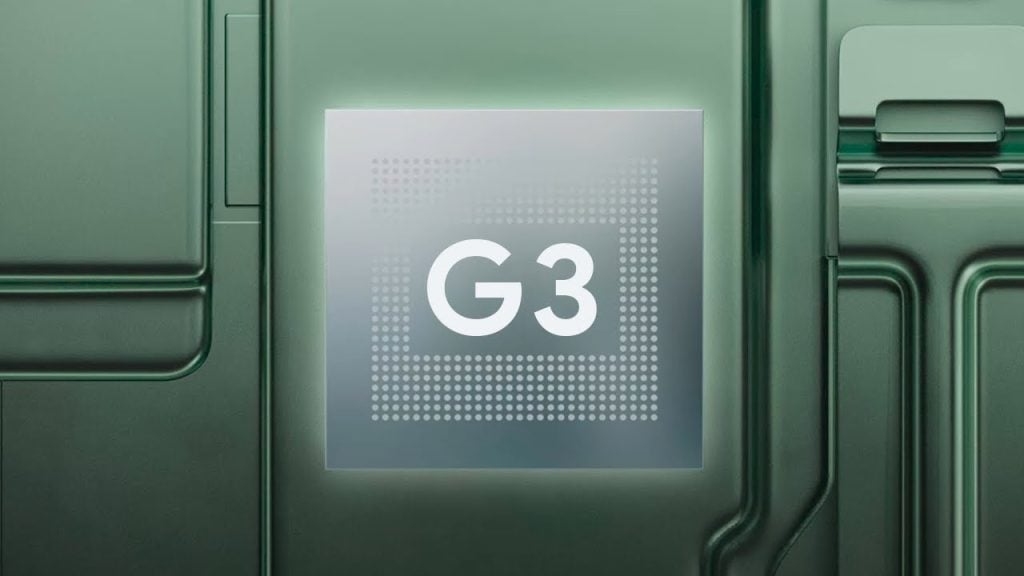
In terms of display, the Pixel 7a is said to come with a 6.1-inch OLED display with a 90Hz refresh rate and Full HD+ resolution, providing a smooth and immersive viewing experience. The phone’s sleek and stylish design features the signature Pixel metallic visor-like camera module on the back, adding to its overall appeal. Under the hood, the phone is expected to be powered by Google’s custom-designed Tensor G2 SoC, delivering lightning-fast performance. Although there is no official word on the battery and charging speed details, it is speculated that the phone will support 5W wireless charging.

The Pixel 7a is set to run on Android 13 out of the box, making it one of the few phones to feature this exciting new operating system. While the pricing and availability details are yet to be announced, the leaked real-life images and design renders have created quite a stir among tech enthusiasts, leaving them eagerly anticipating the phone’s release.

RELATED:

(Source, Via)

Vivo S17, S17 Pro chipset, display, and camera details leaked

Vivo is reportedly working on the S17 series of smartphones for the Chinese market. Reports have claimed that the S17 lineup will take on the Honor 90 series and Oppo Reno 10 series of smartphones in the home market. These Vivo, Honor, and Oppo are expected to launch in May and be available for purchase during China’s 618 shopping festival in June. Hence, the rumor mill has started leaking key information about these smartphones. In a new Weibo post (via. TechGoing), tipster Digital Chat Station revealed the key specifications of the Vivo S17 and S17 Pro.

Previous reports have revealed that the Vivo S17 line will have three models, such as the Vivo S17e (V2285A), Vivo S17 (V2283A), and Vivo S17 Pro (V2284A). At present, there is no information on the chipset that powers the S17e model. In the latest, tipster DCS revealed that the Vivo S17 will have the Snapdragon SM7325, which appears to be the Snapdragon 778G or Snapdragon 782G chipset.

Vivo S16
Vivo S16

The Vivo S17 Pro, on the other hand, will have the Dimensity 8200 chipset. To recall, the Vivo S16 and S16 Pro were equipped with the Snapdragon 870 and Dimensity 8200 chipsets, respectively.

DCS further said that the Vivo S17 and S17 Pro will feature a BOE-supplied OLED display that offers a 1.5K resolution. However, he did not reveal the screen size. Previous reports have claimed that the displays of the S17 series will have curved edges.

The rear camera setup of the Vivo S17 and S17 Pro will have a 50-megapixel Sony IMX766V primary camera, which is said to support optical image stabilization (OIS). A 12-megapixel IMX663 telephoto camera will be present in addition to it. There is no information on the other cameras that will be a part of the Vivo S17 series’ rear panel.

Lastly, the leak reveals that the Vivo S17 series will support 80W fast charging. However, the tipster did not mention anything about the battery size of the S17 duo.

RELATED:

Xiaomi 13 Ultra Design Officially Unveiled, Showcases Unique Camera Grip & IP68 Protection

Xiaomi fans have been eagerly waiting for the official unveiling of the Xiaomi 13 Ultra Smartphone, which was subject to past leaks for a long time. Recently, it was reported that the device would last 60 minutes at one percent battery, which was impressive. The term ‘flagship-killer’ is often thrown around recklessly in the smartphone industry, but Xiaomi has managed to do it in the past, and it seems like the company is on track to achieve the same feat again. The Xiaomi 13 Ultra has now been officially unveiled by the company, and it highlights some impressive features of the smartphone in all its glory. With an impressive spec sheet and a sleek design, this device is set to take the market by storm.

Mi 13 Ultra

One of the most striking features of the smartphone is its back design. It has made appearances online in the past, but nonetheless, the olive green and pigmented leather back cover combined with the camera design contributes towards a stunning visual appeal. And that’s not all – the device also has a disc camera module wrapped in a circle of gold, which adds a touch of elegance to the overall design. Under the hood, the Xiaomi 13 Ultra packs a punch with its Snapdragon 8 Gen 2 SoC, LPDDR5X memory, and UFS 4.0 flash memory. It also provides up to 16GB of RAM and 1TB of storage, which is more than enough for even the most demanding users. In addition, the company claims that the smartphone is IP68 dustproof and waterproof.

The real star of the show is the device’s imaging capabilities. The Xiaomi 13 Ultra features a new Leica Summicron lens, a new generation of cameras for the company, and a large aperture at all focal lengths. The device comes equipped with four Leica cameras, all of which are 50 million pixels and have large apertures. It supports snapshots, night scene shooting, and 8K video shooting, making it a photographer’s dream. The device uses 4 Sony sensors, one of which is the IMX989, and the other sensors are all IMX858. The main camera of the Xiaomi 13 Ultra also boasts a “Leica One-inch Variable Aperture,” providing two aperture sizes of f / 1.9 and f / 4.0. This feature enables the device to take stunning photographs in a variety of lighting conditions, making it perfect for photography enthusiasts.

The device is also a powerhouse when it comes to battery life. With a 5000mAh large-capacity battery, it supports 90W charging power and wireless charging up to 50W. The device is also equipped with self-developed annular cooling pump heat dissipation technology, which enables it to achieve continuous shooting at 4K 60 frames without dropping frames throughout the process.

To make things even more photography-oriented, the company has also released an optional camera handle set for the Xiaomi 13 Ultra. This handle set looks more like a camera and complements the device’s sloped back cover. It’s a perfect accessory for those who take their photography seriously and want to get the most out of their device.  A past report had previously revealed that the handset will come in three configurations, such as 8 GB RAM + 256 GB storage, 12 GB RAM + 256 GB storage, and 12 GB RAM + 512 GB storage. These models could be priced at 6,299 Yuan (~$916), 6,799 Yuan (~$990), and 7,499 (~$1,090), respectively. The top-of-the-line 16GB RAM + 1TB storage trim may cost 7,999 Yuan (~$1,163).

RELATED:

Google reportedly working on a new AI-powered search engine

As the Artificial Intelligence race heats up, Google is feeling the pressure, and the company is now reportedly working on a new AI-powered search engine.

According to the latest reports, the Mountain View-based technology giant is in the process of creating a new AI-powered search engine as well as updating technology in the existing search platform.

Google Now

Internal documents indicate that the company has a project named Magi which is aimed at updating the existing search engine with the new technology and about 160 employees are currently working on it.

The new features are being created by designers, engineers, and executives working in sprint rooms to tweak and test the new versions. After the changes, the search engine would offer a more personalized experience than the company’s current service.

Google is reportedly planning to announce Magi next month and is expected to introduce additional features sometime in the fall. If that’s the case, then we expect the company to reveal details at the upcoming Google I/O. As per the report, Magi will be rolled out to one million users in the US before expanding to 30 million users by the end of the year.

The development comes at a time when it is reported that Samsung is considering ditching Google for Microsoft Bing as the default search engine on its devices. This poses a threat to a $3 billion contract with Samsung a similar $20 billion contract with Apple is up for renewal for the company.

Microsoft Bing, along with other products and services from the Redmond-based technology giant, has been in the news lately as the company has been increasingly relying on AI technologies, especially the ones developed by OpenAI to enhance offerings in the market.

RELATED:

Source

Coolpad Cool 30 budget smartphone now up for pre-order in China; price starts at 699 yuan ($102)

Coolpad Cool 30, a new smartphone from the Chinese brand, is now available for pre-order in the company’s home market through online marketplace JD.com.

The phone comes in three options — 4GB + 64GB, 4GB + 128GB, and 6GB + 128GB, costing 699 yuan (~$102), 799 yuan (~$117), and 899 yuan (~$131), respectively.

Coolpad Cool 30

The smartphone can be pre-ordered with a deposit of just 1 yuan, and those who pre-order the device will get a 100 yuan (~$15) discount on the final payment.

Coming to the specifications, the Coolpad Cool 3 features a 6.51-inch LCD panel with a screen resolution of 1600 x 720 pixels and a standard refresh rate of 60Hz. Under the hood, the device is powered by the MediaTek G85 processor, coupled with up to 6GB of RAM and 128GB of internal storage.

In the camera department, there’s a 48-megapixel primary camera sensor and a 13-megapixel secondary sensor on the back panel, along with an LED flash. There’s also a 5-megapixel front-facing snapper for taking selfies and video calling.

The device runs the Android operating system out-of-the-box with the company’s own Cool OS 2.0 custom user interface on top. It is powered by a 4,500mAh battery and has a power-saving mode to extend the battery life.

RELATED:

Acer Hummingbird Fun 2023 thin and light notebook with Intel Core i5-1335U processor launched in China

Acer has unveiled the Hummingbird Fun 2023 notebook in China. The new Acer notebook comes in a sleek and lightweight design and is equipped with the 13th generation Intel Core i5-1335U processor. The Core i5-1335U is a low-voltage processor with 10 cores and 12 threads. It has a maximum turbo frequency of 4.6GHz and an LPDDR5-4800 specification of up to 32GB. A 16GB memory variant of the Hummingbird Fun 2023 is also available.

Acer Hummingbird Fun 2023

The Hummingbird Fun 2023 notebook offers up to 512GB of storage and sports a 15.6-inch full HD screen. The notebook has an aluminum alloy body and also features an FHD camera. The built-in 50W battery of the notebook allows for extended use of the laptop without connecting to a power source. Connectivity options in the Hummingbird Fun 2023 include Thunderbolt 4, HDMI, and USB. The Acer Hummingbird Fun 2023 notebook also supports WiFi and Bluetooth connectivity. The notebook’s audio system is also pretty decent.

The upgraded Intel Core i5-1335U processor in the Hummingbird Fun 2023 is an improvement over its predecessor and this translates into its performance. The Acer Hummingbird Fun 2023 notebook is available on pre-sale in China with a starting price of 3,999 yuan (~$582). The actual sale of the model will commence on April 17 and it can be purchased via different retail platforms in China like JD.com.

Acer Hummingbird Fun 2023

There are no details yet on the global availability of the Hummingbird Fun 2023. It is however expected that the sleek and light Acer notebook will subsequently berth in some overseas markets. The overall product specs and pricing mean that the gadget could attract the fancy of the market.

Related:

(source)

Samsung Galaxy F54 to launch in India in April with 108MP camera

Samsung has recently launched two new mid-range smartphones under the A series in India, but one can argue that they are not exactly affordable, with the Galaxy A54 starting at Rs. 38,999 in the country. However, the company may soon bring a more budget-friendly smartphone for Indian consumers, dubbed Galaxy F54. While there’s no official announcement yet, a recent report has indicated that the handset is expected to launch in April, and has also revealed some of its key specifications.

Galaxy F54 coming soon

As reported on SlashLeaks, Samsung will be launching the Galaxy F54 in India by the end of April. There’s no confirmation from the brand yet but the timing seems reasonable as the device has already received various certifications, and its support page has gone live in both India and Bangladesh.

samsung-galaxy-f54-5g

Samsung’s upcoming Galaxy F54 is expected to feature its signature triple camera rings on the back, a design that the Korean company has been using consistently this year across its flagship S series phones as well as its more affordable A series devices.

As per the leak, the Samsung smartphone will sport a 6.7-inch AMOLED display with a Full HD+ resolution of 2,400 x 1,080 pixels and a 120Hz refresh rate. The handset will boast a 32MP front-facing camera enclosed in a center punch hole.

In the rear camera department, the phone could get a 108MP main camera sensor with optical image stabilization (OIS) support. There may also be an 8MP ultra-wide sensor and a 2MP macro shooter.  The Galaxy F54 5G will likely feature a side-mounted fingerprint scanner and run Android 13 out of the box and have a layer of One UI 5.1 on top. The phone will measure 8.4mm thick and weigh about 199 grams.

RELATED:

(Source)

Garmin Edge 540 and Edge 840 GPS bike computers with solar options and e-bike compatibility unveiled

Garmin has unveiled two new bike computers – the Garmin Edge 540 and Garmin Edge 840. The models come in several variants including solar options and electric bike compatibility. The two models are generally compatible with regular bikes.

Garmin Edge 540

Garmin has continued to offer several products outside its traditional forte of smartwatches. It offers a range of cycling accessories and the new Edge 540/ 840 models follow that trajectory. The Garmin Instinct 2 and Instinct 2S smartwatches were just released a few days back. The two new Garmin bike computers have several similarities and the higher model sports a touchscreen. The two products are available with integrated solar cells at an extra cost of $100. The regular Edge 540/ 840 models offer up to 26 hours of battery life while the solar option yields up to 32 hours on a full charge.

The more versatile Edge 840 model has 32GB of storage while the Edge 840 has only 16GB. They both come with 2.6-inch displays and 246 x 322 pixels resolution. Both GNSS and GPS modules are present in the two Garmin Edge models. They are also compatible with Varia radar systems. The Garmin Edge 540 has a retail launch price of $349.99 while the Garmin Edge 840 launches at $449.99. The solar models are priced higher by $100 but they lack sensor bundles.

More details about the new Garmin Edge 540 and Edge 840 bike computers are available on the Garmin website. It is not clear at this time which markets will sell the models. These and more details will surface subsequently.

RELATED:

Mobvoi TicWatch Pro 3 rumoured to get Wear OS 3 upgrade soon

The Mobvoi TicWatch Pro 3 is rumored to be among the models that will get the Wear OS 3 upgrade. Some reports have earlier hinted that Mobvoi may upgrade all its Snapdragon Wear 4100-based models to Wear OS 3. This seemed to contradict Mobvoi’s earlier position that only the TicWatch Pro 3 Ultra and TicWatch E3 will receive a major OS update by the end of 2023.

Mobvoi TicWatch Pro 3

The Wear OS 3 upgrade for the lineup of Mobvoi smartwatches holds lots of promise. It has been previously reported by Gadgets & Wearables that Mobvoi has notified TicWatch customers of the Wear OS 3 release schedule. The original TicWatch Pro 3 sports the same Snapdragon 4100 chipset as the TicWatch Pro 3 Ultra and E3 models. The arrangement has been that all the other TicWatch Pro models will remain the same until the release of the TicWatch Pro 5.

A new clarification by Mobvoi has pointedly indicated that the TicWatch Pro 3 is eligible for an OS upgrade. There are no fine details yet on the release date for the Wear OS updates and Mobvoi says such information will be provided on its website. It is believed that the update to Wear OS 3 for Mobvoi smartwatches will roll in anytime soon. Mobvoi had previously pointed to Q3, 2023 as the take-off date. This may however be unrealistic with Wear OS 4 possibly being released by Google soon.

It is speculated that Google is in line to showcase Wear OS 4 next month during the I/O 2023 event. Other expected highlights of I/O 2023 are the release of Android 14 and the Google Pixel 7a. It remains to be seen how Mobvoi will navigate through the Wear OS 3 conundrum. The coming days will certainly provide greater clarity for the models.

Related:

(source)

Nvidia’s AI Chips Priced Over $40,000 on eBay Amid Surging AI Demand

Nvidia’s cutting-edge graphics cards, the H100 processors, are seeing prices north of $40,000 on eBay, as the appetite for chips essential to develop and implement artificial intelligence (AI) software keeps expanding. John Carmack, a pioneer in 3D gaming and ex-consulting technology chief at Meta, drew attention to the H100 processors’ prices on Twitter. As of Friday, at least eight H100s were listed on eBay, with prices between $39,995 and just under $46,000. Some retailers have sold the H100 for approximately $36,000 in the past.

Nvidia’s top A.I. chips are selling for more than $40,000 on eBay

Launched last year, the H100 represents Nvidia’s most recent flagship AI chip, replacing the A100, a roughly $10,000 chip often referred to as the AI application “workhorse.” Developers utilize the H100 to create large language models (LLMs), which underpin AI applications like OpenAI’s ChatGPT. Running these systems necessitates powerful computers that can process terabytes of data for extended periods. Additionally, they depend on significant computing power for generating text, images, or predictions.

The collaboration of hundreds of top-tier Nvidia GPUs is essential for training AI models, especially sizable ones like GPT. Microsoft has invested hundreds of millions of dollars in tens of thousands of Nvidia A100 chips for ChatGPT development. Nvidia currently holds a significant share of the AI chip market. Nvidia’s offerings also include the DGX supercomputer, which houses eight GPUs working together. The company announced new services earlier this year that enable businesses to rent DGX computers for $37,000 per month.

However, the system uses Nvidia’s older A100 processors at this price point. According to Nvidia, the H100 is the first chip tailored to the specific AI architecture responsible for numerous recent AI breakthroughs, known as transformers. Industry insiders anticipate the need for even more powerful chips to create larger and more data-intensive models than those presently available.

Nvidia H100

RELATED:

(via)

Xiaomi Unveils Master Series 86 Inch Mini LED TV with Enhanced Picture Quality

Xiaomi officially announced the arrival of its new television offering: the Xiaomi Master 86 inch Mini LED TV, boasting a “meticulously tuned picture quality.” As a new addition to Xiaomi’s “Master” series, the 86 inch screen employs Mini LED technology, offering significant hardware advantages compared to traditional LED backlighting, such as wide color gamut, high contrast, and refined dynamic partitioning.

Xiaomi to Launch Master Series 86 Inch Mini LED TV with Enhanced Picture Quality

Simultaneously, Xiaomi has implemented a brand-new self-developed engine for this TV, completely reconstructing the picture quality algorithm and delivering professional-grade color accuracy. This makes the Master 86 inch Mini LED TV the pinnacle of Xiaomi’s television lineup in terms of color accuracy and picture quality.

As part of Xiaomi’s ecosystem, the TV also features the company’s proprietary “multi-screen color consistency” technology, ensuring consistent color displays between the television, smartphones, and tablets. This fundamentally resolves the display issues caused by color inconsistencies when screen mirroring from smartphones or tablets.

From the information currently available, the Xiaomi Master 86 inch Mini LED TV, as a new product in Xiaomi’s high-end “Master” television series, has undergone noticeable upgrades in both hardware and software. Of course, as a premium TV product, performance in aspects like sound quality and response time is also crucial. While Xiaomi has not yet disclosed the TV’s performance in these areas, it is expected to impress. The Xiaomi Master 86 inch Mini LED TV will be unveiled at a launch event on April 18th, alongside other new products such as the Xiaomi 13 Ultra and the Xiaomi Mi Band 8.

RELATED:

(source)

Nvidia Reportedly Holding Off on Boosting RTX 40-Series Output

Nvidia, the undisputed leader in the graphics card market, has been expanding its product lineup, including the dominating RTX 40-series. Recently, they introduced the budget-friendly RTX 4070 model. However, many users still face challenges in finding these cards. Those looking to buy a new card often struggle to find stock or are forced to pay sky-high prices for the scarce 40-series models. It seems that this situation might be intentional, as reports suggest that Nvidia is holding off on increasing the production of the RTX 40-series. Here are the details….

Nvidia Reportedly Holding Off on Boosting RTX 40-Series Production: Is It A Strategic Move?

According to a recent report by DigiTimes, Nvidia may be taking a strategic approach with its latest GeForce RTX 40-series GPUs based on the Ada Lovelace architecture. The company’s backend service providers, Siliconware Precision Industries (SPIL) and King Yuan Electronics (KYEC), have reportedly not seen increased orders for testing and packaging of the new GPUs. This suggests that Nvidia is waiting for its partners to sell off remaining GeForce RTX 30-series inventory before supplying them with the latest generation graphics chips.

Despite having introduced an extensive range of Ada Lovelace GPUs for client applications, including the AD102, AD103, AD104, AD106, and AD107, Nvidia has not signaled to its OSAT providers to scale up production for the GeForce RTX 40-series. The company had previously pre-paid TSMC for silicon manufacturing services during 2021-2022, and likely has N4-based Ada Lovelace wafers in stock. However, it still needs to book OSAT capacity before ramping up orders to increase supply.

Usually, Nvidia’s sales of GPUs to its partners trend upward in the third quarter, which should lead to the company booking OSAT services at this time. However, if the DigiTimes report is accurate, it seems that Nvidia is holding off on increasing testing and packaging of its Ada Lovelace silicon. Nvidia’s partners have already started shipping GeForce RTX 4070, RTX 4070 Ti, RTX 4080, and RTX 4090 graphics cards for desktops. Despite being among the top graphics cards available, demand for these products is reportedly not as high as Nvidia would like.

The market has also seen a variety of laptops equipped with GeForce RTX 4050, RTX 4060, RTX 4070, RTX 4080, and RTX 4090 Laptop GPUs. With Ada Lovelace graphics processors already covering almost all market segments, the anticipated popularity of solutions like the GeForce RTX 4070 and the expected RTX 4060 suggests that Nvidia will need to increase GPU volume and packaging services.

Nvidia and its partners may already have enough RTX 30- and 40-series GPUs in stock, negating the need to ramp up testing and assembly ahead of the rumored GeForce RTX 4050 and RTX 4060 GPU launch in May-June. Furthermore, Nvidia has not yet attempted to drop prices into the sub-$500 range. While testing and assembly procedures do take time, they are not as lengthy as wafer production, meaning a delay of a few weeks in ordering OSAT services is unlikely to cause significant problems for the market, especially given the globally slow demand for new PCs.

With reports of a severe downturn in PC and laptop sales, many people and businesses may be opting to stick with their current systems amid economic uncertainties. However, as this information comes from an unofficial source and lacks many details, it should be taken as a rumor rather than a confirmed fact.

RELATED:

(via)

SEGA planning to acquire Angry Birds’ Rovio Entertainment for $1 billion

SEGA, the renowned video game company, is reportedly in the final stages of acquiring Rovio Entertainment, the company behind the widely popular Angry Birds franchise. According to sources, the acquisition deal is expected to be finalized in the next week, with SEGA paying a whopping $1 billion for Rovio and all its intellectual properties.

Rovio shot to fame in the late 2000s and early 2010s, thanks to the immense popularity of its flagship game, Angry Birds, which became a worldwide phenomenon and spawned several sequels and spin-offs. However, in recent times, the company’s brand hasn’t been as strong as it once was, and this acquisition by SEGA could help breathe new life into it.

SEGA’s move to acquire Rovio is seen as an attempt to strengthen its presence in the mobile gaming segment, where it is quickly overtaking its rivals. The company’s recent offer of $1 billion for Rovio outpaced Israeli company Playtika, which had offered $800 million earlier in the year. The move is expected to help SEGA bolster its mobile gaming offerings, and it remains to be seen what plans the company has in store for the iconic Angry Birds characters.

SEGA has long been a prominent player in the video game industry, thanks to its popular franchises such as Yakuza and Sonic. In addition to these, the company is reportedly working on a new Sonic game that will feature stunning graphics and multiplayer elements.

Overall, SEGA’s acquisition of Rovio is a significant development in the video game industry, and it will be interesting to see how the two companies collaborate and innovate in the future. The move also highlights the growing importance of mobile gaming in the gaming industry and underscores the need for companies to continually adapt and evolve to stay ahead of the curve.

RELATED:

(Via)

Bing Suggested User Call the Suicide Prevention Hotline, when User Searched for Cancer Data

Microsoft Bing, the newly improved search engine from the tech giant Microsoft, is recently making waves across the tech community with its newfound AI capabilities. Specifically, the new Bing is powered by OpenAI’s large language model – GPT-4, and all users can use GPT-4 for free on Bing.

However, with its rapidly growing userbase whereby more people are switching over from Google to Bing for search, one user found that when he had searched for cancer death rates in their country by year, Bing immediately prompted the user to call the suicide prevention hotline, instead of showing the data as the first result like Google.

Source: Getty Images

The post by Reddit user u/maitreg expresses the overreaction of Bing as surprising because he was only curious about improvements in cancer death rates in his country, and he did not expect to be greeted with advice to call the suicide prevention hotline. 

Users online have different opinions on the topic, as some think that Big Tech like Microsoft and Google spend a lot of money to ensure that their preferred search result is shown to users, and that information is ranked down or restricted from users although it is available. 

On the other fence, some think that Bing’s proactive initiative to suggest calling for help is quite helpful, as some recount when their loved ones get a cancer diagnosis, they start looking at death rates to see how much they’ve got to live. Thus, they think that the move by Bing is quite empathetic.

Microsoft Bing GPT-4-Thumbnail-openai
Microsoft Bing based on GPT-4

New Bing based on GPT-4 has been widely praised by the tech community for simplifying search and research for many. However, New Bing still has gotten itself into much trouble since its inception in February this year, most notably the New York Times journalist fiasco, in which the journalist found the search engine to have a manipulative personality. Microsoft was quick to roll out guardrails and bug fixes for the search engine soon after, and currently the search engine is growingly rapidly in monthly active users.

RELATED:

(Source)

OpenAI CEO clarifies company is not currently training ChatGPT-5

OpenAI CEO, Sam Altman, has confirmed that the company is not currently training a GPT-5 language model. Altman addressed this issue during a virtual event at MIT, where he emphasized that OpenAI is currently focused on upgrading and updating their existing GPT-4 model. He added that the company is working on addressing safety issues related to the model and that they had spent over six months training GPT-4 before its public release.

Credit: TheAIGRID

Altman also discussed some of the concerns raised in an open letter, allegedly signed by Elon Musk, calling for a pause in the development of large-scale language models. Altman noted that the letter lacked technical nuance and did not provide specific guidance on where the pause should occur. He emphasized the importance of increasing safety rigor as capabilities become more serious, and he stated that moving with caution is critical.

While OpenAI plans to continue being transparent, the company has not released any information on GPT-4’s training data or its architecture, construction, or other inner workings. This decision was based on concerns related to the competitive landscape and safety implications of large-scale language models like GPT-4.

Overall, Altman’s comments suggest that OpenAI is taking a measured approach to the development of language models and is focused on addressing safety concerns as it moves forward. While there is no GPT-5 in training, the company is committed to upgrading and updating its existing models to improve their performance and safety.

RELATED:

Sony’s latest patent aims to enhance mobile gaming controls

Sony, one of the leading companies in the gaming industry, is working on developing new technologies to improve mobile gaming. In recent years, the popularity of mobile gaming has been on the rise, surpassing consoles in terms of revenue. Therefore, it is not surprising that Sony is investing in developing new technologies to enhance its mobile gaming offerings.

Sony logo

According to recent reports, Sony has filed a new patent for improved controls in mobile games. The technology will focus on processing operations for games played on mobile devices, receiving the mobile controller input, and then determining a correction value to perform the action with greater accuracy. The expected outcome of this technology is smoother and more precise mobile controls. Additionally, the patent includes dynamic streaming gameplay and more intelligent ways to handle game state saving.

Sony mobile gaming controls patent

This technology could be particularly useful for Sony’s upcoming handheld console, codenamed Q Lite, which will reportedly require a PS5 to function and be used for remote play. The new technology, combined with the acquisition of Savage Game Studios, a mobile-based gaming developer, suggests that Sony is taking a strong interest in the mobile market and working on new technologies.

Furthermore, Sony has also filed a patent for making lifelike NPC reactions, which could improve the immersion of the gaming experience. This technology would make non-player characters in Sony games more aware of their surroundings and enable them to interact with them more efficiently. This innovation could prevent unreactive characters, thus enhancing the overall gaming experience.

RELATED:

(Via)

Huawei HarmonyOS 4.0 to launch this fall, executive director confirms

Huawei recently announced the launch of its latest Intelligent Automotive Solution, which includes the new Huawei ADS 2.0 featuring the industry’s first laser fusion GOD network and NCA smart driving navigation covering 90% of urban scenes, among other features. In addition, the company also confirmed that HarmonyOS 4.0 would launch in the fall of 2023.

Huawei HarmonyOS 4.0 confirmation

HarmonyOS 4.0 is expected to achieve multi-person, multi-device, multi-screen, and multi-audio zones in the car system. It will also support six-audio zone sound source positioning, allowing concurrent control of multiple screens, multiple people, and multiple audio zones. Furthermore, the new version of the operating system will implement cabin eye position tracking and eye status recognition, along with support for multi-screen, multi-channel, and bi-directional streaming across screens and devices.

Huawei Car Solution

One notable improvement in HarmonyOS 4.0 is the upgraded voice of the intelligent cabin. The company has used its large-scale model training results to enhance the Xiao Yi voice, making it more intelligent and intuitive. In addition, the new operating system will also feature improved customer parking assistance and will be the first to support cross-surface and underground parking.

HarmonyOS 4.0 will be the latest addition to Huawei’s suite of intelligent automotive solutions, which includes the company’s Advanced Driving System (ADS), Intelligent Cockpit System (ICS), and 5G-V2X (Vehicle-to-Everything) technology. These solutions are designed to provide drivers and passengers with a more immersive and seamless driving experience by leveraging the power of AI and 5G connectivity.

Overall, HarmonyOS 4.0 is expected to be a major upgrade to Huawei’s existing operating system, providing a more comprehensive and intelligent platform for automotive applications. As the company continues to expand its presence in the automotive market, we can expect to see more innovations and advancements in the near future.

While the features announced are related to the car industry, Huawei has not revealed anything about smartphones, tablets, or smartwatches. However, given that HarmonyOS 3 was launched in July for smartphones, it’s possible that HarmonyOS 4.0 for smart devices will be introduced around the same time.

RELATED:

Alleged Motorola Razr Lite CAD renders emerge to reveal design

Motorola is reportedly working on the Motorola Razr+ 2023 flip phone. The Snapdragon 8+ Gen 1-powered clamshell phone featuring a large-sized cover display is expected to debut by June. Now, in a new report, MySmartPrice and popular tipster Steve Hemmerstoffer have teamed up to release the renders of the device that has a tentative name of Motorola Razr Lite. There is a possibility that the device could be simply called the Motorola Razr 2023.

Being a “Lite” model, the Motorola Razr Lite will be positioned lower than the Razr+ 2023. The CAD renders of the device show that it is equipped with a foldable screen with a punch-hole design and slim bezels.

Moving on to the back, the Razr Lite has a small cover display, which appears to be just enough for showing notifications or alerts like incoming calls and messages. Alongside it is a dual-camera setup with an LED flash.

The images show that the Razr Lite has a curved frame with antenna lines on it. The report has no information on the specifications or dimensions of the device.

In related news, Motorola has recently launched the Edge 40 Pro in the global market and is now gearing up to unveil the Edge 40. Reports have revealed that it will arrive with a 6.55-inch AMOLED display that offers a Full HD+ resolution and a 144Hz refresh rate. It is expected to arrive as the first-ever Dimensity 8020-powered chipset, with 8 GB of RAM, 128 GB / 256 GB of storage, and a 4,400mAh battery with 68W wired and 15W wireless charging. It will have a 32-megapixel front camera and a 50-megapixel (main, with OIS) + 13-megapixel (ultra-wide) dual-camera system.

RELATED:

(source)

HTC Wildfire E2 Play launched with 6.82-inch display, Unisoc T606, 48MP quad cameras

HTC Wildfire E2 Play has been silently announced for the African market. Earlier this month, the Taiwanese company unveiled the Wildfire E3 Lite in Africa, and now the brand is back with a new and a bit more powerful device. Some of its highlights include a massive screen, a Unisoc chipset, and 48-megapixel quad rear cameras. Continue reading ahead to learn more about the Wildfire E2 Play.

HTC Wildfire E2 Play specifications and features

HTC Wildfire E2 Play

The HTC Wildfire E2 Play has a huge 6.82-inch IPS LCD panel with a teardrop notch. The screen offers an HD+ resolution of 720 x 1640 pixels, a 20.5:9 aspect ratio, a 60Hz refresh rate, a 1500:1 contrast ratio, and 450 nits of brightness. It is equipped with the Unisoc T606 chipset and 8 GB of RAM.

The Wildfire E2 Play has 128 GB of built-in storage, and there is a microSD card slot onboard for more storage. It comes preloaded with Android 12 OS. For security, the device offers features like a rear-mounted fingerprint scanner and AI face unlock.

On the front, the Wildfire E2 Play features an 8-megapixel selfie camera. The back panel of the device features a 48-megapixel primary camera, a 5-megapixel ultra-wide lens, a 2-megapixel macro snapper, a 2-megapixel depth assist lens, and an LED flash.

HTC Wildfire E2 Play

The Wildfire E2 Play runs on the Android 12 OS. It packs a 4,600mAh battery that supports 10W charging. The device offers other features, such as dual SIM, 4G VoLTE, Wi-Fi 802.11ac, Bluetooth 5.0, a USB-C port, and a 3.5mm audio jack.

HTC Wildfire E2 Play price and availability

There is no word on Wildfire E2 Play’s price and availability. It will come in black and blue color options.

RELATED:

Honor X50i leak reveals key specifications, live shots

Honor is gearing up to launch the Honor X50i mid-range phone in the Chinese market. There is no information on the launch date, but since it has been certified by TENAA already, it appears that it may launch at some point this month. Ahead of the expected launch, tipster WHYLAB has shared the live shots of the Honor X50i. Some of the images have revealed the key specifications of the device. Here is a look at everything that has been revealed through the latest leak.

The Honor X50i can be seen sporting a punch-hole display on the front. The rear designs of the Honor 70 Pro and Honor 80 appear to be the inspiration for the X50i’s back panel. Shown below are the black and blue variants of the X50i. It is unclear whether the device will be available in other color options.

Honor X50i specifications (rumored)

The leaked shots reveal that the Honor X50i will arrive with a 6.7-inch LCD panel that offers a Full HD+ resolution of 2388 x 1080 pixels and a 90Hz refresh rate. It will be an entry-level 5G phone powered by the Dimensity 6020 chipset, LPDDR4x RAM, and UFS 2.2 storage.

The X50i is expected to arrive in multiple configurations, such as 8 GB RAM + 128 GB storage, 8 GB RAM + 256 GB storage, and 12 GB RAM + 256 GB storage. The device will offer 7 GB of virtual RAM.

The X50i will arrive with a 4,500mAh battery that supports 35W fast charging. It will feature an 8-megapixel camera on the front and a 108-megapixel (main) + 2-megapixel (depth) dual-camera system along with a triple LED flash. The phone will come preloaded with Android 12 OS. The X50i will measure 7.48 mm in thickness and weigh 179 grams.

RELATED:

(source)