Advertisement

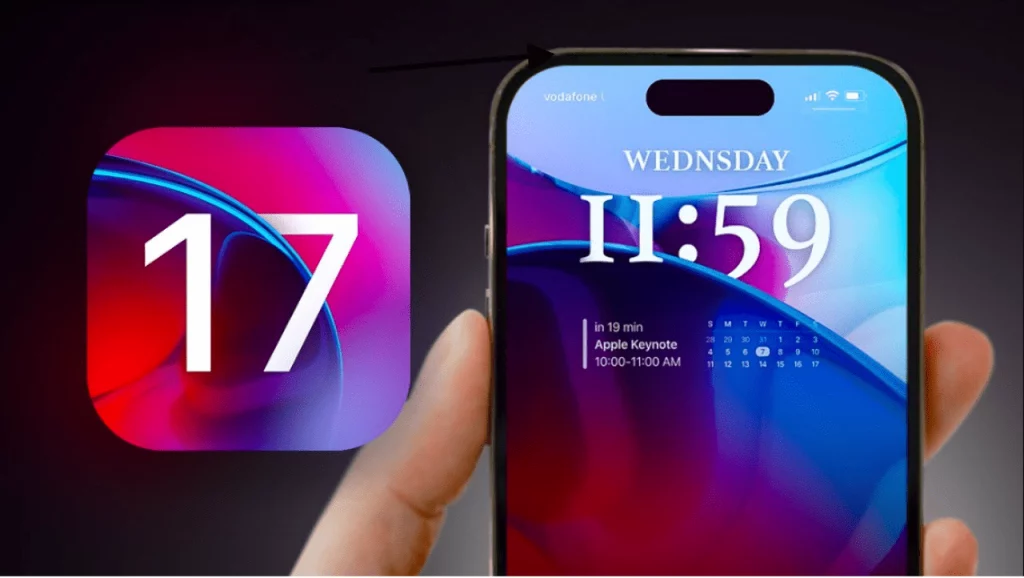
When is iOS 17 Coming? Apple Reveals WWDC23 Date

Apple has announced that its annual Worldwide Developers Conference (WWDC) will take place online between June 5th and 9th, 2023. Developers and students will also have the opportunity to celebrate the opening day of the event in person at Apple Park with a special experience. Here are the details…

WWDC23 Kicks Off on June 5th

The WWDC23, which will be free for all developers, will focus on new developments for the latest iOS, iPadOS, macOS, watchOS, and tvOS. The event, which is part of Apple’s effort to help developers create innovative applications, provides developers with the opportunity to connect with the company’s engineers. Developers will also gain access to information about new technologies and tools during the event.
WWDC 2023 banner

Susan Prescott, Vice President of Global Developer Relations at Apple, shared her thoughts about the WWDC event:

“WWDC is one of our favorite times of the year at Apple because it’s an opportunity to connect with talented developers from around the world who make this community so extraordinary, both online and in person. WWDC23 will be our biggest and most exciting conference yet, and we can’t wait to see many of you online and in person at this very special event!”

In addition to the announcements shared in the Keynote and State of the Union presentations, this year’s online program will also offer one-on-one lab sessions. Participants and students will have the opportunity to interact with Apple engineers and other developers, as well as attend a special day at Apple Park on June 5th to watch the Keynote and State of the Union events with the global online community.
WWDC23 also supports the Swift Student Challenge, one of many Apple programs aimed at advancing the skills of developers and students of all ages who love coding. With the help of Swift Playgrounds, which makes learning the Swift programming language fun and interactive, students can gain expertise in developing applications on any topic they choose. The event will culminate in a competition, and students can submit their work from now until April 19th for consideration.

Every year, Apple’s WWDC event not only showcases new technologies but also provides significant opportunities for developers. What are your thoughts on the WWDC23 event? Feel free to share your opinions in the comments section below.

RELATED:

Oppo A1x launched in China: Dimensity 700 SoC, 90Hz display, and more

Oppo has launched a new entry-level 5G smartphone in China. The handset officially goes by Oppo A1x. It costs around ¥1500 (~$220) but does not offer a good set of features, unlike Redmi and Realme.

This is not surprising as the Oppo A series has never been value for money in any market. That being said, let’s have a detailed look at this phone.

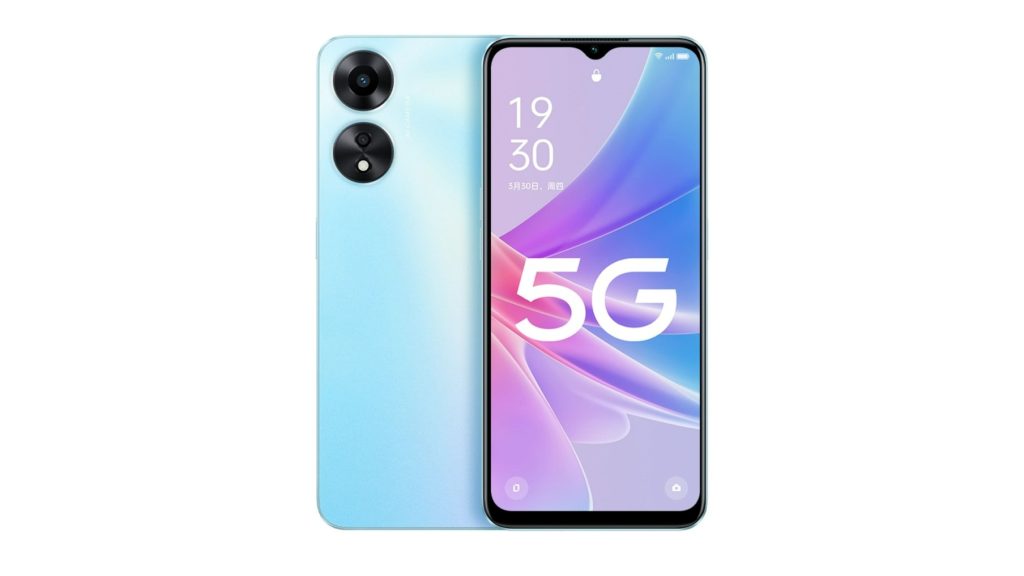
Oppo A1x

The Oppo A1x sports a flat frame design. Its cameras are laid out in two different circular modules. It comes in black and blue color options.

The device is built around a 6.56-inch HD+ (1612 x 720 pixels) display (LCD) with a dewdrop notch. The screen supports up to a 90Hz refresh rate, 600 nits peak brightness level, and 100% sRGB color gamut.

The handset is powered by a MediaTek Dimensity 700 chipset paired with LPDDR4x RAM and UFS 2.2 storage. It boots ColorOS 12 based on Android 12.

It arrives with a 13MP (wide) + 2MP (depth) rear camera system and an 8MP front-facing camera. Other features include a MicroSD card slot, a 3.5mm headphone jack, a USB Type-C port, and a side-mounted fingerprint sensor.

Last but not least, the phone is backed by a 5,000mAh battery with support for standard 10W charging.

As far as the price is concerned, the Oppo A1x retails at ¥1,399 and ¥1,599 for 6GB + 128GB and 8GB + 128GB memory configurations, respectively.

RELATED:

Baidu and Giant Network Launch China’s First AI-Powered Mobile Game Character
Giant Interactive Group and Baidu’s AI team have worked together to produce China’s first AI-developed mobile game character called “Space Shark.” The AI image is created using the same technology behind the search giant’s ChatGPT alternative ERNIE Bot. Baidu’s Wenxin large model team was responsible for the training, generation, and in-depth optimization of this AI image, while Giant’s team handled the overall planning and in-game development.

AI mobile game character Space Shark

The AI image is being used in the online game Super Sus: Who is the Impostor, which was developed by Giant. Super Sus allows users to create their own rules and add user-generated content, such as new skins and imagery. The integration of AI technology in the game character development process enables the game to have more advanced features and capabilities that were not possible before.

The collaboration between Giant and Baidu is a clear indication of the increasing integration of AI technology into the gaming industry. By using AI technology to create game characters, gaming companies can save on labor costs and reduce manufacturing costs while also increasing efficiency. Moreover, AI technology can enhance the game experience for users and provide opportunities for new revenue streams.

With the success of “Space Shark,” we can expect to see more gaming companies embracing AI technology in the development of game characters and other aspects of game production. The partnership between Giant and Baidu is a step towards a more innovative and efficient gaming industry, with exciting possibilities for the future.

RELATED:

Foldable smartphones to cross 48 million units in sales in 2027: Report

Foldable smartphones are a relatively new breed of phones and still occupy a rather niche corner in the market. But it appears that these types of devices are getting increasingly more popular. Now, a new report has offered us a prediction of the sales figures by the year 2027.

Foldable Smartphone

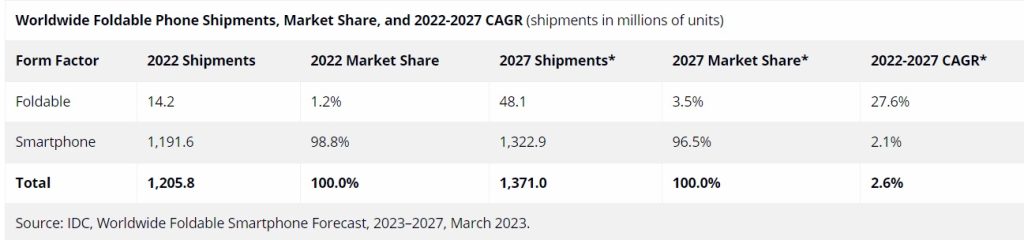
According to an IDC report, the global shipments of foldable phones in 2027 will hit a total of 21.4 million units more than in 2023. This marks a rise of a whopping 50 percent over the 14.2 million units that were sold in 2022. The report adds that shipments of foldable phones will total a sizeable 48.1 million units in 2027 alone. In other words, this marks a compound annual growth rate of 27.6 percent from 2022 to 2027.

On the other hand, regular smartphone models are expected to reach 1,322.9 million units in 2027, marking a compound annual growth rate of 2.1 percent during the same 5 year period. IDC estimates that the average selling price of smartphones will also fall by around 6.8 percent. This estimation is based on OEMs making improvements in durability and build quality along with software and hardware upgrades.

Foldable Smartphones

As per Anthony Scarsella, Research Manager, Mobile Phones at IDC, “The foldable phone market finished slightly higher than previously forecast as consumers start to embrace the new form factor. A 10% decline in ASP helped the market grow 75.5% in 2022, as foldable devices became more affordable in numerous markets. With new vendors and models joining the race this year, we expect the foldable market to be the one bright spot in 2023 with 50.5% growth, while the total smartphone market contracts 1.1%.”

RELATED:

Lamborghini unveils hybrid supercar Revuelto with an electric range of 6 miles

With the automobile industry moving to include more eco friendly offerings, top luxury car brands have also began building electric and hybrid models. The latest one to offer such a model is Lamborghini, which has just announced its new hybrid supercar, the Revuelto.

Lamborghini

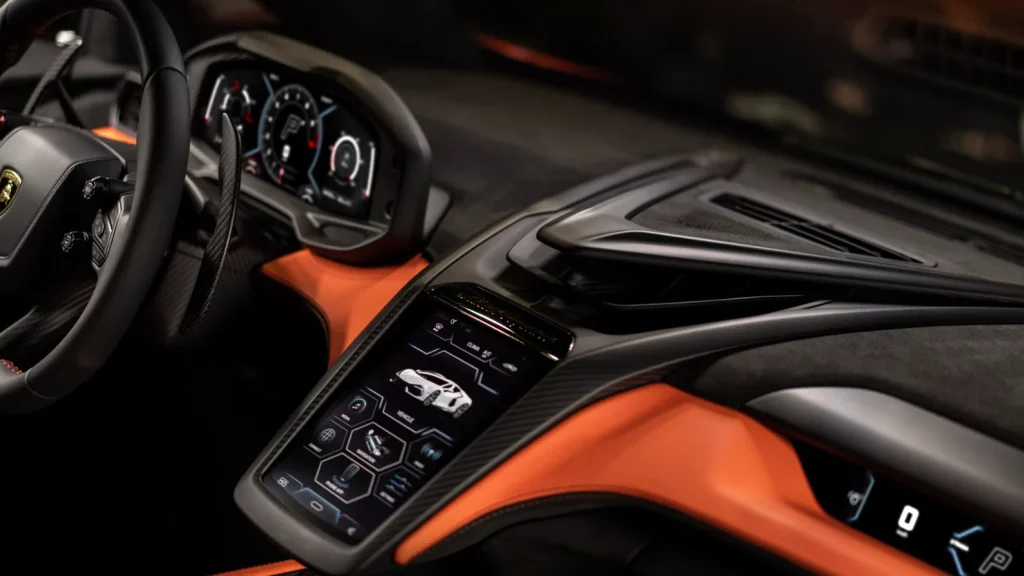
The Revuelto directly translates to “scrambled” and features a hybrid design. Meaning, it can run on electric energy as well as conventional fuel. Lamborghini’s latest supercar can run in an all electric mode, but it won’t get you very far. As per official notes, the Revuelto offers a maximum electric only range of just 6.2 miles on a single full charge. In other words, it is clear that the hybrid vehicle is not meant to be driven as a pure electric only vehicle.

But there’s a twist, as the combustion engine can charge the small 3.8kWh battery on its own in just six minutes thanks to the regenerative braking system on the front wheels. The humble electric range isn’t a deal breaker since customers of such supercars don’t opt for these luxury sports cars for their range. The engines on these sports cars are designed to push the limits of speed and acceleration, and the one on the Lamborghini Revuelto can offer an impressive 814 horsepower at a 9,250 rpm.

Lamborghini

It also houses a multitude of air intake ducts that are located throughout for improved airflow to the engine. This enables a power level of 126 horsepower per liter. According to the official press release, the Revuelto offers the “highest output in the history of Lamborghini’s 12-cylinder engines.” Talking about its design, we can see that the company took inspiration from the aerospace industry with its engineering, with hexagonal exhausts and angular lines across the body. The vertically opening scissor doors also made a return on this car.

RELATED:

Shargeek unveils Starship Seer, a Transparent Sci-Fi themed power bank

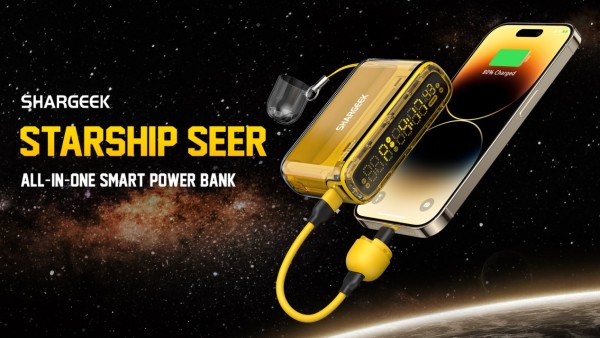
Shargeek has just announced a brand new product, which features an unique design. The new device in question is the Starship Seer, which is a transparent power bank that has a 10,000mAh capacity.

Looking at its design, the inspiration from sci-fi for the aesthetic is quite apparent. However, this product not only offers charging as a power bank, but even doubles as a digital alarm clock. It fulfills this secondary functionality through a smart screen that not only displays its remaining power levels and discharge time, but even showcases the time remaining on charge, along with input and output power.

SHARGEEK

Notably, the power bank has a 10,000mAh battery capacity and features USB Type A and USB Type C ports as well. These ports offer 35W fast charging and 30W fast discharge rate as well. Thanks to the addition of the digital timer, Shargeek is advertising this power bank as the “World’s First Power Bank That Predicts Charging Time”. Meaning, you can see the Starship Seer’s remaining power in real time as it is displayed on the screen.

The device manages to make the estimation by tracking the current power levels while mapping the discharge rate. The company promises an 80 percent standard battery capacity even after 800 charging cycles. Thanks to its 35W fast charging output, your iPhone 14 can charge up to 82 percent in just an hour, while the power bank itself can charge back to full within 1.5 hours with 30W input power. As of right now, the device is currently listed on Kickstarter for crowdfunding.

RELATED:

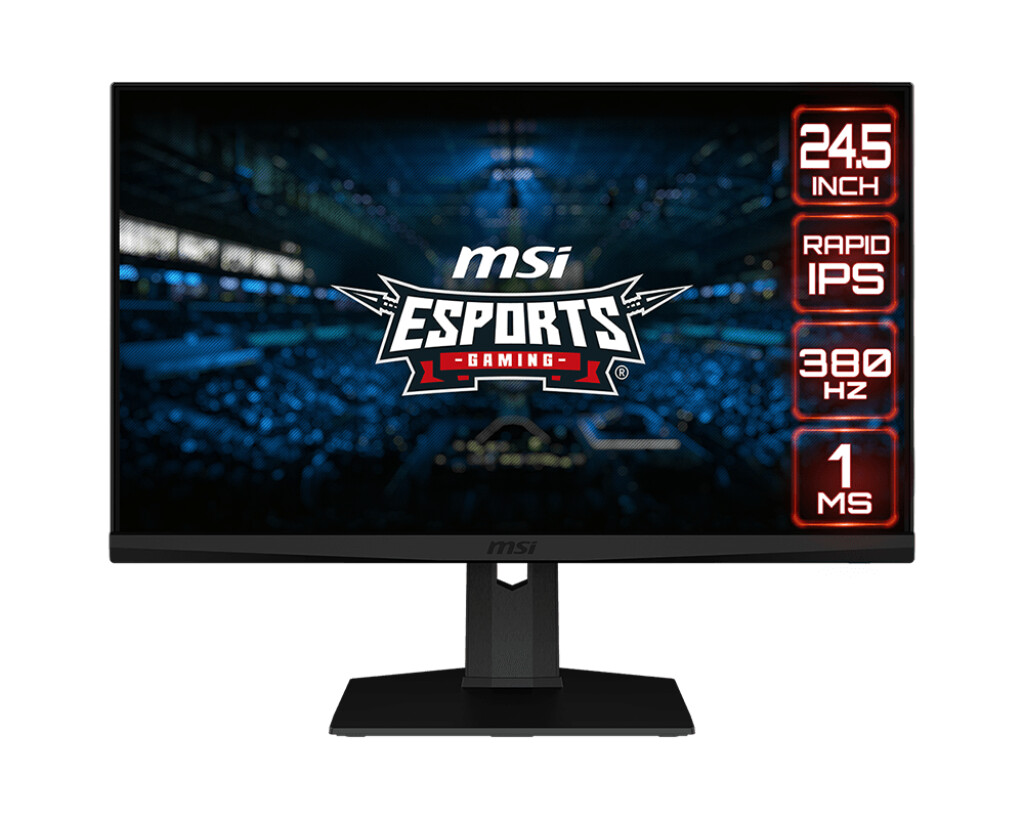
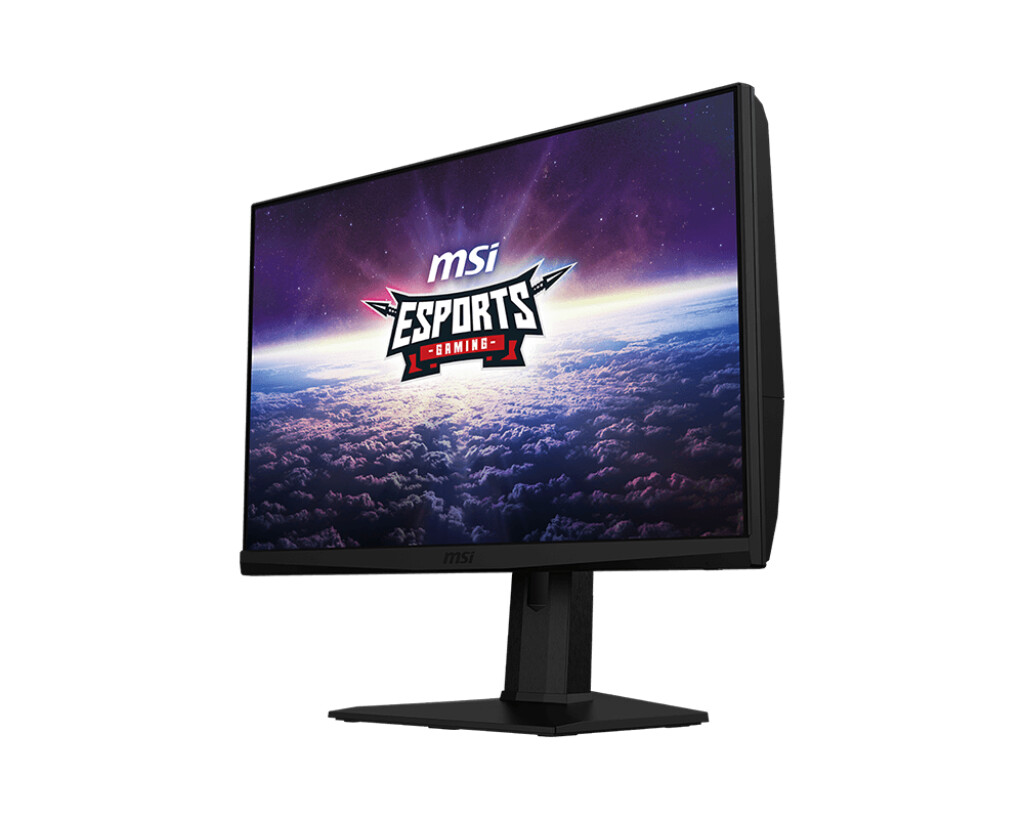
MSI Unveils G253PF Ultra-Fast Gaming Monitor with 380Hz Refresh Rate

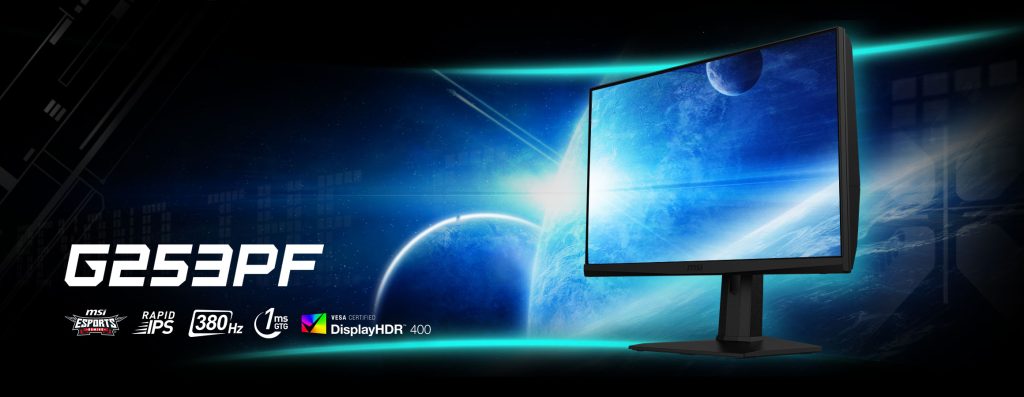
MSI has introduced the G253PF, a 24.5-inch Rapid IPS gaming monitor that offers an unprecedented 380 Hz refresh rate and a remarkable 1ms (GTG) response time, making it an attractive package for e-sports gamers. The monitor features DisplayHDR 400, VESA Adaptive Sync, and G-SYNC compatibility, which will provide gamers with an immersive and seamless gaming experience.

MSI G253PF

The Rapid IPS panel offers TUV Rhineland-certified anti-flicker and low blue-light technologies, which reduce eye strain during extended gaming sessions, along with 178° viewing angles. The monitor has a Full HD (1920 x 1080 pixels) resolution, which may not be as high as some other gaming monitors, but the refresh rate and response time make up for it.

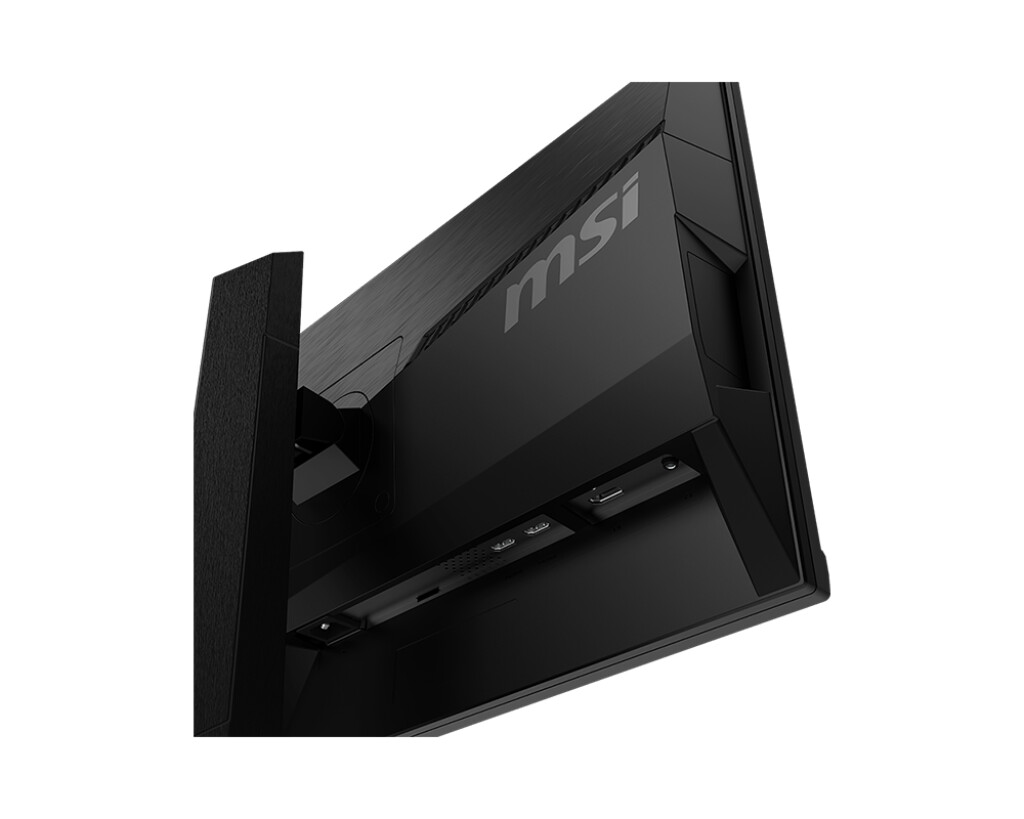
The panel has a 1000:1 contrast ratio with dynamic mega-contrast, 10-bpc color (1.07 billion colors), and a 320-400 nits maximum brightness. Additionally, the HDMI 2.0b connection limits the monitor’s refresh rate to 240Hz. However, the monitor’s DisplayPort 1.4 connection allows users to overclock the panel to 380Hz from within its OSD settings.

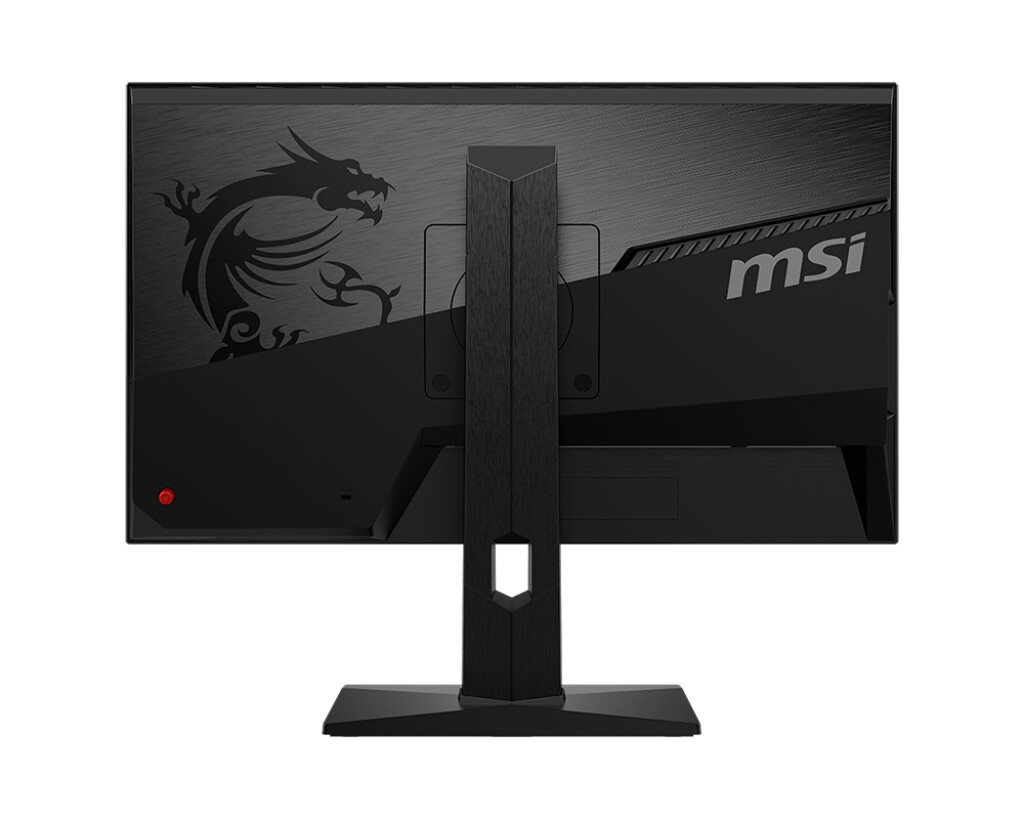
The monitor also features a passive cooling mechanism for the panel, which contributes to its thickness, despite being a planar (flat-screen) monitor. The G253PF is also compatible with VESA mounts and can be tilted and height-adjusted to provide gamers with a comfortable viewing experience.

MSI has not yet revealed pricing information for the G253PF, but with its cutting-edge technology and features, it is likely to attract gamers who demand the highest levels of speed and performance from their displays.

RELATED:

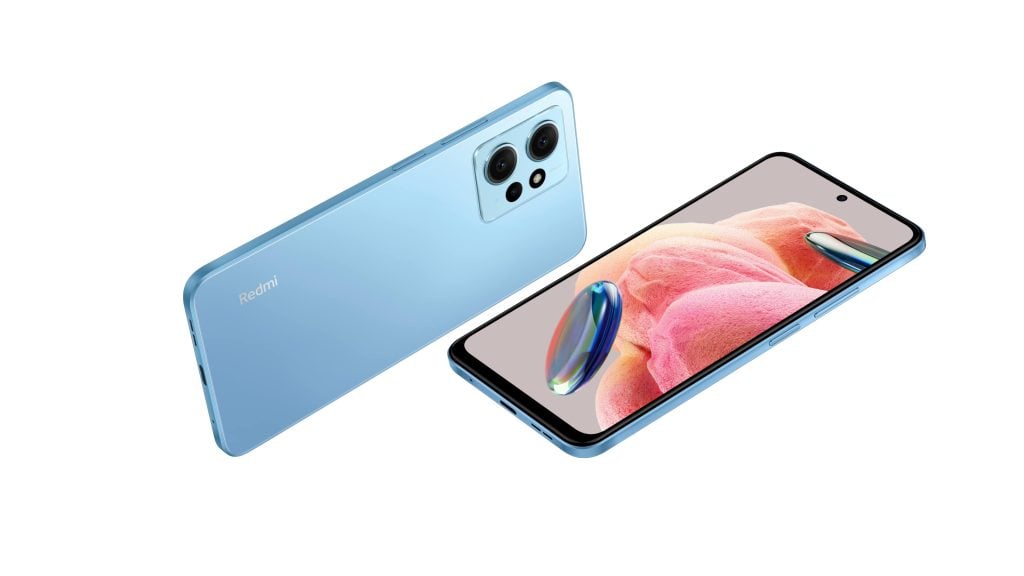
Redmi Note 12 4G launched in India: Snapdragon 685 SoC, 120Hz AMOLED display, and more

Last week, Xiaomi debuted the 4G variant of the Redmi Note 12 in Europe. Today, the company has launched this smartphone in India.

The 4G-only Redmi Note 12 shares most of its features with its 5G counterpart. The only major differences between the two are their chipsets and primary cameras.

Let’s take a detailed look at this handset along with its pricing and availability in India.

Redmi Note 12 4G

Redmi Note 12 4G Specifications

The Redmi Note 12 4G is built around a 6.67-inch centered punch-hole AMOLED display with a resolution of 2400 x 1080 pixels (FHD+) and up to a 120Hz refresh rate. The panel supports up to a 240Hz touch sampling rate, a 4,500,000:1 contrast ratio, and a 1,200 nits peak brightness level.

The device is powered by a Qualcomm Snapdragon 685 chipset paired with LPDDR4x RAM and UFS 2.2 storage. It boots MIUI 14 based on Android 13.

On the rear, the handset sports a triple camera system comprising a 50MP Samsung JN1 sensor, an 8MP ultrawide unit, and a 2MP macro snapper. Whereas, on the front, it has a 13MP shooter for selfies and video calls.

For comparison, the Redmi Note 12 5G houses a Qualcomm Snapdragon 4 Gen 1 chip. Also, it comes with a 50MP main camera.

Further, the connectivity options on the Redmi Note 4G include dual SIM, dual-band WiFi, Bluetooth 5.0, GNSS, and USB Type-C. Unfortunately, the phone lacks dual stereo speakers but arrives with a 3.5mm headphone jack, a side-mounted fingerprint sensor, and a dedicated MicroSD card slot.

Last but not least, the device draws energy from a 5,000mAh battery and carries support for 33W fast wired charging.

Redmi Note 12 4G Price and Availability in India

The Redmi Note 12 4G will retail at the following price tags in India.

  • 6GB + 64GB – ₹14,999
  • 6GB + 128GB – ₹16,999

Customers can get the smartphone in either Lunar Black, Frosted Ice Blue, or Sunrise Gold color options. For a limited time, buyers can avail of a ₹1,000 discount on ICICI Bank credit cards.

The phone will be available for purchase from 12 PM IST on April 6 via Mi.com, Amazon India, Mi Homes, and leading retail stores nationwide.

RELATED:

Redmi 12C launched for Rs 8,999 (~$109), offers 6.71-inch HD+ display, Helio G85, 5000mAh battery and more

Redmi has unveiled two new phones, the Redmi 12C and Redmi Note 12 4G, in the Indian market. Priced under Rs 10,000, the Redmi 12C is an enticing device that offers key features, such as a massive display, a big battery, the Helio G85 chipset, and a 50-megapixel dual camera system. Continue reading ahead to know everything about the Redmi 12C.

Redmi 12C specifications and features

The Redmi 12C has a 6.71-inch IPS LCD panel that produces an HD+ resolution of 1650 x 720 pixels. It offers a 20.6:9 aspect ratio, 500 nits of brightness, a 1500:1 contrast ratio, and a 70 percent NTSC color gamut. The phone runs on Android 12 OS, which is overlaid with MUI 13. Instead of the Google dialer, the device comes with access to the MIUI dialer.

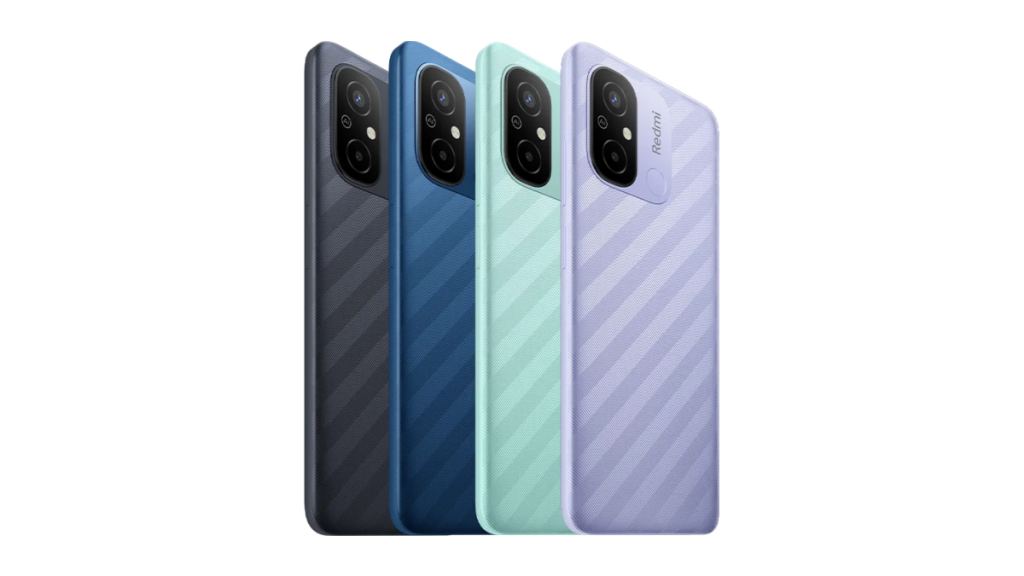
Redmi 12C
Redmi 12C

Under the hood, the Redmi 12C features the Helio G85 chipset. The SoC is accompanied by up to 6 GB of LPDDR4x RAM, up to 5 GB of virtual RAM, and up to 128 GB of eMMC 5.1 storage. For additional storage, the device offers a dedicated microSD card slot.

On the security front, the Redmi 12C offers features like face unlock and a rear-facing fingerprint scanner. It has a 5-megapixel camera on the front. On the back, it has a 50-megapixel main camera, a depth sensor, and an LED flash.

The 12C gets a 5,000mAh battery with 10W charging support. The connectivity features available on the device include dual SIM, 4G VoLTE, Wi-Fi 802.11ac, Bluetooth 5.1, GPS, a microUSB port, and a 3.5mm headphone jack.

Redmi 12C price in India, availability

In India, the Redmi 12C has arrived in options, such as 4 GB RAM + 64 GB storage for Rs 8,999 (~$109) and 6 GB RAM + 128 GB storage for Rs 10,999 (~$134). It can be purchased in colors like Graphite Grey, Ocean Blue, Mint Green, and Lavender Purple. The first sale of the device will be carried out on April 6 via Amazon India, Mi.com, Mi Store, and offline stores.

RELATED:

Over $30 Billion has been Lost to Cryptocurrency Scams So Far, Number to Rise by 2025

Crypto scams are fraudulent schemes that use cryptocurrencies or blockchain technology to deceive investors or users. These scams can take many forms, such as fake initial coin offerings (ICOs), phishing scams, Ponzi schemes, or ransomware attacks. Scammers often use social engineering tactics, such as creating fake websites or social media accounts, to gain the trust of victims and lure them into investing or sharing their private information. Since crypto has been booming over the past few years, more and more people are vulnerable to these scams, especially when victims of most of these scams are merely a few clicks away on any social media website. Here are some stats that gauge the weight of how much money in crypto people have been losing in the past few years, and what those numbers will look like in the coming years.

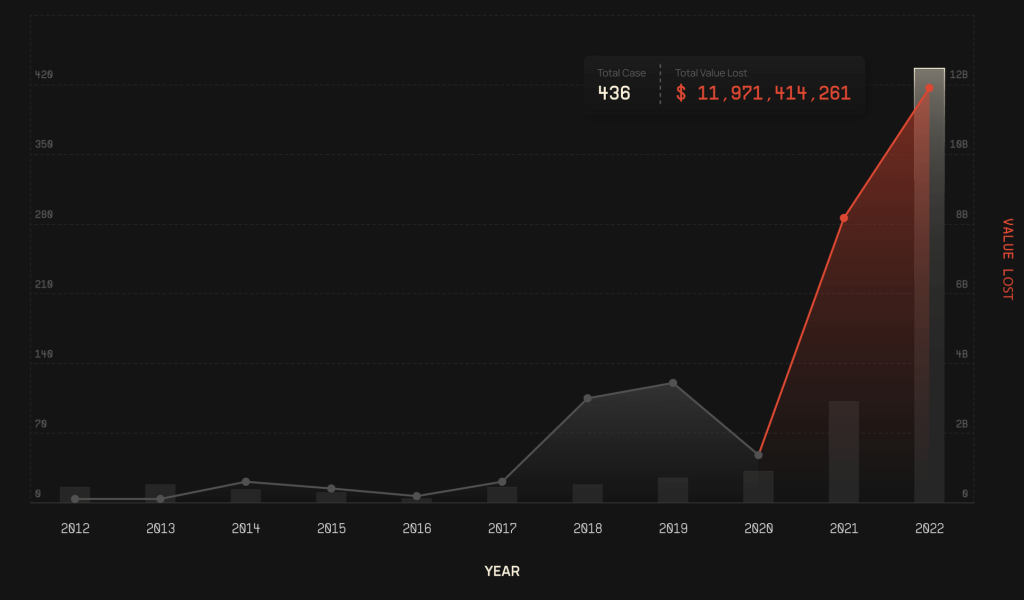
Crypto Scams

A study by Chainplay.gg stated that over $30 billion was lost in crypto scams over the last ten years. That’s a massive number, considering $12 billion of that amount was lost in the last year itself. Over 673 counts of scams contributed to this gigantic sum of money that was stolen out of cryptocurrency wallets worldwide. Out of all global attacks on crypto wallets, the highest number of attacks were noted in the United States. On the other hand, the most amount of money (in US dollars) was scammed in Turkey. Furthermore, experts predict that 2023-2025 will be even more financially catastrophic, with 16 billion dollars poised to be lost in cryptocurrency scams in 2023 alone. This number is further estimated to rise to $20 billion by 2025. Despite such a huge amount of money lost to scams (and given the security detail of cryptocurrencies), merely one-fifth of the total amount has been recovered so far.

Crypto scams are common for several reasons. Firstly, cryptocurrencies and blockchain technology are relatively new and complex, which can make it difficult for the average person to understand and evaluate their risks. This lack of understanding can make people more vulnerable to scams and fraud. Secondly, the decentralized and anonymous nature of cryptocurrencies and blockchain technology can make it easier for scammers to operate without detection. Transactions can be difficult to trace and recover, making it challenging to identify and prosecute scammers. Lastly, the hype and speculation surrounding cryptocurrencies have attracted a lot of attention from investors seeking to get rich quickly, creating an environment where scams can thrive. Scammers often take advantage of people’s greed and FOMO (fear of missing out) to convince them to invest in fraudulent schemes.

This is all the more reason to stay vigilant and cautious when dealing with cryptocurrencies and to do your research before making any investments or sharing personal information.

RELATED:

(Source)

HP EliteBook 800 and 600 G10 series of notebooks launched

HP has just announced a number of new laptops from its EliteBook series. The new models are a part of its EliteBook 800 and EliteBook 600 series models that targets hybrid working professionals. So here are all the details.

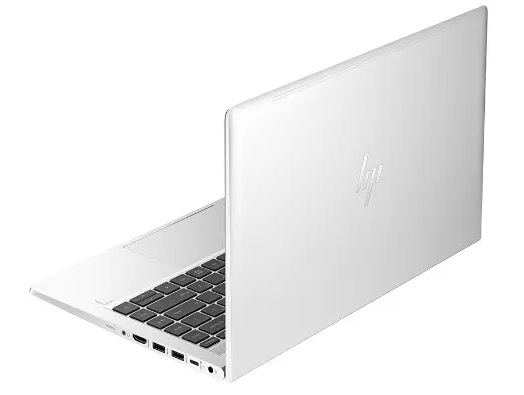
HP Elitebook 800 and 805 G10 series

The company has just launched the new EliteBook 800 and 805 series that is designed for business collaborations and virtual meetings. There laptops feature Intel’s latest 13th Gen Intel core processors or even its AMD Ryzen series processors up to 64GB of LPDDR5 RAM. The brand even offers enterprise level security and manageability to attract business customers.

Elite x360 830 G10/HP EliteBook 830 G10

As the name suggests, this laptop has a 360 degree hinge for its display. It sports a 13.3 inch panel that has a 16:10 aspect ratio and a 5MP IR auto tracking camera on the front. This laptop is also powered by Intel’s latest generation of CPUs and come with various HP suite of security and business software (HP Wolf Security for Business, Enhanced by HP Presence, and more) and runs on Windows 11 Pro.

HP

EliteBook 840 G10/HP EliteBook 860 G10

The EliteBook 840 is a 14 inch laptop while the 860 sports a 16 inch display panel, both of which offer a 16:10 aspect ratio. These laptops run on Windows 11 Pro and are powered by Intel’s 13 Gen Core processors. It houses a 5MP camera for video conferencing as well. Other features include, HP Dynamic Audio and AI Noise Reduction​, HP Context Aware, Wolf Security for Business, and more.

EliteBook 835 G10, EliteBook 845 G10, EliteBook 865 G10

The EliteBook 835, 845, and 865 feature a 13.3 inch, 14 inch, and 16 inch display respectively. Apart from their display panels, the internal specifications are rather similar. These laptops are equipped with AMD’s latest Ryzen 700 series of processors with PRO technology and more.

EliteBook 600 and 605 G10 Series

Moving forward, the EliteBook 600 and 605 series are a more affordable range of business oriented laptops. Despite their relatively more affordable price tag, they still offer premium design, collaboration experiences, and security. The new laptops target remote workers and other business professionals and offer the latest Intel Core and AMD Ryzen processors.

EliteBook 630 G10

Starting with the EliteBook 630, it is equipped with the latest generation of Intel Core processors and runs on the Windows 11 Pro. This model is a 13.3 inch FHD display, with the front also having a HD camera with temporal noise reduction​. Other notable features include, HP Dynamic Audio7 and AI Noise Reduction, Wolf Security for Business, and even fast charge support.

HP

EliteBook 640 G10, EliteBook 645 G10, EliteBook 650 G10, EliteBook 655 G10

The new EliteBook 640, 645, and 655 arrives in two different display sizes. The new models come in either a 14 inch and 15.6 inch panels that offer Full HD resolution. Under the hood, the new AMD Ryzen 7030 series processors with PRO technologies. For ports, it offers Two USB Type-C ports and two USB Type-A ports​. Meanwhile, the EliteBook 645 G10 offers One USB Type-C port and three USB Type-A ports.

Pricing & Availability

The company has just announced these new laptops at the Amplify Partner Conference. All of these models will be available for purchase at the company’s official stores and other retailers. So here’s a look at the pricing:

  • Elite x360 830 G10 starts from 1,639 US Dollars.
  • EliteBook 830 G10, EliteBook 840 G10, and EliteBook 860 G10 starting from 1,569 US Dollars.
  • The company has yet to unveil the EliteBook 835 G10, EliteBook 845 G10, and EliteBook 865 G10 pricing details, but they are expected to launch in May 2023.
  • EliteBook 630 G10, EliteBook 640 G10, and EliteBook 650 G10 starts from 999 US Dollars.

RELATED:

Google is Now Rolling Out Android 13 QPR3 Beta 2 Update to Pixel Devices

Google’s Beta updates allow users to try out new features and improvements before they are officially released to the public. The Beta program is open to anyone with a compatible Pixel device, and users can sign up for the program through Google’s website. However, since Beta releases are pre-release versions, they may contain bugs or other issues that can affect device performance. It is recommended that users back up their devices before installing Beta updates and use them at their own risk. Google typically releases several Beta versions leading up to the official release of a new Android version. As of late, the company is gearing up for the official launch of Android 14 later this year. The tech giant released the latest Android 13 QPR3 Beta 2 Update, which is currently rolling out to Pixel Devices.

Google Pixel
Google Pixel 7 Pro

Previously, Google had hinted that they won’t be publicly testing QPR3, but will instead go straight from Android 13 QPR2 Beta to Android 14 Beta. The latest release of Android 13 QPR3 Beta 2 is available for a variety of Pixel devices – namely Pixel 4a, Pixel 4a 5G, Pixel 5, Pixel 5a, Pixel 6, Pixel 6 Pro, Pixel 6a, Pixel 7 and the Pixel 7 Pro. The latest update includes enhanced privacy features, such as a more discreet PIN entry system that prevents the numbers on the PIN pad from lighting up, protecting your PIN from anyone who might be trying to peek at the same. For this feature, users can go to their screen lock settings and enable “Enhanced PIN Privacy” which will disable animations while entering the device PIN. Furthermore, users can also choose if they would like recommendations in “home search” based on their search history or not.

The new update is also bundled with several bug fixes. Issues like the volume panel flickering or the notification bar closing too quickly have been addressed, making for a smoother and more seamless user experience. So, whether you’re rocking a Pixel 7 Pro or a Pixel 4a, there’s something for everyone in the latest patch. Users of Pixel devices can download the Factory Image or OTA (over-the-air) updates for their respective devices.

RELATED:

(Via)

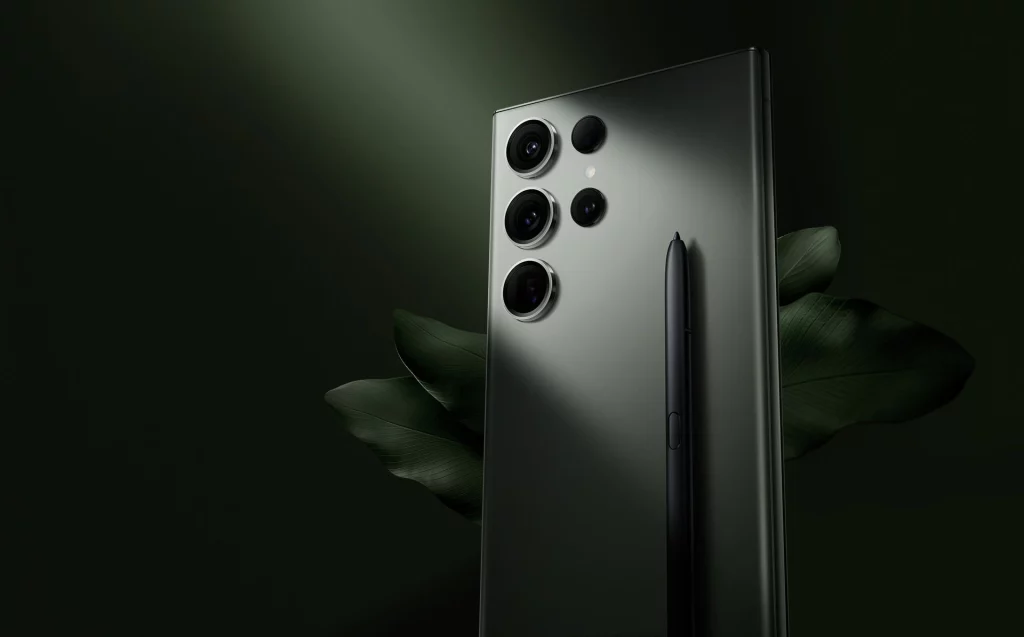
Samsung Galaxy S23 series gets massive camera update: What’s new

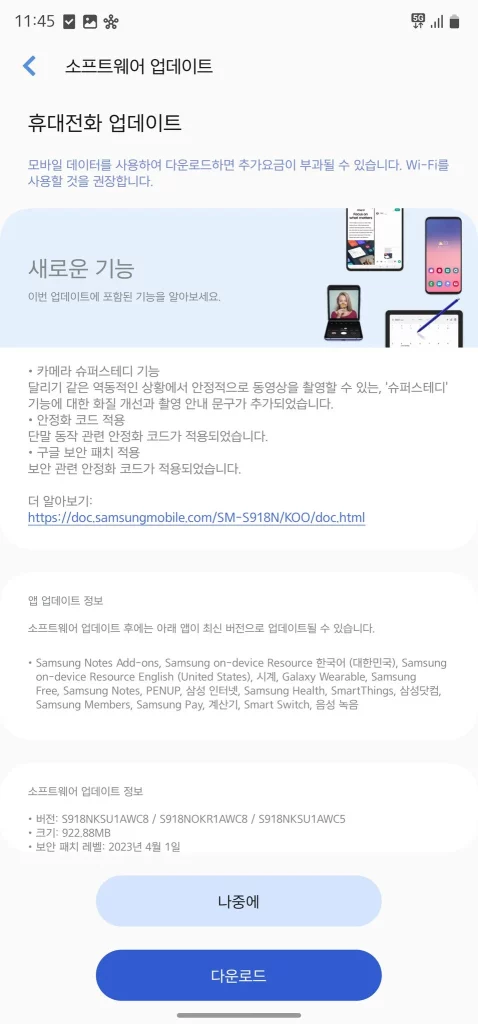
Samsung has recently launched its latest flagship device, the Galaxy S23, which has been receiving positive feedback from consumers. However, some users reported issues with the camera, which has now been addressed in a new update rolled out by Samsung. The update with build number S91xNKSU1AWC8 is currently available in Korea and comes under the March 2023 security patch with a file size of 922.88 MB. Galaxy S23, Galaxy S23+, and Galaxy S23 Ultra are all part of this update.

One of the major improvements in the update is related to the camera and gallery. The gallery has a new function that allows users to delete photos immediately, providing a smoother experience. Additionally, the autofocus concept has been changed, allowing users to take photos even when the focus is not completely set. However, users can also turn off this feature and prioritize focus over speed by going to the camera assistant settings.

Galaxy S23 Ultra

Furthermore, the update enhances ultra-wide camera photography by improving sharpness and adding notice when shooting Ultrawide in low light. It also fixes several issues related to shooting after Night mode off in low light, face recognition after ending a video call using a third-party app, and improves the stability of camera movements. The OIS is now also more stabilized, resulting in better image quality.

Overall, the latest update for the Galaxy S23 devices brings significant improvements and fixes related to the camera and gallery.

Galaxy S23 Series March Update Changelogs:

Galaxy S23 Series March Update Changelogs
  1. A new function has been added to the gallery that allows users to delete photos immediately after they are taken with the camera while still being processed.
  2. The autofocus concept has been modified to allow users to take photos even if the focus is not completely set when the shooting button is pressed for faster photo taking. However, users can still shoot after completing focus as before by changing the settings in the latest Camera Assistant. To prioritize focus over speed, users can turn on the “focus priority” setting.
    (Camera Assistant > Prioritize Focus Over Speed ON)
  3. Improved sharpness and flicker have been added when shooting ultrawide in low light indoors after setting the Camera Video Mode to Super Steady On. Users will also receive a notice stating that more light is needed to take a good Super Steady photo.
  4. A green line that intermittently appeared on the left side when shooting in rear photo mode has been fixed.
  5. Image stabilization has been improved when shooting with FHD60 after setting Auto FPS Off in the rear video.
  6. Improved line-shaped banding noise in the sky in mid-low light when shooting high-pixel in low-mid light. The overall sharpness has also been optimized for high-pixel shooting, and intermittent blurring has been reduced through OIS stabilization.
  7. A malfunction when shooting after Night Off in low light after selecting Shooting Speed > High Resolution > Speed Priority in Camera Assistant has been fixed.
  8. Face recognition issues after ending a third-party video call have been resolved.
  9. Samsung has also improved the stability of the camera app when the frame has moving subjects.

The update will roll out to other countries very soon but it will probably roll out as the April 2023 update since we are almost at the end of March now.

RELATED:

(Source/Via)

boAt Lunar Connect Pro & Lunar Call Pro watches launched in India with AMOLED displays

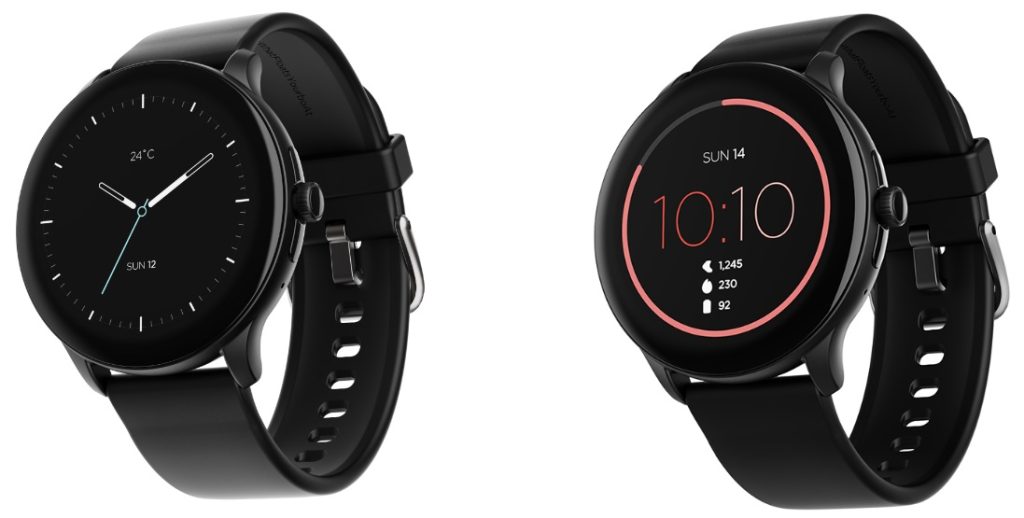
boAt has just launched a pair of new smartwatches dubbed the Lunar Connect Pro and Lunar Call Pro. These are its latest premium wearable products and feature some notable specifications, so here are all the details.

boAt

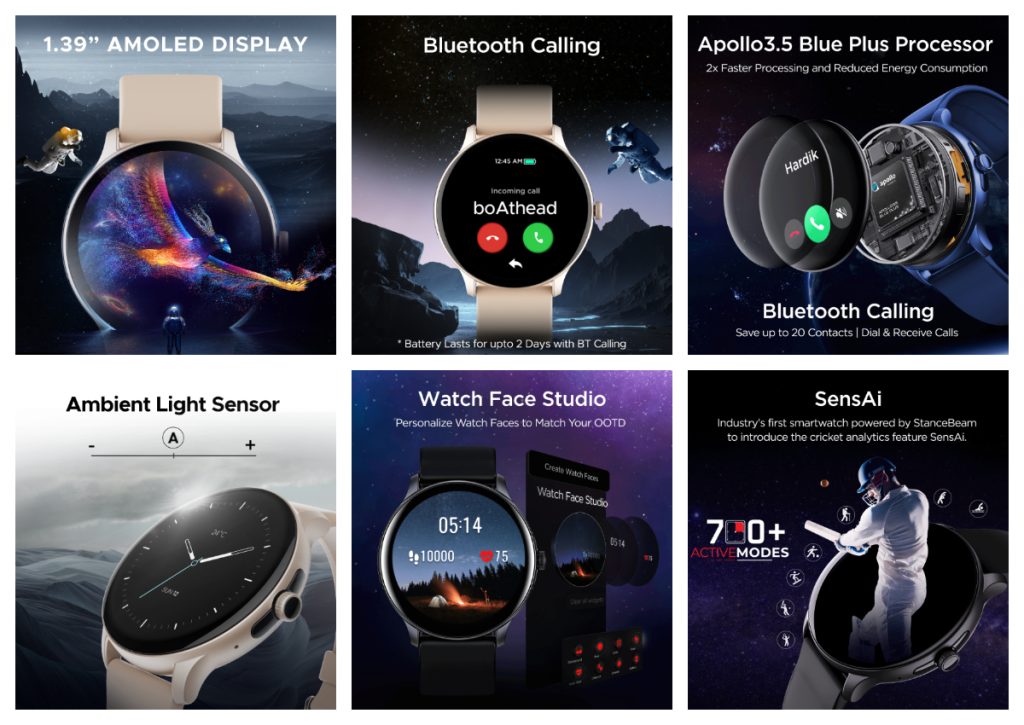
With the launch of the Lunar Connect Pro and Lunar Call Pro, the wearable maker has expanded its premium smartwatch portfolio. As per official notes, the new Lunar series watches are the indsutry’s first wearables that are powered by Watch Face Studio and SensAi technology. Both models feature a similar round display design, sporting a 1.39 inch AMOLED display. The brand claims that the latest models are twice as fast as its predecessor and even features metallic straps for a more premium feel.

The Lunar Call Pro and Lunar Connect Pro watches also offer interchangeable watch faces thanks to Watch Face Studio on the boAt Crest app. Under the hood, the new watches are equipped with the Apollo3 chipset with SensAi and StanceBeam. They also feature built in HD mic and speakers for its Bluetooth calling. These watches will also offer up to 15 days of battery life on a single full charge from its 260mAh battery pack.

boAt

The boAt Lunar Connect Pro will be available for a price tag of 10,999 INR and comes in multiple color options, namely Metallic Black, Active Black, Ink Blue, and Cherry Blossom. On the other hand, the Lunar Call Pro will also be offered in a Metallic Black, Charcoal Black, Deep Blue, and Cherry Blossom, but with a slightly affordable price tag of 6,990 INR. As a part of its introductory offer, boAt is selling the Lunar Connect Pro will be available for just 3,499 INR for a limited time period from its official website.

RELATED:

Samsung Galaxy S24 Ultra rumored to feature a 144Hz refresh rate

Samsung is all set to take its flagship smartphone game to the next level with the upcoming Galaxy S24 Ultra. The South Korean tech giant is reportedly planning to introduce a 144Hz refresh rate display in its next year’s top-notch device, making it the first Galaxy device to feature such a high refresh rate.

The 144Hz refresh rate display will offer smoother animations, especially for gaming enthusiasts, and can bear higher and faster screen load while keeping up with speedy performance. Smartphone displays with faster refresh rates have become increasingly common in recent years, with some devices even boasting refresh rates as high as 240Hz.

Samsung Galaxy S23 Ultra

According to recent reports, the Galaxy S24 series could feature satellite connectivity, similar to what Apple and Huawei currently offer. While Samsung has yet to introduce this feature to its mobile lineup, the head of the company’s MX (Mobile Experience) unit has indicated that it’s something they are actively considering.

In addition to these potential features, the Galaxy S24 series is expected to be powered by the unannounced Snapdragon 8 Gen 3 SoC, which could offer significantly improved performance over the previous generation. The X-4 High-Performance CPU core is said to be clocked up to 15% faster than the overclocked X-3 core used in the Snapdragon 8 Gen 2, resulting in even faster performance for the 2024 flagship series.

Camera improvements are also rumored to be in store for the Galaxy S24 Ultra, with an improved 200MP image sensor expected for the primary camera and enhanced zooming capabilities for the telephoto camera. Of course, it’s worth noting that these are all just rumors at this point, and we won’t know for sure what the Galaxy S24 series will offer until closer to its release.

Despite the lack of concrete details, the buzz around the Galaxy S24 series is already building, with many consumers eagerly anticipating what Samsung has in store for its next flagship line.

RELATED:

(Source)

GPT-4 Powered Bing Chat will Get Ads Pretty Soon

Microsoft unveiled its Bing Chatbot powered by GPT-4 a while back, and needless to say, it has garnered a lot of attention worldwide. For starters, Microsoft recently announced that it has achieved a notable milestone with Bing, when its daily active users crossed 100 million. Following the release of the latest build, the company saw one-third of its daily active users being new to the search engine. Almost a week ago, the company introduced the new AI-powered Image Creator to the Bing search engine. Amidst all this, Microsoft has made sure not to include any ads on the Bing Chat page, until now. Yusuf Mehdi, Microsoft corporate vice president, recently stated that ads will soon start making their way onto Bing Chat.

The advertisements, however, won’t be too intrusive. A tweet by Debarghya Das sheds light on the company’s plan to monetize the new search engine, and it’s quite different from what you might expect. Ads will show up when a user searches for a specific product, which means the bias won’t affect users directly. What this means is that you won’t be blasted by random or targeted ads without even searching for them. Have a look at how the ad appears in this tweet:

As Debargya states in the tweet, one cannot directly compare the conversion rate through these advertisements since they are based on the user’s current searches, rather than past searches. This might be a key step towards changing the way ads work with AI-powered search engines in the future. It is worth noting that while the Bing Search Engine did have advertisements in the first place, the Bing ChatBot is a different entity for the company altogether. Mehdi’s blog post indicates that Microsoft intends to distribute ad revenue among partners whose content directly contributed to the chat response off the user’s prompt. However, it remains unclear how Microsoft plans to maintain a balance between ad and non-ad responses. One thing is for sure, the inclusion of advertisements will further complicate the task of discerning the credibility of a given response.

RELATED:

(Source, Via)

Asus ROG Phone 7 live images leaked ahead of April 13 launch

A recent report leaked the spec sheet of the upcoming Asus ROG Phone 7. It indicates that the smartphone will be equipped with a Snapdragon 8 Gen 2 chipset along with other performance-oriented cutting-edge hardware suitable for a gaming flagship.

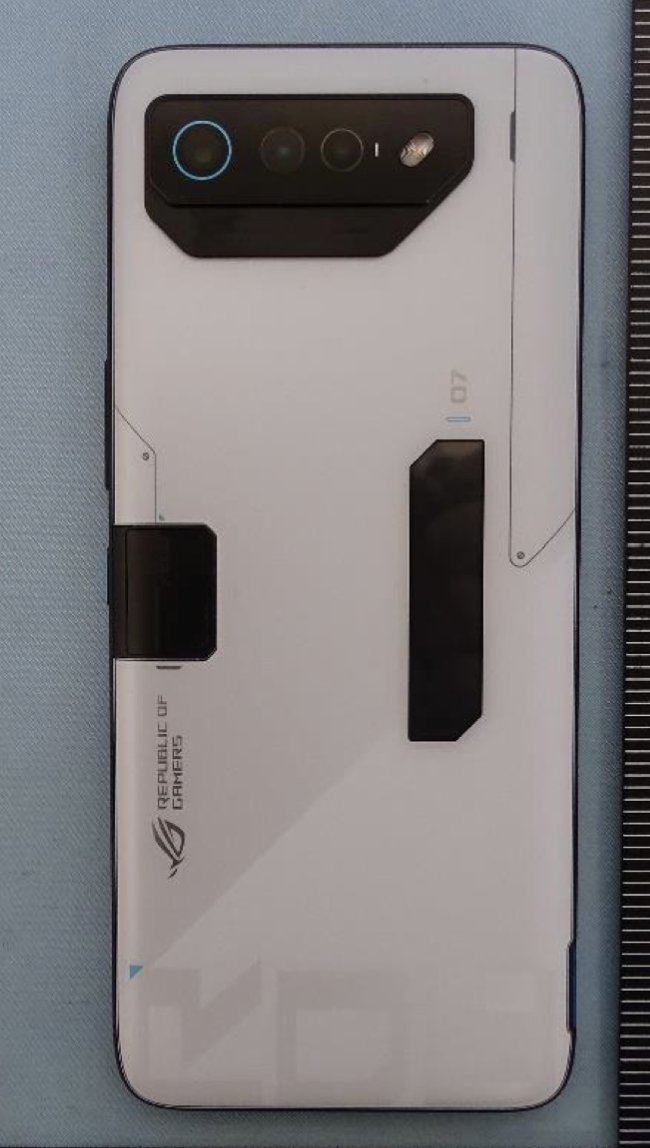
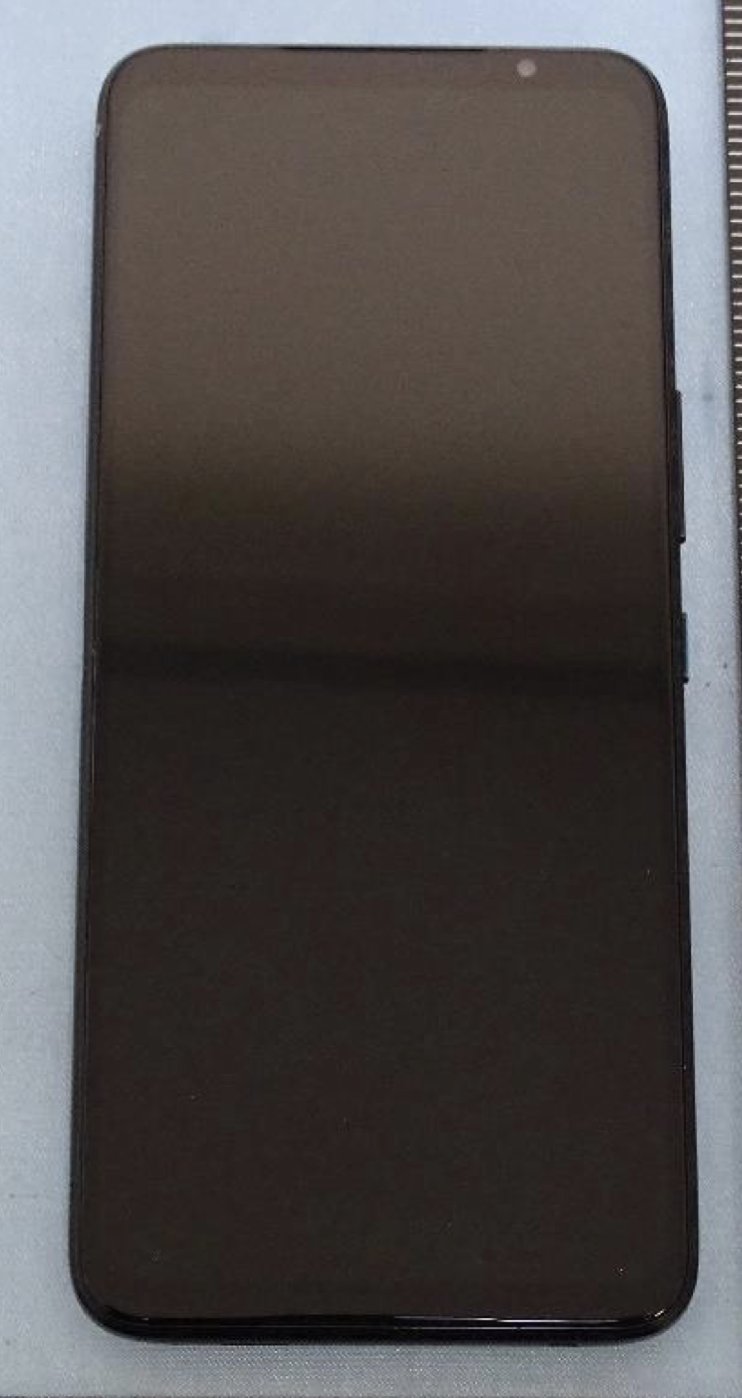
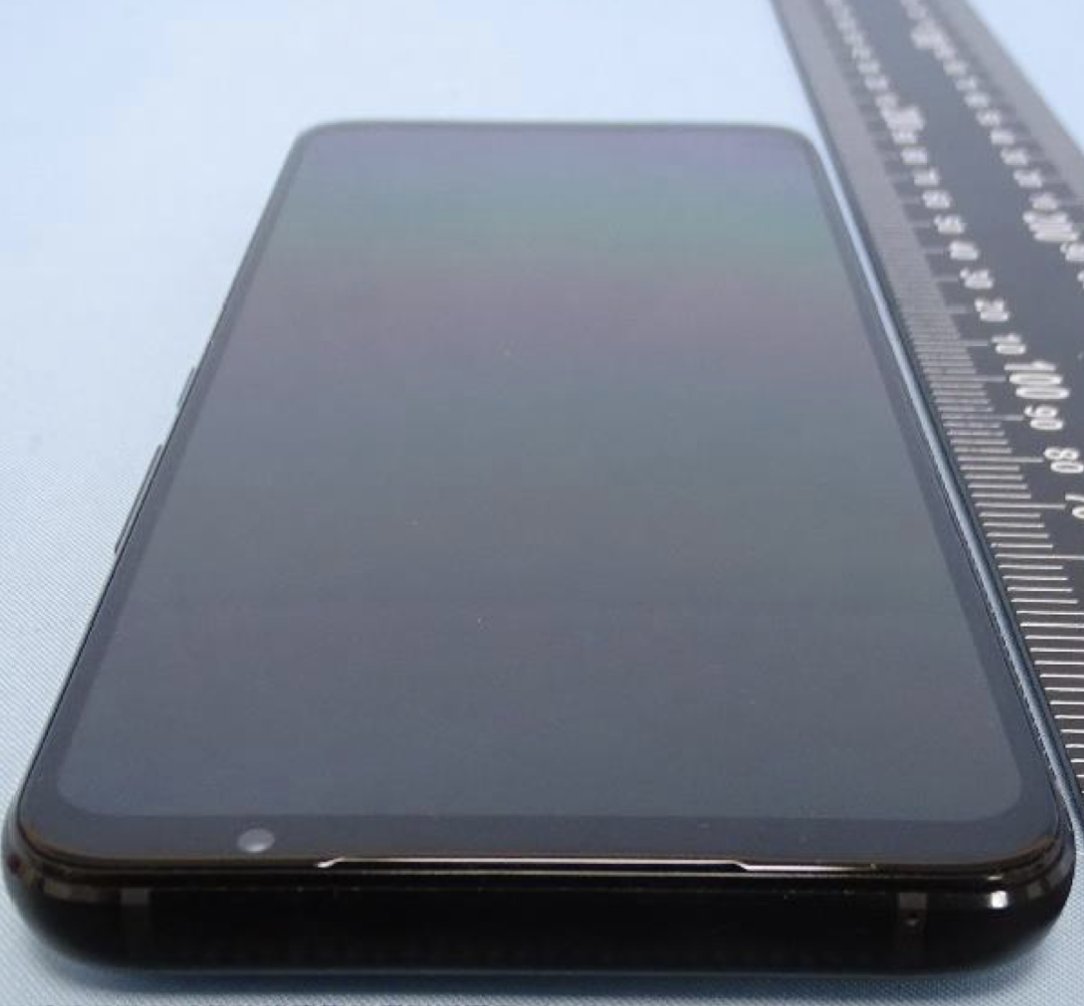
Now, a new leak from tipster SnoopyTech has revealed live images of the ROG Phone 7. According to leaked images, the upcoming ROG Phone 7 will feature a design similar to its predecessor, the ROG Phone 6. The phone’s rear panel will be white with graphics and a cutout for dot-matrix lighting. The front of the device will have slightly thick bezels and a front camera located on the right side of the top bezel.

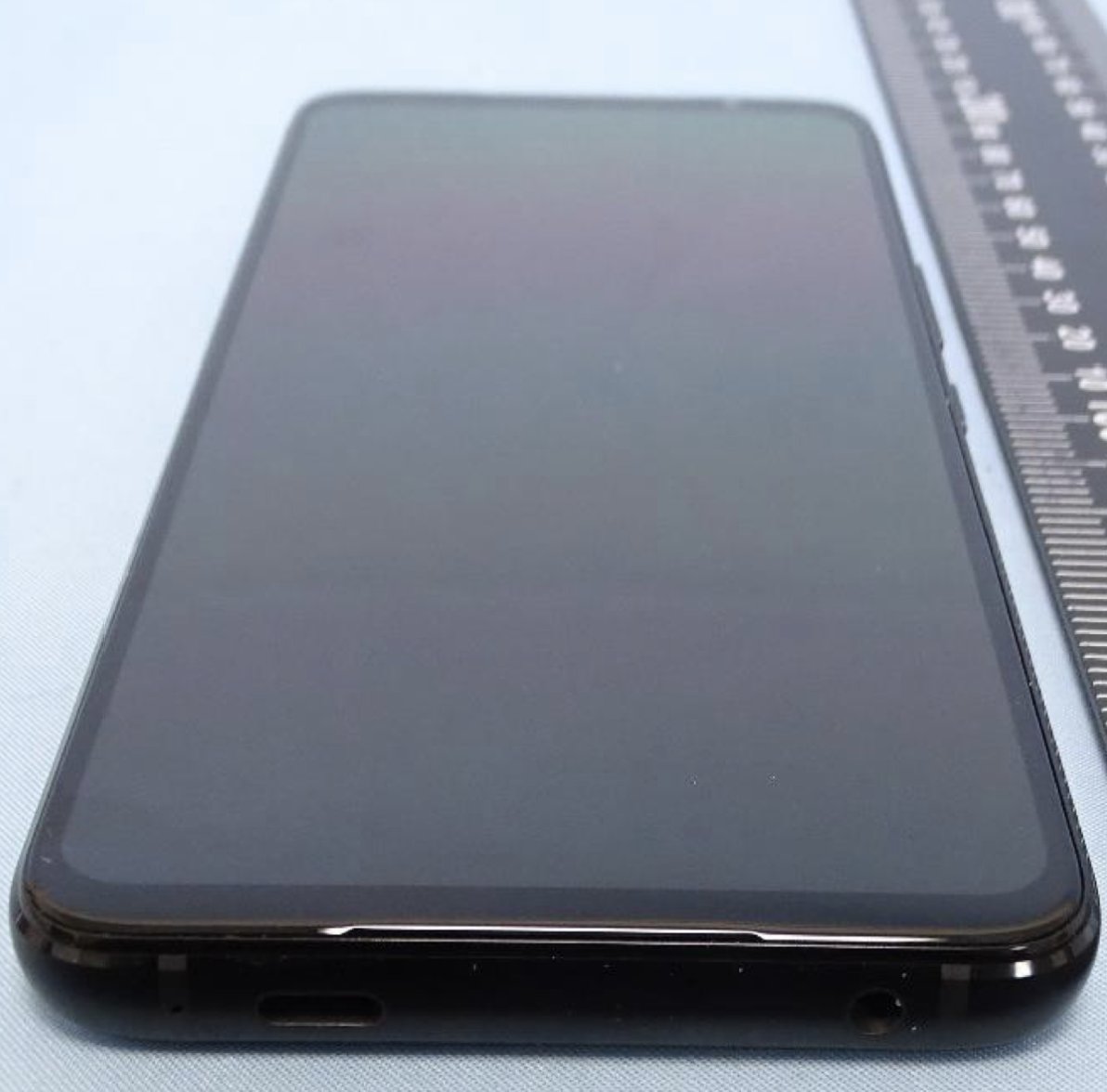
Dual speakers can be found on the edge of the top and bottom bezels, and the USB Type-C port and 3.5mm headphone jack are located on opposite sides of the bottom edge. Finally, the power and volume buttons are positioned on the right edge of the phone.

Asus ROG Phone 7 specs (rumored)

The upcoming ASUS ROG Phone 7 is expected to come with a huge 6.78-inch E4 AMOLED display with a 165Hz refresh rate and Full HD+ resolution. It will likely feature an under-display fingerprint scanner. The phone is anticipated to be powered by Qualcomm’s Snapdragon 8 Gen2 processor, LPDDR5X RAM, and UFS 4.0 storage. It has been spotted on Geekbench with 16 GB of RAM.

The device is said to run on Android 13 OS and ROG UI. The vanilla model will feature a 32-megapixel front camera and a 50-megapixel primary camera with a 13-megapixel ultra-wide lens and a 5-megapixel camera. The ROG Phone 7 is expected to pack a 6000mAh battery with 65W fast charging capabilities. It will have an IP54-rated waterproof and dustproof chassis that will weigh less than 240 grams.

According to rumors, the base model of the ROG Phone 7 will be priced at around $580, and it will be launched in various markets such as the US, China, Taiwan, and India on April 13. The leaked images of the device suggest that it will have the same design as the previous model, with a white-colored rear panel and a dot-matrix lighting cutout. The phone is also expected to have dual speakers, a USB Type-C port, a 3.5mm headphone jack, and a power and volume button on the right edge.

RELATED:

Google to Take Strict Action to Combat Abuse Against Ad Accounts

Google advertisements, commonly known as Google Ads, is an advertising platform that allows businesses to place ads on Google search engine result pages, YouTube, and other Google-affiliated websites. With Google Ads, businesses can create targeted campaigns by selecting specific keywords, demographics, and locations. Advertisers are charged on a cost-per-click (CPC) basis, meaning they only pay when someone clicks on their ad. Google Ads also offers various tools to track ad performance and optimize campaigns, allowing businesses to make data-driven decisions to improve their return on investment. As one of the most widely used advertising platforms in the world, Google Ads has become an essential tool for businesses of all sizes looking to reach their target audience online. It is only fair that such a massive platform will be abused by advertisers, which is why Google is taking active steps to combat the same.

On March 30th, the tech giant released its “Advertising Security Report” for 2022, detailing the steps it is taking to combat abuse on its various platforms. This includes fraudulent or deceptive practices such as click fraud, where a person or automated program repeatedly clicks on an ad to generate false impressions or revenue, or misleading advertising, where an ad makes false or exaggerated claims about a product or service. Other forms of Google Ads abuse can include using inappropriate language or images in ads, targeting vulnerable populations, or promoting illegal activities.

As per reports, Google plans to remove over 5.2 billion ads, restrict more than 4.3 billion ads, and suspend over 6.7 million advertiser accounts. These numbers represent a significant increase from 2021, with 2 billion more ads being removed this year. Additionally, the company has introduced 29 policies for advertisers and publishers, launched the Financial Services Verification Program in more countries, and strengthened campaign advertising policies. Google is also set to launch a new transparency tool, the Advertising Information Disclosure Center, which will allow users to view verified advertisers across Google’s platforms and access advertiser pages.

RELATED:

(Via)

China introduces new courses for semiconductor engineers to bridge the talent gap

The ongoing US-China trade war has created a human resource dilemma for China. US restrictions on Beijing’s access to advanced chip technology have led to a shortage of semiconductor experts in the country. Consequently, China is increasing its efforts to cultivate domestic talent in this field.

chip

Export controls resulting from the ongoing trade war have hindered China’s semiconductor aspirations, which are at the center of the technology competition between the US and China. China Center for Information Industry Development, and the China Semiconductor Industry Association (CSIA), have jointly published a white paper stating that China is expected to experience a deficit of approximately 200,000 workers in the semiconductor industry this year. 

Right now the biggest challenge for the semiconductor industry in China is to acquire domestic talent. Despite attempting various solutions, such as attracting experts from Taiwan and other countries,  Beijing faces a human resource shortage in the industry. 

How is China solving the problem of talent shortage?

To address the problem of talent shortage, China is now turning to its student population to train the next generation of semiconductor professionals, with prestigious universities such as Tsinghua, Peking, and Fudan announcing IC programming programs. The central government is also providing policy support for this initiative.

Over the past five years, there has been a notable increase in enrolments for both undergraduate and postgraduate courses in chip engineering, which can be attributed to the availability of new funds for leading universities as well as a proliferation of smaller private schools that offer shorter-term instruction. University data shows that the number of students enrolling in Master’s programs to study chip engineering at ten leading universities almost doubled between 2018 and 2022. According to recent graduates, this surge is also being reflected at the undergraduate level. 

In August 2020, China’s State Council released policy guidelines that stated that the cultivation of talent in chip engineering is a key priority for the country and, the focus should be on education and training. The country plans to increase the number of IC and software majors in Chinese universities, accelerate the development of IC disciplines, and expand laboratories and training facilities,  to meet the needs of the industry. Moreover, eligible universities have been encouraged to partner with semiconductor firms to develop comprehensive programs that can provide hands-on experience.

What are the problems with China’s current chip education?

According to a 2022 survey conducted by Chinese research firm ICWise, over 60% of chip engineering students in China complete their studies without any internship experience in the field. Moreover, the teaching materials used in chip engineering education are often outdated, with textbooks not covering the latest cutting-edge technology. Also, many professors lack opportunities for sufficient interaction with industry professionals and are restricted by private companies’ intellectual property rights, which prevents them from accessing the latest expert knowledge. Furthermore, most educational institutions are unable to afford and maintain expensive experimental production lines that can bridge the gap between theory and practice.

Related:

(via)

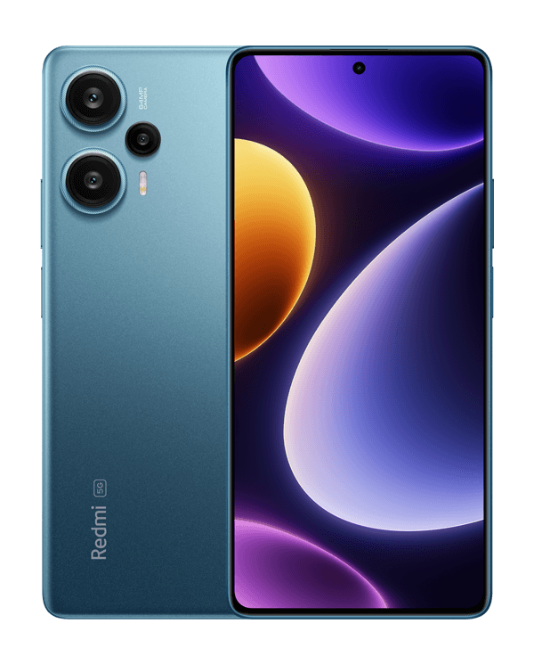
Get Redmi Note 12 Turbo for $349 at Giztop

Redmi Note 12 Turbo is now available on Giztop. The smartphone can be bought for a starting price of $349 only.

WHERE TO BUY
Redmi Note 12 Turbo at $349 @Giztop

Redmi Note 12 Turbo features a 6.67-inch FHD+ OLED display that supports 2400 x 1080p resolution, 120Hz refresh rate, and 240Hz touch sampling rate.  The phone is powered by the latest Snapdragon 7+ Gen 2 Octa-core processor and comes with 8GB/12GB/16GB LPDDR5 X RAM and 256GB/512GB/1T UFS 3.1 storage. 

The phone features a triple rear camera setup with a 64MP primary camera and an 8MP ultra-wide angle lens and a 2MP macro shooter. For your selfies, you have a 16MP sensor in the front. 

Redmi Note 12 Turbo is fueled by a 5000mAh battery and supports a 67W fast flash charge. Other interesting features include the NFC function, Infrared sensors, 3.5mm jack, Bluetooth 5.2, under-display fingerprint sensor, JBL stereo dual speakers, etc. 

You can now buy the Redmi Note 12 Turbo for $349 only on Giztop. Please note that the phone is available in Black, Blue, and White color variants. This price is applicable to the base variant only.

For more information on such exciting deals and offers check out our deals hub.