Advertisement

Instagram is Displaying Ads in Search Results

Instagram ads are quite a popular form of social media advertising that allows businesses and individuals to promote their products or services to a large audience, given Instagram’s massive user base. These ads appear in users’ feeds or stories and can be targeted based on factors such as demographics, interests, and behaviours. Instagram ads can be created and managed through Facebook Ads Manager, which provides a variety of ad formats, including photos, videos, carousels, and stories. Instagram is expanding its advertising options in a move that could benefit businesses seeking greater visibility. As part of its latest testing phase, the app has introduced a couple of new ad placements that could transform the way brands are discovered on the platform. One such placement involves sponsored ads appearing in search results when users enter specific terms, such as “makeup”, or “shoes”. These ads will be marked as sponsored and will show up in users’ feeds alongside the actual search results. The company has said it intends to make this placement available globally in the coming months.

Instagram
Instagram

The app is also partnering with selected brands to trial a new format known as “reminder ads”, which could provide businesses with a more direct way to notify users of upcoming events or launches. Once users opt into these reminders, they will receive notifications from Instagram one day before the event, 15 minutes prior, and when it commences. These notifications will appear like any other Instagram notification and will display on users’ lock screens.

The introduction of these new advertising options is hardly surprising given the importance of ads to Meta, the parent company of Instagram. Meta‘s advertising revenue dropped for the first time in 2022, so it is actively looking for new ways to monetize its platforms. Despite this setback, the company still earned $31.25 billion in advertising revenue in the fourth quarter of 2022.

RELATED:

(Via)

Lenovo Legion Launches Portable 140W GaN Adapter for Gaming Laptops

Gaming laptops require a significant amount of power to run the high-end hardware they come equipped with, including powerful graphics cards and processors. As a result, the power adapters for gaming laptops are much larger and heavier than those for standard laptops. These adapters can be as big as a brick and weigh a pound or more, making them quite bulky and difficult to carry around. This size is necessary to deliver the high wattage and voltage required to power the gaming laptop’s components.

Lenovo

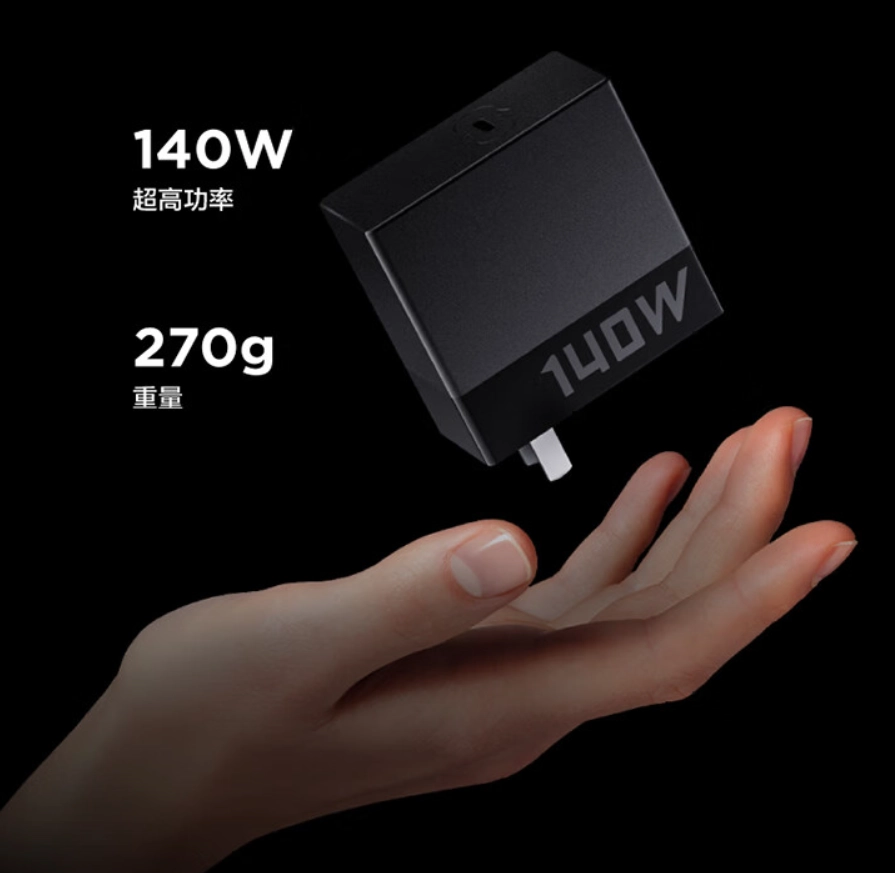
Lenovo has come up with a solution to the cumbersome size of power adapters for gaming laptops with its latest product release. At the Lenovo Savior spring ecological new product launch conference, Lenovo introduced the C140 GaN charger, which delivers a high power output of 140W. Even though gaming laptops require a significant amount of power to run, the C140 GaN charger is small in size but still able to achieve about 80% of the performance of ordinary adapters. As per test data, popular MOBA game DOTA 2 was played at the highest image quality, and while doing so, the frame rate using the original 300W adapter was 182. On the other hand, the frame rate using the 140W charger was 142. This is quite impressive for a charger which is less than half the wattage of the original power brick.

This charger is compatible with the Lenovo Legion series gaming notebooks, and it supports PD3.1, QC3.0, PPS3.0, and other fast charging protocols. The charger has a sleek design, a volume of 66.2×65×30.6mm, and a weight of about 270g, which is 26% of the original 300W charger of the Legion series notebooks. The C140 GaN charger is available for pre-order on the e-commerce platform for 269 yuan (~$39), with an initial price of 199 yuan (~$29). The pre-orders have already begun, and the charger will go on sale on April 7.

RELATED:

(Via)

Jabra Elite 4 TWS earbuds launched with ANC & Bluetooth multipoint features

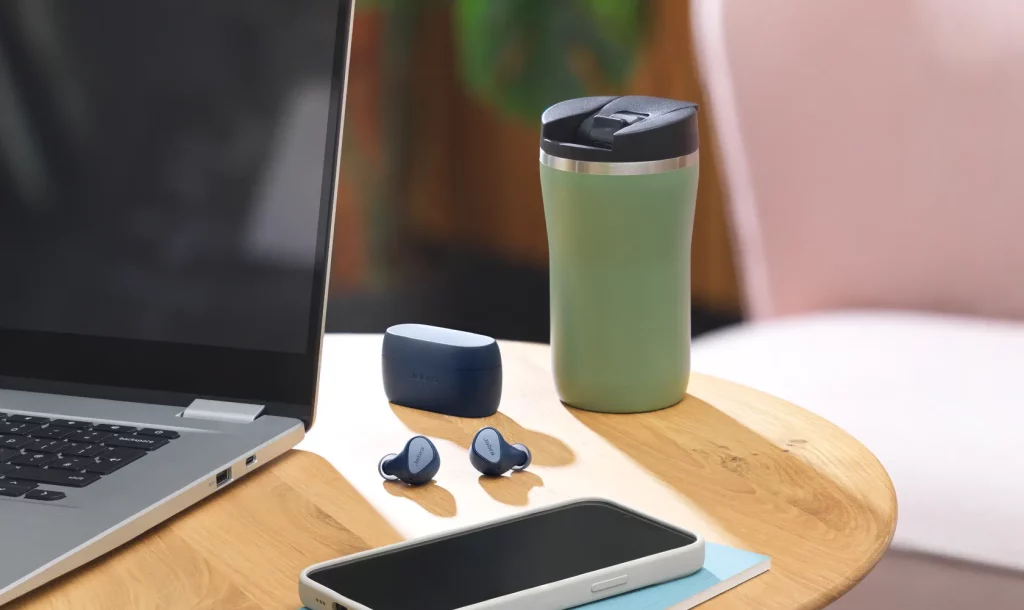
In December, Jabra introduced the Jabra Elite 4 Active TWS earbuds to the global market. These earbuds are specifically designed for sports and physical activities, providing exceptional sweat resistance that surpasses that of most other earbuds available in the market. The brand has now launched the Jabra Elite 4 earbuds, which succeed the Elite 3 model from 2021.

Jabra

Compared to the Elite 4 Active, the Elite 4 retains most of the core features, with ith a few of them slightly toned down. The Jabra Elite 4 TWS earbuds provide IP55 dust and water resistance, which makes them fairly resistant to sweat and rain, although slightly less so than the Elite 4 Active’s IP57 rating. The earbuds offer up to 5.5 hours of listening time, in contrast to the Active’s seven hours (with a total of 22 hours and 28 hours respectively, when used with the charging case).

Jabra

It is not clear whether the Elite 4 has the same transparency mode as the higher-end model. Nevertheless, the earbuds come equipped with four microphones, and aptX support helps optimize audio quality, making the most of Bluetooth’s limited bandwidth.

ANC and Bluetooth multipoint are undoubtedly excellent features to have in a pair of earbuds, and a $20 price increase from the Elite 3’s $80 price point to the Elite 4’s $100 price point appears reasonable to incorporate these features. However, it’s worth noting that the Elite 4 doesn’t boast any other significant improvements. The earbuds come with the same 6mm drivers, the same IP55 rating for protection against water and dust, and the same battery size as the Elite 3.

RELATED:

(source)

Kia & Hyundai Cars Uninsurable in the US, Thanks to Viral TikTok Trend of Stealing Cars

Car thefts remain a prevalent issue worldwide, with millions of vehicles stolen each year. Not only does it result in financial losses for car owners, but it also contributes to higher insurance premiums and poses a significant threat to public safety. The recent Kia Boyz thefts have become a serious problem in the United States, particularly for owners of certain Kia and Hyundai models. A group of teenagers identified a security loophole in these models, allowing them to start the cars without a key. The thefts quickly spread across the country, and many were documented on social media platforms, leading to a rise in car thefts and vandalism.

Kia Boyz

Hyundai and Kia have been criticized for not equipping their cars with the necessary security features, particularly engine immobilizers. Models produced between 2011 and 2021 are particularly vulnerable, and thieves have been able to start the cars with just a USB cable and a screwdriver. The companies have since released software updates that require physical keys to start the cars and sound alarms for longer periods if a thief tries to start the car. However, these updates came too late for many owners who have already been affected by the thefts.

The Kia Boyz thefts have caused insurance companies to refuse to cover affected Kia and Hyundai models, further compounding the problem for owners. The rise of this problem has been attributed to the lack of necessary security features in the cars, and the popularity of the vehicles due to their lower price point.

The Kia Boyz trend gained popularity on TikTok, leading to a surge in car thefts, vandalism, and accidents in many cities across the country. In 2021 alone, 10,471 vehicles were reported stolen in the US, with 67 percent of them being Kia or Hyundai cars. While both companies have made efforts to address the security issues, the damage has already been done, and many owners are left with the consequences.

In conclusion, the Kia Boyz thefts have highlighted the need for adequate security features in cars, particularly in models produced by Hyundai and Kia. The lack of engine immobilizers in these models has made them vulnerable to theft, and the rise of social media trends has only exacerbated the problem. While the companies have taken steps to address the issue, it remains to be seen whether they will be able to restore confidence in their products and win back the trust of affected owners.

RELATED:

(Via)

iQOO Z6 5G Price in India Dropped After iQOO Z7 5G Launch          

The iQOO Z6 5G has received a price cut in India after the launch of the iQOO Z7 5G. After the price cut, the Z6 is now listed on Amazon and iQOO India’s website with a starting price of Rs 14,499.

iQOO Z6 5G Receives Price Cut in India

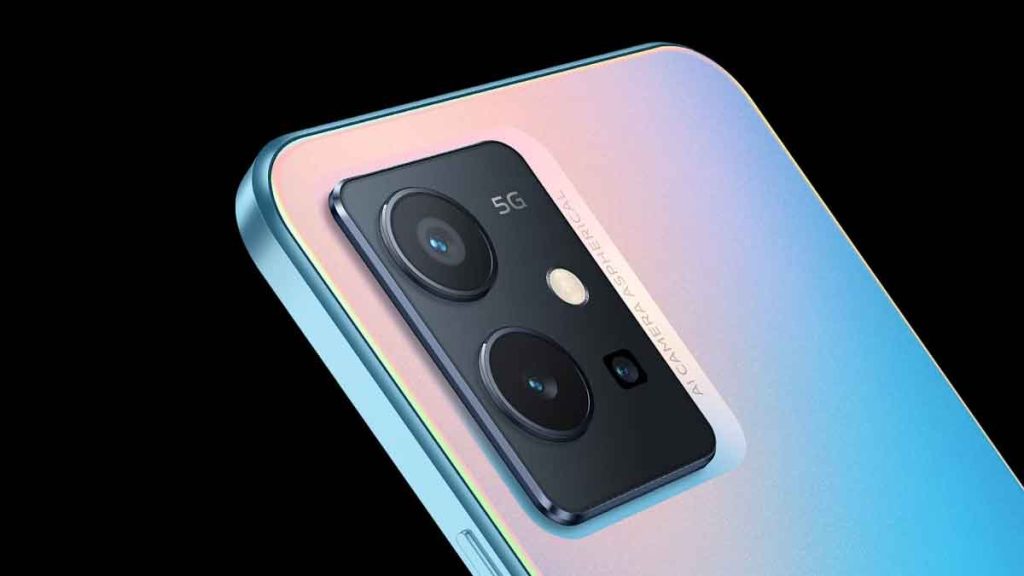
The iQOO Z6 5G comes in three variants, such as 4 GB RAM + 128 GB storage, 6 GB RAM + 128 GB storage, and 8 GB RAM + 128 GB storage. At launch, these variants were priced at Rs 15,499, Rs 16,999, and Rs 17,999, respectively.

iQOO Z6 5G
iQOO Z6 5G

Now, the iQOO Z6 5G has received a price cut of Rs 1,000 in the country. Hence, its three variants are now available for Rs 14,499, Rs 15,999, and Rs 16,999, respectively. To further sweeten the deal, buyers can take advantage of the Rs 1,000 discount by HDFC and ICICI bank cards while placing the order. The device comes in two colors, such as Raven Black and Lumena Blue.

iQOO Z6 5G specifications

The iQOO Z6 5G has a 6.58-inch IPS LCD screen that offers an FHD+ resolution and a 120Hz refresh rate. The display notch houses a 16-megapixel selfie camera, and its rear shell has a 50-megapixel Samsung JN1 primary camera, a 2-megapixel macro camera, and a 2-megapixel depth sensor.

The Snapdragon 695 chipset is at the helm of the iQOO Z6 5G. The device comes with up to 8 GB of LPDDR4x RAM, 128GB of storage, and a microSD card slot. It comes with other features like FunTouch OS 12-based Android 12, a side-facing fingerprint scanner, and a 5,000mAh battery with 18W charging.

While the iQOO Z6 5G is now reasonably priced, the iQOO Z7 5G, which was recently launched with a starting price of Rs 17,499 (after discount), is a better buy. It has a 6.38-inch FHD+ 90Hz AMOLED display with a fingerprint scanner, a Dimensity 920 chip, 64-megapixel dual rear cameras, and a 4,500mAh battery with 44W fast charging.

RELATED

Moto G32 8GB RAM Variant Goes on Sale in India

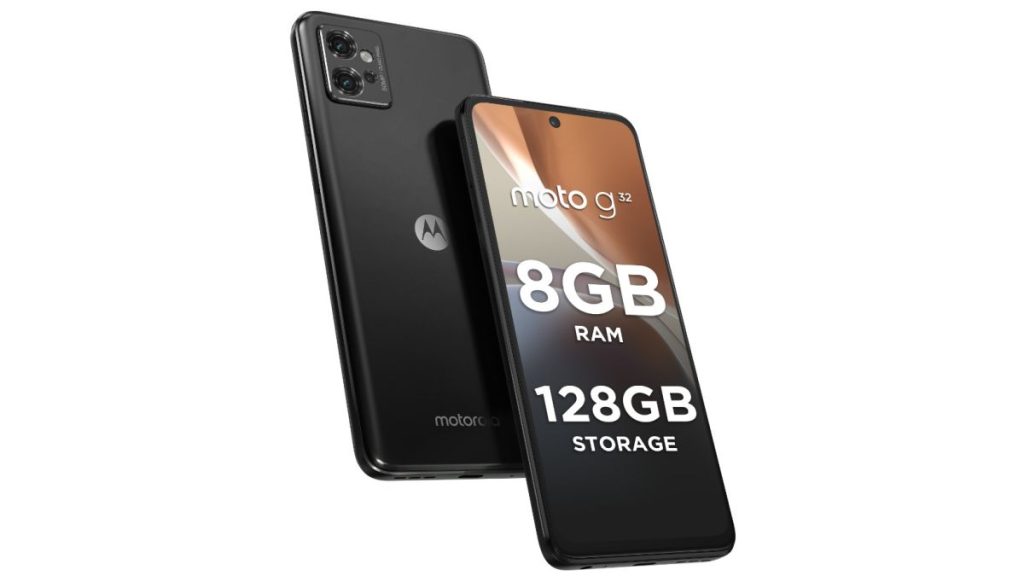
Motorola announced the Moto G32 in August 2021 in India. Since its launch, the device has been available in a single trim that offers 4 GB of RAM and 64 GB of storage. Today, the company confirmed the arrival of a new variant that offers 8 GB of RAM and 128 GB of storage.

Moto G32 8GB RAM variant price in India

Moto G32 8GB RAM variant
Moto G32 8GB RAM variant launched in India

The 8GB+128GB edition of the Moto G32 is priced at Rs 11,999. It will be available for purchase starting at 12 pm today (March 22) through Flipkart. It can be purchased in colors like Mineral Grey and Satin Silver.

Moto G32’s 4 GB RAM + 64 GB storage variant is now available for Rs 10,499. It was priced at Rs 12,999 at launch.

Moto G32 specifications

The Moto G32 houses a 6.5-inch IPS LCD display that produces a Full HD+ resolution and a 90Hz refresh rate. The device s powered by the Snapdragon 680 chipset. It comes with 4 GB / 8 GB of LPDDR4x RAM and 64 GB / 128 GB of storage. For additional storage, it comes equipped with a microSD card slot.

The G32 has a 16-megapixel front-facing camera. Its rear shell has a 50-megapixel primary camera, an 8-megapixel ultra-wide lens, and a 2-megapixel macro camera. The device is equipped with a 5,000mAh battery with 30W charging. The G32 offers other features like dual stereo speakers, a side-facing fingerprint scanner, and an IP52-rated chassis.

RELATED:

Nothing Ear (2) Indian price & offers revealed ahead of launch

Today, Nothing is set to launch the Nothing Ear (2) TWS earbuds, which will be an upgrade from the Nothing Ear (1). While there won’t be any significant changes in the earbuds’ design, improvements have been made internally. Recently, the European pricing of the earbuds was revealed, and now, the Indian pricing has also been leaked online.

Nothing

According to a well-known tipster, Paras Guglani, the Nothing Ear (2) earbuds will be released in India on March 28. However, it’s unclear whether this refers to the date when the price will be announced or when the earbuds will be available for purchase. Only the white color model will be available in India, as per the leaks.

Guglani has revealed that the retail price of the Ear (2) TWS earbuds in India will be ₹11,499, but during the first sale, it will cost ₹9,499. Additionally, customers can avail of an extra 10% discount through Bank offers.

Nothing Ear (2) specs

The upcoming Nothing Ear (2) TWS earbuds will feature a stem design with silicone ear tips that provide a comfortable and secure fit, as well as passive noise cancellation. The earbuds will have a transparent section that showcases their internal components and battery cells. The stem of each earbud will have a microphone cutout and the Nothing Ear (2) branding imprinted on it. The charging case will have a semi-transparent design with a transparent lid, revealing its internal components.

The earbuds will retain the 11.6mm drivers seen in the previous model, and each earbud will offer up to six hours of playback time with a single charge. The charging case is expected to provide up to 36 hours of battery life and will support fast charging and Qi wireless charging.

The Ear (2) will feature Hybrid ANC, which will effectively reduce background noise for an immersive listening experience. The earbuds will weigh just 4.5 grams each, which is 0.2 grams lighter than the previous model. Additionally, the Ear (2) will have an IP54 rating for protection against water splashes and sweat.

There are speculations that the Nothing earbuds will allow for connecting two devices simultaneously and offer Personalized Active Noise Cancellation (ANC), which will enable users to adjust the ANC strength according to their preference. The Advanced EQ feature will allow users to customize their sound preferences as well.

RELATED:

iPhone Owners are More Brand-Loyal than Android Users, Survey States

Android vs iOS has constantly been a constant topic of discussion among smartphone users. When it comes to smartphone brand loyalty, Apple reigns supreme with its unwavering fan base in North America. While the general public may lean towards Android, Apple holds the title for being the top smartphone brand. AddictiveTips recently conducted a survey to uncover the extent of Americans’ loyalty towards their smartphone brands. The survey delved into the demographics of users, how it influences their work life, and how receptive they are to the idea of switching to a different brand. Over 1,000 Americans participated in the survey, with half identifying as Android users and the other half as iPhone users. The findings are quite intriguing.

Apple

The study reveals that iPhone users (94%) are more loyal to their brand compared to Android users (80%). Interestingly, managers are 33% more likely to be iPhone users, with 63% of them feeling more at ease working with colleagues who use the same brand. Additionally, the researchers discovered that iPhone users spend over 15 more days each year staring at their smartphone screens compared to Android users. Furthermore, 60% of iPhone users claimed that they would consider switching to Android if Twitter were removed from the App Store.

What’s fascinating is that iPhone users were found to be 18% more loyal to their brand than Android users. Not only that, 72% of iPhone users reported being happy with their current phone compared to 66% of Android users. AddictiveTips speculates that this could be due to Apple’s suite of devices designed to work seamlessly together. Finally, the report concludes with a surprising (and unusual) finding: over 80% of both iPhone and Android users stated that they would likely purchase a smartphone from Elon Musk.

RELATED:

(Via)

Former Google China President Announces the Launch of New AI Company as ChatGPT Rival

Generative language AI refers to artificial intelligence systems that can produce natural language text that is similar to what a human might write. These systems are typically based on deep learning neural networks and use large datasets of text to learn the patterns and structures of language. One of the most popular approaches to generative language AI is the use of language models, such as the GPT series of models developed by OpenAI. These models are trained on massive amounts of text data, allowing them to generate high-quality text that is often indistinguishable from human writing.

Lee Kai-Fu

Lee Kai-fu, a renowned Chinese venture capitalist and former president of Google China, has announced the launch of a new artificial intelligence (AI) company called Project AI 2.0. Unlike other similar ventures, Lee aims to establish a global tech firm that focuses on building AI 2.0 platforms and productivity applications. In his recent announcement on WeChat, Lee highlighted that the company is not just a Chinese version of ChatGPT and will offer more than high-performance chatting tools, AI-generated graphics, and texts. Lee’s goal is to redefine how users access and interact with interfaces through AI 2.0, which he believes will be the most significant enabling technology to boost social productivity in the 21st century.

Lee has secured funding and computing power for Project AI 2.0 and plans to attract top talent from around the world. With the breakthrough in deep learning, Lee predicts that AI has moved from version 1.0 to 2.0, leading to a platform-based transformation. The announcement comes after a string of Chinese big tech companies, including Baidu, Alibaba, and Tencent, have rushed to announce AI products similar to ChatGPT. Despite the competition, Lee is confident that Project AI 2.0 will stand out due to its focus on global reach and productivity applications.

RELATED:

(Via)

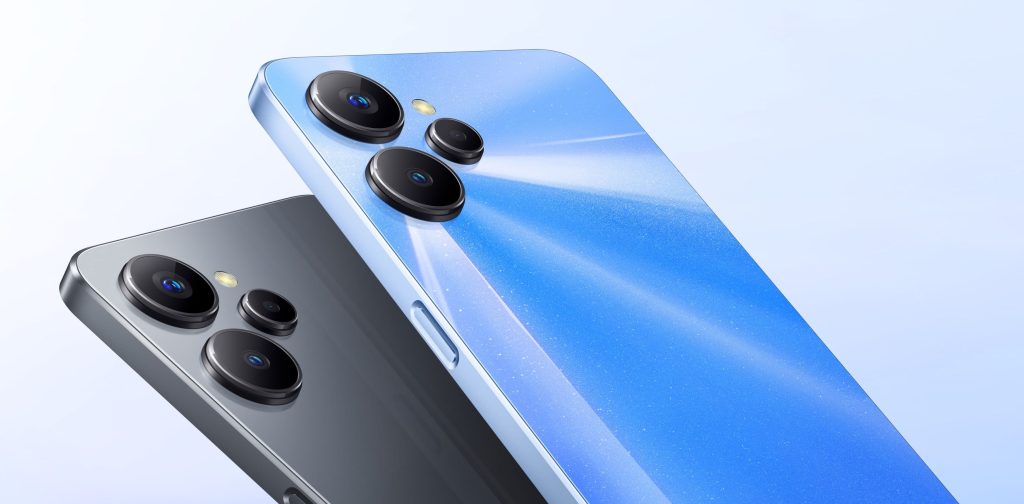
Realme 10T 5G Launched with 90Hz Display, Dimensity 810, 50MP Triple Cameras

Realme has announced the Realme 10T 5G smartphone in Thailand. It has arrived as a rebranded version of the Realme 9i 5G, which debuted in India last year. Here is a look at the specifications, features, and price of the Realme 10T 5G.

Realme 10T 5G specifications and features

The Realme 10T 5G measures 164.4 x 75.1 x 8.1mm and weighs 187 grams. It houses a 6.6-inch IPS LCD display with a waterdrop notch. The screen supports an FHD+ resolution, a 90Hz refresh rate, a 180Hz touch sampling rate, 400 nits of brightness, and a 90.4 percent screen-to-body ratio. It will have a 16-megapixel front-facing camera and a 50-megapixel (main) + 2-megapixel (portrait) + 2-megapixel (macro) triple camera unit on the back.

Realme 10T 5G
Realme 10T 5G

The 10T 5G is powered by the Dimensity 810 SoC. The device offers up to 8 GB of LPDDR4x RAM, and up to 256 GB of UFS 2.2 storage. There is a microSD card slot on the device for additional storage. It houses a 5,000mAh battery with 18W charging support.

For security, the Realme 10T 5G has a side-facing fingerprint scanner. It offers other features like dual SIM, 5G, Wi-Fi 6, Bluetooth 5.1, GPS, a USB-C port, and a 3.5mm audio jack.

Realme 10T 5G price and availability

The Realme 10T 5G will arrive in two variants, such as 4 GB RAM + 128 GB storage for THB 6,999 (~$203) and 8 GB RAM + 256 GB storage for THB 8,999 (~$206). It comes in two shades, such as Electric Black and Dash Blue.

RELATED:

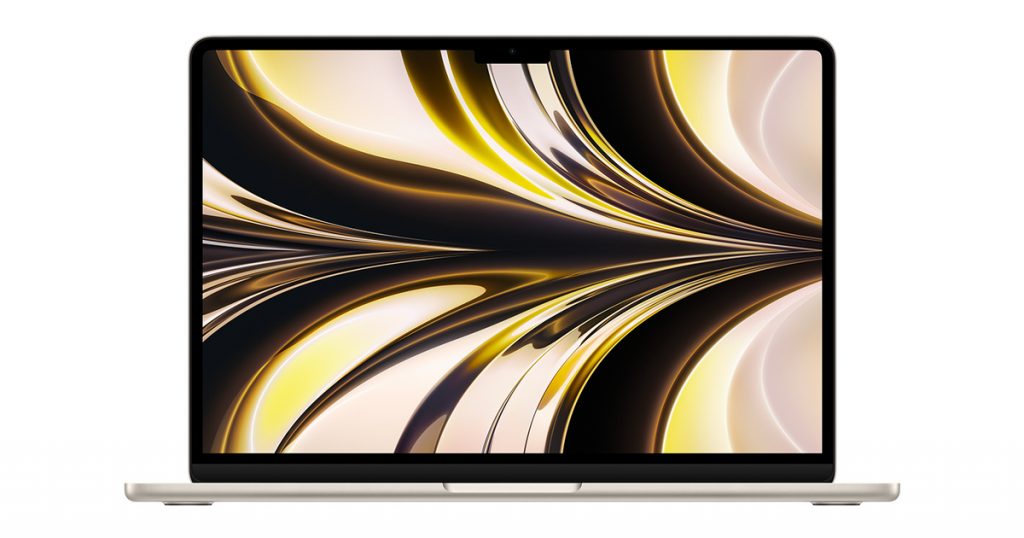
Apple MacBook Air with OLED display to reportedly launch in early 2024

Apple has been rumored to be working on OLED panels for the MacBook lineup, which has not materialized yet. However, if the new reports are to be believed, the wait could finally be over.

As per the reports, the new Apple MacBook Air could be the first MacBook device to feature an OLED display panel, and the launch of this new model could take place in early 2024.

Apple MacBook Air

The upcoming MacBook Air will reportedly use an OLED technology called “tandem stack,” which is a type of cutting-edge OLED technology that improves the display’s longevity, improves power efficiency, and increases brightness.

While the MacBook Air will be switched to using OLED panels, the MacBook Pro will continue to have mini-LED displays for some more time, and there’s no information available about when the Pro models will switch to OLEDs.

Meanwhile, the Cupertino-based technology giant is also working on new 13-inch and 15-inch MacBook Air powered by the yet unannounced Apple M3 chipset. Although the company has not revealed anything about this, the new laptops are expected to get launched sometime in June this year during WWDC 2024.

RELATED:

Via

Redmi Note 12 Turbo Launch Date Confirmed, to be World’s First Snapdragon 7+ Gen 2 Phone

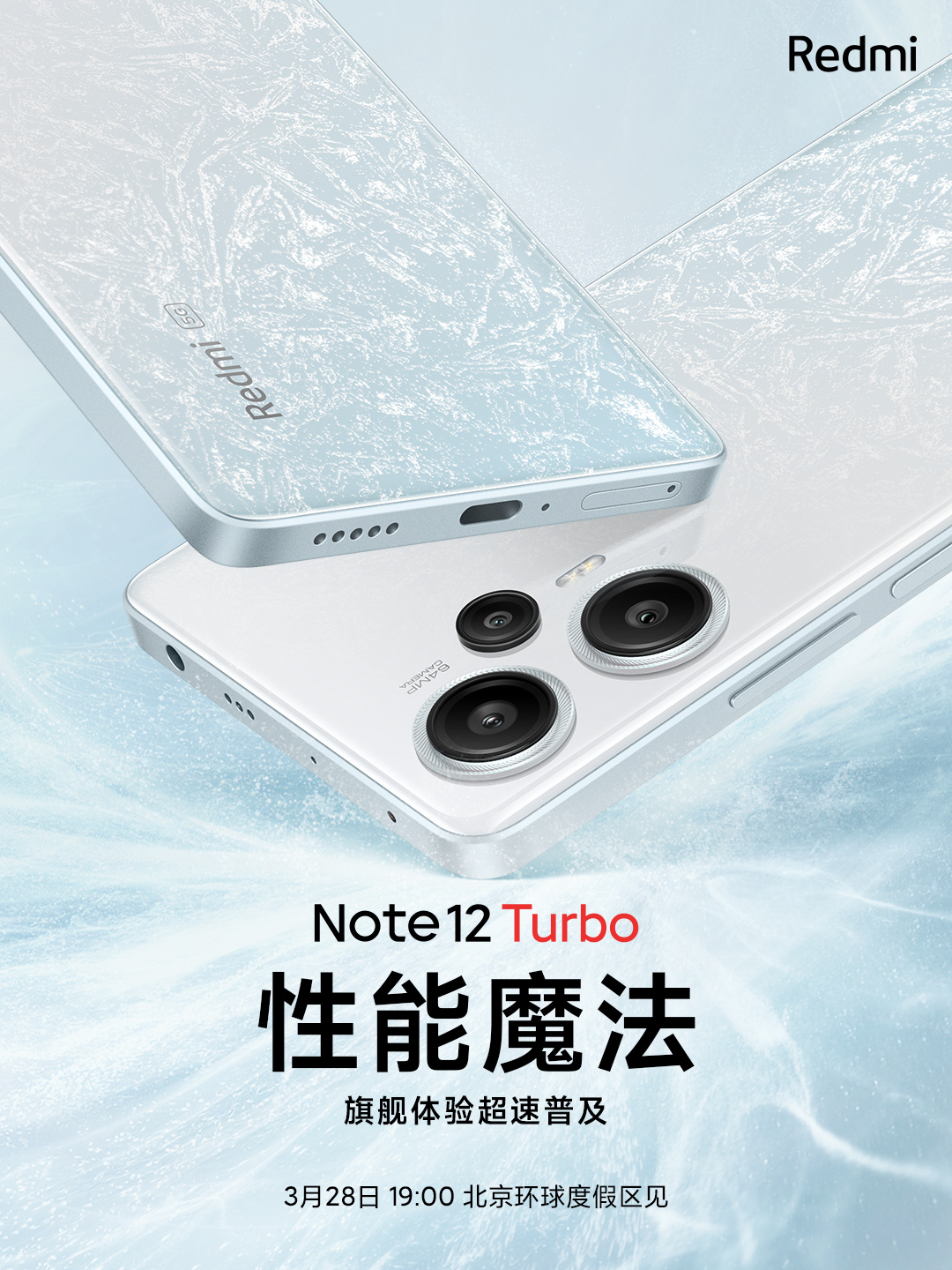
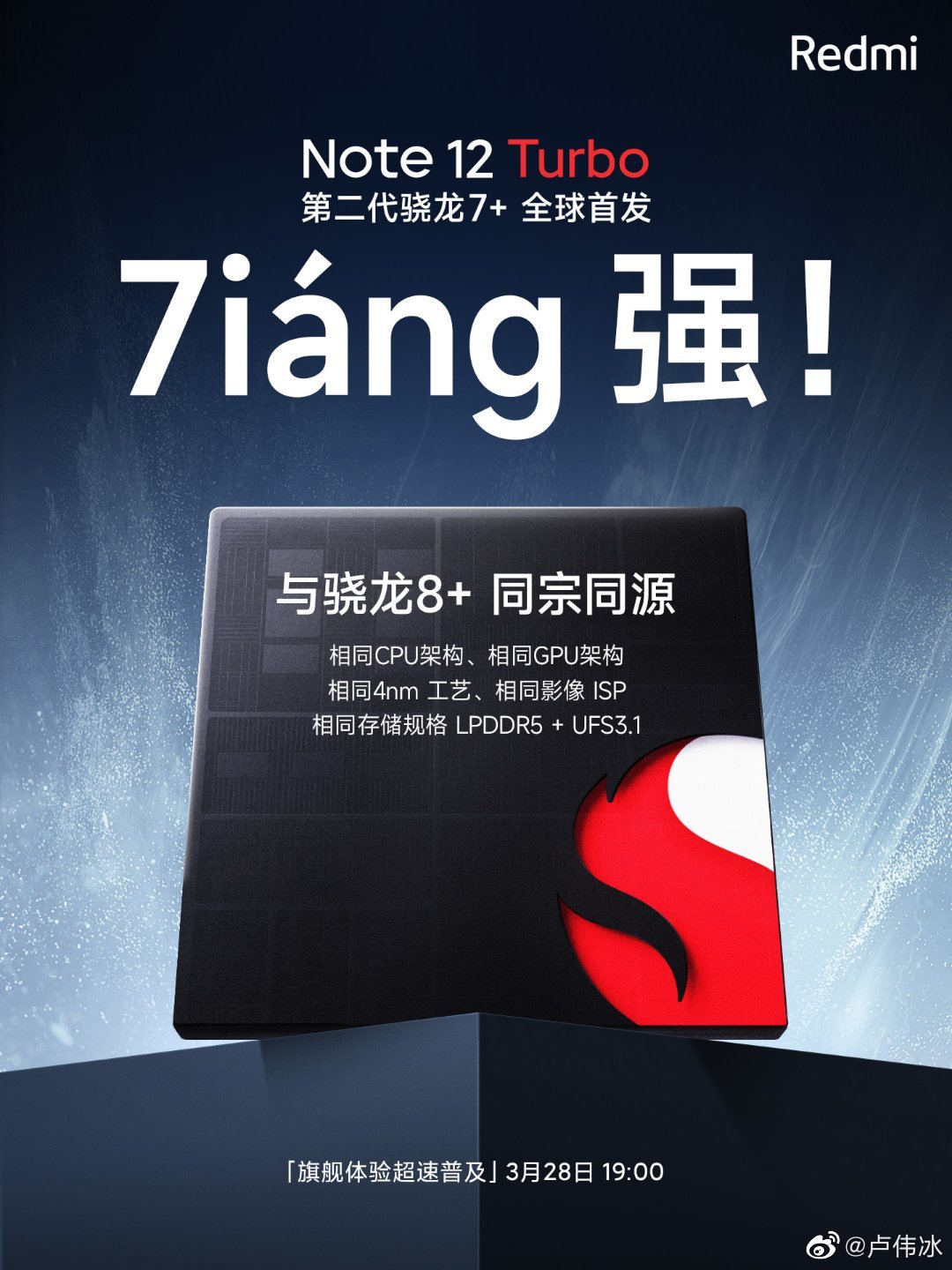
After weeks of leaks, Redmi has finally confirmed the launch date of the Redmi Note 12 Turbo for the Chinese market. The below-shown poster confirms that the device will be announced at 7 pm (local time) on March 28 in China. It will arrive as the world’s first phone with the Snapdragon 7+ Gen 2 chip onboard.

Apart from revealing the launch date, the poster gives the first look at the Redmi Note 12 Turbo’s design. As can be seen, the back panel of the device features a 64-megapixel triple camera unit. On the right side, there is a volume rocker and what looks like a side-mounted fingerprint scanner. The top edge of the Note 12 Turbo features a microphone, an IR blaster, a speaker grille, and a 3.5mm audio jack. Its opposite edge has a speaker grille, a USB-C port, a microphone, and a SIM slot.

Redmi Note 12 Turbo specifications (rumored)

Rumors about the Redmi Note 12 Turbo say that it might have a 6.67-inch flat OLED screen with a 120Hz refresh rate and a Full HD+ resolution. It is likely to run on the MIUI 14-based Android 13 OS. The phone may pack a 5,000mAh battery with 67W fast charging support.

Under the hood, the Note 12 Turbo may feature the Snapdragon 7+ Gen 2. The highest variant of the device may feature 12 GB of LPDDR5 RAM and 256 GB of UFS 3.1 storage.

On the front of the Note 12 Turbo, there could be a 16-megapixel selfie camera. Its rear shell is likely to feature a 50-megapixel (main) + 8-megapixel (ultra-wide) + 2-megapixel (macro) triple camera unit.

A recent report claimed that Poco will be launching the Poco F5 5G on April 6 in India. It is speculated that the Poco F5 will be a rebranded version of the Redmi Note 12 Turbo.

RELATED:

LG’s New 49-inch HDR Monitor has a 240Hz Refresh Rate

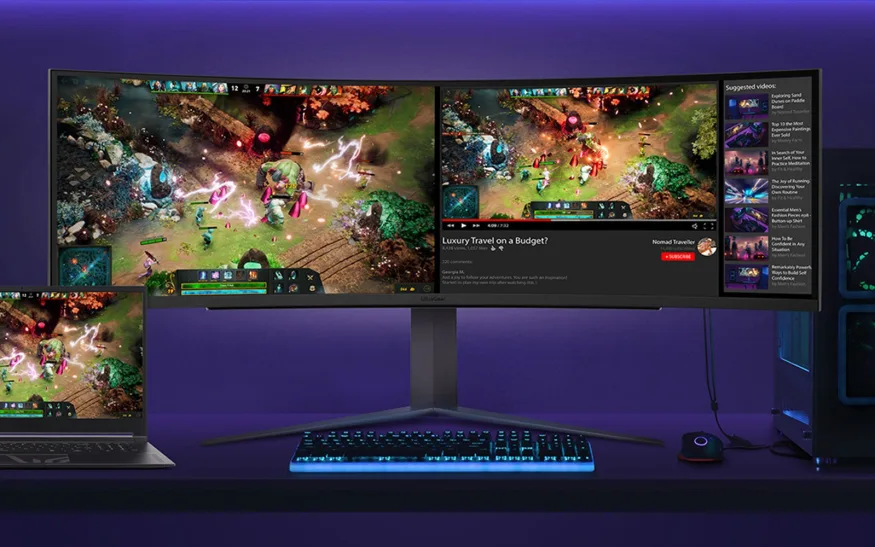
HDR, or High Dynamic Range, monitors are display screens that offer a wider range of colours and brightness levels than traditional monitors. They are designed to display images with more detail, depth, and realism, making them ideal for gaming, video editing, and other multimedia applications. HDR monitors can produce brighter whites, deeper blacks, and more vibrant colours, resulting in a more immersive viewing experience. They also have a higher contrast ratio and can display a wider colour gamut, which means they can reproduce more colours than traditional monitors. Combine that with a high refresh rate, and these monitors can provide the pinnacle of gaming experience. LG just shot their chance at that experience, as they unveiled their 49-inch HDR monitor with a 240-Hz refresh rate.

LG Monitor

The LG 49GR85DC-B monitor boasts an impressive list of specs that are sure to grab the attention of ultrawide gaming enthusiasts. With its 49-inch VA panel, 32:9 aspect ratio, 5,120 by 1,440 resolution, and 98.5 per cent DCI-P3 coverage, this monitor is designed to deliver a stunning visual experience. Plus, its 240Hz refresh rate, 1ms pixel response time, and AMD FreeSync Premium technology make it ideal for fast-paced gameplay. LG also claims that the monitor is DisplayHDR 1000 certified, which means it’s capable of reaching a peak brightness of 1000 nits and features some form of local dimming.

It is worth noting that the price tag of $1,300 may be a bit steep for some, and VA panels don’t always perform as well as advertised. Additionally, few games currently support the 32:9 aspect ratio. Despite these drawbacks, the LG 49GR85DC-B is available for pre-order on the company’s website, and early adopters will receive a complimentary UltraGear RGB Gaming Mouse Pad valued at $200.

RELATED:

(Via)

TCL Q10G Pro with up to 98-inch display & X11G Mini LED TVs Launched in China

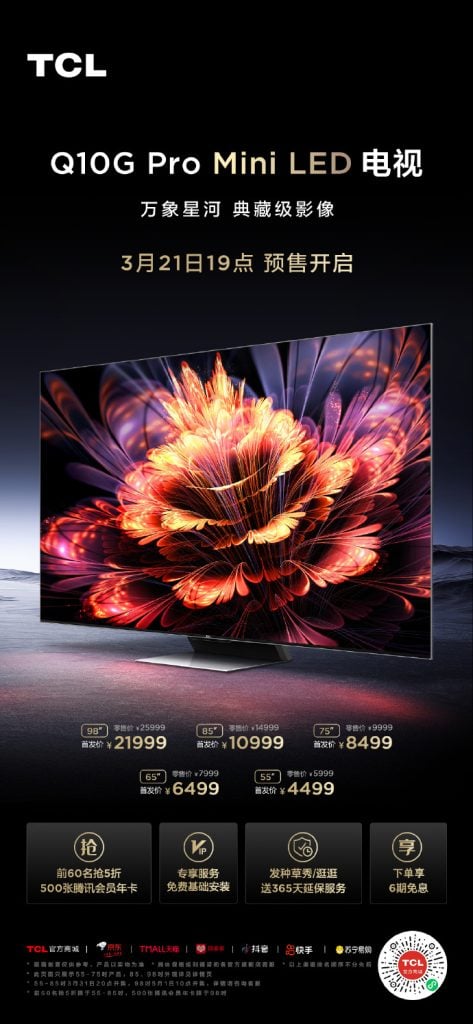
TCL, Tuesday, held a launch event in China where it officially unveiled two of its latest smart TVs utilizing the rapidly emerging miniLED technology. The two models are the TCL Q10G Pro and TCL X11G Mini LED TV.

TCL Q10G Pro Mini

The TCL Q10G Pro is the top model among the two as it comes in five different display sizes ranging from a monstrous 98-inch screen size to a 55-inch size on the smallest model. Other display sizes include 85 inches, 75 inches, and 65 inches. All models are equipped with a 4K screen resolution and support for a 144Hz refresh rate. The display also comes with a 720 partition backlight, supports XDR 2200 peak nit brightness, has a contrast ratio of 22 million: 1, and a color gamut of 98% DCI-P3.

In terms of audio, the Q10G Pro is equipped with 2.1-channel Hi-Fi professional audio driven by three independent power amplifiers, equipped with 5-unit 60W speakers, a rear 20W subwoofer, and supports Dolby Vision, Dolby Atmos, etc.

TCL Q10G Pro Mini

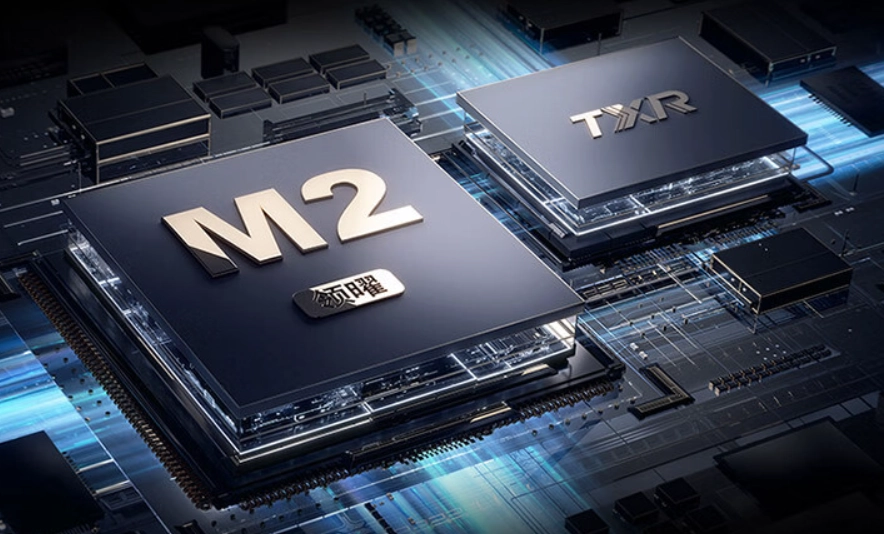
The TCL Q10G Pro is powered by a Quadcore Lingyao chip M2 paired with 4GB RAM while there is 64GB storage onboard. The smart TV features support for WiFi 6 and are equipped with four HDMI 2.1 interfaces as well as a USB 3.0 interface.

In terms of software, TCL Q10G Pro is equipped with a smart control desktop, which has no advertisements when booting, and supports fast booting in 0.7 seconds.

As for the prices, the 65-inch model is priced at 7999 yuan while the 98-inch model will retail at 25,999 yuan.

TCL X11G

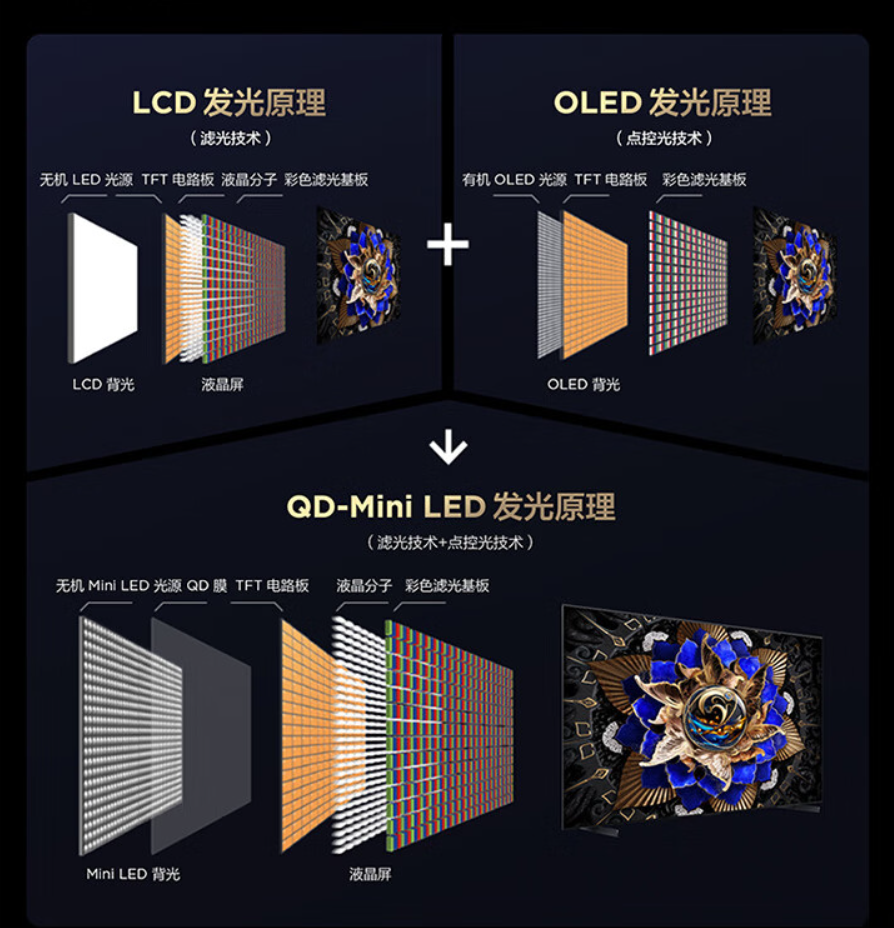
On its part, the TCL X11G Mini LED TV is available in three display sizes- 75 inches, 85 inches, and 98 inches. This model utilizes TCL’s latest QD-MiniLED display technology which combines the respective advantages of LCD and OLED, upgrading the traditional surface light source to a pixel-level point light source. The display uses the Quantum dot Pro 2023 technology making it possible to achieve ultra-high contrast, higher brightness, color gamut, and a longer lifespan than OLED.

The flagship X11G smartTV has a backlight with 5184 partitions, a peak brightness of 5000 nits, and supports a contrast ratio of 50 million: 1. It uses a 6-core LED chip, which greatly improves brightness and energy efficiency. Combined with 16-bit ultra-precise backlight control, it can present more bright and dark details.

In addition, TCL X11G is equipped with 1296 driver chips, adopts bidirectional 16bit patented technology, and has 16bit ambient brightness perception and 16bit ambient color temperature perception capabilities; combined with 16bit backlight control and 16bit hybrid light control technology, it brings 65,000 levels of precise light control and precise color temperature control.

TCL X11G also supports full-link 4K 144Hz refresh rate as well as 240Hz refresh rate doubling technology (T·HRR Professional Edition). It is also equipped with Lingyao chip M2 and a TXR MiniLED image quality enhancement chip. The processor pairs with 4GB RAM while there is 128GB storage available to users.

In addition, the TV has eye protection, flicker-free, anti-blue light, adaptive ambient light, natural light, MEMC motion anti-shake technology, and is equipped with 8-channel Onkyo 4.2.2 HiFi audio as well as four independent power amplifier chips.

In terms of software, TCL X11G is equipped with a newly upgraded smart control desktop, which has no advertisements when booting, and supports one-click opening of applications on the remote control. The smart TV also comes with WiFi 6 support and is equipped with four HDMI 2.1 interfaces as a USB 3.0, and a USB 2.0 interface.

As for the prices, the 98-inch model is priced at 49,999 yuan, the 85-inch version is priced at 31,999 yuan while the 75-inch model comes in at 23,999 yuan.

RELATED:

Blackview launches its latest 11inch 2K Tablet the Blackview Tab 16 on AliExpress (Discount)

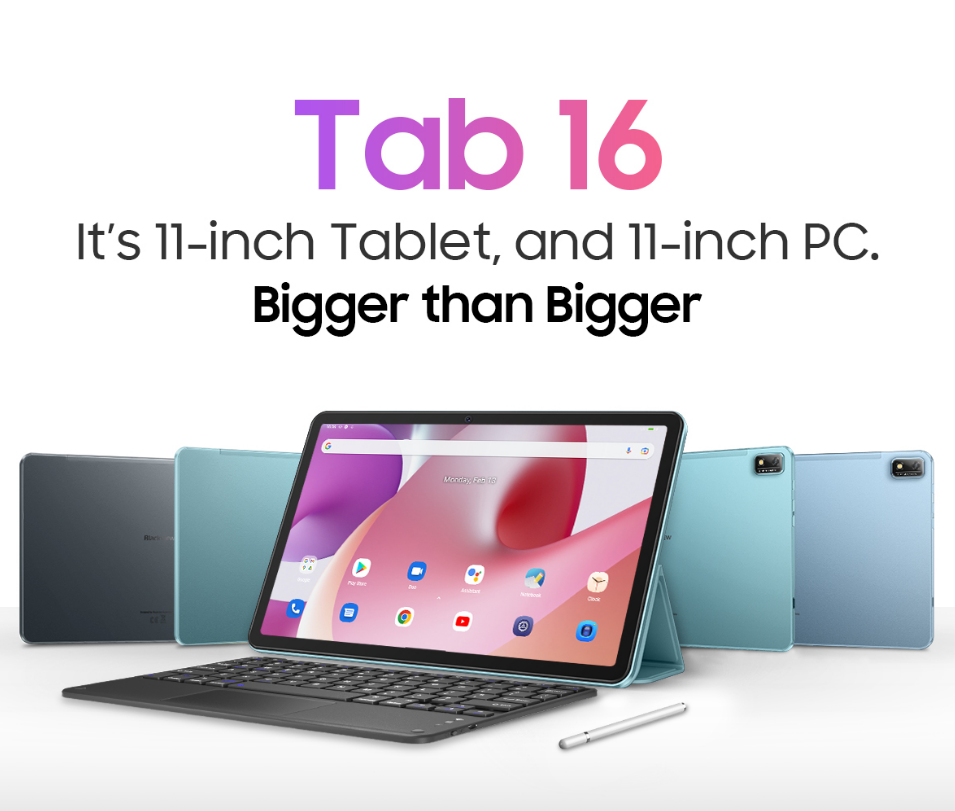
Blackview has launched its latest Tablet the Blackview Tab 16, globally on AliExpress. It took Blackview, two years of extensive research and development, to make this flagship tablet that includes a large 11-inch 2K display, up to 14GB RAM, and updated encryption tech, which is perfect for your office, study, and entertainment. 

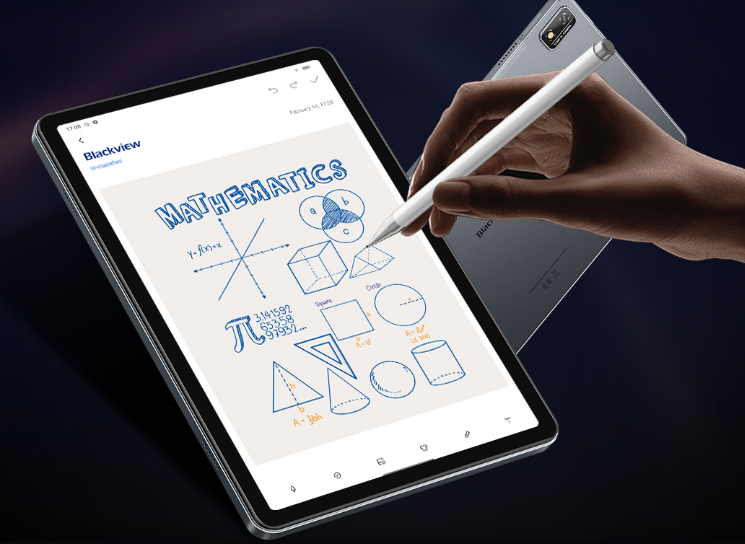
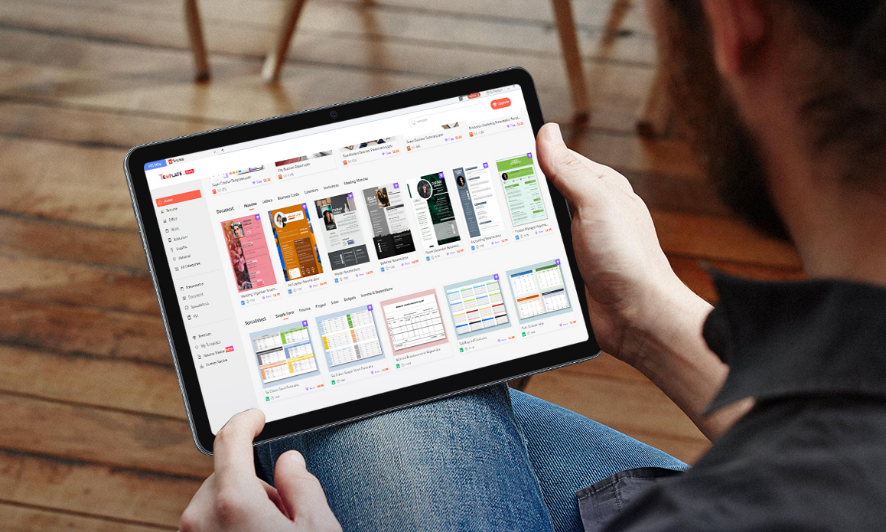
The highlight feature of Blackview Tab 16 is the 11-inch 2K Full HD display which is somewhere between a tablet and a laptop but with touchscreen support which is not found in many laptops. Also with this large screen, you get more data and details than an average tablet. It also comes with a dedicated PC mode which helps to convert your Tab 16  into an 11-inch laptop, that can be used for web browsing and document editing via pre-installed WPS Office Suite.

Blackview Tab 16  is powered by an Octa-core Unisoc T616 chipset, which combines two large A75 cores running at up to 2.0 GHz and six energy-efficient small A55 cores running at up to 1.8 GHz. When playing games or TikTok streaming, the CPU frequency is adjusted from peak 2G to 2.4G for a smoother entertainment experience. Also while using apps for messaging or chatting, the CPU will downshift to save power. The tab uses LMK technology to free up rarely-used processes and prioritize resources for the apps being used.

Tab 16 comes with  8GB RAM, with up to 6GB RAM expansion, and 256GB ROM to enable users to multitask smoothly. You can expand the internal storage up to 1TB which is perfect to stock up on unforgettable photos, and videos without worrying about space.

The tablet flaunts an ultra-thin and feather-light body and comes with Widevine L1 certification which gives you the pleasure of enjoying  Movies and TV Shows from OTT platforms like Netflix, Prime Video, Hulu, etc. Moreover, stereo Quad-Box Smart-K speakers offer an immersive audio experience with theatre-like sound effects. 

Blackview Tab 16  is fueled by a massive 7680mAh battery and supports 18W fast charging. It features a 13MP rear and 8MP front camera and runs the Android 12-based Doke OS 3.0. Another highlighting feature of Tab 16 is the use of the kernel-level security program SE-Linux which provides a high level of data encryption security for business and enterprise users. This encryption tech helps to effectively protect the program from rooting and attacks and ensure data encryption security related to office scenarios such as address list encryption and data interaction.

Price and Availability:

Under the world premiere sale, Blackview Tab 16 which generally retails for $399.99 will be available at a massively discounted price of $177.99 only on AliExpress. Please note that this deal lasts for 7 days only, from March 20th to March 26th PST. 

Xiaomi Auto Patents a Personalized Automatic Driving Method

Xiaomi is really making a big move into the automobile industry. The company set up a new facility in Beijing, which includes the R&D and sales headquarters, and is aiming to release its first car by 2024. The R&D team has been hard at work, as they’ve recently patented a new automatic driving method that matches the driver with a mode that meets their safe driving level. Here are the details.

As revealed by the abstract of the patent, it is related to automatic driving technology and proposes a method for automatically matching the driver with an appropriate driving mode that meets their safe driving level. The abstract highlights that the method starts by determining that the vehicle is in automatic driving mode and then collecting driver information during driving. Based on the collected driver information, the method determines the driver’s target safe driving level, which could depend on factors such as their driving habits, skills, and experience.

Xiaomi automatic driving patent

Once the target safe driving level has been determined, the method matches the driver with an automatic driving mode that meets their target safe driving level, and authorizes the operation authority of that mode. By doing so, the method aims to ensure the driver’s safety by providing them with an automatic driving mode that is appropriate for their driving abilities.

This is a promising development, especially as Xiaomi is set to begin mass production of its cars in the first half of next year. While it remains unclear whether the patent will be integrated into Xiaomi’s upcoming car models, it’s evident that the company is taking significant steps toward enhancing the safety and reliability of its vehicles.

RELATED:

(Via)

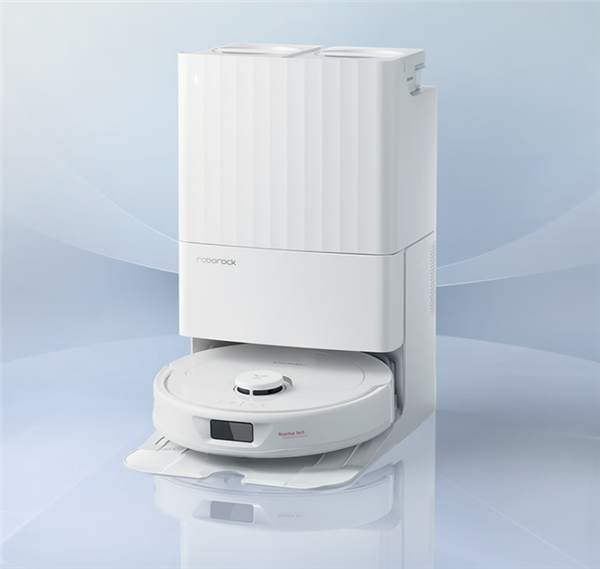
Roborock self-cleaning Sweeping and Mopping Robot P10 Released in China

Roborock has released the self-cleaning sweeping and mopping robot P10 in China. The new robot joins the G20 which was also released at the same time. The P10 offers flagship-level cleaning solutions for both sweeping and mopping. The new Stone robot sweeper comes at a lower starting price than the G20.

Roborock self-cleaning Sweeping and Mopping Robot P10

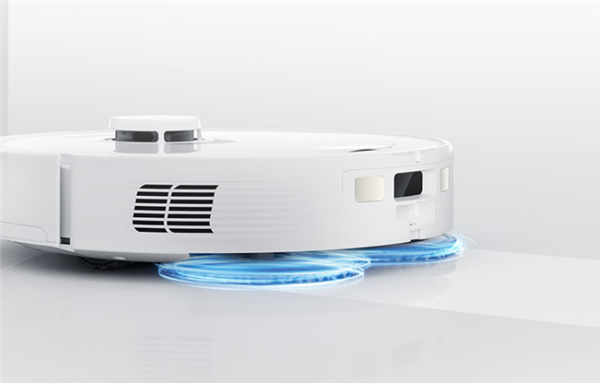
As with the Roborock G210, the P10 robot offers two versions – manual water change and automatic water change. The robot has a spiral rubber brush design that is less likely to entangle air during operation. It offers a suction power of 5,500 Pa and can remove dirt inside crevices on the floor. The P10 robot has a high-speed dual-rotation constant-humidity mopping system with a 200rpm maximum speed. It can easily overcome stubborn stains stuck on the floor with its high-speed action.

Roborock self-cleaning Sweeping and Mopping Robot P10

The floor mopping module can be adjusted up to a height of 10mm. This prevents the carpet from being wet and avoids secondary pollution after mopping. The P10 has a full-feature base station with automatic self-cleaning and drying features for the system. The P10 imitates the dynamic cleaning mode of a washing machine, with three stages of cleaning. These are pre-washing, rinsing, and drying.

Roborock self-cleaning Sweeping and Mopping Robot P10

The speed and water volume change to match the stage of cleaning. The P10 is equipped with the RR mason 10.0 system for effective obstacle avoidance, in combination with multi-sensor fusion technology.

The Stone (Roborock) self-cleaning sweeping robot P10 is available from JD.com starting at 3,299 yuan (~$480) for the manual water change version. The automatic water change model of the P10 is priced at 3,899 yuan (~$567).

Related:

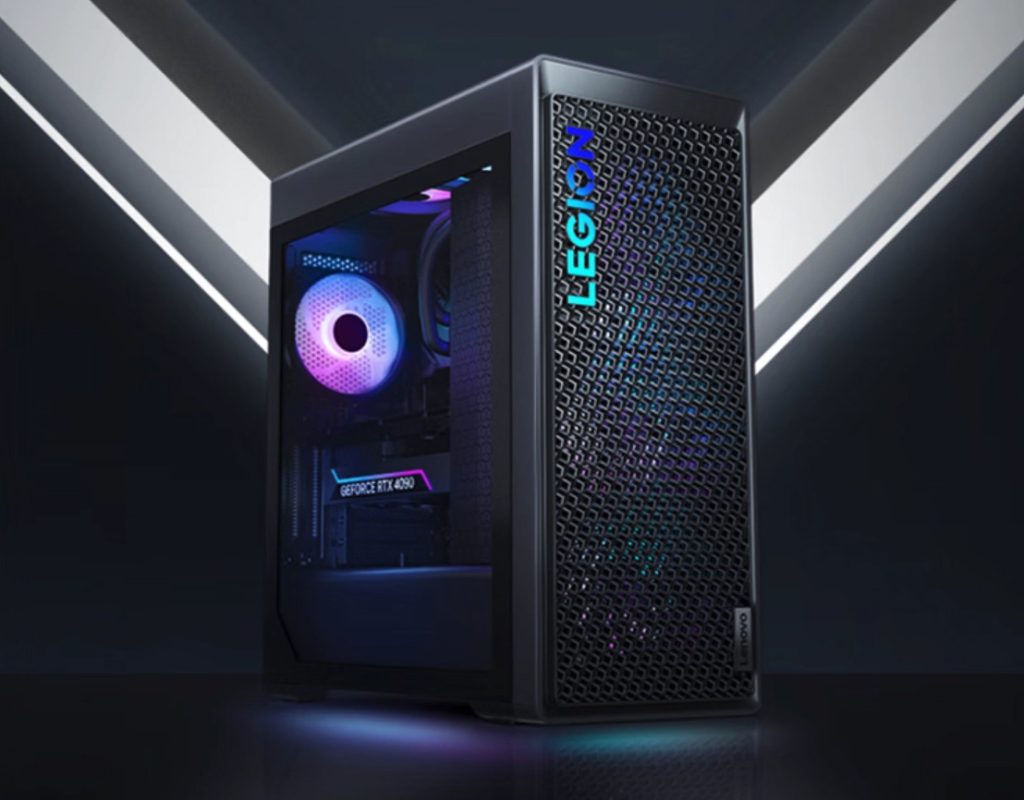
Lenovo Legion Blade 9000K 2023 Desktop PC with Core i7-13700K & NVIDIA RTX 4090 GPU Unveiled

PC giant Lenovo has officially launched a new configuration of the Legion Blade 9000K desktop PC. The Legion Blade 9000K 2023 model was first launched last year and equipped with an Intel Core i9-13900K processor and Lenovo’s customized NVIDIA RTX 4090 graphics card. The new model arrives with an Intel Core i7-13700K while retaining the RTX 4090 graphics card.

Lenovo

The Blade 9000K from last year was equipped with 64GB DDR5 memory and 2TB SSD but this time around, you get 32GB memory and 1TB SSD. With such a configuration, the price is expectedly lower than the Core i9 version and so, the price starts at 25,999 yuan. For comparison, the Core i9 version from last year retails for 29,999 yuan in China.

In terms of design, the Lenovo Legion Blade 9000K 2023 uses 360 CPU water-cooled heat dissipation. The NVIDIA GeForce RTX 4090 graphics card has 3.5 slots, three 10cm fans, and nine heat pipes for heat dissipation. The motherboard uses Z790 with a 14-phase power supply and supports 320W CPU performance release.

The Blade 9000K 2023 is currently available in China via Jingdong (JD.com).

RELATED

Lenovo Legion Y900 Tablet Launches with 14.5-inch Screen and Dimensity 9000 Processor

Lenovo has officially announced the launch of their new Legion Y900 flagship tablet at the spring Rescuer event, which focused on the decryption of new ecological products. This exciting release comes with a range of impressive features and enhancements over the previous Y700 model. Here are the details…

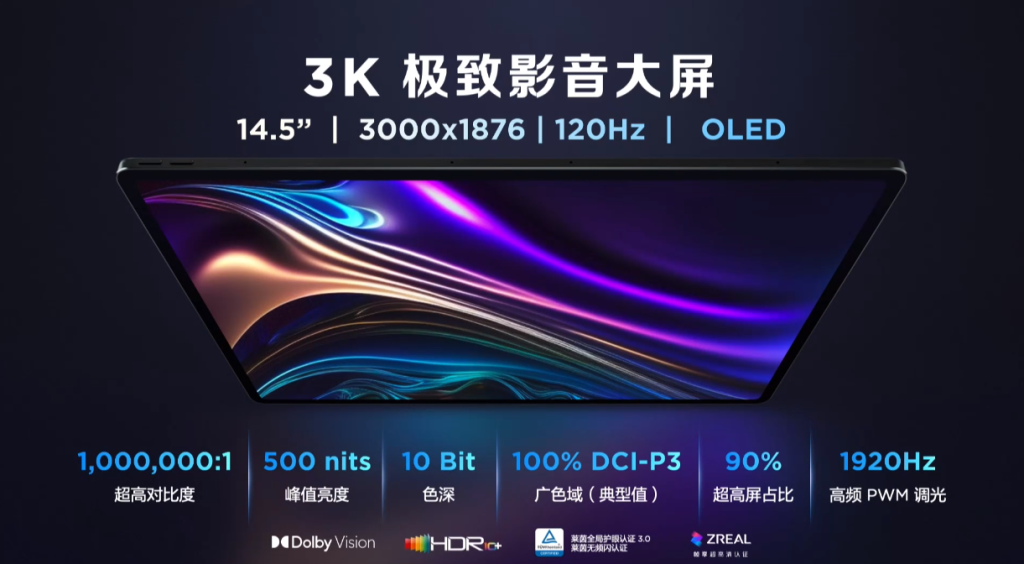
Lenovo Legion Y900 Tablet Launches with 14.5-inch Screen and Dimensity 9000 Processor, Starting at 4,999 Yuan

The most significant upgrade to the Y900 is its stunning 14.5-inch, 3K resolution super-large screen. Thanks to a partnership with Goodix Technology, the tablet’s light sensor can achieve more accurate color temperature and ambient light measurement functions. Furthermore, the screen boasts high-frequency PWM dimming up to 1920Hz, a maximum brightness of 500 nits, a contrast ratio of 1,000,000:1, 10-bit color depth, and Dolby Vision support.

Lenovo Legion Y900

To complement the high-quality display, the Y900 features an impressive audio setup with 4 JBL tweeters and 4 HJBL ultra-linear woofers. These 8 speakers work together to deliver Dolby Atmos support for an immersive audio experience. Under the hood, the Y900 tablet is powered by the Dimensity 9000 processor and comes with 12GB LPDDR5X memory, 256GB expandable UFS 3.1 storage, and a large 12,300mAh battery. The device also supports 68W fast charging, ensuring you can quickly power up and get back to work or play.

The second-generation Xiaoxin stylus, combined with Goodix’s OLED touch solution, provides a smooth writing experience with 4096-level ultra-high-pressure sensitivity and a high reporting rate. Lenovo has not only focused on hardware improvements but also on software enhancements. Based on ZUI 15, the Y900 tablet supports “super files,” enabling users to retrieve and collaborate on files across different devices seamlessly. Priced at 4,999 yuan, the Lenovo Y900 flagship tablet offers cutting-edge technology and an unparalleled user experience. While the release date has yet to be announced, this impressive tablet is sure to make waves in the market upon its arrival.

SpecificationDetails
Display14.5-inch 3K resolution super-large screen
Brightness500 nits
Dolby VisionSupported
Audio Setup4 JBL tweeters, 4 HJBL ultra-linear woofers
Dolby AtmosSupported
ProcessorDimensity 9000
Memory12GB LPDDR5X
Storage256GB expandable UFS 3.1
Battery12,300mAh
Fast Charging68W
StylusSecond-generation Xiaoxin
Operating SystemZUI 15
Super FilesSupported
Price4,999 yuan

RELATED:

(source)

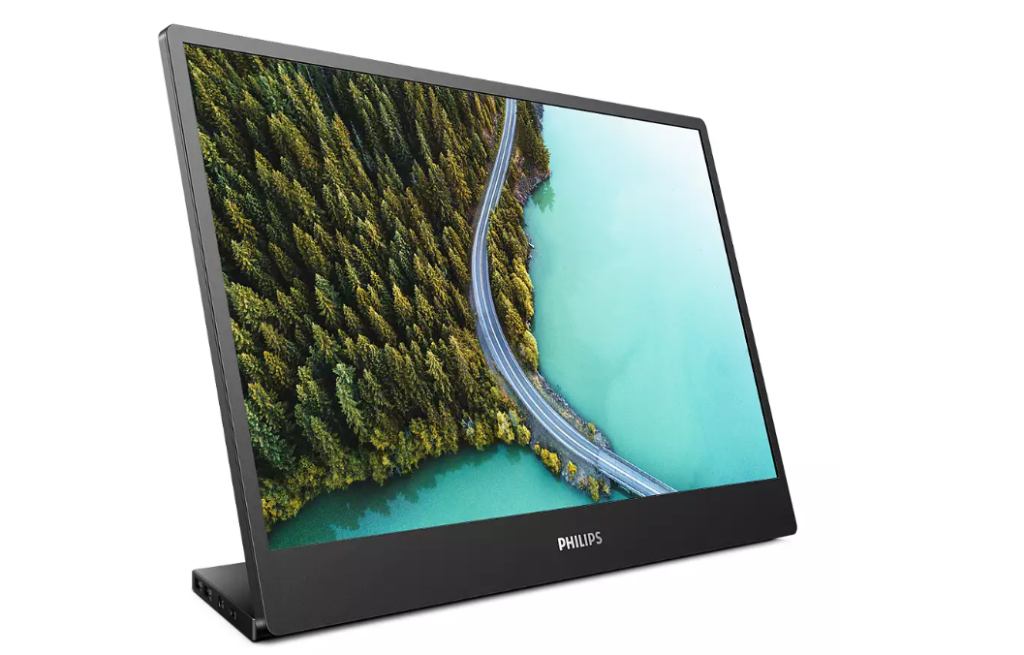
Philips Launches Portable Monitor 16B1P3302D with Dual USB-C Input

Philips has launched the new 16B1P3302D portable monitor with a lightweight and compact design. The 15.6-inch monitor is made to be used with a number of external devices and is suitable to easily fit in a briefcase or a backpack. The Philips monitor has two USB Type-C ports that support DisplayPort Alt Mode and USB Power Delivery. Let’s have a closer look at its specifications and pricing.

Philips 16B1P3302D has debuted as part of the company’s portable monitor series. As mentioned, it features two USB-C ports on the side, allowing you to plug two USB-C cables simultaneously. These ports support Power Delivery and mirroring or extending the display for presentations, and more (USB-C DisplayPort Alt mode).

Philips portable monitor

The Philips 16B1P3302D is claimed to have 90 W inputs while powering connected devices at 65 W via the USB Power Delivery protocol. The monitor comes with a 15.6-inch panel that has a 16:9 aspect ratio. The panel is IPS and offers a resolution of 1,920 x 1,080 pixels with a 141 PPI and a 75 Hz refresh rate.

Philips 16B1P3302D has a peak brightness of 250, a 700:1 contrast ratio, and 4 ms response times (GtG). In addition to the two USB Type-C ports that support DisplayPort Alt Mode and Power Delivery, there are a 3.5mm jack, power button, and volume buttons on the monitor providing further convenience to users. The LowBlue and EasyRead modes of the Philips 16B1P3302D are designed to help reduce the amount of blue light.

The Philips 16B1P3302D lacks other I/O, such as a USB Type-A port or a dedicated video input, which may be a limitation for some users. It will be available for purchase at a price of £239.99 later this month.

Related:

(Source)