Advertisement

Samsung Supports Digital Alzheimer’s Diagnosis with Galaxy Tab S8+

The fields of technology and healthcare have always been closely connected. The advancements made in science form the foundation of modern medicine, from curing diseases and facilitating surgeries to playing a crucial role in early diagnosis. Recently, many technology companies like Apple have focused on bringing health solutions to the forefront through their products. We have already reported on Gizmochina about how the Apple Watch can pre-detect some heart conditions. Now, a similar move has come from South Korea. Samsung has announced that it is supporting the digital diagnosis of Alzheimer through the use of the Galaxy Tab S8+. Here are the details…

Samsung’s Galaxy Tab S8+ to Play Major Role in Digital Alzheimer Diagnosis

Samsung has announced that it is supporting the digital diagnosis of Alzheimer using the Galaxy Tab S8+ Enterprise Edition. The company’s Swiss subsidiary has collaborated with Bottneuro AG, a medical technology startup, to conduct research on the development of an Alzheimer’s diagnosis solution.

samsung galaxy tab s8 as a alzheimer diagnosis tool

Bottneuro has developed technology that identifies the brain area where Alzheimer occurs through 3D MRI and PET data, and conducts electric target treatment with the self-developed neurostimulator ‘Mia Mind’. The Galaxy Tab S8+ is used to control the neurostimulator and transmit treatment data. This development makes early diagnosis much easier and accessible.

The solution developed through this research will be provided to clinical patients in hospitals in Switzerland. Samsung plans to supply 100 Galaxy Tab S8+ products in June, with the number of units supplied set to increase to 2,500 by the end of this year. The company aims to expand product supply to various regions, including Europe, next year.

The use of digital diagnosis for Alzheimer’s disease is becoming increasingly important as the global population ages. According to the World Health Organization (WHO), there are currently around 50 million people worldwide with dementia, with Alzheimer’s disease being the most common form. This number is expected to triple by 2050.

According to the World Health Organization (WHO), an estimated 50 million people worldwide suffer from dementia, and Alzheimer’s disease accounts for 60-70% of dementia cases. In 2021, the number of people with dementia is projected to be approximately 55 million, and this number is expected to increase to 78 million by 2030 and 139 million by 2050, due to the aging of the global population.

RELATED:

(source)

Meta is Ending NFT Support for Facebook & Instagram

Meta, formerly known as Facebook, has decided to wind down support for NFTs on its platforms, Facebook and Instagram. The move comes less than a year after the company started pushing for the adoption of digital collectibles on its platforms. Meta’s Head of Commerce and Financial Technologies, Stephane Kasriel, announced the decision on Twitter and stated that the company had learned a lot from the initiative that could be applied to products that support creators, people, and businesses on its apps, both now and in the metaverse. Kasriel did not provide a reason for the decision but said the company would focus on monetization opportunities for Reels and messaging payments across Meta.

Meta

NFTs, or non-fungible tokens, are unique digital assets that use blockchain technology to verify ownership and authenticity. They can represent a wide range of digital content, such as art, music, videos, and tweets. NFTs have gained popularity as a way for creators to monetize their digital works and for collectors to own unique and rare digital items.

Mark Zuckerberg had previously announced Instagram’s work on NFT support at SXSW in March 2021, and the feature was launched in May of the same year. The company announced its expansion in November 2021, allowing creators to mint and sell collectibles directly on Instagram. Zuckerberg had suggested that NFTs could play a role in Meta’s metaverse plans, stating that he hoped users could mint their avatar’s clothing as NFTs and take it between different places in the metaverse.

Meta has been in a period of restructuring, and many initiatives have been shut down. The company has laid off thousands of workers and shut down numerous projects in what Zuckerberg has described as the company’s “year of efficiency.” Meta’s crypto wallet, Novi, was sacked last year, and rumours that it would have NFT support on its roadmap have not materialized. The company has also cut back on projects with its metaverse division, Reality Labs, and its program that paid bonuses to Reels creators.

RELATED:

(Via)

Nothing Ear (2) Promo Material Leaks Along With Specs Ahead of March 22 Launch

In 2021, Nothing, a tech startup, released its first product called the Nothing Ear (1), which gained popularity for its unique transparent design and inclusion of ANC. The brand is now preparing to launch its successor, the Nothing Ear (2), with a scheduled launch date of March 22. Despite this, promotional material and specifications for the earbuds have already surfaced online.

Nothing

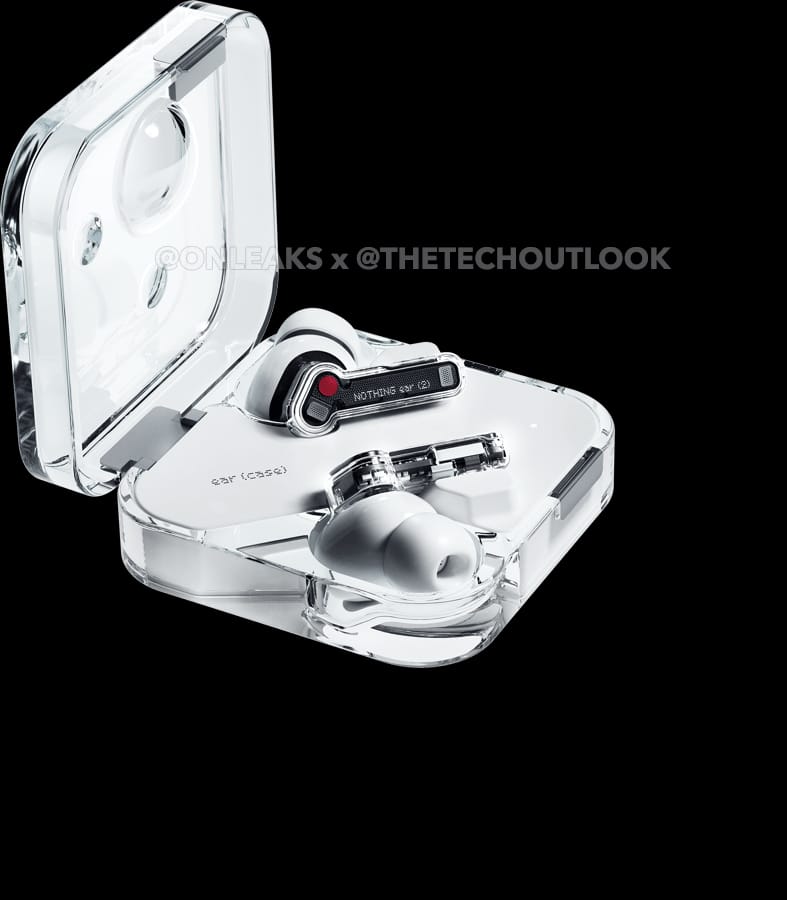
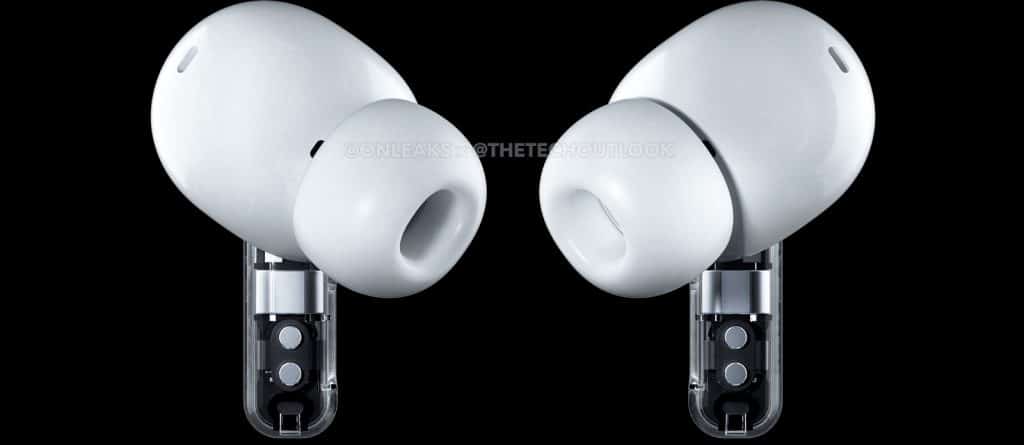
The leak comes from Tech Outlook citing tipster OnLeaks as the source. The report reveals the design of the Nothing Ear (2) will be quite similar to its predecessor. The earbuds will continue to sport a semi-transparent design for the earbuds and the charging case.

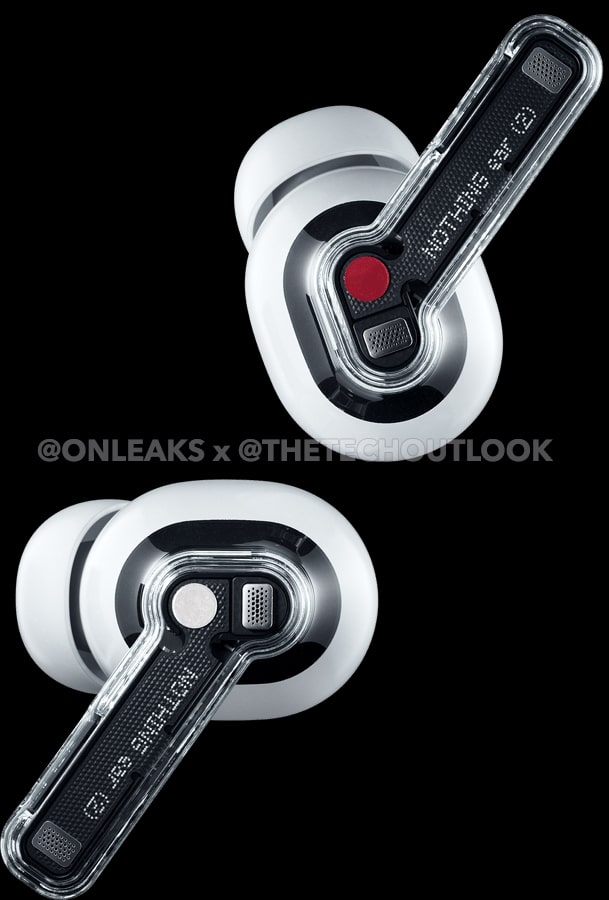
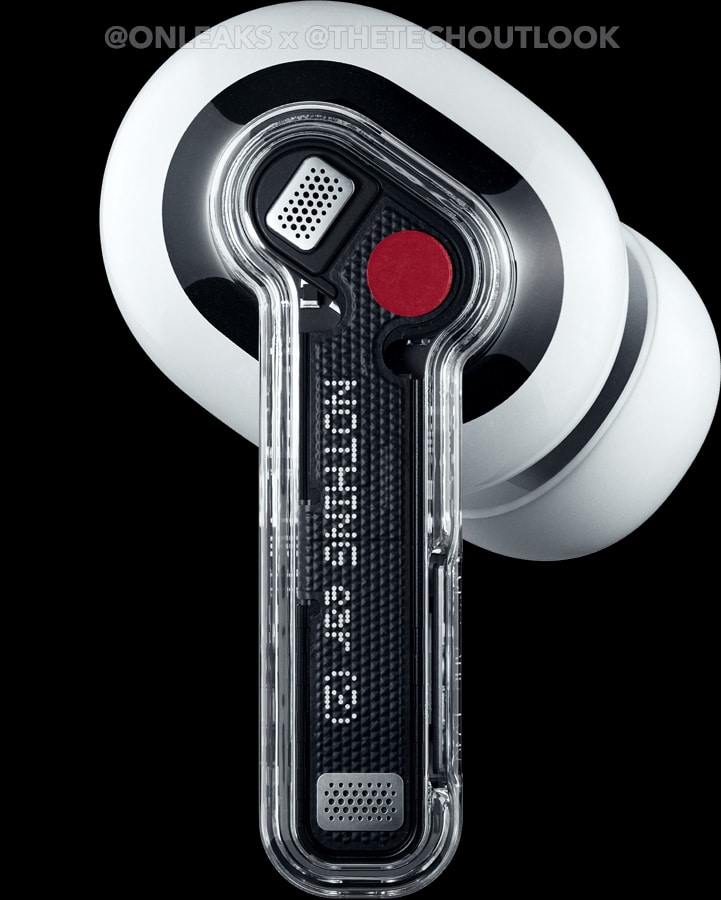
Featuring a stem design and silicone ear tips for improved grip and passive noise cancellation, the earbuds showcase their internal components and battery cells through a transparent section. A microphone cutout can be observed on both sides of the earbud, and the Nothing Ear (2) branding is imprinted on the stem. The charging case also boasts a semi-transparent design, with a transparent lid and a white covering that conceals its internal components.

As per the aforementioned report, the upcoming Nothing TWS earbuds will retain the 11.6mm drivers seen in the first-generation model. Each earbud will offer a claimed playback time of up to six hours with a single charge, while the charging case is expected to provide up to 36 hours of battery life. The charging case will also support fast charging and Qi wireless charging.

The Ear (2) is said to come equipped with some premium features like Hybrid ANC, which will effectively reduce background noise. Weighing at just 4.5 grams each, the Ear (2) will be lighter than its predecessor by 0.2 grams. The earbuds will also come with an IP54 rating for protection against water splashes and sweat.

There are speculations that the Nothing earbuds will allow for connecting two devices at the same time, and might also offer Personalised Active Noise Cancellation (ANC), allowing users to adjust the ANC strength to their preference. Additionally, the Advanced EQ feature will enable users to customize their sound preferences as well.

RELATED:

Pixel 8’s Google Tensor 3 Chip Could be Fabricated on Samsung’s 4nm Process Node

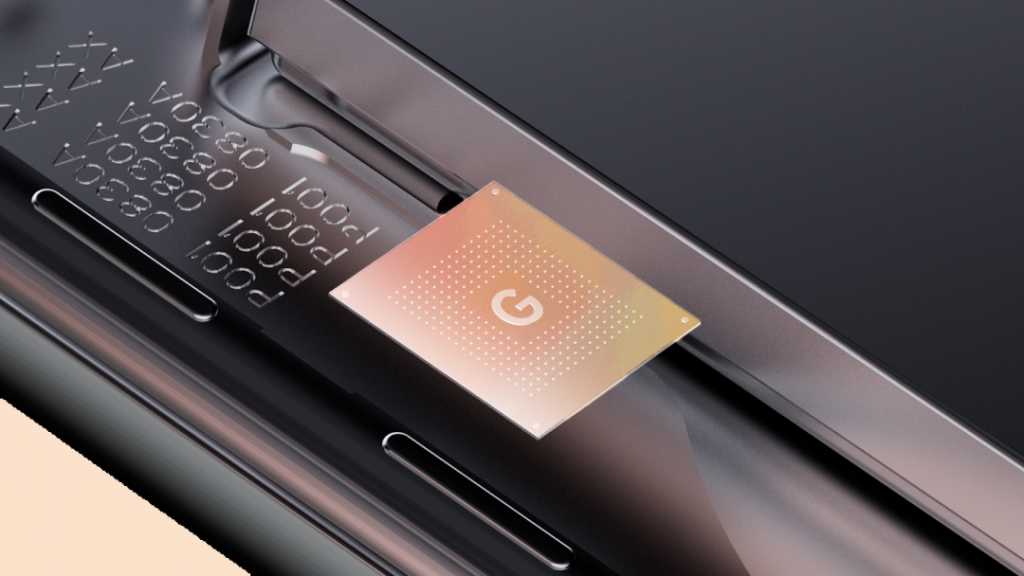
Samsung Foundry, the second-largest foundry in the world after TSMC, is set to begin mass production of chips using its third-generation 4nm process node. This comes after the company had yield issues with its 4nm chip production last year, resulting in Qualcomm moving production of its Snapdragon 8+ Gen 1, Snapdragon 8 Gen 2, and the upcoming Snapdragon 8 Gen 3 to TSMC. However, Samsung has seen improvements in its yield rates, which have risen from 35% at one point last year to 60% now, as well as boosts in performance and energy-efficiency. We might get to see the new 4nm process node in Google’s Pixel 8 lineup, which is expected to release later this year.

Google Tensor

While 3nm is the most advanced node available, Samsung’s 4nm and 5nm processes are currently being used more frequently, accounting for 22% of chips produced during the third quarter of last year compared to 16% manufactured using 6nm and 7nm process nodes. The only phones expected to be powered by 3nm silicon this year are the iPhone 15 Pro and iPhone 15 Ultra.

Google’s Pixel 8 series, set to be released in the fourth quarter of this year, is likely to be powered by the third-generation 4nm process node, with the Google Tensor 3 chipset for the new handsets expected to be produced using this technology. The Pixel Fold, Pixel Tablet, and Pixel 7a are expected to be powered by the Tensor 2, which is built on Samsung’s second-generation 4nm node.

Both TSMC and Samsung plan to produce 4nm chips in the United States starting next year, with TSMC’s fab in Phoenix, Arizona and Samsung Foundry’s facility in Taylor, Texas, adding a 4nm production line. TSMC hopes to start shipping 2nm chips to customers in 2026, while Samsung plans to begin 2nm production in 2025, followed by 1.4nm production in 2027. Intel has also stated that it plans to match TSMC and Samsung Foundry in 2024 and regain process leadership the following year.

RELATED:

(Via)

Realme 10T 5G to Launch on March 21, Key Details Revealed

So far, Realme has launched the Realme 10 Pro 5G, the Realme 10 Pro+ 5G, and the Realme 10 Pro 5G Coca-Cola Edition. The company has confirmed through its social media handle that the Realme 10T 5G will be announced at 4 pm (local time) on March 21 in the country. The company has also confirmed key features of the device.

The Realme 10T 5G will be powered by the Dimensity 810 chipset and will offer 256 GB of internal storage. It will feature a 90Hz display and a 50-megapixel primary camera on the back. For security, it will have a side-facing fingerprint scanner. The 10T 5G will come in black and blue colors. The other details of the device are yet to be revealed.

Realem 10T 5G launch date

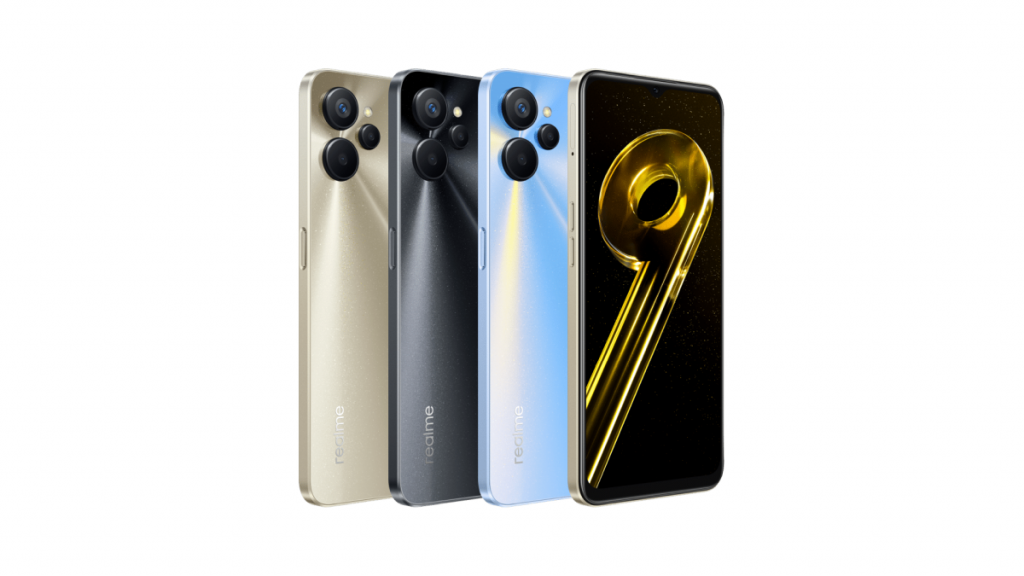
The Realme 10T 5G’s model number is RMX3612. The same model number also belongs to the Realme 9i 5G, which debuted in India in August 2022. As can be seen in the above poster, the rear design of the Realme 10T 5G is also identical to Realme 9i 5G.

Hence, it appears that the 10T could just be a rebranded version of the Realme 9i 5G. Here is a look at the specifications of the 9i 5G, which is currently priced at Rs 14,999 (~$182) in the Indian market.

Realme 9i 5G specifications

Realme 9i 5G
Realme 9i 5G

The Realme 9i 5G features a 6.6-inch IPS LCD Full HD+ 90Hz display. It is powered by the Dimensity 810 chipset, up to 6 GB of LPDDR4x RAM, and a 5,000mAh battery with 18W charging. The device runs on Android 12 OS with Realme UI 3.0 on top.

On the front, it has an 8-megapixel selfie camera. The back panel of the device features a 50-megapixel primary camera, a 2-megapixel portrait camera, and a 2-megapixel macro lens. The device is equipped with a side-mounted fingerprint scanner.

RELATED:

Google’s Latest Exciting Pixel Feature Drop, All Pixel Devices Get Magic Eraser

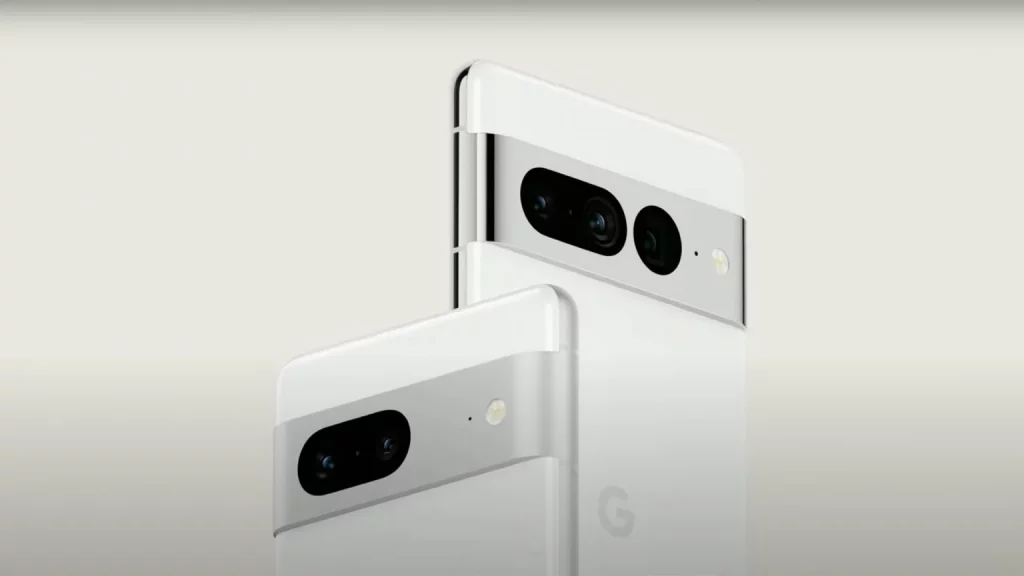
Google has finally put out a new feature drop for Pixel devices and the Pixel Watch, giving users access to several highly anticipated updates. Night Sight, a popular low-lit photography feature, has been optimized for faster processing on Pixel 6 and Pixel 6 Pro phones. The Magic Eraser tool, previously exclusive to the Pixel 6, will now be available on all Pixel handsets. Magic Eraser allows users to remove unwanted objects from their photos with just a few taps. Using artificial intelligence and machine learning, Magic Eraser can intelligently fill in the area where the object was removed, seamlessly blending it into the surrounding environment. This feature is particularly useful for getting rid of distracting elements in your photos, such as power lines or strangers in the background. With Magic Eraser, users can easily clean up their photos and make them look even better than before.

pixel 7

In addition, Google’s Health Connect app will now come pre-installed on Pixels, providing a convenient hub for storing health and fitness data from various apps. Finally, the Direct My Call+ feature arrives on older Pixel models, allowing users to bypass tedious customer service menus when making calls. Google also highlighted its recent addition of Fall Detection on the Pixel Watch, which can automatically call emergency services in the event of a hard fall.

It is noteworthy that if users want the stable version of QPR2, they will need to exit the Beta program first. To do this, before March 13th, users will need to go to www.google.com/android/beta and click on the rectangle that says “View your eligible devices.” They will then be taken to an image of their Pixel device with the words “Opt out” underneath. Once they tap on the button, that’s pretty much it. If they do nothing, users will receive the QPR3 Beta 1 update today, and they will be forced to stick with the Beta program until June 5th when the June Feature Drop should be released by Google.

RELATED:

(Via)

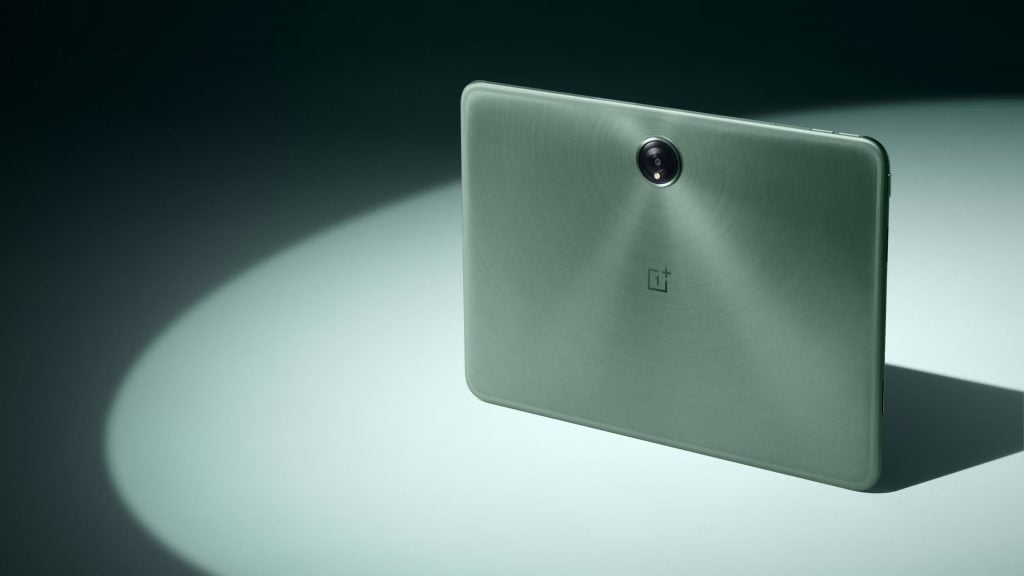
OnePlus Pad Pre-order Date Set for April 10, Could Include Freebies

Earlier this year, OnePlus revealed that its first tablet in the market, the OnePus Pad will be launching in April 2023. The tablet will be powered by a Dimensity 9000 chipset and feature a unique 7:5 aspect ratio.

OnePlus has now announced that pre-orders for their new tablet will start on April 10, 2023. However, the process may not be straightforward as the company has hinted that they may only accept deposits for the Pad on that day. The buyer will be required to pay only a deposit for the tablet on April 10, 2023, and the remaining cost will be collected at a later time, which has not yet been specified by OnePlus.

OnePlus

OnePlus has teased an “amazing gift” in their marketing material for the new tablet, but it remains unclear if it refers to the tablet itself or a bonus item for those who pre-order. However, by clicking on the “Notify Me” button located on the product page, interested buyers can participate in a promotional contest to win either a free tablet or a pair of OnePlus Buds Z2.

OnePlus Pad specs

OnePlus

The OnePlus Pad boasts an 11.6-inch display with a high 144Hz refresh rate, a sharp resolution of 2,800 x 2,000 pixels, and a bright peak brightness of 500 nits. Its powerful MediaTek Dimensity 9000 processor is paired with up to 12GB of LPDDR5 RAM and 256GB UFS 3.1 storage, ensuring smooth and efficient performance.

With support for Dolby Atmos and Dolby Vision, as well as Omnibearing Sound Field technology, the OnePlus Pad promises an exceptional entertainment experience. It also features a large 9,510mAh battery that can be quickly charged using a 67W fast charger and can reportedly last for up to one month on standby.

The tablet’s camera setup includes a 13MP rear camera and an 8MP front-facing camera for selfies. Operating on Android 13 with OxygenOS 13, the OnePlus Pad offers some exclusive tablet features such as automatic connection with other OnePlus devices for OTP verification, cellular sharing, and enhanced text messaging, as well as file sharing capabilities. It is also equipped with a fingerprint sensor, a quad-speaker system with Dolby Atmos audio technology, and Wi-Fi 6 for improved connectivity.

RELATED:

(via)

Is Samsung Faking Pictures of the Moon Using AI?

A recent Reddit post has called out Samsung’s pictures of the moon, claiming that they are fake. The images, which have been popular with Samsung users for their high level of detail, were tested by a user of the platform who created a purposely blurry photo of the moon and displayed it on a computer screen. The screen was then photographed using a Samsung Galaxy S23 Ultra device. The resulting image was sharp and showed detailed images of the moon that weren’t present in the original photo. While Samsung has denied accusations of image overlaying or texture effects, it has admitted to using AI to detect the moon and enhance details by reducing blur and noise.

Moon

The controversy highlights the importance and complexity of image processing, especially as computational techniques become more prevalent. It raises questions about what constitutes a “fake” photo in the age of digital photography and computational enhancements. The author argues that the issue is complicated by the fact that the concept of “fakeness” is a spectrum rather than a binary “fake” or “not fake” image, and that the use of computational techniques blurs the line between “optically captured” and “software-generated” data.

The article suggests that Samsung’s process is more intrusive than upscaling blurry details using AI, as it creates new details that were not present in the original photo. This process produces a generated image rather than a photograph, and some may consider it to be “fake.” The author argues that the viral appeal of Samsung’s moon photography has made it a convenient application for computational photography, and that Samsung’s failure to explain the feature has allowed people to believe that it is a physics-defying optical zoom.

As computational techniques become more common and applied more widely, the author suggests that the line between “real” and “fake” photos will become even harder to tread on. The future may see the use of “detail improvement engines” on all sorts of data, such as faces and landmarks, to produce high-quality photos. The article concludes by suggesting that, in time, people may forget that images produced using computational enhancements were ever considered “fake.”

RELATED:

(Via)

Redmi Note 12 Series to Launch Globally on March 23

The Redmi Note 12 series of smartphones is available in China and India. Now, the brand is gearing up to launch the Note 12 family in wider markets. The below tweet confirms that its global launch will be held at 23:00 hours (GMT +8) on March 23.

As per reports, the Redmi Note 12 series will comprise of the following devices: the Redmi Note 12 5G, Note 12 Pro 5G, and Note 12 Pro+ 5G. It appears that the global market may also receive the Redmi Note 12 4G and Redmi Note 12S, which haven’t launched in any market so far.

The Redmi Note 12S is expected to sport a design similar to last year’s Redmi Note 11S. It is likely that the new model may offer the same specs as the older model. However, instead of 33W charging, the Note 12S may support 67W fast charging.

The Redmi Note 12 4G is likely to be sold as the “Redmi Note 12” in the global market. It is expected to debut as the first-ever Snapdragon 685-powered smartphone. The device will offer other specs, such as a 6.67-inch AMOLED FHD+ 120Hz display, a 13-megapixel front camera, 50-megapixel triple rear cameras, a 5,000mAh battery with 33W fast charging, a side-facing fingerprint scanner, and MIUI 14-based Android 13.

The Redmi Note 12 5G, Note 12 Pro 5G and Note 12 Pro+ 5G heading to the global market will be the same devices that are available in China and India. While the Note 12 5G features the Snapdragon 4 Gen 1 chipset, the Pro models are equipped with the Dimensity 1080 chipset.

Redmi is also said to be working on other phones, such as Redmi A2 and Redmi A2+ for different markets. It is unclear whether these devices will also be announced on March 23.

RELATED:

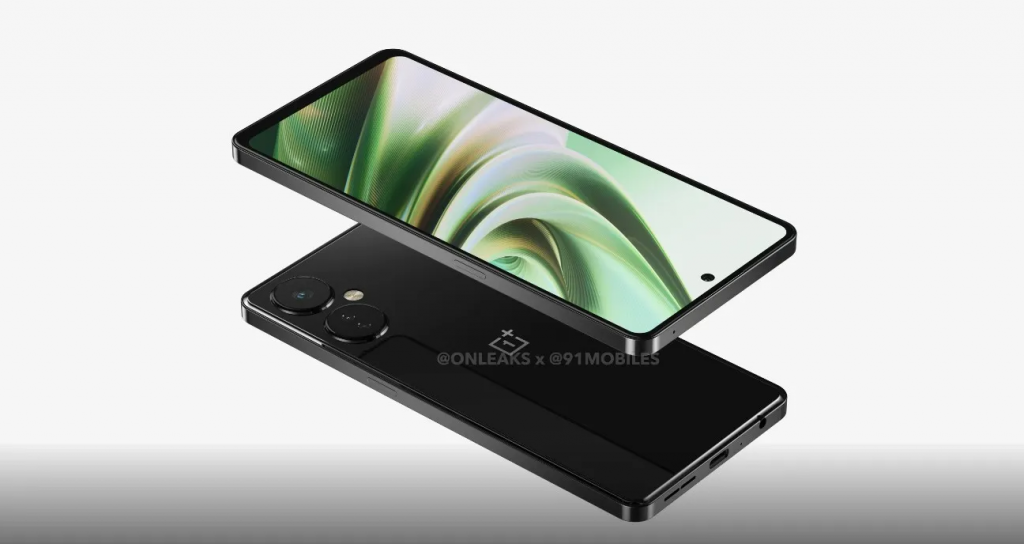
OnePlus Nord CE 3 Lite 5G Launch Date Tipped, Here’s What to Expect

So far, the rumor mill has leaked details about three upcoming Nord-branded phones, such as the OnePlus Nord CE 3 Lite, Nord CE 3, and Nord 3. Max Jambor, a reliable source, said in a tweet that the Nord CE 3 Lite will be announced on April 4.

The OnePlus Nord 3, which is expected to debut in July, is likely to arrive as a rebranded version of the OnePlus Ace 2V, which recently debuted in China. In November 2022, OnLeaks shared the specs sheet of the OnePlus Nord CE 3. The device was found to be equipped with the Snapdragon 695 chipset.

However, a recent report revealed that the Nord CE 3 will come equipped with the Snapdragon 782G. Hence, it appears that the SD695-powered device will be arriving in the market as the Nord CE 3 Lite. While the Lite variant is expected to launch on April 4, the Nord CE 3 and Nord 3 may arrive in Q3 this year.

OnePlus Nord CE 3 Lite 5G specifications (rumored)

The OnePlus Nord CE 3 Lite 5G will have a 6.7-inch IPS LCD panel with a punch-hole design. It will offer an FHD+ resolution and a 120Hz refresh rate. For selfies, it will have a 16-megapixel front-facing camera, and the device will have a 108-megapixel (main) + 2-megapixel (depth) + 2-megapixel (macro) triple camera unit.

The Snapdragon 695 chipset will be present at the helm of the Nord CE 3 Lite. It will feature a 5,000mAh battery that supports 67W fast charging. The device will boot to the Android 13 OS, which will be overlaid with the OxygenOS 13 UI. It will also have a side-facing fingerprint scanner and a microSD card slot. The Nord CE 3 Lite will arrive in two variants, such as 8 GB RAM + 128 GB storage and 12 GB RAM + 256 GB storage.

RELATED:

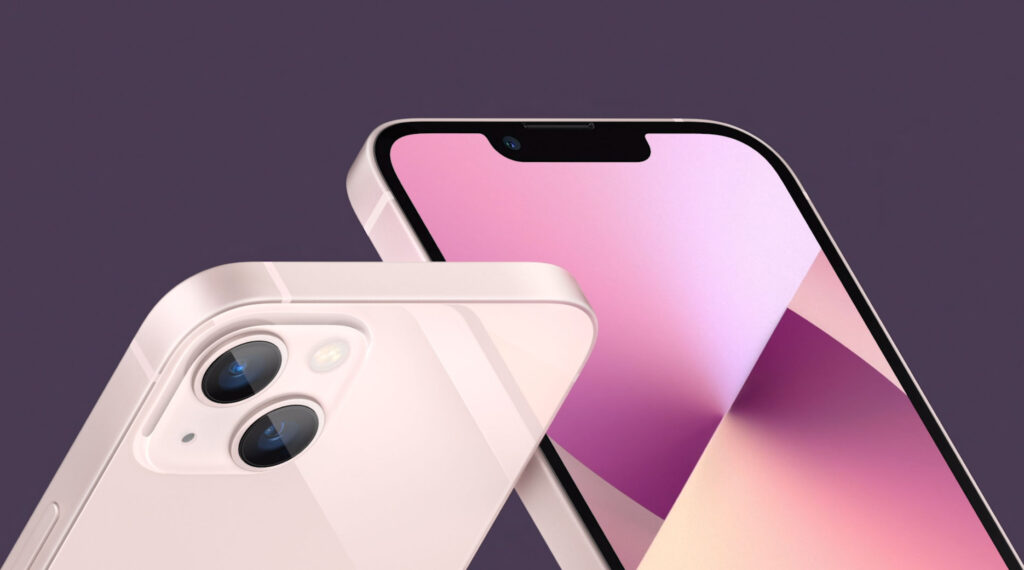
Apple Starts Selling Refurbished iPhone 13 Models in the United States

Apple launched the iPhone 14 series smartphone a few months back, and as soon as this new lineup was made available for purchase in the market, the company stopped selling some models of the previous generation’s iPhone 13 series.

Now, all the iPhone 13 series models except one are available for purchase but in refurbished versions from the Cupertino-based technology giant’s own online store in the United States.

Apple iPhone 13

Apple has today started selling refurbished iPhone 13, iPhone 13 Pro, and iPhone 13 Pro Max smartphones through its online store in the United States. The devices come at a discounted price, with the standard model costing $619, the Pro model being available at $759, and the Pro Max model priced at $849.

The Apple iPhone 13 lineup was first introduced in September 2021, and this is the first time the company started selling its refurbished versions in the United States. However, Apple started selling the refurbished version of this lineup in the European market earlier this year. As the 13 Mini refurbished option is being sold in Europe, we expect it to soon be available in the United States.

In the US, the company has introduced multiple color options and storage capacities for these smartphones, but the availability or stock may fluctuate as Apple sells what is available. All the refurbished iPhones come with new batteries, outer shells, and a new USB-C to Lightning cable in the box.

RELATED:

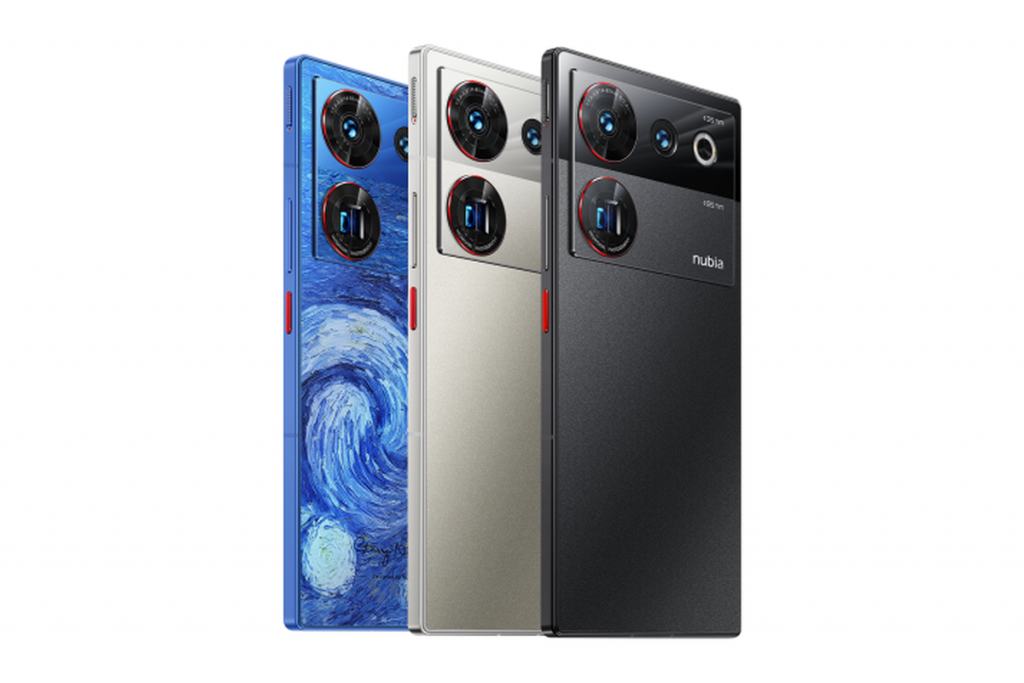
Nubia Z50 Ultra Flagship Smartphone Goes on Sale in China; Price Starts at 3,999 Yuan ($584)

ZTE-backed Nubia recently announced its flagship Z-series smartphone in its home country China, dubbed Nubia Z50 Ultra, which features top-of-the-line specifications and an under-display camera.

Today, the Nubia Z50 Ultra flagship smartphone is officially available for purchase in the Chinese market, with a starting price of 3,999 yuan which roughly converts to $584.

Nubia Z50 Ultra
Nubia Z50 Ultra

The smartphone’s base model with 8GB RAM and 256GB storage costs 3,999 yuan (~$5824), while the 12GB RAM and 256GB storage model is priced at 4,299 yuan (~$627). The 12GB RAM and 512GB storage version is available for 4,699 yuan (~$685), and the 16GB RAM with 1TB internal storage model costs 5,999 yuan (~$874). There’s also a Star Collection Edition with 12GB RAM and 512GB storage, costing 4,999 yuan (~$729).

Coming to the specifications, the Nubia Z50 Ultra features a 6.8-inch OLED display that offers a Full HD+ screen resolution of 2480 x 1116 pixels, a refresh rate of 120Hz, a touch sampling rate of 960Hz, 1440Hz PWM dimming, peak brightness of 1500 nits, 10-bit colors, and a 100 percent DCI-P3 color gamut.

Under the hood, the device comes powered by the Qualcomm Snapdragon 8 Gen 2 processor, coupled with LPDDR5x RAM and UFS 4.0 internal storage. There’s a 4212mm2 large vapor chamber liquid cooling system to keep the phone’s temperature in check when it’s under a heavy workload.

In the camera department, there’s a 35mm 64-megapixel Sony IMX787 primary camera sensor with OIS support, an 85mm 64-megapixel periscope zoom camera with OIS support, and a 50-megapixel ultra-wide camera, which also doubles up as a macro camera.

The phone’s highlight remains a custom-made 16-megapixel OmniVision OV16E1Q under-display camera with a 2.24μm super large pixel size. The company said that the light transmittance has increased by 30 percent, allowing the phone to capture better selfie shots than before.

It comes with a dual SIM card slot, 5G, Wi-Fi 802.11ax, Bluetooth 5.3, NFC, an IR blaster, an X-axis linear motor, and a USB-C port. The device runs the Android 13 operating system with MyOS 13 custom interface. The phone is powered by a 5,000mAh battery with 80W fast charging support.

RELATED:

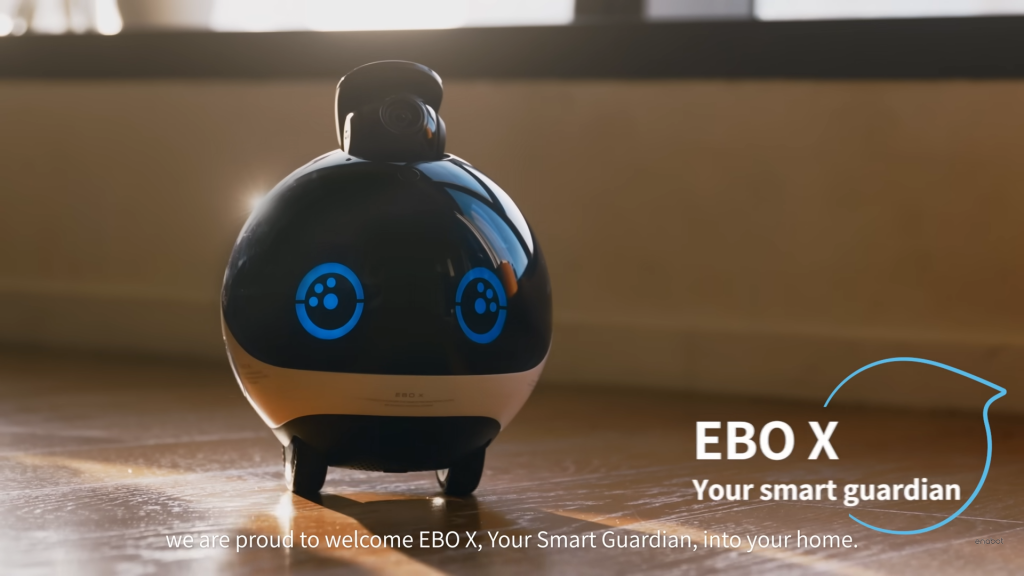
Enabot EBO X Home Robot With a 4K Camera Launched on Kickstarter

Enabot has launched the EBO X home robot on Kickstarter and the crowdfunding campaign has achieved tremendous patronage so far. The campaign for the Enabot EBO X has reached almost 20 times its original goal (about 1,900%). The campaign involved a huge discount from the $999 retail price listed for the home robot. This could be one of the major reasons for the huge patronage of the EBO X on Kickstarter.

Enabot EBO X Home Robot

Enabot seems to be riding on the crest of massive demand for home automation solutions. The EBO X is a family bot that is designed as an ultimate home automation product. It is an upgraded version of the Enabot Air and comes with a stabilized 4K camera in place of the Air’s FHD camera. The new home robot combines all the features of a smart speaker, a telehealth elder monitor, as well as a pet companion. The robot uses precision sensing to move about by itself within the home.

The EBO X home robot comes with enhanced AI and security features. It supports the Alexa voice assistant and can zoom autonomously via its V-SLAM navigation. It has a dual-core, 5 TOPS-capable X3M chip that is capable of tasks like fall detection and protection of children or pets from potentially dangerous or vulnerable areas in the home. The Enabot EBO X also is capable of providing home entertainment through its built-in Harman AudioEFX-tuned sound system.

Enabot EBO X Home Robot

The EBO X home robot is a robot on wheels, hence it is unable to climb stairs in the home and it cannot be seen from a height or distance. The stated drawbacks notwithstanding, the EBO X has amassed a massive followership on Kickstarter. It has reached about $200,000 in pledges, far beyond its goal of $10,000. The crowdfunding campaign for the Enabot EBO X home robot will end in about six weeks and the outlook remains very bright.

Related:

Huawei Enjoy 60 to Launch with Kirin 710A and Dual-Ring Camera

Huawei is gearing up for the launch of its latest device, the Huawei Enjoy 60, on March 23, and it has already generated a lot of excitement in the tech world. Reports suggest that the new smartphone will feature a Kirin chipset and a dual-ring camera design. Weibo tipster, UncleKanshan, has provided some valuable insights on this upcoming device. Here are the details…

Huawei is gearing up for the launch of Enjoy 60 on March 23

The Huawei Enjoy 60 will feature a Kirin 710A chipset, which is the same chipset that is present in the Huawei Enjoy 50. As an entry-level device, the Kirin 710A chipset will provide optimal performance, making it an ideal device for budget-conscious buyers. This chipset is made by Chinese SMIC’s 14nm process, which means that Huawei can print a new chipset without worrying about U.S. restrictions for this node process.

The camera design of the Huawei Enjoy 60 is expected to be similar to that of the Nova 10 SE. The device will have a dual-ring camera system, which is expected to improve the camera performance and provide better image quality. The camera section will be one of the major highlights of the device, and it is something that Huawei is known for.

The current version of the Huawei Enjoy series, the Enjoy 50, features a 6.75-inch LCD screen with a waterdrop notch design. The screen has a ratio of 90.26% and supports ten-point touch technology. The device has an 8MP selfie camera and a dual rear camera system consisting of a 13MP and a 2MP camera. It also comes with a large 6000mAh battery capacity that can be recharged with a 22.5W fast charger.

The Huawei Enjoy 50 uses Huawei Histen 6.1 and SuperSound audio solutions that provide 9.1 channel simulated surround sound with a maximum volume of 86 dB. The device comes with a pre-installed HarmonyOS 2 operating system, measures 8.98mm thick, weighs 199g and has a 3.5mm headphone jack.

The Huawei Enjoy 60 is expected to be an upgrade over the Enjoy 50 and will suit the price tag. The device will be an excellent option for those who are looking for a budget-friendly device with advanced features. Huawei has always been known for providing high-quality devices, and it seems like the new Huawei Enjoy 60 will not disappoint its users. The device is expected to be available in the market soon after its launch, and it will be interesting to see how it performs in the highly competitive smartphone market.

RELATED:

(via)

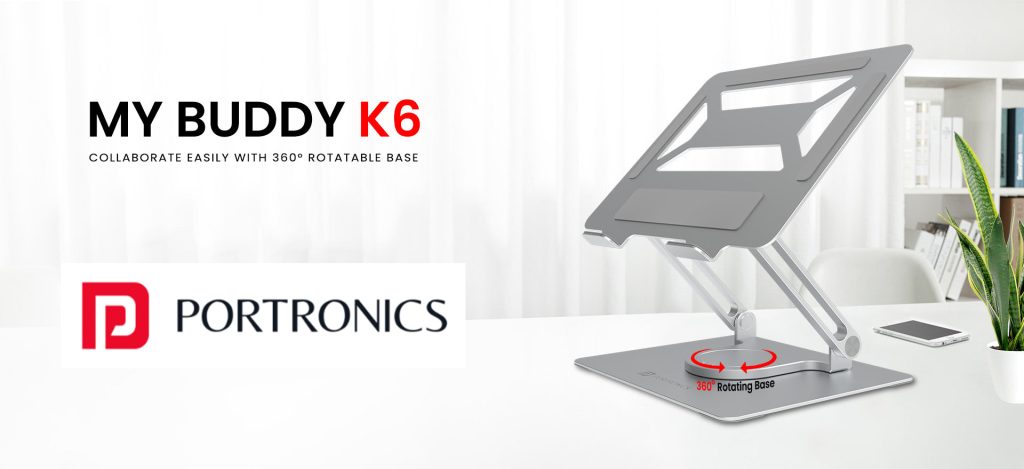
Portronics My Buddy K6 Portable Laptop Stand With 360-degree Rotating Base Launched

Portronics has unveiled its latest portable metallic laptop stand. The Portronics My Buddy K6 has a metallic chassis and a 360-degree rotating base for greater versatility. Last month, the company launched the Mport 13C USB-C Docking Station featuring 13 ports.

Portronics My Buddy K6 Portable Laptop Stand

My Buddy K6 is a solid laptop stand made of sturdy metal and comes with a shape that delivers maximum ergonomic comfort. Apart from the full-cycle rotating base, the laptop stand can be set to several heights and angles to suit specific scenarios. It is equipped with air vents on the bottom to keep your laptop cool while working. The My Buddy K6 is large and sturdy enough to support laptops up to 15.6 inches in size. The stand can also be used for tablets of different sizes.

Portronics My Buddy K6 Portable Laptop Stand

The My Buddy K6 is designed to fit your laptop or tablet snugly with its adjustable architecture. The stand can take weights up to 10kg and its design allows for easy turning and enhanced productivity. It allows the user to maintain good posture, thus protecting your neck and back from sprains and pains. The laptop stand has silicone anti-slip cushions that safeguard your device from falling off the stand. The panel size is 300 x 259 x 79mm and the accessory is available in a silver colorway.

Portronics My Buddy K6 Portable Laptop Stand

The Portronics My Buddy K6 metallic laptop stand is available in India for Rs. 2,399 (~$29). It can be purchased directly from Portronics or online channels like Amazon India and Flipkart. The original price of the product is Rs. 3,999 (~$49) and it comes with a 1-year warranty.

Related:

Omnivision Announces New 2K 4-Megapixel Image Sensor for Home and Baby Monitoring Devices

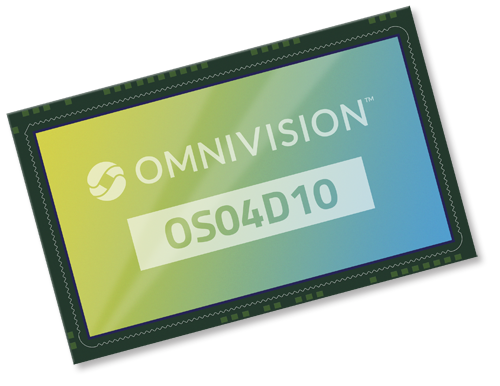
Omnivision has announced the launch of a new 2K 4-megapixel image sensor designed for consumer security and surveillance cameras. The new image sensor, named the OS04D, features a 2.0-micron high-performance backside-illuminated pixel that provides higher sensitivity, ultra-low noise, and better overall image quality. Here are the details…

Omnivision Launches New Image Sensor for Smart Home and Baby Monitoring Devices

The OS04D image sensor, which comes in a cost-effective 1/3-inch optical format, offers 40% power consumption savings compared to its predecessor. Additionally, it provides improvements of over 30% in signal-to-noise ratio (SNR) and 40% in sensitivity. The PureCel®Plus technology-based BSI pixel in the sensor enables higher sensitivity and ultra-low noise, while select conversion gain (SCG) allows the sensor to flexibly select low and high conversion gain depending on the lighting conditions.

Omnivision OS04D

Furthermore, on-chip auto exposure control (AEC) and auto gain control (AGC) accelerate system-on-chip (SoC) booting time, which makes it an efficient and reliable solution for battery-operated devices such as doorbell security cameras. The low power consumption of the sensor is beneficial for such devices.

According to Cheney Zhang, Senior Marketing Manager at Omnivision, “the OS04D image sensor is designed to provide the ideal balance of performance and cost for mainstream IP and HD analog security cameras.” For security camera image sensors, the most critical component is their ability to produce sharp, high-resolution images.

The OS04D image sensor produces extremely clear images and has fast frame rates to capture real-time, fast-moving HD video. Its PureCel Plus pixel architecture achieves high quantum efficiency and an excellent signal-to-noise ratio, resulting in extremely high sensitivity in low-light conditions.

The OS04D image sensor is pin-to-pin compatible with Omnivision’s OS04L image sensor as well as other new products that the company will launch in the future. It is a significant improvement over its predecessor, offering improved performance, low power consumption, and an ideal balance of performance and cost for mainstream IP and HD analog security cameras. Its high sensitivity and low noise make it an excellent solution for low-light conditions, making it a perfect fit for doorbell and baby monitoring devices.

RELATED:

(source)

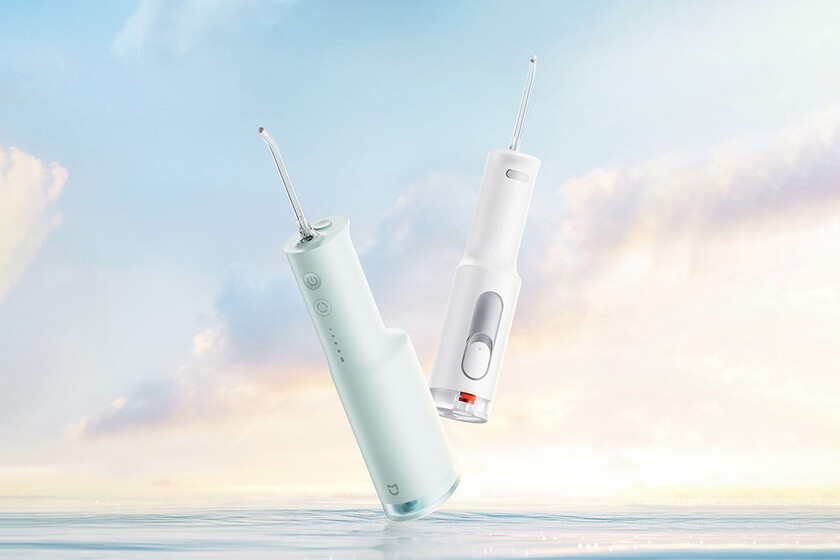
Xiaomi Launches Mijia Electric Teeth Flosser F300 Priced at 199 Yuan

Xiaomi is known for its diverse range of smart products, which spans from aquariums to automobiles. Among these products, Xiaomi has also ventured into the oral health product market, with its latest launch being the Mijia Electric Teeth Flosser F300. If you are interested in learning more, here are the details…

Say Goodbye to Plaque with the Xiaomi Mijia Electric Teeth Flosser F300

Xiaomi has launched the Mijia Electric Teeth Flosser F300, which promises to improve oral hygiene at an affordable price. This electric flosser uses advanced technology to provide a powerful cleaning action that can remove up to 99.4% of plaque. It uses umbrella shooting pulse technology with a combination of point-shaped water flow and circular mist water waterfall, making it gentle on the triangular area of the teeth.

Xiaomi Mijia Electric Teeth Flosser F300

The Mijia Electric Teeth Flosser F300 offers four different cleaning modes, including gentle, standard, strong, and massage, which can be easily adjusted to suit the user’s preferences. It also comes with three custom nozzles, making it suitable for a wide range of dental needs. The flosser has a large 240mL water tank, which is 20% larger than the previous model, allowing for longer cleaning sessions without the need for frequent refills.

It is also fully charged in just four hours and has an impressive battery life, with the gentle mode lasting up to 115 days and the standard mode up to 55 days. Xiaomi Mijia Electric Teeth Flosser F30 has a 3-second crescendo feature that gradually increases the water flow from weak to strong, making it easy to use for novices and helping to prevent bleeding gums and other types of gum damage. Other useful features include a 2-minute power-off function that prevents dry burning and IPX7-level body waterproofing, making it easy to clean and maintain.

RELATED:

(source)

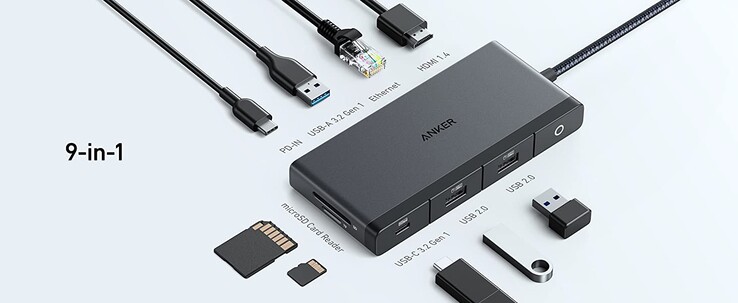
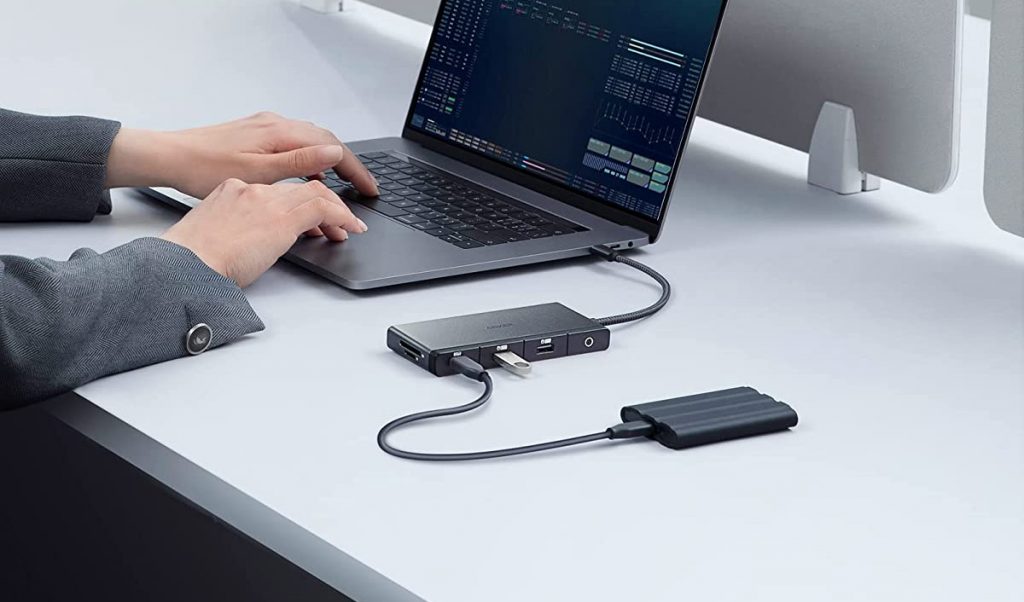
Anker 552 USB-C 9-in-1 Hub Featuring a 4K HDMI Port Released

The Anker 552 USB-C Hub (9-in-1, 4K HDMI) has been released. The Anker 552 USB-C Hub is a Series 5 gadget that is signposted by its 4K HDMI output. It also features 85W pass-through charging via USB-C and a Gigabit Ethernet port among its numerous ports. You can use the Anker 552 to significantly expand the number of ports available to your PC. The new Anker USB-C hub ports include USB-C 3.2 Gen 1, USB-A 3.2 Gen 1 ports with a 5Gbps rate, and a Gigabit Ethernet port. It also has a 480Mbps USB-A port for data transfer and SD/ microSD card slots.

Anker 552 USB-C

The USB-C hub is powered via a 100W PD-IN port although the package does not include a charger. It requires 15W to run and the 85W pass-through charging can power your laptop. In addition, you can connect a monitor with 4K resolution using the HDMI 1.4 port. The Anker 552 USB-C hub weighs about 130g with dimensions of 5.12 x 2.36 75x 0.59 inches. It is unclear at this time which models are compatible with the Anker 552. We however expect it to support Windows, macOS, and Linux systems.

Anker 552 USB-C

The Anker 552 USB-C Hub (9-in-1, 4K) is available from online platforms like Amazon in the US and a few other selected markets. The gadget can be purchased in the US for $69.99. It is also available in the UK (£69.99) and the EU (€69.99).

RELATED:

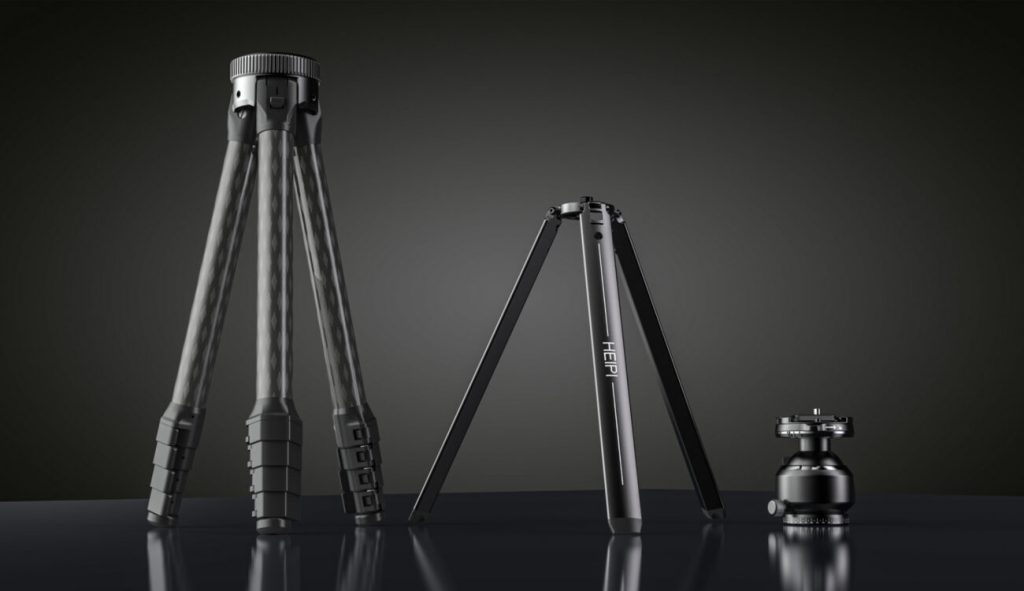
HEIPI Is a Compact 3-In-1 Travel Tripod That You Can Buy Today on Indiegogo

If you love to do photography and are always on the move, a travel tripod might make your life a lot easier. It can help you keep your camera stable and avoid blurry shots caused by unsteadiness and shaking. Now that we’ve stated the obvious, let us introduce you to HEIPI— a compact 3-in-1 travel tripod, which is a perfect accessory for any outdoor photographer.

HEIPI-TravelTripod

HEIPI comes with a patented design of a “3-pillar center column” which helps it transform into two separate tripods within seconds. There’s also a detachable ball head that lets you align your camera vertically if needed. It is the world’s first 3-in-1 tripod and features a carbon-fiber construction that keeps it both lightweight and durable.

The tripod has been designed to meet the needs of travel photographers seeking portable and lightweight support. It is highly portable and can be conveniently packed in any photography bag or backpack. Its design features a “three-pillar” center column, carbon fiber legs, and locking levers that have been reimagined to eliminate unnecessary gaps commonly found in traditional tripods.

HEIPI Travel tripod

The HEIPI tripod is a perfect partner for landscape photography, offering robust support for full-frame DSLR cameras and telephoto lenses. With a maximum height of 59 inches and a weight capacity of 55 pounds, the tripod’s legs remain completely rigid, providing an unwavering base for your equipment.

Additionally, the included phone holder enables you to attach a regular smartphone to the tripod or its smaller inner tripod, as needed. Furthermore, the tripod features an integrated hook that can be used to hang your equipment bag on it, helping to weigh down the setup and providing added stability.

HEIPI 3-in-1 travel tripod is currently listed on Indiegogo as part of a crowdfunding campaign. Interested shoppers may get the tripod from here. It carries a price tag of $339 USD.

RELATED:

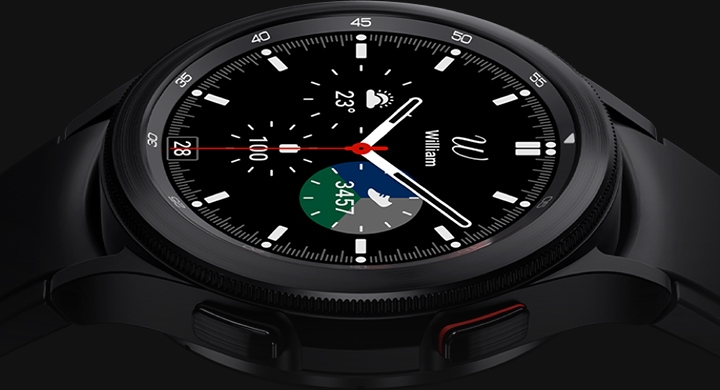
Samsung Galaxy Watch 6 Might Bring Back the Fan-favorite Rotating Bezel

The Galaxy Watch 5 series was an interesting refresh, offering consumers several models to choose from. But Samsung did break some hearts by ditching one of the most beloved features on its smartwatches— the rotating bezel. Its origin dates back to the time when the company’s smartwatches used to be sold under the “Gear” moniker. Now, it is being claimed that the upcoming Galaxy Watch 6 series could bring fan-favorite rotating back. Here are the details.

galaxy-watch4-rotating-bezel

According to YouTuber Super Roader, the physical rotating bezel will be back with the upcoming Galaxy Watch 6 series. But there’s a catch— only the Galaxy Watch 6 Pro will be worthy enough to feature it. The standard Galaxy Watch 6 may have to make do with a digital bezel, which isn’t necessarily a downside, but it cannot fully replicate the authentic tactile sensation of a physical rotating bezel.

If you have ever worn a Samsung smartwatch (Galaxy Watch 4 series or older), you would appreciate the sheer pleasure of using the rotating bezel to effortlessly navigate through widgets, screens, and applications.

Separately, it has been reported that the Watch 6 Pro will be offered in two sizes— one will likely be a smaller size, made for those who don’t want a large watch. To recall, the Galaxy Watch 5 Pro was launched in just one 45mm size last year. Reports also claim that the Watch 6 Pro will continue to focus on great battery life. We are not sure when Samsung plans to launch the Galaxy Watch 6 series. It may unveil the wearables in the second half of this year, alongside the new foldable smartphones.

RELATED:

(Source)