Advertisement

Smartphone Brands with Longest Android Support: Samsung, OnePlus, OPPO, and Xiaomi Lead the Charge

In the fast-paced world of technology, staying up-to-date is essential for both consumers and brands. Keeping this in mind, many brands are now focusing on providing longer updates for their Android devices. This move not only benefits consumers but also helps brands improve their reputation and customer satisfaction. Recently, Google has praised a number of companies that include Samsung, OnePlus, Xiaomi and OPPO for their commitment to longer Android updates, highlighting the importance of this trend.

List of Smartphone Brands with Longest Android Support

Samsung – Smartphone Update Policy

Samsung One UI

Samsung has been at the forefront of the push toward extended software support for Android devices. Samsung has committed to providing four major Android upgrades and five years of security updates for flagship phones. The move was started from the Galaxy S21 series, but now the company is also offering the same support to Galaxy A phones like the Galaxy A53, A73, and successors.

The Galaxy S23 series will receive security updates until 2027.

Google – Smartphone Update Policy

Android 13

The Google Pixel 7 series is a shining example of the brand’s commitment to providing top-of-the-line software support to its users. With a promise of five years of software support, the Pixel 7 and Pixel 7 Pro offer an exceptional level of longevity and reliability that is hard to find in other smartphone brands. While the phones may not receive five major Android OS updates, users can still expect three generations of OS updates and five years of monthly security updates, ensuring that their devices stay secure and up to date for years to come. With the Pixel 7 series shipping with Android 13 out of the box, it should get OS updates until Android 16.

OnePlus – Smartphone Update Policy
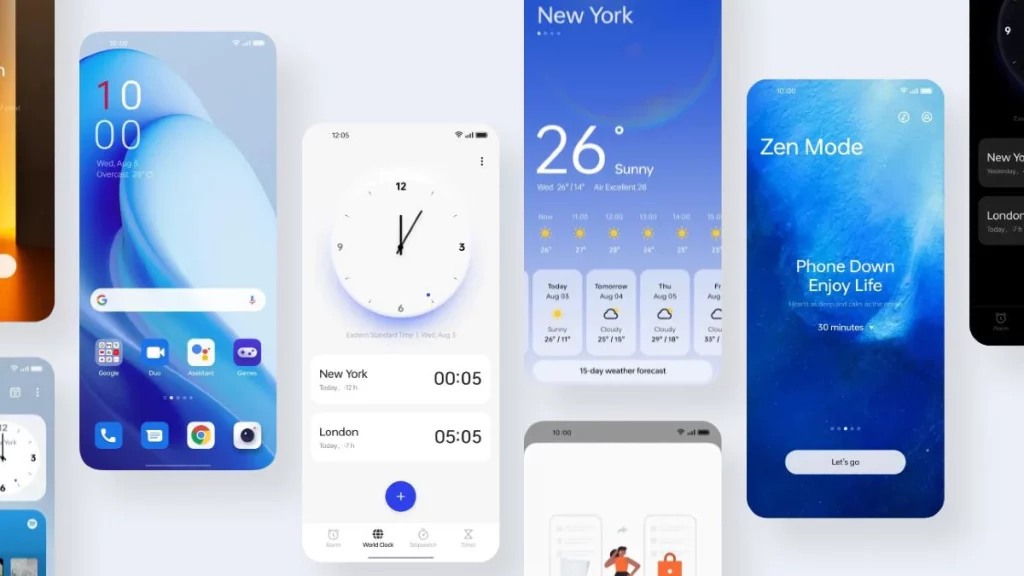
OxygenOS 13

OnePlus has also been vocal about its commitment to providing longer software support for its devices. The company has committed to providing four major Android OS updates and five years of security updates for the flagship devices, starting from the OnePlus 11. While the OnePlus 11R will receive 3 major Android updates and 4 years of security updates. This means that many OnePlus users can expect to receive the latest Android updates for several years after purchasing their devices.

OPPO – Smartphone Update Policy
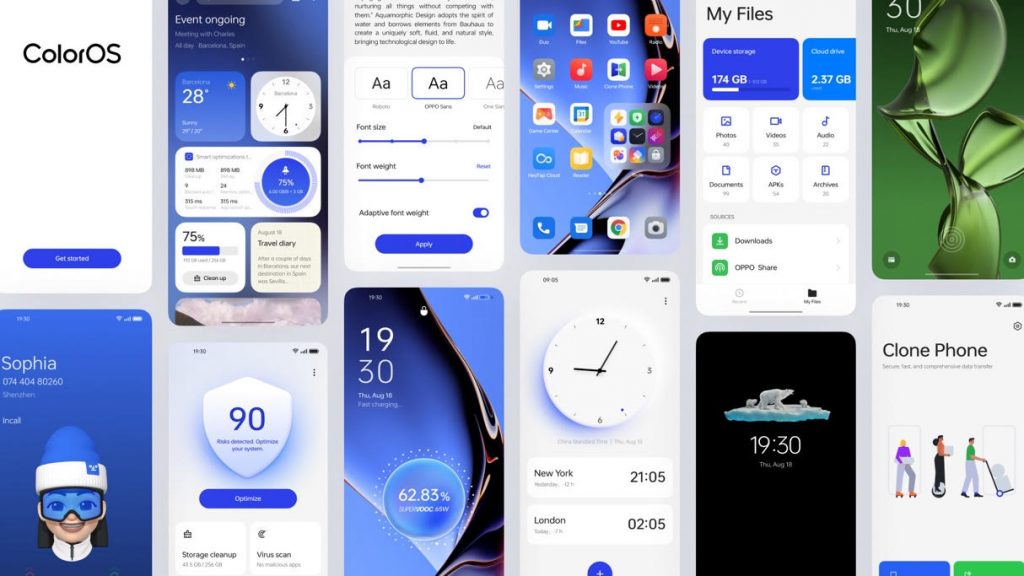
Oppo Color OS

OPPO has also joined Samsung and OnePlus in offering longer software support for its devices. The company has committed to providing four major Color OS updates and five years of security patches for its flagship phones. This move is expected to benefit many Oppo users who want to keep their devices up-to-date with the latest Android features and security patches.

The company recently launched Find N2 Flip and Find N2 which will likely receive these major updates. The company is also set to introduce its flagship smartphone series, the Find X6 in March.

Xiaomi – Smartphone Update Policy

MIUI 14

Xiaomi recently made a promising announcement regarding their flagship devices – the Xiaomi 13 Pro and the Xiaomi 13. The company is committing to providing its customers three generations of Android updates and five years of security patches. This move brings Xiaomi on par with Google’s Pixel promise.

It’s worth noting that this commitment is a significant improvement from Xiaomi’s previous track record. Just a year ago, the company fell short by one year with the Xiaomi 12 and 12 Pro, which were only supposed to receive four years of security patches.

Honor – Smartphone Update Policy

Honor Magic UI

HONOR has recently made an exciting announcement regarding their flagship device, the Magic 5 Pro. The company is committing to providing its customers with three years of OS upgrades and five years of security patches, which is a notable improvement from its previous track record. While Samsung and OPPO/OnePlus offer four years of OS upgrades, HONOR’s commitment still ensures that the Magic 5 Pro will remain up to date with the latest Android features until 2026 and receive security patches until 2028.

Realme – Smartphone Update Policy

Realme UI

Realme last year made a significant commitment to software support, with a focus on top-of-the-range smartphones. They announced a plan to provide up to 4 years of support for some of their flagship devices, starting with the Realme GT 2 and GT 2 Pro.

During their flagship launch event, Realme unveiled the Realme GT 2 and GT 2 Pro and announced that they would receive three major Android OS updates along with 4 years of security patches.

The devices set to benefit from this extended support include the Realme GT 2, GT 2 Pro, GT 2 Master Edition, GT Neo 2, GT Neo 3, and GT Neo 3T. These phones are expected to receive three major Android updates, starting from the version they launch with and continuing through several iterations.

The recently launched Realme 11 Pro and Realme 11 Pro Plus users can expect to receive Android 14 and Android 15 updates in the coming years. Additionally, these smartphones will benefit from three years of security patches, ensuring continued software support and security for their devices.

Motorola – Smartphone Update Policy

Motorola

Motorola traditionally offers two years of support for their phones. However, for premium models like the Motorola Edge 30 series, the company has extended support to 3 years, ensuring updates from Android 12 to Android 15, anticipated in 2024.

Motorola expanded the Android 13 update list by including some older devices, doubling the initially confirmed list. After promising 2 upgrades and 3 years of security patches for the Motorola Edge 30 series in 2022, Motorola further improved its commitment in 2023. For the Motorola Edge Plus (2023), they have pledged three upgrades and 4 years of patch support.

iQOO – Smartphone Update Policy
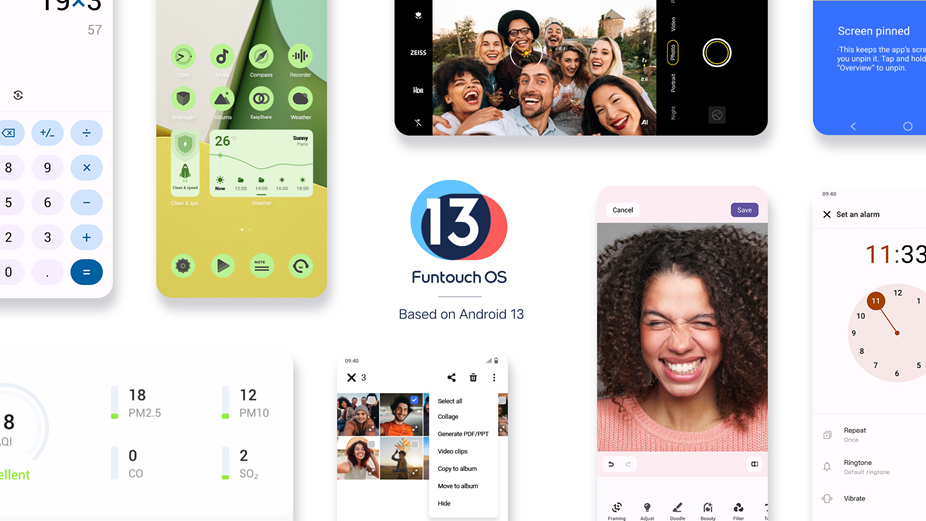
Funtouch OS

iQOO is committing to extended software support for its recent flagship devices, promising 3 years of Android OS updates and 4 years of security patches. The brand’s newer Neo and Z series models are set to get 2 major Android updates and 3 years of monthly security patches.

The iQOO 11 5G, launched earlier this year with Android 13-based Funtouch 13, will also benefit from this policy, receiving up to 3 years of Android updates and 4 years of security patches.

In conclusion, the trend towards longer software support for Android devices is gaining momentum, with major smartphone brands like Samsung, OnePlus, Oppo, and Xiaomi leading the charge. These brands have pledged to provide several years of major Android OS updates and security patches for many of their devices, starting from their recent models.

This commitment to longer software support is good news for users who want to keep their devices up-to-date with the latest features and security patches. It also reduces e-waste by extending the life of the devices and contributing to a more sustainable environment.

RELATED:

OnePlus 11 Barely Survives Bend Test, Breaks OnePlus 10 Pro/10T’s Snapping Curse

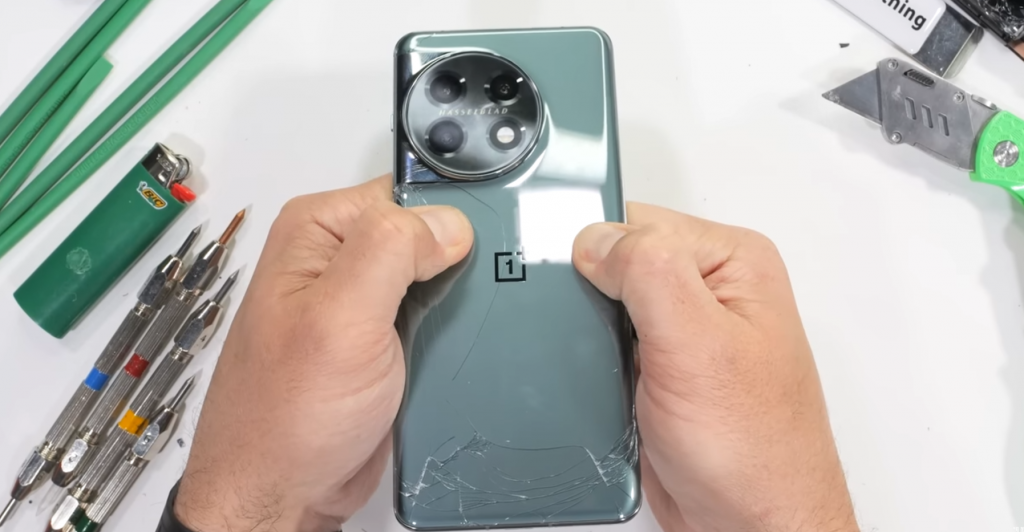
The latest video from Zack Nelson, the popular tech YouTuber behind the JerryRigEverything channel has been highly anticipated. Since the YouTuber is finally testing the OnePlus 11 to see if the company’s latest flagship phone snaps for the third time.

OnePlus

For those unaware, the OnePlus 10 Pro and the 10T model that launched back in 2022 both failed the bend test of Zack’s bend test in the durability video. Both devices snapped in two and the new change in camera design was found to be the primary cause behind this structural issue. However, it appears that the Chinese smartphone maker managed to break this curse, with its latest premium grade handset barely surviving the test.

Looking at the video, we can see the OnePlus 11 being put through the usual scratch, burn, and bend tests that we know JerryRigEverything channel to showcase. The device expected as one would expect for all the tests except the bend one. This was the “moment of truth” part of the video as we can see the device clearly flexing to the point that its rear panel starts cracking up. However, unlike the two models that launched before it, the OnePlus 11 held onto its structural integrity.

Although there were some key points to note in the video. First of all, the scratch test on the display area right above the under screen fingerprint scanner usually doesn’t affect the functionality. But the scratches on the 11 model caused the sensor to be unable to rear Zack’s finger entirely. Notably, the OnePlus 11 showed the most sign of distress in the area right below the camera module. In other words, this region is still prone to cracks and bending related issues than other parts. Despite all this, it is still great news that the brand did not strike out on the third flagship phone in a row.

RELATED:

Tecno Spark 10 Pro Specs, Price Range & Launch Timeline Tipped for India

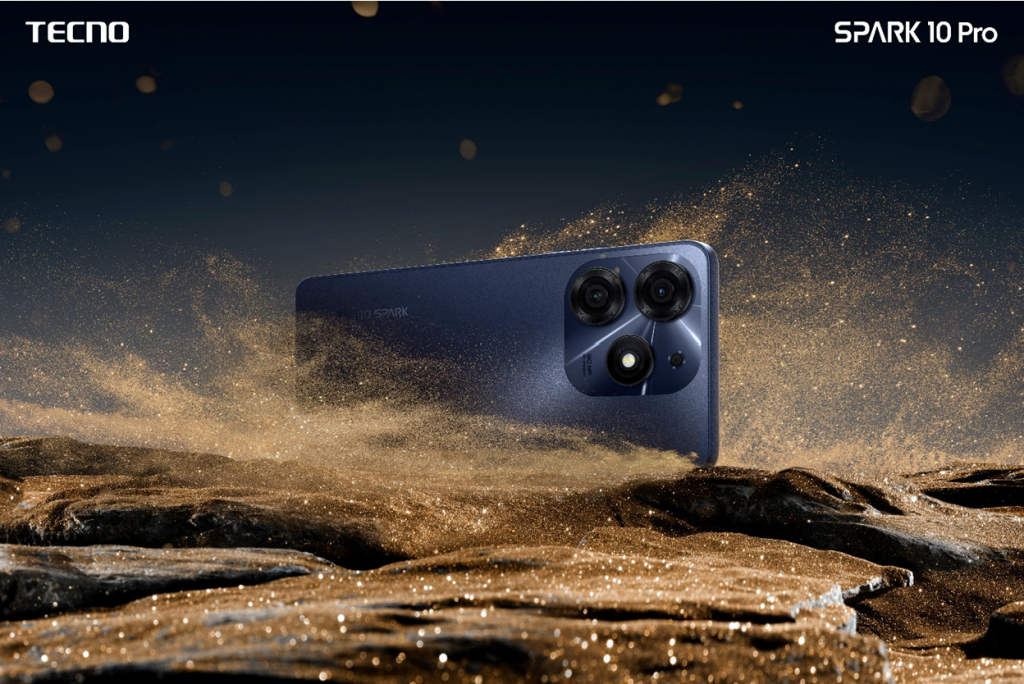
Tecno recently showcased the upcoming Spark 10 Pro budget-range smartphone at the ongoing Mobile World Congress 2023 event. It is expected to soon launch in multiple regions including India. Now, a leak has emerged revealing a detailed spec sheet of the Tecno Spark 10 Pro alongside its price range.

Tecno Spark 10 Pro

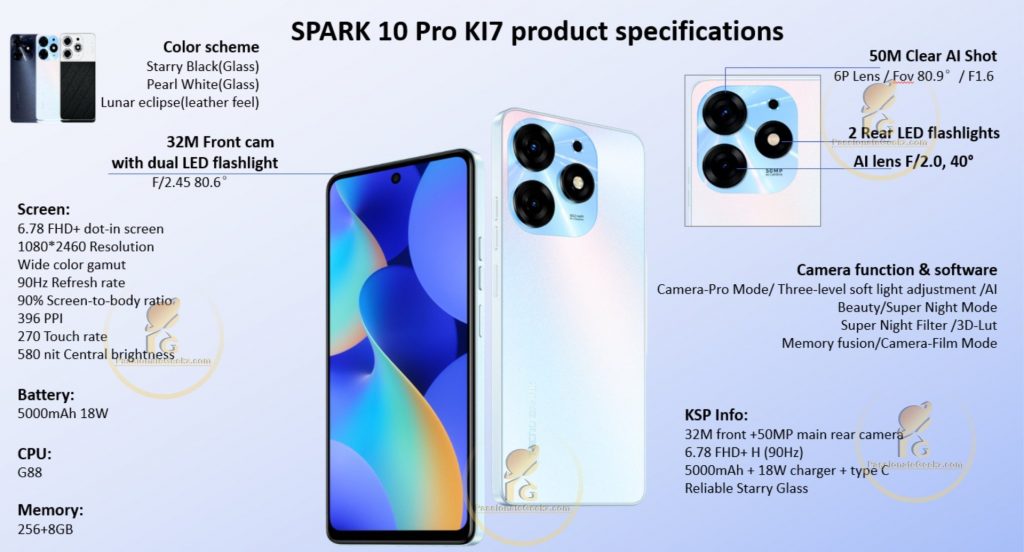
Tipster Paras Guglani has shared a marketing image of the Tecno Spark 10 Pro that has all of the key details about the device. The Spark 10 Pro (K17 model) is expected to feature a large 6.78-inch LCD screen with a high resolution of 1080 x 2460 pixels, 20.5:9 aspect ratio, 90Hz refresh rate, 270Hz touch sampling rate, 396 ppi pixel density, and 580 nits of brightness, with a punch-hole design and 90 percent screen-to-body ratio.

Tecno

Under the hood, the device will be powered by the Helio G88 chipset and a 5,000mAh battery that supports 18W charging via USB-C. It will come with 8GB of RAM and 256GB of internal storage.

The front camera will be a 32-megapixel shooter, while the rear camera will have a 50-megapixel main camera, an AI lens, and a dual-LED flash unit, with features like Pro Mode, AI Beauty, Super Night Mode, Super Night Filter, and more for photography enthusiasts.

The upcoming Spark 10 Pro smartphone is anticipated to launch in India by mid-March, with an estimated price range of Rs 10,000 to Rs 12,000. Three color choices will be offered for the device, with the Starry Black and Pearl White models sporting glass backs and the Lunar Eclipse variant featuring a textured leather finish.

RELATED:

Vivo V27e Launched with 120Hz AMOLED Display, Helio G99 & More

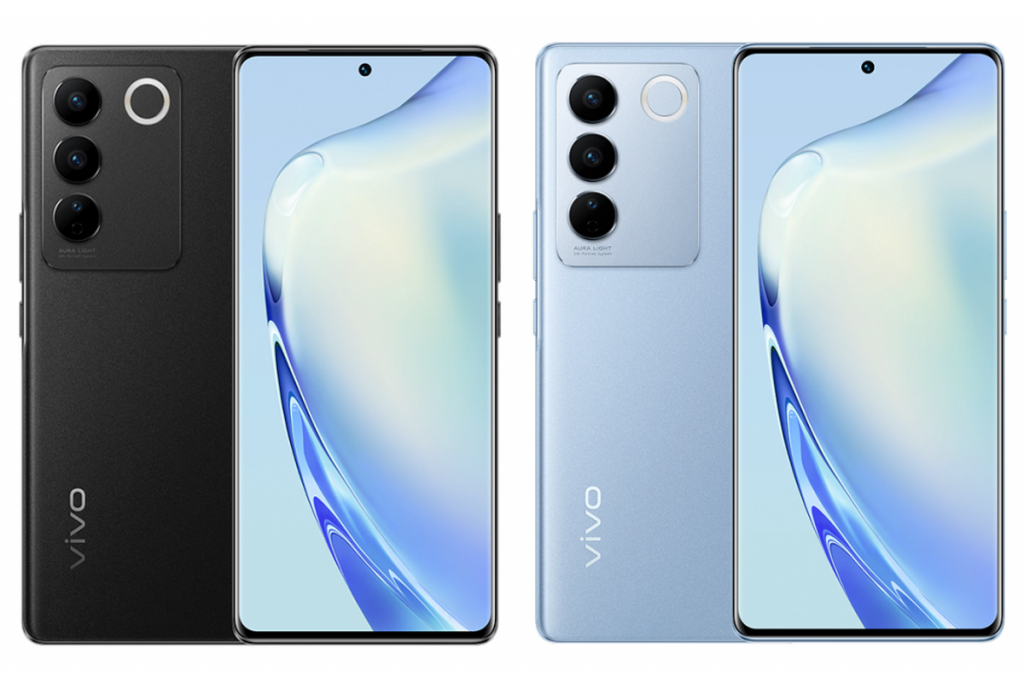
Vivo has just launched the V27 series of smartphones in the Indian market. However, the V27e model that was expected to be unveiled alongside the V27 and V27 Pro wasn’t announced during the launch livestream. But, this model was just released in Malaysia, so let’s have a look.

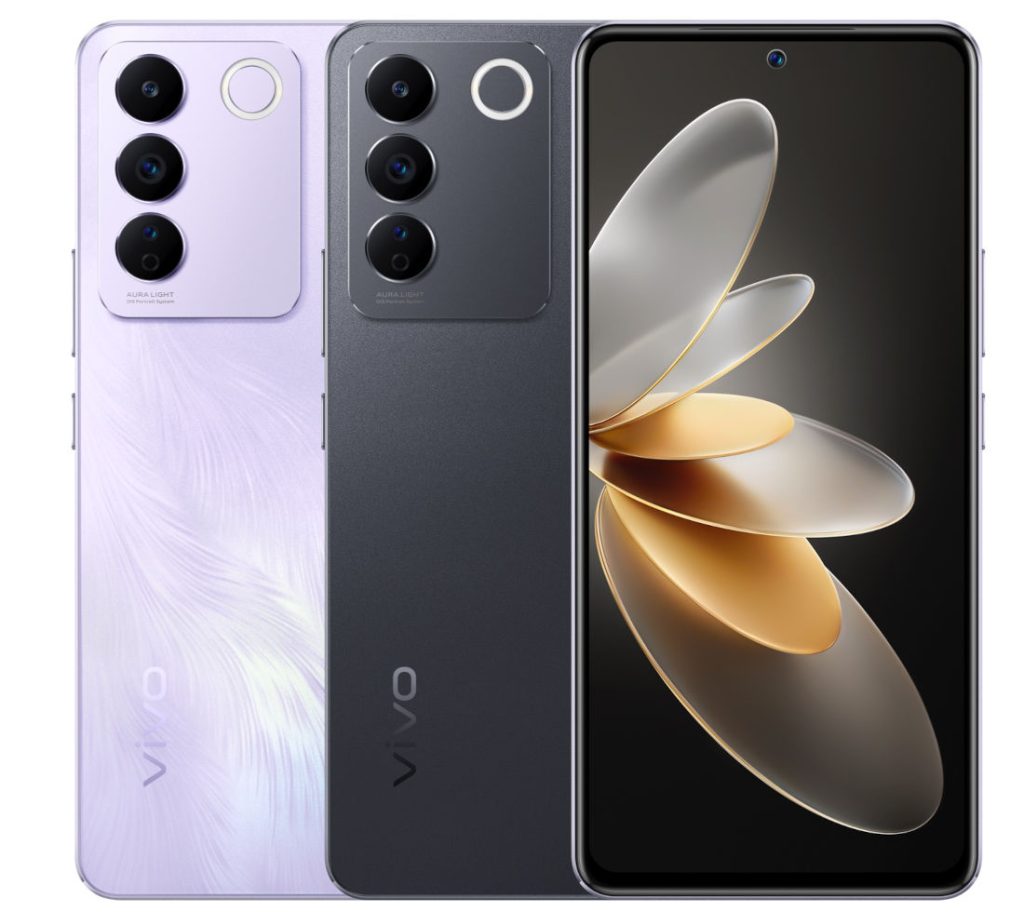
The Chinese smartphone maker has placed an emphasis on the design of this mid range smartphone. It features a rear panel that appears to have a unique design engraved onto the surface. While it isn’t a color shifting panel, the three color options with the feathery desogm are still quite attractive. The back also houses the Aura Light, which offers LED lighting as well. Meanwhile, the front sport a 6.62 inch AMOLED display that has a Full HD+ resolution and 120Hz refresh rate.

Vivo

Under the hood, the device is equipped with a MediaTek Helio G99 SoC that is paired with up to 12GB of RAM and up to 256GB of internal storage. On the rear, it features a triple camera setup that consists of a 64 megapixel primary sensor that supports OIS, 2 megapixel macro camera and another 2 megapixel depth sensor. The front houses a 32 megapixel selfie shooter. The V27e is powered by a 4,600mAh battery pack that supports 66W fast charging.

Other notable features include, Android 13 OS based FuntouchOS 13, hybrid dual SIM tray, IP54 dust and splash resistance, and stereo speakers. The Vivo V27e is available in multiple color variants, namely Lavender Purple, Glory black and Lively Green options. The pricing for the 8GB + 256GFB configuration is 1,299 RM (roughly 290 US Dollars). The device is currently available for order in Malaysia with free gifts as well.

RELATED:

Huawei P60 Series Could Be Unveiled at MWC 2023

MWC (Mobile World Congress) is a major conference where various tech brands showcase their latest innovations and even prototypes for future products. And now, a new report has suggested that Huawei will also be making a big announcement. The company will apparently be taking the stage to unveil its next generation of flagship smartphones.

As per recent rumors, the Chinese tech giant plans to announce the new P60 series during the ongoing MWC 2023 event. For those unaware, the major event has many OEMs take spotlight with innovative and impressive technology. But ever since the US sanctions, Huawei had scaled down its reveals, especially for the smartphone category. However, it appears that the company will be making a notable announcement in Barcelona this time around. The new report claims that the Huawei P60 series will be unveiled at MWC 2023.

Huawei

The company’s P series is typically a series of premium phones that offer great cameras with high end hardware and design. Some of the P series model were even ranking leaders in DxOMark. The P60 models is expected to feature Huawei’s own XMAGE photography platform, similar to the Mate 50 series that launched last year. Based on what we know so far, the P60 Pro will be the first device to feature the 50MP Sony IMX888 primary sensor that is paired with a 50MP Sony IMX858 ultra wide angle sensor.

The third and last camera is expected to be a telephoto shooter that is a 64MP OV64B Omnivision sensor that offers 3.5x optical zoom. Apart from this, the P60 Pro will likely feature Qualcomm’s latest and greatest Snapdragon 8 Gen 2 SoC as well while the base model could feature a Snapdragon 8+ Gen 1 chipset. The rumor has also added that the company could be revealing this series on March 2. Although, the company has yet to confirm this matter. So stick around for more updates.

RELATED:

(Via)

OnePlus Ace 2V Visits Geekbench Ahead of March 7 Launch, Check Performance

OnePlus is preparing to launch the OnePlus Ace 2V smartphone on March 7 in China. Earlier today, the brand confirmed that the smartphone will feature a MediaTek Dimensity 9000 processor. The Ace 2V with Dimensity 9000 has already appeared on the AnTuTu benchmark revealing its performance. Now, the device has also visited Geekbench ahead of the launch.

Image

The listing reveals that the Ace 2V with model number PHP110 has scored 926 points in the single-core test and 3602 points on the multi-core test of Geekbench 5.

According to the benchmark listing, the OnePlus Ace 2V will feature a MediaTek Dimensity 9000 processor with an octa-core configuration, consisting of one Cortex-X2 core clocked at 3.05GHz, three Cortex-A710 cores clocked at 2.85GHz each, and four Cortex-A510 cores clocked at 1.80GHz each. The listing also confirms that the device will have 16GB of memory and an integrated Mali G710 GPU.

OnePlus

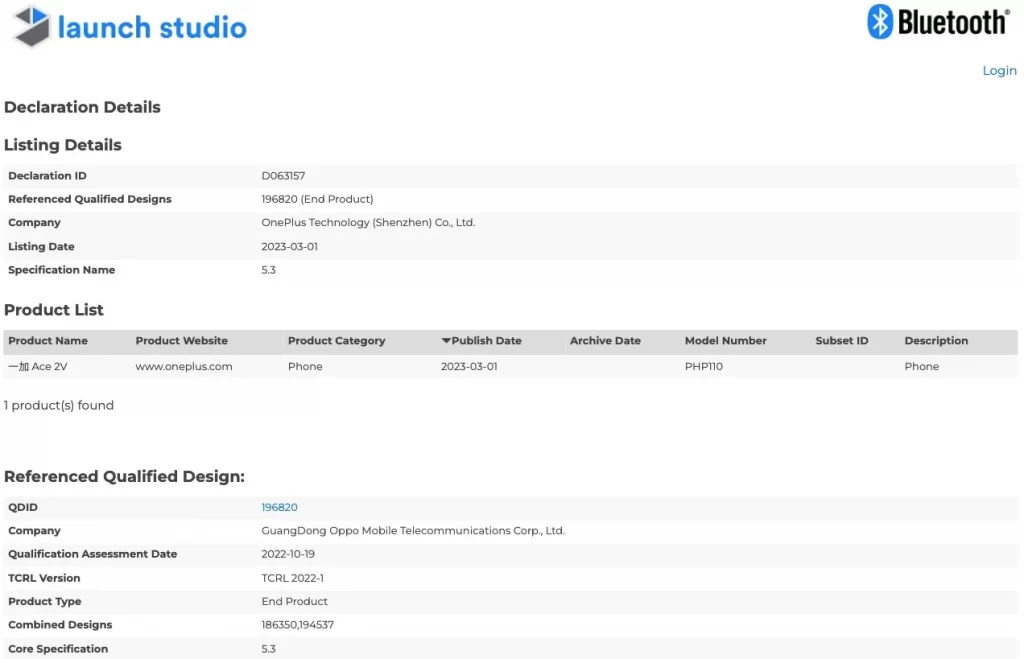
In addition to that, the OnePlus Ace 2V has also been spotted on Bluetooth SIG confirming that it features Bluetooth 5.3 connectivity. Let’s take a look at what else is known about this upcoming smartphone.

OnePlus Ace 2V specs

OnePlus

According to reports the OnePlus Ace 2V may come with a 6.74-inch AMOLED display, boasting a 1.5K resolution and 120Hz refresh rate. It will be powered by the Dimensity 9000 chipset, offering 16GB of LPDDR5x RAM and up to 512GB of UFS 3.1 storage. The phone is rumored to feature a 5,000mAh battery that supports 80W fast charging.

Regarding the camera, the device is expected to have a 16-megapixel front-facing camera and a triple camera setup on the back, which includes a 64-megapixel primary lens with OIS, an 8-megapixel ultra-wide lens, and a 2-megapixel macro lens. It is anticipated that the OnePlus Ace 2V will run on the Android 13 operating system with ColorOS 13 out-of-the-box. Some reports suggest that it will be rebranded as the Nord 3 for the global market.

RELATED:

(via)

Lava Agni 2 5G Arrives on Geekbench With Dimensity 1080 Chipset

Lava is the only Indian smartphone brand that is consistent in releasing new products. Following the launch of the Lava Agni 5G in late 2021, the company is now gearing up to release its successor.

A few days back, a leak revealed almost all the important details of this upcoming device, which is said to be called Lava Agni 2 5G. Now, this phone seems to have made its appearance on a benchmarking platform.

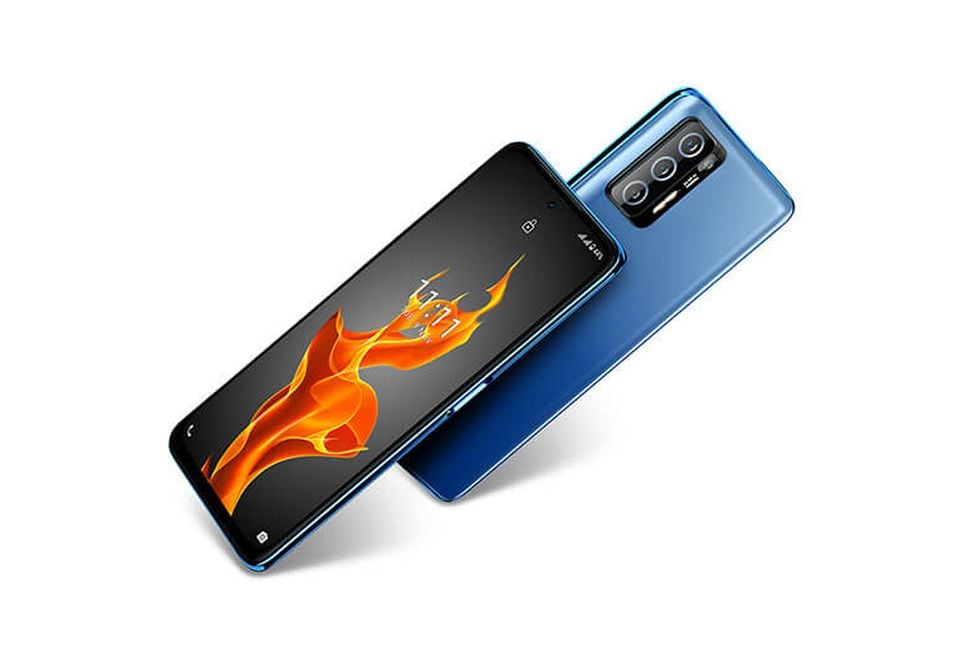
Lava AGNI 5G
Lava Agni 5G

According to Paras Guglani (@passionategeekz), a new Lava smartphone with model number LXX504 has arrived on Geekbench. He says that this device is likely the forthcoming Lava Agni 2 5G.

As per the listing, the handset will be powered by a MediaTek Dimensity 1080 chipset paired with 8GB RAM. Further, it will boot Android 13.

The chip detail matches the earlier leak. However, this is the first time we are hearing about the software, and thankfully, the phone will ship with the latest version of Android.

Talking about other specs, the Agni 2 5G is tipped to sport a 6.5-inch HD+ display with a 90Hz refresh rate. It will come with a 50MP primary camera, which may have support for OIS. For selfies and video calls, it will use a 16MP snapper.

The handset will offer a MicroSD card slot and a side-facing fingerprint sensor. Last but not least, it will be backed by a 5,000mAh battery and carry support for 44W charging.

The Lava Agni 2 5G is expected to launch in April for about ₹20,000-₹25,000.

RELATED:

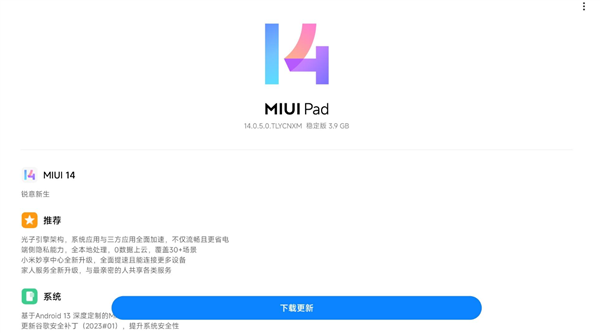
Redmi Pad Gets MIUI 14 With Enhanced Performance and Power-saving Photon Engine

Tech giant Xiaomi has recently started pushing its latest MIUI 14 operating system to Redmi Pad, which promises to offer several impressive features. According to Xiaomi, MIUI 14 focuses on minimizing system occupation while maximizing application uninstallation, resulting in a faster, smoother, and more efficient user experience. One of the most notable features of MIUI 14 is the “photon engine,” which has been in development for a year and promises to improve app fluency by up to 88%.

Redmi Pad MIUI 14

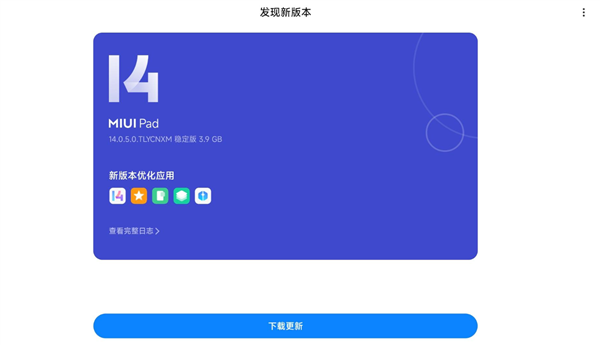
The latest stable version of MIUI 14 has been released for Redmi Pad, with the version number 14.0.5.0.TLYCNXM and an update package size of 3.9GB. Since this update involves an upgrade to the Android 13 operating system, it is considered a significant version update. The update also includes the latest Google security patch (2023#01), which further enhances system security.

The photon engine, which is the highlight of the MIUI 14 update, consists of three main components, namely intelligent scene recognition, resource dynamic scheduling, and resource computing engine. Together, these three architectures improve third-party application fluency while also saving power.

Redmi Pad MIUI 14 Update

Apart from the photon engine, MIUI 14 also includes updates in privacy protection, family services, and Xiao AI classmate. Xiaomi Mi Miaoxiang Center has also undergone a significant upgrade, offering improved interconnectivity and interoperability features. Mi Miaoxiang Center now supports headsets, phone transfers, and even keyboard and mouse sharing modes for easy collaboration between notebooks and tablets.

Redmi Pad boasts a 10.61-inch 10-bit LCD screen with 90Hz refresh rate, 70% NTSC color gamut, 400 nits brightness, and TUV Rheinland low blue light certification, making it a highly immersive and visually stunning experience.

Under the hood, the tablet is powered by an Octa Core MediaTek Helio G99 6nm processor. The device comes with 3GB LPDDR4X RAM with 64GB UFS 2.1 storage, 4GB / 6GB LPDDR4X RAM with 128GB UFS 2.1 storage, and expandable memory with microSD.

Redmi Pad runs on Android 12 with MIUI 13 for Pad, providing a smooth and intuitive user experience. The tablet also features an 8MP rear camera with Full HD video recording capabilities and an 8MP front-facing camera with 105° FOV.

The device has a slim and lightweight design, with dimensions of 250.5×158.1×7.1mm and a weight of 465g. It also boasts USB Type-C audio, Dolby Atmos, Quad Speakers, and dual microphones, making it ideal for entertainment and communication purposes.

Redmi Pad has Wi-Fi 802.11 ac (2.4GHz + 5GHz), Bluetooth 5.3, and USB Type-C connectivity options, ensuring seamless connectivity across various devices. The device is powered by an 8,000mAh battery with support for 18W charging, making it perfect for extended use on the go.

RELATED:

Redmi K60, Xiaomi Civi 2 Receive Price Cuts for a Limited Time

Xiaomi is offering limited-time discounts on two of its popular smartphones in China. The company is providing a price cut of up to ¥300 (~$45) on these handsets.

The devices on offer are Redmi K60 and Xiaomi Civi 2. The deal is only applicable to the 256GB storage variants of these handsets.

Redmi K60

Talking about the Redmi K60 first, the offer is only available on JD for this phone. The retailer is providing a discount of ¥300 (~$45). 

Therefore, the 8GB + 256GB and the 12GB + 256GB memory configurations can be purchased at ¥2,599 and ¥2,699, respectively.

On the other hand, the Xiaomi Civi 2 deal is live across multiple channels. But the discount amount is lower at ¥200 (~$30).

Either way, the 8GB + 256GB and the 12GB + 256GB memory variants can be had at ¥2,299 and ¥2,599, respectively.

Though the above-mentioned smartphones cost about the same, they are targeted at different audiences. The Redmi K60 is for those looking for performance, while the Xiaomi Civi is for those interested in selfies and design.

The main highlights of the Redmi K60 are a Qualcomm Snapdragon 8 Gen 1 Plus chipset and a 10-bit 120Hz QHD+ OLED display.  Whereas, the Xiaomi Civi 2 boasts dual 32MP front-facing cameras with quad LED flashlights and a Qualcomm Snapdragon 7 Gen 1 chipset.

The Redmi phone is expected to release as Poco F5 Pro outside mainland China, while the Xiaomi device just went official in global markets as Xiaomi 13 Lite.

RELATED:

Huawei Showcases New AR Search Update for Petal Search at MWC 2023

At the MWC 2023 in Barcelona, Huawei unveiled the latest features of its Petal Search mobile search engine, namely the AR search function and On-screen Lens function. These powerful features cater to users’ needs for text, image, and object recognition in a variety of scenarios, such as travel and entertainment. Petal Search boasts deep learning and large-scale machine learning technologies, which enable it to recognize hundreds of thousands of objects from dozens of categories in just centiseconds. Moreover, the search engine supports translation between multiple mainstream languages, making it a valuable tool for international users.

huawei logo

Statistics from Statista show that global paying users of AR-related services have grown at a compound annual rate of 64% between 2020 and 2022. In response, Petal Search has upgraded its AR search capability, allowing users to identify objects in real-time without taking photos. This feature utilizes advanced models based on hundreds of millions of data records and tens of billions of images to deliver accurate results in centiseconds. Users can also translate screen content and save translation results on the go using the On-screen Lens function. Petal Search’s comprehensive search capability integrates tools, content, and services, enabling users to securely download apps, check the weather, translation, and exchange rates, and access trending news, video, images, and academic knowledge.

Petal Search has localized features that cater to users in different countries and regions, including an earthquake information card in Latin America. Additionally, the search engine has partnered with over 3000 ecosystem partners to provide users with one-stop services for shopping, travel, and local life. Currently, Petal Search offers services in over 170 countries and regions, supporting more than 70 languages, and complying with the local GDPR standard. As a key component of Huawei’s “1+8+N” strategy, Petal Search will continue to evolve towards a more convenient and intelligent one-stop search experience.

RELATED:

(Via)

Vivo TWS Air Launched with 25hr Battery, 14.2mm Drivers in India

Vivo has just launched the V27 series of smartphones in the Indian market. But alongside the latest V series phone, the company has also unveiled the new Vivo TWS Air earbuds, so let’s have a look.

The Chinese smartphone maker had originally launched this truly wireless earbuds model back in 2022 and it is finally bringing the hearables in India. Vivo’s latest pair of earbuds come with a large 14.2mm audio drivers that is also tuned by the company’s Golden Ears Acoustics Lab. In other words, the company promises to offer an improved audio experience. The earbuds also offer up to 25 hours of battery life in a single full charge when paired with its charging case.

Vivo

The new earbuds feature a semi in ear design that have a lightweight body that weighs just 3.5 grams and are comfortable to wear as well. Furthermore, the Vivo TWS Air earbuds also arrive with DeepX 2.0 stereo sound effects, which provides mega bass, clear voice, and clear high pitch along with Google Fast Pair and Bluetooth 5.2 for a fast and uninterrupted connection.

The brand has launched the truly wireless earbuds will be available for sale in the country for a price tag of 3,999 INR. Interestingly, the company is also offering a bundle offer for customers that buy the V27 Pro model. Those that buy the phone can avail a discount of 1,000 INR, which brings the price down to just 2,999 INR.

RELATED:

Oppo Find X6 Pro Dimensity Edition Appears on TENAA With 4,880mAh Battery, Could Launch Soon

Oppo‘s upcoming Find X6 flagship smartphones are expected to launch soon. We could see a couple of devices in the Find X6 series debuting in the next few months. It is said that one of these devices will house a MediaTek Dimesnity processor.

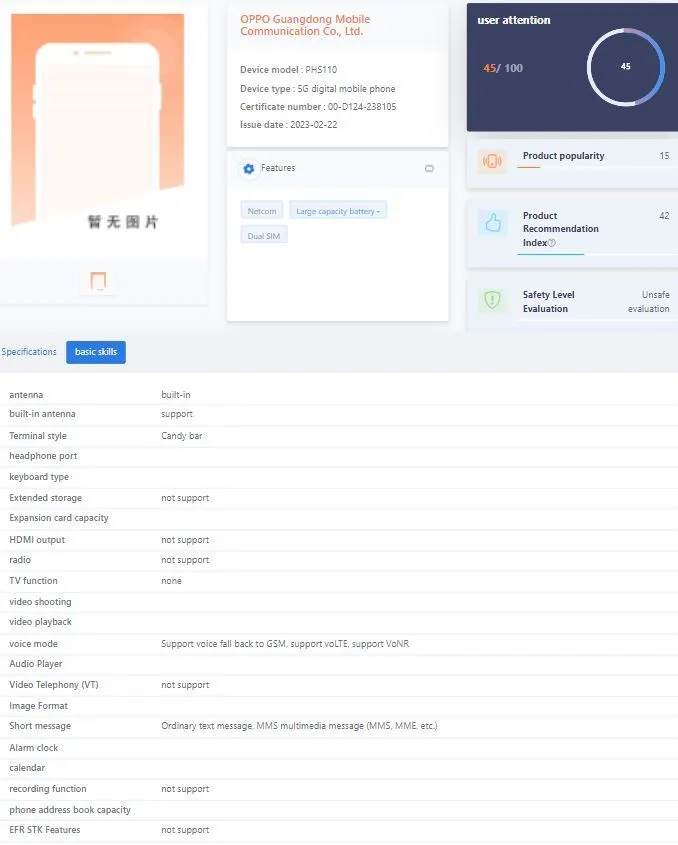
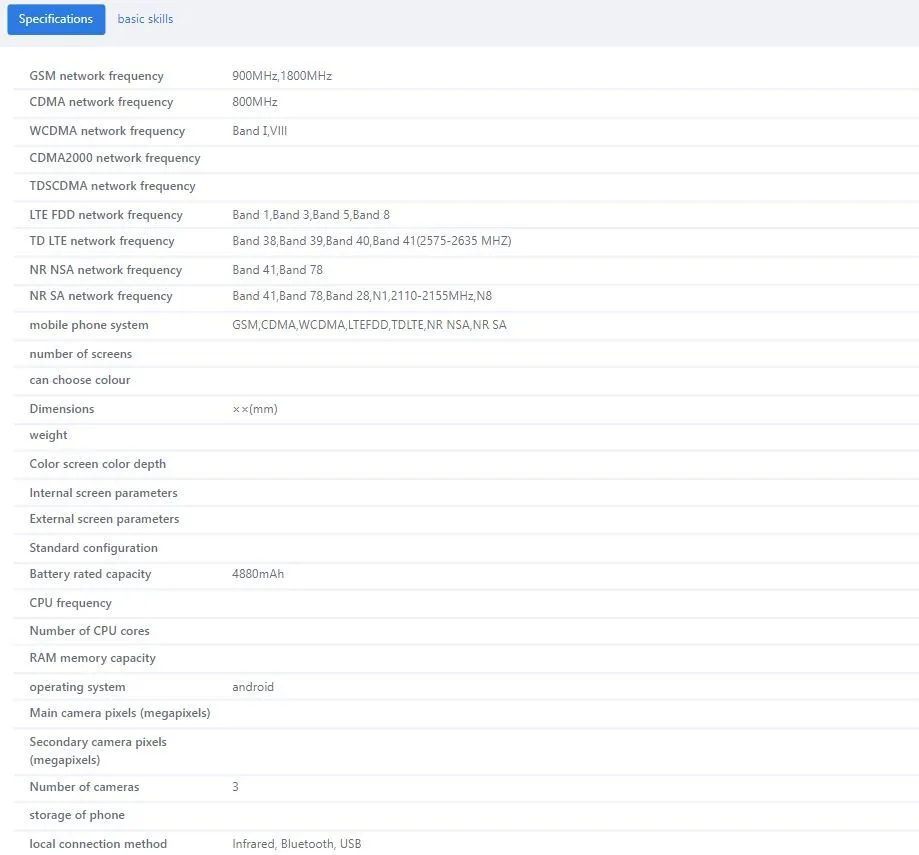
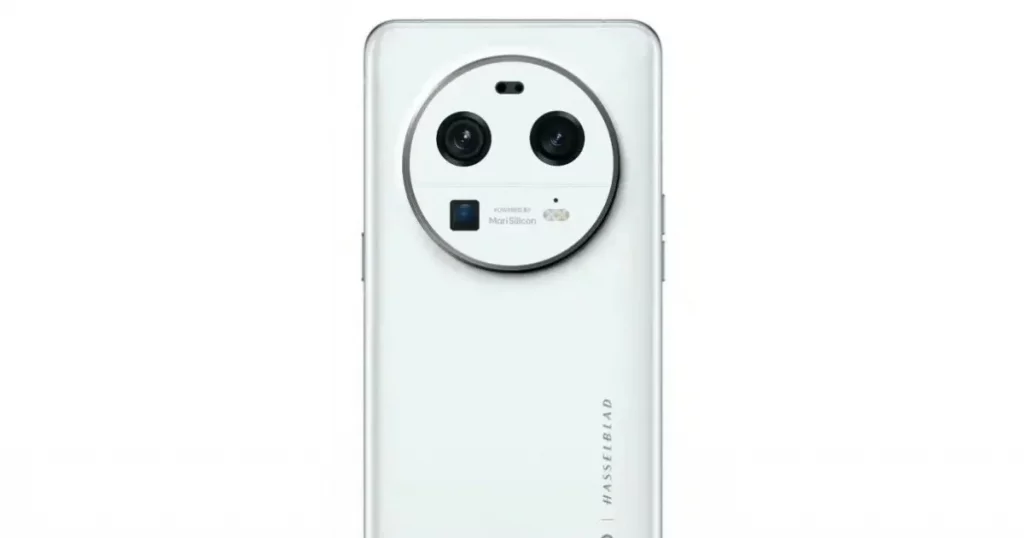
The Oppo Find X6 Pro Dimensity Edition previously appeared on the CMIIT database. Now, it has made an appearance on TENAA revealing some information about the battery of the device. According to the listing, the Oppo PHS110 smartphone has a 4880mAh rated capacity battery. It is likely that it will be advertised as 5000mAh at launch. Other than that, the upcoming device will have a triple-camera setup. No further details are revealed through the TENAA listing. Let’s take a look at what’s known about the Find X6 Pro Dimensity Edition as well as the Find X6 Pro so far.

Oppo Find X6 Pro/ Find X6 Pro Dimensity Edition Specs

According to leaked information, the Find X6 Pro Dimensity Edition is expected to be equipped with the recently launched Dimensity 9200 chipset, as well as LPDDR5x RAM and UFS 4.0 storage. Although featuring a different chipset, it is likely to have the same specifications as the Snapdragon 8 Gen 2 variant of the Find X6 Pro.

OPPO

The Find X6 Pro is rumored to have a large 6.8-inch or 6.9-inch AMOLED display with a Quad HD+ resolution, a 120Hz refresh rate, and an under-display fingerprint scanner. It may also have a 32-megapixel front camera and a triple camera setup on the back panel consisting of a 50-megapixel (Sony IMX890 with OIS) + 50-megapixel (Sony IMX890, ultra-wide) + 50-megapixel (Sony IMX890 or IMX766 telephoto with OIS) camera.

The device is expected to come with a 5,000mAh battery that supports 100W wired and 50W wireless charging and will run on ColorOS 13-based Android 13. The X6 series is rumored to launch in Q1 2023.

RELATED:

(via)

Vivo V27, V27 Pro Launched in India with 120Hz AMOLED Display, Dimensity 7200 / 8200, 50MP Triple Cameras

After weeks of leaks, the Vivo V27 and V27 Pro smartphones have gone official in India. Like the V25 and V25 Pro models from last year, the new models have great photography features and a cool rear design that changes colors.

The Vivo V27 Pro is nothing but a rebranded version of the Vivo S16 Pro, which has been exclusively available in China since December 2022. The V27, on the other hand, is a new phone that comes with a completely new Dimensity 7200 SoC.

Vivo V27, V27 Pro specifications and features

Vivo V27 Pro
Vivo V27 Pro

The Vivo V27 Pro measures 164.1 x 74.8 x 7.4mm and weighs 182 grams. It features a 6.78-inch AMOLED display with curved edges and a centrally positioned punch-hole. The screen supports an FHD+ resolution, a 120Hz refresh rate, a 20:9 aspect ratio, 10-bit colors, and an under-display fingerprint sensor.

Positioned on the front is a 50-megapixel selfie camera with support for autofocus and a dual-LED flash. The rear-facing camera island has a 50-megapixel Sony IMX766V primary camera with OIS support, an 8-megapixel ultra-wide lens, a 2-megapixel macro camera, and a ring flash that has three LEDs. The phone ships with the Android 13 OS, which is overlaid with FunTouch OS 13.

The Dimensity 8200 chipset is at the helm of the V27 Pro. It offers 8GB / 12GB of LPDDR4x RAM and 128GB / 256GB of UFS 3.1 storage. To keep the lights on, the V27 Pro has a 4,600mAh battery with 66W rapid charging support.

The Vivo V27 and V27 Pro have identical specifications, and they mainly differ in the chipset department. While the V27 Pro gets the D8200, the V27 has arrived with the Dimensity 7200v. The technical details of the new chipset are not known yet.

Vivo V27 Pro price in India

The Vivo V27 Pro comes in three configurations: 8GB RAM + 128GB storage for Rs 37,999 (~$460); 8 GB RAM + 256 GB storage for Rs 39,999 (~$484); and 12 GB RAM + 256 GB storage for Rs 42,999 (~$521). Its pre-booking begins today, and the first sale is slated to take place at 12 am on March 6.

The Vivo V27 has arrived in India in two options: 8GB RAM + 128GB storage for Rs 32,999 (~$399) and 12GB RAM + 256GB storage for Rs 36,999 (~$448). Both smartphones come in two shades, namely Noble Black and Magic Blue. The V27 is scheduled to go on sale on March 23 in the country.

During the launch event for the Vivo V27 series, the company also showed off the Vivo TWS Air. Priced at Rs 3,999 (~$484), it comes in two colors: Bubble White and Pebble Blue. Some of its key features include 14.2mm audio drivers that promise strong bass, 25 hours of battery life, Bluetooth 5.2 connectivity, and dual-mic noise cancellation.

Online buyers of the Vivo V27 Pro can benefit from a discount of Rs 3,000 when they use HDFC, ICICI, or Kotak banks. Meanwhile, offline purchasers can take advantage of up to Rs 3,500 cashback through ICICI, Kotak, and HDB Financial services. Customers purchasing the V27 or V27 Pro can avail a discount of Rs 1,000 on the Vivo TWS Air, bringing the effective price to Rs 2,999.

RELATED:

Xiaomi Reveals Solid State Battery Tech, Boasting 1000Wh/L Energy Density, Improved Safety and Performance

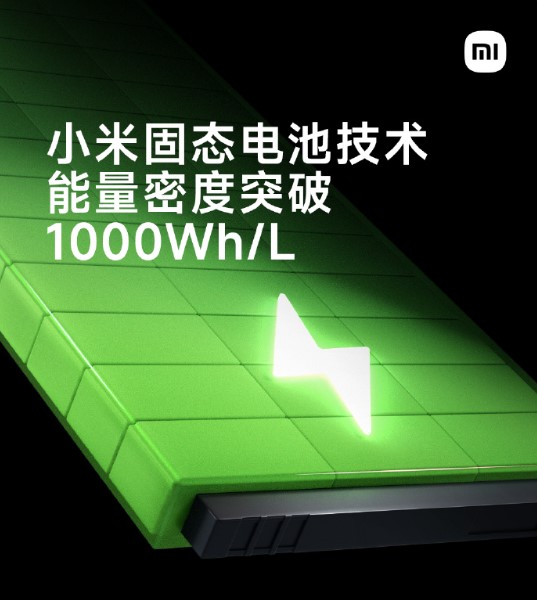
Xiaomi, the Chinese electronics giant, has announced a breakthrough in solid-state battery technology that promises to deliver higher energy density, better low-temperature performance, and enhanced safety. The company claims that its pre-developed solid-state battery technology achieves energy density of over 1000Wh/L, a 20% improvement in low-temperature discharge performance, and a significant increase in the acupuncture experiment passing rate.

Xiaomi Solid-state Battery Tech

The main difference between solid-state batteries and traditional batteries is the electrolyte, which is upgraded to a solid state. Solid electrolytes offer better mechanical strength and stability than liquid electrolytes, which are commonly used in traditional batteries. They also have the potential to solve many of the challenges facing traditional batteries, such as low energy density, poor low-temperature performance, and safety issues.

Solid-state batteries have the potential to revolutionize the battery industry, and Xiaomi’s new technology promises to be a game-changer. The company’s laboratory tests have shown that its solid-state batteries have an energy density of over 1000Wh/L, which is a significant improvement over traditional batteries. This means that more energy can be stored in a smaller space, which is critical for mobile devices such as smartphones and tablets. The company packed a super large 6000mAh battery capacity into the prototype of Xiaomi 13 smartphone, significantly improving battery life.

In addition to the high energy density, Xiaomi’s solid-state batteries also offer improved low-temperature performance. At low temperatures, the viscosity of the electrolyte in traditional batteries rises sharply, hindering the transport capacity of lithium ions and resulting in a rapid decline of 60% lithium conductivity. However, solid-state batteries can maintain sufficient lithium conductivity at low temperatures, which means they can perform better in cold environments. Xiaomi claims that its solid-state batteries have more than 20% higher discharge performance than traditional batteries at -20°C, making them suitable for use even in high latitudes.

Another major benefit of Xiaomi’s solid-state batteries is their improved safety. The use of a solid electrolyte can prevent the penetration of lithium dendrites, which can cause short circuits and other safety issues. Xiaomi’s technical team has also developed a method to improve the resistance to acupuncture of its solid-state batteries. By coating the positive electrode with solid electrolyte ceramics, the battery can better withstand needle puncture and prevent the communication between the positive and negative electrodes, ensuring the safety of use.

Overall, Xiaomi’s new solid-state battery technology represents a significant step forward in the development of next-generation batteries. The technology has the potential to significantly improve the performance and safety of batteries and could lead to the development of new innovations for mobile devices and other electronics.

RELATED:

(Source)

Xiaomi Buds 4 Pro Appears on TRDA Website, Could Launch Soon in UAE

Xiaomi recently debuted the Xiaomi 13 series smartphones for the global market. The announcement took place at Mobile World Congress 2023, where the brand also unveiled the Xiaomi Buds 4 Pro for the international market. It is worth noting that Xiaomi already launched these earbuds back in December 2022 for its domestic Chinese market.

Xiaomi Buds 4 Pro

Till now, Xiaomi has only made these earbuds available in the UK in an official capacity. However, a recent certification listing indicates that it’ll soon be coming to other regions as well.

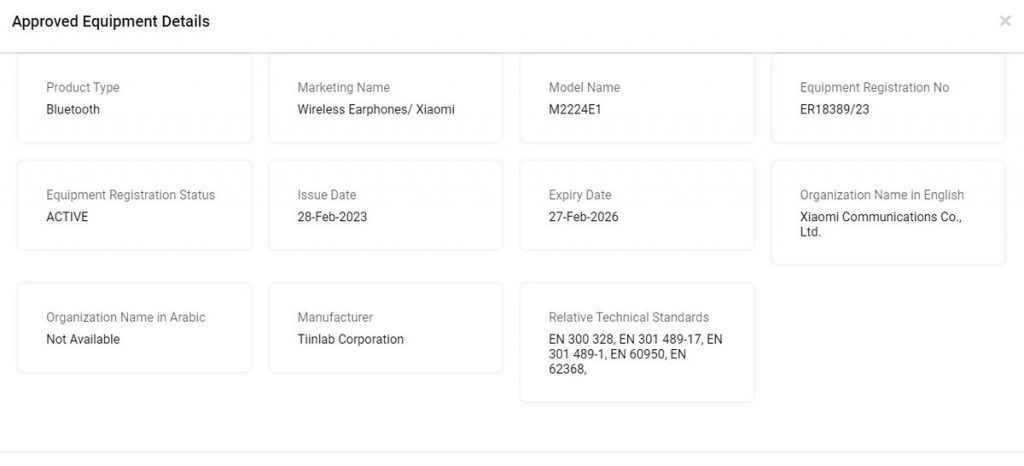
The Xiaomi Buds 4 Pro has appeared on the TRDA database, which means that a UAE launch is near. The listing does not reveal any details about the product other than the M2224E1 model number. Let’s take a look at the specifications and features of the earbuds.

Xiaomi Buds 4 Pro specs

The Xiaomi Buds 4 Pro earbuds offer active noise cancellation (ANC) technology, reducing noise levels by up to 48 dB. They also feature a built-in dimensional audio feature that detects head movements and adjusts the sound for a realistic and precise audio experience.

Xiaomi Buds 4 Pro

The earbuds are stored in a secure “space capsule” case and come with soft LSR-made ear tips in three different sizes for a comfortable fit, enhanced by the “Intelligent Fit Monitoring” feature. These earbuds offer dual-device connectivity, with up to 9 hours of standalone battery life, and a total of up to 38 hours when used with the charging case.

The earbuds support stable Bluetooth 5.3 connectivity, SBC/AAC/LHDC 4.0 codecs, and 11mm dual-magnetic dynamic drivers for high-quality audio. They are also dust and water-resistant (IP54) and come equipped with a 3Mic+ bone voiceprint sensor for clear voice calls, as well as three transparency modes for ambient sound listening. The ear handle supports pressure-sensitive operation for switching between noise reduction modes, music, and incoming call control.

In China, these earbuds cost 1,099 yuan (~$163), while UK customers can grab them for £249. The disparity in domestic and international pricing is quite a lot, however, that’s usually the case with UK and European pricing.

RELATED:

(via)

US Approves 70% of Chinese Trade Licence Applications Amidst Heavy Restrictions

US Commerce Department and other regulatory authorities approved around 70% of licenses for export to China in 2022. This is despite the ongoing US-China tech war and the extreme sanctions on semiconductor export to China. 

Alan Estevez, the Under Secretary of Commerce for Industry and Security said that in 2022 the US government approved around 69.9% of export applications involving China. This means only 30.1% of applications were rejected or returned without action. 

He further added that even though the approval rate is high, there are no loopholes when it comes to approvals for China.  The average processing time for approvals was 40 days but for applications related to China, the average time for approval was 77 days or more. 

According to Reuters, Eztevez who is going to attend the US Foreign Affairs Committee hearing on “Combating the Generational Challenge of CCP Aggression”, is going to present his case and reassure the government that China remains the main focus of the enforcement bureau and he and his team will continue to work towards this goal in 2023. The Combating the Generational Challenge of CCP Aggression hearing is happening today before the House of Representatives at the US Capitol Building. 

US-China Trade War:

The US-China trade war started in 2018 when then-president Donald Trump imposed sanctions and tariffs on exports to China in order to stop alleged unfair trade practices and intellectual property thefts. China plans to become the global leader in artificial intelligence, military weapons system, and quantum computing and the US wants to limit this progress in order to safeguard its economic and military interests. The current Biden administration also continues to impose sanctions and restrictions on exports to China, to control and crush the Asian economy. 

The US has already added Chinese tech giants Huawei and ZTE to the infamous entity list.  The list has more than 639 Chinese or China-related businesses and individuals on the trade blacklist. Companies on the entity list are banned from receiving  US-origin goods, services, and technology. 

The US has mainly banned the export of semiconductor machinery, technology, personnel, and technical know-how to China, which is the largest consumer of semiconductors in the world. The Biden administration also successfully roped in allies like the Netherlands, Japan, and South Korea to impose restrictions on their semiconductor exports to China. 

Eztevez justified these restrictions by saying that the sanctions were imposed to address concerns related to the production of advanced semiconductors. He further added that these controls are not intended to stop the production of legacy semiconductors, and are neither tools of economic protectionism instead they are national security and foreign policy tools. 

US-China Record Trade Despite Ongoing Sanctions:

Despite the ongoing trade war, US and China set a record high trade figure in 2022.  The total import and export increased by 2.5% YoY reaching a whopping $690 billion. The previous record was set in 2018 for $658.8 billion. 

The US trade deficit with China also increased to $382.9 billion reaching 8.3% YoY. In 2022, China was the third largest trading partner of the US after Canada and Mexico and the largest source of imports for the country. On the other hand for China, the US was the largest single-country trade partner and the third largest trading partner after ASEAN and EU. 

The record trade figures show that the US and Chinese economies, heavily rely on each other and despite the ongoing tech war and diplomatic stand-offs decoupling both economies does not seem viable.

(via)

Google Pixel Watch Gets Fall Detection Update, Takes Jab at Apple

Smartwatches have become essential gadgets for many people, especially those who want to track their fitness, receive notifications, or make phone calls without reaching for their smartphone. The Apple Watch was one of the first smartwatches to introduce fall detection, a key feature that provides an added layer of safety for the wearers. Now, the fall detection feature is rolling out to the Pixel Watch, Google’s latest smartwatch in the market. With this feature activated, motion sensors and machine learning algorithms can determine if you’ve experienced a hard fall and call emergency services if you don’t move or respond within a certain timeframe.

google fall detection

What sets Pixel Watch’s fall detection apart is its ability to distinguish between accidental falls and vigorous physical activity, like burpees or skiing, which could trigger a false emergency call. The feature has undergone rigorous testing to ensure it works accurately and reliably, and it even allows wearers to speak to the emergency operator themselves if possible. This seems to address the problem Apple Watch users were facing with their devices, where emergency operators were receiving distress calls from users who were simply skiing or indulging in intensive physical activity.

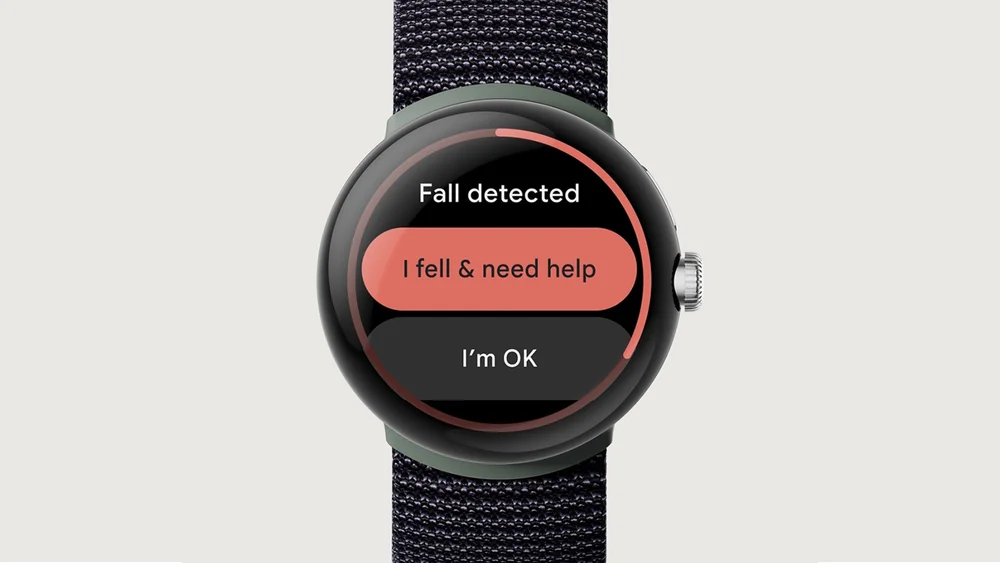
For those who are interested in using fall detection, they can simply turn it on in the ‘Updates’ page of the Watch Companion app or directly on the Pixel Watch in the Personal Safety app. The watch will vibrate, sound an alarm, and display an on-screen notification if you take a hard fall and aren’t moving for about 30 seconds. You can dismiss the notification by tapping ‘I’m OK’ on your watch face or tap ‘I fell & need help’ to be connected to emergency services immediately.

Google states that user privacy is a top priority, so Pixel Watch offers an option to turn off fall detection or toggle on a setting called “Help improve fall detection,” which allows the collection of motion sensor data to enhance the feature in the future. For more safety features, users can also check out the Personal Safety app on their Pixel phones, which includes car crash detection and emergency broadcast notifications. They can also use Emergency SOS on Pixel Watch to alert emergency responders or trusted contacts when they are in an emergency or feeling unsafe.

RELATED:

(Source)

Bluesky, Twitter’s Latest Alternative, Hits the App Store on An Invite-only Basis

Amidst the unrest revolving around Twitter and its regulations, which seem to be changing every week, some people are looking for alternatives to the social media platform in order to make the switch from Twitter. Twitter co-founder and CEO Jack Dorsey has been working on a new social protocol, AT, which aims to create a federated and decentralized social network, similar to the ActivityPub protocol that powers Mastodon. This new protocol is being showcased in the invite-only beta app called Bluesky, which is now available on the App Store.

Blue sky app twitter

Bluesky was originally incubated within Twitter, and the company provided financial backing for years. However, with Dorsey’s departure as CEO and the recent acquisition of Twitter by Elon Musk, the future of Bluesky remains unclear. Dorsey had envisioned Bluesky as an open, decentralized standard for social media, reducing the power of large, centralized platforms in deciding which users and communities could engage in speech and who would be responsible for moderating that content.

Although Bluesky has received $13 million in funding to develop open and decentralized public conversation, Twitter has been cutting costs drastically, including through layoffs, auctions, office closures, and not paying its bills. This has led to speculation about whether a side project like Bluesky would remain a priority for the company.

Bluesky’s future is also uncertain given the growing popularity of Mastodon and other open-source, decentralized alternatives to Twitter. In fact, several companies, including Flipboard, Medium, Tumblr, and possibly Flickr, have committed to or discussed embracing the ActivityPub standard. Meanwhile, former Twitter third-party app developers have rolled out polished Mastodon clients like Ivory and Mammoth, which have gained significant traction since their launch.

Despite this, Bluesky’s arrival on the App Store suggests that a public launch could be close. Whether it will be able to compete with the growing number of open-source, decentralized alternatives to Twitter remains to be seen.

RELATED:


(Via)

OnePlus Ace 2V Confirmed to Feature Dimensity 9000 SoC, Checkout All the Details

OnePlus will soon be launching the OnePlus Ace 2V smartphone in China. The launch is set to take place on March 7 at 2:30 CST. The brand has already started teasing details regarding the device. Now, the brand has officially confirmed that this device will be powered by the Dimensity 9000 chipset.

OnePlus

For those unaware, the Dimensity 9000 chipset was launched by MediaTek in 2021 to butt heads against the Snapdragon 8 Gen 1 chipset. It provided flagship-grade performance and excellent efficiency. The Ace 2V smartphone was recently spotted on the AnTuTu benchmark revealing its performance. We compared it to the Snapdragon 8+ Gen 1-clad OnePlus Ace 2 and found out that the device was 9% behind in overall performance. The CPU performance is almost similar, however, the Snapdragon 8+ Gen 1 is 12% better when it comes to GPU performance.

In addition to that, the company has revealed that the device will feature a new heat dissipation system made from “ultra-high-performance graphite” that covers an area of 4129mm².

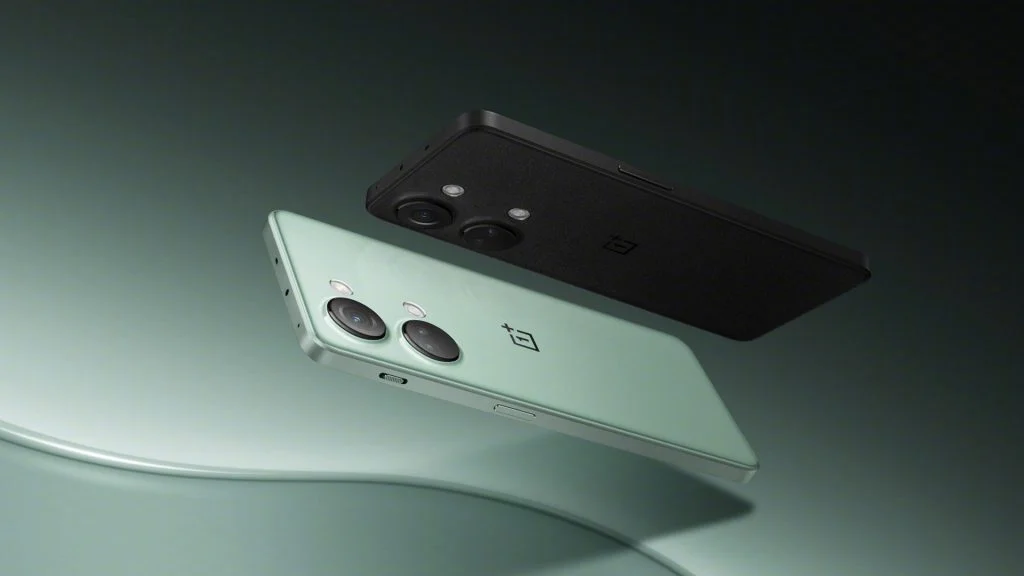
Thanks to recent teasers, we already know what the device looks like. The upcoming OnePlus Ace 2V is expected to showcase the in-fashion boxy design with high-quality aluminum edges, typically seen in flagship models. Additionally, it will reintroduce the well-known alert slider, which has been absent in the recent mid-range offerings from the brand.

According to rumors, the OnePlus Ace 2V is expected to boast a 6.74-inch AMOLED display with a resolution of 1.5K and a refresh rate of 120Hz. It will be powered by the Dimensity 9000 chipset, coupled with 16 GB of LPDDR5x RAM and up to 512 GB of UFS 3.1 storage. The phone will also have a 5,000mAh battery that supports 80W fast charging.

In terms of camera, the device is said to feature a 16-megapixel front-facing camera and a triple camera setup on the back, consisting of a 64-megapixel primary lens with OIS, an 8-megapixel ultra-wide lens, and a 2-megapixel macro lens. The OnePlus Ace 2V is expected to run on Android 13 OS with ColorOS 13 out-of-the-box. Some reports suggest that it will be rebranded as the Nord 3 for the global market.

RELATED:

(source 1, 2)

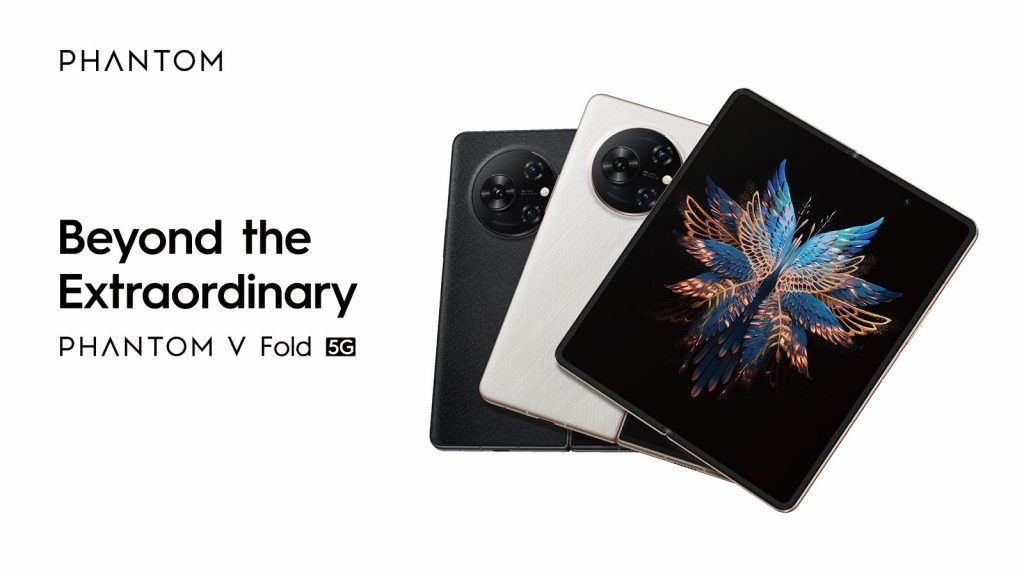
Tecno Phantom V Fold Launched in India for Rs 79,999 (~$968)

The Samsung Galaxy Z Fold series has a new competitor in the Indian market. It will face competition from Tecno’s Phantom V Fold, which has debuted as the most affordable foldable phone. While Tecno’s first foldable phone debuted at MWC 2023, it will be available for the first time in India in Q2 2023. It will be available for the appealing price of Rs 89,999 (~$1,088) . Continue reading to get all the details on the specifications and price of the device.

Tecno Phantom V Fold price in India, availability

The Phantom V Fold will be priced at Rs 89,999 (~$1,088) for the 12 GB RAM + 256 GB storage variant and Rs 99,999 (~$1,209) for the 12 GB RAM + 512 GB storage model. Customers will be able to purchase the Phantom V’s base model for Rs 79,999 (~$968) during an early bird sale, which will be announced later. The Phantom V Fold will come in black and white colors.

Tecno Phantom V Fold specifications

Tecno Phantom V Fold-

The Tecno Phantom V Fold is a left-right foldable device that has a 6.42-inch AMOLED LPTO display with a punch-hole design on the front. It offers a Full HD+ resolution of 1080 x 2520 pixels and a 120Hz refresh rate. On the inside, it features a 7.85-inch foldable AMOLED LTPO screen with a punch-hole. It has a resolution of 2000 x 2296 pixels and a 120Hz refresh rate. The device is equipped with a side-facing fingerprint sensor.

There is a 32-megapixel camera on the cover display, while a 16-megapixel camera is available on the inner screen. The round-shaped camera module on the back has a 50-megapixel primary camera. It is coupled with a 50-megapixel telephoto snapper that offers 2x zoom, a 13-megapixel ultra-wide shooter, and a dual-LED flash.

The Dimensity 9000 Plus is at the helm of the Phantom V Fold. It houses a 5,000mAh battery that supports 45W fast charging. The device ships with up to 12 GB of LPDDR5 RAM and 512 GB of UFS 3.1 storage. The foldable phone comes preloaded with Android 13 OS, which is overlaid with Tecno’s HiOS UI. When unfolded, it measures 159.4 x 140.4 x 6.9mm and weighs around 299 grams.

RELATED: