A new Motorola phone with model number XT2309-3 has been certified by the Federal Communications Commission (FCC) in the US. The listing has revealed the fast charging capabilities of the device. The Edge 40 Pro, which is expected to launch soon in the global market, has the model number XT2301. Hence, it appears that it could either be the Motorola Edge 40.
The FCC listing reveals that the Motorola XT2309-3 is a 5G-ready phone that will support connectivity features like Wi-Fi 6E, Bluetooth, and NFC. It is equipped with a battery that has the model number PB50. The listing also reveals that the device will support 68W fast charging and come equipped with a 15W wireless charging stand.
Motorola XT2309-3 (Could be Soem Motorola Edge 40 series device) arrives on FCC, confirms Motorola TurboPower 68W USB-C Wall Charger and PB 50 battery. It even bundles TurboPower 15W Wireless Charging Stand.
— Simranpal Singh (ਸਿਮਰਨਪਾਲ ਸਿੰਘ) (@simransingh931) January 31, 2023
In December 2022, the 3C authority of China approved the Chinese variant of the device with model number XT2309-1. The 3C listing also revealed that the device may ship with a 68W charger. The device hasn’t launched yet in the Chinese market.
Back in October 2022, reliable leaker Evan Blass revealed that the Motorola device codenamed “Bronco” has the XT-2309 model number. The tipster claimed that it will launch as a Motorola device and that it will also have a Lenovo doppelganger.
Motorola ThinkPhone
The tipster claimed that the Bronco model will offer an FHD+ OLED display, Snapdragon 8 Plus Gen 1 chipset, 8 GB / 12 GB of RAM, a 16-megapixel front camera, and a 50-megapixel (main) + 13-megapixel (ultra-wide / macro) + 2-megapixel depth triple camera unit. These specifications are already available on the Motorola ThinkPhone. Hence, it seems that the XT2301 that has surfaced on FCC could be a rebranded version of the ThinkPhone. This further suggests that it may debut as the Motorola Edge 40 in the market.
The Samsung Galaxy M14 5G is gradually heading towards its launch. It was spotted in the databases of BIS, Bluetooth SIG, and Geekbench in the last quarter of 2022. Earlier this month, it was approved by the FCC authority. Now, TheTechOutlook has published the leaked press renders of the device to give a first look at its design and color variants.
Samsung Galaxy M14 5G renders
As can be seen, the Galaxy M14 5G will arrive in three colors: dark blue, blue, and silver. The device has a modest design, as it has a waterdrop notch display with a thick chin on the front and a triple camera unit with LED flash on the back. The device looks identical to the Galaxy A14 5G, which debuted in the global market as well as in India recently.
Samsung Galaxy M14 5G renders
The Bluetooth SIG listing revealed that model numbers SM-M146B/DS, SM-E14B/DS, and SM-M146B/DSN are all associated with the Galaxy M14 5G. The Bluetooth certification revealed that the device will support Bluetooth 5.2 connectivity.
It was found through the Geekbench listing of the Galaxy M14 5G that it will be powered by Samsung’s in-house Exynos 1330 chipset and 4 GB of RAM. The device is expected to arrive with Android 13 OS and One UI 5.0 preinstalled. As per the FCC certification of the M14 5G, it will support 25W fast charging.
Samsung Galaxy M14 5G renders
It seems that the Galaxy M14 5G could be a rebranded or tweaked version of the Galaxy A14 5G. The A14 has a 6.6-inch PLS LCD screen that produces a Full HD+ resolution and a 90Hz refresh rate. The Exynos 1330-powered device has up to 8 GB of RAM and up to 128 GB of storage. It has a 13-megapixel camera on the front and a 50-megapixel (main) + 2-megapixel (macro) + 2-megapixel (depth) triple camera unit. The device houses a 5,000mAh battery that supports 15W charging.
ASUS has released the Vivobook Go 15 OLED and Vivobook Go 14 notebooks. The new PCs come with AMD Ryzen 7000 series processors. The configuration of the models points to a target clientele on the lower end of the spectrum.
The Vivobook Go 15 OLED has the AMD R5 7520U processor and a 15.6-inch OLED screen. The chipset is produced from TSMC’s 6nm process technology and adopts the Zen2 architecture with four cores and eight threads. The Vivobook Go 15 OLED has a Radeon 610M core display with 16GB LPDDR5 memory and 512GB PCIe 3.0 SSD. The laptop is 17.9mm thick and weighs 1.63kg. It comes in three color variants namely silver, black, and grey-green. The Go 15 OLED has a screen ratio of 16:9, a peak brightness of 400 nits, and a 100% DCI-P3 color gamut. The Vivobook Go 15 OLED is also Pantone certified.
The Vivobook Go 14 has a similar design to the Vivobook Go 15 OLED but with some changes in components. It weighs 1.38kg and offers up to 250 nits of brightness. The laptop has an optional 14-inch IPS screen with a 16:9 aspect ratio. The Vivobook 14 has a 45% NTSC color coverage domain. The laptop has a 42kWh battery and it supports 180-degree opening and closing, as well as a touchpad numeric function and up to an R5 7520U processor.
Both models come with a sprinkling of ports including USB 3.2 Gen 1 Type A, USB 3.2 Gen 1 Type C, and HDMI. ASUS has not released the pricing information for the new Vivobook Go models. However, the models may be priced in the low-end segment of the market, going by their configurations.
Samsung has announced its intention to introduce new digital signage products during ISE 2023. The ISE 2023 is Europe’s largest gathering of display exhibitions which kicked off on January 31, 2023, in Barcelona, Spain. The Samsung Exhibition Hall at ISE 2023 is the largest among exhibitors this year. The exhibition features eco-friendly smart signage and platforms, various outdoor signages, and a mounted kiosk, among others.
According to the company, sustainability and environmental protection are the most important topics currently in the commercial display market. These considerations are at the heart of Samsung’s sustainability resolve and its product design. The bulk of Samsung’s products on display at ISE 2023 have thus factored sustainability into their design.
The products also flow from Samsung’s environmental management strategy released in September 2022. Samsung’s eco-friendly strategy covers materials, the production process, packaging, use, and disposal of the products. Samsung’s exhibition at ISE 2023 presents a vision for a sustainable future. Samsung says its customers who patronize its eco-friendly commercial display products will help in climate change response and resource circulation improvement.
The 2023 Smart Signage Q Series MagicINFO solution with enhanced remote management will be introduced, according to Samsung. The product has a 40% smaller screen thickness of 28.5mm than its predecessor. The smaller size implies a reduced number of containers required to carry the signage after production. A light sensor to automatically adjust the screen brightness according to the surroundings will also be part of the signage. This implies more efficient power management and consumption. The back material of the product has about 10% recycled plastic.
The 2023 Smart Signage lineup has the Energy Star certification as a product with excellent energy-saving capabilities. MagicINFO is a cloud-based device and content management platform that provides remote management and optimization functions for the signage system. This minimizes unnecessary power consumption by supporting real-time device control, cable connection, screen brightness adjustment, and device temperature among others.
The signage offerings range from large LED to small LED sizes. The new signage system comes with several exciting functionalities which will be on display during ISE 2023.
Samsung Galaxy A14 5G was launched recently as the latest mid-ranger from the brand. The handset offers impressive features as well as 5G connectivity at an affordable. However, if you don’t care about 5G, the company may soon launch a 4G version of the smartphone pretty soon. And today, thanks to a new report, we get to learn its specifications, pricing, and design.
According to a Winfuture report, the Galaxy A14 4G will mostly be the same as its 5G counterpart with a few specs differences. For instance, the smartphone will be equipped with an octa-core MediaTek Helio G80 processor instead of the Exynos 1330 found on Galaxy A14 5G.
The processor will be paired with 4GB RAM and 64/128GB of internal storage, which can be expanded by up to 1TB using a microSD card. The A14 LTE is reported to feature a 6.6-inch PLS-based LCD panel with 2408×1080 pixels, a refresh rate of 60 Hertz, and 480 nits peak brightness.
In the rear camera department, there’s a 50MP main camera, 5MP ultrawide camera with an F/2.4 aperture, and an unnecessary 2MP macro sensor. On the front, it gets a 13MP selfie camera. The Samsung Galaxy A14 4G weighs around 201 grams and has 5000mAh with 10W charging. Other features include two stereo speakers with support for Dolby Atmos, a headphone jack, dual-band AC WiFi support, NFC, and Bluetooth 5.2.
The smartphone will run Android 13-based One UI 5 out of the box. The smartphone is reported to launch in Eastern Europe by the end of March and will be available for purchase with a starting price of around EUR 200 ($217). We are not sure if the smartphone will also be made available in Asian markets.
OnePlus is ready to bring the new Buds Pro 2 to the global market on February 7 along with the new OnePlus 11, OnePlus 11R, and a bunch of other products. The new earbuds will look very similar to the original ones and will be the first in the category to offer Spatial Audio. While we wait for the formal debut, a tipster has revealed the European pricing of the upcoming OnePlus Buds. Here are the details.
Tipster SnoopyTech claims the OnePlus Buds Pro 2 will be launched in select European countries with a price tag of €179 ($195). Other countries in the old continent may have to pay €219 ($238). Do note that the price of the earbuds will be comparatively lower in the Indian market. According to rumors, folks in India may have to pay around Rs 10,900 ($133).
As mentioned, the new earbuds will have the same design as their predecessor. However, the specs will be different. The Buds Pro 2 will be the first TWS to support spatial audio, which will allow users to get a 3D audio experience. There will also be Dynaudio tuning in the buds.
The OnePlus Buds will be offered in Arbor Green and Black color. They will feature 11mm dynamic drivers and 6mm planar diaphragm drivers. The TWS will support Active Noise Cancellation (ANC) as well as a transparency mode. They are claimed to offer 5.5 hours of playback with ANC enabled.
It can further be extended to up to 39 hours with the charging case. If you turn off the ANC, you can get up to nine hours. With support for fast charging, the TWS can offer up to 3 hours of playback after just 10 minutes of charge.
Startup brand Nothing is reported to launch new products this year. The Carl Pei-lead company will likely be introducing the popular Nothing Phone (1)’s sequel and this time the handset may also make it to the US market. Nothing is also said to be working on the next-gen Ear (2) TWS earbuds and today a new report reveals its design and a few features. Here are the details.
OnLeaks, in collaboration with SmartPrix, has shared the design renders of the upcoming Nothing Ear (2). The images suggest Nothing will mostly be sticking to the same formula with a few changes here and there. Both the earbuds as well as the charging case feature a transparent design. The only change we could notice is in the placement of the noise-canceling microphone. It was previously on the top of the buds but now has been placed at the stem.
Nothing Ear (1) v Ear (2)
While the design remains the same, Nothing Ear (2) may bring some new features. The earbuds are reported to come with a new personalized ANC mode that will allow users to customize the level of noise cancellation according to their comfort. The original buds already have Light and Maximum modes. Ear (2) will also have a transparency mode to let you hear the background noise.
Further, the earbuds are said to offer dual connectivity, allowing the earbuds to connect to two devices at the same time and seamlessly switch between them. Nothing may also add support for Advanced EQ with custom settings and the Find Earbuds feature. Other details about the earbuds are still anyone’s guess. There’s no official confirmation from the brand yet, so take the above info with a pinch of salt.
A new Samsung Experience Store has been opened at the center of New Delhi, India. The new facility was opened to the public on January 28 and has seen a massive influx of visitors since then.
The new Samsung Experience Store covers about 3,500 sq. ft. of space and is located at Connaught Place in the city. The facility is the largest premium experience store spread across two floors. It showcases Samsungs complete product lineup within different zones. These include connected living, smartphones, audio products, gaming, lifestyle screens, and wearables. The multi-device connectivity accomplished by the SmartThings app is also showcased at the Experience Store.
Samsung is offering several promotional materials to coincide with the opening of the new Experience Store in India. Five consumers among the first 500 will get a Galaxy Z Fold4 or a Galaxy Z Flip4 smartphone. The first 200 buyers spending above Rs. 10,000 ($) in the store will also get a gift.
Samsung says that the new experience store is the largest of its kind in North India and it offers the widest portfolio of Samsung products to its teeming customers. The store targets millennials, the Gen Z population with the best of its product suite. Samsung also says that the new store will offer a one-of-its-kind “phygital” experience through Store+. This is bound to further enhance the shopping experience of young customers in the subcontinent.
The new Samsung Experience Store will also offer Galaxy Workshops, live commerce activities, and a fully functional service Centre. The new store comes after Samsung upgraded its facility in Bengaluru by offering an improved technology experience and new zones. Samsung India continues to expand its reach and appeal to the very vibrant young population of India.
After a series of teasers, Poco finally confirmed the new Poco X5 series will be debuting globally on February 6. The new lineup, which includes Poco X5 and Poco X5 Pro, has been leaking a lot recently, with some reports revealing its specifications. In the latest development, the marketing material of the upcoming devices has surfaced online revealing key specifications and design. Here are the details.
According to the leaked marketing material shared by tipster Sudhanshu Ambhore, the vanilla Poco X5 will arrive with a 6.67-inch AMOLED display with a Full HD+ resolution and a 120Hz refresh rate. The hole-punch screen will offer 1200 nits of brightness as well as a 100 percent DCI-P3 color gamut.
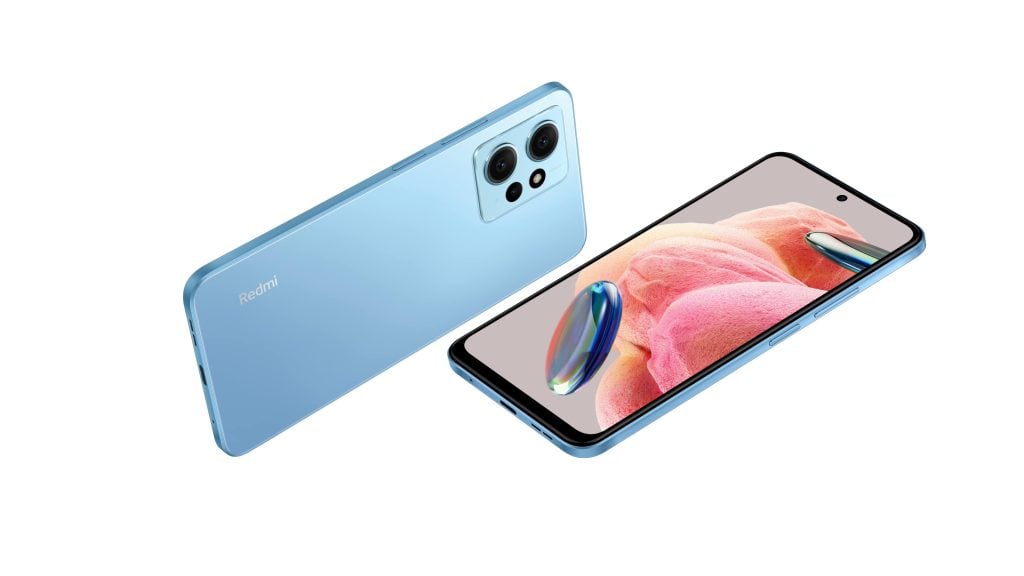
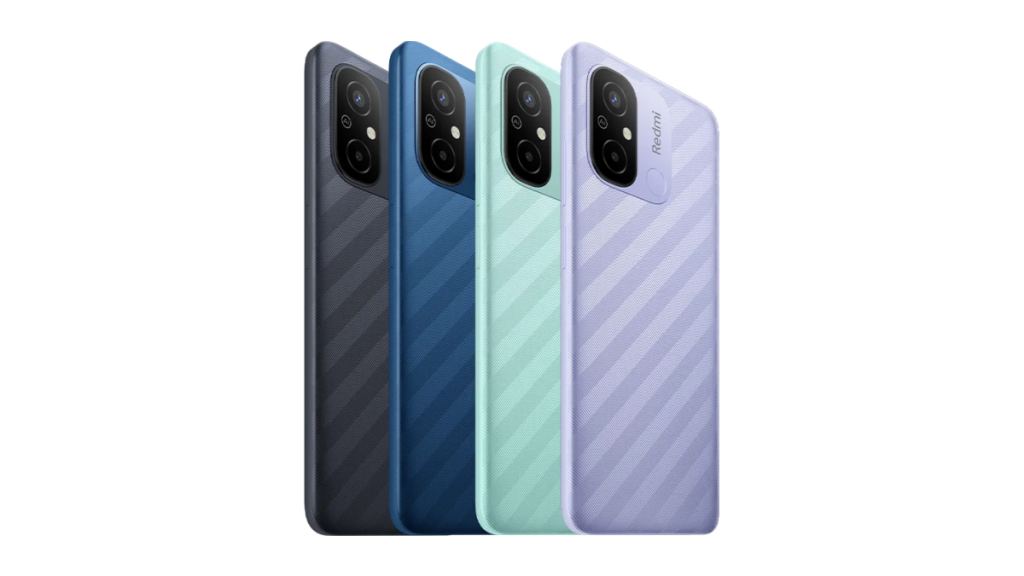
Design-wise, the smartphone looks very similar to the Redmi Note 12 5G with an exception of a bar-like camera island. The handset will be offered in blue, green, and yellow colors. The triple camera setup on the back of the device will include a 48MP main camera sensor, an 8MP ultra-wide camera, and a 2MP macro sensor. The front features a 13MP selfie shooter. Powered by a 5,000mAh battery, the handset may support 33W charging and run Android 12 out of the box.
Moving to the Poco X5 Pro, it packs the same display as its sibling. There’s a more powerful Snapdragon 778G SoC under the hood. It also packs a 5,000mAh battery but with faster 67W charging support. For photography, it gets a better 108MP primary sensor but the other two sensors remain the same. It may get a 16MP selfie shooter on the front.
The pricing and availability will be announced on February 6. Stick around for the latest updates about the upcoming Poco X5 series.
Japanese tech giant Sharp NEC has launched two new projectors with a maximum brightness of up to 17,000 lumens. The Sharp NEC PA1405UL and NEC 1705UL were revealed on the eve of ISE 2023. This is coming not too long after it announced the P627UL Laser Projector with 6200 Lumen brightness. The new projectors are designed for educational, work, and leisure purposes and are signposted by their minimal noise output. The new projectors can be used in brighter environments including educational settings, meeting rooms, and auditoriums.
The new Sharp NEC projectors have a laser light source with LCD technology that delivers maximum brightness. The company has not provided the maximum noise output of the projectors but says both models have a super-silent operation. The two projectors are filter-free and require minimal maintenance due to their sealed engine. The lifetime of the light source is up to 20,000 hours.
The Sharp NEC PA1405UL and NEC PA1705UL projectors are easy to set up and are compatible with a wide range of lenses. They also have the ProAssist feature for managing the settings, as well as setup. The exact dimensions of the new projectors have not been released, but the company says that they are both compact and powerful. The throw ratio, maximum image size, input/ output ports, and a few other specs have not been provided. Sharp says the new projectors will be available from July 2023. As per the pricing of the new Sharp projectors, the company says the prices are available on request.
The International Systems Europe (ISE) 2023 conference is currently ongoing in Barcelona, Spain. ISE 2023 is from 31 January to 3 February 2023. There are no indications whether the products will be globally available outside Europe and Japan.
Chinese tech start-up Tronsmart is known for its impressive audio products that sometimes give the likes of JBL a run for their money. The company has just launched a new line of audio devices – the Halo Series. The Tronsmart Halo Series is comprised of the Halo 100 and Halo 110 Party Speakers. The products combine an impressive sound system with lighting effects, making them perfect for parties and other social events.
Tronsmart Halo 100&110 60W Party Speaker
The Halo 100 is a 60 W sound system that features a woofer, two mid-tweeters, a treble tweeter, and a 5.6-in passive radiator crafted towards delivering a vivid sound output. On its part, the Halo 110 is nearly identical to the Halo 100, but it comes with a microphone for karaoke, making it a great choice for karaoke lovers. The Halo 110 does not have the 1.22-inch treble tweeter found in the Halo 100 but that won’t likely affect the audio output.
In addition, both the Halo 100 and Halo 110 come with five lighting modes, including an option to sync the lights with the music. In terms of battery life, the speakers can last up to 18 hours of use on a single charge. The battery can also be fully charged in about six hours.
Furthermore, the portable speakers have a Bluetooth range of up to 15 m, which means you can connect to them from a distance of up to 49 ft. The speakers have a built-in fabric handle, which makes it easy to transport them from room to room or from one location to another. The speakers measure 287 x 198x 150 mm and weigh 2.72 kg. The Tronsmart Halo Series Party Speaker can be controlled using Siri or Google Assistant voice commands. With this feature, functions such as adjustment of the volume, skipping songs, and other tasks can be performed with a voice prompt.
As for the prices, the Tronsmart Halo 100 speaker will be sold in the UK for £89.99. The vanilla model will also be sold in some parts of Europe such as Spain, Italy, and France for €99.99. On the other hand, the Halo 110 will retail for €119.99 in Europe. The company has also disclosed that both speaker models will be available in the US in February.
Like Apple and Samsung, Huawei also used to develop its own chipsets. The majority of the smartphones from the Chinese OEM featured a Kirin SoC, developed by HiSilicon – a Huawei-owned fabless semiconductor company based in China. But since 2021, the brand has been relying on processors designed by Qualcomm. Now, a tipster claims the Chinese behemoth has a surprise chipset in the works that will be unveiled in the second half of this year. Here are the details.
A reputed Chinese tipster claims that Huawei is planning to bounce back in 2023 and in order to do so, it will be dropping small surprises. One, for instance, will be a chipset designed using a new packaging technology. To make you understand, a chip’s packaging plays a critical role in its performance as it is the physical interface between the processor and motherboard.
To maintain confidentiality, the tipster did not reveal any other detail about the surprise Huawei chipset. However, he hinted that the new chip will be debuting in the second half of this year. He didn’t specify if it will be a Kirin chip or something entirely new.
A new processor may improve Huawei’s position in the global market. The company’s smartphone sales have been going downhill since the US trade ban and it’s trying hard to stay relevant in the market. You might be aware that Huawei smartphones cannot support 5G as well as Google services.
Things don’t appear to be easing off for Huawei as the US recently secured a deal with Netherlands and Japan to tighten access to chipset manufacturing technologies for China. The US is apparently planning to cut off Huawei Technologies from all of its suppliers, including Intel and Qualcomm.
A Tesla Model S driving at freeway speed caught fire in Sacramento, California. The metropolitan fire department needed 6000 gallons of water to extinguish the flames coming out of the battery that spontaneously combusted on the highway.
While the reason for the fire is yet to be ascertained, there were no casualties reported from the incident. The Sacramento Metropolitan Fire department was following the special instructions given by Tesla to combat battery combustion. However, they faced major issues to douse the battery fire as it kept on reigniting after intervals.
Crews arrived to a Tesla Model S engulfed in flames, nothing unusual prior. 2 Fire Engines, a water tender, and a ladder truck were requested to assist. Crews used jacks to access the underside to extinguish and cool the battery. Thousands of gallons were used in extinguishment. pic.twitter.com/5dIXxo9hP5
Electric Vehicles use Lithium-ion batteries that have high energy efficiency, high power-to-weight ratio, and low self-discharge. These batteries perform well under high temperatures and are made of components that can be recycled. However, one of the major drawbacks of Lithium-ion batteries is the combustion risk.
According to the 2017 study done by the National Highway Traffic Safety Administration of the United States transportation department, the risk of fire in EVs is significantly lower compared to internal combustion engine-powered vehicles. However, the rise in the number of fire accidents in EVs has led to further investigations into the safety of Electric Vehicles.
A 2020 research paper on ‘A Review of Battery Fires in Electric Vehicles’ states that even though the heat release and hazard of an EV fire are comparable to that of a fossil-fuelled vehicle fire, once the onboard battery is involved in a fire, there is a greater difficulty in suppressing EV fires. This is because the burning battery pack inside is inaccessible to externally applied suppressant and can re-ignite without sufficient cooling. As a result, an excessive amount of suppression agent is needed to cool the battery, extinguish the fire, and prevent re-ignition.
The Sacramento firefighters had to use almost 6000 gallons of water (which requires multiple fire trucks) before they could extinguish the battery fire of the Tesla Model S. This was because the battery kept on reigniting itself. The firefighters followed Tesla’s special instructions and jacked up the vehicle to reach the battery pack. They then put the nozzles beneath the undercarriage to directly cool the blazing battery. According to Tesla’s Model S Fire Extinguishing manual, it may take up to 8000 gallons of water to completely extinguish a battery fire. A gas-powered vehicle, on the other hand, can be extinguished with just 700 gallons of water carried by a single fire engine.
There have been many EV fire incidents over the past decade some of them resulting in fatalities. Recently in China, a Porsche Tycan EV caught fire, killing the driver. Tesla EVs have also reported several fire incidents with about 44 fatalities to date. Other famous EV brands that have reported fire accidents include BMW, Nissan, BYD, Audi, and Hyundai.
Last year the Felicity Ace ship caught fire and sank with more than 4000 vehicles including luxury cars like Audi and Porsche. Investigations revealed that Lithium-ion batteries in the electric cars on board the ship caught fire that could not be doused.
What To Do In A EV Fire Incident?
According to an article in the International Journal of Engineering Research & Technology (IJERT), special training and pieces of equipment are required to manage the fire hazard caused by EVs. Customers who use Electric Vehicles need to be aware of the special steps to be taken when dealing with spontaneous combustion.
In the event of an EV fire, it is advised to stop the car, pull over and move away from it before calling the emergency services. Drivers, passengers, or onlookers should not inhale the smoke, vapors, or gas emitted by the burning car and stay as far away as possible from the vehicle.
The most recent NFPA Electric Vehicle Emergency Field Guide includes more thorough instructions for dealing with vehicle fire accidents for both mainstream hybrid and electric cars from various manufacturers. Firefighting equipment manufacturers across the globe are also working on technology and solutions that would help to combat the peculiar fire hazard posed by Electric Vehicles.
However, until the technology and tools to douse EV fires are developed, we only have the option of squandering precious gallons of water to extinguish the battery fire.
Chinese Airspace will soon see low-altitude flying cars. The Civil Aviation Administration of China (CAAC) has issued a special flight permit for the XPeng X2 flying car.
source: aeroht
XPeng X2 manufactured by XPeng Aeroht is the first manned eVTOL (Electric Vertical take-off and landing) machine to acquire this license in China. Currently, the license allows the vehicle to carry out only manned driving tests to accumulate data and experience based on which the company will then mass produce the vehicle.
The special permit does not allow passenger flights and can be used in specific areas only.
XPeng X2 is the latest eVTOL in the Xpeng Flying Car series. The vehicle shares its DNA with the limited edition XPeng P7 Electric sedan and comes with an airframe made entirely of carbon fiber. The advanced droplet design of the vehicle helps in a better aerodynamic performance than its predecessors. The manned flying car comes with a fully enclosed two-seater cockpit and supports both manual and autopilot modes.
Build for low-altitude urban commute, the flying car weighs 560kgs and can fly for up to 35 minutes non-stop. The vehicle has reported a maximum flight speed of 130 km/ hour.
XPeng Aeroht has designed the vehicle for low-altitude city flights that can be used for sightseeing and medical emergencies.
Debuted in July 2021, to date XPeng X2 has completed more than 3000 test flights including overseas flights in Dubai and UAE.
The company is planning to soon launch the flying car as a premium product for VVIPs and tech moguls in China.
source: aeroht
XPeng Aeroht is Asia’s largest manufacturer of flying cars. The company was selected in the 2021 Hurun Global Unicorn list and received an additional grant of RMB 6 billion in bank credit in 2022.
XPeng has been deeply involved in the research and development of flying cars for many years and is right now working on the sixth-generation low-altitude mobility vehicle. The company plans to make a vehicle that can be used to drive on roads as well as fly in low-altitude urban airspace.
Flying Cars – Future of Urban Transport
Flying cars are the future of urban transportation as they provide the solution to traffic, congestion, pollution, and other urban transportation issues. Flying cars can travel shorter distances in less time and will free up the roads for pedestrians, cyclists, and long-distance travelers. Another major advantage of choosing an eVTOL is that it needs minimum infrastructure and maintenance as compared to ground vehicles.
However, companies involved in flying cars need more time and experience before they go into mass production. The manufacturers of flying cars not only have to deal with engineering and design issues but also work on environmental, regulatory, and safety clearances. Other major issues include noise pollution, take-off and landing infrastructure, limited carrying capacity, training for new pilots, and high costs.
The laws relating to flying vehicles are in the nascent stage and need to be developed before widespread adoption. At present regulators are working on developing laws related to autonomous flying cars and personal air vehicles, which will be mandatory for eVTOLs like XPeng X2.
Amazfit only offers a Mini version of the GTS. However, now, the brand is planning to launch the GTR in a Mini version as well. Publication GSMArena citing an anonymous tipster has shared images of the smartwatch giving us a first look. Additionally, we also get to see the retail box along with key specifications of the upcoming offering.
The Amazfit GTR Mini as the name suggests will be a toned-down version of the premium GTR. The ‘R’ in GTR stands for round and hence the upcoming offering is a circular smartwatch. The device bears a model number A2174 and codename ‘Leiden’.
As per the report and the retail image, the Amazfit GTR Mini will feature a 1.28-inch 2.5D AMOLED display. It is seen with a stainless steel unibody and a single button on the right side. The device will have a buckle watch strap and it will come in Navy Blue, Pink, and Black colours.
In terms of fitness, the Amazfit GTR Mini will be equipped with a 24-hour heart rate monitor, SpO2 sensor, and stress monitor. It will pack support for tracking more than 120 sports modes along with automatic recognition. The upcoming smartwatch is tipped to be backed by a 500mAh battery unit and will run on Zepp OS out of the box.
The Amazfit GTR Mini will come with Bluetooth 5.1 LE and compatible with Android 7.0 and iOS 12 or above. The smartwatch will feature GNSS receiver with support for GPS, QZSS, BEIDOU, GALILEO and standards.
We can expect the Amazfit GTR Mini to launch in the coming weeks.
Indian accessory manufacturer Ambrane has launched the Stylo Boost Powerbank, a high-capacity power bank with fast charging support. The Ambrane Stylo Boost packs a 40,000mAh lithium-polymer battery which is sure to provide enough power to get users through the day without their devices running out of juice.
The Stylo Boost features a 65W PD output, giving it a fast charging capability. With the 65W PD output, the power bank can quickly charge Type-C laptops, such as the MacBook Pro, in as little as 2 hours and 20 minutes. Additionally, the 20W QC 3.0 output allows you to quickly charge your iPhone or Android device to 50% in just 30 minutes.
The new Ambrane power bank comes with three output ports consisting of two USB-A ports and a USB-C port. This will allow users to charge multiple devices at once. The fast charging is a two-way system as the power bank itself can be charged quickly thanks to a 60W fast charging input port.
In addition to its fast charging capabilities, the Stylo Boost also boasts a premium, matte-metallic finish and is made of durable ABS plastic. It also has 12 layers of chipset protection, ensuring reliable and safe charging. The LED indicators make it easy to keep track of the power bank’s battery life, so you’re always in the know.
As for the price, the Ambrane Stylo Boost is priced at Rs. 3999 (around $49). The power bank is presently available on Amazon.in and on the brand’s website. In addition, it will be sold on Flipkart starting February 1st, 2023. The power bank comes in two color options – blue and green.
Last week, Xiaomi launched the Smart Lightstrip Pro in Europe. Now, the brand has launched another offering called Mi Smart LED Ceiling Light. Alongside, Xiaomi has also announced an Instant Photo Printer 1S for smartphones. Read on to know what the two devices offer out of the box.
The Xiaomi Mi Smart LED Ceiling Light features a colour temperature range from 2,700 to 6,000K and up to 6,000 lumens brightness, courtesy of 48 LED lamp beads. The LEDs have 95 Ra that offers more natural colours. Xiaomi says that the light is suitable for rooms measuring 161 to 269 square feet. It is also dust resistant.
The Xiaomi Mi Smart LED Ceiling Light comes with Daylight and Moonlight preset modes. It supports Google Assistant and Amazon Alexa for hands-free voice commands. The light can be controlled via a smartphone app. There is a built-in Bluetooth gateway enabling users to connect to other smart home gadgets.
w
As for the Xiaomi Instant Photo Printer 1S, it can print photos from the smartphone in around one minute. There are two formatting options available – one in 6-inch and another in 3-inch photo paper with an adhesive back. The Xiaomi photo paper features a protective film to make it waterproof and fingerprint resistant and also preventing the colours from yellowing.
Xiaomi says that users can use the app to add filters or crop images. The printer has 300 DPI resolution, 256 shades of grey and is claimed to print high-quality images from smartphones. Users can also view the quantity of paper left by lifting the magnetic lid of the printer and checking through the partially transparent paper tray. The device supports wireless connection allowing users to print JPEG and PNG file types via the Xiaomi Home app.
The Xiaomi Mi Smart LED Ceiling Light carries a price tag of EUR 79.99 (~$87). The Xiaomi Instant Photo Printer 1S costs EUR 149 and EUR 139 in Spain and Germany respectively. It comes with 10 sheets of 6-inch and 3-inch photo paper and an ink-free printer ribbon capable of printing 20 photos. Both the Smart LED Ceiling Light and Instant Photo Printer 1S can be purchased in Spain and Germany.
OnePlus is reportedly working on two foldable phones. Back in August last year, Pete Lau subtly hinted at the devices. Now, the brand has trademarked two foldable phones with the China National Intellectual Property Administration. The filing is confirmed to still be active. The names of the trademarked devices are the ‘OnePlus V Fold’ and ‘OnePlus V Flip’.
The trademark listing by CINPA does not reveal any information about the OnePlus foldables. However, it confirms the names of the devices. The OnePlus V Fold and V Flip names resemble Samsung’s naming convention for its foldable phones i.e Galaxy Z Flip and Z Fold. The names of the OnePlus foldables also give us an idea that one device may have a clamshell design while the other will convert into a tablet.
OnePlus has been expanding its product portfolio lately. The brand announced monitors in India last month and is set to launch its first-ever tablet and mechanical keyboard at a global event next week. OnePlus’s sister company OPPO entered the foldable smartphone segment way back in 2021. The latter also unveiled the Find N2 and Find 2 Flip last month in China. Additionally, both brands including Vivo are owned by BBK Electronics. OPPO and Vivo also offer foldable smartphones in China. Hence, it only makes sense for OnePlus to enter the foldable market.
OnePlus co-founder Pete Lau oversaw the development of OPPO’s Find N folding smartphone in 2021. Since OnePlus and OPPO offer similar flagship devices, it could be possible that the OnePlus V Fold and V Flip could be identical to the Find N2 and N2 Flip.
Huawei has already faced various sanctions from the US government over the last couple of years. But it appears that the restrictions from the Biden administration might be getting even tighter around the company.
As of right now, the Chinese tech giant has US export restrictions around current gen and core technologies like 5G. Although, the US Department of Commerce had recently began granting licenses to some America based firms to sell certain products and technologies to the company. Back in 2020, Qualcomm was allowed to sell 4G enabled smartphones chips to Huawei. But now, it appears that this might soon be reversed.
A Commerce Department spokesperson has stated that officials are “continually assess our policies and regulations”. It appears that some officials in the Biden administration are pushing for ban on all sales to the company, which has long been rumored to have ties with the Chinese government, and by its extensions, the Chinese military as well. This news also arrives as the tensions between the US and China has been on the rise, as the former looks to hamper the latter’s advances in the tech field.
In response to this, Chinese Foreign Ministry spokesperson Mao Ning stated that Beijing “is gravely concerned about the report”. He further added that “China is strongly against the US’s abuse of state power to hobble Chinese companies by stretching the concept of national security”. It remains to be seen when and how these tougher restrictions would be implemented, so stick around for more updates regarding this matter.
Earlier this month, it was reported that Apple exported iPhones worth $1 billion in a month from India. Now CyberMedia Research has shared data on iPhone shipments clocked by Apple in the fourth quarter of 2022 i.e. the period between October to December.
As per the report, Apple India shipped two million iPhones in Q4, 2022, a sequential increase of 18 percent. However, year-on-year shipments during the fourth quarter declined 7 percent. The iPhone 14 series was the most sold iPhone model with a huge 59 percent market share during the three months. The iPhone 13 followed behind with 32 percent sales.
Apple also had its best year in India in 2022. It recorded an 11 percent year-on-year growth in shipments and secured its highest-ever market share of 5.5 percent. This is attributed to local manufacturing and marketing efforts like cashback and instalment plans. Apple still grew in 2022 despite declining Q4 shipments YoY and QoQ compared to 2021.
According to experts Apple is expected to sell even more devices in 2023 compared to 2022. The higher demand for the iPhone 14 Pro models have been noted but supply chain constraints impacted Apple’s performance. However, the aggressive marketing and promotions as well as the festive season sales drove the sales of older iPhone models including the iPhone 13.
Additionally, Apple has been aiming to make India as its manufacturing hub for iPhones. Due to geopolitical concerns between China and US as well as the COVID-19-induced supply chain disruptions, the Cupertino-based tech giant is on a path to diversify its production outside China. As per past reports, Apple is expected to manufacture 20 percent of iPhones in India in the next 2-3 years.
We use cookies on our website to give you the most relevant experience by remembering your preferences and repeat visits. By clicking “Accept”, you consent to the use of ALL the cookies.
This website uses cookies to improve your experience while you navigate through the website. Out of these, the cookies that are categorized as necessary are stored on your browser as they are essential for the working of basic functionalities of the website. We also use third-party cookies that help us analyze and understand how you use this website. These cookies will be stored in your browser only with your consent. You also have the option to opt-out of these cookies. But opting out of some of these cookies may affect your browsing experience.
Necessary cookies are absolutely essential for the website to function properly. This category only includes cookies that ensures basic functionalities and security features of the website. These cookies do not store any personal information.
Any cookies that may not be particularly necessary for the website to function and is used specifically to collect user personal data via analytics, ads, other embedded contents are termed as non-necessary cookies. It is mandatory to procure user consent prior to running these cookies on your website.