Advertisement

Samsung Galaxy S23 Ultra Roundup: Design, Specs, Pricing, & More

The Samsung Galaxy Unpacked 2023 event is just around the corner. During this conference, the company will be announcing various new products with the highlight being its next generation of flagship smartphones, the Galaxy S23 series. Now, here’s a roundup of the lineup’s top end Galaxy S23 Ultra model.

Design & Display

The Galaxy S23 Ultra is believed to feature a design that is quite similar to its predecessor, the Galaxy S22 Ultra. In other words, it will feature sharp and straight corners rather than rounded ones as well. The rear will feature vertically stacked cameras that have a slight bump on the top half, while the bottom half simply carries the Samsung branding. Meanwhile, the front will feature a tall display with minimal bezels on all sides and a center aligned punch hole selfie camera.

Samsung

The Galaxy S23 Ultra is believed to sport a tall 6.8 inch AMOLED display. This panel will reportedly feature a QHD+ (3,088 x 1,440) resolution with a dynamic refresh rate that can go from high 120Hz to even as low as 1Hz thanks to its LTPO technology. The Galaxy S23 Ultra’s display is one of its notable aspects and is rumored to offer a high 2,000 nits of peak brightness, which is more than the 1,750 nits offered by its predecessor. This panel will also come with Corning’s Gorilla Glass Victus 2.

Specifications

Being a 2023 flagship smartphone, the Galaxy S23 Ultra will be equipped with Qualcomm’s latest and greatest Snapdragon 8 Gen 2 SoC. This processor will be paired with either 8GB or 12GB of RAM and 256GB, 512GB, or 1TB of internal storage. The South Korean tech giant typically released its popular Galaxy S series of flagship smartphones in two variants. One version housed the Qualcomm Snapdragon chipset for the US and South Korean market, while the rest of the world usually arrived with its proprietary Exynos SoC. However, it appears that the brand will only release the device in a single Snapdragon only version.

Samsung

According to various leaks, the handset will be powered by a large 5,000mAh battery pack that supports up to 45W wired fast charging, 10W wireless charging, and even support reverse wireless charging as well. Although, it is odd considering that the wireless charging rate appears to have fallen from 15W that was supported on the Galaxy S22 Ultra. Other notable features include under display ultrasonic fingerprint scanner, Bluetooth 5.3, Wi-Fi6E, UWB, and even NFC support. The Galaxy S23 Ultra will also run on Android 13 OS based One UI 5.1 out of the box.

Camera

Apart from the display, the company is also placing a heavy emphasis on improving the photography capabilities of its upcoming flagship phone. The upgrades is related to the zoom lens, which will apparently offer improved quality, while other rumors also claiming that low light performance will also greatly improve on the primary sensor. For those unaware, the Galaxy S23 Ultra will feature a quad camera setup. The primary shooter is a large 200 megapixel ISOCELL HP2 sensor that is capable of recording up to 8K resolutions at 30fps and supports OIS.

Samsung

This sensor is paired with a 12 megapixel ultra wife angle lens that has an f/1.4 aperture and 120 degree FOV, a 10 megapixel telephoto lens with 3x optical zoom, f/2.4 aperture, and OIS support, and lastly another 10 megapixel periscope telephoto lens that offers up to 10x optical zoom, f/4.9 aperture, while also supporting OIS. On the other hand, the front will like house a 12 megapixel selfie camera that supports HDR.

Expected Pricing

The supposed price tag of the Galaxy S23 series was just recently leaked for the European market. This information revealed that the pricing for the 8GB+256GB and 12GB+512GB variant of the Galaxy S23 Ultra. The former will apparently cost around 1,409 EUR (roughly 1,532 US Dollars) while the latter will be available for a hefty 1,589 EUR (roughly 1,728 US Dollars).

RELATED:

Exynos Flagship Returns to Smartphones! Galaxy S24 will Feature a Ten-Core Exynos 2400

Competition in the flagship smartphone market continues at full speed. While there are many models of many different brands on the market, the US technology giant Apple leads the race ahead of its competitors. The main reason for this is that the company offers a better experience with its own software and hardware. Samsung, which has been carrying out a similar study for a while, seems to have finally achieved the success it wanted in hardware. The processor that the company will use in the Galaxy S24 series, which will be released next year, may have emerged. Here are the details…

South Korean Galaxy S24 variants will supposedly feature a ten-core Exynos 2400 SoC

Samsung MX has reportedly greenlit its upcoming Exynos 2400 CPU, with mass production set to begin later this year on Samsung’s 4LPP node. According to South Korean tipster Vampire King, the Exynos 2400 (codenamed Root) will feature a quad-cluster design with a total of ten cores, and will be used in South Korean variants of next year’s Galaxy S24.

Samsung Galaxy S24
Representative Samsung Galaxy S24 image

The Exynos 2400 is said to follow the Snapdragon 8 Gen 2‘s quad-cluster design, with a prime Cortex-X4 core, two clusters of Cortex-A720 cores, and four Cortex-A510 cores. However, there is conflicting information about the exact number of Cortex-A720 cores and the total number of CPU cores. One report states it will feature eight CPU cores (1+4+3) while another claims it will have ten cores (1+2+3+4).

It is important to note that the Exynos 2400 is not the Galaxy-exclusive chip developed by Samsung’s “Dream Team.” That SKU is supposedly earmarked for the Galaxy S24 and is expected to enter mass production in 2024, presumably as an answer to the Snapdragon 8 Gen 4’s Nuvia cores.

It is worth mentioning that Samsung has been using Snapdragon processors in its flagship devices in recent years, but with the Galaxy S24 variant in South Korea will be powered by the Exynos 2400, it seems that Samsung is looking to change that trend. However, it is important to note that Samsung has not yet confirmed these reports, and as such, all of this should be taken with a grain of salt.

RELATED:

(via)

Samsung Galaxy S23, S23 Plus Roundup – All the Info on Design, Specs, Price & More

Samsung is getting ready for the Galaxy Unpacked launch event which is scheduled to take place on February 1. The star of the show will definitely be the Galaxy S23 Ultra, however, the vanilla Galaxy S23 and the Galaxy S23 Plus will also be debuting with impressive specs and features. So, let’s take a closer look at these two non-Ultra models to see what Samsung has in store for us.

Samsung

Design & Display

Design-wise, there won’t be much of a difference between the two devices, however, the Plus model will obviously be a bit bigger. Both devices will feature a flat back design paired with a triple camera setup, with the lenses directly protruding from the frame. This is the same design language featured in previous Ultra variants of the flagship Samsung smartphones, and now its finally making its way to the vanilla and Plus models.

Samsung

The right side houses the volume rocker and power buttons, and there is no sign of a Bixby button on both of these devices. Both the Galaxy S22 & the S22 Plus come with a 6.1 & 6.6-inch Infinity-O display with a small centered cutout for the front camera. Both of these panels offer FHD+ (2,340 x 1,080) resolution, 120 Hz refresh rate, and HDR10+ support. The pixel density is 425 PPI and a Gorilla Glass Victus 2 protects the display. The display’s refresh rate can fluctuate dynamically between 48 Hz and 120 Hz. There are evenly slim bezels going around the devices that make them quite pleasant to look at.

Specifications

Samsung

Both the Galaxy S23 and Galaxy S23 Plus have a Snapdragon 8 Gen 2 chipset powering them. What’s surprising and a cause for celebration is that all regions will be getting the Snapdragon 8 Gen 2-equipped models this time around. These phones will have different-sized batteries, with the smaller model featuring a 3,900 mAh unit, while the Plus model will be equipped with a 4,700 mAh battery. The smaller model has support for 25 W wired and 10 W wireless charging, while the Plus model is said to feature 45W fast charging support.

The cameras in the Galaxy S23 and Galaxy S23+ will be inherited from their predecessors. A 50 MP primary camera with an f/1.8 aperture, a 23 mm focal length, an 85° field of view, and dual-pixel PDAF and OIS will be aided by a 10 MP telephoto lens with a 36-degree field of view, a 69 mm focal length, and a 3x optical zoom, as well as a 12 MP ultra-wide angle lens with a 120-degree field of view and a 13 mm focal length. The 12 MP front-facing camera can take photos and videos in HDR10+ and at high-definition 4K 60 frames per second. On the other hand, the main camera is capable of taking videos in up to 8K 30 FPS.

The Galaxy S23 will feature 128 GB or 256 GB of storage, whereas the Galaxy S23+ will have 256 GB or 512 GB. Both smartphones will have 8 GB of RAM. Black, cotton, green, purple, and are the four color options for both.

Expected pricing

According to leaks, the Galaxy S23 will cost €959 for the 8GB + 128GB config and €1019 for the 8GB + 256GB version in France. In a similar vein, the Galaxy S23 Plus 8GB + 256GB configuration will set you back €1219, while the 512GB storage model will set you back €1339.

The US pricing will apparently be the same, as the Galaxy S23 base variant is said to start at $799, and the Galaxy S23 Plus base variant will likely cost $999.

RELATED:

boAt Rockerz 378 With 3D Spatial Bionic Sound Tuned By THX Launched In India

boAt has launched a new audio device in India. It is the boAt Rockerz 378 neckband eartphones. The latest offering has various features and is the first neckband in the world to pack sound tuned by American company THX. Read on to know what it offers out of the box. 

As mentioned earlier, the boAt Rockerz 378 is neckband-styled wireless earphone. It has multi-functional buttons including a dedicated button for switching between usage modes and triggering voice assistant instantly. The earbuds are magnetic and can be attached to prevent wire tangling when not in use. The neckband is IPX5-certified water-resistant. 

In terms of audio, the boAt Rockerz 378 is equipped with 10mm dynamic drivers. It features 3D Spatial Bionic sound technology tuned by THX which is said to offer advanced surround sound with realistic three-dimensional audio. The device packs beast mode that is said to reduce audio latency by 65ms. The earphones also feature boAt’s signature sound for deep bass and rich highs. 

The boAt Rockerz 378 is powered by a 200mAh battery unit that is claimed to offer up to 25 hours of usage with 60 percent volume. It supports fast charging via a USB-C port that will reportedly deliver 15 hours of playback with 10 minutes of charging. The neckband earphones come with support for Bluetooth 5.1 connectivity. 

The boAt Rockerz 378 carries an introductory price tag of Rs 1,299 and comes in Active Black, Electric Blue, Midnight Blue, and Vibrant Red colours. It is available for purchase on the brand’s official website, Amazon, and Flipkart. 

Related:

China’s Smartphone Sales Hit a Decade Low in 2022, Apple Rises to #2

Competition in the smartphone market is increasing day by day. This situation benefits the consumer, resulting in the emergence of more powerful and cheaper devices. However, technological progress also causes the products in question to last longer. For example, while the phone you bought in 20013 fell behind the times in just one or two years, some models can be used for a long time today. While this situation has already caused a slowdown in smartphone sales, the addition of the global economic crisis has made things difficult for manufacturers. China’s smartphone sales reached their lowest level in a decade in 2022. Here are the details…

China’s Smartphone Sales Continue to Decline in 2022

China’s smartphone sales reached their lowest level in a decade in 2022, with a 14% YoY decline, according to Counterpoint Research’s Market Pulse Service. This marks the fifth consecutive year of YoY sales declines in the country. The impact of the COVID-19 pandemic and macroeconomic headwinds were cited as the main reasons for the decline. In Q4 2022, China’s smartphone sales saw a 15% YoY decline.

China Smartphone sales market share

Apple was one of the few brands that outperformed the market, with a 3% YoY decline in sales. The company also became the #2 brand in China for the first time, reaching its highest-ever quarterly market share of 23.7% in Q4 2022. Other major Android OEMs, such as OPPO, vivo, and Xiaomi, saw large YoY declines of 27%, 23%, and 19% respectively.

HONOR was the only brand to have positive YoY growth at 38%, but this was mainly due to a lower base in 2021 when the brand began its resurgence in the Chinese market. Chinese OEMs are still focusing on the premium segment and launching more foldable devices, with competition in this segment expected to increase in 2023.

China Smartphone sales market share

Looking ahead, a market turnaround is expected once COVID-19 herd immunity is achieved, which is expected to happen in Q2 2023. However, consumer sentiment is expected to take longer to recover, particularly when it comes to income prospects, so explosive growth in smartphone sales is not expected this year. A marginal recovery can still be expected.

RELATED:

(source)

Japanese Chipmaker Rapidus Seeks To Catch Up to TSMC With 2nm Prototype Planned for 2025

Rapidus, a chipmaker backed by the government of Japan, has announced its new plans for advanced semiconductor technology. The company is seeking to build 2nm prototype process line by the year 2025.

In other words, the Japanese chip venture might be seeking to catch up to the world’s largest contract chipmaker, TSMC. For those unaware, the Taiwan Semiconductor Manufacturing Company is set to start risk production of its next gen 2nm process in 2024. Furthermore, mass production for this cutting edge semiconductor process is also set to begin sometime in 2025. Similarly, even Samsung is rushing to begin production of its 2nm process line by the same year.

Japan

Unfortunately, the company has only announced its prototype line’s timeline. The mass production of the advanced process is only slated to begin sometime in the late 2020s. Although, even with this schedule, the Japanese government backed firm is still not too far behind the industry giant, TSMC. The company will also officially finalize its plans regarding the site location for the prototype facility in March. Notably, this site will also be responsible for the mass production later down the road.

Some of the key factors that will influence this decision is the availability of stable water and robust electrical infrastructure. This location should also be able to “attract domestic and foreign talent easily,” as per Rapidus President Atsuyoshi Koike. He stated that “we aim to produce only advanced chips, establishing a high margin business model,” further adding that “We want to bring in engineers from areas that different companies specialize in, in order to create new value”.

RELATED:

(Source)

Windows 11 Dev Build 25284 Adds Phone Link Widget for Easier Phone Access

Microsoft has added Phone Link widget support to its Windows 11 Dev Channel Insiders. With the latest app version, 1.23011.73.0, Windows Insiders can now add the Phone Link widget to their widget board. This new feature provides a quick glance at recent phone notifications, network strength, battery status, and the phone connected to the Phone Link app. Here are the details…

Windows 11 Dev Channel Insiders get Phone Link widget support

The Phone Link widget is also customizable. Allowing users to adjust the size and even unpin it from the widget board if desired. This added convenience eliminates the need to constantly open the Phone Link app to check for new notifications. The inclusion of the Phone Link widget in the Windows 11 is a sign that Microsoft is putting more emphasis on widgets.

Initially, only first-party apps were supported on the widget board, but now, with the ability for developers to create widgets for their apps on Windows 11, more options are becoming available. This is demonstrated by the recent addition of the Messenger widget by Meta.

For those who use Phone Link daily to check phone notifications on their Windows 11 PC, the Phone Link widget will likely make things easier and more convenient. It remains to be seen if more app developers will create widgets for Windows 11 users, but the trend seems to be heading in that direction.

RELATED:

(via)

Samsung Neo QLED is Circadian Rhythm Display Certified: What Does It Mean?

Samsung Electronics added another feather to its hat by obtaining the first-ever Circadian Rhythm Display Certification for its 2023 Neo QLED and Lifestyle TVs, earlier in January. This certification proves Samsung’s commitment to developing technology and products designed with consumers at the top of its mind. 

Source: Samsung

The certifications will be available for models Q70C and above and the Lifestyle TV variants Frame, Serif, and Sero.

What is Circadian Rhythm Display certification?

The World’s first Circadian Rhythm Display Certification was granted by the Verband Deutscher Elektrotechniker (VDE), an internationally accredited electronics, components, and systems certification institute in Germany. The VDE Certification confirms compliance with harmonized standards and is a competent proof of compliance with requirements of safety, quality, and EMC.

The VDE Circadian Rhythm Display certification process complies with the Circadian Stimulus method based on the research results of the Lighting Research Center in the U.S.

The certification recognizes Samsung TV’s, Eye Comfort Modes’ ability to automatically balance and adjust the light exposure and color temperature to mimic outdoor lighting. 

The Eye Comfort mode impacts the viewer’s circadian rhythm, by measuring circadian stimulus for different levels of lighting and brightness and calculating the effect on melatonin suppression. When the screen’s light exposure, imitates the natural outdoor lighting, it benefits your biological circadian rhythm which decides when to release and inhibit the hormone Melatonin. This in turn helps you to get a comfortable rest and sleep better.

Melatonin is an essential hormone that your brain produces in response to darkness. This hormone helps to time and control your Circadian Rhythm (24-hour internal clock) and helps with sleep. A common symptom of insufficient and irregular Melatonin is sleep disturbance. 

Smart devices and screens produce blue light, which fools the brain into thinking it’s day time and stops the release of Melatonin. This is why when you watch TV or use smartphones late into the evening and night, your brain inhibits the release of Melatonin as it thinks it’s still daytime, which can lead to sleep issues like insomnia.

Source: Samsung

After the pandemic, the time spent by people on smart devices and displays has increased significantly. An average person spends more than 6 hours a day on displays connected to the internet. According to Statista, in 2022 more than 5.41 billion people used Television and this number will keep on increasing in the come years.

Samsung’s Eye Comfort Mode provides an optimal viewing experience to its users who are spending more time indoors with their television and reduces the impact on the viewer’s Melatonin.

Besides the Circadian Rhythm Display, Samsung TVs also come with other certifications like  Eye Care certification from VDE and ‘Glare-Free’  from UL, and ‘Pantone Validated’ and ‘SkinTone Validated’ certifications from Pantone.

(Source)

Smartphone Shipments in India Drop 9% In 2022, But Premium Segment Thrives!

As per the latest research study from Counterpoint’s Market Monitor service, India’s smartphone shipments took a hit in 2022, dropping 9% YoY to reach over 152 million units. The decline, which is only the second of its kind in India’s smartphone market, is due to supply constraints and decreased demand in the entry-level and budget segments. However, the premium segment saw a rise, capturing a double-digit share for the first time and leading to growth in retail ASP (Average Selling Price).

instagram-quiet-mode-feature-4

Senior Research Analyst Prachir Singh said that consumer demand began to decrease in the second quarter, when the global economy was impacted by high inflation, rising unemployment, and geopolitical conflicts – issues that also affected India’s economy. This led to an inventory build-up across channels and lower-than-expected shipments in the second half of the year. Singh believes that the inventory and demand situation will continue to affect the market in the first half of 2023, but predicts an improvement in the latter half due to the onset of the festive season and upgrades to 5G devices.

Research Analyst Shilpi Jain commented on the competitive landscape, stating that the premium smartphone market’s share continued to rise in 2022, reaching 11%, the highest ever. Jain believes this trend suggests that India’s smartphone market is shifting from being volume-driven to value-driven. There is a reason why the premium segment remained strong and showed double-digit growth. Jain attributes this to an increased focus from OEMs, consumers shifting their focus to premium features, and the availability of a variety of financing schemes like ‘No-cost EMI,’ ‘Buy Now, Pay Later,’ and ‘Samsung finance+.’ She further predicts that the momentum for the premium segment will remain strong in 2023.

Counterpoint research

Despite the decline in shipments, India’s smartphone market revenue remained quite flat. Samsung dominated the market with a 20% share, driven by its premium smartphone models, particularly the Galaxy S22 series. Apple rose from fourth place in revenue share in 2021 to attain second position in 2022. The iPhone 13 was the top smartphone model in 2022. This shift towards premium segment smartphones may spell a drastic change in market trends for the Indian smartphone market in the coming years.

RELATED:

(Source)

Sony Focuses More on the PlayStation 6 Over the PlayStation 5 Pro: Report

Sony has been rumored to be working on a new game console for sometime now. This model in question is believed to be the PlayStation 5 Pro. However, it appears that the company is planning on skipping forward directly to the next gen PlayStation 6 console.

Sony

For those unaware, the Japanese tech giant was initially believed to be working on a PS5 Slim model. However, later reports claimed that the a higher end PlayStation 5 Pro model was also in the works. Following this, it was also rumored that the company might only be working on a Pro variant. Now, the latest information from a source close to the brand has revealed that Sony is focusing development on its next PlayStation model over a mid generation upgrade.

Based on its previous cycles, the company typically releases a new console variant from the same generation two years after its first launch like how the PS4 Pro and Slim arrived around two years after the base PS4. According to Tom Henderson, Sony is reconsidering its plans on making a hardware refresh for its PS5 series due to a lack of competition from Microsoft and its Xbox lineup. Despite the PS5 being nearly 3 years old, the company is also seeing a rise in sales thanks to its better stock of consoles in its inventory.

https://twitter.com/Tom_Henderson/status/1617628773662478338?ref_src=twsrc%5Etfw%7Ctwcamp%5Etweetembed%7Ctwterm%5E1617628773662478338%7Ctwgr%5Ebeb569d6f18fdba4be48a41a3273ad07ad02530e%7Ctwcon%5Es1_&ref_url=https%3A%2F%2Fwww.xfire.com%2Fsony-prioritizing-playstation-6-over-ps5-pro%2F

With the PS5 becoming more readily available, the brand is seeing robust sales. Due to shortages in the supply chain and increasing costs of raw materials, the PlayStation was one of the various consumer electronic products that faced production issues. Furthermore, Sony deciding to not offer a mid generation refresh makes sense since the upgrade likely won’t be worth buying a new console over the existing PS5.

RELATED:

(Via)

Qualcomm introduces the Snapdragon Insiders Access Program for priority access to new chipsets

Competition in the mobile processor market continues at full speed. Companies such as Qualcomm and MediaTek continue to work both to offer higher performance products and to find a place for processors in more smartphones. However, the real route to smartphones is through users’ demands. Being aware of this situation, Qualcomm has introduced the Snapdragon Insiders Access Program. Here are the details…

Exploring the Latest Tech with Qualcomm’s Snapdragon Insiders Access Program

Qualcomm has recently introduced the Snapdragon Insiders Access Program. A new initiative that aims to support up-and-coming creators in the technology industry. The program is open to anyone who is interested in technology and is a resident of the United States who is over the age of 18. The main goal of the program is to provide members with priority access to Snapdragon-powered devices and brands, as well as connect them with established influencers in the industry.

Snapdragon Insiders Access Program

Members of the program will also be invited to test new devices with Snapdragon chipsets, attend events to share educational content with the community, and provide feedback on new technologies and experiences. To become a member of the program, all you have to do is sign up on Qualcomm’s website. Once accepted, your name will be added to the list of creators that the company reaches out to ahead of events. The company is also looking for diversity and underrepresented content creators to join the program.

As a member, you will be asked to share your experiences with your followers on your social media channels. However, it is important to note that while you will still own all of the content you create, Qualcomm does ask for a license to use your content commercially to promote the program to other Snapdragon Insiders.

The program is currently open to all, with no limit on the number of people who can join. There is no deadline to apply, and you are not obligated to accept every product or invitation that you receive. The program also does not preclude you from other opportunities if you decide not to accept everything.

RELATED:

(via)

Samsung Accidentally Leaks Pricing for New 77-inch QD-OLED TV

Display technologies continue to evolve. This situation coming with the cheaper panel costs. For example, OLED technology, which was once used only in premium products, can now be seen in mid-range and even entry-level devices. Lastly, Samsung announced 77-inch S95C QD-OLED TVs price. Here are the details…

77-inch Samsung S95C OLED (2023) to cost $4,499

Samsung recently announced their new line of QD-OLED TVs at CES 2023, including the 77-inch S95C and S90C models. While the company didn’t reveal an exact release date or pricing at the time, a recent accidental reveal on Samsung’s website in the USA has now given us a glimpse of the 77-inch S95C’s price.

Samsung 77 inch OLED TV

The S95C QD-OLED smart TV is not yet available for purchase, but a listing for the TV appeared on Samsung‘s US portal when visitors searched for the term “OLED.” Clicking on the 77-inch S95C entry in the OLED listing leads to a “Page not found” prompt, indicating that Samsung is not yet ready to sell the TV. However, despite this, the list entry exists and includes the TV’s price.

The listing on Samsung‘s website suggests that the 77-inch S95C QD-OLED TV will cost $4,499. This is the highest price Samsung has revealed for their new QD-OLED TV series, and it’s likely that the smaller models will cost less. However, the prices for the 77-inch S90C model or the smaller QD-OLED 2023 variants are still unknown.

The S95C is the top of the range, and the S90C is expected to be more affordable as it lacks the Samsung One Connect box feature and uses OTS Lite instead of OTS Plus Sound. Despite this accidental reveal, Samsung has yet to officially announce the release date or prices for the new QD-OLED TV series, so it’s unclear if the $4,499 price point for the 77-inch S95C is final.

RELATED:

Samsung to Focus On Affordable 5G Galaxy Phones In India, But Will Continue To Sell…

(via)

Indian Made Indus Battle Royale Pre-registrations Open for Android, Gameplay Trailer Released

Mobile gamers in India have had a rough time in recent years with the government banning the two most popular games – PUBG & BGMI, due to their China connection. At this point, even if BGMI returns to India, there are no guarantees that it won’t be banned again.

Considering that there aren’t any other games on the market that scratch the battle royale itch quite as well as PUBG or BGMI, it leaves gamers in quite a pickle as they jump through many hoops just to be able to circumvent these bans.

However, the launch of a new battle royale game is on the horizon, and best of all, it’s made in India, which means no government bans! The game is called Indus Battle Royale, and it has been in development for quite a while. Back in August 2022, it was teased at Times Square, and now, pre-registration for the game has begun for Android devices. It will soon be available for registration on iOS too.

SuperGaming, the company behind Indus Battle Royale, has also released a gameplay trailer giving us an idea of what to expect from the game. However, the footage is from a pre-alpha build, so the imperfections will likely be improved upon.

The game’s premise states that you take on the role of a Mythwalker, a mercenary working for the intergalactic syndicate COVEN, which is trying to obtain Cosmium (a rare resource in this universe). The setting is based on a vision of Indo-futurism, an advanced Indus valley civilization set in the far future.

Gameplay-wise, the character designs and weapon designs look inspired by Apex Legends. The gunplay looks clean, and the maps are neat, with no distracting aspects. What’s interesting is that Supergaming chose to hide the HUD in the gameplay trailer, so we have no idea if the game will also feature passive, active, and ultimate abilities like Apex legends.

RELATED:

Samsung Galaxy Book 3 Series Design Revealed With Stylus via Leaked Renders

We already know that Samsung is set to launch the next gen Galaxy Book 3 series alongside its flagship Galaxy S23 series of smartphones during the Unpacked 2023 event on February 1. But ahead of the official announcement, the design of the upcoming laptops were revealed via leaked renders. So let’s have a look.

Samsung

Samsung Galaxy Book 3 Pro 360

As of right now, the South Korean tech giant has already began taking pre-orders for the new generation of Galaxy Book laptops. Now, we get a complete look at the Galaxy Book 3 series as well as the specifications of the Galaxy Book 3 Pro and Galaxy Book 3 Ultra models. The leaked renders were shared by known tipster Ishan Agarwal. Looking at these images, we can see the full design of the Galaxy 3 Pro, Galaxy 3 Pro 360, and Book 3 360. As the name suggests, the 360 models feature a laptop display that can be rotated by 360 degrees.

Samsung

Furthermore, the Galaxy Book 3 Pro 360 also comes with support for a stylus. Under the hood, this model is equipped with a 13th Gen Intel Evo i7 processor. The display specs are still unclear, but it will likely come in a 14 inch variant. Similarly, we can also see a microSD card slot, a 3.5mm audio jack, and USB port. Lastly, the speaker can be spotted on bottom of the laptop. The Galaxy Book 3 Pro 360 will be the flagship laptop model with its 360 degrees rotating display. With its larger display, the support for stylus would also offer a additional functionality. It will also come with thin bezels around the screen.

Samsung Galaxy Book 3 Pro

Talking about the Galaxy Book 3 Pro, we can see that Samsung has built this model with thin bezels around the display, which will come in either 14 inch or 16 inch version. Although, both variants will sport an AMOLED display with 3K resolution. The notebook will boot Windows 11 OS out of the box and will be equipped with Intel 13th Gen processors, namely the Core i5-1340P and Core i7-1360P. These CPUs will also be paired with Intel Iris Xe integrated graphics, 16GB of DDR5 RAM, and up to 1TB NVMe PCIe Gen 4 SSD storage.

Samsung

We can also see that the Galaxy Book 3 Pro features a large trackpad and membrane keyboards, which was expected due to its ultra thin design profile. For the 14 inch model, Samsung will offer a 63Whr battery pack to power the device. This model will also have a thickness of just 11mm and weight of 1.2 kilograms. Meanwhile, the 16 inch model will be powered by a larger 76Whr battery pack. But due to its larger battery size, it also comes with a slight thicker 13mm thickness and a heftier 1.6 kilograms. Although both models will be charged via a 65W power adapter.

RELATED:

(Source)

Upcoming Smartphones: Galaxy S23 Series, Vivo X90 Series, and More

After a long while, there are going to be big-name smartphone launches next week. Three brands have confirmed to release handsets in the next few days.

These companies are Samsung, Vivo, and Infinix. The former two will be introducing premium flagship smartphones. Whereas, the third one will debut a budget model.

Out of three, only phones by Samsung will be new ones. While the devices by the other two brands are already official and are making their way to new markets.

With that out of the way, let’s take a look at these handsets.

Upcoming Smartphones Next Week

1. Samsung Galaxy S23 Series

Samsung Galaxy S23 Series

Samsung will be unveiling the Galaxy S23 series at its first Galaxy Unpacked event of 2023 on February 1. The phones will be accompanied by Galaxy Book 3 series of laptops.

As per multiple leaks, we know that the Galaxy S23 family will include three devices, namely Galaxy S23, Galaxy S23 Plus, and Galaxy S23 Ultra. The former two will be more identical than ever before and the latter will come with a new 200MP Samsung ISOCELL HP2 primary sensor.

All three will be powered by a customized Qualcomm Snapdragon 8 Gen 2 chipset. This silicon is expected to be called Qualcomm Snapdragon 8 Gen 2 Mobile Platform for Galaxy.

You can learn almost everything about this trio by checking out our roundup articles.

2. Vivo X90 Series

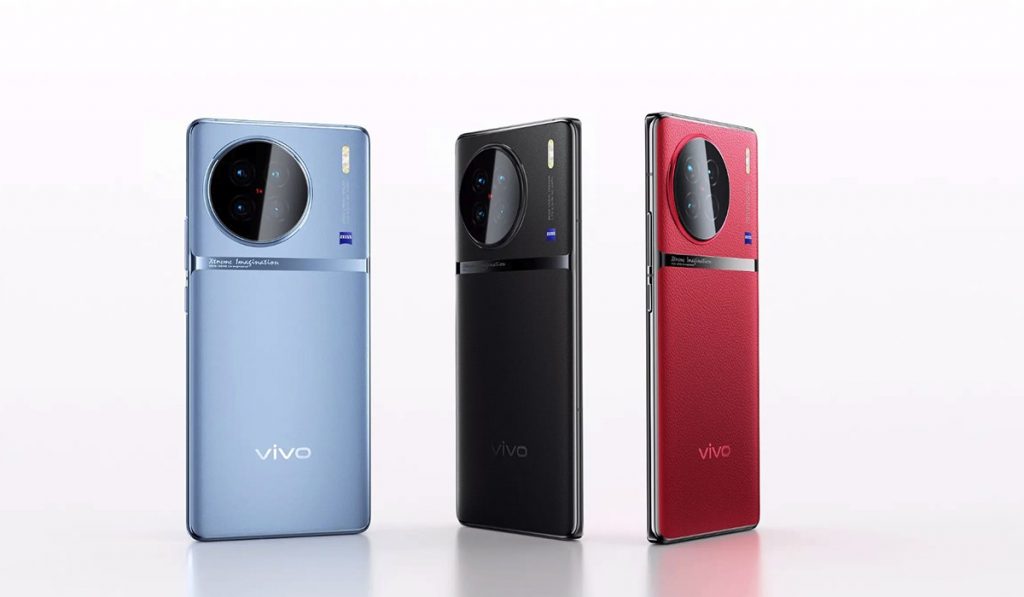
The Vivo X90 series will make its way to global markets on February 3. It will be initially unveiled in Malaysia on the said day.

The company is expected to debut only two models, namely Vivo X90 and Vivo X90 Pro. Since these phones are on sale in China for about two months, we know everything about them.

They come with a 6.78-inch 10-bit 120Hz AMOLED display with a resolution of 2800 x 1260 pixels, a MediaTek Dimensity 9200 SoC, Zeiss-powered camera system, dual stereo speakers, an IR blaster, 120W fast wired charging, and more.

It’s not known if and when Vivo X90 Pro Plus will be introduced outside mainland China.

3. Infinix Zero 5G 2023

Infinix-Zero-5g-2023-

The Infinix Zero 5G 2023 is set to launch in India on February 4. Since the device is already official in several markets, everything about it is out.

The handset arrives with a 6.78-inch 120Hz display (LCD), a MediaTek Dimensity 1080 chip, a 50MP main camera, a side-mounted fingerprint sensor, a 5,000mAh battery, and 33W fast wire charging support.

The brand has also partnered with Marvel Studios to celebrate the release of Ant-Man and the Wasp: Quantamania. Hence, it will be also releasing a special gift box of Infinix Zero 5G 2023 themed after the forthcoming movie.

RELATED:

6G-IA and ETSI Collaborate on 5G and 6G Research on Europe

Communication technologies continue to develop at full speed. The latest example of this is 5G technology, which is slowly becoming widespread. However, this progress is not at the expected pace when it comes to applicability. Fortunately, some steps are being taken to fix this issue. Lastly, 6G Smart Networks and Services Industry Association (6G-IA) and the European Telecommunications Standards Institute (ETSI) have signed a nduerstanding to boost cooperation on network studies.

The Europe-based 6G Smart Networks and Services Industry Association (6G-IA) and the European Telecommunications Standards Institute (ETSI) have signed a nduerstanding to boost cooperation on 5G and 6G. The 6G-IA is focused on “beyond 5G” (B5G) and 6G research. Like pre-standardization activities, policy and regulatory issues, 5G and 6G frequency concepts, international collaboration and verticals’ engagement to shape next-generation industrial use cases.

The main goal of the 6G-IA is to contribute to Europe’s leadership on 5G, 5G evolution and SNS/6G research. As part of the agreement, 6G-IA will be involved in ETSI’s Research, Innovation and Standards Ecosystem (RISE) group as well as the ETSI Technology Radar (ETR) activities mapping emerging technology areas.

6G-IA and ETSI are working together to make sure their research and standards for 5G and 6G are in line with each other. They will also launch projects to help define future networks. They will also share information with other groups that focus on 6G technology. The Smart Networks and Services Joint Undertaking (SNS JU), a partnership between the European Commission and 6G-IA, is expected to launch the first phase of 5G/6G research projects in early 2021. These projects will play a key role in the definition of next-generation networks.

The ETSI Research Conference in early February will provide a platform for these new projects to present their purpose and plans and exchange with standards experts on their standardization roadmaps.

RELATED:

(via)

Apple Stops Working On WiFi/Bluetooth Chip, Shifts Focus to 3nm Silicon – Here’s Why

Latest reports indicate that Apple has halted development on its own Wi-Fi chip, which was intended to replace the one supplied by Broadcom. The company was hoping to have its own chip ready for the 2025 iPhone 17 lineup, but according to TF International’s Ming-Chi Kuo, Apple has run into issues developing a single component that supports both Wi-Fi and Bluetooth connectivity in a single chip. As a result, Broadcom is set to benefit from the iPhone 15’s upgrade to Wi-Fi 6E and the industry-standard upgrade to Wi-Fi 6E/7.

Apple

Kuo adds that developing a Wi-Fi and Bluetooth combo chip is far more challenging than designing a Wi-Fi-only chip. A majority of Apple’s products use Broadcom’s combo chip, which would make it harder for Apple to switch the entirety of Broadcom’s chipsets to its own. On the other hand, Apple is still expected to complete the development of its 5G modem chip, which was intended to replace the Qualcomm Snapdragon 5G modem currently used by the company. However, there have been delays due to “insufficient development resources” and issues with Qualcomm patents. Apple is still expected to eventually use its own 5G modem in future iPhones.

According to Kuo, Apple’s engineering resources are diverted towards the development of its Apple Silicon for TSMC’s 3nm process node. The company hopes to begin mass production of the “world’s most advanced 3nm processors” sometime later this year. This chip is expected to significantly improve performance and energy-efficiency compared to its predecessors, since a lower process node number implies a higher transistor count.

As a result of the slowdown in processor upgrades, Broadcom is set to benefit as the supplier of the new Wi-Fi 6E chips for the iPhone 15 series at a higher average selling price. Meanwhile, Qualcomm, which had expected to see its share of new iPhone models using its modem drop to 20%, is now back at 100% until Apple figures out an effective solution to the 5G modem development snag. This news has been met with positive reactions from both Broadcom and Qualcomm stockholders.

RELATED:


(Source)

Oppo Find N2 Flip Global Launch Imminent, Marketing Material Leaks Revealing Specs

The Oppo Find N2 Flip is expected to soon debut in the global market. According to reports, the launch could happen at the Mobile World Congress (MWC), which is expected to be held around the end of February. The device was initially launched last year at OPPO INNO Day in China. 

Although any official confirmation is yet to come from the company, tipster SnppoyTech has leaked out the global marketing material of the Find N2 Flip, indicating that the launch might be on the horizon. The leaked material has revealed many of the specifications that the device will launch with. Let’s take a look.

Oppo Find N2 Flip leaked material

Starting off, the images mention the dimension of the device which are 166.2 x 75.2 x 7.45 mm. It weighs 191 grams. The primary display measures 6.8 inches, and it is an AMOLED panel with FHD+ resolution. We know that the refresh rate will be 120Hz refresh rate. The outer display of the device will be a 3.26-inch HD+ OLED display with a standard 60Hz refresh rate.

Oppo

The Find N2 Flip global model will have a back-mounted dual-camera system that has been calibrated for Hasselblad. It will contain an 8MP ultra-wide sensor in addition to a 50MP primary camera sensor. The back camera will offer 4K HDR video recording and ultra-night photography. A 32MP front camera will be available for taking selfies.

The battery on the gadget will be of 4300mAh capacity and it will charge at up to 44W. Under the hood, the device will come with a MediaTek Dimensity 9000+ SoC chipset paired with 8GB of RAM and 256GB of internal storage. The operating system will be based on Android 13, and the device will have an IPX4 rating. The marketing material also reveals that Astral Black and Moonlit Purple will be the only colors offered to global customers.

RELATED:

Google App Gets a Major Material You Redesign; Looks More Better

Google has been working hard to ensure that the Material You theming engine is implemented properly across the UI. The Material You is basically a wallpaper-based theming engine which picks up colour from the wallpaper and then applies it across the UI to give an updated and modern look. Now, the brand has reportedly redesigned the Material You for Google App and it makes the UI look better. The latest update carries the changes done in the theming for the particular app and ensures that it gets properly benefited from Material You.

With pill-shaped indicators and a more Material You-aligned bottom bar, the Google app now better complements the new Search filters carousel design. While Gmail utilises something even more minimalist, this is the short version as opposed to the typical tall variety seen in almost every other first-party software. There is no usage of Dynamic Color; instead, a blue accent is provided. The Google app for Android is the most recent to acquire a cutting-edge account switcher, following Messages and the web. In the Google app, tapping your profile avatar now displays a switcher that makes use of Material You with Dynamic Color.

Google

The theming helps to visually separate items on lengthier lists that include settings. The account switcher, Search history, Delete recent 15 minutes, Results about you, and Reminders are all located in the inside container. The top of the page has the Google logo, and the words “Your data in Search,” “Settings,” and “Help & Feedback” are underneath.

Last but not least, the Google app Settings have undergone a significant redesign with a dark layout and an AMOLED black background. Although the header may be bigger, it appears that there are other Materials You settings. The menu items General, Notifications, SafeSearch, Personal results, Personalization, Google Assistant, Voice, Language & region, Privacy & Security (which recently arrived and is broken), and About are still placed in the same order beneath the pill-shaped search bar.

RELATED

Samsung to Focus On Affordable 5G Galaxy Phones In India, But Will Continue To Sell 4G Models

5G is still a developing industry in India, with many companies trying to penetrate the 5G smartphone market in the country. In 2022, Samsung dominated the 5G smartphone sector. At the same time, Samsung has also been making phenomenal progress with its Galaxy A series smartphones. As per the company’s recent statement, it is looking to make 5G technology more accessible throughout India – but it won’t do so at the expense of its 4G smartphone market. 

Samsung Logo

Aditya Babbar, the Head of Product & Marketing in India for Samsung, recently announced that the Galaxy A series was the top-selling smartphone series in India in 2022, with over 10 million devices sold country-wide. Towards the end of the year 2022, Samsung surpassed Xiaomi to become the leading smartphone manufacturer in the country, which is commendable since Xiaomi had a strong grip on the smartphone market preceding that. 

What’s also interesting is that the South Korean electronics manufacturer previously introduced the Galaxy M and Galaxy F series, with the latter being exclusive to India. However, it appears that the Galaxy A lineup is still the preferred choice among budget-conscious customers in India, leading Samsung to retain focus on the same. Samsung’s senior director also stated that the company is striving to hold its position as the top smartphone manufacturer in the country, which is why Samsung will aim to derive 75% of its business in India from 5G devices.  

The budget smartphone market in India is Samsung’s core anchor. The company launched the Galaxy A14 5G in India earlier this month, priced at INR 16,499 (~$202), alongside the Galaxy A23 5G, which was priced at INR 23,999 (~$294). Until 5G technology becomes even more affordable, Samsung will continue to launch 4G smartphones alongside their 5G devices to cater to a broader section of the country’s population. 

RELATED:

(Source)