OPPO Reno 8T is set to debut the Reno 8T smartphone on February 8th. The brand’s Philippines branch has confirmed the launch date on its social channels. The Reno 8T will be the third device in the Reno 8 series that debuted last year. The upcoming offering has surfaced on the web various times in the past. OPPO’s Philippines website also has a microsite of the Reno 8T revealing its key specifications ahead of the launch.
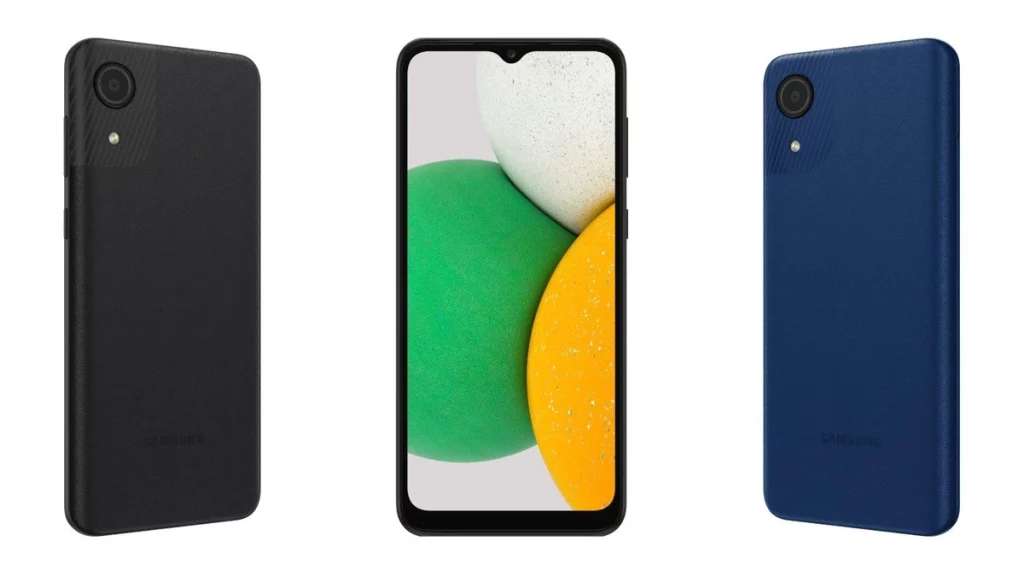
As per the microsite, the OPPO Reno 8T will feature a fibreglass leather back panel. It houses dual traditional camera rings at the top left with the second ring accommodating two lenses. The device will be available in Black and Leather Orange colours. The smartphone is confirmed to come with a 100MP portrait camera. Internally, the OPPO Reno 8T will pack up to 8GB RAM along with 8GB virtual RAM expansion technology. It will come with up to 128GB of storage onboard. The upcoming offering will be backed by a 5,000mAh battery unit.
This is everything we know about the OPPO Reno 8T at the moment. The smartphone is also listed on OPPO Indonesia’s website and it will be available in 4G and 5G variants in the country. It remains to be seen which version the Philippines market will receive.
Leaks reveal that the OPPO Reno 8T 4G will come with a 6.43-inch FHD+ AMOLED display with curved edges and a 90Hz refresh rate. It will reportedly be powered by an Helio G99 SoC and a 5,000mAh battery unit with support for 33W fast charging.
Over the last couple of weeks, we have reported on a sighting and design leaks for the Xiaomi Modena EV, which is the company’s first ever electric car model. Now, an executive from the brand has responded to these leaks. So let’s have a look.
For those unaware, the Chinese tech giant is working on an electric vehicle that is believed to be called Modena. Earlier this month, the car was spotted going extreme weather testing in the snow, with one of the drivers being the company’s CEO and Founder, Lei Jun himself. Following this, we had also covered another leak, which revealed the front and rear bumper design of the upcoming Modena EV, ahead of its official announcement.
Based on this, we can see that the electric car appears to look quite similar to the Tesla Model 3. This seems somewhat true considering how Xiaomi is building what appears to be a sporty sedan type of vehicle. In response to these leaks, the general manager of PR, Wang Hua, stated that while the recent leaks are related to the company’s upcoming EV model, the design is a generic template.
The senior official added that this template was supplied to Xiaomi by BAIC Mold & Plastic. This statement is likely true considering the design sketch leaks also revealed the suppliers list for the EV, which had also listed BAIC. In other words, apart from the covered sighting of the vehicle, we still have no real idea as to what the Modena EV will look like. The response from the company’s executive could also hint at the prototype models that were spotted in the wild.
The Samsung Galaxy S23 Series, set to be officially unveiled on February 1, 2023. However, the upcoming Samsung Galaxy S23 Ultra has been unboxed ahead of its official launch. An unboxing video shared by Edwards Urbina on Twitter recently revealed the design and low-light performance of the phone. Here are the details…
Exploring the capabilities of the Samsung Galaxy S23 Ultra’s camera
The unboxing video shows the white S23 Ultra, which Samsung is rumored to name Cotton Flower. According to Urbina’s post, the device has gold edges to give it a more premium look, and a rear camera ring that protrudes a bit from the body, similar to the iPhone 13 Pro and iPhone 14 Pro. The edges of the Galaxy S23 Ultra have also been squared off compared to the S22 Ultra. Probably, that’s making it more comfortable to grab. The slot for the S Pen continues to be found on the left side.
Galaxy S22 Ulta vs S23 Ultra
In addition to the unboxing video, Edwards shared some shots of the S23 Ultra‘s low-light camera Unfortunately, he has removed his posts from Twitter. That’s why we can’t show you the unboxing video, but photos taken with the phone and showing low-light abilities have been spread on the internet.
Galaxy S22 Ulta vs S23 Ultra Galaxy S22 Ulta vs S23 Ultra
The photos show that the S23 Ultra’s night mode will be impressive. Even the photos taken using the Galaxy S23 Ultra‘s zoom look good at first glance and have a lot of detail. As you can see, the Samsung Galaxy S23 Ultra is much more successful than its predecessor in low-light comparison.
Galaxy S23 Ulta vs Google Pixel 7 Pro in Zoom
Also popular leakster Ice Universe claims that the S23 Ultra will be able to record bokeh video at 4K 30fps, up from the S22 Ultra’s 1080p 30fps limit. The device is also said to have relatively good thermal management for sustained performance. This has been an issue with Samsung phones in the past. We’ll see if all of this is true when the phone comes out on February 1st.
The global smartphone shipments saw a massive decline in the holiday quarter in 2022. This drop was the largest ever recorded in the market, with the overall shipments last year also saw a sizeable decline. So here are all the details.
According to a new report, the worldwide smartphone shipments saw a significant decline of 18.3 percent year on year in the fourth and final quarter of 2022. On the other hand, the overall market fell by a notable 11.3 percent as well last year. In Q4 2022, the market saw over 300 million shipments of handsets, down from 367.6 million units shipped back in 2021. Interestingly, Apple, Samsung, and Xiaomi took the top 3 spot on this list. However, most top brands saw a notable decline during this period.
The iPhone maker saw a near 15 percent fall year on year in Q4 2022, while Samsung also saw an almost 16 percent decline. Similarly, Xiaomi faced an even deeper dive of 26.3 percent in Q4 2022. In other words, most brands suffered during this time. A similar trend can also be seen in the smartphone market in the whole of 2022. Shipments in the global market fell to 1.2 billion units in 2022 from 1.359 billion units that were shipped in 2021.
As per IDC, despite hefty sales and promotional events, various issues caused the decline of the smartphone market. There were a number of problems faced by the industry, with supply chain difficulties as China faced lockdowns due to the viral outbreak. Furthermore, customers also faced rising cost and inflation, while the overall economic conditions also worsened. Thus, shipments slowed down last year, especially in the final three months.
Many reports have suggested that the Samsung Galaxy A54 5G could launch in the coming weeks. A recent one among these also revealed the design renders of these premium mid-range devices. We say premium mid-range because the high-tier Galaxy A7x series has reportedly been canceled for the upcoming, as well as future generations.
Now, the Galaxy A54 5G has made an appearance on the FCC database. The listing has the device marked with the model number SM-A546E. We get some key information from this certification listing starting with the fast charging capability which will be 25W.
The battery has the model number EB-BA546BY, and its rated capacity is 4905mAh. We will likely see it marketed as 5000mAh capacity. The charging adapter has an EP-TA800 model number and 25W peak output. It supports 15W (5V/3A) and 25W (9V/2.77A) outputs through USB-PD protocol. The charger also supports PPS charging protocol with up to 25W output.
The Samsung Galaxy A54 5G will support Bluetooth, Bluetooth LE, WLAN a/b/g/n/ac/ax, and NFC in terms of connectivity. This suggests that WiFi 6 connectivity will be supported by the phone.
The Samsung Galaxy A54 5G was previously discovered on the Geekbench benchmark database, where it was discovered to be equipped with 6GB RAM and Exynos 1380 chipset. The camera configuration of the device has also leaked, revealing that the Galaxy A54 5G will have a triple camera unit headlined by a 50MP primary camera. Finer details are still behind the veil, however, we will likely hear more about this device in the coming weeks.
Lenovo has just launched a number of new laptops for its student customers. Among the new releases, the company has also unveiled new Chromebook models that will offer ‘Smarter Education’ and a better experience when learning, so lets have a look.
Lenovo 100e Chromebook Gen 4
The 100e Chromebook Gen 4 is the first of the lot and sports an 11.6 inch anti-glare display. This model weighs just 1.25 kilograms and is equipped with a MediaTek Kompanio 520 processor. The chipset is paired with 4GB of RAM and 32GB of eMMC internal storage. The laptop also comes with Wi-Fi 6 supports along with an optional 4G LTE enabled variant as well. Other features include HD camera for online classes and durable keyboard with full skirt keycaps and reinforced ports and hinges.
This model also arrives with an array of Lenovo services dedicated to enhance the learning experience for student users. like LanSchool, LanSchool Air, NetFilter, and more, which will also be featured in the other laptops listed below as well. One of the more notable features includes VR Classroom that offers an immersive learning hub on a cloud portal and is designed to allow educators to find relevant VR content to create lessons and even manages their class with ease.
Lenovo 300e Yoga Chromebook Gen 4
Similar to the 100e model, the 300e Yoga Chromebook Gen 4 also sports an 11.6 inch IPS LCD panel that also supports touch screen functionality. The screen also comes with Corning Gorilla Glass and an optional garaged stylus. Under the hood, the laptop also houses MediaTek Kompanio 520.
Apart from the display panel, another major difference between the 100e model is the 360 degree hinge that is paired with rubber bumpers for added protection. On the front, the Chromebook also offers a HD front camera, although buyers can also opt for a 5 megapixel world facing camera to capture real time field tripe videos and images. For connectivity, this model also supports Wi-Fi 6 standards.
Lenovo 500e Yoga Chromebook Gen 4
The Chinese PC maker also unveiled the 500e Yoga Chromebook Gen 4, which is a higher end model out of the three. It sports a taller 12.2 inch IPS LCD panel that is also touch enabled. It has a 16:10 aspect ratio along with Gorilla Glass protection and TUV certification with low blue light to ease strain on users eyes.
Under the hood, the notebook features a more powerful Intel N100 or N200 CPU. This is paired with up to 8GB of RAM and up to 128GB of eMMC internal storage. Users can even choose to get an active stylus pen since the device has a touch display. Similarly, one can even choose between Wi-Fi 6 or 6E and an optional 4G LTE for additional connectivity options. The front also houses an HD or FHD camera and the option to add a 5 megapixel world facing camera.
Lenovo 14e Chromebook Gen 3
Lastly, the company launched the 14e Chromebook Gen 3, which differs from the Yoga models listed above. It features a taller 14 inch display, however, this model does not have a touch enabled panel. But it does offer an aluminum top cover and has a high 82 percent screen to body ratio. This model can feature either the Intel N200 processor or the Intel Core i3-N305 CPU.
This chipset is paired with up to 8GB of RAM and up to 128GB of SSD storage. Other features include Wi-Fi 6 or 6E for faster and more stable connectivity. For online classes and hybrid learning, one can also opt for HD or FHD camera. Unfortunately, the company has yet to reveal the pricing for these laptop models. Although, the new Chromebooks for education will be available within the first quarter of this year.
Telecom companies in India are constantly in competition. With many people needing to stay in touch with each other, companies make sure that they offer the most attractive and enticing plans to their customers in order to attract new customers and retain the loyalty of old ones. However, companies may sometimes take decisions for their own betterment. This could be to keep the company afloat or to simply boost the organization’s revenue. In recent news, popular Telecom company Bharti Airtel has ended its minimum recharge plan of INR 99.
Bharti Airtel has made this change in seven more circles, following its discontinuation in the circles of Odisha and Haryana. The company is now offering an entry-level plan of INR 155, which includes 1 GB of internet data, 300 text messages, and a validity of 28 days. Previously, Airtel offered a minimum recharge plan of INR 99 with 200MB data and a rate of Rs 2.5 paise per second for 28 days.
The discontinuation of this plan began in November 2022 and will eventually result in an increase in average revenue per user for the company. However, users would have to face a 57% increase in monthly costs for customers who used the INR 99-pack, in spite of getting more bang for their buck overall. An Airtel spokesperson further stated that the company’s new plan would provide users with more flexibility, convenience and superior value for their money.
While it has increased the price of its base plan, the company is also trying to attract new customers with more bundled subscriptions. The company recently started offering bundle plans to its customers as a part of its Airtel Black subscriptions, which allows users to combine their Airtel mobile, DTH and fiber services in one plan so that they don’t have to deal with multiple bills. In addition to benefits such as unlimited calling and internet perks, users get free subscriptions to Netflix, Disney Plus Hotstar, Amazon Prime Video and more.
It will be interesting to see how Bharti Airtel rivals its competitors, such as Jio Telecom, in the future.
The mini-PC market has been steadily growing in recent times due to people looking for portable and space-efficient solutions. The popularity of these compact machines has been bolstered by leaps in architecture and technology by AMD and Intel, which now manufacture powerful chips that consume a fraction of the energy that they used to.
Beelink is a brand that has regularly launched mini-PCs carrying cutting-edge hardware along with a plethora of ports to suit the needs of various types of users. Now, the brand started selling the SEi12 Pro model, which it unveiled back in November.
The SEi12 Pro, as its name suggests, uses 12th-generation Intel Core processors, with the company now providing the Core i5-1240P or Core i7-1260P. Both are 28 W processors with 4 P cores, 8 E cores, and 16 threads for comparison’s sake. However, the Core i7-1260P features a stronger iGPU and 6 MB additional L3 cache in addition to a faster CPU boost clock. The ports listed below are also included in every SEi12 Pro configuration:
1x 2.5 Gigabit Ethernet
1x 3.5 mm jack
2x HDMI
1x Thunderbolt 4
4x USB 3.0 Type-A
Other than that, the Beelink SEi12 Pro comes with two SO-DIMM slots capable of housing DDR5-4800 RAM. There is a PCIe 4.0 slot present on the device, and it also has two fans that regulate the temperature inside the mini-PC.
The SEi12 Pro with a Core i5-1240P processor, 16 GB of RAM, and a 500 GB SSD is currently available from Beelink for $599 USD. As an alternative, the company charges US$609 for the identical setup on Amazon US. There is a Core i7-1260P variant with 32 GB of RAM and 500 GB of storage available for US$799 on both Amazon and the company’s website.
Yesterday, at the Tesla Q4 Earnings call, investors and employees of Tesla were ecstatic as Tesla reported record-breaking sales for 2022. The multinational automotive and clean energy company is the world’s second-largest Electric Vehicle (EV) seller, right behind China’s BYD.
Tesla has a long-standing relationship with China, as the country is its second-largest EV market after the US. Giga Shanghai also known as Gigafactory 3 was Tesla’s first overseas factory built for the final assembly of Model 3 and Model Y.
China is the biggest EV market in the world with a projected revenue of $190.40 billion in 2023. The country reported a 113% growth in its EV sale, a staggering figure as compared to North America and Europe. China’s BYD overtook Tesla last year to be the number one Electric Vehicle seller in the world. Hence, it is obvious that Tesla will keep an eye on China and its growing EV market.
During the Q4 earnings call, Musk personally accepted that Chinese EV makers are the biggest rivals for Tesla in the EV market. He further added that Chinese workers work the smartest and hardest of the lot, and hence their companies had the edge over others.
Musk did not single out any particular Chinese company, but said that China is most likely going to be second to Tesla. He further said that the Tesla China team is winning as they are able to attract the best talent in the country.
According to a Reuters report, Tesla China chief, Tom Zhu was recently transferred to the US to run the factories and business in North America. This move shows that Musk really appreciates the talent and work ethics of Chinese people.
Tesla Announced Q4-2022 Financials
In 2022, Tesla recorded the highest revenue and sale in its history. The company sold 1.31 million EVs, marking a record-breaking 40% growth YoY, even though it fell short of the estimated 1.4 million target deliveries. According to the Q4 Earnings report, the company made $24.32 billion in revenue and a profit of $3.7 billion, which is a whopping 59% increase as compared to the profit for Q4 in the year 2021.
The company’s Earning Per Share (EPS) stood at $1.19 which was higher than the Refinitiv Estimate of $1.13. The company also exceeded the Q4 revenue estimate of $24.16 billion. Refinitiv Estimate is a standard used in the financial industry for advanced analytics and comparisons. Exceeding the predicted estimate has made the investors happy.
Tesla’s net income for the year 2022 stood at $14.1 billion, showing a whopping growth as compared to the $5.5 billion in 2021. Musk thanked his employees for their hard work as 2022 was an incredibly challenging year due to declining demand, forced lockdowns, rising interest rates, delivery challenges, and more.
Musk said that in January the company saw the strongest orders year-to-date than ever in the history of the company, and they are currently receiving orders at almost twice the rate of production.
Tesla Price Cutback Was A Smart Move
Tesla Inc. which started with the EV Roadster (now out of production), sells four different Evs named Model S, Model X, Model 3, and Model Y, and the Tesla Semi Electric Truck. Over the past years, the average sale price for Tesla vehicles has gone down, which has made investors unhappy. Last year, the company slashed its prices by up to 20% to stimulate the overall demand for its EVs and also to bring the Model 3 and Model Y under the purview of the Inflation Reduction Act. After the price cut, the EVs may qualify for the $7500 Federal Tax Credit given to Electric Sedans.
Musk said that many people wanted to buy Tesla cars, but did not find them affordable. By cutting down the price, he wants to enable a lot more people to buy his EVs.
While the Apple iPhone 15 series launch is still months away, there have already been numerous rumors and reports regarding the upcoming smartphones. Now, the latest one reveal another new specification of the 2023 iPhone. So let’s have a look.
According to a research note by analysts Blayne Curtis and Tom O’Malley, the iPhone 15 models will feature Wi-Fi 6E connectivity. But unfortunately, it is unclear if the entire lineup will feature the latest networking standard or if it would be restricted to just the higher end Pro variants. As of right now, the Cupertino based giant offers Wi-Fi 6E standards on its latest iPad Pro models, along with the MacBook Pro and Mac mini PCs as well.
On the other hand, the current gen iPhone 14 series only feature the older Wi-Fi 6 standard. For those unaware, this standard works on the 2.4GHz and 5GHz bands while the Wi-Fi 6E also works over the 6GHz band as well. This allows for faster wireless speeds, lower latency, and less signal interference as well. In other words, it offers various improvements over its predecessor. Although, to avail the benefits Wi-Fi 6E offers, one would also need to connect it with a router that supports the latest standards.
This includes routers from known brands like ASUS, TP-Link, and Netgear. Interestingly, the Wi-Fi 6E standard was also previously rumored to make an appearance on the iPhone 13 and even the iPhone 14 series as well. However, since we know that this didn’t happen, there is a better change for the next gen iPhone 15 to feature this wireless connectivity technology. But keep in mind that this is still just an unconfirmed report so take this news with a pinch of salt for now.
India is one of Google’s biggest markets, with 97% of over 600 million smartphones in the country running on Android OS. For reference, just 75% of all 550 million smartphones in Europe run on Android.
On January 25, Google stated that it would let Indian Smartphone manufacturers license selective applications for pre-installation. Additionally, the company will also let users set their preferred search engine as the default one. This is a major change considering Google has been the default search engine on every Android smartphone since forever.
Google’s recent decisions can be attributed to the Indian Supreme Court’s statement from last week, where the court stated that Google is abusing its standing in the Indian market. The Supreme Court is the highest authority of power in the country, and receiving a ruling from the same forced Google to announce these changes. This will radically change the company’s marketing strategies in India, especially how Google operates in the Indian market, a sector which holds a lot of growth potential.
Here are the major changes for Google in India
OEMs (Original Equipment Manufacturers) now be able to license individual Google apps for pre-installation on their smartphones
New users will be prompted to choose their default search engine when they set up their devices.
The Android compatibility requirements will be modified so that Google partners can build non-compatible or forked variants.
Users can purchase in-app digital content through choice billing, which will allow them to pick between Google Play’s billing system or an alternative of their own choice.
The way applications are sideloaded onto Android devices has been changed to minimize security risks. This would include applications downloaded directly from developers’ websites.
The company will expand their online help resources to include details of Google Play Services and the application of their service fees.
Google further stated in its blog post that implementation of all these changes would be a tedious task for the company, since Google has a massive ecosystem of its own. It also stated that the company would require a lot of coordinated effort from various OEMs and developers in order to make these changes possible.
The Indian Government has been quite strict with Google in terms of market positioning and strategies. Back in October, Google was fined $161 Million (Rs. 1337.76 crores) for having restrictions on device manufacturers pertaining to the pre-installation of applications and search engine exclusivity. Google had hoped to block the implementation of these directives by CCI (Competition Commission of India), emphasizing that it would have to amend arrangements with more than 1100 device makers across the country.
Unfortunately, as mentioned previously, the Supreme Court of India refused to comply with Google at all.
Samsung is ready to unveil new devices on February 1 at the Galaxy Unpacked launch event. The star of the show will be the Galaxy S23 series, or more specifically, the Galaxy S23 Ultra flagship smartphone.
Through numerous leaks, we already know that the device has a new 200MP primary camera sensor. Image samples have also been released to showcase the improvement in quality. Now, @edwardsurbina has shared multiple video samples on Youtube showcasing 4K 60 FPS footage captured through the Galaxy S23 Ultra.
Edwards Urbina had also shared 8K 30 FPS video samples on Twitter, however, they were swiftly taken down. It is likely that Samsung intervened since they don’t want these non-official video samples floating online ahead of the official launch.
Coming back to the video samples, the first one appears to be filmed by the 200MP primary camera. While the second video appears to be zoomed in, which could mean that it was filmed by one of the two telephoto cameras (3x and 10x) present on the phone.
New camera samples of the device have also emerged with one shot from the main 200MP camera, while other images are shot at 10x and 30x zoom.
[envira-gallery id=”511270″]
Unfortunately, these images are taken off of Twitter, which means that they are downscaled and we cannot observe them in the original resolution.
With the launch being set for next week, we are expecting more images and video samples of these devices to surface soon. So, stay tuned for more.
POCO’s upcoming X5 series of smartphones is expected to launch soon in multiple markets. Although the brand hasn’t made any official announcements about the launch date yet, rumors state that the Indian launch could take place on February 6.
Ahead of the launch, both POCO X5 and POCO X5 Pro have appeared on Bulgarian retailer – CityTel’s website. The specifications and design of the new POCO X5 series smartphones are revealed in the shop listings. On the retailer’s website, however, pictures of the POCO X4 GT and POCO X4 Pro are displayed.
POCO X5 Pro specs
The listing reveals that the Poco X5 Pro will feature a 6.67-inch AMOLED display with a Full HD+ resolution, 120Hz refresh rate, and Corning Gorilla Glass 5 protection. The device measures 162.1 × 76 × 7.9mm and will weigh 181 grams.
POCO X5 Pro
Under the hood, the smartphone will come with a Qualcomm Snapdragon 778G processor and an Adreno 642L graphics processing unit. A recent leak has revealed that the POCO X5 Pro could be the cheapest Snapdragon 778G smartphone yet.
Moving on, the device will feature a 108MP primary camera paired with an 8MP unit and a 2MP unit. We can expect the latter two to be ultra-wide and a portrait camera, respectively. The phone will have a 16MP front camera for taking selfies and making video calls.
According to the listing, the X5 Pro would enable 67W fast charging and have a 5000mAh battery. Additionally, it will have an IP68 rating. There are three color choices available: yellow, black, and blue.
POCO X5 specs
The vanilla model will also feature a 6.67-inch AMOLED display with a 120Hz refresh rate, and a Full HD+ (1080 × 2400 pixel) resolution. However, it will only have Corning Gorilla Glass 3 protection. The device will be a bit larger and heavier than the Pro model, measuring 165.8 × 76.2 × 7.98 mm and weighing 189 grams.
Redmi Note 12 5G
Under the hood, it will feature a Snapdragon 695 chipset paired with 6GB of RAM. We’ll be getting a triple camera unit on it consisting of a 48MP primary shooter, an 8MP ultra-wide unit, and a 2MP sensor. The front camera will house a 13MP sensor. Other than that, the listing reveals that the device will have IP54 water and dust resistance and will come in green, blue, and black color options.
Apple launched its iPhone 13 lineup in September 2021. The lineup featured four devices: iPhone 13, iPhone 13 Mini, iPhone 13 Pro and the iPhone 13 Pro Max. As per the latest reports, the American tech company will start the sale of refurbished smartphones from the iPhone 13 lineup in the European subcontinent, specifically in the UK, Spain, Italy and Germany.
This is the first time that Apple is selling refurbished units of the aforementioned smartphones on its online store as part of its Certified Refurbished program. It is worth noting that the standard iPhone 13 isn’t available on the website just yet; however, it might be back in stock soon enough. The devices will be sold with a 15% discount on their market price. Furthermore, Apple will expand the sale of refurbished iPhone 13 devices to the US as well. The Apple US website has the purchase options listed there, but they are still greyed out, indicating that Apple will do so soon enough.
Customers who purchase the refurbished iPhones will receive unlocked SIM-free devices with new batteries. The phones will have a new box with a USB-C to lightning cable and will be covered by Apple’s one-year limited warranty. The iPhones will also be eligible for extended AppleCare+ coverage. In words of assurance, Apple stated that the refurbished handsets would be cleaned and tested thoroughly so as to make them indistinguishable from brand-new devices. The company has stopped the sale of Apple iPhone 13 Pro devices since the launch of the iPhone 14 Pro, which makes refurbished phones the only remaining option for customers. At the time of launch, the iPhone 13 lineup featured Apple’s A15 Bionic chip, which holds up against its competition even to this day.
Google seems to have regained its footing in the smartphone industry with its Pixel 6 and Pixel 7 lineups. The devices have received a lot of praise for their camera setups, and especially the Pixel-exclusive features that make the lineup so much more enticing for customers. Pixel Fold is another device from the lineup that customers are eagerly waiting for. Recently, internal code changes revealed that the Pixel Fold smartphone might have the “Flip to Shhh” feature, essentially also cementing the belief that Google’s first folding smartphone is on its way.
The internal code is present inside the stable version of the Digital Wellbeing application. The code is stored under the string “pref_auto_dnd_enable_foldable_summary”. This essentially states that users will have to make sure their phone is folded and face down on a flat surface in order to turn on “Do Not Disturb”. They will feel a soft vibration, indicating that “Do Not Disturb” is active. This code in itself is a strong indication of Google’s Pixel Fold smartphone hitting the market in due time. The code is similar to the one found in other Pixel devices, such as the Pixel 7 – minus the foldable part.
As per previous leaks, the Pixel Fold will reportedly sport a tall 7.57-inch OLED primary display and a smaller 5.6-inch cover screen. Leaks also state that the device will be powered by a Tensor G2 chipset coupled with 12GB RAM. The internal display is rumoured to come with a resolution of 1,840 x 2,208 pixels, up to 1,200 nits peak brightness, and a refresh rate of 120Hz. It will be quite interesting to see how Google prices its Pixel Fold smartphone as compared to its competitors, especially Samsung, which has strong control over the current foldable smartphone market. With the right pricing and the quintessential Pixel experience, Google Pixel Fold might just be the company’s biggest break into the smartphone market yet.
Handheld gaming consoles are making a comeback in the market. Nintendo with its Switch consoles previously dominated the handheld market. However, Steam Deck’s resounding success and availability of multiple game streaming services have enabled a resurgence of competition in the segment.
Now, a new startup going by Abxylute has announced its plans to launch an Android-based gaming handheld to the market. Being an Android-powered console, it will provide the ability to stream games from services like NVIDIA GeForce Now, Xbox Cloud Gaming, or Steam Link.
Considering that the console will feature a MediaTek MT8385 (Genio 350) chipset, the emulation of consoles like the PSP is likely out of the question. However, the MediaTek Genio 350 chip should be powerful enough to run retro games on the console.
For context, the MediaTek 8385 has a Mali-G52 GPU and four ARM Cortex-A53 CPU cores running at 2 GHz. The chipset is paired up with 4GB of LPDDR4 RAM, 64GB of expandable storage, and a 5,000mAh battery. The display is a 7-inch IPS LCD panel with 1080p resolution and a 60Hz refresh rate. According to the company, the console will be quite easy to grip and carry around as it measures only 250 x 115 x 30 mm and weighs 410 grams.
Abxylute is now planning to sell gaming handhelds for US$200 to early adopters and US$250 RRP. Abxylute has not yet provided a particular release date, but it is aiming for a Q1 2023 debut.
Recent findings revealed that the almost 3-year-old Redmi Note 9 series will be updated to MIUI 14. A few days later, the same source has now disclosed when can we expect the rollout to begin.
Unsurprisingly, users of these smartphones will have to wait a bit longer. But thankfully, not so much.
According to Xiaomiui, the following handsets will get access to the MIUI 14 update based on Android 12 in Q2 2023.
Redmi Note 9
Redmi Note 9S
Redmi Note 9 Pro
Redmi Note 9 Pro Max
Poco M2 Pro
For the unaware, all the aforementioned devices are based on the same platform. They only differ in some aspects.
The publication suggests that the latest MIUI for these phones may release around April-May. In other words, users will have to wait around three months.
Apart from the smartphones listed above, the MIUI 14 update will be also released for the Redmi 10X series, Redmi 9, and Poco M2. Even for them, the software build will be based on Android 12, rather than Android 13.
But unfortunately, the update release timeline for them is not known at the moment. The rollout may most probably occur around the same time.
All of these handsets have already received two MIUI updates and two Android updates. MIUI 14 will be most likely their last major software update.
Samsung has launched the SmartThings Station which implements a smart home system in Korea. The SmartThings Station was first showcased during CES 2023 earlier this month. It has already received global appeal with its innovative connectivity and convenience.
The Samsung SmartThings Station connects and controls products in the Samsung smart home ecosystem. It is also compatible with other products that support Matter and Zigbee. This provides a broad template for anyone to experience a smart home.
With the touch of a button, you can execute a personalized routine function via the Samsung SmartThings app. The Smart Button is located at the top of the device and you can customize your routines according to the touch method. The three options are accomplished via a short press, a double press, and a long press. You can run this routine without opening the SmartThings app.
The SmartThings Station supports the SmartThings Find location service. This allows the user to determine the location of his smartphone or tablet at home. This is achieved by pressing the SmartThings button twice. Thereafter the product will start ringing to identify its location. The SmartThings Station supports 15W wireless charging of devices like smartphones, tablets, and so on. The built-in cooling fan in the gadget reduces power loss and improves charging efficiency. The device can accommodate pre-set routines during wireless charging.
The Samsung SmartThings Station is priced at 129,000 won ($105) in Korea. It is available in black and white color options. The product can be purchased in Korea from Samsung’s Digital Plaza, Samsung’s website, and other retail outlets. Samsung has also lined up several special benefits until February 28.
Customers who purchase the product from some selected outlets like Naver will get a free motion sensor or door open sensor. There are no global availability details for the product at this time.
Ford Motors is in discussion with Chinese EV maker BYD relating to its German plant. Ford says it plans to sell its manufacturing plant in Germany to BYD, as BYD makes steady inroads into Europe.
Ford has begun to wind down the production of some of its very successful models. The Ford Focus was a popular model in its days, but Ford is now shifting its focus to electric vehicles. Ford’s manufacturing facility in Saarlouis, Germany may soon be under the control of BYD, according to reports. The report published in The Wall Street Journal indicates that the plant will be sold to China’s biggest EV maker BYD.
BYD has finally exited the ICE market with its last models produced last year. It is now fully into electric vehicles or hybrid models. It has continued to expand its network in Europe and Asia. It kickstarted its European campaign in 2020 with the launch of its market trial in Norway. The UK and France are among the markets BYD entered in 2023. BYD previously announced plans to build at least one EV manufacturing plant in Europe. The acquisition of the Ford manufacturing facility in Germany will be a strategic move in BYD’s expansion plans.
BYD continues to pursue its plans to become a global EV brand. The WSJ report indicated that officials of Ford and BYD are planning to meet in China to discuss the potential sale of the German plant. It was also noted that the talks are at the early stage and BYD was among 15 potential investors shortlisted.
The sale of the plant will be yet another aspect of Ford’s scaling down of its operations as it targets full EV production. Last summer, Ford cut 8,000 jobs in a major downsizing move. More jobs are also on the line as the company pursues its EV manufacturing goals. On the other hand, BYD’s growth trajectory is on a positive spin. The new plant will further sustain the trajectory.
Fire-Boltt has a wide range of smartwatches that go easy on your pocket but offer impressive features. Extending its portfolio, the brand has now launched a new smartwatch in the Indian market, dubbed Fire-Boltt Talk Ultra. The new wearable comes with a 1.39-inch LCD display and supports Bluetooth calling. It has all the basic health-tracking sensors and an IP68 rating for water and dust resistance. Let’s look closely at its specifications and pricing.
The Fire-Boltt Talk Ultra smartwatch comes with a basic design. There’s a round dial with a rotating crown on the side. It measures 46.6×50.6×0.4 mm and weighs 80 grams. The wearable arrives with a 1.39-inch LCD display that has a 240×240 pixels resolution. The smartwatch has a Bluetooth calling feature that allows users to make and receive phone calls from the watch itself with the help of the built-in microphone and speaker.
You also get voice assistants like Google Assistant and Siri on your command. The wearable features a smart user interface with over 100+ watch faces. In addition, the Talk Ultra smartwatch has up to 123 sports modes for tracking activities like running, cycling, and swimming. Health-tracking features on the device include SpO2 monitoring, dynamic heart rate tracking, and sleep monitoring, and more. The watch has an IP68 rating for dust and water resistance.
According to the company, the Fire-Boltt Talk Ultra can last up to seven days on a single charge. It should charge fully in just 120 minutes. The smartwatch’s price in India is set at Rs. 1,999 and it will be available for purchase via the official Fire-Boltt website and Flipkart. It is offered in six different colors— Black, Blue, Red, Grey, Pink, and Teal.
We use cookies on our website to give you the most relevant experience by remembering your preferences and repeat visits. By clicking “Accept”, you consent to the use of ALL the cookies.
This website uses cookies to improve your experience while you navigate through the website. Out of these, the cookies that are categorized as necessary are stored on your browser as they are essential for the working of basic functionalities of the website. We also use third-party cookies that help us analyze and understand how you use this website. These cookies will be stored in your browser only with your consent. You also have the option to opt-out of these cookies. But opting out of some of these cookies may affect your browsing experience.
Necessary cookies are absolutely essential for the website to function properly. This category only includes cookies that ensures basic functionalities and security features of the website. These cookies do not store any personal information.
Any cookies that may not be particularly necessary for the website to function and is used specifically to collect user personal data via analytics, ads, other embedded contents are termed as non-necessary cookies. It is mandatory to procure user consent prior to running these cookies on your website.