DJI‘s product release cycle last year was quite eventful with a raft of industry-defining products joining the fray. On the gimbal aspect, the DJI RS 3 Pro and RS 3 gimbals were launched. The company equally shared a teaser recently that suggested a mini version of the RS 3 gimbal was coming. Indeed, the DJI RS 3 Mini has beeen launched for the global market.
The DJI RS 3 Mini adopts a new integrated design with a compact and portable build. The compacy build makes it possible to fit the gimbal into a shoulder bag. The vertical shooting mode weighs only 795 grams, which is about 50% lighter than the RS 3 Pro, and the horizontal shooting mode is only 850 grams. In addition, the handle extension tripod is about 128 grams.
The RS 3 Mini gimbal has a load capacity of 0.4-2.0 kg. It is supported by mainstream models of full-frame and APS-C format mirrorless cameras. It can be equipped with a Sony A7S3+24-70mm F2.8 GM lens at the highest. The zoom lens can still be used at the maximum focal length to keep it steady.
In order to meet the needs of short video shooting, the RS Mini 3 supports native vertical shooting for the first time. You can directly install the standard quick-release plate on the vertical arm of the gimbal to switch to vertical shooting, and the rotation angle of the gimbal is not limited.
Technically, it continues the third-generation stabilization algorithm, Bluetooth (5.1) shutter control function, etc. The gimbal recording button can directly control the camera to start and stop recording or trigger a photo.
The RS 3 Mini is also equipped with a 1.4-inch touch-sensitive color screen and adopts a new UI design. Most of the function adjustments can be completed without an app. The side is equipped with a NATO interface, which supports the installation of portable transfer handles, external fill lights, and monitors as well as other accessories.
In addition, the standard battery capacity is 2450mAh. The battery life can last up to 10 hours and it supports charging while using. It uses a USB-C interface and can fully charge in 2.5 hours.
As for the price, the DJI RS 3 Mini is priced at 1999 yuan ($295) which includes the main body of the gimbal, tripod, quick release plate, and other accessories.
Apple has recently been dealing with another legal dispute regarding the technology it offers. The latest one is another patent infringement case, which might affect the sale of its Apple Watch series in the US. So here are all the details.
The Cupertino based giant is no stranger with patent disputes. However, the latest battle has started off against the iPhone maker and could possibly even lead to the ban of the Apple Watch Series 6 and newer models in the US. The company is being sued by Masimo, which is a brand that medical grade products. As per the new lawsuit, the company is suing Apple for breaking five of its pulse oximeters, which is used on the Watch’s blood oxygen monitoring feature on its Watch Series 6 and later models.
Just yesterday, a judge in the US International Trade Commission (ITC) ruled that Apple did break one of Masimo’s pulse oximeter patents. Meaning, the company wasn’t guilty on infringing on the other four patents. So now, the US ITC will decide if it will ban the import of Apple Watch models that can monitor blood oxygen levels of its users. According to Masimo CEO Joe Kiani ““We are happy that the judge recognized Apple’s infringement of Masimo’s pulse oximetry technology and took this critical first step toward accountability.”
The senior official further added that “Today’s decision should help restore fairness in the market. Apple has similarly infringed on other companies’ technologies, and we believe today’s ruling exposes Apple as a company that takes other companies’ innovations and repackages them.” On the other hand, Apple responded by stating that “We respectfully disagree with today’s decision and look forward to a full review by the Commission.”
Philips has launched new headphones in India. The range comprises of TAH8560BK, TAH6506BK, TAA4216BK, TAH4205XTBK, and TAUH201BK. The TAH8560BK is the more premium offering in the lineup. Read on to know what the headphones offer out of the box.
The Philips TAH8560BK, TAH6506BK, and TAA4216BK have an over-ear design whereas the TAH4205XTBK, and TAUH201BK are on-ear headphones. The TAH8560BK has touch controls for performing various tasks instead of physical buttons on the rest of the offerings. All five headphones have adjustable and foldable ear cups.
In terms of audio, beginning with the TAH8560BK, it offers an immersive experience with adaptive active noise cancellation. The headphone features certified Hi-res audio capable 40mm speakers for rich sound. There is also customisable ambient mode and four preset EQ levels. The TAH8560BK is claimed to deliver 60 hours of usage and 45 hours with ANC enabled. On the other hand, the Philips TAH6506BK is equipped with a 32mm driver. It has a hybrid active noise cancellation for eliminating unwanted noise. There is a audio-in port and the device is claimed to offer 30 hours play time and 25 hours with ANC enabled.
The Philips TAH8560BK and TAH6506BK also come with multipoint pairing capabilities via Bluetooth connectivity.
Coming to the Philips TAA4216BK, it has detachable ear cups for easier cleaning. The ear cups are loaded with a cooling gel for a comfortable experience over longer periods. There is a multi-functional button and a built-in mic. The TAA4216BK is equipped with a 40mm neodymium driver and is claimed to offer 35 hours of usage. As for the Philips TAH4205XTBK, it features a multi-functional button along with a dedicated bass boost button for instantly making louder bass and beats. The headphone comes with a 32mm driver and 29 hours of battery life.
Lastly, the Philips TAUH201BK is a wired on-ear headphone with in-line remote and built-in mic. The device features a 32mm driver with environmental noise cancellation.
The Philips TAH8560BK carries a price tag of Rs 10,999. The Philips TAH6506BK, TAA4216BK, TAH4205XTBK & TAUH201BK headphones are priced at Rs. 11,999, Rs. 8,999, Rs. 4,999 & Rs. 1,990 respectively. All five audio devices are available for purchase at all leading online and offline stores across the country.
Oppo has begun to roll out the Android 13-based ColorOS 13 stable update for more smartphones starting January 10. These devices range from budget to flagship categories.
Only two of these handsets were released in global markets. Whereas, the rest of them are launched exclusively in China. Let’s go through the details.
Oppo Find X2 Pro
As per official announcement posts on the Oppo community, the following smartphones have started receiving the Android 13 stable update with ColorOS 13 skin.
Oppo Find X2
Oppo Find X2 League of Legends S10 Limited Edition
Oppo Find X2 Pro
Oppo Find X2 Pro Automobili Lamborghini Edition
Oppo Ace 2
Oppo K10 Pro
Oppo K10x
The Find X2 and Find X2 Pro are the only phones on the list that were released outside mainland China. Hence, the latest software update is available for them in Indonesia. The update should be rolled out in more regions in the coming weeks.
On the other hand, the remaining devices on the list were launched only in China. However, it is worth noting that the Oppo K10x goes by OnePlus Nord CE 2 Lite in select global markets. That device got the Android 13 stable update before New Year’s day.
Having said that, the update for these handsets is being rolled out in batches as usual. Therefore, some users may get access to the update earlier than others. In the end, every unit should be upgraded to fresh software in the upcoming days.
Earlier today (11th January 2023), Xiaomi and a couple of other companies jointly announced that they will finally be bringing an end to their long lasting IP disputes (Intellectual Property) as they looked towards the future.
The Chinese tech giant had been in dispute with other patent owners like IP Bridge, Orange, and Siemens. However, the firms have decided to make amends with one another through an innovative patent licensing transaction. In simpler terms, the companies are simply creating an efficient way of licensing patents across multiple technologies to push innovation and remove future disputes for Xiaomi and its future technologies.
According to Ran Xu, Xiaomi General Manager of Global Business Development and IP Strategy stated that “We continue to explore complementary licensing models to the traditional patent pool and bilateral models in order to avoid time-consuming disputes and to focus on innovation. This unique transaction structure lets Xiaomi customers enjoy benefits of inventions from 3 companies, efficiently.” The disputes were ended thanks to Norvus IP, which is a company that is owned by Xiaomi’s former Head of IP Strategy.
This firm helped the smartphone maker and the other three licensors and close this licensing transaction in an efficient manner. Similar, Rudolf Freytag, Siemens’ Head of Licensing and Technology said that “For us, protection of innovation by patents is of high importance. We highly welcome this agreement, as it constitutes a mutually very satisfactory solution over litigations and appreciates the solution- oriented approach of all parties involved in the deal.”
Google has recently rolled out the second Android 13 QPR2 beta update to supported Pixel devices, which includes a number of underlying changes. According to Mishaal Rahman, among these changes is a new system property called ‘euicc.seamless_transfer_enabled_in_non_qs’, suggesting that Android could soon gain support for seamless eSIM transfers.
Currently, Android users have to deactivate their eSIM profile on their old phone and activate it on their new phone. This process is not seamless and may require the user to contact their carrier to activate the eSIM on their new phone. In contrast, iOS offers a built-in Quick Transfer feature that allows users to transfer physical or eSIMs from their old iPhone to a new model without contacting their carrier. It seems that Google is taking inspiration from this iOS feature and working on bringing similar functionality to Android.
You might soon be able to transfer an eSIM profile from an old Android phone to a new phone, or convert a profile on a physical SIM card into an eSIM profile. Support for transferring profiles is being implemented in Google's SIM Manager app the LPA on Pixel and many GMS devices.
The feature is being implemented in the SIM Manager app on Pixel phones and several other phones that ship with Google Mobile Services. However, the complete compatibility details are not available yet. It’s likely that Google’s Pixel lineup will support both eSIM profile transfers and converting a physical SIM to an eSIM profile. Devices from other OEMs will also get support for eSIM profile transfers, but the ability to convert a physical SIM to an eSIM profile might be limited to a few models.
It’s not yet clear when Google plans to release this feature. It could arrive with the March 2023 Pixel Feature Drop or later in the year with Android 14. The company has not yet commented on the matter, and it’s not known when more information will be available.
Overall this feature will make the transition of eSIM profile to new phone much easier and more seamless, by not requiring users to contact their carrier and make activation. This could make the transition process much more user-friendly and less time-consuming.
Chinese projector manufacturer Fengmi which trades in the overseas markets as ForMovie has launched a new laser projector. The product is known as the ForMovie S5 Rolling projector and it uses ALPD laser display technology.
As can be seen from the official pictures, the ForMovie S5 Rolling Projector adopts a new frame shape, which is connected to the main body of the projector with a rounded rectangular frame and a pan-tilt structure. This design ensures that the projection can achieve 360° vertical rotation. The Formovie S5 can deliver a brighter image with 1100 ANSI Lumens in a small and compact design by utilizing ALPD laser display technology.
When the projector is closed, the whole machine can be transformed into a suspended desktop audio system. The stereo sound system is created by a qualified team in collaboration with the renowned audio company Denon. Additionally, the FengOS and several clever automation make it much simpler to project and utilize. Also, the exquisite design of the projector also sees the bottom aspect of having support for wireless charging. The base can be used to charge devices that support wireless charging.
ForMovie also unveiled the Formovie V10 projector at CES 2023. It is one of the finest projectors for gaming because of its 240Hz ultra-high refresh rate and low latency of 12ms. Along with true 4K resolution, Formovie V10 also offers a magnificent viewing experience with 2500 ANSI Lumens. Standard 7.5W full-range speakers and a separate 15W subwoofer are also supplied. Users may experience 360°surround sound thanks to Dolby surround sound support. The Formovie V10’s design is modern, uncomplicated, and suitable for various types of home decor.
The official has not yet announced the price details and release time of these two new products.
boAt has launched a new audio device in India. It is called the boAt Aavante Bar and with the latest offering, the homegrown brand has expanded its range of soundbars in the country. Read on to know what the device offers out of the box.
The boAt Aavante Bar 1150D has a sleek look and premium finish. It has multiple connectivity modes including Bluetooth 5.0,USB, AUX, HDMI (ARC), and optical connectivity.
In terms of audio, the boAt Aavante Bar 1150D is equipped with a driver size of 5.5×8.5cm x 2+2.25 inches x 2. It has a 4Ωx4 + 8Ωx2 impedance and a frequency response of 55Hz-20KHz. The soundbar has an 80W boAt Signature Sound output and a 60W subwoofer that is said to enhance every part of the entertainment. It features a signal-noise ratio of 60 dB. The boAt Aavante Bar 1150D comes with a 2.1 channel surround sound and Dolby Audio that delivers a balanced sound and deep bass for movies, music, and video games. It also offers four EQ modes including movies, news, 3D, and music.
The boAt Aavante Bar 1150D comes with a remote control that lets users control various functions of the devices.
The boAt Aavante Bar 1150D carries a price tag of Rs 7,999. It can be purchased from Flipkart and the brand’s website starting tomorrow, at 12 pm.
In other news, last week, boAt launched the Wave Edge smartwatch in India. It features a 1.85-inch display, a digital crown, and a built-in speaker and microphone. The smartwatch is available for purchase in the country.
With Apple unveiling its proprietary silicon for its various products, it was clear that it aims to rely on its self designed technologies. Now, it appears that the display is the next such goal of the company.
The Cupertino based giant already employs its tight ecosystem of software that seamless work with its PC, smartphones, and other products. So, it isn’t surprising that it is extending its proprietary reach to the hardware level as well. A new report has revealed that the iPhone maker is working on its own custom design for displays that are based on microLED technology, and it appears that a future Apple Watch model will be the first to debut this display.
According to Bloomberg’s Mark Gurman, the device with such a screen could be launched as early as next year, with its development process and planning being in the works for almost 5 years now. For those unaware, Apple typically orders its screens from major display manufacturers like Samsung, LG, and BOE. But for its custom microLED designs, it might employ a separate manufacturer to produce the displays.
Similarly, the company is also working on its own proprietary modems to replace the 5G modems it orders from Qualcomm for its iPhones. Although, developing its very own microLED display technology is a bit more complex. This breed of display are not as common in use as OLED or LCDs. Furthermore, these are usually used in large sizes in commercial spaces rather than mass production due to their cost of production. So, Apple might just start small with the Watch debuting this technology sometime by 2024 or 2025.
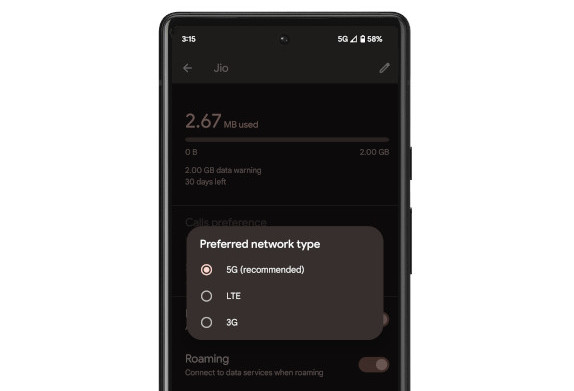
Although the number of 5G phones is increasing every day, the number of people using them in the world is still quite limited. Fortunately, this situation is changing over time. Lastly, Google Pixel smartphones have now enabled support for Airtel and Jio 5G networks in India. Google had originally planned to roll out an update to enable 5G capabilities on its smartphones in India in December, but the release has been delayed for an unknown reason.
Google Pixel now support Airtel and Jio 5G network in India
Users who have installed the Android 13 QPR2 Beta 2 update on their Google Pixel 6 and Google Pixel 7 series of smartphones will now be able to use 5G connectivity on both the Jio and Airtel networks. However, it’s important to note that this is a beta update, and a stable version of the update is expected to be released in the coming weeks.
The Google Pixel 6a, Pixel 7, and Pixel 7 Pro are the three smartphones that currently support the 5G network in India. The Pixel 6 is powered by the first-generation Tensor processor, while the Pixel 7 and Pixel 7 Pro are based on the Tensor G2 processor. With this latest software update, users can now enjoy a low-latency 5G network with improved download and upload speeds.
The Pixel 6a is the most affordable 5G smartphone from Google and supports 19 5G bands. Similarly, the Pixel 7 and Pixel 7 Pro support 22 5G bands, and all three smartphones have all the important 5G bands to provide good indoor and outdoor 5G coverage in India. However, it’s worth noting that none of the Google Pixel smartphones currently support mmWave 5G bands in India.
While users can try out the 5G network by installing the latest beta update on the Pixel 6a, Pixel 7, and Pixel 7 Pro, it is recommended to wait for the stable rollout, especially if you are using the device as your primary smartphone. Beta updates can sometimes affect the overall usability of the device.
We thought that Asus only announced two ChromeOS products at CES 2023 — Chromebook Vibe CX34 Flip and Chromebox 5. However, it turns out that the company quietly unveiled a third ChromeOS device called Chromebook CM14. This laptop also comes in a convertible version called Chromebook CM14 Flip.
For some reason, Asus did not share any press release for this product. But the computer was showcased at the MediaTek booth. The firm has even listed the device on its website and shared a short product video on YouTube.
The Asus Chromebook CM14 series comes powered by a MediaTek Kompanio 520 chipset. The silicon is paired with up to 8GB LPDDR4x RAM and 128GB eMMC storage.
The Flip model sports a 14-inch FHD (1920 x 1080 pixels) display (LCD) with a 360° hinge. The panel supports touch input and USI stylus input.
On the other hand, the regular model also has a 14-inch display. However, customers can choose between HD (1366 x 768 pixels) and FHD (1920 x 1080 pixels) resolution. These panels don’t carry support for touch input.
Further, the MIL-STD 810H-certified laptop arrives with multiple ports, such as 2 x USB 3.2 Gen 1 Type-C, 1 x USB 3.2 Gen 1 Type-A, a 3.5mm headphone jack, and a MicroSD card reader. Wireless connectivity options on the computer include WiFi 6 and Bluetooth 5.1.
The device also arrives with a Titan C security chip and a Kensington Nano security slot. Last but not least, it is backed by a 42 Wh battery and carries support for 45W fast charging.
Asus is yet to reveal the pricing and availability details of Chromebook CM14 and Chromebook CM14 Flip.
pTron has just launched the new Bassbuds Epic, which is a pair of truly wireless gaming earbuds. The company’s latest product offers a gaming aesthetic and features, so let’s have a look.
pTron Bassbuds Epic features an angular charging case with an LED indicator to show charge levels of the case and the earbuds itself. The Bassbuds Epic features the proprietary AptSense low latency solution that offers a closed acoustic for an improved immersive experience during gaming. Furthermore, each earbud offers an ergonomic shape paired with the brand’s proprietary audio drivers as well, which promise to offer deep bass, natural mids, and crisp highs.
Being a gaming earbuds, the new hearables offer a dedicated gaming mode that lowers the latency down to 40ms. For those unaware, most earbuds typically lower the latency to around 80ms but generally below 100ms, so there should feel a lot more responsive and in tune with the visuals during gameplay. The earbuds also feature a music mode as well as a multi function touch controls.
Other features include Bluetooth 5.3, USB Type C charging that supports quick charging that can fully charge the case in just 1.5 hours and the earbuds in just 1 hour. The wireless earphones also house a dual microphone setup with TruTalk ENC technology for clearer calls. The Bassbuds Epic is currently available for purchase on Flipkart for an introductory price tag of 799 INR, over its original 899 INR price, for the next 3 days.
Electric vehicles are gaining popularity day by day. The market, which has a growing potential, is attracting the interest of not only new brands but also established companies that have been producing internal combustion engines for many years. Lastly, Maruti Suzuki, the Indian arm of Suzuki Motor Corp, unveiled the Concept eVX, an electric SUV that has a 60kWh battery pack and offering up to 550 km of driving range on single charge.
Maruti Suzuki, the Indian operation of Suzuki Motor Corporation, unveiled the Concept eVX, an electric SUV at the Auto Expo 2023 in India. The concept car is set to hit the market by 2025 and is powered by a 60kWh battery pack that offers up to 550 km of driving range on a single charge.
“We plan to bring it to market by 2025. At the Suzuki Group, addressing global warming is a priority,” said SMC Representative Director and President Toshihiro Suzuki. He added that the company is committing to reducing greenhouse gas emissions and investing Rs 10,000 crore in the production of Battery Electric Vehicles (BEVs) and their batteries in India.
Maruti Suzuki is also displaying other eco-friendly products such as the WagonR Flex Fuel prototype, Brezza S-CNG, and Grand Vitara Intelligent Electric Hybrid. The Concept eVX is Suzuki’s first global strategic electric vehicle and is being debuted in India. The Auto Expo, which is held every two years, was originally scheduled to take place in 2022 but was postponed due to COVID-19.
Some major manufacturers such as Mahindra & Mahindra, Skoda, Volkswagen, and Nissan along with luxury car makers like Mercedes-Benz, BMW, and Audi are not participating in this edition, but the likes of Maruti Suzuki, Hyundai, Tata Motors, Kia India, Toyota Kirloskar, and MG Motor India will lead the traditional automakers at the show. The Expo will be held from January 11-18, with press days on January 11-12 and general public days from January 13-18.
Google One has reached a major milestone, having been downloaded over one billion times on Android devices. The app, first offered in 2018, provides users with additional storage for Google Drive, Google Photos, and Gmail. In addition to additional storage, Android and iOS subscribers to the 2TB storage tier have access to a free Virtual Private Network (VPN), which encrypts their internet traffic and hides their identities, making it harder for third parties to track them and steal their data.
Google One users also have access to 24/7 support from “Google experts” via email, phone, and chat. Users of the 2TB and 200GB storage plans also receive a 10% cashback on Google Store purchases. Subscribers to Google One also gain the ability to use enhanced editing features for Google Photos, such as portrait light, blur, color pop, and more.
Prices for Google One storage plans vary depending on the subscriber’s country. For example, prices in Turkish lira are 80% cheaper than prices in U.S. dollars. All Google Account members start with 15GB of free cloud storage. In the U.S., prices for Google One’s storage tiers are as follows: 100GB for $1.99 per month or $19.99 per year, 200GB for $2.99 per month or $29.99 annually, 2TB for $9.99 per month or $99.99 per year, and plans for 10TB, 20TB, and 30TB, which can be purchased on a month-to-month basis only, are $49.99/month, $99.99/month, and $149.99/month respectively.
Storage can be shared with up to 5 additional family members, with each family member getting the default 15GB of storage. Google One users are also distinguished by a circle surrounding their avatar icon in the four “Google colors” of blue, red, yellow, and green, indicating that they are a subscriber in good standing of Google One. The app is available on the App Store for iOS and the Google Play Store for Android users.
We already know that Realme is working on a new GT Neo 5 smartphone model. But a new leak has revealed the key specification of the device ahead of its official launch and it appears that the phone will be available in two options. So let’s have a look.
The Chinese smartphone maker’s GT Neo 5 has already been spotted on leaks and official certifications. Now, a new leak from a tipster on Weibo (Panda is Bald) shared key details as well as the two GT Neo 5 variants. Looking at the specs list, the GT Neo 5 will be equipped with the Qualcomm Snapdragon 8+ Gen 1 SoC on both variants. Furthermore, the two models will also sport a tall 6.74 inch OLED display that has a 20.1:9 aspect ratio 2772 x 1240p resolution and 144Hz refresh rate.
Both phones also weigh 199 grams and feature a triple camera setup on the rear. This consists of a 50 megapixel Sony IMX890 primary sensor paired with an 8 megapixel and a 2 megapixel shooter. So, the primary difference between these two models is only the charging rates and battery pack. One model will feature a large 5,000mAh battery that supports 150W fast charging, while the second variant will offer a faster 240W fast charging support but with a smaller 4,600mAh battery.
This is in line with one of our previous reports. A recent TENAA certification listing had also revealed the same information earlier this week. The two versions carry the model number RMX706 and RMX3708. So stick around for more as we will be providing updates when additional information is available regarding this matter.
Apple has recently issued a second Rapid Security Response update for the beta version of macOS Ventura 13.2, signaling that the company is continuing to test out its fast-deployment system for distributing urgent security fixes to user devices. The Rapid Security Response updates are designed to automatically apply security fixes to devices running macOS Ventura, iOS 16, and iPadOS 16.1 after a restart, without the need for users to go through the traditional updating system. This aims to ensure that security fixes are installed quickly and efficiently.
The update was released to beta testers of macOS Ventura 13.2 on Monday, but it appears to be a test release without any significant fixes included. This suggests that the update is primarily being used to test the functionality of the Rapid Security Response system, before it is used to distribute actual live fixes to users in the future.
Currently, Apple is on the first developer beta for macOS Ventura 13.2, which was released on December 14, 2022. This beta version includes support for using a physical security key for two-factor authentication when signing into an Apple ID, a feature that has been welcomed by users.
It is worth noting that the information provided in the question is a hypothetical scenario and that as of current date, Apple hasn’t announced any macOS version called Ventura and also the Rapid Security Response updates are not feature from Apple.
Earlier today, Samsung revealed that it will be holding its first ‘Unpacked’ event of 2023 on February 1. Though the company hasn’t disclosed it officially, we all know that the conference is meant for the Galaxy S23 series.
This event is expected to be followed by yet another ‘Unpacked’ conference for the next-gen Galaxy A series. The firm is anticipated to debut Galaxy A54 and Galaxy A34. Ahead of that, these phones have now leaked in official renders.
Samsung Galaxy A54 and Galaxy A34 | Source: Evan Blass
We have been hearing about the Galaxy A54 and Galaxy A34 for a long time. Hence, we are aware of the key highlights of the handsets along with their design.
As we are nearing the official announcement, more leaks have started pouring. The latest one by Evan Blass shows us the official front renders of these phones.
The pictures confirm that the Galaxy A54 will arrive with a centered punch-hole, while the Galaxy A35 will come with a dewdrop notch. Interestingly, the former may have thicker bezels despite being costlier than the latter.
Finally, the renders also confirm the new ‘lime’ color. The devices are said to be available in black, white, and purple colors as well.
According to previous reports on these handsets, they will sport a triple camera system as Samsung has decided to give up on depth sensors. Further, they will feature an identical rear design though their fronts are different.
Last but not least, the Galaxy A34 is expected to be powered by MediaTek Dimensity 1080 chipset, whereas the Galaxy A54 may house an unreleased Exynos 1380 SoC.
Despite being launched in various markets, the Nothing Phone (1) was not released in the US for various reasons. However, the company’s CEO recently revealed that a US launch is in the works, and now, the device is finally available in the region. So here are all the details.
The smartphone maker has announced earlier today (11th January 2023) that the Phone (1) has finally been released in the US. For those unaware, this model is the brand’s first ever smartphone and it is available for purchase through a beta membership. This is an interesting beta program where you need to pay 300 US Dollars to enroll. Although, this sum not only gets you the membership but also the smartphone as well.
Notably, the beta members are not obligated to provide feedback regarding this beta program either. Carl Pei had stated last week that “The reason why we didn’t launch in the US is because you need a lot of additional technical support to support all the carriers and their unique customizations that they need to make on top of Android. We felt that we weren’t ready before. Now we are in discussions with some carriers in the US to potentially launch a future product there.”
As of right now, Nothing is still working on convincing more carries to offer support for its smartphone since the device is only being offered through the beta program on the T-Mobile 5G network. On the other hand, official carries support for Verizon and AT&T is still quite limited, with no 5G support at the moment.
As we all know, OnePlus is in a bit of an awkward position. Neither a flagship nor a flagship killer. Maybe OnePlus itself has lost its way, and people’s enthusiasm for it is fading away. But this year’s OnePlus 11 seems to give me hope. Although it seems they got their position wrong, this OnePlus 11, is a good phone.
Unboxing
OnePlus’ strategy now is to be the best-performing phone in the OPPO family. It’s in a position somewhat similar to Vivo’s sub-brand: iQOO. Performance first, everything else second. This is not my own guess, it’s written on the box of the OnePlus 11. The accessories in the box are a transparent case, a card pin, a bunch of instructions, and stickers. There’s also a sticker to prevent UV glue from seeping into the gaps. A 100w charger and OnePlus’ signature red charging cable. That’s all that’s in the box.
Design
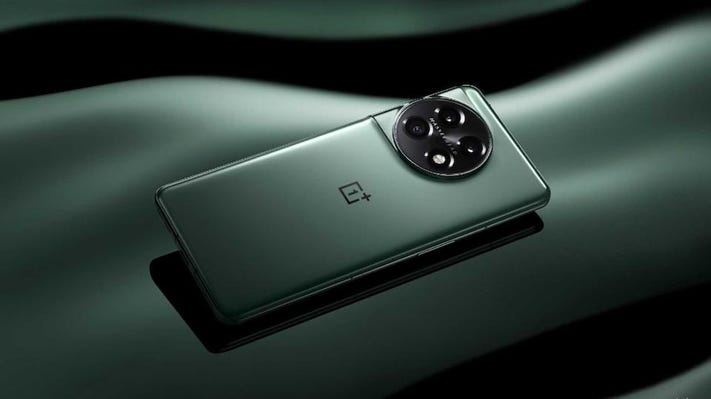
The OnePlus 11 has a similar design to the OnePlus 10 Pro, except that the square shape has been turned into a round shape. I can’t say whether it’s a good-looking or ugly design, because I’m used to OnePlus using similar designs. The mirror part of the OnePlus 11 lens module has been made smaller, so it is no longer easy to get fingerprints. But I don’t like the shiny spots in the black area, which look like dust that can’t be wiped off.
The green version is good, the color is not so bright. And it looks like a ceramic-like shine, a premium look. The alert slider did not disappear this time, and the build quality is very good. Fingerprint recognition is also in the right place. This time OnePlus 11 uses the largest vibration motor in Android phones. The vibrations are the closest to the iPhone, which is a unique selling point of the OnePlus 11. Unfortunately, the USB-C port is still USB 2.0, making this phone one more pity.
Display
According to the specs, the screen of the OnePlus 11 should be top-of-the-line. 2K resolution, high refresh rate, and LTPO are there. Especially with their LTPO 3.0, they have evolved again. How fast or slow you swipe your finger affects the refresh rate in real-time. No color shift even when squinting.
It seems like a great screen, doesn’t it? But it does have some drawbacks. For some reason, the panel on this display is still the same as the Samsung E4 from two years ago. meaning it will be more power-hungry than the latest E6 panel, and the maximum brightness will be lower. If you are outdoors in direct sunlight, you may not be able to see the screen. Some people care more about DC dimming or high-frequency PWM dimming, which is not available in OnePlus 11. 360Hz PWM dimming is considered worse even two years ago.
So it’s up to you if this display is good or not. If you care more about resolution, refresh rate, and LTPO, then it’s a good display. If you are more concerned about maximum brightness, power consumption, and good dimming strategy, then it is not a good display.
Benchmark & Gaming
The performance of the OnePlus 11 is on the level of mainstream 8 Gen 2 phones, with no issues found on Benchmark. But the CPU throttling test results are a bit disappointing, OnePlus 11 is the only 8 Gen 2 phone we’ve tested that’s underclocked. The phone is only 47 degrees Celsius at this point, which isn’t particularly hot. Hey OnePlus, did you forget what it is written on your box?
The Genshin Impact is not as stable as the iQOO 11, it is closer to the Xiaomi 13. When we turn on Ultra-steady frames mode, the frame rate is a little more stable, but the effect is not obvious, and the same goes for the Super-resolution feature. You can see a little bit of clarity in the screenshots by zooming in, but you won’t notice it when the characters are moving.
Thankfully the OnePlus 11 has game frame insertion, so playing all games smoothly is not a problem. Actually, OnePlus 11 is not a bad performer, it’s just that their tagline made me think it would be super powerful and would be the best in the world, but it’s not.
Camera
What impressed me wasn’t the gaming experience of the OnePlus 11, but the photography. If you had told me last year that the OnePlus phone had an awesome camera, I would have thought you were joking. But the camera on OnePlus 11 is really, really good, and I’m not joking.
Because the sensors in all three cameras are so good, the OnePlus 11 does a great job of taking very nice pictures with any lens at any time. The colors will be more vibrant than reality, but not too vibrant. It can reproduce the ambiance of the moment. The dynamic range is excellent and the balance of clarity and sharpening effects is good. In most scenes, photos taken by auto mode and night mode are the same, so it is unnecessary to purposely select the night mode for night photos, very convenient.
The ultra-wide camera is as good as the main camera for most scenes. Unless you zoom in to look all around the picture, it can really get about the same image quality as the main camera. the Purple-fringing issue is almost non-existent, or at least better than the Xiaomi 13.
Just compare the recent models to show how good this ultra-wide camera is. iQOO 11 is definitely the worst one, and a quick glance shows how good OnePlus 11 is. The downside of Xiaomi 13 is the low dynamic range, although at the time it was just that dark. But just not good-looking. The Motorola X40 is the closest to OnePlus 11, but unfortunately, the color is not accurate enough. And the photo is overall greenish.
Actually, there is a bug in this photo OnePlus 11, did you find it? Something went wrong with the HDR, resulting in a strange circle of light around this light. Not a big problem, I shot hundreds of photos and it happened only one time.
Because this camera supports autofocus, you can also use it to take macro photos. Although you can’t take exaggerated macro photos because it’s not specifically designed for macro photography, the image quality is still great.
I believe many people will like This 2x telephoto lens because it is just right for recording life. Especially for taking pictures of food, you can use this telephoto lens to capture the food on the table as soon as you lift your hand. And the image quality is great, with lots of detail. It is also very suitable for street photography.
I used this lens to go to the seaside to take a lot of photos, and you can see that most of them are very good. The difference between it and flagship phones is a periscopic telephoto, and the 2x optical telephoto lens is not quite enough when shooting at super long distances.
At night, there are no drawbacks in scenes with more light. Dynamic range and sharpness are good. If the environment is very dark, even if you tap the 2x button, the auto mode will still use the main camera crop. When you use Pro mode to force a telephoto lens to shoot with, you will know why use the main camera instead of the telephoto lens.
The main camera supports up to 8K 24fps, the ultra-wide camera supports 4k 30fps, and the telephoto only 1080P 30fps. the main camera and ultra-wide camera are both flagship phone level. However, the telephoto is limited by the resolution and does not look as clear as the other two cameras. You can zoom in and out of the recording at 4k 30fps. But there seems to be a bug after zooming, the noise becomes significantly more. The most pity one is the front camera. Although the image quality of the selfie is good, but still does not support 4K and 60fps.
Battery & Charging
The charging power of the OnePlus 11 is not particularly high, but 100w can also meet the needs of most people. 5 minutes to charge 28%, a full charge only takes 25 minutes, the same as 120w iQOO 11. There is no wireless charging by the way. The battery life is also similar to iQOO 11. It is the regular level of an 8 Gen 2 phone.
I think it’s not that OnePlus got its position wrong, but that it can only be in this position. Because the OPPO Find X6 Pro is going to be the most powerful imaging flagship in the OPPO family, then OnePlus can only say “Oh we are the main performer”. The truth is that it’s the best 8 Gen 2 phone in terms of photography, except for flagship phones like the Xiaomi 13 Pro and X90 Pro+.
Although the OnePlus 11 is not a real flagship, and it’s not cheap enough to be a flagship killer. But it is indeed one of the best phones to buy in its price range, especially for those who like to take pictures but don’t want to spend too much money. Will you give OnePlus a chance in the future?
Apple has been trying to replace the Qualcomm modems from its devices with the company’s own modems and for this, the company also acquired a division of Broadcomm.
The transition was pushed back due to some reasons, but now the Cupertino-based tech giant is back on track and is gearing up to use its in-house developed modem and chips.
A new report coming from Bloomberg claims that Apple plans to start replacing Qualcomm modem chips on its iPhones as soon as 2024, for which the company has been working for years.
Apple had initially planned to use its own modem chips on iPhones this year, i.e. 2023, but its development efforts didn’t produce the results it wanted and, thus, pushed back the transition and decided to keep using Qualcomm until its own solution is developed.
Modem chip development has seen delays, and Apple will use a slow rollout to end its reliance on Qualcomm. Apple will start by using its modem in a single device before expanding the rollout to other devices. The transition away from Qualcomm could take up to three years.
Apart from this, the company also wants to stop using wireless components from Broadcom in 2025. For this, Apple is working on a Wi-Fi and Bluetooth chip that would replace the components that it is currently sourcing from Broadcom. A couple of years ago, Apple signed a three and a half-year deal with Broadcom for wireless components and modules, which is set to expire midway this year.
We use cookies on our website to give you the most relevant experience by remembering your preferences and repeat visits. By clicking “Accept”, you consent to the use of ALL the cookies.
This website uses cookies to improve your experience while you navigate through the website. Out of these, the cookies that are categorized as necessary are stored on your browser as they are essential for the working of basic functionalities of the website. We also use third-party cookies that help us analyze and understand how you use this website. These cookies will be stored in your browser only with your consent. You also have the option to opt-out of these cookies. But opting out of some of these cookies may affect your browsing experience.
Necessary cookies are absolutely essential for the website to function properly. This category only includes cookies that ensures basic functionalities and security features of the website. These cookies do not store any personal information.
Any cookies that may not be particularly necessary for the website to function and is used specifically to collect user personal data via analytics, ads, other embedded contents are termed as non-necessary cookies. It is mandatory to procure user consent prior to running these cookies on your website.