Advertisement

Microsoft plans to release 3 Xbox exclusive Bethesda games

Microsoft has just confirmed that it is planning on releasing a couple of new exclusive games for its Xbox series and Windows PCs. This is big news for the Xbox and Windows platform and the games will be arriving from none other than the popular Bethesda studio.

As of right now, Bethesda is known to be working on Starfield, which will be exclusive to the Xbox and PC. Apart from that, the studio is also working on The Elder Scrolls VI is also expected to be an exclusive that will be skipping the Nintendo and PlayStation as well. Furthermore, Microsoft’s lawyers have revealed that they are working on bringing one more exclusive title, which will bring the total Xbox exclusive lineup to a total of three from Bethesda.

Microsoft

According to the official response, “Xbox anticipates that three future titles all of which are designed to be played primarily alone or in small groups — will be exclusive to Xbox and PCs.” Unfortunately, it is still unclear, which title is the third game in the exclusive lineup. There is no clear indication as to which series it will be a part of considering Fallout is kind of in a hiatus, but Fallout 5 is supposedly planned to launch sometime in the future.

On other other hand, there is also an Indiana Jones game in the making as well. Recently, Microsoft has been on a spree of acquisition that has it buyout various studios. This move also had it include multiple titles into the Xbox and its Game Pass exclusives lineup. Regardless, this is a great move by Xbox since the lack of true and diverse exclusives had it struggle against its competitors like Nintendo and Sony PlayStation.

RELATED:

(Via)

TSMC Considers Building First European Plant in Germany

TSMC, the world’s largest chipmaker, is considering building its first European plant in Dresden, Germany. The plant, which could begin construction in 2024, would meet the growing demand for locally-manufactured chips from Europe’s car industry. A team of senior executives from TSMC will visit Germany in the new year to discuss government support and the local supply chain’s capacity to meet the company’s needs.

A final decision on whether to invest billions of dollars in the plant will be made soon after the visit. TSMC is in talks with several materials and equipment suppliers to determine if they can invest in the company’s proposed chip plant in Dresden, Germany. If the plant is built, it will focus on producing 22-nanometer and 28-nanometer chips using over 50 types of equipment and more than 2,000 materials, such as chemicals and industrial gases.

TSMC

These chip technologies will be similar to those that TSMC plans to make at a factory in Japan with Sony. Nanometers refer to the size of the transistors on a chip, with smaller nanometers indicating more advanced and powerful semiconductors. As global chipmakers like Intel and Samsung expand their capacity, TSMC is considering entering the European market. The three largest chipmakers in the world have committed to investing at least $380 billion over the next decade to build new factories in Taiwan, South Korea, the US, Japan, Germany, Ireland, and Israel.

The Chips Act, passed by Congress in the US last year, has attracted around $200 billion in private investment in the country’s chipmaking capacity, according to the Semiconductor Industry Association. The rapid expansion of the semiconductor industry has raised concerns that there could be an excess supply of chips if the global economy experiences a significant slowdown. However, market research firm Mordor Intelligence predicts that the global semiconductor market will grow at a rate of around 6% per year between 2021 and 2025, indicating that demand for chips is likely to remain strong.

Taiwan Semiconductor Manufacturing Company’s (TSMC) decision to build a plant in Dresden would be beneficial for the European Union, which is trying to reduce its reliance on importing semiconductors from Asia. The EU approved 43 billion euros in subsidies in 2021 to encourage chipmakers to locate in Europe.

RELATED: 

(source)

Honor Pad V8 Pro Roundup — the upcoming tablet with 6 world’s first features

Honor will be holding a launch event on December 26 in China. The brand will be launching two new devices at this event – the Honor 80 TG smartphone and the Honor Pad V8 Pro tablet. So far, the brand has confirmed many of the specifications and features. Six of these features will be making their debut on a tablet for the first time in the world. So let’s check out the details.

Honor Pad V8 Pro IMAX Enhanced Teaser

Starting with the display, the Honor Pad V8 Pro will be the first 12.1-inch tablet to arrive with an IMAX Enhanced-certified panel. This essentially means that the tablet will be able to stream IMAX Enhanced titles from Tencent Video and iQIYI in the Intended quality.

This is a 2.5K resolution panel that will also be the world’s first to offer 144Hz resolution on this large of a display. And keeping up with the above mentioned features, it will also have a natural light eye protection technology baked in – also a first for a flagship tablet.

Honor Pad V8 Pro

The Dimensity 8100 chip will be making its tablet debut on the Honor Pad V8 Pro. This is a solid mid-range chipset that gives previous-gen Snapdragon 888 a run for its money. The chip is based on a 6-nm node and comes with 4 Cortex-A78 clocked at 2.85GHz and the remaining 4 cores at Cortex-A55 at 2.00GHz. The SoC also has the Mali-G610 MC6 GPU clocked at 912 MHz included on the chipset, making it quite capable in gaming scenarios.

Talking about the software side of things, the Pad V8 Pro is the first tablet from the brand to feature the MagicOS 7.0 operating system. Lastly, the tablet also comes with the Honor SuperNote feature. This feature is essentially a helper for work and study. Through system-level integration, it enables features like recording while broadcasting, and changing video to notes in seconds.

Other than these features, the device is confirmed to feature thin bezels, and an eight speaker setup for immersive sound. The last bit of information available on the tablet confirms 33W fast charging support.

RELATED:

Red Magic 8 Pro series Roundup: Design, Specs, & more

With the launch of the Qualcomm Snapdragon 8 Gen 2 SoC, various brands are working on launching their next gen flagship smartphones that will feature this chipset. Red Magic is one such company with its upcoming Red Magic 8 Pro series being one such model, so here is a roundup of all the details we know ahead of its December 26 launch event.

Design

The upcoming lineup of phones from the Chinese smartphone maker will consist of two models. This includes the Red Magic 8 Pro and the 8 Pro+ model. Both models are expected to be quite similar in terms of specifications but with minor differences. Both the the Red Magic 8 Pro and 8 Pro+ are expected to feature a flat rear panel and edge design. Furthermore, the company might be planning on launching two variants of for both of the phones, with one featuring a transparent design that offers us a look at some of the key internal specs and the RGB fan housed under the hood for cooling.

Red Magic

The brand has dedicated its smartphone models to gaming, with past models also featuring a small physical fan. So its no surprise that the next gen variant with the latest and greatest Qualcomm chip also features it as well. The brand also teased the cooling mechanism of the device, stating that it features the largest volume of VC cooling ever from the company’s history thanks to its size of 2068mm³. On the other hand, the other variant has a conventional rear cover, but it is unclear if it is a matte or glossy back. The rear also has a triple camera setup that is stacked vertically while the front sensor is housed underneath the display panel on the front.

Specifications

The Red Magic 8 Pro series is expected to sport a similar sized display on the two variants. Meaning, the front has a tall 6.8 inch OLED display that has a resolution of 2480 x 1116 pixels. Furthermore, this panel will also offer a high 120Hz refresh rate and a 93.7 percent screen to body ratio. Under the hood, the new flagship series will be equipped with the Snapdragon 8 Gen 2 SoC that will be paired with either 8GB, 12GB, or 16GB of RAM and up to 256GB, 512GB, or 1TB of internal storage.

For optics, the device will feature a triple camera setup on the rear, which consists of a 50 megapixel primary sensor, an 8 megapixel ultra wide angle lens, and a megapixel depth or macro sensor. The front houses an 8 megapixel selfie shooter that is believed to be housed under the display. However, the exact make of these sensors are still unclear at the moment.

Red Magic

Other features include the ultra linear dual stereo speakers that will support Snapdragon sound, 96kHz lossless audio, and 48ms low latency. One of the aspects that differentiate the base Pro and Pro+ model is the battery size and charging rates. The former is expected to house a large 5,000mAh battery pack that supports 120W fast charging, while the latter has a humongous 6,000mAh battery pack that supports an even larger 165W fast charging rate. But both models will boot Android 13 OS based Red Magic UI out of the box.

RELATED:

DIZO Buds Z Power With ENC, 7 Hours Battery Launched In India

DIZO has quietly launched a new TWS earphone in India. It is dubbed the DIZO Buds Z Power and is an upgraded version of the Buds Z Pro that debuted earlier this year. The latest audio device from the Realme TechLife brand is an affordable offering. It competes against the likes of other TWS earphones offered by brands like Noise, boAt, Redmi, and others in the market. Read on to know what the DIZO Buds Z Power offer out of the box. 

The DIZO Buds Z Power are semi-in-ear TWS earbuds with a stem and silicone ear tips. They are IPX4-certified water-resistant. Users can control various functions by tapping on the stem of the earbuds. 

On the audio front, the DIZO Buds Z Power are equipped with a 10mm dynamic driver. They feature environmental noise cancellation for clear quality on calls. There is also a bass boost+ algorithm. The TWS earphones come with an 88ms low latency mode for gaming. 

The DIZO Buds Z Power are backed by a 380mAh battery unit and are claimed to offer 30 hours of battery life with the pebble-shaped charging case. Each earbud is claimed to deliver 7 hours of usage and a 10-minute quick charge is said to offer 3 hours of playback time. 

The DIZO Buds Z Power are priced at Rs 1,999 and are offered in Leaf Green, Onyx Black, and Pearl White colours. The TWS earphones can be purchased from Flipkart and retail stores across the country. 

Related:

Apple Watch Independence: 2022 Models No Longer Rely on iPhone GPS

Apple has confirmed that all three of its 2022 Apple Watch models, including the Apple Watch Series 8, Apple Watch SE, and the Apple Watch Ultra, are equipped with their own GPS systems. This marks a significant departure from previous models, which relied on the GPS of a nearby iPhone to save battery life on the watch.

When the Apple Watch was first released, it relied on a nearby Apple Watch for processing. However, this changed with the release of the Apple Watch Series 3 in 2017, which offered cellular connectivity and allowed the device to make calls without the presence of an iPhone. The following year, the Apple Watch Series 2 introduced its own GPS system, although it still relied on the GPS of a nearby iPhone whenever possible.

The new Apple Watch models are able to use their own GPS thanks to larger batteries that provide longer battery life. The Apple Watch Ultra, for example, has a battery that keeps the device powered for “up to 36 hours,” allowing it to use its own GPS system. The battery on the Apple Watch Series 8 and the second-generation Apple Watch SE is also large enough to enable the use of their own GPS systems.

In addition to the larger batteries, the Watch Ultra and the iPhone 14 line also feature dual-band GPS frequency, which provides more accurate location data in large cities. Dual-frequency GPS measures its accuracy in centimeters, while single-frequency GPS delivers accuracy to a distance of 5 meters. This makes the dual-band GPS particularly useful in urban environments where the density of buildings and other structures can interfere with location accuracy.

The shift towards self-sufficient GPS capabilities on the Apple Watch highlights the progress that the device has made towards independence from the iPhone. While the Apple Watch was once reliant on the iPhone for processing and location data, it has now become a standalone device with its own GPS system and the ability to make calls without the presence of an iPhone. This makes the Apple Watch an increasingly versatile and convenient device for a wide range of activities and tasks.

RELATED:

(via)

Samsung rolls out Android 13 update for Galaxy M12 & US variant of Galaxy A13

Samsung has been aggressively rolling out the Android 13 update for a number of its smartphone models. The company first began releasing the major update with its flagship phones and now two new affordable models have received this update. So here are all the details.

The South Korean tech giant is rolling out the update for the Galaxy M12 and the US variant of the Galaxy A13 5G model. For those unaware, the company had already rolled out the major Android software upgrade for the Galaxy A13 5G model in Europe, but now the model in the US is also receiving this update. On the other hand, the Galaxy M12 is also receiving the Android 13 OS update, but this roll out is strictly limited to Russia as of right now.

Samsung
Galaxy A13 5G US Variant

For the Galaxy A13 5G US variant, the company is bringing the new firmware version A136USQU3CVK9. This update also arrives with the November 2022 security patch as well. Although, it is unclear whether Samsung will expand expand the availability of this update to other carries as well by the end of the year since it is limited to the US cellular locked versions of the Galaxy A13 5G.

Meanwhile, the Galaxy M12 model is getting the firmware version up to M127FXXU3CVL2 along with the November 2022 security patch as well. So for those that own the two models in the US and Russia respectively, can head to Settings > Software update menu to manually check for the new major software update.

RELATED:

(Via: 1,2)

Redmi K60 Pro to feature 16GB LPDDR5x RAM, 512GB UFS 4.0, and more

Redmi K60 series is scheduled to debut on Dec. 27 in China. Ahead of the launch, the company has started confirming the key specifications of the K60 Pro. Earlier today, the company confirmed the K60 Pro will be powered by the Snapdragon 8 Gen 2. Now, it has released new posters to reveal and confirm a few more things about the device.

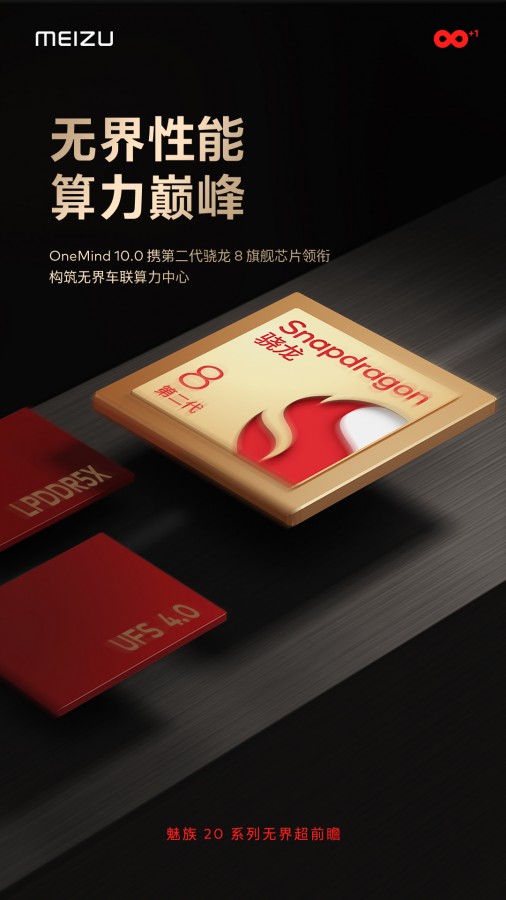
The Redmi K60 Pro is confirmed to feature the Snapdragon 8 Gen 2 mobile platform. As can be seen in the poster below, the K60 Pro will be equipped with 16GB of LPDDR5x RAM and 512GB of UFS 4.0 storage.

Hence, it appears that the K60 Pro will offer topnotch performance like other flagship phones such as the Xiaomi 13 series, iQOO 11 series, Moto X40, and OnePlus 11, which are also equipped with SD8G2, LPDDR5x RAM, and UFS 4.0 storage.

The company revealed that the K60 Pro has recorded the highest-ever score of 1,350,526 points on AnTuTu benchmarks. On Geekbench 5, it scored 1462 in the single-core test and 5038 in the multi-core test. The 12 GB RAM variant of the device was benchmarked on the K60 Pro.

The K60 Pro is also confirmed to house a 5,000mm2 vapor-chamber liquid cooling area, which is made out of stainless steel material. The company says that the K60 Pro is so powerful that there is no need for a gaming phone. Hence, the company will be launching the K60 Pro instead of the K60 Gaming.

Other reports have claimed that it will have an OLED panel that offers a 2K resolution and a 120Hz refresh rate. It may feature a 50-megapixel primary camera on the back. The device may house a 5,000mAh battery with 67W fast charging.

RELATED:

Samsung Develops Industry’s First 12nm-Class DDR5 DRAM

Samsung Electronics has developed an industry-first 12nm-class DDR5 dynamic random access memory (DRAM) in collaboration with Advanced Micro Devices (AMD). This new DRAM is set to begin mass production in 2023 and is expected to advance the capabilities of next-generation computing, data centers, and artificial intelligence (AI) applications with its exceptional performance and greater power efficiency.

Samsung’s 12nm DDR5 DRAM to advance data centers and AI applications

The 16GB DDR5 DRAM was made possible through the use of innovative technology, including a new high-κ material that increases cell capacitance and proprietary design technology that improves critical circuit characteristics. This, combined with advanced multi-layer extreme ultraviolet (EUV) lithography, has resulted in the industry’s highest die density, enabling a 20% gain in wafer productivity.

Samsung 12nm-Class DDR5 DRAM

Leveraging the latest DDR5 standard, Samsung’s 12nm-class DRAM will offer speeds of up to 7.2 gigabits per second (Gbps), allowing it to process two 30 gigabyte (GB) ultra-high definition (UHD) movies in just one second. In addition to its impressive speed, the new DRAM is also notable for its power efficiency. It consumes up to 23% less power than previous DRAMs, making it an ideal solution for global IT companies seeking more environmentally friendly operations.

“Our 12nm-range DRAM will be a key enabler in driving market-wide adoption of DDR5 DRAM,” said Jooyoung Lee, Executive Vice President of DRAM Product & Technology at Samsung Electronics. “With exceptional performance and power efficiency, we expect our new DRAM to serve as the foundation for more sustainable operations in areas such as next-generation computing, data centers, and AI-driven systems.”

The development of the 12nm-class DDR5 DRAM was made possible through close collaboration with industry partner AMD. “We are thrilled to once again collaborate with Samsung, particularly on introducing DDR5 memory products that are optimized and validated on ‘Zen’ platforms,” said Joe Macri, Senior VP, Corporate Fellow, and Client, Compute and Graphics CTO at AMD.

With mass production set to begin in 2023, Samsung plans to broaden its DRAM lineup built on this cutting-edge 12nm-class process technology into a wide range of market segments. The company will continue to work with industry partners to support the rapid expansion of next-generation computing.

Related

(source)

ZMI denies rumors of mass lay offs and ceasing its operations

ZMI has just offered an official statement to clarify the ongoing rumors that have claimed that it will be ceasing its operations. The company denied these rumors and said that it will continue to operate under the ZMI brand.

Looking at the official statement, the Chinese brand has stated that the ZMI brand will continue to exist and develop new products. Furthermore, it said that any remarks or rumors that hint at the brand suspending its operations is false. The company also added that it will continue to provide all of its loyal customers with high value and high quality products along with long term stable after sales services.

ZMI

This statement was shared on Weibo (a Chinese microblogging website) where it thanked its fans for their concern and hoped that future rumors will not be believed. For those unaware, there were some rumors online that were being shared that claimed that the company has seen a massive restructuring following an acquisition. Reportedly, the brand had been purchased by Xiaomi Corp and the turn over had ZMI lay off around 80 percent of its staff.

The rumor also claimed that there were only some technicians left who were then merged into Xiaomi’s smart wearable department while others were incorporated into the various other departments in the Chinese tech giant. So stick around for more as we will be providing updates when additional information is available regarding this matter.

RELATED:

(Via)

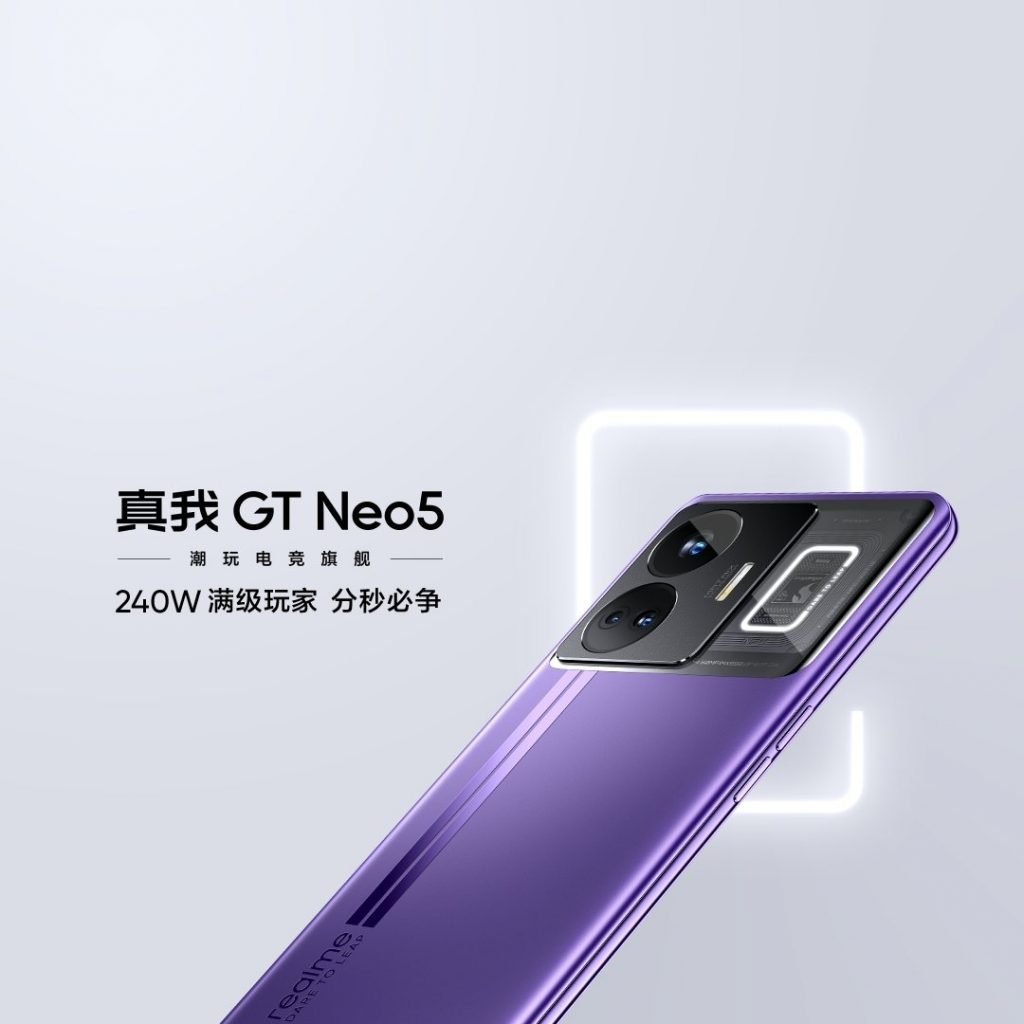
Realme 240W Charger Surfaces Online, Expected to Debut on the GT Neo 5

Realme’s fastest charging technology maxes out at 150W. It is found on the Realme GT Neo 3. Now, the brand is aiming to introduce a new charging technology that will take the speed further. It is expected to debut on the upcoming Realme GT Neo 5. Reliable tipster Ice Universe has shared some details about the Realme 240W charger on the microblogging platform Weibo. 

Ice Universe says that the 240W charger is Realme’s first mass-produced charger.  It has a model number VCKCJACH and is significantly improved compared to the 150W charger. The charger is compatible with multiple protocols such as 65W PD fast charging. The tipster also shared a photo of the charger. It is seen in White colour. Despite a 160 percent increase in power delivery, the size is similar to the previous generation. 

The information shared by Ice Universe is also in line with past reports suggesting that the Realme GT Neo 5 will come equipped with 240W charging. The exact launch timeline of the smartphone remains a mystery. However, it has already been spotted in leaked renders and rumours. 

The Realme GT Neo 5 will come with a new design language compared to its predecessor. The back panel sports a dual-toned design with the camera module in Black colour and the rest in White paint job. It has an elongated rectangular island that also houses another vertical rectangular module. The latter is slightly protruding and accommodates two rings. The first one has a primary sensor whereas two lenses are seen in the second circle.

As for the core specifications, the Realme GT Neo 5 is rumoured to come with a 6.7-inch 144Hz display and an integrated fingerprint scanner. Internally, the upcoming offering will be powered by a Snapdragon 8+ Gen 1 SoC and come in 5,000 and 4,600mAh battery variants with support for 150 and 240W charging speed respectively. 

Related:

Tesla launches a $300 Cybertruck inspired wireless charger

Tesla has just launched a new product earlier today (23rd December 2022). It is a new wireless charger that has its design inspired by the ever elusive Cybertruck. So here are all the details about this product.

As per official notes, “Inspired by the angular design and metallic styling of Cybertruck.” In other words, the known electric vehicle maker has just built a wireless charger that is inspired by its Cybertruck, which hasn’t even be launched yet. This wireless charger will offer a maximum output of 15W and can charge up to three smartphones at the same time. Although it is not limited to just handsets and can even charge other devices that support Qi standard like Apple AirPods.

Tesla

Talking about its design, the Tesla charging mat can charge up to three devices on its surface. It features an angular design on that charging mat and features an aluminum housing with an alcantara surface and detachable magnetic stand that can be used for charging flat or at an angle. The device features FreePower technology from Aira that enables wireless charging to Qi compatible devices. Funnily enough, this also oddly resembles Apple AirPower, which was another multi device wireless charger.

This model was also capable of charging devices from anywhere on its charging pad surface. As of right now, the Tesla Wireless Charging Platform has been announced for a hefty price tag of just 300 US Dollars. This is by no means an affordable accessory for a simple wireless charging pad but it might interest certain enthusiasts or fans of the Tesla brand.

RELATED:

Lenovo IdeaPad Slim 5i 14 / 16 laptops with Intel Raptor Lake CPUs announced

Lenovo recently launched a bunch of laptops in its IdeaPad series. The brand also debuted the ThinkVision mini-LED monitors, a 4K Pro webcam, and a wireless keyboard and mouse combo with up to 3 months of battery life.

Just like the recently announced Ideapad Slim 5 laptops that come with AMD chips, Lenovo has also announced the laptops in a large selection of 13th-Gen Intel Raptor Lake CPU. Other than that, the rest of the specs of the laptop remains the same.

Lenovo

Raptor Lake-H processors such as the i7-13700H, i7-13620H, i5-13500H, i5-13420H, and i5-13450H are found in the top-tier IdeaPad Slim 5i laptops. Additionally, there are mid-range variants available with either an i5-1340P or i7-1360P. Lenovo offers ULV CPUs such as the i7-1355U, i5-1335U, and i5-1334U for entry-level variants. Each of the CPUs can be supplemented with up to 16 GB of LPDDR5 or LPDDR5X memory and up to 1 TB of PCIe NVMe SSD storage (only for the 14-inch variants).

Lenovo chose not to incorporate Thunderbolt 4 connectors in these models because of their thin and light design. The port selection, which includes 2x USB-C 3.2 Gen 1 (full function), 2x USB-A 3.2 Gen 1, HDMI 1.4 video out, a combination audio jack, and a miniSD card reader, is the same as those of the AMD variants. Also included is a Wi-Fi 6E + Bluetooth 5.1 card.

The 16-inch laptops, like the AMD variants, come with either a 2.5K IPS display with a 60 Hz refresh rate and 100% sRGB color gamut, or an FHD+ IPS display with a 45% NTSC color spectrum. The 14-inch laptops can be fitted with either 2.2K or FHD+ IPS panels, or an FHD+ OLED.

Chassis are available in plastic with 0.7-inch profiles or metal with 0.67-inch profiles. The 16-inch models can weigh up to 4.39 lbs, while the 14-inch versions can weigh up to 3.51 lbs. Variants of the 47, 56.6, and 75.4 Wh batteries are available.

The Intel-based IdeaPad Slim 5i laptops are expected to go on sale in April 2023, with prices for both sizes beginning at €899.

RELATED:

Upcoming Smartphones: Redmi K60 Series, iQOO Neo 7 Racing Edition, and More

Though we have reached the end of the year, smartphone releases keep happening. The next week will be the last week of 2022 but still, companies have scheduled phone launches.

Four brands have confirmed to debut new handsets in the coming days. These companies are Honor, Red Magic, iQOO, and Redmi

Interestingly, all of them are set to introduce devices with high-end chipsets. These phones either fall under flagship killer or gaming categories.

Now, as we are done with the basic introduction, let’s go through all the handsets that are planned to go official in the next few days.

Upcoming Smartphones Next Week

1. Red Magic 8 Pro Series

Red Magic 8 Pro Series

The Red Magic 8 Pro series is scheduled to launch in China on December 26 (Monday). The conference will start at 3 PM GMT+8 and will be live-streamed on Weibo and other popular Chinese platforms.

The lineup will consist of two models, namely Red Magic 8 Pro and Redmi Magic 8 Pro Plus. The handsets will be almost identical with a few differences.

For instance, the Pro and Pro Plus are expected to house 5,000mAh and 6,000mAh batteries, respectively. The former is said to be limited to 120W charging, while the latter will support up to 165W charging.

These phones are anticipated to come with a 6.8-inch 120Hz OLED display with an under-screen camera, Qualcomm Snapdragon 8 Gen 2 SoC, liquid cooling system, cooling fan, RGB lights, 50MP primary camera, up to 1TB storage, and more.

2. Honor 80 GT

Honor 80 GT

The Honor 80 GT is set to launch in China on December 26 (Monday). The event will begin at 7:30 PM GMT+8 and it will be live-streamed on multiple Chinese platforms, including Weibo. The smartphone will be accompanied by a premium tablet called Honor Pad V8 Pro.

According to teasers and leaks, the Honor 80 GT will feature a centered punch-hole OLED display with a 120Hz refresh rate. It will be powered by a Qualcomm Snapdragon 8 Plus Gen 1 chipset paired with a VC cooling system.

The device will arrive with a plastic frame, a 54MP Sony IMX800 primary camera, 66W fast wired charging support, and Android 13-based MagicOS 7.0.

3. Redmi K60 Series

Redmi K60 Pro

The Redmi K60 series will be unveiled on December 27 (Tuesday) in China. The launch conference will start at 7 PM GMT+8 and will be live-streamed on Weibo and leading Chinese video streaming platforms.

As per leaks and teasers, the series will comprise three models, namely Redmi K60E, Redmi K60, and Redmi K60 Pro. They will be powered by Dimensity 8200, Snapdragon 8 Plus Gen 1, and Snapdragon 8 Gen 2 chips, respectively.

All three phones will sport an OLED display with a high refresh rate. The K60E will boot MIUI 13 based on Android 12, while the K60 and K60 Pro will ship with the latest MIUI 14 based on Android 13.

Last but not least, the Redmi K60 is expected to release as Poco F5 in global markets.

4. iQOO Neo 7 Racing Edition

iQOO-Neo-7-Racing-Edition
iQOO Neo 7 Racing Edition

The iQOO Neo 7 Racing Edition will be made official on December 29 in China. Its launch live stream will begin at 7 PM GMT+8 on popular Chinese video streaming platforms.

Thanks to leaks and official teasers, we know a lot about this forthcoming device. First and foremost, it will come powered by a Qualcomm Snapdragon 8 Plus SoC.

Further, it will feature a 6.78-inch 120Hz FHD+ OLED display, a 50MP + 8MP + 2MP triple camera system, a 16MP front-facing camera, an in-screen fingerprint sensor, and an IR blaster.

The handset will boot Android 13-based OriginOS. Finally, it will be backed by a 5,000mAh battery with support for 120W fast wired charging.

RELATED:

Redmi K60 Pro appears on Geekbench with Snapdragon 8 Gen 2 SoC – Check performance

Earlier today, Redmi confirmed that the Redmi K60 series will be launching on December 27. Alongside the launch date confirmation, the brand has also revealed the design of one of the smartphones in the series.

Redmi K60 series first look-
Redmi K60 series first look

Now, the Redmi K60 Pro has appeared on Geekbench revealing its performance, while simultaneously confirming some of its specs. Notably, the brand revealed the AnTuTu results of the smartphone today, revealing an impressive score of 1.35 Million.

Geekbench has the device listed with model number 22127RK46C, which we know to be the Redmi K60 Pro. According to the listing, the phone will be powered by a Qualcomm Snapdragon SoC with the “Kalama” motherboard. It has an octa-core processor with a 3.19GHz maximum clock speed. The SoC also includes three efficiency cores running at 2.02GHz and four performance cores clocked at 2.8GHz. This is none other than the latest Snapdragon 8 Gen 2 chip.

Redmi

The phone will arrive with 12GB of RAM, according to the listing. Xiaomi should introduce the phone with additional RAM and storage choices. It is also revealed that Android 13 will be pre-installed on the handset. It should have MIUI 14 on top of it.

The phone’s single-core and multi-core tests are also included in the Geekbench listing. In the single-core and multi-core tests, it received 1462 and 5038 respectively. This result is on par with other flagships launching with the new chip, meaning that we can expect top-tier performance from the mid-ranger.

Redmi K60 Pro specifications

The Redmi K60 Pro will include an OLED display with a 2K resolution and 120Hz refresh rate. The LPDDR5x RAM and UFS 4.0 storage will be included with the Snapdragon 8 Gen 2-powered phone. It will have a 5,000mAh battery and support 30W wireless charging in addition to 67W rapid charging.

The device will come preinstalled with an Android 13 OS based on MIUI 14. It might have a 50-megapixel Sony IMX890 primary camera for photography. It will have a fingerprint scanner embedded in the display.

The Dimensity 8200 will undoubtedly be found in the Redmi K60e. Most likely, the Snapdragon 8+ Gen 1 will be found in the K60. In areas outside of China, it’s possible that the K60 will be a rebranded POCO F5 5G.

RELATED:

(Via)

Reliance Jio Launches New INR 749 Prepaid Plan in India

Online, there are solid rumours that Bharti Airtel and Reliance Jio’s tariff plans may increase its price. According to reports, prices will increase in 2023, presumably as a result of the country’s recent adoption of 5G network technology. Anyway, in the midst of all of this, Reliance Jio has unexpectedly introduced a new INR 749 prepaid plan across the nation. The new plan, which offers up to 90 days of validity, is available to all prepaid customers nationwide.

Reliance Jio

The new plan offers 180GB of total internet access, or up to 2GB each day, for the duration of the service. The plan also includes access to Jio apps like JioTV, JioCinema, JioCloud, and JioSecurity, as well as unlimited phone and SMS services. The plan will be valid for 90 days after the activation or recharge date. In essence, the telecom provider took its current INR 719 plan and increased its validity to 90 days; as a result, the cost increased to INR 749. The recently unveiled plan appears to be relatively cost-effective.

So that’s all there is to say about Reliance Jio’s recently unveiled prepaid plan. The plan is now active in the country, and customers can recharge their phone numbers with the brand-new plan through any authorised partner or store. Depending on the telecom operator, the new plan will be activated after recharging in a matter of seconds or it may take a little longer. What do you think of the new plan? Please tell us in the comments section.

Related

Nubia Z50 Smartphone Goes On Sale In China; Price Starts At 2,999 Yuan ($430)

A few days ago, ZTE-backed Nubia announced its new Z-series smartphone — Nubia Z50 and soon after that, the company also started taking pre-orders for the device in China.

Now, the Nubia Z50 smartphone is officially available for purchase in the Chinese market. Those who pre-ordered the smartphone will get a one-year extended warranty, six months of broken screen insurance, and unlimited battery replacement for one year.

Nubia Z50

The base model of the Nubia Z50 with 8GB RAM and 128GB storage is priced at 2,999 yuan (~$430), while the 8GB RAM and 256GB storage model cost 3,399 yuan (~$487). The 12GB RAM and 256GB model has a price tag of 3,699 yuan (~$530), while the 12GB RAM and 512GB storage model is priced at 3,999 yuan (~$573).

There’s also a top-end model in the lineup with 16GB of RAM and 1TB of internal storage that carries a price tag of 5,999 yuan, which roughly converts to $859. It smartphone is being offered in three color options — White, Black, and Green Leather.

As for the specifications, the Nubia Z50 features a 6.67-inch curved AMOLED Full HD+ display with a screen resolution of 2400 x 1080 pixels, 10-bit color depth, and up to a 144Hz refresh rate. Under the hood, it is powered by the Qualcomm Snapdragon 8 Gen 2 processor, coupled with LPDDR5x RAM and UFS 4.0 storage.

In the camera department, there’s a dual-camera setup on the back that features a 64-megapixel Sony IMX787 primary camera sensor with f/1.6 aperture and OIS support and a 50-megapixel Samsung S5KJN1 sensor with a 116° ultra-wide lens and autofocus support for macro shots. On the front side, the phone features a 16-megapixel snapper for taking selfies and video calling.

The smartphone runs the Android 13 operating system out-of-the-box with the company’s own MyOS 13 custom interface on top. It is powered by a 5,000mAh battery with support for 80W fast charging.

RELATED:

Google Pixel roadmap leaks revealing company’s upcoming phones until 2025

Google has finally started picking up some steam with its recent Pixel smartphones. Although it was a buggy mess, the Pixel 6 series became the most-sold smartphone by the brand. And from the looks of it, the Pixel 7 series will likely overtake it soon.

Google

Leaks have already surfaced regarding the Pixel 7a and Pixel 8 series, however, Android authority has just dropped the mother of all leaks in a report that reveals all the smartphones Google has planned to launch from 2023 to 2025.

Pixel 7a render

Starting off in 2023, Google is said to launch the Pixel 7a (codename “lynx”) and the Pixel Fold (codename “felix”) at the Google I/O in the month of April or May. The Pixel 7a is a highly anticipated mid-range smartphone that is rumored to improve on the shortcomings of the Pixel 6a (90hz display instead of 60). On the topic of the Pixel 6a, the smartphone has beaten the Pixel 7 Pro as well as the iPhone 14 Pro to win the best smartphone camera in MKBHD’s blind camera test.

Google Pixel Fold render

Later in 2023, Google will launch the Pixel 8 series. The vanilla model will be slightly smaller than the Pixel 7, while the Pixel 8 Pro will be the same size as the Pixel 7 Pro. Other than new Tensor G3 chipsets, the Pixel 8 series is expected to be quite similar to the Pixel 7 series in terms of specs.

The Pixel 8a is scheduled to launch in 2024, however, depending on how well the Pixel 7a sells, that plan may be abandoned in favor of a Pixel a series launch cycle every two years. Expect the Pixel 8a to cost $499 when it finally launches, $50 more than its predecessor.

Google

Three models will make up the Pixel 9 series: the Pixel 9 (which is anticipated to maintain the smaller size of the Pixel 8), the Pixel 9 Pro (with a screen about 6.7″ in size), and a third Pro-level model with a 6.3″ screen and all the features of the larger Pro. The premise is that Google will imitate Apple; consider the new 6.3-inch phone to be the company’s iPhone Pro, while the 6.7-inch model is the Pro Max. Of course, the Tensor G4 SoC will be included in all three of these new devices.

In 2024, there will also be a brand-new foldable, albeit little is currently known about it.

Depending on how effective (or unsuccessful) its strategy for 2023 and 2024 proves to be, the corporation may choose other paths for 2025. If the flip-style foldable Google is “toying” with becomes a reality, it will debut in the fall of 2025 alongside the three slab Pixels of that year (there will still be three of them like in 2024).

If the flip phone doesn’t materialize, though, we’ll see four non-folding Pixels instead, including a standard model in small and large sizes and a Pro variant in both sizes. 

All of this info, it is said, has undergone a rigorous review and comes from a reliable source.

RELATED:

Oppo Reno 9, 9 Pro, Find N2 Flip Coming Soon to India, Here’s the Leaked Launch Timeframe

In November this year, the Oppo Reno 9 series made its debut in China, and this month saw the arrival of the Find N2 and Find N2 Flip foldable phones in the home market. A recent leak claimed that the Find N2 Flip will be released on the global market in 2023. A new report by Pricebaba has revealed the launch timeframe of the Reno 9 series as well as Find N2 Flip for the Indian market.

According to the publication, Oppo has started testing the Reno 9, Reno 9 Pro, and Find N2 Flip in India. The report also states that the three devices should make their debut in India by the end of Q1.

OPPO Reno 9
OPPO Reno 9

Unfortunately, the report does not say anything about the specifications of the Reno 9, 9 Pro, and N2 Flip for the Indian market. The specifications of their Chinese editions are known since they are already available for purchase in China.

OPPO Reno 9 Pro
OPPO Reno 9 Pro

The Reno 9 series has the Reno 9 Pro+, which is powered by the low-frequency version of the Snapdragon 8+ Gen 1. At present, there is no evidence on whether the Reno 9 Pro+ as well as the Find N2 will be made available in markets outside of China.

The Reno 8 featured the Dimensity 1300, while the Reno 9 is equipped with the Snapdragon 778G. We found it be a boring phone as it offers little to no upgrades over the Reno 8. Hence, it remains to be seen whether the same device will be heading to India.

OPPO Find N2 Flip

Samsung is the only brand offering a clamshell phone with a foldable display in markets outside of China. The Huawei P50 Pocket flip phone with foldable screen is also available outside of China. However, its availability is limited to Europe. Hence, the OPPO Find N2 Flip, which is expected to get a wider release, will be a major rival for the Galaxy Z Flip 4 or the Galaxy Z Flip 5, which is expected to release in August 2023. The N2 Flip is likely to be priced lower than Samsung’s Z Flip.

RELATED:

(source)

Redmi K60 Pro with Snapdragon 8 Gen 2 Scores 1.35 Million on AnTuTu, Redmi K60 Gaming Officially Cancelled

Redmi has officially confirmed today that the Redmi K60 series will debut on Dec. 27. It also revealed that the Redmi K60 Pro will be equipped with the Snapdragon 8 Gen 2 mobile platform. In addition, the company also confirmed that there will be no “e-sports edition” in the K60 family. In other words, the company will not be launching the rumored gaming-focused Redmi K60 Gaming in 2023.

Redmi said that the K60 Pro with Snapdragon 8 Gen 2 onboard will not only come equipped with a flagship configuration but also with e-sports performance. The company added that it will offer ruthless performance and will be stacked against other flagship phones launching in 2023.

Redmi says that the Redmi K60 Pro’s image quality and frame quality will be better than those of gaming phones because it has a self-developed tuning engine. It will also offer a richer flagship performance. The company confirmed that the K60 Pro scored 1,350,526 points on AnTuTu benchmarks.

Hence, there is no need for a dedicated gaming-focused smartphone. The K60 Pro will be replacing the Redmi K60 Gaming Edition. Here are the rumored specifications of the Redmi K60 Pro.

Redmi K60 Pro specifications

The Redmi K60 Pro will feature an OLED panel that offers a 2K resolution and a 120Hz refresh rate. The Snapdragon 8 Gen 2-powered phone will arrive with LPDDR5x RAM and UFS 4.0 storage. It will pack a 5,000mAh battery with 67W fast charging and 30W wireless charging.

Redmi K60 series first look-

The device will be preloaded with an MIUI 14-based Android 13 OS. For photography, it may feature a 50-megapixel Sony IMX890 primary camera. It will have an under-display fingerprint scanner.

The Redmi K60e is already confirmed to feature the Dimensity 8200. The K60 is likely to feature the Snapdragon 8+ Gen 1. There is a possibility that the K60 will be rebranded as the POCO F5 5G in markets outside of China.

RELATED: