Oppo is lining up the global Reno 17 family for markets outside China. The more affordable Oppo Reno 17F 5G is the latest to clear Thailand’s NBTC under model CPH3013, after earlier stops at India’s BIS and Indonesia’s TKDN and SDPPI platforms. That follows the standard Oppo Reno 17 5G (CPH2975), which picked up the same Thai approval last week.
A run of certifications like this usually means a launch window is closing in, even though Oppo has not shared a date or price yet.
The NBTC listing for the F model confirms the CPH3013 model number and the Oppo Reno 17F 5G name for global markets. An NBD entry dated August 28, 2026, also tips a 6.57-inch OLED panel, 12GB of RAM, and 512GB of storage for that CPH3013 unit, though chipset, cameras, and battery details are still missing.
Oppo Reno 17F
The standard Reno 17 certification similarly reveals the CPH2975 model number and the Oppo Reno 17 5G name. It had already cleared BIS, TKDN, and SDPPI before Thailand. Earlier live shots and India tips point to a Snapdragon 7 Gen 4 setup, a battery around 7,000mAh, and a 50-megapixel triple camera for that market, with a China series debut still talked about for November and ColorOS 17 on board. The Reno 17 Pro specs leak fills in the higher tier, while the F phone should sit where the Reno 16F did in last year’s global stack.
As per reports, Oppo will unveil the Reno 17 series in China in November. It is expected to face competition from the Vivo S70 series and Honor 700 series in the home market. With multiple certifications for the global Reno 17 and Reno 17F already, it may launch in quick succession after the China launch. So the global launch could be by December this year or early January 2027.
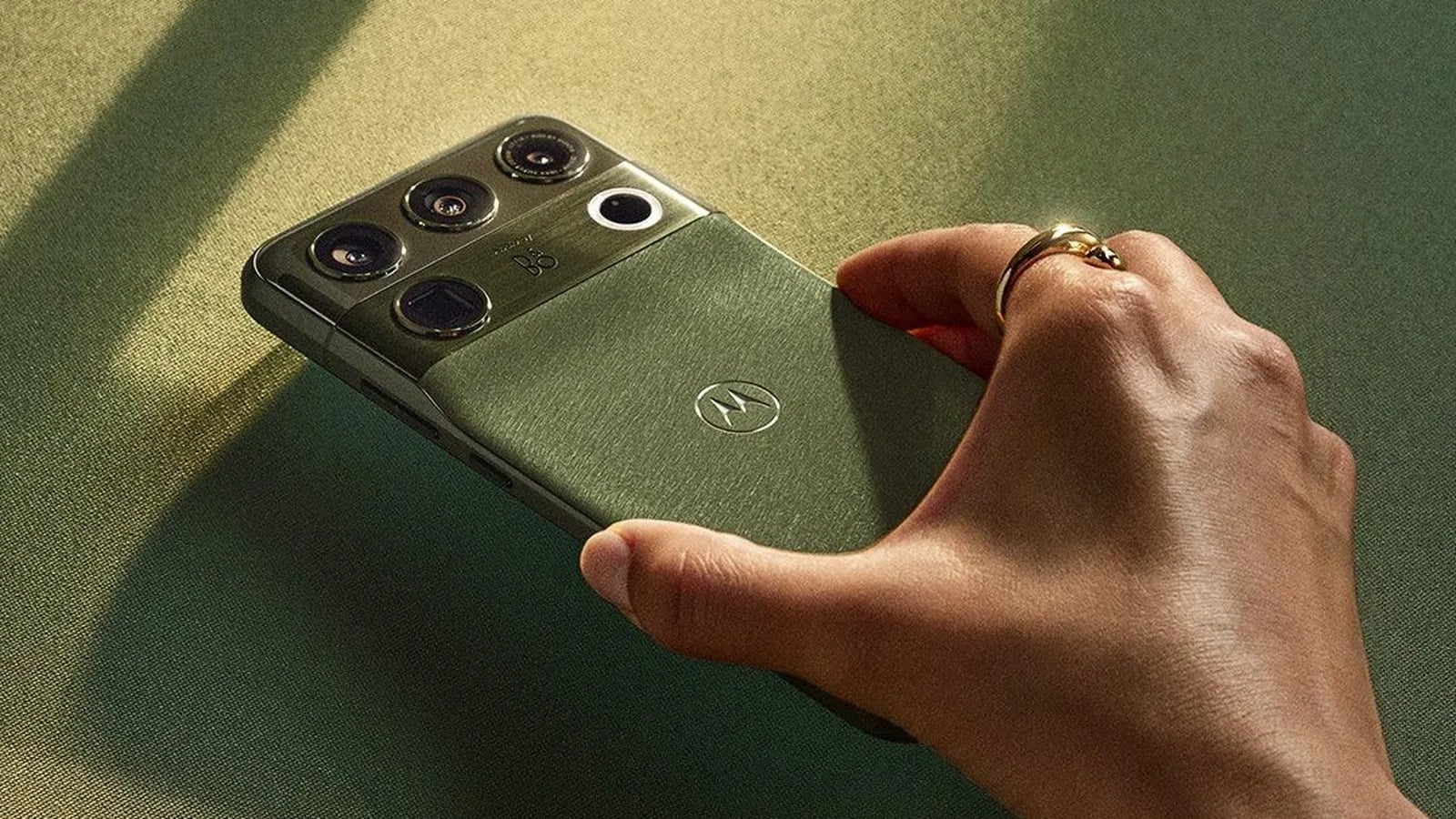
Motorola has locked in November 5 as the launch date for the Motorola Signature 27, ending weeks of “coming this November” teasers. A post on Motorola’s official X account says the phone is “elegantly crafted for comfort” and invites fans to “see for yourself on November 5.” The news lands just as a Geekbench listing has also surfaced key performance details for the upcoming flagship.
Motorola Signature 27
Until now, Motorola’s India microsite and US pages only pointed to a November window, with no exact day. With one week to go, full specs and pricing should follow soon at the event.
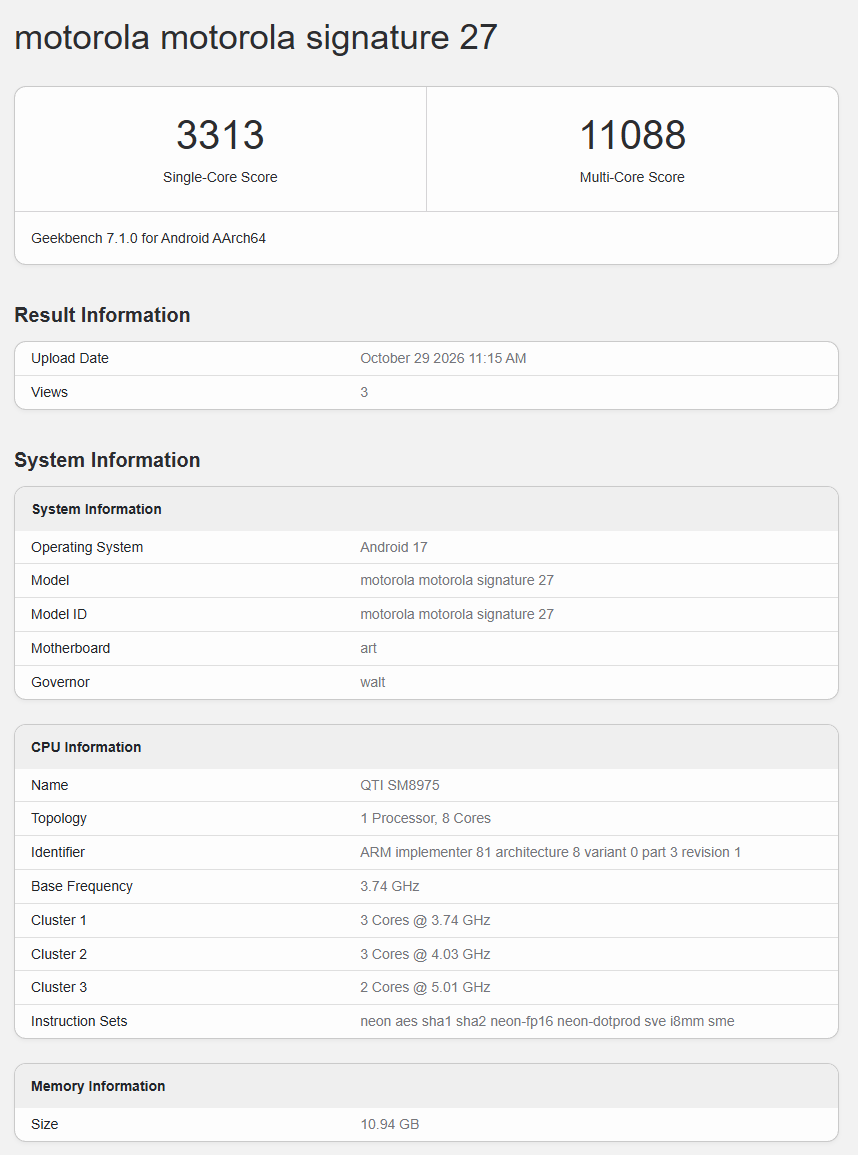
On Geekbench 7, the Signature 27 achieved 3,313 in single-core and 11,088 in multi-core tests. The unit ran Android 17, used a motherboard labeled “art,” and showed about 10.94GB of RAM, pointing to a 12GB configuration. Because this looks like a pre-launch build, final retail scores could still move.
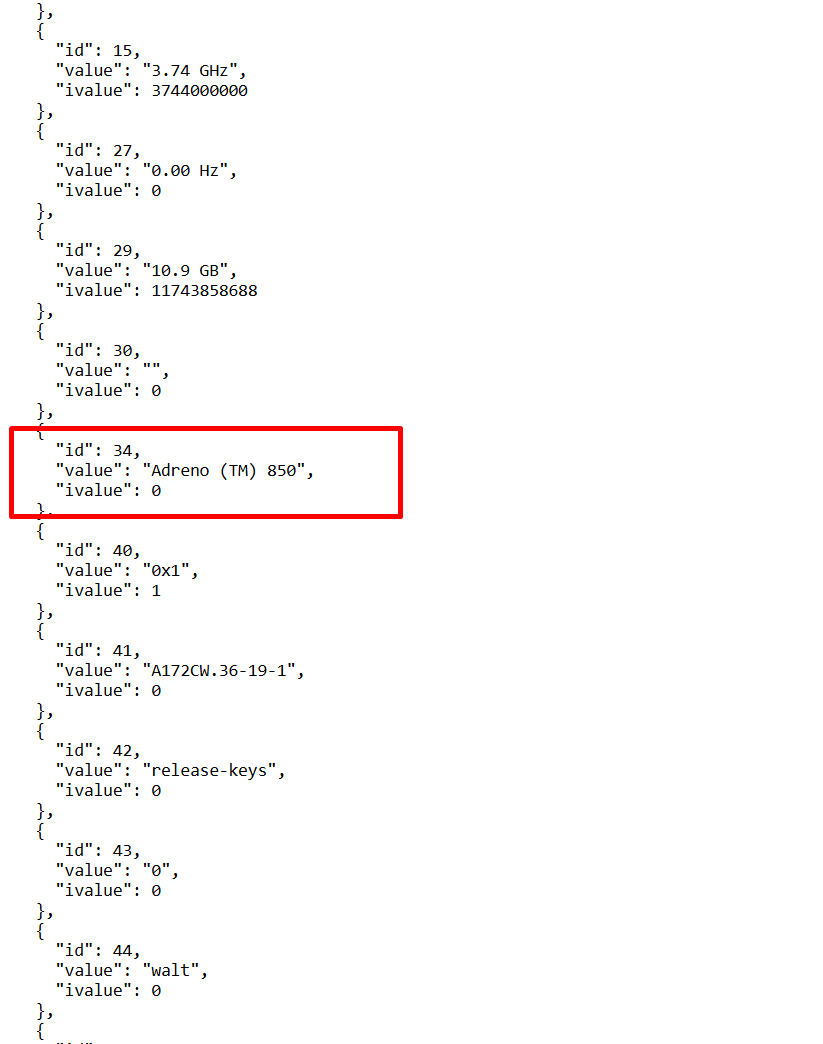
Geekbench names the chip QTI SM8975, an octa-core part with cores at 3.74GHz, 4.03GHz, and 5.01GHz, plus an Adreno 850 GPU and software build A172CW.36-19-1. That lines up with Motorola’s confirmed Snapdragon 8 Elite Extreme Gen 6 pairing and ArcticMesh cooling.
As far as other specs are confirmed, the brand has already revealed that Signature 27 is equipped with a 50-megapixel Sony LYTIA 910 main camera, a 200-megapixel periscope with up to 100x Super Zoom, Audio by Bang & Olufsen, PANTONE Coal Smoke and Capulet Olive finishes, and seven years of OS upgrades.
Motorola still hasn’t shared the Signature 27’s price. A European retailer earlier listed a 12GB + 512GB Coal Smoke unit at €1,594.90 (~$1,735), but that is not official, so expect clearer numbers on November 5.
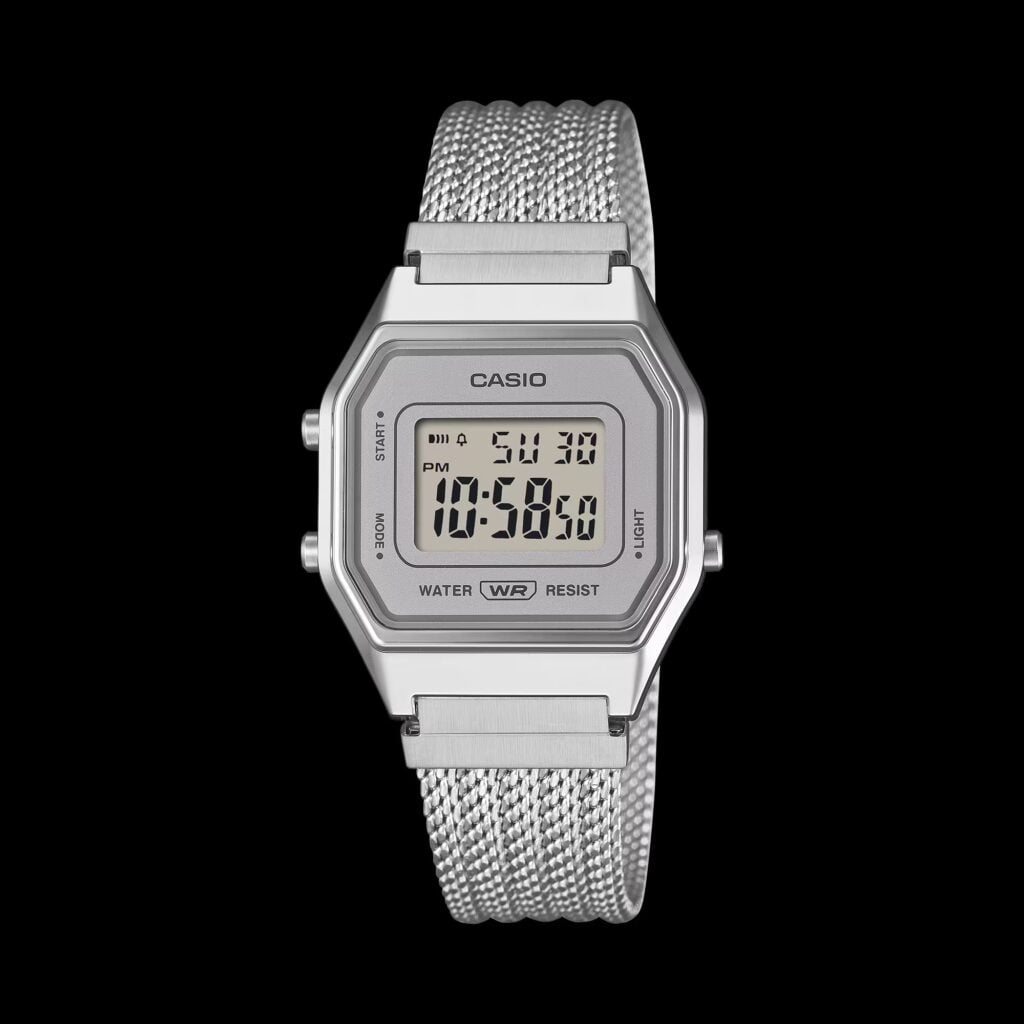
Casio has released two new digital watches in the US market as part of its Vintage collection: the LA680WEM-7A and the LA680WEMG-9A. Both models are currently available for purchase directly through Casio’s US website.
Design Details & Pricing
The watches come with stainless steel mesh bands featuring a pressed, striped pattern that adds texture to their design. They also feature self-adjustable clasps that fit wrist sizes ranging from 125 to 185 mm.
The watch case retains Casio’s standard octagonal shape. It is a relatively small watch, measuring 33.5 x 28.6 x 8.6 mm, and the entire unit weighs 38 grams. The digital display is covered by basic resin glass.
The difference between the two models comes down to the color finish and the price. The LA680WEM-7A has a chrome-plated resin case and a silver-tone stainless steel mesh band. It costs $69.95. The LA680WEMG-9A features a gold-tone resin case and a gold ion-plated mesh band, which brings the price to $99.95.
Functionally, these watches carry the standard set of features found in Casio’s basic digital lineup. The LCD screen shows the time, date, and day of the week, and users can toggle between 12-hour and 24-hour formats. There is an amber LED backlight for checking the time in the dark.
The watches also come with a 1/100-second stopwatch that tracks elapsed time, split time, and first- and second-place finishes. They feature a daily alarm, an hourly time signal, basic water resistance, and an auto-calendar set to a 28-day February. Casio rates their timekeeping accuracy at ±30 seconds per month.
Both watches run on a single CR1616 coin-cell battery. According to Casio’s spec sheet, the battery will last for approximately five years before it needs to be replaced.
Casio has released two new versions of its older watch models in the US. The AQ-230EMG-9A and the A158WEMG-9 are now available on the company’s website, updating the standard designs with a new gold-tone mesh band.
The main change for both watches is the strap. Instead of the usual folded-link metal bands that come with Casio’s basic retro models, these two feature a woven stainless steel mesh band with gold ion plating. According to Casio, the mesh is pressed to give it a slightly wavy texture.
The band also has a self-adjustable clasp, which lets you change the fit for wrists measuring between 150 and 205 mm without needing to take it to a jeweler or use pin-removal tools. The watch cases themselves are made of resin treated with a gold tone to match the band, and they use standard resin glass over the display.
The A158WEMG-9 costs $99.95 and keeps the standard digital layout of the A158 series. It measures 36.8 x 33.2 x 8.5 mm and weighs 52 grams. It includes the usual digital watch features: a 1/100-second stopwatch, a daily alarm, an hourly time signal, and an auto-calendar. It also has a green LED backlight. It runs on a CR2016 battery, which has an estimated life of about seven years.
The AQ-230EMG-9A is priced at $110.00 and uses an analog-digital hybrid display. The case is a bit taller and narrower, measuring 38.8 x 29.8 x 8.1 mm, but it weighs the same 52 grams. Because it has analog hands, this model includes a dual time feature along with the digital stopwatch and alarm. The battery life is shorter on this model, rated at roughly three years on an SR920W battery.
Both watches have basic water resistance, meaning they can handle rain or washing your hands, but they aren’t meant for swimming. They both have a stated accuracy of ±30 seconds per month. You can buy both models now directly from Casio’s US online store.
Casio has listed the new CMK100 series on its US website, bringing a lineup of automatic field watches to the market. This release is a straightforward take on traditional mechanical watchmaking, focusing on standard utility and titanium hardware.
Design Details and Pricing
The watches are built around a 38mm titanium case. They measure 11.4mm thick with a 44.7mm lug-to-lug distance, which aligns with the standard, more compact sizing typical of field watches. Because titanium is naturally prone to scratching, Casio has applied a titanium carbide (TiC) coating to the case to improve abrasion resistance.
The display is protected by sapphire crystal. For water protection, the watches feature a screw-lock crown with a knurled finish and a screw-lock case back, giving the series a 100-meter water resistance rating. The case design also includes a wide, flat-top bezel.
Inside, the CMK100 series uses a Japanese-made automatic movement that includes magnetic resistance. The movement operates at 21,600 vibrations per hour, uses 21 jewels, and holds a 42-hour power reserve. It supports both manual winding and a hacking seconds function.
Casio rates the accuracy between -20 and +40 seconds per day. The dial features a textured background, a standard date display, and large Arabic numerals coated in multiple layers of phosphorescent paint to make them visible in low-light conditions.
Casio is releasing five variations of the CMK100, which differ by bezel treatment and strap options. The base model is the CMK100TC-1A at $330, which features a standard TiC bezel and comes with both a nylon cloth band and a vegetable-tanned leather band sourced from Italy.
The CMK100TCC-8A ($350) includes the same two bands but swaps in a gray ion-plated bezel. The CMK100TL-1A ($350) has a standard TiC bezel but ships only with the leather band, while the CMK100TCL-5A ($375) pairs the leather band with a rose gold ion-plated bezel.
The CMK100TD-1A ($440) replaces the fabric and leather straps with a solid titanium bracelet featuring a one-touch three-fold clasp. The models on straps weigh between 54 and 55 grams, while the titanium bracelet version weighs 98 grams. All five models are currently visible on Casio’s US storefront.
ZTE has launched the Xuntian BE3600 Qingyun Edition, a new Wi-Fi 7 router currently available on JD.com in China. The device is priced at an introductory rate of 199 yuan (about $30) and will eventually retail for 249 yuan (around $37).
ZTE Xuntian BE3600 Qingyun Edition Specs
The router is the first in ZTE’s Xuntian lineup to use a vertical orientation. Its exterior is textured with a wave pattern meant to resemble traditional Chinese bamboo slips. ZTE opted for an ink-free manufacturing process for the chassis, using engraved markings instead of printed labels to reduce environmental impact.
Inside, the BE3600 runs on ZTE’s fourth-generation chipset. The processor uses a six-core architecture that pairs a dual-core CPU with a quad-core NPU. Instead of integrating the 2.4GHz Wi-Fi into the main processor, ZTE included a separate Wi-Fi chip to handle wireless data processing.
The router supports the Wi-Fi 7 standard across 2.4GHz and 5GHz bands, with ZTE stating a combined theoretical speed of up to 3.57Gbps. It also supports 4K QAM modulation and Multi-Link Operation (MLO). MLO allows compatible devices to connect to multiple frequency bands simultaneously to maintain a steadier connection.
For wired connections, the device has three 1000Mbps Gigabit Ethernet ports. It supports dual WAN configurations, which lets users plug in two separate broadband lines at the same time. This can be used for load balancing to manage network traffic or as a failover connection if one line goes down. It also supports IPTV single-cable multiplexing, meaning internet and television signals can share one Ethernet cable.
The router supports network management through the ZTE Smart Life app, which features an AI-powered visual planning tool. It allows users to generate a floor plan, check Wi-Fi coverage throughout their homes, and find the best location for the router. It also comes with parental controls that let users schedule internet access and remotely disconnect specific devices from the network.
For larger spaces, the BE3600 supports mesh networking with compatible ZTE models and can function as an access point with third-party routers. ZTE says the hardware went through 40,000 hours of stability testing and 100,000 flash memory read/write cycles before launch. The router supports both IPv4 and IPv6 protocols.
In related news, ZTE has recently launched the G5 Max 5G CPE with Wi-Fi 7, Snapdragon X75, and an IP65-rated outdoor design, alongside a new 5G mobile router with Wi-Fi 7 and dual 2.5G Ethernet ports.
For more daily updates, please visit ourNews Section.
RedMagic 12 Pro+ and iPhone 18 Pro Max target two very different types of premium smartphone buyers. One prioritizes gaming performance, aggressive charging speeds, and uninterrupted screen space, while the other focuses on versatile photography, polished software, and professional video recording. Both offer flagship-class hardware, but their differences go far beyond Android versus iOS. Choosing between them depends on whether gaming and battery endurance matter more than camera versatility and everyday refinement.
Tie — Android flexibility versus Apple’s integrated ecosystem
Rear Camera
50MP main + 50MP ultrawide
48MP main + 48MP telephoto + 48MP ultrawide
Apple — Dedicated telephoto lens and LiDAR scanner
Optical Zoom
No dedicated telephoto lens
4x optical zoom
Apple — Better optical zoom versatility
Rear Video
Up to 8K at 30fps
Up to 4K at 120fps, Dolby Vision HDR, ProRes RAW
Apple — More advanced professional video tools
Selfie Camera
16MP under-display
18MP ultrawide with autofocus
Apple — Autofocus and 4K video recording
Battery
8400mAh
5391mAh or 5567mAh, depending on version
RedMagic — Significantly higher battery capacity
Wired Charging
120W
50% in 15 minutes, claimed
RedMagic — Higher charging power
Wireless Charging
80W
25W MagSafe/Qi2
RedMagic — Faster rated wireless charging
Reverse Charging
22.5W wired
4.5W wired
RedMagic — Higher reverse charging output
Speakers
Stereo, Dolby Atmos, Hi-Res audio
Stereo speakers
RedMagic — Adds Dolby Atmos and Hi-Res audio support
Connectivity
Wi-Fi 7, Bluetooth 6.0, NFC, infrared
Wi-Fi 7, Bluetooth 6.0, NFC, UWB, satellite features
Apple — Adds UWB and satellite-based emergency features
Biometrics
Ultrasonic in-display fingerprint sensor
Face ID
Tie — Fingerprint convenience versus facial authentication
Price
Around $1,000 / ₹1,00,000
Around $1,300 / ₹1,80,000
RedMagic — Lower approximate price with gaming-focused hardware
Overall
Gaming-focused flagship
Premium all-round flagship
Apple — More versatile cameras and professional video capabilities
Disclaimer: Specs are based on available data. Actual performance may vary. Verify details from official sources before buying.
2. Design and Display
Build and Feel
The RedMagic 12 Pro+ combines Gorilla Glass 7i protection with an aviation-grade aluminum frame and a built-in cooling fan. Its pressure-sensitive gaming zones provide additional control during competitive sessions, making the phone feel purpose-built for dedicated players. IP68/IP69 protection adds reassurance against dust and water, although the fan’s presence makes its overall construction more specialized than conventional flagships.
The iPhone 18 Pro Max adopts a more understated premium design, combining Ceramic Shield 2 protection with an aluminum frame and a glass back. Its IP68 rating supports water resistance at greater specified depths. The cleaner aesthetic and familiar iOS experience make it a more conventional everyday companion, while the RedMagic’s gaming-focused design stands out for enthusiasts.
Display Quality
The RedMagic features a 6.85-inch AMOLED display with a 185Hz refresh rate, a 2688 × 1216 resolution, and a claimed peak brightness of 5,000 nits. Its exceptionally high refresh rate gives competitive games a potential smoothness advantage, while the uninterrupted viewing area benefits immersive gameplay.
The iPhone’s 6.9-inch LTPO Super Retina XDR OLED panel supports 120Hz refresh, HDR10, Dolby Vision, and a claimed peak brightness of 3,000 nits. Its anti-reflective coating and higher pixel density support a refined viewing experience. Dolby Vision also strengthens its appeal for premium video consumption.
Verdict
The RedMagic 12 Pro+ wins for gaming thanks to its 185Hz panel and specialized controls. The iPhone 18 Pro Max offers a more balanced display experience for everyday use, streaming, and HDR content.
3. Specifications Including Battery
Performance
The RedMagic 12 Pro+ runs Android 17 with RedMagic OS 12 and uses Qualcomm’s Snapdragon 8 Elite Extreme Gen 6 chipset, paired with an Adreno 850 GPU. Configurations offer up to 16GB of RAM and 1TB of UFS 4.1 Pro storage. Its integrated cooling fan helps manage sustained gaming workloads, giving performance-focused users an advantage during extended sessions.
The iPhone 18 Pro Max features Apple’s A20 Pro chipset, a seven-core Apple GPU, and 12GB of RAM across its listed storage configurations. Its NVMe storage and close integration between hardware and iOS support demanding applications, gaming, and creative workflows. Although the RedMagic emphasizes gaming-specific hardware, the iPhone offers a more cohesive ecosystem for users already invested in Apple devices.
Battery and Charging
An 8,400mAh silicon-carbon battery gives the RedMagic 12 Pro+ a substantial capacity advantage over the iPhone’s market-dependent 5,391mAh and 5,567mAh batteries. Its 120W wired charging, 80W wireless charging, and 22.5W reverse wired charging provide considerable flexibility. These capabilities make it particularly attractive to gamers who need quick top-ups between sessions.
The iPhone supports wired charging that can reach 50% in a claimed 15 minutes, alongside 25W MagSafe/Qi2 wireless charging and 4.5W reverse wired charging. Its smaller battery does not automatically mean shorter real-world endurance, since efficiency and software optimization also matter. However, the RedMagic offers a more compelling charging package on paper.
Verdict
The RedMagic 12 Pro+ wins for battery capacity, charging speed, and sustained gaming. The iPhone 18 Pro Max remains compelling for optimized performance and Apple ecosystem integration.
4. Camera
Main and Secondary Lenses
The RedMagic 12 Pro+ uses a 50MP main camera with optical image stabilization and a 50MP ultrawide camera with autofocus. It can record video at up to 8K at 30fps, giving creators useful resolution flexibility. However, its dual-camera arrangement lacks a dedicated telephoto lens, limiting its versatility for distant subjects and portrait framing.
The iPhone 18 Pro Max offers a 48MP main camera, a 48MP periscope telephoto camera with 4x optical zoom, and a 48MP ultrawide camera. Its LiDAR scanner supports depth sensing, while advanced stabilization and computational photography expand its shooting options. Support for ProRes, ProRes RAW, Apple Log 2, and Dolby Vision HDR recording makes it better suited to serious mobile video production.
The iPhone’s dedicated telephoto hardware gives it a clear practical advantage for travel, portraits, and varied shooting conditions. The RedMagic’s high-resolution main camera and 8K recording remain useful, but resolution alone does not determine image quality.
Selfie Camera
The RedMagic features a 16MP under-display selfie camera, preserving a clean screen without a conventional camera cutout. This design suits gaming and full-screen media, although placing a camera beneath the display can involve image-quality compromises. Its front camera records video at up to 1080p at 60fps.
The iPhone’s 18MP multi-aspect ultrawide selfie camera includes autofocus and supports 4K video recording. Its additional depth and biometric hardware enables Face ID, while advanced video features benefit creators and frequent video callers. The visible camera hardware interrupts the display slightly, but the more capable imaging system is better suited to selfies, social content, and video calls.
Verdict
The iPhone 18 Pro Max wins decisively with its dedicated telephoto lens, versatile camera system, and advanced video tools. The RedMagic prioritizes gaming rather than comprehensive photography.
5. Pricing
The RedMagic 12 Pro+ is priced around $1,000 (₹1,00,000), positioning it as a premium gaming flagship with substantial battery capacity, specialized controls, and rapid charging. Its appeal rests on delivering features that directly benefit demanding mobile gamers rather than attempting to match every conventional flagship capability.
The iPhone 18 Pro Max is priced around $1,300 (₹1,80,000), placing it in a considerably higher premium segment. Its camera versatility, professional video features, Apple ecosystem integration, and refined software experience help explain the price difference. However, the substantial gap makes the RedMagic more attractive to buyers prioritizing gaming hardware over camera flexibility.
These prices are approximate, and actual retail prices may vary with storage configuration, import costs, taxes, and availability. Buyers should compare final prices for equivalent storage tiers before making a decision.
Verdict
The RedMagic 12 Pro+ wins on price and gaming-focused value. The iPhone 18 Pro Max justifies its premium for buyers who need stronger photography, video capabilities, and ecosystem integration.
Disclaimer: Prices are approximate and may vary based on country, region, launch timing, and applicable taxes. Always check whether the listed price is for a China unit or a global/international variant when purchasing.
6. Conclusion
The RedMagic 12 Pro+ distinguishes itself with a built-in cooling fan, 185Hz AMOLED display, pressure-sensitive gaming zones, and an 8,400mAh battery. Its 120W wired and 80W wireless charging also make it unusually well equipped for intensive gaming. These features are difficult to match in conventional flagship phones, particularly for players who spend hours gaming on their devices.
The iPhone 18 Pro Max counters with a dedicated periscope telephoto camera, LiDAR depth sensing, Face ID, satellite-based emergency features, and extensive professional video recording options. Its 4K Dolby Vision and ProRes RAW capabilities make it particularly attractive to creators who want advanced capture tools in a pocketable device. The Apple ecosystem further strengthens its everyday appeal.
Neither phone is universally superior. The RedMagic is more specialized, but its gaming hardware delivers tangible benefits for its intended audience. The iPhone combines photography, video, performance, and software into a more versatile package for a wider range of users.
Verdict
The iPhone 18 Pro Max is the overall winner for its superior camera versatility, professional video tools, and balanced flagship experience. The RedMagic 12 Pro+ is the better buy for dedicated mobile gamers seeking exceptional battery capacity, rapid charging, and gaming-focused hardware at a lower price.
Disclaimer: Prices, specifications, and availability may vary by region and retailer. Recommendations in this article are based on editorial opinion, feature-based value, and market positioning at the time of writing. Readers are advised to do their own research before making a purchase.
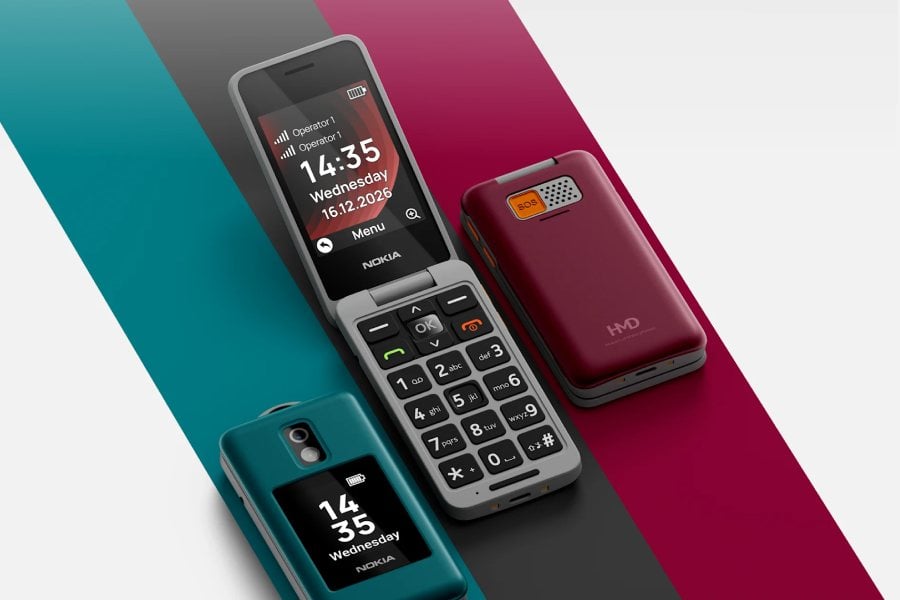
HMD has officially launched the Nokia 2360 Flip, days after announcing the HMD 2660 Flip Senior Edition. Like that phone, the new 2360 Flip is aimed at school students or seniors with its Family Assist feature that allows a relative to set it up and manage it from their own smartphone.
However, the Nokia 2360 Flip isn’t a direct follow-up to the HMD 2660 Flip. The latter supports 4G, while the Nokia 2360 Flip is a simpler device that works only on 2G GSM networks (900/1800MHz). Many carriers have switched off 2G, so whether you can use this phone depends a lot on where you live.
Set up from your own phone
You install Family Assist, which is free on Google Play and the App Store, and use it to set up the Nokia 2360 Flip remotely. The app talks to the phone over SMS, so the person using it doesn’t need a data plan. You can add contacts, set reminders, change the volume, and configure the SOS button. If a number changes or there’s a new doctor to add, you can update it from wherever you are.
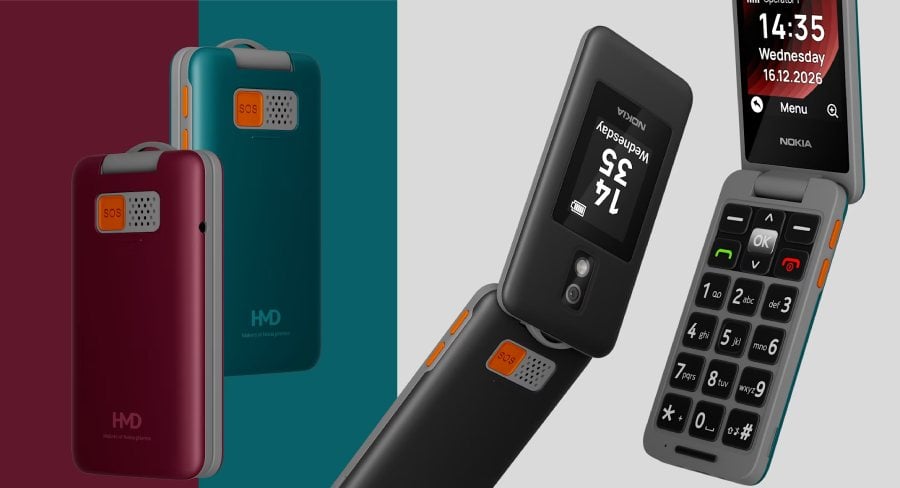
The Nokia 2360 Flip also has a dedicated SOS button. Hold it for three seconds, and the phone calls a pre-set number and texts up to five emergency contacts at the same time. You choose who gets notified, and what the message says, in Family Assist.
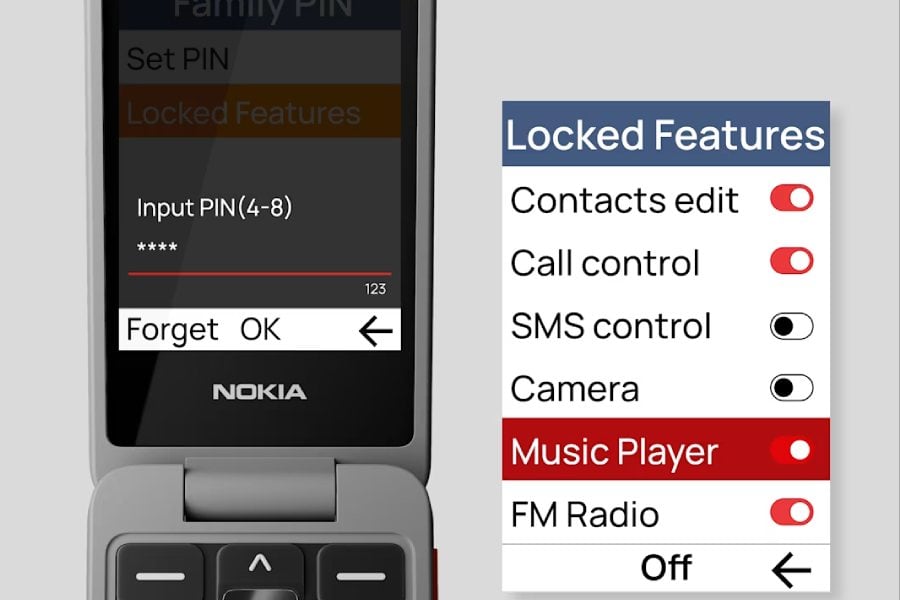
HMD also pitches the Nokia 2360 Flip as a first phone for children. The controls are built into the phone and protected by a Family PIN, so you don’t need the app for this part. School Mode limits the phone to the clock and emergency calls. You can also restrict calls and SMS to a list of approved contacts, and block individual features such as the camera or games in any combination.
Design and specs
The Nokia 2360 Flip has a 2.8-inch QVGA main display with large menu icons, while you also get a 1.77-inch QQVGA screen on the outside. It has a built-in loudspeaker, and the phone supports hearing aids (HAC2011).
Like every feature phone, the Nokia 2360 Flip has a removable 1,450mAh battery. It is rated for up to 15 days of standby or 27.5 hours of talk time. The phone comes in Charcoal, Burgundy Red, and Teal.
Spec
Nokia 2360 Flip
Display
2.8-inch QVGA, 1.77-inch QQVGA external screen
Size and weight
111.85 x 55.56 x 18.95mm, 121g
Network
2G, GSM 900/1800
SIM
Dual SIM (Mini SIM)
Memory
4MB RAM, 4MB storage, microSD up to 32GB
Camera
QVGA rear camera with LED flash
Battery
1,450mAh, removable
Software
S30+
Ports and audio
USB-C, 3.5mm headphone jack, FM radio
Buttons
Keypad, SOS button, volume keys
Price and Availability
HMD hasn’t shared a price or said which markets will get the Nokia 2360 Flip. It also isn’t built for apps like Google Maps or YouTube. If you need those on a simple phone, our list of dumb phones with Google Maps and YouTube support covers options that have them.
Timex has added three new stainless steel bracelet watches to its Addison collection in the US. The new TW2Y90 models build on the recently launched standard Addison watches with a more decorative design, featuring square bezels embellished with 50 individual crystals for a premium look.
Design Details & Pricing
The updated collection includes three distinct colorways: a silver-tone model (TW2Y90300) priced at $159, alongside gold-tone (TW2Y90500) and two-tone (TW2Y90400) variants, both of which are priced at $179.
All three models share the exact same core architecture, built around a compact 23mm square case constructed from low-lead brass with a polished finish. The case height sits at a relatively slim 8mm, with a lug-to-lug distance of 31.5mm, positioning this firmly in the small-form-factor, jewelry-style watch category.
On the hardware side, Timex is keeping things standard for this price bracket. The watches feature a textured silver-tone sunray dial designed to add visual depth, complete with full Roman numeral markings and polished hands that match their respective case colors. The dial is protected by standard mineral crystal, which provides basic heat and scratch resistance for daily wear.
The accompanying bracelets feature a 12mm lug width, are constructed from tarnish-resistant stainless steel, and utilize a standard deployant clasp mechanism for securing the watch.
The bands are adjustable to fit wrist circumferences between 135mm and 190mm (5.3 to 7.5 inches). The watches are lightweight, weighing in at just under 60 grams, specifically 56.56g for the silver-tone model and roughly 58.3g for the gold and two-tone versions.
Internally, the new Addison watches are powered by a standard quartz analog movement running on a replaceable SR626SW battery. Water resistance is rated at 30 meters. As is typical with this rating, the watch is only equipped to survive basic hand-washing and accidental splashes; it is not sealed for swimming or diving.
All three models are available for purchase now through Timex’s US storefront.
It is late 2026, and if you look around on your morning commute, you will notice something fundamentally different about how people are listening to music. The sea of intrusive silicone tips and noise-canceling vacuums has receded. In their place is a wave of metallic cuffs, sleek C-bridges, and colorful clips hugging the edges of people’s ears. Open-ear audio, specifically the clip-on form factor, has officially taken over the consumer tech space.
We have spent the last few years watching companies try to perfect the balance between ambient awareness and high-fidelity audio. Now, the hardware has finally caught up to the ambition. Whether you hate the feeling of plugged ears, want to stay aware of traffic on your run, or just want to wear your tech like a piece of jewelry, there has never been a better time to buy in.
Here is our list of the top 10 best open earbuds you can buy in 2026, broken down one by one.
Samsung’s first clip-on earbuds look like the obvious choice if you already own a Galaxy phone, tablet, or laptop. The Galaxy Buds On combine an open-ear design with features that are especially useful inside Samsung’s ecosystem, including automatic audio switching between compatible devices.
Samsung says it used AI-assisted optimization and more than 119 million ear data points to refine the fit. That’s an impressive number, but it won’t tell you whether the flexible band feels comfortable on your ear. Fit remains personal, especially with a design you’re likely to wear for hours.
Each earbud has an 11.3mm driver, three microphones, and a voice pickup unit that detects speech through bone and skin movement. Samsung also uses reversed sound waves to reduce leakage, while an adaptive volume feature responds to changes in surrounding noise.
The software features are extensive: hands-free Gemini Live, head gestures for calls, voice commands, and Quick Voice Memo for capturing and transcribing thoughts. Samsung rates battery life at up to 9.5 hours per charge and 38 hours with the case. The earbuds have an IP54 rating and support wireless charging.
They’re scheduled to reach the US in early November, with a European rollout planned for early 2027. At $229, the Buds On aren’t cheap, but their Galaxy integration could make the premium worthwhile for existing Samsung users.
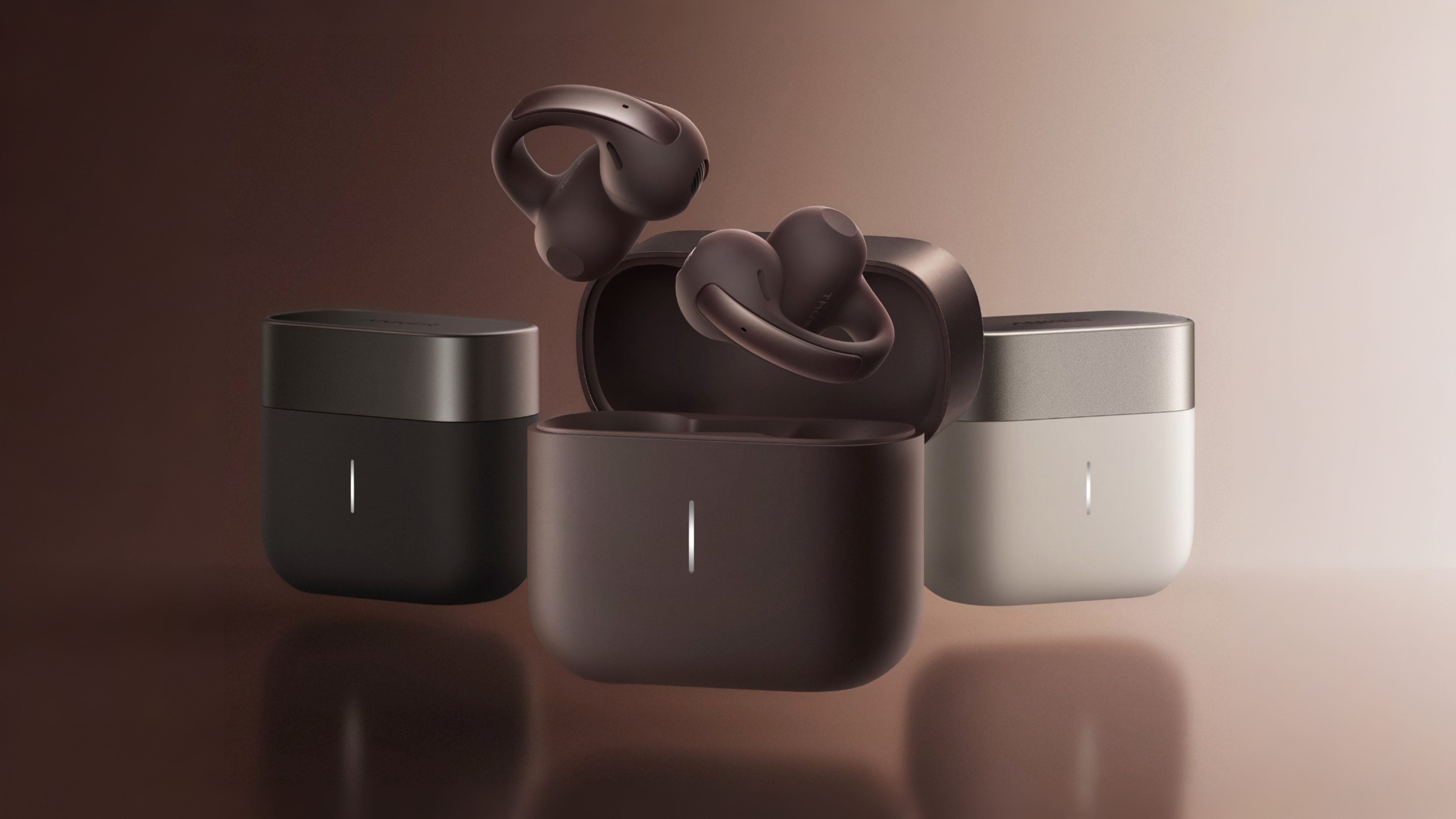
The AeroClip 2 makes a bold pitch: it’s a pair of open-ear earbuds built to make your voice sound clear, even when the environment isn’t.
Anker points to a Guinness World Records certification for an objective speech-quality score among open-ear clip-on earbuds. The hardware behind that claim includes four microphones and two voice pickup units, plus the company’s Thus AI chip. Anker says the system can isolate speech in noisy settings and pick up quieter voices, though real-world results will depend on the environment and fit.
There’s plenty beyond calls. The AeroClip 2 has 12mm drivers, LDAC support, personalized EQ through Soundcore’s HearID feature, and a 3D spatial audio mode. It also offers multipoint connectivity and app-based translation in more than 100 languages.
The earbuds weigh 6.2 grams each and are rated IP57 for dust and water resistance. Battery life is listed at eight hours per charge and 32 hours with the case; a 10-minute charge promises up to four hours of playback.
At $169.99, they occupy a useful middle ground: considerably less expensive than Samsung’s or Bose’s options, but with an unusually ambitious calling feature set.
Baseus is packing a lot of audio branding into the Inspire XC1. There’s Sound by Bose tuning technology, Dolby Audio, LDAC, and a hybrid driver system that combines a 10.8mm dynamic driver with a balanced armature.
That combination makes the XC1 an intriguing option for listeners who care about sound quality but don’t want to spend $300. It also shows how quickly the open-ear category has moved beyond simple convenience-focused designs. Whether the tuning delivers on its promise is something you’d need to hear for yourself.
The XC1 supports multipoint connectivity and uses four microphones for calls. Baseus rates playback at around eight hours on the earbuds and 40 hours with the charging case. The earbuds also have an IP66 rating, though that protection doesn’t apply to the case.
The quoted battery figure comes from testing at 50% volume with Bass Boost and Dolby Audio turned off, so expect different results if you use those features. LDAC is also intended for compatible Android devices, not iPhones.
Bose’s second-generation Ultra Open Earbuds are the most expensive pair on this list, and they make a case for themselves with design and audio features rather than a long checklist of AI tools.
The cuff-style earbuds use Bose’s OpenAudio technology and an adjustable flex joint. Bose promises deeper bass and louder output than the first generation, along with immersive listening options that include Stereo, Immersion, and Cinema modes.
There’s also Bluetooth multipoint, wireless charging, and up to nine hours of battery life on the earbuds. Bose says its SpeechClarity technology improves calls.
The catch is the price. At $299, these need to appeal on comfort, sound, and style, because several less expensive competitors offer longer quoted battery life or more extensive smart features. Bose offers a 30-day return policy when purchased directly, which makes it easier to see whether the fit works for you.
The SonyLinkBuds Clip (full review) uses 10mm drivers, supports Bluetooth multipoint, and weighs approximately 6.4 grams each. The included Air Fitting Cushions help you adjust the fit, which can make a difference when comfort varies from person to person.
You can switch between three listening modes with a double tap. Standard mode is intended for everyday use, Voice Boost makes voices easier to hear in noisy places, and Sound Leakage Reduction helps limit how much audio escapes in quieter spaces.
Battery life is rated at up to nine hours on the earbuds and 37 hours with the case. The IPX4 rating covers water resistance, but there is no stated dust rating. Codec support is limited to SBC and AAC, so you’ll need to look elsewhere if you want LDAC.
The CMF Clip Pro brings a characteristically Nothing-like twist to the category: a Smart Dial on the charging case. It rotates to control volume, playback, and calls, and can also initiate pairing. The earbuds themselves use tactile buttons that CMF says are easy to operate with gloves.
For $99, the specifications are competitive. You get 10.8mm drivers, LDAC support, dual-device connectivity, Google Fast Pair, Microsoft Swift Pair, and four microphones for calls. Each earbud weighs 5.92 grams and has an IP54 rating.
CMF rates battery life at 10 hours for music and 6.5 hours for calls, while a 10-minute charge provides up to four hours of playback.
For buyers who want practical controls and broad codec support without crossing the $100 mark, it looks like a strong contender.
Xiaomi’s first clip-on earbuds weigh just 5.5 grams each and use a memory titanium wire bridge. The company says the design is tuned to stay secure without putting too much pressure on the ear.
Inside are 11mm dynamic drivers and support for the LHDC 5.0 codec on compatible devices. Xiaomi also uses directional sound transmission and reverse sound waves to reduce leakage. For calls, there’s a three-microphone array and a bone-conduction microphone.
The IP57-rated earbuds promise nine hours of playback per charge and 38 hours with the case. Xiaomi adds a collection of AI features, including translation for 21 languages, transcription, and summaries through its XiaoAI assistant. iOS users also get support for Apple’s Find My network.
The earbuds are currently available only in China, but we expect them to reach global markets later this year or sometime next year. For now, interested buyers will have to import them from China.
The Redmi Clip Neo strips the open-ear formula down to the essentials without looking particularly bare-bones. At approximately $60 in its home market, it has 12mm drivers, customizable physical buttons, dual-device connectivity, and a 10-band equalizer.
Each earbud weighs 5.3 grams, and the C-shaped bridge uses a memory titanium wire wrapped in silicone. Redmi says either earbud can be worn on either side, while wear detection automatically pauses and resumes playback.
The compromises are predictable. You get SBC and AAC rather than a higher-resolution codec, and the two-microphone call setup is less elaborate than those found on some pricier models. Battery life is rated at seven hours per charge and 32 hours with the case.
Some assistant and finding features require compatible Xiaomi software, though the earbuds also work with iPhones through the Xiaomi Earbuds app. Just like Xiaomi’s pricier pair, these earbuds are not yet available globally, but we expect them to reach international markets later this year or sometime next year.
Price: 399 Yuan ($60)
9. OnePlus Buds Clip
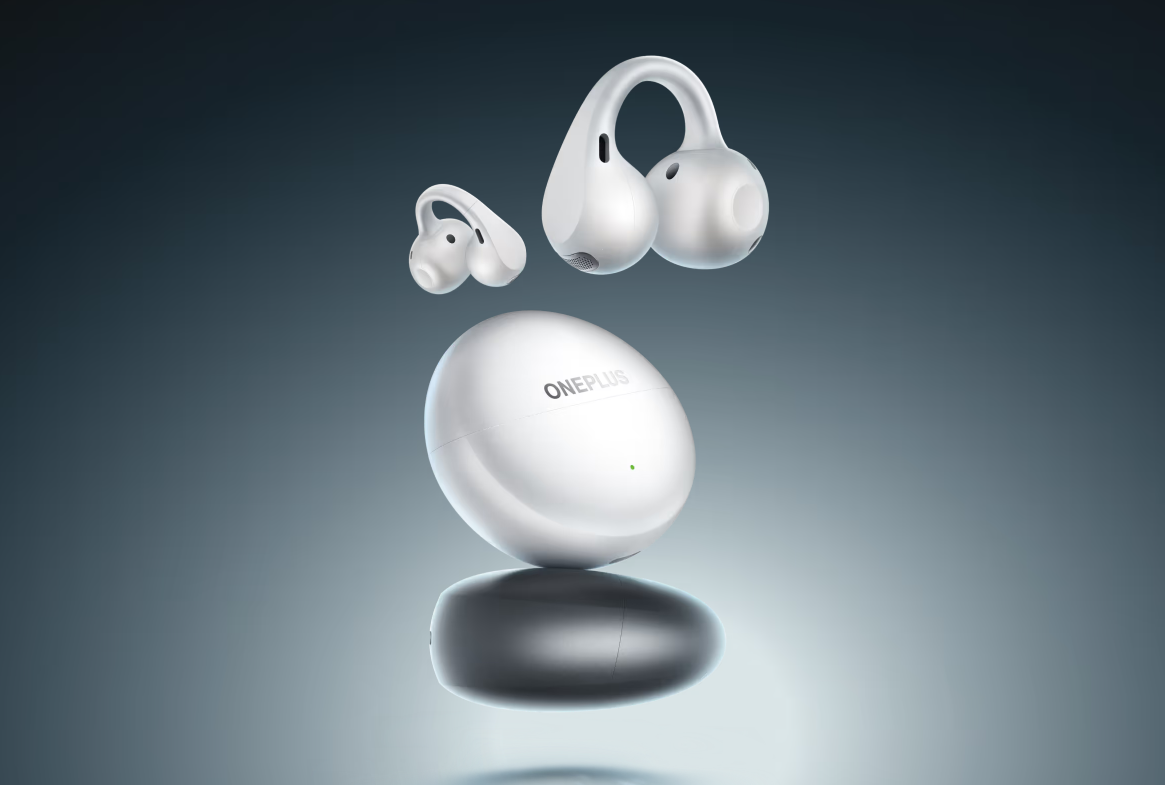
The OnePlus Buds Clip has one of the most promising spec sheets in the category. Its Dynaudio-tuned system pairs an 11mm woofer with a 9mm tweeter, and OnePlus uses reverse sound waves to help reduce leakage.
The earbuds feature a symmetrical design that allows users to wear either bud on either ear. They automatically detect their position and adjust the stereo channels accordingly, which comes in handy when putting them on quickly. Each earbud weighs just 5.2 grams and comes with an IP55 rating for dust and water resistance.
OnePlus claims up to 9.5 hours of playback per charge and 40 hours with the case. Those figures drop to eight and 36 hours with LHDC enabled. There’s also Bluetooth 6.1, multipoint connectivity, swipe volume controls, and translation through a compatible OnePlus phone.
The missing piece is price. Until OnePlus announces it, the Buds Clip is easier to admire on paper than recommend over a known-value alternative.
Price: Not announced yet
10. Huawei FreeClip 2
The FreeClip 2 (full review) combines a lightweight 5.1-gram design with automatic left-right recognition and an IP57 rating. Its flexible C-bridge uses liquid silicone and memory metal, while a 10.8mm dual-diaphragm driver handles audio.
The feature list includes adaptive volume, spatial audio with head tracking, head gestures, translation, and Huawei’s Xiaoyi assistant. Some of those features are tied to Huawei’s software ecosystem, so they may be less compelling if you use another brand of phone.
Battery life is rated at nine hours per charge and 38 hours with the case. Huawei also says a 10-minute charge can provide around three hours of listening.
The new dual-color edition adds bright two-tone finishes and matching accessory rings without changing the core hardware. It’s a distinctive choice if you want your earbuds to look less like a gadget and more like something you deliberately accessorized with.
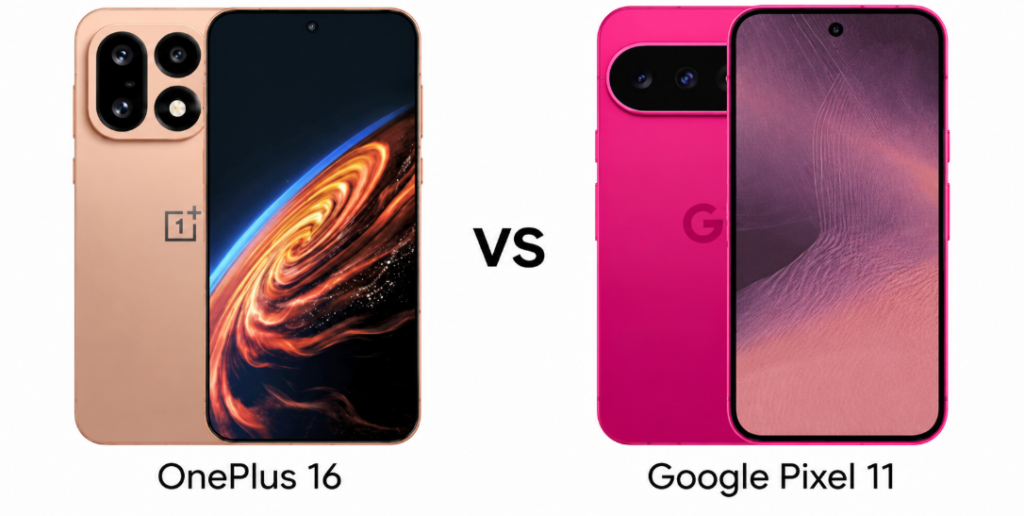
OnePlus 16 and Google Pixel 11 appeal to different flagship buyers. One prioritizes high-end performance, an exceptionally fast display, and massive battery capacity, while the other focuses on Google’s software experience, computational photography, and long-term updates. Both are priced around the $900 mark, making the choice less about affordability and more about which features deliver the greatest everyday benefits.
Google – Satellite SOS adds an emergency communication feature
Price/Value
Priced around $900 / ₹86,000
Priced around $900 / ₹90,000
OnePlus – Lower approximate INR price and stronger hardware value
Overall Winner
Performance-focused flagship
Software-focused flagship
OnePlus – Better overall hardware package for power users
Disclaimer: Specs are based on available data. Actual performance may vary. Verify details from official sources before buying.
2. Design and Display
Build and Feel
The OnePlus 16 combines Crystal Shield Glass, an aluminum frame, and a choice of glass or glass-fiber reinforced plastic for its rear panel. Its IP68/IP69K rating provides stronger protection against dust and demanding water exposure than the Pixel’s IP68 certification. The Google Pixel 11 uses Gorilla Glass Victus 2 on both sides, paired with an aluminum frame for a familiar premium finish. Both offer ultrasonic fingerprint sensors, but OnePlus provides greater flexibility with physical SIM configurations and eSIM support on compatible variants. The Pixel’s more compact design makes it appealing to buyers who prefer comfortable everyday handling.
Display Quality
The OnePlus 16 features a 6.78-inch LTPO AMOLED panel with a 185Hz refresh rate, Dolby Vision, HDR10+, and Ultra HDR support. Its higher refresh rate makes it particularly attractive for competitive gaming and exceptionally fluid scrolling. The Pixel 11 counters with a 6.3-inch OLED display, a 120Hz refresh rate, HDR10+, and a higher quoted peak brightness of 3,000 nits. Both screens should deliver vibrant colours, but OnePlus offers more advanced display capabilities, while Google prioritizes brightness and manageable screen size.
Verdict
The OnePlus 16 wins for display technology, refresh rate, and water resistance. The Pixel 11 is better suited to buyers who prefer a smaller screen.
3. Specifications Including Battery
Performance
The OnePlus 16 uses Qualcomm’s Snapdragon 8 Elite Extreme Gen 6, built on a 2nm process, paired with an Adreno 850 GPU. Its flagship-oriented hardware, UFS 4.1 storage, and configurations offering up to 16GB of RAM make it the stronger candidate for demanding games, intensive multitasking, and sustained performance workloads. The Google Pixel 11 relies on Google’s Tensor G6 chipset, manufactured using a 3nm process, alongside an IMG graphics processor and up to 12GB of RAM. Tensor’s strengths centre on Google’s AI features and software integration rather than outright gaming performance. Both run Android 17, but Google’s promise of seven major OS updates gives the Pixel a clearly defined long-term support advantage.
Battery and Charging
The OnePlus 16 packs a substantial 9,000mAh silicon-carbon battery, supported by 100W wired and 50W wireless charging. It also offers reverse wireless charging, reverse wired charging, and bypass charging for supported gaming scenarios. The Pixel 11 has a 4,985mAh battery, 30W wired charging, and 25W magnetic wireless charging with Qi2.2 support. OnePlus is considerably better equipped for extended gaming, heavy workloads, and buyers who dislike frequent charging. Google’s magnetic charging ecosystem is convenient, but its slower wired charging and smaller battery make the OnePlus the more compelling option for endurance.
Verdict
The OnePlus 16 wins decisively with its faster chipset, greater memory flexibility, and substantially larger battery. The Pixel 11 stands out for its seven-update commitment.
4. Camera
Main and Secondary Lenses
The OnePlus 16 features a 200MP main camera with optical image stabilisation, a 50MP telephoto camera offering 3x optical zoom, and a 50MP ultrawide camera. Its versatile setup supports 8K recording, 4K video at up to 120fps, Dolby Vision, and LUT previews, giving enthusiasts greater flexibility for photography and video creation. The Google Pixel 11 combines a 48MP stabilised main camera with a 10.8MP telephoto lens offering 5x optical zoom and a 13MP ultrawide camera. Google’s computational photography tools, including Best Take and Pixel Shift, help produce polished images with minimal editing. OnePlus offers more versatile video capabilities and higher-resolution sensors, while the Pixel’s longer optical zoom provides an advantage for distant subjects.
The OnePlus 16 features a 50MP ultrawide front camera with autofocus, HDR, and 4K recording at up to 60fps. Its wider framing is particularly useful for group selfies, travel photography, and creators who record themselves regularly. The Pixel 11 uses a 10.5MP ultrawide selfie camera with autofocus and 4K recording at up to 60fps. Although its resolution is lower, Google’s image processing can help maintain natural-looking skin tones, balanced exposure, and consistent results across different lighting conditions. OnePlus offers more hardware flexibility, but Google’s processing remains attractive for users who prefer ready-to-share photos without extensive adjustments.
Verdict
The OnePlus 16 wins for camera hardware, selfie resolution, and video flexibility. The Pixel 11 remains appealing for computational photography and its 5x optical zoom.
5. Pricing
The OnePlus 16 is priced around $900 (₹86,000), while the Google Pixel 11 is priced around $900 (₹90,000). These approximate prices place both smartphones in the premium flagship segment, where buyers expect strong performance, capable cameras, and dependable everyday usability. The OnePlus 16 offers configurations with up to 16GB of RAM and 1TB of storage, providing more flexibility for users who manage large games, media libraries, or demanding applications. The Pixel 11 offers up to 12GB of RAM and 512GB of storage. Actual retail prices will vary by market, configuration, taxes, and availability, so regional pricing should be checked before purchasing.
Verdict
The OnePlus 16 offers better overall value at its lower approximate INR price, particularly for performance-focused buyers. The Pixel 11 suits those prioritising software support.
Disclaimer: Prices are approximate and may vary based on country, region, launch timing, and applicable taxes. Always check whether the listed price is for a China unit or a global/international variant when purchasing.
6. Conclusion
The OnePlus 16 distinguishes itself with a 185Hz LTPO AMOLED display, Snapdragon 8 Elite Extreme Gen 6 processor, 9,000mAh silicon-carbon battery, and 100W wired charging. Its 200MP primary camera, 3x optical telephoto lens, and extensive video recording options also make it a strong choice for power users and content creators.
The Google Pixel 11 takes a different approach, combining Google’s Tensor G6 platform with computational photography features, a 5x optical telephoto camera, magnetic Qi2.2 wireless charging, and seven major Android OS updates. Its more compact screen may also suit buyers who prefer a phone that feels less cumbersome during everyday use.
Both deliver premium features, but their priorities differ considerably. OnePlus focuses on raw hardware capability and charging convenience, whereas Google places greater emphasis on software intelligence, photography processing, and long-term support. The deciding factor is whether immediate hardware advantages or sustained software support matters more.
Verdict
The OnePlus 16 is the overall winner for its superior performance potential, expansive battery capacity, faster charging, more advanced display, and versatile camera hardware. The Google Pixel 11 is the better alternative for buyers who prioritise Google’s photography processing, a compact design, and seven major OS updates. At similar prices, OnePlus delivers the more comprehensive hardware package for most power users.
1. Is the OnePlus 16 better than the Google Pixel 11?
Yes, the OnePlus 16 offers stronger hardware, faster charging, and a more advanced display for demanding users.
2. Which phone takes better photos, OnePlus 16 or Pixel 11?
The Pixel 11 excels in computational photography, while the OnePlus 16 offers higher-resolution sensors and more versatile video recording.
3. Which phone is faster for gaming?
The OnePlus 16 is better suited to gaming, thanks to its flagship Snapdragon chipset, Adreno GPU, and 185Hz display.
4. Which phone has better battery life and charging?
The OnePlus 16 has a 9,000mAh battery and 100W wired charging, giving it a substantial advantage in endurance and charging speed.
5. Which phone offers better value for money?
The OnePlus 16 offers better hardware value, while the Pixel 11 appeals to buyers prioritising software support and Google’s photography features.
Disclaimer: Prices, specifications, and availability may vary by region and retailer. Recommendations in this article are based on editorial opinion, feature-based value, and market positioning at the time of writing. Readers are advised to do their own research before making a purchase.
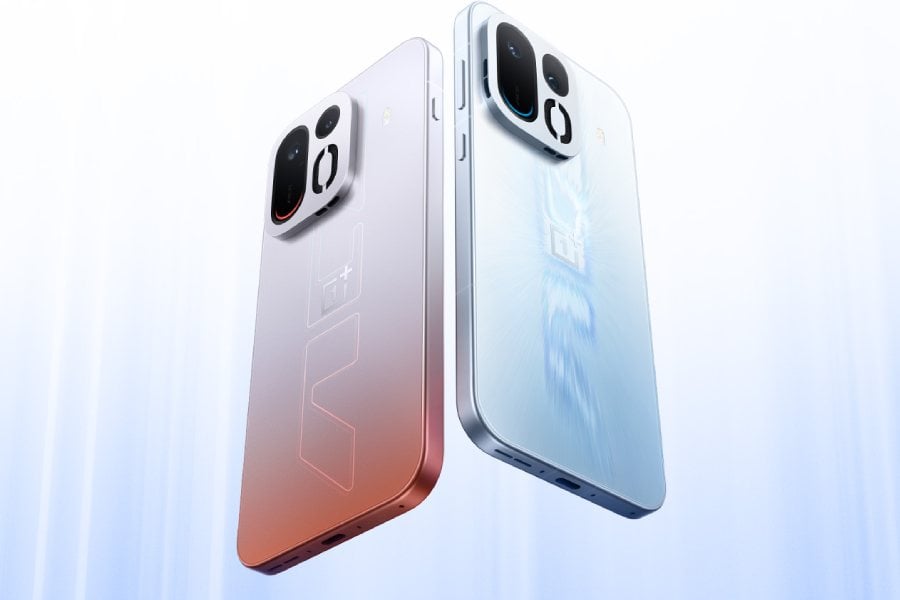
Today, the OnePlus Ace 7 and Ace 7 Pro launched in China, just under three weeks after the OnePlus 16 and on the date it confirmed earlier. Both phones are on sale now. The Ace 7 starts at ¥4,399 (about $655), and the Ace 7 Pro starts at ¥4,799 (about $715).
Like most Ace phones, these two are built for gaming. You get a 6.78-inch 185Hz screen, a 9000mAh battery with 100W charging, and a small fan inside the body that pushes air across the chip and the back panel. The differences between the two are mostly on the processor and camera side.
What separates the Ace 7 from the Ace 7 Pro
The OnePlus Ace 7 runs on the Snapdragon 8 Elite Gen 5 V series chip, while the OnePlus Ace 7 Pro uses the full Snapdragon 8 Elite Gen 5.
On the cameras, both models have a 200MP main sensor. The secondary on the Ace 7 Pro is a 50MP periscope telephoto lens with 3.5x optical zoom. The Ace 7 gets no telephoto lens, but has an 8MP ultrawide sensor. The Pro can also record 4K video at 120fps and 8K at 30fps, and it supports Log mode. Both have a 16MP camera for selfies.
Beyond that, the two phones share most of their hardware. That includes a metal frame, a 3D ultrasonic fingerprint sensor, symmetrical stereo speakers, an X-axis linear motor, NFC, an infrared blaster, and IP66, IP68, IP69, and IP69K dust and water ratings. Both run ColorOS 17, which brings Xiaobu Assistant, AI Tap, AI Notes, and a navigation feature called Fluid Cloud Fusion.
Cooling, display and battery
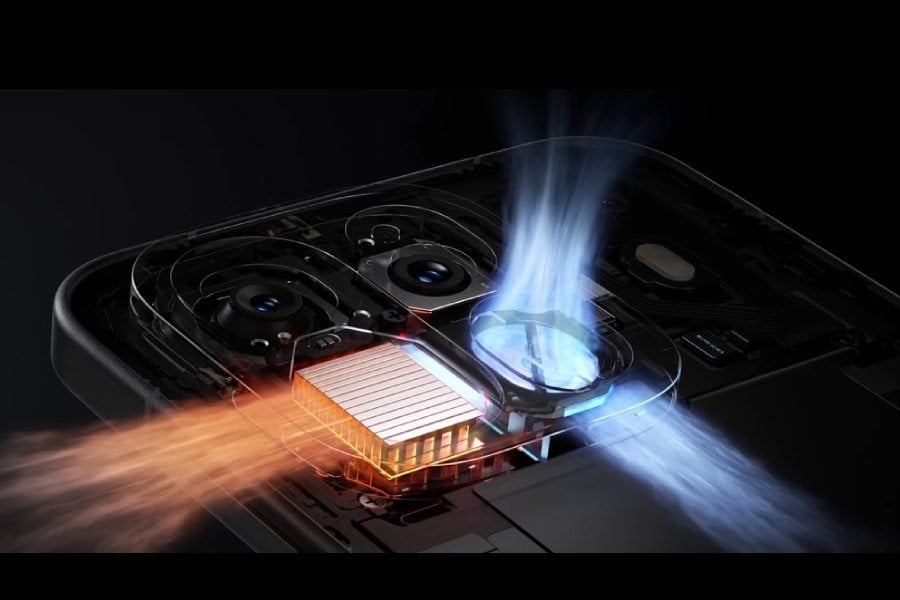
OnePlus calls Ace 7 and Ace 7 Pro’s cooling setup the Ice River dual-channel system. It uses two airflow paths, one blowing directly onto the chip and the other toward the back cover so the body feels cooler in your hand. The Ace 6 had no active cooling, so this is the first Ace phone with a fan. OnePlus says the system can lower the chip’s temperature by up to 10°C after an hour of Peacekeeper Elite at 185fps.
Inside, the phones have tower-style fins that give the chip’s heat more contact with the airflow, plus a large flat vapor chamber. The fan itself is a new design that OnePlus says is quieter, moves more air, and resists dust better than the national standard requires. There’s also an AI temperature sensor that tries to predict temperature changes and adjusts the fan accordingly.
Both phones also come with OnePlus’ esports chips, each handling a different part of the gaming experience. The T3 touch chip is claimed to reduce swipe latency by 80% and tap latency by 43%, while the gyroscope supports sampling rates of up to 800Hz in games. Then, there’s a separate G3 network chip responsible for reducing online lag, and the P4 display chip handles screen-related tasks.
The display is a 6.78-inch panel with a 2772 x 1272 resolution. It runs at 185Hz in supported games, while the system-wide refresh rate goes up to 165Hz. This is similar to the OnePlus 16, although last year’s OnePlus Ace 6 was limited to 165Hz. OnePlus also added a newer eye-protection feature for long sessions.
Both models pack a 9,000mAh battery with 100W wired charging. They also support bypass charging, which sends power directly to the phone instead of charging the battery while you play.
There are some differences in the finish, too. The Ace 7 Pro has a frosted glass back with a layered texture inspired by the wind, while the regular Ace 7 has a red-and-gold dual-gradient finish with sandblasted glass, and it also comes in Midnight Black and a white finish.
OnePlus Ace 7 and Ace 7 Pro Price and Availability
The OnePlus Ace 7 starts at $655 (converted) in China, while the Ace 7 Pro retails at $715 (converted) for the base model. Below are the prices for every configuration available:
Model
Memory and storage
China price
Approx. USD
OnePlus Ace 7
12GB + 256GB
¥4,399
$655
OnePlus Ace 7
16GB + 256GB
¥4,899
$730
OnePlus Ace 7
12GB + 512GB
¥5,199
$775
OnePlus Ace 7
16GB + 512GB
¥5,699
$850
OnePlus Ace 7 Pro
12GB + 256GB
¥4,799
$715
OnePlus Ace 7 Pro
16GB + 256GB
¥5,299
$790
OnePlus Ace 7 Pro
12GB + 512GB
¥5,599
$835
OnePlus Ace 7 Pro
16GB + 512GB
¥5,999
$895
OnePlus Ace 7 Pro
16GB + 1TB
¥7,299
$1,090
The Ace series is usually limited to China, and with OnePlus pulling out of the US and European markets this year, an official release in either region seems unlikely. There are rumors that the Ace 7 Pro could reach India under the name OnePlus 16R, with a price of around Rs 75,000, but the company hasn’t confirmed those plans.
Noise is stacking audio news in India this week. The brand says its Master Buds Open with Sound by Bose sold 10,000 units within the first hour of launch on October 27. Separately, Noise and Gaana have introduced a co-branded Buds R1 Gaana Edition that bundles a year of Gaana Plus with everyday TWS listening.
Noise Master Buds Open first-hour sales and availability
Noise Master Buds Open
Master Buds Open expands Noise’s Master Series into open-ear listening with an ergonomic C-bridge design, a 10.8mm custom dynamic driver, and Dynamic EQ co-developed with Bose across six presets. A 4-mic ENC DNN setup covers calls, and total playback is rated up to 28 hours with the case. The buds come in Carbon and Mercury metallic finishes.
Noise puts the special launch price at Rs 9,999 (~$105), with stock on gonoise.com, Amazon, Reliance Digital, Croma, and Vijay Sales. The early sell-through follows Counterpoint’s view that open-wear stereo shipments in India nearly quadrupled in 2025 even as overall TWS growth stayed flat.
The Buds R1 Gaana Edition is priced at Rs 1,399 (~$15) and includes a complimentary one-year Gaana Plus plan worth Rs 799 (~$8) for ad-free listening, offline downloads, and HD audio. Hardware includes 11mm dynamic drivers, up to 40 hours of combined playtime, quad mics with ENC, and InstaCharge that adds up to 120 minutes from a 10-minute top-up.
It is available on Noise’s site plus the Gaana website and app. Noise and Gaana say the wider subscription tie-up across Noise’s portfolio could reach about 2.5 million consumers by the end of 2026.
Which Noise pick fits you better — open-ear Master Buds Open or the Gaana-bundled Buds R1? Let us know in the comments below.
When Apple launched the iPhone Air in September 2025, it became the thinnest iPhone the company had made. It also drew two complaints almost right away: the battery didn’t last as long as on the other models, and a single rear camera felt thin on a phone priced above the standard iPhone.
A fresh leak now suggests the company might address those issues in the iPhone Air 2. According to tipster Digital Chat Station, the next-iteration phone has two cameras and a battery larger than its predecessor.
The iPhone Air 2 is said to have a 6.55-inch flat OLED with 1.5K+ resolution and a 120Hz LTPO panel. The new leak corroborates a previous one, which tipped a similar screen size.
Inside, the phone is expected to use an A20-series chip built on a 2nm process. The battery is tipped at 3,500mAh, up from 3,149mAh in the first iPhone Air. That’s about 11% more capacity, and it would be welcome news for anyone who found the original’s battery life lacking, though the real-world gain will depend on how Apple tunes the phone.
Also, the rear setup will now have dual cameras of a 48MP main sensor and a new ultra-wide lens. This makes the camera count on par with the standard iPhone. And as usual, you can expect Face ID for unlocking.
What to expect on timing
According to reports, the iPhone Air 2 could launch in spring 2027, alongside the standard iPhone 18 and the iPhone 18e. The same report suggests the iPhone Air 2 could be the only ultra-thin flagship phone released in 2027.
Pricing hasn’t surfaced, but with a bigger battery and an extra camera on the list, expect a higher price than the current iPhone Air.
Sihoo is showcasing the H300 Pro and Doro C300 Pro V2 ergonomic office chairs at ORGATEC 2026 in Cologne, Germany. The trade fair runs from October 27 to 30, with the company highlighting seating mechanisms designed to adapt to changes in sitting position.
Sihoo’s booth is located in Hall 8.1 at A-060 and B-061. According to Sihoo’s event announcement, the display includes workstations with height-adjustable desks and monitors, alongside collaborative seating areas.
H300 Pro: Adjustable Lumbar Support
The H300 Pro combines four-way adjustable lumbar support with Sihoo’s DynaCore adaptive system and 7D coordinated armrests. Sihoo says the design is intended to maintain lower-back support as users lean forward, sit upright or recline.
Doro C300 Pro V2: Coordinated Support
For the Doro C300 Pro V2, Sihoo lists DynaCore whole-body support, a SyncroFlex backrest, Self-Adaptive Dynamic Lumbar Support 2.0 and 8D bionic armrests. The company says the armrests can be adjusted for different activities, including typing and using handheld devices.
ORGATEC 2026’s theme, “From Rooms to Relationships: Designing Spaces in an Ever-Changing World,” focuses on people and how workplace environments can support interaction as working needs evolve.
Redmi launched the Redmi K100 in China on October 26, and iQOO followed a day later with the iQOO Neo 12. Both phones have 6.83-inch displays, 3nm processors, dedicated gaming chips, 100W wired charging, and batteries with at least 9,000mAh of capacity.
Now that both are official, we can compare their hardware, gaming features, cameras, and prices to see where each phone has an advantage.
We haven’t tested either phone—reviews coming soon—so the performance figures, battery claims, and brightness numbers below come from Redmi and iQOO themselves. Both companies use their own testing methods, which means their results aren’t necessarily directly comparable.
The iQOO Neo 12 and Redmi K100 are similar in size, but the Redmi is slightly wider. It measures 162.91 x 77.93mm, compared with 163.42 x 75.89mm for the iQOO.
The weight difference is more noticeable. The iQOO Neo 12 measures 8.50mm thick in Shadow Black and Frostblade Blue, while the Contender version is 8.67mm thick. Their weights range from 225g to 229g, depending on the color. The Redmi K100 measures 8.65mm thick and weighs 234.5g, around 5 to 10g heavier than the iQOO.
Both phones have flat displays and metal frames, with fiberglass backs on at least some versions. Redmi says the K100 uses a 6-series aluminum frame, while Corning Gorilla Glass 7i protects the screen and camera lenses. The iQOO Neo 12’s Contender color has a rear finish that shifts between red and gold against a silver-white background as you tilt the phone.
The Redmi K100 comes in Firefly Green, Snow Rock White, and black. The iQOO Neo 12 is available in Contender, Shadow Black, and Frostblade Blue.
Both phones carry IP68 and IP69 ratings for dust and water resistance, although Redmi offers additional IP66 and IP69K ratings too. The iQOO Neo 12 also has a built-in cooling fan, and iQOO says the fan assembly has been tested to IPX8 and IPX9 standards. It adds a double dust mesh and says the fan is built for long-term use.
The two devices also have a stereo speaker setup, but neither has a 3.5mm headphone jack. The iQOO Neo 12 also doesn’t support analog USB-C headphones, so you’ll need a digital USB-C headset or wireless earbuds.
2. Display
The iQOO Neo 12 has a sharper display and a higher refresh rate. Its 6.83-inch AMOLED panel has a resolution of 3200 x 1440, giving it a pixel density of 514 PPI. It also supports a refresh rate of up to 185Hz and displays 1.07 billion colors across the P3 gamut.
iQOO claims a full-screen peak brightness of 2,200 nits. There’s also a manual brightness mode that reaches 1,000 nits in the phone’s professional setting.
The Redmi K100 uses a 6.83-inch AMOLED display with a resolution of 2772 x 1280 and a maximum refresh rate of 165Hz. It has roughly 3.5 million pixels, compared with about 4.6 million on the iQOO, giving the Redmi around 30% fewer pixels. Its refresh rate is also about 11% lower.
The K100 also has 12-bit color support, which allows the display to show up to 68.7 billion colors, along with P3 gamut coverage. The screen can drop to 1 nit in low-light conditions and has a claimed peak brightness of 3,500 nits. It also supports HDR10+, HDR Vivid, and Dolby Vision, while the Neo 12 has HDR support without specifying the formats.
Both phones include several eye-care features. The Redmi K100 has TÜV Rheinland certifications for low blue light, rhythm friendliness, and flicker, along with full-brightness DC dimming and circularly polarized light 2.0. The iQOO Neo 12 also supports circularly polarized light 2.0 and carries TÜV Rheinland eye-protection certifications. It additionally has a 1-nit sleep screen.
3. Performance and gaming chips
The iQOO Neo 12 runs on Qualcomm’s Snapdragon 8 Elite Gen 5, a 3nm processor with two cores clocked at up to 4.6GHz and six cores running at up to 3.62GHz. Graphics are handled by the Adreno 840 GPU.
The Redmi K100 uses the Snapdragon 8 Elite, also built on a 3nm process, with a maximum clock speed of 4.32GHz. Redmi claims the processor delivers 45% better CPU performance, 40% better graphics performance, and 40% lower power consumption than its predecessor.
The iQOO has the newer processor, but both phones pair their main chips with LPDDR5X Ultra memory and UFS 4.1 storage. Buyers can choose between 12GB and 16GB of RAM, although the available storage configurations differ.
The dedicated gaming chips create another gap between the two phones. The iQOO Neo 12 uses the company’s Q3 chip, which iQOO says delivers 60% better performance, 40% better efficiency, 50% more cache, and four times the AI capability compared with the previous Q2.
The Q3 can handle ray tracing, super resolution, and frame interpolation simultaneously. iQOO says this allows supported games to run at 2K resolution and 185fps. The company also claims a 48% improvement in frame stability in one demanding 3D game. In Call of Duty: Mobile, it reports an average of 185fps during a one-hour test.
Redmi takes a different approach with its D2 gaming chip, which is built on a 12nm process. The chip handles super resolution, frame interpolation, and super HDR together, with output resolution reaching 1.5K to match the K100’s display.
According to Redmi, the D2 system reduced average power consumption by 22% and maximum temperature by 3.9°C in a popular MOBA game running at 144fps. The K100 is also the first standard Redmi K-series phone to include a dedicated gaming chip, as we noted in our Redmi K100 series teaser coverage.
The number of supported games also differs. iQOO says more than 50 games can run natively at 185fps on the Neo 12. As for K100, Redmi claims more than 40 games support 165fps gaming, while over 100 games can reach the same frame rate through frame interpolation. Some of Redmi’s native 165fps titles still need game updates, which the company expects to arrive by late November.
4. Cooling
The iQOO Neo 12 combines an active cooling fan with a 3D vapor chamber. The fan measures 17 x 17mm, has low-noise, intelligent, and high-speed modes, and moves up to 9,770 cm³ of air per minute.
iQOO also claims the vapor chamber improves heat dissipation by 15% compared with the Neo 11. Conductive fins in the airflow channels are said to increase thermal conductivity by another 15%.
The Redmi K100 doesn’t have a fan. Instead, it uses a passive cooling system called a circulating cold pump, with more than 12,000 mm² of graphite and over 31,000 mm² of total heat-spreading material. Redmi says the cooling area is 25% larger than on the previous generation and claims the phone remains cool to the touch during extended gaming sessions.
An active fan can help a phone maintain high performance during long gaming sessions, but we would need to test both devices to see how much difference their cooling systems make in practice. The fan also introduces an opening in the iQOO’s body, making its dust and water protection more complicated. That’s why the company’s water-resistance claims for the fan assembly are worth noting.
5. Controls and audio
The iQOO Neo 12 supports an instantaneous touch sampling rate of up to 5,000Hz and a multi-finger sampling rate of 500Hz. Both figures apply to supported games. Its gyroscope also samples at up to 500Hz.
The phone uses the same touch chip as the iQOO 16 and includes the company’s Q-flex control technology. Other gaming features include 4D vibration and KPL certification.
The Redmi K100 reaches an instantaneous touch sampling rate of 3,500Hz in Game Toolbox, along with 480Hz multi-finger touch sampling and a 480Hz gyroscope rate. It uses an 0815 X-axis linear motor for haptic feedback.
Audio is one area where the Redmi has more to offer on paper. Its symmetrical dual speakers are tuned by Bose, and the phone has three microphones for in-game voice chat. A dedicated Bose game sound mode increases the volume of footsteps to help players hear opponents. The K100 also supports Dolby Atmos and Hi-Res audio.
The iQOO Neo 12 has dual speakers with gaming-oriented tuning, although iQOO doesn’t list a third-party audio partner. Both phones support Bluetooth 5.4 and LHDC 5.0. The iQOO also supports LDAC, aptX Adaptive, and aptX Lossless, while the Redmi lists LDAC, LC3, and Auracast.
6. Battery and charging
The Redmi K100 has the larger battery, with a typical capacity of 10,000mAh and a rated capacity of 9,800mAh. The iQOO Neo 12 has a typical 9,000mAh battery and a rated capacity of 8,820mAh. That gives the Redmi roughly 11% more battery capacity.
Redmi uses a silicon-carbon anode with 28% silicon content and an energy density of 957Wh/L. The company claims the battery retains at least 80% of its capacity after 1,600 charge cycles.
The iQOO Neo 12 uses a fifth-generation silicon anode with 33% more silicon than the Neo 11’s battery. iQOO says its battery also retains at least 80% capacity after 1,150 cycles. These figures come from separate company tests, so they don’t establish which battery will last longer in everyday use.
iQOO claims the Neo 12 can deliver 29.9 hours of short-video playback or around 10 hours of gaming at 185fps on a single charge. Redmi describes the K100 as its longest-lasting phone, claiming 2.43 days of use based on its own battery benchmark. Independent testing will be needed to see how these claims translate to real-world battery life.
Both phones support 100W wired charging. The Redmi K100 also supports 100W PPS charging and 27W wired reverse charging. The iQOO Neo 12 supports reverse charging, although iQOO doesn’t specify its maximum output. Its 100W charging uses the company’s VFCP standard, and it also supports 55W PPS, 44W UFCS, and 18W PD.
Neither phone offers wireless charging. Both include a pass-through charging feature that lets power go directly to the phone’s components instead of repeatedly charging the battery while you play. iQOO calls this direct-drive power supply, while Redmi uses the name smart charging.
7. Cameras
Neither phone puts much emphasis on camera hardware, and their rear camera setups are similar.
The iQOO Neo 12 has a 50MP Sony IMX921 main camera with a 1/1.56-inch sensor, an f/1.88 aperture, and optical image stabilization. It also has an 8MP ultra-wide camera with an f/2.2 aperture and a 16MP front camera.
The Redmi K100 uses a 50MP Light Hunter 800 main sensor measuring 1/1.55 inches. Its lens has a wider f/1.68 aperture, and the camera supports three-axis optical image stabilization with a claimed dynamic range of 13.2EV. The ultra-wide camera also has an 8MP sensor and an f/2.2 aperture, while the front camera has a higher 20MP resolution.
The Redmi’s wider main camera aperture should let in more light than the iQOO’s lens, at least on paper. It also has the higher-resolution selfie camera. Both phones support 8K video recording with the rear camera and offer 20x digital zoom.
There are a few differences in their additional camera features. The Redmi K100 supports 4K recording at 60fps and slow-motion video at up to 960fps. The iQOO Neo 12 includes portrait modes at 23mm, 35mm, and 50mm, along with film-style filters and a macro mode.
Neither phone has a telephoto camera, so dedicated optical zoom isn’t part of the package. Camera performance will depend on more than the hardware specifications, but gaming and battery life are clearly bigger priorities for both devices.
8. Software and extras
The iQOO Neo 12 runs OriginOS 7 based on Android 17. iQOO promises six years of smooth performance and includes several additional features, such as an AI assistant mode, a sticker maker, and a PC game emulator. The emulator works with iQOO’s G1 gamepad, which is sold separately.
The Redmi K100 ships with HyperOS 4 and offers features like cross-device connectivity for moving files between the phone and a Windows or Mac computer. Both phones have a 3D ultrasonic fingerprint reader.
As for connectivity, both support Wi-Fi 7, dual nano SIMs, 5G, NFC, and infrared. Redmi includes two Surge T1+ signal chips and seven antennas, while iQOO uses two Wi-Fi enhancement chips and claims a connection range of up to 250 meters under ideal conditions.
9. Price and availability
The iQOO Neo 12 starts at 4,399 yuan for the 12GB+256GB model. The other configurations are priced at 4,799 yuan for 16GB+256GB, 5,099 yuan for 12GB+512GB, 5,499 yuan for 16GB+512GB, and 6,499 yuan for 16GB+1TB.
The Redmi K100 comes in three configurations: 12GB+256GB, 12GB+512GB, and 16GB+512GB. Their launch prices are 2,549.15 yuan, 2,999 yuan, and 3,399 yuan, respectively. These prices include a Double 11 offer and national subsidies, and sales are scheduled to begin on October 31 at 10 AM.
The two phones’ starting prices aren’t directly comparable because the Redmi’s launch price includes discounts and subsidies. The gap will be smaller for buyers who don’t qualify for the subsidy. For context, the Redmi K100 Pro and K100 Pro Max launched in August at higher prices.
Neither phone has a confirmed global launch yet. The Redmi K100 Pro and K100 Pro Max reached international markets as the Poco F9 Pro and Poco F9 Ultra on September 1, so the standard K100 could follow a similar route. That’s still unconfirmed, however.
10. Specs at a glance
Specification
iQOO Neo 12
Redmi K100
Chip
Snapdragon 8 Elite Gen 5 (4.6GHz)
Snapdragon 8 Elite (4.32GHz)
Gaming chip
iQOO Q3
Redmi D2 (12nm)
Cooling
Active fan + 3D vapor chamber
Passive cold pump + graphite
Display
6.83-inch AMOLED, 3200 x 1440, 185Hz
6.83-inch AMOLED, 2772 x 1280, 165Hz
Peak brightness (claimed)
2,200 nits full-screen
3,500 nits
Touch sampling
5,000Hz / 500Hz multi-finger
3,500Hz / 480Hz multi-finger
Battery
9,000mAh (8,820mAh rated)
10,000mAh (9,800mAh rated)
Charging
100W wired
100W wired, 27W reverse
Main camera
50MP Sony IMX921, f/1.88, OIS
50MP Light Hunter 800, f/1.68, OIS
Ultra-wide camera
8MP, f/2.2
8MP, f/2.2
Front camera
16MP, f/2.45
20MP, f/2.2
RAM
12GB / 16GB
12GB / 16GB
Storage
256GB / 512GB / 1TB
256GB / 512GB
Water resistance
IP68 / IP69
IP66 / IP68 / IP69 / IP69K
Size and weight
163.42 x 75.89 x 8.50–8.67mm, 225–229g
162.91 x 77.93 x 8.65mm, 234.5g
Software
OriginOS 7 (Android 17)
HyperOS 4
Starting price
4,399 yuan
2,549.15 yuan (with offers)
11. Which one fits you?
The iQOO Neo 12 makes more sense if you want the newer Snapdragon chip, active cooling, and a higher refresh rate. Its 3200 x 1440 display is sharper, the touch sampling rate is higher, and it supports gaming at up to 185fps in compatible titles. It also has more storage options, with a 1TB version available.
The Redmi K100 has a larger battery, wired reverse charging, Bose-tuned speakers, a higher claimed peak brightness, and support for Dolby Vision. Its main camera also has a wider aperture, and its starting price is much lower with the launch offers and subsidies. In exchange, you get an older processor, no active cooling fan, and a display with lower resolution and refresh rate.
You’re shopping for a projector, and one of the most important things you’re looking at might also be the most confusing: brightness. One model claims 5,000 lumens while another promises 3,000. Naturally, you’d expect the first one to give you a brighter picture. But projector brightness isn’t quite that simple.
The problem is that manufacturers don’t always measure brightness in the same way. Xiaomi uses CVIA lumens for its latest projector, Dangbei and XGIMI switch between ISO and CVIA depending on the model and market, and Wanbo lists ANSI lumens. Put their numbers side by side, and it’s easy to assume you’re comparing like for like when you’re not.
This can make choosing a projector harder than it needs to be, especially when brightness is a main reason you’re considering a particular model. Before trusting the numbers on the box, it helps to understand what they actually mean, how the different measurements compare, and why some ratings deserve a closer look.
Let’s start with the three main labels you’ll come across: ANSI, ISO and CVIA. ANSI lumens measure brightness by displaying a full white image and averaging readings from nine points arranged in a 3×3 grid. ISO lumens follow the ISO 21118 standard, which XGIMI describes as using the same nine-point grid on a white image. CVIA lumens come from a standard established by the China Video Industry Association and are mostly used on projectors sold in China.
Knowing the names is one thing, but the real question is whether you can compare the numbers directly. With ANSI and ISO, the answer is generally yes, as long as you allow for some differences.
XGIMI’s lumens guide says the two measurements fall within about 5% of each other on the same projector. A separate XGIMI buying guide gives a ratio of 1 ANSI lumen to 0.8 ISO lumens. Dangbei, meanwhile, says ISO figures are always lower than ANSI and advises against comparing the two directly across projectors.
These explanations aren’t identical, but they point to the same practical advice: a projector rated at 1,500 ISO lumens and another rated at 1,500 ANSI lumens should be in a similar brightness range. Just don’t expect the two to produce the same result.
CVIA is where comparisons become more difficult. Formovie, another Chinese projector brand, says CVIA ratings tend to be higher than ANSI ratings for the same projector. Its explainer also notes that more than ten Chinese manufacturers, including Dangbei, have adopted the standard. Brands using CVIA argue that it better reflects everyday viewing conditions.
Epson takes a different position. In its 2024 settlement announcement involving Dangbei, the company listed CVIA among the brightness metrics shoppers should be wary of because they don’t follow a standardized measurement method. Epson sells projectors itself, so it has a commercial interest in the debate. Still, there’s a problem buyers can’t ignore regardless of which side they take: there is no fixed formula for converting CVIA lumens into ISO lumens.
And the confusion doesn’t end with those three labels. Some product listings use terms such as “lumens,” “LED lumens,” or “color brightness” without making it clear how the figure was measured. Those numbers can look impressive, but they don’t necessarily tell you how bright the projected image will be.
Color brightness is a good example. XGIMI’s guide describes it as the peak output of individual color channels rather than white-light output. On single-laser projectors, this figure can be two to three times higher than the ISO or ANSI rating. On LED models, the difference can be around 1.5 to 2 times, while RGB triple-laser projectors tend to have a much smaller gap. If a manufacturer doesn’t specify the light source, XGIMI says there’s no reliable way to work out the actual brightness from the color-brightness figure alone.
So how does all this play out when you look at real products? The four brands below show why the label next to a brightness number matters just as much as the number itself.
2. Xiaomi: the unit depends on the year and market
If you’ve followed Xiaomi’s projectors over the years, you might have noticed a change in how the company reports brightness. Older models used ANSI lumens, making their advertised figures easier to compare with other projectors using the same standard.
Take the Xiaomi Laser Projector 3. It’s rated at up to 1,000 CVIA lumens and uses a 0.47-inch DMD chip, which Xiaomi markets as native 4K. The Redmi Projector 5 Pro, which we covered at launch, carries the same 1,000 CVIA lumen rating but has a native 1080p panel with a 120Hz refresh rate.
At first glance, the matching brightness figures might make the two projectors look comparable. But the shared rating doesn’t tell you whether their pictures will look equally bright, and their different imaging hardware makes the number even less useful as a way to judge their overall picture quality.
There’s another problem if you’re considering either model alongside a projector from Dangbei or XGIMI: the available launch details list CVIA lumens without providing an equivalent ISO or ANSI rating. You can’t reliably fill that gap by applying a conversion ratio from another brand. Until independent measurements are available, the CVIA figure is best treated as a starting point rather than a definitive measure of brightness.
3. Dangbei: one brand, several different conversion ratios
Dangbei makes the comparison more complicated because it uses both ISO and CVIA ratings. If the company gave every projector the same type of measurement, at least you’d have a consistent starting point. Instead, you need to check the label on each model.
The dual rating on the X9 Max is useful because it lets us see how Dangbei relates the two measurements on the same product. Unfortunately, looking at its other projectors doesn’t reveal one consistent conversion formula.
The Dangbei X9 Ultra, for example, is rated at 5,600 CVIA lumens, which Dangbei says is equivalent to about 6,100 ISO lumens. Its CVIA figure is roughly 8% lower than the ISO rating. On the X9 Max, the difference is around 4%.
Then there’s the newer Dangbei RX10. It’s rated at 1,200 CVIA lumens, and Dangbei says the projector also delivers 1,200 ISO lumens. That’s a one-to-one conversion, unlike the figures listed for the X9 models.
These differences don’t automatically mean a particular rating is wrong. They do show why you shouldn’t assume a conversion that works for one projector will work for another. The RX10’s claimed equivalence, for instance, is worth checking against independent measurements before relying on it.
There’s also some history behind the scrutiny of Dangbei’s brightness figures. In a February 2024 settlement with Epson, the company reduced the stated white brightness of the Dangbei Mars Pro from 3,200 lumens to 1,800 lumens and agreed to use internationally recognized standards, including ISO 21118, across its product line.
Dangbei’s own explainer says ISO measurements use stricter conditions than ANSI. Even so, several of its newer China-market launches still lead with CVIA ratings. If you’re shopping for one of those models, check the actual measurement rather than assuming the company uses ISO across its entire lineup.
4. XGIMI: why the numbers deserve a closer look
XGIMI has faced similar questions about its brightness claims. In September 2023, Epson announced a settlement under which XGIMI would correct the stated brightness of the XGIMI Horizon Pro and XGIMI Horizon from 2,200 lumens to 1,500 lumens. The XGIMI Halo and XGIMI Elfin also had their ratings reduced from 800 lumens to 600 lumens.
Today, XGIMI’s US store lists ISO lumens for its projectors, giving buyers a clearer basis for comparison. The XGIMI Horizon 20 is rated at 3,200 ISO lumens, the Horizon 20 Pro at 4,100 ISO lumens and the Horizon 20 Max at 5,700 ISO lumens.
The newer XGIMI Horizon 30 series follows the same approach. Pre-orders run through October 31, with open sales starting November 1. The Horizon 30 Pro is rated at 4,800 ISO lumens, the Horizon 30 Max at 5,300, and the Horizon 30 Ultra Max at 6,000 ISO lumens.
That makes the global lineup relatively easy to compare, but things get less straightforward when you look at XGIMI’s China-market projectors. There, the company lists both ISO and CVIA, giving us a chance to compare the figures directly.
The XGIMI RS30 series is a particularly useful example. The RS30 Pro is rated at 3,600 ISO and 3,200 CVIA lumens. The RS30 Pro Max reaches 4,800 ISO and 4,100 CVIA lumens, while the RS30 Ultra is rated at 6,100 ISO and 5,200 CVIA lumens. At the top of the lineup, the RS30 Ultra Max lists 6,800 ISO lumens and 5,500 CVIA lumens.
Across those four models, CVIA ranges from roughly 81% to 89% of the corresponding ISO rating. That’s already a fairly wide range for products from the same brand, but other XGIMI models make the relationship even harder to pin down.
The XGIMI Z6X Pro 2026 is rated at 1,500 CVIA and 1,600 ISO lumens, putting CVIA at around 94% of the ISO figure. The fifth-generation XGIMI Z6X reverses the relationship, with 550 CVIA lumens against 510 ISO lumens.
In other words, even XGIMI’s own figures don’t support a single conversion rate. If you’re comparing two of its projectors, use the ratings listed for those specific models rather than assuming the same percentage difference applies across the lineup.
5. Wanbo uses ANSI, but there’s still a catch
After looking at Xiaomi, Dangbei, and XGIMI, Wanbo’s listings seem much easier to understand. The models we checked use ANSI lumens, so their ratings can be compared more directly with those of other projectors using the same standard.
The Wanbo X7 Pro Max is rated at 1,500 ANSI lumens, which the company describes as its brightest projector so far. The Wanbo Vali 1 Pro is listed at 900 ANSI lumens, while the 2025 Wanbo Mozart 1 Pro reaches 1,200 ANSI lumens. The original Wanbo Mozart 1 Pro was rated at 900 ANSI lumens.
At least the unit is consistent, so you don’t have to worry about converting CVIA figures or comparing ISO with ANSI. But there’s still a difference between using a recognized measurement standard and independently verifying the result.
A manufacturer can label its brightness rating as ANSI and still advertise a figure that doesn’t match what a reviewer measures on a retail unit. XGIMI’s guide notes that independent reviewers using light meters often find brightness levels that differ from manufacturers’ claims.
We couldn’t find an independent measurement for the Wanbo X7 Pro Max, so its 1,500 ANSI lumen rating remains the company’s claim until someone tests it. The label makes the number easier to interpret, but it doesn’t guarantee that the projector will deliver exactly that output in your home.
The disputes involving Epson, XGIMI and Dangbei help explain why it’s worth checking those claims rather than taking them at face value. Epson has taken legal action against several projector makers over their brightness ratings, and the resulting settlements have followed a similar pattern: the advertised figure gets lowered, and the manufacturer agrees to use ISO 21118.
After the XGIMI settlement in 2023 and the Dangbei settlement in 2024, AAXA reached its own settlement with Epson in October 2025. It agreed to change the stated brightness of its P6U projector from 1,100 lumens to 500 lumens and use ISO 21118 across its product line going forward.
Epson’s announcement about the AAXA settlement also notes that ANSI has adopted ISO 21118, helping explain why the two labels are generally treated as closely related. The industry is gradually moving toward more consistent measurements, but that hasn’t stopped different ratings from appearing side by side on product listings.
China-market projectors from Xiaomi, Dangbei and XGIMI still frequently use CVIA. Epson has also pointed to online marketplaces such as Amazon, where products with different or non-standard brightness ratings can appear next to each other. For someone trying to choose between several models, that makes it difficult to tell whether the projector with the bigger number will actually produce the brighter picture.
The issue isn’t necessarily that every unfamiliar rating is misleading. It’s that buyers often have no easy way to tell which figures were measured using comparable methods and which ones need further checking.
7. How to check a brightness rating before buying
So, how do you avoid getting caught up in all these numbers when you’re shopping? Start with the label next to the brightness figure. ANSI and ISO give you a more useful basis for comparison, while a listing that only says “lumens,” “LED lumens,” or “color brightness” leaves more questions unanswered.
If you come across a CVIA rating, don’t rush to convert it. The Dangbei and XGIMI examples show how much the relationship with ISO can vary, even between models from the same manufacturer. Look for an equivalent ISO rating from the company or, better still, an independent measurement.
The light source is another detail worth checking. XGIMI says single-laser and LED projectors can show a substantial gap between color brightness and white brightness, while RGB triple-laser models tend to have a smaller difference. Without knowing the type of light source, a color-brightness figure doesn’t tell you enough to make a reliable comparison.
You can also check whether the advertised brightness makes sense alongside the manufacturer’s recommendations. XGIMI suggests looking at the recommended screen size and projection distance. If a projector claims 5,000 lumens but recommends a 60-inch screen at two meters, it’s worth taking a closer look at the rating instead of relying on the headline number.
Picture mode matters, too. A brightness measurement taken in the projector’s brightest mode won’t necessarily reflect the mode you’d choose for watching a movie. The image may look different during everyday use, even if the advertised figure is accurate for the mode used during testing.
Finally, look for independent reviews that measure brightness with a light meter. Owner reviews can also give you an idea of how a projector performs in a normally lit living room or during the day, although personal impressions can’t replace controlled measurements.
8. How much brightness do you actually need?
Once you’ve figured out which brightness ratings you can trust, there’s another question to consider: how much brightness do you really need? It’s tempting to assume the highest number is always better, but the right choice depends on where you’ll use the projector and how large an image you want.
XGIMI’s guide gives some rough ISO brightness ranges for a 100-inch image. In a dark bedroom or home theater, around 300 to 550 lumens should be enough. A living room with lamps on and some daylight calls for roughly 800 to 1,500 lumens, while daytime viewing starts at around 2,000 lumens. For rooms with indirect daylight, XGIMI recommends 4,000 lumens or more.
These figures are guidelines rather than guarantees, and they assume you’re looking at an ISO or ANSI rating. If a projector uses CVIA, you’ll need to check its brightness against a reliable measurement before using those ranges to judge whether it’s suitable for your room.
There’s also a point where more brightness stops being an advantage. XGIMI says going beyond 1,500 ISO lumens in a completely dark room can produce a harsh-looking image instead of the cinematic picture many people want. If you’re setting up a home theater in a dark room, paying extra for a much brighter projector may not make as much difference as you’d expect.
Room lighting can matter just as much as the projector itself. Blackout curtains help keep unwanted light out, while an ambient-light-rejecting screen can improve the picture in brighter spaces. Both are worth considering before spending more on a projector simply because its advertised lumen count is higher.
Ultimately, projector brightness isn’t as simple as picking the biggest number on the product page. ANSI and ISO give you a reasonable starting point, while CVIA needs a closer look and unqualified “lumens” claims deserve extra caution. If brightness is one of the main reasons you’re considering a projector, an independent measurement will tell you far more than an impressive number on the box.
OnePlus 16 and Vivo X500 Pro target different kinds of flagship buyers. One prioritizes raw performance, gaming, and exceptional battery endurance, while the other focuses on premium photography and a more compact everyday experience. Both offer advanced displays, fast charging, and powerful hardware, but their differences could make one a considerably better fit depending on your priorities.
Vivo — Larger sensor and photography-focused hardware
Telephoto camera
50MP, 3x optical zoom
64MP periscope, 3.5x optical zoom
Vivo — Longer optical zoom and periscope lens
Ultrawide camera
50MP, 116° field of view
50MP, 119° field of view, autofocus
Vivo — Wider field of view
Rear video
Up to 8K at 30fps, 4K at 120fps
Up to 8K at 30fps, 4K at 240fps
Vivo — Higher maximum 4K frame rate
Selfie camera
50MP, autofocus, ultrawide
50MP, autofocus
OnePlus — Ultrawide selfie perspective
Battery
9000mAh
6510mAh
OnePlus — Larger battery capacity
Wired charging
100W
90W
OnePlus — Faster wired charging
Wireless charging
50W
40W
OnePlus — Faster wireless charging
Reverse charging
Wireless and 5W wired
Wireless and wired
OnePlus — Explicit 5W reverse wired charging
Operating system
Android 17, OxygenOS 17
Android 17, OriginOS 7
Tie — Both run Android 17
Software support
Not specified
Up to 5 major OS updates
Vivo — Explicitly stated update commitment
Connectivity
Wi-Fi 7, Bluetooth 6.0, NFC, infrared
Wi-Fi 7, Bluetooth 5.4/6.0, NFC, infrared
OnePlus — Newer Bluetooth specification listed
Price / Value
Priced around $900 / ₹86,000
Priced around $950 / ₹93,000
OnePlus — Lower price and stronger battery value
Overall
Performance, gaming, and endurance
Photography, zoom, and compact usability
OnePlus — Better all-round flagship value
Disclaimer: Specs are based on available data. Actual performance may vary. Verify details from official sources before buying.
2. Design and Display
Build and Feel
The OnePlus 16 combines a glass front and back with an aluminum frame, offering a familiar premium flagship design. Its Crystal Shield Glass protection adds durability, while the choice of a glass-fiber reinforced plastic back on select variants provides an alternative finish. IP68/IP69K certification also offers stronger water protection, including resistance to high-pressure water jets. The Vivo X500 Pro features a glass front, an aluminum frame, and either a glass or glass-fiber reinforced plastic back. Its IP68/IP69 rating provides substantial protection against dust and water, although its immersion rating is slightly less demanding. The Vivo’s more compact design makes it particularly appealing for one-handed use, while the OnePlus suits buyers who prefer a larger handset.
Display Quality
The OnePlus 16 features a 6.78-inch LTPO AMOLED display with a 185Hz refresh rate, Dolby Vision, HDR10+, and 3840Hz PWM dimming. Its high refresh rate makes scrolling and gaming exceptionally fluid. The Vivo X500 Pro counters with a 6.36-inch LTPO AMOLED panel, a 144Hz refresh rate, Dolby Vision, HDR10+, and a claimed peak brightness of 4500 nits. Its higher peak brightness could benefit outdoor visibility, although peak figures do not represent sustained full-screen brightness. Both screens support Ultra HDR imagery, but the OnePlus offers more room for immersive gaming and multimedia.
Verdict
The OnePlus 16 wins for screen size, refresh rate, and water resistance. However, the Vivo X500 Pro is the better choice for compact-phone enthusiasts seeking a bright, premium display.
3. Specifications Including Battery
Performance
The OnePlus 16 is powered by Qualcomm’s Snapdragon 8 Elite Extreme Gen 6, a 2nm chipset paired with an Adreno 850 GPU. Its powerful CPU configuration and gaming-focused graphics make it the stronger candidate for demanding games, intensive multitasking, and sustained high-performance workloads. The Vivo X500 Pro uses MediaTek’s Dimensity 9600 Pro, also built on a 2nm process, with a Mali-G2-Ultra-NX GPU. It promises flagship-class performance and should handle demanding applications comfortably. Both phones offer UFS 4.1 storage, but their memory configurations differ. The OnePlus provides up to 16GB of RAM, whereas the Vivo lists up to 12GB. The OnePlus therefore has an advantage for users who frequently run resource-intensive applications or play graphics-heavy games.
Battery and Charging
Battery endurance is a major advantage for the OnePlus 16. Its 9000mAh silicon-carbon battery substantially exceeds the Vivo X500 Pro’s 6510mAh capacity, giving it greater potential for extended gaming, navigation, and heavy daily use. The OnePlus also supports 100W wired charging and 50W wireless charging, alongside reverse wireless charging, 5W reverse wired charging, and bypass charging. The Vivo offers 90W wired and 40W wireless charging, providing respectable convenience despite its smaller battery. Bypass charging makes the OnePlus particularly attractive to gamers who play while plugged in, as power can be directed to the system instead of primarily charging the battery. Actual endurance will still depend on usage and software optimisation.
Verdict
The OnePlus 16 wins decisively with its larger battery, faster charging, and gaming-friendly bypass feature. The Vivo remains capable, but the OnePlus is better suited to heavy users.
4. Camera
Main and Secondary Lenses
The OnePlus 16 features a 200MP main camera with optical image stabilisation, a 50MP telephoto camera with 3x optical zoom, and a 50MP ultrawide camera with autofocus. This versatile combination promises detailed photographs across different focal lengths. The Vivo X500 Pro takes a different approach with a 50MP main sensor featuring a larger 1/1.28-inch sensor format, a 64MP periscope telephoto camera offering 3.5x optical zoom, and a 50MP ultrawide camera with autofocus. Zeiss optics, T* lens coating, and a colour spectrum sensor strengthen its photography credentials. Although the OnePlus offers substantially higher main-camera resolution, megapixels alone do not determine image quality. The Vivo’s larger main sensor and longer optical zoom give it a compelling advantage for low-light photography and distant subjects. Both support 8K recording, while the Vivo adds advanced 10-bit Log and APV recording options.
Selfie Camera
The OnePlus 16 features a 50MP ultrawide front camera with autofocus, making it suitable for group selfies, video calls, and recording yourself while moving. Its support for 4K video recording at up to 60fps and electronic stabilisation further improves its versatility for content creators. The Vivo X500 Pro also offers a 50MP autofocus selfie camera, but its wider standard perspective is better suited to natural-looking individual portraits and everyday video calls. It records 4K video at up to 60fps, although the listed specifications do not include the OnePlus’s explicit gyro-EIS and HDR support for front-camera video. Both deliver high-resolution selfie hardware, but the OnePlus has a more clearly specified stabilisation feature set. The Vivo, meanwhile, complements its front camera with extensive rear-camera video tools, including Dolby Vision HDR and professional Log recording.
The Vivo X500 Pro takes the camera category with its larger main sensor, 3.5x periscope zoom, Zeiss optics, and advanced video tools. The OnePlus remains versatile, especially for selfies.
5. Pricing
The OnePlus 16 is priced around $900 (₹86,000), while the Vivo X500 Pro is priced around $950 (₹93,000). This puts the Vivo at a noticeable premium, despite its smaller display and battery. The OnePlus offers a Snapdragon flagship chipset, a 9000mAh battery, a faster 185Hz display, and higher wired and wireless charging speeds.
The Vivo justifies its higher asking price through its photography-focused hardware, including the larger main camera sensor, periscope telephoto lens, Zeiss optical enhancements, and more extensive professional video capabilities. Both occupy the premium flagship segment, but they allocate their hardware budgets differently.
Buyers should prioritise the features they use most rather than assuming that the more expensive phone automatically delivers the better overall experience.
Verdict
The OnePlus 16 is the better value for most users, offering more battery capacity, stronger gaming credentials, and a larger high-refresh-rate display at a lower price.
Disclaimer: Prices are approximate and may vary based on country, region, launch timing, and applicable taxes. Always check whether the listed price is for a China unit or a global/international variant when purchasing.
6. Conclusion
The OnePlus 16 distinguishes itself with its 185Hz LTPO AMOLED display, Snapdragon 8 Elite Extreme Gen 6 processor, enormous 9000mAh battery, and 100W wired charging. Its bypass charging and 50W wireless charging also make it especially attractive to gamers and users who spend long hours away from a power outlet.
The Vivo X500 Pro counters with a more photography-focused package, featuring Zeiss-enhanced optics, a larger 50MP main sensor, 3.5x periscope zoom, and advanced professional video recording. Its compact display and body also appeal to buyers who find large flagships cumbersome.
Both phones offer premium construction, ultrasonic fingerprint readers, stereo speakers, and IP-rated protection. The deciding factor is whether performance and endurance matter more than camera versatility and portability. The Vivo is the more specialised imaging device, while the OnePlus offers a broader set of advantages for everyday flagship use.
Verdict
Winner: OnePlus 16. Its superior battery capacity, faster charging, higher refresh rate, stronger gaming-oriented hardware, and lower price make it the better all-round flagship. Choose the Vivo X500 Pro instead if photography, optical zoom, professional video recording, and a compact design are your highest priorities.
FAQs:
1. Which phone is better for gaming, OnePlus 16 or Vivo X500 Pro?
The OnePlus 16 is the better gaming choice, with its Snapdragon chipset, Adreno GPU, 185Hz display, and bypass charging.
2. Which phone takes better photos, OnePlus 16 or Vivo X500 Pro?
The Vivo X500 Pro is better suited to photography, thanks to its larger main sensor, Zeiss optics, and 3.5x periscope zoom.
3. Which phone has better battery life?
The OnePlus 16 has a 9000mAh battery compared with the Vivo X500 Pro’s 6510mAh, giving it greater potential endurance.
4. Is the Vivo X500 Pro worth more than the OnePlus 16?
Yes, for photography enthusiasts who value advanced zoom and professional video features. Otherwise, the OnePlus 16 offers better overall value.
5. Which phone should you buy for everyday use?
Choose the OnePlus 16 for gaming and endurance, or the Vivo X500 Pro for compact handling and photography versatility.
Disclaimer: Prices, specifications, and availability may vary by region and retailer. Recommendations in this article are based on editorial opinion, feature-based value, and market positioning at the time of writing. Readers are advised to do their own research before making a purchase.
Oppo has started open sale in India for the Find X10 series, a week after launch and pre-orders. The India lineup is only the Find X10 and the Find X10 Pro Max — no Pro, Ultra, or Find X10 E. Units are live today on Oppo’s store, Amazon.in, Flipkart, and partner retail outlets.
Oppo Find X10 series price and availability in India
Starting prices for every India config, with MRPs in brackets where Oppo lists them:
Find X10 Pro Max 12GB+512GB: Rs 1,99,999 (~$2,105); MRP Rs 2,39,999 (~$2,525)
Find X10 colours are Glacier Blue, Glow Coral, and Mist Grey; Pro Max comes in Luna White and Titanium Grey. Launch offers include up to 15% instant bank cashback, exchange benefits that can push combined savings toward Rs 38,000 (~$400), EMI with zero down payment for up to 30 months, and a premium gift box with Enco Air 5 Pro while stocks last. A separate Hasselblad Teleconverter Kit is Rs 24,999 (~$265).
Both phones keep India’s larger 8,000mAh batteries with 80W SUPERVOOC wired and 50W AIRVOOC wireless charging, IP66/IP68/IP69, and ColorOS 17. The Find X10 runs the Dimensity 9600M behind a 6.59-inch AMOLED, with dual 200MP main and periscope cameras plus a 50MP ultrawide.
The Pro Max steps up to the Dimensity 9600 Pro, a 6.78-inch panel, and a triple 200MP rear setup — the first of its kind in India — as covered in our Pro Max review. That contrasts with smaller batteries on global units.
Honor has quietly added another smartphone to its X series, dubbed the Honor X8e, targeting users who prioritize battery life and durability. The new model shares several similarities with an existing handset in the company’s lineup. It also combines AI features with a design focused on everyday resilience.
Honor X8e 4G specifications and features
The Honor X8e 4G features a 6.87-inch TFT LCD with a 1,592 x 720-pixel resolution, a 120Hz refresh rate and up to 1,020 nits of peak brightness. It runs MagicOS 10 based on Android 16 and uses Qualcomm’s Snapdragon 685 processor with an Adreno 610 GPU. The phone comes with 6GB of RAM and 256GB of storage, alongside RAM Turbo technology that offers a virtual memory experience equivalent to 8GB+16GB.
On the rear, the handset features a 108MP primary camera with an f/1.75 aperture and an auxiliary lens. It supports video recording at up to 1080p and offers 8x digital zoom. A 5MP front camera handles selfies and video calls. Additional features include AI Image to Video 2.0, an AI button for quick access to tools, NFC and dual Nano-SIM support. Connectivity is limited to 4G, with Wi-Fi 5 and Bluetooth 4.2 also available.
A 7,700mAh battery powers the phone, with support for 45W Honor SuperCharge wired charging. The device carries IP68, IP69 and IP69K ratings for dust and water resistance, although these protections can diminish with regular wear. Honor also claims resistance to drops from heights of up to 2.5 metres under controlled laboratory conditions, backed by an SGS Premium Performance certification for drop and crush resistance. It measures 168.3 x 78.54 x 8.3mm and weighs 218.5g
Honor X8e price and availability
The Honor X8e is available in Sunrise Orange, Desert Gold and Velvet Black. The handset has appeared on Honor’s Azerbaijan website, while local retailers list the 6GB+256GB variant for AZN 688 (~$400) to AZN 820 (~$480).
We use cookies on our website to give you the most relevant experience by remembering your preferences and repeat visits. By clicking “Accept”, you consent to the use of ALL the cookies.
This website uses cookies to improve your experience while you navigate through the website. Out of these, the cookies that are categorized as necessary are stored on your browser as they are essential for the working of basic functionalities of the website. We also use third-party cookies that help us analyze and understand how you use this website. These cookies will be stored in your browser only with your consent. You also have the option to opt-out of these cookies. But opting out of some of these cookies may affect your browsing experience.
Necessary cookies are absolutely essential for the website to function properly. This category only includes cookies that ensures basic functionalities and security features of the website. These cookies do not store any personal information.
Any cookies that may not be particularly necessary for the website to function and is used specifically to collect user personal data via analytics, ads, other embedded contents are termed as non-necessary cookies. It is mandatory to procure user consent prior to running these cookies on your website.