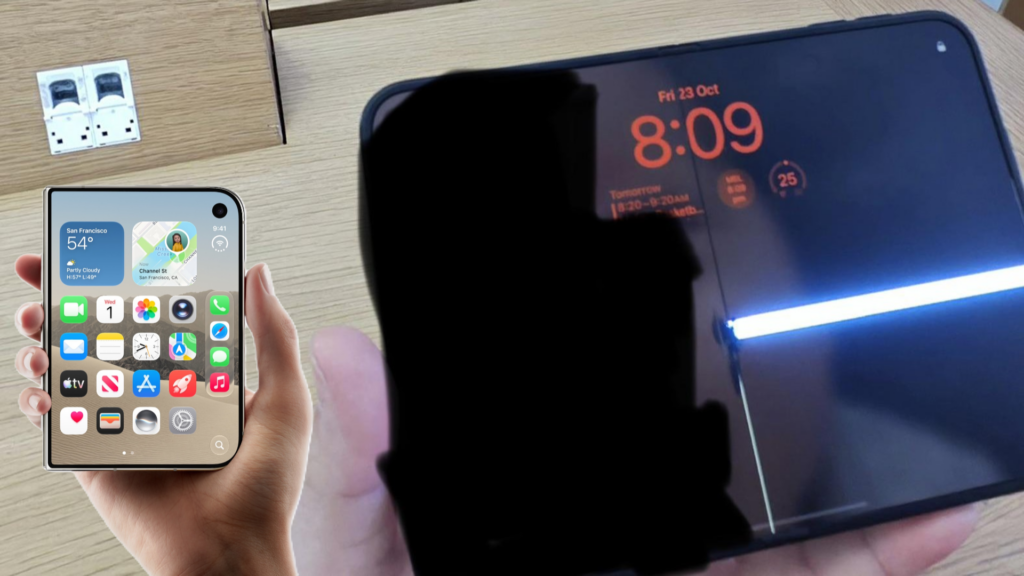
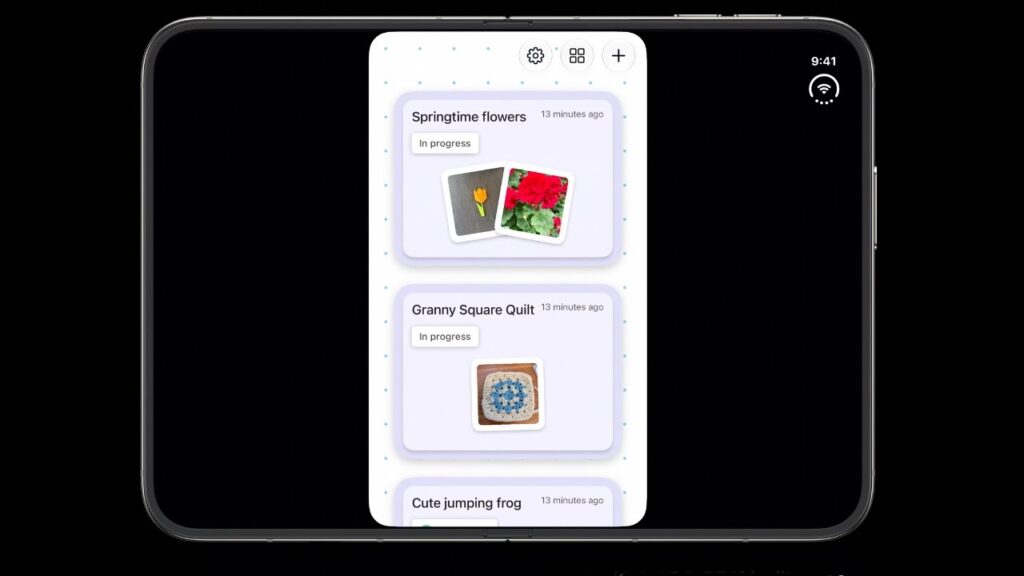
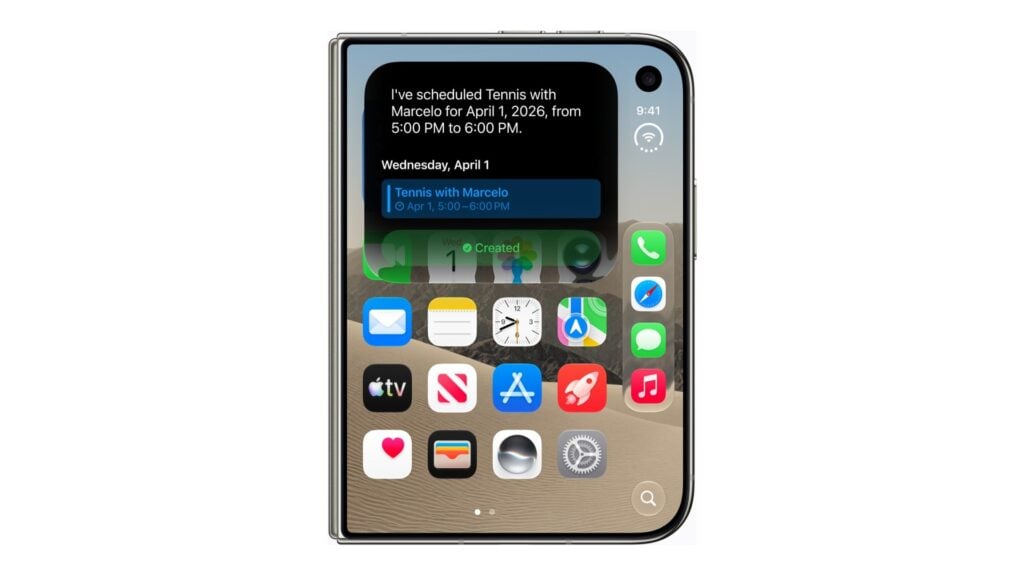
Reports of the iPhone Duo’s screen cracking started appearing across social media within hours of the phone going on sale. While it’s a first-generation foldable phone, it’s also an Apple product. The company waited years to enter the foldable phone market, apparently fine-tuning the hinge mechanism and other aspects of the device to ensure a great user experience, as it usually does with its products.
However, the iPhone Duo has clearly failed to meet expectations in this regard. Apple has now responded to one of the issues in a statement to 9to5Mac, saying only “a small number” of units are affected.
“The response to iPhone Duo from early users has been incredibly positive, and we are seeing exciting things from developers who are rapidly updating their apps to take advantage of its unique form factor. We are aware of an issue impacting the inner display on a small number of iPhone Duo units. If users experience issues with their iPhone Duo display, they should contact AppleCare for a replacement.”
Based on public reports across Reddit and X, the iPhone Duo’s screen-cracking issue appears to involve a few dozen documented cases globally. However, the identical pattern of the defect suggests an early hardware vulnerability rather than isolated cases of user misuse. In fact, an analysis of the issue suggests that part of the hinge catches the display from behind when the phone is folded or unfolded, causing the damage.
Apple will likely improve the hinge mechanism in future generations to prevent this from happening again. Still, it’s surprising to see issues like this emerge after the company allegedly spent years fine-tuning the hinge mechanism.
And, of course, the problems aren’t limited to the hardware. The lack of proper widescreen optimization in apps and the issues with iOS itself suggest that the software experience is also falling short of Apple’s usual standards.
For now, it seems you don’t need AppleCare+ to get your iPhone Duo replaced if it develops this screen-cracking issue.
Apple has started rolling out iOS 27.2, the first big feature update since iOS 27 arrived in September. The release is live for every iPhone that runs iOS 27, including the new iPhone Duo, and iPadOS 27.2 is landing alongside it. Headline changes include five new Siri AI languages, smart suggestions in Messages, and Apple Pencil support for the iPhone Duo.
What’s new in iOS 27.2
iOS 27.2
The biggest upgrade lands in Siri AI, which now works in French, Japanese, Korean, Portuguese, and Spanish. Siri can also recall earlier conversations, so you can ask about a restaurant it suggested last week, and it pulls more personal context from photos in Messages, Calendar attendees, voicemails, and Safari history. A new Excluded Apps setting lets you pick, in one place, which apps Siri, Search, and suggestions can access. Siri AI still isn’t available in the EU or mainland China.
Messages gains context-aware suggestions that turn chats into actions, such as adding a dinner plan to Calendar or tracking a package. Apple Music switches to a black-and-white icon, Shared Albums in Photos get caption editing and expiry reminders, and Photos and Image Playground now tag AI-generated or heavily edited images with SynthID watermarks. Podcasts splits its Home tab into New Episodes and Continue Playing, the Apple TV app adds household profiles, and Multiview on iPhone can show up to four live sports streams. Group FaceTime calls also support Dual Capture now.
iPhone Duo owners get two exclusive extras: Apple Pencil (USB-C) support on both displays and Edge Light, which rings the screen with light to brighten your face on video calls. The Home app adds optional Lock After Closing and Door Left Open controls for compatible smart locks. Apple has also patched more than 160 security vulnerabilities, so updating soon is a good idea.
To install, head to Settings > General > Software Update.
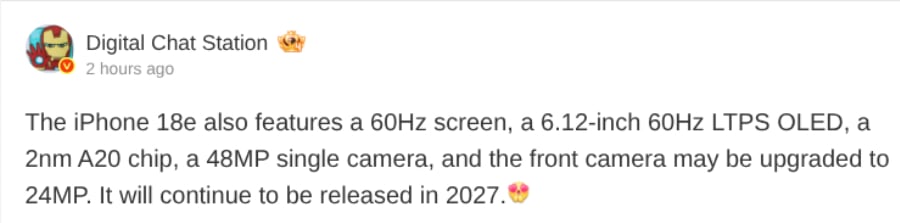
The iPhone 18e has been tipped to keep a 60Hz display since June, when a 2027 iPhone lineup leak listed it at 6.12 inches with an LTPS panel, while the iPhone 18 and iPhone Air 2 moved to 120Hz LTPO screens. A new leak now repeats that claim and fills in more of the phone.
Digital Chat Station, the same tipster behind the earlier report, says the iPhone 18e has a 6.12-inch 60Hz LTPS OLED display, so you still won’t get 120Hz on the cheapest iPhone in the lineup.
What else the leak says
Apple is said to power the iPhone 18e with a 2nm A20 chip, an expected upgrade from the 3nm A19 chip in the iPhone 17e, which launched in March at $599 with 256GB of base storage. The screen grows by only a small amount, since the iPhone 17e has a 6.1-inch display.
The camera setup is relatively simple too. It’s said to have a single 48MP rear camera like the iPhone 17e. The front camera may move up to 24MP, according to the leak.
The leaker says the iPhone 18e will arrive in 2027. This corroborates a previous report that suspected a launch in spring 2027, separate from the iPhone 18 Pro models and the foldable iPhone Duo.
If the leak holds, you’d get a newer chip and possibly a better selfie camera, but you’d give up the smoother scrolling that the iPhone 18 is expected to have. Apple kept a 60Hz screen on the iPhone 17e too, and this leak suggests the company isn’t changing that approach for the next model.
Apple hasn’t announced anything about the iPhone 18e, so treat these details as unconfirmed. The leak doesn’t mention pricing either, so you’ll need to wait for more reports on that.
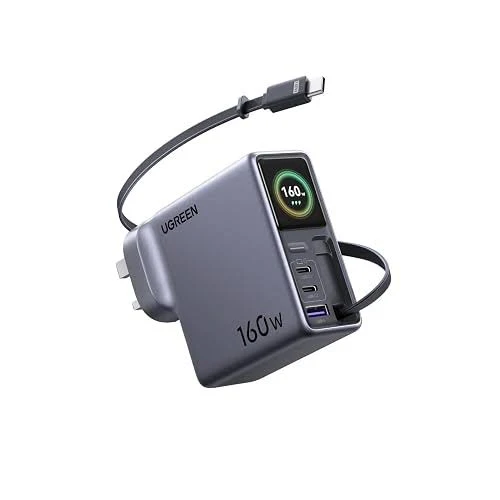
UGREEN’s Nexode Pro 160W charger that comes with a built-in retractable cable is down to $94 on Amazon, from a usual list price of $149.99. That is $55 off (37%). The UGREEN store on Amazon sells it, and the “Limited time deal” runs until November 8, 2026.
UGREEN had launched this charger around late July. It is one of the few wall chargers that can run a laptop and pull its own USBC cable back in when you are done.
What you get:
160W total output – one USB-C port alone delivers up to 140W, enough to charge a MacBook Pro to 56% in 30 minutes
Four ports: the retractable USB-C cable, two more USB-C ports and one USB-A port. It can split 160W across two laptops.
Retractable cable: UGREEN rates it for more than 10,000 pulls. You need no separate cable in your bag.
Touch display: a rotating screen shows live wattage, voltage, temperature, and the charging standard in use.
App control: connects over WiFi or Bluetooth for remote control and firmware updates
Yes! if you carry a laptop and a phone and want one charger with no loose cables. One of these replaces a laptop brick, a phone charger, and the cable. The display and app are extras. The retractable cable is the real reason to buy it.
The usual list price of the product has been about $100 for most of the time since launch. It dipped to $89.99 for a short time in early October. So $94.99 is $5 above its best price and probably a good price for the next few weeks.
Cheaper option
If you don’t need the built-in cable, the regular UGREEN Nexode Pro 160W costs $59.99 on Amazon (list $89.99). It has 5 ports and the same touch display, but no retractable cable. That deal ends November 1.
Prolific insider Digital Chat Station (DCS) has shared details of a Vivo phone that they claim belongs to the next “S” model. The tipster does not name the phone, but going by the timing and the pattern Vivo followed this year, it is most likely the Vivo X500s. However, that is our reading, and the leak does not confirm it.
According to DCS, Vivo went with a large-screen approach while testing its mid-cycle “S” iteration. The engineering sample has a 6.85-inch 2K+ display with a 144Hz refresh rate. DCS also describes the panel as a quad-sided flat screen.
The post says nothing about the chipset, cameras, battery, or launch date, so the display is the only detail you have to go on for now.
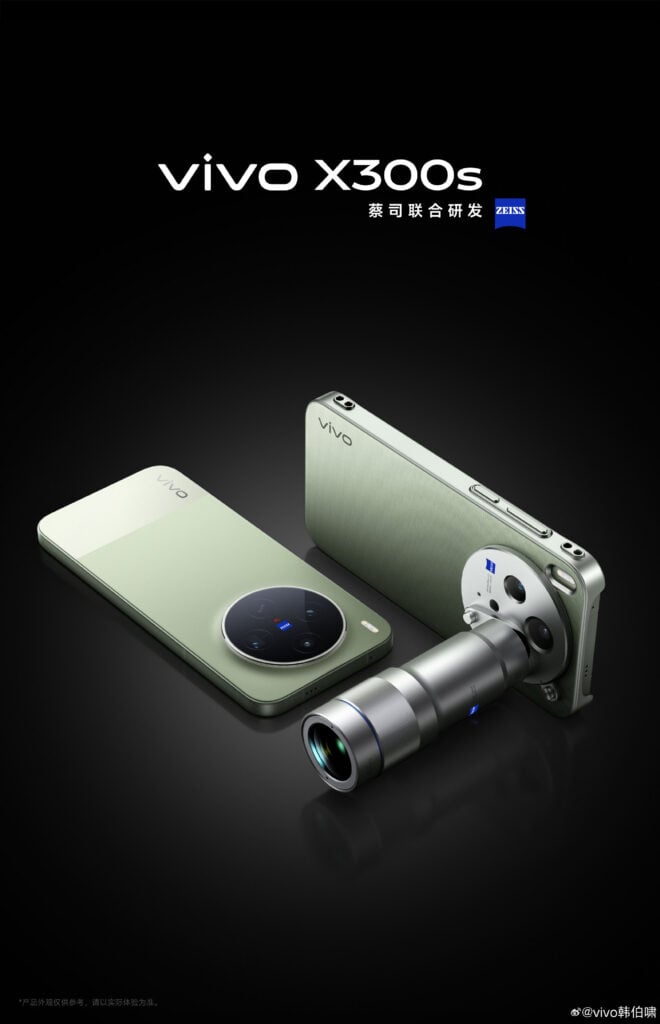
The Vivo X300s, which launched in March, has a 6.78-inch 1.5K display and a 144Hz refresh rate. It was the first phone in the X series to move beyond 120Hz.
The device arrived alongside the Vivo X300 Ultra, which also has a flat 2K panel with a 144Hz refresh rate. If the new engineering sample belongs to the Vivo X500s, it would bring a larger screen and higher resolution than the X300s.
The current standard model has a smaller display. Launched in China in September, the Vivo X500 features a 6.59-inch 2K display with a 144Hz refresh rate. It also packs a 7,500mAh battery and the Dimensity 9600M chipset. A 6.85-inch panel would give the rumored X500s a noticeable size advantage over the standard model, similar to the X300s and the regular X300.
Keep in mind that this is an engineering sample. Vivo can still change the screen size, resolution, or panel type before a final version is ready, and the company has not said anything about an X500s.
If it follows the X300s schedule, a spring launch would be the logical window. Nothing in the leak supports that timing, so treat it as a guess until Vivo or another tipster adds more.
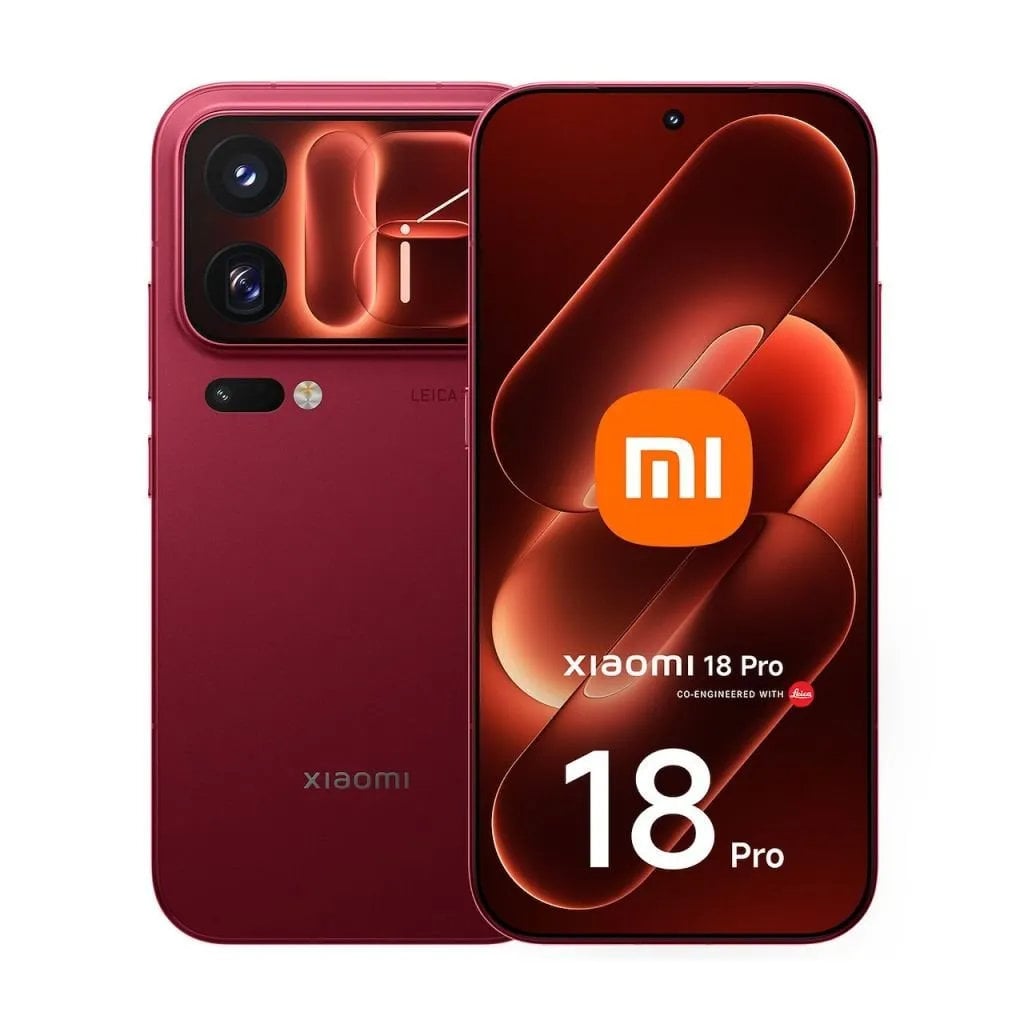
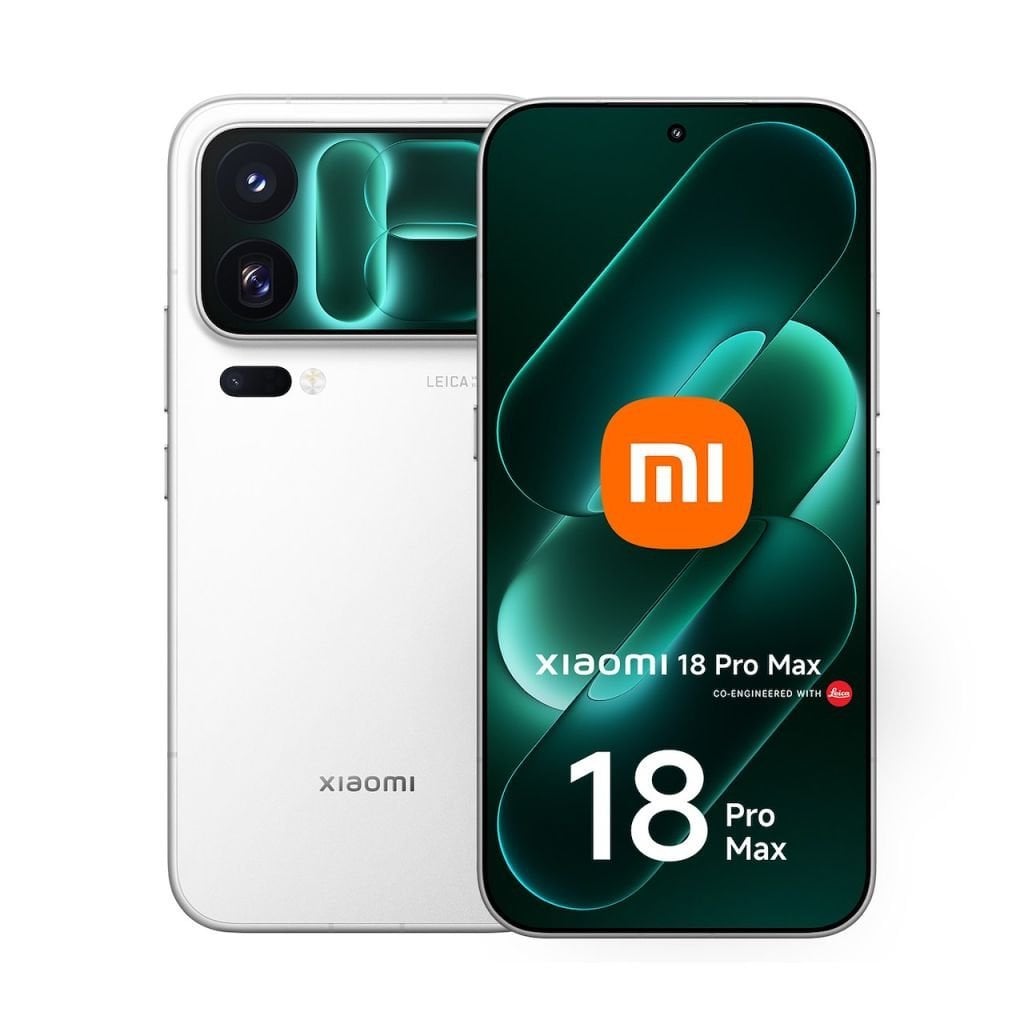
Xiaomi has not announced a global launch date for its latest flagships yet, but a European retailer has already listed them. Italian store Epto has put up the Xiaomi 18 Pro and Xiaomi 18 Pro Max, revealing their EU prices, colors, and key specs. Both phones debuted in China in September, and Xiaomi confirmed a global rollout a day later.
Xiaomi 18 Pro and 18 Pro Max European listing details
Xiaomi 18 ProXiaomi 18 ProXiaomi 18 Pro
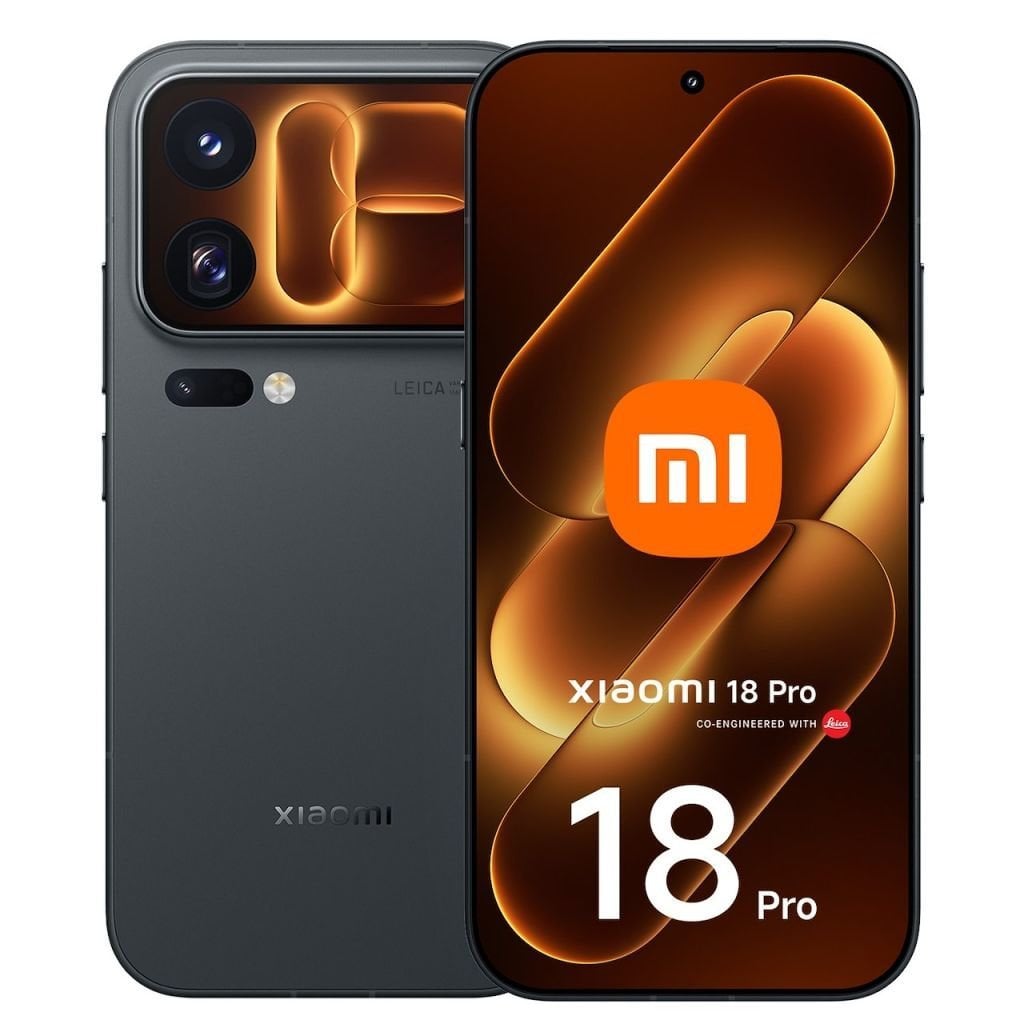
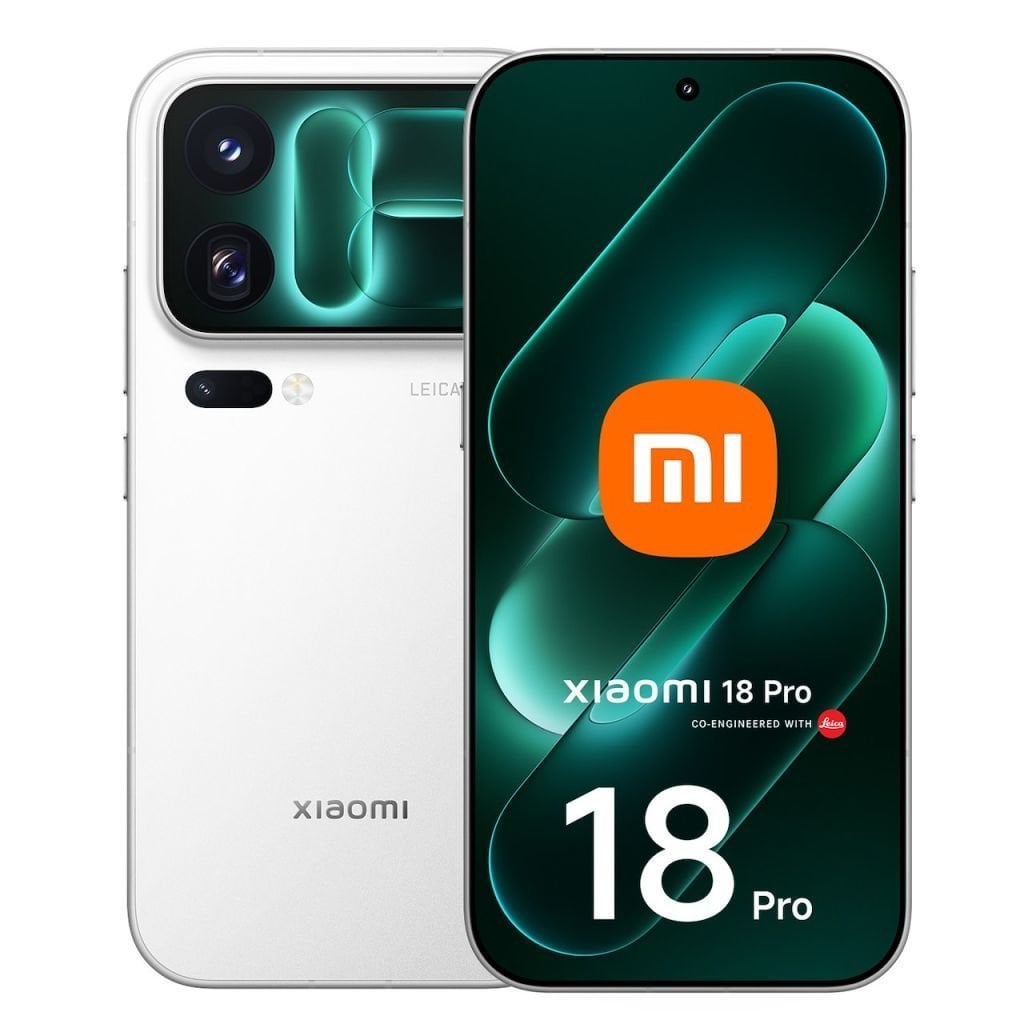
The Xiaomi 18 Pro is listed at €1,398.90 (~$1,570) for 12GB of RAM and 256GB of storage, and €1,591.90 (~$1,785) for the 12GB/512GB model. The 18 Pro Max comes only in a 12GB/512GB configuration at €1,783.90 (~$2,000). Some white and Velvet Red Pro Max listings carry different model numbers and are slightly cheaper at €1,761.90 (~$1,975).
Both phones appear in black, white, and Velvet Red. In China, the standard colors are black, white, pink, and blue, while red is limited to the Transparent Special Edition with 16GB of RAM and 1TB of storage. Europe appears to get a regular red finish instead and skips the blue and pink options.
Xiaomi 18 Pro MaxXiaomi 18 Pro MaxXiaomi 18 Pro Max
The listings also confirm the smaller European batteries that leaked last week. The 18 Pro packs a 6,000mAh cell with 90W wired charging, down from 7,000mAh and 100W in China. The Pro Max drops from 8,500mAh to 7,050mAh but keeps 100W charging. Epto lists 66 and 70 hours of endurance per cycle, respectively, along with a 1,000-cycle rating for both.
The chips stay the same, with the Snapdragon 8 Elite Gen 6 on the 18 Pro and the Snapdragon 8 Elite Extreme Gen 6 on the Pro Max, matching the global Geekbench listings. Both run HyperOS 4. Epto’s prices undercut last week’s leaked €1,449 and €1,849 starting figures, though the retailer often uses odd pricing, while official RRPs usually end in .49 or .99. Either way, these will be some of the priciest Xiaomi phones in Europe.
Xiaomi has announced a compact 3kg Mijia Shoe Washer in China. The machine will be available through crowdfunding on the Youpin platform starting November 2. It’s listed at 1,299 yuan (about $188), but you can get it through crowdfunding for 799 yuan (about $116).
The Mijia Shoe Washer 3kg comes in Xiaomi’s familiar white Mijia design and takes up just 0.18 square meters of floor space. It’s small enough to fit on a balcony cabinet or in a laundry room. For comparison, Xiaomi’s earlier 6kg top-load Mijia washer takes up about 0.25 square meters.
Rather than using a regular washing machine for dirty footwear, the new model has a cleaning system built around shoes. Xiaomi says its high-speed rotating impeller creates a 3D water flow that reaches the uppers, soles, and inner linings. The company claims it can remove common stains from mud, grass, and sweat.
The machine also uses three layers of brushes to clean shoes, including the gaps in their soles. Xiaomi lists a wash ratio of 0.9 in its promotional material, although it hasn’t provided further details about the measurement.
The washer supports athletic shoes, casual shoes, children’s shoes, canvas shoes, sneakers, and sports slippers. Each load can accommodate two to four pairs, and there’s no need to remove the laces before washing. Starting a cycle is straightforward: open the lid, load the shoes, and press a button.
Eight wash programs and a 20-minute quick cycle
The Mijia Shoe Washer 3kg comes with eight programs: Standard Wash, Intensive Wash, Quick Wash, Antibacterial Wash, Multi-use Wash, Rinse + Spin, Spin-only, and Tub Clean.
Xiaomi says the machine can reduce bacteria and fungi commonly associated with footwear. According to the company’s test results, it removes 99% of Trichophyton rubrum, a fungus linked to athlete’s foot, along with 99.8% of Escherichia coli and 99.6% of Staphylococcus aureus.
The company also claims a 99.99% inhibition rate against E. coli and Staphylococcus aureus. After washing, the machine runs a self-cleaning cycle to remove sediment from the tub, helping prevent dirt from accumulating and transferring back onto shoes during later washes.
Price and availability
The Mijia Shoe Washer 3KG will initially be available through crowdfunding in China, with the campaign opening on November 2. Its suggested retail price is 1,299 yuan (about $188), but early crowdfunding prices start at 799 yuan (about $116).
Xiaomi hasn’t announced plans to release the shoe washer in other markets or provided a shipping date.
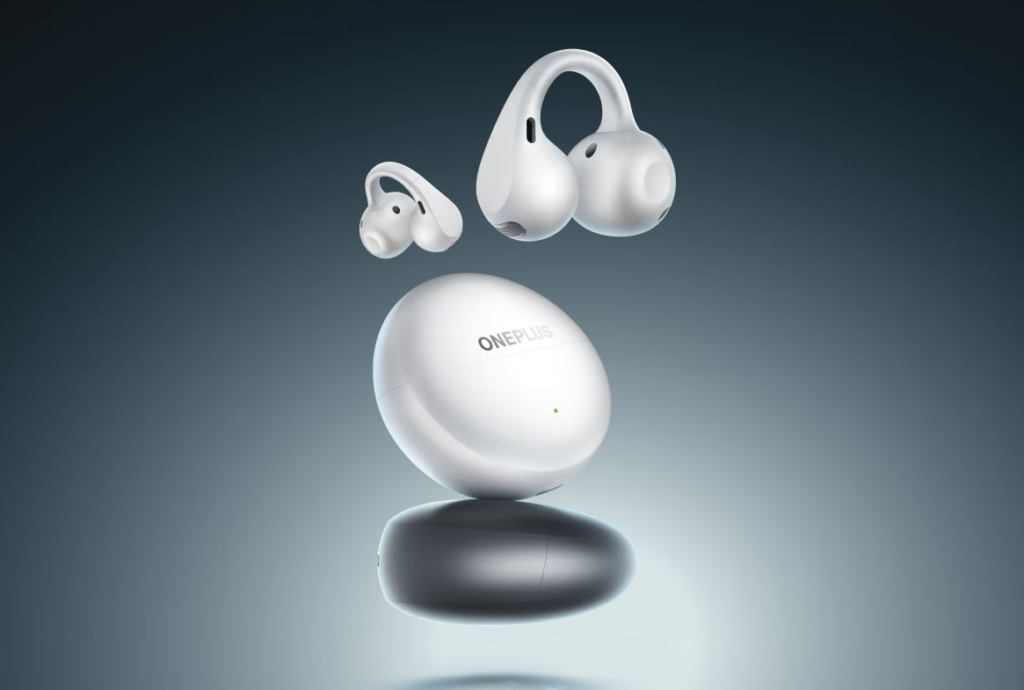
OnePlus has launched its first clip-on wireless earbuds, the OnePlus Buds Clip, in global markets. The earbuds include an open-ear C-shaped design that allows users to stay aware of their surroundings while enjoying high-quality audio.
The Buds Clip features automatic left and right ear detection, allowing users to wear either earbud on either ear. Unlike traditional earbuds designed for specific ears, the Buds Clip uses a symmetrical design with built-in sensors that automatically detect ear placement and adjust the left and right stereo audio channels accordingly.
Physically, the earbuds weigh just 5.2 grams each and feature a flexible nickel-titanium (Ni-Ti) memory alloy C-shaped bridge designed to reduce pressure on the ear cartilage. The design has received TÜV Rheinland Comfortable Fit certification.
On the audio front, the Buds Clip features Dynaudio-tuned dual drivers, including an 11mm woofer and a 9mm tweeter, powered by dual DACs. The earbuds support the LHDC 3.0 codec for high-definition audio streaming. OnePlus has also integrated dipole sound field technology, which uses reverse sound waves to minimize sound leakage and prevent nearby people from hearing the audio.
The earbuds are equipped with a 6nm AI audio chip. This processor is primarily tasked with handling call quality, processing audio from a six-microphone array that includes bone-conduction voice pick-up units to separate the user’s voice from background noise.
In terms of battery life, the Buds Clip delivers up to 9.5 hours of playback on a single charge, extending to 40 hours with the charging case. However, enabling the LHDC codec reduces playback time to 8 hours per charge and 36 hours in total.
The Buds Clip features IP55-rated dust and water resistance, Bluetooth 6.1, and multipoint connectivity for pairing with two devices simultaneously. The earbuds also support Google Fast Pair and Windows Swift Pair, along with swipe gestures for volume adjustment, alerts when an earbud falls off, and AI-powered translation through a compatible OnePlus smartphone.
The earbuds come in three color options: Pearl White, Pebble Gray, and Twilight Rose. OnePlus has yet to reveal pricing details.
In related news, Edifier has launched its We-Bass clip-on earbuds with 12mm drivers, IP55-rated protection, and up to 20 hours of battery life. Meanwhile, Baseus has introduced the MC2 NC clip-on earbuds with up to -50dB ANC, LDAC support, built-in AI features, and up to 60 hours of battery life.
For more daily updates, please visit our News Section.
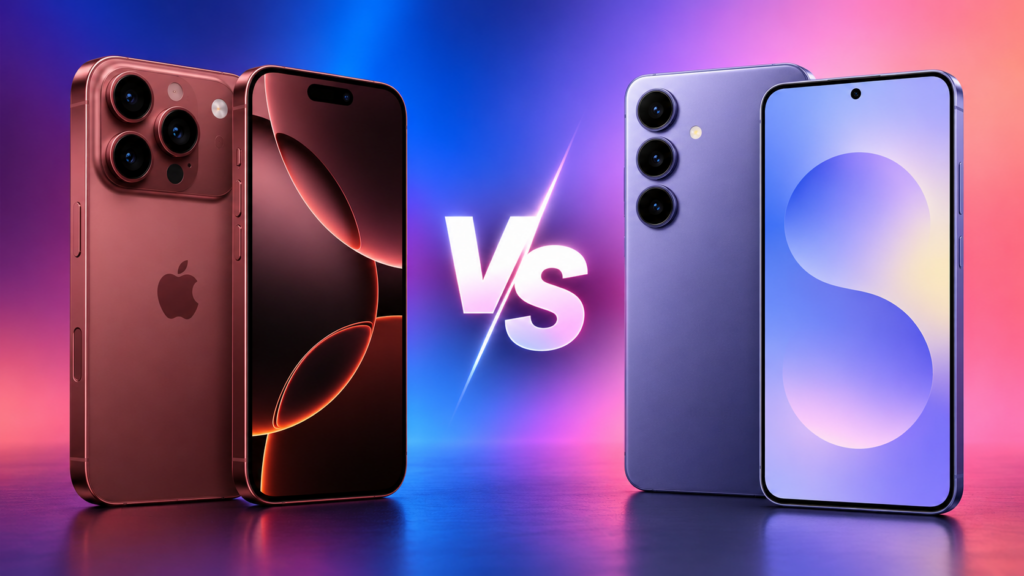
Apple’s iPhone 18 Pro and Samsung’s Galaxy S26+ offer two different approaches to the premium smartphone experience. Apple’s flagship focuses on its A20 Pro chip, an upgraded camera system with variable aperture, and iOS 27, while Samsung combines a large, high-resolution AMOLED display with Android flexibility and Galaxy AI features.
Both are powerful options, but the right choice depends on your priorities, from photography and gaming to battery life and software preferences.
Apple iPhone 18 Pro vs Samsung Galaxy S26 Plus
2Performance and Software
Apple’s A20 Pro powers the iPhone 18 Pro, bringing a six-core CPU, a seven-core GPU with Neural Accelerators, and a 16-core Neural Engine configuration. The phone runs iOS 27 and supports Apple Intelligence and Siri AI, with features designed around personal context and privacy.
The Galaxy S26+ uses the Snapdragon 8 Elite Gen 5 for Galaxy, paired with Samsung’s One UI software and Galaxy AI tools. Its features focus on simplifying everyday tasks, assisting with content creation, and making photo editing easier. Android also provides more flexibility in customization and file management.
Both phones should handle demanding games, multitasking, and AI-assisted tasks. The iPhone is appealing to users invested in Apple’s ecosystem, while Samsung offers more Android flexibility.
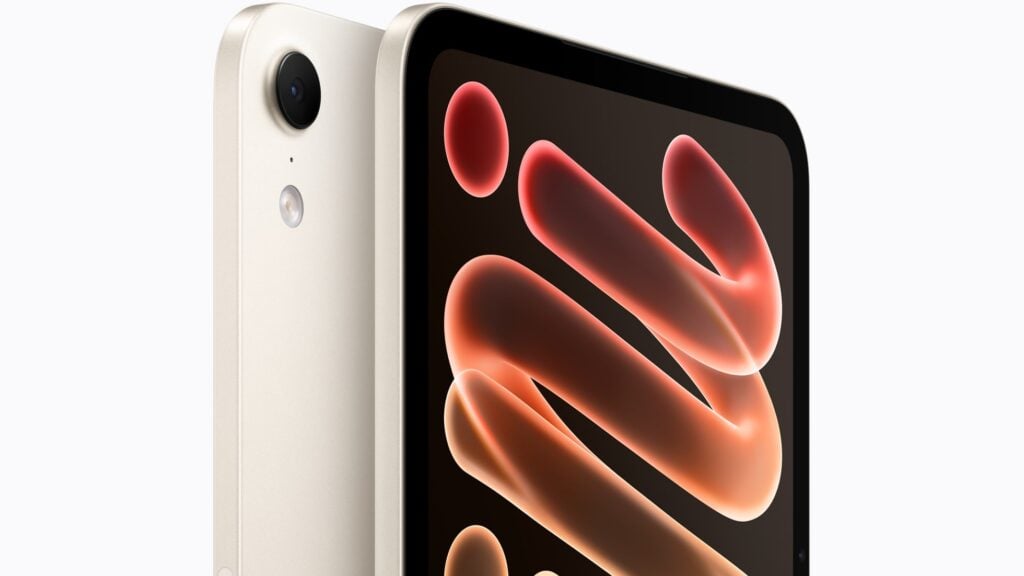
Apple’s OLED iPad Mini finally launches, and it’s thinner, tougher, and packed with A20 Pro power. The compact tablet swaps to an OLED Super Retina XDR panel, an IP67 body, and stronger AI performance on iPadOS 27. Here’s a look at everything that’s packed inside Apple’s newest and most compact iPad.
The 8.5-inch Super Retina XDR OLED panel is the biggest jump on this iPad Mini, with a 2316 x 1512 resolution at 326 ppi, 600 nits for everyday content, and 1,200 nits peak for HDR. Nano-texture glass is optional on higher storage configs if you want less glare for outdoor reading and Apple Pencil work.
Under the glass sits Apple’s A20 Pro chip, which the company rates up to 60% faster for CPU tasks, up to 2.7x for graphics, and up to 4.5x for AI versus the previous A17 Pro iPad mini, in line with the same silicon wave that powered the iPhone 18 Pro.
The chassis is just 5.4 mm thin and about 255 g on Wi-Fi (263 g cellular), with an IP67 rating that finally brings real water and dust resistance to the mini line. Acoustic Display speakers push sound through the panel so there are no speaker holes, Touch ID stays in the top button, and the 12-megapixel front camera now sits on the landscape edge for better video calls.
The rear 12-megapixel camera shoots 4K60 with a new adaptive flash, while Wi-Fi 7, Bluetooth 6, Apple Pencil Pro support, and iPadOS 27 with Siri AI round out the package. Cellular models use Apple’s C2 5G modem and are eSIM only.
iPad Mini price and availability
iPad MIni
The iPad Mini comes in color options, such as Midnight and Starlight. The new tablet is priced as follows:
128GB Wi-Fi: $699 | €749 | Rs 82,900
256GB WiFi: $799 | €879 | Rs 94,900
512GB WiFi: $999 | €1,129 | Rs 1,18,900
128GB Cellular: $849 | €919 | Rs 1,00,900
256GB Cellular: $949 | €1,049 | Rs 1,12,900
512GB Cellular: $1,149 | ~€1,299 | Rs 1,36,900
Pre-orders begin October 28, and sales start November 6.
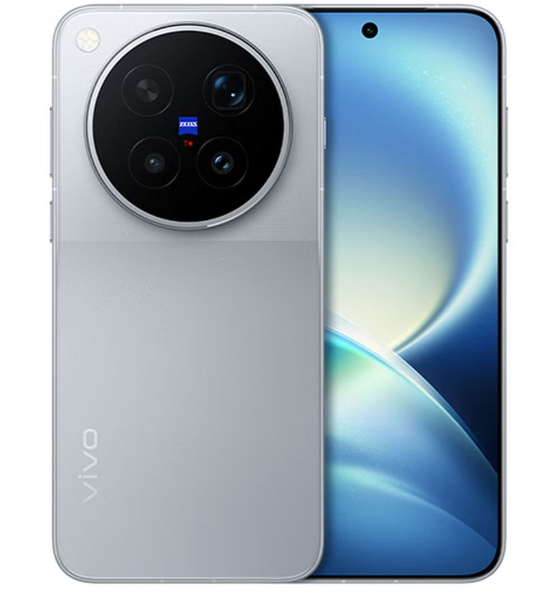
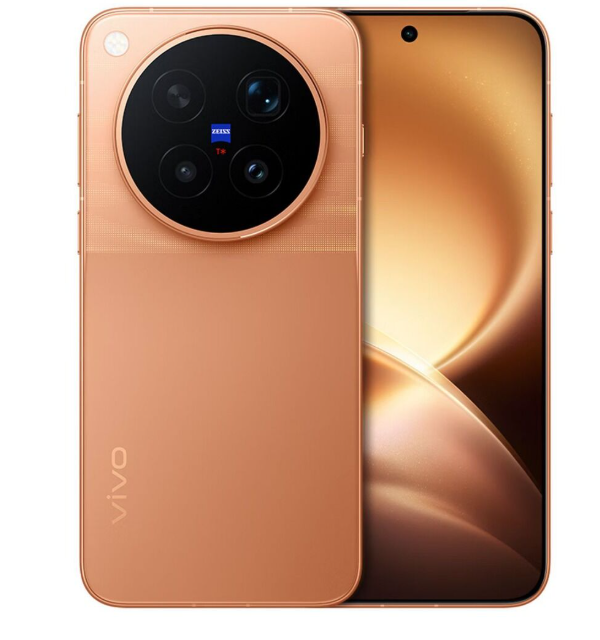
Vivo X500 Pro Max Global version is now available for presale at Giztop, with a starting price of $1699. Shipping is scheduled to begin on November 3, giving buyers an opportunity to order the smartphone ahead of its wider availability. This is the original global version. With a premium price tag, the device brings flagship hardware, an advanced camera system, and a large battery to the table.
Vivo X500 Pro Max Features a 2K 144Hz OLED Display
The Vivo X500 Pro Max features a 6.85-inch BOE Q11 flat AMOLED display with a 2K resolution, a 144Hz refresh rate, and 1440Hz high-frequency dimming. These specifications are designed to deliver sharp visuals, smooth scrolling, and responsive gaming. The high-frequency dimming feature is also intended to help reduce visible screen flicker at lower brightness levels.
For performance, the smartphone is powered by the MediaTek Dimensity 9600 Pro processor. It comes with 12GB or 16GB of LPDDR5X Ultra RAM and 256GB, 512GB, or 1TB of UFS 4.1 storage. On the software side, the phone runs Android 17 with Vivo’s OriginOS 7 interface.
200MP Periscope Camera and Zeiss Features
The phone has a triple rear camera setup comprising a 50MP Sony LYT-L910 primary camera with a 1/1.28-inch sensor, a 50MP ultra-wide camera, and a 200MP Samsung ISOCELL HPB periscope telephoto camera. The telephoto unit features an 85mm equivalent focal length, Zeiss APO optics, T* coating, and support for telephoto macro photography. A 50MP front camera is included for selfies and video calls.
This combination gives the phone dedicated hardware for wide-angle shots, detailed main-camera photography, and zoomed-in subjects. The telephoto macro feature also adds flexibility for close-up photography.
8,000mAh Battery and Other Features
The Vivo X500 Pro Max packs an 8,000mAh battery with support for 90W fast charging. According to the listing, the phone can reach 50% charge in 10 minutes and a full charge in 30 minutes, although actual charging times may vary depending on conditions.
Other features include dual nano-SIM support, NFC, Hi-Fi audio, dual stereo speakers, an X-axis linear motor, an in-display fingerprint sensor, and facial recognition.
With a starting price of $1699 at Giztop, the Vivo X500 Pro Max Global version targets buyers looking for premium specifications, versatile cameras, and substantial battery capacity. Pre-sales are now open, with shipping scheduled to start on November 3.
Prolific insider Digital Chat Station (DCS) has shared a gaming test of the iQOO Neo 12, claiming the phone supports more than 50 native 185fps games. The list includes most of the major mobile FPS titles, including Peacekeeper Elite, Delta Force, Valorant: Source Operation, CrossFire, Call of Duty Mobile, Counter-Strike: Future, Firefly, and Dark Zone.
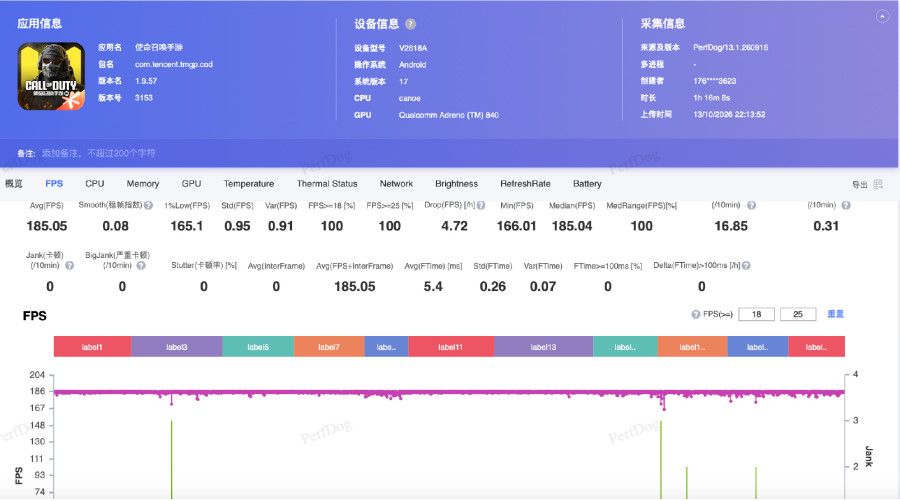
To back up the claim, DCS shared a PerfDog screenshot from a session of Call of Duty Mobile. The game ran at native 185fps with HD graphics for more than an hour and recorded an average of 185.05fps and a 1% low of 165.1fps.
The 1% low measures the frame rate during the slowest 1% of frames, and it tells you more about how a match feels than the average does. Here, even the worst moments stayed well above 160fps. The screenshot also shows zero jank events across the run.
DCS claims the iQOO Neo 12 is the first phone in the industry to run Call of Duty Mobile at 185fps with HD graphics. The test also covers only native 185fps gameplay at HD graphics settings, not the phone’s 2K mode, which combines super-resolution and frame interpolation.
The results follow iQOO’s earlier announcements about the phone’s gaming capabilities. The company’s official teasers confirmed support for more than 50 native 185fps games, alongside an active cooling fan and a 2K 185Hz display.
DCS also notes that iQOO has been working on the FPS experience for a while. Its ultra-sensitive touch zones and 4D game vibration already work in popular titles like Delta Force and Peacekeeper Elite. And native 185fps adds smoother frame rates on top, so you get touch, vibration, and smoothness together.
Sustaining high frame rates for an extended period also puts the cooling system to the test. The iQOO Neo 12 comes with an Ice Dome active cooling fan, and it likely did its job well in the gaming test above.
The iQOO Neo 12 will launch in China on October 28 and will be available for purchase right after.
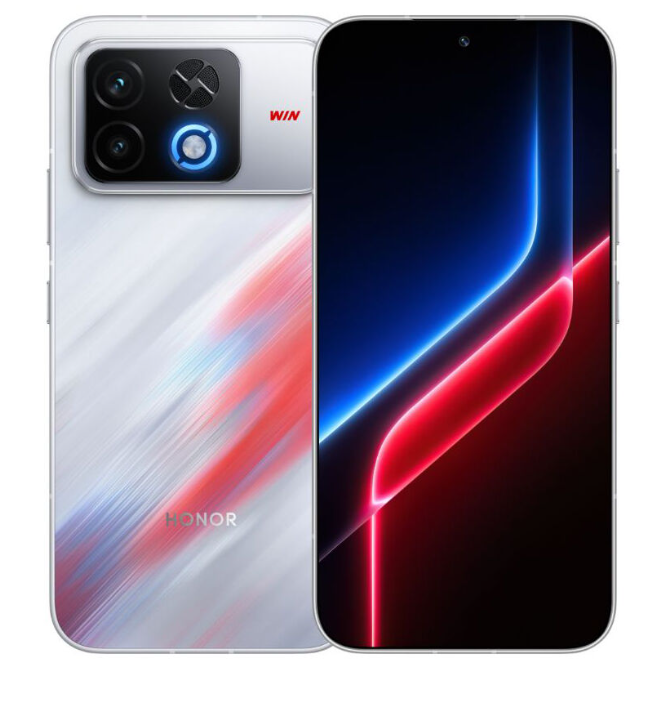
Honor WIN 2 is now available at Giztop, for a starting price of $999. The phone combines a high-refresh-rate OLED display, a powerful Qualcomm processor, a large battery, and a 200MP main camera. It also offers fast wired and wireless charging, making it an option for users looking for a high-performance smartphone with a focus on gaming and battery life.
Honor WIN 2
Honor WIN 2 Price and Availability
The Honor WIN 2 is available at Giztop with a starting price of $999. Buyers can choose from different memory configurations, including 12GB and 16GB RAM options, paired with 256GB, 512GB, or 1TB of storage. The phone is a Chinese edition, but it comes with Google Mobile Services and the Google Play Store pre-installed. It also supports over-the-air (OTA) software updates and multiple languages, including English and Chinese. Buyers should check network band compatibility with their local carrier before placing an order.
The Honor WIN 2 features a 6.89-inch 2K LTPS OLED display with a 185Hz refresh rate and a 5000Hz touch sampling rate. It supports HDR formats, including HDR10+ and Dolby Vision, along with 12-bit color. These features aim to deliver smooth scrolling, responsive gaming, and vivid visuals. The phone is powered by the Qualcomm Snapdragon 8 Elite Extreme Gen 6 processor, built on a 2nm process, according to the provided specifications. It runs MagicOS 11, which includes full-screen gesture navigation and features designed for everyday use.
200MP Cameras and Large Battery
For photography, the Honor WIN 2 has a 200MP main camera with optical image stabilization (OIS) and a 12MP ultra-wide camera. A 50MP front camera handles selfies and video calls. The phone also packs a 10,100mAh battery, which is one of its main highlights. It supports 100W wired charging, 80W wireless charging, and reverse wireless charging, offering several ways to power up compatible devices.
Connectivity and Other Features
The Honor WIN 2 includes 5G connectivity, Wi-Fi 7, and an in-display fingerprint scanner. Its combination of a high-refresh-rate display, large battery, fast charging, and high-resolution cameras makes it worth considering for users who want a feature-packed smartphone.
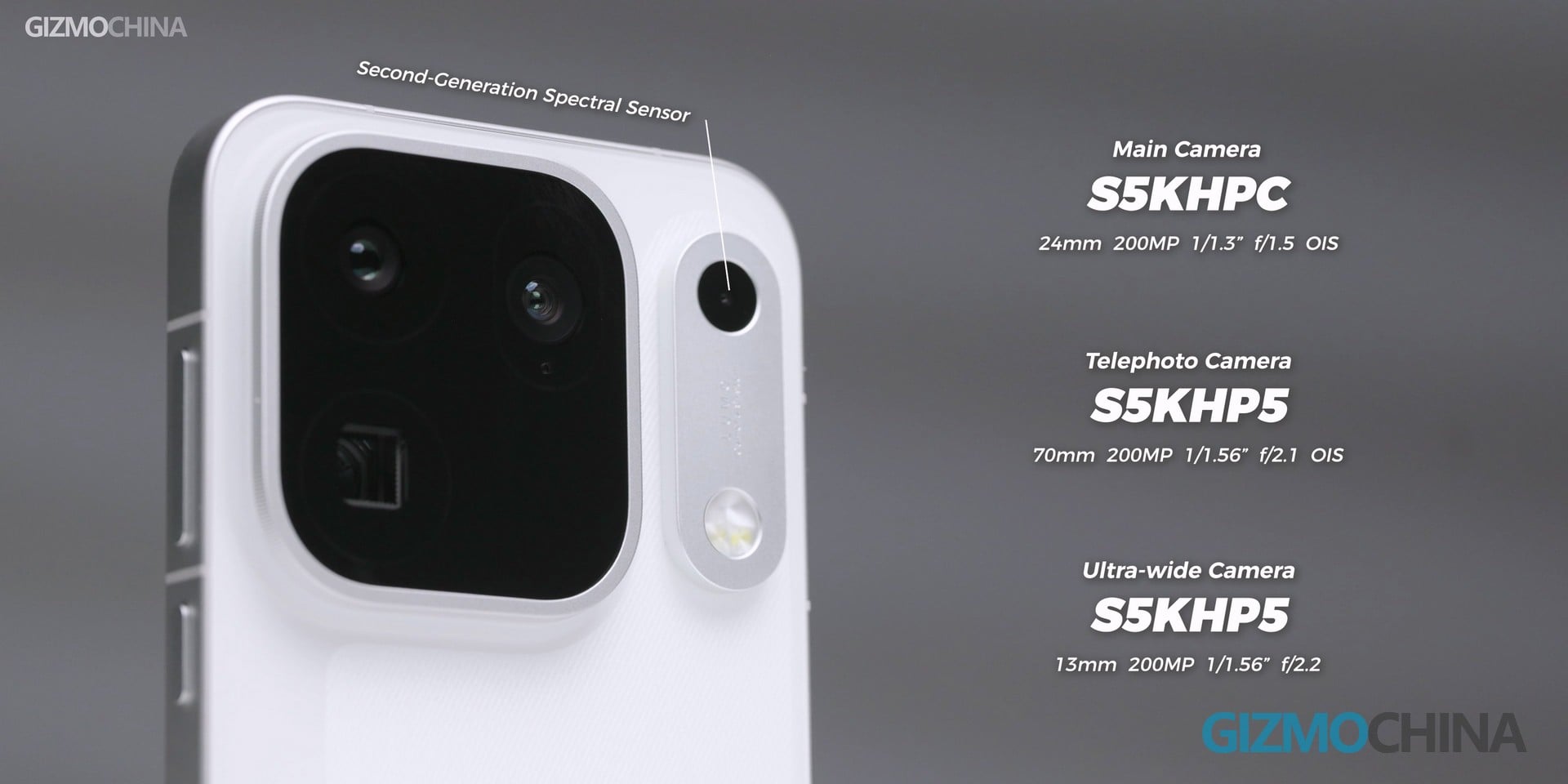
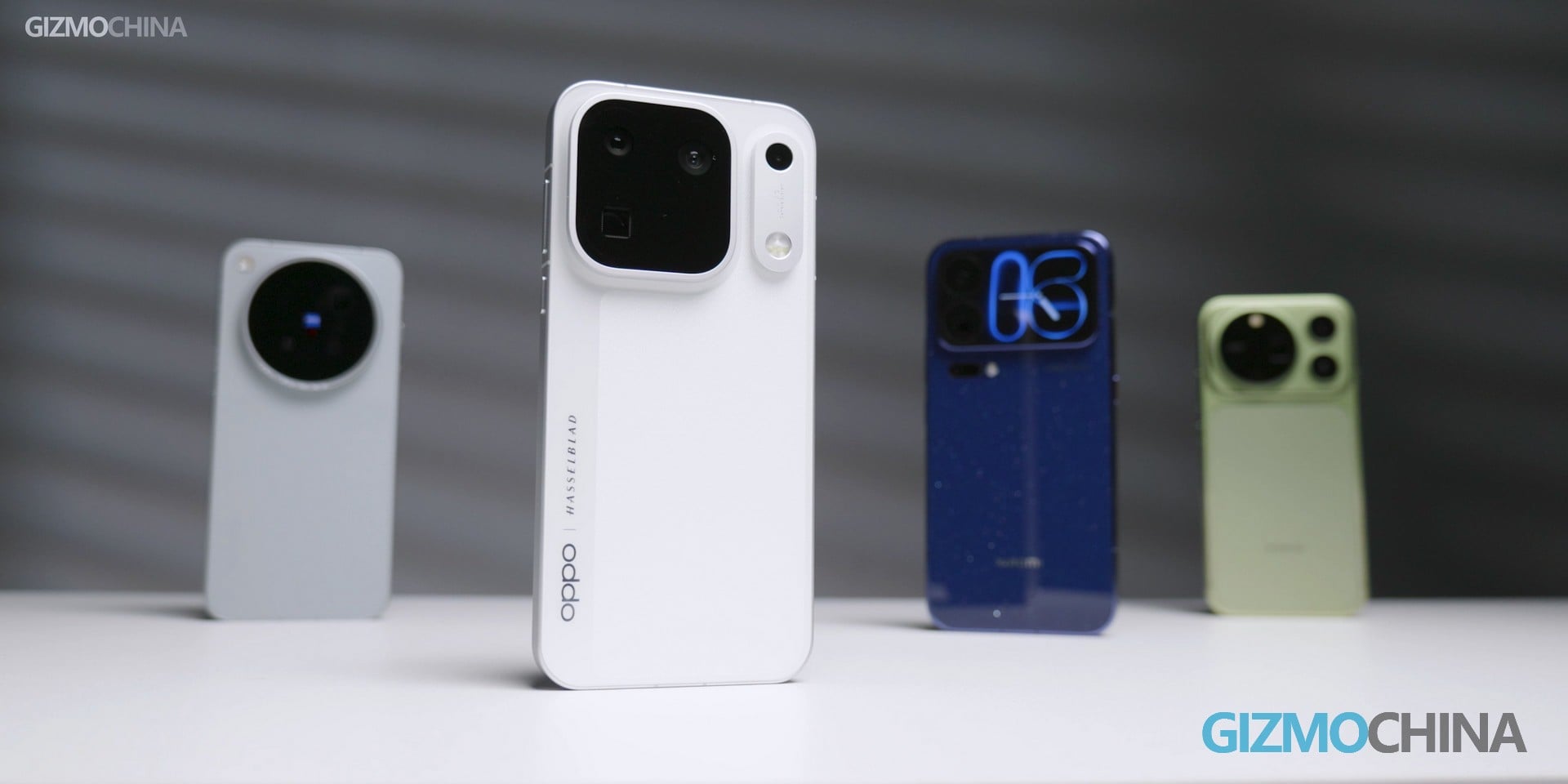
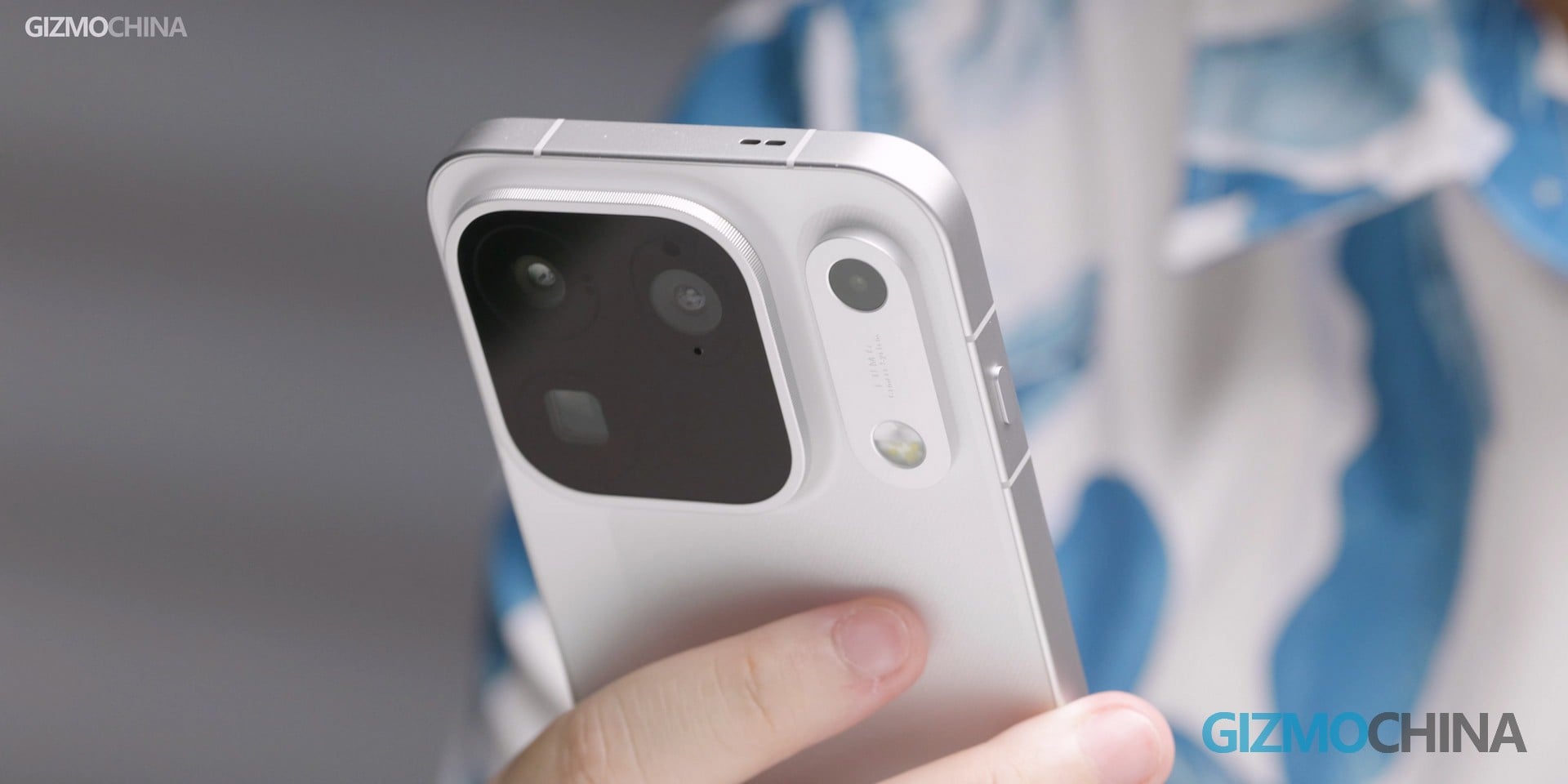
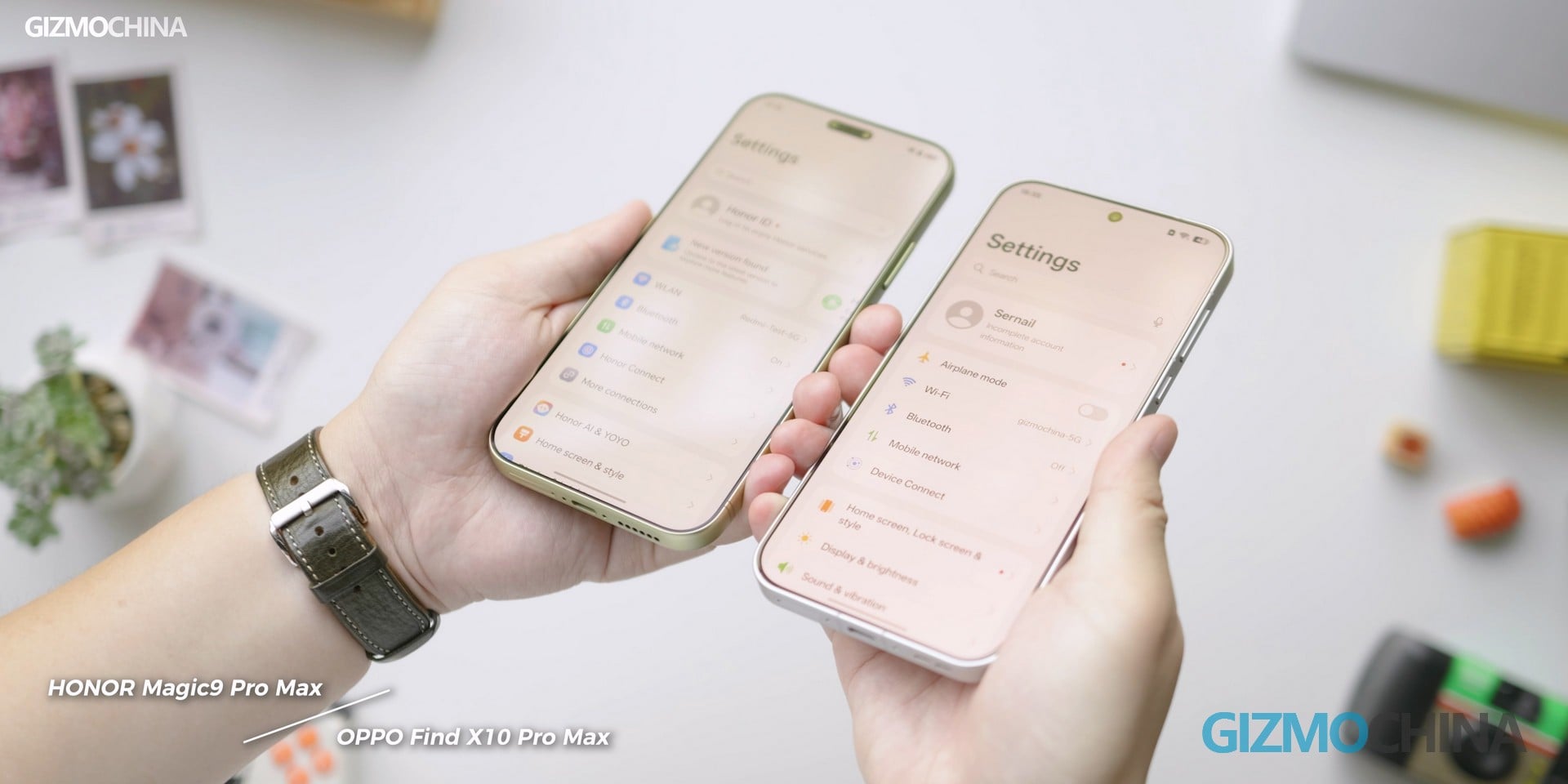
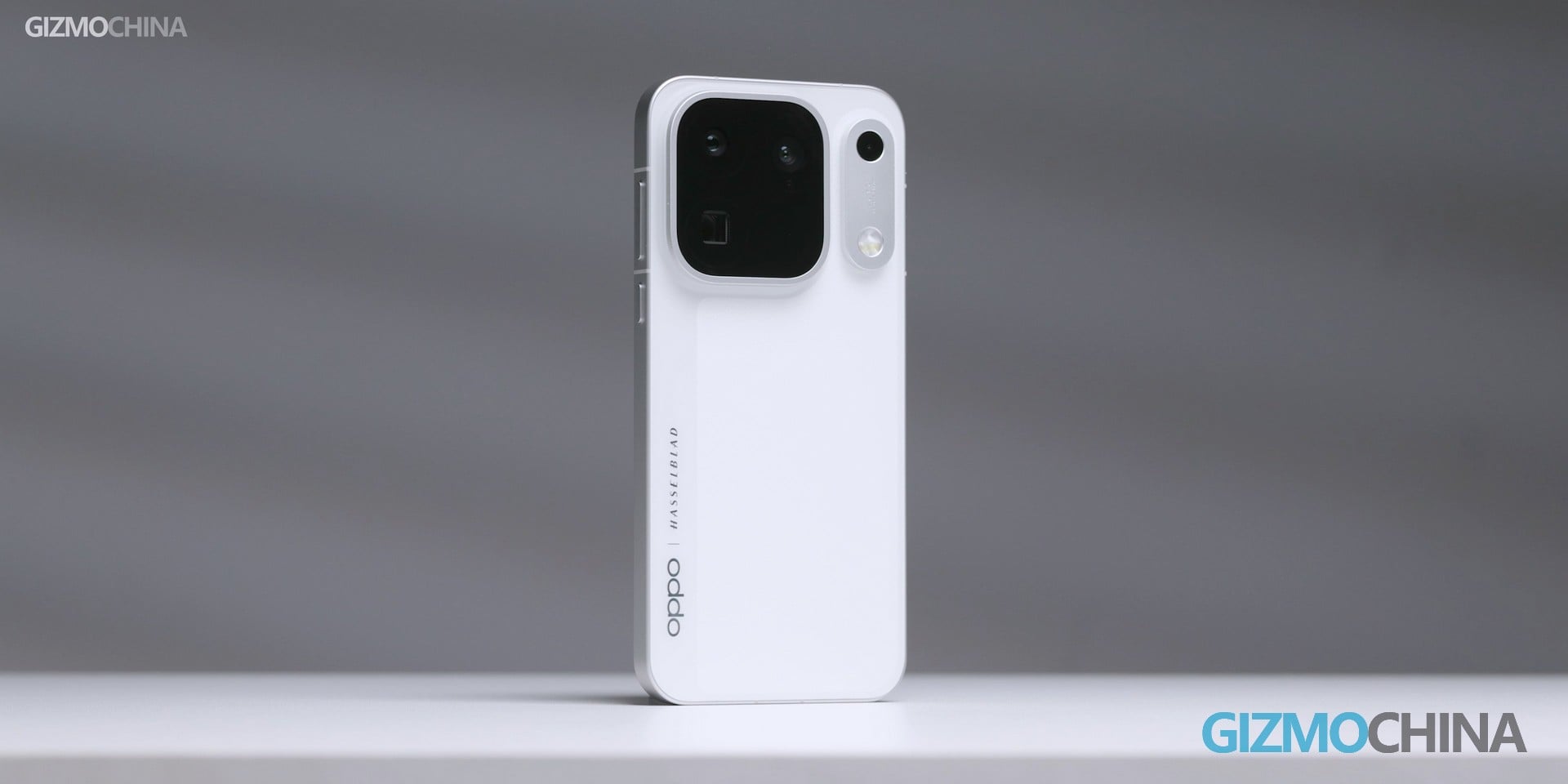
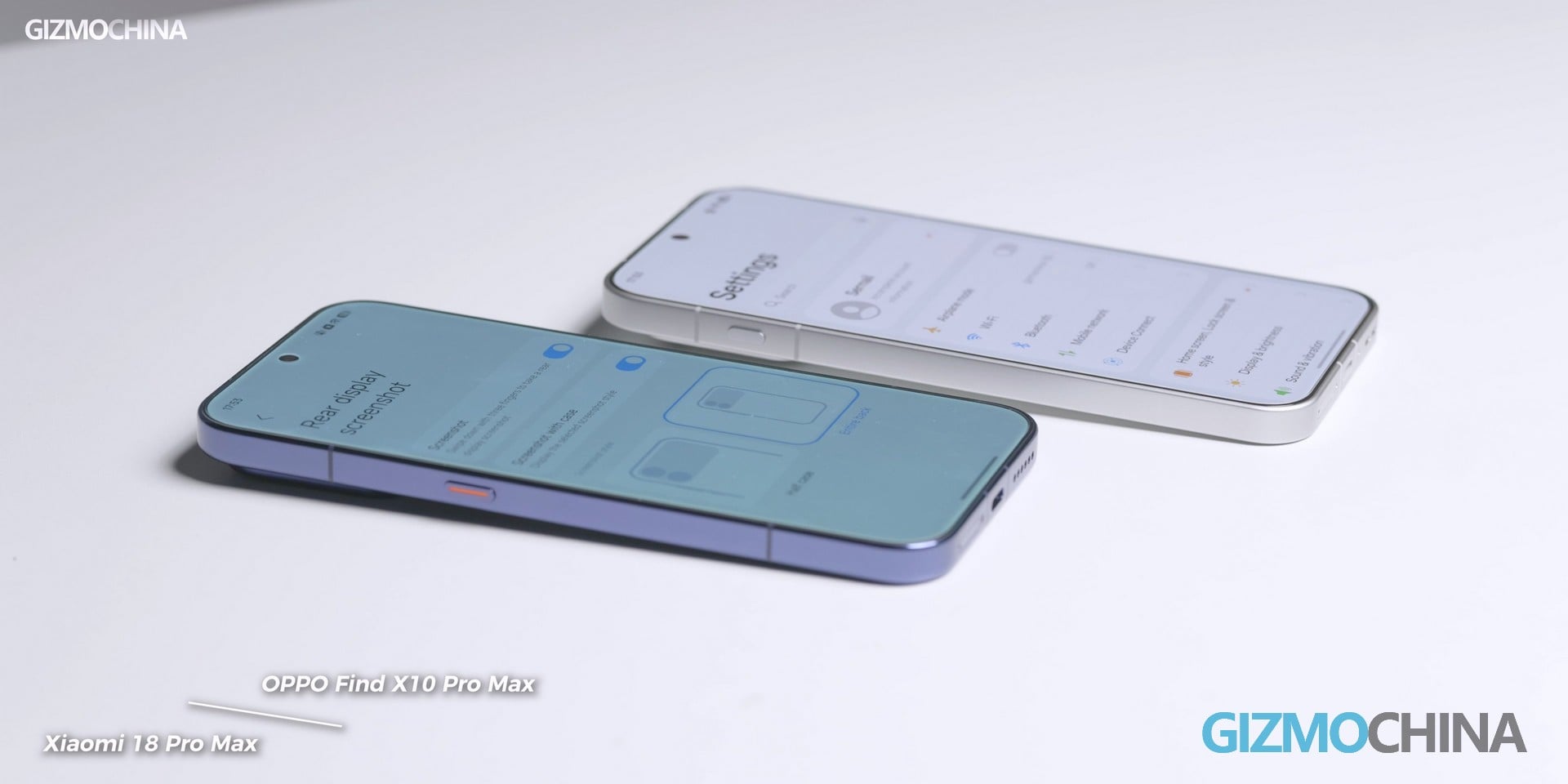
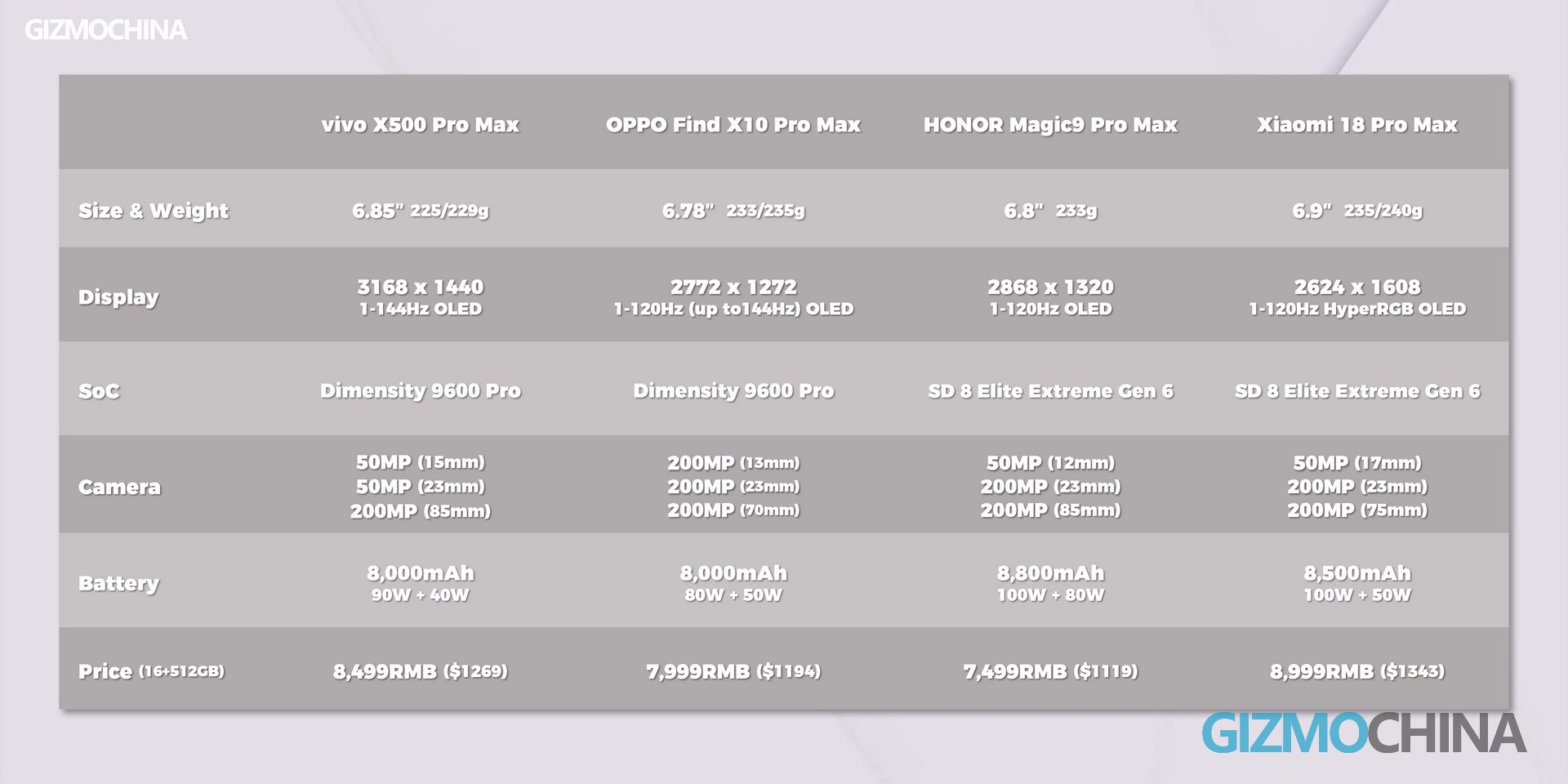
A lot of new smartphones have been released recently, and they basically represent the highest level of Chinese smartphones in 2026. Among all these Pro Max phones, there is one that I personally like the most. It doesn’t have an overly flashy design, but that doesn’t mean it hasn’t changed at all. Both the specs on paper and the price feel very reasonable to me. It has three 200MP cameras, which means it has already taken one step into Ultra territory. This is the Find X10 Pro Max, a rugged and durable camera flagship smartphone from OPPO.
Camera
Since its biggest selling point is these three 200MP cameras, let’s start with the cameras. It’s only natural for a Pro Max model to use new and excellent sensors for the main and telephoto cameras. But what’s quite rare is that OPPO has also equipped the Find X10 Pro Max’s ultrawide camera with a large sensor.
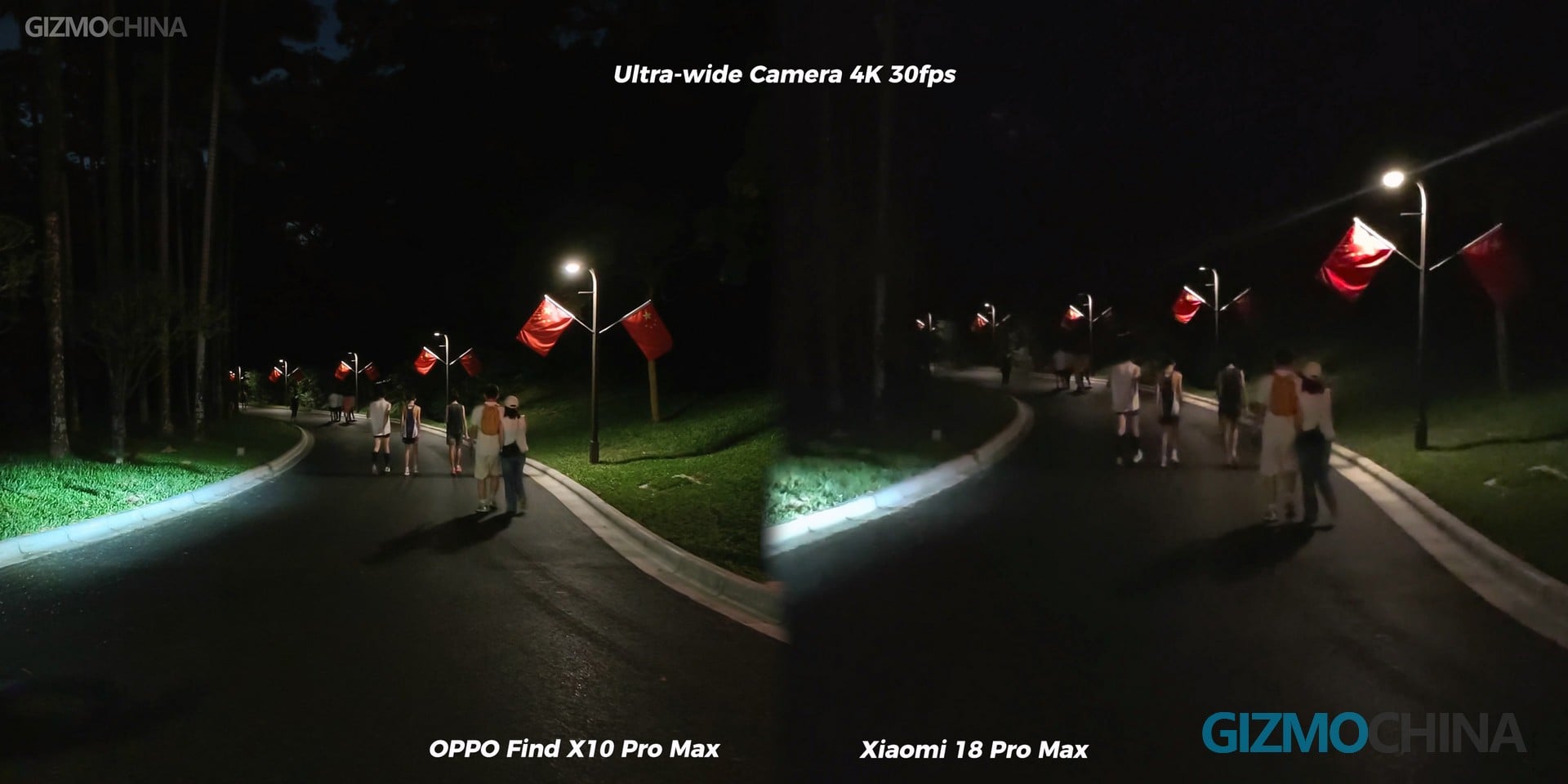
For those of us who love ultrawide shots or shoot a lot of video, this is enough to bring a tear to our eyes. We really haven’t seen an ultrawide camera this good in a long time. There is almost no purple fringing or lens flare, and even the field of view is incredibly wide. Especially when one of its competitors uses a 17mm lens, the ultrawide camera on the X10 Pro Max looks even better by comparison.
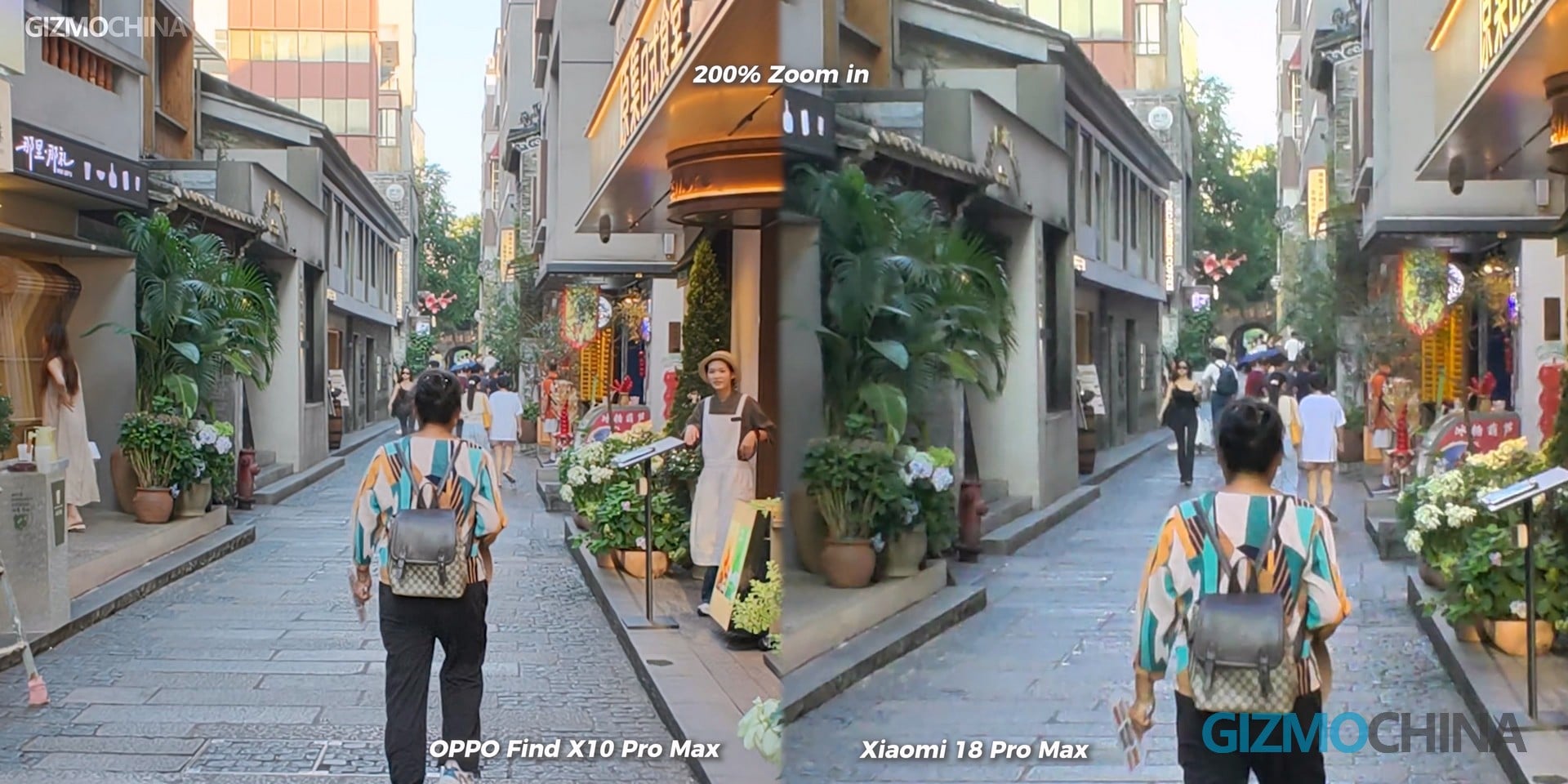
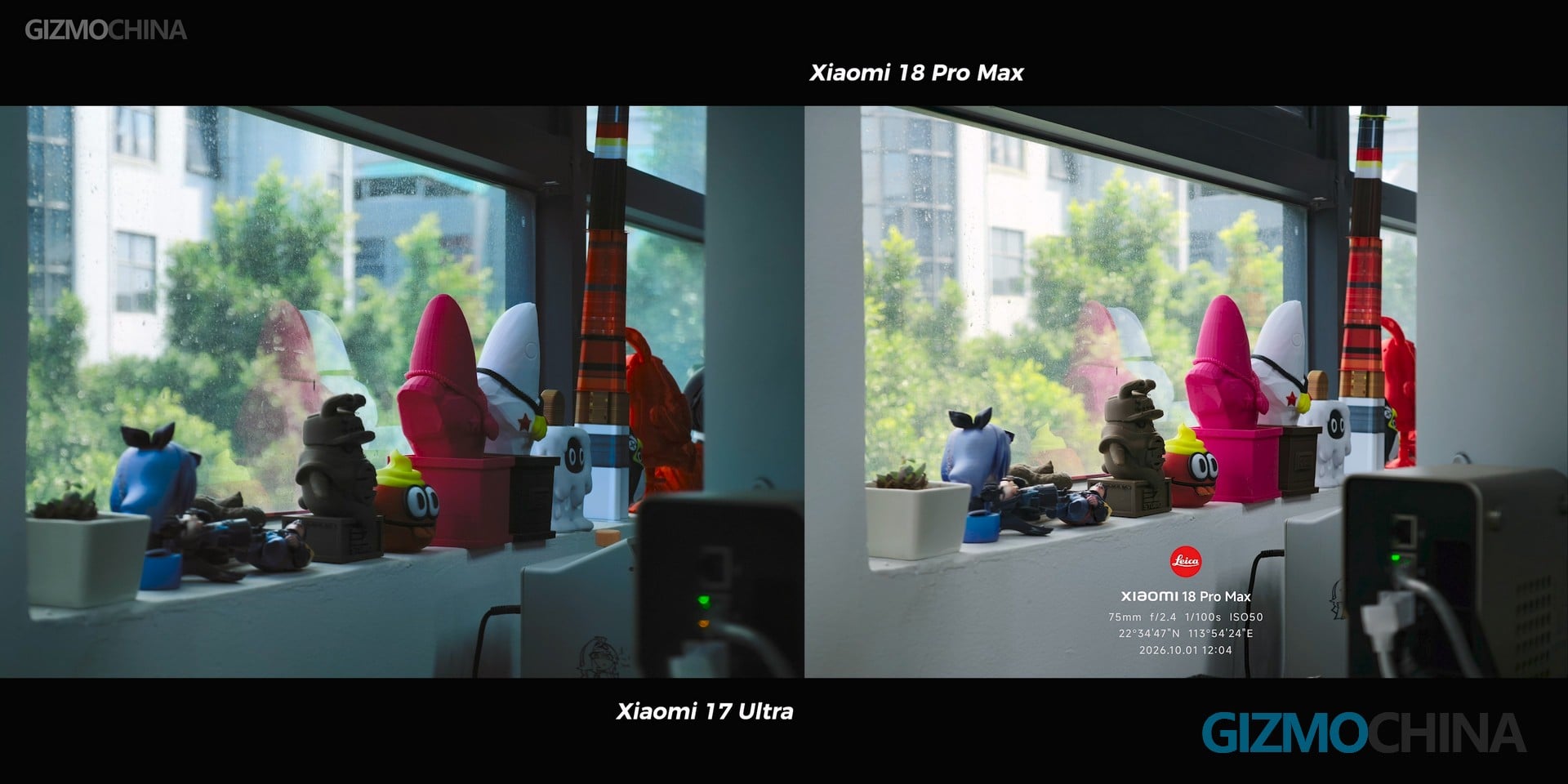
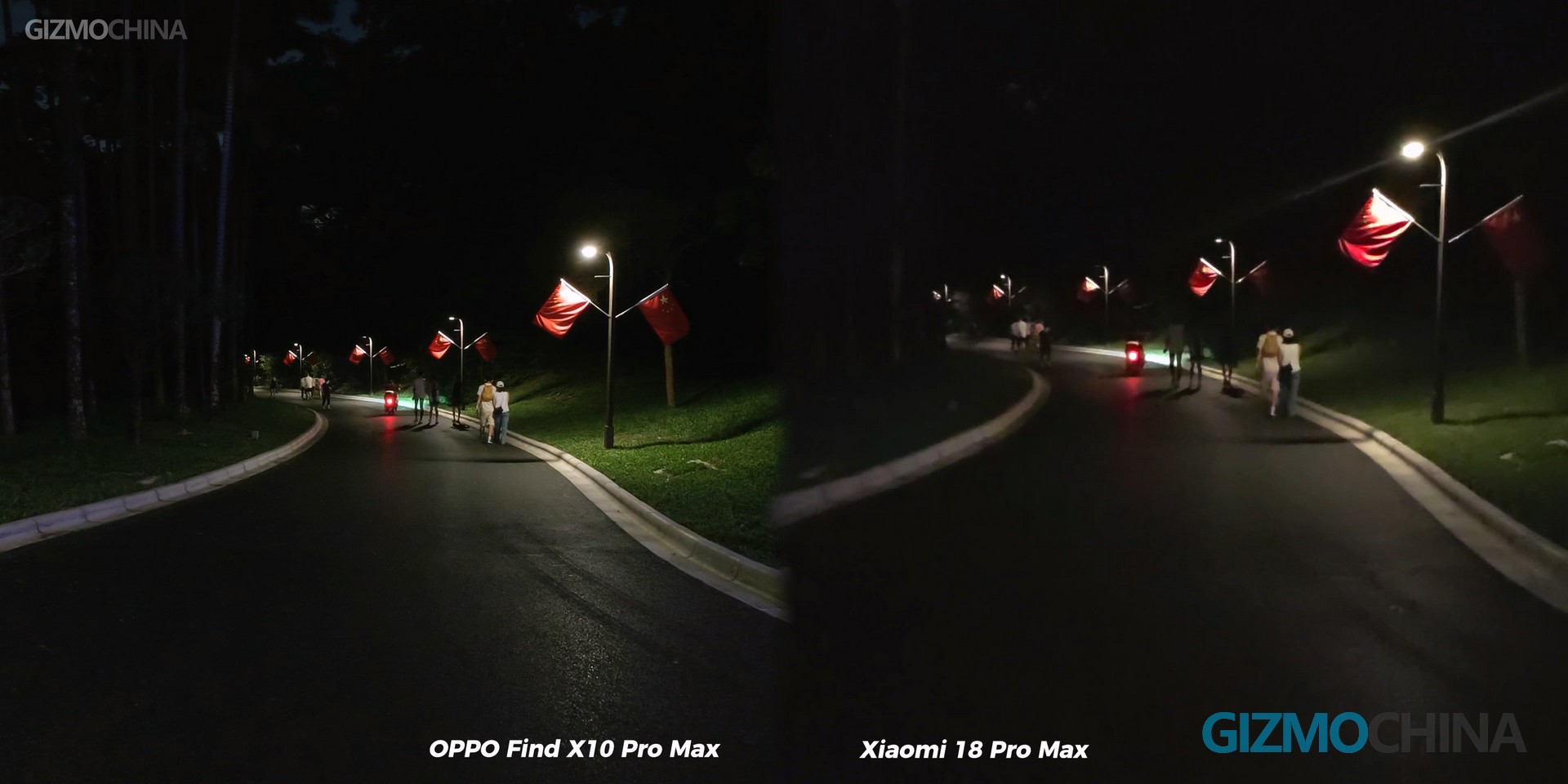
The strength of the ultrawide camera isn’t just noticeable in photos, but also in video recording. In my Xiaomi 18 Pro Max review, I already showed you the comparison between the two phones in low-light. But the difference isn’t only visible at night. You can also see it during the day.
When you’re carefully comparing which phone has the better main camera video, the moment you switch to the ultrawide camera, the winner becomes obvious immediately. I think once you see this footage, you’ll realize just how important a good ultrawide camera is for video recording.
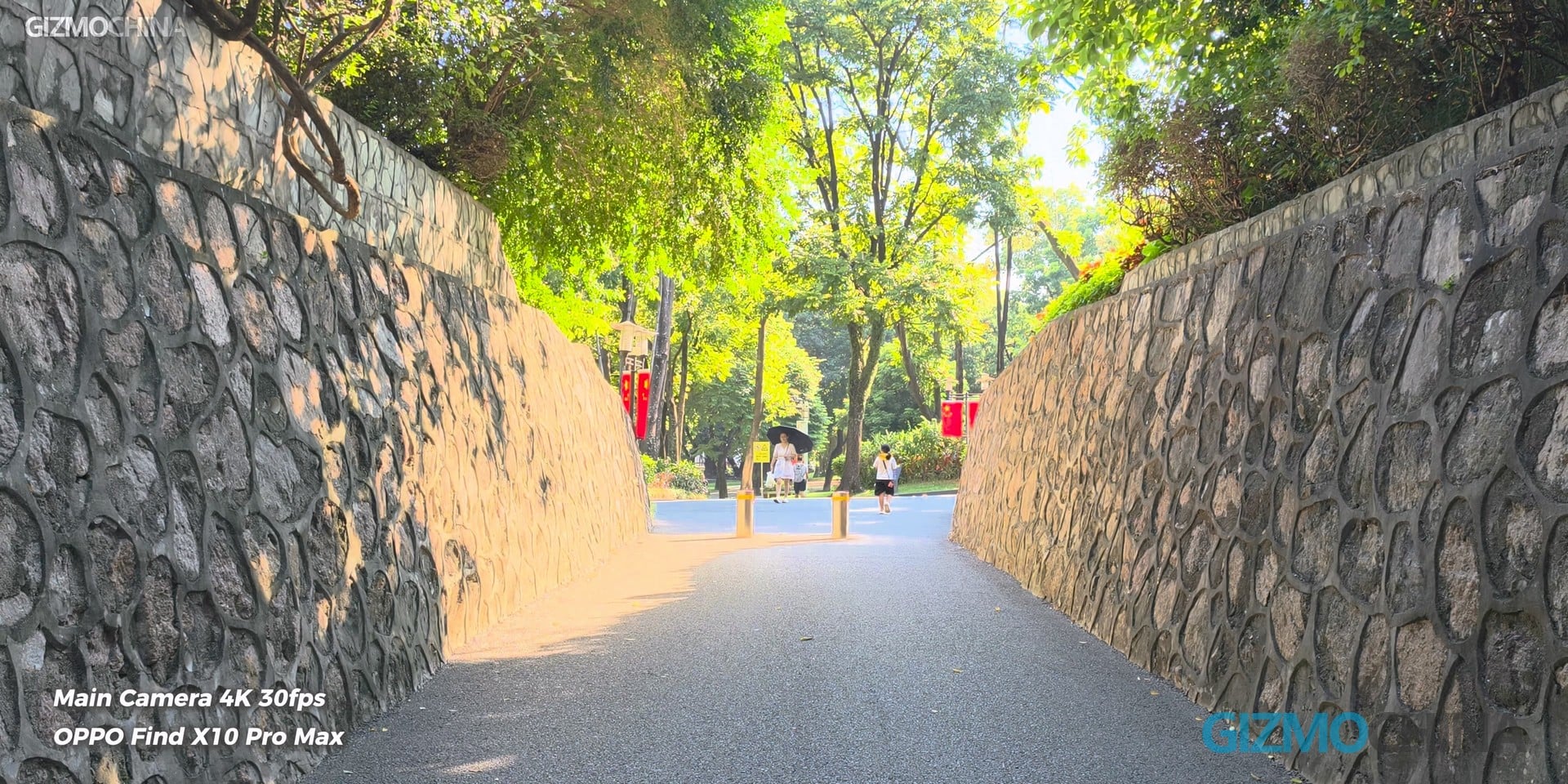
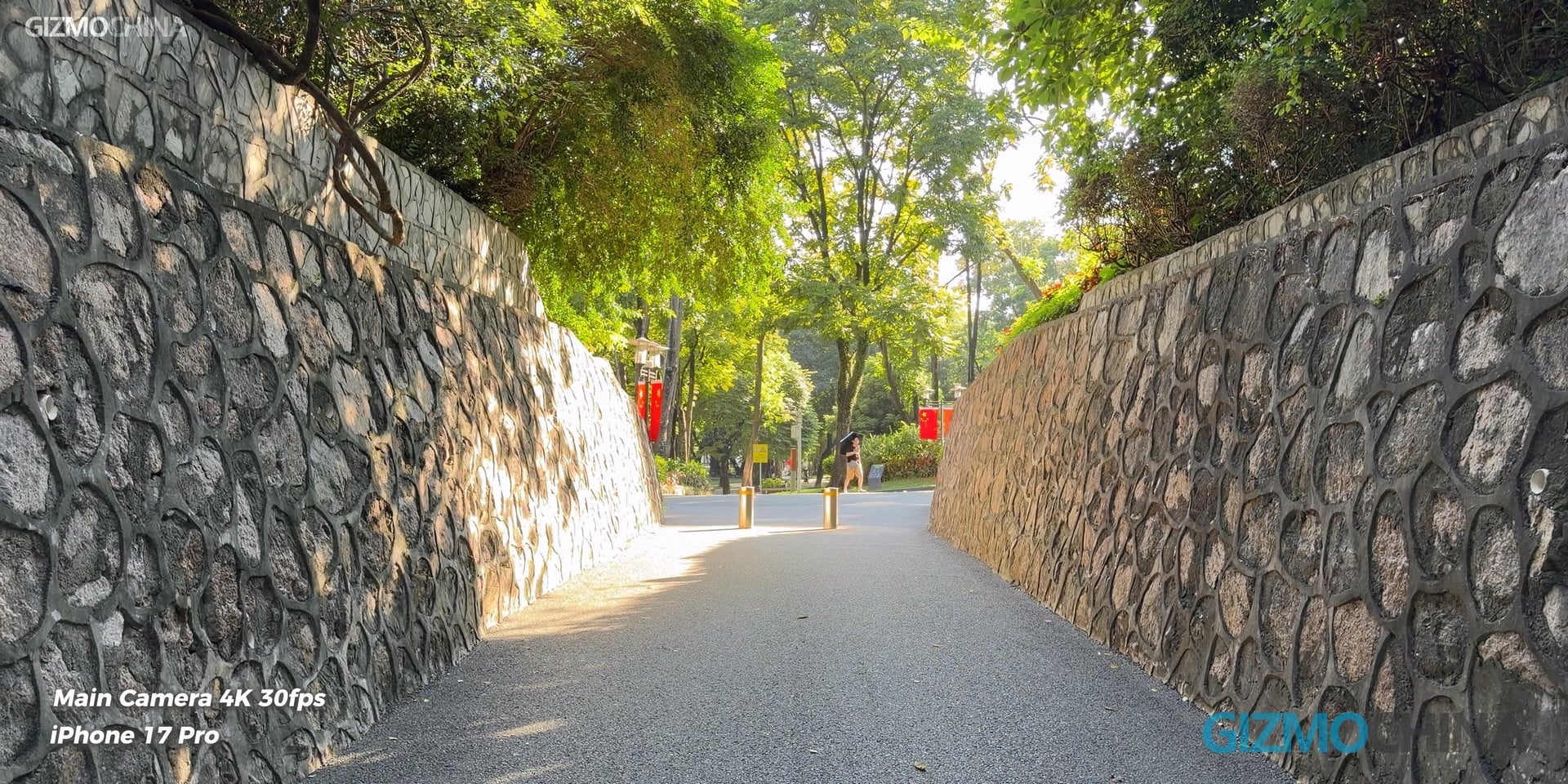
Although the main camera on the X10 Pro Max doesn’t use LOFIC technology, it does use other new technologies to improve its maximum dynamic range. Of course, when taking photos, you can use multi-frame processing for exposure bracketing, so the improvement in dynamic range may not be that obvious in still photos. But once you start recording video in a high-contrast scene, you can clearly see the improvement.
Just look at the stone wall on the left. Even compared with the iPhone, the X10 Pro Max still has the advantage in dynamic range. The only minor issue with this main camera is that it adds a little too much sharpening, making the cat’s fur look a bit too sharp. But this can be avoided because we have Master Mode, right?
Although photos taken in this mode lose the advantage of the high dynamic range, the reduced sharpening, more restrained exposure, and lower saturation are all positive changes. Every year, I tell Find series users the same thing: give Master Mode a try. You might be surprised by what you can create with it.
The telephoto camera on the Find X10 Pro Max is the only camera this year that hasn’t changed. But this telephoto camera was already excellent last year. Even without an upgrade, I think it can satisfy the needs of most people. The 70mm focal length is also very suitable for everyday shooting, and even at 140mm, the image quality is still excellent. Even if you want to zoom in further, the AI enhancement makes the image quality just about acceptable. And it doesn’t have that strange look we’ve seen from AI enhancement in the past.
It also supports macro photography, and I haven’t encountered any strange bugs with it. Overall, these three cameras are well balanced, stable, and capable of producing excellent images. I’d be more than happy to use it as my daily driver or take it with me on a trip.
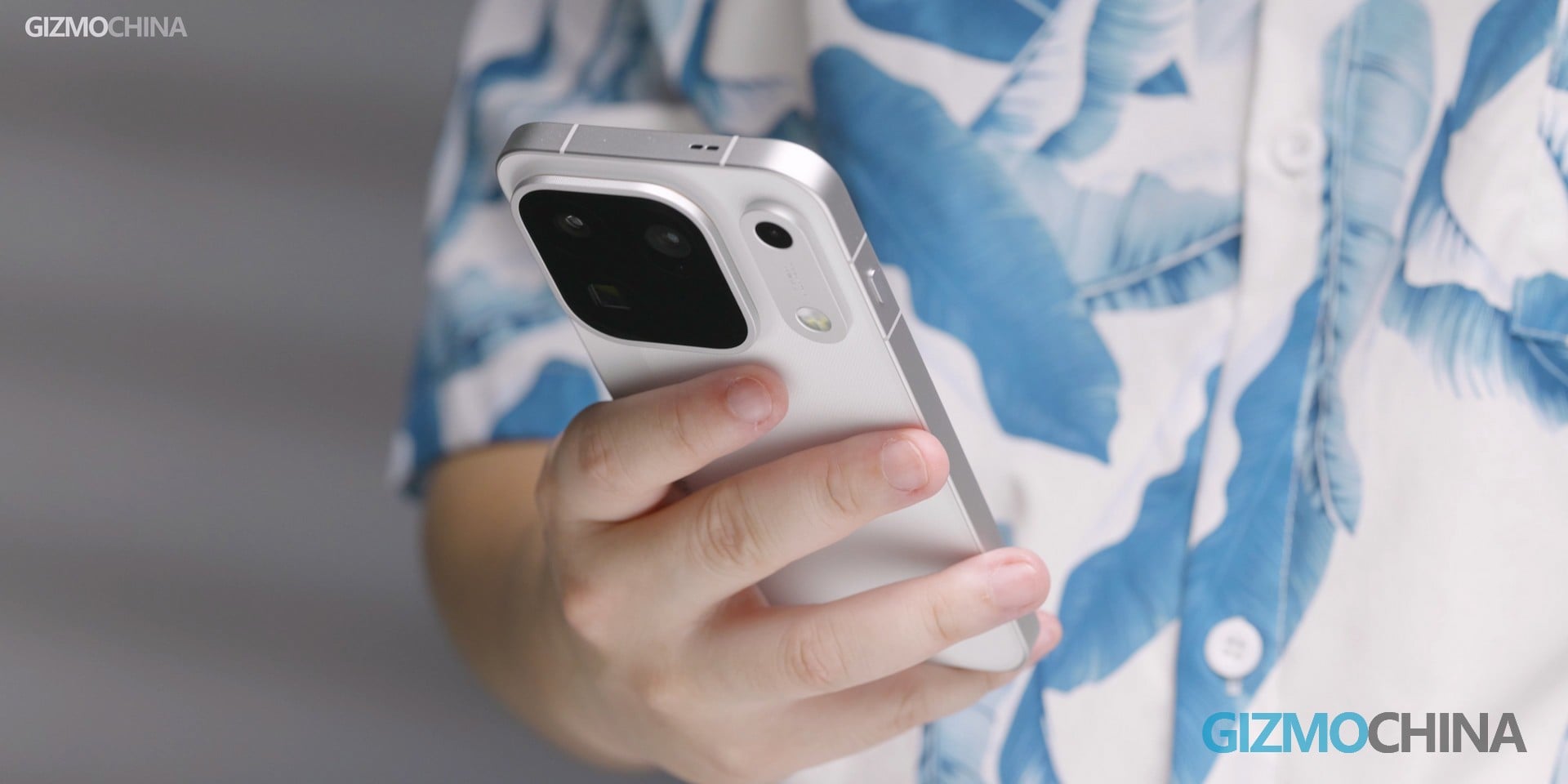
Whether you like the rear design of the X10 Pro Max or not, you have to admit one thing: OPPO really cares about how comfortable its phones feel in the hand. Just look at its competitors. Their camera modules are getting bigger and bigger. No matter how you position your index finger, it never feels particularly comfortable.
Even though the X10 Pro Max has three 200MP cameras, its camera module takes up the least amount of space. And OPPO has placed it as far into the top-left corner as possible, so your fingers won’t be blocked by any of the components anymore.
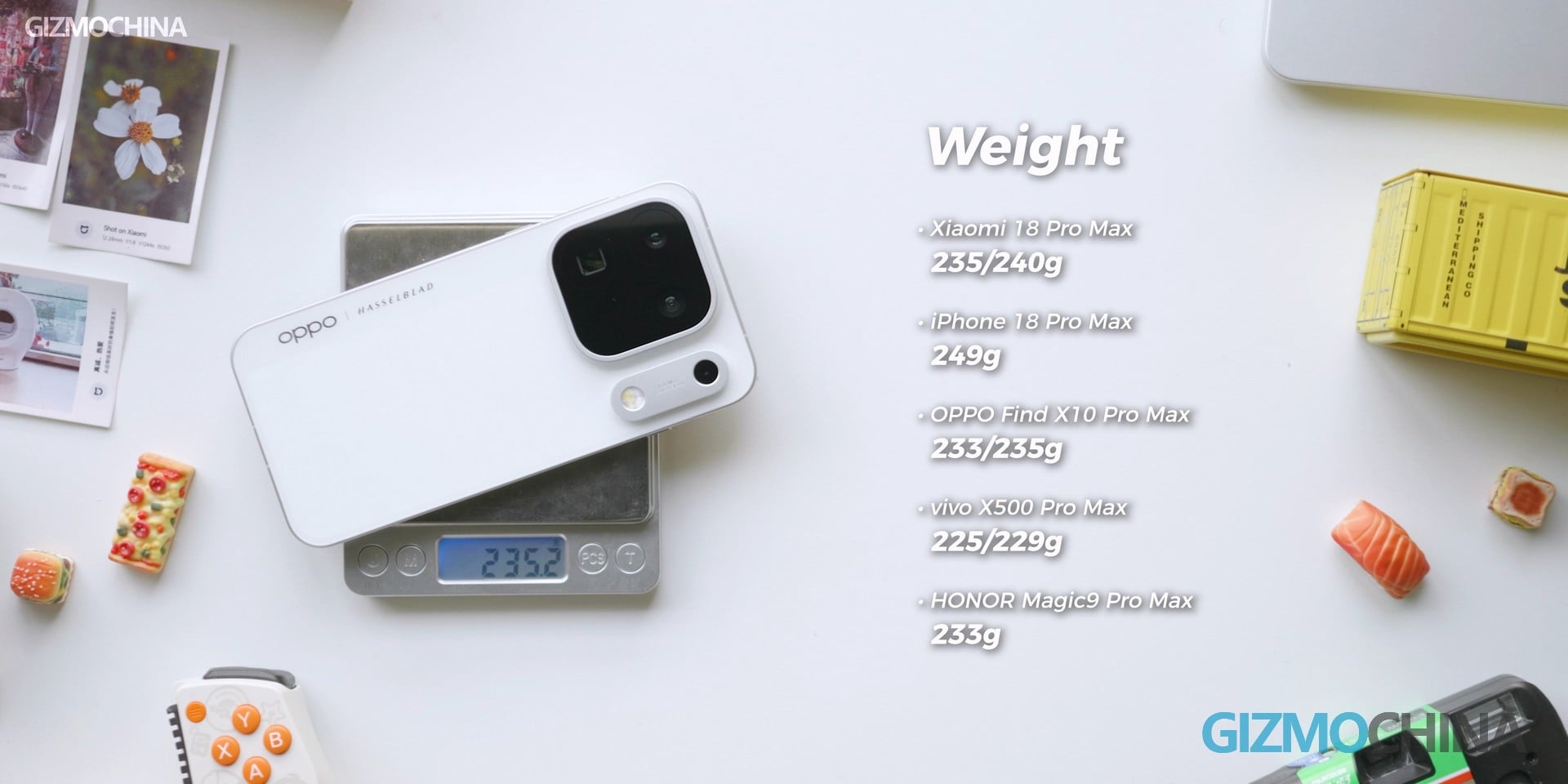
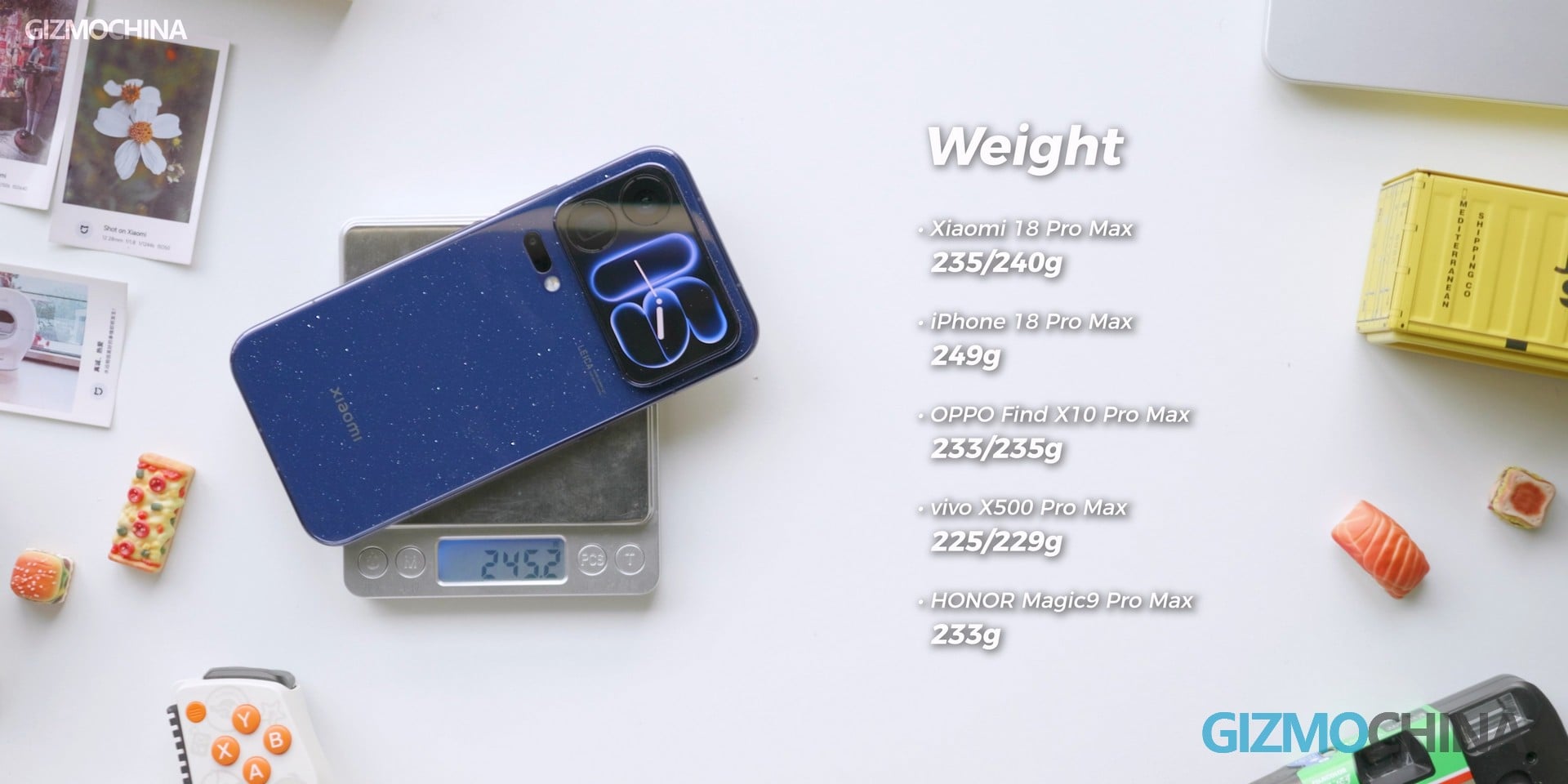
Of course, all of this assumes you buy the white version. The other colors still have a rectangular step surrounding the camera module. The excellent in-hand experience also comes from its weight. It’s not the lightest Pro Max phone, but it is still lighter than its two main competitors.
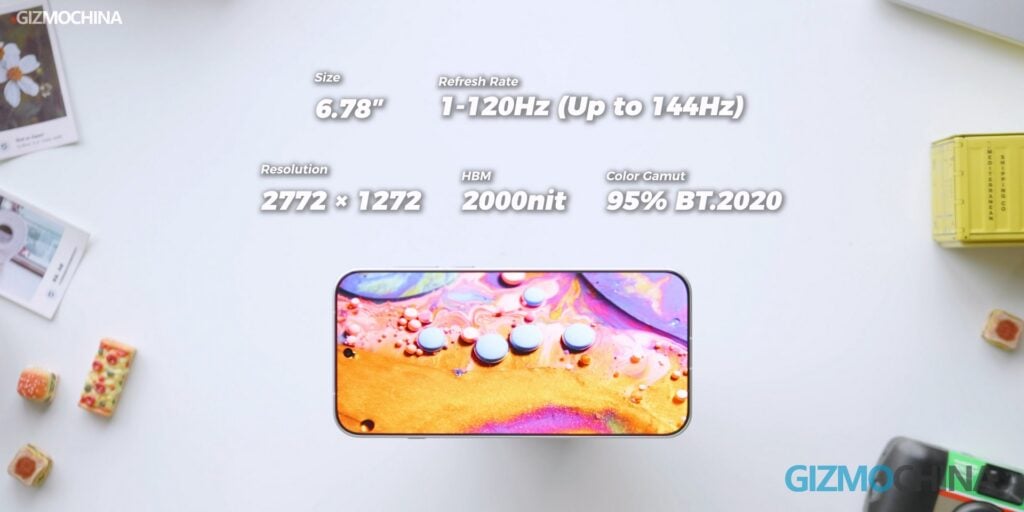
The Find X10 Pro Max’s display doesn’t have any flashy gimmicks. It’s simply a very solid display all around. It has a maximum refresh rate of 144Hz and supports 95% of the BT.2020 color gamut. The new emissive material has higher luminous efficiency, bringing higher brightness and lower power consumption. The viewing angles are also excellent.
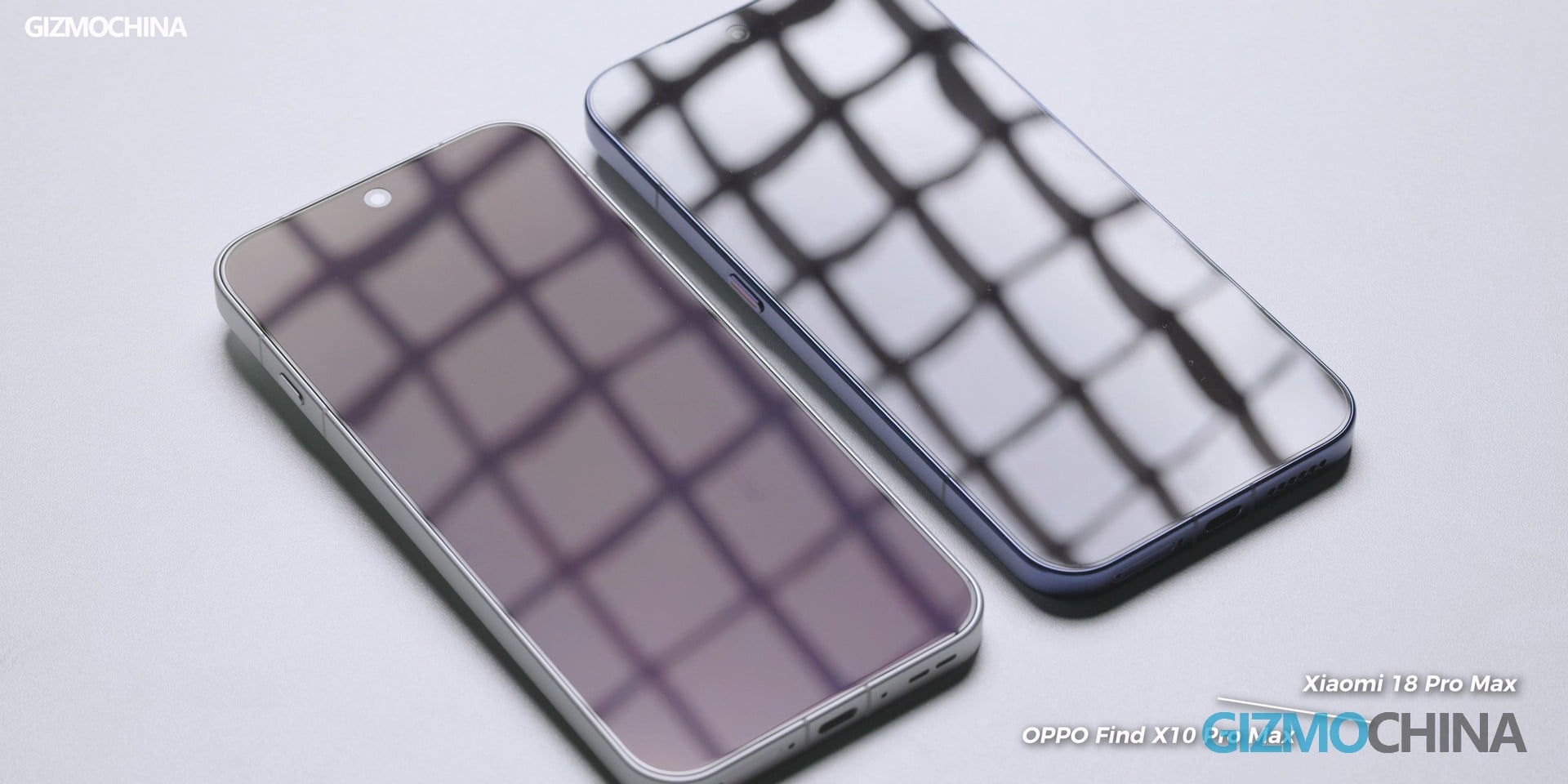
Compared with a privacy display, which isn’t a feature that everyone likes, I much prefer the AR film on the X10 Pro Max’s screen. First of all, this film doesn’t affect the viewing angles, and its impact on clarity and brightness is almost negligible. Secondly, it reduces reflections and improves contrast, which makes a huge difference when using the phone outdoors.
And finally, if you really don’t like the film, you can simply peel it off without causing any negative impact on the display. If your phone’s screen doesn’t have an AR coating, I strongly recommend putting an AR film on your phone right now. It certainly won’t be cheap, but once you’ve experienced it, I think you’ll definitely feel that it’s worth the money.
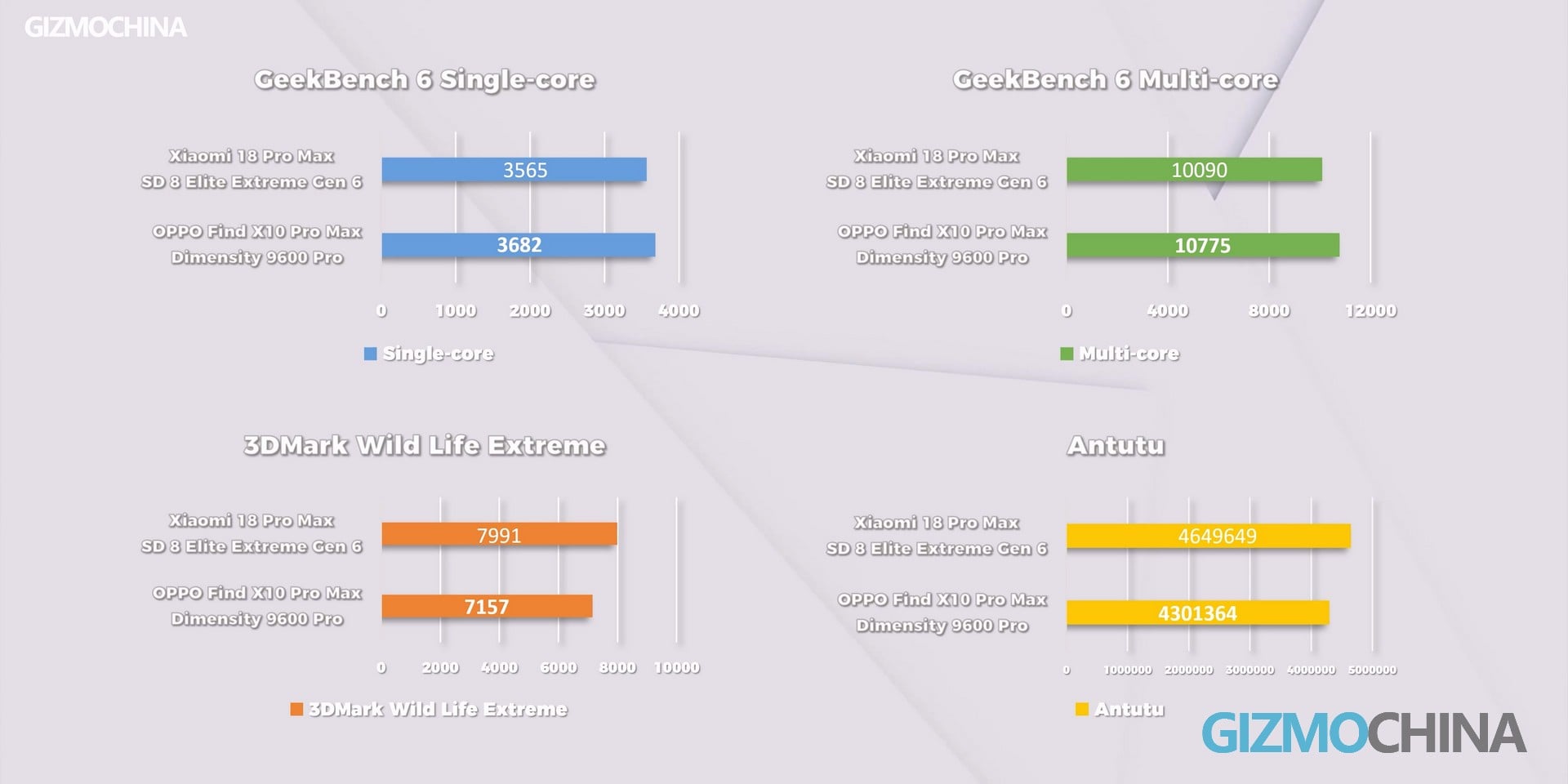
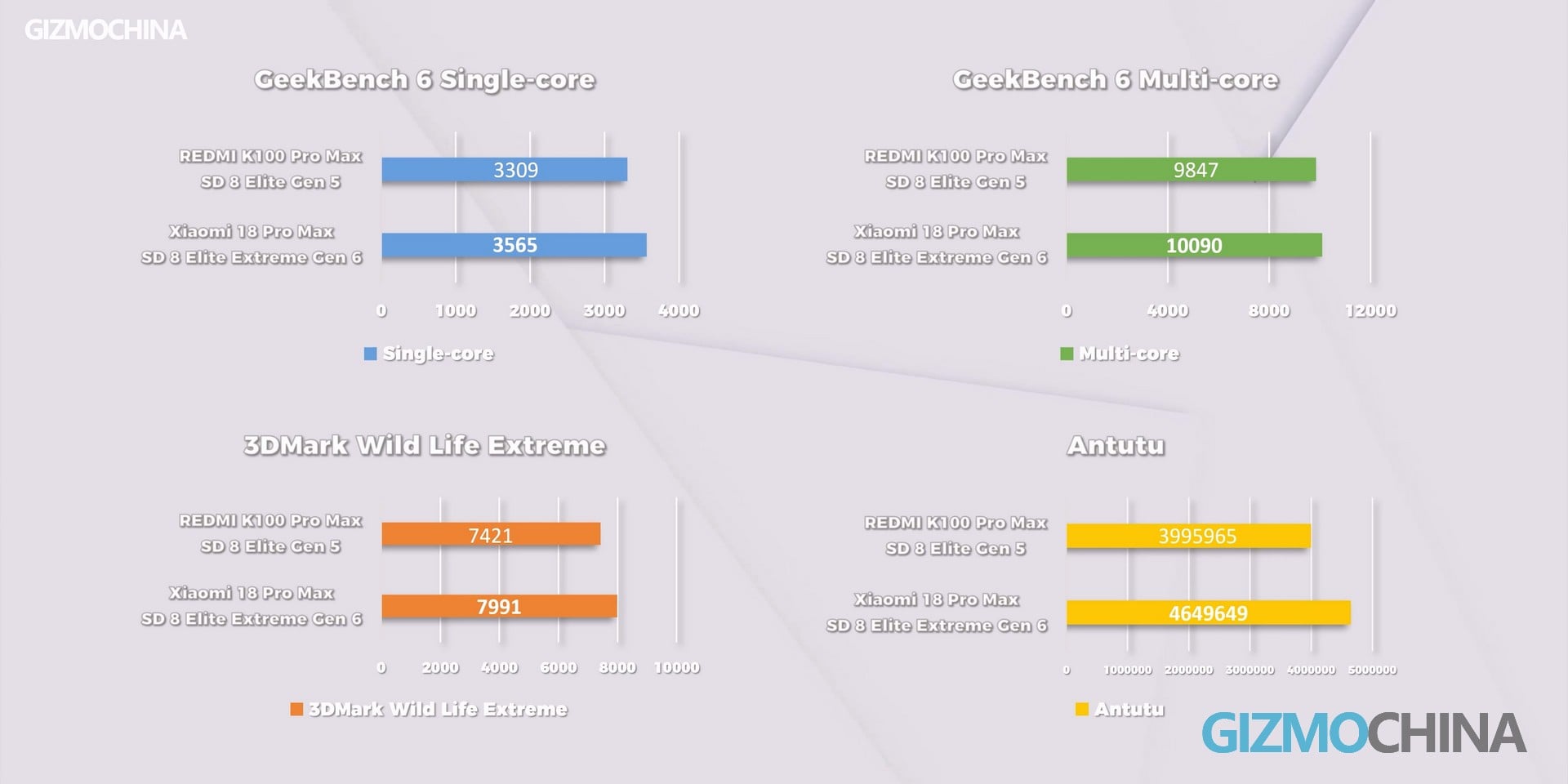
Looking at the specs on paper, the new MediaTek platform doesn’t seem to have improved as much as we expected. Its Snapdragon counterpart seems to be in a similar situation, so it looks like there’s still room for improvement with the new 2nm process.
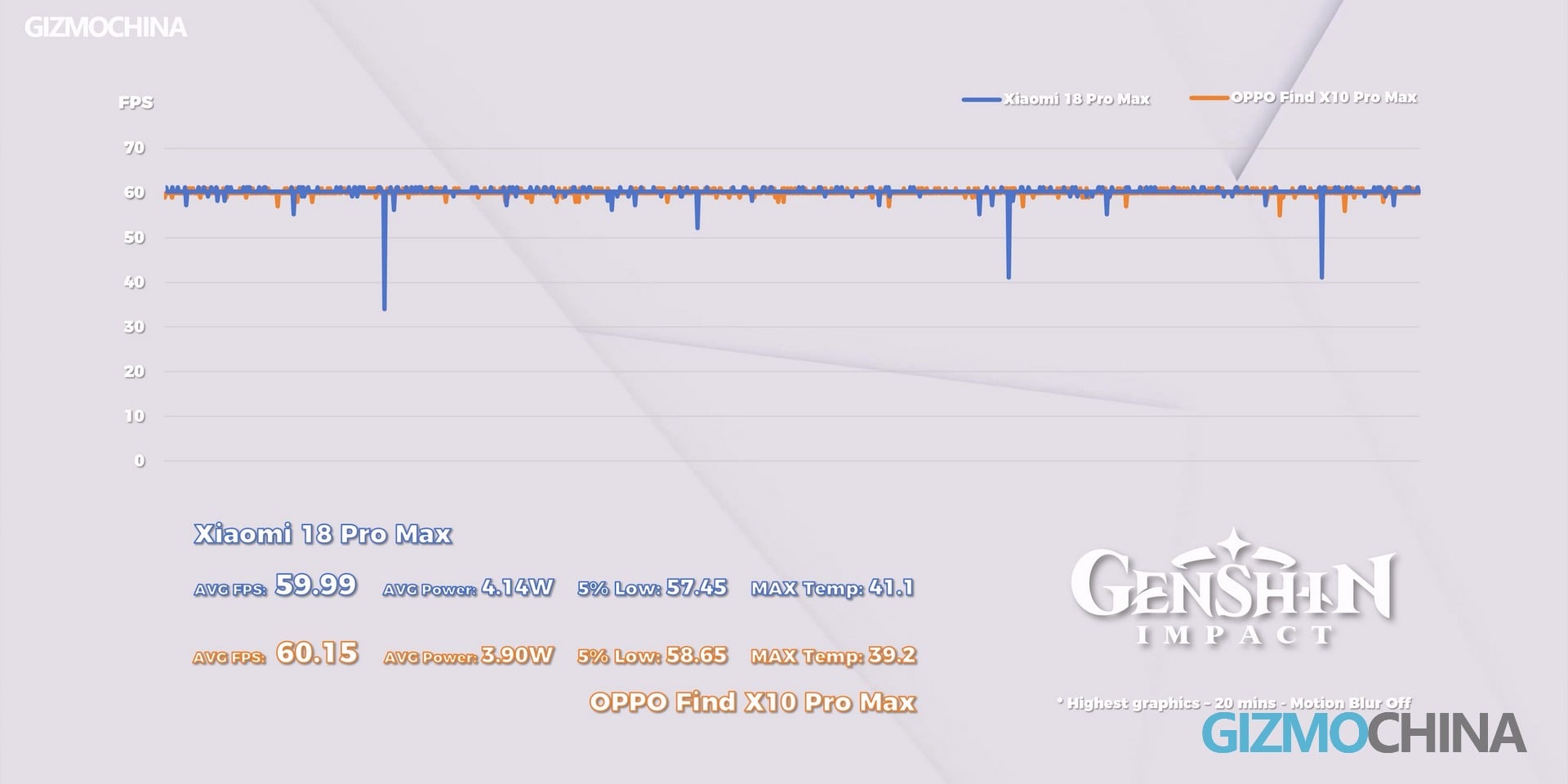
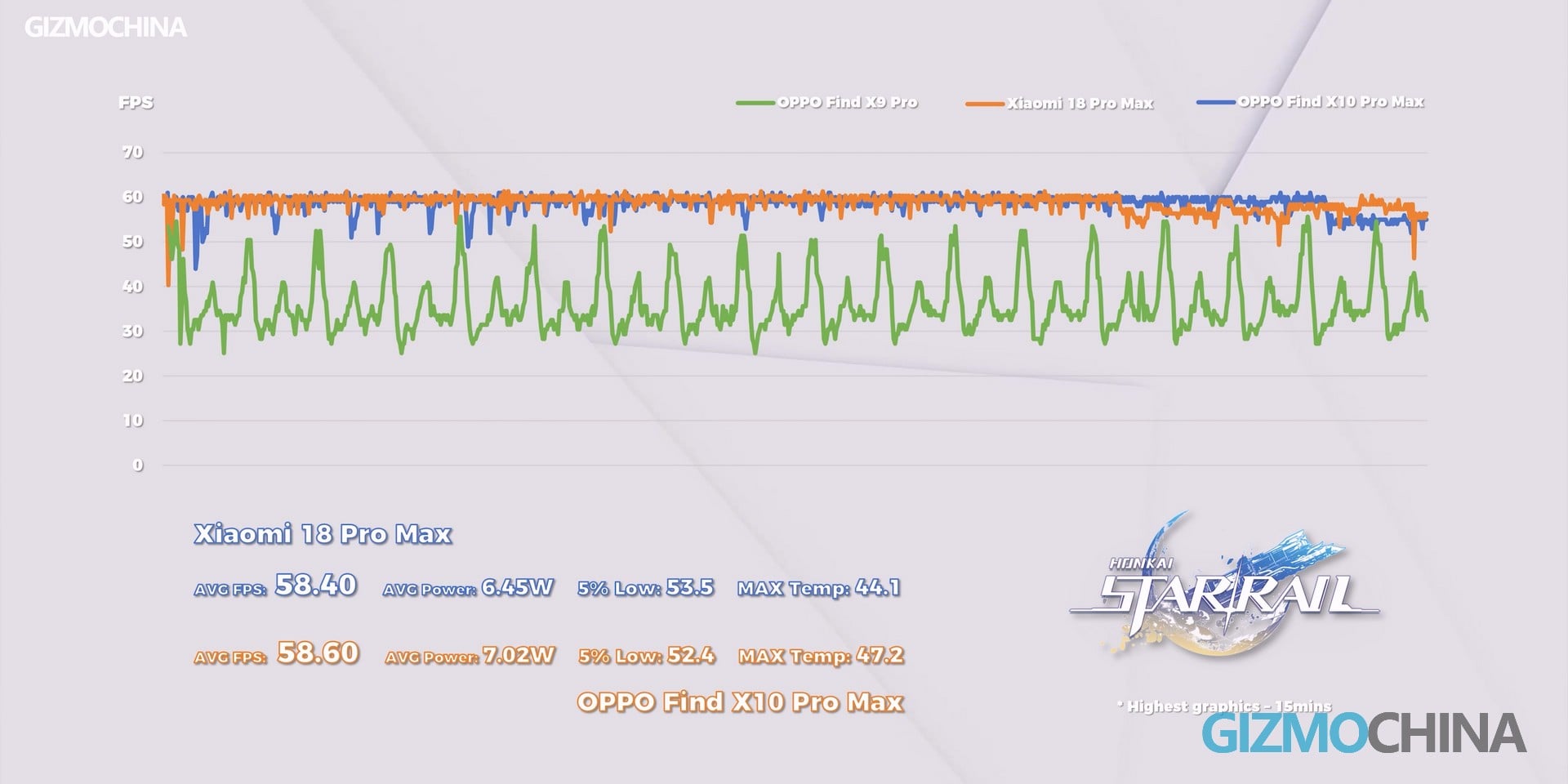
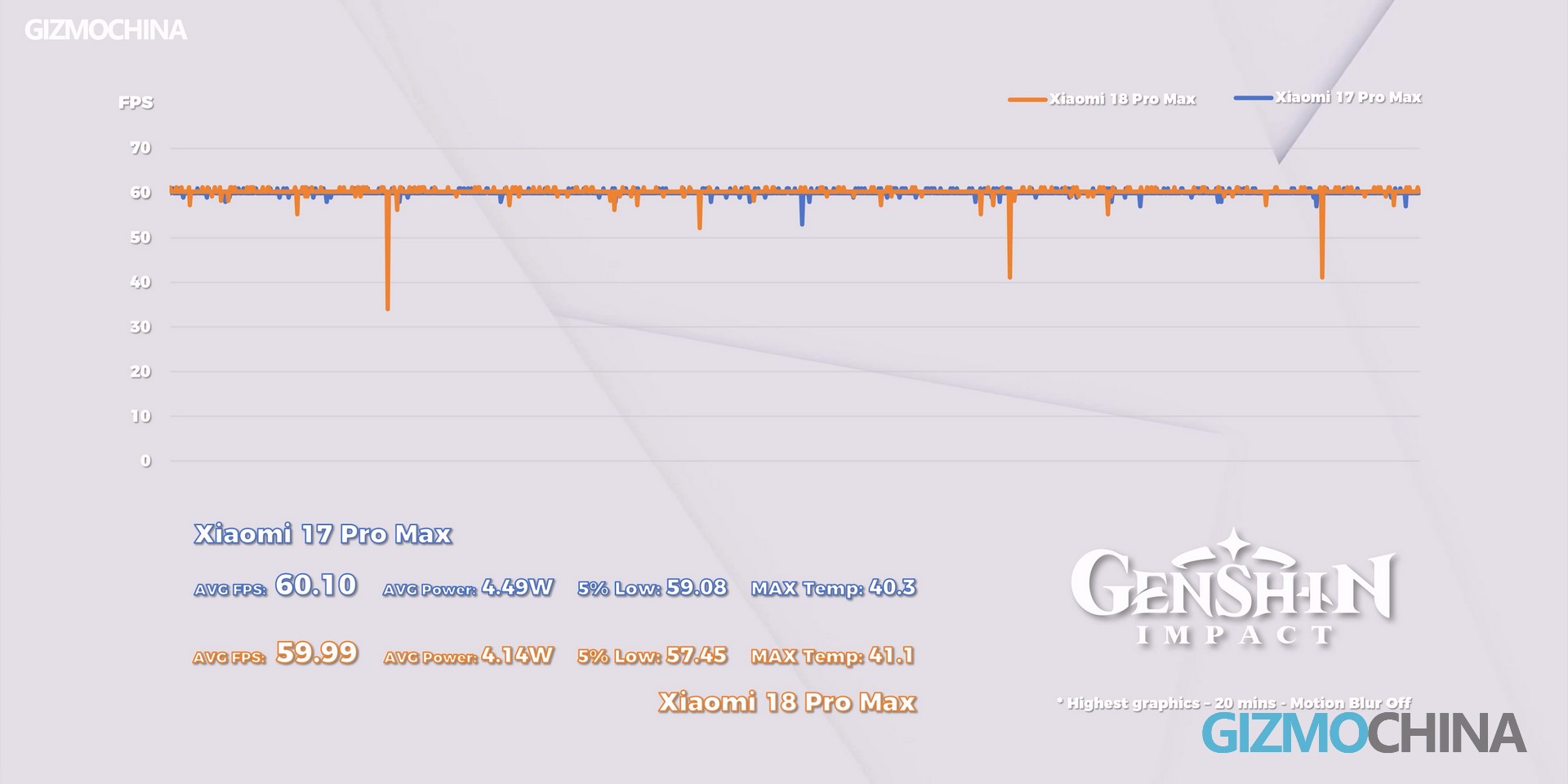
Okay, benchmarks don’t tell the whole story. What if the X10 Pro Max actually performs better in games? You guessed it. At least in Genshin Impact, it can beat the Xiaomi 18 Pro Max. Lower power consumption, fewer stutters, and lower temperatures make the X10 Pro Max the king of light-to-moderate gaming. Why only light-to-moderate gaming? Because once you move to heavy-load games, the gap between it and the Snapdragon flagship platform disappears.
Since there’s no secondary display to worry about, the X10 Pro Max can maintain its performance for 2 minutes longer before throttling. But its temperature and power consumption are both higher than Xiaomi’s. The good news is, it’s still a huge improvement over the previous generation, and it also supports super resolution and frame interpolation. The bad news is, not all games support these features.
So, I guess this should be about the average level for the Dimensity 9600 Pro this year. I think the Find X10 Pro Max deserves a thumbs-up for its gaming experience.
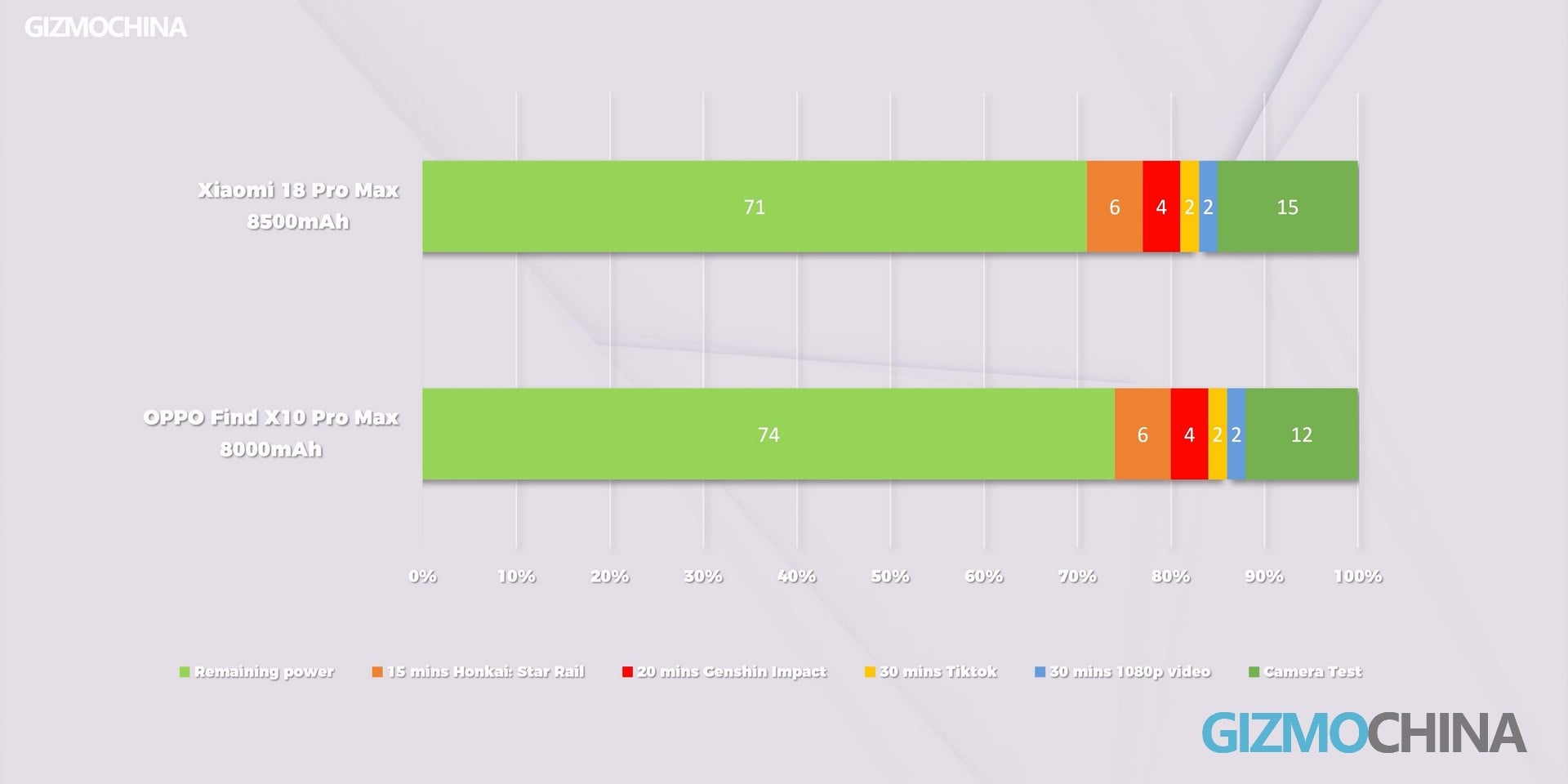
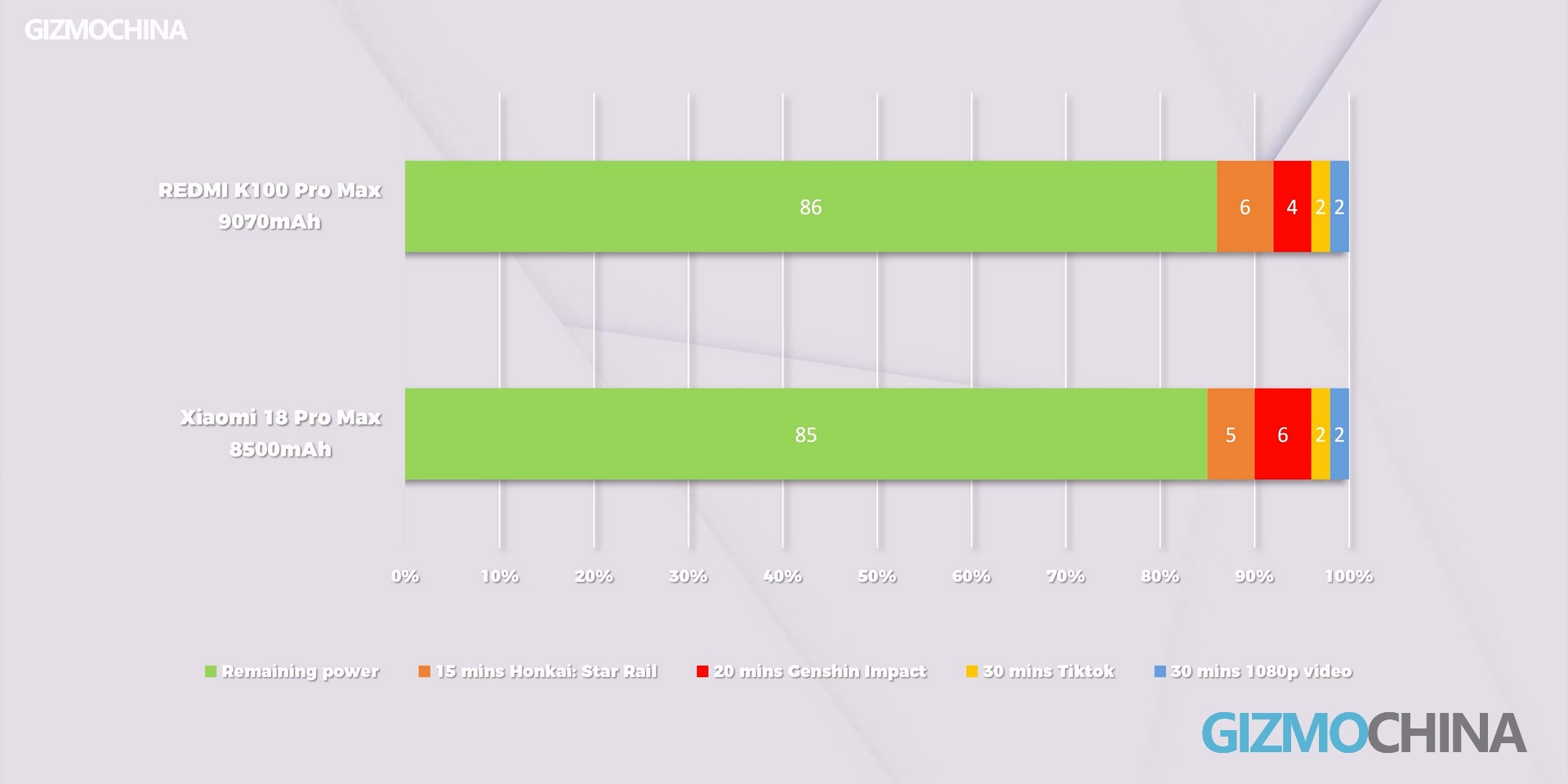
An 8000mAh battery has basically become standard for a Pro Max model. Even though its battery isn’t as large as the Xiaomi 18 Pro Max, the battery life is roughly the same. An entire day of camera testing only consumed 12% of the battery.
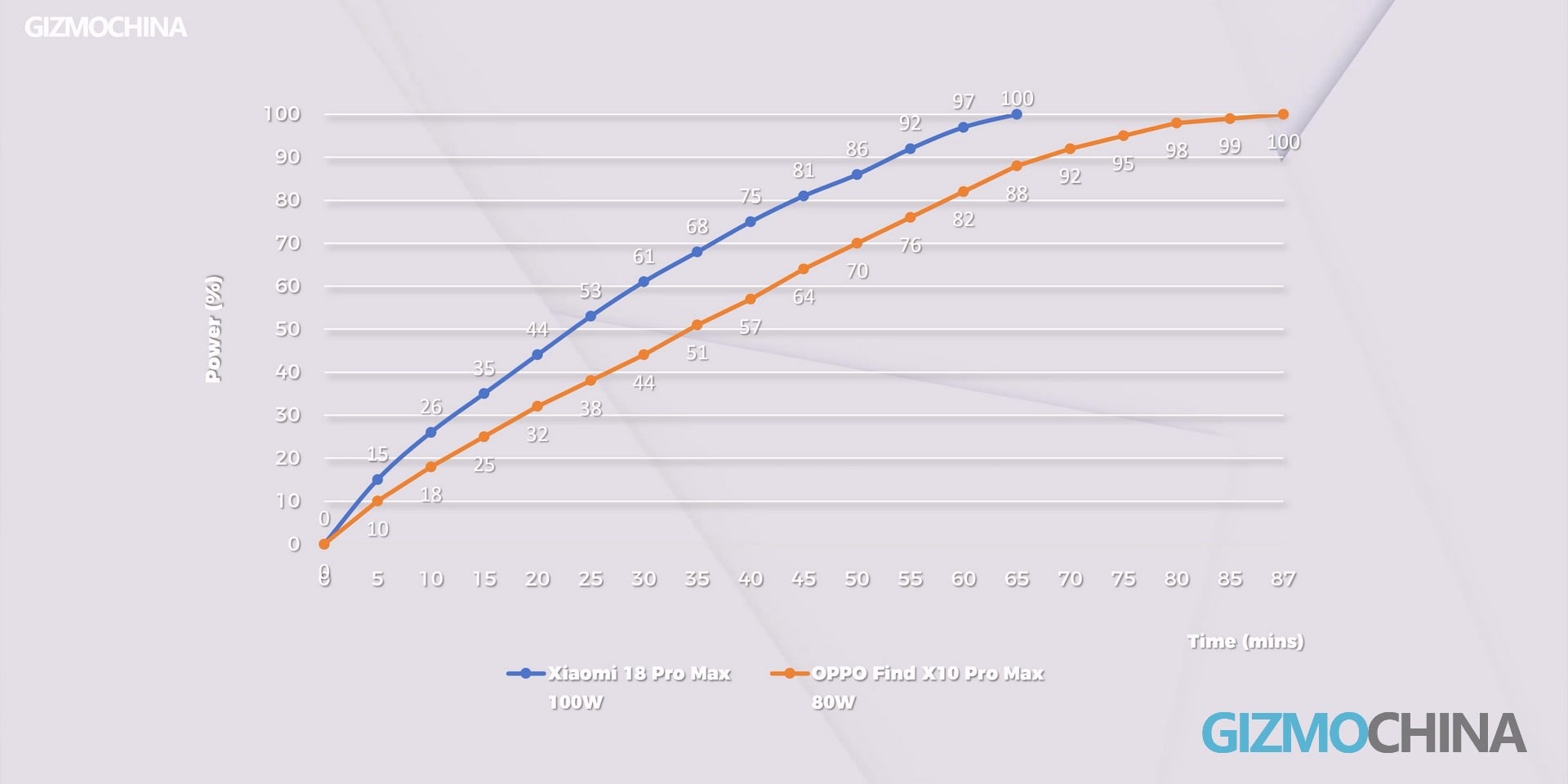
It supports 80W wired charging, while PPS is limited to 55W. Its conservative charging strategy means it takes more than 80 minutes to fully charge. Considering that even current iPhones can fully charge in just an hour, this charging speed really isn’t that fast.
Conclusion
Why is the Find X10 Pro Max my favorite? The reason is simple: it’s well balanced. Most phones have at least one major weakness. Some have poor viewing angles, some have a weak ultrawide camera, some are just too boring, and some look too much like an iPhone.
The Find X10 Pro Max is the only one that manages to be interesting, have no obvious weaknesses, and not be overpriced. It may not be everyone’s favorite, but I don’t think anyone will hate it. This is OPPO’s final answer for 2026.
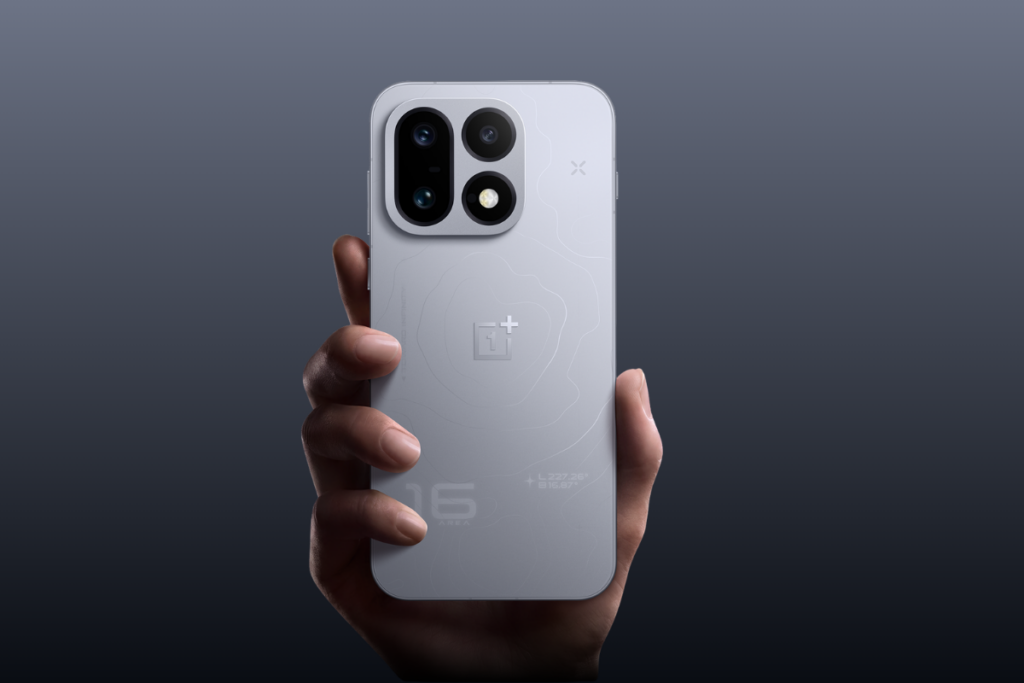
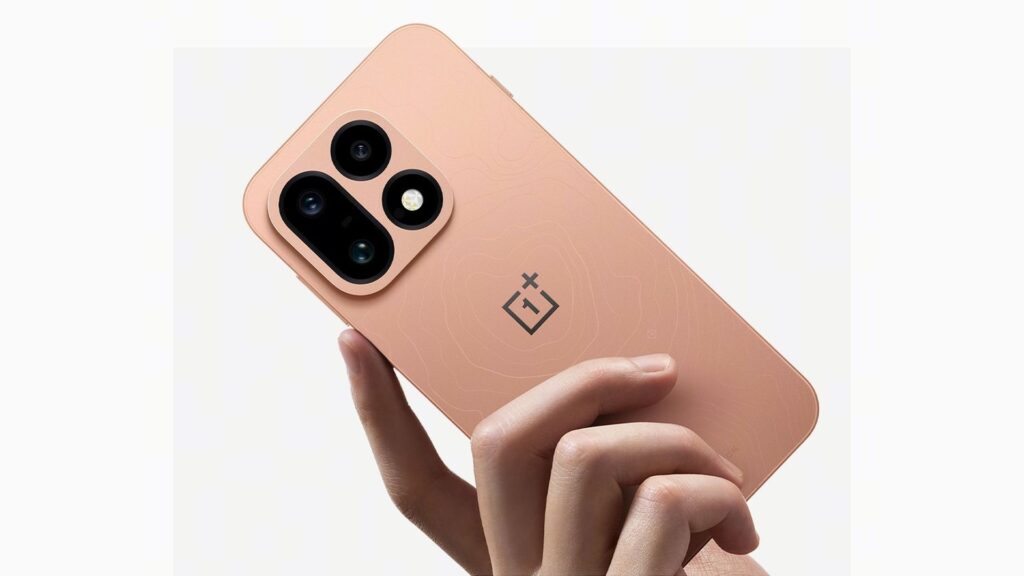
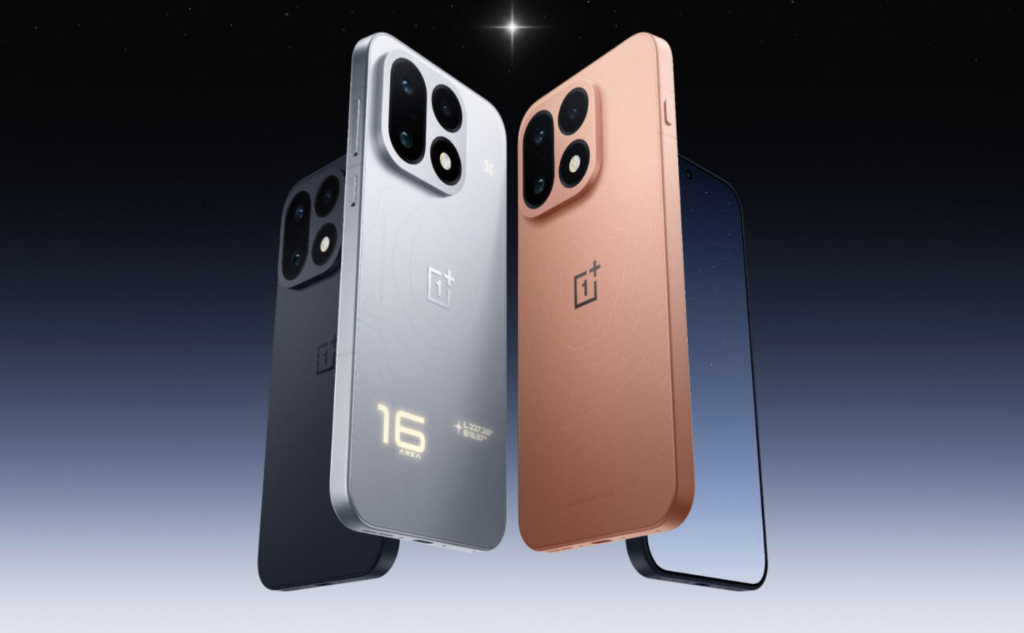
The OnePlus 16 has already debuted in China in early October, and is expected to launch soon in other regions, including India. While the official confirmation has yet to arrive, Indian variants are reportedly under testing, hinting at an imminent launch.
The Indian version of OnePlus flagships usually carry the same spec sheet as their Chinese models, and so the OnePlus 16 coming to India should also bring the powerful Snapdragon 8 Elite Extreme Gen 6 chipset. The device should offer plenty more exciting upgrades that we’ll discuss later on this page.
OnePlus 16 expected launch date and price in India
OnePlus has yet to announce a launch date for OnePlus 16 for the Indian or global markets. However, some reports believe that it could follow a launch timeline similar to its predecessor. If that’s true, the next OnePlus flagship phone could launch in India in the second week of November, with sales likely to begin around the same time.
OnePlus 16 has already launched in China, and that gives us some hint about the pricing for the Indian market. The base variant with 12GB RAM and 256GB storage launched for 5,999 yuan (roughly Rs 85,500) and the 256GB storage variant costs 6,799 yuan (roughly Rs 100,000). The phone is also offered in 16GB RAM with 512GB and 1TB storage options for 7,499 yuan (roughly Rs 107,000) and 8,499 yuan (roughly Rs 121,000).
In India, the OnePlus flagship phones typically come at a higher price tag because of taxes and other stuff. So, expect an additional Rs 15k to 20k to the Chinese prices for the Indian market.
The OnePlus 16 retains the 6.78-inch LTPO AMOLED screen from the OnePlus 15, but it boosts the refresh rate from 165Hz to 185Hz and features a higher peak brightness (2000nits vs 1800nits). The new model doesn’t use a Corning glass but a Crystal Shield Glass developed by Oppo. The OnePlus 15 features Corning’s Gorilla Glass Victus 2.
The latest flagship uses a newer Snapdragon 8 Elite Extreme Gen 6 processor. Qualcomm claims this 2nm chip delivers 13% faster CPU, 37% better power efficiency, 44% faster GPU, and a 40% jump in GPU power efficiency compared to the Snapdragon 8 Elite Gen 5 present inside OnePlus 15.
The OnePlus 16 packs additional chips, including a P4 display chip, a G3 eSports chip, and a T3 touch chip, to enhance the gaming experience.
The latest OnePlus flagship offers a significant boost to the primary camera by featuring a 200MP sensor, while the OnePlus 15 has a 50MP camera. It’s joined by a 50MP telephoto camera with 3x optical zoom and a 50MP ultrawide unit. The selfie camera now also has a 50MP resolution (up from 32MP).
The OnePlus 16 is 0.4mm thicker than the OnePlus 15 to accommodate a bigger battery (9000mAh vs 7300mAh). But the charging speed is downgraded to 100W (OnePlus 15 supports 120W). The device still offers 50W wireless charging and supports both reverse wired and wireless charging options.
The last year’s OnePlus 15 already had a robust set of connectivity features, which has been integrated into the OnePlus 16. So, on both phones, you get Wi-Fi 7, Bluetooth 6.0, and USB Type-C 3.2.
We’ll let you know when OnePlus announces a launch date for the OnePlus 16 in India. Visit the News section or join our Telegram channel for the latest updates.
This year’s Xiaomi 18 Pro Max is both completely expected and completely unexpected. It looks so similar to the 17 Pro Max, yet it is also different in so many ways. There are upgrades, but there are also some features that look like upgrades but feel more like gimmicks. Even if you think it’s too expensive and not worth buying, you can’t deny that it’s still a phone with a lot of character. But…at what cost?
Design & Rear Display
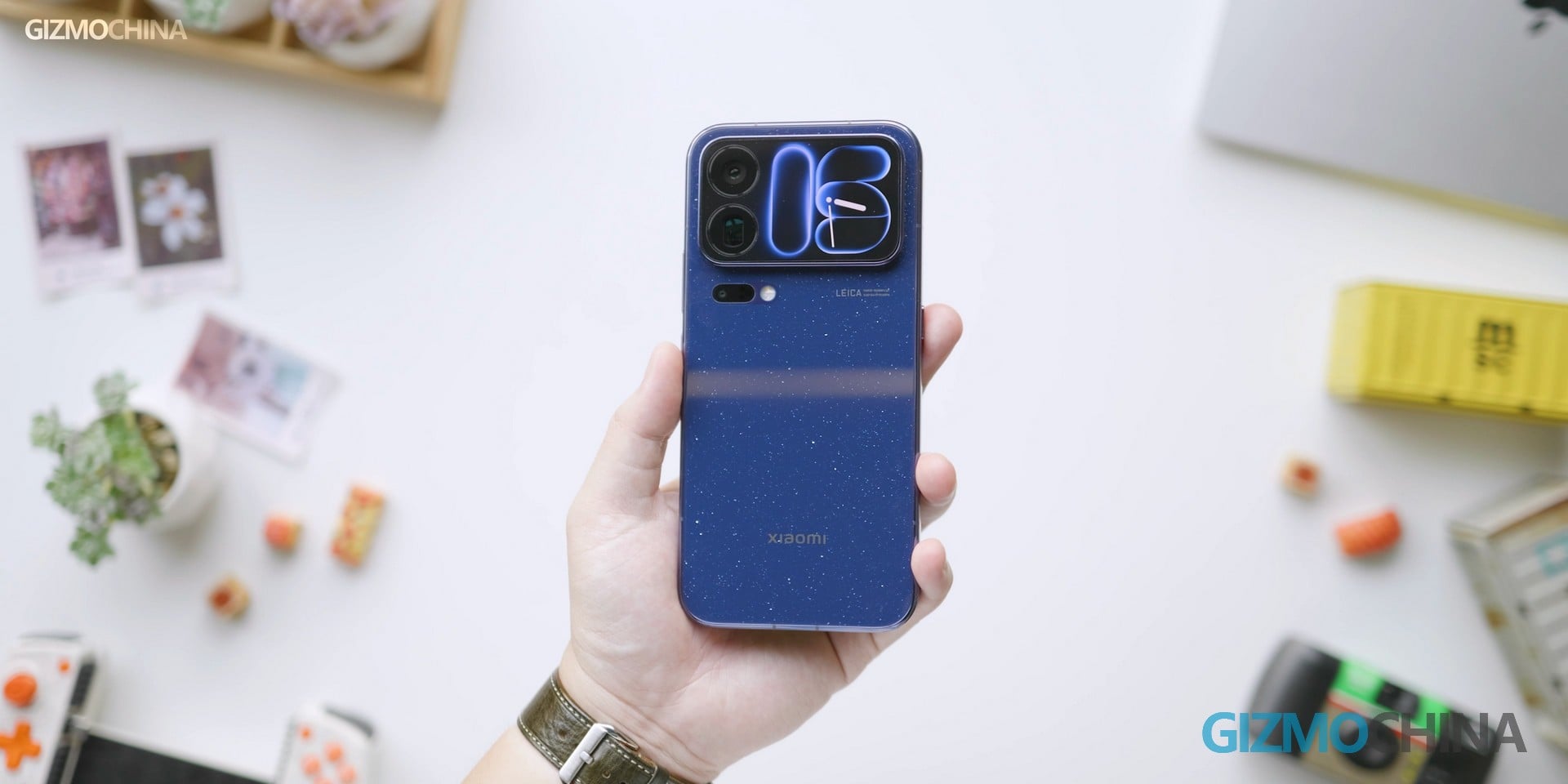
The entire rear display module has gotten even taller, but at least the camera lenses are now flush with it. The phone no longer wobbles when you put it on a table, which is definitely a good thing. But the downside is that it has one more display than other phones, and a larger battery as well. That makes the 18 Pro Max the second-heaviest phone I’ve ever used.
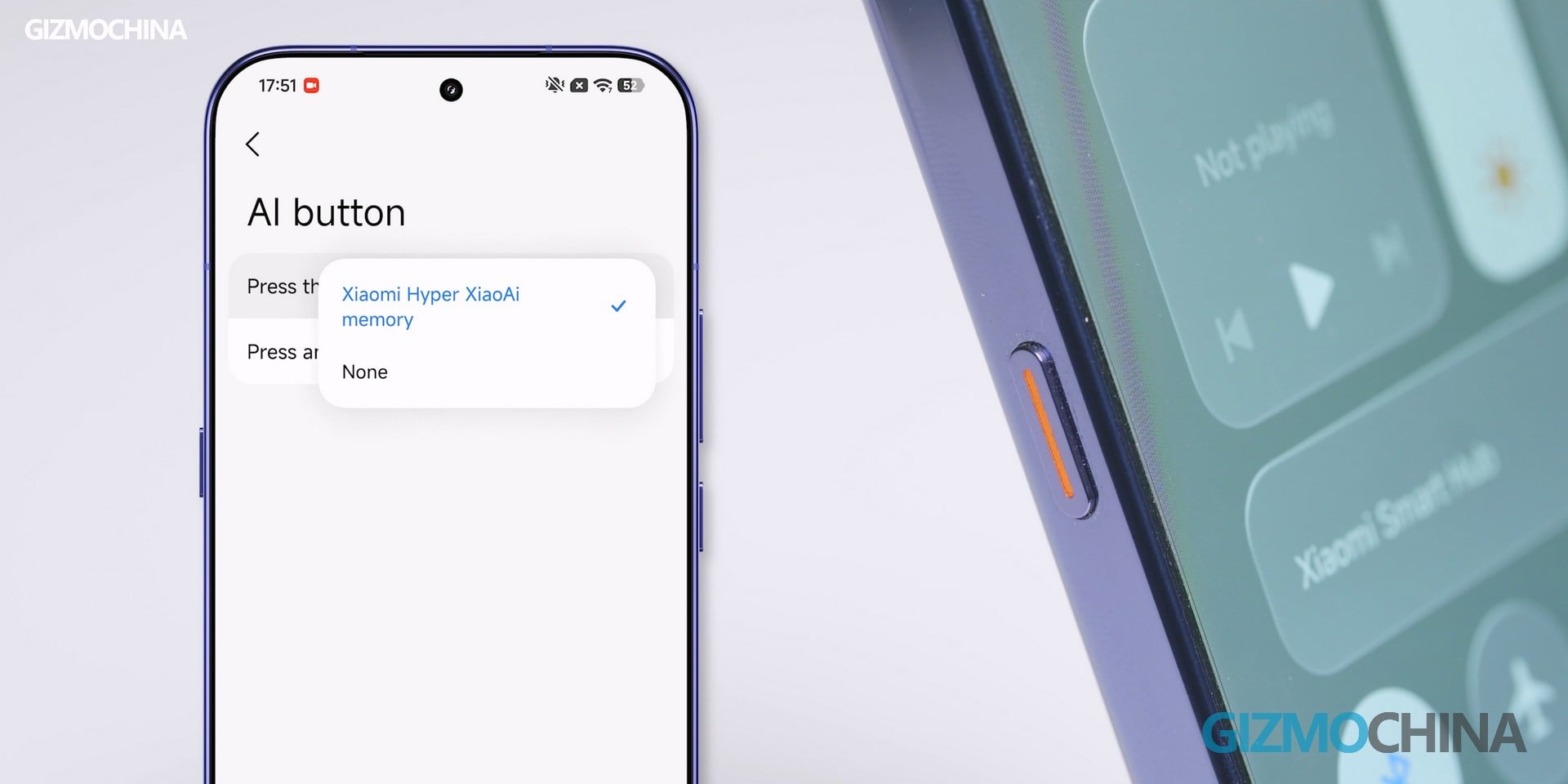
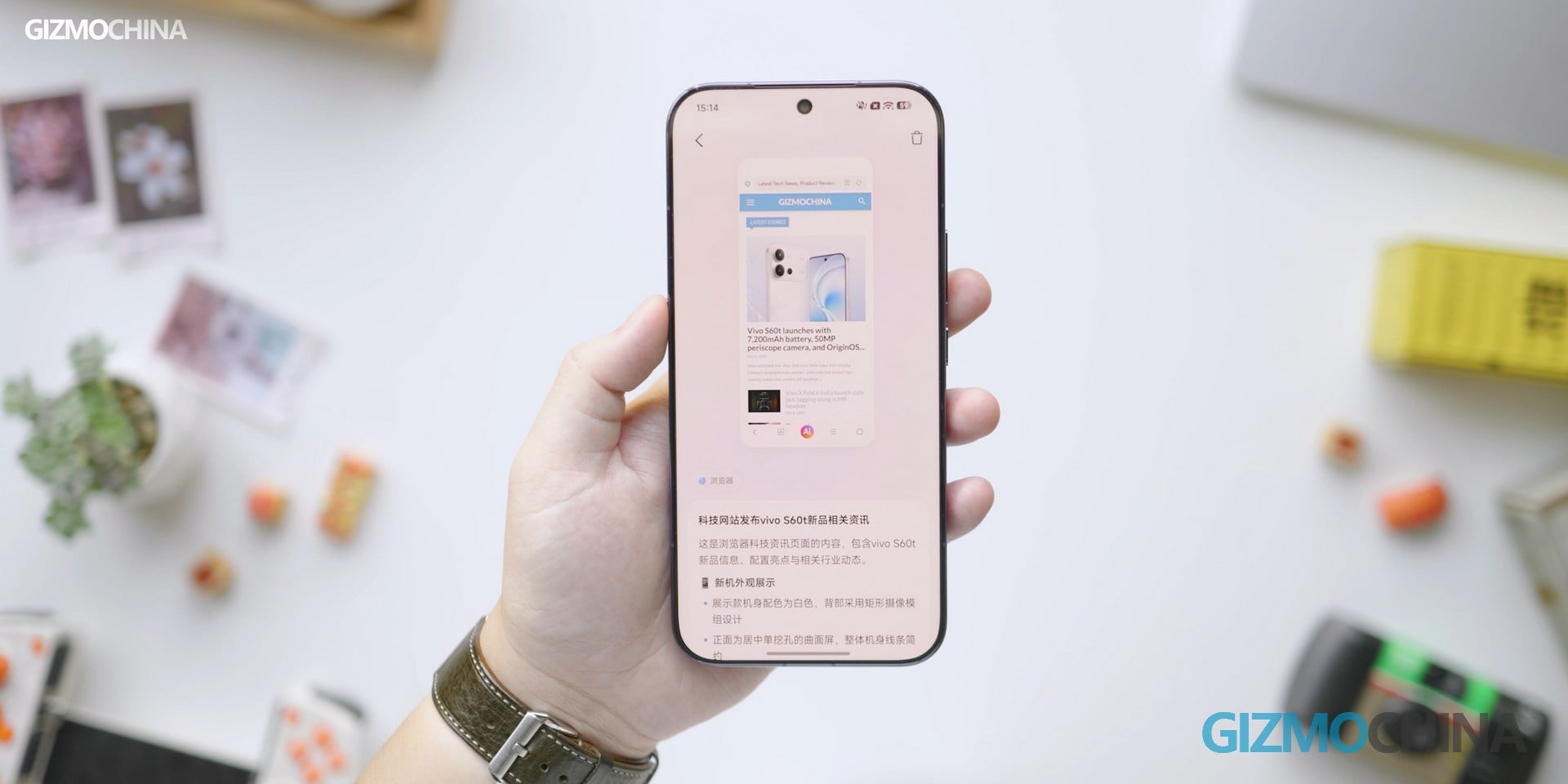
The AI button is also very “AI.” There are so few functions you can customize, it’s pretty obvious Xiaomi doesn’t want you to treat it as a customizable button. And then there’s this Hyper XiaoAi Memory. Doesn’t it look familiar? This is basically OPPO’s Mind Space. Press it once, and AI can summarize what’s on the screen and save it to your phone.
However, a lot of the content is still only available in Chinese. Until the global version comes out, this is definitely not a feature you can really use.
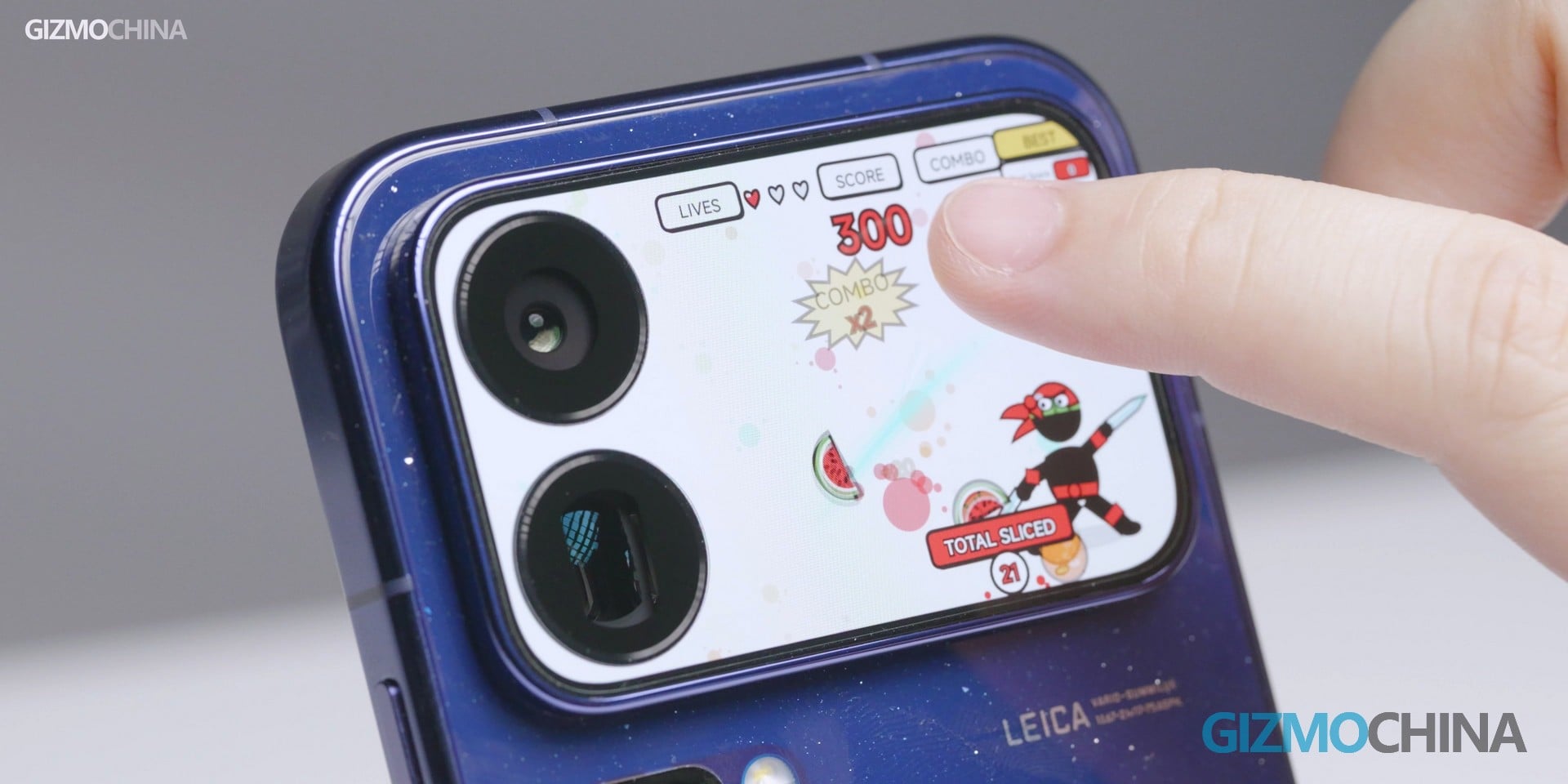
Last year, I thought the rear display didn’t have much practical value. But the sales of the Xiaomi 17 Pro Max proved that emotional value matters too. Xiaomi seems to think the same way. That’s why the 18 Pro series keeps the rear display and adds even more features designed to provide that emotional value.
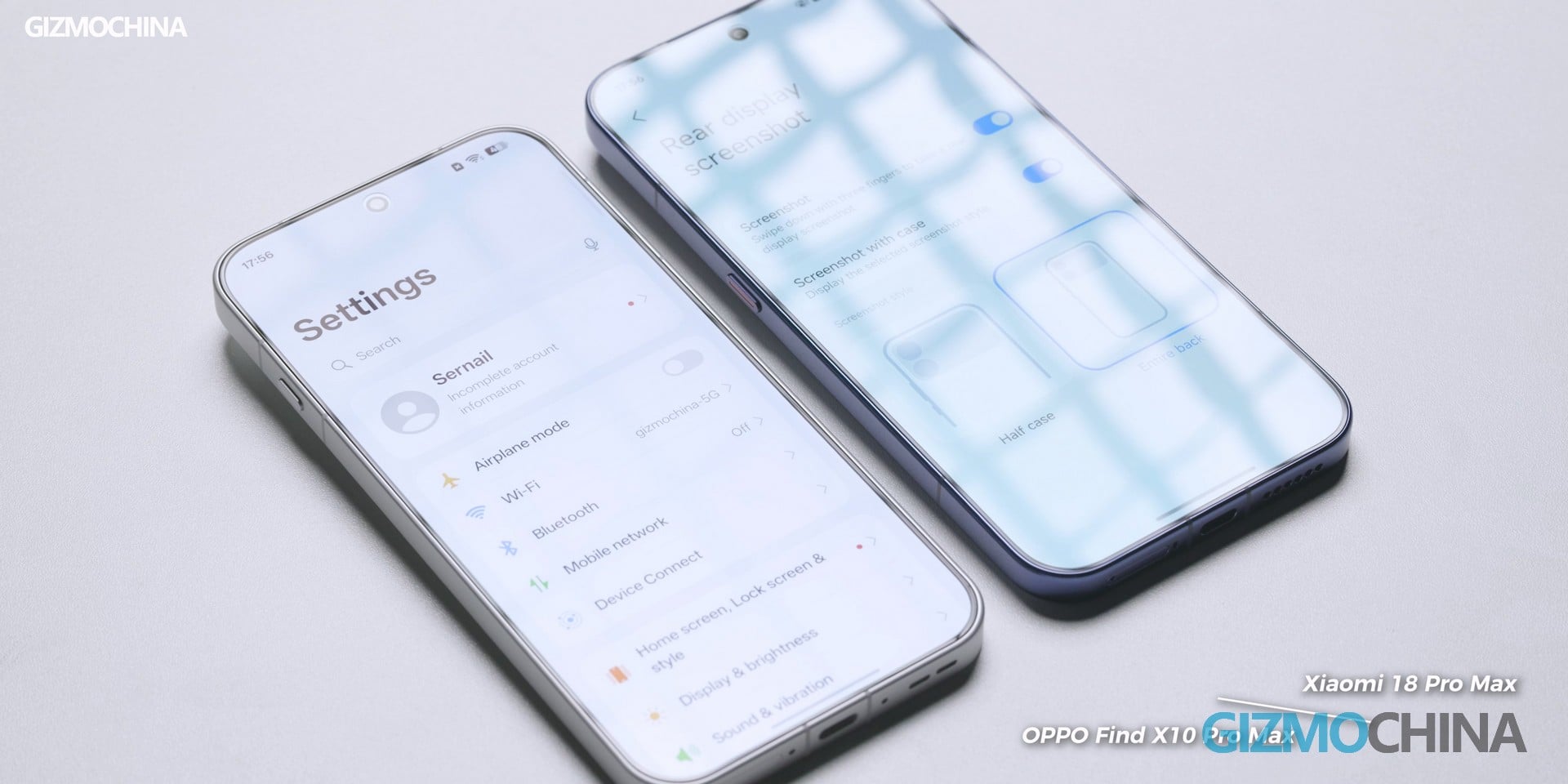
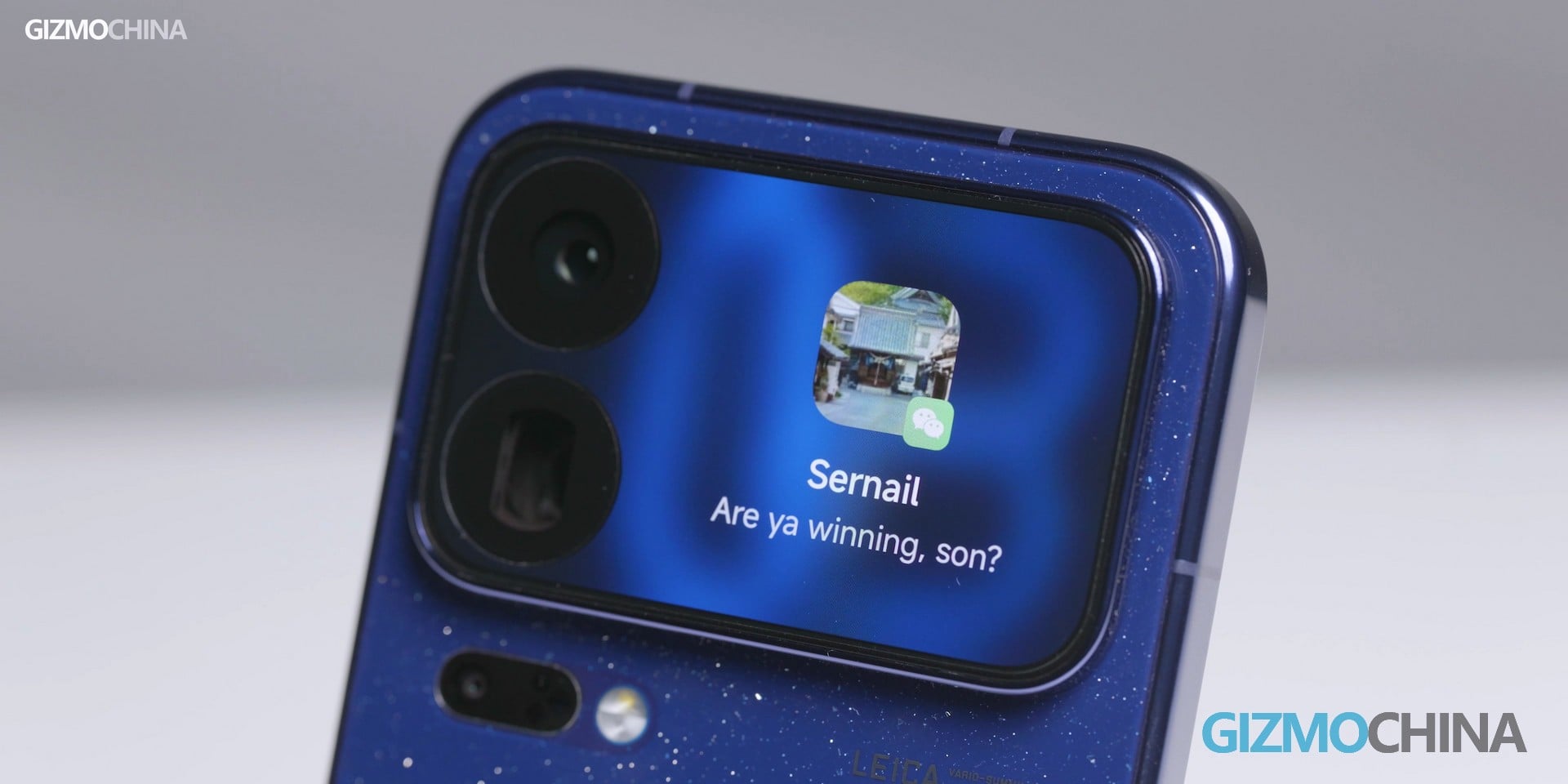
For example, you can finally see different notifications on the rear display. This screen also supports screenshots now. You can even show the screenshot together with the phone itself. This little screen has basically unlimited possibilities. But if we rely only on Xiaomi, it’s difficult to satisfy everyone’s needs. So now you can use AI to add whatever functions you want to the rear display.
Just describe roughly what you want to add. The AI will figure out what you want and summarize the function for you. Then wait 3 to 5 minutes, and you’ll have a new function ready to use on the rear display.
The speakers on other phones are improving too. So compared with them, the 18 Pro Max’s three-speaker setup doesn’t have a huge advantage in sound quality. I put the speaker test at the end of the video. If you’re interested, you can listen to it yourself.
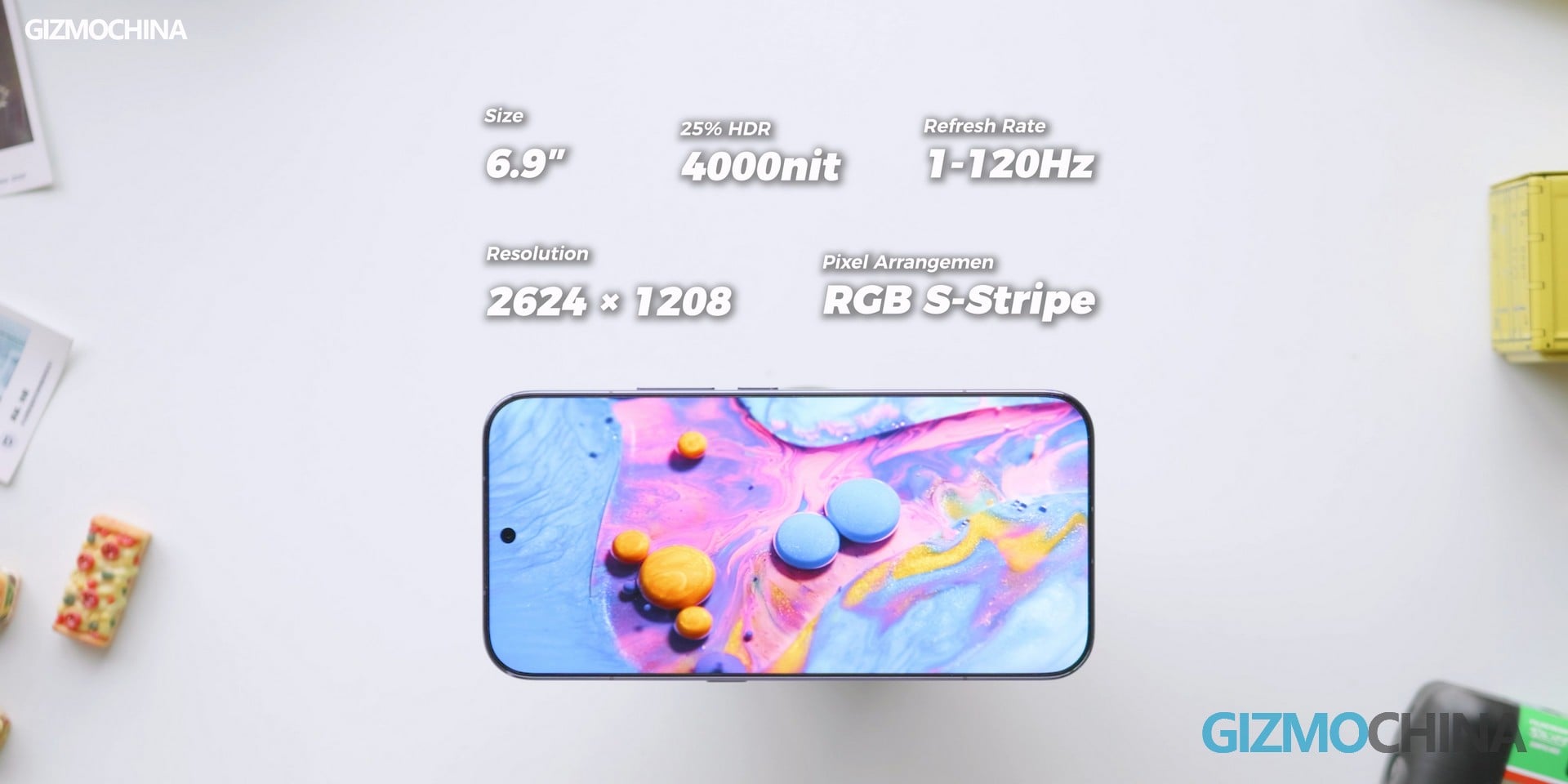
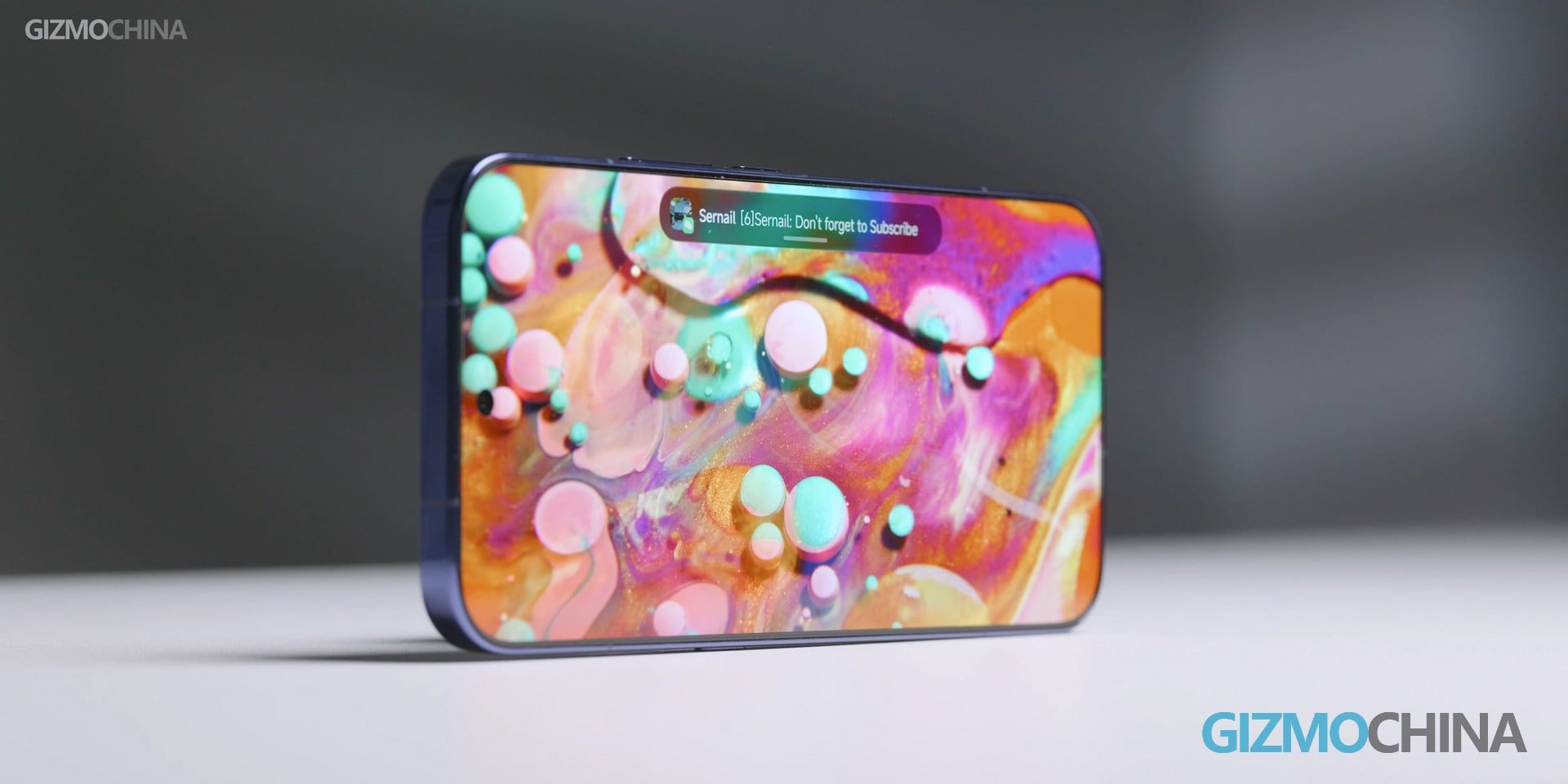
The display on the 18 Pro Max is probably the most controversial part of this phone. First of all, it is a good display. Other than the fact that it doesn’t reach 2K resolution, it’s really hard to find anything wrong with it.
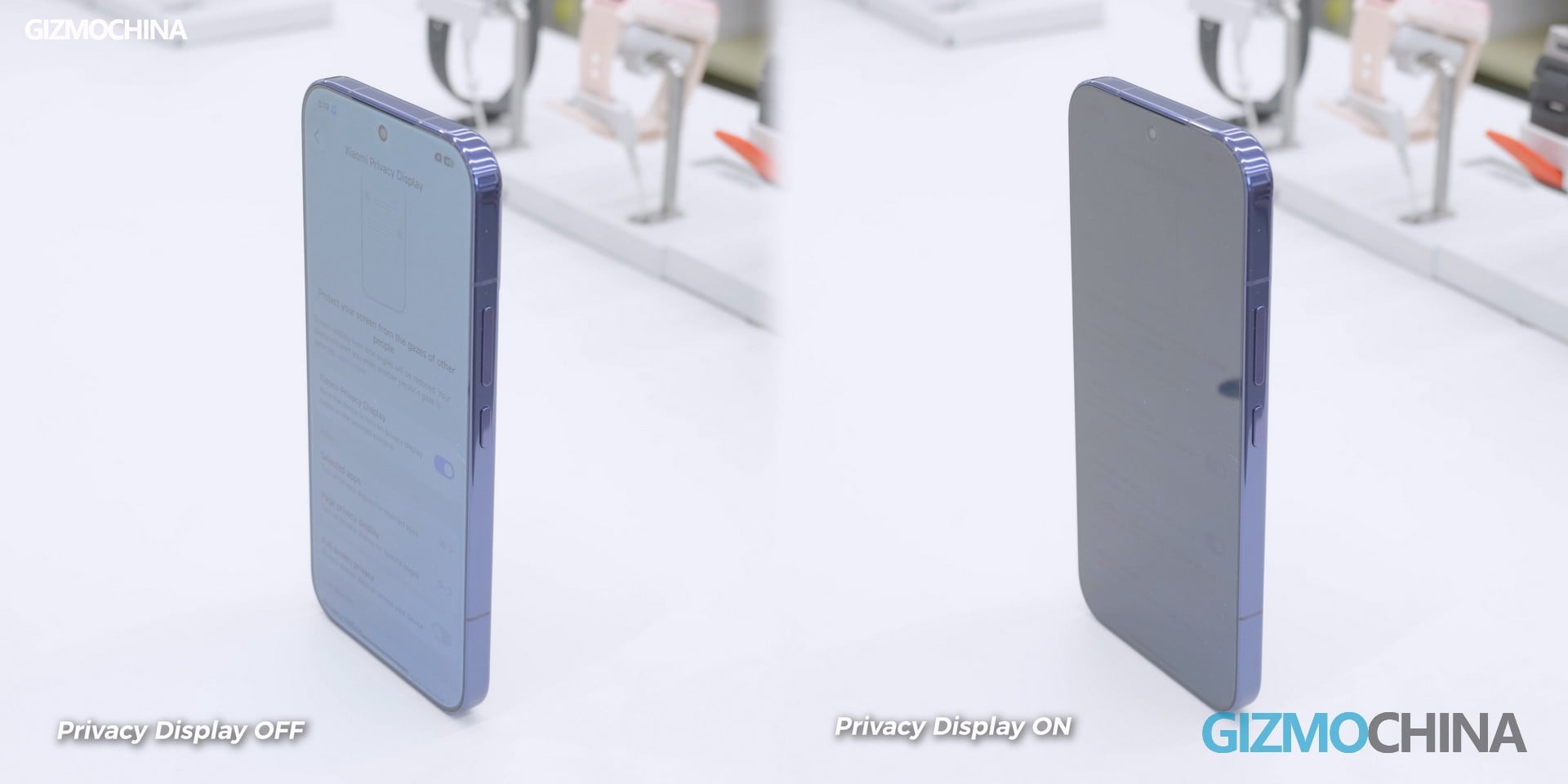
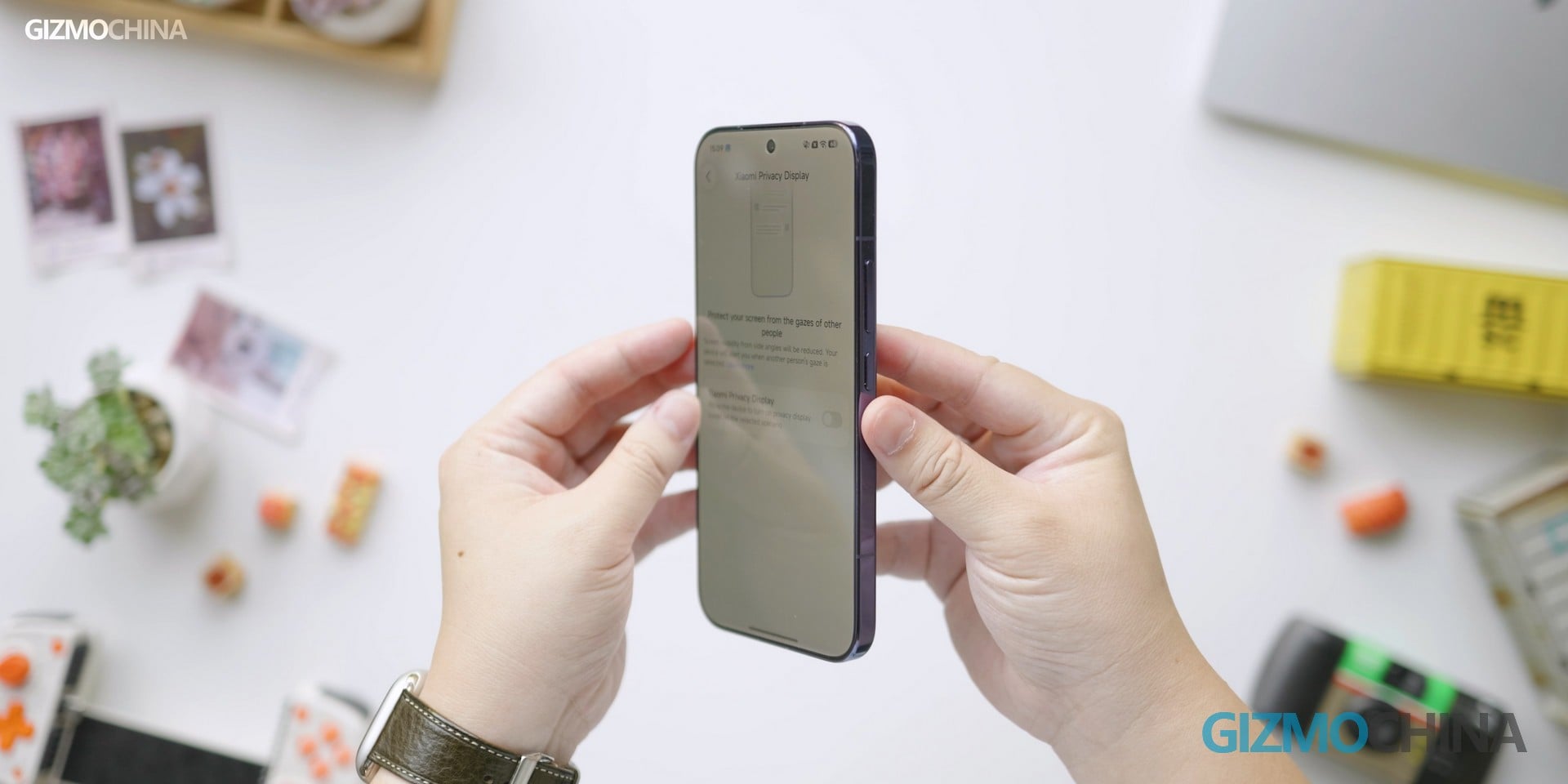
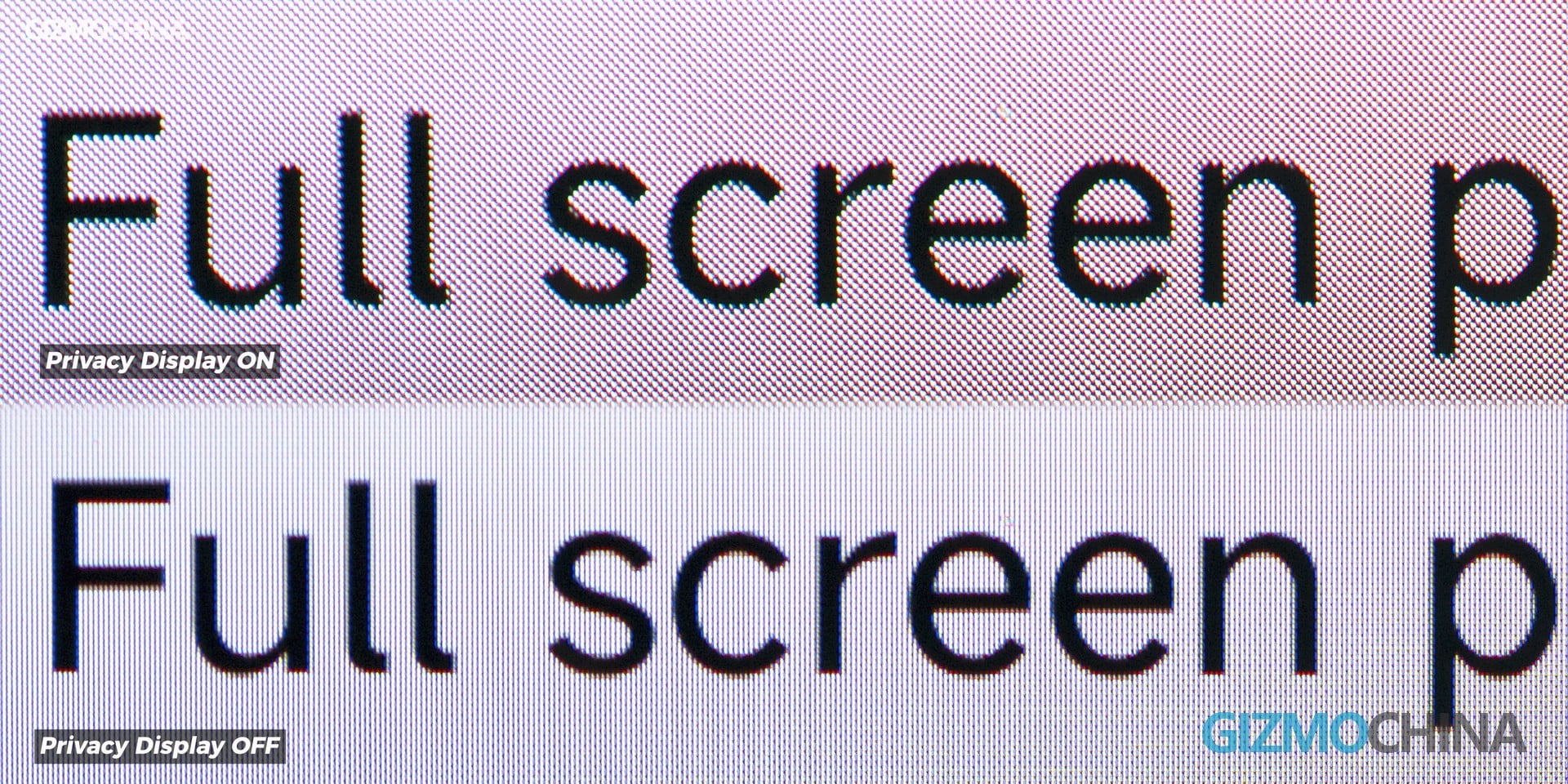
The controversial part is the new privacy display technology. Xiaomi added a grille to half of the pixels on this display. When the normal pixels are turned off, the content becomes almost impossible to see from the side.
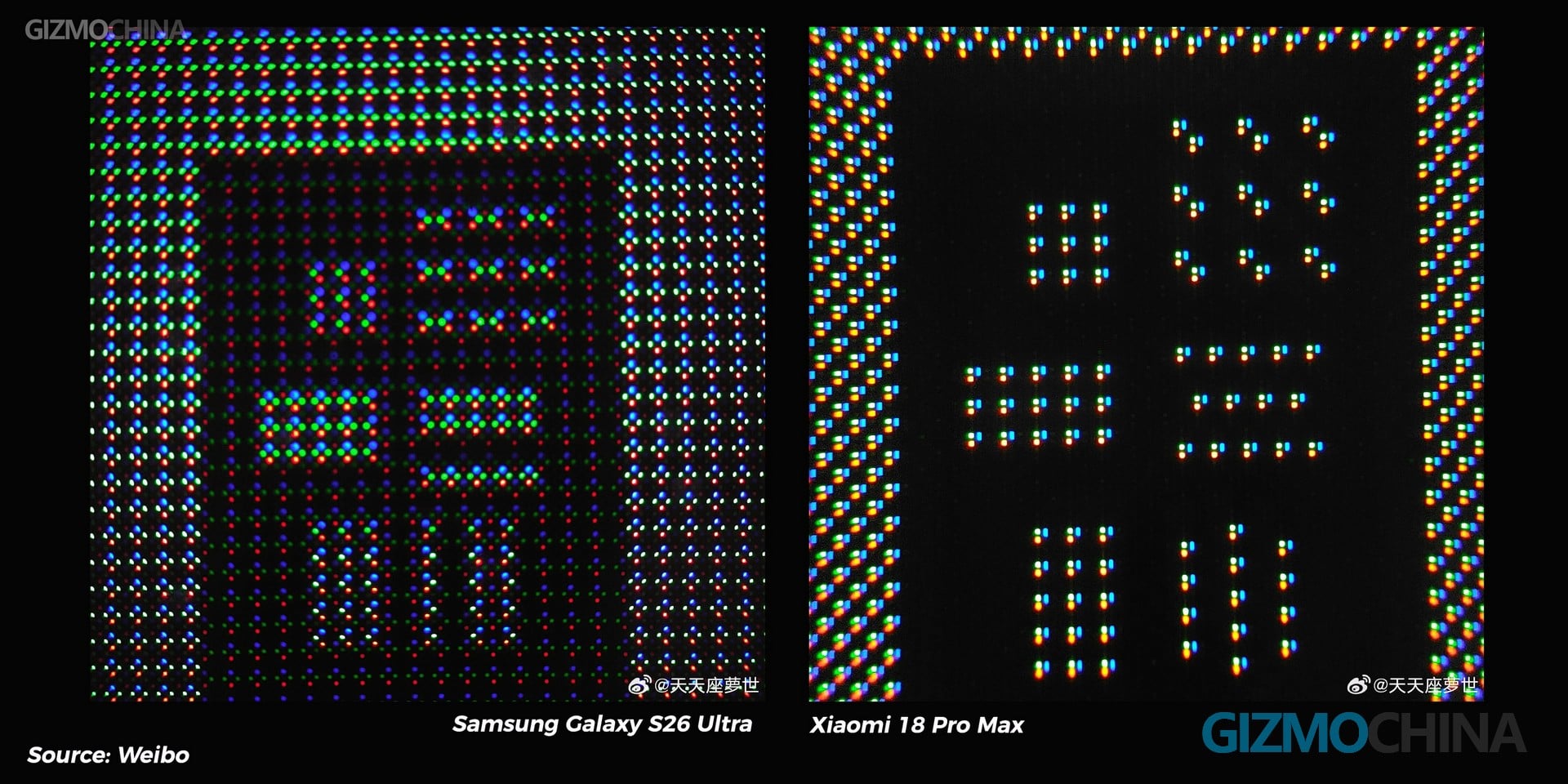
And there are 2 things it does better than Samsung. Thanks to the RGB S-Stripe design, which doesn’t share sub-pixels in 1 pixel, the display remains a little sharper with the privacy mode enabled than the S26 Ultra.
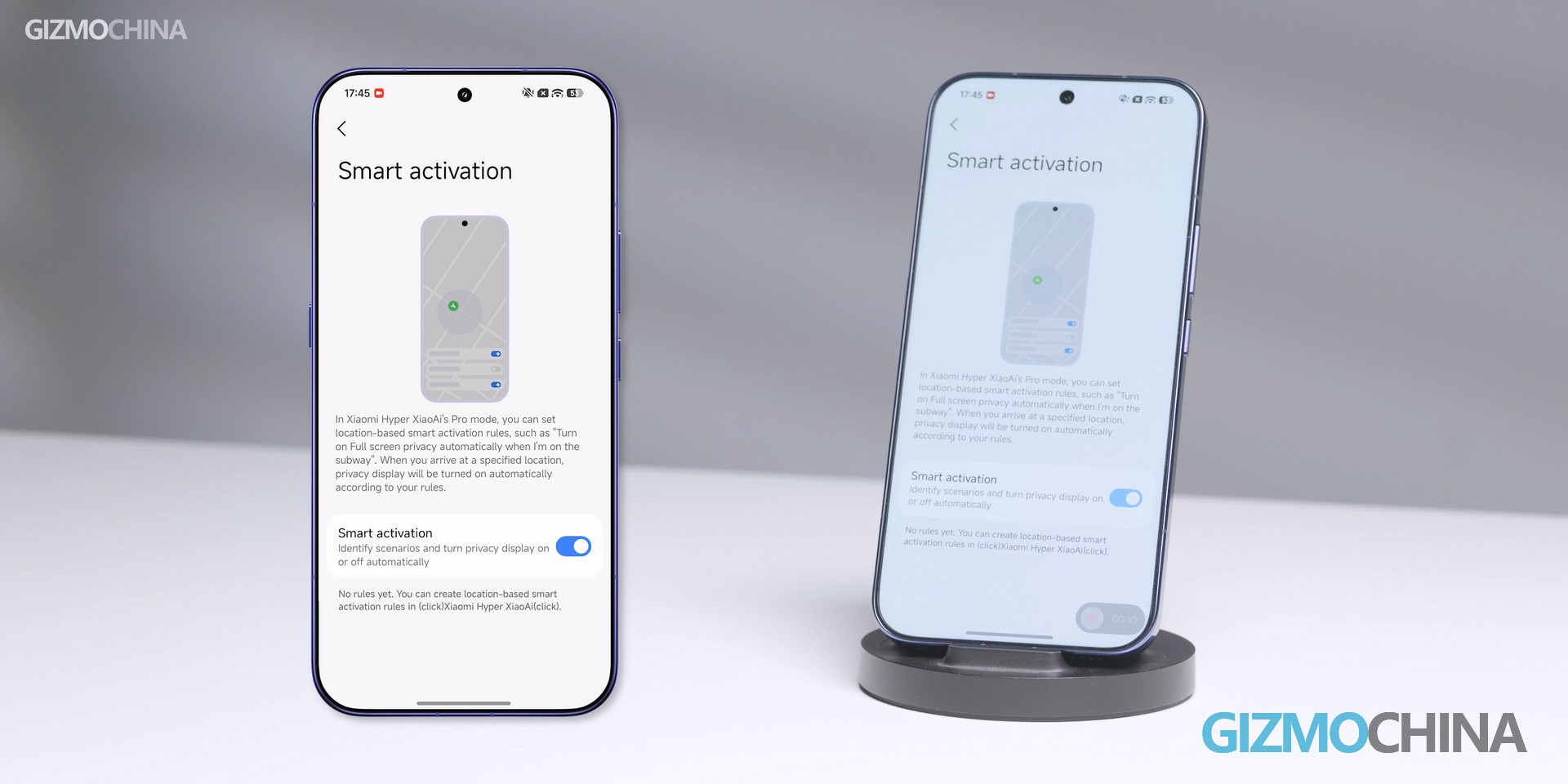
Second, the 18 Pro Max is smarter. It can apply privacy protection to specific areas. For example, it can dim only notifications and floating windows. It can even automatically turn privacy mode on or off based on your location. The Xiaomi 18 Pro Max has the best privacy display implementation I’ve seen on a phone so far.
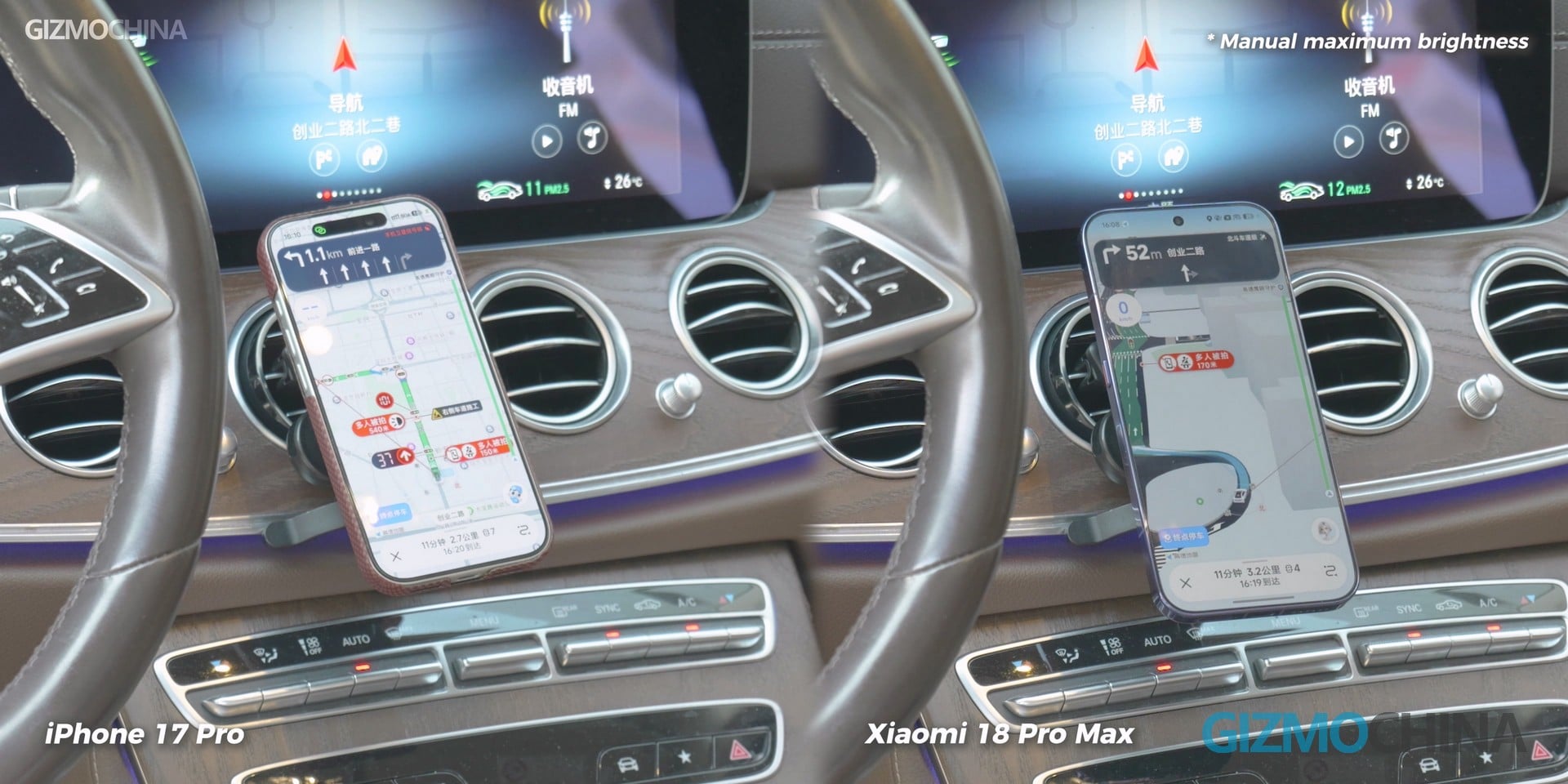
Now that we’ve talked about the benefits, what about the cost? There are 3 major trade-offs. The first is the viewing angle. It becomes significantly worse. Don’t think that because we usually look straight at our phones, a poor viewing angle won’t affect you. In reality, we often look at our phones from an angle.
For example, when you’re driving and your phone is mounted on a holder, you may not even be able to see the navigation clearly. Or when your phone is sitting on a table and you just want to glance at a notification, you’ll find that the display looks extremely dark. Just bring the phone a little closer to your face. You’ll notice obvious color shifts at the top and bottom of the screen.
The second trade-off is, looking from above or below doesn’t trigger any privacy protection. That also means that when you’re gaming or watching videos in landscape mode, all the privacy-related features become completely useless.
The third trade-off is the sharp drop in clarity. You don’t need a microscope to see it. Just move the phone closer to your eyes and you can already notice the loss of sharpness caused by cutting the effective pixel count in half.
If I don’t like the ultrawide camera, I can simply use it less often. If I don’t like the rear display, I can just ignore it. But I can’t exactly use the phone without turning on the display. And privacy displays are standard across every version of the 18 Pro series. So if we’re only talking about display quality, the best display in Xiaomi’s lineup this year isn’t actually on the 18 Pro series. It’s the cheaper REDMI K100 Pro series. That’s a little ironic.
Performance
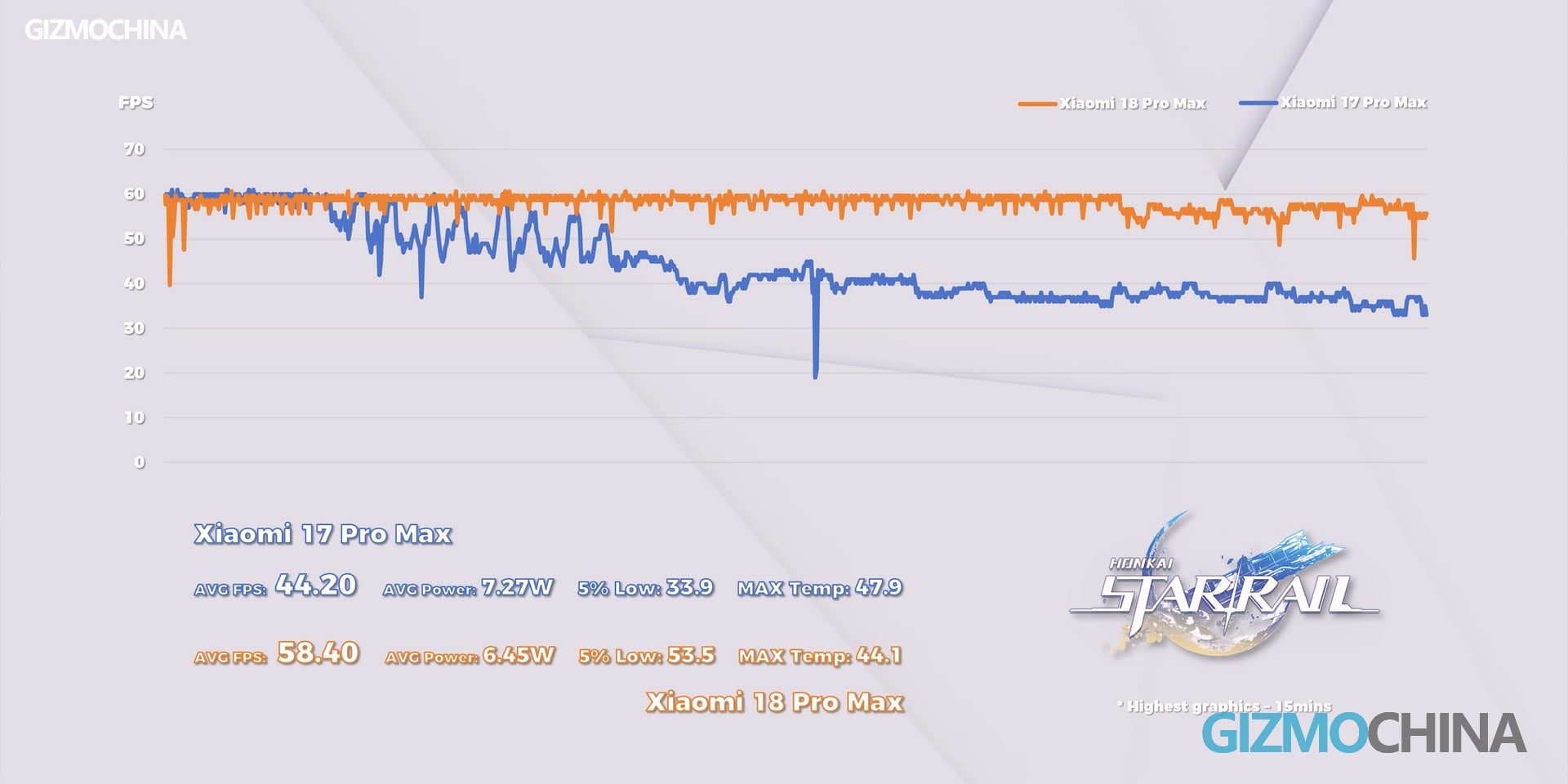
Although the new Snapdragon platform isn’t as big of a leap as we expected, Xiaomi has still made a lot of optimizations to the 18 Pro Max’s performance and cooling. Last year, because of the rear display’s downside, the 17 Pro Max performed worse in games than other phones using the same platform.
But this year is different. Even in Honkai: Star Rail, which is one of the most demanding games we’ve tested, the 18 Pro Max can maintain its peak performance for 11 minutes without throttling. Even after it starts throttling, the frame rate still stays around 55fps. That’s much better than I expected. For less demanding games, we focus more on power consumption. Even when the average frame rate is similar, lower power consumption means the 18 Pro Max uses less battery. Combine that with the even larger battery, and the first thing to run out of power might not be the phone. It might be your body.
Although the cooling on the 18 Pro Max has improved, I still wouldn’t recommend it to hardcore mobile gamers. First of all, not every game supports frame interpolation and super resolution. For example, Genshin Impact supports both, while ZZZ supports neither. Secondly, although the maximum surface temperature isn’t particularly high, most of the heat is concentrated around the palm of your left hand.
After playing for a long time, your hand can still get pretty uncomfortable. The 18 Pro Max doesn’t offer an amazing gaming experience. It only looks like a huge improvement because the 17 Pro Max was so bad.
Cameras
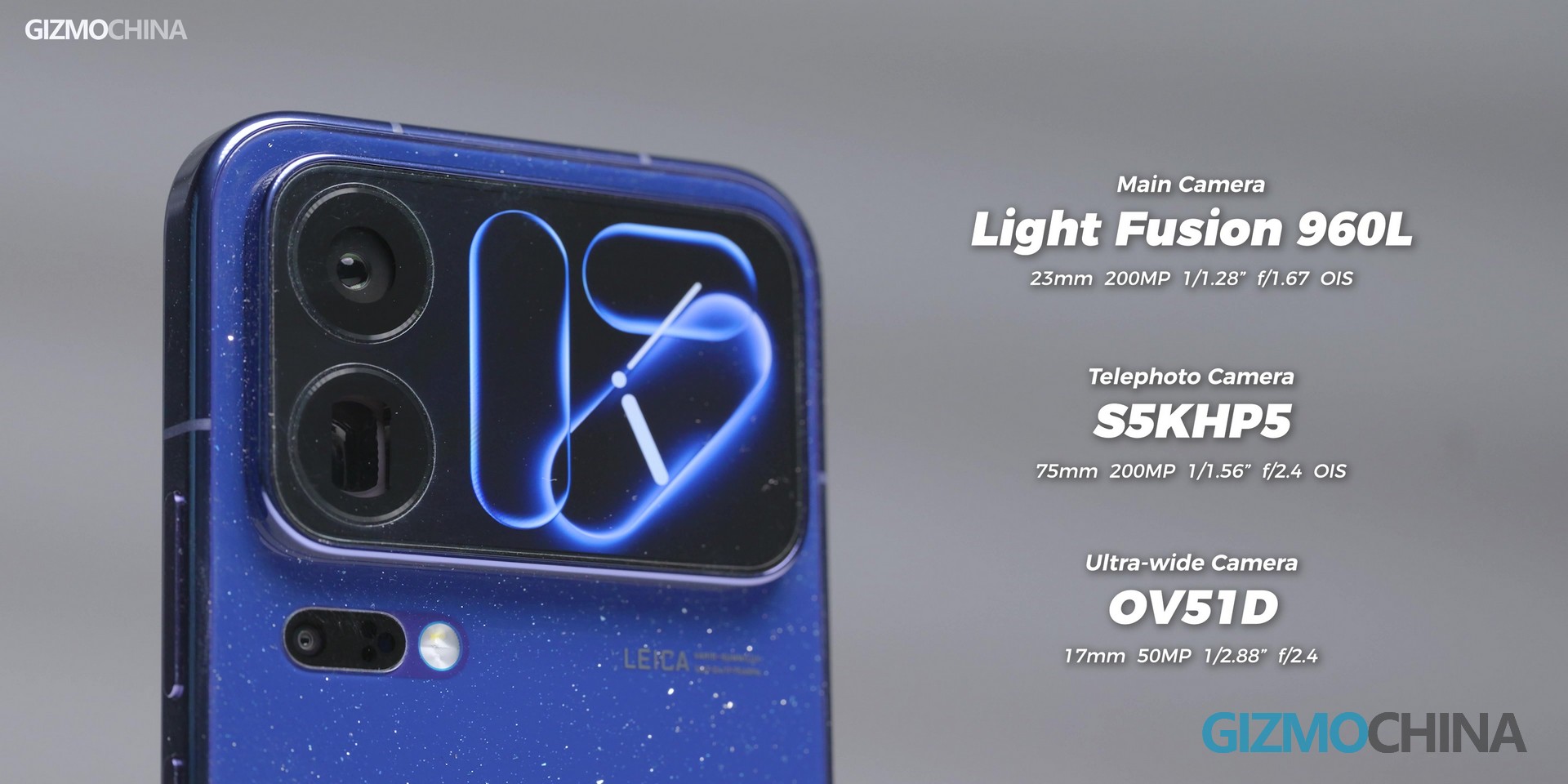
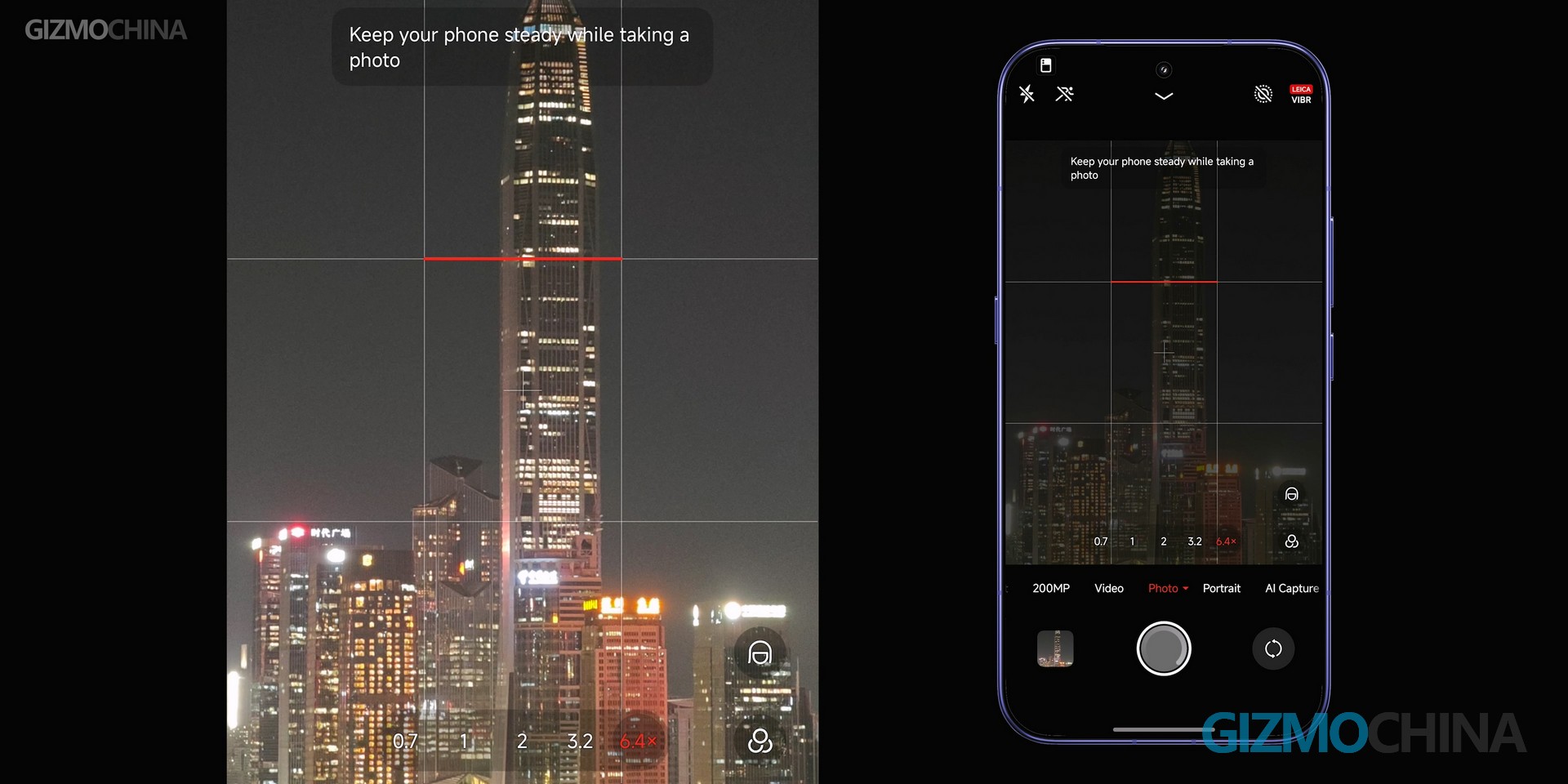
The biggest camera upgrades on the 18 Pro Max are still focused on the main camera and telephoto camera. The main camera still supports LOFIC, and its pixel count has increased to 200MP. Meanwhile, the telephoto camera has received a major upgrade across the board. Its focal length has also changed to a more reasonable 75mm.
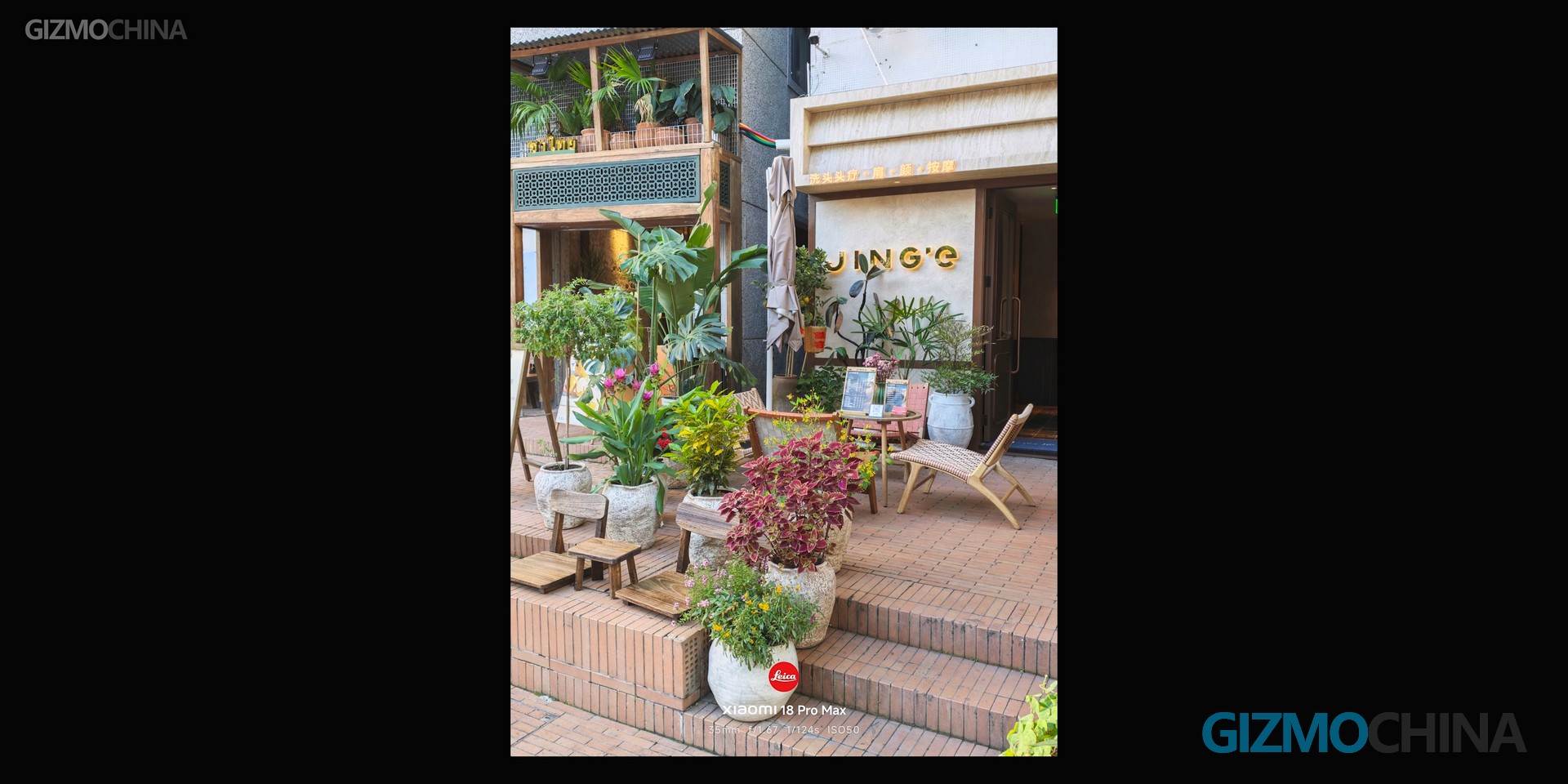
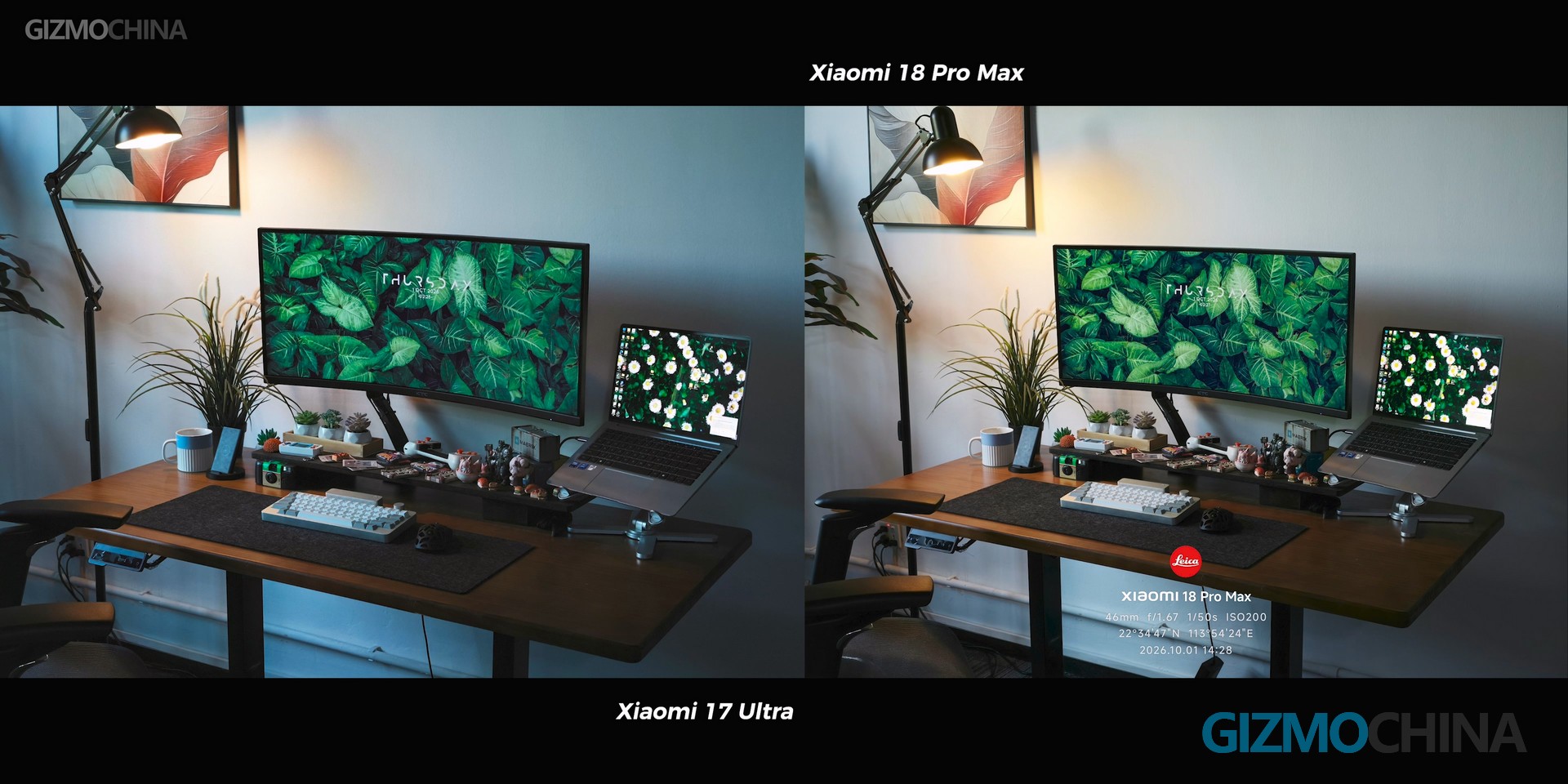
200MP is actually more of a gimmick for a smartphone. Photos are output at 12.5MP by default after 16-in-1 pixel binning. The main camera basically maintains the performance level of the previous generation. The dynamic range is excellent, and there aren’t any other obvious weaknesses.
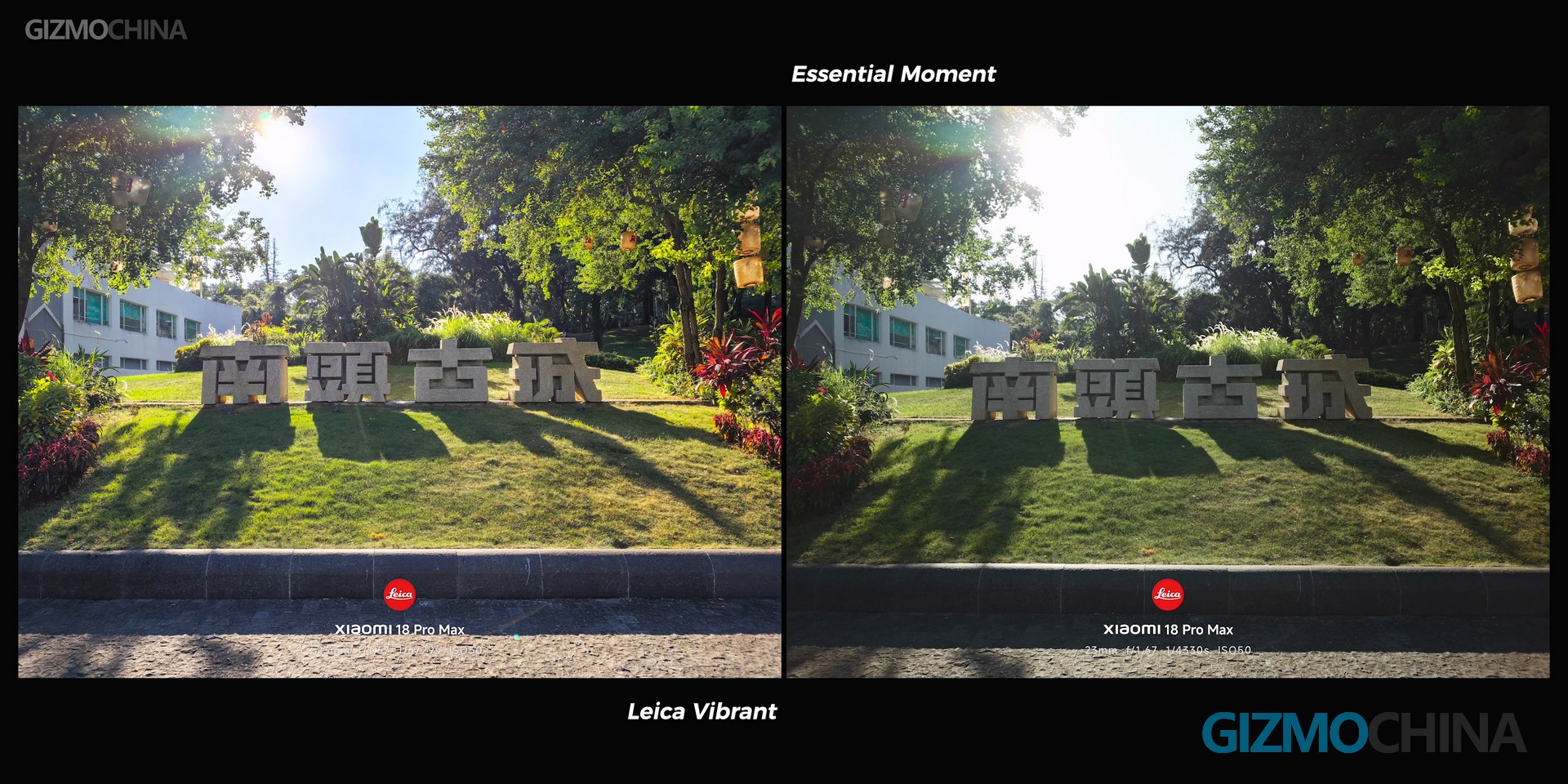
If you don’t like photos with such a wide dynamic range, you can also use the Essential Moment mode. This mode is basically a lighter version of Leica Essential. The higher contrast gives the photos a stronger cinematic look.
It keeps the black-and-white style and adds a popular CCD style. You get a little more grain and a higher-saturation photo in CCD style. Also, just like on the 17 Ultra, you can upload photos taken in this mode to the cloud and use AI to enhance the image quality. The colors change a little, and the sharpness improves as well.
However, the 18 Pro Max only gives you 60 free uploads per month. If you want to enhance more photos, you’ll have to pay extra.
So, compared with the Leica Essential mode on the 17 Ultra, what’s different about this one on the 18 Pro Max? Quite a lot. This mode raises the exposure a little and reduces the contrast. Since the white balance is no longer fixed to daylight, color accuracy is also much better. Compared with the strong Leica M9-style look on the Xiaomi 17 Ultra, this Essential Mode is much lighter and probably more appealing to most people.
As the camera with the biggest hardware upgrade, the telephoto camera takes some seriously impressive photos. Even at 150mm, and even at 10X zoom, the image quality is much better than I expected. The minimum focusing distance is also very short. This means you can use it for macro photography as well. It looks like an excellent and reliable camera, right? But nothing is perfect.
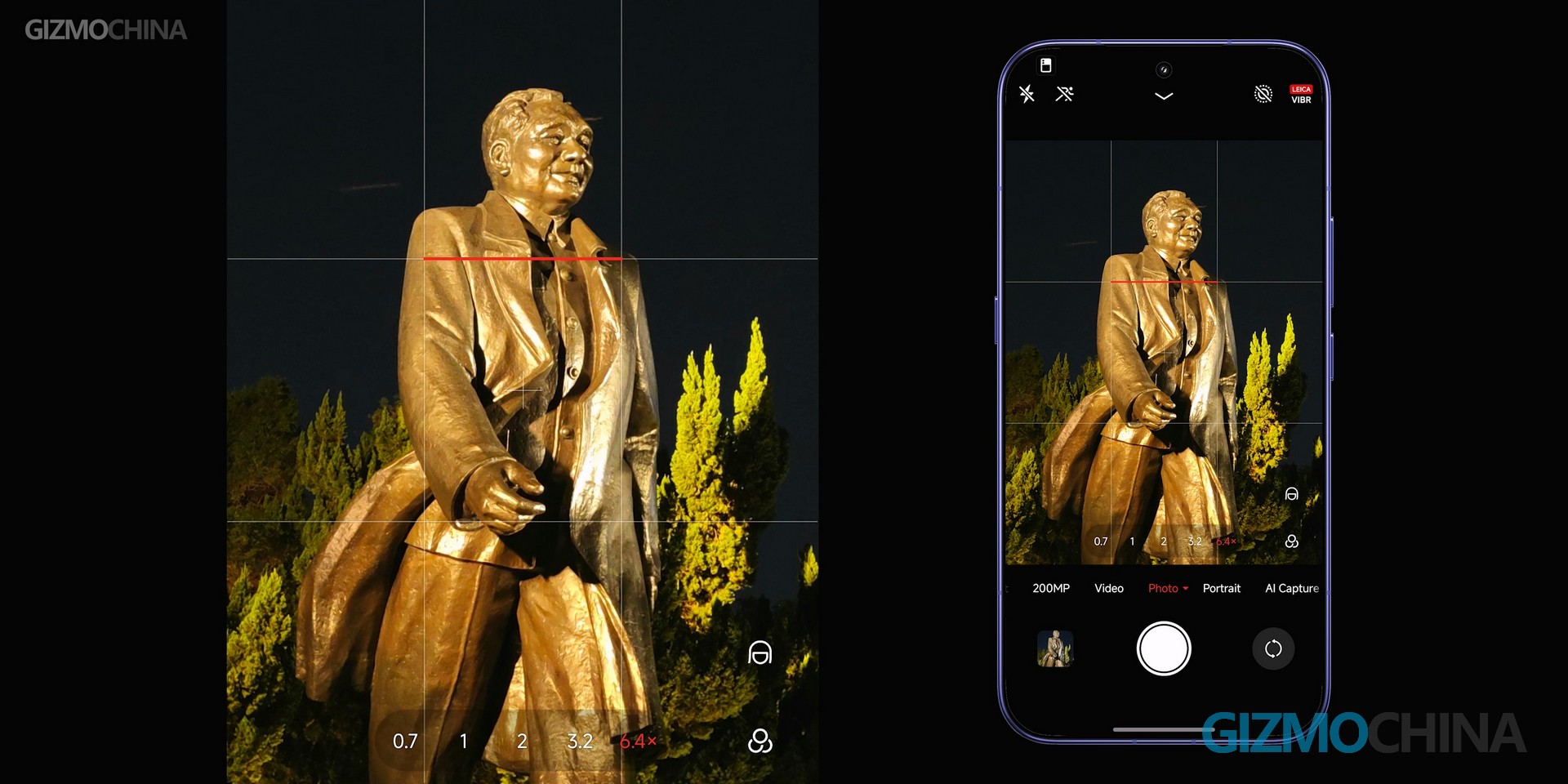
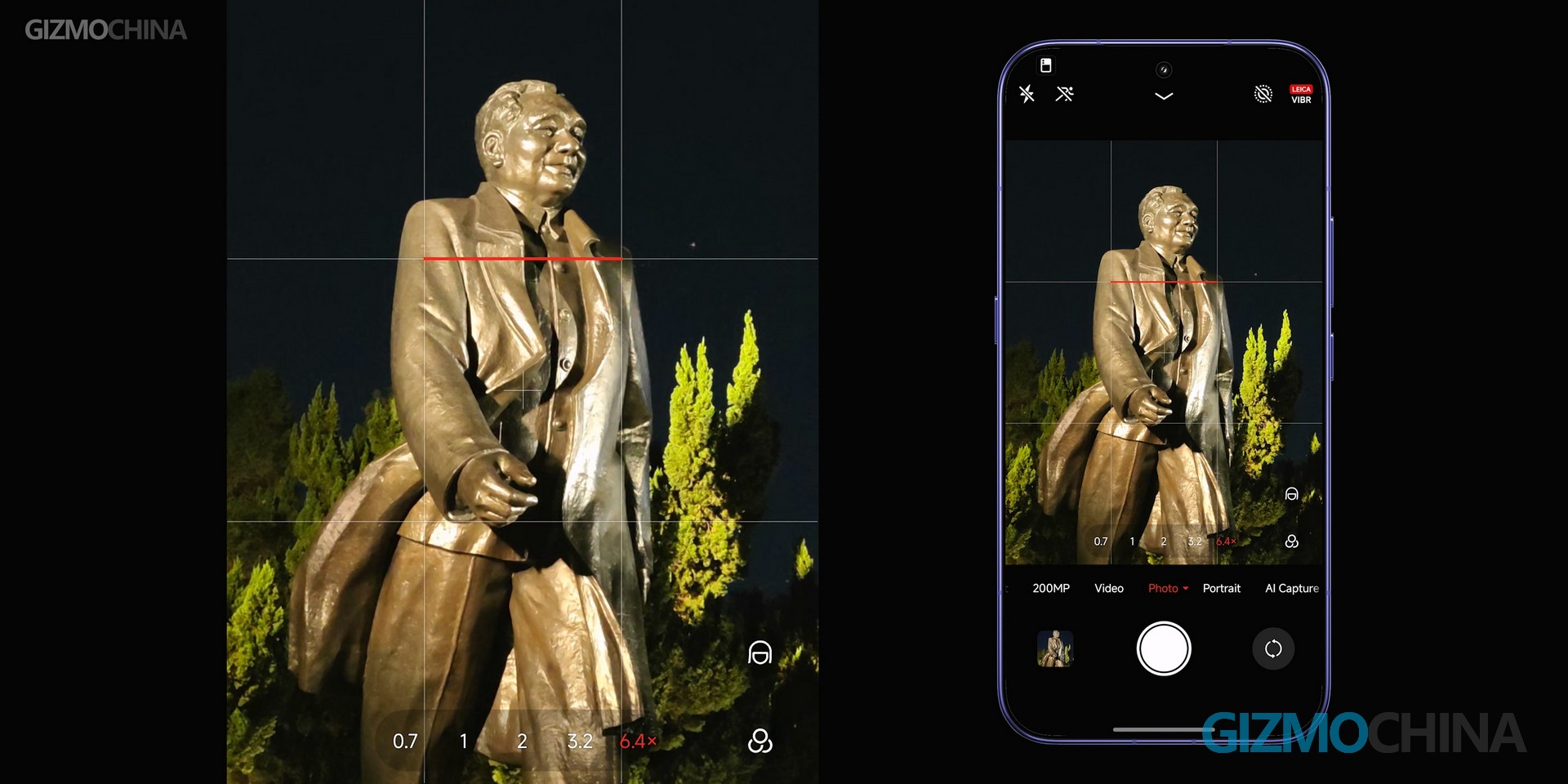
During my camera testing, I still found 2 problems. The first is the white balance. As you can see, the 18 Pro Max keeps trying to correct the color temperature of the statue, but it never seems to settle on the correct white balance. As a result, the final photos can end up with 2 completely different color temperatures.
The second issue is a telephoto stabilization problem, whcih we’ve seen on Xiaomi phones before. Every time I press the shutter button, the frame automatically shifts. Because of this bug, I ended up taking countless crooked photos. I hope someone from Xiaomi sees this video and fixes this bug as soon as possible. It is really annoying.
As for the ultrawide camera, you can tell Xiaomi has basically given up on it just by looking at where it sits. Fun fact: this sensor is the same model used for the front-facing camera. That means the photos taken with the ultrawide camera have almost the same image quality as your selfies.
Just like on the 17 Pro Max, the daytime image quality is good enough. Other than the serious color difference, most photos are still acceptable when you don’t zoom in. But at night, its weaknesses become obvious. In low light, its performance is basically similar to what you’d get from a 400 or 500 dollars phone. The image quality is poor, the exposure time is too long, and multi-frame processing often fails.
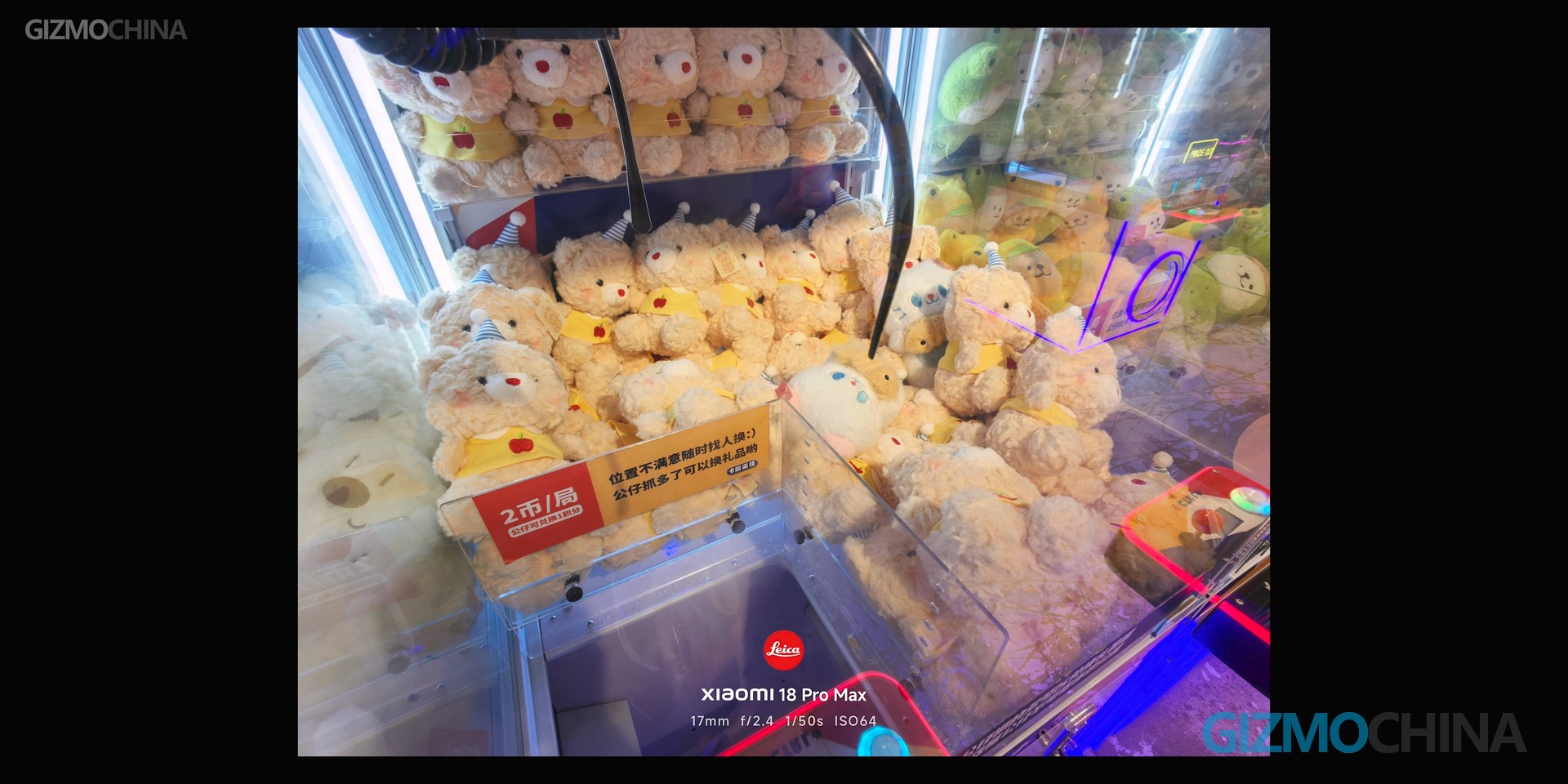
Oh, it might actually be worse than your old phone. That’s because this is a 17mm lens with a particularly narrow FOV. And this year, some Pro Max phones have a 13mm 200MP ultrawide camera. If you really like taking photos with an ultrawide camera, this can be pretty frustrating.
The difference isn’t quite as obvious in photos. But when you’re recording video, the gap becomes very obvious. The main camera performs pretty well. But once I switch to the ultrawide camera, I honestly can’t believe this footage was recorded by a phone in the same price range.
This camera is extremely sensitive to light. Even when the environment isn’t particularly dark, the image quality drops when switching between the main and ultrawide cameras. I think Xiaomi would be better off removing this camera and giving me a $10 discount. I’d actually be happier with that. Of course, video recording with the main camera is perfectly fine. If we ignore the ultrawide camera, this camera system is still at flagship level.
Battery Life
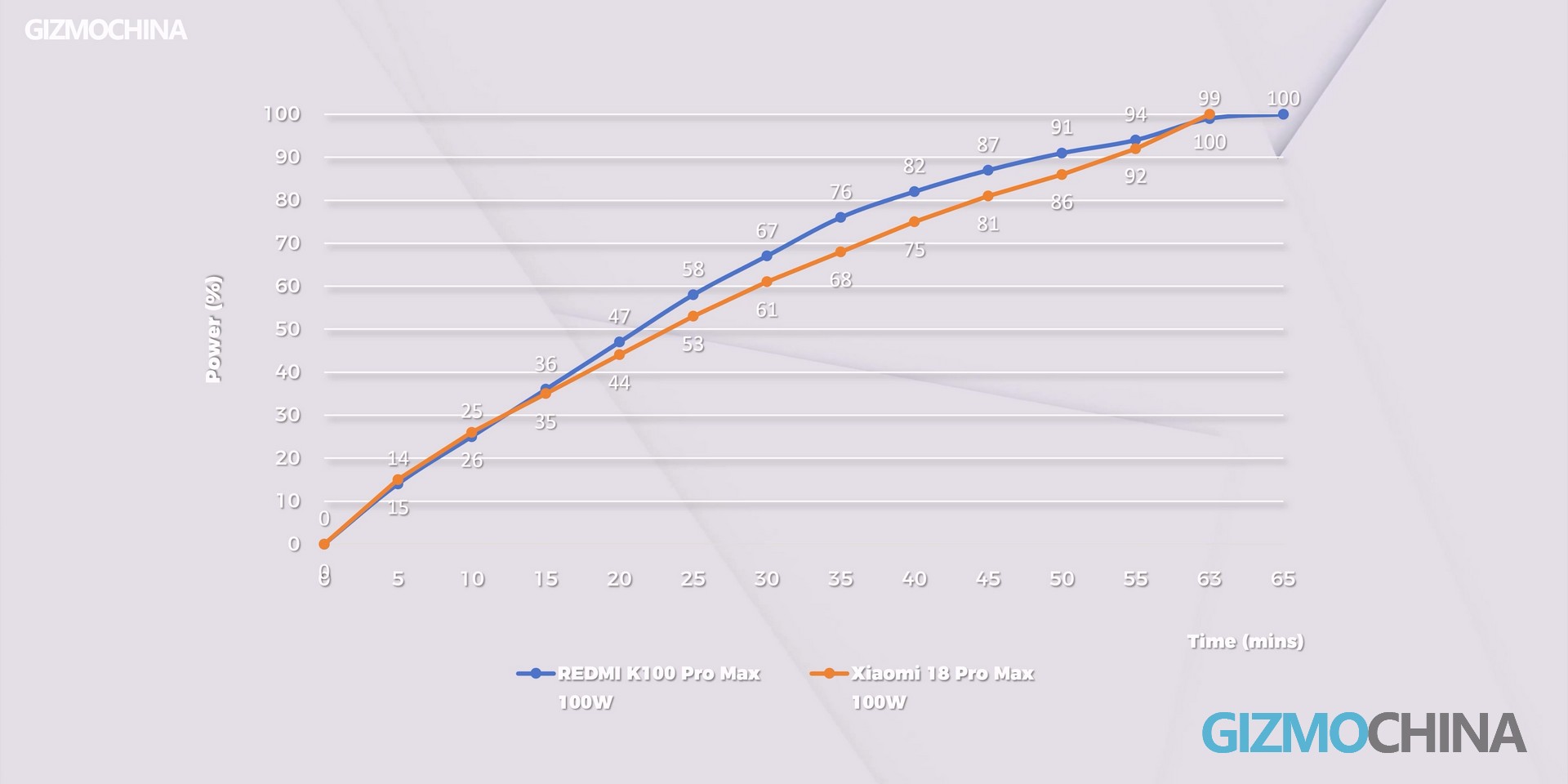
Among all the Pro Max models released recently, the Xiaomi 18 Pro Max has the second-largest battery capacity. The 1000mAh increase finally makes it a phone that can last through an entire day no matter how you use it. During our full-day camera testing, it consumed only 15% of the battery. Wired charging is still 100W, while wireless charging is 50W. In our test, a full charge took around 1 hour. That’s pretty average.
Conclusion
The rear display, the privacy display, and the new Essential mode. Whether these selling points are gimmicks or genuinely useful features, Xiaomi has thrown all of them into the 18 Pro series. Thanks to this phone, we can still find a little fun among a sea of otherwise boring smartphones.
But what does it cost? Quite obviously, the answer is the expensive price tag. Is it worth spending an extra $100 or even $200 on it? After watching this video, you probably already have your answer.
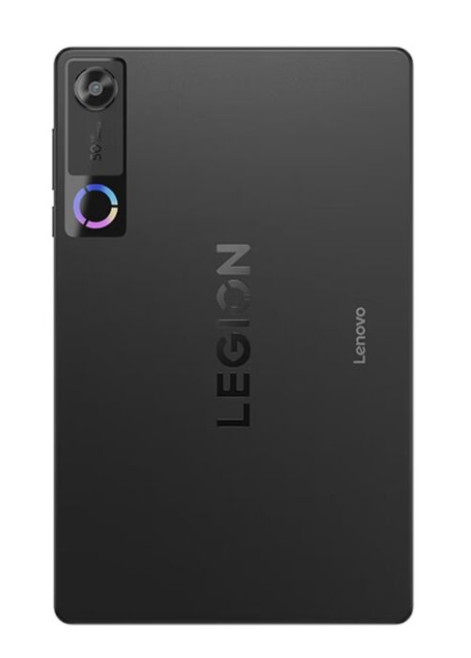
Lenovo Legion Y700 2026 (Gen 5) is now available at a discounted price on Giztop, offering buyers a chance to save $200 on the compact Android tablet. The 256GB Black variant is listed for $599, down from its original price of $799. Express and global shipping options are also available, making the deal worth considering for buyers looking for a powerful tablet for gaming and everyday use.
Compact 3K Display With a 165Hz Refresh Rate
The Lenovo Legion Y700 2026 features an 8.8-inch IPS LCD with a 2560 × 1600 pixel resolution and a 16:10 aspect ratio. Its 165Hz refresh rate is designed to deliver smoother scrolling, animations, and gameplay, making the tablet suitable for fast-paced mobile games. The display also supports Dolby Vision, DC dimming, a 100% DCI-P3 color gamut, and up to 500 nits of brightness. These features should help provide vibrant colors and a more comfortable viewing experience across games, videos, and other content.
The tablet runs on Qualcomm’s Snapdragon 8 Elite Gen 5 processor, positioning it as a high-performance option for demanding games and multitasking. It is available with 12GB or 16GB of LPDDR5X RAM and 256GB or 512GB of UFS 4.1 storage. The advertised deal covers the 256GB variant. Users can also expand storage through the microSD card slot, with support for cards up to 1TB, providing additional room for games, apps, and media files.
9,000mAh Battery and 68W Fast Charging
The Lenovo Legion Y700 2026 packs a 9,000mAh battery with support for 68W fast charging. Its large battery capacity should help support extended gaming sessions and everyday use, while fast charging can reduce the time needed to recharge. The tablet also includes dual JBL speakers with Dolby Atmos support for an enhanced audio experience. Other features include a 50MP rear camera, an 8MP front camera, Bluetooth 5.4, dual-band Wi-Fi, and two USB Type-C 3.1 Gen 2 ports.
Should You Consider the Deal?
At $599, the Lenovo Legion Y700 2026 is worth considering for buyers looking for a compact gaming tablet with flagship-level performance. Its Snapdragon 8 Elite Gen 5 processor, 165Hz 3K display, 9,000mAh battery, and expandable storage make it a strong option for gaming and entertainment. The $200 discount adds to its appeal.
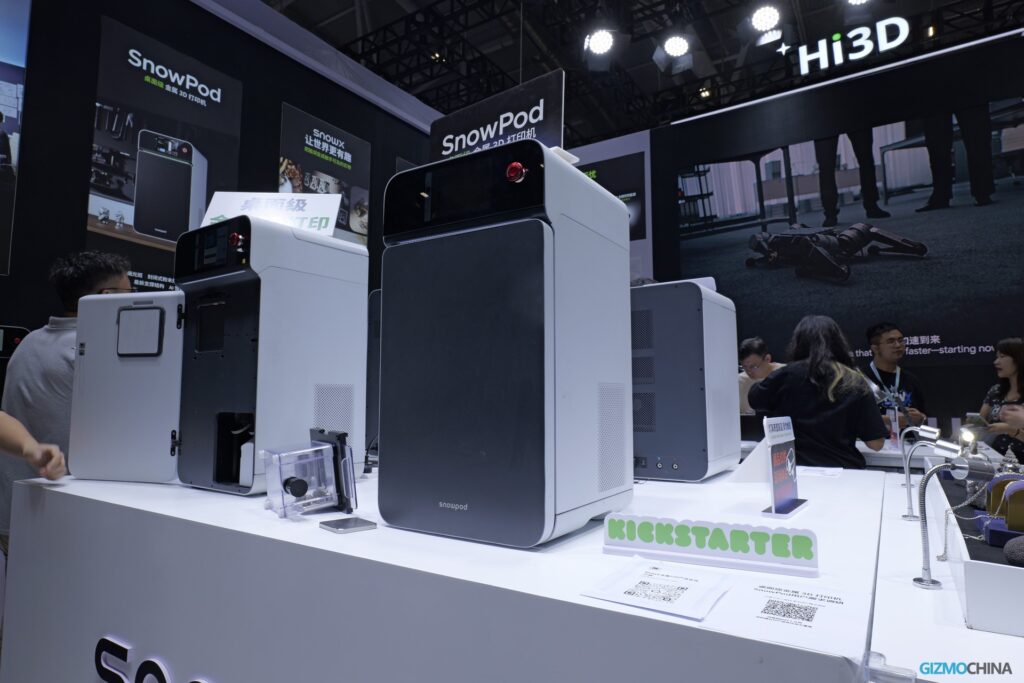
At TCT Shenzhen, SnowX had something more compelling than a product mockup: a SnowPod printing metal parts live on the booth table. Inside the compact enclosure, a laser was fusing 316L stainless steel powder layer by layer.The Kickstarter price: US$5,299.
Shenzhen, China — At SnowX’s booth, the SnowPod was printing metal parts live. Through the machine’s display, visitors could follow the process as a laser fused 316L stainless steel powder layer by layer to build a part. The compact metal 3D printer is small enough to fit on a workbench.
“It’s actually printing right now,” said Fangda Xu, SnowX’s CEO, pointing at the window. “The principle behind it is a powder-based technology called laser powder bed fusion.”
A Metal Printer for the Workbench
The SnowPod is a compact selective laser melting (SLM) machine housed in a 360 × 360 × 660 mm enclosure weighing 40 kg. Its build volume is 80 × 80 × 100 mm, making it less a miniature production machine than a tool for single parts, jewelry, prototypes and small mechanical components.
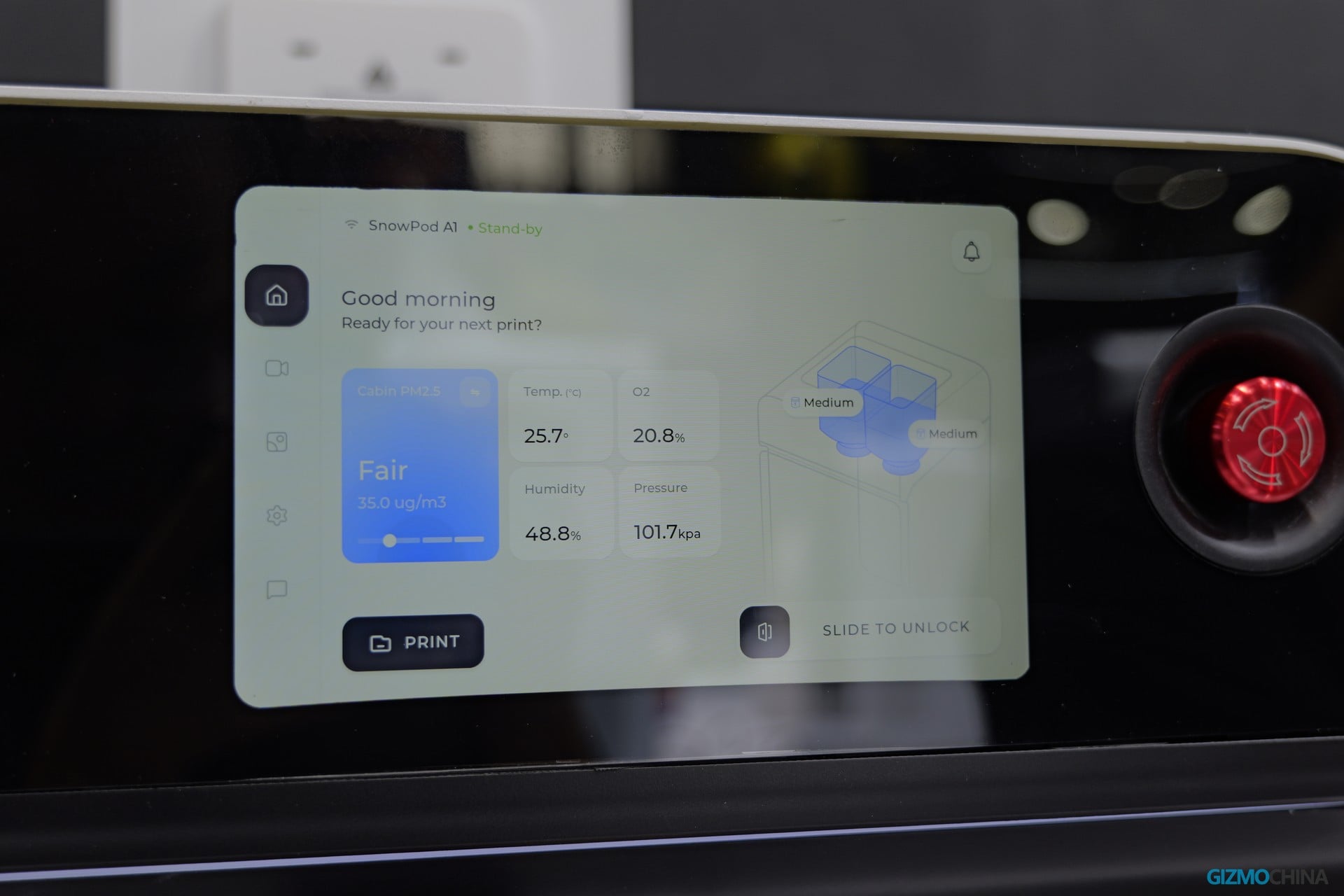
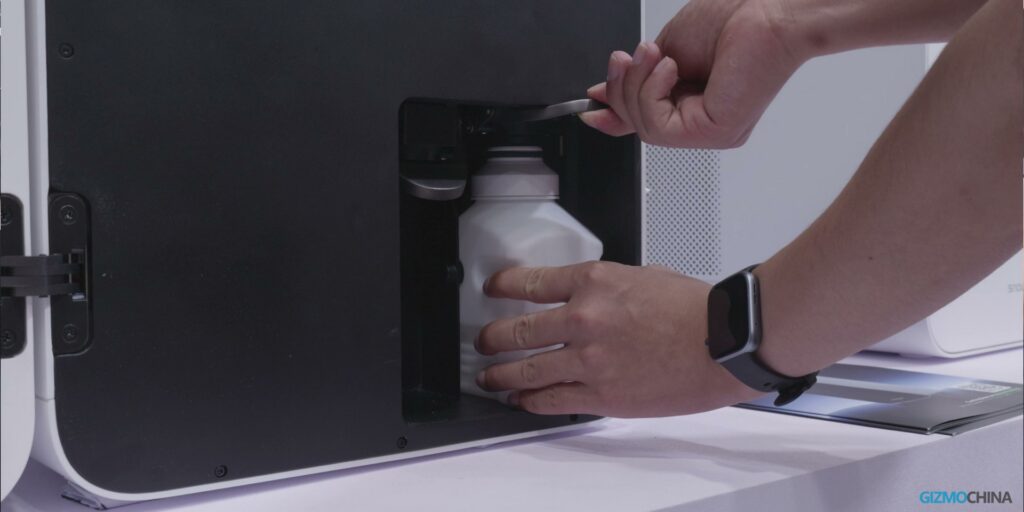
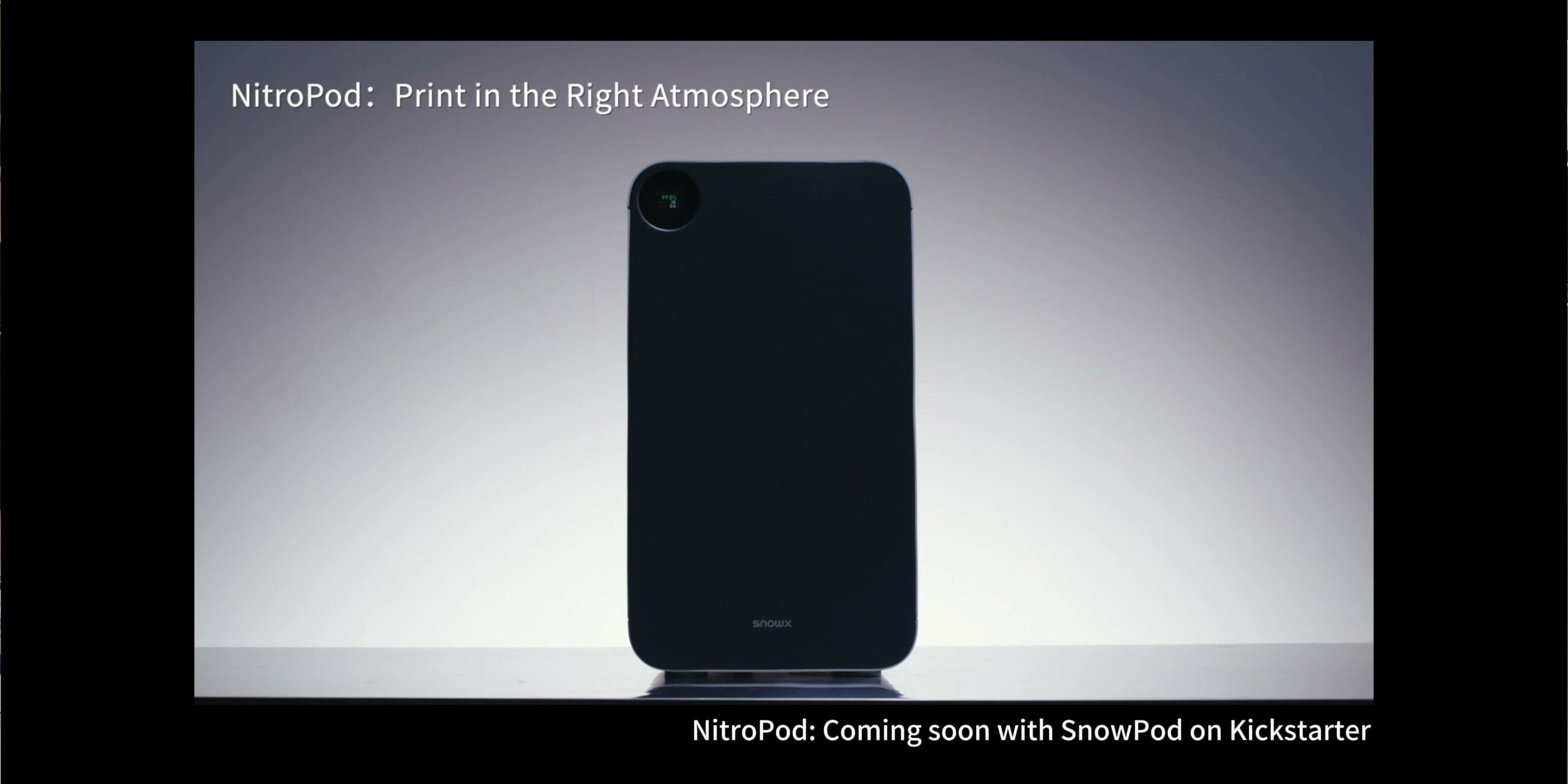
What separates it from a shrunken industrial printer is the packaging. Powder arrives in sealed cartridges, and the chamber remains enclosed through the print and retrieval process. Air quality, including PM2.5 levels, is monitored, with an interlock designed to pause the machine if readings move outside operating limits. SnowX has also developed its own nitrogen generator, the NitroPod, for workshops without a dedicated nitrogen supply.
That combination — sealed powder, on-demand nitrogen, breakaway supports, in-house slicing software — is the actual product. The laser is almost the easy part.
“Here is our machine, the SnowPod. I think it’s the first of its kind — that’s our metal 3D printer.”
Fangda Xu, CEO, SnowX
Inside the Print
The process follows the SLM approach. A recoater spreads a thin layer of metal powder across the build plate, and a laser melts the powder wherever the digital slice calls for material. The plate lowers, fresh powder is spread, and the cycle repeats until the part is built inside a bed of loose powder.
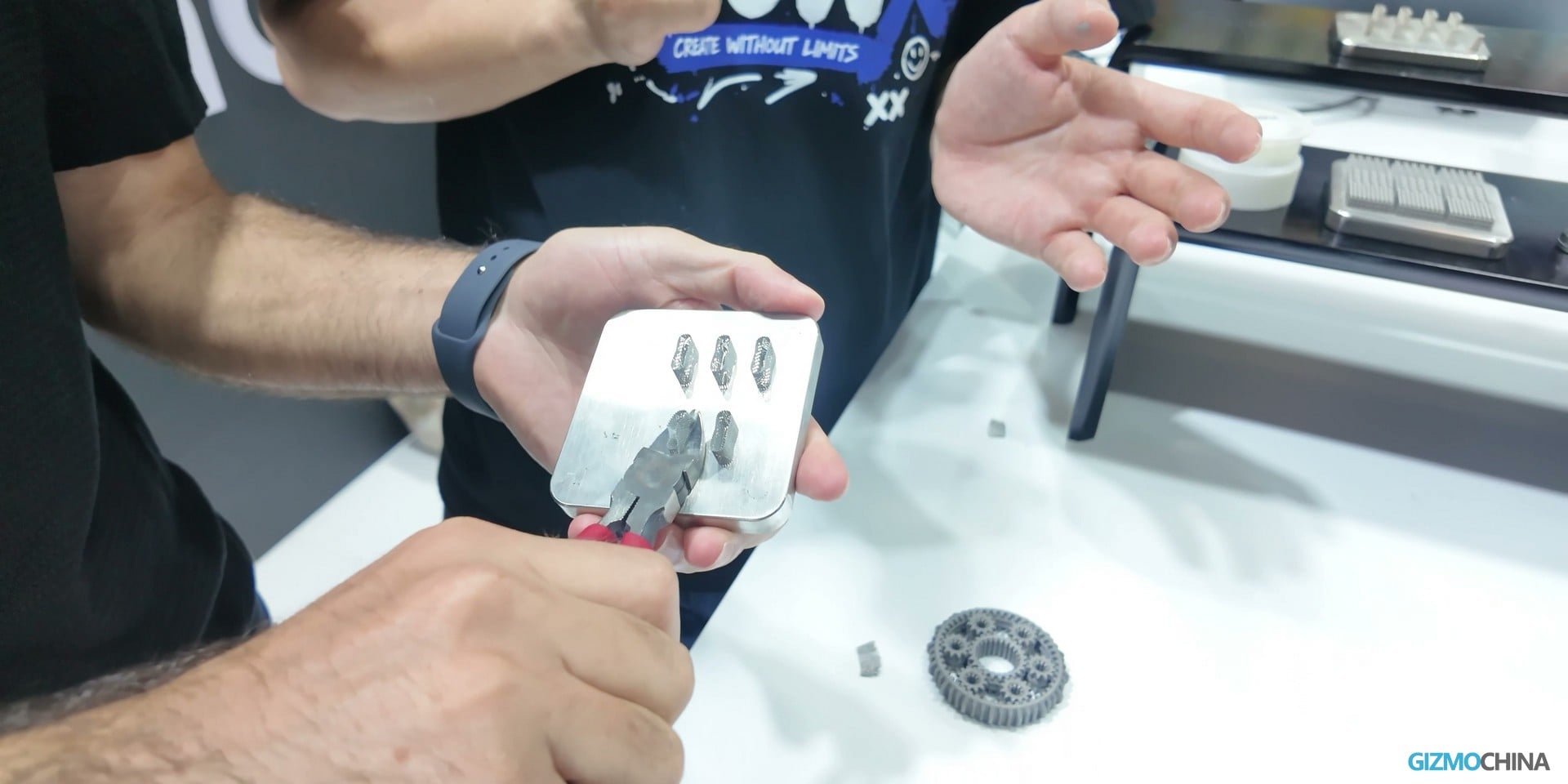
“It can rotate right after the printing,” Xu said of a print-in-place assembly displayed at the booth. Once printing is complete, with just a regular a pair of pliers, SnowX removes the part from the build plate and strips away the supports easily. For a smoother surface, the part can then undergo additional post-processing, such as polishing.
The machine uses a 200 W fiber laser with an approximately 40 µm spot, adjustable layer thicknesses of 30–60 µm, and 3 µm Z-axis precision. SnowX reports dimensional accuracy of approximately ±0.05 mm based on its own laboratory measurements, with results varying according to part geometry.
From File to Finished Part
The workflow is designed to be straightforward, with the key steps handled through SnowX’s own software and built-in systems.
Before the print. SnowPath, SnowX’s own slicer, handles file import, support generation, slicing and job dispatch. The listed formats include STL, STEP, 3MF and SVG. Users can choose a standard, quality or efficiency profile before sending the job to the printer. The software comes with the machine. Xu’s summary: “Import, slice, print.”
Starting up. The machine runs its checks before printing, including a laser-source check and a broader subsystem inspection, followed by an air purge. Nitrogen is introduced to reduce the oxygen level in the chamber for the printing process.
During the build. A camera monitors the chamber, while AI-based vision is designed to flag potential problems such as lifting edges or insufficient powder delivery. PM2.5, gas, temperature and humidity sensors monitor conditions throughout the build. A hardware interlock is designed to pause the printer if monitored air-quality conditions fall outside configured limits.
After the build. A vacuum system recovers loose powder from the chamber for reuse. The part is transferred through a sealed transfer box: an inner door opens, the plate is pushed across, and the door closes. Add water and the residual powder becomes a slurry, safe to open.
Although the whole process is quite friendly without harm, SnowX still recommends protective equipment, including laser goggles and nitrile gloves, and anti-static clothing for maintenance.
Supports, Material & Real cost
Removing parts from the build plate and taking off supports can be major hurdles for desktop metal printing. Industrial SLM parts are often attached to their build plates and need to be cut free using equipment such as a wire cutting machine — a significant hurdle for small workshops that do not have one.
SnowX’s answer is a patented support structure designed to hold the part firmly during printing while being easier to break away afterward. At the booth, Xu used pliers to remove a support from a sample easily, demonstrating the approach in practice.
At launch, the SnowPod is specified for 316L stainless steel only.
Consumables are where the arithmetic gets interesting. Xu quoted roughly
Xu quoted roughly US$50 for a 2.5 kg stainless steel cartridge. By that calculation, the 25 g of metal in a ring represents approximately US$0.50 worth of powder. SnowX reports powder recovery of more than 90%, allowing unused powder to be collected for reuse.
The printer builds at a rate of roughly 1 cm in height per hour, according to Xu. The 44 mm name model queued at the booth took 3 hours and 44 minutes to print.
NitroPod, Two bundles & price
NitroPod is the printer’s quieter half — a generator that separates nitrogen from ambient air and supplies it to the chamber. SnowX quotes a nitrogen purity of 99.9% at a flow rate of 3 L/min. Workshops that already have a suitable nitrogen supply can skip the add-on; for others, NitroPod is designed to replace the need for a separate nitrogen cylinder.
SnowX has now published planned Kickstarter pricing for both packages: $5,299 for the SnowPod Printer Kit, $5,899 for the SnowPod with NitroPod. A refundable $50 deposit through SnowX’s reservation page takes the VIP price down to $4,999 and $5,599 respectively.
Verdict
The SnowPod is the most complete attempt at desktop metal printing we have seen at a Chinese trade show, and not because the laser is remarkable. It is because SnowX designed the boring parts — powder logistics, retrieval, supports, gas supply, slicer — around someone who has never handled metal powder.
OnePlus has been gradually revealing the key specifications and features of the OnePlus Ace 7 series ahead of its China launch. In its latest announcement, the brand has confirmed the camera specifications of the Ace 7 Pro. It has also shared camera samples showcasing the phone’s photography capabilities.
OnePlus Ace 7 Pro camera samples and specifications
According to the brand, the OnePlus Ace 7 Pro will feature a 200-megapixel main camera alongside a 3.5x periscope telephoto camera. According to the company, the high-resolution primary sensor captures fine details, including when images are zoomed in, while the periscope camera is designed to improve long-range photography.
The official periscope zoom camera samples include mountain landscapes, snow-covered peaks and portraits. The landscape images highlight distant scenery and fine textures, while the portrait samples demonstrate natural-looking skin tones and the handling of light and shadows. These examples suggest that OnePlus is placing greater emphasis on imaging alongside the series’ performance-focused hardware.
According to reports, the standard OnePlus Ace 7 will share several specifications with the Pro model but could differ in two key areas. The Pro is expected to use the Snapdragon 8 Elite Gen 5, while the standard version may feature its V-series variant. The regular Ace 7 is also expected to miss out on the periscope camera.
Both phones are tipped to feature a 6.78-inch 1.5K OLED display with a refresh rate of up to 185Hz and a 9,000mAh battery with 100W charging. Both models will ship with ColorOS 17-based Android 17 preinstalled. OnePlus will launch the Ace 7 series in China on Oct. 29 at 7 PM local time.
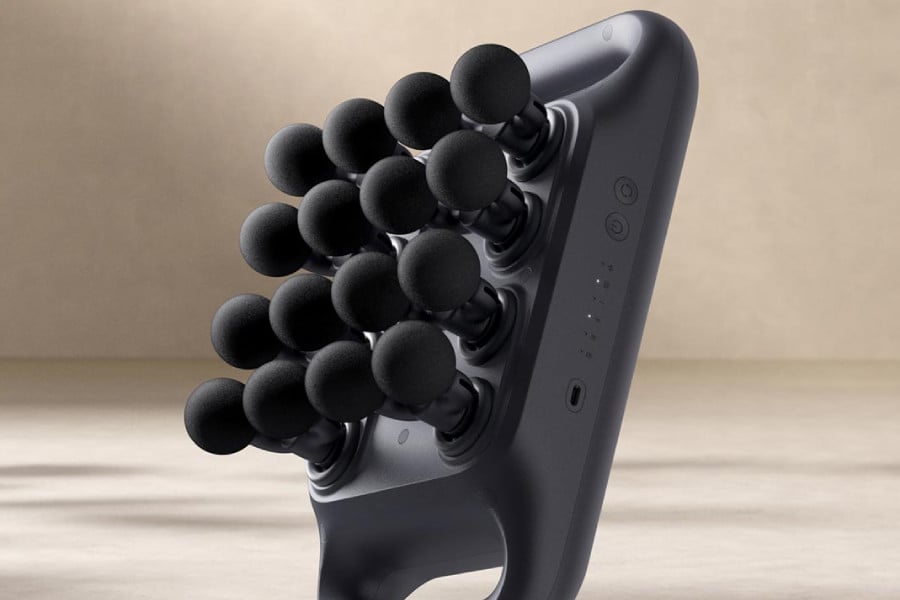
Xiaomi has launched the Xiaomi Mijia Multi-Head Fascia Gun 3C in China, featuring 16 fixed massage heads that work simultaneously. Unlike conventional massage guns with one interchangeable head, the new model uses soft, elastic EVA heads to cover a larger area at once.
It follows the Mijia Multi-Head Massage Gun 3, which Xiaomi introduced with three interchangeable heads of different shapes. Meanwhile, the new 3C uses 16 spherical heads in a fixed arrangement rather than letting users swap them out.
Xiaomi claims the 16 heads provide a theoretical relaxation area of 14,070 mm², based on a press depth of 4mm and a strike depth of 4mm. The actual area covered will depend on how much pressure is applied. According to the company, the design can be up to 16 times more efficient than its older single-head massage guns, although this comparison is based on Xiaomi’s own models.
The device is intended for areas such as the lower back, hips and legs. It also doesn’t need to be held throughout a massage. Users can lay it flat and rest a leg on it or lean their back against it while sitting on a sofa or chair. The handle also allows users to move it across their back and shoulders, while someone else can operate it for a more targeted massage.
Power and massage modes
The Mijia Multi-Head Fascia Gun 3C delivers up to 25kg of thrust. It comes with two operating modes, each offering three speed levels.
Fixed-frequency mode runs at 1,400, 2,000, or 2,500 rpm, while variable-frequency mode provides three ranges: 1,400–1,900 rpm, 1,700–2,200 rpm, and 2,000–2,500 rpm. Xiaomi lists a speed tolerance of ±8%.
Fixed-frequency mode maintains a steady rhythm for post-workout use, while variable-frequency mode alternates between lighter and stronger strikes for everyday massages.
The massage gun has a built-in 1,900mAh battery, which Xiaomi claims provides up to 12 days of battery life with 10 minutes of use per day. The estimate is based on approximately 120 minutes of runtime at the first speed level, with a 3kg load and a test temperature of 25°C. The device charges through a USB Type-C port.
It also has a memory function that restores the last-used mode and speed level when switched back on.
Price and Availability
The Mijia Multi-Head Fascia Gun 3C is available for pre-order in China, with no announcement yet regarding availability in other markets. It has a suggested retail price of 299 yuan (around $42).
We use cookies on our website to give you the most relevant experience by remembering your preferences and repeat visits. By clicking “Accept”, you consent to the use of ALL the cookies.
This website uses cookies to improve your experience while you navigate through the website. Out of these, the cookies that are categorized as necessary are stored on your browser as they are essential for the working of basic functionalities of the website. We also use third-party cookies that help us analyze and understand how you use this website. These cookies will be stored in your browser only with your consent. You also have the option to opt-out of these cookies. But opting out of some of these cookies may affect your browsing experience.
Necessary cookies are absolutely essential for the website to function properly. This category only includes cookies that ensures basic functionalities and security features of the website. These cookies do not store any personal information.
Any cookies that may not be particularly necessary for the website to function and is used specifically to collect user personal data via analytics, ads, other embedded contents are termed as non-necessary cookies. It is mandatory to procure user consent prior to running these cookies on your website.