Advertisement

Huawei Watch Kids 5X launched in China with a detachable dual sided display

Earlier this week, Huawei announced a new smart wearable product for the Chinese market. The new smartwatch was built specifically for children and is called the Huawei Watch Kids 5X, which comes with a very unique design.

The official promotional slogan states that the Watch Kids 5X was built to offer “safety protection on more than one side.” This basically hints at its interesting design philosophy, which consists of a dual display. Looking at the images of this smartwatch, it is clear that the device’s main body is completely detachable from the housing that connects to the band. While one would think that most smartwatches come with detachable bands, the new Watch Kids 5X is special since it can be removed from its housing to reveal a second screen underneath the first one.

Huawei

The Chinese tech giant let’s kids flip the smartwatch to have the other display come and top and replace the other one. In other words, its basically like having two smartwatches on a single device with one strap. The first display is the primary panel that has a color screen, while the other feature the more traditional black and white LCD panel. Furthermore, both sides of the smartwatch houses a camera, which allows children to take video calls.

The Watch Kids 5X is a direct successor to the Watch Kids 4 Pro that Huawei had launched last year. The brand is set to officially begin sales of the new Kids 5X smartwatch starting today (2nd December 2022), so you can check it out on their official Chinese website.

RELATED:

Redmi Note 12 Pro 4G coming soon, IMEI database listing spotted

Redmi has started teasing the arrival of the Redmi Note 12 series for the global market. Recent certifications have revealed that at least the Redmi Note 12 5G and Redmi Note 12 Pro+ 5G will be heading to the global markets soon. The lineup is also expected to include a couple of other models. One of them appears to be the Redmi Note 12 Pro 4G, which has appeared in the IMEI database.

In October, a Xiaomi device with a 2209116AG model number and the marketing name “Redmi Note 11 Pro 2023” surfaced in the IMEI database. It was also spotted on multiple platforms, such as Google Play Console, Geekbench, the FCC, the EEC, and SIRM (Malaysia). Xiaomiui has spotted the same device again in the IMEI database. This time, its name has been changed to the “Redmi Note 12 Pro.”

Reports suggest that the Redmi Note 12 Pro could be similar to the Redmi Note 10 Pro. Hence, there is a possibility that it may look like other Note 12 devices, but its internals could be similar to the Note 10 Pro.

The Redmi Note 10 Pro’s shortened model number is K6 and has the “sweet_global” codename. The publication revealed that the Redmi Note 12 Pro’s shortened model number is K6A, and it has the “sweet_k6a_global” codename. Hence, it appears that the Redmi Note 12 Pro 4G may borrow most of its specs from the Note 10 Pro.

Redmi Note 12 Pro 4G

The different certifications of the Redmi Note 12 Pro 4G have revealed that it is equipped with a Full HD+ display, the Snapdragon 732G mobile platform, and 8 GB of RAM. It may come preloaded with the MIUI 13-based Android 13 OS.

To recall, the Redmi Note 10 Pro features a 6.67-inch AMOLED FHD+ 120Hz display, a SD732G chip, 8 GB of LPDDR4x RAM, 128 GB of UFS 2.2 storage, and a 5,020mAh battery with 33W charging. For photography, it has a 16-megapixel selfie camera and 108-megapixel quad cameras.

India is a major market for Redmi phones. However, it is unclear whether the Redmi Note 12 Pro 4G will be released in India.

RELATED:

AMD quietly releases RDNA 2 in budget laptops

AMD had announced its latest lineup of mobile chips from its Ryzen 7000 series (Mendocino) of mobile processors. Now, the company has even quietly released its RDNA 2 powered graphics on certain budget laptops that were recently launched.

AMD

For those unaware, the RDNA 2 graphics is being offered on the “everyday” laptop, which combines the last gen Zen 2 CPU cores and RDNA 2. The RDNA 2 architecture is the platform that powers some very capable hardware like the PlayStation 5 and the Xbox Series X and Series S. Now, the graphics technology is arriving on some affordable notebook models too. The chipmaker giant’s new Ryzen 7000 series with the RDNA 2 was only announced on some Acer Aspire 3 series laptops.

But now, the latest and greatest mobile CPU and GPU combination are also making its way to Lenovo’s laptops as well. It is being offered on the Ideapad 1 and it features the Ryzen 5 7520U, the Ryzen 3 7320U, and the Athlon Gold 7220U. Based on the official website, Lenovo has yet to offer these Mendocino powered laptops in the US market, but these were found on other regions like the South Korea and even Hong Kong.

AMD

While these RDNA 2 powered laptops won’t offer top notch gaming performance due to their configuration, but these would still make these notebooks capable of running most competitive titles. It is also an indication that a much wider roll out will begin soon as well.

RELATED:

Realme Narzo 50 Pro 5G gets Android 13 Open Beta program

Realme launched the Narzo 50 Pro 5G smartphone back in May 2022. At launch, the smartphone was equipped with Android 13-based Realme UI 3.0. Now, it is one step closer to getting the stable Android 13 update since the company has announced the Android 13 x Realme UI 3.0 Open Beta for the device.

The brand has officially announced the Android 13 Beta program for the device in a community post which invites users to participate in it and enjoy the new features, along with providing their feedback on any issues or suggestions.

Please keep in mind that you must first update your Narzo 50 Pro 5G to the required UI version – RMX3395 11 A.05, RMX3395 11 A.06, RMX3395 11 A.07. Furthermore, the application for the Android 13 Open Beta for the device is open from today (December 1, 2022) and can be accepted in batches.

Those meeting the criteria can head over to Settings > Software Update > Tap on the settings icon in the top right corner > Trial Version > Submit your details > Apply Now to apply for the Realme Narzo 50 Pro 5G Android 13 Open Beta program. As it is an Open Beta program, you will most likely receive the update in a few days to try out Android 13 if your device meets the requirements.

Realme has advised customers to back up their important data in the event that they receive the Android 13 update. Furthermore, the company has advised customers to ensure that they have at least 5GB of free internal storage and that their battery is at least 60% charged before installing the Android 13 Open Beta firmware. Users who have rooted their devices will not be able to participate in the program.

Because it is a Beta build, it may have stability issues and bugs, so readers should avoid installing it on their primary devices. If you are dissatisfied with the Android 13 build and want to revert to Android 12, Realme has provided users with the option to do so.

RELATED:

Vivo X90 India variant spotted on Bluetooth SIG, launch imminent

Vivo had just recently announced its X90 series of flagship smartphones in its home market of China. Now, it appears that the company is gearing up for an Indian launch as well, after the Indian variant of the X90 was spotted receiving certification online. So here are all the details.

Vivo

For those unaware, the X90 lineup consists of three models, which includes the X90, X90 Pro, and X90 Pro+. The base X90 model for the Indian market was just spotted on the Bluetooth SIG website, which hints at its imminent launch. Looking at the online listing, the Vivo X90 was certified on the Bluetooth SIG with the model number V2218. This also hints at the launch of the device in the global market as well.

While the certification shows a global and Indian variant, this model is likely not different in terms of specifications from the model released in China. Unfortunately, the Bluetooth SIG listing does not reveal any finer details regarding the premium grade smartphone, but we already have the Chinese model for such details. The device will likely sport a 6.78 inch Q9 OLED Display that has a Full HD+ resolution, HDR10+, 120Hz refresh rate, and up to 1,300 nits of peak brightness.

Vivo

Under the hood, the device is equipped with a MediaTek Dimensity 9200 SoC that is paired with up to 12GB of RAM and up to 512GB of internal storage. The Vivo X(0 runs on Android 13 OS based OriginOS 3.0 out of the box. The rear features a 50 megapixel triple camera setup on the rear and a 32 megapixel selfie shooter on the front. The device has a large 4,810mAh battery pack that also supports an impressive 120W fast charging as well.

RELATED:

Lava Blaze NXT can now be purchased in India – Check pricing, specs & more

Last week, Lava debuted the Lava Blaze NXT smartphone in the Indian market. The smartphone is essentially a Lava Blaze (4G), but with a different chipset and more RAM. Now, the new smartphone has gone for sale for the first time in the country. So let’s check out its pricing, availability, and other details.

Lava Blaze NXT

Lava Blaze NXT pricing & availability

The Lava Blaze NXT costs Rs 9299 in India for the 4GB + 64GB configuration. It will be available for purchase exclusively through Amazon, Lava India Store, and other retail stores beginning at 12:00 PM today (December 2).

Lava Blaze NXT specifications

The Lava Blaze NXT has a 6.5-inch IPS panel with an HD+ resolution. The screen’s waterdrop notch houses an 8-megapixel camera. The primary camera on its rear-facing triple camera unit is 13 megapixels. The specifics of its auxiliary cameras are unknown at this time, but it appears that the primary camera will be accompanied by a 2-megapixel depth sensor and a VGA camera.

The Blaze NXT is powered by the Helio G37 chipset and has 4 GB of RAM. The device comes with 3 GB of virtual RAM and 64 GB of storage space. It has an onboard microSD card slot for additional storage.

The Blaze NXT runs a near-stock version of the Android 12 operating system. The device has a 5,000mAh battery that can be charged via a USB-C port to keep the lights on. The company claims that once fully charged, the Blaze NXT will provide an all-day experience. It also has a 3.5mm audio jack and a fingerprint scanner on the back.

The all-new Lava Blaze NXT is available in three colors: Glass Green, Glass Blue, and Glass Red. It weighs 203.5 grams and measures 164.75 76.3 8.9mm in length. The device’s connectivity options include Dual-SIM, 4G, WiFi 802.11 b/g/n/ac, and Bluetooth 5.0.

RELATED:

Google Wallet Adds Support For ID And Driver’s License In The US

Earlier this year, in May, Google announced the new Google Wallet with a bunch of new features, including support for adding digital IDs, but the feature wasn’t supported at first and the plan was to add it at a later date.

Now, it appears that Google Wallet finally has added support for storing digital IDs and driver’s licenses on the application for selected states in the United States.

Google Wallet

In a new update for Google Wallet, which appears to be rolling out with Google Play Services v48.22 for December, the company has suggested opening up Digital IDs as a part of the beta feature on the application.

The changelog posted to the Google System Updates support page reads: “[Phone] Beta feature to allow users from selected US state(s) to digitize their state ID/driver’s license into the Google Wallet for convenient, private and secure presentation.”

It says that the feature will be limited to selected US states, which means that most states in the US won’t be supporting this new feature, at least not initially. As of now, there are no details available about which states are included in the test or how users can enroll in the beta test when it launches. The beta version may simply be available for those enrolled in the Play Services beta via the Play Store.

Apple has also introduced support for Digital IDs on Apple Wallet, which is currently limited to three states, but nine more states have committed to supporting the feature at a future date. We expect a similar situation for Google Wallet, where it will support selected states at first and then add support for more in the future.

RELATED:

Apple’s Upcoming AR/VR Headset To Run xrOS Operating System

Apple has been working on its AR/VR headset for years now and if the reports are to be believed, then the company is set to launch the device in a couple of months. There have been reports about the device being powered by its own operating system.

Now, as per the latest report, the AR/VR headset from Apple will come powered by xrOS, which is a dedicated operating system for the mixed reality headset from the Cupertino-based tech giant.

Apple AR/VR Headset Concept Design Render

According to the report from Bloomberg, Apple has decided to call the software powering the augmented reality and virtual reality headset xrOS instead of the previously rumored RealityOS or rOS.

This new information about the software comes at a time when the technology giant is expected to be preparing for the launch of the headset sometime in 2023. Along with the headset having its operating system, it will also have a dedicated app store, similar to the Apple TV and Apple Watch.

If the rumors are to be believed, then the device from Apple will be a Mixed Reality device similar to the Microsoft HoloLens, which will support both Augmented Reality and Virtual Reality. The XR term stands for Extended Reality, which includes both augmented and virtual reality.

Apple has redesigned some of its applications like Maps and Messenger for a better experience on an AR/VR headset, but the company is also developing a Software Development Kit, allowing third-party developers to create applications for the new platform.

While there’s no solid information about the device getting launched, some reports indicate that the product could get launched in the first half of 2023 and will be available for purchase from the second half of the year. We expect to get more information in the coming months.

RELATED:

Samsung Galaxy Z Flip 5 Smartphone Could Feature A Larger Cover Display

Samsung launched the Galaxy Z Flip 4 foldable smartphone earlier this year, which is an improvement over its predecessor not only in terms of specifications but also in design. Now, the company is gearing up to launch the Galaxy Z Flip 5.

The upcoming Samsung Galaxy Z Flip 5 smartphone is now expected to come with a few design changes, and one of them includes a larger cover display on the phone’s back panel.

Samsung Galaxy Z Flip 4

According to display analyst Ross Young (via TomsGuide), the upcoming Samsung Galaxy Z Flip lineup will come with a larger 3-inch cover display compared to the 1.9-inch screen on the current-gen Galaxy Z Flip 4.

A larger cover display has been one of the demands of a set of users, and it appears that the South Korean giant has listened to the users. However, it’s just a rumor at this point in time, but we will wait for a couple of more such reports to confirm if it’s true.

The upcoming Galaxy Z Flip foldable smartphone would become more appealing if the device gets a larger display, allowing users to see more content and be much clear to read. Apart from the cover display, the company is also expected to upgrade the hinge mechanism to make it less noticeable.

As of now, not much is known about the upcoming foldable smartphone from Samsung, but we expect to know more details in the coming months as the device’s launch nears and rumors and leaks start surfacing online, revealing specs, features, and other key details.

RELATED:

Jafanda JF999 Air Purifier Review: Powerful air purification capacity with elegant design

The Jafanda JF999 is a large air purifier designed for the whole house and office, it can clean the air in that amount of room in one hour, and it can purify the air in a 900-square-foot area in just 12 minutes. So it definitely works super well and is very efficient. It’s equipped with Dual-in & Dual-out Patent Tech, 3-Stage Filtration has many advanced options, can connect to the VeSync smart app, and much more.

Packaging and Setup

The packaging of the Jafanda JF999 is very simple and environment friendly, besides the purifier itself, we can find a user manual, a quick start guide, and a power supply cable, there is no remote controller because you can control it remotely from anywhere at any time via the smart app.

Before you switch on the Jafanda JF999 and start purifying the air in your home, you must make certain preparations.To begin, peel off all tapes and protective films,Open the covers on the front and back of the purifier, remove the protective film from the filters and put them back into the purifier, now you can connect the purifier to the power supply.

Considering that you may need to move the purifier from one room to another, Jafanda has very thoughtfully designed two ways to easily move the purifier. There are four flexible wheels on the bottom of the purifier, so anyone can easily push the purifier around the house.Don’t worry it’ s difficult to carry the purifier upstairs, there are two Push-to-Open Handles for you to lift it easily.

Connecting

To make the purifier work smarter and more personalized, I highly recommend you connect the purifier to your phone, just long press the WiFi icon on the control panel, after you hear the tone, click Add Device to select the standby purifier then enter your WiFi password, now the connection is done.

Design

Compared to other air purifiers, the Jafanda JF999 has a more elegant and refined design and aesthetic. My favorite part is the intuitive control panel and the OLED screen on the front of the purifier, which shows you all the information you need about the air, including PM2.5 concentration, temperature and humidity, and from which you can find out the working status of the purifier and the life of the filter.

At the bottom of the control panel we can see a very attractive light, in fact it can tell you the quality of the air in the room by displaying different colors, of course in most cases the color of the light will be green.

How it works

Inside the purifier, we can see a pair of very huge fans, which is the source of the JF999’s powerful purifying power, with 766g Columnar Activated Carbon in the filter, it can keep the air in your house fresh and clean all the time.

Thanks to the smart auto mode, after the JF999 starts working, you basically don’t need to care about how it works anymore, it can automatically adjust the working mode through the built-in air quality sensor, there are five fan speeds, usually the JF999 will work between 1 gear and 2 gear, and you can hardly hear the fan. You can also switch to sleep mode or create your own air cleaning schedule via the Smart Life APP according to your needs.

Conclusion

So, this is the Jafanda JF999, a high-end purifier with an elegant design and powerful air purifying ability, and it is currently priced at only $447, probably the best choice under $500. If you are looking for a worry-free air purifier for your office or a new house, I highly recommend you buy it HERE.

OnePlus Nord 2T gets Android 13 Open Beta program

The OnePlus Nord 2T OxygenOS 13 Open Beta program has been revealed by OnePlus. The official announcement came via a post on the OnePlus Community forums. It is important to note that only Indian customers are eligible for the OnePlus Nord 2T OxygenOS 13 Open Beta program.

Typically, the company makes OxygenOS Open Beta firmware available for users to manually flash onto their devices. This time, though, the company has not made the firmware available; instead, consumers must apply for the program. If a user’s application is accepted, OxygenOS 13 Open Beta will be downloaded to their device automatically.

Indian owners of the OnePlus Nord 2T who have updated to the CPH2401 11 A.17 firmware are welcome to sign up for the OxygenOS 13 Open Beta program. Such users can navigate to Settings > About Device > Tap Updated, then Tap Icon on Top Right, then Tap Beta Program > Beta. Enter your details here > To enroll in the OnePlus Nord 2T Android 13 Open Beta program, click Apply Now.

OnePlus intends to choose 5000 Indian owners of the OnePlus Nord 2T for the OxygenOS 13 Open Beta program. To participate in the Nord 2T Android 13 Open Beta program, interested users must submit an application on or before December 3. Let’s take a look at the changes coming with the Android 13 Beta update.

Aquamorphic Design
• Adds Aquamorphic Design theme colors for enhanced visual comfort.
• Applies the Aquamorphic Design philosophy to animations to make them natural and vivid.
• Adds Shadow-Reflective Clock, with shadow simulating the orientation of the sun and moon.
• Adds a Home screen world clock widget to show the time in different time zones.
• Upgrades to Quantum Animation Engine 4.0, with a new behavior recognition feature, which recognizes complex gestures and provides optimized interactions.
• Optimizes UI layers for a clearer and neater visual experience.
• Applies real-world physical motions to animations to make them look more natural and intuitive.
• Adapts responsive layouts to accommodate different screen sizes to improve readability.
• Optimizes the widget design to make information easier and quicker to find.
• Optimizes fonts for better readability.
• Optimizes system icons by using the latest color scheme to make the icons easier to recognize.
• Enriches and optimizes illustrations for features by incorporating multicultural and inclusive elements.

Efficiency
• Adds large folders to the Home screen. You can now open an app in an enlarged folder with just one tap and turn pages in the folder with a swipe.
• Adds media playback control, and optimizes the Quick Settings experience.
• Adds more markup tools for screenshot editing.
• Adds support for adding widgets to the Home screen, making information display more personalized.
• Adds Sidebar Toolbox. You can open a floating window inside apps for smooth operation.
• Optimizes Shelf. Swiping down on the Home screen will bring up Shelf by default. You can search content online and on your device.

Seamless Interconnection
• Optimizes Screencast, with cast content automatically adapting to the target screen.
• Optimizes earphone connectivity to deliver a more seamless experience.

Personalization
• Optimizes Bitmoji to offer more Always-On Display animations.
• Optimizes Insight Always-On Display, with more personalized Always-On Display settings available.
• Optimizes Portrait Silhouette Always-On Display, with more drawing tools and line colors available.

Security and Privacy

• Adds an automatic pixelation feature for chat screenshots. The system can identify and automatically pixelate profile pictures and display names in a chat screenshot to protect your privacy.
• Adds regular clearing of clipboard data for privacy protection.
• Optimizes Private Safe. The Advanced Encryption Standard (AES) is used to encrypt all files for enhanced security of private files.

Health & Digital Wellbeing
• Adds distance-from-phone, ambient light, and sitting posture reminders in Kid Space.
• Adds Eye comfort in Kid Space to protect children’s vision.

Performance Optimization
• Adds Dynamic Computing Engine to improve the system speed, stability, battery life, and app experience.

Gaming Experience
• Upgrades to HyperBoost GPA 4.0 to stabilize the frame rate and balance the performance and power consumption in key scenarios.

RELATED:

(Source)

POCO X5 5G, POCO X5 Pro 5G, Redmi Note 12 5G Global Launch Soon Suggests Multiple Certifications

POCO X5 5G launch seems imminent since it is being spotted constantly at various certification platforms. The device has now been certified by Malaysia’s SIRIM. The listing confirms the model number and final marketing name of the phone.

As per the SIRIM listing, the POCO phone with the 22111317PG model number will debut in the Malaysian market with the POCO X5 5G branding. This device has also been approved by the FCC authority.  The Indian edition of the device with the model number 22111317PI has also been approved by India’s BIS authority. The POCO X5 5G could be a rebranded or tweaked version of the Redmi Note 12 5G, which has the 22101317C model number.

POCO X5 5G SIRIM certified

On a side note, SIRIM has also certified the Redmi Note 12 5G (22111317G model number).

Coming back to the POCO X5 5G, it is likely to be accompanied by another model, the POCO X5 Pro 5G. According to Xiaomiui, the 22101320G, which was previously believed to be the POCO X5, is now expected to arrive as the POCO X5 Pro 5G in the market.

POCO X5 5G specifications

Redmi-Note-12-5G
RedmI Note 12 5G

The POCO X5 5G is likely to arrive with a 6.67-inch AMOLED FHD+ 120Hz display and run on MIUI 13-based Android 12 OS. The Snapdragon 4 Gen 1-powered phone may come with LPDDR4x RAM and UFS 2.2 storage. It may feature an 8-megapixel front camera and a 48-megapixel (main) + 2-megapixel (depth) dual-camera setup. It may house a 5,000mAh battery with 33W fast charging. For security, it may feature a side-facing fingerprint scanner.

POCO X5 Pro 5G specifications

The POCO X5 Pro 5G’s certifications have revealed that it will have a 5,000mAh battery with 67W charging. It will run on MIUI 14 and have support for the n5, n7, n38, n41, n77, and n78 5G bands. It is rumored to feature a 120Hz LCD display and the Snapdragon 778G Plus or the newer Snapdragon 782G chip. It is expected to release on the global market, in India, and in China. In China, it may arrive as a Redmi-branded phone.

RELATED:

Redmi 11A global variant appears on IMDA database confirming moniker, launch expected soon

Redmi is gearing up to launch a new device in its numbered series called the Redmi 11A. Till now, the smartphone has been spotted on China’s TENAA database and Bureau of Indian Standards database, signaling that it will be launched in these regions.

Redmi 11A TENAA image

Now, the smartphone has also appeared on Singapore’s IMDA database with a global model number of 22120RN86G. In contrast, the Indian model has the model number 22120RN86I, whereas the Chinese model has the model number 22120RN86C. The listing does not reveal any specifications, however, it indicates that the phone will launch in other global markets aside from India. Let’s take a look at the known details of the upcoming Redmi 11A.

Redmi 11A IMDA

Redmi 11A specifications (rumored)

According to an earlier TENAA listing, the Redmi 11 is said to feature a 6.7-inch IPS LCD display with an HD+ resolution of 1650 x 720 pixels. The device is powered by a 2.0GHz octa-core processor and 2 GB / 4 GB / 6 GB / 8 GB of RAM.

Storage capacities of 32 GB, 64 GB, 128 GB, and 256 GB are expected to be available for the Redmi 11A. It will have a microSD card slot, which will allow for more storage. It has a 5,000mAh battery inside. Information regarding the device’s capacity for fast charging is not yet available.

Whether the gadget will ship with Android 12 OS or the latest Android 13 OS is not yet known. The device has 50-megapixel dual rear cameras and a 50-megapixel front camera for taking pictures. An IR blaster is also included.

RELATED:

Lenovo Ideapad 1 with AMD Mendocino APUs appears on company’s site

AMD launched the Mendocino mobile processors back in September; however, laptop OEMs other than Acer have yet to offer machines based on this new chip. For those unaware, AMD Mendocino chips are entry-level mobile APUs that use older AMD Zen 2 and RDNA 2 technology but are built upon a refined 6nm manufacturing process optimized for both cost and all-day battery life.

Now, Lenovo has silently added some new IdeaPad 1 laptops to its product specifications reference site that carry these new CPUs (via). The specifications sheet refers to 14-inch and 15-inch models with quad-core Ryzen 5 7520U and Ryzen 3 7320U APUs, as well as dual-core Athlon Gold 7220U and Athlon Silver 7120U processors. These low-cost Mendocino chips all have the Radeon 610M GPU with two CUs operating at 1.9 GHz.

The IdeaPad 1 range starts from the Athlon versions, which comes with only 4GB of soldered LPDDR5-5500 RAM. The Ryzen quad-core variants, however, come with 8 or even 16 GB of RAM. The Ryzen versions receive the faster 512 GB PCIe 4.0 NVMe SSDs, while the Athlon models only have 128 GB PCIe 3.0 NVMe SSDs available for storage. An SD card slot allows users to increase their capacity.

The Athlon-powered machines are likely to get 14-inch and 15-inch screens with a 1366 x 768p resolution TN panel. The Ryzen models, on the other hand, will feature both TN and IPS panels with FHD resolution, however, the color gamut of these panels will be low, and the peak brightness will be limited to 250 nits.

The specifications also include WiFi 5 or WiFi 6 with Bluetooth 5.0 / 5.1 connectivity, USB-C 3.2 Gen 1, USB-A 3.2 Gen 1, USB 2.0, HDMI 1.4b, and audio jack connectivity, depending on budget. All models include a 720p webcam with a privacy shutter, although only the priciest Ryzen models also include a fingerprint reader in the power button. The chassis are primarily made of plastic to keep expenses as low as possible, and the 14-inch models weigh 3 lbs while the 15-inch models weigh 3.48 lbs. In video playback mode, the included batteries may last about 14 hours.

Although exact costs in US dollars are not yet available, certain Athlon Gold 7220U versions have Hong Kong dollar prices that would equal to US$490.

RELATED:

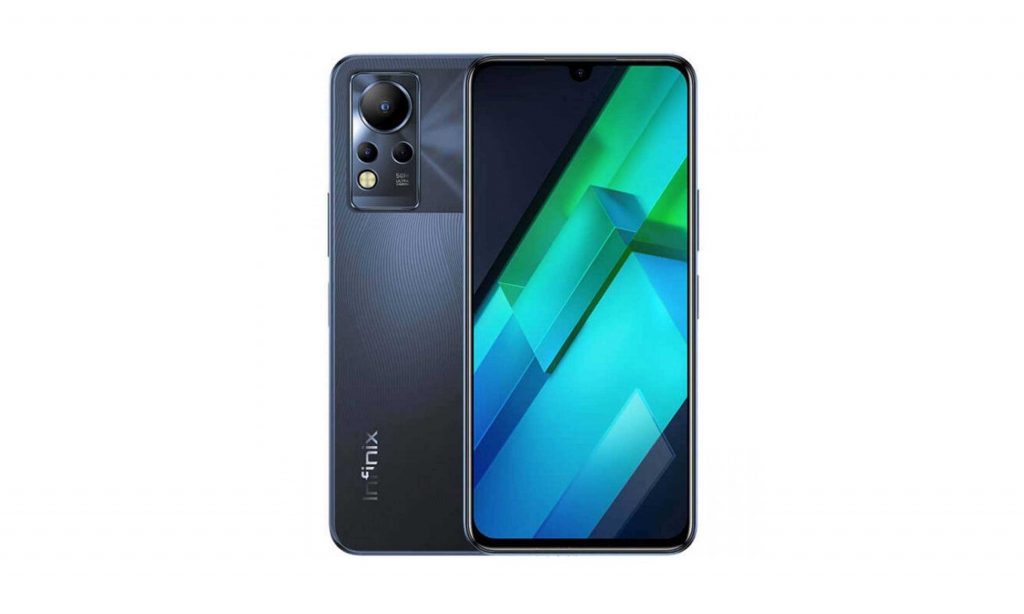
Infinix Zero 5G 2023 Price Confirmed, Packs 120Hz display, Dimensity 1080, 50MP Triple Cameras

Infinix quietly launched the Infinix Zero 5G 2023 in the global market last month. It debuted as the world’s first Dimensity 1080-chipset powered smartphone. However, at that time, the company did not confirm the price or availability of the device. The price of the Infinix Zero 5G 2023 has now been confirmed by the Hong Kong-based company.

Infinix Zero 5G 2023 specifications

The Infinix Zero 5G 2023 houses a 6.78-inch IPS LCD panel with a punch-hole design. It delivers a Full HD+ resolution of 1080 x 2400 pixels, a 120Hz refresh rate, and a 240Hz touch sampling rate. On the front, it has a 16-megapixel selfie camera.

The Zero 5G 2023’s rear camera setup has a 50-megapixel primary camera. It is paired with a 2-megapixel macro module, a 2-megapixel camera for depth sensing, and a quad-LED flash. Some of the photography features available on the Zero 5G 2023 include Super Night Mode, Night Filter, 960s slow-motion video shooting, Sky Remap editing, and more. In comparison, the Dimensity 900-powered Infinix Zero 5G from last year offered a 48-megapixel primary camera, a 13-megapixel telephoto camera, and a 2-megapixel camera.

Under the hood, the Zero 5G 2023 features Dimensity 1080 SoC, 8 GB of RAM, up to 5 GB of extended RAM, and 256 GB of internal storage. It runs on the XOS 12 flavored Android 13 OS. The device is backed by a 5,000mAh battery, which supports 33W fast charging. For security, it features a side-facing fingerprint scanner.

Infinix Zero 5G 2023 price and availability

The Infinix Zero 5G 2023 is priced at $239. As far as availability is concerned, the company claimed that it will vary based on region. It comes in shades like Submarine Black, Pearly White, and Coral Orange.

RELATED:

Vivo X90 vs Vivo X90 Pro vs Vivo X90 Pro+: Specs Comparison

The Vivo X90 Series is official and it contains the first phones with the latest flagship processors by Qualcomm and Mediatek. It is composed of three variants: the Vivo X90, the Vivo X90 Pro, and the Vivo X90 Pro Plus, all with amazing flagship-class specifications. Despite being all flagships, they are placed in different price ranges and a lot of people are wondering which one to choose based on their actual needs. Well, this article will help you if you are one of them. Here, you will read a comparison between the main specifications of the Vivo X90, the Vivo X90 Pro, and the Vivo X90 Pro Plus which will highlight the differences between them.

Vivo X90 vs Vivo X90 Pro vs Vivo X90 Pro Plus

Vivo X90 Vivo X90 Pro Vivo X90 Pro+
DIMENSIONS AND WEIGHT 164.1 x 74.4 x 8.5 mm,
196 g
164.1 x 74.4 x 8.5 mm,
215 g
164.4 x 75.3 x 9.7 mm,
221 g
DISPLAY 6.78 inches, 1260 x 2800 pixels (1.5K), AMOLED 6.78 inches, 1260 x 2800 pixels (1.5K), AMOLED 6.78 inches, 1440 x 3200 pixels (Quad HD+), AMOLED
PROCESSOR Mediatek Dimensity 9200, octa-core 3.05 GHz Mediatek Dimensity 9200, octa-core 3.05 GHz Qualcomm Snapdragon 8 Gen 2, octa-core 3.2 GHz
MEMORY 8 GB RAM, 128 GB – 8 GB RAM, 256 GB – 12 GB RAM, 256 GB – 12 GB RAM, 512 GB 8 GB RAM, 256 GB – 12 GB RAM, 256 GB – 12 GB RAM, 512 GB 12 GB RAM, 256 GB – 12 GB RAM, 512 GB
SOFTWARE Android 13, Funtouch OS or OriginOS Android 13, Funtouch OS or OriginOS Android 13, Funtouch OS or OriginOS
CONNECTIVITY Wi-Fi 802.11 a/b/g/n/ac/6, Bluetooth 5.3, GPS Wi-Fi 802.11 a/b/g/n/ac/6, Bluetooth 5.3, GPS Wi-Fi 802.11 a/b/g/n/ac/6, Bluetooth 5.3, GPS
CAMERA Triple 50 + 12 + 12 MP, f/1.8 + f/2.0 + f/2.0
32 MP f/2.5 front camera
Triple 50.3 + 50 + 12 MP, f/1.8 + f/1.6 + f/2.0
32 MP f/2.5 front camera
Quad 50.3 + 64 + 50 + 48 MP, f/1.8 + f/3.5 + f/1.6 + f/2.2
32 MP f/2.5 front camera
BATTERY 4810 mAh, fast charging 120W 4870 mAh, fast charging 120W, 50W wireless charging 4700 mAh, Fast Charging 80W, wireless charging 50W
ADDITIONAL FEATURES 5G, dual SIM, IP64 water resistant 5G, dual SIM, IP68 waterproof, reverse wired charging 5G, dual SIM, reverse wired charging, IP68 waterproof

Design

The designs of these three phones are almost the same, there are just a few small differences such as the position of the camera module. They are available in the Chinese market in color options made of different materials, including glass and eco leather. There is an important difference in the build quality, as the Pro variants come with the IP68 certification making them waterproof, while the vanilla version has the IP64 certification and it is only splash resistant. Another important difference is the fact that the vanilla version is thinner and lighter than the Pro ones, but the difference in thickness and weight is not huge.

Display

The Vivo X90 Pro Plus is equipped with the best display. We are talking about an AMOLED panel able to show up to one billion colors with a diagonal of 6.78 inches, a Quad HD+ resolution of 1440 x 3200 pixels, the LTPO 4 technology enabling an adaptive refresh rate from 1 to 120 Hz, Dolby Vision support, HDR10+ certification, and a peak brightness of 1,800 nits. The Vivo X90 and the X90 Pro have the same display, which is inferior to the one found on the Pro Plus variant. It is an AMOLED panel with one billion colors, a diagonal of 6.78 inches, an 1.5 K resolution of 1260 x 2800 pixels, a 120 Hz refresh rate without the LTPO technology, HDR10+ certification, and a peak brightness of 1,300 nits.

Specs & Software

In terms of hardware, these three devices are more or less at the same level. The Vivo X90 and the Pro variant are powered by the MediaTek Dimensity 9200 mobile platform built with a 4 nm production process and running at a max frequency of 3.05 GHz. Alongside the latest flagship chipset by Mediatek, there are up to 12 GB of RAM and up to 512 GB of UFS 4.0 internal storage. With the Vivo X90 Pro Plus, you get an octa-core Snapdragon 8 Gen 2 chipset built at 4 nm and running at a max frequency of 3.2 GHz: it is currently the best processor by Qualcomm and it is at the same level as the Dimensity 9200. The highest-end memory configuration is the same, with 12 GB RAM and 512 GB of UFS 4 storage. All the phones run Android 13 with either Funtouch OS or Origin OS depending on the region.

Camera

The Vivo X90 Pro Plus comes with the best camera, including a 50.3 MP main sensor, a 64 MP periscope camera, a 50 MP telephoto lens, and a 48 MP ultrawide shooter. The X90 Pro takes the silver medal with a 50.3 MP main camera, a 50 MP telephoto lens, and a 12 MP ultrawide shooter. The vanilla version is the worst with a 50 + 12 + 12 MP triple camera including a telephoto sensor and an ultrawide lens.

Battery

The vanilla Vivo X90 has the biggest battery and the fastest charging tech but, unlike the other variants, it lacks wireless charging.

Price

Vivo X90 starts from about €500/$526, the Pro starts from €700/$737 and the Pro Plus from €900/$947. Now that you know all the differences, which one would you pick?

Vivo X90 vs Vivo X90 Pro vs Vivo X90 Pro Plus: PRO and CONS

Vivo X90

PRO

  • More affordable
  • Same chipset as the Pro
  • Same display as the Pro
  • 120W fast charging

CONS

  • Inferior cameras

Vivo X90 Pro

PRO

  • Good quality price ratio
  • IP68 waterproof
  • Bigger battery
  • 120W fast charging
  • Wireless charging

CONS

  • Nothing particular

Vivo X90 Pro Plus

PRO

  • Best camera
  • Best display
  • Wireless charging
  • Periscope

CONS

  • Price

RELATED

Check the latest videos from our YouTube channel and subscribe:

Xiaomi Reveals It Has Sold Over 1 Million Units of the MIJIA Smart Clothes Dryer

Xiaomi has revealed that the sales volume of the MIJIA Smart Clothes Dryer has exceeded one million units since the product was first launched in 2020. This theoretically translates into providing convenient drying spaces for about 10,000 tons or 10 million pieces of clothes every day.

Xiaomi MIJIA Clothes Dryer

Xiaomi first released the MIJIA Smart Clothes Dryer in April 2020 under crowdfunding. This marked the entry of the tech giant into the smart clothes dryer sector even though similar products have been launched on the Youpin platform from eco-chain partners like Viomi.

The company improved on the original product when in December 2021 it launched the drying model of the MIJIA Smart Clothes Dryer which is capable of drying up to 10 pieces of clothes at the same time within 1 hour (lightweight clothes).

In September 2022, the MIJIA Smart Clothes Dryer Pro was released with a crowdfunding price of 1199 yuan. It adopts an ultra-thin body design and supports embedded and hidden installation. After the drying rod is retracted, it can be completely hidden inside the ceiling without blocking the sun or the window. In addition, the MIJIA smart clothes dryer can be lowered, stopped, and retracted with just a light push. Thus, it will stop if it encounters an obstacle.

Xiaomi MIJIA Smart Clothes Dryer

The models come with a wireless remote control which can be used to remotely lift and lower the rack as well as turn on the light in the dryer. The products can also be controlled using the MIJIA app smart control and XiaoAI voice control.

The Xiaomi Smart Clothes Dryer is presently not officially sold outside CHina but it is one of the numerous MIJIA products that we hope Xiaomi will release for the global market sometime soon.

RELATED:

Gokkcl Portable Power Stations With 2,000W Power and Solar Charging Launched on Kickstarter

GOKKCL has unveiled the GOKKCL 2000 and GOKKCL 1200 portable power stations. The new power stations are capable of delivering up to 2000kW of power and both feature several power outlets. The range includes USB-A, USB-C, and AC.

The models are rated to deliver 1200W and 2000W power respectively. They can provide power to multiple devices and weigh 12.5kg/22kg. The GOKKCL 1200 has a 960Wh battery while the bigger power station has a 1,997Wh LiFeP04 battery To put the devices in perspective, the bigger model can charge a 65W refrigerator for 30 hours and a 50Wh laptop 39 times. The charging cycle of the power stations is about 3,000 and can be fully recharged in two hours via a wall outlet.

Gokkcl Portable Power Station

The new GOKKCL power stations can be charged via a 400W solar panel with the built-in LCD providing charging parameters at any time. The bigger model has dimensions of 386 x 275 x 306mm while the smaller model is 386 x 225 x 317mm in dimension.

Gokkcl Portable Power Station

The products will retail in the United States for $899 and $1,399 respectively. The Kickstarter campaign for the GOKKCL power stations is ongoing and backers will need to pledge HK$ 4,255 (~$545) for the GOKKCL 1200 and HK$6,425 (~$824) for the GOKKCL 2000. The new GOKKCL power stations will ship out of Hong Kong to the United States next month. Global availability of the devices is guaranteed, but shipping costs and delivery dates may vary.

RELATED:

Xiaomi Smart Door Lock E10 With Smart Doorbell Launched for 799 Yuan ($113)

Xiaomi Smart Door Lock E10, the brand’s cheapest smart door lock has been launched in China and is now available for pre-order. The Smart Door Lock E10 will be on pre-sale until December 7 when full sales will commence. The smart door lock integrates a smart doorbell that sounds from the inner and outer panels.

Xiaomi Smart Door Lock E10

The Xiaomi Smart Door Lock E10 has a three-proof smart lock body with an in-built clutch. Its in-line C-level lock cylinder runs through the lock body structure for enhanced safety. It can effectively prevent external force from opening the door even after removing the outer panel. There are several options through which to open the lock. It includes fingerprint, passwords, cycle/ one-time passwords, NFC, Bluetooth keys, Xiaomi watches, and Xiaomi bracelets. Xiaomi says the efficiency rate of the fingerprint sensor is 99%.

Xiaomi Smart Door Lock E10

The Xiaomi Smart Door Lock E10 supports the MIJIA app and Xiaomi’s smart ecological linkage. It can connect via Bluetooth to various devices on the Xiaomi smart home ecosystem. You can enable the smart lights, curtains, etc to be turned on immediately after you unlock the door. The arm button turns off the smart home appliances when pressed. Four AAA batteries deliver up to 1 year of activity for the smart lock. When the batteries are flat, the device can be directly connected via USB-C for emergency unlocking of the door.

The Xiaomi Smart DoorLock E10 is open for pre-orders on Jingdong for 799 yuan (~$113). It will officially enter the market on December 7.

RELATED:

Simple One Electric Scooter Will Enter Its Production Stage in India Starting January 19th

In India, Simple Energy will start producing in the first week of January 2023. Beginning on January 19th, 2023, the Simple Vision 1.0 plant will start producing its Simple One premium electric scooter in India. The recently built Simple Energy facility is more than 2 lakh square feet in size, and it is stated that the hub can generate up to 1 lakh electric scooters annually. The brand spent more than 100 crores to establish the manufacturing facility.

“We are officially moving from planning to execution, prototype to production, and dreams to reality,” stated Suhash Rajkumar, founder and CEO of Simple Energy. The company also plans to increase the size of its manufacturing facility, which would be located in Dharmapuri, Tamil Nadu, and have a 1.25 lakh unit annual production capacity. The firm has announced that it will begin operations in January at its brand-new facility in Hosur, Tamil Nadu.

Simple One

The work is currently evolving into Simple Concept 1.0, a more expansive vision. We anticipate introducing top-quality electric vehicles that will accelerate and simplify the transition to green mobility thanks to improved engineering on Simple One and rigorous R&D. The manufacturing journey will begin in January 2023, and we look forward to it, said Suhas Rajkumar, founder and CEO of Simple Energy.

The Simple One electric scooter is the company’s first EV product and will compete with the Ather 450X, the Ola S1 series, and other models. The e-scooter is equipped with a 4.8kWh battery pack and a 4.5kW electric motor with a peak torque rating of 72Nm. The powertrain can propel the e-scooter to a top speed of 105kmph and provide a claimed range of 236 kilometres on a single charge.

Related