Realme will be unveiling its latest flagship smartphone— the GT Neo 5— in China on February 9. The handset is confirmed to debut with some groundbreaking technologies and aims to push the envelope further. While we wait for Neo 5’s official debut, Realme has confirmed it is readying yet another flagship smartphone. The device in question is the Realme GT 3 and it is teased to launch pretty soon in India.
A recent Tweet from Realme confirms that the company is gearing up to launch the Realme GT 3 smartphone in India. The company hasn’t revealed any details about the upcoming smartphone but hinted it will focus on speed and performance. The tweet says #SpeedToTheMax, this might suggest the GT 3 will boast super-fast charging, like the GT Neo 5.
Exciting news for #realme fans! 📰 On 2021.06.15, the __was launched. On 2022.02.28, the __ made its grand entrance. Fill in the blanks above and tell us what's coming next. #SpeedtotheMax
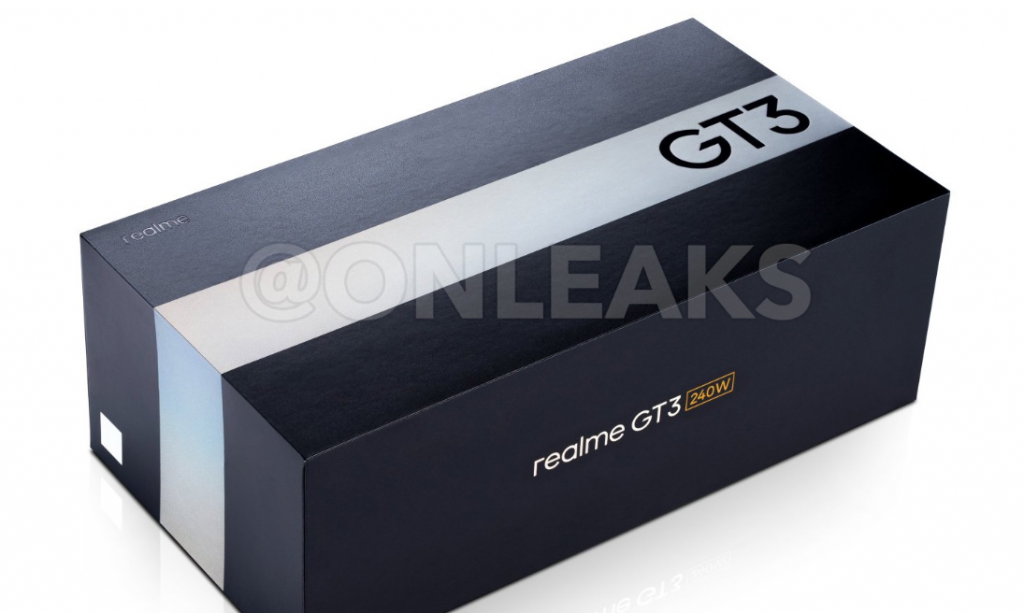
Leakster OnLeaks recently shared the alleged retail box of the GT 3, which reveals the smartphone will support crazy-fast 240W charging. In addition, the rumor mill suggests the handset will in fact be a rebranded GT Neo 5. The latter is confirmed to feature a Qualcomm Snapdragon 8+ Gen 1 SoC and fast 240W charging as well.
Various teasers and leaks have revealed that the GT Neo 5 will pack a 4,500mAh battery and will also have a 150W charging variant. It will arrive with a triple camera setup on the back, headlined by a 50MP Sony IMX890 main camera. There will be a 6.7-inch AMOLED display with a hole-punch cutout. The panel is said to support a 144Hz refresh rate.
Further, the Realme flagship will be equipped with an IR Blaster and multi-color RGB lights. It will run Android 13-based Realme UI 4.0 out of the box.
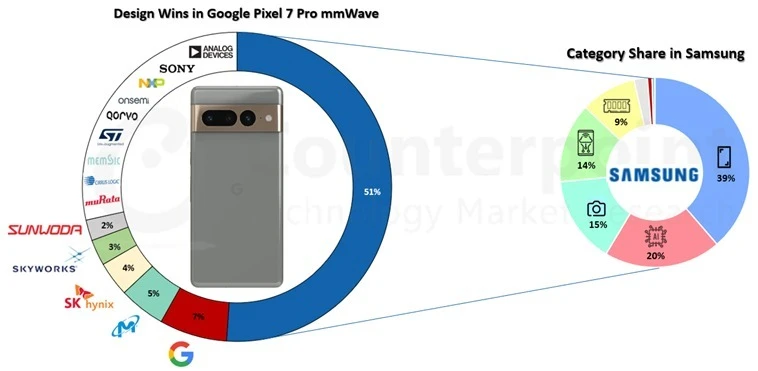
The Google Pixel 7 Pro was one of the best smartphone to launch in 2022, with many buyers and reviewers shelling out high praises for this device. But it seems that Samsung also had a role to play in their success since around half of the phone’s components were made by the rival company.
A new report talked about how much it costs to manufacture one single unit of the Search Engine giant’s top end flagship model. For a simple answer, Google spends around 413 US Dollars for a single unit. This figure was calculated based on the pricing of components and other costs. However, this report also uncovered a very interesting detail. The 128GB variant of the Pixel 7 Pro has around half of its components being made by the South Korean tech giant, Samsung.
The company was the one who manufactured its tall 6.7 inch AMOLED display, which has a 2K resolution. This panel alone accounts for 20 percent of the Pixel 7 Pro’s total cost. But the screen isn’t the only major component sourced from Samsung. Google’s proprietary chipset on the Pixel 7 Pro, the Tensor G2 SoC, was developed in cooperation with Samsung, which adds another 7 percent in terms of cost.
Google’s new flagship has won the hearts of many for camera performance, and lo and behold, Samsung is also one of the suppliers for its rear cameras. The South Korean brand’s ISOCELL GN1 sensor can be found on both the Pixel 6 Pro and the Pixel 7 Pro. This isn’t the only sensor from Samsung, since its 5x telephoto lens and selfie camera is also made by the company.
The MIUI 14 user interface was introduced by Xiaomi a month ago. The company was a little late in deploying the most recent Android 13 operating system on their smartphones. Despite practically all of the competition’s devices having the Android 13 update, Xiaomi flagships have not yet gotten it. But the company is making a lot of effort to remain ahead of the competition. Keeping up with that, the MIUI 14 based on the Android 13 update has now started rolling out to the Xiaomi Mi 11 Lite 5G.
The Xiaomi Mi 11 Lite 5G was released in 2021. It was launched with MIUI 12.5, which is based on Android 11. Today’s release of the Xiaomi Mi 11 Lite 5G MIUI 14 upgrade marked the device’s second Android and MIUI update. There are numerous optimizations and enhancements in the new MIUI 14 version, which runs on Android 13. The update’s build number is V14.0.3.0.TKIMIXM. The full changelog for the MIUI 14 upgrade for the Xiaomi Mi 11 Lite 5G is provided below.
Highlights
MIUI uses less memory now and keeps being swift and responsive over much more extended periods.
Attention to detail redefines personalization and brings it to a new level.
Basic experience
MIUI uses less memory now and keeps being swift and responsive over much more extended periods.
Personalization
Attention to detail redefines personalization and brings it to a new level.
Super icons will give your Home screen a new look. (Update the Home screen and Themes to the latest version to be able to use Super icons.)
Home screen folders will highlight the apps you need most making them just one tap away from you.
More features and improvements
Search in Settings is now more advanced. With search history and categories in results, everything looks much crisper now.
System
Stable MIUI based on Android 13
Updated Android security patch to January 2023. Increased System security.
Thanks to the upgraded MIUI 14, which is based on Android 13, the Xiaomi Mi 11 Lite 5G will now function significantly more quickly, dependably, and responsively. Additionally, users should receive additional home screen features as a result of this release. The system is far more straightforward, uses less memory, and is more efficient. In addition to being smoother and more power-efficient, the photonic engine architecture, system applications, and third-party apps are all completely accelerated. Our article is now complete. I appreciate you taking the time to read the whole thing.
Shutter lag has been present on Samsung high-end devices for a long time. The Galaxy S22 series has reported shutter lag and low shutter issues while capturing images and the same issue is present on the Samsung Galaxy S23 Ultra too. However, the shutter lag isn’t much noticeable in normal 12-megapixel mode but when we switch to the 200-megapixel mode, the lag is clearly visible. This is possibly due to the larger image size and resolution. Anyway, Samsung users can reportedly fix the issue using the Camera Assistant module.
The Camera Assistant app for the Galaxy S23 series has been upgraded by Samsung. Regular Resolution and Higher Resolution are two additional capture speed options for the Galaxy S23 Ultra provided by the Good Lock module for comprehensive camera settings and modifications. You can configure the camera app to emphasise quality, balance quality and speed, or prioritise speed for normal resolution (12.5MP). You can choose whether to prioritise quality or speed while using the camera’s higher resolution modes.
😲😲😲😲 The new version“Camera Assistant” for Galaxy S23 series makes all Youtuber's comments about 200MP meaningless. The new version allows you to greatly reduce the time required for 200MP shooting and processing.Please watch my video. pic.twitter.com/rgHBEyrpvY
You can use the Camera Assistant app to set the Galaxy S23 Ultra to prioritise speed if you are frustrated with the shutter delay in the 200MP mode. This will significantly reduce the shutter lag that would otherwise be noticeable in the 200MP mode. However, the visual quality will also suffer. We’re not sure if older Galaxy smartphones will also have access to this option. But don’t worry, the image quality won’t see any downgrade or something. Even if there will be some downgrade, the difference will not be much and can not be easily been by the naked eye.
The Galaxy S23 Ultra has three different image-capturing modes: 12.5MP, 50MP, and 200MP. Additionally, 12.5MP photographs have the best quality because of multi-frame noise reduction and detail augmentation. However, the 200-megapixels camera mode will offer better details in the images but that would require sufficient natural light. This concludes our post on the shutter lag issue with the Samsung Galaxy S23 Ultra. How do you feel about the article? Please let us know by leaving a comment below in your own words. Thank you very much for reading this article to the conclusion.
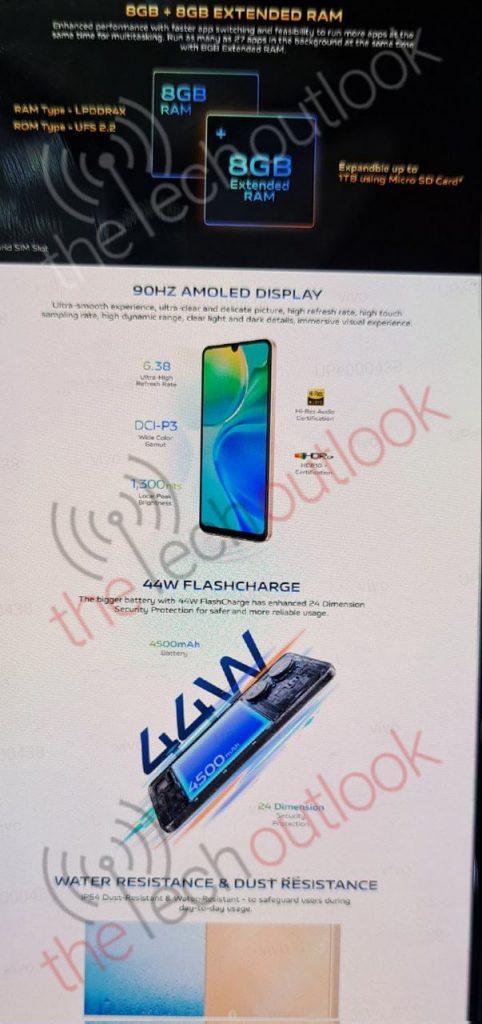
Vivo Y100 is expected to launch soon in India. Although the device has been officially teased, the exact launch date remains a mystery. The upcoming offering has already been spotted in leaks and certification websites. Now, publication The Tech Outlook has shared the marketing material of the Vivo Y100. It reveals some key specifications of the smartphone.
The Vivo Y100 is already confirmed to come with a colour-changing back panel. The back panel has two traditional camera rings housing three sensors. As per the leaked marketing material, the smartphone will be IP54-certified dust and water-resistant. It will come in Twilight Gold, Pacific Blue, and Metal Black colours. The device will measure 7.78mm thin and weigh 181 grams.
On the front, the Vivo Y100 is tipped to feature a 6.38-inch AMOLED display with a waterdrop notch. It will offer a 90Hz refresh rate, 1,300 nits peak brightness, and HDR10+ support. In terms of photography, the upcoming smartphone will come with a 64MP main sensor with OIS support paired with two 2MP lenses. The device will pack various photography and videography features.
Under the hood, the Vivo Y100 will reportedly be powered by a MediaTek Dimensity 900 processor. It will pack up to 8GB LPDDR4x RAM along with 8GB virtual RAM technology. The smartphone is said to be backed by a 4,500mAh battery unit with support for 44W fast charging. It will ship with the brand’s latest proprietary FunTouch OS 13 out of the box.
The publication adds that the Vivo Y100 will only launch after February 15th. As per a tipster, the smartphone is expected to cost Rs 24,999 and go on sale starting February 16th.
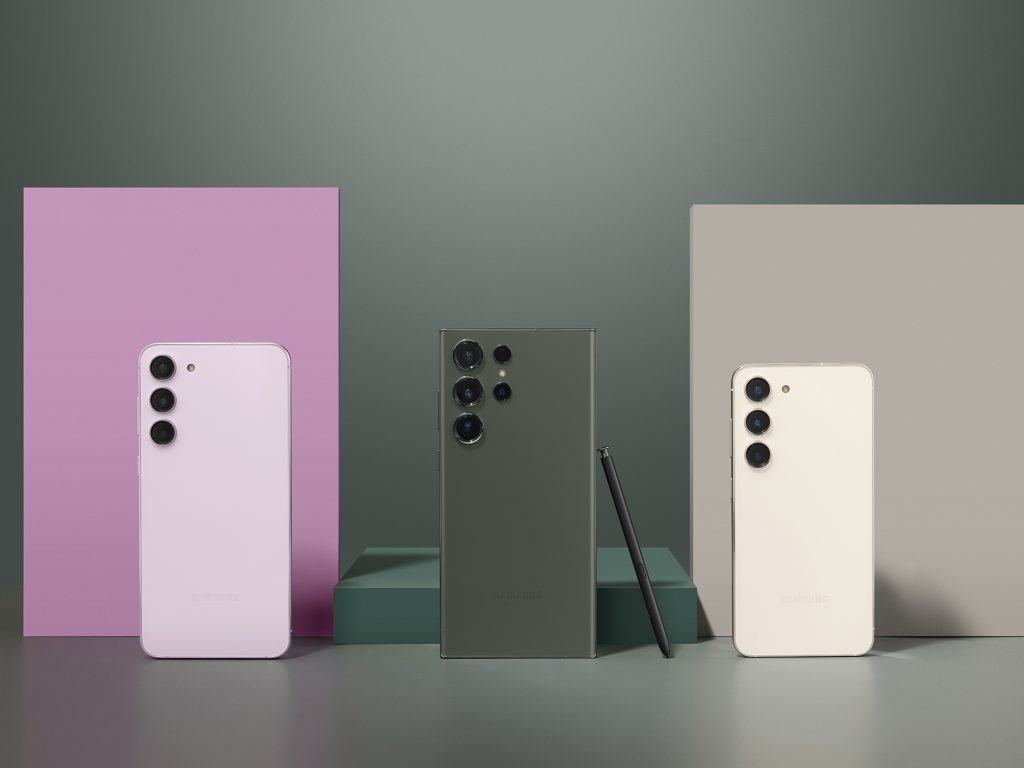
The Samsung Galaxy S23 series was launched recently by the brand. The series consists of three different smartphones; Galaxy S23, Galaxy S23+ and Galaxy S23 Ultra. The device comes with a customized Snapdragon 8 Gen2 chipset. The brand calls it “Snapdragon 8 Gen2 for Galaxy” and it has reportedly got more powerful CPU and GPU when compared with the standard variant. Now, a report making rounds on the internet claims that the upcoming Samsung Galaxy S24 series will offer a Snapdragon chipset which would be reportedly more powerful than Apple’s A16 Bionic.
There are strong rumours on the internet which say that Samsung will continue to use Qualcomm’s chipset in their upcoming flagship smartphones. These aim that the Galaxy S24 lineup will use the Qualcomm Snapdragon 8 Gen3 chipset. The Gen2 chipset was enough powerful to give head-to-head competition to Apple’s A15 Bionic chipset. The upcoming Apple iPhone 15 series will pack an A16 Bionic chipset.
An account on Weibo published a picture of the supposed Qualcomm Snapdragon Gen 3’s Geekbench result. In the single-core test, the Snapdragon 8 Gen 3 received 1,930 points, and in the multi-core test, it received 6,236 points. Comparatively speaking, the Apple A16 Bionic got 5,380 points in the multi-core test and 1,870 points in the single-core test. Therefore, the performance of the Snapdragon 8 Gen 3 is 15% and 3% better on the multi-core front, respectively.
A ten-core CPU would allegedly be present in the Qualcomm Snapdragon 8 Gen 3 according to another Weibo report. It has one primary CPU core, five CPU cores with excellent performance, and four CPU cores with low power consumption. It also implies that the forthcoming chipset will use 20% less power than the Snapdragon 8 Gen 2 CPU. So that was all we had to cover up regarding the upcoming Galaxy S24’s chipset. Thanks a lot for reading the post till the end. Do let us know your thoughts on the topic by dropping a comment in your words down below.
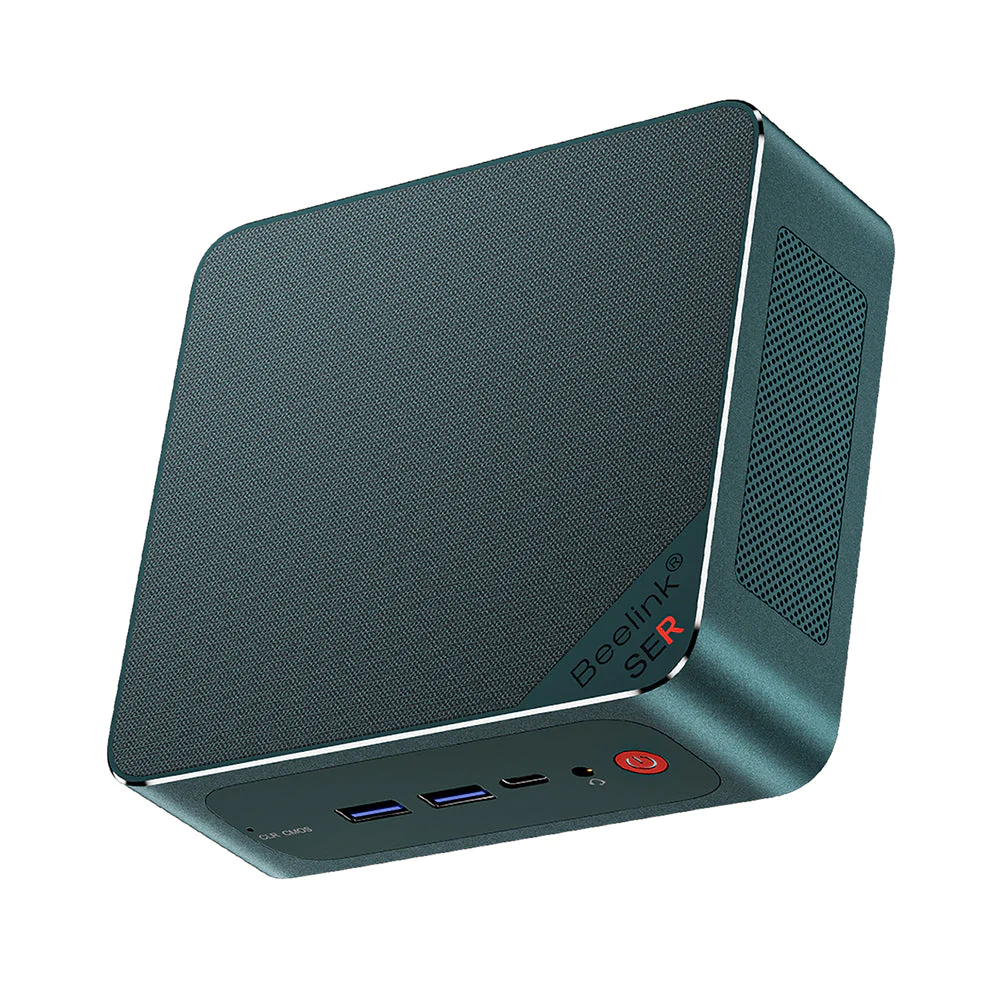
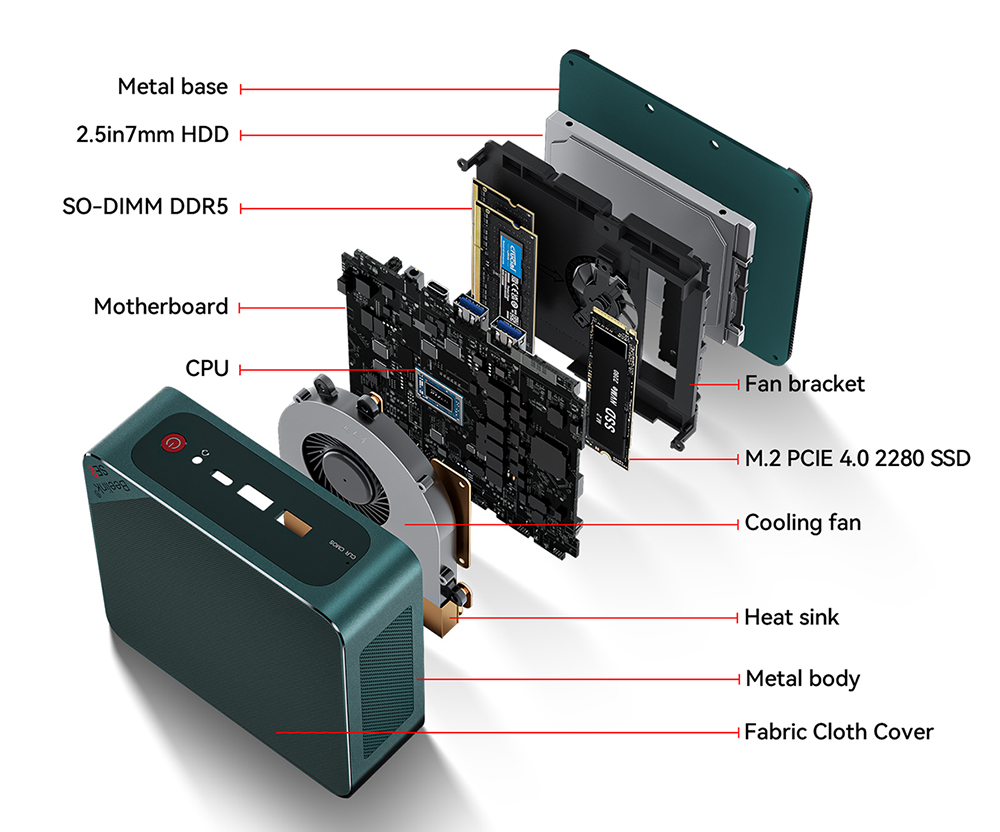
Beelink has announced the SER8 Pro Plus with AMD Ryzen 7 APU and Radeon 880M iGPU. The SER6 Pro Plus is a less-powerful alternative to the SER Pro but it also packs some functionalities. It has a 35W APU and Ryzen 7 refresh with the same CPU architecture and iGPU.
The new product comes a few months after Beelink released the SER6 Pro. The SER6 Pro is still available and can be purchased from MiniXPC. However, Beelink is yet to provide purchase details for the new mini PC. With a less-powerful outlook, the naming of the SER6 Pro Plus could be confusing. One would expect the Plus edition of the model to come with higher performance and components.
The SER6 Pro Plus uses the Ryzen 7 7735HS with a 50Hz higher boost than the Ryzen 7 6800HS. It has a 35W TDP which is lower than that of its predecessor by 10W. The Ryzen 7 APU has eight Zen3+ CPU cores, a 4.75GHz boost clock, and a 2.2Hz Radeon 680M. It was reported that the Ryzen 7 7735HS choice was due to overheating issues with the SER6 Pro’s Ryzen 7 6800HS.
The Beelink SER6 Pro Plus will retail at $499 as a barebones unit, which is $100 lower than its original price. The SER6 Pro Plus can be configured with 32GB of FAM and 500GB of storage with a $649 price tag. The original cost of the upgraded version is $689. Interested customers could make their pre-orders via MiniXPC. Customers will start getting their deliveries by March 2023.
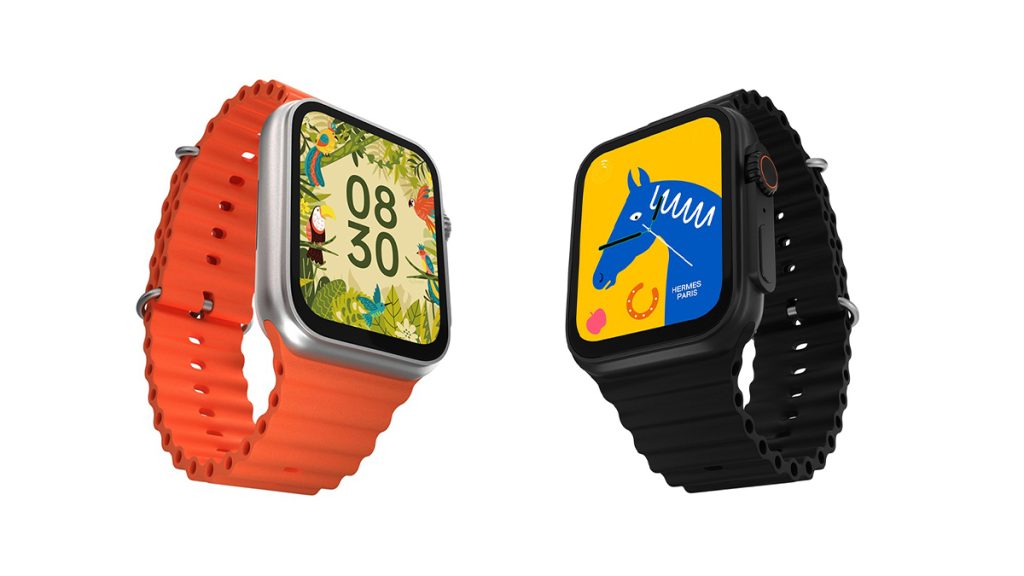
We have seen plenty of Apple Watch Ultra clones in recent times. Now the latest one comes from Zebronics. The device is dubbed Zebronics Zeb Iconic Ultra. With the latest offering, the homegrown brand has expanded its range of smartwatches in the country. The Zeb Iconic Ultra competes against other smartwatches offered by brands like Noise, boAt, Realme, OnePlus, and more in the market. Read on to know what it offers out of the box.
The Zebronics Zeb Iconic Ultra sports a 1.78-inch AMOLED display with 2.5D curved glass for a better viewing experience. It packs an always-on display mode and customisable watch faces. There is a functional crown on the right side. The smartwatch is IP67-certified water-proof and features an infinity loop strap.
The Zebronics Zeb Iconic Ultra is equipped with a heart-rate monitor, SpO2 sensor, sleep tracker, and menstrual monitor. It is also capable of measuring blood pressure which is quite uncommon in the affordable smartwatch segment. The device also offers meditative breathing sessions. The Zebronics Zeb Iconic Ultra supports more than 100 sports modes.
The Zebronics Zeb Iconic Ultra has a built-in microphone and a speaker for making and receiving calls. It supports voice assistants. The smartwatch offers features like a calculator, weather updates, camera and music control, smart notifications etc. The wearable device is powered by a 260mAh battery unit that is claimed to offer up to 5 days of usage.
The Zebronics Zeb Iconic Ultra carries a price tag of Rs 3,299 and comes in Orange and Black colours. It can be purchased from Amazon.
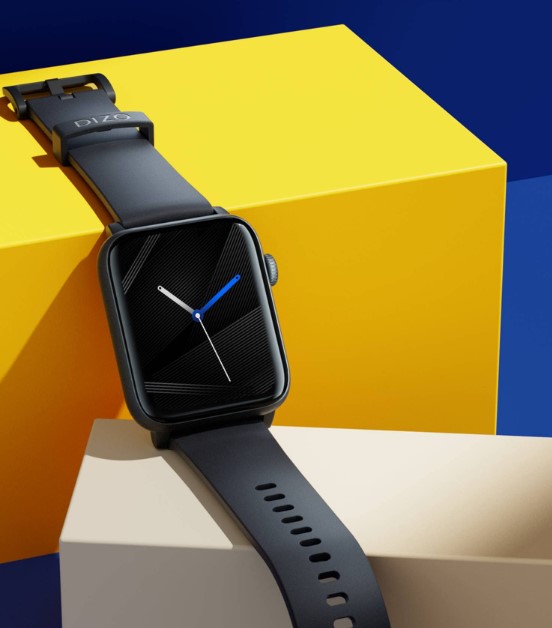
Last week, DIZO launched the DIZO Watch D2 in India. Now, the Realme TechLfie brand has announced an upgraded version of the same device. It is called the Watch D2 Power. The latest offering is also the first from the brand to be available on the e-commerce platform Amazon. The Watch D2 Power is slightly different compared to the Watch D2. Read on to know what it offers out of the box.
The DIZO Watch D2 Power has a square dial featuring a 1.91-inch display and 500 nits peak brightness. It looks similar to the Apple Watch with a crown on the top right side of the device. However, it’s unclear whether the crown is rotatable and functional. The smartwatch packs customisable watch faces and is said to be fully washable.
In terms of fitness, the DIZO Watch D2 Power is equipped with a heart-rate monitor, SpO2 sensor, sleep monitor with REM tracking, and sedentary reminder. The wearable device comes with support for 24 sports modes.
The DIZO Watch D2 Power features an advanced single chipset for Bluetooth calling. Users can call, answer, reject, and mute right from the smartwatch. The device offers noise cancellation for calls and a stable connection via Bluetooth 5.2. The smartwatch packs features like quick replies for calls, camera and music control, smart notifications, shake watch to take a photo, and more. The DIZO Watch D2 Power is claimed to offer 10 days of battery life under normal usage and 7 days with a calling feature.
The DIZO Watch D2 Power costs Rs 5,999 but is available at a special launch price tag of Rs 1,799. It will go on sale starting February 20th from Amazon. The device is offered in Classic Black, Ocean Blue, and Silver Grey colours.
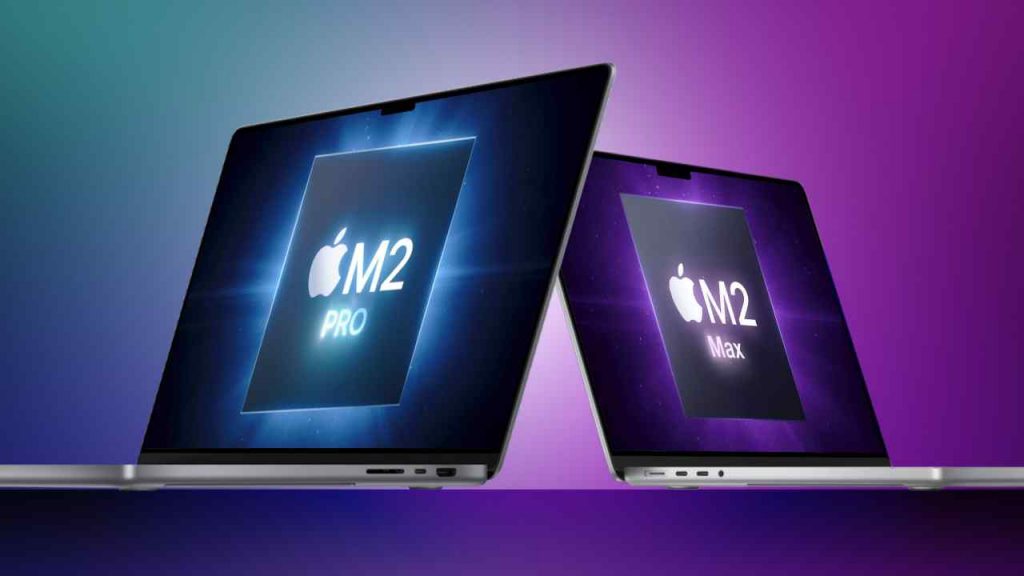
Apple is taking the PC market by storm with its M-series processors. The process that began with the M1 continues successfully with the M2 Pro and Max. While everyone is wondering about the next move of the US tech giant, Apple chip designer Tim Millet hinted at the company’s future plans for Macs in a recent interview. Here are the details…
Future Macs likely to get annual updates
Apple chip designer Tim Millet talked about the company’s original goals for the development of the M1 chip, and how Apple is approaching work on each successive generation of Mac chip. The interview opens with Millet talking about the desire to completely reset expectations about what a laptop and desktop processor could achieve.
Millet spoke about the company’s goals for the development of the M1 chip and how Apple is approaching the design of each successive generation. Millet, who has been building chips for 30 years and has been with Apple for nearly 17, said that with the M1 chip, the company sought to reset expectations about what a laptop and desktop processor could achieve.
Designer Millet stated that Apple is taking the same approach to each successive generation of chip, and that the M2 family was designed to maintain the company’s leadership position by pushing technology to its limits. He also noted that Apple is in a unique position as it can work hand-in-hand with hardware and software teams when designing the chips.
Apple has historically updated the iPhone every year, but has been more random in the timing of Mac updates. Millet stated that Apple being in control of its own chip-development schedule will change this for future Macs. He said, “We don’t want the Mac to stray too far away from the technology curve.”
Apple has historically updated the iPhone every year, but has been more random in the timing of Mac updates. Millet stated that Apple being in control of its own chip-development schedule will change this for future Macs. He said, “We don’t want the Mac to stray too far away from the technology curve.”
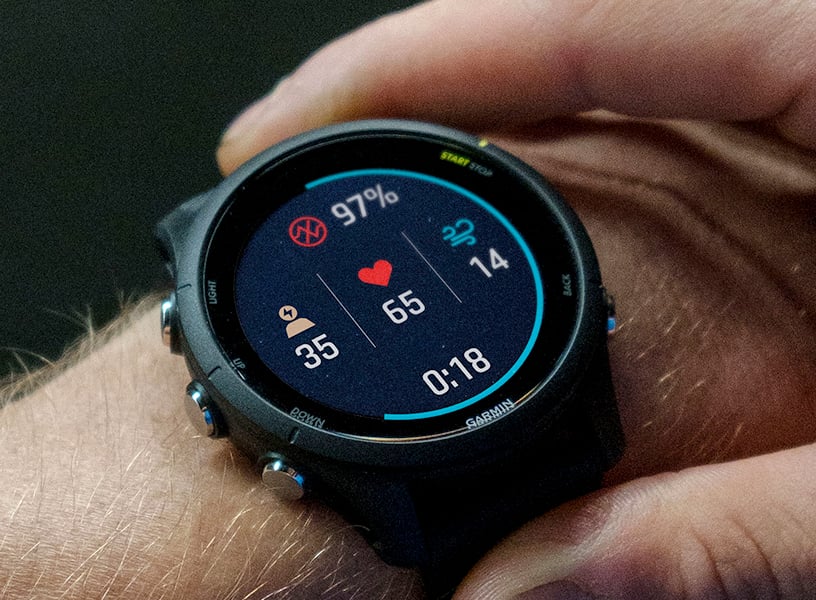
An indication has come from the Garmin Connect app that the company plans to have skin temperature sensors in future Garmin smartwatches. It is however unclear whether this new temperature tracking feature will be integrated into current Garmin smartwatches.
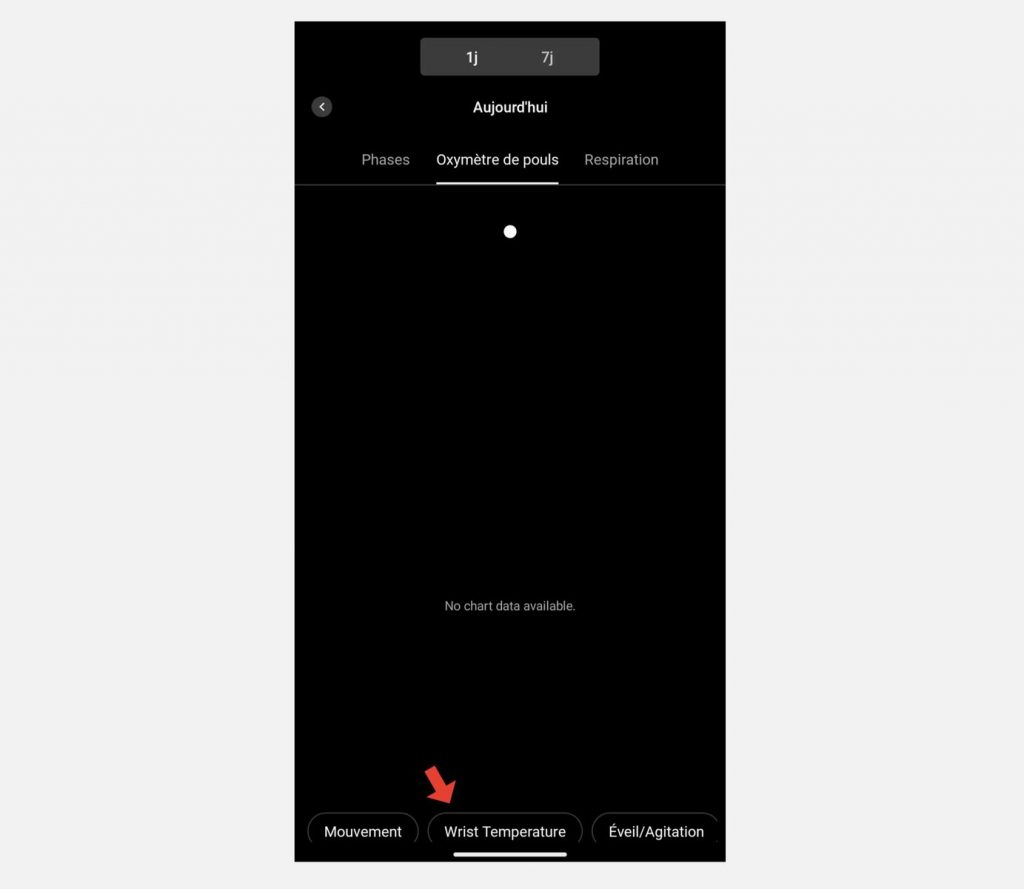
The new entry discovered in the Garmin Connect app shows that Wrist Temperature Measurement has been added to the Connect app. Currently, none of Garmin smartwatches support such kind of health monitoring. However, it is clear that the company could be close to releasing a smartwatch that will feature wrist temperature measurements. The app omitted any information on the compatibility of the Wrist Temperature feature. The new health monitoring feature could however follow the previous Garmin trajectory. Recently, the company added ECG support to the Venu 2 Plus, but it is unclear whether the new feature can be achieved solely via software upgrades.
A few smartwatches in the market have skin temperature monitoring enabled. The Apple Watch Series 8 and Galaxy Watch5 are two of the popular models that have temperature monitoring. The technology is however still at its teething stage as you cannot use the feature in both models for real-time measurement. The feature is used to either improve menstrual cycle accuracy or aid sleep tracking. Garmin already has a couple of smartwatches lined up for an imminent launch. The Garmin Forerunner 265 series and Forerunner 965 series could well come with the skin temperature monitoring feature. It will be interesting to see how advanced the temperature monitoring feature will be compared with Apple or Samsung smartwatches.
Motorola has launched a new affordable and budget E-series smartphone in India. It is the Moto E13. The device had debuted in the global markets last month. The Indian variant comes with similar specifications. The smartphone competes against the likes of the Redmi A1, Realme C30, and more in the market. Read on to know what it offers out of the box.
The Moto E13 features a 6.5-inch display bearing an HD+ resolution with a waterdrop notch and a thick bottom chin. There is a rectangular rear camera module housing a 13MP primary sensor paired with an LED flash. The device lacks a physical fingerprint scanner but relies on face unlock via the 5MP front camera. The smartphone is IP52-certified splash-resistant.
Internally, the Moto E13 is powered by an Unisoc T606 octa-core processor. It is offered in 2GB and 4GB RAM options with both packing 64GB onboard storage expandable via a dedicated microSD card slot. The smartphone draws its power from a 5,000mAh battery unit with support for 10W fast charging. Software-wise, it runs on Android 13 Go Edition out of the box.
Connectivity options on the Moto E13 include dual 4G VoLTE, USB-C port, 3.5mm headphone jack, Bluetooth 5.0, GPS, and WiFi. The smartphone comes with Dolby Atmos for immersive sound experience.
The Moto E13 is offered in Cosmic Black, Aurora Green, and Creamy White colour options. It is priced at Rs 6,999 for the base 2GB + 62GB option whereas the 4GB + 64GB variant costs Rs 7,999. The smartphone can be purchased from Flipkart and offline stores starting February 15th.
Tecno has been consistently launching new phones in India. The brand has so far launched the Phantom X2, the Phantom X2 Pro, and the Spark Go 2023 in the country. Now, it is gearing up to launch its next phone. GizmoChina has learned through industry sources that the Tecno Pop 7 Pro will debut this month.
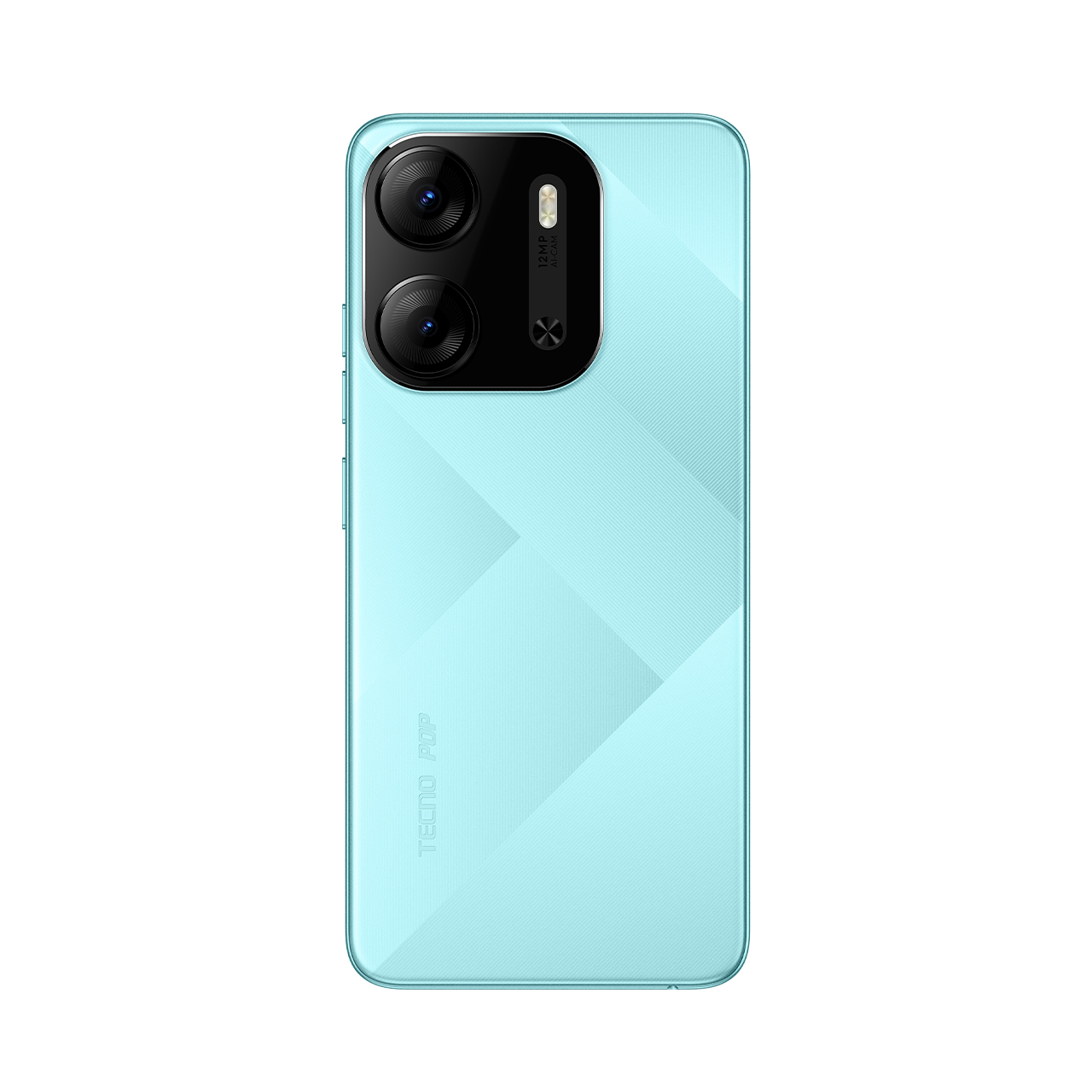
The Tecno Pop 7 Pro has already launched in African markets, and now it is making its way to India. In Africa, the phone is available in black, blue, and purple colors. In India, it will arrive in two colors. One of them is blue, and here are its renders. There is no clarity on whether the color variant for India will be black or purple.
The Tecno Spark Go 2023 and the Pop 7 Pro have identical specs. The Spark variant offers 3 GB of RAM and 32 GB of storage. It is likely that the Pop 7 Pro may offer different RAM and storage capacities.
Tecno Pop 7 Pro specifications
The Tecno Pop 7 Pro has a 6.56-inch LCD display with a waterdrop notch. It offers an HD+ resolution and a 60Hz refresh rate. It is powered by the Helio A22 chipset, 3 GB / 4 GB of RAM, and a 5,000mAh battery that supports charging via the USB-C port. The device runs on the HiOS 12-based Android 12 OS.
The Pop 7 Pro has a 5-megapixel camera with an LED flash on the front. On the back, it has a 13-megapixel camera with an LED flash. For security, it has a rear-facing fingerprint scanner. The handset offers 64 GB of storage and a microSD slot for additional storage.
The Tecno Pop 6 Pro was priced at Rs 7,999 when it launched in September 2022 in India. It is likely that the successor model may have a similar price.
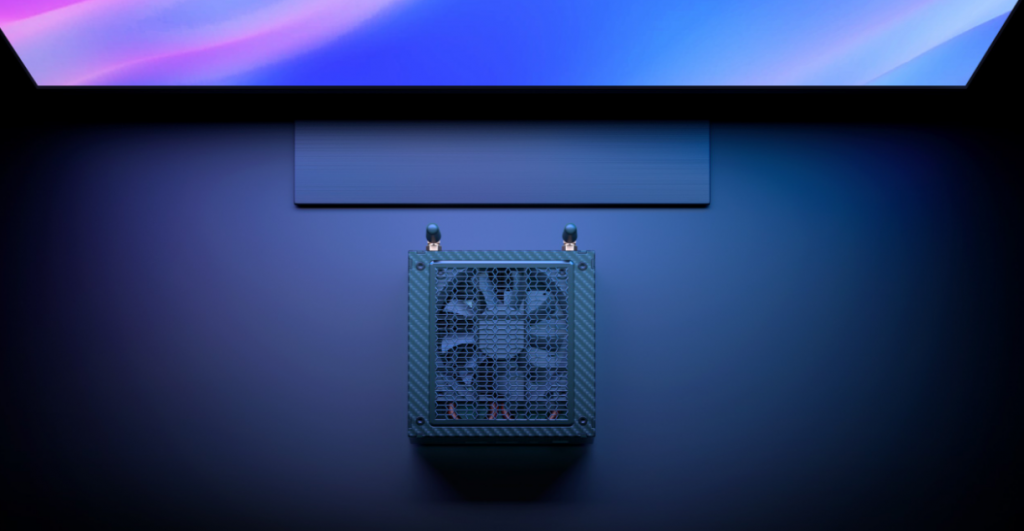
The Minisforum NUCG5 mini PC has been unveiled. The NUCG5 has an Intel Core i5-1240P processor and dual Thunderbolt 4. It is also equipped with Iris Graphics, up to 32GB of memory, and 2TB of storage. The Intel Iris Xe G7 80EU video card clocks up to 1.3GHz.
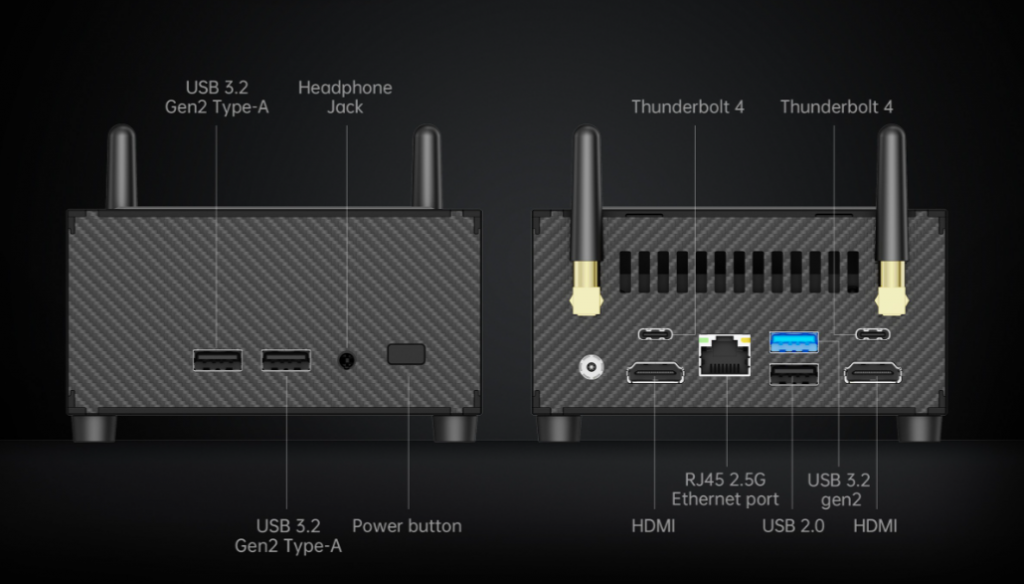
The NUCG5 mini PC comes with Windows 11 Pro and only two hardware configurations are available for a start. The official press release by Minisforum states that the NUCG5 is more powerful, capable, and affordable for diverse applications. The ports of the compact mini PC can output up to 40Gbps. Both options come with RJ45 Ethernet, dual HDMI 2.0, a 3.5mm combo jack, and USB 3.2/2.0 ports.
The new mini PC has a quad 4K display and is smaller than the Minisforum Venus Series UM5. It has dimensions of 4.31 x 4.35 x 2.44 inches. There are several other impressive features in the new mini PC. It offers significant performance improvements over the previous model.
The lower model has 16GB DDR4 + 512GB PCIe 3.0 SSD and will retail for $579 during the pre-order period. The second model has 32GB DDR4 + 512GB PCIe 3.0 SSD and is priced at $629 during the pre-order period. Both models will revert to their original prices of $689 and $749 respectively. The Minisforum NUCG5 will start shipping next month but it is unclear what markets will get the product first.
Canon today announced the EOS R8, a new entry full-frame camera that combines many of the powerful video and still shooting features of the EOS R6 Mark II, such as Canon Log 3 and up to 40 frames per second continuous shooting with the portability of the EOS RP; and EOS R50, a new compact, lightweight APS-C mirrorless camera set to replace EOS M50 Mark II. The entry-level camera is packed with many fun, creative tools and automated features, allowing users to create high-quality vlogs and images easily with minimal camera operation.
Stay Agile with Canon’s Smallest and Lightest EOS Full-frame EOS R8Mirrorless Camera
At approximately 461g (with battery pack and SD card), the compact and lightweight EOS R8 keeps users agile, giving them an edge when it comes to creative camera angles and transitions. Camera shake would no longer pose a problem when shooting handheld videos as the EOS R8 is equipped with Movie Digital IS, which digitally performs tilt correction as well as 5-axis image stabilization during video shooting. Hence stable handheld videos can be ensured even when using lenses with no optical image stabilization (Optical IS). When combined with a lens that has Optical IS, the two systems perform coordinated control for enhanced image stabilization results.
A Variety of Recording Options to Meet Different Production Needs
From run-and-gun event coverage to documentaries and short films that require more post-production work, the EOS R8 is well-equipped to tackle the different requirements and workflows to produce stunning video.
High-quality Source Footage from 6K Oversampling—up to 4K 60p
The quality of a video is largely dependent on the quality of the source footage. The EOS R8’s newly developed 24.2-megapixel CMOS image sensor enables 6K data to be obtained from its entire width, producing high-quality cropless oversampled 4K UHD footage at up to 60p. For productions where you need to leave the camera rolling, the EOS R8 has heat suppression measures which allow you to shoot up to 4K 30p with no recording time restriction, and up to 30 minutes at 4K 60p.
Dramatic 6x Slow Motion Video with Full HD 180p
For more dramatic scenes, shooting in Full HD at as high as 180p will produce 30p output with action slowed down to 1/6 the speed.
HDR PQ Video and Canon Log 3: High Dynamic Range Options to Suit Your Post-Production Workflow
Besides normal 8-bit recording, the EOS R8 offers two options for recording 10-bit 4:2:2 high dynamic range video. HDR PQ provides amazing dynamic range and beautiful colours straight out of camera when viewed on a HDR display. Meanwhile, Canon Log 3 offers the same level of information that is not “baked-in”, offering more flexibility for heavier post-processing workflows that involve colour grading.
Consistent and Seamless Focus
Focus is crucial in both photography and videography and is near impossible to correct in post-production. The EOS R8 nails it effortlessly during both still and video shooting with the same Dual Pixel CMOS AF II technology as the EOS R6 Mark II.
Acquire Focus in As Fast As 0.03 seconds
Experience fast, accurate focusing: the EOS iTR AF X system not only detects and tracks people, animals, and vehicles by deep learning, it also identifies other subjects and “locks” onto them using characteristics like shape, colour, and brightness. This helps the camera to acquire focus in as fast as 0.03 seconds, and track subjects tenaciously over 100% x 100% (horizontal x vertical) of the image frame. Hence, this is ideal for capturing birds, wildlife, and action.
Works Even In Low Light
The low light limits of up to EV-6.5 for stills and EV-42 for video mean that the AF operates even in dark conditions. This works with the camera’s high native ISO speed ranges of up to ISO 102,400 (still shooting) and ISO 25,600 (video shooting) to enhance low light usability.
Professional Cinema Camera Features
These features in the EOS R8 will help to elevate your video creations:
Focus breathing correction: reduces visible fluctuations in the angle of view during focusing.
False colours and zebras: advanced visual aids for exposure adjustment and setting.
Aspect marker display: for easier framing of video to fit various social media dimensions.
UVC (USB Video Class)/UAC (USB Audio Class) support: Plug-and-play direct transmission of audio and Full HD video to a computer with just a USB connection; ideal for livestreaming.
It also features the Multi-function Shoe, a digital interface that enables a cordless digital setup with compatible accessories such as external microphones.
Two New Lenses: RF24-50mm f/4.5-6.3 IS STM and RF-S55-210mm f/5-7.1 IS STM
In addition to the EOS R8, Canon also announced two new additions to the RF lens lineup, both of which offer up to 4.5 stops’ equivalent Optical IS and support for focus breathing correction.
RF24-50mm f/4.5-6.3 IS STM: The Smallest, Lightest RF-mount Zoom Lens for Full-frame Cameras
Weighing approximately 210g and measuring 5.8cm when retracted, the RF24-50mm f/4.5-6.3 IS STM complements the compact EOS R8, to form a 671g combination that is lighter than the EOS R5 body alone! It covers a wide-angle to standard view on a full-frame camera, offering compositional flexibility that sets it apart from similarly sized prime lenses.
Equipped with 4.5 stops’ Optical IS, the lens will empower users to explore new angles. It also supports enhanced stabilisation through Coordinated Control IS with cameras that feature Movie Digital IS and In-Body IS: for the latter, up to 7 stops’ IS is possible.
RF-S55-210mm f/5-7.1 IS STM: An Ultra Portable Telephoto Zoom Lens for APS-C EOS R camera bodies
APS-C EOS R camera users who want a compact, lightweight telephoto lens to match their camera bodies now have the RF-S55-210mm f/5-7.1 IS STM, which weighs approximately 270g. The new lens provides a full-frame equivalent angle of view of approximately 88 to 336mm, with semi macro capabilities (up to 0.28x magnification) and close-up shooting (closest focusing distance of 0.73m) at the tele end. The use of two UD lenses and two optically placed aspherical lenses correct chromatic aberrations, delivering high-resolution and sharpness with excellent colour throughout the entire zoom range.
High-quality Video Right Out of The Box with EOS R50
The quality of a video is largely dependent on the quality of the footage. With EOS R50, you can be assured of the high quality of the footage.
24.2MP APS-C Format Image Sensor
The EOS R50’s APS-C format image sensor is three times larger than the 1-inch sensor on the latest smartphones. This mean sharper, more detailed images and videos, and less noise (graininess) even in low light. Users can also look forward to beautiful, natural-looking bokeh (shallow focus) effects.
High-quality Video: First Entry EOS-series APS-C Mirrorless Camera to Produce 6K-Oversampled Uncrop 4K UHD
With 24.2 megapixels, the EOS R50 is also capable of producing high-quality Uncrop 4K 30p video oversampled from 6K worth of data. Oversampling means more information to reduce artefacts and other issues, so despite your vlogging experience and skill, the image quality will look pristine and professional.
Designed for Intuitive Vlogging
With ample modes and features that simplify shooting, the EOS R50 is designed for vloggers who want the image quality of a dedicated camera without the learning curve that usually comes with having to operate one. Lightweight at only about 375g, it is around the same size as the EOS M50 Mark II. Perfect for vlogging on the go!
Intelligent Focus Switching during Close-up Demos
The Dual Pixel CMOS AF II system, which detects and tracks people, animals (dogs, cats, and birds) and vehicles (motorsports cars and motorcycles) based on their characteristics just got even smarter. For close-up demos, the Movie for Close-up Demo mode quickly and automatically switches focus to the subject closest to the camera. You can showcase your new gadget or online shopping loot in one smooth take, with the focus where you want it to be.
Support for focus breathing ensures that there are no distracting changes in angle of view that tend to occur during focus transitions when vlogging.
Image Stabilisation Optimised for Handheld Vlogging
Get seamless, steady footage even when shooting handheld: The EOS R50 comes with not just one, but two different Movie IS (Image Stabilizer) levels (‘Enhanced’ and ‘On’) that digitally perform 5-axis camera shake correction, enhanced when combined with an RF lens with in-lens IS.
When the monitor is in “selfie” mode, the default “Movie IS: Enhanced” mode optimises image stabilisation for handheld wide-angle shooting, correcting the unwanted motion that tends to become more obvious at the edges of wide-angle images. You can switch between two levels by simply tapping the “Wide-angle” button, to avoid excessive close-ups.
For scenes and shooting angles where it is hard to keep the camera level, the auto level mode automatically corrects horizontal tilt. This would save time from manual correction in another app.
Share Your Content Quickly: High-quality Livestreams with just One USB Cable
All you need to livestream high-quality footage and audio from your EOS R50 is one USB-C connection to your computer. It’s plug-and-play with no drivers required. The Camera Connect smartphone app, which is fuss-free to set up, lets you easily transfer videos and JPEG photos from your camera to a smartphone either through a wireless Wi-Fi or wired USB-C connection. As the camera supports transcoding, which makes 4K and Full HD video files lighter, even high-quality video files can be transferred and uploaded to social media smoothly!
Get Great Photos Easily
A host of new intelligent creative features make it even easier to make the most of the camera’s imaging capabilities, even if you are not familiar with technical photography terms and complicated post-processing. Some notable new functions are:
Advanced A+: Automatically captures and blends exposure-bracketed images for better night and backlit portraits, and focus-bracketed images for images that are in focus from front to back.
Creative Bracket: Automatically generates multiple versions of a shot taken by the user with different brightness and colour tone settings. The settings of the autogenerated shots are shown so that users can learn.
Subject blur guide: Available in the Panning SCN mode. Helps the user practice panning and improve the success rate of panning shots.
Kit Options
The EOS R50 is available in black and white, with two kit options:
With the RF-S18-45mm f/4.5-6.3 IS STM
With the RF-S18-45mm f/4.5-6.3 IS STM and RF-S55-210mm f/5-7.1 IS STM
RF-S55-210mm f/5-7.1 IS STM: Extend your Reach
The RF-S55-210mm f/5-7.1 IS STM, a compact, lightweight, and affordable telephoto zoom lens, is the latest addition to the RF-S lineup. Providing a full-frame equivalent angle of view of 88 to 336mm on an APS-C image sensor, the lens is set to expand users’ creative horizons, allowing them to capture images that are difficult to get with a standard kit lens or smartphone. These include:
Sharp, high-quality closeups of subjects that are further away
More pronounced shallow focus effects
Images with compressed perspectives
The lens also has excellent close-up shooting capabilities: its 0.28x maximum magnification at the 210mm end (more than the EF-M55-200mm f/4.5-6.3 IS STM) enables semi-macro photography at a relatively short closest focusing distance of 0.73m.
Besides having a native 4.5 stops of image stabilisation, RF-S55-210mm f/5-7.1 IS STM is capable of providing up to 7.0 stops’ image stabilisation through Coordinated Control IS when used with EOS R system cameras equipped with In-Body IS.
4K UHD (3840 x 2160)29.97 fps / 23.98 fps (NTSC)25.00 fps (PAL) Full HD (1920 x 1080)119.88 fps / 59.94 fps / 29.97 fps / 23.98 fps (NTSC)100.00 fps / 50.00 fps / 25.00 fps (PAL)
Maximum movie recording time
1 hr. 00 min. 00 sec. (Normal movie)15 min. 00sec. (High Frame Rate movie)
Recording Media
• Single Card Slot (SD, SDHC*, SDXC*) *UHS-II cards compatible
Power Supply
LP-E17
USB charging / Optional Power
Supports charging via USB Power Adapter PD-E1 / AC Power (AC Adapter AC-E6N and DC Coupler DR-E18)
Size
Approx. 116.3 x 85.5 x 68.8 mm
Weight
Approx. 375 g (Black) / 376 g (White) (incl. battery and memory cards)
Network
Wi-Fi / Bluetooth Low Energy Technology
RF-S55-210mm f/5-7.1 IS STM
Focal Length
55-210mm
Maximum Aperture
f/5-7.1
Minimum Focusing Distance
0.73m (f=210mm),1.0m (f=55mm)
Maximum Magnification
0.28x (f=210mm),0.05x (f=55mm)
Lens Construction
11 elements in 8 groups
Filter Size Diameter
Ø55mm
Aperture Blades
7
IS (CIPA Standard Correction Effect)
Yes (up to 4.5 stops)
Coordinated Control IS (With IBIS equipped Camera)
Yes (up to 7.0 stops)
Maximum Diameter and length
approx. 69.0mm x 92.9mm
Weight
Approx. 270g
Commenting on the notable launch, Mr. Manabu Yamazaki, President & CEO, Canon India said, “It gives us immense pleasure to kick-start the new year by announcing launch of two new cameras. Catalyzed by the proliferation of growing social media, amateur and professional imaging culture in India is seeing a steep rise. Creators are experimenting and innovating like never before. Hence our latest offerings are designed to support this new-age passion of creativity with the right kind of technology required to move ahead in the journey. While the youthful EOS R50 is a tailor made for social content creators and photography enthusiasts looking at sharing innovating and mesmerizing content, the dynamic EOS R8 is made for wedding professionals and serious amateurs looking at upgrades to the full-frame mirrorless segment. We are confident that both these cameras will be well received as they come with the power packed features and performance capabilities, lightweight and compact designs in attractive prices.”
Highlighting the positioning and cutting-edge features of the new cameras, Mr. C Sukumaran, Senior Director,Products & Communication, Canon India said, “Both the EOS R50 and the EOS R8 are well slated to become ‘must-buy’ cameras in their segment owing to their unique features. For the youth of today, the EOS R50 is a light-weight entry level camera launched to create quality content be it a fashion vlog or capturing a family vacation. It comes with significant upgrades from its predecessor, the EOS M50 Mark II, both with respect to movie performance as well as still photography. The distinctive feature to look out for is its new movies modes for vlogging.”
“On the other hand, the EOS R8 is an integral addition to our full-frame line-up as it demonstrates high quality unique features, designed for varied shooting situations. It is targeted at potential users who want to upgrade their cameras, shoot movies without cropping, and start with an interchangeable-lens camera. The functions of the EOS R8 have strikingly evolved from those of the compact full-frame mirrorless EOS RP, resulting in a more comfortable photo shooting and movie recording experience.”
The Sony PlayStation VR 2 is apparently the best platform for certain VR applications (Virtual Reality). A company executive has revealed that the system can even outperform high end PCs that feature the powerful Nvidia RTX 3090 GPU.
The PS VR 2 was found outperforming such a capable desktop PC on the tactical military shooter Pavlov, which is considered the VR version of Counter-Strike. Furthermore, this is just one of the more than 30 launch titles that the Japanese tech giant has for the PlayStation VR 2. This VR title in particular was built for the PC VR systems and was first launched on Steam back in 2017. However, the PSVR 2 version of this title will launch on 22nd February 2023 and will even offer cross play support with PC users.
The CEO of the studio behind the game David Villarreal stated that the Sony VR enabled system is the “pinnacle of virtual reality, especially for shooters.” This statement wasn’t just talking about raw performance. The adaptive triggers on the new PlayStation features adaptive triggers as well, which makes each gun trigger feel distinct and have a different recoil and feel of resistance. Villarreal further added that the VR game runs about 10 percent better on the PS5 and PSVR 2 than it does on a top end PC which features an RTX 3090.
Not sure how accurate this is for other developers, but the Pavlov dev mentioned that for their own game, the PSVR2 is 10% faster than even their 3090TI setup. 👀
If true, it's exciting that kinda power could be in the hands of so many people for official flat to VR ports. pic.twitter.com/1uTiKbnzfY
An RTX 3090 alone can cost as much if not more than the console and the VR headset combined. Meaning, this is quite the impressive feat. Apparently, the performance advantage is due to the fact that the system is a console and is capable of more efficient rendering through the foveated rendering. To put things simply, its a simple way of rendering based on the focus of the users eye. In other words, eye tracking technology helps in boosting performance since the system only needs to render the area being focused on in high resolution.
Vivo is tipped to launch the Vivo V27 series in the coming weeks. Ahead of that, these phones have been popping up on certification websites revealing a few details about them.
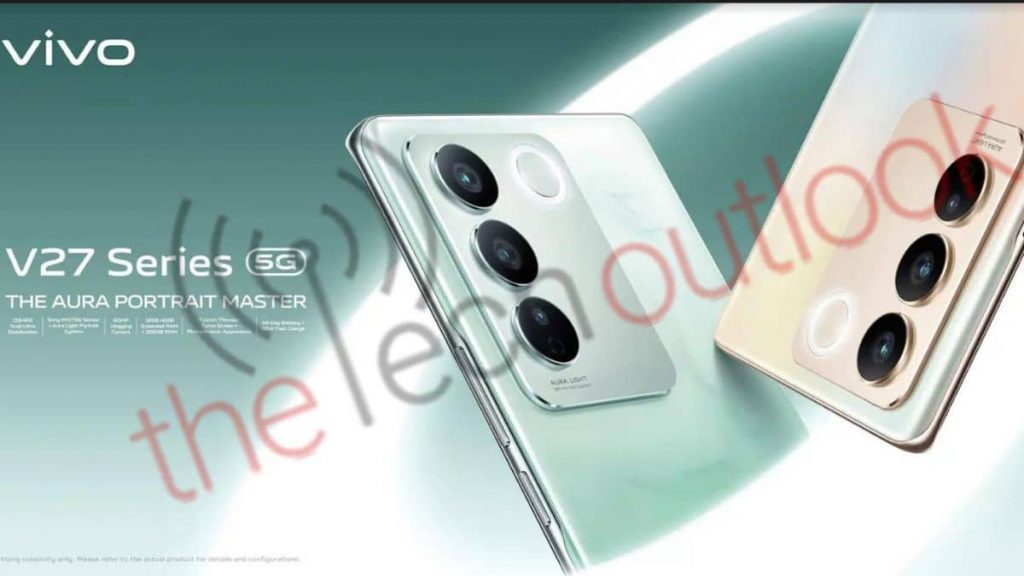
Today, the official promo poster of these handsets has emerged. Let’s go through the leaked image.
The leaked promo image of the Vivo V27 series suggests that it will be rebranded Vivo S16 series with some differences, which we already know from previous reports. The poster reveals that the devices will be marketed as ‘The Aura Portrait Master’.
The picture shows one of the phones in the lineup (possibly Vivo V27 Pro) in two colors. As per a report, the Vivo V27 series will comprise four smartphones, namely Vivo V27 4G, Vivo V27 5G, Vivo V27 Pro 5G, and Vivo V27e 5G.
The vanilla and pro variants are tipped to be powered by MediaTek chipsets, The Pro version, in particular, is said to house a Dimensity 8100 SoC. Both of them may sport a 50MP Sony IMX766 main camera with support for OIS and EIS.
The handsets will carry support for 66W fast wired charging. Last but not least, they will be available in green and gold color options.
The Vivo V27 series is expected to go official in late February. It is tipped to debut in India in mid-March.
Xiaomi has officially confirmed the launch date for its latest flagship smartphone model, the Xiaomi 13 Pro, for the Indian market. The company will officially be announcing the high end device later this month. So here are all the details.
For those unaware, the Chinese tech giant first unveiled the Xiaomi 13 and 13 Pro back in December 2022. However, the brand has yet to announce the launch of the device for the Indian market. But now, the company has revealed that its top end flagship model will be launched on 26th February 2023. Unfortunately, the company only revealed that launch date for the higher end Pro variant. So, it is still unclear if the base Xiaomi 13 will be making its way to region, especially considering the fact that the company skipped the base Xiaomi 12 model last year as well.
This announcement also confirms that the Xiaomi 13 Pro will finally be releasing in the global market. The Xiaomi 13 series global launch should be around the same time or follow soon after the India announcement. The launch event is set for 9:30 PM IST on 26th February 2023 and will be live streamed on the company’s official website, Facebook, YouTube, and even Twitter.
Talking about the smartphone itself, it sports a tall 6.78 inch 2K Samsung E6 AMOLED LTPO display that has a 120Hz refresh rate and supports Dolby Vision. The Qualcomm Snapdragon 8 Gen 2 SoC powers the device with up to 12GB of RAM. The rear features a 50 megapixel triple camera setup. Under the hood, a 4,820mAh battery pack runs the device with support for 120W fast charging.
Artificial intelligence technologies are becoming widespread. The journey, which began with digital assistants for end users, continues with chatbots. As you are aware, the internet has been impacted by OpenAI’s ChatGPT in recent months, and its success has influenced other companies, leading to the development of new chatbots. Lastly one of these companies Baidu, announces ChatGPT style project “Ernie Bot”. Here are the details…
Baidu Announces ChatGPT Style Project Called Ernie Bot
The Chinese tech giant Baidu may not be widely known in the West, but it is highly popular in Asia, where it holds the title of the top search engine. Lastly, the company has announced the completion of its internal testing for a new ChatGPT-style project called “Ernie Bot”. The project is set to be tested internally in March. However the pace of development by competitors Microsoft and Google may lead to an earlier opening.
Chatbots in China currently focus on social interaction. However ChatGPT performs better at more professional tasks, such as programming and essay writing. Baidu plans to incorporate chatbot-generated results when users make search requests. Baidu has been involved in the field of artificial intelligence for many years, and CEO Robin Li stated in September of last year that the development of AI was undergoing significant changes. This seems to have prompted the research and development of Ernie Bot.
Baidu currently has several ChatGPT related technologies, with a full stack layout in the four-tier architecture of AI. This includes chips, deep learning frameworks, large models, and search applications. Ernie Bot is positioned at the model layer. Baidu already has a large-scale pretrained model for natural language understanding and generation called Wenxin, with the ability for deep semantic understanding and generation across modes and languages.
Time will tell how Ernie Bot will perform compared to ChatGPT. Recent reports indicate that Baidu will launch the service in March. However, as we mentioned above, this date may change.
Xiaomi has officially announced that it is planning on bringing an update to the Xiaomi 13 lineup. This update will have its latest flagship series of smartphones receive an upgrade to the new Wi-Fi 7 connectivity standards. So here are all the details.
The Chinese tech giant stated that it will be rolling out a new update for to its high end smartphone models. For those unaware, the Xiaomi 13 and 13 Pro were launched back in December 2022 with support for only 802.11ax standard, which is the Wi-Fi 6E, despite the Qualcomm Snapdragon 8 Gen 2 supporting the newer 802.11be Wi-Fi 7 standard. While this isn’t exactly a highlighting feature, other new gen phones like the Samsung Galaxy S23 series were launched with this technology.
Even the new OnePlus 11 features this technology. But fortunately for Xiaomi 13 owners, the brand has announced that it will be releasing an update that will enable the flagship models to support Wi-Fi 7 standards. As per the official announcement on Weibo, the Xiaomi 13 series as well as the Redmi K60 Pro will be capable of supporting the latest wireless connectivity standard. For those unaware, Wi-Fi 7 technology uses 320MHz channels that theoretically offers up to 2.4 times faster speeds its predecessor, the Wi-Fi 6.
Furthermore, the latest technology will also reduce latency to enable support for 4K and 8K video streaming. These benefits will also be reflected in AR/VR applications as well as reaching speeds of at least 30Gb/s or even 40Gb/s. Keep in mind that you need a compatible router to take advantage of this faster speeds.
We use cookies on our website to give you the most relevant experience by remembering your preferences and repeat visits. By clicking “Accept”, you consent to the use of ALL the cookies.
This website uses cookies to improve your experience while you navigate through the website. Out of these, the cookies that are categorized as necessary are stored on your browser as they are essential for the working of basic functionalities of the website. We also use third-party cookies that help us analyze and understand how you use this website. These cookies will be stored in your browser only with your consent. You also have the option to opt-out of these cookies. But opting out of some of these cookies may affect your browsing experience.
Necessary cookies are absolutely essential for the website to function properly. This category only includes cookies that ensures basic functionalities and security features of the website. These cookies do not store any personal information.
Any cookies that may not be particularly necessary for the website to function and is used specifically to collect user personal data via analytics, ads, other embedded contents are termed as non-necessary cookies. It is mandatory to procure user consent prior to running these cookies on your website.