Xiaomi has unveiled the MIJIA Sweeping Robot 2S in China. The new MIJIA sweeping robot has a suction power of 4000Pa and supports laser navigation. The robot can provide sweeping and mopping services with its high-capacity suction fan and high-speed rotating mop cloths.
The sweeping and mopping robot can wipe clean the floor and suck away debris. It has an intelligent, electronically-controlled water tank with three levels of volume adjustment. This provides precise control of the water output for an efficient mopping operation. It supports 3D obstacle avoidance so it doesn’t get stuck easily. This is in addition to the LDS laser navigation featured in the robot. The device can quickly map the cleaning path and continues scanning even when the power is off.
The MIJIA Sweeping Robot 2S has durable brushless motor drive wheels that can go through obstacles up to 2cm high. The robot itself has a body height of 97mm. The sweeping robot can be controlled remotely by the MIJIA app. It also supports connection to the XiaoAI speakers. The user then accomplishes the sweeping task by just saying XiaoAI classmate.
The MIJIA Sweeping Robot 2S is priced at 1,999 yuan (~$282). Xiaomi requires a 100 yuan (~$14) deposit for the product which will officially launch on December 12. There is no global availability information about the MIJIA Sweeping Robot 2S at this time. We expect more details on the product before its official release in 12 days.
Apple is reported to be working on the next generation of Macs. Recently, Bloomberg Analyst Mark Gurman revealed the new devices may debut sometime in 2023. However, Apple is yet to confirm any details about the new machines. While we wait for an official word, an unknown Mac with the unannounced M2 Max chip has been spotted on the Geekbench benchmarking site. Here are the details.
As reported by ShrimpApplePro on Twitter, an unreleased Apple Mac has appeared on Geekbench 5 database. The device has been listed with the name “Mac14.6.” It appears the machine will be powered by an Apple M2 Max CPU, which does not yet exist.
According to the benchmarking site, the M2 Max chip powering the Mac has a 12-core CPU with 3.54GHz and 96GB of RAM. It managed to score 1853 on a single core and 13855 on the multi-core test. Comparatively, the M1 Max chip found on the MacBook Pro has 10 cores running at 3.2GHz and scores 1746 on one core and 12154 on multiple cores on Geekbench.
The scores suggest the M2 Max chip is only about 14% faster than its predecessor. This indicates the alleged M2 Max will not actually be a huge upgrade over the M1 Max. However, it is also possible that Geekbench failed to accurately measure the chip’s performance.
To recall, Apple introduced the base M2 chip earlier this year. It powers the new MacBook Air and offers impressive performance and speed. It is built on the 5-nanometer process node and has 8 cores divided into four performance cores and four power efficiency cores. It supports up to 24 GB of LPDDR5-6400 memory and has a bandwidth of up to 100GB/s.
Recently, Samsung registered a new trademark for an unreleased service that is assumed to be its “self-repair service.” Samsung Superfast Portable Powerbank now has a new trademark application. The company does produce several cutting-edge power banks, and among the most well-liked ones are its fast-charging power banks. New portable charging gadgets for smartphones and other devices are expected to be released soon, according to the new trademark.
The paperwork to register a trademark for Samsung Superfast Portable Power was submitted to the USPTO (United States Patent and Trademark Office) last week. The trademarked word may be used for “Battery chargers for mobile devices; battery packs for mobile devices,” according to the categorization.
Reference Image
In order to retain a variety of options for product fit, trademarks are often requested to cover a wide range of potential use cases. Samsung may want to use this unique term for power banks or chargers, it is evident. It’s possible that Samsung is using the word “Superfast” as a signal that it will soon adopt even faster-charging rates. Even though some of its Chinese rivals use faster rates, the business hasn’t been in a rush to go beyond 45W. However, it’s possible that Samsung is now embracing the idea.
All of this, however, is currently just unconfirmed rumours. Thousands of organisations have filed multiple trademark applications and patents, but not all of them have actually resulted in a finished product. Wait a little longer to learn more specifically about the service to a trademark. If the brand is truly working on it, we might see some official statements in the upcoming weeks.
The latest version of Xiaomi’s custom Android skin—MIUI 14— is just around the corner. There is no doubt that the Chinese OEM is late to the party, but better late than never. The Android 13-based software was scheduled to debut on December 1 alongside the new number series; however, the launch got postponed due to unforeseen circumstances. As we wait for the new date, the changelog for the MIUI 14- based Android 13 has surfaced online. Let’s look at the details.
Kacper Skrzypek has shared the complete changelog for MIUI 14 update. It shows the new software is going to bring some interesting changes with itself. It has been reiterated that the MIUI 14 will be lightweight and consume less storage space. There’s an improved system architecture, which apparently boosts the performance of both pre-installed and third-party apps while saving power.
Further, the leaked changelog reveals the OS will come with more personalization options and new widget formats to allow more combinations. Users will now be able to copy text from any gallery image.
Overall privacy and security have also been improved. Now, more than 30 scenes support end-to-end privacy, with no data stored in the cloud and all actions performed locally on the device.
The changelog also mentions something called “Super icons”. They are said to give the home screen a new look. It will be interesting to see what’s the deal with these. One more thing that catches our attention is the home screen pet or plant. It will likely be an animated plant or pet widget that can be added to the home screen.
Xiaomi has also improved the interconnectivity among devices, making it easier to connect earphones to your phone, tablet, and TV and switch between these devices seamlessly. The MI AI voice assistant has also been revamped. It can now perform complicated tasks, help with translations, filter spam calls, and much more.
The Metaverse epidemic started by Mark Zuckerberg continues to affect the technology world. Many companies want to participate in the virtual world, which is still in the early development stage. The aim, of course, is to take a large share of the future market. According to the latest reports, technology giants such as Huawei and LG are securing metaverse hardware patents.
The global metaverse market is expected to reach $996 billion in 2030
Although Metaverse is not a successful project, for now, it is still growing at an incredible rate. The global metaverse market is expected to reach $996 billion in 2030, and the annual growth rate is 39.8%. According to Nikkei Asia’s reports, since 2016, LG Electronics has filed the most Metaverse patent applications, moving up from 11th place from 2010 to 2015.
VR headset patent example
Samsung Electronics held its position in second. Display colour schemes and semiconductors are among the strengths of South Korean companies. They are more focused on technologies that make virtual reality headsets. Meta ranked third, and Huawei placed fourth in the ranking with numerous patents related to image and display processing.
Apple is still in sixth place. The company has been working on a headset known as Reality Pro for a while. However, these glasses are still in early development and not ready for the end user. However, it is worth remembering that all of these patents are investments for the future.
Tech companies apply for more patents yearly than we can count, but only some are used. Therefore, it is useful to be careful when investing in new technologies such as Metaverse lands, coins etc. You can lose all your money trying to get rich quickly.
Chinese tech giant Huawei launched the Mate X2 foldable phone in 2021 as its third foldable phone. The Mate X2 has become unavailable for a while, purportedly due to Huawei running out of Kirin 9000 inventory. The Chinese tech company has now launched refurbished units of the Mate X2 5G for sale in China. The models are available in the 8GB+256GB memory configuration and are priced at 17,499 yuan ($2,470). It should be noted that this is the same price as the original model.
The refurbished units come in new retail packaging with original Huawei accessories included in the box. Huawei is also offering buyers a one-year warranty. Other specifications are consistent with the original Mate X2.
As a reminder, the Mate X2 5G is equipped with Kirin 9000 5G SoC which uses a 5nm process and integrates over 15 billion transistors. The device also crams a 4500mAh battery under the hood with support for 55W fast charging.
In terms of ID design, Huawei Mate X2 pioneered the dual-wedge integrated design and the first center-of-gravity offset design to create a new balance with asymmetry, and built-in the industry’s unique double-rotation water drop hinge.
It is worth mentioning that the hinge system uses a variety of high-precision special materials and special manufacturing processes. In addition to zirconium-based liquid metal, Huawei also introduced super-strength steel for the first time, which can prevent impact and not deform.
The Huawei Mate X2 features a 6.45-inch 90Hz cover display with a pill-shaped cutout for a single 16MP front-facing camera. The foldable display measures 8 inches and has a refresh rate of 90Hz. Both displays are OLED.
The device packs four cameras on the back of the phone: an 8MP sensor with a periscope telephoto lens for 10x optical zoom, a 16MP sensor with an ultrawide angle lens, a 50MP main sensor with PDAF and OIS, and a 12MP sensor with OIS, PDAF, and a telephoto lens for 3x optical zoom. It also boasts a side-mounted fingerprint scanner, NFC, and an IR blaster.
iQOO was set to launch the iQOO 11 series and Neo 7 SE in China on December 2nd. However, the launch event has now been postponed. Although the Vivo sub-brand has not explicitly revealed the reason, it is likely due to the death of former China leader Jiang Zemin. iQOO is yet to announce the revised launch date of the iQOO 11 series. We expect the brand to make an announcement in the coming days.
Ahead of the revised launch of the iQOO 11 series, the global variant of the regular iQOO 11 has appeared on the Bluetooth SIG certification website. The smartphone is listed with model number I2212 and reveals that it will come with Bluetooth 5.3 connectivity support. The listing also suggests the iQOO 11’s imminent launch in the global markets. However, there is no additional information from the Bluetooth SIG certification at the moment.
iQOO has already teased key specifications of the iQOO 11. It was also spotted in live images yesterday revealing the phone’s front and rear design. The Vivo sub-brand has confirmed that the upcoming offering will be powered by a Snapdragon 8 Gen 2 processor under the hood. It will pack LPDDR5 RAM and UFS 4.0 storage technology. The phone will also come with Vivo V2 ISP for better imaging capabilities. The device will feature a centre-aligned punch-hole E6 AMOLED display bearing a QHD+ resolution and 144Hz refresh rate. The smartphone’s teaser poster revealed a rectangular camera module and BMW M Motorsport-inspired tricolour stripes. The iQOO 11 is confirmed to be backed by a 5,000mAh battery unit with support for 120W fast charging.
Last few days we talked about the Armor 17 Pro that comes from UleFone, a special well-built rugged phone. It’s the first time we saw a rugged phone coming with a 108MP camera, a night-vision sensor, a 120Hz 1080P display, and magnetic-attach wireless charging. Even as a regular phone, such configurations are still impressive.
And earlier today the UleFone released another rugged model that’s even more powerful, the Power Armor 18T. It comes with a more powerful chipset, a brand-new microscope camera, a thermal sensor, and so on. It’s definitely another beast that we’ve never seen before.
I know some of you are confused about the differences between the latest Armor 17 Pro and the latest Power Armor 18T. I hope our reviews will help you.
Unboxing
So first, let’s check out what we got from the phone package. Well, there’s a tempered-glass screen protector and several instructions that tell users how to use the phone, including a detailed user manual, an instruction showing multi-functions like underwater camera and glove mode, and another one that tells how to use the thermal imaging camera step by step. We do appreciate that UleFone takes user experience so seriously.
Design
Well, the Power Armor 18T looks a bit tougher than the Armor 17 Pro. Due to the tougher armor and the larger battery, the Power Armor 18T is thicker and heavier. On the protective film, you can learn about almost all of its interesting selling points, such as the 108MP main camera, the thermal camera, and the Dimensity 5G chipset. Turn it over, and its shield reminds me of the look of some armored fighting vehicles, which are reliable and wild at the same time. The back cover is covered with a whole piece of rubber material, held in place by a whole circle of screws, while the sides of the phone are inlaid with a metal frame, and its color is kept the same as the camera module. Even though it looks more complex, the whole phone still impressed us with a strong style of design.
Camera
We’ve had a lot of hands-on rugged phones, but this is the most powerful and most interesting camera combination we’ve ever seen on a rugged phone. And even if we compare it with regular flagships, it’s still special enough. There’s a triple-lens camera combination led by a 108MP main camera. We know that this 108MP sensor was only seen in some mid-range and even high-end regular models before. Its super high original resolution supports 9-in-1 pixel binning, which can capture massive light with pretty decent noise control. The samples shot on this camera also live up to the expectations. It produced vivid colors with good contrast. You can check the sample in the video.
The other two are a super microscope lens and another thermal camera that includes a thermal imaging camera and a FLIR Lepton 3.5 Sensor. The thermal sensor is powered by the professional manufacturer FLIR, while the super micro-lens just surprised me with its super close focus. And you don’t need to adjust the phone in the air to find the focus. The fixed focus allows users to directly place it on the surface of the subject. When you are shooting, a ring of fill light around the lens illuminates your subject well, even if your phone is completely blocking the ambient light. You can use it to look at microscopic worlds you haven’t noticed before!
Durability
Obviously, the rugged phone has great water and dust resistance. The phone is not just rated at IP68 and IP69K but also meets Military Standard 810G, which means that it is fine to be dropped or violently crashed on all faces and corners. For field workers or outdoor adventurers, it’s extremely important to ensure that they have the tools with them to help them survive harsh environments. So, in addition to the reliable ruggedness, the Power Armor 18T took a few special scenarios into account with quite a lot of practical features.
For example, the phone comes with dual-frequency navigation systems, which significantly enhance accuracy compared to the single-band system. Meanwhile, to ensure the phone has the best positioning service worldwide, it generously supports multiple navigation systems, including Glonass, Galileo, BeiDou, and QZSS.
And the thermal camera at the back can also be used directly as a night vision device, in the field to avoid the danger of large creatures in the outdoors. The 18T with a 6.58-inch screen is definitely one of the best options.
Display
The screen also features a 120Hz 1080P LCD panel just like the Armor 17 Pro. Most of the rugged models do not pay much attention to the visual experience brought by the screen but only promote their ruggedness. So it’s common to see a rugged phone coming with a 60Hz screen at even just 720P resolution. Now, this Armor series combines the advantages of both. And for durability, the screen is covered with Corning Gorilla Glass which is damage and scratch-resistant.
Performance
As for performance, the 18T is also better than most rugged models. It’s powered by the Dimensity 900 5G chipset, which is also a well-known chipset among the MTK flagship series.
The 5G module integrated into the chip can provide a faster 5G connection, while it’s effective power consumption also can extend battery life while delivering good performance. The rugged phone is available in a great version with 12GB Ram and 256GB Rom, and also supports storage expansion with a TF card.
As for specific benchmarks and gaming results. You guys can check it here for yourselves.
The power solution of the 18T is also the best among all the rugged phones. It comes with a 9600mAh large battery capacity with the support of 66W fast charging. In addition, it also inherits the 15W wireless charging support on the Armor 17 Pro.
Interesting accessories
The Power Armor 18T has an expandable interface to connect expandable modules. By far there are not many modules available in UleFone store. The most interesting module for the phone is an endoscope camera, which can inspect drains, pipes, and wires or check hard-to-reach engine or suspension parts. We also look forward to more expandable modules to enrich the uses of the Power Armor 18T.
So that’s all we want to share about the Power Armor 18T. It’s the most powerful rugged phone that I’ve ever experienced. As a rugged phone, it’s almost impeccable in hardware, while its software is pure and clean without any non-essential apps pre-installed, but at the same time, all the google apps are ready to go. To be honest, I quite like this phone.
WearOS, a quite popular operating system developed by Google for smartwatches, has now said to get support for Gmail and Google Calendar. Google Pixel Watch was the first product launched by Google and not much time has passed since its official launch. The Pixel Watch was the first product launched by the brand in that particular category and therefore some more refinement and optimization are needed on the software side to provide an overall polished and improved user experience.
A new report coming from the house of 9TO5Googlehas revealed that Google might be possibly working on adding Gmail and Google Calendar support to the WearOS operating system. The Gmail and Calendar apps for Wear OS devices, which include the Pixel Watch itself, will soon undergo more useful updates.
Currently, if you own a Google smartwatch, you must use the Agenda app to manage any calendar-related tasks. The Agenda app’s lack of suitability for its intended use is the problem here. Only three days’ worth of appointments are displayed to you, and all you can do with them is read the details. There is no possibility to add new events or alter existing ones in any manner. This problem might be resolved with appropriate support for the official application.
According to the source, the applications would provide a “complete” experience, which implies that we might gain support for detailed email reading, email replies, and other Gmail-like capabilities. At least, that’s what we mean when we say an experience was “full.” With Google Calendar, the user might be able to add tasks and events right from their watch and it might feature a full calendar and event view. All of this, though, appears to be part of our expectations. Wait a few more months, and we might see the feature in its official form. Shortly after that, its true practicality will be analyzed.
Last month, Amazfit launched its rugged smartwatch called Falcon in the global markets. Now the brand has brought the device to India. It is Amazfit’s first premium rugged smartwatch. It competes against the likes of Garmin smartwatches, Apple Watch, and Samsung Galaxy Watch 5 Pro. Read on to know what the wearable device offers out of the box.
Since the Amazfit Falcon is a rugged smartwatch, it is equipped with an aircraft-grade TC4 titanium unibody, a sapphire crystal glass screen, and a 20 ATM water-resistance rating. It is Corrosion-resistant and tough enough to pass 15 military-grade tests. There are buttons on the side of the device. The Amazfit Falcon sports a circular dial with a 1.28-inch AMOLED display bearing a resolution of 416 x 416 pixels and up to 1,000 nits peak brightness.
On the health-centric front, the Amazfit Falcon is equipped with a heart-rate and SpO2 sensor, stress and sleep tracker, breathing reminders, and a menstrual cycle monitor. The smartwatch is capable of connecting to external workout devices via Bluetooth like heart rate belts and cycling power meters. The wearable device packs more than 150 built-in sports modes and it is also ideal for swimming, high-impact water sports, and scuba diving. The Amazfit Falcon features strength exercise recognition and a live broadcast of sports data. The Zepp Coach is said to detect when the user is in overtrained state and appropriately reduce the intensity of scheduled exercise plans.
The Amazfit Falcon is powered by a 500mAh battery unit that is claimed to offer 14 days of usage in normal mode and 30 days with battery saver mode. The smartwatch is equipped with dual-band GPS with support for six satellite positioning. There is 4GB onboard storage for locally storing music. The workout data can be synced with Strava, Apple Health, Google Fit, and Adidas Running app.
The Amazfit Falcon carries a price tag of Rs 44,999 and comes in Titanium colour. It will be up for pre-orders tomorrow from the Amazfit India website and Amazon with sales commencing December 3rd. Users pre-booking the watch can get a free Duffle/Sports Bag worth Rs 1,999.
Xiaomi has confirmed to unveil MIUI 14 at the Xiaomi 13 series launch event. The conference was supposed to take place on December 1. But unfortunately, it has been now postponed.
Anyway, ahead of the conference, the company has teased some of the features of its latest software. Let’s take a look at them.
A couple of days back, Xiaomi kicked off an early access program for MIUI 14. People participating in this initiative will get a chance to try the new software before the general public.
Followed by that, the firm has now disclosed some features of the software. It has also been revealed that the new iteration of MIUI is codenamed ‘Project Razor’.
Xiaomi says that MIUI 14 aims to offer ‘minimum firmware, minimum memory usage, and minimum non-uninstallable applications.’ The head of MIUI had already teased this earlier saying that MIUI 14 will be the ‘most streamlined and lightweight flagship mobile phone system.’
The company reveals that MIUI 14 firmware will consume less storage. To be precise, its memory size has been reduced by 23% compared to the previous generation.
Further, MIUI 14 will allocate memory efficiently. It will release the non-essential self-starting processes from the boot memory as much as possible. It will also strictly control the memory usage of system applications and services. Hopefully, this doesn’t block notifications from apps.
Finally, MIUI 14 will allow users to uninstall more system applications than ever before. Apart from dialer, contacts, messages, settings, browser, camera, file manager, and app store, users will be able to uninstall all other system apps. This means one can even uninstall clock, weather, gallery, and more.
We don’t know how many of these changes will trickle down to the global version of MIUI 14. Hopefully, Xiaomi brings more features possible to all the markets. Until then, let us know your thoughts on the next-gen Xiaomi mobile software in the comment section below.
We already know that Samsung has been working on a new Galaxy A14 5G smartphone model. Now, the device was recently spotted on certain certification based websites, which hints at its imminent launch.
The South Korean tech giant’s Galaxy A14 5G model was spotted on two certification databases. The first is the Indian BIS (Bureau of Indian Standards) and Thailand’s NBTC (National Broadcasting and Telecommunications Commission). The news was shared by Mukul Sharma on Twitter, with the tweet also carrying screenshots of the two certification sightings. On the NBTC listing, the Galaxy A14 5G carries the model number SM-A146P/DSN.
On the other hand, the BIS database lists the device with the SM-A146B/DS model number. Unfortunately, this was all the information shared on the certification websites. Although previous reports have revealed some of its key specifications. The device is expected to launch in two SoC versions, with the US market getting the Dimensity 700 chipset while the rest of the world will house a mid range Exynos processor.
Furthermore, it will be powered by a large 5,000mAh battery pack. On the front, the Galaxy A14 5G will reportedly sport a 6.8 inch display that has a Full HD+ resolution. Meanwhile the rear will feature a triple camera setup that consists of a 50 megapixel primary camera while the front will house a 13 megapixel selfie shooter on a water drop notch based on the leaked press images that have already covered as well.
Samsung Galaxy M04 has appeared on Google Play Console. The listing reveals key specifications of the device. The smartphone had bagged various certifications in the past including Bluetooth SIG, BIS, and Geekbench. The Galaxy M04’s support page also went live earlier this month in India. The upcoming offering will arrive as the successor to the Galaxy M03.
The Google Play Console listing reveals that the Samsung Galaxy M04 will come with a waterdrop notch display bearing a resolution of 720 x 1600 pixels and 300 ppi screen density. Under the hood, the smartphone is said to be equipped a MediaTek MT6765 processor comprising of Cortex-A53 cores clocked at 2300MHz and other four at 1800MHz. It corresponds to the MediaTek Helio G35. The Galaxy M04 will pack 3GB RAM onboard and run on Android 12 OS out of the box.
Apart from this, the Google Play listing does not reveal any additional information about the Galaxy M04. However, the latest info is in line with the specifications of the device found on the Geekbench database. The smartphone scores 86 points in single-core and 4,223 points in multi-core tests.
As per past reports, the Samsung Galaxy M04 could arrive as a rebadged Galaxy A04 that was launched last month in some markets. It is tipped to be a budget offering with a 6.5-inch display. The Galaxy M04 may feature a 13MP primary sensor paired with 2MP depth unit on the back and a 5MP selfie snapper. The smartphone is expected to be backed by a 5,000mAh battery unit with support for 10W charging.
Xiaomi has released the MIJIA Desktop Water Purifier Smart Edition in China. The new MIJIA water purifier comes with a durable filtration process that costs an average of 1 yuan per day.
The desktop water purifier Smart Edition comes with a 6.2L water tank consisting of two compartments. It has a 4.4L raw water tank and a 1.8L waste water compartment. Both compartments are completely separated from each other and this prevents wastewater backflow. The water purifier has built-in reverse osmosis and PPC composite filter elements. The double-core 6-stage deep filter system ensures bacteria, viruses, heavy metals, and other harmful materials are filtered out. The UV lamp in the gadget helps to effectively sterilize the water with an accuracy of up to 99.99%.
The MIJIA Desktop Water Purifier Smart Edition has a stainless steel thick film heating technology and can heat the water rapidly, thanks to a 2.1kW heating mechanism. It can fully heat the water to a boiling point within 3 seconds. There are several heating modes to take care of milk, coffee, and boiling water. You can also adjust the water purifier’s temperature mechanism via the MIJIA app. The model comes with a customized MIJIA smart thermos cup, which is impressive. The thermos cup can be bound to a person via the MIJIA app and enjoy customized drinking solutions.
The reverse osmosis filter element of the water purifier costs 249 yuan (~$35) and can provide all-year purification of your household water. The PPC composite filter element is priced at 109 yuan (~$15). The MIJIA Desktop Water Purifier is being retailed at a discounted price of 1,799 yuan (~$251). The original price of the water purifier is 1,999 yuan (~$276). The product will be officially released on December 10.
Last week, One-netbook launched a new Intel Pentium Gold version of the OneXPlayer mini and also announced the OneXPlayer 2. The successor of the original OneXPlayer is said to feature detachable controllers, similar to the ones found on the Nintendo switch.
Additionally, OneXPlayer 2 is confirmed to feature the AMD Ryzen 7 6800U APU along with a large 8.4-inch IPS display and a 65.5 Wh battery. According to the company, the OneXPlayer 2 will ship with Harman Kardon-branded stereo speakers and active stylus support, among other things.
Originally, One-netbook planned to release the OneXPlayer 2 on November 25. It has, however, postponed the device’s release until December 20. It’s worth noting that this December 20 launch date comes with a few caveats. For starters, OneXPlayer 2 will only be available on Indiegogo, a popular crowdfunding website, on December 20. While One-netbook has previously delivered on several crowdfunding campaigns, they do not offer the same consumer guarantees as if you ordered it directly from the company’s website.
Further, units for OneXPlayer 2 will not be delivered to backers until at least March 2023, with a lead time of three months. One-netbook, for example, typically ships orders in batches, which may be why it has a March–April 2023 delivery window listed on its website. Although the company has shown off the device’s Switch-like gamepad, there are few further details available regarding the OneXPlayer 2. According to the marketing renders that have been made publicly available so far, One-netbook appears to be preparing to sell the ONEXPLAYER 2 in two colors.
More details about the OneXPlayer 2 have been kept under wraps, however, we can expect it to feature a keyboard dock connector at the bottom of the console along with a Nintendo Switch-style kickstand. The I/O I/O is expected to be equipped with a microphone-headphone combo jack, a couple of USB-C ports, a microSD card port, and a USB 3.0 connector.
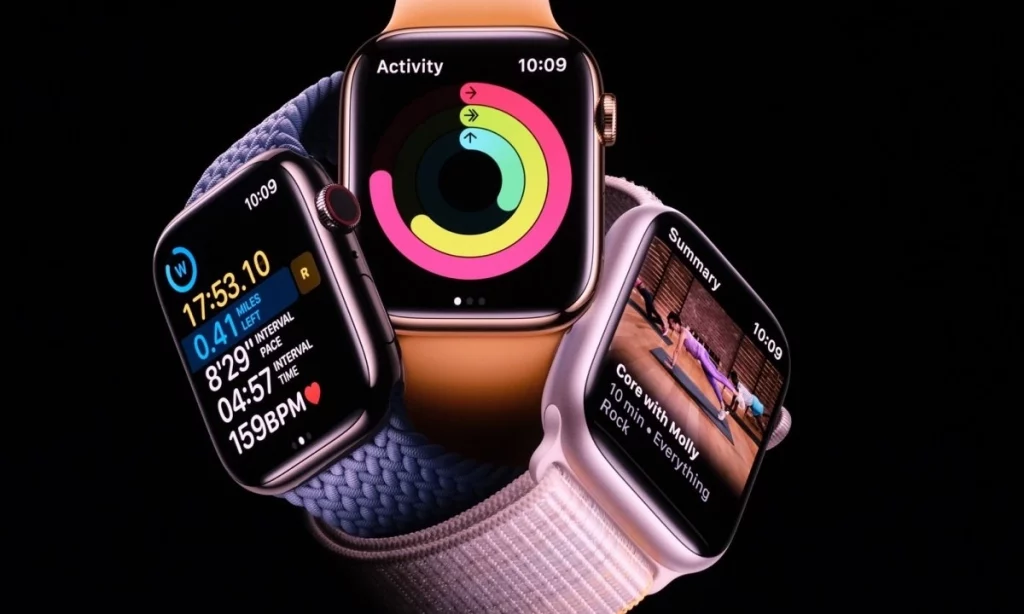
Apple is by far one of the most popular brands in the smartwatch market across the globe. Now, a new report has revealed that it is not just a known name but a leader in the segment, especially when talking about the higher end models.
According to a Counterpoint Research report, the Cupertino based giant’s Apple Watch series accounted for 50.6 percent of all premium smartwatch sales in the global market in the third quarter of this year. The report talked about “HLOS” smartwatch models, which basically means high level operating system. In this category, the brand dominated in the market, facing against the likes of Samsung, Huawei, Garmin, Fitbit, and Fossil as well.
The South Korean tech giant arrived second with a market share of 22.3 percent during the same time. This means that Apple had a more than twice the lead in the market over the second most popular high end smartwatch maker. As per the report, the company’s Watch Series 8 was primarily credited for this success, despite being quite recently launched in the market. Furthermore, Apple’s total smartwatch shipments also saw a sizeable 50 percent boost over the same quarter from last year.
Following Samsung, Amazfit took the third spot in the market with a 7.1 percent share, while Huawei came in fourth with a 6.4 percent market share. Garmin rounded up the top list with a market share of 4.5 percent. Keep in mind that this list only consisted of high level OS smartwatches and not the wearables with basic operating systems. So this list did not include other popular brands like Noise, Fire-Boltt, boAt, and even Xiaomi.
Xiaomi and iQOO were gearing up to launch their latest flagship series of smartphones in China soon. However, both brands have just announced that their respective launch events have been postponed following the death of the former leader of China.
For those unaware, Jiang Zemin was the Chinese communist leader and was the head who helped the nation acquire its position as a global superpower. The former leader has passed away at the age of 96, as per local news agency. Following this news, the Chinese tech giant announced that on Weibo (Chinese microblogging website) that it will be delaying the launch of the Xiaomi 13 series. The company further added that the upcoming smartphones will be announced soon, but have yet to official reveal a launch date.
On a similar note, iQOO has also announced the postponement of its launch event for the iQOO 11 series of flagship devices. During the iQOO conference, the brand was also set to announce the new iQOO Neo 7 SE model as well. However, it seems that the release will take place at a later. But unfortunately, the brand hasn’t announced a new launch date either for its new smartphone models. While the two brands didn’t explicitly state the reason, the passing of the former Chinese communist leader. So stick around for more, as we will be providing updates to the new release date for both the Xiaomi 13 series and the iQOO 11 lineup as well as the Neo 7 SE.
The Xiaomi 13 series is set to launch in China tomorrow (December 1). Ahead of that, the company has been teasing the features of these smartphones on social media.
The firm is yet to reveal the design, however, it has confirmed certain specifications. Today, it has shed some details on the cameras of these handsets. Let’s go through them.
Xiaomi 13 Pro Cameras | Source: Xiaomi
The upcoming Xiaomi 13 series will arrive with Leica-powered cameras. For the unaware, Xiaomi began its partnership with Leica earlier this year. The first phones out of this collaboration were the Xiaomi 12S series and Xiaomi Mix Fold 2.
Xiaomi says that the Xiaomi 13 Pro will arrive with a 50MP Sony IMX989 1-inch primary camera. This sensor will be paired with an optical lens jointly developed with Leica.
The company claims that the images from this camera will be of extraordinary quality. It also adds that these pictures will offer authentic Leica colors. You can check out the images from this camera by visiting this link.
Further, both Xiaomi 13 and Xiaomi 13 Pro will feature different 75mm telephoto cameras with an f/2.0 aperture lens. Powered by the Leica algorithm, Xiaomi says they will be the best secondary cameras on Xiaomi number series flagship smartphones to date. Check out samples from this camera on Xiaomi 13 here.
The 75mm telephoto cameras on these handsets are different as the Pro model comes with a floating focus lens group. This enables users to click stunning close-up shots. You can check out the samples here.
Though Xiaomi hasn’t revealed the sensor details yet, we know them, courtesy of an extensive leak.
Xiaomi 13 Cameras
50MP Sony IMX800
12MP Ultra-wide
10MP Telephoto (75mm)
Xiaomi 13 Pro Cameras
50MP Sony IMX989
50MP Samsung JN1 Ultra-wide
50MP Samsung JN1 Telephoto (75mm with floating focus)
What are your thoughts on the camera hardware of the Xiaomi 13 series? Do let us know in the comment section below.
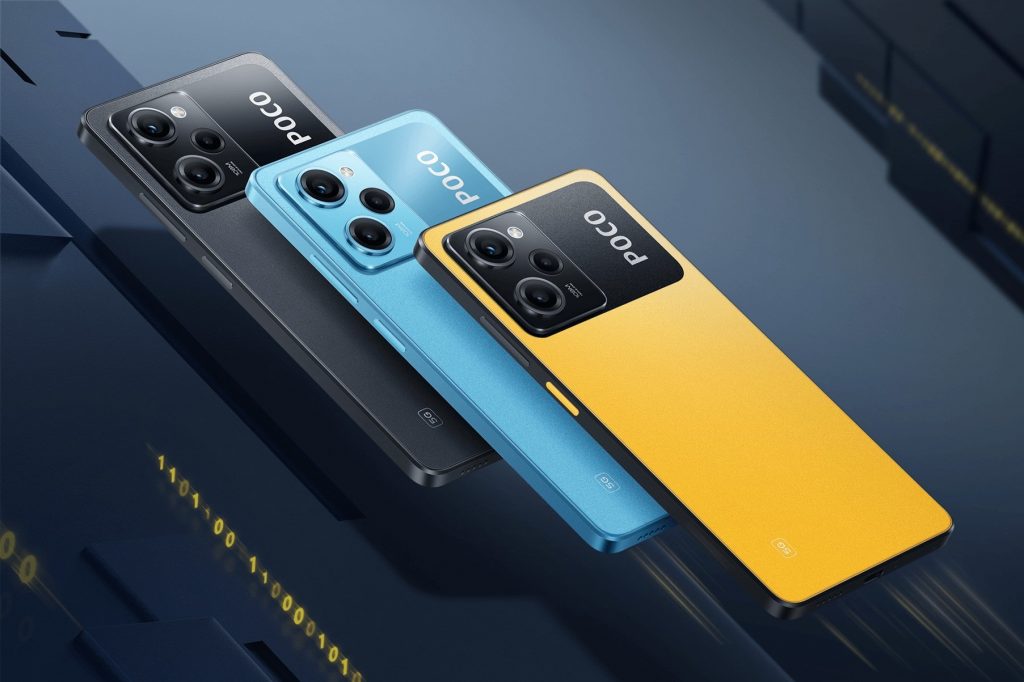
The launch of the POCO X5 series is on the horizon. The series is expected to feature two models, the POCO X5 and the POCO X5 Pro. A device from the series with model number 22101320G/22101320I has already appeared on multiple certification websites including BIS & FCC.
Poco X4 Pro 5G
Now, the device (model number 22101320G) has been listed on the IMEI database revealing that it carries the POCO X5 Pro 5G moniker. This is likely the global model of the POCO X5 Pro 5G, and the Indian model is likely the one with the model number 22101320I.
POCO X5 Pro 5G IMEI
The listing was spotted by tipster Mukul Sharma who informs that the device will carry a 5000mAh battery and 67W fast charging. Other than that, the Snapdragon 782G chipset is expected to power this smartphone.
For those unaware, the Snapdragon 782G is essentially a refreshed Snapdragon 778G+. It is based on a 6nm node and boasts a 5% faster CPU performance and 10% faster GPU performance compared to the Snapdragon 778G+. The last bit of details available on the POCO X5 Pro state that it will likely feature a 120Hz IPS LCD panel. Let’s take a look at the POCO X4 Pro 5G’s specs to get an idea of what to expect from its successor.
POCO X4 Pro 5G specifications
The POCO X4 Pro 5G has a 6.67-inch AMOLED FHD+ display with a refresh rate of 120Hz. It has a 16-megapixel selfie camera and a 64-megapixel primary camera, an 8-megapixel ultrawide camera, and a 2-megapixel macro camera on the back panel. The device is powered by Android 11 and MIUI 13.
The POCO X4 Pro 5G is powered by the Snapdragon 695 chipset. It has up to 8 GB of LPDDR4x RAM and 128 GB of UFS 2.2 storage. A 5,000mAh battery with 67W fast charging, a side-facing fingerprint scanner, and a microSD card slot round out the device’s features.
The Nothing Phone (1) is set to start receiving the Android 13 OS closed beta soon. The company’s CEO and Founder Carl Pei has been teasing the NothingOS 1.5 update for sometime now, and it appears that the beta program is live.
As of right now, the company has began rolling out the NothingOS 1.5 Closed Beta starting today (30th November 2022). The senior official took to Twitter to announced Android 13 based NothingOS update timeline for its smartphone. So while the closed beta is currently live, the open beta will only begin two weeks later. The company had previously announced that the Android 13 stable update for the Phone (1) model will be released sometime in early 2023, so this timeline is in line with this information.
The brand has been offering various firmware updates since the Phone (1) was launched, but it had seemed liked the Android 13 update would take a while. So this is great news for owners of the company’s only smartphone mode. Its unknown how to register for the Android 13 closed beta update at the moment and it is also unclear which region will be receiving this update. However, we can expect more information to be divulged with the official launch of the NothingOS 1.5 open beta. So stick around for more updates regarding this matter.
We use cookies on our website to give you the most relevant experience by remembering your preferences and repeat visits. By clicking “Accept”, you consent to the use of ALL the cookies.
This website uses cookies to improve your experience while you navigate through the website. Out of these, the cookies that are categorized as necessary are stored on your browser as they are essential for the working of basic functionalities of the website. We also use third-party cookies that help us analyze and understand how you use this website. These cookies will be stored in your browser only with your consent. You also have the option to opt-out of these cookies. But opting out of some of these cookies may affect your browsing experience.
Necessary cookies are absolutely essential for the website to function properly. This category only includes cookies that ensures basic functionalities and security features of the website. These cookies do not store any personal information.
Any cookies that may not be particularly necessary for the website to function and is used specifically to collect user personal data via analytics, ads, other embedded contents are termed as non-necessary cookies. It is mandatory to procure user consent prior to running these cookies on your website.