The Nothing Phone (1) is set to start receiving the Android 13 OS closed beta soon. The company’s CEO and Founder Carl Pei has been teasing the NothingOS 1.5 update for sometime now, and it appears that the beta program is live.
As of right now, the company has began rolling out the NothingOS 1.5 Closed Beta starting today (30th November 2022). The senior official took to Twitter to announced Android 13 based NothingOS update timeline for its smartphone. So while the closed beta is currently live, the open beta will only begin two weeks later. The company had previously announced that the Android 13 stable update for the Phone (1) model will be released sometime in early 2023, so this timeline is in line with this information.
The brand has been offering various firmware updates since the Phone (1) was launched, but it had seemed liked the Android 13 update would take a while. So this is great news for owners of the company’s only smartphone mode. Its unknown how to register for the Android 13 closed beta update at the moment and it is also unclear which region will be receiving this update. However, we can expect more information to be divulged with the official launch of the NothingOS 1.5 open beta. So stick around for more updates regarding this matter.
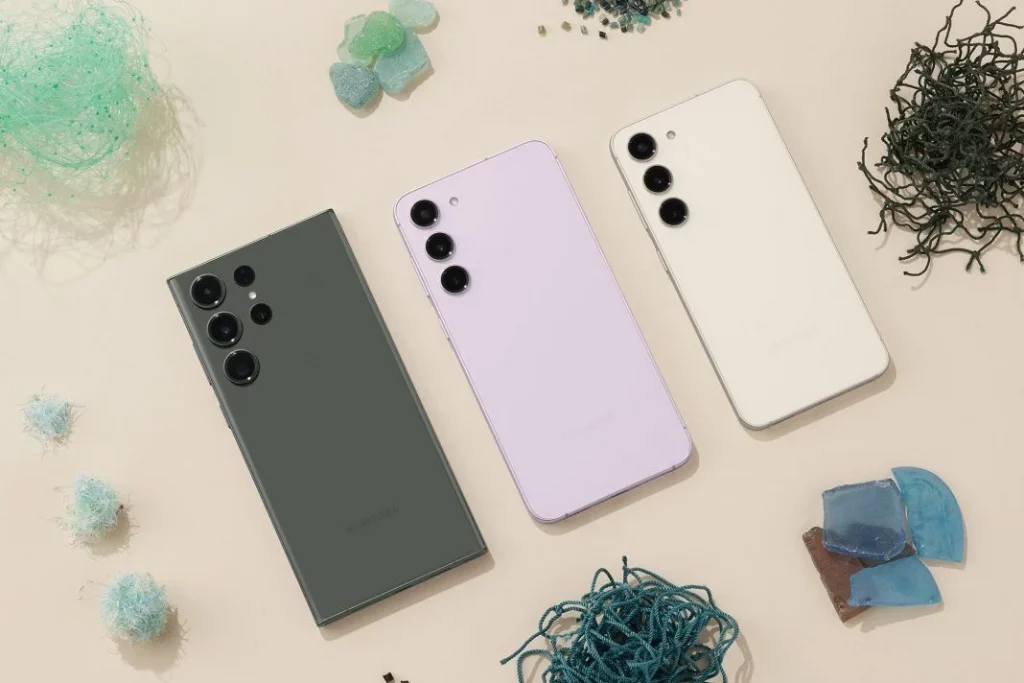
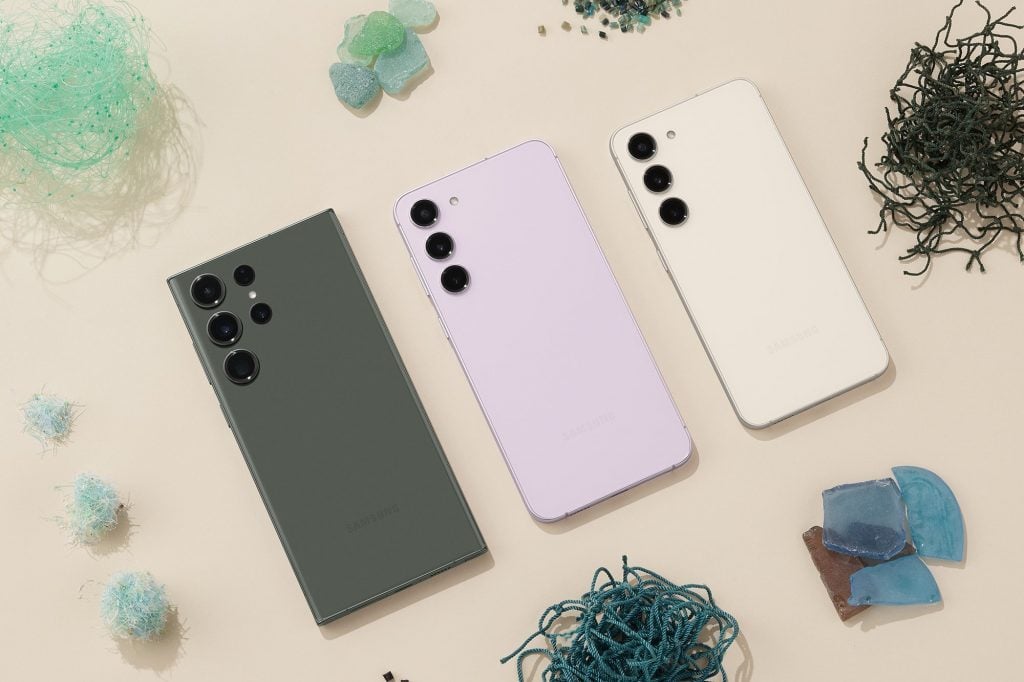
Samsung is gearing up to launch the Samsung Galaxy S23 series of flagship smartphones soon. Rumor has it that the launch will happen in early February. The series will consist of three devices – the Galaxy S23, the Galaxy S23 Plus and the Galaxy S23 Ultra. Details of these devices have been leaked already along with their design renders. The Galaxy S23 and S23 Plus recenty appeared on FCC revealing some key specs about the devices.
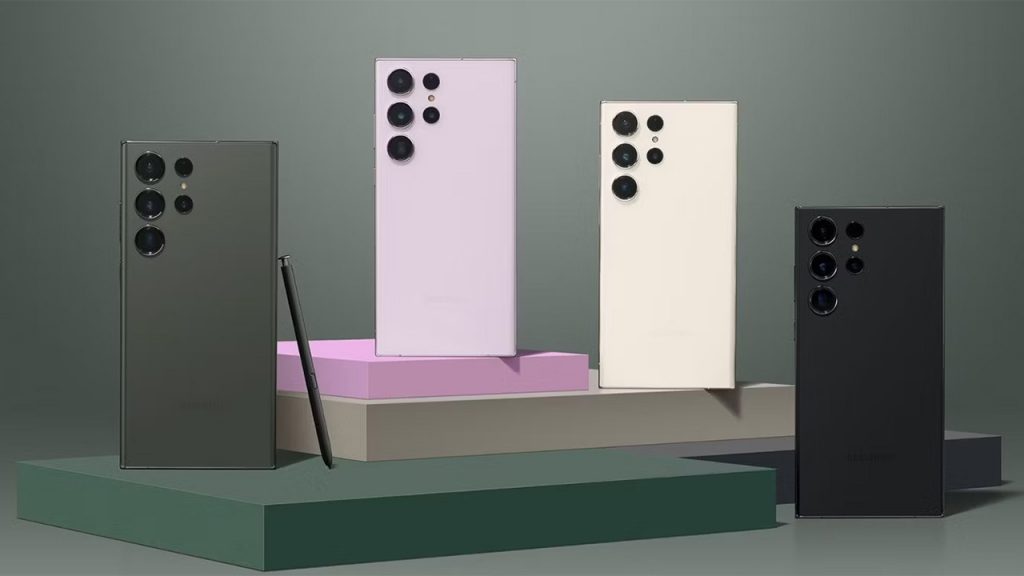
Now, the Galaxy S23 Ultra has also appeared on the FCC database with key details about the upcoming flagship. The listing reveals details about the model number SM-S918B/DS, which we know to be the Galaxy S23 Ultra.
According to the listing, the next-generation Samsung Galaxy flagship would have a 4855mAH battery with the model number EB-BS918BY. Support for 25W fast charging is also shown by the FCC listing. But given that the Samsung Galaxy S22 Ultra supports 45W fast charging, we can anticipate that the future Ultra model will also support 45W fast charging.
The FCC listing also reveals that the flagship will support the S-Pen similarly to its predecessor. For those who are unaware, Samsung expanded S-Pen compatibility for Ultra versions with the S21 series. The Samsung Galaxy S21 Ultra, however, was devoid of an S-pen slot. Similar to Note smartphones, Samsung was able to fit the S-Pen inside the slot on the Galaxy S22 Ultra. The S23 Ultra is anticipated to include an S-Pen slot as well.
Last but not the least, there will be support for wireless charging as well as reverse wireless charging.
Tata Group is apparently planning on buying a manufacturing facility from one of Apple’s suppliers. The company aims to acquire the iPhone manufacturing plant of Wistron that is set up in India. So here are all the details.
The Indian conglomerate is reportedly in talks with the Taiwanese supplier to buy out the iPhone production facility that is situated in the region, as per sources close to the matter (Via Economic Times). The company was previously rumored to be eyeing the iPhone production site earlier this year, and now it seems like the plan has seemingly moved forward. We had also reported that Tata Group may soon build iPhones for Apple in India. Tata was in discussions with Wistron to enter into a partnership to setup a joint electronics manufacturing venture in India.
This collaboration would primarily revolve around the production of iPhones in the country. The company is supposedly planning on working with Wistron to get access to its expertise in product development, supply chain, and assembly. For those unaware, Apple has been working on diversifying its supply chain outside of China and has been expanding it to regions like India and Vietnam. So this joint venture would’ve had Wistron’s iPhone assembling output to rise by over five times in India.
Interestingly enough, Tata has already entered the smartphone supply chain for Apple iPhones. It is currently building iPhone chassis components in the Southern part of India. Apart from Wistron, another Apple supplier called Pegatron and Foxconn assemble iPhone models in India, with the former recently deciding on building the company’s latest iPhone 14 series in the region.
iQOO has scheduled a launch event for December 2. The company has confirmed to debut the iQOO 11 series and iQOO Neo 7 SE at this conference. Ahead of that, it has been officially teasing the features of these smartphones.
Just a couple of days before the event, the entire specs of iQOO 11 Pro are now out. This information comes from a reliable source who has also shared the renders of both vanilla and pro models.
iQOO 11 Pro | Source: Ishan Agarwal via 91Mobiles
Leakster Ishan Agarwal has partnered with 91Mobilesto disclose the details about the iQOO 11 series. According to him, the two phones in the lineup will be almost similar in terms of design.
The only major difference between them will be the presence of a curved display on the pro model and a flat-screen on the standard variant. They will have the same camera island design and button/port placements. They will also arrive in the same three color options, such as Black, Mint Green (leather), and BMW M Motorsport.
Talking about specifications, the iQOO 11 Pro will flaunt a 6.78-inch Samsung E6 curved AMOLED display. The centered punch-hole panel will have a resolution of 3200 x 1440 pixels and up to a 144Hz refresh rate. An ultrasonic fingerprint sensor will be present underneath this screen.
Under the hood, the device will house a Qualcomm Snapdragon 8 Gen 2 SoC and Vivo V2 chip for image processing and display-related tech. The chipset will be paired with 8GB/12GB RAM and 256GB/512GB storage.
iQOO 11 | Source: Ishan Agarwal via 91Mobiles
On the software front, the handset will boot Android 13-based OriginOS Forest. This is the first time we are hearing about this skin. The software will likely be a customized version of OriginOS 3.
As far as cameras are concerned, the smartphone will sport a triple camera system on the rear. This setup will consist of a 50MP Sony IMX866 primary sensor with an f/1.75 aperture lens, a 50MP secondary sensor with a 150° ultra-wide-angle lens, and a 13MP telephoto camera (likely 2x lens). For selfies and video calls, it will use a 16MP shooter present inside the punch-hole.
The phone will draw power from a 4,700mAh battery. It will have support for 200W wired fast charging and 50W wireless fast charging. Last but not least, it will measure 164.7 × 75.3 × 9mm in dimensions and weigh 212g.
The only thing that’s now left to know about iQOO 11 Pro is its price. Since we are still hours away from the official announcement, even this could get leaked.
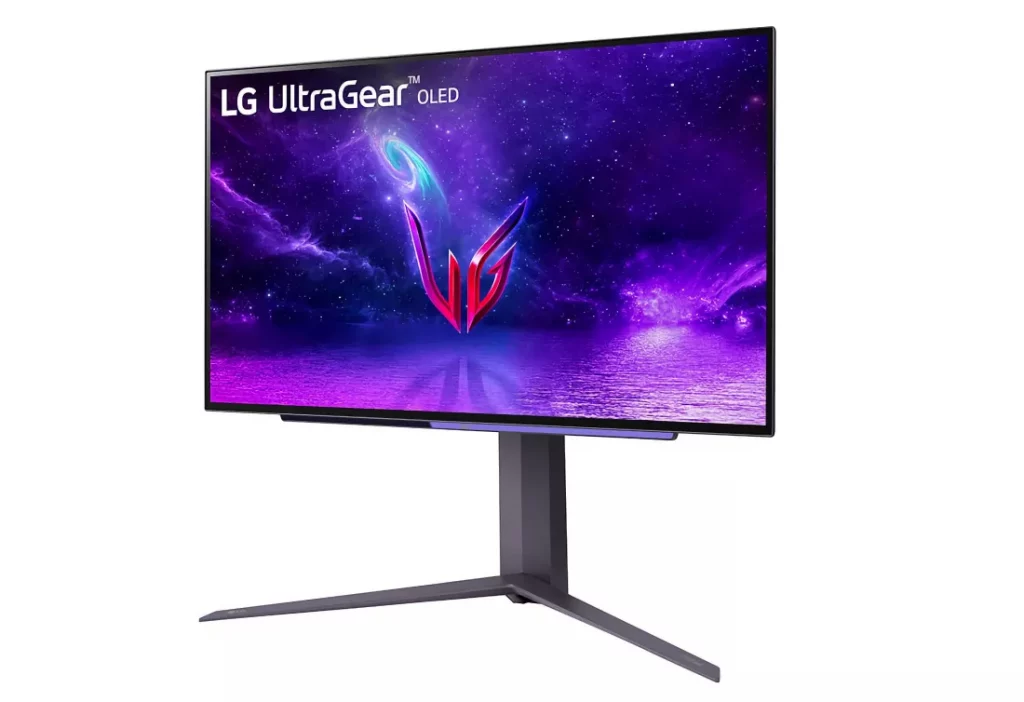
OnePlus is gearing up to enter a new category of consumer electronics, which is the monitor segment. The company has just announced that it will be launching two new monitor models in the Indian market and even revealed their release date. So here are all the details.
As per an official announcement, the Chinese smartphone maker stated that its first ever monitor models will be launching on 12th December 2022. Apart from their launch date, the company even revealed notable details regarding the upcoming monitors. This includes the Monitor X 27 and Monitor E 24. As the name suggests, the former has a 27 inch display while the latter has a 24 inch panel. Furthermore, the Monitor X 27 will also be available as the more premium offering between the two.
The brand’s X 27 model will also offer a superior display and performance that will be ideal for both work projects as well as gaming. In other words, it will sport a high refresh rate panel with a low response time while also offering accurate colors. On the other hand, the Monitor E 24 model will be launched as a mid range product that offers a series of great features at a more affordable price tag. So it should be a better choice for people that need a monitor for regular everyday kind of use.
According to Pete Lau, Founder of OnePlus, “Since our inception, we have grown to become one of the most loved technology brands in India owing to the burdenless user experience and fast and smooth performance of our products. Now, we are excited to bring our new addition to the OnePlus product portfolio, the OnePlus monitors. We are positive that it will deliver the signature OnePlus experience to our community.”
Last week, Vivo unveiled the Vivo X90 series of smartphones. The X90 and X90 Pro debuted as the world’s first phones featuring the Dimensity 9200. The X90 Pro+ is the first-ever phone to house the Snapdragon 8 Gen 2. The X90 Pro and X90 Pro+ are scheduled to go on sale on Dec. 6. However, the vanilla model is available for purchase starting today in the home market.
The Vivo X90 is now available in China in five variants, 8 GB RAM + 128 GB storage, 8 GB RAM + 256 GB storage, 12 GB RAM + 256 GB storage, and 12 GB RAM + 512 GB storage. These models are priced at 3,699 Yuan (~$518), 3,999 Yuan (~$560), 4,499 Yuan (~$630), and 4,999 Yuan (~$699), respectively. It comes in red, black, and blue colors.
In China, it can be bought through Vivo China’s online store, JD.com, and Tmall. Those who wish to purchase Vivo X90 Chinese variant can also head to Giztop, where it is listed for $599.
Vivo X90 specifications
The Vivo X90 has a 6.78-inch curved OLED display with a punch-hole in the centre. It offers a refresh rate of up to 120Hz, a resolution of 2800 x 1260 pixels, 100 percent DCI-P3 colour gamut, and up to 2160Hz PWM dimming. The Dimensity 9200 chipset powers the smartphone with LPDDR5 RAM and UFS 4.0 storage. The 128GB base model has UFS 3.1 storage, while the other models have UFS 4.0.
It has a 50-megapixel Sony IMX866 main camera with OIS, a 12-megapixel ultra-wide camera, and a 12-megapixel telephoto camera with 2x optical zoom. All of these cameras are on the back of the phone. It features a 32-megapixel front-facing camera. Additionally, it has a Vivo V2 ISP chip for an enhanced photography experience.
The X90 boots to the OriginOS 3-based Android 13 OS. Dual stereo speakers, an x-axis linear vibration motor, an IR blaster, and an IP64 rating are additional features of the X90. It is backed by a 4,810mAh battery with support for 120W fast wired charging.
Xiaomi is gearing up to launch its latest flagship smartphones. The company is set to announce the new Xiaomi 13 series during the launch event on December 1, which will also be live-streamed across various platforms like social media. The lineup consists of two new models, namely Xiaomi 13 and Xiaomi 13 Pro. So here’s a rumor roundup regarding these three phones.
Xiaomi 13
Talking about the design first, the Xiaomi 13 series will feature a design similar to all modern android phones in the market. Although the overall design still features some differences, the standard model will have a sleek design with thin bezels, flat aluminum edges, and a glass panel with a large camera island on the back. Rumors claim that the 50MP sensor could be paired with another 50MP telephoto sensor, another 50MP ultrawide, and a 32MP selfie camera on the 13 series. We also expect to see the Sony 1-inch 50MP Sony IMX989 in at least one model, but probably it will be on 13 Pro.
Xiaomi 13 series leaked render
The company also confirmed new devices powered by the recently unveiled Qualcomm Snapdragon 8 Gen 2 SoC. The Xiaomi 13 is rumored to be the first device in the world to feature the new platform. While the rest of the specifications are still in the rumor mill, the 13 Pro is expected to come with a 6.7-inch display, 8/12 GB of RAM, and 128/256/512GB UFS 3.1 storage options. The Xiaomi 13 will probably pack a 4,500mAh battery, and it is expected to support 67W fast charging.
Xiaomi 13Pro
The most curious model of the Xiaomi 13 series is undoubtedly the 13 Pro. According to the latest leaks, the smartphone has a similar design to the standard model. But the curved screen and square-shaped camera module at the rear, which houses a triple camera unit and an LED flash unit placed under the Leica branding, are expected to set the two models apart. The Xiaomi 13 Pro is tipped to have a 6.73-inch LTPO AMOLED display with a 120Hz refresh rate and QHD resolution. The displays in both phones will offer up to 1,900 nits of peak brightness.
Xiaomi 13 Pro render leaks
Another point of similarity between the two phones is the processor. Xiaomi 13 Pro will also use Snapdragon 8 Gen 2 mobile platform. The company claims that the LPDDR5X RAM will bring 33 percent increased performance, and the UFS 4.0 will offer 100 percent increased speed on the duo. The Xiaomi 13 Pro is rumored to boast a large 4,800 mAh battery with support for 120W fast wired charging, and possibly 50W fast wireless charging.
The Xiaomi 13 and Xiaomi 13 Pro will receive IP68 certification, providing peace of mind against dust and water. The bottom of the device will house a microphone, the USB-C port, and a speaker cutout. The right side will contain the volume rocker and the power button. Xiaomi also confirmed that it’d be announcing MIUI 14 alongside the new flagships. However, it is currently unclear whether the devices will come out of the box with this version.
Earlier this month, Dizo launched the Watch R Talk Go in the Indian market, a couple of weeks after its initial global debut. Now, the smartwatch will finally be available to purchase in India.
The Dizo Watch R Talk Go has Bluetooth calling capability and comes pre-loaded with over 150 watch faces. More than 110 different sports may be tracked with the newest Dizo smartwatch, which also supports Bluetooth 5.1. Let’s take a look at its pricing and launch offers before diving into more on the specs and features.
Dizo Watch R Talk Go price in India and availability
The Dizo Watch R Talk Go costs Rs 3,499 in India. The smartwatch will be available for purchase exclusively through Flipkart beginning at 12:00 PM today (November 30). Buyers who use their Flipkart Axis Bank credit card to purchase the Dizo Watch R Talk Go will receive a 5% cashback.
Dizo Watch R Talk Go specs & features
The Dizo Watch R Talk Go has a 1.39-inch display with 360 x 360-pixel resolution and 550nits of brightness. The smartwatch is designed to look like the Samsung Galaxy Watch and has two buttons on the side. The watch’s rim is made of aluminum, and the display is protected by 7H hardness tempered glass.
The Watch R Talk Go connects via Bluetooth 5.2 and includes the Bluetooth calling feature, which allows users to answer and make calls, as well as mute and reject calls, all from their smartwatch. It has 110+ sports modes, such as running, cycling, hiking, swimming, and so on. Unfortunately, the watch lacks an in-built GPS, so users will have to rely on the GPS on their smartphone to track these activities.
Real-time heart rate and SpO2 monitoring, mood, stress, fatigue monitoring, sleep tracking, step, and calorie tracking, menstrual tracking, and other health features are included on the smartwatch. According to the company, the Watch R Talk Go can last 10 days with normal use and up to 9 days when using the Bluetooth calling feature. It takes 2 hours to charge completely. The smartwatch comes in Classic Black, Thunder Blue, and Silver White.
Apple launched the latest iPhone 14 and iPhone 14 Pro series of flagship smartphones a couple of months back. For the first time, the devices come with a significant difference between both lineups.
The Apple iPhone 14 Pro series has good demand in the market compared to the standard iPhone 14 lineup but it appears that the company will soon be facing shipment issues for the popular iPhone models because of its contract manufacturer Foxconn.
Apple iPhone 14 Pro and iPhone 14 Pro Max
According to a new report by analyst Ming-Chi Kuo, shipments of Apple iPhone 14 Pro and iPhone 14 Pro Max models in the fourth quarter of this year will be significantly lower than the market consensus due to protests at Foxconn’s main factory in China.
The Foxconn factory in Zhengzhou, China, has been significantly affected by the protests by the workers over unfavorable working conditions, which he believes will adversely impact the Q4 2022 shipments forecast by around 20 percent or about 70-75 million units.
He adds that the average capacity utilization rate at the factory in the month of November was only 20 percent, but that is expected to increase to about 30 percent to 40 percent in December. He believes that the production issues could result in iPhone revenue being “significantly lower than the market consensus by 20–30% or more” this quarter.
Ming-Chi Kuo further notes that Pegatron and Luxshare, two other contract manufacturers for Apple, have each received about 10 percent of iPhone 14 Pro and Pro Max orders from Foxconn. However, those orders aren’t expected to start shipping until late December or early January of the next year.
Currently, the delay time for the Apple iPhone 14 Pro models is at least four weeks when the device is ordered through the company’s official online store in the United States as the Cupertino-based tech giant is struggling to maintain supply.
Xiaomi is gearing up to unveil the Xiaomi 13 series tomorrow (December 1) in China. A recent report gave us the first look at the Xiaomi 13 Pro via a leaked render. And now, some hands-on images have appeared online of the same device.
Spotted by known tipster Abhishek Yadav, the image confirms the design of the Xiaomi 13 Pro revealed by the earlier leak. It also reveals the three color options for the 13 Pro – Green, Blue, and White. The tipster shared another badge of images completely revealing the back and front side of the device. The back appears to be curved, with the square camera module occupying the top left side of the device. The back appears to be covered in glass.
The front panel image reveals a curved display with thin bezels at the top and bottom. The punch-hole for the selfie camera is placed in the top center. The front panel image also confirms that the Xiaomi 13 Pro has the Snapdragon 8 Gen 2 chip clocked at 3.19Ghz, along with 8GB RAM + 5GB virtual RAM, and Android 13-based MIUI 14 onboard. A side-angle image of the device highlights that the Xiaomi 13 Pro has a prominent camera bump. Let’s take a look at the known specs of the device.
Xiaomi 13 Pro specs
According to leaks, the Xiaomi 13 Pro will feature a 6.73-inch E6 AMOLED curved display that offers a 2K resolution, a 120Hz refresh rate, and 1920Hz PWM dimming. It will offer 1,900 nits of peak brightness.
Under the hood, the device will pack a Snapdragon 8 Gen 2 chipset that will draw power from a 4,820mAh battery with 120W wired charging, 50W wireless charging, and 10W reverse wireless charging support.
For optics, the Xiaomi 13 Pro will have a 50-megapixel Sony IMX989 primary camera, paired with a 50-megapixel Samsung JN1 ultra-wide unit, and a 50-megapixel Samsung JN1 telephoto lens.
The Xiaomi 13 Pro will offer other features like an IR blaster, X-axis linear motor, NFC, and IP68-rated chassis. The device will weigh 229 grams (leather back – 210 grams) and measure 8.38mm in thickness (8.7mm leather back).
A new estimate on global smartwatch shipments for Q3 2022 has been released by Counterpoint, a renowned publication for its research on the marketing side of technology. There are some unexpected surprises in the report. Since the year 2022’s beginning, the global smartwatch market has increased by more than 30% annually, according to the report. With over 171% annual growth, India has now taken the top spot and is the largest smartwatch market worldwide. That’s unexpected, isn’t it?
Taking into consideration the report. It has separated smartwatches into two groups: basic smartwatches and HLOS smartwatches. The term “HLOS smartwatches” here refers to high-end watches that are capable of running third-party applications and have a high-end operating system. Basic smartwatches, on the other hand, are smartwatches with a light operating system that are aimed at consumers on a budget.
Research Analyst Woojin Son said, “Among the types of smartwatches*, the basic smartwatch, with relatively lighter versions of operating systems (OSs) and more affordable prices, has been the key driver in sharply boosting the global market recently. While HLOS smartwatch shipments grew 23% YoY in Q3 2022, basic smartwatch shipments more than doubled YoY, accounting for 35% of the total market. This remarkable increase in basic smartwatch shipments shows us that the market base is rapidly expanding toward more accessible segments amid aggressive drives by the supply side. But still, in terms of revenue, the HLOS smartwatch overwhelms the basic smartwatch with a market size of almost 10 times due to its high average selling price (ASP).”
With a market share of over 50% and a 48% year-over-year increase, Apple is the industry leader in the HLOS category of watches. Samsung, Amazfit, Huawei, Garmin, and other brands are the remaining ones on the list. Samsung increased by 62% QoQ, largely as a result of its Galaxy Watch 5 series. However, Samsung’s shipments only increased by 6% YoY as it lost market share in India, dropping below 3%.
Regarding the market share leaders in the basic smartwatch segment, Noise has a market share of roughly 25%, followed by Fire-boltt with 24%, boAt with 16%, Xiaomi with 4.2%, and Huawei with 3.2%. Noise, an Indian-born business, has risen to third place in the world’s smartwatch rankings, behind only Apple and Samsung. It has increased by an astounding 218% year over year.
Huawei has been launching mobile accessories with some unique designs and continues to launch new products in the market at regular intervals. Now, the company has a new product coming to the market — Huawei Watch Buds.
The Chinese tech giant has officially confirmed that Huawei Watch Buds, its upcoming wearable product, will be launched in the Chinese market on 2nd December.
Richard Yu, Executive Director of Huawei and CEO of the company’s Terminal BG, describes the upcoming Huawei Watch Buds as a “revolutionary breakthrough in the shape and structural design of wearable products, allowing everyone to enjoy an unprecedented convenient experience.”
The teaser video related to the device shows that the Huawei Watch Buds will be similar to other smartwatches, but the dial area of the device can be opened. It is speculated that the area that opens up will house a pair of true wireless earbuds. It will be interesting to see how the company has managed to keep the thickness of the device in check.
As of now, not much is known about this upcoming product, but the design of the device teased in the video has got up excited about this unique concept. We will get to know more about it when the device goes official on 2nd December at 07:00 PM local time in China. The company will also be launching Huawei Nova 10 SE and Huawei Enjoy 50z at the event.
It is no secret that Google is working on the Google Pixel 7a. The device is rumored to be packed with many improvements over the Pixel 6a, and could also carry a high refresh rate panel, the absence of which was a big gripe about the Pixel 6a.
Now, a new report, courtesy of Smartprix has appeared online revealing the renders of the Google Pixel 7a. Taking a look at the renders, we can see that it has the same camera visor with a dual camera cutout as the Pixel 7. Even the LED flash is in the same place as the Pixel 7’s. OnLeaks reveals that the dimensions of the device will be 152.4 x 72.9 x 9.0mm(10.1mm with the camera bump).
The device will have small bezels all around and a somewhat larger chin when it comes to the front screen. At the top-middle of the display, the device will have a punch-hole cutout for the front camera. On the right spine of the phone, you’ll find the power and volume rockers, and on the left spine, you’ll see the SIM tray.
The smartphone’s speaker grille and USB type-C port are both found on the bottom side. According to earlier rumors, the smartphone would have a 3.5mm jack. However, it does not appear on the renders, indicating that the rumors may not be entirely true. All things considered, it appears that the Pixel 7a will closely resemble the Pixel 7. Let’s take a look at what’s known about the device so far regarding its specifications.
Google Pixel 7a specs (rumored)
According to rumors, the Samsung-developed FHD+ display for the Google Pixel 7a would have a refresh rate of 90Hz. The device’s back camera system might use IMX787 and IMX712 sensors. The smartphone will most likely enable wireless charging at 5W. Under the hood, the device might feature a Google Tensor chip, and there might also be an in-display fingerprint scanner for security.
The device is expected to get Bluetooth LE support, which will provide superior connectivity while being easy on the battery life. The device is currently expected to come in White and Dark Grey colors, and the official launch can be expected to happen in early 2023.
iQOO Neo 7 SE is all set to go official on Dec. 2 in China, along with the iQOO 11 and iQOO 11 Pro. iQOO has released a new poster to reveal the Neo 7 SE is backed by a 5,000mAh battery. As can be seen below, the company has also revealed the rapid charging capabilities of the Neo 7 SE.
The Neo 7 SE’s big battery will carry support for 120W fast charging. The dual-cell unit can charge from 1 percent to 60 percent in just 10 minutes. The image also reveals that it has a speaker grille, a USB-C port, a microphone, and a SIM slot on the bottom side.
The previously seen TENAA listing of the device revealed that it has an IR blaster. It is likely that the top edge of the device could be equipped with an IR blaster and another microphone. For security, the device will feature an under-display fingerprint scanner.
Yesterday, the device was found listed in China Telecom’s product library. According to the listing, it will be available in a variety of LPDDR5 RAM + UFS 3.1 storage configurations, including 8 GB + 128 GB, 8 GB + 256 GB, 12 GB + 256 GB, 12 GB + 512 GB, and 16 GB + 512 GB. These models are likely to be priced between 2,399 Yuan (~$336) and 3,099 Yuan (~$434).
The iQOO Neo 7 SE is expected to house a 6.78-inch AMOLED display that offers an FHD+ resolution and a 120Hz refresh rate. For photography, it will have a 16-megapixel front camera and a triple camera unit with a 64-megapixel main camera with OIS, a 2-megapixel macro, and a 2-megapixel depth assist lens. It will debut as the world’s first phone with a Dimensity 8200 chip onboard. It will run on the OriginOS 3-based Android 13 OS.
Xiaomi is currently teasing the features of the Xiaomi 13 series, which is scheduled to debut on Dec. 1 in China. At the same time, the rumor mill is also leaking new details about the Xiaomi 13 and 13 Pro. A new leak that has surfaced on Weibo has revealed the entire specifications of both models.
Yesterday, Xiaomi confirmed that the Xiaomi 13 series will feature the Snapdragon 8 Gen 2 mobile platform, LPDDR5X RAM, and UFS 4.0 storage. The new leak states that the Xiaomi 13 will have a 6.36-inch E6 AMOLED FHD+ 120Hz display, whereas the Xiaomi 13 Pro will house a larger 6.73-inch E6 AMOLED display that offers a 2K resolution, a 120Hz refresh rate, and 1920Hz PWM dimming.
The displays of the Xiaomi 13 duo will offer up to 1,900 nits of peak brightness. The official teasers have already revealed that the vanilla model will have a flat display, while the Pro’s screen will have curved edges.
The Xiaomi 13’s rear camera setup will have a 50-megapixel Sony IMX800 primary camera, a 12-megapixel ultra-wide lens, and a 10-megapixel telephoto camera. The Xiaomi 13 Pro, on the other hand, will come equipped with a 50-megapixel Sony IMX989 primary camera, a 50-megapixel Samsung JN1 ultra-wide lens, and a 50-megapixel Samsung JN1 telephoto camera.
The Xiaomi 13 will pack a 4,500mAh battery, which will carry support for 67W wired charging. The Xiaomi 13 Pro will have a 4,820mAh battery with 120W wired charging support. Both phones will have a Surge G1 charging protection chip and carry support for 50W wireless charging and 10W reverse wireless charging.
The Xiaomi 13 and 13 Pro will offer other features like an IR blaster, X-axis linear motor, NFC, and IP68-rated chassis. The Xiaomi 13 will weigh 189 grams and measure 7.98mm in thickness. Its leather back model will weigh 185 grams and have a thickness of 8.1mm. The Xiaomi 13 Pro will weigh 229 grams (leather back – 210 grams) and measure 8.38mm in thickness (8.7mm leather back). Color variants of blue phones include Distant Mountain Blue (leather), Wilderness Green, Ceramic Black, and Ceramic White.
While the new leak has revealed almost everything about the Xiaomi 13 and 13 Pro, it is advisable to digest the report with a pinch of salt.
Recently, an upcoming mid-range phone by Vivo with the V2230A model number was approved by the TENAA authority of China. While the listing revealed all the key specifications of the phone, there was no word on its final marketing name. However, a new leak has revealed the expected name of the device.
Vivo unveiled the Vivo Y35 smartphone in August this year. The 4G LTE capable phone came equipped with the Snapdragon 680 chipset. According to a Chinese tipster, the V2230A will be dubbed as the Vivo Y35 5G in the Chinese market.
Vivo Y35
The Vivo Y35 5G will feature a 6.51-inch LCD panel that produces an HD+ resolution of 720 x 1600 pixels. It is powered by a 5G-enabled chipset that clocks at 2.2GHz. Unfortunately, there is no information on the name of the chip. The device is likely to arrive with the Android 12 OS onboard.
On the front, the Vivo Y35 5G will feature a 5-megapixel camera. The back panel of the device will have a 13-megapixel + 2-megapixel dual-camera setup. For security, it will arrive with a side-facing fingerprint scanner.
The TENAA listing revealed that it will arrive in RAM variants, such as 4 GB, 6 GB, 8 GB, and 12 GB. When it comes to storage, it will offer options like 64 GB, 128 GB, 256 GB, and 512 GB. It will be backed by a 5,000mAh battery. As per the 3C listing of the device, it may support only 18W charging. It will measure 164.05 x 75.6 x 8.15mm and weigh around 186 grams.
At present, there is no information available on the launch date of the Vivo Y35 5G. With Chinese certifications under its belt, it appears that the Y35 will break cover in the next few days in the home market.
Electric vehicles are getting more popular day by day. However, the limits of this technology have not been overcome yet. For example, only land vehicles are using electricity today. However, the search for environmentalist solutions in the sector continues. Rolls-Royce and easyJet today confirmed they have set a new aviation milestone with the world’s first run of a modern aero engine on hydrogen.
Rolls-Royce tests hydrogen-fueled aircraft engine in aviation world first
The ground test was conducted on an early concept demonstrator using green hydrogen created by wind and tidal power. It marks a major step towards proving that hydrogen could be a zero-carbon aviation fuel of the future and is a key proof point in the decarbonisation strategies of both Rolls-Royce and easyJet.
Both companies have set out to prove that hydrogen can safely and efficiently deliver power for civil aero engines and are already planning a second set of tests, with a longer-term ambition to carry out flight tests. The test took place at an outdoor test facility at MoD Boscombe Down, UK, using a converted Rolls-Royce AE 2100-A regional aircraft engine. Green hydrogen for the tests was supplied by EMEC (European Marine Energy Centre), generated using renewable energy at their hydrogen production and tidal test facility on Eday in the Orkney Islands, UK.
Secretary of State for Business, Energy and Industrial Strategy, Grant Shapps, said: “The UK is leading the global shift to guilt-free flying, and today’s test by Rolls-Royce and easyJet is an exciting demonstration of how business innovation can transform the way we live our lives. “This is a true British success story, with the hydrogen being used to power the jet engine today produced using tidal and wind energy from the Orkney Islands of Scotland – and is a prime example of how we can work together to make aviation cleaner while driving jobs across the country.”
Grazia Vittadini, Chief Technology Officer, Rolls-Royce, said: “The success of this hydrogen test is an exciting milestone. We only announced our partnership with easyJet in July and we are already off to an incredible start with this landmark achievement. We are pushing the boundaries to discover the zero carbon possibilities of hydrogen, which could help reshape the future of flight.”
Johan Lundgren, CEO of easyJet, said: “This is a real success for our partnership team. We are committed to continuing to support this ground-breaking research because hydrogen offers great possibilities for a range of aircraft, including easyJet-sized aircraft. That will be a huge step forward in meeting the challenge of net zero by 2050.”
Following analysis of this early concept ground test, the partnership plans a series of further rig tests leading up to a full-scale ground test of a Rolls-Royce Pearl 15 jet engine. The partnership is inspired by the global, UN-backed Race to Zero campaign that both companies have signed up to, committing to achieve net zero carbon emissions by 2050.
The OPPO Reno9 Series went official in the Chinese market and it includes three variants: OPPO Reno9, Reno9 Pro, and Reno9 Pro+. The phones range from the midrange segment to the flagship one. For now, they are official only in China, but they will come soon to the global markets too. They are not expected to launch in Europe, where at least one of the variants should come under the Find X6 lineup. While waiting for their global launch, it is time to learn the differences between each variant. That is the reason why we decided to publish a comparison between the specifications of the OPPO Reno9, the Reno9 Pro, and the Reno9 Pro Plus.
Dual 64 + 2 MP, f/1.8 + f/2.4
32 MP f/2.4 front camera
Dual 50 + 8 MP, f/1.8 + f/2.2
32 MP f/2.4 front camera
Triple 50 + 8 + 2 MP, f/1.8 + f/2.2 + f/2.4
32 MP f/2.4 front camera
BATTERY
4500 mAh, fast charging 67W
4700 mAh, Fast Charging 80W
ADDITIONAL FEATURES
5G, dual SIM
5G, dual SIM
5G, dual SIM
Design
Even though it is not the most expensive variant of the lineup, I love the design of the vanilla OPPO Reno9, especially in the special Red color option. It is very thin and lightweight, much more than the Pro Plus version, even though the latter has a higher build quality. And it is also the only variant to come in that Red color option with gold accents around the camera module. The Pro variant has exactly the same design, the same dimensions, and the same weight, but it does not have the red color option and this is the only difference. Unfortunately, the OPPO Reno9 Pro Plus is thicker and heavier, which is why I prefer the vanilla version, even though the Pro Plus has an aluminum frame.
Display
All of these phones are equipped with exactly the same display, there are no differences. It is an AMOLED panel able to show up to one billion colors with a diagonal of 6.7 inches, a Full HD+ resolution of 1080 x 2412 pixels, a 120 Hz refresh rate, HDR10+ certification, a peak brightness of 950 nits, the Asahi Glass AGC DT Star 2 protection, and an in-display fingerprint reader. It is not the best display you can find on an OPPO device, but it is still a high-end panel. An important difference of the Pro Plus variant is the presence of stereo speakers for an improved audio experience.
Specs & Software
One of the most important advantages of the OPPO Reno9 Pro+ is the hardware department, as it is currently the most powerful OPPO phone out there. It is powered by the Snapdragon 8+ Gen 1 chipset paired with 16 GB of RAM and up to 512 GB of native storage. The OPPO Reno9 Pro is less powerful, but still equipped with a high-end chipset: the Dimensity 8100 Max by Mediatek, paired with 16 GB of RAM and up to 512 GB of native storage. The vanilla version is just a mid-ranger, with a Snapdragon 778G mobile platform, up to 12 GB of RAM, and up to 512 GB of storage. All the handsets run Android 13 out of the box, customized by ColorOS 13.
Camera
OPPO Reno9 Pro Plus is the only phone of the series that we define as a flagship camera phone. It has a triple camera setup including a 50 MP Sony IMX890 main camera with OIS, an 8 MP ultrawide sensor, and a 2 MP macro camera. The Reno9 Pro takes the silver medal with its 50 MP Sony IMX890 main camera (without OIS) and an 8 MP ultrawide shooter. The Reno9 is just a mid-ranger with its 64 MP main camera, a 2 MP macro lens, and no ultrawide sensor.
You can get a longer battery life with the OPPO Reno9 Pro Plus thanks to a bigger 4700 mAh battery, as well as a faster charging technology with a power of 80W.
Price
OPPO Reno9 starts from €340/$340, the Pro variant begins at €470/$470, and the Pro Plus starts from €540/$540 (the prices refer to the Chinese market). Which one would you pick?
OPPO Reno9 vs OPPO Reno9 Pro vs OPPO Reno9 Pro Plus: PRO and CONS
Xiaomi‘s upcoming launch event scheduled for December 1 promises to be an interesting event. The company plans to unveil a slew of innovative products and interestingly, the list keeps growing. A Weibo post on the Xiaomi Notebook official page has revealed that the company is also planning to release a new desktop PC known as Xiaomi Mini Host.
Now, Xiaomi has a long line of laptop computers under its belt but this product is touted to be the brand’s first desktop PC. Although the Weibo post did not reveal the configuration of the product, it projects the device as a “high-performance hardcore productivity tool” having a cool design. Both the teaser image and the name suggest the device will be a mini PC having a compact box-shaped design just like most of the mini PCs around.
One core advantage of mini PCs is their compact size which makes it possible to carry them around and occupy less space on the desktop. While most of the mini PCs around are usually not suitable for high-tasking operations, there are several with high-end configurations suitable for demanding tasks like intense gaming, running heavy software, and high memory-demanding tasks.
We expect Xiaomi’s first Mini PC to pack an Intel processor but the exact configuration is unknown at this time. We expect to get more details when the product is announced on December 1.
Sony has released a new character motion capture device, the Sony Mocopi in Japan. The Mocopi requires users to wear six sensors and connect them to a smartphone to combine avatars and create animated short films.
The six sensors used by the Mocopi enable the recording of movements of the user’s head, left and right wrists, waist, and left and right ankles. It then connects these movements to the skeleton of the 3D avatar via a smartphone. With such connections, the Mocopi can perform motion capture without any additional equipment. It can create fast virtual characters and transfer character movement information to external 3D animation software. The Sony Mocopi Receiver Plugins are compatible with external software such as VMC virtual motion, Unity, and MotionBuilder.
The Mocopi application can record voices and create facial expressions for the virtual character. The Mocopi mobile applications currently are available in Sony’s Xperia 1 and Xperia 5 series as well as Apple iPhones. More models are expected to be added to the list in the future. Each of the Mocopi sensors can be used for up to 10 hours and weight 8g.
In terms of water- and dust-proof protection the Sony Mocopi is rated IPX5/ IPX8 and IP6X. It can withstand activity even when it’s raining.
The Sony Mocopi is scheduled to go on sale in Japan in January 2023 for 49,500 Yen (~$358). Global availability and pricing information are lacking at this time.
We use cookies on our website to give you the most relevant experience by remembering your preferences and repeat visits. By clicking “Accept”, you consent to the use of ALL the cookies.
This website uses cookies to improve your experience while you navigate through the website. Out of these, the cookies that are categorized as necessary are stored on your browser as they are essential for the working of basic functionalities of the website. We also use third-party cookies that help us analyze and understand how you use this website. These cookies will be stored in your browser only with your consent. You also have the option to opt-out of these cookies. But opting out of some of these cookies may affect your browsing experience.
Necessary cookies are absolutely essential for the website to function properly. This category only includes cookies that ensures basic functionalities and security features of the website. These cookies do not store any personal information.
Any cookies that may not be particularly necessary for the website to function and is used specifically to collect user personal data via analytics, ads, other embedded contents are termed as non-necessary cookies. It is mandatory to procure user consent prior to running these cookies on your website.