As we get closer to the end of 2022, major Chinese OEMs have started launching their smartphones featuring new chipsets and camera hardware. Vivo has already launched the Vivo X90 series of flagship devices, while Xiaomi is also rumored to debut its Xiaomi 13 (or Xiaomi 14) lineup soon. Although there is no news on a launch timeline yet, Oppo is also working on the Find X6 series, as revealed by many rumors.
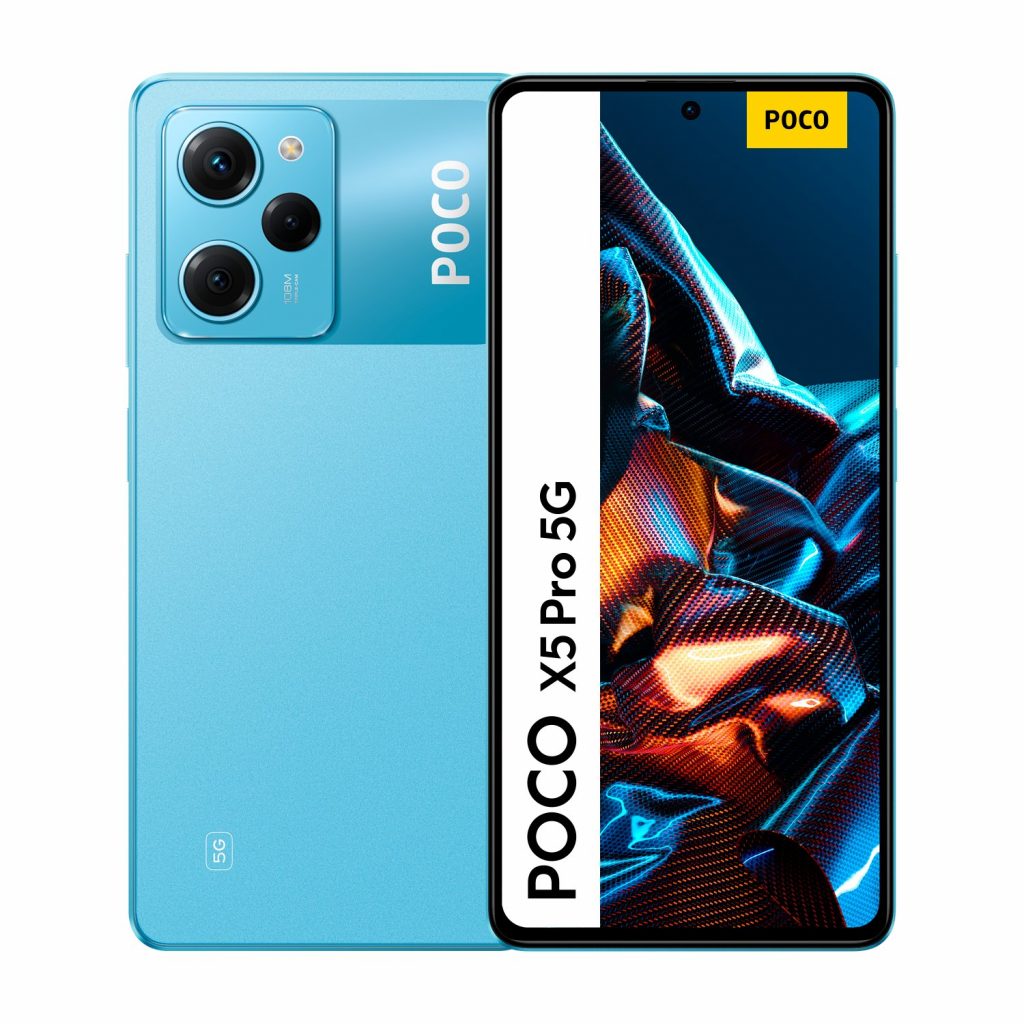
Oppo Find X5 Pro
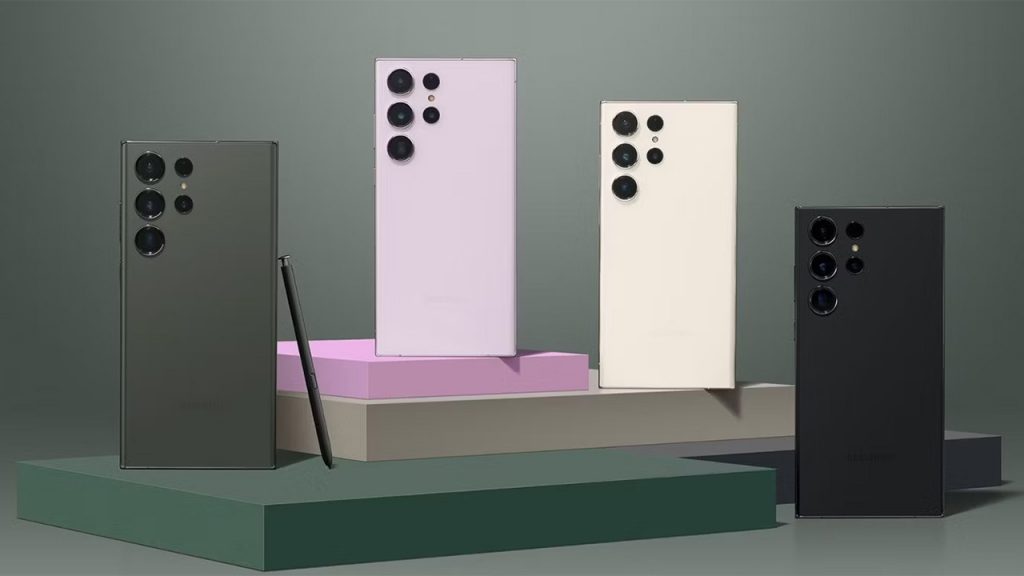
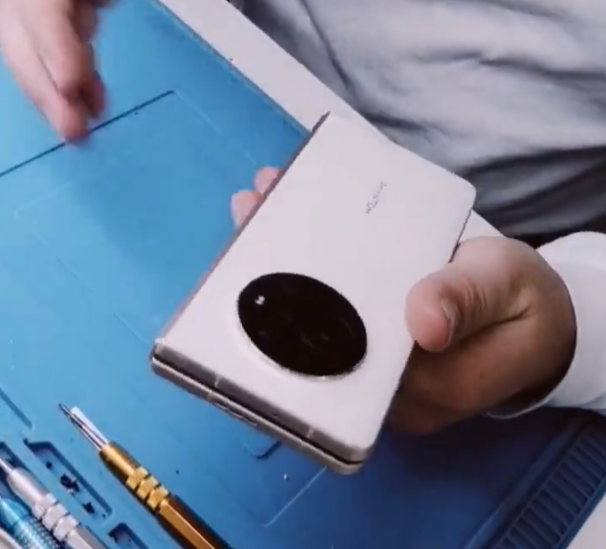
Now, a new report has come out, suggesting changes in the design of the Oppo Find X6 Pro. According to the report, the device will move away from its traditional single-piece camera island design, and will instead opt for a Xiaomi 12S Ultra-like camera island, which is essentially a large circular module in the top center holding all the cameras.
Xiaomi 12S Ultra
With this design, along with a 1-inch camera sensor, the camera island is said to protrude from the rest of the rear panel by up to 5 millimeters. Popular Weibo tipster DCS has tipped that the “engineering sample” with ceramic rear has a thickness of 9.4mm, even without the camera bump. The leather version on the other hand is 9.5mm thick. Going by this, it’s possible that the device could measure up to 10mm at its thickest point.
That being said, the device is still an engineering sample and not the final design, so it is possible that Oppo could make some design changes to trim down the thickness. Other than the design, there are already quite a few leaks about the device making the rounds on the internet like the display, chipset, and camera details.
According to reports, the Oppo Find X6 Pro is expected to feature a 6.7-inch E6 AMOLED panel with 2K resolution and 120Hz refresh rate. The front will feature a 36MP selfie cam, while the back is expected to come with a 50MP Sony IMX 989 1-inch sensor (7P lens and OIS) + 50MP Sony IMX890 sensor (ultrawide) + 50MP Sony IMX890 lens (2.7x optical zoom and OIS).
Under the hood, we can expect a Qualcomm Snapdragon 8 Gen 2 chipset, as well as a Dimesnity edition with the Dimensity 9200 chipset. The Find X6 Pro is expected to have up to 8GB or 12GB of RAM and 128GB, 256GB, or 512GB of internal storage.
It was reported yesterday that Oppo may hold its next INNO Day 2022 event in mid-December to showcase its innovations. The event is likely to see the arrival of the Find N2 Flip, the company’s first clamshell phone with a foldable screen. It is also expected to announce its second-generation foldable phone, the OPPO Find N2. Ahead of the expected launch, the OPPO Find N2 has been approved by the 3C authority of China (via. TechGoing).
Earlier this month, leaked screenshots of the OPPO Find N2 surfaced on Weibo. One of the images revealed that the model number of the Find N2 is PGU110. The same device has now received certification from China’s 3C authority.
The 3C listing of the PGU110 reveals that it may ship with a 66W fast charger. As can be seen in the screenshot, another device with the PGT110 has also been spotted with a 66W charger in 3C’s database. Unfortunately, there is no information available on the final marketing name of the PGT110.
Oppo Find N2 Specifications (Rumored)
Rumors surrounding the Oppo Find N2 have claimed that it will have a 7.1-inch foldable OLED on the inside and a 5.5-inch OLED screen on the outside. Both displays are likely to support a 120Hz refresh rate. It will run on the latest ColorOS 13-based Android 13. For security, it will have a side-facing fingerprint scanner.
The device will be powered by the Snapdragon 8 Plus Gen 1 and a 4,520mAh battery. It may offer up to 12 GB of RAM and 512 GB of built-in storage. It is also expected to support wireless charging.
A 50-megapixel (Sony IMX890, OIS) + 48-megapixel (ultra-wide) + 32-megapixel (Sony IMX709, telephoto) triple camera setup coupled with a MariSilicon ISP will be available on the backside of the Oppo Find N2. On the front, it may feature a 32-megapixel Sony IMX709 camera. It may also have a 32-megapixel camera on the foldable screen. The Find N2 will weigh under 240 grams and arrive in shades like black, white, and green.
Lenovo became one of the most important tablet manufacturers after releasing several high-end models. This year, the company came up with a new value for money tablet with very interesting specifications and an affordable price: the Lenovo Tab P11 Gen 2: it is a very good upgrade of the original Tab P11 and it adds a few nice specifications great for today’s users. It is time for us to compare it to one of the best tablets in terms of quality price ratio released this year: the Redmi Pad. Another device with great performance, well-balanced specifications, and an amazing price tag. If you want to discover all of the differences between these two Android tablets, go ahead with the comparison between the main specifications of the Redmi Pad and the Lenovo Tab P11 Gen 2.
Before the design, the most important aesthetic thing of a tablet is the dimension: the Lenovo Tab P11 Gen 2 is bigger and better for productivity thanks to its wider display, while the Redmi Pad is more compact and better to use everywhere, even on a train and other means of transport. If you are ok with big dimensions, we recommend the Lenovo tablet because it has a more beautiful design. As you have probably seen in the picture, it has a higher screen to body ratio, with narrower bezels around the display. Further, its camera module is smaller and less invasive. The Redmi Pad is not an ugly tablet, tough, and it is built with an aluminum frame improving the build quality and the resistance of the device. Further, it is not only more compact but also thinner and lighter than its rival.
Display
If you need the best viewing quality, then you should choose the Redmi Pad. It has an IPS LCD display able to show up to one billion colors with a diagonal of 10.61 inches, a Full HD Plus resolution of 1200 x 2000 pixels, a 90 Hz refresh rate, and a typical brightness of 400 nits. It is not an OLED panel, so it does not provide stunning colors and deep blacks like the high-end phones, but it is still a great display in terms of color reproduction, and it also offers a smoother experience thanks to the high refresh rate. The Lenovo Tab P11 Gen 2 has a wider 11.5-inch display and its bigger dimensions are very important for productivity. It even supports the stylus for handwriting and drawing, unlike its opponent. However, it is inferior in terms of image quality. It has a Full HD Plus resolution of 1200 x 2000 pixels, a standard 60 Hz refresh rate, and a typical brightness of 400 nits. These tablets are equipped with four stereo speakers and they provide a 3.5 mm audio jack.
Specs & Software
If we exclude the most affordable configurations and we consider the most expensive ones, these two tablets have exactly the same hardware department. They are fueled by the MediaTek Helio G99 mobile platform: a midrange chipset built with a 6 nm production process and sporting an octa-core architecture. The chipset is composed of two Cortex A76 cores running at a max frequency of 2.2 GHz, six Cortex A55 cores running at 2 GHz, and a Mali G57 MC2. Alongside the SoC, there are up to 6 GB of RAM and up to 128 GB of native storage, you can furtherly expand with a micro SD slot. There is an important difference in the software department: unlike the Redmi Pad, the Lenovo Tab P11 runs Android 12L, a special version of the green robot optimized for tablets. The Redmi runs Android 12 customized by MIUI 13 like Xiaomi phones released in 2022.
Camera
The Lenovo Tab P11 Gen 2 provides a better camera on the rear side, with a 13 MP resolution and an f/2.4 focal aperture. The sensor is paired with a LED flash and is able to record 1080p videos. The Redmi Pad has an inferior 8 MP rear camera and both tablets come with an 8 MP front camera.
Despite having smaller dimensions, the Redmi Pad is equipped with a bigger battery. Thanks to the bigger capacity and the presence of a smaller display, it lasts more on a single charge.
Price
The starting price of the Redmi Pad roughly translates into $250 or €250, while you need about €350 or $350 for the Lenovo Tab P11 Gen 2. Which one would you pick?
Xiaomi has added support for BMW cars to the Mi Wallet car key function. The new feature expands the functionality of the Xiaomi 12S Pro on the Android platform. Subsequently, the BMW Digital Key now includes Huawei, Xiaomi, Honor, Vivo, and OPPO brands. The digital key applies to more than 10 of BMW’s latest models. The models include the BMW 3 series, the BMW 5 series, and the pure electric BMW iX3.
Back in September 2022, the BMW Group stated that it is extending the scope of application of the digital key. The move will see the digital key function being compatible with more brands and also applicable to more BMW models. The digital key becomes operational when the user places the upper end of the smartphone close to the sensing area on the driver’s side door handle to unlock the vehicle with one touch. There is no need to connect to the internet after activation. The feature even works when the mobile phone has a low battery. You can thus unlock the door and start the vehicle even in the absence of a cellular or wireless network.
The Xiaomi Mi wallet car key function support for BMW cars is an impressive feature that does not require the internet to operate. The BMW Digital Key originally launched with iOS devices including iPhone 11 and the Apple Watch Series 5 and higher versions. It subsequently incorporated Android compatibility and uses the My BMW app.
OnePlus Buds Pro debuted last year with a premium design, ANC support (Active Noise Cancellation), and more. Now, the company is reportedly readying a new pair of premium wireless earbuds, dubbed the OnePlus Buds 2 Pro. Several leaks have already revealed the design and specifications of the upcoming TWS. And now it seems the company itself has teased the new hearables in its latest video. Here are the details.
A new teaser video posted on OnePlus’ social media handle shows a pair of earbuds in white color. The design of the earbuds matches with leaked renders of the OnePlus Buds Pro 2. They can be seen to have a dual-tone design, with the bottom half of the stem hued in silver. However, there’s a good possibility that the showcased TWS are the original OnePlus Buds Pro.
When the sky is the limit make the entire world your playground.
A recent leak revealed the new Buds 2 Pro will have dual audio drivers, one 11mm and the other 6mm. They could support the high-res LHDC 4.0 codec and spatial audio. There is a claimed active noise cancellation of 45 dB on the earbuds, which will be adaptive based on ambient noise levels. The earbuds come with three microphones for improved voice quality.
With ANC on, OnePlus Buds Pro 2 will reportedly last up to 6 hours, and an additional 22 hours with the case. If the ANC is off, the buds could offer up to 9 hours of battery life on a single charge. It will support wireless charging, and a ten-minute charge will apparently provide three hours of playtime.
The earbuds are expected to come with Google Fast Pair and Bluetooth 5.2. They will likely be IP55-rated for dust and water resistance and will be offered in white, black, and green colors.
The company has officially confirmed today that the Phantom X2 is launching on December 7.
Tecno unveiled the Phantom X last year in April with a Mediatek processor and a premium design. Today, the company has confirmed it will be launching the next-gen Phantom X2 series in December and also revealed the series will be powered by the MediaTek Dimensity 9000 SoC. The lineup is expected to include the Phantom X2 and X2 Pro. Let’s look at the details.
At a webinar held today in London, Tecno announced that the flagship Tecno Phantom X2 series will be launched in Dubai next month (via Fonarena). The company says the series will provide consumers with the best of “Phantom’s trailblazing innovation” alongside a premium smartphone user experience.
Tecno also confirmed that the upcoming smartphones will come with improved camera capabilities. In terms of upgraded imaging performance, the handsets may feature multi-exposure and complex HDR shooting modes. They may capture more light and shade in photos and videos, even in indoor or low-light conditions.
As mentioned, the upcoming series will have the MediaTek Dimensity 9000 at the helm. This is a huge upgrade compared to the previous generation’s Helio G95 SoC. The Dimensity 9000 features one fast Cortex-X2 core clocked up to 3 GHz, three A710 cores with up to 2.85 GHz, and four power-efficiency cores with up to 1.8 GHz. Based on the TSMC 4 nm process node, the processor is claimed to deliver better performance and significantly reduced power consumption.
To recall, the Phantom X comes with a 6.7-inch curved AMOLED display with Full HD+ resolution and a 90Hz refresh rate. It packs a 4,700mAh battery pack that supports 33W fast charging. The handset has a triple camera setup on the back consisting of a 50-megapixel primary sensor, an 8-megapixel ultra-wide-angle lens, and a 13-megapixel portrait unit. On the front, there’s a 48-megapixel selfie shooter paired with an 8-megapixel ultra-wide-angle camera.
A new line of TWS from Jabra has been introduced in India, giving a good selection of features like support for superior clear mic technology and active noise cancellation. The recently released wireless earbuds join the company’s other Evolve series products for working professionals, which also include the Evolve2 85 over-the-ear wireless headphones, Evolve2 75 wireless headphones, Evolve2 65 wireless headphones, and Evolve2 40 wireless headphones, among others.
In terms of the device’s features and specifications, it delivers Jabra MultiSensor Voice Technology, which belongs to the company. The technology combines four separate microphones, bone conduction sensors, and cutting-edge algorithms to filter out as much background noise as possible, enhancing the clarity of the conversations. The Evolve2 Buds also feature adjustable Active Noise Cancellation (ANC) technology for reducing distractions and filtering out any outside noise.
The Jabra Evolve2 Buds TWS earbuds support Bluetooth 5.2 and have a 20-meter operational range on the connectivity front. Up to eight Bluetooth devices can be paired with this set of wireless headphones, which can connect to two devices simultaneously. Additionally, it contains a USB-A/USB-C Bluetooth adaptor for communication and features automatic music pause, automatic power off, and automatic power on.
According to Jabra, the Evolve2 Buds also have a MyFit sealing test feature, SafeTone with PeakStop, and other features that guarantee greater hearing protection and the best seal for a customised ANC experience. The Evolve2 Buds are additionally approved for popular virtual meeting platforms like Microsoft Teams and Zoom. In terms of power, the Jabra Evolve2 Buds TWS earbuds include a lithium-ion rechargeable battery that can be fully charged in 120 minutes. According to Jabra, consumers will have up to an hour of run time after just five minutes of charging. It offers 292 days of standby time.
Xiaomi Wireless Switch Bluetooth Version is now available in China. The device’s shell has passed the 72-hour UV test. Its bottom has a non-slip silicone pad and non-marking adhesive stickers are also featured. The Mi wireless switch has a battery setup that can be used for up to two years while the life test of the device is above 50,000 times.
The Xiaomi wireless switch Bluetooth version is compatible with devices that support the Bluetooth Mesh gateway function. The switch features single and double buttons in the standard mode and three click options are supported. Single-click and double-click actions are supported, together with the long press feature. It can be used to control three smart devices. It has a single-click fast mode with a 350ms response time and it can be interfaced with a smart gateway.
You can use the Mi wireless switch Bluetooth version to provide intelligent switching of the whole house. You can use one key to enter the home mode, while a double click takes you to the viewing mode, and more.
The smart wireless switch can also link with the XiaoAi via the MIJIA app enabling you to change the doorbell in seconds and make remote calls. It also supports linkage to smart devices already connected to the MIJIA app.
The Xiaomi Wireless Switch Bluetooth Version is sold in China for 39 yuan (~$5.50). It can be purchased via online retail platforms in the country including Jingdong.
Honor is gearing up to launch the new Honor 80 series in China. The lineup will likely include Honor 80 Pro, the Honor 80 SE, and the standard Honor 80. Alongside the affordable flagships, the company will also be launching the new Honor Magic Vs foldable.
The launch event of the upcoming Honor 80 series as well as the Magic Vs foldable is scheduled to take place in China on 23 November. The company will live-stream the event on popular Chinese video streaming and social media platforms like Weibo. Readers will be able to watch the event live on Honor’s official Weibo handle by clicking here.
As mentioned, the Honor 80 series will include three handsets. The higher-end Honor 80 Pro is said to debut as the company’s first Qualcomm Snapdragon 8+ Gen 1-equipped smartphone. It is also expected to support 100W fast charging and pack a 5000 mAh battery. One of the device’s triple cameras may feature the industry’s first 160MP primary sensor.
The standard Honor 80 could be equipped with a Snapdragon 782G SoC and may support only 66W fast charging. It may feature a main camera equipped with a Sony sensor instead of the 160MP Samsung sensor found on the pro phone.
Affordable Honor 80 SE will likely have the Dimensity 1080 Soc at the helm. It will flaunt a 120Hz AMOLED display. The handset may arrive with up to 12GB of RAM and 256GB of internal storage, along with support for 66W wired fast charging.
Moving to the Honor Magic Vs foldable, it is expected to have almost the same design as its predecessor. It may get the same 6.45-inch outer display with a 21:9 aspect ratio and a 120Hz refresh rate. On the inside, it could sport a 7.9-inch OLED panel with 2272 x 1984 pixels of resolution, 381 PPI pixel density, and a 90Hz or 120Hz refresh rate. Under the hood, it will likely feature the Snapdragon 8+ Gen 1 SoC. Check out our Honor Magic Vs roundup for more details.
The PLAYFIT SLIM2C smartwatch with a 1.3-inch circular screen and Bluetooth calling has been unveiled in India. The new smart wearable comes with health and fitness tracking features including heart rate, blood pressure, blood oxygen, and sleep monitoring. It is a made-in-India smartwatch that can be used by both males and females.
The PLAY smartwatch is fashionable and gorgeous, inspired by fashion designer watches but also combines the best of technology. Its 1.3-inch circular IPS display offers a maximum brightness of 300 nits with 2.5D glass for protection. The digital display receives SNS notifications, reminders, weather updates, and more. The smartwatch features a calorie monitor that allows the user to track his burning of fat during workouts.
The PLAYFIT SLIM2C has lots of cloud-based watch faces which can be accessed using the companion app. It has up to five days of battery life on a single charge. The PLAYFIT mobile app for the smartwatch is built and hosted in India. This is in line with national legislation on data privacy in India. The legislation also encourages the development of that aspect of the Indian tech industry. Using the PLAYFIT app, the user can track their fitness activity, monitor sleep, disable or display social media notifications and configure the wristwatch for more monitoring options.
The PLAYFIT SLIM2C has a zinc-alloy frame, PC back cover, and strap. The watch is equipped with powerful EBEL audio drivers for music playback and its buckle is made of stainless steel. Sensors available in the PLAYFIT SLIM2C include the G-Sensor, Accelerometer, and HRM sensor. It has dust and water protection via its IP67 rating while the battery can last for 15 days on standby mode. The PLAYFIT SLIM2C is priced in India for Rs. 3,999 (~$49) and could be purchased directly via PLAY’s official website. It is also available on leading retail platforms in India like Amazon and Flipkart.
Vivo’s sub-brand iQOO has been teasing its Malaysia launch through its official social media handles for a while now. Today, the company confirmed it will debut in the country on December 2 with the long-awaited iQOO 11 5G.
A media invite sent to GSMArena reveals the iQOO 11 5G will be launched in Malaysia on December 2 at the iQOO 11 5G Experience Day event. The event will begin at 6 PM local time, where the handset will be introduced as Malaysia’s first Snapdragon 8 Gen 2-powered smartphone.
The company did not divulge many details about the upcoming iQOO 11 5G but claims it will be the “king of gaming smartphones.” We’ll have to wait for the reviewers to confirm whether this claim holds water. iQOO may add some new gaming features to the smartphone.
According to the previous reports, the iQOO 11 will come with a 6.78-inch E6 AMOLED display. It will have a flat panel with a centrally positioned punch hole cutout. The display may offer an FHD+ resolution, up to 144hz refresh rate, and an in-screen fingerprint scanner.
As mentioned, it will be powered by the Snapdragon 8 Gen 2. The processor will likely be paired with LPDDR5 RAM and UFS 3.1 storage. The iQOO 11 may arrive with a 16-megapixel snapper on the front. The back of the handset may flaunt a triple camera setup, comprising a 50-megapixel main camera, a 13-megapixel ultra-wide unit, and a 12-megapixel telephoto camera.
The handset is also said to be equipped with the new Vivo V2 ISP. On the software front, the device may run OriginOS 3-based Android 13. It could pack a 5,000mAh battery that supports 120W fast charging.
Recently, Xiaomi revealed a brand-new bundle deal for the Redmi Pad tablet in India. With the new bundle offer, one can have the Redmi SonicBass Wireless Earphones without paying anything. The Redmi has announced the following offer on its official Twitter account. Starting today, November 22, 2022, and running through November 26, 2022, a special bundle offer will be available for purchase. The bundle offer can be bought directly from Mi.com, the company’s official online store.
There are two Redmi Pad variations available with the combo offer. The device’s 4GB+128GB and 6GB+128GB models are both eligible for the bundle deal. Only the Gray option will be offered for sale in any variant. The 4GB variant costs INR 17,999 (~$220) at the present, while the 6GB variant costs INR 19,999 (~$200). Please take note that users must purchase the Pad from a special bundle offer page and not from the device’s regular shopping page in order to receive the free Redmi SonicBass Wireless Earphones.
As for the specifications, the Redmi Pad flaunts a 10.61-inches IPS LCD panel with up to 90Hz high refresh rate support. The display further has a 2000*1200 pixel resolution, up to 1 Billion colour support and 400 nits of peak brightness. The device is powered by the MediaTek Helio G99 chipset coupled with up to 6GB of RAM and 128GB of onboard storage. The gadget packs a huge 8000mAh battery with the support for 22.5W fast wired charging.
As for the optics, we get a single 8-megapixels primary rear camera and an 8-megapixels selfie snapper for video calls and meets. The front camera has a large FOV of 105-degree and it also comes with a face-tracking feature. It further comes with quad speakers having support for Dolby Atmos. The device will boot up on MIUI 13 based on Android 12 right out of the box.
Xiaomi has filed a new patent for the pop-up camera module in smartphones. The concept of pop-up cameras isn’t any new thing in the smartphone market, however, the one patented recently by Xiaomi has an altogether different kind of working mechanism. The new mechanism allows the full-screen display of the device to be utilized properly without any harm. Let’s further dive deep into the information to check what really Xiaomi is planning for!
Xiaomi Mobile Software Co., Ltd. recently obtained authorization for a new patent, which was then approved and published on the China Patent Publication Announcement of the State Intellectual Property Office with the permitted announcement number CN217883600U, according to a recent report shared by ITHome. It was listed as “a camera mobile mechanism and electrical equipment” in the patent.
According to the description, the current disclosure relates to electronic devices and a moving mechanism for cameras. A transmission mechanism is a part of the camera-moving mechanism. A connected power input end, a planar linkage mechanism, and a power output end make up the transmission mechanism. The driving part is used to drive the power output end to move between the first position and the second position through the power input end and the planar linkage mechanism, driving the camera to move. The driving part is used to drive the power output end to move between the first position and the second position.
The complete screen of the electronic device can be realised while still allowing for normal use of the camera without endangering the integrity of the display panel. The mechanical construction used to move the camera is straightforward and dependable, and it also has an easy-to-use interface and cheap operating costs.
Since the transmission mechanism uses a planar link mechanism to transmit power, the overall movement of the transmission mechanism is located in one plane, according to the patent specification, which reduces the thickness of the electronic device using the camera moving mechanism and helps to realise light and thin electronic equipment.
Kingroon is giving a massive discount on its latest 3D printer the KP3S Pro. The device which generally retails for $229 is now available for as low as $189. Please note the device is already available for a $20 discount on the official website. Moreover by using the coupon code: BF3P you can avail of an additional $20 discount on the device.
The above code is applicable to orders made from US and EU only. Russian customers can use the code: KINGROONPRO while customers from Korea can use the code: KINGROONKR. Please note that this super deal ends on December 31, 2022.
Kingroon KP3S Pro is a cantilever 3D printer. The cantilever design makes it easy to store and carry the printer and is simple to use and operate. The device comes with linear guide rails on both the X and Z axis which increase the stability of the printer head and enhances your printing quality.
The KP3S Pro 3D printer uses a Titan direct drive extruder with a 3:1 gear ratio that gives you a better printing performance and superior finish. It also enables your device to use various 3D printing materials like PLA, flexible materials like TPU and PETG, and abrasive and strong filaments like ABS and nylon. Also fitted with TMC2225 stepper drivers, the device operates silently compared to other printers in its segment. Moreover, the stable print bed with extensive bottom support, helps you to get high-quality output every single time.
Even though the printer comes in a compact form factor, it has an increased print volume of 200*200*200mm, which is larger than its predecessors. It features an auto-resume function that resumes printing from the last point before an unexpected power failure or filament shortage happened.
The device comes 95% pre-assembled and takes less than 15 minutes to install. Because of its simple and easy-to-use design, Kingroon KP3S Pro can not only be used by expert techies and engineers but also by anyone who wishes to enhance and display their artistic and creative capabilities.
At the Vivo X90 series launch event, the company announced three more products. Two of them are Vivo TWS 3 and Vivo TWS 3 Pro. The third one is the new color variant of the Vivo Pad, which was teased a few days back.
You can learn about the truly wireless earbuds duo here. Let’s check out the tablet in this article.
The new color version of the Vivo Pad is officially called ‘Xueqing’. The word translates to lilac in English.
Vivo says that this color is inspired by the light lavender formed by the purple sunset and the snow-capped mountains. We are not sure why the company is using this description as lilac, purple, and lavender are different shades of color though they look like same.
The Vivo Pad in new color comes in the same 8GB + 128GB and 8GB + 256GB memory configurations as the other colors. It is even priced the same.
The 128GB model costs ¥2,499, while the 256GB variant is priced at ¥2,999. But for a limited, they will be sold at ¥2,299 and ¥2,899, respectively.
The Vivo Pad Xueqing (lilac) version is available for pre-order starting today (November 22) in China. It will hit the shelves on November 30.
For the unaware, the highlights of the Vivo Pad include an 11-inch 120Hz display (LCD), stylus support, Qualcomm Snapdragon 870 chipset, quad speakers, aluminum body, 13MP rear camera, 8MP front-facing camera, USB 3.1 (Type-C), magnetic connector for keyboard accessory, 8,040mAh battery, and 44W wired fast charging.
Tech company Garmin has launched the Tacx NEO Bike Plus smart trainer in the US. The bike is a workout device that includes features like dynamic inertia to simulate a realistic ride. Furthermore, the Tacx NEO Bike Plus can vibrate to simulate riding on a gravel track or over cobblestones. You can choose from predefined courses, create a training plan and goals, and track your workout statistics in an accompanying app or, if you have one, with a Garmin Bike Computer.
The exercise bike can produce an inclination of up to 25% and is stable at up to 2,200 W. With built-in fans, you can stay cool. These fans change themselves dependent on your heart rate or output power. The intelligent bike may be adjusted in a variety of ways. For instance, you can select your preferred pedal height from one of five crank arm lengths, which range from 165 to 175 mm (6.5 to 6.89 in).
The bike has “supersilent operation,” according to Garmin, and a belt drive helps reduce the machine’s output noise. The Tacx NEO Bike Plus supports a number of apps, including TrainerRoad and Zwift. The item weighs approximately 50 kg and has dimensions of 54.7 x 29.5 x 46.1 in (1,390 x 750 x 1,170 mm).
Currently, the Garmin Tacx NEO Bike Plus costs $3,999.99 in the US.
Vivounveiled the X90 series smartphones in China today. The lineup consists a regular, Pro, and Pro+ models. Alongside the smartphones, Vivo has also announced the TWS 3 Pro and TWS 3 earphones. They arrive as the successors to the TWS 2 series that debuted last year. The latest offerings also pack significant upgrades over their predecessors. Read on to know what the audio device offers out of the box.
The Vivo TWS 3 and TWS 3 Pro look identical to each other. They feature an in-ear design with a small stem and angled earbuds. Users can control various functions by tapping on the stem of the earbuds. The audio device also supports voice assistant. Each earbud is lightweight measuring just 5 grams and the earplugs are said to be made of medical-grade material.
On the audio front, the Vivo TWS 3 and TWS 3 Pro are equipped with a 12.2mm dynamic driver and 3-layer nano-composite diaphragm. Both earphones come with Qualcomm’s aptX Lossless transmission for achieving wireless lossless sound quality and easily listening to CD-level original sound. The audio device also features Vivo’s self-developed ultra-wideband unit for treble and bass. Both variants feature 360-degree surround spatial sound for an immersive experience. The TWS 3 duo pack intelligent noise reduction up to 49dB and double transparency mode. The earphones come with a personalised hearing experience that monitors the wearing status in real time and improves the user’s sense of hearing. Both the Vivo TWS 3 and TWS 3 Pro are equipped with three microphones making them the first in the TWS segment to support full-scene video HD video recording and that too in noisy environments.
Apart from the aforementioned specifications, the Vivo TWS 3 Pro also packs additional features. It is the world’s first Hi-Fi TWS earphone with an independent audio chip. Hi-Fi refers to high fidelity and it reproduces the sound with little distortion giving results similar to the original audio source. The auxiliary listening mode is said to help hearing-impaired people. The TWS earphone is also capable of detecting the user’s body temperature.
The Vivo TWS 3 series pack common features like 55ms low latency mode, multi-device dual connection, fast pair, smart wear detection, call and information broadcast, real-time translation, and find headphones. The regular variant is claimed to offer 10 hours of battery life with noise reduction off and 40 hours with a charging case. On the other hand, the Pro model is capable of delivering 6.8 hours of usage and 30 hours of total playback.
The Vivo TWS 3 is priced at RMB 499 (~$70) whereas the Pro model costs RMB 999 (~$139). Both will go on sale from November 30th and December 6th respectively.
Vivo X90 series has launched today in China. The lineup comprises a regular, Pro, and Pro+ models. The smartphones arrive as the successor to the Vivo X80 series that debuted last year. Alongside the smartphones, Vivo has also announced a hi-fi wireless headset and a new Vivo Pad colour option. Read on to know what the Vivo X90 Pro and Pro+ offer out of the box.
On the front, the Vivo X90 Pro and Pro+ come with a 6.78-inch OLED display with curved edges and a centre-aligned punch-hole cutout. The display on the regular variant bears FHD+ resolution whereas the Pro+ model has 2K resolution. Both devices feature a 120Hz refresh rate, 1,300 nits peak brightness, and HDR10+ support. The Pro variants are equipped with an in-screen fingerprint scanner. Design-wise, both smartphones sport a circular protruding camera module and a horizontal metal bridge below it with text revealing ‘Xtreme Imagination’ and the camera co-engineered by Vivo and Zeiss. The X90 Pro duo are also IP68-certified water-resistant.
In the imaging department, the Vivo X90 Pro and Pro+ come with a 32MP front-facing selfie snapper. The setup on the former comprises an OIS-assisted 50MP Sony IMX866 main camera, a 50MP Sony IMX663 ultra-wide snapper with a 108-degree FOV, and a 12MP Sony IMX663 portrait lens. On the other hand, the X90 Pro+ has a 1-inch Sony IMX989 50MP primary sensor with the industry’s only f/1.75 aperture. It is coupled with a 48MP Sony IMX598 ultra-wide lens, a 50MP Sony IMX758 portrait unit with OIS support, and a 64MP periscope zoom lens with 90mm focal length 10x optical zoom. Both the Pro variants pack features like ZEISS T* optical lens, dToF laser autofocus, and Vivo V2 ISP.
Under the hood, the Vivo X90 Pro houses a Dimensity 9200 processor whereas the Pro+ model is equipped with a Snapdragon 8 Gen 2. Both devices pack up to 12GB LPDDR5 RAM and up to 512GB UFS 4.0 storage. There is a VC liquid cooling system for heat dissipation. The X90 Pro is backed by a 4,870mAh battery with support for 120W wired and 50W wireless charging. The Pro+ model on the other hand is powered by a 4,700mAh cell with 80W and 50W wired and wireless charging respectively. Software-wise, the X90 Pro duo ship with OriginOS 3 based on Android 13 out of the box.
As for pricing, the X90 Pro comes in three options: 8GB RAM + 256GB storage for RMB 4,999 (~$700), 12B RAM + 256GB storage for RMB 5,499 (~$770), and 12GB RAM + 512GB storage for RMB 5,999 (~$840). The Vivo X90 Pro+ carries a price tag of RMB 6,499 (~$910) for the 12GB RAM + 256GB storage configuration whereas the 12GB RAM + 512GB storage is priced at RMB 6,999 (~$980). The X90 Pro and X90 Pro+ can be bought in colours like Original Black and China Red. The smartphones will go on sale in China from December 6th.
LG has announced the first 1440p OLED monitor with a 240Hz refresh rate, the UltraGear 27GR95QE-B. The impressive specs of the UltraGear OLED monitor mean that it will be a great product for gaming enthusiasts. It is an affordable, medium-sized monitor with a high refresh rate and a response time of 0.3ms.
The announcement of the LG UltraGear was done quietly by the South Korean tech powerhouse and its details were displayed on its website. Lots more details could be provided to illuminate the remarkable OLED monitor. Its ultra-high refresh rate of 240Hz is a catchy feature for the monitor. We expect the full specs sheet of the LG UltraGear 27GR95QE-B to be very impressive.
As per the available specs, the LG UltraGear has a 27-inch display and 98.5% coverage of the DCI-P3 color gamut. The OLED panel boasts a contrast ratio of 1.5 million: 1. The monitor is certified for AMD FreeSync and Nvidia G-Sync but lacks hardware acceleration for both. The monitor has an adjustable stand that can get up to 11cm. It also features 20 degrees swivel both horizontally and vertically. The monitor also has RGB on the outside with several connectivity options available. There are two HDMI ports and one DisplayPort (versions not stated for both HDMI and DisplayPort). It also has two USB 3.0 ports (up and downstream) and a SPDIF audio jack.
Before now, most OLED monitors feature 120Hz refresh rates, and a few offered up to 175Hz like the LG 34-inch ultrawide OLEDS with 3440 x 1440 p resolution. Corsair could release a 240Hz refresh rate monitor soon but LG has nicked the top prize with the UltraGear OLED. It is a small and nimble monitor that offers sufficient capacity to display competitive FPS games seamlessly.
The gaming monitor will retail for $999 which is pretty affordable when compared to most OLED monitors in the market. There is no definitive launch date for the new monitor yet, but we could get more details during CES 2023 in January. The LG UltraGear 27GR95QE-B OLED monitor could enter the market within Q1 2023.
iQOO is gearing up to launch a new smartphone with some top notch specs. This device will apparently be the Neo 7 SE model, which was recently spotted on a benchmarking platform. So let’s have a look.
The Chinese smartphone maker’s upcoming Neo 7 SE was spotted on GeekBench, a popular benchmarking platform. Here, it was spotted with the model number V2238A, which hints at its launch being imminent. Looking at the benchmark listing, we can also see that the smartphone is equipped with the MediaTek Dimensity 8200 SoC, which features a peak clock speed of 3.1GHz that also have a three performance cores that are clocked at 3.0GHz and four efficiency cores that run at 2.0GHz.
The listing on GeekBench also revealed some other interesting details regarding this model as well. This includes its 12GB of RAM, but we can also expect an entry level configuration with 8GB of RAM. The memory would likely be paired with 128GB or 256GB of internal storage. The iQOO Neo 7 SE model will run on Origin OS out of the box (or Funtouch OS), which will likely be based on the Android 13 OS.
Looking at the listing, we can see that the device scored 991 points in the single core test and 3733 points in the multi core test. Based on our previous reports, the Neo7 SE is expected to sport a tall 6.78 inch AMOLED display that will have a Full HD+ resolution and 120Hz refresh rate. Under the hood, a large 5,000mAh battery pack is rumored to power the device, which will support 120W fast charging as well.
We use cookies on our website to give you the most relevant experience by remembering your preferences and repeat visits. By clicking “Accept”, you consent to the use of ALL the cookies.
This website uses cookies to improve your experience while you navigate through the website. Out of these, the cookies that are categorized as necessary are stored on your browser as they are essential for the working of basic functionalities of the website. We also use third-party cookies that help us analyze and understand how you use this website. These cookies will be stored in your browser only with your consent. You also have the option to opt-out of these cookies. But opting out of some of these cookies may affect your browsing experience.
Necessary cookies are absolutely essential for the website to function properly. This category only includes cookies that ensures basic functionalities and security features of the website. These cookies do not store any personal information.
Any cookies that may not be particularly necessary for the website to function and is used specifically to collect user personal data via analytics, ads, other embedded contents are termed as non-necessary cookies. It is mandatory to procure user consent prior to running these cookies on your website.