Advertisement

Football superstar Ronaldo Spotted Using a Possible Huawei Mate RS Porsche Design From 2018

Former World Footballer of the Year and Portuguese superstar Cristiano Ronaldo may be currently using a Huawei mobile phone. A Weibo post by Sina Digital shows a photo of Ronaldo with a possible Huawei smartphone.

The speculations surrounding the post point to the Huawei Mate RS Porsche Design Edition. It is however speculated that the Weibo photo was from 2021 and some netizens believed it could be a non-Huawei phone in the picture. It is also speculated that Ronaldo uses up to eight mobile phones and the Huawei model was specifically for navigation purposes. The other phones, according to unverified speculations, are all Apple products.

The phone was sighted on Ronaldo’s Porsche and the superstar has never hidden his love for Porsche cars. The Mate RS Porsche Design Edition was released in 2018 to commemorate the 70th anniversary of the Porsche sports car. It coincided with the release of the Porsche 911nGT 3 RS. Huawei had partnered with Porsche to release the anniversary Huawei Mate RS which was customized for the car. It is possible that Porsche offered the customized Huawei Mate RS as part of the package for any purchase of the car.

The smartphone has a 40MP Leica three-camera setup and uses in-screen fingerprint unlocking, in addition to its rear fingerprint scanner. The smartphone was released in black and red color variants and also features face unlocking. The Huawei Mate RS Porsche Design Edition has a 6GB/ 512GB RAM/ storage configuration and has a 12,999 yuan (~$1,803) price tag. Ronaldo became the only player to have scored in 5 consecutive World Cups with his goal against Ghana during the Mundial.

Related

(via)

Moto X40 to Launch in December with Snapdragon 8 Gen 2 Soc, IP68 Water Resistance

With the Snapdragon 8 Gen 2 officially announced, smartphone brands are scrambling to launch their first flagships with the new and improved chip. The recently launched Vivo X90 Pro+ is the first smartphone to be equipped with the latest processor. Xiaomi and iQOO will also be joining the party soon with their upcoming flagship devices. Motorola doesn’t want to be left behind either; the company has confirmed it will be launching the Snapdragon 8 Gen 2-equipped Moto X40 in December.

Chen Jin, General Manager of Lenovo’s Mobile Division, revealed through a Weibo post that the upcoming Motorola Moto X40 will have IP68 dust and water resistance (via ITHome). Further, he confirmed the handset will be released in China in December. The executive did not share the exact launch date. However, we can expect the smartphone to debut in the first half of the month.

Moto-X40-TENAA

Previously, Jin revealed the Moto X40 will be powered by the Snapdragon 8 Gen 2 and also shared its AnTuTu benchmark scores. The scores reveal the SD 8 Gen 2 will offer significantly better performance than the MediaTek Dimensity 9200. In the test, the former scored 1312901, while the latter managed to get 1266101.

Reports suggest the handset will come with a 6.67-inch OLED panel with curved edges on all four sides. It will support an FHD+ resolution, 10-bit colors, and feature an under-display fingerprint scanner. The device is expected to arrive with up to 18 GB of LPDDR5x RAM and up to 512 GB of internal storage. It will likely run on the MY UI 5.0-based Android 13 OS.

Moto X40 could pack a 5,000mAh battery with 68W fast charging. For photography, it may have a 50-megapixel main camera, a 50-megapixel ultra-wide unit, and a 12-megapixel telephoto sensor on the back. The handset is expected to feature a 60-megapixel selfie camera.

RELATED:

Unihertz Jelly 2E Smartphone Launched in China for 1,099 Yuan (~$152)

The sight of a smartphone that is possibly smaller than a palm is not common. The array of tech features in a smartphone generally requires a much bigger form factor. However, The Unihertz Jelly 2E is changing the narrative. The new smartphone is smaller than the palm and comes with decent features for a smartphone. The Jelly 2E has officially gone on sale in China.

The Unihertz Jelly 2E National Bank version is an extremely rare and super-compact smartphone. It appeals to users who are more comfortable using small-sized mobile phones with the needed functions also present. The smartphone has a 3-inch 354 x 480p display and is powered by the MediaTek Helio A22 processor. It has a RAM/ storage configuration of 4GB/ 64GB and a 2000mAh battery. The Jelly 2E is compatible with global 4G LTE network connectivity and has a fingerprint scanner. It runs on Android 12 out of the box.

Unihertz Jelly 2E

The super-compact smartphone has dual card slots and supports storage expansion via microSD. It also supports infrared functionality and has a 3.5mm headphone jack. There is an obvious departure between the Jelly 2E and its predecessor, the Jelly 2. The newer model comes with a less-powerful processor than its predecessor’s MediaTek Helio P60 (MT6771). The Jelly 2 has a larger memory, and supports NFC, and OTG. It also allows fingerprint-based payment operations.

Unihertz Jelly 2E

The Unihertz Jelly 2E National Bank version is available from the e-commerce platform Jingdong with a price of 1,099 yuan (~$152). The Jelly 2E is available in limited quantities but it is unclear how many units are available for sale.

RELATED:

Samsung Galaxy Watch5 & Watch5 Pro Latest Update Features a new Ball Watch Face

Samsung has rolled out the latest update for the Galaxy Watch5 and Galaxy Watch5 Pro smartwatches. The new update comes with a Ball watch face to celebrate the ongoing FIFA World Cup in Qatar.

The latest software update for the Watch5 and Watch5 Pro is up to 500MB with its firmware version RgxxXXU1AVK7. It comes with the November 2022 security patch, with stability codes to improve the notification and behavior of both smartwatches. It is not clear what Samsung exactly means about the stability improvements. The update can be downloaded via the Galaxy Wearable app when you choose the Watch settings menu. The update is currently not available for the LTE version of the Galaxy Watch5 Pro. The update for the 4G version of the Galaxy Watch5 Pro is expected to follow soon.

After installation, the new Ball watch face can be located on the Galaxy Wearable app and it features the flags of the 32 participating teams in the World Cup. The Ball watch face takes the shape of a ball with an analog clock on it. The ball can take any of the colors of the participating countries in the 2022 World Cup. Samsung is also introducing a new dial with a ball for the Watch5 Pro via the update. The FIFA World Cup is arguably the largest sports event after the Olympics. It is a gathering of the best football teams in all the continents of the world. This year’s FIFA World Cup is currently held in Qatar till December, unlike previous editions that are held in the summer.

Related:

*Please Note: When you buy something using the links in our articles, we may earn a small commission at no cost to you.

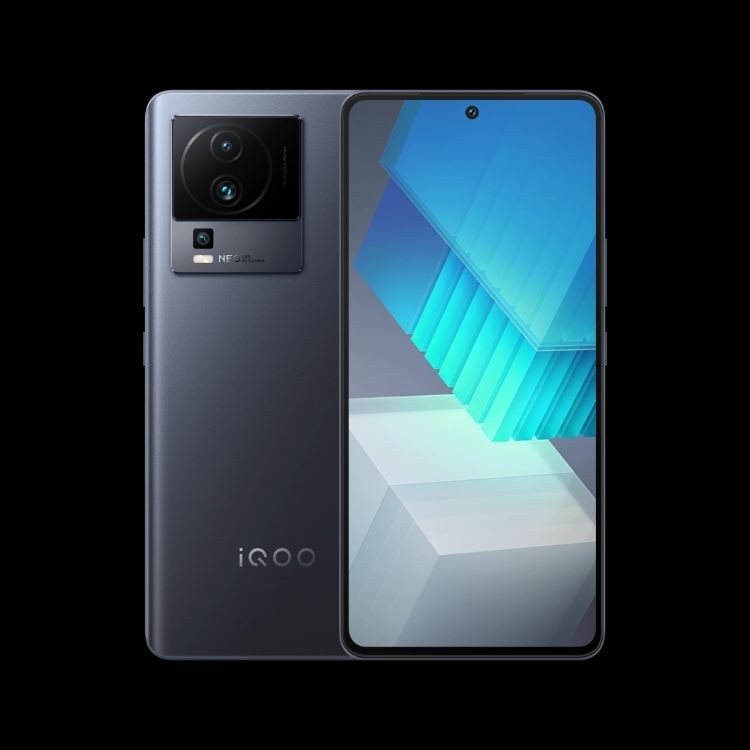
iQOO 11 and iQOO Neo7 SE Now up for Pre-order in China

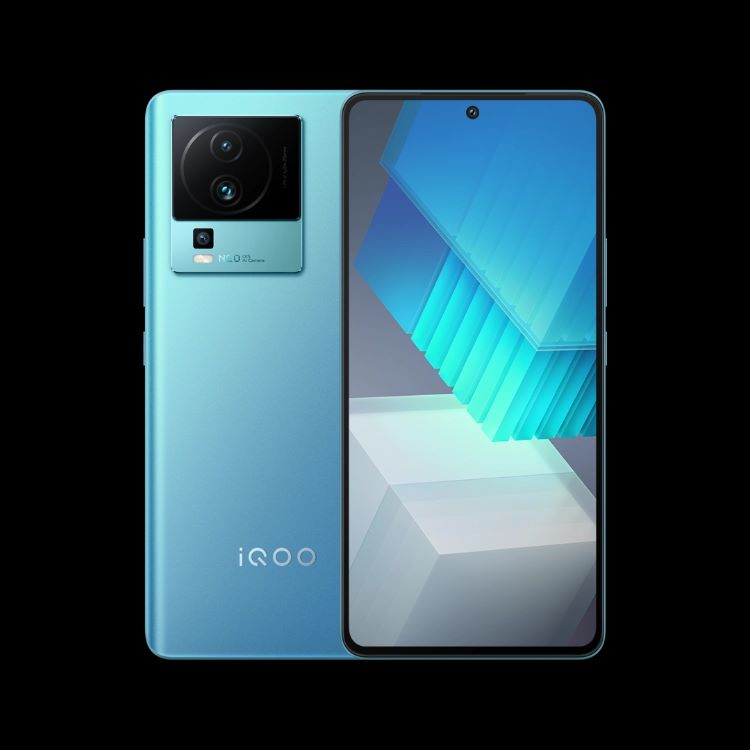
iQOO has confirmed it will launch the iQOO 11 alongside the iQOO Neo 7 SE on December 2 in China. The iQOO 11 will debut with the latest Qualcomm Snapdragon 8 Gen 2 Soc and the mid-range Neo 7 SE will be the first to be equipped with the MediaTek Dimensity 8200 chipset. Ahead of the launch, these two smartphones are now available for pre-order in China. Here are the details.

iQOO 11 and iQOO Neo 7 SE can now be pre-ordered in China from Jingdong. The sale of the smartphone will begin after the launch (after December 2). The pricing details of the two models are still under wraps.

iQOO 11

iQOO has confirmed the iQOO 11 will come with the newly announced Qualcomm Snapdragon 8 Gen 2 processor, paired with LPDDR5X RAM and UFS 4.0 internal storage. In addition, the flagship is rumored to feature a 6.78-inch AMOLED display with a 3200 x 1440 pixel resolution, a 144Hz refresh rate, a 300Hz touch sampling rate, and an independent display chip.

For photography, it could have a 50-megapixel primary sensor, a 13-megapixel ultra-wide lens, and an 8-megapixel macro unit. On the front, the device could have a 16-megapixel selfie shooter. iQOO 11 may pack a 4,700mAh battery with support for 200W fast charging.

iQOO neo 7 se

Moving to the iQOO Neo 7 SE, it is confirmed to feature the MediaTek Dimensity 8200 chipset. The SoC is said to be a significant upgrade over the Dimensity 8100. Further, the handset is rumored to come with a 6.78-inch AMOLED display with FHD+ resolution and a 120Hz refresh rate. The smartphone will also likely have a 5,000 mAh battery with 120W fast charging.

RELATED:

(Source 1, 2)

Xiaomi Kicks Off MIUI 14 Early Access Program, Here’s What You Need to Know

Xiaomi has started teasing its latest custom Android skin—MIUI 14. As expected, the Android-13-based software will debut alongside the Xiaomi 13 series on December 1 at 7 PM Beijing time. Ahead of the launch, the Chinese OEM commenced the MIUI 14 early access program in China. It will allow interested users to try their hands on the latest software before it goes public. Here are the details.

MIUI-14-early-access

Xiaomi recently announced the MIUI 14 early access program in China (via ITHome). The program will begin today (November 28) and end at 23:59 on December 28, 2022. During this time, Xiaomi community users will be able to sign up and try out the new software. However, users can only register one Xiaomi device, be it a tablet or smartphone. Also, after successful registration, the device cannot be changed.

The early access build will likely be rolled out to different devices in a phased manner, and it may take some time to reach every registered user. It is important to note that the program is currently limited to users residing in Mainland China. It may extend to other regions soon.

If we talk about the software itself, MIUI 14 is claimed to be lightweight. A Xiaomi executive said the company wants to make MIUI 14 the most streamlined and lightweight flagship mobile operating system. We can expect the software to get a visual overhaul and introduce a new design language.

It will be interesting to see how light the new software is. We are bound to know it all on December 1 at the Xiaomi 13 series launch event. Stick around for the updates.

RELATED:

Here’s How The Apple Watch Ultra Sapphire Crystal Performs When Compared With Others

With the release of the Apple Watch Ultra, the company expanded into the rugged smartwatch market. The Sapphire Crystal, one of the toughest minerals ever discovered, is used in the manufacturing of the Apple Watch Ultra, making it nearly impossible to break or perhaps even scratch. Internet people generally support Apple’s approach, yet many also disapprove of it. Whatever the case, JerryRigEverything recently compared the Apple Watch Ultra against other smartwatches that feature the same Sapphire build cover.

Many various items, including smartphones, tablets, and even smartwatches, have been subjected to durability tests by JerryRigEverything. The Apple Watch Ultra is being contrasted with other high-end smartwatches in a new video that the creator has just posted. In addition, he evaluated it against the Samsung Galaxy Watch 5 and the Garmin Fenix 7. Additionally, Zack, the channel’s owner, stated that the metal’s hardness level is quite similar to that of diamonds.

Apple Watch Ultra
Image Credit- JerryRigEverything

The YouTuber demonstrates how scratch-resistant the screens of gadgets like phones and smartwatches are using a Mohs scale, which rates the hardness of minerals from 1 to 10. Sapphire can scratch at levels 8 or 9, depending on how pure it is, while glass generally scratches at level 6. There are a few factors to bear in mind, but JerryRigEverything’s testing demonstrates that the Apple Watch Ultra’s display is in fact protected by genuine sapphire. The Apple Watch Ultra’s sapphire crystal experienced mild abrasions at levels 6 and 7 of the testing, but major damage only begins at level 8. Which is indeed quite good!

Although the abrasions at levels 6 and 7 were less obvious than on the Apple Watch Ultra, the results were comparable with the Galaxy Watch 5. This is most likely caused by impurities in the substance or polishing difficulties, the YouTuber explains. The Garmin Fenix 7 exhibited the least amount of abrasions at levels 6 and 7, which indicates that it has the clearest sapphire crystal of the three watches.

This test demonstrates that, as compared to the other two smartwatches, Garmin has the purest Sapphire. But this doesn’t mean that Apple and Samsung are lying; in reality, they both use pure Sapphire, although possibly not to the same extent as Garmin. In either case, the variations are hardly noticeable and are very comparable.

Related

Samsung Will Start Making 4G And 5G Telecom Gear in India

Samsung is one of the world’s leading technology companies. The company, which consists of many different departments, operates in various sectors. One of them is telecommunications technologies. In fact, Samsung is one of the biggest telecommunications equipment manufacturers in the world. Lastly, the company reportedly plans to invest in making 4G and 5G telecom networking gear in southern India.

Samsung reportedly to make telecom gear in India

According to the latest reports, Samsung plans to invest $49 million in its manufacturing facility in India to make 4G and 5G telecommunications infrastructure equipment. The company already has one of its largest smartphone factories in the world in the region. Samsung Networks will now join Ericsson and Nokia in domestic telecommunications production in India.

While this development significantly contributes to the Indian economy, it also provides cost and qualified personnel advantage for the South Korean technology giant.

Samsung has big plans for the country

The company also makes TVs and has plans to make OLED panels for smartphones in the country. Based on this information, it is possible that Samsung has big plans for India. These investments can also benefit the South Korean tech giant’s activities in the country. With each passing day, Chinese smartphone manufacturers are increasing their market share in the country. Domestic production can prevent this situation.

Samsung has already received the Indian government’s (National Security Council Secretariat) approval as a trusted source of telecom equipment. This stamp of approval is required in India before any company makes telecom equipment in the country. Samsung Networks has already received orders from the two biggest telecom operators in the country.

(via)

China Maintains Leadership in 6G Race Against USA

Although the use of 5G technology is increasing rapidly, it is still not widespread in many countries. However, this is not an obstacle to the development of technology. Technologically developed countries such as China and ADB have already started working on 6G. So who will win this nascent rivalry between the two countries? According to the latest reports, China maintains its lead in 6G, but the US has two secret weapons.

China continues to lead in the 6G race

Chinese ZTE and the country’s Ministry of Industry and Information Technology (MIIT) conducted a sample test of some technologies that will be important for the creation of 6G. ZTE provided some of the staff and equipment used in the tests. The five tests that ZTE took part in included:

  • 6G distributed autonomous network and digital twin network concept sample
  • 6G computing power network key tech concept sample
  • 6G terahertz key tech concept sample
  • 6G communication perception integration key tech concept sample
  • 6G intelligent metasurface tech concept sample

All reports of ZTE’s tests with the government have been positive, but that doesn’t mean we will start using 6G technology soon. We are still years away from talking about this technology in a way that would allow us to compare its potential to 5G. However, As we said, China is not the only country investing in 6G, research is continuing in the U.S. and Europe.

Last year, the China National Intellectual Property Administration (CNIPA) claimed that out of approximately 38,000 patents related to 6G worldwide, 13,449, or 35% came from China. The U.S. was second with 18% of the 6G patents. The difference is quite large, but the USA intends to close it.

Huawei and ZTE are banned so the U.S. is turning to Ericsson and Nokia. Ericsson is reportedly following a ten-year plan that would lead to a commercial launch of 6G service sometime in 2030. The company will soon release a strategy on how it plans to develop 6G. CEO Katherine Ainley said,  “We will establish a team of 20 high-level researchers in the U.K., and will also provide funding for students. The initial focus will be on 6G network and hardware security.”

(via)

NIO Smartphone On Course For 2023 Launch

The product range of technology companies is expanding day by day. For example, Apple and Huawei continue to work to make electric vehicles. Moreover, Xiaomi and a few other companies are following in their footsteps. However, the situation is slightly different for NIO. Because this time, the car manufacturer is preparing to launch a smartphone.

NIO smartphone will launch in 2023

NIO continues its efforts to produce smartphones without slowing down. The company’s boss William Li stated that mobile phone progress was relatively smooth as he urged NIO users to hold off changing their phones within the following year. While opening a new NIO house in Dongguan, Guangdong, Li also revealed that the automaker had no plans to build an MPV this year or anytime soon.

NIO my car app

Nio Mobile Technologies Co. Ltd’s establishment has been official for some time. Nio wholly owned the business and has scaled the necessary regulatory requirements. The registered capital of the company is 100 million dollars. Nio already has substantial capabilities in mobile technologies through its highly connected Nio EVs.

The models take full advantage of advanced technologies to deliver a great experience using the Nio EVs. It is expected that the Nio phone when it arrives, will fit snugly into the Nio ecosystem and deliver a seamless driving experience. There is no definitive official statement from Nio yet on its smartphone plans.

Before now, Li had stated that it shouldn’t be compared to other mobile phone giants with significant sale figures. He admitted that developing a phone wasn’t difficult, but the company hoped to design something unique. The firm hopes to develop a mobile phone that will be compatible with NIO cars, with a new model released each year, just like Apple. It is expected that the phone will come under $1,000.

(via)

Oppo Find N2 Appears on Geekbench with Snapdragon 8+ Gen 1

The launch of Oppo’s latest foldable— Find N2—is fast approaching. Reports suggest the smartphone will launch in December with a Samsung E6 AMOLED display, a 50MP triple camera setup, a 4,520mAh battery, and more. Now, ahead of any formal announcement, Oppo Find N2 has appeared on the Geekbench website with the Snapdragon 8+ Gen 1 chip. Here are the details.

An Oppo smartphone has been spotted on the Geekbench website with model number PGU110 (via MySmartPrice). The handset is believed to be the upcoming Oppo Find N2. It is listed on the benchmarking site with a single-core test score of 1262 and 3902 points in the multi-core tests. The handset could feature 12GB of RAM and an Adreno 730 GPU.

OPPO-Find-N2-representative-image

It is shown on Geekbench with an octa-core chipset with the codename “Walt” will power the phone. Previous reports suggest it is Qualcomm’s Snapdragon 8+ Gen 1 SoC. The handset has been listed with Android 13.

A new leak by tipster Digital Chat Station reveals the Oppo Find N2 will feature a foldable 7.1-inches E6 AMOLED 120Hz panel with a resolution of 1920 x 1792 pixels. On the front, it will have a 5.54-inch E6 AMOLED 120Hz display with a resolution of 2120 x 1080 pixels.

For photography, there is a triple camera setup on the rear. The primary camera sports a 50-megapixel Sony IMX890 sensor that supports optical image stabilization. It also has a 48-megapixel Sony IMX581 camera with a 114-degree viewing angle and a 32-megapixel Sony IMX709 telephoto camera.

On the front, Oppo Find N2 could have a 32-megapixel selfie camera, and on the inside, there’s another 32-megapixel camera. Further, the handset will feature a MariSilicon X image signal processor (ISP) and Hasselblad optimizations.

RELATED:

Google Reports That Other OEMs Have Not Patched A Known Security Flaw Yet

A new security flaw with phones using ARM Mali GPUs was found by Google a few days ago. In essence, Google’s Project Zero team discovered a serious kernel-related flaw in all smartphones, including MediaTek and Exynos, which use the Mali GPU. The manufacturer of GPUs, ARM, was allegedly informed of the problem by the brand, and the security flaw was subsequently patched. However, no other Android OEMs, including Google itself has released any security fix for the issue yet.

Google

About five different flaws were found by the Project Zero team’s research, which they submitted to the ARM. Project Zero’s Ian Beer stated in a blog post that “one of these flaws led to kernel memory corruption, one to physical memory addresses being leaked to userspace, and the remaining three lead to a physical page use-after-free condition.” These would give an attacker the ability to read and write physical pages even after the system had received them back.

Three months after ARM corrected these problems, Project Zero discovered that all of the team’s test devices were still prone to the defects. As of Tuesday, no “downstream security bulletins” from Android makers had acknowledged the problems. Beer pointed out that if a hacker could get around Android’s permissions policy and have “wide access” to a user’s data, it would be easy for them to take control of the entire system. By causing the kernel to use the aforementioned physical pages as page tables, the attacker might do this.

A Google representative informed Engadget that the “fix released by ARM is presently undergoing testing for Android and Pixel devices and will be delivered in the next weeks.” To meet future SPL requirements, “Android OEM partners will be obliged to take the patch.” Anyway, it is worth mentioning that the devices powered by Qualcomm Snapdragon chipset are unaffected from this vulnerability.

Related

Edifier W860NB Pro Bluetooth Headphones with Active Noise Cancellation launched in China

Edifier has unveiled its W860NB Pro Bluetooth Headphones with active noise cancellation in China. The new Edifier headphones offer up to 45dB deep noise reduction, which is quite impressive. The new head-mounted wireless headphones adopt an independent cavity design for maximum comfort and extended use.

The Edifier W860NB Pro has a built-in 40mm titanium-plated diaphragm that supports LDAC high-definition codec. The diaphragm’s unit comes with durable voice coil wires for optimal performance. The headphones come with an upgraded 4-mic CrossBean call noise reduction technology, with significant improvements from its previous iteration. Edifier says the new headphones are about 28% more effective in noise reduction than the previous generation. The active noise canceling mechanism can handle environmental noise both indoors and outdoors.

Edifier W860NB Pro Bluetooth Headphones

As per usage time, the W860NB Pro can deliver up to 55 hours of activity on a full charge and supports super-fast charging. A 10-minute charge translates to 7 hours of playtime and it is fully charged under an hour. The headset is compatible with HarmonyOS, Android, and iOS smartphones, as well as Windows and Mac operating systems. Personalized EQ sound effects can be accomplished using the companion app.

Edifier W860NB Pro Bluetooth Headphones

The Edifier W860NB Pro noise-canceling headphones currently retail in China for 749 yuan (~$104). It can be purchased directly via Jingdong as well as other e-commerce platforms in China. There are no global availability details yet for the head-mounted headphones.

RELATED:

TicWatch GTH 2 Fantasy Westward Journey Custom Edition With Five Built-in Games Launched

Famous Chinese smartwatch maker Mobvoi has teamed up with the classic game “Fantasy Westward Journey” to launch the TicWatch GTH 2 Fantasy Westward Journey smartwatch. The classic game is produced by NetEase and is inspired by the Chinese novel Journey to the West. It was first released for the Microsoft Windows platform in December 2001 and turned out to be the most popular online game in China as of May 2007, six years after its release. The game is also one of the highest-grossing video games of all time, having grossed an estimated $6.5 billion in lifetime revenue, as of 2019 and having 400 million users as of 2015.

TicWatch GTH 2 Fantasy Westward Journey Version

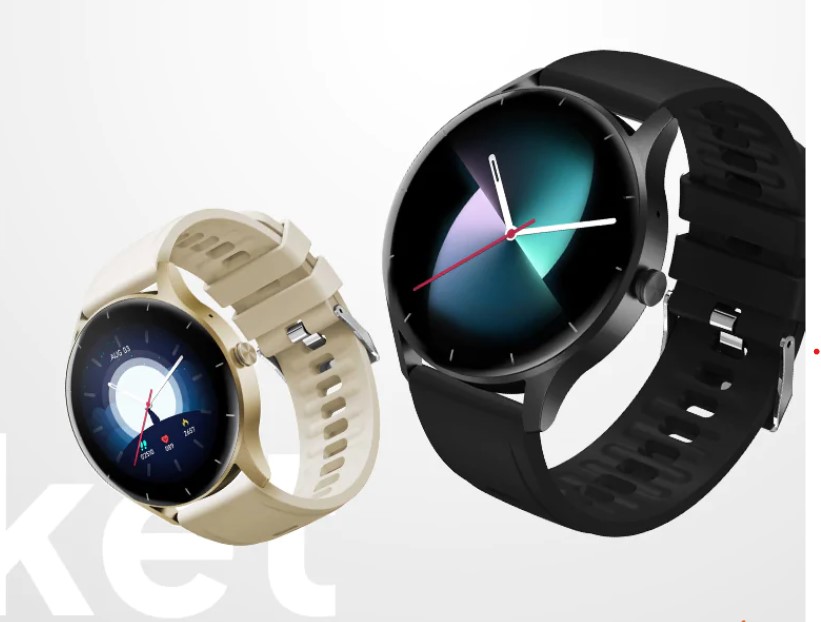
The new TicWatch GTH 2 Fantasy Westward Journey smartwatch has the theme logo of Fantasy Westward Journey inscribed on the crown. It also comes with customized Fantasy Westward Journey-themed watch faces. The customized smartwatch also comes with five built-in interactive games including “Truth or Dare”, “Challenge Countdown”, “Multiple Choice Assistant”, “Choice Board” and “Book of Answers”.

TicWatch GTH 2 Fantasy Westward Journey Version

Apart from these features, TicWatch GTH 2 Fantasy Westward Journey smartwatch is similar to the regular TicWatch GTH 2. As a reminder, the watch comes with dual-mode Bluetooth calling, one-key health measurement, sleep quality analysis, Alipay offline payment, etc. It also provides users with 100+ sports mode support, including mountaineering, archery, yoga, skiing, and other popular sports.

The new custom TicWatch GTH 2 version is on sale in China for 399 yuan (~$55) via Jingdong.

RELATED:

Oppo Reno 9 is a Boring Smartphone

The Reno series is a lineup of lifestyle smartphones from Oppo. Introduced in the first half of 2019, the series is currently in the ninth generation with the launch of the Oppo Reno 9 series.

Products are known to get better with every iteration. It was the case with the Reno lineup for a while as well.

However, that has changed recently. The newly introduced Oppo Reno 9 brings little to no upgrades over its predecessors.

The Pro and Pro Plus models do come with important features. On the other hand, the Pro model is basically the same as the older models.

The only major change on the vanilla model is a 32MP selfie camera with autofocus and a curved display. Unfortunately, we cannot term the screen as an upgrade as it is a preferential feature. Some users may like it, while others may despise it.

With that out of the way, let’s take a look at all the major reasons why we think that Reno 9 is the most boring Reno series smartphone.

Oppo Reno 9
Oppo Reno 9 (All Things Red) | Source: Oppo

Here’s Why Oppo Reno 9 is a Boring Smartphone

1. Old Chipset

The Oppo Reno 9 comes powered by a Qualcomm Snapdragon 778G chip. It is a downgrade over the MediaTek Dimensity 1300 present inside the Oppo Reno 8 from earlier this year.

That’s not all, the Snapdragon 778G had already been used by a Reno series handset last year. The phone we are talking about is none other than Oppo Reno 7.

Hence, performance-wise, the Reno 9 is the same as the year-old Reno 7. Whereas, the few months old Reno 8 is more powerful.

2. Downgraded Rear Camera System

The Reno series is known for its design and cameras. Though the vanilla Reno models have never offered stellar camera performance, they do come with capable cameras.

But unfortunately, the latest Oppo Reno 9 doesn’t even come with an ultra-wide camera. It has become the only base Reno series model other than the original Reno to not feature an ultra-wide camera.

As a result, users are limited to a single field of view. The secondary camera on the rear is nothing but a useless 2MP monochrome sensor.

The phone uses an unnamed 64MP primary camera without OIS and MariSilicon X NPU. Multiple Reno handsets have used 64MP cameras in the past but the sensor suppliers have been different.

3. Lack of Dual Stereo Speakers

Almost all smartphones now house dual stereo speakers. Despite being over 3 years, the vanilla Reno models are yet to get this feature.

The Reno 9, just like the previous base Reno models, lack dual stereo speakers. People consume content on phones more than ever before and surround speakers are known to elevate the experience.

Perhaps, the 10th-gen Reno 10 standard variant may finally bring stereo speakers. 

4. Slower Charging

For some reason, Oppo has downgraded the charging speed on the Reno 9. The device only supports 67W wired charging, while the Reno 8 can charge at the rate of 80W (wired).

As per Oppo, charging from 1%-100% on the Reno 9 takes 44 minutes. On the other hand, the few months old Reno 8 can achieve the same in only 28 minutes.

RELATED:

Xiaomi Buds 4, Watch S2 Prices in China Revealed Ahead of Launch on December 1st

Earlier today, Xiaomi announced the date of its upcoming launch event. The brand also confirmed that it will unveil the Xiaomi 13 series smartphones, Xiaomi Buds 4, and Xiaomi Watch S2 at the event. The smartphones have already been subject to a lot of leaked renders and key specifications. However, not much is known about the wearable devices i.e. Buds 4 and Watch S2 apart from their design that was revealed in the official teaser. 

Now, publication 91Mobiles has learnt about the pricing of the Xiaomi Buds 4 and Xiaomi Watch S2 from reliable industry tipster Ishan Agarwal. The pricing information is for the Chinese market. The report states that the audio device will carry a price tag of RMB 600 (~$83). On the other hand, the smartwatch will be available in two sizes i.e. 42mm in Black and Gold colour and another 46mm in Black and Silver option. The Watch S2 is tipped to start at RMB 999 (~$138). 

The Xiaomi Buds 4 will arrive as the successor to the Buds 3 but is expected to be a toned-down version of the Buds 4 Pro that debuted in August this year. Meanwhile, the Xiaomi Watch S2 will succeed the Watch S1 from last year. 

The teaser image of the Xiaomi Buds 4 reveals an AirPods-like in-ear design with microphone cutouts on each earbud whereas the charging case has a dual-tone design. The Xiaomi Watch S2 is seen with a circular dial and two pill-shaped physical buttons on the right side. 

We will learn more details about the Xiaomi 13 series, Buds 4, and Watch S2 at launch event on Thursday. 

Related:

Via

pTron Tangent Sports With 60 Hour Battery Life, Passive Noise Cancellation Launched in India

Last week, pTron launched the Bassbuds Nyx TWS earphones with a transparent case design in India. Now, the brand has expanded its range of neckband-styled wireless earphones in the country. The latest offering is dubbed pTron Tangent Sports and falls under the Rs 1,000 price segment. It is also the cheapest wireless earphone with passive noise cancellation and more features. Read on to know more about the device. 

The pTron Tangent Sports comes with a neckband-styled design and silicone ear tips with shark fin for a comfortable fit. The right side of the neckband has multi-functional button controls whereas the left side has a USB-C port. The earbuds are magnetic which means that they can stick together when not in use. The audio device is IPX4 waterproof. 

For audiophiles, the pTron Tangent Sports is equipped with 10mm dynamic drivers for strong bass. It features environmental and passive noise cancellation. The TruTalk DSP technology ensures clear voice quality on calls. There is an AptSense feature for gaming that delivers authentic, realistic sound with 40ms low latency. 

The pTron Tangent Sports is backed by a 300mAh battery unit that is claimed to deliver 60 hours of playback time. The earphones come with Bluetooth 5.2 connectivity with fast pairing and dual-device compatibility. It also supports Google Assistant and Siri. 

The pTron Tangent Sports costs Rs 799 but can be purchased at an introductory price of Rs 599. It is offered in Midnight Black, Teal Green, Lightning Blue & Razing Red colours. The earphones can be purchased from the brand’s website and Amazon. 

Related:

Upgrade From Pixel 6 to Pixel 7 for Just $20; Here’s How

Google has already announced its 2022 flagship smartphones, the Google Pixel 7 and Google Pixel 7 Pro. They are at present one of the best Android smartphones available on the market. The Pixel UI is like the cherry on top for smartphones, including updates that are assured, a more seamless experience, and a Google camera. The brand has now announced a new deal for its Pixel 7 lineup which takes its prices to the next level. One owning the Pixel 6 can upgrade to the Pixel 7 smartphone for as low as $20.

Late in October, right before Black Friday, the Google Store increased trade-in values for the Pixel 7 and Pixel 7 Pro for the first time. There have been some good offers, but the real discount is revealed when the Black Friday discount is combined with these increased trade-in values.

Google Pixel 7 Pro

Anyone who is currently using the Google Pixel 6 smartphone can upgrade to the Pixel 7 smartphone is just $20 using a trade-off discount. However, note that the offer is currently available only for the US markets. Further, if you upgrade from the 256GB variant of the Pixel 6 to the base variant of the current Pixel 7, you can grab it for free. But if you upgrade from last year’s base model to Pixel 7’s 256GB variant, it may cost as somewhere around $100.

Talking about the trade-in offer in detail, if you can upgrade from 128GB Pixel 6 to 128GB Pixel 7, it will cost you $20. If you upgrade from 128GB Pixel 6 to 256GB Pixel 7, it will cost you $120. If you switch from 256GB Pixel 6 to 128GB Pixel 7, you can grab the Pixel 7 for Free! Last but not the least, if you upgrade from 256GB Pixel 6 to 256GB Pixel 7, you will have to pay $100. So that was how the new trade-in offer works.

There are also trade-in options for the Pixel 7 Pro gadget, although upgrading might cost you as much as $399. On the other hand, if you switch from a 512GB Pixel 6 Pro to a 128GB edition of the Pixel 7 Pro smartphone, the lowest price you would have to pay to upgrade to Pixel 7 Pro is $149. If you want to make the jump, you’ll need to move quickly because this pricing is only valid through November 28. Although Google charges the same pricing as other merchants like Best Buy and Amazon, you can only trade in your device for these premium values via the Google Store.

Related

Mivi Model E With 1.69-Inch Display, 7 Day Battery Life Launched in India

Mivi has forayed in to the smartwatch market in India. The brand has launched its first-ever smartwatch dubbed Model E. It is said to be ‘Made in India’. The wearable device carries a budget price tag and packs all the necessary features. The smartwatch goes up against other devices offered by brands like boAt, Noise, Realme, Amazfit, and more. Read on to know what the device offers out of the box.

The Mivi Model E comes with a square dial. It features a 1.69-inch TFT screen bearing a resolution of 240 x 280 pixels and 500 nits peak brightness. It offers more than 50 customisable watch faces. The smartwatch has a physical button on the right side and is IP68-rated waterproof. It features a premium strap and a metallic finish. 

On the health-centric front, the Mivi Model E is equipped heart rate and SpO2 sensor, sleep monitor, steps counter, and women’s menstrual cycle tracker. It packs support for more than 120 sports modes. 

The Mivi Model E features Bluetooth 5.1 connectivity with a 10-meter maximum range. It is claimed to offer 7 days of battery life and 20 days of standby time. It can be topped up via magnetic charging. The smartwatch comes with convenient features like camera and music control, weather updates, mute/reject calls, incoming notifications, and more. 

The Mivi Model E costs Rs 2,999 but can be purchased at an introductory price tag of Rs 1,299. The smartwatch will be available for purchase from Flipkart and Mivi website starting December 1st. It is offered in Black, Blue, Green, Pink, and Red colours.

Related:

Tesla Recalls Its Cars For The Fourth Time in a Week!

Tesla, the world’s leading electric car maker, is in trouble again. According to the Wall Street Journal, the electric vehicle maker has recalled a total of 80,561 vehicles in China due to software and seat belt issues. The company, which has been experiencing many problems recently, broke a record with the fourth recall in a week.

Tesla recalls over 80,000 cars in China

Tesla recalls over 80,000 cars in China due to software and seat belt flaws. Battery management glitches affecting 67,698 Model S and Model X vehicles could lead to unexpected stops, according to the country’s State Administration for Market Regulation, while 12,863 Model 3 sedans have seat belt issues.

Tesla Model 3

Fortunately, most of the problems in vehicles are easy to solve. Tesla fixes models with battery problems with software updates. However, the 12,863 Model 3 requires minor manual repairs. It is not known whether the defects resulted in any collision or injury or whether they are directly related to past faults. The main thing users complain about is the frequency of recalls.

This is the third recall in one week for the company. Lately, Tesla recalled nearly 30,000 Model X SUVs over troublesome airbag behavior, and 321,000 Model 3 and Model Y EVs due to software-related rear light anomalies. Unfortunately, this doesn’t include the recalls needed to fix bugs that caused the car’s windows to jam and caused some issues with the autopilot.

Tesla manages to fix these problems quickly and systematically every time. In fact, it sometimes removes some problems without users being aware of it, with updates it releases remotely. Still, the frequency of recalls negatively impacts the company’s reputation. The competition in the electric vehicle market is more intense than ever, and if Tesla continues to experience these problems, it is likely to lose its customers to its competitors.

(via)