Google One subscribers who are using the Premium Plan or above get access to the company’s own VPN service free of cost. So far, the service has been limited to Android and iOS devices, but now Google is rolling it out to desktop users.
The company has confirmed that it is bringing Google One VPN support to Mac and Windows devices. It is made available in 22 countries across the globe, allowing users to mask IP addresses and block trackers.
Google One VPN Service on Windows PC
Users of the desktop version will need at least macOS Big Sur or Windows 10. While the Mac app works for both x86 and ARM users, the Windows app doesn’t support 32-bit or ARM-based systems.
It’s noteworthy that unlike many premium VPN services available in the market, Google One’s VPN doesn’t allow users to change their location to access or unlock other regions’ media content on streaming platforms. Similar to Apple‘s iCloud Plus VPN, the Google One VPN automatically assigns an IP address in the region from where the user is getting connected.
Google also has independent bodies audit its VPN service. The company also shares the source code for its app libraries to ensure transparency. The search engine giant has revealed that the audit for the desktop apps will be made public in the “coming weeks.”
The company had originally started offering VPN service for free to Google One subscribers with a 2TB plan in the United States in 2020, but since then, Google has expanded the offering to 22 markets, including Mexico, Canada, the UK, France, Germany, Spain, and Italy, and others.
Days after the acquisition of Twitter by Elon Musk, the company has now rolled out its first major update, which is related to the Twitter Blue subscription service. The new Twitter Blue subscription has now been released, costing $8 per month.
Those users who purchase the monthly subscription plan will be able to get instant verification with a blue-colored checkmark next to the profile. It also lowers the visible ads on the platform and offers the ability to post longer videos, among others.
It’s noteworthy that all the new features that are part of the new Twitter Blue plan are listed as “coming soon,” and it appears that only the verification checkmark is being offered right now. Also, the $8 per month price is tagged as a “limited-time offer,” indicating that the subscription price could be increased.
Earlier, Twitter offered additional context about verification check marks with a message stating that accounts were verified because they were “notable in government, news, entertainment, or another designated category.” Now, clicking the blue check says that “this account is verified because it’s subscribed to Twitter Blue.”
The verification system on Twitter became messy when the social media platform began attaching an “Official” label to some major accounts, including those belonging to celebrities, large publications, and politicians. But after a few hours, Musk said he had “just killed” the deployment.
After taking over the company, Elon Musk has positioned paid account verification as a way to make Twitter sustainable and increase trust in the platform. However, critics say that this move is likely to have the opposite effect since almost anyone could pay for verification and then theoretically change their account name to impersonate another user.
A couple of days ago, Oppo launched the Oppo A58 5G smartphone in China. The device is powered by the entry-level MediaTek Dimensity 700 5G enabled SoC. Starting today, the device will be going on sale in China.
Oppo A58 5G Price and Availability
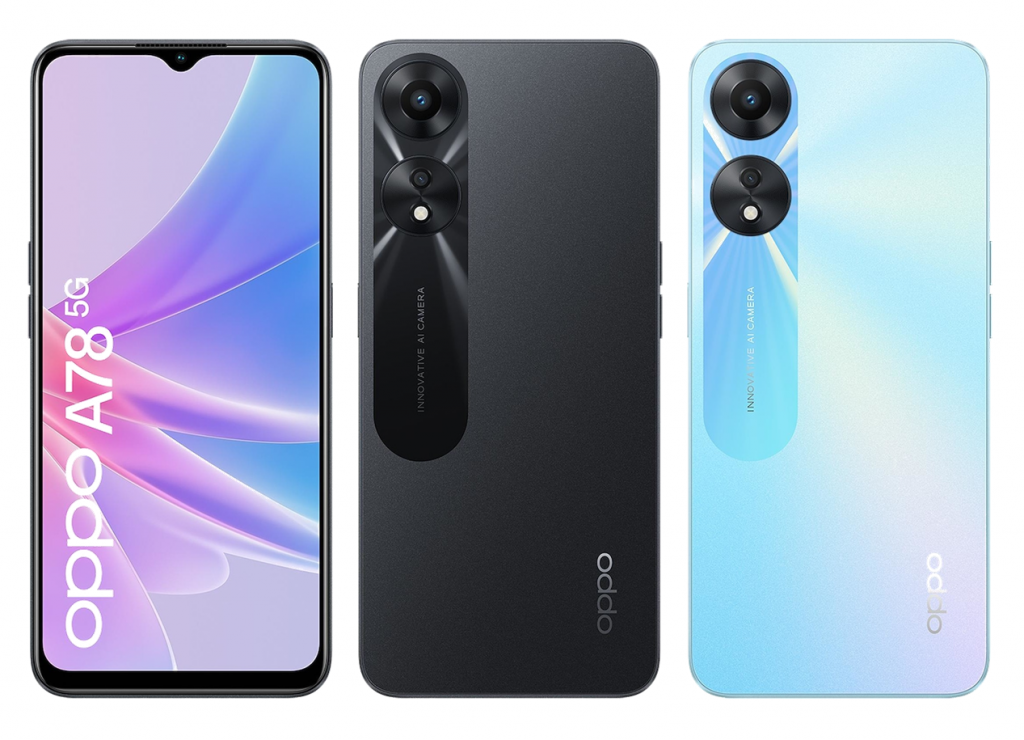
In China, the Oppo A58 5G is available in a single memory combination of 8GB + 256GB. It costs $1,699 (about $234). It comes in three colors, namely Tranquil Sea Blue, Star Black, and Breeze Purple. Customers who purchase a set of Oppo wired earbuds receive a free pair.
Oppo A58 5G Specifications
A flat frame design is a feature of the Oppo A58 5G. Two enormous circles housing cameras and an LED flash can be seen on the back panel of the device. The phone weighs roughly 188g and is only 7.9mm thick. The phone has a 6.56-inch LCD display with a resolution of 1612 x 720 pixels (HD+), 269 PPI, and a refresh rate of 90Hz. The screen has a dewdrop notch and a maximum brightness level of 600 nits.
The device is powered by a MediaTek Dimensity 700 SoC, LPDDR4x RAM, and UFS 2.2 storage. It runs ColorOS 12.1 on Android 12. The device is powered by a 5,000mAh battery and offers 33W quick wired charging.
It has a dual-camera setup with a 50MP main camera and a 2MP depth sensor. It sports an 8MP camera on the front for taking selfies and making video calls.
Multiple connectivity options are offered with the phone, including dual SIM, 5G, dual-band WiFi, Bluetooth 5.3, GNSS, and USB Type-C. Additionally, it has a MicroSD card slot, two stereo speakers, a side-mounted fingerprint sensor, and a 3.5mm headphone jack.
Nubia’s gaming-focused sub-brand Red Magic is known to launch special edition smartphones from time to time. Earlier this year, the brand launched Lords Mobile and Bumblebee Special Editions of the Red Magic 7S Pro. Now, the brand has launched a new special edition device in collaboration with the PC and mobile strategy game Infinite Lagrange.
The Red Magic 7S Pro Infinite Lagrange is silver in color with Infinite Lagrange accents, and it comes with special packaging that includes some accessories. There is a 100W charger, a customized casing, and a cooling fan attachment. The device is only available in China, and according to the official Red Magic Weibo account, users can register through the Infinite Lagrange app to participate in a raffle for a chance to win it.
Spec-wise, the device features a 6.8-inch AMOLED display with a 120Hz refresh rate. Under the hood, there is a Snapdragon 8+ Gen 1 chipset paired with the company’s proprietary Red Core 1 which is a dedicated gaming chipset for enhancing the performance of the device.
The phone has a cutting-edge Ice 10.0 cooling system. It comes with a 100W gallium nitride charging brick and a 5,000mAh battery unit with 135W fast charging. The device operates on Android 12-based Red Magic 5.0.
Its optics include a 64MP primary camera, an 8MP wide-angle lens, a 2MP macro lens, an LED light, and two additional lenses. The device has a 16-megapixel selfie camera on the front.
A bunch of hours ago, Realme launched the brand new Realme 10 in the global market. The handset is official for the Indian and European markets with great specifications offered at an affordable price. It brings nothing new to the shelves, but it has a very well-balanced specs sheet, so it looks very convincing and it is definitely a potential best-seller. But it has an important rival released just a few days before: the Redmi Note 12 by Xiaomi. There will be a hard fight between these two devices due to their amazing value for money and similar specifications: which one will be the winner? We will try to give you some hints in this comparison between the main specifications of the Redmi Note 12 and the Realme 10.
Xiaomi Redmi Note 12 vs Realme 10
Xiaomi Redmi Note 12
Realme 10
DIMENSIONS AND WEIGHT
165.9 x 76.2 x 8 mm,
188 g
159.9 x 73.3 x 8 mm,
178 g
DISPLAY
6.67 inches, 1080 x 2400 pixels (Full HD+), AMOLED
Dual 48 + 2 MP, f/1.8 + f/2.4
8 MP f/2.0 front camera
Dual 50 + 2 MP, f/1.8 + f/2.4
16 MP front camera
BATTERY
5000 mAh, fast charging 33W
ADDITIONAL FEATURES
5G, dual SIM, IP53 dust and splash resistant
5G, dual SIM
Design
The most attractive and curated design belongs to the Realme 10, there is definitely no challenge. It comes with flat borders just like the latest iPhones and a more compact size. Its rear side is very minimalistic thanks to the presence of two circles including two sensors instead of the classic rectangle-shaped camera modules you can usually find on midrange phones. So the Realme 10 has the most beautiful look, but the Redmi Note 12 by Xiaomi has a better build quality. It sports the IP53 certification ensuring that it is dust resistant and splash resistant. However, it is bigger, chunkier, and less attractive. Do you prefer having a beautiful design or a solid build quality?
Display
Judging by the specifications on the paper, the display of the Redmi Note 12 is superior to the one found on the Realme 10. But the difference is just marginal and it regards the refresh rate and a few other minor parameters. The refresh rate goes up to 120 Hz instead of stopping at 90 Hz, and the peak brightness is higher with 1,200 nits. The Redmi Note 12 also comes with a wider diagonal: 6.67 inches. It has a Super AMOLED panel with a Full HD Plus resolution of 1080 x 2400 pixels. With the Realme, you get an AMOLED panel with a diagonal of 6.4 inches and a Full HD Plus resolution of 1080 x 2400 pixels, protected by Gorilla Glass 5. Despite having AMOLED displays, these handsets are equipped with side-mounted fingerprint scanners.
Specs & Software
If you need a phone with the most advanced performance, then you should opt for the Redmi Note 12 if you are considering this duo. It is powered by the Snapdragon 4 Gen 1 mobile platform by Qualcomm built with a 6 nm production process. It has an octa-core architecture composed of two Cortex A78 CPUs running at a max frequency of 2 GHz, six Cortex A55 CPUs running at 1.8 GHz, and an Adreno 619 GPU. Alongside the chipset, there are up to 8 GB of RAM and up to 256 GB of native storage. With the Realme 10, you can get the same memory configuration, but with an inferior Helio G99 chipset by Mediatek (just slightly inferior, though). These phones run Android 12 out of the box and they will get two Android major updates.
Camera
These devices are not camera phones but they are pretty disappointing because they come with cheap main sensors and they lack ultrawide lenses. But they are not insufficient. The Realme 10 wins thanks to the presence of a better 50 MP main shooter paired with a 2 MP depth sensor, as well as a better 16 MP selfie camera. The Redmi Note 12 has an inferior 48 MP main camera and a bad 8 MP selfie snapper.
The battery capacities of these two phones are the same, with 5000 mAh, as well as charging speeds (both support 33W fast charging), but the Realme 10 should be able to last slightly more on a single charge.
Price
The starting price of the Redmi Note 12 roughly translates into €190 or $190 at the actual change, while the Realme 10 is expected to hit the Indian market with a price tag starting from $180 or €180. Which one would you pick?
Audi has announced a new flagship electric SUV with an impressive range of 372 miles (~600km). The Audi Q8 e-tron is the eighth model released under the e-tron moniker since 2018. The company plans to release up to twelve more e-tron models by 2026.
The Q8 e-tron has been on the radar for some months and some teasers have been seen of the EV. It is a crossover SUV and will be available for order next spring. The Q8 e-tron will come as a standard version as well as a Sportback version. They will both offer three AWD powertrain options namely: Q8 50, Q8 55, and SQ8.
The Q8 50 model offers a power of 250kW with 490Nm torque. It can go from 0 to 60mph in 6 seconds, with a range of 306 miles and 313 miles for the SUV and Sportback options respectively. The Q8 55 delivers a maximum power of 300kW with 490Nm of torque for both versions. Their corresponding ranges are 361 and 372 miles. The SQ8 e-tron delivers a max power of 370kW and 717Nm of torque. The range for the SUV and Sportback models are respectively 307 miles and 319 miles respectively. It has a top speed of 130mph and can go from 0 to 60mph in 5.6 seconds.
The Q8 50 models come with a net-89kWh battery pack that supports 150kW charging while the bigger batteries of the Q8 55 can achieve up to 170kW charging rates.
The Q8 has lots of high-tech features. It offers up to 45 driver-assist features based on data gathered from its radar sensors, five optical cameras, and a dozen ultrasonic pickups. It comes equipped with Audi’s Matrix LED headlights which are now ADB capable.
The Q8 is available for order in 2023 starting at about $72,500. Audi is targeting Germany and major European markets for the initial launch by February 2023.
Geely, through its EV arm, has unveiled two new electric vehicles equipped with Huawei’s HarmonyOS platform. The new EVs were released by Geometry, the purely electric vehicle manufacturing arm of the automaker. The new models are the M6 medium-sized SUV and the G6 electric sedan. The digital cockpit and its functionality are powered by HarmonyOS. Geely and Huawei are collaborating for the first time in this regard.
The Geometry G6 comes in either a 53kWh battery model or a model. The standard G6 model has a range of 480km while the larger battery variant can deliver up to 620km on a full charge. The M6 SUV is slightly shorter than the G6 and measures 4.43 meters to the G6’s 4.75 meters. It is offered in two battery options as with the G6 but with ranges of 450km and 580km respectively. Both the G6 and M6 use the same powertrains and offer similar performance metrics. Their electric motors deliver 150kW of maximum power and 310Nm torque. They both have similar top speeds of 150km/h and can accelerate to 100km/h in 6.9 seconds.
Geometry G6 and M6 are priced similarly with the base model retailing for $20,600 while the longer-range models are sold at $23,430. All the models qualify for full tax incentives in China. Geometry expects that the release of the two EVs will further push its sales results up. The company sold more than 116,800 vehicles in 2022. The new models join four other EVs already in the market.
Oppo’s latest custom Android skin—ColorOS 13— is swiftly being rolled out to its smartphone lineup. The company has already rolled out stable and beta versions of Android 13-based software to the majority of its flagship and mid-range devices. Today, it has kicked off the ColorOS 13 beta program for the Oppo Reno 6 Pro and Reno 5 Pro in select global markets. Let’s look at the details.
According to recent posts on the Oppo community forums, Oppo Reno 6 Pro (Indonesia and Saudi Arabia) and Reno 5 Pro (Saudi Arabia) users can now enroll in the ColorOS 13 public beta program. Those enrolling in the program will be able to test ColorOS 13, based on Android 13 software, on the aforementioned devices ahead of the release of the stable update.
It is worth noting that the Reno 6 Pro mentioned in this post is different from the one that is available in India. This model is actually a rebranded Reno 6 Pro Plus from China that was released in a handful of global markets.
The enrollment for the beta program is already underway, and the company will be accepting only 5000 users. You can enroll by going to the About device section in settings, tapping the ColorOS version banner at the top, selecting Trial versions on the following page, and following the instructions.
Do note that the beta version is not the final version and may have several bugs and issues that may affect your daily usage. Hence, it is best not to install the beta software on your daily driver. In case you encounter any bugs or issues, you can report them through the “Feedback” APP on the desktop or by opening the Google Dialer and typing *#800#.
Samsung released the first stable One UI 5 update to the flagship Galaxy S22 series last month, and earlier this week, the update was made available for its older Galaxy S21, S20, and Note 20 models. Now, in the latest development, the firm is rolling out the Android 13-based software to its mid-range Galaxy A53. Here are the details.
According to the Samsung community posts, Samsung Galaxy A53 users in Europe and the U.K. are now receiving a stable One UI 5 update with firmware version A536BXXU4BVJG. The update should reach other regions over the next few days.
The update size is around 2GB and it also includes the October 2022 security patch. The changelog is not available because the rollout hasn’t been officially announced yet. However, it is reported that the update brings all the new features big G introduced with the Android 13 and also some exclusive features.
Interested Galaxy A53 users can check for the Android 13 update on their device by heading to the Software Update section in the device settings. If the update is available for your device, you will see a “Download and install” button.
If we talk about the update itself, One UI 5 brings some new features and improvements. It comes with plenty of visual changes, including new notification UI, icons, smarter app and widget recommendations, Modes, and more.v
The update also comes with smoother animations and allows users to customize their lock screen and add more wallpapers. In addition, it will also let you set different call backgrounds for each contact. Samsung also added new stacked widgets on the Home Screen.
Recently, the Realme 10 and 10 Pro+ models appeared on the China Telecom website, revealing major specifications and designs in the process. And today, the Realme 10 Pro has been spotted on the telco’s website with the specs, memory variants, and renders confirming the design. Let’s look at the details.
Realme 10 Pro recently appeared on the China Telecom website (Via ITHome). The listing reveals the handset will be offered in three color options, which include black and blue. The Realme device will be sold in two storage configurations. The base version will be equipped with 8GB RAM and 128 GB of internal storage while the higher-end model will have 12GB RAM and 256GB onboard storage.
Talking about the specs, the listing reveals Realme 10 Pro will have a 6.78-inch screen with Full HD+ resolution. The handset has a flat frame design, with the power and volume buttons on the right edge and the SIM tray on the left. There is a waterdrop notch that houses a 16 MP selfie camera.
On the back, the Realme 10 Pro can be seen to have two large circular cutouts, which sport a 16MP primary camera and two 2MP sensors for depth and macro photography. There is also an LED flash module.
The handset packs a 5000mAh battery and runs Android 13 OS out of the box. It is listed to feature a 3.5mm headphone jack. The smartphone weighs 190 grams and measures 163.69 x 74.18 x 8.12 mm in dimensions.
China Telecom didn’t reveal the chipset of the handset, but as per a recent Geekbench listing, it will be powered by the Snapdragon 695 SoC. Realme 10 Pro will debut in China on November 17, and it may arrive in the Indian market in December or later.
Honda has unveiled its first electric moped in Europe, the Honda EM1. The new Honda electric moped was showcased during the EICMA Milan Motorcycle Show.
The Honda EM1 is expected to enter the European market next summer, according to the company. The two-wheeler is fully named as Honda Electric Moped and it is the first of ten new electric motorbikes that Honda promised to release by 2025. The new electric moped will have the Honda Mobile Power Pack battery. The EM1 is also expected to have a range of not less than 40km on a single charge.
In terms of external features, the Honda EM1 which is currently being showcased at the Honda booth looks appealing. It has a rear hub motor and a seat that could accommodate the rider and a passenger. There are pillion pegs and a rear rack that could be useful for carrying cargo. Honda may be using the EM1 to target younger riders but pricing information is lacking at this time.
The use of a single Honda Mobile Power Pack (MPP) battery means that the moped may not be very powerful. The maximum range of 40km is expected to be achieved at low speeds for the scooter and it could get a top speed of 45km/h. The Honda EM1 is therefore likely to be classified as an L1e-B moped in Europe. Honda has kept much of the details about the EM1 under wraps, as well as its pricing information. It is also not clear whether Honda will also introduce its battery-swap technology in the EM1 to expand its range. That will however require the setting up of charging stations across the continent.
Sony had revealed that it planned to roll out the Android 13 OS update for its Xperia 1 IV and Xperia 5 IV smartphone models soon earlier this month. However, while the company never revealed the launch date for this update, the major software upgrade has now started rolling out for the flagship Xperia 1 IV model.
Interestingly enough, the Japanese tech giant hasn’t officially announced the release for the Android 13 update for these models. But many Xperia 1 IV users have confirmed that the update is currently rolling out. The news arrives from an XDADevelopers report, which stated that the update is now available in Europe. Although, only the dual SIM version of the device is receiving this update as of right now.
The report further added that the update is limited to certain carriers at the moment. The eligible operators include O2, EE, and Altice right now. It also appears that the update is limited in terms of region availability. Fortunately, we can safely assume that a broader roll out for the major update should be just around the corner, unless there are some notable issues with the new update. Apart from the latest version of Android, the company is also bringing the October 2022 security patch as well.
On the other hand, Sony hasn’t made any indications of the Xperia 5 IV receiving the update anytime soon. Meaning, all we can do is hope for the Android 13 update to roll out for the device soon. So stick around for more, as we will be providing updates when additional information is available regarding this matter.
OnePlus Nord CE 2 was launched earlier this year, and it appears that the successor of the affordable smartphone is just around the corner. According to a report, OnePlus is working on the Nord CE 3 5G, which may launch sometime in Q1 or Q2 of next year. The report has also shared the complete specifications of the upcoming Nord handset. Let’s look at the details.
Tipster OnLeaks, in collaboration with GadgetGang, has revealed the complete specifications of the alleged OnePlus Nord CE 3 5G. The handset reportedly brings minor upgrades to the Nord lineup, with its internals resembling the CE 2 Lite from this year.
As per the report, the Nord CE 3 will be equipped with a Snapdragon 695 SoC, which was also used on the Nord CE 2 Lite 5G. Although this chipset doesn’t boast a lot of power, it will suffice for most users. On the front, the handset is said to feature a 6.7-inch Full HD+ 120Hz IPS LCD, which is undoubtedly bigger than the Nord CE 2’s 6.43-inch but not better—the latter features an AMOLED panel.
Further, the Nord CE 3 is reported to come with a bigger 5,000mAh battery that supports 67W fast charging. For photography, the handset could have a triple-camera setup on the back, featuring a 108MP main camera sensor accompanied by two 2MP sensors for depth sensing and macro photography. The absence of an ultrawide will likely upset some readers.
In addition, the handset may feature a 16MP front camera for selfies and video calls. It will come with a side-mounted fingerprint scanner as well as AI face unlock support. The report says the smartphone will debut in two storage configurations. Its base model will come packed with 8GB of RAM and 128GB of internal storage, whereas the higher-end model will have 12GB RAM and 256GB of internal storage.
Apple relies on China for its huge production capacity. Majority of the Apple products are still manufactured in China. However, over the last few years, Apple has been facing issues in China due to political tensions between the US and China, along with the COVID-19 outbreak. Therefore, the brand has been slowly shifting its production to countries like India.
Despite these issues, Apple is currently the most profitable corporation in China. The pandemic’s effects on lifestyle allowed Apple’s China business to expand quickly; s its operational earnings increased by 104% over 24 months to $31.2B in the fiscal year ending in September. According to an estimate from FinanceTimes, Apple is currently worth more than Tencent and Alibaba put together ($15.2 billion and $13.5 billion, respectively).
According to the article, Apple and China reached a deal that allowed the iPhone manufacturer to escape a “crackdown on local IT firms,” which is how the profits came about. The agreements, which were made as a result of CEO Tim Cook’s repeated diplomatic visits to the nation over the years, have greatly strengthened Apple’s supply chain in the area. The agreement enables Apple to keep “unrestricted access” to affordable labor and manufacturing, which are crucial to its success.
However, critics argue that Apple’s proximity to the government and access to resources has made it more willing to comply with administrative demands. This includes storing Chinese user data in a data center owned by a provincial government, removing thousands of apps from the App Store, and avoiding controversial topics.
Other advantages of diplomacy for Apple include a significant weakening of Huawei. In 2019, Chinese citizens aided in the purchase of Huawei smartphones, propelling the local manufacturer past Apple in global sales that year. Now, Apple practically owns China’s $600+ smartphone market, with only few competitors able to compete at that level.
Samsung is currently serving Apple as a display supplier for its iPhones. All the iPhone 14 lineup models were packed with the panels supplied by Samsung displays. However, the premium smartphone maker has now decided to use other suppliers’ panels for its premium iPhone 14 Pro models. Apple will now reportedly use the panels supplied by LG Displays for the upcoming units of the iPhone 14 Pro.
It was previously reported that talks between Apple and LG Display over the supply of the OLED screen for iPhone 14 Pro variants are ongoing. There were discussions over the supply of LTPO TFT Type OLED panels. LG started supplying display panels for the 14 Pro since the last week of October, according to a source from ETNews. According to reports, LG Display was meant to be a component supplier of the Pro model supply chain, but due to the brand’s restriction, they couldn’t supply it earlier. Anyway, Apple ultimately approved its incorporation following an early production holdup.
Samsung Display will now supply screens for all four iPhone 14 models, LG Display will supply screens for two iPhone 14 models, and BOE will continue to supply screens for the iPhone 14. LG Display’s partnership with Apple reportedly extends beyond the iPhone 14 Pro versions. The display maker is apparently working on micro OLED displays for Apple’s AR headset, foldable panels for upcoming iPhone models, and trying to get into the OLED iPad supply chain.
Although the LTPO OLED technology was originally launched on the iPhone 13 Pro, this is LG Display’s first attempt to supply LTPO OLED to Apple for its devices. The inclusion of LTPO refresh rate technology along with the newly introduced pill-shaped notch cutout made the production hard for the supplier. For the past two years, Samsung Display has provided Apple with LTPO OLEDs for use in mobile devices.
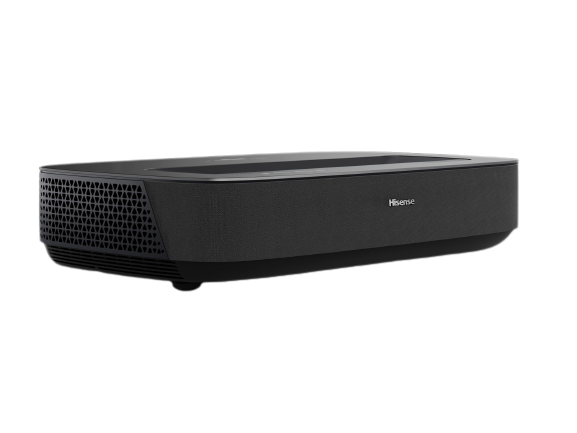
Philips has launched the Screeneo U5 4K projector with an image of up to 150 inches under crowdfunding. The impressive projector was unveiled via Indiegogo and took a remarkable 5-minute run to reach its goal. The Screeneo U5 is the successor to the U4 and uses a 4K UHD resolution and a high maximum brightness rating.
The U5 is based on Android 11 UI and is an ultra-short-throw projector that can deliver a home theater cinema experience without the need of having a giant screen in the room. The maximum screen size of 150 inches is achieved with a distance of just 16.5 inches away from the wall. The Screeneo U5 can also throw a 120-inch display from 11 inches and it has up to 2,200 ANSI lumens of brightness. The U5 also adheres to the Rec.709 color space and supports Dolby Vision, FlowMotion 4 MEMC+ technology, and HDR10.
The U5 Indiegogo campaign is still ongoing, with up to $570,000 attracted from its backers. The price of the Philips Screeneo U5 is €3,299 (~$3,314) but there are still a few units available via Indiegogo with a 48% discount. The speed with which the Indiegogo campaign for the Philips Screeneo U5 achieves its goal is quite impressive. Its success seems to have eclipsed that of the U$ which was also previously launched on Indiegogo. It is unclear what is expected lifetime of the projector is based on its light source.
Instagram has launched in-app posts scheduling feature. The popular photo-sharing platform has started releasing the long-due feature. To date, users had to upload content whenever they wanted. And if they preferred uploading at a specific time, then users would have to make use of third-party scheduling software tools. It’s worth noting that the in-app scheduling tool is only available for professional accounts.
Plan ahead 📅
Creators and business accounts can now schedule posts up to 75 days out.
Instagram Head Adam Mosseri announced the in-app post scheduling feature on his Twitter account. He dubbed it as a ‘finally feature’ and that the Meta-owned platform should have introduced it a long time ago. The ability to schedule posts has been available on other social media platforms like Meta, Twitter, TikTok, and YouTube. Apart from scheduling posts on Instagram via third-party tools, users could also do it from Meta’s Creator Studio.
As mentioned earlier, the in-app posts scheduling on Instagram is only available to professional users which include creators and business accounts. It will allow users to schedule photos, reels, and carousel posts up to 75 days in advance. To schedule a post, users need to go through the usual steps of creating till uploading the content. At the end of the flow before publishing, there is an option to access ‘Advanced Settings’ at the bottom of the screen. Then, there is a toggle option to ‘Schedule this post’. Once it is toggled, users can select the time and date they want to see their post go live on Instagram. Professional users can view scheduled posts in their profile menu’s ‘Scheduled Content’ section that is accessible via the hamburger menu. Additionally, they can also reschedule the content if required. \
The in-app post scheduling on Instagram is quite a useful new update. Social media managers and creators will no longer have to rely on third-party tools for scheduling which seems like a hassle. The feature is available on Android and will be rolled out on iOS in the coming days. It remains to be seen whether the scheduling tool will be released to all Instagram accounts.
Apart from post scheduling, Instagram is also redesigning its web interface to take advantage of larger screens. The refreshed design moves the menu and icons like home, search, and explore to the left side.
BenQ has been churning out projectors at an unprecedented rate in recent times. The company has launched yet another high-end projector in China. The product is dubbed BenQ W1130X projector and it is presently on sale at Jingdong (JD.com) priced at 6999 yuan (~$965).
The BenQ W1130X projector is obviously a flagship projector. It uses a new 4LED light source with long-lasting color rendering and ultra-long life. It equally features a built-in 0.65-inch DMD chip as well as an all-glass lens, and an optical zoom with lossless image quality.
BenQ W1130X home projector follows the international film and television industry color calibration standard D65 color temperature. Under the leadership of THX and ISF dual-certified engineers, the BenQ CinematicColor professional team calibrates each W1130X one by one to ensure that the color accuracy reaches 98% Rec.709, and Delta E<3.
In addition, the BenQ W1130X has a high refresh rate of 120Hz, as well as a low latency of 8.3 milliseconds. The display has a resolution of 1080p, a contrast ratio of 500000:1, and a brightness of 2300 IOS. It also supports side projection. In terms of audio, the projector pack two built-in stereo speakers for an optimum user experience.
Oppo has just announced a new strategic partnership. The smartphone maker is working closely with Unity to offer better gaming performance and graphics fidelity on its smartphones.
For those unaware, Unity is a known company that is best known for its Unity game engine. This game engine has been used in a number of popular titles for both computers and mobile games like “Honor of Kings,” “Honkai 3,” “Call of Duty,” and even “Genshin Impact.” So it is clear that a number of game developers prefer this game engine, with each of these games having robust playerbases. So an improvement in gaming performance specially optimized for Oppo devices would offer a better gameplay experience to the brand’s customers.
The company announced the partnership with the real time 3G engine giant Unity during the China International Import Expo. This cooperation aims to improve visual fidelity or graphic visuals and even make the games based on Unity run smoother as well. Furthermore, Oppo has already integrated its self developed ray tracing algorithm into the Unity game development engine, which helps create lights and shadows in real time in the game.
The smartphone brand’s ray tracing algorithms can also generate real time dynamic shadows, surface reflections, glass refractions, and more. In simpler terms, it can simulate the actual behavior of light, which greatly improves the visual fidelity of the games. The partnership was just announced but it remains to be seen how it affects the gaming experince on Oppo devices in real life.
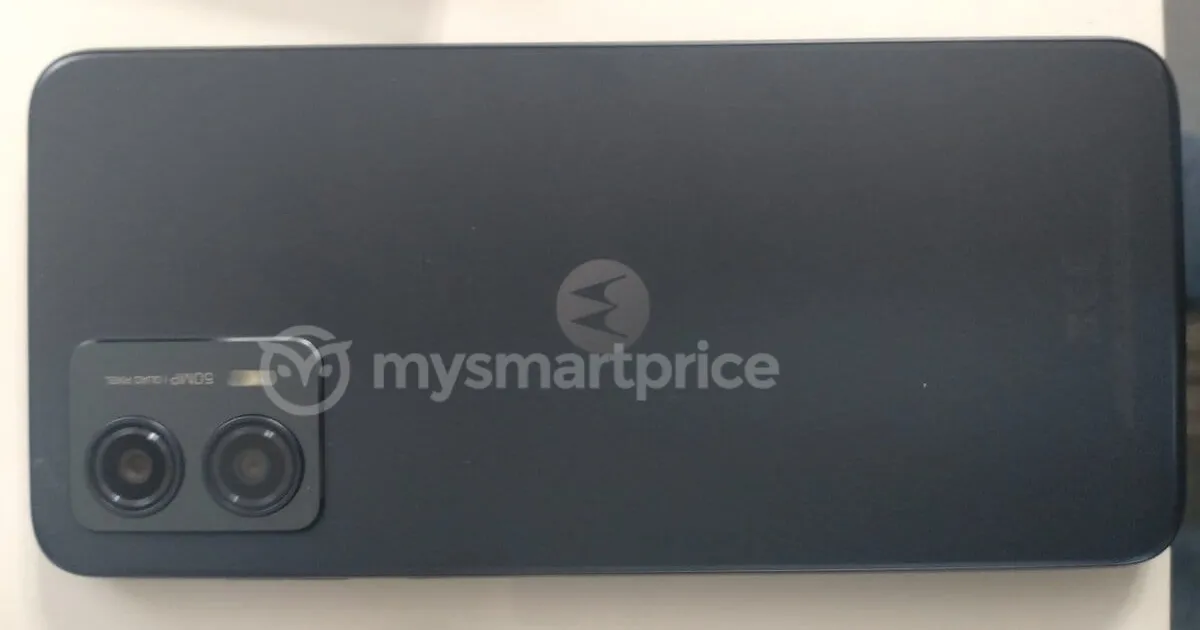
OPPO A1 Pro 5G is reportedly in development for the global market. Today, reliable tipster Evan Blass aka Onleaks shared a leaked image of the device. It reveals the back panel design of the device. The tipster adds that the OPPO A1 Pro 5G could be rebranded version of the A98 with model number PHQ110 which is yet to release in China. The OPPO A98 has already bagged TENAA certification.
The overall design of the OPPO A1 Pro 5G matches the images of the OPPO A98 that recently surfaced on China’s TENAA certification platform. The smartphone has a pill-shaped camera module with two circular rings on the back panel. The first one houses a primary sensor whereas the second has two lenses along with an LED flash. The camera rings are followed by a glittery pattern. The smartphone is also seen in a gradient back panel with Silver and Gold hues.
As for the core specifications, the OPPO A1 Pro 5G could be similar to the A98. The latter’s China listing reveals that the device will feature a 6.7-inch FHD+ 120Hz AMOLED display with curved edges, a punch-hole, and an under-display fingerprint scanner. It will reportedly be powered by a Snapdragon 778G SoC coupled with up to 12GB of RAM and 256GB storage. The upcoming offering is tipped to be backed by a 5,000mAh battery and 67W fast charging. It may run on ColorOS 13-based Android 13 OS. On the optics front, the OPPO A1 Pro 5G is expected to feature a 108MP primary camera and a 16MP selfie snapper.
We use cookies on our website to give you the most relevant experience by remembering your preferences and repeat visits. By clicking “Accept”, you consent to the use of ALL the cookies.
This website uses cookies to improve your experience while you navigate through the website. Out of these, the cookies that are categorized as necessary are stored on your browser as they are essential for the working of basic functionalities of the website. We also use third-party cookies that help us analyze and understand how you use this website. These cookies will be stored in your browser only with your consent. You also have the option to opt-out of these cookies. But opting out of some of these cookies may affect your browsing experience.
Necessary cookies are absolutely essential for the website to function properly. This category only includes cookies that ensures basic functionalities and security features of the website. These cookies do not store any personal information.
Any cookies that may not be particularly necessary for the website to function and is used specifically to collect user personal data via analytics, ads, other embedded contents are termed as non-necessary cookies. It is mandatory to procure user consent prior to running these cookies on your website.