Advertisement

Download the Best GCam APK for POCO M4 Pro

The POCO M4 Pro is a well-rounded smartphone in the budget mid-range as it offers many attractive features like a 6.43-inch AMOLED screen with a 90Hz refresh rate, a respectable MediaTek Helio G96 chipset with 4G connectivity and a 5,000mAh battery with 33W fast charging support.
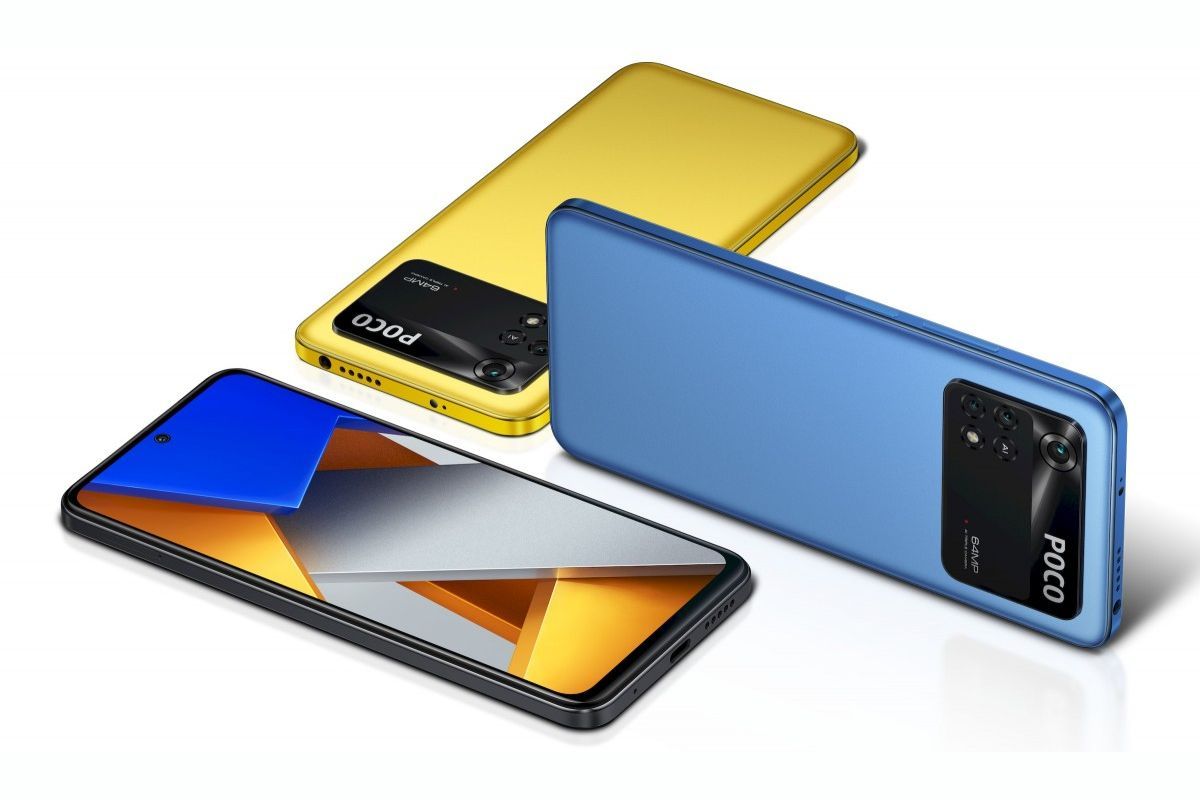
POCO M4 Pro 4G

Its cameras are also quite capable hardware-wise, as the phone sports a 64-megapixel OmniVision OV64b40 primary sensor, paired with an 8-megapixel Sony IMX355, a 2-megapixel macro camera, and a 16-megapixel Sony IMX471 front camera. However, many users feel that the device is lacking on the camera software front.

To solve this issue, we have found the best GCam Apk for the POCO M4 Pro.

Budget-range devices don’t usually get the software polish and optimization for their camera apps from the manufacturers. This is where Android-based operating systems truly shine, as the developer community picks up the slack and offers more optimized solutions.

GCam has many advantages over the stock camera, such as HDR+ and HDR+ Enhanced capabilities to provide more details and high-quality images. Other features include Astrophotography, Night Sight, Panorama, Motion Photos, Lens Blur, etc. Additionally, users can load several configuration files to maximize the functionality of the GCam APK and tune the camera according to their tastes and needs.

Download GCam for POCO M4 Pro

You can download the GCam v8.1.101 from BSG, as it is the most stable GCam port for the POCO M4 Pro. Many users have tested this version of the GCam and confirmed that it produces better images than the stock app in both well-lit-up and low-light environments.

Download GCam for POCO M4 Pro from here

Make sure that you are downloading the MGC_8.1.101_A9_GV1zfix_MGC.apk, which is the second link on the list.

Additionally, users can customize their GCam image output by using various config (XML) files that provide specific tuning to the app. Some popular config files for GCam v8.1.101 are:-

  • Leica for BSG
  • Leica for BSG (ultra-wide)
  • Simple DSLR
  • True to life

Download the GCam Config Files from here

Download LMC for POCO M4 Pro

There is another GCam port called LMC which specializes in human shots and comes with a whole host of additional features like a Leica preset, Pro mode, and more.

Download LMC from here

Make sure that you are downloading the LMC8.4_R13_Fix2.apk, which is the first link on the list. For the best human shots, you will need to load this config file.

Steps to Install GCam & LMC on POCO M4 Pro

It is quite easy to install an external APK on POCO M4 Pro. Just follow the steps below:

  1. Download the apk file from the above link.
  2. Open the APK, and it will ask for permission to install apps from external or Unknown Sources.
  3. Enable either by simply tapping on the pop-up and proceeding with the instruction, or you can go to Settings > Security/Privacy > Enable Installation from Unkown Sources. 
  4. You can now simply launch the installer package or APK file again.
  5. Wait for the process to complete, and you’re ready to use it.

Steps to Load Config Files in GCam

  1. Navigate to the internal storage of your device and create a folder called GCam.
  2. Make sure that this folder is on the same level as DCIM, Downloads folders.
  3. Create a folder inside the GCam folder called Configs8.
  4. Move the downloaded XML files into the Configs8 folder.
  5. Open the GCam App and double-tap the area around the shutter button.GCam config files
  6. Select the config file and tap on “restore”.
  7. If you are using an operating system based on Android 12 and above, you will need to allow GCam to Access All Files. (App permissions->Files and media-> Allow management of all files).

Steps to Load Config Files in LMC

  1. Open the LMC App and double-tap the area around the shutter button.

  2. Select the config file and tap on “restore”.
  3. If you are using an operating system based on Android 12 and above, you will need to allow GCam to Access All Files. (App permissions ->Files and media -> Allow management of all files).

Disclaimer: GCam viewfinder lag is a known issue that occurs on MediaTek processors. Since the POCO M4 Pro houses the MediaTek Helio G96 processor, this lag could happen on your device.

RELATED:

Alleged Xiaomi 13 live image reveals a design overhaul

It is no secret that Xiaomi is working on its next generation of flagship smartphones called the Xiaomi 13 series. The 13 Pro model has already been subject to many leaks and has also been spotted on the 3C certification website.

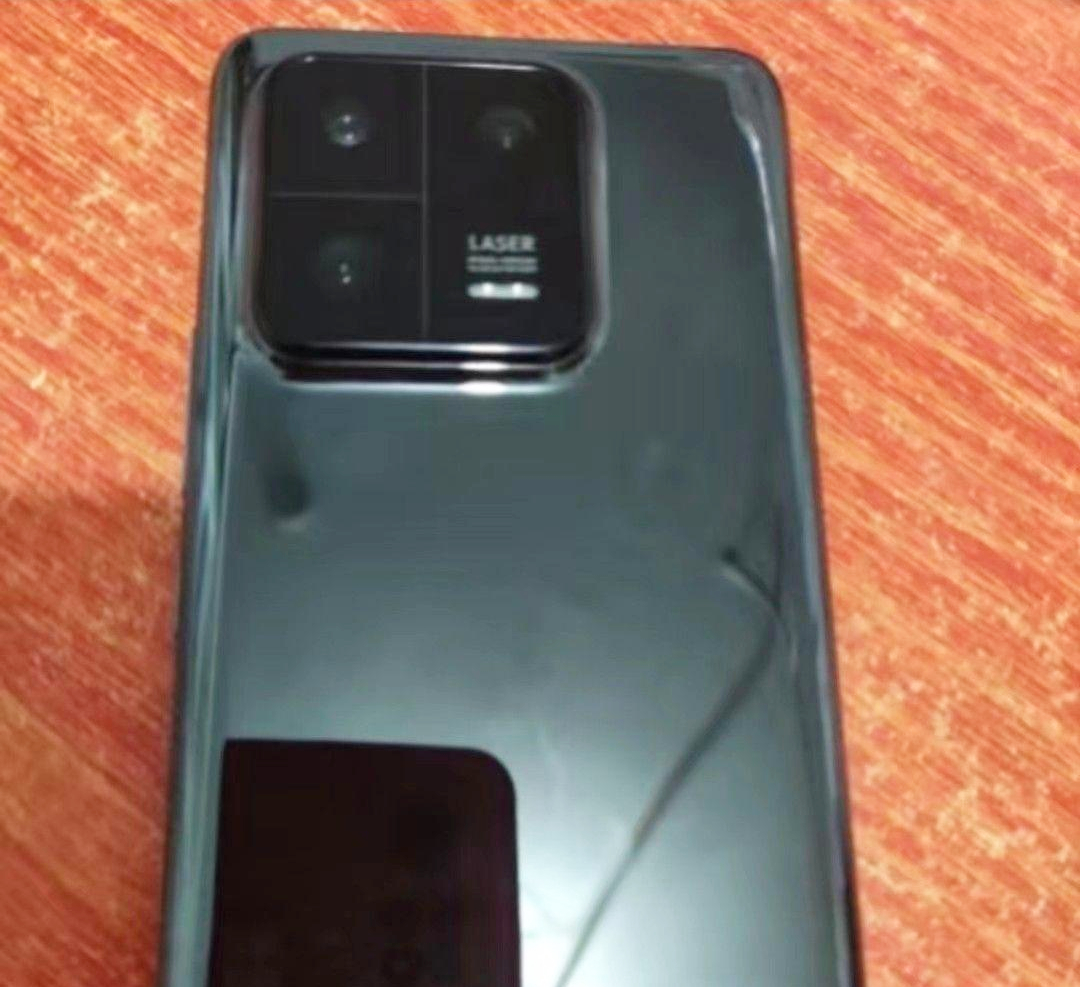
Now, a new leak shared by Cool APK has revealed the back panel of the vanilla Xiaomi 13. The image looks genuine, however, that does not prove that this is indeed a retail model of the Xiaomi 13.

Xiaomi 13
Alleged Xiaomi 13

Taking the look at the design, it is evident that the device is heavily inspired by the Xiaomi Mi 11 Ultra’s design language. The device features three cameras on the back along with a flash module. This drastic change in design makes it harder to believe that this is the upcoming Xiaomi 13. Xiaomi is said to launch the Redmi K60 series before the launch of the Xiaomi 13 series, so we won’t rule out the possibility that this could be a K60 series smartphone.

The camera island also has the word ‘LASER’ etched on it, which could device has laser autofocus. Unfortunately, this is the extent of information revealed by the image. Previous reports have revealed that the Xiaomi 13 will feature a 6.38-inch display, which is slightly bigger than the one on the Xiaomi 12. The resolution, however, will remain Full HD+.

The Pro model on the other hand is said to feature a 6.73-inch QHD+ panel with a 120Hz refresh rate. Under the hood, the device is expected to house the upcoming Snapdragon 8 Gen 2 chipset, which will draw power from a 5,000mAh battery capable of 120W wired fast charging and 50W wireless charging.

RELATED:

OnePlus Nord N300 launch timeframe tipped, key details revealed

OnePlus announced the OnePlus Nord N200 in June 2021. The alleged successor of the N200 was spotted at the FCC certification platform in June this year. According to The Verge, OnePlus spokesperson Spenser Blank has revealed that the OnePlus Nord N300 will be released in North America in November this year.

The publication revealed that the OnePlus Nord N300 will be powered by a MediaTek chip and feature a 90Hz refresh rate display. The report also reveals that the handset will carry support for 33W fast charging.

OnePlus Nord N200 5G

It is speculated that the OnePlus device with the CPH2389 model number will launch in the US with the OnePlus Nord N300. Apart from FCC, the device has also been spotted at the Bluetooth SIG authority. These certifications have revealed that the device will come with support for Bluetooth 5.3, NFC, Wi-Fi 802.11ac, and n2 / n25 / n41 / n66 / n71 / n77 5G bands. The other specifications of the device are yet to be confirmed.

OnePlus Nord N200 5G specifications

To recall, the OnePlus Nord 200 5G camera with a 6.49-inch IPS LCD FHD+ panel that offers a 90Hz refresh rate. The device has a 16-megapixel front-facing camera and a 13-megapixel (main) + 2-megapixel (depth) + 2-megapixel (macro) triple camera unit.

The Snapdragon 480 chip is present under the hood of the OnePlus Nord N200. It runs on the Android 11 OS with OxygenOS UI on top. The N200 has 4 GB of RAM, 64 GB of RAM, and a 5,000mAh battery with 18W fast charging support. For security, it has a side-facing fingerprint scanner. It was made available at a price of $239. Hence, it is likely the upcoming N300 may carry a similar price.

RELATED:

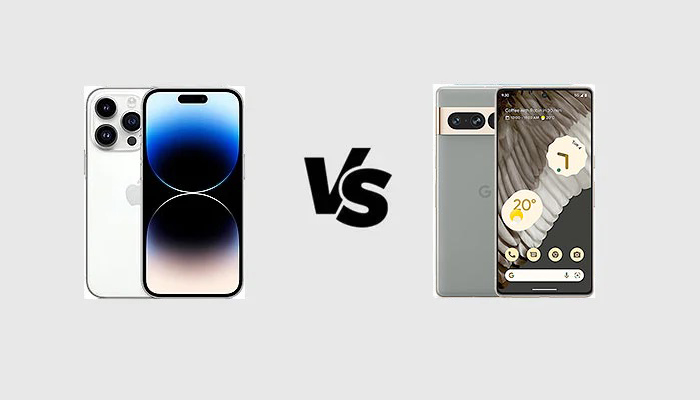
iPhone 14 Pro vs Google Pixel 7 Pro: Specs Comparison

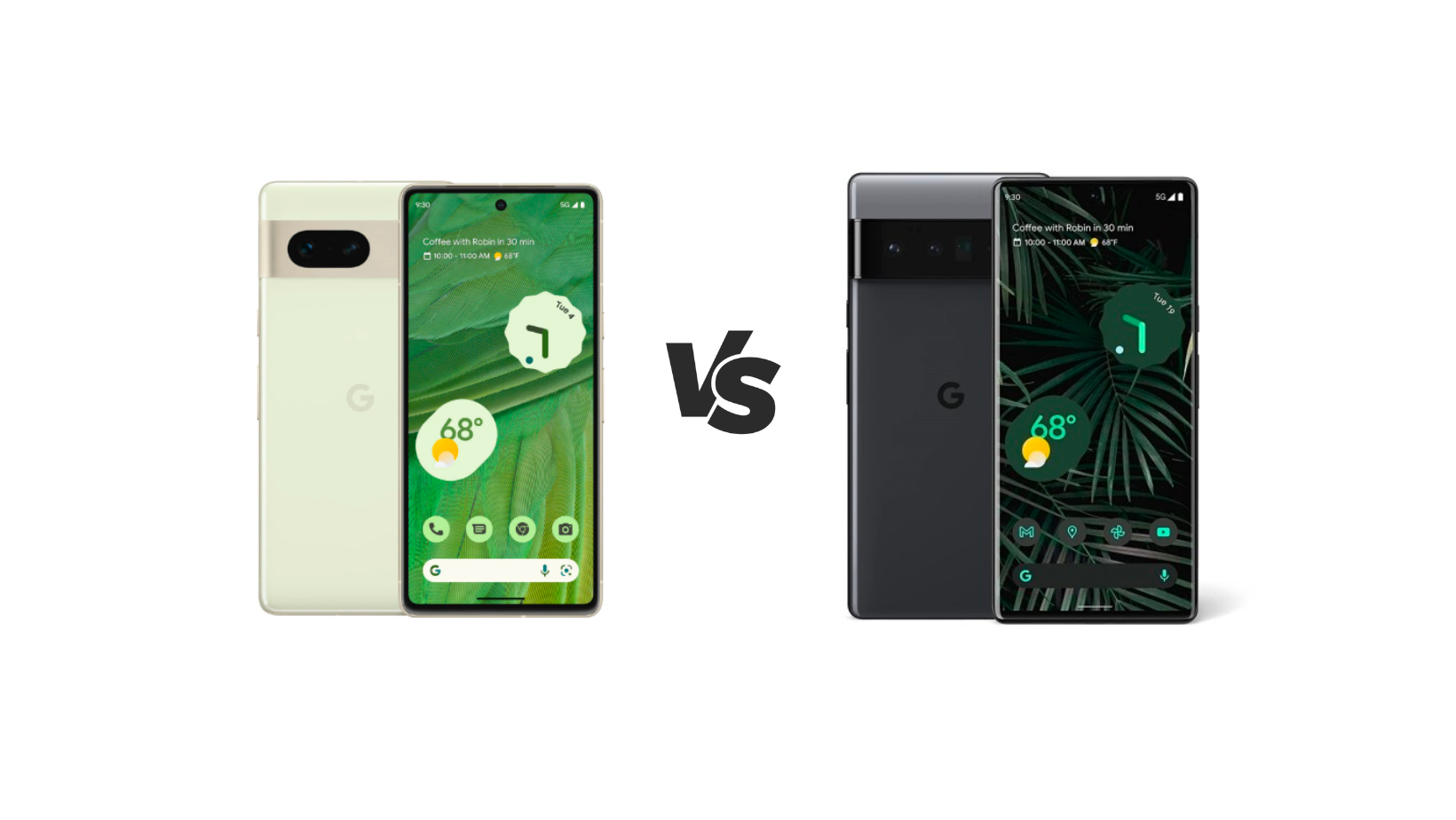
This year Google did even more serious things than last year by releasing the new Google Pixel 7 Pro. While last year Big G came up with its first flagship after a lot of time not releasing any, this year the new flagship is even more outstanding and it retains a very affordable price if compared to flagships from the other brands, even though it remains a top-tier phone. But with that price, is it really able to compete with the iPhone 14 Pro? Is it worth spending more for the Apple flagship or you can save a lot of money by purchasing the Pixel while still getting a very high quality? This is a comparison between the main specifications of the iPhone 14 Pro and the Google Pixel 7 Pro which will hopefully help you find out. Note that the opinions in this comparison are also valid for the iPhone 14 Pro Max with the exception of the dimensions, the display diagonal, and the battery capacity, which are bigger on the Pro Max variant.

Apple iPhone 14 Pro vs Google Pixel 7 Pro

Apple iPhone 14 Pro Google Pixel 7 Pro
DIMENSIONS AND WEIGHT 147.5 x 71.5 x 7.9 mm,
206 g
162.9 x 76.6 x 8.9 mm,
212 g
DISPLAY 6.1 inches, 1179 x 2556 pixels (Full HD+), Super Retina XDR OLED 6.7 inches, 1440 x 3120p (Quad HD+), AMOLED
PROCESSOR Apple A16 Bionic hexa-core 3.46 GHz Google Tensor G2 octa-core 2.85 GHz
MEMORY 6 GB RAM, 512 GB – 6 GB RAM, 128 GB – 6 GB RAM, 256 GB – 6 GB RAM, 1 TB 12 GB RAM, 512 GB – 12 GB RAM, 128 GB – 12 GB RAM, 256 GB
SOFTWARE iOS 16 Android 13
CONNECTIVITY Wi-Fi 802.11 a/b/g/n/ac/ax, Bluetooth 5.3, GPS Wi-Fi 802.11 a/b/g/n/ac/6e, Bluetooth 5.2, GPS
CAMERA Quad 48 + 12 + 12 MP + TOF 3D LiDAR scanner, f/1.8 + f/2.8 + f/2.2
Dual 12 MP + SL 3D f/1.9 front camera
Triple 50 + 48 + 12 MP, f/1.9 + f/3.5 + f/2.2
Single 10.8 MP f/2.2 front camera
BATTERY 3200 mAh with Fast charging 50% in 30 minutes and Qi wireless charging 15W 5000 mAh, Fast Charging 30W and Qi wireless charging 23W
ADDITIONAL FEATURES 5G, optional dual SIM, optional eSIM, MagSafe 15W, IP68 waterproof 5G, optional eSIM, IP68 waterproof

Design

Which design should you prefer? It is mostly a matter of taste. I personally prefer the iPhone 14 Pro for several reasons. First of all, it is way more compact, thanks to the presence of a smaller display. Further, it is built with better materials including glass for the back protected by Ceramic Shield and stainless steel for the frame. It even offers better water resistance with the IP68 certification allowing you to put it underwater up to 6 meters deep. Further, it comes with the iconic Dynamic Island, not liked by everyone but is a very futuristic feature. On the other hand, the Google Pixel 7 Pro offers a very original design including a horizontal bar for the rear cameras made of recycled material. It is built with a glass back and an aluminum frame, and it is waterproof with the IP68 certification allowing you to put it underwater up to 1.5 meters deep for a max time of 30 minutes.


Display

Here is a very hard fight since both phones come with outstanding flagship-class displays. Here, I would primarily choose by basing on the display diagonal: the iPhone 14 Pro has a compact 6.1-inch panel, while the Google Pixel 7 Pro has a big 6.7-inch panel: if you want a new phone for productivity, then the latter is a better choice in terms of display. For the rest, they both offer amazing displays, even though the iPhone 14 Pro should be slightly better. The Pixel has an AMOLED panel with a Quad HD+ resolution of 1440 x 3120 pixels, the LTPO technology enabling an adaptive refresh rate from 1 to 120 Hz, HDR10+ certification, an in-display fingerprint reader, and Gorilla Glass Victus protection. The iPhone 14 Pro has a Super Retina XDR OLED display with a Full HD+ resolution of 1179 x 2556 pixels, an adaptive refresh rate from 1 to 120 Hz, HDR10 certification, Dolby Vision support, as well as Ceramic Shield protection. In Dynamic Island, there are hardware sensors for Face ID, which is 3D facial recognition.


Specs & Software

The hardware of the iPhone 14 Pro is more convincing if paired with the amazing optimization of the iOS operating system. It is fueled by the Apple A16 Bionic built with a 4 nm production process and sporting an hexa-core architecture including two Blizzard performance cores running at a max frequency of 3.46 GHz, four Sawtooth energy cores running at 2.02 GHz, and a 5-core proprietary GPU. The SoC is paired with 6 GB of RAM and up to 1 TB of internal storage. The Google Pixel 7 Pro runs Android 13 out of the box and it is powered by the Google Tensor G2 mobile platform. It is a chipset built with a 5 nm production process and composed of two Cortex X1 CPUs running at a max frequency of 2.85 GHz, two Cortex A78 CPUs running at 2.35 GHz, four Cortex A55 running at 1.8 GHz, and a Mali G710 MC10. Alongside the chipset, there are 12 GB of RAM and up to 512 GB of UFS 3.1 native storage.


Camera

According to the experts of DxOMark, the Google Pixel 7 Pro is the best camera phone ever. It has a triple rear camera including a 50 MP main sensor with OIS and laser autofocus, a 48 MP telephoto camera with OIS and 5x optical zoom, and a 12 MP ultrawide sensor. The iPhone 14 Pro may not be the best ever, but it is still in the first places of the ranking with its 48 MP main camera paired with two 12 MP sensors for zoom and ultrawide shots.


Battery

The Google Pixel 7 Pro has a much bigger battery than the iPhone 14 Pro Max: if you want a comparable battery life from an Apple device, then you should go for the Pro Max.


Price

The iPhone 14 Pro starts from €1300 or $1300 in Europe (prices vary depending on the market), while the Google Pixel 7 Pro costs just €899 or $899. Which one would you pick?


Apple iPhone 14 Pro vs Google Pixel 7 Pro: PRO and CONS

Apple iPhone 14 Pro

PRO

  • Great build quality and design
  • Superior chipset
  • Face ID
  • Compact
  • Up to 1 TB of storage

CONS

  • Smaller battery


Google Pixel 7 Pro

PRO

  • Wider display
  • Bigger battery
  • More affordable
  • Better zoom capabilities

CONS

  • Inferior chipset
  • Dimensions

RELATED

Check the latest videos from our YouTube channel and subscribe:

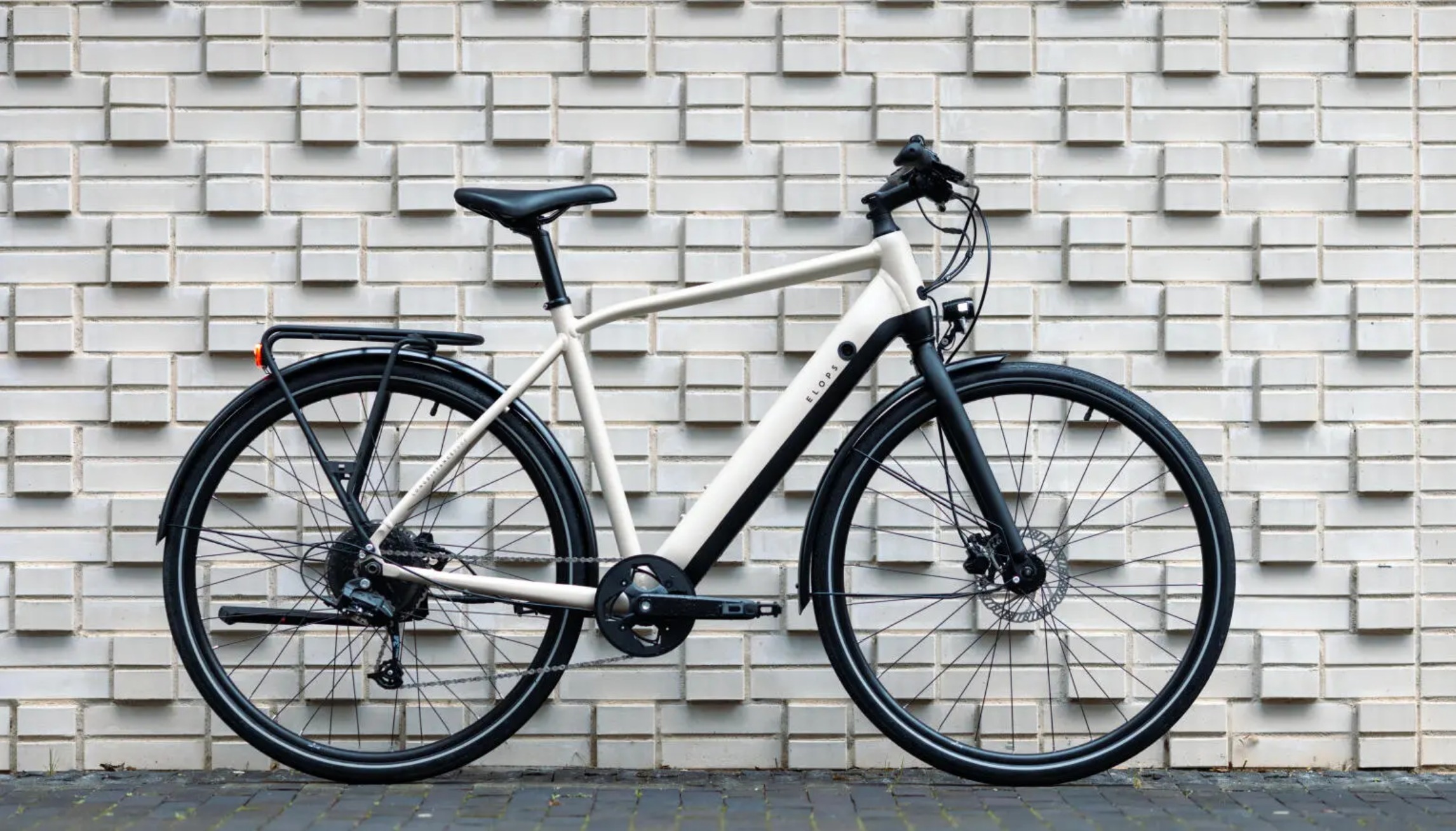
Decathlon Elops LD500E e-bicycle with a 115km range, 250W drivetrain launched

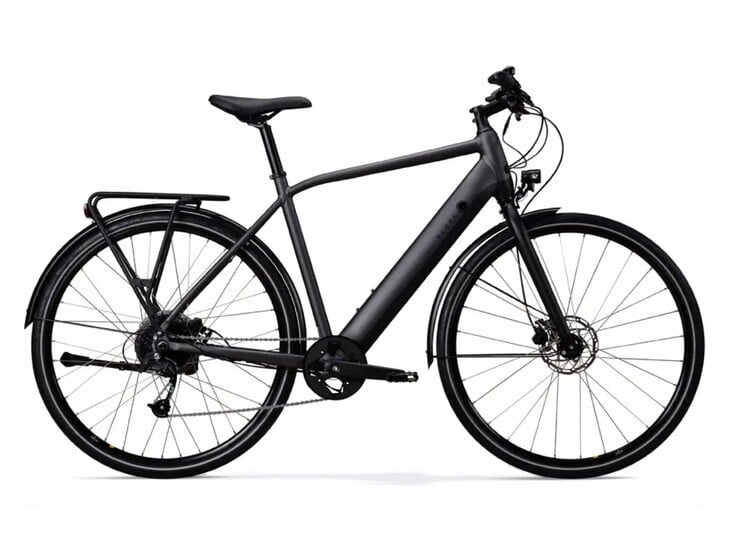
Renowned sports gear manufacturer Decathlon has unveiled a new electric bicycle in Europe dubbed Elops LD500E. The e-bike is presently available in France and Germany, among other European nations.Decathlon Elops LD500E electric bicycle

The Decathlon Elops LD500E electric bicycle is said to be ideal for longer trips and city riding. The bike’s frame is made of 6061 aluminium and it weighs 23 kg. It packs an LCD display panel on the handlebar that displays the speed and battery charge level. The display can be used to choose one of the three power levels or walk assistance mode.

The electric bike’s 504 Wh battery offers a single charge range of up to 115 km (71 miles), and it can be fully recharged in around seven hours. With a 1×8 speed transmission and a torque sensor incorporated into the bottom bracket, the 250 W motor can provide up to 45 Nm of power, providing assistance that feels natural to the rider.Decathlon Elops LD500E electric bicycle

Additionally, a built-in USB connector allows you to charge gadgets while on the go. BLUELINE AXA Shorter stopping distances are made possible with the TEKTRO TKD32 hydraulic disc brakes, which also have lights and reflective strips on the tires to help you see and be seen.Decathlon Elops LD500E electric bicycle

The Decathlon Elops LD500E e-bike costs €1,649 (about $1,602). For riders who are 1.55 to 1.74 m tall, a low frame model is offered in a Gray-green in sizes S to M. For riders who are 1.65 to 1.95 meters tall, a high-frame variant is available in Anthracite gray in sizes M to XL.

RELATED


(source)


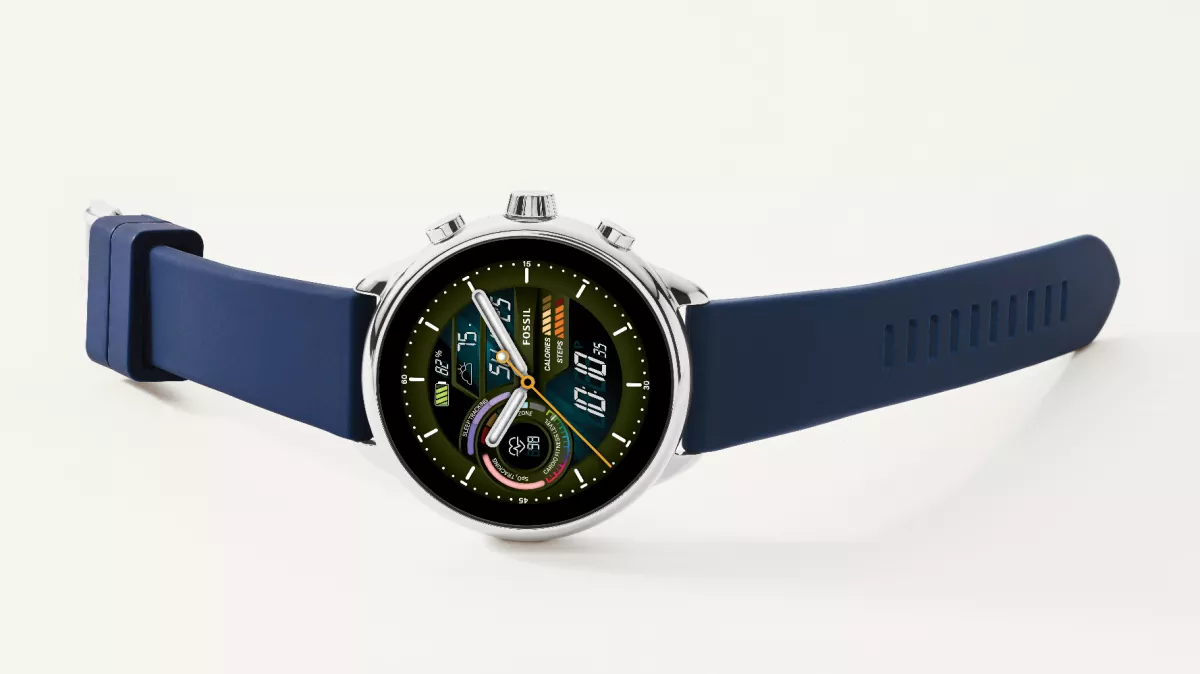
Fossil Gen 6 Wellness Edition launched as the company’s first Wear OS 3 Watch

Fossil has launched the Gen 6 Wellness Edition, the first Fossil smartwatch to run Wear OS 3. It comes with a sleek design and will introduce a new Wellness mobile app for health and fitness tracking. The watch will go head-to-head with the newly launched Pixel Watch. It is powered by the Snapdragon 4100+ chipset and supports fast charging. Let’s have a closer look at the details.

Fossil Gen 6 wellness edition

The Gen 6 Wellness Edition has a 1.28-inch touchscreen display with AOD (always-on display) functionality and ambient light sensing. It looks similar to the other members of the series and is available in a sole 44mm case size. The watch is offered in three colors—black, silver, or rose gold.

It is powered by the Snapdragon 4100+ chipset, which is also found on the rest of the Gen 6 watches. The processor is paired with 8GB of storage and 1GB of RAM. It features a compass and an altimeter and supports on-wrist calls when paired with a compatible smartphone. The watch also comes with three new watch faces.

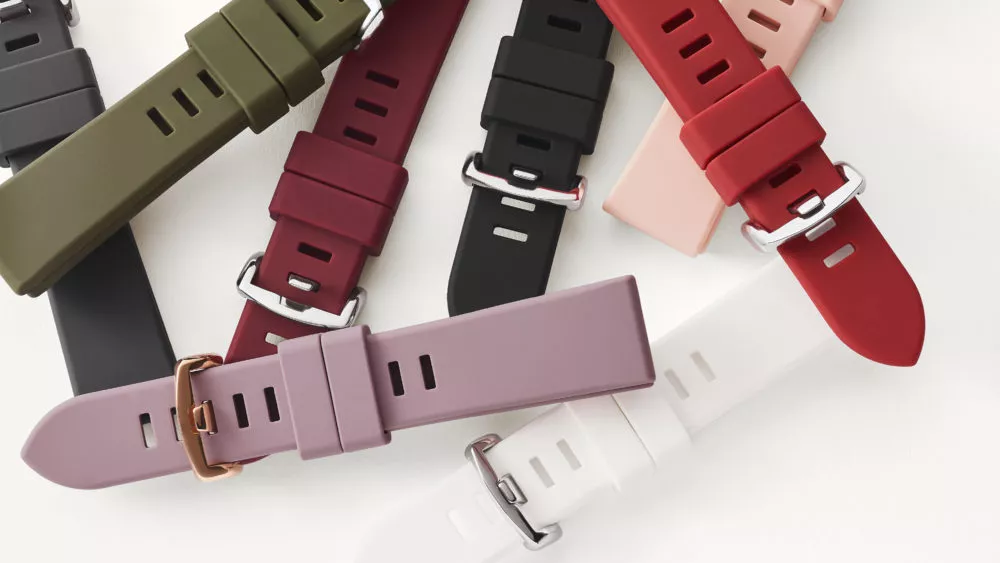
Fossile Gen 6 wellness edition straps

Further, the watch runs the latest Google Wear OS on a newly designed user interface. It also introduces an exclusive app for recording important health and fitness data. Aside from existing features of the Gen 6 lineup, the watch also sports SpO2, heart rate, sleep tracking, and automatic workout detection. It does not support Google Assistant but makes up for that with Amazon Alexa.

It comes with Bluetooth V5.0 and supports NFC. The Fossil Gen 6 Wellness Edition will be available for purchase on fossil.com or in official Fossil stores starting on October 17. It has been priced at $299.

RELATED:

Possible Honor 80 Pro+ specifications leaked, could feature Snapdragon 8+ Gen 1, 200MP Camera

The Honor 70 series was launched in May this year, and rumors about the upcoming Honor 80 series are already making the rounds. The lineup is expected to include three smartphones— Honor 80, 80 Pro, and 80 Pro+. In the latest development, a popular tipster claims that an Honor handset, likely the 80 Pro+, will come equipped with a Snapdragon 8 Gen 1 chipset, 12GB of RAM, a 200MP camera, 100W charging, and more. Here are the details.

According to Chinese leaker Digital Chat Station, a new Honor device with a 1.5K AMOLED display is in the works (via Playfuldroid). The device has a “flexible screen,” which suggests it could have curved edges. In addition, the handset features a Snapdragon 8 Plus Gen 1 chipset and 12 GB of RAM under the hood.

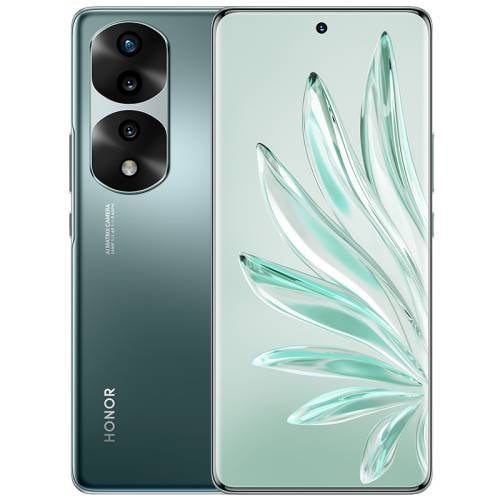
Honor 70 Pro Plus
Honor 70 Pro Plus

Further, the tipster reveals that the alleged handset will have support for 100W charging. However, he did not specify the battery capacity of the device. The smartphone is also claimed to feature a 200-megapixel primary camera.

This handset is expected to be the upcoming Honor 80 Pro+, which will likely be the higher-end model in the Honor 80 series. It will likely debut alongside the vanilla Honor 80, which is rumored to be equipped with a Dimensity 1080 SoC. Honor 80 Pro with a Snapdragon 778G may also tag along.

To recall, the previous-generation Honor 70 Pro+ comes with a Dimensity 9100 SoC paired with up to 12GB LPDDR5 RAM and 256GB UFS 3.1 storage. It packs a 4600mAh battery and supports 100W fast charging. The device features a 6.78-inch display offering a QHD+ resolution and 120Hz refresh rate. It sports a triple rear camera setup featuring a 54MP primary lens.

Related:

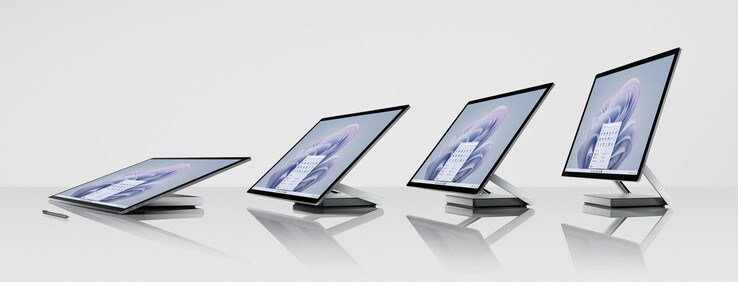
Microsoft Surface Studio 2+ launched with Intel Core i7-11370H chip and NVIDIA GeForce RTX 3060 GPU

Microsoft recently held a hardware launch event where it unveiled a bunch of new products including the Surface Laptop 5. Surprisingly, the company also introduced Surface Studio 2+, whose predecessor debuted back in October 2018. It comes with the same display as the last-gen model but features a new Core i7-11370H, which is a quad-core 35W chip. Studio 2+ also features an Nvidia GeForce RTX 3060 GPU. Let’s take a closer look at the details.

The new Surface Studio 2+ arrives with almost the same design and appearance as 2018’s Surface Studio. However, it features some changes in the internal hardware. It is powered by a quad-core 35W Intel Core i7-11370H chip, which is basically the same CPU that was packed inside the Surface Laptop Studio. In addition, it comes with an Nvidia GeForce RTX 3060 GPU, which is an upgrade from the GTX 1070.

As mentioned, the Surface Studio 2+ comes with almost the same display as its predecessor. It has the same 28-inch PixelSense display, which offers a 4,500 x 3,000-pixel resolution and a 60 Hz refresh rate. While its display dimensions are identical to the previous model, Studio 2+ does come with a thinner base. However, it still weighs over 9 kg.

Microsoft Surface Studio 2+-2

Further, the Surface Studio 2+ is offered with 32 GB of DDR4 RAM and 1 TB of storage. It comes with a 3.5 mm headphone jack, a Gigabit Ethernet, two USB 3.1 Type-A ports, and three USB Type-C (USB 4.0/Thunderbolt 4) ports.

The Surface Studio 2+ comes in a sole 32GB RAM + 1 TB storage variant. The machine is definitely not cheap. It retails for $4,499.99 and will go on sale on October 25.

RELATED:

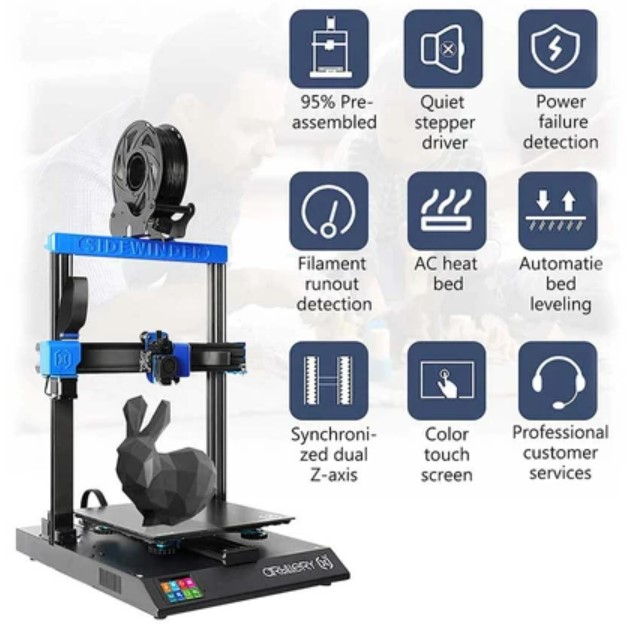
Deal: Get Artillery Sidewinder X2 3D Printer at a discounted price of $269 on Geekbuying

Artillery Sidewinder X2 3D Printer is now available at a discounted price on geekbuying.com. The printer that generally retails for $279 is now available at a discounted price of $269 only in the US using the coupon code: NNNASX20229. EU customers can avail of the discount by using the code: NNNX2SUPERDEAL.

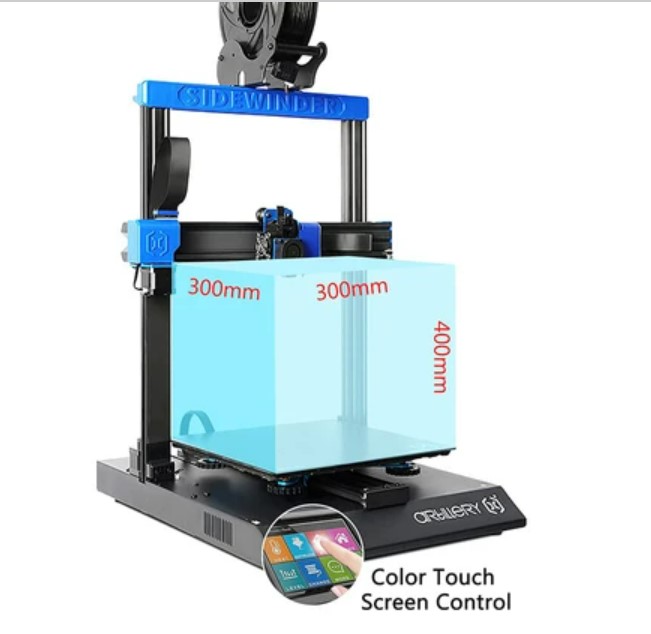
Artillery Sidewinder X2 3D Printer is a3D printer that comes with features like ABL auto-calibration,  exclusive heat bed protection, automatic bed leveling, etc. The printer comes with a matrix automatic bed leveling function that supports dynamic leveling compensation and adds to the efficiency of the printer and frees you from the complex and tedious manual leveling process. 

Artillery Sidewinder X2 3D Printer

The device comes with a large printing space of 300mm x 300mm x 400mm which is great for almost all your creative works and projects. It features a synchronized dual z-axis design and a double lead screw and loose screw synchronous belt that gives you a great synchronizing performance and high-quality output. Moreover, the dual z-axis design helps you with complex layer patterns. 

Artillery Sidewinder X2 3D Printer

Other features include detection of power interruption and filament run out with a special alarm for when the filament is about to run out, auto printing resumption, ultra-quiet printing, 32-bit motherboard, temper glass platform, AC heat bed, intelligent and smart touch control panel, high-quality broadband power supply, etc.

Generally retailing for $279 you can now buy Artillery Sidewinder X2 3D Printer for a discounted price of $269 only on geekbuying.com. Please note that this is a limited-time offer. 

Please note that the above price is region-specific and the final price may vary according to your shipping region, and regional taxes.  

For more information on such exciting deals and offers check out our deals hub.

Google clarifies the Tensor G2 is a 5nm process chip and not 4nm

Google last week announced the Pixel 7 series with a new Tensor G2 chipset under the hood. The much-anticipated launch threw up some details about the self-developed chipset but one misconception was that the chipset is built on a 4nm Samsung process. This may not be unconnected to earlier rumors that the second-generation Tensor chip will be built on a 4nm process. Google has now clarified that the Tensor G2 actually uses a 5nm process technology.Google

According to Android Authority, a Google spokesperson has confirmed that the Tensor G2 is built on the 5nm process. The exec further disclosed that the chip was developed specifically for real-world use cases with improvement in its performance and energy efficiency. This approach also enables the US firm to add new capabilities while taking a step forward in machine learning using its next-generation TPU and G2.

So, Tensor G2 is actually a 5nm process chip. However, Google is yet to officially reveal the exact node process and manufacturer. There is no doubt, though, that Samsung is Google’s main partner in this regard. On Samsung’s roadmap, there are two 5nm process nodes, the 5LPE used by the original Tensor and the subsequent 5LPP. It is not clear at the moment which node process Tensor G2 uses.

This should come as a surprise, though, as the current process used on existing flagship processors like the Snapdragon 8 Gen 1 and Exynos 220 is the 4nm process. The reduction in size makes these 4nm processors potentially more powerful than 5nm chips. The next-gen processors are expected to migrate to a 3nm process with the associated increase in performance and energy consumption.

RELATED:


(source)


Ambrane Wise EON Pro Smartwatch launched in India with Bluetooth calling, 10-day battery life

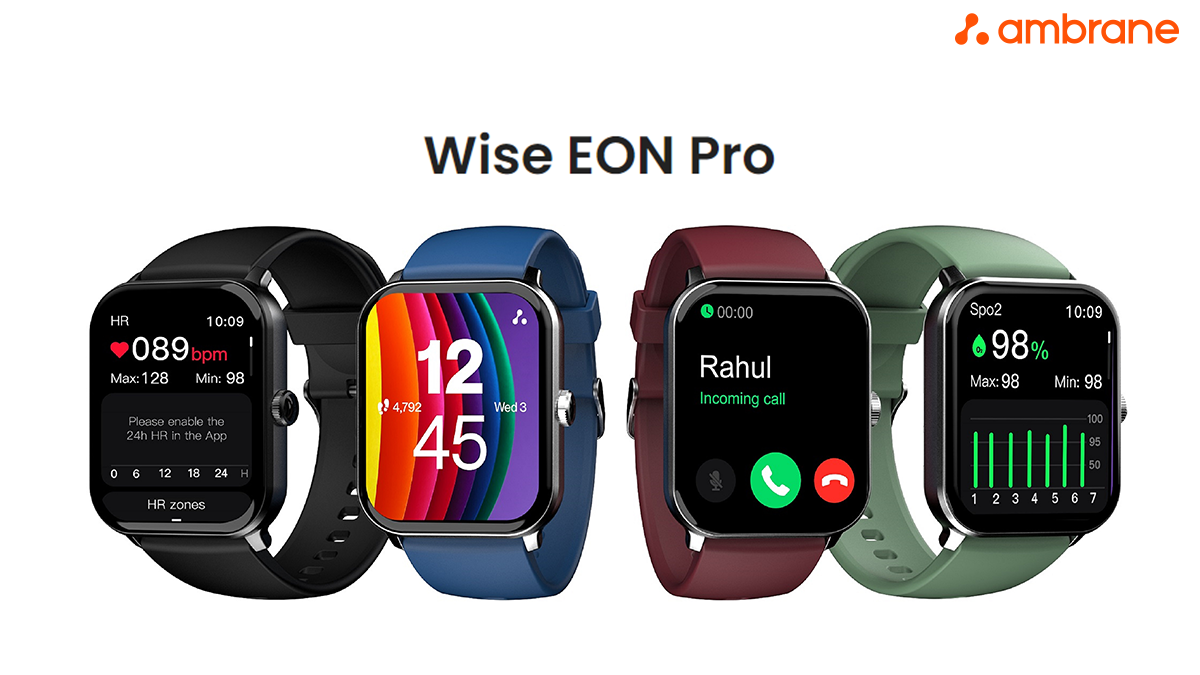
Ambrane has launched a new smartwatch under its Wise series. The product in question is called the Ambrane Wise EON Pro. The wearable comes packed with many impressive features and is super easy on your wallet. It sports a 1.85-inch display that offers a peak brightness of 550 nits. EON Pro also features a dialer, microphone, and speaker for Bluetooth calling. Let’s have a closer look at the price and specifications of the newly launched smartwatch.

Ambrane Wise EON Pro Specifications

The newly launched Ambrane Wise EON Pro smartwatch comes with a 1.85-inch LucidDisplay offering 550 nits of peak brightness and a 240×280 pixel resolution. The watch has a classic cube dial and is fitted with silicone straps.

The wearable comes with various health monitoring features, including a SpO2 sensor, blood pressure tracking, heart rate monitoring, sleep tracking, breathing training, calorie tracking, and more. In addition, it has over 100+ sports modes, including but not limited to running, walking, cycling, gymnastics, yoga, hiking, cross-fit, dancing, karate, taekwondo, horseback riding, and disc games.Ambrane-Wise-EON-Pro-Smartwatch

As mentioned, the watch also comes equipped with a microphone, speaker, and an inbuilt dialer for Bluetooth calling. You can also give commands to voice assistants through the smartwatch itself. The wearable features over 100 cloud-based watch faces, and it uses Bluetooth V5.0 for connectivity. It also comes with three built-in games and has smart controls for the remote, camera, and music player. The smartwatch has an IP68 water and dust resistance rating. Ambrane claims the Wise EON Pro smartwatch can last for up to 10 days on a single charge.

Pricing and availability

The Ambrane Wise EON Pro Smartwatch has been launched in 4 colors— red, blue, green, and black. It is priced at Rs. 1799 and can be purchased via Flipkart and Ambrane’s official website.

While you are here, check out some of the best Redmi Pad alternatives in India.

RELATED:

Belkin launches iPhone 14 series accessories in India

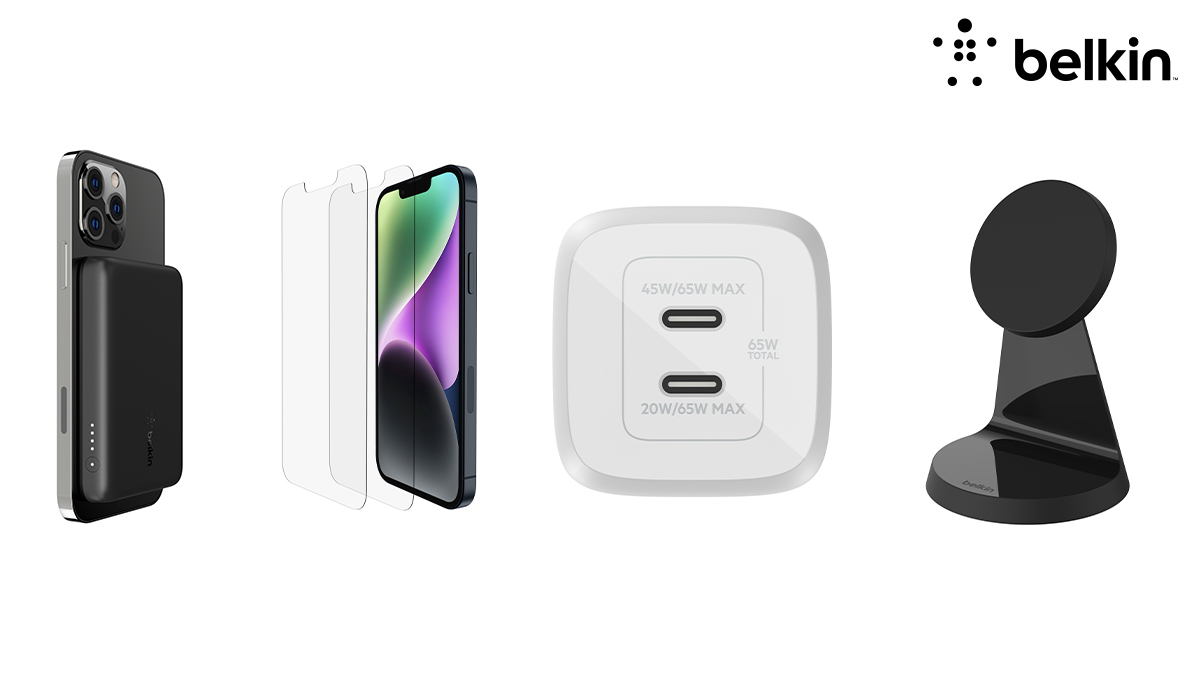
It’s nearly been a month since Apple announced its iPhone 14 series. Now American Belkin is widely known for smartphone and PC accessories has launched its new range of accessories for the iPhone 14 lineup. The new products include a screen protector, charger, MagSafe power bank, and wireless charger. 

Belkin iPhone 14

Beginning with the screen protector, Belkin is offering two tempered glasses that are compatible with iPhone 14, iPhone 13 and 13 Pro. The screen protectors offer great response and clarity. It features an anti-microbial agent and is claimed to offer robust protection. 

Next up is the Belkin Boost Charge Pro Dual USB-C charger. It is a GaN-certified wall charger with PPS that offers a charging speed of up to 65W. It comes with two USB-C ports that can be used to charge MacBook Pro or Air or rapidly charge two smartphones at once. The brick offers 65W full fast charge when a single port is used and up to 45W from the top port and 20W from the bottom port while using to charge two devices. 

Belkin’s wireless power bank is also called Boost Charge Magnetic. It provides a convenient way of keeping their iPhone’s battery fuelled by just sticking the magnetic brick on the back panel of the smartphone. The power bank has a 2,500mAh battery cell. It has a slim and portable design along with LED indicators that alerts the user when the charger needs to be refuelled. There is also a USB-C port that delivers power at up to 10W to compatible devices. 

Lastly, the Belkin Boost Charge Magnetic Wireless Charger stand is a charger stand where users can stick their iPhone magnetically and allow it to charge. It is MagSafe compatible and offers 7.5W charging speed. Apart from charging, the device also doubles up as a stand allowing users to use their smartphone in portrait or landscape mode. 

The two-pack screen protector is priced at Rs 1,999 and is available for purchase from Amazon. The Belkin Boost Charge Magnetic and Boost Charge Magnetic Wireless Charger stand are priced at Rs 4,499 and available for purchase from Amazon. The Belkin Boost Charge Pro Dual USB-C charger costs Rs 5,999 and can be purchased from Flipkart. 

Related:

*Please Note: When you buy something using the links in our articles, we may earn a small commission at no cost to you.

Xiaomi launches the MIJIA smart self-cleaning drink maker with a 4L water tank

Xiaomi has unveiled the MIJIA smart self-cleaning drink maker in China. The new MIJIA cooking machine can be cleaned automatically and comes with lots of cooking options. The cooking machine can seamlessly carry out cooking tasks like pulping and thereafter clean and sterilize itself. Once the cup is changed after cooking, the automatic cleaning is turned on. So, you take to get water for your hot beverage or quick meals from the MIJIA smart cooking machine.MIJIA smart self-cleaning cooking machine

The MIJIA smart self-cleaning drink maker uses triple cleaning technology of the blades stirring the water, 75ºC high-temperature cleaning, and high-temperature steam sterilization. The smart food blender has a 6-leaf stainless steel knife for the effective blending of ingredients. There are 9-speed control gears and the user can adjust the hardness or softness of the grinding as desired. The MIJIA cooking machine’s 4L water tank can accommodate two cycles of pulping and self-cleaning at maximum capacity. When heated, the water in the tank can remain hot for up to four hours.MIJIA smart self-cleaning drink maker

When connected with the MIJIA app, users of the smart drink maker can draw from 50+ cloud-based cooking recipes. Popular recipes include soy milk soup, milkshakes, tea, and other exquisite drinks and cuisines.MIJIA smart self-cleaning cooking machine

The MIJIA smart self-cleaning drink maker is available in China at a retail price of 1,099 yuan (~$153). It can be purchased from popular retail outlets like JD.com. We are not likely to see this product launched outside China any time soon.

Related:


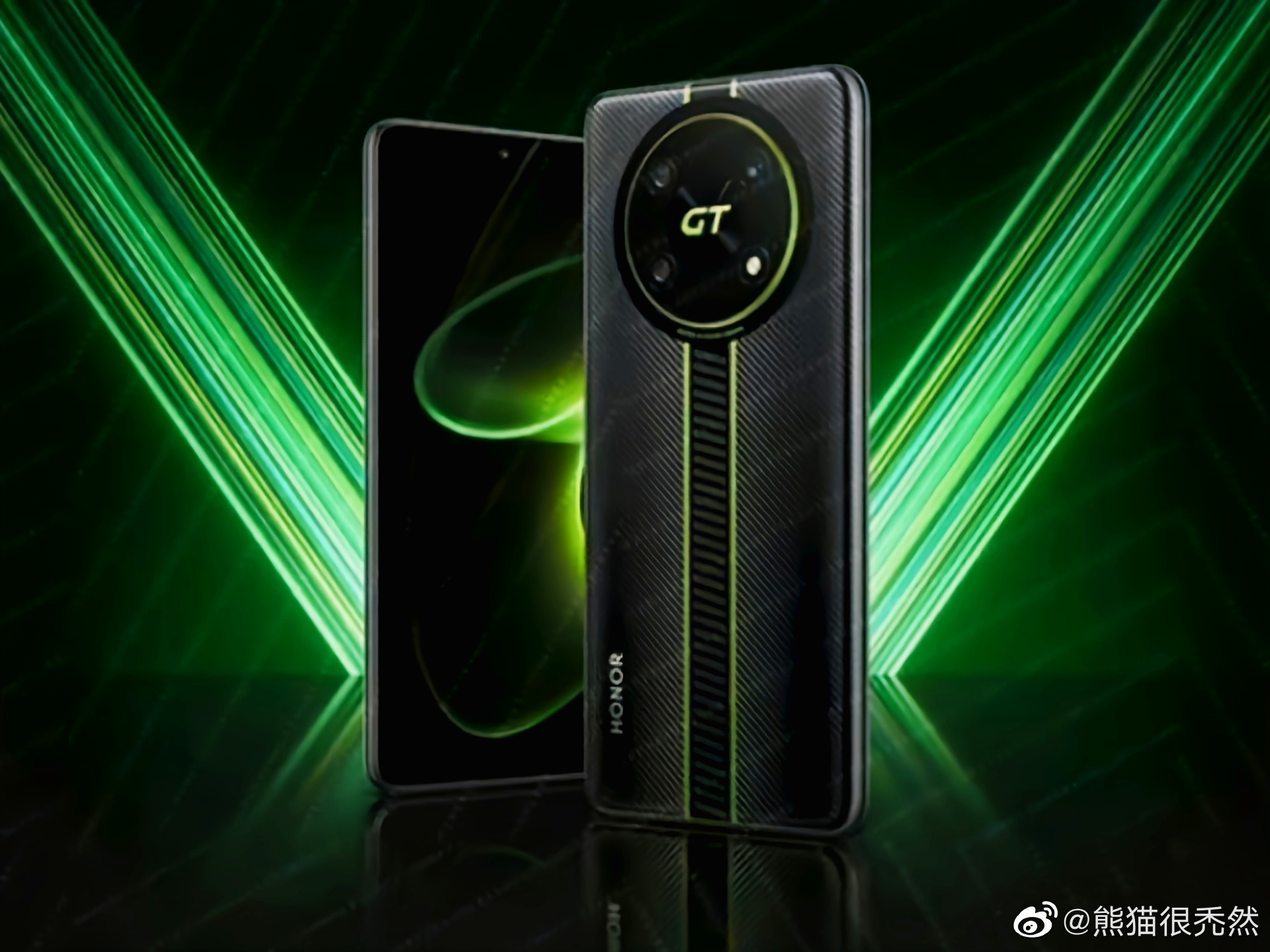
Honor X40 GT with 144Hz display, Snapdragon 888 SoC launched

Honor X40 GT has launched in China today. It is the latest offering in the X40 series after the regular version that debuted last month. The latest offering packs upgrades over the standard variant. Read on to know what it offers out of the box. 

Honor X40 GT image
Honor X40 GT render

The Honor X40 GT sports a 6.81-inch IPS LCD display bearing a resolution of 2,388 x 1,080 pixels. There is a centre-aligned punch-hole camera and a 144Hz refresh rate, The device features a side-mounted fingerprint scanner embedded in the power button. 

The Honor X40 GT has a circular camera module housing three sensors and an LED flash in X-formation. The smartphone’s camera setup comprises a 50MP main sensor, 2MP depth of field lens, and a 2MP macro unit. There is a 16MP front-facing selfie snapper. 

Under the hood, the Honor X40 GT is equipped with a Snapdragon 888 processor. It packs up to 12GB RAM and 256GB storage. There is 7GB virtual RAM support. The smartphone also features a VC liquid cooling system for heat dissipation. The device draws its power from a 4,800mAh battery unit with support for 66W fast charging. Software-wise, the Honor X40 GT runs on MagicUI 6.1 based on Android 12. 

Connectivity options on the Honor X40 GT include 5G, WiFi, Bluetooth, USB-C port, and a 3.5mm headphone jack. 

The Honor X40 GT starts at RMB 2,099 (~$292) for the base 8GB + 256GB variant whereas the 12GB + 256GB option costs RMB 2,399 (~$334). The device is offered in Racing Black, Midnight Night Black, and Titanium Empty Silver colours. 

Related:


Motorola India announces rollout of 5G update for its compatible phones by first week of November

Apple and Samsung confirmed rollout timelines for 5G support software updates for their devices yesterday. Now, Lenovo-owned brand Motorola has announced that its 5G-compatible smartphones will receive a software update that will enable users to access the 5G network on their devices. 

5G was launched in India earlier this month and Airtel has started rolling out services in eight Indian cities. The telecom operator has also released a list of Motorola devices that will support its cellular connectivity. Motorola confirmed that its devices will be receiving a 5G update in the subsequent weeks. The company is expecting to finish the rollout by the first week of November. The Motorola Edge 30 Ultra and Edge 30 Fusion are already receiving a 5G update this week. 

The software update will be rolled out via OTA. Four Motorola smartphones including the Moto G62 5G, G82 5G, G71 5G, and Edge 30 will receive it on October 25th. The Moto Edge 30 Pro, Moto G51 5G, Edge 20 Pro, Edge 20, and Edge 20 Fusion will get the 5G support update on November 5th. The software update will bring support for Jio’s standalone and Airtel and Vodafone’s non-standalone networks.

In a statement, Motorola Asia Pacific’s Executive Director said “Motorola 5G smartphones in India, across categories, have hardware support for 11 to 13 5G bands including all 8 Sub 6 GHz 5G bands that have been announced in India.”

Related:


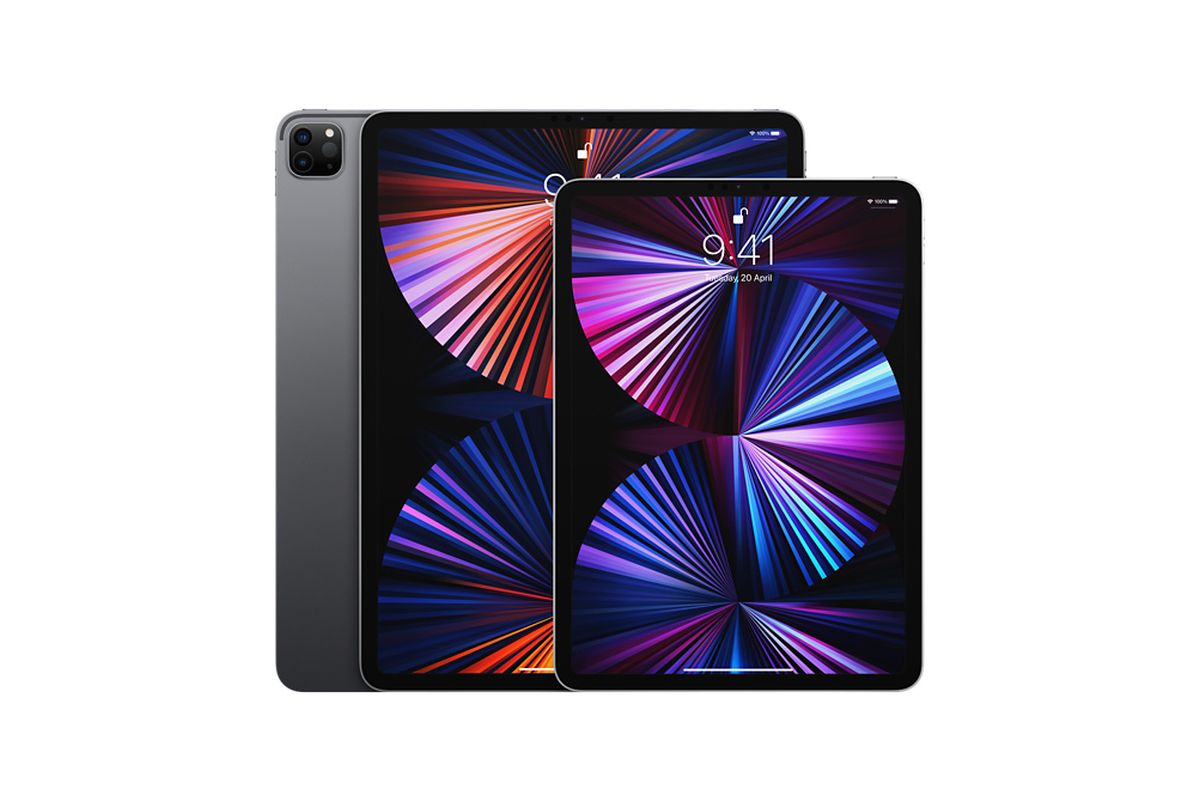
Future Apple iPad to feature Hybrid OLED & thinner designs: Report

A new report has just revealed interesting details regarding future Apple iPads. Apparently, the tablet will be thinner in the new feature thanks to a new Hybrid OLED display technology.

Apple
iPad Pro 2021

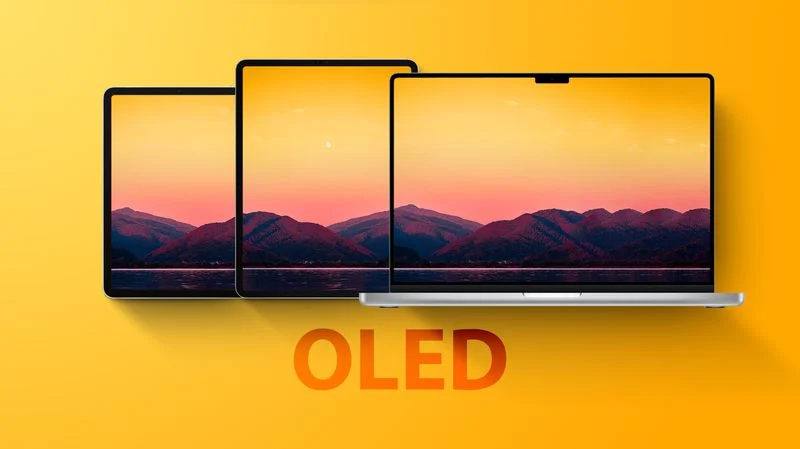
According to a DigiTimes report, the Cupertino based giant is planning on adopting a new breed of OLED panels that combine the rigid OLED glass substrates with flexible OLED thin film encapsulation. This process apparently is more affordable than flexible OLED production since it doesn’t require a backlighting layer. Furthermore, it is rumored that Apple will adopt this display technology by 2024.

The same rumor also claimed that the reason the brand is shifting to Hybrid OLED for iPads and retaining flexible OLEDs for its iPhones is because of the visible “crumple” of the latter on larger screen sizes. Apple is apparently bringing in a new manufacturing partner into its supply chain, which will likely make some panels for upcoming refreshes for the 12.9 inch iPad Pro or possibly the MacBook Pro. The supplier in question is Taiwan SMT (Surface Mounting Technology).

Apple

As of right now, the only Apple product to use mini LED technology is the 14 inch and 16 inch MacBook Pro and 12.9 inch iPad Pro models. Interestingly, all three models are expected to feature refreshed M2 chips that should launch by the end of this year. Apple is expected to continue to use this mini LED technology until it adopts the Hybrid OLED technology.

RELATED:


Xiaomi to roll out 5G support for most of its phones in India by Diwali

A Xiaomi executive has just revealed that the company will soon be rolling out a software update that will bring 5G support to most of its smartphone models in the Indian market.

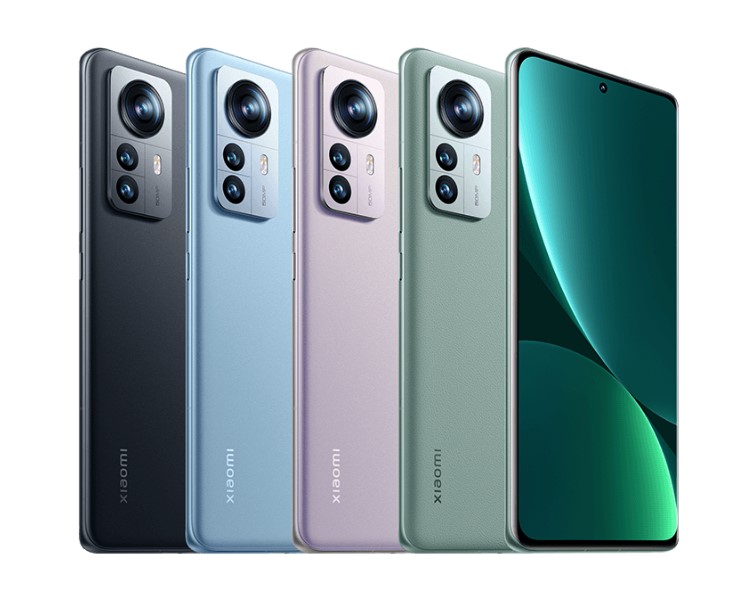
xiaomi 12 pro

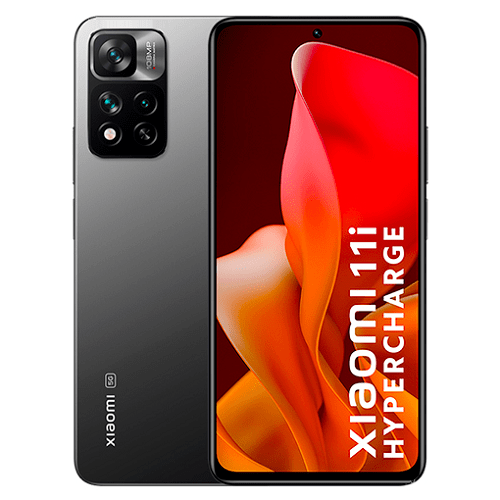
The Chinese tech giant has already rolled out the update for select smartphone models. Now, according to Muralikrishnan B, President of Xiaomi India, “100 percent of our 5G smartphone models support the NSA network out of the box, wherein users can choose ‘Prefer 5G’ in network settings to connect to the 5G network. Whereas, for seamless SA support, we have already started rolling out the FOTA updates to select devices like Xiaomi 12 Pro 5G, Mi 11X Pro, Xiaomi 11i, Xiaomi 11i Hypercharge, among others. Most devices will start receiving OTA updates by Diwali.”

As of right now, Bharti Airtel and Reliance Jio are the only two telecos that are launching 5G networking in India with both the SA (Standalone) and NSA (Nonstandalone) mode in major cities like Delhi, Mumbai, Kolkata, and Varanasi. Notably, the brand is one of the first to bring 5G support for its smartphones that support the newer networking standard. Oppo is one of the companies that has offered full 5G support for its 5G phones, while Apple is set to offer 5G support soon.

Xiaomi 11i HyperCharge

Similarly, Samsung will also bring software update by mid November and Google will roll out software support for the Pixel 6 series and Pixel 7 series of smartphones sometime soon as well. Muralikrishnan added that “We have 20+ 5G enabled devices across price points and have shipped 7 million+ 5G smartphones in India from May 2022 to June 2022. We will continue to provide relevant support to the government and telecom operators to ensure 5G readiness for users across the length and breadth of India.”

RELATED:


Garmin Instinct Crossover hybrid smartwatch accidentally leaked ahead of launch

Garmin had quietly launched five new smartwatches from its MARQ series of luxury wearables. Now, it appears that the company is yet again gearing up for another launch. This time, it appears that its a hybrid smartwatch model, dubbed the Garmin Instinct Crossover.

Garmin

However, prior to any official announcement, it appears that the upcoming hybrid smartwatch has been leaked. One of the brand’s manufacturers accidentally leaked a new outdoor watch, which was spotted on the manufacturer’s Taiwanese website. THe product page showcases three color options as well, namely Black, Solar – Tactical Edition, and Solar – Graphite. These solar models will feature solar powered batteries, while the tactical edition will offer notable features like night vision and stealth modes.

The watch will sport a display that has a 176 by 176 px resolution and a circular panel. As per the listing, the device can last for up to 28 days on a single full charge on the Smart Watch Mode or up to 30 days, with the solar charging feature. Furthermore, the wearable also supports dual format GPS and can even receive notifications from a connected Android or iOS device. It also supports contactless payment through Garmin Pay.

Garmin

In many ways, the Instinct Crossover is similar to the regular Instinct smartwatch models. However, the key difference lies in its analogue clock with luminescent physical watch hands situated on top of the display. This is what makes it a hybrid watch, which also features RevoDrive auto-calibration technology that ensures accurate time being displayed in the case of any shocks that the watch might face. The pricing for this model is still unknown, so stick around for more updates.

RELATED:


Google Pixel 7 vs Pixel 6 – Specs Comparison

The Google Pixel 7 series was announced around early October and the phones have started to ship globally. Both the Pixel 7 and the Pro variants are getting good popularity due to solid launch day offers on them. However, before you decide to get hold of the new Pixel devices, it might be a good idea to check how they compare to their predecessors. 

In this article, we’ll be taking a close look at the Pixel 7 vs Pixel 6 and see how they both are similar yet dissimilar in a number of departments. One of the biggest upgrades on the Pixel 7 is the new second-gen Google Tensor G2 processor, which brings a number of improvements over last year’s Tensor chip.

There are differences in the dimensions and the camera departments too, so let’s take a look at how the new model compares to last year’s Pixel 6.

Pixel 7 vs Pixel 6
Pixel 7 vs Pixel 6

Google Pixel 7 vs Pixel 6

Google Pixel 7 Google Pixel 6
DIMENSIONS AND WEIGHT 155.6 x 73.2 x 8.7 mm, 197 grams 158.6 x 74.8 x 8.9 mm, 207 grams
DISPLAY  6.3 inches,1080 x 2400p, AMOLED display – 90Hz, HDR10+, 1000 nits (HBM), 1400 nits (peak) 6.4 inches,1080 x 2400p, AMOLED display – 90Hz, HDR10+
PROCESSOR Google Tensor G2 5nm clocked at 2.85GHz Google Tensor 5nm clocked at 2.8GHz
MEMORY 8 GB RAM, 128 GB – 8 GB RAM, 256 GB 8 GB RAM, 128 GB – 8 GB RAM, 256 GB
SOFTWARE Android 13, 3 years support Android 13, 3 years support
CONNECTIVITY Wi-Fi 802.11 b/g/6e, Bluetooth 5.2, GPS  Wi-Fi 802.11 b/g/6e, Bluetooth 5.2, GPS
CAMERA Dual 50 MP  OIS + 12 MP ultra wide
10.8 MP front camera
Dual 50 MP  OIS + 12 MP ultra wide
8 MP front camera
BATTERY 4355 mAh, 30W 4614 mAh, 21W
ADDITIONAL FEATURES Dual SIM slot, nano + eSIM Dual SIM slot, nano + eSIM


DESIGN

The Pixel 7 series doesn’t bring any significant upgrades over its predecessor. So you get the same horizontal camera bar at the back as the Pixel 6 series. One change that you’ll notice is that the rear camera housing is now made of aluminum and curves on the side.

Despite the subtle changes over its predecessor, the Pixel 7 looks a bit more premium this year. The polished aluminum definitely makes it look more expensive, which the Pixel 6 lacked. The new model is available in three colors, namely, Snow, Obsidian, and Lemongrass. On the other hand, the Pixel 6 had a bunch of fancier color options, including pastel color options like the Kinda Coral and Sorta Seafoam. Note the two phones are IP68 dust and water-resistant too. 

Coming to the dimensions, the Pixel 7 is slightly more compact than its predecessor. It measures 155.6 x 73.2 x 8.7mm vs 158.6 x 74.8 x 8.9 mm on the Pixel 6 model. Even in the weight department, the Pixel 7 shaves off a few grams with 197 grams weight as compared to the 207 grams on the Pixel 6

Personally, despite the changes being subtle, the Pixel 7 seems to be better looking than last year’s Pixel 6.


DISPLAY

The two phones also differ slightly in terms of their displays. The Pixel 7 comes with a smaller 6.3-inch OLED panel with Full HD+ resolution and a 90Hz refresh rate. On the other hand, the Pixel 6 brings a 6.4-inch panel with a 90Hz refresh rate. Notably, the Pixel 7 is said to be 25% brighter under sunlight than the Pixel 6. While the overall peak brightness of 1400 nits is slightly lower than the Pixel 7 Pro, the Pixel 7 is still significantly brighter than the older Pixel 6 model.

Another addition to the Pixel 7 is the Face Unlock feature which is missing on the Pixel 6.


SPECS

The Pixel 7 comes with the latest Tensor G2 chipset inside with Titan M2, bringing better performance over last year’s chip. The new G2 chip features two Cortex-X1 cores with two Cortex-A78 cores and four Cortex-A55 cores. The chip has enough power to handle all the tasks thrown at it, but the real highlight of this new chipset is its ability to handle AI and ML. 

In comparison, the Pixel 6 came with the first-generation Google Tensor chip, which should be slightly inferior to the latest generation. As for the RAM configurations, both the Pixel devices feature just a single 8GB RAM option. For storage, both models offer either 128GB or 256GB of UFS 3.1 storage onboard. 

As for the software, both devices run on the latest Android 13 stock version. Google has promised at least three OS updates and 5 years of security updates on both devices, but since the Pixel 6 is a year old device, it will receive one less Android upgrade than the Pixel 7. 


CONNECTIVITY

In terms of connectivity, both phones come with Wi-Fi 6e support, Bluetooth 5.2, aptX HD codecs support, NFC, and a USB-C 3.2 port at the bottom.

You also get an under-display optical fingerprint sensor along with other sensors like gyro, proximity, compass, and barometer. As mentioned above, the Pixel 7 also adds Face Unlock, which the Pixel 6 lacks. 


CAMERAS

As for its camera module, the Pixel 7 features a dual-camera setup, much similar to its predecessor model. 

The new Pixel 7 features a 50MP primary camera and a 12MP ultra-wide sensor.  On the front, you get a 10.8MP f/2.2 sensor camera module for selfies and video calls.

On paper, the Pixel 6 has the exact same rear camera module as the Pixel 7, but the front camera is slightly inferior. It features an 8MP sensor with f/2.0 aperture. 

While the camera specs look more or less similar, the real difference lies in the processor underneath. Thanks to the Tensor G2 chip, the Pixel 7 can take multiple shots from its main and wide-angle cameras to ensure blur-free photos. The low light performance is also better with faster Night Sight. Another big addition in the camera department is guided prompts via audio for taking perfect selfies for people with impaired vision.  

Overall, despite the similar camera specs, the Pixel 7’s camera performance is going to be better than the Pixel 6.


BATTERY

The Pixel 7 comes with a smaller 4335mAh battery with 30W fast charging and 15W wireless charging. To recall, the Pixel 6 had a larger 4614mAh battery on board but the charging speed was limited to 21W. Despite the reduction in battery life, Google has said that the Pixel 7 can last for an entire day and can even add up to 72 hours under Extreme Battery Saver mode. 

However, it is worth mentioning that ensuring the fastest charging support of 30W would cost you a few more bucks, as Google isn’t shipping a charger inside the box in most regions.


PRICE

The Pixel 7 starts at $599 in the USA. While in India, the phone is priced at INR 59,999. On the other hand, the Pixel 6 started at the same $599 in the US last year. Notably, the Pixel 6 wasn’t announced in India, but only the cheaper 6a was made officially available in the market. 


Google Pixel 7 vs Pixel 6 – VERDICT

Unless you are getting the Pixel 6 for a heavily discounted price, it makes complete sense to get the new Pixel 7 over the older model, which brings better processing power, advanced camera features, and even a longer support cycle.


RELATED:


*Please Note: When you buy something using the links in our articles, we may earn a small commission at no cost to you.

Realme 10 Pro+ 5G passes multiple certifications, could launch with Dimensity 1080

Realme is working on the Realme 10 series of devices. Last month, the Realme 10 was spotted on a number of certification websites including Geekbench and FCC revealing key specifications. Now, the Realme 10 Pro+ has emerged on multiple databases confirming some details of the device.

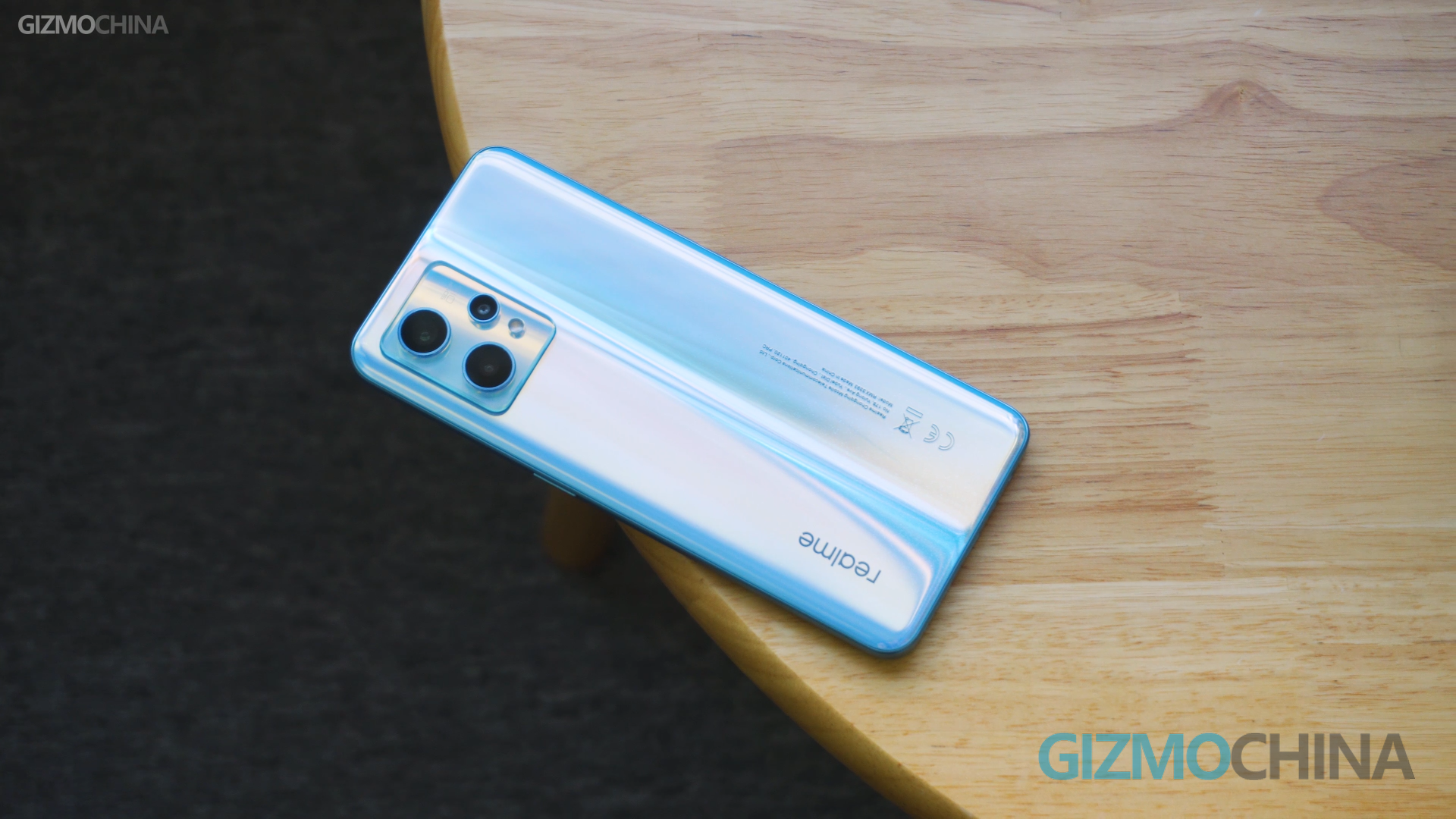
Realme 9 Pro+

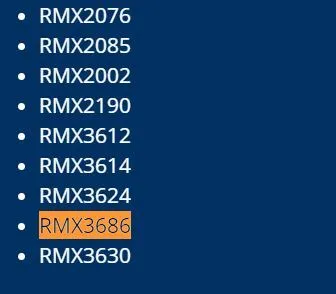
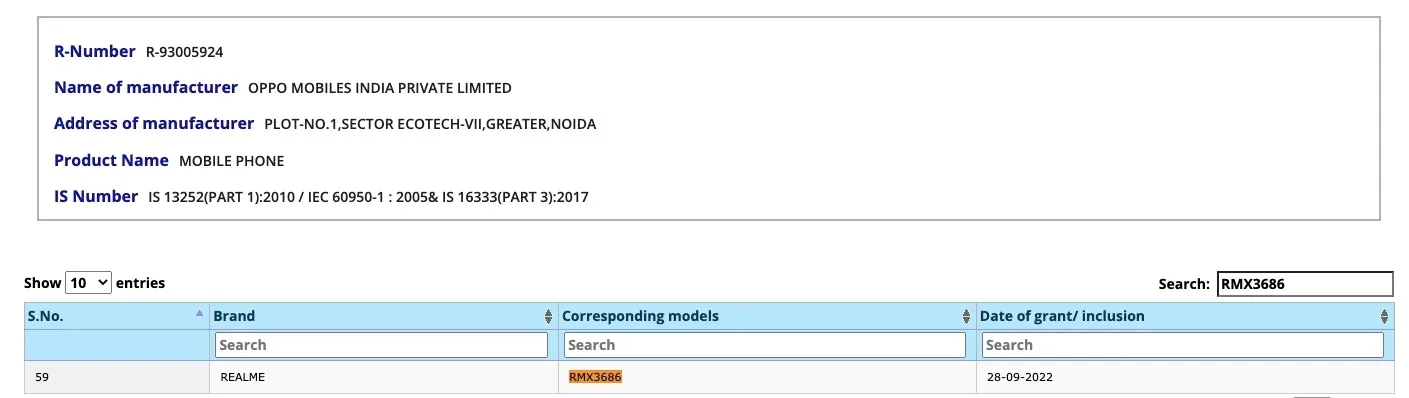
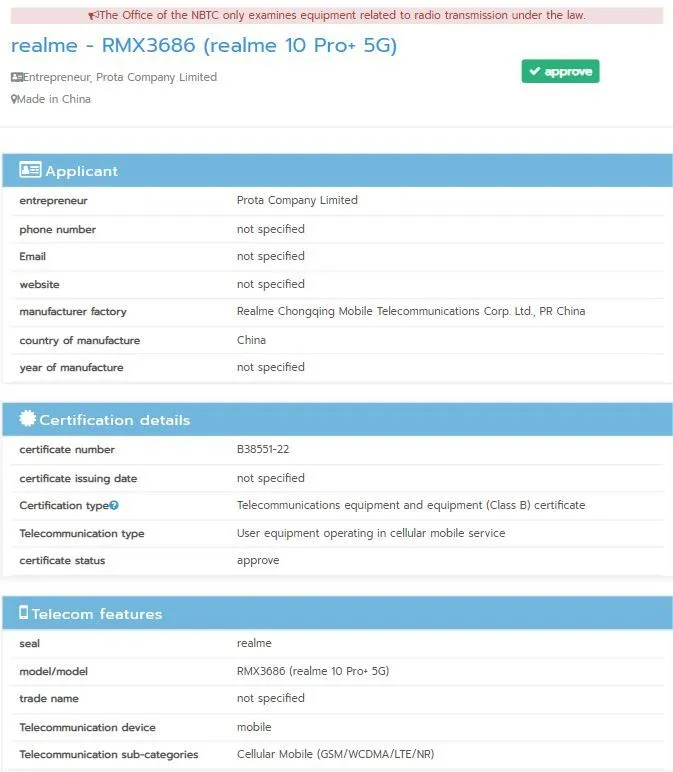
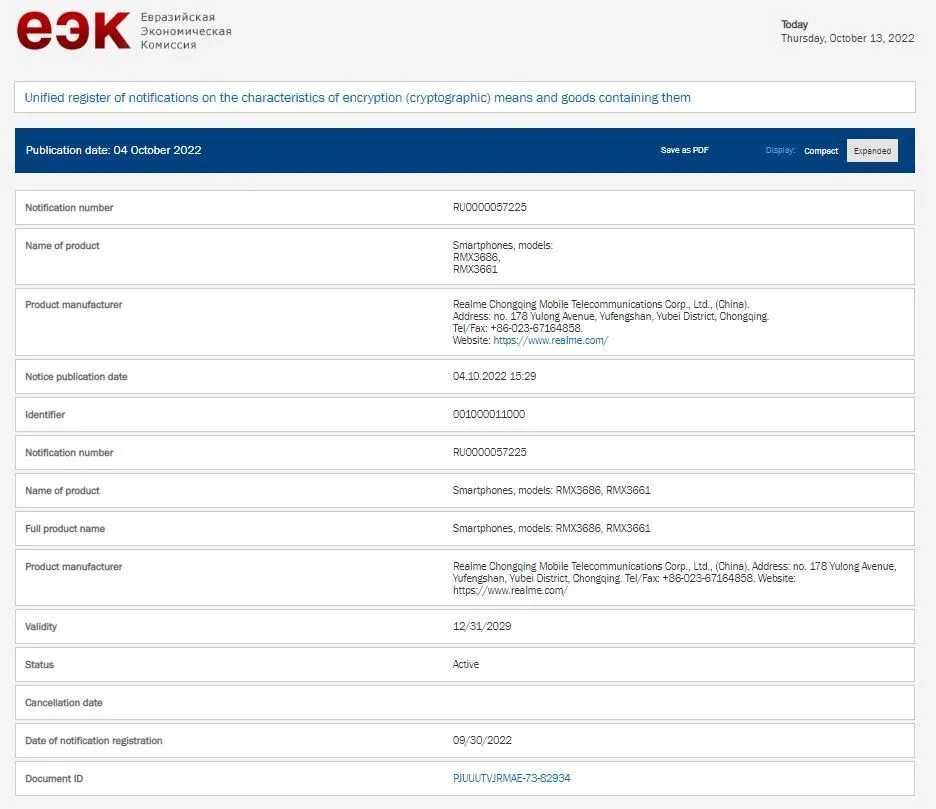
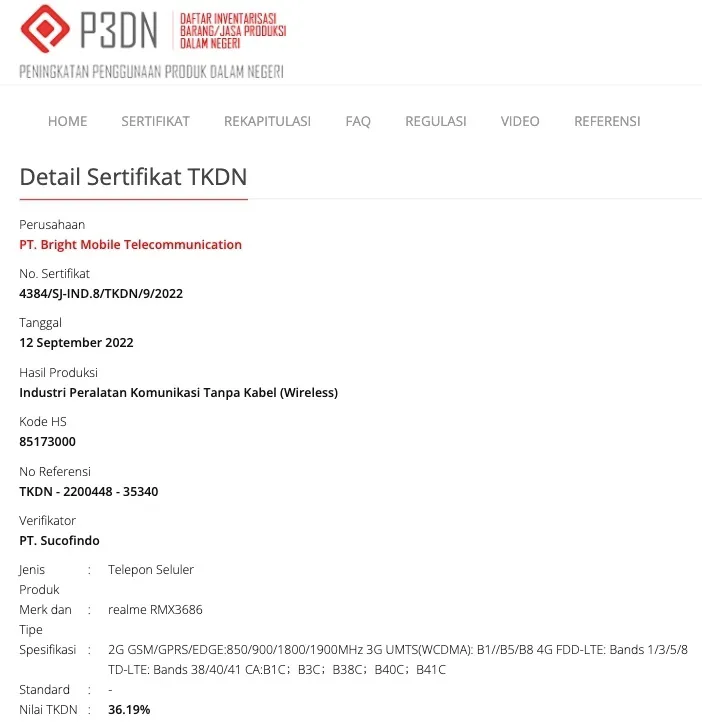
Starting off, the device has emerged on the NBTC database. The listing reveals that the device has RMX3686 model number and confirms the Realme 10 Pro+ moniker. The same model number has also appeared on BIS along with TKDN, NBTC, EEC, and Indonesia Telecom certification databases.

A smartphone powered by the MediaTek Dimensity 1080 was recently teased by Realme Vice President Madhav Sheth, and it may go on sale by the end of the year. The Realme 10 Pro+ 5G could be the Realme smartphone powered by MediaTek Dimensity 1080. For those who are unaware, the Dimensity 1080 is the successor to the Dimensity 920, which Realme employed in the Realme 9 Pro+ last year.

Other than the new chipset, the device could also feature other improvements across the board. To get an idea of what to expect, let’s take a look at the specs of the Realme 9 Pro+.

Realme 9 Pro+ specs

The Realme 9 Pro Plus has a 6.43-inch AMOLED screen. The refresh rate of the FHD+ panel is 90Hz. It has a 16-megapixel front camera for selfies, and its rear-mounted camera island has an OIS-assisted 50-megapixel Sony IMX766 primary camera, an 8-megapixel ultrawide sensor, and a 2-megapixel macro camera.

The Realme 9 Pro Plus is powered by the Dimensity 920. It comes standard with up to 8 GB of LPPDR4x RAM and 128 GB/256 GB of UFS 2.2 storage. The battery in the device is 4,500mAh and supports 60W rapid charging. A vapor chamber cooling system, an X-axis linear motor, 5 GB of virtual RAM, Android 12 OS with Realme UI 3.0, dual speakers, a 3.5mm audio jack, and a Light Shift Design are also included.

RELATED: