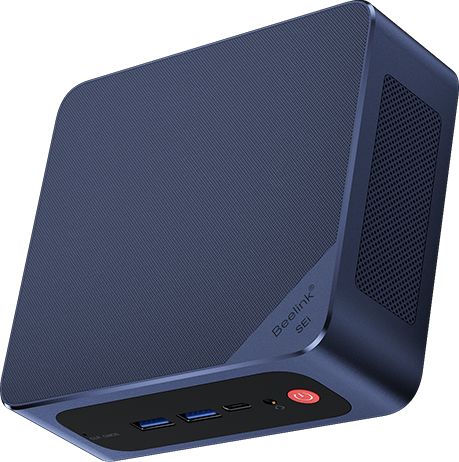
Beelink will soon be launching a new mini PC in the market, which will be the company’s first with an Intel 12th-gen Alder Lake-U CPU. The model will be called the Beelink SEi12, so let’s take a look at the specifications in detail.
The SEi12 model, which replaces the earlier SEi11 series using 11th-generation Intel CPUs, is currently in development. A Kingston PCIe4 x4 NVMe SSD and Wi-Fi 6 support are included with the Core i5-1235U in the initial SKUs. The chassis, however, will be the first to include felt cloth on the top surface rather than the customary glossy or matte plastic.
Performance-wise, we can expect the Core i5-1235U to perform similarly to the 11th gen Core i7-1165G7. In terms of port options and overall dimensions, the chassis appears to be identical to the current SEi11. Beelink small PCs are positioned as significantly less expensive substitutes for the standard Intel NUC models, which frequently lack storage, RAM, and even an operating system.
The Core i5-1235U SEi12 with 16 GB of RAM, a 500 GB NVMe SSD, and a Windows 11 license will start arriving on October 26 for just $459 USD.
Xiaomi is gearing up to launch the new Redmi Note 12 series in China sometime next year. However, prior to any official announcement, a new leak has revealed a key feature regarding the upcoming smartphone.
The news arrives from a known tipster Digital Chat Station who shared the information on Weibo (a Chinese microblogging website). Looking at the online post, the tipster claims that the Redmi Note 12 will launch with the new MediaTek Dimensity 1080 chipset. For those unaware, the new SoC was just recently announced by the Taiwanese chipmaker. As per Digital Chat Station, the internal testing of the new Note 12 found that the device with this chip managed to offer performance similar to the Snapdragon 778G SoC, a popular mid range chipset from Qualcomm.
Note 11S
With this chip, the upcoming Note 12 reportedly achieved a score of over 520,000 on AnTuTu. Talking more about this chip, the Dimensity 1080 SoC is based on a 6nm process and features an upgraded octa core CPU configuration that consists of two Cortex A78 cores that are clocked at 2.6GHz, which is paired with an ARM Mali G68 GPU.
Notably, the tipster had also previously claimed that the Note 12 series will feature a 50 megapixel ultra wide angle lens camera sensor on the rear. Although, it is unclear which exact model will receive this sensor, but it is likely the higher end model. So we can expect the base Note 12 model to feature an 8 megapixe ultra wide angle sensor that is paired with a 2 megapixel macro sensor.
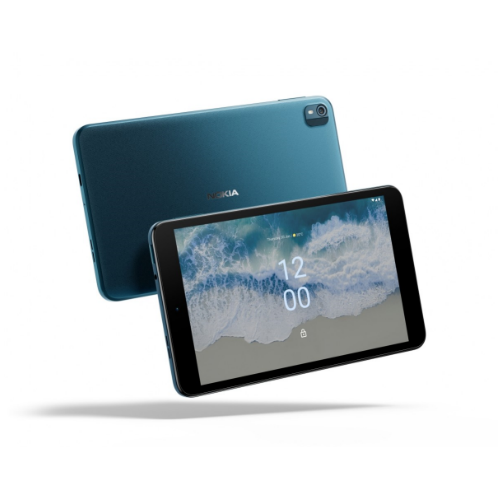
Nokiaannounced the T10 tablet in India last month. It was only available in the WiFi-only version. Now, HMD Global, the brand license of Nokia has launched an LTE version of the T10 tablet. It has the same specifications as the WiFi only model but carries a slightly higher price tag.
The Nokia T10 is a budget tablet and competes against the likes of the Realme Pad, Redmi Pad, Moto Tab G62, and more. It comes with an 8-inch LCD display bearing an HD resolution. The display is also certified for viewing HD Netflix content. The tablet features a small squarish camera module on the back panel housing an 8MP sensor and a LED flash. On the front, there is a 2MP selfie snapper.
Internally, the Nokia T10 is equipped with a 1.6GHz Unisoc T606 chipset coupled with Mali G57 MP1 GPU onboard. It packs up to 4GB RAM and 64GB storage expandable up to 512GB via a microSD card slot. Software-wise, the tablet runs on Android 12 OS and is guaranteed to get 2 years of OS upgrades and 3 years of monthly security updates. The tablet draws its power from a 5,250mAh battery unit with support for 10W charging.
Connectivity options on the Nokia T10 include 4G LTE, dual-band WiFi, Bluetooth, and a USB-C port.
The Nokia T10 LTE variant costs Rs 12,799 for the 3GB + 32GB option whereas the 4GB + 64GB variant is priced at Rs 13,799. It will be available for purchase starting October 15th from Amazon and Nokia’s official website.
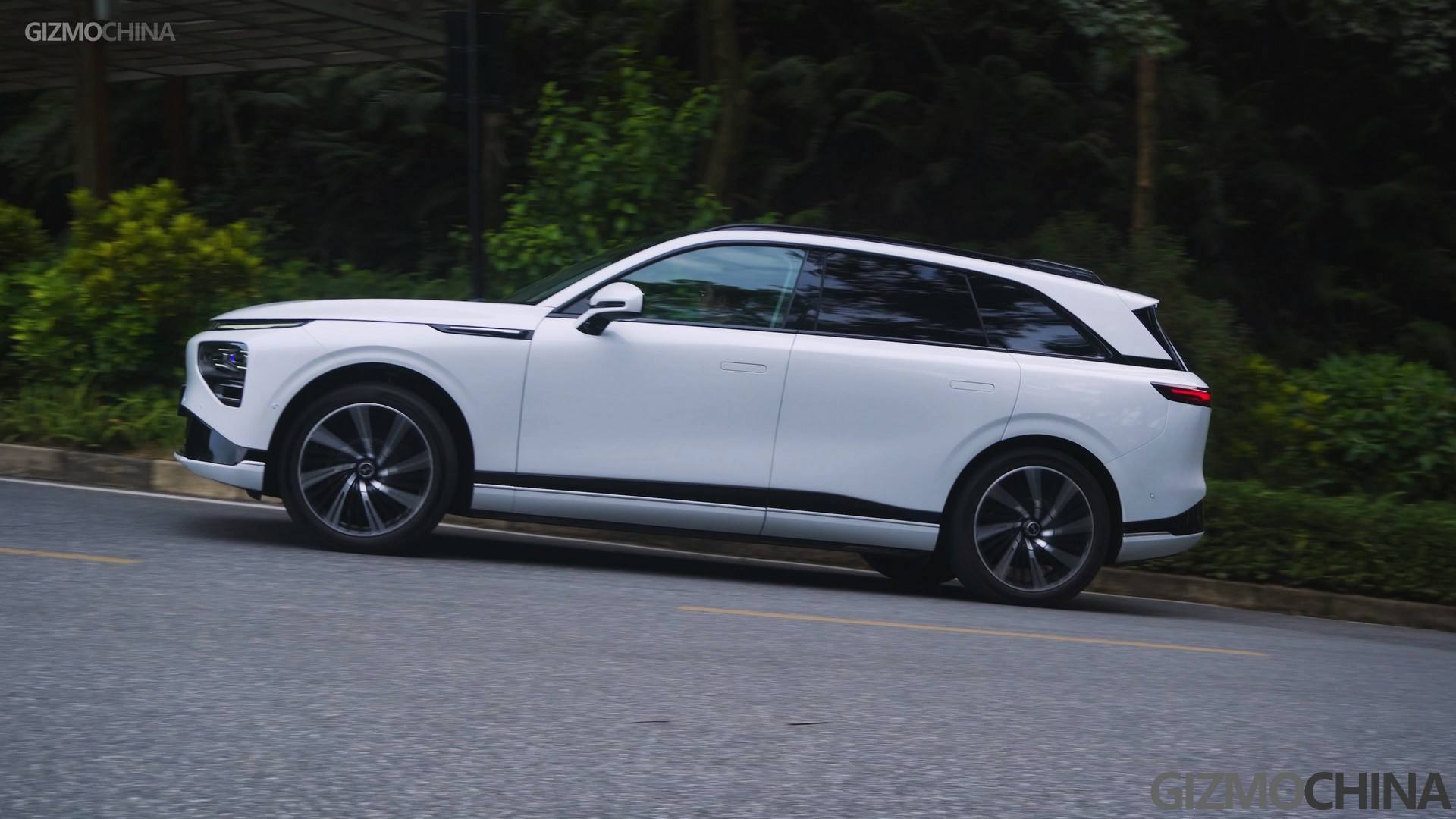
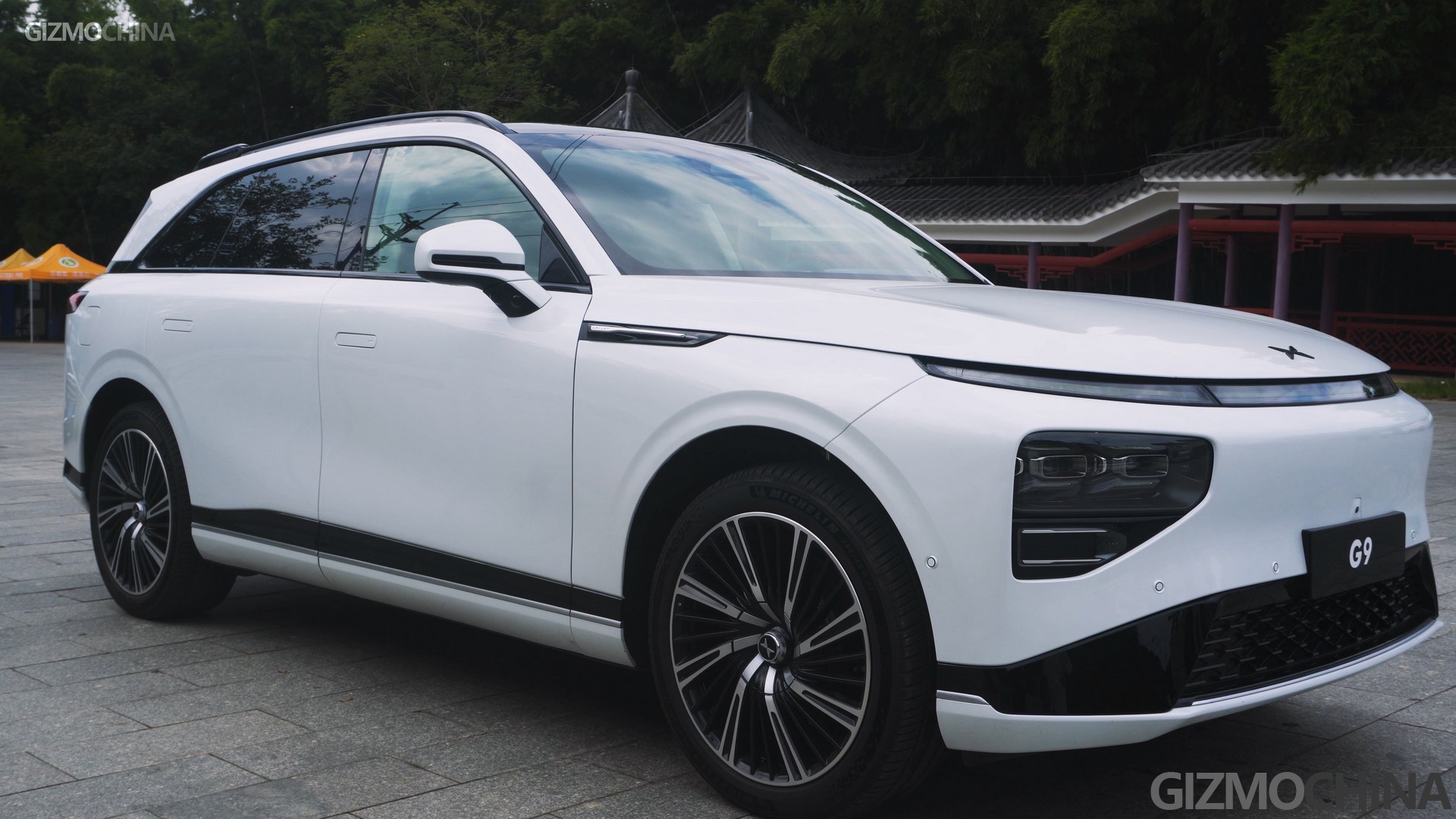
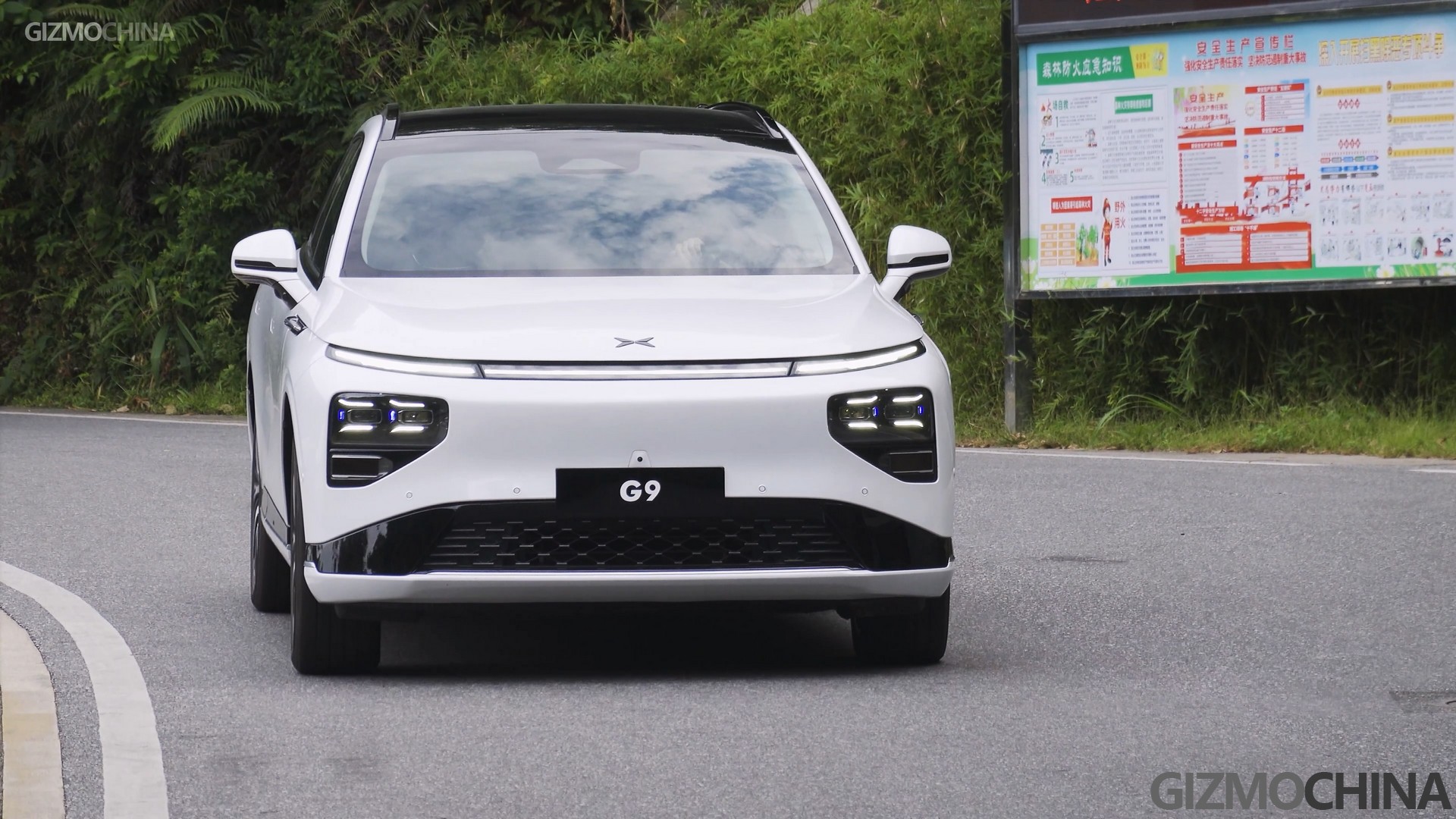
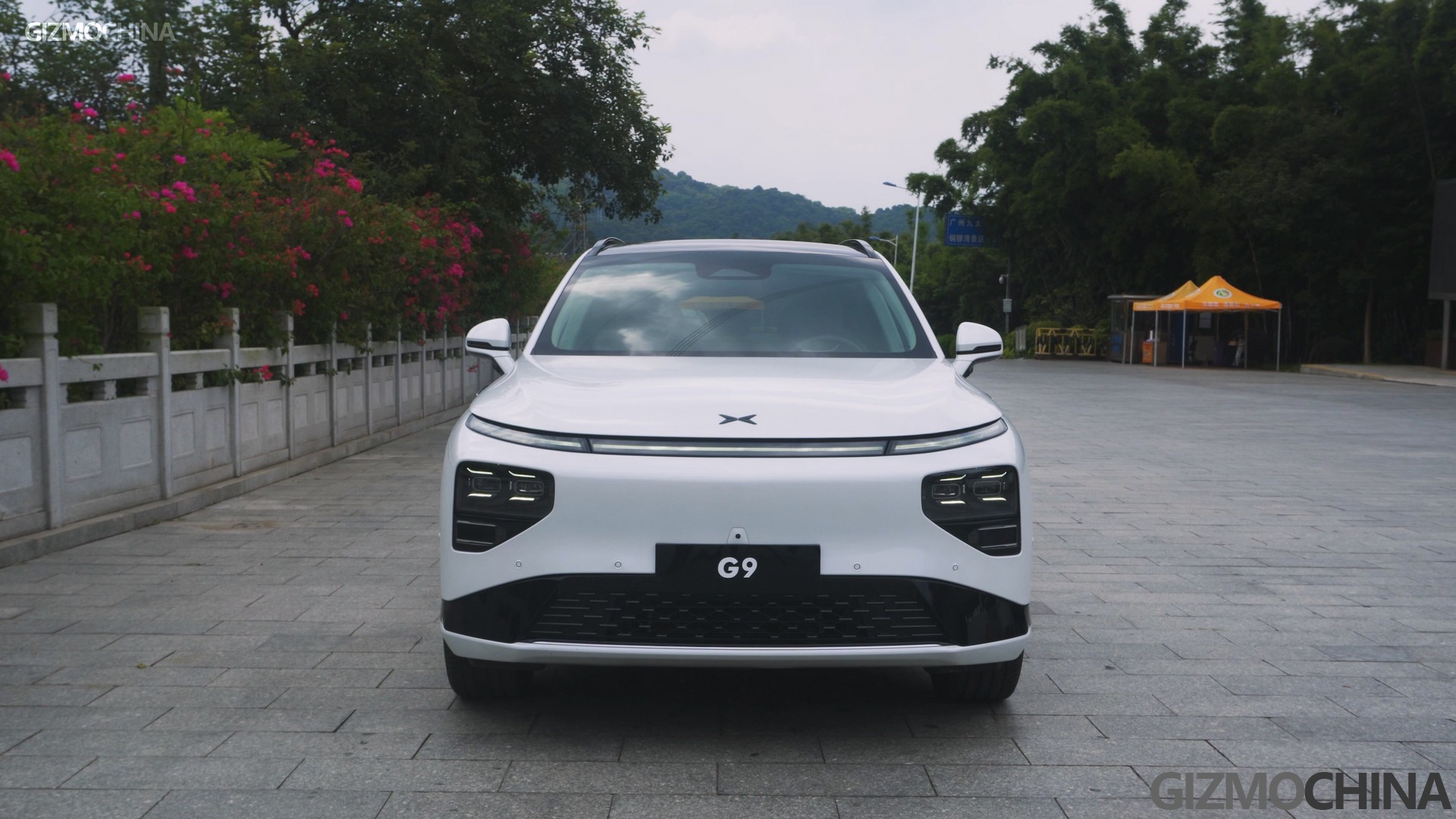
Several days ago, the EV brand XPeng eventually launched its latest SUV model, the Xpeng G9, which is also the brand’s first fourth production model. The new model is positioned at the top of the line-up with the world’s fastest-charging technology. And right now we just arrived at one of the XPeng Motors showrooms in Guangzhou and also got permission to test drive the G9.
The reason why we are so excited about the G9 is that It’s not a China-only model but going to reach Europe and North America in 2023. We’re keen to get an early taste of what the latest electric car can actually do before it hits the world, how it differs from traditional cars or even other EVs, and just think a bit about the final question, whether it will replicate the successful comeback of the Chinese smartphone industry.
G9’s profile & design
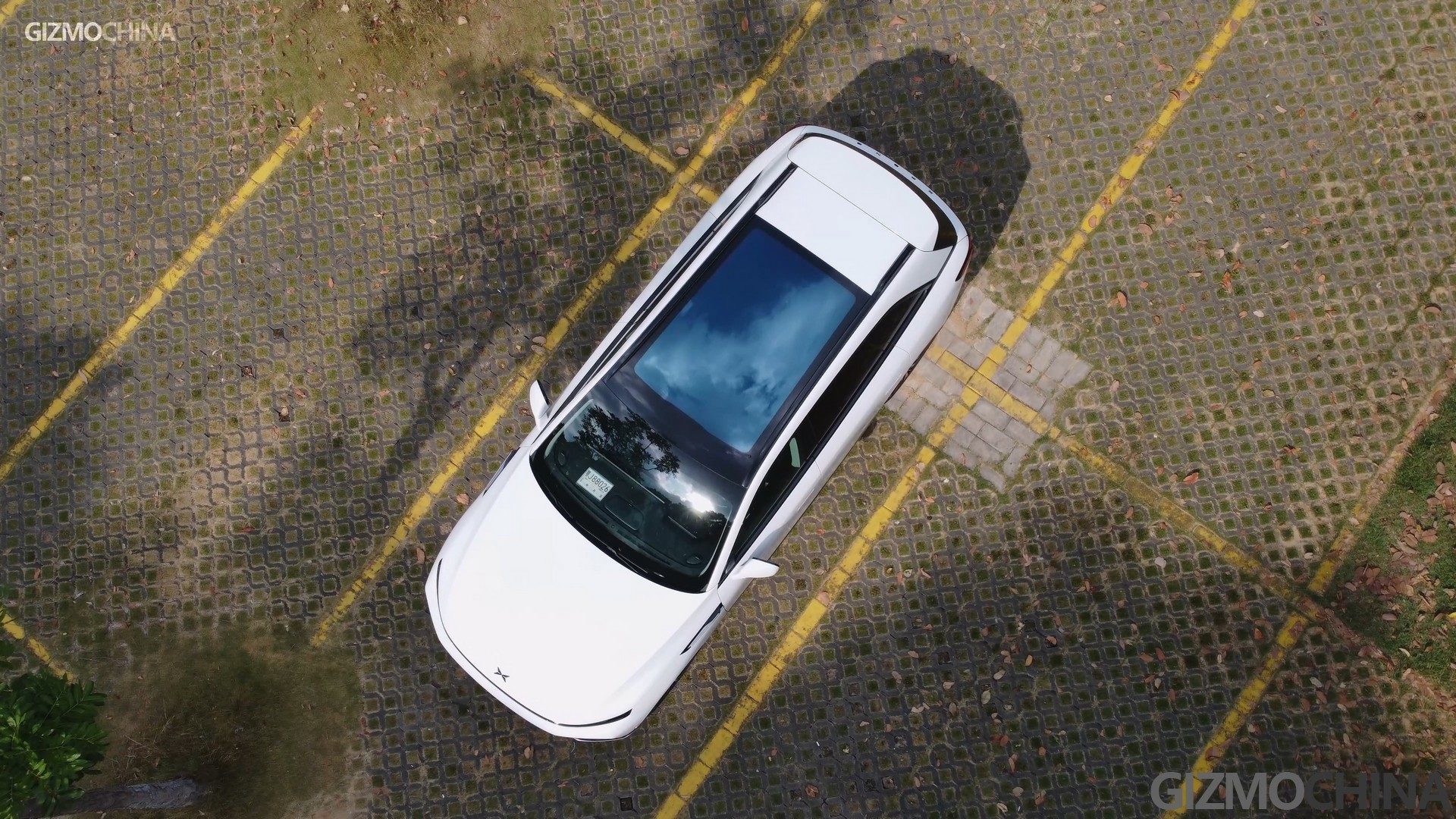
The G9 is positioned in the medium- to the large-sized smart electric SUV market. It measures 4.89m in length, 1.94m in width, and 1.67m in height.
The car is underpinned by Xpeng’s ‘Edward’ platform with a long wheelbase of about 3m, which actually is pretty close to a large-size SUV. The long wheelbase gives the occupants more space and will significantly increase the leg space for better comfort.
The G9 offers 660 liters of cargo space, expandable to 1576 liters by folding down the rear seat. And it also has a frunk, which adds 71 liters to the storage.
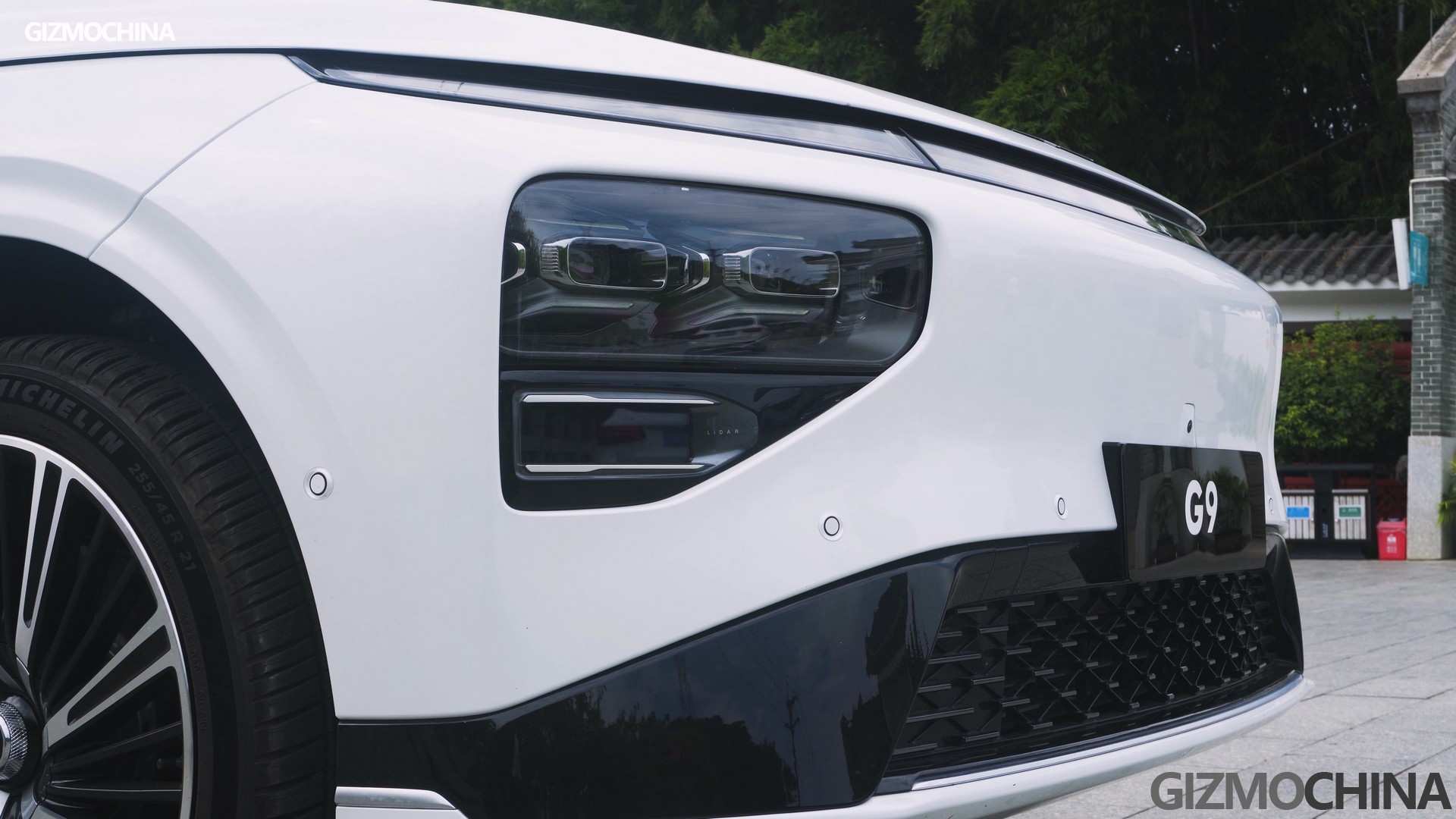
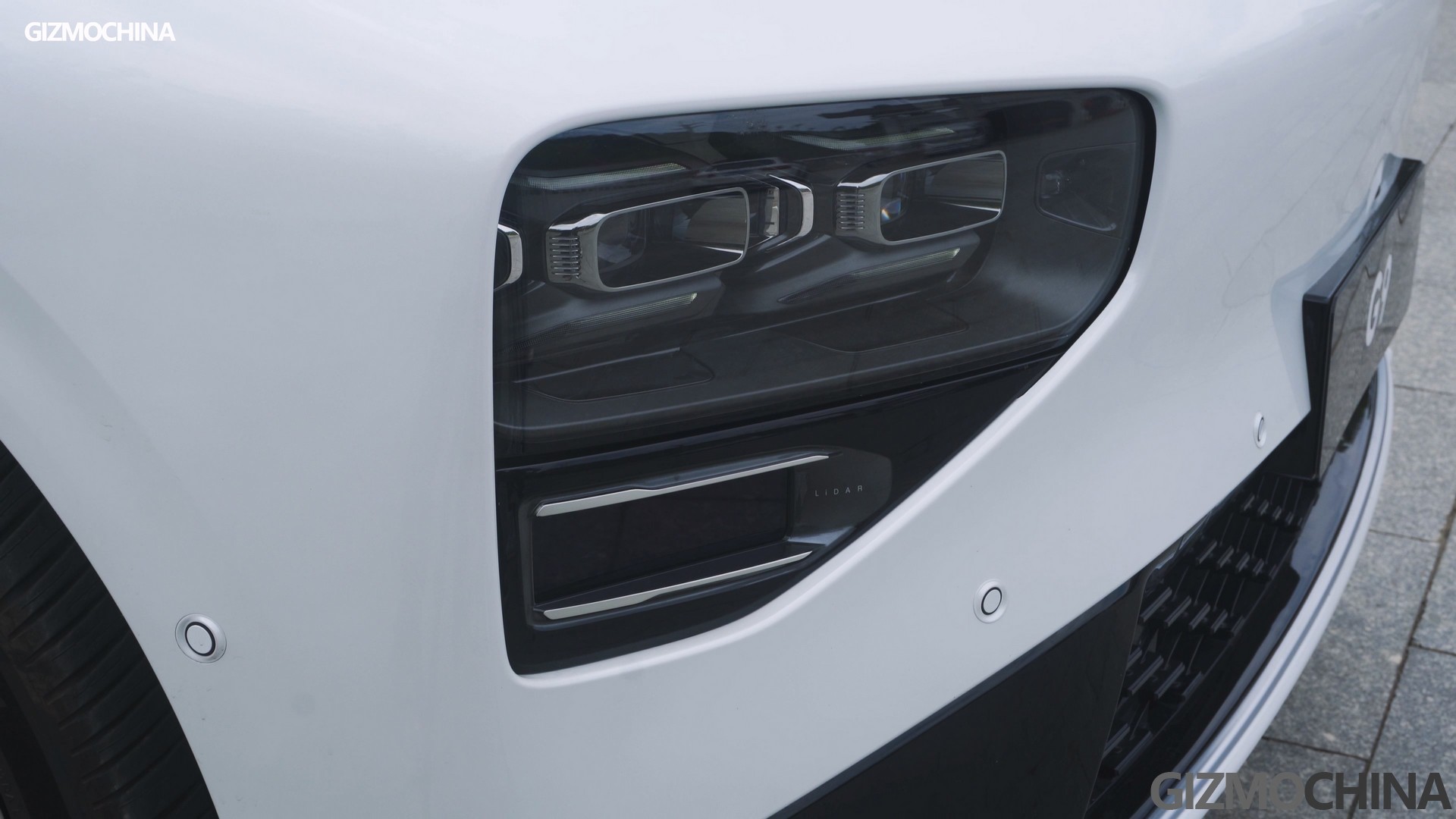
If you’ve watched our test drive video of the Xpeng P7, you may also notice that it really is like an SUV version of the P7 sedan. They both have a full-length glass roof, frameless windows, retracting door handles, and the signature full-width, slim DRL strip at the front. The biggest difference is the separate headlights below the strip, which creatively integrate two LiDAR sensors.
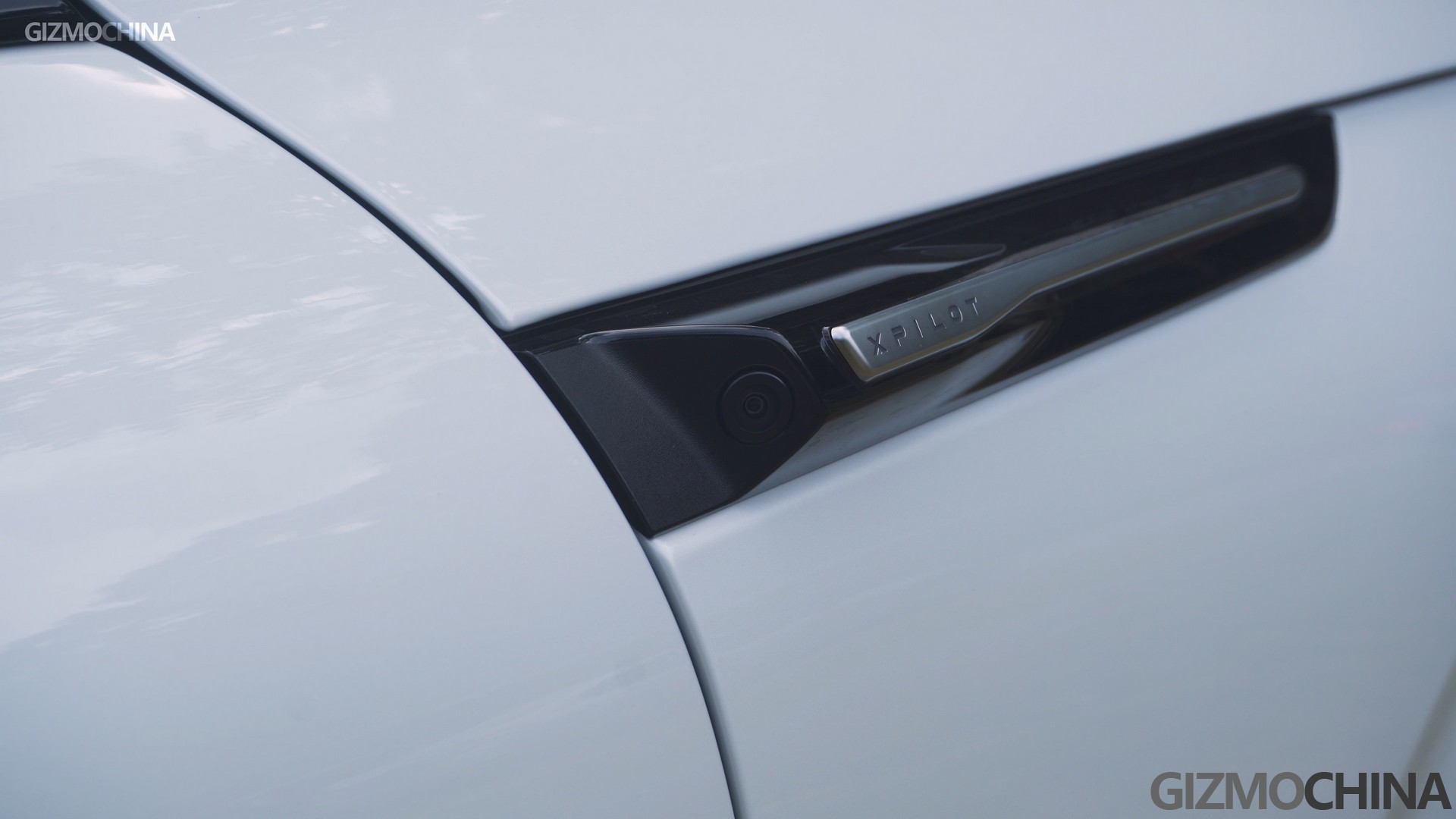
Apart from the 2 LiDARs, the G9 features 29 more sensors including 12 cameras, 5 millimeter-wave radars, and 12 ultrasonic radars. The powerful sensing capabilities provide all-around hardware support for the G9’s advanced driver assistance system.
LiDar
visual sensor
1 of 2
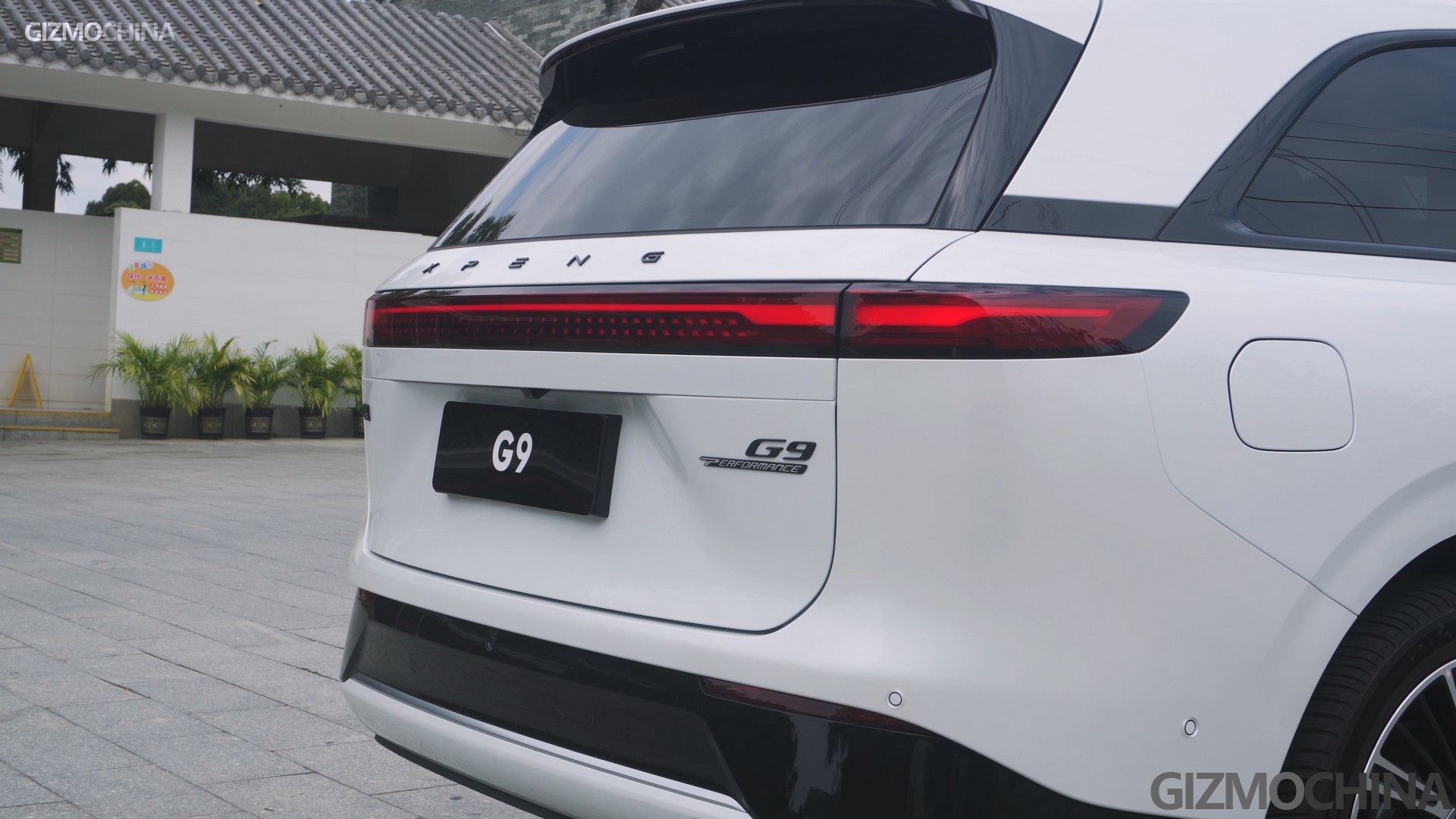
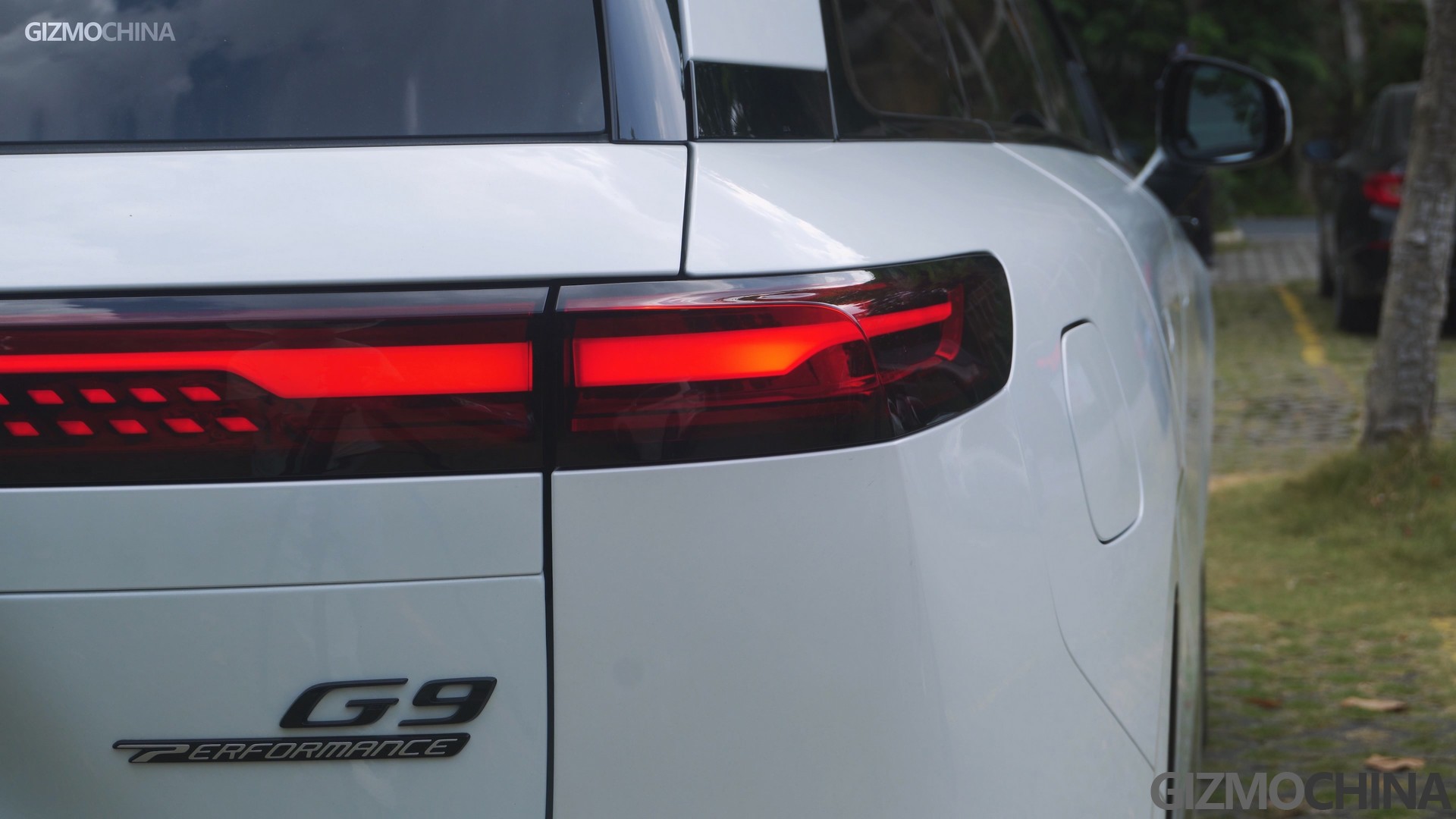
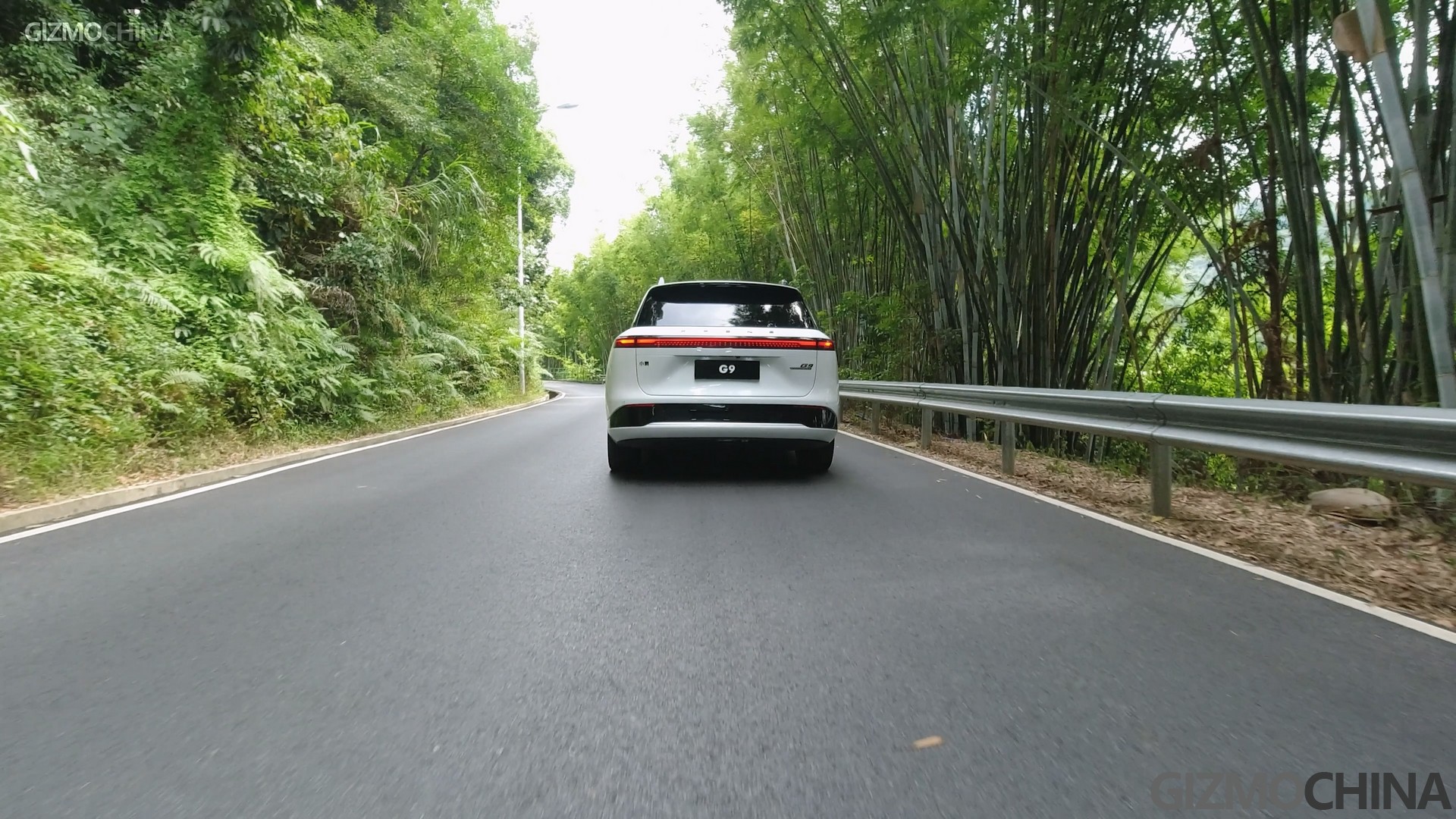
And unlike the P7 model, you can see more hard-edged body lines on the side of the G9, but it’s still relatively smooth if compared with other traditional SUVs. The back also got slightly changed with a wider light bar. Two separate rear lights are hidden as two slim bars under the trunk door. The body lines of the rear are much more rigid than the P7.
1 of 2
Interior
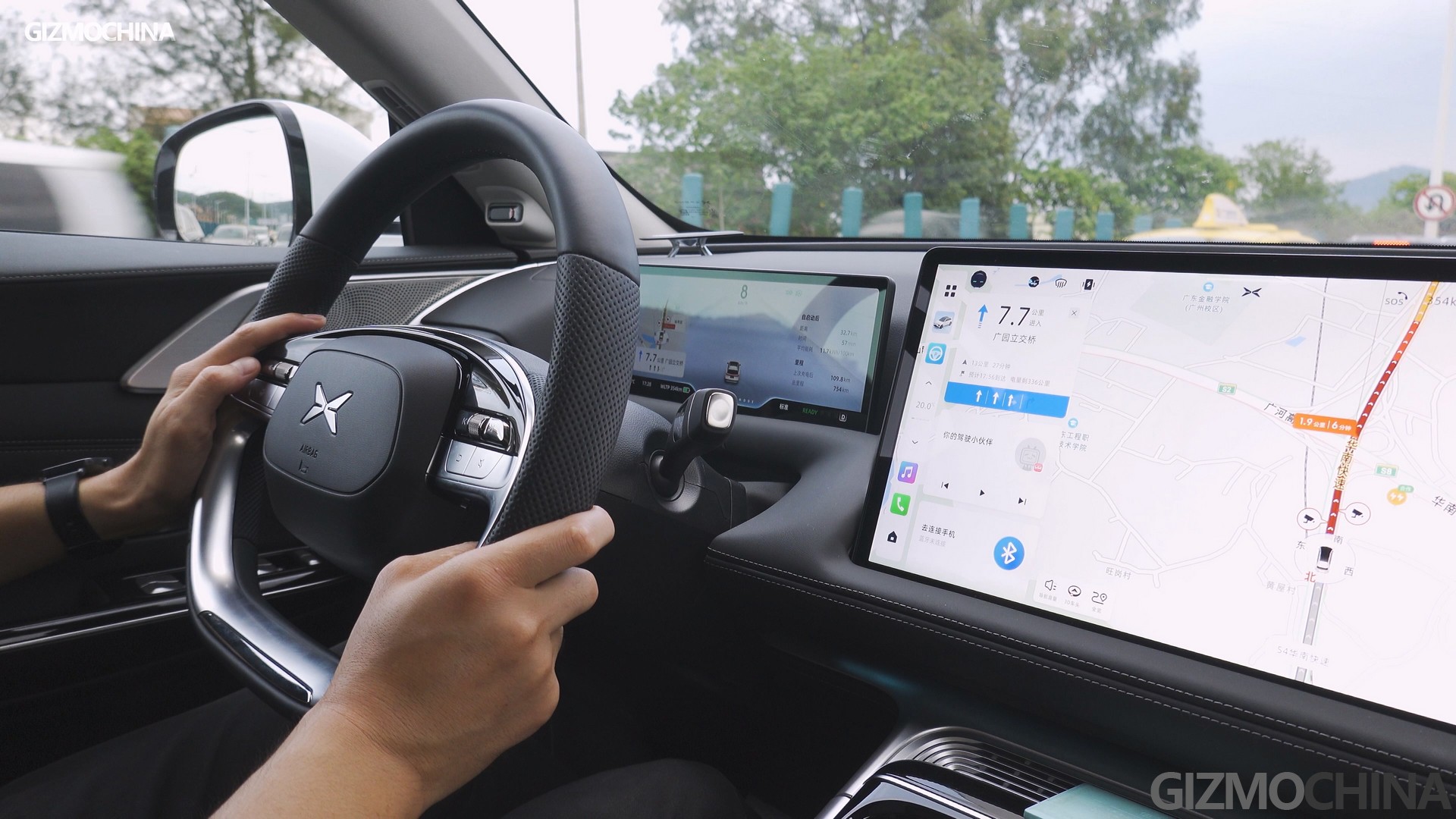
Compared with the P7, the interior of the G9 is significantly improved with a more premium look and more digital setups. We agreed that the P7’s interior is clean and modern but not as elegant as the G9’s. The G9 is a five-seat SUV with three free-standing displays on the dashboard. In front of the driver, the digital instrument cluster is tucked in to reduce sun glare, and increase the sense of spaciousness. The other two displays clubbed together are much larger, and just look like a single 14.96-inch display.
And we are happy to see the display panel extend to the passenger side. While the informative display on the left working for the driver, the other one can separately provide more entertainment options for passengers, which is also a trending feature in new luxury models, having more digital sense with more touchable displays.
In the connection between the dashboard and the curved center console, you can see a strip of ambient lights across the right side, which is also integrated with a slim AC vent like what we’ve seen in the P7. On the center console, there’s a wireless charger for smartphones and two cup holders. Well, they are quite small twos. The 60W USB-C charging port, another USB port, and the cigarette lighter are all located in the hollowed-out position of the center console.
Most areas that we can touch are made of pretty high-quality materials. Especially the seats made of Nappa leather with a perforated design are more comfortable and premium than the P7’s. All the seats support heating and massage features. The front seats additionally support ventilation and the passenger side at the front even features an electric leg rest.
The seats feel spacious for leg and head, and the floor in the back is flat. So no matter whether sitting in the front or back, the large cabin gives deep support for the legs.
Variants & Performance
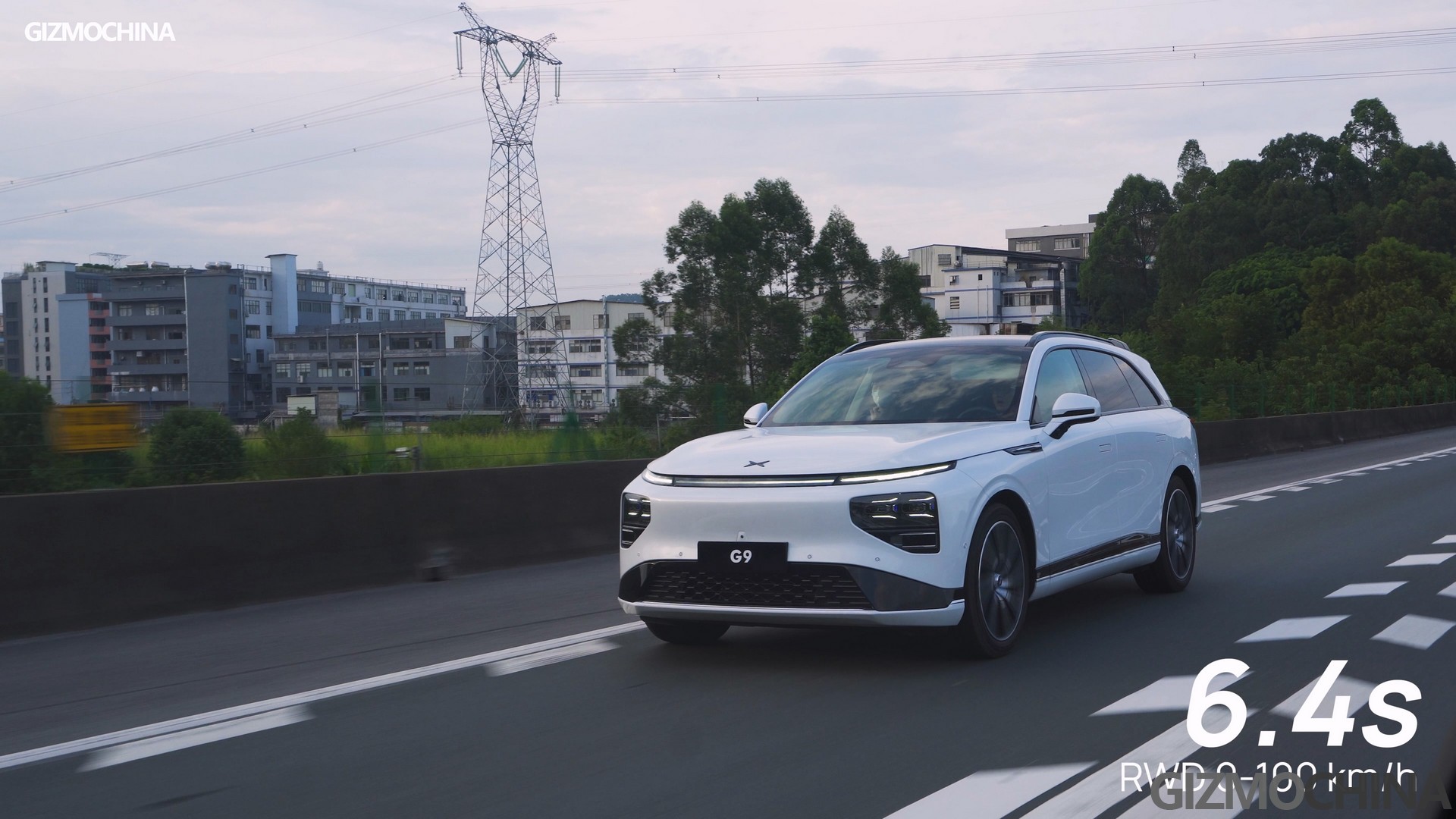
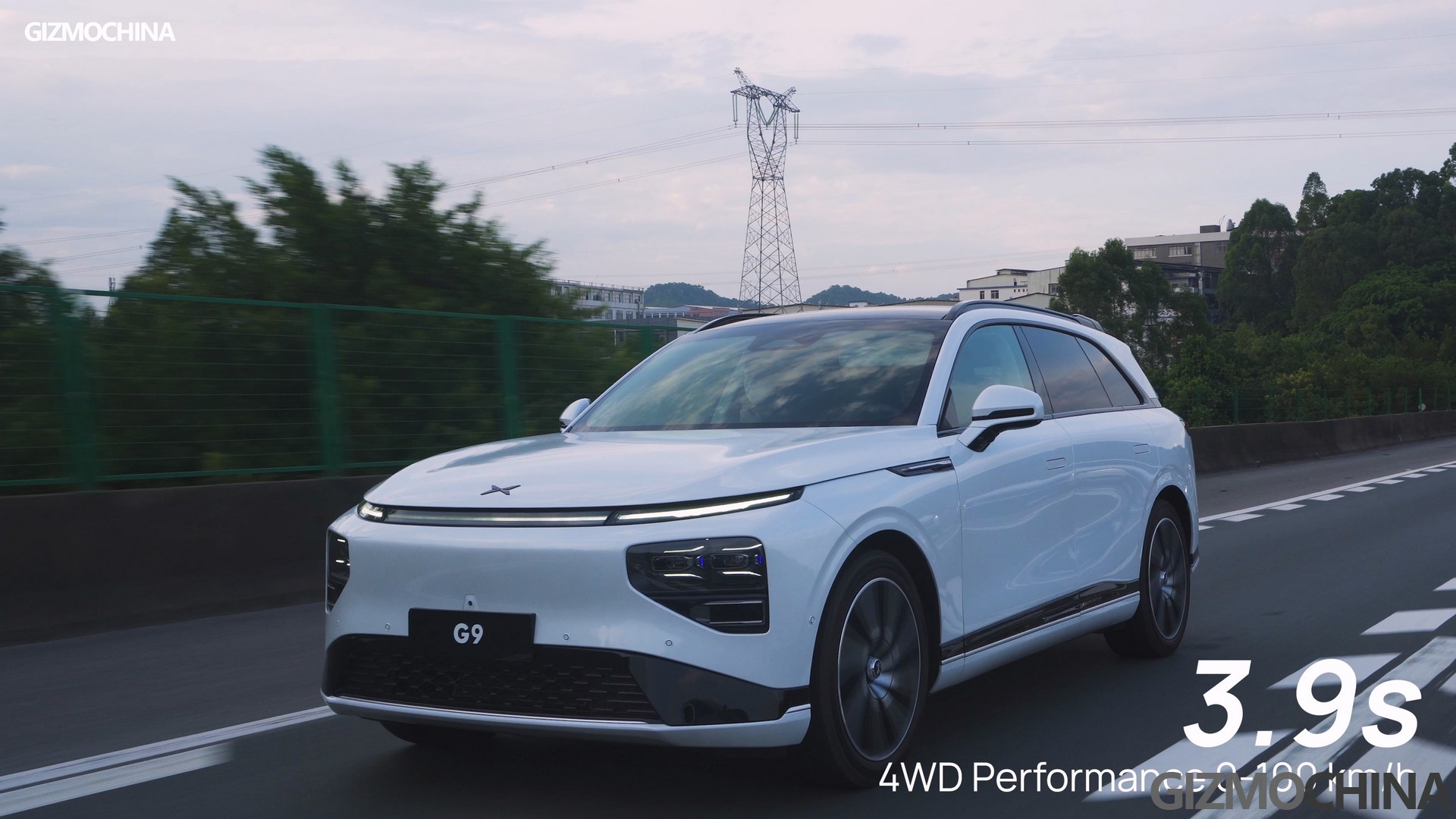
The G9 is offered with two different motor configurations, the RWD standard Range models featuring a rear-mounted motor, and the 4WD Performance models featuring a dual-motor all-wheel drive powertrain. The standard range model’s rear motor offers 308bhp and 430Nm of torque for a 0-100km/h of 6.4 seconds, while the performance model’s dual motors offer 543bhp and 717Nm of torque, accelerating from 0 to 100km/h in 3.9 seconds.
Test Drive
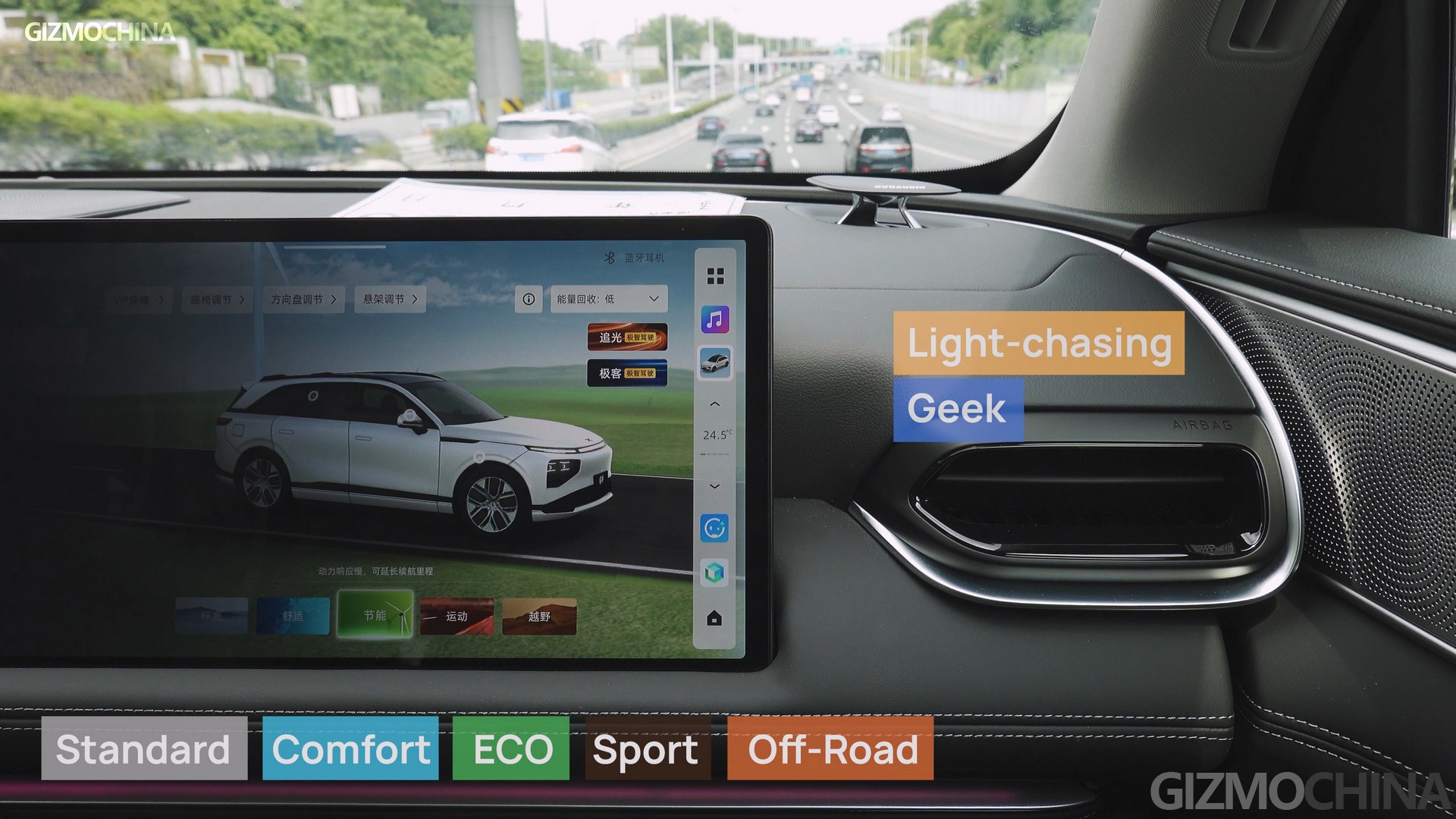
And the G9 has seven driving modes, including a boost mode that helps the SUV reach its maximum torque in just 0.15 seconds. But for most EV drivers, I think the usable range is still the primary factor to consider in most scenarios. So personally, I still prefer to drive it under ECO mode just like what I did with the Xpeng P7.
Driving in the different modes did cause changes to the way I drove, mainly the acceleration and the strength of regenerative braking. Of course, the Eco mode offers softer braking and it’s not outstanding over sportiness.
But I’m quite happy with the tracking offered by the steering system in the ECO mode, which is sensitive and precise. And the steering is well-damped but not too heavy here.
On the other hand, the Performance-related modes are sporty and you can straightly feel the more sensitive power, more effective control, and tauter suspension as well.
The G9 adopts a new multi-link suspension system. The dual-chamber air suspension controls double wishbones at the front and a five-link set-up at the rear. In different modes, it feels a bit different when driving over bumps and potholes. But in the standard mode, the shock absorption is already soft enough to ensure comfort for passengers.
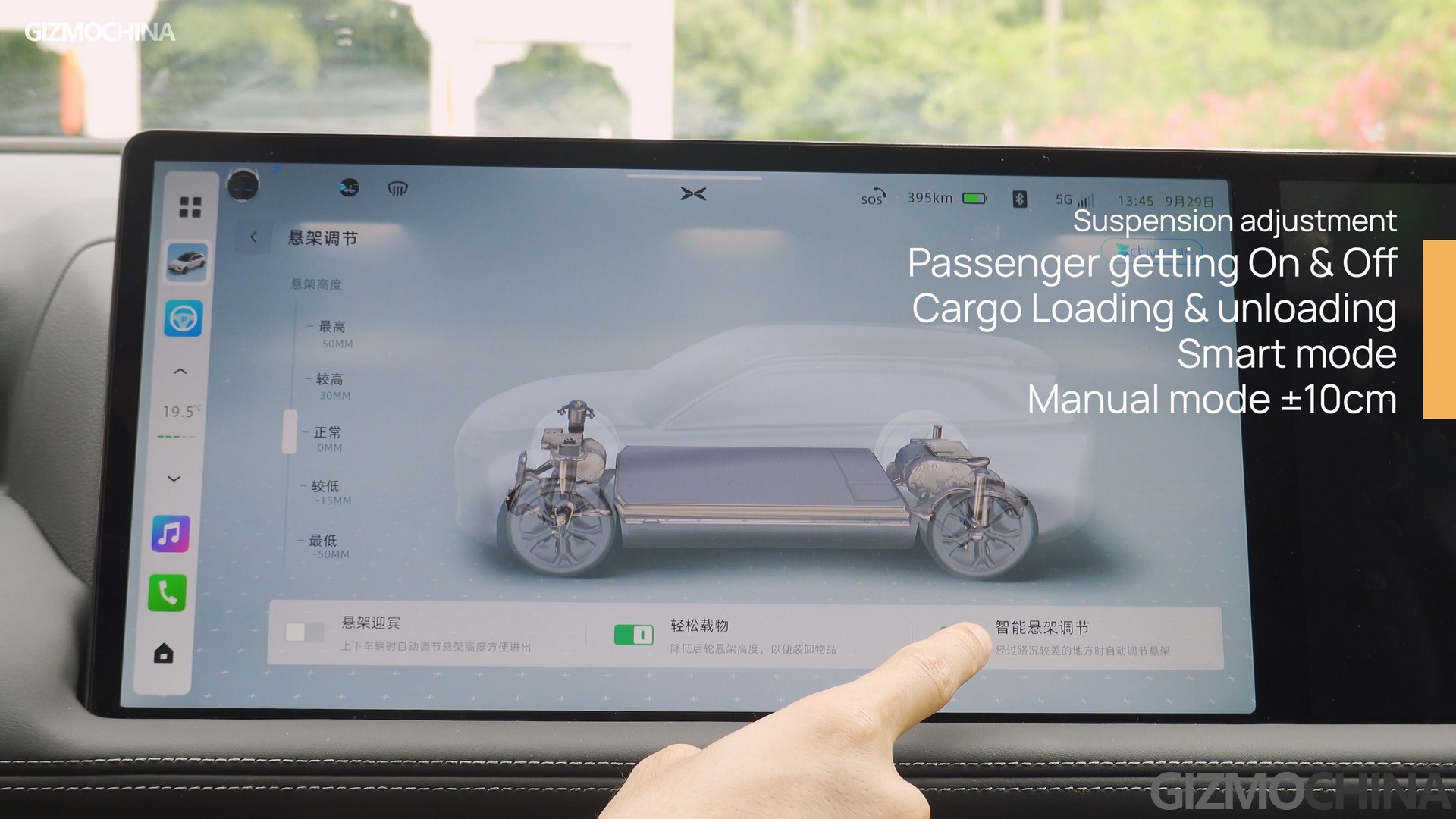
And it supports 10cm of lift space, which allows the car to maintain good stability even in tough road conditions. But better not to overestimate its off-road performance and think of challenging its limits. The G9’s control is still closer to the performance of a standard urban SUV.
Or you can also manually adjust the chassis’ height with the suspension for easier loading and unloading. Just like the P7, almost all the car features are available through the touchable display and voice commands. Thanks to the upgraded chipset inside, the display feels smoother and more responsive with touching and sliding.
In-car software & entertainment
The most surprising software feature of the G9 is still its voice assistant. Now it can even recognize your commands about most car features without specific name-calling to wake it up. Throughout the test drive, there are almost no cases of misrecognition or incorrectly triggering any functions. But right now, it’s only available in China, so we can only do most of the interactions with the SUV in Chinese. But don’t worry. There will be more language options for international variants.
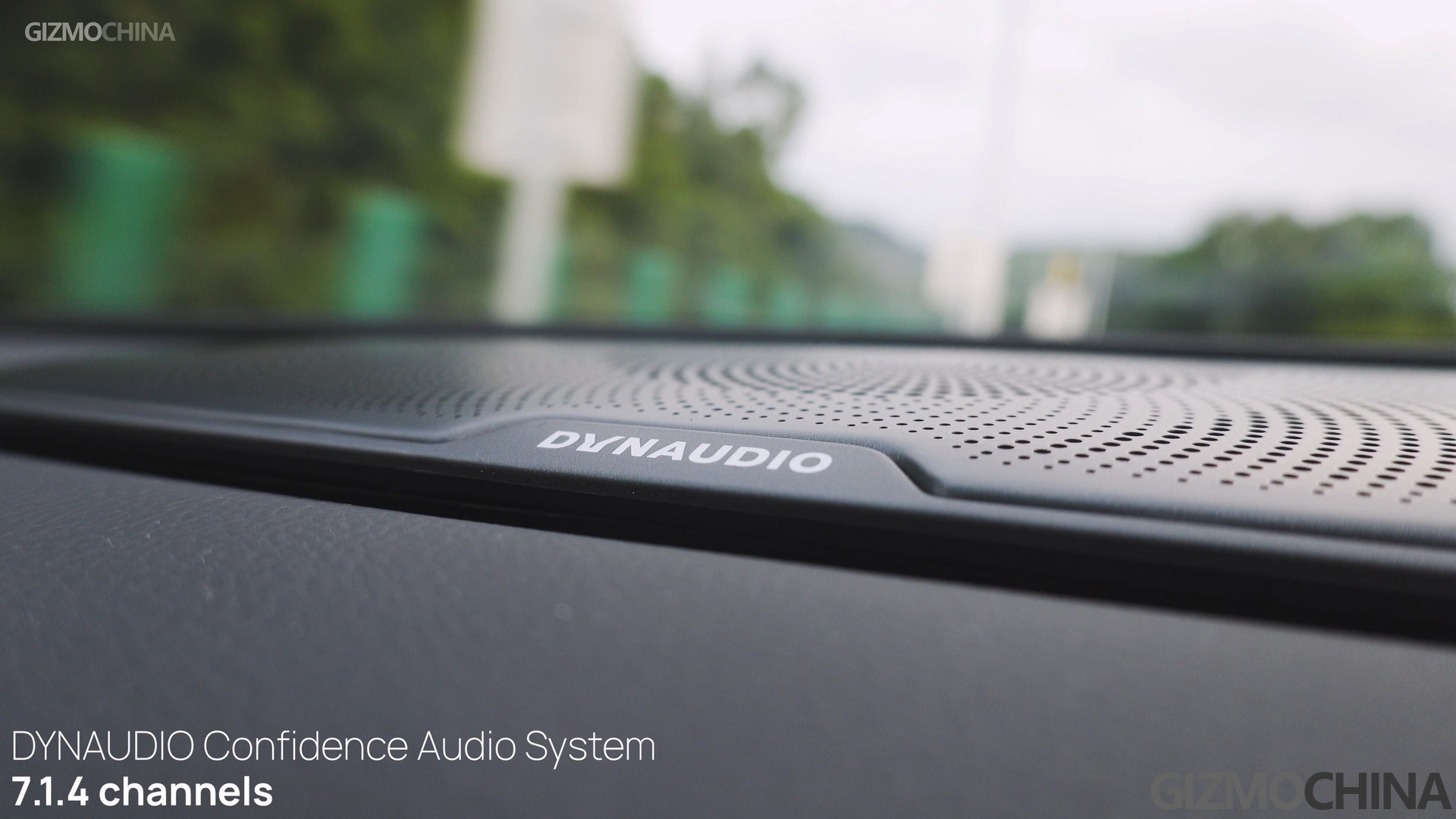
Another surprise of the G9 is the in-car entertaining system, which is called Xopera system. Dolby Atmos comes standard on the G9 with the 7.1.4 immersive sound system, including music streaming and video streaming services.
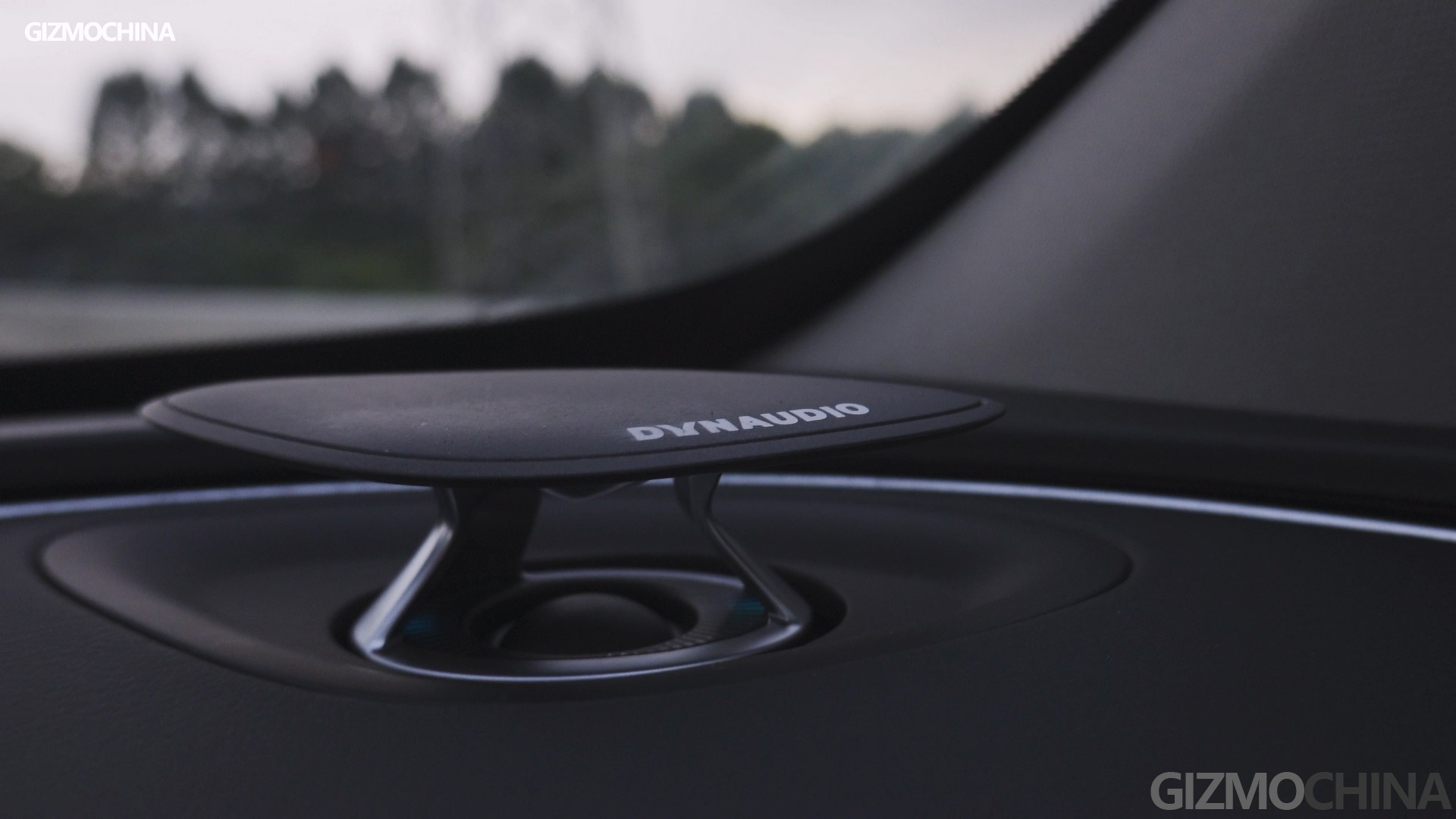
The sound system is powered by a Dynaudio Confidence Audio system containing 28 audio units with a total output of 2250W. This also includes 2 exterior speakers that can provide simulated fuel-car engine sound to get the attention of others for safe, or can be your mobile speakers for outdoor parties.
1 of 2
Such a generous configuration is not common in models at this price point, and it’s clear that Chinese car manufacturers are likely to lead a new trend in in-car entertainment.
NVH
The G9 has pretty decent NVH control. The Michelin Pilot Sport EV tires with acoustic foam are very quiet during a normal run. The mechanical noise is almost not perceivable but we can still feel the slight shock when driving over small bumps and potholes. Due to the slightly weaker acoustic performance of frameless windows, wind noise is much more noticeable when the speed exceeds 100km/h, but still far from disturbing.
Range & World’s Fastest Charging Tech
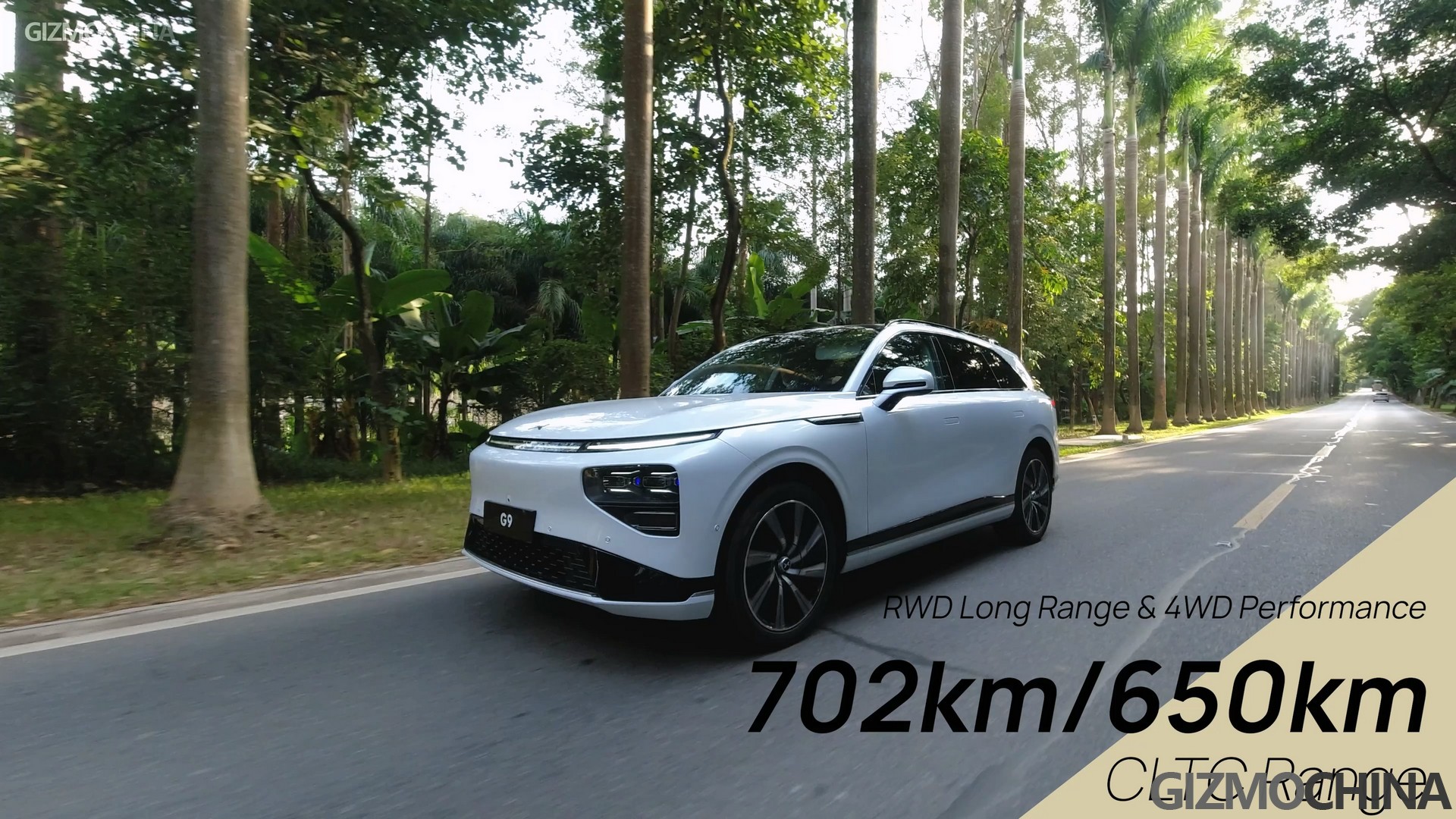
The G9 RWD standard models use a 78.2 kWh battery pack delivering a CLTC range of 570 km, while the performance and long-range variants equipped with a 98kWh battery pack can offer ranges of 702 km and 650 km respectively. But the CLTC figures generally are not so realistic. There
If you want a more reliable reference on the dashboard when driving, I would recommend switching to the WLTP range on the G9, which is much closer to the actual running.
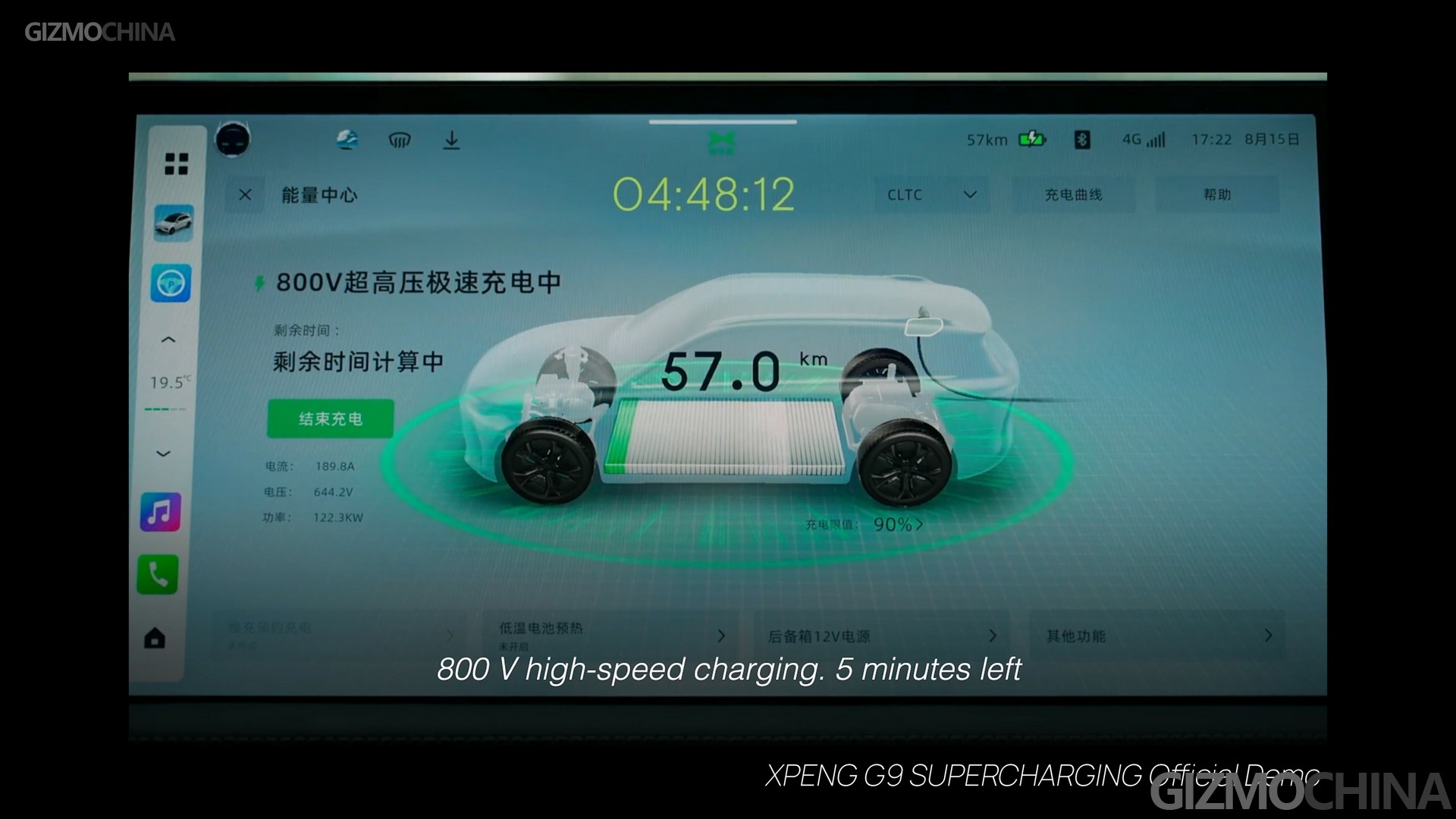
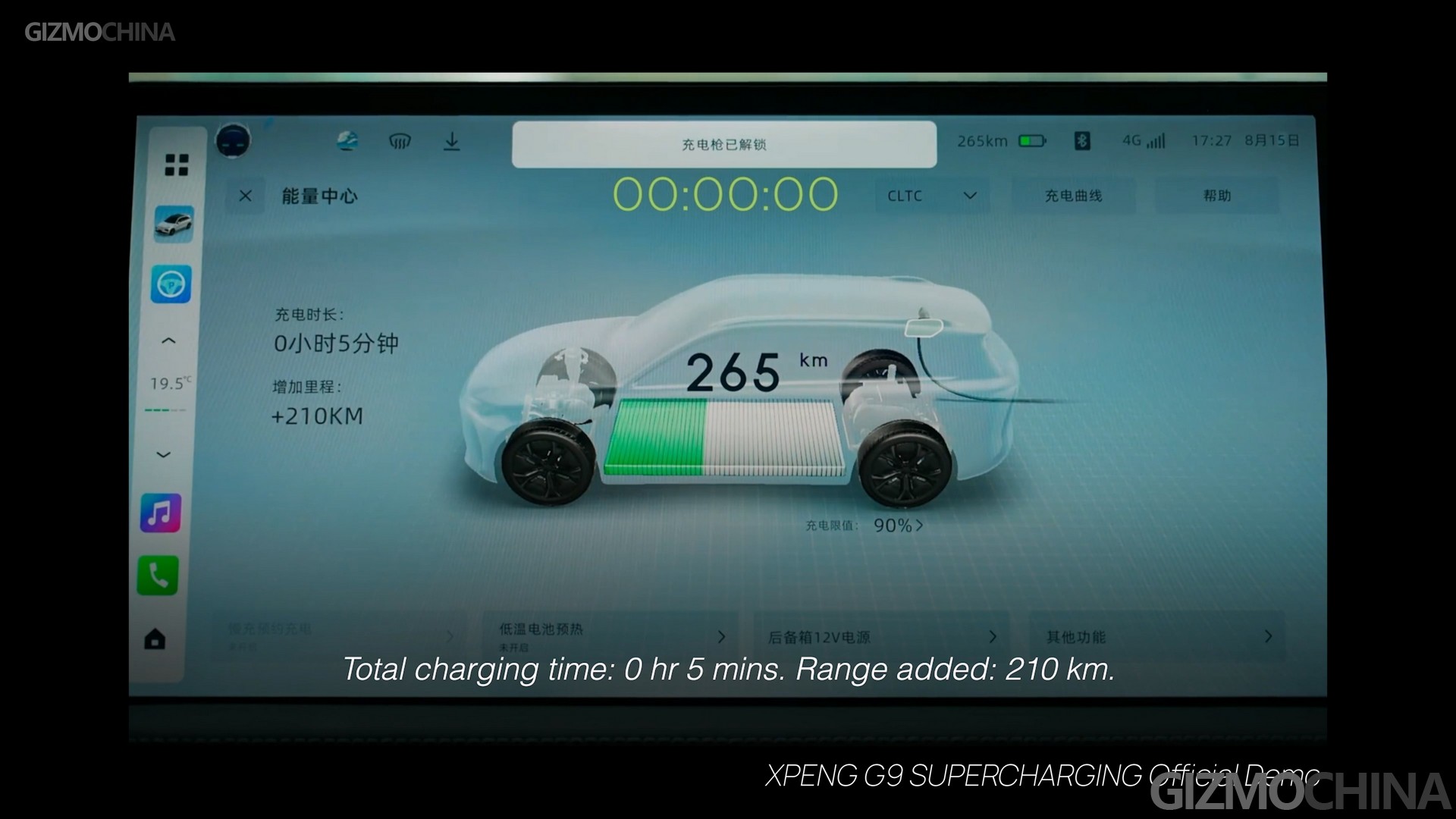
XPeng claims that the G9 comes with the world’s best charging technology. The new XPower 3 powertrain system on the G9 uses China’s first 800-Volt high-speed charging. On specifying the charging station, charging from 10 to 80% only take 15 mins and just five minutes of charging can be enough to have a CLTC range of 200km.
1 of 2
But as a consumer, I’m more interested in if Xpeng will widely place these special charging stations in other countries. If the answer is yes, undoubtedly this refueling-like charging efficiency will be very attractive.
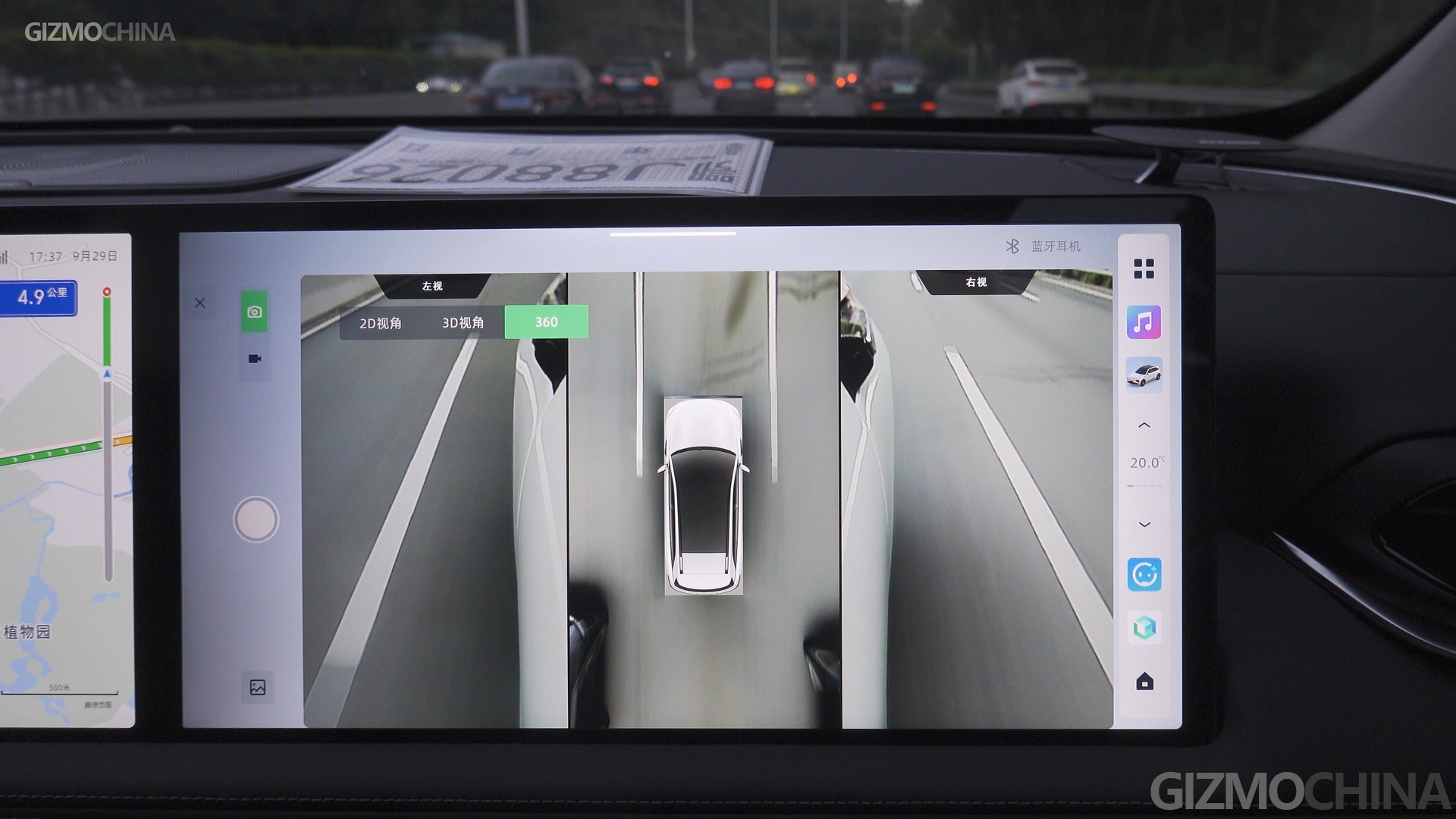
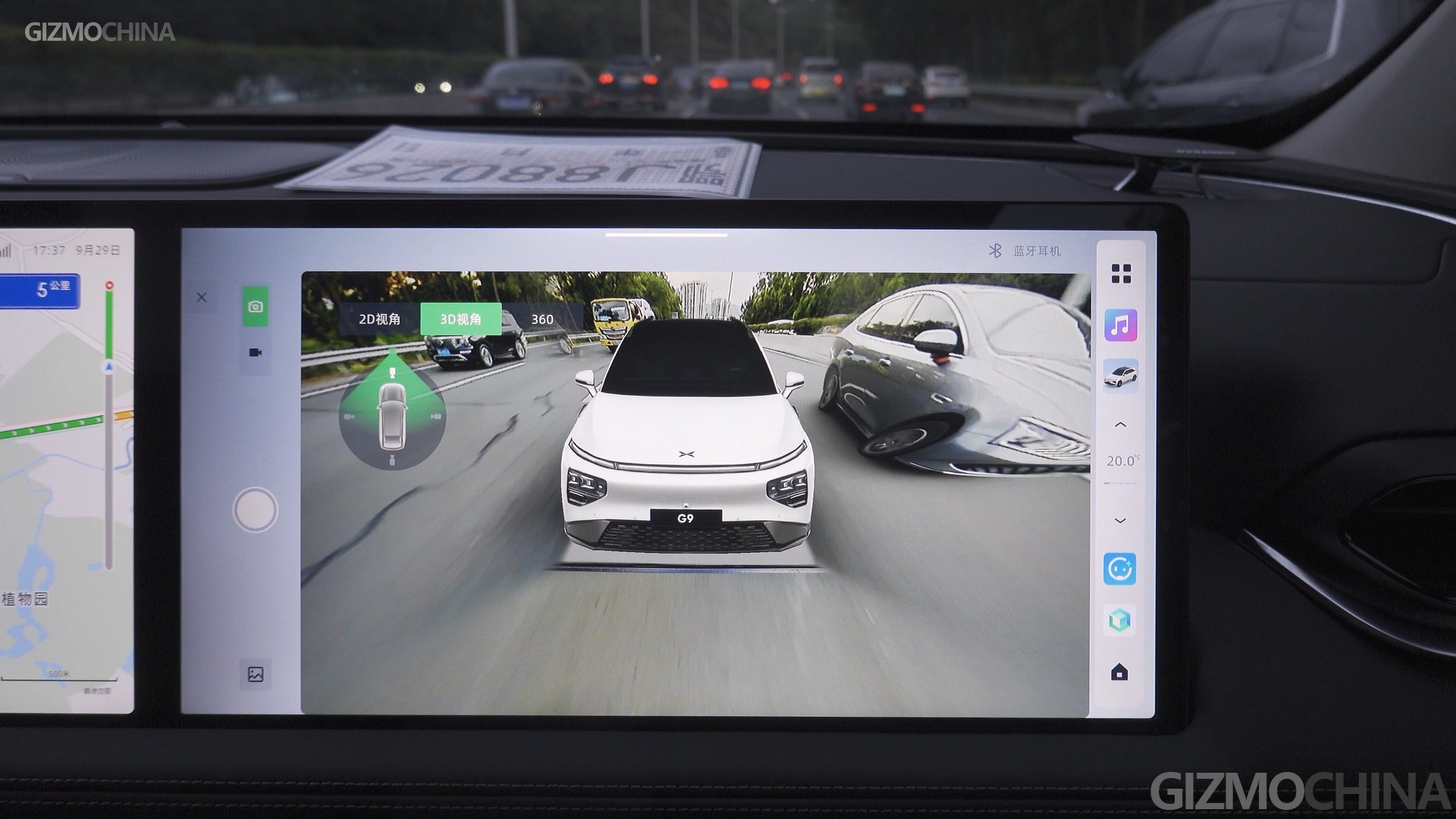
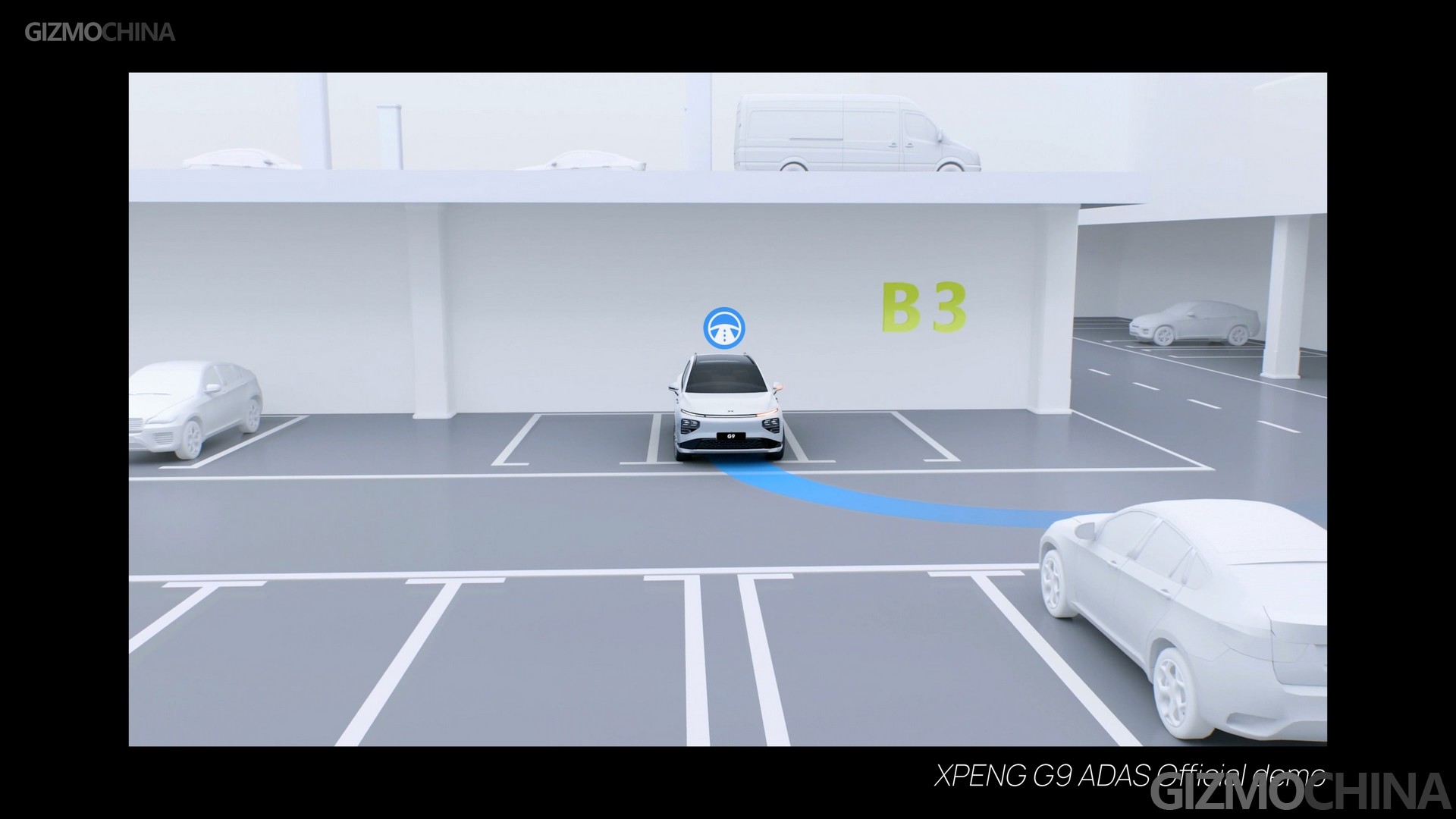
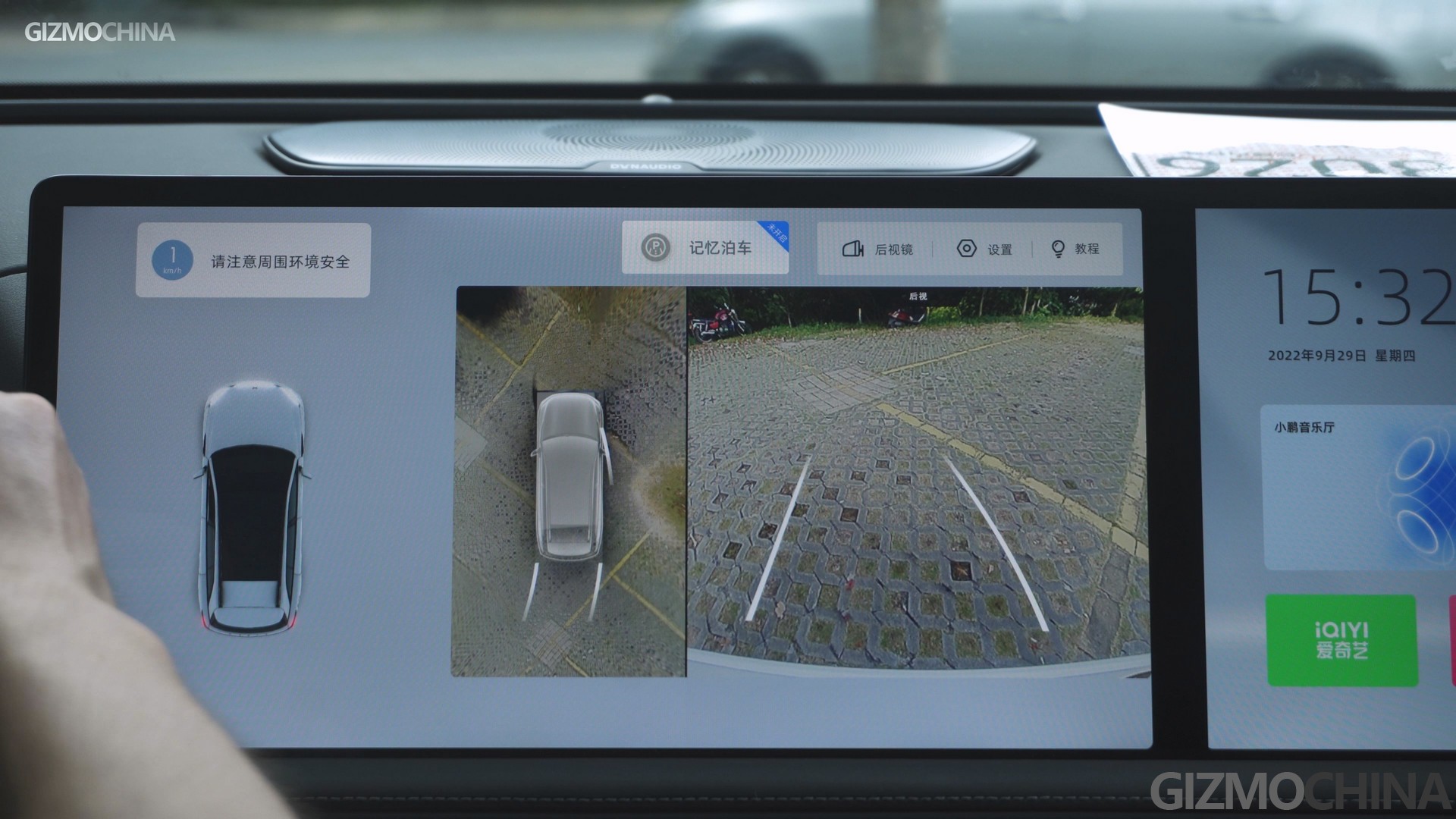
Due to time constraints, we were not able to test its assisted parking and assisted driving systems. But we believe that with better hardware support, it will perform better than the P7. Its parking video assistance is still very useful, except that its suggested rear contouring line is not very accurate at the moment. We can only hope that this will be improved in the later OTA updates.
Conclusion
After the test drive, I am very much looking forward to the performance of the highly promising G9 in other markets around the world. It could still be a great luxury SUV with great value for money when it’s launched in 2023.
As a highly intelligent new EV, it has the world’s best charging technology, smarter software experience, and excellent experience of semi-autonomous driving. It also didn’t disappoint us in details that traditional cars care about, such as reliable high performance and excellent comfort, which makes us not miss the fuel car so much during the test drive.
What’s more interesting is that with the support of OTA updates, new EVs like the G9 still have a lot of potential to be explored in the future.
The Shenzen-based electronics manufacturer Senbono has launched a new smartwatch for the global market called the Senbono Smartwatch. The highlight of this smartwatch is its capability to monitor the blood pressure and heart rate of the wearer. So, let’s take a look at all of the details.
The wearable has a rectangular 1.83-in (46 mm) display with a resolution of 240 x 284 pixels. If your smartphone runs Android 8.0 or iOS 8.0 or later, you can connect the wearable to it via Bluetooth 5.0. Bluetooth notifications, audio streaming, and remote camera controls are all made possible by the link.
Although no information regarding the precision of these devices has been supplied, the company asserts that the smartwatch has built-in heart rate, blood pressure, and blood oxygen level monitors. With numerous sports modes and a pedometer, the SENBONO watch also lets you keep track of your sleep and document your workouts. The device also has a weather forecast, an alarm, sedentary reminders, and a find my phone feature. The device is moreover IP68 weatherproof, which means it can tolerate mild rain or splashes.
The watch is available with a gold, blue, or black case and a variety of silicon and metal straps. It weighs about 35 g (1.2 oz). The device has a 240 mAh battery that may last up to 7 days between charges, and it also comes with a charging cord. The SENBONO smartwatch is currently available for a discounted price of $19.99. Deliveries to the US are now anticipated to begin in early November, and the wearable is expected to retail for $49.98 in the future.
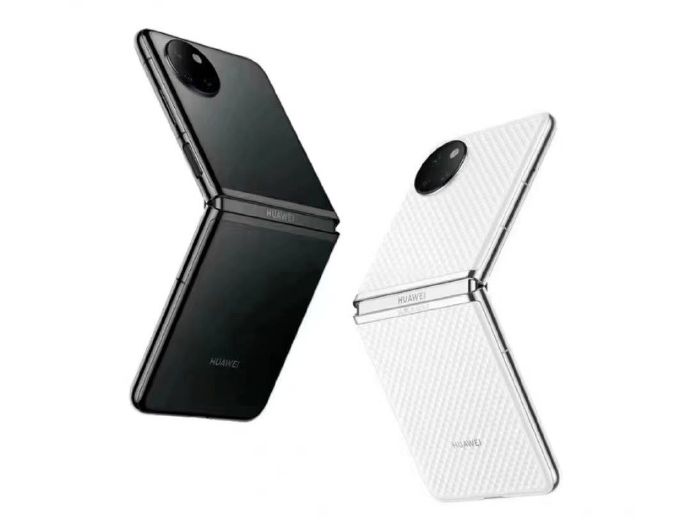
Huawei has a clamshell foldable smartphone in the form of the Huawei Pocket P50, and now it is being reported that the company is gearing up to soon launch a successor model in this foldable lineup.
A tipster from China has claimed that a new model in the Huawei P50 Pocket series will be launched in the Chinese market by the end of this month. However, the company is yet to revealed anything related to this new phone.
Huawei P50 Pocket New
As per the report, the upcoming smartphone model will come with a 6.9-inch internal display and will lack the external screen. The device will be powered by the Qualcomm Snapdragon 778G processor which will be limited to 4G connectivity.
In the camera department, there will be a triple-camera setup on the back which will include a 40-megapixel primary camera sensor, a 13-megapixel ultra-wide lens, and a 32-megapixel hyperspectral lens.
If the previous reports are to be believed, then the smartphone is likely to be called Huawei P50 Pocket New and is expected to be priced much lower than the original model as the company is aiming to undercut the Samsung Galaxy Z Flip series.
The pricing of the upcoming foldable smartphone from Huawei could be as low as 50 percent than its predecessor. The starting price of the smartphone with 256GB of internal storage could be 4,999 yuan (~$695) but it’s just a speculatoin at this point in time.
Samsung is also rumored to be working on a budget foldable smartphone under its Galaxy A-series but we may have to wait for a couple of years for the affordable Galaxy A-series foldable smartphone to be available in the market.
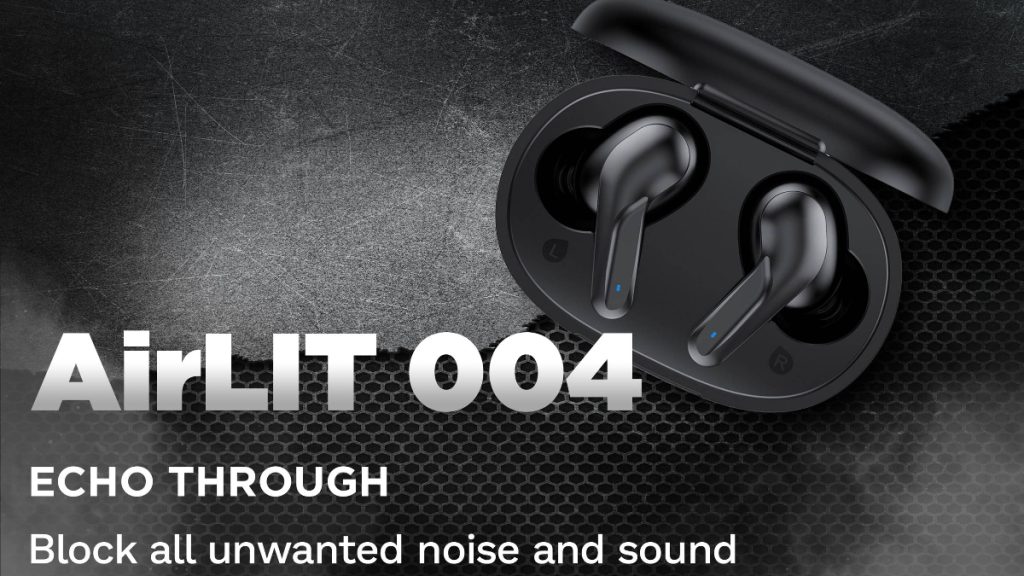
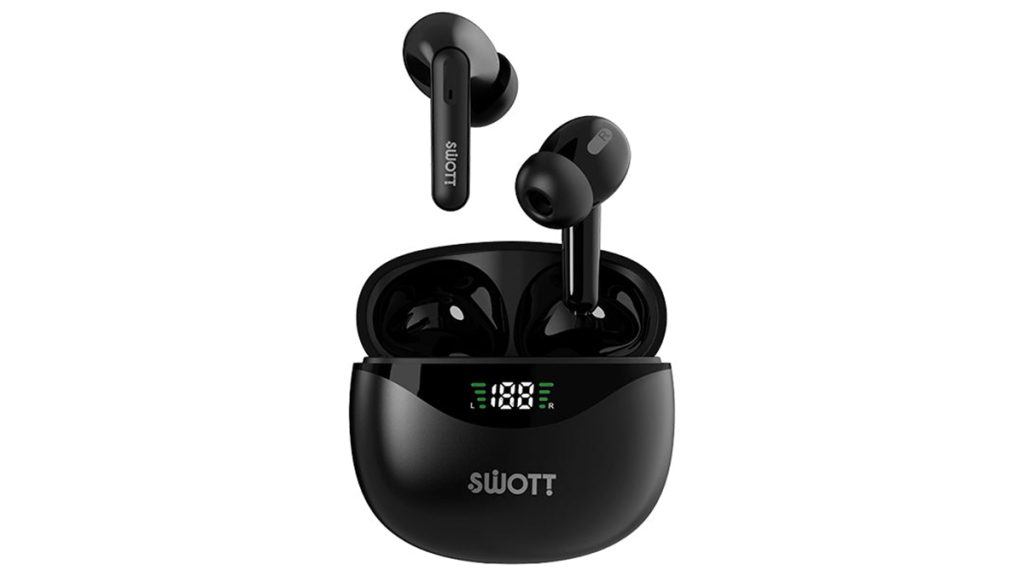
An all-new pair of wireless earbuds called the “AirLIT 004 TWS Earbuds” have been introduced by Indian consumer smart-wearable company SWOTT. The new earphones debuted months after the launch of the SWOTT AirLit 005.
These earphones are targeted at the budget range, and the brand promises excellent sound quality and comfort, making them perfect for daily use. The earbuds have an in-ear design that offers total comfort even when used for extended periods.
The device’s high-quality audio performance is aided by the 10mm dynamic drivers. SWOTT AirLit 004’s silicon tips contribute to IPX4 sweat and splash resistance. Bluetooth 5.0 is used for connectivity, and touch controls assist the user in optimizing the device’s use.
The SWOTT AirLit 004 TWS earbuds charge via USB-C and provide 4 hours of playback on a single charge. The use of the 300mAh charging case increases the playback time to 20 hours. The AirLit 004 also has Voice Assistant functionality and can be fully charged in under an hour.
Pricing and availability
The SWOTT AirLIT 004 is available in black and costs Rs. 1099 during the launch period. It will be offered starting today on swottlifestyle.com, Amazon.in, and other leading offline retailers.
Oppo is working on a new premium mid-range smartphone called the Oppo Reno 9. Leaks regarding the upcoming device have already started to surface, revealing some key specifications along with the retail box of the Reno 9. Now, another such leak has hinted at the camera array design of the smartphone.
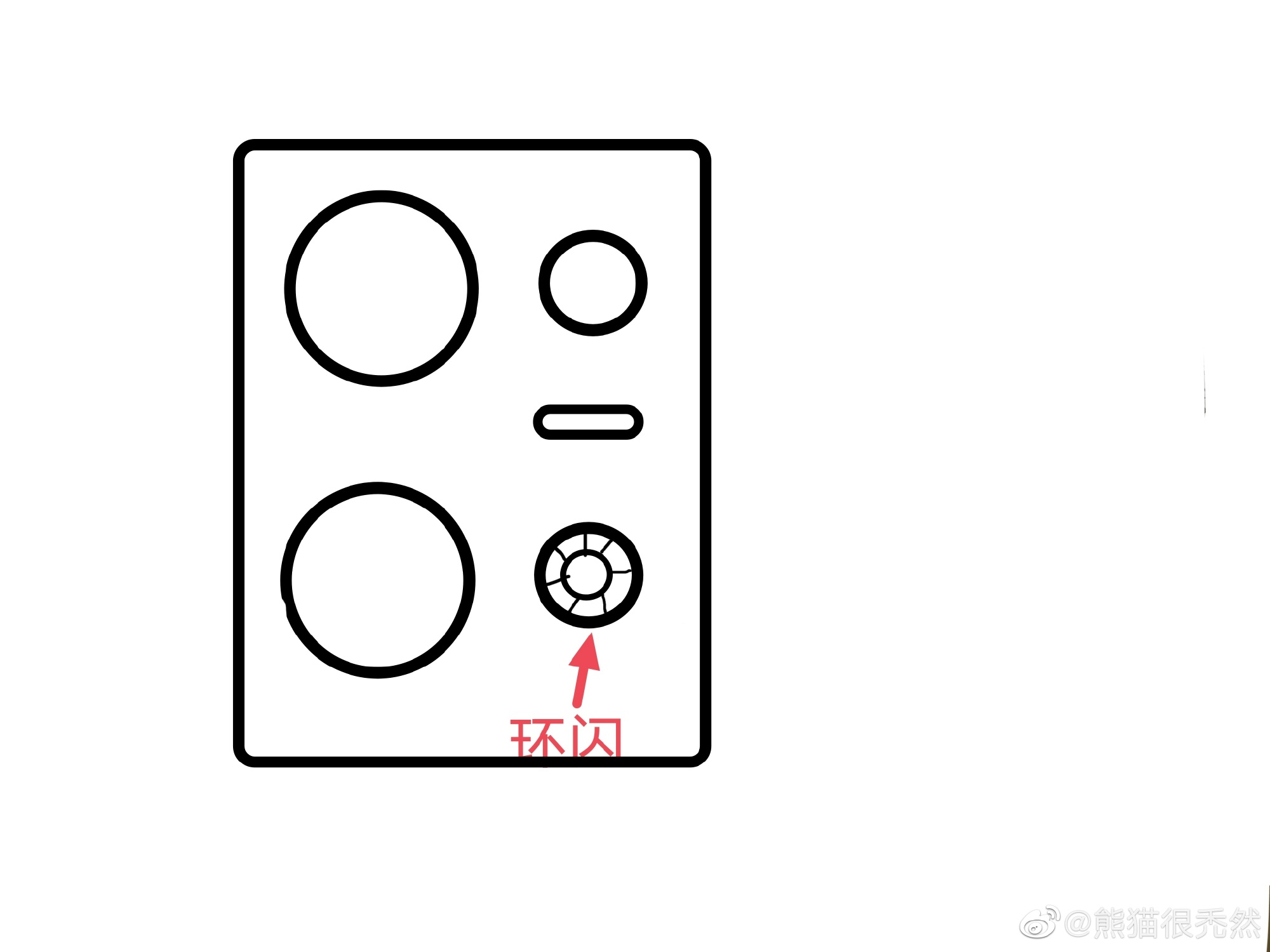
Popular Weibo tipster @熊猫很禿然 has shared an image showing the camera island of the upcoming Reno 9.
The overall camera design appears to be the same as the last generation, with two large cutouts and one small cutout. In addition to a ring flash, the image reveals another flash module, likely with a different color temperature. Details regarding the cameras are still largely unknown, but a previous leak suggests that the device might feature a 64MP primary sensor. It remains to be seen if this is an improvement or a downgrade compared to the current Reno 8, which uses the tried-and-tested Sony IMX766 sensor.
Other than the camera, the leaks suggest that the device will be equipped with the Snapdragon 778G chipset. The Reno 8 Pro, on the other hand, can break cover with the Dimensity 8100 onboard. Additionally, the Pro model is also said to have a 50MP Sony IMX766 sensor for the primary camera. The last bit of information available on the devices states that they could feature 4,500mAh capacity batteries.
The Reno 9 series will likely debut in Q4 this year in China. So, we expect more details to emerge very soon.
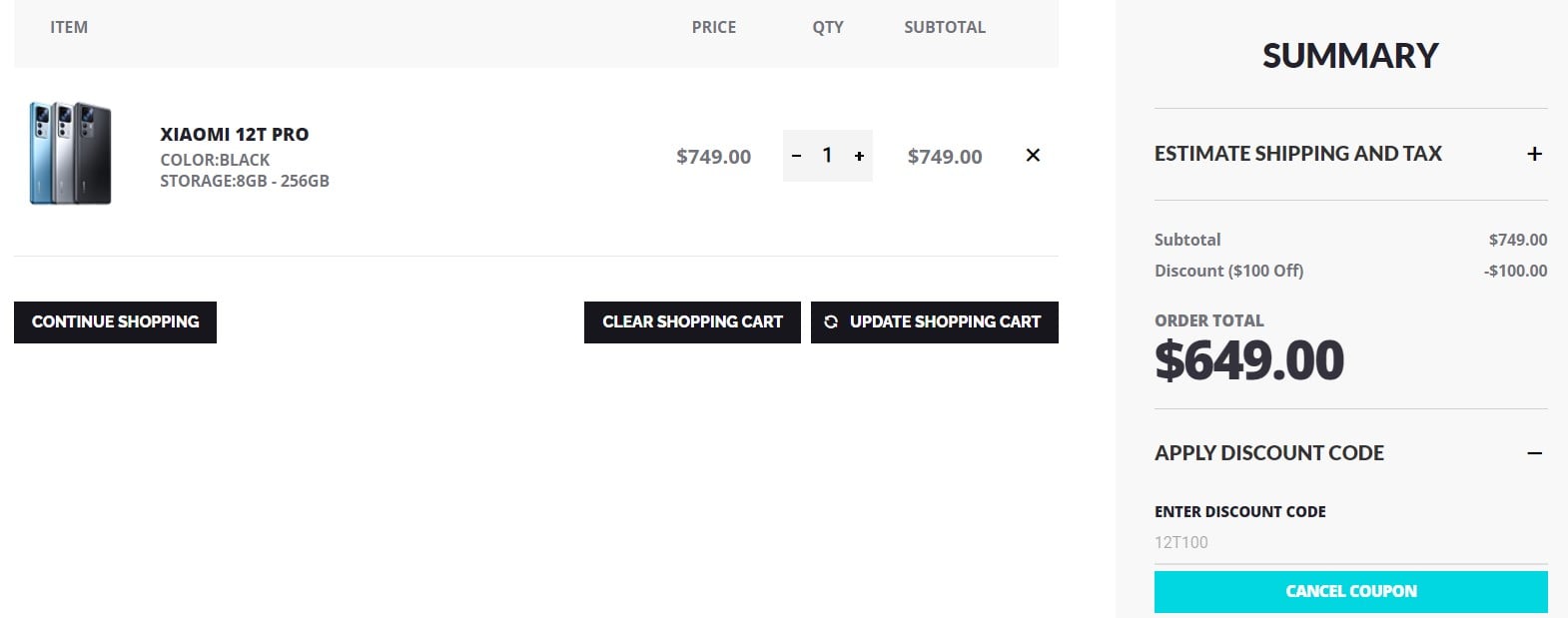
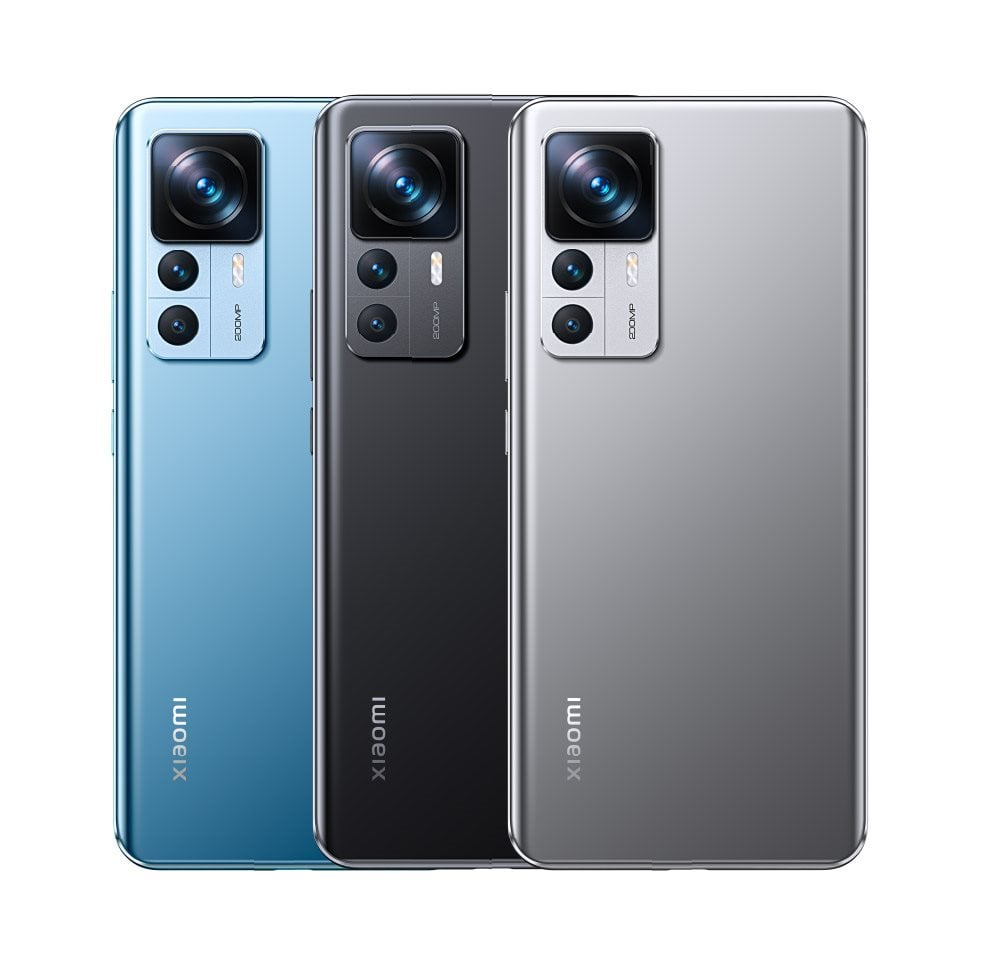
Giztop is giving $100 OFF on Xiaomi 12T Pro. The smartphone which generally retails for $749 is now available at a discounted price of $649 only by using the coupon code:12T100. This coupon expires on October 20, 2022.
Xiaomi 12T Pro features a 6.67-inch,120Hz, Adaptive Sync AMOLED DotDisplay. Powered by the latest Qualcomm Snapdragon 8+ Gen1 processor, the smartphone comes in multiple memory variants viz. 8GB/12GB LPDDR5 RAM and 256GB UFS 3.1 internal storage.
The phone is fueled with a 5000mAh battery and supports 120W fast charging. It comes with a triple rear camera setup with a 200MP main camera and 8MP + 2MP secondary sensors. For your selfies, you have a 20MP sensor in the front. Other interesting features include Android 12-based MIUI 13, dual-frequency GPS, IR blaster, etc.
Generally retailing for $749 you can now buy Xiaomi 12T Pro at a discounted price of $649 only on Giztop. Please note that this price is applicable to the base variant only.
For more information on such exciting deals and offers check out our deals hub.
A recent law by the European Union has forced Apple to adopt a USB Type-C port for charging Apple iPhone. Now, it is being reported that the Cupertino-based tech giant will also adopt USB-C ports for other products.
The latest report from Mark Gurman of Bloomberg claims that Apple will transition to USB-C ports for all the AirPods models as well as the Mac accessories like Magic Keyboard and Magic Trackpad from the year 2024.
Mark Gurman believes that Apple will beat the legislation’s date of application in late 2024 with most of its products. The iPhone 15, launching next year, will come with a USB Type-C port, while the iPad is expected to switch to USB-C by the end of this year.
He notes that all AirPods models, as well as the Magic Mouse, Magic Keyboard, and Magic Trackpad, will need to make the switch when new versions are released. He anticipates several major Mac updates next year, including a new iMac and a Mac Pro.
It is also being said that moving to USB Type-C port on its devices will just be a temporary solution to avoid getting banned in the European market. Eventually, the company aims to shift entirely to inductive charging.
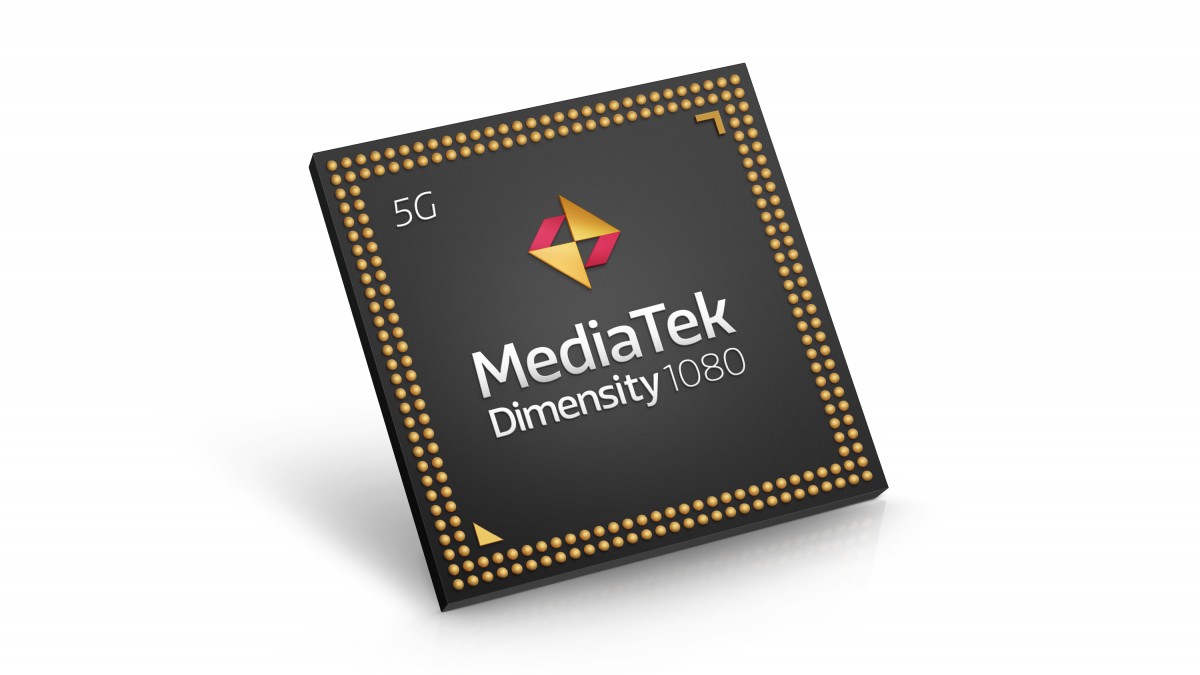
MediaTek has unveiled a new chipset called the Dimensity 1080. The 6nm chipset manufactured by TSMC is the successor to the Dimensity 920 SoC, which debuted last year. To recall, the D920 chip has been used in devices like the Xiaomi Mi 11i series (Redmi Note 11 Pro/Pro+ Chinese editions), Realme 9 Pro+, Vivo V23 5G, and Infinix Zero Ultra 5G. Continue reading to learn more about the Dimensity 1080.
The Dimensity 1080 octa-core chip features two ARM Cortex-A78 CPU cores ticking at up to 2.6GHz and six ARM-Cortex A55 cores working at up to 2GHz. The SoC is coupled with Mali-G68 MC4 graphics. Hence, the Dimensity 1080 is designed to power mid-range 5G phones.
MediaTek Dimensity 1080
The SoC comes with support for LPDDR5 RAM and UFS 3.1 storage. With regard to the camera capabilities, the chip can support up to 200MP sensors with no shutter lag. It carries support for 4K HDR video encoding and quad-camera concurrency.
Phones with the Dimensity 1080 can have 120Hz Full HD+ screens. On the connectivity front, the chip supports Wi-Fi 6, Bluetooth 5.2, and dual 5G with dual standby.
According to MediaTek, the first phones featuring the Dimensity 1080 chipset will debut in Q4 2022. As can be seen, the D1080 is an upgrade over the D920 with bumped up CPU speeds and camera performance. It appears that the Redmi Note 12 series will be one of the first phones to feature the Dimensity 1080 chipset. The Note 12 lineup is expected to go official in November in China. Honor is also likely to launch a Dimensity 1080-powered phone in the coming weeks.
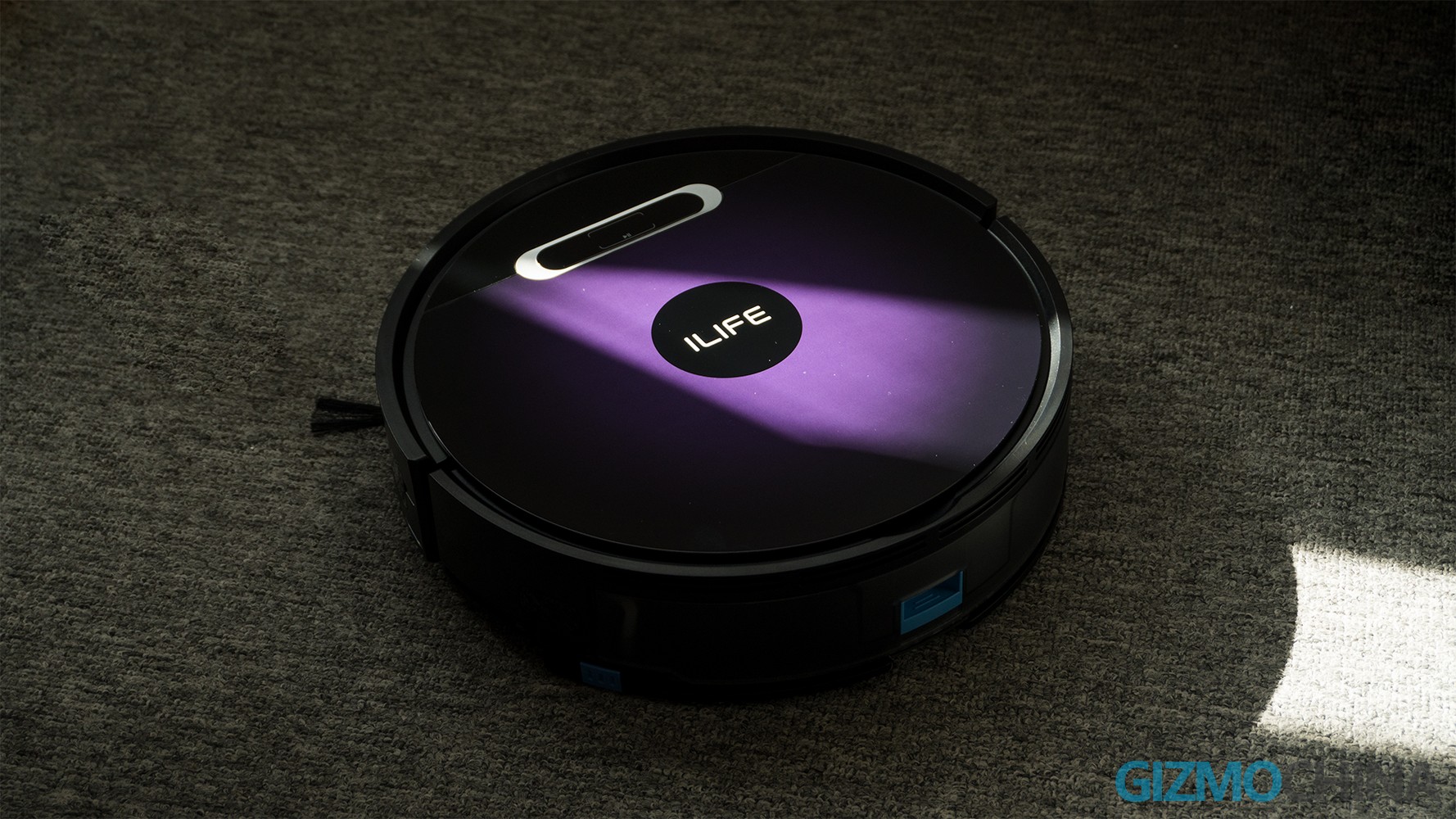
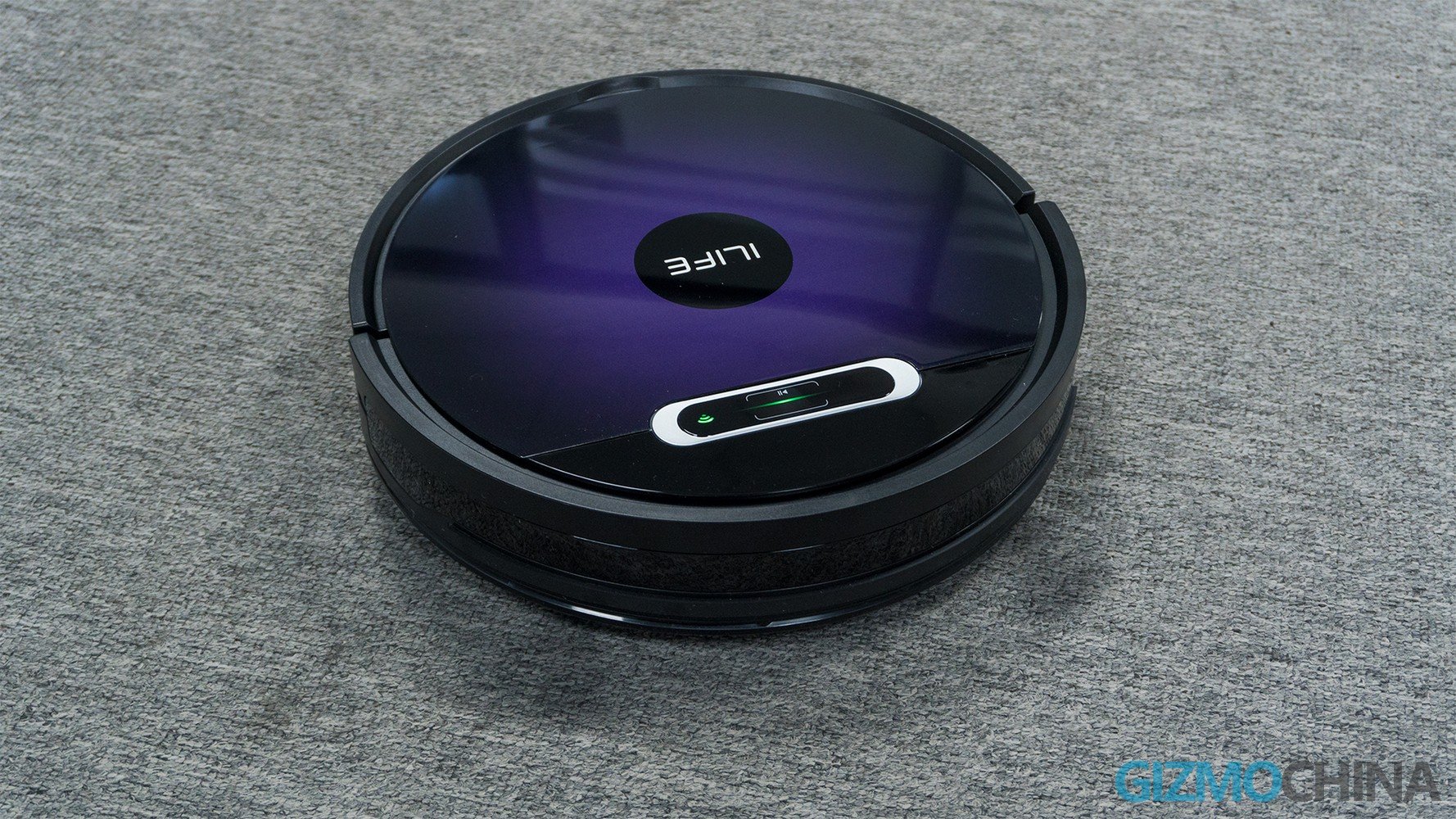
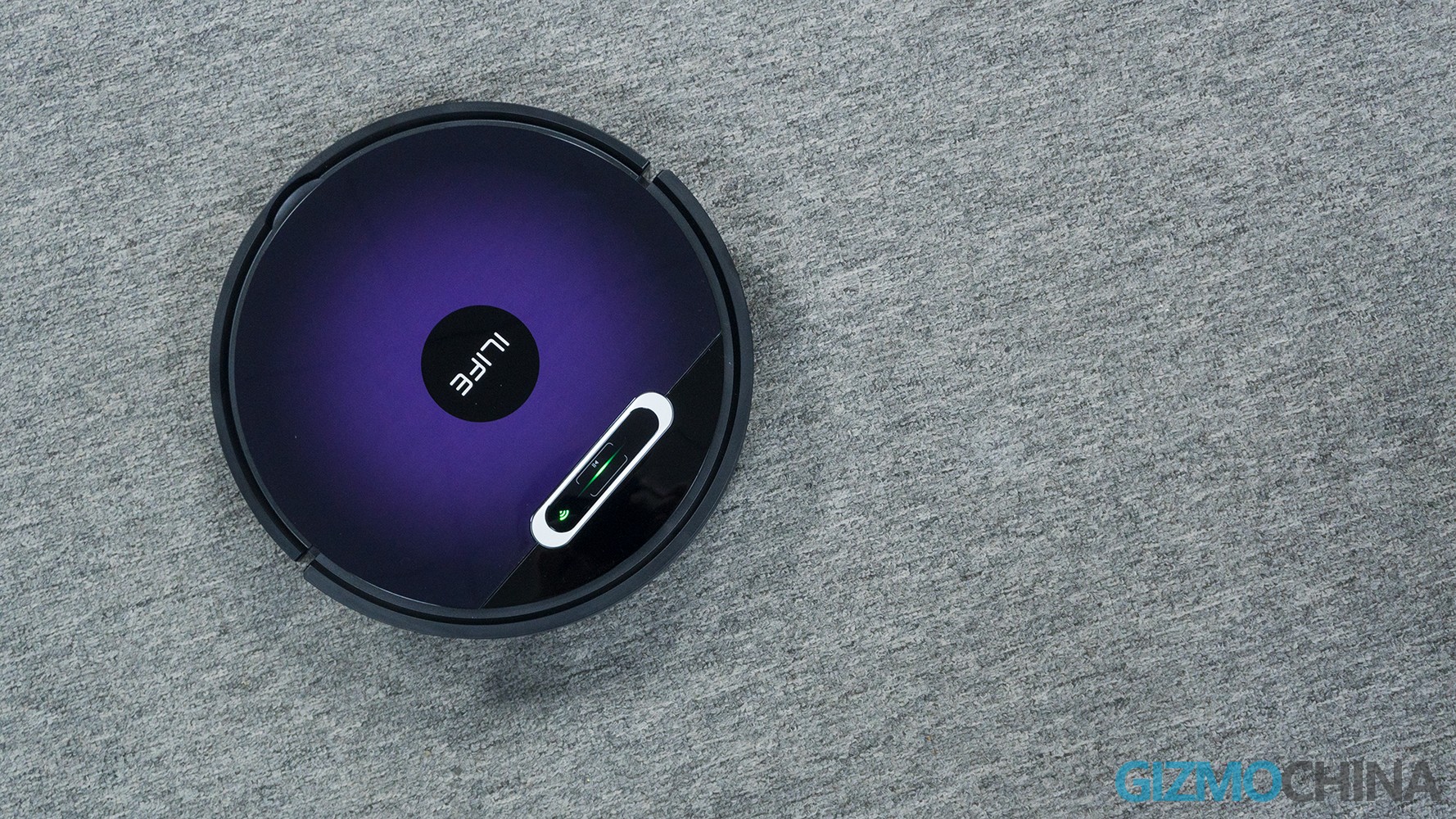
You see the name of this robot vacuum: ILIFE V3s Max. obviously, this is the upgrade of ILIFE’s V3s Pro again. We also got this ILIFE V3s Max right away, so let’s see what the $240 robot vacuum can do for you.
Unboxing
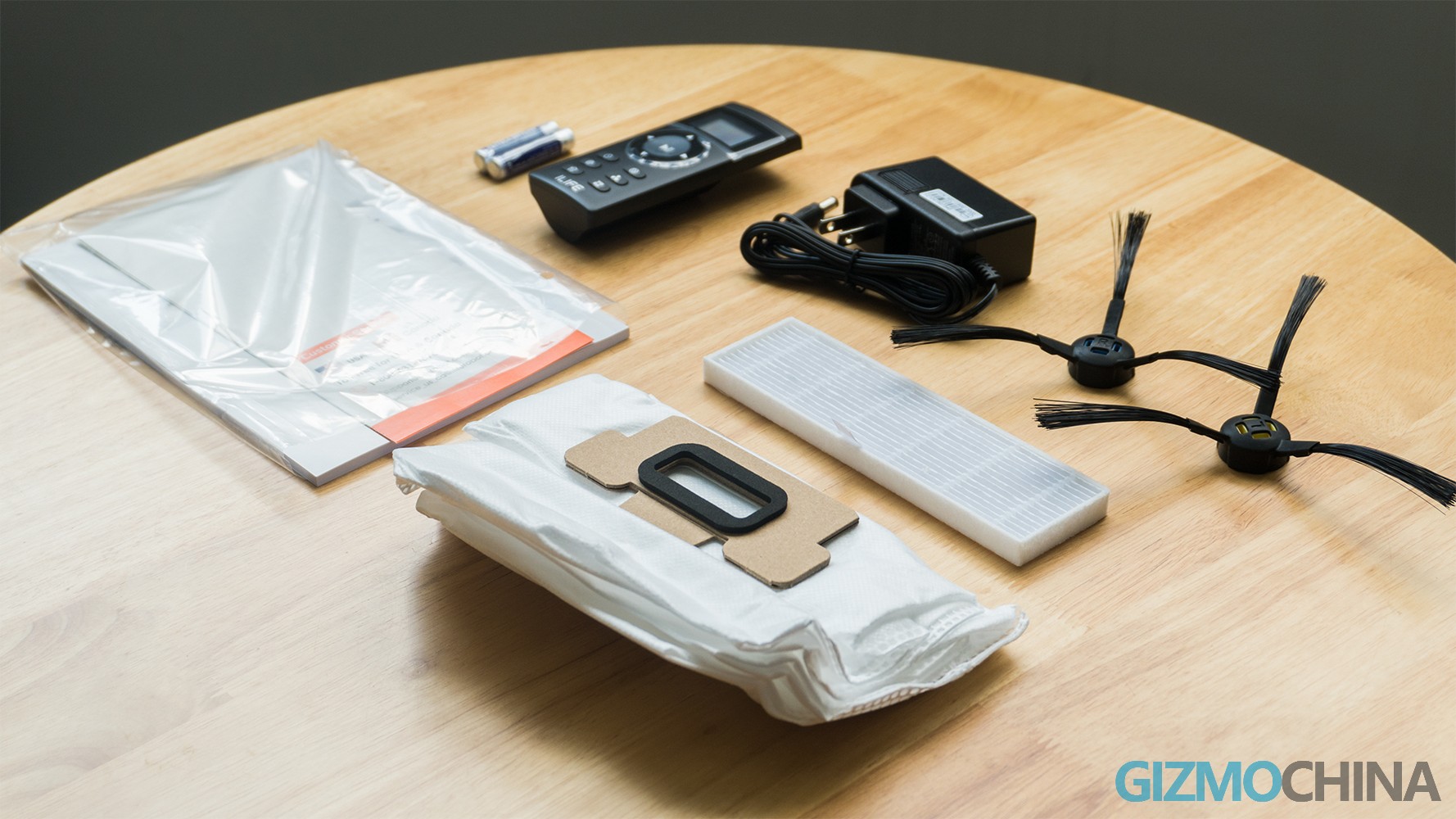
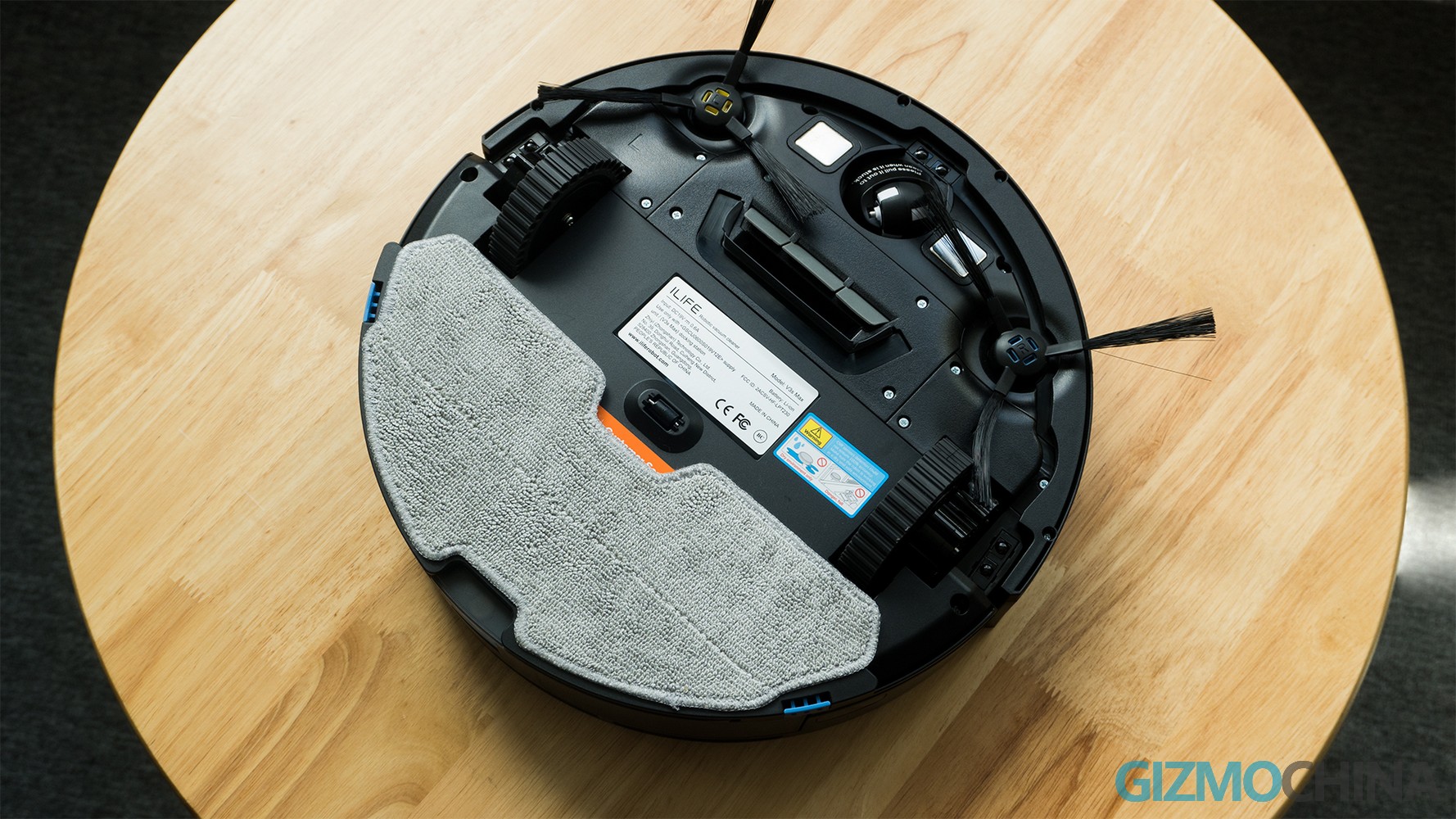
V3s Max box and other robot vacuum box is about the same size, inside in addition to the robot vacuum and charging dock, there is a remote control, 2 batteries, a filter, and 2 extra side brush. A power adapter, user manual, and 3 dust bags.
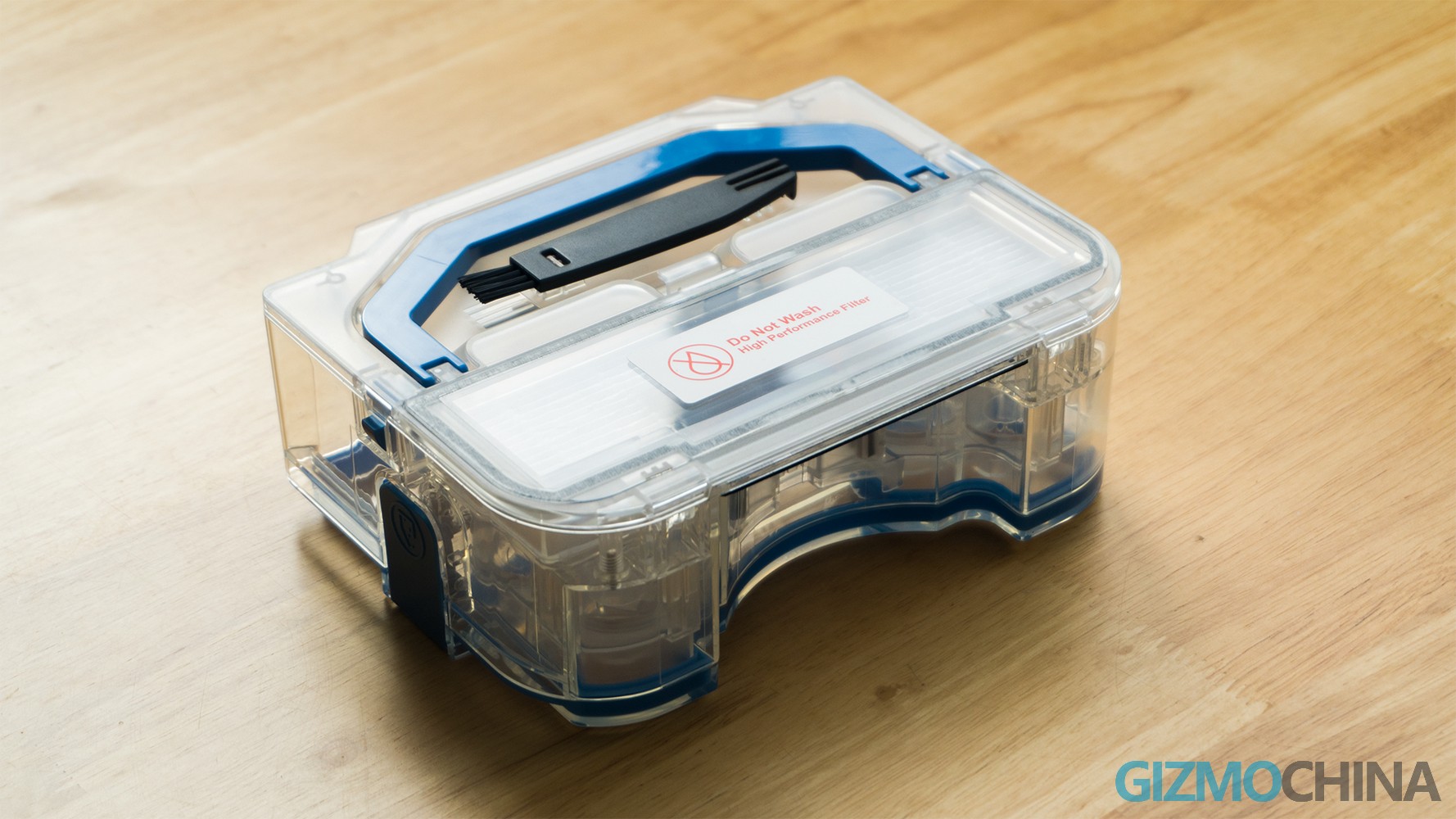
Dustbin also has a Cleaning tool on top that helps you clean up hair that gets tangled in the vacuum. I really like the design so I don’t lose this little thing again.
2-in-1 Robot Vacuum and Mop
When you look at the end of the robot vacuum, you know it supports mopping. 600ml large dustbin and 200ml water tank allow the V3s Max to vacuum and mop at the same time. Unless there are special cases, the V3s Max is able to clean the floor cleanly.
Smart Gyro Path Planning
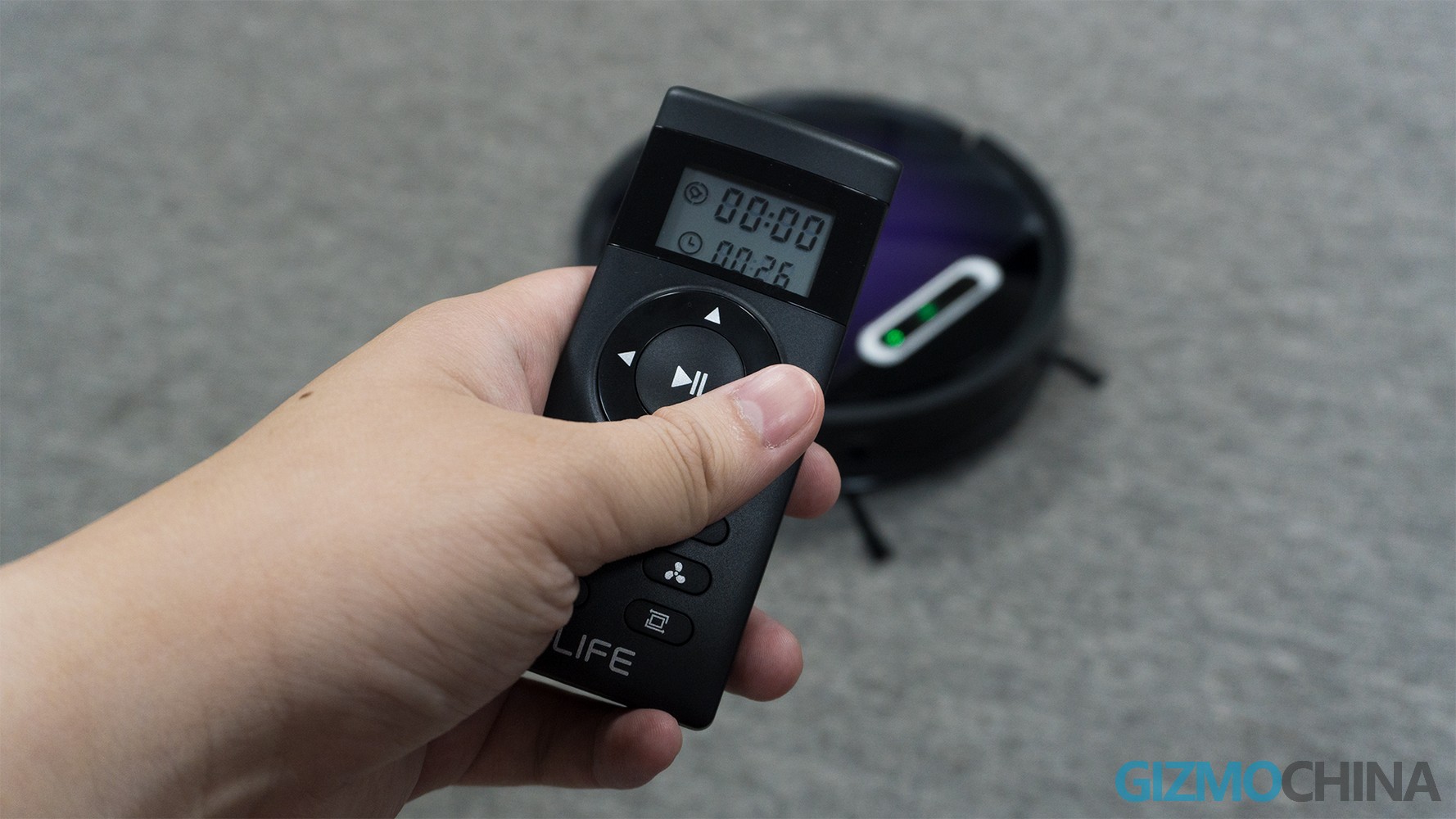
Thanks to its advanced gyroscopic navigation system, V3s Max automatic vacuum cleaner robot follows a zig-zag cleaning route while cleaning your home. It doesn’t have the kind of laser or whatever navigation system of those expensive robot vacuums, but it has a remote control. You can even play with it as an RC car. At this price point, it can do the vacuum and mop job very well, and there is nothing to complain about.
ILIFE HOME APP
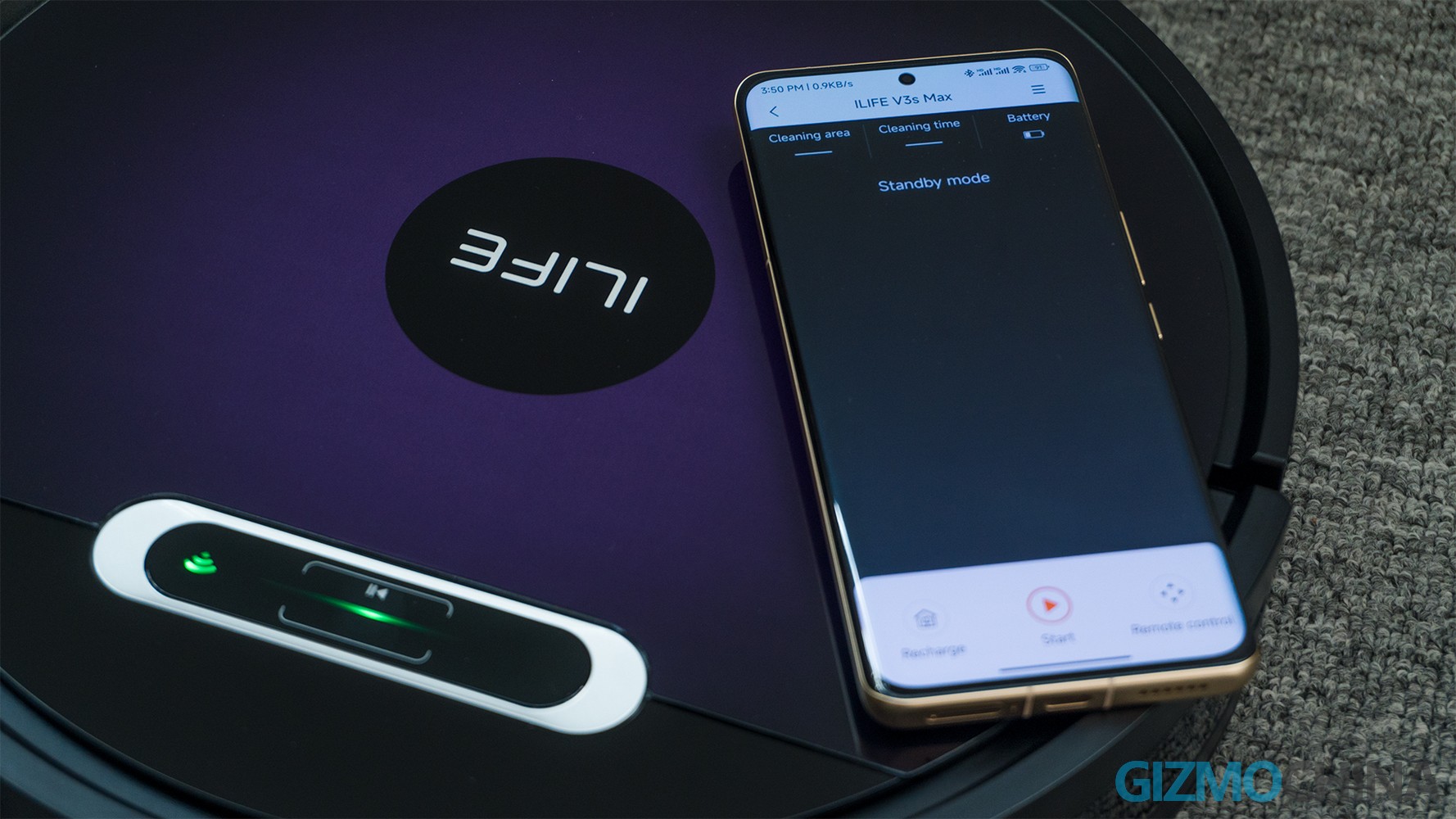
Of course, it can be controlled with APP and you can set the running time of the robot vacuum. The APP UI is relatively simple, so the advantage is that even if you do not want to open the phone, just use the remote control or manually open the vacuum can be cleaned.
2000Pa Strong Suction
A big upgrade to the V3s Max is the 2000pa powerful suction, which doubles the suction power compared to the Pro version. The effect of strong suction is very obvious, if you have a large carpeted area on the floor in your home like our company, then the Max version will be a better choice.
If there is a lot of hair and pet hair on the floor, V3s Max can also better clean them up. Do you remember the three dust bags in the package? You can replace the dustbin with a dust bag, so you can also clean your robot vacuum more easily.
90mins Long Runtime
Self-emptying robot vacuum cleaner lasts up to 90 minutes of work, automatically docks and recharges when the battery power gets low, the robot vacuum is always prepared to clean your floor.
In summary, ILIFE V3s Max is a new upgraded robotic vacuum based on ILIFE V3s pro, vacuum cleaner robot improved features include stronger power suction, larger 600ml dustbin, gyro path planning, intelligent mopping system, app control available and works with Alexa. Only support 2.4G, temporarily does not support 5G. Very good budget robot vacuum, you can buy with no worries.
WHERE TO BUY
Buy ILIFE V3S MAX @Amazon Prime discount at $189.99
* Please Note: When you buy something using the links in our articles, we may earn a small commission at no cost to you.
If you are a globe trotter and an adventure enthusiast, or if you like traveling and staying outdoors for a long time or even a camper, then you know the importance of a portable battery. Your portable battery is not just your power station, but also at times your lifesaver in the outdoors. Hence, it is crucial to invest in good quality and safe batteries.
And when it comes to outdoor charging batteries, no one does it better than Jackery. The company is known for its reliable outdoor batteries and has designed and manufactured some of the world’s best power storage and discharge systems. Their goal is to provide high-quality, eco-friendly power solutions and redefine the use of clean energy for outdoor living. Playing a major role in the fight against climate change, Jackery solar power generators are not only useful for outdoor and off-grid living, but also for home usage during a power outage and natural disasters.
If you have wondering whether to get the Jackery battery pack, now might a good time to make that decision. The company is offering solid discounts on a bunch of its best-selling products.
JACKERY DEALS
Jackery is giving huge discounts on various products including batteries, solar panels, and more. The deal starts on October 11 and ends on October 12, 2022. Please note that this mega deal is open for just two days. You can buy the products from Amazon US or the official Jackery website.
So let’s check out some of the best deals under the sale.
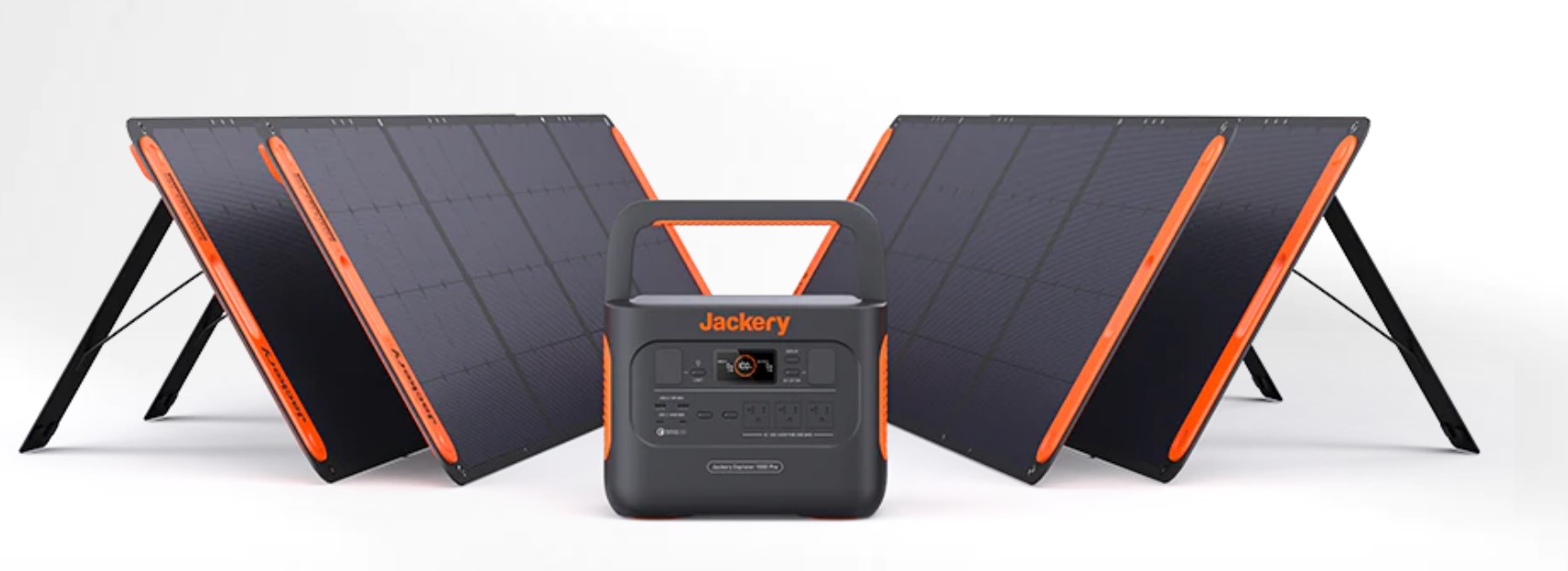
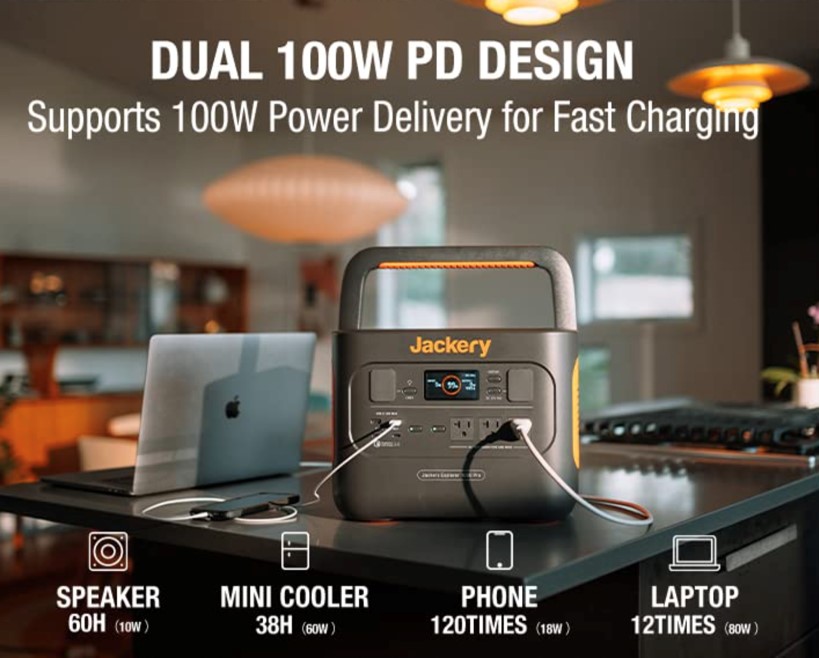
This 2160Wh portable power station can simultaneously power multiple devices. The ultimate power beast comes with the fastest solar recharging capacity ever for Jackery. It can power almost all household appliances including a coffee maker, electric grill, refrigerator, hairdryer, etc., and outdoor gadgets and machines like pellet smokers, mini coolers, ebikes, refrigerators, air conditioners, and more. Whether you are suffering from a power failure at home or are camping out in the woods, you can always find an uninterrupted power supply with Jackery Solar Generator 2000 Pro.
Capacity and Power:
2,160 Wh capacity
2,200W AC power
4,400W peak power
Jackery’s fastest solar recharging
Battery:
Multiple charging options perfect for off-grid use
Fully charge under 2.5 hours with 6 SolarSaga 200W solar panels
Fully charge within 2 hours via AC wall outlet
Can also be charged using a carport.
Safety:
First-rate lithium battery houses two chips for dual battery protection
Four temperature core detectors, guarantee a perfect balance of safe and reliable charging
Design:
Simple and easy to operate
Start with a push of a button
Input and output display screens
Various on-screen features
Fault code indicator and low battery indicator
Other Features:
Noise level under 53dB – ensuring a quiet and peaceful charging
Low noise level is essential for safety in the outdoors
Emits no toxic gases and causes no harm to the environment.
Supports pass-through charging
You can charge your power station with essential devices still plugged in thus you can charge on the go quickly and conveniently
3-year warranty on regular purchases, plus an additional 2-year extension on your warranty when ordering from the Official Website
Lava has silently unveiled a new entry-level phone in India called the Lava Yuva Pro. The device sports a waterdrop notch display that offers a 20:9 aspect ratio, 13-megapixel triple rear cameras, a big battery, and an attractive mirror-like finish on the back. Here is all the information on the specifications, features, and price of the Yuva Pro.
Lava Yuva Pro specifications and features
The Lava Yuva Pro has a 6.517-inch IPS LCD panel that produces an HD+ resolution of 720 x 1600 pixels and a refresh rate of 60Hz. Under the hood, it has a MediaTek chip coupled with 3 GB of RAM.
The handset offers 32 GB of native storage and a dedicated microSD card slot for additional storage. It comes preinstalled with the Android 12 OS. While it appears to be running on the Android Go edition, its official listing on Lava India’s website does not mention anything about it.
Lava Yuva Pro
The Yuva Pro has an 8-megapixel camera for selfies and video calls. Its back panel has a 13-megapixel primary camera and two auxiliary cameras. It is one of the few sub-Rs 8,000 priced phones to feature a side-facing fingerprint scanner. The handset also supports face unlock.
The Lava Yuva Pro has a 5,000mAh battery that supports 10W charging via USB-C. According to Lava, once it is fully charged, it can offer up to 37 hours of 4G talk time and 320 hours of standby time. The device offers connectivity options such as dual SIM, 4G VoLTE, Wi-Fi 802.11ac, Bluetooth 5.0, GPS, and a 3.5mm headphone jack. The Yuva Pro measures 164.4 x 75.8 x 8.9mm and weighs around 191 grams.
Lava Yuva Pro price in India
The Lava Yuva Pro is priced at Rs 7,799 (~$94). It is listed for purchase on Lava India’s website in three colors like Metallic Black, Metallic Blue, and Metallic Grey.
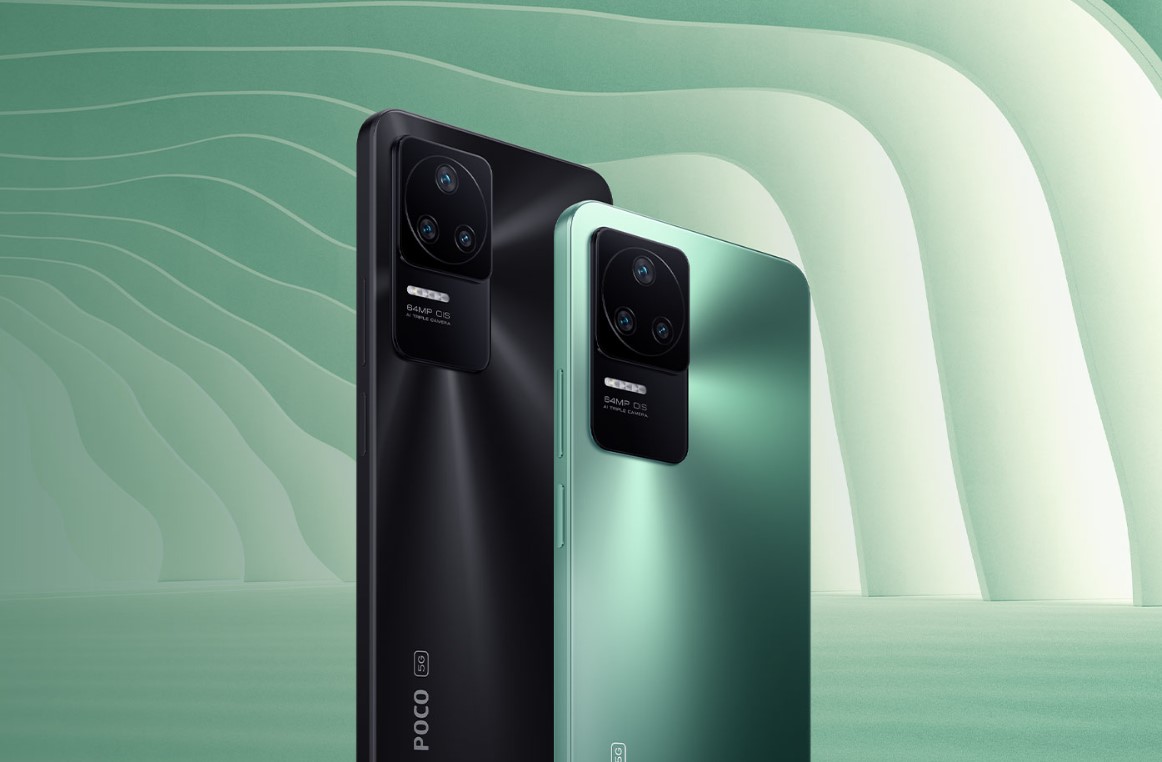
POCO unveiled the POCO F4 5G this year. It debuted a tweaked version of the Redmi K40s, which was made available exclusively in the Chinese market. A new report by Xiaomiuihas revealed the key specifications of the POCO F5 5G.
The report reveals that the POCO F5 5G will be a rebranded version of the Redmi K60 5G, which is expected to debut in Q1 2023. A new Xiaomi phone with model number 23013RK75C (Chinese variant) has appeared in the IMEI database. Its Indian variant with the 23013PC75I model number and the global version with the 23013PC75G model number have also surfaced in the IMEI database.
POCO F4 5G
The handset will first debut in China with the Redmi K60, and later it will debut as the POCO F5 5G in global markets and India. In the 23013PC75G/I model number, the “23” means 2023, the “01” means January, the letters “PC” refers to POCO, the 75 hints to “M11A” model number, and G/I refers to Global/India. In the same way, the letters “RK” in the 23013RK75C model number seemingly hint at the Redmi K-series for the Chinese market.
The report further states that the POCO F5 has a “Mondrian” codename. It will arrive with an AMOLED display that produces a 2K resolution of 1440 x 3200 pixels, a 120Hz refresh rate, and 1000 nits of brightness. The device will be powered by the Snapdragon 8 Plus Gen 1. The same specs are likely to be available on the Redmi K60. The other specifications of the POCO F5 / Redmi K60 are yet to be revealed.
As can be understood through the model numbers of the Redmi K60 / POCO F5, both devices are expected to launch in Q1 2023. Hopefully, the rumor mill will spill details about the F5 / K60.
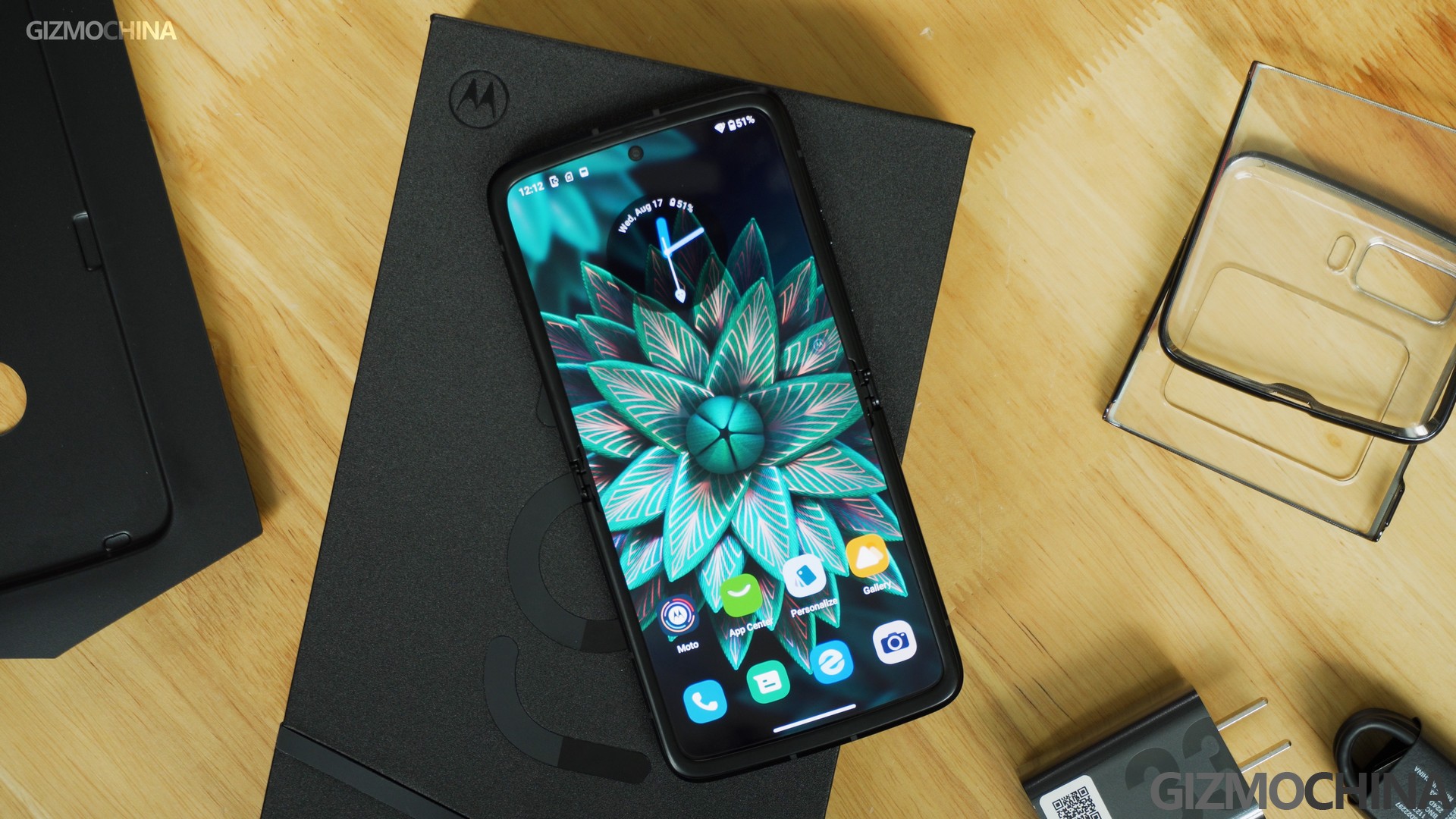
In August, Motorola unveiled the Motorola Razr 2022 clamshell phone with a foldable display in China. Unlike the predecessor models, which were packed with mid-range specs, the Razr 2022 arrived as a flagship phone powered by the Snapdragon 8 Plus Gen 1 chipset. In China, the device is priced at 5,999 Yuan (~$838; 864 euros). Rumors are rife that the device will be released soon in the global market. Reliable tipster Roland Quandt has tipped the price of the Razr 2022 for Europe.
According to Quandt, the Razr 2022 will cost more than 1,200 euros in Europe. In China, the device will be available in three variants, 8 GB RAM + 128 GB storage, 12 GB RAM + 256 GB storage, and 12 GB RAM + 512 GB storage.
The Razr 2022 will arrive as a major rival to the Samsung Galaxy Z Flip 4, which starts at 1,100 euros. It appears that Motorola’s clamshell will be priced higher than the Z Flip 4. The leaked price suggests that the Lenovo-owned company will find it tough to sell the Razr 2022 in Europe.
Motorola Razr 2022 specifications
The Motorola Razr 2022 has a 6.7-inch P-OLED foldable screen that produces an FHD+ resolution, a 20:9 aspect ratio, and a 144Hz refresh rate. It has a 2.7-inch G-OLED display on the back. The Snapdragon 8 Plus Gen 1 powered device ships with LPDDR5 RAM and UFS 3.1 storage.
The Razr 2022 has a 32-megapixel front-facing camera. Its back panel has a 50-megapixel main camera and a 13-megapixel ultra-wide lens. It has a 3,500mAh battery with 33W fast charging support. For security, it has a side-facing fingerprint scanner. The device runs on Android 12 OS and My UX.
Lava has recently launched the Lava Blaze 5G in India. While its price is yet to be confirmed, it is expected to arrive as India’s most affordable 5G phone. New information reveals that the brand is now gearing up to launch another 5G phone called the Lava Storm Pro. A new report by Pricebabahas revealed the key specifications of the handset.
According to the publication, Lava is gearing up to launch the Lava Storm and the Lava Storm Pro in India. The former will be a 4G device, whereas the latter will carry support for 5G connectivity. After the Lava AGNI 5G and Blaze 5G, the Storm Pro will be the company’s third 5G-ready handset.
Lava Blaze 5G
Coming to the Storm model, it will be equipped with MediaTek’s Helio chipset and will carry support for 18W charging. The Storm Pro, on the other hand, will feature MediaTek’s Dimensity chipset and offer 33W fast charging. There is a possibility that the Storm Pro could be positioned between the AGNI 5G and Blaze 5G.
The report also states that the Storm and Storm Pro will sport a 50-megapixel main camera. Unfortunately, there is no information on the other specifications of the Storm series. Hence, it is unclear whether the Storm lineup will be made official this month or in November in India.
In related news, the Blaze 5G, which went official earlier this month, features a 6.5-inch LCD HD+ display that offers a 90hz refresh rate, a Dimensity 700 chipset, 4 GB of RAM, 3 GB of extended RAM, 128 GB of internal storage, Android 12 OS, a 5,000mAh battery, an 8-megapixel front camera, and 50-megapixel triple rear cameras.
Analyst Jeff Pu has stated that Apple may use Snapdragon 5G modems in the iPhone 15/16 series. Put says Apple plans to retain the Qualcomm Snapdragon 5G baseband modems in its next two iPhone iterations. pending the release of its own 5G baseband. Apple is developing 5G modems for use in iPhones but it is unlikely to be available before 2025.
Apple iPhone 14 Plus
Jeff Pu is an analyst with Hong Kong-based Haitong International Securities. He made the points in a recent research note and says the iPhone 15 and iPhone 16 series will have the X70 and X75 Snapdragon modems instead. The recently released iPhone 14 lineup has the X65 5G baseband. The Snapdragon X70 was announced last February and supports up to 10Gbps download speeds with up to 60% improvement in energy efficiency.
The X70 also offers improved AI capabilities, an increase in average speeds, coverage, signal quality, and reduced latency. The X70 will be used in the iPhone 15 series next year while the X75 will be present in the 2024 iPhone 16 lineup. The Snapdragon X75 will be built on TSMC’s 4nm process and will offer improvements above its predecessors.
Qualcomm is currently the exclusive supplier of 5G modems for iPhones. Initial projections of a 2023 release of the Apple 5G modem may have been revised upwards. The Cupertino-based tech giant spent more than $1 billion in the purchase of Intel’s modem division. Apple remains mum on its progress in the development of its 5G modem.
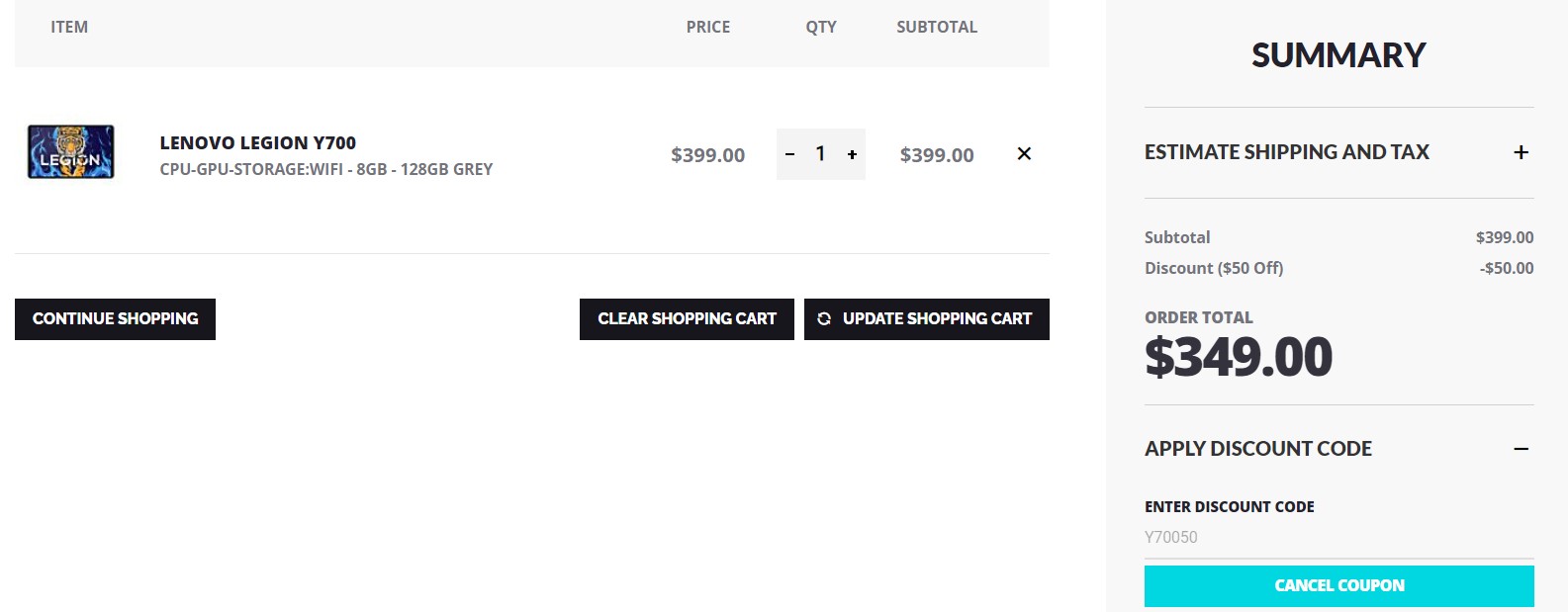
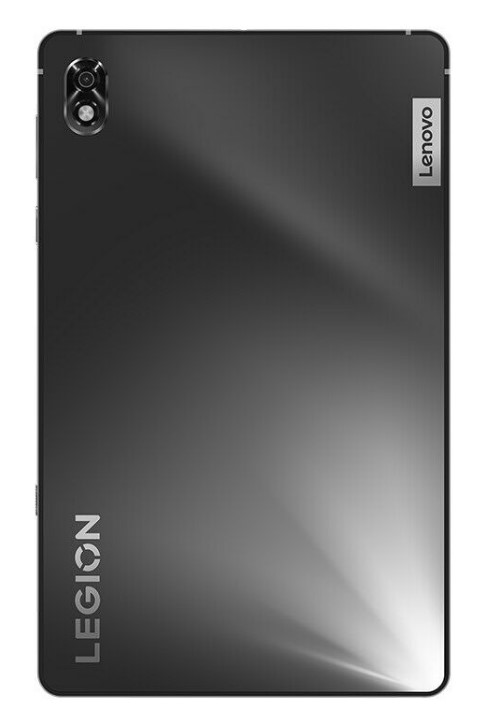
Giztop is giving $150 OFF on the Lenovo Legion Y700 gaming tablet. The tablet which generally retails for $499 is now available for a discounted price of $399 only. Moreover, you can get an additional $50 discount by using the coupon code: Y70050. Thus you can get the tablet for as low as $349. Please note that the coupon expires on October 15, 2022.
The Legion Y700 gaming tablet features a TUV Rhineland Certified 8.8 inch 2K LCD screen and supports a 120Hz refresh rate. The display comes with Dolby Vision, DC dimming, and 500 nits brightness.
Powered by the Qualcomm Snapdragon 870 octa-core processor, the tablet comes in two memory variants viz: 8GB / 12GB LPDDR5 RAM and 128GB/ 256GB UFS 3.1 storage, further expandable with a MicroSD slot.
The tablet comes with a 13MP rear camera and an 8MP front camera to capture images and videos and conduct face-to-face chat and video calls. Also for enhanced security Legion Y700 comes with the face id unlock feature.
Lenovo Legion Y700 gaming tablet is fueled by a massive 6550mAh battery and supports 45W fast charging. Also to enjoy an immersive gaming and video experience, the tablet comes with dual JBL speakers supported by Dolby Atmos. Running on the Android 12 OS-based ZUI 13, the tablet offers you a fresh user experience and advanced multitasking options.
You can now get the Lenovo Legion Y700 gaming tabletfor a starting price of $349 only on Giztop. Please note that this is a limited-time offer.
For more information on such exciting deals and offers check out our deals hub.
With eSIM functionality becoming more popular day by day, OEMs will soon replace physical SIM cards with electronic SIM cards. Although there is still time for that to happen since most smartphones don’t support eSims, not even alongside a standard SIM card. Xiaomi’s smartphone lineup was no exception to this. However, the Chinese company has rectified this with its latest Xiaomi 12T Pro.
Xiaomi 12T Pro was introduced in the global market on October 4, and it is the company’s first globally launched smartphone to offer eSim functionality. However, it is supported by a limited number of carriers, and the availability may vary depending on the country/region and carrier.
It is worth noting that the 12T Pro was launched in two sim card configurations— nano SIM + eSIM and nano SIM + nano SIM. Currently, users residing in countries like Germany, Italy, France, Japan, and Malaysia, among others, can use eSim. You can check the full list of countries/regions, and carriers with eSIM support here.
eSIM functionality is also available on the Redmi Note 10T, but only in Japan. Further, it is reported that the upcoming Xiaomi 12 Lite NE will also support this feature.
To recall, the Xiaomi 12T Pro comes with a 6.67-inch AMOLED display offering a resolution of 2712×1220 pixels and a maximum refresh rate of 120 Hz. The handset is powered by the Qualcomm Snapdragon 8+ Gen 1 chipset, clubbed with 12GB LPDDR5 RAM and 256GB storage.
It is equipped with a new 200-megapixel primary sensor. The handset also has an 8-megapixel ultra-wide-angle camera with an F/2.2 aperture and a 2-megapixel macro camera. On the front, the device comes with a 20-megapixel selfie camera. 12T Pro has a 5000mAh battery and supports 120W fast charging.
We use cookies on our website to give you the most relevant experience by remembering your preferences and repeat visits. By clicking “Accept”, you consent to the use of ALL the cookies.
This website uses cookies to improve your experience while you navigate through the website. Out of these, the cookies that are categorized as necessary are stored on your browser as they are essential for the working of basic functionalities of the website. We also use third-party cookies that help us analyze and understand how you use this website. These cookies will be stored in your browser only with your consent. You also have the option to opt-out of these cookies. But opting out of some of these cookies may affect your browsing experience.
Necessary cookies are absolutely essential for the website to function properly. This category only includes cookies that ensures basic functionalities and security features of the website. These cookies do not store any personal information.
Any cookies that may not be particularly necessary for the website to function and is used specifically to collect user personal data via analytics, ads, other embedded contents are termed as non-necessary cookies. It is mandatory to procure user consent prior to running these cookies on your website.