After the Samsung app throttling debacle, it has now come to light that Xiaomi may be just as guilty. Geekbench co-founder John Poole earlier claimed on Twitter that Xiaomi is limiting performance based on app names, much like Samsung was, and revealed that disguising Geekbench as Fortnite caused the Mi 11’s single-core performance score to drop by 30% and multi-core performance score by 15%.
“Xiaomi applies temperature management strategies to ensure an optimal product experience, especially with demanding apps that are often used for extended periods of time. On many of our devices, we offer 3 types of performance modes, allowing users to adjust the balance between performance and energy efficiency At the system level, all optimizations related to application performance weigh many essential factors, such as power consumption, performance, and thermal impact.”
To summarize, Xiaomi hasn’t denied the allegations and has admitted to the employment of “temperature management strategies” to adjust power consumption and performance in order to “ensure an optimal product experience.”
Looks like Xiaomi is also making performance decisions based on application identifiers.
Xiaomi also seems to be implying that the performance limitations can be bypassed to a certain degree through the built-in performance modes. Switching to the performance mode should prioritize performance at the cost of reduced battery life, so if you feel your phone’s running a little jittery, you know what to do.
However, it is worth mentioning here that the 3-level performance modes are limited to phones with high-end chips, making it likely that Xiaomi’s app-name-based throttling is a premium phone-only affair.
John Poole had previously posted some comparison data showing that Geekbench on the Xiaomi Mi 11 when disguised as Fortnite resulted in some significantly dropped scores — single-core dropped from 1,129 to 791 while multi-core dropped from 3,714 to 3,125. Similar reductions were seen when Geekbench was disguised as Genshin Impact.
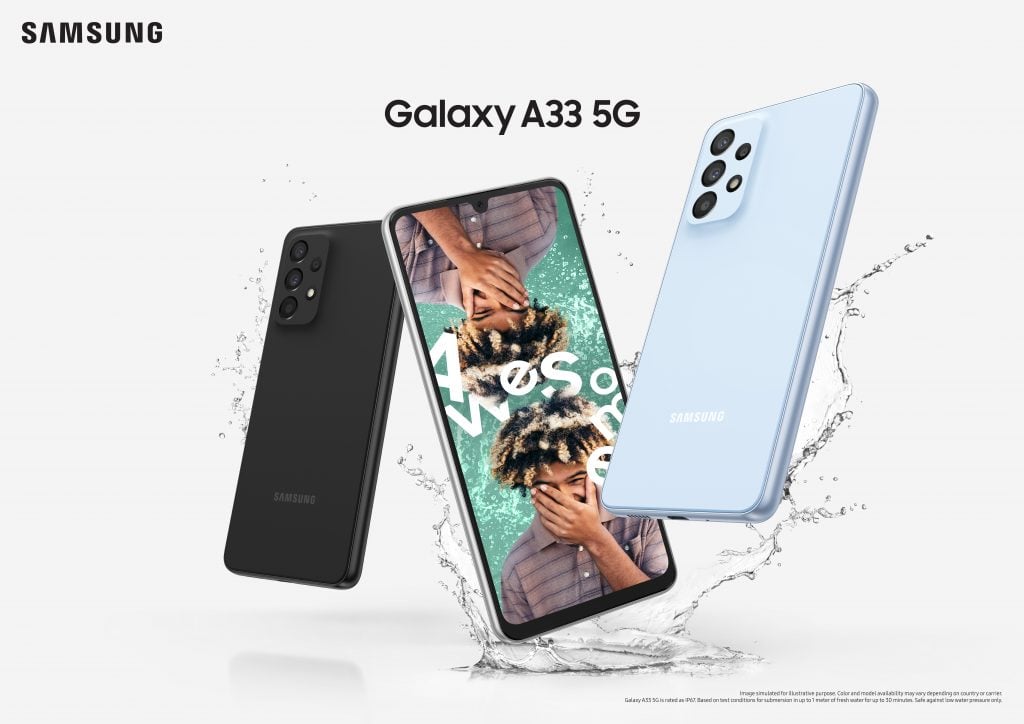
Last week, Samsunglaunched the Galaxy A33 5G along with the Galaxy A73 5G in India. The company also unveiled the Indian price tag of the Galaxy A73 5G late last week, And now, a report has emerged revealing the Indian pricing of the Galaxy A33 5G smartphone.
According to a 91moblies report, tipster Sudhanshu Ambhore has revealed the Indian pricing of the recently launched Galaxy A33 5G devcie. The tipster states that the smartphone will start at ₹28,499 ($378) for the 6GB RAM and 128GB storage variant, while the 8GB RAM and 128GB storage variant will be priced at ₹29,999 ($398) in the country. The South Korean giant is expected to soon reveal the pricing of the device officially.
Samsung Galaxy A33 5G specifications
As for the specs and features of the devcie, It has a 6.4-inch FHD+ Super AMOLED Infinity-U display with a 90Hz refresh rate and Gorilla Glass 5 protection. The screen also features a waterdrop notch for the selfie camera.
The Galaxy A33 is powered by Samsung’s latest 5 nm-based Exynos 1280 SoC and gets up to 8GB of RAM. The phone will come with 128GB of internal storage in India, which can be expanded via a microSD card. It comes with the Android 12 based OneUI 4.1 out of the box and gets IP67 water and dust resistant certification. The device houses a 5000mAh battery with support for 25W fast charging and incorporated a fingerprint sensor for security.
For photography, the smartphone has a 48MP primary camera with optical image stabilization, an 8MP ultrawide sensor, a 2MP depth sensor, and a 5MP macro camera. On the front, it houses a 13MP camera in the notch.
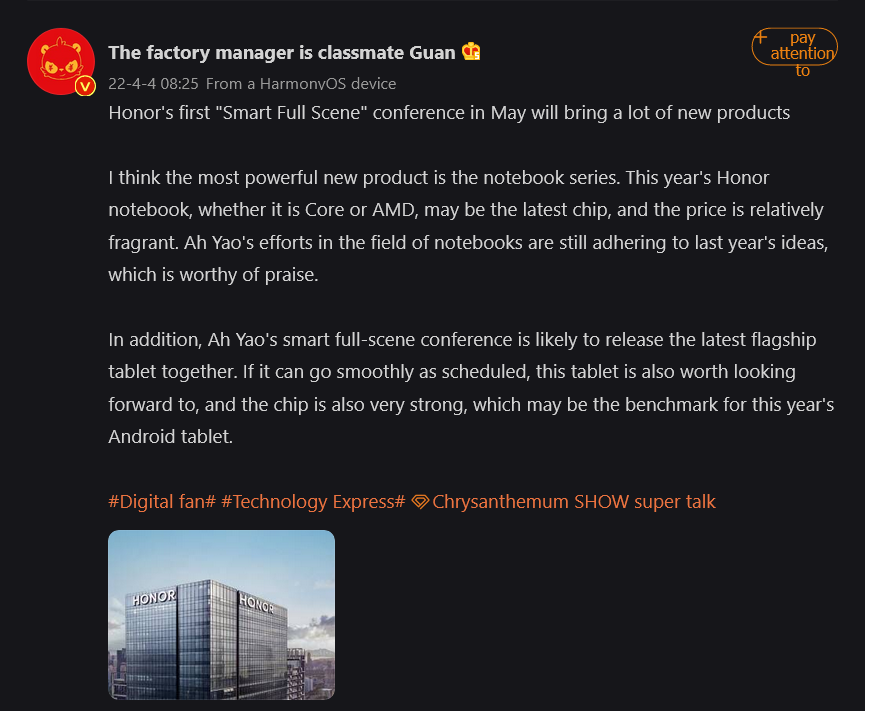
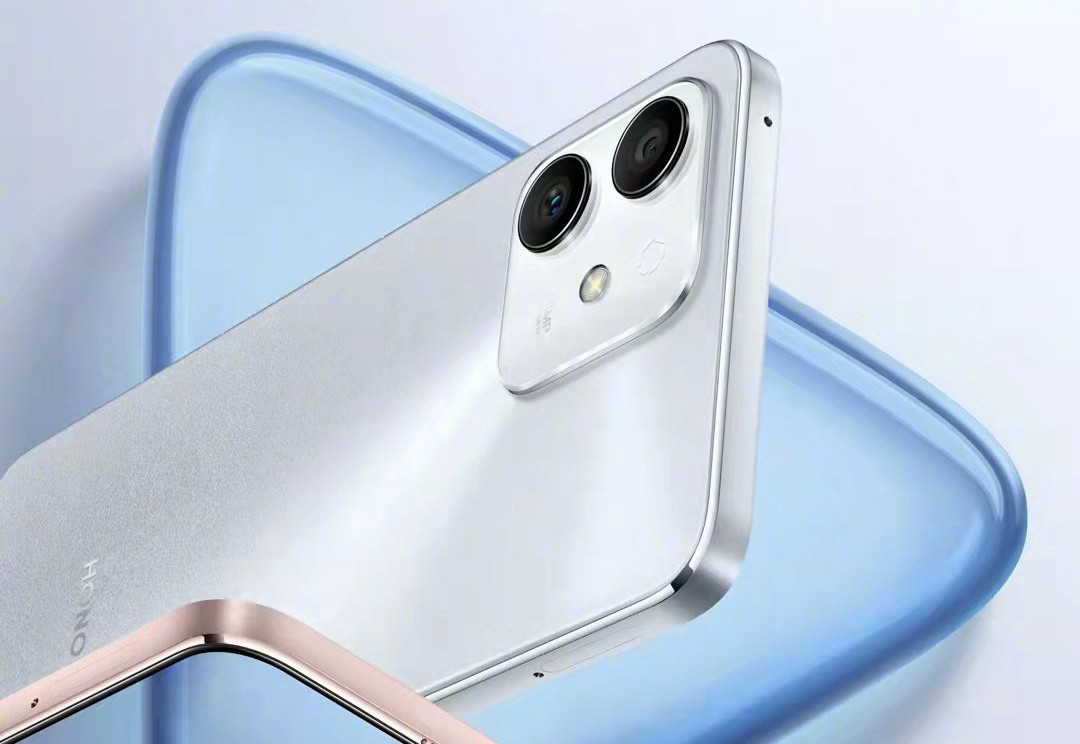
The HONOR product launch scheduled for May has been tipped to lift the curtains on a number of products. Along with a new laptop series, the company will also be launching a new flagship tablet, says tipster Factory Manager.
The flagship tablet will be equipped with a “very powerful” chip, likely a flagship one, and will set the benchmark for 2022 Android tablets. While not explicitly mentioned, the tipster did hint that the said chip will be another version of the MediaTek Dimensity 9000 with a higher frequency. This version is aimed specifically at tablets and power-efficient notebooks and will likely not be making its way to smartphones.
HONOR released the V7 Pro tablet last year with a similar chipset called the MediaTek Kompanio 1300T. The processor is based on TSMC’s 6nm process and has 4×A78 large cores + 4×A55 small cores, and it’s likely that the chip described above will be a part of the Kompanio series as well.
In terms of laptops to be launched with the May event, there will be a new HONOR MagicBook series that will be equipped with 12th Gen Intel or Ryzen 6000 series processors.
Earlier, the same tipster also said that Huawei will hold an event in April to launch the new MateBook notebook and Huawei Band 7.
Last week, Oppo officially announced the Indian launch date of its highly anticipated F21 Pro series of smartphones. The company is said to debut the Oppo F21 Pro 4G and the F21 Pro 5G on April 12 in the country. Now, before the scheduled release, the company has confirmed some of the camera specs of the F21 Pro through a press release.
Oppo F21 Pro cameras
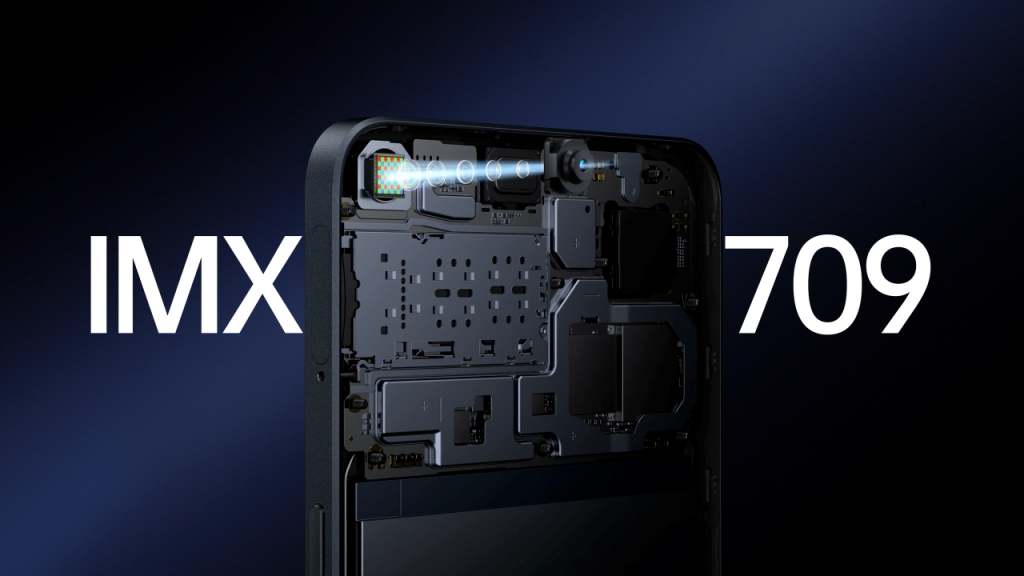
According to Oppo, the upcoming F21 Pro will be the first device in its price segment with the Oppo exclusive 32MP Sony IMX709 front camera sensor. This is the same sensor that debuted on the Oppo Reno 7 series devices. The company states that this selfie sensor has 60% more light sensitivity making it ideal for low light scenarios, and offers a 35% reduction in noise compared to the last-gen IMX615 sensor.
OPPO F21 Pro
The F21 Pro will also have an advanced AI Portrait Enhancement feature offered on both the main and the selfie cameras. The feature will be capable of differentiating between beauty spots and skin blemishes and identifying subjects—based on ethnicity, gender, and age—to offer personalized and natural face retouching.
It is also confirmed that the device will house a 2MP micro camera with support for 15x/30x magnification.
Oppo Enco Air2 Pro TWS earbuds
Oppo Enco Air2
Along with the F21 Pro series, Oppo will also debut the Enco Air2 Pro TWS earbuds on April 12. The earbuds will feature a 12.4mm diaphragm driver. The company states that the upcoming TWS will reproduce crystal clear vocals and offer potent bass. The earbuds will also offer an active noise cancellation feature to get rid of ambient noise across various frequencies. The Enco Air2 Pro will come with a transparent bubble design, so we can expect them to look similar to the recently launched Oppo Enco Air2 TWS earbuds.
Honor recently announced that the company will be hosting a new product launch event on the 7th of April in its home market China where the upcoming Honor Play 6T smartphones will be made official.
Now, just days ahead of the launch, a new report has surfaced online which reveals that all the models in the lineup will come powered by the MediaTek processor.
While it has been revealed that MediaTek chips will be powering the phones in the Honor Play 6T series, the exact model of the processor has not been revealed. However, it is said that it won’t be the MediaTek Dimensity 820.
The Honor Play6T Pro has been spotted on TENAA, which reveals that the phone will come with a flat screen having a punch-hole cutout for the front-facing camera. It has a thickness of 7.45mm and weighs just 175 grams.
It will feature a 6.7-inch Full HD+ LCD display with 2388 x 1080 pixels screen resolution, and a 120Hz refresh rate. It is expected to come packed with 8GB of RAM and up to 256GB of internal storage.
As for the camera departments, there’s a dual-camera setup on the back that consists of a 48-megapixel primary sensor and a 2-megapixel macro lens. On the front side, the phone has a 48-megapixel snapper for taking selfies and video calling.
We expect the smartphone to come running the latest Android 12 operating system with the company’s own custom user interface on top. It will be powered by a 4,000mAh battery and have 40W fast charging support.
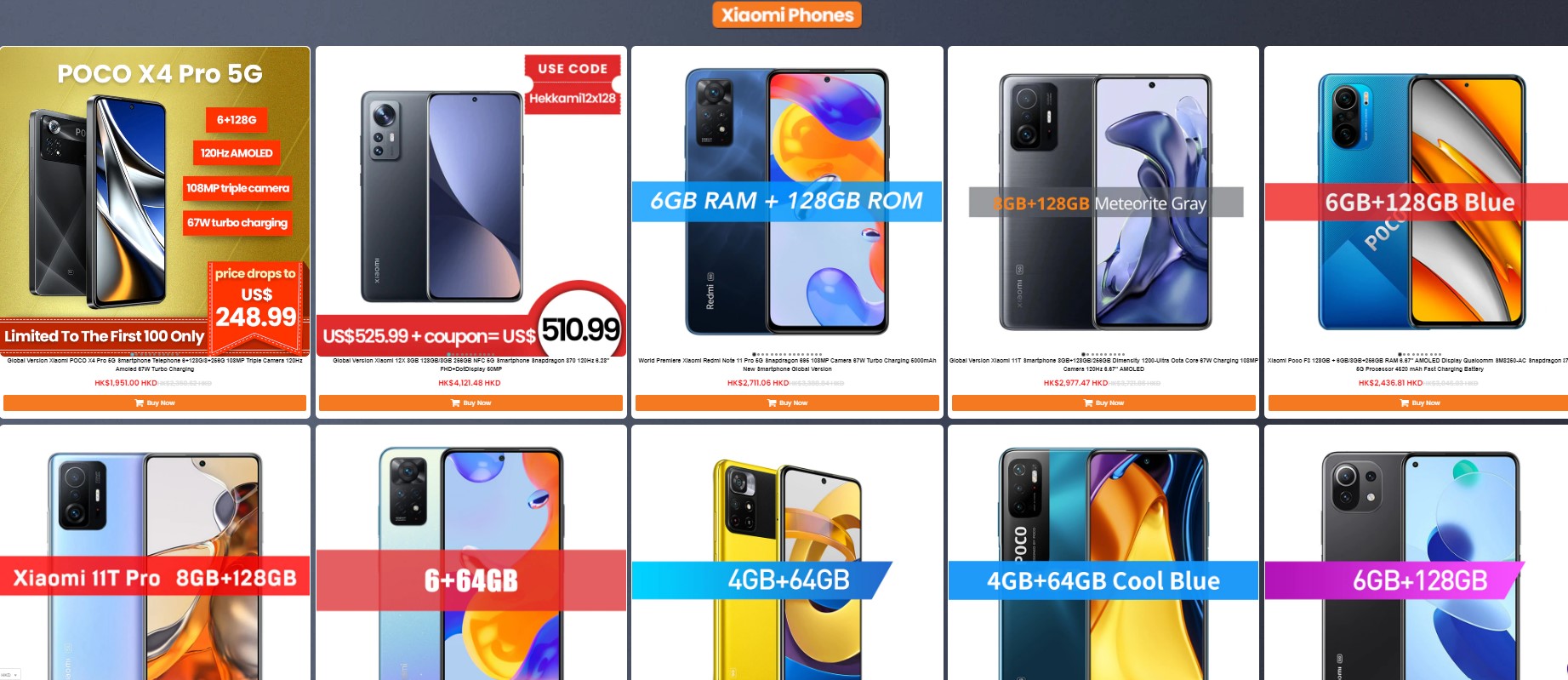
The Hekka Mi Fan Festival 2022 is now live. Under this fan festival, you can get huge discounts on popular Xiaomi products. The deal is applicable to Xiaomi smartphones, smart home devices, consumer electronics, smart security systems, and more. If you are a Xiaomi fan then you are bound to find something interesting and useful at exciting prices during the Hekka Mi Fan Festival 2022. The festival starts on 1 April and ends on 10 April 2022.
Moreover, there is a special reward for all Gizmochina readers. Under the Hekka MI Fan Festival 2022, you can get an additional $10 discount by using the coupon code: gizmochina10. Please note that this coupon code is applicable to orders above $29 only. So make sure to check out the hot deals and discounts on Xiaomi products at hekka.com.
Hekka.com is a direct-to-global consumer online retailer. Devoted to improving customer service, meeting customers’ requirements, and striving to exceed the customer’s expectations, Hekka provides consumers with a rich variety of products and resources like consumer electronics, fashion and apparel, health and beauty, toys and gifts, sports, and outdoors, automobiles accessories, etc.
For more information on such exciting deals and offers check out our deals hub.
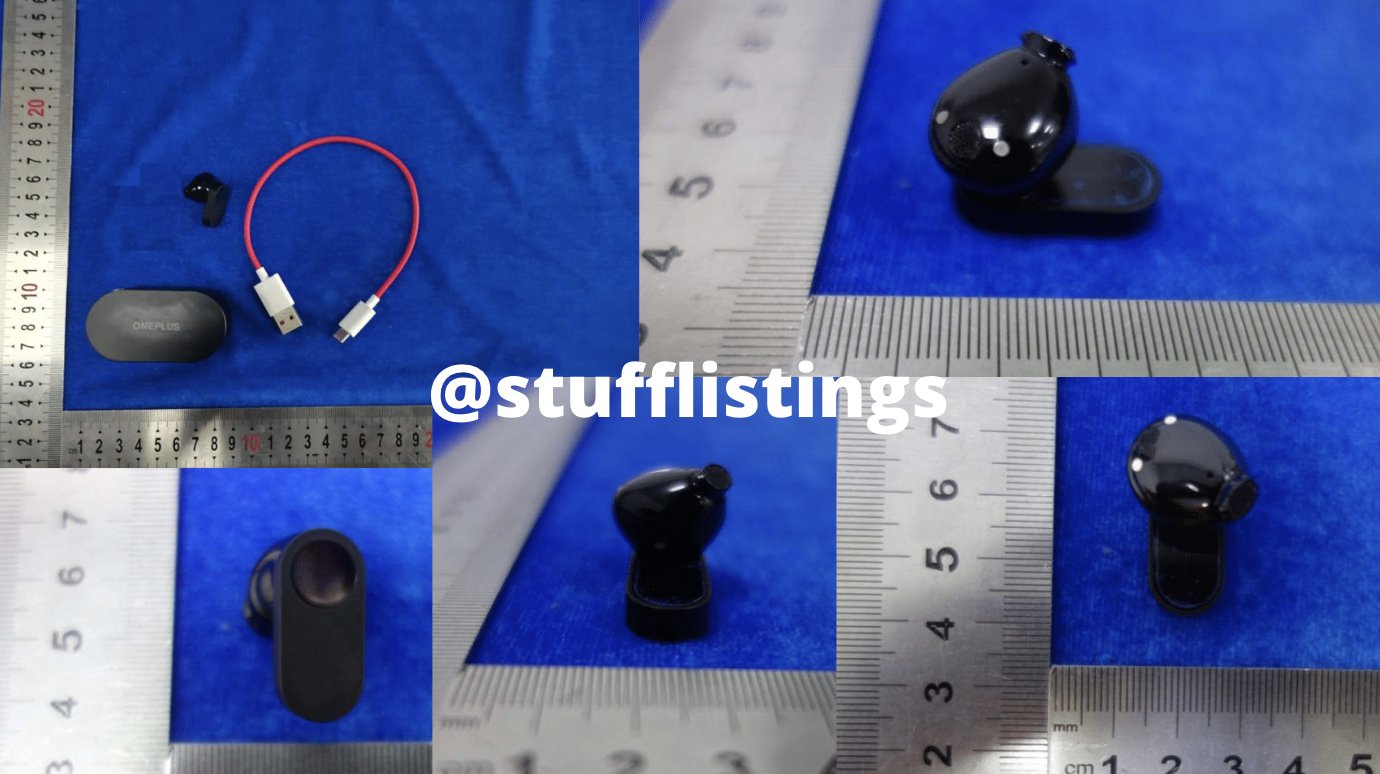
OnePlus is reportedly working on Nord branded TWS earbuds. It is likely to launch with the OnePlus Nord Buds moniker. A new TWS earbuds with an E505A model number has been certified by the Federal Communications Commission (FCC). The certification has revealed the live images and key specifications of the device. The FCC listing (via. MySmartPrice) also confirms the OnePlus Nord Buds name.
According to tipster Mukul Sharma, the testing of the Nord Buds is now going on and it has appeared in the database of the BIS authority in India. Apart from revealing the E505A model number, it does not confirm any information on the specs of the TWS earbuds. The BIS certification is a good hint that the Nord Buds will be released in India.
Coming back to the FCC listing, it reveals that the left earbud of the Nord Buds has an E505AL model number, while the right earbud has an E505AR model number. Each earbud has a 41mAh battery, and its charging case has a 480mAh battery. There is no other information available on the specs of the Nord Buds.
The images of the Nord Buds prototype available in the FCC listing show that its charging case will have a USB-C port for charging. The retail box of the device may include a short USB-C cable. As far as the design is concerned, the Nord Bud will sport a half in-ear style design.
OnePlus is expected to launch the OnePlus Nord 2T with a Dimensity 1300 chip in India later this month or in May. While there is no official confirmation or leaked information on its launch, it may break cover alongside the Nord 2T or the Nord 3, which is likely to debut in July this year.
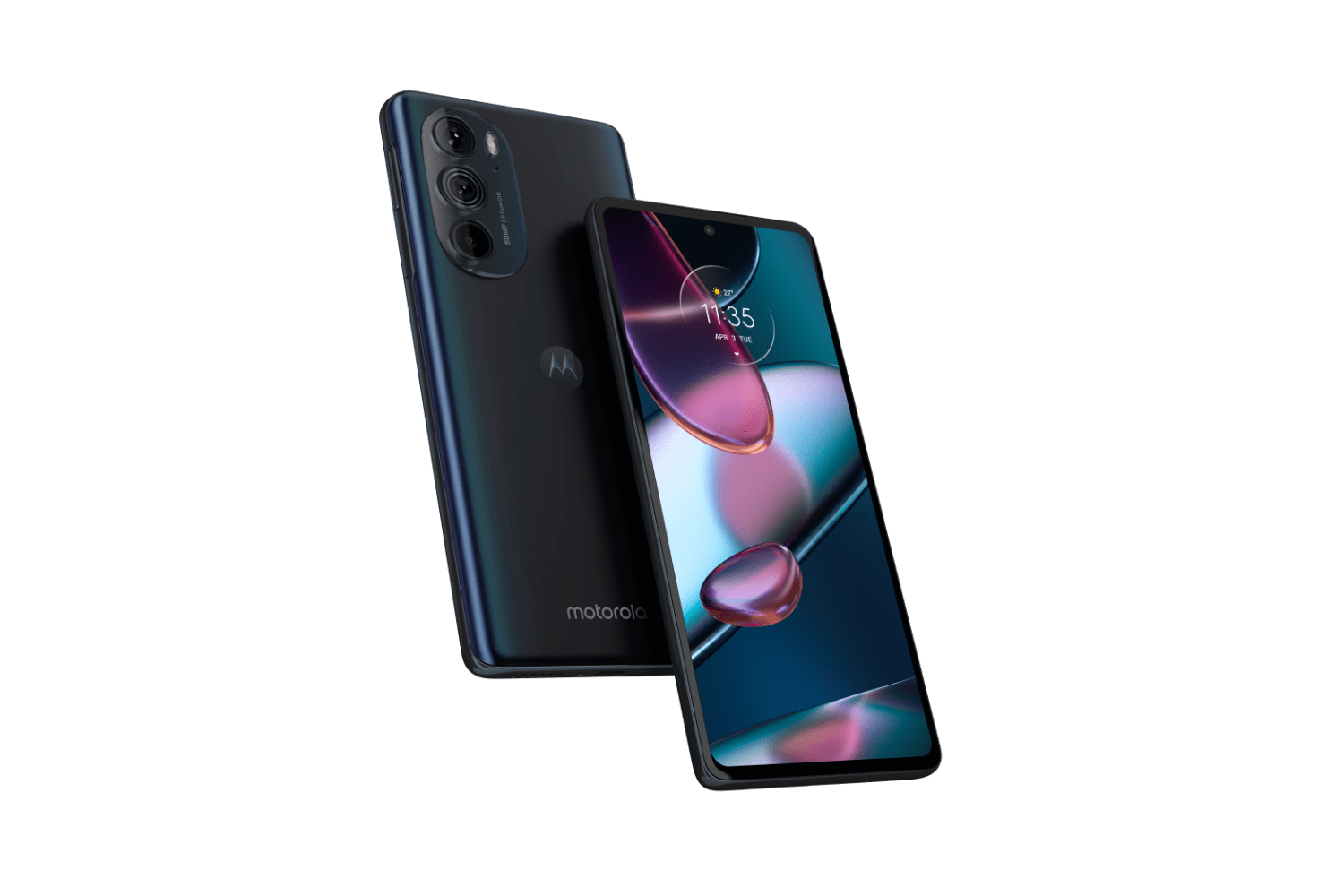
A recent report revealed that Motorola is gearing up to launch three new Edge branded smartphones such as Edge 30, Edge 30 Lite, and Edge 30 Ultra. A fresh leak by tipster Yogesh Brar has revealed the key specifications of the vanilla Edge 30.
Motorola Edge 30 specifications (rumored)
The specifications of the Motorola Edge 30 were leaked recently, but it did not reveal any information about its processor. The new leak reveals that the Edge 30 is powered by the Snapdragon 778G Plus chipset. Last month, Edge 30 was spotted with the SD778G+ chip at the Geekbench benchmarking site.
The front side of the device will feature a 32-megapixel selfie camera. Its rear camera setup may include a 50-megapixel main camera, a 50-megapixel ultrawide lens, and a 2-megapixel depth assist lens. The device will run on the Android 12 OS, which will be overlaid with MyUX.
Motorola Edge 30 Pro
The Edge 30 will feature a 6.55-inch P-OLED panel that will produce a Full HD+ resolution and a 144hz refresh rate. The device will draw power from a 4,020mAh battery that will carry support for 30W fast charging. The device will come equipped with 6 GB / 8 GB of LPDDR4x RAM and 128 GB / 256 GB of storage.
In related news, the forthcoming Edge 30 Ultra is believed to be the rumored ‘Frontier’ model, which will be powered by the upcoming Snapdragon 8 Gen 1+ chipset. As far as the Edge 30 Lite is concerned, it is expected to arrive with specs such as a 6.28-inch P-OLED FHD+ 120Hz display, a Snapdragon 695 chip, 6 GB / 8 GB of LPDDR4x RAM, 128 GB / 256 GB storage, a 32-megapixel front camera, a 64-megapixel + 13-megapixel dual rear cameras, and a 4,020mAh battery. The thickness of the device will be under 7mm.
Google is expected to reveal some information about the next-generation Android 13 operating system at the upcoming annual developer conference next month. While some of the features of Android 13 have leaked online, the company could officially reveal these features at the conference.
As per the latest report, the search engine giant is now working on a feature that will allow users of Android 13-powered smartphones to have dual SIM capability on a device with a single eSIM chip.
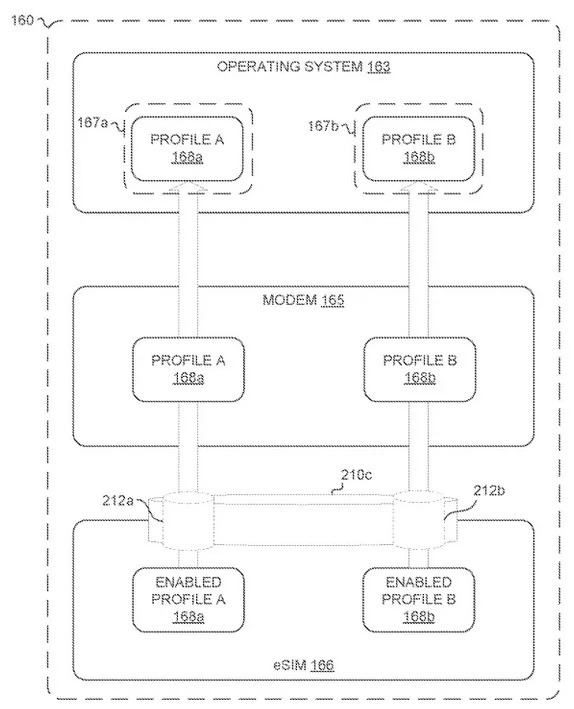
Currently, eSIM allows only one subscriber line to be active at a time. So Google has been working on a way to offer dual-SIM support using a single eSIM chip. For this, the company has developed multiple enabled profiles (MEP), allowing one eSIM element to actively connect to two carriers simultaneously.
Google was granted a patent for this technology back in 2020 and is reportedly planning to include it with the final release of Android 13 during the third quarter of this year.
Apart from Android 13, the support for MEP could be available for other devices, including those running iOS, macOS, and Windows, as mentioned in the patent application. The Pixel series smartphones are reportedly being tested for this new feature and there’s a possibility that Google could license the technology to other companies.
There are a couple of features of the Android 13 that have already leaked online, including support for controlling the brightness level of the flashlight and allowing notifications to be dragged on the display in split-screen mode, among others.
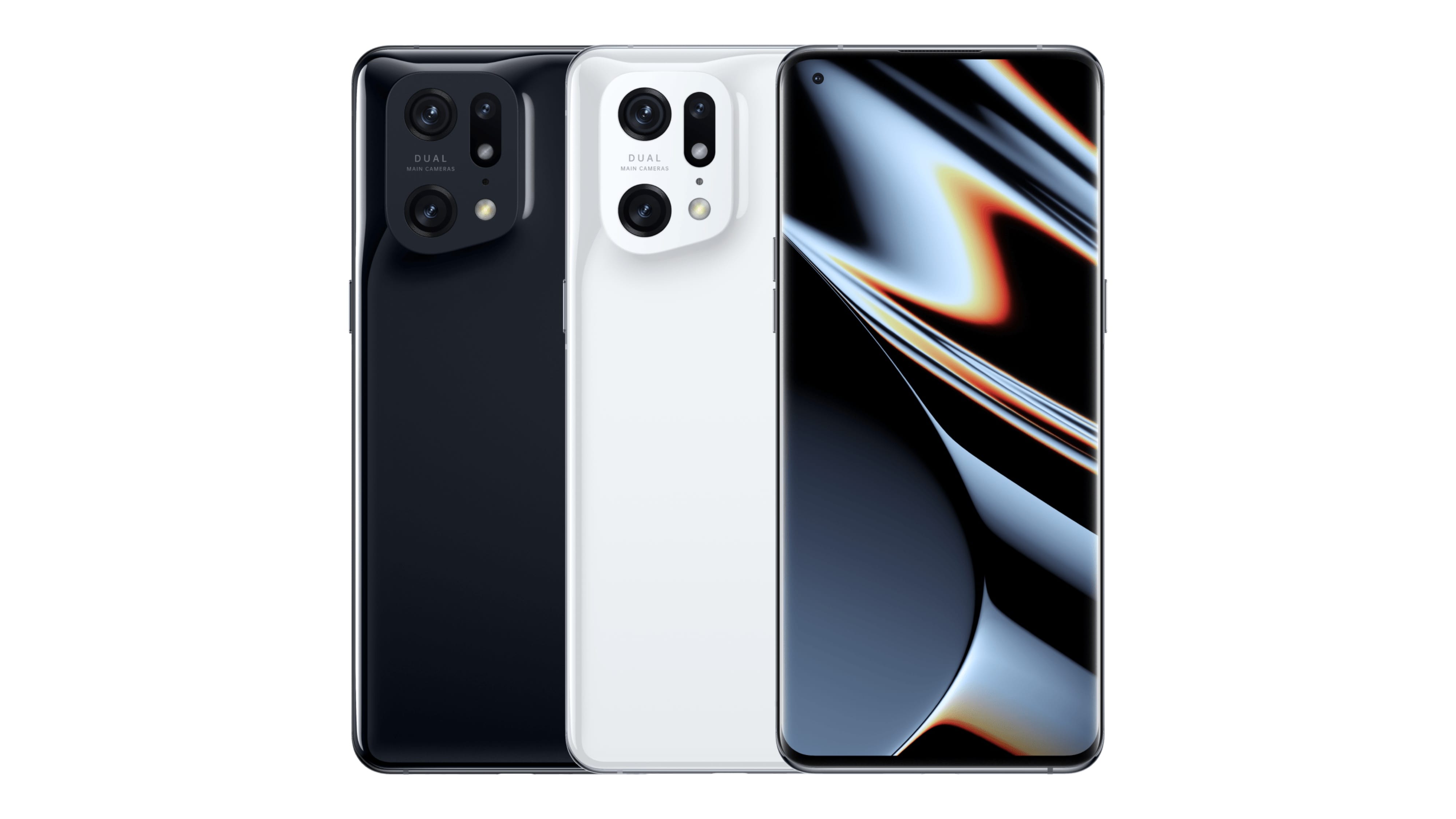
OPPO recently announced the Find X5 and Find X5 Pro for global markets. In China, it unveiled another model called the Find X5 Pro Dimensity Edition. According to a Chinese tipster, the OPPO Find X5 Pro+ smartphone could be in the works. She has tipped the key specifications of the device.
OPPO Find X5 Pro+ specifications (rumored)
According to the tipster, the OPPO Find X5 Pro+ will feature a 6.78-inch AMOLED E6 curved edge display, which will offer a Quad HD+ resolution, a 120Hz refresh rate, and support for LTPO technology. It will be powered by the Snapdragon 8 Gen 1 chipset and MariSilicon X NPU chip, up to 16 GB of LPDDR5 RAM, and up to 512 GB of UFS 3.1 storage.
The device will house a 5,000mAh battery that supports 150W UltraVOOC fast charging. It will also carry support for AirVOOC wireless charging. It is likely to come preinstalled with Android 12 OS and ColorOS 12.1.
OPPO Find X5 Pro Dimensity Edition
For selfies, it will feature a 32-megapixel Sony IMX709 front camera. Its back panel has a 50-megapixel Sony IMX789 primary camera with 5-axis optical image stabilization, a 50-megapixel Sony IMX766 ultrawide lens, and a 64-megapixel OmniVision OV64B periscope ultra-telephoto camera with 5x zoom and OIS support.
The device may come with other features such as Gorilla Glass Victus protection on the front and rear, a 6-series aluminum alloy middle frame, dual stereo speakers, an x-axis linear motor, an ultrasonic in-screen fingerprint scanner, NFC, an IR blaster, and an IP68 rating. There is no word on the launch date of the device. The tipster has speculated that it could be priced at 6,999 Yuan (~$1,100) for the 12GB+256GB variant.
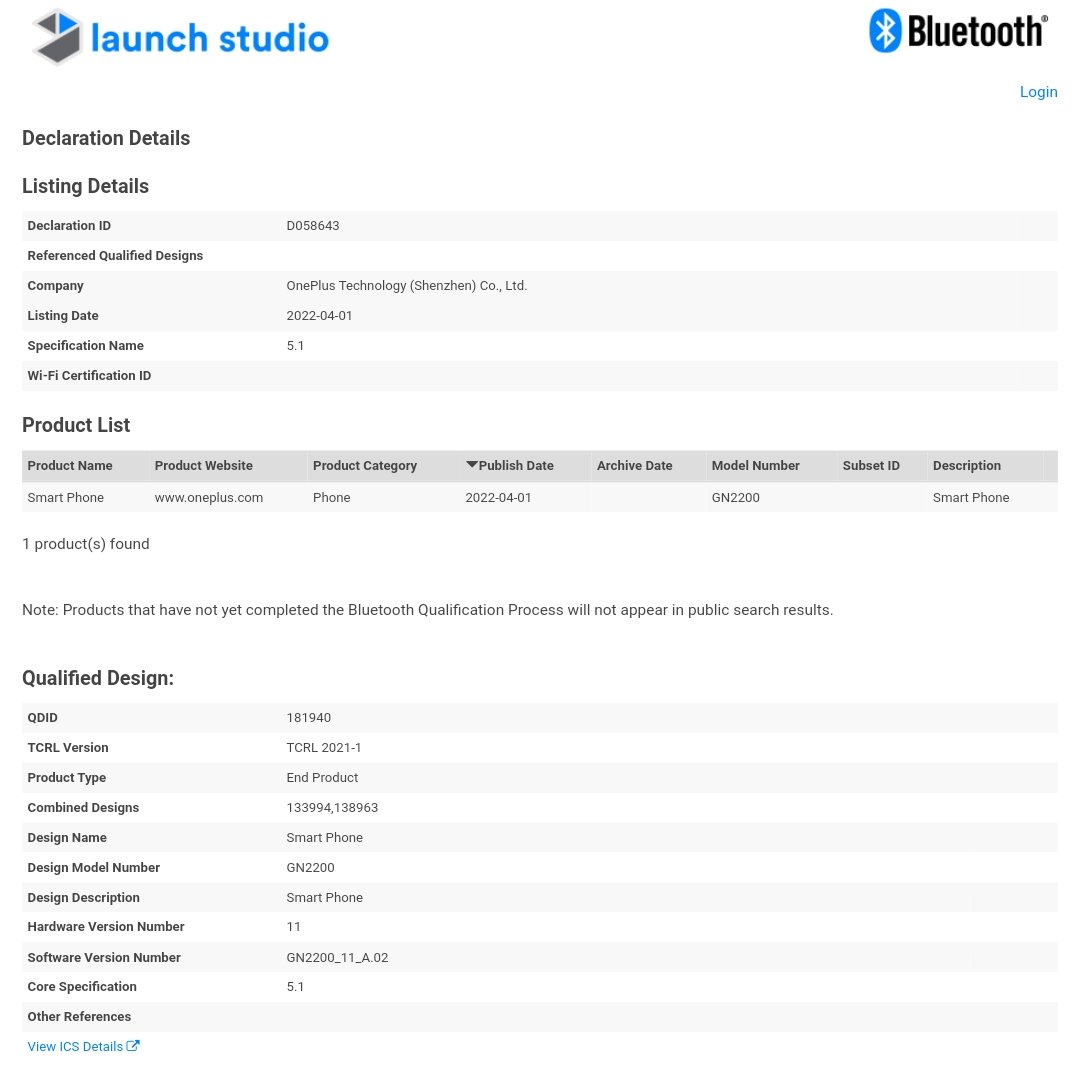
The OnePlus Nord CE 2 Lite is one of the Nord branded smartphones that is expected to launch soon in India. Recently, the device was spotted on certification platforms such as BIS and TDRA with model number CPH2409. It is speculated that the model number GN2200 is also associated with the device. Fresh information reveals that the Nord CE 2 Lite with GN200 model number has bagged Bluetooth SIG certification, which indicates that its launch may not be far away.
The GN2200 variant was seen in the database of the FCC and UL (Demko) certification sites in March. These listings revealed a couple of details, such as the Snapdragon SoC, a 4,500mAh battery, 33W fast charging support, dual-band Wi-Fi, and Bluetooth connectivity. The Camera FV-5 listing revealed that it could be equipped with a 64-megapixel primary camera.
The Bluetooth SIG certification has not revealed any key information on the specs of the OnePlus Nord CE 2 Lite. It only confirms the support for Bluetooth 5.1 connectivity. Devices are known to go official in a span of one month after appearing in the database of Bluetooth SIG site. Hence, it is likely that the Nord CE 2 Lite may break cover by the end of April or in the starting weeks of May.
OnePlus Nord CE 2 Lite specifications (rumored)
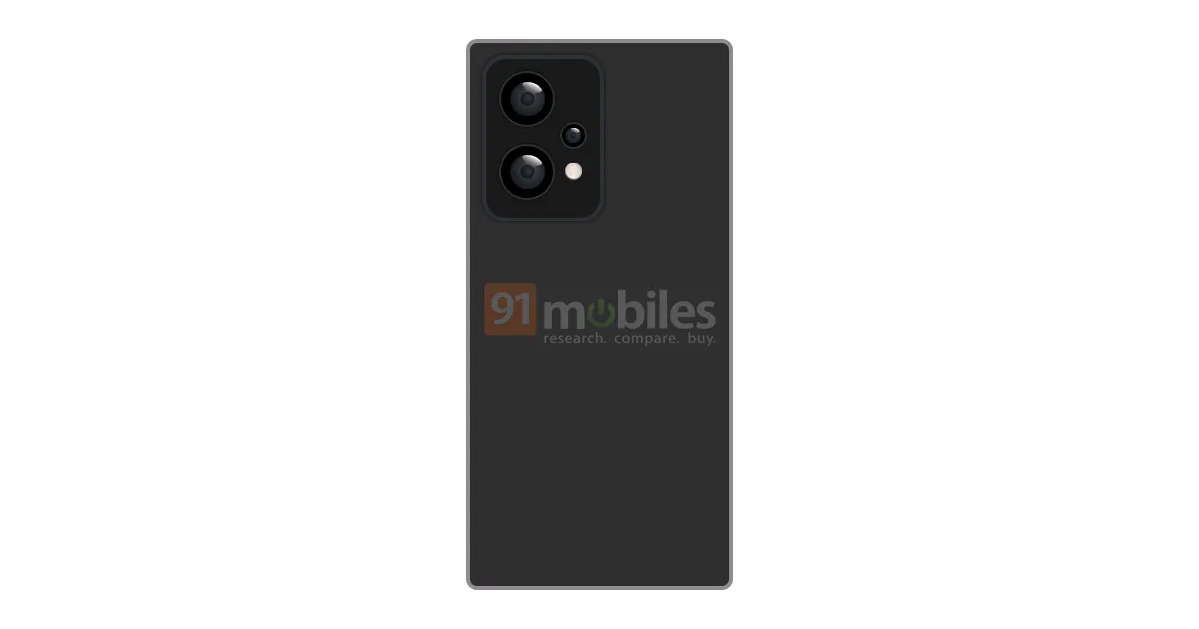
The OnePlus Nord CE 2 Lite is expected to have a 6.59-inch LCD display with a high refresh rate and a Full HD+ resolution. may feature a 16-megapixel Sony IMX471 primary camera. The main camera on the back of the device could be a 64-megapixel one. It could also have a 2-megapixel macro camera and a 2-megapixel depth sensor.
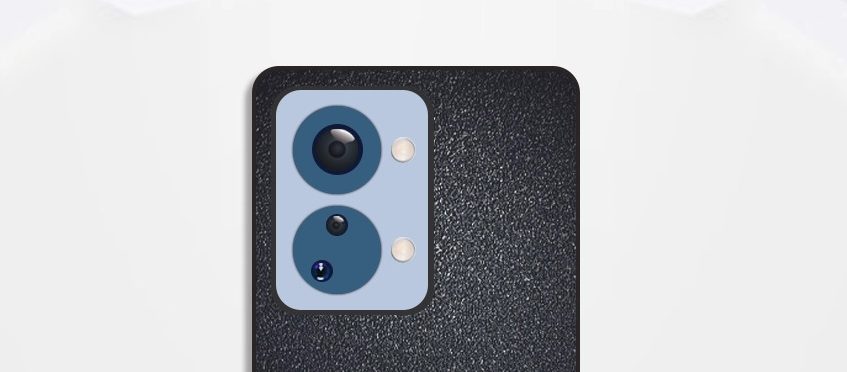
Image via 91mobiles
The Nord CE 2 Lite is likely to come preloaded with Android 11 and OxygenOS. The Snapdragon 695-powered device could come with up to 8 GB of RAM and up to 256 GB of internal storage. It may come with a 4,500mAh or a 5,000mAh battery that supports 33W fast charging. While the device will lack an alert slider, it will feature a side-mounted fingerprint scanner. It may carry a sub-Rs 20,000 (~$264) price tag in India.
Recently, Realme announced the Realme GT Neo3 in China. Speculations are rife that the handset will come to other markets in the coming weeks. It could be launched soon in India as it has bagged approval from the Bureau of Indian Standards (BIS) in India.
According to tipster Abhishek Yadav, the Realme GT Neo3 has cleared both steps of BIS certification. This indicates that the Neo3 may launch later this month or in May.
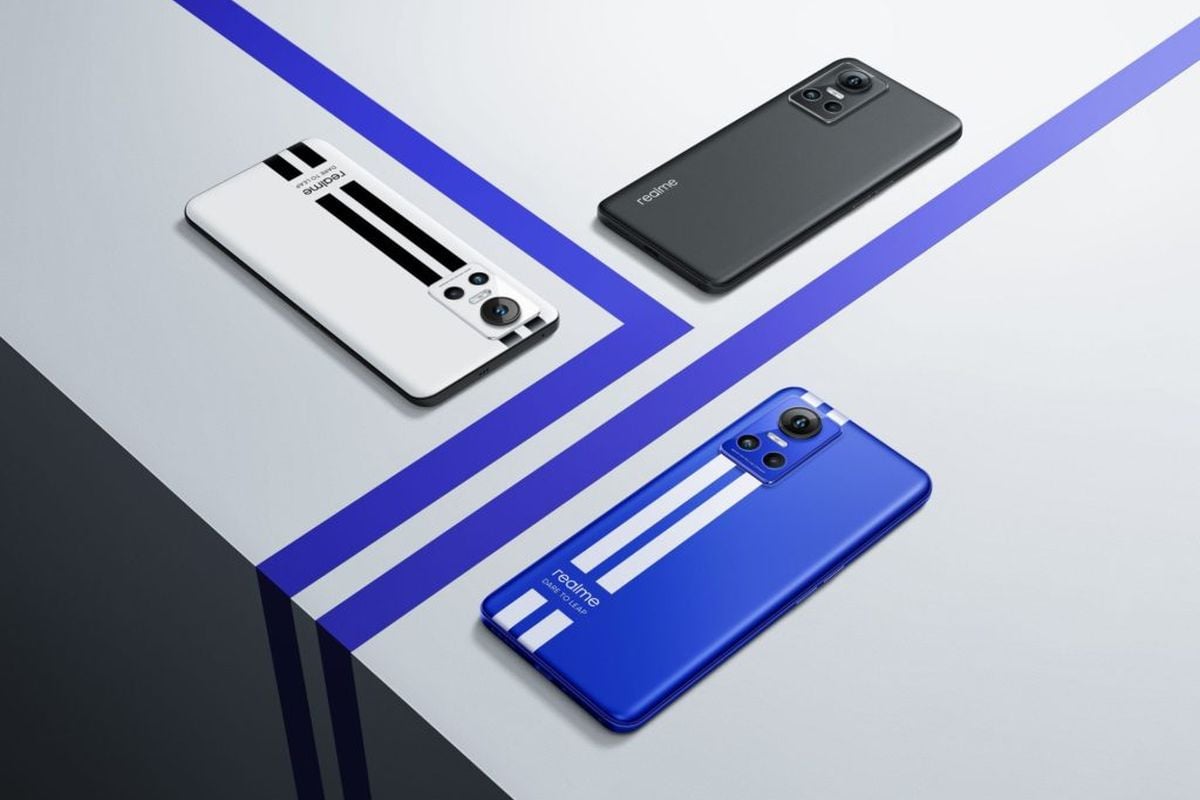
A recent leak revealed that the Neo3 will arrive in three variants, such as 8 GB RAM + 128 GB storage, 8 GB RAM + 256 GB storage, and 12 GB RAM + 256 GB storage. However, there is a possibility that the 8GB+256GB may not be available in India. The device is expected to arrive in colors like Nitro Blue, Asphalt Black, and Sprint White. At present, there is no information on the pricing of the device of GT Neo3 in India. It will probably be priced between Rs 30,000 (~$395) and Rs 40,000 (~$527) in India.
Realme GT Neo3
Realme GT Neo3 specifications
The Realme GT Neo3 sports a 6.7-inch AMOLED panel that offers a Full HD+ resolution and a 120Hz refresh rate. Under the hood, it is equipped with the Dimensity 8100 chipset. The device is equipped with LPDDR5 RAM and UFS 3.1 storage.
When it comes to capturing selfies, the GT Neo3 offers a 16-megapixel front-facing camera. The back of the phone has a 50-megapixel Sony IMX766 main camera, an 8-megapixel ultrawide camera, and a 2-megapixel macro camera.
The GT Neo3 boots up to Android 12 OS and Realme UI 3.0. It packs a 4,500mAh / 5,000mAh battery that supports 80W / 150W fast charging. For security, it has an in-screen fingerprint scanner onboard.
April has just kickstarted and this month, we are expected to see multiple phone launches from brands like Samsung, Realme, Xiaomi, iQOO, and more. Brands like OnePlus and Oppo will be gearing up to take on the budget segment, while Realme and Vivo are expected to focus on their tablet market.
Without further ado, let’s take a look at all the upcoming smartphones in April 2022. The list includes all the confirmed and rumored releases.
Upcoming Smartphones in April 2022
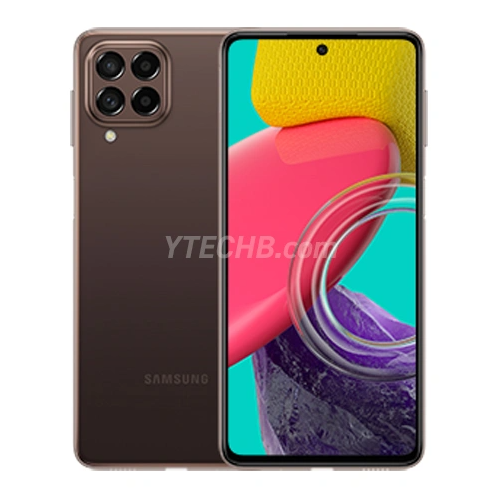
1. Samsung Galaxy M33 5G
Samsung has officially scheduled to launch the Galaxy M33 5G on April 2 in the Indian market. The device is expected to carry an MRP of Rs. 24,999(~$330) for the 6GB + 128GB variant. The phone could be available starting at Rs. 22,999(~$290). It will be available in three shades including Blue and Green.
The smartphone will come with a 6.6-inch TFT LCD display with Full-HD+ resolution. It will feature a quad-camera system at the rear with a 50MP main lens, a 5MP ultra-wide sensor, a 2MP depth lens, and a 2MP macro unit. Upfront, it has an 8MP selfie snapper with an f/2.2 aperture. It will be powered by the Exynos 1280 SoC and pack a big 6,000mAh battery. It will have a side-mounted fingerprint scanner and boot on Android 12 OS.
2. Realme Pad Mini, Realme GT2 Pro
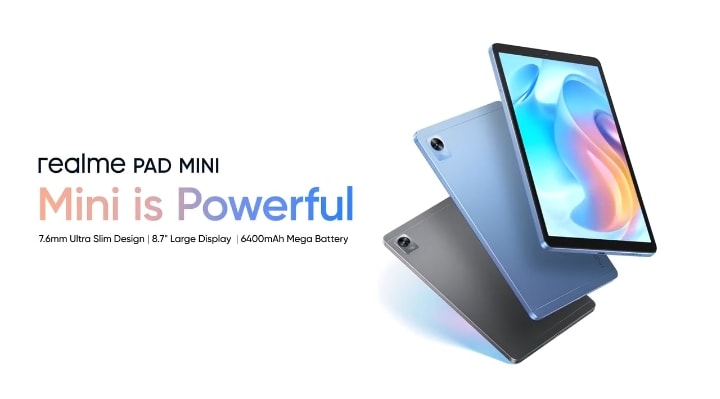
While some brands are solely focusing on the smartphone market, Realme will be amongst the other brands to launch a tablet as well. The Realme Pad Mini will debut on April 4 in the Philippines with a 7.6mm UltraSlim design. It will feature an 8.7-inch LCD display with 1340 x 800 pixels resolution. It will have a 5MP front camera and an 8MP rear camera.
Powering the tablet will be the UNISOC T616 chipset paired with up to 4GB of RAM and 64GB of internal storage. It will pack a 6,400mAh battery with 18W fast charging support. Unfortunately, the tablet will not have the 3.5mm headphone jack.
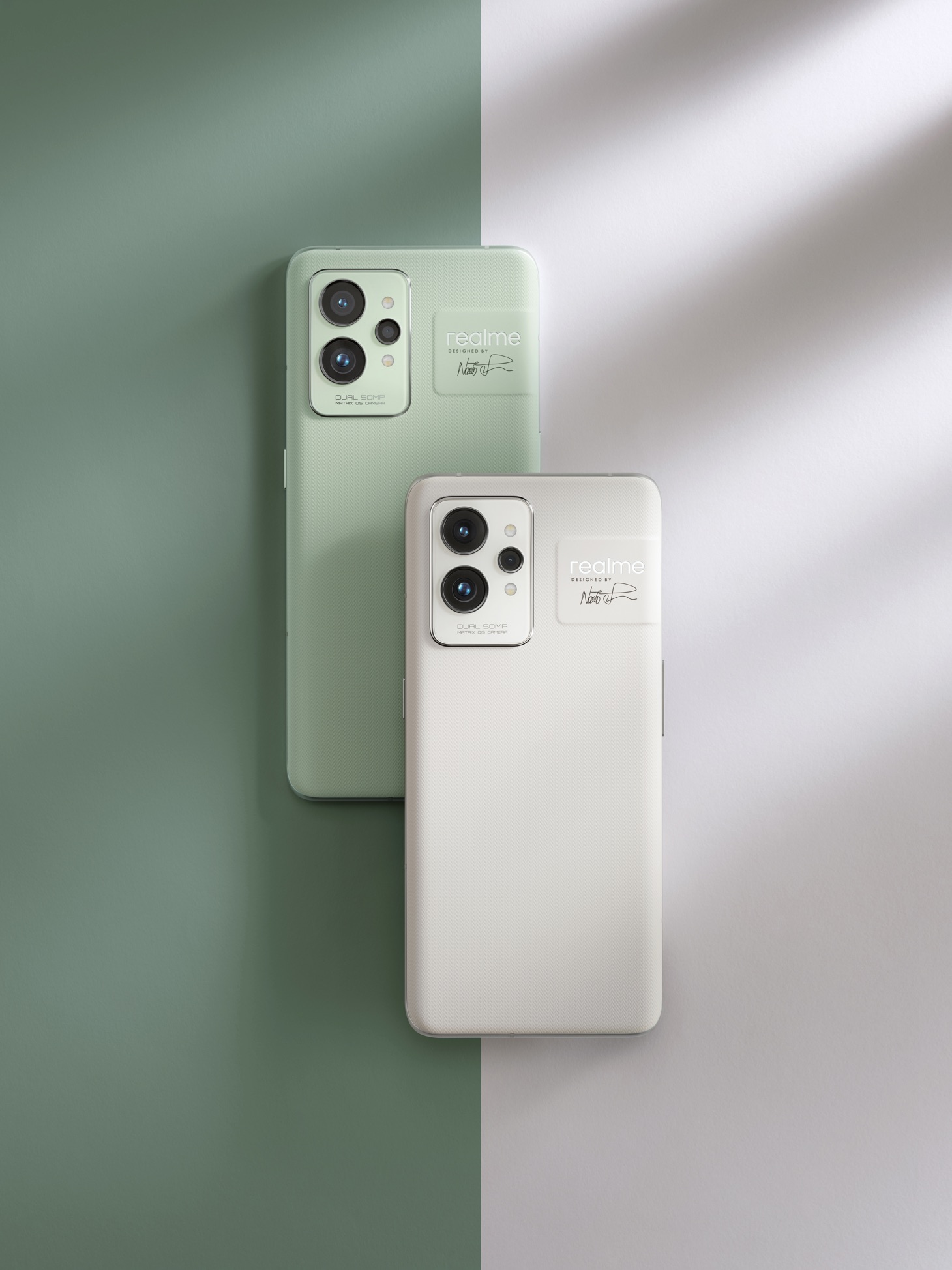
On the other hand, the Realme GT2 Pro will arrive in India on April 7 at 12:30 PM IST. It is expected to arrive under Rs. 50,000(~$660) in the country. The smartphone comes with a 6.7-inch AMOLED LTPO 2.0 display with a Quad-HD+ resolution and 120Hz refresh rate.
It is powered by the Qualcomm Snapdragon 8 Gen 1 SoC paired with up to 12GB of LPDDR5 RAM and 256GB of UFS 3.1 internal storage. It has a 50MP IMX766 + 50MP ultra-wide + 3MP microscope triple rear camera system and a 32MP selfie snapper. It has a 5,000mAh battery with 65W fast charging support. The phone boots on Android 12 out of the box.
3. Vivo X Fold, Vivo X Note, Vivo Pad
Vivo has officially scheduled to launch the X Fold foldable phone on April 11 in China. On the same date, the company is also expected to launch the Vivo Pad and Vivo X Note. There are slim chances of the Vivo X80 launching at the event.
Vivo X Fold
The Vivo X Fold is rumored to come with a 6.53-inch OLED display with FHD+ resolution. It is expected to be powered by the Snapdragon 8 Gen 1 SoC paired with up to 12GB + 512GB of internal storage. The phone is expected to pack a 4,600mh battery with 80W wired and 50W wireless fast charging support.
Vivo X Note
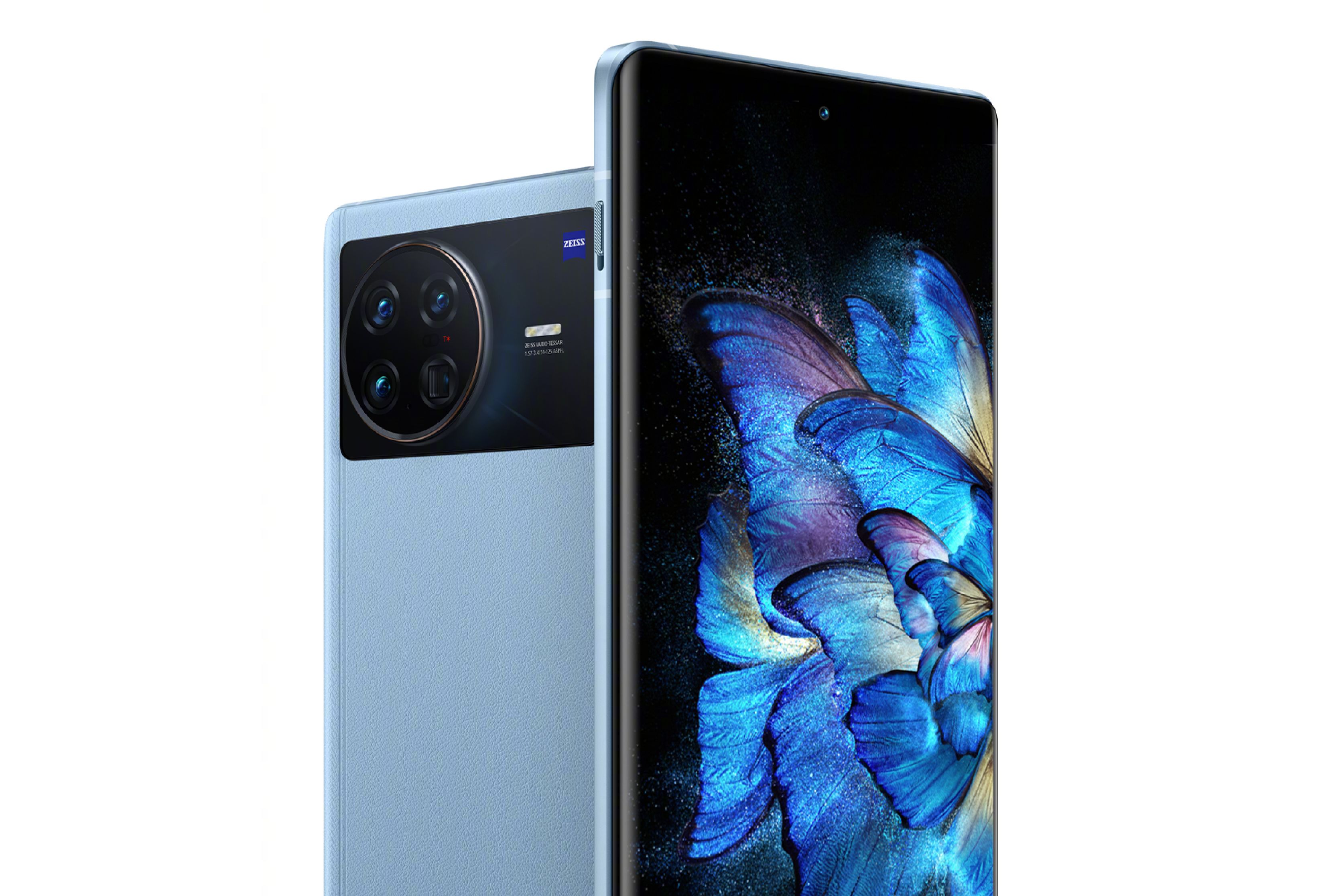
The Vivo X Note, on the other hand, could debut with a big 7-inch QHD+ AMOLED screen having a 120Hz refresh rate. The screen will double up as an in-display fingerprint scanner. It will have the Snapdragon 8 Gen 1 in its sleeves and a 5,000mAh battery fueling the system. Quad cameras in the circular module will be present on the phone. It is expected to have the same 80W + 50W charging solution as the X Fold.
The Vivo Pad could debut as the first tablet from the brand. It will be powered by the Snapdragon 870 SoC and have an 11-inch 120Hz LCD or OLED panel. It will have a 2560 x 1600 pixels resolution, 13MP + 8MP dual-rear cameras, and an 8,040mAh battery. It will have 44W fast charging support and boot on Android 12 OS.
The Vivo X80 series comprising the X80, X80 Pro, X80 Pro+ might debut at the same launch in China. The X80’s specs are scarce, but what we know is that the X80 Pro and X80 Pro will feature a 6.78-inch AMOLED panel, 50MP Sony IMX886 cameras, and Dimensity 9000/Snapdragon 8 Gen 1 SoCs, respectively. The duo is expected to have an 80W + 50W charging solution.
4. Oppo F21 Pro Series
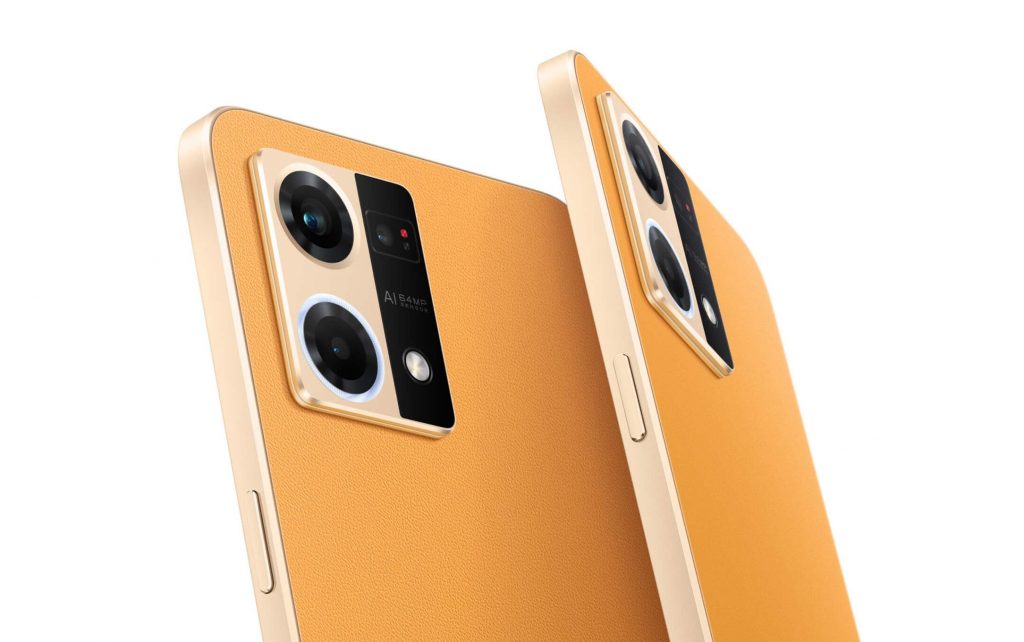
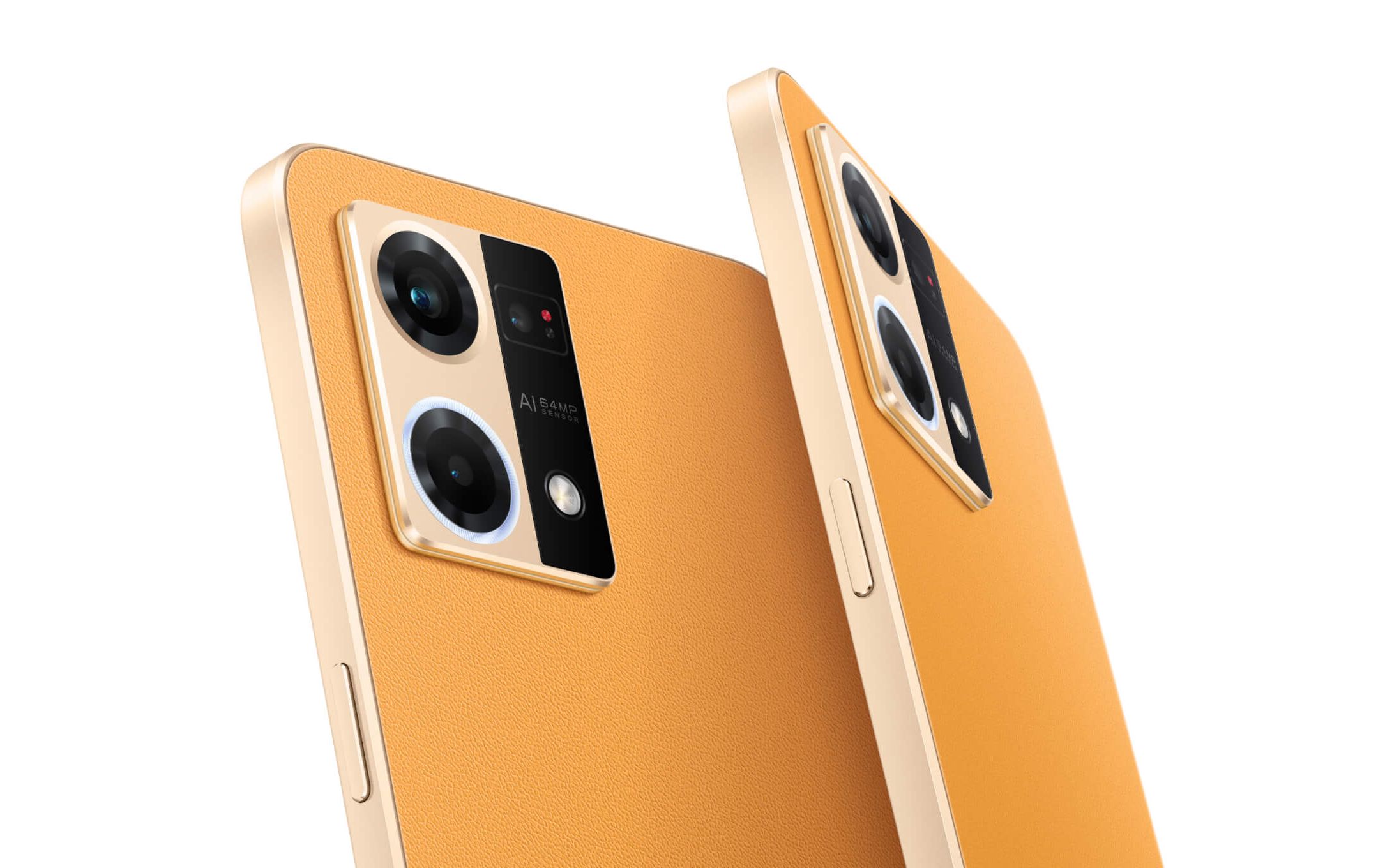
Oppo will launch the industry’s first FiberGlass-Leather design phone series dubbed the Oppo F21 Pro series. The F21 Pro 5G will arrive in Sunset Orange design and have a lychee grain leather material. The back material is said to be waterproof and resistant to wear and tear.
OPPO F21 Pro
The smartphone will have a 6.43-inch FHD+ AMOLED display with a 60Hz refresh rate. It will be powered by the Snapdragon 695 SoC paired with 64MP + 2MP + 2MP triple cameras. It will pack a 4,500mAh battery(33W Fast charging) and boot on Android 11.
5. iQOO Neo6
The much-awaited iQOO Neo6 will finally debut in China. The iQOO Neo6 will have a 6.62-inch AMOLED display with FHD+ resolution, a 120Hz refresh rate, and an in-display fingerprint scanner.
It will be powered by the Snapdragon 8 Gen 1 SoC paired with up to 12GB of RAM and 256GB of storage. It will pack a 4,700mAh battery with 80W fast charging support. The device will run on the Android 12 OS out of the box.
6. OnePlus Nord 2T/ OnePlus Nord CE 2 Lite
OnePlus is rumored to launch the Nord 2T and Nord CE 2 Lite in April in India. The Nord 2T is said to bring back the sandstone finish and have a 6.43-inch 90Hz AMOLED display with FHD+ resolution. It will feature a 32MP selfie camera and a 50MP + 8MP + 2MP triple rear camera system. It will be powered by the new Dimensity 1300 SoC and pack a 4,500mAh battery with 80W fast charging support. It is expected to come under Rs. 30,000 segment in India.
Other than the Nord 2T, the brand is also touted to enter the budget market with the OnePlus Nord CE 2 Lite which will be priced under Rs. 20,000(~$264). The smartphone is expected to come with a 6.59-inch LCD display and a 64MP + 2MP + 2MP triple camera system. It is expected to come with the Snapdragon 695 SoC and house a 5,000mAh battery with 33W fast charging.
7. Moto Edge 30
Motorola has already launched the flagship Edge 30 Pro smartphone in the Indian market. Now, it is time for its mid-range brother, the Moto Edge 30. The device was spotted online on some certification sites hinting at a launch as early as April.
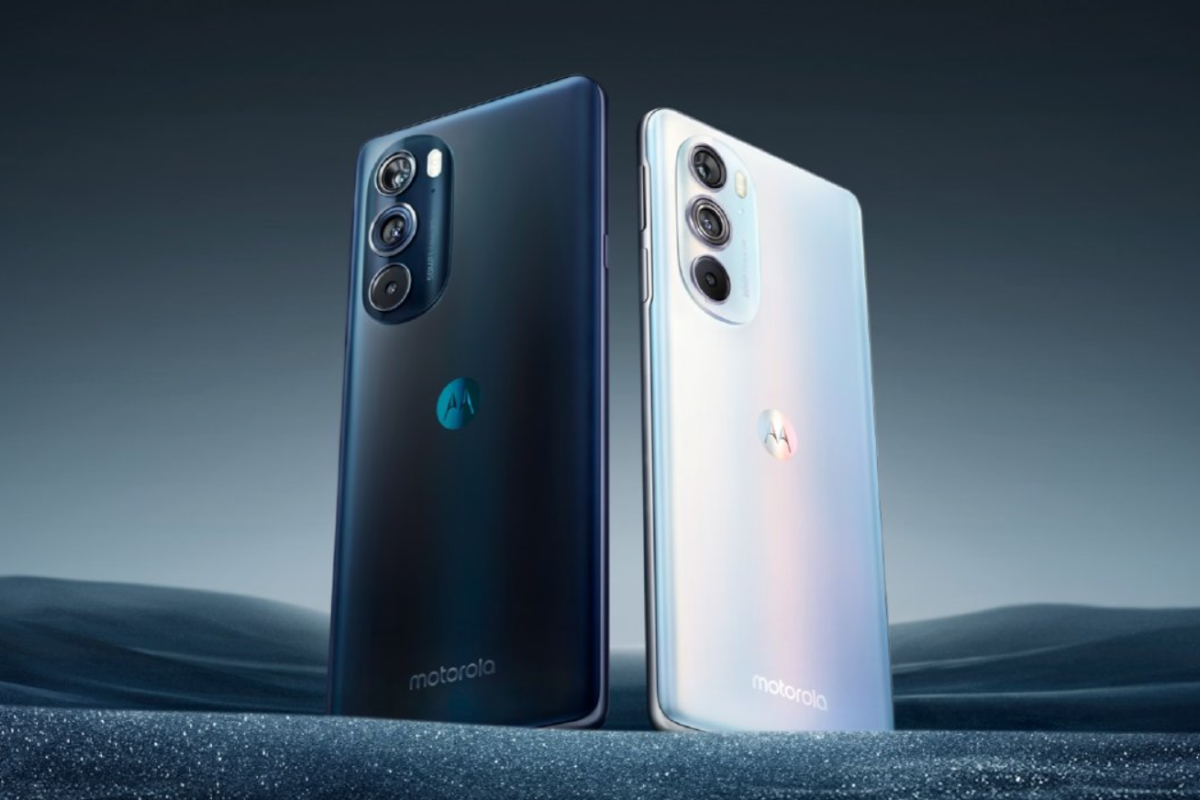
Moto Edge X30
The smartphone will be powered by the Qualcomm Snapdragon 778G+ mid-range chipset paired with 8GB RAM and 128GB of internal storage. The phone is could feature a multi-camera system and boot on Android 12 OS.
8. Xiaomi 12X, Xiaomi 12 Pro
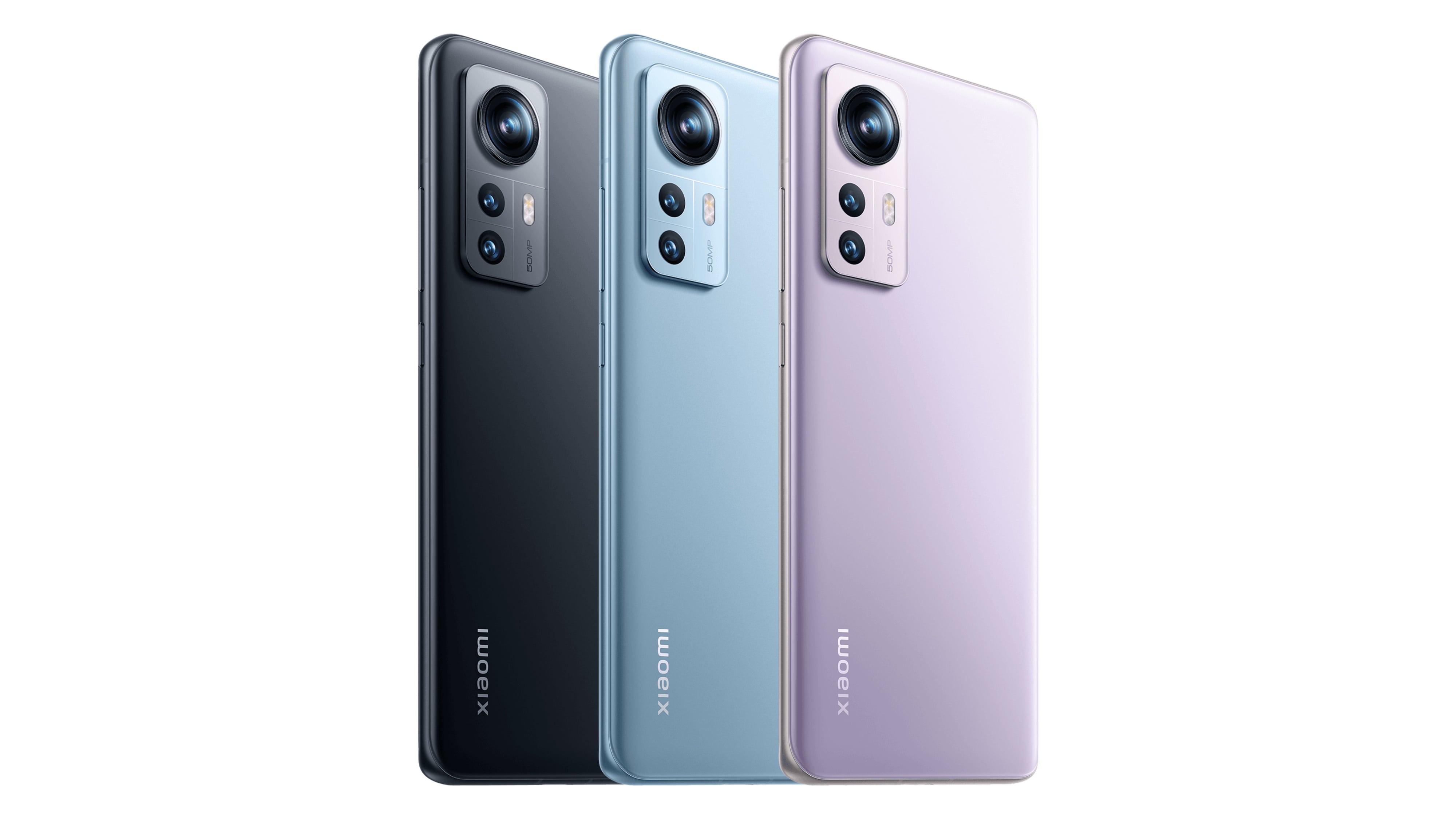
Xiaomi will launch the Xiaomi 12 Pro and Xiaomi 12X in the Indian market this month. The exact launch date is yet to be known, but we can expect a release in the mid of this month. Both phones will come with a new design and powerful hardware.
The Xiaomi 12X has the Snapdragon 870 SoC, while the Xiaomi 12 Pro houses a Snapdragon 8 Gen 1 chipset. The 12X features a 6.28-inch FHD+ OLED display with a 120Hz refresh rate. It has a 50MP + 12MP + 5MP triple camera system. It supports 67W fast charging speeds and runs on the latest Android 12 OS.
The 12 Pro has a larger 6.73-inch OLED panel and a 50MP + 50MP + 50MP triple camera array. It will have a faster 120W fast charging support as opposed to the Xiaomi 12X and boot on Android 12 OS.
9. Redmi 10 Prime+ 5G
The Redmi 10 Prime+ will be a new 5G phone in the budget segment. The smartphone is expected to be a Redmi Note 11E 5G rebadge, but with a faster 22.5W fast charging support.
The device could come with a 6.58-inch 90Hz LCD screen with FHD+ resolution. The phone is expected to be powered by the MediaTek Dimensity 700 SoC paired with up to 6GB of RAM and 128GB of internal storage.
10. Samsung Galaxy M53 5G
Samsung will also release the Galaxy M53 5G by the end of this month. The smartphone is expected to come with 6.7-inch AMOLED display sporting a 120Hz refresh rate and FHD+ screen resolution.
It could come with a 108MP quad-camera system and have the Dimensity 900 5G SoC, under the hood. The smartphone is expected to come under Rs. 30,000 and compete with the likes of OnePlus Nord CE 22 5G.
11. POCO F4 series
Xiaomi’s POCO is expected to launch the POCO F4 series in the global markets. The series could have the POCO F4, F4 GT, and F4 Pro. The F4 is said to be a rebadged version of the Redmi K40S, while the F4 Pro could debut as a rebrand of the Redmi K50 Pro+.
The Redmi K50G is said to arrive as the POCO F4 GT for the global market. The F4/F4 GT will have a 6.67-inch 120Hz AMOLED display, 48MP/64MP triple cameras, SD 870/SD 8 Gen 1, and 67W/120W fast charging.
The POCO F4 Pro will likely have a 6.69-inch 120Hz AMOLED panel, 108MP triple cameras, Dimensity 9000 SoC, and 120W fast charging.
12. Vivo T1 Pro
vivo T1 5G
After the Vivo T1 5G, the brand might bring the Vivo T1 Pro 5G by the end of this month, as reported earlier. The smartphone’s specs aren’t known but it is expected to power a mid-range SoC. The device will have a high refresh rate screen, multiple cameras, and a bug battery.
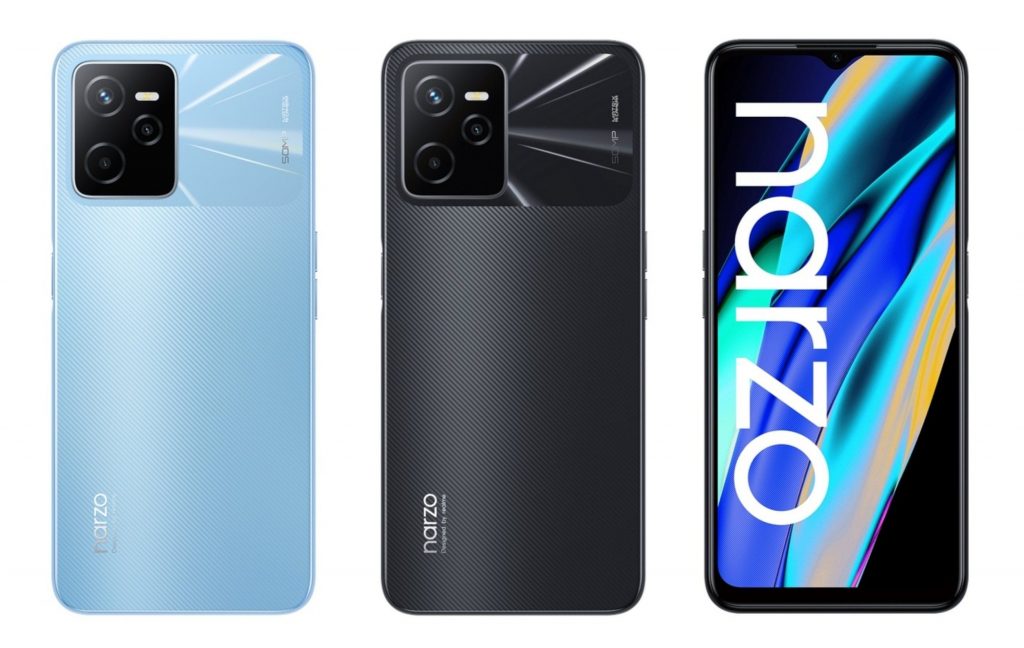
13. Realme Narzo 50A Prime
Apart from the tablet and the flagship GT2 Pro, the brand is also expected to launch the Narzo 50A Prime in the Indian market. The phone was earlier released in Indonesia and it has a 6.6-inch IPS LCD panel, 50MP triple-rear cameras, and a 5,000mAh battery.
Realme Narzo 50A Prime
The smartphone is powered by the UNISOC T612 SoC paired with 4GB RAM and 128GB internal storage. The phone boots on the Android 11 OS with Realme UI R on top of it.
14. Infinix Hot 12, Hot 12i, Hot 12 Play
Infinix Hot 12 series could debut this month. The Hot 12i’s box packaging and the actual image were recently spotted on the Internet. The Hot 12 has already bagged certifications like the Google Play Console.
The Infinix Hot 12i will come with a 6.6-inch IPS LCD display with HD+ resolution. The smartphone equips a 13MP triple camera system and will be powered by the Helio A22 SoC. It packs a 5,000mAh battery and will be booting on Android 11 GO Edition. The Hot 12 is expected to have a similar LCD panel and multi-camera setup. As per certifications, the phone is powered by the MediaTek Helio G85 SoC and has 4GB of RAM.
Other than these two, the Infinix Hot 12 Play might as well arrive. However, the specifications for the phone aren’t known as of now.
These were some of the smartphones launching in April 2022. Which device are you most excited about? Do let us know in the comments below.
Last year, LG shut down its smartphone business but the company had promised that it would continue to provide software updates and support services to its smartphone users for some time.
Keeping the promise, the company has now revealed a list of smartphones that will be getting the new Android 12 update in the South Korean market.
LG has revealed that the Q92 5G, V50 ThinQ, and V50S ThinQ smartphones will receive the Android 12 update in the second quarter of this year while the LG Q52, LG Valvet, and LG Wing smartphones will get security updates.
The LG V60 smartphone is missing from the list of devices set to get the new update but since the device didn’t get released in the South Korean market, it is not included in the list for updates in South Korea.
The company is determined to not keep its customers hanging and thus, it has also revealed that the LG Wing and LG Valvet smartphones will also get the next major update for the operating system — Android 13, which is expected to release in Q3 2022.
Last month, LG had confirmed and released the Android 12 update for the Valvet smartphone, making it the first phone from the brand to run the latest Android 12 operating system. Although the company didn’t have a good track record earlier when it comes to software updates, things look different now.
When it comes to electric vehicles, NIO is one of the leading Chinese brands in the sector. Even at that, the market is entirely a new one and so the company cannot be said to be in the league of Tesla or even Apple, ranked as one of the world’s most valuable companies. Turns out the Chinese EV manufacturer is looking at taking on Apple in the smartphone segment. A recent disclosure by NIO’s CEO William Li indicates that the company is working towards making an entrance into the smartphone market.
NIO EC6
Li had recently affirmed that the brand’s foray into the smartphone market is still steaming at the research phase but the CEO has confirmed that producing its own smartphones is definitely on the radar. The plan is hinged on a lofty aspiration which is to become one of Apple’s rivals in the future. While some may be a tall order, we should remind our readers that Apple is also planning to enter the EV market. Thus, we may likely see Apple becoming a force to reckon with the electric vehicles market before NIO will be able to make any meaningful headway.
However, the Chinese EV manufacturer which opened shop in 2014 has been blazing the trail as one of the foremost EV brands with models such as the ES8, ES6, and EC6 electric SUVs. Therefore, the brand may have something special up its sleeves.
Apart from its SUV lineup, NIO also has a couple of electric sedans including the ET7 released recently and the ET5 which is still in the works. The brand’s EVs are equipped with stellar features that have made it the toast of buyers in China and even in some parts of Europe such as Norway and Germany.
The brand’s CEO is reported to have stated that the drive to enter the smartphone market was due to yearnings by NIO customers for a phone that connects better with cars. One question that would readily come to mind is why the company didn’t make its software integrate seamlessly with Android and iOS phones. NIO’s CEO answered this recently when he disclosed that the brand’s latest EVs come with ultra-wideband (UWB) technology but Apple does not offer an open interface. With such a scenario, it would be difficult to design features for NIO EV owners who use Apple phones.
This move is also aimed at mitigating the shockwave that could result from Apple announcing its own electric car in the near future. Because the company can utilize its closed-source UWB to provide integrated features between its phones and cars, that could give it a bigger edge that could help it win some market shares off already existing brands like NIO.
In a sort of reverse order, Chinese phone manufacturer, Xiaomi is looking to enter the EV market in 2024 and has already commenced the construction of a car manufacturing plant capable of rolling out 300,000 EVs annually. Foxconn and Baidu are also among the Chinese companies attempting to enter the EV market.
Rumors are rife that the Vivo X80 series will break by the end of this month in China. It is still unclear whether the lineup includes three models such as Vivo X80, Vivo X80 Pro, and Vivo X80 Pro+. A tipster from China has leaked the key specifications of the Vivo X80 and X80 Pro.
Vivo X80, X80 Pro specifications (rumored)
The Vivo X80 and X80 Pro are expected to feature a 6.78-inch AMOLED E5 curved edge display. The former supports a Full HD+ resolution, whereas the latter offers a Quad HD+ resolution and LTPO support. Both devices support a 120Hz refresh rate, 1,500 nits of brightness, and an ultra-thin in-screen fingerprint scanner (ultrasonic on the Pro model).
Both devices are expected to come with the Dimensity 9000 chipset. The series will offer up to 12 GB of LPDDR5 RAM and up to 512 GB of UFS 3.1 storage. The X80 is likely to house a 4,500mAh battery, whereas the X80 Pro will feature a 4,700mAh battery. Both devices will come preinstalled with 80W fast charging technology.
vivo x70 pro plus
The Vivo X80 duo will feature a 32-megapixel Sony IMX616 camera for selfies. The rear camera setup of the phone is speculated to come with a 50-megapixel Sony IMX866 primary camera with OIS support, a 12-megapixel ultrawide lens, and a 12-megapixel Sony IMX663 telephoto / portrait lens with 2x zoom support.
The Vivo X80 Pro’s rear camera unit may include a 50-megapixel Samsung GN1 primary camera with OIS support, a 48-megapixel Sony IMX598 ultrawide lens, a Sony IMX663 portrait lens with 2x optical zoom and gimbal OIS support, and an 8-megapixel periscope telephoto camera with 5x zoom and OIS support.
The Vivo X80 and X80 Pro will offer other features such as Schott 3D glass protection for front and rear, 4,300mm2 VC liquid-cooled soaking plate, dual stereo speakers, NFC, x-axis linear motor, IR blaster, and an IP53 (X80) / IP68 (X80 Pro) rating. Both models are expected to run on Android 12 OS and OriginOS Ocean.
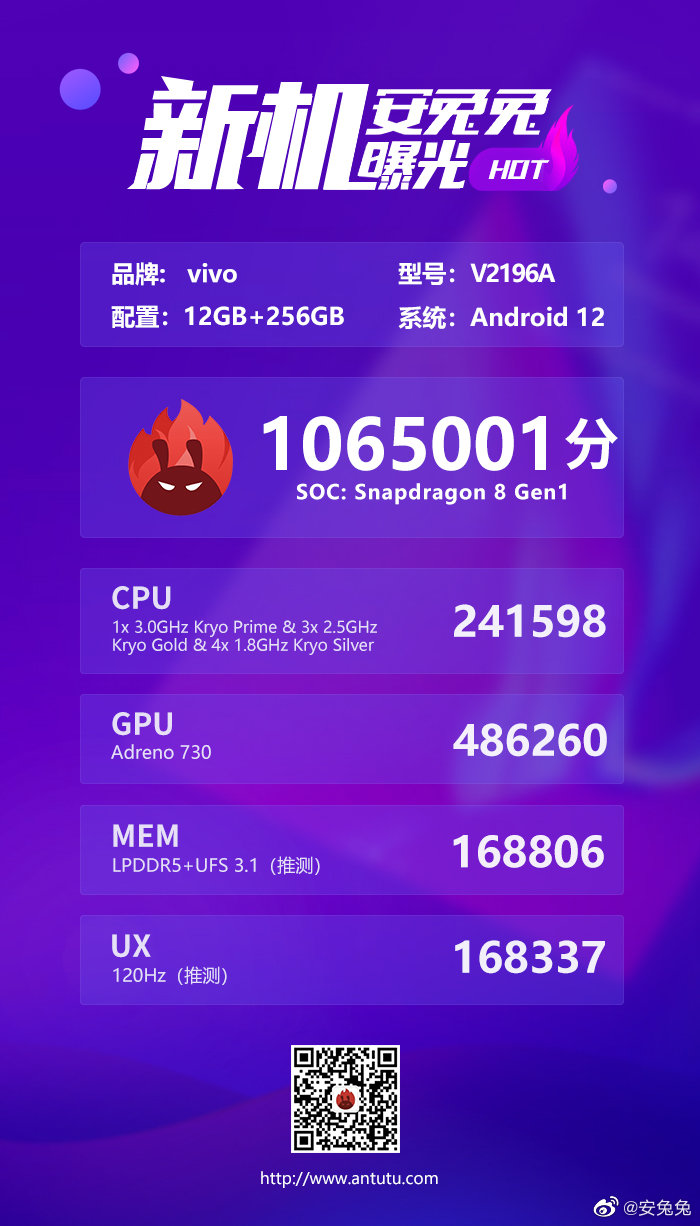
iQOO will announce the iQOO Neo6 flagship smartphone on April 13 in China. Ahead of the launch, some live shots of the device have surfaced at Cool APK (via). It has also been found in the database of AnTuTu with a score of 1,065,001.
The images show that the iQOO Neo6 will arrive in a black-colored retail package in China. The orange variant of the phone can be seen sporting a leather back. Reports have revealed that the device will be available in black and blue colors as well.
It features a large camera block at the top, which houses a triple camera unit and an LED flash. Unfortunately, there is no information available on the specs of the device.
Reports have revealed that the Vivo phone with a V2196A at Chinese certification sites will debut with the iQOO Neo6 moniker in the homeland. The same device has now appeared in the AnTuTu benchmarks with some of its key specs.
The AnTuTu listing reveals that the iQOO Neo6 will be powered by the Snapdragon 8 Gen 1 chipset, 12 GB of LPDDR5 RAM, 256 GB of UFS 3.1 internal storage, and Android 12 OS. It offers a 120Hz refresh rate. In the CPU, GPU, memory, and UX tests of AnTuTu, the handset scored 241,598, 486,260, 168,806, and 168,337 points, respectively. The handset was recently seen at Geekbench with SD8G1, 12 GB of RAM, and Android 12 OS. It scored 1193 in the single-core test and 3523 in the multi-core test of Geekbench.
Previous reports have revealed that the iQOO Neo6 has a 6.62-inch AMOLED FHD+ display. The handset is expected to draw power from a 4,700mAh battery that supports 80W fast charging. It is likely to feature an in-screen fingerprint scanner.
GPD is a Shenzhen-based startup in the gaming handheld market. The brand broke out into the market in 2020 and it is most known for its best-sellers such as its GPD Win 3, and GPD XP, which received positive reception among both Western and Asian audiences, as well as tech and gaming enthusiast crowds too.
Well in 2022, GPD Is looking to continue its Android gaming handheld, the GPD XP series, with a new member added to the family, the GPD XP Plus.
GPD XP Plus
Looks-wise, the GPD XP Plus looks identical to its cheaper sibling, the GPD XP launched back in November 2021 with its dark grey aluminium chassis. It even features the same 6.81-inch HD screen on the front, dual stereo speakers, as well as the same 7000mAh battery too. So what has been upgraded to justify the extra charge on the GPD XP Plus?
Well, the GPD XP Plus features a more powerful flagship MediaTek Dimensity 1200 chip under the hood, compared to the MediaTek Helio G95 found on yesteryear’s model. The SoC is said to provide a better gaming experience as it comes in an octa-core configuration, 4 Cortex A78 high-performance cores + 4×A55 efficient cores, powered by ARM’s Mali-G77 MC9 GPU and with speedy 4266Mbps LPDDR4x memory. In addition, the Dimensity 1200 features the MediaTek HyperEngine 3.0 which enhances the gaming performance to 2.5 times more than the flagship Snapdragon 845 chip.
With the upgraded processor, the GPD XP Plus now also features faster memory as well with 6GB of LPDDR4X 4266Mbps RAM and equipped with 128GB of UFS 3.1 storage, which promises more than 3 times the read and write speeds of UFS 2.1 on the previous generation.
Another upgrade of the gaming handheld is its USB-C port which is slated to feature HDMI DisplayPort 1.2 and faster charging as the company plans to include a 65W charger in the package.
The last highlight of the device is its modular gaming controllers. The device includes 3 controllers in the package which are respectively a FPS Controller Module, a MOBA Controller Module and an Xbox Controller Module.
Source: GPD
Each module has magnetic connectors which are the points that allow the modules to be connected with the main handheld and they need not be charged as they charge wirelessly via the magnetic contacts. GPD assures that users need not worry about the controller modules suddenly falling off as the strength of the magnets ensures that it requires more than 1.1kg tensile force to pull them apart.
The GPD XP Plus is expected to ship in May 2022, and it is planned to open pre-orders soon on May 1st 2022 via Indiegogo.
Realme has a big launch event lined up for India. On April 7, the company will be announcing the Realme GT 2 Pro flagship phone. The same event will see the arrival of other products such as the Realme Buds Air 3 TWS earbuds and a new Realme TV stick. Realme has confirmed that it will be unveiling the Realme 9 4G with the above-mentioned products at 12:30 pm (local time) on April 7.
As it is known, the Realme 9 4G will be a new addition to the Realme 9 family, which includes phones such as Realme 9i, Realme 9 5G, Realme 9 5G Speed Edition, and Realme 9 Pro 5G, and Realme 9 Pro+ 5G. The Realme 9 4G teaser released by the brand says that it will offer 9x focusing accuracy.
Say goodbye to slow and inaccurate focus with the 9X Focusing Accuracy in the #realme9 Camera!
Last week, Realme revealed that it would be soon announcing a number series phone featuring a 108-megapixel ISOCELL HM6 image sensor. It appears that the Realme 9 4G will come equipped with the new Samsung sensor.
Realme is yet to confirm the specifications of the Realme 9 4G handset. However, leaked information that surfaced last week revealed some of the key specs of the device. It is expected to arrive with a punch-hole display that offers a 90Hz refresh rate. The device could be powered by an unspecified Snapdragon 4G SoC.
The Realme 9 4G is expected to arrive with 6 GB of RAM and 128 GB of built-in storage. It may come with a 16-megapixel front-facing camera and a 108-megapixel triple camera unit. It is likely to arrive in gold, black, and white colors.
A Samsung Galaxy A51 smartphone has been modified to have a lightning port that could both serve as a charging and data transfer port for the Android phone. The person who conceptualized and transformed the Galaxy A51 is Ken Pillonel, who has had a similar first, incorporating a USB-C port into an iPhone.
The lightning port is the mainstay of Apple iPhones, iPads, and several other devices from the Apple ecosystem. Apple iPhones do not come with USB-C charging ports but Pillonel was able to incorporate one into an iPhone model last year. The innovation of incorporating the lightning port into an Android phone sees the lightning port as capable of charging the device and for data transfer.
Pillonel provided a short demo video of the transformation of the Samsung Galaxy A51 into the first-ever Android smartphone with a lightning port. The tech geek is promising a more detailed video of the transformation and that could be illuminating. However, the utility of the transformation is minimal, to say the least. The developer insists that he intended to bring balance to the world after making the USB-C iPhone.
At best, Apple iPhone chargers could now be used to charge the Samsung Galaxy A51 transformed smartphone. Ultra-fast chargers could enhance the charging speed when compared with the conventional USB-C 2.0 charging available to the device. The detailed video by Pillonel could help to put his feat in the right perspective and open other opportunities.
We use cookies on our website to give you the most relevant experience by remembering your preferences and repeat visits. By clicking “Accept”, you consent to the use of ALL the cookies.
This website uses cookies to improve your experience while you navigate through the website. Out of these, the cookies that are categorized as necessary are stored on your browser as they are essential for the working of basic functionalities of the website. We also use third-party cookies that help us analyze and understand how you use this website. These cookies will be stored in your browser only with your consent. You also have the option to opt-out of these cookies. But opting out of some of these cookies may affect your browsing experience.
Necessary cookies are absolutely essential for the website to function properly. This category only includes cookies that ensures basic functionalities and security features of the website. These cookies do not store any personal information.
Any cookies that may not be particularly necessary for the website to function and is used specifically to collect user personal data via analytics, ads, other embedded contents are termed as non-necessary cookies. It is mandatory to procure user consent prior to running these cookies on your website.