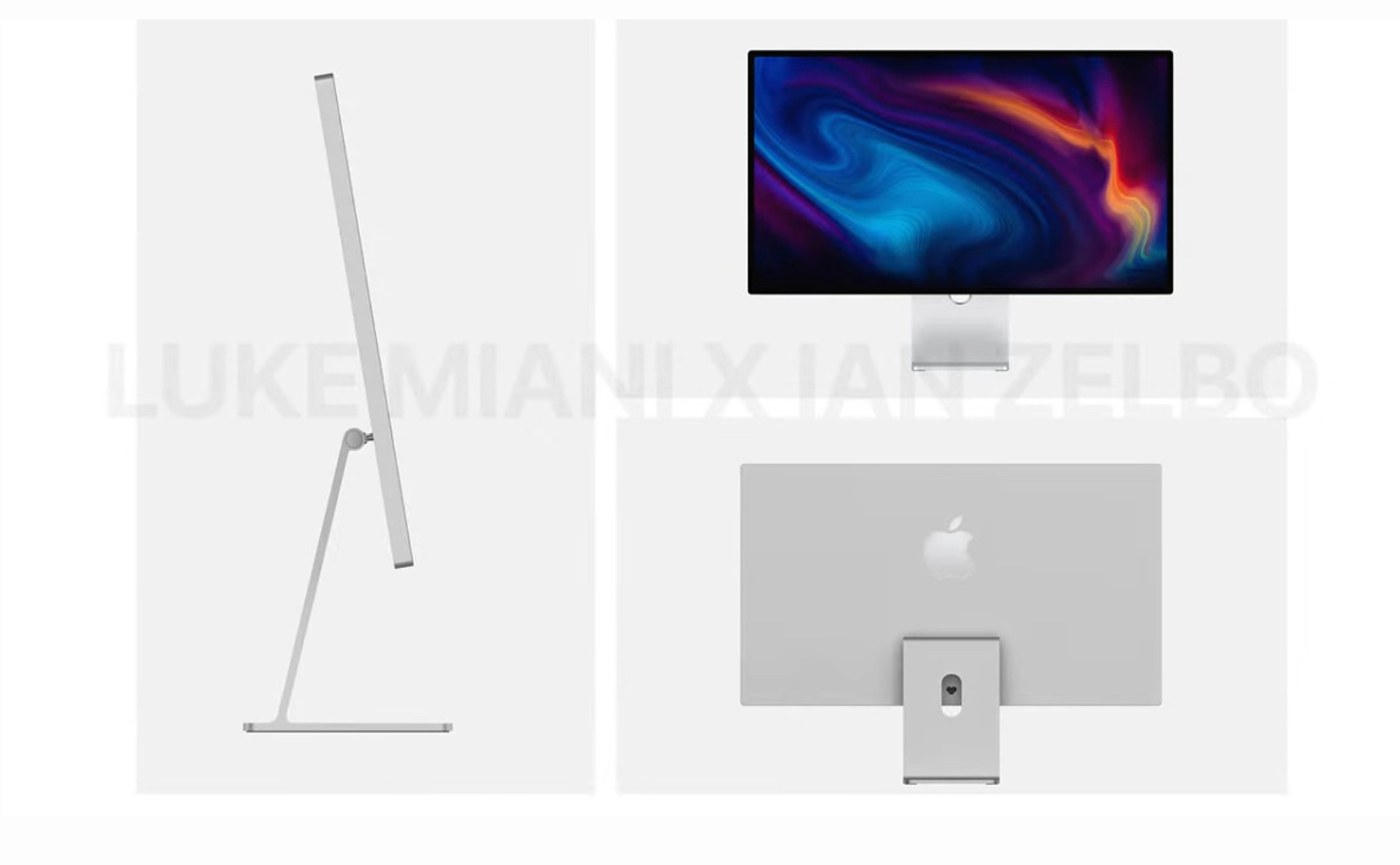
A last-minute leak is pointing in the direction that Cupertino-based company, Apple could release a raft of products today March 8, 2022. The products lined up for today’s launch include an Apple Mac Studio and a Studio Display. These new details for products lined up for Apple’s Peek Performance Event unveiling add further hype to the event.
The Apple iPhone SE 3, the new iPad Air 5, and a Mac Mini are among the devices lined up for the unveiling. There is no way of verifying the current leak, but we could expect a few surprises from Apple during the event. The new leak indicates that we might see a bigger Mac Mini, which is called the Mac Studio, a new and cheaper Studio Display.
The specific leak relates to a YouTube video by Luke Mani, who indicated that Apple is planning to release a new Mac Studio, which bears a striking semblance with the Mac Mini although it is bigger and has greater functionality than the Mac Mini. Performance-wise, the Mac Studio is also faster and cools more efficiently than the Mac Mini.
The new Apple Mac Studio is expected to be cheaper than the Mac Pro. The new Apple Studio Display seems to be a cheaper 27-inch display, with the MiniLED technology omitted. There are several other omissions that imply that the new Apple Studio Display will be far cheaper than the Pro Display XDR.
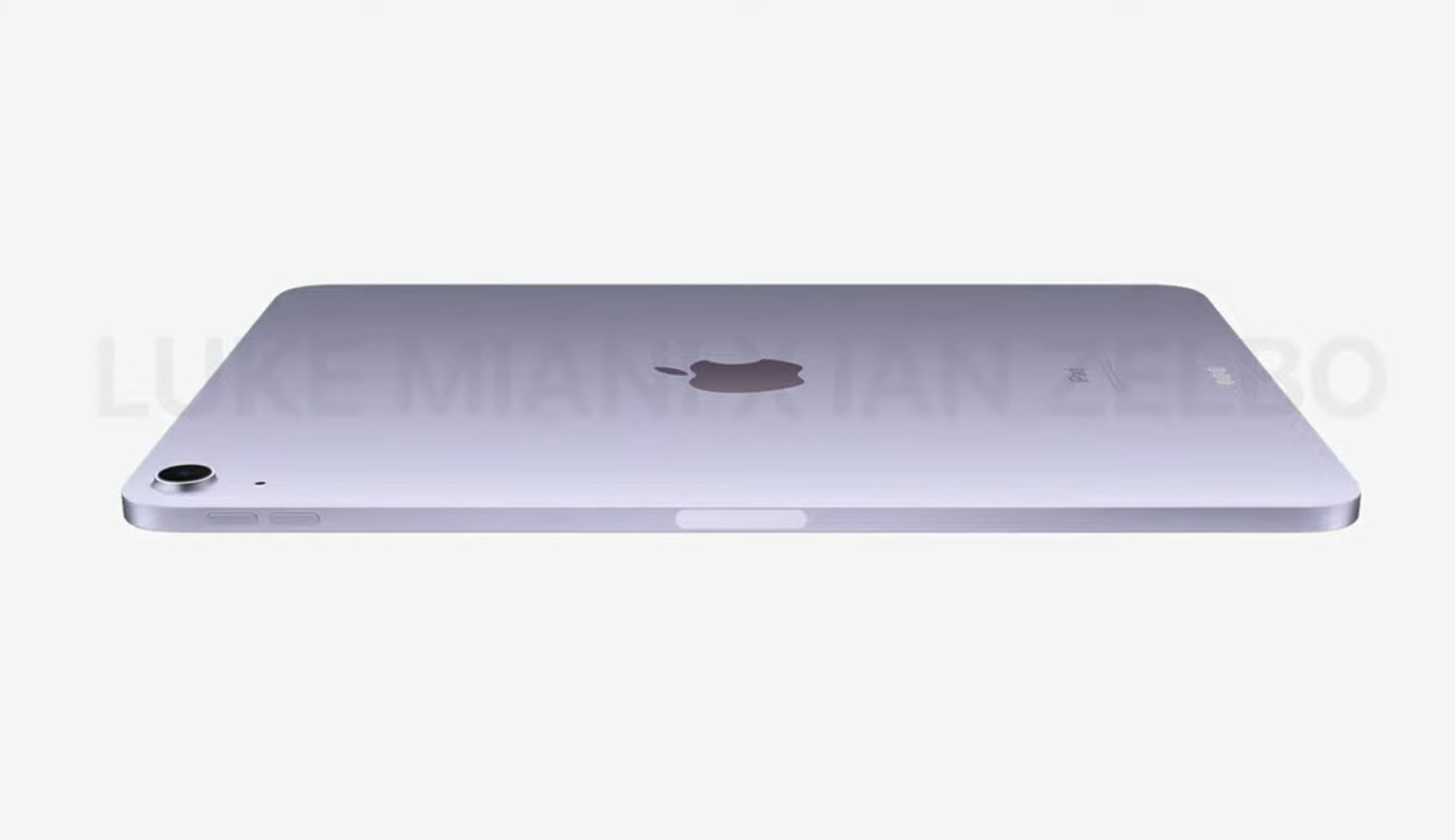
The leaks also relate to a green Apple iPhone 13 and a purple iPad Air 5. With a few hours to the launch, we keep our fingers crossed on the surprises Apple has formulated for the event.
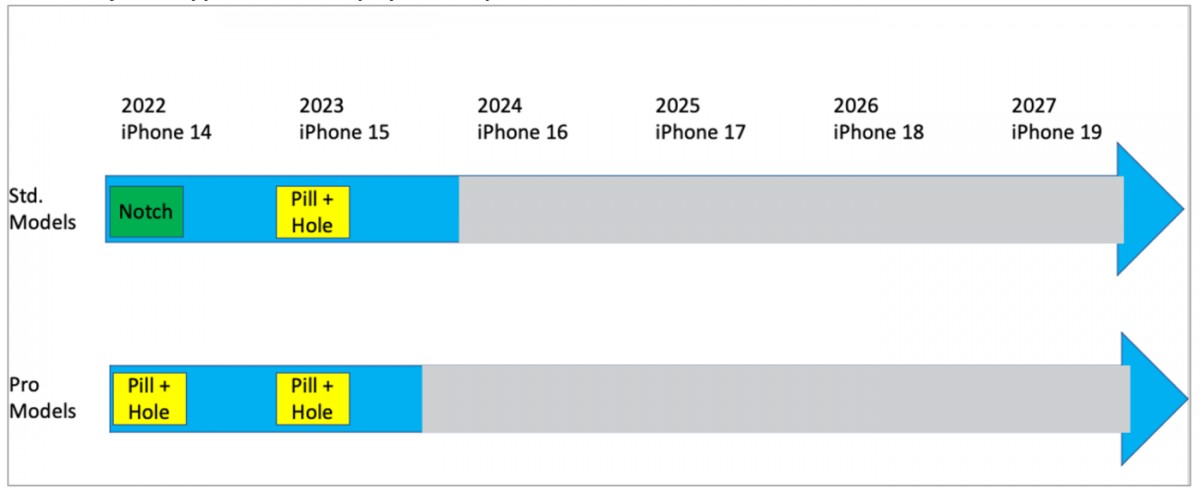
While Apple is getting ready to kick off its event today, leaks about the September 2022 due iPhone 14 series are filling in the gaps. Last time we learned that this year, the notch will be replaced with the punch-hole setup. And Now, Ross Young from Display Supply Chain Consultants has revealed that the notch is indeed getting replaced by the punch-hole but not for all the models.
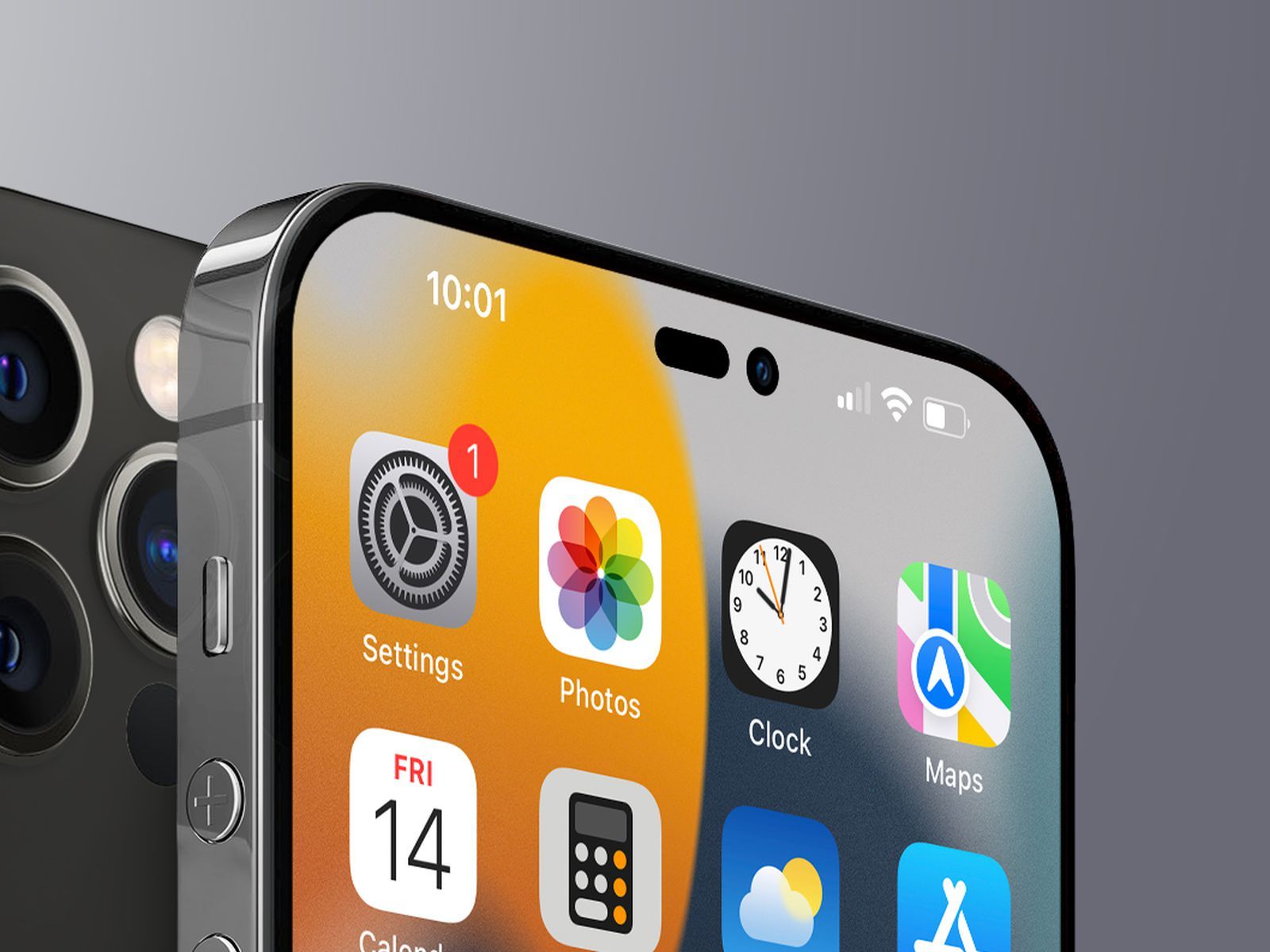
We now have a look at the actual timeline as to when we’ll see the punch-hole panel on the iPhones. Young reveals that the iPhone 14 series will get both a notch display as well as a dual punch-hole. The notch will be for the iPhone 14, while the 14 Pro models will get a dual punch-hole (mix of a pill-shaped hole and a punch-hole).
The iPhone 15 series, however, which will be in 2023, will get the Pill-shaped hole + a punch-hole in entirety. Also, the punch-hole and Pill will become smaller for the 15. Notably, the two holes on the iPhone 14 Pro and the upcoming 15 series models are said to be for the Face ID integration and obviously for the cameras.
This pill-shaped hole will be an attempt to make the face ID module go under the display while showcasing the actual screen. This could be achieved with more transparent materials for the display or by using backside laser drilling, different patterns for the cathodes in the OLED.
Interestingly, Young reveals that the latter method is already taken into consideration and it could be mass-produced. However, don’t expect the under-display Face ID anytime sooner, it will probably take a while for Apple to implement it. So, not on 14 Pro, and having it on the iPhone 15 series is a question.
In addition to the Under-display Face ID, a previous report from Mark Gurman revealed that Apple was likely to bring under-display fingerprint readers and it even trailed the technology, but the company wasn’t happy with the final design. And so, Apple completely canceled the design.
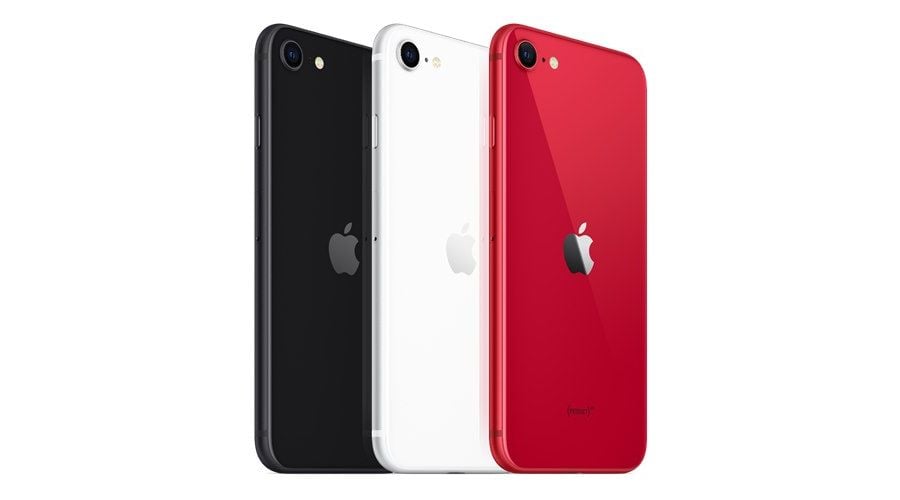
In a few hours, Apple will kick-off their Peek Performance launch event where the brand is expected to launch new iPads including the iPad Air, new Mac devices as well as the show stopper, the new iPhone SE 2022 model.
Apple iPhone SE (2020)
Now, just moments before the supposed launch, new leaks have surfaced of the iPhone SE that detail some exciting features which will come with the new affordable iPhone. According to tipster lanzuk, Taiwanese supply chain sources have informed that the iPhone SE 3 will indeed come with Apple’s in-house A15 Bionic chipset. These are the same chips that power the current iPhone 13 lineup. The tipster also added that the smartphone will come with an improved camera system over its predecessor which has previously been stated by trusted sources like Bloomberg’s Mark Gurman.
The tipster also says that the iPhone SE 2022 will get a bigger battery compared to the 1,821mAh battery on the iPhone SE 2020, and in combination with the more power-efficient A15 chip, the phone is sure to get a solid battery performance boost. On the topic of battery, the leaker says that the phone will come with MagSafe charging support, which is in contrast to the majority of previous leaks we have received so far.
For increased durability, the smartphone will come with the ceramic shield glass that was introduced with iPhone 12. The material is a combination of glass and ceramic and is meant to protect the phone in case it’s dropped accidentally.
And lastly, the tipster informs that the entry-level Apple smartphone will be begging a bump in its RAM capacity landing it at 4GB from the 3GB featured on the last-gen SE model.
The base price of the smartphone is expected to be the same as last gen and it will likely debut with a $399 price tag, contrary to previous reports which have stated that the smartphone will be priced around $300.
However, the credibility of these leaks are up for debate so we suggest that you take it with a pinch of salt and stay tuned for our coverage of the Apple Peek Performance launch event.
South Korea has approved certain rules that will allow the government to ban app stores by Apple and Google from forcing software developers to use their payments systems.
For those unaware, the Cupertino and Search Engine giant have been facing scrutiny across the globe over their app stores. At the moment, both brands hold a duopoly in the market with most smartphone users using either of the two stores for apps. However, the two companies also charge take a share from any transaction made within apps from developers and did not allow for third party payment methods. Thus, telecom regulators in nations like South Korea have been targeting the Google Play Store and iOS App Store.
South Korea has recently passed a new law, an amendment to the Telecommunication Business Act, which will help remove the dominance held by Apple and Google. Both firms typically charge 30 percent on developers, but the new rules that are called enforcement ordinance will help developers bypass this charge. The new rule will be put into effect starting from March 15 and bars “the act of forcing a specific payment method to a provider of mobile content.”
Han Sang-hyuk, chairman of Korea Communications Commission (KCC) added that “In order to prevent indirect regulatory avoidance, prohibited acts’ types and standards have been established as tightly knit as possible within the scope delegated by the law.” So now, any infractions may reach as high as 2 percent of an average annual revenue from related business practices, as per the new rules.
Earlier today, Samsung launched its first Galaxy F series device of 2022 – Galaxy F23 5G. The new handset for the Indian market packs some interesting features. Above all, it is priced competitively. This combination makes it an unusual budget smartphone from the South Korean tech giant.
Compelling Features
The Galaxy F23 5G is unlike other budget smartphones from Samsung. The device arrives with an attractive set of specifications.
First and foremost, it flaunts a 6.6-inch FHD+ display with up to a 120Hz refresh rate and Corning Gorilla Glass 5 protection. However, the screen is LCD and has a dewdrop notch.
There are multiple handsets in this segment with high refresh rate OLED panels. But they don’t house a capable Qualcomm Snapdragon 750G SoC with a 5G modem like the Galaxy F23 5G. The cherry on top is that the phone features 12 5G bands, which markets it future-proof.
That’s not all, the device boots Android 12-based One UI 4.1. It not only comes with Knox security but Samsung also promises two years of OS updates and up to four years of security updates.
If that’s not enough, the smartphone even has support for full-fledged Samsung Pay via NFC. At the moment, it is the most affordable Samsung handset in India with this feature. Though UPI is the most-preferred payment platform in the country, one can find contactless gateways in most places.
Further, the phone arrives with a dedicated MicroSD card slot and a 3.5mm headphone jack. It also packs a side-mounted fingerprint sensor and a large 5,000mAh battery with support for up to 25W fast charging. Unfortunately, it does not ship with a charger.
Apart from the display, the only other lackluster on-paper specs of the Galaxy F23 5G belong to its cameras. The phone comes with a 50MP Samsung ISOCELL JN1 primary sensor, an 8MP 123° ultra-wide unit, a 2MP macro snapper, and an 8MP front-facing shooter.
Stellar Price
The aforementioned specifications mean nothing if the Galaxy F23 5G is not priced well. Thankfully, it’s not the case. The device costs ₹17,499 and ₹18,499 for 4GB + 128GB and 6GB + 128GB memory configurations respectively.
These price tags definitely don’t sound that intriguing. What’s more temping is the ₹1,500 discount offered by Samsung for a limited time as ‘introductory price’. On top of this, customers can avail additional ₹1,000 cashback on ICICI Bank cards. The two offers lower the price of the handset to ₹14,999 and ₹15,999.
Since Samsung is known for selling its online-specific hands at discounted price tags for a longer period of time along with bank offers, most people won’t need to pay the full price. Also, the firm usually brings back these offers even if they go away for a while.
Competitors
The better alternatives of Galaxy F23 5G are limited to 4G connectivity. The first model is the year-old Redmi Note 10 Pro, which is slightly costlier. The runner-up is the new Redmi Note 11S, which costs almost the same as the Samsung phone.
Talking about 5G competitors, the vivo T1 5G goes head to head with the Galaxy F23 5G. The other one will be the costlier realme 9 Pro 5G. The upcoming realme 9 5G and realme 9 5G SE also look like worthy contenders.
Conclusion
Though there are multiple other options in this price category, the Galaxy F23 5G is definitely worth a look at, especially if you are looking for a 5G smartphone. Samsung seems to have cracked the formula for affordable 5G phones.
The only major drawback we could think of is the lack of an AMOLED display, which has become common now. The device tries to right this with unique features like Samsung Pay, 12 5G bands, and guaranteed software updates.
What are your thoughts on the Galaxy F23 5G? Do let us know in the comment section below.
At MWC 2022, Samsung unveiled the Galaxy Book2 Pro and the Galaxy Book2 Pro 360 laptops. Samsung India recently tweeted a teaser hinting at the Galaxy Book2 Pro 360’s arrival in the Indian market. And now, the device has officially appeared on Amazon India’s website.
According to the Amazon India landing page, the notebook is still listed as “Coming Soon” and therefore there is no confirmation about its actual release date. But the product is sure to launch sometime this month. Interested customers can even opt-in for the “Notify Me” function which will send you an email and notification when the laptop becomes available in the market.
Samsung Galaxy Book2 Pro 360 specifications
The Galaxy Book2 Pro 360 comes with a 13.3-inch or 15.6-inch Full HD AMOLED touch screen with a 16:9 aspect ratio, 400 nits brightness in regular mode, and 500 nits while viewing HDR content. The laptop is pretty lightweight at 1.41kg and has a 360-degree hinge.
It runs Windows 11 OS out of the box and has support for the S Pen stylus. The Galaxy Book2 Pro 360 comes powered with Intel‘s 12th gen Core i7 and Core i5 processors, paired with integrated Iris XE graphics. The laptop is will be available with up to 32 GB of LPDDR5 RAM, and up to 1 TB of NVMe SSD storage.
The Book2 Pro 360 13.3-inch model has a 63Wh battery, while the 15.5-inch packs a 68Wh battery. Both carry support for 65W fast charging through USB-C.
The notebook comes with Dolby Atmos powered dual stereo 4 speakers. These devices are equipped with connectivity features such as Wi-Fi 6E, Bluetooth 5.1, and 5G (only on Pro). When it comes to ports, these devices offer a Thunderbolt 4, a USB-C port (two on 360), 2 x USB 3.2 Type-A ports, an HDMI port, a microSD card slot, a 3.5mm audio jack.
Samsung Galaxy Book 2 Pro 360 starts at $1,249.99 in the US. So, we can expect it to launch around the same price in India, which is Rs 96,000 approx. The Samsung Galaxy Book 2 Pro 360 will soon be available through Samsung Stores and Amazon India.
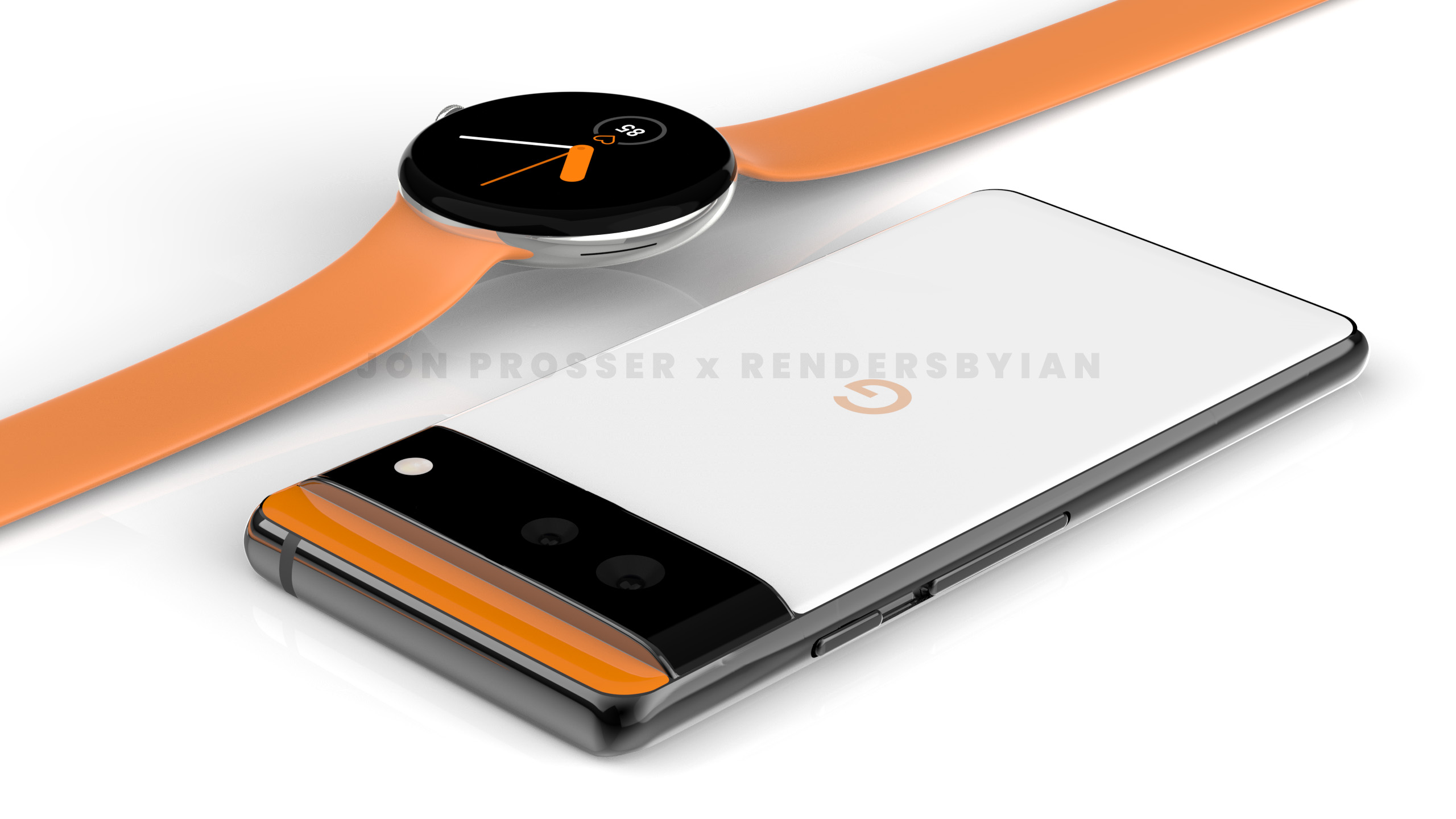
While we already know that Google is planning on launching a Pixel 6a smartphone and its first smartwatch, the Pixel Watch soon, it appears that the company is delaying the release of both upcoming products.
as i mentioned in today’s show:
i am hearing that google has delayed the pixel 6a until late july. (chip shortage)
pixel watch is still may 26th, but the source believes it could soon be pushed as well.https://t.co/iqoh9RlCzk
Previously, we had reported on the Search Engine giant’s new handset and smartwatch launch being imminent after they were listed on online carriers. But now, it seems that the brand’s budget smartphone has been delayed to July 2022. On the other hand, the Pixel Watch has also been delayed, and will reportedly launch in May. The news arrives from Jon Prosser who also claimed that the smartwatch might get even further delayed as well.
In other words, we are still a couple of months away from a Pixel 6a and Pixel Watch launch. The company’s first smartwatch was rumored to be unveiled on 26th May 2022, but its possible that it may launch along with the affordable new Pixel phone. Prosser claims that the primary reason for the delay of the two products is the ongoing chip shortage, which has already affected numerous industries across the globe, even fellow smartphone brands.
Furthermore, with its current generation of smartphones, Google is now shipping its Pixel devices with its proprietary Tensor chips. As of right now, the Pixel 6a is rumored to also feature the same Tensor GS101 SoC that is also found on the Pixel 6 and Pixel 6 Pro. Unfortunately, this is still an unconfirmed report so take this news with a pinch of salt and stick around as we will be providing more updates.
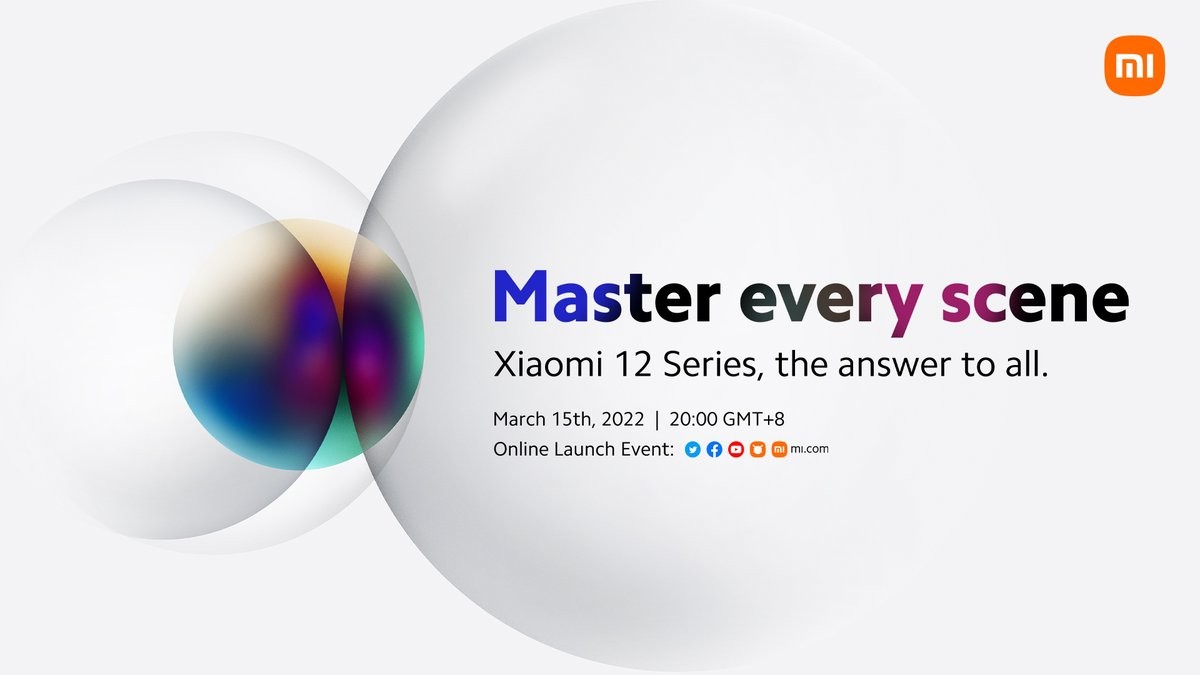
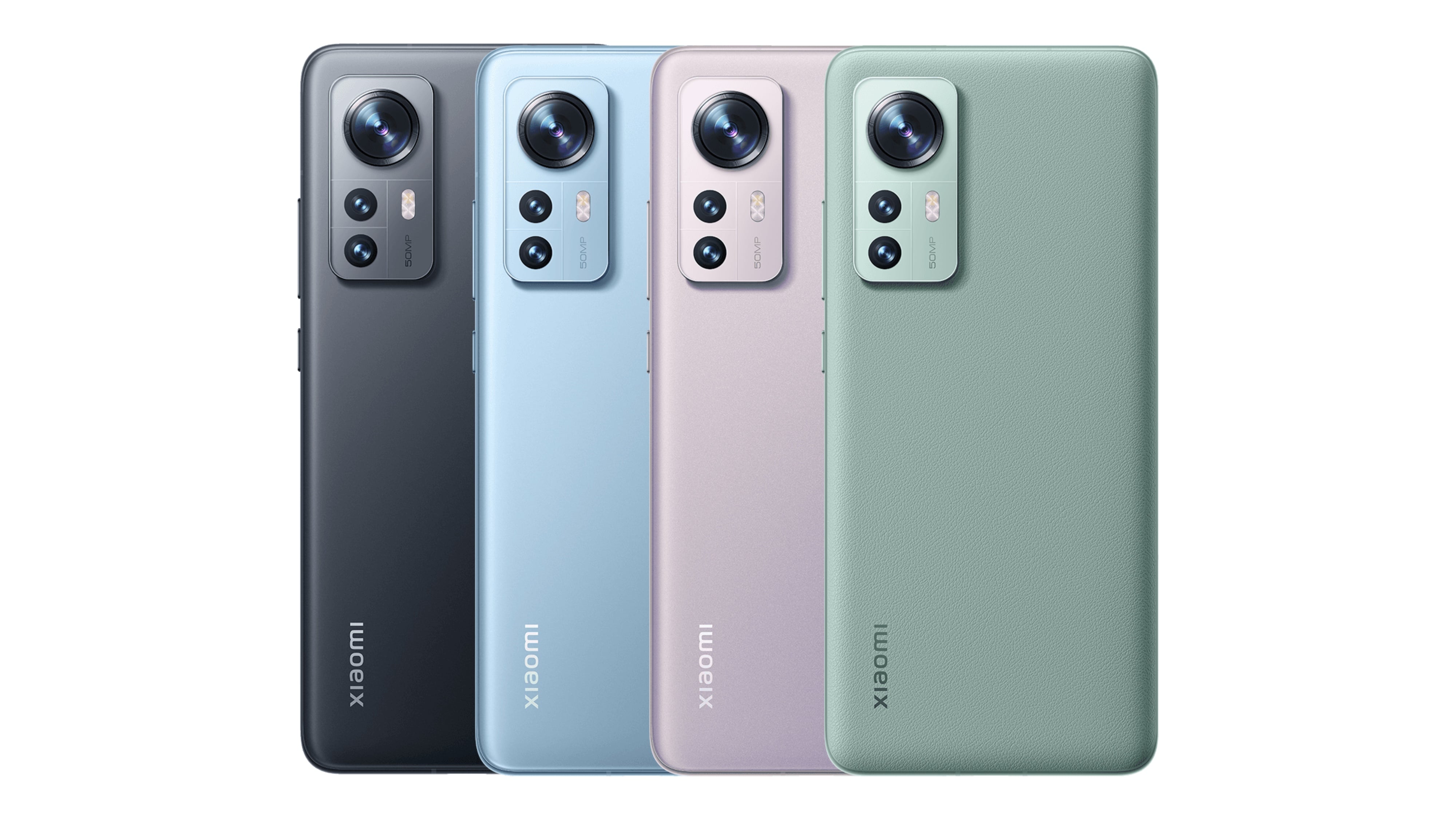
Xiaomi has officially announced that the much-awaited global launch of the Xiaomi 12 series will happen on March 15. The announcement put to rest speculations about the brand’s flagship launch outside China where the Xiaomi 12 series has been launched since last year. The launch event will commence at 8 PM China time (12PM UTC) and will stream live across various platforms including YouTube, Twitter, Facebook as well as Xiaomi’s own website. Although the company did not reveal the models that would be hitting the global turf, we expect the company to release the Xiaomi 12, Xiaomi 12 Pro, and Xiaomi 12X. All three models were launched in China. There is no chance the Xiaomi 12 Ultra will be launched as well. A recent rumor tipped the 12 Ultra to have been delayed and will arrive in Q2 2022.
There is a likelihood that the more compact Xiaomi 12 mini could also join the global Xiaomi 12 series lineup. Other possible models could debut in the global launch, but any projection now will be in the realm of uncertainty.
The camera setup of the Xiaomi 12 series will be a major marketing point for the global edition of the smartphones, as they will come with an excellent rear and front-facing camera setup. It is also indicated that the theme of the March 15 event is Master every scene, which hopes to showcase the impressive camera system of the lineup. All three models in the lineup have a 50MP rear in combination with telephoto and ultra-wide sensors that combine for a great camera system.
All three global models in the Xiaomi 12 series come with Qualcomm Snapdragon chips. While the Xiaomi 12 and 12 Pro are powered by the Snapdragon 8 Gen 1 SoC, the 12X has the Snapdragon 870.
There is no word yet on the pricing but the Xiaomi 12 series is rumored to start in the EU at €600-700 for the base 12X model while the Xiaomi 12 will reportedly retail for €899. The top-end Xiaomi 12 Pro is said to start at €1,099. If these speculated prices are anything to go by, the Xiaomi 12 series will have some stiff competition to contend with.
The realme Buds Air 3 have been confirmed to launch sometime this month, but ahead of that, a tipster has shared multiple specifications of the TWS earbuds.
Notable industry insider Digital Chat Station with a post on Weibo shared a screenshot from the connection page for the earbuds, showing that they indeed look just like previously leaked renders and live images.
Along with the screenshot, the tipster also revealed that the realme Buds Air 3 support up to 42dB noise reduction with the built-in ANC feature. They’re even certified by Rheinland high-performance noise reduction, so there’s that.
Aside from that, the earbuds offer up to 30 hours of battery life, come with “customized hearing sense,” and support the latest Bluetooth 5.2 standard. Dual device connection is present too.
As for release, the earbuds are expected to be launched the same day as the realme GT NEO 3. The phone is an upper-mid-range device and will be one of the first to be powered by the Dimensity 8100 chip.
The realme Buds Air 3 are expected to arrive in two color variants, namely Galaxy White and Starry Blue. However, it is highly likely that the company might later add more color options as it did with the Realme Buds Air 2.
Instagram has just removed two of its standalone applications from both the Google Play Store and Apple App Store. The two new apps that were discontinued include Boomerang and Hyperlapse.
In other words, both of these apps are no longer available on either iOS or Android devices. Many Twitter users found out that the social media platform had removed both of the apps from the app stores. Recently, the Meta owned brand had also announced that it was discontinuing its standalone app for IGTV as well. This was primarily due to Instagram’s plan on shifting its focus to a single main app rather than a bunch of smaller ones.
Furthermore, the company had already integrated the IGTV platform into the primary app for years now. Similarly, Boomerang and Hyperlapse were always features on the main app. So, it arrives as no surprise that the social media platform quietly discontinued both of the apps. These were originally launched during a time when smartphone had limited performance. Thus, you had a separate app dedicated to just the Boomerang and Hyperlapse feature.
Despite the standalone apps offering a better Boomerang effect or time lapse recording overall, these features have been available in the main app for a while now. On the other hand, Instagram’s Layout application is still available for download. This app helps in making photo collages, but it shouldn’t take too long for the company to take this down as well.
Rajasthan-based electric two-wheeler manufacturer HOP Electric Mobility has officially announced its very first e-motorcycle for India. Dubbed HOP OXO, the bike is currently undergoing testing in the country but is expected to be launched quite soon. You can still reserve one for yourself right now, though, for just Rs 999 with the freshly started pre-booking.
HOP was actually the first Indian EV manufacturer to perform a consumer-based trial for the electric bike and managed to clock over 30,000kms during testing (via 91mobiles). The company is looking to get real-life, road condition testing so as to address all issues and shortcomings of the bike during the beta phase itself.
Testing so far has been performed in over 20 cities including Jaipur, Hyderabad, Kolkata, Jodhpur, Ludhiana, and more.
Not much is known about the HOP OXO aside from the fact that it will offer a top speed of 100kmph and that will offer a range of up to 100km on a single complete charge of its swappable battery.
1 of 2
A teaser video uploaded on the microsite for the bike reveals that it will have sporty styling with disc brakes on the front and back.
Alternatively, the company also sells HOP LEO and LYF electric scooters in India.
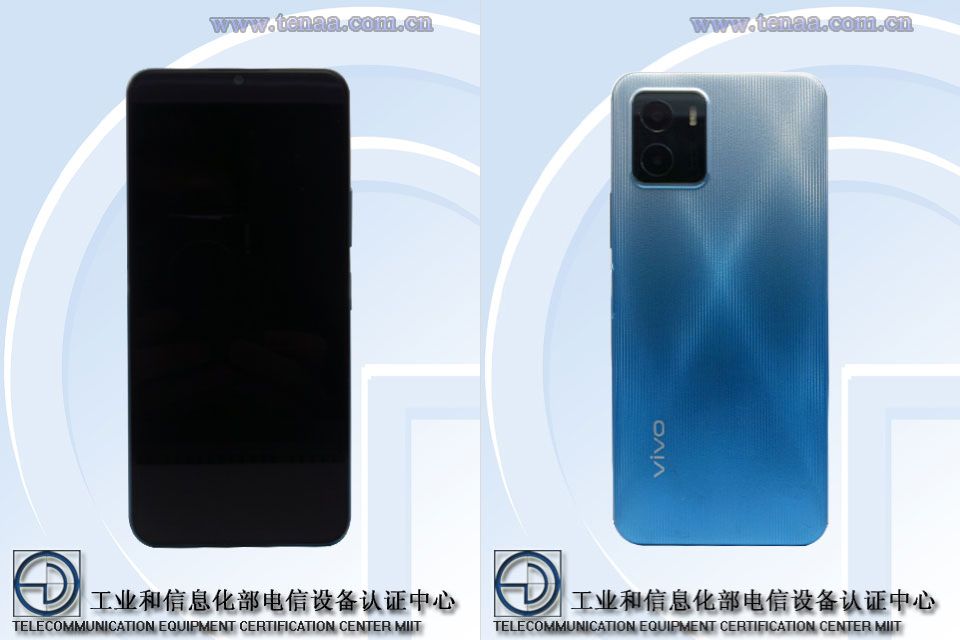
An upcoming iQOO smartphone with a V2180GA model has appeared in the database of China’s TENAA certification site. The listing reveals that it is packed with mid-range specs, which indicates that it could be a forthcoming U-series iQOO smartphone.
iQOO V2180GA specifications
The iQOO V2180GA’s TENAA listing reveals that it will be sporting a 6.51-inch HD+ display that offers a 20:9 aspect ratio. An unnamed 2.4GHz octa-core CPU is at the helm of the device. It is likely to be released in China in 4 GB and 8 GB RAM editions. While it houses a 4,910mAh rated battery, there is no word on its charging capabilities.
The rear-facing dual-camera system of the phone has a 13-megapixel main camera and a 2-megapixel secondary snapper. Placed on the front is an 8-megapixel selfie camera. It seems to be fitted with a side-mounted fingerprint reader.
The Android 12 OS is likely to come preinstalled on the iQOO V2180GA. Lastly, it lacks support for 5G connectivity as it is a 4G LTE device. Hopefully, newer reports will reveal the final marketing name of the device. With TENAA certification in tow, iQOO is likely to announce the V2180GA handset as early as this month in China.
Last week, a Vivo phone with V2180A was approved by TENAA and 3C certification sites. The specifications of Vivo V2180A and iQOO V2180GA are almost identical. The Vivo phone is likely to arrive with 64 GB and 128 GB storage options, whereas the iQOO smartphone may come with 128 GB and 256 GB storage variants. The TENAA images of the V2180GA are not available yet. In all likelihood, it is likely to look identical to the V2180A handset.
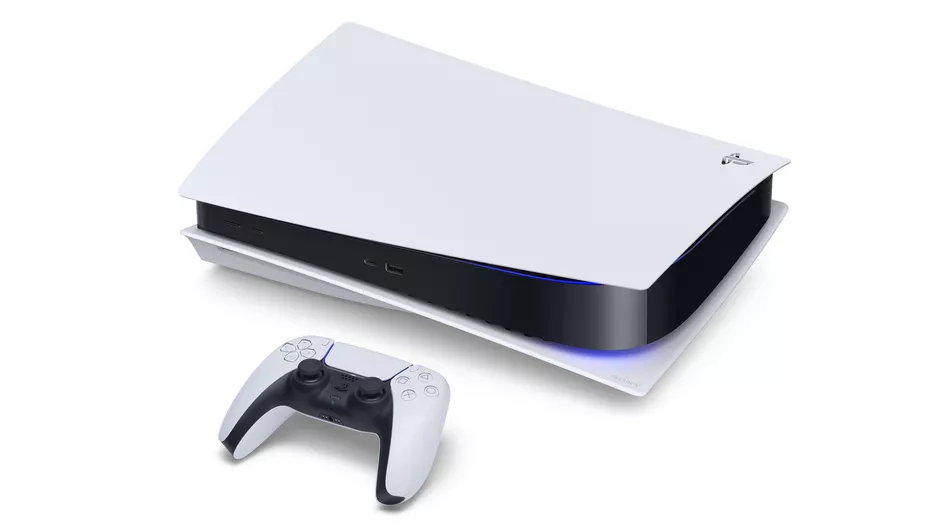
While Sony is still struggling to supply the world with its popular PlayStation 5 game consoles, it seems that the company is already working on another console. A new report has suggested that a prototype console is currently in development, and it might be the PS5 Pro.
The news arrives from TweakTown(Via TomsGuide) who spotted the prototype on import records on the Sony’s shipping boxes of development kits that were being sent to the US. The Japanese tech giant is already rumored to also be working on a lighter model with a smaller heatsink, but now, it seems that a higher end version is also in development. The brand’s shipment reads “video game consol [sic.] (prototype),” which was dispatched from the UK to the UK.
It is still entirely possible that the shipment could be for an old prototype. But it is more likely that the company might be working on a refreshed model of the PS5. The new gaming console could even feature hardware upgrades or revisions. So it could be either a slim model with a smaller size or a Pro version with more powerful specifications. As of right now, it is more or less certain that a Slim version will launch sometime in the near future.
But, considering that Sony had launched a PS4 Pro with the last generation, it won’t be a surprise if the prototype in question is for the PlayStation 5 Pro. Keep in mind that this is still just speculation at the moment, so take this report with a pinch of salt for now and stay tuned for more updates.
Lenovo, at CES 2022, released a new iteration of its ThinkBook series of laptops with the latest 12th Gen Intel processors. While pre-order dates hadn’t been announced then, the company has now finally revealed them.
Lenovo says that pre-sale will commence later this month (via IT Home). The series comprises ThinkBook 14 G4+ and ThinkBook 16 G4+ notebooks, both of which will be equipped with Intel Alder Lake-H45 CPUs, up to RTX 2050 graphics cards, and 16GB of LPDDR5 memory.
The ThinkBook 14+ is approximately 15.9 mm thick, weighs 1.4 kg, and features a 14-inch 16:10 IPS display with up to 2.8K (2880×1800) 90Hz options. The ThinkBook 16+ features a larger 16-inch 16:10 IPS display and offers a display with specs reaching up to 2.5K (2560×1600) 120Hz. Both laptops are equipped with a Thunderbolt 4 interface, USB-A/C ports, and an HDMI port.
Options of 46.5 Whr and 62 Whr battery capacities are offered for the ThinkBook 14+ while the ThinkBook 16+ gets 57 Whr and 71 Whr configs.
At CES, Lenovo announced that the ThinkBook 14 G4+ will start at $839 while the Lenovo ThinkBook 16 G4+ will start at $859, and that both will be sold starting April.
Under the leadership of Huawei, Chinese companies are expected to break into the premium smartphone space with their foldable offerings, a report from China Business News states. Huawei was actually the first Chinese company to launch a foldable phone in the form of the Mate X, and it now looks like it’s going to refresh the device with a newer iteration this year.
A few companies like Jingyan Technology are reportedly gaining component orders for an upcoming foldable phone from Huawei, which a tipster today has revealed is most likely none other than the Huawei Mate X3. The device will most likely be launched later this year.
Huawei Mate X2 Collector’s Edition
The Huawei Mate X2 was launched early last year with an 8-inch 90Hz OLED foldable inner screen and a 6.45-inch 90Hz OLED outer screen. It is powered by the Kirin 9000 5G chip in China and comes with a quad-camera setup, topped by a 50MP snapper. The battery is sized 4,500mAh with support for 55W fast charging.
Another special edition of the phone was then launched later last year called Mate X2 Collector’s Edition, costing a hefty 18,999 Yuan (around $3,000).
The Huawei Mate X3 will most likely sport a form factor very similar to its predecessor but should come with a number of improvements. The OPPO Find N proves that creases can nearly be done away with already, so expect the Mate X3 to pull off something similar.
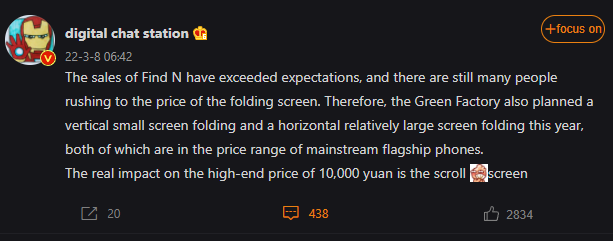
A known tipster on Weibo (a Chinese microblogging website) has just revealed that Oppo is planning on launch two new unique smartphones later this year. These supposed handsets will include the clamshell design.
According to Digital Chat Station, the Chinese smartphone maker is planning on launching additional foldable models of smartphones following the release of its Find N. Apparently, the brand’s first foldable offering saw sales that were higher than what was initially expected. So now, it is planning on launching two new models as well. One of these would feature the clamshell design while the second model will be a higher end variant that will feature a display that is larger than the Find N.
For those unaware, the Find N was launched back in December 2022. Furthermore, this higher end model will reportedly launch with a price tag of around 10,000 Yuan (roughly 1,583 US Dollars), as per the tipster. In other words, it will be even more expensive than the Find N, which was relatively one of the most affordable phones in the foldable handset segment.
Notably, Digital Chat Station also stated that the display on this upcoming premium handset will be a rollable panel. Meaning, it might be similar in design to the OPPO X 2021 rollable phone concept, which was the world’s first smartphone with an extending display. It could extend its display for 6.7 inches to 7.4 inches thanks to its 6.8mm Roll Motor and flexible OLED panel design. Keep in mind that this is still an unconfirmed news, so take this report with a pinch of salt for now. But it would be impressive if the company manages to launch this device since it would be the first mass produced commercial model of a rollable phone.
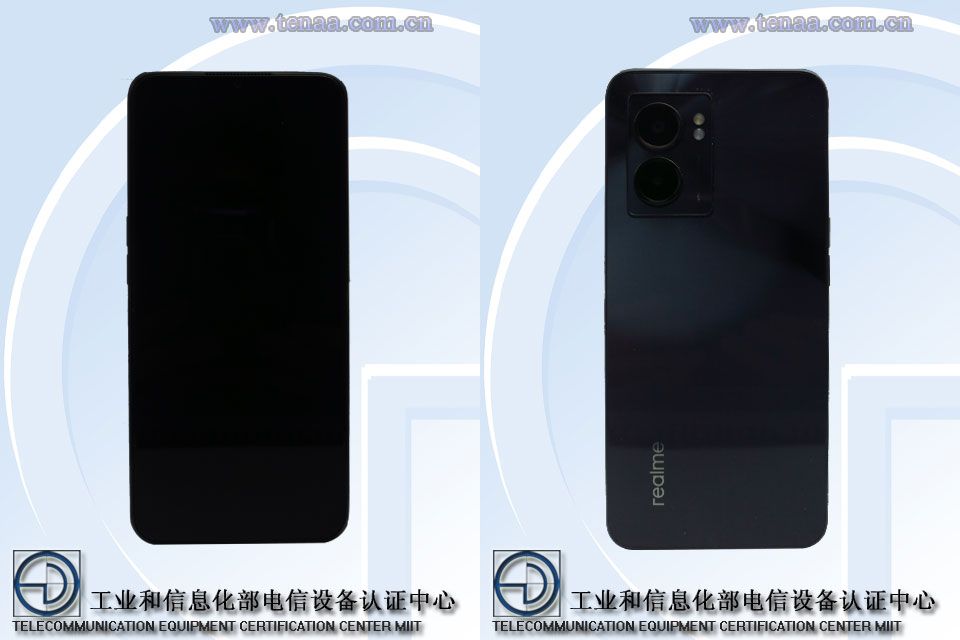
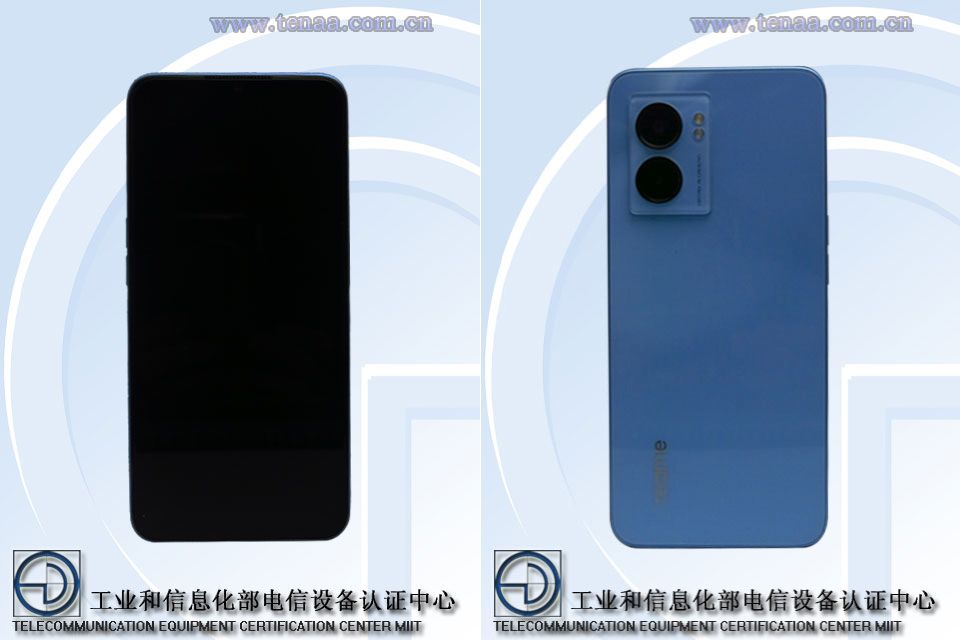
A new mid-range Realme phone with a RMX3575 model number has been certified by the TENAA authority of China. At the same time, another model with RMX3576 has also bagged TENAA certification. Since both handsets offer identical specs and designs, it appears that both model numbers belong to the network variants of the same smartphone.
Realme RMX3575/6 specifications
The Realme RMX3575/6 has a 6.56-inch TFT display that delivers an HD+ resolution of 720 x 1612 pixels. For security, it has a side-facing fingerprint scanner. The device is likely to arrive with Android 12 preinstalled.
Realme RMX3575’s TENAA images
The RMX3575/6 is driven by a 2.2GHz octa-core processor and 4 GB / 6 GB / 8 GB of RAM. Each of these RAM variants is expected to come with 128 GB of internal storage. For additional storage, it has a microSD card slot.
The device packs a 4,980mAh rated battery. It is likely to receive 3C certification soon through which its charging capabilities will be revealed.
Realme RMX3576’s TENAA images
It has an 8-megapixel camera for capturing selfies. The back panel of the device has a dual-camera setup featuring a 13-megapixel main camera and a 2-megapixel auxiliary lens. It weighs around 185.5 grams and has 163.8 x 75.1 x 8.1mm dimensions.
According to tipster WHY LAB, the Realme RMX3575/6 may debut in the Chinese market with the Realme V21 name. The budget-friendly 5G phone could be powered by the Dimensity 700 chipset. Now that the RMX3575/6 has bagged TENAA certification, it may launch in the coming days in China.
In related news, Realme recently unveiled the Realme V25 5G smartphone in China. The Snapdragon 695 powered handset is a tweaked version of India’s Realme 9 Pro 5G.
Just as scheduled, OPPO started rolling out ColorOS 12 stable update based on Android 12 for the OPPO Reno4 5G series in China yesterday (March 7). The update is live for all four models in the lineup, such as vanilla, pro, and two special editions of the pro.
OPPO Reno4 Pro 5G Artist Limited Edition
OPPO kickstarted the ColorOS 12 beta program for the Chinese OPPO Reno4 5G series in mid-January. Almost two months later, the handsets have now begun to receive the stable update.
According to the official announcement post on OPPO Community China, the update is live for the following models,
In order to receive the update, users should be running firmware version C.37 on the vanilla variant and C.36 on the pro variants. To download and install the update, they need to navigate to Settings > Software Update > Gear Icon > Upgrade Early Adopters > Official Version Application > Agree to Privacy Policy > Apply Now > Check for Updates.
The above procedure is only for those who want to try the update right away. The update will be made available for everyone via regular OTA from Settings > Software Update in the coming days if these early adopters don’t face any major issues.
Xiaomi in December last year unveiled three flagship mobile phones, namely, the Xiaomi 12, 12 Pro, and 12X, leaving a fourth ‘Ultra’ model hanging. While the phone hasn’t yet been teased officially, multiple leaks have outlined what to expect. The phone was earlier rumored to launch sometime during the first quarter of 2022, but that looks to now be delayed.
Tipster Digital Chat Station (via IT Home) says that an engineering version of the device, likely built for testing purposes, was seen in January with the standard Snapdragon 8 Gen 1. But Xiaomi looks to be aiming to ship the 12 Ultra with the Snapdragon 8 Gen 1 Plus, because of which the device has now been delayed. It could be possible that the company is facing trouble procuring sufficient stock of the upcoming chip.
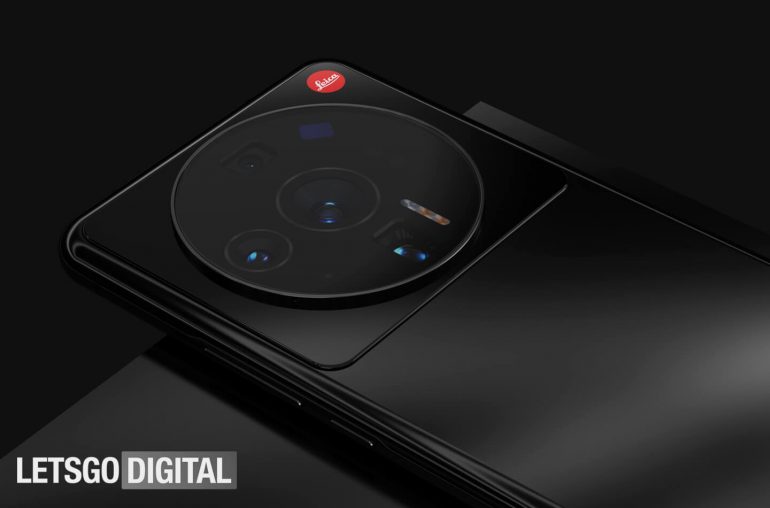
According to previous leaks, the rear camera module of the Xiaomi 12 Ultra is expected to adopt a circular shape and will sit in the center of a large section that will span almost the entire top half of the phone. Just take a look at the image below to get an idea.
Xiaomi 12 Ultra by LetsGoDigital
The camera module itself will most likely house three lenses — a main camera at the center, a periscope telephoto camera, and finally an ultrawide-angle snapper.
The display is expected to be a 2K OLED display from Samsung. The battery is expected to be sized 4860mAh with support for 120W wired and 50W wireless charging.
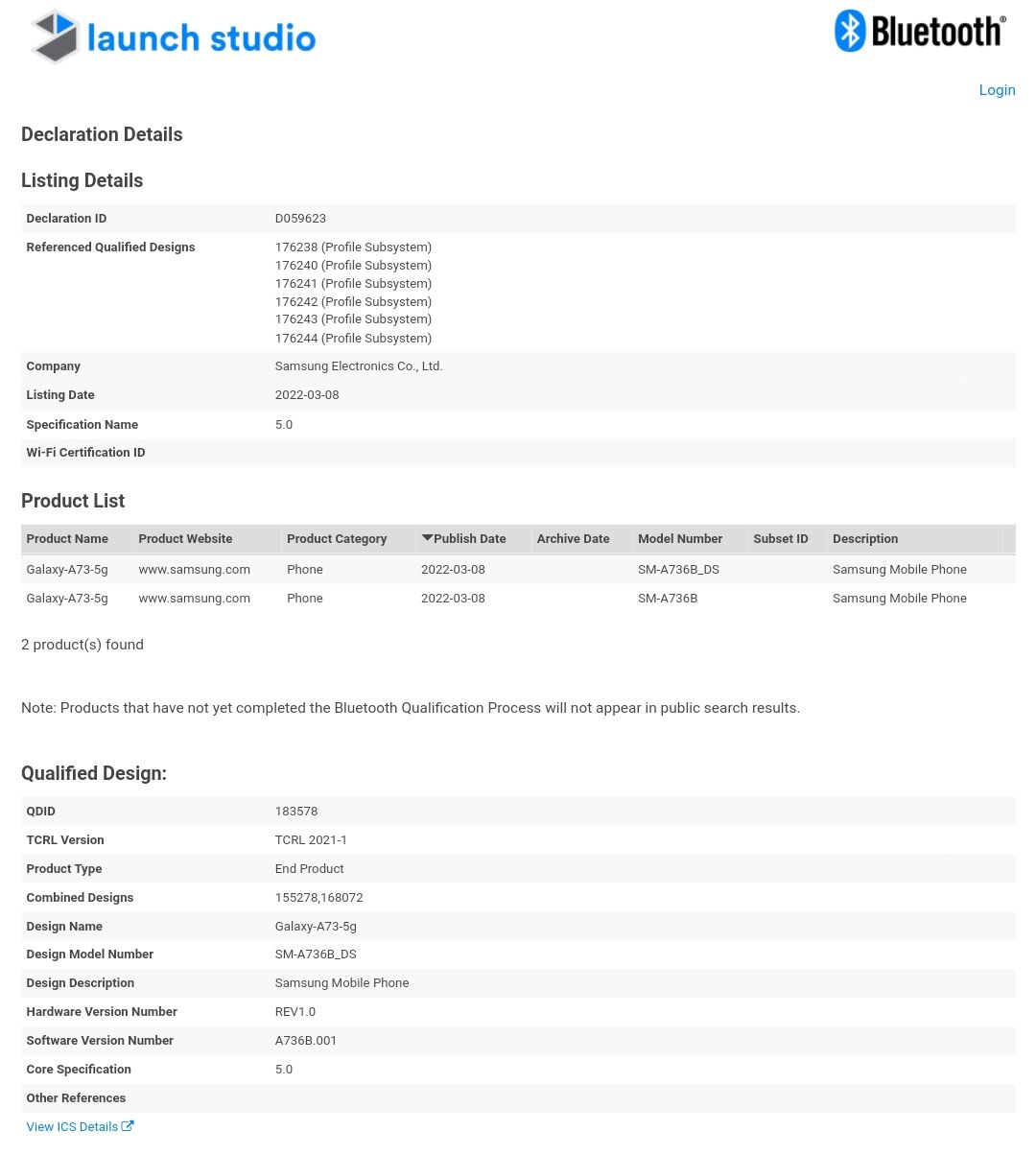
Samsung has recently unveiled the Galaxy A13 4G and Galaxy A23 5G smartphones. The company is expected to soon unveil the Galaxy A33 5G and Galaxy A53 5G handsets. Both models are expected to launch at some point this month. It appears that the more powerful Galaxy A73 5G will also be launching soon as it has bagged certification from the Bluetooth SIG authority of China.
As can be seen in the screenshot below, the Galaxy A73 5G that has an SM-A736B / SM-A736B_DS model number has been approved by the Bluetooth SIG authority. The listing confirms that it carries support for Bluetooth 5.0 connectivity. Now that the device is Bluetooth certified, it may launch by the end of this month or in April.
The Galaxy A73 5G was recently spotted at the Geekbench benchmarking site. The listing revealed that the device is equipped with the Snapdragon 778G chipset, 8 GB of RAM, and Android 12 OS. The handset has also been spotted in the database of the FCC certification recently. The FCC listing had revealed that the device will carry support for 25W fast charging. However, it is unclear whether the retail package of the A73 will include a charger.
Samsung Galaxy A73 5G specifications
The Galaxy A73 5G rumors have revealed that it has a 6.7-inch AMOLED FHD+ display that offers a 90Hz refresh rate and an in-screen fingerprint scanner. The device may feature a 32-megapixel front camera and its rear shell could be fitted with an OIS-assisted 108-megapixel main camera, + 12-megapixel, + 8-megapixel, and a 2-megapixel quad-camera unit.
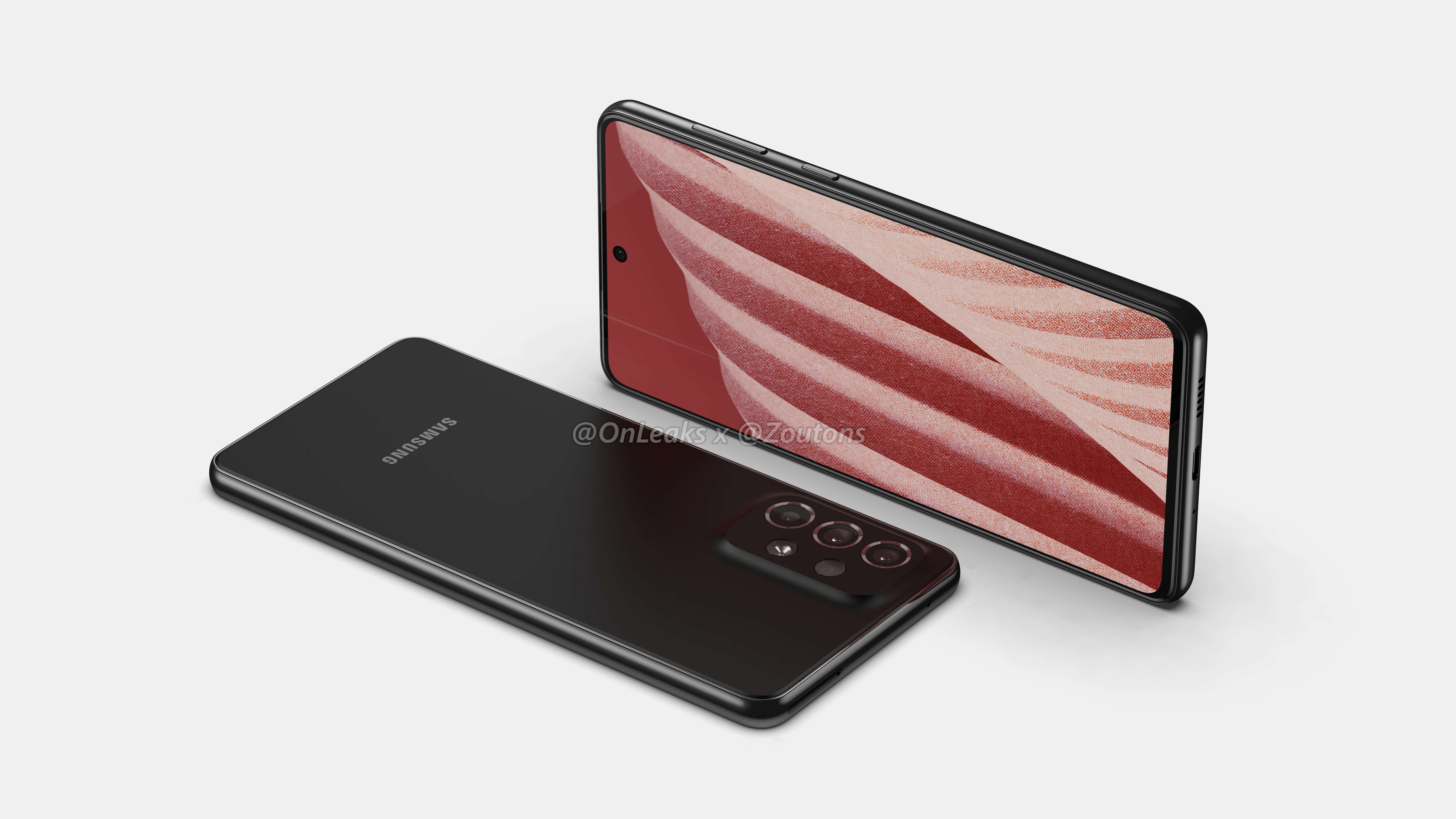
Samsung Galaxy A33 5G CAD renders by OnLeaks / 91mobiles
The SD778G powered device may come with 8 GB of RAM and 128 GB of storage. It may draw power from a 5,000mAh battery. Probably, it will be equipped with an IP67 rated water-resistant chassis.
We use cookies on our website to give you the most relevant experience by remembering your preferences and repeat visits. By clicking “Accept”, you consent to the use of ALL the cookies.
This website uses cookies to improve your experience while you navigate through the website. Out of these, the cookies that are categorized as necessary are stored on your browser as they are essential for the working of basic functionalities of the website. We also use third-party cookies that help us analyze and understand how you use this website. These cookies will be stored in your browser only with your consent. You also have the option to opt-out of these cookies. But opting out of some of these cookies may affect your browsing experience.
Necessary cookies are absolutely essential for the website to function properly. This category only includes cookies that ensures basic functionalities and security features of the website. These cookies do not store any personal information.
Any cookies that may not be particularly necessary for the website to function and is used specifically to collect user personal data via analytics, ads, other embedded contents are termed as non-necessary cookies. It is mandatory to procure user consent prior to running these cookies on your website.