Earlier this year, OPPO and OnePlus merged the codebase of ColorOS and OxygenOS. The OnePlus Nord 2 launched as the first OnePlus device with software based on the newly merged codebase. Recently, the OnePlus 9 series was updated (and pulled) to OxygenOS 12 (Android 12), which is also based on the unified codebase. The switch to this new codebase has now started affecting third-party software development for OnePlus smartphones.
OnePlus phones have always been popular in the modding community since the beginning. Unfortunately, this is coming to an end with the switch to a shared codebase with OPPO’s ColorOS.
According to a developer and XDA Senior Member kristofpetho(via ITHome), OnePlus hasn’t updated the kernel sources of the OnePlus 9 Pro since August 2021. For the unaware, OnePlus made the announcement regarding the unified codebase a month earlier in July 2021.
As a result, the developer has stopped the development of the Omega kernel (custom kernel) for the OnePlus 9 Pro. He states that OPPO is known for poor kernel support and with OnePlus doing the same despite promising otherwise, it will be difficult for any sort of third-party development.
If OnePlus continues to follow the footsteps of OPPO, users may no longer install any custom ROM, custom kernel, custom mod, and others on their beloved OnePlus smartphones.
OPPO and OnePlus have promised a unified operating system for 2022. It will be most likely ColorOS but may sport a new branding.
Last week, vivo took to its website to announce the Y55s 5G, the latest addition to its mid-range device offerings. The Chinese smartphone maker revealed the hardware and software specifications of the Y55s, which included the company’s first 6000mAh battery in a smartphone but did not give any details on its pricing and availability. Now the vivo Y55s are finally available for pre-order in China.
According to vivo’s Chinese website, the Y55s is now available for pre-order with a starting price of 1,399 yuan ($220 approx) for the 6 GB + 128 GB variant. The site also states that the smartphone is slated to go on sale starting December 17th at 10 AM.
The phone houses a large 6000mAh battery capable of providing up to 35 days of standby time while on a 4G network. The massive battery also gives 160 hours of music playback with headphones on. When it comes to gaming, the device can last from 11 to 13 hours of gaming, depending on the title. So let’s look at other specifications and features packed into this device.
Display and Design
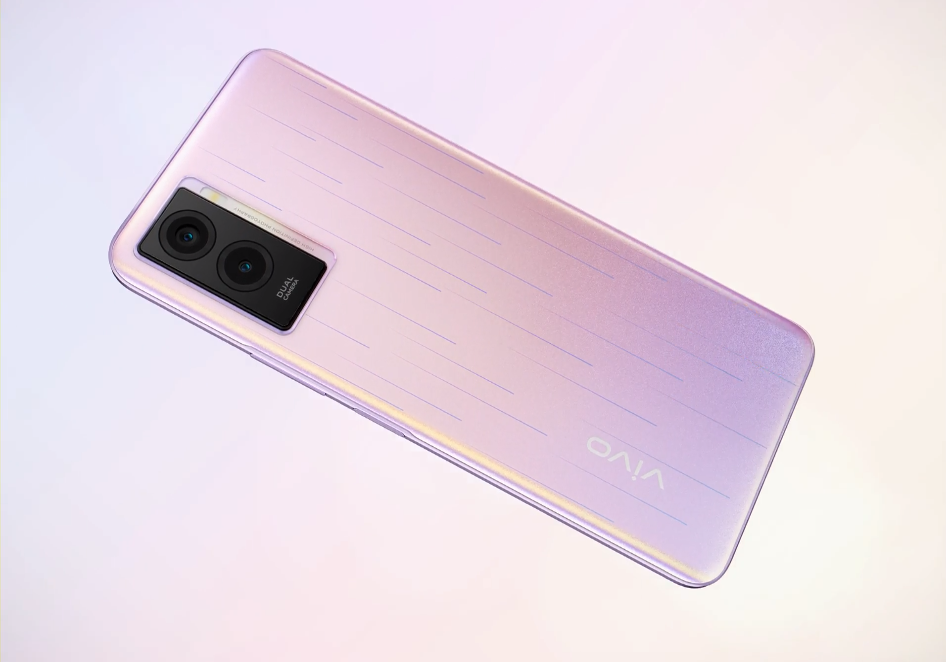
The Vivo Y55s has 163.87 x 75.33 x 9.17mm dimensions and weighs 199 grams. It has a 6.58-inch LCD screen with a teardrop notch that offers a Full HD+ resolution. The screen also features noticeable bezzles and a moderate chin. On the rear, we can see a rectangular dual-camera housing with an LED flash and the vivo branding, which is present on the bottom left side of the rear panel.
Camera
There back of the phone houses a 50MP f/1.8 primary lens and a 2MP f/2.4 second sensor for macro shots. The lack of a portrait camera and the ultrawide lens is somewhat compensated by the AI software.
Performance
The vivo Y55s is powered by the Dimensity 700 SoC, coupled with 6 GB or 8 GB of RAM and 128 GB of built-in storage. As mentioned above, the device houses a massive 6,000mAh battery which supports 18W fast charging. The phone has Android 11 pre-installed with the OriginOS 1.0 skin on top of it.
In connectivity, the device offers dual SIM support, Wi-Fi, Bluetooth, a USB-C port, and a 3.5mm audio jack. It also features a side-facing fingerprint scanner.
Vivo Y55s pricing and availability
The Y55s 6 GB + 128 GB variant has a retail price of 1,499 yuan but is available for pre-order in China right now at an initial price of 1,399 ($220). Similarly, the 8 GB + 128 GB variant is also available for pre-order at an initial price of 1,699 yuan ($267). The 8GB+256GB version will be launched on the vivo official website and e-commerce platform on December 24th and will initially cost 1,899 yuan ($298).
The Y55s is available in China in three colors, namely Ceramic Black, Mirror Lake Blue, and Cherry Pink Meteor.
With the launch of the OPPO Find N, another smartphone brand has entered the foldable phone market. Although, it remains to be seen how the Find N stacks up against established players like Samsung, which has seen great success with its Galaxy Z series. Earlier today (15th December 2021), the Find N was launched with a price tag much cheaper than its rival Galaxy Z Fold3, but does this mean that the Chinese brand is skipping out on features? Let’s find out.
Samsung has already received praises for its latest foldable smartphones that offer both notable specs and a premium design. Its Galaxy Z Fold3 is the top end model and offers a clean design with a minimal camera module. When folded, it becomes quite compact but thicker as well, which is also the case for the Find N. But while Samsung had focused on ensuring a sleek and protected experience with IPX8 waterproof rating, Oppo went for an improved hand feel approach. The company placed an emphasis on user’s overall experience while using the device. It arrives with an ergonomic design, display that stays crease free for at least 5 years, and the handy FlexForm mode that even ties in with the camera app, thanks to its new Flexion hinge mechanism.
Galaxy Z Fold3
Display
Talking about the Galaxy Z Fold3 first, it sports a 7.6 inch primary AMOLED display that has a 2K resolution, 120 Hz refresh rate, and HDR10+ certification. Its external screen is a 6.2 inch AMOLED, which also features LTPO technology. On the other hand, the Find N offers a 7.1 inch E5 AMOLED panel that has an odd 1792 x 1920px resolution for its squarish internal display that supports 120Hz adaptive refresh rate and TÜV Rheinland certification as well. The external display is a 5.49 inch AMOLED panel, but notably, both the internal and external panel feature a punch hole selfie camera.
Specs & Software
In terms of specs and software, both smartphone are quite similar. The Find N and Galaxy Z Fold3 5G feature the Qualcomm Snapdragon 888 SoC along with UFS 3.1 storage and LPDDR5 RAM. But the Find N starts from an 8GB+256GB model, while the Galaxy counterpart starts from a higher 12GB+256GB configuration. However, both models top at 12GB RAM + 512GB internal storage. The South Korean tech giant’s foldable phone runs One UI 3.1 based on Android 11, while the Find N runs ColorOS 12 that is also based on Android 11 OS.
Camera
For photography, the OPPO Find N might have a clear edge over the more expensive Galaxy Z Fold3. It sports a triple camera setup on the rear, which comprises of a 50 megapixel Sony IMX 766 primary camera, 16 megapixel ultra wide angle lens, and a 13 megapixel telephoto shooter. Both the external and internal display also offer a 32 megapixel punch hole selfie shooter as well. Meanwhile, Samsung offers the Galaxy Z Fold3 with a triple camera module that is similar to the previous generation. In other words, you get a three 12 megapixel sensors for the primary, ultra wide angle, and telephoto sensors. The selfie shooter is housed underneath the primary display and includes a 4 megapixel main and 10 megapixel wide angle lens. During the launch conference today, Oppo execs had showcased the new foldable phone’s camera capabilities, which appears to be quite a bit more versatile than the Samsung offering.
Battery
The Find N seems to have an edge in terms of battery as well, with its 4,500mAh capacity that supports 33W SuperVOOC charging, 15W wireless charging, and even 10W reverse charging as well. On the other hand, the Galaxy Z Fold3 houses a 4,400mAh battery that supports just 25W fast charging and 11W wireless charging. While it also supports reverse charging, the Find N wins in this department on paper.
Price
This is perhaps one of the most interesting aspect of the Find N. Oppo is entering the foldable phone segment in bang with a price tag that is close to conventional top end flagship phones like Apple iPhone 13 series or the Samsung Galaxy S21 series. It starts from 7,699 Yuan (roughly 1,200 US Dollars) in China while the Galaxy Z Fold3, Samsung’s current top end foldable model, starts from around 1,700 US Dollars. Unfortunately, the global pricing for the former is unknown at the moment.
OPPO Find N VS Samsung Galaxy Z Fold3 5G: PROS and CONS
OPPO Find N
PROS
Better Camera specifications
Slightly larger battery and faster charging rate
More affordable
Ergonomic Design and New Flexion Hinge
CONS
Still pretty expensive compared to some affordable flagship phones
Display loses out to Samsung Galaxy Z Fold3
Samsung Galaxy Z Fold3
PROS
Larger internal and external displays with higher resolution
Support for S Pen Stylus
IPX8 Waterproof rating for better protection
Under Display Camera technology
CONS
Easily one of the more expensive handset in the ultra premium segment
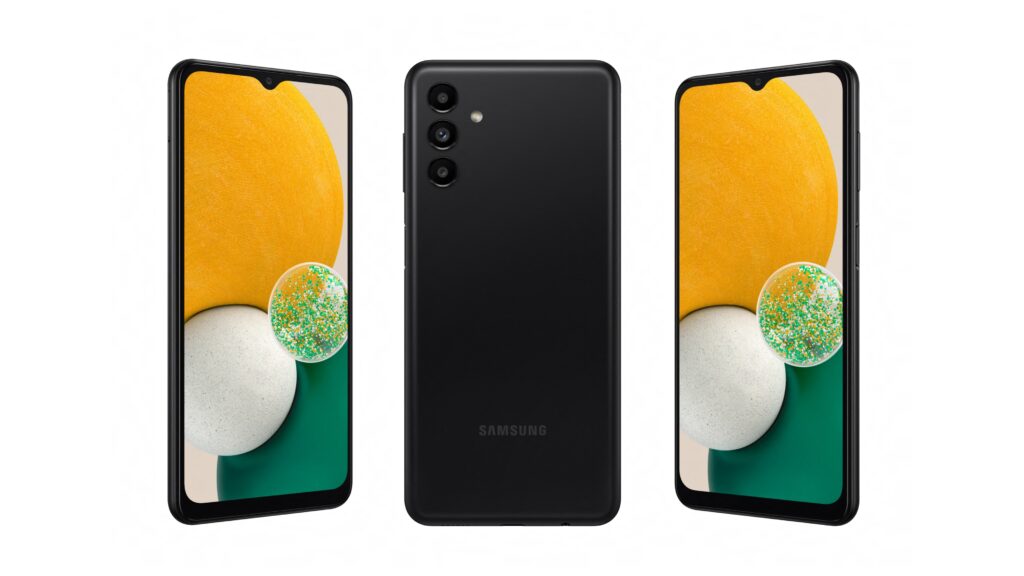
Recently, Samsung announced the Galaxy A13 5G in the US as its most affordable 5G smartphone in the country. There’s also a 4G variant of this device, which is expected to go official very soon. Ahead of that, we get to learn about its chipset.
Samsung Galaxy A13 5G
According to Geekbench (via SamMobile), the upcoming 4G version of Samsung Galaxy A13 with model number SM-A135F will be powered by an in-house Exynos 850 SoC. The listing shows the device with 3GB RAM but there could be other memory variants as well.
For the unaware, the Galaxy A12 initially debuted with a MediaTek Helio P35 chipset. However, due to the ongoing global semiconductor shortage, Samsung re-released the phone with an Exynos 850 chip in some markets.
Hence, the Galaxy A13 will not be an upgrade over its predecessor in terms of performance. Anyway, it will ship with Android 12 (most likely One UI Core 4.0), unlike the Galaxy A13 5G that runs Android 11.
Unfortunately, we don’t have any further details about this handset, except that it is currently under production in India. We cannot speculate the features of the 4G model based on the 5G version as Samsung is known for offering a different set of specs on the two.
Having said that, we expect to learn more about the 4G variant of Galaxy A13 before its official announcement in the coming days.
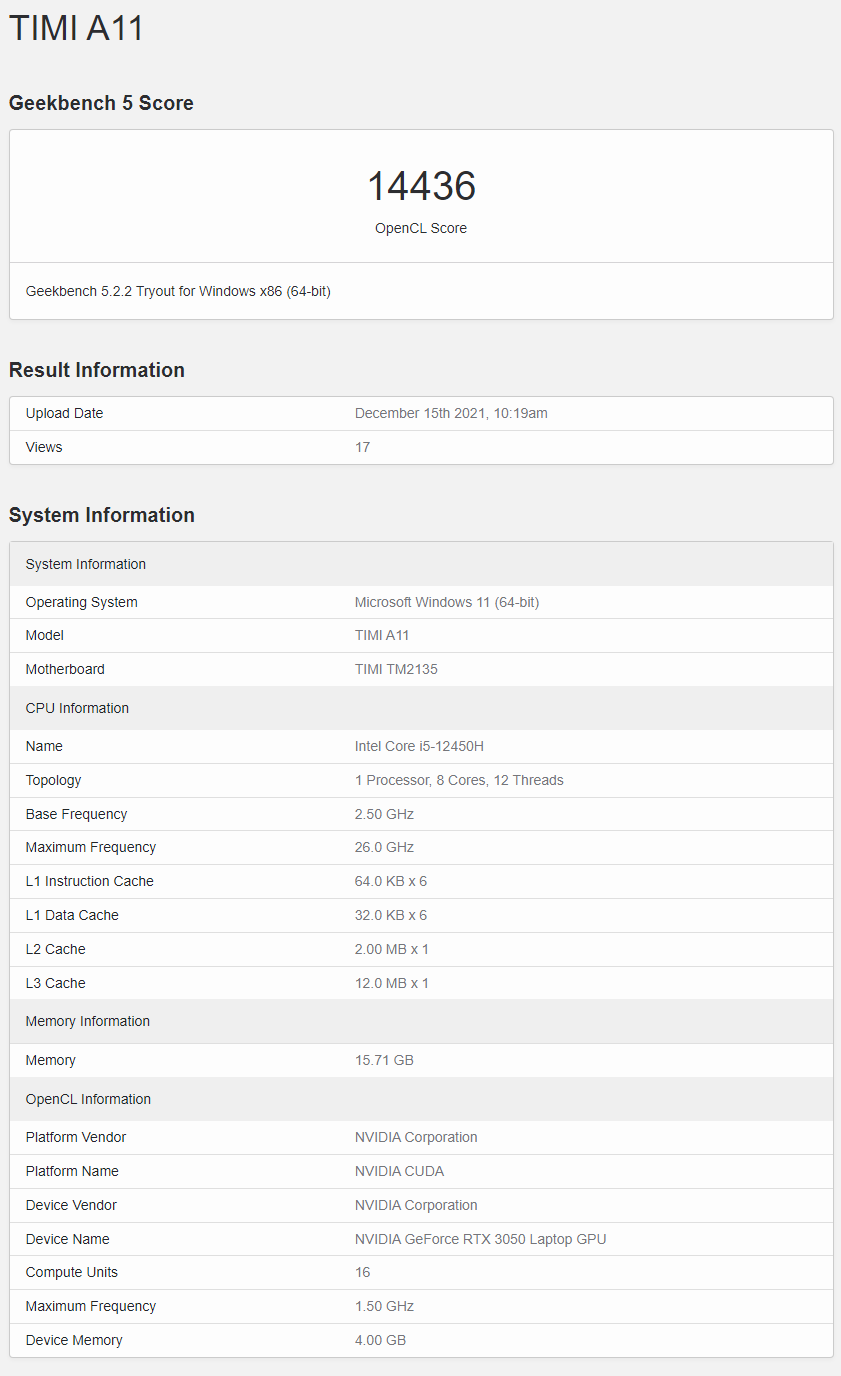
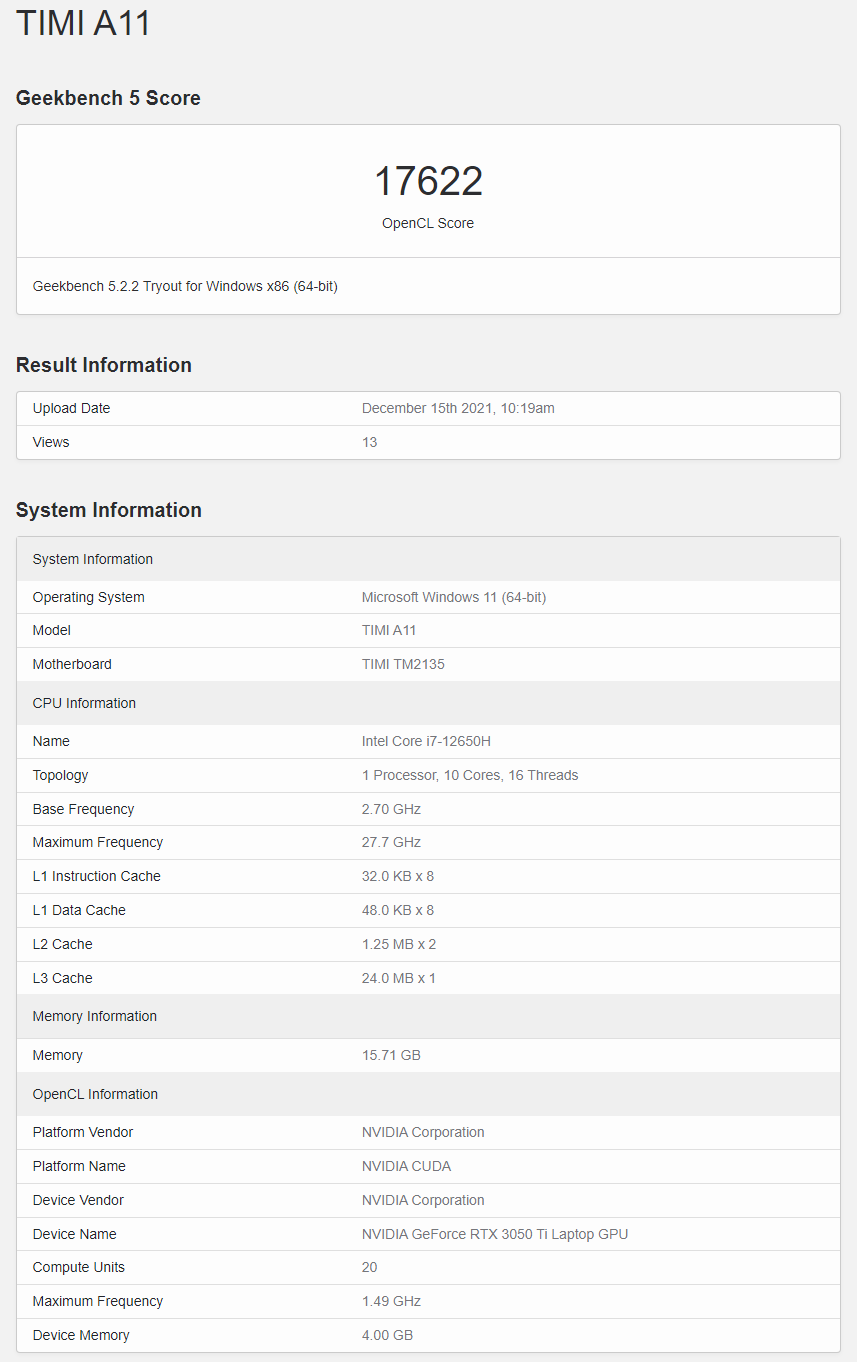
New Geekbench 5 benchmark score listings for a couple of upcoming Xiaomi “TIMI” Notebook models made an appearance today, revealing some key specifications about not just the laptops but also about Intel’s 12th gen i5 and i7 processors.
The laptops carry model numbers TIMI A11, out of which the i5 model has scored 14,436 while the i7 model has bagged a score of 17,662. The CPU is paired by the RTX 3050 GPU on the former and the RTX 3050Ti on the latter.
1 of 2
The i5 processor in question is the i5-12450H and hasn’t been released yet. It comes with 8 cores and 12 threads with a max frequency of 26 GHz and 12MB of L3 cache. It is joined by the i7-12650H which again is unreleased as of yet and comes with 10 cores and 16 threads. The L3 cache on this one is 24MB.
Apart from this, the upcoming Xiaomi Notebook models will both be coming with 16GB of RAM and boot into Windows 11 (64-bit) out of the box.
Judging from the Geekbench 5 OpenCL results, the i7-12650H single-core benchmarks are nearly identical to the AMD 5800X but the multi-core is slightly inferior. On the other hand, the i5-12450H single and multi-core scores are about 7% and 20% lower than the 5800X, respectively.
Toyota-backed Chinese autonomous driving company, Pony.ai had one of its driverless vehicles in California involved in a crash due to a possible misreading of the road markings. The driverless car crashed into a road center divider and this has seemingly resulted in the suspension of Pony.ai’s driverless testing permit in California with immediate effect.
The suspension of Pony.ai’s driverless testing permit came a few weeks after the collision of the driverless car which fortunately did not result in any injuries or damage to other vehicles. The crash happened in October while the suspension was made last month after the accident report was filed with the regulator. It is unclear what aspect of the crash report is directly linked with the suspension of the driverless permit. Pony.ai in a statement said that it will work with the state regulator to figure out what caused the crash.
Pony.ai will however continue testing the vehicles in California with a safety driver behind the wheels. The suspended driverless permit was only valid for three cities in California and it was obtained about 6 months ago. California is a fertile ground for autonomous vehicle testing permits and eight companies had already secured the driverless permit in the state. It is unclear what is the duration of the suspension, but Pony.ai will continue to develop its driverless capability.
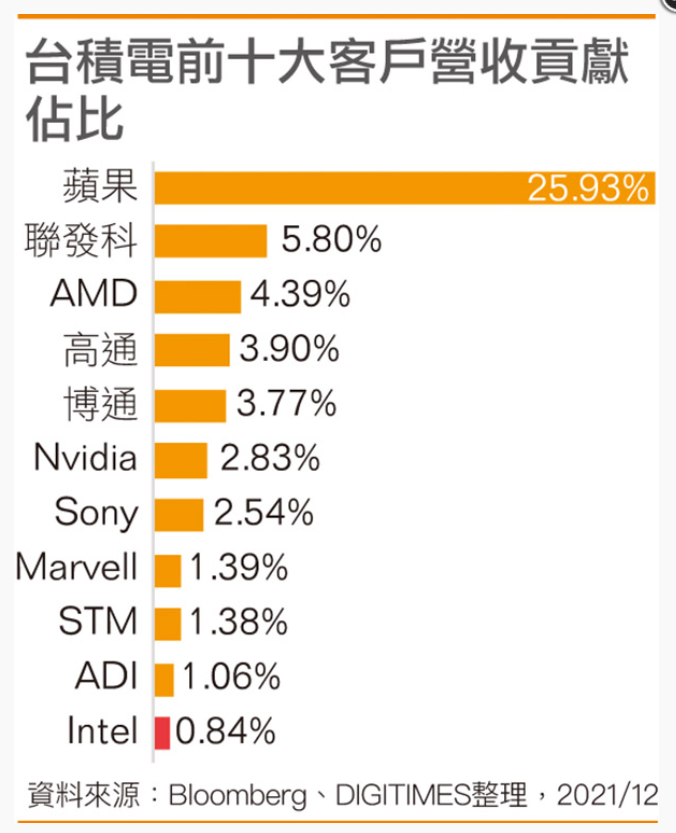
A new report has exposed TSMC‘s top 10 revenue contributors. The graph reveals that Apple is the main source of revenue for the semiconductor manufacturing company, accounting for over 25% of the revenue. No other company even comes close.
The piece of data comes from Bloomberg and Digitimes (via IT Home) and reveals that after Apple, it’s MediaTek, AMD, Qualcomm, Broadcom, Nvidia, Sony, Marvell, STM, and ADI that are the top 10 customers in order. However, Apple continues to be the top contributor, with MediaTek grabbing the second with a share of just 5.8%.
Image: Bloomberg, Digitimes
Surprisingly, Intel isn’t a part of the top 10 for the chip manufacturer and ranks eleventh with just a 0.84% percent share. This might be changing soon, however, as Intel’s new CEO Pat Gelsinger recently visited Taiwan to meet important supply chain partners, including TSMC.
Intel is looking to secure supply chains and the collaboration with TSMC is is essential to its success. This is mainly because rivals AMD and Nvidia have been using TSMC’s services to already avail better costs and performance, something that Intel currently lags behind in.
The collaboration should reportedly last at least until the 2nm era after 2025. For TSMC, Intel has the opportunity to become the top three customers after 2023 and become one of the main sources of profit.
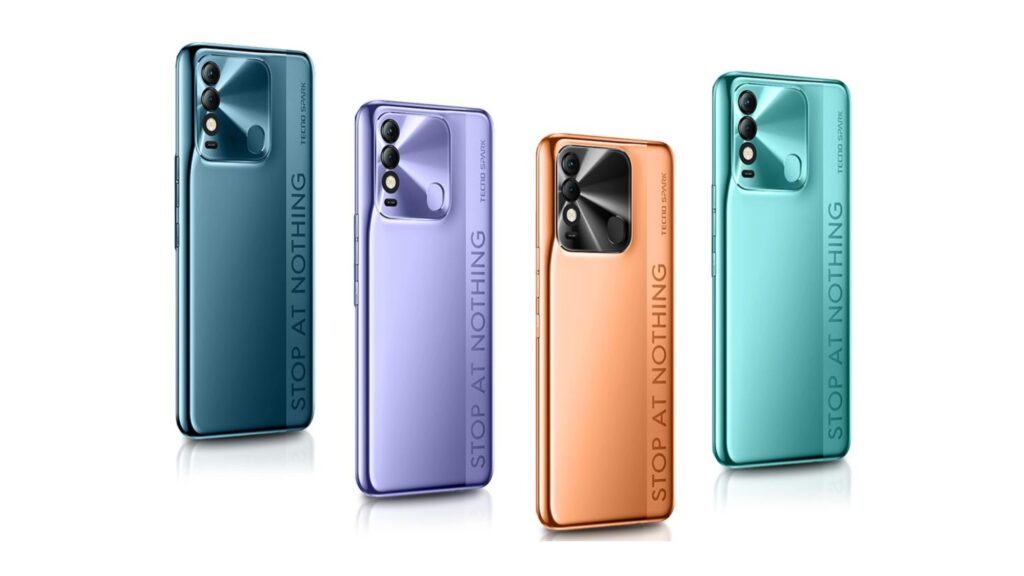
Transsion brand Tecno has launched a new smartphone in India in the form of TECNO SPARK 8T. The latest handset from the company comes with a large display, an entry-level chipset, a dual camera, and a huge battery. Let’s take a look at what all it has to offer.
TECNO SPARK 8T
TECNO SPARK 8T Specifications and Features
The newly released TECNO SPARK 8T flaunts a 6.6-inch LCD panel with a resolution of 2408 x 1080 pixels (FHD+), 500 nits peak brightness, 91.3% screen-to-body ratio, and a dewdrop notch. The device measures 164.25 x 75.87 x 8.85mm in dimensions and arrives in four colors, namely Atlantic Blue, Turquoise Cyan, Iris Purple, and Cocoa Gold.
It is powered by a MediaTek Helio G35 SoC paired with 4GB RAM and 64G storage. Like any other budget smartphone, it comes with a dedicated MicroSD card slot, a 3.5mm headphone jack, and a MicroUSB port.
On the connectivity front, the handset supports dual-SIM, 4G, WiFi, Bluetooth, and GNSS. It comes with commonly-used sensors like a rear-mounted fingerprint sensor, accelerometer, ambient light sensor, and proximity sensor.
For photography and videography, the phone arrives with a dual-camera setup on the back consisting of a 50MP primary sensor and an AI lens. On the front, it nests an 8MP shooter inside the notch.
Lastly, the device runs HiOS 7.6 based on Android 11 and it is backed by a 5,000mAh battery.
TECNO SPARK 8T Price and Availability in India
The TECNO SPARK 8T in a single 4GB + 64GB memory configuration is priced at ₹8,999 ($118) in India. The phone is already up for pre-order on Amazon India.
It will start shipping to customers from December 20.
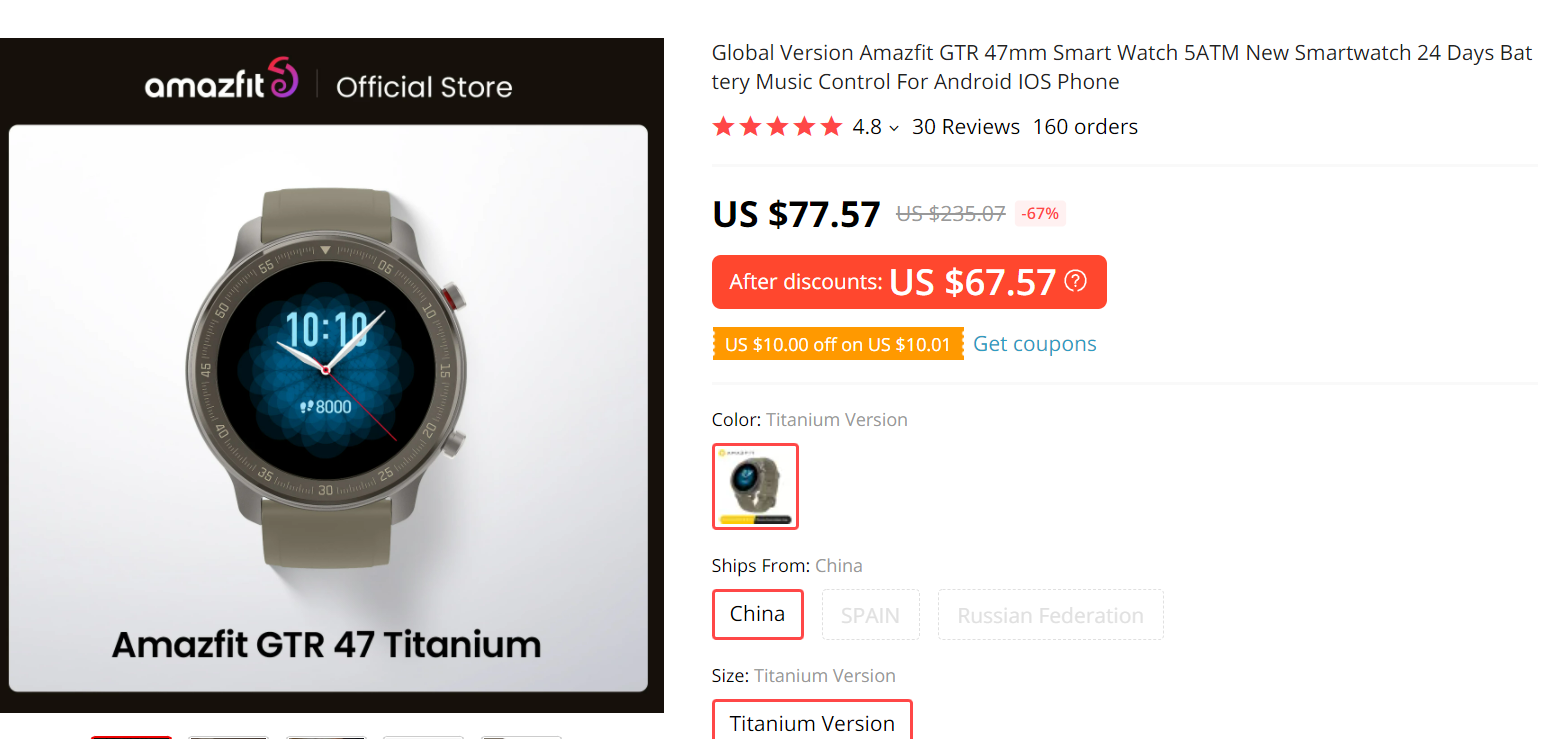
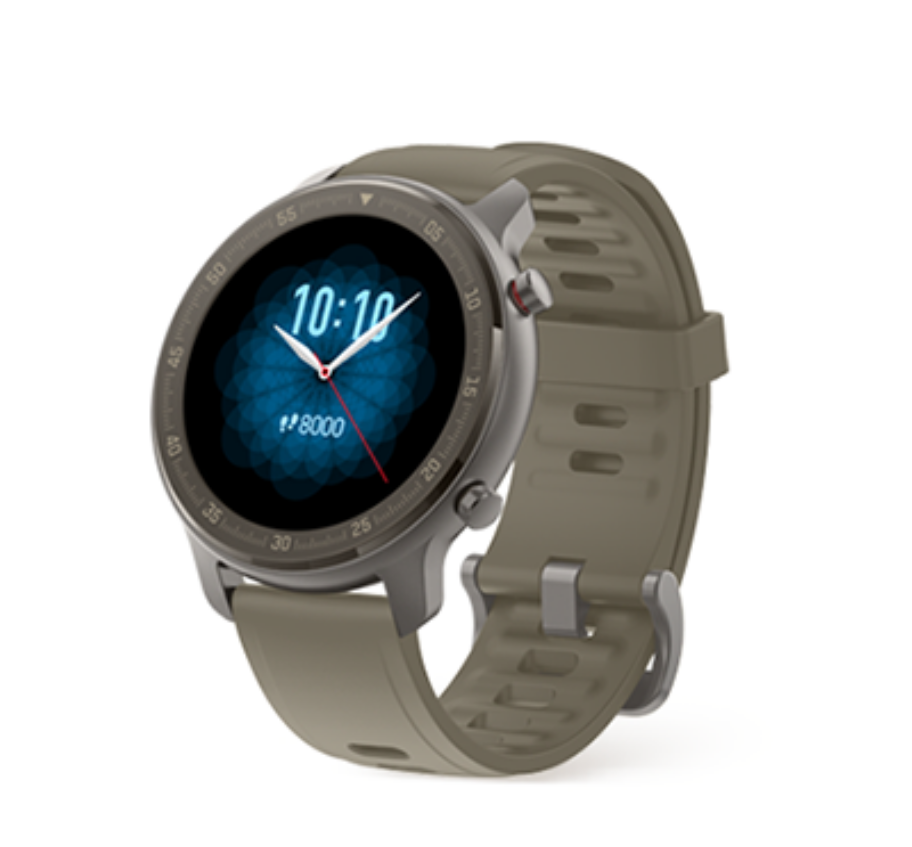
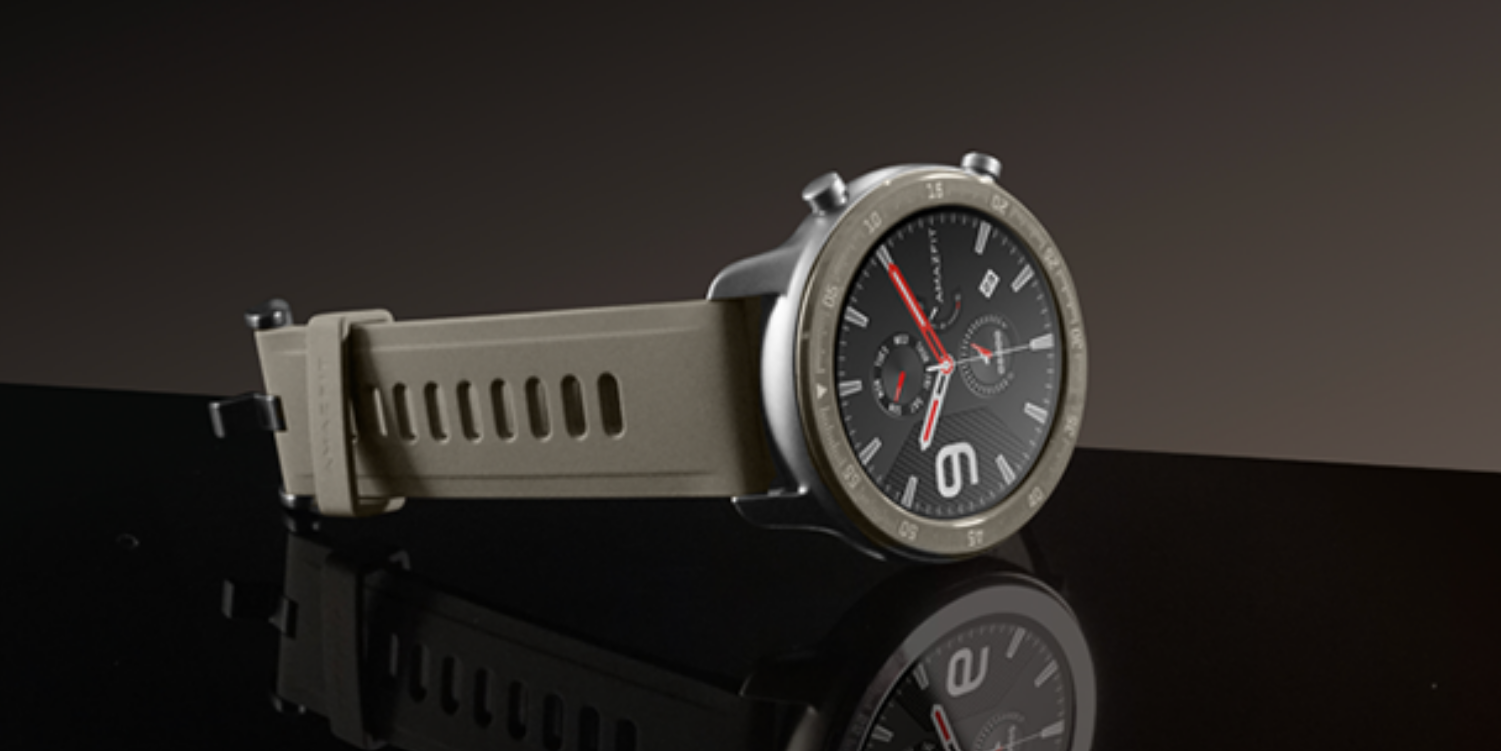
Amazfit GTR 47mm Global Version Smartwatch which generally retails for $130 is now available at a heavily discounted price of $67.57 only at AliExpress.
Generally retailing for $130, you can now buy Amazfit GTR 47mm Global Version Smartwatch at a heavily discounted price of $67.57 only at AliExpress. Please note that this price is applicable to the titanium variant.
Please note that the above price is region-specific and the final price may vary according to your shipping region, warehouse, and regional taxes.
For more information on such exciting deals and offers check out our deals hub.
* Please Note: When you buy something using the links in our articles, we may earn a small commission at no cost to you.
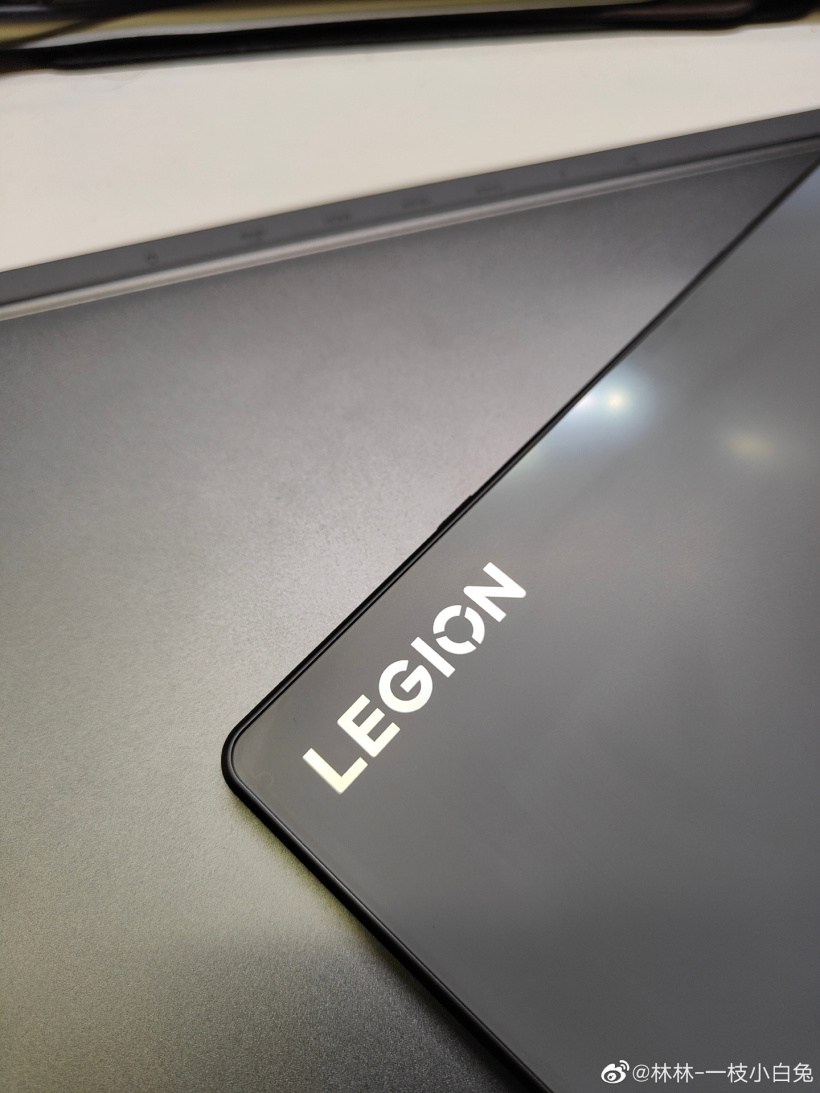
Lenovo will soon be launching a Legion gaming tablet and a product manager from the company has teased a few of its images.
As seen in the above photos, the tablet will be sporting a boxy design with sharp, right-angled edges (via IT Home). One of the edges also got JBL, Dolby Vision, and Dolby Atmos tags, indicating that the tablet will likely also feature some really high-quality speakers for a great gaming experience. A brushed metal finish has been applied to these edges for a more premium look.
The Lenovo Legion tablet is grey in color in the images and features the familiar “LEGION” logo at the rear. But perhaps the best bit is its size, which is fairly compact. The product will thus likely attract mobile gamers looking for a device that’s larger than a smartphone but also smaller than most tablets. Tablets, after all, do come with larger heat dissipation spaces than mobile phones.
Its compact frame has been used rather efficiently though as the display upfront is surrounded by reasonably slim bezels, meaning that most of the front of the device is nothing but the screen itself.
For those unaware, Legion is a lineup of laptops and desktop computers from Lenovo targeting gaming performance, the first models of which were unveiled back in 2017. A gaming tablet under the same moniker is a first for the company though. This, combined with the fact that there barely are any tablets built specifically for gaming, makes it a very unique offering indeed.
Moto Edge X30, the world’s first Snapdragon 8 Gen 1 smartphone, went on sale for the first time in China today. Within minutes of making it available for purchase, Lenovo China General Manager for mobile division confirmed that the company sold 10,000 units of the device in less than 3 minutes.
The official poster released by the brand states that the company achieved over 100 million Yuan sales of the Edge X30 in its first sale. The handset was made available for purchase through multiple e-commerce platforms in China. To those who are unaware, the Edge X30 is currently available in China. It is expected to arrive with the Motorola Edge 30 Ultra moniker in Europe and other markets in January 2022.
The Edge X30 comes in white and black colors. It is priced at 3,199 Yuan (~$502) for the 8 GB RAM + 128 GB storage edition, 3,399 Yuan (~$534) for 8 GB RAM + 256 GB storage variant, and 3,599 Yuan (~$565) for the 12 GB RAM + 256 GB storage model.
The Moto Edge X30 has a 6.67-inch OLED display that offers FHD+ resolution, a 144Hz refresh rate, a 576Hz touch sampling rate, and an in-screen fingerprint scanner. The display punch-hoe houses a 60-megapixel selfie snapper. The rear-facing triple camera unit of the phone has a 50-megapixel main camera with OIS support, a 50-megapixel ultrawide camera, and a 2-megapixel depth sensor.
Moto Edge X30
The SG81 powered phone offers LPDDR5 RAM, UFS 3.1 storage, and 5,000mAh battery that supports 68W rapid charging. It runs on Android 12 OS, which is overlaid with MyUX 3.0.
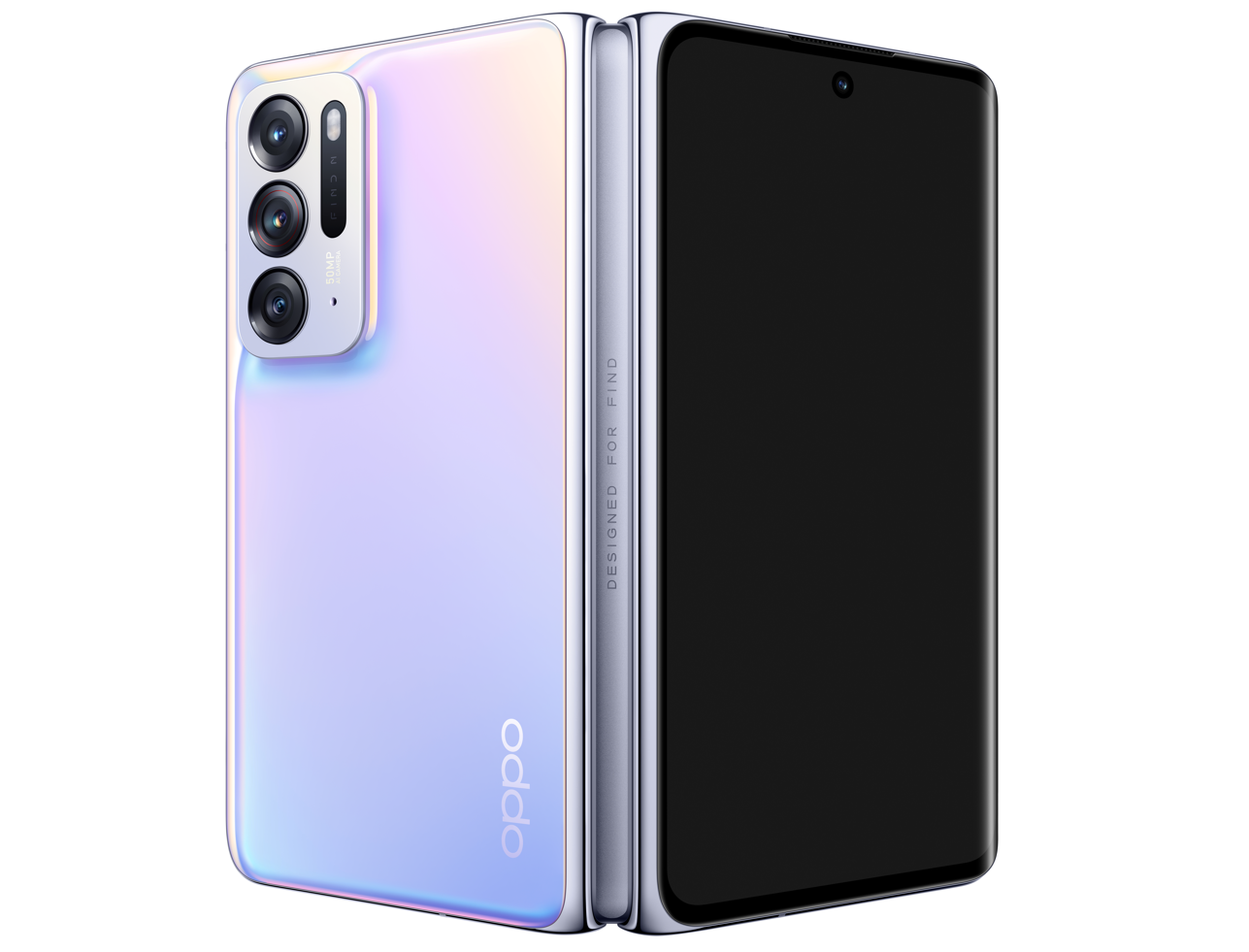
During the OPPO INNO Day 2021, the company has finally unveiled the highly anticipated Find N foldable smartphone. The device has been in development for four years and has finally been officially announced.
Display and Design
The Find N from the Chinese tech giant has gone through a number of prototypes over the last four years to offer an improved foldable phone experience. The company placed an emphasis on the development of its design, hinge, and overall durability. The outer display is a 5.49 inch AMOLED display while the internal primary panel is a 7.1 inch E5 AMOLED display that offers 1000 nits of brightness with 1Hz to 120Hz adaptive refresh rate. The display arrives with 100 percent P3 and sRGB color gamut, so its great for editing as well. For protection, it sports UTG glass and even arrives with TÜV Rheinland certification as well.
One of the areas OPPO set its focus on was to eliminate the crease and raise the overall durability, while also improving the hand feel. Despite weighing 275 grams, the company sought to improve the feel of the device when being used in its folded state to make it comfortable in users’ hands with an ergonomic design to ensure that it doesn’t feel like a heavy brick. For durability, the company guarantees that the device can be folded 100 times for more than 5 years in -20 degree Celsius temperature without any crease forming in the middle.
Notably, apart from its folded and unfolded modes, it can even be used in its FlexForm mod. In this mode, one can basically set the device in any angle between the other two modes that even works with the camera app for certain shooting modes as well. This feature is made possible thanks to its new Flexion hinge mechanism (comprises of 136 parts), which is claimed to be one of the best in the market. Another area where the company made key additions in is the UI. Users can access split screen accessibility with just a single swipe from the top center region. This makes the multi tasking process extremely simple and intuitive.
Specifications
Under the hood, the Find N features the Qualcomm Snapdragon 888 SoC and is powered by a large 4,500mAh battery pack that supports up to 33W fast charging. The chip is paired with either 8GB or 12GB of RAM and 256GB or 512GB of UFS 3.1 storage. On the rear, it sports a triple camera setup with a Sony IMX 766 50 megapixel primary sensor along with a 16 megapixel ultra wide angle lens and 13 megapixel telephoto sensor. The front houses a 32 megapixel punch hole selfie shooter on both the outer and inner display.
Pricing and Availability
The OPPO Find N will be available in multiple color variants, namely Black, Ceramic White, and Purple. Its pricing starts from 7,699 Yuan (roughly 1,210 US Dollars) for the 8GB+256GB variant and goes up to 8,999 Yuan (roughly 1,410 US Dollars) for the 12GB+512GB model. The new foldable smartphone is currently available for bookings in China and its sales starts from the 23rd December 2021.
Earlier this year at Google I/O 2021, the search giant made its initial announcement regarding the new Wear OS 3.0 co-developed by itself, Samsung, and Fitbit. The software made its debut on the Galaxy Watch4 series, however, with Samsung’s One UI skin on top of it. Now, months later, we finally get to see how the latest Wear OS appears in its original form.
According to a Redditor (via XDA Developers), Google has released a new version of the Wear OS 3.0 emulator image. The newly uploaded image bears a build date of November 17.
For the unaware, the previous release of the image was months older than the Galaxy Watch4 lineup. The older build included Material You elements, an updated app drawer, and a new quick settings menu.
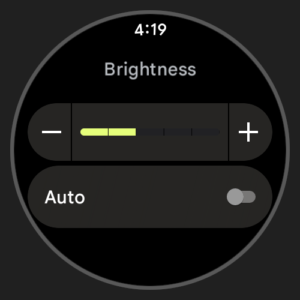
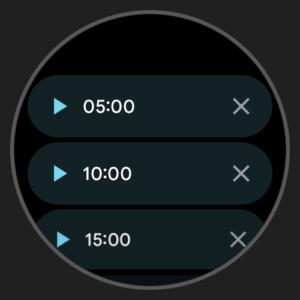
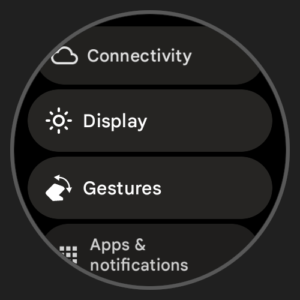
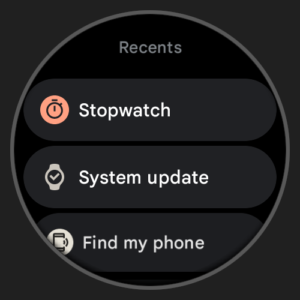
Whereas, the latest release comes with a new brightness slider, more gradients and toggles on the Settings page, and icons on the recent screen. As you can see from the screenshots, the stock Wear OS 3.0 resembles Tizen, which is not surprising as Samsung has merged its wearable OS with that of Googe’s.
OEMs like the Fossil Group and Mobvoi are not known for using a heavy skin on top of Wear OS. Hence, Wear OS 3.0 on smartwatches from these companies should look near-identical to the screenshots attached above.
Wear OS 3.0 is expected to roll out for non-Samsung smartwatches in the mid to second half of 2022. Since we are still months away from that, the software could go through even more changes before its final release.
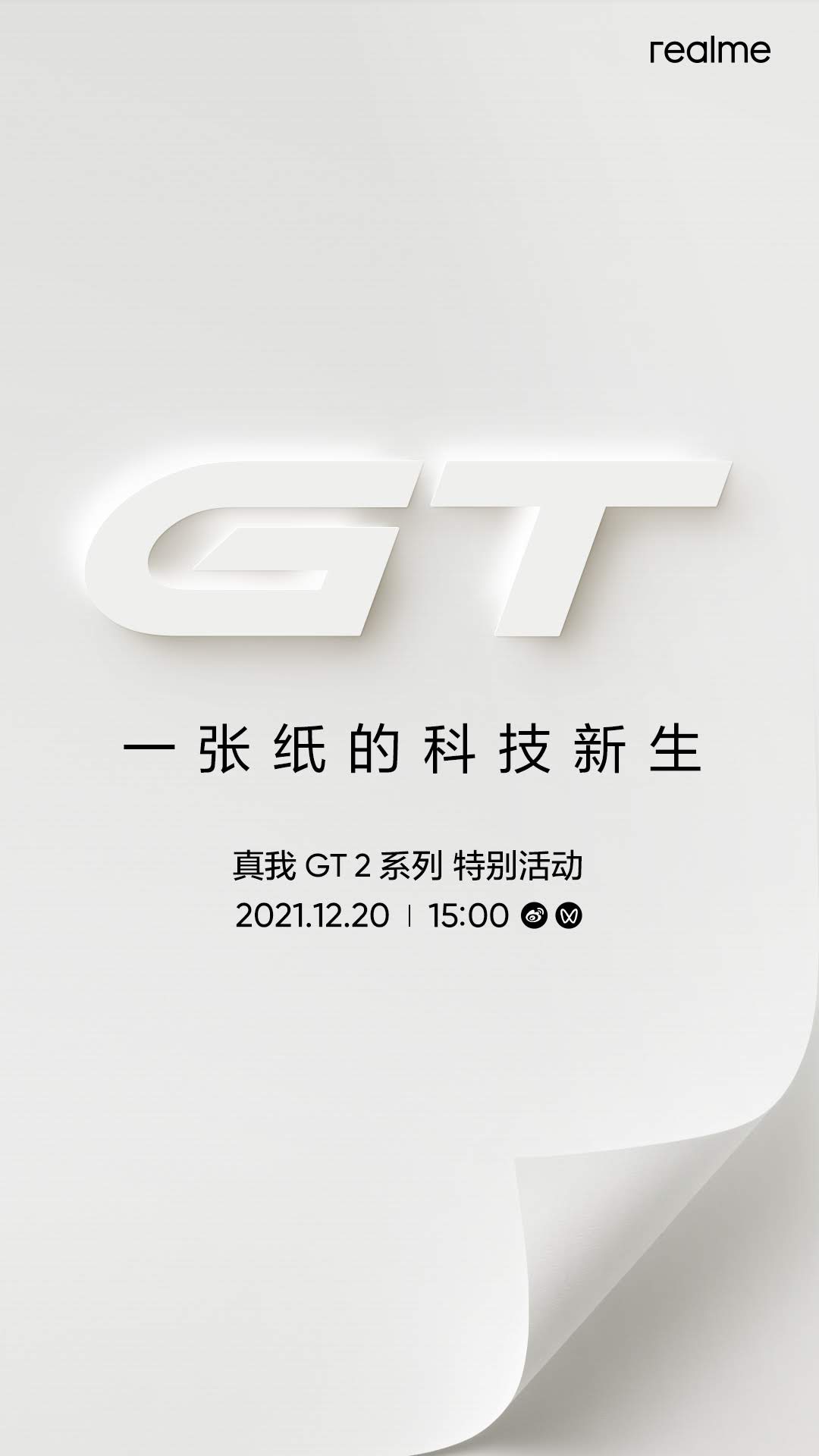
realme yesterday officially announced through a post on Weibo that the upcoming realme GT2 series will feature “a piece of paper science and technology.” The announcement post also revealed an event for the device scheduled for December 20th.
It isn’t exactly clear what Xu Qi, vice president of realme, exactly meant by the “paper technology” but it appears to be some new eco-friendly material that will be used on the realme GT2 series. This, the VP says, will open “a new chapter in mobile phone design.”
Judging from the posters, it seems that the new material may have something to do with paper and will likely be what the rear of the realme GT2 series will be made of. There aren’t really many materials that can be substituted for the usual glass, metal, or plastic and also look and feel like paper, although some suspect that it could be something like the DuPont Tyvek – a spun-bonded material made from high-density polyethylene fibers.
It was earlier learned that from among the upcoming GT2 series, the realme GT2 Pro model will be a true-flagship offering and will be the first of its kind for the company. It will be equipped with the Snapdragon 8 Gen 1 processor, have an FHD+ 6.51-inch Super AMOLED screen, and feature an under-display fingerprint sensor. The battery will be sized 5000mAh and will support 65W fast charging. The phone is expected to boot into the latest realme UI 3.0 OS out of the box.
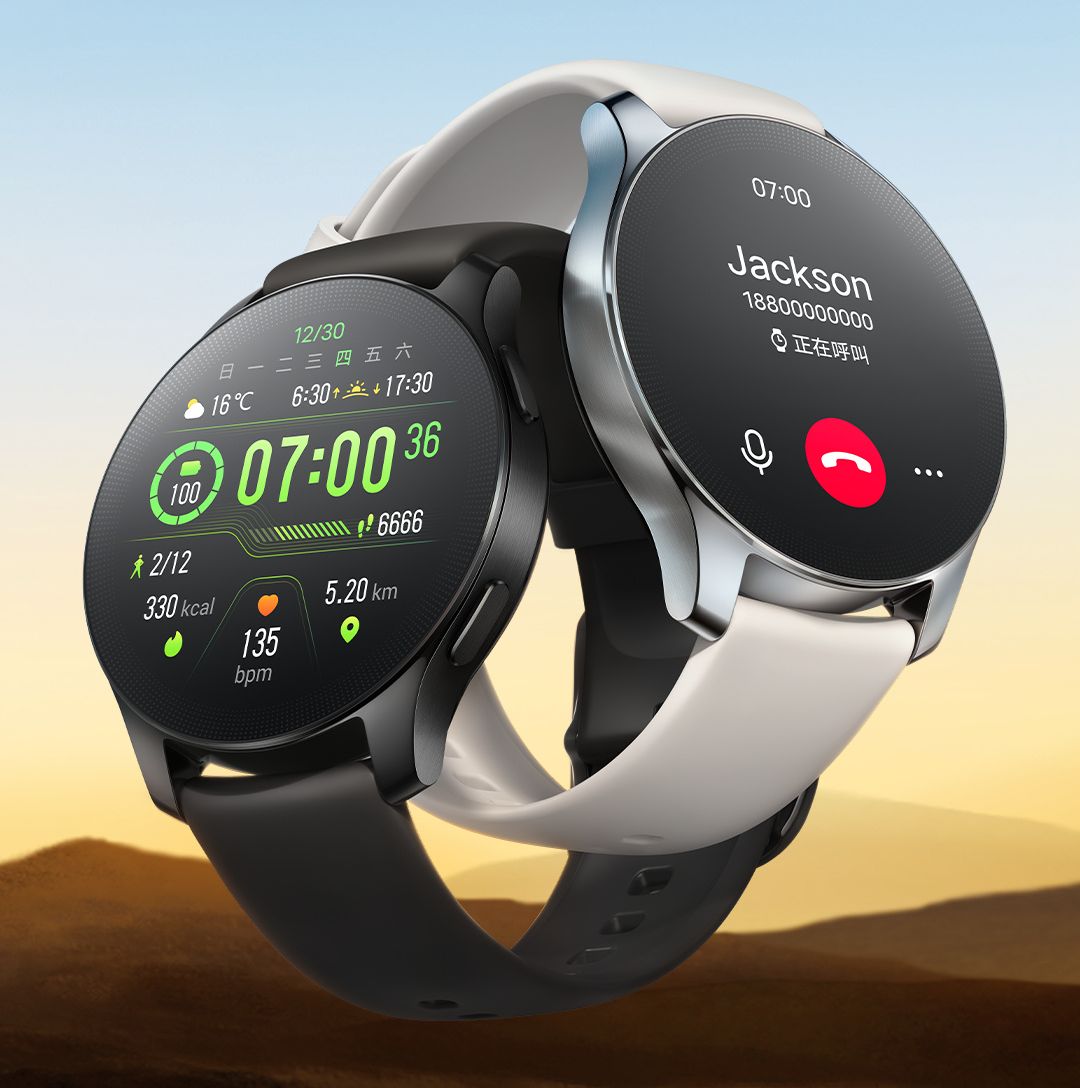
Vivo Watch 2 will be announced along with the Vivo S12 series of smartphones on Dec. 22 in China. Today, the company released a new poster of the Watch 2 to confirm its design. At the same, a Weibo user has tipped the pricing of the two variants of the smartwatch.
The Vivo Watch 2 poster shows that it will be featuring a round-shaped dial. The image confirms some features such as voice calls, heart rate tracking and step counter. It seems that the device is equipped with a silicone strap, which will be available in black and white choices.
Vivo Watch 2
The Chinese manufacturer has confirmed that the Vivo Watch 2 can offer up to 7 days of battery life. It has also started the reservations of the device. Leaked information that is now doing rounds on Weibo reveals that the Vivo Watch 2 will be 46mm in size and it will come in Bluetooth and e-SIM models.
These variants are likely to be priced at 1,299 Yuan (~$204) and 1,699 Yuan (~$267). To recollect, the original Vivo Watch debuted last year in September with a price tag of 1,299 Yuan (~$204). However, it did not carry support for voice calls. Also, the original smartwatch came in 42mm and 46mm sizes. However, the Vivo Watch 2 is speculated to come in 46mm size only.
The Vivo Watch 2’s TENAA listing that surfaced in October revealed that it has an OLED screen and a 515mAh battery. It will also come with a built-in GPS. A leaked render of the smartwatch that appeared in November revealed that there could be a leather strap option for the Watch 2 buyers.
A number of iPhone users have been unable to run the popular messaging based app, WhatsApp. At the moment, Apple iPhone 13 series and even older models are facing a crashing bug on the social media based platform across the globe.
As per numerous tweets on Twitter, many iPhone users have stated that their WhatsApp simply stopped working. Reportedly, the app kept crashing whenever they tried to launch it. This made it impossible for Apple users to access their chats or send any messages. Recently, there have been no new WhatsApp update on the App Store, with even the beta test build facing this crashing issue for some unknown reason. In other words, it could be an issue on Facebook’s servers rather than the app or may possibly be a bug related to the operating system, but that is highly unlikely.
According to the people that took to Twitter to voice their issues, the bug is affecting both the regular and WhatsApp Business app as well. To make matters more complicated, this issue affects models running the latest iOS 15.2 and others that are running older iOS builds as well. Unfortunately, WhatsApp has yet to respond to these issues as of right now. So stay tuned for more, as we will be providing updates when more information is available regarding this matter.
Samsung Electronics has revealed the date for its CES 2022 keynote. The company’s presentation is scheduled for January 4, 2022, at the Venetian’s Palazzo Ballroom in Las Vegas. Since the event will kickstart at 6:30 PM PST, it will be live on the next day (January 5) for the eastern countries.
According to an official announcement post by Samsung, Jong-Hee (JH) Han, Vice Chairman, CEO and Head of Samsung Electronics’ DX (Device eXperience) Division, will deliver the keynote speech.
The presentation will “showcase ways that we can help build a more sustainable planet, and demonstrate customized and connected experiences that can enrich people’s lives”, says Samsung.
Although the company has not confirmed yet, we also expect the launch of Galaxy S21 FE at the event. This smartphone is in the news for months, and therefore, we know almost everything about it.
In fact, the handset leaked yet again a few hours back. It appeared in official press renders, courtesy of Evan Blass (@evleaks).
Going by the previous reports, the Galaxy S21 FE will arrive with a 6.4-inch 120Hz AMOLED display, Snapdragon 888/Exynos 2100 SoCs, up to 8GB RAM and 256GB storage, 12MP (wide) + 12MP (ultra-wide) + 8MP (3x telephoto) triple rear camera setup and a 32MP front-facing camera.
Other features of the phone will include an in-display fingerprint sensor, IP68 certification for dust and water resistance, Android 12 (One UI 4.0), 4,500mAh battery, 25W fast wired charging, and 15W fast wireless charging.
Xiaomi will reportedly soon be bringing 2K displays with a resolution of 1440p to its Redmi series of smartphones for the very first time.
The information comes from industry insider Digital Chat Station who said through a post on Weibo that such a phone has now been ‘arranged’, hinting towards its imminent launch. The tipster had earlier revealed that the Redmi K50 lineup will not be coming with a 2K display so the upcoming model with the high-res screen is unknown at the moment. It could even be part of an entirely new series.
Xiaomi’s flagship Mi 11 series (Mi 11 and above) already comes with 2K displays. The spec is associated with flagship-level phones so it’s likely that the upcoming Redmi phone will also carry a premium price tag. Still, Redmi phones are known to be quite wallet-friendly, making it safe to assume that the offering will not be blowing a hole in your pocket.
Redmi’s previous flagship – the Redmi K40 Pro that also sells as the Mi 11X Pro in India – stuck to a 1080p display despite having top-tier specifications in literally every other department. It would thus truly be the very first time for a Redmi phone to pack a 2K display.
Xiaomi Mi 11 Pro with its 2K display
A 2K display on a Redmi phone is also an indication of the brand’s growing independence from Xiaomi. As its phones get increasingly premium, they will also likely be eating into sales of Xiaomi’s high-end offerings. Earlier, the company announced that it would soon be applying different styles of MIUI themes on its phones to distinguish them from Xiaomi series models.
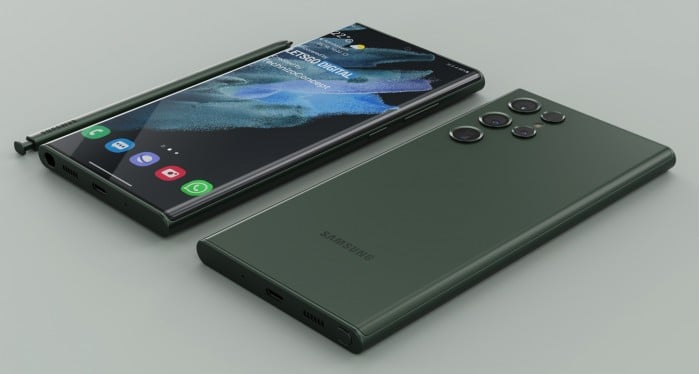
Samsung will soon launch its next-generation Galaxy S22 series smartphones in the market and if the reports are to be believed, then the launch could happen sometime in early February but the company is yet to confirm this.
Ahead of the official launch, almost everything related to the upcoming smartphones — the Galaxy S22, S22 Plus, and S22 Ultra/Note — have leaked online. Now, new interesting information has surfaced online, revealing details about the charging capabilities.
Samsung has submitted a new 25W wireless charging pad for approval to FCC which indicates that the company is planning to soon launch this new accessory, most likely along with the Galaxy S22 series phones. The development was reported by PhoneArena.
There’s a high possibility that the Galaxy S22 lineup or the Galaxy S22 Ultra smartphone has support for 25W wireless charging. If this turns out to be true, then it will be the first time for Samsung to offer such high-speed wireless charging support on its device.
So far, the maximum wireless charging speed that the South Korean giant offers is 15W and 25W for wired charging via USB-C port in the Galaxy S21 Ultra. However, this time, the company is expected to increase wired charging speed to up to 45W.
Depending on the region, the devices will come powered by either Qualcomm Snapdragon 8 Gen 1 chipset or the company’s own Samsung Exynos 2200 SoC. Based on the recent leak, the Samsung Galaxy S22 Ultra is claimed to have two models — 12GB RAM with either 128GB or 256GB storage, and a 16GB RAM model with 512GB storage.
A recent report claims that Samsung has started the production of the upcoming Galaxy S-series flagship phones in full swing and is shipping thousands of components every day. As for the pricing, the series is expected to have a starting price of $799.
Tomorrow (Dec. 16), Honor will be announcing the Honor X30 smartphone in China. A Chinese tipster has shared the unconfirmed specs of the smartphone. At the same time, the device has made its appearance at the Geekbench benchmarking site.
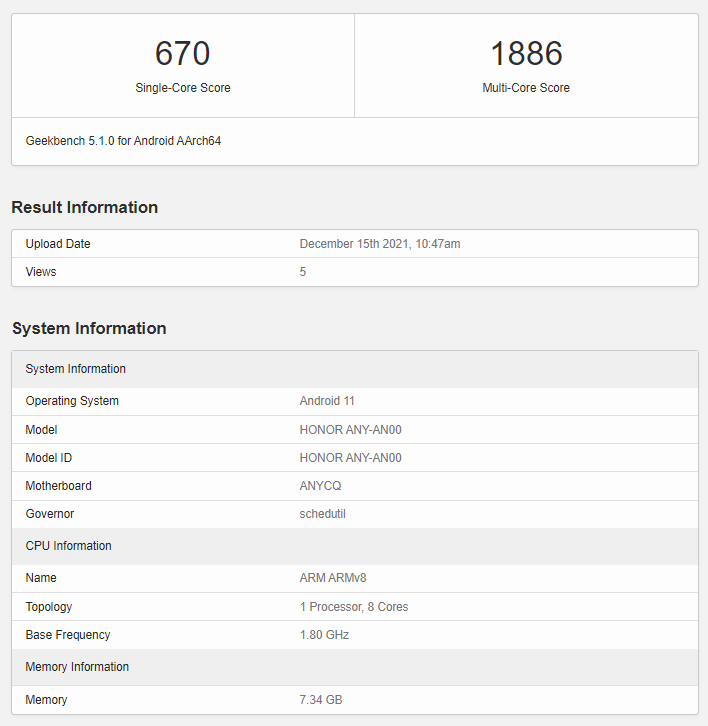
The Honor X30 has been spotted with its ANY-AN00 model number on the benchmarking site. The octa-core chip that powers the device offers a 1.80GHz base frequency. The performance cores of the chip work at 2.21GHz. The SoC is equipped with Adreno 619 GPU. These clues confirm that the Snapdragon 695 chip is present under the hood of the device.
The SoC is coupled with 8 GB of RAM, and it runs on Android 11 OS, which will be overlaid with Magic UI 5.0. It scored 670 and 1886 in the single-core and multi-core tests of Geekbench, respectively.
Honor X30 specifications (Rumored)
The Honor X30 is speculated to feature a 6.7-inch IPS LCD punch-hole panel that offers a Full HD+ resolution and a 120Hz refresh rate. It is powered by the Snapdragon 695 chip and a 4,800mAh battery. The handset is expected to carry support for 66W fast charging.
The X30’s rear camera setup has a 48-megapixel OmniVision OV48B main camera, a 2-megapixel macro camera, and a 2-megapixel depth sensor. For selfies, it has a 16-megapixel front camera. It will feature a side-facing fingerprint scanner.
We use cookies on our website to give you the most relevant experience by remembering your preferences and repeat visits. By clicking “Accept”, you consent to the use of ALL the cookies.
This website uses cookies to improve your experience while you navigate through the website. Out of these, the cookies that are categorized as necessary are stored on your browser as they are essential for the working of basic functionalities of the website. We also use third-party cookies that help us analyze and understand how you use this website. These cookies will be stored in your browser only with your consent. You also have the option to opt-out of these cookies. But opting out of some of these cookies may affect your browsing experience.
Necessary cookies are absolutely essential for the website to function properly. This category only includes cookies that ensures basic functionalities and security features of the website. These cookies do not store any personal information.
Any cookies that may not be particularly necessary for the website to function and is used specifically to collect user personal data via analytics, ads, other embedded contents are termed as non-necessary cookies. It is mandatory to procure user consent prior to running these cookies on your website.