HiSilicon is a Huawei-owned semiconductor company. It is known for Kirin-branded mobile SoCs that once powered a myriad of HUAWEI and HONOR smartphones. This division has now announced a new chipset for FHD TVs.
Hi3731V110 is the name of HiSilicon’s new ATV (Advanced Television) chip. It is designed for TVs with a full-definition (FHD, 1080p) display.
The latest silicon from the company features a 32-bit self-developed CPU based on RISC-V architecture. The chipset supports Huawei’s in-house LiteOS, which offers a fast startup.
Being a chip for television, it comes with support for standard audio/video demodulations. It is compatible with mainstream video and audio codecs as well.
Since it is an SoC (System on Chip), it also features a GPU for video enhancements. Additionally, It also has a built-in TCON (Timing Controller).
The chipset can deliver content up to 1080p at 60Hz. It has support for all the modern ports like HDRMI with eARC, USB 2.0, and S/PDIF to name a few.
If interested, you can learn more about the HiSilicon Hi3731V110 from the official website.
At present, it’s not known which OEMs will be opting for this chip for their televisions. Huawei will most likely work with local brands in China.
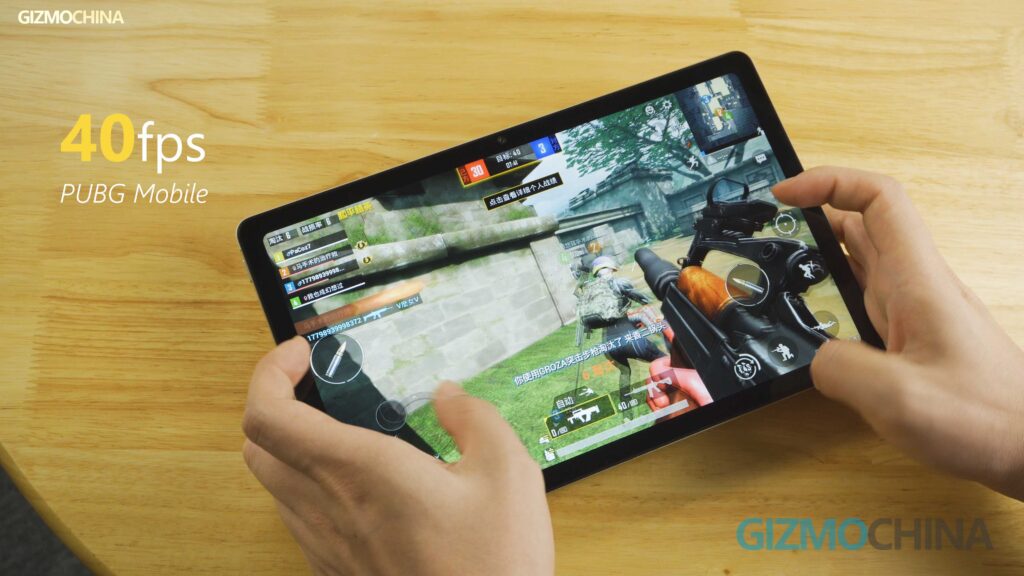
realme is now working on bringing another tablet offering to the market after releasing the realme Pad back in September this year. A new realme Pad model has been spotted on the Geekbench database website and some of its key specifications have been revealed. Judging from the listing, the new tablet is even more affordable than the last model.
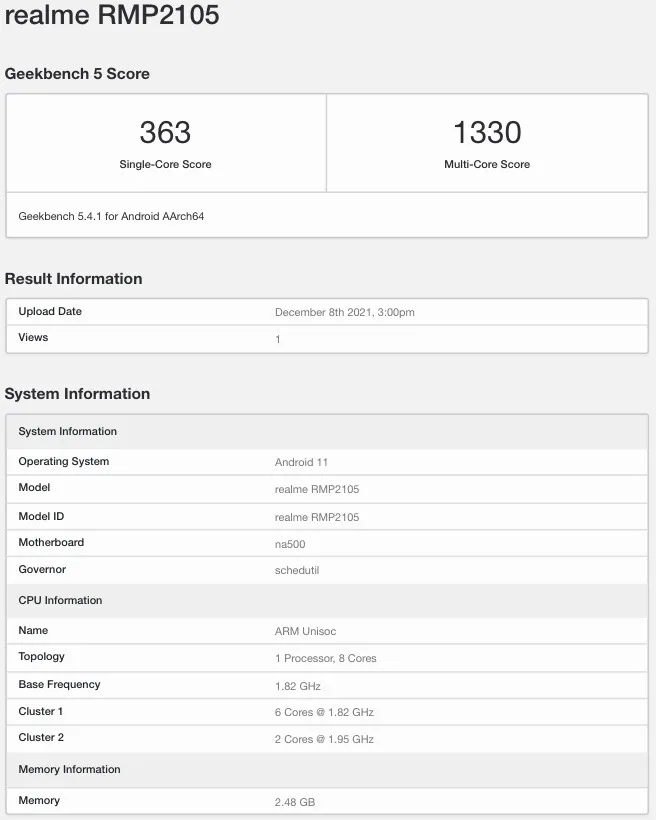
As you can see in the screenshot above (via 91mobiles), the newer realme Pad has a model number Realme RMP2105 and only hit the database yesterday, pointing towards an imminent launch. Its single-core score stands at 363 while the multi-core score reads 1330.
The Geekbench listing further reveals some specifications starting with the usage of a Unisoc octa-core processor. 6 of these have been clocked at 1.82GHz and the remaining 2 are a bit faster at 1.95GHz. The chip has been paired with 3GB of RAM and 32GB of internal storage. These bits prove that the new realme Pad will be even more affordable than the model released earlier – the realme Pad from September was equipped with a more powerful MediaTek Helio G80 processor.
Lastly, the listing confirms that the realme Pad RMP2105 will be booting into Android 11 out of the box, which is rather disappointing considering multiple devices from various OEMs have already been updated to Android 12.
Apart from this, there isn’t anything else known about the upcoming tablet. It is yet to be listed on the Indian BIS but has actually also been spotted Eurasian EEC certification website, meaning that it will be launched in regions other than India as well.
During the upcoming INNO Day 2021 event, Oppo is gearing up to unveil its latest technologies and innovations. This will includes its first self developed NPU (Neural Processing Unit), smart glasses, and more.
We've developed a cutting-edge neural processing unit (NPU) called the MariSilicon X. Can you guess what it does? 😉
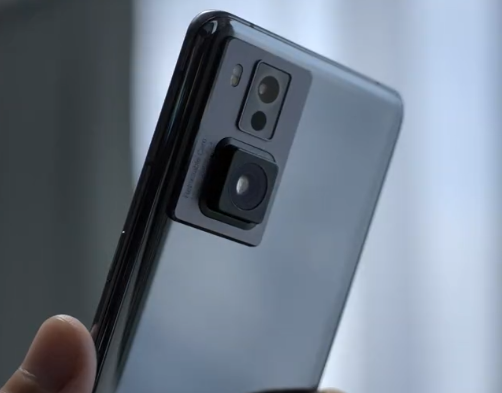
Leading up to this event, the Chinese smartphone maker has already teased the aforementioned technologies and even offered us a glimpse at its retractable camera technology as well via Twitter. The brand has even officially announced that it will be showcasing its first foldable smartphone during the event, which is set between 14th December and 15th December in Shenzhen, China. Notably, the Founder and CEO of the company, Tony Chen, will also be sharing a keynote speech in the event, talking about the company’s updates corporate strategies and new research and development strategies.
Oppo added that “other senior executives will introduce the new NPU and smart glasses,” during this event. So, we can expect to hear more about the new Retractable Camera technology, as well as Digital Human and other technological breakthroughs in the fields of imaging, AI, AR, and even 5G. A highly anticipated announcement would also be for the company’s first NPU, which is being called the MariSilicon X.
Retractable Camera Technology
As per our previous report, the company had also revealed on Twitter that it is gearing up to announce the Oppo Find N foldable phone during this event as well. It will be the company’s first foldable handset and has been in development for four years and has gone through six generation of prototypes. So stay tuned for more updates, as we will be covering this major company conference.
Google is finally giving some love to tablets and foldable phones with its Android 12L update, bringing along a number of improvements and optimizations for large screen devices. To recall, Android 12 was released in October and the first Android 12L developer preview followed not long after. And now, around a couple of months later, Pixel phones all the way back to the Google Pixel 3a have received the Android 12L update in the form of Beta 1.
There isn’t really much to test on Google Pixel phones, however, as most of the front-end changes can only be seen and felt on large screen devices (via XDA). The update is, after all, more of a feature-drop kind than a full-blown upgrade.
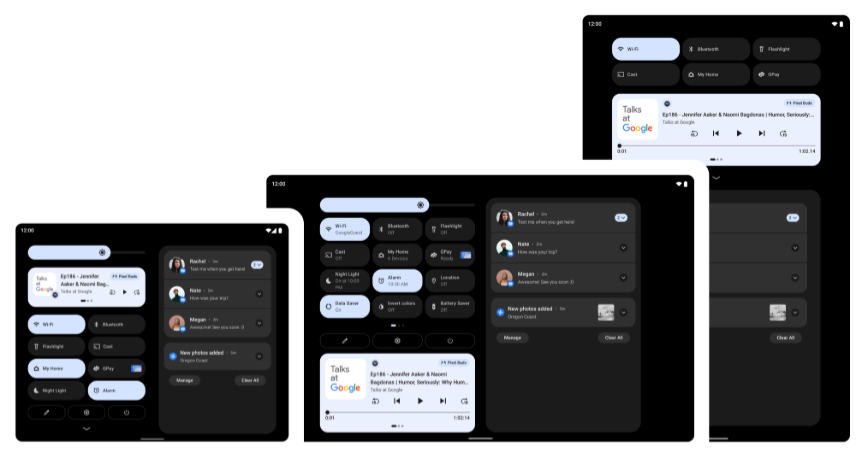
As for features, the update adds a new dual-pane UI for the notifications shade, settings, and lock screen. There’s even a Windows-style dedicated taskbar for better multitasking. In short, the layout of multiple system interfaces has been tweaked to take advantage of larger displays with a DPI higher than 600dp.
To download the Android 12L Beta 1 build for your Pixel device, simply click on one of the links below. Google has released the update for every eligible device barring the Pixel 6 series, but it shouldn’t be long before the latest Pixels get it too.
For those who’d rather not install the update manually, the Android Flash Tool can be used as an alternative installation method for the Beta build. This web-based installer comes with a GUI wizard which greatly simplifies the flashing process. But the most user-friendly installation method is still simply enrolling your Pixel in the beta program which will allow you to get an OTA officially.
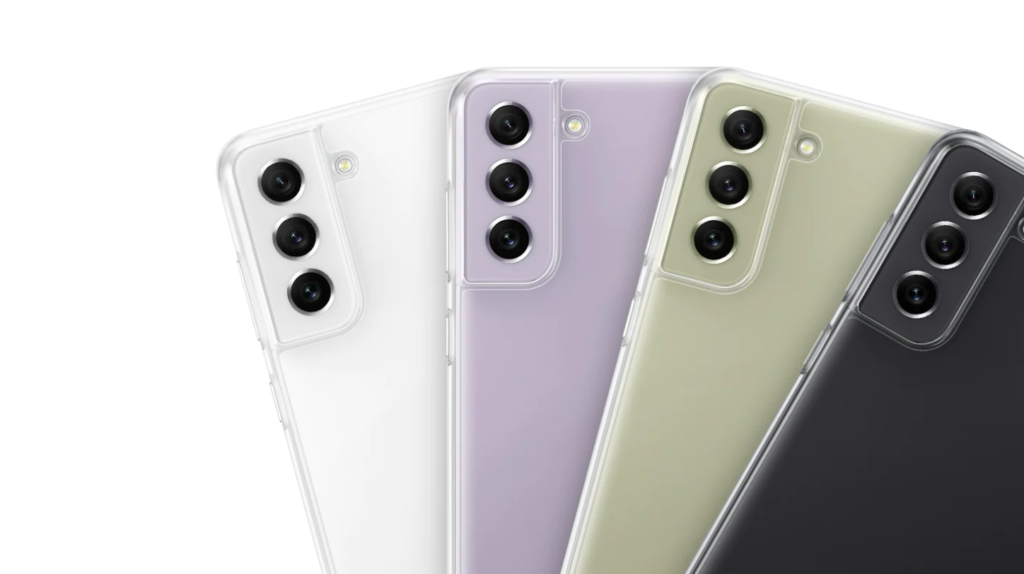
The Samsung Galaxy S21 FE is expected to release in January 2022 after a long delay. We know almost everything about this smartphone for months. A new finding now reveals something about the phone that was not known earlier.
Samsung Galaxy S21 FE
Yesterday, the software firmware for the Galaxy S21 FE went live on Samsung’s server. According to these builds (via SamMobile), the handset will ship with Android 12 out of the box. This means it should also come with One UI 4.0 comprising of new features and visual changes.
If this happens to be true, then the Galaxy S21 FE will be a better option than the rest of the Galaxy S21 models in terms of software.
It makes sense for Samsung to release the Galaxy S20 FE successor with Android 12 as it will go official almost a year after the debut of Galaxy S21, Galaxy S21+, and Galaxy S21 Ultra. In fact, it will be soon followed by the Galaxy S22 series with the same version of Android a few days later.
Anyway, the Galaxy S22 could be a better deal than the Galaxy S21 FE. Because the former is said to be only $100 costlier than the latter.
Everyone is aware of the global chip shortage which has impacted almost every industry and the smartphone industry has also been hit. Samsung, which is the smartphone leader globally and also makes its own chips, has also been impacted.
Now, as per the report from The Elec, Samsung believes that the chip shortage will continue up until the second half of 2022. The report is citing TM Roh, Chief of Samsung Mobile, who discussed this issue with around 30 partners and vendors last month.
Samsung noted that the chipsets and RF chips will be short in supply until H2 2022 and the company is taking steps to mitigate the shortages. The South Korean giant is now pushing for annual contracts with chip foundries to secure the chip production capacity.
The company is now looking to stock up to four weeks’ worth of chip supplies instead of the firms currently stocking two weeks of supply. It’s good to see Samsung taking the necessary steps to ensure smooth operations amid chip shortages.
Samsung has suffered a lot in the current year because of these shortages. The brand’s Galaxy S21 FE has been delayed and is now set to launch in January 2022, pushing the launch of the Galaxy S22 lineup to February.
Realme will be announcing something related to the upcoming Realme GT 2 Pro flagship phone later today. Probably, it will be confirming the launch date of the device since it is expected to debut at some point this month. Ahead of today’s announcement, reliable tipster Digital Chat Station has shared the key details of the GT 2 Pro.
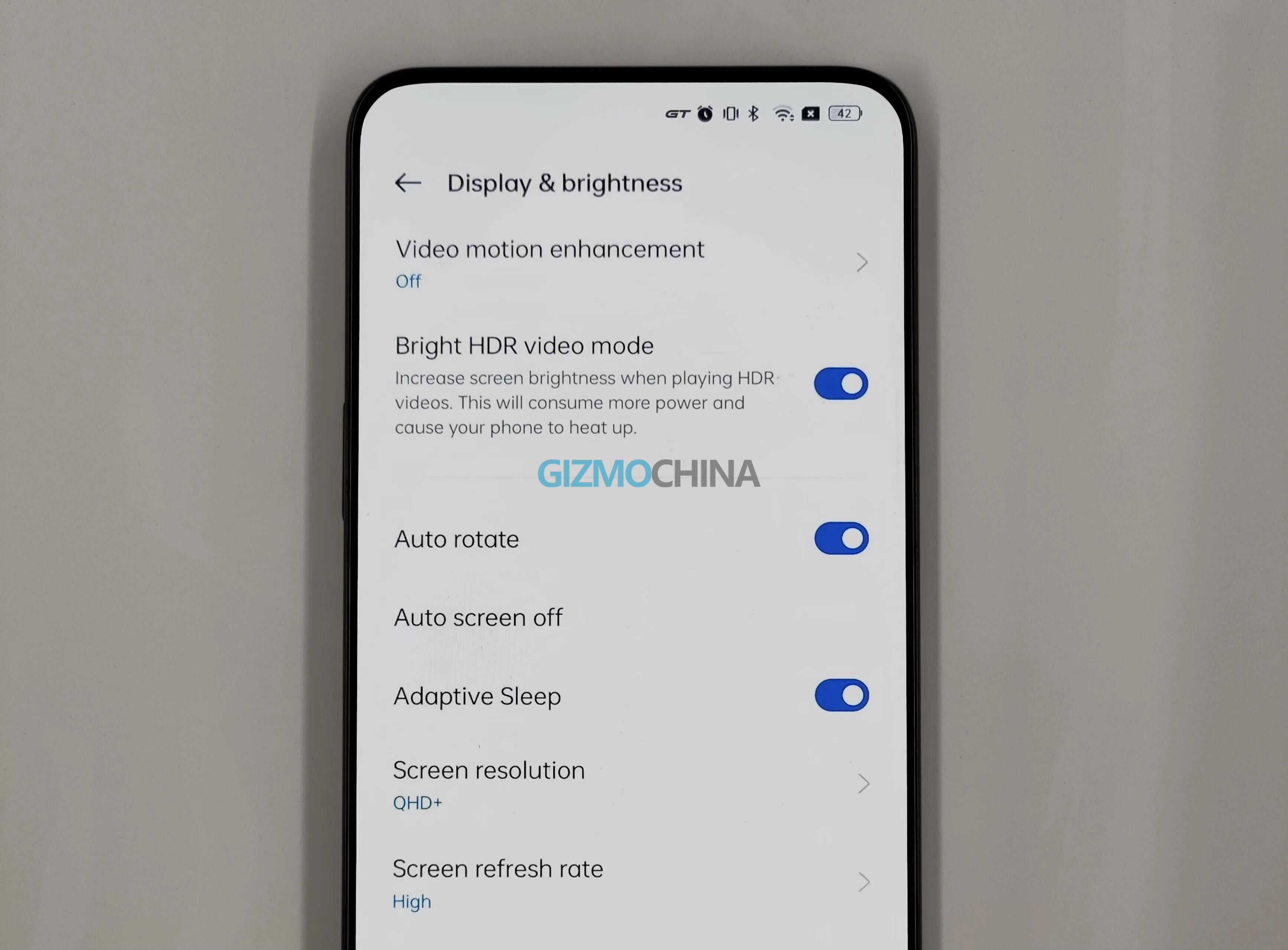
The leak reveals that the Realme GT 2 Pro will be equipped with a 6.7-inch flat AMOLED panel by Samsung. It will offer a Quad HD+ resolution and a 120Hz refresh rate. There is no word on the battery capacity of the device, but the leak reveals that it will carry support for 65W fast charging like other Realme phones. The new leak debunks previous reports that claimed that the Realme GT 2 Pro has a 6.51-inch screen and support 125W fast charging.
Realme GT 2 Pro with under-screen camera
When it comes to photography, the Realme GT 2 Pro will sport a 32-megapixel camera for capturing selfies. Its rear camera setup may include an OIS-enabled 50-megapixel 1/1.5-inch primary sensor, which appears to be the Sony IMX766 camera. It will be assisted by a 50-megapixel ultrawide lens and a telephoto camera. It is already known that the Snapdragon 8 Gen 1 will be fueling the GT 2 Pro.
GizmoChina’s exclusive report revealed from yesterday revealed that there could be two editions of the phone. The first will have a punch-hole display, whereas the other will be equipped with a full-screen display (shown above) featuring an under-screen camera.
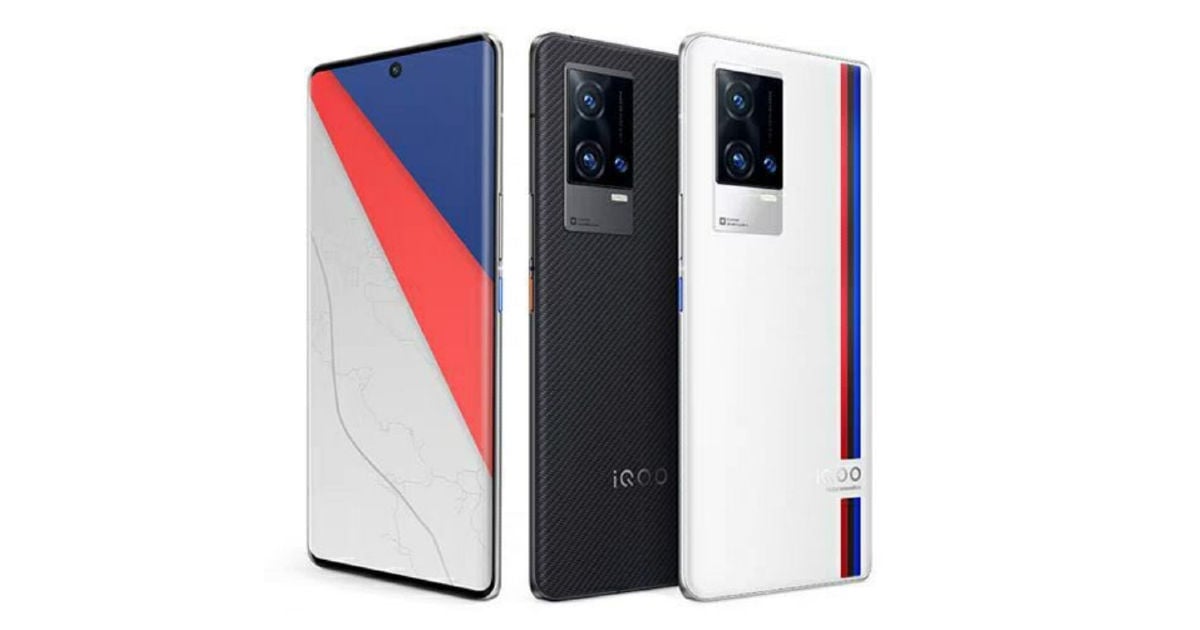
iQOO is likely to announce the iQOO Neo5s and iQOO Neo5 SE this month in China. The company is expected to unleash the iQOO 9 series of flagship devices in January 2022. Well ahead of the launch, Chinese tipsterPanda is Bald has shared the key details of the iQOO 9.
iQOO had recently confirmed that it will be launching Snapdragon 8 Gen 1 powered flagship phone. The new leak claims that the upcoming iQOO 9 lineup will be driven by the new chip. It can be said based on predecessor models that the iQOO 9 series will include two handsets such as iQOO 9 and iQOO 9 Pro.
iQOO 8 Pro
According to the tipster, the standard iQOO 9 will be gracing a second-generation independent display chip, which will assist in offering an improved visual experience. The device will be equipped with dual speakers and dual x-axis linear motors. For gamers, the device will offer dual pressure-sensitive shoulder buttons.
The iQOO 9 is also expected to carry support for a 120Hz refresh rate. In all likelihood, the device will be sporting an AMOLED panel with an in-screen fingerprint scanner. It will carry support for 120W fast charging. The iQOO 9 series will also come with an enhanced heat dissipation system and micro-gimbal PTZ. To recollect, the micro-gimbal feature was only available on the iQOO 8 Pro, and not on the vanilla iQOO 8. It is unclear whether the iQOO 9 Pro as well as its vanilla version will offer micro-gimbal PTZ camera.
While iQOO is expected to launch the iQOO 9 duo in China in January, there are speculations that the iQOO 9 series will be heading to India by February.
At the end of November, OPPO started recruiting testers for the OPPO Reno5 series ColorOS 12 Open Beta program in China. The initiative was only limited to two devices in the lineup initially. Now, two more phones dubbed OPPO Reno5 Pro and OPPO Reno5 Pro 5G have been added ahead ofschedule.
OPPO Reno5 Pro 5G
OPPO is supposed to kickstart the Android 12-based ColorOS 12 Open Beta program for the OPPO Reno5 Pro and OPPO Reno5 Pro 5G in China, India, and Pakistan from December 10. However, the company has opened registrations a day earlier, just like it did with the OPPO Reno5 5G and the OPPO Reno5 Pro 5G in China.
According to the official announcementposts on OPPO Community, anyone with the OPPO Reno5 Pro 5G running the following firmware versions can enroll in the Android 12 beta program.
OPPO Reno5 Pro
Pakistan – A.12
OPPO Reno5 Pro 5G
China – A.17 or A.18
India – A.12
In order to do so, users will have to navigate to Settings > Software Update > Gear Icon > Apply for Beta Version > Update Beta Version and follow on-screen instructions. The applications will be reviewed within 5 working days. The company will begin rolling out the beta release via OTA within 3 working days from that.
In China, participants can fill a questionnaire to further increase their chance of gettings selected.
Having said that, there’s no official word on the availability of the stable update from OPPO so far. It will most likely arrive as early as next month.
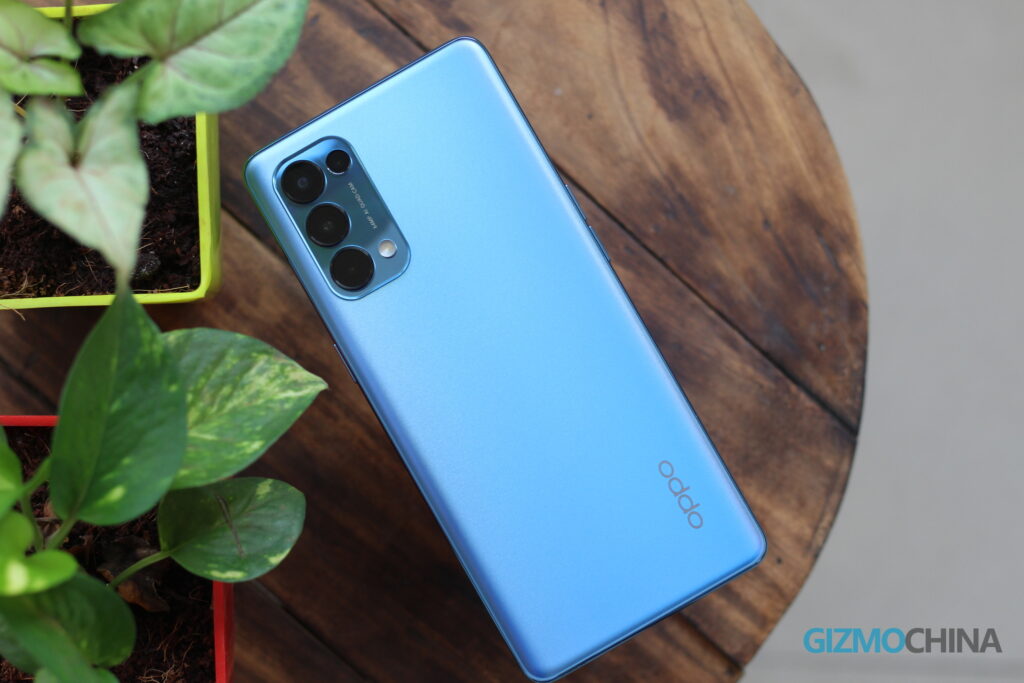
OPPO Find N is all set to launch as the OPPO’s first foldable smartphone at 4 PM (local time) on Dec. 15 through the company’s INNO Day 2021 event. A tweet released by the brand gives a look at the design of the Find N. It also mentions that Pete Lau will be taking the new role of Chief Product Offer (CPO) at OPPO.
The OPPO Find N has been born through the company’s four years of intense R&D and six generations of prototypes. Most smartphones are available in the market offer similar configurations and designs. According to Lau, the smartphone industry has reached a limit whether it comes to offering features like high refresh rates, mobile photography, fast charging, and so on. Hence, the company has now decided to venture into the foldable segment.
Here comes our very first foldable smartphone – the OPPO Find N! Learn more about how everything begins with OPPO CPO @PeteLau#OPPOINNODAY2021#OPPOFindN 👇
OPPO began working on the first find N prototype back in 2018. While Samsung, Huawei, and Xiaomi have already unveiled their foldable smartphones, OPPO has not launched one yet. Lau believes that ‘it is better to launch a product later when it is ready to offer a great user experience instead of simply rushing to keep up with trends.’ He added that the Find N will a beautiful and user-friendly device. OPPO has put efforts to solve pain points such as crease in the display and durability issues that were seen on foldable phones by other brands.
OPPO Find N specifications (Rumored)
Reports have revealed that the Find N will have an 8-inch LTPO OLED 120Hz inner display, a 60Hz cover display with punch-hole design, a 32-megapixel front camera, a 50-megapixel (Sony IMX766) + 16-megapixel (Sony IMX481) + 13-megapixel (Samsung S5K3M5) triple camera unit, and a 4,500mAh battery with 65W fast charge support. It will be equipped with Snapdragon 888 SoC, 12 GB of RAM, up to 512 GB of storage, and ColorOS 12 flavored Android 12.
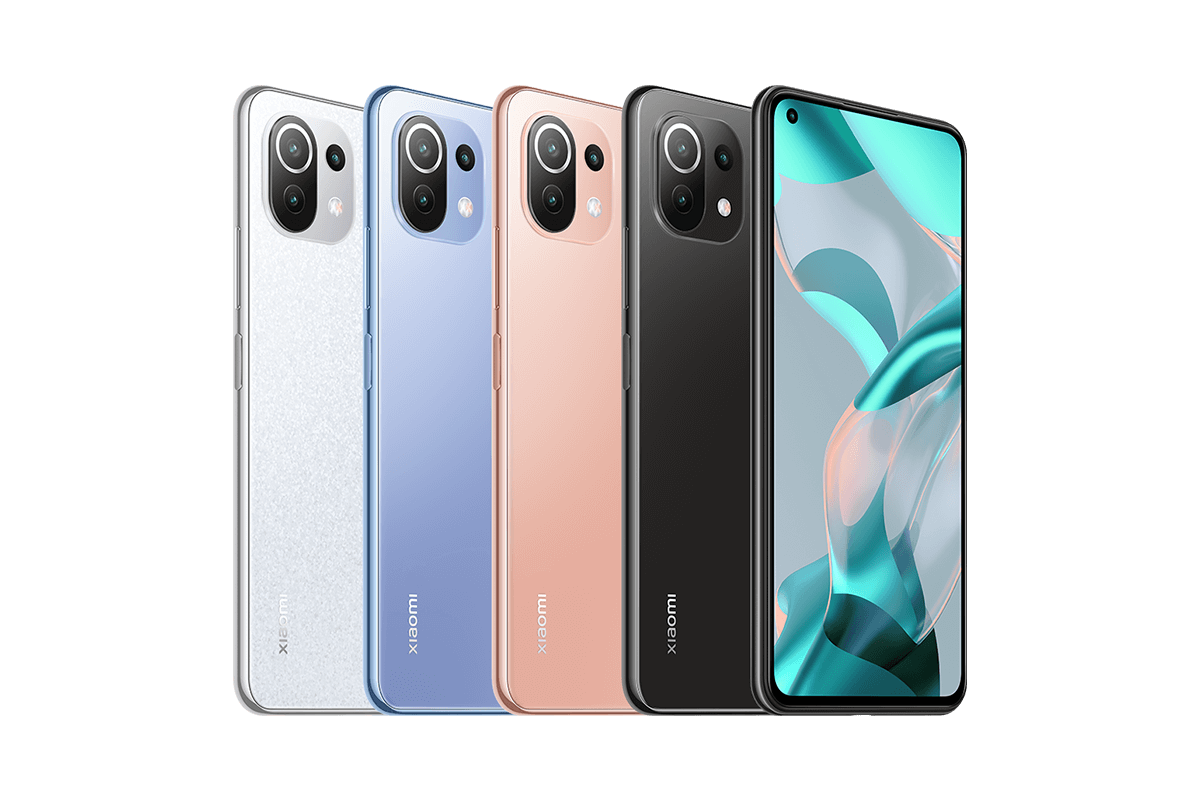
Xiaomi has silently announced the Xiaomi 11 Youth (Vitality Edition) smartphone in China today. Earlier this year, the company unveiled the Xiaomi Mi 11 Lite 5G with Snapdragon 780G chip and Xiaomi Mi 11 Lite 4G with Snapdragon 732G chip. The former was exclusively available in China. Later this year, Xiaomi unveiled the Xiaomi 11 Lite NE 5G featuring the Snapdragon 778G SoC in markets like India and Europe. Now, the same device has been introduced in the home market with the Xiaomi 11 Vitality Edition moniker
Xiaomi 11 Youth (Vitality Edition) specifications and features
The Xiaomi 11 Youth (Vitality Edition) measures 160.53 x 75.2 x 6.81mm and weighs 157 grams. The device houses a 6.55-inch AMOLED punch-hole screen that offers a Full HD+ resolution, a 90Hz refresh rate, a 240Hz touch sampling rate, DCI-P3 color gamut, 800 nits of brightness, and 402ppi pixel density. It also offers other features like Dolby Vision, HDR10+, 10-bit colors, and Gorilla Glass 5 protection. It is fitted with a side-facing fingerprint scanner.
Xiaomi 11 Vitality Edition
The Xiaomi 11 Youth (Vitality Edition) is driven by the Snapdragon 778G chipset and 8 GB of LPDDR4x RAM. The device ships with up to 256 GB of storage and it comes preinstalled with Android 11 OS, which is skinned with MIUI 12.5.
Placed on its front is a 20-megapixel selfie camera. Its back panel has a 64-megapixel main camera, an 8-megapixel ultrawide lens with a 119-degree FOV, and a 5-megapixel macro lens with a 3cm focal length. It is capable at shooting 30fps 4K videos and 120fps 1080p slow-motion videos.
The smartphone is backed by a 4,250mAh battery that supports 33W fast charging. It offers other features such as dual SIM, 5G, Wi-Fi 6, Bluetooth 5.2, GPS, NFC, an IR blaster, a side-facing fingerprint scanner, and a USB-C port. It lacks a 3.5mm audio jack.
Xiaomi 11 Youth (Vitality Edition) pricing and availability
The Xiaomi 11 Youth (Vitality Edition) comes in 8 GB RAM + 128 GB storage and 8 GB RAM + 256 GB storage versions. They are priced at 1,999 Yuan (~$315) and 2,299 Yuan (~$362). It comes in hues like white, blue, peach, and black. The first sale of the phone is scheduled to begin tomorrow (Dec. 10) in China.
HMD Global, the company which is launching Nokia-branded phones in the market, is gearing up to unveil a new device. An upcoming Nokia smartphone with the model name Suzume has been spotted on benchmarking platform.
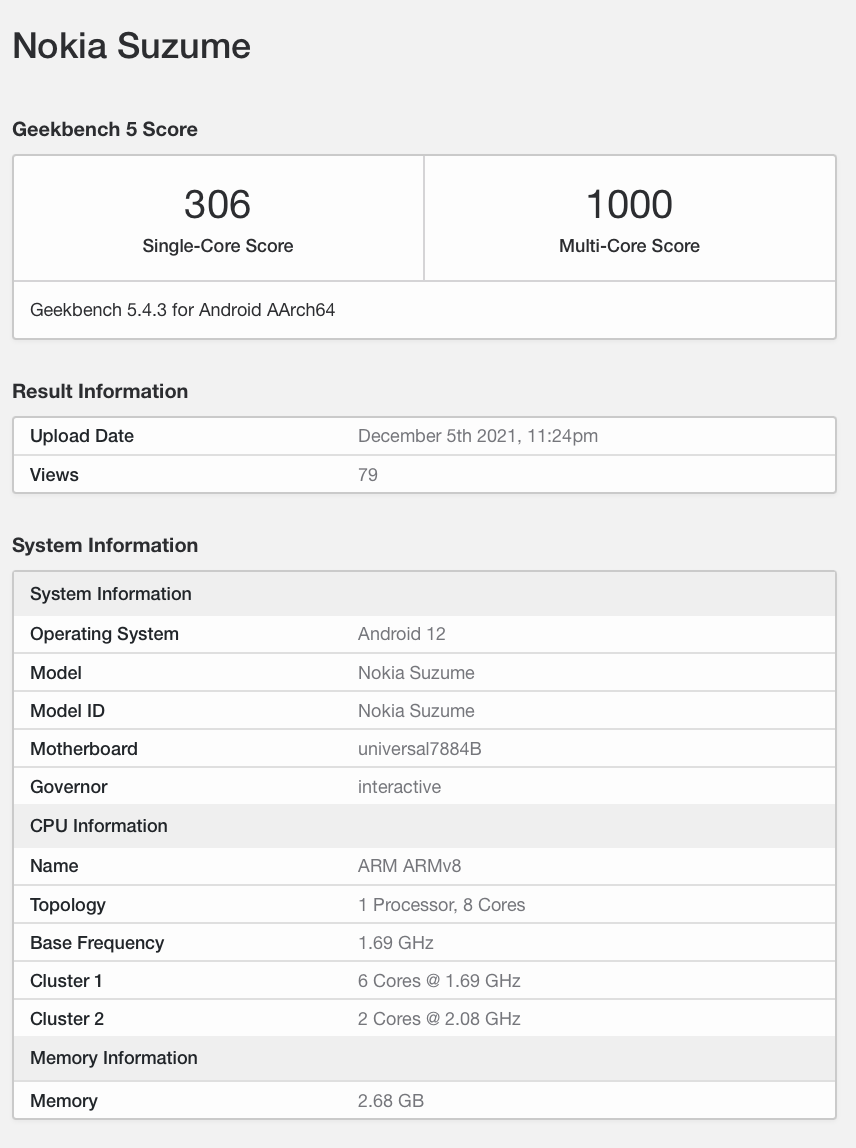
The upcoming Nokia Suzume smartphone has been spotted on Geekbench and the listing has revealed some key details about this new device.
The smartphone is revealed to come powered by an octa-core processor which is expected to be the Samsung Exynos 7884 chipset, the same processor that is powering the South Korean company’s Samsung A10.
It comes packed with 3GB of RAM and runs the Android 12 operating system out-of-the-box. The device has managed to score 306 points in the single-core test while in the multi-core test, it scored 1,000 points.
The Samsung Exynos 7884 chipset is manufactured using the 14nm processor which makes it a bit old given that most modern chips are now being manufactured using 4nm node. It comes packed with two Cortex-A73 cores and six A53 cores, along with a Mali-G71 MP2 GPU and an LTE modem.
The Nokia Suzume (which means Sparrow in Japanese) may be one of the four devices that were recently leaked. Given the specs, the phone seems like a budget to the mid-range offering and could come with an LCD display and a triple-camera setup on the back.
We expect more details about this Nokia Suzume smartphone to surface online in the coming days or weeks. Given that the device has already appeared on the benchmarking platform, the launch of the device could happen soon.
A few years ago, with the launch of the iPhone X in 2017, Apple added a notch on top of the screen and it has continued so far, with the recently launched iPhone 13 models also featuring a notch. But the company is now expected to change that with upcoming phones.
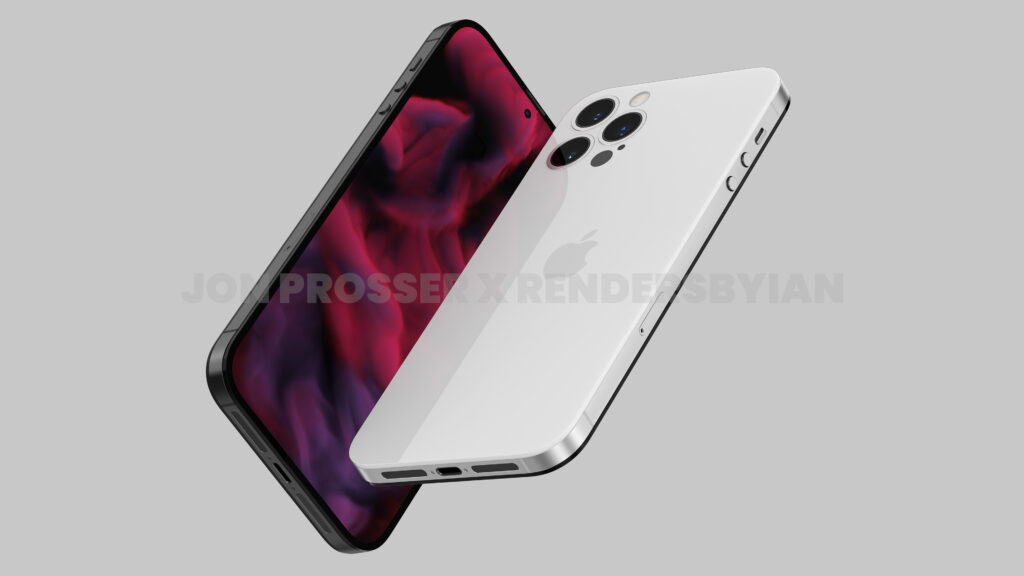
If the new report coming from The Elec is to be believed, which is based on the display suppliers, then the upcoming iPhone 14 series models with OLED displays could have a punch-hole cutout instead of a notch.
Apple iPhone 14 Pro Render
The report claims that Samsung has already started receiving machines from Philoptics and Wonik IPS for laser-cutting holes in the OLED panels.
It is being said that Apple has decided to get rid of the notch on the iPhone 14 Pro and iPhone 14 Pro Max models as the company is confident about Samsung’s ability and expertise in hole punching for displays, which the South Korean giant has already been doing for years with the introduction of its own Galaxy S10 lineup.
If the report is true, the iPhone 14 Pro Max, featuring a 6.7-inch display with a punch-hole cutout could end up being the smartphone from Apple with the best screen-to-body ratio the company has ever designed.
The upcoming Apple iPhone 14 Pro models will be using Samsung’s HIAA (Hole-in-Active-Area) method which is said to be the most advanced OLED hole-punching technology so far. HIAA employs laser drilling between the OLED deposition and thin-film encapsulation (TFE) which is more challenging to do with Samsung‘s flexible OLED displays that use plastic instead of a glass substrate.
So far, Apple is dependent on Samsung Display for the OLED LTPO panels but LG is also reportedly working on the same but LG is yet to conduct trials that will determine if its production meets the needed quality and cost.
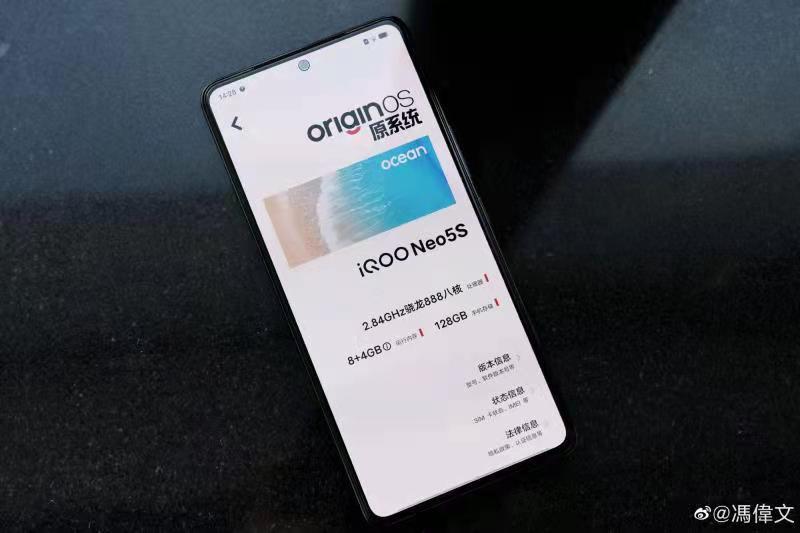
iQOO is expected to unveil two new ‘Neo’ branded smartphones this month. Leaked images that have now appeared on Weibo reveal that one of them will be called iQOO Neo5s. Here is all that is known about the upcoming smartphone.
Tipster Panda is Baldshared a render to showcase the front design of the iQOO Neo5s. It shows the phone flaunting a display that has a centrally positioned punch-hole. Its right edge has a volume rocker and a power key.
iQOO Neo5s
The other image not only showcases the front design of the Neo5s but also reveals some of its key specs. It reveals that the device will be running on the latest OriginOS Ocean edition, and it will be fueled by the Snapdragon 888 mobile platform.
The image further reveals that the iQOO Neo5s will ship with 8 GB of RAM and 128 GB of storage. It will also offer 4 GB of extended RAM. It is unclear whether the OriginOS Ocean will be overlaid on Android 11 or 12 on the device.
iQOO Neo5s
Past reports have claimed that the iQOO Neo4s will feature a 6.56-inch OLED FHD+ 120Hz display with an in-screen fingerprint scanner. For photography, it may feature a 16-megapixel front camera and an OIS-enabled 48-megapixel Sony IMX598 triple camera unit. It may house a 4,500mAh battery that supports 66W fast charging. The Neo5s may ship with up to 256 GB of storage.
The other ‘Neo’ device that is expected to launch with the Neo5s is the iQOO Neo5 SE. It is expected to arrive with Snapdragon 778G+ chip and 66W fast charging support. Its other details are under the wraps.
Samsung is working on the next-generation Galaxy S-series flagship smartphones and if the reports are to be believed, then the launch will take place at the Galaxy Unpacked on 8th February, but the company is yet to confirm this.
As the rumored launch date nears, more details about smartphones have started surfacing online. In the latest development, the Samsung Galaxy S22 has been spotted on the FCC website, reports MySmartPrice.
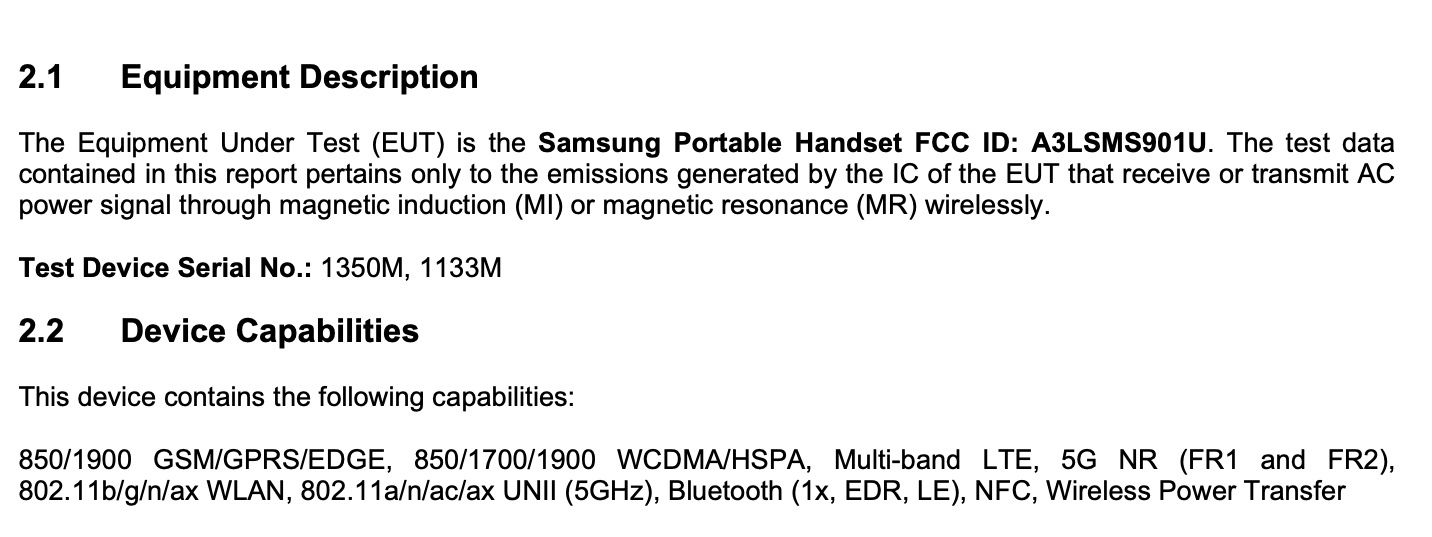
The base model in the lineup with model number SM-S901U has been spotted on FCC but the listing has not revealed many details. It shows that the phone will have support for Wi-Fi 802.11 a/n/ac/ax along with Bluetooth, NFC, 5G, and LTE. Further, it has also been revealed that the device will have support for wireless charging.
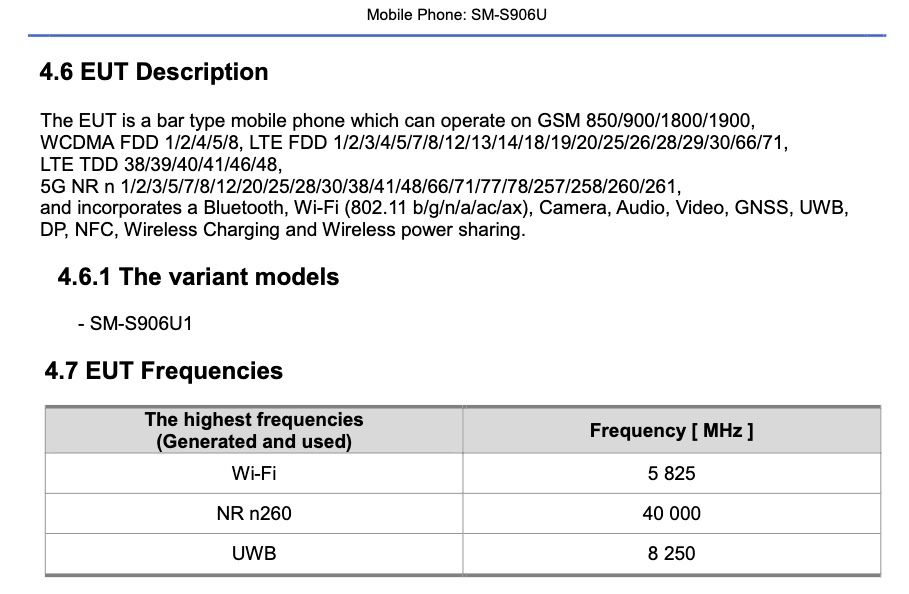
Along with the vanilla S22, the Samsung Galaxy S22 Plus with model number SM-S906U has also been spotted on FCC. It will pack a battery with model number EB-BS906ABY with a rated capacity of 4,370mAh along with support for 25W fast charging.
Based on the earlier leaks, the Galaxy S22 is expected to feature a 6.06-inch Full HD+ display while the S22+ will have a 6.55-inch screen. Both the models are expected to have support for a 120Hz refresh rate.
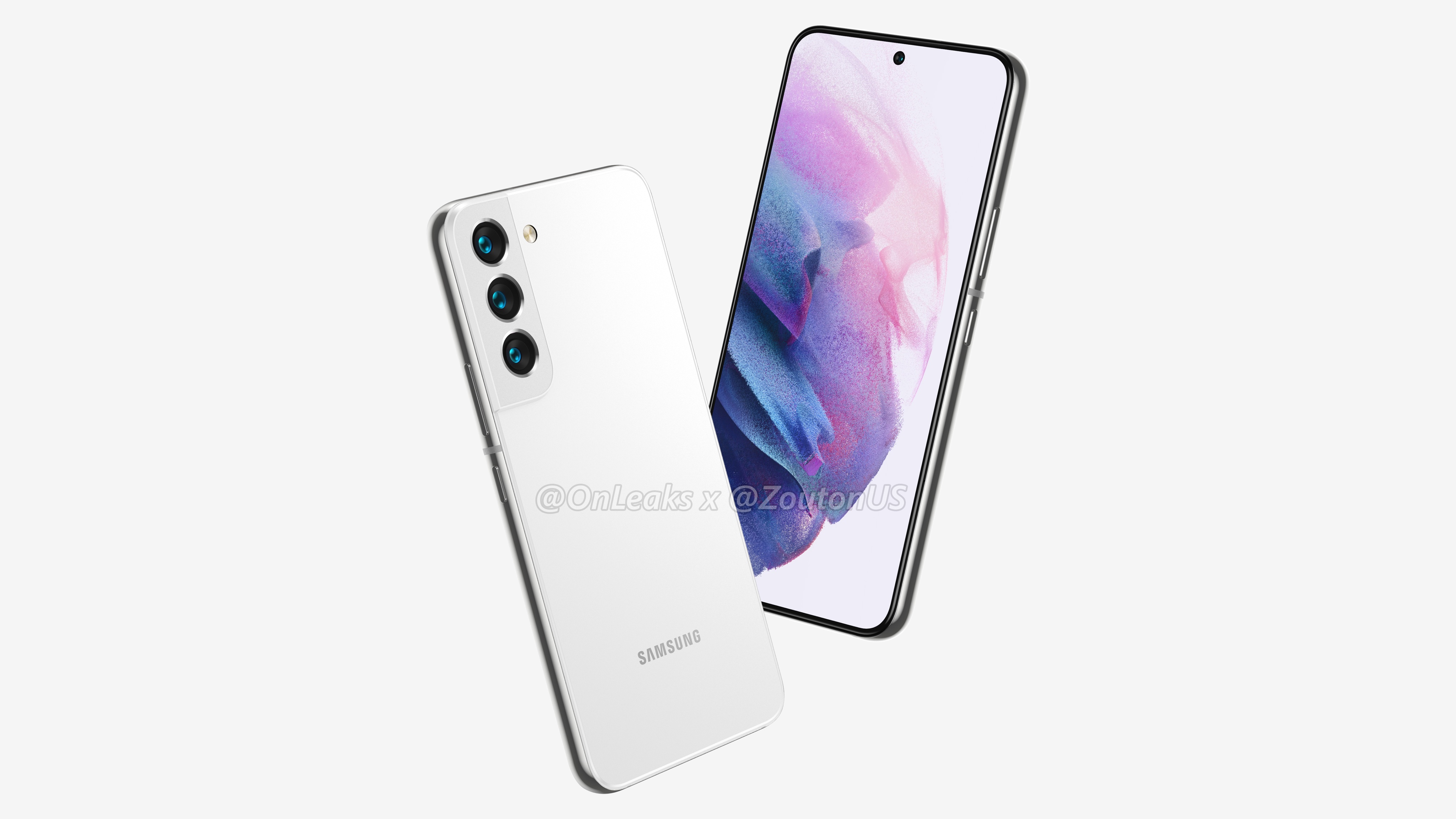
There will also be a punch-hole cutout at the top of the screen for housing a front-facing snapper. It is said to be the same 10-megapixel camera that’s found on the Galaxy S21. On the backside, there will be a triple-camera setup consisting of a 50MP primary camera sensor, a 12-megapixel ultrawide camera, and a 10-megapixel telephoto lens.
Samsung Galaxy S22 Render
The Samsung Galaxy S22 series is expected to come powered by the newly launched Qualcomm Snapdragon 8 Gen 1 chipset or Samsung’s own Exynos 2200 SoC, depending on the region. However, this time, it is reported that instead of the brand’s own Exynos 2200, the devices will be powered by the Snapdragon 8 Gen 1 in the Indian market.
We expect more details about the smartphone to surface online in the coming days. Meanwhile, the South Korean giant is also gearing up to launch the much-delayed Galaxy S21 FE smartphone in January.
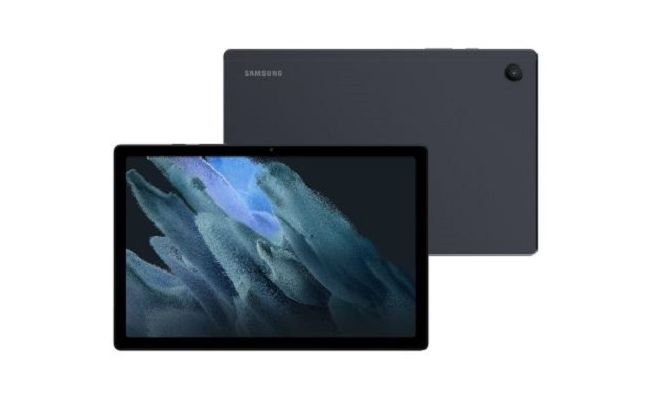
The new leak reveals that the Galaxy Tab A8 2021 has a 10.5-inch LCD display that offers a resolution of 2000 x 1200 pixels and a 60Hz refresh rate. It will be driven by the Unisoc T618 chip and it will come in Wi-Fi / LTE variants.
Galaxy Tab A8 2021
The Tab A8 2021 will come with 4 GB of RAM and 32 GB / 64 GB / 128 GB of storage. It will be backed by a 7,040mAh battery that carries support for 15W charging. The tablet will be equipped with quad speakers.
On the photography front, the Galaxy Tab A8 2021 will offer users with 5-megapixel front camera and an 8-megapixel rear camera. The device will weigh 476 grams and measure only 6.9mm in thickness.
Samsung Galaxy Tab A8 2021 pricing (rumored)
The Galaxy Tab A8 2021 storage variants will be priced between 240 euros (~$272) and 360 euros (~$407). It will come in colors like Pink Gold, Grey, and Silver. As mentioned above, it will be available in Wi-Fi and LTE editions.
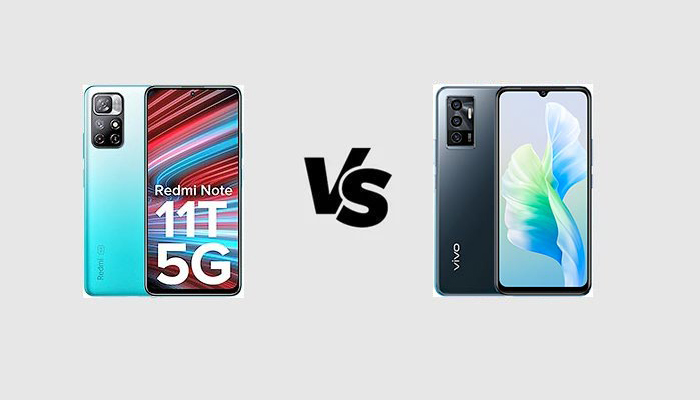
Xiaomi released the Redmi Note 11T 5G a few days ago and we have to admit it is one of the best phones in terms of value for money. But can you get something at the same level or even better in the current market? A lot of people are asking this question because the Redmi Note 11T 5G is a very famous and wanted device, that is the reason why we are comparing it to the best midrange phones from the concurrence. This is a comparison between the specifications of the Redmi Note 11T 5G and the Vivo V23e 5G thanks to which you will know the differences between the two handsets.
Triple 50 + 8 + 2 MP, f/1.8 + f/2.2 + f/2.4
44 MP f/2.0 front camera
BATTERY
5000 mAh, fast charging 33W
4050 mAh, fast charging 44W
ADDITIONAL FEATURES
Dual SIM slot, 5G
Dual SIM slot, 5G
Design
At first glance, a lot of people may prefer the Redmi Note 11T 5G due to its punch-hole design, while the Vivo V23e 5G has a less modern waterdrop notch on the display. But if you dig deeper, you will discover that the Vivo V23e 5G is one of the thinnest and most lightweight mid-range phones from the last generation. For this reason, the Vivo V23e 5G attracts a lot of consumers who want a good phone to use with one hand and to keep in a pocket. Besides being thinner and lighter, it is even more compact than Redmi Note 11T 5G thanks to the presence of a smaller display.
Display
The Vivo V23e 5G has a better display than the Redmi Note 11T 5G for a simple reason: it comes with an AMOLED panel, while the latest Xiaomi budget phone has a classic IPS display with inferior image quality. Unlike the Vivo V23e 5G, you get a 90 Hz refresh rate with the Redmi Note 11T 5G, but the V23e 5G has richer colors and it even offers an in-display fingerprint reader for authentication (the Note 11T 5G has a less comfortable side-mounted fingerprint scanner).
Hardware/Software
The differences between the hardware of the Vivo V23e 5G and the Redmi Note 11T 5G are just marginal: both the phones are equipped with a Mediatek Dimensity 810 5G mobile platform built at 6 nm with a max frequency of 2.4 GHz. The highest-end memory configurations offer 8 GB of RAM and 128 GB of internal storage. The handsets run Android 11 out of the box, customized by Funtouch OS and MIUI, respectively. They will both receive the update to Android 12 for sure.
Camera
The Vivo V23e 5G is definitely the best camera phone of this comparison. On the rear side, both the phones have a 50 MP main camera and an 8 MP ultrawide sensor, but the Vivo V23e 5G has an additional 2 MP camera for macros. Further, the V23e 5G has one of the best selfie cameras ever seen in the smartphone market, with a 44 MP resolution, an f/2.0 focal aperture, and 4K video recording with HDR. The selfie camera of the Redmi Note 11T 5G is just average with its 16 MP resolution.
Battery
The battery is the weakest point of the Vivo V23e 5G: with a capacity of just 4050 mAh, it does not shine in terms of battery life, but it features 44W fast charging thanks to which it reaches 100 percent in a low amount of time. On the other hand, the Redmi Note 11T 5G is a great battery phone with a 5000 mAh battery and 33W fast charging. It is able to last up to two working days of moderate usage, while you can use the Vivo V23e 5G for one day or so without charging it.
Xiaomi Redmi Note 11T 5G vs Vivo V23e 5G: Price
Redmi Note 11T 5G made its debut in China with a starting price tag of €220/$250 for the base variant with 4 GB of RAM and 64 GB of internal storage, while the Vivo V23e 5G launched in Vietnam with a price tag of about €350/$397 at the actual change. The Vivo V23e 5G is a more interesting phone thanks to its amazing AMOLED display, thin and lightweight design, better selfie camera, and faster charging. The only advantage offered by the Redmi Note 11T 5G if we exclude the price is a bigger battery.
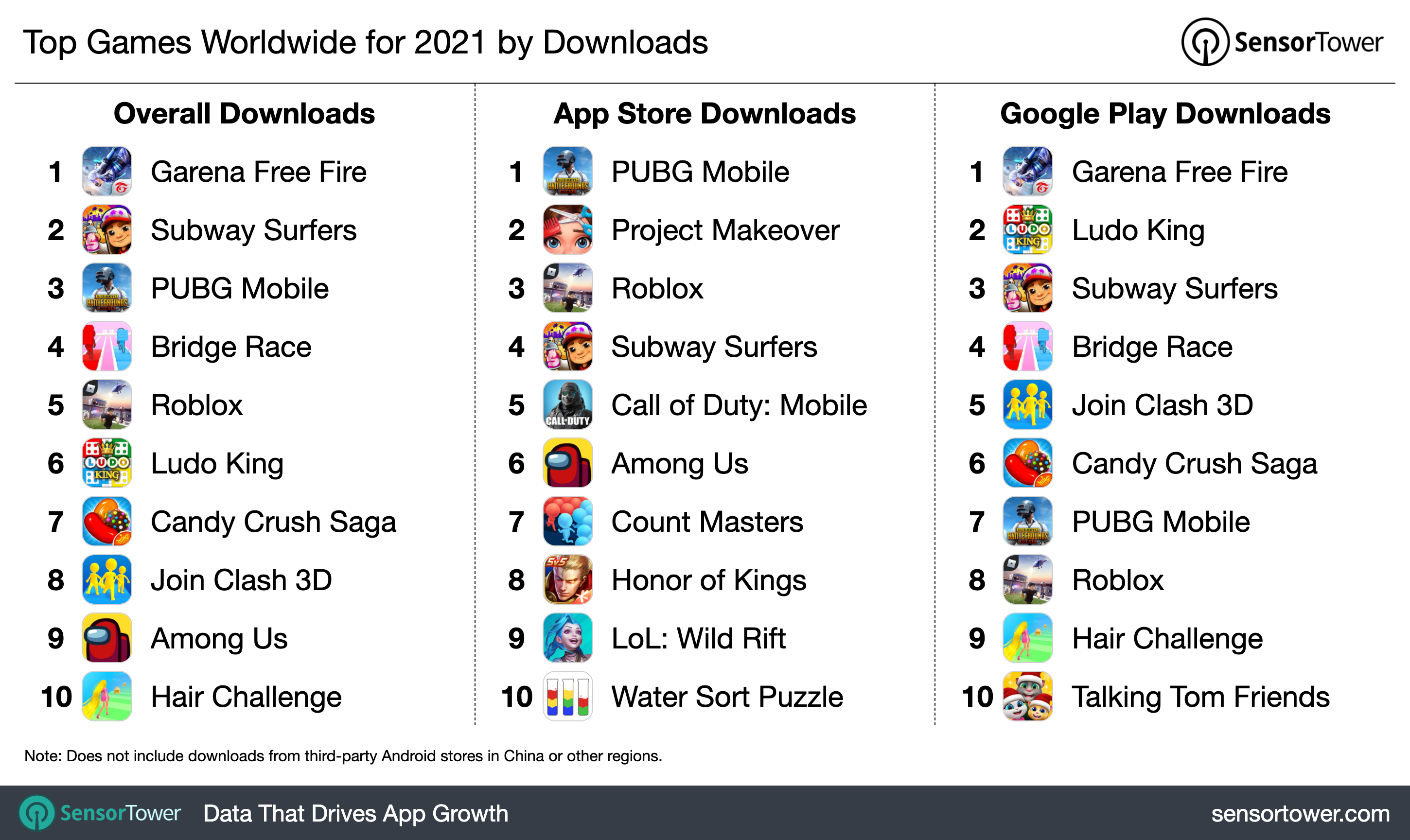
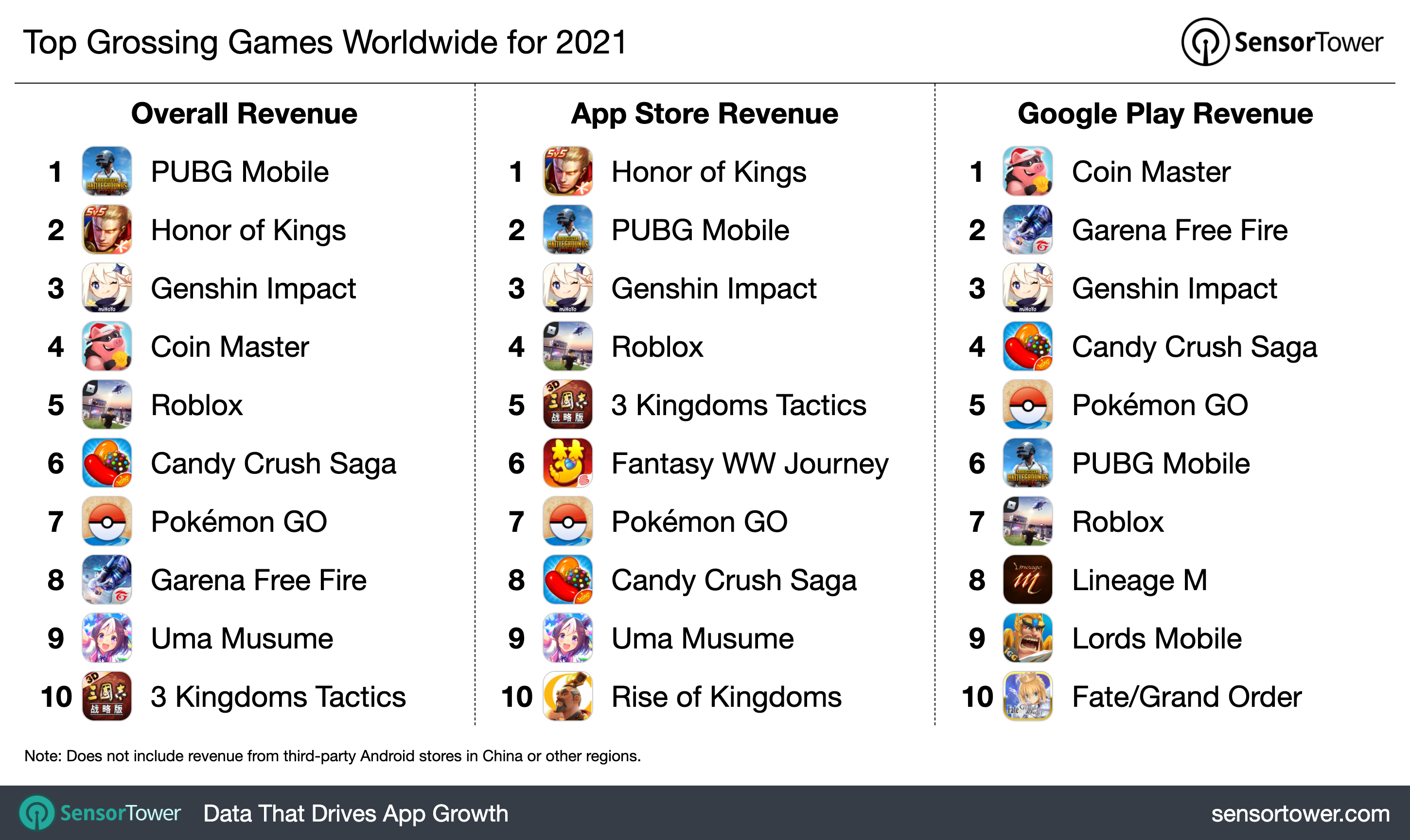
The latest 2021 revenue estimates from Sensor Tower indicate that the Apple Store and Google Play Store revenue will reach $133 billion in 2021, which is a 19% improvement from the $111 billion in 2021. The revenue relates to in-app purchases made via both iOS and Android devices for the year 2021.
The Apple App Store revenue however is almost twice the revenue from Google Store which is indicative of greater pricing of app purchases and services on the Apple Store. The ratio of the number of devices using these storefronts is skewed highly towards the Google Play Store, with possibly millions of passive customers. Sensor Tower expects the App Store revenue from consumer spending to peak at $85.1 billion, which is a 17.7% improvement from the previous year. On the other hand, Google Play Store revenue is expected to peak at about $47.9 billion in 2021 which is a 23.5% increase from 2020.
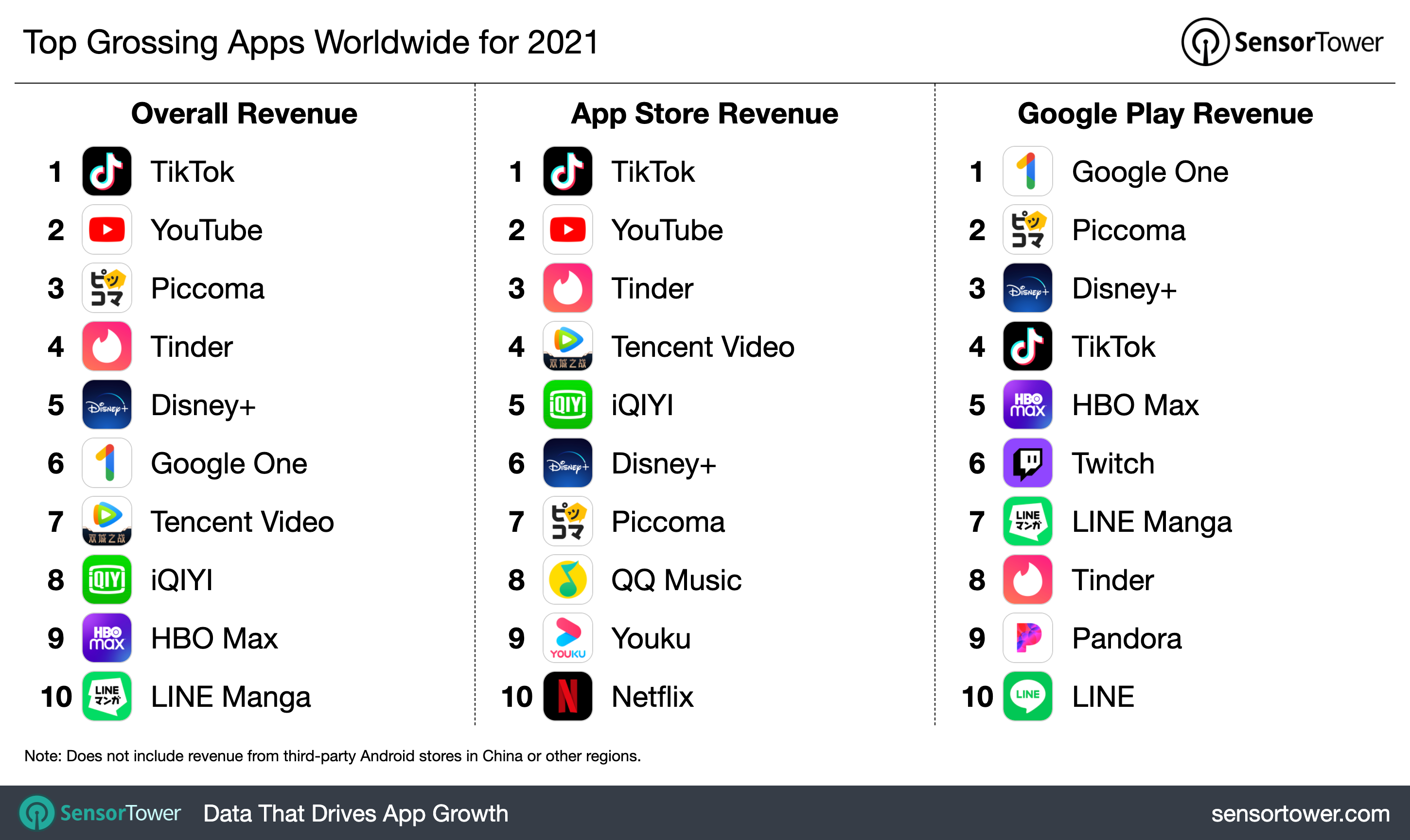
Overall activities in both storefronts indicate that TikTok is the most productive app in terms of revenue for the year 2021 at about $2 billion. The TikTok return indicates a 67% spike in performance from 2020. YouTube follows TikTok in overall revenue across both the App Store and Google Play Store, while Piccoma, Tinder, and Disney are also among the top earners.
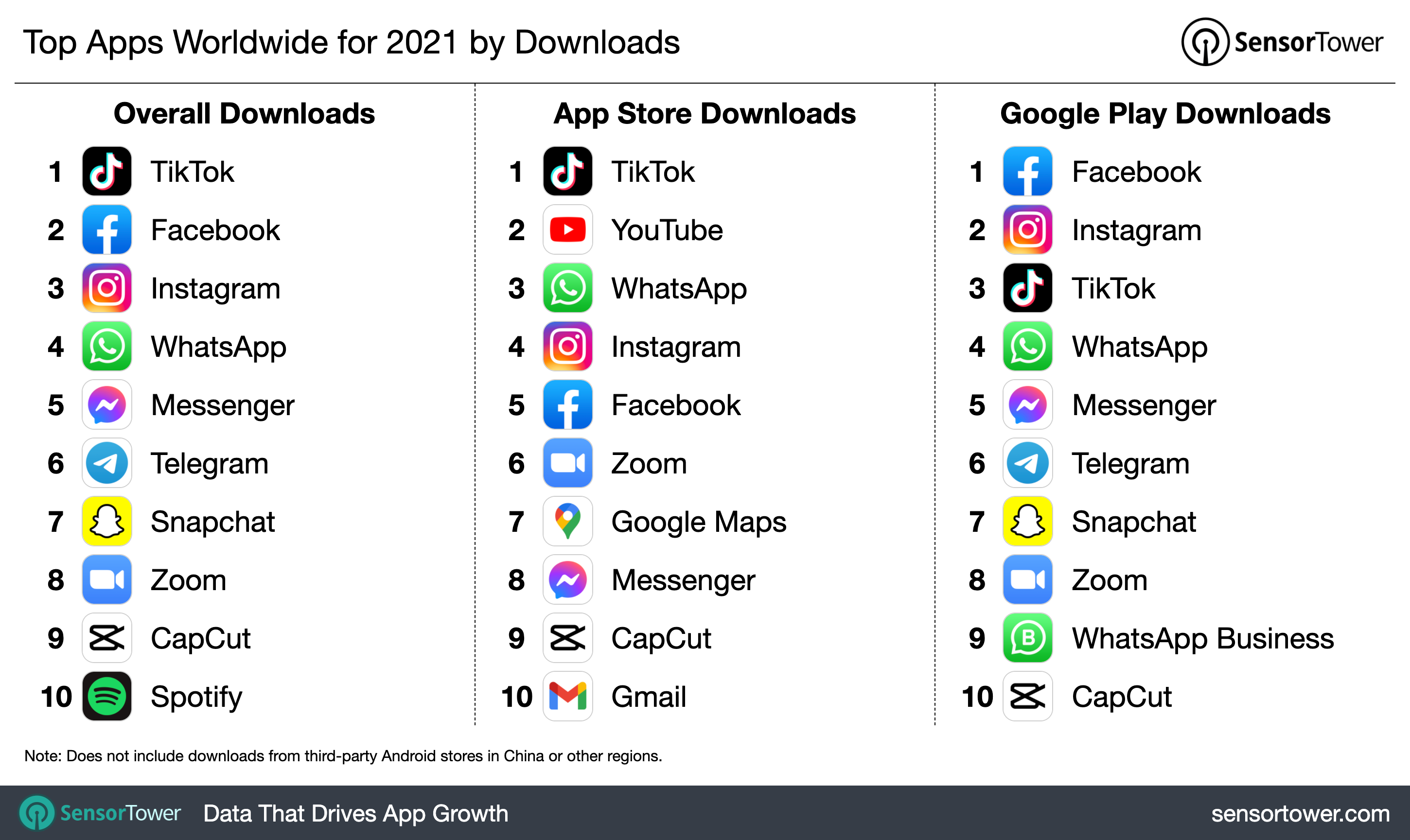
The number of apps installed will see a continuation of the 3 to 1 ratio between Google Play Store and Apple App Store. Up to 111.3 billion apps downloads were in Google Play Store while the App Store has about 32.3 billion for the year.
The revenue and download numbers indicate an overall growth across the two app stores, with mobile game spending on a rapid increase.
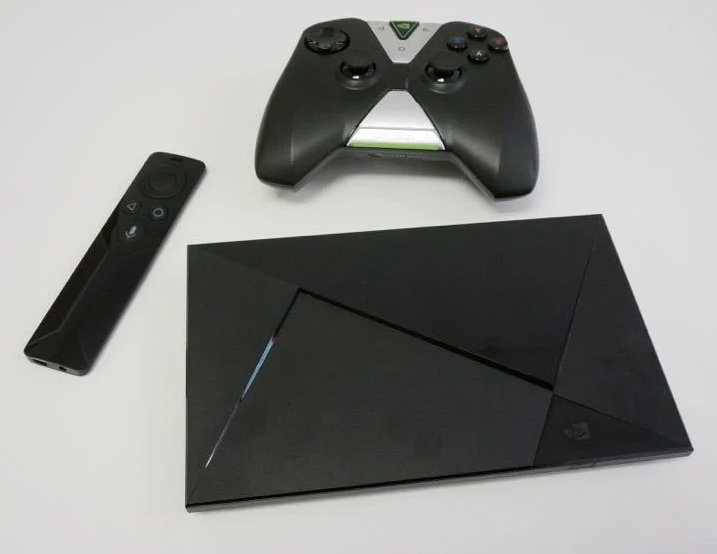
The 2015 Nvidia Shield TV might soon be getting an OS update according to Google Play Console listings.
The listing, first spotted by @AndroidTV_Rumor, shows that Google Play Console currently lists all active models of the Shield TV as supporting Android 11 and the associated SDK version 30. The only model currently not listed with Android 11 support is “darcy,” which is likely an error as the same-generation “sif” does have support; these refer to the 2017 generation of Shield TV. “Foster,” the 2015 Shield TV, is also listed with support.
While this support in the Play Console isn’t clear-cut confirmation of Android 11 coming to the entire Shield TV lineup, It does give a hint of legitimacy to rumors floating around about Shield TV preparing for an Android TV 11 update closed beta program. If this does go through, it will be a gamechanger for Shield TV owners as it currently operates on Android TV 9. While for first-generation Shield TV owners, it will mean 6 years of continuous support by Nvidia.
The update will bring features like one-time app permissions, Google Assistant Searchable Apps, Google Play Instant, Auto Low Latency Mode, Switch Access, an improved Gboard TV, Inattentive Sleep, and many more.
There is currently no information available on the potential Android TV 11 update timeline for the Nvidia Shield TV, but stay tuned as we will be keeping an eye on the situation and cover any notable developments.
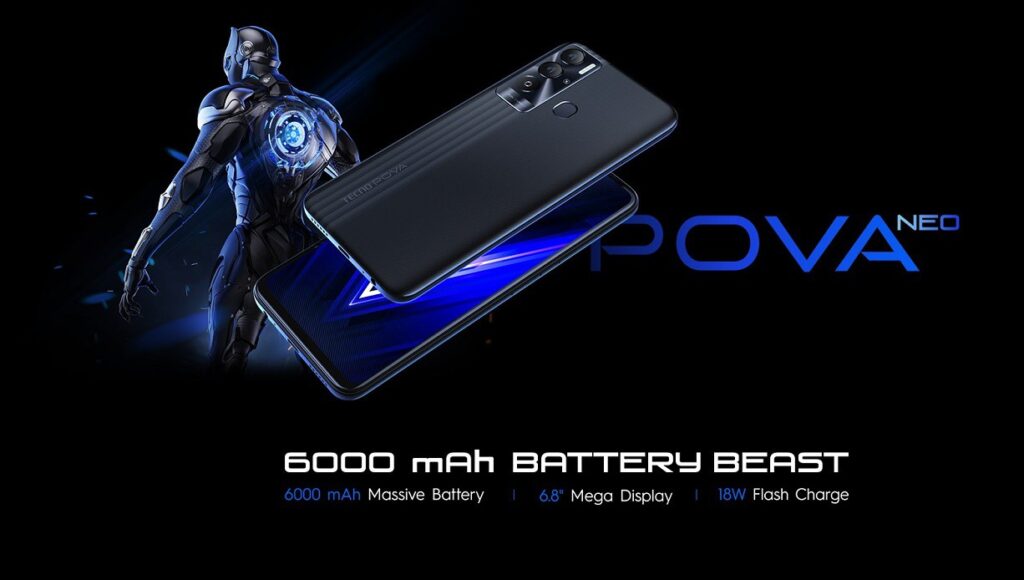
Chinese phone maker Tecno launched the all-new Pova Neo entry-level smartphone in Nigeria. The device was teased frequently and finally, it’s official without ringing any bells. The major highlights of the smartphone are the massive 6,000mAh battery, MediaTek SoC, and its appealing design.
The Tecno Pova Neo is priced at N72,500(~$177) for the 4GB RAM and 64GB storage variant. The device comes in three colour options – Geek Blue, Obsidian Black, and Powehi. It is up for sale in both online and offline stores in the country.
The smartphone comes with an appealing design featuring a 6.8-inch notch display. It has a large 6.8-inch display with an HD+(1640 x 720 pixels) resolution. It has a 120Hz touch sampling rate and a thin-bezel design.
It comes equipped with a dual-camera system with a 13MP main sensor and an unknown secondary lens. Upfront, it has an 8MP camera for selfies. It is powered by an Unknown MediaTek CPU clocked at 1.8Ghz. It is paired with up to 4GB of RAM and 64GB of onboard storage. One of its major highlights is the battery. It packs a whopping 6,000mAh battery cell with 18W fast charging support.
It boots on Android 11 out of the box with HiOS 7.6 on top of it. The device comes with a fingerprint scanner for added security. Not to forget, it has still got the facial recognization option.
We use cookies on our website to give you the most relevant experience by remembering your preferences and repeat visits. By clicking “Accept”, you consent to the use of ALL the cookies.
This website uses cookies to improve your experience while you navigate through the website. Out of these, the cookies that are categorized as necessary are stored on your browser as they are essential for the working of basic functionalities of the website. We also use third-party cookies that help us analyze and understand how you use this website. These cookies will be stored in your browser only with your consent. You also have the option to opt-out of these cookies. But opting out of some of these cookies may affect your browsing experience.
Necessary cookies are absolutely essential for the website to function properly. This category only includes cookies that ensures basic functionalities and security features of the website. These cookies do not store any personal information.
Any cookies that may not be particularly necessary for the website to function and is used specifically to collect user personal data via analytics, ads, other embedded contents are termed as non-necessary cookies. It is mandatory to procure user consent prior to running these cookies on your website.