The Government of India will pass a bill to ban all private cryptocurrencies in the winter session of Lok Sabha, which is scheduled to begin on November 29th, 2021. Soon after the announcement of the proposed bill, massive amounts of panic selling led to the crash of WazirX, which is India’s biggest cryptocurrency exchange.
Since cryptocurrencies are volatile, unregulated, and carry cyber-security risks like loss or destruction of the private key, the Indian government has been continuously warning the citizens from investing in cryptocurrencies. In addition, the International Monetary Fund (IMF) had stated that since crypto-assets have the potential to disrupt different aspects of the global financial system, they should be monitored closely.
The Cryptocurrency and Regulation of Official Digital Currency Bill, 2021 will be introduced in the Lok Sabha later this month. If the bill is passed, it may only ban private cryptocurrencies such as Monero, Dash, Zcash and so on.
The government has not clearly mentioned the definition of private cryptocurrency yet. Hence, it is unclear whether it will allow people to trade Bitcoin, Ether, and so on which are public block-chain based cryptocurrencies.
According to a bulletin issued by the Lok Sabha, it will allow certain exceptions to promote the underlying technology of cryptocurrency and its uses.” It further said that it seeks “to create a facilitative framework for the creation of the official digital currency to be issued by the Reserve Bank of India.”
The RBI fears that it may create economic balance as it can impact inflation and forex. A blanket ban is expected to stop crypto exchanges and other risks associated with it. Meanwhile, supporters of the unregulated exchanges are lobbying against its outright ban by campaigning for including in a regulatory system.
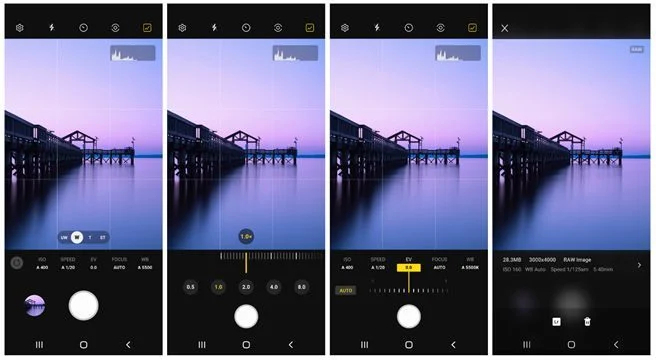
The Samsung Galaxy S21 Ultra is easy to recommend to both camera enthusiasts as well as regular users due to its extremely sophisticated camera setup, which even trumps the latest iPhones in multiple cases. However, the S21 Ultra camera app only supports Pro Mode for the primary and ultrawide cameras – a bummer for some enthusiasts who also wished the same treatment for the telephoto lens. This has changed now though, with the new Expert Raw app from Samsung.
Image: SamMobile, Samsung
The South Korean company has uploaded Expert Raw on the Galaxy Store in South Korea (via SamMobile). This new camera app basically allows all of the rear cameras on the Galaxy S21 Ultra to get a taste of Pro Mode. These include the primary, ultrawide, 3x telephoto, and 10x telephoto cameras. Using it, you get far greater control over the camera hardware, thanks to controls for exposure value (EV), focus, ISO, shutter speed, and white balance. Contrast, highlights, shadows, saturation, and tint can also be adjusted. You even get a histogram to check if areas within a frame are properly exposed.
Image: SamMobile, Samsung
For the editing freaks, images can also be saved in their lossless JPEG versions or 16-bit linear DND RAW formats. Expert RAW also supports HDR, so there’s that. You can even directly open DNG RAW files in Adobe Lightroom through a dedicated button on the image viewer screen.
Samsung says that Expert RAW is a Galaxy S21 Ultra-specific thing at the moment, and is also limited to Android 12-based One UI 4.0. However, it will soon also be released for the Galaxy S21+ and the Galaxy Tab S5e. The app is currently in beta but a stable version is set to launch soon.
The smartphone maker had recently shared a new teaser video on its official Weibo account (a Chinese microblogging website). In this video, the company showcased the complete design of the Honor 60. It features a gradient blue rear panel that also houses starry sky elements, which is in line with the previous official teaser. Looking at the video, the device’s rear panel features a large oval shaped camera module on the top left corner that houses two large sized camera rings with what appears like a small camera as well.
Notably, the rear panel also features a curve on the sides that should improve the grip on the device. Arriving at the front, the smartphone’s display feature curved edges on both sides, with the screen’s four corners also being rounded. Apart from the design being highlighted, the Chinese brand didn’t reveal any finer details regarding the upcoming smartphone. The Honor 60 is set to launch on 1st of December 2021, so stay tuned for more updates as we will be covering the launch event and any other teaser that is shared prior to the launch event.
If you follow the robot vacuums space, you’ll notice a brand that is gradually emerging. We are talking about Dreametech, a brand that released its first product in 2018. It has slowly established its name in the home cleaning appliances industry and is becoming increasingly better at robot vacuums. Their first W series product is the Dreame W10 Self-Cleaning Robot Vacuum and Mop. This W10 Robot Vacuum, like the Dreame Bot L10 series, represents the highest level of Dreametech’s workmanship.
Let’s find out more about this new product.
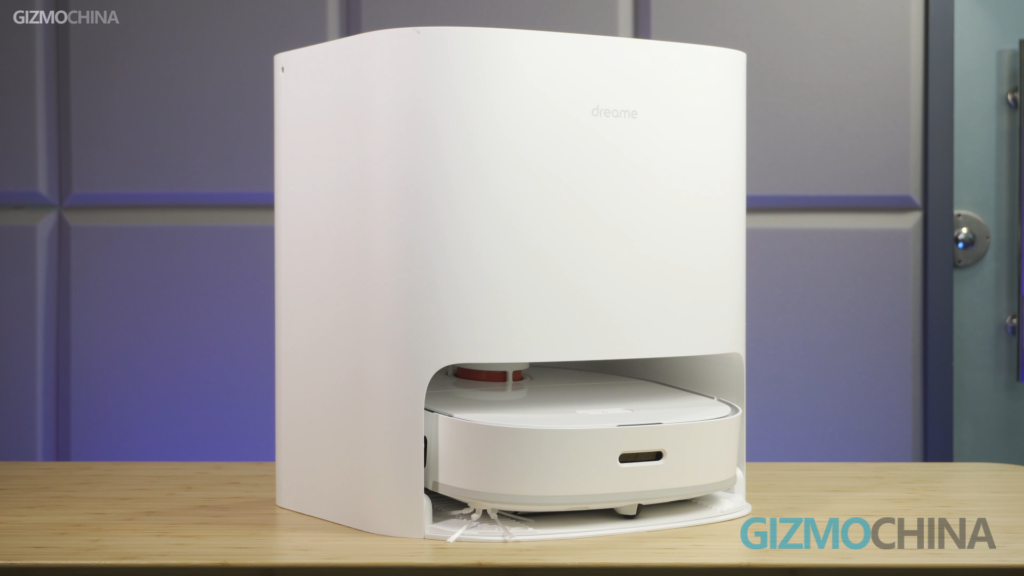
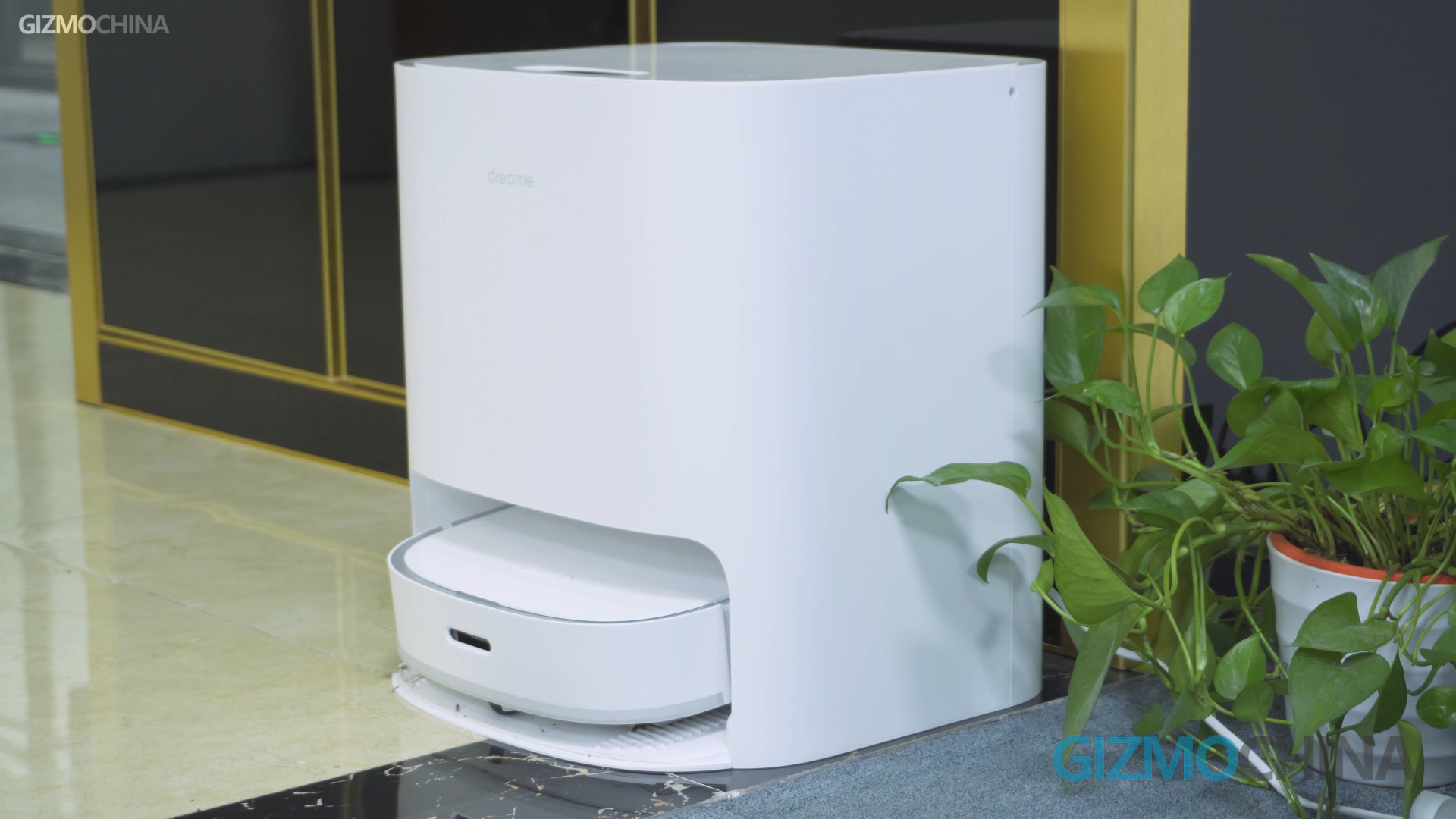
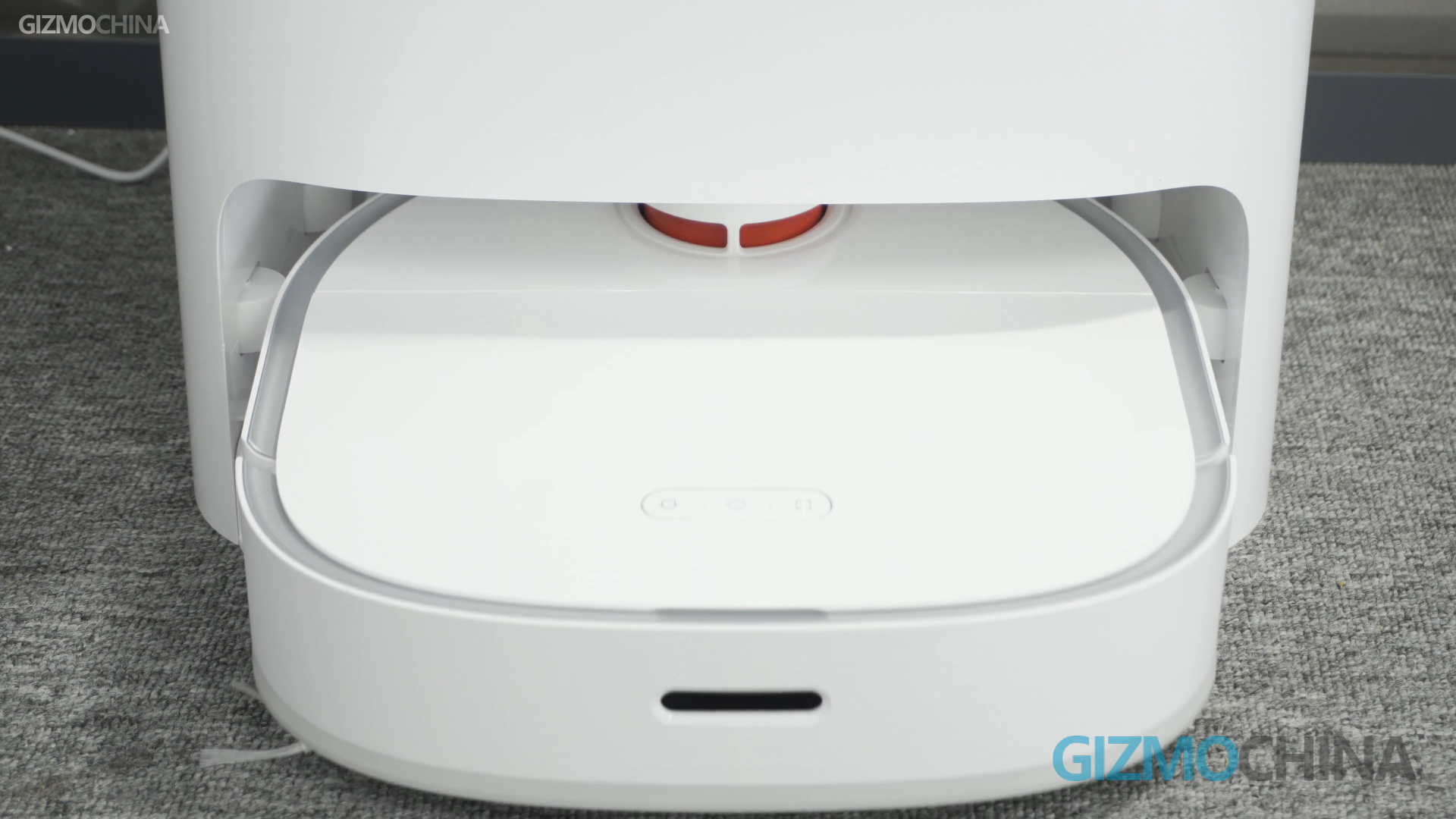
Honestly, this is the first time we received a Robot Vacuum in such a big box. In addition to the Bot and Self-Cleaning Base, inside the box, there is a Side Brush, a power cable, two round magnetic Mop Cloths, a small brush for cleaning, and an additional cleaning solution for mopping. After assembling them into the robot and putting it into the Base, the whole Robot Vacuum setup is completed. The reason why the entire box is so large is that this Self-Clean Base is particularly large.
There are two large 4L water tanks inside. The blue one is used for cleaning the mop with fresh water, and the gray one is for dirty water after washing the mop. While they seem to be large, if you use them once a day, you may only have to change the water every two to three days.
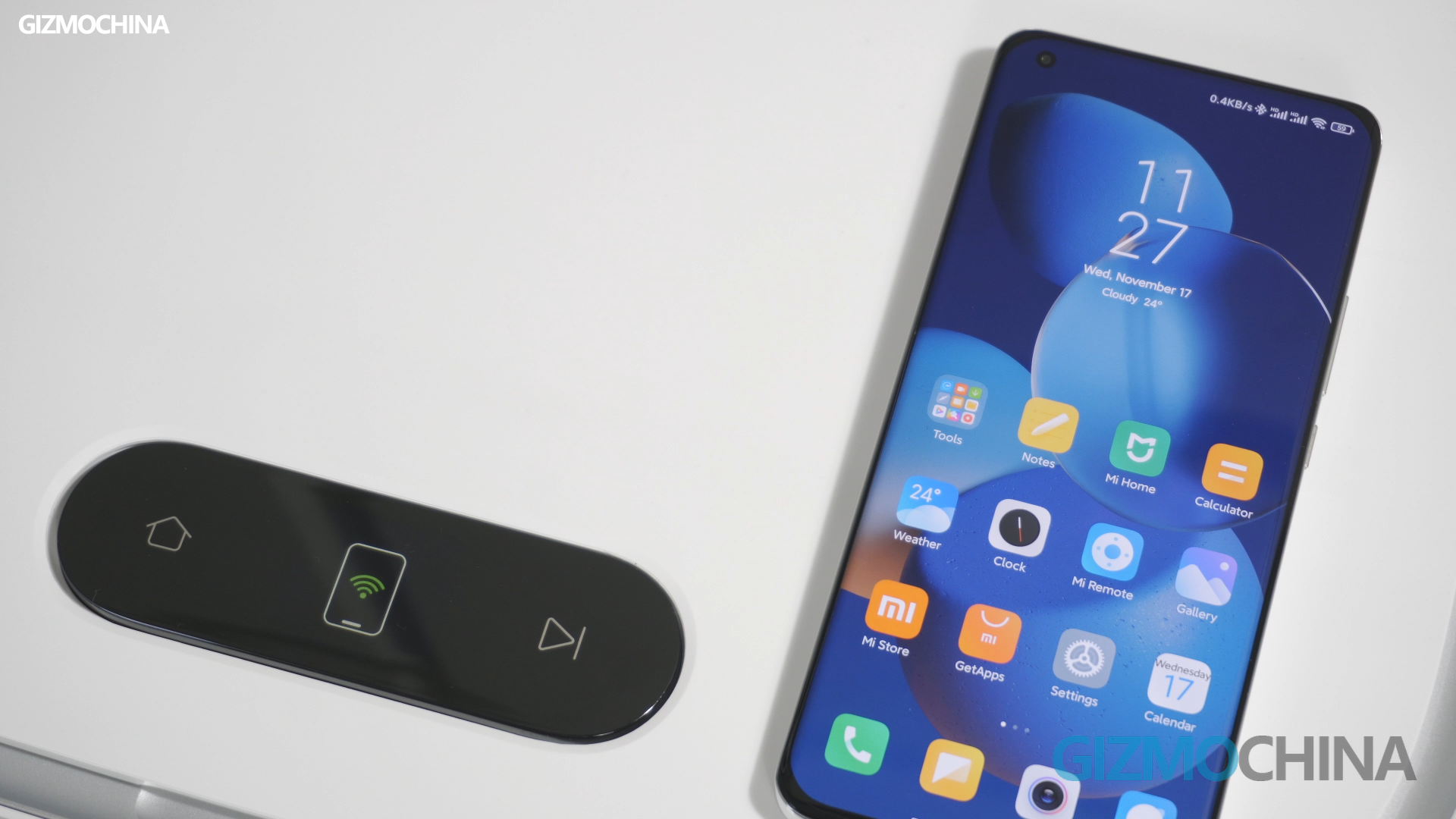
And it is recommended to dump the dirty water regularly, or else the stench of the dirty water will immediately make you regret the decision. Further, the base plate is removable, allowing you to easily clean it. There is a small screen at the top of the Base that shows the Bot’s power and the mode in progress. You can completely operate the Bot through the two small buttons next to it, without the need to use your phone.
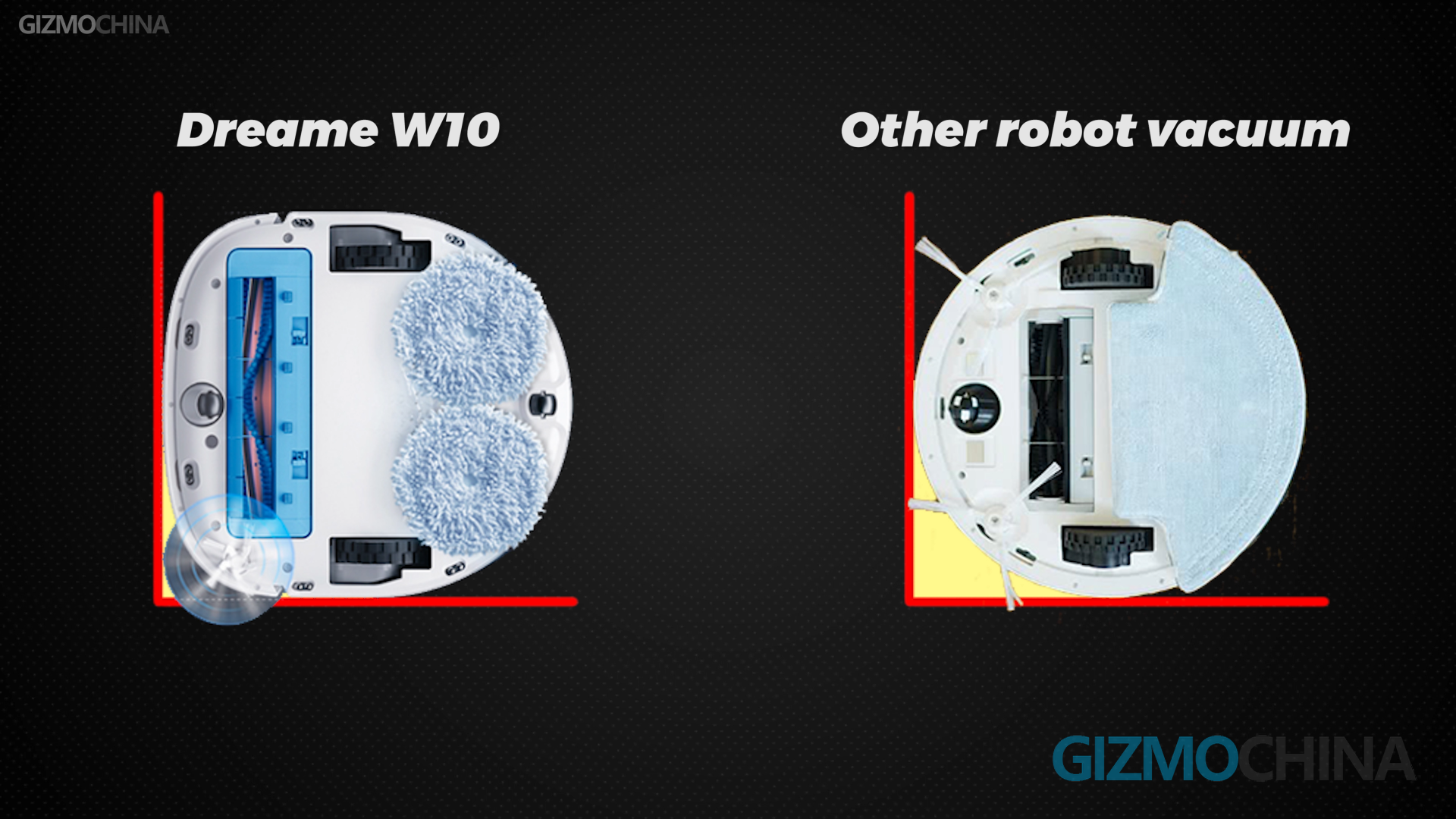
Let’s go back to the robot itself. The Dreame W10 has a D-shaped body, which has the advantage of cleaning corners more thoroughly than other robots with a round design. The top bump is the LIDAR. The LDS Laser Navigation is one of the most common and accurate ways to navigate a robot vacuum.
And when you first use it, the mapping of the room is also very fast, it probably only takes a few minutes. It also has an ultrasonic sensor and a collision sensor, and when it detects a carpeted area in the mopping-only mode, it will not enter the carpet and dampen it. And in the sweeping-only mode, when it detects the carpet, it will also increase the suction power. Of course, it is not perfect, like many robot vacuums, its ability to detect some small items is not very good. Sometimes some small objects on the floor will be pushed away.
For Dreame W10, sweeping the floor is its most basic function. It has a maximum suction power of 4000 Pa, and with the D-shaped housing, you don’t have to worry about it not being able to suck up dust. But you certainly didn’t purchase the Dreame W10 for its vacuum cleaner function. Yes, the most powerful and important function of W10 is its mopping feature. The two rotating downward pressure mops scrub the floor with 10N pressure at 180 revolutions per minute. If you accidentally spill some liquid on the floor, it will use the rotating mop to wipe back and forth twice in the same path to ensure maximum cleanup. This is so much better than some previous floor sweepers.
What’s even better is that it doesn’t even require you to clean the mop yourself. You can also see in the baseplate that there are raised particles on it. That is the structure used to clean the mop. By using spraying water friction, the mop achieves automatic cleaning. Under normal conditions, this automatic cleaning function works pretty well and is able to clean the mop thoroughly.
People who regularly mop know that a mop can be very smelly when used for a long time. Because naturally air-dried mops often have bacteria on them, and they become dry and hard.
But How does Dreametech solve this problem? They have added a hot air drying function to the base. Just like a hairdryer, it ensures the mop remains dry after use and does not smell, thereby reducing the frequency of your mop replacement.
Before Cleaning
After Cleaning
However, just like any item in the market, the Dreame W10 also has its drawbacks. Although it manages to control the noise during automatic cleaning, But I still hope that the noise can be a little less.
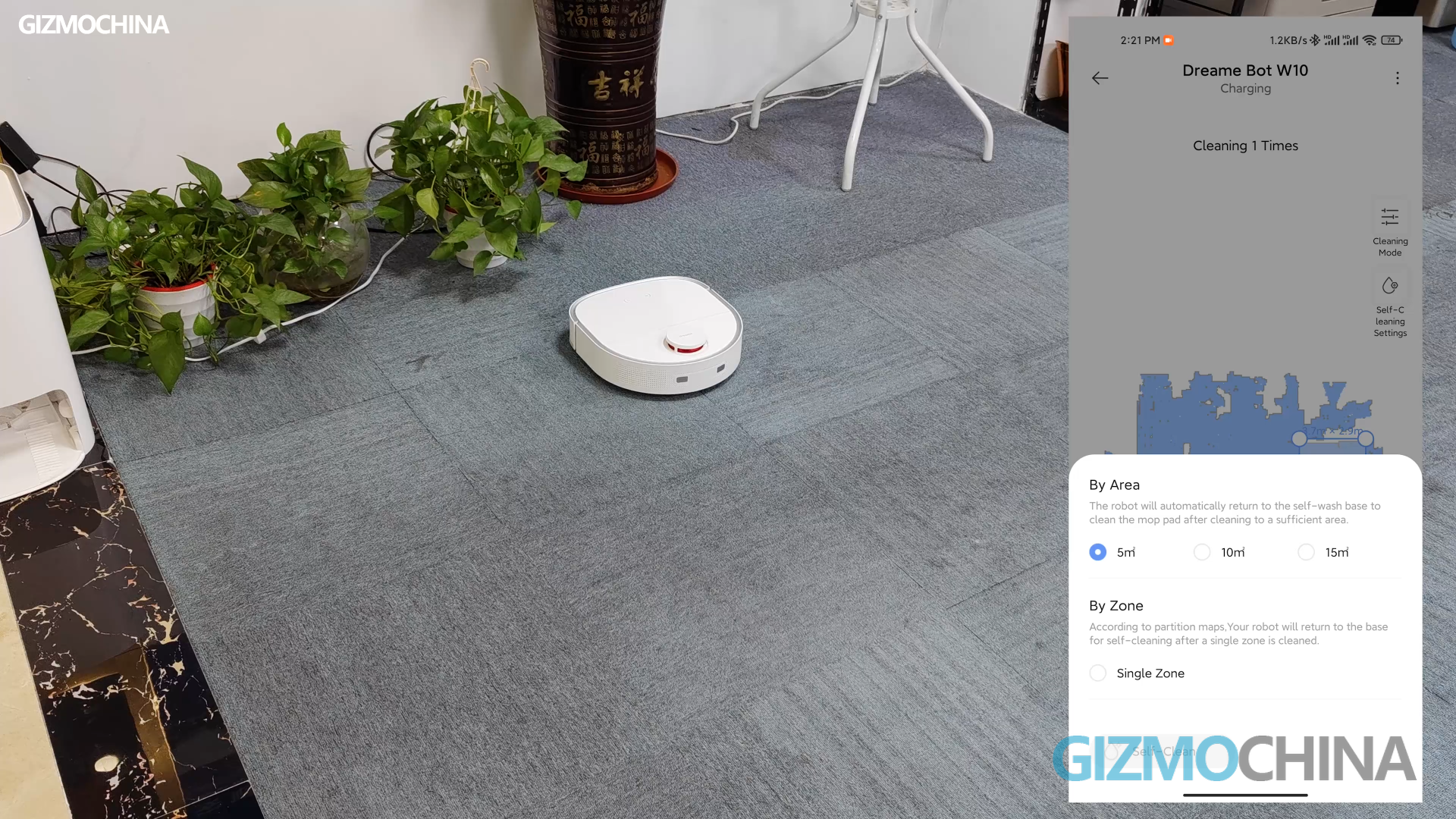
Like most robot vacuums, this robot vacuum can be controlled through an app. It uses the Mi Home app, which means that the W10 can be linked to most Xiaomi Smart Devices. It’s easy to connect, basically within a minute. You can also name each room and then ask it to clean the designated room through the voice assistant. The Dreame W10 has a particularly wide range of options that can be controlled. You can specify the area to be cleaned, and you can also select the corresponding cleaning frequency according to the cleanliness of the floor. Other basic features like timed cleaning and setting ‘no-go areas’ are also present. So the overall experience of the Dreame W10 is quite good.
Dreame W10 is not the first robot vacuum that features both the sweeping and mopping function. Of the previously seen robot vacuum and mop devices, some do not make a clean drag, some can only vacuum and mop at the same time, and some do not have the hot air drying function. So the W10 is a more versatile robot vacuum and mop. Both, the cleaning ability and the mopping functionality have been implemented very well.
When you compare these features, the price is not expensive either. So if you are looking for a robot vacuum that can clean as well as mop, then this Dreame W10 will definitely satisfy your needs.
OPPO is reportedly planning to launch EVs in India in 2023 and 2024, with the first offering coming in the form of an affordable electric scooter.
Tipster Yogesh Brar has shared some details about the OPPO EV launch (via 91mobiles) revealing that the plans for it are still in the early stages, meaning the launch timeline is uncertain at the moment and may even be pushed forward. OPPO is also aiming for a price range of around Rs. 60,000 for the electric scooter, which puts it in a league of its own considering most scooters currently cost over a lakh.
The recently announced OLA S1 Electric Scooter
Moreover, the company is also working on a Tata Nano-like compact car. Many of you will recall that the Nano was launched at a starting price of just a lakh, and if OPPO is indeed to make a car as compact as this one, it will likely make it quite affordable as well. This gets quite apparent with the fact that OPPO is designing both the electric car and scooter mainly for intracity commute. Accordingly, the duo will likely offer limited range and top speeds.
The company has apparently already started holding talks with manufacturers for batteries and other components. Some of these companies even supply parts to brands like Tesla – which makes sense considering electric vehicles are a first for OPPO, and the company would want to start things right.
Recently, it was revealed that OPPO had applied for a trademark back in 2018 for a variety of electric vehicles, along with other BBK Electronics subsidiaries realme, OnePlus, and vivo. This could mean that the company might be the first in multiple Chinese tech companies looking to enter into the Indian EV space.
A few days back, a report revealed the chipsets powering Samsung smartphones and tablets that are set to launch in 2022. Now, another such report details the production units and release scheduled of Samsung tablets, laptops, truly wireless earphones, and a smartwatch that are planned to debut next year. Additionally, it confirms the successors of certain popular products.
According to a report by The Elec(via @FrontTron), Samsung Electronics’ wireless division recently shared its business plan for 2022 with around 30 major partners. In the meeting, the tech giant set a target of increasing its production capacity of tablets, laptops, and wearables (TWS, smartwatches) by 6%, 9%, and more than 35% respectively in 2022 as compared to 2021.
Samsung is targeting around 34 million units of Galaxy Tabs, 7.4 million units of Galaxy Books, 19 million units of Galaxy Watches, and 23 million units of Galaxy Buds. Here’s a rough breakdown of numbers provided by the company.
Samsung Tablet, Laptop, Wearable Production Units 2022
Tablets – 33.6 million units
Galaxy Tab S8 Ultra
Q1~Q2 – 0.4 million units
Galaxy Tab S8+
Q1~Q2 – 0.9 million units
Galaxy Tab S8
Q1~Q2 – 1.2 million units
Galaxy Tab S8 Lite
Q3~Q4 – 1.6 million units
Galaxy Tab A8
Q1~Q4 – 11 million units
Galaxy Tab A7 Lite
Q1~Q4 – 11 million units
Laptops – 7.4 million units
Galaxy Book2 Pro 360
Q2~Q4 – 0.3 million units
Galaxy Book2 Pro / Pro 5G
Q2~Q4 – 0.3 million units
Galaxy Chromebook Go
Q2~Q4 – 1.4 million units
Smartwatches – 19 million units
Galaxy Watch5
Q3~Q4 – 4.8 million units
Wireless Earphones – 23 million units
Galaxy Buds Pro2
Q2~Q4 – 3.1 million units
Galaxy Buds Live2
Q3~Q4 – 3.3 million units
As you can see from above, Samsung has officially revealed the successors of popular devices like Galaxy Buds Pro, Galaxy Buds Live, and Galaxy Watch4, and Galaxy Book Pro series.
Out of all these products, the Galaxy Buds Live is the oldest of all released in Q3 2020. It’s good to know that the company has not discontinued this unique lineup of truly wireless earphones.
We expect to learn more about the Galaxy Buds Live2 and other upcoming Samsung products before their official announcements via leaks and certifications.
A few weeks ago, Intel officially announced its next-generation Alder Lake processors, kicking off the 12th generation of chips from the company. Now, the company is gearing up to launch the mobile version of the same.
Ahead of the launch, Intel has already started shipping them to laptop manufacturers. It was confirmed by the company through Twitter. This indicates that the official launch or announcement shouldn’t be far away.
Based on the information available so far, the Intel Alder Lake-P series include the lower-end models which are said to feature two Golden Cove performance (P) cores, as well as eight Gracemont efficiency (E) cores.
Some higher-end variants of the mobile CPU will reportedly be powered by six P-cores and eight E-cores. It is also being said that the top-end Intel Alder Lake-P chip will come with 14 cores and 20 threads.
Recently, the upcoming Intel Alder Lake-P Core i7-12700H appeared on benchmark which indicated that it to be faster than 45 percent in multi-core performance than the previous generation. It could also outperform AMD‘s flagship processor by 35 percent.
Another benchmark for the Intel Core i7-12700H showed it comfortably on top against Apple Silicon chips as the test revealed Alder Lake-P could be almost 50 percent faster than the newly launched Apple M1 Max chip. The Cinebench R23 benchmark shows Intel chip outperformed the M1 Max by a whopping 49 percent, scoring an impressive 18,501 points.
The OnePlus 9RT was unveiled last month in China as a successor to the OnePlus 9R and brought about a few upgraded specs. Alongside it, the OnePlus Buds Z2 TWS earbuds were also announced. Both were always eligible for global launches, and while there’s no official word from the company about that yet, we now have a date for their release in India.
91mobiles has learned from industry insider Ishan Agarwal that the OnePlus RT and OnePlus Buds Z2 will be going live in India in December. He has further revealed that the OnePlus RT will come in Nano Silver and Hacker Black colors, while the OnePlus Buds Z2 will be available in Obsidian Black and Pearl White colors.
To recall, the OnePlus 9RT was recently found to be rebranded as the OnePlus RT in India. It is most likely that the Indian variant will come with the exact set of specs as its Chinese counterpart. As such, the OnePlus RT will feature a 6.62-inch OLED panel with a 120Hz refresh rate, 1300 nits peak brightness, HDR10+ certification, and a 600Hz touch sampling rate. It will be equipped with the Snapdragon 888 processor – a notable upgrade over the OnePlus 9R’s Snapdragon 870 – that has been paired with up to 12GB of RAM and 256GB of storage.
Moving on to the camera department, the rear module packs a 50MP primary + 16MP wide-angle + 2MP macro camera setup. Upfront, there’s a 16MP selfie shooter fitted within a left-aligned punch-hole. The device is powered by a 4,500mAh battery with support for 65W fast charging.
The OnePlus Buds Z2 comes with an upgraded design that has done away with plastic tips in favor of in-ear silicone ones for a more comfy fit. The earbuds feature 11mm drivers and support AAC and SBC Bluetooth codecs. But perhaps the best bit is the all-new ANC support with claims of reducing noise by up to 40dB. Other than this, the earbuds come with IP55 splash-proof certification, support Warp Charge, and have a battery life of up to 7 hours.
The OnePlus RT is expected to be priced under Rs. 40,000, while the OnePlus Buds Z2 may cost around Rs. 5,815 (derived from Chinese pricing of CNY 499).
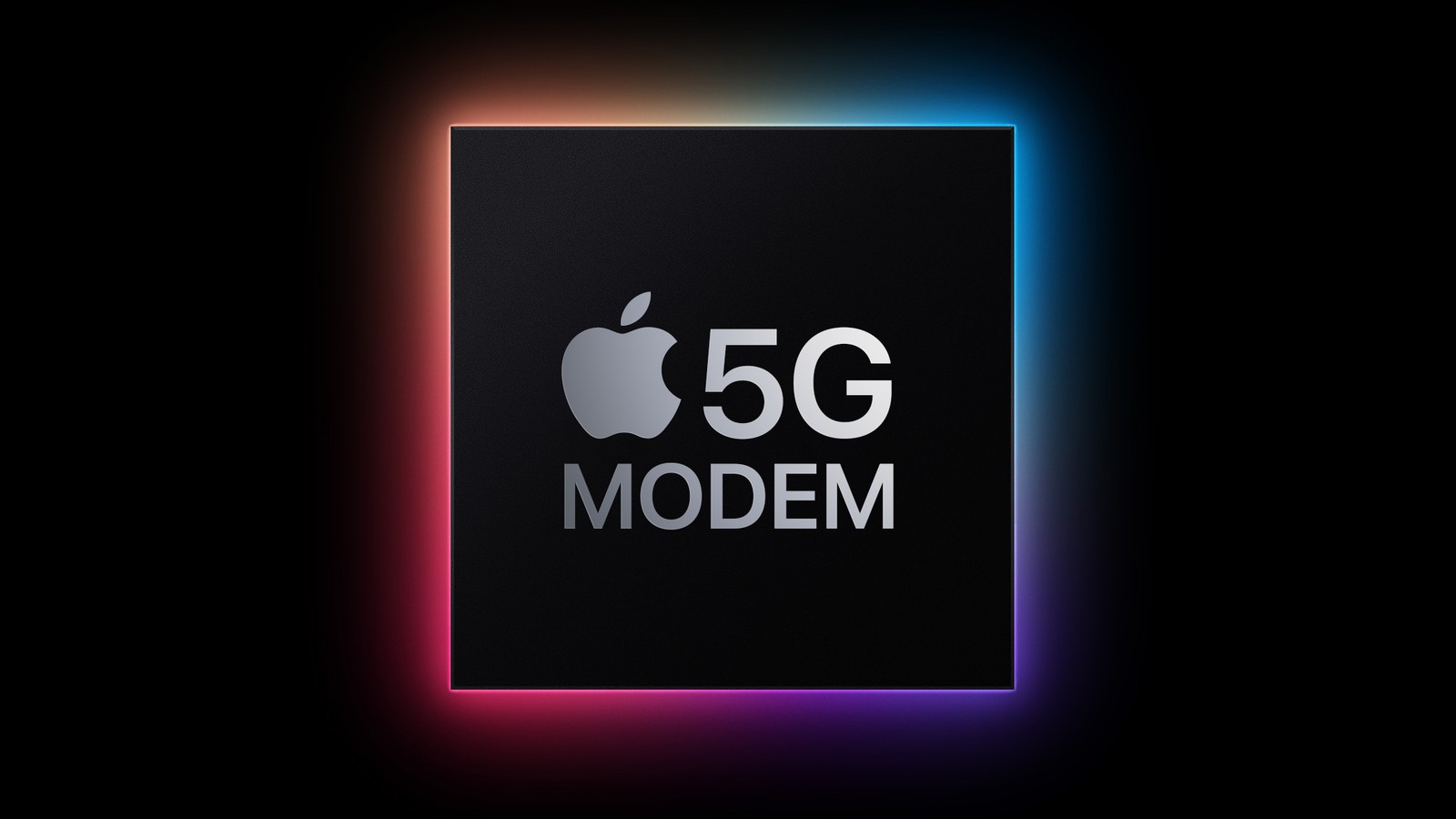
Apple is apparently seeking to deepen its relation with its chip supplier TSMC. The company might be planning to have its custom iPhone 5G modem built by the world’s largest contract chipmaker in 2023.
According to a NikkeiAsiareport, sources close to the matter have revealed that the Cupertino based giant plans on building its first in house modem through TSMC’s 4nm process. Furthermore, the brand is developing its own radio frequency and millimeter wave components as well to go alongside the modem. Similarly, the sources added that Apple is even working on its own power management chip, which will be for the modem.
For those unaware, all of the 5G enabled iPhones that are currently available in the market feature modems supplied by Qualcomm. In other words, this move from Apple would end the monopoly that the American chipmaker held in supplying 5G modems. As per our previous report, Qualcomm is expected to ship just 20 percent of iPhone modems in 2023, since Apple would launch its in house 5G modem the same year.
This would allow the iPhone maker to not just save costs on fees that it pays Qualcomm, but also enable it to have even more control over its hardware integration capability to boost efficiency. Additionally, the self designed modem from Apple could also help in integrating it to its custom iPhone SoCs that are also supplied by TSMC. Back in 2019, the brand had also acquired Intel’s modem business to boost the development of its proprietary modems.
OPPO announced the Find X3 and Find X3 Pro flagship phones in March this year. Apart from featuring different chipsets such as Snapdragon 870 and Snapdragon 888, both handsets offered identical specs. The Chinese manufacturer is reportedly working on the Find X4 and Find X4 Pro smartphones. The Find X4 duo are expected to debut by Q1 2022. Today, the tipster Digital Chat Station shared the key details of what appears to be the Find X4 Pro smartphone.
Last week, the Chinese tipster claimed that the next generation Find series of smartphones will carry support for 80W fast charging. Now the tipster is back with some more specifications of what appears to be the same smartphone.
As per the new leak, the alleged Find X4 / X4 Pro will feature a 6.7-inch display that will carry support for 2K resolution and a 120Hz refresh rate. The device will be powered by the sm8450 chip, which is nothing but the Snapdragon 8 Gen1 mobile platform that is scheduled to go official by November end.
For selfies, it will be sporting a 32-megapixel front-facing camera. Its rear camera setup will include a 50-megapixel (1/1.5-inch) lens, another 50-megapixel (1/1.5-inch) lens, and a 13-megapixel (or 12-megapixel) camera with 2x zoom.
While the purported Find X4 / X4 Pro is expected to arrive with 12 GB of RAM, there is no word on its internal storage. The device will carry support for 80W+ charging, but the battery capacity is not known yet.
Except for the new Snapdragon 8 Gen1 and 80W charging, the other specs of the phone are identical to the Find X3 Pro. Hence, it appears that the tipster has shared the specs of the Find X4 Pro.
Coolpad is set to launch a new smartphone dubbed as Coolpad COOL 20 Pro on December 1. Ahead of that, the primary specs of this handset have already leaked via TENAA. Now, thanks to Geekbench and official teasers, we have learned even more details about the upcoming phone.
Coolpad COOL 20 Pro | Source: TENAA
The Coolpad COOL 20 Pro with model number CP05 has been benchmarked on Geekbench. According to the listings, the device will be powered by a MediaTek Dimensity 900 SoC and will run Android 11. For those unaware, TENAA only revealed that the handset will house a 2.4GHz octa-core processor.
Further, the company officially teased the presence of dual stereo speakers last week. The new teasers have now confirmed features like a 3.5mm headphone jack and a 120Hz display.
As far as other specifications are concerned, we know (via TENNA) that the phone will come equipped with a 6.59-inch FHD+ LCD panel. It will arrive with a 50MP triple camera setup on the rear and an 8MP selfie camera inside the dewdrop notch on the front.
Lastly, the smartphone will have a MicroSD card slot, 4,400mAh battery, 8.3mm thickness, and 193g weight.
Since we are still a week away from the launch, we expect Coolpad to officially tease almost all key features of the Coolpad COOL 20 Pro in the coming days.
Last year, Huawei announced the Nova 8 SE 5G in Dimensity 720 and Dimensity 800U chipset variants. This year, the Huawei Nova 8 SE Youth featuring the Kirin 710A chipset was made official in July. Fresh information reveals that the brand is now gearing up to launch Nova 8 SE 4G in China. Tipster Why Lab has shared the key details of the smartphone.
Huawei Nova 8 SE 4G specifications (Rumored)
The Huawei Nova 8 SE 4G will feature a 6.5-inch OLED panel that offers a Full HD+ resolution of 1080 x 2400 pixels. The device will measure 161.6 x 74.8 x 7.5mm and weigh 180 grams.
The Kirin 710A, which debuted back in 2018, will be powering the Nova 8 SE 4G. It is expected to arrive with 8 GB of RAM and 128 GB of storage. it will be backed by a 3,800mAh battery that supports 66W fast charging through a USB-C port.
Huawei Nova 8 SE 4G
The Nova 8 SE 4G will run on HarmonyOS 2. It will feature a 16-megapixel camera for shooting selfies. Its rear camera unit will comprise a 64-megapixel primary camera with an f/1.9 aperture, an 8-megapixel ultrawide lens, a 2-megapixel macro camera, and a 2-megapixel depth assist lens. It will come in colors like blue, silver, black, and white.
The specs of the Nova 8 SE 4G is identical to the Nova 8 SE 5G from last year. The only noticeable difference is that the Dimensity 720/800U chip has been replaced by the Kirin 710A SoC. At present, there is no word on the pricing and release date of the Nova 8 SE 4G.
After a few leaks, Vivo has now finally launched its new V-series smartphone in Thailand — Vivo V23e 5G. This is a 5G variant of the Vivo V23e that was first launched in Vietnam earlier this month as the successor of the Vivo V21e.
The smartphone features a 6.44-inch Full HD+ AMOLED display with 2400 x 1080 pixels screen resolution. Internally, the device is powered by the MediaTek Dimensity 810 processor, coupled with 8GB of RAM.
It packs 128GB of internal storage and comes with a microSD card slot that allows you to further expand the storage capacity up to 1TB. There’s also an on-screen fingerprint sensor as an additional security measure.
The phone features a triple-camera setup on the back that consists of a 50-megapixel main sensor with f/1.8 aperture, an 8-megapixel wide-angle sensor with f/2.2 aperture, and a 2-megapixel sensor with f/2.4 aperture. On the front side, the device has a 44-megapixel snapper for taking selfies and video calling.
Connectivity options on the device include Dual SIM, 5G, Wi-Fi, Bluetooth v5.1, USB Type-C port, and GPS. It runs the Android 11 operating system out-of-the-box with the company’s own FunTouch OS 12. The device is powered by a 4,050mAh battery that comes with support for 44W fast charging technology.
The Vivo V23e 5G comes in two color options in Thailand — Sunshine Coast and Moonlight Shadow. The phone is priced at THB 12,999 which is around $390 and is now available for pre-order with sales set to start from 1st December.
Lenovo has launched its new All-in-One computer in the Chinese market — Lenovo AIO520 which comes in White and Black colors. The product, which is priced at 5,499 yuan (approximately $860) is currently up for pre-order through JD.com.
The new Lenovo AIO520 features a 23.8-inch Full HD display that offers a screen resolution of 1920 x 1080 pixels, 72% NTSC color gamut, and a viewing angle of 178-degrees. It offers a 96 percent screen-to-body ratio, thanks to the narrow bezels measuring 2mm.
On top of the display is a 720p webcam that comes with built-in dual noise reduction microphones for effectively reducing the impact of the surrounding environment. It supports uplink and downlink, one-way, omnidirectional intelligent noise reduction, and ensures that the voice communication is clear.
Under the hood, the device is powered by Intel’s 11th generation Core i5-11320H processor which is built using a 10nm process and packs four cores, eight threads, with a maximum clock speed of 4.5GHz.
It comes with integrated Intel Iris Xe high-performance graphics, built-in 96 stream processor units with performance close to MX450. The device packs 16GB of RAM and 512GB of SSD for storage.
The bottom part of the computer is designed with a portable hard disk compartment design, which can be used to quickly insert and remove 2.5-inch hard disks without the need for any kind of tools.
It also comes with Harman Cardon customized audio system. There are four USB-A ports, an HDMI port, and an RJ45 port for Gigabit Ethernet. Lenovo says that this new AIO520 all-in-one computer is eco-designed and uses EU green-certified materials supplemented with special craftsmanship, which is environment-friendly.
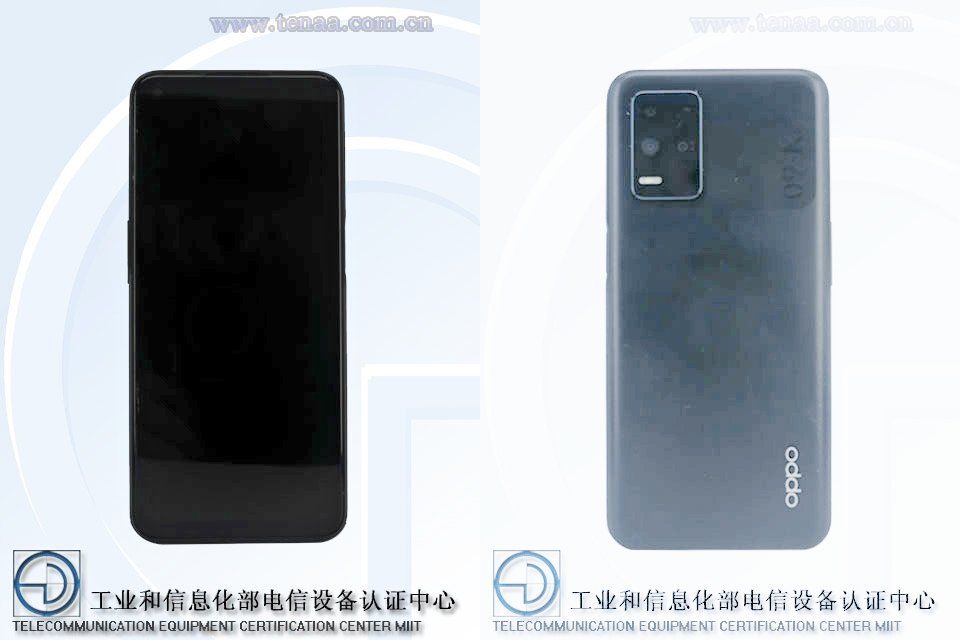
A mysterious OPPO phone with model number PCGM10 was certified by the TENAA and 3C agencies of China recently. The “09-K” branding on the back panel of the device revealed that it could be an upcoming K9 series smartphone. Fresh information shared by a Chinese tipster states that it will be debuting in the Chinese market with the OPPO K9x name.
OPPO K9x specifications (Rumored)
According to the leaker, the 6.5-inch FHD+ LCD display of the OPPO K9x will support a 120Hz refresh. The display is likely to be flanked with a layer of Gorilla Glass 5.
It will be driven by the Dimensity 900 chipset. The handset will be backed by a 5,000mAh battery, which will carry support for a 30W VOOC 4.0 enhanced flash charger.
OPPO K9x TENAA images
The rear shell of the device will have a 64-megapixel OmniVision main camera, which will be coupled with a pair of 2-megapixel cameras for macro and depth shots.
The TENAA listing of the device had revealed the smartphone measures 162.5 x 74.8 x 8.8mm and weighs 191 grams. It will come with 4 GB / 6 GB / 8 GB of RAM, 128 GB / 256 GB of built-in storage, ColorOS based Android 11, and a side-facing fingerprint scanner.
The tipster claimed that the OPPO K9x will go on sale by Dec. 12. It may come in variants such as 6 GB RAM + 128 GB storage for 1,499 Yuan (~$234), 8 GB RAM + 128 GB storage for 1,699 Yuan (~$266), and 8 GB RAM + 256 GB storage for 1,899 Yuan (~$297). The K9x is similar to the Realme Q3 phone that went official in the first half of 2021. It came with Snapdragon 750G chip and a 48-megapixel main camera. The other specs of both phones are identical.
Samsung, which is among the leading chipset manufacturers, is gearing up to set up its new chip production plant in the United States. For that, the South Korean giant had shortlisted two potential locations.
Now, the company has officially confirmed that it has chosen a site close to the city of Tylor in Texas for its new chip manufacturing plant. For this, Samsung will be making an investment of $17 billion — its biggest-ever in the United States.
The plant is expected to create some 2,000 technology industry jobs, with construction starting early next year. It is expected to be operational by the second half of 2024.
Kinam Kim, chief executive of Samsung electronics device solutions said: “With greater manufacturing capacity, we will be able to better serve the needs of our customers and contribute to the stability of the global semiconductor supply chain.”
It has also been announced from the governor’s office that the company would get a $27 million grant for creating jobs in the state. Samsung is one of the world’s largest manufacturers of chips with more than 20,000 employees across the US.
The new chips made at this new Texas facility will be used in a range of technologies and devices, including mobile phones, 5G, high-performance computing, and artificial intelligence, among others.
Earlier, a proposed resolution posted on the Taylor city’s website showed that for the land Samsung will use, it is set to be offered a grant equivalent to 92.5% of assessed property tax for 10 years, 90% for the following 10 years, and then 85% in the 10 years after that.
The OPPO smartphone with model number PFCM00 will launch tomorrow with the theReno7 SE moniker. Its dimensions are 160.2 x 73.2 x 7.45mm and it weighs 171 grams. Its front side will be flanked with a 6.43-inch AMOLED FHD+ display and it will be backed by a 4,390mAh rated (4,500mAh typical value) battery. It has 8 GB of RAM and 64 GB / 128 GB / 256 GB of storage. For photography, it has a 16-megapixel front camera and a 48-megapixel + 2-megapixel + 2-megapixel triple camera unit.
OPPO Reno7 specifications
OPPO Reno7
The OPPO phone with the PFJM10 model number is the Reno7. The device measures 156.8 x 72.1 x 7.59mm and weighs 185 grams. It features a 6.43-inch AMOLED FHD+ screen and a 4,390mAh rated (4,500mAh typical value) battery. It will arrive with 8 GB / 12 GB of RAM and 128 GB / 256 GB of storage. It will house the Sony IMX709 32-megapixel front camera and a 64-megapixel (OmniVision OV64B) + 8-megapixel + 2-megapixel triple camera unit.
OPPO Reno7 Pro specifications
OPPO Reno7 Pro
TENAA confirms that the Reno7 Pro’s model number is PFDM00. It measures 158.2 x 73.2 x 7.45mm and weighs 180 grams. The handset houses a 6.55-inch AMOLED FHD+ display and a 2,200mAh dual-cell battery. Its combined battery size is said to be 4,500mAh. It will also come with 8 GB / 12 GB of RAM and 128 GB / 256 GB of storage. For selfies, it will possess the Sony IMX709 32-megapixel front camera. Its rear shell be fitted with a 50-megapixel (Sony IMX766) + 8-megapixel + 2-megapixel triple camera setup.
Rumors have it that the display of the Reno7 series of smartphones will offer a 90Hz refresh rate and an in-screen fingerprint scanner. The Reno7 SE, Reno7, and Reno7 Pro are powered by the Dimensity 900, Snapdragon 778G, and Dimensity 1200-Max chip. These phones are expected to come with support for 33W, 60W, and 65W fast charging, respectively. The trio will come in colors like black, blue, and gold.
The recently released CAD renders of the upcoming Google Pixel 6a revealed that its design will be similar to the Pixel 6 and Pixel 6 Pro smartphones. A fresh report by9to5 Google has revealed some key information on the chipset and cameras of the Pixel 6a.
The new report states that the Pixel 6a’s rear camera setup will include a 12.2-megapixel Sony IMX363 camera. It is the same camera sensor that was made available on older Pixel phones from Pixel 3 that debuted in 2018 to Pixel 5a from this year.
The 12.2-megapixel Sony IMX363 camera will be accompanied by a 12-megapixel Sony IMX386 sensor. The latter may function as an ultrawide camera. For selfies, the device will feature an 8-megapixel Sony IMX355 front-facing camera. These cameras show that its photography prowess will not be as good as Pixel 6 or Pixel 6 Pro.
Google Pixel 6a CAD renders by 91mobiles/Steve Hemmerstoffer
The report further states that the Pixel 6a mid-ranger will be equipped with the Google Tensor GS101 chip, which fuels the Pixel 6 duo flagship phones. The other details of the phone are under wraps.
The Pixel 6a renders showed that it will be featuring a punch-hole display on the front. Its rear shell will feature a dual-tone design and a horizontal camera bar. At present, there is no information on the launch date of the device.
The Pixel 5a was announced in August this year. Hence, there is a possibility that the search giant may announce the Pixel 6a at least six months after the launch of the Pixel 5a. Hence, it appears that the handset may break cover by Q1 2022.
Last week, tipster Kacper Skrzypek spotted the Redmi 10 2022 moniker at the IMEI database. It was found that model numbers such as 21121119SG and 22011119UY are associated with the Redmi 10 2022. The tipster has shared some information on the cameras of the Redmi 10 2022. At the same time, the handset has bagged several certifications indicating that it may go official soon.
The Redmi 10 2022 with model number 21121119SG has been certified by Indonesian certification sites such as TKDN and SDPPI. It has also bagged certifications from Europe’s EEC, Singapore’s IMDA, and TUV. A variant with model number 21121119VL has also appeared in TUV’s database.
According to Skrzypek, the Redmi 10 2022’s rear camera setup will include a Samsung S5KJN1 or OmniVision OV50C40 50-megapixel primary camera, a Sony IMX355 8-megapixel lens, and an OmniVision OV02B1B or GalaxyCore GC02M1B 2-megapixel camera. The tipster speculates that this device could be similar to the Redmi 10, which debuted in August.
The Redmi 10 has a 6.5-inch IPS LCD FHD+ 90Hz display, an 8-megapixel front camera, and a 50-megapixel + 8-megapixel + 2-megapixel + 2-megapixel quad-camera unit. It runs on MIUI 12.5 based Android 11 OS.
Redmi 10 / Redmi 10 Prime
The Helio G88 chip powers the Redmi 10 with up 6 GB of RAM and up to 128 GB of storage. It has a 6,000mAh battery that supports 18W charging. For security, it has a side-facing fingerprint scanner. The same device is available with Redmi 10 Prime moniker in India.
Chinese tech giant Xiaomi had announced in November 2020 that its smart TV brand was leading the Chinese TV market for seven straight quarters as of Q3 2020. One year after, the company still continues its dominance, extending it to 11 consecutive quarters in Q3 2021. This was made known by the company when it announced its financial report for the third quarter of the current year.
The financial report shows the company maintained a solid performance despite the chip shortage and other challenges that could have hampered its sales performance. The report also reveals that Xiaomi raked in total revenue of 78.1 billion yuan. This represents an 8.2% Year-on-Year growth. The Chinese giant also posted an adjusted net profit of 5.176 billion yuan, representing a year-on-year increase of 25.4%.
In the first three quarters, Xiaomi disclosed that its accumulated R&D expenditure was RMB9.3 billion, an increase of 51.4%. Xiaomi also hinted that it has got over 14,000 employees under its R&D section. This is said to account for 44% of its entire workforce.
Apart from maintaining its dominance in the smart TV segment, leading the market for 11 consecutive quarters. Xiaomi is said to control about 50% of the Chinese OLED TV market.
We use cookies on our website to give you the most relevant experience by remembering your preferences and repeat visits. By clicking “Accept”, you consent to the use of ALL the cookies.
This website uses cookies to improve your experience while you navigate through the website. Out of these, the cookies that are categorized as necessary are stored on your browser as they are essential for the working of basic functionalities of the website. We also use third-party cookies that help us analyze and understand how you use this website. These cookies will be stored in your browser only with your consent. You also have the option to opt-out of these cookies. But opting out of some of these cookies may affect your browsing experience.
Necessary cookies are absolutely essential for the website to function properly. This category only includes cookies that ensures basic functionalities and security features of the website. These cookies do not store any personal information.
Any cookies that may not be particularly necessary for the website to function and is used specifically to collect user personal data via analytics, ads, other embedded contents are termed as non-necessary cookies. It is mandatory to procure user consent prior to running these cookies on your website.