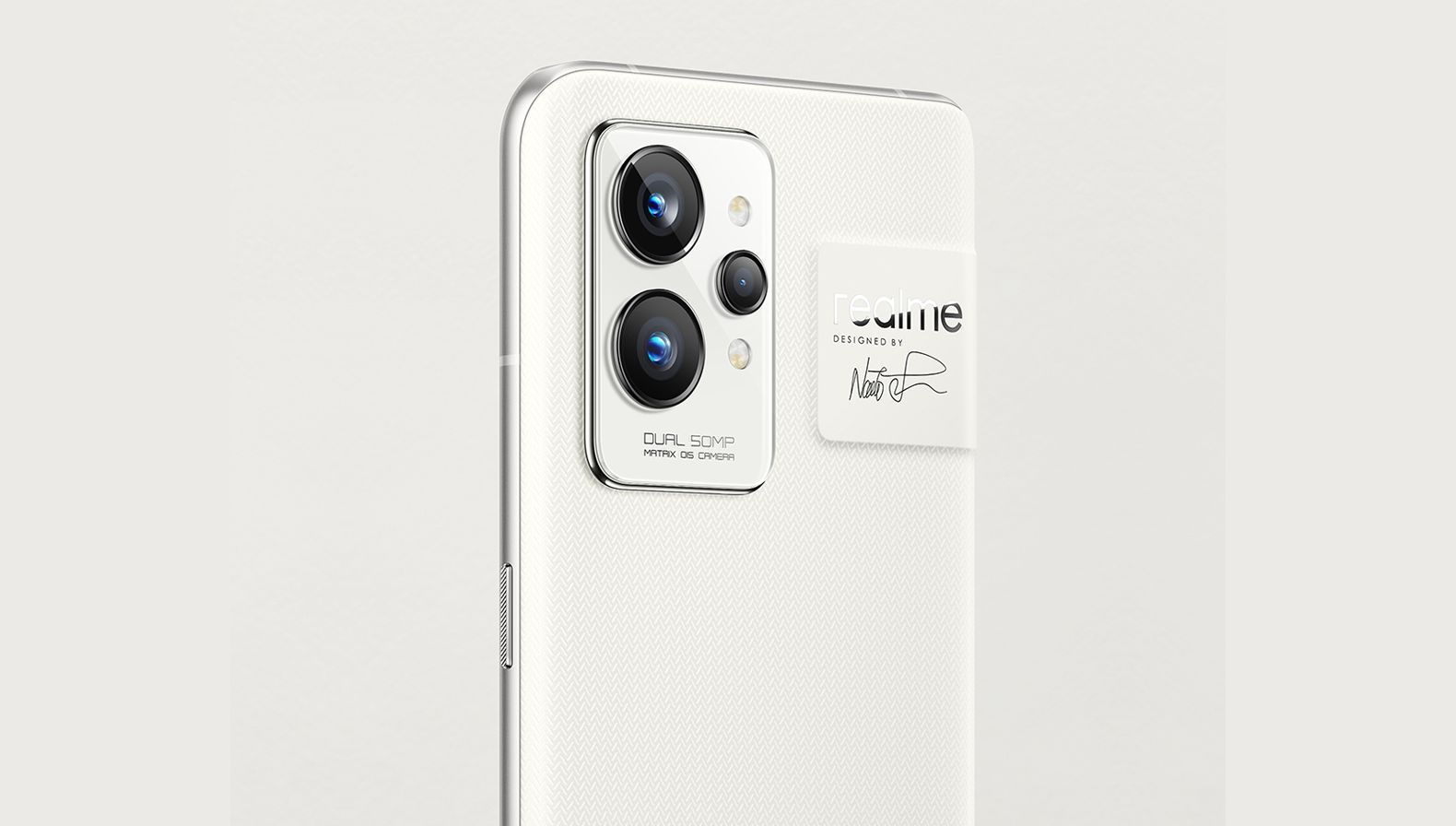
Prior to the launch of the Realme GT2 series, the company has released another teaser for the upcoming smartphones. In the latest promotional move, the brand has showcased the devices’ thermal management systems that should help keep the temperature of its flagship level internal specs in check.
The teaser was shared on the company’s official Weibo account (a Chinese microblogging website) and highlights its new Diamond Ice Core Cooling System Plus. We had seen a version of this technology being used in the past, with the GT Neo2 featuring the system as well. Although, it appears that this iteration of the cooling system is a new and improved variant.
Furthermore, the Chinese smartphone maker also added that the smartphone features VC liquid cooling system as well to help keep thermals low even during intense tasks like gaming. Realme stated that its VC liquid cooling plat covers an area of 4129mm² while its Diamond Ice Core Cooling System Pls has a cooling area of 36761mm². The former completely covers the motherboard region along with a large portion of the battery area as well.
With the device featuring Qualcomm’s latest and greatest Snapdragon 8 Gen 1, it arrives as no surprise that cooling is an important aspect that Realme placed an emphasis on. The GT2 series is set to be unveiled on the 4th of January 2021. So stay tuned, as we will be covering the launch event and any new teasers that the company shares.
Redmi announced the Redmi Note 11, Note 11 Pro, and Note 11 Pro+ in October in China. Reports have claimed that the company may announce the Note 11 series with different specs in the global markets by Q1 2022. Fresh information reveals that the Redmi Note 11s has bagged approval from multiple certification platforms.
As tipster Abhishek Yadav revealed, a Xiaomi handset with model number 2201117SG has been certified by Thailand’s NBTC authority. The listing has confirmed that it will be debuting in the country with the Redmi Note 11S name.
The same model along with its variant such as 2201117TG, 2201117TY, and 2201117SY have also been certified by the EEC authority in Europe. In addition, the Indian edition of the phone with model number 220111TSI has been approved by the BIS authority. These listings have no information on the specs of the device.
Last week, the 2201117TI and 2201117TG models were spotted at BIS and NBTC certification sites, respectively. The NBTC listing revealed that this device will be launching as Redmi Note 11 4G. Its appearance at Camera-V5 revealed that it will be equipped with a 50-megapixel primary camera and a 13.1-megapixel front-facing camera.
The global edition of the Redmi Note 11 Pro+ handset with model number 20191116UG was approved by the FCC authority, which confirmed that it is heading towards the global markets. However, it did not reveal any details on its specs.
This year in March, Redmi announced Redmi Note 10, Note 10 5G, Note 10S, and Note 10 Proin multiple markets. Hence, there is a possibility that the company may unveil the Redmi Note 11 lineup for the global markets by March 2022.
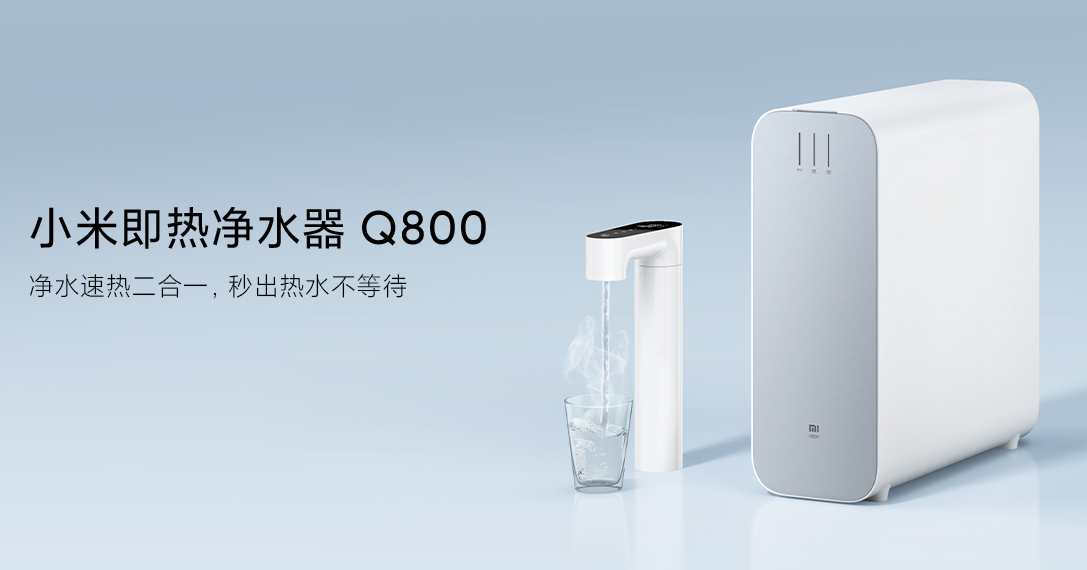
Xiaomi‘s Weibo handle for its smart home products on Tuesday announced the release of the Mi Instant Water Purifier Q800, with a starting price of 3,799 Yuan or around $596.
The true specialty of the device lies in its heating capabilities, however, as it gives out hot water in just a second, that too all filtered and ready to drink. Four presets are offered for this feature, namely normal temperature mode (25°C), milk mode (45°C), coffee mode (85°C), and boiling water mode (95°C). A couple of custom presets can also be created through the Mijia app.
For filtration, the Xiaomi Instant Water Purifier Q800 comes with a new primary RO filter that’s been paired with a secondary RO filter. The life of the filter unit has been claimed to be increased by 150% along with a 50% improvement in the pure to wastewater ratio. The ratio is now as high as 3:1 and the wastewater can still be used for stuff like washing dishes, watering flowers, and mopping the floor.
An anti-clogging tech has also been put in place, protecting the secondary RO filter and allowing the main filter to last for up to 5 years.
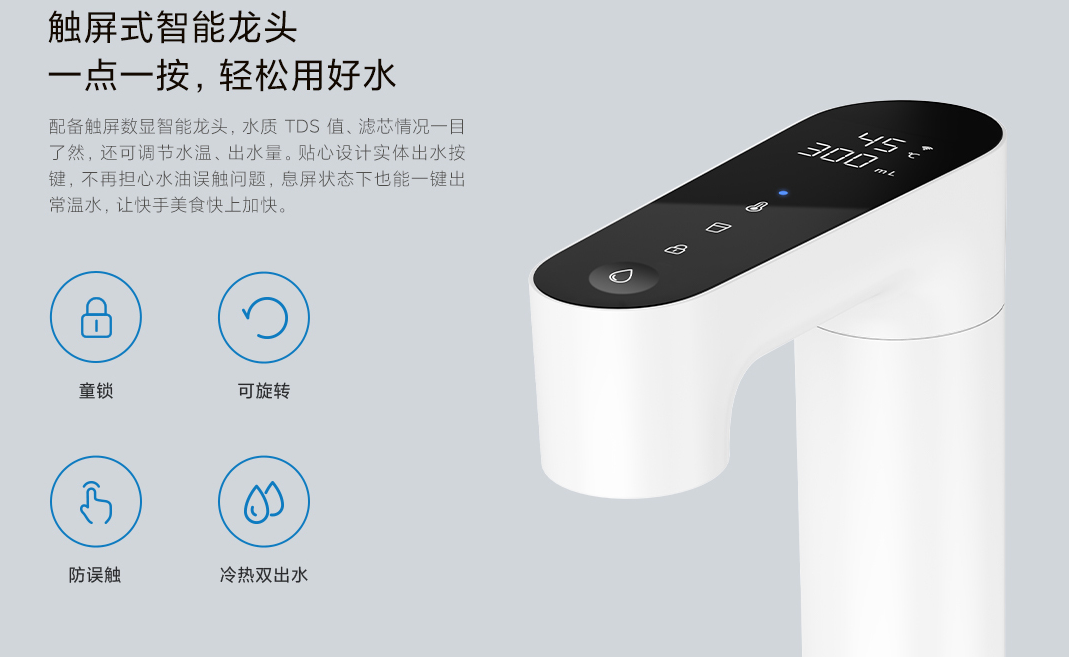
For interface, the Q800 is equipped with a touch screen display that has been integrated into the top of the smart faucet. The water quality TDS value and filter element status are shown through it and it even lets you adjust the water temperature and output.
Last but not least, the water output button adopts a physical design, meaning you shouldn’t have to worry about it being rendered inoperational when wet.
Xiaomi has recently launched the Xiaomi 12, Xiaomi 12X, and Xiaomi 12 Pro flagship phones in China. Now, its sub-brand seems to be gearing up to introduce the Redmi K50 series lineup. If it arrives early, it may impact the sales of the Xiaomi 12 lineup. Hence, it is likely to go official in January or February 2022. However, it appears that the launch of the first K50 series phone may not be too far away as it bagged approval from the TENAA authority of China.
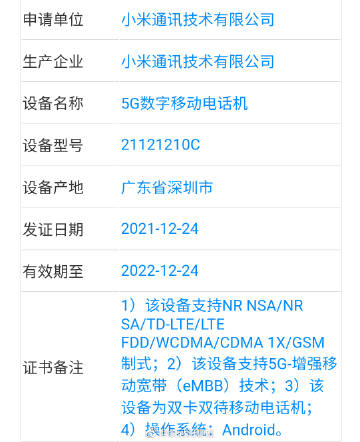
An upcoming Redmi phone with model number 21121210C has received approval from TENAA (via). Unfortunately, the listing has no information on its specifications. The same model was previously seen in the database of the CMIIT certification site earlier this month.
Rumors surrounding the 21121210C model have claimed that it could be a Redmi K50 Gaming series smartphone. It is speculated that the device will come with the device will be equipped with an OLED panel a punch-hole design and Gorilla Glass Victus protection. The screen is expected to support a 120Hz or 144Hz refresh rate. It will come preinstalled with MIUI 13 based Android 12 OS.
The Redmi K50 Gaming is likely to feature the Dimensity 9000 chipset. Its rear camera setup may house a 64-megapixel Sony IMX686 primary camera, a 13-megapixel ultrawide lens, an 8-megapixel telemacro snapper, and a 2-megapixel macro camera. It is speculated that there is a higher variant of the phone that features a 108-megapixel Samsung HM2 main camera instead of the 64-megapixel lens.
Reports have also revealed that there are global and Indian variants of the same phone. It is likely that the handset will be sold as a POCO F4 GT in other markets.
Chinese smartphone brand vivo is all set to launch the vivo V23 series in India next week. According to a reliable source, the company may debut yet another handset in the county at around the same time. This phone dubbed as vivo Y21T will be a budget offering, as per its specifications.
vivo Y32
Popular tipster Ishan Agarwal has partnered with 91Mobiles to shed details on the upcoming vivo Y21T for India. The leakster says that the smartphone will launch in the country on January 3, two days ahead of the vivo V23 series announcement.
Further, he has even shared some of the key specs of this handset. Going by the details shared by him, the phone could be a rebranded vivo Y32 that went official a few days back. But unfortunately, we don’t have any render of the device to confirm.
Talking about features, the vivo Y21T will arrive with an LCD screen sporting a dewdrop notch, a rectangular camera module, a Qualcomm Snapdragon 680 chipset, 4GB RAM, 128GB internal storage, and a 50MP triple camera, setup. Finally, it will draw power from a 5,000mAh battery with support for 18W fast charging.
Unfortunately, the source says nothing about the smartphone’s price. Anyway, we can expect it to be priced around ₹15,000 ($201) or more in India.
Outside of China, Xiaomi still has the impression of being a budget-friendly brand that exists for the sole purpose of offering more for less. While the strategy has served the company quite well since its advent, Xiaomi knows that in order to keep up growth, it has to rise above the competition. And what better way to do so than improving research?
With that likely in mind, Xiaomi chairman and founder Lei Jun yesterday announced that the company’s goals for investment into R&D in the next 5 years have been increased to 100 billion Yuan or around $15 billion. The company’s previous announcement from a couple of years back had set the amount at 50 billion Yuan, so the upgraded plans impart a perfect two-fold increase.
The CEO further revealed under the same post that 22 billion Yuan had already been invested over the past two years and that Xiaomi now has 16,000 engineers, meaning things have been going smoothly and in accordance with plans. He says that all of it is being done to “live up to the expectations of Mi Fans.”
And it’s not like all the money flowing into R&D has been fruitless as results have indeed been reflecting on its latest products — a good example being the Xiaomi 12‘s self-developed CyberFocus and Image Brain tech on its cameras that promises strides in object tracking and image processing speeds. The investment also very likely has a major role to play in getting the company to diverge into other businesses including smart home products and even EVs.
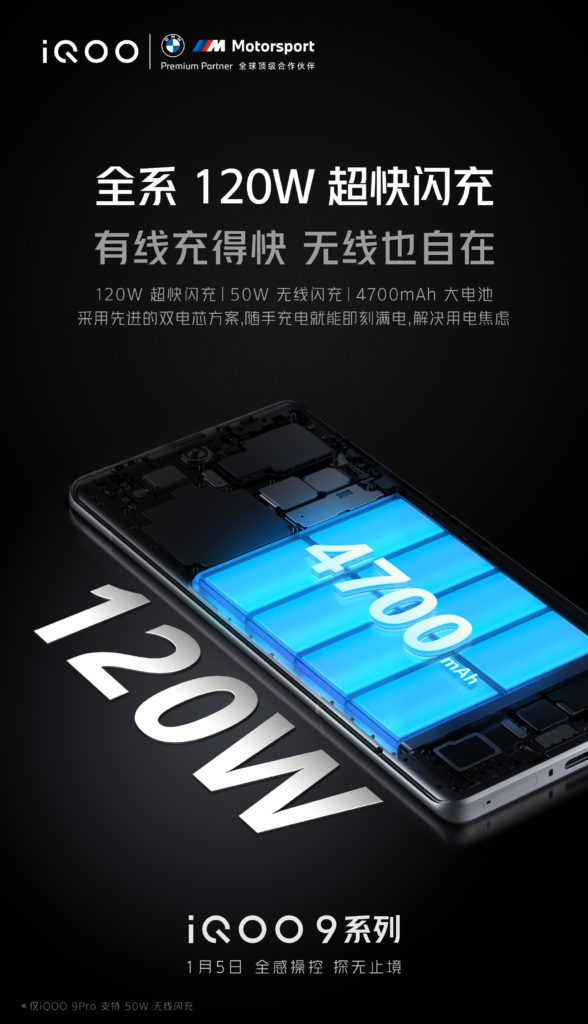
The iQOO 9 series of flagship phones are all set to launch on Jan. 5 in China. Today, the company released a new poster to reveal the battery size and charging capabilities of the iQOO 9 lineup.
The poster reveals that the iQOO 9 series has a 4,700mAh battery. Reports have claimed that the iQOO 9 Pro will house a 4,700mAh battery, while the vanilla model may get a smaller battery.
The image further mentions that the iQOO 9 series supports 120W rapid charging and 50W wireless charging. The image confirms that the wireless charging capabilities will be available only on the Pro model.
Reports have claimed that the iQOO 9 Pro will be equipped with a 6.78-inch AMOLED display with curved edges. It may offer Quad HD+ resolution and a 120Hz refresh rate. The rear camera setup of the Pro model may feature a gimbal-OIS enabled 50-megapixel Samsung GN5 main camera, a 150-degree 50-megapixel Samsung JN1 ultrawide snapper, and an OIS-ready 16-megapixel telephoto camera with 2.5x optical zoom.
On the other hand, the iQOO 9 may house a 6.78-inch 120Hz FHD+ AMOLED display with a flat design. Its rear-facing triple camera module will be headlined by a 50-megapixel Samsung GN5 camera. It is likely to be accompanied by a 120-degree FOV 13-megapixel superwide lens and a 12-megapixel Sony IMX663 telephoto lens. The iQOO 9 and 9 Pro are said to be powered by the Snapdragon 8 Gen 1 chipset, up to 12 GB of LPDDR5 RAM, and Android 12 OS.
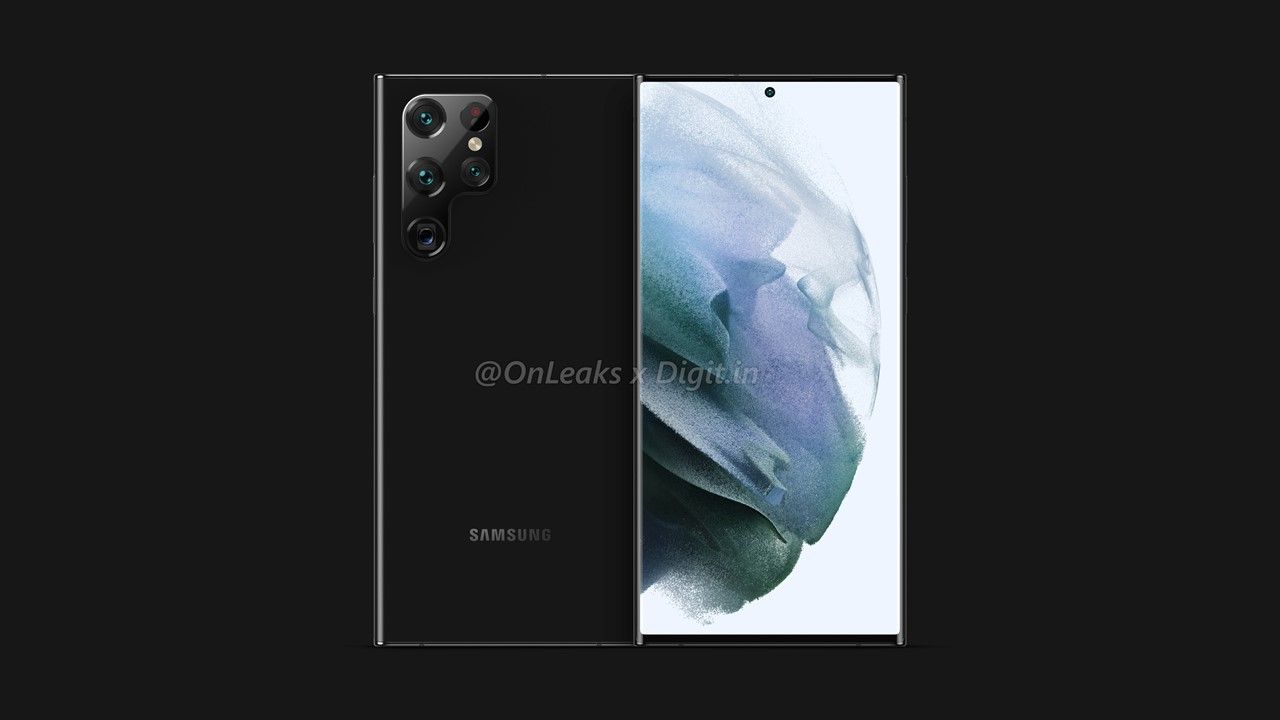
Samsung is gearing up to launch its next-generation Galaxy S-series flagship lineup which is expected to include the Galaxy S22, S22 Plus, and S22 Ultra. Ahead of the launch, many details about the phones have surfaced online.
According to the latest report, it is being reported that the top-end model in the lineup, the Samsung Galaxy S22 Ultra, could come with a 1TB internal storage variant.
Earlier, the reports indicated that the Galaxy S22 Ultra smartphone would max out at 512GB of internal storage but now it is being said that there will be a 1TB storage version for the top-of-the-line offering.
This makes sense given that the S22 Ultra is like a spiritual successor to the Galaxy Note series phones which seems to have been discontinued by the South Korean giant.
However, this won’t be the first time Samsung offers a 1TB storage version for its smartphone. A couple of years back, in 2019, the company had launched the Galaxy S10 Plus with 1TB of internal storage as well as a microSD card slot.
If this turns out to be true, then Samsung will be up against Apple’s latest iPhone models which also offer up to 1TB of storage. Further, the Galaxy S22 Ultra is expected to come with a dedicated slot for storing the S-Pen stylus.
Based on the leaks, it’s likely that the 1TB internal storage model will come packed with 16GB of RAM. There will also be a 12GB RAM model and three other internal storage options — 128GB, 256GB, and 512GB.
All the models in the Galaxy S22 series will come powered by the Snapdragon 8 Gen 1 chipset or the unannounced Samsung Exynos 2200 SoC, depending on the region. As for the availability, the devices are expected to go on pre-sale from 8th February in South Korea but the official launch may get delayed to the end of February or early March.
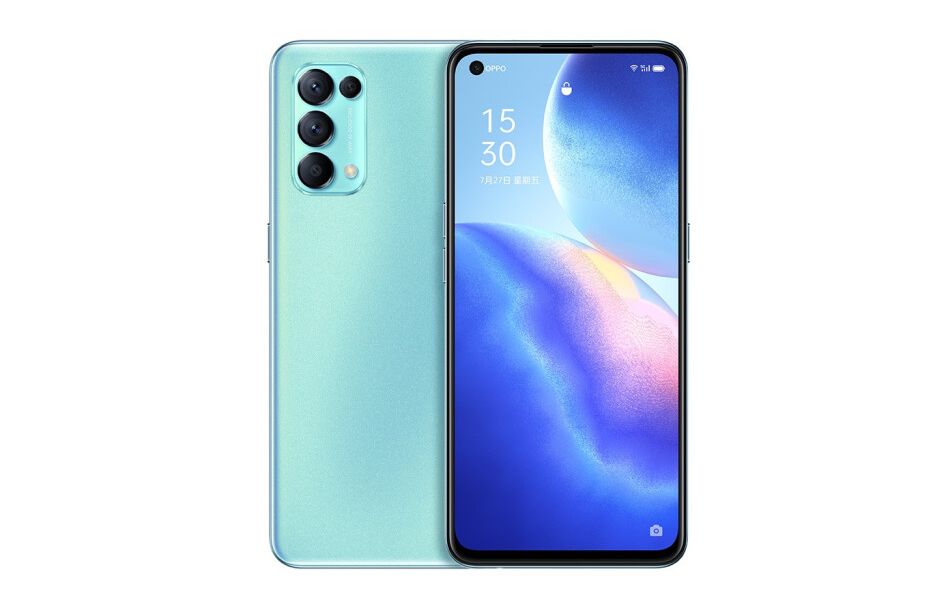
OPPO has been rolling out beta as well as stable builds of Android 12-based ColorOS 12 for eligible devices ever since the software went official in mid-September. Now, four more smartphones from the company have joined the ColorOS 12 open beta program before the end of 2021 in China. These devices are OPPO Ace2, OPPO Reno5 K 5G, OPPO K9 5G, OPPO A93 5G.
OPPO Reno5 K 5G
In ordertoparticipate in the ColorOS 12 open beta program, users should be on the following firmware versions.
The beta registrations for the first batch have already ended for OPPO Ace2 and OPPO A93 5G. Whereas, they are live until today (December 29) for OPPO Reno5 K 5G and OPPO K9 5G.
To register, users will have to navigate to Settings > Software Update > Gear Icon > Apply for Beta Version > Update Beta Version and follow the on-screen instructions. Selected applicants will receive the update via OTA within 3 working days from the selection.
Since OPPO has been releasing stable builds around a month after the beta release, these handsets will most likely get access to ColorOS 12 stable by the end of January 2022 or early February 2022.
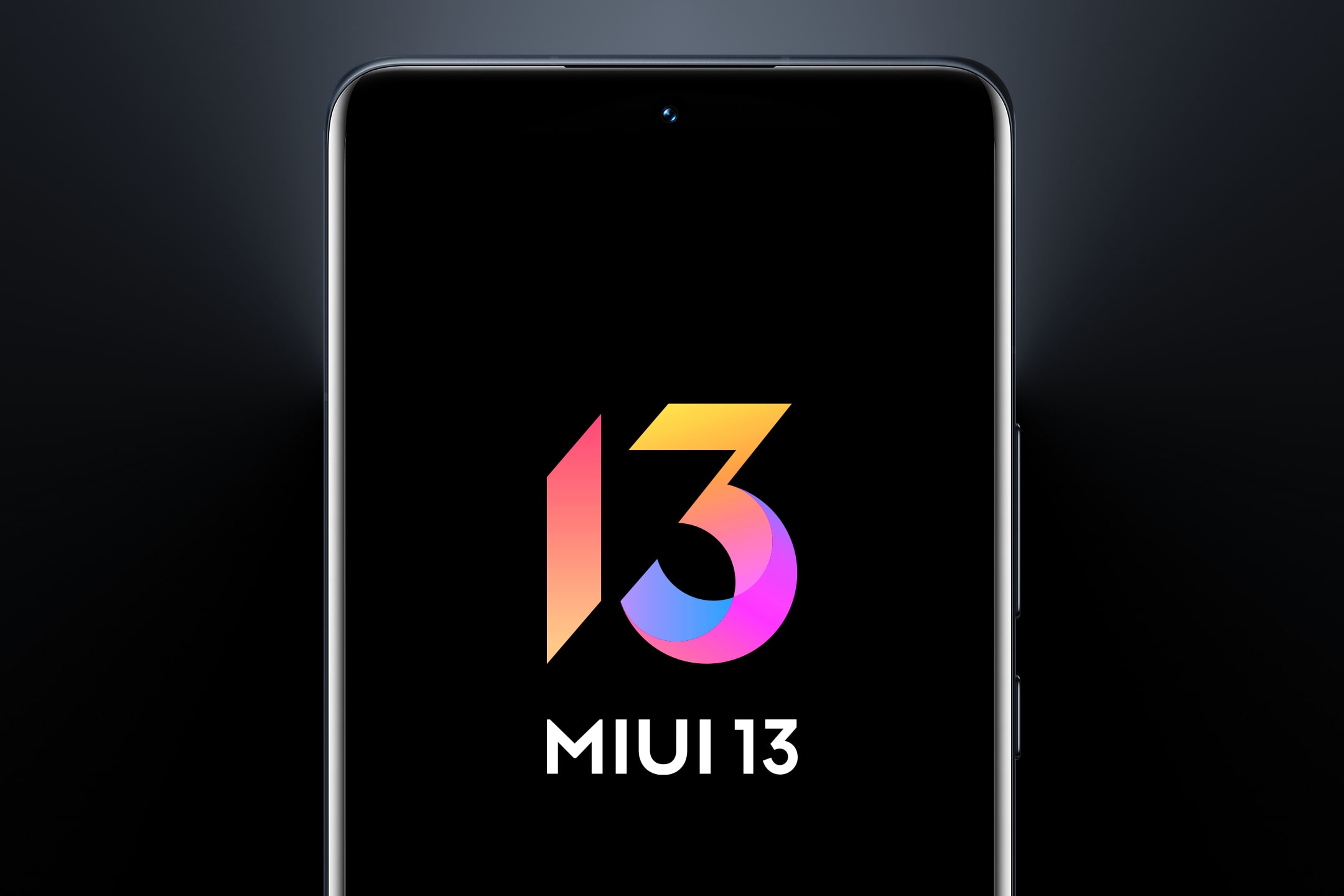
Xiaomi recently announced its latest Android 12-based MIUI 13 operating system for its smartphones. The newly released Xiaomi 12 series phones come pre-installed with the latest MIUI and the company has shared a release timeline for other phones.
Now, internal beta testers with the devices in the first phase of the release scheduled have received the latest MIUI 13 Beta update for their smartphones. Do note that this is just a beta release and the stable version will be available next month.
The update, based on the Android 12 operating system, that is being pushed by the company carries version number 21.12.27. It comes with optimized performance, strengthened privacy, and integration of smart ecology products from Xiaomi, and more.
The smartphones from Xiaomi that are eligible for the MIUI 13 Beta version in China include Xiaomi Civi, MIX 4, Redmi K40 Game Enhanced Edition, Redmi Note 10 Pro, Xiaomi 11, 11 Pro, 11 Ultra, 11 Youth Edition, Mi Pad 5, Pad 5 Pro, Pad 5 Pro 5G, Xiaomi 10S, Redmi K40, K40 Pro, K30S Extreme Edition, K30 Extreme Edition, Mi 10 Extreme Edition, Mi 10, 10 Pro, Redmi K30, K30 5G, K30i 5G, K30 Pro, Mi 10 Youth Edition, Redmi Note 9, Note 9 4G, Note 9 Pro, Note 10, Note 11 5G, 10X Pro, 10X, and Xiaomi CC9 Pro.
Here’s the summary of the official changelog for the MIUI 13 Beta update from Xiaomi:
Added some functions of Mi Magic with support for interconnection of mobile phones and tablets for seamlessly content flow between devices
Added face verification protection and privacy watermark functions
Added full-link electrical fraud protection to secure from telecommunications fraud
Added live wallpaper beautiful scientific crystals, showing the beauty of science under the microscope
Added widget system to support rich application widgets and personalized widgets
Add a fully customizable Xiao Ai classmate, your personal intelligent assistant
Optimize the basic experience faster and more stable
The rollout of the stable MIUI 13 will being from next month, starting with devices like Xiaomi 11, 11 Pro, 11 Ultra, Mi Pad 5 Pro 5G, Mi Pad 5 Pro, and Mi Pad in the first phase while the timeline for the second and third phase will be revealed later.
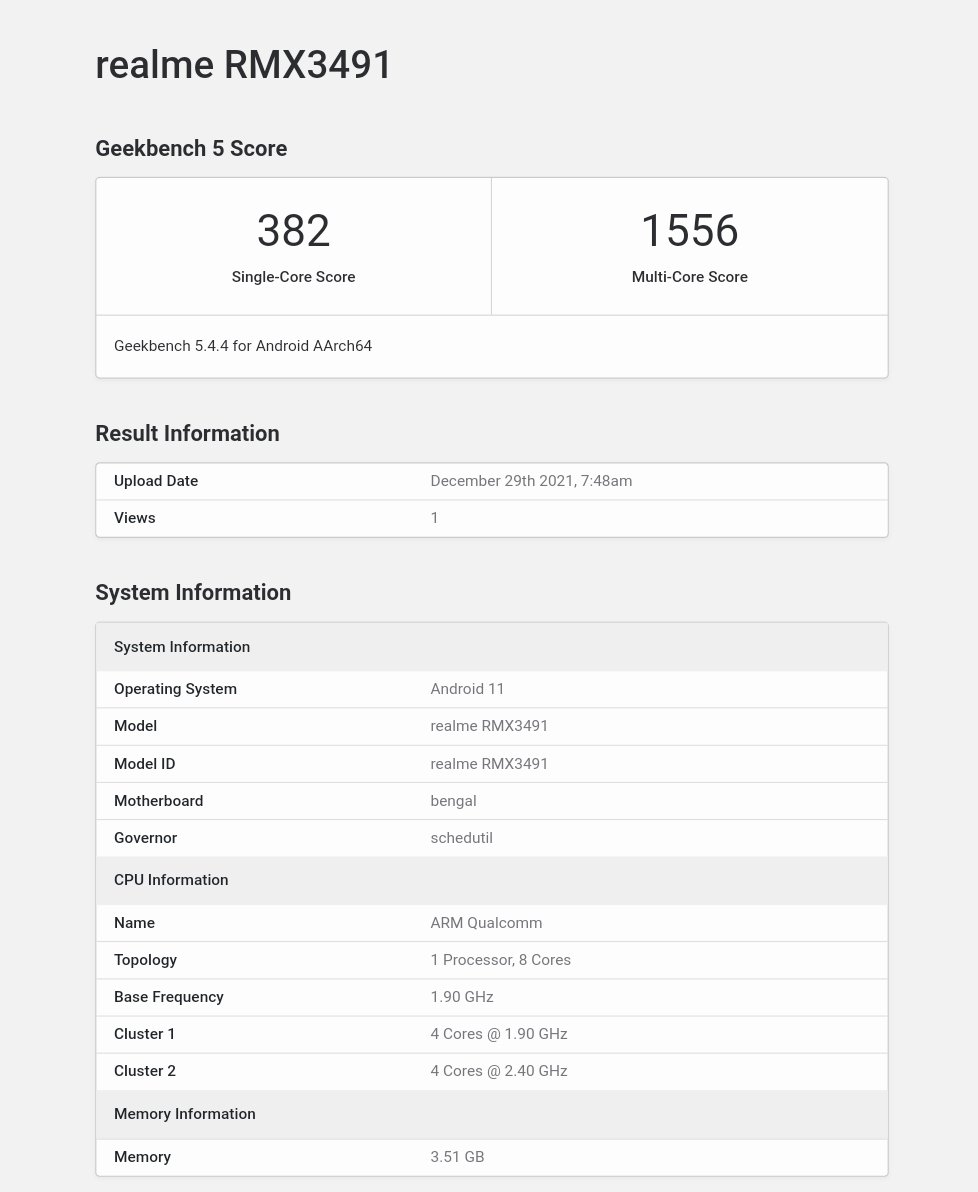
Reports have revealed that the RMX3491 model number belongs to the upcoming Realme 9i handset. The same device has now appeared on the Geekbench benchmarking site (via). It confirms that the device will be equipped with the latest Snapdragon 6-series chipset.
Realme 9i Geekbench listing
The Realme 9i’s Geekbench listing has revealed that is powered by the ‘Bengal’ codenamed Qualcomm chipset. The SoC includes four CPU cores working at 1.90GHz, whereas the remaining four CPU cores clock at 2.40GHz. The source code of the Geekbench listing shows that it has Adreno 610 GPU. These specs suggest that the 9i will be driven by the latest Snapdragon 680 chipset.
The listing has further revealed that the Realme 9i has 4 GB of RAM and Android 11. It has scored 382 points in the single-core test and 1556 points in the multi-core test. The Geekbench listing is a good hint that the company could be testing the performance of the device before its official announcement. Reports have claimed that the Realme 9i will debut globally in January and it will also arrive in India soon.
Realme 9i specifications (rumored)
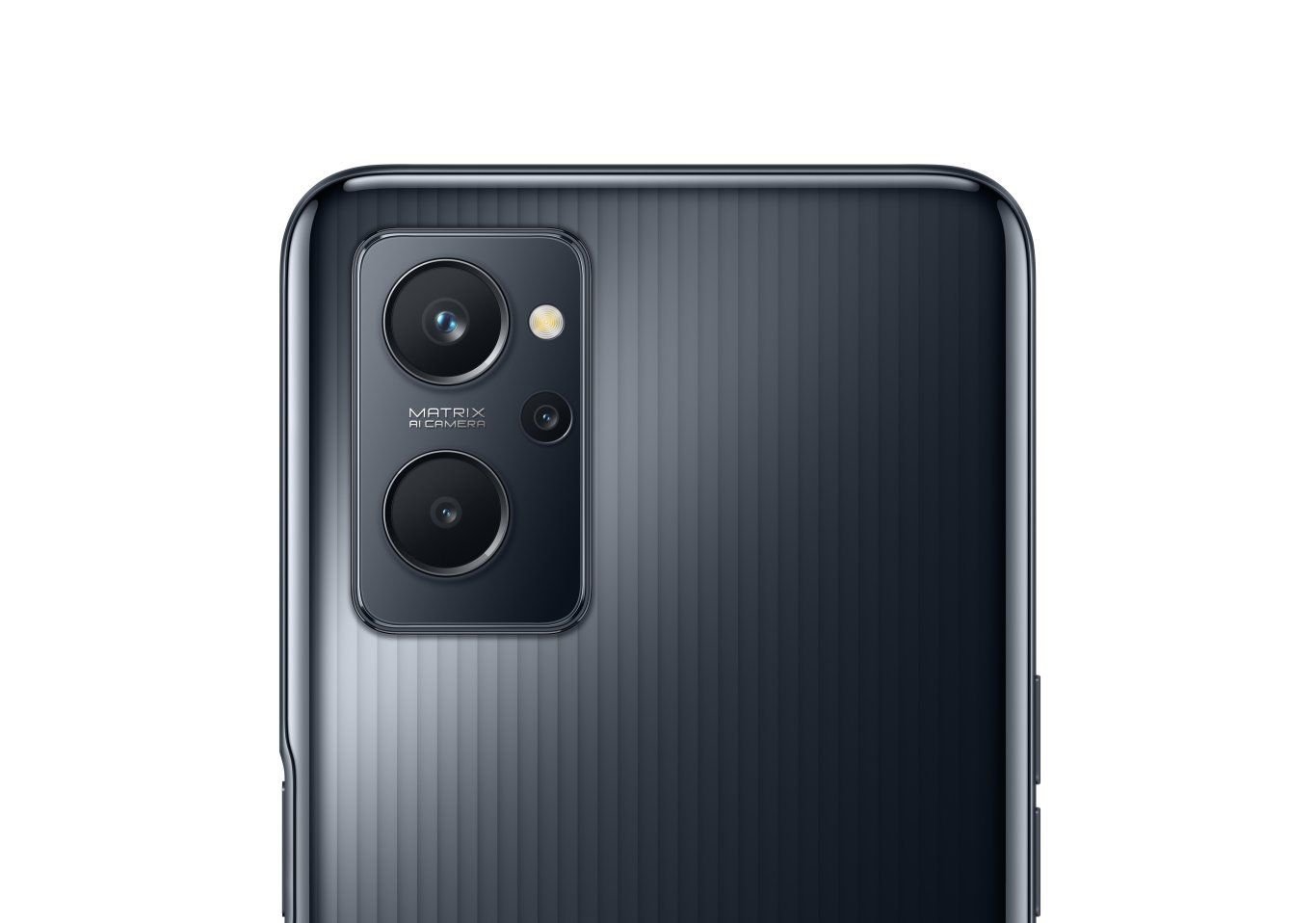
The Realme 9i has a 6.6-inch LCD punch-hole display that delivers Full HD+ resolution and a 90Hz refresh rate. It has a 16-megapixel front-facing camera and a 50-megapixel (main) + 8-megapixel (ultrawide) + 2-megapixel (macro) triple camera unit. It has a side-facing fingerprint scanner.
Realme 9i
The 9i has a 5,000mAh battery that supports 33W fast charging. It will run on Realme UI 2.0 based Android 11.
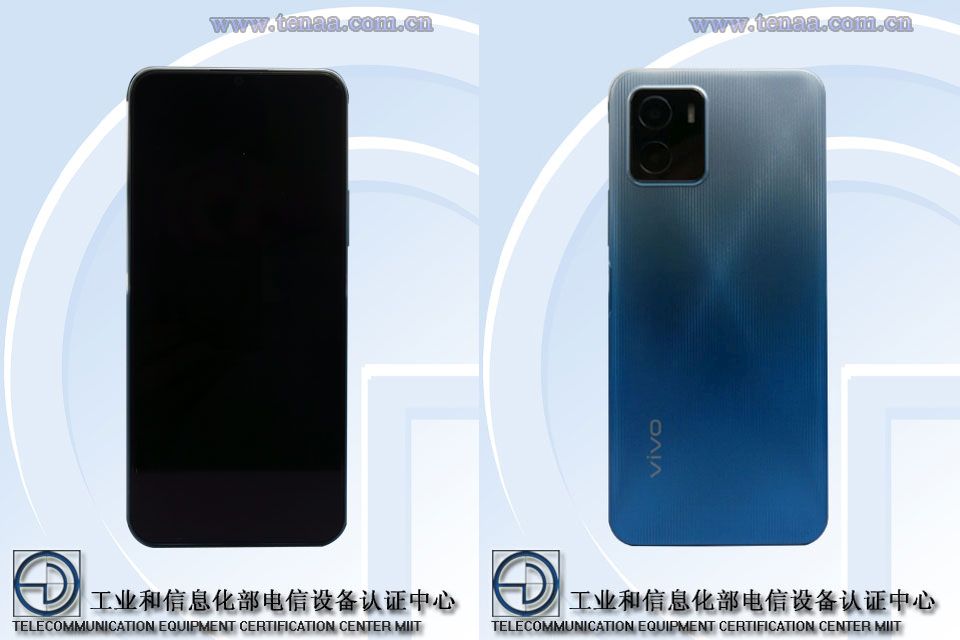
Earlier this month, a mysterious Vivo phone with V2140A was approved by the TENAA and 3C certification platforms of China. The listing revealed that it could be an affordably priced 4G LTE smartphone. Now, another 4G LTE phone with model number V2168A has been certified by the TENAA authority. As expected, the images and specifications of the V2168A phone have been revealed through its TENAA appearance.
Vivo V2168A specifications
The Vivo V2168A specifications that have emerged on TENAA has revealed that it has a 6.51-inch LCD screen that offers a 720 x 1600 pixels HD+ resolution. A closer look at the images of the phone reveals that it has a waterdrop notch on the front, while its back panel has a dual-camera setup housed inside a squarish module.
For selfies, the V2168A features an 8-megapixel front-facing camera. The back panel of the device has a 13-megapixel primary shooter and a 2-megapixel secondary snapper. The handset runs on Android, which appears to be the Android 11 OS. It will be overlaid with the FunTouch OS UI.
The V2168A has a 4,910mAh rated battery. There is no word on the charging rates that will be supported by the device since it is yet to 3C approval. The device is driven by a 2.1GHz octa-core processor and 4 GB / 6 GB of RAM.
The V2168A will come in 128 GB and 256 GB storage choices. It seems to feature a side-facing fingerprint scanner. The device has 163.96 x 75.2 x 8.28mm dimensions and weighs 171 grams. While the device is shown in gradient blue color in the above-shown images, the TENAA listing reveals that it will also come in black color.
Vivo will be launching the Vivo V23 5G and Vivo V23 Pro 5G smartphones on Jan. 5 in India. A week ahead of the unveiling event, tipster Yogesh Brar has shared the entire specifications of the Vivo V23 duo.
Vivo V23 5G specifications, price (rumored)
According to the tipster, the Vivo V23 5G will feature a 6.44-inch AMOLED display that offers a Full HD+ resolution and a 90Hz refresh rate. The flat-screen will be integrated with a fingerprint scanner. It will be India’s first phone with Dimensity 920 chipset. The device will come 8 GB of RAM and UFS 2.2 storage choices such as 128 GB / 2256 GB. It will house a 4,200mAh battery that supports 44W fast charging.
Vivo V23 series poster
The front camera setup of the phone will include a 50-mgeapixel primary camera and an 8-megapixel ultrawide lens with a 105-degree FOV. The front cameras will be coupled with dual-tone flash. Its rear shell has a 64-megapixel primary camera, an 8-megapixel ultrawide lens, and a 2-megapixel macro camera. It will come with Android 12 OS and FunTouch OS 12. It is likely to be priced between Rs 26,000 (~$348) and Rs 29,000 (~$387).
Vivo V23 Pro 5G specifications, price (rumored)
The Vivo V23 Pro 5G has a 6.56-inch curved edge AMOLED display that supports FHD+ resolution, a 90Hz refresh rate, and an in-screen fingerprint scanner. The Dimensity 1200 chipset powers the V23 Pro. It will arrive with 8 GB / 12 GB of RAM and 128 GB / 256 GB of internal storage. The device will be equipped with a 4,300mAh battery with 44W fast charging.
The V23 Pro will feature the same dual selfie camera setup that is available on the V23 handset. The Pro model has a 108-megapixel (main) + 8-mgeapixe (ultrawide) + 2-megapixel (macro) triple camera unit. It will also boot to FunTouch OS 12 flavored Android 12. It will be priced between Rs 37,000 (~$481) and Rs 40,000 (~$535). The V23 Pro appears to be a rebranded version of the Vivo S12 Pro.
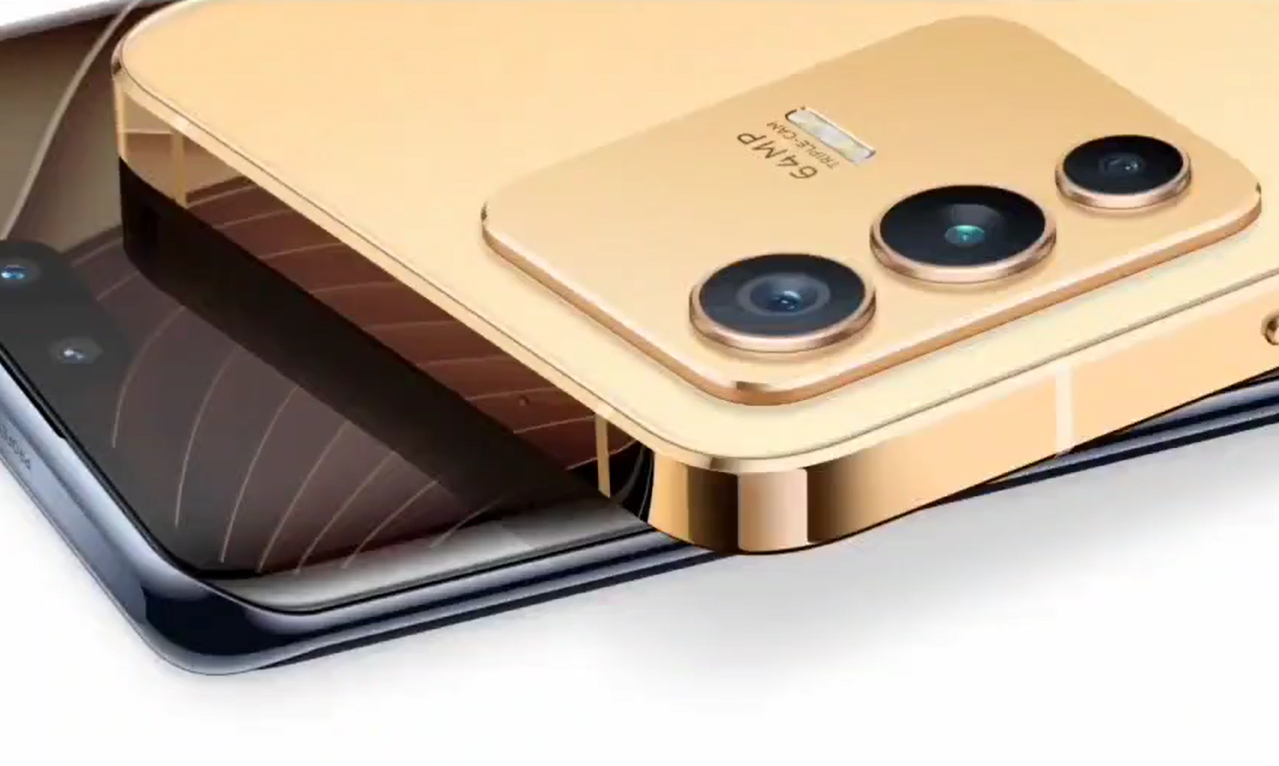
The Vivo V23 Pro will come in two colors such as Sunshine Gold with color changing capabilities and Stardust black. The V23 will also come in the same colors.
OPPO is reportedly working on its next-generation Find-series flagship smartphones which are expected to officially launch sometime in February or March next year. Ahead of the announcement from the brand, some details related to the devices have already leaked.
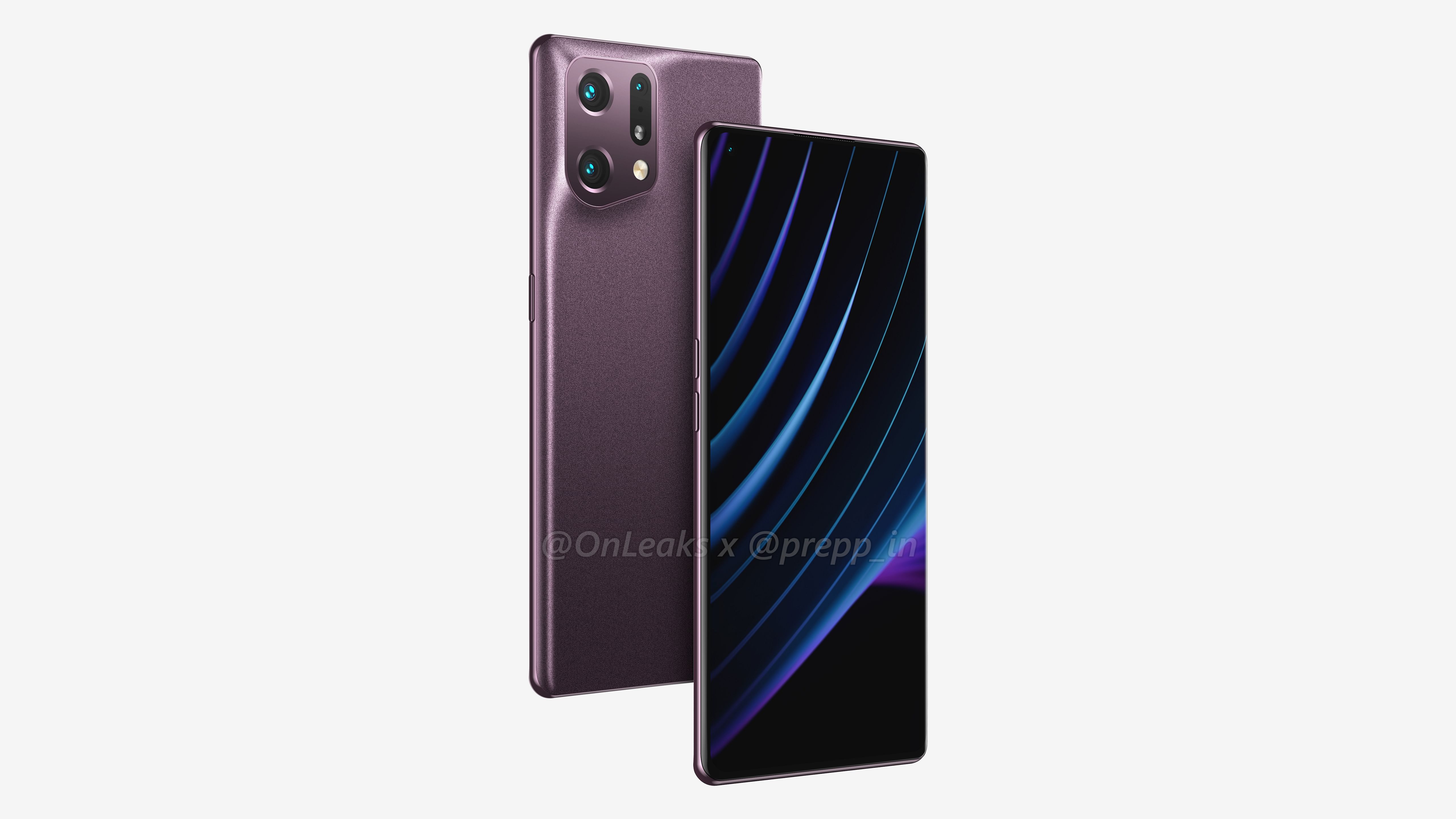
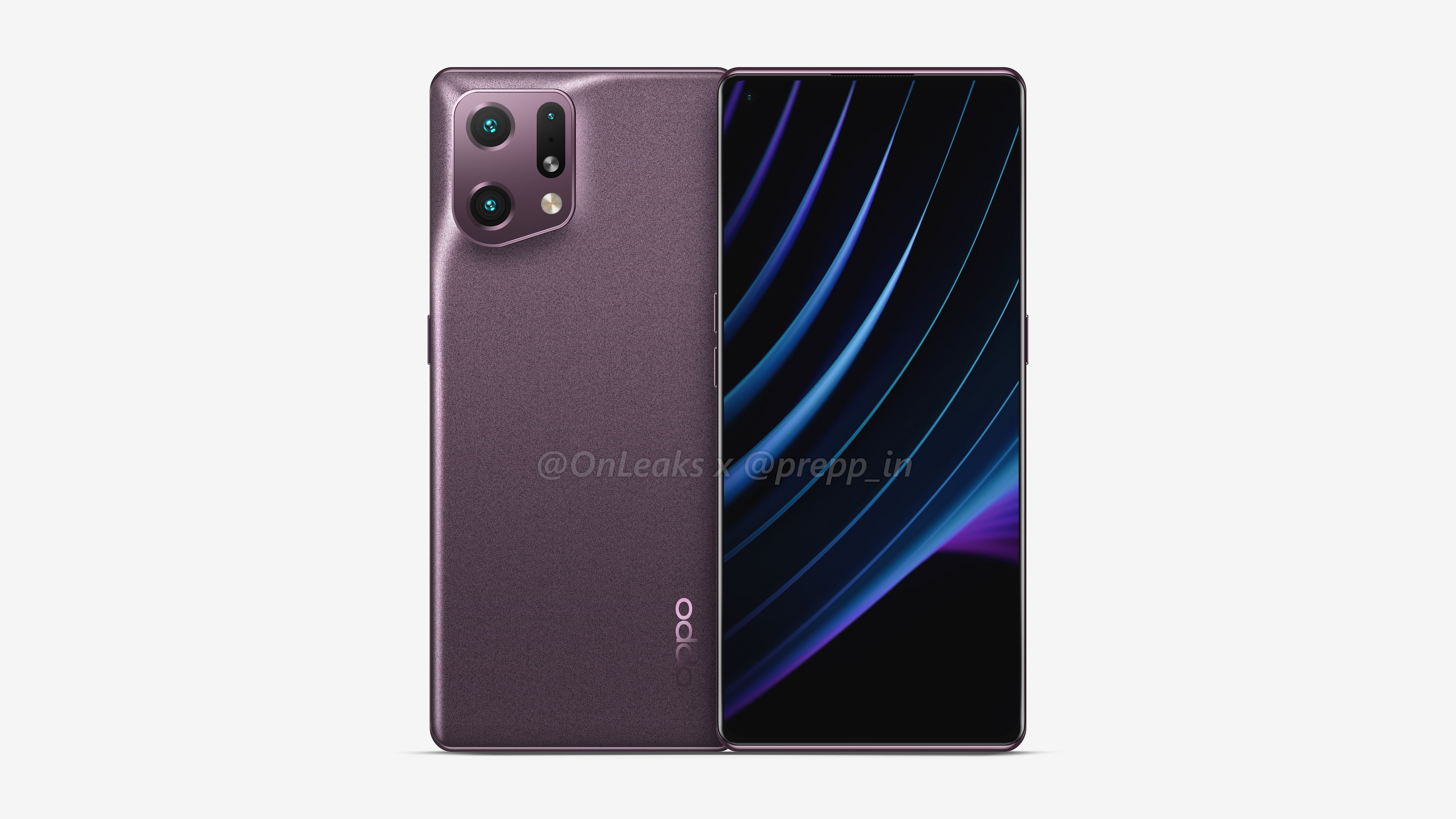
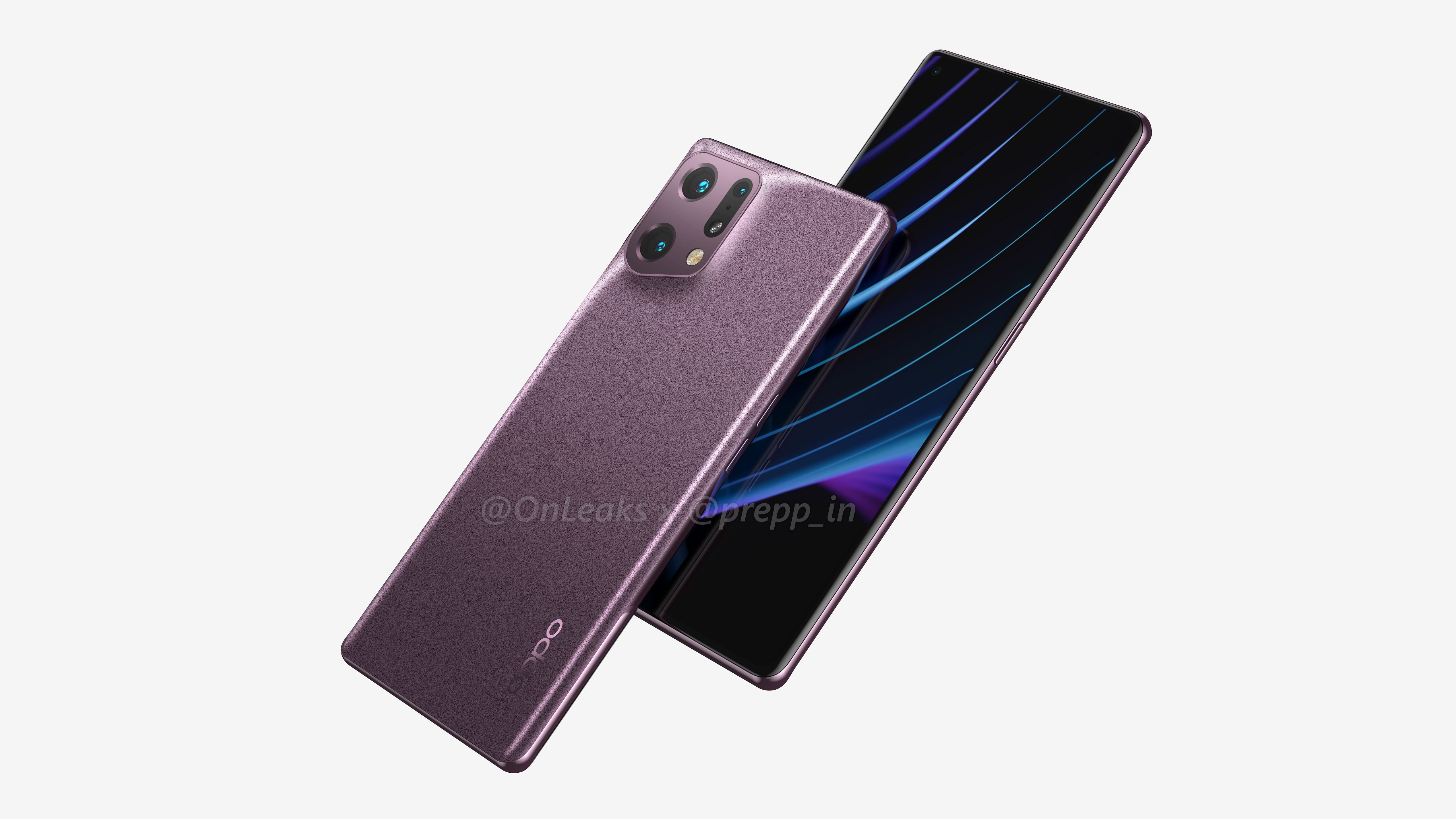
Now, in the latest development, @OnLeaks has shared renders of the upcoming OPPO Find X5 Pro smartphone. This is the same device that was expected to get launched as Find X4 Pro but the company is expected to skip the “4” number. The reason behind this is likely that the number four is considered unlucky in the Chinese culture.
The renders showcase a camera module similar to the one we have already seen on the Find X3 Pro. However, this time, the company seems to be adopting an irregular trapezoidal shape for the camera module instead of square. It still continues the design language with the phone’s back shell smoothly extending to the convex part of the camera module.
One major difference is the phone’s back panel which now has a sandblasted texture instead of the glass design that we saw on the previous generation model.
Coming to the front side, the device will have a punch-hole cutout in the top-left corner of the screen for housing the front-facing camera. The renders show minimal bezels surrounding the display, hinting at a higher screen-to-body ratio. The volume rocker keys are located on the left side frame while the power button is on the right frame.
As for the specifications, based on the leaks so far, the OPPO Find X5 Pro is expected to feature a 6.78-inch Full HD+ display with a screen resolution of 2400 x 1080 pixels. It will come powered by the Qualcomm Snapdragon 8 Gen 1 chipset.
In the camera department, there could be a 50-megapixel primary sensor, a 50-megapixel ultra-wide-angle lens, and a 13-megapixel telephoto or macro sensor. On the front side, it is likely to house a 32-megapixel snapper.
The phone is said to pack a 5,000mAh battery with fast charging support. Along with the OPPO Find X5 Pro, the company is also expected to launch the OPPO Find X5 which is said to come powered by the MediaTek Dimensity 9000 SoC.
Samsung is among the world’s fastest smartphone manufacturers to roll out the latest version of the Android operating system to its premium devices. The South Korean giant has now rolled out the Android 12 to its flagship smartphones released this year as well as to the models released last year.
While many other brands are struggling with the rollout of Android 12, Samsung has now started rolling out the latest One UI 4.0 based on the newest version of the Android operating system to its Galaxy S20 series and Note 20 series phones.
As per the latest report, the Samsung Galaxy Note 20, Note 20 Ultra, S20, S20 Plus, S20 Ultra, and S20 FE smartphones have started receiving the Android 12-based over-the-air update in Switzerland. Based on the company’s track record, we expect the update to be available across Europe in the coming days.
The development comes at a time when the company has started the rollout of the One UI 4.0 for the Galaxy Z Fold2 5G smartphone. The brand has already released the latest update for the Galaxy Z Fold3, Z Flip3, S21, S21 Plus, and S21 Ultra smartphones.
However, not everything had worked as planned for the South Korean giant. The company had to pause the update for the latest foldable smartphones as well as the S21 lineup because of bugs and issues but finally managed to fix the issues and roll out the update.
We just hope that the new update for the Galaxy S20 series and Note 20 series phones doesn’t face similar issues. The One UI 4 beta update for the Galaxy S20 was released in the United States last month so we expect a stable release pretty soon.
Meanwhile, the company is reportedly working on a new One UI 4.1 version based on the Android 12 operating system which will come pre-installed with Samsung’s upcoming Galaxy S22 series of flagship smartphones.
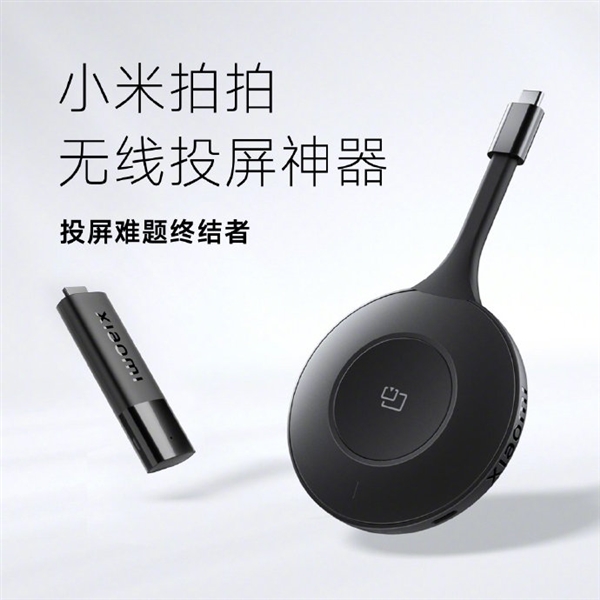
At the Xiaomi 12 series launch conference held on Tuesday, Xiaomi also unveiled a new portable wireless projection device known as Xiaomi Paipai wireless projector. The gadget adopts Xiaomi’s minimalist design style with a compact build that can easily fit into the pocket.
Xiaomi Paipai is designed to simplify a rather complex task of projecting presentations in an office or other settings. All that is needed is to plug the device into the notebook and the device starts projecting the notebook’s screen onto a bigger screen. The portable device also comes with its own Wi-Fi module, and the transmitter and receiver can automatically form a local area network (LAN).
Xiaomi says the built-in enterprise-level processing chip of the Paipai Wireless Screen Projector doesn’t only integrate network modules but also has codec functions. Users won’t need to install drivers, just plug and play. Also, it is equipped with a 4K codec chip, supports low compression decoding, ultra-high-definition input, low picture noise, synchronization of audio and video, and smooth operation. It equally supports the 5G frequency band transmission protocol and is designed not to easily freeze, delay, and flicker, guaranteeing a stable and reliable long-term screen projection.
The transmitter adopts a more advanced Type-C interface, integrated DP high-definition output, and PD charging function. This guarantees the stable transmission of high-quality content while reducing the burden of plugging multiple devices when a new presenter needs to project his screen. In this case, the same receiving end can be connected to multiple transmitters, and others don’t need to plug and unplug the device back and forth for screen projection.
In terms of performance, Xiaomi Paipai Wireless Projector supports up to 4K 30 frames, high-definition picture quality, and ultra-low latency, but Xiaomi has not announced specific latency data.
As for the price, the Xiaomi Paipai Wireless Projector is priced at 499 yuan (~$78). There is no word yet as to whether the device will be launched for the global market. We expect Xiaomi to unveil it in Europe at some point, considering the steady introduction of most Mi gadgets in the European market in recent times.
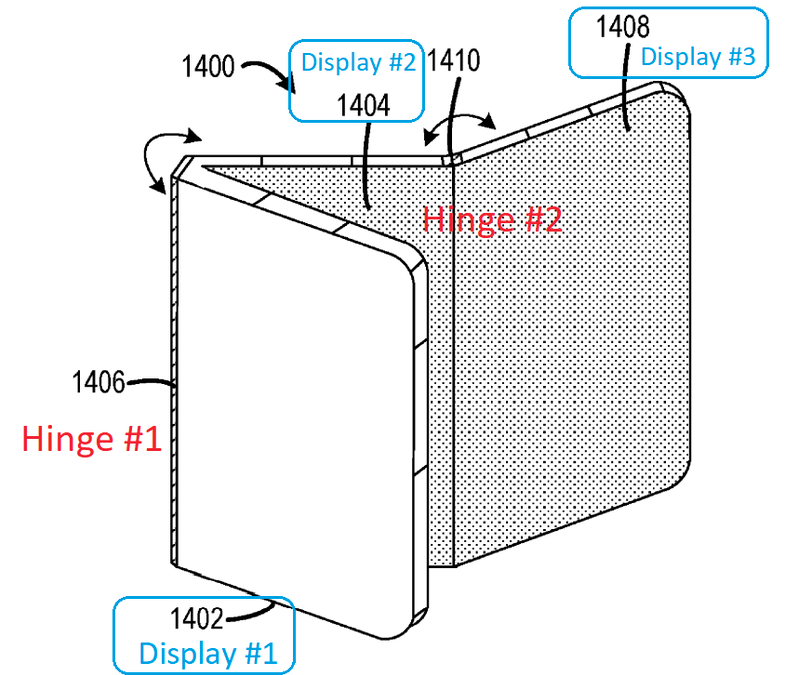
The U.S. tech giant Microsoft has stayed away from the foldable screen trend that has been making the rounds in the smartphone industry. And it looks like the company might remain committed to its Surface series devices suggested by the recently surfaced patent.
According to a report by PatientlyApple, After the Surface Duo devices, the company might be looking to build a Surface Trio as a “Multi-Panel Display Device” patent by Microsoft has recently been uncovered. The Patent was filed with the United States Patent and Trademark Office (USPTO) back on July 23rd, 2020, and was published recently on 23rd December 2021. The patent document features a lot of technicalities of the device along with a single sketch showcasing its triple screen setup.
The device aims to get rid of the main problem that ails the Surface Duo, being the absence of an outer screen. Display No.3 of the device will act as its primary screen when folded sitting on top of displays 2 and 1. When unfolded, the device can even offer a dual-screen experience akin to the current Surface Duo as display 1 can freely fold in both directions.
The sketch also reveals that display panel 1 is a lot bulkier than panels 2 and 3 and will likely hold most of the hardware like the battery, logic board, and SoC. One thing we can’t help but notice is the size of this device. If we go by the current Surface Duo standards, the device could possibly be huge when completely unfolded as well as quite bulky when folded.
As the design patents have just been published, it is hard to estimate a release timeline of the device, but you can trust us to deliver you any new and notable developments.
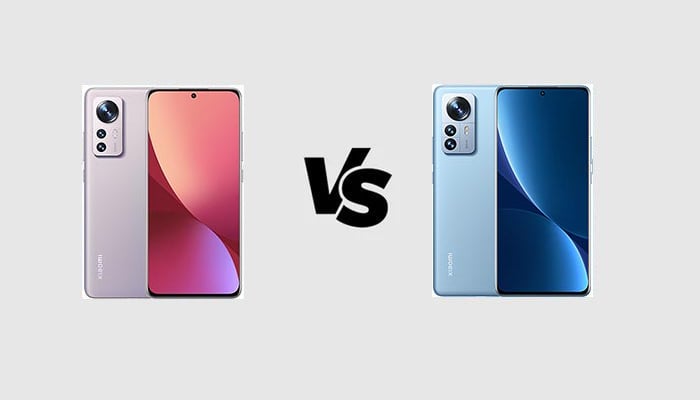
The new Xiaomi 12 series is finally official. As for now, it is composed of three variants: Xiaomi 12, Xiaomi 12 Pro, and Xiaomi 12X. But while the third can be considered as an upper-midrange phone as it is powered by the Snapdragon 870 chipset, the first and the second are amazing flagships equipped with the best Qualcomm’s SoC ever. Right after the official launch, a lot of people are wondering what are the differences between the vanilla version and the Pro variant. This comparison between Xiaomi 12 and 12 Pro will clear your ideas in regards and hopefully tell you which one suits your needs the most.
Xiaomi 12 vs Xiaomi 12 Pro
Xiaomi 12
Xiaomi 12 Pro
DIMENSIONS AND WEIGHT
152.7 x 69.9 x 8.2 mm,
179 g
163.6 x 74.6 x 8.2 mm,
204 g
DISPLAY
6.28 inches, 1080 x 2400 pixels (Full HD+), OLED
6.73 inches, 1440 x 3200 pixels (Quad HD+), LTPO AMOLED
Triple 50 + 13 + 5 MP, f/1.9 + f/2.4
32 MP front camera
Quad 50 + 50 + 50 MP, f/1.9 + f/1.9 + f/2.2
32 MP front camera
BATTERY
4500 mAh, fast charging 67W and fast wireless charging 50W
4600 mAh, Fast Charging 120W, Fast wireless charging 50W
ADDITIONAL FEATURES
5G, dual SIM, reverse wireless charging
5G, dual SIM, reverse wireless charging
Design
With the exception of minor details, the Xiaomi 12 and the Pro variant come with the same design. They have a curved screen at the edges with a very high screen to body ratio, as well as a glass + metal body with a rectangular camera module including a bigger sensor and two smaller ones. The phones look very beautiful and futuristic, and they are even offered in a special color option with a vegan leather back. The most important aesthetic difference between these two devices is the dimension: the vanilla version is one of the most compact flagships out there and it has more or less the dimensions of the iPhone 13, while the Pro variant is a phablet with a wide display and the typical dimensions of flagship phones.
Display
One of the strongest points of the Xiaomi 12 Pro if compared to the vanilla version is the display specifications. The panel of the Xiaomi 12 Pro is an AMOLED display with the LTPO technology enabling an adaptive refresh rate from 1 to 120 Hz. This display comes with a Quad HD+ resolution of 1440 x 3200 pixels, one billion colors, Dolby Vision, and the HDR10+ certification, as well as an in-display fingerprint scanner. The Xiaomi 12 has a lower Full HD+ resolution and it lacks the LTPO technology. Note that the display of the vanilla version has a diagonal of just 6.28 inches, while the Pro version has a 6.73-inch panel.
Specs & Software
There are no changes in the hardware department and this is very important for a compact and affordable phone like the Xiaomi 12. The handsets are both fueled by the Snapdragon 8 Gen 1 mobile platform that is currently the best chip released by Qualcomm. The SoC is paired with up to 12 GB of RAM and up to 256 GB of internal storage. Despite the MIUI 13 going official alongside these new devices (with improved features and interconnection with other Xiaomi devices), they still run MIUI 12.5 and they will be updated to MIUI 13 within the end of January in the Chinese market.
Camera
The Xiaomi 12 Pro is way better than its vanilla version as a camera phone and it is definitely one of the best camera phones in the market. On the rear side, it has a 50 MP Sony IMX707 main camera, a 50 MP telephoto sensor with 2x optical zoom, and a 50 MP ultrawide camera. The vanilla version has a lower-end Sony IMX766 with a 50 MP resolution as the main sensor, a 13 MP ultrawide camera, and a 5 MP telephoto macro sensor.
Despite its bigger dimensions, you do not get a much bigger battery with the Xiaomi 12 Pro. The capacity is 4600 mAh, just 100 mAh more than the original Xiaomi 12. So the battery life should be very similar. The Xiaomi 12 Pro features 120W fast charging and 50W wireless charging, while the vanilla version has 67W fast charging and 50W wireless charging.
Price
The starting price of the Xiaomi 12 in China roughly translates into €510/$577 at the actual change, while the Pro version starts from €650/$735. Overall, the Pro version offers a bigger and better display as well as superior cameras and a faster wired charging technology. For the rest, these two phones are almost the same.
Micro video sharing platform Tiktok has topped the chart of downloads on Christmas Day this year, according to mobile data and analytics company App Annie. The number of downloads on December 25 globally was estimated across both iOS and Google Play Stores.
TikTok led the chart of Christmas Day downloads ahead of Instagram, Facebook, WhatsApp Messenger, and Snapchat. App Annie noted that the ranking was based on downloads and consumer spends which were combined from both the iOS Store and Google Play Store, while in China, iOS data only was used. This may not be unconnected with the growing presence of HarmonyOS in China as an alternative Android platform.
The App Annie data also contained estimates for Game downloads on Christmas Day. The chart was led by Brain Story: Tricky Puzzle. Others at the top of the games download chart are Poppy Rope, Subway Surfers, Free Fire, and ROBLOX. The Brain Story game was released on December 21 and enjoyed massive downloads due to its recent launch.
The App Annie data provided some sectoral details according to downloads by country, with some of the apps and games not on the top download list, featuring prominently in the country downloads. Oculus, HBO Max, Disney+, Veve, Ftibit, and Roblox are some of the apps that had country-wide leadership in the number of downloads on December 25. The impressive analytics data provided by App Annie is bound to give a great outlook for the various brands on areas of strengths and weaknesses.
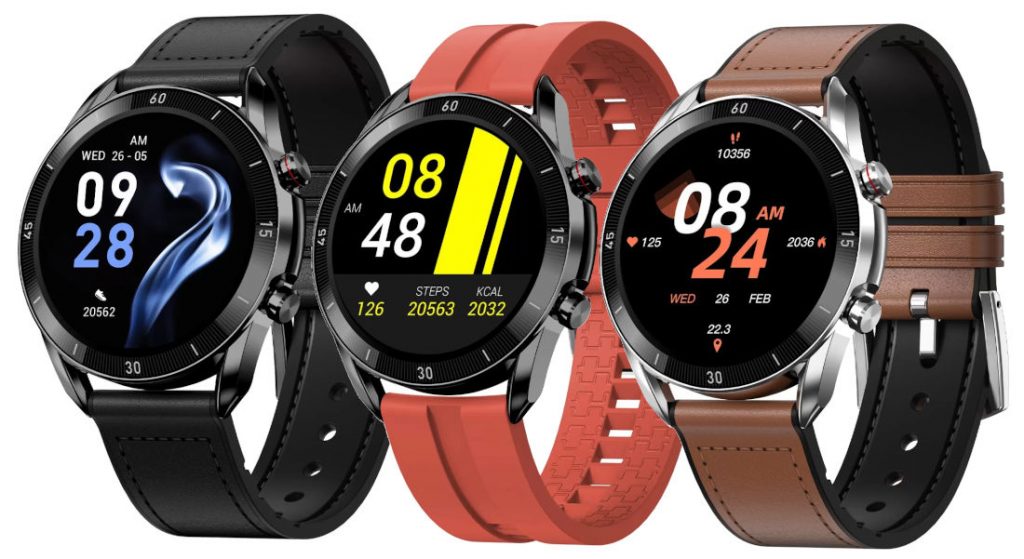
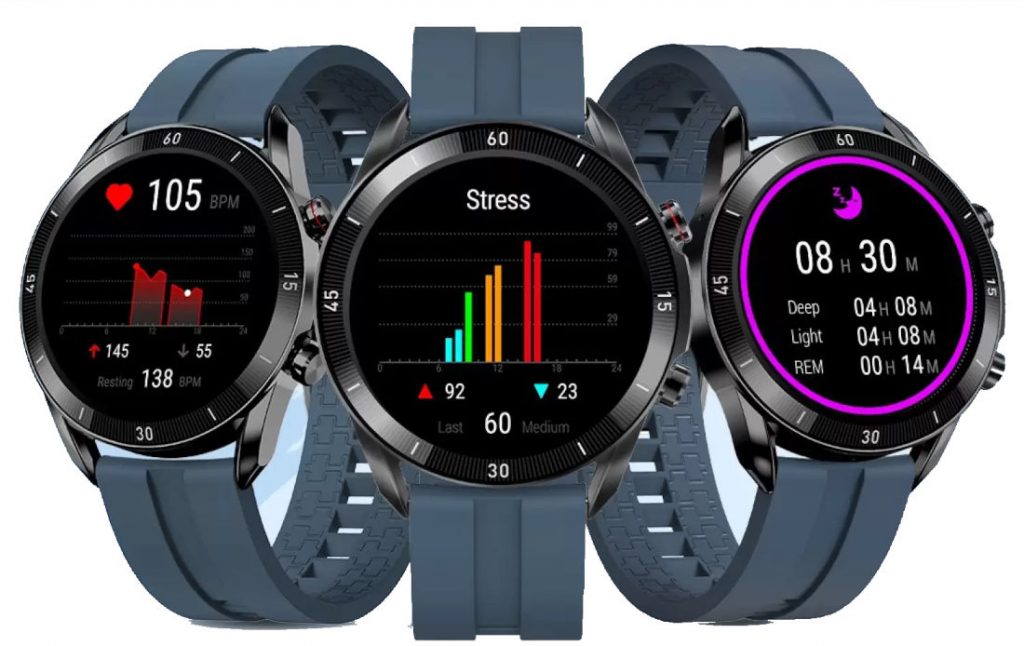
Budding Indian smartwatch manufacturer Fire-Boltt has unveiled its Fire-Boltt Almighty smartwatch with a 1.39-inch AMOLED display and Bluetooth calling functionality. The Fire-Boltt Almighty will allow the user to answer and make calls via Bluetooth directly from the smartwatch. The Fire-Boltt Almighty will be available from December 29 via Flipkart at Rs. 4,999 (~$67).
The Fire-Boltt Almighty comes with customizable watch faces, multiple sports modes, IP67 water resistance, and 10-day battery life on a single charge. The Fire-Boltt Almighty has a circular dial, offers blood oxygen monitoring via its SpO2 sensor, as well as blood pressure monitoring and heart rate tracking. Camera and music control can also be achieved via Bluetooth 5.0 connectivity. The 11 Sports Modes available in the Fire-Boltt Almighty include football, running, treadmill, walking, climbing, basketball, and yoga.
There are six color variants of the Fire-Boltt Almighty namely black, black with brown, blue, brown, red, and matte black. The Fire-Boltt Almighty will come with matching leather or silicone straps. With several established brands offering similar devices within the $50-$100, the new Fire-Boltt Almighty has huge competition in the Indian market. There is no indication yet on the global availability of the Fire-Boltt Almighty.
We use cookies on our website to give you the most relevant experience by remembering your preferences and repeat visits. By clicking “Accept”, you consent to the use of ALL the cookies.
This website uses cookies to improve your experience while you navigate through the website. Out of these, the cookies that are categorized as necessary are stored on your browser as they are essential for the working of basic functionalities of the website. We also use third-party cookies that help us analyze and understand how you use this website. These cookies will be stored in your browser only with your consent. You also have the option to opt-out of these cookies. But opting out of some of these cookies may affect your browsing experience.
Necessary cookies are absolutely essential for the website to function properly. This category only includes cookies that ensures basic functionalities and security features of the website. These cookies do not store any personal information.
Any cookies that may not be particularly necessary for the website to function and is used specifically to collect user personal data via analytics, ads, other embedded contents are termed as non-necessary cookies. It is mandatory to procure user consent prior to running these cookies on your website.