An earlier version of this article erroneously stated that the phone was co-developed with Huawei. The company has clarified to us that this phone is designed solely by the TCL subsidiary FFALCON, for sale in China. The processor details have been updated as well.
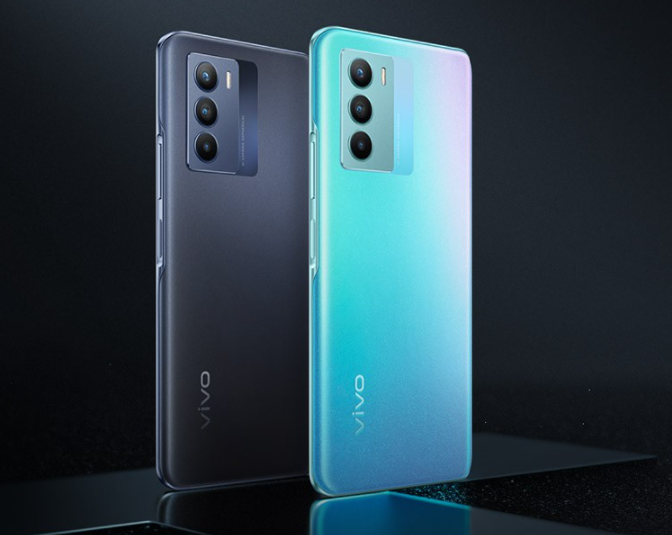
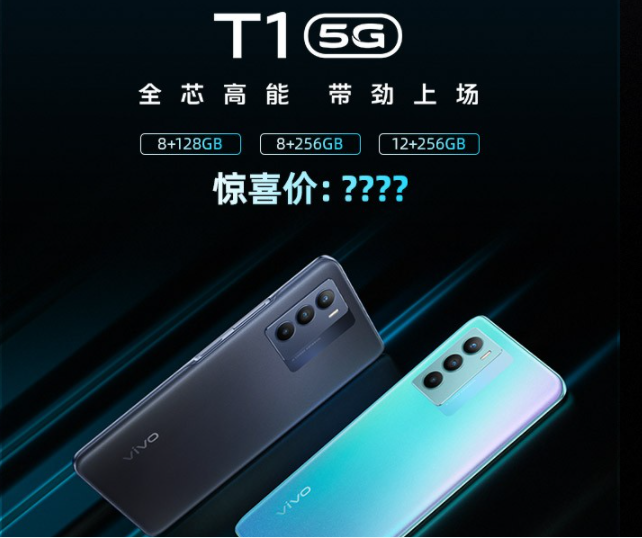
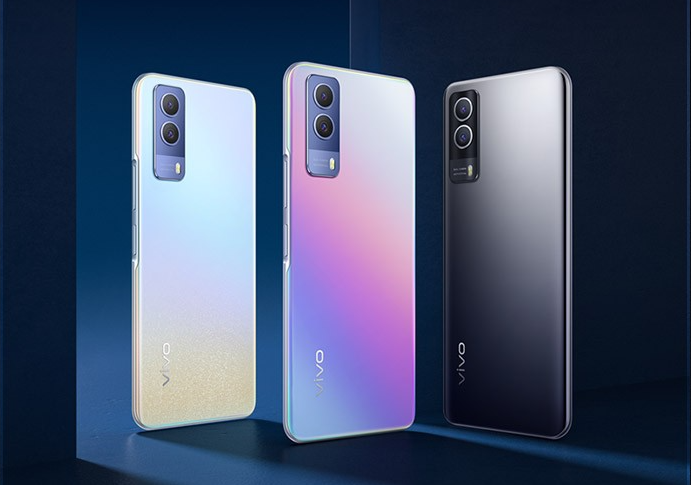
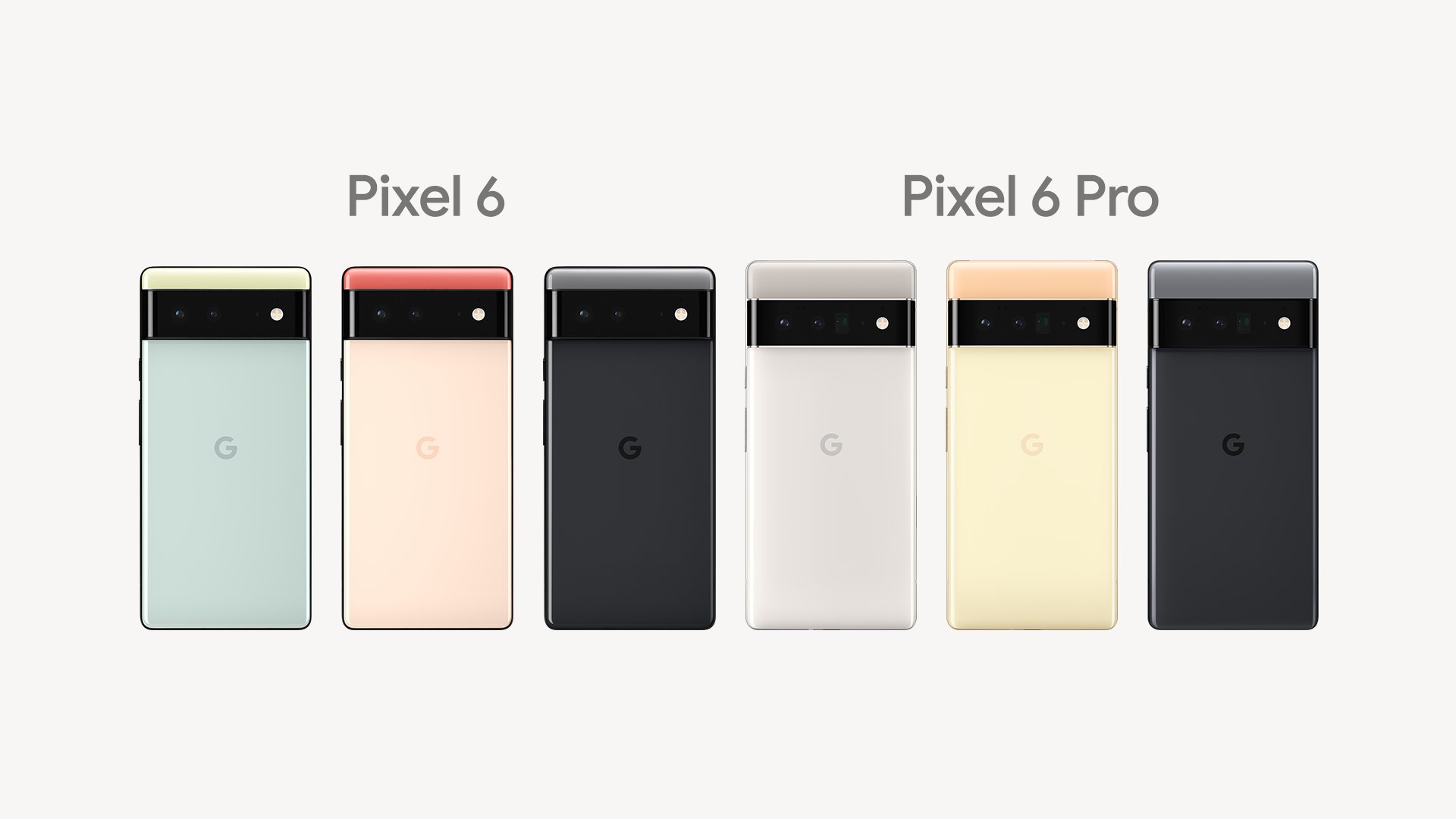
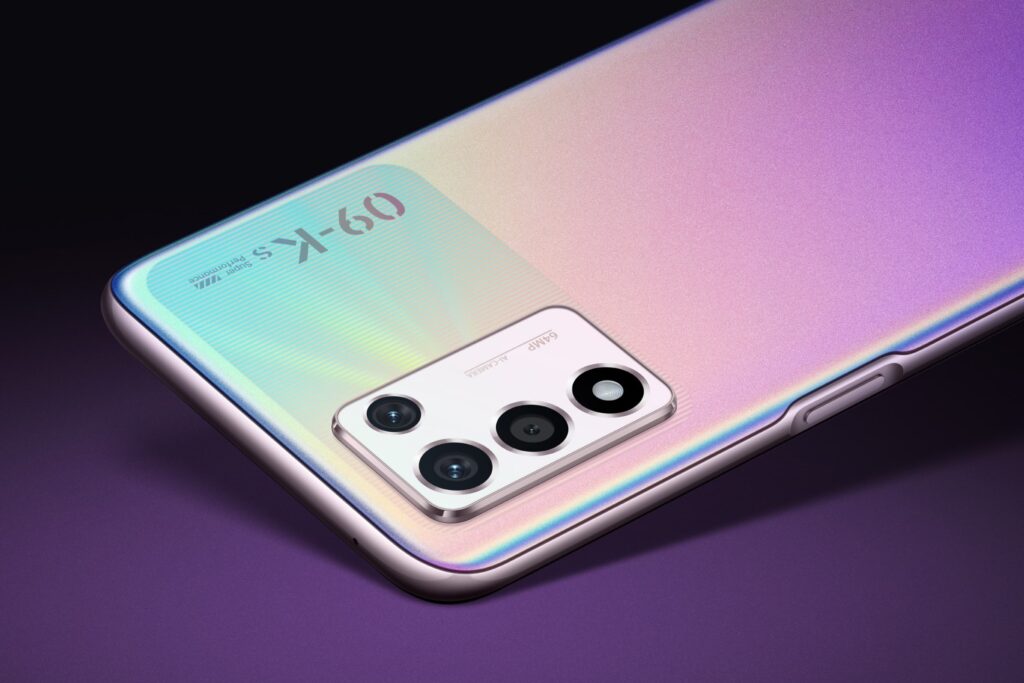
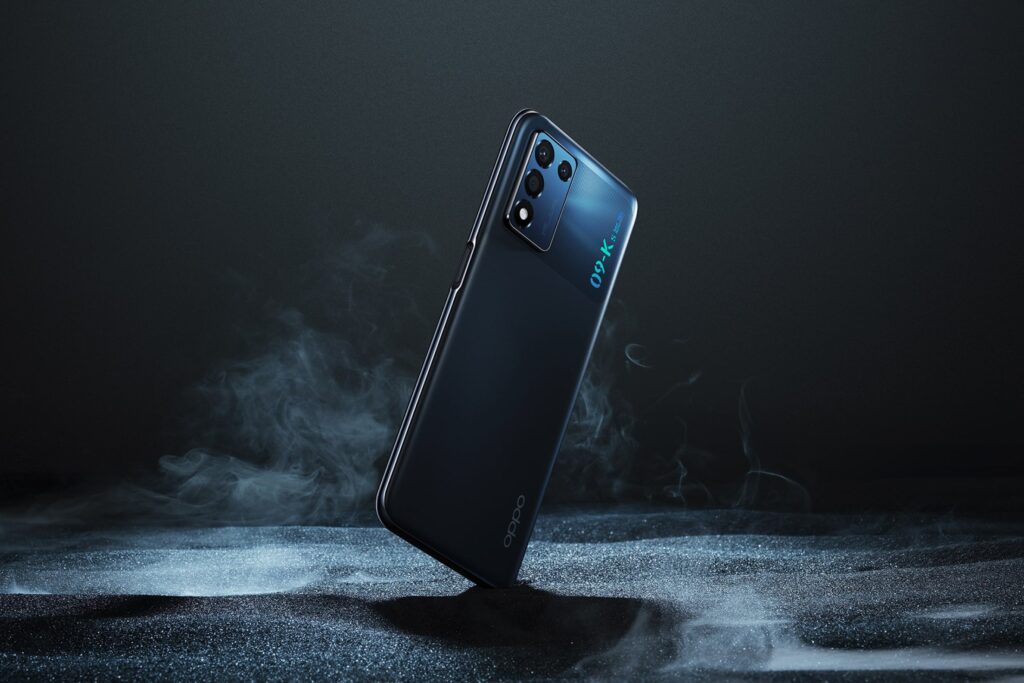
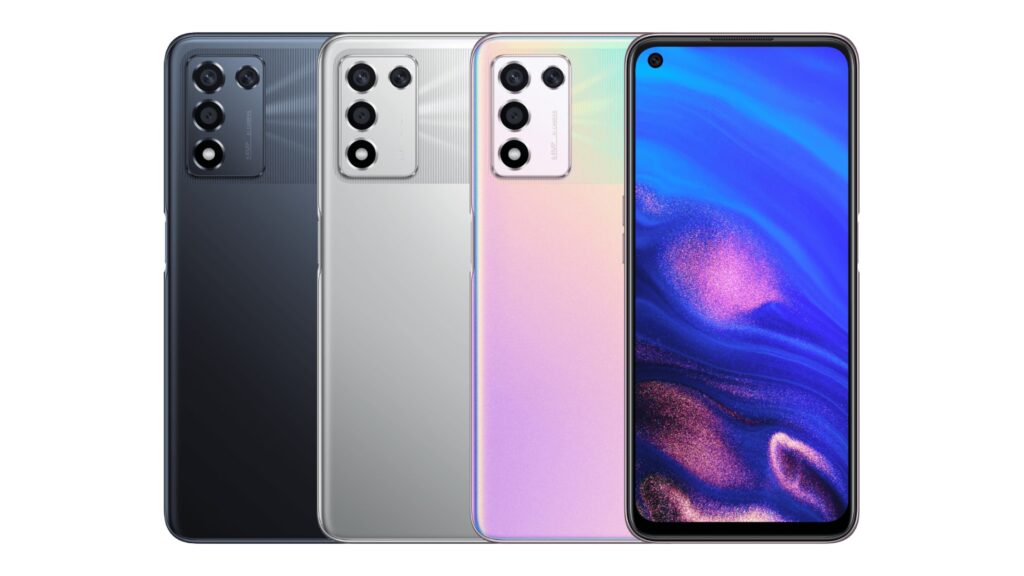
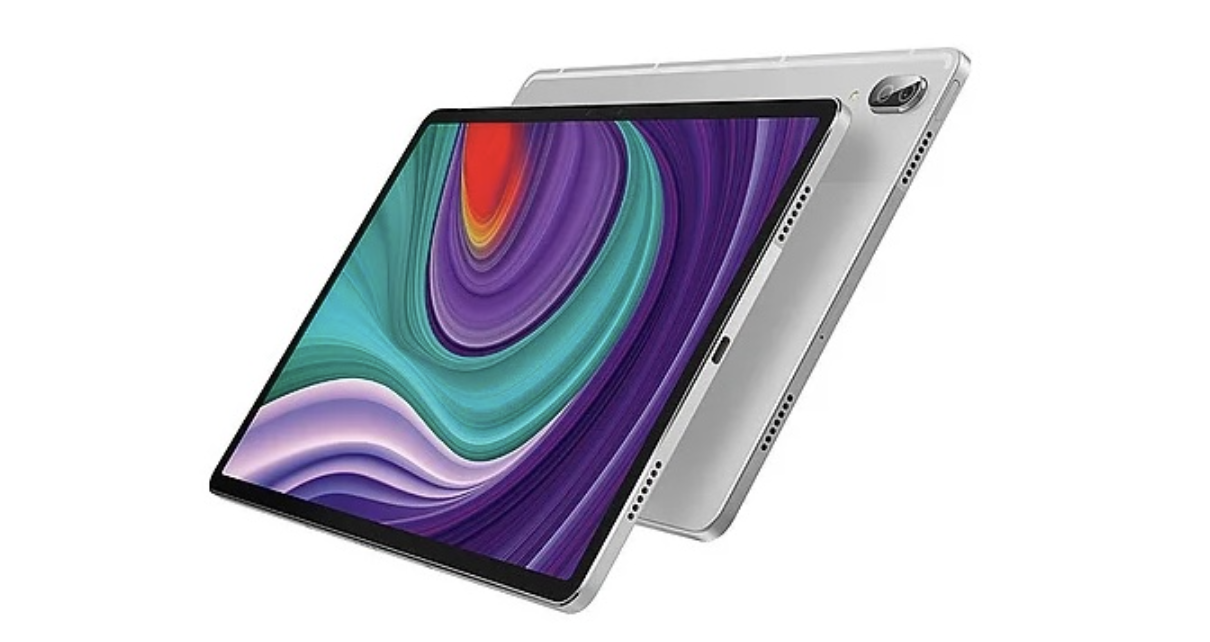
TCL has introduced a new smartphone called the FFALCON Thunderbird FF1 in China. The new mid-range phone offers exciting features like a high refresh rate display with dual punch-hole cutout, a 64-megapixel triple camera unit, a Dimensity 9-series chip, up to 256 GB of storage, and a decent battery with fast charging capabilities.
FFALCON Thunderbird FF1 specifications and features
The FFALCON Thunderbird FF1 has a 6.67-inch IPS LCD panel that offers a Full HD+ resolution, a 20:9 aspect ratio, and a 120Hz refresh rate. The pill-shaped camera cutout on the display houses a 16-megapixel selfie camera.
FFALCON Thunderbird FF1
The square camera module placed at the FFALCON Thunderbird FF1’s back houses a 64-megapixel main camera with an f/1.7 aperture, an 8-megapixel ultrawide snapper, and a 2-megapixel depth assist lens. The handset boots to Android 11 OS.
The FF1 is powered by the Qualcomm Snapdragon 690 5G chipset and 8 GB of RAM. It comes in 128 GB and 256 GB storage choices. It is backed by a 4,300mAh battery that supports 66W rapid charging. The other features that are available on the device include dual SIM support, 5G/4G, Wi-Fi 802.11ac, Bluetooth 5.1, GPS, and a USB-C port.
FFALCON Thunderbird FF1
FFALCON Thunderbird FF1 price and availability
The 128 GB and 256 GB variants of the FFALCON Thunderbird FF1 are priced at 2,499 Yuan (~$386) and 2,799 Yuan (~$432), respectively. It will be available for purchase starting from Sept. 10 in China. It is unclear if TCL has any plans to release the FF1 outside the home market.
Last year in October, Infinix launched the Infinix Hot 10 smartphone in India. This year, the company announced a few more Hot 10 series models such as the Hot 10 Play and Hot 10S in the country. Fresh information reveals that the company is gearing up to launch the Hot 11S in September. Ahead of the launch, the pricing of its two variants is now doing rounds on social platforms.
It is speculated that the Hot 11S will be available in two options such as 4 GB RAM + 64 GB storage and 6 GB RAM + 64 GB storage. These models are said to be priced at Rs 9,999 (~$136) and Rs 10,999 (~$149), respectively.
Infinix Hot 10S / Hot 10S NFC
Readers are advised to digest the pricing leak with a grain of salt. The company has already confirmed that the smartphone will come equipped with the Helio G88, which also fuels the recently unveiled Redmi 10 handset. It has also revealed that the phone will launch by mid-September. It is likely that the company will start teasing the arrival of the Hot 11S by the beginning of September.
The other specifications of the Hot 11S are yet to be confirmed. It is likely that the handset may inherit some of the specs from the Hot 10S. Hence, Infinix may offer a 90Hz refresh rate display on the Hot 11S. It may come with an improved 48-megapixel triple camera system. It may inherit the 6,000mAh battery and 18W fast charging support from the Hot 10S.
Samsung is reportedly working to bring the Galaxy A52s 5G in India. The South Korean company has released an official teaser of the smartphone to confirm its arrival in India. It is speculated that the A52s will launch on Sept. 3 in India.
Yesterday, tipster Abhishek Yadav released a tweet to share the leaked pricing of the A52s 5G. He claimed that the smartphone will be launching on Sept. 3 in India. The tipster further revealed that the 6 GB RAM + 128 GB storage and 8 GB RAM + 128 GB storage variants of the A52s will be priced at Rs 35,999 (~$327) and Rs 37,499 (~$341), respectively.
The Galaxy A52s 5G has gone live on Samsung India’s website. People who are interested in the device can hit the “Notify” button to get updates on its arrival. The official image available on Samsung’s site shows that the handset will be available in at least black and white colors.
Samsung Galaxy A52s 5G specifications and features
Samsung Galaxy A52s 5G
The Galaxy A52s 5G has a 6.5-inch S-AMOLED FHD+ screen that offers a 120Hz refresh rate. For security, it features an in-display fingerprint scanner. Its display punch-hole houses a selfie camera of 32-megapixel. Its back panel has a 64-megapixel primary camera, a 12-megapixel ultrawide snapper, a 5-megapixel macro camera, and a 2-megapixel depth assist lens.
The A52s 5G is powered by the Snapdragon 778G chipset powers the device. It has a 4,500mAh battery that carries support for 25W rapid charging.
Apple is expected to announce the Watch Series 7 in September this year. While that is yet to happen, images purported to be a counterfeit of the upcoming Watch Series 7 model have appeared online. The images were shared by a Twitter user @MajinBuOfficial and they show the knock-ff Watch Series 7 in space gray, silver, and space black colors.
The design of the Watch Series 7 knock-off resembles those of the previously leaked CAD renders of the next-gen Apple Watch. It is expected that the Apple Watch will use a square edge, which is very similar to the design of the iPhone 12 series, iPad Air, iPad Pro, and the 24-inch iMac.
Although the devices in the images are knock-offs and not from Apple, they may be similar to the final product, allowing us to see how the new Apple Watch design looks in real life. The tipster also disclosed that the Apple Watch Series 7 clone is already on sale in China for around 350-400 yuan (~$60).
So far, we have only seen the design of the Apple Watch Series 7 in renders that are based on leaked images and CAD drawings leaked by industry sources. Although the Apple Watch 7 series is expected to be 1.7mm thinner than the 6 series, it is worth noting that this change may not have been brought to the cloned product. The Watch 7 clone in the leaked images appears to be thicker than the genuine device.
The clones of popular Apple products are usually very deceptive in appearance, making the deceived believe that they are genuine. This problem is very common, especially the counterfeit AirPods, which has reached the point where it is difficult to distinguish between the fake and the real so that Apple has a team that focuses on combating counterfeit products and preventing them from being sold.
Apple is expected to launch Apple Watch Series 7 as early as next month, and it is likely to be launched alongside the iPhone 13 series, offering improved display technology and ultra-wideband connections, faster processors, larger batteries, and more.
The Redmi 10 went official and it is going to hit the Indian market under the Redmi 10 Prime moniker. Is it the right phone to conquer the budget segment? How many good rivals does it have? We believe that one of the best ways to answer these questions is by comparing the handset with the other best devices sold at similar prices. In the Indian market, among the best handsets which can compete with the Redmi 10 Prime, there are Motorola Moto G30 and Tecno Pova 2. Let’s find out which one offers the highest value for money and which is the best phone of the trio.
Xiaomi Redmi 10 Prime vs Motorola Moto G30 vs Tecno Pova 2
Quad 64 + 8 + 2 + 2 MP f/1.7, f/2.2, f/2.4 and f/2.4
13 MP f/2.2 front camera
Quad 48 + 2 + 2 + 2 MP, f/1.9
8 MP f/2.0 front camera
BATTERY
5000 mAh, fast charging 18W
5000 mAh, fast charging 20W
7000 mAh, fast charging 18W
ADDITIONAL FEATURES
Dual SIM slot, reverse charging 9W
Dual SIM slot, water repellent
Dual SIM slot
Design
The Redmi 10 Prime is attractive because it has a similar design to the Xiaomi Mi 10 Ultra, so it is aesthetically similar to a flagship. However, the materials are obviously not the same as the phone is made of polycarbonate. The Redmi 10 Prime is the thinnest and most lightweight phone of this trio and it also offers a slightly higher screen to body ratio. With the Motorola Moto G30, you get a water repellent design which may turn useful if you want to use the phone in the rain. The Tecno Pova 2 is elegant but too big for an average user.
Display
The most advanced display belongs to the Redmi 10 Prime: it has a 6.5-inch diagonal, a Full HD+ resolution, and a 90 Hz refresh rate. It is not an advanced panel as it is a traditional LCD display like the ones you can find on most budget phones, but it is better than the HD+ display of the Motorola Moto G30 due to its higher resolution. The Tecno Pova 2 has a Full HD+ display just like the Redmi 10 Prime, but it comes with a standard refresh rate.
Hardware/Software
If you are looking for the best hardware department, you should go for the Redmi 10 Prime without thinking twice. It offers the powerful Mediatek Helio G88 mobile platform which is good for gaming and advanced usage patterns, paired with up to 6 GB of RAM and up to 128 GB of native storage. You can get the same memory configuration with the Moto G30 and the Tecno Pova 2, but with weaker chipsets. The phones run Android 11 out of the box with different customizations: the MIUI found on the Redmi 10 Prime is the best one, imho.
Camera
On the paper, the 64 MP quad camera of the Motorola Moto G30 looks like the most interesting one. It has a brighter focal aperture which should allow better performance in low light conditions, and there is also a better 13 MP front camera allowing to capture better selfies. Right after, we got the 50 MP quad camera of the Redmi 10 Prime. The Tecno Pova 2 has an inferior 48 MP main sensor and it lacks an ultrawide camera, unlike Redmi 10 Prime and Motorola Moto G30.
Battery
The Tecno Pova 2 has a mammoth battery and it is the best battery phone of this trio with a capacity of 7000 mAh. However, the Redmi 10 Prime and the Motorola Moto G30 are still great battery phones with a capacity of 5000 mAh.
Xiaomi Redmi 10 Prime vs Motorola Moto G30 vs Tecno Pova 2: Price
We still do not know the price of the Redmi 10 Prime in India, but we suppose it will cost around Rs. 12,000 ($163). Moto G30 costs Rs. 11,000 ($150), while Tecno Pova 2 starts from Rs. 10,500 ($143). The Redmi 10 Prime is the most advanced device due to its better display, chipset, good cameras. Moto G30 has a very advanced camera, while Tecno Pova 2 has a wider display and a bigger battery.
Samsung hasn’t really focused on improving the optical zoom capability of its flagship Galaxy S models. The 2020 Galaxy S20 and S20+ as well as this year’s Galaxy S21 and S21+ were only equipping with 1.1x optical zoom. But thanks to the high resolution of the sensor (64MP), these devices can also use digital zoom to complement for this optical zoom deficiency.
However, according to GalaxyClub.nl, Samsung seems to be planning to take a different approach on the Galaxy S22 / S22+ models that will arrive early next year. GalaxyClub.nl quoted sources as saying that the Galaxy S22 series smartphones will be equipped with a 10-megapixel telephoto lens that supports 3X optical zoom, rather than the hybrid zoom of the Galaxy S20/21 era.
As reported last week, the Galaxy S22 Ultra is expected to continue the dual 10-megapixel telephoto camera setup on the Galaxy S21 Ultra. One of the lens will be a periscope lens that will offer 10x optical zoom. However, even if Samsung omitted the lens that supports 10X optical zoom on the standard Galaxy S22 and Galaxy S22 Plus models, at least one with an enhanced optical zoom is expected to be on the models.
In addition, GalaxyClub.nl also confirmed last week an earlier rumor that the Galaxy S22 / S22+ models will be equipped with a 50MP main camera. Considering that the 12MP wide-angle lens is already a no-brainer, the rest that is left to be known is the improvements on the front camera.
A lot of the features of the Galaxy S22 series are still unknown. But there are rumors that the Galaxy S22+ will be equipped with a 4500 mAh battery and will be powered by an Exynos 2200 chipset integrated with AMD mRNDA GPU. In terms of software, it is expected that Galaxy S22 will be pre-installed with OneUI 4.x based on Android 12 when it is launched early next year.
A growing number of devices are now deploying ultra-wideband (UWB) technology and it seems that the upcoming Google Pixel 6 smartphone will be the next. The ultra-wideband (UWB) technology provides greater depth and precision in devices using it. The recently launched Xiaomi Mix 4, as well as Samsung SmartTag+ and Apple’s AirTag, feature support for UWB technology. Google intends to join the class with the Pixel 6, going by a recently spotted clue.
The hype has been on the specs and technologies that are in the Pixel 6 and this has drawn some excitement from several quarters. Its all-new Tensor SoC is also impressive. The flagship smartphone from Google is designed to have a go at the competition.
A few months back, there were hints that Google may incorporate ultra-wideband support in its lineup of smartphones for 2021. The ultra-wideband technology is fast becoming prevalent across tech devices ranging from smartphones to smart tags. The camera setup of the Pixel 6 is quite impressive, as well as a few other features are already known about Google’s latest flagship offering, the Pixel 6.
A post within the AOSP Gerrit seems to have confirmed the UWB support for the Pixel 6. The comment requests that the Pixel-specific UWB hardware abstraction layer (HAL), be renamed to void conflicts with the AOSP HAL policy rules that are going to be added in Android T.
The seemingly innocuous post is packed with possible info, as only Google smartphones bear the Pixel moniker. The UWB support might just be one of the surprises. In addition, the codenames of the Android operating systems mentioned are also suggestive. Android S refers to Android 12. We could hazard a guess that a generic version of UWB support may be in the works for Android 13, referred to as Android T in the post. This would Fastrack the deployment of UWB by more OEMs in the future.
The UWB technology holds mich promise in its eventual deployment to smartphones and other devices. The NFC technology is the closest to UWB but is lacking on several fronts.
KaiOS Technologies announced that the popular mobile games Fruit Ninja and Jetpack Joyride has been ported over to the KaiOS by the Singapore based developer Storm. The Storm isn’t the original developer of these games, but it owns the license to port them into instant games for the KaiOS.
Fruit Ninja
“Storms and KaiOS share the same mission, which is to empower all people – especially the underserved markets – with quality content. We have seen how Storms’ gaming content is being appreciated by KaiOS phone users. Over the last eight months, Storms’ games have been downloaded more than one million times via the KaiStore, with markets such as Pakistan, Nigeria and Tanzania experiencing the highest number of installs,” said Sebastien Codeville, CEO of KaiOS Technologies.
Codeville also added, “Seeing how arcade games such as Shoot and Fish are topping the list when it comes to game installs, we are thrilled to welcome the well-loved Fruit Ninja and Jetpack Joyride which fall under the same game category to our KaiOS ecosystem.”
Jetpack Joyride
Well, both the games were initially designed for touch-based devices. So, in Fruit Ninja, players had to swipe to slice the fruit, while in Jetpack Joyride, players had to tap to rise Barry up in the air. But, Storm reworked the game to work on keypad based devices, so now players can play the game using the keypad. In Fruit Ninja, players need to press the number that appears nearby the fruit to slice it, whereas, in Jetpack Joyride, players need to press the or ‘5’ or Menu button to rise Barry up in the air.
KaiOS is an operating system designed for feature phones. Currently, KaiOS powers 150 million feature phones across the globe, and these two games will be available to every KaiOS user. KaiOS brings smart features to the feature phones such as Google Assitant and other apps helping communities around the world to be connected with each other.
Xiaomi launched the Mi 11 and Redmi K40 smartphones earlier this year with flagship-grade specs at aggressive prices. Now, the company seems to be already planning the successors called Xiaomi Mi 12 and Redmi K50. More information about these phones has just got revealed, thanks to the notorious tipster Digital Chat Station.
As per the tipster, a few new models of the Mi 12 and Redmi K50 have got filed online and the models include L1C, L2C, L3AC, L10AC, and L11C. These phones are expected to come powered by a flagship chipset. Rumors have it that the Xiaomi Mi 12 will come powered by the Qualcomm Snapdragon 898 SoC, whereas, the Redmi K50 will have two versions – a Snapdragon 888 and Snapdragon 898 model. However, out of these touted models, we aren’t sure which number belongs to which device.
Anyway, the Xiaomi Mi 12 will reportedly have display and camera upgrades. It will get an LTPO screen with a 120Hz refresh rate. It is expected to boast a Samsung GN3 camera sensor.
The Redmi K50 is expected to have similar specs as the Mi 12 but is expected to arrive at affordable pricing. The smartphone is said to have multiple models, similar to the endless versions of the existing Redmi K40 smartphone.
In related news, the Chinese phone maker is also expected to launch ‘T’ variants of the Xiaomi Mi 11 smartphone. Recently, the Xiaomi Mi 11T and Mi 11T Pro were seen featuring a side-mounted fingerprint scanner and a vertically placed rectangular camera module. Ahead of any announcements, the device was found listed on a European retailer website. The smartphone was listed starting for 644 euros(~$871) for the 8GB RAM and 128GB storage variant.
Honor unveiled the Honor 50 series back in June and the series came with the vanilla Honor 50 and the Honor 50 Pro. The two models were made available in four different color schemes – snow crystal, summer amber, black jade green, and bright black. Looks like Honor is now set to release a new color option for the series.
The Huawei spin-off company shared a promotional video on Weibo pointing to the unveiling of a new color option for the Honor 50 series on Monday, August 30, 2021. The teaser suggests that the new color scheme will reflect the artistic outline of the present color options and will be fashion-themed.
We’ll have to wait till Monday to find out what Honor is cooking. Whatever it is, we expect the new model to retain the configuration of the current models including the Snapdragon 778G chipset, a 6.57-inch OLED curved screen that supports a 120Hz screen refresh rate, and 300Hz touch sampling rate. The Honor 50 series also packs a 4000mAh battery that supports a 66W fast charge while the Honor 50 Pro supports a 100W super fast charge.
In addition, the Honor 50 and 50 Pro models are equipped with four rear cameras, including a 100-megapixel primary sensor, an 8-megapixel ultra-wide-angle lens, a 2-megapixel macro lens, and a 2-megapixel depth sensor. On the front side, there’s a 32-megapixel snapper for taking selfies. The phone runs Magic UI 4.2 based on Android 11.
Chinese phone maker Ulefone seems to launch a new smartphone soon as a budget smartphone dubbed Ulefone Note 12P emerged on the Google Play Console listing. The Note 12P will be the successor to the current Ulefone Note 11P.
According to Google Play Console, the Ulefone Note 12P has a large display and HD+ resolution. It is expected to be an IPS LCD panel with a pixel density of 320 PPI. The smartphone will be powered by the UNISOC Spreadtrum SC9863A chipset paired with 4GB of RAM.
The smartphone runs on Android 11 out of the box and is expected to have Ulefone’s custom skin on top of it. It is expected to have 64GB onboard storage.
Apart from this, the smartphone is expected to have multiple camera lenses at the rear. Considering that it will be the successor to the Ulefone Note 11P, we can expect a quad rear camera setup. At the front, it may feature a single camera system.
Ulefone Note 11P Specifications
The Ulefone Note 11P has a 6.55-inch IPS LCD display with an HD+ resolution. It has a quad-camera system at the rear with a 48MP primary lens, an 8MP ultra-wide lens, and two 2MP sensors for macro and depth shots.
It is powered by the 12 nm-based MediaTek Helio P60 SoC with up to 8GB of RAM and 128GB of internal storage. It also features a microSD card for additional storage. The smartphone has a rear-facing fingerprint scanner for added security.
IMID 2021 began on August 25 in Korea, and so far, we’ve seen some great display devices revealed by domestic manufacturers like Samsung and LG. Samsung unveiled the S-foldable gadget, which can be folded twice to become a smartphone and unfolded to become a massive 17.3-inch tablet. LG, on the other hand, has unveiled its 88-inch sound OLED TV and a smart bed with a 55-inch transparent OLED screen.
Today, Samsung has showcased another innovative product at the event. The company displayed an AI Speaker that turns into a 12.4-inch display in mere seconds.
According to a video from the Korea Display Exhibition, the Samsung AI Speaker has a taller design with rolled-up sides. It has a 12.4-inch flexible OLED display panel wrapped around the speaker. Interestingly, the AI speaker can be converted into a large 12.4-inch panel with just a tap on the proprietary app.
When the Samsung AI speaker is toggled from the smartphone, it goes from a rolled position to a flat display position in seconds. The panel’s movement while switching between these positions seems quite smooth.
In related news, Samsung has also planned to reveal a 48-inch bendable cinematic sound OLED panel and a 34-inch 144Hz refresh rate monitor. While this display tech is enticing, we aren’t sure when these designs would be materialized.
In an age where smartphones look increasingly similar to each other, it’s hard to find a fresh design. But there are a few brands who like to experiment with their designs, eager to stand out from the crowd.
Realme is definitely one of them. But instead of trying to find a fresh design by themselves, the brand decided to cooperate with the famous industrial designer, Naoto Fukasawa, aiming to give consumers a fresh take on smartphone design. And on the Realme GT Master series, we felt this freshness, where the smartphone, owing to its design, felt a lot more personal than just another computing machine.
Today we’re going to review and compare the two models in the Realme GT master series. First one is the Realme GT Master edition, while the other one is the Realme GT Master Explorer edition. Let’s find out what more they have in addition to the brilliant design, and what makes both these Master models stand out from the rivals in its respective price segments.
Realme GT Master & Explorer Editions: Design
Let’s first start with their designs. It must be said that in the highly competitive Android camp, the hardware performance between models in the same price range is basically very similar. Therefore, the design is a key element that’ll give it an edge. This time, both the master and explorer models have a special version that presents Fukasawa’s design. We’re lucky to get the Fukasawa version of the master model, so in this design section, we will mainly show you the master model in our hand which is co-designed with Fukasawa.
Considering the front is completely occupied by the display, Fukasawa’s ‘unconscious design’ philosophy is naturally directed on the back of the model. This time, he is inspired by the everyday travel luggage, with the phone’s rear featuring horizontal grid patterns. The vegan leather material is not only visually pleasing, but also comfortable to hold in your hand. In fact, the soft material at the back reminds me of common objects from our everyday life like a handbag, or a luggage, and even your car’s interior.
Realme GT Master edition
While I agree that the leather-like material used on the back is not exclusive to the GT Master model, but the unique luggage pattern is like adding a soul to the design. It no longer lacks imagination like those phones with a basic colored leather finish.
Realme GT Master explorer
And in actual use, thanks to its excellent built quality, this design ensures I have a good grip, which prevents any unwanted drops.
Realme GT Master vs Explorer Editions: Hardware Differences
There are some general details that distinguish the two models in terms of their designs. For example, the Master’s frame is made of plastic while the explorer model uses a metal frame.
The front faces of the two models are slightly different as well. The GT master edition is equipped with a 6.43-inch flat hole-punch 120Hz display, while the Explorer version uses a slightly bigger edge-curved one. Both of them get Samsung’s Amoled panel, which offers excellent colors. When playing HDR content, both models were smart enough to activate HDR colors. Considering their competitive pricing, especially for the Master model, it’s quite surprising that they get top-notch displays. Meanwhile, both of them support up to 120Hz refresh rate, which also brings excellent UI fluency.
As for their audio performance, the dual-speaker setup of the explorer version no doubt is much better than the single speaker on the standard master version. But considering their pricing difference, the GT Master’s performance is still acceptable.
As for their performance, the standard Master version is powered by the Snapdragon 778G chipset, while the explorer version features a Snapdragon 870 chip. According to the benchmarks we ran, it’s obvious the explorer model’s performance driven by the 870 chipset was able to compare to other famous flagship killers. However, the master model’s scores were surprisingly competitive as well. The performance was almost equal to the average level of last year’s Android flagships. The biggest surprise is the CPU multi-core performance of the master model, which almost caught up with the explorer version.
In actual gaming, both models can run PUBG Mobile without any issues. In Genshin Imapct, the 870 chipset didn’t disappoint us, and under default performance mode, it can run the game stably at 48.4fps with excellent thermal management. While on the Master model, the result of the 43fps was better than our expectation. And when we turned on GT mode on the explorer model, the gaming performance got a significant boost.
Realme GT Master vs Explorer Editions: Camera
The camera setup is the biggest difference between these two models. The explorer model features a better main camera and adds a wide-angle lens with higher resolution. Actually, the main camera of the master model comes with 64MP Samsung GW1 sensor, which has an even higher resolution than the Sony IMX766 sensor. So let’s look at their samples.
Main Camera
1 of 10
Realme GT Master Main
Realme GT Master Explorer Main
Realme GT Master Main
Realme GT Master Explorer Main
Realme GT Master Main
Realme GT Master Explorer Main
Realme GT Master Main
Realme GT Master Explorer Main
Realme GT Master Main
Realme GT Master Explorer Main
For the main camera, we have to say that the gap here is not so significant under good lighting conditions. Both the devices produced great colors with decent sharpness. Only under some complicated scenarios, the Explorer model is able to deliver higher dynamic range to cover darker details with less image noise. In addition, if we look closer, we can see that the explorer edition did a better job when dealing with the fringing issue, while the master model might relatively degrade the edge-picture quality.
Night Scenes
1 of 10
Realme GT Master Night
Realme GT Master Explorer Night Sample
Realme GT Master Night
Realme GT Master Explorer Night Sample
Realme GT Master Night
Realme GT Master Explorer Night Sample
Realme GT Master Night
Realme GT Master Explorer Night Sample
Realme GT Master Night
Realme GT Master Explorer Night Sample
When coming to night scenes, the gap of the main cameras was more obvious. The explorer’s main camera could achieve better overall brightness and reserve better shadow detail. But if we didn’t directly compare it with the explorer model, the master model actually performed pretty well and could be one of the best camera phones in its price range.
Ultra-Wide Angle Camera
1 of 8
Realme GT Master UW
Realme GT Master Explorer UW
Realme GT Master UW
Realme GT Master Explorer UW
Realme GT Master UW
Realme GT Master Explorer UW
Realme GT Master UW
Realme GT Master Explorer UW
Well, the competition of wide-angle cameras is uncontested in this comparison due to the explorer model’s 16MP resolution. The samples shot on the explorer model generally had a purer image with sharper detail. But there was still some good detail in the samples shot from the master model too.
Realme GT Master Macro
Realme GT Master Explorer Macro
Both the phones are equipped with a 2MP macro lens as a third camera. From the samples we shot, we found that the samples from the master model looks better than the explorer model. It has brighter colors with purer blur effect.
In addition to the camera performance we mentioned, this time Realme creatively developed an exclusive photographic mode for the GT master series, which is the street mode. It’s a convenient shooting mode that truly takes advantage of the phone as a smart portable camera.
Realme GT Master Explorer Street
Realme GT Master Street
Users can dual-click the volume button to quick start the street mode. Once you enter the street mode, you can see the special filters that has been applied over the camera preview interface. It features digital image stabilization to smartly recognize motion of objects shot in the preview screen and then accordingly apply an appropriate shutter. Meanwhile, the street mode provides 4 focal lengths as preset. It’s definitely a surprising mode for users who like to point and shoot quick shots with a single phone. The filters preset in the GT master and explorer editions are pretty special. But please note that with the filter, the image looks emotional but has a relatively lower dynamic range than the images shot under auto mode. And unfortunately, the street mode is not available in video shooting. I really recommend Realme to open the street mode for video shooting.
Realme GT Master vs Explorer Editions: Battery & Charging
As for the battery and charging, there’s no obvious difference between these two models. Although the Explorer model features a slightly bigger battery, the master model achieved a better result in our battery life test, which probably is the credit of the efficient 778G chipset. In the charging test, both were fully charged with the same 67W charging efficiency in 30mins.
Realme GT Master vs Explorer
So that’s all about the comparison between the Realme GT master and the GT Master Explorer. Both of them are outstanding models in their respective price ranges. By far, the Explorer model is one of the best flagship-killer models that I would recommend, while the GT Master is my best budget pick since it’s quite literally the only budget model that comes with a unique stand-out design.
Xiaomi announced the MIUI 12.5 Enhanced alongside the MIUI for Pad earlier this month during the MIX 4 launch. At that time, the Chinese tech giant only released details of the China ROM’s rollout, providing a list of models that should get the update soon. While the affected models have started receiving the update in China, Xiaomi has now announced that the MIUI 12.5 Enhanced will indeed be coming to models in the global scene.
In a post on the Mi Global community, the company revealed a list of nine (9) models that will get the update first. The models are all flagship phones and the number of models is less than that of the China ROM that had 12 models in the first batch. Here are the eligible models that will get the update first globally;
The company equally stated that the update will start rolling to these models in the fourth quarter of the year, meaning any time from October 2021.
MIUI 12.5 Enhanced Edition
MIUI 12.5 Enhanced Edition is an improved iteration of the MIUI 12.5 ROM, also itself a polished version of MIUI 12. The MIUI 12.5 is yet to be fully delivered to eligible models worldwide. I received the update on my Redmi 9 Global version just recently. We expect the company to release a comprehensive list of models that are eligible to get MIUI 12.5 Enhanced Edition.
According to Xiaomi, MIUI 12.5 Enhanced Edition brings fixes for 160 system header problems and 224 system application problems. It also comes with all-round optimizations for the bottom framework to the top-most application layer. The optimizations are divided into four aspects namely Liquid Storage, Atomic Memory, Focus Calculation, and Intelligent Balance. You can read more about the new update from here.
Over the last couple of days, Xiaomi‘s India arm has been teasing an upcoming smartphone which was later confirmed to be the Redmi 10 Prime. The tech giant has equally confirmed that the smartphone will go official in India on September 3.
Again, Xiaomi has revealed another interesting detail about the Redmi 10 Prime. The device is confirmed to feature the latest MediaTek Helio G88 chipset. Ordinarily, this wasn’t supposed to generate too much interest considering that the G88 powers the Redmi 10 that was launched for the global market a few weeks back. However, Xiaomi has often released the Indian model with a different chipset. For reference, the Redmi 9 packs an Helio G35 chip while the Indian Redmi 9 Prime features an Helio G80 SoC.
Furthermore, the development would make the Redmi 9 Prime the first device with an Helio G88 chipset to hit India. The chipset was announced only recently alongside the Helio G90. It succeeds the older Helio G80 and G85 chipsets and arrives with features such as support for a 90Hz refresh rate support, LPPDR4x RAM, and eMMC 5.1 storage. It also supports up to 64-megapixel cameras, Wi-Fi 5, and Bluetooth 5.0.
The teaser page shared by Xiaomi India head Manu Kuma Jain also suggests a “superstar camera” onboard the 10 Prime. This is likely the same as the 50MP main shooter on the global version. We expect the Redmi 10 Prime to feature the same design as the Redmi 10. The device is also touted to be a significant upgrade over the Redmi 9 Prime and the Snapdragon 662-powered Redmi 9 Power.
If that be the case, the device will sport a 6.5-inch IPS LCD screen with an FHD+ resolution of 2400 x 1080 pixels and a 90Hz refresh rate. The display also comes with a Corning Gorilla Glass 3 protection. The phone will come in 4GB/6GB LPDDR4x RAM versions as well as 64GB and 128GB expandable storage options.
The realme C21 debuted in March. Despite launching in 2021, the handset was introduced with realme UI based on Android 10. Now, over five months after its release, the phone has started receiving the Android 11-based realme UI 2.0 update.
realme C21
The realme C21 made its way to India in April. The Android 11 update is currently live for this version of the handset. The latest software build for the device arrives with firmware version RMX3201_11_C.02.
The brand is yet to make an official announcement on realme Community. However, as per RMUpdate, the new update weighs around 500MB for users who were already running the beta build.
The realme UI 2.0 stable update for realme C21 is said to be pushed in batches. In simpler words, it is only available for a select few users at the moment. But like any other OTA update, it should reach all the users in the coming days.
The realme C series phones are knowwn for receiving only one major Android (realme UI) update. Hence, we don’t think the realme C21 will be eligible for the Android 12 update.
On the other hand, the newly launched realme C21Y might get the Android 12 update in the future. Because this smartphone debuted with Android 11, unlike the vanilla realme C21.
Vivo has recently been granted a patent with the World Intellectual Property Organization (WIPO). The patent is for a new and innovative design that showcases a smartphone that features a detachable under display selfie camera module.
The Chinese smartphone maker’s patent (Via MySmartPrice) describes an in display camera module that can be removed from the body of the handset. This detachable camera odule will slot into one of the top corners of the smartphone, allowing it to be seamless with the body without any visible bulge. Furthermore, the device will still offer a full front screen experience with or without this module being attached with it. Under display camera technology is already a reality and has been available in the commercial market for a while now. So the design, while innovative, isn’t exactly outlandish.
Although, the patent is quite detailed with schematics revealing a release mechanism that allows users to detach the camera unit. Additionally, it also describes two moving procedures that lets the module rotate outwards to serve as a typical selfie shooter. The module itself will house its own lens element and will be independent from a lens attached to the display. In other words, it would work functionally similar to a pop up cameraWhile the design is interesting, its practicality and use is still questionable. Having a removable camera might be useful as it can act as a remote camera that one can place and take images from by controlling it from their smartphone. Although, it is unknown if the module supports any wireless receivers. Keep in mind that this is just a patent at the moment, and could just be the company’s attempt to cover all bases.
Xiaomi Mi 11 Ultra is quite favourite among high-end smartphone buyers. The premium features, top-notch hardware and competitive pricing is aiding towards the success of the Mi 11 Ultra. A similar discount of $40 is now available via Giztop upon using a coupon code XM11U30 on the checkout page.
It is available in two colour options of Ceramic White and Ceramic Black. Moreover, the buyers can choose between different storage options of 8GB RAM + 256GB storage, 12GB RAM + 256GB storage and 12GB RAM + 512GB storage variant. There’s also an option to either boot Original MIUI 12.5(English) or Global ROM(Multi-Language) while buying the smartphone from Giztop.
Xiaomi bundles a 6.81–inch curved Samsung E4 AMOLED display with a 120Hz refresh rate and a 180 Hz touch sampling rate. The display further sports an HDR10+, high DCI-P3 coverage along with a 2K resolution. It is powered with Qualcomm Snapdragon 888 5G SoC coupled with an Octa-core processor Adreno 660 GPU.
In the camera department, Xiaomi Mi 11 Ultra carries a triple-rear camera module featuring a 50MP primary sensor with 61-degree FoVs, a 48MP ultra-wide sensor and a 48MP tele macro camera with 5x optical zoom.
Xiaomi Mi 11 Ultra consists of a 5000 mAh battery with 67W wired and wireless fast charging. It also offers 10W reverse wireless charging. The presence of an in-display fingerprint sensor, WiFi 6 connectivity, dual-sim slot, etc enhances the overall value of the smartphone.
It’s is a golden chance to get the smartphone anywhere around the globe with an additional $40 discount from Giztop.
There are reports that OnePlus has begun a scheme to give battery replacements for some of its older models in India, at a minimal fee for labor. The smartphones that will enjoy battery replacement are the OnePlus 3, OnePlus 5, OnePlus 5T, OnePlus 6, and OnePlus 6T.
The scheme is already operational, and owners of the devices can walk into any OnePlus store to request the service. However, if you don’t want to walk into a store for the battery replacement, you can book the service online instead, but in that case, you’re only getting a 50% discount.
There is no official reason given for the move but it may not be unconnected with the fact that the company’s inventory of the stated spare batteries has remained stagnant for an extended period. In addition, these batteries are rather old and it’s unlikely that there would be a spike in demand for them. OnePlus, therefore, is seeking customer goodwill and loyalty by the gesture, although several options are open for its disposal of the inventory.
It is unclear how long this promo had been and how long it will remain, although we would feel that it remains while the stock lasts. One thing is also sure, lots of OnePlus models in the category will benefit from this incentive program. It remains a secret what the quantum of devices are expected to benefit from the battery replacement program. OnePlus is also mum on the number of unused batteries in its inventory.
Earlier this week, news broke out that Xiaomi had reportedly halted the production of the Redmi Note 10 in Indonesia. The reason stated was ‘semiconductor shortage’. Due to this very same cause, the company has been increasing the price of the handset in India since its launch. Today, the Redmi Note 10 has received yet another price hike in the country alongside the POCO M3.
Redmi Note 10
The Redmi Note 10 is getting expensive in India every other week. Just at the beginning of this month, the phone’s price was increased for the fourth time. The handset’s price has been now incremented the fifth time already.
The latest ₹500 price hike is only applicable to the base 4GB + 64GB variant. This version of the device now costs ₹13,999. For those unaware, the same storage configuration debuted at only ₹11,999 in March. In other words, its price has been increased by ₹2000 since its release. Whereas, the 6GB + 128GB continues to sell at ₹15,499, which happens to be ₹1,500 more than its launch price.
On the other hand, the POCO M3 received its second hike in India at the end of July. A new 4GB + 64GB variant was also introduced at that time. Now, the third price hike for the phone increases the price of this new version as well as the mid variant by ₹500.
POCO M3
This means the POCO M3 in 4GB + 64GB and 6GB + 64GB now retail for ₹10,999 and ₹11,999 instead of ₹10,499 and ₹11,499.
The Redmi Note 10 and the POCO M3 were released as the best value for money smartphones in their segment in India. But unfortunately, due to the recent price hikes, these devices can no longer be called that.
We use cookies on our website to give you the most relevant experience by remembering your preferences and repeat visits. By clicking “Accept”, you consent to the use of ALL the cookies.
This website uses cookies to improve your experience while you navigate through the website. Out of these, the cookies that are categorized as necessary are stored on your browser as they are essential for the working of basic functionalities of the website. We also use third-party cookies that help us analyze and understand how you use this website. These cookies will be stored in your browser only with your consent. You also have the option to opt-out of these cookies. But opting out of some of these cookies may affect your browsing experience.
Necessary cookies are absolutely essential for the website to function properly. This category only includes cookies that ensures basic functionalities and security features of the website. These cookies do not store any personal information.
Any cookies that may not be particularly necessary for the website to function and is used specifically to collect user personal data via analytics, ads, other embedded contents are termed as non-necessary cookies. It is mandatory to procure user consent prior to running these cookies on your website.