The Redmi Note 8 was probably the best smartphone in its segment when it launched. It was Xiaomi’s one of the top best-sellers throughout its lifetime. The handset has now started receiving the MIUI 12.5 update.
Xiaomi is rolling out the MIUI 12.5 update for the Redmi Note 8. The update is currently live in China with build number V12.5.1.0.RCOCNXM. The software build is in the ‘Stable Beta’ phase. This means it is being pushed in batches and is only available for a select few users at the moment. However, it should reach all users in China in the coming days.
On the other hand, Xiaomi is yet to deliver Android 11 for all the international variants of the Redmi Note 8. More precisely, the Indian version still runs Android 10 and got its last system update way back in late January. Looks like this variant will get both MIUI 12.5 and Android 11 together.
Only the EEA variant of Redmi Note 8 is currently on Android 11, other than the Chinese version. Hence, the remaining international models will also likely receive a combined update for MIUI 12.5 and Android 11.
Unfortunately, we cannot tell when Xiaomi will be delivering the new software update for Redmi Note 8 in other regions. All we can say is that the update could start rolling out in a few days or maybe even weeks from now.
Apple is apparently working on a new and innovative hydration sensor, which will be used on its wearable products. A new patent has revealed the new technology that is the first of its kind for its Apple Watch.
The patent was first spotted by PatentlyAppleon the USPTOand was titled as “Hydration measurement with a watch.” In this patent, the Cupertino based tech giant added that “Traditional techniques for tracking hydration are generally invasive, expensive, or unreliable.” This refers to all the existing methods that determine hydration through methods such as a single test fluid sample. So, in other words, the company is working on a new technology that would not require such a process.
The patent describes a hydration sensor that uses non invasive electrodes that are placed against the skin. Apple describes this method as a “reliable and elegant” solution that would work by measuring the electrical properties of the Apple Watch user’s sweat. The patent adds that “a high level of electrical conductance of the perspiration can indicate a high concentration of electrolytes and a low level of hydration. By further example, a low level of electrical conductance of the perspiration can indicate a low concentration of electrolytes and a high level of hydration.”
Notably, the patent description also describes the sensor’s function in detail. The iPhone maker adds that its hydration tracking system will function “non invasively, repeatedly, accurately, automatically, and with minimal user intervention.” The patent also states that users’ hydration levels are an integral and important aspect of their health. It is especially important to provide this data after the user performs physical activities like working out since it offers a structured water intake management system that also encourages the user.
Xiaomi will be holding its ‘Smarter Living 2022’ event in India on August 26. The company is expected to announce a number of ecosystem products at this conference. The firm has been teasing these devices for the past few days. As per new teasers, one of these products will be Mi TV 5X.
Xiaomi introduced the Mi TV series in India in early 2018. Since then, the company has been releasing new models with Mi TV 4 branding. Thankfully, that’s going to finally change with the launch of Mi TV 5X on August 26.
As per the landing page on Mi.com, the Mi TV 5X will feature metal frames with a bezel-less design. The television will come with Dolby sound and picture preset that’s responsive to the environment. That latter feature suggests that the TV might sport an ambient light sensor.
Further, the new Mi TV is said to arrive with ‘future-ready’ chipset and memory along with far-field microphones. Last but not least, the latest Xiaomi television is also teased to debut a new version of PatchWall.
Unfortunately, nothing else is known about the upcoming Xiaomi Mi TV 5X, apart from the above-mentioned features and design renders shared by the company officially on its website and social media handles.
Other than Mi TV 5X, Xiaomi has also confirmed to launch the Mi Band 6, a Mi Notebook, a new WiFi router, a security camera, and more in India at the Smarter Living 2022 event, which has been scheduled for August 26.
Earlier today (20th August 2021), Lenovo has just announced a new laptop in China. This is a part of its Xiaoxin lineup of notebooks and is named the Xiaoxin Air 14 Plus 2021 Core Edition, which features Intel’s 11th Gen Core processors and NVIDIA graphics.
Previously, the company had launched the Xiaoxin Air 14 Plus Ryzen Edition that sported AMD’s latest mobile processors, namely Ryzen 5 5600U. Now, the Xiaoxin Air 14 Plus Core 2021 Edition features the Intel i5-1155G7 processor that arrives along with NVIDIA’s MX450 graphics. For memory, the laptop houses 16GB of RAM and 512GB of SSD storage similar to the Ryzen variant of the laptop. The Chinese tech giant’s Xiaoxin Air 14 Plus arrives with a 14 inch 2.2K LCD display that has an aspect ratio of 16:10.

This screen has a maximum brightness of 300 nits and offers 100 percent sRGB color gamut, along with DC dimming and the German Rheinland Low Blue Light certification for user’s eye protection. For ports, the laptop sports two USB Type C ports that support 100W PD charging and data transmission alongside an HDMI interface, two USB Type A ports, and more. The new Lenovo Xiaoxin Air 14 Plus Core 2021 Edition will be available for a price of 5,499 Yuan in China (roughly 845 US Dollars).
Tesla, the US-based company known for making electric vehicles, is also in the business of solar roofs and solar panels. Now, the company is expanding its business and is set to launch a humanoid robot called Tesla Bot.
While making this announcement at AI Day, an actor in a bodysuit appeared on stage and Elon Musk pointed out that the Tesla Bot will look similar to it. The announcement also gives a peek at the future of Tesla as the company works on exciting new products that are scheduled to launch in the future.
Elon Musk, CEO of Tesla, has revealed that the company will build a humanoid robot and a prototype of the same could be unveiled next year. However, we would advise you to take this with a pinch of salt as such developments rarely happen on a given timeline and Tesla has a history of not sticking to the predicted timeframe.
There’s also a possibility that the product may not even see the light of day. For instance, a couple of years ago, in April 2019, Elon Musk said that Tesla would have one million autonomous “robotaxis” on the road in 2020. It’s 2021 and those robotaxis are nowhere to be seen.
Tesla Bot is codenamed “Optimus” and is powered by the same chips and sensors that the company is using for self-driving features on its cars. The robot is about five feet and eight inches tall, featuring a screen where the head is for useful information. It will be able to carry 45 pounds, lift 150 pounds, and can run 5 miles per hour.
Musk says that the company has a chance to transform the world economy by driving labor costs down if the humanoid robot works and can perform repetitive tasks that only humans can do today. But he has warned that the robot probably won’t work at first.
The popularity of robots has been on rising and thanks to the advancement in technology, many companies are now working on making robots. Recently, Chinese smartphone maker Xiaomi launched CyberDog, a bio-inspired quadruped robot that is powered by NVIDIA’s Jetson Xavier NX AI Supercomputer, paired with 128GB of near-industrial grade SSD.
It can be controlled using the mobile app, voice control, and remote control. It has a wide range of movements including running, jumping, turning left or right, and leaning forward. The robot can also do a backflip, roll around, and stand on its hind legs. It has a maximum walking speed of 3.2m/s and a maximum payload of 3kg. It is priced at 9,999 yuan which roughly converts to $1,541.
With the new Android 12 update, the operating system is moving more towards offering functionality similar to that of a desktop PC. The new version of Google Chrome on the mobile platform would now allow users to open multiple windows of the browser just like on desktop.
On a Windows PC, one can put Chrome tabs in groups within one of two windows that can even rearranged using Windows Manager. Similarly on an Android, one can also put tabs into groups, but you can’t have multiple instances of the browser, which is possible on desktop. But now, the latest version of Android will bring multi instance support and windows manager to Chrome browser for Android.
According to an XDADevelopersreport, multiple code changes have surfaced that are tagged as “multi instance” that were submitted to the Chromium Gerrit. These new changes add a “new window” button to the context menu of Google Chrome whenever the device enters into a split screen mode. This “new window” prompt allows users to launch a new instance of the browser in the other half of the screen. The second Chrome instance also opens the context menu which is updated with a “manage windows” button that lists all active windows.
Users can open up to 5 windows in total, although, there is no limit to how many tabs can be opened within each window. Notably, each Google Chrome window also appears as a different tab on the recent apps overview as well. Back in the days of Android 5.0 Lollipop, different Chrome used to appear as separate apps in the recent apps menu.
Google recently launched its latest Pixel series smartphone — Google Pixel 5a. The phone comes as a successor to the Pixel 4a launched last year with an upgraded specs sheet but a bit higher pricing than its processor.
The device is decently powerful, packing in Qualcomm Snapdragon 765G SoC, 6GB of RAM, and 128GB of internal storage. Even with such powerful specifications, the phone isn’t able to handle 4K video recording.
As per the latest reports, when recording 4K videos at 60 frames per second, the Google Pixel 5a smartphone gets overheated. While shooting, the phone asks users to close the camera until temperatures return to a more reasonable level.
Image Credit: @AdamJMatlock
In a tweet, reviewer TechOdyssey complained that his Pixel 5a took just a few minutes to overheat while recording video at the highest possible settings, before displaying this message on the screen: “Device is too hot. Close Camera until device cools off.”
He also adds that he is also facing the same issue with 4K fps30 and 1080P 30fps. Another Twitter user with handle @LadyRedsTekRvw said that their Pixel 5a did the same thing after about 2 minutes of recording at 4K 60fps.
Apparently, Pixel 5a isn’t the only recent Google smartphone to face this issue and some users are pointing out that the Pixel 5 is also having the same issue, as confirmed by Android Police. So far, Google has not acknowledged the issue and it remains to be seen if and when the company plans to fix this.
The Google Pixel 5a features a 6.34-inch OLED screen with FHD+ resolution and a 60Hz refresh rate. It comes with a dual-camera setup on the back consisting of a 12.2-megapixel main shooter and a 16-megapixel ultrawide rear camera. For selfies, there is an 8-megapixel front camera tucked under a punch-hole cutout.
The smartphone runs the Android 11 operating system and is guaranteed three years of OS upgrades and security patch support. It is powered by a 4,680mAh battery and ships with an 18W charger in the box. It is likely to be the last Google smartphone to come with a power adaptor in the retail box for the Pixel smartphones.
OnePlus has announced that the company is looking for technically savvy volunteers who own a OnePlus 9 or OnePlus 9 Pro smartphone to join its Closed Beta Test program to help testing new OxygenOS features.
In the OnePlus forum, a moderator added that the participant will be a part of a secret “elite crew of OnePlus community members” as they test “builds and features weeks or even months before they are released to the public.”
The requirement to be eligible for participating in the program states that apart from owning the latest premium smartphone from the brand, you also need to be an active OnePlus Community member, provide feedback directly to the OnePlus team via Telegram, and also sign an NDA (Non-Disclosure Agreement) with the company.
While the company has not confined this, the announcement is likely for testing features of the upcoming OxygenOS 12 based on the Android 12 operating system announced by Google a couple of months ago.
If you are interested in participating in this unpaid closed beta testing program, then you need to apply fast given that it is limited to just 200 people. Even if you don’t, then you will likely be able to join the OxygenOS Open Beta program to test upcoming features on the OnePlus 9 and 9 Pro smartphones. You can apply to be a part of the Closed Beta Test program by filling up this form.
It won’t be surprising if the new version of OxygenOS comes with features similar to the ColorOS as OnePlus recently merged its OxygenOS codebase with the ColorOS after both the companies announced a merger.
Earlier this year, in the month of March, Xiaomi officially announced the commencement of its smart electric vehicle business. It was also confirmed that the new division will be led by the company’s founder and CEO Lei Jun.
Since the official announcement, the Chinese smartphone maker has been in talks with several car manufacturers for a partnership but nothing has been materialized so far. But in the recent development, it was reported that Xiaomi is looking to acquire a stake in China Evergrande’s Electric Vehicle unit.
Now, the latest report coming from Science Innovation Board Dailyclaims that Xiaomi will be building its own car from scratch, and details about the same will be officially revealed by the Chinese company next week.
A well-known tipster Digital Chat Station has also revealed that the company has been in contact with a world-renowned auto parts and emission technology supplier and is also working on a design plan.
Xiaomi has put out a statement denying rumors of negotiating with the China Evergrande Group to buy a 65 percent stake. The spokesperson adds that the company has talked with several carmakers but has not made any decision regarding any partnership for its electric vehicles business.
While Xiaomi is refuting rumors, China Evergrande Group says that talks with Xiaomi to sell its EV unit are at a very early stage. Earlier, the company had announced that the group was in talks with potential investors to sell part of its stakes, including its EV and property management units.
Last month, Lei Jun, founder, CEO, and chairman of the Xioami Group visited the SAIC headquarters, adding it to the list of other car-making companies that he visited, including BYD, Great Wall, Wuling, and some other well-known automakers.
At the time, it was revealed that in the past 75 days, Xiaomi’s management has had 85 industry visits, in-depth exchanges with more than 200 automotive industry veterans, four internal management discussions, and two formal board meetings.
Xiaomi aims to offer high-quality smart electric vehicles to allow users globally to enjoy ubiquitous smart life, says Lei Jun. For this new wholly-owned subsidiary to work on the electric vehicles and related business, the company plans to invest around 10 billion yuan (~$1.5 billion) over a period of 10 years.
Xiaomi Mi MIX 4 debuted earlier this month as the company’s first flagship phone with an under-display camera. It was reported before its launch that the company may not release in global markets. However, soon after its launch, the handset was spotted at the Google Play Console. Now, it has received approval from the Bluetooth SIG (via). These listings suggest that the company could be planning to launch it in the global market.
The 2106118C, which is the model number of the Chinese variant of the Mi MIX 4 has been approved by the Bluetooth SIG authority. The listing mentions it runs on MIUI and supports Bluetooth 5.2 connectivity. The Bluetooth certification does not necessarily mean that the device is heading to global markets, but the possibility cannot be ruled out.
The Mi MIX 4 that debuted in China does not feature Google Mobile Services (GMS) since it is banned in the country. Therefore, the company does not need to acquire Google Play Console certification to release its devices in China. Now that it has been spotted at Play Console, it does hint that it may arrive in global markets. Hopefully, newer reports will confirm whether the company has any plans to release the Mi MIX 4 outside China.
Xiaomi Mi MIX 4 specifications
The Xiaomi Mi MIX 4 has a 6.7-inch OLED AMOLED FHD+ 120Hz screen with a 20-megapixel under-display camera and an in-screen fingerprint sensor. The Snapdragon 888 Plus powers the smartphone with 12 GB of LPPDR5 RAM and up to 512 GB of UFS 3.1 storage. It runs on MIUI 12.5 based Android 11.
Xiaomi Mi MIX 4
The smartphone features a 108-megapixel main camera with OIS support. It is assisted by a 13-megapixel ultrawide lens and an 8-megapixel periscope telephoto camera. It has a 4,500mAh battery that supports 120W fast charging and 50W wireless charging.
Samsung announced the Galaxy Z Flip3 alongside the Galaxy Z Fold3 and Galaxy Watch 4 series recently. A teardown video by PBK Reviews has provided some great views about the internal workings and make-up of the Z Flip3. The comprehensive and exclusive teardown has provided never-before-seen illumination of the Galaxy Z Flip3, not too long after the Galaxy Z Fold3 got a similar teardown treatment.The Galaxy Z Flip3 sports a foldable design and is one of the very few phones that have the foldable feature. The teardown begins with the heat gun applied to the open glass covering of the screen. The elaborate video which extended up to 9 minutes provides the clearest glimpse yet of the Galaxy ZFlip3. Among the features highlighted in the video are the cover screen (1.9 inches wide), a 930mAh battery (there is a second batter one on the inside of the device), and several other components that are visible from the back opening.
The display of the Galaxy Z Flip3 is foldable, and this is shown clearly in the teardown video. The flexible display of the Galaxy Z Flip 3 sits at the top of the new and revamped folding hinge. The delicate internals framework means that the Galaxy Z Flip3 is not a smartphone to be disassembled by just any person. You must have the necessary tools as well as the expertise. The repairability score is put at 4/10.
The Samsung Galaxy Z Flip3 internals also include a 2370mAh battery, a sizeable graphite pad for optimal heat management, the speaker assembly, and the ports.
Xiaomi has launched several smartphone models under its flagship Mi 11 lineup this year and now the Chinese tech giant is preparing to launch yet another model — Mi 11T Pro.
There have been a few leaks related to the upcoming smartphone from Xiaomi and now, in the latest development, a Vietnamese Youtube channel has shed more light on what we can expect from the upcoming Mi 11T Pro flagship smartphone.
In terms of build, the report says that the phone will come with a glass back panel but the frame will have a metal build to make the phone sturdy. As for housing the front-facing camera, there will be a punch-hole cutout on the display.
Talking about the display, Digital Chat Stationrecently claimed that compared to its predecessor, Xiaomi will be reducing the screen refresh rate from 144Hz to 120Hz but will offer an AMOLED screen instead of the LCD panel on the Mi 11T series.
Underneath, the smartphone will come powered by the Qualcomm Snapdragon 888 or the Snapdragon 888+ chipset. Recently, a Xiaomi smartphone with model number 2108111RG, powered by MediaTek Dimensity processor was certified and is believed to be the upcoming Mi 11T and the chipset is likely to be the Dimensity 1200 SoC.

Xiaomi Mi 10T Pro
There’s nothing much known about the camera configuration for the Mi 11T Pro. However, for the standard Mi 11T, the company is expected to continue offering the same camera configuration as the Mi 11 Lite. This means that the phone could have a triple-camera setup consisting of a 64-megapixel primary sensor, an 8-megapixel ultra-wide sensor, and a 5-megapixel tele-macro lens. On the front side, the device could have a 16-megapixel snapper for taking selfies and video calling.
The smartphone is expected to be running the Android 11 operating system with the company’s own MIUI 12.5 custom user interface. The device is said to be powered by a 5,000mAh battery and has support for 120W fast charging technology. As for the launch date, we exclusively reported that the Mi 11T series could go official on 23rd September.
Note: The article has been updated to reflect that information related to display and camera configuration mentioned in the video is more of a wishlist. Instead of relying only on this video, we have cited other reports about those claims.
There are indications that the launch of the Micromax In Note 1 Pro to the Indian market is close, as the device was spotted on Geekbench, the performance assessment platform. The Geekbench listing revealed a few details including the model number, chipset, and name of the device.
Micromax IN Note 1
The Micromax In Note 1 Pro will likely be the successor to the Micromax In Note 1 which was launched in India in November 2020. The Geekbench listing indicates that the model number of the device is E7748_64, and it will be powered by MediaTek Helio G90 chipset, which is a positive departure from the In note 1, which spotted a MediaTek Helio G85 chipset. The Helio G90 offers more power and has the higher Mali-G76 MC4 GPU.
The Geekbench results showed that the Micromax In note 1 Pro scored 519 on the single-core performance and 1673 on the multi-core. The stated RAM of the In note 1 Pro was 4GB, which is the same as the vanilla version of the model. It is expected that there could be other variants with higher RAM and internal storage, compared to its predecessor. Amazingly, the unit tested on Geekbench will run on the Android 10 operating system. With a stable version of Android 12 almost here, it remains to be seen how this may affect the acceptance of the device in India.
As we inch towards the imminent launch date, it could be a matter of weeks before we see the Micromax In Note 1 Pro officially unveiled to the Indian market. There are still several details that are lacking for the device at this time. We are yet to have an idea of the camera setup of the device, as well as battery life, charging capability, and several other key features still lacking for the device.
Finally, we are still in the dark on the pricing and exact date of release of the Micromax In note 1 Pro.
In May, a massive leak had revealed the key specifications of the upcoming Samsung Galaxy Tab S8, Galaxy Tab S8+, and Galaxy Tab S8 Ultra. However, it did not reveal which processor will be present under the hood of the Tab S8 trio. A new leak reveals that the upcoming Tab S-series flagship tablets will be featuring the most powerful Snapdragon chip.
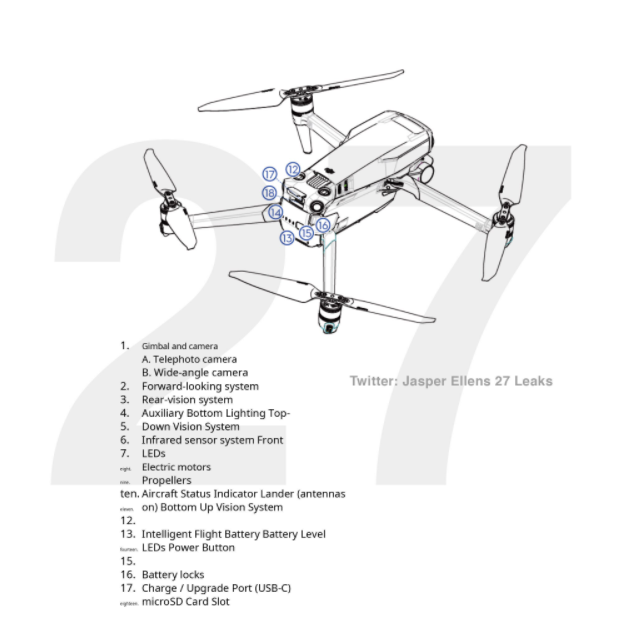
According to the well-known tipster Ice Universe, the Tab S8 trio will feature the Snapdragon 898 mobile platform, which hasn’t even been announced yet. This indicates that the Tab S8 series may not launch this year. The tipster has also claimed that the Tab S8 lineup will not feature the Exynos 2200 chip.
A recent report claimed that the Galaxy Tab S8+ will house a 10,090mAh battery, whereas the Tab S8 Ultra will get a bigger 11,500mAh battery. Probably, the vanilla model may come with an 8,000mAh battery. The tipster also claimed that the Tab S8 trio will carry support for 45W fast charging.
Leaked information that appeared in May revealed that the Tab S8 Ultra has a 14.6-inch OLED 120Hz screen, 8-megapixel + 5-megapixel dual front-facing camera, up to 12 GB of RAM, and up to 512 GB of storage. The Tab S8+ has a 12.4-inch OLED 120Hz screen, an 8-megapixel front camera, 8 GB of RAM, and up to 256 GB of internal storage.
The Tab S8 has an 11-inch TFT 120Hz screen, an 8-megapixel front camera, 8 GB of RAM, and 128 GB of internal storage. The three tablets are expected to offer common features like a 13-megapixel + 5-megapixel dual-camera system with flash, quad-speakers, and support Bluetooth enabled S Pen. The Tab S8 series is expected to launch in early 2022.
On Aug. 12, Honor announced the Magic3, Magic3 Pro, and Magic3 Pro+ flagship smartphones in China. The trio debuted with Snapdragon 888 Plus and topnotch cameras. The company started receiving the pre-orders of the Magic3 series soon after its launch. As scheduled, all three phones are available for purchase in the home market starting from today.
Honor Magic3 series pricing
The Honor Magic3 with 8 GB RAM + 128 GB storage is priced at 4,599 Yuan (~$707). Its 8 GB RAM + 256 GB storage model costs 4,999 Yuan (~$769). The Magic 3 Pro’s variants such as 8 GB RAM + 256 GB storage and 12 GB RAM + 512 GB storage are priced at 5,799 Yuan (~$892) and 6,799 Yuan (~$1,045), respectively. Lastly, the Magic 3 Pro (also known as Magic 3 Pro Ultimate Edition) with 12 GB RAM + 512 GB storage costs 7,999 Yuan (~$1,230).
Honor Magic 3 and Magic 3 Pro
These Chinese edition phones are also available for purchase through Giztop. At the launch, the company will be soon confirming the global launch of the Magic3 series.
Honor Magic3 series specifications
The Magic3 and Magic3 Pro feature a 6.67-inch OLED curved edge FHD+ display that offers a 120Hz refresh rate. It has a 13-megapixel main selfie camera coupled with a ToF depth sensor for facial recognition. The Magic3 Pro a 50-megapixel (main) + a 64-megapixel (monochrome) + 64-megapixel (telephoto) + a 13-megapixel (ultrawide) quad-camera unit. The Magic3 has a triple camera setup, which borrows the main, ultrawide, and monochrome lenses available on the Pro model.
Honor Magic 3 Pro Plus
The Magic3 Pro+ camera setup includes a 50-megapixel camera, a 64-megapixel telephoto lens with OIS, a 64-megapixel monochrome lens, and a 64-megapixel ultrawide lens. It features the same display and front camera setup as the other Magic3 phones.
The Magic3 series is powered by the Snapdragon 888+ mobile platform, LPDDR5 RAM, and UFS 3.1 storage. The Magic3 has a 4,300mAh battery, whereas the other two have a 4,600mAh battery. The Magic3 trio offers other features like an in-screen fingerprint scanner and 66W fast charge support. It comes preinstalled with Magic UI-based Android 11, which lacks support for Google apps and services.
It was recently found through the IMEI database listing that the forthcoming Xiaomi phone with a 21061119BI model number belongs to the Redmi 10 Prime smartphone for India. Now, the Bluetooth SIG certification of the 21061119BI model number (via) confirms that it will be indeed launching in the Indian market with the Redmi 10 Prime moniker.
As can be seen in the screenshot, the Bluetooth SIG certification reveals that the model numbers 21061119AG, 21061119AL, and 21061119DG belong to the Redmi 10 handset. The listing suggests that the same phone will be rebadged as the Redmi 10 Prime in the Indian market.
Even tipster Kacper Skrzypek has claimed that the global Redmi 10 will be releasing with Redmi 10 Prime moniker in India. The Bluetooth SIG certification reveals that these devices carry support for Bluetooth 5.2 connectivity and are preinstalled with MIUI 12.5.
The Redmi 10 Prime is likely to feature the same specs that are available on the global Redmi 10. It is likely to feature a 6.5-inch IPS LCD punch-hole panel that delivers a 90Hz refresh rate and a Full HD+ resolution of 1080 x 2400 pixels. For selfies, it may possess a 13-megapixel front-facing camera.
The Helio G88 may power the Redmi 10 Prime and it may ship with 6 GB of RAM and 128 GB of built-in storage. The rear side of the phone may feature a 50-megapixel main camera, an 8-megapixel secondary lens, and a pair of 2-megapixel cameras for macro shots and depth effects. It may house a 5,000mAh battery with 18W fast charging support.
Devices are known to go official around a month after appearing at the Bluetooth SIG platform. Hence, it is likely that the Redmi 10 Prime and Redmi 10 may go official in September in India.
Samsung is likely to launch the Galaxy S22 series in January. Like the predecessor series, the S22 lineup may include three devices such as Galaxy S22, Galaxy S22+, and Galaxy S22 Ultra. A recent leak revealed the key details on the design, display size, battery size, and camera capabilities of the S22 trio. Now, a new report by GalaxyClub.nl has emerged to specifically talk about the camera specs of the S22 Ultra.
The publication claims that the Galaxy S22 Ultra may come with a pair of 10-megapixel telephoto cameras like the S21 Ultra. One of them will be a periscope lens that will offer 10x optical zoom. The publication is not clear about the zoom factor of the other telephoto lens. Likely, it may just offer 3x optical zoom.
Samsung Galaxy S21 5G series
A recent leak claimed that the S22 Ultra will feature a 108-megapixel main camera and a 12-megapixel ultrawide lens. It is advisable to wait for newer reports to learn about the primary and ultrawide sensors of the S22 Ultra.
The publication further mentioned that the Galaxy S22 and Galaxy S22+ will feature a 50-megapixel primary camera and a 12-megapixel wide-angle lens. For selfies, both smartphones may possess a 10-megapixel front camera.
Rumors have it that the S22, S22+, and S22 Ultra will feature a 6.06 LTPS FHD+ display, a 6.55-inch LTPS FHD+ screen, and a 6.81-inch LTPO QHD+ screen, respectively. The S22 models are expected to support a 120Hz refresh rate. These models may house a 3,800mAh, a 4,600mAh battery, and a 5,000mAh battery. The S22 trio may support 65W rapid charging. The S22 trio could be powered by the upcoming Snapdragon 898 mobile platform. Select markets will receive the S22 trio powered by Exynos 2200 with AMD mRDNA GPU.
Motorola is on a launch spree. After announcing the Edge 20 series in Europe and India, and the Edge S Pro and Edge Lite in China, it has now unveiled the Motorola Edge in the U.S. Yes, the successor to last year’s Motorola Edge is also called the Motorola Edge, but for the sake of clarity, we will call it the Motorola Edge (2021).
The Motorola Edge (2021) is a weird device. While it looks like the Edge 20/Edge Lite (China), its specifications are actually quite different and it doesn’t have that lightweight and thin design. It also feels like a downgrade in some areas when compared to last year’s model.
The FHD+ display is 6.7-inches or 6.8-inches (the product page says both) but it is an 8-bit LCD and not a 10-bit OLED. It does keep the 576Hz touch response rate and 144Hz refresh rate which it claims is 60% faster than that of the first generation Edge and Edge+. It also has HDR10 and there is a centered punch hole for a 32MP camera.
Powering it is a Snapdragon 778G processor paired with 8GB of RAM and 256GB of non-expandable storage. Surprisingly, it gets a bigger 5000mAh battery with support for 30W TurboPower fast charging with an included charger.

The Motorola Edge (2021) has a 108MP f/1.9 primary rear camera, an 8MP f/2.2 119° ultrawide angle camera that can shoot macro images, and a 2MP f/2.4 depth camera. There is a single speaker and three microphones but no audio jack. It also has Bluetooth 5.2, NFC, Wi-Fi 6E, mmWave, a single SIM slot, IP52 rating, and a side-mounted fingerprint scanner. It runs My UX based on Android 11 and comes with support for Ready For.
Motorola has put a price tag of $699 on the phone but is running a limited-time offer that brings the price down to $499. Interested buyers will be able to get their hands on it at an undisclosed date. However, you can register on the official Motorola website to be notified when pre-order begins. The Motorola Edge (2021) is available in a single colorway called Nebula Blue.
Xiaomi announced an insane number of flagships this year: never seen a company announcing too many flagships in a single year. The last one is the Xiaomi Mi Mix 4, which comes with the 2nd generation under-display camera. Since it packs the best Qualcomm chipset, it is the most powerful Xiaomi device to date. But is it also the most complete flagship of the company? In order to establish this, we decided to compare it to the Xiaomi Mi 11 Ultra as it is the best Mi flagship released this year if we exclude the Mi Mix 4 and the Mi Mix Fold.
There is no doubt about the fact that Xiaomi Mi Mix 4 comes with the best design. Thanks to the under-screen camera technology, the display is totally full-screen, without holes and without a notch. And this is not all: the phone is also built with an outstanding ceramic back and it comes with the Gorilla Glass Victus protection for the front glass. Unfortunately, the Xiaomi Mi Mix is not waterproof but only splash resistant, while its internal rival is waterproof with the IP68 certification.
Display
Despite the presence of an under-screen camera on the Xiaomi Mi Mix 4, the Xiaomi Mi 11 Ultra has a superior display. It shows a higher level of detail thanks to a higher 1440p resolution (also known as Quad HD+). The panel is an AMOLED which shows up to one billion colors, with a wider diagonal of 6.81 inches, a 120 Hz refresh rate, the HDR10+ certification, and Dolby Vision support. You also get an in-display fingerprint reader with these handsets, as well as the Gorilla Glass Victus protection for the glass and a curved edge to edge panel.
Specs & Software
You can get a performance boost with the Xiaomi Mi Mix 4 because it sports a slightly better processor: instead of the Snapdragon 888 powering most of the Android flagships released in 2021, this device comes with the Snapdragon 888+ paired with up to 12 GB of RAM and up to 512 GB of UFS 3.1 internal storage. The Xiaomi Mi 11 Ultra has the same memory configuration in its most expensive variant, but it is fueled by the lower-end Snapdragon 888 mobile platform. The phones run Android 11 out of the box, customized by MIUI 12.5. Note that the Mi Mix 4 ships with the Enhanced Edition of the MIUI 12.5.
Camera
If you are looking for the best camera phone, then you should go for the Xiaomi Mi 11 Ultra without thinking twice. The Xiaomi Mi 11 Ultra has a 50 MP main camera, a 48 MP periscope sensor with 5x optical zoom, and a 48 MP ultrawide camera. The Xiaomi Mi Mix 4 has a great 108 MP main camera, but its secondary sensors are inferior: there is an 8 MP periscope camera with 5x optical zoom and a 13 MP ultrawide sensor. Note that Xiaomi Mi Mix 4 has an under-display camera, but it is a camera at the same level as the Xiaomi Mi 11 Ultra.
The Xiaomi Mi 11 Ultra has a bigger 5000 mAh battery and this means that its battery life can be longer. Xiaomi Mi Mix 4 has just 4500 mAh, but it has a faster charging technology with a max power of 120W. On the other hand, wireless charging has a lower power (50W vs 67W).
Price
The starting price of the Xiaomi Mi 11 Ultra for the Chinese market is 5.999 Yuan, which roughly translates into $914. The Xiaomi Mi Mix 4 starts from $770 and it is a bit more affordable. Overall, the Xiaomi Mi 11 Ultra is a superior device. The Xiaomi Mi Mix 4 is more innovative with its under-screen camera and a better processor (if we exclude the secondary rear display of the Mi 11 Ultra), but the Ultra has better cameras and a bigger battery, so it provides a superior user experience.
Xiaomi Mi Mix 4 vs Xiaomi Mi 11 Ultra: PRO and CONS
ASUS has announced yet another Chrome OS tablet. The new tablet comes just a few months after the launch of the ASUS Chromebook Detachable CM3. However, unlike the CM3, the CZ1 has a rugged design.
The ASUS Chromebook Detachable CZ1 was spotted on the ASUS website by About Chromebooks (via Chrome Unboxed). Though the YouTube video below was uploaded more than two weeks ago which means it was announced at the beginning of the month.
The product page says the tablet is “built to military-grade standards”. Each corner and edge of the tablet has a rubber trim that can absorb shocks such as ”drops from a classroom desk or the dining-room table.”. The back also has a 3D-textured finish that hides fingerprints and doesn’t show scratches. Last but not least is a shockproof cover that adds an extra layer of protection when it drops from heights of up to 150 centimeters. It can also survive up to 15-kilogram force on the lid and bottom without damage to the panel.
Coming to the specs, the ASUS Chromebook Detachable CZ1 is practically identical to the ASUS Chromebook Detachable CM3. It has the same 10.1-inch FHD multitouch display with TÜV Rheinland certification for low blue-light emissions.
There is a MediaTek Kompanio 500 processor a.k.a. MT8183 with 4GB of RAM and 64GB or 128GB of storage. It has an 8MP rear camera and a 2MP front-facing camera. Users also get stereo speakers, an audio jack, a USB-C port, a garaged stylus, and a detachable full-size keyboard with a 1.5mm key travel, a touchpad, and an ErgoLift design. The rugged case also has a free-angle stand.
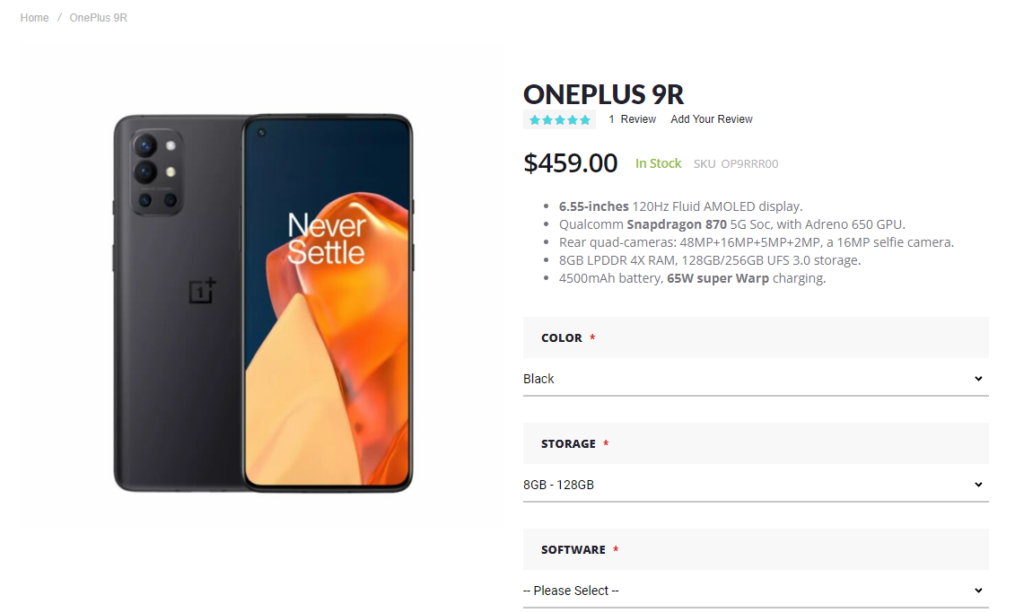

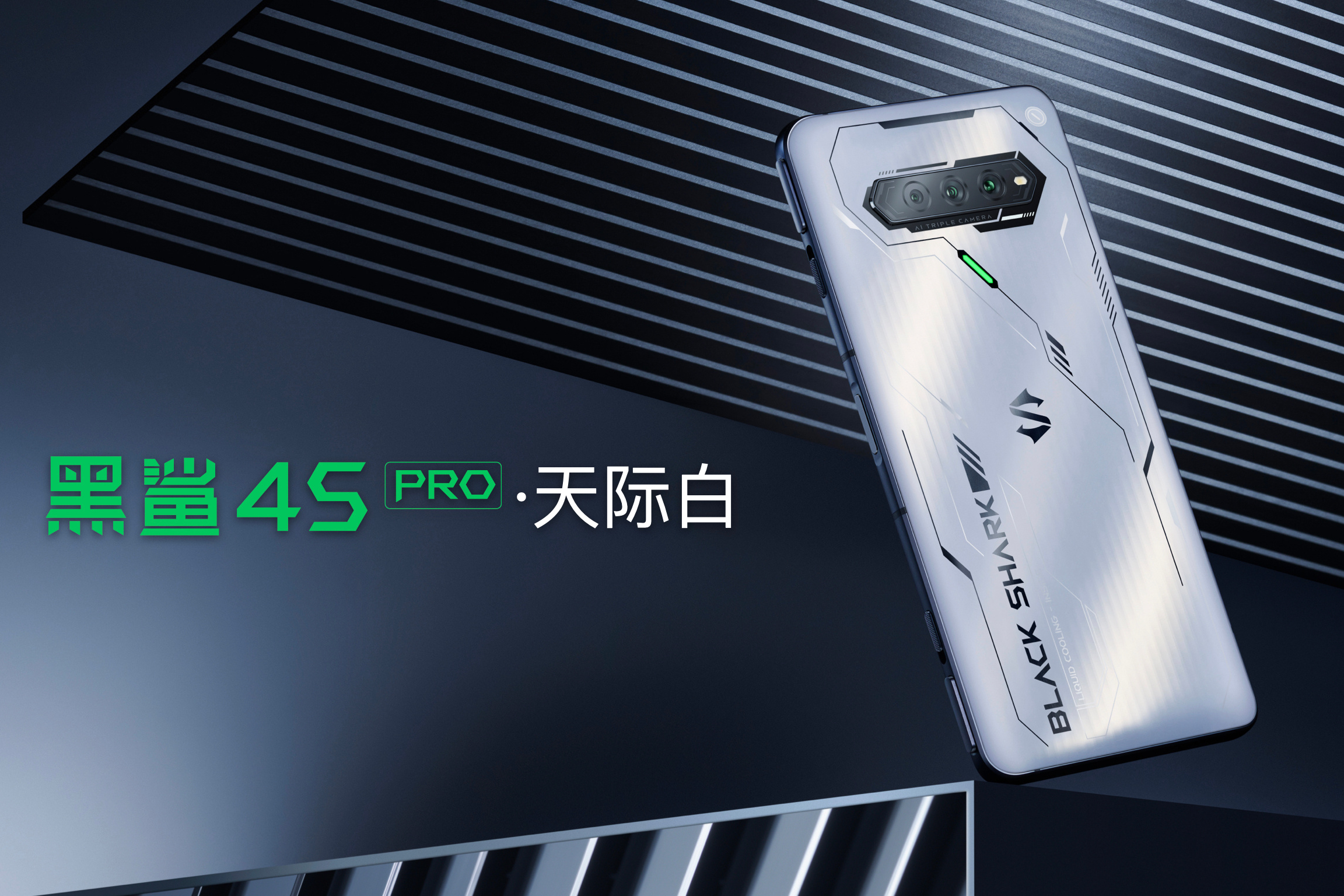
There is a 27Wh battery inside the device which should last up to 11 hours on a single charge. That should be enough for a day’s use at school. Charging is via a 45W Type-C adapter.
The price and availability details for the ASUS Chromebook Detachable CZ1 are yet to be disclosed by the manufacturer.
We use cookies on our website to give you the most relevant experience by remembering your preferences and repeat visits. By clicking “Accept”, you consent to the use of ALL the cookies.
This website uses cookies to improve your experience while you navigate through the website. Out of these, the cookies that are categorized as necessary are stored on your browser as they are essential for the working of basic functionalities of the website. We also use third-party cookies that help us analyze and understand how you use this website. These cookies will be stored in your browser only with your consent. You also have the option to opt-out of these cookies. But opting out of some of these cookies may affect your browsing experience.
Necessary cookies are absolutely essential for the website to function properly. This category only includes cookies that ensures basic functionalities and security features of the website. These cookies do not store any personal information.
Any cookies that may not be particularly necessary for the website to function and is used specifically to collect user personal data via analytics, ads, other embedded contents are termed as non-necessary cookies. It is mandatory to procure user consent prior to running these cookies on your website.