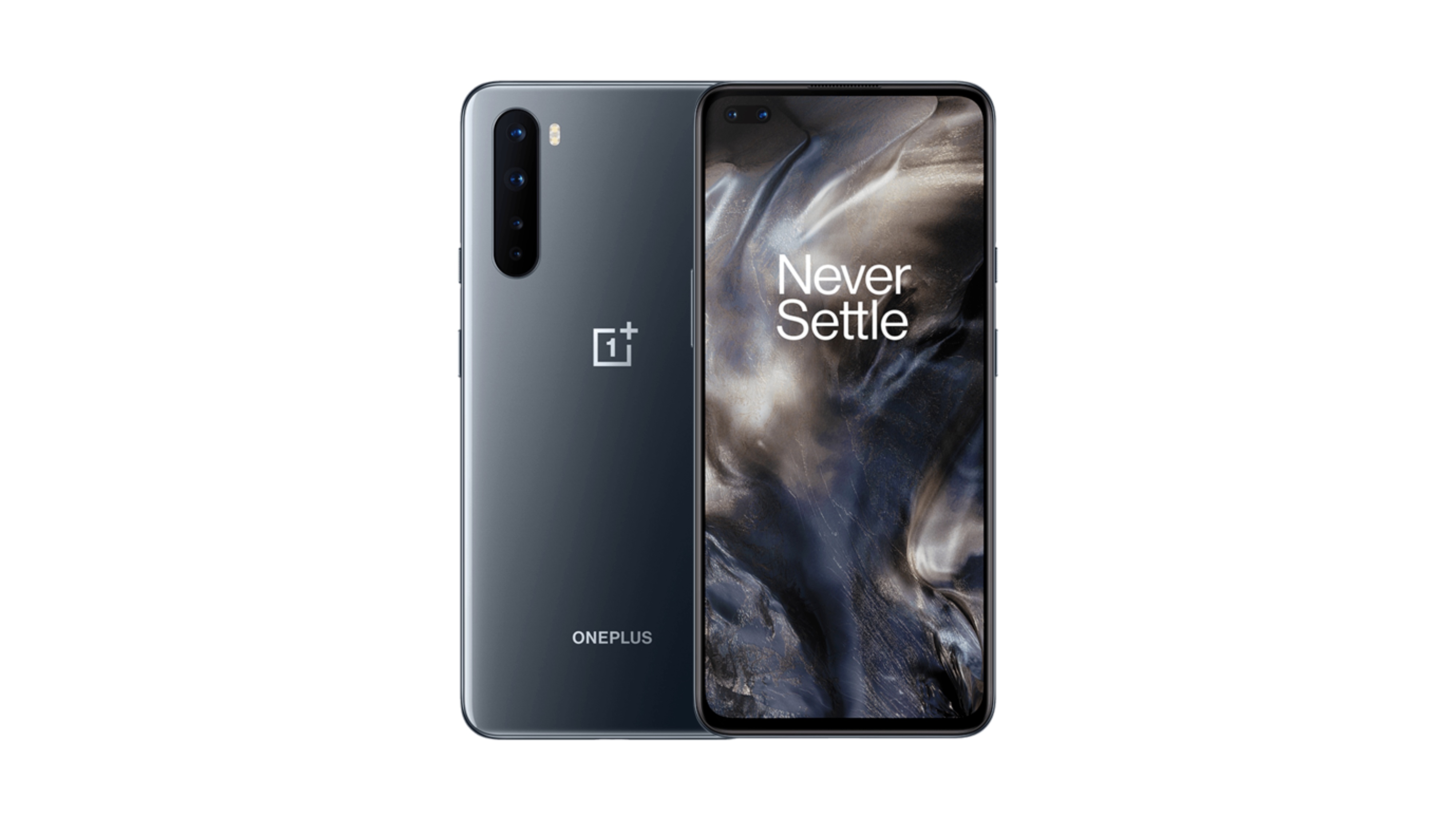
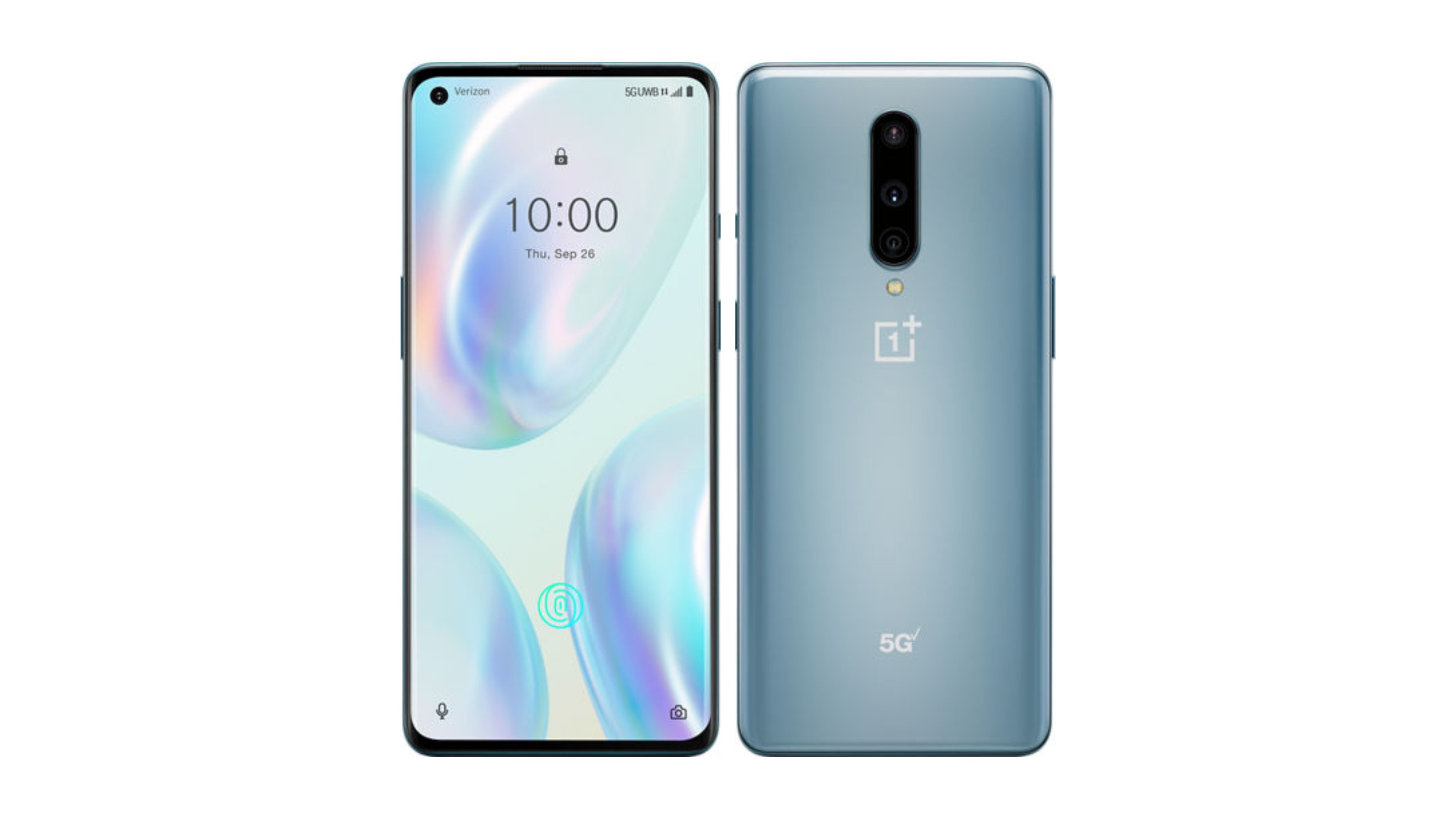
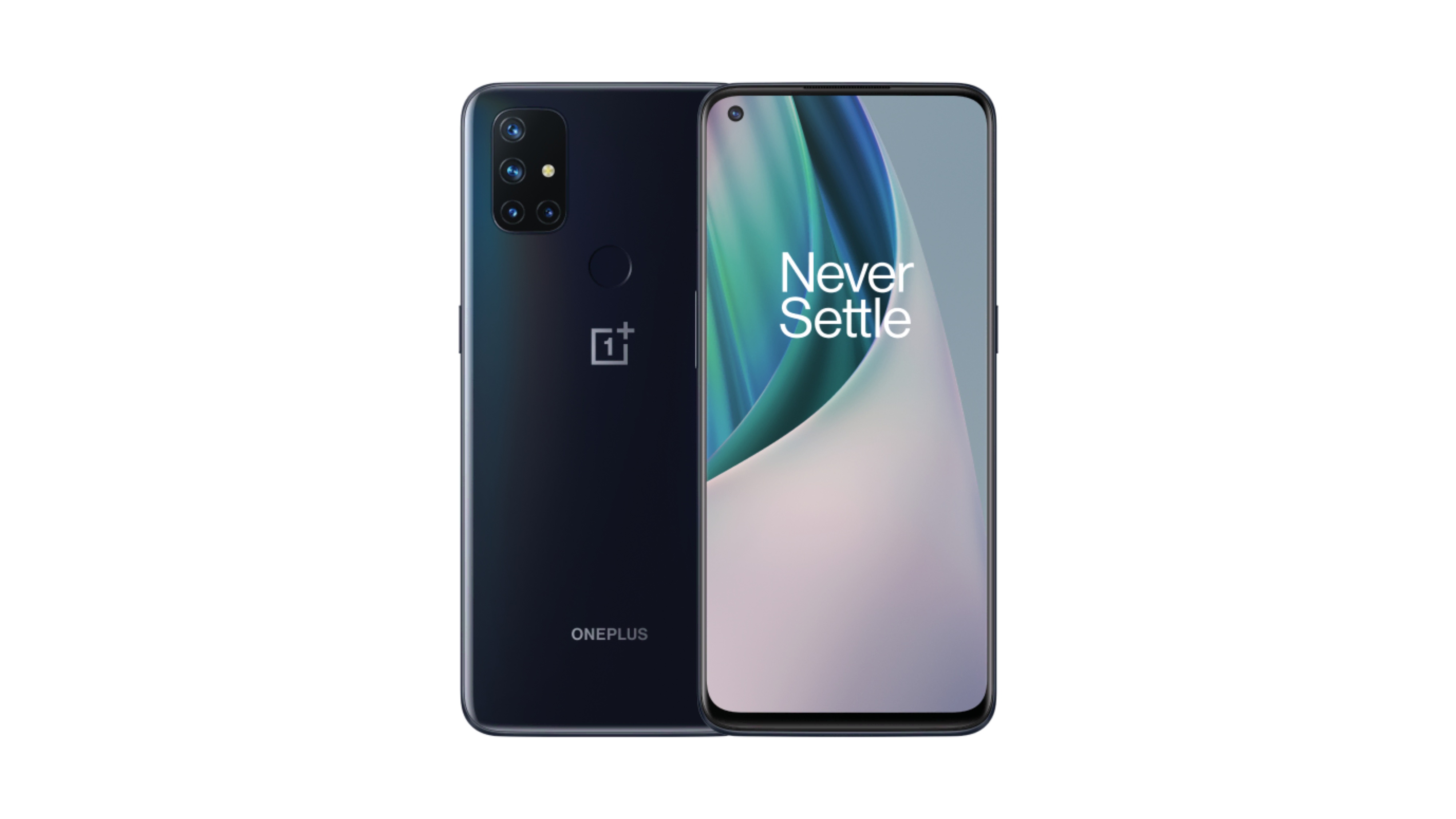
Earlier last month, OnePlus rolled out the first-ever OxygenOS Open Beta update for the OnePlus Nord. A few weeks later in the same month, the company released Open Beta 2 for this handset. Now, the brand is seeding out Open Beta 3 update already.
Just like the previous Open Beta release for the OnePlus Nord, the latest build is all about fixes. These fixes are related to the system, camera, and ambient display, and clock.
First and foremost, the new update fixes dial icons overlapping on the lock screen and white space issue in the notification bar in dark mode. Also, it optimizes UI display effects of work life balance.
Further, the build fixes the camera app failing to start through quick gestures and front camera video not playing issue. Lastly, the update also fixes Canvas AOD not activating bug and alarms cannot be set issue.
OnePlus Nord OxygenOS Open Beta 3 Official Changelog
System
Optimized UI display effects of work life balance
Fixed the issue that the dial icons overlap on the lock screen
Fixed the issue of white space in the notification bar in Dark mode
Camera
Fixed the issue that the camera fails to start through quick gestures
Fixed the issue with video recorded by the front camera that can not be played
Ambient Display
Fixed the small probability issue that Canvas AOD can not be activated
Clock
Fixed the small probability issue that alarm clocks can not be set
The OxygenOS Open Beta 3 update for OnePlus Nord is currently being rolled out via OTA to the users who are on the previous build. Any interested user on the stable channel can also install it by downloading the appropriate file from the OnePlus Community.
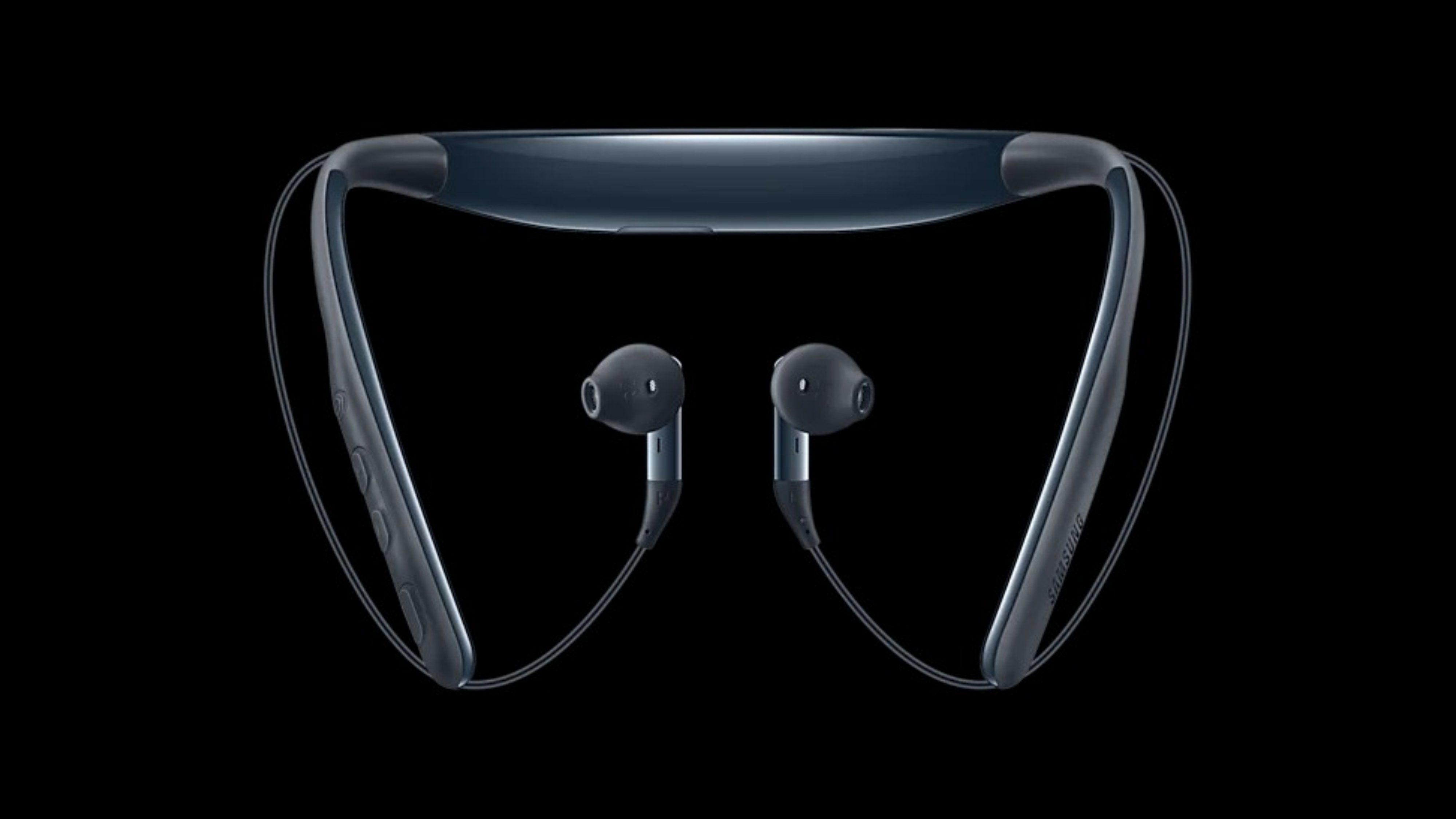
Back in late November 2020, Samsung launched Level U2 neckband-style wireless earphones in South Korea. It is the successor to the popular Level U from over five years back. In the following days, this product made its way to various markets across the world. Now, two months later since its initial debut, this audio product is finally available in India.
The newly launched Samsung level U2 wireless earphones in India feature 12mm drivers, which the company claims to deliver rich and balanced sound over Bluetooth 5.0 connection.
This pair of in-ear type earphones support multiple audio codecs, namely HFP, HSP, A2DP, AVRCP, and SSC (Samsung Scalable Codec). For those unaware, SSC is only supported on Samsung Galaxy smartphones and tablets running Android 7.0 Nougat and above.
Further, this product comes with a single microphone and 4-button inline control. Talking about dimensions, it measures 146 x 39 x 170mm and just weighs 41.5g. Also, it ships with three different-sized ear tips (Small, large, Wing Tip).
Last but not least, these Samsung earphones are backed by a 159mAh battery, which the company claims to offer up to 18-hour music playback, 13-hour talk time, and 500-hour standby time on a full charge via USB Type-C port.
The Samsung Level U2 neckband-style wireless earphones are priced at ₹1,999 ($27) in India. It is currently available in two colors (Black, Blue) on Samsung online store and Flipkart. But it should hit offline markets and other retailers in the coming days.
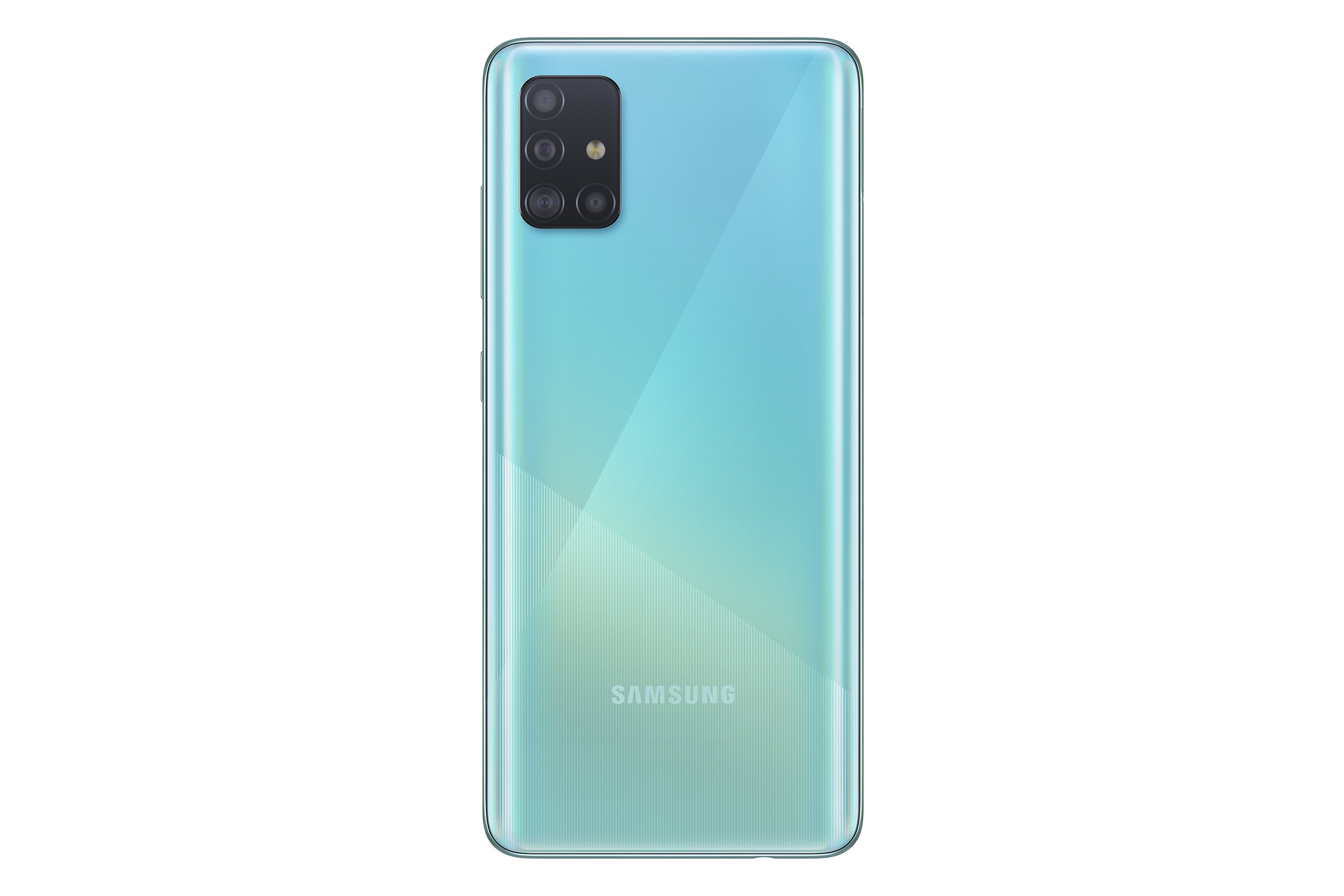
Samsung has been living up to the promise of updating older devices with the latest One UI 3.0. The company has been rolling out the OTA left right and center to Galaxy M, A, S, Note series of devices. Recently, the Galaxy F41 and M21 also got the One UI Core 3.0 update. Today, yet another A-series devices gets the One UI 3.0, this time it’s the Galaxy A51.
Galaxy-A51_Blue
According to a Sammobile report, Samsung Galaxy A51 is receiving an update with firmware version A515FXXU4DUB1 in Russia. This update bundles the One UI 3.0 based on Android 11 and the latest security patch. To recall, the Galaxy A51 was originally scheduled to get it only by March 2021.
As mentioned above, Samsung has jumped the gun and brought the update quicker which also has the February 2021 security patch. As for the Android 11 features, you can witness new chat bubbles(conversations), media controls, improved permission management, and organized notifications.
Although Samsung’s latest UI is One UI 3.1, the One UI 3.0 brings quite a bit of upgrade over the predecessor, One UI 2.5. Some of them are improvements to UI and icons, Dark Mode, Digital Wellbeing & parental controls, and more AOD clock styles, etc.
Samsung so far has updated models like the Galaxy S20, Note 20, Note 10, S10 series, and budget devices like the Galaxy M31, M21, F41, and more. The list will only get bigger. Speaking of which, the horizon of Galaxy A51 will widen in the coming days so don’t panic if your unit hasn’t got it yet.
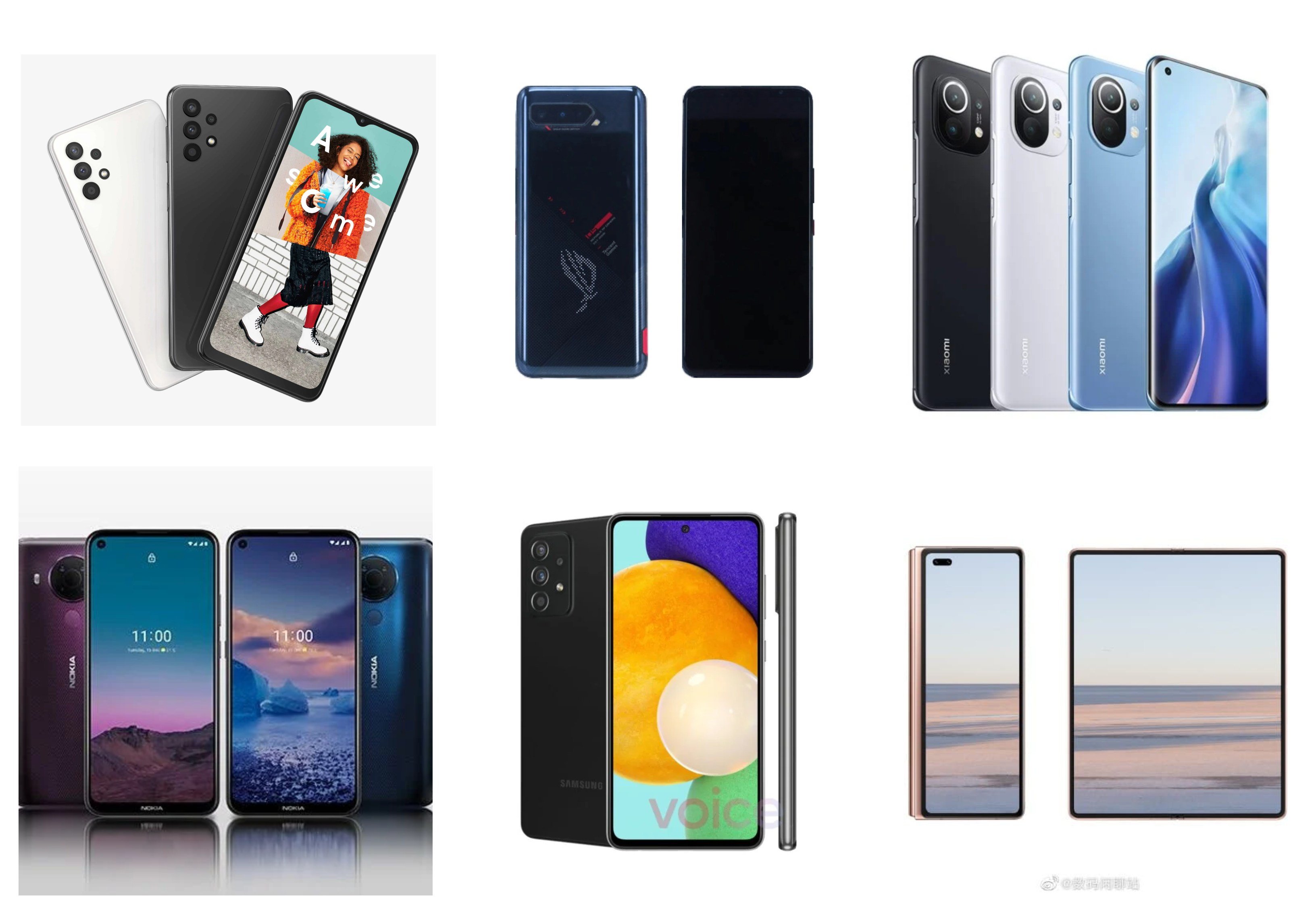
After a hectic end to the year 2020, 2021 has already started with a bang. And we are back with the upcoming Smartphones for the month of February 2021. This month usually gets a lot of Flagship launches but some companies like Samsung, Xiaomi have already launched their top smartphones early.
Nevertheless, we have got a lot of devices from Huawei, OPPO, Redmi, Vivo, realme, Nokia, and more. Although we are still early into the month of February, few brands have already launched their devices so be sure to read till the end to know about them.
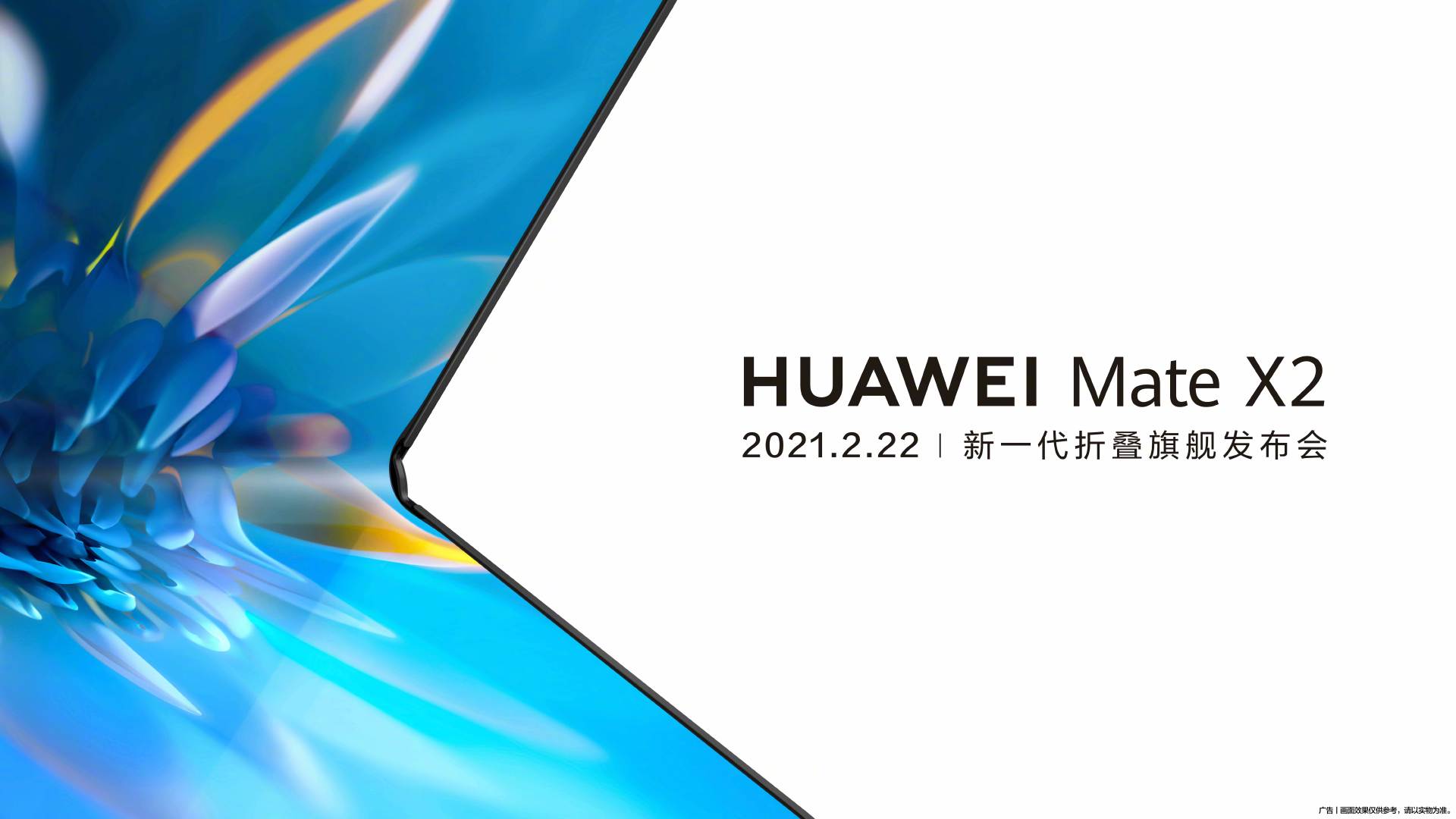
1HUAWEI Mate X2
This is probably the most important launch of the month, if you ask me. Huawei has stood the test of the toughest times in the last two years. The company is still the hero of the home country China.
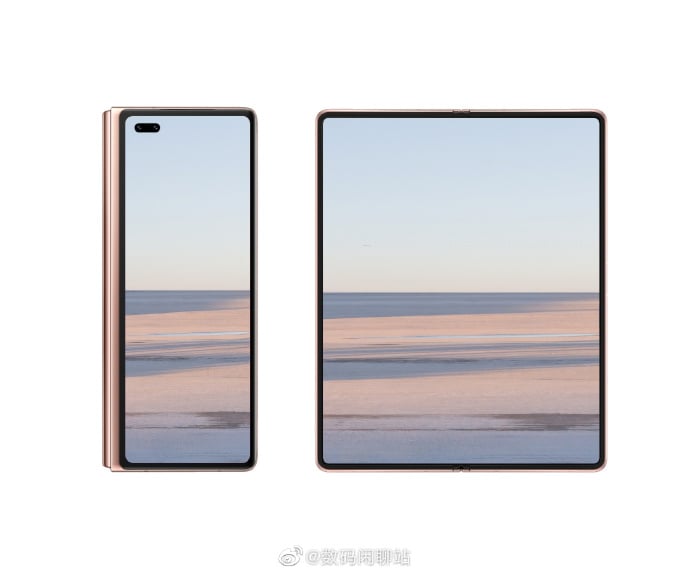
Anyway, the third-gen Foldable device(after Mate X, Mate Xs), the HUAWEI Mate X2 will launch on February 22 in China. Expected specs include an inward folding 8.01 inches main display, likely a 6.45-inch Cover display, Kirin 9000 5G chipset, quad-cameras with 50MP sensor, 16MP dual-front punch-hole cameras, 4,400mAh battery with 66W rapid charging, and more.
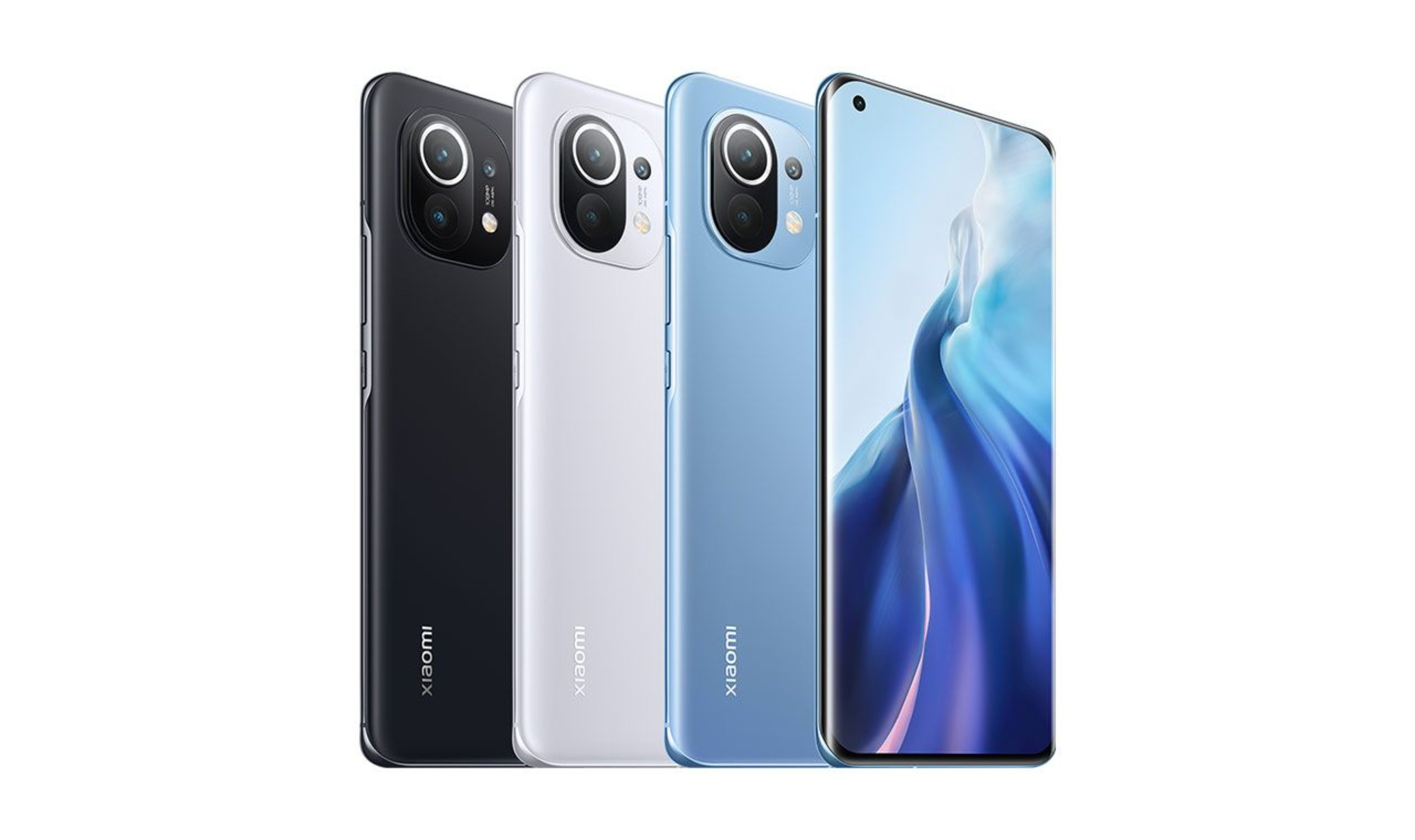
2Xiaomi Mi 11 and Mi 11 Lite, Mi 11 Pro
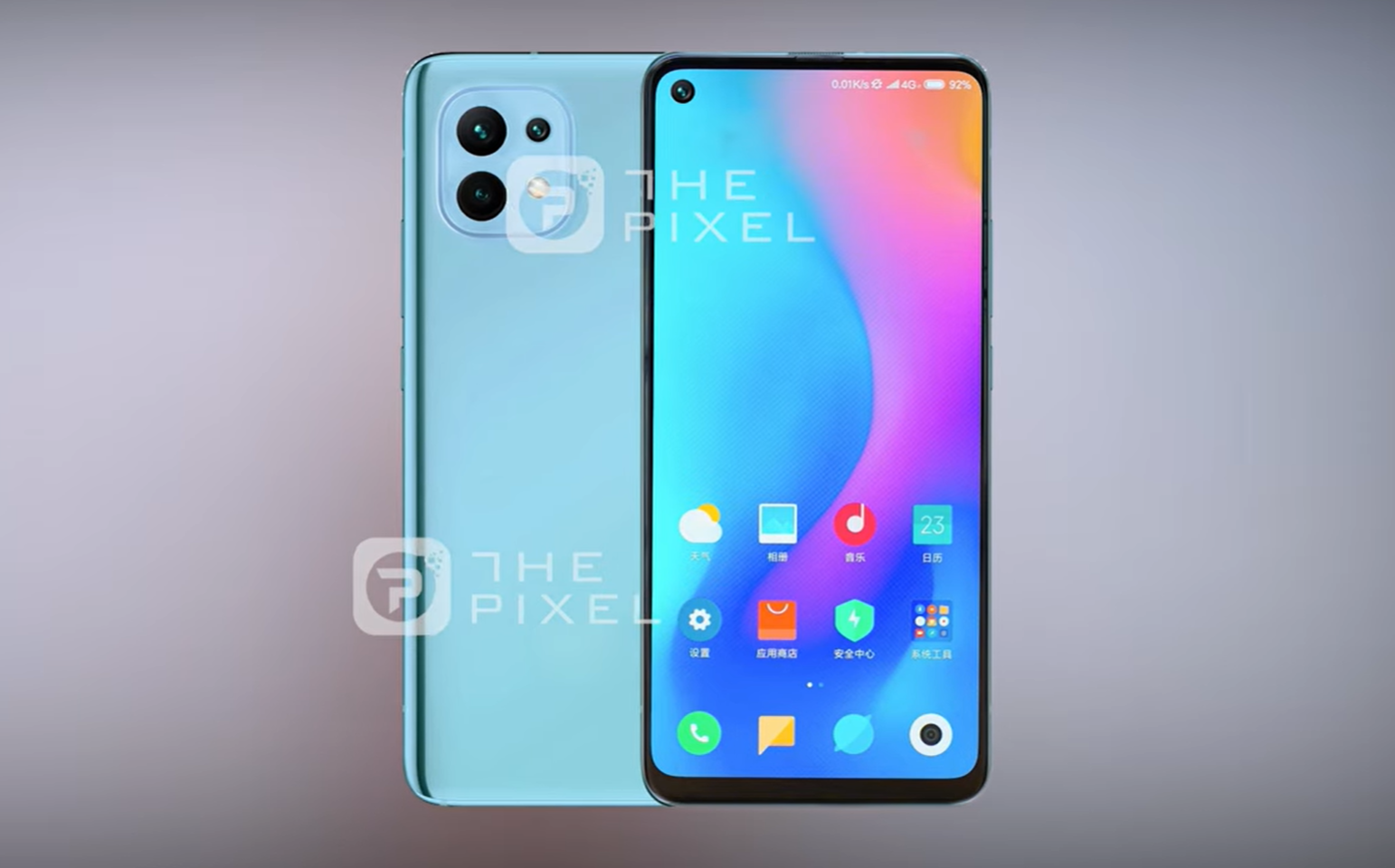
Xiaomi unveiled the world’s first Snapdragon 888 chipset phone(Xiaomi Mi 11) in China back in December. This device is confirmed to debut Globally on February 8. Alongside the flagship, Xiaomi is also expected to bring a Mi 11 Lite. As for the Mi 11 Lite specs, it is likely to feature a 120Hz LCD panel, Snapdragon 732G chipset, 64MP quad-cameras, 4,250mAh battery with 33W charging, 6/8GB RAM, 64/128/256GB storage MIUI 12.
1 of 2
Xiaomi MI 11 Lite render that appeared in The Pixel's YouTube video
Xiaomi MI 11 Lite 4G render
The Mi 11 Lite and Mi 11 are also coming to India but the exact date is unknown. Apart from this, the Chinese giant might also launch a ‘Pro’ variant of the Mi 11 in China this month.
The expected specs of the Mi 11 Pro include QHD+(2K) OLED 120Hz display, Snapdragon 888 chipset, 5,000mAh battery with 120W Wired & 67W wireless charging, 12/16GB RAM, 256/512GB storage, quad-cameras with 120x digital zoom, and more. There’s also a Mi 10 Ultra-like device rumored but info regarding it is bleak.
3Redmi K40 and K40 Pro, Note 10 and Note 10 Pro
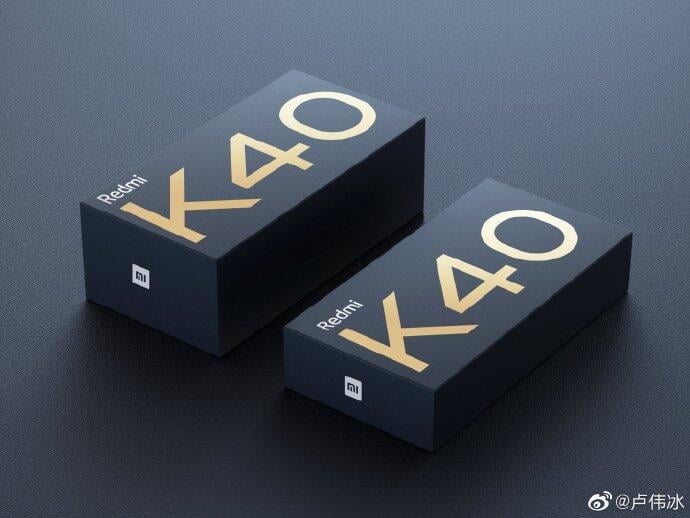
Redmi has already started teasing the Redmi K40 series in China and it is coming in February. It is expected to have two devices- Redmi K40, K40 Pro. The non-Pro might carry an upcoming Snapdragon 775 chipset whereas the Pro will probably get the Snapdragon 888.
1 of 3
Xiaomi Redmi K40
Redmi K40 Pro display design leak
Other Expected specs include a 120Hz OLED punch-hole display, up to 12GB RAM and 256GB UFS 3.1 storage, 64MP sensor-equipped quad-cameras also having a 1/1.5-inch sensor. Let’s wait for more leaks in the coming days.
Redmi Note 10 series
The Redmi Note 10 and Note 10 Pro are expected to launch in India in February, courtesy of Ishan Agarwal. They are rumored to come in 4G(Note 10, 10 Pro) and 5G(Note 10 Pro) versions. Certifications like TUV, Indonesia Telecom, and FCC show that the Redmi Note 10 will run MIUI 12, support 4G LTE, dual-band Wi-Fi.
Other expected specs include 4/6GB(Note 10), 6/8GB RAM, and up to 128GB Storage, quad-cameras with 64MP (Note 10)/108MP(Pro) sensors, colors- Bronze, Blue, Gray(Note 10 Pro), and White, Green, Gray(Note 10), and more.
4ASUS ROG Phone 5
Just like the flagships, 2021 is likely to see an early debut of the Gaming Smartphones. This time, out of nowhere, players like Redmi are also joining the list. Other prominent brands like ASUS, Nubia, have already started teasing the devices.
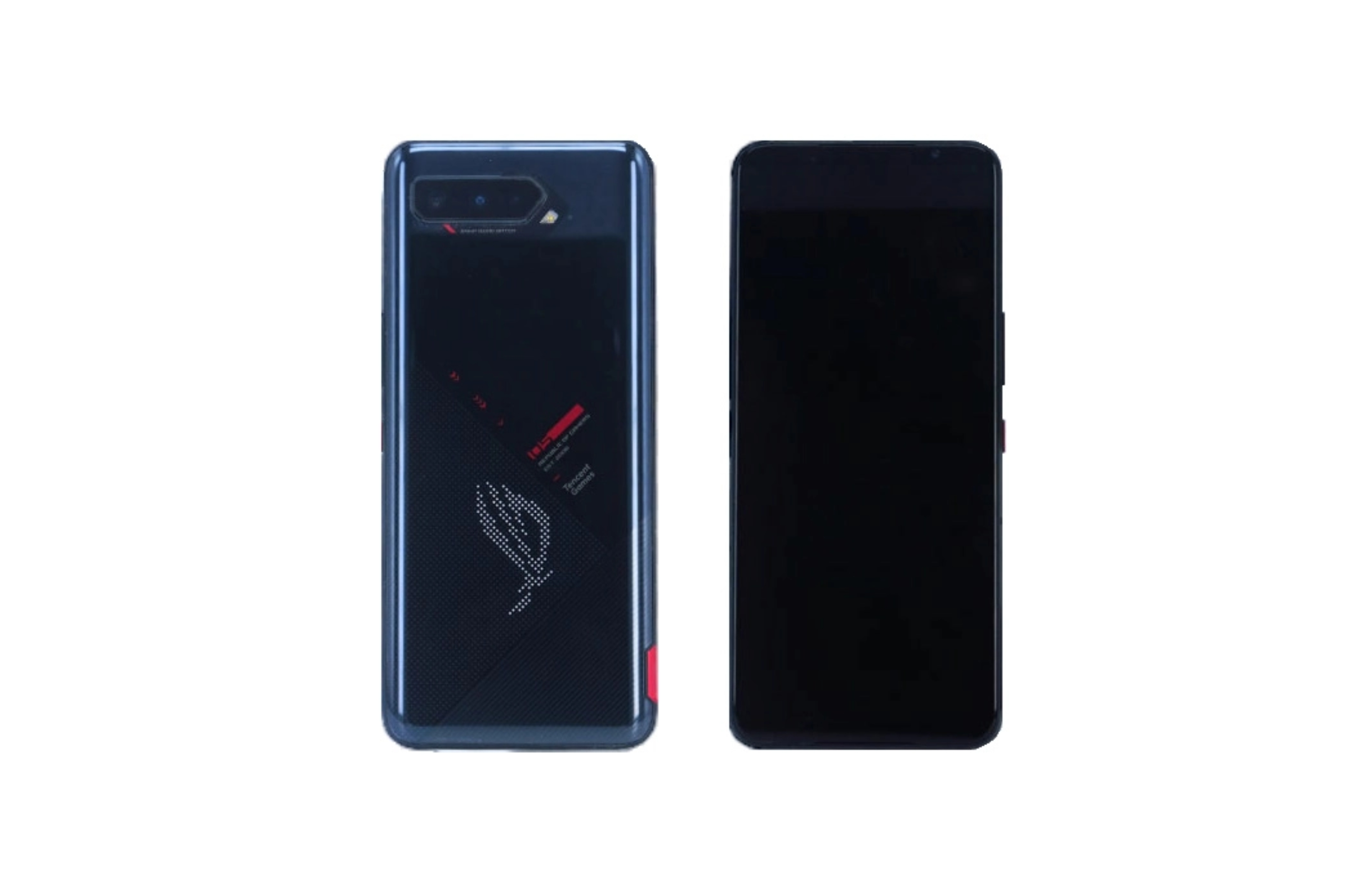
ASUS has already started teasing the next ROG Phone and it could be the ROG Phone 5. A recent TENAA listing shows that it has a dot-Matrix LED rear, 6.78-inch OLED display, a 6,000mAh battery, and runs Android 11.
Other expected specs include 144Hz refresh rate, Snapdragon 888 chipset, 65W charging, 64MP main camera, and more. The rumored launch date is Feb. 12.
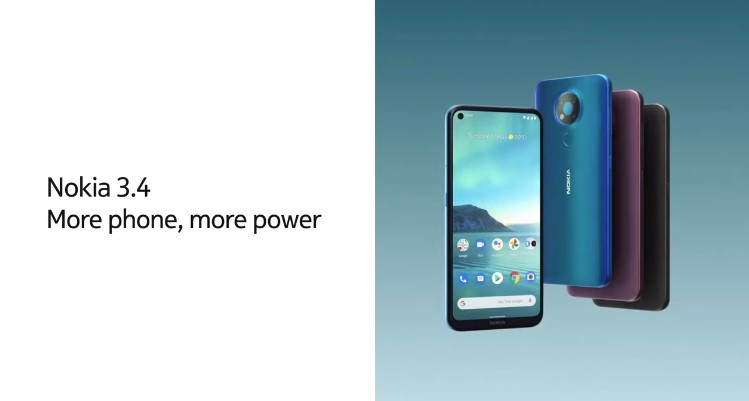
5Nokia 3.4, 5.4
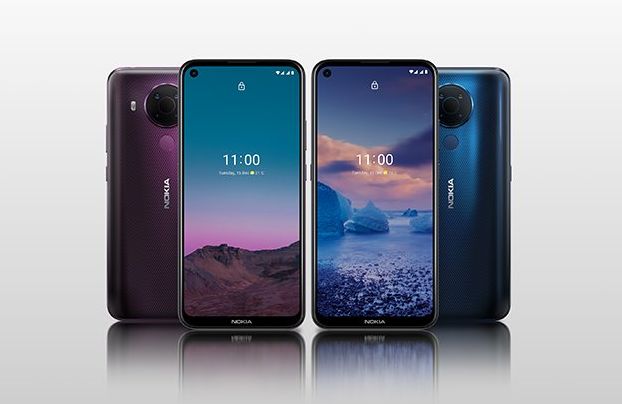
HMD Global has been focusing on mid-range and budget devices lately. The company’s rumored Nokia 9.3 Purview seems like a never attainable fruit. Anyway, the company will launch Nokia 5.4 in the USA on February 15 and India on Feb. 10(Our Exclusive). It has also started teasing the Nokia 3.4 for India and we can expect it on the same day.
1 of 2
Nokia 5.4
Nokia 5.4
Nokia 3.4
Talking about Specs, Nokia 5.4 from Europe features a 6.39-inch HD+ LCD screen, Snapdragon 662 processor, quad-cameras with a 48MP sensor, 16MP selfie shooter, 4,000mAh battery with 10W charging, 4/6GB RAM, 64/128GB storage, Android 10(at launch).
The Nokia 3.4, which launched in Sep. 2020, features a 6.39-inch HD+ display, Snapdragon 460 chipset, 3GB RAM, 64GB storage+microSD slot, triple-camera with 13MP sensor, 4,000mAh battery.
6Infinix Smart 5
Infinix Smart 5 aka Hot 10 Play
Infinix has confirmed that the Smart 5 will debut in India on February 11. To be clear, this is not the old Infinix Smart 5 from Africa but a rebadged version of the recently launched Infinix Hot 10 Play.
Specs include a 6.82-inch HD+ LCD screen, MediaTek Helio G25 chipset, 13MP dual camera, 8MP selfie camera, fingerprint sensor, 6,000mAh battery, and Android 10 Go Edition.
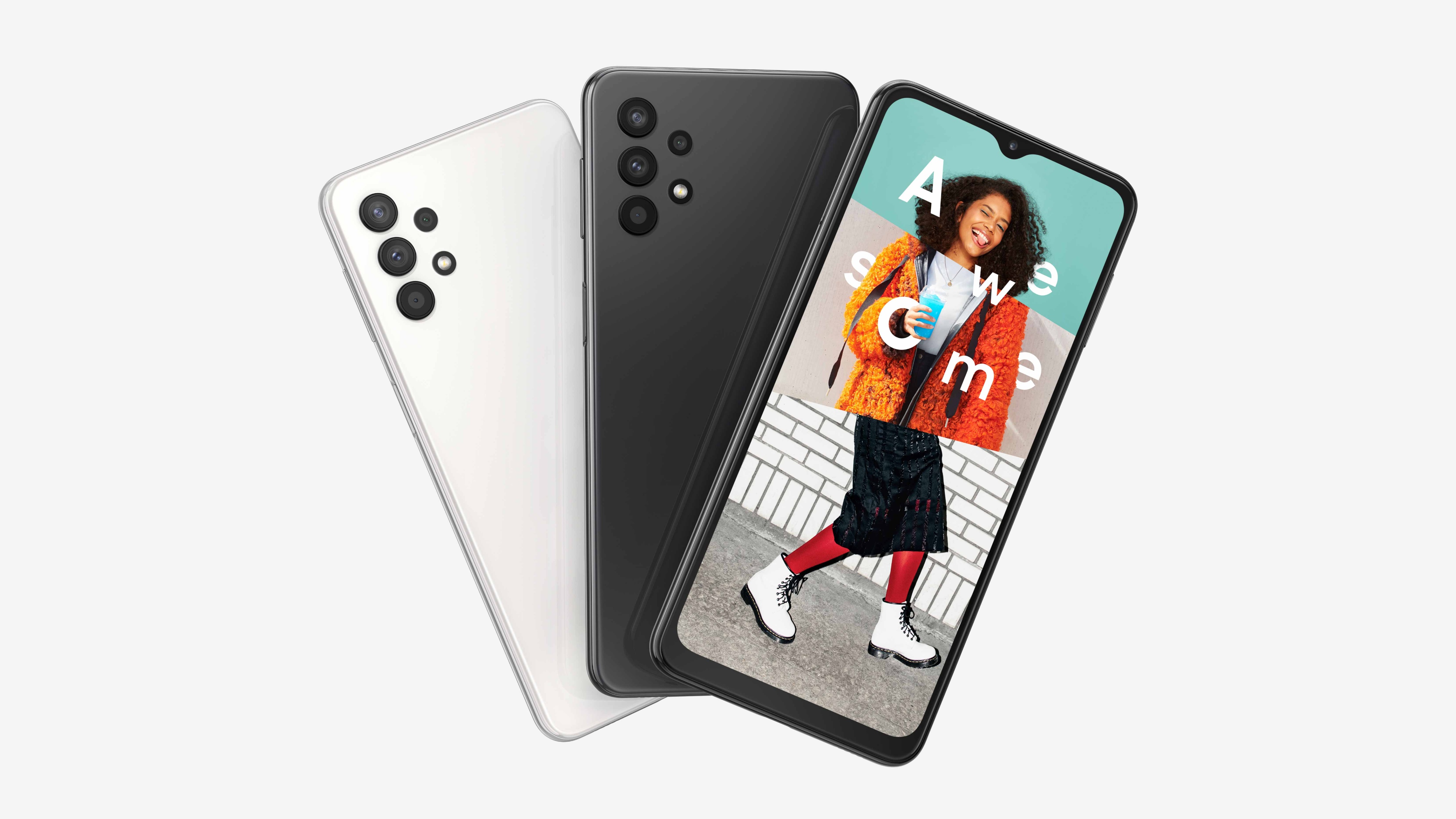
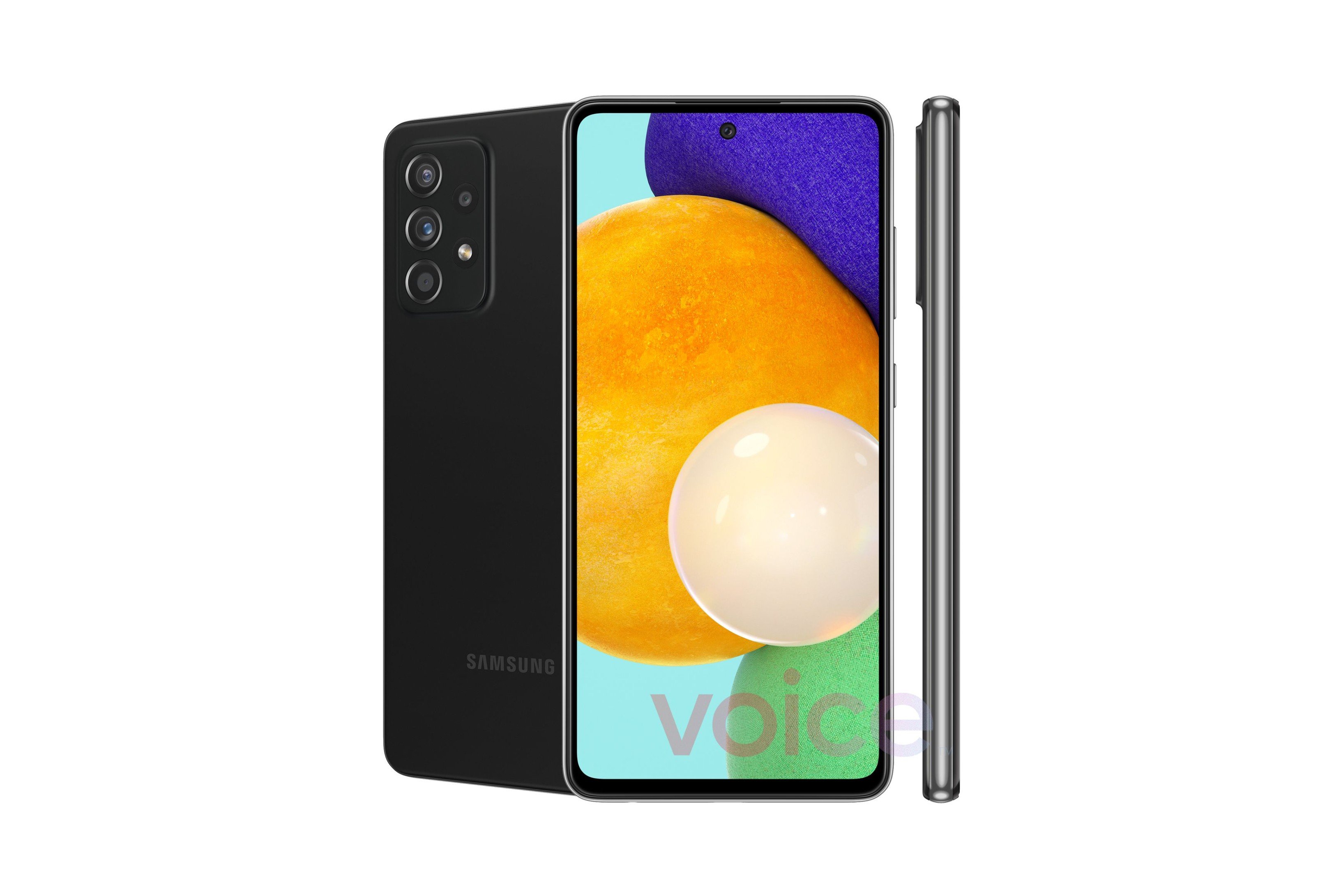
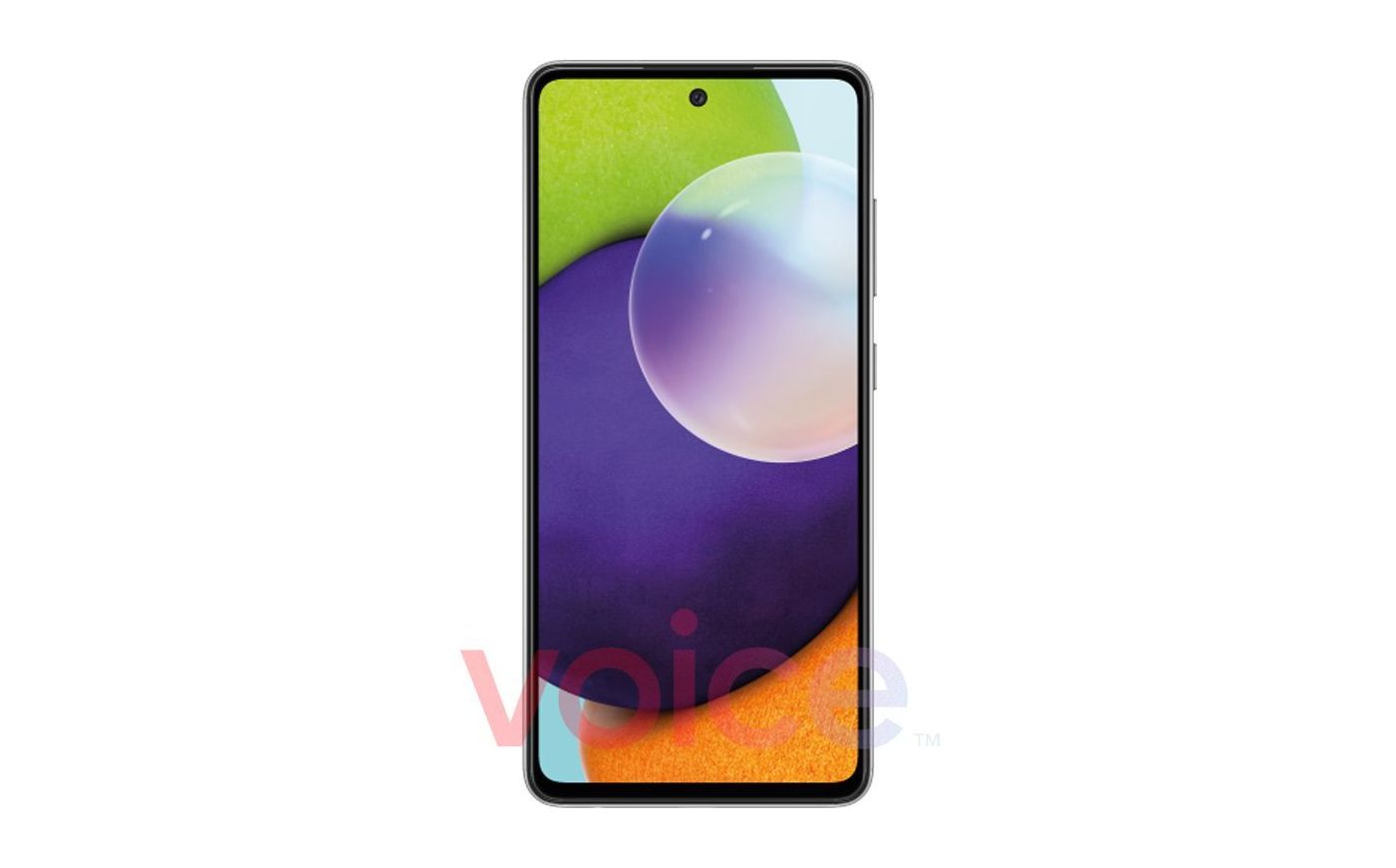
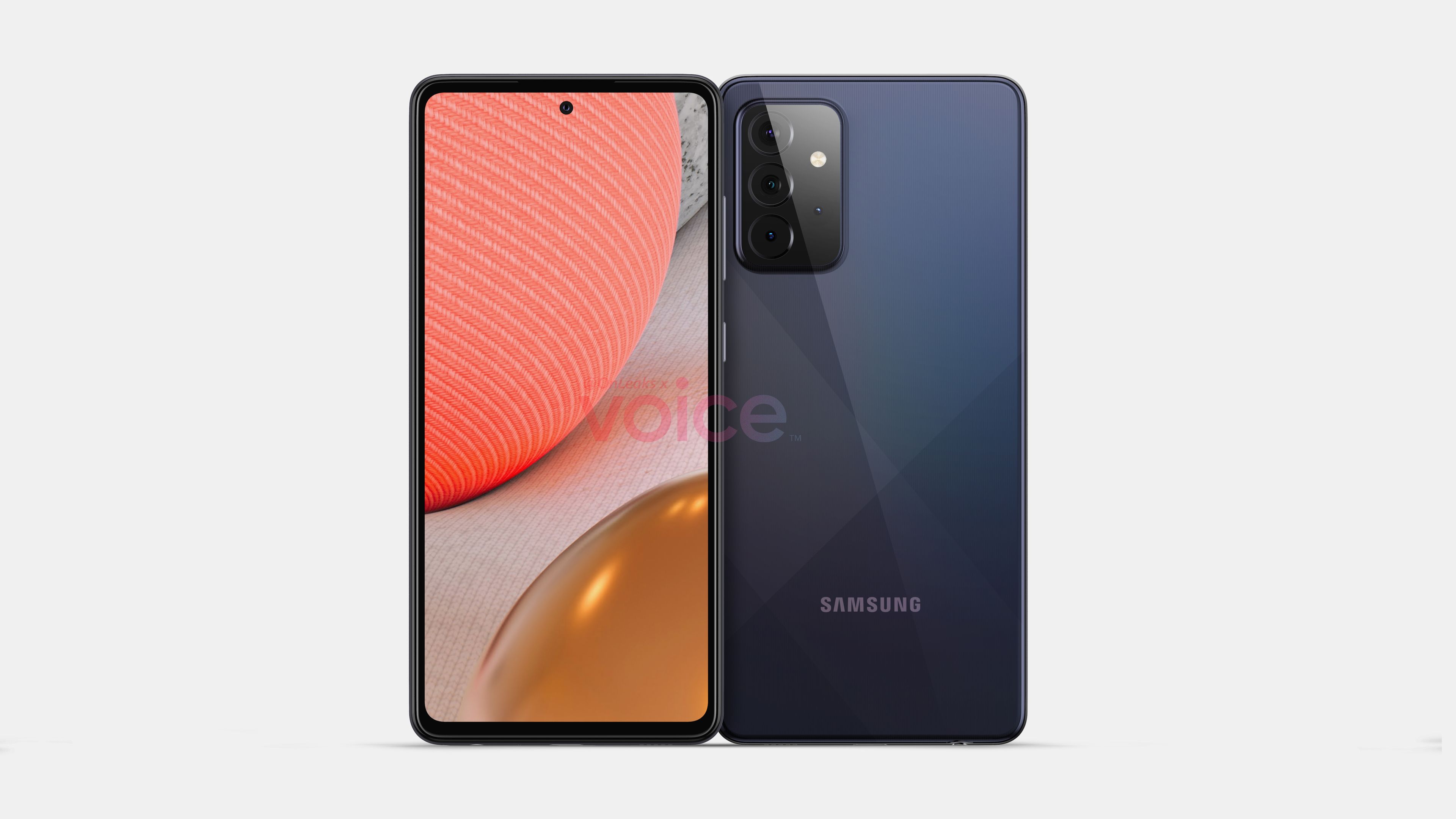
7Samsung Galaxy A52, A72, and A32 4G, Galaxy M62/F62
Samsung has already begun the year with a bang by launching Galaxy S21 series. Now, it is moving to midranges. The ever-famous Galaxy Ax series will likely get the successors, Galaxy A32 4G, A52, and A72. As we all know, it has already launched a 5G version of Galaxy A32.
Reports say that a 4G version for some markets is coming and it could launch it in Black, Blue, White, and Lavender colors. Expected specs include a 6.5-inch HD+ Infinity-V display, MediaTek Helio G85 SoC chipset, 48MP quad-camera setup, 5,000mAh battery with 15W charging, NFC, and run One UI 3.0 based on Android 11.
1 of 4
Galaxy A52 Official Leaked Image Credit: Evan Blass
Samsung Galaxy A72 5G's leaked render by Evan Blass
Apart from 5G, leak says that a 4G version of Galaxy A72 will feature a 6.7-inch sAMOLED Infinity-O display, Snapdragon 720G chipset, up to 8GB RAM, 5,000mAh battery with 25W charging, quad-cameras with 64MP+12MP(ultra-wide)+two 5MP(Macro, Depth) setup, and start around $449.
1 of 3
Samsung-Galaxy-F62-
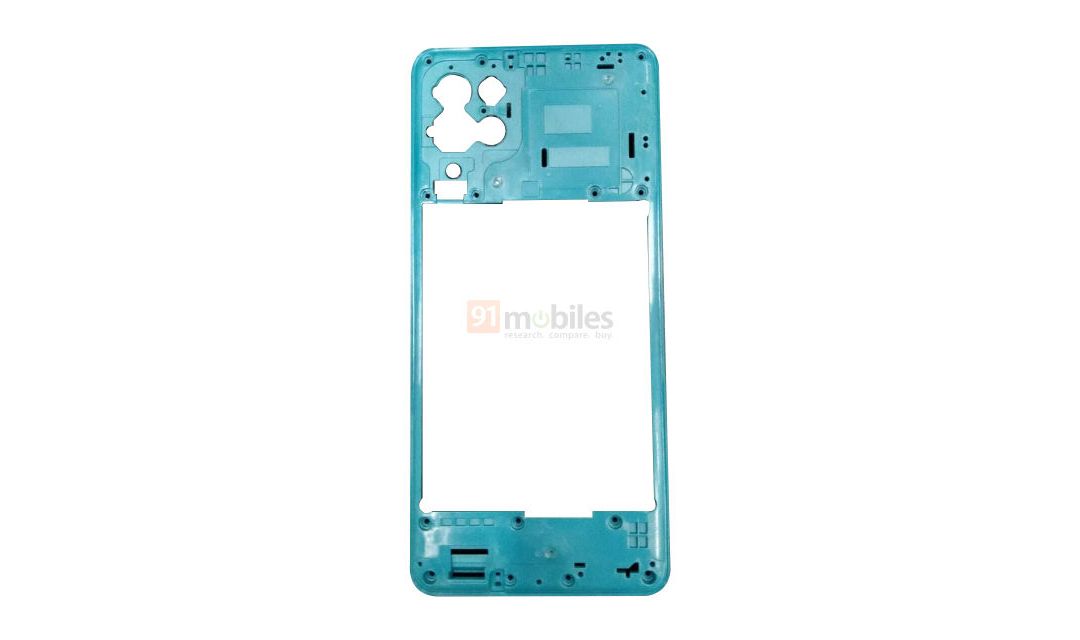
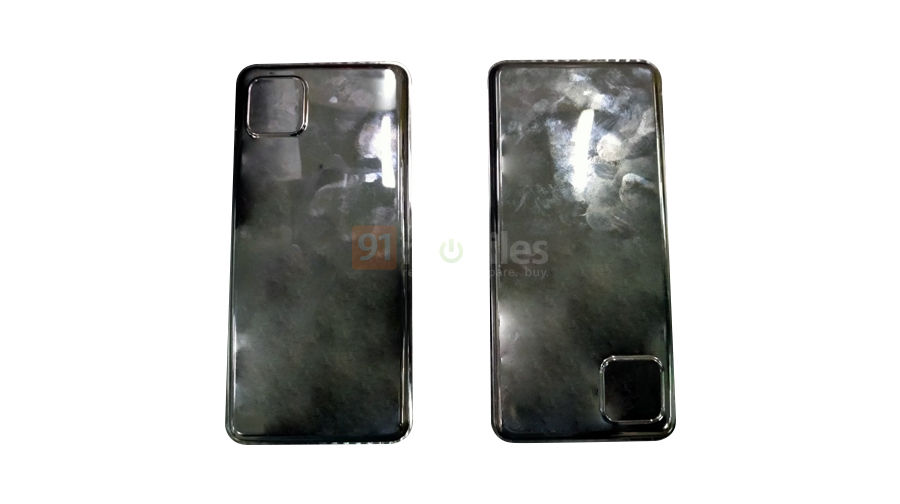
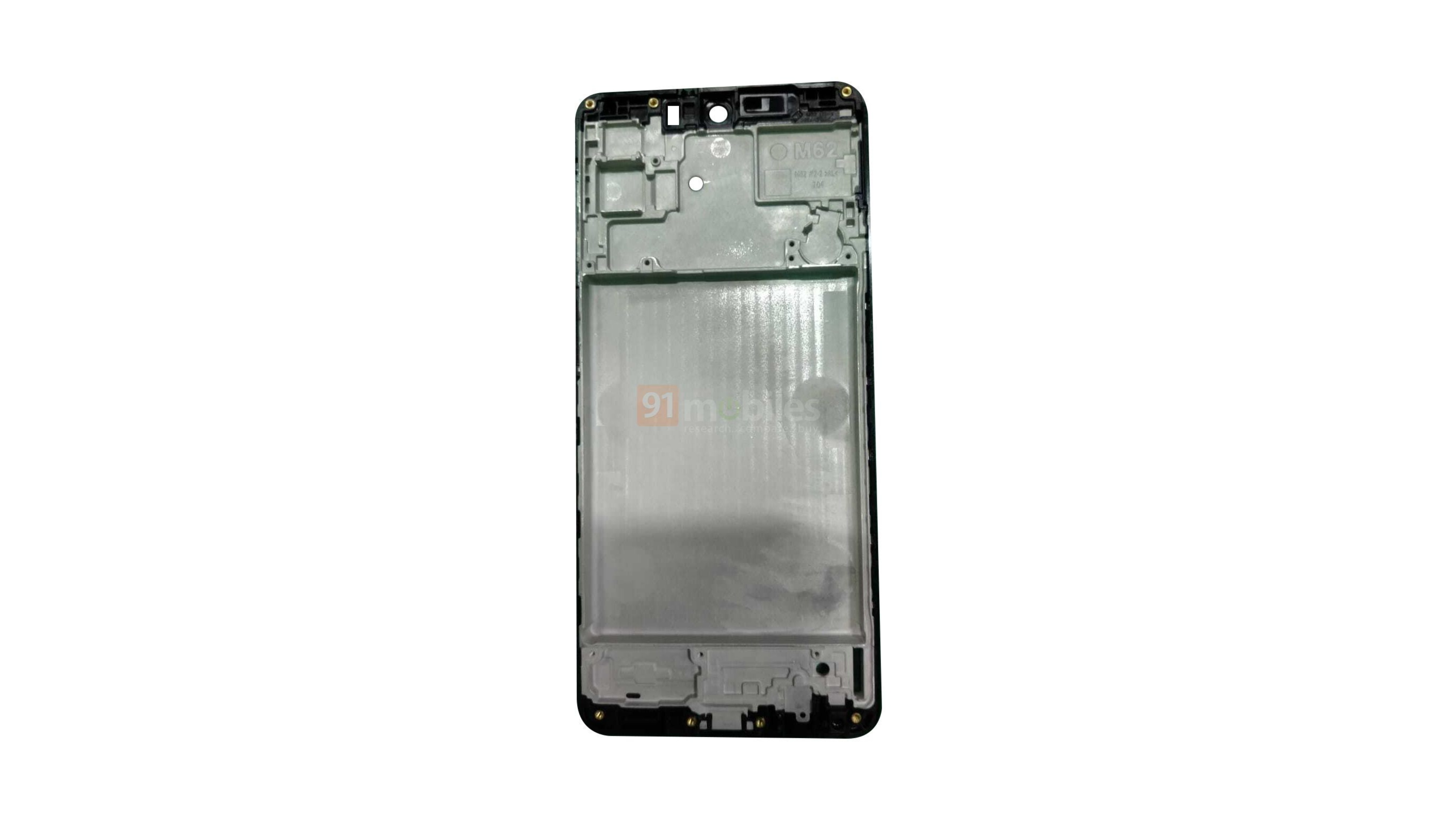
Alleged Galaxy M62 Chassis (Source: 91Mobiles)
Apart from the A-series, Samsung is gearing up to launch an M/F-series very soon and reports say that it could be February. This time the rumored Galaxy F62/M62 will share a lot of specs in common and be a Phablet-like device.
Expected specs include an AMOLED panel, Exynos 9825 flagship chipset, NFC, 7,000mAh battery with 25W charging, quad-cameras, storage up to 256GB, USB-C, and 3.5mm audio jack ports, run Android 11.
8Other Expected launches
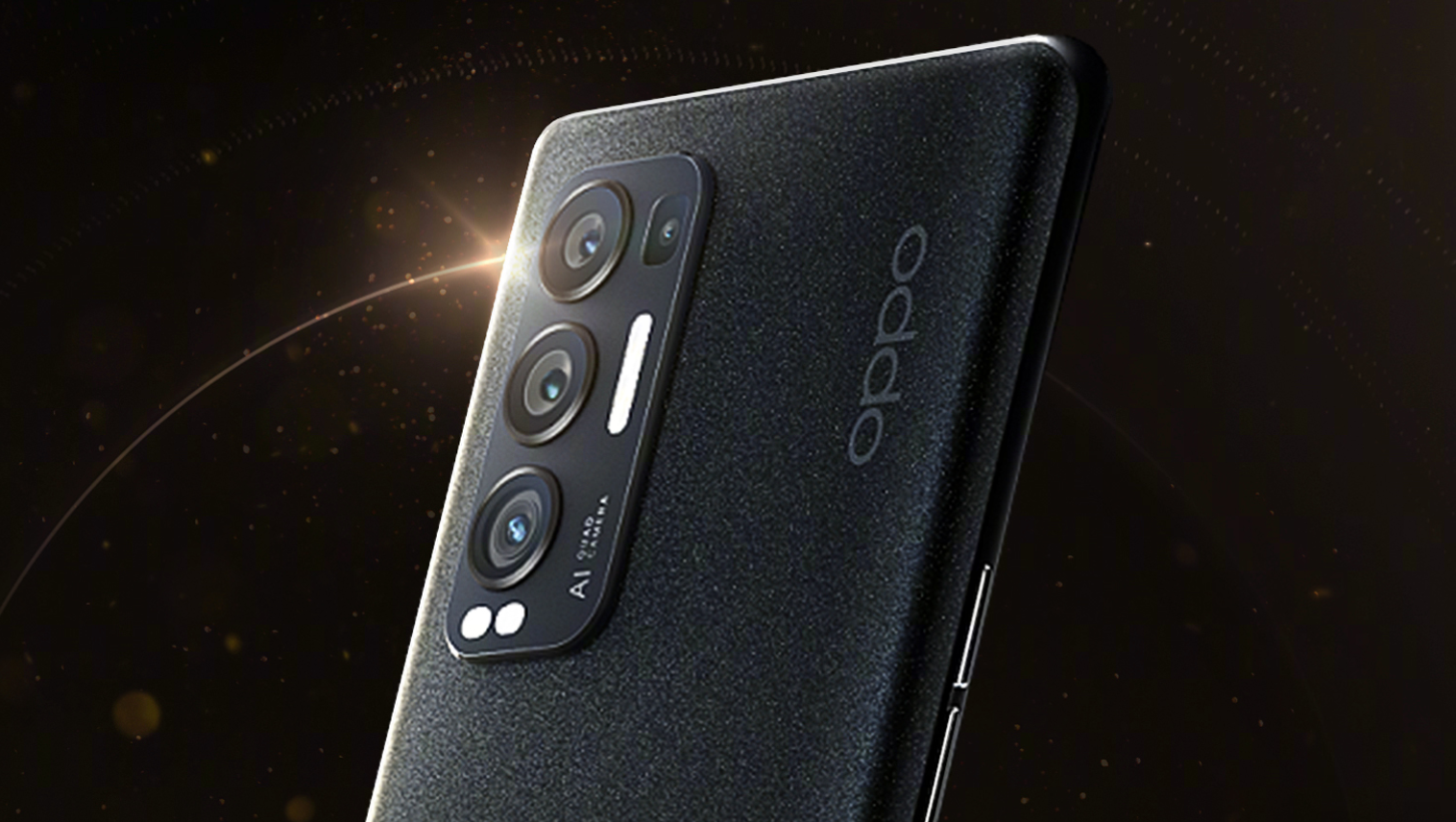
OPPO Reno5 Pro+
OPPO Reno5 Pro+ 5G, F19/F21
OPPO Reno5 Pro+, which was once thought to be exclusive to China, will probably make its way to global markets thanks to its GCC listing. With Xiaomi releasing its Mi 11 Globally this month, OPPO might fancy its chances by bringing the Reno5 Pro+.
Either way, the Specs of the flagship include a 6.55-inch curved AMOLED screen, Snapdragon 865 chipset, quad-cameras with 50MP sensor(IMX766), 32MP selfie shooter, 4,500mAh battery with 65W charging.
Further, the company is also tipped to launch the OPPO F19/F21 series in India this month. Sporting a sleeker design, Glass back the device will be different from the predecessor. However, specs are not known yet.
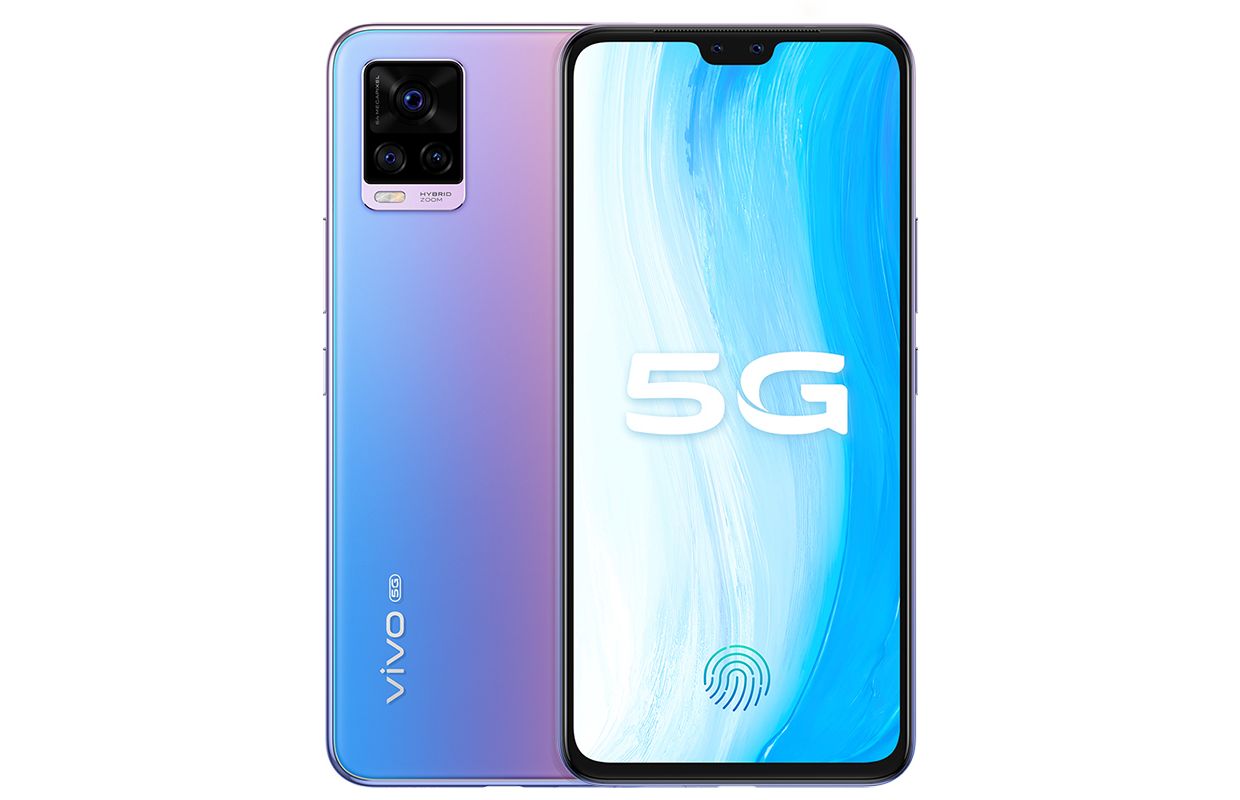
Vivo S7t 5G
Vivo is gearing up to launch a Vivo S9 in March as per the rumors. Before that, the company is might launch a Vivo S7t in China. Retailer listings are already live and they point towards a price of 2,598 Yuan (~$402).
Expected Specs include 6.44-inch AMOLED display, Dimensity 820 chipset, dual Selfie camera(44MP+8MP), triple-camera(64MP+8MP+2MP), 4,000mAh battery with 33W fast charger.
Update[Feb. 4, 13:37 GMT]: The Vivo S7t 5G has gone official in China a few hours ago and it is priced at ¥2,698($417.39).
Expected Specs include 5.3-inch HD+ display, Exynos 850 chipset, 4GB RAM, 64GB storage, 3,000mAh battery with 15W charging, single 16MP rear and 5MP front cameras, LTE connectivity.
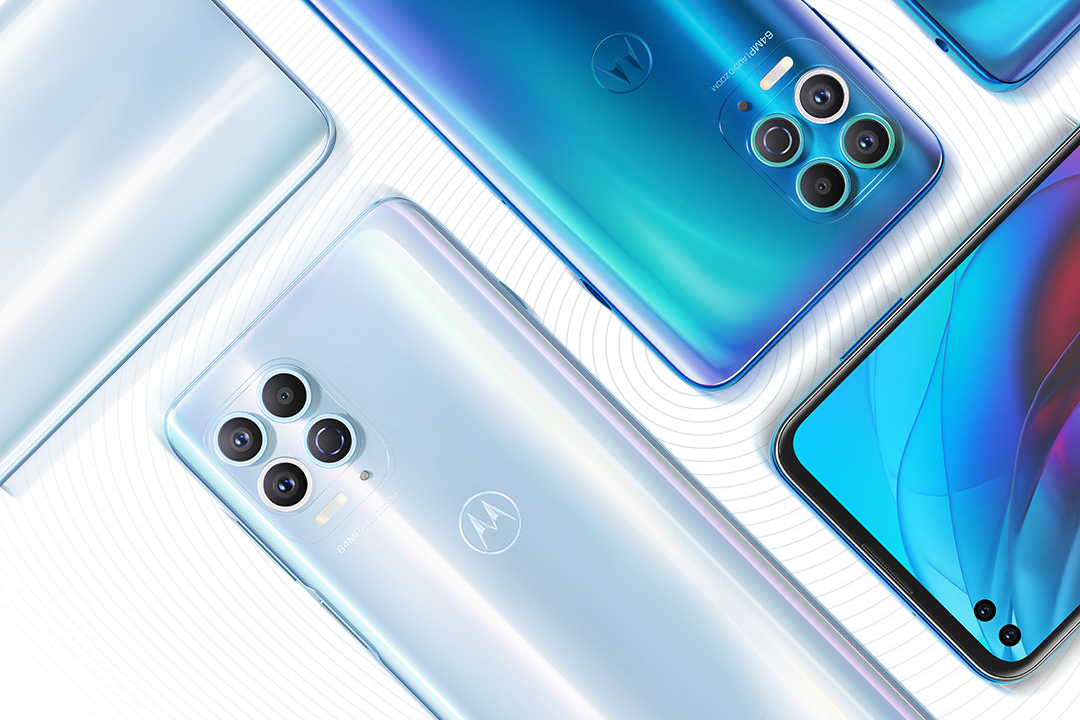
Motorola Edge S
Motorola launched the Motorola Edge S in China last month. This starts as low as 1,999 yuan($310) and sports a flagship Snapdragon 870 chipset. This device is tipped to launch in India later this month.
We aren’t sure what branding/name it would carry in India but expected specs include a 6.7-inch LCD 90Hz screen, Snapdragon 865/870 chipset, 64MP quad-camera, dual 16+8MP selfie cameras, 5,000mAh battery with 20W charging.
Other Gaming Phones
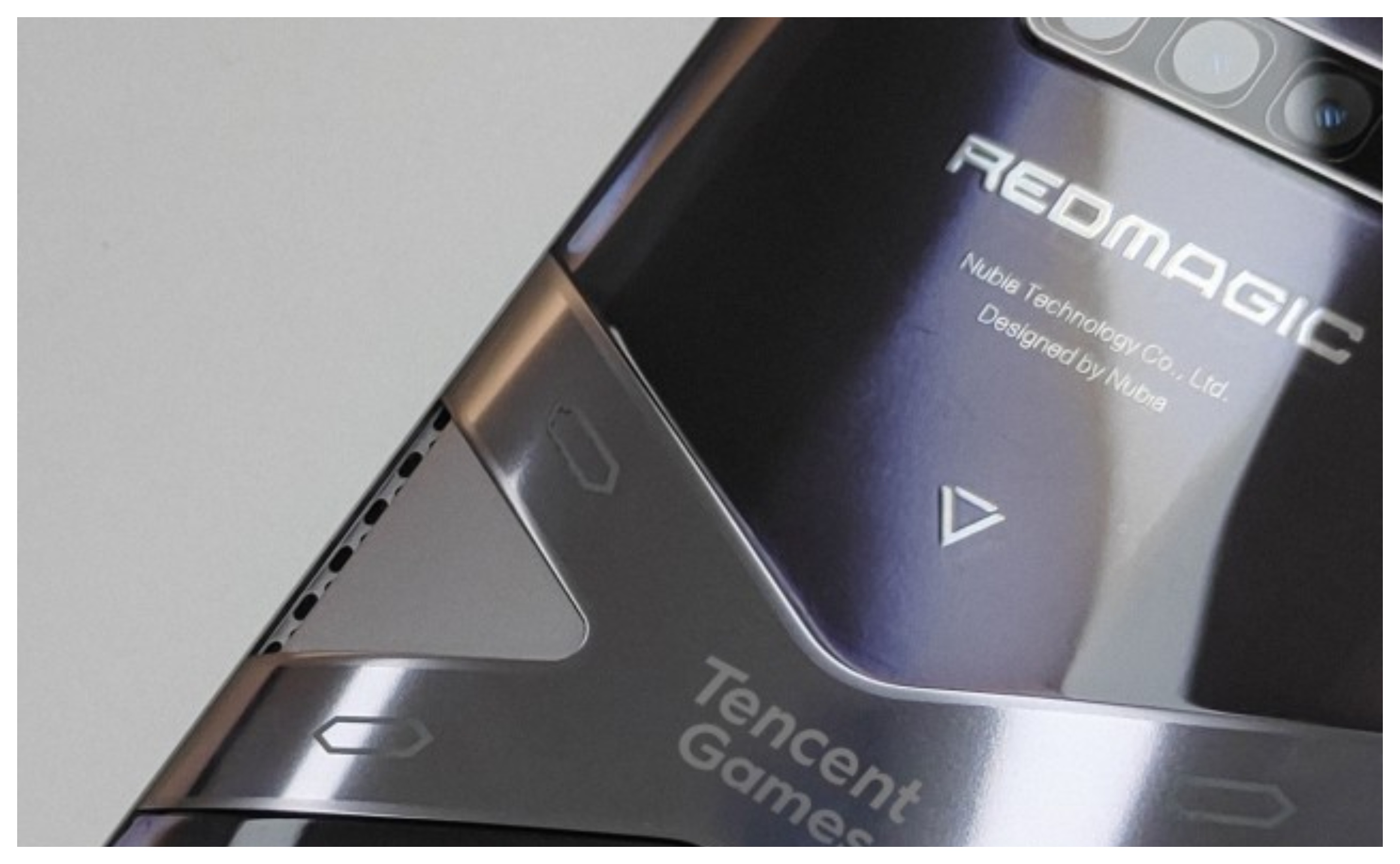
Other Gaming Phones from Nubia, Black Shark, and Redmi are expected to launch sometime in Q1 2021. We don’t have an exact date yet but let’s not skip through them. The Red Magic 6 will get a Tencent Games Edition.
1 of 2
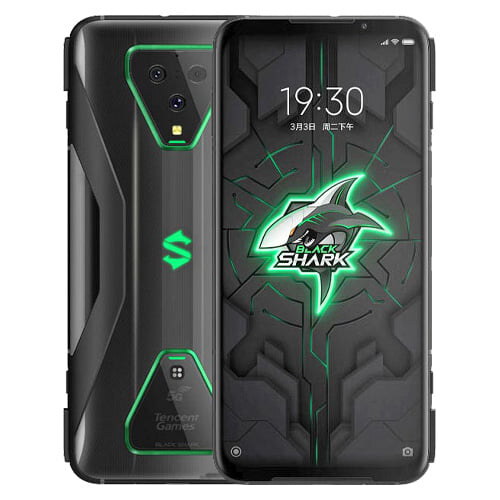
The Black Shark 4, on the other hand, has appeared on TENAA and it shows a 6.67-inch display, Android 11, and 10.3mm thickness. The company has already confirmed specs like Snapdragon 888 chipset, 4,500mAh battery with 120W charging.
Redmi has also confirmed that it will debut its first Gaming phone and it is said to feature MediaTek Dimensity 1200 chipset.
So these were the list of devices confirmed/expected to launch in February 2021. We hope you got useful info and if you did, please share your feedback in the comments below. That said, we will be back next month for another list, so stay tuned till then!
Motorola is known for its Moto G series of smartphones worldwide. The first model in the lineup, simply called Moto G, was unveiled in late 2013 when the company was under Google. Over seven years later, the series has now reached its tenth generation. Hence, according to a report, the Lenovo-owned company has made changes to the branding of the Moto G series.
Last month, Motorola released some Moto G smartphones for the US. But those phones bear ‘2021’ in their names. However, the upcoming models will have a different type of branding, as per TechnikNews.
For those unaware, Motorola is expected to launch three new Moto G handsets very soon. The codenames of these devices are Capri, Capri Plus, and Nio.
Out of these three, the last model (Nio) is already on sale in China as Motorola Edge S in China. According to Evan Blass (@evleaks), this very same phone will be debuting as Moto G100 in some markets. Hence, it should be that Moto G smartphone, which Motorola teased in December to arrive with a Qualcomm Snapdragon 800 series chipset.
Further, NBTC certification has revealed that the Capri Plus will launch as Moto G30 in certain markets. Similarly, as per TechnikNews and Adam Conway, the device codenamed Capri will be marketed as Moto G10 in some regions and Moto G10 Power in India.
Additionally, there will be another handset codenamed Java. It is expected to go official as Moto G20 with 4GB RAM and 64GB internal storage. Lastly, either the one called Ibiza or Denver will launch as Moto G40.
In other words, Motorola’s upcoming Moto G devices will have double-digit branding just like Samsung. In case you have forgotten, the South Korean tech giant has been using this branding only since 2018.
OPPO F-series has its own niche in the Indian market. The company launched the OPPO F17, and F17 Pro launched back in September 2020. While rumors of the successors are circling around, we have new information from 91Mobiles regarding the launch of OPPO F19, F19 Pro, and details of the F21 series.
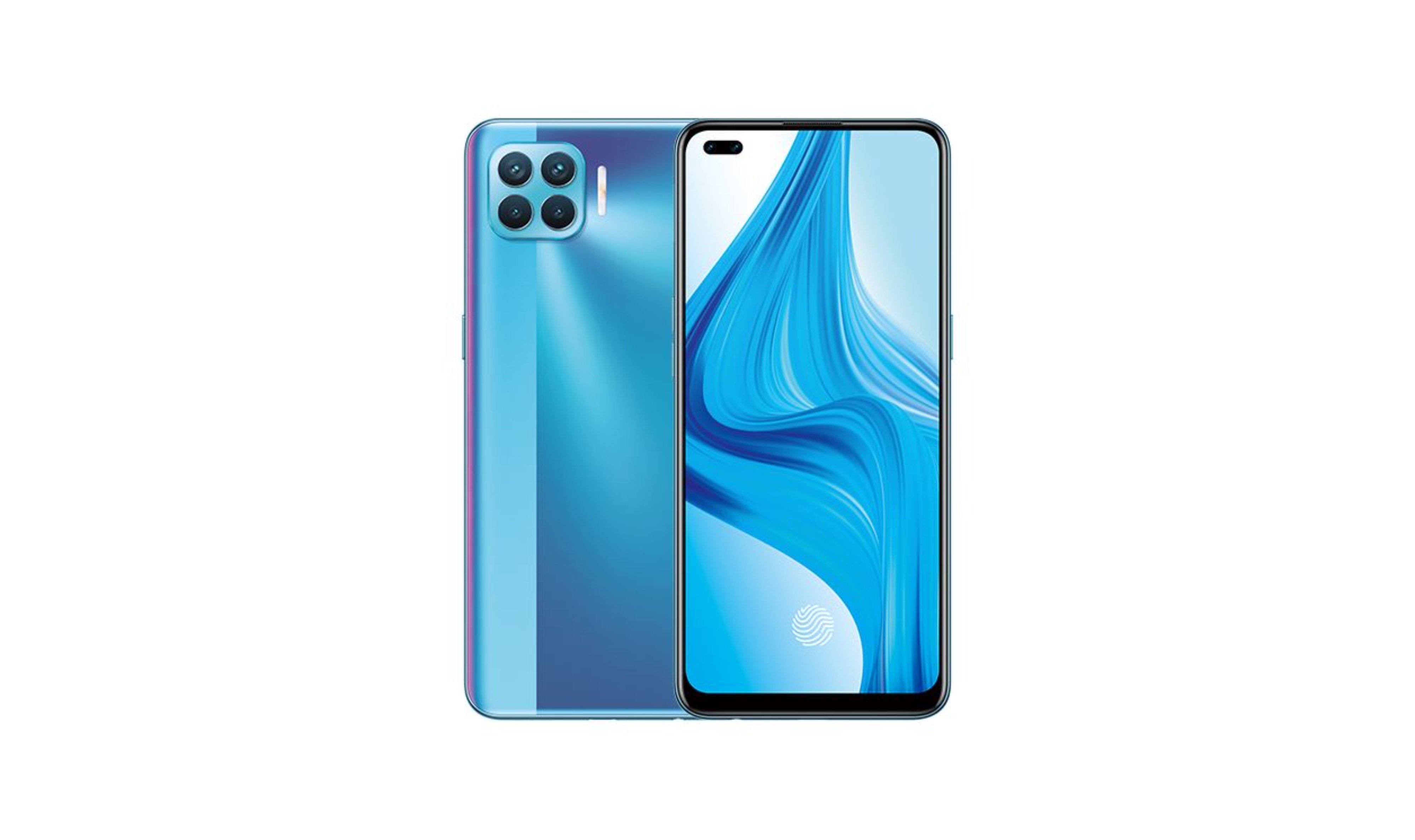
Representative image: OPPO F17 Pro
According to the report, OPPO F19, F19 Pro would be the next F-series device from OPPO. Previously, a tip from XDA’s Tushar Mehta suggested that the series could either be named OPPO F19/F21 considering few companies like Samsung are doing it to match the launch year(2021).
However, the latest report claims the F19 and F21 to be two separate series and that the first one having OPPO F19, F19 Pro will launch next month, i.e, March 2021 and not this month. Usually, brands start teasing a new launch weeks before. And if the early March timeline is true, OPPO should start doing the same by mid/Late-February.
Talking about the devices, we have very few details regarding them. An older report from last year says that the devices will have a sleek design, glass back, and a different pattern on the rear.
To compare, the OPPO F17 Pro has a 7.48mm thickness, a Motorola Edge S-like camera layout, and a brushed rear-finish with light reflections originating from the cameras. Anyway, the report also says that the successor will come with a 10x lossless zoom camera feature.
Regarding the F21 series, the information is very bleak right now since the F19 itself is yet to debut. Plus, it is said to launch sometime in H2 2021, which even though is around Sep. 2021 as F17, is at least a few months away.
Nevertheless, Let’s wait for more leaks of OPPO F19, F19 Pro in the coming days.
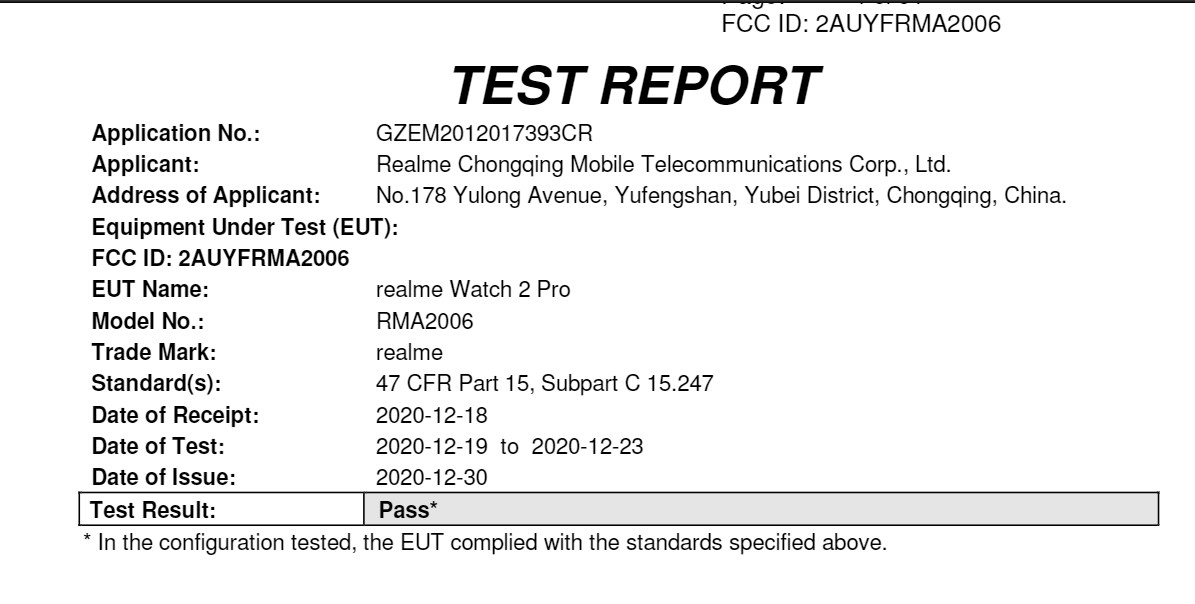
realme recently brought the smartwatches like realme Watch S, S Pro in countries like India. Soon after, the successors of the first realme Watch started appearing online. The realme Watch 2 and Watch 2 Pro moniker first appeared on the source code of realme Link App. Now, the ‘Pro’ branding has been confirmed by FCC.
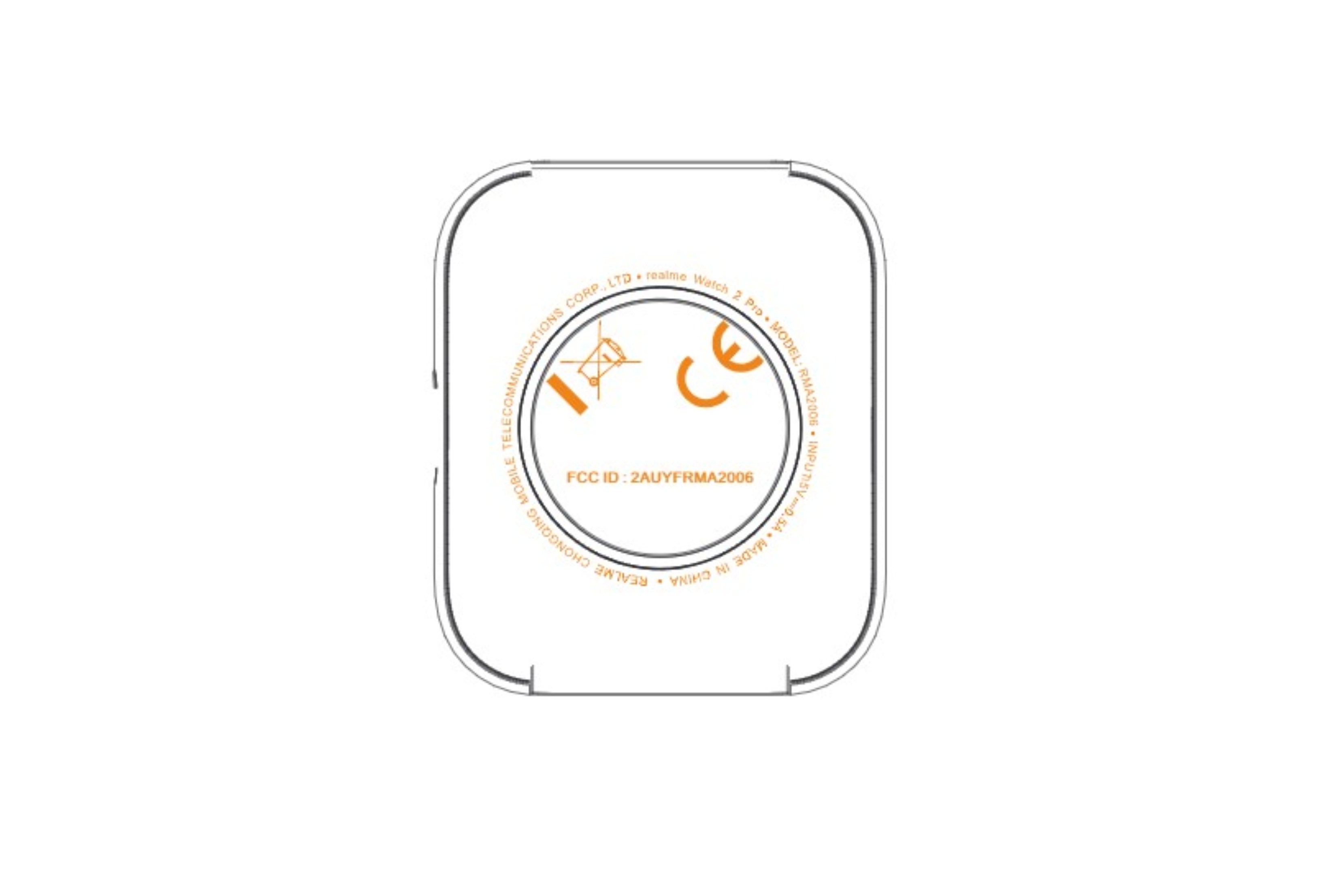
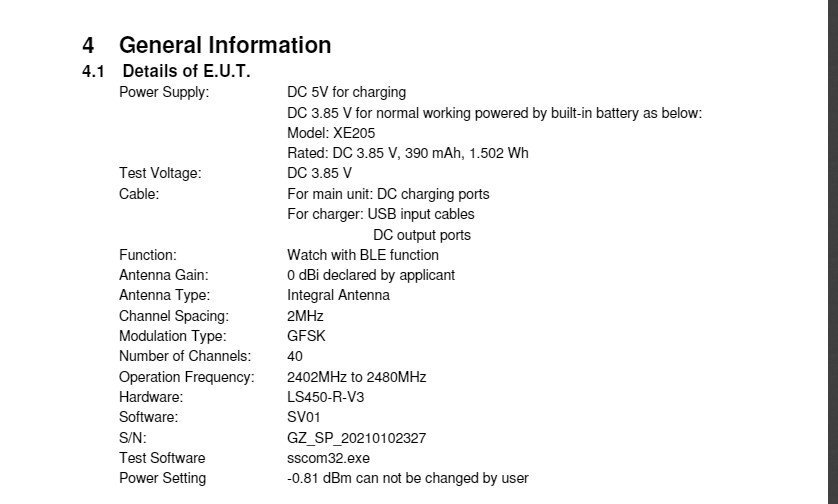
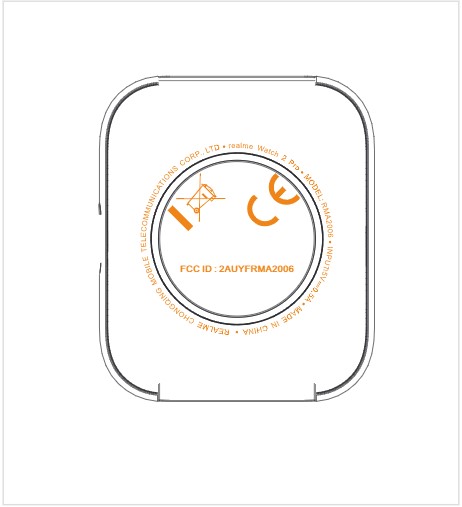
As posted by Mukul Sharma, a realme device with model number RMA2006 appears on FCC. The certification Straight up shows that the device’s name is realme Watch 2 Pro. Although the documents of the certification aren’t fully uploaded yet, we get to see the watch dial design having a square-shape with rounded corners.
One of the reports, which is for the placement of the FCC label on the watch, shows the schematics. As shown below, there are cut-outs of the outer frame at the top and bottom which should be the placement of straps. On the side, we see another cut-out that could be for the single Watch controls key.
1 of 4
Battery model: XE205
realme Watch 2 Pro branding
realme Watch 2 Pro Design
UL Demko - realme Watch 2 Pro Battery
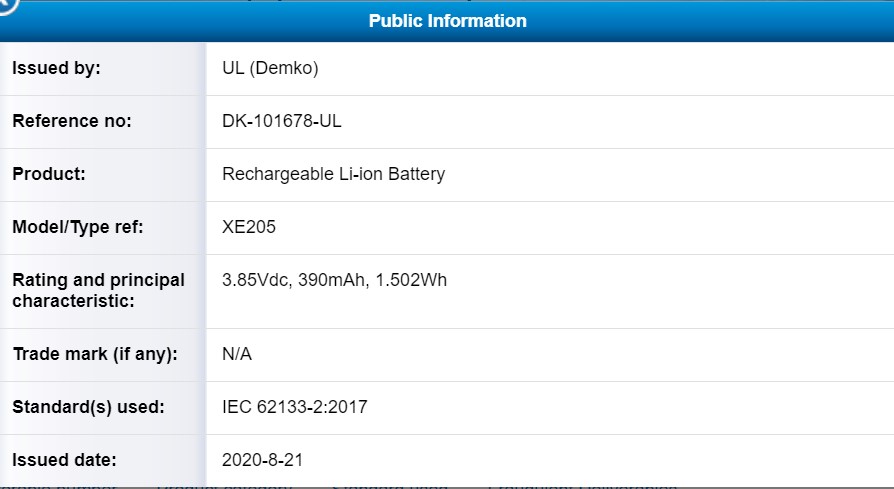
Further, the FCC listing shows that the power supply model is XE205. Checking this in other certifications like UL Demko, it has been certified with a 390mAh battery. This suggests that the Pro variant will sport a slightly bigger battery than its sibling.
Speaking of which the realme Watch 2(RMA2008) has already been certified on FCC and the majority of its specs have leaked. Accordingly, it will come with a 1.4-inch TFT square-shaped LCD square-shaped panel, 305mAh battery, Bluetooth 5.0 LE, water and dust resistance, Blood Oxygen(SpO2) and Heart-rate monitoring(PPG), and more.
Let’s wait for a few days to as the FCC listing will likely reveal more specs of the realme Watch 2 Pro. This realme Watch 2 Pro has also been spotted on India’s BIS suggesting a wider launch soon.
H. Moser & Cie has just unveiled a 30,800 US Dollars successor to its original Apple Watch clone. The wearable is the company’s latest launch and arrives as the “Final Upgrade” of its Swiss Alp Watch.
According to an AppleInsiderreport, the new ultra premium Swiss Alp Watch also follows a similar design and mechanical timepiece that has been crafted in a manner to resemble the Apple Watch. The overall design is similar to the Cupertino based giant’s smartwatch, which features a rectangular design with curved edges and a crown on the side. Although, the Swiss Alp Watch Final Upgrade arrives with a few additional and pricey tweaks.
Talking about its specifications, the Swiss Alp Watch Final Upgrade is fully mechanical and features the brand’s proprietary and wound Calibre HMC 324 with a 96-hour power reserve. The case is a DLC treated stainless steel. Furthermore, the company even coated the dial in Vantablack to mimic the OLED display of an Apple Watch. For those unaware, Vantablack is the world’s darkest substance color that was artificially created to absorb up to 99.6 percent of all visible light.
Another interesting addition to make the watch resemble the Apple Watch is the addition of a series of apertures with a small seconds disc painted in a white gradient. The original Swiss Alp Watch was launched as a satirical poke towards the iPhone maker and smartwatches in general. As per H. Moser & Cie’s official notes, “No updates required, no lousy autonomy, no unnecessary features, no annoying notifications, just the only reminder you ever really need: To disconnect from all the noise and cherish each and every moment.” The company will only be making 50 pieces, with each one priced at 30,800 US Dollars.
Sony has just reported a new 20 year high after its annual operating profits soared by 34 percent year on year. The primary reasons for the surge are over its robust gaming console sales and supplying the iPhone camera sensors to Apple.
According to a LiveMintreport, the Japanese tech giant is expecting an operating profit of about 940 billion Yen (roughly 8.9 billion US Dollars) in the fiscal year ending in March 2021. This is up from 700 billion Yen from last year, with forecasts expecting a pickup in other divisions as well, including pictures, music, games, imaging unit, and more. Notably, the company supplying imaging sensors for the iPhone 12 series camera modules and other devices was also an important part of this growth.
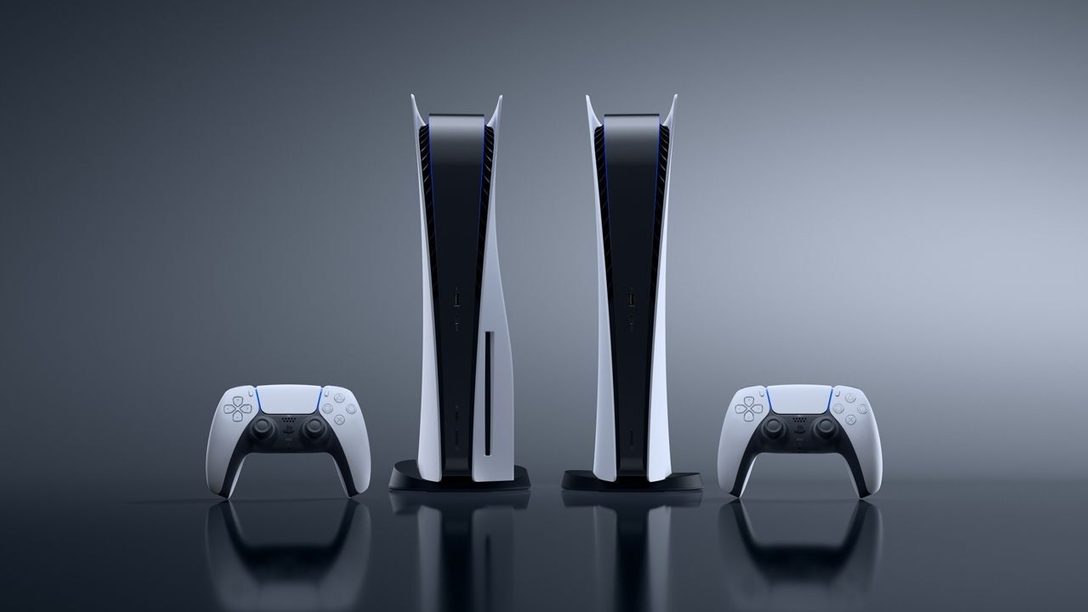
Furthermore, the company’s shares also jumped by 10.4 percent in Tokyo earlier today (4th February 2021), marking its biggest intraday gain since May 2019. Another major aspect behind its soaring profits projection is the newly launched Sony PlayStation 5 gaming console. Despite the company facing inventory issues at the start with limited availability, the firm still on track to surpass its goal of 7.6 million units by the end of March 2021.
The company even further expects this figure to reach 14.8 million units or more in terms of shipments by the end of the next fiscal year, as per Chief Financial Officer Hiroki Totoki. Sony is facing a higher than expected demand for its new generation of gaming consoles but is currently struggling with production due to industry wide shortage of components. However, it still plans on increasing its production beyond its current plans. The CFO further added that “We are doing our best on production so that we can ship as many units as possible at the earliest timing.”
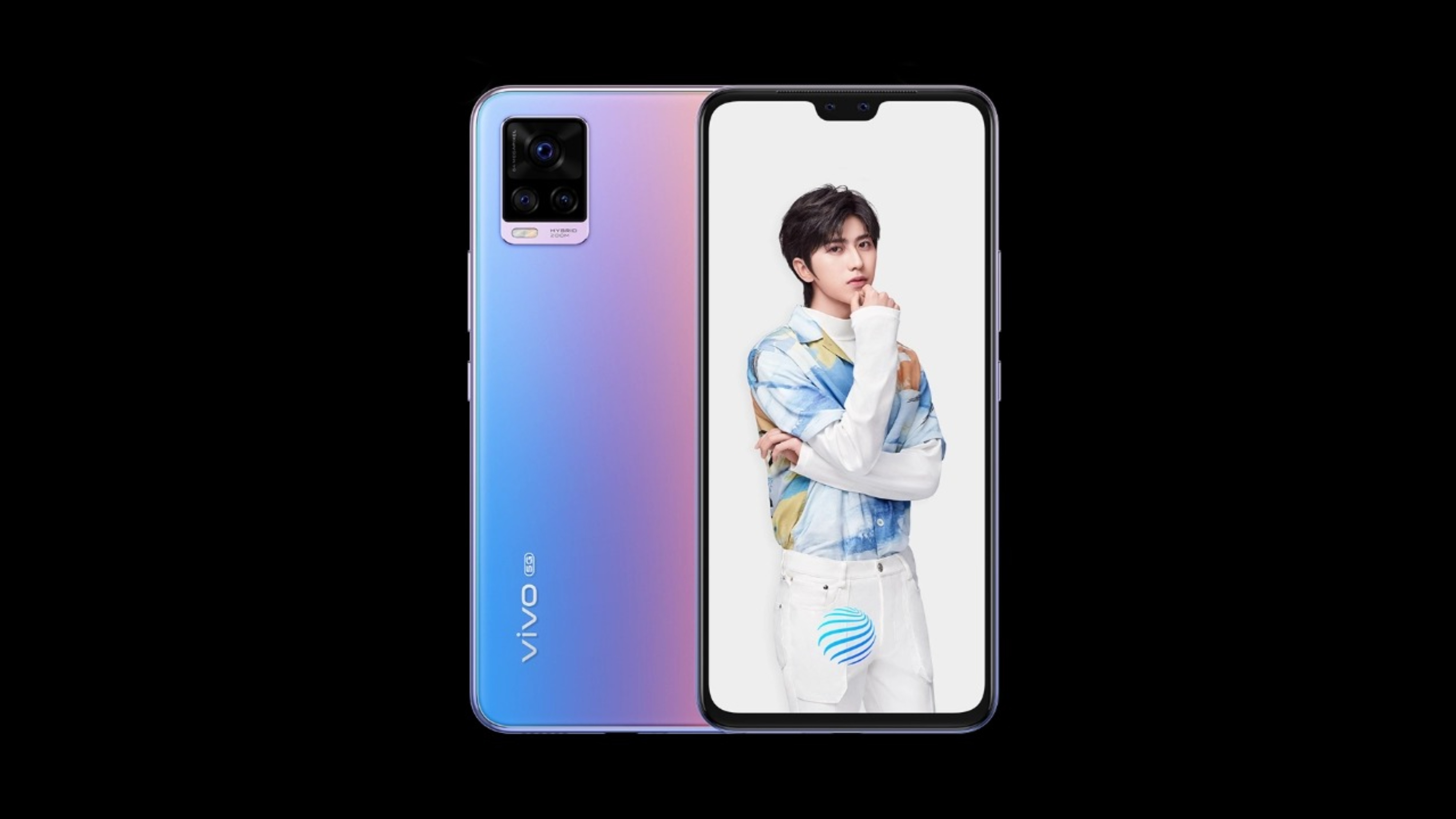
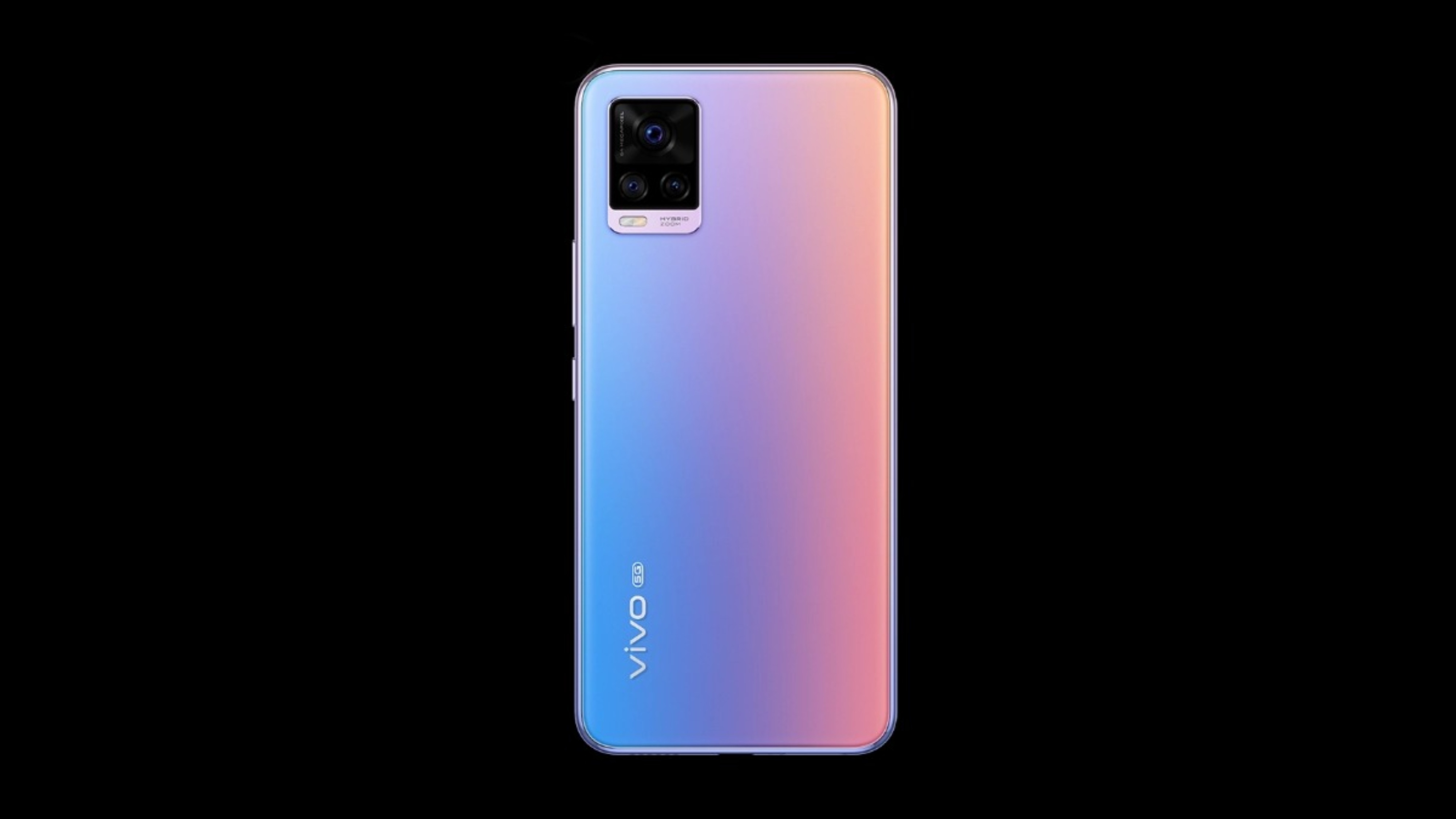
The vivo S7t 5G has been in the news for a while now. Finally, this smartphone is now official in China. It is already up for sale on the brand’s official website and up for pre-order on multiple online retailers in the country. Priced at ¥2,698, the vivo S7t 5G is basically a vivo S7 5G with a different chipset.
Except for the above-mentioned difference, the new vivo S7t is exactly the same as the regular vivo S7. Hence, it sports a 6.44-inch FHD+ ( 2400×1080 pixels) AMOLED display with a wide notch and 20:9 aspect ratio. Other features of this screen include an in-display fingerprint sensor, 91.2% screen-to-body ratio, 408 ppi, 98.5% NTSC color gamut, and 3000000 contrast ratio.
The handset houses a triple camera setup on the back that includes a 64MP primary sensor, 8MP ultra-wide unit with support for macro mode, and a 2MP monochrome sensor for portrait shots. Whereas, on the front, it has a 44MP main selfie camera with AF (auto-focus) and a secondary 8MP ultra-wide shooter.
For connectivity, the phone comes with dual-SIM, 5G, dual-band WiFi, Bluetooth 5.1, NFC, and GNSS (BeiDou, GPS, GLONASS, GALILEO, QZSS). As far as ports and sensors are concerned, it has a USB Type-C port, ambient light sensor, accelerometer, proximity sensor, gyroscope, and compass. Unfortunately, it lacks both a 3.5mm headphone jack and a microSD card slot.
1 of 2
Lastly, the vivo S7t 5G is backed by a 4,000mAh battery with support for 33W fast charging, runs OriginOS based on Android 11, comes in a single color option (Monet), measures 158.82 x 74.2 x 7.495 in dimensions, and weighs around 169g.
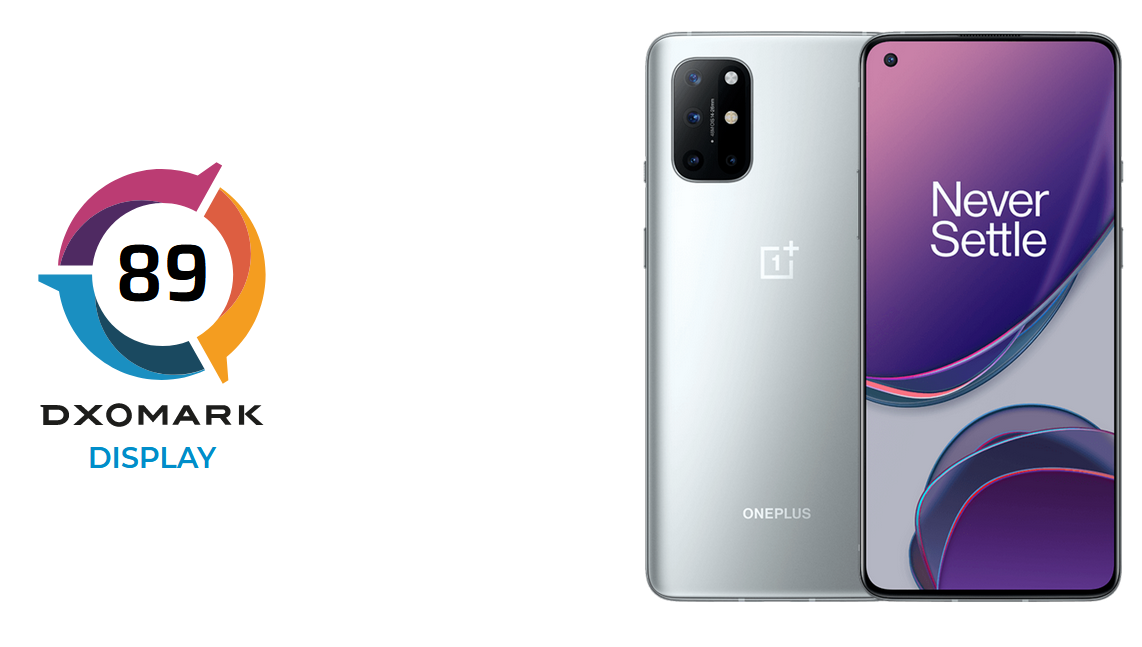
The OnePlus 8T was launched back in October 2020 and was a slightly more affordable and smaller version of the company’s high end OnePlus 8 Pro that had launched in August of the same year. The device is a flagship grade handset with top notch specs and was even reviewed by DxOMark, this time for its displays that received praises from the firm.
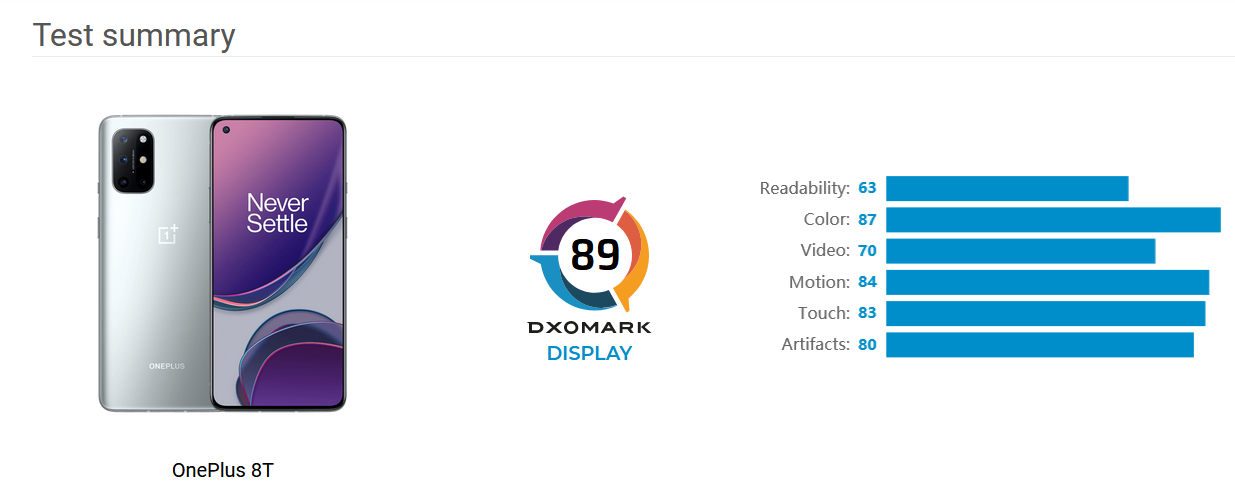
As per the DxOMarkreport, the OnePlus 8T’s display offered” good colors with a smooth touch.” The display on the smartphone is an AMOLED screen, which is covered with a Gorilla Glass 5. On the front, a 6.55 inch screen is housed with an 87 percent screen to body ratio. The resolution of 1080 x 2400 pixels alongside an aspect ratio of 20:9 and a pixel density of 402 ppi and a high refresh rate of 120Hz.
Looking at the report, DxOMark reviewed the device on multiple fronts, which had it achieve an overall score of 89 points. This is just one point behind the Samsung Galaxy Note20 5G that is the leader in the list for DxOMark display list rankings. Notably, its score is also above the company’s flagship 8 Pro model. The 8T offered freat color and scored well in both motion and touch. DxOMark observed one of the bigger improvements being in video content, although, it lost some points in artifacts.
The review also found that both the 8 Pro and 8T struggle in the readability category, with DxOMark believing that the performance in this regard could be better overall. However, the device still performed well in low light conditions, with decent readability, accurate colors, and smooth touch response in every use case. But, it still lacked details in indoor and outdoor conditions at times, with videos sometimes being rather dim and a blue light filter also having a significant impact on color and readability.
Microsoft Corp has disclosed on Wednesday that it completely upheld proposed new laws in Australia that would constrain web giant Google and Facebook Inc to pay homegrown news sources for their content.
“While Microsoft is not subject to the legislation currently pending, we’d be willing to live by these rules if the government designates us,” the software firm said in a statement.
“The code reasonably attempts to address the bargaining power imbalance between digital platforms and Australian news businesses.”
Both Alphabet Inc’s Google and Facebook have called the laws impossible and said a month ago they would pull out some critical administrations from Australia if the guidelines proceeded.
Microsoft is already promoting its search engine, Bing, in Australia, due to the possibility of Google pulling out from the region when the policy goes into effect. The company even recently held talks with Australia’s Prime Minister Scott Morrison.
PM Scott Morrison said on Monday that Microsoft was prepared to step in and extend its search engine, Bing, in Australia if Google pulls its search after he talked with Microsoft Chief Executive Satya Nadella a week ago.
Microsoft in its statement stated that it will offer small firms a chance to transfer advertising business to Bing with no costs and that it would invest further in the product to ensure it is competitive.
Google is yet to respond to a request for comment sent by Reuters. Google’s internet search engine has 94% of the nation’s search market, as indicated by industry information.
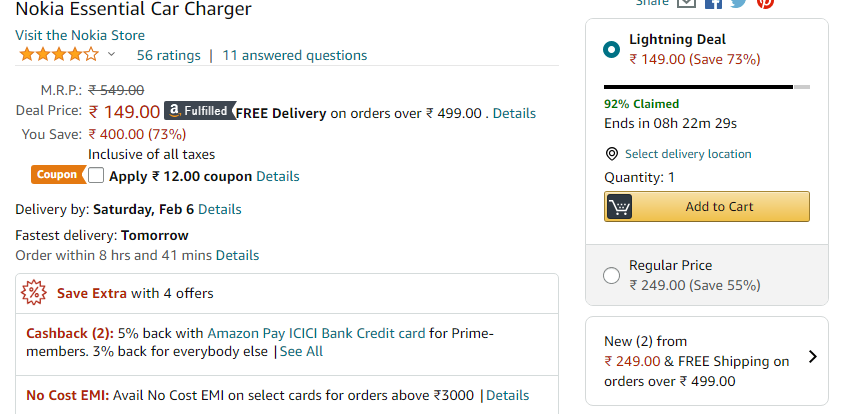
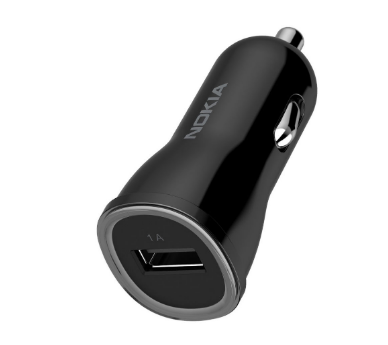
Portable and on-the-go chargers are more of a necessity than a “want” these days. Nokia has served most of us our first handsets, and now the company is here to rescue us with charging needs. The Nokia Essential Car Charger is a single port charger with a straight-forward design, built to juice up the devices during travels. This charger usually sells for ₹249 but is currently on sale at Amazon India and available for just ₹149.
Nokia Essential Car Charger boasts a standard USB type-A slot that is compatible with all types of USB cables. With its 5W output, the user can expect a decent charging speed for most smartphones and devices. Its simple plug-and-play design allows convenient connection while the glossy black body matches most people’s preference.
Currently, this Nokia charger is up for sale on Amazon India and available for just ₹149. This deal is only valid for today and ends in 7 hours. So hurry and make the most of it while it lasts.
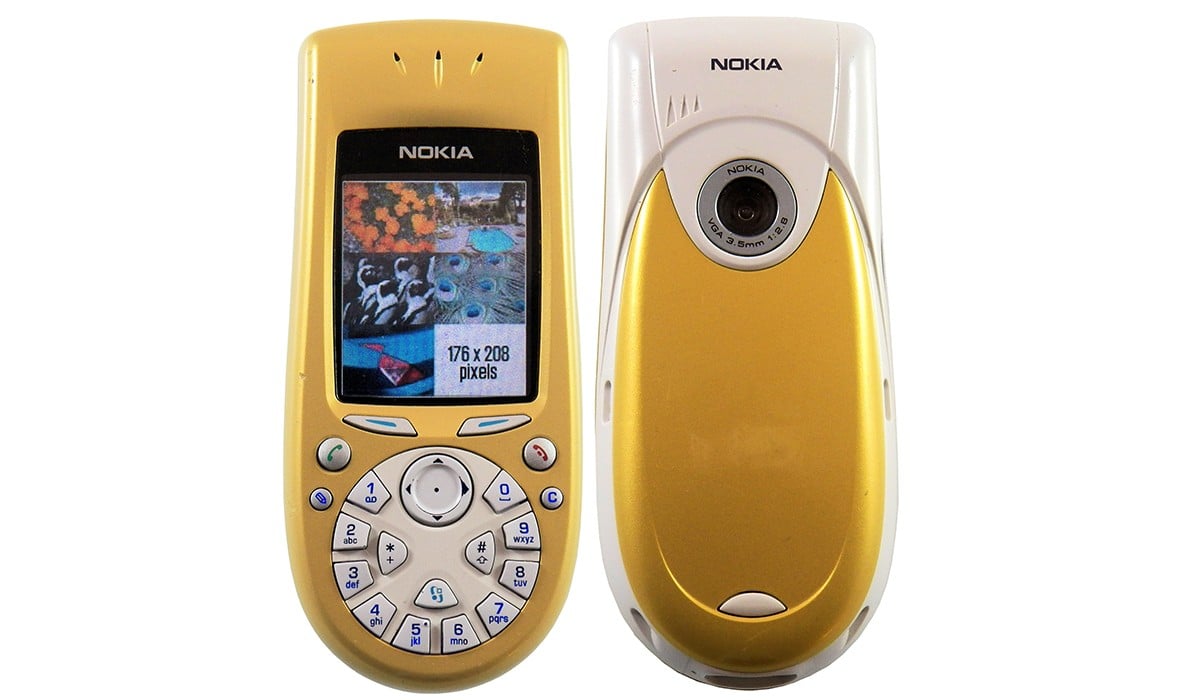
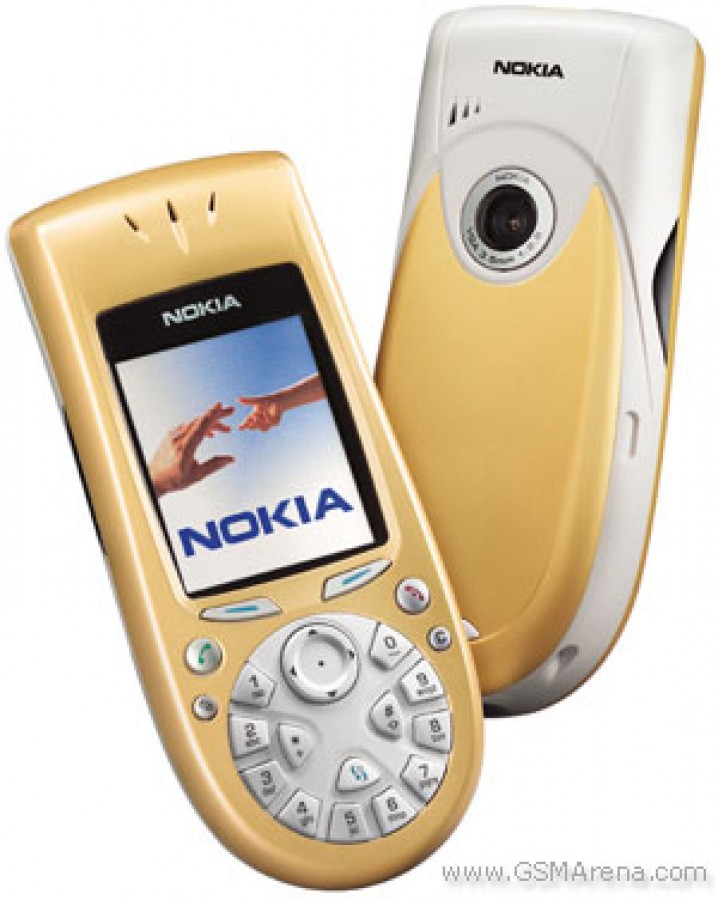
Over the course of the past couple of years, HMD Global has been launching refreshed variants of iconic Nokia mobile phones. Now, the company might be launching a new device, with a new report pointing at the Nokia 3650 being the latest one to get a reboot.
According to a GSMArenareport, the company is aiming at now refreshing the controversial 3650 mobile phone. For those unaware, the device was launched back in 2003, and was a part of the vendor’s Symbian Series 60 powered Candybar devices. It featured a unique circular keyboard layout, which, back then, set it apart from almost every other mobile phone at the time. In other words, the handset was easily recognizable but it remains to be seen if HMD brings back its iconic design in the new reboot or would the firm launch it with some tweaks.
Talking about the old model’s specifications, the device features a 2.1 inch display that had a resolution of 176×208 pixels. On the rear, a single rear VGA camera can be found, while the phone was powered by an 850mAh battery pack. Although we don’t know when the company would launch the device, we can expect HMD to launch it with improvements.
One of the improvements could have the handset arrive with the KaiOS interface. Similarly, an improved keyboard and a larger display could also be offered by the company. Unfortunately, this is just speculation at this point and we will have to wait for an official company announcement to know for sure. So stay tuned for more, as we will be providing more updates when additional information is available.
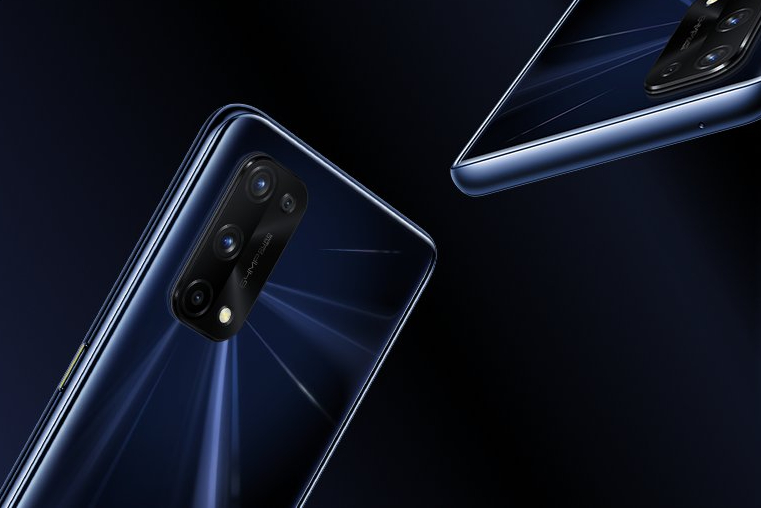
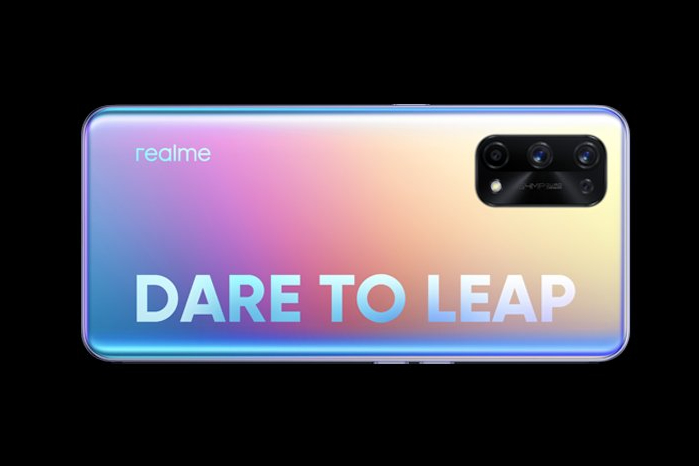
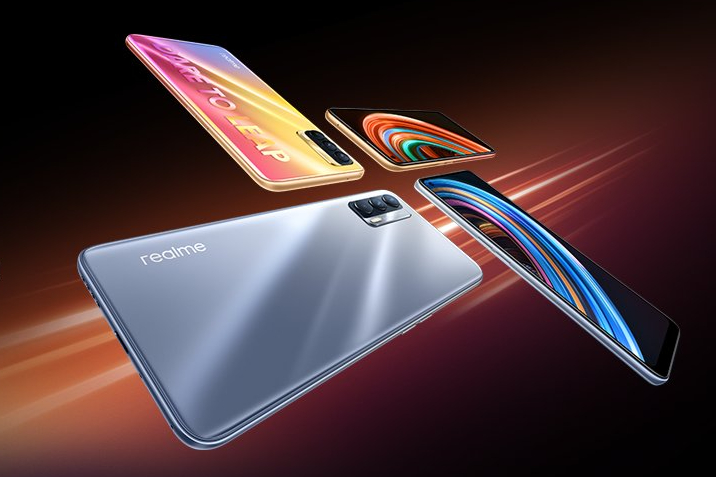
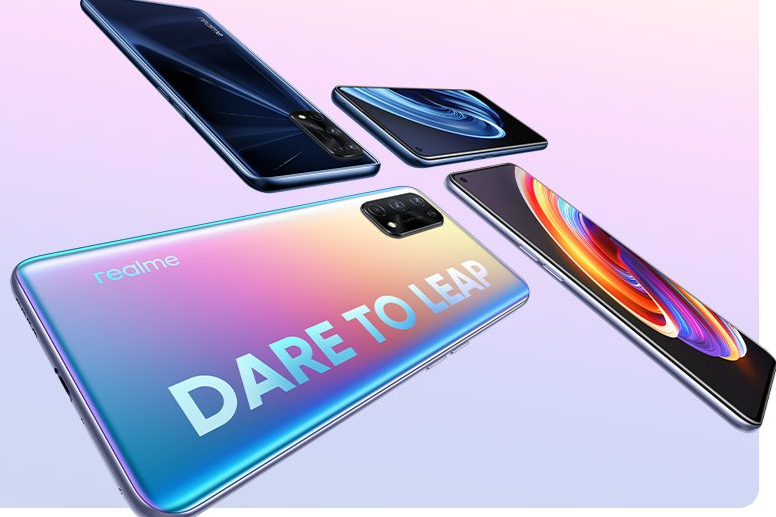
After teasing for quite a white, realme has finally launched the realme X7 series in India. The series consists of two devices, namely realme X7 and realme X7 Pro. Interestingly, the brand did not bring the original X7 to India. Instead, it rebranded the recently released realme V15 5G as realme X7 for the country. With that being said, let us take a look at the specs, features, price, and availability of these handsets.
realme X7 Pro Fantasy
realme X7/X7 Pro Specifications and Features
Design
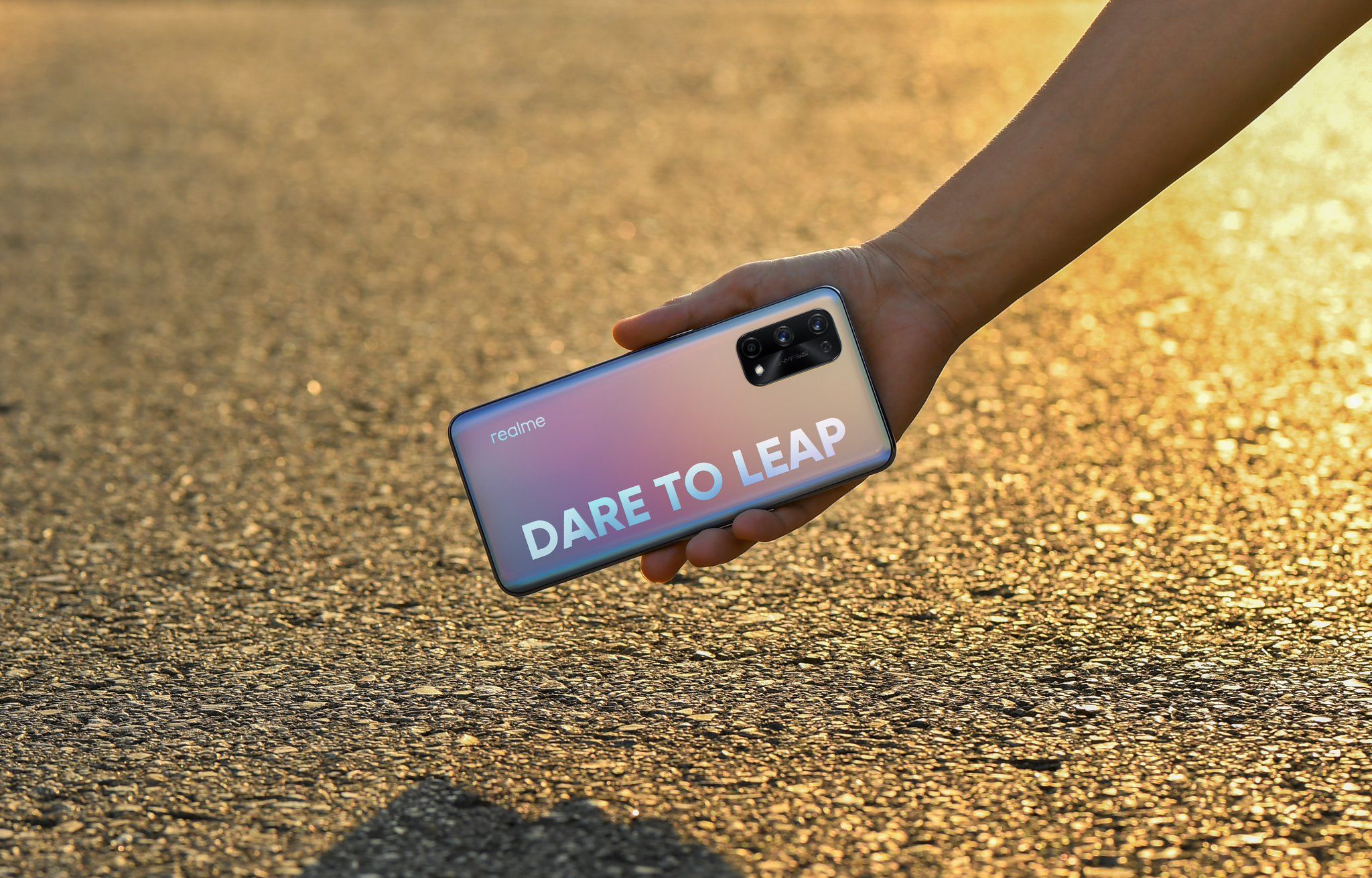
The realme X7 series looks like any other realme smartphone with a vertically aligned camera setup on the back and colorful gradient finishes. The duo also features the brand’s slogan (DARE TO LEAP) on their real panel. However, the panel of the regular realme X7 is made of polycarbonate instead of glass as on the realme X7 Pro.
As for colors, the realme X7 can be bought in either Nebula or Space Silver, whereas the realme X7 Pro is sold in Fantasy and Mystic Black versions.
Display
The vanilla realme X7 sports a 6.4-inch FHD+ (2400 x 1080 pixels) Super AMOLED display with a punch-hole at the top left corner. This panel comes with a 60Hz refresh rate, 180Hz touch sampling rate, 600 nits peak brightness, in-screen fingerprint sensor, 20:9 aspect ratio, 90.8% screen-to-body ratio, and 1000000:1 contrast ratio.
On the other hand, the realme X7 Pro flaunts a 6.55-inch Super AMOLED display with a resolution of 2400 x 1080 pixels (FHD+), 120Hz refresh rate, 240Hz touch sampling rate, and 1200 nits peak brightness. Other parameters of this screen include an in-display fingerprint sensor, punch-hole on the top left side, 20:9 aspect ratio, 91.6% screen-to-body ratio, a 6000000:1 contrast ratio, 100% DCI-P3 color gamut, 103% NTSC color gamut, and Corning Gorilla Glass 5 protection.
1 of 2
realme X7 Nebula
realme X7 Space Silver
Internals
Although both The realme X7 and realme X7 Pro come with LPDDR4X RAM and UFS 2.1 internal storage, the chipsets are different on the two. The Pro model is powered by MediaTek Dimensity 1000+ SoC paired with 8GB RAM and 128GB internal storage, whereas the regular model has a less powerful MediaTek Dimensity 800U chipset and it maxes out at 128GB internal storage but the maximum amount of RAM is 8GB.
Further, both of them feature a similar set of sensors, such as a compass, ambient light sensor, gyroscope, proximity sensor, and accelerometer. However, although the duo runs the same Android 10-based realme UI operating system, the realme X7 is backed by a smaller 4,310mAh battery with support for 50W fast charging as opposed to a larger 4,500mAh battery in the realme X7 Pro that can charge at a rate of 65W.
Camera
Talking about optics, the realme X7 Pro houses a quad-camera setup on the back consisting of a 64MP Sony IMX686 primary sensor, an 8MP secondary sensor with a 119° ultra-wide-angle lens, a 2MP tertiary sensor with a macro lens (4cm), and a 2MP quaternary monochrome sensor for portrait shots. Whereas, selfies and video calls are taken care of by a 32MP front-facing shooter.
The realme X7, on the other hand, sports a triple camera setup on the back that includes a 64MP primary sensor paired with an 8MP ultra-wide unit (119°) and a 2MP macro snapper. Further, on the front, it features a 16MP camera for video calls and selfies.
As far as video recording is concerned, the cheaper model maxes out at 4K 30fps and 720 240fps slow-motion from the rear camera and 1080p 30fps and 1010 120fps slow-motion from the front camera. However, the costlier model can also record at 4K 60fps from the back camera.
1 of 2
realme X7 Pro Mystic Black
realme X7 Pro
Connectivity and Ports
The realme X7 series support 5G although the networks are not live in India. Both the devices come with a dual-SIM card slot, dual-band WiFi, and GNSS (GPS, GLONASS, BeiDou, GALILEO, QZSS).
However, the realme X7 Pro not only has WiFi 6 but also NFC as compared to only WiFi 5 on the realme X7. But the former comes with Bluetooth 5.0 instead of Bluetooth 5.1 as found in the latter.
Anyway, both of them sport a USB Type-C port and lack a 3.5mm headphone jack as well as a microSD card slot. Additionally, the Pro model also comes with dual stereo speakers.
realme X7/X7 Pro Pricing and Availability
The realme X7 series will retail for the following price tags in India.
realme X7
6GB + 128GB – ₹19,999 ($274)
8GB + 128GB – ₹21,999 ($302)
realme X7 Pro
8GB + 128GB – ₹29,999 ($411)
1 of 2
realme X7
realme X7 Pro
The first sales of realme X7 and realme X7 Pro are scheduled for February 12 and February 10 respectively at 12PM. They can be purchased from either Flipkart or realme online store. The duo will be also available in offline stores in the coming days.
Last but not least, these smartphones are also part of Flipkart’s Upgrade program in collaboration with the realme Upgrade Plan. Hence, interested customers can get these phones for 70% of their cost and upgrade to a newer realme X series smartphone a year later by paying 70% of its price.
Amazon has announced that the company will start using its new electric delivery trucks in about 16 cities in the United States later this year. The new delivery vans, designed and built by electric vehicle startup Rivian, is already operational in Los Angeles.
The company is now planning to expand its testing to 15 more cities this year but it has not revealed the name of these cities yet. With this, Amazon seems to be on its way to having a fleet of 10,000 electric vans by the end of 2022.
For those who are unaware, Amazon had earlier announced the purchase of 100,000 delivery vans which will be produced by Rivian, in which Amazon is one of the major investors. This is a part of the online retail giant’s ‘Climate Pledge.’
The electric vans can travel up to 150 miles on a single charge. Amazon has already started prepping its facilities for the vans and adding thousands of charging stations at delivery centers throughout North America and Europe.
Rivian is an electric vehicle startup which was operating in stealth mode since 2009 and launched its pickup truck and SUV in November 2018. The company was started with the aim of launching Tesla Roadster competitor, it pivoted to making SUVs and pickup trucks.
The company has received a significant amount of funding, including a $700 million round led by Amazon in 2019 and $500 million from Ford in April 2019. Recently, the company managed to get another $2.65 billion from T. Rowe and Amazon’s Climate Pledge Fund.
While 2020 proved to a difficult year for the overall smartphone market and a few OEMs as well, there were still those that managed to see growth despite the pandemic and its impacts. OnePlus is one such company, which saw a bump in market share in the US.
According to a Counterpoint Research report, the Chinese smartphone maker saw a great boost in the US market, despite most other vendors seeing a decline. Only be the second half of last year did the market recover, but it OnePlus apparently flew past its competition in terms of growth in channel presence and overall market size. In 2020, the company saw a market growth of 163 percent year on year over 2019, which is notable considering every other major OEM like Samsung and Apple saw a decline during the same period.
As per the report, OnePlus managed to achieve this by being an appealing alternative to customers that had become “disenfranchised with current premium smartphone offerings.” This was primarily due to two particular OEMs and their new offerings, namely Apple and Samsung. The former’s iPhone 12 series and the latter’s Galaxy S20 lineup saw an increase in pricing, due to the addition of 5G support. With the average price of smartphones rising with each passing year, consumers were reluctant to this trend, especially during the pandemic.
Furthermore, OnePlus is a relatively small OEM in comparison to these aforementioned brands. But despite its size, the company saw strong growth last year and is expecting positive results this year as well. The launch of the company’s OnePlus Nord N10 5G also helped the company in the US market as it is a sub 300 US Dollar handset that offered a 90Hz refresh rate display, with 5G support.
Earlier this week, a new report surfaced that claimed that Samsung and BOE will be responsible for supplying the display for the Huawei Mate X2, while another report also revealed the camera lens supplier of the upcoming foldable smartphone.
According to a ChinaStarMarketreport, the Chinese tech giant had initially only contracted exclusively with BOE to support the domestic supply chain. Both companies are based in China, thus, it is understood that the exclusive deal was to benefit their home country’s industry. Although now, it seems that Huawei is planning on including Samsung within its supply chain to supply flexible screens for its second gen Mate X foldable handset as well.
As per sources close to the matter, the Mate X2’s display will be supplied by Samsung. However, a separate report from known tipster Ross Young, the founder and lead analyst DisplaySearch and DSCC, claims that Samsung Display was initially planned to supply the flexible panels along with BOE. But now, Huawei will only place orders for the Mate X2’s displays with just BOE. Unfortunately, we have no way of confirming either reports at the moment.
It was originally going to have a Samsung Display and BOE display. Now just BOE.
Furthermore, the ChinaStarMarket report also added that the Mate X2’s camera lenses will be supplied by Sunny Optical and O-film Tech. The former is a known camera lens supplier, which is even rumored to supply Apple with camera lenses for its 2021 iPhone and iPad models as well. Currently, a lot of these reports are still unconfirmed and we will have to wait for additional information to surface to know for sure, so stay tuned for more updates.
Last month, Samsung had unveiled the Galaxy A32 5G smartphone in the European market and now a couple of weeks after that, the company has launched this budget 5G smartphone in Thailand.
The Samsung Galaxy A32 5G, which packs 8GB RAM and 128GB internal storage, is priced at 9,999 baht in Thailand, which roughly converts to $333. It is being offered in four color options — Black, Blue, Violet, and White.
Coming to the specifications, the smartphone features a 6.5-inch HD+ display with 1600 x 720 pixels screen resolution. Under the hood, the device is powered by the MediaTek Dimensity 720 chipset.
In the camera department, the phone features a quad-camera setup on the back that includes a 48-megapixel primary sensor, an 8-megapixel ultrawide lens, a 5-megapixel macro lens, and a 2-megapixel depth sensor.
On the front side, the device has a 13-megapixel snapper housed inside the Infinity-V notch. The phone comes with support for features like a side-mounted fingerprint sensor and Dolby Atmos surround sound.
It is running the latest Android 11 operating system out-of-the-box with the company’s own One UI 3.0 custom user interface on top. The device is powered by a 5,000mAh battery that supports 15W charging.
In related news, the Samsung Galaxy A32 4G has passed through the FCC certification process, which hints that the device could soon get launched. We expect more information about that surface online in the coming days or weeks.
According to the latest report coming from Gartner, the worldwide sale of smartphones to end-users could total around 1.5 billion units by the end of this year. This indicates a growth of about 11.4 percent over the last year.
Smartphone sales declined by 10.5 percent in 2020, mainly because of the COVID-19 pandemic but now they are forecast to rebound. The report adds that markets like Western Europe, Latin America, and the Asia Pacific are expected to exhibit the strongest growth.
The combination of delayed smartphone replacements and the availability of lower end 5G smartphones are poised to increase smartphone sales in 2021, claims Anshul Gupta, senior research director at Gartner.
With 5G communication technology going mainstream, 5G smartphones with a starting price of $200 are expected to steer demand in mature markets and China. While in developing nations, the primary focus of buyers will be the specifications and the 5G network support will be optional and lack of it won’t be a dealbreaker.
Further, Gartner forecasts sales of 5G smartphones will total 539 million units worldwide in 2021, which will represent around 35 percent of total smartphone sales in the year. This is mostly because 5G has become a standard feature for premium phones in countries like U.S., China, Japan, and South Korea.
We use cookies on our website to give you the most relevant experience by remembering your preferences and repeat visits. By clicking “Accept”, you consent to the use of ALL the cookies.
This website uses cookies to improve your experience while you navigate through the website. Out of these, the cookies that are categorized as necessary are stored on your browser as they are essential for the working of basic functionalities of the website. We also use third-party cookies that help us analyze and understand how you use this website. These cookies will be stored in your browser only with your consent. You also have the option to opt-out of these cookies. But opting out of some of these cookies may affect your browsing experience.
Necessary cookies are absolutely essential for the website to function properly. This category only includes cookies that ensures basic functionalities and security features of the website. These cookies do not store any personal information.
Any cookies that may not be particularly necessary for the website to function and is used specifically to collect user personal data via analytics, ads, other embedded contents are termed as non-necessary cookies. It is mandatory to procure user consent prior to running these cookies on your website.