How often do you see brands like Google shoot for the stars when it comes to Smartphones? 2021 has started with a bang where we are going to witness more foldable devices. Among the lot, Google is also expected to launch a Foldable Pixel smartphone. And now, we might have some details regarding the same.
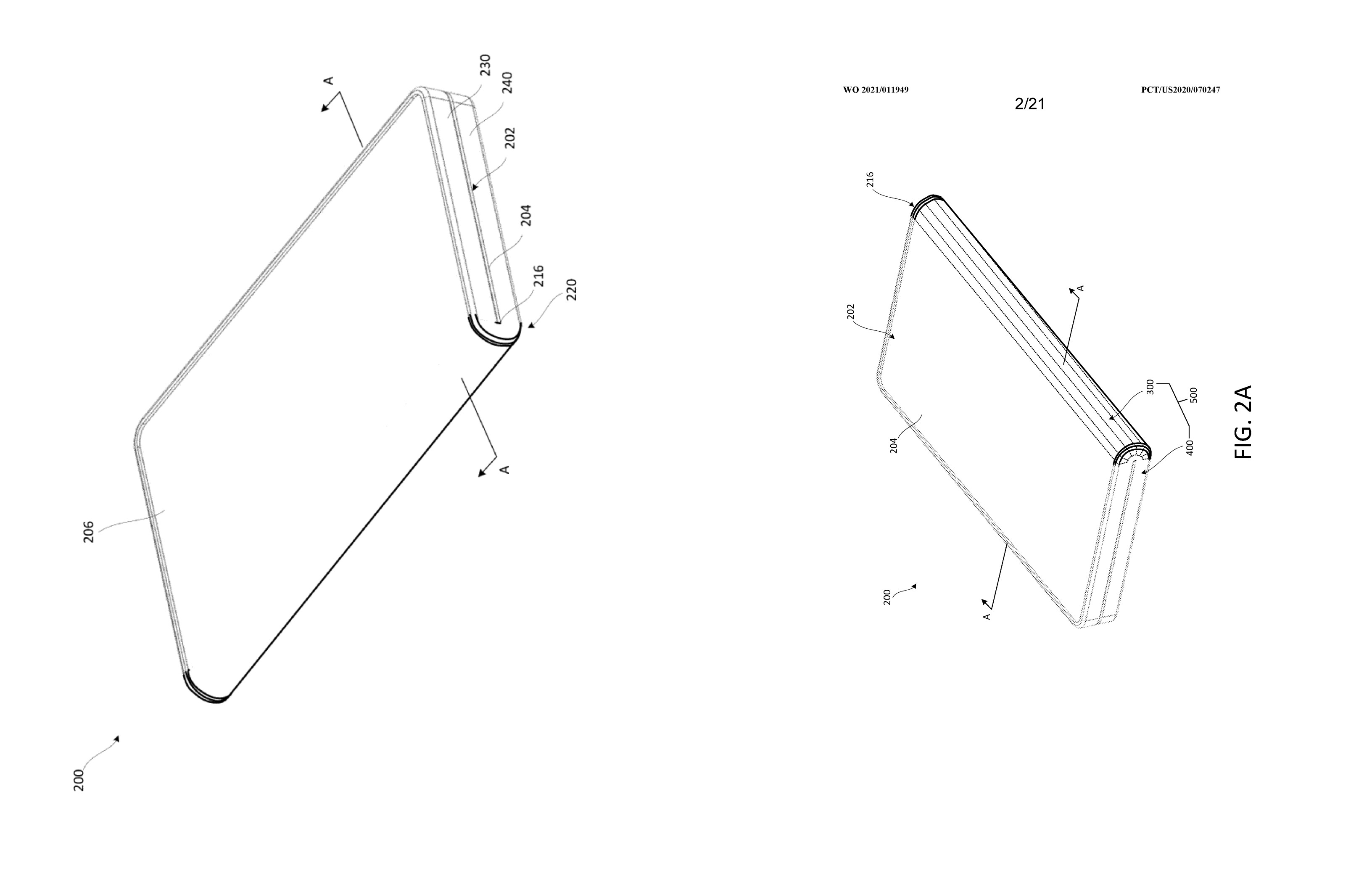
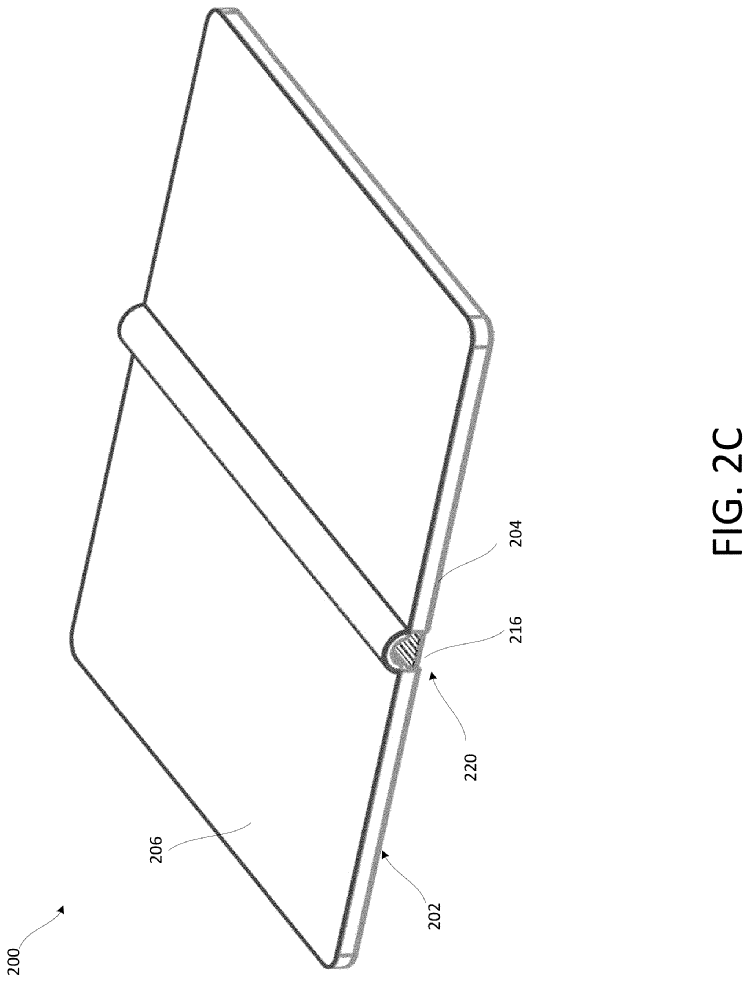
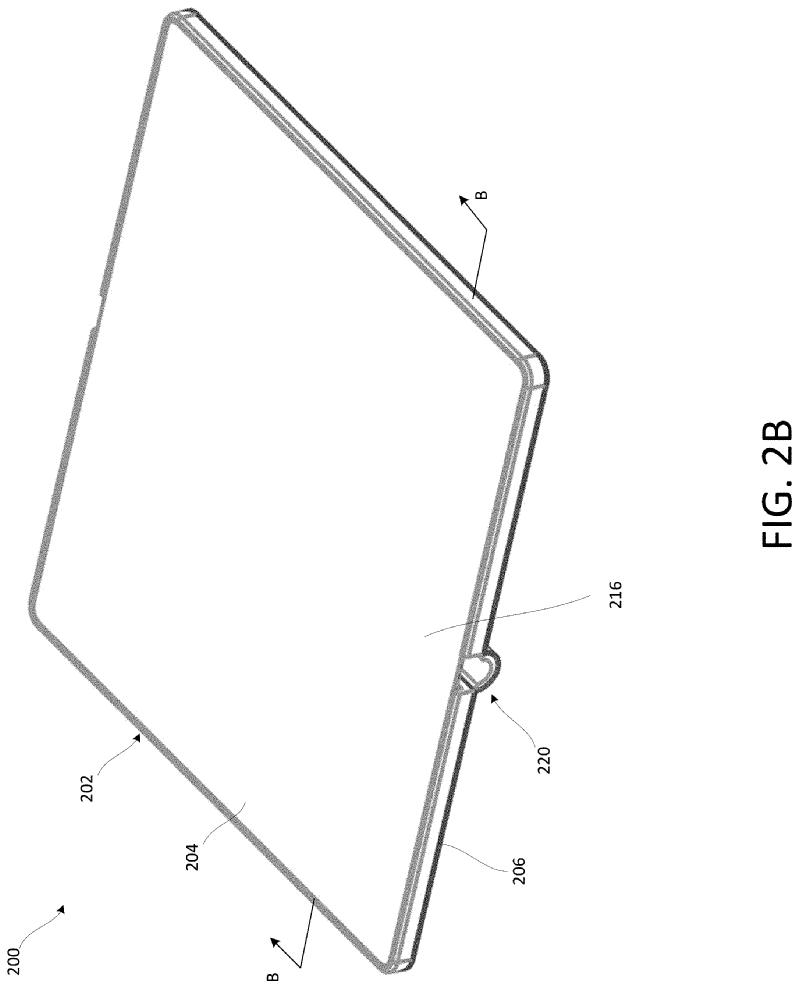
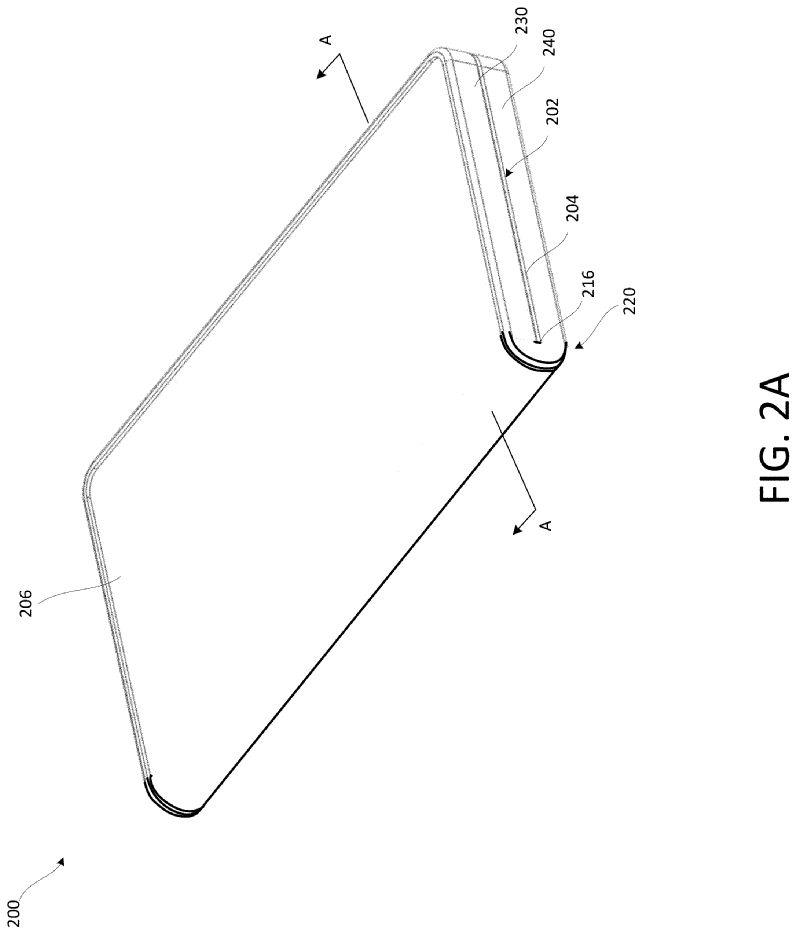
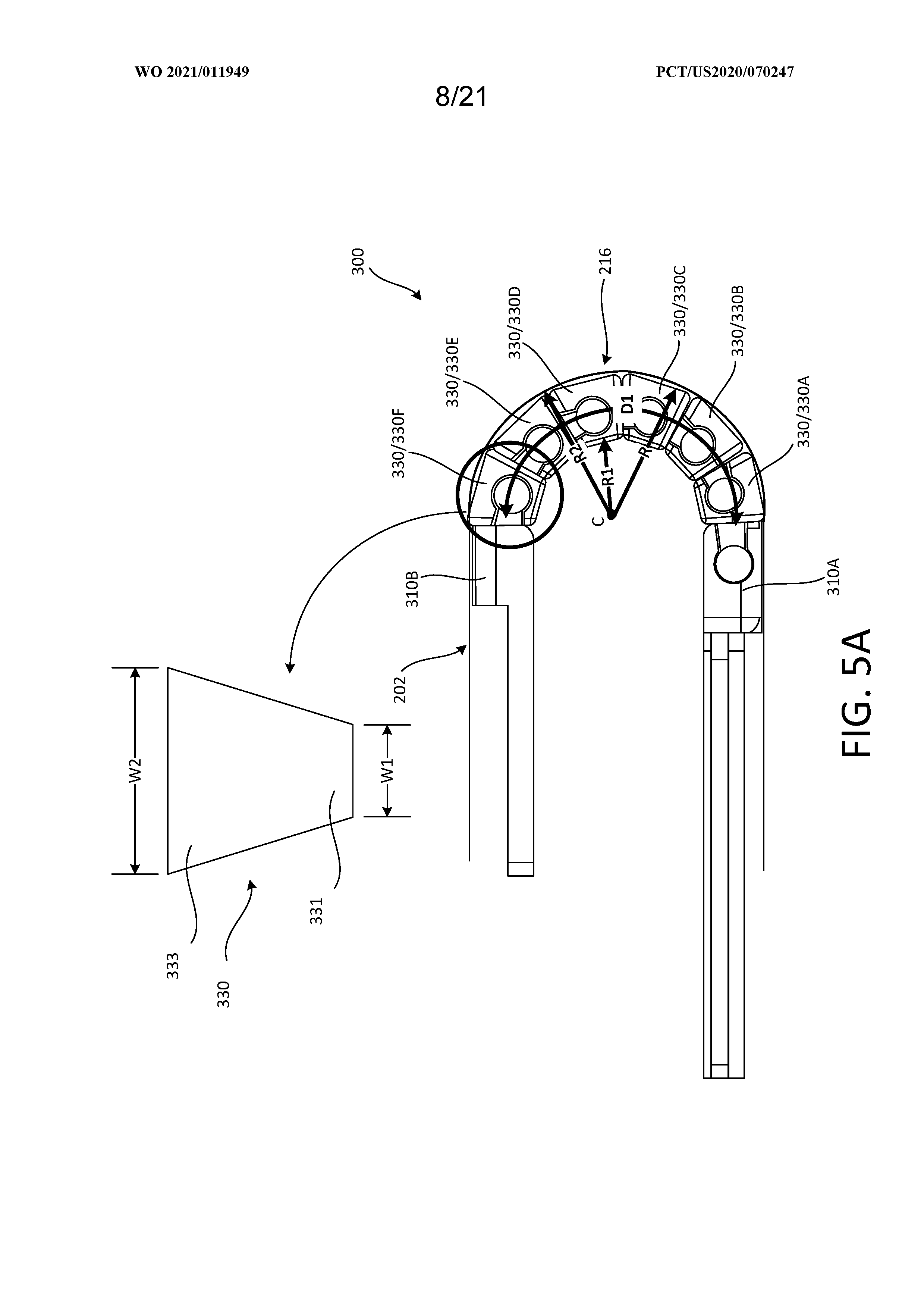
As spotted by windowsunited.de, we see two Patents filed by Google Inc., at WIPO(World Intellectual Property Organization). Publication numbered 2021/011949 and 20210018961, it shows that the designs in question has a hinge mechanism.
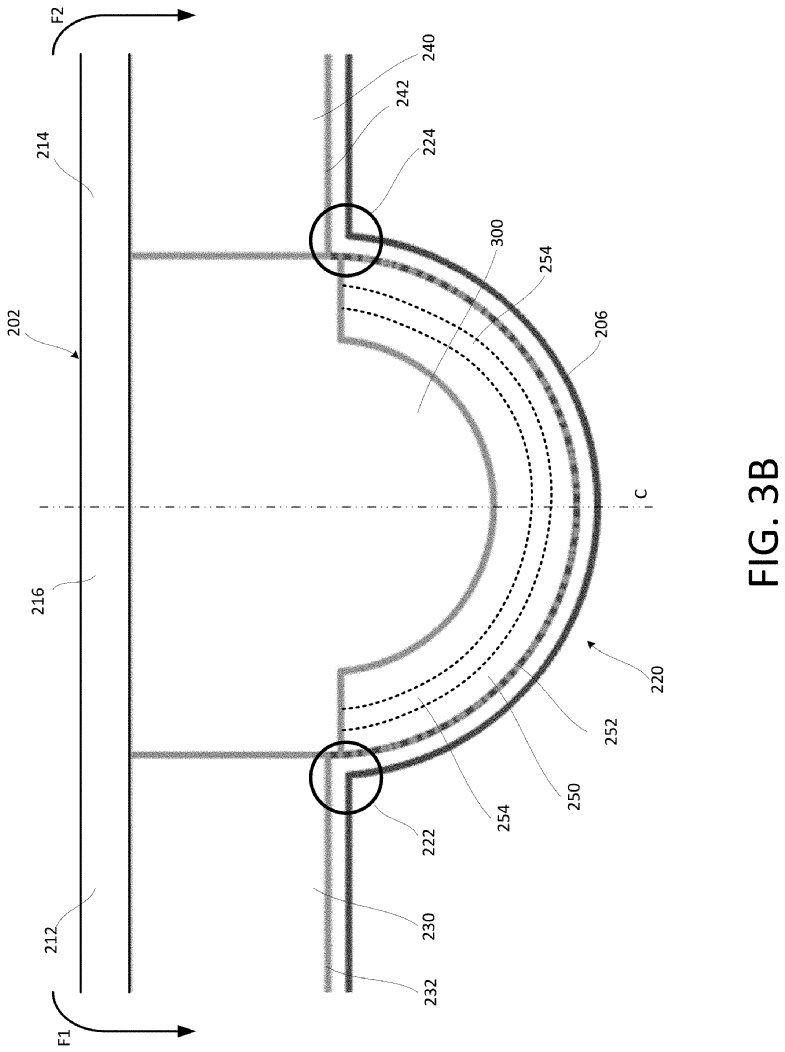
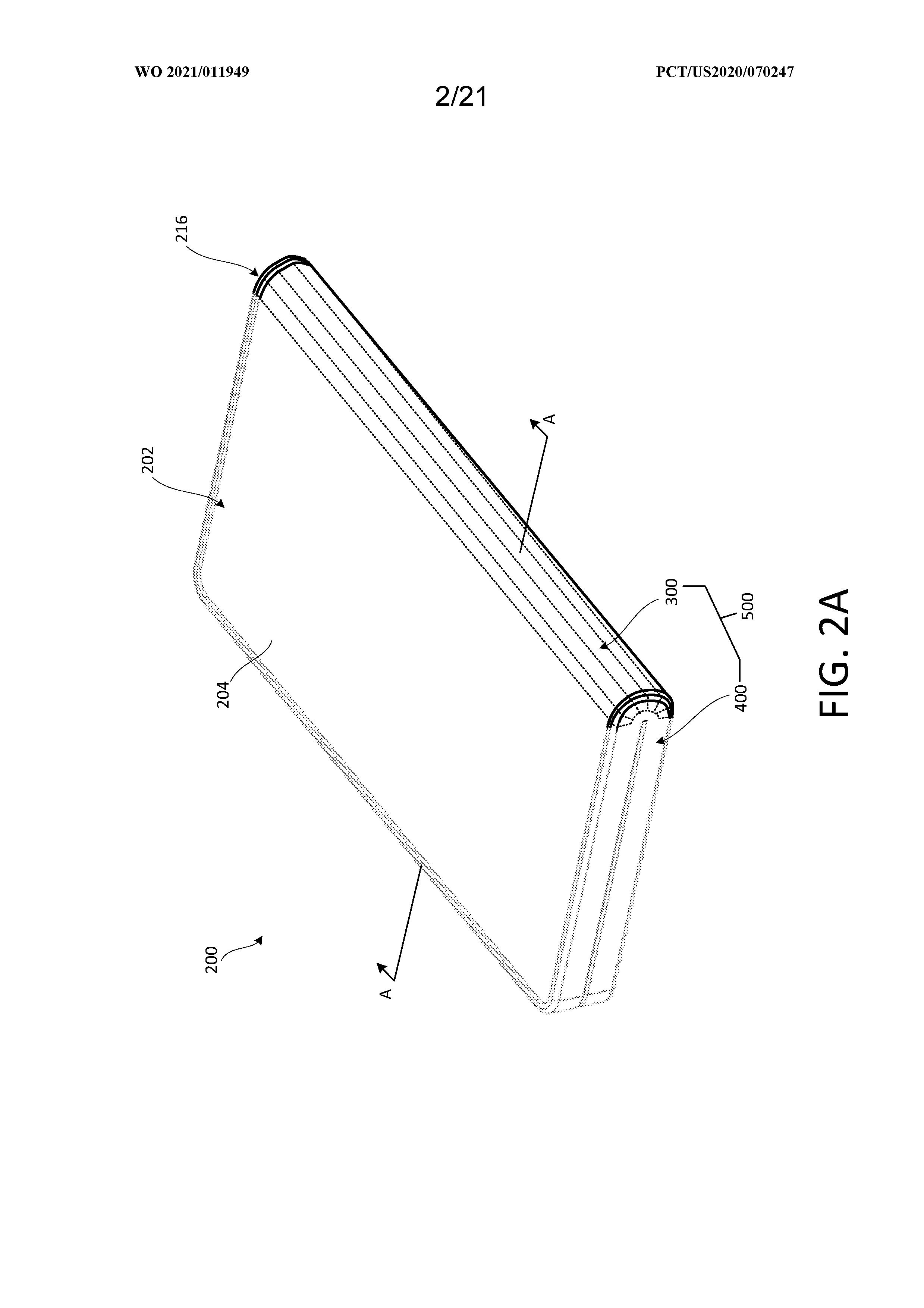
Talking about first, we see a more traditional hinge concept found on the many devices like the Huawei Mate Xsdevices. That is, an outward folding design with a cylindrical hinge vertically at the center. The thickness of the hinge might be a bid to compensate for the large outer folding curvature of the display.
1 of 4
Hinge
Outward folding
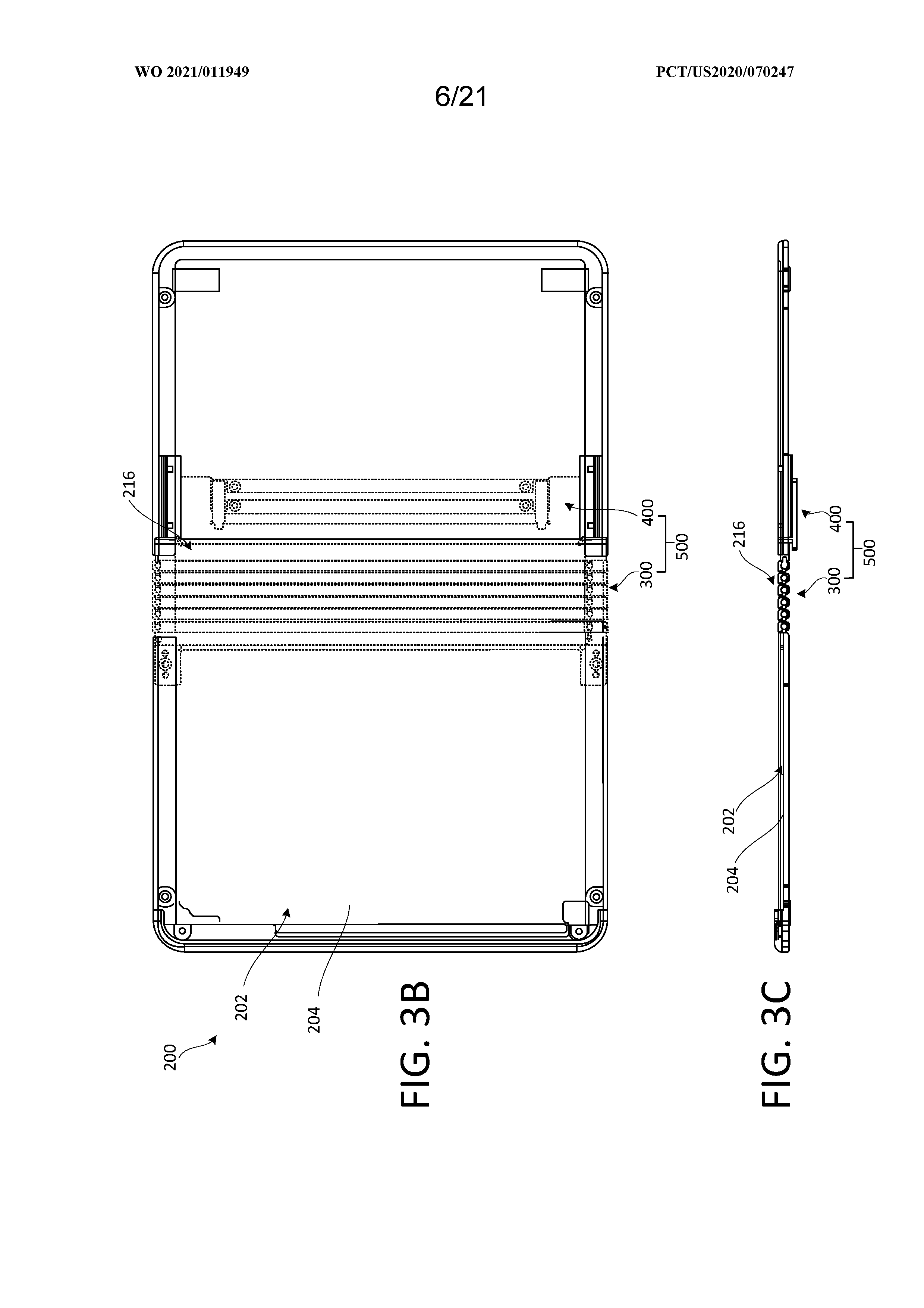
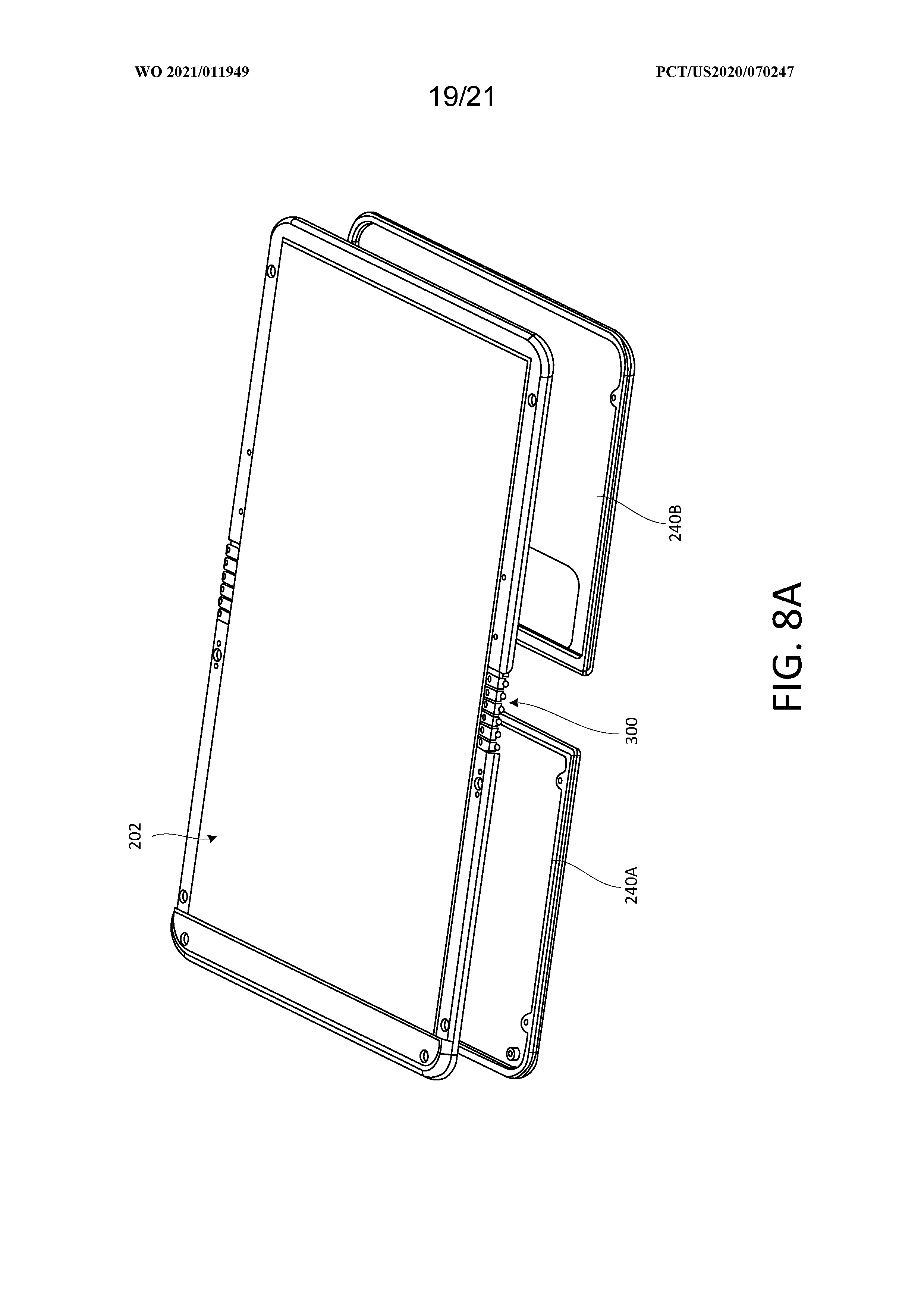
Moving on, the second design is an inward folding display. However, the hinge is somewhat like the first Royole Flexpai and even Xiaomi’s early prototypes. From the images, we can see thick ridge-like structures supporting the frame. Google specifies it as a “plurality of hinge assemblies” suggesting a multi-segment hinge. One of the images also shows what looks to be a separate assembly with hinges to join the display and the frame.
1 of 4
Inward folding
Multi-segment hinge
That said, this patent, filed back in July 2020 has been published on Jan. 21, 2021. We aren’t sure if this would be the final design but the fact that Google patenting both the inward/outward design is a welcoming sign to try out all possibilities.
In any case, we are sure to hear more about the Google Pixel Foldable in the near future. So what do you think about the foldable designs of Google? Do let us know in the comments below.
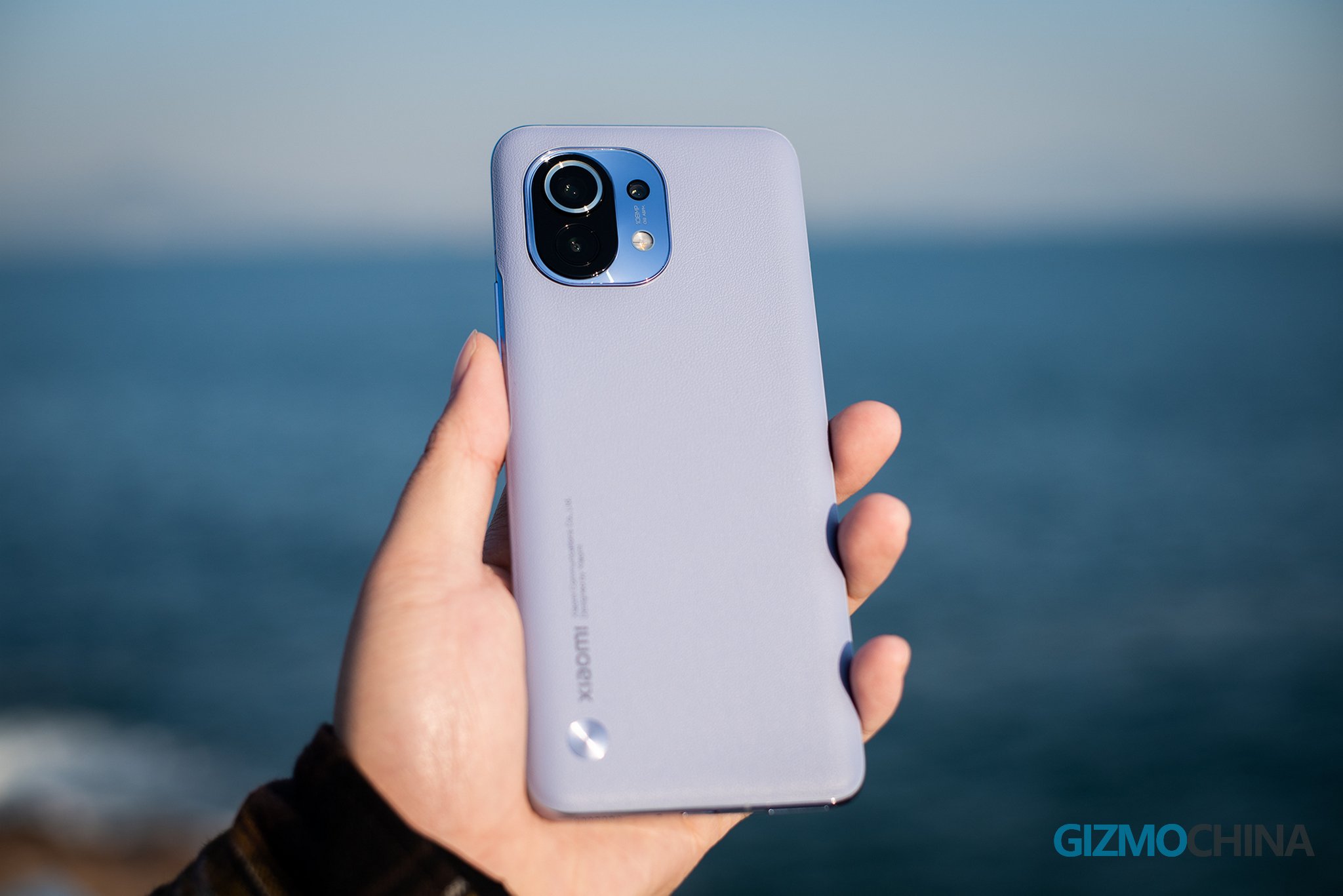
By announcing the Xiaomi Mi 11 by the end of December 2020, Xiaomi became the first company to launch a phone featuring the Snapdragon 888 mobile platform. There have been rumors that the company will be launching the Xiaomi Mi 11 Pro at some point this month. Fresh information shared by a known tipster from China suggests that the company could be planning to launch a third flagship phone in the Chinese market.
According to the tipster, Xiaomi will be launching three phones powered by Snapdragon 8-series chipsets. It is unclear whether he is talking about the Xiaomi Mi series or the Redmi K40 series. There is a possibility that the company may power its Mi series flagship phones with Snapdragon 8-series chips.
The Mi 11 has the SD888 chip and the same chip is likely to power the Mi 11 Pro. Since the tipster did not mention specifically whether the third device has an SD888 chip, it is likely that it may come equipped with the newly unveiled Snapdragon 870.
He added in the comments section of the Weibo post that instead of a waterfall curved display, the screens of the three phones have a slight curvature. He also said that the high-end version in the series is equipped with a 108-megapixel camera.
Recently, Xiaomi India Managing Director and Global VP confirmed that India will be receiving two Mi flagship phones with Snapdragon 888 and Snapdragon 870 SoC onboard. Interestingly, it is believed that a Xiaomi Mi 10 series phone could be equipped with the SD870 chip.
Hence, the three phones that the tipster could be talking about could be Snapdragon 888 powered Xiaomi Mi 11 and Xiaomi Mi 11 Pro smartphones and the Snapdragon 870 SoC powered Xiaomi Mi 10 series phone. Readers are advised to wait for further reports to know more about the upcoming flagship phones from the brand.
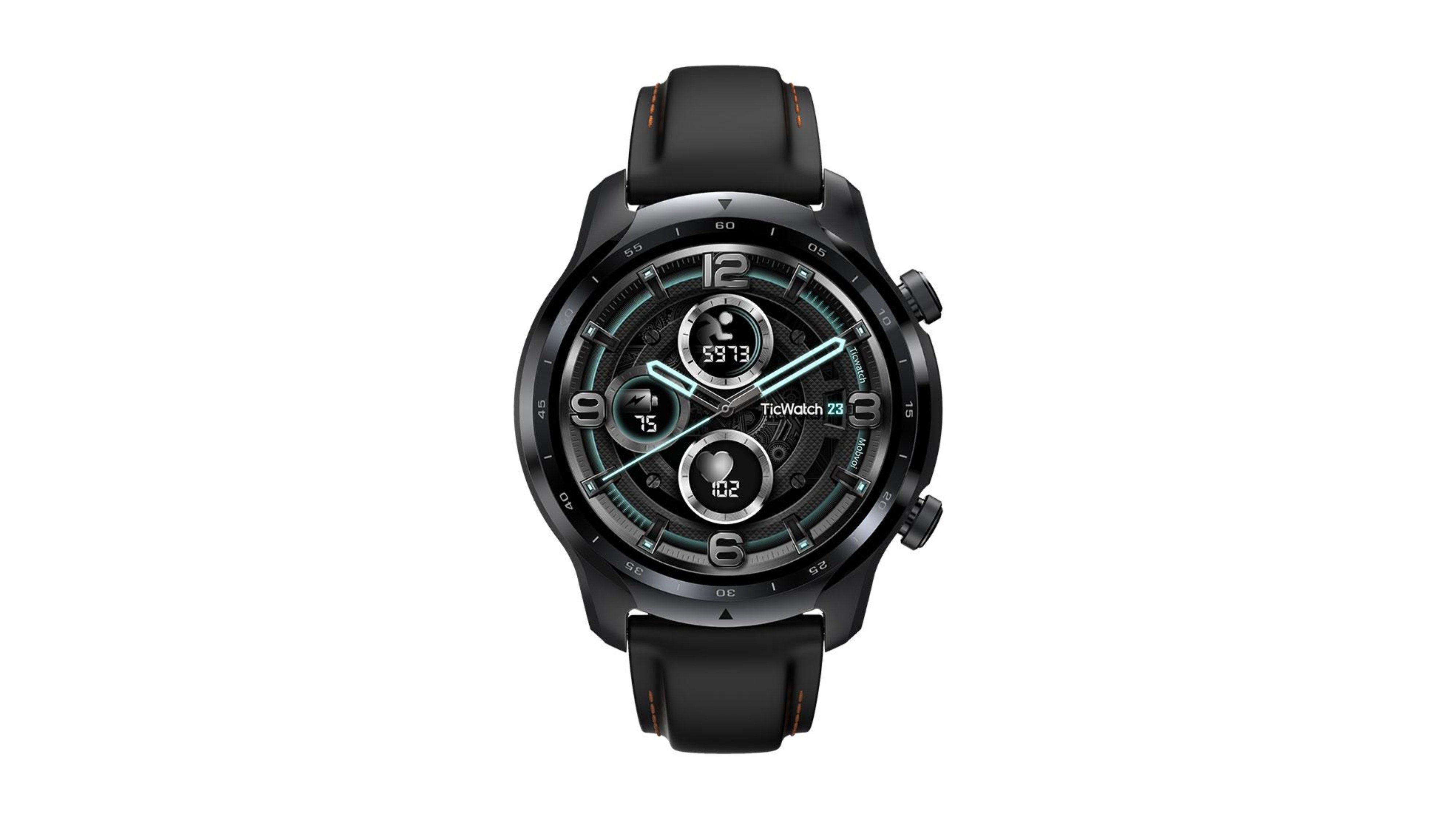
The TicWatch Pro 3 by Mobvoi is probably the best Google Wear OS smartwatch available in the market. It was launched in late September. Now, over four months after its release, the company has released a major update for this wearable.
Mobvoi is rolling out a new firmware for the original GPS variant of the Ticwatch Watch Pro 3 with version number PYDA.200427.080.MRB.210114.001. The new update brings some new features, improvements, and also a couple of fixes.
Like any other new update, it is being pushed in batches. Currently, it is only available for 30% of the users. As per the company, it should reach 50% of users by February 3 and 100% by February 4.
Talking about the changes, the latest update adds an option to change the date format on the watch’s secondary FSTN (Film compensated Super Twisted Nematic) LCD screen, which the brand calls essential screen.
Further, the next two features are also related to this secondary display. Users can now turn on the backlight using the power button while in essential mode and also turn off the essential screen’s auto-backlight in the Essential Mode app. Lastly, notification sound can be enabled from Settings > Sound > Ring volume.
As for improvements, the new update improves the speed of the tilt to wake the screen by about 1/4 second, smoothness of sliding, and pairing speed when pairing with Android devices. It also optimizes the responsive area at the edge of the screen, reduces the backlight brightness of the essential screen, and solves an issue related to steps in the essential mode being partially lost after restarting.
Last but not least, the latest firmware update fixes the essential screen’s backlight not lighting up by tilt to wake issue and function key double click gesture waking up other apps instead of Google Pay bug.
TicWatch Pro 3 Firmware Version PYDA.200427.080.MRB.210114.001 Official Changelog
Features:
Support adjusting the essential screen’s date format(DD-MM/MM-DD) through the Essential Mode app.
Support turning on the backlight through the power button in the essential mode.
Support turning off the essential screen’s auto-backlight in the Essential Mode app.
Enable the notification sound (Can be adjusted in Settings –> Sound –> Ring volume).
Improvements:
Improved the speed of the Tilt-to-wake screen by about 1/4 second.
Solved the issue where sometimes the steps in the essential mode might be partially lost after restarting.
Improved the smoothness of sliding.
Optimized the responsive area at the edge of the screen.
Reduced the backlight brightness of the essential screen.
Improved pairing speed when pairing with Android phones.
Bug Fixes:
Solved the issue that the essential screen’s backlight could not be lit up by Tilt-to wake under certain circumstances.
Fixed the issue that double-clicking the function key sometimes opens other apps instead of Google pay(if Google pay is available in your area).
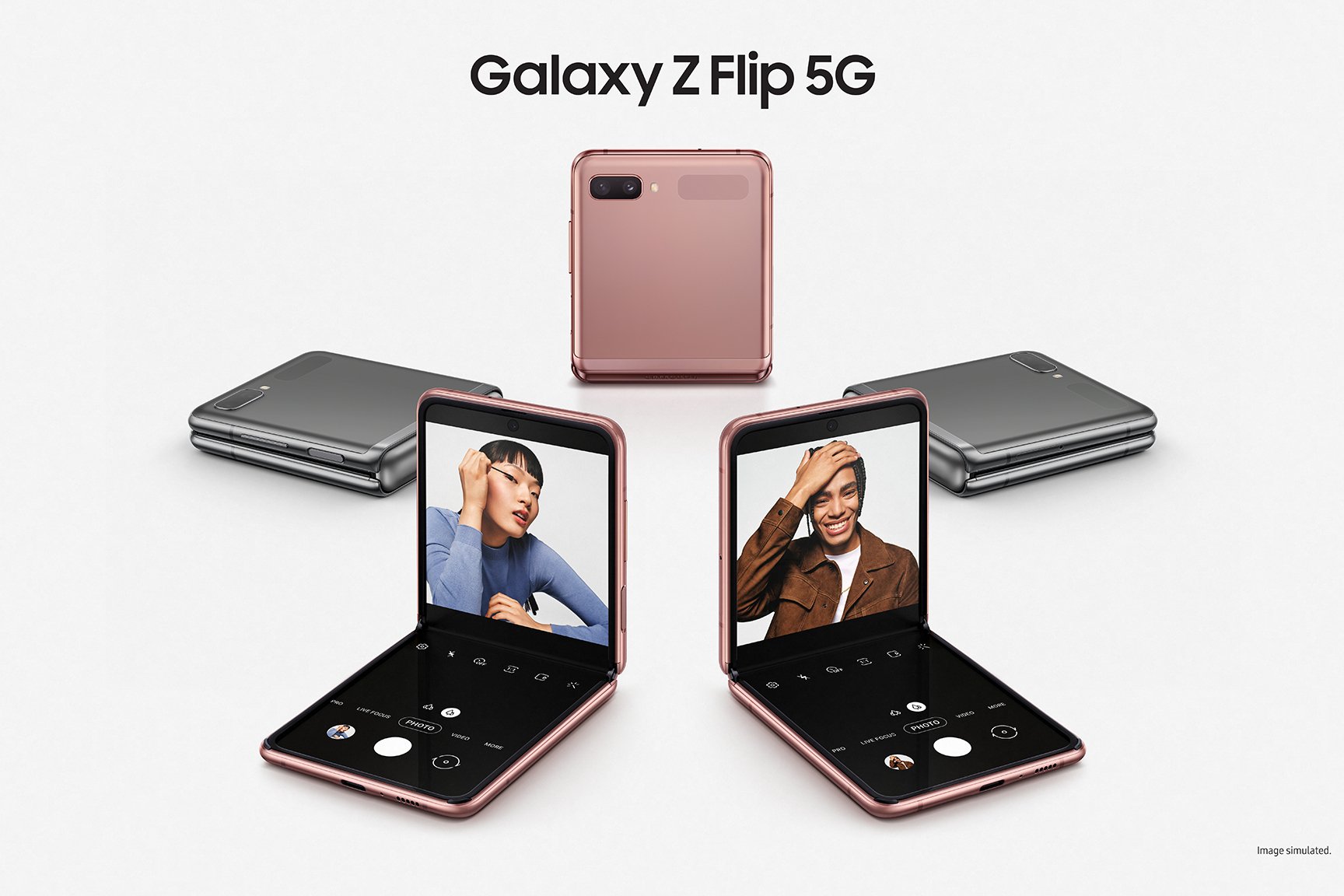
Samsung launched the Galaxy Z Flip 5G in late July 2020 as a better version of the original Galaxy Z Flip with support for 5G connectivity and a newer chipset. Now, six months after its release, this foldable smartphone has received its first permanent price cut in the US.
The South Korean tech giant debuted the Galaxy Z Flip 5G for $1,449. Samsung’s second vertical foldable smartphone comes with a matte finish, Qualcomm Snapdragon 865+ SoC, and 5G connectivity.
Half a year after its release, this handset’s price has been permanently dropped by $250. Hence, it is now listed at $1,199 on Samsung’s official website in the United States.
The new price makes the Galaxy Z Flip 5G cheaper than the Galaxy Note20 Ultra. Also, it now costs the same as the all-new Galaxy S21 Ultra.
But unfortunately, the device can be only bought in either Mystic Bronze or Mystic Gray. The Mystic White color variant that was released in late November is no longer in stock. And we don’t think it will ever come back as the company is expected to unveil the Galaxy Z Flip 3 in the near future.
That’s not all, interested customers can only buy this phone unlocked or via AT&T as other carrier variants are also marked as out of stock. Anyway, they can get up to $1,000 trade-in credit and opt for the Samsung Care+ plan.
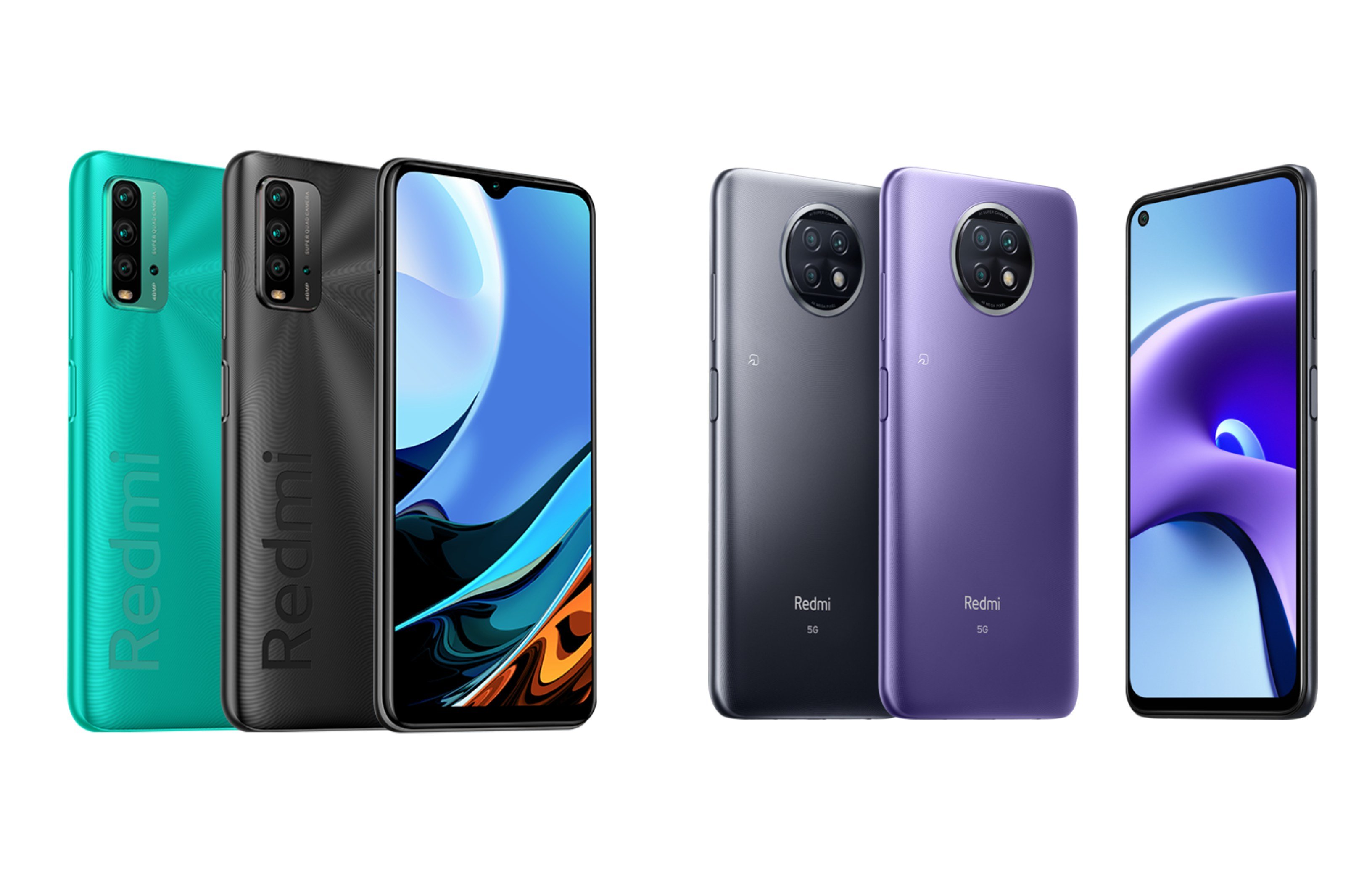
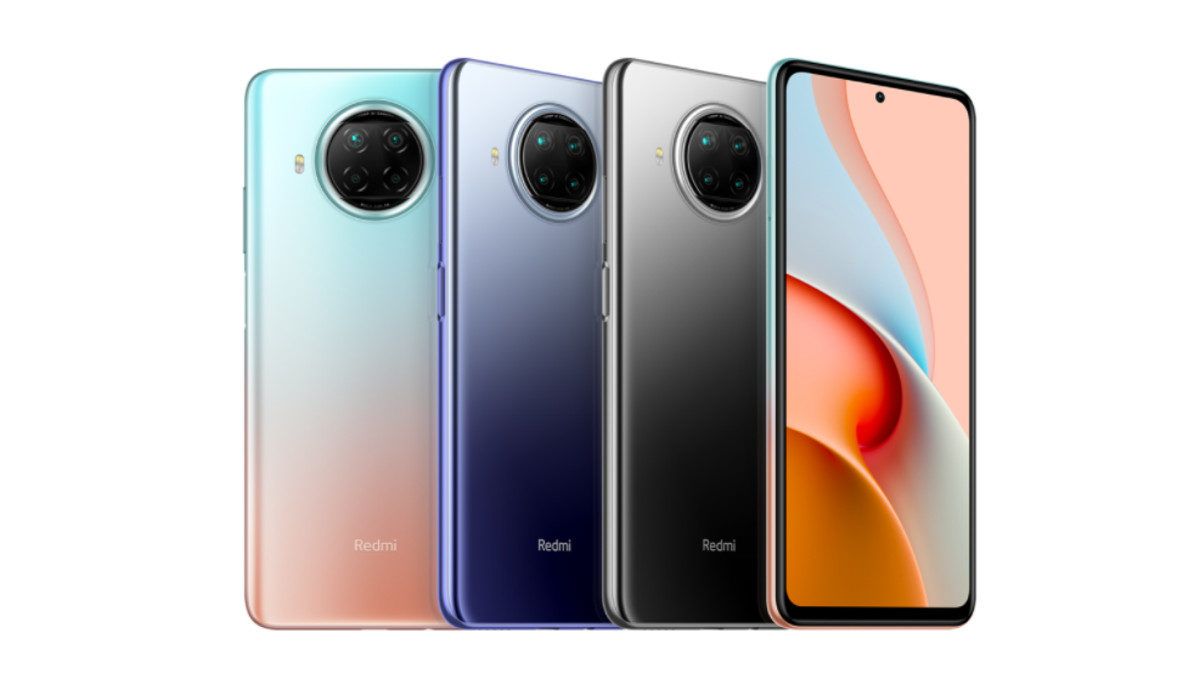
As for Redmi Note 9T 5G, Xiaomi is launching a SoftBank exclusive version in Japan. The device will be available in two colors- Daybreak Purple, and Nightfall Black. You can take a look at the price marketed by Xiaomi below:
Redmi Note 9T 5G(4GB + 64GB)- 19,637 yen($187)
If you look at the price, it’s cheaper than the Global pricing which was around EUR 229/$276 for the same variant. However, it is worth noting that the SoftBank website lists the price as 21,600 yen($206) which includes Tax.
Anyway, the SoftBank listing says that the reservations begin on February 3 at 10:00 AM local time. Availability is vaguely quoted after the end of February 2021.
Redmi 9T Japan
The Redmi 9T, unlike the Note 9T, doesn’t come as an exclusive model. The Japanese version comes only in two colors- Ocean Green, Carbon Gray. You can take a look at the price below:
Redmi 9T(4GB + 64GB)- 15,900 yen($151)
It will go on sale from February 5. This single variant will be available on MVNOs(Mobile Virtual Network Operators) like Aeonmobile, IIJmio, goo Simseller, Biglobe Mobile.
You can also get the SIM-free models across online platforms like Amazon, murauchi.com, and vendors like Yamada, Joshin, etc.
Redmi Note 9T, Redmi 9T Specifications and Features
Redmi Note 9T features a 6.53-inch FHD+ top-left punch-hole display with 450 nits brightness & Gorilla Glass 5, MediaTek Dimensity 800U chipset, triple-camera with a 48MP sensor, 5,000mAh battery with 15W charging(acc to Japan website), side-mounted fingerprint, MIUI 12(Android 10).
Redmi 9T sports a 6.53-inch dot-drop notch FHD+ display with 400 nits, Qualcomm Snapdragon 662 SoC chipset, quad-camera with a 48MP sensor, side-mounted fingerprint, microSD up to 512GB, 6,000mAh battery with 18W charging, MIUI 12(Android 10).
Unlike its predecessor, the Mi 10 5G, Xiaomi didn’t announce a Mi 11 Pro alongside the standard version. Nevertheless, a pro model is coming in the not too distant future, and like all pro models, it should have better specs, and of course, a higher price tag.
In this post, we will talk about what we expect from Xiaomi with the Mi 11 Pro in terms of specs and performance, issues from the Mi 11 we expect to have been fixed, and also the reasons why we believe the phone was delayed.
Mi 11 Pro Specs (what we know so far)
The Mi 11 Pro is expected to come with a 2K AMOLED display with a 120Hz refresh rate just as the standard model. We don’t know what the screen size will be seeing as the Mi 11 has a pretty big 6.81-inch screen. Our guess is that the screen size will remain the same based on the fact that the Mi 10 5G ad Mi 10 Pro 5G both have the same screen size.
We expect the same Snapdragon 888 that’s found on the Mi 11 on the Pro model and it should be paired with up to 12GB of RAM and 256GB of storage. There is also a possibility that Xiaomi will announce a 16GB RAM version that comes with 512GB of storage. Just like last year’s Mi 10 Pro, there shouldn’t be support for storage expansion.
A leak says the Mi 10 Pro will have a 5000mAh battery capacity which is a significant bump compared to the Mi 11’s 4600mAh battery. It should come with support for faster wired and wireless charging, and if reports are true, that should be 120W and 67W respectively. We also expect the phone to have support for Quick Charge 5.
Other expected features are stereo speakers, an in-display fingerprint scanner which should double as a heart rate scanner as in the standard version, NFC, an IR sensor, Wi-Fi 6, and maybe even Wi-Fi 6E.
Mi 11 Pro Cameras
We decided to give the cameras a separate section as it is a very important aspect of the phone.
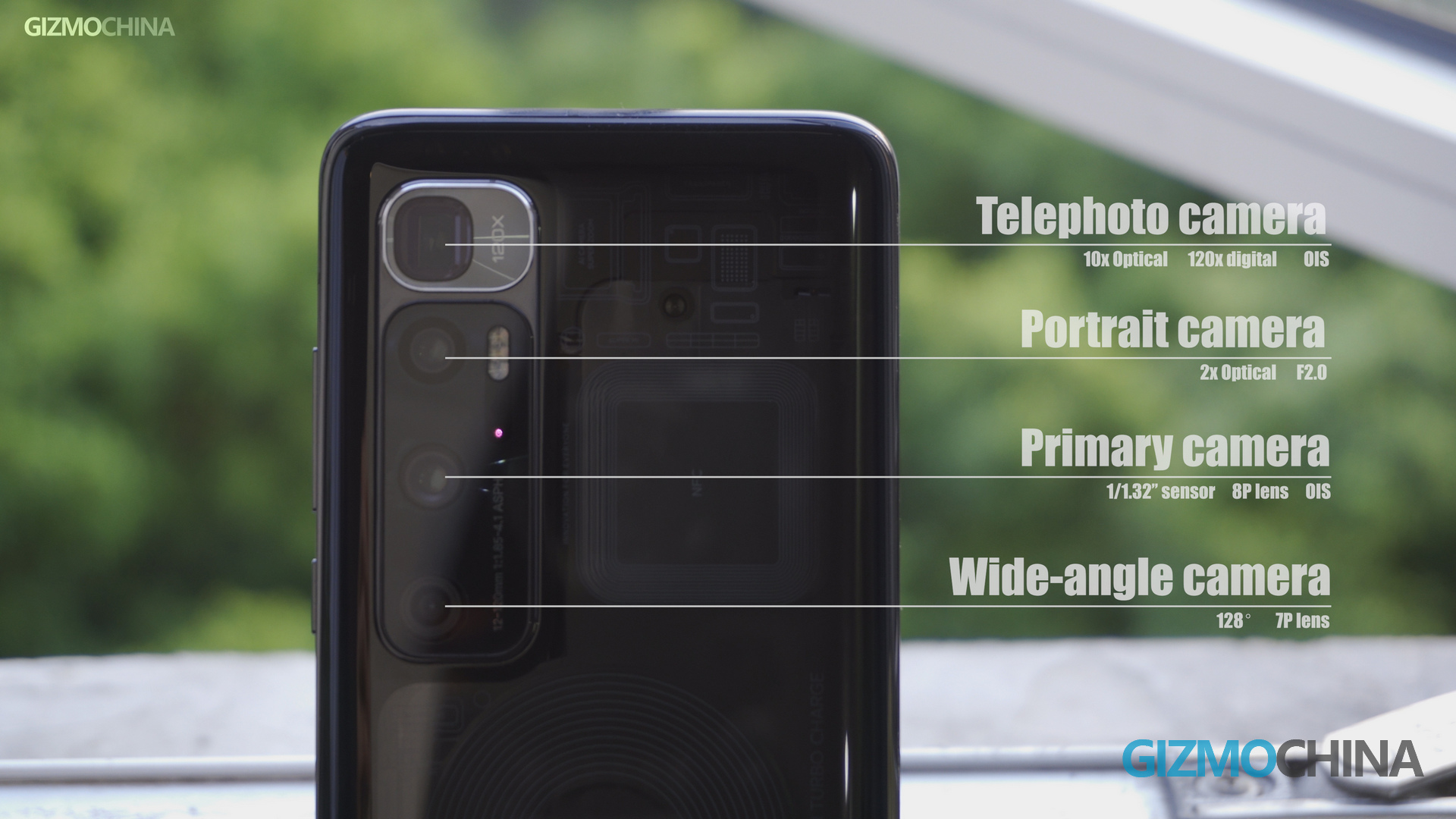
Xiaomi has set a high standard with respect to camera performance with the Mi 10 Ultra. The China-exclusive flagship sits at the third spot on DxOMark‘s list of smartphones with the best camera. The two devices that sit at the first and second positions are the Huawei Mate 40 Pro+ and Mate 40 Pro respectively.
Xiaomi Mi 10 Ultra
So what do we expect from Xiaomi for the Mi 11 Pro’s cameras? Cameras that are better than what we have on the Mi 11.
The Mi 11’s cameras are okay at best but they can’t match the Mi 10 Ultra which is Xiaomi’s best camera smartphone. A leaked poster alleged to be that of the Mi 11 Pro shows the phone will have four rear cameras and 120x zoom but we will take it with a pinch of salt.
If we were to take a wild guess, we’d say the Mi 11 Pro will launch with a camera configuration similar to that of the Mi 10 Ultra but with better optimizations. This means a 48MP main camera, another 48MP camera with OIS for the periscope lens which brings 120x hybrid zoom, a 12MP telephoto camera, and a 20MP ultrawide camera.
You might be wondering if simply copying the camera configuration from the Mi 10 Ultra makes sense, but it does when you realize that the Mi 10 Ultra is a China-exclusive product, which means most of Xiaomi’s international customers didn’t get to experience the phone’s camera prowess. What better way to bring that camera experience to the global market than via the Mi 11 Pro?
As we said above, Xiaomi isn’t just lifting the sensors but also fine-tuning them. The sensors can be optimized to take advantage of the Snapdragon 888’s Spectra 580 triple image signal processor to churn out better photos than the Mi 10 Ultra.
Issues from the Mi 11 we expect Xiaomi to have fixed in the Mi 11 Pro
Reviews have shown that the Mi 11 is not a perfect flagship. We covered the issues we experienced with our unit, and we hope most, if not all, of these issues, have been fixed ahead of the release of the global version next week. However, we expect even better performance from the Mi 11 Pro.
Better software – one of the issues we noticed with the Mi 11 is app crashes. This happens with the camera app and some games. This is probably a software issue (MIUI) and we expect Xiaomi to have fixed them. While it is not uncommon for a device to have software issues out of the box, it is not a good experience nonetheless. We also expect Xiaomi to have fine-tuned its software to work better with the Snapdragon 888 chipset.
Better cooling – the Snapdragon 888 is known to heat up quickly when gaming and when it does that, the processing power is throttled down to manage the heat which affects the game. While this is definitely an issue with the chipset (this is Qualcomm’s first 5nm chipset after all), Xiaomi may be able to better manage it with a better cooling system.
Better build – the Mi 11 comes in a vegan leather version that is practically a plastic panel with a polyurethane coating. Our unit rattles when you play an audio file via the loudspeaker which points to a problem with the build quality. We do not know if this is the same experience with the version with a glass back, but if Xiaomi plans to release vegan leather options for the Mi 11 Pro, then it needs to note this issue and fix it in the new model
Why the Mi 11 Pro didn’t launch alongside the Mi 11
It came as a surprise when Xiaomi only announced the Mi 11 at the phone’s launch event in December 2020. However, we want to believe it was a calculated decision. Below are the reasons we came up with as to why the Mi 11 Pro’s launch was delayed:
Giving the Mi 11 its own stage to shine – If the Mi 11 Pro had launched alongside the Mi 11, it would have overshadowed it. See phones like the Galaxy S21 series – the S21 Ultra is getting more attention than the Galaxy S21 and Galaxy S21 Plus. By splitting the launches, the Mi 11 had the stage to itself and all the attention.
A headstart in terms of sales – The Mi 11 not only launched early but also went on sale shortly after. According to Xiaomi, it has sold more than 1 million units and that is for China alone. When the phone launches in other markets next week, that number is expected to double. If the Mi 11 Pro had launched alongside the Mi 11, sales would have been split between both.
Of course, the total sales figure would probably have been higher but buyers would have had to decide which of the two phones to purchase, and the Mi 11 may not have sold so many units. However, by launching the Mi 11 and keeping a tight lip on the existence of a pro model, buyers will have no choice but to pick up the available model.
More time for development – Another reason why the Mi 11 Pro got delayed may be due to Xiaomi requiring more time for development. There is a possibility that certain components or technologies they need are not yet available or perfected, hence the reason for delaying its launch.
Conclusion
There definitely is a lot to look forward to in the Mi 11 Pro and if the additional development time means a better device, then a few months of delay is worth it.
There are reports that the Mi Pro will be announced after the Spring Festival holiday which means it may launch before the end of this month. Just like the standard version, the phone should be unveiled in China first before a global debut later. Going by the Mi 10, the time frame between the Chinese launch and global launch should be nothing less than a month.
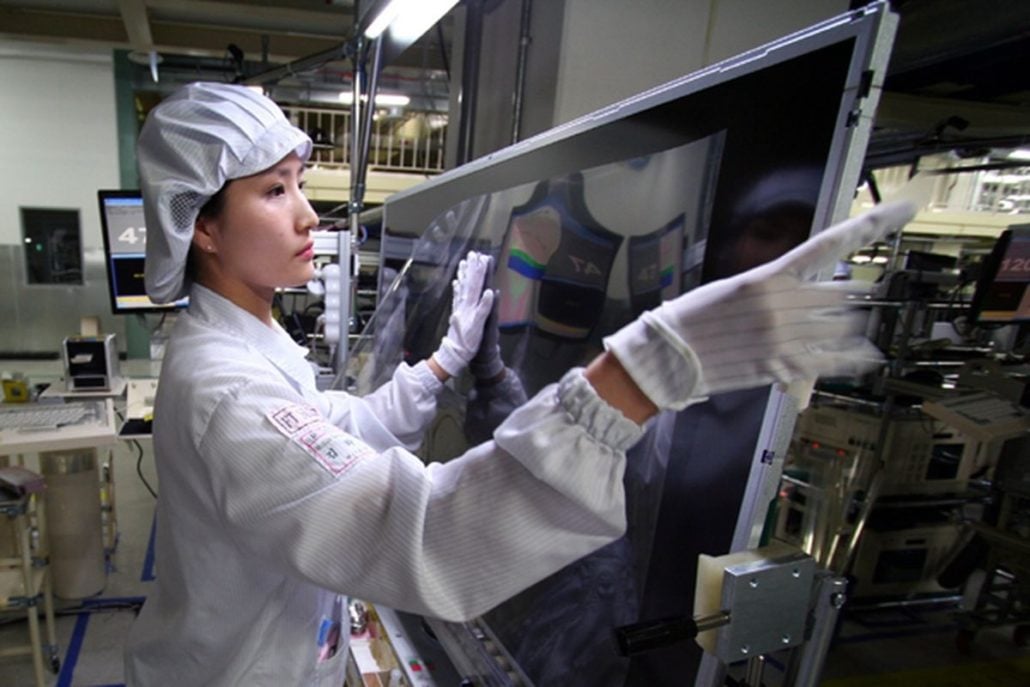
Corning has announced that it is currently expanding the production of its Gen 10.5 liquid crystal display (LCD) glass substrate factories in China. The move arrives after high demand for TVs and other IT products.
According to TheElecreport, the company stated that the healthy demand for TVs and other products have caused them to see high demand, especially for large sized TVs. Over the last year, the demand for 75 inch TVs grew by over 60 percent in comparison to 2019. At the moment, the Gen 10.5 has had the best production efficiency for large TV substrates. So, the company aims on expanding production at its Guangzhou and Wuhan plants in China.
Furthermore, Corning also has the Gen 8.5 glass substrates plants in Beijing and Chongqing. Tony Tripeny, the company’s CEO, stated that Corning is expecting sales of 3 billion US Dollars to 3.2 billion US Dollars within just the first quarter of this year. This mark an increase of over 20 percent year on year in comparison to 2020, which had it register 2.5 billion US Dollars in sales. Similarly, other display makers are also pushing towards raising production capacity in the region as well.
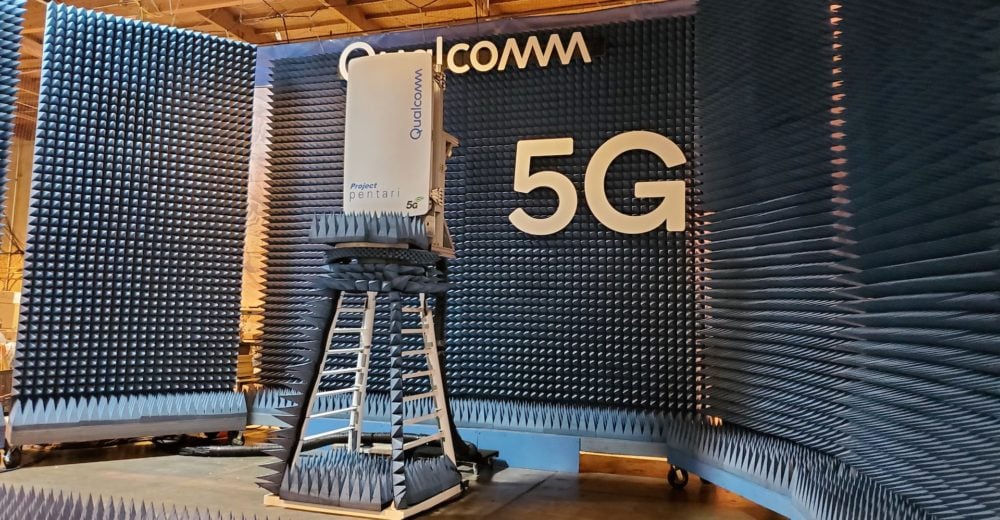
Qualcomm has just announced that it is planning on building a new research and development center to push 5G innovations. This center will be situated in France and arrives after the company met with the local government’s officials.
As per an official Qualcomm announcement, Cristiano Amon, CEO elect and President of the company met with Agnès Pannier-Runacher, minister delegate for the industry in the French Government. This new research and development site will be a part of the company’s extensive R&D network and will also play an integral role by bringing in employees from the region to help develop 5G technology for the various markets across the globe.
The new 5G research and development facility also builds on “Qualcomm Communications SARL’s strong presence in France.” For those unaware, the chipmaking giant already has established facilities in the region for over 20 years. The new center is located in Lannion in Brittany and Issy-Les–Moulineaux in the Paris-Region. For those unaware, Lannion is a center for telecoms engineering excellence and a European technology hub.
John Smee, Vice President of Engineering in Qualcomm stated that “France already has a leading technical engineering infrastructure in place, so it is a natural fit for this new 5G R&D hub. The 5G R&D team will be working on advanced systems engineering to help define the future of 5G and beyond – and the new center is a tremendous opportunity for the individuals involved and for the company.”
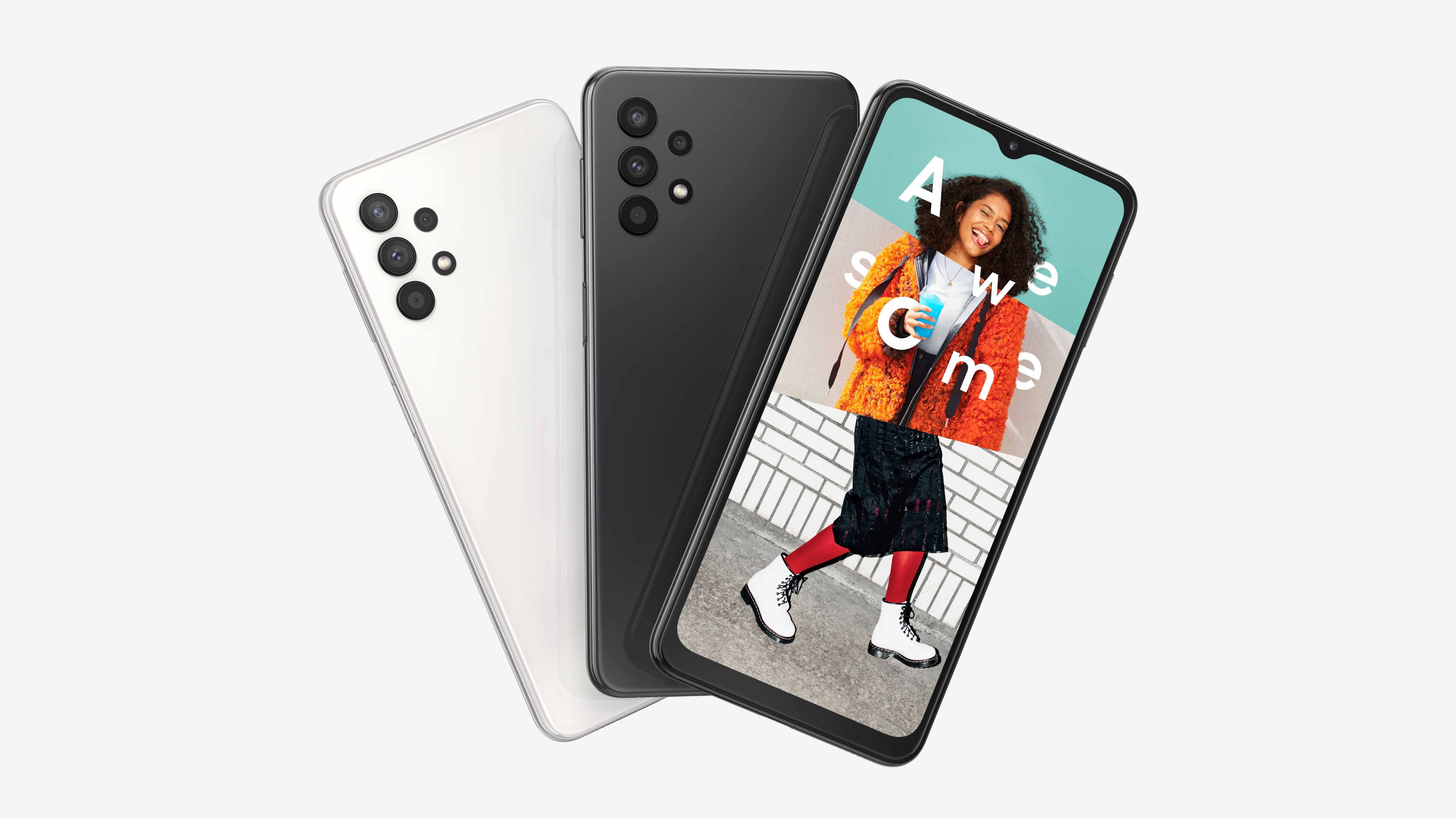
In early January 2021, Samsung unveiled the Galaxy A32 5G as its most affordable 5G handset to date. According to numerous reports, the company will be also releasing a 4G variant of this smartphone in some markets. Now, ahead of its launch, its color variants have been tipped by a reliable leakster.
The upcoming Galaxy A32 4G is in the news for a while now. Since the 5G variant is now official, we know almost everything about the 4G version as well. Because the LTE version is expected to feature the exact same set of specs except for a different SoC.
However, we were unaware of its color variants. Thankfully, we now know that as well, courtesy of a tipster called Sudhanshu Ambhore (@Sudhanshu1414). As per him, the Galaxy A32 4G will be available in four color options, namely Black, Blue, White, and Lavender.
With that being said, the only things that are unknown about the forthcoming Galaxy A32 4G are its announcement date, price, and availability.
According to previous reports, the Samsung Galaxy A32 4G will flaunt a 6.5-inch LCD panel with a resolution of 720 x 1600 pixels (HD+) and a dewdrop notch at the top center. The device will be powered by MediaTek Helio G85 SoC paired with 6GB RAM and 128GB storage. There could be other storage configurations as well.
Further, the handset will come with a 48MP (wide) + 8MP (ultra-wide) + 5MP (macro) + 2MP (depth) quad-camera setup on the back and a 13MP front-facing camera. It will be backed by a 5,000mAh battery with support for 15W fast charging and will run Android 11-based One UI 30.
Other features of this smartphone will include dual-band WiFi, Bluetooth 5.0, GPS, NFC (select markets), microSD card slot, 3.5mm headphone jack, USB Type-C, side-mounted fingerprint sensor, accelerometer, proximity sensor, gyroscope, and compass.
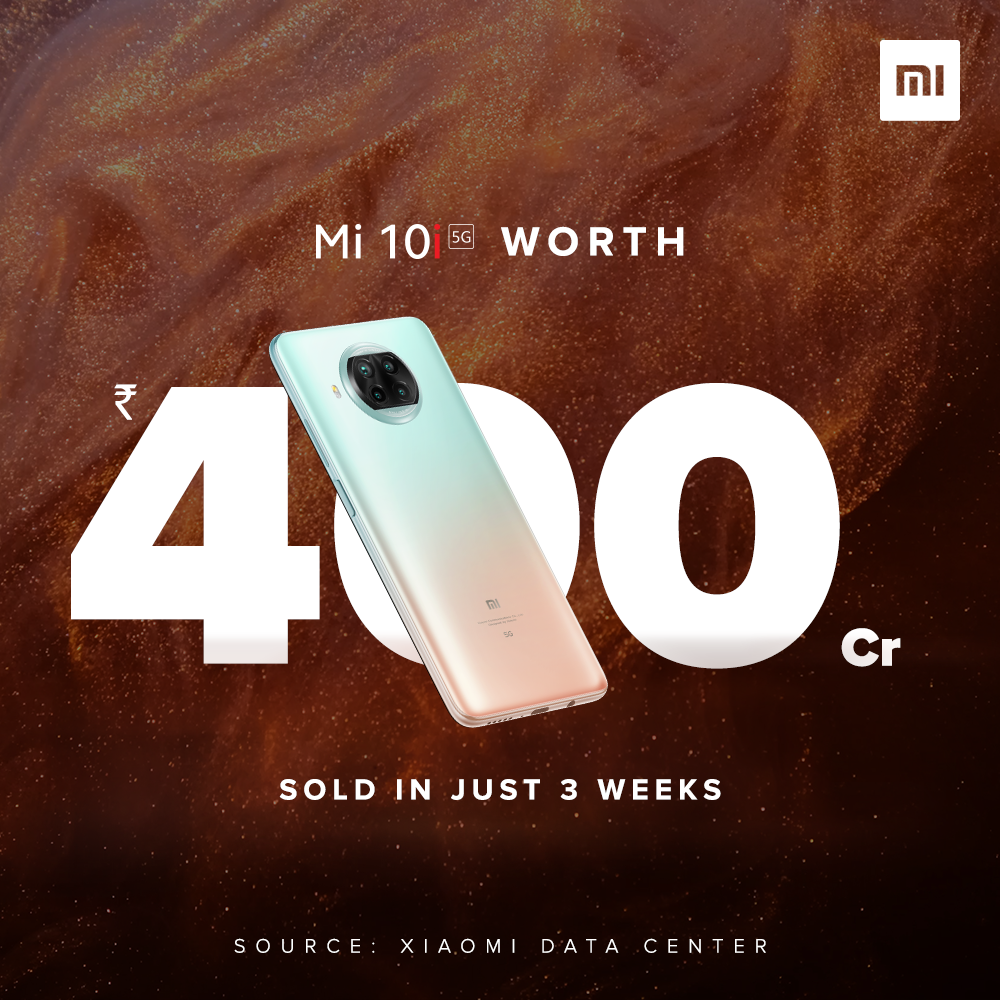
Earlier today (2nd February 2021), Xiaomi India announced that its newly launched smartphone, the Mi 10i 5G, saw record breaking sales. The device saw sales worth 400 crores INR (roughly 54 million US Dollars) in just three weeks.
The Chinese tech giant has just revealed the achievement of its Mi 10i 5G, which first went on sale on the 7th of January 2021. Since then, the device has registered “blockbuster” sales within just three weeks of its first launch. Furthermore, the company also added that the device is one of the most searched smartphones, as per the January 2021 Google search result reports. In other words, the smartphone was extremely successful in India.
Manu Kumar Jain, Managing Director of Xiaomi India, stated that “With the launch of Mi 10i 5G, our aim was to deliver future proof technology and a perfect flagship experience. The response received during the first few weeks is a testimony to customers appreciating a 10 on 10 smartphone which combines a stellar camera setup featuring the 108MP primary camera along with class leading performance through Snapdragon™ 750G. As we continue to build the Mi Brand in India, we will focus on offering the latest and the best technology to our Mi Fans.”
Xioami Mi 10i 5G
Listing some of the handset’s notable specs, the Mi 10i 5G feature a 108 megapixel rear camera, along with a 120Hz refresh rate display, a Qualcomm Snapdragon 750G 5G enabled processor, all of which is powered by a large 4,820mAh battery pack. The smartphone also supports NavIC, which is the nation’s indigenous navigation system built by the ISRO (Indian Space Research Organisation).
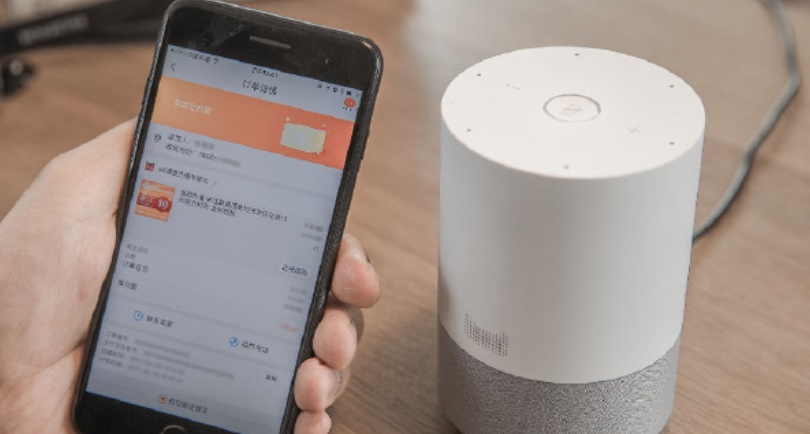
The smart speaker market in China saw a decline last year. The overall market fell by 8.6 percent year on year, out of which a significant part also includes the smart screen devices as well.
According to an IDCreport, the sales volume for smart speakers in China reached 36.76 million units in 2020. Smart speakers with displays accounted for 35.5 percent of all units during the same time, which saw a 31 percent rise in sales year on year. The report added that the overall market decline was primarily due to the impacts of the Coronavirus pandemic along with “channel adjustments and limited application scenarios.”
During last year, the smart speaker market in China was still dominated by three major brands. Out of these, the competition was the most intense between Alibaba’s Tmall Genie and Baidu’s Xaiodu. In terms of annual sales, Alibaba edged ahead with its Tmall Genie. On the other hand, the fourth and final quarter saw Baidu win, through its collaboration with Pinduoduo in China. Furthermore, the market for smart speakers with displays had Baidu maintain the lead with a 63.4 percent market share.
These smart speakers are mainly designed to offer additional functionality and bring another level of interaction as well. At the moment, the smart speaker market in China is developing at a “rapid pace” as market education pushed by vendors help in better penetration of their products in the market. For 2021, IDC expects that the smart speaker market will see over 42 million units in shipments, marking a 14 percent year on year increase.
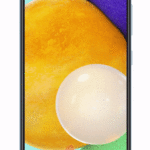
The new leak reveals that the Samsung Galaxy A52 5G will come in four colors like Awesome Black, Awesome White, Awesome Violet, and Awesome Blue. Readers can click on each image below to get a 360-degree spin view of Galaxy A52’s each color variant.
While the rumor mill has revealed a lot of information on its specifications, Samsung is yet to officially confirm the existence of the Galaxy A52. The device is rumored to arrive in 4G and 5G versions depending on the market. The 4G model of the Galaxy A52 is likely to feature the Snapdragon 720G, whereas its 5G edition could be driven by the Snapdragon 750G chipset.
The Galaxy A52 5G is expected to house a 6.5-inch S-AMOLED display with an Infinity-O design. The Full HD+ display could be integrated with a fingerprint reader. The rear shell of the phone is rumored to sport a 64-megapixel quad-camera system. The Galaxy A52 will boot to Android 11 OS. Its 3C certification revealed that it could be shipping with a 15W charger. Its dimensions are 159.9 x 75.1 x 8.4mm.
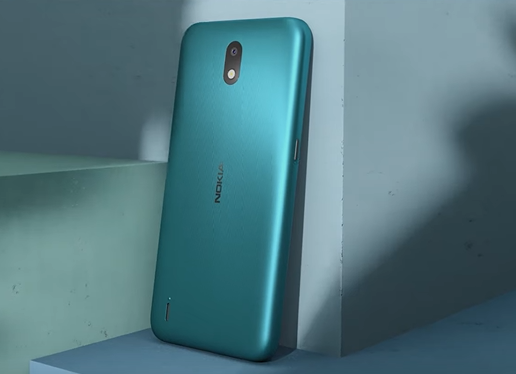
Last month, the entire specs of the upcoming Nokia 1.4 entry-level smartphone leaked. However, the handset is yet to go official. Now, ahead of its launch, the device has been certified by WiFi Alliance.
Nokia 1.3
The WiFi certification of HMD Global’s Nokia 1.4 does not reveal anything new since everything about this phone has already leaked. But the certification suggests that it could be announced very soon.
According to the previous report, the forthcoming Nokia 1.4 with model number TA-1322 will be the successor to the 2019’s Nokia 1.3. It will be an entry-level smartphone priced around €100.
The handset will sport a 6.51-inch LCD panel and this screen is expected to come with a dewdrop notch. The phone will be powered by a 1.3GHz quad-core processor paired with 1GB RAM and 16GB internal storage.
For optics, the device will be equipped with an 8MP + 2MP dual camera setup along with an LED flash at the back and a 5MP snapper on the front for selfies and video calls. On the connectivity front, the smartphone will come with a dual SIM card slot (4G + 2G), single band WiFi (2.4GHz), Bluetooth 4.2, GPS, 3.5mm headphone jack, and MicroUSB port.
Other features of this phone will include a MicroSD card slot (up to 128GB), fingerprint sensor, ambient light sensor, accelerometer, proximity sensor, Android 10 Go Edition, and a 4,000mAh battery.
Last but not least, the Nokia 1.4 will measure 166.42 × 76.72 × 8.70mm in dimensions and will be available in two colors, namely Blue and Gray.
The shipments of smartphone AP (application processors) in China will reportedly not see any changes sequentially in the first quarter of this year. This flat trend arrives despite the market seeing a significant rise of 57 percent back in 2020.
According to a DigiTimesreport, the smartphone AP shipments, which includes those for mobile exports as well, will stagnate in the first quarter of 2021. Furthermore, the former Huawei budget smartphone unit, Honor, has also started raising its chip inventory, with other brands also pushing to raise their orders to also maintain their high inventory levels as well. At the moment, the 8 inch and 12 inch foundaries are packed with orders and are running at full capacity due to smartphone makers driving up orders.
The report also added that about 211.6 million smartphone APs were shipped to Chinese companies in the fourth quarter of last year. This marked a rise of 9.9 percent quarter on quarter and 7.7 percent year on year. The market performed better than expected with robust shipments, with brands like Xiaomi, Oppo, and Vivo seeking to expand their market share in the domestic market as the current market leader struggles after US sanctions.
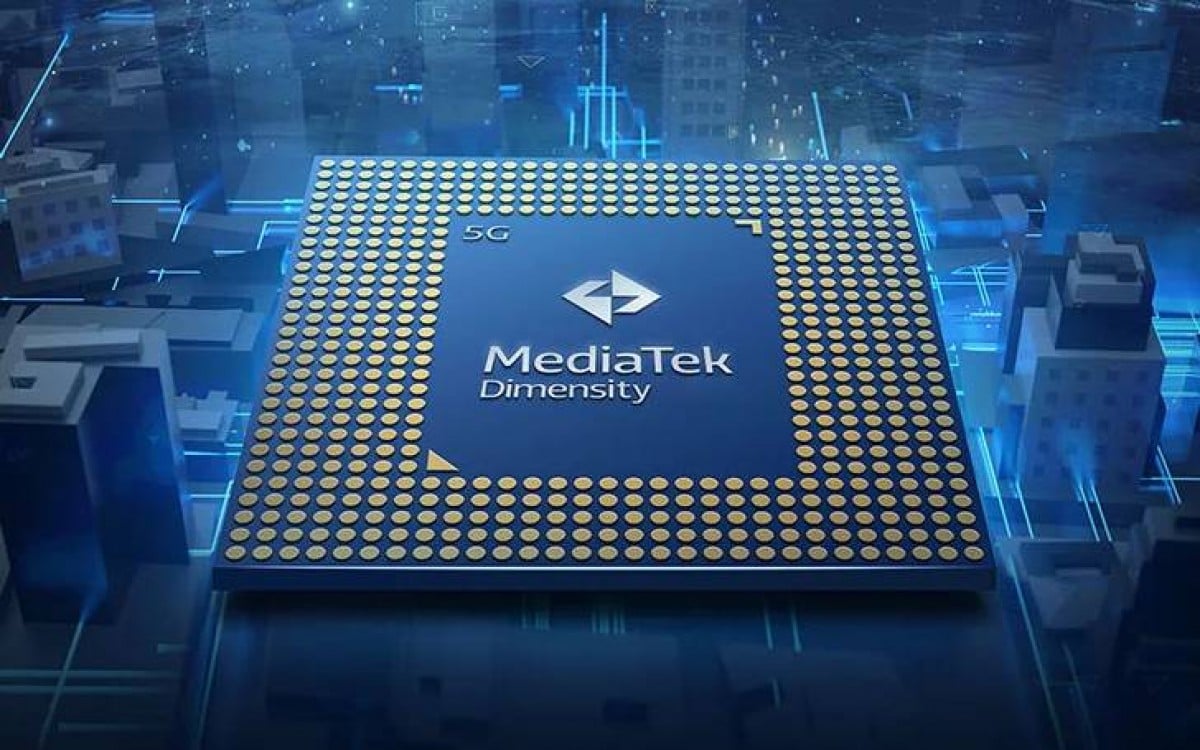
Notably, MediaTek was one of the top suppliers of smartphone APs in China, accounting for 42.5 percent of all shipments during the final quarter of last year. The chipmaker was followed by Qualcomm that had a market share of 41.5 percent and Huawei’s HiSilicon with a 9.5 percent share. DigiTimes estimates that MediaTek will remain the market leader in the first quarter, while Qualcomm will remain will be close behind.
Samsung has finally launched the Galaxy M02 in India after teasing it for the past few days. The entry-level smartphone offers a large screen, a huge battery, and a dual-camera setup. Let us take a look at the entire specs, features, price, and availability of this handset.
Galaxy M02 Specifications and Features
The newly announced Galaxy M02 is nothing but a rebranded Galaxy A02 that went official last week in Thailand. It sports a 6.5-inch PLS TFT LCD panel with a resolution of 720 x 1600 pixels (HD+). The screen has a dewdrop notch at the top and hence, Samsung advertises it as an ‘Infinity-V Display’.
Under the hood, the device features a MediaTek MT6739W SoC paired with 2GB/3GB RAM and 32GB internal storage. Unfortunately, despite launching in the second month of 2021, the smartphone runs Android 10 (One UI Core 2.x) instead of the latest Android 11-based One UI Core 3.0.
As for optics, the phone comes with a 13MP (wide) + 2MP (macro) vertically aligned dual-camera setup on the back and a 5MP front-facing camera in the notch for selfies and video calls. It is interesting to see the company opting for a macro shooter, rather than the commonly used depth sensor.
Other features of this handset are dual-SIM, 4G, VoLTE, single-band WiFi, Bluetooth 5.0, and GNSS (GPS, GLONASS), grip sensor, accelerometer, proximity sensor, dedicated microSD card slot (up to 1TB), 3.5mm headphone jack, MicroUSB port, and a 5,000mAh battery.
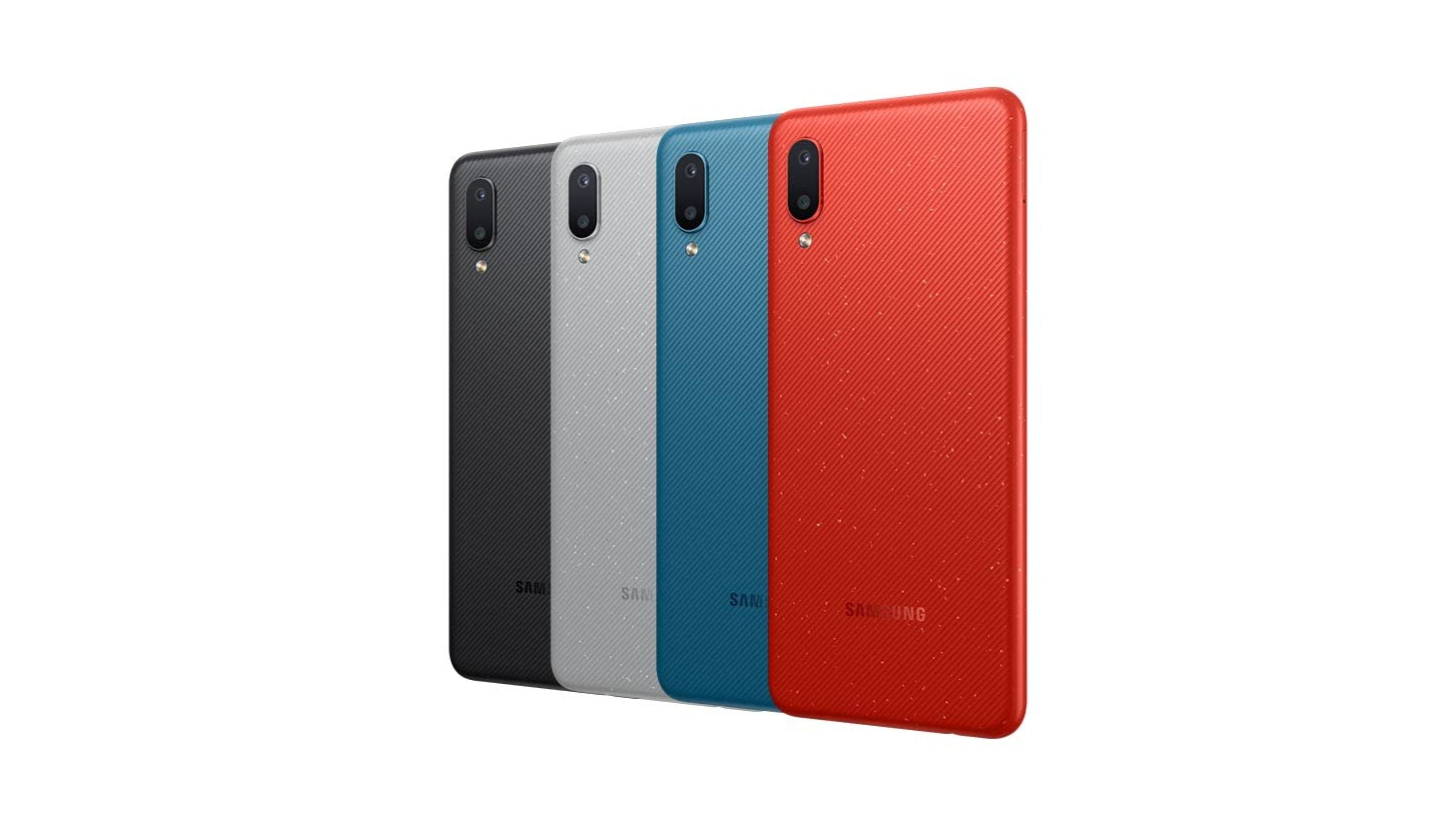
Lastly, the phone’s body is made of polycarbonate with a grippy pattern and comes in four colors, namely Denim Black, Denim Blue, Denim Gray, and Denim Red. It measures 164.0 x 75.9 x 9.1mm in dimensions and weighs 206g.
Galaxy M02 Pricing and Availability
The Samsung Galaxy M02 will be retailing for the following price tags.
2GB + 32GB – ₹6,999 (Introductory Offer – ₹6,799)
3GB + 32GB – ₹7,499
It will go on sale starting February 9 and can be purchased from Samsung online store, Amazon India, and leading offline store across India.
Xiaomi has its own Android-based operating system named MIUI and the company has been regularly updating it. Recently, some users of MIUI started reporting that they weren’t able to install Google Mobile Services (GMS) on their smartphones.
The restrictions seem to have come after the rollout of MIUI 12.5. Now, the China-based smartphone maker has responded to those reports and said that the company no longer allows users to install or sideload GMS applications because of compliances.
The company confirmed that the devices that don’t come with the Google service framework won’t be able to install GMS applications. This isn’t surprising as most of the devices in China don’t have support for GMS as Google services are banned in the country.
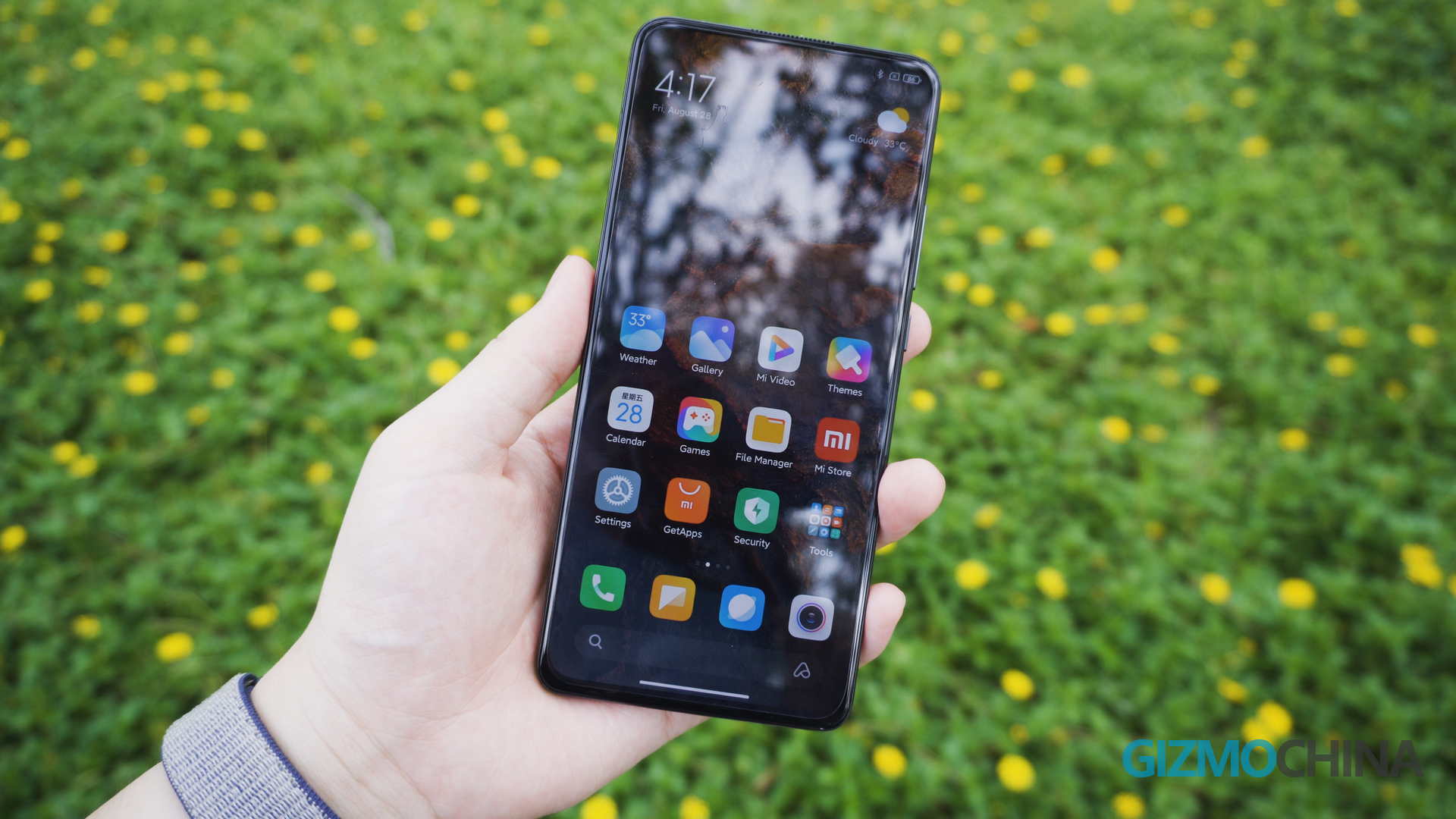
While Xiaomi has not revealed the list of models affected by this policy change, some users have reported that Redmi K30 Ultra and Redmi 10X 5G are among those models that don’t support sideloading GMS apps.
It’s noteworthy that the restrictions apply to devices in the company’s home market, i.e. China, and users in other regions should be able to install Google Mobile Services as well as related applications on their Android smartphones.
A new report has revealed that Visionox might receive large orders from Huawei, and its former subsidiary, Honor. The supplier will provide the smartphone OEMs with AMOLED displays, with unit orders numbering in the millions.
According to a TechWebreport, a person close to the supplier has stated that the company might be receiving 5 million orders from Huawei and about 10 million orders from Honor for AMOLED panels. Back in January 2021, Visionox had announced that its net profit for 2020 is expected to be around 141 million to 210 million Yuan (roughly 21 to 31 million US Dollars), which marks a year on year increase of 120 to 227 percent. The company attributed this growth to its continuous innovation and rising demands.
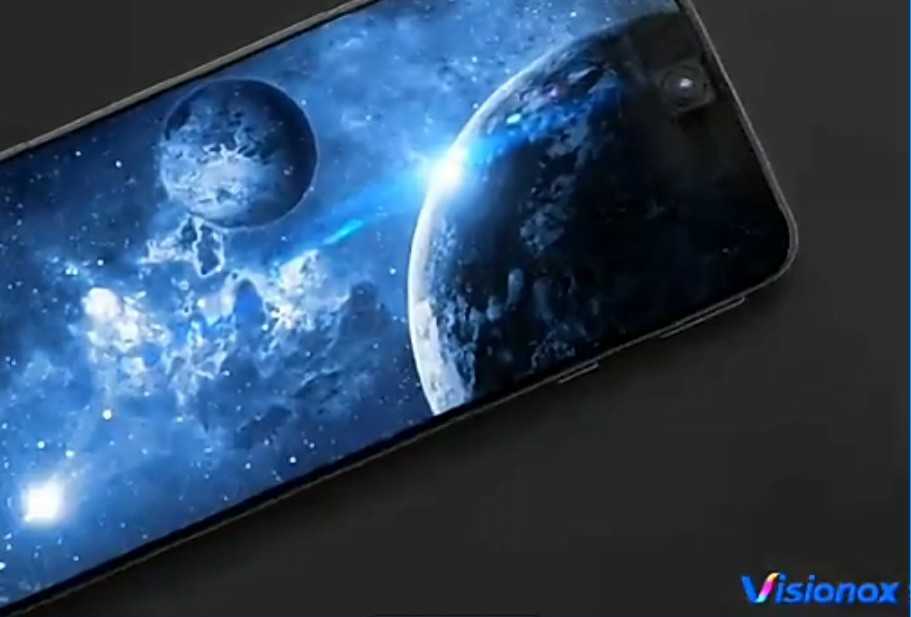
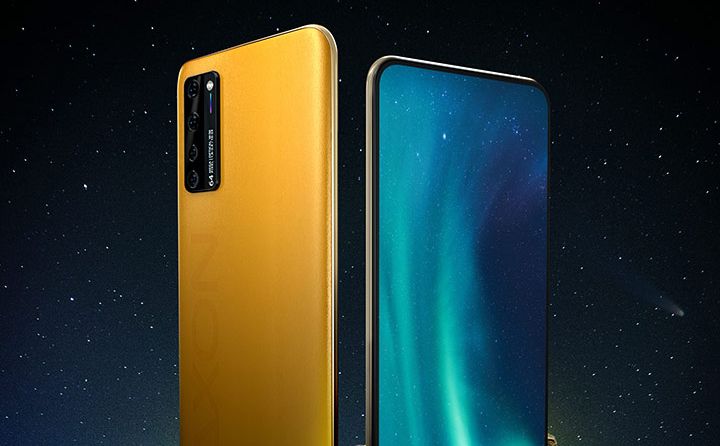
Notably, Visionox is also the company behind the first mass produced display that supports an under screen camera. Furthermore, it also has an exclusive deal with ZTE to provide these displays for the company’s flagship ZTE Axon 20 smartphone. It even provides high end hyperboloid curved displays to major OEMs for their smartwatch lineup and even smartphones. A few of its major customers include Chinese tech giants like Xiaomi, ZTE, Huami, and South Korea’s LG as well. Recently, the company even picked up Oppo, Motorola, and more as their new customers.
So, Huawei and Honor putting in large orders with the company is great news for the supplier. Meanwhile, Honor placing in larger orders is also indicative of both companies’ current position, as Huawei struggles with its smartphone division due to US sanctions that had caused it to sell its budget sub brand to ensure its survival. At the moment, Honor is pushing to launch its products, especially in China, to establish itself as a major contender in its home market of China.
A couple of years ago, Google launched its own game streaming service named Google Stadia and the company had plans of developing some of the games on its own for its newly introduced services. However, it seems that things didn’t work out well.
Google has announced that the company is shutting down its in-house game development studios for the Stadia platform. With this, the company will now be focusing on provided content from third-party developers.
The company is shutting down studios in Montreal and Los Angeles. Along with that, Google has also confirmed that Jade Raymond, who was hired by the company to lead this new game development division, is also leaving the company.
Making the announcement, Stadia Vice President and General Manager Phil Harrison confirmed that Google will continue to invest in the Stadia platform. Explaining the reason behind shutting down the game development studios, he says, “creating best-in-class games from the ground up takes many years and significant investment, and the cost is going up exponentially. Given our focus on building on the proven technology of Stadia as well as deepening our business partnerships, we’ve decided that we will not be investing further in bringing exclusive content from our internal development team SG&E [Stadia Games and Entertainment], beyond any near-term planned games.”
A few months ago, Jack Buser, Director of Games at Stadia had said that the company has around 400 games in the work for the streaming service and also added that exclusive games from studios like Harmonix and Supermassive are in development.
Earlier this week, Facebook announced that it would send out notifications for iPhone users across the globe regarding how data is used to provide personalized ads. This arrived just prior to incoming privacy policy changes from Apple.
According to a Reutersreport, the social media giant is rolling out these notifications before Apple, due to the potential harm that the new privacy updates might bring to Facebook’s advertising business. The new notification will arrive in the form of a full screen prompt that would ask both Facebook and Instagram users to allow their apps and website to be used for personalized ads. The platform will even ask users to “support businesses that rely on ads to reach customers.”
For those unaware, the company is already fighting a public battle against the Cupertino based giant’s plan to ask its userbase whether they wish to allow apps to track their activity across other websites or even applications. Facebook has warned users that Apple’s notifications “suggest there is a tradeoff between personalized advertising and privacy.” Further adding that this move would hurt small businesses that rely on ads from their platform.
At the moment, it is unknown when exactly the new prompt will pop up on the two social media platforms, although, Apple is expected to roll out its privacy notifications soon. The brand stated that these prompts will start appearing on most iPhone models within the next few months. So stay tuned for more, as we will be providing more updates when additional information is available regarding the matter.
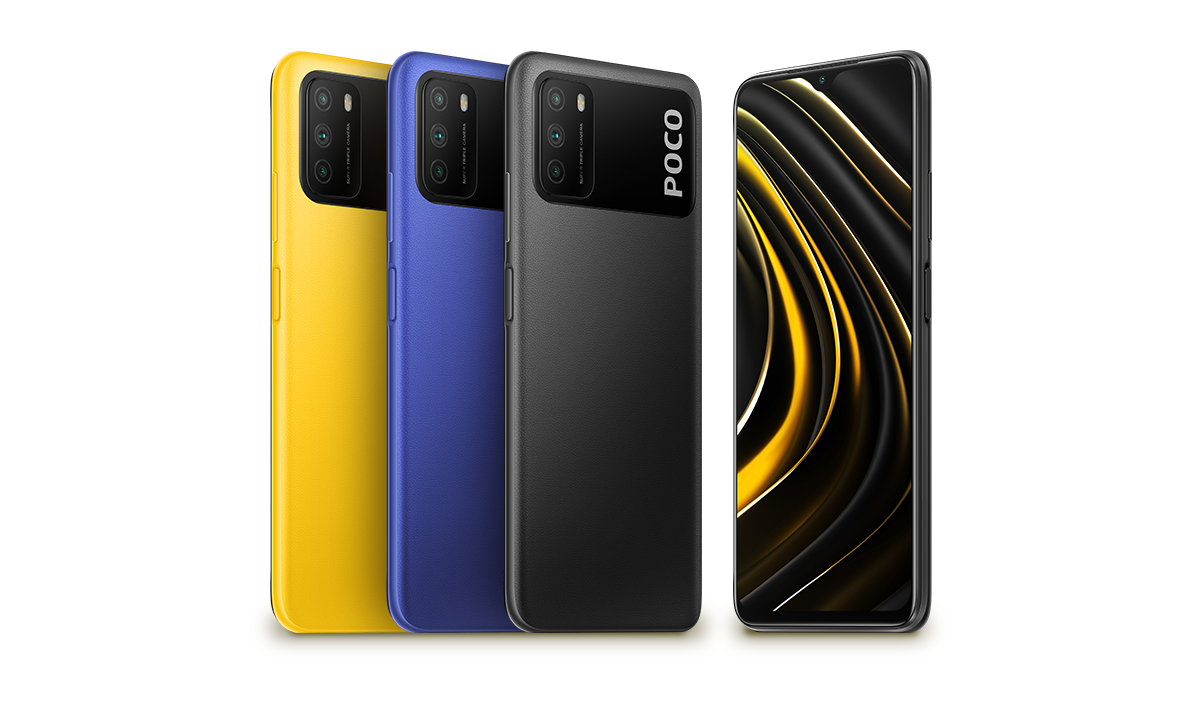
Last year in September, POCO India launched the POCO M2 smartphone. Today, the company held an online unveiling event in India to announce the POCO M3 smartphone, which was previously announced for the global markets in November. The POCO M3 midrange brings features a tall aspect ratio screen, a Snapdragon 662 chipset, a 6,000mAh battery, and 48-megapixel triple cameras with a starting price of Rs 9,999.
POCO M3 specifications and features
Place on the front of the POCO M3 (Review) is an IPS LCD panel of 6.53 inches. The 60Hz display offers a Full HD+ resolution of 1080 x 2340 pixels and a 19.5:9 aspect ratio. It comes with Gorilla Glass 3 protection. It boots to MIUI 12 for POCO, which is based on Android 10 OS. The handset comes with support for Widevine L1 for playback of streaming content from OTT platforms. The screen is protected by Gorilla Glass 3. For security, the POCO M3 features face unlock and a side-mounted fingerprint scanner.
The waterdrop notch available on the display has an 8-megapixel selfie camera. The unique large-sized rectangle-shaped camera housing on the backside of the phone has a 48-megapixel main camera with f/1.79 aperture and a pair of f/2.4 aperture 2-megapixel sensor for depth effects and macro shots. The POCO M3 supports photography features like AI beautify, AI scene detection, night mode, portrait mode, panorama, time-lapse, 120fps slow-motion video recording, and 1080p video shooting at 30fps.
POCO M3
The POCO M3 has Snapdragon 662 chipset under its hood along with LPDDR4x RAM and UFS 2.1 / 2.2 storage options. There is a microSD card slot for additional storage. The phone comes with 18W fast charging support for its 6,000mAh battery. It also supports reverse charging.
The POCO M3 comes with other features such as dual stereo speakers, an IR blaster, dual 4G VoLTE, Wi-Fi 802.11ac, Bluetooth 5.0, GPS, USB-C, and a 3.5mm headphone jack. The handset measures 162.3 x 77.3 x 9.6mm and it weighs 198 grams.
POCO M3 price in India
Here are pricing and color variants of the POCO M3:
6 GB RAM + 64 GB storage – Rs 10,999 (~$150)
6 GB RAM + 128 GB storage – Rs 11,999 (~$164)
Color variants: POCO Yellow, Cool Blue, and Power Black
The POCO M3 will go on sale starting from Feb. 9 at 12PM (local time) in India through Flipkart. Buyers with ICIC Bank cards can avail flat discount of Rs 1,000 on the device.
We use cookies on our website to give you the most relevant experience by remembering your preferences and repeat visits. By clicking “Accept”, you consent to the use of ALL the cookies.
This website uses cookies to improve your experience while you navigate through the website. Out of these, the cookies that are categorized as necessary are stored on your browser as they are essential for the working of basic functionalities of the website. We also use third-party cookies that help us analyze and understand how you use this website. These cookies will be stored in your browser only with your consent. You also have the option to opt-out of these cookies. But opting out of some of these cookies may affect your browsing experience.
Necessary cookies are absolutely essential for the website to function properly. This category only includes cookies that ensures basic functionalities and security features of the website. These cookies do not store any personal information.
Any cookies that may not be particularly necessary for the website to function and is used specifically to collect user personal data via analytics, ads, other embedded contents are termed as non-necessary cookies. It is mandatory to procure user consent prior to running these cookies on your website.