Advertisement

Global Sources Hong Kong Shows 2025: Esports, AI & World Cup Gear Take Center Stage

Global Sources Hong Kong Shows 2025 will take place at AsiaWorld-Expo, Hong Kong, from October 11 to 30, 2025, bringing together thousands of suppliers, buyers, and innovators under one roof. With three dedicated phases, the event will highlight fast-growing industries such as esports, AI-powered applications, and sports gear linked to the upcoming 2026 World Cup.

A Mega Trade Event on a Global Scale

The show is expected to attract over 100,000 professional buyers, offering access to more than 340,000 trending products from 9,000 booths and nearly 5,000 trusted Asian suppliers. According to John Kao, VP of Global Sources Hong Kong & Overseas Shows, the event is designed to create an end-to-end sourcing journey, from gaining trend insights and exploring product showcases to building supplier connections. Kao also emphasized that the shows are powered by 30 years of expertise, AI-driven big data, and enhanced O2O services such as the Virtual Show, Show Genie, and online exposure.

KOLs & Buyers’ Favorite Gaming Gear Awards – Product Roadshow

Phase 1: Esports Ecosystem Expansion

The first phase, held from October 11–14, 2025, will focus on the theme “Where Cutting-Edge Technology Meets Digital Entertainment.” It will feature the Consumer Electronics, Electronic Components, and Gaming Shows, with over 150,000 products and 10,000+ new releases on display.

The Gaming Show will highlight a full esports ecosystem. Exhibits include gaming PCs, keyboards, high-refresh monitors, mice, headsets, and ergonomic chairs, as well as audiovisual systems, esports room solutions, live-streaming gear, and licensed merchandise. More than 200 brands such as Mchose, AULA, TITAN, Golden Field, and darkFlash will be present.

Adding excitement, the KOLs & Buyers’ Favorite Gaming Gear Awards will recognize products in categories like gaming mice, keyboards, chairs, and headsets. Judged by KOL experts and buyers, the awards will measure innovation, performance, material quality, and user experience, serving as a guide for market trends.

AI+ products take center stage at the show

Phase 2: AI Applications & Ecosystem

Running from October 18–21, 2025, Phase 2 carries the theme “AI-Powered Ecosystem: Igniting Future Manufacturing Intelligence.” This stage covers Mobile Electronics, Home & Kitchen, Lifestyle, and Smart Home & Security Appliances, with over 2,000 global exporters participating.

The highlight will be the AI+ Products Hall, housing 1,200+ booths dedicated to AI-powered applications. Products will include smart terminals, wearables, AI glasses, health monitoring devices, pet tech, and AI toys. A dedicated AI Conference & Awards will feature more than 40 industry pioneers, discussing AI’s role in retail, automation, and R&D. The newly launched AI Innovation Award will honor exhibitors with outstanding AI advancements.

Phase 3: Sports & Outdoor with World Cup Fever

The final phase, held from October 27–30, 2025, will emphasize sports and outdoor products, with over 600 exhibitors from across Asia. The World Cup Fever Zone will showcase football-related gear, collectibles, and fan merchandise, offering an interactive football experience for visitors.

This phase also returns with the Pickleball Masterclass and introduces the Pickleball Expo Cup 2025, organized in partnership with Po Leung Kuk, Hong Kong. Fitness enthusiasts will see collaborations with the Sports Performance and Functional Fitness Federation of Hong Kong, China (SPF3), including an indoor triathlon challenge using ski ergometers, cycling, and rowing equipment. Live demonstrations of core training and Pilates yoga products will also take place.

The Global Sources Hong Kong Shows 2025 will act as a powerful platform for businesses to discover, connect, and innovate across three booming industries: esports, AI, and sports & outdoor gear. With thousands of exhibitors, interactive programs, and specialized awards, the event is set to drive global sourcing and shape future market trends.

Alldocube Ultra Pad Review: The One We Can Truly Call ULTRA

In this review, we will be taking a look at the Alldocube Ultra Pad, the first giant 13-inch tablet that also has powerful performance. We also got the keyboard, so pair it up with the tablet, and the experience is complete and just like a PC.

Where to buy

Buy Alldocube Ultra Pad on AliExpress globally for $299.99 (with promo code CUBEU1380)
For Japanese consumers, check it out on Rakuten at ¥44,999 (tax included)

Design

Unlike the previous tablets from Alldocube, which use a metal and plastic combination on the back. This Ultra Pad is made of a whole piece of aluminum, with processed edges on the frame. Although it’s a nice touch to round the edges a little bit, I personally still would like the edges to be more refined, so it does not feel sharp in the hand. Then the camera module is also nicely designed, with a camera and dual flash beside it.

At the front, there is a 13-inch IPS display panel, and equal bezels around it. We will talk about more specs later in this review. On one side of the frame, there are the buttons, microphones, and the SD card slot. Four speakers on the other sides, DTS audio effect supported. Then at the bottom, there are the pins and a lock for connecting the keyboard.

The Pad alone weighs 709g, 1258g with the keyboard case. The MacBook Air, the ultimate productivity machine, weighs 956g. So I would say it is slightly heavy in the hand, you’d better be prepared.

So overall, the Ultra Pad is well designed, and with that size, it indeed deserves the Ultra name.

Features

Performance

When it comes to performance, it is exciting to see Snapdragon 7+ Gen 3 on board. This means the performance has reached a peak among all the Alldocube lineup. It scored 1.4 million on the Antutu benchmark, which tells us that it is a very powerful tablet. This chip can support many things like running day-to-day tasks, gaming, or the AI features. In this review, we won’t try the gaming, it is too big for that, so not many people would do that.

Display

As mentioned earlier, it is a 13-inch IPS panel on the top, the resolution is 2.8K, the refresh rate is up to 144Hz, and the brightness is up to 700nits. When watching videos, the image is sharp, details are rich. Using it for some daily tasks, the operation is very smooth. There is a pre-applied film on the screen to protect it from any scratches. And it also supports Widevine L1. If you like watching content on a Pad, the experience will be very good.

Productivity

This Ultra Pad is also meant for some productivity work, mainly for the PC mode and with the keyboard. There is a dedicated PC mode built into the system, the portal is in the status bar, it is among other settings. The PC mode is just like a Windows PC home screen. With icons lined up on the left side, and a status bar at the bottom. The best thing about the PC mode is that, the size of the App can be adjusted freely. The other thing is that, with a touch screen, you can get to every App and setting quicker, with a single tap.

The other very good implement is the keyboard. It is a one-piece accessory, with the piece attached to the pad by magnets and pins. The other piece is the keyboard. This solution makes sure they are connected very strongly, the pad won’t come off easily. If you want to do some work, the upper half can fold back, to form a stand, then type on the keyboard. It even comes with a touchpad, so basically you don’t need to bring a mouse anymore. The overall experience of the keyboard is very good, the key travel is decent. And there are more function keys on the top, two being the copy and paste keys, the other one being the dedicated AI key, to call up Gemini AI.

One thing to note though, it also supports DP output, so you can connect it to a monitor, cast things to a bigger screen for even more productivity, or immersive visuals.

Cube AI

You probably can’t live without AI now, as it is everywhere on every device, except Apple devices. So on this pad, you can find the Cube AI in the settings, in the note App also. In any interface, you can use your voice to call it up, by saying”Hi Coo Bee”, I found that it is very sensitive, and it can do many things. Like if you ask him to make a travel plan for you, it can give you either a basic one, or a very detailed one if you feed him enough information.

On a website, it can capture what’s on the screen, then copy the content for further processing, like translation or creating a note. While in the Note App, it can automatically summarize the content, then place it under the text. Also in the Note App, if you record some voices from a meeting, then a summary can also be generated.

Cameras

There is a dual camera setup here, 13MP at the rear and 5MP at the front. They can meet daily use of course, such as meeting and stuff.

Battery

It has a 15000mAh battery, which is massive, you really don’t need to worry about battery life much. And it also comes with a 33W charger, which can top it up very fast.

Summary

The Alldocube Ultra Pad, as the first ultra model from Alldocube, has the performance you want, and a big 13-inch display. The design is very much refined, with a unibody chassis and a good camera combo. The upgrade in the processor is quite notable, I would say, Snapdragon 7+ Gen 3 elevates the experience quite a lot. The AI features and keyboard really boost productivity for you. So if you are in for a tablet like this, you can’t go wrong with this one.

Oppo Pad 5 / OnePlus Pad 2 specifications, configurations leaked, expected to launch soon

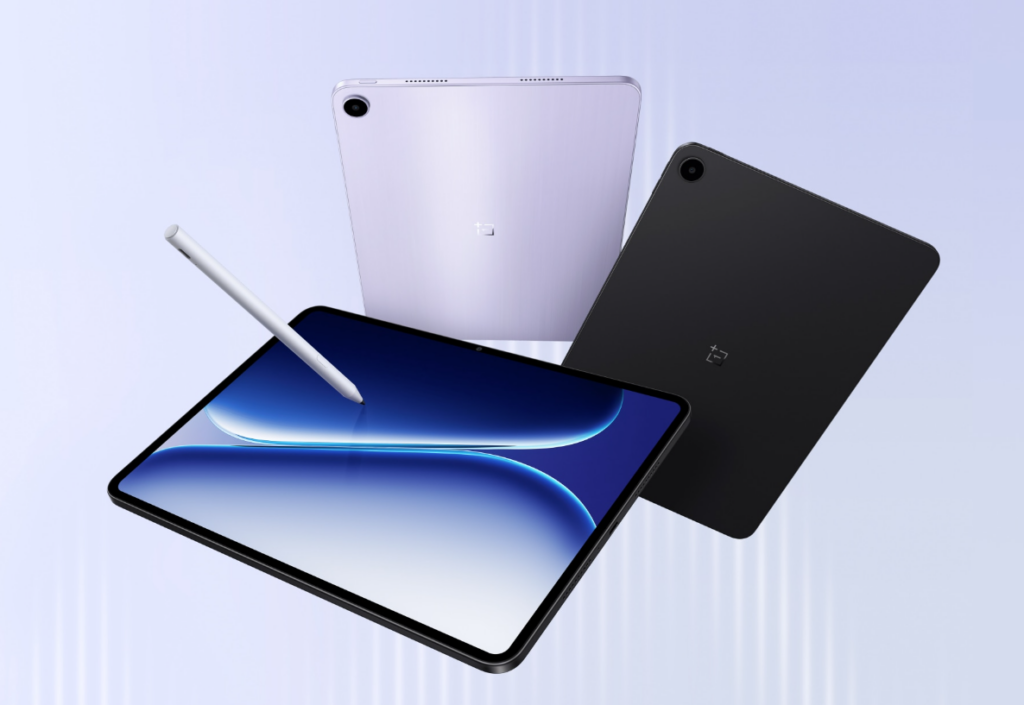
Last year, Oppo unveiled the Oppo Pad 3 and Pad 3 Pro tablets in China. Earlier this year, the brand unveiled the Oppo Pad 4 Pro with the Snapdragon 8 Elite chip onboard in China. A new leak reveals that the company is now gearing up to launch the Oppo Pad 5, indirectly hinting that there won’t be any Oppo Pad 4 named device. The leak, courtesy of reliable tipster Digital Chat Station, has revealed almost everything about the Pad 5. He also revealed that OnePlus will launch a rebranded version of this device with the OnePlus Pad 2 moniker.

Oppo Pad 5 specifications (rumored)

OPPO Pad 4 Pro
OPPO Pad 4 Pro

As per the leak, the Oppo Pad 5 will arrive with a 12.1-inch LCD panel that supports a 3K resolution and a 144Hz refresh rate. On the back, it will feature a single 8-megapixel camera. At present, there is no information about the device’s front camera.

The Oppo Pad 5 will be powered by the Dimensity 9400 Plus chipset and a 10,300mAh battery with 67W fast charging support. The device will have support for 67W fast charging. While there is no information about the thickness of the device, it is said to weigh around 579 grams.

The Pad 5 will be available in multiple configurations, such as 8GB+128GB, 8GB+256GB, 12GB+256GB, and 16GB+512GB. It will be sold in shades like Purple, Silver, and Gray. The leak claims that the tablet may debut alongside the Find X9 series, which is expected to break cover in October.

He added that the upcoming OnePlus Pad 2 for the Chinese market has the same specs as the Oppo Pad 5. However, it will be sold in different colors, such as Blue and Gray.

For more daily updates, please visit our News Section.

Stay ahead in tech! Join our Telegram community and sign up for our daily newsletter of top stories.

(source)

OnePlus to launch phones with Snapdragon 8 Gen 5, Snapdragon 8s Gen 4 Pro

OnePlus is reportedly gearing up to launch the OnePlus Ace 6 and OnePlus 15 next month (October) in China. After unveiling these phones, the company may launch the OnePlus Turbo-branded phone. All three phones are said to be equipped with yet-to-be-unveiled Snapdragon 8 series chipsets.

OnePlus phones to feature Snapdragon 8 Gen 5, 8s Gen 4 Pro/Plus

OnePlus’s upcoming phones to feature new Snapdragon 8-series chips

The upcoming OnePlus 15 will feature the Snapdragon 8 Elite Gen 5 (aka Snapdragon 8 Elite 2), which is said to have the model number SM8850. The above leak reveals that OnePlus will launch two phones powered by the new Snapdragon 8-series chipsets. These chipsets have model numbers SM8845 and SM8735 Pro.

OnePlus Ace 6 said to feature Snapdragon 8 Gen 5 (SM8845)

For those who don’t know, the SM8845 is expected to carry the Snapdragon 8 Gen 5 final marketing name. This chip, according to a previous Weibo post by tipster Digital Chat Station, is expected to power the OnePlus Ace 6. The same chip is expected to power the likes of the Redmi K90, Honor GT 2, and a Realme Neo series phone.

The Snapdragon 8s Gen 4, which debuted earlier this year, has the SM8735 model number. The new leak states that OnePlus will also launch a phone powered by the SM8735 Pro chip. It appears that the SM8735 Pro could be an overclocked version of the Snapdragon 8s Gen 4. Likely, it will be called the Snapdragon 8s Gen 4 Plus or Pro when it hits the market.

OnePlus is reportedly working on a Turbo-branded smartphone, which may debut before the end of this year. Probably, this phone could be powered by the Snapdragon 8s Gen 4 Plus/Pro chipset.

For more daily updates, please visit our News Section.

Stay ahead in tech! Join our Telegram community and sign up for our daily newsletter of top stories.

iQOO 15’s 2K Samsung AMOLED screen officially confirmed, leaked image appears to reveal rear design

While Vivo has started teasing the arrival of the Vivo X300 series, which is expected to debut on Oct. 13 in China, its sub-brand iQOO has also begun building hype for the iQOO 15. According to recent Weibo posts by iQOO Product Manager Galant V, the upcoming flagship will feature significant upgrades in display technology. Alongside these teasers, an image showing part of the device’s rear panel has also surfaced online.

iQOO 15 display details officially confirmed

iQOO 15 leaked shot
Alleged iQOO 15 leaked shot

The key highlight of the iQOO 15 is its use of Samsung’s 2K Everest screen, also referred to as the NB Plus panel. According to reports, the screen will measure around 6.85 inches.

Galant V revealed that the iQOO 15’s display is said to deliver improved transparency by combining high brightness, color accuracy, contrast, light transmission efficiency and reduced reflectivity. It is designed to provide better viewing clarity than most current flagships.

The Samsung OLED panel also introduces advanced emission materials, enabling brightness levels ranging between 1 nit and 6,000 nits. This flexibility allows the screen to adapt from soft lighting to intense brightness as required.

Another important feature of the screen is the integration of AR anti-reflection coating, which Apple only introduced recently on the iPhone 17 Pro Max. Beyond the display, the device is also set to debut the industry’s largest 8K vapor chamber cooling system, designed to complement the Snapdragon chipset’s performance. For those who don’t know, the phone is expected to feature the Snapdragon 8 Elite Gen 5 SoC.

iQOO positions the 15 as a performance-oriented big-screen flagship that aims to directly compete with Apple’s Pro Max line-up in terms of both power and display quality. Shown above is a leaked image of the alleged iQOO 15 doing the rounds on Chinese social media platforms. It gives a partial view of the phone’s back panel that has a white-red gradient finish and rounded corners.

For more daily updates, please visit our News Section.

Stay ahead in tech! Join our Telegram community and sign up for our daily newsletter of top stories.
Sony Xperia 10 VII launched with 6.1″ 120Hz OLED display, Pixel-like 50MP camera module, four years Android OS upgrades

After weeks of repeated leaks, Sony has officially introduced the Xperia 10 VII. As compared to the previous generation, the new model comes with a Google Pixel-like camera module, a higher-resolution 50-megapixel main sensor, a smoother 120Hz OLED display, and the newer Snapdragon 6 Gen 3 chipset.

Sony Xperia 10 VII specifications and features

Sony Xperia 10 VII
Sony Xperia 10 VII

The Sony Xperia 10 VII carries a 6.1-inch OLED display supporting Full HD+ resolution and a refresh rate of up to 120Hz. It is powered by the Snapdragon 6 Gen 3 chipset, paired with 8GB of RAM and 128GB of internal storage, which can be expanded via microSD cards up to 2TB. The phone packs a 5,000mAh battery with two days of battery life and PD charging support.

SonY Xperia 10 VII
SonY Xperia 10 VII

For photography, the device offers a versatile triple camera system on the rear. It includes a 50-megapixel wide-angle lens that can also function as a 2x optical zoom and a 13-megapixel ultra-wide lens. On the front, there is an 8-megapixel camera for selfies. The phone runs on Android 15 with up to four major OS updates and six years of security patches promised.

Additional features include an ultrasonic fingerprint sensor for authentication, stereo front-facing speakers with a full enclosure design, and a 3.5mm headphone jack. Connectivity options cover Wi-Fi 6, Bluetooth 5.4, USB Type-C, and NFC support. The Xperia 10 VII also comes with an IPX5/IPX8 water resistance rating and IP6X dust protection.

Sony Xperia 10 VII price and availability

Sony Xperia 10 VII renders
Sony Xperia 10 VII

The Xperia 10 VII is being offered in White, Turquoise, and Charcoal Black shades. Pricing is set at around €449 (~$525). At present, there is no clarity about the markets that will be receiving the Xperia 10 VII.

For more daily updates, please visit our News Section.

Stay ahead in tech! Join our Telegram community and sign up for our daily newsletter of top stories.
Vivo X300 series to launch on October 13, claims leak

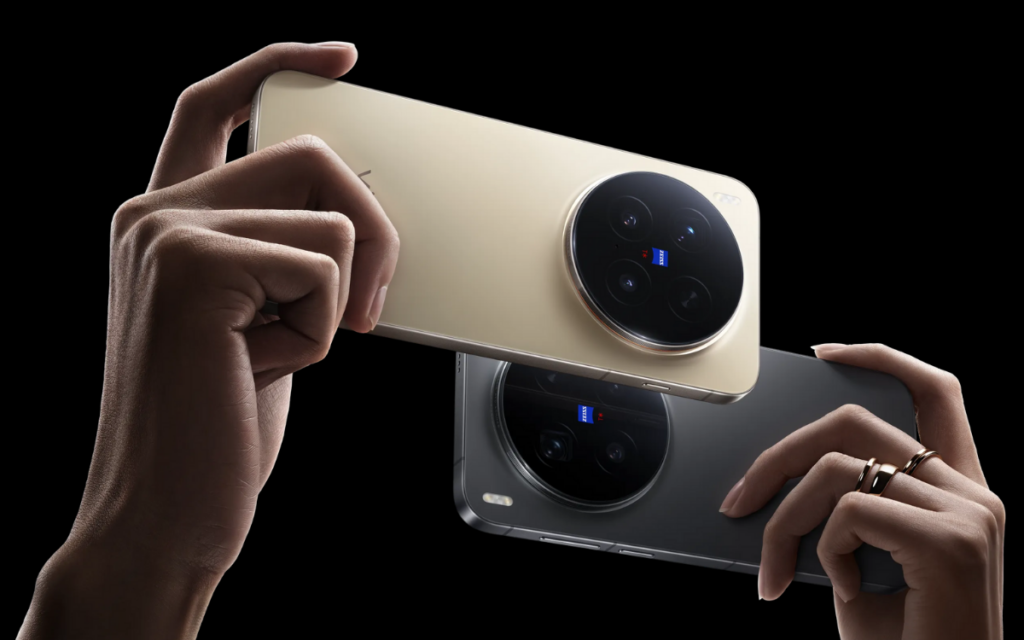
Apart from teasing the Vivo X300 series in China, Vivo has already started receiving pre-orders. However, considering that rumours have claimed that the Vivo X300 series will launch after China’s National Day holidays, it seems that the X300 and X300 Pro may go official in October. Now, a new leak that has emerged on Weibo reveals the tentative date when the X300 series will go official.

Vivo X300 series launch date (rumored)

Vivo X300 series launch date tipped by DCS

According to tipster Digital Chat Station, the Vivo X300 series is tentatively scheduled to launch on Oct. 13 in China. The X300 and X300 Pro will debut as the world’s first phones powered by the Dimensity 9500.

Ahead of the launch, the brand has already confirmed several details about both phones. The Vivo X300 will feature a 6.31-inch 8T LTPO BOE Q10+ screen and will arrive as a successor to last year’s Vivo X200 Pro Mini. This year, the line-up will not include a 6.67-inch display phone like last year’s Vivo X200. The Vivo X300 Prov will be a larger offering equipped with a 6.78-inch screen.

The Vivo X300 and X300 Pro will feature a 50-megapixel front camera. The rear camera setup of the Vivo X300 will feature a 200-megapixel Samsung HPB main camera accompanied by a 50-megapixel Sony LYT-602 periscope telephoto camera. On the other hand, the X300 Pro will have a 50-megapixel Sony LYT-828 main camera and a 200-megapixel Samsung HPB periscope telephoto camera. Both phones are expected to feature a Samsung JN5 ultra-wide camera.

Vivo X300 and X300 Pro

The Vivo X300 series will run on the OriginOS 6-based Android 15. The battery sizes of both phones are yet to be confirmed. However, reports suggest that the X300 will have a 6,000mAh battery, whereas the X300 Pro may pack a 6,500mAh battery. Both phones are expected to support 90W wired charging and wireless charging. For security, these phones will have an ultrasonic in-screen fingerprint sensor.

In related news, Oppo is also expected to launch the Dimensity 9500-powered Find X9 series in October. Likely, it will debut a week later on Oct. 20 in the country. A recent leak claimed that it will globally debut on Oct. 28.

For more daily updates, please visit our News Section.

Stay ahead in tech! Join our Telegram community and sign up for our daily newsletter of top stories.
Galaxy S26 Pro’s “Pro” status questioned in new leak

Samsung is reshaping its flagship lineup for 2026, but not everyone is convinced by the company’s new naming strategy. A fresh leak is casting doubt on whether the Galaxy S26 Pro truly lives up to its “Pro” branding.

Xiaomi 16 (left), Galaxy S26 (right)

According to reports from Korean outlets, Samsung will ditch the familiar S+ branding and release three models next January: the Galaxy S26 Pro, S26 Edge, and S26 Ultra. But well-known tipster Ice Universe isn’t buying into the Pro hype.

In a post on X, he argued that the S26 Pro doesn’t offer enough to justify the “Pro” title, pointing out that only two changes stand out—a new primary camera (with the same sensor size) and a switch to what he called a “useless” 50MP ultra-wide sensor, replacing the older 12MP, 1/2.55-inch unit from the S25. The criticism likely refers to the tiny sensor area, which is only marginally larger than before. For context, packing more pixels onto a small sensor often leads to higher noise and bigger file sizes, with little to no improvement in real-world image quality.

Other elements, such as the 10MP telephoto lens and Full HD+ display, are said to remain unchanged, fueling criticism that the device is more of a refresh than a true step forward. Still, leaks suggest the S26 Pro won’t be entirely without merit. Under the hood, it’s expected to carry Qualcomm’s upcoming “Snapdragon 8 Elite Gen 5” or Samsung’s own Exynos 2600 (depending on the region), along with a slightly larger battery.

While Ice Universe downplays these tweaks, the phone could still pack enough flagship-grade hardware to appeal to Galaxy fans looking for an upgrade. The lack of a periscope telephoto lens remains a clear dividing line between the “Pro” and Ultra model, keeping the latter as Samsung’s photography showcase. Unfortunately, Ice Universe also recently revealed that the 3x periscope telephoto on the Ultra will face a downgrade instead of an upgrade, after remaining unchanged for a few years.

With launch day only a few months away, the debate around the Galaxy S26 Pro highlights the tricky balance Samsung faces: making its mid-tier flagship distinct without watering down the “Pro” name.

Don’t miss a thing! Join our Telegram community for instant updates and grab our free daily newsletter for the best tech stories!

For more daily updates, please visit our News Section.

OpenAI uncovers cause of AI hallucinations and even suggests a fix

AI chatbots have made their way into classrooms, offices, and everyday life—but they still suffer from a frustrating flaw: sometimes they simply make things up. These so-called “hallucinations” can look convincing but turn out to be completely wrong. OpenAI says it has figured out why this happens, and the company believes it has a fix that could make future AI tools far more trustworthy.

OpenAI recently published a 36-page paper co-authored with Georgia Tech’s Santosh Vempala and others, digging into the problem. The researchers argue that hallucinations aren’t really caused by poor model design, but by the way AI systems are tested and ranked. Current benchmarks often reward a chatbot for answering every question, even if it gets some wrong, while punishing models that hold back when they aren’t sure. Think of it like a multiple-choice exam that encourages guessing instead of leaving blanks.

To counter this, the paper suggests flipping the scoring system: make “confident but wrong” answers count heavily against a model, while rewarding it for showing caution or admitting uncertainty. Early examples highlight the difference. In one benchmark, a cautious model answered only half the questions but got 74% right, while another answered nearly all but hallucinated three out of four times.

If adopted, this approach could change how AI assistants behave day to day. Instead of confidently inventing a source or statistic, they’d be more likely to say, “I don’t know.” That may sound less impressive, but it could save users from having to constantly double-check their answers. For OpenAI, this research is a step toward AI that values accuracy and trust over flashy but unreliable confidence.

Don’t miss a thing! Join our Telegram community for instant updates and grab our free daily newsletter for the best tech stories!

For more daily updates, please visit our News Section.

(Source | Image)

No 60W charging for Galaxy S26 Ultra, certification confirms

Samsung’s next big flagship may not bring the charging leap many were hoping for. A fresh certification filing just confirmed the Galaxy S26 Ultra will once again cap out at 45W wired charging, despite earlier speculation about a bump to 60W.

The listing, spotted on China’s Quality Certification Center, confirms support for 10V/4.5A or 15V/3A charging—exactly the same figures as the Galaxy S25 Ultra. Since Chinese models typically showcase Samsung’s top specifications, it’s unlikely that global versions will differ. The rest of the lineup seems just as cautious: both the Galaxy S26 Pro and S26 Edge are still expected to stick to 25W charging. For context, the iPhone 17 Pro models support 40W fast charging, a major difference from the base and Edge models of the current and upcoming Galaxy flagship lineup.

That means buyers looking for a dramatic improvement in charging speeds may be left disappointed, especially when many Android flagships from China—including Xiaomi, Vivo, Oppo, and OnePlus—are already pushing 100W or higher. Samsung, by contrast, appears to be leaning on “battery health” and user safety while equipping the base and Edge models with limited cooling measures. The Ultra is expected to keep its 5,000 mAh cell, so charging times will likely remain unchanged.

It’s not the only area drawing concern, however. Leaks have hinted that the Ultra’s 3x zoom camera could actually take a step backward with a smaller sensor. Combined with the charging news, the S26 Ultra may feel more like an incremental update, just to maintain the yearly release cycle, rather than a generational leap that urges S25 Ultra users to upgrade.

Samsung is expected to launch the Galaxy S26 series in January 2026. Until then, the company is promoting a “Mystery Box” preorder package with extras like a free case and screen protector. Whether that’s enough to distract fans from the lack of hardware upgrades remains to be seen.

Stay ahead in tech! Join our Telegram community and sign up for our daily newsletter of top stories!

For more daily updates, please visit our News Section.

(Source | Via)

Galaxy S26 Pro and Edge to charge even slower than their predecessors while all iPhone 17 models support 40W

Samsung’s Galaxy S26 series is still months away, but the first leaks are already sparking debate among fans. While most expect charging speeds to improve, a new report claims the Galaxy S26 Pro and Galaxy S26 Edge will stick with the same limitations as their predecessors.

The information comes from Ice Universe, a tipster with a solid track record, who posted on X that both the S26 Pro and Edge will once again be limited to 25 W wired charging. That figure hasn’t changed in years, despite a steady increase in battery capacities across its lineup.

According to previous leaks, the Galaxy S26 Pro will feature a 4,300 mAh battery, up from 4,000 mAh on the S25. The S26 Edge is tipped to include a 4,200 mAh cell, up from 3,900 mAh on the S25 Edge. These larger capacities may extend runtime, but they also mean longer downtime, since charging speeds remain unchanged.

With much of the Galaxy S26 Pro’s design reportedly unchanged from last year, an upgraded heat dissipation system also seems unlikely. This suggests the phone won’t be able to draw more power from the 25W adapter than the S25, as doing so would raise battery temperatures to unsafe levels.

Apple’s iPhone 17 series reportedly supports 40 W wired charging, and even the lighter iPhone Air model is said to offer 27 W. Chinese competitors, meanwhile, often push speeds well beyond 100 W. In this context, Samsung’s decision to hold back on faster charging feels conservative.

Interestingly, the Galaxy S26 Ultra may break away from this pattern. The flagship model is rumored to jump from 45 W to 60 W charging, creating a sharper gap between the Ultra and the other models.

If the leak proves accurate, Samsung seems to be prioritizing battery size and longevity over raw charging speed. That might appeal to some users, but others will see it as a missed opportunity—especially when rivals continue to push the limits. The real test will come in January 2026, when the S26 series is expected to make its debut.

Don’t miss a thing! Join our Telegram community for instant updates and grab our free daily newsletter for the best tech stories!

For more daily updates, please visit our News Section.

(Source)

Galaxy S26 Pro renders reveal design element borrowed from Samsung’s foldables

Fresh leaks are giving us a closer look at the Galaxy S26 Pro, with CAD-based renders showing the device from multiple angles for the first time. As part of Samsung’s reshuffled 2026 lineup, the “Pro” model seems to focus on refinement rather than radical change, but still packs some notable upgrades ahead of its expected January launch.

The most noticeable design change is a new pill-shaped camera island that houses three separate lenses while still keeping the familiar Samsung look. If it looks familiar, that’s because recent Galaxy Z Fold models also adopted this type of camera island. In fact, leaked renders of the Ultra model show the same redesign.

From the front and sides, however, the S26 Pro appears almost indistinguishable from its predecessor, as you can see in the image below.

Galaxy S25 (left) vs Galaxy S26 Pro (right)

It is said to feature a slightly larger 6.3-inch display, up from 6.2 inches on the S25. The dimensions reportedly come in at 149.3 x 71.4 x 6.96 mm (down from 7.2 mm on the S25), making the phone a bit taller, wider, and slimmer, with a 10.23 mm camera bump.

Other details suggest the S26 Pro will be powered by either the Snapdragon 8 Elite 2 (also referred to as 8 Elite Gen 5) or Exynos 2600, depending on the region. The battery is also set to grow slightly to 4,300 mAh, while the ultrawide camera moves to a new 50 MP sensor. Wireless charging with built-in magnets, similar to what Google’s Pixel 10 series offers, is also expected.

The Galaxy S26 Pro may not be a radical departure from its predecessor, but the larger display, higher RAM ceiling, and improved camera setup point to a more polished flagship. With Samsung aiming to balance performance and design tweaks, the S26 Pro could be a strong contender as it faces off against Apple’s iPhone 17 and Xiaomi’s 2026 flagships.

Don’t miss a thing! Join our Telegram community for instant updates and grab our free daily newsletter for the best tech stories!

For more daily updates, please visit our News Section.

(Source)

Baseus launches PicoGo II series with compact GaN chargers & Qi2.2 magnetic accessories

Baseus has announced its new PicoGo II Series, a lineup of compact GaN chargers and Qi2.2-certified magnetic wireless accessories. The collection targets professionals, students, and everyday users with a focus on fast, efficient, and travel-ready charging solutions.

The PicoGo II Series includes three wall chargers: the AE11 67W, AN13 45W, and AE21 100W Digital Display. It also introduces new magnetic charging accessories, including two power banks and a foldable 3-in-1 wireless charger, all designed to meet the latest Qi2.2 standard.

Baseus PicoGo II Series

PicoGo II Series Specifications

The PicoGo AE11 features two USB-C ports and one USB-A port, offering up to 67W of dynamic power distribution. It supports multiple fast-charging protocols such as UFCS, SCP 22.5W, and PD 3.0. The charger uses Baseus’ BCT 2.0 temperature control system and has received TÜV Rheinland safety certification. Its foldable plug and compact build make it suitable for travel.

The PicoGo AN13 supports 45W fast charging via two USB-C ports. Baseus has reduced the size by up to 47% compared to similar chargers on the market. The charger supports protocols including PD 3.0, QC 3.0, AFC, SCP, FCP, and PPS. Like the AE11, it includes temperature management with graphene cooling and foldable plug support in the US version.

Baseus PicoGo II Series

The PicoGo AE21 is a 100W GaN charger equipped with two USB-C ports and one USB-A port. It includes a real-time digital display that shows output power, voltage, and current. The device is one of the smallest 100W three-port chargers available and supports simultaneous fast charging for a laptop, smartphone, and accessories. Safety certifications and BCT 2.0 temperature control are also included.

Baseus has also expanded its wireless lineup with the AM31 Magnetic Power Bank, offering 5,000mAh capacity, 15W wireless charging, and a 20W USB-C output. It includes a built-in kickstand and supports dual wireless and wired charging.

Baseus PicoGo II Series

The AM61 Magnetic Power Bank features a 10,000mAh battery with 45W wired and 25W wireless Qi2.2 charging. It includes a built-in USB-C cable and supports charging three devices at once. The unit uses Magnetic Power Profile alignment for improved efficiency and holds devices securely with 16 N52H magnets.

The AF21 Foldable 3-in-1 Magnetic Wireless Charger delivers 35W total output and supports simultaneous charging for an iPhone, Apple Watch, and AirPods. It folds into a compact form factor and supports Apple’s StandBy feature when in stand mode. The company also announced the AM52 Ultra-Slim Magnetic Power Bank (10,000mAh, 45W Qi2.2), which we have already covered.

Pricing and Availability

Baseus has begun rolling out the PicoGo II Series in phases to meet the needs of global users. Several products are already available on Amazon with special launch pricing:

The remaining products in the series are expected to launch globally soon.

For more daily updates, please visit our News Section.

Stay ahead in tech! Join our Telegram community and sign up for our daily newsletter of top stories! 💡

Google rolls out update to fix Pixel 10 display glitches

The Pixel 10 series has only been on the market for a couple of weeks, but some early buyers quickly ran into an unexpected issue: strange colored stripes appearing on their displays. Google has now pushed out a software update that it says addresses the problem, though questions remain about how widespread the fix really is.

The Pixel 10, Pixel 10 Pro, and Pixel 10 Pro XL went on sale on August 28. Not long after, reports surfaced of screens briefly showing red, green, or white stripes. The glitches looked like hardware damage at first glance, but the fact that they often disappeared on their own suggested a software-related bug instead.

Google’s September patch (build BD3A.250721.001.B7) began rolling out on September 3 and is said to resolve the issue. Interestingly, the official changelog doesn’t directly mention the line problem, instead referring only to a fix for black screens when loading webpages in Chrome. In a statement shared with Android Authority, Google confirmed that a “small number” of Pixel 10 units were affected and said further fixes are on the way. Users who still experience glitches are being encouraged to contact Google support or their retailer.

Google’s quick turnaround shows it’s paying attention to early complaints, but the omission from the changelog and the lack of a clear guarantee may frustrate some owners. While the latest patch appears to ease the issue for many, it might not be the final fix. For now, Pixel 10 buyers will have to wait and see if Google can fully iron out the problem.

Don’t miss a thing! Join our Telegram community for instant updates and grab our free daily newsletter for the best tech stories!

For more daily updates, please visit our News Section.

(Source)

HMD Launches 101 4G and 102 4G in India With QVGA Display, Dual SIM and IP52 Rating

HMD has introduced two new feature phones in India, the HMD 101 4G and HMD 102 4G, aimed at users who prefer compact, durable devices. Both models are designed to provide essential features in a lightweight build.

HMD 102 4G
HMD 102 4G

The phones carry a 2-inch QQVGA display with 240×320 resolution and run on the Unisoc 8910 FF-S processor. Storage is 16MB, expandable up to 32GB via microSD. Running on the S30+ RTOS, both include FM radio (wired and wireless), MP3 playback, cloud apps, and local language support. The HMD 102 4G adds a QVGA camera with flash and a matching color keypad. Both are IP52 rated for dust and splash resistance.

HMD 101 4G
HMD 101 4G

Connectivity options include dual SIM support on the 900/1800MHz bands, Bluetooth 5.0, USB Type-C charging, and a 3.5mm headphone jack. Power comes from a 1000mAh removable battery. Dimensions are 118.2×50.2×14.3mm, with a weight of 83.5g.

Pricing & availability

The HMD 101 4G is available in Dark Blue, Red, and Blue at Rs. 1,899, while the HMD 102 4G comes in Dark Blue, Red, and Purple at Rs. 2,199. Both are on sale from today through major retail stores, e-commerce platforms, and HMD.com.

Alongside these feature phones, HMD also launched the HMD Vibe 5G, an affordable smartphone with a 6.67-inch 90Hz display, 50MP dual rear cameras, and a 5000mAh battery with 18W charging.

For more daily updates, please visit our News Section.

Stay ahead in tech! Join our Telegram community and sign up for our daily newsletter of top stories!

HMD launches Vibe 5G in India with 90Hz screen, 50MP dual cameras and 18W charging

HMD has expanded its smartphone lineup in India with the launch of the HMD Vibe 5G. The phone is positioned as an affordable option for users seeking next-generation connectivity without a high price tag.

The Vibe 5G features a 6.67-inch HD+ LCD display with a 90Hz refresh rate and 20:9 aspect ratio. It runs on the octa-core UNISOC T760 processor built on a 6nm process, paired with 4GB LPDDR4x RAM and 128GB of storage, expandable up to 256GB via microSD. It ships with Android 15 and will receive two years of quarterly security updates.

The rear camera setup includes a 50MP primary sensor and a 2MP depth sensor with LED flash, while the front has an 8MP camera. The phone includes a side-mounted fingerprint sensor, stereo speakers, and a 3.5mm audio jack. Connectivity options cover 5G SA/NSA across nine bands, dual 4G VoLTE, Wi-Fi 802.11 ac, Bluetooth 5.2, GPS with GLONASS, and USB Type-C. It packs a 5000mAh battery with 18W fast charging, with the charger included. The device weighs 190g and measures 165×75.8×8.65mm.

Pricing & availability

The HMD Vibe 5G comes in Black and Purple at a festive price of Rs. 8,999. It is available starting today through major retail stores, e-commerce platforms, and HMD.com.

Alongside the Vibe 5G, HMD also introduced two new feature phones, the HMD 101 4G and HMD 102 4G. These compact devices focus on reliability and essential features, with the 102 4G adding a QVGA camera and flash.

For more daily updates, please visit our News Section.

Stay ahead in tech! Join our Telegram community and sign up for our daily newsletter of top stories!

Dell launches S2725DC 2K monitor with 144Hz, USB-C 65W & eye comfort for under $250

Dell has rolled out the 27-inch S2725DC monitor for designers, professionals, and commercial users. It debuted in Japan earlier this month and is now available in China via JD.com for 1,699 yuan (about $238).

Dell S2725DC monitor

Dell S2725DC Specifications

The S2725DC features a 2560×1440 IPS panel that supports a 144Hz refresh rate and 4ms GtG response time. It delivers 350 nits of brightness and a 1500:1 contrast ratio. The display covers 99% of the sRGB color gamut and supports 16.7 million colors for smoother gradients and more accurate output.

Dell includes ComfortView Plus hardware-level low blue light protection, which reduces harmful blue light by 15% compared to its previous generation. The monitor is certified with TÜV Rheinland’s four-star Sharp Vision standard and meets ComfortView Plus Level 2 requirements.

Dell equips the monitor with a versatile port setup. The front houses a pop-up USB hub that includes one USB-C port with 15W output and one USB-A port with Battery Charging 1.2.

On the back, the monitor offers a USB-C upstream port with 65W power delivery, HDMI 2.1, DisplayPort 1.4, two USB-A 5Gbps ports, and a 3.5mm headphone jack. It also supports KVM switching, letting you control two connected devices with one keyboard and mouse.

The monitor includes dual 3W built-in speakers and supports VESA 100×100mm mounting. The adjustable stand allows for 110mm height adjustment, -5° to 21° tilt, ±30° swivel, and ±90° pivot. Dell also provides its Display Manager software to support multi-device control and split-screen layouts.

The S2725DC features slim bezels and a minimalist white body. Dell says it uses up to 95% recycled plastics, 50% recycled steel, and 20% recycled glass.

In related news, AOC has recently introduced a 27-inch 2K 144Hz IPS gaming monitor priced at just $105, while Lenovo has released the ThinkVision P40WD-40 with an IPS Black panel, Thunderbolt 4, and 140W power delivery.

For more daily updates, please visit our News Section.

Stay ahead in tech! Join our Telegram community and sign up for our daily newsletter of top stories! 💡

RedMagic Astra 12GB+256GB model gets a second color option

RedMagic is giving its compact flagship tablet a fresh push on the global stage, adding a new look to one of the most powerful small-form devices currently on the market. The RedMagic Astra, already known for its gaming-focused specs and high-end design, now comes in a Starfrost finish that joins the existing Eclipse option.

The Astra made its debut in China last month under the name RedMagic Gaming Tablet 3 Pro before heading to international markets. Despite its smaller size, the tablet packs serious hardware, including Qualcomm’s Snapdragon 8 Elite processor, a 9.06-inch 2.4K OLED panel with a 165 Hz refresh rate, an 8,200 mAh battery, and 80 W wired charging with bypass support. On paper, it’s a direct competitor to compact tablets like the Redmi K Pad, Legion Y700 Gen 4, and Huawei MatePad Mini.

Up to now, the entry-level model with 12 GB of RAM and 256 GB of storage was only available in the Eclipse colorway. With this update, buyers can also pick up the Starfrost version at the same global price of £439, €499, or $549. Meanwhile, the top-spec model with 24 GB RAM and 1 TB of storage remains limited to Eclipse only, so the new color choice is clearly aimed at broadening appeal in the mid-tier segment rather than reshaping the entire lineup.

With its slim profile, high refresh rate OLED display, and fast charging, the Astra remains one of the most versatile compact Android tablets available today. The new Starfrost variant doesn’t alter the hardware but adds some extra style for those who want performance and looks in a single package. For RedMagic, it’s another step in building momentum outside of China in a growing niche of compact flagship tablets.

Don’t miss a thing! Join our Telegram community for instant updates and grab our free daily newsletter for the best tech stories!

For more daily updates, please visit our News Section.

(Source)

Black+Decker Supreme Series TVs launched in India with QLED 4K, Dolby Atmos, Google TV

Black+Decker has expanded its television portfolio in India with the introduction of the new Supreme Series, developed in collaboration with the global licensing partner, Indkal Technologies. The lineup is aimed at households seeking a balance of premium display, cinematic sound and upgraded smart TV features.

Black+Decker Supreme Series features and specifications

Black+Decker Supreme Series TV

The Black+Decker Supreme Series comes with QLED 4K Ultra HD displays that can render over a billion colors, paired with HDR10 and Dolby Vision for stronger contrasts and deeper detail. Motion handling is addressed with MEMC technology, while AI upscaling and micro dimming adapt content for different lighting conditions. Screen sizes of 43-inch, 50-inch and 55-inch are available, featuring slim bezels and a refined design.

Audio is handled by 80W box speakers with Dolby Atmos, aiming to create a cinematic experience at home. Running on Google TV with Android 14, the TVs provide easy access to Netflix, Prime Video, Disney+ Hotstar, YouTube and more. Voice control is enabled through Google Assistant and content can be cast from smartphones. Additional functions include AI picture optimisation, dual-band Wi-Fi, Bluetooth 5.2 and Google Meet integration.

Black+Decker Supreme Series
Black+Decker Supreme Series TV

Performance is powered by a DynamIQ dual AI processor paired with IMG BXE GPU, 2GB RAM and 16GB storage. Connectivity includes HDMI 2.1 with eARC, USB 3.0 and USB 2.0, supporting both gaming and media playback.

Black+Decker Supreme Series price and availability

The Supreme Series smart TVs will be available soon across India through leading offline and online retailers. For more information, customers can visit largeappliancesblackanddecker.in.

For more daily updates, please visit our News Section.

Stay ahead in tech! Join our Telegram community and sign up for our daily newsletter of top stories.
Huawei Pura 80 vs Vivo X200 Pro: Which $800 Flagship is Better?

Huawei Pura 80 and Vivo X200 Pro are two premium flagships priced around $800, targeting users who expect strong performance, high-end cameras, and long-lasting battery life. Both phones represent the best of their respective ecosystems, but they differ in approach. Huawei leans on its in-house chipset and satellite connectivity, while Vivo pushes hardware upgrades like a massive 200 MP telephoto lens and cutting-edge display brightness. This comparison highlights where each device makes its upgrades count.

1. Design and display

Huawei Pura 80
Huawei Pura 80

Build and Feel:
Huawei Pura 80 offers a premium aluminum frame with Kunlun Glass 2 for enhanced durability, along with IP68/IP69 water resistance that can withstand immersion up to 2 meters. Vivo X200 Pro also uses a strong aluminum alloy frame with Armor Glass protection, but it supports both glass and fiber back options for a different aesthetic appeal. While both are rugged, Huawei emphasizes extreme protection, whereas Vivo balances durability with design flexibility.

Verdict: Huawei feels more rugged and survival-ready, while Vivo provides a more polished, versatile design.

Display Quality:
Huawei comes with a 6.6-inch LTPO OLED panel, HDR Vivid, and 2800 nits peak brightness, making it excellent for HDR media. Vivo steps up with a larger 6.78-inch LTPO AMOLED screen, HDR10+, Dolby Vision, and a massive 4500 nits peak brightness—one of the brightest panels in the market. The higher PWM dimming (2160Hz vs Huawei’s 1440Hz) also makes Vivo better for eye comfort.

Verdict: Vivo offers a more advanced display, particularly for outdoor visibility and HDR viewing.

Verdict:
Both phones feel durable, but Huawei leans on rugged resistance while Vivo focuses on display innovation. For users prioritizing readability, media consumption, and brightness, Vivo has the edge. Those needing extreme toughness may find Huawei more appealing.

Please Note: When you buy something using the links in our articles, we may earn a small commission at no cost to you.

2. Specifications 

Vivo X200 Pro
Vivo X200 Pro

Performance:
Huawei uses its Kirin 9010s (7 nm), which delivers efficient performance but falls short of modern flagship benchmarks. Vivo counters with the cutting-edge 3 nm Dimensity 9400 chipset, offering faster cores, higher GPU performance (Immortalis-G925), and better AI processing. For gaming, heavy multitasking, and longevity of support, Vivo’s hardware is far more future-proof. Verdict:

Vivo outperforms Huawei in raw power and software support, making it better for demanding users.

Battery and Charging:
Huawei ships with either 5170 mAh or 5600 mAh (China) batteries, paired with 66W wired and 50W wireless charging. Vivo pushes ahead with a larger 6000 mAh battery (global version) and faster 90W wired charging, though its wireless speed is capped at 30W. While Huawei has slightly faster wireless, Vivo’s bigger battery and faster wired charging make it better for long-term endurance.

Verdict: Vivo provides superior stamina and charging flexibility, making it the more reliable choice for heavy users.

Verdict:
Vivo’s stronger chipset and bigger battery make it clearly superior in specifications. Huawei provides balanced charging speeds and satellite messaging, but Vivo wins in future-ready performance and power management.

3. Camera

Huawei Pura 80
Huawei Pura 80

Main and Secondary Lenses:
Huawei features a versatile 50 MP main lens with variable aperture, a 12 MP 5x periscope, and a 13 MP ultrawide. Vivo elevates the competition with a 50 MP main sensor, a massive 200 MP telephoto periscope (3.7x zoom + macro), and a 50 MP ultrawide with autofocus. Huawei offers consistency and good color science, but Vivo’s Zeiss partnership, larger sensor sizes, and 8K recording support give it a professional-grade edge.

Verdict: Vivo dominates in camera versatility and advanced optics.

Selfie Camera:
Huawei provides a 13 MP ultrawide selfie shooter capable of 4K video with gyro-EIS, ideal for group selfies and vlogging. Vivo counters with a 32 MP wide-angle camera with higher detail capture and also supports 4K video at 60fps. While Huawei’s wider field of view is useful, Vivo’s higher resolution and better dynamic range produce sharper selfies. Verdict: Vivo offers a more detailed and flagship-level selfie experience.

Verdict:
Huawei’s cameras are strong, but Vivo’s Zeiss optics, 200 MP telephoto, and higher-end video options make it the superior photography device. For camera enthusiasts, Vivo provides more advanced hardware and features.

4. Pricing

Both the Huawei Pura 80 and Vivo X200 Pro are priced at approximately $800. Considering their equal cost, Vivo provides more value with its superior chipset, display brightness, larger battery, and advanced camera system. Huawei’s appeal lies in its rugged durability, satellite messaging, and balanced wireless charging.

Verdict: Vivo offers stronger upgrades at the same price, but Huawei appeals to those prioritizing durability and satellite features.

Disclaimer:
Prices are approximate and may vary based on country, region, and applicable taxes.

5. Conclusion

Vivo X200 Pro
Vivo X200 Pro

Huawei’s standout features include its IP69 rugged resistance and satellite messaging (China-only), making it attractive for outdoor explorers and users who want extreme reliability. Vivo’s uniqueness lies in its 200 MP telephoto camera, 4500 nits display, and future-ready Dimensity 9400, appealing to power users and mobile photographers.

Verdict:
Both flagships are excellent, but their strengths cater to different needs. The Huawei Pura 80 is better suited for durability-focused users who value satellite communication and balanced design. The Vivo X200 Pro is the more powerful choice, excelling in performance, camera versatility, and display quality. 

For most users seeking upgrades in everyday use, Vivo X200 Pro offers more at the same price point.

Read More: