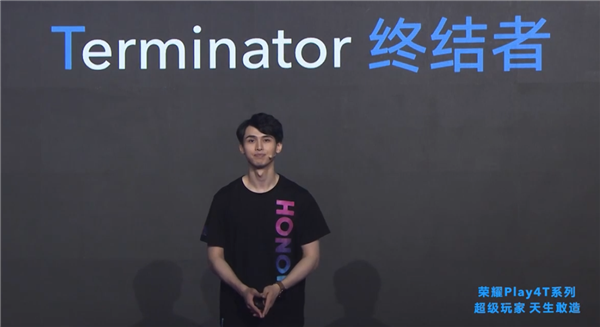
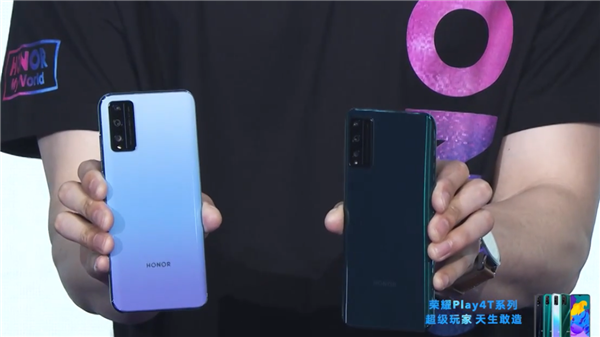
Honor held an online launch event where the Honor Play 4T series was unveiled. The event was anchored by Honor’s product manager Wei Xialong, who is making his debut on the launch stage. The Honor exec disclosed that the Play 4T series launch was the first time the “T” suffix appearing on the Honor product line.
Wei Xiaolong explained that his view is that “T” stands for Terminator because the Honor Play 4T is a mission with super players and a natural dare to create. He also added that the Play 4T may be the last 4G mobile phone from Honor. In other words, starting with the Honor 30 series launching on April 15, the Honor phone is expected to fully enter the 5G era. Now, let get something clear here. The Honor exec didn’t definitively state that the 4T would be the last but his statement could be seen as a teaser.
Honor 4T and 4T Pro featured a Kirin 710 and Kirin 810chipset respectively. Basically, they are mid-range models and Huawei has already launched the mid-range Kirin 820 5G chipset which may power successive models. The Kirin 710 and 810 SoC were utilised by a number of Honor models including the 2018 Honor 8x, Honor 9X, Honor 10 Lite, Honor 9X Pro and several others. Thus, we expect Honor to use the Kirin 820 for a while and on several upcoming mid-range models. Honor has not been known for entry-level phones so we may see this development happening going forward. We believe this is a developing story. We’ll update you when further information arrives.
Samsung has often been criticized for its Exynos lineup of mobile SoCs. Recently, the chipset line was further under fire for being underpowered as compared to its rival Snapdragon 865. The Galaxy S20 series sold in most markets including Europe and India come with the Exynos 990 chip.
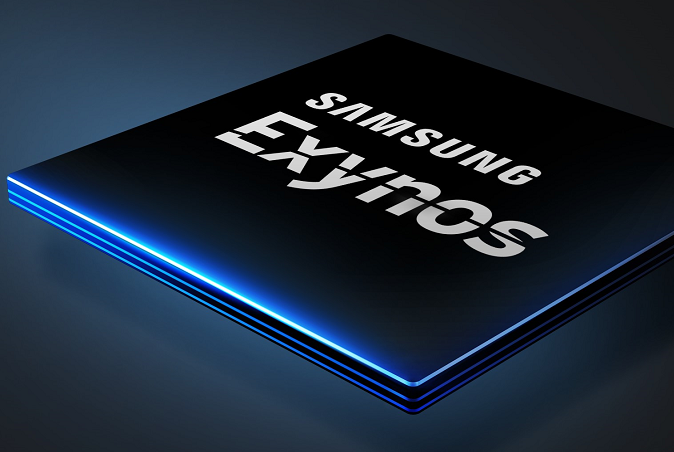
Despite all this, a report from South Korea says Google has partnered with the South Korean conglomerate for a custom Exynos chip scheduled to release this year.
Though fans and media have been suggesting Samsung to stop using Exynos chips on their flagship Galaxy S and Galaxy Note lineup of smartphones for years, the company seems to be have made a firm decision to continue doing it. By using in-house chips, the brand has been continually reducing its dependence on suppliers like Qualcomm and MediaTek.
In fact, Samsung is currently the world’s third-largest mobile chipmaker. Now, it has even signed a deal with Google to make a custom chip for the internet search giant. Even the alleged specifications for the same are out.
The chipset which is expected to release this year will be manufactured using Samsung’s 5nm LPE process. It will feature an octa-core CPU consisting of two Cortex-A78 cores, two Cortex-A76 cores, and four Cortex-A55 cores. The graphics will be taken care of by an unannounced Mali MP20 GPU based on Borr microarchitecture. Lastly, the custom Exynos SoC will include Google’s own Visual Core ISP and NPU instead of Samsung’s.
Last year, it was reported Google was poaching chip designers from Intel, Qualcomm, Broadcom, and NVIDIA to build its own chipset for smartphones and servers. But for now, the above-mentioned custom Exynos chips looks to do the job as the internet company is expected to hire more engineers apart from the team of 16 engineers it already has in Bengaluru, India.
It is not known which device will be using this custom Exynos chipset first. It could be for a mid-range Pixel smartphone or even for its data center servers.
Additionally, Samsung ditched its custom Mongoose CPU cores for stock ARM CPU cores last year and has even partnered with AMD to bring Radeon GPUs to its chipsets. But there is still no information about the development of chips using the above configuration.
Google altered its product cycle last year with the launch of the Pixel 3a and Pixel 3a XL after launching the flagship-grade Pixel 3 models. The tech giant is likely to follow the same product path as last year’s Pixel 4 and 4 XL are expected to get two cheaper versions dubbed Pixel 4a and 4a XL.
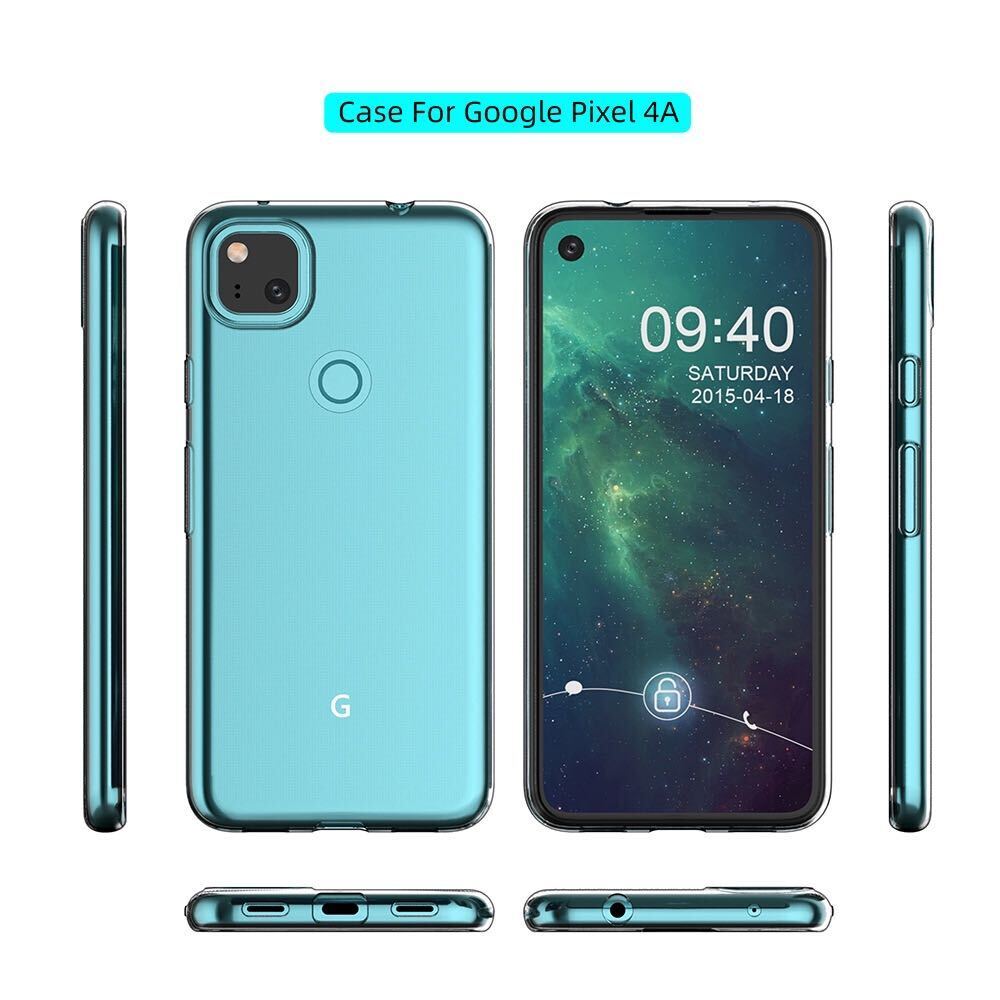
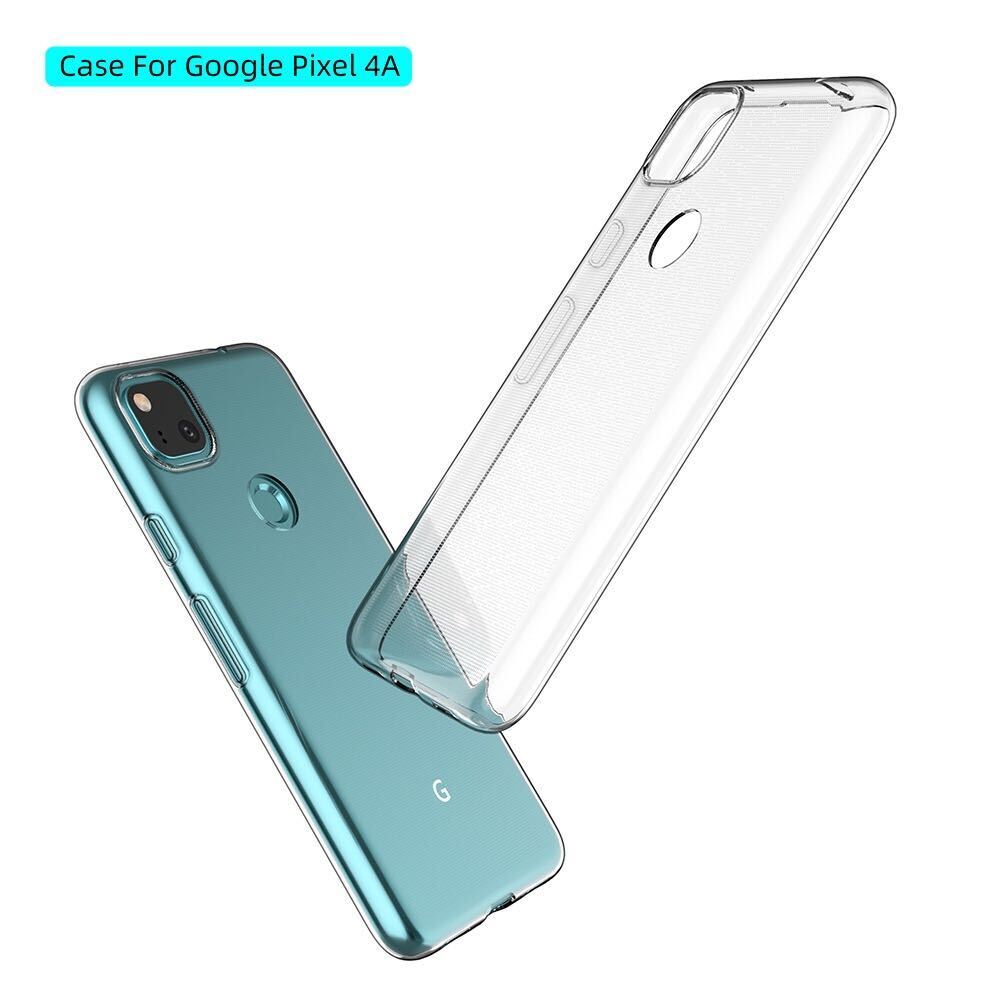
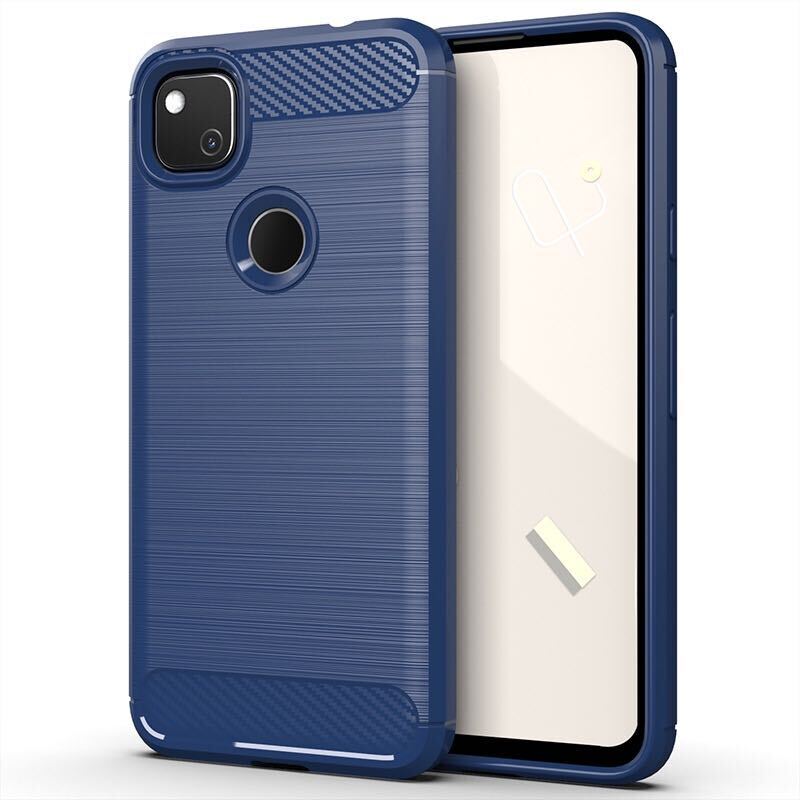
The Pixel 4a series has been appearing in leaks for a while now. We have got a couple of pictures of the Pixel 4a protective casing which give us clearer views of the device as they contain renders of the model.
The renders are consistent with the leaked photos of the Pixel 4A that have made the rounds in recent times. The front view details a punch-hole selfie camera located at the top left corner. At the rear, the device packs a square-shaped camera module. Interestingly, the module houses a single sensor and LED flash. The device equally houses a fingerprint sensor at the rear.
The device will also come with USB Type-C port throwing up the possibility of fast charge support. There is also opening for the good old 3.5mm audio jack at the top edge. The power button and volume rockers are located on the right side of the device.
Google is yet to reveal when the Pixel 4A and 4A XL will be launched but the Pixel 3A models were launched in May 2019. Thus, it is safe to presume the launch is imminent.
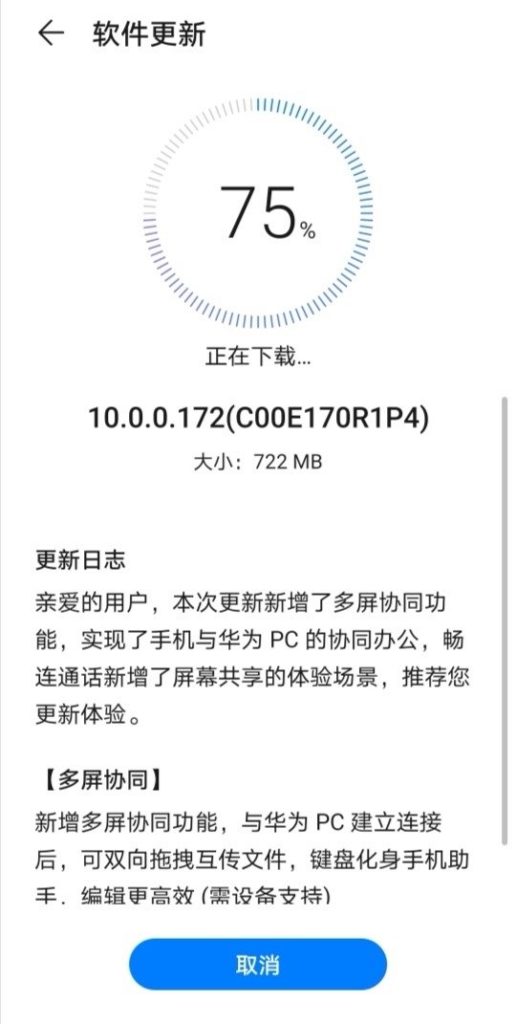
Huawei launched the P40 series a few days back. Along with it, the company also debuted a new version of its mobile software dubbed as EMUI 10.1. Seven of the brand’s devices have already started receiving beta updates. But the 2018 Huawei P20 series is not one of them as it currently receiving a new stable update with build number EMUI 10.0.0.172.
The new EMUI 10.0.0.172 stable update for the Huawei P20 and P20 Pro weighs 722 MB in size. The update brings three new features to the devices along with April 2020 security patch.
The users of Huawei P20 series can finally use the company’s new multi-screen collaboration feature with the new update. Files can be now easily shared between supported Huawei MateBook laptops and the phone by simply performing drag and drop operations. Also, users can now mirror their phone on the laptop and even control it from there. This feature initially debuted on the Huawei Mate 30 series last year.
The second new feature is Screen Sharing, which enables users to share their smartphone screens on video calls to discuss meetings, plans, and more. Lastly, the third new feature is an AI-powered smart battery charging mode. This feature is turned on by default and it avoids charging the phone’s battery to full by slowing down the charging speed to increase its lifespan.
As of now, this update is only available for the Chinese variants of the Huawei P20 and Huawei P20 Pro. We expect it too soon reach the international versions of the devices in the coming days.
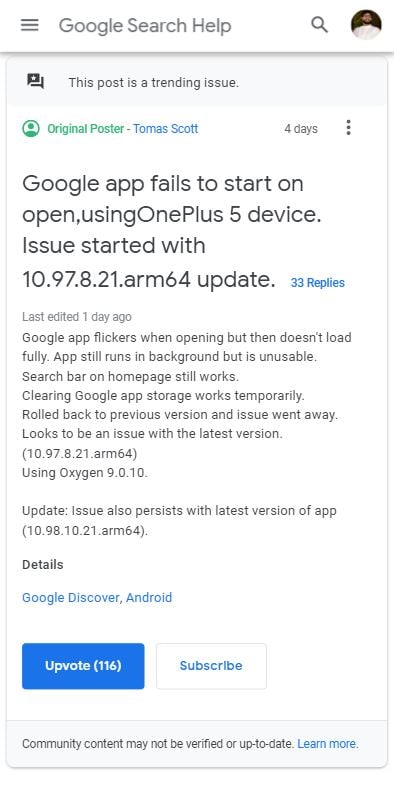
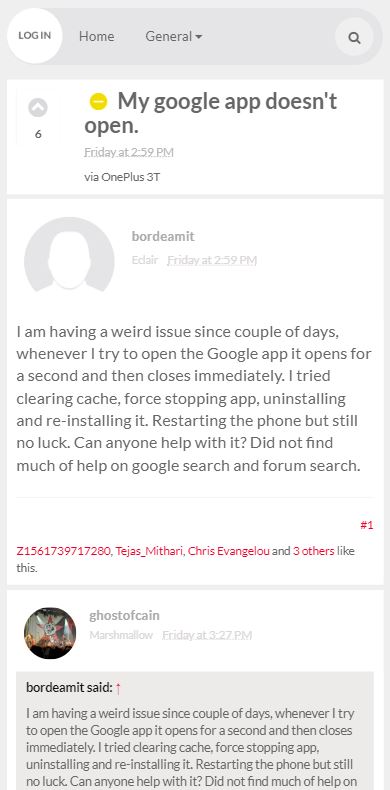
Google App has been misbehaving on OnePlus smartphones for a while now. Users have been reporting various issues related to it on multiple forums and social media like Twitter. Interestingly, even Google is aware of the bug and thus the fix is expected to arrive soon.
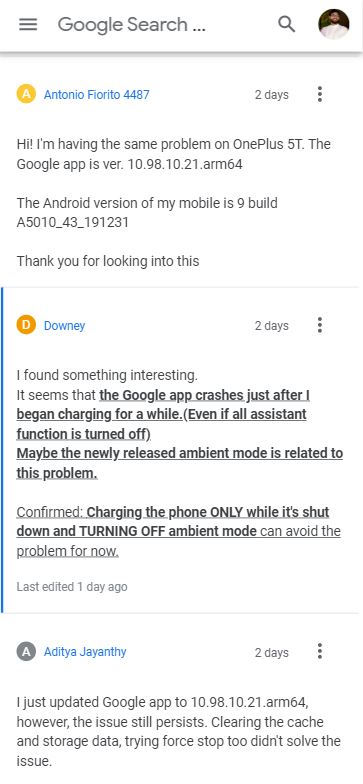
OnePlus users, mostly the ones using OnePlus 5 and OnePlus 5T have been complaining in forums and social media regarding a strange bug on Google App. It started when the app was updated to v10.97.8.21.arm64. Since then, the app has received multiple updates, however, the issue still persists.
1 of 4
According to users, the Google search widget works properly but opening the app leads to crashes or flickering. When the latter occurs, the app runs in the background but could not be used. Users have tried several hacks such as clearing cache and data of the app, reinstalling the app, restarting the phone, and others. Sadly, none of it seems to work for them.
Anyway, there are two methods, which work without any issue as per some users. The first solution is to roll back to an older version of Google App (releases before the version mentioned above). And the second solution is to switch off the phone while charging because as per the user who suggested this, the bug seems to be related with the newly added Ambient Mode feature.
1 of 4
Hence, if you are OnePlus user and facing problems with the Google app, then revert to an older version rather than charging the phone powered off. Hopefully, Google fixes the bug sooner than later as they are already aware of it.
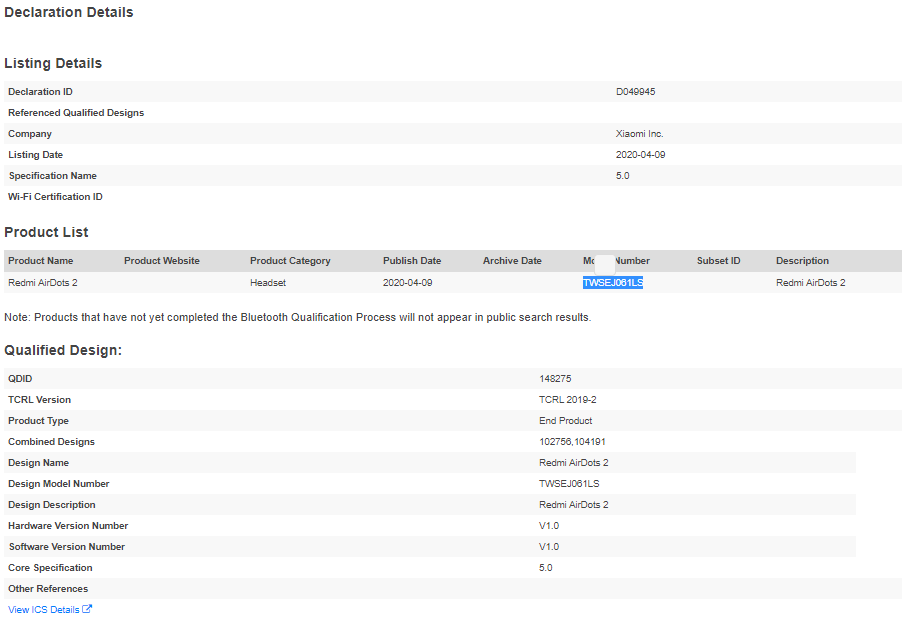
Last week, we reported that the Bluetooth SIG has certified a new pair of TWS earphones from Xiaomi called the Mi True Wireless Earphones Basic 2. Based on the similarities between the first-gen Mi True Wireless Earphones Basic (Mi AirDots Lite/Youth Edition), we presumed the successor will also be similar to the successor to the Redmi AirDots. Today, the Redmi AirDots 2 has also received its Bluetooth certification.
The certification of the TWS earbuds was published today and it reveals the earbuds have the model number TWSEJ061LS and will connect via Bluetooth 5.0. Not much else is known about the earbuds.
While the Redmi AirDots 2 does have a different model number from the Mi True Wireless Earphones Basic 2, both devices may actually share a similar design and features just like their predecessors.
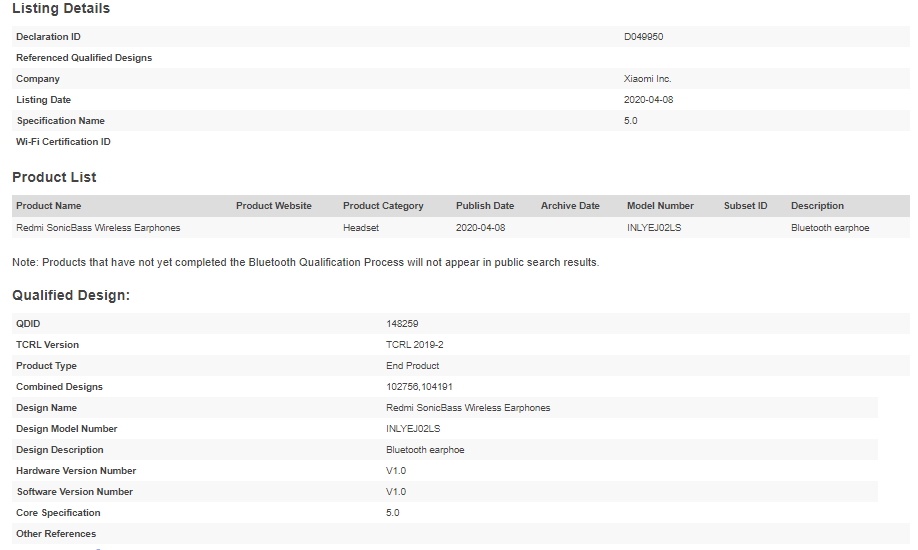
The Redmi AirDots 2 isn’t the only audio product Redmi has in development. Yesterday, the Bluetooth SIG also published the certificate for a product called the Redmi SonicBass Wireless Earphones. The earphones whose model number is INLYEJ02LS might have a neckband design. It also connects via Bluetooth 5.0.
We expect both products to be announced soon but there is also a chance they arrive later due to the coronavirus outbreak.
Honor has officially unveiled two new smartphones that are targeted at young people. The Honor Play 4T and Honor Play 4T Pro as they are called, come with impressive hardware and beautiful designs. Most of all, they are affordable with pricing starting at 1,199 yuan ($168).
Honor Play 4T- Specs, Features, Price
The Honor Play is the base model but that doesn’t make it a pushover. The device packs a 6.39-inch display with a waterdrop notch having a diameter of 4.5mm. The use of the waterdrop notch and a bezel-less design allows the screen ratio to get up to 90%. The display also bags the TUV Rheinland’s Blu-ray eye certification.
The Play 4T is powered by the old Hisilicon Kirin 710 chipset which is a 12nm chipset. The models start at 6GB RAM and 128GB storage as there won’t be a 64GB variant.
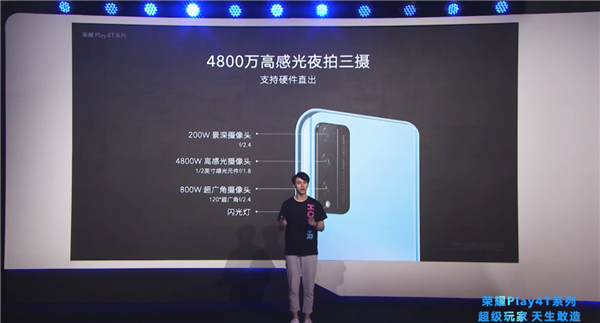
On the rear camera aspect, the Honor Play 4T packs a similar triple camera setup as the Pro version. The sensors include a 48-megapixel sensor, an 8 mega-pixel ultra-wide angle and a 2-megapixel depth sensor. The device is said to feature a rear-mounted camera sensor.
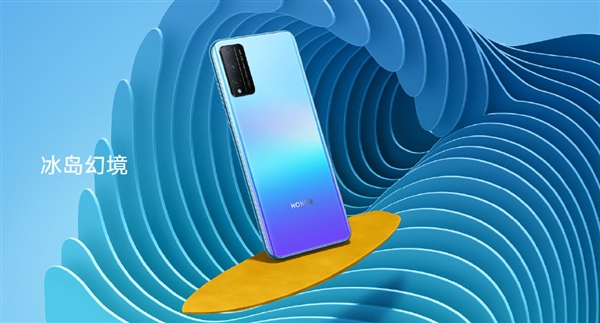
The Honor Play 4T comes in Magic Night Black and Blue Water Emerald colors.
Honor Play 4T Pro – Specs, Features, Price
The Honor Play 4T Pro packs a 6.3-inch OLED display with a resolution of 2400×1080 pixels and 20:9 aspect ratio. The display uses a waterdrop notch design which still remains my favourite notch design. The OLED display was fully utilized with the inclusion of an under-display fingerprint sensor.
The Honor Play 4T Pro is fired up by a Kirin 810 chipset which isn’t a 5G SoC. The chipset is still a powerful one, manufactured on a 7nm wafer. It features two large Cortex-A76 cores and six energy-efficient Cortex-A55 cores. The processor teams up with a Mali-G52 GPU to take care of the graphics. The GPU supports Kirin Gaming+ technology and fully upgrades the game experience through system-level AI FM scheduling technology. It supports 60fps high performance, HD image quality and GPU load optimization
In terms of AI, the Kirin 810 processor features a single-core Da Vinci architecture NPU which greatly improves the AI computing power per unit area and fully stimulate the computing potential of the end-side AI. In addition, the processor is paired with 6GB / 8GB RAM options and 128GB storage.
In terms of photography, the Honor Play 4T series packs a triple rear camera setup housed in a rectangular module. The three sensors include; 48-megapixel + 8-megapixel ultra-wide angle lens + 2 megapixels depth of field sensor. In addition, the Honor Play 4T series also supports Al ultra-clear photography, owl algorithm, with AIS handheld super night scene 2.0, super wide-angle camera and Al magic short video and other optimisations.
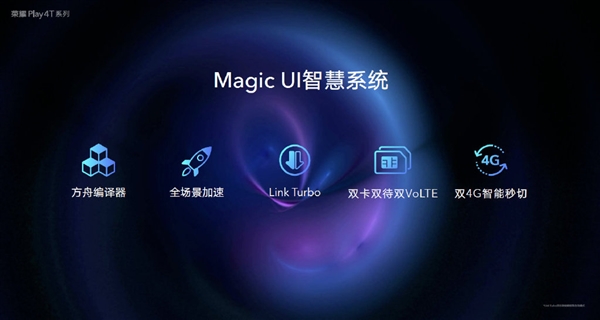
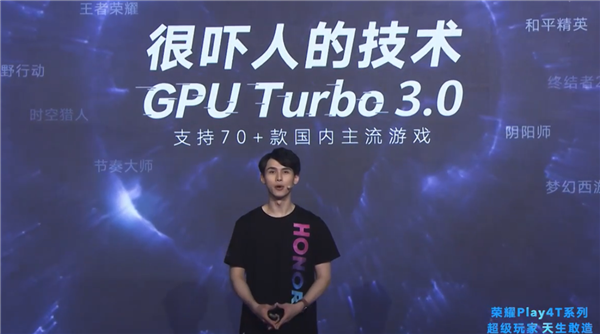
For interface, both the Honor Play 4T and Play 4T Pro runs on Magic UI OS and features GPU Turbo 3.0 support.
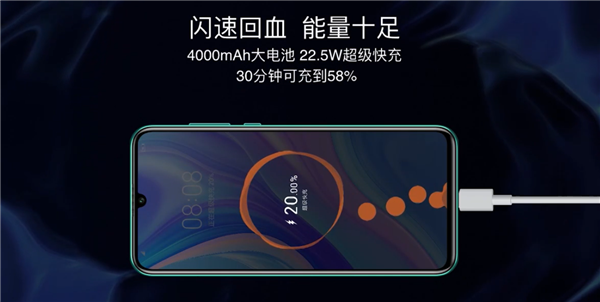
In terms of battery, the Honor Play 4T series uses a 4000mAh battery and supports 22.5W superfast charging, which can charge up to 58% in 30 minutes.
In terms of color options, the Play 4T Pro has three hues: Magic Night Black, Blue Water Emerald, and Icelandic White.
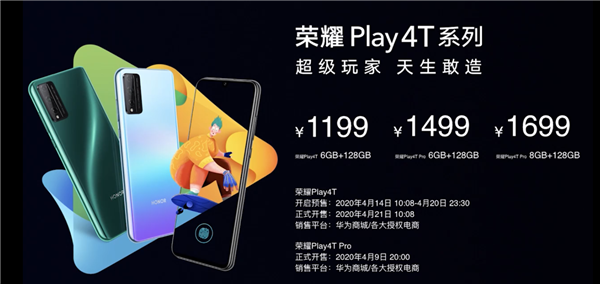
As for the prices, the Honor Play 4T model which comes in 6GB + 128GB option is priced at 1,199 yuan ($168). On the other hand, the Honor Play 4T Pro 6GB + 128GB version is priced at 1499 yuan ($211), and the 8GB + 128GB version carries a price tag of 1699 yuan ($239).
Huami is partnering up with medical expert Zhong Nanshan to build a laboratory that specializes in wrist wearables. The collaboration’s framework agreement was officially signed by a health care institute and research center that is led by Zhong Nanshan.
The three parties including Huami will use the wrist wearables technology and artificial intelligence powered algorithms alongside medical expertise to bring about advancement in the field. The collaboration will have the National Clinical Research Center for Respiratory Disease carry out various tests to map a person’s exercise, sleep, heart rate, and rehabilitation prognosis. In other words, develop a system that can detect the coronavirus infection and support early warning systems.
According to medical experts at the research center, the process of having followed up treatment or rehabilitation programs for recently discharged patients is difficult. Thus, by using Huami’s wrist wearables sensing technology, its AI powered algorithms and more, the medical institute can essentially detect any health complications, not just limited to the coronavirus infection.
The project is being undertaken by the National Clinical Research Center for Respiratory Disease and Guangzhou Institute of Respiratory Health along with Huami. For those unaware, Huami is a major brand in the wearables department, and its wealth of database regarding human activity through its wearable offerings will be a perfect match.
Notably, Zhong Nanshan is one of China’s top experts on respiratory diseases. He was one of the pioneers during the Sars virus epidemic back in 2002-2003 and is also currently advising Apple, who is ramping up its production again in China. So, on one side we have medical experts and on the other, we have the existing technology which has the potential to detect medical complications. The applications have great potential, as future smartwatches could soon detect infections and other respiratory diseases as well.
Earlier today (9th April 2020), Redmi Smart TV MAX 98 inch officially went on sale. It is priced at 19,999 Yuan (2,833 US Dollars) and features a massive 98 inch 4K display with dynamic backlighting, MEMC compensation, XiaoAI voice assistant and also be linked between other smart IoT devices. Now, Xiaomi has also released the official factory video that shows the massive TV being manufactured through the official Redmi Smart TV’s Weibo account.
Looking at the video, the Redmi Smart MAX TV 98 inch screen is an LCD panel, which is made from the only fully automated LCD production line in the world. Notably, the space required for the manufacturing process is about 10 times larger than that of conventional TVs and is more complicated as well. In terms of sheer size, the Redmi Smart MAX TV 98 inch stands at a tall 1.2 meters height in length, making it akin to a ping pong table when laid flat.
Despite its size, the Chinese tech giant has paid extra focus on each display zone of the massive TV. To ensure the reduction of the bleeding effect and other issues that plague large LCD panels, Redmi has a dedicated processor chip, which is custom made, and handles all the 192 partition dynamic backlight and other image improvement technologies. Its NTSC wide color gamut sits in at 85 percent while its dynamic contrast ratio is 140,000:1.
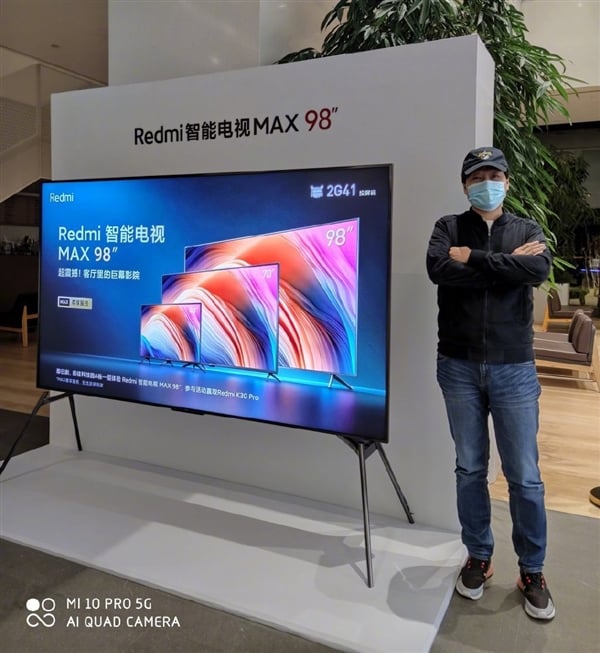
Lei Jun standing next to the Redmi Smart TV MAX 98 inch
Additionally, it features MEMC motion compensation technolgo as well, which effectively solves problems like jittering, tailing and ghosting of moving pictures. The Redmi Smart TV MAX 98 inch also supports PatchWall and features the XiaoAI voice assistant too. It is capable of smart interlinking, connecting to other IoT device in a home.
Yesterday, Huawei launched the P40 series in China. Huawei Consumer Business Group CEO Richard Yu gave an online interview to the press earlier today. In that, he mentioned the company is barely making a profit from its high-end premium smartphones.
Huawei dethroned Apple to become the world’s second-largest smartphone brand in terms of shipments in 2019. But yet, it’s profit margin is less than that of the Cupertino-based tech giant. This is because the brand’s premium products feature high-end tech, which costs more but still the company sells the final product at a lesser price than its prime competitors.
Mr. Richard Yu said the camera components in the Huawei P40 series alone cost more than $100. He also revealed that the company has so far lost around $60 – $70 million dollars in selling the Mate Xs foldable smartphone, even though it is priced at 16,999 Yuan (~$2267). He further added that the company cannot make a profit unless the price of folding panels goes down. Till then, the retail price of the foldables will remain high.
Mr. Yu also revealed that Huawei’s investment in R&D will likely be the second-largest this year. He also added that some of the competitors merely spend a billion Yuan in R&D, however, his company is investing $20 billion.
He believes innovation and products should go hand in hand to retain customers and maintain sales. This is why Huawei has been focusing more on research and development. In 2019, the company invested about $18.5 billion in R&D (third-largest), which accounted for 15.3% of its total revenue of 467.3 billion Yuan with 34% YoY growth.
Huawei holds 85,000 patents worldwide, out of which 90% are invention patents. Last year, Huawei was the top patent applier in the European Union with a total count of 3,524.
Just a few days ago, HMD Global rolled out the Android 10 update for the Nokia 3.2. Today, the update arrives on the Nokia 4.2.
The Nokia 4.2 was announced last year in May. It is a mid-range phone with a Snapdragon 439 processor, dual rear cameras, and an HD+ display with a waterdrop notch.
When it launched last year, it ran Android 9 Pie out of the box. With HMD Global’s promise of two years of OS upgrades, the Nokia 4.2 is set to get Android 11 too.
Just like the update for the Nokia 3.2, HMD Global is rolling out the Android 10 update for the Nokia 4.2 in waves. There are more than 40 countries on the list and all are expected to get the update by April 14.
We are yet to see the changelog for the update but expect it to include Dark Mode, Smart Replies, a new gesture-based navigation, and March 2020’s security patch.
Due to the Coronavirus pandemic, multiple smartphone brands in India are struggling with various issues. As of right now, most production lines in the country have been shut down due to a Government mandated lockdown, while offline stores that are deemed non-essential are also to remain closed. Thus, OEMs are now reducing their offline workers while also looking for rent waivers.
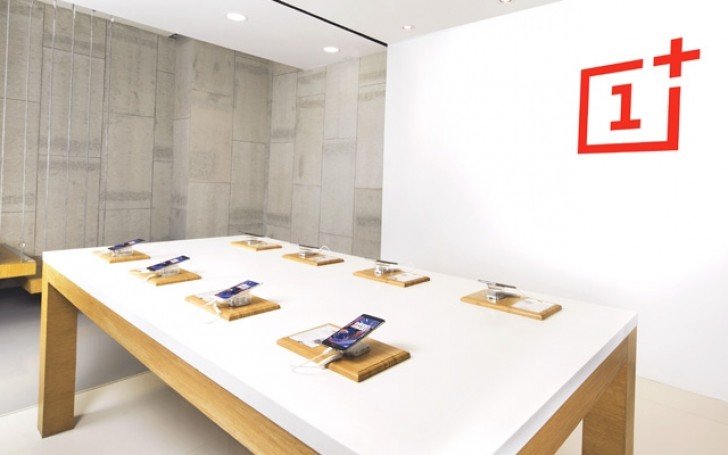
OnePlus’ Experience store in India
Since the physical stores cannot remain open and bring in no value or sales. Smart brands are downsizing their employees that act as in-store promoters or salespersons, and are also looking into getting waivers for the rent from landowners of their stores. Xiaomi is one such company that is seeking for a waiver of at least three months.
On the other hand, companies like HMD Global and Lenovo–Motorola are now reducing the number of offline workers for their stores and are also cutting incentives for retailers. According to official announcements, these stores are sitting on inventory and will likely not be making any sales for at least a whole quarter.
For those unaware, a new strand of Coronavirus had been discovered in China. Since then, the viral infection has spread to upwards of 170 countries and has been recognized as a global pandemic. It is highly infectious with a number of confirmed cases has crossed a million a few days ago. Thus, various governments like India are taking drastic measures and lockdowns to help curb the infection spreading any further.
In the past years, various smartphone brands have been found cheating on benchmark platforms. However, a new report on Anandtech has accused chip maker MediaTek for altering gaming performance in benchmarks.
The publication found MediaTek cheating the gaming scores when it benchmarked the Reno3 Pro (European edition) that features the older Helio P95. It claims that the benchmark scores of the Helio P95’s Cortex-A75 processor was higher than the Reno3 5G (Chinese variant) that is equipped with the Dimensity 1000L 5G chipset. The Dimensity chip has four Cortex-A77 CPU cores while the Helio P95 has only two Cortex-A75 cores.
The publication tried running PCMark’s stealth version on the Helio P95 powered Reno3 Pro. Since the stealth version can’t be identified by manufacturers, there was a 30 percent drop in performance compared the high scores that were required by the phone. The outlet stated that it noticed a drop of 75 percent in some other benchmarks.
The Reno3 Pro 5G (Chinese version) that has Snapdragon 765G was also benchmarked by the publication. It did not notice any cheating on benchmarks. Investigating the firmware of Reno 3 Pro (European version) revealed some references to “sports mode” which enables faster performance. The outlet that more investigations revealed that even other MediaTek powered phones like Realme C3, Xiaomi Redmi Note 8 Pro and 2017’s Sony Xperia XA1 also have performance enhancements.
Soon after Anandtech published its findings, MediaTek immediately published a blog post to state that its optimization practices on benchmarks adheres to industry standard and is in line with the practices of other companies. It further stated that such practices only reveal the full capabilities of a chipset. It also mentioned that its key rival has chipsets that function in the same way which Anandtech considered as cheating on benchmarks.
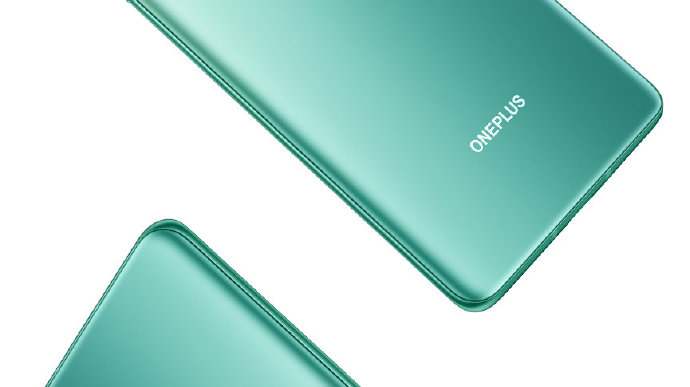
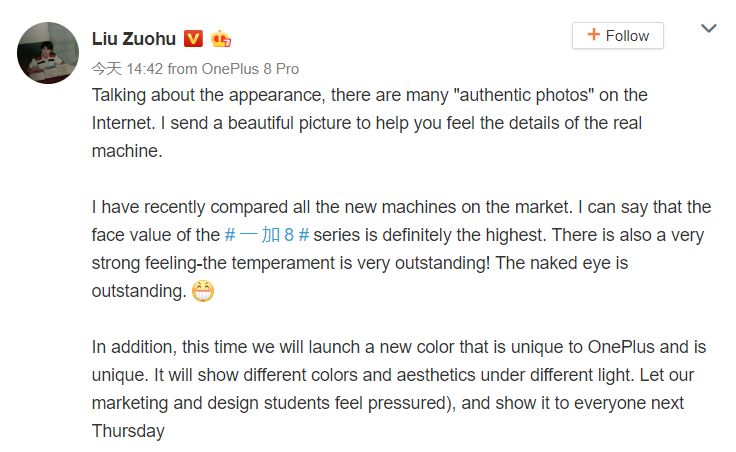
The OnePlus 8 series is almost here. The company is gearing up for its launch conference next week and teasers are already being shared online. Now, OnePlus CEO, Pete Lau, has shared an official first look of the green variant of the OnePlus 8.
OnePlus 8 (Green)
The image was shared online on the Chinese microblogging website, Weibo. Pete Lau’s official Weibo account shared the picture alongside a small message as well. According to the senior executive, he has noticed the various leaks, rumors and supposed renders making the rounds on the internet. He said that many were “authentic photos.”
Pete even went on to say that he had compared the OnePlus 8 to various other smartphones and found it to have the best look and feel. Although, this statement was to be expected. Looking at the image shared, the OnePlus 8’s rear panel can be seen. It features the “ONEPLUS” branding on the bottom, etched in white on a Green color.
The Green color looks very elegant, but it is unknown if it will also be available for the other OnePlus 8 series models, like the 8 Pro or 8 Lite. Thus, we will have to wait for the official launch event. So stay tuned, as we will be covering the launch of the Chinese company’s latest flagship lineup.
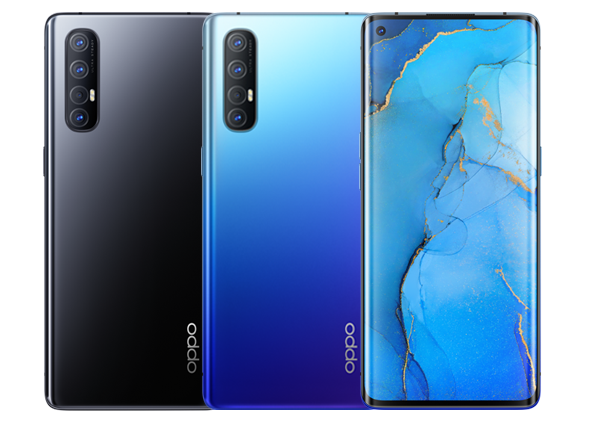
The Reno3 Pro 5G launched in China last December. It has a Snapdragon 765G processor, an AMOLED display, and support for 5G. Then last month, OPPO announced the Reno3 Pro in India with a different design, different camera specs, and a MediaTek Helio P95 chipset. Now, the Chinese version has appeared on OPPO’s Polish website with the same specifications but………without 5G.
The Reno3 Pro on the Polish site has the model number CPH2009 which is different from the Chinese variant’s PCRM00 and PCRT00 model numbers.
The phone has a 6.5-inch 2400 x 1080 curved AMOLED display with a punch-hole at the top left corner for the selfie camera and a 90Hz refresh rate. The Snapdragon 765G processor inside is paired with 12GB of RAM and 256GB of storage.
The Reno3 Pro has a 48MP + 8MP + 13MP + 2MP quad-camera setup on the rear while a 32MP camera is in front for selfies and video calls. The phone has 5x hybrid zoom, 20X Digital Zoom, OIS + EIS, and can record in 4K at 30fps.
Other features include NFC, dual-band Wi-Fi, Bluetooth 5.1, dual SIM support, stereo speakers, Dolby Atmos, and an in-display fingerprint scanner. It packs a 4025mAh battery capacity with support for VOOC 4.0. The Reno3 Pro runs ColorOS 7 based on Android 10 out of the box and is available in Moonlight Black and Starry Blue.
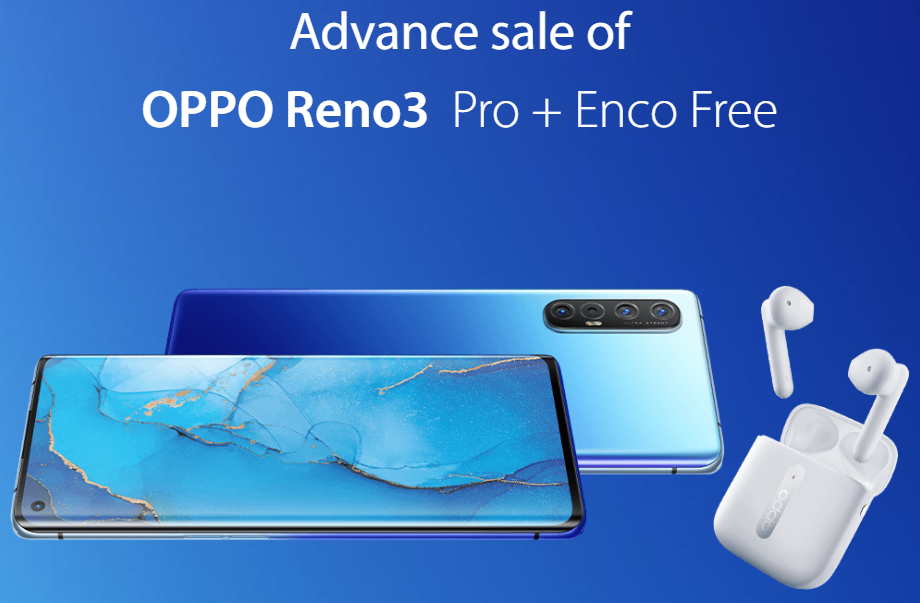
OPPO has put a price tag of PLN 2,600 (€572/$622) on the phone and will begin shipping on April 20. If you choose to pre-order, you will get a free pair of OPPO Enco Free TWS earbuds. Interested buyers can grab a unit from T-Mobile, MediaMarkt, X-Kom, Allegro, Media Expert, Neonet, and RTV Euro. The promo runs until April 19, 2020.
Xiaomi always keeps introducing new features to MIUI ROM. In a similar move, the MIUI developer has brought the Android 10 Gestures Control Feature for all the compatible Xiaomi smartphones. Xiaomi Developers have stood by their promise of bringing the Android 10 based gestures to Xiaomi smartphones. However, the public build users still have to wait for the feature as it is currently limited to select MIUI China ROMs. The company informed users about the new modification via a blog post which also has clear instructions to enable it.
Xiaomi has ported only a few gestures from Android 10. The users can open the home screen by swiping up from the bottom of the display. Moreover, the Recents menu is available with swipe up from the bottom of the screen and pause. The App switching is eased with Swipe left or right from the bottom of the screen. The developers also added Go back gesture that can be enabled by swiping left or right from either edge of the screen.
Enable Android 10 Gesture Control on MIUI
It is quite easy to enabled Android 10 Gesture control on MIUI, the users need to follow the instructions below.
Prerequisites:
Compatible China Beta ROM
Steps to enable Gesture Control on MIUI
Open phone Settings and then tap the “Display” option.
Select the “Full-Screen Display” option after scrolling down.
Tap “Full-Screen” to enable Android 10 gestures.
We hope the new Android 10 Gestures will soon make an appearance on the public or global build of the MIUI ROM. It will be a useful feature for the MIUI users, as eases the accessibility across the device.
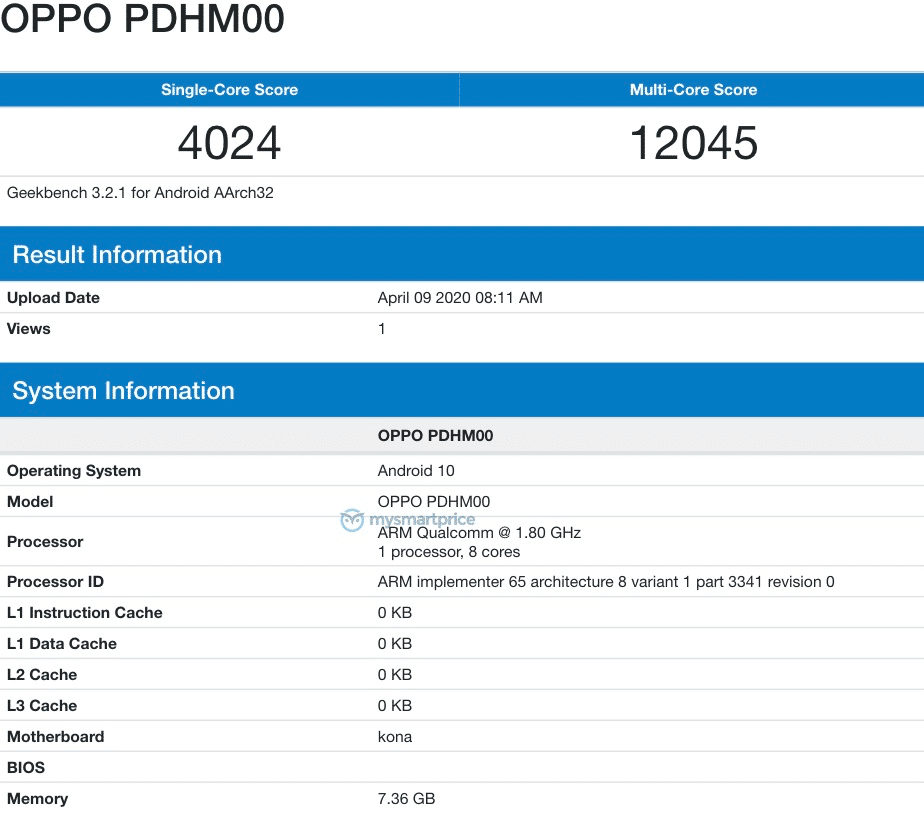
The upcoming OPPO Ace2 that is scheduled to go official on April 13 was recently spotted on AnTuTu with a score of 560K+. MySmartPrice came across the Geekbench listing of the smartphone. It seems that the company could be internally testing its performance before making it official.
Recent reports have revealed that the PHDM00 model number belongs to the OPPO Ace2 smartphone. On Geekbench, the Ace recorded 4024 points in the single-core test. In its multi-core test, it reached a score of 12045.
The Ace2 variant that emerged on Geekbench has 8 GB of RAM and it runs on Android 10 OS. The handset is driven by Snapdragon 865 mobile platform. The smartphone is available for reservations in China through JD.com. The JD listing reveals that there are two 8 GB RAM editions. One of them has 128 GB of internal storage and the other has 256 GB of native storage. The topmost model of the phone has 12 GB of RAM and 256 GB of storage.
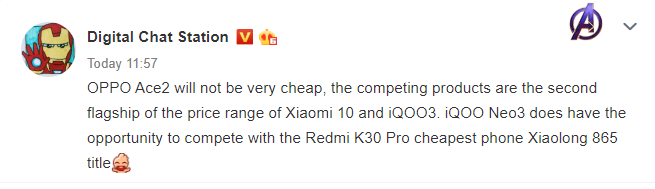
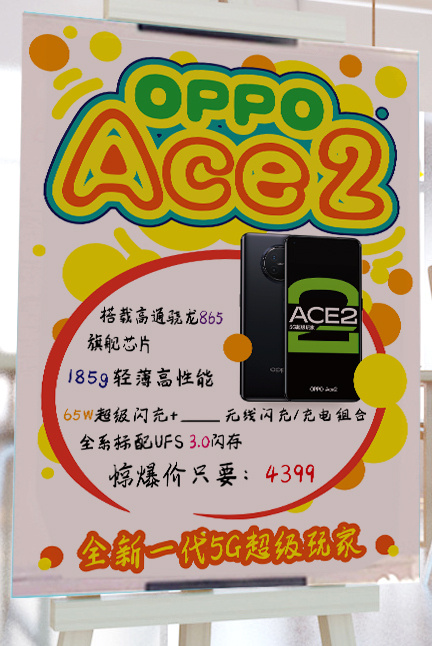
A reliable tipster from China has claimed that the OPPO Ace2 won’t be carrying a cheap pricing and it will be competing with phones like Xiaomi Mi 10 and iQOO 3. A snapshot that mentions 4,399 Yuan (~$623) pricing for the OPPO Ace2 has been shared another Chinese tipster.
The Xiaomi Mi 10 is available in China in the same three models such as 8 GB + 128 GB, 8 GB + 256 GB and 12 GB + 256 GB like the upcoming Ace2. These models of MI 10 are available for 3,999 Yuan (~$566), 4,299 Yuan (~$608) and 4,699 Yuan (~$665). Hence, the 4,399 Yuan pricing leak seem suitable for 8GB + 256GB version of the Ace2. The authenticity of the pricing image could not be verified. Hence, it is recommended to digest it with a grain of salt.
The CEO of Huawei‘s Consumer Business BG, Yu Chengdong, has stated in an interesting fact about the company’s current situation in this time of crisis. The senior executive has stated that Huawei’s consumer business is expected to grow by over 20 percent in 2020, especially in China.
The statement was made in an interview with a Chinese news reporting agency. Yu Chengdong is confident about the growth of Huawei’s smartphone sales in the Chinese market, although the same cannot be said for the global market. The senior official believes that the numbers won’t be as high as 20 percent, due to the lack of GMS (Google Mobile Services).
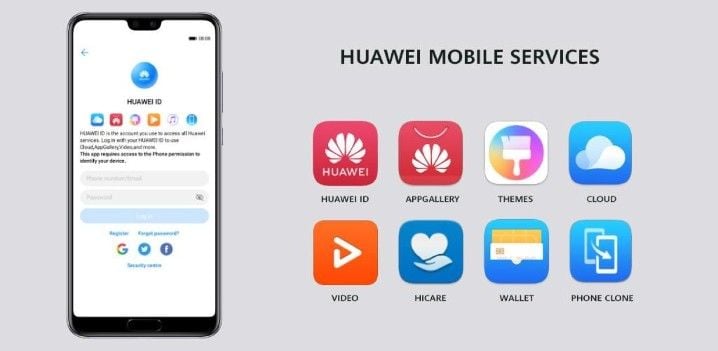
Huawei Mobile Services
For those unaware, after the US Commerce Department blacklisted Huawei back in 2019, the company was banned from trading or partnering with US based companies. This led to Huawei smartphones shipping without Google’s services. The move was a clear strategy by the US to pressure the company and by its extension, China.
However, in response to this, Huawei made its very own mobile services ecosystem, which Yu Chengdong said “is now very good and selling well. The P40 series are all equipped with HMS and are already being shipped. Due to the epidemic, some stores can’t open, but the second half will be better.” However, its viability outside of China is still under scrutiny.
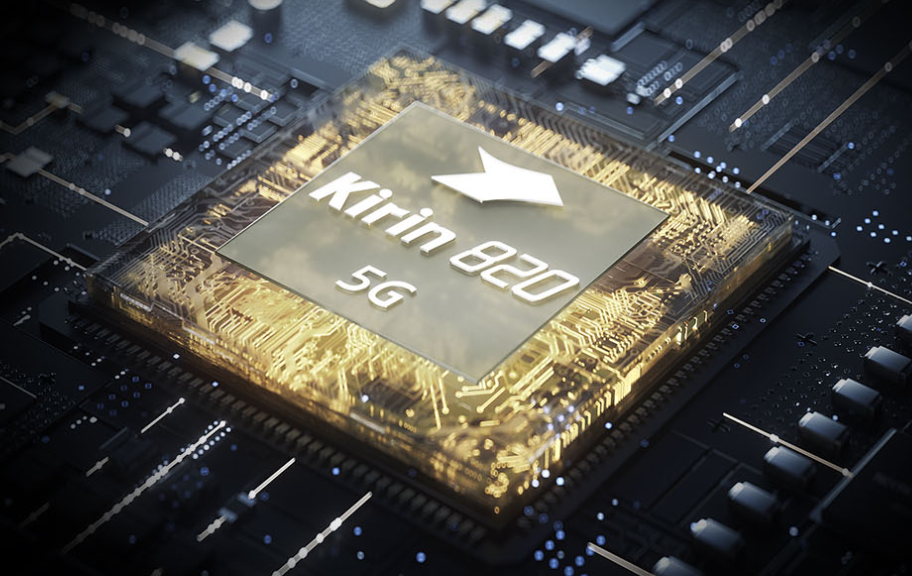
HiSilicon Kirin 820 SoC
In another attempt to hamper Huawei’s operations, the US is trying to limit the company’s chip making process through TSMC. The Taiwan Semiconductor Manufacturing Company is the primary supplier of the company’s HiSilicon Kirin chipsets. So this could potentially deal a devastating blow to the Chinese tech giant.
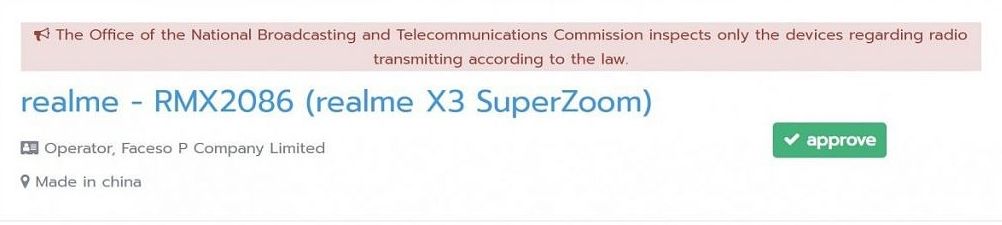
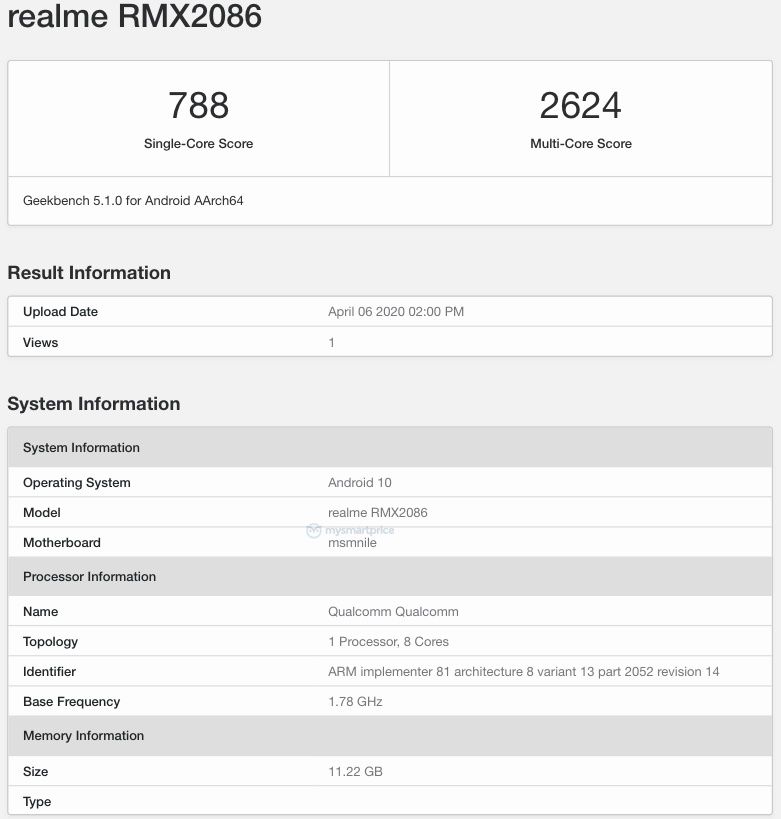
The Realme X3 SuperZoom is an upcoming phone from Realme. The moniker was revealed through its certification by Thailand’s NBTC authority. It revealed that the phone has a model number of RMX2086. The same model number has also appeared at the database of India’s BIS authority and EEC in Russia. Moreover, the RMX2086 popped up on Geekbench benchmarking platform to reveal some of its key specs.
The NBTC, EEC and BIS certification did not reveal any details on the specifications of the Realme X3 SuperZoom handset. However, these listings do suggest that it is not 5G smartphone. The Geekbench 5 listing reveals that the smartphone scored 788 and 2624 in the single-core and multi-core tests.
The Geekbench appearance shows that the phone is driven by “msmnile” Qualcomm chipset. The codename refers to the Snapdragon 855 chipset. Since the predecessor Realme X2 Pro came with Snapdragon 855+ which is an enhanced version of the SD855 chipset, it is likely that the Chinese firm may settle for SD855+ on the X3 Super Zoom. The SoC is coupled with 12 GB of RAM and it is loaded with Android 10 OS. No other information is available on the specs of the device.
The Realme X3 SuperZoom moniker suggests that it will be arriving with impressive zooming capabilities. There is a possibility that the phone could be coming with a 108-megapixel rear camera system. The recent Realme phones across different price segments are all equipped with quad rear cameras. Hence, the Realme X3 SuperZoom could be also coming with four rear-facing cameras.
The X3 SuperZoom appears to be a direct rival from the company for the recently unveiled Redmi K30 Pro Zoom Edition. The phone’s name also suggests that there could be a vanilla version of the phone called Realme X3.
It was erroneously stated in the first published version of this post that the OnePlus 8 Pro will be the first smartphone with MEMC technology. The post has now been corrected.
When it comes to smartphones, one major feature that is compared across brands is the camera performance. However, lately, another area where manufacturers are trying to outdo each other is in the display department. From a shift from LCDs to AMOLED panels; to special chips that upscale SDR to HDR; and to screens with high refresh rates – the display of a phone is now more important than ever.
The upcoming OnePlus 8 Pro will have a 120Hz refresh rate just like the Galaxy S20 series and the OPPO Find X2. This refresh rate is even higher than that of the OnePlus 7 Pro which has a 90Hz refresh rate.
While a display with a higher refresh rate brings a whole new experience to users, there is not a lot of content out there that takes advantage of this new feature on your phone as most videos you watch play at 24 fps or 30fps. To solve this problem of lack of content, OnePlus has come up with a solution, albeit not a unique one.
MEMC (Motion Estimation, Motion Compensation)
MEMC is a feature found in a lot of TVs and is infamously called the “Soap opera effect” because of the way it makes what you are watching look like a soap opera. On some TVs, it is called motion smoothing, and how it works is by artificially adding frames to a video with a low frame rate so that it has a higher frame rate and gives it that smooth effect. The video below shows the feature in action.
As you can see, the clips shown in the video above when the feature is turned on play much smoother than when the feature is turned off. However, when playback is set to slow motion, you can see the level of detail is low when MEMC is on.
However, it has its disadvantages and a lot of movie directors are against watching a movie with the feature turned on.
Back in January, Pete Lau, CEO and founder of OnePlus, revealed that they have created a custom MEMC chip that can “push ordinary 30fps video to 120fps, so the video takes advantage of our 120Hz Fluid Display”.
If you’ve seen high-quality TVs, you’re no stranger to MEMC. We’ve created a custom MEMC chip that can push ordinary 30fps video up to 120, so any video gets the full advantage of our 120Hz Fluid Display. pic.twitter.com/YPD3fw5uOn
Since we know the OnePlus 8 Pro is the one with a 120Hz Fluid Display, it will come with the MEMC chip. The OnePlus 8 has a 90Hz display and most likely won’t have the chip.
The OnePlus 8 isn’t the first phone to have a MEMC chip. Black Shark introduced it to phones back in 2018 and its Black Shark 3 flagship has a new version called MEMC 2.0. The OPPO Find X2 Pro also has a similar chip but called the “O1 Ultra Vision Engine” which has a feature called Motion Clear that upscale 30fps content to 60fps or 120fps.
Prior to the release of the aforementioned phones, MediaTek processors released as far back as 2015 (for example, the Helio X10) have come with a feature called Clear Motion that does the same job as a MEMC chip.
Today's MiraVision feature: ClearMotion™ clears things up -converting 24/30 frames-per-second videos to 60 or even 120fps! 🎦 #MediaTekpic.twitter.com/xZrqcY7tQl
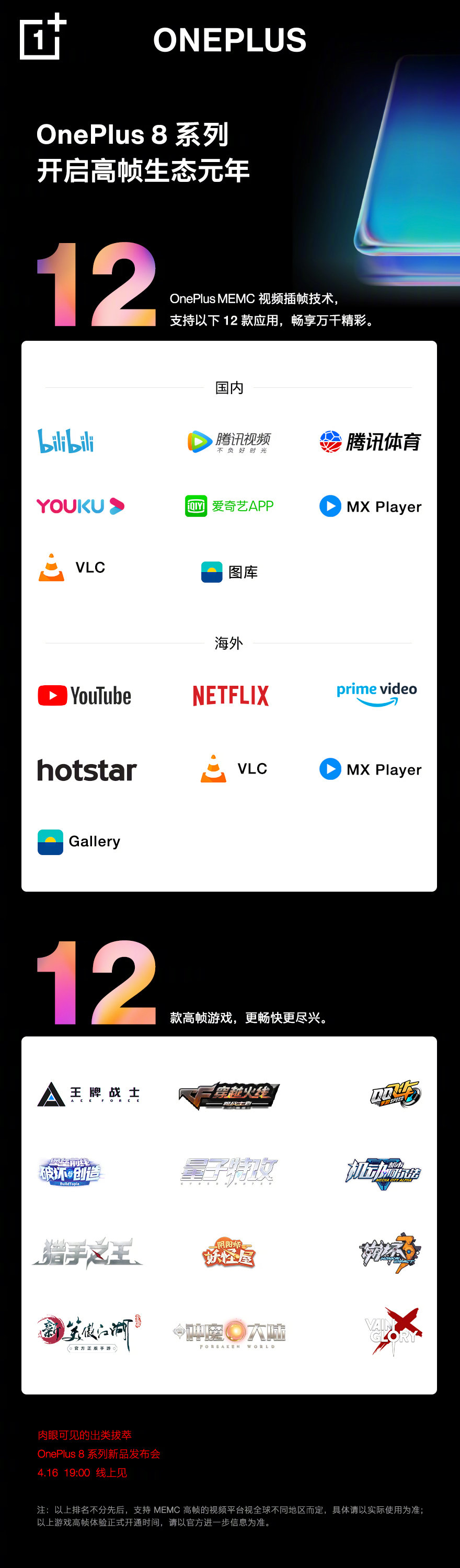
OnePlus’s MEMC chip will use what it calls High Frame 2.0 to convert content from a lower frame rate to a higher frame rate. The manufacturer even released a list of apps that are supported and it includes YouTube, Netflix, Hotstar, MXPlayer, VLC, Prime Video, and even the Gallery app on your phone.
List of High Frame 2.0-supported apps and games
OnePlus is not limiting the feature to just video players and streaming apps but also includes games such as Vain Glory. At launch, the feature will work with a total of 12 video players and streaming apps and 12 games. More apps and games are expected to be added in the future.
Disadvantages of MEMC in phones
The major and only disadvantage we believe it will bring is a reduction in battery life. Just as using your phone at the highest refresh rate will affect battery life, High Frame 2.0 is also expected to further drain your battery faster.
OnePlus has not yet said anything about it yet and may have actually found a way to minimize battery drain, but nevertheless, it will still be there. However, we expect there will be a way to turn off the feature to conserve battery or if you do not like it in the first place.
Will more manufacturers follow in OnePlus’ footsteps?
Most likely. If the feature is well received, we may see more phones with high refresh rates come with a similar or improved feature. A lot more people consume content on their phones from movies to TV shows and even sports games which actually benefit most from motion smoothing. So this looks like a feature that may become standard in flagship phones in a year or two.
What do you think about MEMC on phones, Yay or Nay?
We use cookies on our website to give you the most relevant experience by remembering your preferences and repeat visits. By clicking “Accept”, you consent to the use of ALL the cookies.
This website uses cookies to improve your experience while you navigate through the website. Out of these, the cookies that are categorized as necessary are stored on your browser as they are essential for the working of basic functionalities of the website. We also use third-party cookies that help us analyze and understand how you use this website. These cookies will be stored in your browser only with your consent. You also have the option to opt-out of these cookies. But opting out of some of these cookies may affect your browsing experience.
Necessary cookies are absolutely essential for the website to function properly. This category only includes cookies that ensures basic functionalities and security features of the website. These cookies do not store any personal information.
Any cookies that may not be particularly necessary for the website to function and is used specifically to collect user personal data via analytics, ads, other embedded contents are termed as non-necessary cookies. It is mandatory to procure user consent prior to running these cookies on your website.