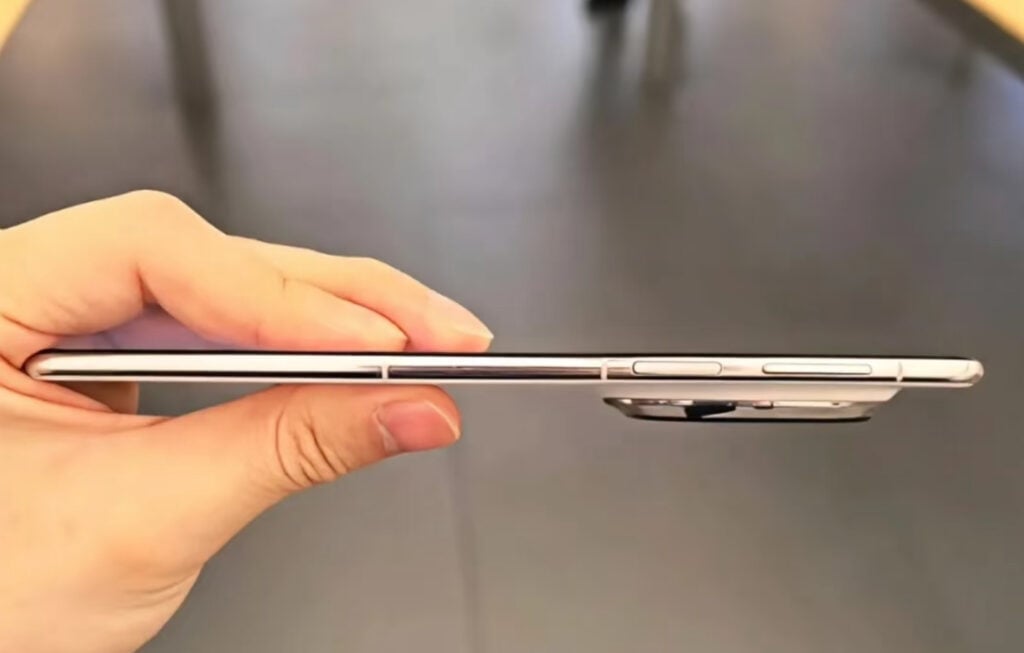
Xiaomi‘s budget-friendly Redmi lineup is about to get another refresh, and the latest leak gives us our first good look at the upcoming Redmi 15C 5G. Slated for a likely August launch alongside its siblings in the Redmi 15 series, the 15C 5G is a budget smartphone with no frills.
The new leak from XpertPick reveals that the Redmi 15C 5G will pack a 6.9-inch LCD with an HD+ resolution of 1600 x 720 and a smooth 120Hz refresh rate.
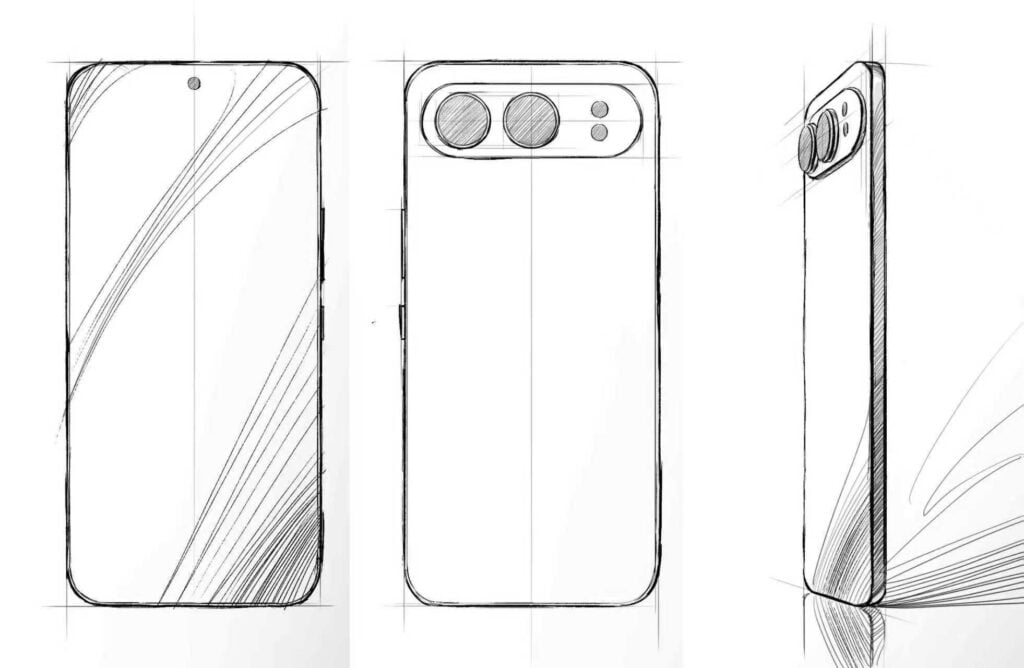
The front display has a waterdrop notch, and around the back, there’s a squircle-shaped camera module consisting of a single 50MP primary sensor.
Redmi 15C comes with a 6000mAh battery
Under the hood, we still don’t know what chipset will power the 15C 5G, though the standard Redmi 15 5G is rumored to use Qualcomm’s Snapdragon 6s Gen 3, while the 15C 4G variant will reportedly come with a Helio G81 chip.
Nevertheless, the 15C 5G will be available in two storage configurations, 4GB RAM paired with either 128GB or 256GB of internal storage. Powering everything is a generous 6,000mAh battery with support for 33W fast charging.
Software-wise, it’s expected to run on Android 15 with HyperOS 2.0. The device also comes with a side-mounted fingerprint sensor for biometrics.
Design-wise, it keeps things colorful. According to the leak, it will ship in at least three colors: black, lavender, and green.
The Redmi 15 series is expected to launch in multiple markets, including Europe, sometime in August. With more details likely to surface in the coming weeks, we’ll be watching closely, and we’ll keep you posted as soon as we learn more.
For more daily updates, please visit ourNews Section.
Earlier this year, Microsoft confirmed that it will be working with multiple partners on hardware to bring forth new Xbox powered gaming systems. This included a close collaboration with AMD sfor its next gen hardware for upcoming consoles, gaming handhelds, and more. While we already have the ROG Xbox Ally series from ASUS, a Lenovo collaboration could make sense as well.
1. Why Lenovo Makes Sense as Xbox’s Next Hardware Partner
Lenovo Legion Go S
Lenovo is one of the few players in the gaming handheld space, with its Legion Go series. The original Legion Go was a Windows based laptop, with more variants dropping soon after. It brought an 8.8-inch display, detachable controllers (similar to the Nintendo Switch 2), and a gamer-first design. Later on, the Chinese tech giant even partnered up with Valve for the SteamOS powered Legion Go S.
So, considering how they’ve already experimented with Steam, a new variant with special Xbox optimization sounds quite promising. The Legion Go already runs on the Windows platform, so a direct collab could make this system even better in running Xbox exclusives or Xbox Game Pass titles.
2. What an Xbox x Lenovo Handheld Might Look Like
ASUS ROG Xbox Ally and ROG Xbox Ally X
If Lenovo were to partner with Xbox, the result could be a streamlined version of the Legion Go. Xbox’s design influence could help push for an interface that feels more like an extension of the console experience. A great example of this is the ASUS ROG Xbox Ally and ROG Xbox Ally X. Lenovo’s handheld would benefit from deeper Game Pass integration, Xbox dashboard, and built-in Xbox Cloud Gaming out of the box.
Just recently, a prototype of the Legion Go 2 surfaced online. This gave us a look at the next-gen handheld from Lenovo. An improved controller design (still detachable), the more powerful AMD Ryzen Z2 series APU, and faster memory were revealed in this leak. But it still appeared to be similar to its predecessor, running on Windows.
3. A Logical Next Step for Xbox’s Multi-Partner Strategy
Lenovo’s Original Legion Go Handheld
Since Lenovo has already worked with Valve for the special SteamOS Legion Go S, I would like to believe that an Xbox version could also be in the works. Xbox has clearly shifted its focus from selling its consoles, which are declining in popularity, and has invested heavily in its Game Pass subscription service. Expanding on the software side and partnering with handheld console brands gives it the advantage over Sony, which has yet to expand into this segment.
For more daily updates, please visit our News Section.
Lenovo has quietly listed its 2025 Legion Y7000 Core Edition gaming laptop on JD.com in China. The laptop features Intel’s new Core i7-14650HX processor and Nvidia’s GeForce RTX 5060 GPU. It is priced at 6,999 yuan ($978) at launch, although Lenovo later removed the listing from the platform without explanation.
Legion Y7000 2025 Core Edition Specifications
The Legion Y7000 Core Edition is powered by the Intel Core i7-14650HX, a 16-core, 24-thread processor designed to deliver desktop-grade performance in a mobile form factor. The CPU has a maximum turbo frequency of 5.2GHz, 30MB of L3 cache, and a performance envelope of approximately 130W. It is aimed at users who need high performance for gaming, content creation, and multitasking.
Graphics performance is handled by the Nvidia RTX 5060 laptop GPU based on the Ada Lovelace architecture. The GPU includes 8GB of GDDR7 video memory and supports DLSS 4 frame generation. Lenovo allows the GPU to run at up to 115W, and it delivers up to 572 TOPS of AI computing performance for gaming and creative workloads.
The laptop includes 16GB of DDR5 RAM running at 5600MHz and a 1TB PCIe 4.0 SSD with TLC NAND. Lenovo provides dual memory slots and dual M.2 SSD slots, with one expansion slot reserved for future upgrades.
Lenovo equips the device with a triple-fan cooling system under its “Hurricane” thermal architecture. The cooling setup includes four high-performance heat pipes, a 10mm main pipe, and a unified copper base that covers both CPU and GPU. The design increases the internal cooling surface area by 10% compared to the previous model.
The Legion Y7000 features a 16-inch display with a resolution of 2560×1600, a 180Hz refresh rate, and 500 nits of peak brightness. The display supports HDR and covers 100% of the sRGB color gamut. It also supports Variable Refresh Rate (VRR) for smoother gameplay.
For connectivity, the laptop includes a full-featured USB-C port with 10Gbps transfer speed, DisplayPort output, and 100W PD. Other ports include four USB-A 5Gbps ports, an HDMI 2.1 FRL port with discrete GPU passthrough, an RJ45 Ethernet port, a 3.5mm headphone jack, and a DC-IN power connector.
The laptop ships in a matte grey finish. The keyboard supports three-stage backlighting and 1.5mm key travel. It is backed by an 80Wh battery with support for 100W USB-C PD charging.
Lenovo has not confirmed when or if the listing will return, but the product’s brief appearance suggests an official launch may be imminent.
Honor has officially released its latest high-performance tablet that is built for gaming enthusiasts. The Honor Pad GT 2 Pro was announced a couple of days back, and now, it has finally hit the shelves in China. So here’s everything you need to know about this gaming tablet.
Honor Pad GT 2 Pro: How much does it cost?
The Chinese brand has kicked off the first sale of the Honor Pad GT 2 Pro in its home market. It arrives in multiple storage configurations with a starting price tag of 2,499 Yuan (roughly 349 US Dollars) for the base 8GB + 128GB option. Meanwhile, the top end 16GB + 512GB can set buyers back by 3,399 Yuan (roughly 475 US Dollars). Honor has released this gaming tablet in two sober color variants, which include Ice White and Phantom Gray.
What does it offer?
The Honor Pad GT 2 Pro sports a tall 12.5-inch LCD panel with a high 3048 × 2032 resolution, 165Hz refresh rate, HDR Vivid, and IMAX Enhanced content. There is also 1000 nits of peak brightness and 4,320Hz PWM dimming. While the screen is getting a downgrade from an OLED panel over its predecessor, the newer model sports a faster Snapdragon 8 Gen 3 SoC (Snapdragon 8s Gen 3 on the Honor Pad GT Pro).
Honor Pad GT 2 Pro
A massive 10,100mAh battery pack powers this tablet, which supports 66W wired fast charging. All of this is packed in a slim 5.95mm body that weighs 532 grams. Other notable features include WiFi 7, Bluetooth 5.4, eight speakers with improved spatial audio, a 13MP rear and an 8MP selfie shooter for photography, and a large cooling system.
For more daily updates, please visit our News Section.
The Xiaomi 16 Ultra might be arriving far sooner than anyone anticipated. The company’s Ultra branding is reserved for flagships with impressive photography capabilities. But this time around, Xiaomi could be accelerating the launch timeline for the next-gen model, possibly beating some of its competition to the market.
Xiaomi 16 Ultra Tipped to Debut Sooner Than Expected
The latest launch timeline info arrives from known tipster Digital Chat Station, who shared the details on Weibo. It seems that the Xiaomi 16 Ultra will debut alongside the rest of the Xiaomi 16 series, which likely includes the base Xiaomi 16 and the higher end Xiaomi 16 Pro. To recall, the Chinese tech giant first unveiled the Xiaomi 15 and Xiaomi 15 Pro in its home market of China in late 2024, with the Xiaomi 15 Ultra debuting alongside the Xiaomi 15 in the global market in March 2025.
Xiaomi 15 Ultra
The tipster claims that all three models (base, Pro, and Ultra) of the Xiaomi 16 lineup will drop together later this year. Digital Chat Station didn’t reveal an exact launch timeline, but the new flagship announcement could be ahead of the next Chinese New Year. If this is true, then the Xiaomi 16 lineup could be arriving around the end of 2025.
By releasing the Xiaomi 16 Ultra earlier, the brand could be the first to release an Ultra model among the competition (Samsung Galaxy S26 Ultra, Vivo X300 Ultra, & Oppo Find X9 Ultra). Keep in mind that this is still just speculation at this point, so take this unconfirmed report with a grain of salt.
For more daily updates, please visit our News Section.
Imagine unlocking your Android phone without tapping in a PIN or scanning your fingerprint—just because your smartwatch is nearby. A new feature spotted in development could make that a reality, offering a smoother and smarter security experience for Wear OS smartwatch users.
According to Android Authority, the latest beta version of Google Play Services (25.29.31) includes early code for an update to Identity Check, a security feature introduced in Android 15. Designed to prevent phone theft, Identity Check normally requires users to authenticate with biometrics or a password when outside trusted locations like home or work. But the new strings suggest your connected smartwatch may soon act as a kind of trust signal—a way for your phone to recognize you and skip extra authentication if your watch is close and unlocked.
While this might not remove the need for a PIN or fingerprint entirely, it could reduce how often you’re asked to verify your identity, making everyday use easier while maintaining a layer of security.
The feature is still under development, and it’s unclear when or if it will roll out publicly. However, it points to a growing effort to tighten the integration between Android phones and Wear OS-powered smartwatches. Whether you’re using a Galaxy Watch or a Pixel Watch, this kind of update could make the Android ecosystem feel a lot more cohesive and user-friendly.
For now, we’ll have to wait and see if Identity Check with smartwatch integration makes it to a future release. But if it does, it could be a subtle but meaningful shift in how Android balances convenience and security—just don’t lose your phone and watch at the same time.
Acerpure India has launched its new Advance G Series QLED smart TVs, focused on gaming and home entertainment. The lineup includes 65-inch and 75-inch models, both built to deliver smooth performance and detailed visuals.
The TVs feature QLED panels with Dolby Vision support, offering sharp contrast and vivid colors. They come with a 120Hz refresh rate and MEMC technology, which helps reduce blur and lag during fast-moving scenes. For sound, the TVs include Dolby Atmos and built-in 50W subwoofers to provide clear and powerful audio.
Running on Google TV, the Advance G Series offers access to apps, content, and controls through a simple interface. Users can use Google Assistant for voice commands and cast content with the built-in Chromecast. The TVs come with three HDMI ports, one USB 3.0 port, one USB 2.0 port, an RJ45 LAN port, and an AV input, making it easy to connect gaming consoles, speakers, and other devices.
The design is minimalist with slim bezels, made to fit into modern living spaces. The 65-inch model measures 145 cm by 84 cm. The 75-inch model is 167.5 cm by 95 cm. Both are aimed at larger rooms or setups with more space.
According to Vasudeva G, Director at Acerpure India, the new TVs are built for users who expect more from their screens. He said the Advance G Series is made for gaming, streaming, and everyday use, combining solid visuals, good sound, and smart features. Acerpure also supports its TVs with a service network that covers over 14,000 PIN codes across India.
Availability and Price
The Acerpure Advance G Series starts at ₹54,999 ($635). It is available on the Acerpure Online Store, Acer Exclusive Stores, retail outlets, and other consumer electronics channels.
For more daily updates, please visit our News Section.
Portronics has launched the Apollo 20, a new portable Bluetooth speaker aimed at music lovers and karaoke enthusiasts. The speaker is priced at ₹2,549 ($29) and is now available through the Portronics website, Amazon, Flipkart, and offline retail stores across India. It comes with a 12-month manufacturer’s warranty.
Portronics Apollo 20 Specifications
The Apollo 20 delivers 25W of sound output and features dual passive radiators to enhance bass performance. Portronics says the speaker produces clear audio across genres and has enough volume to fill a medium-sized room. The compact and splash-proof design makes it suitable for both indoor and outdoor use.
The speaker features dual wireless karaoke microphones that allow users to sing solo or perform duets without dealing with cables. It also offers voice-changing effects and echo control to enhance karaoke sessions.
The Apollo 20 includes RGB LED lights that pulse in sync with the music, adding visual excitement to parties or group gatherings. It also features a built-in grip handle for easier portability. The device is available in a single black color variant.
The speaker supports Bluetooth 5.4 for faster pairing and a stable connection. It also offers AUX and USB playback options. Portronics claims a battery life of up to 5 hours on a single charge. The speaker charges via a USB Type-C port with support for fast charging.
In related news, Portronics recently launched the Bubble 3.0 wireless keyboard in India, priced at ₹999. It supports pairing with up to four devices and features a built-in stand for added convenience. The company has also introduced the Beem 540 projector, which runs on Android 13, supports 4K content, and comes with a telescopic stand.
The OnePlus Nord 5 and Samsung Galaxy A55 are two of the most talked-about mid-range phones of 2025, offering flagship-like features at accessible prices. With both brands pushing the boundaries in performance, display, and camera capabilities, this comparison matters for buyers who want top value without stepping into the premium price segment. Choosing between these two could shape the mid-range buying decision for power users and casual consumers alike.
Build and Feel: The OnePlus Nord 5 uses a glass front and back with a plastic frame, while the Galaxy A55 boasts a more premium aluminum frame sandwiched between Gorilla Glass Victus+ panels. The A55 also offers better ingress protection with an IP67 rating, capable of surviving brief submersion, unlike the Nord 5’s lower IP65 resistance. Although both feel solid, the Galaxy A55’s aluminum frame and higher water resistance make it slightly more durable and premium in hand.
Galaxy A55 wins for durability and materials.
Display Quality: The OnePlus Nord 5 features a larger and more advanced Swift AMOLED display with a 144Hz refresh rate, HDR10+, and up to 1800 nits peak brightness. In contrast, the Galaxy A55 offers a 120Hz Super AMOLED panel with HDR10+ and 1000 nits HBM brightness. The Nord 5 also supports 3840Hz PWM dimming and Ultra HDR, making it superior for smoothness and eye comfort. The display on the Nord 5 is not only larger but also significantly sharper and faster for gaming or scrolling.
OnePlus Nord 5 leads in display performance.
Verdict: The Galaxy A55 feels more premium due to its materials and better IP rating, but the OnePlus Nord 5 outshines in display experience with superior specs. For users prioritizing screen quality and visual fluidity, Nord 5 is the better choice, while those valuing long-term durability may lean toward the A55.
Please Note: When you buy something using the links in our articles, we may earn a small commission at no cost to you.
2. Specifications
Samsung Galaxy A55
Performance: OnePlus Nord 5 packs the Snapdragon 8s Gen 3, a flagship-level chipset with a Cortex-X4 core and Adreno 735 GPU. This delivers significantly better performance than the Galaxy A55’s Exynos 1480, which is a capable upper mid-range chip but lacks the raw power of the 8s Gen 3. Gaming, multitasking, and intensive apps will run smoother on the Nord 5. The A55’s Exynos 1480 with Xclipse 530 GPU is adequate for daily tasks, but less consistent under load.
OnePlus Nord 5 leads with a flagship-grade processor.
Battery and Charging: Nord 5 comes with a 5200mAh global battery (6800mAh in India) and supports 80W wired charging, significantly faster than the A55’s 25W charging on a 5000mAh battery. Nord also supports 33W PPS, 18W PD, and even 5W reverse wired charging with bypass charging mode, giving it an edge in versatility. The Galaxy A55 lacks fast charging speeds and has no reverse or bypass charging. For users who value speed and flexibility, the Nord 5 offers far better battery tech.
Nord 5 dominates in battery capacity and charging innovation.
Verdict: The OnePlus Nord 5 offers superior performance and battery innovation, making it ideal for power users and gamers. The Galaxy A55 remains efficient for casual users but falls short in raw speed and charging. Overall, Nord 5 wins this segment.
3. Camera
OnePlus Nord 5
Main and Secondary Lenses: Both phones feature 50MP main sensors with OIS and similar sensor sizes, but the Galaxy A55 adds a third 5MP macro lens, which the Nord 5 lacks. However, the Nord 5’s 8MP ultrawide lens supports autofocus, while the A55’s 12MP ultrawide does not. OnePlus also supports Ultra HDR in photography. Despite having fewer lenses, Nord 5 offers sharper ultrawide focus and higher video frame rates (4K at 60fps vs 30fps on A55).
OnePlus Nord 5 has a more refined dual-camera setup.
Selfie Camera: The Nord 5 comes with a powerful 50MP front camera with autofocus and 4K@60fps video, far beyond the Galaxy A55’s 32MP fixed-focus sensor capped at 4K@30fps. This makes the Nord more suitable for high-resolution vlogging and selfies. For content creators or selfie enthusiasts, Nord’s front camera is a significant upgrade.
Nord 5 easily leads with better selfie specs.
Verdict: Although the Galaxy A55 includes more lenses, the Nord 5 focuses on higher quality optics and better video capability on both ends. If versatility matters, A55 may appeal, but for sharper photos and video, the OnePlus Nord 5 is superior.
4. Pricing
Samsung Galaxy A55
The OnePlus Nord 5 is priced around $550, while the Galaxy A55 retails at approximately $400. The $150 price gap is justified by the Nord’s faster Snapdragon 8s Gen 3 chipset, higher display refresh rate, better front camera, and much faster charging speeds. However, for users with moderate needs and tighter budgets, the Galaxy A55 delivers decent value with a premium build and solid all-rounder specs.
Nord 5 is worth the premium for performance seekers, but A55 remains the better pick for value-conscious buyers.
Disclaimer: Prices are approximate and may vary based on country, region, and applicable taxes.
5. Conclusion
OnePlus Nord 5
The OnePlus Nord 5 brings several standout features: a flagship-grade Snapdragon chipset, 144Hz AMOLED display, 50MP selfie camera with autofocus, fast 80W charging, and Circle to Search. Meanwhile, the Galaxy A55 impresses with its aluminum body, IP67 rating, microSD support, and a balanced triple camera system.
If premium build, SD card expandability, and water resistance matter most, the Galaxy A55 is a practical choice. But if raw power, cutting-edge display, and fast charging are priorities, the OnePlus Nord 5 clearly outclasses the A55. For future-ready users, Nord 5 is the smarter investment.
The iPhone 17 could be getting a breath of fresh air with its color options. A new leak has revealed that the upcoming flagship will debut in two new vibrant finishes later this year. This could mark a fresh aesthetic shift in the brand’s latest base iPhone model, so here’s what you need to know.
iPhone 17 Leak Reveals Bold New Purple and Green Colorways
Apple iPhone 17
The Cupertino based giant is apparently working on two new colors for the iPhone 17, which includes bright purple and green (Via PhoneArena). Pictures of these two variants were also shared in a new leak, showcasing their familiar design with the new hue. These images arrive from industry sources, with the iPhone 17 having a design nearly identical to the base iPhone 16.
To recall, the iPhone 16 came in multiple color options, including Black, White, Pink, Teal, and Ultramarine. Apart from the pretty new colors, the base model is expected to get a display improvement, offering a 120Hz refresh rate. But unlike the ProMotion panels on the iPhone 16 Pro series, the screen wouldn’t offer a variable refresh rate on the base model.
Among the other notable upgrades, the iPhone 17 will also bring 12GB of RAM. Apple is already preparing for the new flagship launch, with the iPhone 17’s trial production reportedly underway in India. This is all the information we have at the moment, so stick around for more.
For more daily updates, please visit our News Section.
Oppo has started rolling out the July 2025 ColorOS 15 update globally, following its initial release in China. The update will be available to all supported devices by July 31, 2025. It includes new AI features, camera tools, and system improvements aimed at streamlining the user experience.
What’s New in ColorOS 15 – July 2025 Update
Fluency
Users can now stack widgets of the same size simply by dragging them together, making it easier to organize the home screen.
AI Features
AI Perfect Shot lets users replace facial expressions in group photos using other photos of the same person.
AI Group Photo Composer allows users to add missing people to an existing group photo.
Save to Mind Space enables users to capture screen content as memories, which the system sorts and summarizes automatically.
Recorder and Productivity
The Recorder app now includes an “In-person recordings” group. Audio captured in Standard, Meeting, or Interview modes is automatically sorted into this group.
Photos and Camera Tools
Users can now export videos as live photos, or convert live photos and videos into high-resolution still images.
A soft light filter has been added to Portrait and Photo modes to give images a more refined look.
The new AI Recompose feature adjusts photo layout, aspect ratio, and colors automatically. Suggested filters can also be applied with one tap.
Sound and Notification Controls
The alarm volume can now gradually increase from low to high. This setting is available in Clock > Alarm > Settings > Gradual alarm volume.
A “Temporarily block” option allows users to swipe away banner notifications and pause them while watching videos or playing games.
Interface and Font Options
Users can now apply OPPO Sans and One Sans fonts in more languages.
Specific photo albums can now be hidden from the main photo list.
Mini windows can be moved to the bottom of the screen.
A fix has been added for display location issues with mini windows.
Eligible Devices
Oppo Find N5
Oppo Find X8 / X8 Pro
Oppo Find N3 / N3 Flip
Oppo Reno13 / 13 Pro
Oppo Reno12 / 12 Pro
Oppo Reno11 / 11 Pro
Rollout will be completed by July 31, 2025.
For more daily updates, please visit ourNews Section.
Last month, we saw a wave of new smartphones across all price segments, including Nothing’s first flagship, the latest Galaxy foldables, mid-range options from OnePlus, Vivo, and Motorola, as well as a couple of budget phones. August is also shaping up to be a jam-packed month for smartphone launches.
If you’re looking for a smartphone upgrade, the wait might be worth it. To give you a clearer picture of what’s to come, we’ve listed all the upcoming devices, along with their launch date and other details we know so far.
Top Upcoming Phones in August 2025 to Watch Out For
1. Google Pixel 10 series
Launch date: August 21, 2025
This is the most anticipated phone launching in August. There will be four new phones in the lineup — Pixel 10, Pixel 10 Pro, Pixel 10 Pro XL, and Pixel 10 Pro Fold. Google has already teased their designs, and they look almost identical to last year’s. However, there will be important changes underneath, which we’re excited about.
The Pixel 10 will now feature a triple rear camera setup, which might include a 50MP main sensor, a 12MP ultrawide unit, and a 10.8MP periscope lens with 5x optical zoom. Other leaked specs include a 6.3-inch OLED screen, 12GB RAM, and a 4,970mAh battery with 29W (wired) and 15W (wireless) charging support.
The Pixel 10 Pro and 10 Pro XL will reportedly feature the same set of rear cameras, including a 50MP main shooter, a 48MP telephoto lens, and a 48MP ultrawide unit, along with a 42MP selfie camera. The 10 Pro may have a 6.3-inch OLED screen and a 4,870mAh battery with Pixel 10’s charging capabilities. The Pro XL model will benefit from a larger 6.8-inch screen and a faster 39W wired charging.
Vivo V60 doesn’t have an official launch date yet, but it has already received necessary regulatory approvals, suggesting an imminent launch. According to a recent leak, it may launch in India on August 12.
The device is said to feature a 6.67-inch 120Hz AMOLED screen, an IP68/IP69 rating, a Snapdragon 7 Gen 4 processor, and a massive 6,500mAh battery with 90W fast charging support. It may feature a triple rear camera setup, including a 50MP main shooter, an 8MP ultrawide snapper, and a 50MP periscope lens with 3x optical zoom.
Oppo K13 Turbo and K13 Turbo Pro have been recently launched in India, and according to reliable sources, the brand is gearing up for an India launch in early August.
The devices will reportedly have the same design and specs as their Chinese counterparts. So, you can expect them to have a 6.8-inch 120Hz AMOLED display, a 50MP + 2MP dual camera setup, a 16MP selfie camera, and a gigantic 7,000mAh battery with 80W fast charging support. The chipsets are different, though — Mediatek Dimensity 8450 for K13 Turbo and Snapdragon 8s Gen 4 for K13 Turbo Pro.
The Vivo Y400 Pro was released in June, and now, a month later, the brand is reportedly preparing to launch a more affordable version, the Y400 5G. It is expected to be announced in early August for under INR 20,000.
As for the specs, the Vivo Y400 is said to boast an AMOLED screen with a 120Hz refresh rate and a hole-punch for the selfie camera. Other rumored specs include a MediaTek Dimensity 7300 chipset, a 50MP main camera, and a 5,500mAh battery. The smartphone might come in two color options: Olive Green and Glam White.
Redmi 15C is another budget smartphone gearing up for an August launch. While there’s no official launch date just yet, reports suggest a mid-August timeline. The device is said to be priced under INR 15,000.
According to previous leaks, the Redmi 15C will feature a 6.9-inch 120Hz LCD screen, a MediaTek Helio G81 chipset, a 50MP main camera, a 16MP selfie camera, and a 6,000mAh battery with support for 33W fast charging. It is said to have a side-mounted fingerprint scanner, NFC, and an IP64 rating for dust and splash resistance.
August hasn’t even begun, and we already have several smartphones lined up for launch. There’s a good chance even more devices will be announced as the month progresses, so stay tuned for updates. You can follow our Telegram channel and subscribe to our free newsletter for your daily dose of tech! ⚡
‘USB4 supported’ has almost become the standard for the latest computers. Whether it is a PC or a Mac, users can easily realize super-fast data transfer. But the question is, with so many external SSD enclosures on the market, can they keep up with the TRUE speed of USB4? Then let’s torture the candidate of this review, the TERRAMASTER D1 SSD Plus, one of the most impressive portable high-speed SSD enclosures. We will take a closer look at it from several aspects – performance, cooling, and even disassembly.
Gizmochina Review is going to give away a new D1 Plus enclosure (SSD not included) to one lucky winner: Please check the giveaway out here.
Now let’s start by checking the packaging accessories. First up are a set of instructions interspersed with 0.4mm thermal pads. The most notable note in the pile is this indemnification promise. TERRAMASTER promises an additional 6-month warranty if you are not satisfied with the performance of the D1 SSD Plus within 30 days of purchase. Sounds good.

The other thing is a protective pouch, a cable with 80Gbps support, and a screwdriver. Here, we weigh the hard disk enclosure, which now weighs around 240g without the SSD installed.
Lastly, there’s this hard disk case. As you can see, the whole box is quite different from other enclosures; the TERRAMASTER casing is more like a heatsink with cooling fins. The heatsink has a low-density design: the fins are thicker and more widely spaced, taking into account the heat dissipation area and air flow to improve natural convection efficiency. Because there are no moving parts, it operates without noise and with improved reliability.
Installation and Disassembly
I’ll call the side with the feet the back side. Unscrewing this screw on the back allows us to open the SSD case. You don’t have to worry about losing this screw either, TERRAMASTER has made a limit for it. After unscrewing it, it still snaps onto the screw hole, so it won’t be easily lost. The left side of the case already has pre-installed thermal pads on it, so the thinner one that was just there, I think, is supposed to serve as padding for other thinner SSDs.
The drive caddy utilizes the M-Key slot, which is a mainstream NVMe SSD interface type that supports up to the PCIe 4.0×4 specification. Some of you here may regret that the D1 SSD PLUS only supports 2280 specification SSDs, but the mainstream SSDs on the market are still of that specification. So I don’t think the lack of 30, 42, and 60 specs will cause too much of a problem. Instead, the ability to install SSDs with double-sided NAND flash particles is more important here. SSDs with this double-sided layout are more common in 4T and up SSDs, and the D1 SSD PLUS is fully adaptable to them.
But here I was looking at it, and the four screws on top of the PCB are not protected in any way (bad joke). So I figured we could take it apart together and continue to find out. After removing the PCB, I was shocked by the large number of SMD capacitors on it. Generally speaking, a large number of chip capacitors will be used on top of enterprise SSDs to stabilize the voltage, provide power failure protection, and ensure data safety. The large number of chip capacitors used here corresponds to the security protection advertised by TERRAMSTER. The chip underneath the capacitor is an old acquaintance. The ASM2464PD is the same chip we used to add a NIC to the Mac earlier, and it’s capable of delivering transfer speeds of up to USB4/Thunderbolt 20Gbps x2, and is compatible with existing USB 3.2 ports and Thunderbolt 3.
Chip: ASM2464PD
To deal with the heat that high-speed chip generates, Terramster has also CNC’ed out the case chassis and uses a thermal pad to fill the gap between the chip and the case to enhance heat dissipation.
Performance Test
Next, let’s see how it performs. Here we have two SSDs with different speeds, one is a mainstream PCIe Gen4 SSD and the other is a relatively old PCIe-3 SSD.
First, we ran a simple test using AmorphousDiskMark on a MacBook Air. The TERRAMASTER easily hit the package claim of 3200MB/s read and write. Read speeds even reached 3400MB/s. When switching to a Gen3 SSD, both read and write speeds dropped a bit. The same trend was seen in the BlackMagic Disk Speed Test. What’s more interesting is that TERRAMASTER is using both Gen3 SSD and Gen4 SSD. It performs faster than the built-in SSD.
On the PC, the TERRAMASTER breaks out to 3800MB/s for sequential reads. But it is only faster on sequential reads and writes. It’s quite a bit slower with a direct PC install. The SSDs switched to Gen3 performed the same.
Cooling Test
Performance-wise, I think we should all be satisfied. But I was more interested in the thermal performance of this portable SSD hard disk enclosure, after all, this is one of the few products that seriously does a good job of cooling. So we decided to go ahead and use this Gen4 SSD to write all over this 1900 GB hard disk at 27 degrees room temperature.
At the beginning of the test, as the amount of writes increases, the temperature rises rapidly, which shows that TERRAMASTER needs time to adapt and dissipate heat effectively in the initial stage; in the middle of the test, the temperature stabilizes, and TERRAMSTER has already reached the optimal working condition and can control the temperature consistently and effectively; and in the late stage of the test, as the amount of writes decreases, the temperature begins to drop gradually. This reflects the TERRAMSTER’s ability to maintain efficient heat dissipation after a long period of time, ensuring that the SSD cools down safely at the end of a write operation.
At the same time, we have also recorded the performance of the case temperature at several nodes of writing, and we can find that the case temperature will keep rising with the increase of writing volume. And the later it gets, the slower it rises. At the end of the test, the casing was still slowly dissipating heat, but the SSD temperature dropped from 73 to 60° in less than a minute.
So what if we replace this high-heat generating SSD with a lower-heat generating Gen3 SSD? See, isn’t this result exciting? We just need to slow down a little bit to get a very nice temperature performance. Although we only have 1T on hand with this SSD, I think for the most part. There is no need to write 1T consistently.
So overall, the D1 SSD Plus dissipates heat very well. Whether you’re dealing with a high heat Gen4 SSD or a low heat Gen3 SSD. It handles it well.
ProRes Recording
Well, for a portable storage device, you can certainly use it with an iPhone to record video. So we tested it on this iPhone 16 Pro. At the beginning, the SSD was not recognized by the iPhone, and after checking, we found that Apple recommends that external storage devices consume less than 4.5W when connecting an SSD to the iPhone, so that should be the reason why we couldn’t recognize it correctly. The typical power consumption of this SSD is 8W, which is far more than the iPhone’s limit.
After this, we replaced it with a lower-power Gen3 SSD, and it could be recognized correctly. The iPhone was used to record 4K 120P ProRes video, but after only 18 minutes of recording, the iPhone overheated and shut down automatically. We tested it again after beefing up the iPhone cooling. This time, no one overheated, but ultimately, the performance of this SSD was the problem. It caused the recording to abort. So TERRAMASTER can be used for ProRes recording, but you need to pay attention to the power consumption, as well as the continuous write performance of the SSD.
Or you can check out the compatibility with tested SSD models here. The D1 Plus has good compatibility with most latest SSD models, while only a couple of models with high power inputs may not be supported.
Compatibility Test
Earlier, we tested it using a high-speed interface on a computer. Both Mac and PC worked and performed well. However, most computers are not fully equipped with USB4/Thunderbolt 4 ports, so you may need to downgrade to 10Gbps or 5Gbps ports for actual use. The 10Gbps USB port was tested here first, and the performance was strong. It drained the entire bandwidth of the 10Gbps interface. Then we moved down to the 5Gbps USB interface, which also performed very well.
What about USB 2.0, which has a bandwidth of only 480Mbps? Again, it was recognized and used properly. It’s just that the speed is limited by the interface, and it’s very slow.
Finally, we tested it again on a USB 3.2 Gen2×2 interface, which has very poor compatibility. Luckily, it was recognized correctly. But once we ran the test, we realized that it was far from performing at 20Gbps. Write speeds were even about the same as the 5Gbps interface.
To summarize
After a series of tests, the TERRAMASTER D1 SSD Plus is undoubtedly an excellent external hard drive enclosure in terms of performance, heat dissipation, and compatibility. It is not only amazing in terms of speed, easily reaching or even exceeding the nominal speed of 3200MB/s and up to 3800MB/s, which perfectly meets the needs of 4K/8K video editing and a large amount of data transfer. Its unique aluminum casing and fanless design not only achieves 0dB silent operation, but also keeps the temperature within a safe range even under prolonged high-load usage, ensuring the stability and reliability of the device.
Overall, the TERRAMASTER D1 SSD Plus is a highly competitive external SSD enclosure. Its outstanding performance, heat dissipation, and compatibility make it a great choice for users seeking efficient data transfer and stable storage solutions. If you are looking for an external hard disk enclosure that can fulfill your dual needs for speed and stability, then the TERRAMASTER D1 SSD Plus is worth your consideration.
On July 25, Xiaomi issued its weekly update via the official Xiaomi Community in China, outlining recent progress on software issues within its HyperOS system. The update addresses both resolved and ongoing problems affecting user experience, particularly with the Gallery app and system interface.
Resolved Issues
Two key bugs have now been addressed:
Smart beautification features in the Gallery app were previously behaving abnormally in certain scenarios.
In some cases, users were unable to edit photos at all. This editing failure has also been resolved in the latest build.
Issues Still Under Investigation
Xiaomi is still working to fix ten identified bugs:
Delayed appearance of the status bar and gesture indicators after exiting apps to the desktop.
Unresponsive image cropping functionality in the Gallery app.
Recent tasks thumbnails not matching actual app states.
Floating ball disappearing during use.
Incompatibility between third-party themes and the control center.
Display issues when switching screen resolutions.
Missing focus notifications in the beta version of the Travel Assistant.
Gesture-based navigation (swipe up to return) failing in some cases.
Xiaomi has encouraged users to keep their devices updated and to monitor further developments through the Xiaomi Community at xiaomi.cn.
In other news, Xiaomi has officially added several devices to its end-of-life list ahead of the HyperOS 3 rollout, ending support for models like the Xiaomi 11T series, Redmi 11 Prime 4G, Redmi A1 series, POCO M5, and POCO C50. These phones will no longer receive software updates but will get security patches until September 2025.
For more daily updates, please visit ourNews Section.
Ahead of any official announcement, a prototype model of the Lenovo Legion Go 2 has been spotted online. This next-gen gaming handheld had its complete design revealed in the latest leak, while also confirming some of its key specs and upgrades. So here’s what we know.
First Look: Lenovo Legion Go 2 Prototype
Earlier this year, the Chinese tech giant unveiled the Legion Go S, a unique handheld that ran on Valve’s SteamOS (similar to the Steam Deck). However, this wasn’t a generational upgrade over the Legion Go. Lenovo was expected to be working on a next gen model with improved specs to rival the ASUS ROG Xbox Ally and Ally X. However, details of this new gaming handheld were still scarce until now.
Lenovo Legion Go 2 Prototype
We got a full look at the Legion Go 2 via a prototype leak, which was shared on YouTube. Looking at this video, Lenovo is bringing updates to the design while retaining the detachable controllers. The 8.8-inch OLED screen also makes a return that offers 500 nits of peak brightness, 1200p resolution, and a 120Hz refresh rate.
Under the hood, the prototype Legion Go 2 is equipped with AMD’s new Ryzen Z2. The video adds that this prototype was on sale in China’s second hand market. So this isn’t the final build of the Legion Go 2. But rumors hint that the commercial version could pack up to an AMD Ryzen Z2 Extreme APU. Unlike the Legion Go S, the Legion Go 2 still runs on the Windows platform, that likely brings special optimizations as well.
For more daily updates, please visit our News Section.
Xiaomi has launched the Redmi Note 14 SE 5G in India. It shares the same specifications as the Redmi Note 14 5G launched last year, but comes in a new Crimson Art color.
The phone has a 6.67-inch FHD+ (1080×2400) Super AMOLED display with 60Hz, 90Hz, and 120Hz refresh rate options. It offers a 2160Hz instant touch sampling rate, up to 2100 nits peak brightness, and 10-bit color depth. The screen is protected by Corning Gorilla Glass 5.
It runs on the MediaTek Dimensity 7025 Ultra 6nm processor, with an octa-core CPU (2 x 2.5GHz Cortex-A78 + 6 x 2GHz Cortex-A55) and IMG BXM-8-256 GPU. The phone includes 6GB LPDDR4X RAM and 128GB UFS 2.2 storage, expandable with a microSD card. It runs Android 15 with Xiaomi’s HyperOS.
The rear camera setup has a 50MP main camera with a 1/1.95″ Sony LYT-600 sensor and f/1.5 aperture, an 8MP ultra-wide camera with f/2.2 aperture, and a 2MP macro camera with f/2.4 aperture. The front camera is 20MP.
Connectivity options include 5G SA/NSA (bands n1/n3/n5/n8/n28/n40/n78), dual 4G VoLTE, Wi-Fi 802.11ac (2.4GHz + 5GHz), Bluetooth 5.3, GPS, GLONASS, and USB Type-C. It packs a 5110mAh battery with 45W fast charging.
Other features include an in-display fingerprint sensor, infrared sensor, 3.5mm audio jack, stereo speakers, Dolby Atmos, Hi-Res Audio certification, and IP64 dust and splash resistance. The phone weighs 190g and measures 162.4×75.7×7.99mm.
Price and Availability
The Redmi Note 14 SE 5G is priced at ₹14,999 for the 6GB + 128GB model. It will be available from August 7 on Flipkart, mi.com, and in retail stores.
Launch Offers Buyers can get ₹1000 instant cashback with major bank cards or ₹1000 off on exchange.
For more daily updates, please visit our News Section.
If you’ve been eyeing the OnePlus 13 (Review), now might be the perfect time to grab it. The flagship smartphone’s high end variant is currently available at a discount, and the company is even throwing in a handy freebie as well. This is a limited time deal, so here’s everything you need to know.
Save $100 on the OnePlus 13 (512GB) and Get a Free Case
To recall, the Chinese brand released the OnePlus 13 in two variants in the US, namely 12GB + 256GB and 16GB + 512GB. The premium model carried a 899 US Dollar starting price, while the higher end variant cost 999 US Dollars in the region. Now, OnePlus is offering a promo code for the 16GB + 512GB OnePlus 13, which offers a 100 US Dollar discount.
OnePlus 13
The promo code that customers can apply on the website is ‘HOTSUMMER’ during checkout. But that’s not all, OnePlus is sweetening the deal by also adding an optional gift in the form of a free protective case. This includes multiple options like the Aramid Fiber Magnetic case, Sandstone Magnetic case, and Wood Grain Half-Pack case. So you’re getting a freebie worth up to 39 US Dollars here.
Keep in mind that this is a limited time deal and is only available on the brand’s official website. For those looking for a more budget friendly option, the OnePlus 13R is also getting a similar discount for the 12GB + 256GB variant, which is currently selling on a 100 US Dollar discount along with a complimentary Sandstone Magnetic case. In related news, we recently covered a comparison between the OnePlus Pad Lite and Oppo Pad SE that you can read by clicking here.
For more daily updates, please visit our News Section.
Vivo has officially started teasing the launch of its upcoming V60 smartphone in India. The company hasn’t revealed a launch date yet, but the teaser campaign is already live across multiple platforms.
The Vivo V60 will feature ZEISS-branded optics on the rear, supporting up to 100x digital zoom. The teaser images also confirm a triple camera setup on the back.
The main will likely be a 50MP sensor accompanied by an 8MP ultra-wide lens, and a 50MP 3x telephoto unit. The front could flaunt a 50MP camera.
Vivo is also promoting the V60 as the slimmest phone in its class, despite housing a large 6500mAh battery. The device will be available in three color variants: Auspicious Gold, Moonlit Blue, and Mist Gray.
A rebranded Vivo S30?
At large, the V60 is expected to launch as a rebranded version of the Vivo S30 for the global market. If that’s the case, we’re likely looking at a 6.67-inch AMOLED display with a 1.5K resolution and a 120Hz refresh rate.
Vivo V60 teaser
Powering the phone could be Qualcomm’s Snapdragon 7 Gen 4 chip, paired with LPDDR4x RAM and UFS 2.2 storage. Software-wise, the V60 is said to run FunTouch OS 16 based on Android 16. Other expected features include an in-display fingerprint sensor, dual stereo speakers, and a rugged IP68/IP69-rated chassis.
As for the launch, the phone could debut on August 12, according to a report, which also reveals that the Vivo V60 will be priced between Rs 37,000 and Rs 40,000 in India
However, the V60 is not the only Vivo phone hitting the Indian market soon. The brand is expected to unveil the Vivo T4R and the Vivo Y400 5G smartphones in the next few days before the V60.
For more daily updates, please visit our News Section.
Update: OnePlus reached out with an official clarification regarding this incident, which also added more context. The statement reads, “We would like to clarify that the Reddit post referenced in the article presented a one-sided account and was shared before we had the opportunity to fully investigate the issue. We understand such situations can be frustrating for users, and we remain steadfast in our commitment to customer satisfaction.”
It further adds that “Our R&D team is awaiting the device for a thorough examination, and we are committed to sharing transparent findings once the root cause is identified.” The original story continues below.
Just over a month after its unveiling, the OnePlus 13s (Review) is already being plagued by the infamous green line issue. This frustrating glitch is related to the display and has already affected many older OnePlus smartphones, ranging from both flagship to mid-range models. Now, it seems that even its compact flagship model isn’t safe.
The First OnePlus 13s with Green Line Issue is Already Here
One Reddit user shared an image of his OnePlus 13s, which had developed a green line on its display just a while after its purchase. The Reddit post talked about his experience with this issue, customer care support, and his entire ordeal. While the initial response from the OnePlus service center was less than desirable, the Chinese brand quickly made things right and even shared a statement with PhoneArena.
OnePlus 13s with Green Line
To recall, OnePlus offers the industry’s first lifetime warranty against green line issues in India. However, it had failed to immediately help the OnePlus 13s owner. The company is now claiming that this was an isolated case, that the issue has been resolved, and that it will continue to commit to both customer satisfaction and product quality. But leaving aside the entire service center fiasco, it’s surprising to see yet another OnePlus phone face this issue such a short while after its release.
To be fair, any device with an OLED display, like smartphones and TVs, can develop green lines. However, OnePlus faced the most backlash over this issue, which prompted it to offer a lifetime display warranty against this problem. So seeing a brand new premium model being affected by this issue once again raises concerns. If there are any kind of quality issues with the screen, we can expect to see more reports surface. Hopefully, OnePlus continues to provide robust support to its customers.
For more daily updates, please visit our News Section.
OnePlus started rolling out OxygenOS 15.0.0.840 for the OnePlus Open foldable phone. The updated version CPH2551_15.0.0.840(EX01) is now available in India, with more countries getting it soon.
OnePlus Open
New Features
The Mind Space app can now save screen content as memories. It automatically summarizes and archives what you save.

Camera updates include a soft light filter for Portrait and Photo modes that makes shots look better. The Photos app added AI Perfect Shot, which swaps facial expressions from multiple photos to get the best result. You can edit videos and live photos, turn videos into live photos, or save them as high-resolution still images. There’s also a new option to hide specific album content from the homepage.
The Clock app now has gradual alarm volume that starts quiet and gets louder. The Recorder app got customizable groupings and an “In-person recordings” category that sorts recordings automatically based on which mode you used.
System Changes
Gaming and video watching got better with a “Temporarily block” feature that stops banner notifications from popping up. Multi-screen control lets you run full-screen apps and floating window apps at the same time.
OnePlus Sans and One Sans fonts support more languages now. Quick Settings has a new Restart shortcut. Mini windows can move around more and the display location bug is fixed.
Security and Rollout
The update includes the July 2025 Android security patch.
OnePlus Open OxygenOS 15.0.0.840
Like all OnePlus updates, this one starts with a small group of users before everyone gets it. Indian users can report problems through the OnePlus Community App or dial *#800# for the feedback tool.
For more daily updates, please visit our News Section.
We use cookies on our website to give you the most relevant experience by remembering your preferences and repeat visits. By clicking “Accept”, you consent to the use of ALL the cookies.
This website uses cookies to improve your experience while you navigate through the website. Out of these, the cookies that are categorized as necessary are stored on your browser as they are essential for the working of basic functionalities of the website. We also use third-party cookies that help us analyze and understand how you use this website. These cookies will be stored in your browser only with your consent. You also have the option to opt-out of these cookies. But opting out of some of these cookies may affect your browsing experience.

Necessary cookies are absolutely essential for the website to function properly. This category only includes cookies that ensures basic functionalities and security features of the website. These cookies do not store any personal information.
Any cookies that may not be particularly necessary for the website to function and is used specifically to collect user personal data via analytics, ads, other embedded contents are termed as non-necessary cookies. It is mandatory to procure user consent prior to running these cookies on your website.